We've ranked the best pulitzer prize books using expert recommendations, sales data, and millions of reader ratings. At Shortform, we know books. Our book guides are the best in the world. Learn why.
Cover unavailable
1
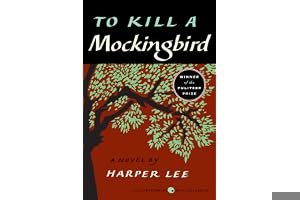
To Kill a Mockingbird
Harper Lee, Sissy Spacek, et al
5.0
The unforgettable novel of a childhood in a sleepy Southern town and the crisis of conscience that rocked it, To Kill A Mockingbird became both an instant bestseller and a critical success when it was first published in 1960. It went on to win the Pulitzer Prize in 1961 and was later made into an Academy Award-winning film, also a classic.
Compassionate, dramatic, and deeply moving, To Kill A Mockingbird takes readers to the roots of human behavior - to innocence and experience, kindness and cruelty, love and hatred, humor and pathos. Now with over 18 million copies in print and translated into forty languages, this regional story by a young Alabama woman claims universal appeal. Harper Lee always considered her book to be a simple love story. Today it is regarded as a masterpiece of American literature.
…
Recommended by Adam Lawrence, Antonio Villaraigosa, Clive Stafford Smith, and 6 others.
Even though I know we’ve made great strides in America, and have come from the reality of Maycomb, we still suffer today from the lingering effects of the bigotry of that era. At the same time, it’s a lesson in standing tall in the face of tremendously hostile circumstances. [source]
Clive Stafford Smith
The book touches on so many issues and deals with so many prejudices – prejudices towards the mentally ill, racial stuff. It’s a book that was way ahead of its time in many ways. It’s also a wonderfully written book – a joy to read. [source]
Cover unavailable
2
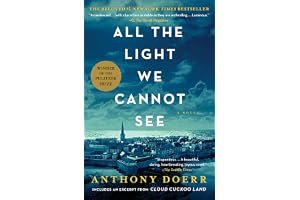
All the Light We Cannot See
Anthony Doerr
5.0
An alternate cover for this ISBN can be found here
From the highly acclaimed, multiple award-winning Anthony Doerr, the stunningly beautiful instant New York Times bestseller about a blind French girl and a German boy whose paths collide in occupied France as both try to survive the devastation of World War II.
Marie-Laure lives in Paris near the Museum of Natural History, where her father works. When she is twelve, the Nazis occupy Paris and father and daughter flee to the walled citadel of Saint-Malo, where Marie-Laure’s reclusive great uncle lives in a tall house by the sea. With them they carry what might be the museum’s most valuable and dangerous jewel.
In a mining town in Germany, Werner Pfennig, an orphan, grows up with his younger sister, enchanted by a crude radio they find that brings them news and stories from places they have never seen or imagined. Werner becomes an expert at building and fixing these crucial new instruments and is enlisted to use his talent to track down the resistance. Deftly interweaving the lives of Marie-Laure and Werner, Doerr illuminates the ways, against all odds, people try to be good to one another.
…
Recommended by Jason Goldman.
Jason Goldman
All The Light We Cannot See is the best book I've read in a while. I tend to speed read and here I savored every word; the writing is just effortlessly beautiful. I hope it's made it onto high school WWII syllabi by now. [source]
Cover unavailable
3
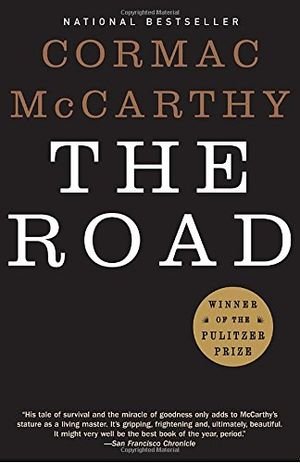
The Road
Cormac McCarthy
4.9
A searing, postapocalyptic novel destined to become Cormac McCarthy’s masterpiece.
A father and his son walk alone through burned America. Nothing moves in the ravaged landscape save the ash on the wind. It is cold enough to crack stones, and when the snow falls it is gray. The sky is dark. Their destination is the coast, although they don’t know what, if anything, awaits them there. They have nothing; just a pistol to defend themselves against the lawless bands that stalk the road, the clothes they are wearing, a cart of scavenged food—and each other.
The Road is the profoundly moving story of a journey. It boldly imagines a future in which no hope remains, but in which the father and his son, “each the other’s world entire,” are sustained by love. Awesome in the totality of its vision, it is an unflinching meditation on the worst and the best that we are capable of: ultimate destructiveness, desperate tenacity, and the tenderness that keeps two people alive in the face of total devastation. (front flap)
It's got everything that's grabbing the headlines in America right now. It's about race and class, the economy, culture, immigration and the danger of the us-versus-them mentality. And underneath it all, pumps the heart and soul of family love, the pursuit of happiness, and what home really means. [source]
This is possibly the most important environmental book ever written. It is a thought-experiment that imagines the world without a biosphere. That is the fundamental thought-experiment at the heart of environmentalism. All the horrors of that story arise from the disappearance of the biosphere, leaving people without any means of feeding themselves and without any means of survival. They are thrown into a brutal and fatal competition where the only thing left to eat is each other. [source]
Greg Garrett
There is no creature that has been transformed by leaking chemicals or radioactive satellites. But, on the other hand, there are human beings who consume other humans and that informs the major conflicts of the book. So, you’ve got a post-apocalyptic setting and you’ve got ethical quandaries for the main characters. There’s the sense of menace that permeates the zombie apocalypse. It’s not bad enough that they’re going to kill you, they’re also going to eat you. What I love about this story is its literary quality. We tend to think of the zombie apocalypse as a low-culture, pulp phenomenon. [source]
Cover unavailable
4
Middlesex
Jeffrey Eugenides
4.8
"I was born twice: first, as a baby girl, on a remarkably smogless Detroit day of January 1960; and then again, as a teenage boy, in an emergency room near Petoskey, Michigan, in August of l974. . . My birth certificate lists my name as Calliope Helen Stephanides. My most recent driver's license...records my first name simply as Cal."
So begins the breathtaking story of Calliope Stephanides and three generations of the Greek-American Stephanides family who travel from a tiny village overlooking Mount Olympus in Asia Minor to Prohibition-era Detroit, witnessing its glory days as the Motor City, and the race riots of l967, before they move out to the tree-lined streets of suburban Grosse Pointe, Michigan. To understand why Calliope is not like other girls, she has to uncover a guilty family secret and the astonishing genetic history that turns Callie into Cal, one of the most audacious and wondrous narrators in contemporary fiction. Lyrical and thrilling, Middlesex is an exhilarating reinvention of the American epic.
Middlesex is the winner of the 2003 Pulitzer Prize for Fiction.
Eugenides does a really nice job of illustrating the complexity of emotional life, the emotional life that doesn’t necessarily fall into neat categories. [source]
Cover unavailable
5
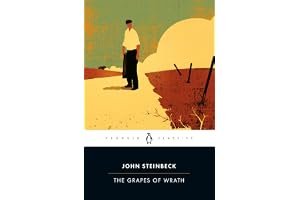
The Grapes of Wrath
John Steinbeck, Robert DeMott
4.8
The Pulitzer Prize-winning epic of the Great Depression, a book that galvanized—and sometimes outraged—millions of readers.
First published in 1939, Steinbeck’s Pulitzer Prize-winning epic of the Great Depression chronicles the Dust Bowl migration of the 1930s and tells the story of one Oklahoma farm family, the Joads—driven from their homestead and forced to travel west to the promised land of California. Out of their trials and their repeated collisions against the hard realities of an America divided into Haves and Have-Nots evolves a drama that is intensely human yet majestic in its scale and moral vision, elemental yet plainspoken, tragic but ultimately stirring in its human dignity. A portrait of the conflict between the powerful and the powerless, of one man’s fierce reaction to injustice, and of one woman’s stoical strength, the novel captures the horrors of the Great Depression and probes into the very nature of equality and justice in America. At once a naturalistic epic, captivity narrative, road novel, and transcendental gospel, Steinbeck’s powerful landmark novel is perhaps the most American of American Classics.
…
Recommended by Antonio Villaraigosa, Elizabeth Tsurkov, John Kerry, and 2 others.
Antonio Villaraigosa
It has been over 70 years since The Grapes of Wrath was published, yet the suffering that Steinbeck describes still hits close to home with families across our country still struggling to find work and put food on the table. It reminds us progressives that the day-to-day struggles of Americans should always remain close to our hearts. [source]
While there is a story that takes place between characters, the hardship and unfairness is a central element of the book. It shows how fiction can create progressive change as well. [source]
Cover unavailable
6
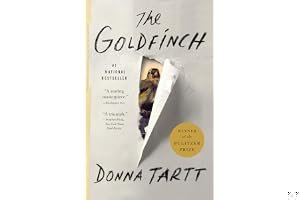
The Goldfinch
Donna Tartt
4.7
A young New Yorker grieving his mother's death is pulled into a gritty underworld of art and wealth in this "extraordinary" and beloved Pulitzer Prize winner that "connects with the heart as well as the mind" (Stephen King, New York Times Book Review).
Theo Decker, a 13-year-old New Yorker, miraculously survives an accident that kills his mother. Abandoned by his father, Theo is taken in by the family of a wealthy friend. Bewildered by his strange new home on Park Avenue, disturbed by schoolmates who don't know how to talk to him, and tormented above all by a longing for his mother, he clings to the one thing that reminds him of her: a small, mysteriously captivating painting that ultimately draws Theo into a wealthy and insular art community.
As an adult, Theo moves silkily between the drawing rooms of the rich and the dusty labyrinth of an antiques store where he works. He is alienated and in love -- and at the center of a narrowing, ever more dangerous circle.
The Goldfinch is a mesmerizing, stay-up-all-night and tell-all-your-friends triumph, an old-fashioned story of loss and obsession, survival and self-invention. From the streets of New York to the dark corners of the art underworld, this "soaring masterpiece" examines the devastating impact of grief and the ruthless machinations of fate (Ron Charles, Washington Post).
…
Recommended by Kaci Lambe Kai.
Kaci Lambe Kai
More modern, I recently read The Goldfinch by Donna Tartt and I love the way it was written. A great story brought to life with long, descriptive, sometimes frenetic sentences. She paints some scenes and some ideas that are unlike anything I've ever read. It's like watching magic on the page. [source]
Cover unavailable
7
The Old Man and the Sea
Ernest Hemingway
4.7
The Old Man and the Sea, an apparently simple fable, represents the mature Hemingway at his best. He was awarded the Nobel Prize for Literature soon after its publication, and half a century later it is still one of his most read books.
I keep coming back to it. I love the straightforwardness, the tightness, and the poetry. I think it shows a common struggle that is repeated over and over in so many narratives both fictional and nonfictional. [source]
The Old Man and the Sea by Ernest Hemingway https://t.co/7dJE4Pfn56, a book from my great books list https://t.co/AxBNX3QpMb [source]
May Witwit
I taught this book to my students in Iraq during the economic sanctions. And I feel like it gave me some kind of strength to continue. [source]
Cover unavailable
8
The Color Purple
Alice Walker
4.7
The Color Purple is a classic. With over a million copies sold in the UK alone, it is hailed as one of the all-time 'greats' of literature, inspiring generations of readers.
Set in the deep American South between the wars, it is the tale of Celie, a young black girl born into poverty and segregation. Raped repeatedly by the man she calls 'father', she has two children taken away from her, is separated from her beloved sister Nettie and is trapped into an ugly marriage. But then she meets the glamorous Shug Avery, singer and magic-maker - a woman who has taken charge of her own destiny. Gradually, Celie discovers the power and joy of her own spirit, freeing her from her past and reuniting her with those she loves.
The Overstory is a sweeping, impassioned work of activism and resistance that is also a stunning evocation of - and paean to - the natural world. From the roots to the crown and back to the seeds, Richard Powers’s twelfth novel unfolds in concentric rings of interlocking fables that range from antebellum New York to the late twentieth-century Timber Wars of the Pacific Northwest and beyond. There is a world alongside ours—vast, slow, interconnected, resourceful, magnificently inventive, and almost invisible to us. This is the story of a handful of people who learn how to see that world and who are drawn up into its unfolding catastrophe.
Feels at the beginning like a series of short stories, each of which has some important thing about a tree or a kind of tree in it, but also holds some human character. You’d be a very strange person if you came away from this book not caring about what’s happening to the trees. [source]
Martha Kearney
@omrgriffiths @BBCPM @RobGMacfarlane Great idea. Loved that book. [source]
Sarah Dry
I had the experience of having the revelation that the author clearly hoped a reader would have, which is that what appears to be a book about distinct individuals—almost a book of short stories— turns out to be something more complex, in which all the characters are linked through time and space. [source]
Cover unavailable
10
Gone with the Wind
Margaret Mitchell, Pat Conroy
4.7
An alternate cover for this ISBN can be found here.
Gone with the Wind is a novel written by Margaret Mitchell, first published in 1936. The story is set in Clayton County, Georgia, and Atlanta during the American Civil War and Reconstruction era. It depicts the struggles of young Scarlett O'Hara, the spoiled daughter of a well-to-do plantation owner, who must use every means at her disposal to claw her way out of the poverty she finds herself in after Sherman's March to the Sea. A historical novel, the story is a Bildungsroman or coming-of-age story, with the title taken from a poem written by Ernest Dowson.
Gone with the Wind was popular with American readers from the onset and was the top American fiction bestseller in the year it was published and in 1937. As of 2014, a Harris poll found it to be the second favorite book of American readers, just behind the Bible. More than 30 million copies have been printed worldwide.
…
Recommended by Ted Turner, Annie Parker, and Kris Reid.
I enjoyed "Gone with the Wind" and history books of all types. [source]
Annie Parker
@mariesornin @Twitter @goodreads @colinismyname @lonelyplanet @AmazonKindle @nytimestravel @TravelLeisure @Delta @BNBuzz Shantaram, The Beach, Round Ireland with a Fridge, and please read Gone with the Wind (not really a travel book but very awesome & needs a good chunk of time!) [source]
Kris Reid
I’m a hopeless romantic, Gone With the Wind is an epic love story based around a tale of an empowered woman struggling to success in a time of extreme adversity. There is a reason it’s a classic! [source]
Cover unavailable
11
The Amazing Adventures of Kavalier & Clay
Michael Chabon
4.7
The novel follows the lives of the title characters, a Czech artist named Joe Kavalier and a Brooklyn-born writer named Sam Clay—both Jewish—before, during, and after World War II. Kavalier and Clay become major figures in the nascent comics industry during its "Golden Age."
Recommended by Ev Williams, Anne Thériault, Natasha Lyonne, and 1 others.
Anne Thériault
@luzbianca417 Phew! I loved that book so much and then the ending I was just like .... what??? No one is making decisions with this child’s best interests in mind! [source]
Sprawling, well researched, historical story. A true pleasure to read. [source]
Cover unavailable
12
Beloved
Toni Morrison
4.7
Staring unflinchingly into the abyss of slavery, this spellbinding novel transforms history into a story as powerful as Exodus and as intimate as a lullaby.
Sethe was born a slave and escaped to Ohio, but eighteen years later she is still not free. She has too many memories of Sweet Home, the beautiful farm where so many hideous things happened. Her new home is haunted by the ghost of her baby, who died nameless and whose tombstone is engraved with a single word: Beloved.
Filled with bitter poetry and suspense as taut as a rope, Beloved is a towering achievement by Nobel Prize laureate Toni Morrison.
…
Recommended by Bianca Belair, Esi Edugyan, and Farah Jasmine Griffin.
Bianca Belair
@ylc130 I went to the library when I was in the 3rd grade and read Beloved... I remember being so confused and my Mama having to explain it to me... I later read it as an adult and it hit me completely different. GREAT BOOK! [source]
Esi Edugyan
I was shocked by the blunt force of its subject matter and its exquisitely torqued prose. It remains one of my most adored novels. [source]
Farah Jasmine Griffin
Beloved was Morrison’s fifth novel. It’s a gripping story, inspired by a famous abolitionist case, the true story of a woman who runs away from slavery with her children, but when the slave catchers catch up with her, she kills one of her own and tries to kill the others, rather than returning them to slavery. [source]
Cover unavailable
13
A Confederacy of Dunces (35th Anniversary Edition)
John Kennedy Toole
4.6
After more than three decades, the peerless wit and indulgent absurdity of A Confederacy of Dunces continues to attract new readers. Though the manuscript was rejected by many publishers during Toole's lifetime, his mother successfully published the book years after her son's suicide, and it won the 1981 Pulitzer Prize for fiction. This literary underdog and comic masterpiece has sold more than two million copies in twenty-three languages.
The 35th anniversary edition of A Confederacy of Dunces celebrates Toole's novel as well as one of the most memorable protagonists in American literature, Ignatius J. Reilly, whom Walker Percy dubbed slob extraordinaire, a mad Oliver Hardy, a fat Don Quixote, a perverse Thomas Aquinas rolled into one. Set in New Orleans with a wild cast of characters including Ignatius and his mother; Miss Trixie, the octogenarian assistant accountant at Levi Pants; inept, wan Patrolman Mancuso; Darlene, the Bourbon Street stripper with a penchant for poultry; and Jones, the jivecat in space-age dark glasses, the novel serves as an outlandish but believable tribute to a city defined by its parade of eccentric denizens.
The genius of A Confederacy of Dunces is reaffirmed as successive generations embrace this extravagant satire. Adulation for Toole's comic epic remains as intense today as thirty-five years ago.-- "Kirkus Reviews"
…
Recommended by Jerrod Carmichael, Jesse Williams, and Leo Babauta.
Explaining what William McNeill called The Rise of the West has become the central problem in the study of global history. In Guns, Germs, and Steel Jared Diamond presents the biologist's answer: geography, demography, and ecological happenstance. Diamond evenhandedly reviews human history on every continent since the Ice Age at a rate that emphasizes only the broadest movements of peoples and ideas. Yet his survey is binocular: one eye has the rather distant vision of the evolutionary biologist, while the other eye--and his heart--belongs to the people of New Guinea, where he has done field work for more than 30 years.
Fascinating.... Lays a foundation for understanding human history. [source]
Daniel Ek
A brilliant Pulitzer Prize-winning book about how the modern world was formed, analyzing how societies developed differently on different continents. [source]
I’m a fan of books that challenge our assumptions, and Diamond offers us a new and remarkably simple way of looking at our world. Learning to challenge existing assumptions is core to effective leadership for it trains us to keep an open mind. [source]
Cover unavailable
15
The Sympathizer
Viet Thanh Nguyen
4.6
It is April 1975, and Saigon is in chaos. At his villa, a general of the South Vietnamese army is drinking whiskey and, with the help of his trusted captain, drawing up a list of those who will be given passage aboard the last flights out of the country. The general and his compatriots start a new life in Los Angeles, unaware that one among their number, the captain, is secretly observing and reporting on the group to a higher-up in the Viet Cong. The Sympathizer is the story of this captain: a man brought up by an absent French father and a poor Vietnamese mother, a man who went to university in America, but returned to Vietnam to fight for the Communist cause. A gripping spy novel, an astute exploration of extreme politics, and a moving love story, The Sympathizer explores a life between two worlds and examines the legacy of the Vietnam War in literature, film, and the wars we fight today.
…
Recommended by Bill Gates, Andrew Liveris, Michigan Students, and 1 others.
Most of the books I’ve read and movies I’ve seen about the Vietnam War focused on the American perspective. Nguyen’s award-winning novel offers much-needed insight into what it was like to be Vietnamese and caught between both sides. Despite how dark it is, The Sympathizer is a gripping story about a double agent and the trouble he gets himself into. [source]
Andrew Liveris
CEO/Dow Chemical Company
Dow Chemical Company chairman and CEO Liveris will take this time to get away from heavier reading and enjoy some of the most highly acclaimed novels of the past year. [source]
Michigan Students
The Sympathizer by @viet_t_nguyen is another one of my favorite books. With influences from Ralph Ellison’s Invisible Man, Nguyen tells a story not often heard by U.S. audiences in popular culture: the Vietnamese side of the Vietnam War. https://t.co/UzARPON6lL [source]
Cover unavailable
16
The Good Earth (House of Earth #1)
Pearl S. Buck
4.6
Librarian's note: An alternate cover edition can be found here
The Good Earth is Buck’s classic story of Wang Lung, a Chinese peasant farmer, and his wife, O-lan, a former slave. With luck and hard work, the couple’s fortunes improve over the years: They are blessed with sons, and save steadily until one day they can afford to buy property in the House of Wang—the very house in which O-lan used to work. But success brings with it a new set of problems. Wang soon finds himself the target of jealousy, and as good harvests come and go, so does the social order. Will Wang’s family cherish the estate after he’s gone? And can his material success, the bedrock of his life, guarantee anything about his soul?
Winner of the Pulitzer Prize and the William Dean Howells Award, The Good Earth was an Oprah’s Book Club choice in 2004. A readers’ favorite for generations, this powerful and beautifully written fable resonates with universal themes of hope and family unity.
This ebook features an illustrated biography of Pearl S. Buck including rare images from the author’s estate.
…
Recommended by Oprah Winfrey, Amy Chua, and Abid Zaidi.
Reading Pearl Buck's writing feels like reading poetry to me. I just love the quiet rhythm of the words. They evoke the simple beauty of the characters and the harsh mystery of China's ancient culture. [source]
Amy Chua
I read this book when I was about nine years old. It just made such an impact on me. O-Lan, the mother in this book, toils silently and stoically all her life to provide for her family. [source]
Abid Zaidi
Day 4 : #30Days of posting cover of books I love (1 book a day for 30 days). No expectations, no reviews, just the covers. Inspired by @rekha_bhardwaj #MyFavouriteBooks https://t.co/Z1RZbzh9vZ [source]
Cover unavailable
17
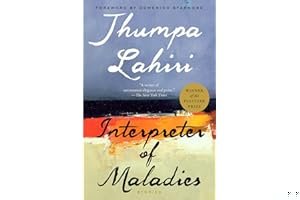
Interpreter of Maladies
Jhumpa Lahiri
4.6
Winner of the 2000 Pulitzer Prize for fiction, this stunning debut collection unerringly charts the emotional journeys of characters seeking love beyond the barriers of nations and generations. "A writer of uncommon sensitivity and restraint...Ms. Lahiri expertly captures the out-of-context lives of immigrants, expatriates, and first-generation Americans" (Wall Street Journal). In stories that travel from India to America and back again, Lahiri speaks with universal eloquence to everyone who has ever felt like a foreigner. Honored as "Debut of the Year" by the New Yorker and winner of the PEN/Hemingway Award, Interpreter of Maladies introduces a young writer of astonishing maturity and insight who "breathes unpredictable life into the page" (New York Times).
~from back cover
…
Recommended by Jane Kamensky and Leah Lizarondo.
Jane Kamensky
Lahirihas a great knack for showing both the closeness and the distance of peoples and cities. They seem so close together at the same time, they’re incredibly far apart. [source]
Leah Lizarondo
Given free time to do anything I would read fiction. This book took me out of a long dry spell because it is a collection of short stories that I could read while in the bath. Each story is written so beautifully, I still remember putting the book down from time to time, just to close my eyes and absorb what I just read. [source]
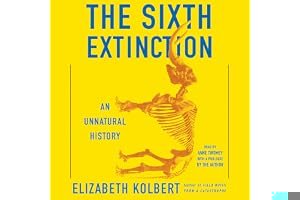
Over the last half-billion years, there have been five mass extinctions, when the diversity of life on earth suddenly and dramatically contracted. Scientists around the world are currently monitoring the sixth extinction, predicted to be the most devastating extinction event since the asteroid impact that wiped out the dinosaurs. This time around, the cataclysm is us.
In prose that is at once frank, entertaining, and deeply informed, The New Yorker writer Elizabeth Kolbert tells us why and how human beings have altered life on the planet in a way no species has before. Interweaving research in half a dozen disciplines, descriptions of the fascinating species that have already been lost, and the history of extinction as a concept, Kolbert provides a moving and comprehensive account of the disappearances occurring before our very eyes. She shows that the sixth extinction is likely to be mankind's most lasting legacy, compelling us to rethink the fundamental question of what it means to be human.
The president also released a list of his summer favorites back in 2015: All That Is, James Salter The Sixth Extinction, Elizabeth Kolbert The Lowland, Jhumpa Lahiri Between the World and Me, Ta-Nehisi Coates Washington: A Life, Ron Chernow All the Light We Cannot See, Anthony Doerr [source]
The Sixth Extinction: An Unnatural History, by Elizabeth Kolbert. Climate change is a big problem—one of the biggest we’ll face this century—but it’s not the only environmental concern on the horizon. Humans are putting down massive amounts of pavement, moving species around the planet, over-fishing and acidifying the oceans, changing the chemical composition of rivers, and more. Natural scientists posit that there have been five extinction events in the Earth’s history (think of the asteroid that wiped out the dinosaurs), and Kolbert makes a compelling case that human activity is leading to the sixth. Unlike a lot of people who write about the environment, Kolbert doesn’t resort to hype. She just lays out the facts and wraps them in memorable anecdotes. It’s a sobering but engaging and informative read. [source]
"In his autobiography, Walmart's founder expounds on the principles of discount retailing and discusses his core values of frugality and a bias for action — a willingness to try a lot of things and make many mistakes. Bezos included both in Amazon's corporate values," Brad Stone writes. [source]
Cover unavailable
19
The Hours
Michael Cunningham
4.6
In 1920s London, Virginia Woolf is fighting against her rebellious spirit as she attempts to make a start on her new novel. A young wife and mother, broiling in a suburb of 1940s Los Angeles, yearns to escape and read her precious copy of Mrs Dalloway. And Clarissa Vaughan steps out of her smart Greenwich village apartment in 1990s New York to buy flowers for a party she is hosting for a dying friend.
The Hours recasts the classic story of Woolf's Mrs Dalloway in a startling new light. Moving effortlessly across the decades and between England and America, this exquisite novel intertwines the worlds of three unforgettable women.
…
Recommended by Amy Chua and Danielle Teller.
Amy Chua
Laura Brown makes the strictest of tiger mothers look wonderful by comparison. She is totally detached and can’t get out of her head, so she retreats into books, specifically Mrs. Dalloway. [source]
Twenty-four years after her first novel, Housekeeping, Marilynne Robinson returns with an intimate tale of three generations from the Civil War to the twentieth century: a story about fathers and sons and the spiritual battles that still rage at America's heart. Writing in the tradition of Emily Dickinson and Walt Whitman, Marilynne Robinson's beautiful, spare, and spiritual prose allows "even the faithless reader to feel the possibility of transcendent order" (Slate). In the luminous and unforgettable voice of Congregationalist minister John Ames, Gilead reveals the human condition and the often unbearable beauty of an ordinary life.
…
Recommended by Barack Obama, Kathleen Taylor, and Wendell P. Weeks.
According to the president’s Facebook page and a 2008 interview with the New York Times, this title is among his most influential forever favorites. [source]
Kathleen Taylor
It’s a remarkably empathetic and beautifully written book…It deals with a lot of the anxieties about physical failings, and anxieties about legacy. It really makes you feel that you’re being put in the mind of someone who hasn’t got long and is coping with that. [source]
Cover unavailable
21
Lonesome Dove
Larry McMurtry
4.6
A love story, an adventure, and an epic of the frontier, Larry McMurtry’s Pulitzer Prize— winning classic, Lonesome Dove, the third book in the Lonesome Dove tetralogy, is the grandest novel ever written about the last defiant wilderness of America.
Journey to the dusty little Texas town of Lonesome Dove and meet an unforgettable assortment of heroes and outlaws, whores and ladies, Indians and settlers. Richly authentic, beautifully written, always dramatic, Lonesome Dove is a book to make us laugh, weep, dream, and remember.
Series in order of publication: Lonesome Dove (1985) Streets of Laredo (1993) Dead Man's Walk (1995) Comanche Moon (1997)
Series in order of internal chronology: Dead Man's Walk – set in the early 1840s Comanche Moon – set in the 1850–60s Lonesome Dove – set in mid-to-late 1870s Streets of Laredo – set in the early 1890s
…
Cover unavailable
22
The Brief Wondrous Life of Oscar Wao
Junot Díaz
4.5
Things have never been easy for Oscar, a sweet but disastrously overweight, lovesick Dominican ghetto nerd. From his home in New Jersey, where he lives with his old-world mother and rebellious sister, Oscar dreams of becoming the Dominican J. R. R. Tolkien and, most of all, of finding love. But he may never get what he wants, thanks to the Fukœ—the curse that has haunted the Oscar's family for generations, dooming them to prison, torture, tragic accidents, and, above all, ill-starred love. Oscar, still waiting for his first kiss, is just its most recent victim.
Diaz immerses us in the tumultuous life of Oscar and the history of the family at large, rendering with genuine warmth and dazzling energy, humor, and insight the Dominican-American experience, and, ultimately, the endless human capacity to persevere in the face of heartbreak and loss. A true literary triumph, The Brief Wondrous Life of Oscar Wao confirms Junot Diaz as one of the best and most exciting voices of our time.
Raised in a culture where men are powerful, sexual, and dominant, the Klingon-speaking, D&D-playing chubby boy thinks he’ll never find true love or physical affection. Oscar struggles as a young immigrant from the Dominican Republic living with his older sister and mother in Paterson, New Jersey. A fun read with lots of geek culture, great history, and oh, it also won the Pulitzer Prize. [source]
Kushanava Choudhury
Oscar Wao is very real to me. When I read Wao, I think, there but for the grace of God go I. [source]
Cover unavailable
23
The Orphan Master's Son
Adam Johnson
4.5
An epic novel and a thrilling literary discovery, The Orphan Master's Son follows a young man's journey through the icy waters, dark tunnels, and eerie spy chambers of the world's most mysterious dictatorship, North Korea.
Pak Jun Do is the haunted son of a lost mother - a singer "stolen" to Pyongyang - and an influential father who runs Long Tomorrows, a work camp for orphans. There the boy is given his first taste of power, picking which orphans eat first and which will be lent out for manual labor. Recognized for his loyalty and keen instincts, Jun Do comes to the attention of superiors in the state, rises in the ranks, and starts on a road from which there will be no return.
Considering himself "a humble citizen of the greatest nation in the world," Jun Do becomes a professional kidnapper who must navigate the shifting rules, arbitrary violence, and baffling demands of his Korean overlords in order to stay alive. Driven to the absolute limit of what any human being could endure, he boldly takes on the treacherous role of rival to Kim Jong Il in an attempt to save the woman he loves, Sun Moon, a legendary actress "so pure, she didn't know what starving people looked like."
Part breathless thriller, part story of innocence lost, part story of romantic love, The Orphan Master's Son is also a riveting portrait of a world heretofore hidden from view: a North Korea rife with hunger, corruption, and casual cruelty but also camaraderie, stolen moments of beauty, and love. A towering literary achievement, The Orphan Master's Son ushers Adam Johnson into the small group of today's greatest writers.
--jacket description
…
Cover unavailable
24
Olive Kitteridge (Olive Kitteridge, #1)
Elizabeth Strout
4.5
Winner of the Pulitzer Prize, Olive Kitteridge offers profound insights into the human condition – its conflicts, its tragedies and joys, and the endurance it requires.
At times stern, at other times patient, at times perceptive, at other times in sad denial, Olive Kitteridge, a retired schoolteacher, deplores the changes in her little town of Crosby, Maine, and in the world at large, but she doesn’t always recognize the changes in those around her: a lounge musician haunted by a past romance; a former student who has lost the will to live; Olive’s own adult child, who feels tyrannized by her irrational sensitivities; and her husband, Henry, who finds his loyalty to his marriage both a blessing and a curse.
As the townspeople grapple with their problems, mild and dire, Olive is brought to a deeper understanding of herself and her life – sometimes painfully, but always with ruthless honesty.
…
Recommended by Alina Varlanuta.
Alina Varlanuta
I don’t have a favourite book. But I do have favourite characters: The flawed and broken Olive Kitteridge assembled by Elizabeth Strout. [source]
Cover unavailable
25
Angle of Repose
Wallace Stegner, Jackson J. Benson
4.5
Stegner’s Pulitzer Prize-winning novel of personal, historical, and geographic discovery
Confined to a wheelchair, retired historian Lyman Ward sets out to write his grandparents' remarkable story, chronicling their days spent carving civilization into the surface of America's western frontier. But his research reveals even more about his own life than he's willing to admit. What emerges is an enthralling portrait of four generations in the life of an all American family.
"Cause for celebration . . . A superb novel with an amplitude of scale and richness of detail altogether uncommon in contemporary fiction." —The Atlantic Monthly
"Brilliant . . . Two stories, past and present, merge to produce what important fiction must: a sense of the enchantment of life." —Los Angeles Times
This Penguin Classics edition features an introduction by Jackson J. Benson.
For more than sixty-five years, Penguin has been the leading publisher of classic literature in the English-speaking world. With more than 1,500 titles, Penguin Classics represents a global bookshelf of the best works throughout history and across genres and disciplines. Readers trust the series to provide authoritative texts enhanced by introductions and notes by distinguished scholars and contemporary authors, as well as up-to-date translations by award-winning translators.
…
Recommended by Bill Nye and Jonathan Evison.
Bill Nye
Is is about human stories intertwined, just like your life and mine. [source]
Jonathan Evison
I’m just astounded by the scope and magnitude of the novel, and the landscape described. It’s the story of an ailing professor near the end of his life. He’s in a wheelchair and he’s becoming a bitter man. He’s writing his family history, and he goes back generations to the movement west. Meanwhile there is this fore-story going on, which is this great generational battle between himself, an older white male gentleman, and this young, strong-headed, hippy caregiver. It’s just amazing. It’s one of the 20 best American novels ever written. [source]
Cover unavailable
26
The Underground Railroad
Colson Whitehead
4.5
Cora is a slave on a cotton plantation in Georgia. Life is hell for all the slaves, but especially bad for Cora; an outcast even among her fellow Africans, she is coming into womanhood—where even greater pain awaits. When Caesar, a recent arrival from Virginia, tells her about the Underground Railroad, they decide to take a terrifying risk and escape. Matters do not go as planned—Cora kills a young white boy who tries to capture her. Though they manage to find a station and head north, they are being hunted.
In Whitehead’s ingenious conception, the Underground Railroad is no mere metaphor—engineers and conductors operate a secret network of tracks and tunnels beneath the Southern soil. Cora and Caesar’s first stop is South Carolina, in a city that initially seems like a haven. But the city’s placid surface masks an insidious scheme designed for its black denizens. And even worse: Ridgeway, the relentless slave catcher, is close on their heels. Forced to flee again, Cora embarks on a harrowing flight, state by state, seeking true freedom.
Like the protagonist of Gulliver’s Travels, Cora encounters different worlds at each stage of her journey—hers is an odyssey through time as well as space. As Whitehead brilliantly re-creates the unique terrors for black people in the pre–Civil War era, his narrative seamlessly weaves the saga of America from the brutal importation of Africans to the unfulfilled promises of the present day. The Underground Railroad is at once a kinetic adventure tale of one woman’s ferocious will to escape the horrors of bondage and a shattering, powerful meditation on the history we all share.
Just like us, the president enjoys a good beach read while relaxing in the sun. In 2016, he released his list of summer vacation books: Barbarian Days: A Surfing Life, William Finnegan H Is for Hawk, Helen Macdonald The Girl on the Train, Paula Hawkins Seveneves, Neal Stephenson The Underground Railroad, Colson Whitehead [source]
Bogdana Butnar
Currently reading two things: one is The Underground Railroad, by Colson Whitehead, which is a Man Booker nominee, and to be very honest, I'm just reading this because it's really good so my expectation is to just get the sheer satisfaction of a good piece of fiction. [source]
Chicago Tribune called @colsonwhitehead “the best living American novelist.” Really blown away by the writing in this, first book of his I’ve read. https://t.co/ePhD64ZPR5 [source]
Cover unavailable
27
A Visit from the Goon Squad
Jennifer Egan
4.5
Jennifer Egan’s spellbinding interlocking narratives circle the lives of Bennie Salazar, an aging former punk rocker and record executive, and Sasha, the passionate, troubled young woman he employs. Although Bennie and Sasha never discover each other’s pasts, the reader does, in intimate detail, along with the secret lives of a host of other characters whose paths intersect with theirs, over many years, in locales as varied as New York, San Francisco, Naples, and Africa.
We first meet Sasha in her mid-thirties, on her therapist’s couch in New York City, confronting her long-standing compulsion to steal. Later, we learn the genesis of her turmoil when we see her as the child of a violent marriage, then as a runaway living in Naples, then as a college student trying to avert the suicidal impulses of her best friend. We plunge into the hidden yearnings and disappointments of her uncle, an art historian stuck in a dead marriage, who travels to Naples to extract Sasha from the city’s demimonde and experiences an epiphany of his own while staring at a sculpture of Orpheus and Eurydice in the Museo Nazionale. We meet Bennie Salazar at the melancholy nadir of his adult life—divorced, struggling to connect with his nine-year-old son, listening to a washed-up band in the basement of a suburban house—and then revisit him in 1979, at the height of his youth, shy and tender, reveling in San Francisco’s punk scene as he discovers his ardor for rock and roll and his gift for spotting talent. We learn what became of his high school gang—who thrived and who faltered—and we encounter Lou Kline, Bennie’s catastrophically careless mentor, along with the lovers and children left behind in the wake of Lou’s far-flung sexual conquests and meteoric rise and fall.
A Visit from the Goon Squad is a book about the interplay of time and music, about survival, about the stirrings and transformations set inexorably in motion by even the most passing conjunction of our fates. In a breathtaking array of styles and tones ranging from tragedy to satire to PowerPoint, Egan captures the undertow of self-destruction that we all must either master or succumb to; the basic human hunger for redemption; and the universal tendency to reach for both—and escape the merciless progress of time—in the transporting realms of art and music. Sly, startling, exhilarating work from one of our boldest writers.
I love this novel. It is wonderfully written, brilliantly imaginative and engaging, funny and sad and smart. I also love it because of what it says about SF. That in a genre often caricatured (by those who don’t know it very well) as being about the wish-fulfillment fantasies of adolescent boys – huge space weapons, scantily clad astro-girls and so on – some of the very best work is being written by women. [source]
The definitive story of Amazon.com, one of the most successful companies in the world, and of its driven, brilliant founder, Jeff Bezos.
Amazon.com started off delivering books through the mail. But its visionary founder, Jeff Bezos, wasn't content with being a bookseller. He wanted Amazon to become the everything store, offering limitless selection and seductive convenience at disruptively low prices. To do so, he developed a corporate culture of relentless ambition and secrecy that's never been cracked. Until now. Brad Stone enjoyed unprecedented access to current and former Amazon employees and Bezos family members, giving readers the first in-depth, fly-on-the-wall account of life at Amazon. Compared to tech's other elite innovators--Jobs, Gates, Zuckerberg--Bezos is a private man. But he stands out for his restless pursuit of new markets, leading Amazon into risky new ventures like the Kindle and cloud computing, and transforming retail in the same way Henry Ford revolutionized manufacturing.
The Everything Store will be the revealing, definitive biography of the company that placed one of the first and largest bets on the Internet and forever changed the way we shop and read.
…
Recommended by Doug McMillon, Aaron Watson, Alan Pierce, and 10 others.
I read and give this book because you need to understand what you’re up against. [source]
Aaron Watson
Amazon is going to rule the world unless governments decide to break them up. It just makes sense to understand the most powerful company on the planet. Also, there is a (small) chance that Amazon sets up HQ2 in my hometown (Pittsburgh). [source]
Alan Pierce
This was an amazing glimpse into one of the most disruptive companies in history as well as the past and future trajectory of e-commerce and retail. It is also a testament to unwavering self-belief. The thing that impressed me the most is that Jeff Bezos intentionally built an entire department dedicated to making his primary business obsolete which allowed him to take the lead in the next development, e-books. His foresight is extraordinary and he is an inspirational big thinker. [source]
Cover unavailable
29
The Shipping News
Proulx Annie
4.5
Annie Proulx’s highly acclaimed, international bestseller and Pulitzer Prize-winning novel.
Quoyle is a hapless, hopeless hack journalist living and working in New York. When his no-good wife is killed in a spectacular road accident, Quoyle heads for the land of his forefathers – the remotest corner of far-flung Newfoundland.
With ‘the aunt’ and his delinquent daughters – Bunny and Sunshine – in tow, Quoyle finds himself part of an unfolding, exhilarating Atlantic drama. ‘The Shipping News’ is an irresistible comedy of human life and possibility.
The Shipping News is an extraordinary book. For 350 pages, she does the most extraordinary thing with language – things which break all the rules. W Somerset Maugham said there are only three rules for writing and no one ever agrees what they are. Well, she takes what rules anyone may have and breaks all of them. [source]
Cover unavailable
30
The Killer Angels (The Civil War Trilogy, #2)
Michael Shaara
4.4
In the four most bloody and courageous days of our nation's history, two armies fought for two dreams. One dreamed of freedom, the other of a way of life. Far more than rifles and bullets were carried into battle. There were memories. There were promises. There was love. And far more than men fell on those Pennsylvania fields. Shattered futures, forgotten innocence, and crippled beauty were also the casualties of war. The Killer Angels is unique, sweeping, unforgettable—a dramatic re-creation of the battleground for America's destiny.
…
Cover unavailable
31
Less
Andrew Sean Greer
4.4
Who says you can't run away from your problems?
You are a failed novelist about to turn fifty. A wedding invitation arrives in the mail: your boyfriend of the past nine years is engaged to someone else. You can't say yes--it would be too awkward--and you can't say no--it would look like defeat. On your desk are a series of invitations to half-baked literary events around the world.
QUESTION: How do you arrange to skip town?
ANSWER: You accept them all.
What would possibly go wrong? Arthur Less will almost fall in love in Paris, almost fall to his death in Berlin, barely escape to a Moroccan ski chalet from a Saharan sandstorm, accidentally book himself as the (only) writer-in-residence at a Christian Retreat Center in Southern India, and encounter, on a desert island in the Arabian Sea, the last person on Earth he wants to face. Somewhere in there: he will turn fifty. Through it all, there is his first love. And there is his last.
Because, despite all these mishaps, missteps, misunderstandings and mistakes, LESS is, above all, a love story.
A scintillating satire of the American abroad, a rumination on time and the human heart, a bittersweet romance of chances lost, by an author The New York Times has hailed as "inspired, lyrical," "elegiac," "ingenious," as well as "too sappy by half," LESS shows a writer at the peak of his talents raising the curtain on our shared human comedy.
…
Cover unavailable
32
The Emperor of All Maladies: A Biography of Cancer
Alternate Cover Edition ISBN 1439107955 (ISBN13: 9781439107959)
The Emperor of All Maladies is a magnificent, profoundly humane “biography” of cancer—from its first documented appearances thousands of years ago through the epic battles in the twentieth century to cure, control, and conquer it to a radical new understanding of its essence.
Physician, researcher, and award-winning science writer, Siddhartha Mukherjee examines cancer with a cellular biologist’s precision, a historian’s perspective, and a biographer’s passion. The result is an astonishingly lucid and eloquent chronicle of a disease humans have lived with—and perished from—for more than five thousand years.
The story of cancer is a story of human ingenuity, resilience, and perseverance, but also of hubris, paternalism, and misperception. Mukherjee recounts centuries of discoveries, setbacks, victories, and deaths, told through the eyes of his predecessors and peers, training their wits against an infinitely resourceful adversary that, just three decades ago, was thought to be easily vanquished in an all-out “war against cancer.”
The book reads like a literary thriller with cancer as the protagonist. From the Persian Queen Atossa, whose Greek slave cut off her malignant breast, to the nineteenth-century recipients of primitive radiation and chemotherapy to Mukherjee’s own leukemia patient, Carla, The Emperor of All Maladies is about the people who have soldiered through fiercely demanding regimens in order to survive—and to increase our understanding of this iconic disease.
Riveting, urgent, and surprising, The Emperor of All Maladies provides a fascinating glimpse into the future of cancer treatments. It is an illuminating book that provides hope and clarity to those seeking to demystify cancer.
…
Recommended by Bill Gates and Timothy J. Jorgensen.
I loved this brilliant book about cancer. [source]
Timothy J. Jorgensen
A tremendous amount of cancer biology comes through in that book through the eyes of the victims and the people up close and personal. [source]
Cover unavailable
33
Empire Falls
Richard Russo
4.4
Welcome to Empire Falls, a blue-collar town full of abandoned mills whose citizens surround themselves with the comforts and feuds provided by lifelong friends and neighbors and who find humor and hope in the most unlikely places, in this Pulitzer Prize-winning novel by Richard Russo.
Miles Roby has been slinging burgers at the Empire Grill for 20 years, a job that cost him his college education and much of his self-respect. What keeps him there? It could be his bright, sensitive daughter Tick, who needs all his help surviving the local high school. Or maybe it’s Janine, Miles’ soon-to-be ex-wife, who’s taken up with a noxiously vain health-club proprietor. Or perhaps it’s the imperious Francine Whiting, who owns everything in town–and seems to believe that “everything” includes Miles himself. In Empire Falls Richard Russo delves deep into the blue-collar heart of America in a work that overflows with hilarity, heartache, and grace
…
Cover unavailable
34
All the King's Men: Restored Edition
Robert Penn Warren, Noel Polk
4.4
Winner of the Pulitzer Prize, this classic book is generally regarded as the finest novel ever written on american politics. It describes the career of Willie Stark, a back-country lawyer whose idealism is overcome by his lust for power. New Foreword by Joseph Blotner for this fiftieth anniversary edition.
Recommended by Bill Earner, Heather Brooke, and Matthew T. Hall.
Bill Earner
My favorites novels are 100 Years of Solitude, All the King's Men, The Last Samurai, and Fear and Loathing in Las Vegas. [source]
Heather Brooke
This is a great mix of politics and journalism. It shows the way the two work together in a symbiotic relationship where they both need and hate each other. The newspaper guy is Jack Burden and he goes to work for Willie Stark – who starts off as a fresh-faced, incredibly idealistic and very ambitious man-of-the-people politician. [source]
The Age of Innocence is Edith Wharton's twelfth novel, initially serialized in four parts in the Pictorial Review magazine in 1920, and later released by D. Appleton and Company as a book in New York and in London. It won the 1921 Pulitzer Prize for Fiction, making it the first novel written by a woman to win the Pulitzer Prize for Fiction, and thus Wharton the first woman to win the prize. The story is set in upper-class New York City in the 1870s.
From the author of the acclaimed Year of Wonders, a historical novel and love story set during a time of catastrophe, on the front lines of the American Civil War. Acclaimed author Geraldine Brooks gives us the story of the absent father from Louisa May Alcott's Little Women—and conjures a world of brutality, stubborn courage and transcendent love. An idealistic abolitionist, March has gone as chaplain to serve the Union cause. But the war tests his faith not only in the Union—which is also capable of barbarism and racism—but in himself. As he recovers from a near-fatal illness, March must reassemble and reconnect with his family, who have no idea of what he has endured. A love story set in a time of catastrophe, March explores the passions between a man and a woman, the tenderness of parent and child, and the life-changing power of an ardently held belief.
…
Cover unavailable
37
Angela's Ashes (Frank McCourt, #1)
Frank McCourt
4.4
Imbued on every page with Frank McCourt's astounding humor and compassion. This is a glorious book that bears all the marks of a classic.
"When I look back on my childhood I wonder how I managed to survive at all. It was, of course, a miserable childhood: the happy childhood is hardly worth your while. Worse than the ordinary miserable childhood is the miserable Irish childhood, and worse yet is the miserable Irish Catholic childhood."
So begins the Pulitzer Prize winning memoir of Frank McCourt, born in Depression-era Brooklyn to recent Irish immigrants and raised in the slums of Limerick, Ireland. Frank's mother, Angela, has no money to feed the children since Frank's father, Malachy, rarely works, and when he does he drinks his wages. Yet Malachy-- exasperating, irresponsible and beguiling-- does nurture in Frank an appetite for the one thing he can provide: a story. Frank lives for his father's tales of Cuchulain, who saved Ireland, and of the Angel on the Seventh Step, who brings his mother babies.
Perhaps it is story that accounts for Frank's survival. Wearing rags for diapers, begging a pig's head for Christmas dinner and gathering coal from the roadside to light a fire, Frank endures poverty, near-starvation and the casual cruelty of relatives and neighbors--yet lives to tell his tale with eloquence, exuberance and remarkable forgiveness.
Angela's Ashes, imbued on every page with Frank McCourt's astounding humor and compassion, is a glorious book that bears all the marks of a classic.
In Evicted, Princeton sociologist and MacArthur "Genius" Matthew Desmond follows eight families in Milwaukee as they struggle to keep a roof over their heads. Evicted transforms our understanding of poverty and economic exploitation while providing fresh ideas for solving one of 21st-century America's most devastating problems. Its unforgettable scenes of hope and loss remind us of the centrality of home, without which nothing else is possible.
If you want a good understanding of how the issues that cause poverty are intertwined, you should read this book about the eviction crisis in Milwaukee. Desmond has written a brilliant portrait of Americans living in poverty. He gave me a better sense of what it is like to be poor in this country than anything else I have read. [source]
Nadella is using this season to learn more in a variety of subjects. By the looks of it, he is interested in, among other things, virtual reality, the refugee crisis, and housing for the urban poor. [source]
Surprising insights into the lives of people who were evicted. I make a lot of assumptions about these people. Turns out I was wrong WHY they get evicted. [source]
Cover unavailable
39
American Pastoral (The American Trilogy, #1)
Philip Roth
4.3
As the American century draws to an uneasy close, Philip Roth gives us a novel of unqualified greatness that is an elegy for all our century's promises of prosperity, civic order, and domestic bliss. Roth's protagonist is Swede Levov, a legendary athlete at his Newark high school, who grows up in the booming postwar years to marry a former Miss New Jersey, inherit his father's glove factory, and move into a stone house in the idyllic hamlet of Old Rimrock. And then one day in 1968, Swede's beautiful American luck deserts him.
For Swede's adored daughter, Merry, has grown from a loving, quick-witted girl into a sullen, fanatical teenager—a teenager capable of an outlandishly savage act of political terrorism. And overnight Swede is wrenched out of the longer-for American pastoral and into the indigenous American berserk. Compulsively readable, propelled by sorrow, rage, and a deep compassion for its characters, this is Roth's masterpiece.
…
Recommended by Lawrence Kaplan.
Lawrence Kaplan
It’s a beautifully written book and I would suggest it for anyone interested in why American foreign policy matters. [source]
Cover unavailable
40
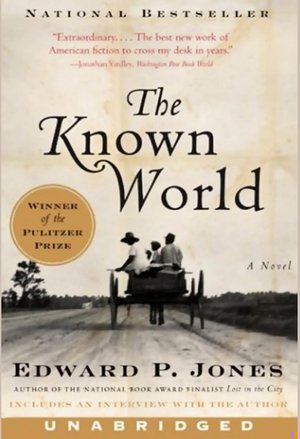
The Known World
Edward P. Jones
4.3
One of the most acclaimed novels in recent memory, The Known World is a daring and ambitious work by Pulitzer Prize winner Edward P. Jones.
The Known World tells the story of Henry Townsend, a black farmer and former slave who falls under the tutelage of William Robbins, the most powerful man in Manchester County, Virginia. Making certain he never circumvents the law, Townsend runs his affairs with unusual discipline. But when death takes him unexpectedly, his widow, Caldonia, can't uphold the estate's order, and chaos ensues. Jones has woven a footnote of history into an epic that takes an unflinching look at slavery in all its moral complexities.
It’s a novel about slavery, but specifically the few recorded instances of black slave-owners, and it’s a masterful, masterful work, the most complete work of literary imagination in recent American fiction. [source]
Cover unavailable
41
A Thousand Acres
Jane Smiley
4.3
Aging Larry Cook announces his intention to turn over his 1,000-acre farm--one of the largest in Zebulon County, Iowa--to his three daughters, Caroline, Ginny, and Rose. A man of harsh sensibilities, he carves Caroline out of the deal because she has the nerve to be less than enthusiastic about her father's generosity. While Larry Cook deteriorates into a pathetic drunk, his daughters are left to cope with the often grim realities of life on a family farm--from battering husbands to cutthroat lenders. In this winner of the 1992 Pulitzer Prize for Fiction, Smiley captures the essence of such a life with stark, painful detail.
…
Cover unavailable
42
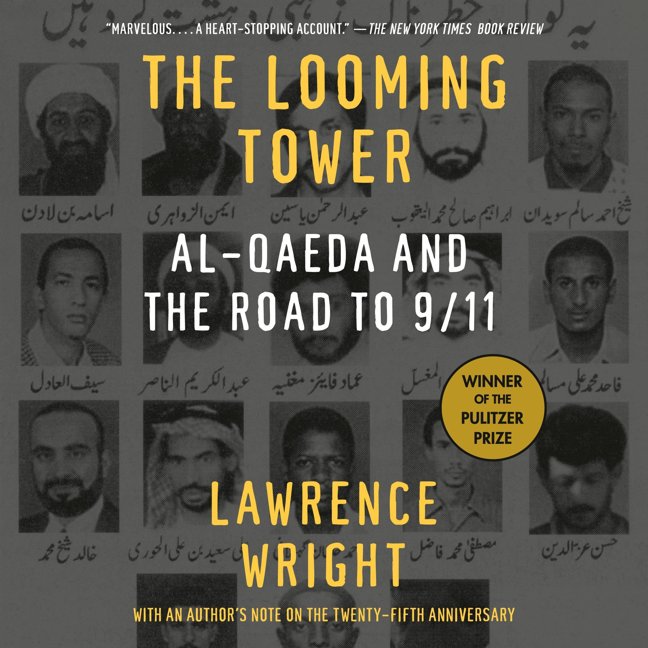
The Looming Tower: Al-Qaeda and the Road to 9/11
Lawrence Wright
4.3
A sweeping narrative history of the events leading to 9/11, a groundbreaking look at the people and ideas, the terrorist plans and the Western intelligence failures that culminated in the assault on America. Lawrence Wright's remarkable book is based on five years of research and hundreds of interviews that he conducted in Egypt, Saudi Arabia, Pakistan, Afghanistan, Sudan, England, France, Germany, Spain, and the United States.
The Looming Tower achieves an unprecedented level of intimacy and insight by telling the story through the interweaving lives of four men: the two leaders of al-Qaeda, Osama bin Laden and Ayman al-Zawahiri; the FBI's counterterrorism chief, John O'Neill; and the former head of Saudi intelligence, Prince Turki al-Faisal.
As these lives unfold, we see revealed: the crosscurrents of modern Islam that helped to radicalize Zawahiri and bin Laden . . . the birth of al-Qaeda and its unsteady development into an organization capable of the American embassy bombings in Kenya and Tanzania and the attack on the USS Cole . . . O'Neill's heroic efforts to track al-Qaeda before 9/11, and his tragic death in the World Trade towers . . . Prince Turki's transformation from bin Laden's ally to his enemy . . . the failures of the FBI, CIA, and NSA to share intelligence that might have prevented the 9/11 attacks.
The Looming Tower broadens and deepens our knowledge of these signal events by taking us behind the scenes. Here is Sayyid Qutb, founder of the modern Islamist movement, lonely and despairing as he meets Western culture up close in 1940s America; the privileged childhoods of bin Laden and Zawahiri; family life in the al-Qaeda compounds of Sudan and Afghanistan; O'Neill's high-wire act in balancing his all-consuming career with his equally entangling personal life--he was living with three women, each of them unaware of the others' existence--and the nitty-gritty of turf battles among U.S. intelligence agencies.
Brilliantly conceived and written, The Looming Tower draws all elements of the story into a galvanizing narrative that adds immeasurably to our understanding of how we arrived at September 11, 2001. The richness of its new information, and the depth of its perceptions, can help us deal more wisely and effectively with the continuing terrorist threat.
…
Recommended by Audrey Kurth Cronin, Bryan Callen, Lloyd Gardner, and 5 others.
Audrey Kurth Cronin
Reading this one book gives you an excellent grasp of the human story and the context from which al-Qaeda emerged. [source]
Wright looks at the linkage between the Egyptian Jihad and Al-Qaeda. It is a worthwhile book to read to try to understand the whole problem. [source]
Cover unavailable
43
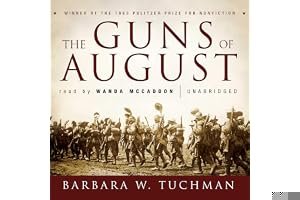
The Guns of August
Barbara Tuchman
4.3
"More dramatic than fiction...THE GUNS OF AUGUST is a magnificent narrative--beautifully organized, elegantly phrased, skillfully paced and sustained....The product of painstaking and sophisticated research." CHICAGO TRIBUNE Historian and Pulitzer Prize-winning author Barbara Tuchman has brought to life again the people and events that led up to Worl War I. With attention to fascinating detail, and an intense knowledge of her subject and its characters, Ms. Tuchman reveals, for the first time, just how the war started, why, and why it could have been stopped but wasn't. A classic historical survey of a time and a people we all need to know more about, THE GUNS OF AUGUST will not be forgotten.
So beautifully written. But more importantly, for me, she was writing about battles and military stuff and things that you don’t imagine that sometimes a woman might be so adept at. [source]
Erik Martin
This book started my obsession with WWI, illustrating how drastically the world went from interrelated monarchies and cavalry charges to chemical warfare between modern nation states. If you want to see what disruption looks like, there's no greater period in human history. [source]
Matt Calkins
The best way to understand how the world resolves its conflicts and its tensions is by looking at how a conflict that has been studied thoroughly, like World War I, unfolded and resolved. Business is like this too. If anyone were to ever get to the heart of Coke vs. Pepsi, they would see a parade of mistakes in the same way World War I looks in retrospect—so many ways you could have done better. [source]
Cover unavailable
44
The Caine Mutiny
Herman Wouk
4.3
The novel that inspired the now-classic film The Caine Mutiny and the hit Broadway play The Caine Mutiny Court-Martial, Herman Wouk's boldly dramatic, brilliantly entertaining novel of life-and mutiny-on a Navy warship in the Pacific theater was immediately embraced, upon its original publication in 1951, as one of the first serious works of American fiction to grapple with the moral complexities and the human consequences of World War II. In the intervening half century, The Caine Mutiny has become a perennial favorite of readers young and old, has sold millions of copies throughout the world, and has achieved the status of a modern classic.
A classic, life-changing meditation on war, memory, imagination, and the redemptive power of storytelling, with more than two-million copies in print
Depicting the men of Alpha Company—Jimmy Cross, Henry Dobbins, Rat Kiley, Mitchell Sanders, Norman Bowker, Kiowa, and the character Tim O’Brien, who survived his tour in Vietnam to become a father and writer at the age of forty-three—the stories in The Things They Carried opened our eyes to the nature of war in a way we will never forget. It is taught everywhere, from high school classrooms to graduate seminars in creative writing, and in the decades since its publication it has never failed to challenge our perceptions of fact and fiction, war and peace, and courage, longing, and fear.
…
Recommended by Caroline Paul, Eugene Gu, Karl Marlantes, and 2 others.
Caroline Paul
A beautiful book by a writer who fought in Vietnam. [source]
Eugene Gu
@realDonaldTrump Tim O’Brien is the author of the book The Things They Carried, which was about the Vietnam War. Must be very triggering for Trump since he dodged the draft multiple times with fraudulent doctors’ notes for fake bone spurs like a coward. [source]
Karl Marlantes
But when O’Brien wrote The Things They Carried he came down to absolute real brass tacks. It was no longer surreal, it was like here’s a list of what a grunt carries, an infantry soldier… [source]
Cover unavailable
46
John Adams
David McCullough
4.2
The enthralling, often surprising story of John Adams, one of the most important and fascinating Americans who ever lived.
In this powerful, epic biography, David McCullough unfolds the adventurous life-journey of John Adams, the brilliant, fiercely independent, often irascible, always honest Yankee patriot -- "the colossus of independence," as Thomas Jefferson called him -- who spared nothing in his zeal for the American Revolution; who rose to become the second President of the United States and saved the country from blundering into an unnecessary war; who was learned beyond all but a few and regarded by some as "out of his senses"; and whose marriage to the wise and valiant Abigail Adams is one of the moving love stories in American history.
Like his masterly, Pulitzer Prize-winning biography Truman, David McCullough's John Adams has the sweep and vitality of a great novel. It is both a riveting portrait of an abundantly human man and a vivid evocation of his time, much of it drawn from an outstanding collection of Adams family letters and diaries. In particular, the more than one thousand surviving letters between John and Abigail Adams, nearly half of which have never been published, provide extraordinary access to their private lives and make it possible to know John Adams as no other major American of his founding era.
As he has with stunning effect in his previous books, McCullough tells the story from within -- from the point of view of the amazing eighteenth century and of those who, caught up in events, had no sure way of knowing how things would turn out. George Washington, Benjamin Franklin, John Jay, the British spy Edward Bancroft, Madame Lafayette and Jefferson's Paris "interest" Maria Cosway, Alexander Hamilton, James Madison, the scandalmonger James Callender, Sally Hemings, John Marshall, Talleyrand, and Aaron Burr all figure in this panoramic chronicle, as does, importantly, John Quincy Adams, the adored son whom Adams would live to see become President.
Crucial to the story, as it was to history, is the relationship between Adams and Jefferson, born opposites -- one a Massachusetts farmer's son, the other a Virginia aristocrat and slaveholder, one short and stout, the other tall and spare. Adams embraced conflict; Jefferson avoided it. Adams had great humor; Jefferson, very little. But they were alike in their devotion to their country.
At first they were ardent co-revolutionaries, then fellow diplomats and close friends. With the advent of the two political parties, they became archrivals, even enemies, in the intense struggle for the presidency in 1800, perhaps the most vicious election in history. Then, amazingly, they became friends again, and ultimately, incredibly, they died on the same day -- their day of days -- July 4, in the year 1826.
Much about John Adams's life will come as a surprise to many readers. His courageous voyage on the frigate Boston in the winter of 1778 and his later trek over the Pyrenees are exploits that few would have dared and that few readers will ever forget.
It is a life encompassing a huge arc -- Adams lived longer than any president. The story ranges from the Boston Massacre to Philadelphia in 1776 to the Versailles of Louis XVI, from Spain to Amsterdam, from the Court of St. James's, where Adams was the first American to stand before King George III as a representative of the new nation, to the raw, half-finished Capital by the Potomac, where Adams was the first President to occupy the White House.
This is history on a grand scale -- a book about politics and war and social issues, but also about human nature, love, religious faith, virtue, ambition, friendship and betrayal, and the far-reaching consequences of noble ideas. Above all, John Adams is an enthralling, often surprising story of one of the most important and fascinating Americans who ever lived.
…
Recommended by Barack Obama and Antonio Villaraigosa.
The biographies have been useful, because I do think that there’s a tendency, understandable, to think that whatever’s going on right now is uniquely disastrous or amazing or difficult. [source]
Antonio Villaraigosa
I love biographies and this one in particular strikes me. I don’t believe John Adams comes immediately to mind as one of the great presidents, but he was. Students of history know he had a hand in so many of the founding documents we remember today. [source]
Cover unavailable
47
The Stone Diaries
Carol Diggory Shields
4.2
The Stone Diaries is one ordinary woman's story of her journey through life. Born in 1905, Daisy Stone Goodwill drifts through the roles of child, wife, widow, and mother, and finally into her old age. Bewildered by her inability to understand her place in her own life, Daisy attempts to find a way to tell her story within a novel that is itself about the limitations of autobiography. Her life is vivid with incident, and yet she feels a sense of powerlessness. She listens, she observes, and through sheer force of imagination she becomes a witness of her own life: her birth, her death, and the troubling missed connections she discovers between. Daisy's struggle to find a place for herself in her own life is a paradigm of the unsettled decades of our era. A witty and compassionate anatomist of the human heart, Carol Shields has made distinctively her own that place where the domestic collides with the elemental. With irony and humor she weaves the strands of The Stone Diaries together in this, her richest and most poignant novel to date.
…
Cover unavailable
48
Tales of the South Pacific
James A. Michener
4.2
Winner of the 1948 Pulitzer Prize for Fiction Enter the exotic world of the South Pacific, meet the men and women caught up in the drama of a big war. The young Marine who falls madly in love with a beautiful Tonkinese girl. Nurse Nellie and her French planter, Emile De Becque. The soldiers, sailors, and nurses playing at war and waiting for love in a tropic paradise.
Cover unavailable
49
Rabbit at Rest (Rabbit Angstrom #4)
John Updike
4.2
Winner of the 1991 Pulitzer Prize for Fiction. In John Updike's fourth and final novel about ex-basketball player Harry "Rabbit" Angstrom, the hero has acquired heart trouble, a Florida condo, and a second grandchild. His son and daughter-in-law are acting erratically, his wife Janice wants to work, and Rabbit is searching his soul, looking for reasons to live.
Updike has been a very important writer for me, the one I’ve admired most, read most, and returned to most often. [source]
Cover unavailable
50
Between the World and Me
Ta-Nehisi Coates
4.2
#1 NEW YORK TIMES BESTSELLER [[ LONGLISTED FOR THE NATIONAL BOOK AWARD [[ Hailed by Toni Morrison as "required reading," a bold and personal literary exploration of America's racial history by "the single best writer on the subject of race in the United States" (The New York Observer)
"This is your country, this is your world, this is your body, and you must find some way to live within the all of it."
In a profound work that pivots from the biggest questions about American history and ideals to the most intimate concerns of a father for his son, Ta-Nehisi Coates offers a powerful new framework for understanding our nation's history and current crisis. Americans have built an empire on the idea of "race," a falsehood that damages us all but falls most heavily on the bodies of black women and menbodies exploited through slavery and segregation, and, today, threatened, locked up, and murdered out of all proportion. What is it like to inhabit a black body and find a way to live within it? And how can we all honestly reckon with this fraught history and free ourselves from its burden?
Between the World and Me is Ta-Nehisi Coates's attempt to answer these questions in a letter to his adolescent son. Coates shares with his sonand readersthe story of his awakening to the truth about his place in the world through a series of revelatory experiences, from Howard University to Civil War battlefields, from the South Side of Chicago to Paris, from his childhood home to the living rooms of mothers whose children's lives were taken as American plunder. Beautifully woven from personal narrative, reimagined history, and fresh, emotionally charged reportage, Between the World and Me clearly illuminates the past, bracingly confronts our present, and offers a transcendent vision for a way forward.
The president also released a list of his summer favorites back in 2015: All That Is, James Salter The Sixth Extinction, Elizabeth Kolbert The Lowland, Jhumpa Lahiri Between the World and Me, Ta-Nehisi Coates Washington: A Life, Ron Chernow All the Light We Cannot See, Anthony Doerr [source]
Q: What are the books that had a major influence on you? Or simply the ones you like the most. : Tao te Ching, score takes care of itself, between the world and me, the four agreements, the old man and the sea...I love reading! [source]
Here are some of my favorite reads from 2017. Lots of friends and colleagues send me book suggestions and it's impossible to squeeze them all in. I continue to be super curious about how digital and tech are enabling people to transform our lives but I try to read a good mix of books that apply to a variety of areas and stretch my thinking more broadly. [source]
Cover unavailable
51
The Bridge of San Luis Rey
Thornton Wilder, Russell Banks
4.2
This beautiful new edition features unpublished notes for the novel and other illuminating documentary material, all of which is included in a new Afterword by Tappan Wilder.
On Friday noon, July the twentieth, 1714, the finest bridge in all Peru broke and precipitated five travelers into the gulf below. With this celebrated sentence Thornton Wilder begins The Bridge of San Luis Rey, one of the towering achievements in American fiction and a novel read throughout the world.By chance, a monk witnesses the tragedy. Brother Juniper then embarks on a quest to prove that it was divine intervention rather than chance that led to the deaths of those who perished in the tragedy. His search leads to his own death -- and to the author's timeless investigation into the nature of love and the meaning of the human condition.
This new edition of Wilder's 1928 Pulitzer Prize winning novel contains a new foreword by Russell Banks.
…
Cover unavailable
52
The Nickel Boys
Colson Whitehead
4.2
In this bravura follow-up to the Pulitzer Prize, and National Book Award-winning #1 New York Times bestseller The Underground Railroad, Colson Whitehead brilliantly dramatizes another strand of American history through the story of two boys sentenced to a hellish reform school in Jim Crow-era Florida.
As the Civil Rights movement begins to reach the black enclave of Frenchtown in segregated Tallahassee, Elwood Curtis takes the words of Dr. Martin Luther King to heart: He is “as good as anyone.” Abandoned by his parents, but kept on the straight and narrow by his grandmother, Elwood is a high school senior about to start classes at a local college. But for a black boy in the Jim Crow South of the early 1960s, one innocent mistake is enough to destroy the future. Elwood is sentenced to a juvenile reformatory called the Nickel Academy, whose mission statement says it provides “physical, intellectual and moral training” so the delinquent boys in their charge can become “honorable and honest men.”
In reality, the Nickel Academy is a grotesque chamber of horrors where the sadistic staff beats and sexually abuses the students, corrupt officials and locals steal food and supplies, and any boy who resists is likely to disappear “out back.” Stunned to find himself in such a vicious environment, Elwood tries to hold onto Dr. King’s ringing assertion “Throw us in jail and we will still love you.” His friend Turner thinks Elwood is worse than naive, that the world is crooked, and that the only way to survive is to scheme and avoid trouble.
The tension between Elwood’s ideals and Turner’s skepticism leads to a decision with repercussions that will echo down the decades. Formed in the crucible of the evils Jim Crow wrought, the boys’ fates will be determined by what they endured at the Nickel Academy.
Based on the real story of a reform school in Florida that operated for one hundred and eleven years and warped the lives of thousands of children, The Nickel Boys is a devastating, driven narrative that showcases a great American novelist writing at the height of his powers.
…
Recommended by Sean Lahman.
Sean Lahman
@DanTelvock Nickel Boys by Colson Whitehead. The MVP Machine is a great book about what’s happening in baseball. [source]
Cover unavailable
53
The Executioner's Song
Norman Mailer
4.2
In what is arguably his greatest work, America's most heroically ambitious writer follows the short, blighted career of Gary Gilmore, an intractably violent product of America's prisons who became notorious for two reasons: first, for robbing two men in 1976, then killing them in cold blood; and, second, after being tried and convicted, for insisting on dying for his crime. To do so, he had to fight a system that seemed paradoxically intent on keeping him alive long after it had sentenced him to death.
Norman Mailer tells Gilmore's story--and those of the men and women caught up in his procession toward the firing squad--with implacable authority, steely compassion, and a restraint that evokes the parched landscapes and stern theology of Gilmore's Utah. The Executioner's Song is a trip down the wrong side of the tracks to the deepest sources of American loneliness and violence. It is a towering achievement--impossible to put down, impossible to forget.
Winner of the 1980 Pulitzer Prize
…
Cover unavailable
54
The Stories of John Cheever
John Cheever
4.2
Here are sixty-one stories that chronicle the lives of what has been called "the greatest generation." From the early wonder and disillusionment of city life in "The Enormous Radio" to the surprising discoveries and common mysteries of suburbia in "The Housebreaker of Shady Hill" and "The Swimmer," Cheever tells us everything we need to know about "the pain and sweetness of life."
Goodbye, my brother -- The common day -- The enormous radio -- O city of broken dreams -- The Hartleys -- The Sutton Place story -- The summer farmer -- Torch song -- The pot of gold -- Clancy in the Tower of Babel -- Christmas is a sad season for the poor -- The season of divorce -- The chaste Clarissa -- The cure -- The superintendent -- The children -- The sorrows of gin -- O youth and beauty! -- The day the pig fell into the well -- The five-forty-eight -- Just one more time -- The housebreaker of Shady Hill -- The bus to St. James's -- The worm in the apple -- The trouble of Marcie Flint -- The bella lingua -- The Wrysons -- The country husband -- The duchess -- The scarlet moving van -- Just tell me who it was -- Brimmer -- The golden age -- The lowboy -- The music teacher -- A woman without a country -- The death of Justina -- Clementina -- Boy in Rome -- A miscellany of characters that will not appear -- The chimera -- The seaside houses -- The angel of the bridge -- The brigadier and the golf widow -- A vision of the world -- Reunion -- An educated American woman -- Metamorphoses -- Mene, mene, tekel, upharsin -- Montraldo -- The ocean -- Marito in città -- The geometry of love -- The swimmer -- The world of apples -- Another story -- Percy -- The fourth alarm -- Artemis, the honest well digger -- Three stories -- The jewels of the Cabots.
…
Cover unavailable
55
The Yearling
Marjorie Kinnan Rawlings, Patricia Reilly Giff
4.2
Young Jody adopts an orphaned fawn he calls Flag and makes it a part of his family and his best friend. But life in the Florida backwoods is harsh, and so, as his family fights off wolves, bears, and even alligators, and faces failure in their tenuous subsistence farming, Jody must finally part with his dear animal friend. There has been a film and even a musical based on this story.
Cover unavailable
56
The Confessions of Nat Turner
William Styron
4.2
WINNER OF THE PULITZER PRIZE
In 1831 Nat Turner awaits death in a Virginia jail cell. He is a slave, a preacher, and the leader of the only effective slave revolt in the history of 'that peculiar institution'. William Styron's ambitious and stunningly accomplished novel is Turner's confession, made to his jailers under the duress of his God. Encompasses the betrayals, cruelties and humiliations that made up slavery - and that still sear the collective psyches of both races.
…
Cover unavailable
57
Advise and Consent
Allen Drury
4.2
The #1 New York Times bestseller and Pulitzer Prize winner Allen Drury's Advise and Consent is one of the high points of 20th Century literature, a seminal work of political fiction-as relevant today as when it was first published. A sweeping tale of corruption and ambition cuts across the landscape of Washington, DC, with the breadth and realism that only an astute observer and insider can convey. Allen Drury has penetrated the world's stormiest political battleground-the smoke-filled committee rooms of the United States Senate-to reveal the bitter conflicts set in motion when the President calls upon the Senate to confirm his controversial choice for Secretary of State. This novel is a true epic showing in fascinating detail the minds and motives of the statesmen, the opportunists, the idealists. From a Senate old-timer's wily maneuvers, a vicious demagogue's blistering smear campaign, the ugly personal jealousies that turn a highly qualified candidate into a public spectacle, to the tragic martyrdom of a presidential aspirant who refuses to sacrifice his principles for his career-never has there been a more revealing picture of Washington's intricate political, diplomatic, and social worlds. Advise and Consent is a timeless story with clear echoes of today's headlines. Includes Allen Drury's never-before-published original preface to Advise and Consent, his essay for the Hoover Institution on the writing of the book, as well as poignant personal memoirs from Drury's heirs.
This is all about the United States and it’s a novel based really, I think, on the Alger Hiss/Whittaker Chambers hearings, but it fictionalises them beautifully. If you read this book and then you watch, in future, a hearing on the confirmation of a secretary of state or a supreme court judge, you will understand far better as a result of it how these things happen than you otherwise would. It is dated, but in an instructive way. Allen Drury was a reporter for Associated Press on Capitol Hill before he wrote it. It was his one big success, filmed slightly unsatisfactorily with Charles Laughton, of all people, playing a particularly wonderful and devious senator, who is my favourite character in the book. I understood American politics much better after reading it. [source]
Cover unavailable
58
A Good Scent from a Strange Mountain
Robert Olen Butler
4.2
Robert Olen Butler's lyrical and poignant collection of stories about the aftermath of the Vietnam War and its impact on the Vietnamese was acclaimed by critics across the nation and won the Pulitzer Prize in 1993.
Now Grove Press is proud to reissue this contemporary classic by one of America's most important living writers, in a new edition of 'A Good Scent from a Strange Mountain' that includes two subsequently published stories -- "Salem" and "Missing" -- that brilliantly complete the collection's narrative journey, returning to the jungles of Vietnam.
…
Cover unavailable
59
Death of a Salesman
Arthur Miller
4.2
In the spring of 1948 Arthur Miller retreated to a log cabin in Connecticut with the first two lines of a new play already fixed in his mind. He emerged six weeks later with the final script of Death of a Salesman - a painful examination of American life and consumerism. Opening on Broadway the following year, Miller's extraordinary masterpiece changed the course of modern theatre. In creating Willy Loman, his destructively insecure anti-hero, Miller himself defined his aim as being 'to set forth what happens when a man does not have a grip on the forces of life'.
…
Recommended by Daniel Pink, Tim Lott, and 1 others.
Tim Lott
Death of a Salesman is more about the relationship between fathers and sons than brothers, but the motif of maimed brother relationships runs in all directions. [source]
Cover unavailable
60
So Big
Edna Ferber
4.2
Winner of the 1924 Pulitzer Prize, So Big is widely regarded as Edna Ferber's crowning achievement. A rollicking panorama of Chicago's high and low life, this stunning novel follows the travails of gambler's daughter Selina Peake DeJong as she struggles to maintain her dignity, her family, and her sanity in the face of monumental challenges. This is the stunning and unforgettable “novel to read and to remember” by an author who “critics of the 1920s and 1930s did not hesitate to call the greatest American woman novelist of her day” (New York Times).
…
Cover unavailable
61
A Death in the Family
James Agee
4.2
The classic American novel, re-published for the 100th anniversary of James Agee's birth
Published in 1957, two years after its author's death at the age of forty-five, A Death in the Family remains a near-perfect work of art, an autobiographical novel that contains one of the most evocative depictions of loss and grief ever written. As Jay Follet hurries back to his home in Knoxville, Tennessee, he is killed in a car accident--a tragedy that destroys not only a life but also the domestic happiness and contentment of a young family. A novel of great courage, lyric force, and powerful emotion, A Death in the Family is a masterpiece of American literature.
…
Cover unavailable
62
Tinkers
Paul Harding
4.1
An old man lies dying. Propped up in his living room and surrounded by his children and grandchildren, George Washington Crosby drifts in and out of consciousness, back to the wonder and pain of his impoverished childhood in Maine. As the clock repairer’s time winds down, his memories intertwine with those of his father, an epileptic, itinerant peddler and his grandfather, a Methodist preacher beset by madness.
At once heartbreaking and life affirming, Tinkers is an elegiac meditation on love, loss, illness, faith, and the fierce beauty of nature.
…
Cover unavailable
63
A Streetcar Named Desire
Tennessee Williams
4.1
The Pulitzer Prize and Drama Critics Circle Award winning play—reissued with an introduction by Arthur Miller (Death of a Salesman and The Crucible), and Williams’ essay “The World I Live In.”
It is a very short list of 20th-century American plays that continue to have the same power and impact as when they first appeared—57 years after its Broadway premiere, Tennessee Williams’ A Streetcar Named Desire is one of those plays. The story famously recounts how the faded and promiscuous Blanche DuBois is pushed over the edge by her sexy and brutal brother-in-law, Stanley Kowalski. Streetcar launched the careers of Marlon Brando, Jessica Tandy, Kim Hunter, and Karl Malden, and solidified the position of Tennessee Williams as one of the most important young playwrights of his generation, as well as that of Elia Kazan as the greatest American stage director of the ’40s and ’50s.
…
Cover unavailable
64
Ironweed
William Kennedy
4.1
Francis Phelan, ex-ballplayer, part-time gravedigger, full-time drunk, has hit bottom. Years ago he left Albany in a hurry after killing a scab during a trolley workers' strike. He ran away again after accidentally -- and fatally -- dropping his infant son.
Now, in 1938, Francis is back in town, roaming the old familiar streets with his hobo pal, Helen, trying to make peace with the ghosts of the past and the present.
…
Cover unavailable
65
The Keepers of the House
Shirley Ann Grau
4.1
Winner of the Pulitzer Prize in 1965, The Keepers of the Houseis Shirley Ann Grau’s masterwork, a many-layered indictment of racism and rage that is as terrifying as it is wise.
Entrenched on the same land since the early 1800s, the Howlands have, for seven generations, been pillars of their Southern community. Extraordinary family lore has been passed down to Abigail Howland, but not all of it. When shocking facts come to light about her late grandfather William’s relationship with Margaret Carmichael, a black housekeeper, the community is outraged, and quickly gathers to vent its fury on Abigail. Alone in the house the Howlands built, she is at once shaken by those who have betrayed her, and determined to punish the town that has persecuted her and her kin.
Morally intricate, graceful and suspenseful, The Keepers of the House has become a modern classic.
…
Cover unavailable
66
Gulag: A History
Anne Applebaum
4.1
The Gulag--a vast array of Soviet concentration camps that held millions of political and criminal prisoners--was a system of repression and punishment that terrorized the entire society, embodying the worst tendencies of Soviet communism. In this magisterial and acclaimed history, Anne Applebaum offers the first fully documented portrait of the Gulag, from its origins in the Russian Revolution, through its expansion under Stalin, to its collapse in the era of glasnost. Applebaum intimately re-creates what life was like in the camps and links them to the larger history of the Soviet Union. Immediately recognized as a landmark and long-overdue work of scholarship, Gulag is an essential book for anyone who wishes to understand the history of the twentieth century.
…
Recommended by Edward Lucas and 1 others.
Cover unavailable
67
Breathing Lessons
Anne Tyler
4.1
Maggie and Ira Moran have been married for twenty-eight years–and it shows: in their quarrels, in their routines, in their ability to tolerate with affection each other’s eccentricities. Maggie, a kooky, lovable meddler and an irrepressible optimist, wants nothing more than to fix her son’s broken marriage. Ira is infuriatingly practical, a man “who should have married Ann Landers.”
What begins as a day trip to a funeral becomes an adventure in the unexpected. As Maggie and Ira navigate the riotous twists and turns, they intersect with an assorted cast of eccentrics–and rediscover the magic of the road called life and the joy of having somebody next to you to share the ride . . . bumps and all. --back cover
…
Cover unavailable
68
The Fixer
Bernard Malamud, Jonathan Safran Foer
4.1
A classic that won Malamud both the Pulitzer Prize and the National Book Award.
The Fixer (1966) is Bernard Malamud's best-known and most acclaimed novel—one that makes manifest his roots in Russian fiction, especially that of Isaac Babel.
Set in Kiev in 1911 during a period of heightened anti-Semitism, the novel tells the story of Yakov Bok, a Jewish handyman blamed for the brutal murder of a young Russian boy. Bok leaves his village to try his luck in Kiev, and after denying his Jewish identity, finds himself working for a member of the anti-Semitic Black Hundreds Society. When the boy is found nearly drained of blood in a cave, the Black Hundreds accuse the Jews of ritual murder. Arrested and imprisoned, Bok refuses to confess to a crime that he did not commit.
…
Cover unavailable
69
The Optimist's Daughter
Eudora Welty
4.1
The Optimist's Daughter is the story of Laurel McKelva Hand, a young woman who has left the South and returns, years later, to New Orleans, where her father is dying. After his death, she and her silly young stepmother go back still farther, to the small Mississippi town where she grew up. Alone in the old house, Laurel finally comes to an understanding of the past, herself, and her parents.
Cover unavailable
70
The Poisonwood Bible
Barbara Kingsolver
4.1
The Poisonwood Bible is a story told by the wife and four daughters of Nathan Price, a fierce, evangelical Baptist who takes his family and mission to the Belgian Congo in 1959. They carry with them everything they believe they will need from home, but soon find that all of it -- from garden seeds to Scripture -- is calamitously transformed on African soil. What follows is a suspenseful epic of one family's tragic undoing and remarkable reconstruction over the course of three decades in postcolonial Africa.
…
Recommended by Brigid Keenan and Michelle Jana Chan.
Brigid Keenan
This is about everything that can go wrong when you are in another country and faced with another culture. It’s about a family – primarily it centres on a father and his four daughters – who move to the Congo from America as missionaries. The book is tragic because the father has the best intentions of making a good life for his family, but he’s too closed-minded and set in his American ways. I identify with the daughters because they have a childish sensitivity to their surroundings that adults don’t always have. It is important if you go to live in other countries to be aware of the cultural differences, otherwise you can upset people. [source]
Michelle Jana Chan
It’s quite an old-fashioned story of sin and redemption, yet a hugely ambitious tale for Kingsolver to take on. It’s about filial responsibility as a wife and as daughters and sisters; it’s about guilt, bitterness and revenge. [source]
Cover unavailable
71
Rabbit Is Rich (Rabbit Angstrom, #3)
John Updike
4.1
Winner of the 1982 Pulitzer Prize for Fiction. Ten years after RABBIT REDUX, Harry Angstrom has come to enjoy prosperity as the Chief Sales Representative of Springer Motors. The rest of the world may be falling to pieces, but Harry's doing all right. That is, until his son returns from the West, and the image of an old love pays a visit to his lot....
Cover unavailable
72
The Magnificent Ambersons
Booth Tarkington
4.1
Winner of the Pulitzer Prize when it was first published in 1918, The Magnificent Ambersons chronicles the changing fortunes of three generations of an American dynasty. The protagonist of Booth Tarkington's great historical drama is George Amberson Minafer, the spoiled and arrogant grandson of the founder of the family's magnificence. Eclipsed by a new breed of developers, financiers, and manufacturers, this pampered scion begins his gradual descent from the midwestern aristocracy to the working class. Today The Magnificent Ambersons is best known through the 1942 Orson Welles movie, but as the critic Stanley Kauffmann noted, "It is high time that [the novel] appear again, to stand outside the force of Welles's genius, confident in its own right." "The Magnificent Ambersons is perhaps Tarkington's best novel," judged Van Wyck Brooks. "[It is] a typical story of an American family and town--the great family that locally ruled the roost and vanished virtually in a day as the town spread and darkened into a city. This novel no doubt was a permanent page in the social history of the United States, so admirably conceived and written was the tale of the Amber-sons, their house, their fate and the growth of the community in which they were submerged in the end."
Booth Tarkington (1869-1946), a prolific writer who achieved overnight success with his first novel, The Gentleman from Indiana (1899), is perhaps best remembered as the author of the popular Penrod adventures and Seventeen (1916). He was awarded a second Pulitzer Prize for the novel Alice Adams (1921).
…
Cover unavailable
73
The Complete Maus
Art SPIEGELMAN
4.1
Combined for the first time here are Maus I: A Survivor's Tale and Maus II - the complete story of Vladek Spiegelman and his wife, living and surviving in Hitler's Europe. By addressing the horror of the Holocaust through cartoons, the author captures the everyday reality of fear and is able to explore the guilt, relief and extraordinary sensation of survival - and how the children of survivors are in their own way affected by the trials of their parents. A contemporary classic of immeasurable significance.
…
Recommended by Susan Bordo.
Susan Bordo
It’s about the Holocaust. It’s also a comic book, in which the various characters are depicted as animals – the Jews as mice, the Nazis as cats. [source]
Cover unavailable
74
The Mambo Kings Play Songs of Love
Oscar Hijuelos
4.1
Recommended by Juliet 'Kego Poetry4change.
Juliet 'Kego Poetry4change
A Pulitzer-winning book: The Mambo Kings Play Songs of Love by Oscar Hijuelos A film adaptation starring Banderas, Assante (1992) It missed some key parts of the book Hauntingly, beautiful soundtrack.. Immigrants, dreams, family, heartbreak and love https://t.co/ApyFhu63Di [source]
Cover unavailable
75
One of Ours
Willa Cather
4.1
One of Ours is Willa Cather's 1923 Pulitzer Prize-winning novel about the making of an American soldier. Claude Wheeler, the sensitive but aspiring protagonist, has ready access to his family's fortune but refuses to settle for it. Alienated from his uncaring father and pious mother, and rejected by a wife whose only love is missionary work, Claude is an idealist without ideals to cling to. Only when his country enters the Great War does he find the meaning of his life.
…
Cover unavailable
76
Foreign Affairs
Alison Lurie
4.1
WINNER OF THE PULITZER PRIZE
Virginia Miner, a fifty-something, unmarried tenured professor, is in London to work on her new book about children’s folk rhymes. Despite carrying a U.S. passport, Vinnie feels essentially English and rather looks down on her fellow Americans. But in spite of that, she is drawn into a mortifying and oddly satisfying affair with an Oklahoman tourist who dresses more Bronco Billy than Beau Brummel.
Also in London is Vinnie’s colleague Fred Turner, a handsome, flat broke, newly separated, and thoroughly miserable young man trying to focus on his own research. Instead, he is distracted by a beautiful and unpredictable English actress and the world she belongs to.
Both American, both abroad, and both achingly lonely, Vinnie and Fred play out their confused alienation and dizzying romantic liaisons in Alison Lurie’s Pulitzer Prize-winning novel. Smartly written, poignant, and witty, Foreign Affairs remains an enduring comic masterpiece.
…
Cover unavailable
77
Humboldt's Gift
Saul Bellow
4.1
The novel, for which Bellow won the Pulitzer Prize for Fiction in 1976, is a self-described "comic book about death," whose title character is modeled on the self-destructive lyric poet Delmore Schwartz. Charlie Citrine, an intellectual, middle-aged author of award-winning biographies and plays, contemplates two significant figures and philosophies in his life: Von Humboldt Fleisher, a dead poet who had been his mentor, and Rinaldo Cantabile, a very-much-alive minor mafioso who has been the bane of Humboldt's existence. Humboldt had taught Charlie that art is powerful and that one should be true to one's own creative spirit. Rinaldo, Charlie's self-appointed financial adviser, has always urged Charlie to use his art to turn a profit. At the novel's end, Charlie has managed to set his own course.
…
Cover unavailable
78
Maus I: A Survivor's Tale: My Father Bleeds History (Maus, #1)
Art Spiegelman
4.1
A story of a Jewish survivor of Hitler's Europe and his son, a cartoonist who tries to come to terms with his father's story and history itself.
An enormously entertaining classic, THE WAY WEST brings to life the adventure of the western passage and the pioneer spirit. The sequel to THE BIG SKY, this celebrated novel charts a frontiersman's return to the untamed West in 1846. Dick Summers, as pilot of a wagon train, guides a group of settlers on the difficult journey from Missouri to Oregon. In sensitive but unsentimental prose, Guthrie illuminates the harsh trials and resounding triumphs of pioneer life. With THE WAY WEST, he pays homage to the grandeur of the western wilderness, its stark and beautiful scenery, and its extraordinary people.
…
Cover unavailable
80
Andersonville
MacKinlay Kantor
4.1
The 1956 Pulitzer Prize-winning story of the Andersonville Fortress and its use as a concentration camp-like prison by the South during the Civil War.
Cover unavailable
81
Gödel, Escher, Bach: An Eternal Golden Braid
Douglas R. Hofstadter
4.1
Douglas Hofstadter's book is concerned directly with the nature of “maps” or links between formal systems. However, according to Hofstadter, the formal system that underlies all mental activity transcends the system that supports it. If life can grow out of the formal chemical substrate of the cell, if consciousness can emerge out of a formal system of firing neurons, then so too will computers attain human intelligence. Gödel, Escher, Bach is a wonderful exploration of fascinating ideas at the heart of cognitive science: meaning, reduction, recursion, and much more.
…
Recommended by Steve Jurvetson, Seth Godin, Cory Zue, and 2 others.
Steve Jurvetson
Steve Jurvetson recommended this book on the podcast "The Tim Ferriss Show". [source]
In the last week, I discovered that at least two of my smart friends hadn't read Godel, Escher, Bach. They have now. You should too. [source]

Cory Zue
More recently books like Godel, Escher, Bach and Sapiens have influenced my thinking a lot. [source]
Cover unavailable
82
Martin Dressler: The Tale of an American Dreamer
Steven Millhauser
4.1
Young Martin Dressler begins his career as an industrious helper in his father's cigar store. In the course of his restless young manhood, he makes a swift and eventful rise to the top, accompanied by two sisters — one a dreamlike shadow, the other a worldly business partner. As the eponymous Martin's vision becomes bolder and bolder he walks a haunted line between fantasy and reality, madness and ambition, art and industry, a sense of doom builds piece-by-hypnotic piece until this mesmerizing journey into the heart of an American dreamer reaches its bitter-sweet conclusion.
…
Cover unavailable
83
House Made of Dawn
N. Scott Momaday
4.1
The magnificent Pulitzer Prize-winning novel of a stranger in his native land
A young Native American, Abel has come home from a foreign war to find himself caught between two worlds. The first is the world of his father's, wedding him to the rhythm of the seasons, the harsh beauty of the land, and the ancient rites and traditions of his people. But the other world -- modern, industrial America -- pulls at Abel, demanding his loyalty, claiming his soul, goading him into a destructive, compulsive cycle of dissipation and disgust. And the young man, torn in two, descends into hell.
Based on thousands of pages from Leonardo's astonishing notebooks and new discoveries about his life and work, Walter Isaacson weaves a narrative that connects his art to his science. He shows how Leonardo's genius was based on skills we can improve in ourselves, such as passionate curiosity, careful observation, and an imagination so playful that it flirted with fantasy. He produced the two most famous paintings in history, The Last Supper and the Mona Lisa. But in his own mind, he was just as much a man of science and technology. With a passion that sometimes became obsessive, he pursued innovative studies of anatomy, fossils, birds, the heart, flying machines, botany, geology, and weaponry. His ability to stand at the crossroads of the humanities and the sciences, made iconic by his drawing of Vitruvian Man, made him history's most creative genius
I think Leonardo was one of the most fascinating people ever. Although today he’s best known as a painter, Leonardo had an absurdly wide range of interests, from human anatomy to the theater. Isaacson does the best job I’ve seen of pulling together the different strands of Leonardo’s life and explaining what made him so exceptional. A worthy follow-up to Isaacson’s great biographies of Albert Einstein and Steve Jobs. [source]

Microsoft CEO has plunged into what must be an advance copy of Leonardo da Vinci by Walter Isaacson, who has written biographies of Steve Jobs, Albert Einstein and Ben Franklin. Isaacson’s biography is based on the Renaissance master’s personal notebooks, so you know we’re going to be taken into the creative mind of the genius. [source]
Truly excellent book about one of history’s all time greats. [source]
Cover unavailable
85
Devil in the Grove: Thurgood Marshall, the Groveland Boys, and the Dawn of a New America
Gilbert King
4.1
Devil in the Grove is the winner of the 2013 Pulitzer Prize for General Nonfiction.
Arguably the most important American lawyer of the twentieth century, Thurgood Marshall was on the verge of bringing the landmark suit Brown v. Board of Education before the U.S. Supreme Court when he became embroiled in an explosive and deadly case that threatened to change the course of the civil rights movement and cost him his life.
In 1949, Florida’s orange industry was booming, and citrus barons got rich on the backs of cheap Jim Crow labor. To maintain order and profits, they turned to Willis V. McCall, a violent sheriff who ruled Lake County with murderous resolve. When a white seventeen-year-old Groveland girl cried rape, McCall was fast on the trail of four young blacks who dared to envision a future for themselves beyond the citrus groves. By day’s end, the Ku Klux Klan had rolled into town, burning the homes of blacks to the ground and chasing hundreds into the swamps, hell-bent on lynching the young men who came to be known as “the Groveland Boys.”
And so began the chain of events that would bring Thurgood Marshall, the man known as “Mr. Civil Rights,” into the deadly fray. Associates thought it was suicidal for him to wade into the “Florida Terror” at a time when he was irreplaceable to the burgeoning civil rights movement, but the lawyer would not shrink from the fight—not after the Klan had murdered one of Marshall’s NAACP associates involved with the case and Marshall had endured continual threats that he would be next.
Drawing on a wealth of never-before-published material, including the FBI’s unredacted Groveland case files, as well as unprecedented access to the NAACP’s Legal Defense Fund files, King shines new light on this remarkable civil rights crusader, setting his rich and driving narrative against the heroic backdrop of a case that U.S. Supreme Court justice Robert Jackson decried as “one of the best examples of one of the worst menaces to American justice.”
…
Cover unavailable
86
Independence Day
Richard Ford
4.1
A visionary account of American life--and the long-awaited sequel to one of the most celebrated novels of the past decade--Independence Day reveals a man and our country with unflinching comedy and the specter of hope and even permanence, all of which Richard Ford evokes with a keen intelligence, perfect emotional pitch, and a voice invested with absolute authority.
Cover unavailable
87
The Travels of Jaimie McPheeters
Robert Lewis Taylor
4.0
Enjoyed by millions since its first publication in 1958 The Travels Of Jaimie McPheeters is the lively story of a 13-year-old boy's adventures on a journey across America in 1849. This million-copy Pulitzer Prize-winning classic details the journey of Jaimie and his father from Kentucky to gold-rush California.
Cover unavailable
88
The Warmth of Other Suns: The Epic Story of America's Great Migration
Wilkerson
4.0
In this epic, beautifully written masterwork, Pulitzer Prize–winning author Isabel Wilkerson chronicles one of the great untold stories of American history: the decades-long migration of black citizens who fled the South for northern and western cities, in search of a better life.
From 1915 to 1970, this exodus of almost six million people changed the face of America. Wilkerson compares this epic migration to the migrations of other peoples in history. She interviewed more than a thousand people, and gained access to new data and official records, to write this definitive and vividly dramatic account of how these American journeys unfolded, altering our cities, our country, and ourselves.
With stunning historical detail, Wilkerson tells this story through the lives of three unique individuals: Ida Mae Gladney, who in 1937 left sharecropping and prejudice in Mississippi for Chicago, where she achieved quiet blue-collar success and, in old age, voted for Barack Obama when he ran for an Illinois Senate seat; sharp and quick-tempered George Starling, who in 1945 fled Florida for Harlem, where he endangered his job fighting for civil rights, saw his family fall, and finally found peace in God; and Robert Foster, who left Louisiana in 1953 to pursue a medical career, the personal physician to Ray Charles as part of a glitteringly successful medical career, which allowed him to purchase a grand home where he often threw exuberant parties.
Wilkerson brilliantly captures their first treacherous and exhausting cross-country trips by car and train and their new lives in colonies that grew into ghettos, as well as how they changed these cities with southern food, faith, and culture and improved them with discipline, drive, and hard work. Both a riveting microcosm and a major assessment, The Warmth of Other Suns is a bold, remarkable, and riveting work, a superb account of an “unrecognized immigration” within our own land. Through the breadth of its narrative, the beauty of the writing, the depth of its research, and the fullness of the people and lives portrayed herein, this book is destined to become a classic.
…
Recommended by Britni Danielle.
Britni Danielle
.@byshondaland announced its first @Netflix projects, including "The Warmth of Other Suns" a series based on Isabel Wilkerson's book about the Great Migration, and a documentary on @msdebbieallen's 'Hot Chocolate Nutcracker." Full slate: https://t.co/rLCk65Mmyj [source]
Cover unavailable
89
The Power Broker: Robert Moses and the Fall of New York
Robert A. Caro
4.0
Everywhere acknowledged as a modern American classic, winner of the Pulitzer Prize, and chosen by the Modern Library as one of the hundred greatest books of the twentieth century, The Power Broker is a huge and galvanizing biography revealing not only the saga of one man's incredible accumulation of power, but the story of the shaping (and mis-shaping) of New York in the twentieth century.
Robert Caro's monumental book makes public what few outsiders knew: that Robert Moses was the single most powerful man of his time in the City and in the State of New York. And in telling the Moses story, Caro both opens up to an unprecedented degree the way in which politics really happens--the way things really get done in America's City Halls and Statehouses--and brings to light a bonanza of vital information about such national figures as Alfred E. Smith and Franklin D. Roosevelt (and the genesis of their blood feud), about Fiorello La Guardia, John V. Lindsay and Nelson Rockefeller.
But The Power Broker is first and foremost a brilliant multidimensional portrait of a man--an extraordinary man who, denied power within the normal framework of the democratic process, stepped outside that framework to grasp power sufficient to shape a great city and to hold sway over the very texture of millions of lives. We see how Moses began: the handsome, intellectual young heir to the world of Our Crowd, an idealist. How, rebuffed by the entrenched political establishment, he fought for the power to accomplish his ideals. How he first created a miraculous flowering of parks and parkways, playlands and beaches--and then ultimately brought down on the city the smog-choked aridity of our urban landscape, the endless miles of (never sufficient) highway, the hopeless sprawl of Long Island, the massive failures of public housing, and countless other barriers to humane living. How, inevitably, the accumulation of power became an end in itself.
Moses built an empire and lived like an emperor. He was held in fear--his dossiers could disgorge the dark secret of anyone who opposed him. He was, he claimed, above politics, above deals; and through decade after decade, the newspapers and the public believed. Meanwhile, he was developing his public authorities into a fourth branch of government known as "Triborough"--a government whose records were closed to the public, whose policies and plans were decided not by voters or elected officials but solely by Moses--an immense economic force directing pressure on labor unions, on banks, on all the city's political and economic institutions, and on the press, and on the Church. He doled out millions of dollars' worth of legal fees, insurance commissions, lucrative contracts on the basis of who could best pay him back in the only coin he coveted: power. He dominated the politics and politicians of his time--without ever having been elected to any office. He was, in essence, above our democratic system.
Robert Moses held power in the state for 44 years, through the governorships of Smith, Roosevelt, Lehman, Dewey, Harriman and Rockefeller, and in the city for 34 years, through the mayoralties of La Guardia, O'Dwyer, Impellitteri, Wagner and Lindsay, He personally conceived and carried through public works costing 27 billion dollars--he was undoubtedly America's greatest builder.
This is how he built and dominated New York--before, finally, he was stripped of his reputation (by the press) and his power (by Nelson Rockefeller). But his work, and his will, had been done.
It took me 15 days to read all 1,165 pages of this monstrosity that chronicles the rise of Robert Moses. I was 20 years old. It was one of the most magnificent books I’ve ever read. Moses built just about every other major modern construction project in New York City. The public couldn’t stop him, the mayor couldn’t stop him, the governor couldn’t stop him, and only once could the President of the United States stop him. But ultimately, you know where the cliché must take us. Robert Moses was an asshole. He may have had more brain, more drive, more strategy than other men, but he did not have more compassion. And ultimately power turned him into something monstrous. [source]

Adam Townsend
@willchamberlain Power broker is such a remarkable book. [source]
Cover unavailable
90
The Swerve: How the World Became Modern
Stephen Greenblatt
4.0
One of the world's most celebrated scholars, Stephen Greenblatt has crafted both an innovative work of history and a thrilling story of discovery, in which one manuscript, plucked from a thousand years of neglect, changed the course of human thought and made possible the world as we know it.
Nearly six hundred years ago, a short, genial, cannily alert man in his late thirties took a very old manuscript off a library shelf, saw with excitement what he had discovered, and ordered that it be copied. That book was the last surviving manuscript of an ancient Roman philosophical epic, On the Nature of Things, by Lucretius—a beautiful poem of the most dangerous ideas: that the universe functioned without the aid of gods, that religious fear was damaging to human life, and that matter was made up of very small particles in eternal motion, colliding and swerving in new directions.
The copying and translation of this ancient book—the greatest discovery of the greatest book-hunter of his age—fueled the Renaissance, inspiring artists such as Botticelli and thinkers such as Giordano Bruno; shaped the thought of Galileo and Freud, Darwin and Einstein; and had a revolutionary influence on writers such as Montaigne and Shakespeare and even Thomas Jefferson.
…
Cover unavailable
91
The Return: Fathers, Sons and the Land In Between
Hisham Matar
4.0
Hisham Matar was nineteen when his father was kidnapped and taken to prison in Libya. He would never see him again. Twenty-two years later, the fall of Gaddafi meant he was finally able to return to his homeland. In this moving memoir, the author takes us on an illuminating journey, both physical and psychological; a journey to find his father and rediscover his country.
Recommended by Barack Obama and Stephanie Flanders.
As 2018 draws to a close, I’m continuing a favorite tradition of mine and sharing my year-end lists. It gives me a moment to pause and reflect on the year through the books I found most thought-provoking, inspiring, or just plain loved. It also gives me a chance to highlight talented authors – some who are household names and others who you may not have heard of before. Here’s my best of 2018 list. [source]
Stephanie Flanders
It’s about a UK-based writer whose father disappeared in Libya. [source]
Cover unavailable
92
Arrowsmith
Sinclair Lewis, E. L. Doctorow
4.0
Originally published in 1925, after three years of anticipation, the book follows the life of Martin Arrowsmith, a rather ordinary fellow who gets his first taste of medicine at 14 as an assistant to the drunken physician in his home town.
It is Leora Tozer who makes Martin's life extraordinary. With vitality and love, she urges him beyond the confines of the mundane to risk answering his true calling as a scientist and researcher. Not even her tragic death can extinguish her spirit or her impact on Martin's life.
After years of work as a small town doctor and a research scientist, Arrowsmith heads for the West Indies with a serum to halt an epidemic. A tragic turn of events forces him to come to terms with his career and his personal life.
As the son and grandson of physicians, Sinclair Lewis had a store of experiences and imparted knowledge to draw upon for Arrowsmith.
…
Cover unavailable
93
The Collected Stories of Katherine Anne Porter
Katherine Anne Porter
4.0
Despite the enormous success--both critical and popular--of her novel Ship of Fools, Katherine Anne Porter's reputation as one of America's most distinguished writers rest chiefly on her superb short stories. This volume brings together the collections Flowering Judas; Pale Horse, Pale Rider; and The Leaning Tower as well as four stories not available elsewhere in book form.
Cover unavailable
94
Washington: A Life
Ron Chernow
4.0
The celebrated Ron Chernow provides a richly nuanced portrait of the father of America. With a breadth and depth matched by no other one-volume life, he carries the reader through Washington's troubled boyhood, his precocious feats in the French and Indian Wars, his creation of Mount Vernon, his heroic exploits with the Continental Army, his presiding over the Constitutional Convention and his magnificent performance as America's first president.
Despite the reverence his name inspires Washington remains a waxwork to many readers, worthy but dull, a laconic man of remarkable self-control. But in this groundbreaking work Chernow revises forever the uninspiring stereotype. He portrays Washington as a strapping, celebrated horseman, elegant dancer and tireless hunter, who guarded his emotional life with intriguing ferocity. Not only did Washington gather around himself the foremost figures of the age, including James Madison, Alexander Hamilton, John Adams, and Thomas Jefferson, he orchestrated their actions to help realise his vision for the new federal government, define the separation of powers, and establish the office of the presidency.
Ron Chernow takes us on a page-turning journey through all the formative events of America's founding. This is a magisterial work from one of America's foremost writers and historians.
In Washington: A Life biographer Ron Chernow provides a richly nuanced portrait of the father of our nation. With a breadth & depth matched by no other one-volume life, this crisply paced narrative carries readers thru his troubled boyhood, his precocious feats in the French & Indian War, his creation of Mt Vernon, his heroic exploits with the Continental Army, his presiding over the Constitutional Convention & his performance as the 1st president. Despite the reverence his name inspires, Washington remains a lifeless waxwork for many, worthy but dull. A laconic man of granite self-control, he often arouses more respect than affection. This work, based on massive research, dashes the stereotype of a stolid, unemotional man. A strapping 6', Washington was a celebrated horseman, elegant dancer & tireless hunter, with a fiercely guarded emotional life. Chernow brings to vivid life a dashing, passionate man of fiery opinions & many moods. Probing his private life, he explores his fraught relationship with his crusty mother, his youthful infatuation with the married Sally Fairfax & his often conflicted feelings toward his adopted children & grandchildren. He also provides a portrait of his marriage to Martha & his complex behavior as a slave master. At the same time this is an astute portrait of a canny politician who knew how to inspire people. Not only did Washington gather around himself the foremost figures of the age, including Madison, Hamilton, Adams & Jefferson, but he also orchestrated their actions to shape the new federal government, define the separation of powers & establish the office of the presidency. This biography takes us on a page-turning journey thru the formative events of America's founding. With a dramatic sweep worthy of its subject, this is a magisterial work from an elegant storyteller.
The president also released a list of his summer favorites back in 2015: All That Is, James Salter The Sixth Extinction, Elizabeth Kolbert The Lowland, Jhumpa Lahiri Between the World and Me, Ta-Nehisi Coates Washington: A Life, Ron Chernow All the Light We Cannot See, Anthony Doerr [source]
In terms of big biographies, Ron Chernow’s biography of Washington, Eric Romm’s biography of Seneca Dying Every Day (LOVED THIS) and Edmund Morris’ final biography of Theodore Roosevelt, Col. Roosevelt were all worth every page. [source]
Cover unavailable
95
American Prometheus: The Triumph & Tragedy of J. Robert Oppenheimer
"American Prometheus is the first full-scale biography of J. Robert Oppenheimer, "father of the atomic bomb," the brilliant, charismatic physicist who led the effort to capture the awesome fire of the sun for his country in time of war. Immediately after Hiroshima, he became the most famous scientist of his generation - one of the iconic figures of the twentieth century, the embodiment of modern man confronting the consequences of scientific progress." "He was the author of a radical proposal to place international controls over atomic materials - an idea that is still relevant today. He opposed the development of the hydrogen bomb and criticized the Air Force's plans to fight an infinitely dangerous nuclear war. In the now almost-forgotten hysteria of the early 1950s, his ideas were anathema to powerful advocates of a massive nuclear buildup, and, in response, Atomic Energy Commission chairman Lewis Strauss, Superbomb advocate Edward Teller and FBI director J. Edgar Hoover worked behind the scenes to have a hearing board find that Oppenheimer could not be trusted with America's nuclear secrets." American Prometheus is an evocation of America at mid-century, a new and compelling portrait of a brilliant, ambitious, complex and flawed man profoundly connected to its major events - the Depression, World War II and the Cold War. It is at once biography and history, and essential to our understanding of our recent past - and of our choices for the future.
…
Recommended by David Blaine.
David Blaine
One of the more fascinating men that I’ve read about. [source]
Cover unavailable
96
The Town
Conrad Richter
4.0
Winner of Pulitzer Prize for Fiction, 1951
The Awakening Land trilogy traces the transformation of Ohio from wilderness to farmland to the site of modern industrial civilization, all in the lifetime of one character. The trilogy earned Richter immediate acclaim as a historical novelist. It includes The Trees (1940), The Fields (1946), and The Town (1950) and follows the Luckett family's migration from Pennsylvania to Southeastern Ohio. It starts when settler Sayward Luckett Wheeler becomes mother to her orphaned siblings on the frontier, and ends with the story of her youngest son Chancey, a journalist in the years before the Civil War. The Town won the 1951 Pulitzer Prize and received excellent reviews across the country.
…
Cover unavailable
97
A Bell for Adano
John Hersey
4.0
An Italian-American major during World War II wins the love and admiration of the local townspeople when he searches for a replacement for the 700 year-old town bell that had been melted down for bullets by the fascists.
Cover unavailable
98
The Remains of the Day
Kazuo Ishiguro
4.0
An elegant Everyman's Library hardcover edition of the universally acclaimed novel—winner of the Booker Prize, a bestseller and a perpetually strong backlist title, and the basis for an award-winning film—with full-cloth binding, a silk ribbon marker, a chronology, and a new introduction by Salman Rushdie.
Here is Kazuo Ishiguro's profoundly compelling portrait of Stevens, the perfect butler, and of his fading, insular world in post-World War II England. Stevens, at the end of three decades of service at Darlington Hall, spending a day on a country drive, embarks as well on a journey through the past in an effort to reassure himself that he has served humanity by serving the "great gentleman," Lord Darlington. But lurking in his memory are doubts about the true nature of Lord Darlington's "greatness," and much graver doubts about the nature of his own life.
If you read The Remains of the Day, which is one of my favorite books, you can't help but come away and think, I just spent 10 hours living an alternate life and I learned something about life and about regret. You can't do that in a blog post. [source]
Riz Khan
About missed chances and what the British character does to a person’s emotions. There is this brick wall that they can’t crack through and after a while a bit of the grout wears away. [source]

Cover unavailable
99
Behind the Beautiful Forevers: Life, Death, and Hope in a Mumbai Undercity
From Pulitzer Prize-winner Katherine Boo, a landmark work of narrative nonfiction that tells the dramatic and sometimes heartbreaking story of families striving toward a better life in one of the twenty-first century's great, unequal cities.
In this brilliantly written, fast-paced book, based on three years of uncompromising reporting, a bewildering age of global change and inequality is made human.
Annawadi is a makeshift settlement in the shadow of luxury hotels near the Mumbai airport, and as India starts to prosper, Annawadians are electric with hope. Abdul, a reflective and enterprising Muslim teenager, sees "a fortune beyond counting" in the recyclable garbage that richer people throw away. Asha, a woman of formidable wit and deep scars from a childhood in rural poverty, has identified an alternate route to the middle class: political corruption. With a little luck, her sensitive, beautiful daughter - Annawadi's "most-everything girl" - will soon become its first female college graduate. And even the poorest Annawadians, like Kalu, a fifteen-year-old scrap-metal thief, believe themselves inching closer to the good lives and good times they call "the full enjoy."
But then Abdul the garbage sorter is falsely accused in a shocking tragedy; terror and a global recession rock the city; and suppressed tensions over religion, caste, sex, power and economic envy turn brutal. As the tenderest individual hopes intersect with the greatest global truths, the true contours of a competitive age are revealed. And so, too, are the imaginations and courage of the people of Annawadi.
With intelligence, humor, and deep insight into what connects human beings to one another in an era of tumultuous change, Behind the Beautiful Forevers carries the reader headlong into one of the twenty-first century's hidden worlds, and into the lives of people impossible to forget.
Katherine Boo spent three years getting to know the people of Annawadi, a slum of about 3,000 people on the edge of a sewage-filled lake in India’s largest city. Her book is a poignant reminder of how much more work needs to be done to address the inequities in the world. But it’s also an uplifting story of people striving to make a life for themselves, sacrificing for their families, and in their own way, being innovative and entrepreneurial in creating a vibrant local economy. [source]
Adam Minter
Vivid scenes of walking down Mumbai’s Airport Road, lined by shacks and trash pickers, and behind them are walls, and behind them are the finest five star hotels in India. [source]
Cover unavailable
100
The Edge of Sadness
Edwin O'Connor, Amy Welborn, Ron Hansen
4.0
“A realistic Christian novel of hope in a non-Christian age.”—New England Quarterly
“A deeply felt and eloquently expressed work . . . A quiet, gentle novel of considerable insight and charm . . .”—Library Journal “O’Connor succeeds in delineating poignantly the overwhelming spiritual storms of the soul which assail the conscientious clergyman.”—The Christian Century
Winner of the Pulitzer Prize for Fiction
In this moving novel, Father Hugh Kennedy, a recovering alcoholic, returns to Boston to repair his damaged priesthood. There he is drawn into the unruly world of the Carmodys, a sprawling, prosperous Irish family teeming with passion and riddled with secrets. The story of this entanglement is a beautifully rendered tale of grace and renewal, of friendship and longing, of loneliness and spiritual aridity giving way to hope.