We've ranked the best power books using expert recommendations, sales data, and millions of reader ratings. At Shortform, we know books. Our book guides are the best in the world. Learn why.
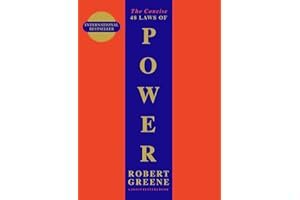
This amoral, cunning, ruthless, and instructive book synthesizes the philosophies of Machiavelli, Sun Tzu, and Carl Von Clausewitz with the historical legacies of statesmen, warriors, seducers, and con men throughout the ages.
These are the books I recommend people to listen to on @applebooks. [source]
Marvin Liao
Partner/500 Startups
My list would be (besides the ones I mentioned in answer to the previous question) both business & Fiction/Sci-Fi and ones I personally found helpful to myself. The business books explain just exactly how business, work & investing are in reality & how to think properly & differentiate yourself. On the non-business side, a mix of History & classic fiction to understand people, philosophy to make sense of life and Science fiction to picture what the future could be like (not always utopian). [source]
There is no living writer (or person) who has been more influential to me than Robert Greene. I met him when I was 19 years old and he’s shaped me as a person, as a writer, as a thinker. You MUST read his books. His work on power and strategy are critical for anyone trying to accomplish anything. In life, power is force we are constantly bumping up against. People have power of over us, we seek power ourselves that we might be free enough and influential enough to accomplish our goals—so we must understand where power comes from, how it works and how to get it. But pure power is meaningless. It must be joined to mastery and purpose. So read his book Mastery so that you can figure your life’s task and how to dedicate yourself to it. [source]
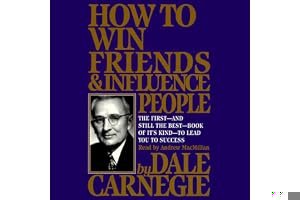
You can go after the job you want—and get it! You can take the job you have—and improve it! You can take any situation—and make it work for you!
Dale Carnegie’s rock-solid, time-tested advice has carried countless people up the ladder of success in their business and personal lives. One of the most groundbreaking and timeless bestsellers of all time, How to Win Friends & Influence People will teach you:
-Six ways to make people like you -Twelve ways to win people to your way of thinking -Nine ways to change people without arousing resentment
And much more! Achieve your maximum potential—a must-read for the twenty-first century with more than 15 million copies sold!
…
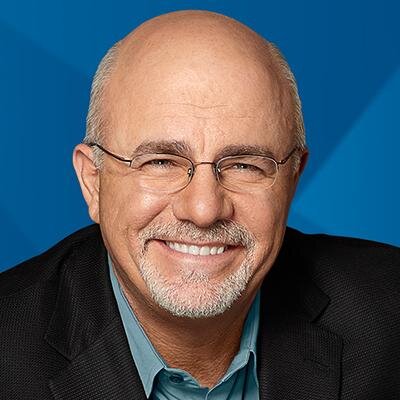
Recommended by Dave Ramsey, Daymond John, Dustin Moskovitz, and 58 others.
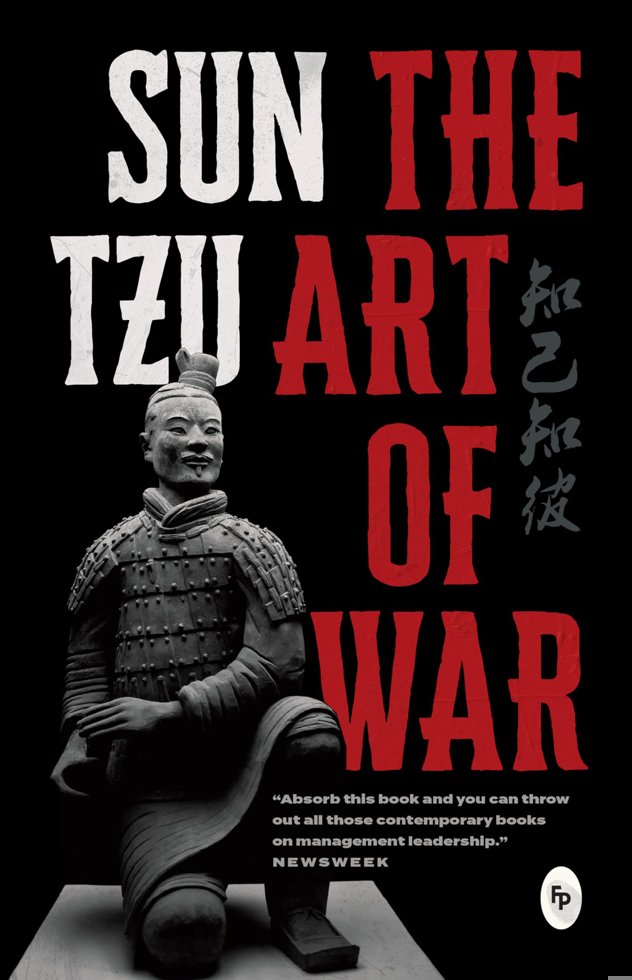
For more than two thousand years, The Art of War has stood as a cornerstone of Chinese culture-a lucid epigrammatic text that reveals as much about human psychology, politics, and economics as it does about battlefield strategy. The influence of Sun-tzu's text has grown tremendously in the West in recent years, with military leaders, politicians, and corporate executives alike finding valuable insight in these ancient words. In his crisp, accessible new translation, scholar John Minford brings this seminal work to life for modern readers.
Minford opens with a lively, learned introduction in which he explores the life and times of Sun-tzu, looks at The Art of War in the context of the turbulent Warring States period, and discusses how best to read and understand the work today. There follows Minford's translation of the core text itself in two different formats-first, the unadorned thirteen chapters of the original work and then the same text reprinted with extensive running commentary by classical Chinese scholars as well as Minford himself. The result is an opportunity for Western readers to experience Sun-tzu's work in all its intensity as it applies to many aspects of our lives.
Which books should be read by every single intelligent person on planet? … The Art of War (Sun Tsu) to learn that the act of killing fellow humans can be raised to an art. If you read all of the above works you will glean profound insight into most of what has driven the history of the western world. [source]
Influence, the classic book on persuasion, explains the psychology of why people say "yes"—and how to apply these understandings. Dr. Robert Cialdini is the seminal expert in the rapidly expanding field of influence and persuasion. His thirty-five years of rigorous, evidence-based research along with a three-year program of study on what moves people to change behavior has resulted in this highly acclaimed book.
You'll learn the six universal principles, how to use them to become a skilled persuader—and how to defend yourself against them. Perfect for people in all walks of life, the principles of Influence will move you toward profound personal change and act as a driving force for your success.
It covers a range of ways in which we end up doing things, and how we don’t understand why we’re doing them. [source]
Max Levchin
Co-founder/PayPal, CEO/Affirm, Investor
Max Levchin recommended this book as an answer to "What business books would you advise young entrepreneurs read?" [source]
Cover unavailable
5
The Prince
Nicollo Machiavelli, Tim Parks
4.5
Niccolo Machiavelli's "The Prince" is intended to be a treatise on ruling and is considered by many to be a classic of political science. In the book Machiavelli offers many bits of practical advice on how to rule and even though the book was written in the early 16th century its ideas are still very relevant today. Where "The Prince" differs from other political literature before it is in its separation of the lofty idealism of morality and ethics from the practical demands of governing. It is this very aspect of Machiavelli's work that has made his name synonymous with an almost immoral opportunism and his book a timeless classic.
Which books should be read by every single intelligent person on planet? … The Prince (Machiavelli) to learn that people not in power will do all they can to acquire it, and people in power will do all they can to keep it. If you read all of the above works you will glean profound insight into most of what has driven the history of the western world. [source]
Of course, this is a must read. Machiavelli is one of those figures and writers who is tragically overrated and underrated at the same time. Unfortunately that means that many people who read him miss the point and other people avoid him and miss out altogether. Take Machiavelli slow, and really read him. Also understand the man behind the book–not just as a masterful writer but a man who withstood heinous torture and exile with barely a whimper. Machiavelli is a glimpse into a time when power was literal and out for public viewing–when he talks about making an example of someone, he doesn’t mean calling them out, he means putting their head on a pike. Don’t let that scare you because we’re not as far from that world as we’d like to think. Deny that at your own peril. [source]
Cover unavailable
6
The 7 Habits of Highly Effective People: Powerful Lessons in Personal Change
When Stephen Covey first released The Seven Habits of Highly Effective People, the book became an instant rage because people suddenly got up and took notice that their lives were headed off in the wrong direction; and more than that, they realized that there were so many simple things they could do in order to navigate their life correctly. This book was wonderful education for people, education in how to live life effectively and get closer to the ideal of being a ‘success’ in life.
But not everyone understands Stephen Covey’s model fully well, or maybe there are some people who haven’t read it yet. This is definitely true because we still see so much failure all around us. Now, I am not saying that by using Covey’s model, or anyone else’s model for that matter, you can become a sure-shot success, but at least we should have seen many more successes around us already judging by the number of copies the book has sold! So, where is the shortcoming?
There are two main problems here, and we are talking only about the people who have read the book already. The first problem is that most people are too lazy to implement the ideals of Stephen Covey in their lives. They consider his masterpiece of a book as a mere coffee-table book or a book that you use for light reading when you are traveling and then forget all about it. They do not realize that this book contains life-changing information. Or, they take the information and do not make the effort to actually utilize it so that it becomes knowledge for them.
The second problem is that a lot of people have a myopic view of Covey’s ideals. These are people who are impressed by the book already. If you ask them what the seven habits are, they can rattle them off end to end, but then they miss the larger picture. They do not understand that Covey was trying to tell more than he wrote in words. There are hidden implications in this book, yes, and a lot of people have just failed to see through them.
That is what we are trying to do. We are trying to show you how Covey’s book, or rather, his model, was a complete model in itself. There was nothing amiss about it. If you implement it, there should be no aspect of your life that should go untouched. The only thing is that you have to understand these ideals and try to implement them in your life.
But, before we barge into that area, it is extremely important to understand what these ideals are. What was the model that was propounded by Stephen Covey in his mega-famous book? We shall begin by trying to understand his model first, and then interpret it in such a way that it pertains to every aspect of our life
Dave Ramsey recommended this book on his website. [source]
Dustin Moskovitz
Co-founder/Facebook and Asana
I was surprised at how familiar the topics felt. [source]
Joe Martin
@benmorris @audible_com @Gladwell I enjoy the quiet on the way home, but on the way to work I am listening to the 7 habits book by Stephen Coveru, a fave of mine [source]
Cover unavailable
7
Quiet: The Power of Introverts in a World That Can't Stop Talking
At least one-third of the people we know are introverts. They are the ones who prefer listening to speaking; who innovate and create but dislike self-promotion; who favor working on their own over working in teams. It is to introverts—Rosa Parks, Chopin, Dr. Seuss, Steve Wozniak—that we owe many of the great contributions to society.
In Quiet, Susan Cain argues that we dramatically undervalue introverts and shows how much we lose in doing so. She charts the rise of the Extrovert Ideal throughout the twentieth century and explores how deeply it has come to permeate our culture. She also introduces us to successful introverts—from a witty, high-octane public speaker who recharges in solitude after his talks, to a record-breaking salesman who quietly taps into the power of questions. Passionately argued, superbly researched, and filled with indelible stories of real people, Quiet has the power to permanently change how we see introverts and, equally important, how they see themselves.
Now with Extra Libris material, including a reader’s guide and bonus content.
Leaders needn’t be the loudest. Leadership is not about theater. It’s not about dominance. It is about putting the lives of others before any other priority. In Quiet, Cain affirms to a good many of us who are introverts by nature that we needn’t try to be extroverts if we want to lead. Simply being ourselves is more important — and more effective. [source]
Danielle Morrill
Co-founder/Mattermark
Anyway, maybe you’re like me and figuring this out for yourself. It’s a good book for introverts and for those who love them [source]
Probably half the world is introverts. Maybe more. It’s not an easy life to live. I sometimes have that feeling in a room full of people, “uh-oh. I just shut down. I can’t talk anymore and there’s a lock on my mouth and this crowd threw away the key.” Do you ever get that feeling? Please? I hope you do. Let’s try to lock eyes at the party. “Quiet” shows the reader how to unlock the secret powers that probably half the world needs to unlock. [source]
Cover unavailable
8
The Power Broker: Robert Moses and the Fall of New York
Robert A. Caro
4.4
Everywhere acknowledged as a modern American classic, winner of the Pulitzer Prize, and chosen by the Modern Library as one of the hundred greatest books of the twentieth century, The Power Broker is a huge and galvanizing biography revealing not only the saga of one man's incredible accumulation of power, but the story of the shaping (and mis-shaping) of New York in the twentieth century.
Robert Caro's monumental book makes public what few outsiders knew: that Robert Moses was the single most powerful man of his time in the City and in the State of New York. And in telling the Moses story, Caro both opens up to an unprecedented degree the way in which politics really happens--the way things really get done in America's City Halls and Statehouses--and brings to light a bonanza of vital information about such national figures as Alfred E. Smith and Franklin D. Roosevelt (and the genesis of their blood feud), about Fiorello La Guardia, John V. Lindsay and Nelson Rockefeller.
But The Power Broker is first and foremost a brilliant multidimensional portrait of a man--an extraordinary man who, denied power within the normal framework of the democratic process, stepped outside that framework to grasp power sufficient to shape a great city and to hold sway over the very texture of millions of lives. We see how Moses began: the handsome, intellectual young heir to the world of Our Crowd, an idealist. How, rebuffed by the entrenched political establishment, he fought for the power to accomplish his ideals. How he first created a miraculous flowering of parks and parkways, playlands and beaches--and then ultimately brought down on the city the smog-choked aridity of our urban landscape, the endless miles of (never sufficient) highway, the hopeless sprawl of Long Island, the massive failures of public housing, and countless other barriers to humane living. How, inevitably, the accumulation of power became an end in itself.
Moses built an empire and lived like an emperor. He was held in fear--his dossiers could disgorge the dark secret of anyone who opposed him. He was, he claimed, above politics, above deals; and through decade after decade, the newspapers and the public believed. Meanwhile, he was developing his public authorities into a fourth branch of government known as "Triborough"--a government whose records were closed to the public, whose policies and plans were decided not by voters or elected officials but solely by Moses--an immense economic force directing pressure on labor unions, on banks, on all the city's political and economic institutions, and on the press, and on the Church. He doled out millions of dollars' worth of legal fees, insurance commissions, lucrative contracts on the basis of who could best pay him back in the only coin he coveted: power. He dominated the politics and politicians of his time--without ever having been elected to any office. He was, in essence, above our democratic system.
Robert Moses held power in the state for 44 years, through the governorships of Smith, Roosevelt, Lehman, Dewey, Harriman and Rockefeller, and in the city for 34 years, through the mayoralties of La Guardia, O'Dwyer, Impellitteri, Wagner and Lindsay, He personally conceived and carried through public works costing 27 billion dollars--he was undoubtedly America's greatest builder.
This is how he built and dominated New York--before, finally, he was stripped of his reputation (by the press) and his power (by Nelson Rockefeller). But his work, and his will, had been done.
It took me 15 days to read all 1,165 pages of this monstrosity that chronicles the rise of Robert Moses. I was 20 years old. It was one of the most magnificent books I’ve ever read. Moses built just about every other major modern construction project in New York City. The public couldn’t stop him, the mayor couldn’t stop him, the governor couldn’t stop him, and only once could the President of the United States stop him. But ultimately, you know where the cliché must take us. Robert Moses was an asshole. He may have had more brain, more drive, more strategy than other men, but he did not have more compassion. And ultimately power turned him into something monstrous. [source]
Adam Townsend
@willchamberlain Power broker is such a remarkable book. [source]
Major New York Times bestseller Winner of the National Academy of Sciences Best Book Award in 2012 Selected by the New York Times Book Review as one of the best books of 2011 A Globe and Mail Best Books of the Year 2011 Title One of The Economist's 2011 Books of the Year One of The Wall Street Journal's Best Nonfiction Books of the Year 2011 2013 Presidential Medal of Freedom Recipient
In the international bestseller, Thinking, Fast and Slow, Daniel Kahneman, the renowned psychologist and winner of the Nobel Prize in Economics, takes us on a groundbreaking tour of the mind and explains the two systems that drive the way we think. System 1 is fast, intuitive, and emotional; System 2 is slower, more deliberative, and more logical. The impact of overconfidence on corporate strategies, the difficulties of predicting what will make us happy in the future, the profound effect of cognitive biases on everything from playing the stock market to planning our next vacation—each of these can be understood only by knowing how the two systems shape our judgments and decisions. Engaging the reader in a lively conversation about how we think, Kahneman reveals where we can and cannot trust our intuitions and how we can tap into the benefits of slow thinking. He offers practical and enlightening insights into how choices are made in both our business and our personal lives—and how we can use different techniques to guard against the mental glitches that often get us into trouble. Winner of the National Academy of Sciences Best Book Award and the Los Angeles Times Book Prize and selected by The New York Times Book Review as one of the ten best books of 2011, Thinking, Fast and Slow is destined to be a classic.
A few months ago, Mr. Obama read “Thinking, Fast and Slow,” by Daniel Kahneman, about how people make decisions — quick, instinctive thinking versus slower, contemplative deliberation. For Mr. Obama, a deliberator in an instinctive business, this may be as instructive as any political science text. [source]
Captivating dive into human decision making, marred by inclusion of several/many? psychology studies that fail to replicate. Will stand as a cautionary tale? [source]
Tara Westover was 17 the first time she set foot in a classroom. Born to survivalists in the mountains of Idaho, she prepared for the end of the world by stockpiling home-canned peaches and sleeping with her "head-for-the-hills bag". In the summer she stewed herbs for her mother, a midwife and healer, and in the winter she salvaged in her father's junkyard.
Her father forbade hospitals, so Tara never saw a doctor or nurse. Gashes and concussions, even burns from explosions, were all treated at home with herbalism. The family was so isolated from mainstream society that there was no one to ensure the children received an education and no one to intervene when one of Tara's older brothers became violent.
Then, lacking any formal education, Tara began to educate herself. She taught herself enough mathematics and grammar to be admitted to Brigham Young University, where she studied history, learning for the first time about important world events like the Holocaust and the civil rights movement. Her quest for knowledge transformed her, taking her over oceans and across continents, to Harvard and to Cambridge. Only then would she wonder if she'd traveled too far, if there was still a way home.
Educated is an account of the struggle for self-invention. It is a tale of fierce family loyalty and of the grief that comes with severing the closest of ties. With the acute insight that distinguishes all great writers, Westover has crafted a universal coming-of-age story that gets to the heart of what an education is and what it offers: the perspective to see one's life through new eyes and the will to change it.
As 2018 draws to a close, I’m continuing a favorite tradition of mine and sharing my year-end lists. It gives me a moment to pause and reflect on the year through the books I found most thought-provoking, inspiring, or just plain loved. It also gives me a chance to highlight talented authors – some who are household names and others who you may not have heard of before. Here’s my best of 2018 list. [source]
Tara never went to school or visited a doctor until she left home at 17. I never thought I’d relate to a story about growing up in a Mormon survivalist household, but she’s such a good writer that she got me to reflect on my own life while reading about her extreme childhood. Melinda and I loved this memoir of a young woman whose thirst for learning was so strong that she ended up getting a Ph.D. from Cambridge University. [source]
If you read or listen to only one book this summer, this is it. Bloody brilliant! Every word, every sentence. Rarely do I go through a book with such a rollecoaster of emotion, from love to hate. Thank you for sharing @tarawestover #Educated https://t.co/GqLaqlcWMp [source]
Cover unavailable
11
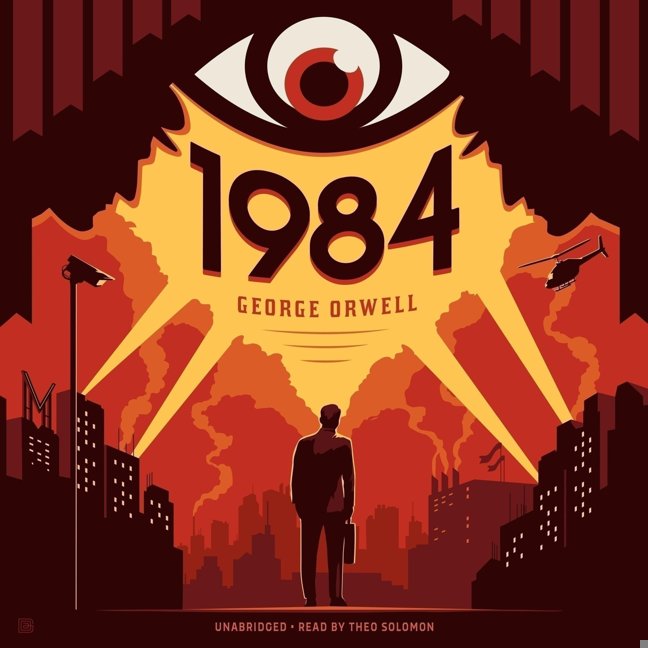
1984
George Orwell
4.4
A PBS Great American Read Top 100 Pick
With extraordinary relevance and renewed popularity, George Orwell’s 1984 takes on new life in this hardcover edition.
“Orwell saw, to his credit, that the act of falsifying reality is only secondarily a way of changing perceptions. It is, above all, a way of asserting power.”—The New Yorker
In 1984, London is a grim city in the totalitarian state of Oceania where Big Brother is always watching you and the Thought Police can practically read your mind. Winston Smith is a man in grave danger for the simple reason that his memory still functions. Drawn into a forbidden love affair, Winston finds the courage to join a secret revolutionary organization called The Brotherhood, dedicated to the destruction of the Party. Together with his beloved Julia, he hazards his life in a deadly match against the powers that be.
Lionel Trilling said of Orwell’s masterpiece “1984 is a profound, terrifying, and wholly fascinating book. It is a fantasy of the political future, and like any such fantasy, serves its author as a magnifying device for an examination of the present.” Though the year 1984 now exists in the past, Orwell’s novel remains an urgent call for the individual willing to speak truth to power.
Today is World Book Day, a wonderful opportunity to address this #ChallengeRichard sent in by Mike Gonzalez of New Jersey: Make a list of your top 65 books to read in a lifetime. [source]
called this book "one of his favorite" and recommended it to the hires. The book also inspired one the greatest TV ad (made by Jobs) [source]
Andra Zaharia
These books and their core ideas have stuck with me the most and continue to guide me when I hit crossroads along the way. [source]
Cover unavailable
12
Animal Farm
George Orwell and Christopher Hitchens
4.3
Animal Farm is one of the most famous warnings ever written. Orwell's immortal satire - 'against Stalin' as he wrote to his French translator - can be read on many levels. With its piercing clarity and deceptively simple style it is no surprise that this novel is required reading for schoolchildren and politicians alike. This fable of the steadfast horses Boxer and Clover, the opportunistic pigs Snowball and Napoleon, and the deafening choir of sheep remains an unparalleled masterpiece.
One reviewer wrote 'In a hundred years' time perhaps Animal Farm ... may simply be a fairy story: today it is a fairy story with a good deal of point.' Over sixty years on in the age of spin, it is more relevant than ever.
Rejected by such eminent publishing figures as Victor Gollancz, Jonathan Cape and T.S. Eliot, Animal Farm was published to great acclaim by Martin Secker and Warburg on 17 August 1945 in an edition of 4500 copies. In the centenary year of Martin Secker, Ltd., Harvill Secker is proud to publish this special edition with a brand-new introduction by Christopher Hitchens.
Whitney Cummings recommended this book on the podcast "The Tim Ferriss Show". [source]
Vlad Tenev
When I was in sixth grade I remember being very upset by the ending of this book. [source]
Heather Brooke
I picked Animal Farm because it is an allegory about power and its seductive and corruptive influence on people regardless of their initial good intentions. [source]
Cover unavailable
13
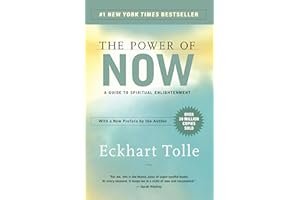
The Power of Now: A Guide to Spiritual Enlightenment
Eckhart Tolle is emerging as one of today's most inspiring teachers. In The Power of Now, a #1 national bestseller, the author describes his transition from despair to self-realization soon after his 29th birthday. Tolle took another ten years to understand this transformation, during which time he evolved a philosophy that has parallels in Buddhism, relaxation techniques, and meditation theory but is also eminently practical. In The Power of Now he shows readers how to recognize themselves as the creators of their own pain, and how to have a pain-free existence by living fully in the present. Accessing the deepest self, the true self, can be learned, he says, by freeing ourselves from the conflicting, unreasonable demands of the mind and living present, fully, and intensely, in the Now.
…
Recommended by Bill Liao, Catherine Plano, Darrah Brustein, and 7 others.
Bill Liao
The human world occurs in language so best get good at it! [source]
Catherine Plano
The one that really resonates with me and still to this day is The Power of NOW from Eckhart Tolle because as an entrepreneur we get so caught up in the future that we fail to be 'present'. The reality of it all when you really think about it - the present is all we have that is real, it requires no effort, nor time. I practice this daily, if I feel uncomfortable then I know I am trying too hard and not being present but when I am being present it is easier to think about what I have to do right now, because now is all that matters. [source]
Darrah Brustein
Others include The Power Of Now which is powerful reminder that all we have is the present and helps give you meaningful ways to live in it, not in the past or the future. [source]
Cover unavailable
14
The Power of Habit: Why We Do What We Do in Life and Business
A young woman walks into a laboratory. Over the past two years, she has transformed almost every aspect of her life. She has quit smoking, run a marathon, and been promoted at work. The patterns inside her brain, neurologists discover, have fundamentally changed.
Marketers at Procter & Gamble study videos of people making their beds. They are desperately trying to figure out how to sell a new product called Febreze, on track to be one of the biggest flops in company history. Suddenly, one of them detects a nearly imperceptible pattern—and with a slight shift in advertising, Febreze goes on to earn a billion dollars a year.
An untested CEO takes over one of the largest companies in America. His first order of business is attacking a single pattern among his employees—how they approach worker safety—and soon the firm, Alcoa, becomes the top performer in the Dow Jones.
What do all these people have in common? They achieved success by focusing on the patterns that shape every aspect of our lives.
They succeeded by transforming habits.
In The Power of Habit, award-winning New York Times business reporter Charles Duhigg takes us to the thrilling edge of scientific discoveries that explain why habits exist and how they can be changed. With penetrating intelligence and an ability to distill vast amounts of information into engrossing narratives, Duhigg brings to life a whole new understanding of human nature and its potential for transformation.
Along the way we learn why some people and companies struggle to change, despite years of trying, while others seem to remake themselves overnight. We visit laboratories where neuroscientists explore how habits work and where, exactly, they reside in our brains. We discover how the right habits were crucial to the success of Olympic swimmer Michael Phelps, Starbucks CEO Howard Schultz, and civil-rights hero Martin Luther King, Jr. We go inside Procter & Gamble, Target superstores, Rick Warren’s Saddleback Church, NFL locker rooms, and the nation’s largest hospitals and see how implementing so-called keystone habits can earn billions and mean the difference between failure and success, life and death.
At its core, The Power of Habit contains an exhilarating argument: The key to exercising regularly, losing weight, raising exceptional children, becoming more productive, building revolutionary companies and social movements, and achieving success is understanding how habits work.
Habits aren’t destiny. As Charles Duhigg shows, by harnessing this new science, we can transform our businesses, our communities, and our lives.
…
Recommended by Naval Ravikant, Blake Irving, Alden Mills, and 15 others.
I also recently finished The Power of Habit, or close to finish as I get. That one was interesting, not because of its content necessarily, but because it’s good for me to always keep on top of mind how powerful my habits are. … I think learning how to break habits is a very important meta-skill that can serve you better in life than almost anything else. Although you can read tons of books on it, the reality is you’re never going to learn how to break bad habits until you just break them. [source]
Blake Irving
CEO/GoDaddy
You know, there's a book called The Power of Habit by Charles Duhigg. Simple read book about just how to build positive habits that can be I think I what I'd call you know whether in your personal life or whether in your business life to help you build you know, have a loop that can build your success and that's one I mean there are so many great books out there. [source]
Alden Mills
More recent books that have had a significant impact on me are The Power of Habit and The Diamond Cutter. Both represent different forces for me – the former helps me tactically with making incremental improvements in my life. [source]
Cover unavailable
15
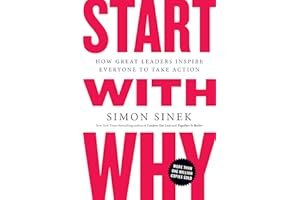
Start with Why: How Great Leaders Inspire Everyone to Take Action
Why are some people and organizations more innovative, more influential, and more profitable than others? Why do some command greater loyalty from customers and employees alike? Even among the successful, why are so few able to repeat their success over and over?
People like Martin Luther King Jr., Steve Jobs, and the Wright Brothers might have little in common, but they all started with why. It was their natural ability to start with why that enabled them to inspire those around them and to achieve remarkable things.
In studying the leaders who've had the greatest influence in the world, Simon Sinek discovered that they all think, act, and communicate in the exact same way—and it's the complete opposite of what everyone else does. Sinek calls this powerful idea The Golden Circle, and it provides a framework upon which organizations can be built, movements can be lead, and people can be inspired. And it all starts with WHY.
Any organization can explain what it does; some can explain how they do it; but very few can clearly articulate why. WHY is not money or profit—those are always results. WHY does your organization exist? WHY does it do the things it does? WHY do customers really buy from one company or another? WHY are people loyal to some leaders, but not others?
Starting with WHY works in big business and small business, in the nonprofit world and in politics. Those who start with WHY never manipulate, they inspire. And the people who follow them don't do so because they have to; they follow because they want to.
Drawing on a wide range of real-life stories, Sinek weaves together a clear vision of what it truly takes to lead and inspire. This book is for anyone who wants to inspire others or who wants to find someone to inspire them.
Today is World Book Day, a wonderful opportunity to address this #ChallengeRichard sent in by Mike Gonzalez of New Jersey: Make a list of your top 65 books to read in a lifetime. [source]
The basis of this book is so important to anyone looking to increase their influence, profits or impact. People won't truly buy into a product, service, movement, or idea until they understand the WHY behind it. When you start with the why, everything else falls into place. This book is so impactful, I consider it required reading. [source]
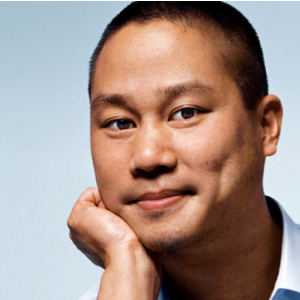
Tony Hsieh
CEO/Zappos.com
Over the years he’s recommended well over 20 business books — including his own, the 2010 bestseller Delivering Happiness and you can always find what he’s currently reading atop his cluttered desk. Start with Why is amogst those titles. [source]
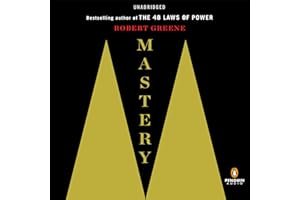
In this book, Robert Greene demonstrates that the ultimate form of power is mastery itself. By analyzing the lives of such past masters as Charles Darwin, Benjamin Franklin, Albert Einstein, and Leonard da Vinci, as well as by interviewing nine contemporary masters, including tech guru Paul Graham and animal rights advocate Temple Grandin, Greene debunks our culture’s many myths about genius and distills the wisdom of the ages to reveal the secret to greatness. With this seminal text as a guide, readers will learn how to unlock the passion within and become masters.
What better way to learn about success then the minute paths taken by 100s or 1000s of successful people.It feels like Robert takes everyone in history and dissects the exact moments and decisions that led to their great success. [source]
There is no living writer (or person) who has been more influential to me than Robert Greene. I met him when I was 19 years old and he’s shaped me as a person, as a writer, as a thinker. You MUST read his books. His work on power and strategy are critical for anyone trying to accomplish anything. In life, power is force we are constantly bumping up against. People have power of over us, we seek power ourselves that we might be free enough and influential enough to accomplish our goals—so we must understand where power comes from, how it works and how to get it. But pure power is meaningless. It must be joined to mastery and purpose. So read his book Mastery so that you can figure your life’s task and how to dedicate yourself to it. [source]
Boban Dedovic
Question: What books had the biggest impact on you? Perhaps changed the way you see things or dramatically changed your career path. Answer: Here are some others books that are important to me. Zero to One by Peter Thiel (on startups) Mastery by Robert Greene (life and career path study) Good to Great by Jim Collins (on growing a great company) Getting to Yes by Roger Fisher (negotiation) [source]
Cover unavailable
17
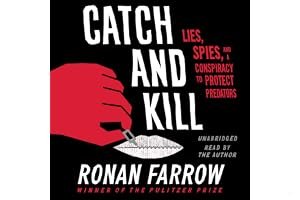
Catch and Kill: Lies, Spies, and a Conspiracy to Protect Predators
In a dramatic account of violence and espionage, Pulitzer Prize-winning investigative reporter Ronan Farrow exposes serial abusers and a cabal of powerful interests hell-bent on covering up the truth, at any cost.
In 2017, a routine network television investigation led Ronan Farrow to a story only whispered about: one of Hollywood's most powerful producers was a predator, protected by fear, wealth, and a conspiracy of silence. As Farrow drew closer to the truth, shadowy operatives, from high-priced lawyers to elite war-hardened spies, mounted a secret campaign of intimidation, threatening his career, following his every move and weaponizing an account of abuse in his own family.
All the while, Farrow and his producer faced a degree of resistance that could not be explained - until now. And a trail of clues revealed corruption and cover-ups from Hollywood, to Washington, and beyond.
This is the untold story of the exotic tactics of surveillance and intimidation deployed by wealthy and connected men to threaten journalists, evade accountability and silence victims of abuse - and it's the story of the women who risked everything to expose the truth and spark a global movement.
Both a spy thriller and a meticulous work of investigative journalism, Catch and Kill breaks devastating new stories about the rampant abuse of power - and sheds far-reaching light on investigations that shook the culture.
…
Recommended by Reese Witherspoon, Bastian Obermayer, Julie K. Brown, and 4 others.
Congrats @RonanFarrow on your incredible book #CatchandKill. Amazing investigative reporting and A real thrill ride of a read. 📚 [source]
Bastian Obermayer
I know I’m very late to this party, but: „Catch And Kill“ from the unrelenting @RonanFarrow is a hell of a read!! Need inspiration for how to hold the powerful accountable - or only looking for great entertainment? Get this book. https://t.co/y3xWkUTWhh [source]
Julie K. Brown
The parallels to the Jeffrey Epstein case are amazing in @RonanFarrow’s new book. Imagine this same predatory behavior and coverup among powerful men — not at a TV-media network — but at the highest levels of our government. #perversionofjustice https://t.co/wh2EJlg7iW [source]
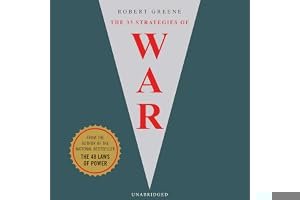
Brilliant distillations of the strategies of war—and the subtle social game of everyday life—by the bestselling author of The 48 Laws of Power and Mastery
Robert Greene’s groundbreaking guides, The 48 Laws of Power, The Art of Seduction, and his latest book, Mastery, espouse profound, timeless lessons from the events of history to help readers vanquish an enemy, ensnare an unsuspecting victim, or become the greatest in your field. In The 33 Strategies of War, Greene has crafted an important addition to this ruthless and unique series.
Spanning world civilizations, synthesizing dozens of political, philosophical, and religious texts and thousands of years of violent conflict, The 33 Strategies of War is a comprehensive guide to the subtle social game of everyday life informed by the most ingenious and effective military principles in war. Structured in Greene’s trademark style, The 33 Strategies of War is the I-Ching of conflict, the contemporary companion to Sun Tzu’s The Art of War.
Abundantly illustrated with examples from history, including the folly and genius of everyone from Napoleon to Margaret Thatcher, Shaka the Zulu to Lord Nelson, Hannibal to Ulysses S. Grant, as well as movie moguls, Samurai swordsmen, and diplomats, each of the thirty-three chapters outlines a strategy that will help you win life’s wars. Learn the offensive strategies that require you to maintain the initiative and negotiate from a position of strength, or the defensive strategies designed to help you respond to dangerous situations and avoid unwinnable wars. The great warriors of battlefields and drawing rooms alike demonstrate prudence, agility, balance, and calm, and a keen understanding that the rational, resourceful, and intuitive always defeat the panicked, the uncreative, and the stupid. An indispensable book, The 33 Strategies of War provides all the psychological ammunition you need to overcome patterns of failure and forever gain the upper hand.
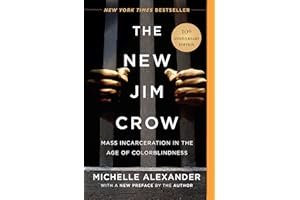
"Jarvious Cotton's great-great-grandfather could not vote as a slave. His great-grandfather was beaten to death by the Klu Klux Klan for attempting to vote. His grandfather was prevented from voting by Klan intimidation; his father was barred by poll taxes and literacy tests. Today, Cotton cannot vote because he, like many black men in the United States, has been labeled a felon and is currently on parole."
As the United States celebrates the nation's "triumph over race" with the election of Barack Obama, the majority of young black men in major American cities are locked behind bars or have been labeled felons for life. Although Jim Crow laws have been wiped off the books, an astounding percentage of the African American community remains trapped in a subordinate status--much like their grandparents before them.
In this incisive critique, former litigator-turned-legal-scholar Michelle Alexander provocatively argues that we have not ended racial caste in America: we have simply redesigned it. Alexander shows that, by targeting black men and decimating communities of color, the U.S. criminal justice system functions as a contemporary system of racial control, even as it formally adheres to the principle of color blindness. The New Jim Crow challenges the civil rights community--and all of us--to place mass incarceration at the forefront of a new movement for racial justice in America.
I read The New Jim Crow, a study of how the U.S. justice system disproportionately criminalizes and jails blacks and Latinos. Making our criminal justice system fairer and more effective is a huge challenge for our country. I’m going to keep learning about this topic, but some things are already clear: We can’t jail our way to a just society, and our current system isn’t working (adapted with permission from Facebook’s A Year of Books project). [source]
Peter Temin
The new Jim Crow that Michelle Alexander is talking about is mass incarceration. [source]
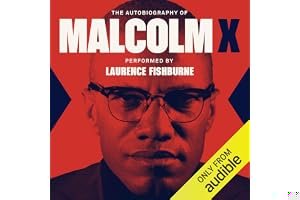
With its first great victory in the landmark Supreme Court decision Brown v. Board of Education in 1954, the civil rights movement gained the powerful momentum it needed to sweep forward into its crucial decade, the 1960s. As voices of protest and change rose above the din of history and false promises, one voice sounded more urgently, more passionately, than the rest. Malcolm X—once called the most dangerous man in America—challenged the world to listen and learn the truth as he experienced it. And his enduring message is as relevant today as when he first delivered it.
In the searing pages of this classic autobiography, originally published in 1964, Malcolm X, the Muslim leader, firebrand, and anti-integrationist, tells the extraordinary story of his life and the growth of the Black Muslim movement to veteran writer and journalist Alex Haley . In a unique collaboration, Haley worked with Malcolm X for nearly two years, interviewing, listening to, and understanding the most controversial leader of his time.
Raised in Lansing, Michigan, Malcolm Little journeyed on a road to fame as astonishing as it was unpredictable. Drifting from childhood poverty to petty crime, Malcolm found himself in jail. It was there that he came into contact with the teachings of a little-known Black Muslim leader renamed Elijah Muhammad. The newly renamed Malcolm X devoted himself body and soul to the teachings of Elijah Muhammad and the world of Islam, becoming the Nation’s foremost spokesman. When his conscience forced him to break with Elijah Muhammad, Malcolm founded the Organization of Afro-American Unity to reach African Americans across the country with an inspiring message of pride, power, and self-determination.
I forget who said it but I heard someone say that Catcher in the Rye was to young white boys what the Autobiography of Malcolm X was to young black boys. Personally, I prefer that latter over the former. I would much rather read about and emulate a man who is born into adversity and pain, struggles with criminality, does prison time, teaches himself to read through the dictionary, finds religion and then becomes an activist for Civil Rights before being gunned down by his former supporters when he tempers the hate and anger that had long defined parts of his message. [source]
David Coogan
His memoir describes that process of transformation from a common narrative of street hustler and limited opportunities, struggling in a racist society, to this radicalization in part through literacy, in part through literature and religion. [source]
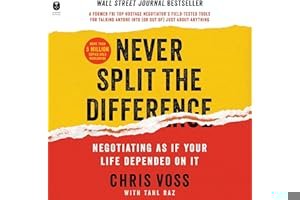
A former international hostage negotiator for the FBI offers a new, field-tested approach to high-stakes negotiations—whether in the boardroom or at home.
After a stint policing the rough streets of Kansas City, Missouri, Chris Voss joined the FBI, where his career as a hostage negotiator brought him face-to-face with a range of criminals, including bank robbers and terrorists. Reaching the pinnacle of his profession, he became the FBI’s lead international kidnapping negotiator. Never Split the Difference takes you inside the world of high-stakes negotiations and into Voss’s head, revealing the skills that helped him and his colleagues to succeed where it mattered most: saving lives. In this practical guide, he shares the nine effective principles—counter-intuitive tactics and strategies—you too can use to become more persuasive in both your professional and personal life.
Life is a series of negotiations you should be prepared for: buying a car; negotiating a salary; buying a home; renegotiating rent; deliberating with your partner. Taking emotional intelligence and intuition to the next level, Never Split the Difference gives you the competitive edge in any discussion.
Emphasizes the importance of emotional intelligence without sacrificing deal-making power. From the pen of a former hostage negotiator—someone who couldn’t take no for an answer—which makes it fascinating reading. But it’s also eminently practical. In these pages, you will find the techniques for getting the deal you want. [source]
This book blew my mind. It’s a riveting read, full of instantly actionable advice—not just for high-stakes negotiations, but also for handling everyday conflicts at work and at home. [source]
Cover unavailable
22
The Hunger Games (The Hunger Games, #1)
Suzanne Collins
4.2
WINNING MEANS FAME AND FORTUNE. LOSING MEANS CERTAIN DEATH. THE HUNGER GAMES HAVE BEGUN. . . .
In the ruins of a place once known as North America lies the nation of Panem, a shining Capitol surrounded by twelve outlying districts. The Capitol is harsh and cruel and keeps the districts in line by forcing them all to send one boy and once girl between the ages of twelve and eighteen to participate in the annual Hunger Games, a fight to the death on live TV.
Sixteen-year-old Katniss Everdeen regards it as a death sentence when she steps forward to take her sister's place in the Games. But Katniss has been close to dead before—and survival, for her, is second nature. Without really meaning to, she becomes a contender. But if she is to win, she will have to start making choices that weight survival against humanity and life against love.
If you’ve never read The 21 Irrefutable Laws of Leadership, you’ve been missing out on one of the best-selling leadership books of all time. If you have read the original version, then you’ll love this new expanded and updated one.
Internationally recognized leadership expert, speaker, and author John C. Maxwell has taken this million-seller and made it even better:
Every Law of Leadership has been sharpened and updated Seventeen new leadership stories are included Two new Laws of Leadership are introduced New evaluation tool will reveal your leadership strengths—and weaknesses New application exercises in every chapter will help you grow Why would Dr. Maxwell make changes to his best-selling book?
“A book is a conversation between the author and reader,” says Maxwell. “It’s been ten years since I wrote The 21 Laws of Leadership. I’ve grown a lot since then. I’ve taught these laws in dozens of countries around the world. This new edition gives me the opportunity to share what I’ve learned.”
Dave Ramsey recommended this book on his website. [source]
Lex Na Wei Ming
I remember during the days when I was in National Service, between the ages of 19 to 21. I had a lot of time on my hands. I managed to stumble upon the author by the name of John C Maxwell. He was really popular during that period of time and he had so many good titles like “Developing the leader with you.”, “Today Matters.”, “The 21 irrefutable laws of leadership.”. These series of books really mold me into who I am now. These are very deep character building books. And they came at the right time when I was at an age ready to be mentored and guided. [source]
Cover unavailable
24
Team of Rivals: The Political Genius of Abraham Lincoln
Doris Kearns Goodwin
4.2
Acclaimed historian Doris Kearns Goodwin illuminates Lincoln's political genius in this highly original work, as the one-term congressman and prairie lawyer rises from obscurity to prevail over three gifted rivals of national reputation to become president.
On May 18, 1860, William H. Seward, Salmon P. Chase, Edward Bates, and Abraham Lincoln waited in their hometowns for the results from the Republican National Convention in Chicago. When Lincoln emerged as the victor, his rivals were dismayed and angry.
Throughout the turbulent 1850s, each had energetically sought the presidency as the conflict over slavery was leading inexorably to secession and civil war. That Lincoln succeeded, Goodwin demonstrates, was the result of a character that had been forged by experiences that raised him above his more privileged and accomplished rivals. He won because he possessed an extraordinary ability to put himself in the place of other men, to experience what they were feeling, to understand their motives and desires.
It was this capacity that enabled Lincoln as president to bring his disgruntled opponents together, create the most unusual cabinet in history, and marshal their talents to the task of preserving the Union and winning the war.
We view the long, horrifying struggle from the vantage of the White House as Lincoln copes with incompetent generals, hostile congressmen, and his raucous cabinet. He overcomes these obstacles by winning the respect of his former competitors, and in the case of Seward, finds a loyal and crucial friend to see him through. --front flap
The Oval office can be a lonely place, so reading about your forefather’s experience could only help. “The biographies have been useful, because I do think that there’s a tendency, understandable, to think that whatever’s going on right now is uniquely disastrous or amazing or difficult,” said President Obama in an interview. [source]
I loved Team of Rivals, and Leadership really built on the things I had taken away from that book. Moving from basketball to building a company, I needed to learn new and different leadership skills, and Goodwin outlines the different skill-sets of Lincoln, both Roosevelts, and Lyndon Johnson, accessibly. [source]
Cover unavailable
25
Emotional Intelligence: Why It Can Matter More Than IQ
Everyone knows that high IQ is no guarantee of success, happiness, or virtue, but until Emotional Intelligence, we could only guess why. Daniel Goleman's brilliant report from the frontiers of psychology and neuroscience offers startling new insight into our "two minds"—the rational and the emotional—and how they together shape our destiny.
Through vivid examples, Goleman delineates the five crucial skills of emotional intelligence, and shows how they determine our success in relationships, work, and even our physical well-being. What emerges is an entirely new way to talk about being smart.
The best news is that "emotional literacy" is not fixed early in life. Every parent, every teacher, every business leader, and everyone interested in a more civil society, has a stake in this compelling vision of human possibility.
From the Trade Paperback edition.
…
Recommended by Drew Houston, Drew Huston, Magda Marcu, and 4 others.
Drew Houston
CEO/Dropbox
It’s nonfiction, but it spelled out something that I just didn’t know you could kind of break down in a logical way. And, suddenly, I had this understanding about the world that I didn’t have before. [source]
Magda Marcu
One of the most eye opening for me was “Emotional Intelligence: Why It Can Matter More Than IQ” as it offered a different perspective on leadership, and how empathy can make you a more successful leader. Every person has some degree of empathy and through this book you understand how to apply it more intently. [source]
Robert Kelsey
Yes, that’s the key revelation. But another key element, which was quite revelatory for me when I read it, is about the impact of fear on your brain. The impact of fear as a physiological response was well known when he wrote the book, but what was less well known was the idea of fear as a neurological response. He pointed to research showing what happens to the brain when fear is triggered, and it’s very damaging. There’s a part of the brain called the amygdala, which is part of the limbic system, and deals with emotions such as fear and distress. Its main purpose is to alert you to danger and it sends an emergency signal. All those physiological responses you have are basically the body’s response to that emergency signal. That’s what people experience when they experience fear, but it’s not just the fear of a dog barking at you or someone attacking you, it’s fear based on a fear conditioning. These are moments when something happens to you that induces fear or distress, and can include fear of failure or fear of being upset, and the same response occurs. [source]
In this must-read book for anyone striving to succeed, pioneering psychologist Angela Duckworth shows parents, educators, students, and business people both seasoned and new that the secret to outstanding achievement is not talent but a focused persistence called grit.
Why do some people succeed and others fail? Sharing new insights from her landmark research on grit, Angela Duckworth explains why talent is hardly a guarantor of success. Rather, other factors can be even more crucial such as identifying our passions and following through on our commitments.
Drawing on her own powerful story as the daughter of a scientist who frequently bemoaned her lack of smarts, Duckworth describes her winding path through teaching, business consulting, and neuroscience, which led to the hypothesis that what really drives success is not genius, but a special blend of passion and long-term perseverance. As a professor at the University of Pennsylvania, Duckworth created her own character lab and set out to test her theory.
Here, she takes readers into the field to visit teachers working in some of the toughest schools, cadets struggling through their first days at West Point, and young finalists in the National Spelling Bee. She also mines fascinating insights from history and shows what can be gleaned from modern experiments in peak performance. Finally, she shares what she's learned from interviewing dozens of high achievers; from JP Morgan CEO Jamie Dimon to the cartoon editor of The New Yorker to Seattle Seahawks Coach Pete Carroll.
Winningly personal, insightful, and even life-changing, Grit is a book about what goes through your head when you fall down, and how that not talent or luck makes all the difference.
…
Recommended by Albert Wenger, Anu Hariharan, Benjamin Spall, and 11 others.
Benjamin Spall
Question: What five books would you recommend to youngsters interested in your professional path? … Grit by Angela Duckworth [source]
Bogdan Lucaciu
Grit: The Power of Passion and Perseverance - it was frustrating to read: “Where was this book 20 years ago!?” [source]
Stephen Lew
When asked what books he would recommend to youngsters interested in his professional path, Stephen mentioned Grit. [source]
Cover unavailable
27
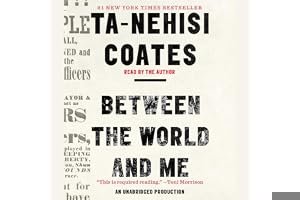
Between the World and Me
Ta-Nehisi Coates
4.2
#1 NEW YORK TIMES BESTSELLER [[ LONGLISTED FOR THE NATIONAL BOOK AWARD [[ Hailed by Toni Morrison as "required reading," a bold and personal literary exploration of America's racial history by "the single best writer on the subject of race in the United States" (The New York Observer)
"This is your country, this is your world, this is your body, and you must find some way to live within the all of it."
In a profound work that pivots from the biggest questions about American history and ideals to the most intimate concerns of a father for his son, Ta-Nehisi Coates offers a powerful new framework for understanding our nation's history and current crisis. Americans have built an empire on the idea of "race," a falsehood that damages us all but falls most heavily on the bodies of black women and menbodies exploited through slavery and segregation, and, today, threatened, locked up, and murdered out of all proportion. What is it like to inhabit a black body and find a way to live within it? And how can we all honestly reckon with this fraught history and free ourselves from its burden?
Between the World and Me is Ta-Nehisi Coates's attempt to answer these questions in a letter to his adolescent son. Coates shares with his sonand readersthe story of his awakening to the truth about his place in the world through a series of revelatory experiences, from Howard University to Civil War battlefields, from the South Side of Chicago to Paris, from his childhood home to the living rooms of mothers whose children's lives were taken as American plunder. Beautifully woven from personal narrative, reimagined history, and fresh, emotionally charged reportage, Between the World and Me clearly illuminates the past, bracingly confronts our present, and offers a transcendent vision for a way forward.
The president also released a list of his summer favorites back in 2015: All That Is, James Salter The Sixth Extinction, Elizabeth Kolbert The Lowland, Jhumpa Lahiri Between the World and Me, Ta-Nehisi Coates Washington: A Life, Ron Chernow All the Light We Cannot See, Anthony Doerr [source]
Q: What are the books that had a major influence on you? Or simply the ones you like the most. : Tao te Ching, score takes care of itself, between the world and me, the four agreements, the old man and the sea...I love reading! [source]
Here are some of my favorite reads from 2017. Lots of friends and colleagues send me book suggestions and it's impossible to squeeze them all in. I continue to be super curious about how digital and tech are enabling people to transform our lives but I try to read a good mix of books that apply to a variety of areas and stretch my thinking more broadly. [source]
Cover unavailable
28
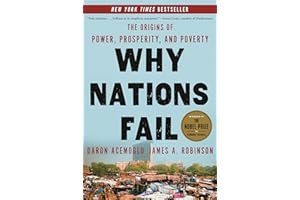
Why Nations Fail: The Origins of Power, Prosperity, and Poverty
Brilliant and engagingly written, Why Nations Fail answers the question that has stumped the experts for centuries: Why are some nations rich and others poor, divided by wealth and poverty, health and sickness, food and famine?
Is it culture, the weather, geography? Perhaps ignorance of what the right policies are?
Simply, no. None of these factors is either definitive or destiny. Otherwise, how to explain why Botswana has become one of the fastest growing countries in the world, while other African nations, such as Zimbabwe, the Congo, and Sierra Leone, are mired in poverty and violence?
Daron Acemoglu and James Robinson conclusively show that it is man-made political and economic institutions that underlie economic success (or lack of it). Korea, to take just one of their fascinating examples, is a remarkably homogeneous nation, yet the people of North Korea are among the poorest on earth while their brothers and sisters in South Korea are among the richest. The south forged a society that created incentives, rewarded innovation, and allowed everyone to participate in economic opportunities. The economic success thus spurred was sustained because the government became accountable and responsive to citizens and the great mass of people. Sadly, the people of the north have endured decades of famine, political repression, and very different economic institutions—with no end in sight. The differences between the Koreas is due to the politics that created these completely different institutional trajectories.
Based on fifteen years of original research Acemoglu and Robinson marshall extraordinary historical evidence from the Roman Empire, the Mayan city-states, medieval Venice, the Soviet Union, Latin America, England, Europe, the United States, and Africa to build a new theory of political economy with great relevance for the big questions of today, including:
- China has built an authoritarian growth machine. Will it continue to grow at such high speed and overwhelm the West? - Are America’s best days behind it? Are we moving from a virtuous circle in which efforts by elites to aggrandize power are resisted to a vicious one that enriches and empowers a small minority? - What is the most effective way to help move billions of people from the rut of poverty to prosperity? More philanthropy from the wealthy nations of the West? Or learning the hard-won lessons of Acemoglu and Robinson’s breakthrough ideas on the interplay between inclusive political and economic institutions?
Why Nations Fail will change the way you look at—and understand—the world.
"I read two books that raise big, interesting questions about social change and technological progress. I’m planning to write longer reviews of each of these books, but let me flag them for you now. One is Why Nations Fail: The Origins of Power, Prosperity, and Poverty by Daron Acemoglu and James A. Robinson.The topic of this book is why some countries have prospered and created great living conditions for their citizens while others have not. This is an important topic, which I care a lot about. The book makes an appealing argument that economic development depends on political institutions that protect individual rights. It is well written and very easy to read with lots of interesting historical stories about different countries. But it is a major disappointment. Its analysis is vague and simplistic. I’ll explain more in a longer review." [source]
My next book for A Year of Books is Why Nations Fail by Daron Acemoğlu and James A. Robinson. This book explores the different kinds of social institutions and incentives that nations have applied to encourage prosperity, economic development and elimination of poverty. This is a good complement to our last book, Portfolios of the Poor, which focused on how people live in poverty. This one discusses why poverty exists and how to reduce it. [source]
In terms of understanding this top inequality, I mentioned the possibility that it might be about politics. How should we think about politics? What are the levers of politics? For that we need a conceptual framework and that’s what this book tries to provide. It’s co-authored with my long-term collaborator and friend Jim Robinson – and it’s not about US or UK or Canadian inequality. It runs through several thousand years of history, and tries to explain how societies work and why, often, they fail to generate prosperity for their citizens. It’s a very political story. [source]
Cover unavailable
29
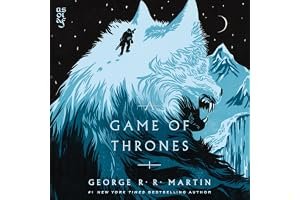
A Game of Thrones (A Song of Ice and Fire, #1)
George R. R. Martin and Jeffrey Jones
4.2
Here is the first volume in George R. R. Martin’s magnificent cycle of novels that includes A Clash of Kings and A Storm of Swords. As a whole, this series comprises a genuine masterpiece of modern fantasy, bringing together the best the genre has to offer. Magic, mystery, intrigue, romance, and adventure fill these pages and transport us to a world unlike any we have ever experienced. Already hailed as a classic, George R. R. Martin’s stunning series is destined to stand as one of the great achievements of imaginative fiction.
A GAME OF THRONES
Long ago, in a time forgotten, a preternatural event threw the seasons out of balance. In a land where summers can last decades and winters a lifetime, trouble is brewing. The cold is returning, and in the frozen wastes to the north of Winterfell, sinister and supernatural forces are massing beyond the kingdom’s protective Wall. At the center of the conflict lie the Starks of Winterfell, a family as harsh and unyielding as the land they were born to. Sweeping from a land of brutal cold to a distant summertime kingdom of epicurean plenty, here is a tale of lords and ladies, soldiers and sorcerers, assassins and bastards, who come together in a time of grim omens.
Here an enigmatic band of warriors bear swords of no human metal; a tribe of fierce wildlings carry men off into madness; a cruel young dragon prince barters his sister to win back his throne; and a determined woman undertakes the most treacherous of journeys. Amid plots and counterplots, tragedy and betrayal, victory and terror, the fate of the Starks, their allies, and their enemies hangs perilously in the balance, as each endeavors to win that deadliest of conflicts: the game of thrones.
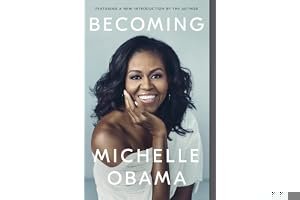
In a life filled with meaning and accomplishment, Michelle Obama has emerged as one of the most iconic and compelling women of our era. As First Lady of the United States of America—the first African American to serve in that role—she helped create the most welcoming and inclusive White House in history, while also establishing herself as a powerful advocate for women and girls in the U.S. and around the world, dramatically changing the ways that families pursue healthier and more active lives, and standing with her husband as he led America through some of its most harrowing moments. Along the way, she showed us a few dance moves, crushed Carpool Karaoke, and raised two down-to-earth daughters under an unforgiving media glare.
In her memoir, a work of deep reflection and mesmerizing storytelling, Michelle Obama invites readers into her world, chronicling the experiences that have shaped her—from her childhood on the South Side of Chicago to her years as an executive balancing the demands of motherhood and work, to her time spent at the world’s most famous address. With unerring honesty and lively wit, she describes her triumphs and her disappointments, both public and private, telling her full story as she has lived it—in her own words and on her own terms. Warm, wise, and revelatory, Becoming is the deeply personal reckoning of a woman of soul and substance who has steadily defied expectations—and whose story inspires us to do the same.
…
Recommended by Barack Obama, Piers Morgan, Mary Burkey, and 3 others.
Of course, @MichelleObama’s my wife, so I’m a little biased here. But she also happens to be brilliant, funny, wise – one of a kind. This book tells her quintessentially American story. I love it because it faithfully reflects the woman I have loved for so long. [source]
Piers Morgan
Congrats to @MichelleObama on sensational sales of her new book #Becoming. I always take people as I find them & when I met her at the White House, she was a delightfully warm, friendly & genuine lady. A great First Lady & now a best-selling author. https://t.co/nlSUHI01SM [source]
Mary Burkey
This is a case where you have to hear Michelle Obama read her story. It’s her story and she puts her whole emotional self into it. [source]
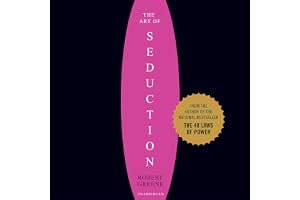
The season's most talked-about all-purpose personal strategy guide and philosophical compendium," said Newsweek of Robert Greene's bold, elegant, and ingenious manual of modern manipulation, The 48 Laws of Power. Now Greene has once again mined history and literature to distill the essence of seduction, the most highly refined mode of influence, the ultimate power trip.
The Art of Seduction is a masterful synthesis of the work of thinkers such as Freud, Ovid, Kierkegaard, and Einstein, as well as the achievements of the greatest seducers throughout history. From Cleopatra to John F. Kennedy, from Andy Warhol to Josephine Bonaparte, The Art of Seduction gets to the heart of the character of the seducer and his or her tactics, triumphs and failures. The seducer's many faces include: the Siren, the Rake, the Ideal Lover, the Dandy, the Natural, the Coquette, the Charmer, and the Charismatic. Twenty-four maneuvers will guide readers through the seduction process, providing cunning, amoral instructions for and analysis of this fascinating, all-pervasive form of power. Just as beautifully packaged and every bit as essential as The 48 Laws of Power, The Art of Seduction is an indispensable primer of persuasion and offers the best lessons on how to take what you want from whomever you want or how to prevent yourself from being taken.
…
Cover unavailable
32
The Handmaid's Tale
Margaret Atwood
4.2
Before The Testaments, there was The Handmaid’s Tale: an instant classic and eerily prescient cultural phenomenon, from “the patron saint of feminist dystopian fiction” (New York Times).
The Handmaid’s Tale is a novel of such power that the reader will be unable to forget its images and its forecast. Set in the near future, it describes life in what was once the United States and is now called the Republic of Gilead, a monotheocracy that has reacted to social unrest and a sharply declining birthrate by reverting to, and going beyond, the repressive intolerance of the original Puritans. The regime takes the Book of Genesis absolutely at its word, with bizarre consequences for the women and men in its population.
The story is told through the eyes of Offred, one of the unfortunate Handmaids under the new social order. In condensed but eloquent prose, by turns cool-eyed, tender, despairing, passionate, and wry, she reveals to us the dark corners behind the establishment’s calm facade, as certain tendencies now in existence are carried to their logical conclusions. The Handmaid’s Tale is funny, unexpected, horrifying, and altogether convincing. It is at once scathing satire, dire warning, and a tour de force. It is Margaret Atwood at her best.
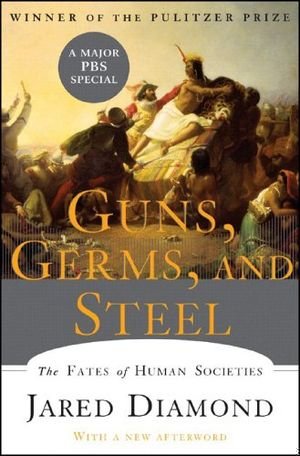
Explaining what William McNeill called The Rise of the West has become the central problem in the study of global history. In Guns, Germs, and Steel Jared Diamond presents the biologist's answer: geography, demography, and ecological happenstance. Diamond evenhandedly reviews human history on every continent since the Ice Age at a rate that emphasizes only the broadest movements of peoples and ideas. Yet his survey is binocular: one eye has the rather distant vision of the evolutionary biologist, while the other eye--and his heart--belongs to the people of New Guinea, where he has done field work for more than 30 years.
Fascinating.... Lays a foundation for understanding human history. [source]
Daniel Ek
A brilliant Pulitzer Prize-winning book about how the modern world was formed, analyzing how societies developed differently on different continents. [source]
I’m a fan of books that challenge our assumptions, and Diamond offers us a new and remarkably simple way of looking at our world. Learning to challenge existing assumptions is core to effective leadership for it trains us to keep an open mind. [source]
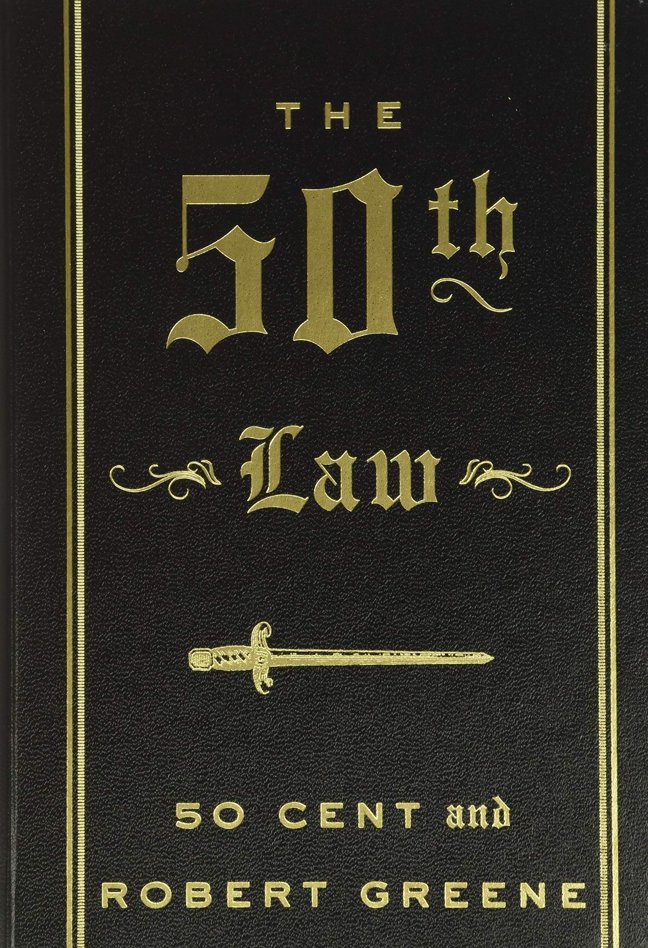
The ultimate hustle is to move freely between the street and corporate worlds, to find your flow and never stay locked in the same position. This is a manifesto for how to operate in the twenty-first century, where everything has been turned on its head. Building on the runaway success of Robert Greene's The 48 Laws of Power (almost five million copies sold), the 'modern Machiavelli' teams up with rapper 50 Cent to show how the power game of success can be played to your advantage. Drawing on the lore of gangsters, hustlers, and hip-hop artists, as well as 50 Cent's business and artistic dealings, the authors present the 'Laws of 50', revealing how to become a master strategist and supreme realist. Success comes from seeking an advantage in each and every encounter, and The 50th Law offers indispensable advice on how to win in business - and in life.
I also recommend The 50th Law, which while not technically a biography tells the stories of many such individuals and will stick with you just as long. [source]
In The Power of Your Subconscious Mind, Dr. Joseph Murphy gives you the tools you will need to unlock the awesome powers of your subconscious mind. You can improve your relationships, your finances, your physical well-being. Once you learn how to use this unbelievably powerful force there is nothing you will not be able to accomplish. Join the millions of people who have already unlocked the power of their subconscious minds. I urge you to study this book and apply the techniques outlined therein; and as you do, I feel absolutely convinced that you will lay hold of a miracle-working power that will lift you up from confusion, misery, melancholy, and failure, and guide you to your true place, solve your difficulties, sever you from emotional and physical bondage, and place you on the royal road to freedom, happiness, and peace of mind.- Dr. Joseph Murphy
…
Recommended by The CEO Library Community (through anonymous form).
The CEO Library Community (through anonymous form)
One of the best 3 books I've read in 2019 [source]
A powerful true story about the potential for mercy to redeem us, and a clarion call to fix our broken system of justice—from one of the most brilliant and influential lawyers of our time
Bryan Stevenson was a young lawyer when he founded the Equal Justice Initiative, a legal practice dedicated to defending those most desperate and in need: the poor, the wrongly condemned, and women and children trapped in the farthest reaches of our criminal justice system. One of his first cases was that of Walter McMillian, a young man who was sentenced to die for a notorious murder he insisted he didn’t commit. The case drew Bryan into a tangle of conspiracy, political machination, and legal brinksmanship—and transformed his understanding of mercy and justice forever.
Just Mercy is at once an unforgettable account of an idealistic, gifted young lawyer’s coming of age, a moving window into the lives of those he has defended, and an inspiring argument for compassion in the pursuit of true justice.
Today is World Book Day, a wonderful opportunity to address this #ChallengeRichard sent in by Mike Gonzalez of New Jersey: Make a list of your top 65 books to read in a lifetime. [source]
Chris Sacca
Proud that @crystale and I could help fund the making of a film about one of our heroes, Bryan Stevenson. If you’ve read the book, then you know how powerful this film is. #JustMercy https://t.co/vNfXK4Imwr [source]
Perhaps one of the most powerful and important stories of our time. [source]
Cover unavailable
37
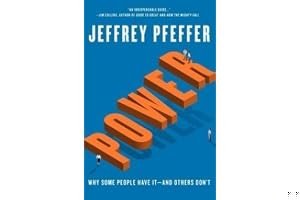
Power: Why Some People Have it and Others Don't
Jeffrey Pfeffer
4.2
“Pfeffer [blends] academic rigor and practical genius into wonderfully readable text. The leading thinker on the topic of power, Pfeffer here distills his wisdom into an indispensable guide.” —Jim Collins, author of New York Times bestselling author Good to Great and How the Mighty Fall
Some people have it, and others don’t. Jeffrey Pfeffer explores why, in Power.
One of the greatest minds in management theory and author or co-author of thirteen books, including the seminal business-school text Managing With Power, Jeffrey Pfeffer shows readers how to succeed and wield power in the real world.
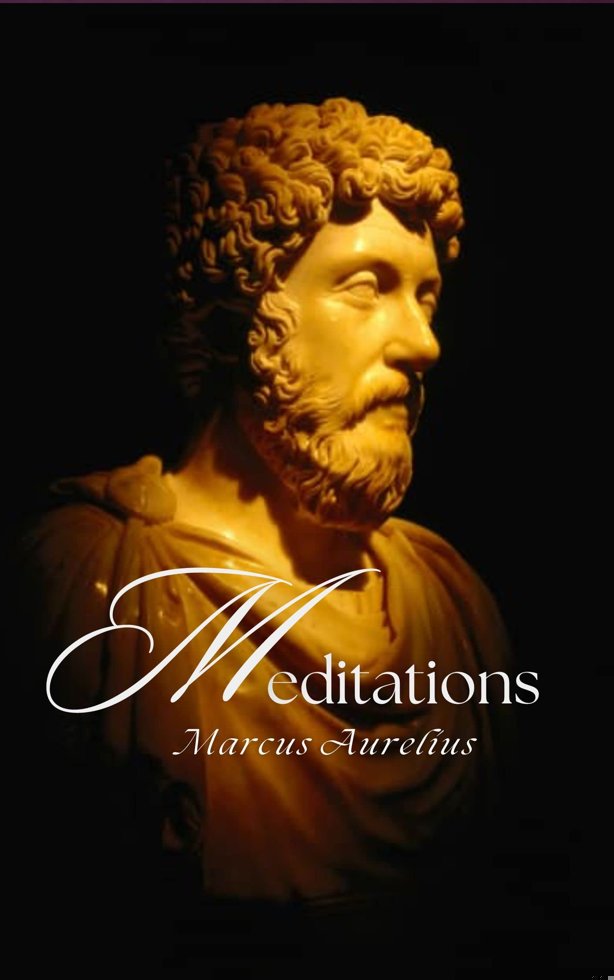
One measure, perhaps, of a book's worth, is its intergenerational pliancy: do new readers acquire it and interpret it afresh down through the ages? The Meditations of Marcus Aurelius, translated and introduced by Gregory Hays, by that standard, is very worthwhile, indeed. Hays suggests that its most recent incarnation--as a self-help book--is not only valid, but may be close to the author's intent. The book, which Hays calls, fondly, a "haphazard set of notes," is indicative of the role of philosophy among the ancients in that it is "expected to provide a 'design for living.'" And it does, both aphoristically ("Think of yourself as dead. You have lived your life. Now take what's left and live it properly.") and rhetorically ("What is it in ourselves that we should prize?"). Whether these, and other entries ("Enough of this wretched, whining monkey life.") sound life-changing or like entries in a teenager's diary is up to the individual reader, as it should be. Hays's introduction, which sketches the life of Marcus Aurelius (emperor of Rome A.D. 161-180) as well as the basic tenets of stoicism, is accessible and jaunty. --H. O'Billovich
…
Recommended by Arianna Huffington, Naval Ravikant, Chip Conley, and 12 others.
Arianna Huffington
Founder/The Huffington Post
I find this book so inspirational and instructive, it lives on my nightstand. [source]
Chip Conley
I have given this book away to a number of people. [source]
Marvin Liao
Partner/500 Startups
My list would be (besides the ones I mentioned in answer to the previous question) both business & Fiction/Sci-Fi and ones I personally found helpful to myself. The business books explain just exactly how business, work & investing are in reality & how to think properly & differentiate yourself. On the non-business side, a mix of History & classic fiction to understand people, philosophy to make sense of life and Science fiction to picture what the future could be like (not always utopian). [source]
Cover unavailable
39
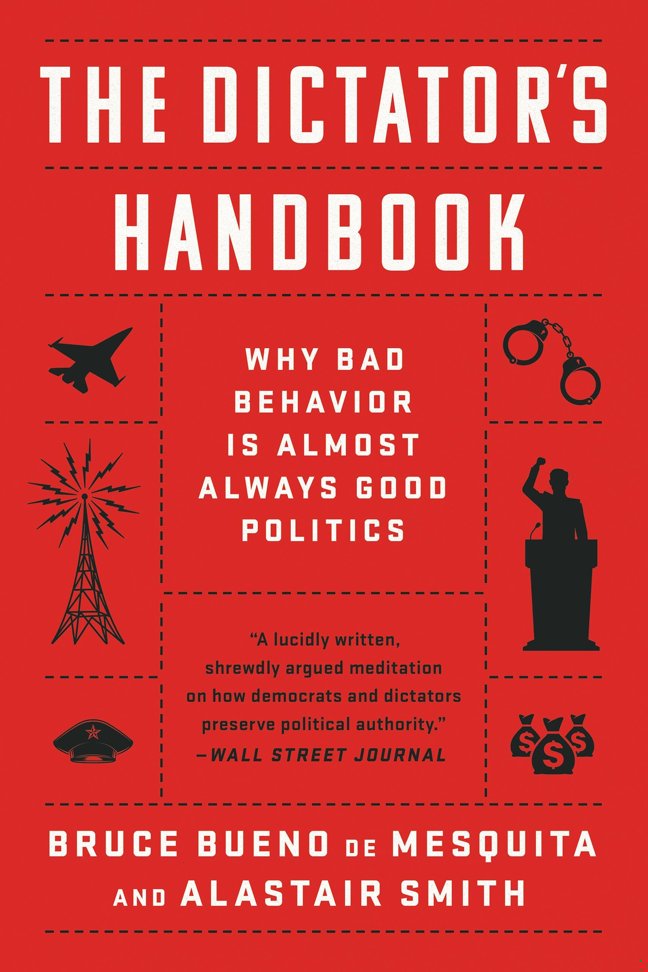
The Dictator's Handbook: Why Bad Behavior is Almost Always Good Politics
For eighteen years, Bruce Bueno de Mesquita and Alastair Smith have been part of a team revolutionizing the study of politics by turning conventional wisdom on its head. They start from a single assertion: Leaders do whatever keeps them in power. They don't care about the "national interest"--or even their subjects--unless they have to.
This clever and accessible book shows that the difference between tyrants and democrats is just a convenient fiction. Governments do not differ in kind but only in the number of essential supporters, or backs that need scratching. The size of this group determines almost everything about politics: what leaders can get away with, and the quality of life or misery under them. The picture the authors paint is not pretty. But it just may be the truth, which is a good starting point for anyone seeking to improve human governance.
…
Cover unavailable
40
Concise 48 Laws of Power 2nd Edn
Greene Robert
4.2
Drawn from 3,000 years of the history of power, this book is intended as a guide to help readers achieve for themselves what Queen Elizabeth I, Henry Kissinger, Louis XIV and Machiavelli learned the hard way.
"This book is written with the sole objective of helping the reader achieve a happy, satisfying, and worthwhile life."
-- Norman Vincent Peale
The precursor to The Secret, The Power of Positive Thinking has helped millions of men and women to achieve fulfillment in their lives. In this phenomenal bestseller, Dr. Peale demonstrates the power of faith in action. With the practical techniques outlined in this book, you can energize your life -- and give yourself the initiative needed to carry out your ambitions and hopes. You'll learn how to:
Expect the best and get it
Believe in yourself and in everything you do
Develop the power to reach your goals
Break the worry habit and achieve a relaxed life
Improve your personal and professional relationships
Assume control over your circumstances
Be kind to yourself
…
Recommended by Donald J. Trump, Ken Blanchard, Sam Gichuru, and 1 others.
Norman Vincent Peale - the great Norman Vincent Peale - was my pastor. "The Power Of Positive Thinking" - everybody's heard of Norman Vincent Peale. He was so great. [source]
Sam Gichuru
As an entrepreneur I wake up everyday positively optimistic, the most powerful book I read in my 20s was the power of positive thinking. Entrepreneurs, founders, innovators are driven by optimism, one must get a good dose of that in the morning. Then they open twitter... https://t.co/kzD046B4zy [source]
Theresa Evanoff
Here are some of my favourites around purpose, positive habits, positive thinking, and business goals. I’m a firm believer that subject expertise can be learned, but character-building traits, like perseverance and purposefulness, must be honed. “Purpose Driven Life”, Rick Warren “Start with Why” by Simon Sinek “The 7 Habits of Highly Effective People”, Stephen Covey "The Magic of Thinking Big", David J. Schwartz "The Power of Positive Thinking" by Norman Vincent Peale "The Hard Thing About Hard Things" by Ben Horowitz “Good to Great”, Jim Collins “Doing Good Well”, Willie Cheng [source]
Cover unavailable
42
Brave New World
Aldous Huxley
4.2
Now reissued in a gorgeous hardcover edition: "one of the most prophetic dystopian works of the 20th century" (Wall Street Journal) must be read and understood by anyone concerned with preserving the human spirit in the face of our "brave new world." Huxley's masterpiece has become a bestseller once again after the American election.
Aldous Huxley's profoundly important classic of world literature,Brave New World is a searching vision of an unequal, technologically-advanced future where humans are genetically bred, socially indoctrinated, and pharmaceutically anesthetized to passively uphold an authoritarian ruling order whose motto is "Community, Identity, Stability."—all at the cost of our freedom, humanity, and perhaps our souls. "A genius [who] who spent his life decrying the onward march of the Machine" (The New Yorker), Huxley was a man of incomparable talents: equally an artist, a spiritual seeker, and one of history's keenest observers of human nature and civilization. Brave New World, his masterpiece, has enthralled and terrified millions of readers, and retains its urgent relevance to this day as both a warning as we head into tomorrow and as a thought-provoking, satisfying work of literature. Written in the shadow of the rise of fascism during the 1930s, Brave New World likewise speaks to a twenty-first-century world dominated by mass-entertainment, technology, medicine and pharmaceuticals, the arts of persuasion, and the hidden influence of elites.
The most prophetic book of the 20th century. Today many people would easily mistake it for a utopia. [source]
Andra Zaharia
These books and their core ideas have stuck with me the most and continue to guide me when I hit crossroads along the way. [source]
Catherine Mayer
It shows the ways in which technology, our need for certain creature comforts and consumer culture can be used to manipulate us. [source]
Cover unavailable
43
The Path to Power
Robert A. Caro
4.2
The Years of Lyndon Johnson is the political biography of our time. No president—no era of American politics—has been so intensively and sharply examined at a time when so many prime witnesses to hitherto untold or misinterpreted facets of a life, a career, and a period of history could still be persuaded to speak.
The Path to Power, Book One, reveals in extraordinary detail the genesis of the almost superhuman drive, energy, and urge to power that set LBJ apart. Chronicling the startling early emergence of Johnson’s political genius, it follows him from his Texas boyhood through the years of the Depression in the Texas hill Country to the triumph of his congressional debut in New Deal Washington, to his heartbreaking defeat in his first race for the Senate, and his attainment, nonetheless, of the national power for which he hungered.
We see in him, from earliest childhood, a fierce, unquenchable necessity to be first, to win, to dominate—coupled with a limitless capacity for hard, unceasing labor in the service of his own ambition. Caro shows us the big, gangling, awkward young Lyndon—raised in one of the country’s most desperately poor and isolated areas, his education mediocre at best, his pride stung by his father’s slide into failure and financial ruin—lunging for success, moving inexorably toward that ultimate “impossible” goal that he sets for himself years before any friend or enemy suspects what it may be.
We watch him, while still at college, instinctively (and ruthlessly) creating the beginnings of the political machine that was to serve him for three decades. We see him employing his extraordinary ability to mesmerize and manipulate powerful older men, to mesmerize (and sometimes almost enslave) useful subordinates. We see him carrying out, before his thirtieth year, his first great political inspiration: tapping-and becoming the political conduit for-the money and influence of the new oil men and contractors who were to grow with him to immense power. We follow, close up, the radical fluctuations of his relationships with the formidable “Mr. Sam” Rayburn (who loved him like a son and whom he betrayed) and with FDR himself. And we follow the dramas of his emotional life-the intensities and complications of his relationships with his family, his contemporaries, his girls; his wooing and winning of the shy Lady Bird; his secret love affair, over many years, with the mistress of one of his most ardent and generous supporters . . .
Johnson driving his people to the point of exhausted tears, equally merciless with himself . . . Johnson bullying, cajoling, lying, yet inspiring an amazing loyalty . . . Johnson maneuvering to dethrone the unassailable old Jack Garner (then Vice President of the United States) as the New Deal’s “connection” in Texas, and seize the power himself . . . Johnson raging . . . Johnson hugging . . . Johnson bringing light and, indeed, life to the worn Hill Country farmers and their old-at-thirty wives via the district’s first electric lines.
We see him at once unscrupulous, admirable, treacherous, devoted. And we see the country that bred him: the harshness and “nauseating loneliness” of the rural life; the tragic panorama of the Depression; the sudden glow of hope at the dawn of the Age of Roosevelt. And always, in the foreground, on the move, LBJ.
Here is Lyndon Johnson—his Texas, his Washington, his America—in a book that brings us as close as we have ever been to a true perception of political genius and the American political process.
Caro is another master storyteller. Like Parton, Caro supplements the written record with fresh evidence. He was a journalist. He interviewed all sorts of people and got information on Johnson that others hadn’t uncovered. He tells a great, gripping story. One of his volumes on Lyndon Johnson is called The Path to Power. Caro is fascinated by how people acquire power, what they use power to accomplish, and how power changes them. [source]
Cover unavailable
44
Ender's Game
Orson Scott Card
4.1
Once again, Earth is under attack. An alien species is poised for a final assault. The survival of humanity depends on a military genius who can defeat the aliens. But who?
Ender Wiggin. Brilliant. Ruthless. Cunning. A tactical and strategic master. And a child.
Recruited for military training by the world government, Ender's childhood ends the moment he enters his new home: Battle School. Among the elite recruits Ender proves himself to be a genius among geniuses. He excels in simulated war games. But is the pressure and loneliness taking its toll on Ender? Simulations are one thing. How will Ender perform in real combat conditions? After all, Battle School is just a game. Isn't it?
Oh, it’s not a favorite book or anything like that, I just added it because I liked it. I don’t think there’s any real significance to the fact that it’s listed there and other books aren’t. [source]
At one point, this was the only book listed on Mark Zuckerberg’s Facebook page. If it’s good enough to be the sole selection of the founder of Facebook, maybe there’s something to it. The plot: In anticipation of another attack from a hostile alien race, the search for a brilliant military strategist has led to Ender Wiggin. In space combat school, Ender stands out, demonstrating exceptional leadership and unconventional strategy. But it is lonely at the top for Ender, as he struggles with relentless pressure from his instructors. Through Ender’s journey, you’ll learn how to capitalize on your strengths and those of your teammates, as well as exploit your adversaries’ weaknesses. Ender is a futuristic Level 5 Leader we can all learn from. [source]
About a kid who is trained by the military to play video games … But he realizes at the end that the video games he was playing were an actual war. [source]
Cover unavailable
45
David and Goliath: Underdogs, Misfits, and the Art of Battling Giants
In his #1 bestselling books The Tipping Point, Blink, and Outliers, Malcolm Gladwell has explored the ways we understand and change our world. Now he looks at the complex and surprising ways the weak can defeat the strong, the small can match up against the giant, and how our goals (often culturally determined) can make a huge difference in our ultimate sense of success. Drawing upon examples from the world of business, sports, culture, cutting-edge psychology, and an array of unforgettable characters around the world, David and Goliath is in many ways the most practical and provocative book Malcolm Gladwell has ever written.
…
Recommended by Andrew Chen, Cat Williams-Treloar, Catalina Penciu, and 3 others.
Cat Williams-Treloar
The books that I've talked the most about with friends and colleagues over the years are the Malcolm Gladwell series of novels. Glorious stories that mix science, behaviours and insight. You can't go wrong with the "The Tipping Point", "Outliers", "Blink" or "David & Goliath". [source]
Catalina Penciu
Business-wise, my goal for this year is to improve my collection and my mindset, but my favorite so far has been David and Goliath by Malcolm Gladwell. [source]
Robert Katai
Buy Malcolm Gladwell’s book “David and Goliath” and read the interesting stories about how the Davids of that moments have defeated the Goliaths. [source]
Cover unavailable
46
Red Queen (Red Queen, #1)
Victoria Aveyard
4.1
This is a world divided by blood - red or silver. The Reds are commoners, ruled by a Silver elite in possession of god-like superpowers. And to Mare Barrow, a seventeen-year-old Red girl from the poverty-stricken Stilts, it seems like nothing will ever change. That is until she finds herself working in the Silver Palace. Here, surrounded by the people she hates the most, Mare discovers that, despite her red blood, she possesses a deadly power of her own. One that threatens to destroy the balance of power. Fearful of Mare's potential, the Silvers hide her in plain view, declaring her a long-lost Silver princess, now engaged to a Silver prince. Despite knowing that one misstep would mean her death, Mare works silently to help the Red Guard, a militant resistance group, and bring down the Silver regime. But this is a world of betrayal and lies, and Mare has entered a dangerous dance - Reds against Silvers, prince against prince, and Mare against her own heart.
…
Recommended by Zoe.
Zoe
The Red Queen series is about a girl living in a world where the colour of your blood determines your status. [source]
Cover unavailable
47
Executive Orders (Jack Ryan, #8)
Tom Clancy
4.1
A runaway Jumbo jet has crashed into the Capitol Building in Washington, leaving the President dead along with most of the Cabinet and Congress. Dazed a confused, the man who only minutes before was confirmed as the new caretaker Vice-President is told that he is now President of the United States.
President John Patrick Ryan
But how do you run a government with out a government? Where do you begin? Ryan knows that the eyes of the world are on him now - and many of them are unfriendly. In Beijing, in Tehran and even in Washington, there are those eager to take advantage. Soon they will make their moves; soon they will present Jack Ryan with a crisis so even he could not imagine it.'
…
Cover unavailable
48
A Court of Mist and Fury (A Court of Thorns and Roses, #2)
Sarah J. Maa
4.1
Feyre survived Amarantha's clutches to return to the Spring Court—but at a steep cost. Though she now has the powers of the High Fae, her heart remains human, and it can't forget the terrible deeds she performed to save Tamlin's people.
Nor has Feyre forgotten her bargain with Rhysand, High Lord of the feared Night Court. As Feyre navigates its dark web of politics, passion, and dazzling power, a greater evil looms—and she might be key to stopping it. But only if she can harness her harrowing gifts, heal her fractured soul, and decide how she wishes to shape her future—and the future of a world cleaved in two.
With more than a million copies sold of her beloved Throne of Glass series, Sarah J. Maas's masterful storytelling brings this second book in her seductive and action-packed series to new heights.
Robert Greene is a master guide for millions of readers, distilling ancient wisdom and philosophy into essential texts for seekers of power, understanding and mastery. Now he turns to the most important subject of all - understanding people's drives and motivations, even when they are unconscious of them themselves. We are social animals. Our very lives depend on our relationships with people. Knowing why people do what they do is the most important tool we can possess, without which our other talents can only take us so far. Drawing from the ideas and examples of Pericles, Queen Elizabeth I, Martin Luther King Jr, and many others, Greene teaches us how to detach ourselves from our own emotions and master self-control, how to develop the empathy that leads to insight, how to look behind people's masks, and how to resist conformity to develop your singular sense of purpose. Whether at work, in relationships, or in shaping the world around you, The Laws of Human Nature offers brilliant tactics for success, self-improvement, and self-defence.
Robert has been writing this book since Mastery came out in 2013 and it shows - it's a spectacular masterwork that builds atop all his other books. Robert's book have always been an unvarnished look at how the world really works, for better and for worse. What I like about this book is that it pushes us to question our own biases, our own assumptions, irrationalities and tendencies. It's almost as if we believe other people have a 'human nature' but we don't - we're logical, fair, motivated by higher purposes always. Of course this is silly. Lots of good stuff here for anyone in a position of leadership, who works with an audience or studies human behavior. [source]
Ayush Kumar
People are the ROI, people are the asset, everything is people and one needs to understand people. [source]
Cover unavailable
50
Discipline and Punish: The Birth of the Prison
Michel Foucault, Alan Sheridan
4.1
Librarian note: an alternate cover for this edition can be found here.
In this brilliant work, the most influential philosopher since Sartre suggests that such vaunted reforms as the abolition of torture and the emergence of the modern penitentiary have merely shifted the focus of punishment from the prisoner’s body to his soul.
Cover unavailable
51
Difficult Conversations: How to Discuss What Matters Most
The 10th-anniversary edition of the New York Times business bestseller-now updated with "Answers to Ten Questions People Ask"
We attempt or avoid difficult conversations every day-whether dealing with an underperforming employee, disagreeing with a spouse, or negotiating with a client. From the Harvard Negotiation Project, the organization that brought you Getting to Yes, Difficult Conversationsprovides a step-by-step approach to having those tough conversations with less stress and more success. you'll learn how to:
? Decipher the underlying structure of every difficult conversation ? Start a conversation without defensiveness ? Listen for the meaning of what is not said ? Stay balanced in the face of attacks and accusations ? Move from emotion to productive problem solving
…
Recommended by April Wensel, Auren Hoffman, Bogdan Lucaciu, and 1 others.
April Wensel
@amyvpellegrini I really liked a book called Difficult Conversations. I also love the book Nonviolent Communication for conflicts. [source]
I’m re-reading “Difficult Conversations”. It’s written by the “Harvard Negotiation Project” guys that also wrote “Getting to Yes” and “Thanks for the Feedback”. It allowed me to navigate super important conversations by shifting from a “who’s right” stance to a learning stance. Giving it another spin after two years from the first read as I'm working on my assertiveness. [source]
Cover unavailable
52
Queen of Shadows (Throne of Glass, #4)
Sarah J. Maas
4.1
The Queen has returned.
Everyone Celaena Sardothien loves has been taken from her. But she’s at last returned to the empire—for vengeance, to rescue her once-glorious kingdom, and to confront the shadows of her past…
She has embraced her identity as Aelin Galathynius, Queen of Terrasen. But before she can reclaim her throne, she must fight.
She will fight for her cousin, a warrior prepared to die for her. She will fight for her friend, a young man trapped in an unspeakable prison. And she will fight for her people, enslaved to a brutal king and awaiting their lost queen’s triumphant return.
The fourth volume in the New York Times bestselling series continues Celaena’s epic journey and builds to a passionate, agonizing crescendo that might just shatter her world.
…
Cover unavailable
53
Master of the Senate
Robert A. Caro
4.1
The most riveting political biography of our time, Robert A. Caro’s life of Lyndon B. Johnson, continues. Master of the Senate takes Johnson’s story through one of its most remarkable periods: his twelve years, from 1949 through 1960, in the United States Senate. Once the most august and revered body in politics, by the time Johnson arrived the Senate had become a parody of itself and an obstacle that for decades had blocked desperately needed liberal legislation. Caro shows how Johnson’s brilliance, charm, and ruthlessness enabled him to become the youngest and most powerful Majority Leader in history and how he used his incomparable legislative genius--seducing both Northern liberals and Southern conservatives--to pass the first Civil Rights legislation since Reconstruction. Brilliantly weaving rich detail into a gripping narrative, Caro gives us both a galvanizing portrait of Johnson himself and a definitive and revelatory study of the workings of legislative power.
…
Recommended by Robert Greene, James Purnell, and Julian E. Zelizer.
My favorite bio I've read for my upcoming book. [source]
James Purnell
Yes. Perhaps it’s only for the true believers. It is quite an enterprise to read, but compelling partly because Lyndon Johnson was such a beautifully unattractive character. He was a horrible bully who humiliated his staff and who found a way of endearing himself to the oil barons of Texas by launching a McCarthyite campaign, before McCarthy, against the electricity regulator. He ruined this guy’s life by accusing him of being a communist when he was nothing of the sort. So, on the one hand he was an ogre, but on the other hand he was the first person to get any civil rights legislation through the senate since the Civil War. The question is: do the ends justify the means? In his case the means were unspeakable but until Lyndon Johnson the Southern Democrats (some of whom were white supremacists) used the filibuster to stop any civil rights legislation getting through. He convinced them that he was on their side. [source]
Julian E. Zelizer
I always tell people that this is one of the first books you should read if you’re really interested in congressional history. It’s a wonderful book, the third part of Caro’s multi-volume biography of President Lyndon Johnson that focuses on his time as Senate Majority Leader. It’s also a splendid history of the Senate itself. [source]
Cover unavailable
54
Understanding Power: The Indispensable Chomsky
Noam Chomsky, John Schoeffel, R. Mitchell
4.1
A major new collection from "arguably the most important intellectual alive" (The New York Times). Noam Chomsky is universally accepted as one of the preeminent public intellectuals of the modern era. Over the past thirty years, broadly diverse audiences have gathered to attend his sold-out lectures. Now, in Understanding Power, Peter Mitchell and John Schoeffel have assembled the best of Chomsky's recent talks on the past, present, and future of the politics of power. In a series of enlightening and wide-ranging discussions, all published here for the first time, Chomsky radically reinterprets the events of the past three decades, covering topics from foreign policy during Vietnam to the decline of welfare under the Clinton administration. And as he elucidates the connection between America's imperialistic foreign policy and the decline of domestic social services, Chomsky also discerns the necessary steps to take toward social change. With an eye to political activism and the media's role in popular struggle, as well as U.S. foreign and domestic policy, Understanding Power offers a sweeping critique of the world around us and is definitive Chomsky. Characterized by Chomsky's accessible and informative style, this is the ideal book for those new to his work as well as for those who have been listening for years.
Written over three centuries ago by a Samurai warrior, the book has been hailed as a limitless source of psychological insight for businessmen-or anyone who relies on strategy and tactics for outwitting the competition.
Recommended by Steve Blank, Ryan Holiday, Bill Liao, and 2 others.
Widely held as a classic, this book is much more than a manifesto and manual on swordsmanship and martial arts. It’s about the mindset, the discipline, and the perception necessary to win in life or death situations. As a swordsman, Musashi fought mostly by himself, for himself. His wisdom, therefore, is mostly internal. He tells you how to out-think and out-move your enemies. He tells you how to fend for yourself and live by a code. And isn’t that precisely what so many of us need help with every day? [source]
Bill Liao
The human world occurs in language so best get good at it! [source]
Stephane Grand
I do not believe there are business and non-business books. Business is life, you do business like the man or woman you excavate from the person you are told you are. Hence, the most potent business books are not about business, in my opinion. What makes a great business book is that it is a book that helps you find a better version of yourself. Therefore, I would say that my favorite business book is Miyamoto Musashi’s Book of Five Rings. It is an amazing inwards look at how to win battles. [source]
Cover unavailable
56
The Power
Naomi Alderman
4.1
In The Power the world is a recognisable place: there's a rich Nigerian kid who lounges around the family pool; a foster girl whose religious parents hide their true nature; a local American politician; a tough London girl from a tricky family. But something vital has changed, causing their lives to converge with devastating effect. Teenage girls now have immense physical power - they can cause agonising pain and even death. And, with this small twist of nature, the world changes utterly.
This extraordinary novel by Naomi Alderman, a Sunday Times Young Writer of the Year and Granta Best of British writer, is not only a gripping story of how the world would change if power was in the hands of women but also exposes, with breath-taking daring, our contemporary world.
…
Cover unavailable
57
Harry Potter and the Deathly Hallows (Harry Potter, #7)
J. K. Rowling, Mary GrandPré
4.1
Harry Potter is leaving Privet Drive for the last time. But as he climbs into the sidecar of Hagrid’s motorbike and they take to the skies, he knows Lord Voldemort and the Death Eaters will not be far behind.
The protective charm that has kept him safe until now is broken. But the Dark Lord is breathing fear into everything he loves. And he knows he can’t keep hiding.
To stop Voldemort, Harry knows he must find the remaining Horcruxes and destroy them.
He will have to face his enemy in one final battle. --jkrowling.com
…
Cover unavailable
58
White Fragility: Why It's So Hard for White People to Talk About Racism
The New York Times best-selling book exploring the counterproductive reactions white people have when their assumptions about race are challenged, and how these reactions maintain racial inequality.
Referring to the defensive moves that white people make when challenged racially, white fragility is characterized by emotions such as anger, fear, and guilt and by behaviors including argumentation and silence. These behaviors, in turn, function to reinstate white racial equilibrium and prevent any meaningful cross-racial dialogue. In this in-depth exploration, anti-racist educator Robin DiAngelo examines how white fragility develops, how it protects racial inequality, and what can be done to engage more constructively.
…
Recommended by Elizabeth C. Mclaughlin, Marshall Kirkpatrick, and Todd Nesloney.
Elizabeth C. Mclaughlin
I've recommended the book White Fragility on here many times, and this interview is a great place to start. If you're a white person who believes you're not racist, please read this article. And then go read the book. https://t.co/S5plH3wS5m [source]
@SarahSuggs13 I love that book, have spoken with the author, and did an entire staff book study. Again, had you even tried to see my work that I do, you'd have learned that. You seek to divide and that is it. Great lesson for our students. [source]
Cover unavailable
59
Divergent (Divergent, #1)
Veronica Roth
4.1
In Beatrice Prior's dystopian Chicago world, society is divided into five factions, each dedicated to the cultivation of a particular virtue—Candor (the honest), Abnegation (the selfless), Dauntless (the brave), Amity (the peaceful), and Erudite (the intelligent). On an appointed day of every year, all sixteen-year-olds must select the faction to which they will devote the rest of their lives. For Beatrice, the decision is between staying with her family and being who she really is—she can't have both. So she makes a choice that surprises everyone, including herself.
During the highly competitive initiation that follows, Beatrice renames herself Tris and struggles alongside her fellow initiates to live out the choice they have made. Together they must undergo extreme physical tests of endurance and intense psychological simulations, some with devastating consequences. As initiation transforms them all, Tris must determine who her friends really are—and where, exactly, a romance with a sometimes fascinating, sometimes exasperating boy fits into the life she's chosen. But Tris also has a secret, one she's kept hidden from everyone because she's been warned it can mean death. And as she discovers unrest and growing conflict that threaten to unravel her seemingly perfect society, she also learns that her secret might help her save those she loves . . . or it might destroy her.
…
Cover unavailable
60
Tao Te Ching: By Lao Tzu - Illustrated
Lao Tse
4.1
A lucid translation of the well-known Taoist classic by a leading scholar-now in a Shambhala Pocket Library edition. Written more than two thousand years ago, the Tao Teh Ching, or -The Classic of the Way and Its Virtue, - is one of the true classics of the world of spiritual literature. Traditionally attributed to the legendary -Old Master, - Lao Tzu, the Tao Teh Ching teaches that the qualities of the enlightened sage or ideal ruler are identical with those of the perfected individual. Today, Lao Tzu's words are as useful in mastering the arts of leadership in business and politics as they are in developing a sense of balance and harmony in everyday life. To follow the Tao or Way of all things and realize their true nature is to embody humility, spontaneity, and generosity. John C. H. Wu has done a remarkable job of rendering this subtle text into English while retaining the freshness and depth of the original. A jurist and scholar, Dr. Wu was a recognized authority on Taoism and the translator of several Taoist and Zen texts and of Chinese poetry. This book is part of the Shambhala Pocket Library series. The Shambhala Pocket Library is a collection of short, portable teachings from notable figures across religious traditions and classic texts. The covers in this series are rendered by Colorado artist Robert Spellman. The books in this collection distill the wisdom and heart of the work Shambhala Publications has published over 50 years into a compact format that is collectible, reader-friendly, and applicable to everyday life.
Q: What are the books that had a major influence on you? Or simply the ones you like the most. : Tao te Ching, score takes care of itself, between the world and me, the four agreements, the old man and the sea...I love reading! [source]
According to a Yibada interview with Chen Wei, who wrote Ma’s 2014 authorized biography, the Alibaba founder and executive chairman always carries the Tao Te Ching, the foundational text of Taoist philosophy, religion and ethics composed by Lao Tzu in the sixth century B.C. [source]
In the philosophy side, I’ve been rereading the Tao Te Ching. [source]
Cover unavailable
61
Tea Party Teddy's Legacy (The Teddy Saga #2)
Dianne Harman
4.1
BOOK #2 IN THE TEDDY SAGA!
What happens when Bob Silva, who is married to the ex-wife of Tea Party Teddy, decides to run for the California State Assembly against the Reverend Jim Thurston, a devout Tea Party member? Will Reverend Jim seek revenge for the death of his friend, Tea Party Teddy?
And why is every television station in California and across the nation featuring Bob Silva as their lead story on the evening news?
…
Cover unavailable
62
Harry Potter and the Prisoner of Azkaban (Harry Potter, #3)
J.K. Rowling
4.1
For Twelve long years, the dread fortress of Azkaban held an infamous prisoner named Sirius Black. Convicted of killing thirteen people with a single curse, he was said to be the heir apparent to the Dark Lord, Voldemort.
Now he has escaped, leaving only two clues as to where he might be headed: Harry Potter's defeat of You-Know-Who was Black's downfall as well. And the Azkaban guards heard Black muttering in his sleep, "He's at Hogwarts...he's at Hogwarts."
Harry Potter isn't safe, not even within the walls of his magical school, surrounded by his friends. because on top of it all, there may well be a traitor in their midst.
(front flap)
…
Recommended by Maude Garrett.
Maude Garrett
@GeekBomb Best use of time travel in a book or series to date [source]
Cover unavailable
63
In the Garden of Beasts: Love, Terror, and an American Family in Hitler's Berlin
Erik Larson
4.1
Erik Larson, New York Times bestselling author of Devil in the White City, delivers a remarkable story set during Hitler’s rise to power.
The time is 1933, the place, Berlin, when William E. Dodd becomes America’s first ambassador to Hitler’s Nazi Germany in a year that proved to be a turning point in history. A mild-mannered professor from Chicago, Dodd brings along his wife, son, and flamboyant daughter, Martha. At first Martha is entranced by the parties and pomp, and the handsome young men of the Third Reich with their infectious enthusiasm for restoring Germany to a position of world prominence. Enamored of the “New Germany,” she has one affair after another, including with the suprisingly honorable first chief of the Gestapo, Rudolf Diels. But as evidence of Jewish persecution mounts, confirmed by chilling first-person testimony, her father telegraphs his concerns to a largely indifferent State Department back home. Dodd watches with alarm as Jews are attacked, the press is censored, and drafts of frightening new laws begin to circulate. As that first year unfolds and the shadows deepen, the Dodds experience days full of excitement, intrigue, romance—and ultimately, horror, when a climactic spasm of violence and murder reveals Hitler’s true character and ruthless ambition. Suffused with the tense atmosphere of the period, and with unforgettable portraits of the bizarre Göring and the expectedly charming--yet wholly sinister--Goebbels, In the Garden of Beasts lends a stunning, eyewitness perspective on events as they unfold in real time, revealing an era of surprising nuance and complexity. The result is a dazzling, addictively readable work that speaks volumes about why the world did not recognize the grave threat posed by Hitler until Berlin, and Europe, were awash in blood and terror.
…
Recommended by Daniel Hamermesh and Steve Schmidt.
Daniel Hamermesh
At a time of increased danger of totalitarianism in the U.S., reading a history of an insider’s view of its growth in Germany in the 1930s gives a good perspective on our contemporary problems, as well as being fascinating history and biography in its own right. [source]
Steve Schmidt
@egayle333 Ellyn, with respect Hitler was always clear about his intent. A great book to read from a US perspective is In the Garden of Beasts. Trump is much more analogous to Mussolini. [source]
Cover unavailable
64
Mockingjay (The Hunger Games, #3)
Suzanne Collins
4.1
My name is Katniss Everdeen. Why am I not dead? I should be dead.
Katniss Everdeen, girl on fire, has survived, even though her home has been destroyed. Gale has escaped. Katniss's family is safe. Peeta has been captured by the Capitol. District 13 really does exist. There are rebels. There are new leaders. A revolution is unfolding.
It is by design that Katniss was rescued from the arena in the cruel and haunting Quarter Quell, and it is by design that she has long been part of the revolution without knowing it. District 13 has come out of the shadows and is plotting to overthrow the Capitol. Everyone, it seems, has had a hand in the carefully laid plans - except Katniss.
The success of the rebellion hinges on Katniss's willingness to be a pawn, to accept responsibility for countless lives, and to change the course of the future of Panem. To do this, she must put aside her feelings of anger and distrust. She must become the rebels' Mockingjay - no matter what the personal cost.
…
Cover unavailable
65
Manufacturing Consent: The Political Economy of the Mass Media
In this pathbreaking work, Edward S. Herman and Noam Chomsky show that, contrary to the usual image of the news media as cantankerous, obstinate, and ubiquitous in their search for truth and defense of justice, in their actual practice they defend the economic, social, and political agendas of the privileged groups that dominate domestic society, the state, and the global order.
Based on a series of case studies—including the media’s dichotomous treatment of “worthy” versus “unworthy” victims, “legitimizing” and “meaningless” Third World elections, and devastating critiques of media coverage of the U.S. wars against Indochina—Herman and Chomsky draw on decades of criticism and research to propose a Propaganda Model to explain the media’s behavior and performance. Their new introduction updates the Propaganda Model and the earlier case studies, and it discusses several other applications. These include the manner in which the media covered the passage of the North American Free Trade Agreement and subsequent Mexican financial meltdown of 1994-1995, the media’s handling of the protests against the World Trade Organization, World Bank, and International Monetary Fund in 1999 and 2000, and the media’s treatment of the chemical industry and its regulation. What emerges from this work is a powerful assessment of how propagandistic the U.S. mass media are, how they systematically fail to live up to their self-image as providers of the kind of information that people need to make sense of the world, and how we can understand their function in a radically new way.
…
Recommended by Louis Nyffenegger.
Louis Nyffenegger
Few technical books and a bit of everything. The following books are currently sitting on my bedside table: "The Hitchhiker's Guide To The Galaxy", "Predictable Revenue", "Manufacturing Consent", "Agile Application Security". "Oauth In Action", "Serious Cryptography". [source]
Cover unavailable
66
The Overstory
Richard Powers
4.1
The Overstory is a sweeping, impassioned work of activism and resistance that is also a stunning evocation of - and paean to - the natural world. From the roots to the crown and back to the seeds, Richard Powers’s twelfth novel unfolds in concentric rings of interlocking fables that range from antebellum New York to the late twentieth-century Timber Wars of the Pacific Northwest and beyond. There is a world alongside ours—vast, slow, interconnected, resourceful, magnificently inventive, and almost invisible to us. This is the story of a handful of people who learn how to see that world and who are drawn up into its unfolding catastrophe.
Feels at the beginning like a series of short stories, each of which has some important thing about a tree or a kind of tree in it, but also holds some human character. You’d be a very strange person if you came away from this book not caring about what’s happening to the trees. [source]
Martha Kearney
@omrgriffiths @BBCPM @RobGMacfarlane Great idea. Loved that book. [source]
Sarah Dry
I had the experience of having the revelation that the author clearly hoped a reader would have, which is that what appears to be a book about distinct individuals—almost a book of short stories— turns out to be something more complex, in which all the characters are linked through time and space. [source]
The Secret revealed the law of attraction. Now Rhonda Byrne reveals the greatest power in the universe—The Power to have anything you want.
In this book you will come to understand that all it takes is just one thing to change your relationships, money, health, happiness, career, and your entire life. Every discovery, invention, and human creation comes from The Power. Perfect health, incredible relationships, a career you love, a life filled with happiness, and the money you need to be, do, and have everything you want, all come from The Power. The life of your dreams has always been closer to you than you realized, because The Power—to have everything good in your life—is inside you. To create anything, to change anything, all it takes is just one thing…THE POWER.
…
Cover unavailable
68
Circe
Madeline Miller
4.1
In the house of Helios, god of the sun and mightiest of the Titans, a daughter is born. But Circe is a strange child—not powerful, like her father, nor viciously alluring like her mother. Turning to the world of mortals for companionship, she discovers that she does possess power—the power of witchcraft, which can transform rivals into monsters and menace the gods themselves.
Threatened, Zeus banishes her to a deserted island, where she hones her occult craft, tames wild beasts and crosses paths with many of the most famous figures in all of mythology, including the Minotaur, Daedalus and his doomed son Icarus, the murderous Medea, and, of course, wily Odysseus.
But there is danger, too, for a woman who stands alone, and Circe unwittingly draws the wrath of both men and gods, ultimately finding herself pitted against one of the most terrifying and vengeful of the Olympians. To protect what she loves most, Circe must summon all her strength and choose, once and for all, whether she belongs with the gods she is born from, or the mortals she has come to love.
…
Recommended by Jacqui Pretty and Jason Kottke.
Jacqui Pretty
When it comes to fiction, there are so many to choose from! Some books I've loved in the past year include Circe by Madeline Miller. [source]
Jason Kottke
Another contemporary reinterpretation of Greek mythology from the perspective of a woman. I’m 3/4s of the way through Circe right now and I might like it even more than The Odyssey. [source]
Cover unavailable
69
On Tyranny: Twenty Lessons from the Twentieth Century
Timothy Snyder
4.1
A historian of fascism offers a guide for surviving and resisting America’s turn towards authoritarianism.
On November 9th, millions of Americans woke up to the impossible: the election of Donald Trump as president. Against all predictions, one of the most-disliked presidential candidates in history had swept the electoral college, elevating a man with open contempt for democratic norms and institutions to the height of power.
Timothy Snyder is one of the most celebrated historians of the Holocaust. In his books Bloodlands and Black Earth, he has carefully dissected the events and values that enabled the rise of Hitler and Stalin and the execution of their catastrophic policies. With Twenty Lessons, Snyder draws from the darkest hours of the twentieth century to provide hope for the twenty-first. As he writes, “Americans are no wiser than the Europeans who saw democracy yield to fascism, Nazism and communism. Our one advantage is that we might learn from their experience.”
Twenty Lessons is a call to arms and a guide to resistance, with invaluable ideas for how we can preserve our freedoms in the uncertain years to come.
…
Recommended by George Saunders, Maya Wiley, and Tom Holland.
George Saunders
Please read this book. So smart, so timely. [source]
Maya Wiley
Prof. Tim Snyder, author of “In Tyranny” reminded us in that important little book that we must protect our institutions. #DOJ is one of our most important in gov’t for the rule of law. This is our collective house & #Barr should be evicted. https://t.co/PPxM9IMQUm [source]
"There isn’t a page of this magnificent book that does not contain some fascinating detail and the narrative is held together with a novelist’s eye for character and theme." #Dominion https://t.co/FESSNxVDLC [source]
Cover unavailable
70
The Hero of Ages (Mistborn, #3)
Brandon Sanderson
4.1
Tricked into releasing the evil spirit Ruin while attempting to close the Well of Ascension, new emperor Elend Venture and his wife, the assassin Vin, are now hard-pressed to save the world.
Carl von Clausewitz's On War has been called, "not simply the greatest, but the only truly great book on war." It is an extraordinary attempt to construct an all-embracing theory of how war works. Its coherence and ambition are unmatched by other military literature. On War is full of sharp observation, biting irony, and memorable phrases, the most famous being, "War is a continuation of politics by other means."
About the Author Except for a brief stint in 1812 when he served in the Russian army, Clausewitz spent his whole career, from the age of twelve until his death in 1831, in the Prussian army. He fought in all the major Prussian campaigns against France, and his most fateful experience - the 1806 Battle of Jena-Auerstedt, in which Napoleon destroyed the Prussian army - inspired him to write On War.
I know this will offend many strategy purists, but for most audiences I recommend these two books only with a pretty strong disclaimer. While both are clearly full of strategic wisdom, they are hard to separate from their respective eras and brands of warfare. As budding strategists in business and in life, most of us are really looking for advice that can help us with our own problems. The reality is that Napoleonic warfare does not exactly have its equivalents in today’s society. On the other hand, Sun-Tzu is so aphoristic that it’s hard to say what is concrete advice and what is just common sense. But the books are so convincing that you might still end up leaving thinking that they can be easily applied. So, again, check these books out if you’re really interested, but I think some of the other books are much better places to start. [source]
Andrew Exum
If you’re trying to understand any conflict you still have to start with the dead Prussian…There’s still no other book that’s as significant in terms of understanding war as On War. [source]
Cover unavailable
72
Titan: The Life of John D. Rockefeller, Sr.
Ron Chernow
4.0
John D. Rockefeller, Sr.--history's first billionaire and the patriarch of America's most famous dynasty--is an icon whose true nature has eluded three generations of historians. Now Ron Chernow, the National Book Award-winning biographer of the Morgan and Warburg banking families, gives us a history of the mogul "etched with uncommon objectivity and literary grace . . . as detailed, balanced, and psychologically insightful a portrait of the tycoon as we may ever have" (Kirkus Reviews). Titan is the first full-length biography based on unrestricted access to Rockefeller's exceptionally rich trove of papers. A landmark publication full of startling revelations, the book will indelibly alter our image of this most enigmatic capitalist. Born the son of a flamboyant, bigamous snake-oil salesman and a pious, straitlaced mother, Rockefeller rose from rustic origins to become the world's richest man by creating America's most powerful and feared monopoly, Standard Oil. Branded "the Octopus" by legions of muckrakers, the trust refined and marketed nearly 90 percent of the oil produced in America. Rockefeller was likely the most controversial businessman in our nation's history. Critics charged that his empire was built on unscrupulous tactics: grand-scale collusion with the railroads, predatory pricing, industrial espionage, and wholesale bribery of political officials. The titan spent more than thirty years dodging investigations until Teddy Roosevelt and his trustbusters embarked on a marathon crusade to bring Standard Oil to bay. While providing abundant new evidence of Rockefeller's misdeeds, Chernow discards the stereotype of the cold-blooded monster to sketch an unforgettably human portrait of a quirky, eccentric original. A devout Baptist and temperance advocate, Rockefeller gave money more generously--his chosen philanthropies included the Rockefeller Foundation, the University of Chicago, and what is today Rockefeller University--than anyone before him. Titan presents a finely nuanced portrait of a fascinating, complex man, synthesizing his public and private lives and disclosing numerous family scandals, tragedies, and misfortunes that have never before come to light. John D. Rockefeller's story captures a pivotal moment in American history, documenting the dramatic post-Civil War shift from small business to the rise of giant corporations that irrevocably transformed the nation. With cameos by Joseph Pulitzer, William Randolph Hearst, Jay Gould, William Vanderbilt, Ida Tarbell, Andrew Carnegie, Carl Jung, J. Pierpont Morgan, William James, Henry Clay Frick, Mark Twain, and Will Rogers, Titan turns Rockefeller's life into a vivid tapestry of American society in the late nineteenth and early twentieth centuries. It is Ron Chernow's signal triumph that he narrates this monumental saga with all the sweep, drama, and insight that this giant subject deserves.
A biography has to be really good to make read you all 800 pages. To me, this was one of those books. Since reading it earlier this year, I’ve since found out it is the favorite book of a lot of people I respect. I think something about the quality of the writing and the empathic understanding of the writer that the main lessons you would take away from someone like Rockefeller would not be business, but life lessons. In fact, when I went back through and took notes on this book, I filled out more cards for Stoicism than I did for Strategy, Business or Money. I found Rockefeller to be strangely stoic, incredibly resilient and, despite his reputation as a robber baron, humble and compassionate. Most people get WORSE as they get successful, many more get worse as they age. Rockefeller did neither of these things, he grew more open-minded the older he became, more generous, more pious, more dedicated to making a difference. Does that excuse the “awful” things that he did? Well, the things he did really weren’t that awful so yes. (By that I mean I’d certainly choose him over the robber barons of this age like Zuckerberg or Murdoch.) [source]
@Morg2006 Yep, I already have it. great book. [source]
Cover unavailable
73
The Mark of Athena (The Heroes of Olympus, #3)
Rick Riordan
4.0
Annabeth is terrified. Just when she's about to be reunited with Percy—after six months of being apart, thanks to Hera—it looks like Camp Jupiter is preparing for war. As Annabeth and her friends Jason, Piper, and Leo fly in on the Argo II, she can't blame the Roman demigods for thinking the ship is a Greek weapon. With its steaming bronze dragon figurehead, Leo's fantastical creation doesn't appear friendly. Annabeth hopes that the sight of their praetor Jason on deck will reassure the Romans that the visitors from Camp Half-Blood are coming in peace.
And that's only one of her worries. In her pocket, Annabeth carries a gift from her mother that came with an unnerving command: Follow the Mark of Athena. Avenge me. Annabeth already feels weighed down by the prophecy that will send seven demigods on a quest to find—and close—the Doors of Death. What more does Athena want from her?
Annabeth's biggest fear, though, is that Percy might have changed. What if he's now attached to Roman ways? Does he still need his old friends? As the daughter of the goddess of war and wisdom, Annabeth knows she was born to be a leader—but never again does she want to be without Seaweed Brain by her side
Narrated by four different demigods, The Mark of Athena is an unforgettable journey across land and sea to Rome, where important discoveries, surprising sacrifices, and unspeakable horrors await. Climb aboard the Argo II, if you dare. . . .
…
Cover unavailable
74
The Way of the Superior Man: A Spiritual Guide to Mastering the Challenges of Women, Work, and Sexual Desire
What is your true purpose in life? What do women really want? What makes a good lover? If you're a man reading this, you've undoubtedly asked yourself these questions-but you may not have had much luck answering them. Until now. In The Way of the Superior Man, David Deida explores the most important issues in men's lives--from career and family to women and intimacy to love and spirituality--to offer a practical guidebook for living a masculine life of integrity, authenticity, and freedom. Join this bestselling author and internationally renowned expert on sexual spirituality for straightforward advice, empowering skills, body practices, and more to help you realize a life of fulfillment, immediately and without compromise. "It is time to evolve beyond the macho jerk ideal, all spine and no heart," writes David Deida. "It is also time to evolve beyond the sensitive and caring wimp ideal, all heart and no spine." The Way of the Superior Man presents the ultimate challenge-and reward-for today's man: to discover the "unity of heart and spine" through the full expression of consciousness and love in the infinite openness of the present moment. Book jacket.
A few months ago, I was drinking a Noah’s Mill whiskey (cute) with my good buddy Brian Balfour and talking about life... During the conversation, we got on the topic of books that changed our lives. I want to share them with you. I judge a book's success if a year later I'm still using at least 1 thing from the book. [source]
Additionally, there have been a few books that have been instrumental in helping me figure out my role, purpose, and mission in life. Such books include Iron John: A Book About Men by Robert Bly; King, Warrior, Magician, Lover: Rediscovering the Archetypes of the Mature Masculine by Doug Gillette and Robert L. Moore; and Way Of The Superior Man by David Deida. [source]
Cover unavailable
75
Catching Fire (The Hunger Games, #2)
Suzanne Collins
4.0
SPARKS ARE IGNITING. FLAMES ARE SPREADING. AND THE CAPITAL WANTS REVENGE.
Against all odds, Katniss Everdeen has survived the Hunger Games. She and fellow District 12 tribute Peeta Mellark are miraculously still alive. Katniss should be relieved, happy even. Yet nothing is the way Katniss wishes it to be. Gale holds her at an icy distance. Peeta has turned his back on her completely. And there are whispers of a rebellion against the Capitol - a rebellion that Katniss and Peeta may have helped create.
Much to her shock, Katniss has fueled an unrest that she's afraid she cannot stop. And what scares her even more is that she's not entirely convinced she should try. As time draws near for Katniss and Peeta to visit the districts on the Capitol's cruel Victory Tour, the stakes are higher than ever. If they can't prove, without a shadow of a doubt, that they are lost in their love for each other, the consequences will be horrifying. Katniss is about to be tested as never before.
…
Cover unavailable
76
The Prize: The Epic Quest for Oil, Money, and Power
Daniel Yergin
4.0
The Prize recounts the panoramic history of oil -- and the struggle for wealth and power that has always surrounded oil. This struggle has shaken the world economy, dictated the outcome of wars, and transformed the destiny of men and nations.
The Prize is as much a history of the twentieth century as of the oil industry itself. The canvas of history is enormous -- from the drilling of the first well in Pennsylvania through two great world wars to the Iraqi invasion of Kuwait and Operation Desert Storm.
A wonderfully readable history of the development of the oil age. [source]
Cover unavailable
77
The Eye of the World (Wheel of Time, #1)
Robert Jordan
4.0
When their village is attacked by trollocs, monsters thought to be only legends, three young men, Rand, Matt, and Perrin, flee in the company of the Lady Moiraine, a sinister visitor of unsuspected powers. Thus begins an epic adventure set in a world of wonders and horror, where what was, what will be, and what is, may yet fall under the Shadow.
Recommended by Malcolm Tan and Mike Benkovich.
Malcolm Tan
The fiction series that got me hooked was The Wheel of Time series. Every time a new book was published in that LONG series, I immediately got hold of a copy from the bookstore and would spend the next few days reading the books since they were incredibly long. What appealed to me was the epic scale of the series, and how the various protagonists were very well characterised and captured my attention and imagination. [source]
Mike Benkovich
I'm cheating here (again) because this isn't a single book but a series. This is a 14 book fantasy epic written over DECADES! It took so long to complete and is so expansive the author died before he finished. The mantle was picked up by another author who finished the series in 2014. It's a story of massive scale featuring or launching any fantasy trope you can think of. If you think Game Of Thrones is good you will love this. [source]
Cover unavailable
78
Power vs. Force: The Hidden Determinants of Human Behavior, author's Official Revised Edition
All human endeavors have the common goal of understanding or influencing human experience. To this end, man has developed numerous descriptive and analytical disciplines: Morality, Philosophy, Psychology, and so on. Regardless of what branch of inquiry one starts from-philosophy, political theory, theology-all avenues of investigation eventually converge at a common meeting point: the quest for an organized understanding of the nature of pure consc iousness. To explain that which is simple can be difficult indeed. Much of this book is devoted to the process of making the simple obvious. If we can understand even one simple thing in depth, we will have greatly expanded our capacity for comprehending the nature of the universe and life itself.
…
Cover unavailable
79
A Court of Wings and Ruin (A Court of Thorns and Roses, #3)
Sarah J Maas
4.0
Looming war threatens all Feyre holds dear in the third volume of the #1 New York Times bestselling A Court of Thorns and Roses series.
Feyre has returned to the Spring Court, determined to gather information on Tamlin's manoeuvrings and the invading king threatening to bring Prythian to its knees. But to do so she must play a deadly game of deceit – and one slip may spell doom not only for Feyre, but for her world as well.
As war bears down upon them all, Feyre must decide who to trust amongst the dazzling and lethal High Lords – and hunt for allies in unexpected places.
In this thrilling third book in the #1 New York Times bestselling series from Sarah J. Maas, the earth will be painted red as mighty armies grapple for power over the one thing that could destroy them all.
…
Cover unavailable
80
Rules for Radicals: A Practical Primer for Realistic Radicals
Saul David Alinsky
4.0
First published in 1971, Rules for Radicals is Saul Alinsky's impassioned counsel to young radicals on how to effect constructive social change and know “the difference between being a realistic radical and being a rhetorical one.” Written in the midst of radical political developments whose direction Alinsky was one of the first to question, this volume exhibits his style at its best. Like Thomas Paine before him, Alinsky was able to combine, both in his person and his writing, the intensity of political engagement with an absolute insistence on rational political discourse and adherence to the American democratic tradition.
…
Recommended by Ryan Holiday, Mad Bitcoins, Mark Bloomfield, and 1 others.
This is the 48 Laws of Power written in more of an idealist, activist tone. Alinsky was the liaison for many civil rights, union and student causes in the late 50’s and 60’s. He teaches how to implement your radical agenda without using radical tactics, how to disarm with words and media as opposed to arms and Utopian rhetoric. [source]
Mad Bitcoins
I just read this fantastic book by Saul Alinsky and I tell you what, I think @AOC has read it as well. Trump should be very afraid. https://t.co/n7rlmetqzW [source]
Mark Bloomfield
I recently browsed through the book and remembered that Alinsky said ‘The Prince was written by Machiavelli for the haves on how to hold power. Rules for Radicals is written for the have-nots on how to take it away.’ [source]
Cover unavailable
81
Eichmann in Jerusalem: A Report on the Banality of Evil
Originally appearing as a series of articles in The New Yorker, Hannah Arendt’s authoritative and stunning report on the trial of Nazi leader Adolf Eichmann sparked a flurry of debate upon its publication. This revised edition includes material that came to light after the trial, as well as Arendt’s postscript directly addressing the controversy that arose over her account. A major journalistic triumph by an intellectual of singular influence, Eichmann in Jerusalem is as shocking as it is informative—an unflinching look at one of the most unsettling and unsettled issues of the twentieth century that remains hotly debated to this day.
…
Recommended by Dr. Phil Zimbardo, Daniel Pick, David Bell, and 1 others.
Dr. Phil Zimbardo
Talks about Eichmann as illustrating the banality of evil. [source]
Daniel Pick
The trial focused public attention on the individual high bureaucrat who had such personal responsibility in the Final Solution. There was, in a way, this enigma of what went on in Eichmann’s mind. [source]
David Bell
Political philosopher Arendt sees the work of the Nazis as the inevitable result of colonialism and industrialisation. [source]
Cover unavailable
82
The Final Empire (Mistborn, #1)
Brandon Sanderson
4.0
Where ash falls from the sky, and mist dominates the night, evil cloaks the land and stifles all life. Criminal mastermind Kelsier teaches Allomancy, the magic of metals, to another Mistborn, urchin Vin 16. The unlikely heroine is distracted by rich Venture heir Elend. Can Kelsier's thieving crew take on the tyrant Lord Ruler and bring back colour to their world?
Cover unavailable
83
The Lightning Thief (Percy Jackson and the Olympians, #1)
Rick Riordan
4.0
Alternate cover for this ISBN can be found here
Percy Jackson is a good kid, but he can't seem to focus on his schoolwork or control his temper. And lately, being away at boarding school is only getting worse - Percy could have sworn his pre-algebra teacher turned into a monster and tried to kill him. When Percy's mom finds out, she knows it's time that he knew the truth about where he came from, and that he go to the one place he'll be safe. She sends Percy to Camp Half Blood, a summer camp for demigods (on Long Island), where he learns that the father he never knew is Poseidon, God of the Sea. Soon a mystery unfolds and together with his friends—one a satyr and the other the demigod daughter of Athena - Percy sets out on a quest across the United States to reach the gates of the Underworld (located in a recording studio in Hollywood) and prevent a catastrophic war between the gods.
…
Cover unavailable
84
A Clash of Kings (A Song of Ice and Fire, #2)
George R. R. Martin
4.0
A comet the color of blood and flame cuts across the sky. Two great leaders—Lord Eddard Stark and Robert Baratheon—who hold sway over an age of enforced peace are dead, victims of royal treachery. Now, from the ancient citadel of Dragonstone to the forbidding shores of Winterfell, chaos reigns. Six factions struggle for control of a divided land and the Iron Throne of the Seven Kingdoms, preparing to stake their claims through tempest, turmoil, and war.
It is a tale in which brother plots against brother and the dead rise to walk in the night. Here a princess masquerades as an orphan boy; a knight of the mind prepares a poison for a treacherous sorceress; and wild men descend from the Mountains of the Moon to ravage the countryside. Against a backdrop of incest and fratricide, alchemy and murder, victory may go to the men and women possessed of the coldest steel...and the coldest hearts. For when kings clash, the whole land trembles.
Here is the second volume in George R.R. Martin magnificent cycle of novels that includes A Game of Thrones and A Storm of Swords. As a whole, this series comprises a genuine masterpiece of modern fantasy, bringing together the best the genre has to offer. Magic, mystery, intrigue, romance, and adventure fill these pages and transport us to a world unlike any we have ever experienced. Already hailed as a classic, George R.R. Martin stunning series is destined to stand as one of the great achievements of imaginative fiction.
Best books in recent years imo are Iain Banks & George Martin. [source]
Cover unavailable
85
Catch-22
Joseph Heller, Christopher Buckley
4.0
This fiftieth-anniversary edition commemorates Joseph Heller’s masterpiece with a new introduction; critical essays and reviews by Norman Mailer, Alfred Kazin, Anthony Burgess, and others; rare papers and photos; and much more.
Nominated as one of America’s best-loved novels by PBS’s The Great American Read.
Now a Hulu limited series starring Christopher Abbott, George Clooney, Kyle Chandler, and Hugh Laurie.
Fifty years after its original publication, Catch-22 remains a cornerstone of American literature and one of the funniest—and most celebrated—books of all time. In recent years it has been named to “best novels” lists by Time, Newsweek, the Modern Library, and the London Observer.
Set in Italy during World War II, this is the story of the incomparable, malingering bombardier, Yossarian, a hero who is furious because thousands of people he has never met are trying to kill him. But his real problem is not the enemy—it is his own army, which keeps increasing the number of missions the men must fly to complete their service. Yet if Yossarian makes any attempt to excuse himself from the perilous missions he’s assigned, he’ll be in violation of Catch-22, a hilariously sinister bureaucratic rule: a man is considered insane if he willingly continues to fly dangerous combat missions, but if he makes a formal request to be removed from duty, he is proven sane and therefore ineligible to be relieved.
This fiftieth-anniversary edition commemorates Joseph Heller’s masterpiece with a new introduction by Christopher Buckley; a wealth of critical essays and reviews by Norman Mailer, Alfred Kazin, Anthony Burgess, and others; rare papers and photos from Joseph Heller’s personal archive; and much more. Here, at last, is the definitive edition of a classic of world literature.
…
Recommended by Brian Burkhart, Charles Glass, Kate McLoughlin, and 5 others.
Brian Burkhart
This book is a masterpiece and absolutely hilarious. In subtle ways, you realize the main character is questioning not just the notion of authority, but the way authority thinks and how we must react to it. To me, a guy with the core belief “make waves,” it has a great message, which is, “It’s okay to question the status quo.” For people just starting their careers, it’s easy to think our superiors know everything—they’re not quick to admit their insecurities, flaws, and blind spots, but they have them. And having a healthy dose of skepticism isn’t such a terrible thing. Plus, it’s just a fun read. [source]
Charles Glass
It’s one of the funniest books ever written. It’s about the insanity of military life and the absurdity of a big institution. Heller was very good on the absurdity of big institutions. Catch 22 has every character in it that the American military did have at the time and still has today in Iraq and Afghanistan: The money-makers, the crooks, the officers who were trying to claw their way to the top where they get their men killed, the placing in order of priority the pretence of military success at the cost of many civilian lives. [source]
Kate McLoughlin
It gets you to the point where you can’t apply your reason any more and laughter takes over. It’s the laughter of the absurd. [source]
Cover unavailable
86
Things Fall Apart (The African Trilogy, #1)
Chinua Achebe
4.0
THINGS FALL APART tells two overlapping, intertwining stories, both of which center around Okonkwo, a “strong man” of an Ibo village in Nigeria. The first of these stories traces Okonkwo's fall from grace with the tribal world in which he lives, and in its classical purity of line and economical beauty it provides us with a powerful fable about the immemorial conflict between the individual and society.
The second story, which is as modern as the first is ancient, and which elevates the book to a tragic plane, concerns the clash of cultures and the destruction of Okonkwo's world through the arrival of aggressive, proselytizing European missionaries. These twin dramas are perfectly harmonized, and they are modulated by an awareness capable of encompassing at once the life of nature, human history, and the mysterious compulsions of the soul. THINGS FALL APART is the most illuminating and permanent monument we have to the modern African experience as seen from within.
…
Recommended by Barack Obama, Helon Habila, Jacqueline Novogratz, and 2 others.
As 2018 draws to a close, I’m continuing a favorite tradition of mine and sharing my year-end lists. It gives me a moment to pause and reflect on the year through the books I found most thought-provoking, inspiring, or just plain loved. It also gives me a chance to highlight talented authors – some who are household names and others who you may not have heard of before. Here’s my best of 2018 list. [source]
Helon Habila
It almost feels like a cliché to say that this is one of my favourite books. But there is no way you can escape this book. It is such a part of African literature. It is an inescapable classic. It is a brilliant feat of storytelling, the economy of it, the brevity, the imagery, the ear he has for the traditional language. [source]
Jacqueline Novogratz
The first book I read by an African author. Achebe is unflinching in his portrayal of the challenges of change, the relationships of colonialism, and power/powerlessness. [source]
Cover unavailable
87
The History of Sexuality, Volume 1: An Introduction
Michel Foucault
4.0
Michel Foucault offers an iconoclastic exploration of why we feel compelled to continually analyze and discuss sex, and of the social and mental mechanisms of power that cause us to direct the questions of what we are to what our sexuality is.
Cover unavailable
88
The Power of One (The Power of One, #1)
Bryce Courtenay
4.0
In 1939, as Hitler casts his enormous, cruel shadow across the world, the seeds of apartheid take root in South Africa. There, a boy called Peekay is born. His childhood is marked by humiliation and abandonment, yet he vows to survive and conceives heroic dreams, which are nothing compared to what life actually has in store for him. He embarks on an epic journey through a land of tribal superstition and modern prejudice where he will learn the power of words, the power to transform lives and the power of one.
…
Recommended by Ev Williams.
Cover unavailable
89
The Last Olympian (Percy Jackson and the Olympians, #5)
Rick Riordan
4.0
All year the half-bloods have been preparing for battle against the Titans, knowing the odds of victory are grim. Kronos's army is stronger than ever, and with every god and half-blood he recruits, the evil Titan's power only grows. While the Olympians struggle to contain the rampaging monster Typhon, Kronos begins his advance on New York City, where Mount Olympus stands virtually unguarded. Now it's up to Percy Jackson and an army of young demigods to stop the Lord of Time.
In this momentous final book in the New York Times best-selling Percy Jackson and the Olympians series, the long-awaited prophecy surrounding Percy's sixteenth birthday unfolds. And as the battle for Western civilization rages on the streets of Manhattan, Percy faces a terrifying suspicion that he may be fighting against his own fate.
…
Cover unavailable
90
The Godfather
Mario Puzo, Anthony Puzo, et al
4.0
The Godfather—the epic tale of crime and betrayal that became a global phenomenon.
Almost fifty years ago, a classic was born. A searing portrayal of the Mafia underworld, The Godfather introduced readers to the first family of American crime fiction, the Corleones, and their powerful legacy of tradition, blood, and honor. The seduction of power, the pitfalls of greed, and the allegiance to family—these are the themes that have resonated with millions of readers around the world and made The Godfather the definitive novel of the violent subculture that, steeped in intrigue and controversy, remains indelibly etched in our collective consciousness.
~penguin.com
…
Recommended by Michal Ptacek and Nicky Cullen.
Michal Ptacek
My most favourite book is Godfather by Mario Puzo. I think it is even slightly more interesting and better than a movie which is almost perfect. Total masterpiece :) [source]
Nicky Cullen
That is such a tough question. I'm going to say The Godfather because I couldn't stop until it was finished. [source]
Cover unavailable
91
Win Bigly: Persuasion in a World Where Facts Don't Matter
The New York Times bestseller that explains one of the most important perceptual shifts in the history of humankind
Scott Adams was one of the earliest public figures to predict Donald Trump's election. The mainstream media regarded Trump as a lucky clown, but Adams - best known as "the guy who created Dilbert" -- recognized a level of persuasion you only see once in a generation. We're hardwired to respond to emotion, not reason, and Trump knew exactly which emotional buttons to push.
The point isn't whether Trump was right or wrong, good or bad. Adams goes beyond politics to look at persuasion tools that can work in any setting--the same ones Adams saw in Steve Jobs when he invested in Apple decades ago. Win Bigly is a field guide for persuading others in any situation--or resisting the tactics of emotional persuasion when they're used on you.
This revised edition features a bonus chapter that assesses just how well Adams foresaw the outcomes of Trump's tactics with North Korea, the NFL protesters, Congress, and more.
@_KevinAGC Best book on writing persuasively: @ScottAdamsSays "Win Bigly" and @RobertCialdini "Influence". [source]
Aaron Watson
This one’s going to be controversial. Adams, the creator of Dilbert, was one of the first commentators to come out and predict that Trump would win the 2016 presidential election. How’d he do that? By viewing the world through his Persuasion Filter. This reframing of how humans interact, the world works, and why Trump won was fascinating. It’s already starting to influence the way that I write. Check it out. [source]
Cover unavailable
92
Kingdom of Ash (Throne of Glass, #7)
Sarah J. Maas
4.0
The final battle is here.
Aelin Galathynius has vowed to save her people―but at a tremendous cost. Locked within an iron coffin by the Queen of the Fae, Aelin must draw upon her fiery will as she endures months of torture. The knowledge that yielding to Maeve will doom those she loves keeps her from breaking, but her resolve is unraveling with each passing day…
With Aelin captured, friends and allies are scattered to different fates. Some bonds will grow even deeper, while others will be severed forever. As destinies weave together at last, all must fight if Erilea is to have any hope of salvation.
Years in the making, Sarah J. Maas's New York Times bestselling Throne of Glass series draws to an explosive conclusion as Aelin fights to save herself―and the promise of a better world.
…
Cover unavailable
93
Six of Crows (Six of Crows, #1)
Leigh Bardugo
4.0
Ketterdam: a bustling hub of international trade where anything can be had for the right price—and no one knows that better than criminal prodigy Kaz Brekker. Kaz is offered a chance at a deadly heist that could make him rich beyond his wildest dreams. But he can’t pull it off alone. . . .
A convict with a thirst for revenge
A sharpshooter who can’t walk away from a wager
A runaway with a privileged past
A spy known as the Wraith
A Heartrender using her magic to survive the slums
A thief with a gift for unlikely escapes
Kaz’s crew is the only thing that might stand between the world and destruction—if they don’t kill each other first.
…
Cover unavailable
94
We Should All Be Feminists
Chimamanda Ngozi Adichie
4.0
What does “feminism” mean today? That is the question at the heart of We Should All Be Feminists, a personal, eloquently-argued essay—adapted from her much-viewed TEDx talk of the same name—by Chimamanda Ngozi Adichie, the award-winning author of Americanah and Half of a Yellow Sun.
With humor and levity, here Adichie offers readers a unique definition of feminism for the twenty-first century—one rooted in inclusion and awareness. She shines a light not only on blatant discrimination, but also the more insidious, institutional behaviors that marginalize women around the world, in order to help readers of all walks of life better understand the often masked realities of sexual politics. Throughout, she draws extensively on her own experiences—in the U.S., in her native Nigeria, and abroad—offering an artfully nuanced explanation of why the gender divide is harmful for women and men, alike.
Argued in the same observant, witty and clever prose that has made Adichie a bestselling novelist, here is one remarkable author’s exploration of what it means to be a woman today—and an of-the-moment rallying cry for why we should all be feminists.
…
Cover unavailable
95
Talons of Power (Wings of Fire, Book 9)
Tui T. Sutherland
4.0
For every villain, there is a hero ... Turtle isn’t one of the heroes he reads about in stories. If he were, he’d use his animus powers to help Pyrrhia -- instead of keeping his abilities a secret, even from his own sister. Now that Darkstalker, the sinister and impossibly old dragon from Pyrrhia’s most notorious legends, has returned, Turtle knows his own role is simple: hide. And stay hidden. The more he watches Darkstalker from the shadows, the more Turtle knows that someone needs to stop the powerful dragon. A real hero. But Turtle is running out of time to find one, which means ... he might have to try to save the day himself.
"A wonderful, splendid book--a book that should be ready by every American, student or otherwise, who wants to understand his country, its true history, and its hope for the future." --Howard Fast
With a new introduction by Anthony Arnove, this edition of the classic national bestseller chronicles American history from the bottom up, throwing out the official narrative taught in schools—with its emphasis on great men in high places—to focus on the street, the home and the workplace.
Known for its lively, clear prose as well as its scholarly research, A People's Historyof the United States is the only volume to tell America's story from the point of view of—and in the words of—America's women, factory workers, African-Americans, Native Americans, the working poor, and immigrant laborers. As historian Howard Zinn shows, many of our country's greatest battles—the fights for a fair wage, an eight-hour workday, child-labor laws, health and safety standards, universal suffrage, women's rights, racial equality—were carried out at the grassroots level, against bloody resistance.
Covering Christopher Columbus's arrival through President Clinton's first term, A People's History of the United States features insightful analysis of the most important events in our history.
…
Recommended by Lisa Ling and Alex Honnold.
Lisa Ling
I credit this book with propelling me to dig deeper, and to not always believe the narrative. [source]
Alex Honnold
Totally changed the way I look at politics. [source]
Cover unavailable
97
Heir of Fire (Throne of Glass, #3)
Sarah J. Maas
4.0
She was the heir of ash and fire, and she would bow to no one.
Celaena Sardothien has survived deadly contests and shattering heartbreak—but at an unspeakable cost. Now she must travel to a new land to confront her darkest truth...a truth about her heritage that could change her life—and her future—forever.
Meanwhile, brutal and monstrous forces are gathering on the horizon, intent on enslaving her world. To defeat them, Celaena must find the strength to not only fight her inner demons but to battle the evil that is about to be unleashed.
The king's assassin takes on an even greater destiny and burns brighter than ever before in this follow-up to the New York Times bestselling Crown of Midnight.
…
Cover unavailable
98
History of the Peloponnesian War
R. Warner Thucydides,M. I. Finley
4.0
Written four hundred years before the birth of Christ, this detailed contemporary account of the long life-and-death struggle between Athens and Sparta stands an excellent chance of fulfilling its author's ambitious claim. Thucydides himself (c.460-400 BC) was an Athenian and achieved the rank of general in the earlier stages of the war. He applied thereafter a passion for accuracy and a contempt for myth and romance in compiling this factual record of a disastrous conflict.
This book – of a long forgotten war – really functions as a biography and strategic analysis of some of the greatest minds in the history of war. We have Pericles, Brasidas, Alcibiades and many others. The anecdotes and the stories in this book are timeless. If you make your way all the way through it, I promise you will not forget it. Because the war was so long, involved so many different countries and was so varied (sea, land, siege, politics), it basically covers every type of situation you can think of. Think of this book as a textbook. Read it. [source]
It is loaded with hardcore, timeless truths and the story it tells ought to be required reading for every citizen in a democracy. [source]
Cover unavailable
99
Crown of Midnight (Throne of Glass, #2)
Sarah J. Maas
4.0
From the throne of glass rules a king with a fist of iron and a soul as black as pitch. Assassin Celaena Sardothien won a brutal contest to become his Champion. Yet Celaena is far from loyal to the crown. She hides her secret vigilantly; she knows that the man she serves is bent on evil.
Keeping up the deadly charade becomes increasingly difficult when Celaena realizes she is not the only one seeking justice. As she tries to untangle the mysteries buried deep within the glass castle, her closest relationships suffer. It seems no one is above questioning her allegiances—not the Crown Prince Dorian; not Chaol, the Captain of the Guard; not even her best friend, Nehemia, a foreign princess with a rebel heart.
Then one terrible night, the secrets they have all been keeping lead to an unspeakable tragedy. As Celaena's world shatters, she will be forced to give up the very thing most precious to her and decide once and for all where her true loyalties lie... and whom she is ultimately willing to fight for.
…
Cover unavailable
100
Red Rising (Red Rising Saga, #1)
Pierce Brown
4.0
"I live for the dream that my children will be born free," she says. "That they will be what they like. That they will own the land their father gave them."
"I live for you," I say sadly.
Eo kisses my cheek. "Then you must live for more."
Darrow is a Red, a member of the lowest caste in the color-coded society of the future. Like his fellow Reds, he works all day, believing that he and his people are making the surface of Mars livable for future generations.
Yet he spends his life willingly, knowing that his blood and sweat will one day result in a better world for his children.
But Darrow and his kind have been betrayed. Soon he discovers that humanity already reached the surface generations ago. Vast cities and sprawling parks spread across the planet. Darrow—and Reds like him—are nothing more than slaves to a decadent ruling class.
Inspired by a longing for justice, and driven by the memory of lost love, Darrow sacrifices everything to infiltrate the legendary Institute, a proving ground for the dominant Gold caste, where the next generation of humanity's overlords struggle for power. He will be forced to compete for his life and the very future of civilization against the best and most brutal of Society's ruling class. There, he will stop at nothing to bring down his enemies... even if it means he has to become one of them to do so.


 1
1