We've ranked the best photography books using expert recommendations, sales data, and millions of reader ratings. At Shortform, we know books. Our book guides are the best in the world. Learn why.
Cover unavailable
1
Understanding Exposure: How to Shoot Great Photographs with any Camera
Bryan Peterson
5.0
This newly revised edition of Bryan Peterson's most popular book demystifies the complex concepts of exposure in photography, allowing readers to capture the images they want.
With his trademark accessible style, Peterson instructs readers on how to achieve successful images in almost any situation, explaining the fundamentals of exposure and its component parts of light, aperture, and shutter speed. With an emphasis on getting the best exposure even in tricky situations, Understanding Exposure shows how to get (or lose) sharpness and contrast in images, how to freeze action, and how to take the best meter readings, while also exploring filters, flash, and light. With all new images, and updated captions throughout, this revised edition is sure to be as popular as ever.
Probably one of the first primers I read on improving my photography. [source]
John Craig
Photography is an ever-expanding field, yet the fundamentals never change, also this is where many fall short. Understanding Exposure by Bryan Peterson is the book that I recommend to anybody starting off. [source]
Cover unavailable
2
On Photography
Susan Sontag
4.7
First published in 1973, this is a study of the force of photographic images which are continually inserted between experience and reality. Sontag develops further the concept of 'transparency'. When anything can be photographed and photography has destroyed the boundaries and definitions of art, a viewer can approach a photograph freely with no expectations of discovering what it means. This collection of six lucid and invigorating essays, the most famous being "In Plato's Cave", make up a deep exploration of how the image has affected society.
…
Recommended by Susan Bordo.
Susan Bordo
Sontag was the first to make the claim, which at the time was very controversial, that photography is misleading and seductive because it looks like reality but is in fact highly selective. [source]
Cover unavailable
3
The Digital Photography Book: Part 1
Scott Kelby
4.7
This is it--the #1 best-selling digital photography book ever! It's the award winning, worldwide smash hit, written by Scott Kelby, that's been translated into dozens of different languages, because it's the one book that really shows you how to take professional-quality shots using the same tricks today's top digital pros use (and surprisingly, it's easier than you'd think). This updated, second edition of the bestselling digital photography book of all time includes many new images; up-to-date information on gear, pricing, and links; and a new chapter from the author on the "Ten Things I Wish Someone Had Told Me When I Was First Starting Out in Photography." Here's how Scott describes this book's brilliant premise: "If you and I were out on a shoot, and you asked me, 'Hey, how do I get this flower to be in focus, with the background out of focus?, ' I wouldn't stand there and give you a photography lecture. In real life, I'd just say, 'Put on your zoom lens, set your f-stop to f/2.8, focus on the flower, and fire away.' That's what this book is all about: you and I out shooting where I answer questions, give you advice, and share the secrets I've learned just like I would with a friend--without all the technical explanations and techie photo speak." This isn't a book of theory--full of confusing jargon and detailed concepts. This is a book on which button to push, which setting to use, and when to use it. With over 200 of the most closely guarded photographic "tricks of the trade," this book gets you shooting dramatically better-looking, sharper, more colorful, more professional-looking photos every time. Each page covers a single concept that makes your photography better. Every time you turn the page, you'll learn another pro setting, tool, or trick to transform your work from snapshots into gallery prints. If you're tired of taking shots that look "okay," and if you're tired of looking in photography magazines and thinking, "Why don't my shots look like that?" then this is the book for you.
John Berger’s Classic Text on Art John Berger's Ways of Seeing is one of the most stimulating and the most influential books on art in any language. First published in 1972, it was based on the BBC television series about which the (London) Sunday Times critic commented: "This is an eye-opener in more ways than one: by concentrating on how we look at paintings . . . he will almost certainly change the way you look at pictures." By now he has.
"Berger has the ability to cut right through the mystification of the professional art critics . . . He is a liberator of images: and once we have allowed the paintings to work on us directly, we are in a much better position to make a meaningful evaluation" —Peter Fuller, Arts Review
"The influence of the series and the book . . . was enormous . . . It opened up for general attention to areas of cultural study that are now commonplace" —Geoff Dyer in Ways of Telling
Winner of the 1972 Booker Prize for his novel, G., John Peter Berger (born November 5th, 1926) is an art critic, painter and author of many novels including A Painter of Our Time, From A to X and Bento’s Sketchbook.
You have to understand the Marxist interpretation of art; it is absolutely fundamental to the way that art history departments now study the material. Then you have to critique it, because we’ve moved on from the 1970s and the collapse of Marxism in most of the world shows—amongst other things—that the model was flawed. But it’s still a very good book to read, for a teenager especially. [source]
Cover unavailable
5
Humans of New York
Brandon Stanton
4.6
A beautiful, heartfelt, funny and inspiring collection of photographs capturing the spirit of a city
In the summer of 2010, photographer Brandon Stanton set out on an ambitious project: to single-handedly create a photographic census of New York City. Armed with his camera, he began crisscrossing the city, covering thousands of miles on foot, all in an attempt to capture New Yorkers and their stories. The result of these efforts was a vibrant blog he called "Humans of New York," in which his photos were featured alongside quotes and anecdotes.
Humans of New York is the book inspired by the Internet sensation. With four hundred color photos, including exclusive portraits and all-new stories, Humans of New York is a stunning collection of images that showcases the outsized personalities of New York.
Surprising and moving, Humans of New York is a celebration of individuality and a tribute to the spirit of the city.
…
Cover unavailable
6
Camera Lucida: Reflections on Photography
Roland Barthes, Richard Howard
4.5
A graceful, contemplative volume, Camera Lucida was first published in 1979. Commenting on artists such as Avedon, Clifford, Mapplethorpe, and Nadar, Roland Barthes presents photography as being outside the codes of language or culture, acting on the body as much as on the mind, and rendering death and loss more acutely than any other medium. This groundbreaking approach established Camera Lucidaas one of the most important books of theory on this subject, along with Susan Sontag's On Photography.
…
Cover unavailable
7
The Photographer's Eye: Composition and Design for Better Digital Photos
Michael Freeman
4.5
Design is the single most important factor in creating a successful photograph. The ability to see the potential for a strong picture and then organize the graphic elements into an effective, compelling composition has always been one of the key skills in making photographs.
Digital photography has brought a new, exciting aspect to design - first because the instant feedback from a digital camera allows immediate appraisal and improvement; and second because image-editing tools make it possible to alter and enhance the design after the shutter has been pressed. This has had a profound effect on the way digital photographers take pictures.
Now published in sixteen languages, The Photographer's Eye continues to speak to photographers everywhere. Reaching 100,000 copies in print in the US alone, and 300,000+ worldwide, it shows how anyone can develop the ability to see and shoot great digital photographs. The book explores all the traditional approaches to composition and design, but crucially, it also addresses the new digital technique of shooting in the knowledge that a picture will later be edited, manipulated, or montaged to result in a final image that may be very different from the one seen in the viewfinder.
…
Cover unavailable
8
Robert Frank: The Americans
Robert Frank
4.5
Armed with a camera and a fresh cache of film and bankrolled by a Guggenheim Foundation grant, Robert Frank crisscrossed the United States during 1955 and 1956. The photographs he brought back form a portrait of the country at the time and hint at its future. He saw the hope of the future in the faces of a couple at city hall in Reno, Nevada, and the despair of the present in a grimy roofscape. He saw the roiling racial tension, glamour, and beauty, and, perhaps because Frank himself was on the road, he was particularly attuned to Americans' love for cars. Funeral-goers lean against a shiny sedan, lovers kiss on a beach blanket in front of their parked car, young boys perch in the back seat at a drive-in movie. A sports car under a drop cloth is framed by two California palm trees; on the next page, a blanket is draped over a car accident victim's body in Arizona.
…
Cover unavailable
9
Light Science & Magic: An Introduction to Photographic Lighting
Fil Hunter, Steven Biver, et al.
4.5
Photographic lighting is a topic that will never go out of style, no matter how sophisticated cameras and other technology get. Even with the most high-tech gear, photographers still need to put a lot of thought and vision into lighting their photographs in order to get great results. This key skill has the power to dramatically and quickly improve photographs.
Light Science and Magic provides you with a comprehensive theory of the nature and principles of light, with examples and instructions for practical application. Featuring photographs, diagrams, and step-by-step instructions, this book speaks to photographers of varying levels. It provides invaluable information on how to light the most difficult subjects, such as surfaces, metal, glass, liquids, extremes (black-on-black and white-on-white), and portraits.
This new edition includes:
All new chapter titled "Setting Up Your New Studio"
A re-vamped and expanded chapter 8 now titled "Making Portraits"
New appendix of reliable photo gear sources
Over 100 new photographs and informational sidebars
Updated information about advances in flash equipment, LED panels and fluorescent lights
Styles of lighting continue to change, but the nature of light will always remain the same. Once photographers understand the basic physics of lighting, they can apply that knowledge to a broad range of photographic styles.
…
Cover unavailable
10
Humans of New York: Stories
Brandon Stanton
4.4
In the summer of 2010, photographer Brandon Stanton began an ambitious project -to single-handedly create a photographic census of New York City. The photos he took and the accompanying interviews became the blog Humans of New York. In the first three years, his audience steadily grew from a few hundred to over one million. In 2013, his book Humans of New York, based on that blog, was published and immediately catapulted to the top of the NY Times Bestseller List. It has appeared on that list for over twenty-five weeks to date. The appeal of HONY has been so great that in the course of the next year Brandon's following increased tenfold to, now, over 12 million followers on Facebook. In the summer of 2014, the UN chose him to travel around the world on a goodwill mission that had followers meeting people from Iraq to the Ukraine to Mexico City via the photos he took.
Now, Brandon is back with the follow up to Humans of New York that his loyal followers have been waiting for: Humans of New York: Stories. Ever since Brandon began interviewing people on the streets of NY, the dialogue he's had with them has increasingly become as in-depth, intriguing and moving as the photos themselves. Humans of New York: Stories presents a whole new group of humans, complete with stories that delve deeper and surprise with greater candour. Let Brandon Stanton and the people he's photographed astonish you.
…
Cover unavailable
11
The Digital Photography Book (Volume 2)
Scott Kelby
4.4
Cover unavailable
12
Read This If You Want to Take Great Photographs
Henry Carroll
4.4
Read This if You Want to Take Great Photographs is ideal for the new wave of snapshooters using DSLR, compact system and bridge cameras, looking for top photography tips.
• A bestselling photography book with over 300,000 copies sold! • Learn top photography tips from 50 famous photographers • A must–have guide for amateur photographers and professional photographers
Read This if You Want to Take Great Photographs contains no graphs, no techie diagrams and no camera–club jargon. Instead, it inspires readers through iconic images and playful copy, packed with hands–on tips.
Split into five sections, the book covers composition, exposure, light, lenses and the art of seeing. Masterpieces by acclaimed photographers – including Henri Cartier–Bresson, Sebastião Salgado, Fay Godwin, Nadav Kander, Daido Moriyama and Martin Parr – serve to illustrate points and encourage readers to try out new ideas.
Today's aspiring photographers want immediacy and see photography as an affordable way of expressing themselves quickly and creatively. This handbook meets their needs, teaching them how to take photographs using professional techniques.
Read This If You Want to Take Great Photographs is part of the internationally–bestselling 'Read This' series, which has sold over half–a–million books worldwide and has been translated into over 20 languages.
More titles in the 'Read This' series:
Read This if You Want to Take Great Photographs of People by Henry Carroll (9781780676241)
Read This if You Want to Take Great Photographs of Places by Henry Carroll (9781780679051)
Use This if You Want to Take Great Photographs: A Photo Journal by Henry Carroll (9781780678887)
Read This if You Want to Be Great at Drawing by Selwyn Leamy (9781786270542)
Use This if You Want to Be Great at Drawing by Selwyn Leamy (9781786274052)
Read This if You Want to Be Great at Drawing People by Selwyn Leamy (9781786275127)
Read This if You Want to Be a Great Writer by Ross Raisin (9781786271976)
Read This if You Want to Be Instagram Famous edited by Henry Carroll (9781780679679)
Read This If You Want to Be YouTube Famous by Will Eagle (9781786275134)
…
Cover unavailable
13
Creativity, Inc.: Overcoming the Unseen Forces That Stand in the Way of True Inspiration
“What does it mean to manage well?” From Ed Catmull, co-founder (with Steve Jobs and John Lasseter) of Pixar Animation Studios, comes an incisive book about creativity in business—sure to appeal to readers of Daniel Pink, Tom Peters, and Chip and Dan Heath. Creativity, Inc. is a book for managers who want to lead their employees to new heights, a manual for anyone who strives for originality, and the first-ever, all-access trip into the nerve center of Pixar Animation—into the meetings, postmortems, and “Braintrust” sessions where some of the most successful films in history are made. It is, at heart, a book about how to build a creative culture—but it is also, as Pixar co-founder and president Ed Catmull writes, “an expression of the ideas that I believe make the best in us possible.” For nearly twenty years, Pixar has dominated the world of animation, producing such beloved films as the Toy Story trilogy, Monsters, Inc., Finding Nemo, The Incredibles, Up, and WALL-E, which have gone on to set box-office records and garner thirty Academy Awards. The joyousness of the storytelling, the inventive plots, the emotional authenticity: In some ways, Pixar movies are an object lesson in what creativity really is. Here, in this book, Catmull reveals the ideals and techniques that have made Pixar so widely admired—and so profitable.
As a young man, Ed Catmull had a dream: to make the first computer-animated movie. He nurtured that dream as a Ph.D. student at the University of Utah, where many computer science pioneers got their start, and then forged a partnership with George Lucas that led, indirectly, to his founding Pixar with Steve Jobs and John Lasseter in 1986. Nine years later, Toy Story was released, changing animation forever. The essential ingredient in that movie’s success—and in the thirteen movies that followed—was the unique environment that Catmull and his colleagues built at Pixar, based on philosophies that protect the creative process and defy convention, such as:
• Give a good idea to a mediocre team, and they will screw it up. But give a mediocre idea to a great team, and they will either fix it or come up with something better. • If you don’t strive to uncover what is unseen and understand its nature, you will be ill prepared to lead. • It’s not the manager’s job to prevent risks. It’s the manager’s job to make it safe for others to take them. • The cost of preventing errors is often far greater than the cost of fixing them. • A company’s communication structure should not mirror its organizational structure. Everybody should be able to talk to anybody. • Do not assume that general agreement will lead to change—it takes substantial energy to move a group, even when all are on board.
This book is written by the founder of Pixar and is about his experience building a culture that fosters creativity. His theory is that people are fundamentally creative, but many forces stand in the way of people being able to do their best work. I love reading first-hand accounts about how people build great companies like Pixar and nurture innovation and creativity. This should be inspiring to anyone looking to do the same, and hopefully there will be lessons we can apply to connecting the world! [source]
No matter your circumstances, storytelling and creativity are two 'meta-skills' that can take your business and life to the next level. Ed is a master. [source]
Tony Northrup's DSLR Book: How to Create Stunning Digital Photography
Tony Northrup and Chelsea Northrup
4.4
In this book, Tony Northrup (award-winning author of more than 30 how-to books and a professional portrait, wildlife, and landscape photographer) teaches you both the art and science of creating stunning pictures. First, you will master these basic concepts:
* Composition * Exposure * Shutter speed * Aperture * Depth-of-field * ISO * Natural light * Flash * Posing * Troubleshooting bad pictures * Using raw files * Studio lighting * Night photography * HDR * Macro/close-up photography
Then, you will learn the pro's secrets for photographing these subjects:
* People (candid, casual, formal, and underwater portraits) * Weddings * Pets * Wildlife (mammals, birds, insects, fish, and more) * Landscapes * Cityscapes * Sunrises and sunsets * Flowers * Forests, waterfalls, and rivers * Fireworks * Stars
…
Cover unavailable
15
Street Photographer
Vivian Maier, John Maloof, Geoff Dyer
4.4
Please note that all blank pages in the book were chosen as part of the design by the publisher.
A good street photographer must be possessed of many talents: an eye for detail, light, and composition; impeccable timing; a populist or humanitarian outlook; and a tireless ability to constantly shoot, shoot, shoot, shoot and never miss a moment. It is hard enough to find these qualities in trained photographers with the benefit of schooling and mentors and a community of fellow artists and aficionados supporting and rewarding their efforts. It is incredibly rare to find it in someone with no formal training and no network of peers.
Yet Vivian Maier is all of these things, a professional nanny, who from the 1950s until the 1990s took over 100,000 photographs worldwide—from France to New York City to Chicago and dozens of other countries—and yet showed the results to no one. The photos are amazing both for the breadth of the work and for the high quality of the humorous, moving, beautiful, and raw images of all facets of city life in America’s post-war golden age.
It wasn’t until local historian John Maloof purchased a box of Maier’s negatives from a Chicago auction house and began collecting and championing her marvelous work just a few years ago that any of it saw the light of day. Presented here for the first time in print, Vivian Maier: Street Photographer collects the best of her incredible, unseen body of work.
…
Cover unavailable
16
Learning to See Creatively: Design, Color & Composition in Photography
Bryan Peterson
4.4
Almost everyone can "see" in the conventional sense, but developing photographic vision takes practice. Learning to See Creatively helps photographers visualize their work, and the world, in a whole new light.
Now totally rewritten, revised, and expanded, this best-selling guide takes a radical approach to creativity. It explains how it is not some gift only for the "chosen few" but actually a skill that can be learned and applied. Using inventive photos from his own stunning portfolio, author and veteran photographer Bryan Peterson deconstructs creativity for photographers. He details the basic techniques that went into not only taking a particular photo, but also provides insights on how to improve upon it--helping readers avoid the visual pitfalls and technical dead ends that can lead to dull, uninventive photographs.
This revised edition features the latest information on digital photography and digital imaging software, as well as an all-new section on color as a design element. Learning to See Creatively is the definitive reference for any photographers looking for a fresh perspective on their work.
…
Cover unavailable
17
The Moment It Clicks: Photography Secrets from One of the World's Top Shooters
Joe McNally
4.4
THE FIRST BOOK WITH ONE FOOT ON THE COFFEE TABLE, AND ONE FOOT IN THE CLASSROOM Joe McNally, one of the world's top pro digital photographers, whose celebrated work has graced the pages of Sports Illustrated, Time, and National Geographic (to name a few), breaks new ground by doing something no photography book has ever done--blending the rich, stunning images and elegant layout of a coffee-table book with the invaluable training, no-nonsense insights, and photography secrets usually found only in those rare, best-of-breed educational books.
When Joe's not on assignment for the biggest-name magazines and Fortune 500 clients, he's in the classroom teaching location lighting, environmental portraiture, and how to "get the shot" at workshops around the world. These on-location workshops are usually reserved for a handful of photographers each year, but now you can learn the same techniques that Joe shares in his seminars and lectures in a book that brings Joe's sessions to life.
What makes the book so unique is the "triangle of learning" where (1) Joe distills the concept down to one brief sentence. It usually starts with something like, "An editor at National Geographic once told me..." and then he shares one of those hard-earned tricks of the trade that you only get from spending a lifetime behind the lens. Then, (2) on the facing page is one of Joe's brilliant images that perfectly illustrates the technique (you'll recognize many of his photos from magazine covers). And (3) you get the inside story of how that shot was taken, including which equipment he used (lens, f/stop, lighting, accessories, etc.), along with the challenges that type of project brings, and how to set up a shot like that of your own.
This book also gives you something more. It inspires. It challenges. It informs. But perhaps most importantly, it will help you understand photography and the art of making great photos at a level you never thought possible. This book is packed with those "Ah ha!" moments--those clever insights that make it all come together for you. It brings you that wonderful moment when it suddenly all makes sense--that "moment it clicks."
…
Cover unavailable
18
Within the Frame: The Journey of Photographic Vision
David duChemin and Joe McNally
4.4
Within the Frame is a book about finding and expressing your photographic vision, specifically where people, places, and cultures are concerned. A personal book full of real-world wisdom and incredible images, author David duChemin (of pixelatedimage.com) shows you both the how and the why of finding, chasing, and expressing your vision with a camera to your eye. Vision leads to passion, and passion is a cornerstone of great photography. With it, photographs draw the eye in and create an emotional experience. Without it, a photograph is often not worth--and can't capture--a viewer's attention.
Both instructional and inspirational, Within the Frame helps you on your photographic journey to make better images of the places and people you love, whether they are around the world or in your own backyard. duChemin covers how to tell stories, and the technology and tools we have at our disposal in order to tell those narratives. Most importantly, he stresses the crucial theme of vision when it comes to photographing people, places, and cultures--and he helps you cultivate and find your own vision, and then fit it within the frame.
…
Cover unavailable
19
Annie Leibovitz at Work
Annie Leibovitz
4.3
“The first thing I did with my very first camera was climb Mt. Fuji. Climbing Mt. Fuji is a lesson in determination and moderation. It would be fair to ask if I took the moderation part to heart. But it certainly was a lesson in respecting your camera. If I was going to live with this thing, I was going to have to think about what that meant. There were not going to be any pictures without it." —Annie Leibovitz
Annie Leibovitz describes how her pictures were made, starting with Richard Nixon's resignation, a story she covered with Hunter S. Thompson, and ending with Barack Obama's campaign. In between are a Rolling Stones Tour, John Lennon and Yoko Ono, Demi Moore, Whoopi Goldberg, The Blues Brothers, Arnold Schwarzenegger, Keith Haring, Mikhail Baryshnikov, Patti Smith, George W. Bush, William S. Burroughs, Kate Moss and Queen Elizabeth. The most celebrated photographer of our time discusses portraiture, reportage, fashion photography, lighting, and digital cameras.
…
Cover unavailable
20
The Art of Photography: An Approach to Personal Expression
Bruce Barnbaum
4.3
This is a newly revised edition of the classic book The Art of Photography (first published in 1994), which has often been described as the most readable, understandable, and comprehensive textbook on photography. In his accessible style, Barnbaum presents how-to techniques for both traditional and digital approaches. Yet he goes well beyond the technical as he delves deeply into the philosophical, expressive, and creative aspects of photography. This book is geared toward every level of photographer who seeks to make a personal statement through their chosen medium.
Bruce Barnbaum is recognized as one of the world’s finest photographers as well as an elite instructor. This newest incarnation of his book, which has evolved over the past 35 years, will prove to be an invaluable photographic reference for years to come. This is truly the resource of choice for the thinking photographer.
Filled with over 100 beautiful photographs, as well as numerous charts, graphs, and tables.
…
Cover unavailable
21
The Negative (Ansel Adams Photography, #2)
Ansel Adams, Robert Baker
4.3
Ansel Adams (1902-1984) produced some of this century's truly memorable photographic images and helped nurture the art of photgraphy through his creative innovations and peerless technical mastery. This handbook - the second volume in Adams' celebrated series of books on photographic techniques - has taught a generation of photographers how to use film and the film development process creatively. Now available for the first time in paperback, it remains as vital today as when it was first published.
Anchored by a detailed discussion of Adams' Zone System and his seminal concept of visualization, The Negative covers artificial and natural light, film and exposure, and darkoom equipment and techniques. Numerous examples of Adams' work clarify the principles discussed. Beautifully illustrated with photographs by Adams as well as instructive line drawings, this classic manual can dramatically improve your photography.
…
Cover unavailable
22
Obama: An Intimate Portrait: The Historic Presidency in Photographs
Pete Souza
4.3
This is the definitive visual biography of Barack Obama's presidency, captured in intimate, unprecedented detail by his official White House photographer.
Pete Souza began photographing President Obama on his first day as a U.S. senator, in January 2005, and served as the chief official White House photographer for the President's full two terms. Souza was with President Obama more often, and at more crucial moments, than any friend or staff member, or even the First Lady--and he photographed it all. Souza captured nearly 2 million photographs of Obama, in moments ranging from classified to disarmingly candid.
This large-format (12"x10"), exquisitely produced book presents more than 300 of Souza's favorite and most iconic images from these historic years; many have never been seen before. This seminal work on the Obama presidency documents moments of national importance--including the historic image of the President and his advisors watching tensely in the Situation Room as the Bin Laden mission unfolded--alongside unguarded moments with the President's family, his many encounters with children, and his time spent interacting with world leaders, members of Congress, White House staff, artists, musicians and more.
The photographs are paired with captions and stories providing behind-the-scenes context for each, and offer insight into the special relationship Souza and the President forged during their time together. The result is a stunning record of a landmark era in American history.
Souza's work enabled us to feel that we knew the President. This book puts us in the White House with him.
…
Cover unavailable
23
The Digital Photography Book (Volume 3)
Scott Kelby
4.3
Scott Kelby, author of The Digital Photography Book, volume 1 (the world's best-selling digital photography book of all time), is back with a follow-up to his volume 2 smash best seller, with an entirely new book that picks up right where he left off. It's even more of that "Ah ha--so that's how they do it," straight-to-the-point, skip-the-techno-jargon stuff you can really use today to make your shots even better.
This book truly has a brilliant premise, and here's how Scott describes it: "If you and I were out on a shoot and you asked me, 'Hey Scott, I want the light for this portrait to look really soft and flattering. How far back should I put this softbox?' I wouldn't give you a lecture about lighting ratios, or flash modifiers. In real life, I'd just turn to you and say, 'Move it in as close to your subject as you possibly can, without it actually showing up in the shot.' Well, that's what this book is all about: you and I out shooting where I answer questions, give you advice, and share the secrets I've learned, just like I would with a friend--without all the technical explanations and techie photo speak."
Each page covers a single concept on how to make your photography better. Every time you turn the page, you'll learn another pro setting, tool, or trick to transform your work from snapshots into gallery prints. If you're tired of taking shots that look "okay," and if you're tired of looking in photography magazines and thinking, "Why don't my shots look like that?" then this is the book for you.
This isn't a book of theory--full of confusing jargon and detailed concepts. This is a book on which button to push, which setting to use, and when to use it. With nearly 200 more of the most closely guarded photographic "tricks of the trade," this book gets you shooting dramatically better-looking, sharper, more colorful, more professional-looking photos every time.
…
Cover unavailable
24
Miss Peregrine's Home for Peculiar Children (Miss Peregrine's Peculiar Children, #1)
Ransom Riggs
4.3
Alternate Cover edition for ISBN 9781594744761
A mysterious island. An abandoned orphanage. A strange collection of very curious photographs. It all waits to be discovered in Miss Peregrine's Home for Peculiar Children, an unforgettable novel that mixes fiction and photography in a thrilling reading experience. As our story opens, a horrific family tragedy sets sixteen-year-old Jacob journeying to a remote island off the coast of Wales, where he discovers the crumbling ruins of Miss Peregrine's Home for Peculiar Children. As Jacob explores its abandoned bedrooms and hallways, it becomes clear that the children were more than just peculiar. They may have been dangerous. They may have been quarantined on a deserted island for good reason. And somehow-impossible though it seems-they may still be alive. A spine-tingling fantasy illustrated with haunting vintage photography, Miss Peregrine's Home for Peculiar Children will delight adults, teens, and anyone who relishes an adventure in the shadows.
…
Cover unavailable
25
The Hidden Life of Trees: What They Feel, How They Communicate – Discoveries from a Secret World
In The Hidden Life of Trees, Peter Wohlleben shares his deep love of woods and forests and explains the amazing processes of life, death, and regeneration he has observed in the woodland and the amazing scientific processes behind the wonders of which we are blissfully unaware. Much like human families, tree parents live together with their children, communicate with them, and support them as they grow, sharing nutrients with those who are sick or struggling and creating an ecosystem that mitigates the impact of extremes of heat and cold for the whole group. As a result of such interactions, trees in a family or community are protected and can live to be very old. In contrast, solitary trees, like street kids, have a tough time of it and in most cases die much earlier than those in a group.
Drawing on groundbreaking new discoveries, Wohlleben presents the science behind the secret and previously unknown life of trees and their communication abilities; he describes how these discoveries have informed his own practices in the forest around him. As he says, a happy forest is a healthy forest, and he believes that eco-friendly practices not only are economically sustainable but also benefit the health of our planet and the mental and physical health of all who live on Earth.
The Mind's Eye: Writings on Photography and Photographers
Henri Cartier-Bresson
4.3
Henri Cartier-Bresson's writings on photography and photographers have been published sporadically over the past 45 years. His essays--several of which have never before been translated into English--are collected here for the first time. The Mind's Eye features Cartier-Bresson's famous text on "the decisive moment" as well as his observations on Moscow, Cuba and China during turbulent times. These essays ring with the same immediacy and visual intensity that characterize his photography.
…
Cover unavailable
27
The Hot Shoe Diaries: Big Light from Small Flashes (Voices That Matter)
Joe McNally
4.3
When it comes to photography, it's all about the light.
After spending more than thirty years behind the lens--working for National Geographic, Time, Life, and Sports Illustrated--Joe McNally knows about light. He knows how to talk about it, shape it, color it, control it, and direct it. Most importantly, he knows how to create it...using small hot shoe flashes.
In The Hot Shoe Diaries, Joe brings you behind the scenes to candidly share his lighting solutions for a ton of great images. Using Nikon Speedlights, Joe lets you in on his uncensored thought process--often funny, sometimes serious, always fascinating--to demonstrate how he makes his pictures with these small flashes. Whether he's photographing a gymnast on the Great Wall, an alligator in a swamp, or a fire truck careening through Times Square, Joe uses these flashes to create great light that makes his pictures sing.
…
Cover unavailable
28
The Print (Ansel Adams Photography, #3)
Ansel Adams, Robert Baker
4.3
Ansel Adams (1902-1984) produced some of the 20th century's most iconic photographic images and helped nurture the art of photography through his creative innovations and peerless technical mastery.
The Print--the third volume in Adams' celebrated series of books on photographic techniques--has taught generations of photographers how to explore the artistic possibilities of printmaking. Examples of Adams' own work clarify the principles discussed. This classic handbook distills the knowledge gained through a lifetime in photography and remains as vital today as when it was first published.
The Print takes you step-by-step--from designing and furnishing a darkroom to mounting and displaying your photographs, from making your first print to mastering advanced techniques, such as developer modifications, toning and bleaching, and burning and dodging. Filled with indispensable darkroom techniques and tips, this amply illustrated guide shows how printmaking--the culmination of photography's creative process--can be used expressively to enhance an image. "Adams is a clear-thinking writer whose concepts cannot but help the serious photographer." - New York Times "A master-class kind of guide from an undisputed master." - Publishers Weekly Over 1 million copies sold.
…
Cover unavailable
29
The Photographer's Eye
John Szarkowski, Lee Friedlander, Walker Evans, William Klein, Paul Strand
4.3
The Photographer's Eye by John Szarkowski is a twentieth-century classic--an indispensable introduction to the visual language of photography. Based on a landmark exhibition at The Museum of Modern Art in 1964, and originally published in 1966, the book has long been out of print. It is now available again to a new generation of photographers and lovers of photography in this duotone printing that closely follows the original. Szarkowski's compact text eloquently complements skillfully selected and sequenced groupings of 172 photographs drawn from the entire history and range of the medium. Celebrated works by such masters as Cartier-Bresson, Evans, Steichen, Strand, and Weston are juxtaposed with vernacular documents and even amateur snapshots to analyze the fundamental challenges and opportunities that all photographers have faced. Szarkowski, the legendary curator who worked at the Museum from 1962 to 1991, has published many influential books. But none more radically and succinctly demonstrates why--as U.S. News & World Report put it in 1990--"whether Americans know it or not," his thinking about photography "has become our thinking about photography."
…
Cover unavailable
30
It's What I Do: A Photographer's Life of Love and War
Lynsey Addario
4.3
War photographer Lynsey Addario’s memoir It’s What I Do is the story of how the relentless pursuit of truth, in virtually every major theater of war in the twenty-first century, has shaped her life. What she does, with clarity, beauty, and candor, is to document, often in their most extreme moments, the complex lives of others. It’s her work, but it’s much more than that: it’s her singular calling.
Lynsey Addario was just finding her way as a young photographer when September 11 changed the world. One of the few photojournalists with experience in Afghanistan, she gets the call to return and cover the American invasion. She makes a decision she would often find herself making—not to stay home, not to lead a quiet or predictable life, but to set out across the world, face the chaos of crisis, and make a name for herself.
Addario finds a way to travel with a purpose. She photographs the Afghan people before and after the Taliban reign, the civilian casualties and misunderstood insurgents of the Iraq War, as well as the burned villages and countless dead in Darfur. She exposes a culture of violence against women in the Congo and tells the riveting story of her headline-making kidnapping by pro-Qaddafi forces in the Libyan civil war.
Addario takes bravery for granted but she is not fearless. She uses her fear and it creates empathy; it is that feeling, that empathy, that is essential to her work. We see this clearly on display as she interviews rape victims in the Congo, or photographs a fallen soldier with whom she had been embedded in Iraq, or documents the tragic lives of starving Somali children. Lynsey takes us there and we begin to understand how getting to the hard truth trumps fear.
As a woman photojournalist determined to be taken as seriously as her male peers, Addario fights her way into a boys’ club of a profession. Rather than choose between her personal life and her career, Addario learns to strike a necessary balance. In the man who will become her husband, she finds at last a real love to complement her work, not take away from it, and as a new mother, she gains an all the more intensely personal understanding of the fragility of life.
Watching uprisings unfold and people fight to the death for their freedom, Addario understands she is documenting not only news but also the fate of society. It’s What I Do is more than just a snapshot of life on the front lines; it is witness to the human cost of war.
…
Cover unavailable
31
Ansel Adams: 400 Photographs
Ansel Adams, Andrea G. Stillman
4.2
Ansel Adams: 400 Photographs presents the full spectrum of Adams' work in a single volume for the first time, offering the largest available compilation from his legendary photographic career. Beautifully produced and presented in an attractive landscape trim, Ansel Adams: 400 Photographs will appeal to a general gift-book audience as well as Adams' legions of dedicated fans and students.
The photographs are arranged chronologically into five major periods, from his first photographs made in Yosemite and the High Sierra in 1916 to his work in the National Parks in the 1940s up to his last important photographs from the 1960s. An introduction and brief essays on selected images provide information about Adams' life, document the evolution of his technique, and give voice to his artistic vision.
Few artists of any era can claim to have produced four hundred images of lasting beauty and significance. It is a testament to Adams' vision and lifetime of hard work that a book of this scale can be compiled. Ansel Adams: 400 Photographs is a must-have for anyone who appreciates photography and the allure of the natural world.
…
Cover unavailable
32
Just Kids
Patti Smith
4.2
In Just Kids, Patti Smith's first book of prose, the legendary American artist offers a never-before-seen glimpse of her remarkable relationship with photographer Robert Mapplethorpe in the epochal days of New York City and the Chelsea Hotel in the late sixties and seventies. An honest and moving story of youth and friendship, Smith brings the same unique, lyrical quality to Just Kids as she has to the rest of her formidable body of work--from her influential 1975 album Horses to her visual art and poetry.
This is the single best audiobook ever recorded by Patti Smith. It is not going to change the way you do business, but it might change the way you live. It's about love and loss and art. [source]
Academic Batgirl
This book helped me to see how my life as an academic is artful and creative, and gave me renewed faith in embracing risks, innovation, and taking on art with love and strength even when it’s frustrating or “success” is not assured. Recommend! 8/end https://t.co/tkWtSVY6b9 [source]
Cover unavailable
33
Diane Arbus: Monograph
Marvin Israel, Diane Arbus, Doon Arbus
4.2
New technology has made possible this lustrous new printing from all new film. These landmark images now have a clarity and depth not achievable in earlier editions.
Cover unavailable
34
The Photographer's Mind: Creative Thinking for Better Digital Photos
Michael Freeman
4.2
The source of any photograph is not the camera or even the scene viewed through the viewfinder-it is the mind of the photographer: this is where an image is created before it is committed to a memory card or film. In The Photographer's Mind, the follow-up to the international best-seller, The Photographer's Eye, photographer and author Michael Freeman unravels the mystery behind the creation of a photograph.
The nature of photography demands that the viewer constantly be intrigued and surprised by new imagery and different interpretations, more so than in any other art form. The aim of this book is to answer what makes a photograph great, and to explore the ways that top photographers achieve this goal time and time again.
As you delve deeper into this subject, The Photographer's Mind will provide you with invaluable knowledge on avoiding cliche, the cyclical nature of fashion, style and mannerism, light, and even how to handle the unexpected.
Michael Freeman is the author of the global bestseller, The Photographer's Eye. Now published in sixteen languages, The Photographer's Eye continues to speak to photographers everywhere. Reaching 100,000 copies in print in the US alone, and 300,000+ worldwide, it shows how anyone can develop the ability to see and shoot great digital photographs.
…
Cover unavailable
35
Regarding the Pain of Others
Susan Sontag
4.2
Twenty-five years after her classic On Photography, Susan Sontag returns to the subject of visual representations of war and violence in our culture today. How does the spectacle of the sufferings of others (via television or newspapers) affect us? Are viewers inured--or incited--to violence by the depiction of cruelty?
In Regarding the Pain of Others, Sontag takes a fresh look at the representation of atrocity--from Goya's The Disasters of War to photographs of the American Civil War, lynchings of blacks in the South, and the Nazi death camps, to contemporary horrific images of Bosnia, Sierra Leone, Rwanda, Israel and Palestine, and New York City on September 11, 2001. In Regarding the Pain of Others Susan Sontag once again changes the way we think about the uses and meanings of images in our world, and offers an important reflection about how war itself is waged (and understood) in our time.
Features an analysis of our numbed response to images of horror. This title alters our thinking about the uses and meanings of images, and about the nature of war, the limits of sympathy, and the obligations of conscience.
…
Cover unavailable
36
Short Nights of the Shadow Catcher: The Epic Life and Immortal Photographs of Edward Curtis
Timothy Egan
4.2
How a lone man's epic obsession led to one of America's greatest cultural treasures: Prize-winning writer Timothy Egan tells the riveting, cinematic story behind the most famous photographs in Native American history -- and the driven, brilliant man who made them.
Edward Curtis was charismatic, handsome, a passionate mountaineer, and a famous photographer, the Annie Leibovitz of his time. He moved in rarefied circles, a friend to presidents, vaudeville stars, leading thinkers. And he was thirty-two years old in 1900 when he gave it all up to pursue his Great Idea: to capture on film the continent’s original inhabitants before the old ways disappeared.
An Indiana Jones with a camera, Curtis spent the next three decades traveling from the Havasupai at the bottom of the Grand Canyon to the Acoma on a high mesa in New Mexico to the Salish in the rugged Northwest rain forest, documenting the stories and rituals of more than eighty tribes. It took tremendous perseverance - ten years alone to persuade the Hopi to allow him into their Snake Dance ceremony. And the undertaking changed him profoundly, from detached observer to outraged advocate. Eventually Curtis took more than 40,000 photographs, preserved 10,000 audio recordings, and is credited with making the first narrative documentary film. In the process, the charming rogue with the grade school education created the most definitive archive of the American Indian.
His most powerful backer was Theodore Roosevelt, and his patron was J. P. Morgan. Despite the friends in high places, he was always broke and often disparaged as an upstart in pursuit of an impossible dream. He completed his masterwork in 1930, when he published the last of the twenty volumes. A nation in the grips of the Depression ignored it. But today rare Curtis photogravures bring high prices at auction, and he is hailed as a visionary. In the end he fulfilled his promise: He made the Indians live forever.
…
Cover unavailable
37
A Sand County Almanac and Sketches Here and There
Aldo Leopold
4.2
First published in 1949, A Sand County Almanac combines some of the finest nature writing since Thoreau with an outspoken and highly ethical regard for America's relationship to the land.
Written with an unparalleled understanding of the ways of nature, the book includes a section on the monthly changes of the Wisconsin countryside; another part that gathers informal pieces written by Leopold over a forty-year period as he traveled through the woodlands of Wisconsin, Iowa, Arizona, Sonora, Oregon, Manitoba, and elsewhere; and a final section in which Leopold addresses the philosophical issues involved in wildlife conservation. As the forerunner of such important books as Annie Dillard's Pilgrim at Tinker Creek, Edward Abbey's Desert Solitaire, and Robert Finch's The Primal Place, this classic work remains as relevant today as it was sixty-five years ago.
…
Recommended by Isabella Tree, Mark Boyle, and Mike Phillips.
Isabella Tree
Leopold wrote that one of the penalties of an ecological education is that one lives alone in a world of wounds. To me, that rings painfully true. [source]
I love many books, but I am in love with A Sand County Almanac. [source]
Mike Phillips
It speaks to the need for us to recognize we’re just as much a part of this planet as the wondrous diversity of life that still surrounds us. [source]
Cover unavailable
38
Hold Still: A Memoir with Photographs
Sally Mann
4.2
A revealing and beautifully written memoir and family history from acclaimed photographer Sally Mann.
In this groundbreaking book, a unique interplay of narrative and image, Mann's preoccupation with family, race, mortality, and the storied landscape of the American South are revealed as almost genetically predetermined, written into her DNA by the family history that precedes her.
Sorting through boxes of family papers and yellowed photographs she finds more than she bargained for: "deceit and scandal, alcohol, domestic abuse, car crashes, bogeymen, clandestine affairs, dearly loved and disputed family land . . . racial complications, vast sums of money made and lost, the return of the prodigal son, and maybe even bloody murder."
In lyrical prose and startlingly revealing photographs, she crafts a totally original form of personal history that has the page-turning drama of a great novel but is firmly rooted in the fertile soil of her own life.
…
Cover unavailable
39
William Eggleston's Guide
John Szarkowski, William Eggleston
4.2
William Eggleston's Guide was the first one-man show of color photographs ever presented at The Museum of Modern Art, New York, and the Museum's first publication of color photography. The reception was divided and passionate. The book and show unabashedly forced the art world to deal with color photography, a medium scarcely taken seriously at the time, and with the vernacular content of a body of photographs that could have been but definitely weren't some average American's Instamatic pictures from the family album. These photographs heralded a new mastery of the use of color as an integral element of photographic composition. Bound in a textured cover inset with a photograph of a tricycle and stamped with yearbook-style gold lettering, the Guide contained 48 images edited down from 375 shot between 1969 and 1971 and displayed a deceptively casual, actually super-refined look at the surrounding world. Here are people, landscapes and odd little moments in and around Eggleston's hometown of Memphis--an anonymous woman in a loudly patterned dress and cat's eye glasses sitting, left leg slightly raised, on an equally loud outdoor sofa; a coal-fired barbecue shooting up flames, framed by a shiny silver tricycle, the curves of a gleaming black car fender, and someone's torso; a tiny, gray-haired lady in a faded, flowered housecoat, standing expectant, and dwarfed in the huge dark doorway of a mint-green room whose only visible furniture is a shaded lamp on an end table. For this edition of William Eggleston's Guide, The Museum of Modern Art has made new color separations from the original 35 mm slides, producing a facsimile edition in which the color will be freshly responsive to the photographer's intentions.
…
Cover unavailable
40
Henri Cartier-Bresson: Masters of Photography Series
Henri Cartier-Bresson
4.2
Henri Cartier-Bresson reveals--as only a few great artists have done--the variety and richness of human experience in the twentieth century. This second volume of Aperture's Masters of Photography series confirms the genius of the photographer who--with the new, smaller, hand-held cameras and faster films--defined the idea of "the decisive moment" in photography. Cartier-Bresson's imagery is intimate but utterly respectful of his subjects. In his travels throughout the world, he has captured glimpses of individual lives in scores of countries. Taken together, Cartier-Bresson's works constitute a personal history of epic scope. This volume presents 42 of the artist's photographs, each recognized as a masterpiece of the medium. In addition, Cartier-Bresson offers a brief statement about what drives his work.
…
Cover unavailable
41
The Photo Book
Ian Jeffrey
4.2
Since its birth over one and a half centuries ago, photography has undergone a number of twists and turns in its progress from a practical means of documentation to an art form with its own icons, heroes, galleries and collectors. The Photography Book brings together 500 inspiring, moving and beautiful images of famous events and people, sensational landscapes, historic moments, ground-breaking photojournalism, insightful portraits, sport, wildlife, fashion and the everyday.Following the winning formula of The Art Book and The 20th Century Art Book, The Photography Book is arranged in alphabetical order by photographer offering us a window on the last 150 years as it takes us on a journey through familiar and strange images by great, unknown and innovative photographers from around the world. Each image is discussed in detail, bringing it to life and offering us an understanding of this art form which plays such a large role in our everyday lives.
An accessible, informative and easy-to-use guide, The Photography Book brings together an overview of this incredibly rich and diverse medium. A simple system of cross-referencing offers easy access to photographers working with a similar approach or using different means to capture the same subject. Glossaries of technical terms and movements and a directory of museums and galleries where photography is permanently exhibited are also included to provide a fully comprehensive volume.
…
Cover unavailable
42
Street Photography Now
Sophie Howarth, Stephen McLaren
4.2
For the last twenty years the candid photography of life in public has been mostly underground but secretly flourishing, stimulated by the wide availability of digital cameras, a profusion of photoblogs, and new self-publishing opportunities.
Street Photography Now showcases the work of forty-six image-makers who are notable for their candid depictions of life on the streets and in the subway, in shopping malls and movie theaters, on beaches and in parks. Four thought-provoking essays put the work into the wider context of what has gone before, while quotes from the photographers expand and illuminate their work and draw attention to their influences and ways of working.
Included are luminaries such as Magnum grandmasters Bruce Gilden, Martin Parr, and Alex Webb, as well as an international group of emerging photographers whose views of New York or Tokyo, Mumbai or Bournemouth, Istanbul or Dakar, all record moments in time that will never be repeated.
…
Cover unavailable
43
A Photographer's Life: 1990-2005
Annie Leibovitz
4.2
"I don't have two lives," Annie Leibovitz writes in the Introduction to this collection of her work from 1990--2005. "This is one life, and the personal pictures and the assignment work are all part of it." Portraits of well-known figures-Johnny Cash, Nicole Kidman, Mikhail Baryshnikov, Keith Richards, Michael Jordan, Joan Didion, R2-D2, Patti Smith, Nelson Mandela, Jack Nicholson, William Burroughs, George W. Bush with members of his Cabinet-appear alongside pictures of Leibovitz's family and friends, reportage from the siege of Sarajevo in the early Nineties, and landscapes made even more indelible through Leibovitz's discerning eye. The images form a narrative rich in contrasts and continuities: The photographer has a long relationship that ends with illness and death. She chronicles the celebrations and heartbreaks of her large and robust family. She has children of her own. All the while she is working, and the public work resonates with the themes of her life.
…
Cover unavailable
44
The Digital Photography Book (Volume 4)
Scott Kelby
4.2
Cover unavailable
45
Genesis
Lélia Wanick Salgado, Sebastião Salgado
4.2
“In Genesis, my camera allowed nature to speak to me. And it was my privilege to listen.” —Sebastião Salgado
On a very fortuitous day in 1970, 26-year-old Sebastião Salgado held a camera for the first time. When he looked through the viewfinder, he experienced a revelation: suddenly life made sense. From that day onward—though it took years of hard work before he had the experience to earn his living as a photographer—the camera became his tool for interacting with our world. Salgado, who “always preferred the chiaroscuro palette of black-and-white images,” shot very little color in his early career before giving it up completely.
Raised on a farm in Brazil, Salgado possessed a deep love and respect for nature; he was also particularly sensitive to the ways in which human beings are affected by their often devastating socio-economic conditions. Of the myriad works Salgado has produced in his acclaimed career, three long-term projects stand out: Workers(1993), documenting the vanishing way of life of manual laborers across the world, Migrations(2000), a tribute to mass migration driven by hunger, natural disasters, environmental degradation and demographic pressure, and this new opus, Genesis, the result of an epic eight-year expedition to rediscover the mountains, deserts and oceans, the animals and peoples that have so far escaped the imprint of modern society—the land and life of a still-pristine planet. “Some 46% of the planet is still as it was in the time of genesis,” Salgado reminds us. “We must preserve what exists.” The Genesis project, along with the Salgados’ Instituto Terra, are dedicated to showing the beauty of our planet, reversing the damage done to it, and preserving it for the future.
Over 30 trips—travelled by foot, light aircraft, seagoing vessels, canoes, and even balloons, through extreme heat and cold and in sometimes dangerous conditions—Salgado created a collection of images showing us nature, animals, and indigenous peoples in breathtaking beauty. Mastering the monochrome with an extreme deftness to rival the virtuoso Ansel Adams, Salgado brings black-and-white photography to a new dimension; the tonal variations in his works, the contrasts of light and dark, recall the works of Old Masters such as Rembrandt and Georges de La Tour.
What does one discover in Genesis? The animal species and volcanoes of the Galápagos; penguins, sea lions, cormorants, and whales of the Antarctic and South Atlantic; Brazilian alligators and jaguars; African lions, leopards, and elephants; the isolated Zo’é tribe deep in the Amazon jungle; the Stone Age Korowai people of West Papua; nomadic Dinka cattle farmers in Sudan; Nenet nomads and their reindeer herds in the Arctic Circle; Mentawai jungle communities on islands west of Sumatra; the icebergs of the Antarctic; the volcanoes of Central Africa and the Kamchatka Peninsula; Saharan deserts; the Negro and Juruá rivers in the Amazon; the ravines of the Grand Canyon; the glaciers of Alaska... and beyond. Having dedicated so much time, energy, and passion to the making of this work, Salgado likens Genesis to “my love letter to the planet.”
Whereas the limited Collector’s Edition is conceived like a large-format portfolio that meanders across the planet, this unlimited book presents a selection of photographs arranged in five chapters geographically: Planet South, Sanctuaries, Africa, Northern Spaces, Amazonia and Pantanal. Each in its own way, this book and the Collector’s edition—both edited and designed by Lélia Wanick Salgado—pay homage to Salgado’s triumphant and unparalleled Genesis project.
The world premiere of Sebastião Salgado: Genesis will open at the Natural History Museum in London on April 11, 2013. The exhibition builds on the Museum’s reputation as the home of the planet’s best nature photography. For further information and to book tickets please go to www.nhm.ac.uk/salgado. Additionally, from May 14th, a special portfolio of plantinum prints from Genesis will be shown at Phillips Howick Place gallery in London.
Worldwide venues for the Genesis exhibition: The Natural History Museum, London, UK - April 11 through September 8, 2013 The Royal Ontario Museum, Toronto, Canada - May 2 through September 2, 2013 Ara Pacis Museum, Rome, Italy - May 15 through September 15, 2013 Jardim Botânico, Rio de Janeiro, RJ, Brazil - May 28 through August 25, 2013 Musée de l’Elysée, Lausanne, Switzerland - September 21, 2013 through January 12, 2014 La Maison Européenne de la Photographie (MEP), Paris, France - September 25, 2013 through January 5, 2014 SESC Belenzinho, São Paulo, SP, Brazil - September 9 - November 2013
…
Cover unavailable
46
Uncommon Places: The Complete Works
Stephen Shore, Lynne Tillman
4.2
Stephen Shore took colour photography beyond the domain of advertising and fashion, and his large-format American landscapes have become a vital photographic tradition over the past three decades. This book contains previously unpublished work that has never been exhibited.
Cover unavailable
47
Immediate Family
Sally Mann
4.2
This is a book of remarkable images, intense and intimate, recording the photographer's children as they explore their woodland home in Virginia. The photographs show the ambiguities and dramas of family life and hauntingly evoke the mysteries of childhood. Sally Mann herself says in the introduction: 'These are photographs of my children ... many of these pictures are intimate, some are fictions and some are fantastic, but most are of ordinary things every mother has seen. I take pictures when they are bloodied or sick or naked or angry. They dress up, they pout and posture, they paint their bodies, they dive like otters in the dark river.' The result is a book that is ethereal, tender and sometimes disquieting.
…
Cover unavailable
48
Vivian Maier: Out of the Shadows
Richard Cahan and Michael Williams
4.2
Presenting her breathtaking photographs alongside interviews with those who knew her best, this volume is the first attempt to put Vivian Maier’s work in context and create a moving portrait of her as an artist. Though she created more than 10,000 negatives during her lifetime, only a few of them were ever seen by others. Shortly after her death in 2009, the first group of her unseen photographs—gritty with humanity and filled with empathy and beauty—were shown online. What followed was a firestorm of attention, catapulting Maier from previous obscurity to being labeled as one of the masters of street photography. Her work has appeared in numerous museum exhibits and a feature-length documentary on her life and art has already been planned. Features 275 black and white photos on heavy gloss paper.
…
Cover unavailable
49
Diane Arbus: Revelations
Diane Arbus
4.1
Diane Arbus redefined the concerns and the range of the art she practiced. Her bold subject matter and photographic approach have established her preeminence in the world of the visual arts. Her gift for rendering strange those things we consider most familiar, and uncovering the familiar within the exotic, enlarges our understanding of ourselves.
Diane Arbus Revelations affords the first opportunity to explore the origins, scope, and aspirations of what is a wholly original force in photography. Arbus’s frank treatment of her subjects and her faith in the intrinsic power of the medium have produced a body of work that is often shocking in its purity, in its steadfast celebration of things as they are. Presenting many of her lesser-known or previously unpublished photographs in the context of the iconic images reveals a subtle yet persistent view of the world.
The book reproduces two hundred full-page duotones of Diane Arbus photographs spanning her entire career, many of them never before seen. It also includes an essay, “The Question of Belief,” by Sandra S. Phillips, senior curator of photography at the San Francisco Museum of Modern Art, and “In the Darkroom,” a discussion of Arbus’s printing techniques by Neil Selkirk, the only person authorized to print her photographs since her death. A 104-page Chronology by Elisabeth Sussman, guest curator of the San Francisco Museum of Modern Art show, and Doon Arbus, the artist’s eldest daughter, illustrated by more than three hundred additional images and composed mainly of previously unpublished excerpts from the artist’s letters, notebooks, and other writings, amounts to a kind of autobiography. An Afterword by Doon Arbus precedes biographical entries on the photographer’s friends and colleagues by Jeff L. Rosenheim, associate curator of photographs at The Metropolitan Museum of Art. These texts help illuminate the meaning of Diane Arbus’s controversial and astonishing vision.
…
Cover unavailable
50
Nan Goldin: The Ballad of Sexual Dependency
Nan Goldin
4.1
A photobook classic, and perhaps the work for which New York photographer Nan Goldin remains best known, "The Ballad of Sexual Dependency" is a visual diary chronicling the struggle for intimacy and understanding between friends and lovers collectively described by Goldin as her "tribe." Her work describes a late 1970s/early 1980s New York now long gone, and a world that is visceral and seething with life. As Goldin writes: "Real memory, which these pictures trigger, is an invocation of the color, smell, sound, and physical presence, the density and flavor of life."
…
Cover unavailable
51
Picture Perfect Practice: A Self-Training Guide to Mastering the Challenges of Taking World-Class Photographs (Voices That Matter)
Roberto Valenzuel
4.1
This is the eBook version of the printed book.Foreword by Skip Cohen Translating the chaos of the real world into a breathtakingly simple, beautiful photograph can often seem like an impossible task. With busy, cluttered backgrounds and subjects who don't know how to pose, how can you take control and get a great shot no matter the situation? In" Picture Perfect Practice, "photographer Roberto Valenzuela breaks down the craft of photography into three key elements-locations, poses, and execution-that you can use to unlock the photographic opportunities lying beneath every challenging situation. Valenzuela stresses the need for photographers to actively practice their craft every day-just like you would practice a musical instrument-in order to master the art of making great images. With chapters that offer practice exercises to strengthen your photographic abilities, you'll learn how to approach a scene, break it down, and see your way to a great photograph. The Location section features chapters that cover symmetry, balance, framing, color elements, textures, and much more. The Posing section includes the Five Key Posing Techniques that Valenzuela uses every time he's shooting people, as well as a complete list of poses and how to achieve, customize, and perfect them. The Execution portion, with sections like "Lighting through Direction" and "Simplicity through Subtraction," reveals Valenzuela's overall approach to getting the shot. The book also includes an inspiring and helpful chapter on deliberate practice techniques, where Valenzuela describes his system for practicing and analyzing his work, which leads to constant improvement as a photographer. If you've been frustrated and overwhelmed by the challenges of real-world locations, posing your subjects, or executing a great image-or if you simply want to become a better shooter but don't know where to start-"Picture Perfect Practice" gives you the tools and information you need to finally become the kind of photographer you've always wanted to be: the kind who can confidently walk into any location, under any lighting condition, with any subject, and know that you can create astonishing photographs that have a timeless impact.
…
Cover unavailable
52
The Family of Man
Edward Steichen, Carl Sandburg
4.1
Hailed as the most successful exhibition of photography ever assembled, The Family of Man opened at The Museum of Modern Art, New York in January 1955. This book, the permanent embodiment of Edward Steichen's monumental exhibition, reproduces all of the 503 images that Steichen described as "a mirror of the essential oneness of mankind throughout the world. Photographs made in all parts of the world, of the gamut of life from birth to death." A classic and inspiring work, The Family of Man has been in print for more than 40 years. The New York Times once wrote that it "symbolizes the universality of human emotions." First produced by a magazine publisher and sold by the hundreds of thousands on newsstands and in airport shops, The Family of Man has been in more recent years published by the Museum. It has been continuously in print since 1955; the present thirtieth-anniversary edition was prepared from original photographs with all new duotone plates in 1986.
…
Cover unavailable
53
National Geographic: The Photographs
Leah Bendavid Val
4.1
National Geographic The Photographs is a captivating, full-color presentation of "National Geographic" magazine's best and most memorable photographs of the last 25 years, the facts behind them, and the stories of the men and women who took them.Page after page of this beautiful, large-format book presents stunning images that capture the major themes of the National Geographic Society: wildlife on land and underwater, cultures in the United States and around the world, and science -- from astronomy and archaeology to the human senses. Accompanying the images are the photographers' accounts of the techniques they used and their adventures in the field -- sometimes humorous, sometimes terrifying, and always vividly compelling. National Geographic The Photographs also includes an introductory chapter that chronicles the evolution of the photographic principles that have kept National Geographic at the forefront of the field and presents the visionaries who believed that photography had the power to tell important truths.
Contents
Foreword Then and now Faraway places In the wild Underwater The Sciences In the U.S.A. Index
…
Cover unavailable
54
Magnum Contact Sheets
Kristen Lubben
4.1
Cover unavailable
55
The Polaroid Book: Selections from the Polaroid Collections of Photography
Barbara Hitchcock, Steve Crist
4.1
This survey features more than 400 works from the Polaroid Collection along with essays by Hitchcock, who illuminates the beginnings and history of the Polaroid Corporation.
Cover unavailable
56
The Ongoing Moment
Geoff Dyer
4.1
In his last book, YOGA FOR PEOPLE WHO CAN'T BE BOTHERED TO DO IT, Geoff Dyer confessed that not only did he not take pictures in the course of his travels but that he did not own a camera. With characteristic perversity - and trademark originality - THE ONGOING MOMENT is Dyer's unique and idiosyncratic history of photography. Seeking to identify their signature styles Dyer looks at the ways that canonical figures such as Alfred Stieglitz, Paul Strand, Walker Evans, Kertesz, Dorothea Lange, Diane Arbus and William Eggleston have photographed the same scenes and objects (benches, hats, hands, roads). In doing so Dyer constructs a narrative in which those photographers - many of whom never met in their lives - constantly come into contact with each other. Great photographs change the way we see the world; THE ONGOING MOMENT changes the way we look at both. It is the most ambitious example to date of a form of writing that Dyer has made his own: the non-fiction work of art.
…
Recommended by Rachel Cohen.
Rachel Cohen
It’s a very brilliant and unusual way of entering this material. People tend to isolate photographers and write monographs about one at a time. [source]
Cover unavailable
57
The Photograph as Contemporary Art
Charlotte Cotton
4.1
A short illustrated survey of the use of photography in contemporary art since the mid-1980s.
Cover unavailable
58
Visionmongers: Making a Life and a Living in Photography
David duChemin
4.1
For those who want to make the transition into the world of vocational photography--staying true to your craft and vision, while fusing that craft with commerce VisionMongers is a great place to begin your journey. With a voice equally realistic and encouraging, photographer David duChemin discusses the experiences he's had, the lessons he's learned, and the practices he's adopted in his own winding journey to becoming a successful working photographer.
When it comes to this personal, honest combination of craft and commerce, there is no single path to success. Everyone's goals are different, as is everyone's definition of success. As such, VisionMongers does not prescribe a one size-fits-all program. Instead, duChemin candidly shares ideas, wisdom, and inspiration to introduce you to, and help you navigate, the many aspects of transforming your passion into your vocation. He addresses everything from the anxiety-riddled question "Am I good enough?" to the basics--and beyond--of marketing, business, and finance, as well as the core assumption that your product is great and your craft is always improving.
Along the way, duChemin features the stories of nine other photographers--including Chase Jarvis, Gavin Gough, and Zack Arias--whose paths, while unique, have all shared a commitment and passion for bringing their own vision to market. With VisionMongers, you'll learn what paths have been taken--what has worked for these photographers--and you'll be equipped to begin the process of forging your own.
…
Cover unavailable
59
Story: Substance, Structure, Style, and the Principles of Screenwriting
Robert McKee's screenwriting workshops have earned him an international reputation for inspiring novices, refining works in progress and putting major screenwriting careers back on track. Quincy Jones, Diane Keaton, Gloria Steinem, Julia Roberts, John Cleese and David Bowie are just a few of his celebrity alumni. Writers, producers, development executives and agents all flock to his lecture series, praising it as a mesmerizing and intense learning experience. In Story, McKee expands on the concepts he teaches in his $450 seminars (considered a must by industry insiders), providing readers with the most comprehensive, integrated explanation of the craft of writing for the screen. No one better understands how all the elements of a screenplay fit together, and no one is better qualified to explain the "magic" of story construction and the relationship between structure and character than Robert McKee.
…
Recommended by Bill Liao.
Bill Liao
The human world occurs in language so best get good at it! [source]
Cover unavailable
60
Underwater Dogs
Seth Casteel
4.1
The exuberant, exhilarating photographs of dogs underwater that have become a sensation.
From the water's surface, it's a simple exercise: a dog's leap, a splash, and then a wet head surfacing with a ball, triumphant.
But beneath the water is a chaotic ballet of bared teeth and bubbles, paddling paws, fur and ears billowing in the currents. From leaping Lab to diving Dachshund, the water is where a dog's distinct personality shines through; some lounge in the current, paddling slowly, but others arch their bodies to cut through the water with the focus and determination of a shark.
In more than eighty portraits, award-winning pet photographer and animal rights activist Seth Casteel captures new sides of our old friends with vibrant underwater photography that makes it impossible to look away. Each image bubbles with exuberance and life, a striking reminder that even in the most loveable and domesticated dog, there are more primal forces at work. In Underwater Dogs, Seth Casteel gives playful and energetic testament to the rough-and-tumble joy that our dogs bring into our lives.
…
Cover unavailable
61
Women
Annie Leibovitz, Susan Sontag
4.1
'Who are we?' asks Susan Sontag. The 'we' encompasses a broad spectrum. The women in this book include the anonymous, chief justices, strippers, aerospace engineers, athletes, scientists, and the First Lady. It is an anthology of women which culminates in a great portrait of women of all races and religions, at the end of the century. It is part of the story of how women are presented and how they think of themselves.
…
Cover unavailable
62
Understanding Close-Up Photography: Creative Close Encounters with Or Without a Macro Lens
Bryan Peterson
4.1
In his sixth book, renowned photographer, popular instructor, and best-selling author Bryan Peterson challenges and inspires us to see close-up photography in new ways when we view it through his eyes. You’ve seen the dewdrops, but what about dewdrops on a bird’s wing or raindrops on a car windshield? You’ve seen the bumblebees on vibrant flowers, but what about the fluid edge of just one petal or the colorful rusting metal at industrial sites? Even when Peterson does capture the more traditional subjects, it's done in untraditional ways–and often with minimal specialized equipment! Most important, he moves beyond the commonplace to inspire new ways of getting close, using your lenses, and discovering unconventional subjects.
…
Cover unavailable
63
Black and White Photography: A Basic Manual
Henry Horenstein, Carol Keller
4.1
A totally revised edition of one of the best-selling books in the field. The best basic photography book on the market has now been updated to include all the latest techniques, materials, and processes.
Cover unavailable
64
Michael Freeman's Perfect Exposure: The Professional's Guide to Capturing Perfect Digital Photographs
Michael Freeman
4.1
Clear, direct and guaranteed, the perfect exposure method looks at the way professionals work, and lays out the decisions and sequences with absolute clarity, while incorporating the latest, powerful post-processing techniques. Choosing the exposure for a photograph is infinitely complex and one of photography's most absorbing paradoxes because it affects everything in the image and its effect on the viewer. Understanding how and why exposure works is essential, not only because it helps you to decide what is instinctively "right," but this book will give you confidence in that decision--an invaluable skill for every single photographer. Full of beautiful photographs taken by Michael Freeman, this book will arm you with the tools you need for perfect exposure of your photographs.
Michael Freeman is the author of the global bestseller, The Photographer's Eye. Now published in sixteen languages, The Photographer's Eye continues to speak to photographers everywhere. Reaching 100,000 copies in print in the US alone, and 300,000+ worldwide, it shows how anyone can develop the ability to see and shoot great digital photographs.
…
Cover unavailable
65
A World History of Photography
Naomi Rosenblum
4.1
Encompasses the entire range of the photographic medium, from the camera lucida to up-to-date computer technology, and from Europe and the Americas to the Far East. The text investigates all aspects of photography - aesthetic, documentary, commercial and technical - while placing it in historical context. It includes three technical sections with detailed information about equipment and processes. This edition also updates important new international work from the 1980s and 1990s.
…
Cover unavailable
66
Understanding Shutter Speed: Creative Action and Low-Light Photography Beyond 1/125 Second
Bryan Peterson
4.1
The first book in the Understanding Photography series, Understanding Exposure, was a runaway best-seller, with more than 250,000 copies sold. Now author Bryan Peterson brings his signature style to another important photography topic: shutter speed. With clear, jargon-free explanations of terms and techniques, plus compelling “before-and-after” photos that pair a mediocre image (created using the wrong shutter speed) with a great image (created using the right shutter speed), this is the definitive practical guide to mastering an often-confusing subject. Topics include freezing and implying motion, panning, zooming, exposure, Bogen Super Clamps, and rendering motion effects with Photoshop, all with helpful guidance for both digital and film formats. Great for beginners and serious amateurs, Understanding Shutter Speed is the definitive handy guide to mastering shutter speed for superb results.
…
Cover unavailable
67
The Nature of Photographs
Stephen Shore
4.1
An essential primer on how to look at and understand photographs, by one of the world's most influential photographers, Stephen Shore. He explores ways of understanding photographs from all periods and all types, from iconic images to found photographs, from negatives to digital files.
Cover unavailable
68
In Focus: National Geographic Greatest Portraits
National Geographic Society, Leah Bendavid Val, Sam Abell, Chris Johns, William Allard
4.1
A collection of nearly three hundred photographs from National Geographic, representing the work of more than one hundred fifty acclaimed photographers, captures portrait images of people from around the world.
Cover unavailable
69
Through the Lens: National Geographic's Greatest Photographs
Leah Bendavid Val
4.1
For more than 100 years, National Geographic has set the standard for nature, culture, and wildlife photography. In Through the Lens, 250 spectacular images--some famous, others rarely seen--are gathered in one lavish volume.
Through the Lens is divided into geographical regions with a special section devoted to space exploration. Each geographical section features an outstanding array of photographs that exemplifies the area's unique people, wildlife, archaeology, culture, architecture, and environment, accompanied by brief but informative captions. From Barry Bishop's heroic Mount Everest climb in the 1950s to the glorious wildlife of Asia and Africa, from ancient Maya culture to the Afghan woman found 17 years after her piercing green eyes captivated the world, these are some of the finest and most important photographs ever taken.
Featuring master photographers from the late 1800s to today, including Frans Lanting, David Doubilet, David Alan Harvey, Jodi Cobb, William Albert Allard, Nick Nichols, and Annie Griffiths Belt, Through the Lens is an extraordinary photographic celebration of some of the greatest the world has to offer.
…
Cover unavailable
70
The Atlas of Beauty: Women of the World in 500 Portraits
M. Noroc
4.1
Photographs and stories of 500 women from around the world, based on the author's hugely popular website.
Since 2013 Mihaela Noroc has travelled the world with her backpack and camera taking photos of everyday women to showcase the diversity and beauty all around us. The Atlas of Beauty is a collection of her photographs that celebrates women from fifty countries across the globe and shows that beauty is everywhere, regardless of money, race or social status, and comes in many different sizes and colours. Mihaela's portraits feature women in their native environments, from the Amazon rain forest to markets in India, London city streets and parks in Harlem, creating a mirror of our varied cultures and proving that beauty has no rules.
'Stunning . . . aims to challenge the ideals of beauty dictated by the women's fashion magazine industry' Independent
'A startling and revealing project' Daily Mail
'Scrolling through "The Atlas of Beauty", beauty becomes not a universal standard, but a complicated tapestry' Huffington Post
…
Cover unavailable
71
Examples: The Making of 40 Photographs
Ansel Adams
4.1
Each of Adams 40 photographs presented here is accompanied by an engaging narrative that explores the technical and aesthetic problems presented by the subject and includes reminiscences of the places and people involved.
Cover unavailable
72
Portraits
Steve McCurry
4.1
Magnum photographer Steve McCurry never set out to take portraits. Critically acclaimed and recognized internationally for his classic reportage, over the last 20 years he has worked for the National Geographic and other publications on numerous assignments: along the Afghan border, in Baghdad, Beirut and the Sahel. McCurry's coverage of the monsoon won first prize in the World Press Awards, and was part of his portfolio when he was named Magazine Photographer of the Year in 1984.
…
Cover unavailable
73
Asylum: Inside the Closed World of State Mental Hospitals
Christopher Payne and Oliver Sacks
4.0
For more than half the nation's history, vast mental hospitals were a prominent feature of the American landscape. From the mid-nineteenth century to the early twentieth, over 250 institutions for the insane were built throughout the United States; by 1948, they housed more than a half million patients.
The blueprint for these hospitals was set by Pennsylvania hospital superintendent Thomas Story Kirkbride: a central administration building flanked symmetrically by pavilions and surrounded by lavish grounds with pastoral vistas.
Kirkbride and others believed that well-designed buildings and grounds, a peaceful environment, a regimen of fresh air, and places for work, exercise, and cultural activities would heal mental illness. But in the second half of the twentieth century, after the introduction of psychotropic drugs and policy shifts toward community-based care, patient populations declined dramatically, leaving many of these beautiful, massive buildings--and the patients who lived in them--neglected and abandoned.
Architect and photographer Christopher Payne spent six years documenting the decay of state mental hospitals like these, visiting seventy institutions in thirty states. Through his lens we see splendid, palatial exteriors (some designed by such prominent architects as H. H. Richardson and Samuel Sloan) and crumbling interiors--chairs stacked against walls with peeling paint in a grand hallway; brightly colored toothbrushes still hanging on a rack; stacks of suitcases, never packed for the trip home.
Accompanying Payne's striking and powerful photographs is an essay by Oliver Sacks (who described his own experience working at a state mental hospital in his book Awakenings). Sacks pays tribute to Payne's photographs and to the lives once lived in these places, "where one could be both mad and safe."
…
Cover unavailable
74
Speedliter's Handbook: Learning to Craft Light with Canon Speedlites
Syl Arena
4.0
Getting your Canon Speedlite to produce the light you need can be a real challenge. For those new to flash photography--or for anyone who has previously given up out of frustration--Speedliter's Handbook is a revelation. Photographer Syl Arena takes you on a journey that begins with an exploration of light and color, moves through a comprehensive discussion of the Canon Speedlite family and all of the accessories and equipment available to the Speedliter, then settles down to crafting great light in one photo shoot after another. Whether you want to create a classical portrait, shoot an event, or simply add a little fill light to a product shot, Speedliter's Handbook shows you how.
A fantastic in-depth resource illustrated with over 500 images, Speedliter's Handbook covers:
how to see the various characteristics and properties of light itself, as well as the differences between how your camera sees versus how you see all the buttons and dials of the entire Canon Speedlite family the basics of on-camera flash...and the necessity of getting your flash off the camera how to beautifully balance flash with the existing ambient light all the equipment necessary for great Speedlite shots how to get amazing shots with just one Speedlite how and when to use E-TTL versus manual flash the use of color gels to balance color, as well as create dramatic effects how to tame the sun--or any really bright light--with hi-speed sync and much, much more Whether you're shooting portraits, events, or sports, Speedliter's Handbook is an essential resource that teaches you how to craft the light you need for any type of shot you want.
…
Cover unavailable
75
The Photographer's Guide to Posing: Techniques to Flatter Everyone
Lindsay Adler
4.0
When photographing people, you can have a great composition, perfect light, and the right camera settings, but if your subject doesn't look right--if the pose is off--the shot will not be a keeper. Posing is truly a crucial skill that photographers need to have in order to create great photographs. If you're looking to improve your ability to pose your subjects--whether they're men, women, couples, or groups--best-selling author and photographer Lindsay Adler's The Photographer's Guide to Posing: Techniques to Flatter Everyone is the perfect resource for you.In the first half of The Photographer's Guide to Posing, Lindsay discusses how the camera sees, and thus how camera angle, lens choice, and perspective all affect the appearance of your subject. Lindsay then covers the five most important things that ruin a pose--such as placement of the hands, and your subject's expression and posture. If you can look out for and avoid these five things, your skills (and your images) will quickly improve. Next, Lindsay dives into -posing essentials, - outlining her approach to start with a -base pose, - then build on that to create endless posing opportunities. She also discusses posing the face--with specific sections dedicated to the chin, jaw, eyes, and forehead--as well as posing hands.
In the second half of the book, Lindsay dedicates entire chapters to posing specific subject matter: women, men, couples, curvy women, families and small groups, and large groups. In each chapter, Lindsay addresses that subject matter's specific challenges, provides five -go-to poses- you can always use, and covers how to train the eye to determine the best pose for your subject(s). In the final chapter of the book, Lindsay brings it all together as she teaches you how to analyze a pose so that you can create endless posing opportunities and continuously improve your work
…
Cover unavailable
76
The Complete Untitled Film Stills
Peter Galassi, Cindy Sherman
4.0
Cindy Sherman's "Untitled Film Stills," a series of 69 black-and-white photographs created between 1977 and 1980, is widely seen as one of the most original and influential achievements in recent art. Witty, provocative and searching, this lively catalogue of female roles inspired by the movies crystallizes widespread concerns in our culture, examining the ways we shape our personal identities and the role of the mass media in our lives. Sherman began making these pictures in 1977 when she was 23 years old.
…
Cover unavailable
77
Fantastic Beasts and Where to Find Them: The Original Screenplay
J.K. Rowling
4.0
J.K. Rowling's screenwriting debut is captured in this exciting hardcover edition of the Fantastic Beasts and Where to Find Them screenplay.
When Magizoologist Newt Scamander arrives in New York, he intends his stay to be just a brief stopover. However, when his magical case is misplaced and some of Newt's fantastic beasts escape, it spells trouble for everyone…
Fantastic Beasts and Where to Find Them marks the screenwriting debut of J.K. Rowling, author of the beloved and internationally bestselling Harry Potter books. Featuring a cast of remarkable characters, this is epic, adventure-packed storytelling at its very best.
Whether an existing fan or new to the wizarding world, this is a perfect addition to any reader's bookshelf.
…
Cover unavailable
78
The Decisive Moment: Photography of Henri Cartier-Bresson
Cartier Bresson
4.0
Cartier-Bresson’s concept of the “decisive moment” ― a split second that reveals the larger truth of a situation ― shaped modern street photography and set the stage for hundreds of photojournalists to bring the world into living rooms through magazines.
Cover unavailable
79
Slightly Out of Focus
Robert Capa, Richard Whelan, Cornell Capa
4.0
In 1942, a dashing young man who liked nothing so much as a heated game of poker, a good bottle of scotch, and the company of a pretty girl hopped a merchant ship to England. He was Robert Capa, the brilliant and daring photojournalist, and Collier's magazine had put him on assignment to photograph the war raging in Europe. In these pages, Capa recounts his terrifying journey through the darkest battles of World War II and shares his memories of the men and women of the Allied forces who befriended, amused, and captivated him along the way. His photographs are masterpieces -- John G. Morris, Magnum Photos' first executive editor, called Capa "the century's greatest battlefield photographer" -- and his writing is by turns riotously funny and deeply moving.
From Sicily to London, Normandy to Algiers, Capa experienced some of the most trying conditions imaginable, yet his compassion and wit shine on every page of this book. Charming and profound, Slightly Out of Focus is a marvelous memoir told in words and pictures by an extraordinary man.
…
Cover unavailable
80
National Geographic Photo Basics: The Ultimate Beginner's Guide to Great Photography
Joel Sartore and Heather Perry
4.0
Cover unavailable
81
Mountain Light: In Search of the Dynamic Landscape
Galen A. Rowell
4.0
Recommended by Adam Gazzaley.
Adam Gazzaley
An amazing book because one page is a beautiful nature photograph, and the other page is complete text. [source]
Cover unavailable
82
Looking at Photographs: 100 Pictures from the Collection of the Museum of Modern Art
John Szarkowski, Museum of Modern Art
4.0
Originally published in 1973, this survey of The Museum of Modern Art's photography collection explores the evolution of the photographic medium using specific examples to illustrate its development. In concise analyses, John Szarkowski investigates the aesthetic, formal, social and historical issues of 100 photographs selected from the Modern's collections. This archive of pictures contains a vast range of works from familiar and not-so-familiar photographers. Included are some the of most recognizable pictures of the past 150 years by acknowledged masters of their field such as Adamson, Cameron, Stieglitz, Weston, Cartier-Bresson, Cunningham, Arbus and Frank.
…
Recommended by David McCammon.
David McCammon
“Looking at Photographs” lets us begin to understand the language of photography and how we can talk about our images. And we must know how to talk about our work or find someone else to do it for us. [source]
Cover unavailable
83
The Photo Ark: One Man's Quest to Document the World's Animals
Joel Sartore
4.0
This lush book of photography represents National Geographic's Photo Ark, a major cross-platform initiative and lifelong project by photographer Joel Sartore to make portraits of the world's animals--especially those that are endangered. His powerful message, conveyed with humor, compassion, and art: to know these animals is to save them.
Sartore intends to photograph every animal in captivity in the world. He is circling the globe, visiting zoos and wildlife rescue centers to create studio portraits of 12,000 species, with an emphasis on those facing extinction. He has photographed more than 6,000 already and now, thanks to a multi-year partnership with National Geographic, he may reach his goal. This book showcases his animal portraits: from tiny to mammoth, from the Florida grasshopper sparrow to the greater one-horned rhinoceros. Paired with the eloquent prose of veteran wildlife writer Douglas Chadwick, this book presents a thought-provoking argument for saving all the species of our planet.
…
Cover unavailable
84
Crush and Color: Jason Momoa: A Coloring Book of Fantasies with an Epic Dreamboat
Maurizio Campidelli
4.0
A fantasy-filled coloring book for the millions of Jason Momoa fans
Escape to your very own rugged utopia with your favorite star! Crush and Color: Jason Momoa is a collection of daydreams come to life on incredible coloring pages. Immerse yourself in more than 35 completely unique, life-like drawings of the rugged dreamboat in the zone and on top of the world. Let him take the helm on a sunset sail, witness impressive physical strength as he scales a colossal cliffside, and take in the serenity of quieter moments through colorable works of art. Caught on every page is Jason's breezy charm and irresistible vigor ready for coloring detail. Color your way to a dreamier day with enamoring reveries and stirring displays of masculinity on each page!
-Get smitten with more than 35 hand-drawn Momoa moments -Perforated pages make it easy to display the object of your romance or bromance
…
Cover unavailable
85
Photography and the Art of Seeing: A Visual Perception Workshop for Film and Digital Photography
Freeman Patterson
4.0
"A practical and inspiring guide."
This Third Edition familiarizes readers with the traditional principles of composition and visual design. The jargon-free text provides practical techniques and innovative exercises for breaking with traditional concepts of design to enable the photographer to develop a keen awareness of subject matter and a personal direction.
Topics include: Barriers to seeing Learning to observe: rethinking the familiar Learning to imagine: abstracting and selecting Learning to express: Subject matter and the photographer Elements and principles of visual design and more.
This edition of Photography and the Art of Seeing is updated to include technical guidelines adapted for both digital and film photographers and includes photographs from Freeman Patterson's personal collection. Extended captions include valuable technical information and personal commentary reflective of the superb craftsmanship and stunning photography from one of the most highly acclaimed and celebrated photographers worldwide.
…
Cover unavailable
86
Talking Pictures: Images and Messages Rescued from the Past
Ransom Riggs
4.0
With the candid quirkiness of Awkward Family Photos and the confessional intimacy of PostSecret, Ransom Riggs's Talking Pictures is a haunting collection of antique found photographs—with evocative inscriptions that bring these lost personal moments to life—from the author of the New York Times bestselling illustrated novel Miss Peregrine’s Home for Peculiar Children. Each image in Talking Pictures reveals a singular, frozen moment in a person’s life, be it joyful, quiet, or steeped in sorrow. Yet the book’s unique depth comes from the writing accompanying each photo: as with the caption revealing how one seemingly random snapshot of a dancing couple captured the first dance of their 40-year marriage, each successive inscription shines like a flashbulb illuminating a photograph’s particular context and lighting up our connection to the past.
…
Cover unavailable
87
How to Photograph Absolutely Everything: Successful Pictures from Your Digital Camera
Tom Ang
4.0
This comprehensive step-by-step guide to photographing an unbelievably wide range of subjects includes hundreds of inspirational images, each of which is accompanied by detailed step-by-step instructions. From sporting events and safaris to family gatherings and flowers, this is the most comprehensive photography manual ever assembled.
Cover unavailable
88
Gregory Heisler: 50 Portraits: Stories and Techniques from a Photographer's Photographer
Gregory Heisler
4.0
In this first-ever showcase of his work, Gregory Heisler, one of professional photography's most respected practitioners, shares 50 iconic portraits of celebrities, athletes, and world leaders, along with fascinating, thoughtful, often humorous stories about how the images were made. From his famously controversial portrait of President George H.W. Bush (which led to the revocation of Heisler’s White House clearance) to his evocative post-9/11 Time magazine cover of Rudolph Giuliani, to stunning portraits of Julia Roberts, Denzel Washington, Hillary Clinton, Michael Phelps, Muhammad Ali, and many more, Heisler reveals the creative and technical processes that led to each frame. For Heisler’s fans and all lovers of photography, Gregory Heisler: 50 Portraits offers not only a gorgeous collection of both black-and-white and color portraits, but an engrossing look at the rarely seen art of a master photographer at work. With a foreword by New York City mayor Michael R. Bloomberg.
…
Cover unavailable
89
Shade: A Tale of Two Presidents
Pete Souza
4.0
From Pete Souza, the #1 New York Times bestselling author of Obama: An Intimate Portrait, comes a powerful tribute to a bygone era of integrity in politics.
As Chief Official White House Photographer, Pete Souza spent more time alongside President Barack Obama than almost anyone else. His years photographing the President gave him an intimate behind-the-scenes view of the unique gravity of the Office of the Presidency—and the tremendous responsibility that comes with it.
Now, as a concerned citizen observing the Trump administration, he is standing up and speaking out.
Shade is a portrait in Presidential contrasts, telling the tale of the Obama and Trump administrations through a series of visual juxtapositions. Here, more than one hundred of Souza's unforgettable images of President Obama deliver new power and meaning when framed by the tweets, news headlines, and quotes that defined the first 500 days of the Trump White House.
What began with Souza's Instagram posts soon after President Trump's inauguration in January 2017 has become a potent commentary on the state of the Presidency, and our country. Some call this "throwing shade." Souza calls it telling the truth.
In Shade, Souza's photographs are more than a rejoinder to the chaos, abuses of power, and destructive policies that now define our nation's highest office. They are a reminder of a President we could believe in, and a courageous defense of American values.
…
Cover unavailable
90
Photography
Barbara London, John Upton, et al.
4.0
For introductory and advanced courses in Photography. This introductory photography text teaches students how to use the medium confidently and effectively by emphasizing both technique and visual awareness.
Cover unavailable
91
Bryan Peterson's Understanding Photography Field Guide: How to Shoot Great Photographs with Any Camera
Bryan Peterson
4.0
Everything you need to know in one take-anywhere field guide!
This all-in-one guide from renowned photographer, instructor, and author Bryan Peterson will help you take better photos anytime, anywhere–with any camera.
Want to finally understand exposure? Interested in learning to "see" and composing your images more creatively? Ready to master the magic of light? It’s all here, the techniques every amateur photographer needs to take better nature, landscape, people, and close-up photos. You’ll even get creative techniques, like making "rain" and capturing "ghosts," and practical advice on gear, equipment, and postprocessing software. Filled with Bryan’s inspirational photographs, this is the one essential guide for every camera bag.
…
Cover unavailable
92
Believing is Seeing: Observations on the Mysteries of Photography
Errol Morris
4.0
Selected by The New York Times Book Review as a Notable Book of the Year Academy Award-wining filmmaker Errol Morris investigates the hidden truths behind a series of documentary photographs.
In Believing Is Seeing Academy Award-winning director Errol Morris turns his eye to the nature of truth in photography. In his inimitable style, Morris untangles the mysteries behind an eclectic range of documentary photographs, from the ambrotype of three children found clasped in the hands of an unknown soldier at Gettysburg to the indelible portraits of the WPA photography project. Each essay in the book presents the reader with a conundrum and investigates the relationship between photographs and the real world they supposedly record.
During the Crimean War, Roger Fenton took two nearly identical photographs of the Valley of the Shadow of Death-one of a road covered with cannonballs, the other of the same road without cannonballs. Susan Sontag later claimed that Fenton posed the first photograph, prompting Morris to return to Crimea to investigate. Can we recover the truth behind Fenton's intentions in a photograph taken 150 years ago?
In the midst of the Great Depression and one of the worst droughts on record, FDR's Farm Service Administration sent several photographers, including Arthur Rothstein, Dorothea Lange, and Walker Evans, to document rural poverty. When Rothstein was discovered to have moved the cow skull in his now-iconic photograph, fiscal conservatives-furious over taxpayer money funding an artistic project-claimed the photographs were liberal propaganda. What is the difference between journalistic evidence, fine art, and staged propaganda?
During the Israeli-Lebanese war in 2006, no fewer than four different photojournalists took photographs in Beirut of toys lying in the rubble of bombings, provoking accusations of posing and anti-Israeli bias at the news organizations. Why were there so many similar photographs? And were the accusers objecting to the photos themselves or to the conclusions readers drew from them?
With his keen sense of irony, skepticism, and humor, Morris reveals in these and many other investigations how photographs can obscure as much as they reveal and how what we see is often determined by our beliefs. Part detective story, part philosophical meditation, Believing Is Seeing is a highly original exploration of photography and perception from one of America's most provocative observers.
…
Cover unavailable
93
Photographically Speaking: A Deeper Look at Creating Stronger Images
David duChemin
4.0
When looking at a photograph, too often a conversation starts–and, unfortunately, ends–with a statement such as, “I like it.” The logical next question, “Why?”, often goes unasked and unanswered. As photographers, we frequently have difficulty speaking about images because, frankly, we don’t know how to think about them. And if we don’t know how to think about a photograph and its “visual language”– how an image is constructed, how it works, and why it works–then, when we’re behind the camera, are we really making images that best communicate our vision, our original intent? Vision–crucial as it is–is not the ultimate goal of photography; expression is the goal. And to best express ourselves, it is necessary to learn and use the grammar and vocabulary of the visual language.
Photographically Speaking is about learning photography’s visual language to better speak to why and how a photograph succeeds, and in turn to consciously use that visual language in the creation of our own photographs, making us stronger photographers who are able to fully express and communicate our vision. By breaking up the visual language into two main components–“elements” make up its vocabulary, and “decisions” are its grammar–David duChemin transforms what has traditionally been esoteric and difficult subject matter into an accessible and practical discussion that photographers can immediately use to improve their craft. Elements are the “words” of the image, what we place within the frame–lines, curves, light, color, contrast. Decisions are the choices we make in assembling those elements to best express and communicate our vision–the use of framing, perspective, point of view, balance, focus, exposure.
All content within the frame has meaning, and duChemin establishes that photographers must consciously and deliberately choose the elements that go within their frame and make the decisions about how that frame is constructed and presented. In the second half of the book, duChemin applies this methodology to his own craft, as he explores the visual language in 20 of his own images, discussing how the intentional choices of elements and decisions that went into their creation contribute to their success.
…
Cover unavailable
94
Extraordinary Everyday Photography: Awaken Your Vision to Create Stunning Images Wherever You Are
Brenda Tharp and Jed Manwaring
4.0
Through accessible discussions and exercises, readers learn to use composition, available light, color, and point of view to create stunning photographs in any environment.
Photographers are born travelers. They’ll go any distance to capture the right light, beautiful landscapes, wildlife, and people. But exotic locales aren’t necessary for interesting photographs. Wonderful images are hiding almost everywhere; you just need to know how to find them. Extraordinary Everyday Photography will help you search beyond the surface to find the unexpected wherever you are, be it a downtown street, a local park, or your own front lawn. Authors Brenda Tharp and Jed Manwaring encourage amateur photographers to slow down, open their eyes, and respond to what they see to create compelling images that aren’t overworked. Inspiring photo examples from the authors, taken with DSLRs, compact digital cameras, and even iPhones, show that it is the photographer's eye and creative vision--not the gear--that make a great image.
…
Cover unavailable
95
The Beginner's Photography Guide
Chris Gatcum
4.0
The Beginner's Photography Guide, 2nd Edition is DK's bestselling manual for any novice photographer who wants to unlock the potential of their new digital camera.
Assuming no prior knowledge, this guide's easy-to-follow, step-by-step layout makes it accessible as it takes you through every technique you need to create stunning images, from exposure to flash to image enhancement. Handy checklists provide a quick rundown of the equipment and camera settings for each technique, and at-a-glance comparison images show how camera settings can produce remarkably different results. Hundreds of inspirational images provide even more motivation to reach your goal.
Fully updated to reflect all the latest developments in technology and creative trends in digital image-making, The Beginner's Photography Guide, 2nd Edition will empower you to achieve your full potential as a digital photographer.
…
Cover unavailable
96
Picture Perfect Posing: Practicing the Art of Posing for Photographers and Models
Roberto Valenzuela
4.0
Photographer, author, and educator Roberto Valenzuela has a proven track record for teaching and explaining difficult concepts to photographers of all skill levels. His remarkable ability to break down complicated ideas into understandable, approachable elements that photographers can truly grasp-and then use their newfound knowledge to improve their photography-made his first book, Picture Perfect Practice, a breakout success.
In Picture Perfect Posing, Roberto takes on the art of posing. For many photographers, after learning to compose an image and even light it properly, a portrait can still easily be a failure if the pose is not natural, elegant, and serving the needs of both the subject and the photographer. Instead of just showing page after page of poses-like most posing books on the market-Roberto actually breaks down the concept of posing by examining the anatomy, starting with the core foundation: the spinal chord and neck. Building from there, Roberto discusses every component of what makes poses work, as well as fail. How should the model hold her hands? Bend her elbows? Position her fingers? Should the model look toward or away from the camera, and why? It all depends on what the photographer wants for the shot, and Roberto discusses the entire process, from the intent of the photographer through the execution of the pose. For those who have been discouraged by an inability to pose their subjects, or who have simply not known where to start in order to "figure it out," Picture Perfect Posing is the essential resource they need to learn how posing truly works, and how they can learn to direct the exact pose they need for the shot they want.
…
Cover unavailable
97
Behind the Seams: My Life in Rhinestones
Dolly Parton
4.0
Cover unavailable
98
The Photographer
Emmanuel Guibert
4.0
In 1986, Afghanistan was torn apart by a war with the Soviet Union. This graphic novel/photo-journal is a record of one reporter’s arduous and dangerous journey through Afghanistan, accompanying the Doctors Without Borders. Didier Lefevre’s photography, paired with the art of Emmanuel Guibert, tells the powerful story of a mission undertaken by men and women dedicated to mending the wounds of war.
Cover unavailable
99
Towards a Philosophy of Photography
Vilem Flusser and Vilm Flusser
4.0
Media philosopher Vilém Flusser proposed a revolutionary new way of thinking about photography. An analysis of the medium in terms of aesthetics, science and politics provided him with new ways of understanding both the cultural crises of the past and the new social forms nascent within them. Flusser showed how the transformation of textual into visual culture (from the linearity of history into the two-dimensionality of magic) and of industrial into post-industrial society (from work into leisure) went hand in hand, and how photography allows us to read and interpret these changes with particular clarity.
…
Cover unavailable
100
Digital Photography Masterclass: Advanced Photographic and Image Manipulation Techniques for Creating Perfect Pictures


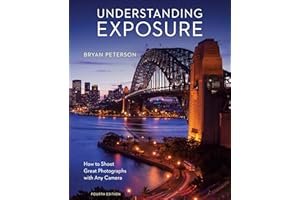 1
1