We've ranked the best investment books using expert recommendations, sales data, and millions of reader ratings. At Shortform, we know books. Our book guides are the best in the world. Learn why.
Cover unavailable
1
The Intelligent Investor: The Classic Text on Value Investing
The greatest investment advisor of the twentieth century, Benjamin Graham taught and inspired people worldwide. Graham's philosophy of "value investing" -- which shields investors from substantial error and teaches them to develop long-term strategies -- has made The Intelligent Investor the stock market bible ever since its original publication in 1949.
To invest successfully over a lifetime does not require a stratospheric IQ, unusual business insights, or inside information. What's needed is a sound intellectual framework for making decisions and the ability to keep emotions from corroding that framework. This book precisely and clearly prescribes the proper framework. You must provide the emotional discipline. [source]
The foundation for investing. A lot of people have used this as their guide to getting into investment, basic strategies. Actually Warren Buffett cites this as the book that got him into investing and he says that principles he learned here helped him to become a great investor. Highly recommend this book. It’s a great way understand what’s going on and how to evaluate different companies out there before you make an investment. [source]
DJ Vlad
The single biggest influence on how I buy and sell stocks. [source]
Cover unavailable
2
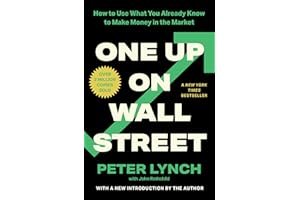
One Up On Wall Street: How to Use What You Already Know to Make Money in the Market
THE NATIONAL BESTSELLING BOOK THAT EVERY INVESTOR SHOULD OWN
Peter Lynch is America's number-one money manager. His mantra: Average investors can become experts in their own field and can pick winning stocks as effectively as Wall Street professionals by doing just a little research.
Now, in a new introduction written specifically for this edition of One Up on Wall Street, Lynch gives his take on the incredible rise of Internet stocks, as well as a list of twenty winning companies of high-tech '90s. That many of these winners are low-tech supports his thesis that amateur investors can continue to reap exceptional rewards from mundane, easy-to-understand companies they encounter in their daily lives.
Investment opportunities abound for the layperson, Lynch says. By simply observing business developments and taking notice of your immediate world -- from the mall to the workplace -- you can discover potentially successful companies before professional analysts do. This jump on the experts is what produces "tenbaggers," the stocks that appreciate tenfold or more and turn an average stock portfolio into a star performer.
The former star manager of Fidelity's multibillion-dollar Magellan Fund, Lynch reveals how he achieved his spectacular record. Writing with John Rothchild, Lynch offers easy-to-follow directions for sorting out the long shots from the no shots by reviewing a company's financial statements and by identifying which numbers really count. He explains how to stalk tenbaggers and lays out the guidelines for investing in cyclical, turnaround, and fast-growing companies.
Lynch promises that if you ignore the ups and downs of the market and the endless speculation about interest rates, in the long term (anywhere from five to fifteen years) your portfolio will reward you. This advice has proved to be timeless and has made One Up on Wall Street a number-one bestseller. And now this classic is as valuable in the new millennium as ever.
…
Recommended by Bill Ackman, Patrick Swalls, and 1 others.
Patrick Swalls
Read this if you want to learn more about the stock market. [source]
Cover unavailable
3
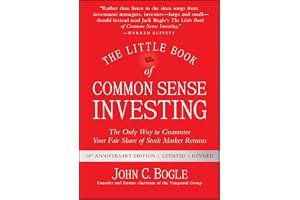
The Little Book of Common Sense Investing: The Only Way to Guarantee Your Fair Share of Stock Market Returns
The best-selling investing "bible" offers new information, new insights, and new perspectives
The Little Book of Common Sense Investing is the classic guide to getting smart about the market. Legendary mutual fund pioneer John C. Bogle reveals his key to getting more out of investing: low-cost index funds. Bogle describes the simplest and most effective investment strategy for building wealth over the long term: buy and hold, at very low cost, a mutual fund that tracks a broad stock market Index such as the S&P 500.
While the stock market has tumbled and then soared since the first edition of Little Book of Common Sense was published in April 2007, Bogle's investment principles have endured and served investors well. This tenth anniversary edition includes updated data and new information but maintains the same long-term perspective as in its predecessor.
Bogle has also added two new chapters designed to provide further guidance to investors: one on asset allocation, the other on retirement investing.
A portfolio focused on index funds is the only investment that effectively guarantees your fair share of stock market returns. This strategy is favored by Warren Buffett, who said this about Bogle: "If a statue is ever erected to honor the person who has done the most for American investors, the hands-down choice should be Jack Bogle. For decades, Jack has urged investors to invest in ultra-low-cost index funds. . . . Today, however, he has the satisfaction of knowing that he helped millions of investors realize far better returns on their savings than they otherwise would have earned. He is a hero to them and to me."
Bogle shows you how to make index investing work for you and help you achieve your financial goals, and finds support from some of the world's best financial minds: not only Warren Buffett, but Benjamin Graham, Paul Samuelson, Burton Malkiel, Yale's David Swensen, Cliff Asness of AQR, and many others.
This new edition of TheLittle Book of Common Sense Investing offers you the same solid strategy as its predecessor for building your financial future.
Build a broadly diversified, low-cost portfolio without the risks of individual stocks, manager selection, or sector rotation. Forget the fads and marketing hype, and focus on what works in the real world. Understand that stock returns are generated by three sources (dividend yield, earnings growth, and change in market valuation) in order to establish rational expectations for stock returns over the coming decade. Recognize that in the long run, business reality trumps market expectations. Learn how to harness the magic of compounding returns while avoiding the tyranny of compounding costs. While index investing allows you to sit back and let the market do the work for you, too many investors trade frantically, turning a winner's game into a loser's game. The Little Book of Common Sense Investing is a solid guidebook to your financial future.
In his 2014 shareholder letter, Buffett recommended reading this book over listening to the advice of most financial advisers. [source]
Kaya Thomas
@MegBartelt You’re welcome! Thanks for writing great content. You mentioned John Bogle which book do you recommend I start with, “The Little Book of Common Sense Investing”? [source]
Cover unavailable
4
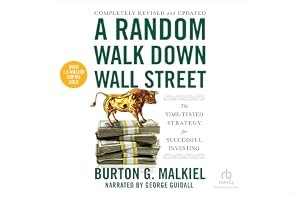
A Random Walk Down Wall Street: The Time-Tested Strategy for Successful Investing
Today’s stock market is not for the faint of heart. At a time of frightening volatility, what is the average investor to do?
The answer: turn to Burton G. Malkiel’s advice in his reassuring, authoritative, gimmick-free, and perennially best-selling guide to investing. Long established as the first book to purchase before starting a portfolio or 401(k), A Random Walk Down Wall Street now features new material on “tax-loss harvesting,” the crown jewel of tax management; the current bitcoin bubble; and automated investment advisers; as well as a brand-new chapter on factor investing and risk parity. And as always, Malkiel’s core insights—on stocks and bonds, as well as real estate investment trusts, home ownership, and tangible assets like gold and collectibles— along with the book’s classic life-cycle guide to investing, will help restore confidence and composure to anyone seeking a calm route through today’s financial markets.
It’s a wonderful read because it doesn’t presuppose any background knowledge of economics or finance…It’s had so much staying power. It was written in the 1970s, a bestseller when it came out, and it’s still a bestseller now. I recommend it to my MBA students today because it’s just a wonderful introduction to the field of finance. At the same time, it provides some very sensible advice for investors about how to manage their own money. [source]
Essentially, the theme of Malkiel’s book was that you could, in effect, do investing yourself. [source]
Michael Hebenstreit
If you want to get into stock trading or in case you want to become an investor, then I definitely would recommend to read the book I already mentioned and in addition: A Random Walk Down Wall Street by Burton Malkiel. [source]
Cover unavailable
5
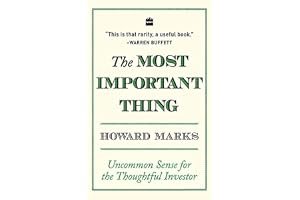
The Most Important Thing: Uncommon Sense for the Thoughtful Investor
"This is that rarity, a useful book."--Warren Buffett
Howard Marks, the chairman and cofounder of Oaktree Capital Management, is renowned for his insightful assessments of market opportunity and risk. After four decades spent ascending to the top of the investment management profession, he is today sought out by the world's leading value investors, and his client memos brim with insightful commentary and a time-tested, fundamental philosophy. Now for the first time, all readers can benefit from Marks's wisdom, concentrated into a single volume that speaks to both the amateur and seasoned investor.
Informed by a lifetime of experience and study, The Most Important Thing explains the keys to successful investment and the pitfalls that can destroy capital or ruin a career. Utilizing passages from his memos to illustrate his ideas, Marks teaches by example, detailing the development of an investment philosophy that fully acknowledges the complexities of investing and the perils of the financial world. Brilliantly applying insight to today's volatile markets, Marks offers a volume that is part memoir, part creed, with a number of broad takeaways.
Marks expounds on such concepts as "second-level thinking," the price/value relationship, patient opportunism, and defensive investing. Frankly and honestly assessing his own decisions--and occasional missteps--he provides valuable lessons for critical thinking, risk assessment, and investment strategy. Encouraging investors to be "contrarian," Marks wisely judges market cycles and achieves returns through aggressive yet measured action. Which element is the most essential? Successful investing requires thoughtful attention to many separate aspects, and each of Marks's subjects proves to be the most important thing.
Whenever I am assessing an investment decision I refer to Howard Marks (Oaktree Capital Management) The Most Important Thing: Uncommon Sense for the Thoughtful Investor. He lays out explicit techniques for reaching second level thinking and outlines particular questions any investor should ask themselves before making an investment decision. I paraphrased the lessons I found most useful and refer to them whenever I am looking at an investment opportunity. [source]
Cover unavailable
6
Poor Charlie's Almanack: The Wit and Wisdom of Charles T. Munger
From 1733 to 1758, Ben Franklin dispensed useful and timeless advice through Poor Richard's Almanack. Among the virtues extolled were thrift, duty, hard work, and simplicity. Subsequently, two centuries went by during which Ben's thoughts on these subjects were regarded as the last word. Then Charlie Munger stepped forth. [source]
Daniel Ek
I’ve been enjoying Charlie Munger’s speeches online for years; this is the ultimate collection of the best of them. [source]
Cover unavailable
7
The Millionaire Next Door: The Surprising Secrets of America's Wealthy
-Why aren't I as wealthy as I should be?- Many people ask this question of themselves all the time. Often they are hard-working, well educated middle- to high-income people. Why, then, are so few affluent. For nearly two decades the answer has been found in the bestselling The Millionaire Next Door: The Surprising Secrets of America's Wealthy, reissued with a new foreword for the twenty-first century. According to the authors, most people have it all wrong about how you become wealthy in America. Wealth in America is more often the result of hard work, diligent savings, and living below your means than it is about inheritance, advance degrees, and even intelligence. The Millionaire Next Door identifies seven common traits that show up again and again among those who have accumulated wealth. You will learn, for example, that millionaires bargain shop for used cars, pay a tiny fraction of their wealth in income tax, raise children who are often unaware of their family's wealth until they are adults, and, above all, reject the big-spending lifestyles most of us associate with rich people. In fact, you will learn that the flashy millionaires glamorized in the media represent only a tiny minority of America's rich. Most of the truly wealthy in this country don't live in Beverly Hills or on Park Avenue-they live next door.
This hardcover edition is cleanly formatted for easy reading. 12 point Garamond, 1.25 spacing. The Richest Man in Babylon is a timeless classic, revealing the secrets to making money and keeping it. This inspirational book is hailed as the greatest of books on finances. It unveils the secrets to wealth, providing priceless suggestions, advice, unforgettable parables, financial problem-solving tools, and invaluable information which will get you on your way to riches. The book to read for all who want financial success.
…
Recommended by Daymond John, Aisha Yesufu, DJ Vlad, and 6 others.
Daymond John
Founder/FUBU
Daymond John said this is one of his most-recommended books. [source]
Aisha Yesufu
@seundavidpaul 👏👏👏👏👏 This is a great book [source]
This is a 1920s classic version of How To Get Rich. The ancestor of all the pale imitations, like Rich Dad/Poor Dad, that came since. And while I scoffed at plenty of the allegories from ancient Babylon that presents the lessons, it was still a neat package. And at least ancient Babylon is a more interesting backdrop for teaching lessons about money than some suburban house flipper. I ended up liking it more at the end than I did at the beginning. It’s also a really interesting tie-in with that debt history book. [source]
Major New York Times bestseller Winner of the National Academy of Sciences Best Book Award in 2012 Selected by the New York Times Book Review as one of the best books of 2011 A Globe and Mail Best Books of the Year 2011 Title One of The Economist's 2011 Books of the Year One of The Wall Street Journal's Best Nonfiction Books of the Year 2011 2013 Presidential Medal of Freedom Recipient
In the international bestseller, Thinking, Fast and Slow, Daniel Kahneman, the renowned psychologist and winner of the Nobel Prize in Economics, takes us on a groundbreaking tour of the mind and explains the two systems that drive the way we think. System 1 is fast, intuitive, and emotional; System 2 is slower, more deliberative, and more logical. The impact of overconfidence on corporate strategies, the difficulties of predicting what will make us happy in the future, the profound effect of cognitive biases on everything from playing the stock market to planning our next vacation—each of these can be understood only by knowing how the two systems shape our judgments and decisions. Engaging the reader in a lively conversation about how we think, Kahneman reveals where we can and cannot trust our intuitions and how we can tap into the benefits of slow thinking. He offers practical and enlightening insights into how choices are made in both our business and our personal lives—and how we can use different techniques to guard against the mental glitches that often get us into trouble. Winner of the National Academy of Sciences Best Book Award and the Los Angeles Times Book Prize and selected by The New York Times Book Review as one of the ten best books of 2011, Thinking, Fast and Slow is destined to be a classic.
A few months ago, Mr. Obama read “Thinking, Fast and Slow,” by Daniel Kahneman, about how people make decisions — quick, instinctive thinking versus slower, contemplative deliberation. For Mr. Obama, a deliberator in an instinctive business, this may be as instructive as any political science text. [source]
Captivating dive into human decision making, marred by inclusion of several/many? psychology studies that fail to replicate. Will stand as a cautionary tale? [source]
Cover unavailable
10
Fooled by Randomness: The Hidden Role of Chance in Life and in the Markets
Fooled by Randomness is a standalone book in Nassim Nicholas Taleb’s landmark Incerto series, an investigation of opacity, luck, uncertainty, probability, human error, risk, and decision-making in a world we don’t understand. The other books in the series are The Black Swan, Antifragile, and The Bed of Procrustes.
Now in a striking new hardcover edition, Fooled by Randomness is the word-of-mouth sensation that will change the way you think about business and the world. Nassim Nicholas Taleb–veteran trader, renowned risk expert, polymathic scholar, erudite raconteur, and New York Times bestselling author of The Black Swan–has written a modern classic that turns on its head what we believe about luck and skill.
This book is about luck–or more precisely, about how we perceive and deal with luck in life and business. Set against the backdrop of the most conspicuous forum in which luck is mistaken for skill–the world of trading–Fooled by Randomness provides captivating insight into one of the least understood factors in all our lives. Writing in an entertaining narrative style, the author tackles major intellectual issues related to the underestimation of the influence of happenstance on our lives.
The book is populated with an array of characters, some of whom have grasped, in their own way, the significance of chance: the baseball legend Yogi Berra; the philosopher of knowledge Karl Popper; the ancient world’s wisest man, Solon; the modern financier George Soros; and the Greek voyager Odysseus. We also meet the fictional Nero, who seems to understand the role of randomness in his professional life but falls victim to his own superstitious foolishness.
However, the most recognizable character of all remains unnamed–the lucky fool who happens to be in the right place at the right time–he embodies the “survival of the least fit.” Such individuals attract devoted followers who believe in their guru’s insights and methods. But no one can replicate what is obtained by chance.
Are we capable of distinguishing the fortunate charlatan from the genuine visionary? Must we always try to uncover nonexistent messages in random events? It may be impossible to guard ourselves against the vagaries of the goddess Fortuna, but after reading Fooled by Randomness we can be a little better prepared.
PRAISE FOR FOOLED BY RANDOMNESS:
Named by Fortune One of the Smartest Books of All Time
A Financial Times Best Business Book of the Year
“[Fooled by Randomness] is to conventional Wall Street wisdom approximately what Martin Luther’s ninety-five theses were to the Catholic Church.” –Malcolm Gladwell, author of Blink
“The book that rolled down Wall Street like a hand grenade.” –Maggie Mahar, author of Bull! A History of the Boom, 1982—1999
“Fascinating . . . Taleb will grab you.” –Peter L. Bernstein, author of Capital Ideas Evolving
“Recalls the best of scientist/essayists like Richard Dawkins . . . and Stephen Jay Gould.” –Michael Schrage, author of Serious Play: How the World’s Best Companies Simulate to Innovate
“We need a book like this. . . . Fun to read, refreshingly independent-minded.” –Robert J. Shiller, author of Irrational Exuberance
“Powerful . . . loaded with crackling little insights [and] extreme brilliance.” –National Review
And throw in “The Black Swan” and “Fooled by Randomness”. “Fragile” means if you hit something might break. “Resilient” means if you hit something, it will stay the same. On my podcast Nassim discusses “Antifragility” – building a system, even on that works for you on a personal level, where you if you harm your self in some way it becomes stronger. That podcast changed my life He discusses Antifragility throughout history, up to our current economic situation, and even in our personal situations. [source]
Anant Jain
The five-book series, "Incerto", by Nassim Nicholas Taleb has had a profound impact on how I think about the world. There’s some overlap across the books — but you'll likely find the repetition helpful in retaining the content better. [source]
Art De Vany
I used this book is a class I taught on the economics of uncertainty. [source]
Cover unavailable
11
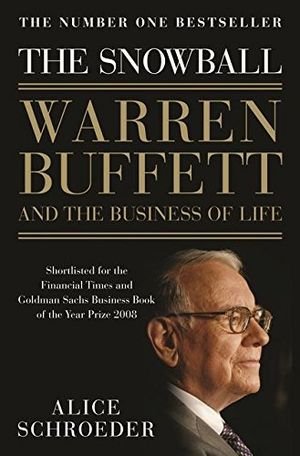
The Snowball: Warren Buffett and the Business of Life
Here is THE book recounting the life and times of one of the most respected men in the world, Warren Buffett. The legendary Omaha investor has never written a memoir, but now he has allowed one writer, Alice Schroeder, unprecedented access to explore directly with him and with those closest to him his work, opinions, struggles, triumphs, follies, and wisdom. The result is the personally revealing and complete biography of the man known everywhere as “The Oracle of Omaha.”
Although the media track him constantly, Buffett himself has never told his full life story. His reality is private, especially by celebrity standards. Indeed, while the homespun persona that the public sees is true as far as it goes, it goes only so far. Warren Buffett is an array of paradoxes. He set out to prove that nice guys can finish first. Over the years he treated his investors as partners, acted as their steward, and championed honesty as an investor, CEO, board member, essayist, and speaker. At the same time he became the world’s richest man, all from the modest Omaha headquarters of his company Berkshire Hathaway. None of this fits the term “simple.”
When Alice Schroeder met Warren Buffett she was an insurance industry analyst and a gifted writer known for her keen perception and business acumen. Her writings on finance impressed him, and as she came to know him she realized that while much had been written on the subject of his investing style, no one had moved beyond that to explore his larger philosophy, which is bound up in a complex personality and the details of his life. Out of this came his decision to cooperate with her on the book about himself that he would never write.
Never before has Buffett spent countless hours responding to a writer’s questions, talking, giving complete access to his wife, children, friends, and business associates—opening his files, recalling his childhood. It was an act of courage, as The Snowball makes immensely clear. Being human, his own life, like most lives, has been a mix of strengths and frailties. Yet notable though his wealth may be, Buffett’s legacy will not be his ranking on the scorecard of wealth; it will be his principles and ideas that have enriched people’s lives. This book tells you why Warren Buffett is the most fascinating American success story of our time.
…
Recommended by Marvin Liao, Chude Jideonwo, DJ Vlad, and 5 others.
Marvin Liao
Partner/500 Startups
My list would be (besides the ones I mentioned in answer to the previous question) both business & Fiction/Sci-Fi and ones I personally found helpful to myself. The business books explain just exactly how business, work & investing are in reality & how to think properly & differentiate yourself. On the non-business side, a mix of History & classic fiction to understand people, philosophy to make sense of life and Science fiction to picture what the future could be like (not always utopian). [source]
Chude Jideonwo
It's been so long, and I've been so busy that I haven't been able to recommend a book. I am sorry! I have read so many fantastic ones though, no matter how busy I have been. And I am soooooo excited to recommend this one. I love Warren Buffett ... https://t.co/ML0pM3G29k https://t.co/6yhfhT8WF5 [source]
DJ Vlad
If I had to pick one book that changed the way I look at investing, this would be it. [source]
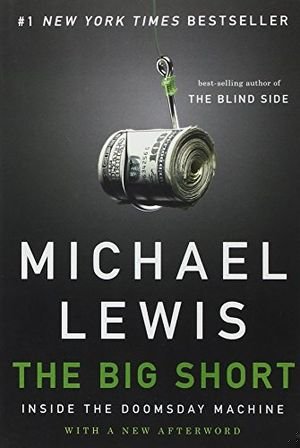
The real story of the crash began in bizarre feeder markets where the sun doesn't shine and the SEC doesn't dare, or bother, to tread: the bond and real estate derivative markets where geeks invent impenetrable securities to profit from the misery of lower- and middle-class Americans who can't pay their debts. The smart people who understood what was or might be happening were paralyzed by hope and fear; in any case, they weren't talking.
Michael Lewis creates a fresh, character-driven narrative brimming with indignation and dark humor, a fitting sequel to his #1 bestseller Liar's Poker. Out of a handful of unlikely-really unlikely-heroes, Lewis fashions a story as compelling and unusual as any of his earlier bestsellers, proving yet again that he is the finest and funniest chronicler of our time.
Michael Lewis's ability to boil down the most complicated subjects is like a magic trick. You can't believe your own eyes. He takes on important issues - from the 2008 Wall Street crash in "The Big Short" to parenting in "Home Game" - and breaks them down to the deepest truths. His combination of an extraordinarily analytical mind and a deep understanding of human nature allows him to weave together data and events to offer a fresh and insightful narrative. Whatever the topic, the result is always compelling and even thrilling. I am in awe of him. [source]
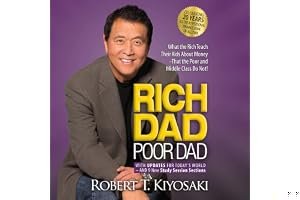
Rich Dad Poor Dad: What The Rich Teach Their Kids About Money - That The Poor And Middle Class Do Not!
Robert T. Kiyosaki
4.4
In Rich Dad Poor Dad, the #1 Personal Finance book of all time, Robert Kiyosaki shares the story of his two dad: his real father, whom he calls his ‘poor dad,’ and the father of his best friend, the man who became his mentor and his ‘rich dad.’ One man was well educated and an employee all his life, the other’s education was “street smarts” over traditional classroom education and he took the path of entrepreneurship…a road that led him to become one of the wealthiest men in Hawaii. Robert’s poor dad struggled financially all his life, and these two dads—these very different points of view of money, investing, and employment—shaped Robert’s thinking about money.
Robert has challenged and changed the way tens of millions of people, around the world, think about money and investing and he has become a global advocate for financial education and the path to financial freedom. Rich Dad Poor Dad (and the Rich Dad series it spawned) has sold over 36 million copies in English and translated editions around the world.
Rich Dad Poor Dad will… • explode the myth that you need to earn a high income to become rich • challenge the belief that your house is an asset • show parents why they can’t rely on the school system to teach their kids about money • define, once and for all, an asset and a liability • explain the difference between good debt and bad debt • teach you to see the world of money from different perspectives • discuss the shift in mindset that can put you on the road to financial freedom
Ray Dalio, one of the world’s most successful investors and entrepreneurs, shares the unconventional principles that he’s developed, refined, and used over the past forty years to create unique results in both life and business—and which any person or organization can adopt to help achieve their goals.
In 1975, Ray Dalio founded an investment firm, Bridgewater Associates, out of his two-bedroom apartment in New York City. Forty years later, Bridgewater has made more money for its clients than any other hedge fund in history and grown into the fifth most important private company in the United States, according to Fortune magazine. Dalio himself has been named to Time magazine’s list of the 100 most influential people in the world. Along the way, Dalio discovered a set of unique principles that have led to Bridgewater’s exceptionally effective culture, which he describes as “an idea meritocracy that strives to achieve meaningful work and meaningful relationships through radical transparency.” It is these principles, and not anything special about Dalio—who grew up an ordinary kid in a middle-class Long Island neighborhood—that he believes are the reason behind his success.
In Principles, Dalio shares what he’s learned over the course of his remarkable career. He argues that life, management, economics, and investing can all be systemized into rules and understood like machines. The book’s hundreds of practical lessons, which are built around his cornerstones of “radical truth” and “radical transparency,” include Dalio laying out the most effective ways for individuals and organizations to make decisions, approach challenges, and build strong teams. He also describes the innovative tools the firm uses to bring an idea meritocracy to life, such as creating “baseball cards” for all employees that distill their strengths and weaknesses, and employing computerized decision-making systems to make believability-weighted decisions. While the book brims with novel ideas for organizations and institutions, Principles also offers a clear, straightforward approach to decision-making that Dalio believes anyone can apply, no matter what they’re seeking to achieve.
Here is a rare opportunity to gain proven advice unlike anything you’ll find in the conventional business press.
I found it to be truly extraordinary. Every page is full of so many principles of distinction and insights—and I love how Ray incorporates his history and his life in such an elegant way. [source]
Cover unavailable
15
You Can Be a Stock Market Genius Even if You're Not Too Smart: Uncover the Secret Hiding Places of Stock Market Profits
A comprehensive and practical guide to the stock market from a successful fund manager—filled with case studies, important background information, and all the tools you’ll need to become a stock market genius.
Fund manager Joel Greenblatt has been beating the Dow (with returns of 50 percent a year) for more than a decade. And now, in this highly accessible guide, he’s going to show you how to do it, too. You’re about to discover investment opportunities that portfolio managers, business-school professors, and top investment experts regularly miss—uncharted areas where the individual investor has a huge advantage over the Wall Street wizards. Here is your personal treasure map to special situations in which big profits are possible, including:
Common Stocks and Uncommon Profits and Other Writings
Philip A. Fisher
4.4
In Common Stocks and Uncommon Profits, Fisher shares his philosophy, offering valuable insights into the most fundamental and important aspects of buying and selling stock. Here are solid guidelines on when and what to buy, sound reasons for selling common stock, as well as critical information on profit margins and dividends. There is also Fisher's famous list of Top-Ten "Don'ts" for investors, complete with warnings against buying into promotional companies, over-stressing diversification, following the crowd, and buying stock just for the "tone" of its annual report.
While investor Philip Fisher--who specialized in investing in innovative companies--didn't shape Buffett in quite the same way as Graham did, Buffett still holds him in the highest regard. [source]
DJ Vlad
The 3rd most important book in my path to educating myself about the stock market. [source]
Cover unavailable
17
The Simple Path to Wealth: Your Road Map to Financial Independence and a Rich, Free Life
"In the dark, bewildering, trap-infested jungle of misinformation and opaque riddles that is the world of investment, JL Collins is the fatherly wizard on the side of the path, offering a simple map, warm words of encouragement and the tools to forge your way through with confidence. You'll never find a wiser advisor with a bigger heart." -- Malachi Rempen: Filmmaker, cartoonist, author and self-described ruffian This book grew out of a series of letters to my daughter concerning various things-mostly about money and investing-she was not yet quite ready to hear. Since money is the single most powerful tool we have for navigating this complex world we've created, understanding it is critical. "But Dad," she once said, "I know money is important. I just don't want to spend my life thinking about it." This was eye-opening. I love this stuff. But most people have better things to do with their precious time. Bridges to build, diseases to cure, treaties to negotiate, mountains to climb, technologies to create, children to teach, businesses to run. Unfortunately, benign neglect of things financial leaves you open to the charlatans of the financial world. The people who make investing endlessly complex, because if it can be made complex it becomes more profitable for them, more expensive for us, and we are forced into their waiting arms. Here's an important truth: Complex investments exist only to profit those who create and sell them. Not only are they more costly to the investor, they are less effective. The simple approach I created for her and present now to you, is not only easy to understand and implement, it is more powerful than any other. Together we'll explore: Debt: Why you must avoid it and what to do if you have it. The importance of having F-you Money. How to think about money, and the unique way understanding this is key to building your wealth. Where traditional investing advice goes wrong and what actually works. What the stock market really is and how it really works. Why the stock market always goes up and why most people still lose money investing in it. How to invest in a raging bull, or bear, market. Specific investments to implement these strategies. The Wealth Building and Wealth Preservation phases of your investing life and why they are not always tied to your age. How your asset allocation is tied to those phases and how to choose it. How to simplify the sometimes confusing world of 401(k), 403(b), TSP, IRA and Roth accounts. TRFs (Target Retirement Funds), HSAs (Health Savings Accounts) and RMDs (Required Minimum Distributions). What investment firm to use and why the one I recommend is so far superior to the competition. Why you should be very cautious when engaging an investment advisor and whether you need to at all. Why and how you can be conned, and how to avoid becoming prey. Why I don't recommend dollar cost averaging. What financial independence looks like and how to have your money support you. What the 4% rule is and how to use it to safely spend your wealth. The truth behind Social Security. A Case Study on how this all can be implemented in real life. Don't let any of this intimidate you. Those that have gone before you say: .."..in his patented no-frills and often humorous style, JL makes it both approachable and simple. And powerful." ..".effective message told in a visual, funny style." ..".a refreshingly unique and approachable take on investing." "JL Collins has the gift of making boring financial concepts funny and interesting." "Instead of esoteric equations about measuring a stock's alpha and comparing it to its beta, he lights up the campfire and starts telling stories." Enjoy the read, and the j
…
Recommended by Gunhee Park.
Gunhee Park
Some other books I’ve really enjoyed: … The Simple Path to Wealth. [source]
Cover unavailable
18
The Black Swan: The Impact of the Highly Improbable
A black swan is a highly improbable event with three principal characteristics: It is unpredictable; it carries a massive impact; and, after the fact, we concoct an explanation that makes it appear less random, and more predictable, than it was.
The astonishing success of Google was a black swan; so was 9/11. For Nassim Nicholas Taleb, black swans underlie almost everything about our world, from the rise of religions to events in our own personal lives.
Why do we not acknowledge the phenomenon of black swans until after they occur? Part of the answer, according to Taleb, is that humans are hardwired to learn specifics when they should be focused on generalities.
We concentrate on things we already know and time and time again fail to take into consideration what we don’t know. We are, therefore, unable to truly estimate opportunities, too vulnerable to the impulse to simplify, narrate, and categorize, and not open enough to rewarding those who can imagine the “impossible.”
For years, Taleb has studied how we fool ourselves into thinking we know more than we actually do. We restrict our thinking to the irrelevant and inconsequential, while large events continue to surprise us and shape our world. Now, in this revelatory book, Taleb explains everything we know about what we don’t know. He offers surprisingly simple tricks for dealing with black swans and benefiting from them.
Elegant, startling, and universal in its applications The Black Swan will change the way you look at the world. Taleb is a vastly entertaining writer, with wit, irreverence, and unusual stories to tell. He has a polymathic command of subjects ranging from cognitive science to business to probability theory.
The Black Swan is a landmark book – itself a black swan.
The book also contains a 4-page glossary; 19 pages of notes; and, a 28-page bibliography in addition to an index.
From the book "The Everything Store: and the Age of Amazon" “The scholar argues that people are wired to see patterns in chaos while remaining blind to unpredictable events, with massive consequences. Experimentation and empiricism trumps the easy and obvious narrative,” Stone writes. [source]
And throw in “The Black Swan” and “Fooled by Randomness”. “Fragile” means if you hit something might break. “Resilient” means if you hit something, it will stay the same. On my podcast Nassim discusses “Antifragility” – building a system, even on that works for you on a personal level, where you if you harm your self in some way it becomes stronger. That podcast changed my life He discusses Antifragility throughout history, up to our current economic situation, and even in our personal situations. [source]
Cover unavailable
19
The Warren Buffett Way: Investment Strategies of the World's Greatest Investor
The Warren Buffett Way offers investors their first in-depth look at the innovative investment and business strategies behind the spectacular success of living legend Warren E. Buffett. Tracing Warren Buffett's career from the beginning, Robert G. Hagstrom, Jr., tells us exactly how, starting with an initial investment of only $100, Buffett built a business empire worth $19.4 billion. Offers a close-up look at Buffett's highly successful investment theories and strategies; identifies the types of businesses Buffett now finds most attractive, and which ones he avoids; and based on the author's ten-year monitoring of Buffett's numerous shrewd investments and ventures.
This read contains a detailed analysis of Buffett’s principal investments through his early partnerships—and detailed descriptions of the circumstances under which some of those investments were actually made. This alone makes it great learning material for anyone interested in trying to emulate him. [source]
The terrific new guide to investing in stocks that goes beyond Peter Lynch's previous runaway bestseller, One Up on Wall Street. Lynch explains how he researched and selected the companies he recommended in the 1992 Barron's Roundtable, giving information that readers can use in any market environment to find successful companies and winning stocks.
One of the most popular personal development and self-improvement books of all time, Think and Grow Rich has sold over 100 million copies worldwide since its first publication during the Great Depression. In this hardcover edition, Napoleon Hill presents a "Philosophy of Achievement" in 13 principles drawn from the success stories of such greats as Andrew Carnegie, Henry Ford, Thomas Edison, and other millionaires of his time.
Think and Grow Rich reveals the secrets that can bring you fortune. By suppressing negative thoughts and keeping your focus on the long term, you can find true and lasting success. Napoleon Hill details his philosophy through the following 13 principles:
Desire Faith Autosuggestion Specialized Knowledge Imagination Organized Planning Decision Persistence Power of the Master Mind The Mystery of Sex Transmutation The Subconscious Mind The Brain The Sixth Sense Follow the steps outlined here, and you may just find the path to your own personal fortune.
For anyone interested in my career path, I’d recommend books in various genres. On a real practical level, I’d certainly recommend reading any and all plant/mushroom/tree/ecology/nature books you can acquire. It’s even more helpful to read the books that pertain specifically to your ecosystem and bioregion. Additionally, I’d also recommend reading a plethora of business and marketing books — both old and new alike. Think And Grow Rich by Napoleon Hill, Crush It! by Gary Vaynerchuk, Influence: The Psychology of Persuasion by Robert Cialdini, and anything by Seth Godin would be my top recommendations. And of course, every book I mentioned in the previous answers are strongly recommended as well. [source]
Alan Pierce
This book dramatically changed the way I structured my day to day life. Based on over two decades of personal interviews and studies of some of history's’ greatest minds, the author distills the lessons he learned and details how you can train and condition your mind through daily habit to master your actions. The way it promotes a disciplined and holistic approach of continual self-improvement, goal setting and strategic decision making really resonated with me. [source]
Cover unavailable
22
The Outsiders: Eight Unconventional CEOs and Their Radically Rational Blueprint for Success
”It is impossible to produce superior performance unless you do something different.” — John Templeton
What makes a successful CEO? Most people call to mind a familiar definition: a seasoned manager with deep industry expertise. Others might point to the qualities of today’s so-called celebrity CEOs—charisma, virtuoso communication skills, and a confident management style. But what really matters when you run an organization? What is the hallmark of exceptional CEO performance? Quite simply, it is the returns for the shareholders of that company over the long term.
In this refreshing, counterintuitive book, author Will Thorndike brings to bear the analytical wisdom of a successful career in investing, closely evaluating the performance of companies and their leaders. You will meet eight individualistic CEOs whose firms’ average returns outperformed the S&P 500 by a factor of twenty—in other words, an investment of $10,000 with each of these CEOs, on average, would have been worth over $1.5 million twenty-five years later. You may not know all their names, but you will recognize their companies: General Cinema, Ralston Purina, The Washington Post Company, Berkshire Hathaway, General Dynamics, Capital Cities Broadcasting, TCI, and Teledyne. In The Outsiders, you’ll learn the traits and methods—striking for their consistency and relentless rationality—that helped these unique leaders achieve such exceptional performance.
Humble, unassuming, and often frugal, these "outsiders” shunned Wall Street and the press, and shied away from the hottest new management trends. Instead, they shared specific traits that put them and the companies they led on winning trajectories: a laser-sharp focus on per share value as opposed to earnings or sales growth; an exceptional talent for allocating capital and human resources; and the belief that cash flow, not reported earnings, determines a company’s long-term value.
Drawing on years of research and experience, Thorndike tells eye-opening stories, extracting lessons and revealing a compelling alternative model for anyone interested in leading a company or investing in one—and reaping extraordinary returns.
In his 2012 shareholder letter, Buffett praises The Outsiders as "an outstanding book about CEOs who excelled at capital allocation." Berkshire Hathaway plays a major role in the book. One chapter is on director Tom Murphy, who Buffett says is "overall the best business manager I've ever met." [source]
Thorndike explores the importance of thoughtful capital allocation through the stories of eight successful CEOs. A good read for any business leader but especially those willing to chart their own course [source]
Austen Allred
This is the best book on being a CEO I’ve ever read https://t.co/snoEVOqJGk https://t.co/GUsZNlnlpn [source]
Cover unavailable
23
Security Analysis
Benjamin Graham and David Dodd
4.4
"A road map for investing that I have now been following for 57 years." --From the Foreword by Warren E. Buffett
First published in 1934, "Security Analysis" is one of the most influential financial books ever written. Selling more than one million copies through five editions, it has provided generations of investors with the timeless value investing philosophy and techniques of Benjamin Graham and David L. Dodd.
As relevant today as when they first appeared nearly 75 years ago, the teachings of Benjamin Graham, the father of value investing, have withstood the test of time across a wide diversity of market conditions, countries, and asset classes.
This new sixth edition, based on the classic 1940 version, is enhanced with 200 additional pages of commentary from some of today s leading Wall Street money managers. These masters of value investing explain why the principles and techniques of Graham and Dodd are still highly relevant even in today s vastly different markets. The contributor list includes: Seth A. Klarman, president of The Baupost Group, L.L.C. and author of "Margin of Safety" James Grant, founder of "Grant's Interest Rate Observer," general partner of Nippon Partners Jeffrey M. Laderman, twenty-five year veteran of "BusinessWeek" Roger Lowenstein, author of "Buffett: The Making of an American Capitalist" and "When America Aged" and Outside Director, Sequoia Fund Howard S. Marks, CFA, Chairman and Co-Founder, Oaktree Capital Management L.P. J. Ezra Merkin, Managing Partner, Gabriel Capital Group . Bruce Berkowitz, Founder, Fairholme Capital Management. Glenn H. Greenberg, Co-Founder and Managing Director, Chieftain Capital Management Bruce Greenwald, Robert Heilbrunn Professor of Finance and Asset Management, Columbia Business School David Abrams, Managing Member, Abrams Capital
Featuring a foreword by Warren E. Buffett (in which he reveals that he has read the 1940 masterwork at least four times ), this new edition of "Security Analysis" will reacquaint you with the foundations of value investing more relevant than ever in the tumultuous 21st century markets."
Buffett said that Security Analysis, another groundbreaking work of Graham's, had given him a road map for investing that he has been following for 57 years. [source]
From the bestselling author of The Black Swan and one of the foremost philosophers of our time, Nassim Nicholas Taleb, a book on how some systems actually benefit from disorder.
In The Black Swan Taleb outlined a problem; in Antifragile he offers a definitive solution: how to gain from disorder and chaos while being protected from fragilities and adverse events. For what he calls the "antifragile" is one step beyond robust, as it benefits from adversity, uncertainty and stressors, just as human bones get stronger when subjected to stress and tension.
Taleb stands uncertainty on its head, making it desirable, and proposing that things be built in an antifragile manner. Extremely ambitious and multidisciplinary, Antifragile provides a blueprint for how to behave-and thrive-in a world we don't understand and which is too uncertain for us to even try to understand. He who is not antifragile will perish. Why is the city state better than the nation state, why is debt bad for you, and why is almost everything modern bound to fail? The book covers innovation, health, biology, medicine, life decisions, politics, foreign policy, urban planning, war, personal finance, and economic systems. Throughout, the voice and recipes of the ancient wisdom from Phoenician, Roman, Greek, and Medieval sources are heard loud and clear.
You ask about success. To be successful you have to avoid being “fragile” – the idea that if something hurts you, you let collapse completely. You also have to avoid simply being resilient. Bouncing back is not enough. Antifragile is when something tries to hurt you and you come back stronger. That is real life business. That is real life success. Nassim focuses on the economy. But when I read the book I kept asking myself, “how can I apply this to the areas of my life where I feel most fragile?” [source]
Marvin Liao
Partner/500 Startups
My list would be (besides the ones I mentioned in answer to the previous question) both business & Fiction/Sci-Fi and ones I personally found helpful to myself. The business books explain just exactly how business, work & investing are in reality & how to think properly & differentiate yourself. On the non-business side, a mix of History & classic fiction to understand people, philosophy to make sense of life and Science fiction to picture what the future could be like (not always utopian). [source]
Vlad Tenev
The general concept is applicable to many fields beyond biology, for instance finance, economics and monetary policy. [source]
Cover unavailable
25
When Genius Failed: The Rise and Fall of Long-Term Capital Management
With a new Afterword addressing today’s financial crisis
A BUSINESS WEEK BEST BOOK OF THE YEAR
In this business classic—now with a new Afterword in which the author draws parallels to the recent financial crisis—Roger Lowenstein captures the gripping roller-coaster ride of Long-Term Capital Management. Drawing on confidential internal memos and interviews with dozens of key players, Lowenstein explains not just how the fund made and lost its money but also how the personalities of Long-Term’s partners, the arrogance of their mathematical certainties, and the culture of Wall Street itself contributed to both their rise and their fall.
When it was founded in 1993, Long-Term was hailed as the most impressive hedge fund in history. But after four years in which the firm dazzled Wall Street as a $100 billion moneymaking juggernaut, it suddenly suffered catastrophic losses that jeopardized not only the biggest banks on Wall Street but the stability of the financial system itself. The dramatic story of Long-Term’s fall is now a chilling harbinger of the crisis that would strike all of Wall Street, from Lehman Brothers to AIG, a decade later. In his new Afterword, Lowenstein shows that LTCM’s implosion should be seen not as a one-off drama but as a template for market meltdowns in an age of instability—and as a wake-up call that Wall Street and government alike tragically ignored.
…
Recommended by Max Levchin and John Gapper.
Max Levchin
Co-founder/PayPal, CEO/Affirm, Investor
Max Levchin recommended this book as an answer to "What business books would you advise young entrepreneurs read?" [source]
John Gapper
The Fed itself did not bail out LTCM, but it was worried enough to get a bunch of big banks into the room and say, “Would you care to chip in and save this thing?” Which they obligingly did – and then liquidated it. The Fed foresaw that the failure of a single big hedge fund could send shock waves through the entire financial system. The issue of systemic risk was highlighted. [source]
Cover unavailable
26
The Essays of Warren Buffett: Lessons for Corporate America
Warren E. Buffett and Lawrence A. Cunningham
4.3
The definitive work concerning Warren Buffett and intelligent investment philosophy, this is a collection of Buffett's letters to the shareholders of Berkshire Hathaway written over the past few decades that together furnish an enormously valuable informal education. The letters distill in plain words all the basic principles of sound business practices. They are arranged and introduced by a leading apostle of the "value" school and noted author, Lawrence Cunningham. Here in one place are the priceless pearls of business and investment wisdom, woven into a delightful narrative on the major topics concerning both managers and investors. These timeless lessons are ever-more important in the current environment.
If you want to get into stock trading or in case you want to become an investor, then I definitely would recommend to read the book I already mentioned and in addition: The Essays of Warren Buffett by Warren Buffett. [source]
Cover unavailable
27
Liar's Poker: Rising Through the Wreckage on Wall Street
In this shrewd and wickedly funny book, Michael Lewis describes an astonishing era and his own rake's progress through a powerful investment bank. From an unlikely beginning (art history at Princeton?) he rose in two short years from Salomon Brothers trainee to Geek (the lowest form of life on the trading floor) to Big Swinging Dick, the most dangerous beast in the jungle, a bond salesman who could turn over millions of dollars' worth of doubtful bonds with just one call.
With the eye and ear of a born storyteller, Michael Lewis shows us how things really worked on Wall Street. In the Salomon training program a roomful of aspirants is stunned speechless by the vitriolic profanity of the Human Piranha; out on the trading floor, bond traders throw telephones at the heads of underlings and Salomon chairman Gutfreund challenges his chief trader to a hand of liar's poker for one million dollars; around the world in London, Tokyo, and New York, bright young men like Michael Lewis, connected by telephones and computer terminals, swap gross jokes and find retail buyers for the staggering debt of individual companies or whole countries.
The bond traders, wearing greed and ambition and badges of honor, might well have swaggered straight from the pages of Bonfire of the Vanities. But for all thier outrageous behavior, they were in fact presiding over enormous changes in the world economy. Lewis's job, simply described, was to transfer money, in the form of bonds, from those outside America who saved to those inside America who consumed. In doing so, he generated tens of millions of dollars for Salomon Brothers, and earned for himself a ringside seat on the greatest financial spectacle of the decade: the leveraging of America.
…
Recommended by Audrey Russo and John Lanchester.
Audrey Russo
Question: What books would you recommend to young people interested in your career path? Answer: Anything by Peter Senge. The Hard Thing About Hard Things – Ben Horowitz Once you are Lucky, Twice you are good – Sara Lacey Revolutionary Wealth – Alvin Toffler Black Swan – Taleb Reset: My Fight for Inclusion and Lasting Change, by Ellen Pao. Creative Class – Richard Florida Creativity Inc. by Ed Catmull & Amy Wallace Liar’s Poker by Michael Lewis American Government 101: From the Continental Congress to the Iowa Caucus, Everything You Need to Know About US Politics – Kathleen Spears The Tao of Pooh by Benjamin Hoff. Anna Karenina by Leo Tolstoy. Any book by Herman Hesse The Art of War by Sun Tzu. [source]
John Lanchester
It’s still a wonderfully entertaining book: An absolutely hilarious, very, very dark, vivid account of how Michael Lewis came out of Princeton and, with basically no qualifications, got a job in the bond trading department of Salomon Brothers [source]
Cover unavailable
28
Zero to One: Notes on Startups, or How to Build the Future
If you want to build a better future, you must believe in secrets.
The great secret of our time is that there are still uncharted frontiers to explore and new inventions to create. In Zero to One, legendary entrepreneur and investor Peter Thiel shows how we can find singular ways to create those new things.
Thiel begins with the contrarian premise that we live in an age of technological stagnation, even if we’re too distracted by shiny mobile devices to notice. Information technology has improved rapidly, but there is no reason why progress should be limited to computers or Silicon Valley. Progress can be achieved in any industry or area of business. It comes from the most important skill that every leader must master: learning to think for yourself.
Doing what someone else already knows how to do takes the world from 1 to n, adding more of something familiar. But when you do something new, you go from 0 to 1. The next Bill Gates will not build an operating system. The next Larry Page or Sergey Brin won’t make a search engine. Tomorrow’s champions will not win by competing ruthlessly in today’s marketplace. They will escape competition altogether, because their businesses will be unique.
Zero to One presents at once an optimistic view of the future of progress in America and a new way of thinking about innovation: it starts by learning to ask the questions that lead you to find value in unexpected places.
In The Book on Rental Property Investing, real estate investor and co-host of the BiggerPockets Podcast Brandon Turner has one goal in mind: to give you every strategy, tool, tip, and technique needed to become a millionaire rental property investor--while helping you avoid the junk that pulls down so many wannabes! Written for both new and experienced investors, this book will impart years of experience through the informative and entertaining lessons contained within. You'll find practical, up-to-date, exciting strategies that investors across the world are using to build wealth and significant cash flow through rental properties. Inside, you'll discover: - Why many real estate investors fail, and how you can ensure you don't! - 4 unique, easy-to-follow strategies you can begin implementing today. - Creative tips for finding incredible deals--even in competitive markets. - How to achieve success without touching a toilet, paintbrush, or broom. - Actionable ideas for financing rentals, no matter how much cash you have. - Advice on keeping your wealth by deferring (and eliminating) taxes. - And so much more!
Four years after his #1 bestseller The Big Short, Michael Lewis returns to Wall Street to report on a high-tech predator stalking the equity markets.
Flash Boys is about a small group of Wall Street guys who figure out that the U.S. stock market has been rigged for the benefit of insiders and that, post–financial crisis, the markets have become not more free but less, and more controlled by the big Wall Street banks. Working at different firms, they come to this realization separately; but after they discover one another, the flash boys band together and set out to reform the financial markets. This they do by creating an exchange in which high-frequency trading—source of the most intractable problems—will have no advantage whatsoever.
The characters in Flash Boys are fabulous, each completely different from what you think of when you think “Wall Street guy.” Several have walked away from jobs in the financial sector that paid them millions of dollars a year. From their new vantage point they investigate the big banks, the world’s stock exchanges, and high-frequency trading firms as they have never been investigated, and expose the many strange new ways that Wall Street generates profits.
The light that Lewis shines into the darkest corners of the financial world may not be good for your blood pressure, because if you have any contact with the market, even a retirement account, this story is happening to you. But in the end, Flash Boys is an uplifting read. Here are people who have somehow preserved a moral sense in an environment where you don’t get paid for that; they have perceived an institutionalized injustice and are willing to go to war to fix it.
…
Recommended by Alykhan Satchu.
Alykhan Satchu
@surambaya @MihrThakar @NorthmanTrader great book [source]
Cover unavailable
31
Reminiscences of a Stock Operator: The Classic Novel Based on the Life of Legendary Stock Market Speculator Jesse Livermore
Edwin Lefevre
4.3
Reminiscences of a Stock Operator is the unforgettable story of the life of Jesse Livermore, one of Wall Street's greatest ever stock speculators.
Loosely fictionalised in 1923 in collaboration with journalist Edwin Lefevre, this is the story of the highs and the lows, the strategies and the street smarts, the epic wins (and sometimes epic losses) that has inspired generations of investors and traders.
This edition comes with an exclusive foreword by Tim Price, author of Investing Through the Looking Glass.
Harriman Definitive Editions offer the best quality editions of the best financial books of all time. Meticulously proofread, beautifully typeset in new designs, accompanied by forewords by the best modern financial writers, printed and bound in high-quality hardcovers on acid-free paper - they are essential long-term additions to the portfolio of every investor and trader.
…
Recommended by Alykhan Satchu, Bill Liao, Joshua M. Brown, and 3 others.
Alykhan Satchu
My all time favorite Book https://t.co/UxwPMlAcXU [source]
Bill Liao
The human world occurs in language so best get good at it! [source]
Each new generation of traders gets inspired by this book but I have come to love it as more of a cautionary tale. and FYI, this is the better book for that context: https://t.co/116lNciXCF https://t.co/mEYn2ZAqPI [source]
As Robert Shiller’s new 2009 preface to his prescient classic on behavioral economics and market volatility asserts, the irrational exuberance of the stock and housing markets “has been ended by an economic crisis of a magnitude not seen since the Great Depression of the 1930s.” As we all, ordinary Americans and professional investors alike, crawl from the wreckage of our heedless bubble economy, the shrewd insights and sober warnings, and hard facts that Shiller marshals in this book are more invaluable than ever.
The original and bestselling 2000 edition of Irrational Exuberance evoked Alan Greenspan’s infamous 1996 use of that phrase to explain the alternately soaring and declining stock market. It predicted the collapse of the tech stock bubble through an analysis of the structural, cultural, and psychological factors behind levels of price growth not reflected in any other sector of the economy. In the second edition (2005), Shiller folded real estate into his analysis of market volatility, marshalling evidence that housing prices were dangerously inflated as well, a bubble that could soon burst, leading to a “string of bankruptcies” and a “worldwide recession.” That indeed came to pass, with consequences that the 2009 preface to this edition deals with.
Irrational Exuberance is more than ever a cogent, chilling, and astonishingly far-seeing analytical work that no one with any money in any market anywhere can afford not to read–and heed.
…
Cover unavailable
33
MONEY Master the Game: 7 Simple Steps to Financial Freedom
Tony Robbins has coached and inspired more than 50 million people from over 100 countries. More than 4 million people have attended his live events. Oprah Winfrey calls him super-human. Now for the first time - in his first book in two decades - he's turned to the topic that vexes us all: How to secure financial freedom for ourselves and our families.
Based on extensive research and one-on-one interviews with more than 50 of the most legendary financial experts in the world - from Carl Icahn and Warren Buffett, to Ray Dalio and Steve Forbes - Tony Robbins has created a simple 7-step blueprint that anyone can use for financial freedom.
Robbins has a brilliant way of using metaphor and story to illustrate even the most complex financial concepts - making them simple and actionable. With expert advice on our most important financial decisions, Robbins is an advocate for the reader, dispelling the myths that often rob people of their financial dreams.
Tony Robbins walks readers of every income level through the steps to become financially free by creating a lifetime income plan. This book delivers invaluable information and essential practices for getting your financial house in order.
MONEY: Master the Game is the book millions of people have been waiting for.
…
Recommended by Jochen Siepmann, Madalina Uceanu, Michael Herrmann, and 2 others.
Jochen Siepmann
Question: What books had the biggest impact on you? Perhaps changed the way you see things or dramatically changed your career path. Answer: Rich Dad, Poor Dad (Robert Kiyosaki) Money, Master The Game (Anthony Robbins) Secrets Of The Millionaire Mind (T Harv Eker) [source]
Madalina Uceanu
The second category of books would be related to self awareness and keeping a positive approach to life generally, which I think makes a lot of difference in the way you create your professional path as well. Here you can either go more on the NLP approach and watch Tony Robbins interventions, or more towards the spiritual path, maybe at a later stage and read Wayne Dyer's books. [source]
Michael Herrmann
Save more and invest in low-cost index funds. A little US-centric but important advice for personal finances. [source]
Cover unavailable
34
The Four Pillars of Investing: Lessons for Building a Winning Portfolio
William Bernstein
4.3
The classic guide to constructing a solid portfolio--without a financial advisor!
"With relatively little effort, you can design and assemble an investment portfolio that, because of its wide diversification and minimal expenses, will prove superior to the most professionally managed accounts. Great intelligence and good luck are not required."
William Bernstein's commonsense approach to portfolio construction has served investors well during the past turbulent decade--and it's what made The Four Pillars of Investing an instant classic when it was first published nearly a decade ago.
This down-to-earth book lays out in easy-to-understand prose the four essential topics that every investor must master: the relationship of risk and reward, the history of the market, the psychology of the investor and the market, and the folly of taking financial advice from investment salespeople.
Bernstein pulls back the curtain to reveal what really goes on in today's financial industry as he outlines a simple program for building wealth while controlling risk. Straightforward in its presentation and generous in its real-life examples, The Four Pillars of Investing presents a no-nonsense discussion of:
The art and science of mixing different asset classes into an effective blend The dangers of actively picking stocks, as opposed to investing in the whole market Behavioral finance and how state of mind can adversely affect decision making Reasons the mutual fund and brokerage industries, rather than your partners, are often your most direct competitors Strategies for managing all of your assets--savings, 401(k)s, home equity--as one portfolio Investing is not a destination. It is a journey, and along the way are stockbrokers, journalists, and mutual fund companies whose interests are diametrically opposed to yours.
More relevant today than ever, The Four Pillars of Investing shows you how to determine your own financial direction and assemble an investment program with the sole goal of building long-term wealth for you and your family.
…
Recommended by Bill Earner.
Bill Earner
Four Pillars has a good methodology for thinking about how to save and invest personally so definitely useful. [source]
Cover unavailable
35
The Dhandho Investor: The Low-Risk Value Method to High Returns
Mohnish Pabrai
4.3
A comprehensive value investing framework for the individual investor In a straightforward and accessible manner, The Dhandho Investor lays out the powerful framework of value investing. Written with the intelligent individual investor in mind, this comprehensive guide distills the Dhandho capital allocation framework of the business savvy Patels from India and presents how they can be applied successfully to the stock market. The Dhandho method expands on the groundbreaking principles of value investing expounded by Benjamin Graham, Warren Buffett, and Charlie Munger. Readers will be introduced to important value investing concepts such as "Heads, I win! Tails, I don't lose that much!," "Few Bets, Big Bets, Infrequent Bets," Abhimanyu's dilemma, and a detailed treatise on using the Kelly Formula to invest in undervalued stocks. Using a light, entertaining style, Pabrai lays out the Dhandho framework in an easy-to-use format. Any investor who adopts the framework is bound to improve on results and soundly beat the markets and most professionals.
The most important thing I've learned from @MohnishPabrai isn't about investing, but about striving to be an "instrument of giving." Thanks for that wonderful lesson of a lifetime, Mohnish. It was great meeting you today! (page from his must-read book, The Dhandho Investor). https://t.co/60zgojitqX [source]
Cover unavailable
36
The Total Money Makeover: A Proven Plan for Financial Fitness (Classic Edition)
If you will live like no one else, later you can "live" like no one else.
Build up your money muscles with America's favorite finance coach.
Okay, folks, do you want to turn those fat and flabby expenses into a well-toned budget? Do you want to transform your sad and skinny little bank account into a bulked-up cash machine? Then get with the program, people. There's one sure way to whip your finances into shape, and that's with "The Total Money Makeover: Classic Edition".
By now, you've heard all the nutty get-rich-quick schemes, the fiscal diet fads that leave you with a lot of kooky ideas but not a penny in your pocket. Hey, if you're tired of the lies and sick of the false promises, take a look at this--it's the simplest, most straightforward game plan for completely making over your money habits. And it's based on results, not pie-in-the-sky fantasies.
With "The Total Money Makeover: Classic Edition," you'll be able to: Design a sure-fire plan for paying off all debt--meaning cars, houses, everything Recognize the 10 most dangerous money myths (these will kill you) Secure a big, fat nest egg for emergencies and retirement!
…
Recommended by Eric 'Dids', Sean Si, and Vincent Pugliese.
Eric 'Dids'
Recently listened to the Audiobook "Total Money Makeover" and am amazed how much it has made a difference, arguably more so outside of finance. The motto posed in the book, "Live like nobody else so eventually you can live like nobody else." Is an amazing motto to have in life. [source]
Vincent Pugliese
Linchpin by Seth Godin, The Total Money Makeover by Dave Ramsey, and Rich Dad, Poor Dad had immediate effects on my life. [source]
Cover unavailable
37
Jab, Jab, Jab, Right Hook: How to Tell Your Story in a Noisy Social World
The New York Times bestselling author and social media expert returns with hard-won advice on how to connect with customers and beat the competition by mastering social media marketing
When managers and marketers outline their social media strategies, they often plan for the "right hook"-their next highly anticipated sale or campaign that's going to put the competition out for the count. Even companies committed to jabbing-patiently engaging with customers to build the relationships so crucial to successful social media campaigns-still yearn to land the powerful, bruising swing that will knock out their opponent or their customer's resistance in one tooth-spritzing, killer blow. Right hooks, after all, convert traffic to sales. They easily show results and ROI. Except when they don't.
In the same passionate, street-wise style readers have come to expect, Gary Vaynerchuk is on a mission to improve marketers' right hooks by changing the way they fight to make their customers happy, and ultimately to compete. Thanks to the massive change and proliferation in social media platforms in the last four years, the winning combination of jabs and right hooks is different now. Communication is still key, but context matters more than ever. It's not just about developing high-quality content, but developing high-quality content perfectly adapted to specific social media platforms and mobile devices-content tailor-made for Facebook, YouTube, Instagram, Pinterest, Twitter, and Tumblr. A mash-up of the best elements of Crush It! and The Thank You Economy with a 2013 spin, here is a blueprint to social media marketing strategies that really works.
…
Recommended by Daymond John, Marvin Liao, Aaron Agius, and 35 others.
Marvin Liao
Partner/500 Startups
My list would be (besides the ones I mentioned in answer to the previous question) both business & Fiction/Sci-Fi and ones I personally found helpful to myself. The business books explain just exactly how business, work & investing are in reality & how to think properly & differentiate yourself. On the non-business side, a mix of History & classic fiction to understand people, philosophy to make sense of life and Science fiction to picture what the future could be like (not always utopian). [source]
Alex Circei
Question: What five books would you recommend to young people interested in your career path & why? Answer: Screw It, Let's Do It: Lessons In Life by Richard Branson Outliers: The Story of Success by Malcolm Gladwell Start With Why: How Great Leaders Inspire Everyone To Take Action by Simon Sinek The Hard Thing About Hard Things: Building a Business When There Are No Easy Answers by Ben Horowitz Rich Dad Poor Dad: What the Rich Teach Their Kids About Money That the Poor and Middle Class Do Not! by Robert T. Kiyosaki [source]
Auston Bunsen
I’ve got a few, one book that really impacted me early on as someone coming from a middle-class family was “Rich dad, Poor dad”. [source]
Cover unavailable
38
Rich Dad's Cashflow Quadrant: Rich Dad's Guide to Financial Freedom
Rich Dad’s CASHFLOW Quadrant is a guide to financial freedom. It’s the second book in the Rich Dad Series and reveals how some people work less, earn more, pay less in taxes, and learn to become financially free.
CASHFLOW Quadrant was written for those who are ready to move beyond job security and enter the world of financial freedom. It’s for those who want to make significant changes in their lives and take control of their financial future.
Robert believes that the reason most people struggle financially is because they've been spent years in school but were never been taught about money. Robert’s rich dad taught him that this lack of financial education is why so many people work so hard all their lives for money… instead of learning how to make money work for them.
This book will change the way you think about jobs, careers, and owning your own business and inspire you to learn the rules of money that the rich use to build and grow their wealth.
…
Recommended by Malcolm Tan and Sa El.
Malcolm Tan
The business book series that set me on the path to entrepreneurship is from Richard Kiyosaki - from Rich Dad, Poor Dad to the Cashflow Quadrant, and his other books. My paradigms shifted after reading those books and made me decide that in order to achieve some arbitrary financial goals, what I was doing at that point in time (being a company lawyer) wasn't going to enable me to reach those goals, and therefore that I should go into the B (business) quadrant since I was more interested in that than the I (investor) quadrant. [source]
Sa El
Yes, when I read the Cashflow Quadrant, it helped me understand that I needed to transition from a space of being self-employed into either being a business owner or an investor. I became a business owner and have been creating passive income from it. [source]
Cover unavailable
39
I Will Teach You to Be Rich: No Guilt. No Excuses. No BS. Just a 6-Week Program That Works
The groundbreaking NEW YORK TIMES and WALL STREET JOURNAL BESTSELLER that taught a generation how to earn more, save more, and live a rich life—now in a revised 2nd edition.
Buy as many lattes as you want. Choose the right accounts and investments so your money grows for you—automatically. Best of all, spend guilt-free on the things you love.
Personal finance expert Ramit Sethi has been called a “wealth wizard” by Forbes and the “new guru on the block” by Fortune. Now he’s updated and expanded his modern money classic for a new age, delivering a simple, powerful, no-BS 6-week program that just works.
I Will Teach You to Be Rich will show you: • How to crush your debt and student loans faster than you thought possible • How to set up no-fee, high-interest bank accounts that won’t gouge you for every penny • How Ramit automates his finances so his money goes exactly where he wants it to—and how you can do it too • How to talk your way out of late fees (with word-for-word scripts) • How to save hundreds or even thousands per month (and still buy what you love) • A set-it-and-forget-it investment strategy that’s dead simple and beats financial advisors at their own game • How to handle buying a car or a house, paying for a wedding, having kids, and other big expenses—stress free • The exact words to use to negotiate a big raise at work
Plus, this 10th anniversary edition features over 80 new pages, including: • New tools • New insights on money and psychology • Amazing stories of how previous readers used the book to create their rich lives
Master your money—and then get on with your life.
…
Recommended by Seth Godin, Bj Fogg, Patrick Mckenzie, and 2 others.
The easiest way to get rich is to inherit. This is the second best way—knowledge and some discipline. If you’re bold enough to do the right thing, Ramit will show you how. Highly recommended. [source]
Bj Fogg
The new edition of Ramit Sethi's book is smart, practical & FUNNY. Really. I laughed out loud about every other page. Great work, @ramit. https://t.co/WPUiZdsiM2 [source]
Patrick Mckenzie
@visakanv @Austen "Why not?" Because while there was interesting sociological work the book doesn't have a comparative advantage over Ramit's I Will Teach You To Be Rich for people working in the tech industry, and you *probably* have more interesting goals. [source]
Cover unavailable
40
The Bogleheads' Guide to Investing
Mel Lindauer
4.2
The Bogleheads' Guide to Investing is a slightly irreverent, straightforward guide to investing for everyone. The book offers sound, practical advice, no matter what your age or net worth. Bottomline, become a Boglehead and prosper! Originally just the chat-line ruminations of Boglehead founder Taylor Larimore, and Morningstar forum leading cohorts Mel Lindauer and Michael LeBoeuf, their trusted advice has been brewed and distilled into an easy-to-use, need-to-know, no frills guide to building up your own financial well-being - so you can worry less and profit more from the investments you make. Invest like a Boglehead, and let their grassroots investment wisdom guide you down the path of long-term wealth creation and happiness, without all the worries and fuss of stock pickers and day traders. If you face a financial crisis or problem, or simply want to know what is prudent to do with the money you save, the Bogleheads will have the answers you need to help you gain your financial footing and keep it.
…
Cover unavailable
41
Common Sense on Mutual Funds: New Imperatives for the Intelligent Investor
John C. Bogle
4.2
NATIONAL BESTSELLER! "Cogent, honest, and hard-hitting-a must read for every investor." -Warren E. Buffett Praise for Common Sense on Mutual Funds "Invoking both Thomas Paine and Benjamin Graham, Jack Bogle outlines a supremely logical plan not only to better investors' returns, but to improve the whole fund industry. This isn't just the best book yet by Bogle, it may well be the best book ever on mutual funds." -DON PHILLIPS, President & CEO, Morningstar, Inc. "Buffett cannot teach you or me how to become a Warren Buffett. Bogle's reasoned precepts can enable a few million of us savers to become in twenty years the envy of our suburban neighbors-while at the same time we have slept well in these eventful times."-PAUL A. SAMUELSON, Massachusetts Institute of Technology Department of Economics "After a lifetime of picking stocks, I have to admit that Bogle's arguments in favor of the index fund have me thinking of joining him rather than trying to beat him. Bogle's wisdom and his commonsense way of explaining things make this book indispensable reading for anyone trying to figure out how to invest in this crazy stock market."-JAMES J. CRAMER, Money Manager and Senior Columnist for TheStreet.com "Written in his characteristic forthright and visionary style, Bogle penetrates the myths and jargon to shed a powerful light on the central issues that confront every investor, no matter what their level of experience or sophistication." -MARTIN L. LEIBOWITZ, Vice Chairman and Chief Investment Officer, TIAA-CREF "Jack Bogle is one of the great pioneer/visionaries of the investment business. In this book, he shares his knowledge, experience, and judgment to enable us to become better investors. The final philosophical chapters provide insights that may help some of us become better people." -BYRON R. WIEN, Chief U.S. Investment Strategist Morgan Stanley Dean Witter
This is a wonderful, comprehensive introduction to how the financial markets work. It shows who has your interests at heart, and what the various self-interests are, of all the people you are likely to encounter when you invest. [source]
Peter Mallouk
A book that I read when I was very young that I thought really kind of explained the investing world in plain English. [source]
Cover unavailable
42
Good to Great: Why Some Companies Make the Leap... and Others Don't
To find the keys to greatness, Collins's 21-person research team read and coded 6,000 articles, generated more than 2,000 pages of interview transcripts and created 384 megabytes of computer data in a five-year project. The findings will surprise many readers and, quite frankly, upset others.
The Challenge Built to Last, the defining management study of the nineties, showed how great companies triumph over time and how long-term sustained performance can be engineered into the DNA of an enterprise from the very beginning.
But what about the company that is not born with great DNA? How can good companies, mediocre companies, even bad companies achieve enduring greatness?
The Study For years, this question preyed on the mind of Jim Collins. Are there companies that defy gravity and convert long-term mediocrity or worse into long-term superiority? And if so, what are the universal distinguishing characteristics that cause a company to go from good to great?
The Standards Using tough benchmarks, Collins and his research team identified a set of elite companies that made the leap to great results and sustained those results for at least fifteen years. How great? After the leap, the good-to-great companies generated cumulative stock returns that beat the general stock market by an average of seven times in fifteen years, better than twice the results delivered by a composite index of the world's greatest companies, including Coca-Cola, Intel, General Electric, and Merck.
The Comparisons The research team contrasted the good-to-great companies with a carefully selected set of comparison companies that failed to make the leap from good to great. What was different? Why did one set of companies become truly great performers while the other set remained only good?
The Findings The findings of the Good to Great study will surprise many readers and shed light on virtually every area of management strategy and practice. The findings include: Level 5 Leaders: The research team was shocked to discover the type of leadership required to achieve greatness.
The Hedgehog Concept (Simplicity within the Three Circles): To go from good to great requires transcending the curse of competence.
A Culture of Discipline: When you combine a culture of discipline with an ethic of entrepreneurship, you get the magical alchemy of great results. Technology Accelerators: Good-to-great companies think differently about the role of technology.
The Flywheel and the Doom Loop: Those who launch radical change programs and wrenching restructurings will almost certainly fail to make the leap.
"Collins briefed Amazon executives on his seminal management book before its publication. Companies must confront the brutal facts of their business, find out what they are uniquely good at, and master their fly wheel, in which each part of the business reinforces and accelerates the other parts," Stone writes. [source]
Douglas uncovers the underlying reasons for lack of consistency and helps traders overcome the ingrained mental habits that cost them money. He takes on the myths of the market and exposes them one by one teaching traders to look beyond random outcomes, to understand the true realities of risk, and to be comfortable with the "probabilities" of market movement that governs all market speculation.
Recommended by Luke Beller.
Luke Beller
@Route2FI My favorite trading book is “Trading in the Zone” by Mark Douglas. It’s great for trading psychology. [source]
Cover unavailable
44
The Little Book That Still Beats the Market
Joel Greenblatt
4.2
In 2005, Joel Greenblatt published a book that is already considered one of the classics of finance literature. In The Little Book that Beats the Market--a New York Times bestseller with 300,000 copies in print--Greenblatt explained how investors can outperform the popular market averages by simply and systematically applying a formula that seeks out good businesses when they are available at bargain prices. Now, with a new Introduction and Afterword for 2010, The Little Book that Still Beats the Market updates and expands upon the research findings from the original book. Included are data and analysis covering the recent financial crisis and model performance through the end of 2009. In a straightforward and accessible style, the book explores the basic principles of successful stock market investing and then reveals the author's time-tested formula that makes buying above average companies at below average prices automatic. Though the formula has been extensively tested and is a breakthrough in the academic and professional world, Greenblatt explains it using 6th grade math, plain language and humor. He shows how to use his method to beat both the market and professional managers by a wide margin. You'll also learn why success eludes almost all individual and professional investors, and why the formula will continue to work even after everyone "knows" it. While the formula may be simple, understanding why the formula works is the true key to success for investors. The book will take readers on a step-by-step journey so that they can learn the principles of value investing in a way that will provide them with a long term strategy that they can understand and stick with through both good and bad periods for the stock market.
As the Wall Street Journal stated about the original edition, "Mr. Greenblatt...says his goal was to provide advice that, while sophisticated, could be understood and followed by his five children, ages 6 to 15. They are in luck. His 'Little Book' is one of the best, clearest guides to value investing out there."
…
Cover unavailable
45
The 4-Hour Workweek: Escape 9-5, Live Anywhere, and Join the New Rich
More than 100 pages of new, cutting-edge content. Forget the old concept of retirement and the rest of the deferred-life plan there is no need to wait and every reason not to, especially in unpredictable economic times. Whether your dream is escaping the rat race, experiencing high-end world travel, earning a monthly five-figure income with zero management, or just living more and working less, The 4-Hour Workweek is the blueprint. This step-by-step guide to luxury lifestyle design teaches: How Tim went from $40,000 per year and 80 hours per week to $40,000 per month and 4 hours per week. How to outsource your life to overseas virtual assistants for $5 per hour and do whatever you want How blue-chip escape artists travel the world without quitting their jobs How to eliminate 50% of your work in 48 hours using the principles of a forgotten Italian economist How to trade a long-haul career for short work bursts and frequent mini-retirements The new expanded edition of Tim Ferriss The 4-Hour Workweek includes: More than 50 practical tips and case studies from readers (including families) who have doubled income, overcome common sticking points, and reinvented themselves using the original book as a starting point Real-world templates you can copy for eliminating e-mail, negotiating with bosses and clients, or getting a private chef for less than $8 a meal How Lifestyle Design principles can be suited to unpredictable economic times The latest tools and tricks, as well as high-tech shortcuts, for living like a diplomat or millionaire without being either"
Eric Weinstein recommended this book on Twitter. [source]
Tim Draper
Founder/Draper Fisher Jurvetson
With this kind of time management and focus on the important things in life, people should be able to get 15 times as much done in a normal work week. [source]
It's about time this book was written. It is a long-overdue manifesto for the mobile lifestyle, and Tim Ferriss is the ideal ambassador. This will be huge. [source]
“One of the finest, most compelling accounts of what happened to corporate America and Wall Street in the 1980’s.” —New York Times Book Review
A #1 New York Times bestseller and arguably the best business narrative ever written, Barbarians at the Gate is the classic account of the fall of RJR Nabisco. An enduring masterpiece of investigative journalism by Bryan Burrough and John Helyar, it includes a new afterword by the authors that brings this remarkable story of greed and double-dealings up to date twenty years after the famed deal. The Los Angeles Times calls Barbarians at the Gate, “Superlative.” The Chicago Tribune raves, “It’s hard to imagine a better story...and it’s hard to imagine a better account.” And in an era of spectacular business crashes and federal bailouts, it still stands as a valuable cautionary tale that must be heeded.
…
Recommended by Bill Liao, Bogdan Iordache, David Rothschild, and 2 others.
Bill Liao
The human world occurs in language so best get good at it! [source]
Bogdan Iordache
There are quite a few good business books on technology, and I'll list below some I find to be a good starting point. Personally, I like biographies a lot and I mostly read biographies of dead people, because those are the most honest ones. So because the computer age is still very young, there won't be a lot of biographies in my list. [source]
Scott Kupor
@JPHampstead @TimParksauthor Barbarians is a great book. Hope you enjoy mine! [source]
Cover unavailable
47
Mastering the Market Cycle: Getting the Odds on Your Side
The legendary investor shows how to identify and master the cycles that govern the markets.
We all know markets rise and fall, but when should you pull out, and when should you stay in? The answer is never black or white, but is best reached through a keen understanding of the reasons behind the rhythm of cycles. Confidence about where we are in a cycle comes when you learn the patterns of ups and downs that influence not just economics, markets and companies, but also human psychology and the investing behaviors that result.
If you study past cycles, understand their origins and remain alert for the next one, you will become keenly attuned to the investment environment as it changes. You’ll be aware and prepared while others get blindsided by unexpected events or fall victim to emotions like fear and greed.
By following Marks’s insights — drawn in part from his iconic memos over the years to Oaktree’s clients — you can master these recurring patterns to have the opportunity to improve your results.
I always say, ‘There’s no better teacher than history in determining the future.’ Howard’s book tells us how to learn from history . . . and thus get a better idea of what the future holds. [source]
When I see memos from Howard Marks in my mail, they’re the first thing I open and read. I always learn something, and that goes double for his book. [source]
Howard Marks’s Mastering the Market Cycle is a must-read, because the cycles covered in this book are important and because Howard is one of the investing greats of his generation. [source]
Cover unavailable
48
Buffett: The Making of an American Capitalist
Roger Lowenstein
4.2
Starting from scratch, simply by picking stocks and companies for investment, Warren Buffett amassed one of the epochal fortunes of the 20th century -- an astounding net worth of $10 billion and counting. That awesome record has made him a cult figure.
This illuminating biography reveals a man whose conscientiousness, integrity, and good humor exist alongside an odd emotional isolation. Buffett also masterfully traces his life: his enormously successful partnership; his early, inspired investments in American Express and Geico; his companionship and investment with Katharine Graham of the Washington Post; his role in the Capital Cities purchase of ABC; his unique relationship with his wife and mistress; and his rescue of the scandal-ridden Salomon Brothers.
Other books have been written about Warren Buffett and his investment strategy, but until Warren writes his own book, this is the one to read. [source]
Cover unavailable
49
Market Wizards, Updated: Interviews with Top Traders
Jack D. Schwager
4.2
The world's top trader's reveal the secrets of their phenomenal success!
How do the world's most successful traders amass tens, hundreds of millions of dollars a year? Are they masters of an occult knowledge, lucky winners in a random market lottery, natural-born virtuosi--Mozarts of the markets? In search of an answer, bestselling author Jack D. Schwager interviewed dozens of top traders across most financial markets. While their responses differed in the details, all of them could be boiled down to the same essential formula: solid methodology + proper mental attitude = trading success. In Market Wizards Schwager lets you hear, in their own words, what those super-traders had to say about their unprecedented successes, and he distils their responses down into a set of guiding principles you can use to become a trading star in your own right.
Features interviews with superstar money-makers including Bruce Kovner, Richard Dennis, Paul Tudor Jones, Michel Steinhardt, Ed Seykota, Marty Schwartz, Tom Baldwin, and more Tells the true stories behind sensational trading coups, including the one about the trader who turned $30,000 into $80 million, the hedge fund manager who's averaged 30% returns every year for the past twenty-one years, and the T-bond futures trader who parlayed $25,000 into $2 billion in a single day! "Market Wizards is one of the most fascinating books ever written about Wall Street. A few of the 'Wizards' are my friends--and Jack Schwager has nailed their modus operandi on the head." --Martin W. Zweig, Ph.D., Editor, The Zweig Forecast
…
Cover unavailable
50
The Little Book That Beats the Market
Joel Greenblatt, Andrew Tobias
4.2
Two years in MBA school won't teach you how to double the market's return. Two hours with The Little Book That Beats the Market will. In The Little Book, Joel Greenblatt, Founder and Managing Partner at Gotham Capital (with average annualized returns of 40% for over 20 years), does more than simply set out the basic principles for successful stock market investing. He provides a "magic formula" that is easy to use and makes buying good companies at bargain prices automatic. Though the formula has been extensively tested and is a breakthrough in the academic and professional world, Greenblatt explains it using 6th grade math, plain language and humor. You'll learn how to use this low risk method to beat the market and professional managers by a wide margin. You'll also learn how to view the stock market, why success eludes almost all individual and professional investors, and why the formula will continue to work even after everyone "knows" it.
…
Cover unavailable
51
The Man Who Solved the Market: How Jim Simons Launched the Quant Revolution
Gregory Zuckerman, the bestselling author of The Greatest Trade Ever and The Frackers, answers the question investors have been asking for decades: How did Jim Simons do it?
Shortlisted for the Financial Times/McKinsey Business Book of the Year Award
Jim Simons is the greatest money maker in modern financial history. No other investor--Warren Buffett, Peter Lynch, Ray Dalio, Steve Cohen, or George Soros--can touch his record. Since 1988, Renaissance's signature Medallion fund has generated average annual returns of 66 percent. The firm has earned profits of more than $100 billion; Simons is worth twenty-three billion dollars.
Drawing on unprecedented access to Simons and dozens of current and former employees, Zuckerman, a veteran Wall Street Journal investigative reporter, tells the gripping story of how a world-class mathematician and former code breaker mastered the market. Simons pioneered a data-driven, algorithmic approach that's sweeping the world.
As Renaissance became a market force, its executives began influencing the world beyond finance. Simons became a major figure in scientific research, education, and liberal politics. Senior executive Robert Mercer is more responsible than anyone else for the Trump presidency, placing Steve Bannon in the campaign and funding Trump's victorious 2016 effort. Mercer also impacted the campaign behind Brexit.
The Man Who Solved the Market is a portrait of a modern-day Midas who remade markets in his own image, but failed to anticipate how his success would impact his firm and his country. It's also a story of what Simons's revolution means for the rest of us.
@Singh7575 ~The man who solved the market Nice book and interesting insights from Jim's life. Read it last month. Happy reading👍 [source]
Andy Sum
I finished reading a book! Pretty interesting biography and background on some of the emotions involved in quantatative trading. Worth reading. https://t.co/doi843dcGN [source]
Great read: Fascinating book that tells the tale of a enigmatic hedge fund, it’s secretive founder, and the team of brilliant data scientists who managed to “solve the market.” Nice work @GZuckerman ! https://t.co/QVgG546flw [source]
Cover unavailable
52
The Education of a Value Investor: My Transformative Quest for Wealth, Wisdom, and Enlightenment
Guy Spier
4.2
What happens when a young Wall Street investment banker spends a small fortune to have lunch with Warren Buffett? He becomes a real value investor. In this fascinating inside story, Guy Spier details his career from Harvard MBA to hedge fund manager. But the path was not so straightforward. Spier reveals his transformation from a Gordon Gekko wannabe, driven by greed, to a sophisticated investor who enjoys success without selling his soul to the highest bidder. Spier's journey is similar to the thousands that flock to Wall Street every year with their shiny new diplomas, aiming to be King of Wall Street. Yet what Guy realized just in the nick of time was that the King really lived 1,500 miles away in Omaha, Nebraska. Spier determinedly set out to create a new career in his own way. Along the way he learned some powerful lessons which include: why the right mentors and partners are critical to long term success on Wall Street; why a topnotch education can sometimes get in the way of your success; that real learning doesn't begin until you are on your own; and how the best lessons from Warren Buffett have less to do with investing and more to do with being true to yourself. Spier also reveals some of his own winning investment strategies, detailing deals that were winners but also what he learned from deals that went south. Part memoir, part Wall Street advice, and part how-to, Guy Spier takes readers on a ride through Wall Street but more importantly provides those that want to take a different path with the insight, guidance, and inspiration they need to carve out their own definition of success.
…
Recommended by Marvin Liao and Benjamin Kwan.
Marvin Liao
Partner/500 Startups
I’d say it was back during my teenage years at High School, feeling very down when my grandfather passed away & overall just feeling VERY lost direction wise in life. I retreated to my books & the ones that still stick with me are Louis L’Amour’s “The Education of a Wandering Man” & his Medieval adventure “The Walking Drum“. They entranced me & helped me to get my spirits back up. [source]
Benjamin Kwan
I am currently reading "The Education of a Value Investor- Guy Spier". I am very interested in Value Investing and I tried reading The Intelligent Investor by Benjamin Graham but it was too difficult for me to understand. So I decided to read this first before revisiting the Holy Grail of Value Investing. [source]
Cover unavailable
53
The One Thing: The Surprisingly Simple Truth Behind Extraordinary Results
The One Thing explains the success habit to overcome the six lies that block our success, beat the seven thieves that steal time, and leverage the laws of purpose, priority, and productivity.
Recommended by Aaron Agius, Charles Poliquin, David Cancel, and 13 others.
Charles Poliquin recommended this book in the book "Tools of Titans". [source]
Erik Rostad
For career books, I'll focus on more overarching themes. You can get books on particular skills you need for a given job, but these books will help having the right mindset for a career and how work should fit into the greater story of your life. For focus: The One Thing by Gary Keller. [source]
Gennady Batrakov
Reading improved my self-discipline and consistency. It helped me to focus on the right things. This book, in particular, opened my eyes to how extraordinary results can be achieved – The ONE Thing by Gary Keller. [source]
Cover unavailable
54
Predictably Irrational: The Hidden Forces That Shape Our Decisions
Why do our headaches persist after taking a one-cent aspirin but disappear when we take a 50-cent aspirin?
Why does recalling the Ten Commandments reduce our tendency to lie, even when we couldn't possibly be caught?
Why do we splurge on a lavish meal but cut coupons to save twenty-five cents on a can of soup?
Why do we go back for second helpings at the unlimited buffet, even when our stomachs are already full?
And how did we ever start spending $4.15 on a cup of coffee when, just a few years ago, we used to pay less than a dollar?
When it comes to making decisions in our lives, we think we're in control. We think we're making smart, rational choices. But are we?
In a series of illuminating, often surprising experiments, MIT behavioral economist Dan Ariely refutes the common assumption that we behave in fundamentally rational ways. Blending everyday experience with groundbreaking research, Ariely explains how expectations, emotions, social norms, and other invisible, seemingly illogical forces skew our reasoning abilities.
Not only do we make astonishingly simple mistakes every day, but we make the same "types" of mistakes, Ariely discovers. We consistently overpay, underestimate, and procrastinate. We fail to understand the profound effects of our emotions on what we want, and we overvalue what we already own. Yet these misguided behaviors are neither random nor senseless. They're systematic and predictable--making us "predictably" irrational.
From drinking coffee to losing weight, from buying a car to choosing a romantic partner, Ariely explains how to break through these systematic patterns of thought to make better decisions. "Predictably Irrational" will change the way we interact with the world--one small decision at a time.
…
Recommended by Max Levchin, Vinod Khosla, Vinod Khosla, and 22 others.
Max Levchin
Co-founder/PayPal, CEO/Affirm, Investor
Max Levchin recommended this book as an answer to "What business books would you advise young entrepreneurs read?" [source]
Andra Zaharia
'While I was thinking of the best books to add to this short list, I realized that not even half of them are directly related to digital marketing. This is because I believe that the best marketers are people who understand human nature deeply and aim to bring out the best in it. Call me naive, but that’s how I see it. If I were to want to pursue a career in marketing, I’d read … Predictably Irrational. [source]
Chris Goward
Here are some of the books that have been very impactful for me, or taught me a new way of thinking: … Predictably Irrational. [source]
In his book, Smith fervently extolled the simple yet enlightened notion that individuals are fully capable of setting and regulating prices for their own goods and services. He argued passionately in favor of free trade, yet stood up for the little guy. The Wealth of Nations provided the first--and still the most eloquent--integrated description of the workings of a market economy.
Obama, unsurprisingly, appears to be more drawn to stories sympathetic to the working classes than is McCain. Obama cites John Steinbeck’s “In Dubious Battle,” about a labor dispute; Robert Caro’s “Power Broker,” about Robert Moses; and Studs Terkel’s “Working.” But he also includes Adam Smith’s “Wealth of Nations” and “Theory of Moral Sentiments” on his list. [source]
Which books should be read by every single intelligent person on planet? … The Wealth of Nations (Smith) to learn that capitalism is an economy of greed, a force of nature unto itself. If you read all of the above works you will glean profound insight into most of what has driven the history of the western world. [source]
Cover unavailable
56
Value Investing: From Graham to Buffett and Beyond
Bruce C. N. Greenwald, Judd Kahn, Paul D. Sonkin, Michael van Biema
4.2
From the "guru to Wall Street's gurus" comes the fundamental techniques of value investing and their applications Bruce Greenwald is one of the leading authorities on value investing. Some of the savviest people on Wall Street have taken his Columbia Business School executive education course on the subject. Now this dynamic and popular teacher, with some colleagues, reveals the fundamental principles of value investing, the one investment technique that has proven itself consistently over time. After covering general techniques of value investing, the book proceeds to illustrate their applications through profiles of Warren Buffett, Michael Price, Mario Gabellio, and other successful value investors. A number of case studies highlight the techniques in practice. Bruce C. N. Greenwald (New York, NY) is the Robert Heilbrunn Professor of Finance and Asset Management at Columbia University. Judd Kahn, PhD (New York, NY), is a member of Morningside Value Investors. Paul D. Sonkin (New York, NY) is the investment manager of the Hummingbird Value Fund. Michael van Biema (New York, NY) is an Assistant Professor at the Graduate School of Business, Columbia University.
…
Cover unavailable
57
Berkshire Hathaway Letters to Shareholders
Warren Buffett
4.1
This book compiles the full, un-edited versions of every one of Warren Buffett's letters to the shareholders of Berkshire Hathaway. In addition to providing an astounding case study on Berkshire's success, Buffett shows an incredible willingness to share his methods and act as a teacher to his many students.
Cover unavailable
58
The Only Investment Guide You'll Ever Need
Andrew Tobias
4.1
“The Only Investment Guide You'll Ever Need . . . actually lives up to its name.” — Los Angeles Times
“So full of tips and angles that only a booby or a billionaire could not benefit.” — New York Times
For nearly forty years, The Only Investment Guide You'll Ever Need has been a favorite finance guide, earning the allegiance of more than a million readers across America. This completely updated edition will show you how to use your money to your best advantage in today's financial marketplace, no matter what your means.
Using concise, witty, and truly understandable tips and explanations, Andrew Tobias delivers sensible advice and useful information on savings, investments, preparing for retirement, and much more.
@AndrewTobias wrote a fantastic book about how to think about money, spending, saving, and investing. If you don't have these things in focus, I can STRONGLY recommend this book. https://t.co/wa4eOhkxXb https://t.co/hOU23B43Kl [source]
Cover unavailable
59
Stocks for the Long Run 5/E: The Definitive Guide to Financial Market Returns & Long-Term Investment Strategies
Jeremy Siegel
4.1
The stock-investing classic--UPDATED TO HELP YOU WIN IN TODAY'S CHAOTIC GLOBAL ECONOMY
Much has changed since the last edition of Stocks for the Long Run. The financial crisis, the deepest bear market since the Great Depression, and the continued growth of the emerging markets are just some of the contingencies directly affecting every portfolio inthe world.
To help you navigate markets and make the best investment decisions, Jeremy Siegel has updated his bestselling guide to stock market investing.
This new edition of Stocks for the Long Run answers all the important questions of today: How did the crisis alter the financial markets and the future of stock returns? What are the sources of long-term economic growth? How does the Fed really impact investing decisions? Should you hedge against currency instability?
Stocks for the Long Run, Fifth Edition, includes brand-new coverage of:
THE FINANCIAL CRISIS Siegel provides an expert's analysis of the most important factors behind the crisis; the state of current stability/instability of the financial system and where the stock market fits in; and the viability of value investing as a long-term strategy.
CHINA AND INDIA The economies of these nations are more than one-third larger than they were before the 2008 financial crisis; you'll get the information you need to earn long-termprofits in this new environment.
GLOBAL MARKETS Learn all there is to know about the nature, size, and role of diversification in today's global economy; Siegel extends his projections of the global economy until the end of this century.
MARKET VALUATION Can stocks still provide 6 to 7 percent per year after inflation? This edition forecasts future stock returns and shows how to determine whether the market is overvalued or not.
Essential reading for every investor and advisor who wants to fully understand the forces that move today's markets, Stocks for the Long Run provides the most complete summary available of historical trends that will help you develop a sound and profitable long-term portfolio.
PRAISE FOR STOCKS FOR THE LONG RUN
"Jeremy Siegel is one of the great ones." --JIM CRAMER, CNBC's Mad Money
"[Jeremy Siegel's] contributions to finance and investing are of such significance as to change the direction of the profession." --THE FINANCIAL ANALYST INSTITUTE
"A simply great book." --FORBES
"One of the top ten business books of the year." --BUSINESSWEEK
"Should command a central place on the desk of any 'amateur' investor or beginning professional." --BARRON'S
"Siegel's case for stocks is unbridled and compelling." --USA TODAY
"A clearly written, neatly organized, highly persuasive exposition that lifts the veil of mystery from investing." --JOHN C. BOGLE, founder and former Chairman, The Vanguard Group
…
Cover unavailable
60
Business Adventures: Twelve Classic Tales from the World of Wall Street
"Business Adventures remains the best business book I've ever read." --Bill Gates, The Wall Street Journal
What do the $350 million Ford Motor Company disaster known as the Edsel, the fast and incredible rise of Xerox, and the unbelievable scandals at General Electric and Texas Gulf Sulphur have in common? Each is an example of how an iconic company was defined by a particular moment of fame or notoriety; these notable and fascinating accounts are as relevant today to understanding the intricacies of corporate life as they were when the events happened.
Stories about Wall Street are infused with drama and adventure and reveal the machinations and volatile nature of the world of finance. Longtime New Yorker contributor John Brooks's insightful reportage is so full of personality and critical detail that whether he is looking at the astounding market crash of 1962, the collapse of a well-known brokerage firm, or the bold attempt by American bankers to save the British pound, one gets the sense that history repeats itself.
Five additional stories on equally fascinating subjects round out this wonderful collection that will both entertain and inform readers . . . Business Adventures is truly financial journalism at its liveliest and best.
Brooks’s work is a great reminder that the rules for running a strong business and creating value haven’t changed. For one thing, there’s an essential human factor in every business endeavor. It doesn’t matter if you have a perfect product, production plan, and marketing pitch; you’ll still need the right people to lead and implement those plans. [source]
In 1991, Bill Gates asked Buffett for his favorite book. In reply, Buffett sent the Microsoft founder his personal copy of Business Adventures, a collection of New Yorker stories by John Brooks. [source]
In this 1960s classic, Brooks, a longtime New Yorker contributor, tells the stories of 12 notable companies and how they navigated the trials and tribulations of corporate life in America back in the day. [source]
Cover unavailable
61
The Psychology of Money: Timeless Lessons on Wealth, Greed, and Happiness
Doing well with money isn't necessarily about what you know. It's about how you behave. And behavior is hard to teach, even to really smart people. Money--investing, personal finance, and business decisions--is typically taught as a math-based field, where data and formulas tell us exactly what to do. But in the real world people don't make financial decisions on a spreadsheet. They make them at the dinner table, or in a meeting room, where personal history, your own unique view of the world, ego, pride, marketing, and odd incentives are scrambled together. In The Psychology of Money, award-winning author Morgan Housel shares 19 short stories exploring the strange ways people think about money and teaches you how to make better sense of one of life's most important topics.
…
Cover unavailable
62
Financial Shenanigans: How to Detect Accounting Gimmicks and Fraud in Financial Reports
Howard Schilit and Jeremy Perler
4.1
The bestselling classic from the "Sherlock Holmes of Accounting"--updated to reflect the key case studies and most important lessons from the past quarter century. This fourth edition of the classic guide shines a light on the most shocking frauds and financial reporting offenders of the last twenty-five years, and gives investors the tools they need to detect: -Corporate cultures that incentivize dishonest practices-The latest tricks companies use to exaggerate revenue and earnings-Techniques devised by management to manipulate cash flow as easily as earnings-Companies that use misleading metrics to fool investors about their financial performance-How companies use acquisitions to hide deterioration in their underlying business This new edition focuses on the key case studies and most important lessons from the past quarter century, and brings you up to date on accounting chicanery in the global markets. Howard Schilit and his team of renowned forensic accounting experts expose financial reporting miscreants and unveil the latest methods companies use to mislead investors. You'll learn everything you need to know to unearth deceptive reporting and avoid costly mistakes.
With the stock market breaking records almost daily, leaving longtime market analysts shaking their heads and revising their forecasts, a study of the concept of risk seems quite timely. Peter Bernstein has written a comprehensive history of man's efforts to understand risk and probability, beginning with early gamblers in ancient Greece, continuing through the 17th-century French mathematicians Pascal and Fermat and up to modern chaos theory. Along the way he demonstrates that understanding risk underlies everything from game theory to bridge-building to winemaking.
In the book, he explores risk at every conceivable level – what it is mathematically and what it is psychologically, how it has played out historically, how people have thought to measure it and also to control it. [source]
John Lanchester
it’s an absolutely fascinating, for-the-layman account of how humanity mastered risk and came to understand probability. [source]
Cover unavailable
64
Buy, Rehab, Rent, Refinance, Repeat: The BRRRR Rental Property Investment Strategy Made Simple
Over 30,000 units sold of David Greene's first bestseller, Long-Distance Real Estate Investing!
Invest in real estate and never run out of money―using the hottest strategy in the real estate world!
For years, investors have built wealth through real estate the hard way: saving money slowly and sacrificing their current happiness for a future reward. While this method should produce results in the long run, what if there's a better, more efficient way? What if you can build a real estate empire in years instead of decades?
Buy, Rehab, Rent, Refinance, Repeat is the first book about the incredible strategy that's sweeping the nation. BRRRR real estate investing has long been a hidden secret of those with decades of experience, but this book will tear down the barriers, reveal the truth, and make financial freedom more attainable than ever. Author and investor David Greene shares the exact systems and processes used to scale his business from buying two houses per year to buying two houses per month using BRRRR. This book will teach you an easy-to-follow plan that will grow your wealth quickly without letting a lack of cash get in the way of pulling it all off!
What's inside:
- A solid plan for getting started, even with limited capital - How to identify target properties locally and all over the country - Negotiating strategies for making offers that get accepted - How to recover 100% (or more) of your money in a deal - Unique ways to increase a property's value (and your own net worth) - The key to identifying emerging markets destined for huge growth - How to recruit top talent to work on your deals (so they build wealth for you!) ... And so much more!
The BRRRR strategy has changed countless lives, and this book details the exact steps needed for it to change yours. It's time to BRRRR your way to financial independence and grow your wealth.
…
Cover unavailable
65
How to Make Money in Stocks: A Winning System in Good Times and Bad, Fourth Edition
William J. O'Neil
4.1
THE NATIONAL BESTSELLER!
Anyone can learn to invest wisely with this bestselling investment system!
Through every type of market, William J. O'Neil's national bestseller, How to Make Money in Stocks, has shown over 2 million investors the secrets to building wealth. O'Neil's powerful CAN SLIM(R) Investing System--a proven 7-step process for minimizing risk and maximizing gains--has influenced generations of investors.
Based on a major study of market winners from 1880 to 2009, this expanded edition gives you:
Proven techniques for finding winning stocks before they make big price gains Tips on picking the best stocks, mutual funds, and ETFs to maximize your gains 100 new charts to help you spot today's most profitable trends PLUS strategies to help you avoid the 21 most common investor mistakes!
"I dedicated the 2004 Stock Trader's Almanac to Bill O'Neil: 'His foresight, innovation, and disciplined approach to stock market investing will influence investors and traders for generations to come.'" --Yale Hirsch, publisher and editor, Stock Trader's Almanac and author of Let's Change the World Inc.
"Investor's Business Daily has provided a quarter-century of great financial journalism and investing strategies." --David Callaway, editor-in-chief, MarketWatch
"How to Make Money in Stocks is a classic. Any investor serious about making money in the market ought to read it." --Larry Kudlow, host, CNBC's "The Kudlow Report"
…
Cover unavailable
66
Superforecasting: The Art and Science of Prediction
"The most important book on decision making since Daniel Kahneman's Thinking, Fast and Slow." —Jason Zweig, The Wall Street Journal
Everyone would benefit from seeing further into the future, whether buying stocks, crafting policy, launching a new product, or simply planning the week’s meals. Unfortunately, people tend to be terrible forecasters. As Wharton professor Philip Tetlock showed in a landmark 2005 study, even experts’ predictions are only slightly better than chance. However, an important and underreported conclusion of that study was that some experts do have real foresight, and Tetlock has spent the past decade trying to figure out why. What makes some people so good? And can this talent be taught?
In Superforecasting, Tetlock and coauthor Dan Gardner offer a masterwork on prediction, drawing on decades of research and the results of a massive, government-funded forecasting tournament. The Good Judgment Project involves tens of thousands of ordinary people—including a Brooklyn filmmaker, a retired pipe installer, and a former ballroom dancer—who set out to forecast global events. Some of the volunteers have turned out to be astonishingly good. They’ve beaten other benchmarks, competitors, and prediction markets. They’ve even beaten the collective judgment of intelligence analysts with access to classified information. They are "superforecasters."
In this groundbreaking and accessible book, Tetlock and Gardner show us how we can learn from this elite group. Weaving together stories of forecasting successes (the raid on Osama bin Laden’s compound) and failures (the Bay of Pigs) and interviews with a range of high-level decision makers, from David Petraeus to Robert Rubin, they show that good forecasting doesn’t require powerful computers or arcane methods. It involves gathering evidence from a variety of sources, thinking probabilistically, working in teams, keeping score, and being willing to admit error and change course. Superforecasting offers the first demonstrably effective way to improve our ability to predict the future—whether in business, finance, politics, international affairs, or daily life—and is destined to become a modern classic.
…
Recommended by Vinod Khosla, Vinod Khosla, Julia Galef, and 1 others.
Julia Galef
Has some good advice on how to improve your ability to make accurate predictions. [source]
Sheil Kapadia
Read the book Superforecasting, had a great conversation with @bcmassey and came up with seven ideas for how NFL teams can try to find small edges during the draft process. Would love to hear feedback on this one. https://t.co/PdN1fKCagl [source]
In times like these, it's more important than ever to know the difference between making a living and making a life. Your Money or Your Life is even more relevant today than it was when the book first hit the stands, and a great publicity campaign will bring this already strong-selling book to a whole new audience.
Cover unavailable
68
The Barefoot Investor: The Barefoot Investor's Step-By-Step Guide to Financial Freedom
If you're like most of us, you spend your whole damn life working for everyone else: the bank, your spouse, or your kids - it's rare that you carve out some time to stop and focus on the vitally important questions. You know, the one's that are critical, but not urgent, like: "Why am I still in this job? Wasn't this supposed to be a stepping-stone? Why do some people seem to be doing better financially than me? Will I end up eating home-brand bangers and watching Family Feud in retirement?Am I on the right path?"Together we're going to answer these questions. I'll give you a step-by-step plan that will clear away the cobwebs of doubt and give you clarity and confidence. But to get the most out of it, you need to do your part: sit uninterrupted in an easy chair, with a biro, a cuppa and a Tim Tam or two.To be truly happy you must be in control of your financial life - or lack of money will control you forever. So in this book, I'm going to step out my plan -- a plan that's allowed me to tread my own path, and will allow you to do so too.Over the years I've successfully taught this plan to thousands of people, from elite athletes to single mums on Centrelink. I'm confident it will work the same for you as it did for for them.I understand how busy life is. The average visitor to my website stays for around 2.38 minutes (or so my web geek tells me)... and I'm asking you to spend an afternoon with me?!So at the start of this journey together, I want to honour your commitment, and that's why I'll make this promise to you: You will be able to buy everything you need, while achieving your number one goal: whether that be dumping your debts, radically paying off your dream home, or retiring with dignity. You'll achieve it without using a strict budget, or living like your poor old Aunty Mavis. Above all, I'll give you the freedom to tread your own path.Sounds like bulldust, right?All I ask is that you keep an open mind. Read this book in your comfy chair, enjoy the bikkies, and follow all the instructions.Trust me on this: as you begin to see the plan working, your confidence will soar.
…
Recommended by Kate Kendall and Turia Pitt.
Kate Kendall
@KatLoughrey @Hostplus is great and not just for hospitality workers. I made the switch last year. For many years, it’s been ranked the number one performing superfund in Oz. You should also check out @barefootinvestr book for some tips. 👌 [source]
Turia Pitt
If people want to turn their finances around, I give them this book. [source]
Cover unavailable
69
The Little Book of Value Investing
Christopher H. Browne
4.1
There are many ways to make money in today's market, but the one strategy that has truly proven itself over the years is value investing. Now, with The Little Book of Value Investing, Christopher Browne shows you how to use this wealth-building strategy to successfully buy bargain stocks around the world.
Cover unavailable
70
Margin of Safety: Risk-Averse Value Investing Strategies for the Thoughtful Investor
Seth A. Klarman
4.1
Tells how to avoid investment fads, explains the basic concepts of value-investment philosophy, and offers advice on portfolio management.
Cover unavailable
71
The (Mis)Behaviour of Markets: A Fractal View of Risk, Ruin and Reward
Benoit Mandelbrot, Richard L. Hudson
4.1
From the world-famous inventor of fractal geometry, a revolutionary new theory that turns on its head our understanding of how markets work. Fractal geometry is the mathematics of roughness: how to reduce the outline of a jagged leaf, a rocky coastline or static in a computer connection to a few simple mathematical properties - to make the complex simple. With his fractal tools, Benoit Mandelbrot has got to the bottom of how financial markets really work. He finds they have a shifting sense of time, a unique dimension and a wild kind of behaviour that makes them volatile, dangerous - and also beautiful. In Mandelbrot's fractal models, the complex gyrations of IBM's stock price, the FTSE 100, cotton trading and exchange rates can be reduced to straightforward formulae that yield a much more accurate description of the risks involved.
What Mandelbrot realised early on, at the start of the 1960s, was that the kind of assumptions about statistics that everyone was making were wrong. [source]
Cover unavailable
72
Secrets of the Millionaire Mind: Mastering the Inner Game of Wealth
In his groundbreaking Secrets of the Millionaire Mind, T. Harv Eker states: "Give me five minutes, and I can predict your financial future for the rest of your life!" Eker does this by identifying your "money and success blueprint." This blueprint determines your financial life. If your money blueprint is not set for a high level of success, you will never have a lot of money, and if somehow you do, you will most likely lose it! The good news is that now you can actually reset your money blueprint to create natural and automatic success.
…
Recommended by Jochen Siepmann and Lewis Smith.
Jochen Siepmann
Question: What books had the biggest impact on you? Perhaps changed the way you see things or dramatically changed your career path. Answer: Rich Dad, Poor Dad (Robert Kiyosaki) Money, Master The Game (Anthony Robbins) Secrets Of The Millionaire Mind (T Harv Eker) [source]
Lewis Smith
"Secrets of the Millionaire Mind" by T Harv Eker has also had a radical impact on me in recent years and on my attitude towards money. I find it almost embarrassing to recommend because the ideas are very radical and "woo woo", but if you stick with it, it can change your perspective totally. [source]
Cover unavailable
73
The Little Book That Builds Wealth: The Knockout Formula for Finding Great Investments
Pat Dorsey
4.1
In The Little Book That Builds Wealth, author Pat Dorsey--the Director of Equity Research for leading independent investment research provider Morningstar, Inc.--reveals why competitive advantages, or economic moats, are such strong indicators of great long-term investments and examines four of their most common sources: intangible assets, cost advantages, customer-switching costs, and network economics. Along the way, he skillfully outlines this proven approach and reveals how you can effectively apply it to your own investment endeavors.
…
Cover unavailable
74
Competitive Strategy: Techniques for Analyzing Industries and Competitors
Now nearing its 60th printing in English and translated into nineteen languages, Michael E. Porter's Competitive Strategy has transformed the theory, practice, and teaching of business strategy throughout the world. Electrifying in its simplicity -- like all great breakthroughs -- Porter's analysis of industries captures the complexity of industry competition in five underlying forces. Porter introduces one of the most powerful competitive tools yet developed: his three generic strategies -- lowest cost, differentiation, and focus -- which bring structure to the task of strategic positioning. He shows how competitive advantage can be defined in terms of relative cost and relative prices, thus linking it directly to profitability, and presents a whole new perspective on how profit is created and divided. In the almost two decades since publication, Porter's framework for predicting competitor behavior has transformed the way in which companies look at their rivals and has given rise to the new discipline of competitor assessment.
More than a million managers in both large and small companies, investment analysts, consultants, students, and scholars throughout the world have internalized Porter's ideas and applied them to assess industries, understand competitors,, and choose competitive positions. The ideas in the book address the underlying fundamentals of competition in a way that is independent of the specifics of the ways companies go about competing.
Competitive Strategy has filled a void in management thinking. It provides an enduring foundation and grounding point on which all subsequent work can be built. By bringing a disciplined structure to the question of how firms achieve superior profitability, Porter's rich frameworks and deep insights comprise a sophisticated view of competition unsurpassed in the last quarter-century.
…
Recommended by Denise Morris Kipnis.
Denise Morris Kipnis
Question: What five books would you recommend to young people interested in your career path & why? Answer: In addition to Built to Change, Process Consultation, and Flawless Consulting, I would add: The Wisdom of Teams by Katzenbach & Smith Diagnosing and Changing Organizational Culture by Cameron & Quinn Designing Organizations by Galbraith Understanding Research Methods by Patten Competitive Strategy by Michael Porter [source]
Cover unavailable
75
Skin in the Game: Hidden Asymmetries in Daily Life
From the New York Times bestselling author of The Black Swan, a bold new work that challenges many of our long-held beliefs about risk and reward, politics and religion, finance and personal responsibility
In his most provocative and practical book yet, one of the foremost thinkers of our time redefines what it means to understand the world, succeed in a profession, contribute to a fair and just society, detect nonsense, and influence others. Citing examples ranging from Hammurabi to Seneca, Antaeus the Giant to Donald Trump, Nassim Nicholas Taleb shows how the willingness to accept one’s own risks is an essential attribute of heroes, saints, and flourishing people in all walks of life.
As always both accessible and iconoclastic, Taleb challenges long-held beliefs about the values of those who spearhead military interventions, make financial investments, and propagate religious faiths. Among his insights:
• For social justice, focus on symmetry and risk sharing. You cannot make profits and transfer the risks to others, as bankers and large corporations do. You cannot get rich without owning your own risk and paying for your own losses. Forcing skin in the game corrects this asymmetry better than thousands of laws and regulations. • Ethical rules aren’t universal. You’re part of a group larger than you, but it’s still smaller than humanity in general. • Minorities, not majorities, run the world. The world is not run by consensus but by stubborn minorities imposing their tastes and ethics on others. • You can be an intellectual yet still be an idiot. “Educated philistines” have been wrong on everything from Stalinism to Iraq to low-carb diets. • Beware of complicated solutions (that someone was paid to find). A simple barbell can build muscle better than expensive new machines. • True religion is commitment, not just faith. How much you believe in something is manifested only by what you’re willing to risk for it.
The phrase “skin in the game” is one we have often heard but rarely stopped to truly dissect. It is the backbone of risk management, but it’s also an astonishingly rich worldview that, as Taleb shows in this book, applies to all aspects of our lives. As Taleb says, “The symmetry of skin in the game is a simple rule that’s necessary for fairness and justice, and the ultimate BS-buster,” and “Never trust anyone who doesn’t have skin in the game. Without it, fools and crooks will benefit, and their mistakes will never come back to haunt them.”
Skin in the game as conflict of interest, or as attaching one's livelihood to one's speech? Who to listen to, and why. Ideal counterpart to Philip Tetlock's Expert Political Judgment. [source]
Here is a publishing event: the new Mises Institute edition of the classic book that has taught many millions sound economic thinking. It is a hardbound volume, priced very low thanks to special benefactors, and now available in quantity discounts for distribution to your friends, family, and anyone you meet who needs to understand what economics implies for the society, government, and civilization.
Henry Hazlitt wrote this book following his stint at the New York Times as an editorialist. His hope was to reduce the whole teaching of economics to a few principles and explain them in ways that people would never forget. It worked. He relied on some stories by Bastiat and his own impeccable capacity for logical thinking and crystal-clear prose.
He was writing under the influence of Mises himself, of course, but he brought his own special gifts to the project. As just one example, this is the book that made the idea of the "broken window fallacy" so famous.
What thrills us in particular about this new edition is that it is beautiful, it is hardcover, and it is newly typeset for modern readers. It has a full index. It includes a wonderful foreword by Walter Block. It's the right size, shape, and feel – perfect for making this book central to all educational efforts of the future.
This is the book to send to reporters, politicians, pastors, political activists, teachers, or anyone else who needs to know.
Professor Block explains that it was this book that turned him on to economics as a science. He believes that it is probably the most important economics book ever written in the sense that it offers the greatest hope to educating everyone about the meaning of the science.
Written for the non-academic, it has served as the major antidote to fallacies in the popular press, and has appeared in dozens of languages and printings. It's still the quickest way to learn how to think like an economist. And this is why it has been used in the best classrooms more than sixty years.
Many writers have since attempted to beat this book as an introduction, but have never succeeded. Hazlitt's book remains the best. Even if you own this book already, or have several past editions, you will want to have this book as your own as a wonderful testament to its place in the world of ideas.
In putting this edition together, we chose to work from Hazlitt's own first edition because it contains the core of what is crucial here without later updates that only date the book. As with Mises and Human Action, the author's first instincts were the best ones.
Contents:
• Part One: The Lesson • Part Two: The Lesson Applied o The Broken Window o The Blessings of Destruction o Public Works Mean Taxes o Taxes Discourage Production o Credit Diverts Production o The Curse of Machinery o Spread-the-Work Schemes o Disbanding Troops and Bureaucrats o The Fetish of Full Employment o Who's "Protected" by Tariffs? o The Drive for Exports o "Parity" Prices o Saving the X Industry o How the Price System Works o "Stabilizing" Commodities o Government Price-Fixing o Minimum Wage Laws o Do Unions Really Raise Wages? o "Enough to Buy Back the Product" o The Function of Profits o The Mirage of Inflation o The Assault on Savings o The Lesson Restated
If you read this book and "Basic Economics" you'll know more than all or your classmates combined about the basic workings of free markets and economics. [source]
Chris Nichols
@fishin_me @IslesFGC @AsSeenOnTv55 @IlhanMN The best economic book written. [source]
Cover unavailable
77
The Five Rules for Successful Stock Investing: Morningstar's Guide to Building Wealth and Winning in the Market
Pat Dorsey
4.1
The Five Rules for Successful Stock Investing
"By resisting both the popular tendency to use gimmicks that oversimplify securities analysis and the academic tendency to use jargon that obfuscates common sense, Pat Dorsey has written a substantial and useful book. His methodology is sound, his examples clear, and his approach timeless." --Christopher C. Davis Portfolio Manager and Chairman, Davis Advisors
Over the years, people from around the world have turned to Morningstar for strong, independent, and reliable advice. The Five Rules for Successful Stock Investing provides the kind of savvy financial guidance only a company like Morningstar could offer. Based on the philosophy that "investing should be fun, but not a game," this comprehensive guide will put even the most cautious investors back on the right track by helping them pick the right stocks, find great companies, and understand the driving forces behind different industries--without paying too much for their investments.
Written by Morningstar's Director of Stock Analysis, Pat Dorsey, The Five Rules for Successful Stock Investing includes unparalleled stock research and investment strategies covering a wide range of stock-related topics. Investors will profit from such tips as: • How to dig into a financial statement and find hidden gold . . . and deception • How to find great companies that will create shareholder wealth • How to analyze every corner of the market, from banks to health care
Informative and highly accessible, The Five Rules for Successful Stock Investing should be required reading for anyone looking for the right investment opportunities in today's ever-changing market.
…
Cover unavailable
78
Where Are The Customers' Yachts?, Or, A Good Hard Look At Wall Street
Fred Schwed
4.1
"Once I picked it up I did not put it down until I finished . . .What Schwed has done is capture fully-in deceptively cleanlanguage-the lunacy at the heart of the investment business."-Fromthe Foreword by Michael Lewis, Bestselling author of Liar'sPoker
This hilarious portrait of everyday Wall Street and its denizensrings as true today as it did when it was first published in 1940.Writing with a rare mixture of wry cynicism and bonhomiereminiscent of Mark Twain and H. L. Mencken, Fred Schwed, Jr., skewers everyone including himself in his brilliant send-ups ofbankers, brokers, traders, investors, analysts, and haplesscustomers.
"How great to have a reissue of a hilarious classic that proves themore things change the more they stay the same. Only the names havebeen changed to protect the innocent." -Michael BloombergPresident, Bloomberg, LP
". . . one of the funniest books ever written about WallStreet."-Jane Bryant Quinn, The Washington Post
"It's amazing how well Schwed's book is holding up after 55 years.About the only thing that's changed on Wall Street is thatcomputers have replaced pencils and graph paper. Otherwise, thebasics are the same. The investor's need to believe somebody ismatched by the financial advisor's need to make a nice living. Ifone of them has to be disappointed, it's bound to be theformer."-John Rothchild, Author, A Fool and His Money FinancialColumnist, Time magazine
"A delightful classic and reminder of excesses past and how littlethings change." -Bob Farrell, Senior Vice President, Merrill Lynch
The funniest book ever written about investing, proclaimed in his 2006 shareholder letter, it lightly delivers many truly important messages on the subject. [source]
Even now, some 70 years later, this is still the funniest book ever written about Wall Street. [source]
Cover unavailable
79
Learn to Earn: A Beginner's Guide to the Basics of Investing and Business
Peter Lynch
4.0
Mutual-fund superstar Peter Lynch and author John Rothchild explain the basic principles of the stock market and business in an investing guide that will enlighten and entertain anyone who is high-school age or older.
Many investors, including some with substantial portfolios, have only the sketchiest idea of how the stock market works. The reason, say Lynch and Rothchild, is that the basics of investing—the fundamentals of our economic system and what they have to do with the stock market—aren’t taught in school. At a time when individuals have to make important decisions about saving for college and 401(k) retirement funds, this failure to provide a basic education in investing can have tragic consequences.
For those who know what to look for, investment opportunities are everywhere. The average high-school student is familiar with Nike, Reebok, McDonald’s, the Gap, and the Body Shop. Nearly every teenager in America drinks Coke or Pepsi, but only a very few own shares in either company or even understand how to buy them. Every student studies American history, but few realize that our country was settled by European colonists financed by public companies in England and Holland—and the basic principles behind public companies haven’t changed in more than three hundred years.
In Learn to Earn, Lynch and Rothchild explain in a style accessible to anyone who is high-school age or older how to read a stock table in the daily newspaper, how to understand a company annual report, and why everyone should pay attention to the stock market. They explain not only how to invest, but also how to think like an investor.
…
Cover unavailable
80
Rich Dad's Guide to Investing: What the Rich Invest in, That the Poor and the Middle Class Do Not!
Kiyosaki Rober
4.0
Investing means different things to different people… and there is a huge difference between passive investing and becoming an active, engaged investor. Rich Dad’s Guide to Investing, one of the three core titles in the Rich Dad Series, covers the basic rules of investing, how to reduce your investment risk, how to convert your earned income into passive income… plus Rich Dad’s 10 Investor Controls.
The Rich Dad philosophy makes a key distinction between managing your money and growing it… and understanding key principles of investing is the first step toward creating and growing wealth. This book delivers guidance, not guarantees, to help anyone begin the process of becoming an active investor on the road to financial freedom.
…
Recommended by Sean Si.
Cover unavailable
81
More Money Than God: Hedge Funds and the Making of a New Elite
Sebastian Mallaby
4.0
Based on author Sebastian Mallaby's unprecedented access to the industry, including three hundred hours of interviews, More Money Than God tells the inside story of hedge funds, from their origins in the 1960s and 1970s to their role in the financial crisis of 2007-2009.
Wealthy, powerful, and potentially dangerous, hedge fund moguls have become the It Boys of twenty-first century capitalism. Ken Griffin of Citadel started out trading convertible bonds from his dorm room at Harvard. Julian Robertson staffed his hedge fund with college athletes half his age, then he flew them to various retreats in the Rockies and raced them up the mountains. Paul Tudor Jones posed for a magazine photograph next to a killer shark and happily declared that a 1929-style crash would be "total rock-and-roll" for him. Michael Steinhardt was capable of reducing underlings to sobs. "All I want to do is kill myself," one said. "Can I watch?" Steinhardt responded.
Finance professors have long argued that beating the market is impossible, and yet drawing on insights from physics, economics, and psychology, these titans have cracked the market's mysteries and gone on to earn fortunes. Their innovation has transformed the world, spawning new markets in exotic financial instruments and rewriting the rules of capitalism.
More than just a history, More Money Than God is a window on tomorrow's financial system. Hedge funds have been left for dead after past financial panics: After the stock market rout of the early 1970s, after the bond market bloodbath of 1994, after the collapse of Long Term Capital Management in 1998, and yet again after the dot-com crash in 2000. Each time, hedge funds have proved to be survivors, and it would be wrong to bet against them now. Banks such as CitiGroup, brokers such as Bear Stearns and Lehman Brothers, home lenders such as Fannie Mae and Freddie Mac, insurers such as AIG, and money market funds run by giants such as Fidelity-all have failed or been bailed out. But the hedge fund industry has survived the test of 2008 far better than its rivals. The future of finance lies in the history of hedge funds.
…
Recommended by Deepak Shenoy.
Deepak Shenoy
@gauravsabnis @abhijitkadle @mohitsatyanand @tanayingale I fourth that recommendation. That is a brilliant book. [source]
Cover unavailable
82
The Elements of Investing
Burton G. Malkiel, Charles D. Ellis
4.0
A timeless, easy-to-read guide on life-long investment principles that can help any investor succeed
The Elements of Investing has a single-minded goal: to teach the principles of investing in the same pared-to-bone manner that Professor William Strunk Jr. once taught composition to students at Harvard, using his classic little book, The Elements of Style. With great daring, Ellis and Malkiel imagined their own Little Red Schoolhouse course in investing for every investor around the world-and then penned this book.
The Elements of Investing hacks away at all the overtrading and over thinking so predominant in the hyperactive thought patterns of the average investor. Malkiel and Ellis offer investors a set of simple but powerful thoughts on how to challenge Mr. Market at his own game, and win by not losing. All the need-to-know rules and investment principles can be found here.
Contains sound investment advice and simple principles of investing from two of the most respected individuals in the investment world Burton G. Malkiel is the bestselling author of A Random Walk Down Wall Street and Charles D. Ellis is the bestselling author of Winning the Loser's Game Shows how to deal with an investor's own worst enemies: fear and greed A disciplined approach to investing, complemented by conviction, is all you need to succeed. This timely guide will help you develop these skills and make the most of your time in today's market.
…
Cover unavailable
83
Blue Ocean Strategy: How To Create Uncontested Market Space And Make The Competition Irrelevant
Winning by not competing! This international best seller upends traditional thinking with principles and tools to make the competition irrelevant. In an audiobook that challenges everything you thought you knew, W. Chan Kim and Renee Mauborgne assert that tomorrow's leading companies will succeed, not by battling their rivals for market share in the bloody "red ocean" of a shrinking profit pool, but by creating "blue oceans" of untapped new market spaces ripe for growth.
Based on a study of 150 strategic moves, spanning more than 100 years and 30 industries, they provide a systematic approach that every company can use to render rivals obsolete and unleash new demand:
Reconstruct market boundaries Focus on the big picture Reach beyond existing demand Get the strategic sequence right Overcome organizational hurdles Build execution into strategy
Recommended by Daymond John, Steve Blank, Danielle Morrill, and 13 others.
Daymond John
Founder/FUBU
There are the normal ones that everybody loves. There would be "Rich Dad Poor Dad," "Who Moved My Cheese?;" I love all the Dale Carnegie books; "The One Minute Manager." I love newer ones like "Blue Ocean Strategy" and all the "Freaknomics" books. [source]
I don’t remember who originally told me to read Blue Ocean Strategy but I’m glad they did because this simple recommendation would substantially shape the course of my life and my career. [source]
Ayush Kumar
One doesn't necessarily need to take from others to fill their glass & you can always build a successful business in any industry. [source]
Cover unavailable
84
The Little Book of Behavioral Investing: How Not to Be Your Own Worst Enemy
James Montier
4.0
A detailed guide to overcoming the most frequently encountered psychological pitfalls of investing Bias, emotion, and overconfidence are just three of the many behavioral traits that can lead investors to lose money or achieve lower returns. Behavioral finance, which recognizes that there is a psychological element to all investor decision-making, can help you overcome this obstacle.
In The Little Book of Behavioral Investing, expert James Montier takes you through some of the most important behavioral challenges faced by investors. Montier reveals the most common psychological barriers, clearly showing how emotion, overconfidence, and a multitude of other behavioral traits, can affect investment decision-making.
Offers time-tested ways to identify and avoid the pitfalls of investor bias Author James Montier is one of the world's foremost behavioral analysts Discusses how to learn from our investment mistakes instead of repeating them Explores the behavioral principles that will allow you to maintain a successful investment portfolio Written in a straightforward and accessible style, The Little Book of Behavioral Investing will enable you to identify and eliminate behavioral traits that can hinder your investment endeavors and show you how to go about achieving superior returns in the process.
Praise for The Little Book Of Behavioral Investing
"The Little Book of Behavioral Investing is an important book for anyone who is interested in understanding the ways that human nature and financial markets interact." --Dan Ariely, James B. Duke Professor of Behavioral Economics, Duke University, and author of Predictably Irrational
"In investing, success means�being on the right side of most trades. No book provides a better starting point toward that goal than this one." --Bruce Greenwald, Robert Heilbrunn Professor of Finance and Asset Management, Columbia Business School
"'Know thyself.' Overcoming human instinct is key to becoming a better investor.� You would be irrational if you did not read this book." --Edward Bonham-Carter, Chief Executive and Chief Investment Officer, Jupiter Asset Management
"There is not an investor anywhere who wouldn't profit from reading this book." --Jeff Hochman, Director of Technical Strategy, Fidelity Investment Services Limited
"James Montier gives us a very accessible version of why we as investors are so predictably irrational, and a guide to help us channel our 'Inner Spock' to make better investment decisions. Bravo!" --John Mauldin, President, Millennium Wave Investments
…
Cover unavailable
85
Buffettology: The Previously Unexplained Techniques That Have Made Warren Buffett the World's Most Famous Investor
Mary Buffett, David Clark
4.0
In the world of investing, the name Warren Buffett is synonymous with success and prosperity. Learn how Warren Buffett did it—and how you can too.
Building from the ground up, Buffett chose wisely and picked his stocks with care, in turn amassing the huge fortune for which he is now famous. Mary Buffett, former daughter-in-law of this legendary financial genius and a successful businesswoman in her own right, has teamed up with noted Buffettologist David Clark to create Buffettology, a one-of-a-kind investment guide that explains the winning strategies of the master.
• Learn how to approach investing the way Buffett does, based on the authors' firsthand knowledge of the secrets that have made Buffett the world's second wealthiest man • Use Buffett's proven method of investing in stocks that will continue to grow over time • Master the straightforward mathematical equipments that assist Buffett in making investments • Examine the kinds of companies that capture Buffett's interest, and learn how you can use this information to make your own investment choices of the future
Complete with profiles of fifty-four "Buffett companies" -- companies in which Buffett has invested and which the authors believe he continues to follow -- Buffettology can show any investor, from beginner to savvy pro, how to create a profitable portfolio.
…
Cover unavailable
86
The Intelligent Asset Allocator: How to Build Your Portfolio to Maximize Returns and Minimize Risk
William Bernstein
4.0
Profit through good times and bad with a resilient, diversified portfolio
The Intelligent Asset Allocator has helped thousands of people like you build wealth through carefully diversified portfolios. Now, with global markets in constant flux, balancing risk and reward is more critical than ever.
Self-taught investor William Bernstein offers no gimmicks, inside secrets, or magic solutions--just the facts about investing and calm, smart advice on how to build and manage a portfolio designed for the long run. This is all you need, despite claims of the advisors and pundits looking to profit from your hard-earned money. This easy-to-understand guide provides everything you need, including:
* The basics of finance--historical, psychological, and institutional * Time-tested strategies for improving the risk/reward ratio * Ways to sharpen your focus to improve portfolio management
Bernstein walks you through the fundamentals of important topics like multiple-asset portfolios, optimal asset allocations, market efficiency, and strategy implementation.
No one knows the future of markets. Your forecast is as good as that of the last financial pundit you saw on TV. Trust your instincts, trust your research, and trust the proven-effect approach of The Intelligent Asset Allocator, and your portfolio will deliver returns through the blue skies and storms of financial markets.
…
Cover unavailable
87
Hedge Fund Market Wizards
Jack D. Schwager
4.0
Fascinating insights into the hedge fund traders who consistently outperform the markets, in their own words
From bestselling author, investment expert, and Wall Street theoretician Jack Schwager comes a behind-the-scenes look at the world of hedge funds, from fifteen traders who've consistently beaten the markets. Exploring what makes a great trader a great trader, "Hedge Fund Market Wizards" breaks new ground, giving readers rare insight into the trading philosophy and successful methods employed by some of the most profitable individuals in the hedge fund business.Presents exclusive interviews with fifteen of the most successful hedge fund traders and what they've learned over the course of their careersIncludes interviews with Jamie Mai, Joel Greenblatt, Michael Platt, Ray Dalio, Colm O'Shea, Ed Thorp, and many moreExplains forty key lessons for tradersJoins "Stock Market Wizards, " "New Market Wizards, "and "Market Wizards" as the fourth installment of investment guru Jack Schwager's acclaimed bestselling series of interviews with stock market experts
A candid assessment of each trader's successes and failures, in their own words, the book shows readers what they can learn from each, and also outlines forty essential lessons--from finding a trading method that fits an investor's personality to learning to appreciate the value of diversification--that investment professionals everywhere can apply in their own careers.
Bringing together the wisdom of the true masters of the markets, "Hedge Fund Market Wizards" is a collection of timeless insights into what it takes to trade in the hedge fund world.
…
Cover unavailable
88
The Automatic Millionaire: A Powerful One-Step Plan to Live and Finish Rich
For years people have asked David Bach, the national bestselling author of Smart Women Finish Rich, Smart Couples Finish Rich, and The Finish Rich Workbook, what’s the real secret to getting rich? What’s the one thing I need to do?
Now, in The Automatic Millionaire, David Bach is sharing that secret.
The Automatic Millionaire starts with the powerful story of an average American couple--he’s a low-level manager, she’s a beautician--whose joint income never exceeds $55,000 a year, yet who somehow manage to own two homes debt-free, put two kids through college, and retire at 55 with more than $1 million in savings. Through their story you’ll learn the surprising fact that you cannot get rich with a budget! You have to have a plan to pay yourself first that is totally automatic, a plan that will automatically secure your future and pay for your present.
What makes The Automatic Millionaire unique:
You don’t need a budget You don’t need willpower You don’t need to make a lot of money You don’t need to be that interested in money You can set up the plan in an hour
David Bach gives you a totally realistic system, based on timeless principles, with everything you need to know, including phone numbers and websites, so you can put the secret to becoming an Automatic Millionaire in place from the comfort of your own home.
This one little book has the power to secure your financial future. Do it once--the rest is automatic!
“A cheerful manifesto on removing obstacles between yourself and the income of your dreams.” —New York Magazine
From the #1 New York Times bestselling author of You Are a Badass, a life-changing guide to making the kind of money you’ve only ever dreamed of
You Are a Badass at Making Money will launch you past the fears and stumbling blocks that have kept financial success beyond your reach. Drawing on her own transformation—over just a few years—from a woman living in a converted garage with tumbleweeds blowing through her bank account to a woman who travels the world in style, Jen Sincero channels the inimitable sass and practicality that made You Are a Badass an indomitable bestseller. She combines hilarious personal essays with bite-size, aha concepts that unlock earning potential and get real results.
Learn to:
• Uncover what's holding you back from making money • Give your doubts, fears, and excuses the heave-ho • Relate to money in a new (and lucrative) way • Shake up the cocktail of creation • Tap into your natural ability to grow rich • Shape your reality—stop playing victim to circumstance • Get as wealthy as you wanna be
“This book truly crystallizes the concept that financial abundance is an inside job—in that it all begins with your mindset—and Sincero gets serious (in the funniest ways possible) about helping you identify your particular limiting beliefs surrounding money.” —PopSugar
…
Cover unavailable
90
The Interpretation of Financial Statements: The Classic 1937 Edition
Benjamin Graham and Charles McGolrick
4.0
"All investors, from beginners to old hands, should gain from the use of this guide, as I have." From the Introduction by Michael F. Price, president, Franklin Mutual Advisors, Inc.
Benjamin Graham has been called the most important investment thinker of the twentieth century. As a master investor, pioneering stock analyst, and mentor to investment superstars, he has no peer.
The volume you hold in your hands is Graham's timeless guide to interpreting and understanding financial statements. It has long been out of print, but now joins Graham's other masterpieces, The Intelligent Investor and Security Analysis, as the three priceless keys to understanding Graham and value investing.
The advice he offers in this book is as useful and prescient today as it was sixty years ago. As he writes in the preface, "if you have precise information as to a company's present financial position and its past earnings record, you are better equipped to gauge its future possibilities. And this is the essential function and value of security analysis."
Written just three years after his landmark Security Analysis, The Interpretation of Financial Statements gets to the heart of the master's ideas on value investing in astonishingly few pages. Readers will learn to analyze a company's balance sheets and income statements and arrive at a true understanding of its financial position and earnings record. Graham provides simple tests any reader can apply to determine the financial health and well-being of any company.
This volume is an exact text replica of the first edition of The Interpretation of Financial Statements, published by Harper & Brothers in 1937. Graham's original language has been restored, and readers can be assured that every idea and technique presented here appears exactly as Graham intended.
Highly practical and accessible, it is an essential guide for all business people--and makes the perfect companion volume to Graham's investment masterpiece The Intelligent Investor.
@Hom3Slice @stig_brodersen That’s a great little book, but it’s simply showing you the math behind each ratio. It doesn’t go any further than that. [source]
Cover unavailable
91
Seeking Wisdom: From Darwin To Munger
Peter Bevelin
4.0
Peter Bevelin begins his fascinating book with Confucius' great wisdom: "A man who has committed a mistake and doesn't correct it, is committing another mistake." Seeking Wisdom is the result of Bevelin's learning about attaining wisdom. His quest for wisdom originated partly from making mistakes himself and observing those of others but also from the philosophy of super-investor and Berkshire Hathaway Vice Chairman Charles Munger. A man whose simplicity and clarity of thought was unequal to anything Bevelin had seen.
In addition to naturalist Charles Darwin and Munger, Bevelin cites an encyclopedic range of thinkers: from first-century BCE Roman poet Publius Terentius to Mark Twainfrom Albert Einstein to Richard Feynmanfrom 16th Century French essayist Michel de Montaigne to Berkshire Hathaway Chairman Warren Buffett. In the book, he describes ideas and research findings from many different fields.
This book is for those who love the constant search for knowledge. It is in the spirit of Charles Munger, who says, "All I want to know is where I'm going to die so I'll never go there." There are roads that lead to unhappiness. An understanding of how and why we can "die" should help us avoid them. We can't eliminate mistakes, but we can prevent those that can really hurt us.
Using exemplars of clear thinking and attained wisdom, Bevelin focuses on how our thoughts are influenced, why we make misjudgments and tools to improve our thinking. Bevelin tackles such eternal questions as: Why do we behave like we do? What do we want out of life? What interferes with our goals?
Read and study this wonderful multidisciplinary exploration of wisdom. It may change the way you think and act in business and in life.
A wonderful book on wisdom and decision-making written by a wise decision-maker. This is the kind of book you read first, then leave by your bedside and re-read a bit every day, so you can slowly soak up the wisdom. It is sort of Montaigne but applied to business, with a great investigation of the psychological dimension of decision-making. I like the book for many reasons --the main one is that it was written by a practitioner who knows what he wants, not by an academic. Enjoy it. [source]
A great overview of the lessons of Charlie Munger (partner of Warren Buffett) - and his approach to checklists of multi-disciplinary models to guide clear thinking. [source]
Cover unavailable
92
University of Berkshire Hathaway: 30 Years of Lessons Learned from Warren Buffett & Charlie Munger at the Annual Shareholders Meeting
Daniel Pecaut
4.0
Will there ever be another investing book like this? It's unlikely.
University of Berkshire Hathaway is a remarkable retelling of the lessons, wisdom, and investment strategies handed down personally from Warren Buffett and Charlie Munger to shareholders during 30 years of their closed-door annual meetings.
From this front row seat, you'll see one of the greatest wealth-building records in history unfold, year by year.
If you're looking for dusty old investment theory, there are hundreds of other books waiting to cure you of insomnia. However, if you're looking for an investing book that's as personal as it is revelatory, look no further.
Packed with Buffett and Munger's timeless, generous, and often hilarious wisdom, University of Berkshire Hathaway will keep serious investors turning pages late into the night:
• Get unique insight into the thinking, strategies, and decisions--both good and bad--that made Buffett and Munger two of the world's greatest investors.
• Understand the critical reasoning that leads Buffett and Munger to purchase a particular company, including their methods for assigning value.
• Learn the central tenets of Buffett's value-investing philosophy "straight from the horse's mouth."
• Enjoy Munger's biting wit as he goes after any topic that offends him.
• Discover Buffett's distaste for "commonly accepted strategies" like modern portfolio theory.
• See why these annual meetings are often called "an MBA in a weekend."
…
Cover unavailable
93
The Millionaire Real Estate Investor
Gary Keller
4.0
Thoroughly researched with interviews and insights from more than 100 millionaire real estate investors who have struck it rich through Keller's concepts and practices, this book shows readers how to "think like a million."
Cover unavailable
94
Die With Zero: Getting All You Can from Your Money and Your Life
Rule #1: The Simple Strategy for Successful Investing in Only 15 Minutes a Week!
Phil Town
4.0
Before I became “Phil Town, teacher of investing principles to more than 500,000 people a year,” I was a lot like you: someone who viewed individual stock investing as way too hard to do successfully. As a guy who barely made a living as a river guide, I considered the whole process pretty impenetrable, and I was convinced that to do it right you had to make it a full-time job. Me, I was more interested in having full-time fun.
So I was tempted to do what you’re probably doing right now: letting some mutual fund manager worry about growing your nest egg. Let me tell you why that decision could one day make you absolutely miserable.
The fact is, because of natural market cycles, the mutual fund industry is likely to soon be facing twenty years of flat returns. That means that if you’ve got your nest egg tucked away in funds—especially the type found in most 401ks—your egg won’t get much bigger than it is now. Translation: Get ready for a retirement filled with lots of cold cuts, plenty of quality TV-watching time, and a place to live that’s too small to accommodate your visiting kids.
In this book I’ll show you how I turned $1,000 into $1 million in only five years, and then proceeded to make many millions more. I came to investing as a person who wasn’t great at math, possessed zero extra cash, and wanted a life—not an extra three hours of work to do every day.
Fortunately, I was introduced to The Rule.
Rule #1, as famed investor Warren Buffett will tell you, is don’t lose money. Through an intriguing process that I’ll clarify in this book, not losing money results in making more money than you ever imagined. What it comes down to is buying shares of companies only when the numbers—and the intangibles—are on your side. If that sounds too good to be true, it’s because the mind-set I’ll be introducing you to leads not to bets but to certainties. Believe me, if there were anything genius-level about this, I’d still be a river guide collecting unemployment much of the year.
Part of the secret is thinking of yourself as a business owner rather than a stock investor. Part is taking advantage of today’s new Internet tools, which drastically reduce the “homework factor.” (We’re talking a few minutes, tops.) Part is knowing the only five numbers that really count in valuing a potential investment. And part—maybe the most important part—is using the risk-free Rule #1 approach to consistently pay a mere 50 cents to buy a dollar’s worth of a business.
What I won’t waste your time with is fluff: a lot of vague parables reminding you of what you already know and leaving you exactly where you started. This is the real deal, folks: a start-to-finish, one-baby-step-at-a-time approach that will allow you to retire ten years sooner than you planned, with more creature comforts than you ever imagined.
Also available as a Random House AudioBook and eBook.
…
Recommended by Robert Hajnal.
Robert Hajnal
Robert Kiyosaki's “Rich Dad Poor Dad” stopped me from making a mistake and buying a car - because it wasn’t an asset. It also convinced me to invest in shares, while the books “Rule no.1” and “The Snowball” taught me how to choose them. [source]
Cover unavailable
97
Fooling Some of the People All of the Time, a Long Short (and Now Complete) Story, Updated with New Epilogue
David Einhorn
4.0
A revealing look at Wall Street, the financial media, and financial regulators by David Einhorn, the President of Greenlight CapitalCould 2008's credit crisis have been minimized or even avoided? In 2002, David Einhorn-one of the country's top investors-was asked at a charity investment conference to share his best investment advice. Short sell Allied Capital. At the time, Allied was a leader in the private financing industry. Einhorn claimed Allied was using questionable accounting practices to prop itself up. Sound familiar? At the time of the original version of "Fooling Some of the People All of the Time: A Long Short Story" the outcome of his advice was unknown. Now, the story is complete and we know Einhorn was right. In 2008, Einhorn advised the same conference to short sell Lehman Brothers. And had the market been more open to his warnings, yes, the market meltdown might have been avoided, or at least minimized.Details the gripping battle between Allied Capital and Einhorn's Greenlight CapitalIlluminates how questionable company practices are maintained and, at times, even protected by Wall StreetDescribes the failings of investment banks, analysts, journalists, and government regulatorsDescribes how many parts of the Allied Capital story were replayed in the debate over Lehman Brothers
"Fooling Some of the People All of the Time" is an important call for effective government regulation, free speech, and fair play.
…
Cover unavailable
98
The New Market Wizards: Conversations with America's Top Traders
Jack D. Schwager
4.0
In The New Market Wizards, successful traders relate the financial strategies that have rocketed them to success. Asking questions that readers with an interest or involvement in the financial markets would love to pose to the financial superstars, Jack D. Schwager encourages these financial wizards to share their insights. Entertaining, informative, and invaluable, The New Market Wizards is destined to become another Schwager classic.
Jack Schwager's deep knowledge of the markets and his extensive network of personal contacts throughout the industry have set him apart as the definitive market chronicler of our age. [source]
Jack Schwager simply writes the best books about trading I've ever read. These interviews always give me a lot to think about. If you like learning about traders and trading, you'll find that reading this book is time well spent. [source]
Cover unavailable
99
12 Months to $1 Million: How to Pick a Winning Product, Build a Real Business, and Become a Seven-Figure Entrepreneur
New chapter by Soros on the secrets to his success along with a new Preface and Introduction.
New Foreword by renowned economist Paul Volcker
"An extraordinary . . . inside look into the decision-making process of the most successful money manager of our time. Fantastic." --The Wall Street Journal
George Soros is unquestionably one of the most powerful and profitable investors in the world today. Dubbed by BusinessWeek as "the Man who Moves Markets," Soros made a fortune competing with the British pound and remains active today in the global financial community. Now, in this special edition of the classic investment book, The Alchemy of Finance, Soros presents a theoretical and practical account of current financial trends and a new paradigm by which to understand the financial market today. This edition's expanded and revised Introduction details Soros's innovative investment practices along with his views of the world and world order. He also describes a new paradigm for the "theory of reflexivity" which underlies his unique investment strategies. Filled with expert advice and valuable business lessons, The Alchemy of Finance reveals the timeless principles of an investing legend.
This special edition will feature a new chapter by Soros on the secrets of his success and a new Foreword by the Honorable Paul Volcker, former Chairman of the Federal Reserve.
George Soros (New York, NY) is President of Soros Fund Management and Chief Investment Advisor to Quantum Fund N.V., a $12 billion international investment fund. Besides his numerous ventures in finance, Soros is also extremely active in the worlds of education, culture, and economic aid and development through his Open Society Fund and the Soros Foundation.


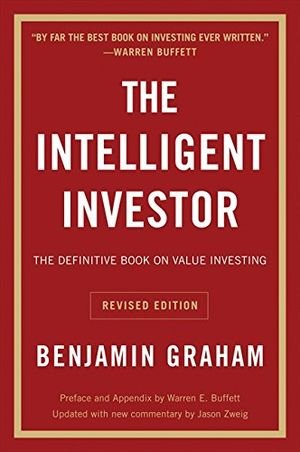 1
1