We've ranked the best french books using expert recommendations, sales data, and millions of reader ratings. At Shortform, we know books. Our book guides are the best in the world. Learn why.
Cover unavailable
1
The Little Prince Family Storybook: Unabridged Original Text
Antoine de Saint-Exupéry
5.0
Rediscover Antoine de Saint-Exupery's universal masterpiece with original text and magnificent new illustrations created by masters of film animation. This wise and enchanginting fable teaches the secret of what is really important in life.
Recommended by Ryan Holiday, Brandon Stanton, Evan Goldberg, and 1 others.
Equally allegorical, I read The Little Prince for the first time which for some reason I’d never been exposed to before. If you’re in the same boat, read it. It’s short but great. [source]
Brandon Stanton
Brandon Stanton recommended this book on the podcast "The Tim Ferriss Show". [source]
Through the story of an ordinary man unwittingly drawn into a senseless murder on an Algerian beach, Camus explored what he termed "the nakedness of man faced with the absurd." First published in English in 1946; now in a new translation by Matthew Ward.
Seminal novel on existentialism and the absurd by Albert Camus from 1946. Explores that feeling of disconnectedness from society, its norms, and the absurdity of every day life. Striking first-person account in a powerful, direct language. [source]
Kyle Maynard
Kyle Maynard said this is one of his most-recommended books. [source]
Cover unavailable
3
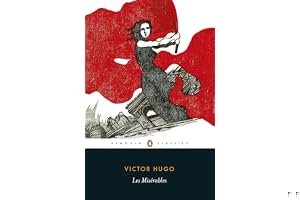
Les Misérables
Victor Hugo, Isabel F. Hapgood, et al.
4.8
Introducing one of the most famous characters in literature, Jean Valjean—the noble peasant imprisoned for stealing a loaf of bread—Les Misérables ranks among the greatest novels of all time. In it, Victor Hugo takes readers deep into the Parisian underworld, immerses them in a battle between good and evil, and carries them to the barricades during the uprising of 1832 with a breathtaking realism that is unsurpassed in modern prose. Within his dramatic story are themes that capture the intellect and the emotions: crime and punishment, the relentless persecution of Valjean by Inspector Javert, the desperation of the prostitute Fantine, the amorality of the rogue Thénardier, and the universal desire to escape the prisons of our own minds. Les Misérables gave Victor Hugo a canvas upon which he portrayed his criticism of the French political and judicial systems, but the portrait that resulted is larger than life, epic in scope—an extravagant spectacle that dazzles the senses even as it touches the heart.
…
Recommended by Christian B Miller and David Bellos.
Christian B Miller
Vividly illustrates two ideas about character. The first is that our characters can change over time, the second is that role models can be powerful sources of character change. [source]
David Bellos
Because it’s so huge and so capacious and contains so many different stories and takes on the world, you can make anything out of Les Misérables. [source]
Cover unavailable
4
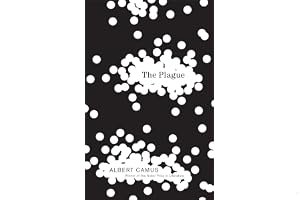
The plague
Albert Camus, Stuart Gilbert
4.6
A gripping tale of human unrelieved horror, of survival and resilience, and of the ways in which humankind confronts death, The Plague is at once a masterfully crafted novel, eloquently understated and epic in scope, and a parable of ageless moral resonance, profoundly relevant to our times. In Oran, a coastal town in North Africa, the plague begins as a series of portents, unheeded by the people. It gradually becomes a omnipresent reality, obliterating all traces of the past and driving its victims to almost unearthly extremes of suffering, madness, and compassion.
…
Recommended by Jim Collins, Arthur Ammann, Jenny Davidson, and 1 others.
Arthur Ammann
It’s an amazing book, considering Camus probably never personally experienced a plague. In his novel, Camus captured everything that we were dealing with in the Aids epidemic without Aids existing at that time. Without his knowing what the consequences of the HIV plague were going to be, he seems to have gotten all the actors in there and the myriad of things that you wrestle with. [source]
Jenny Davidson
Albert Camus’s The Plague probably remains the best-known novel on the topic of epidemic disease. It tells the story of those involved in an epidemic in a North African setting. It is very interested in the details about how quarantines are enforced and the role not just of the government, but of individuals who band together into groups to manage the epidemic. [source]
Stephen Breyer
He talks about the plague. Well, the plague is that part of a human being which can be very evil. That germ, he says at the end, never dies, it simply goes into remission. It lurks. It lurks in the cupboards, it lurks in the hallways, it lurks in the filing cabinets. [source]
Cover unavailable
5
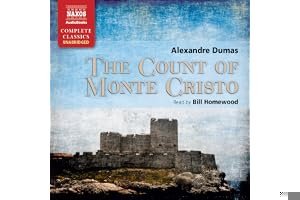
The Count of Monte Cristo
Alexandre Dumas père, Robin Buss
4.6
Thrown in prison for a crime he has not committed, Edmond Dantes is confined to the grim fortress of If. There he learns of a great hoard of treasure hidden on the Isle of Monte Cristo and he becomes determined not only to escape, but also to unearth the treasure and use it to plot the destruction of the three men responsible for his incarceration. Dumas’ epic tale of suffering and retribution, inspired by a real-life case of wrongful imprisonment, was a huge popular success when it was first serialized in the 1840s.
Robin Buss’s lively English translation is complete and unabridged, and remains faithful to the style of Dumas’s original. This edition includes an introduction, explanatory notes and suggestions for further reading.
…
Recommended by Ryan Holiday, Chris Kutarna, and Sol Orwell.
I thought I’d read this book before but clearly they gave me some sort of children’s version. Because the one I’d read as a kid wasn’t a 1,200 page epic of some of the most brilliant, beautiful and complicated storytelling ever put to paper. What a book! When I typed out my notes (and quotes) after finishing this book, it ran some 3,000 words. I was riveted from cover to cover. I enjoyed all the stuff I missed as a kid: the Counts struggle with his faith in light of what was done to him, the Hundred Days of Napoleon’s return, his rants against technology, the criticism of newspapers, the influence of ancient philosophy, ultimately, a warning against being consumed by revenge. Please—if you’re going on a long trip or looking to check out of modern events for a while—get this book. I recommend the Penguin Classics edition. [source]
Chris Kutarna
The Count of Monte Cristo it is about revenge and the cost of revenge. Being careful what you wish for. The other theme is about riches and wealth and what is truly valuable. [source]
Sol Orwell
I have to go with Count of Monte Cristo. An unparalleled revenge story. [source]
Cover unavailable
6
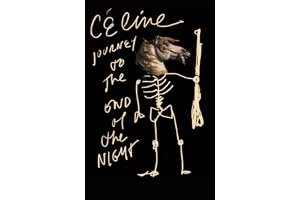
Journey to the End of the Night
Louis-Ferdinand Céline, Ralph Manheim, William T. Vollmann
4.5
Louis-Ferdinand Celine's revulsion and anger at what he considered the idiocy and hypocrisy of society explodes from nearly every page of this novel. Filled with slang and obscenities and written in raw, colloquial language, Journey to the End of the Night is a literary symphony of violence, cruelty and obscene nihilism. This book shocked most critics when it was first published in France in 1932, but quickly became a success with the reading public in Europe, and later in America where it was first published by New Directions in 1952. The story of the improbable yet convincingly described travels of the petit-bourgeois (and largely autobiographical) antihero, Bardamu, from the trenches of World War I, to the African jungle, to New York and Detroit, and finally to life as a failed doctor in Paris, takes the readers by the scruff and hurtles them toward the novel's inevitable, sad conclusion.
…
Recommended by Neil Strauss, David Downie, Quentin Hardy, and 1 others.
Neil Strauss recommended this book in the book "Tools of Titans". [source]
David Downie
I was particularly fascinated by Céline’s portrait of the city because Paris is one of the characters in the book. You get a real sense of what Paris looked like. [source]
Quentin Hardy
@p1lonn Terrible human, but that's a great book. [source]
Cover unavailable
7
Candide, ou l'Optimisme
Voltaire, Tobias Smollett
4.5
Candide, ou l'Optimisme is a French satire first published in 1759 by Voltaire, a philosopher of the Age of Enlightenment. The novella has been widely translated, with English versions titled Candide: or, All for the Best (1759); Candide: or, The Optimist (1762); and Candide: or, Optimism (1947). It begins with a young man, Candide, who is living a sheltered life in an Edenic paradise and being indoctrinated with Leibnizian optimism (or simply Optimism) by his mentor, Pangloss. The work describes the abrupt cessation of this lifestyle, followed by Candide's slow, painful disillusionment as he witnesses and experiences great hardships in the world. Voltaire concludes with Candide, if not rejecting optimism outright, advocating a deeply practical precept, "we must cultivate our garden," in lieu of the Leibnizian mantra of Pangloss, "all is for the best" in the "best of all possible worlds." Candide is characterised by its sarcastic tone, as well as by its erratic, fantastical and fast-moving plot. A picaresque novel with a story similar to that of a more serious bildungsroman, it parodies many adventure and romance cliches, the struggles of which are caricatured in a tone that is mordantly matter-of-fact. Still, the events discussed are often based on historical happenings, such as the Seven Years' War and the 1755 Lisbon earthquake. As philosophers of Voltaire's day contended with the problem of evil, so too does Candide in this short novel, albeit more directly and humorously. Voltaire ridicules religion, theologians, governments, armies, philosophies, and philosophers through allegory; most conspicuously, he assaults Leibniz and his optimism. As expected by Voltaire, Candide has enjoyed both great success and great scandal. Immediately after its secretive publication, the book was widely banned because it contained religious blasphemy, political sedition and intellectual hostility hidden under a thin veil of naivete. However, with its sharp wit and insightful portrayal of the human condition, the novel has since inspired many later authors and artists to mimic and adapt it. Today, Candide is recognized as Voltaire's magnum opus and is often listed as part of the Western canon; it is arguably taught more than any other work of French literature. In his book of intellectual history Martin Seymour-Smith listed Candide as one of The 100 Most Influential Books Ever Written. Candide contains thirty episodic chapters, which may be grouped into two main schemes: one consists of two divisions, separated by the protagonist's hiatus in El Dorado; the other consists of three parts, each defined by its geographical setting. By the former scheme, the first half of Candide constitutes the rising action and the last part the resolution. This view is supported by the strong theme of travel and quest, reminiscent of adventure and picaresque novels, which tend to employ such a dramatic structure. By the latter scheme, the thirty chapters may be grouped into three parts each comprising ten chapters and defined by locale: I-X are set in Europe, XI-XX are set in the Americas, and XXI-XXX are set in Europe and the Ottoman Empire. The plot summary that follows uses this second format and includes Voltaire's additions of 1761. Chapters I-X The tale of Candide begins in the castle of the Baron Thunder-ten-Tronckh in Westphalia, home to the Baron's daughter, Lady Cunegonde; his bastard nephew, Candide; a tutor, Pangloss; a chambermaid, Paquette; and the rest of the Baron's family. The protagonist, Candide, is romantically attracted to Cunegonde. He is a child of "the most unaffected simplicity," whose face is "the index of his mind." Dr. Pangloss, professor of "metaphysico-theologo-cosmolonigologie" (English translation: "metaphysico-theologo-cosmonigology") and self-proclaimed optimist, teaches his pupils that they live in the "best of all possible worlds" and that "all is for the best."
…
Cover unavailable
8
Madame Bovary
Gustave Flaubert, Margaret Mauldon, Malcolm Bowie, Mark Overstall
4.5
Clicca qui per l'edizione "Storie senza tempo".
'Oh, why, dear God, did I marry him?'
Emma Bovary is beautiful and bored, trapped in her marriage to a mediocre doctor and stifled by the banality of provincial life. An ardent devourer of sentimental novels, she longs for passion and seeks escape in fantasies of high romance, in voracious spending and, eventually, in adultery. But even her affairs bring her disappointment, and when real life continues to fail to live up to her romantic expectations, the consequences are devastating. Flaubert's erotically charged and psychologically acute portrayal of Emma Bovary caused a moral outcry on its publication in 1857. It was deemed so lifelike that many women claimed they were the model for his heroine; but Flaubert insisted: 'Madame Bovary, c'est moi.'
This modern translation by Flaubert's biographer, Geoffrey Wall, retains all the delicacy and precision of the French original. The edition also contains a preface by the novelist Michèle Roberts.
…
Cover unavailable
9
Nausea
Jean-Paul Sartre, Lloyd Alexander, et al.
4.5
Nausea is the story of Antoine Roquentin, a French writer who is horrified at his own existence. In impressionistic, diary form he ruthlessly catalogues his every feeling and sensation about the world and people around him.
His thoughts culminate in a pervasive, overpowering feeling of nausea which "spread at the bottom of the viscous puddle, at the bottom of our time, the time of purple suspenders and broken chair seats; it is made of wide, soft instants, spreading at the edge, like an oil stain."
Roquentin's efforts to try and come to terms with his life, his philosophical and psychological struggles, give Sartre the opportunity to dramatize the tenets of his Existentialist creed.
The introduction for this edition of Nausea by Hayden Carruth gives background on Sartre's life and major works, a summary of the principal themes of Existentialist philosophy, and a critical analysis of the novel itself.
Existentialists like Sartre are big on the idea that you can’t just relate a philosophical worldview by simply stating values, techniques, and facts. To understand existentialism, you must feel it. Breathe its ambience. It’s like a tonal curve for life. Yes, we can talk about highlights, shadows, and all the mechanical elements of that tonal curve, but you won’t become an artist just by knowing these mechanics. It goes much deeper than that. So Nausea is a novel, which imparts the existentialist tonal curve. I’m only halfway through it, but I’m liking it a lot already. It’s not as wild or erratic as Notes from Underground, but it’s got that similar feel. That the narrator gives us a mirror to reflect in, and those reflections are novel because we’re outside the normal tonal curve. [source]
Samantha Harvey
The question of mental illness comes down to whether Sartre’s right about his philosophy, which is an interesting question. [source]
Marcel Proust, D.J. Enright, C.K. Scott Moncrieff, Terence Kilmartin, Richard Howard
4.4
Swann's Way tells two related stories, the first of which revolves around Marcel, a younger version of the narrator, and his experiences in, and memories of, the French town Combray. Inspired by the "gusts of memory" that rise up within him as he dips a Madeleine into hot tea, the narrator discusses his fear of going to bed at night. He is a creature of habit and dislikes waking up in the middle of the night not knowing where he is.
He claims that people are defined by the objects that surround them and must piece together their identities bit by bit each time they wake up. The young Marcel is so nervous about sleeping alone that he looks forward to his mother's goodnight kisses, but also dreads them as a sign of an impending sleepless night. One night, when Charles Swann, a friend of his grandparents, is visiting, his mother cannot come kiss him goodnight. He stays up until Swann leaves and looks so sad and pitiful that even his disciplinarian father encourages "Mamma" to spend the night in Marcel's room.
…
Recommended by Thomas Graziani.
Thomas Graziani
My favorite book is like "A la recherche du temps perdu" ("In Search of Lost Time”) from Marcel Proust. It is a seven-volumes epic work describing the intricacies of human nature. Proust style is among the most beautiful I've ever read, and he manages to really make you consider every aspect of your daily life in a different and deeper way. [source]
Cover unavailable
11
The Three Musketeers (The D'Artagnan Romances, #1)
Alexandre Dumas and William Robso
4.4
Alexandre Dumas’s most famous tale— and possibly the most famous historical novel of all time— in a handsome hardcover volume.
This swashbuckling epic of chivalry, honor, and derring-do, set in France during the 1620s, is richly populated with romantic heroes, unattainable heroines, kings, queens, cavaliers, and criminals in a whirl of adventure, espionage, conspiracy, murder, vengeance, love, scandal, and suspense. Dumas transforms minor historical figures into larger- than-life characters: the Comte d’Artagnan, an impetuous young man in pursuit of glory; the beguilingly evil seductress “Milady”; the powerful and devious Cardinal Richelieu; the weak King Louis XIII and his unhappy queen—and, of course, the three musketeers themselves, Athos, Porthos, and Aramis, whose motto “all for one, one for all” has come to epitomize devoted friendship. With a plot that delivers stolen diamonds, masked balls, purloined letters, and, of course, great bouts of swordplay, The Three Musketeers is eternally entertaining.
…
Cover unavailable
12
Fall
Albert Camus, Justin O'Brien
4.4
Jean-Baptiste Clamence, a successful Parisian barrister, has come to recognize the deep-seated hypocrisy of his existence. His epigrammatic and, above all, discomforting monologue gradually saps, then undermines, the reader's own complacency.
Cover unavailable
13
Harry Potter and the Sorcerer's Stone
J. K. Rowling
4.4
Harry Potter has never been the star of a Quidditch team, scoring points while riding a broom far above the ground. He knows no spells, has never helped to hatch a dragon, and has never worn a cloak of invisibility.
All he knows is a miserable life with the Dursleys, his horrible aunt and uncle, and their abominable son, Dudley - a great big swollen spoiled bully. Harry’s room is a tiny closet at the foot of the stairs, and he hasn’t had a birthday party in eleven years.
But all that is about to change when a mysterious letter arrives by owl messenger: a letter with an invitation to an incredible place that Harry - and anyone who reads about him - will find unforgettable.
For it’s there that he finds not only friends, aerial sports, and magic in everything from classes to meals, but a great destiny that’s been waiting for him…if Harry can survive the encounter. (front flap)
…
Recommended by Joe Lycett.
Joe Lycett
guys i just read this book called harry potter well worth checking out it’s about a really interesting magic lad [source]
Cover unavailable
14
20,000 Leagues Under the Sea
Jules Verne, William O'Connor
4.4
Go 20,000 Leagues Under the Sea with Sterling's Illustrated Classics series, and see Jules Verne's fantastic water-world as never before: through more than 70 stunning steampunk images illustrated by the incredible William O'Connor. Originally published in 1870, Verne’s amazing adventure is one of the earliest sci-fi novels ever written—and one of the most popular. Come on board the Nautilus and plunge below the waves with Captain Nemo on a voyage of exploration and imagination.
Today is World Book Day, a wonderful opportunity to address this #ChallengeRichard sent in by Mike Gonzalez of New Jersey: Make a list of your top 65 books to read in a lifetime. [source]
One of the most influential works of this century, this is a crucial exposition of existentialist thought. Influenced by works such as Don Juan, and the novels of Kafka, these essays begin with a meditation on suicide: the question of living or not living in an absurd universe devoid of order or meaning. With lyric eloquence, Camus posits a way out of despair, reaffirming the value of personal existence, and the possibility of life lived with dignity and authenticity.
Camus’ philosophical exposition of absurdity, suicide in the face of meaninglessness, and other cherry topics that continue on from his fictional work in novels like The Stranger. It’s surprisingly readable, unlike many other mid 20th century philosophers, yet no less deep or pointy. It’s a great follow-up, as an original text, to that book The Age of Absurdity, I recommended last year. Still working through it. [source]
Kenan Malik
The Myth of Sisyphus is a small work, but Camus’s meditation on faith and fate has personally been hugely important in developing my ideas. Writing in the embers of World War II, Camus confronts in The Myth of Sisyphus both the tragedy of recent history and what he sees as the absurdity of the human condition. There is, he observes, a chasm between the human need for meaning and what he calls “the unreasonable silence of the world”. Religion is a means of bridging that chasm, but a dishonest one. “I don’t know if the world has any meaning that transcends it,” he writes. “But I know that I do not know this meaning and that it is impossible for me just now to know it.” [source]
Cover unavailable
16
Les Fleurs du Mal
Charles Baudelaire and Richard Howard
4.4
Presents the first American translation of the complete text of Baudelaire's 1857 masterwork and includes the complete original French texts for easy comparison.
Cover unavailable
17
Elegance of the Hedgehog
Barbery M Muriel Barbery
4.3
Rene is the concierge of a grand Parisian apartment building. She maintains a carefully constructed persona as someone uncultivated but reliable, in keeping with what she feels a concierge should be. But beneath this facade lies the real Rene: passionate about culture and the arts, and more knowledgeable in many ways than her employers with their outwardly successful but emotionally void lives. Down in her lodge, apart from weekly visits by her one friend Manuela, Rene lives with only her cat for company. Meanwhile, several floors up, twelve-year-old Paloma Josse is determined to avoid the pampered and vacuous future laid out for her, and decides to end her life on her thirteenth birthday. But unknown to them both, the sudden death of one of their privileged neighbours will dramatically alter their lives forever. By turns moving and hilarious, this unusual and insightful novel is now an international publishing sensation, with sales of over 10 million copies.
…
Recommended by Leo Babauta.
Cover unavailable
18
The Lover
Marguerite Duras
4.3
An international best-seller with more than one million copies in print and a winner of France's Prix Goncourt, The Lover has been acclaimed by critics all over the world since its first publication in 1984.
Set in the prewar Indochina of Marguerite Duras's childhood, this is the haunting tale of a tumultuous affair between an adolescent French girl and her Chinese lover. In spare yet luminous prose, Duras evokes life on the margins of Saigon in the waning days of France's colonial empire, and its representation in the passionate relationship between two unforgettable outcasts.
This edition of The Lover includes a new introduction by Maxine Hong Kingston that looks back at Duras's world from an intriguing new perspective—that of a visitor to Vietnam today.
Out of all the books we’re discussing, the mother in The Lover is the saddest [source]
Cover unavailable
19
The Red and the Black
Stendhal, Roger Gard
4.3
Handsome, ambitious Julien Sorel is determined to rise above his humble provincial origins. Soon realizing that success can only be achieved by adopting the subtle code of hypocrisy by which society operates, he begins to achieve advancement through deceit and self-interest. His triumphant career takes him into the heart of glamorous Parisian society, along the way conquering the gentle, married Madame de Rênal, and the haughty Mathilde. But then Julien commits an unexpected, devastating crime - and brings about his own downfall. The Red and the Black is a lively, satirical portrayal of French society after Waterloo, riddled with corruption, greed, and ennui, and Julien - the cold exploiter whose Machiavellian campaign is undercut by his own emotions - is one of the most intriguing characters in European literature.
…
Cover unavailable
20
The Second Sex
Simone de Beauvoir, Constance Borde, Sheila Malovany-Chevallier
4.3
Newly translated and unabridged in English for the first time, and brilliantly introduced by Judith Thurman, Simone de Beauvoir’s masterpiece weaves together history, philosophy, economics, biology, and a host of other disciplines to analyze the Western notion of “woman” and to explore the power of sexuality.
Sixty years after its initial publication, The Second Sex is still as eye-opening and pertinent as ever. This triumphant and genuinely revolutionary book began as an exceptional woman’s attempt to find out who and what she was. Drawing on extensive interviews with women of every age and station of life, masterfully synthesizing research about women’s bodies and psyches as well as their historic and economic roles, The Second Sex is an encyclopedic and cogently argued document about inequality and enforced “otherness.”
This long-awaited new translation pays particular attention to the existentialist terms and French nuances that may have been misconstrued in the first English edition; restores Beauvoir’s phrasing, rhythms, and tone; and reinstates significant portions of the “Myths” and “History” chapters that were originally cut due to length, including accounts of more than seventy female figures.
A vital and life-changing work that has dramatically revised the way women talk and think about themselves, Beauvoir’s magisterial treatise continues to provoke and inspire.
…
Recommended by Arianna Huffington, Belinda Jack, Erica Jong, and 1 others.
Arianna Huffington
Founder/The Huffington Post
Great Thrive Questionnaire by @smlafleur, founder of M.M.LaFleur. On the book that changed her life, The Second Sex: "it changed my entire perception about what it means to be a woman, and it may be the unconscious reason behind why I started my company." https://t.co/tudVOb28J2 [source]
Belinda Jack
In making a distinction between sex and gender she drew attention to how much of what women had to contend with was actually something that society imposes. [source]
Erica Jong
The French literary world is incredibly sexist and here was one of their darlings pointing out how much they discriminate. [source]
Cover unavailable
21
Bonjour tristesse
Francoise SAGAN
4.3
La villa est magnifique, l'été brûlant, la Méditerranée toute proche. Cécile a dix-sept ans. Elle ne connaît de l'amour que des baisers, des rendez-vous, des lassitudes. Pas pour longtemps. Son père, veuf, est un adepte joyeux des liaisons passagères et sans importance. Ils s'amusent, ils n'ont besoin de personne, ils sont heureux. La visite d'une femme de cœur, intelligente et calme, vient troubler ce délicieux désordre. Comment écarter la menace ? Dans la pinède embrasée, un jeu cruel se prépare. C'était l'été 1954. On entendait pour la première fois la voix sèche et rapide d'un « charmant petit monstre » qui allait faire scandale. la deuxième moitié du XXe siècle commençait. Elle serait à l'image de cette adolescente déchirée entre le remords et le culte du plaisir.
…
Recommended by Helena Frith Powell.
Helena Frith Powell
It gives an amazing insight into that awful stage of becoming a woman. [source]
Cover unavailable
22
In Search of Lost Time (6 Volumes)
Marcel Proust
4.3
For this complete, authoritative English-language edition, D. J. Enright has revised the late Terence Kilmartin's acclaimed reworking of C. K. Scott Moncrieff's translation to take into account the new definitive French editions of 'À la recherche du temps perdu' (the final volume of these new editions was published by the Bibliothèque de la Pléiade in 1989).
Proust’s reflection on the nature of time is deep and spread over his writing. [source]
Mona Simpson
You have a treat in store – and of course there are many more volumes after Swann’s Way! [source]
Cover unavailable
23
The Hunchback of Notre-Dame
Victor Hugo, Walter J. Cobb
4.3
This extraordinary historical novel, set in Medieval Paris under the twin towers of its greatest structure and supreme symbol, the cathedral of Notre-Dame, is the haunting drama of Quasimodo, the hunchback; Esmeralda, the gypsy dancer; and Claude Frollo, the priest tortured by the specter of his own damnation. Shaped by a profound sense of tragic irony, it is a work that gives full play to Victor Hugo's brilliant historical imagination and his remarkable powers of description.
…
Cover unavailable
24
Around the World in Eighty Days (Extraordinary Voyages, #11)
Jules Verne, Michael Glencross, Brian Aldiss
4.3
One night in the reform club, Phileas Fogg bets his companions that he can travel across the globe in just eighty days. Breaking the well-established routine of his daily life, he immediately sets off for Dover with his astonished valet Passepartout. Passing through exotic lands and dangerous locations, they seize whatever transportation is at hand—whether train or elephant—overcoming set-backs and always racing against the clock.
…
Recommended by Cristina Riesen.
Cristina Riesen
Chronologically, my first favourite book probably was Jules Verne’s Around the World in Eighty Days. [source]
Cover unavailable
25
Père Goriot
Honoré de Balzac, Peter Brooks, Burton Raffel
4.3
Père Goriot is the tragic story of a father whose obsessive love for his two daughters leads to his financial and personal ruin. Interwoven with this theme is that of the impoverished young aristocrat, Rastignac, who came to Paris from the provinces to hopefully make his fortune. He befriends Goriot and becomes involved with the daughters. The story is set against the background of a whole society driven by social ambition and lust for wealth.
…
Cover unavailable
26
Les Liaisons dangereuses
Pierre Choderlos de Laclos, Douglas Parmée, David Coward
4.3
The complex moral ambiguities of seduction and revenge make Les Liaisons dangereuses (1782) one of the most scandalous and controversial novels in European literature. The subject of major film and stage adaptations, the novel's prime movers, the Vicomte de Valmont and the Marquise de Merteuil, form an unholy alliance and turn seduction into a game - a game which they must win. This new translation gives Laclos a modern voice, and readers will be able a judge whether the novel is as "diabolical" and "infamous" as its critics have claimed, or whether it has much to tell us about the kind of world we ourselves live in. David Coward's introduction explodes myths about Laclos's own life and puts the book in its literary and cultural context.
…
Cover unavailable
27
Le Petit Nicolas
René Goscinny, Jean-Jacques Sempé
4.2
La maîtresse est inquiète, le photographe s'éponge le front, le Bouillon devient tout rouge, les mamans ont mauvaise mine, les papas font les guignols, le directeur part à la retraite, quant à l'inspecteur, il est reparti aussi vite qu'il était venu. Pourtant, à l'école ou en famille, Geoffroy, Agnan, Eudes, Rufus, Clotaire, Maixent, Alceste, Joachim... et le Petit Nicolas sont - presque - toujours sages.
…
Cover unavailable
28
The Phantom of the Opera
Gaston Leroux
4.2
First published in French as a serial in 1909, The Phantom of the Opera is a riveting story that revolves around the young, Swedish Christine Daaé. Her father, a famous musician, dies, and she is raised in the Paris Opera House with his dying promise of a protective angel of music to guide her. After a time at the opera house, she begins hearing a voice, who eventually teaches her how to sing beautifully. All goes well until Christine's childhood friend Raoul comes to visit his parents, who are patrons of the opera, and he sees Christine when she begins successfully singing on the stage. The voice, who is the deformed, murderous 'ghost' of the opera house named Erik, however, grows violent in his terrible jealousy, until Christine suddenly disappears. The phantom is in love, but it can only spell disaster.
Leroux's work, with characters ranging from the spoiled prima donna Carlotta to the mysterious Persian from Erik's past, has been immortalized by memorable adaptations. Despite this, it remains a remarkable piece of Gothic horror literature in and of itself, deeper and darker than any version that follows.
…
Cover unavailable
29
Germinal
Émile Zola
4.2
The thirteenth novel in Émile Zola’s great Rougon-Macquart sequence, Germinal expresses outrage at the exploitation of the many by the few, but also shows humanity’s capacity for compassion and hope.
Etienne Lantier, an unemployed railway worker, is a clever but uneducated young man with a dangerous temper. Forced to take a back-breaking job at Le Voreux mine when he cannot get other work, he discovers that his fellow miners are ill, hungry, in debt, and unable to feed and clothe their families. When conditions in the mining community deteriorate even further, Lantier finds himself leading a strike that could mean starvation or salvation for all.
•New translation • Includes introduction, suggestions for further reading, filmography, chronology, explanatory notes, and glossary
…
Cover unavailable
30
Bel-Ami
Guy de Maupassant, Douglas Parmée
4.2
Guy de Maupassant's scandalous tale of an opportunistic young man corrupted by the allure of power, "Bel-Ami" is translated with an introduction by Douglas Parmee in "Penguin Classics". Young, attractive and very ambitious, George Duroy, known to his admirers as Bel-Ami, is offered a job as a journalist on La Vie francaise and soon makes a great success of his new career. But he also comes face to face with the realities of the corrupt society in which he lives - the sleazy colleagues, the manipulative mistresses, and wily financiers - and swiftly learns to become an arch-seducer, blackmailer and social climber in a world where love is only a means to an end. Written when Maupassant was at the height of his powers, "Bel-Ami" is a novel of great frankness and cynicism, but it is also infused with the sheer joy of life - depicting the scenes and characters of Paris in the belle epoque with wit, sensitivity, and humanity. Douglas Parmee's translation captures all the vigour and vitality of Maupassant's novel. His introduction explores the similarities between Bel-Ami and Maupassant himself and demonstrates the skill with which the author depicts his large cast of characters and the French society of the Third Republic.
…
Cover unavailable
31
Cyrano de Bergerac
Edmond Rostand
4.2
This acclaimed adaptation for the stage has garnered such reviews as: "Emotional depth Rostand himself would surely have envied...Burgess' extravagant verse keeps its contours, yet trips off the tongue almost as though it were contemporary speech." -London Times. Performance rights available from Applause.
Recommended by Aubrey Marcus, Jenny Davidson, and Ruth Harris.
Jenny Davidson
The love story that is told in Cyrano, with its bittersweet, heartbreaking ending, is one of the most powerful I’ve ever encountered. [source]
Ruth Harris
It is set in the 17th century. Cyrano de Bergerac is the play’s hero, a cadet – a nobleman serving as a solider in the French army – and he’s deformed, with a nose so enormous that people come from far and wide to view his “protuberance”. He falls madly in love with his cousin Roxane, who is witty and leaned, but because of what he believes to be his outward ugliness he cannot proclaim his love for her. Instead, an extraordinary triangle emerges. Christian de Neuvillette, who like Cyrano is a cadet, is absolutely beautiful but very inarticulate. What Cyrano does is lend him his words and between them they become the perfect man. But it’s Christian not Cyrano who takes the prize with Roxane not realising that she has fallen in love with the wrong person and it’s only at the end of the play, many years after Christian dies in the siege of Arras, that she comes to grips with this fact and understands that her real devotion should be for the ugly Cyrano. [source]
"No denunciation without its proper instrument of close analysis," Roland Barthes wrote in his preface to Mythologies. There is no more proper instrument of analysis of our contemporary myths than this book—one of the most significant works in French theory, and one that has transformed the way readers and philosophers view the world around them.
Our age is a triumph of codification. We own devices that bring the world to the command of our fingertips. We have access to boundless information and prodigious quantities of stuff. We decide to like or not, to believe or not, to buy or not. We pick and choose. We think we are free. Yet all around us, in pop culture, politics, mainstream media, and advertising, there are codes and symbols that govern our choices. They are the fabrications of consumer society. They express myths of success, well-being, and happiness. As Barthes sees it, these myths must be carefully deciphered, and debunked.
What Barthes discerned in mass media, the fashion of plastic, and the politics of postcolonial France applies with equal force to today's social networks, the iPhone, and the images of 9/11. This new edition of Mythologies, complete and beautifully rendered by the Pulitzer Prize–winning poet, critic, and translator Richard Howard, is a consecration of Barthes's classic—a lesson in clairvoyance that is more relevant now than ever.
…
Cover unavailable
33
Foam of the Daze: L'Ecume Des Jours
Boris Vian
4.2
The definition of Boris Vian: engineer, inventor, chronicler of jazz, trumpet player, poet and novelist, creator of spectacles, lyric writer and singer, and of course pataphysician. TamTam Books is very proud to announce the upcoming publication of Boris Vian's masterpiece L'Ecume des jours. We are bringing out a new translation by Brian Harper with the full approval of the Vian estate. The English title is Foam of the Daze. The translation made by Brian Harper takes into account the critical edition of Boris Vian's L'Ecume des jours edited with additional in depth footnotes by Gilbert Pestureau and Michel Rybalka published in France 1994. L'Ecume des jours (Foam of the Daze) is a jazz fueled Science Fiction story that is both romantic and nihilistic! Vian's novel is an assortment of bittersweet romance, absurdity and the frailty of life. Foam of the Daze is a nimble-fingered masterpiece that is both witty and incredibly moving. It is a story of a wealthy young man Colin and the love of his life Chloe, who develops a water lily in her lung. The supporting cast includes Chick, an obsessive collector of noted philosopher Jean-Sol Partre's books and stained pants, and Nicolas who is a combination of P.G. Wodehouse's fictional butler Jeeves and the Green Hornet's Kato. The soul of the book is about the nature of life disappearing and loving things intensely as if one was making love on a live grenade!
…
Cover unavailable
34
Atomised
Michel Houellebecq
4.2
Half-brothers Michel and Bruno have a mother in common but little else. Michel is a molecular biologist, a thinker, an idealist, a man with no erotic life to speak of and little in the way of human society. Bruno, by contrast, is a libertine, though more in theory than in practice, his endless lust being all too rarely reciprocated. Both are symptomatic members of our atomised society, where religion has given way to shallow 'new age' philosophies and love to meaningless sexual connections.
Atomised tells the stories of the two brothers, but the real subject of the novel is the dismantling of contemporary society and its assumptions, its political incorrectness, and its caustic and penetrating asides on everything from anthropology to the problem pages of girls' magazines.
…
Recommended by Tim Lott.
Tim Lott
The book tells the story of two half-brothers, Michel and Bruno. They both had appalling childhoods and are abandoned by their hippy mother, who spends her life in communes pursuing shallow, hedonistic relationships. The premise of the book, as the title suggests, is about the disconnection between people in the technological, scientific, post-modern world, where all relationships are mangled, damaged parodies. [source]
Cover unavailable
35
Journey to the Center of the Earth (Extraordinary Voyages, #3)
Jules Verne
4.2
The intrepid Professor Liedenbrock embarks upon the strangest expedition of the nineteenth century: a journey down an extinct Icelandic volcano to the Earth's very core. In his quest to penetrate the planet's primordial secrets, the geologist--together with his quaking nephew Axel and their devoted guide, Hans--discovers an astonishing subterranean menagerie of prehistoric proportions. Verne's imaginative tale is at once the ultimate science fiction adventure and a reflection on the perfectibility of human understanding and the psychology of the questor.
…
Recommended by Roxana Bitoleanu, Simon Winchester, and Tullis Onstott.
Roxana Bitoleanu
If I have to choose only one non-business book I would pick Jules Verne's "A journey to the center of the earth", as a symbolic journey to the unknown, deep down, just like our personal search for meaning, for our inner driver. [source]
A fantastic piece of science fiction – it’s basically about explorers who want to know what’s inside the earth. [source]
Tullis Onstott
The book has just enough science that it seems real. [source]
Cover unavailable
36
Waiting for Godot
Samuel Becket
4.2
The story revolves around two seemingly homeless men simply waiting for someone—or something—named Godot. Vladimir and Estragon wait near a tree, inhabiting a drama spun of their own consciousness. The result is a comical wordplay of poetry, dreamscapes, and nonsense, which has been interpreted as mankind’s inexhaustible search for meaning. Beckett’s language pioneered an expressionistic minimalism that captured the existential post-World War II Europe. His play remains one of the most magical and beautiful allegories of our time.
Have recently come to appreciate the awesome, absurdist humor of this book. [source]
Cover unavailable
37
Goodnight Moon
Margaret Wise Brown, Clement Hurd
4.2
In a great green room, tucked away in bed, is a little bunny. "Goodnight room, goodnight moon." And to all the familiar things in the softly lit room -- to the picture of the three little bears sitting on chairs, to the clocks and his socks, to the mittens and the kittens, to everything one by one -- the little bunny says goodnight.
In this classic of children's literature, beloved by generations of readers and listeners, the quiet poetry of the words and the gentle, lulling illustrations combine to make a perfect book for the end of the day.
…
Recommended by Julie Dobbs and Muna Abusulayman.
Julie Dobbs
@mraye I was def channeling Goodnight Moon and love that so many people got it 😍 sweet little book! 🌙 [source]
Muna Abusulayman
Goodnight Moon and The surprising story of power, taste, educational philosophy, and the crumbling of traditional gatekeepers.. (I loved the book so much, I inscribed "I love you forever, I love you for always" on necklaces for both my daughters.) https://t.co/HUIjJzczP1 [source]
Cover unavailable
38
Tartuffe
Martin Sorrell, Molière
4.2
Condemned and banned for five years in Molière’s day, Tartuffe is a satire on religious hypocrisy. Tartuffe worms his way into Orgon’s household, blinding the master of the house with his religious "devotion," and almost succeeds in his attempts to seduce his wife and disinherit his children before the final unmasking.
"Man is born free; and everywhere he is in chains."
These are the famous opening words of a treatise that has not ceased to stir vigorous debate since its first publication in 1762. Rejecting the view that anyone has a natural right to wield authority over others, Rousseau argues instead for a pact, or ‘social contract’, that should exist between all the citizens of a state and that should be the source of sovereign power. From this fundamental premise, he goes on to consider issues of liberty and law, freedom and justice, arriving at a view of society that has seemed to some a blueprint for totalitarianism, to others a declaration of democratic principles.
…
Cover unavailable
40
Harry Potter and the Prisoner of Azkaban (Harry Potter, #3)
J.K. Rowling
4.1
For Twelve long years, the dread fortress of Azkaban held an infamous prisoner named Sirius Black. Convicted of killing thirteen people with a single curse, he was said to be the heir apparent to the Dark Lord, Voldemort.
Now he has escaped, leaving only two clues as to where he might be headed: Harry Potter's defeat of You-Know-Who was Black's downfall as well. And the Azkaban guards heard Black muttering in his sleep, "He's at Hogwarts...he's at Hogwarts."
Harry Potter isn't safe, not even within the walls of his magical school, surrounded by his friends. because on top of it all, there may well be a traitor in their midst.
(front flap)
…
Recommended by Maude Garrett.
Maude Garrett
@GeekBomb Best use of time travel in a book or series to date [source]
Cover unavailable
41
Montaigne: Complete Essays
Michel de Montaigne
4.1
Catalog of a private collection of mostly post-archaic Chinese jade carvings, including many very fine animals and human figures.
I’ve given quite a lot of copies of this book to people down the years. [source]
Cover unavailable
42
Wind, Sand, and Stars
Antoine de Saint-Exupery
4.1
Exupery was a prize-winning novelist, professional mail pilot, airborne adventurer, war correspondent, commercial test pilot, and the author of a popular children's book The Little Prince. Wind, Sand, and Stars more than all the others is a synthesis of his skill as a writer and his life as a flier. It is a collage of anecdotes, speculations and peotic reflections the earth and its inhabitants as seen from the air, all glued together by one basic them: that the airplane has broght man into confrontation with the elemnets of the univeerse, and thus has given him a new perspective on his own nature.
This is an alternate cover edition for isbn13: 9782253150718
Au début des années 90, la narratrice est embauchée par Yumimoto, une puissante firme japonaise. Elle va découvrir à ses dépens l'implacable rigeur de l'autorité d'entreprise, en même temps qu les codes de conduite, incompréhensibles au profane, qui gouvernent la vie sociale au pays du Soleil levant.
D'erreurs en maladresses et en échecs, commence alors pour elle, comme dans un mauvais rêve, la descente inexorable dans les degrés de la hiérarchie, jusqu'au rang de surveillante des toilettes, celui de l'humiliation dernière. Une course absurde vers l'abîme - image de la vie -, où l'humour percutant d'Amélie Nothomb fait mouche à chaque ligne.
Entre le rire et l'angoisse, cette satire des nouveaux despotismes aux échos kafkaïens a conquis un immense public et valu à l'auteur d'Hygiène de l'assassin le Grand Prix du roman de l'Académie française en 1999.
…
Cover unavailable
44
Thérèse Raquin
Émile Zola, Robin Buss
4.1
One of Zola's most famous realist novels, Therese Raquin is a clinically observed, sinister tale of adultery and murder among the lower classes in nineteenth-century Parisian society.
Set in the claustrophobic atmosphere of a dingy haberdasher's shop in the passage du Pont-Neuf in Paris, this powerful novel tells how the heroine and her lover, Laurent, kill her husband, Camille, but are subsequently haunted by visions of the dead man, and prevented from enjoying the fruits of their crime.
Zola's shocking tale dispassionately dissects the motivations of his characters--mere "human beasts", who kill in order to satisfy their lust--and stands as a key manifesto of the French Naturalist movement, of which the author was the founding father. Published in 1867, this is Zola's most important work before the Rougon-Macquart series and introduces many of the themes that can be traced through the later novel cycle.
…
Cover unavailable
45
In the Shadow of Young Girls in Flower (In Search of Lost Time, #2)
Marcel Proust
4.1
In the Shadow of Young Girls in Flower is Proust’s spectacular dissection of male and female adolescence, charged with the narrator’s memories of Paris and the Normandy seaside. At the heart of the story lies his relationships with his grandmother and with the Swann family. As a meditation on different forms of love, In the Shadow of Young Girls in Flower has no equal. Here, Proust introduces some of his greatest comic inventions, from the magnificently dull M. de Norpois to the enchanting Robert de Saint-Loup. It is memorable as well for the first appearance of the two figures who for better or worse are to dominate the narrator’s life—the Baron de Charlus and the mysterious Albertine. First time in Penguin Classics
A Penguin Classics Deluxe Edition
The first completely new translation of Proust's novel since the 1920s, following Lydia Davis's brilliant translation of Swann's Way
…
Cover unavailable
46
Memoirs of Hadrian
Marguerite Yourcenar, Grace Frick
4.1
Both an exploration of character and a reflection on the meaning of history, Memoirs of Hadrian has received international acclaim since its first publication in France in 1951. In it, Marguerite Yourcenar reimagines the Emperor Hadrian's arduous boyhood, his triumphs and reversals, and finally, as emperor, his gradual reordering of a war-torn world, writing with the imaginative insight of a great writer of the twentieth century while crafting a prose style as elegant and precise as those of the Latin stylists of Hadrian's own era.
…
Cover unavailable
47
Suite Française
Irène Némirovsky, Sandra Smith
4.1
The first two stories of a masterwork once thought lost, written by a pre-WWII bestselling author who was deported to Auschwitz and died before her work could be completed.
By the early l940s, when Ukrainian-born Irène Némirovsky began working on what would become Suite Française—the first two parts of a planned five-part novel—she was already a highly successful writer living in Paris. But she was also a Jew, and in 1942 she was arrested and deported to Auschwitz: a month later she was dead at the age of thirty-nine. Two years earlier, living in a small village in central France—where she, her husband, and their two small daughters had fled in a vain attempt to elude the Nazis—she'd begun her novel, a luminous portrayal of a human drama in which she herself would become a victim. When she was arrested, she had completed two parts of the epic, the handwritten manuscripts of which were hidden in a suitcase that her daughters would take with them into hiding and eventually into freedom. Sixty-four years later, at long last, we can read Némirovsky's literary masterpiece
The first part, "A Storm in June," opens in the chaos of the massive 1940 exodus from Paris on the eve of the Nazi invasion during which several families and individuals are thrown together under circumstances beyond their control. They share nothing but the harsh demands of survival—some trying to maintain lives of privilege, others struggling simply to preserve their lives—but soon, all together, they will be forced to face the awful exigencies of physical and emotional displacement, and the annihilation of the world they know. In the second part, "Dolce," we enter the increasingly complex life of a German-occupied provincial village. Coexisting uneasily with the soldiers billeted among them, the villagers—from aristocrats to shopkeepers to peasants—cope as best they can. Some choose resistance, others collaboration, and as their community is transformed by these acts, the lives of these these men and women reveal nothing less than the very essence of humanity.
Suite Française is a singularly piercing evocation—at once subtle and severe, deeply compassionate, and fiercely ironic—of life and death in occupied France, and a brilliant, profoundly moving work of art.
…
Cover unavailable
48
Harry Potter and the Chamber of Secrets (Harry Potter, #2)
J.K. Rowling
4.1
The Dursleys were so mean and hideous that summer that all Harry Potter wanted was to get back to the Hogwarts School for Witchcraft and Wizardry. But just as he's packing his bags, Harry receives a warning from a strange, impish creature named Dobby who says that if Harry Potter returns to Hogwarts, disaster will strike
And strike it does. For in Harry's second year at Hogwarts, fresh torments and horrors arise, including an outrageously stuck-up new professor, Gilderoy Lockhart, a spirit named Moaning Myrtle who haunts the girls' bathroom, and the unwanted attentions of Ron Weasley's younger sister, Ginny.
But each of these seem minor annoyances when the real trouble begins, and someone -- or something -- starts turning Hogwarts students to stone. Could it be Draco Malfoy, a more poisonous rival than ever? Could it possibly be Hagrid, whose mysterious past is finally told? Or could it be the one everyone at Hogwarts most suspects . . . Harry Potter himself?
…
Cover unavailable
49
No Exit and Three Other Plays
Jean-Paul Sartre
4.1
In these four plays, Jean-Paul Sartre, the great existentialist novelist and philosopher, displays his mastery of drama. NO EXIT is an unforgettable portrayal of hell. THE FLIES is a modern reworking of the Electra-Orestes story. DIRTY HANDS is about a young intellectual torn between theory and praxis. THE RESPECTFUL PROSTITUTE is an attack on American racism.
Cover unavailable
50
Le Misanthrope
Moliere
4.1
Le Misanthrope ou l’Atrabilaire amoureux est une comédie de mœurs en cinq actes et en vers.
C’est une des meilleures pièces de théâtre de Molière - et une des plus grandes comédies – se concentrant sur les absurdités de prétentions sociale et littéraire, dans le personage d’un homme qui est prompt à critiquer les fautes des autres, mais reste aveugle au siens. Cette pièce satirise les hypocrisies de la société aristocratique française, mais elle engage aussi un ton plus sérieux en indiquant les défauts qui sont propres à tous les humains. La pièce est différente d’autres farces du temps par l’emploi des personnages dynamiques comme Alceste et Célimène, par opposition aux personnages traditionnellement pâle utilisé par la plupart des satiristes pour critiquer les problèmes de la société. Elle diffère aussi de la plupart d’autres œuvres de Molière en se concentrant davantage sur le développement du caractère et de nuances que sur la progression de l’intrigue. La pièce, pas un succès commercial en son temps, est de nos jours considérée comme la pièce la plus connue de son œuvre.
…
Cover unavailable
51
Existentialism is a Humanism
Jean-Paul Sartre, Carol Macomber, Arlette Elkaïm-Sartre, Annie Cohen-Solal
4.1
It was to correct common misconceptions about his thought that Jean-Paul Sartre, the most dominent European intellectual of the post-World War II decades, accepted an invitation to speak on October 29, 1945, at the Club Maintenant in Paris. The unstated objective of his lecture (“Existentialism Is a Humanism”) was to expound his philosophy as a form of “existentialism,” a term much bandied about at the time. Sartre asserted that existentialism was essentially a doctrine for philosophers, though, ironically, he was about to make it accessible to a general audience. The published text of his lecture quickly became one of the bibles of existentialism and made Sartre an international celebrity.
The idea of freedom occupies the center of Sartre’s doctrine. Man, born into an empty, godless universe, is nothing to begin with. He creates his essence—his self, his being—through the choices he freely makes (“existence precedes essence”). Were it not for the contingency of his death, he would never end. Choosing to be this or that is to affirm the value of what we choose. In choosing, therefore, we commit not only ourselves but all of mankind.
This book presents a new English translation of Sartre’s 1945 lecture and his analysis of Camus’s The Stranger, along with a discussion of these works by acclaimed Sartre biographer Annie Cohen-Solal. This edition is a translation of the 1996 French edition, which includes Arlette Elkaïm-Sartre’s introduction and a Q&A with Sartre about his lecture.
As a newcomer to existentialism, it can be hard to wrap your brain around the core concepts when reading novels like The Stranger or Nausea, or writers like Kierkegaard. You get a great feel for the existentialist ambience, but what are the core tenets? This (short) book delivers it about as directly as you can get it, as it’s basically just two parts: 1) An account of a lecture/defense that Sartre gave of existentialism, complete with a debate with someone in the audience, and 2) Sartre’s review of Camus’ The Stranger. The key concept that Sartre explains is the notion of Existence Precedes Essence. It’s one of those concepts that sounds intimidatingly highbrow, but really just means that we are not born with a purpose before we are “thrown into this world”. That then sets the stage for reaffirming human choice. That we always have a choice. That destiny or divine purpose is just an excuse we use not to make (hard) choices. This description of existentialism really resonated with me and provides a wonderful alternative vision to the stoic philosophy. There’s much agreement between the two views of the world, but also enough disagreement to provide interesting tension. Especially between the Aurelius version of stoicism, which endlessly belabors the point of doing “what the universe asks you to do”. [source]
Serious Sartreans get quite annoyed with this book because it’s a very accessible, easy-to-read, non-technical, public lecture. [source]
Cover unavailable
52
Life: A User's Manual
Georges Perec, David Bellos
4.1
Life: A User's Manual is an unclassified masterpiece, a sprawling compendium as encyclopedic as Dante's Commedia and Chaucer's Canterbury Tales and, in its break with tradition, as inspiring as Joyce's Ulysses. Perec's spellbinding puzzle begins in an apartment block in the XVIIth arrondissement of Paris where, chapter by chapter, room by room, like an onion being peeled, an extraordinary rich cast of characters is revealed in a series of tales that are bizarre, unlikely, moving, funny, or (sometimes) quite ordinary. From the confessions of a racing cyclist to the plans of an avenging murderer, from a young ethnographer obsessed with a Sumatran tribe to the death of a trapeze artist, from the fears of an ex-croupier to the dreams of a sex-change pop star to an eccentric English millionaire who has devised the ultimate pastime, Life is a manual of human irony, portraying the mixed marriages of fortunes, passions and despairs, betrayals and bereavements, of hundreds of lives in Paris and around the world.
But the novel in more than an extraordinary range of fictions; it is a closely observed account of life and experience. The apartment block's one hundred rooms are arranged in a magic square, and the book as a whole is peppered with a staggering range of literary puzzles and allusions, acrostics, problems of chess and logic, crosswords, and mathematical formulae. All are there for the reader to solve in the best tradition of the detective novel.
…
Recommended by Alina Varlanuta and David Bellos.
Alina Varlanuta
I don’t have a favourite book. But I do have favourite characters: … All inhabitants of the apartment block on 11Rue Simon-Crubellier who lived inside George Perec’s ‘Life. A user’s manual.’. [source]
David Bellos
Some people love it for its cleverness but, behind the cleverness, there is something more, something deeply human. [source]
Cover unavailable
53
Phèdre
Racine
4.1
En 1677, Phèdre, la dernière grande tragédie de Racine, met en scène la mythique descente aux enfers d'une incomprise. Vouée au malheur par son hérédité, Phèdre aime sans espoir son beau-fils Hippolyte. Lorsque son mari, Thésée, revient, il envoie injustement son fils à la mort. On assiste alors à l'empoisonnement d'une femme à la fois innocente et coupable. Ironie tragique qui démontre à quel point l'amour peut se vivre comme une malédiction.
…
Cover unavailable
54
Oscar et la dame rose
Eric-Emmanuel Schmitt
4.1
Voici les lettres adressées à Dieu par un enfant de dix ans. Elles ont été retrouvées par Mamie Rose, la « dame rose » qui vient lui rendre visite à l'hôpital pour enfants. Elles décrivent douze jours de la vie d'Oscar, douze jours cocasses et poétiques, douze jours pleins de personnages drôles et émouvants. Ces douze jours seront peut-être les douze derniers. Mais, grâce à Mamie Rose qui noue avec Oscar un très fort lien d'amour, ces douze jours deviendront légende.
…
Cover unavailable
55
The Rebel
Albert Camus
4.1
By one of the most profoundly influential thinkers of our century, The Rebel is a classic essay on revolution. For Albert Camus, the urge to revolt is one of the "essential dimensions" of human nature, manifested in man's timeless Promethean struggle against the conditions of his existence, as well as the popular uprisings against established orders throughout history. And yet, with an eye toward the French Revolution and its regicides and deicides, he shows how inevitably the course of revolution leads to tyranny, as old regimes throughout the world collapse, The Rebel resonates as an ardent, eloquent, and supremely rational voice of conscience for our tumultuous times.
Translated from the French by Anthony Bower.
…
Cover unavailable
56
Mastering the Art of French Cooking
Julia Child
4.1
For over fifty years, New York Times bestseller Mastering the Art of French Cooking has been the definitive book on the subject for American readers. Featuring 524 delicious recipes, in its pages home cooks will find something for everyone, from seasoned experts to beginners who love good food and long to reproduce the savory delights of French cuisine, from historic Gallic masterpieces to the seemingly artless perfection of a dish of spring-green peas. Here Julia Child, Simone Beck, and Louisette Bertholle break down the classic foods of France into a logical sequence of themes and variations rather than presenting an endless and diffuse catalogue of dishes. Throughout, the focus is on key recipes that form the backbone of French cookery and lend themselves to an infinite number of elaborations--bound to increase anyone's culinary repertoire. With over 100 instructive illustrations to guide readers every step of the way, Mastering the Art of French Cooking deserves a place of honor in every kitchen in America.
…
Recommended by Madhur Jaffrey.
Madhur Jaffrey
Well, you take it off the hob and you mix in more milk or whatever it is. You mix something cold in or put in cubes of ice and then slowly put it back. You have to cool it quickly and then put it back. You might need to put another egg in and start again. [source]
Cover unavailable
57
La Dame aux Camélias
Alexandre Dumas, David Coward
4.1
One of the greatest love stories of all time, this novel has fascinated generations of readers. Dumas's subtle and moving portrait of a woman in love is based on his own love affair with one of the most desirable courtesans in Paris. This is a completely new translation commissioned for the World's Classics.
Cover unavailable
58
Huis clos, suivi de Les mouches
Jean-Paul Sartre
4.1
Cover unavailable
59
Nana
Emile Zola, Rita Schober
4.1
Cover unavailable
60
Sarah's Key
Tatiana de Rosnay
4.1
Paris, July 1942: Ten-year-old Sarah is brutally arrested with her family in the Vel' d'Hiv' roundup, the most notorious act of French collaboration with the Nazis. but before the police come to take them, Sarah locks her younger brother, Michel, in their favorite hiding place, a cupboard in the family's apartment. She keeps the key, thinking that she will be back within a few hours.
Paris, May 2002: On Vel' d'Hiv's sixtieth anniversary, Julia Jarmond, an American journalist, is asked by her Paris-based American magazine to write an article about this black day in France's past. Julia has lived in Paris for nearly twenty-five years, married a Frenchman, and she is shocked both by her ignorance about the event and the silence that still surrounds it. In the course of her investigation, she stumbles onto a trail of long-hidden family secrets that connects her to Sarah. Julia finds herself compelled to retrace the girl's ordeal, from the terrible days spent shut in at the Vel' d'Hiv' to the camps and beyond. As she probes into Sarah's past, she begins to question her own place in France and to reevaluate her marriage and her life.
Writing about the fate of her country with a pitiless clarity, Tatiana de Rosnay offers us a brilliantly subtle, compelling portrait of France under occupation and reveals the taboos and denial surrounding this painful episode in French history. (front flap)
…
Cover unavailable
61
L'Avare
Moliere
4.1
Harpagon est un vieillard odieux et avare. Avare jusqu'au ridicule, puisqu'il fait comparaître en justice le chat d'un de ses voisins pour lui avoir mangé le reste d'un gigot ! Avare jusqu'au sordide aussi. Ne cherche-t-il pas à prêter à un taux usuraire l'argent qu'il refuse à son fils ? N'est-il pas prêt à vendre sa fille à qui offre de la prendre sans dot ? Quant à sa prétendue attirance pour Mariane, elle ne résiste pas à sa fascination pour l'or. Peut-être la plus célèbre des comédies de Molière, L'Avare s'inspire largement de l'Aulularia, une pièce de théâtre écrite au IIIe siècle avant J-C par le poète latin Plaute.
…
Cover unavailable
62
The Diving Bell and the Butterfly
Jean-Dominique Bauby
4.1
‘Locked-in syndrome: paralysed from head to toe, the patient, his mind intact, is imprisoned inside his own body, unable to speak or move. In my case, blinking my left eyelid is my only means of communication.’
In December 1995, Jean-Dominique Bauby, editor-in-chief of French ‘Elle’ and the father of two young children, suffered a massive stroke and found himself paralysed and speechless, but entirely conscious, trapped by what doctors call ‘locked-in syndrome’. Using his only functioning muscle – his left eyelid – he began dictating this remarkable story, painstakingly spelling it out letter by letter.
His book offers a haunting, harrowing look inside the cruel prison of locked-in syndrome, but it is also a triumph of the human spirit.
A controversial, intelligent, and mordantly funny new novel from France's most famous living literary figure
It's 2022. François is bored. He's a middle-aged lecturer at the New Sorbonne University and an expert on J. K. Huysmans, the famous nineteenth-century Decadent author. But François's own decadence is considerably smaller in scale. He sleeps with his students, eats microwave dinners, rereads Huysmans, queues up YouPorn.
Meanwhile, it's election season. And although Francois feels "about as political as a bath towel," things are getting pretty interesting. In an alliance with the Socialists, France's new Islamic party sweeps to power. Islamic law comes into force. Women are veiled, polygamy is encouraged, and François is offered an irresistible academic advancement--on the condition that he convert to Islam.
Adam Gopnik in The New Yorker has said of Submission that "Houellebecq is not merely a satirist but--more unusually--a sincere satirist, genuinely saddened by the absurdities of history and the madnesses of mankind." Michel Houellebecq's new book may be satirical and melancholic, but it is also hilarious, a comic masterpiece by one of France's great novelists.
…
Cover unavailable
64
Eugénie Grandet
Honoré de Balzac, Christopher Prendergast, Sylvia Raphael
4.1
"Who is going to marry Eugenie Grandet?"
This is the question that fills the minds of the inhabitants of Saumur, the setting for Eugenie Grandet (1833), one of the earliest and most famous novels in Balzac's Comedie humaine. The Grandet household, oppressed by the exacting miserliness of Grandet himself, is jerked violently out of routine by the sudden arrival of Eugenie's cousin Charles, recently orphaned and penniless. Eugenie's emotional awakening, stimulated by her love for her cousin, brings her into direct conflict with her father, whose cunning and financial success are matched against her determination to rebel.
Eugenie's moving story is set against the backdrop of provincial oppression, the vicissitudes of the wine trade, and the workings of the financial system in the aftermath of the French Revolution. It is both a poignant portrayal of private life and a vigorous fictional document of its age.
…
Cover unavailable
65
The Myth of Sisyphus
Albert Camus, Justin Obrien
4.1
Throughout history, some books have changed the world. They have transformed the way we see ourselves—and each other. They have inspired debate, dissent, war and revolution. They have enlightened, outraged, provoked and comforted. They have enriched lives—and destroyed them. Now Penguin brings you the works of the great thinkers, pioneers, radicals and visionaries whose ideas shook civilization and helped make us who we are. Inspired by the myth of a man condemned to ceaselessly push a rock up a mountain and watch it roll back to the valley below, The Myth of Sisyphus transformed twentieth-century philosophy with its impassioned argument for the value of life in a world without religious meaning.
…
Cover unavailable
66
Paroles
Jacques Prévert
4.1
Dans Folioplus classiques, le texte intégral, enrichi d’une lecture d’image, écho pictural de l’œuvre, est suivi de sa mise en perspective organisée en six points :
• Vie littéraire : Agitateurs d'idées, agitateurs sociaux • L'écrivain à sa table de travail : Prêter l'oreille, prêter sa voix • Groupement de textes thématique : Des lendemains qui chantent? • Groupement de textes stylistique : Poèmes à dire et à chanter • Chronologie : Prévert et son temps • Fiche : Des pistes pour rendre compte de sa lecture
…
Recommended by Eric Ripert.
Eric Ripert
Like most teenagers, I was slightly rebellious and had my anti-establishment moments and so this book really spoke to me. [source]
Cover unavailable
67
La Gloire de mon père (Souvenirs d'enfance, #1)
Marcel Pagnol
4.0
Je suis né dans la ville d'Aubagne, sous le Garlaban couronné de chèvres, au temps des derniers chevriers." Ainsi commence l'autobiographie de Marcel Pagnol, immortel auteur de La Trilogie marseillaise, La Femme du boulanger, entre autres savoureuses histoires à l'accent chantant. On découvre ici l'enfance du jeune Marcel et sa découverte des collines enchantées des environs de Marseille. La famille Pagnol loue pour les vacances une bastide près d'un petit village. Le père de Marcel s'initie à la chasse et sera l'auteur d'un coup de fusil magistral qui lui vaudra l'admiration de tous, à commencer par celle de son fils, et qui donne son titre au livre. Ce premier tome est suivi de deux autres, Le Château de ma mère et Le Temps des secrets. L'incroyable mémoire et le talent de conteur de l'auteur restituent merveilleusement les joies simples, les chagrins énormes, la délicieuse naïveté de l'enfance, sans omettre les tours pendables et bêtises en tous genres qui la ponctuent nécessairement. Une histoire vraie belle comme un roman, bourrée de tendresse et d'émotion, pleine de drôlerie aussi. On lit, on relit, on s'y reconnaît. À travers la sienne, Marcel Pagnol raconte toutes les enfances... du moins telles qu'elles devraient être. --Pascale Wester --Ce texte fait référence à une édition épuisée ou non disponible de ce titre.
…
Cover unavailable
68
Against Nature
Joris-Karl Huysmans, Patrick Mcguiness, Robert Baldick
4.0
With a title translated either as Against Nature or as Against The Grain, this wildly original fin-de-siècle novel follows its sole character, Des Esseintes, a decadent, ailing aristocrat who retreats to an isolated villa where he indulges his taste for luxury and excess. Veering between nervous excitability and debilitating ennui, he gluts his aesthetic appetites with classical literature and art, exotic jewels (with which he fatally encrusts the shell of his tortoise), rich perfumes, and a kaleidoscope of sensual experiences. The original handbook of decadence, Against Nature exploded like a grenade (in the words of Huysmans) and has enjoyed a cult readership from its publication to the present day.
…
Recommended by Josh Cohen.
Josh Cohen
The novel portrays brilliantly all the paradoxes and tortures of what we now call burnout—arguably more accurately than any nonfictional treatment. Hysterically funny. [source]
Cover unavailable
69
The Unbearable Lightness of Being
Milan Kundera
4.0
In The Unbearable Lightness of Being, Milan Kundera tells the story of a young woman in love with a man torn between his love for her and his incorrigible womanizing and one of his mistresses and her humbly faithful lover. This magnificent novel juxtaposes geographically distant places; brilliant and playful reflections; and a variety of styles to take its place as perhaps the major achievement of one of the world’s truly great writers.
This book was recommended by on page 488 in "Tools of Titans". [source]
Bernard Tan
I wasn’t expecting anything going into it, but I am currently quite engrossed by Kundera’s understanding of humanity and his beautiful writing style. [source]
Cover unavailable
70
The Lost Estate
Alain-Fournier
4.0
The Lost Estate is Robin Buss's translation of Henri Alain-Fournier's poignant study of lost love, Le Grand Meaulnes. This Penguin Classics edition also contains an introduction by Adam Gopnik.
When Meaulnes first arrives at the local school in Sologne, everyone is captivated by his good looks, daring and charisma. But when Meaulnes disappears for several days, and returns with tales of a strange party at a mysterious house - and his love for the beautiful girl hidden within it, Yvonne de Galais - his life has been changed forever. In his restless search for his Lost Estate and the happiness he found there, Meaulnes, observed by his loyal friend Francois, may risk losing everything he ever had. Poised between youthful admiration and adult resignation, Alain-Fournier's compelling narrator carries the reader through this evocative and unbearably poignant portrayal of desperate friendship and vanished adolescence.
Robin Buss's translation of Le Grand Meaulnes sensitively and accurately renders Alain-Fournier's poetically charged, expressive and deceptively simple style. In his introduction, New Yorker writer Adam Gopnik discusses the life of Alain-Fournier, who was killed in the First World War after writing this, his only novel.
Henri Alban-Fournier (1886-1914), better known by the pseudonym Alain-Fournier, was born in La Chapelle d'Angillon, the son of a country school-master. He was educated at Brest and Paris, where he met the original Yvonne, who left a lasting impression on his life and work. Le Grand Meaulnes was published in 1912. Alan-Fournier joined the army as a Lieutenant in August 1914, and was killed in action on the Meuse less than a month later. Les Miracles, a volume of poems and essays, appeared posthumously in 1924.
If you liked Le Grand Meaulnes, you might enjoy Gustave Flaubert's Sentimental Education, also available in Penguin Classics.
'I read it for the first time when I was seventeen and loved every page. I find its depiction of a golden time and place just as poignant now as I did then' Nick Hornby
…
Recommended by Nick Clegg.
Nick Clegg
I just absolutely wallowed in the romance of it all. [source]
Cover unavailable
71
The Complete Persepolis (Persepolis, #1-4)
Marjane Satrapi
4.0
Here, in one volume: Marjane Satrapi's best-selling, internationally acclaimed graphic memoir.
Persepolis is the story of Satrapi's unforgettable childhood and coming of age within a large and loving family in Tehran during the Islamic Revolution; of the contradictions between private life and public life in a country plagued by political upheaval; of her high school years in Vienna facing the trials of adolescence far from her family; of her homecoming--both sweet and terrible; and, finally, of her self-imposed exile from her beloved homeland. It is the chronicle of a girlhood and adolescence at once outrageous and familiar, a young life entwined with the history of her country yet filled with the universal trials and joys of growing up.
Edgy, searingly observant, and candid, often heartbreaking but threaded throughout with raw humor and hard-earned wisdom--Persepolis is a stunning work from one of the most highly regarded, singularly talented graphic artists at work today.
Marcel Proust, Mark Treharne, Christopher Prendergast
4.0
After the relative intimacy of the first two volumes of In Search of Lost Time, The Guermantes Way opens up a vast, dazzling landscape of fashionable Parisian life in the late nineteenth century, as the narrator enters the brilliant, shallow world of the literary and aristocratic salons. Both a salute to, and a devastating satire of a time, place, and culture, The Guermantes Way defines the great tradition of novels that follow the initiation of a young man into the ways of the world. This elegantly packaged new translation will introduce a new generation of American readers to the literary richness of Marcel Proust. First time in Penguin Classics
A Penguin Classics Deluxe Edition with french flaps and luxurious design
Penguin Classics' superb new edition of In Search of Lost Time is the first completely new translation of Proust's masterwork since the 1920s
…
Cover unavailable
73
Sentimental Education
Gustave Flaubert, Geoffrey Wall, Robert Baldick
4.0
Based on Flaubert’s own youthful passion for an older woman, Sentimental Education was described by its author as “the moral history of the men of my generation.” It follows the amorous adventures of Frederic Moreau, a law student who, returning home to Normandy from Paris, notices Mme Arnoux, a slender, dark woman several years older than himself. It is the beginning of an infatuation that will last a lifetime. He befriends her husband, an influential businessman, and as their paths cross and re-cross over the years, Mme Arnoux remains the constant, unattainable love of Moreau’s life. Blending love story, historical authenticity, and satire, Sentimental Education is one of the great French novels of the nineteenth century.
…
Cover unavailable
74
Le Malade imaginaire
Moliere
4.0
Le Malade imaginaire est la dernière comédie et en même temps la dernière pièce écrite par Molière. Il s'agit d'une comédie-ballet en trois actes.
Dans la satire outrageante de Molière sur la médecine et ses praticiens on peut dire que le riche Argan “jouit” d'une mauvaise santé. Les laxatifs, suppositoires, saignées, et les opinions deuxième et troisième des charlatans éminents sont à l'ordre du jour et l’enfer de Toinette, sa servante qui ose lui contredire. Sa fille Angélique est amoureuse de Cléante, mais Argan veut la marier à Thomas Diafoirus, un médecin qui ne vaut rien, qui peut assurer à son beau-père des soins de santé pour la durée de sa vie. Cléante se déguise en professeur de musique pour pouvoir voir son amour, mais Béline, la deuxième épouse d’Argan, menace de les dénoncer. Une Toinette déguisée, des sages conseils de son frère Béralde, et une scène de mort truquée, vont enfin montrer à Argan qui il peut faire confiance.
…
Cover unavailable
75
Madeline
Ludwig Bemelmans
4.0
Madeline is one of the best-loved characters in children's literature. Set in picturesque Paris, this tale of a brave little girl's trip to the hospital was a Caldecott Honor Book in 1940 and has as much appeal today as it did then. The combination of a spirited heroine, timelessly appealing art, cheerful humor, and rhythmic text makes Madeline a perennial favorite with children of all ages.
Cover unavailable
76
La Vérité sur l'affaire Harry Quebert
Joël Dicker
4.0
À New York, au printemps 2008, alors que l’Amérique bruisse des prémices de l’élection présidentielle, Marcus Goldman, jeune écrivain à succès, est dans la tourmente : il est incapable d’écrire le nouveau roman qu’il doit remettre à son éditeur d’ici quelques mois. Le délai est près d’expirer quand soudain tout bascule pour lui : son ami et ancien professeur d’université, Harry Quebert, l’un des écrivains les plus respectés du pays, est rattrapé par son passé et se retrouve accusé d’avoir assassiné, en 1975, Nola Kellergan, une jeune fille de 15 ans, avec qui il aurait eu une liaison. Convaincu de l’innocence de Harry, Marcus abandonne tout pour se rendre dans le New Hampshire et mener son enquête. Il est rapidement dépassé par les événements : l’enquête s’enfonce et il fait l’objet de menaces. Pour innocenter Harry et sauver sa carrière d’écrivain, il doit absolument répondre à trois questions : Qui a tué Nola Kellergan? Que s’est-il passé dans le New Hampshire à l’été 1975? Et comment écrit-on un roman à succès?
…
Cover unavailable
77
Pensées
Blaise Pascal, A. J. Krailsheimer
4.0
Blaise Pascal, the precociously brilliant contemporary of Descartes, was a gifted mathematician and physicist, but it is his unfinished apologia for the Christian religion upon which his reputation now rests. The Penseés is a collection of philosohical fragments, notes and essays in which Pascal explores the contradictions of human nature in pscyhological, social, metaphysical and - above all - theological terms. Mankind emerges from Pascal's analysis as a wretched and desolate creature within an impersonal universe, but who can be transformed through faith in God's grace.
…
Recommended by Andrew Hui.
Andrew Hui
I chose him because I’m interested in the relationship between philosophical thinking and literary form, I see Pascal’s literary production in opposition to Cartesian clarity and disposition. For Descartes, it was all about clear and distinct ideas and rules for the direction of the mind. It was all about the method. For Pascal, “the heart has reasons that reason does not understand.” [source]
Cover unavailable
78
No Exit
Paul Bowles, Jean-Paul Sarte, Jean-Paul Sartre
4.0
Jean-Paul Sartre, the great French existentialist, displays his mastery of drama in NO EXIT, an unforgettable portrayal of hell. The play is a depiction of the afterlife in which three deceased characters are punished by being locked into a room together for all eternity. It is the source of Sartre's especially famous and often misinterpreted quotation "L'enfer, c'est les autres" or "Hell is other people", a reference to Sartre's ideas about the Look and the perpetual ontological struggle of being caused to see oneself as an object in the world of another consciousness.
…
Cover unavailable
79
Hunting and Gathering
Anna Gavalda
4.0
Camille is doing her best to disappear. She barely eats, works at night as a cleaner and lives in a tiny attic room. Downstairs in a beautiful, ornate apartment, lives Philibert Marquet de la Durbellière, a shy, erudite, upper-class man with an unlikely flatmate in the shape of the foul-mouthed but talented chef, Franck. One freezing evening Philibert overcomes his excruciating reitcence to rescue Camille, unconscious, from her garret and bring her into his home.
As she recovers Camille learns more about Philibert; about Franck and his guilt for his beloved but fragile grandmother Paulette, who is all he has left in the world; and about herself. And slowly, this curious quartet of misfits all discover the importance of food, friendship and love.
…
Cover unavailable
80
The Age of Reason
Jean-Paul Sartre
4.0
Set in France during the days immediately before World War II, this is the story of Mathieu, a French professor of philosophy obsessed with the idea of freedom. Translated from the French by Eric Sutton.
Cover unavailable
81
Le Bourgeois Gentilhomme
Moliere
4.0
Le Bourgeois gentilhomme est une comédie-ballet, en cinq actes en prose.
Le Bourgeois gentilhomme nous raconte l'histoire comique d'un riche bourgeois qui essaye d'imiter la façon de vivre et le comportement des nobles.
Cover unavailable
82
A Tale of Two Cities
Charles Dickens
4.0
This work has been selected by scholars as being culturally important and is part of the knowledge base of civilization as we know it.
This work is in the public domain in the United States of America, and possibly other nations. Within the United States, you may freely copy and distribute this work, as no entity (individual or corporate) has a copyright on the body of the work.
Scholars believe, and we concur, that this work is important enough to be preserved, reproduced, and made generally available to the public. To ensure a quality reading experience, this work has been proofread and republished using a format that seamlessly blends the original graphical elements with text in an easy-to-read typeface.
We appreciate your support of the preservation process, and thank you for being an important part of keeping this knowledge alive and relevant.
…
Recommended by Amelia Boone, Antonio Villaraigosa, and May Witwit.
As mayor of a large metropolis, the living conditions of our residents are always present in my mind. Every decision I make, I try to evaluate if it will help improve the quality of life of every Angeleno. But Dickens really dissects both the aristocrats and the revolutionaries, to show that change is never easy. As progressives, we value government’s role and power to improve our cities and communities, but at the same time we must never forget that the ends never justify the means. And that the majority cannot deprive the minority of their inalienable rights that come with a democracy. [source]
May Witwit
I started a paper about the historical reality in this book. And as I studied it more deeply I got depressed because the things that were happening were similar to Iraq. How the mob could be turned against people by devious minds. They just killed people without even knowing them. The people who were killed were probably very good people, you never know. You just can’t kill haphazardly, heads rolling everywhere for nothing. There must be a way to check these things [source]
Cover unavailable
83
The Wall
Jean-Paul Sartre, Andrew Brown
4.0
'The Wall', the lead story in this collection, introduces three political prisoners on the night prior to their execution. Through the gaze of an impartial doctor--seemingly there for the men's solace--their mental descent is charted in exquisite, often harrowing detail. And as the morning draws inexorably closer, the men cross the psychological wall between life and death, long before the first shot rings out.
This brilliant snapshot of life in anguish is the perfect introduction to a collection of stories where the neurosis of the modern world is mirrored in the lives of the people that inhabit it.
…
Cover unavailable
84
The Ladies' Paradise
Émile Zola, Brian Nelson
4.0
The Ladies Paradise (Au Bonheur des Dames) recounts the rise of the modern department store in late nineteenth-century Paris. The store is a symbol of capitalism, of the modern city, and of the bourgeois family: it is emblematic of changes in consumer culture, and the changes in sexual attitudes and class relations taking place at the end of the century. This new translation of the eleventh novel in Zola's Rougon-Macquart cycle captures the spirit of one of his greatest works.
…
Cover unavailable
85
The Mysterious Island
Jules Verne
4.0
With an Introduction by Alex Dolby.
Translation by W.H.G. Kingston.
Jules Verne (1828-1905) is internationally famous as the author of a distinctive series of adventure stories describing new travel technologies which opened up the world and provided means to escape from it. The collective enthusiasm of generations of readers of his 'extraordinary voyages' was a key factor in the rise of modern science fiction.
In The Mysterious Island a group of men escape imprisonment during the American Civil War by stealing a balloon. Blown across the world, they are air-wrecked on a remote desert island. In a manner reminiscent of Robinson Crusoe, the men apply their scientific knowledge and technical skill to exploit the island's bountiful resources, eventually constructing a sophisticated society in miniature. The book is also an intriguing mystery story, for the island has a secret.
…
Recommended by Irina Nica and Vladimir Oane.
Irina Nica
I was in the 8th grade and I was studying for my upcoming exams to get into highschool. Back then, I loved Jules Verne and hated math. I think that’s when I first started “tricking” myself into doing what I hate (but it’s good for me) using a book I liked. I would tell myself that I would be allowed to read a new chapter of The Mysterious Island after every X number of math problems I’d solve. And, gosh, I loved that book. I would finish a chapter, rush to do my X math tasks, just so I could go back to read another chapter. [source]
Vladimir Oane
I will pick Jules Verne’s Mysterious Island for a non-business favorite. I don’t claim this is the best book out there. Not even in its category (whatever that is). But I adored this book as a young boy. I remember that the night when I was approaching the end of the book a power outage happened, and I finished it reading it with the help of candle light. I love this book that much. Jules Verne introduces a world full of mysteries, with challenges that seem insurmountable but with heroes that always find ingenious ways to overcome them using science and strength of character. It is also part of a Universe (like the Marvel one), building on some of the reveals from “Twenty Thousand Leagues Under the Sea” or “In Search of the Castaways”. Maybe your readers shouldn’t rush and grab this one unless they are 14 yrs old or deeply into steampunk adventure stories. But it meant a lot to me at the time. Maybe it sparked my interest in sciences or cultivated my sense of adventure. [source]
Cover unavailable
86
Language Together French Set One: Ten Books with Online Audio
Germaine Choe, Nathan Lutz, et al.
4.0
Cover unavailable
87
L'Assommoir
Emile Zola
4.0
The seventh novel in the Rougon-Macquart cycle, L'Assommoir (1877) is the story of a woman's struggle for happiness in working-class Paris. At the center of the story stands Gervaise, who starts her own laundry and for a time makes a success of it. But her husband soon squanders her earnings in the Assommoir, a local drinking spot, and gradually the pair sink into poverty and squalor.. L'Assommoir was a contemporary bestseller, outraged conservative critics, and launched a passionate debate about the legitimate scope of modern literature. This new translation captures not only the brutality but the pathos of its characters' lives.
About the Series: For over 100 years Oxford World's Classics has made available the broadest spectrum of literature from around the globe. Each affordable volume reflects Oxford's commitment to scholarship, providing the most accurate text plus a wealth of other valuable features, including expert introductions by leading authorities, voluminous notes to clarify the text, up-to-date bibliographies for further study, and much more.
…
Cover unavailable
88
The Charterhouse of Parma
Stendhal, John Sturrock
4.0
Headstrong and naïve, the young Italian aristocrat Fabrizio del Dongo is determined to defy the wrath of his right-wing father and go to war to fight for Napoleon. He stumbles on the Battle of Waterloo, ill-prepared, yet filled with enthusiasm for war and glory. Finally heeding advice, Fabrizio sneaks back to Milan, only to become embroiled in a series of amorous exploits, fuelled by his impetuous nature and the political chicanery of his aunt Gina and her wily lover. Judged by Balzac to be the most important French novel of its time, The Charterhouse of Parma is a compelling novel of extravagance and daring, blending the intrigues of the Italian court with the romance and excitement of youth.
The Charterhouse of Parma by Marie-Henri Beyle https://t.co/YcXWUsbjXB , a book from my great books list https://t.co/AxBNX3QpMb https://t.co/twi8XLSy9d [source]
Cover unavailable
89
Complete Works
Arthur Rimbaud, Paul Schmidt
4.0
Cover unavailable
90
Fables
Jean de La Fontaine, Marie-Madeleine Fragonard
4.0
Une tortue, un corbeau, un lièvre, une fourmi, un lion, et même un pot au lait : autant de figures familières qui peuplent, parmi tant d'autres, notre imaginaire, resurgissent régulièrement, et que nous devons toutes au fabuleux talent de Monsieur de La Fontaine. Il est le prince des poètes, lui qui a su transformer une tradition un peu rigide, celle de la fable, en un art exceptionnel, qui charme l'oreille tout en réjouissant l'esprit, réveille les bois, anime les animaux et parvient à toucher tous les hommes. Moralité : on aurait tort de ne pas se replonger dans la lecture des Fables, qui ravissent les enfants et enchantent les adultes ! Leur pertinence impertinente est sans doute à l'origine de leur succès ininterrompu : qu'on les récite, comme à l'école, qu'on se les répète pour soi seulement ou qu'on se les "mette en bouche", comme le fit avec un bonheur évident le comédien Fabrice Luchini, on ne résiste pas au petit plaisir d'une fable.
…
Cover unavailable
91
The Man in the Iron Mask (The D'Artagnan Romances, #3.4)
Alexandre Dumas père, Joachim Neugroschel, Francine Du Plessix-Gray
4.0
A swashbuckling novel of political intrigue.
In the concluding installment of Alexandre Dumas's celebrated cycle of the Three Musketeers, D'Artagnan remains in the service of the corrupt King Louis XIV after the Three Musketeers have retired and gone their separate ways. Unbeknownst to D'Artagnan, Aramis and Porthos plot to remove the inept king and place the king's twin brother on the throne of France. Meanwhile, a twenty-three-year-old prisoner known only as "Philippe" wastes away deep inside the Bastille. Forced to wear an iron mask, Phillippe has been imprisoned for eight years, has no knowledge of his true identity, and has not been told what crime he's committed. When the destinies of the king and Phillippe converge, the Three Musketeers and D'Artagnan find themselves caught between conflicting loyalties.
…
Cover unavailable
92
The Immoralist
Andre Gide, David Watson, Alan Sheridan
4.0
In The Immoralist, André Gide presents the confessional account of a man seeking the truth of his own nature. The story's protagonist, Michel, knows nothing about love when he marries the gentle Marceline out of duty to his father. On the couple's honeymoon to Tunisia, Michel becomes very ill, and during his recovery he meets a young Arab boy whose radiant health and beauty captivate him. An awakening for him both sexually and morally, Michel discovers a new freedom in seeking to live according to his own desires. But, as he also discovers, freedom can be a burden. A frank defense of homosexuality and a challenge to prevailing ethical concepts, The Immoralist is a literary landmark, marked by Gide's masterful, pure, simple style.
For more than seventy years, Penguin has been the leading publisher of classic literature in the English-speaking world. With more than 1,700 titles, Penguin Classics represents a global bookshelf of the best works throughout history and across genres and disciplines. Readers trust the series to provide authoritative texts enhanced by introductions and notes by distinguished scholars and contemporary authors, as well as up-to-date translations by award-winning translators.
…
Cover unavailable
93
Le Cid
Corneille
4.0
Dans une Espagne médiévale, héroïque, éclatante, deux jeunes gens se déchirent et s'adorent. Pour laver un affront, Rodrigue tue le père de Chimène. L'honneur et le devoir exigent la vengeance et la haine, mais elle aime éperdument cet assassin. Une comédie, une tragédie ? Cette pièce, tout le monde le pressent, est le plus beau, le plus vivant, le plus jeune des drames romanesques. C'est un poème amoureux où les sentiments l'emportent sur les convenances et la loi, un chant de désespoir et de révolte. À la création du Cid, le succès fut tel qu'il fallut ajouter des chaises sur la scène. Depuis plus de trois siècles, il fait salle comble. Le théâtre de Corneille est fait de tendresse, d'inattendu, de folie. On commence tout juste à le comprendre aujourd'hui.
…
Cover unavailable
94
Echoes of the Past
Irina Shapir
4.0
Born Mohawk, raised white, forensic pathologist, Michelle Thomas is trapped between two worlds—this one and the spirit world where the ghosts of those who’ve drowned speak to her. Haunted by crippling nightmares of her own drowning death and erotic dreams of a phantom lover, she strives to make sense of her life. When two suspicious deaths occur at the Lake of the Mountain Resort, she’s sent to investigate. She’ll face the greatest challenge of her career when her past and her present collide. One of these men is her future, but which one—the rich and powerful Mayor Ron Davies, or Tony Steele, the hydrology professor who may be responsible for his students’ deaths? Charged by the spirits of her Mohawk ancestors to atone for her previous sins by protecting Lake of the Gods, can Michelle solve the murders, save the sacred waters, and fulfil her destiny?
…
Cover unavailable
95
Zazie in the Metro
Raymond Queneau, Barbara Wright, Gilbert Adair
4.0
Impish, foul-mouthed Zazie arrives in Paris from the country to stay with her uncle Gabriel. All she really wants to do is ride the metro, but finding it shut because of a strike, Zazie looks for other means of amusement and is soon caught up in a comic adventure that becomes wilder and more manic by the minute.
In 1960 Queneau's cult classic was made into a hugely successful film by Louis Malle. Packed full of word play and phonetic games, 'Zazie in the Metro' remains as stylish and witty today as it did back then.
…
Cover unavailable
96
Twenty Years After (The D'Artagnan Romances #2)
Alexandre Dumas père, David Coward
4.0
'At this game, whoever does not kill is killed.'
Twenty Years After (1845), the sequel to The Three Musketeers, is a supreme creation of suspense and heroic adventure.
Two decades have passed since the musketeers triumphed over Cardinal Richelieu and Milady. Time has weakened their resolve, and dispersed their loyalties. But treasons and stratagems still cry out for justice: civil war endangers the throne of France, while in England Cromwell threatens to send Charles I to the scaffold. Dumas brings his immortal quartet out of retirement to cross swords with time, the malevolence of men, and the forces of history. But their greatest test is a titanic struggle with the son of Milady, who wears the face of Evil.
…
Cover unavailable
97
Antigone
Jean Anouilh, Lewis Galantibre
4.0
Antigone was originally produced in Paris in 1942, when France was an occupied nation and part of Hitler's Europe. The play depicts an authoritarian regime and the play's central character, the young Antigone, mirrored the predicament of the French people in the grips of tyranny. One of the masterpieces of the modern French stage.
Cover unavailable
98
Une vie
Guy de Maupassant
4.0
Jeanne, ayant fini ses malles, s'approcha de la fenêtre, mais la pluie ne cessait pas. L'averse, toute la nuit, avait sonné contre les carreaux et les toits. Le ciel bas et chargé d'eau semblait crevé, se vidant sur la terre, la délayant en bouillie, la fondant comme du sucre. Des rafales passaient pleines d'une chaleur lourde. Le ronflement des ruisseaux débordés emplissait les rues désertes où les maisons, comme des éponges, buvaient l'humidité qui pénétrait au-dedans et faisait suer les murs de la cave au grenier.
…
Cover unavailable
99
The Camp of the Saints
Jean Raspail
4.0
A migrant fleet, a million strong, sets sail from Calcutta. Its destination: Europe. As the fleet advances, the continent is submerged under a torrent of words. Will the old nations of Europe resist the migrants or welcome them? Honor their past or embrace the radiant future? Open fire or open their hearts?Enthusiasm, delusion, cowardice. And, finally, panic. The migrants make landfall...First published in 1973, Jean Raspail's The Camp of the Saints ranks among the great dystopian novels of the twentieth century. Long out of print in translation, it is often hailed as prophesizing the mass migrations of our own day. The present edition contains an introduction by the scholar of French political thought Nathan Pinkoski, the 2011 preface that Raspail wrote by way of final testament for the book, and an original translation by Ethan Rundell.For the first time available in English after years of neglect, this edition will allow a new generation of readers to pose Raspail's questions for themselves and measure the distance we have come - or not come - since the book was first published more than fifty years ago.
…
Cover unavailable
100
Sodom and Gomorrah (In Search of Lost Time, #4)
Marcel Proust, John Sturrock, Christopher Prendergast
4.0
Sodom and Gomorrah – now in a superb translation by John Sturrock – takes up the theme of homosexual love, male and female, and dwells on how destructive sexual jealousy can be for those who suffer it. Proust's novel is also an unforgiving analysis of both the decadent high society of Paris, and the rise of a philistine bourgeoisie that is on the way to supplanting it. Characters who had lesser roles in earlier volumes now reappear in a different light and take center stage, notably Albertine, with whom the narrator believes he is in love, and also the insanely haughty Baron de Charlus.


 1
1