We've ranked the best existential books using expert recommendations, sales data, and millions of reader ratings. At Shortform, we know books. Our book guides are the best in the world. Learn why.
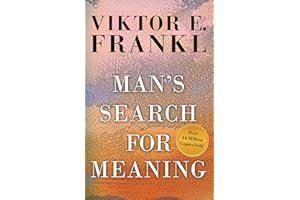
Man's Search for Meaning has riveted generations of readers with its descriptions of life in Nazi death camps and its lessons for spiritual survival. Between 1942 and 1945 psychiatrist Viktor Frankl labored in four different camps, including Auschwitz, while his parents, brother, and pregnant wife perished. Based on his own experience and the stories of his many patients, Frankl argues that we cannot avoid suffering but we can choose how to cope with it, find meaning in it, and move forward with renewed purpose. Frankl's theory—known as logotherapy, from the Greek word logos ("meaning")—holds that our primary drive in life is not pleasure, as Freud maintained, but the discovery and pursuit of what we personally find meaningful. In the decades since its first publication in 1959, Man's Search for Meaning has become a classic, with more than twelve million copies in print around the world. A 1991 Library of Congress survey that asked readers to name a "book that made a difference in your life" found Man's Search for Meaning among the ten most influential books in America. At once a memoir, a meditation, a treatise, and a history, it continues to inspire us all to find significance in the very act of living. (back cover)
…
Recommended by Tony Robbins, Dustin Moskovitz, Ev Williams, and 60 others.
Another book that I’ve read dozens of times. It taught me that if you change the meaning, you change everything. Meaning equals emotion, and emotion equals life. [source]
Dustin Moskovitz
Co-founder/Facebook and Asana
Dustin Moskovitz recommended this book on Twitter. [source]
I read it while spending ten days in the ICU of Bellevue hospital trying to reattach my finger from a ring avulsion accident in my kitchen. It talks about the meaning of life, and I believe you come out a better person from reading it. [source]
Cover unavailable
2
The Stranger
Albert Camus, Jonathan Davis, et al
4.5
Through the story of an ordinary man unwittingly drawn into a senseless murder on an Algerian beach, Camus explored what he termed "the nakedness of man faced with the absurd." First published in English in 1946; now in a new translation by Matthew Ward.
Seminal novel on existentialism and the absurd by Albert Camus from 1946. Explores that feeling of disconnectedness from society, its norms, and the absurdity of every day life. Striking first-person account in a powerful, direct language. [source]
Kyle Maynard
Kyle Maynard said this is one of his most-recommended books. [source]
Cover unavailable
3
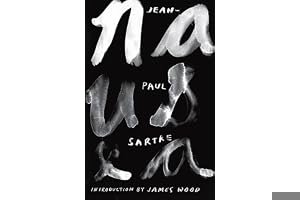
Nausea
Jean-Paul Sartre, Lloyd Alexander, et al.
4.4
Nausea is the story of Antoine Roquentin, a French writer who is horrified at his own existence. In impressionistic, diary form he ruthlessly catalogues his every feeling and sensation about the world and people around him.
His thoughts culminate in a pervasive, overpowering feeling of nausea which "spread at the bottom of the viscous puddle, at the bottom of our time, the time of purple suspenders and broken chair seats; it is made of wide, soft instants, spreading at the edge, like an oil stain."
Roquentin's efforts to try and come to terms with his life, his philosophical and psychological struggles, give Sartre the opportunity to dramatize the tenets of his Existentialist creed.
The introduction for this edition of Nausea by Hayden Carruth gives background on Sartre's life and major works, a summary of the principal themes of Existentialist philosophy, and a critical analysis of the novel itself.
Existentialists like Sartre are big on the idea that you can’t just relate a philosophical worldview by simply stating values, techniques, and facts. To understand existentialism, you must feel it. Breathe its ambience. It’s like a tonal curve for life. Yes, we can talk about highlights, shadows, and all the mechanical elements of that tonal curve, but you won’t become an artist just by knowing these mechanics. It goes much deeper than that. So Nausea is a novel, which imparts the existentialist tonal curve. I’m only halfway through it, but I’m liking it a lot already. It’s not as wild or erratic as Notes from Underground, but it’s got that similar feel. That the narrator gives us a mirror to reflect in, and those reflections are novel because we’re outside the normal tonal curve. [source]
Samantha Harvey
The question of mental illness comes down to whether Sartre’s right about his philosophy, which is an interesting question. [source]
One of the most influential works of this century, this is a crucial exposition of existentialist thought. Influenced by works such as Don Juan, and the novels of Kafka, these essays begin with a meditation on suicide: the question of living or not living in an absurd universe devoid of order or meaning. With lyric eloquence, Camus posits a way out of despair, reaffirming the value of personal existence, and the possibility of life lived with dignity and authenticity.
Camus’ philosophical exposition of absurdity, suicide in the face of meaninglessness, and other cherry topics that continue on from his fictional work in novels like The Stranger. It’s surprisingly readable, unlike many other mid 20th century philosophers, yet no less deep or pointy. It’s a great follow-up, as an original text, to that book The Age of Absurdity, I recommended last year. Still working through it. [source]
Kenan Malik
The Myth of Sisyphus is a small work, but Camus’s meditation on faith and fate has personally been hugely important in developing my ideas. Writing in the embers of World War II, Camus confronts in The Myth of Sisyphus both the tragedy of recent history and what he sees as the absurdity of the human condition. There is, he observes, a chasm between the human need for meaning and what he calls “the unreasonable silence of the world”. Religion is a means of bridging that chasm, but a dishonest one. “I don’t know if the world has any meaning that transcends it,” he writes. “But I know that I do not know this meaning and that it is impossible for me just now to know it.” [source]
Cover unavailable
5
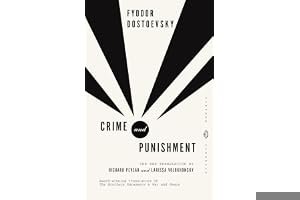
Crime and Punishment: A Russian Realistic Novel
Fyodor Dostoyevsky
4.4
This work has been selected by scholars as being culturally important, and is part of the knowledge base of civilization as we know it. This work was reproduced from the original artifact, and remains as true to the original work as possible. Therefore, you will see the original copyright references, library stamps (as most of these works have been housed in our most important libraries around the world), and other notations in the work.This work is in the public domain in the United States of America, and possibly other nations. Within the United States, you may freely copy and distribute this work, as no entity (individual or corporate) has a copyright on the body of the work.As a reproduction of a historical artifact, this work may contain missing or blurred pages, poor pictures, errant marks, etc. Scholars believe, and we concur, that this work is important enough to be preserved, reproduced, and made generally available to the public. We appreciate your support of the preservation process, and thank you for being an important part of keeping this knowledge alive and relevant.
It is not a crime book in the way that we understand crime fiction today. Instead it is like an existential psychological thriller. [source]
Cover unavailable
6
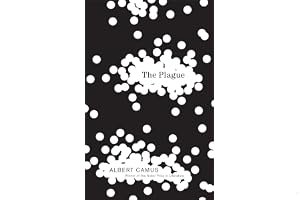
The plague
Albert Camus, Stuart Gilbert
4.4
A gripping tale of human unrelieved horror, of survival and resilience, and of the ways in which humankind confronts death, The Plague is at once a masterfully crafted novel, eloquently understated and epic in scope, and a parable of ageless moral resonance, profoundly relevant to our times. In Oran, a coastal town in North Africa, the plague begins as a series of portents, unheeded by the people. It gradually becomes a omnipresent reality, obliterating all traces of the past and driving its victims to almost unearthly extremes of suffering, madness, and compassion.
…
Recommended by Jim Collins, Arthur Ammann, Jenny Davidson, and 1 others.
Arthur Ammann
It’s an amazing book, considering Camus probably never personally experienced a plague. In his novel, Camus captured everything that we were dealing with in the Aids epidemic without Aids existing at that time. Without his knowing what the consequences of the HIV plague were going to be, he seems to have gotten all the actors in there and the myriad of things that you wrestle with. [source]
Jenny Davidson
Albert Camus’s The Plague probably remains the best-known novel on the topic of epidemic disease. It tells the story of those involved in an epidemic in a North African setting. It is very interested in the details about how quarantines are enforced and the role not just of the government, but of individuals who band together into groups to manage the epidemic. [source]
Stephen Breyer
He talks about the plague. Well, the plague is that part of a human being which can be very evil. That germ, he says at the end, never dies, it simply goes into remission. It lurks. It lurks in the cupboards, it lurks in the hallways, it lurks in the filing cabinets. [source]
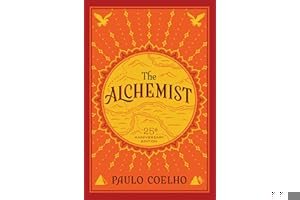
Paulo Coelho's enchanting novel has inspired a devoted following around the world. This story, dazzling in its powerful simplicity and inspiring wisdom, is about an Andalusian shepherd boy named Santiago who travels from his homeland in Spain to the Egyptian desert in search of a treasure buried in the Pyramids. What starts out as a journey to find worldly goods turns into a discovery of the treasure found within. Lush, evocative, and deeply humane, the story of Santiago is an eternal testament to the transforming power of our dreams and the importance of listening to our hearts.
There's a great quote in this book: When you're on the right path the universe conspires to help you! [source]
Daniel Ek
It was fascinating to talk to the author about how this book came to be such a hit—he never backed down, and he allowed people to read it for free in order to then boost sales—much like how Spotify’s freemium model was perceived in the early days. [source]
Eric Ripert
Speaks of everyone having an ultimate goal in life, but most of us are too afraid to pursue it. The encouragement to fulfill your dreams is very inspirational! [source]
Cover unavailable
8
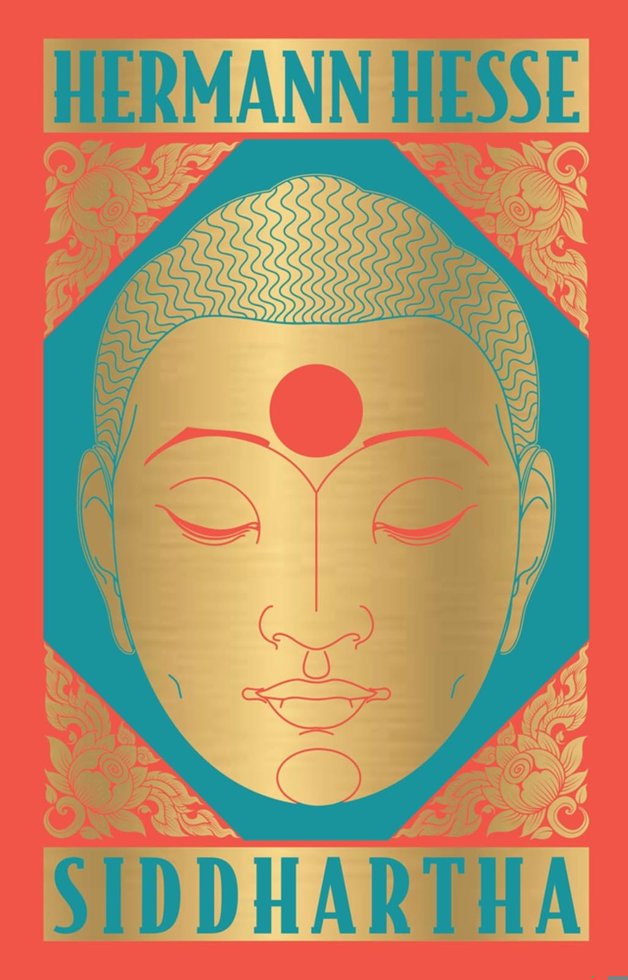
Siddhartha
Hermann Hesse
4.4
Herman Hesse's classic novel has delighted, inspired, and influenced generations of readers, writers, and thinkers. In this story of a wealthy Indian Brahmin who casts off a life of privilege to seek spiritual fulfillment. Hesse synthesizes disparate philosophies--Eastern religions, Jungian archetypes, Western individualism--into a unique vision of life as expressed through one man's search for meaning.
He says, 'Love is stronger than hate. Soft is stronger than hard. Water is stronger than stone.' [source]
Cover unavailable
9
The Metamorphosis
Franz Kafka
4.4
Alternate cover edition of ISBN 0553213695 / 9780553213690
"As Gregor Samsa awoke one morning from uneasy dreams he found himself transformed in his bed into a gigantic insect. He was laying on his hard, as it were armor-plated, back and when he lifted his head a little he could see his domelike brown belly divided into stiff arched segments on top of which the bed quilt could hardly keep in position and was about to slide off completely. His numerous legs, which were pitifully thin compared to the rest of his bulk, waved helplessly before his eyes."
With it's startling, bizarre, yet surprisingly funny first opening, Kafka begins his masterpiece, The Metamorphosis. It is the story of a young man who, transformed overnight into a giant beetle-like insect, becomes an object of disgrace to his family, an outsider in his own home, a quintessentially alienated man. A harrowing—though absurdly comic—meditation on human feelings of inadequacy, guilt, and isolation, The Metamorphosis has taken its place as one of the most widely read and influential works of twentieth-century fiction. As W.H. Auden wrote, "Kafka is important to us because his predicament is the predicament of modern man."
David Lynch said this is one of his most-recommended books. [source]
David Lynch
David Lynch said this is one of his most-recommended books. [source]
Cover unavailable
10
The Unbearable Lightness of Being
Milan Kundera
4.4
In The Unbearable Lightness of Being, Milan Kundera tells the story of a young woman in love with a man torn between his love for her and his incorrigible womanizing and one of his mistresses and her humbly faithful lover. This magnificent novel juxtaposes geographically distant places; brilliant and playful reflections; and a variety of styles to take its place as perhaps the major achievement of one of the world’s truly great writers.
This book was recommended by on page 488 in "Tools of Titans". [source]
Bernard Tan
I wasn’t expecting anything going into it, but I am currently quite engrossed by Kundera’s understanding of humanity and his beautiful writing style. [source]
Cover unavailable
11
The Brothers Karamazov
Fyodor Dostoevsky
4.4
The Brothers Karamasov is a murder mystery, a courtroom drama, and an exploration of erotic rivalry in a series of triangular love affairs involving the “wicked and sentimental” Fyodor Pavlovich Karamazov and his three sons―the impulsive and sensual Dmitri; the coldly rational Ivan; and the healthy, red-cheeked young novice Alyosha. Through the gripping events of their story, Dostoevsky portrays the whole of Russian life, is social and spiritual striving, in what was both the golden age and a tragic turning point in Russian culture.
This award-winning translation by Richard Pevear and Larissa Volokhonsky remains true to the verbal inventiveness of Dostoevsky’s prose, preserving the multiple voices, the humor, and the surprising modernity of the original. It is an achievement worthy of Dostoevsky’s last and greatest novel.
…
Recommended by Randall Stephenson, Adam Townsend, Christian B Miller, and 3 others.
@FinchmanWill @jposhaughnessy @Cernovich @mcclay_roman My son's favorite book of all time [source]
Christian B Miller
A host of deep philosophical questions are at work in the book: about, say, the existence of God, the nature of morality without God, and the role of free will. [source]
Cover unavailable
12
The Little Prince Family Storybook: Unabridged Original Text
Antoine de Saint-Exupéry
4.3
Rediscover Antoine de Saint-Exupery's universal masterpiece with original text and magnificent new illustrations created by masters of film animation. This wise and enchanginting fable teaches the secret of what is really important in life.
Recommended by Ryan Holiday, Brandon Stanton, Evan Goldberg, and 1 others.
Equally allegorical, I read The Little Prince for the first time which for some reason I’d never been exposed to before. If you’re in the same boat, read it. It’s short but great. [source]
Brandon Stanton
Brandon Stanton recommended this book on the podcast "The Tim Ferriss Show". [source]
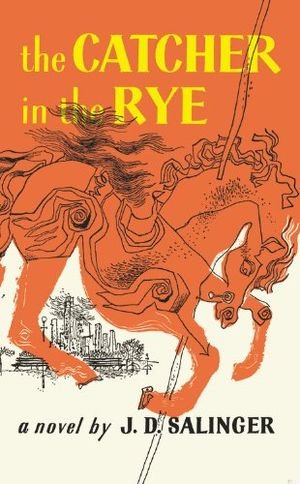
The hero-narrator of The Catcher in the Rye is an ancient child of sixteen, a native New Yorker named Holden Caulfield. Through circumstances that tend to preclude adult, secondhand description, he leaves his prep school in Pennsylvania and goes underground in New York City for three days. The boy himself is at once too simple and too complex for us to make any final comment about him or his story. Perhaps the safest thing we can say about Holden is that he was born in the world not just strongly attracted to beauty but, almost, hopelessly impaled on it. There are many voices in this novel: children's voices, adult voices, underground voices-but Holden's voice is the most eloquent of all. Transcending his own vernacular, yet remaining marvelously faithful to it, he issues a perfectly articulated cry of mixed pain and pleasure. However, like most lovers and clowns and poets of the higher orders, he keeps most of the pain to, and for, himself. The pleasure he gives away, or sets aside, with all his heart. It is there for the reader who can handle it to keep.
J.D. Salinger's classic novel of teenage angst and rebellion was first published in 1951. The novel was included on Time's 2005 list of the 100 best English-language novels written since 1923. It was named by Modern Library and its readers as one of the 100 best English-language novels of the 20th century. It has been frequently challenged in the court for its liberal use of profanity and portrayal of sexuality and in the 1950's and 60's it was the novel that every teenage boy wants to read.
It was such a relief from the other books I was reading at the time, which all had a quality of homework to them. [source]
Audrey Russo
So many novels; Lord of the Flies, Great Gatsby, Great Expectations; all the Nancy Drew books; Catcher in the Rye, Books written by Zora Neale Hurston; Pat Conroy – all because of the view about different people who endure despite adversity while kindling the hearts of the human spirit. [source]
Cover unavailable
14
Steppenwolf: A Novel
Hermann Hesse, Basil Creighton
4.3
Steppenwolf is a poetical self-portrait of a man who felt himself to be half-human and half-wolf. This Faust-like and magical story is evidence of Hesse's searching philosophy and extraordinary sense of humanity as he tells of the humanization of a middle-aged misanthrope. Yet this novel can also be seen as a plea for rigorous self-examination and an indictment of the intellectual hypocrisy of the period. As Hesse himself remarked, "Of all my books Steppenwolf is the one that was more often and more violently misunderstood than any other".
…
Recommended by Amanda Palmer and Sanja Zepan.
Amanda Palmer
Has a fantastical realism that pierces to the bottom of the psyche. I've re-read and re-read this sucker every five years. [source]
Sanja Zepan
Favourite non-business book would be Der Steppenwolf, by Hermann Hesse. It's a book that's often read by privileged people who feel misunderstood (usually teens), so everyone focuses on the first part about loneliness in the bourgeois world and forgets about the whole second part of the book that's about overcoming that and finding a sense of humour, a shift in perspective, and a bit of distance. Jack Kerouac even dismisses the book in the fashion of the precisely same intellectual hypocrisy this book talks about, which to me sounds like hipsters talking about how other people are hipsters and fake, because they themselves "have been listening the band before it was popular". Also, Steppenwolf is very relevant today - especially in the often lonely world of startup founders, where everyone talks about how great they're doing. So, the message still resonates with me. [source]
Cover unavailable
15
The Trial
Franz Kafka, Breon Mitchell
4.3
Written in 1914 but not published until 1925, a year after Kafka's death, The Trial is one of the most important novels of the twentieth century: the terrifying tale of Josef K., a respectable bank officer who is suddenly and inexplicably arrested and must defend himself against a charge about which he can get no information. Whether read as an existential tale, a parable, or a prophecy of the excesses of modern bureaucracy wedded to the madness of totalitarianism, Kafka's nightmare has resonated with chilling truth for generations of readers. This new edition is based upon the work of an international team of experts who have restored the text, the sequence of chapters, and their division to create a version that is as close as possible to the way the author left it.
In his brilliant translation, Breon Mitchell masterfully reproduces the distinctive poetics of Kafka's prose, revealing a novel as full of energy and power as when it was first written.
It’s a fascinating writing style with a 3rd party observer that’s treated as an extension of the protagonists own sentiments and mind. It’s also just exquisitely written. And the concept of being on trial for charges unknown by a vast, impersonal, yet petty, bureaucracy pulls from a timeless well of societal anxieties. So far, so very good. About half way through. [source]
Michael Peel
I read this before going to Nigeria but moving there made me think about it a lot. The idea that the system always wins. [source]
Cover unavailable
16
Waiting for Godot
Samuel Becket
4.3
The story revolves around two seemingly homeless men simply waiting for someone—or something—named Godot. Vladimir and Estragon wait near a tree, inhabiting a drama spun of their own consciousness. The result is a comical wordplay of poetry, dreamscapes, and nonsense, which has been interpreted as mankind’s inexhaustible search for meaning. Beckett’s language pioneered an expressionistic minimalism that captured the existential post-World War II Europe. His play remains one of the most magical and beautiful allegories of our time.
Have recently come to appreciate the awesome, absurdist humor of this book. [source]
Cover unavailable
17
1984
George Orwell
4.3
A PBS Great American Read Top 100 Pick
With extraordinary relevance and renewed popularity, George Orwell’s 1984 takes on new life in this hardcover edition.
“Orwell saw, to his credit, that the act of falsifying reality is only secondarily a way of changing perceptions. It is, above all, a way of asserting power.”—The New Yorker
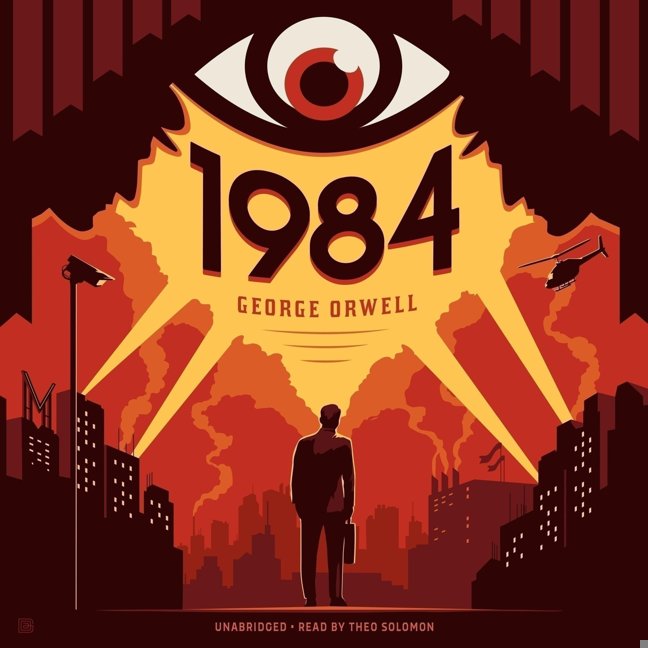
In 1984, London is a grim city in the totalitarian state of Oceania where Big Brother is always watching you and the Thought Police can practically read your mind. Winston Smith is a man in grave danger for the simple reason that his memory still functions. Drawn into a forbidden love affair, Winston finds the courage to join a secret revolutionary organization called The Brotherhood, dedicated to the destruction of the Party. Together with his beloved Julia, he hazards his life in a deadly match against the powers that be.
Lionel Trilling said of Orwell’s masterpiece “1984 is a profound, terrifying, and wholly fascinating book. It is a fantasy of the political future, and like any such fantasy, serves its author as a magnifying device for an examination of the present.” Though the year 1984 now exists in the past, Orwell’s novel remains an urgent call for the individual willing to speak truth to power.
Today is World Book Day, a wonderful opportunity to address this #ChallengeRichard sent in by Mike Gonzalez of New Jersey: Make a list of your top 65 books to read in a lifetime. [source]
called this book "one of his favorite" and recommended it to the hires. The book also inspired one the greatest TV ad (made by Jobs) [source]
Andra Zaharia
These books and their core ideas have stuck with me the most and continue to guide me when I hit crossroads along the way. [source]
Cover unavailable
18
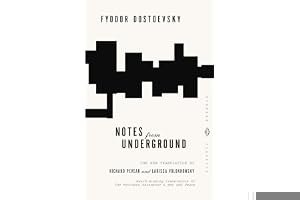
Notes From The Underground
Fyodor Mikhailovich Dostoyevsky, Richard Pevear, David Magarshack
4.3
Notes from Underground (Russian ??????? ?? ????????, Zapíski iz podpól'ja, also translated in English as Notes from the Underground or Letters from the Underworld while Notes from Underground is the most literal translation) (1864) is a short novel by Fyodor Dostoevsky. It is considered by many to be the world's first existentialist novel. It presents itself as an excerpt from the rambling memoirs of a bitter, isolated, unnamed narrator (generally referred to by critics as the Underground Man) who is a retired civil servant living in St. Petersburg.
It’s such a lovely weird book. Partly, it’s Dostoyevsky giving us an account, through the fictional narrator, of his view on the human condition. Just one quote: “But man has such a predilection for systems and abstract deductions that he is ready to distort the truth intentionally, he is ready to deny the evidence of his senses only to justify his logic”. The idea of humans being suckered into living only according to “logic”, and not only the vanity of such a pursuit, but the impossibility of it, is a wonderful antidote to much of contemporary morality and wonkness. In the same vein, I found the attack on the core underpinning concept of much of 20th century economics, that people are rational beings making rational choices to optimize their own advantage, so forward for its time. Notes from Underground is from 1864, yet manages to expertly debunk that narrow view. Freedom, not material advantage, is the “most advantageous advantage”, even when that’s the freedom to do yourself harm. (Any analysis of Brexit and Trump would do well to consult with Dostoyevsky). Also, major bonus points for being a short book, yet packing so much punch. [source]
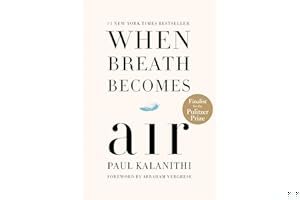
At the age of thirty-six, on the verge of completing a decade’s worth of training as a neurosurgeon, Paul Kalanithi was diagnosed with stage IV lung cancer. One day he was a doctor treating the dying, and the next he was a patient struggling to live. And just like that, the future he and his wife had imagined evaporated. When Breath Becomes Air chronicles Kalanithi’s transformation from a naïve medical student “possessed,” as he wrote, “by the question of what, given that all organisms die, makes a virtuous and meaningful life” into a neurosurgeon at Stanford working in the brain, the most critical place for human identity, and finally into a patient and new father confronting his own mortality.
What makes life worth living in the face of death? What do you do when the future, no longer a ladder toward your goals in life, flattens out into a perpetual present? What does it mean to have a child, to nurture a new life as another fades away? These are some of the questions Kalanithi wrestles with in this profoundly moving, exquisitely observed memoir.
I don’t know how Kalanithi found the physical strength to write this book while he was so debilitated by the disease and then potent chemotherapy. But I’m so glad he did. He spent his whole brief life searching for meaning in one way or another -- through books, writing, medicine, surgery, and science. I’m grateful that, by reading this book, I got to witness a small part of that journey. I just wish the journey hadn’t been cut so short [source]
Despite its popularity, When Breath Becomes Air is actually underrated. It’s make-you-cry good. [source]
Bethany S. Mandel
More Shabbat reading recommendations: This book was breathtaking and such a powerful advertisement for the joy of parenthood. https://t.co/V8BH97eiL9 [source]
Cover unavailable
20
Fall
Albert Camus, Justin O'Brien
4.3
Jean-Baptiste Clamence, a successful Parisian barrister, has come to recognize the deep-seated hypocrisy of his existence. His epigrammatic and, above all, discomforting monologue gradually saps, then undermines, the reader's own complacency.
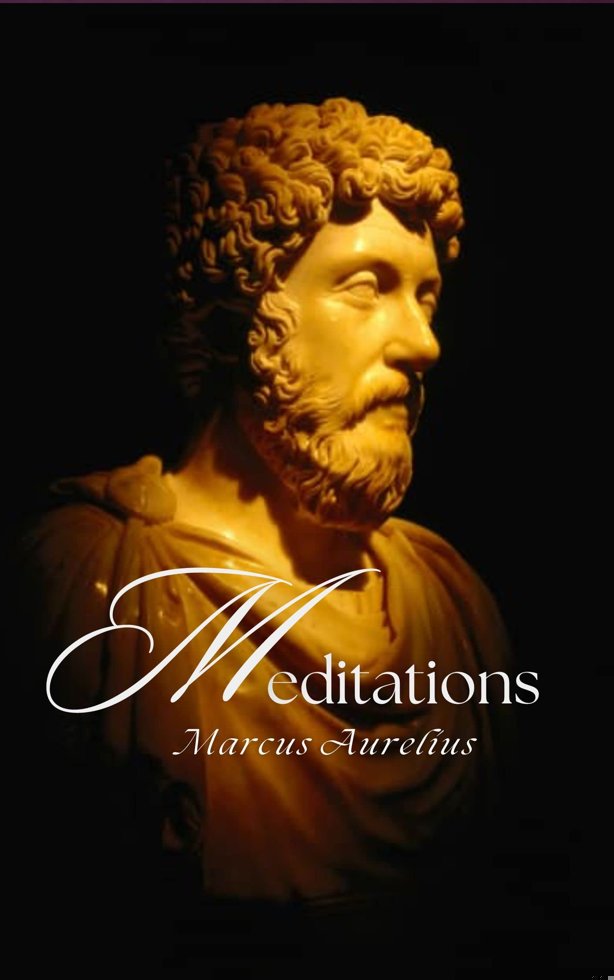
One measure, perhaps, of a book's worth, is its intergenerational pliancy: do new readers acquire it and interpret it afresh down through the ages? The Meditations of Marcus Aurelius, translated and introduced by Gregory Hays, by that standard, is very worthwhile, indeed. Hays suggests that its most recent incarnation--as a self-help book--is not only valid, but may be close to the author's intent. The book, which Hays calls, fondly, a "haphazard set of notes," is indicative of the role of philosophy among the ancients in that it is "expected to provide a 'design for living.'" And it does, both aphoristically ("Think of yourself as dead. You have lived your life. Now take what's left and live it properly.") and rhetorically ("What is it in ourselves that we should prize?"). Whether these, and other entries ("Enough of this wretched, whining monkey life.") sound life-changing or like entries in a teenager's diary is up to the individual reader, as it should be. Hays's introduction, which sketches the life of Marcus Aurelius (emperor of Rome A.D. 161-180) as well as the basic tenets of stoicism, is accessible and jaunty. --H. O'Billovich
…
Recommended by Arianna Huffington, Naval Ravikant, Chip Conley, and 12 others.
Arianna Huffington
Founder/The Huffington Post
I find this book so inspirational and instructive, it lives on my nightstand. [source]
Chip Conley
I have given this book away to a number of people. [source]
Marvin Liao
Partner/500 Startups
My list would be (besides the ones I mentioned in answer to the previous question) both business & Fiction/Sci-Fi and ones I personally found helpful to myself. The business books explain just exactly how business, work & investing are in reality & how to think properly & differentiate yourself. On the non-business side, a mix of History & classic fiction to understand people, philosophy to make sense of life and Science fiction to picture what the future could be like (not always utopian). [source]
Cover unavailable
22
Existentialism is a Humanism
Jean-Paul Sartre, Carol Macomber, Arlette Elkaïm-Sartre, Annie Cohen-Solal
4.3
It was to correct common misconceptions about his thought that Jean-Paul Sartre, the most dominent European intellectual of the post-World War II decades, accepted an invitation to speak on October 29, 1945, at the Club Maintenant in Paris. The unstated objective of his lecture (“Existentialism Is a Humanism”) was to expound his philosophy as a form of “existentialism,” a term much bandied about at the time. Sartre asserted that existentialism was essentially a doctrine for philosophers, though, ironically, he was about to make it accessible to a general audience. The published text of his lecture quickly became one of the bibles of existentialism and made Sartre an international celebrity.
The idea of freedom occupies the center of Sartre’s doctrine. Man, born into an empty, godless universe, is nothing to begin with. He creates his essence—his self, his being—through the choices he freely makes (“existence precedes essence”). Were it not for the contingency of his death, he would never end. Choosing to be this or that is to affirm the value of what we choose. In choosing, therefore, we commit not only ourselves but all of mankind.
This book presents a new English translation of Sartre’s 1945 lecture and his analysis of Camus’s The Stranger, along with a discussion of these works by acclaimed Sartre biographer Annie Cohen-Solal. This edition is a translation of the 1996 French edition, which includes Arlette Elkaïm-Sartre’s introduction and a Q&A with Sartre about his lecture.
As a newcomer to existentialism, it can be hard to wrap your brain around the core concepts when reading novels like The Stranger or Nausea, or writers like Kierkegaard. You get a great feel for the existentialist ambience, but what are the core tenets? This (short) book delivers it about as directly as you can get it, as it’s basically just two parts: 1) An account of a lecture/defense that Sartre gave of existentialism, complete with a debate with someone in the audience, and 2) Sartre’s review of Camus’ The Stranger. The key concept that Sartre explains is the notion of Existence Precedes Essence. It’s one of those concepts that sounds intimidatingly highbrow, but really just means that we are not born with a purpose before we are “thrown into this world”. That then sets the stage for reaffirming human choice. That we always have a choice. That destiny or divine purpose is just an excuse we use not to make (hard) choices. This description of existentialism really resonated with me and provides a wonderful alternative vision to the stoic philosophy. There’s much agreement between the two views of the world, but also enough disagreement to provide interesting tension. Especially between the Aurelius version of stoicism, which endlessly belabors the point of doing “what the universe asks you to do”. [source]
In Beyond Good and Evil Friedrich Nietzsche contends that no human values are absolute; that all value distinctions (such as that between 'good' and 'evil') are artificial, the result of mere traditional prejudices; and that humanity should discard its old, outmoded values (such as 'good' and 'evil').
Yes, I think that’s right. It touches on almost all Nietzsche’s central concerns – on truth, on the nature of philosophy, on morality, on what’s wrong with morality, will to power. [source]
Simon Critchley
What did you think of it then? We should talk about your reaction to it! [source]
Cover unavailable
24
Journey to the End of the Night
Louis-Ferdinand Céline, Ralph Manheim, William T. Vollmann
4.2
Louis-Ferdinand Celine's revulsion and anger at what he considered the idiocy and hypocrisy of society explodes from nearly every page of this novel. Filled with slang and obscenities and written in raw, colloquial language, Journey to the End of the Night is a literary symphony of violence, cruelty and obscene nihilism. This book shocked most critics when it was first published in France in 1932, but quickly became a success with the reading public in Europe, and later in America where it was first published by New Directions in 1952. The story of the improbable yet convincingly described travels of the petit-bourgeois (and largely autobiographical) antihero, Bardamu, from the trenches of World War I, to the African jungle, to New York and Detroit, and finally to life as a failed doctor in Paris, takes the readers by the scruff and hurtles them toward the novel's inevitable, sad conclusion.
…
Recommended by Neil Strauss, David Downie, Quentin Hardy, and 1 others.
Neil Strauss recommended this book in the book "Tools of Titans". [source]
David Downie
I was particularly fascinated by Céline’s portrait of the city because Paris is one of the characters in the book. You get a real sense of what Paris looked like. [source]
Quentin Hardy
@p1lonn Terrible human, but that's a great book. [source]
Cover unavailable
25
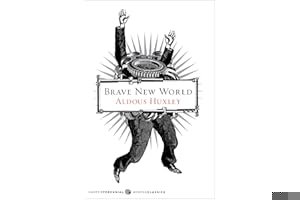
Brave New World
Aldous Huxley
4.2
Now reissued in a gorgeous hardcover edition: "one of the most prophetic dystopian works of the 20th century" (Wall Street Journal) must be read and understood by anyone concerned with preserving the human spirit in the face of our "brave new world." Huxley's masterpiece has become a bestseller once again after the American election.
Aldous Huxley's profoundly important classic of world literature,Brave New World is a searching vision of an unequal, technologically-advanced future where humans are genetically bred, socially indoctrinated, and pharmaceutically anesthetized to passively uphold an authoritarian ruling order whose motto is "Community, Identity, Stability."—all at the cost of our freedom, humanity, and perhaps our souls. "A genius [who] who spent his life decrying the onward march of the Machine" (The New Yorker), Huxley was a man of incomparable talents: equally an artist, a spiritual seeker, and one of history's keenest observers of human nature and civilization. Brave New World, his masterpiece, has enthralled and terrified millions of readers, and retains its urgent relevance to this day as both a warning as we head into tomorrow and as a thought-provoking, satisfying work of literature. Written in the shadow of the rise of fascism during the 1930s, Brave New World likewise speaks to a twenty-first-century world dominated by mass-entertainment, technology, medicine and pharmaceuticals, the arts of persuasion, and the hidden influence of elites.
The most prophetic book of the 20th century. Today many people would easily mistake it for a utopia. [source]
Andra Zaharia
These books and their core ideas have stuck with me the most and continue to guide me when I hit crossroads along the way. [source]
Catherine Mayer
It shows the ways in which technology, our need for certain creature comforts and consumer culture can be used to manipulate us. [source]
Cover unavailable
26
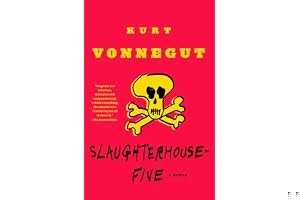
Slaughterhouse-Five
Kurt Vonnegut and Kevin Power
4.2
Selected by the Modern Library as one of the 100 best novels of all time, Slaughterhouse-Five, an American classic, is one of the world's great antiwar books. Centering on the infamous firebombing of Dresden, Billy Pilgrim's odyssey through time reflects the mythic journey of our own fractured lives as we search for meaning in what we fear most.
Recommended by Bernard Tan, Carlos Eire, and Dan Christensen.
Bernard Tan
I’m also a Murakami and Vonnegut fan, Kafka on the Shore, The Wind-up Bird Chronicle, Norwegian Wood, Slaughterhouse-Five, etc. Now that I look at the books listed, they seem to carry an existential theme. I guess I like to understand humanity and human behaviour ultimately to better understand myself. I find reading a means to connect with people who may have lived before my time, or in a distant country, that I may never have had the chance to connect with in real life. As three-dimensional humans, we are all made up of so many faces and emotional layers that we find it hard to dissect them all, and when we find writers who can explain these thought processes in a way that’s tangible and digestible, there’s this incredibly comforting eureka moment of feeling understood. [source]
Carlos Eire
Even though he is no philosopher Vonnegut is still able to ask the questions that all of us think about – how time affects our lives. [source]
In these four plays, Jean-Paul Sartre, the great existentialist novelist and philosopher, displays his mastery of drama. NO EXIT is an unforgettable portrayal of hell. THE FLIES is a modern reworking of the Electra-Orestes story. DIRTY HANDS is about a young intellectual torn between theory and praxis. THE RESPECTFUL PROSTITUTE is an attack on American racism.
Cover unavailable
28
Thus Spake Zarathustra: A Book For All And None
Friedrich Wilhelm Nietzsche
4.2
Thus Spoke Zarathustra is a foundational work of Western literature and is widely considered to be Friedrich Nietzsche’s masterpiece. It includes the German philosopher’s famous discussion of the phrase ‘God is dead’ as well as his concept of the Superman. Nietzsche delineates his Will to Power theory and devotes pages to critiquing Christian thinking, in particular Christianity’s definition of good and evil.
…
Recommended by Stephane Grand.
Stephane Grand
My favorite book is “Thus spoke Zarathustra” by Friedrich Nietzsche. I do not think I have ever read a book that had more resonance for me. [source]
Cover unavailable
29
The Fault in Our Stars
John Green
4.2
Despite the tumor-shrinking medical miracle that has bought her a few years, Hazel has never been anything but terminal, her final chapter inscribed upon diagnosis. But when a gorgeous plot twist named Augustus Waters suddenly appears at Cancer Kid Support Group, Hazel's story is about to be completely rewritten.
Insightful, bold, irreverent, and raw, The Fault in Our Stars is award-winning author John Green's most ambitious and heartbreaking work yet, brilliantly exploring the funny, thrilling, and tragic business of being alive and in love.
@johngreen You should not be. It is a great book. Was recently in Amsterdam and walked some of the scenes with your huge fan, my youngest daughter. Loved hearing from you and meeting you at Kenyon. [source]
Cover unavailable
30
Love's Executioner and Other Tales of Psychotherapy
Irvin D. Yalom
4.2
The collection of ten absorbing tales by master psychotherapist Irvin D. Yalom uncovers the mysteries, frustrations, pathos, and humor at the heart of the therapeutic encounter. In recounting his patients' dilemmas, Yalom not only gives us a rare and enthralling glimpse into their personal desires and motivations but also tells us his own story as he struggles to reconcile his all-too human responses with his sensibility as a psychiatrist. Not since Freud has an author done so much to clarify what goes on between a psychotherapist and a patient.
…
Recommended by Stephen Lew.
Stephen Lew
When asked what books he would recommend to youngsters interested in his professional path, Stephen mentioned Love's executioner and other tales of psychotherapy. [source]
Cover unavailable
31
Animal Farm
George Orwell and Christopher Hitchens
4.2
Animal Farm is one of the most famous warnings ever written. Orwell's immortal satire - 'against Stalin' as he wrote to his French translator - can be read on many levels. With its piercing clarity and deceptively simple style it is no surprise that this novel is required reading for schoolchildren and politicians alike. This fable of the steadfast horses Boxer and Clover, the opportunistic pigs Snowball and Napoleon, and the deafening choir of sheep remains an unparalleled masterpiece.
One reviewer wrote 'In a hundred years' time perhaps Animal Farm ... may simply be a fairy story: today it is a fairy story with a good deal of point.' Over sixty years on in the age of spin, it is more relevant than ever.
Rejected by such eminent publishing figures as Victor Gollancz, Jonathan Cape and T.S. Eliot, Animal Farm was published to great acclaim by Martin Secker and Warburg on 17 August 1945 in an edition of 4500 copies. In the centenary year of Martin Secker, Ltd., Harvill Secker is proud to publish this special edition with a brand-new introduction by Christopher Hitchens.
Whitney Cummings recommended this book on the podcast "The Tim Ferriss Show". [source]
Vlad Tenev
When I was in sixth grade I remember being very upset by the ending of this book. [source]
Heather Brooke
I picked Animal Farm because it is an allegory about power and its seductive and corruptive influence on people regardless of their initial good intentions. [source]
Cover unavailable
32
Zen and the Art of Motorcycle Maintenance: An Inquiry Into Values
This lyrical, evocative, thought-provoking journal of a man's quest for truth - and for himself - has touched and changed an entire generation, and is ready to reach out to a new one. At its heart, the story is all too simple: a man and his son take a motorcycle trip across America. But this is not a simple trip at all, for around every corner, through mountain and desert, wind and rain, and searing heat and biting cold, their pilgrimage leads them to new vistas of self-discovery and renewal.
Zen and the Art of Motorcycle Maintenance is an elemental work that has helped to shape and define the past 25-years of American culture. This special audio edition presents this adventure in an exciting new way - for the millions who have already taken this journey and want to travel these roads again, and for the many more who will discover for the first time the wonders and challenges of a story that will change the way they think and feel about their lives. Unique to audio, this edition features a new introduction by the author.
…
Recommended by Brad Feld, Drew Houston, Ev Williams, and 7 others.
Brad Feld
Co-Founder/Foundry Group
I think every entrepreneur or aspiring entrepreneur should read the book Zen and the Art of Motorcycle Maintenance. It was written in the 1970s by a guy named Robert Pirsig. It was his first book, it's kind of a hippie philosophy treatised journey. The word that sort of came out of it was Chautauqua, he's like having a conversation with his son as they do a motorcycle trip across the country, and it's just this incredible treatise on philosophy, product, quality, accomplishing what your goal is, against the backdrop of the narrator, the author, going crazy and having a psychotic break. And so it's this very powerful mix of accessible philosophy, combined with this pretty captivating journey in a book that, again, anybody who builds anything, there's so much in it that's so worth reading and just soaking in. But it's not what you'd expect, it's not a "here's how you do it", you have to read it slowly and think about it. So, it's one of my favorites. [source]
Drew Houston
CEO/Dropbox
There are engineers who dismiss all these things that can’t be fit into an algorithm, or that don’t have some kind of mathematical rigor underpinning them, this book is about that question. [source]
Honorable mentions: Jonathan Livingston Seagull, Zen and the Art of Motorcycle Maintenance, and The Joy of Sex, all given to me by my mother. I believe they helped inculcate some of the 1960s-70s ethos of individual freedom into my thinking. [source]
Cover unavailable
33
The Power of Now: A Guide to Spiritual Enlightenment
Eckhart Tolle is emerging as one of today's most inspiring teachers. In The Power of Now, a #1 national bestseller, the author describes his transition from despair to self-realization soon after his 29th birthday. Tolle took another ten years to understand this transformation, during which time he evolved a philosophy that has parallels in Buddhism, relaxation techniques, and meditation theory but is also eminently practical. In The Power of Now he shows readers how to recognize themselves as the creators of their own pain, and how to have a pain-free existence by living fully in the present. Accessing the deepest self, the true self, can be learned, he says, by freeing ourselves from the conflicting, unreasonable demands of the mind and living present, fully, and intensely, in the Now.
…
Recommended by Bill Liao, Catherine Plano, Darrah Brustein, and 7 others.
Bill Liao
The human world occurs in language so best get good at it! [source]
Catherine Plano
The one that really resonates with me and still to this day is The Power of NOW from Eckhart Tolle because as an entrepreneur we get so caught up in the future that we fail to be 'present'. The reality of it all when you really think about it - the present is all we have that is real, it requires no effort, nor time. I practice this daily, if I feel uncomfortable then I know I am trying too hard and not being present but when I am being present it is easier to think about what I have to do right now, because now is all that matters. [source]
Darrah Brustein
Others include The Power Of Now which is powerful reminder that all we have is the present and helps give you meaningful ways to live in it, not in the past or the future. [source]
At Walden Pond, Henry David Thoreau reflected on simpler living in the natural world. By removing himself from the distractions of materialism, Thoreau hoped to not only improve his spiritual life but also gain a better understanding of society through solitary introspection.
In Walden, Thoreau condenses his two-year, two-month, two-day stay into a single year, using the four seasons to symbolize human development—a cycle of life shared by both nature and man. A celebration of personal renewal through self-reliance, independence, and simplicity, composed for all of us living in “quiet desperation,” Walden is eternal.
…
Recommended by Emma Watson, Donna Dickenson, Emily Thomas, and 5 others.
Donna Dickenson
He discusses how the original ideals that America was founded on were being compromised, and how massive industrial interests were starting to dominate. [source]
Emily Thomas
The beginning is hard going. Once you get past that, then suddenly you’re into these beautiful and inspiring descriptions of nature. [source]
Joan Boixados
In case you were deceived and expected me to name Walden by Henry David Thoreau, you should read it too if you haven’t, it obviously is the inspiration to Walden Two. :) [source]
From the author of the phenomenal #1 New York Times bestseller Tuesdays with Morrie, a novel that explores the unexpected connections of our lives, and the idea that heaven is more than a place; it's an answer.
Eddie is a wounded war veteran, an old man who has lived, in his mind, an uninspired life. His job is fixing rides at a seaside amusement park. On his 83rd birthday, a tragic accident kills him as he tries to save a little girl from a falling cart. He awakes in the afterlife, where he learns that heaven is not a destination. It's a place where your life is explained to you by five people, some of whom you knew, others who may have been strangers. One by one, from childhood to soldier to old age, Eddie's five people revisit their connections to him on earth, illuminating the mysteries of his "meaningless" life, and revealing the haunting secret behind the eternal question: "Why was I here?"
…
Cover unavailable
36
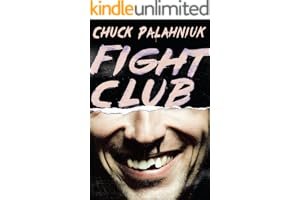
Fight Club
Chuck Palahniuk
4.2
"THE FIRST RULE ABOUT FIGHT CLUB IS YOU DON'T TALK ABOUT CLUB."
Every weekend, in the basements and parking lots of bars across the country, young men with good white-collar jobs and absent fathers take off their shoes and shirts and fight each other barehanded for as long as they have to. Then they go back to those jobs with blackened eyes and loosened teeth and the sense that they can handle anything. Fight Club is the invention of Tyler Durden, projectionist, waiter, and dark, anarchic genius, and it's only the beginning of his plans for revenge on a world where cancer support groups have the corner on human warmth. As the narrator of Fight Club puts it: "If people thought you were dying, they gave you their full attention."
"THE SECOND RULE ABOUT FIGHT CLUB IS YOU DON'T TALK ABOUT CLUB."
Where does Tyler Durden come from? Why do his violent schemes so capture the troubled, insomniac narrator? What events bring them to the roof of the world's tallest building, wired to explode in ten minutes? The answers in Fight Club reveal a world poised on the brink of mayhem—and introduce a blazingly original literary scene.
"THE THIRD RULE ABOUT FIGHT CLUB IS TWO MEN PER FIGHT."
What will the end of the millennium feel like? Readers of Chuck Palahniuk's brilliantly apocalyptic and unnerving first novel are going to find out.
I’m amazed how many young people haven’t read this book. Truly life-changing. This is the classic of my generation; it is the book that defines our age and ultimately, how to find meaning in it. It’s a cautionary tale too—about being too caught up in revolutionary ideas. [source]
Van Badham
SUPER EXCITED to receive my copy of “Solved! How Other Countries Have Cracked the World’s Biggest Problems and We Can, Too” by Andrew Wear. SO GREAT to read a political book that’s about both pragmatic action *and* hope. Squee! #auspol https://t.co/jIYgr36kZO [source]
Cover unavailable
37
The Book of Disquiet
Fernando Pessoa, RICHARD Zenith
4.2
Fernando Pessoa was many writers in one. He attributed his prolific writings to a wide range of alternate selves, each of which had a distinct biography, ideology. and horoscope. When he died in 1935, Pessoa left behind a trunk filled with unfinished and unpublished writings, among which were the remarkable pages that make up his posthumous masterpiece, The Book of Disquiet, an astonishing work that, in George Steiner's words, "gives to Lisbon the haunting spell of Joyce's Dublin or Kafka's Prague."Published for the first time some fifty years after his death, this unique collection of short, aphoristic paragraphs comprises the "autobiography" of Bernardo Soares, one of Pessoa's alternate selves. Part intimate diary, part prose poetry, part descriptive narrative, captivatingly translated by Richard Zenith, The Book of Disquiet is one of the greatest works of the twentieth century.
This is a book of ideas. It’s not a book about the internet. It was written much earlier, in the 20th century, and written in Portuguese. It’s really a book of meditations. It’s very philosophical. It applies to the internet in that the main point is how much joy you can take in small things and small changes and the true drama of life can be extraordinarily minute in scale, and this, I think, gets at the idea that the internet and the stories we follow are, to a lot of us, extremely important and exciting and meaningful, though really they are just a few changes of characters on a little screen somewhere. [source]
Cover unavailable
38
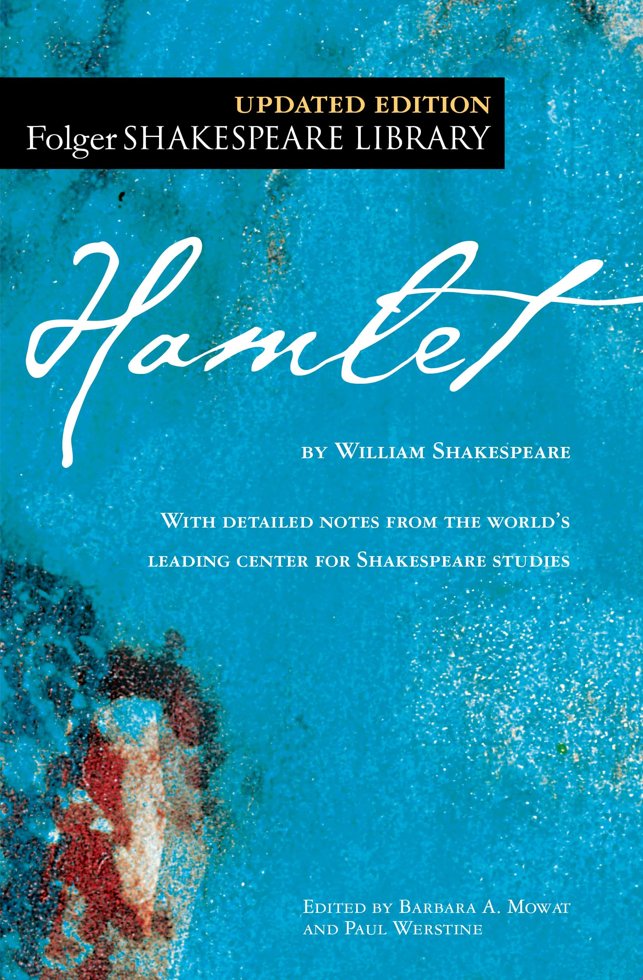
Hamlet
William Shakespeare
4.2
No Fear Shakespeare gives you the complete text of Hamlet on the left-hand page, side-by-side with an easy-to-understand translation on the right.
"Hamlet" is the story of the Prince of Denmark who learns of the death of his father at the hands of his uncle, Claudius. Claudius murders Hamlet's father, his own brother, to take the throne of Denmark and to marry Hamlet's widowed mother. Hamlet is sunk into a state of great despair as a result of discovering the murder of his father and the infidelity of his mother. Hamlet is torn between his great sadness and his desire for the revenge of his father's murder.
Philosophy runs through this play–all sorts of great lines. There are gems like “..for there is nothing either good or bad, but thinking makes it so” which I used in my last book and “Beware of entrance to a quarrel; but, being in, bear it, that the opposed may beware of thee.” was a favorite of Sherman. [source]
Tim Lott
I love the speech when Hamlet’s uncle Claudius admits to being inflicted with the primal eldest curse for killing his brother, and begs on his knees for forgiveness for this ultimate violation of the law of nature. [source]
Cover unavailable
39
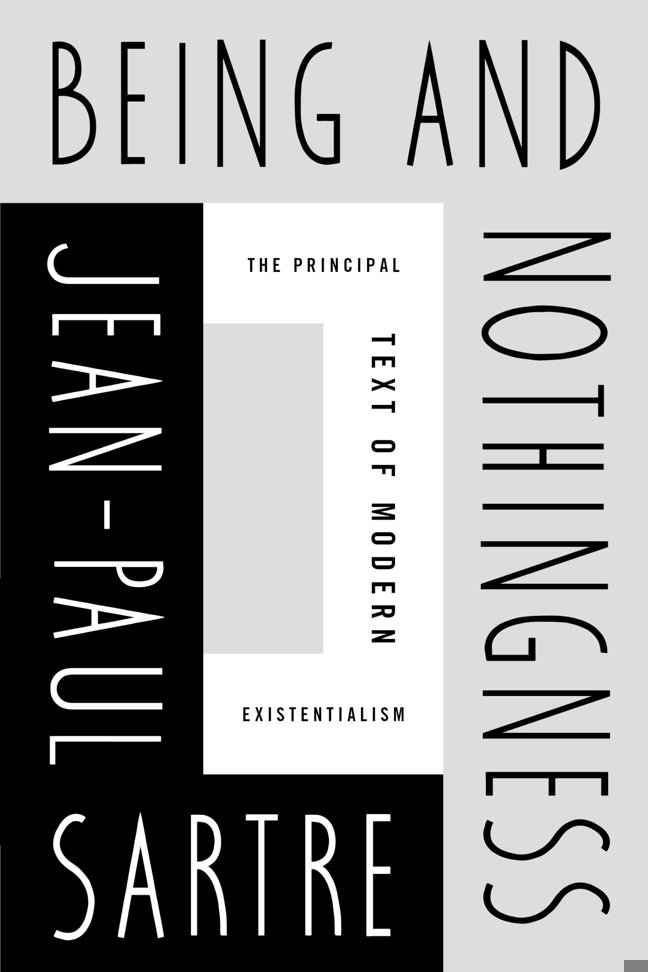
Being and Nothingness
Jean-Paul Sartre
4.2
Being & Nothingness is without doubt one of the most significant philosophical books of the 20th century. The central work by one of the century's most influential thinkers, it altered the course of western philosophy. Its revolutionary approach challenged all previous assumptions about the individual's relationship with the world. Known as 'the Bible of existentialism', its impact on culture & literature was immediate & was felt worldwide, from the absurdist drama of Samuel Beckett to the soul-searching cries of the Beat poets. Being & Nothingness is one of those rare books whose influence has affected the mindset of subsequent generations. Seventy years after its 1st publication, its message remains as potent as ever--challenging readers to confront the fundamental dilemmas of human freedom, choice, responsibility & action.
…
Cover unavailable
40
The Bell Jar
Sylvia Plath
4.2
Sylvia Plath's shocking, realistic, and intensely emotional novel about a woman falling into the grip of insanity.
Esther Greenwood is brilliant, beautiful, enormously talented, and successful, but slowly going under—maybe for the last time. In her acclaimed and enduring masterwork, Sylvia Plath brilliantly draws the reader into Esther's breakdown with such intensity that her insanity becomes palpably real, even rational—as accessible an experience as going to the movies. A deep penetration into the darkest and most harrowing corners of the human psyche, The Bell Jar is an extraordinary accomplishment and a haunting American classic.
…
Recommended by Bryony Gordon, The CEO Library Community (through anonymous form), and Tim Kendall.
As a teenage girl, you have to read The Bell Jar. It’s a rite of passage. [source]
The CEO Library Community (through anonymous form)
One of the best 3 books I've read in 2019 [source]
Tim Kendall
Despite its subject matter, The Bell Jar is often a very funny novel. Perhaps we miss it because the pall of Plath’s biography descends across the whole work and reputation. But The Bell Jar is viciously funny. There are people still alive today who won’t talk about it because they were so badly hurt by Plath’s portrayal of them. [source]
Cover unavailable
41
Being and Time
Martin Heidegger, John Macquarrie, et al.
4.2
One of the most important philosophical works of our time, a work that has had tremendous influence on philosophy, literature, and psychology, and has literally changed the intellectual map of the modern world.
Recommended by Simon Critchley.
Simon Critchley
Heidegger gives us the analytical tools for understanding human existence in the world. [source]
Cover unavailable
42
Stoner
John Williams, John McGahern
4.2
William Stoner is born at the end of the nineteenth century into a dirt-poor Missouri farming family. Sent to the state university to study agronomy, he instead falls in love with English literature and embraces a scholar’s life, so different from the hardscrabble existence he has known. And yet as the years pass, Stoner encounters a succession of disappointments: marriage into a “proper” family estranges him from his parents; his career is stymied; his wife and daughter turn coldly away from him; a transforming experience of new love ends under threat of scandal. Driven ever deeper within himself, Stoner rediscovers the stoic silence of his forebears and confronts an essential solitude.
John Williams’s luminous and deeply moving novel is a work of quiet perfection. William Stoner emerges from it not only as an archetypal American, but as an unlikely existential hero, standing, like a figure in a painting by Edward Hopper, in stark relief against an unforgiving world.
It is a story of intellectual determination and the ability of a man to find love simply in what he does. It is a book about love of learning. [source]
Cover unavailable
43
Notes from Underground, White Nights, The Dream of a Ridiculous Man, and Selections from The House of the Dead
Fyodor Dostoyevsky, Andrew R. MacAndrew, Ben Marcus
4.2
A collection of powerful stories by one of the masters of Russian literature, illustrating the author's thoughts on political philosophy, religion and above all, humanity: Notes from Underground, White Nights, The Dream of a Ridiculous Man, and Selections from The House of the Dead (150th Anniversary Edition)
The compelling works presented in this volume were written at distinct periods in Dostoyevsky's life, at decisive moments in his groping for a political philosophy and a religious answer. From the primitive peasant who kills without understanding that he is destroying life to the anxious antihero of Notes from Underground—who both craves and despises affection—the writer's often-tormented characters showcase his evolving outlook on our fate.
Thomas Mann described Dostoyevsky as "an author whose Christian sympathy is ordinarily devoted to human misery, sin, vice, the depths of lust and crime, rather than to nobility of body and soul" and Notes from Underground as "an awe- and terror- inspiring example of this sympathy."
…
Cover unavailable
44
Lord of the Flies
William Golding
4.1
At the dawn of the next world war, a plane crashes on an uncharted island, stranding a group of schoolboys. At first, with no adult supervision, their freedom is something to celebrate; this far from civilization the boys can do anything they want. Anything. They attempt to forge their own society, failing, however, in the face of terror, sin and evil. And as order collapses, as strange howls echo in the night, as terror begins its reign, the hope of adventure seems as far from reality as the hope of being rescued. Labeled a parable, an allegory, a myth, a morality tale, a parody, a political treatise, even a vision of the apocalypse, Lord of the Flies is perhaps our most memorable tale about “the end of innocence, the darkness of man’s heart.”
…
Recommended by Elon Musk, Ev Williams, Audrey Russo, and 5 others.
Audrey Russo
So many novels; Lord of the Flies, Great Gatsby, Great Expectations; all the Nancy Drew books; Catcher in the Rye, Books written by Zora Neale Hurston; Pat Conroy – all because of the view about different people who endure despite adversity while kindling the hearts of the human spirit. [source]
Chigozie Obioma
William Golding imbues some of these children with wisdom that would read, in the hands of a lesser author, as implausibly knowing [source]
Disco Donnie
@JoshRHernandez1 I love the book “Lord of the Flies” so just started watching The Society [source]
Cover unavailable
45
Kafka on the Shore
Haruki Murakami
4.1
Kafka on the Shore, a tour de force of metaphysical reality, is powered by two remarkable characters: a teenage boy, Kafka Tamura, who runs away from home either to escape a gruesome oedipal prophecy or to search for his long-missing mother and sister; and an aging simpleton called Nakata, who never recovered from a wartime affliction and now is drawn toward Kafka for reasons that, like the most basic activities of daily life, he cannot fathom. Their odyssey, as mysterious to them as it is to us, is enriched throughout by vivid accomplices and mesmerizing events. Cats and people carry on conversations, a ghostlike pimp employs a Hegel-quoting prostitute, a forest harbors soldiers apparently unaged since World War II, and rainstorms of fish (and worse) fall from the sky. There is a brutal murder, with the identity of both victim and perpetrator a riddle—yet this, along with everything else, is eventually answered, just as the entwined destinies of Kafka and Nakata are gradually revealed, with one escaping his fate entirely and the other given a fresh start on his own.
…
Recommended by Bernard Tan, Brian Koppelman, and John Craig.
Bernard Tan
I’m also a Murakami and Vonnegut fan, Kafka on the Shore, The Wind-up Bird Chronicle, Norwegian Wood, Slaughterhouse-Five, etc. Now that I look at the books listed, they seem to carry an existential theme. I guess I like to understand humanity and human behaviour ultimately to better understand myself. I find reading a means to connect with people who may have lived before my time, or in a distant country, that I may never have had the chance to connect with in real life. As three-dimensional humans, we are all made up of so many faces and emotional layers that we find it hard to dissect them all, and when we find writers who can explain these thought processes in a way that’s tangible and digestible, there’s this incredibly comforting eureka moment of feeling understood. [source]
If you have always wanted to read this author, I think this Covid-19 period of time is perfect for it. He could have conceived of this whole thing. [source]
John Craig
The only book, or should I say author, that takes priority is Haruki Murakami. He is a Japanese novelist that takes me into the next world. His style is surreal. Check it out. Start with Kafka on the Shore. [source]
Cover unavailable
46
Anna Karenina
Leo Tolstoy
4.1
Tolstoy's epic novel of love, destiny and self-destruction, in a gorgeous new clothbound edition from Penguin Classics. Anna Karenina seems to have everything - beauty, wealth, popularity and an adored son. But she feels that her life is empty until the moment she encounters the impetuous officer Count Vronsky. Their subsequent affair scandalizes society and family alike and soon brings jealously and bitterness in its wake. Contrasting with this tale of love and self-destruction is the vividly observed story of Levin, a man striving to find contentment and a meaning to his life - and also a self-portrait of Tolstoy himself. This acclaimed modern translation by Richard Pevear and Larissa Volokhonsky won the PEN/ Book of the Month Club Translation Prize in 2001. Their translation is accompanied in this edition by an introduction by Richard Pevear and a preface by John Bayley. "The new and brilliantly witty translation by Richard Pevear and Larissa Volokhonsky is a must". (Lisa Appignanesi, Independent, Books of the Year). "Pevear and Volokhonsky are at once scrupulous translators and vivid stylists of English, and their superb rendering allows us, as perhaps never before, to grasp the palpability of Tolstoy's "characters, acts, situations"". (James Wood, New Yorker).
…
Recommended by Chelsea Handler, Marvin Liao, Audrey Russo, and 5 others.
I don't know if I have to expound on why I love this book, but everyone should read this author, and this was the first one of his works I read. So, it's like a first boyfriend. Or my first Cabbage Patch Kid. [source]
Marvin Liao
Partner/500 Startups
My list would be (besides the ones I mentioned in answer to the previous question) both business & Fiction/Sci-Fi and ones I personally found helpful to myself. The business books explain just exactly how business, work & investing are in reality & how to think properly & differentiate yourself. On the non-business side, a mix of History & classic fiction to understand people, philosophy to make sense of life and Science fiction to picture what the future could be like (not always utopian). [source]

Audrey Russo
Question: What books would you recommend to young people interested in your career path? Answer: Anything by Peter Senge. The Hard Thing About Hard Things – Ben Horowitz Once you are Lucky, Twice you are good – Sara Lacey Revolutionary Wealth – Alvin Toffler Black Swan – Taleb Reset: My Fight for Inclusion and Lasting Change, by Ellen Pao. Creative Class – Richard Florida Creativity Inc. by Ed Catmull & Amy Wallace Liar’s Poker by Michael Lewis American Government 101: From the Continental Congress to the Iowa Caucus, Everything You Need to Know About US Politics – Kathleen Spears The Tao of Pooh by Benjamin Hoff. Anna Karenina by Leo Tolstoy. Any book by Herman Hesse The Art of War by Sun Tzu. [source]
Cover unavailable
47
Existential Kink: Unmask Your Shadow and Embrace Your Power (A method for getting what you want by getting off on what you don't)
From the Booker Prize-winning author of The Remains of the Day and When We Were Orphans, comes an unforgettable edge-of-your-seat mystery that is at once heartbreakingly tender and morally courageous about what it means to be human.
Hailsham seems like a pleasant English boarding school, far from the influences of the city. Its students are well tended and supported, trained in art and literature, and become just the sort of people the world wants them to be. But, curiously, they are taught nothing of the outside world and are allowed little contact with it.
Within the grounds of Hailsham, Kathy grows from schoolgirl to young woman, but it’s only when she and her friends Ruth and Tommy leave the safe grounds of the school (as they always knew they would) that they realize the full truth of what Hailsham is.
Never Let Me Go breaks through the boundaries of the literary novel. It is a gripping mystery, a beautiful love story, and also a scathing critique of human arrogance and a moral examination of how we treat the vulnerable and different in our society. In exploring the themes of memory and the impact of the past, Ishiguro takes on the idea of a possible future to create his most moving and powerful book to date.
It’s a difficult book to talk about because one almost doesn’t want to give away the premise, which drops on you like a ton of bricks around page eighty or so… It’s set at a very unusual boarding school where the students are being raised and educated for the absolute darkest of purposes, which they initially have no knowledge of or control over, and prove ultimately unable to escape from. [source]
Cover unavailable
49
The Woman in the Dunes
Kobo Abe
4.1
The Woman in the Dunes, by celebrated writer and thinker Kobo Abe, combines the essence of myth, suspense and the existential novel.
After missing the last bus home following a day trip to the seashore, an amateur entomologist is offered lodging for the night at the bottom of a vast sand pit. But when he attempts to leave the next morning, he quickly discovers that the locals have other plans. Held captive with seemingly no chance of escape, he is tasked with shoveling back the ever-advancing sand dunes that threaten to destroy the village. His only companion is an odd young woman, and together their fates become intertwined as they work side by side through this Sisyphean of tasks.
…
Cover unavailable
50
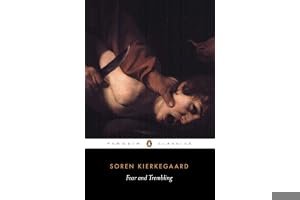
Fear and Trembling
Soren Kierkegaard
4.1
Soren Kierkegaard was a Danish philosopher, theologian, and religious author interested in human psychology. He is regarded as a leading pioneer of existentialism and one of the greatest philosophers of the 19th Century.
In Fear and Trembling, Kierkegaard wanted to understand the anxiety that must have been present in Abraham when God commanded him to offer his son as a human sacrifice. Abraham had a choice to complete the task or to forget it. He resigned himself to the loss of his son, acting according to his faith. In other words, one must be willing to give up all his or her earthly possessions in infinite resignation and must also be willing to give up whatever it is that he or she loves more than God. Abraham had passed the test -- his love for God proved greater than anything else in him. And because a good and just Creator would not want a father to kill his son, God intervened at the last moment to prevent the sacrifice.
While most of the 20th century existentialists, like Sartre and Camus, were devout atheists, Kierkegaard is an existentialist obsessed with faith. Fear and Trembling is a very long, and at times obtuse, meditation on the topic of faith and doubt. It uses the story of Abraham and Isaac to contrast the ideas of faith and humanism. Kierkegaard is in awe of Abraham’s faith and how it compels him to sacrifice Isaac, and he uses that to interrogate the topic of faith in general. I found the theological acrobatics employed by Kierkegaard a bit strained, to say the least. But it was a fascinating read none the less, and Kierkegaard’s language and metaphors and incredible depth is inspiring. I’m keen to give this a read in the original Danish form. [source]
Cover unavailable
51
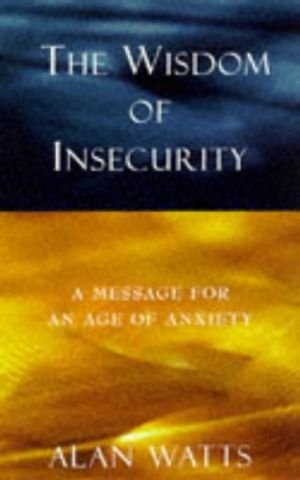
The Wisdom of Insecurity: A Message for an Age of Anxiety
In this fascinating book, Alan Watts explores man's quest for psychological security, examining our efforts to find spiritual and intellectual certainty in the realms of religion and philosophy. The Wisdom of Insecurity underlines the importance of our search for stability in an age where human life seems particularly vulnerable and uncertain. Watts argues our insecurity is the consequence of trying to be secure and that, ironically, salvation and sanity lie in the recognition that we have no way of saving ourselves.
This is a very thin book but a mind-blowing one. In many ways it was part of my motivation to write my book. Alan Watts was a philosophical populariser. He called himself a “spiritual entertainer”, and went around the world giving lectures and writing popular books about Eastern philosophies such as Zen Buddhism and Taoism. This book is about non-dualism – the theory that in some sense, everything is one. It’s the principle encapsulated in the symbols of yin and yang. These days it is often seen as cheesy and New Age. But there’s vastly more to it than that. [source]

Cover unavailable
52
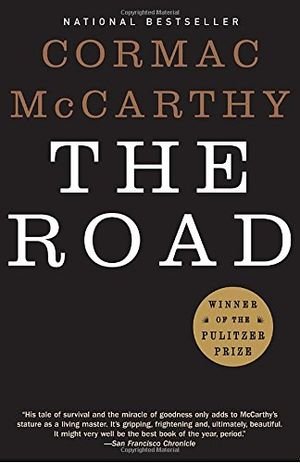
The Road
Cormac McCarthy
4.1
A searing, postapocalyptic novel destined to become Cormac McCarthy’s masterpiece.
A father and his son walk alone through burned America. Nothing moves in the ravaged landscape save the ash on the wind. It is cold enough to crack stones, and when the snow falls it is gray. The sky is dark. Their destination is the coast, although they don’t know what, if anything, awaits them there. They have nothing; just a pistol to defend themselves against the lawless bands that stalk the road, the clothes they are wearing, a cart of scavenged food—and each other.
The Road is the profoundly moving story of a journey. It boldly imagines a future in which no hope remains, but in which the father and his son, “each the other’s world entire,” are sustained by love. Awesome in the totality of its vision, it is an unflinching meditation on the worst and the best that we are capable of: ultimate destructiveness, desperate tenacity, and the tenderness that keeps two people alive in the face of total devastation. (front flap)
It's got everything that's grabbing the headlines in America right now. It's about race and class, the economy, culture, immigration and the danger of the us-versus-them mentality. And underneath it all, pumps the heart and soul of family love, the pursuit of happiness, and what home really means. [source]

This is possibly the most important environmental book ever written. It is a thought-experiment that imagines the world without a biosphere. That is the fundamental thought-experiment at the heart of environmentalism. All the horrors of that story arise from the disappearance of the biosphere, leaving people without any means of feeding themselves and without any means of survival. They are thrown into a brutal and fatal competition where the only thing left to eat is each other. [source]
Greg Garrett
There is no creature that has been transformed by leaking chemicals or radioactive satellites. But, on the other hand, there are human beings who consume other humans and that informs the major conflicts of the book. So, you’ve got a post-apocalyptic setting and you’ve got ethical quandaries for the main characters. There’s the sense of menace that permeates the zombie apocalypse. It’s not bad enough that they’re going to kill you, they’re also going to eat you. What I love about this story is its literary quality. We tend to think of the zombie apocalypse as a low-culture, pulp phenomenon. [source]
A lot of professors give talks titled 'The Last Lecture'. Professors are asked to consider their demise and to ruminate on what matters most to them: What wisdom would we impart to the world if we knew it was our last chance? If we had to vanish tomorrow, what would we want as our legacy?
When Randy Pausch, a computer science professor at Carnegie Mellon, was asked to give such a lecture, he didn't have to imagine it as his last, since he had recently been diagnosed with terminal cancer. But the lecture he gave, 'Really Achieving Your Childhood Dreams', wasn't about dying. It was about the importance of overcoming obstacles, of enabling the dreams of others, of seizing every moment (because time is all you have and you may find one day that you have less than you think). It was a summation of everything Randy had come to believe. It was about living.
In this book, Randy Pausch has combined the humour, inspiration, and intelligence that made his lecture such a phenomenon and given it an indelible form. It is a book that will be shared for generations to come.
…
Recommended by Gabriel Coarna.
Gabriel Coarna
I read "The Last Lecture" because I had seen Randy Pausch give this talk: https://www.youtube.com/watch?v=ji5_MqicxSo [source]
Cover unavailable
54
The Picture of Dorian Gray
Oscar Wilde
4.1
On its first publication The Picture of Dorian Gray was regarded as dangerously modern in its depiction of fin-de-siècle decadence. In this updated version of the Faust story, the tempter is Lord Henry Wotton, who lives selfishly for amoral pleasure; Dorian's good angel is the portrait painter Basil Hallward, whom Dorian murders. The book highlights the tension between the polished surface of high society and the life of secret vice. Although sin is punished in the end the book has a flavour of the elegantly perverse.
With an Afterword by Peter Harness.
Designed to appeal to the booklover, the Macmillan Collector's Library is a series of beautifully bound gift editions of much loved classic titles. Bound in real cloth, printed on high quality paper, and featuring ribbon markers and gilt edges, Macmillan Collector's Library are books to love and treasure.
…
Recommended by Andra Zaharia, Eric Berkowitz, Marc Montagne, and 1 others.
Andra Zaharia
A copy from 1903 of this book is my most prized possession. [source]
Eric Berkowitz
The Picture of Dorian Gray is now a part of the canon that no one would admit to not having read. Most of us have read it and delighted in its witticisms. It’s hard to imagine, but when Dorian Gray was first published, the book was not well received at all. It was totally panned. It was held against him as being an example of an effete character. It was being serialised by Lippincott’s Magazine, and the serialisation of the novel stopped when it became too inflammatory. [source]
Marc Montagne
My favorite fiction book is the The Picture of Dorian Gray by Oscar Wilde. I'm a huge Oscar Wilde fan, he has one of the brightest minds and the Picture is a masterpiece and his unique novel. I consider that you should only read books that you would consider reading again at some point while still enjoying the same pleasure. The Picture is definitely one of those. [source]
Cover unavailable
55
Do Androids Dream Of Electric Sheep?
Philip K. Dick
4.1
It was January 2021, and Rick Deckard had a license to kill. Somewhere among the hordes of humans out there, lurked several rogue androids. Deckard's assignment--find them and then..."retire" them. Trouble was, the androids all looked exactly like humans, and they didn't want to be found!
Cover unavailable
56
Freakonomics: A Rogue Economist Explores the Hidden Side of Everything
Which is more dangerous, a gun or a swimming pool? What do schoolteachers and sumo wrestlers have in common? Why do drug dealers still live with their moms? How much do parents really matter? What kind of impact did Roe v. Wade have on violent crime? Freakonomics will literally redefine the way we view the modern world.
These may not sound like typical questions for an economist to ask. But Steven D. Levitt is not a typical economist. He is a much heralded scholar who studies the stuff and riddles of everyday life -- from cheating and crime to sports and child rearing -- and whose conclusions regularly turn the conventional wisdom on its head. He usually begins with a mountain of data and a simple, unasked question. Some of these questions concern life-and-death issues; others have an admittedly freakish quality. Thus the new field of study contained in this book: freakonomics.
Through forceful storytelling and wry insight, Levitt and co-author Stephen J. Dubner show that economics is, at root, the study of incentives -- how people get what they want, or need, especially when other people want or need the same thing. In Freakonomics, they set out to explore the hidden side of ... well, everything. The inner workings of a crack gang. The truth about real-estate agents. The myths of campaign finance. The telltale marks of a cheating schoolteacher. The secrets of the Ku Klux Klan.
What unites all these stories is a belief that the modern world, despite a surfeit of obfuscation, complication, and downright deceit, is not impenetrable, is not unknowable, and -- if the right questions are asked -- is even more intriguing than we think. All it takes is a new way of looking. Steven Levitt, through devilishly clever and clear-eyed thinking, shows how to see through all the clutter.
Freakonomics establishes this unconventional premise: If morality represents how we would like the world to work, then economics represents how it actually does work. It is true that readers of this book will be armed with enough riddles and stories to last a thousand cocktail parties. But Freakonomics can provide more than that. It will literally redefine the way we view the modern world. (front flap)
…
Recommended by Malcolm Gladwell, Daymond John, Ev Williams, and 12 others.
James Altucher recommended this book on the podcast "The Tim Ferriss Show". [source]
Cover unavailable
57
One Flew Over the Cuckoo's Nest
Ken Kesey, John C. Reilly, et al
4.1
Tyrannical Nurse Ratched rules her ward in an Oregon State mental hospital with a strict and unbending routine, unopposed by her patients, who remain cowed by mind-numbing medication and the threat of electric shock therapy. But her regime is disrupted by the arrival of McMurphy – the swaggering, fun-loving trickster with a devilish grin who resolves to oppose her rules on behalf of his fellow inmates. His struggle is seen through the eyes of Chief Bromden, a seemingly mute half-Indian patient who understands McMurphy's heroic attempt to do battle with the powers that keep them imprisoned. Ken Kesey's extraordinary first novel is an exuberant, ribald and devastatingly honest portrayal of the boundaries between sanity and madness.
…
Cover unavailable
58
Invisible Man
Ralph Ellison
4.1
First published in 1952 and immediately hailed as a masterpiece, Invisible Man is one of those rare novels that have changed the shape of American literature. For not only does Ralph Ellison's nightmare journey across the racial divide tell unparalleled truths about the nature of bigotry and its effects on the minds of both victims and perpetrators, it gives us an entirely new model of what a novel can be.
As he journeys from the Deep South to the streets and basements of Harlem, from a horrifying "battle royal" where black men are reduced to fighting animals, to a Communist rally where they are elevated to the status of trophies, Ralph Ellison's nameless protagonist ushers readers into a parallel universe that throws our own into harsh and even hilarious relief. Suspenseful and sardonic, narrated in a voice that takes in the symphonic range of the American language, black and white, Invisible Man is one of the most audacious and dazzling novels of our century.
…
Recommended by Barack Obama, Daegan Miller, Dan Barreiro, and 3 others.
As a devoted reader, the president has been linked to a lengthy list of novels and poetry collections over the years — he admits he enjoys a thriller. [source]
Daegan Miller
The novel pinpoints relentlessly, and beautifully, the environment of exploitation. [source]
Dan Barreiro
Riveting time capsule material. Literary giant Ellison on the blues, on race, on his powerful book, Invisible Man. https://t.co/iS6xQ7ojE8 [source]
Cover unavailable
59
Existential Psychotherapy
Irvin D. Yalom
4.1
The noted Stanford University psychiatrist distills the essence of a wide range of therapies into a masterful, creative synthesis, opening up a new way of understanding each person's confrontation with four ultimate concerns: isolation, meaninglessness, death, and freedom.
Cover unavailable
60
Cat's Cradle
Kurt Vonnegut
4.1
Told with deadpan humour and bitter irony, Kurt Vonnegut's cult tale of global destruction preys on our deepest fears of witnessing Armageddon and, worse still, surviving it ...
Dr Felix Hoenikker, one of the founding 'fathers' of the atomic bomb, has left a deadly legacy to the world. For he's the inventor of 'ice-nine', a lethal chemical capable of freezing the entire planet. The search for its whereabouts leads to Hoenikker's three ecentric children, to a crazed dictator in the Caribbean, to madness. Felix Hoenikker's Death Wish comes true when his last, fatal gift to humankind brings about the end, that for all of us, is nigh...
…
Recommended by Ev Williams and Andy Stern.
Andy Stern
I think it's something that progressives need to think about, because the book talks a lot about two tendencies that people can adopt, to try to find meaning and purpose. One is kind of a sheer technological approach, and the other is more of a spiritual and religious approach. The book talks about the perils and challenges of each way. Sometimes we as progressives defend technology and science and fact, and other people – clearly both progressive and otherwise – appreciate the spiritual more. Then on either extreme, the book tries to say that blind adherence to either tendency also has huge problems. The book, for me, is about trying to seek meaning, not trying to find simple answers, and appreciating that in some ways following a belief to an extreme can be equally as dangerous as having no beliefs. [source]
Cover unavailable
61
Night
Elie Wiesel
4.1
Night is Elie Wiesel's masterpiece, a candid, horrific, and deeply poignant autobiographical account of his survival as a teenager in the Nazi death camps. This new translation by Marion Wiesel, Elie's wife and frequent translator, presents this seminal memoir in the language and spirit truest to the author's original intent. And in a substantive new preface, Elie reflects on the enduring importance of Night and his lifelong, passionate dedication to ensuring that the world never forgets man's capacity for inhumanity to man.
Night offers much more than a litany of the daily terrors, everyday perversions, and rampant sadism at Auschwitz and Buchenwald; it also el
…
Recommended by Johanna Reiss and Steven Katz.
Johanna Reiss
Elie Wiesel wrote..that he was considering running into the barbed wire once, but he didn’t because his father needed him. [source]
Steven Katz
Probably the best known memoir that has been written about the experience of the death camps. [source]
Cover unavailable
62
The Second Sex
Simone de Beauvoir, Constance Borde, Sheila Malovany-Chevallier
4.1
Newly translated and unabridged in English for the first time, and brilliantly introduced by Judith Thurman, Simone de Beauvoir’s masterpiece weaves together history, philosophy, economics, biology, and a host of other disciplines to analyze the Western notion of “woman” and to explore the power of sexuality.
Sixty years after its initial publication, The Second Sex is still as eye-opening and pertinent as ever. This triumphant and genuinely revolutionary book began as an exceptional woman’s attempt to find out who and what she was. Drawing on extensive interviews with women of every age and station of life, masterfully synthesizing research about women’s bodies and psyches as well as their historic and economic roles, The Second Sex is an encyclopedic and cogently argued document about inequality and enforced “otherness.”
This long-awaited new translation pays particular attention to the existentialist terms and French nuances that may have been misconstrued in the first English edition; restores Beauvoir’s phrasing, rhythms, and tone; and reinstates significant portions of the “Myths” and “History” chapters that were originally cut due to length, including accounts of more than seventy female figures.
A vital and life-changing work that has dramatically revised the way women talk and think about themselves, Beauvoir’s magisterial treatise continues to provoke and inspire.
…
Recommended by Arianna Huffington, Belinda Jack, Erica Jong, and 1 others.
Arianna Huffington
Founder/The Huffington Post
Great Thrive Questionnaire by @smlafleur, founder of M.M.LaFleur. On the book that changed her life, The Second Sex: "it changed my entire perception about what it means to be a woman, and it may be the unconscious reason behind why I started my company." https://t.co/tudVOb28J2 [source]
Belinda Jack
In making a distinction between sex and gender she drew attention to how much of what women had to contend with was actually something that society imposes. [source]
Erica Jong
The French literary world is incredibly sexist and here was one of their darlings pointing out how much they discriminate. [source]
Cover unavailable
63
Tuesdays with Morrie
Mitch Albom
4.1
Maybe it was a grandparent, or a teacher or a colleague. Someone older, patient and wise, who understood you when you were young and searching, and gave you sound advice to help you make your way through it. For Mitch Albom, that person was Morrie Schwartz, his college professor from nearly twenty years ago.
Maybe, like Mitch, you lost track of this mentor as you made your way, and the insights faded. Wouldn't you like to see that person again, ask the bigger questions that still haunt you?
Mitch Albom had that second chance. He rediscovered Morrie in the last months of the older man's life. Knowing he was dying of ALS - or motor neurone disease - Mitch visited Morrie in his study every Tuesday, just as they used to back in college. Their rekindled relationship turned into one final 'class': lessons in how to live.
…
Cover unavailable
64
The Myth of Sisyphus
Albert Camus, Justin Obrien
4.1
Throughout history, some books have changed the world. They have transformed the way we see ourselves—and each other. They have inspired debate, dissent, war and revolution. They have enlightened, outraged, provoked and comforted. They have enriched lives—and destroyed them. Now Penguin brings you the works of the great thinkers, pioneers, radicals and visionaries whose ideas shook civilization and helped make us who we are. Inspired by the myth of a man condemned to ceaselessly push a rock up a mountain and watch it roll back to the valley below, The Myth of Sisyphus transformed twentieth-century philosophy with its impassioned argument for the value of life in a world without religious meaning.
…
Cover unavailable
65
Catch-22
Joseph Heller, Christopher Buckley
4.1
This fiftieth-anniversary edition commemorates Joseph Heller’s masterpiece with a new introduction; critical essays and reviews by Norman Mailer, Alfred Kazin, Anthony Burgess, and others; rare papers and photos; and much more.
Nominated as one of America’s best-loved novels by PBS’s The Great American Read.
Now a Hulu limited series starring Christopher Abbott, George Clooney, Kyle Chandler, and Hugh Laurie.
Fifty years after its original publication, Catch-22 remains a cornerstone of American literature and one of the funniest—and most celebrated—books of all time. In recent years it has been named to “best novels” lists by Time, Newsweek, the Modern Library, and the London Observer.
Set in Italy during World War II, this is the story of the incomparable, malingering bombardier, Yossarian, a hero who is furious because thousands of people he has never met are trying to kill him. But his real problem is not the enemy—it is his own army, which keeps increasing the number of missions the men must fly to complete their service. Yet if Yossarian makes any attempt to excuse himself from the perilous missions he’s assigned, he’ll be in violation of Catch-22, a hilariously sinister bureaucratic rule: a man is considered insane if he willingly continues to fly dangerous combat missions, but if he makes a formal request to be removed from duty, he is proven sane and therefore ineligible to be relieved.
This fiftieth-anniversary edition commemorates Joseph Heller’s masterpiece with a new introduction by Christopher Buckley; a wealth of critical essays and reviews by Norman Mailer, Alfred Kazin, Anthony Burgess, and others; rare papers and photos from Joseph Heller’s personal archive; and much more. Here, at last, is the definitive edition of a classic of world literature.
…
Recommended by Brian Burkhart, Charles Glass, Kate McLoughlin, and 5 others.
Brian Burkhart
This book is a masterpiece and absolutely hilarious. In subtle ways, you realize the main character is questioning not just the notion of authority, but the way authority thinks and how we must react to it. To me, a guy with the core belief “make waves,” it has a great message, which is, “It’s okay to question the status quo.” For people just starting their careers, it’s easy to think our superiors know everything—they’re not quick to admit their insecurities, flaws, and blind spots, but they have them. And having a healthy dose of skepticism isn’t such a terrible thing. Plus, it’s just a fun read. [source]
Charles Glass
It’s one of the funniest books ever written. It’s about the insanity of military life and the absurdity of a big institution. Heller was very good on the absurdity of big institutions. Catch 22 has every character in it that the American military did have at the time and still has today in Iraq and Afghanistan: The money-makers, the crooks, the officers who were trying to claw their way to the top where they get their men killed, the placing in order of priority the pretence of military success at the cost of many civilian lives. [source]
Kate McLoughlin
It gets you to the point where you can’t apply your reason any more and laughter takes over. It’s the laughter of the absurd. [source]
Cover unavailable
66
The Perks of Being a Wallflower
Stephen Chbosky
4.1
Read the cult-favorite coming of age story that takes a sometimes heartbreaking, often hysterical, and always honest look at high school in all its glory. Now a major motion picture starring Logan Lerman and Emma Watson, The Perks of Being a Wallflower is a funny, touching, and haunting modern classic.
The critically acclaimed debut novel from Stephen Chbosky, Perks follows observant “wallflower” Charlie as he charts a course through the strange world between adolescence and adulthood. First dates, family drama, and new friends. Sex, drugs, and The Rocky Horror Picture Show. Devastating loss, young love, and life on the fringes. Caught between trying to live his life and trying to run from it, Charlie must learn to navigate those wild and poignant roller-coaster days known as growing up.
A #1 New York Times best seller for more than a year, an American Library Association Best Book for Young Adults (2000) and Best Book for Reluctant Readers (2000), and with millions of copies in print, this novel for teen readers (or “wallflowers” of more-advanced age) will make you laugh, cry, and perhaps feel nostalgic for those moments when you, too, tiptoed onto the dance floor of life.
…
Recommended by Emma Watson, Jamie Grayson, Rae Earl, and 1 others.
Jamie Grayson
Holy shit there’s no way this book is that old because that really ages me but I COMPLETELY agree. This book is a masterpiece and a must-read. Lessons about being human are in there and those are important right now. https://t.co/fF1spEFrUH [source]
Rae Earl
It is a tremendously powerful study of PTSD, a mental health issue that isn’t talked about enough [source]
Richard Speight Jr.
A pal for 30 years, @StephenChbosky ‘s first book #ThePerksofBeingaWallflower had a MASSIVE impact on me & countless others. Then came his great movies. Now..THE NEXT BOOK! Be like me & buy it THE DAY it comes out. (Then harass him until he agrees to put me in the movie! 🎥 🤠) https://t.co/02bMKPgF9A [source]
"Emotional Intelligence 2.0 succinctly explains how to deal with emotions creatively and employ our intelligence in a beneficial way." --THE DALAI LAMA
For the first time ever in a book, TalentSmart's revolutionary program helps people identify their EQ skills, build these skills into strengths, and enjoy consistent performance in the pursuit of important life objectives. The book contains proven strategies from a decade-long effort to accurately measure and increase emotional intelligence. Trusted by upper-echelon leaders inside companies worldwide, these strategies will enable you to capitalize on the skills responsible for 58% of performance in all types of jobs.
Includes a passcode for online access to the world's bestselling emotional intelligence test, the Emotional Intelligence Appraisal®, which will show you where your EQ stands today and what you can do to begin maximizing it immediately.
Rooted in sound research involving more than 500,000 responses, this new edition of the test will:
--Pinpoint which of the book's 66 emotional intelligence strategies will increase your EQ the most.
--Reveal the specific behaviors responsible for your EQ scores.
--Allow you to test yourself a second time to measure how much your EQ has increased from your efforts.
The book's smooth narrative style turns rigorous research into memorable stories and practical strategies that anyone can use to his or her advantage.
With 90% of top performers high in EQ, and EQ twice as important as IQ in getting where you want to go in life, who can afford to ignore it?
What people are saying about it:
"Emotional Intelligence 2.0 is a fast read with compelling anecdotes and good context in which to understand and improve your score." --Newsweek
"Surveys of 500,000 people on the role of emotions in daily life have enabled the authors to hone EQ assessment to a 28-question online survey that can be completed in seven minutes." --The Washington Post
"Read worthy strategies for improving emotional intelligence skills make this our how-to book of the week. It's nice to know that average IQ doesn't limit a person to average performance. And who can resist an online quiz with instant feedback?" --Newsday
"Gives abundant, practical findings and insights with emphasis on how to develop EQ. Research shows convincingly that EQ is more important than IQ." --Stephen R. Covey, author, The 7 Habits of Highly Effective People
"This book can drastically change the way you think about success...read it twice." --Patrick Lencioni, author, The Five Dysfunctions of a Team
"At last a book that gives how to's rather than just what to's. We need no more convincing that emotional intelligence is at the core of life success. What we need are practical ways of improving it. Bradberry and Greaves brilliant new book is a godsend. It will change your life." --Joseph Grenny, New York Times bestselling coauthor of Crucial Conversations
"Emotional intelligence is an extremely important skill for personal and professional success. This book is excellent and the learning included in the free online test is cutting-edge. I strongly recommend it." --Ken Blanchard, bestselling business book author of all time; coauthor The One Minute Manager®
"I distributed the book to my entire team. We found it very helpful in our dealings with each other and our internal customers. With all the new buzzwords over the past few years, the heart and soul of a company's culture is how they support and promote emotional intelligence. Those with foresight see that emotional intelligence will separate the good companies from the great ones. This book is a wonderful tool for a grass roots approach. If your desire is to be a truly resonate leader that people will trust and follow, this is an opportunity that cannot only change your professional career, but also your personal relationships." --Regina Sacha, vice president, human resources, FedEx Custom Critical
"In the fast lane of business life today, people spend more time on computer keyboards, blackberries and conference calls than they do in face-to-face communication. We're expected to piece together broken conversations, cryptic voicemails, and abbreviated text messages to figure out how to proceed. In this increasingly complex web, emotional intelligence is more important than ever before. This book is filled with invaluable insights and information that no one can afford to ignore." --Rajeev Peshawaria, executive director, Goldman Sachs International
Gives abundant, practical findings and insights with emphasis on how to develop EQ. Research shows convincingly that EQ is more important than IQ. [source]
Deke Bridges
Current read... fascinating IQ vs EQ. Worthy book. #books #education #growth #LifeLessons @LeadersBest https://t.co/j0fjFstOWb [source]
Cover unavailable
68
The Age of Reason
Jean-Paul Sartre
4.1
Set in France during the days immediately before World War II, this is the story of Mathieu, a French professor of philosophy obsessed with the idea of freedom. Translated from the French by Eric Sutton.
Cover unavailable
69
The Metamorphosis and Other Stories
Franz Kafka, Donna Freed, Jason Baker
4.1
The Metamorphosis and Other Stories, by Franz Kafka, is part of the Barnes & Noble Classicsseries, which offers quality editions at affordable prices to the student and the general reader, including new scholarship, thoughtful design, and pages of carefully crafted extras. Here are some of the remarkable features of Barnes & Noble Classics: All editions are beautifully designed and are printed to superior specifications; some include illustrations of historical interest. Barnes & Noble Classics pulls together a constellation of influences—biographical, historical, and literary—to enrich each reader's understanding of these enduring works.
Virtually unknown during his lifetime, Franz Kafka is now one of the world’s most widely read and discussed authors. His nightmarish novels and short stories have come to symbolize modern man’s anxiety and alienation in a bizarre, hostile, and dehumanized world. This vision is most fully realized in Kafka’s masterpiece, “The Metamorphosis,” a story that is both harrowing and amusing, and a landmark of modern literature.
Bringing together some of Kafka’s finest work, this collection demonstrates the richness and variety of the author’s artistry. “The Judgment,” which Kafka considered to be his decisive breakthrough, and “The Stoker,” which became the first chapter of his novel Amerika, are here included. These two, along with “The Metamorphosis,” form a suite of stories Kafka referred to as “The Sons,” and they collectively present a devastating portrait of the modern family.
Also included are “In the Penal Colony,” a story of a torture machine and its operators and victims, and “A Hunger Artist,” about the absurdity of an artist trying to communicate with a misunderstanding public. Kafka’s lucid, succinct writing chronicles the labyrinthine complexities, the futility-laden horror, and the stifling oppressiveness that permeate his vision of modern life.
Jason Baker is a writer of short stories living in Brooklyn, New York.
…
Cover unavailable
70
No Exit
Paul Bowles, Jean-Paul Sarte, Jean-Paul Sartre
4.1
Jean-Paul Sartre, the great French existentialist, displays his mastery of drama in NO EXIT, an unforgettable portrayal of hell. The play is a depiction of the afterlife in which three deceased characters are punished by being locked into a room together for all eternity. It is the source of Sartre's especially famous and often misinterpreted quotation "L'enfer, c'est les autres" or "Hell is other people", a reference to Sartre's ideas about the Look and the perpetual ontological struggle of being caused to see oneself as an object in the world of another consciousness.
…
Cover unavailable
71
The Handmaid's Tale
Margaret Atwood
4.1
Before The Testaments, there was The Handmaid’s Tale: an instant classic and eerily prescient cultural phenomenon, from “the patron saint of feminist dystopian fiction” (New York Times).
The Handmaid’s Tale is a novel of such power that the reader will be unable to forget its images and its forecast. Set in the near future, it describes life in what was once the United States and is now called the Republic of Gilead, a monotheocracy that has reacted to social unrest and a sharply declining birthrate by reverting to, and going beyond, the repressive intolerance of the original Puritans. The regime takes the Book of Genesis absolutely at its word, with bizarre consequences for the women and men in its population.
The story is told through the eyes of Offred, one of the unfortunate Handmaids under the new social order. In condensed but eloquent prose, by turns cool-eyed, tender, despairing, passionate, and wry, she reveals to us the dark corners behind the establishment’s calm facade, as certain tendencies now in existence are carried to their logical conclusions. The Handmaid’s Tale is funny, unexpected, horrifying, and altogether convincing. It is at once scathing satire, dire warning, and a tour de force. It is Margaret Atwood at her best.
Atwood takes all the hard information about gender inequality that she sees around her and then turns it up a few notches. [source]
Cliff Bleszinski
@HandmaidsOnHulu Done. Love the show, book is a classic, can't wait for season 2. [source]
Grady Booch
I read this several years ago but — much like Orwell’s 1984 — it seems particularly relevant given our current political morass. [source]
Cover unavailable
72
The Denial of Death
Ernest Becker
4.1
Winner of the Pulitzer prize in 1974 and the culmination of a life's work, The Denial of Death is Ernest Becker's brilliant and impassioned answer to the "why" of human existence. In bold contrast to the predominant Freudian school of thought, Becker tackles the problem of the vital lie -- man's refusal to acknowledge his own mortality. In doing so, he sheds new light on the nature of humanity and issues a call to life and its living that still resonates more than twenty years after its writing.
…
Recommended by Eric Weinstein, Antonio Eram, and Darren Aronofsky.
When he got to high school, the president said, his tastes changed and he learned to enjoy classics like “Of Mice and Men” and “The Great Gatsby.” [source]
Melinda and I really like this book. When we were first dating, she had a green light that she would turn on when her office was empty and it made sense for me to come over. [source]
Marvin Liao
Partner/500 Startups
For Non-Business, I'd have to say Dune (Herbert), Emergency (Strauss), The Great Gatsby (Fitzgerald) or Flint (L'Amour). I re-read these books every year because they are just so well written & great stories that I get new perspective & details every time I read them. [source]
Cover unavailable
74
Hunger
Knut Hamsun, Sverre Lyngstad, Jo Nesbo, Paul Auster
4.0
First published in Norway in 1890, Hunger probes into the depths of consciousness with frightening and gripping power. Like the works of Dostoyevsky, it marks an extraordinary break with Western literary and humanistic traditions.
Librarian note: an older cover for this ISBN can be found here.
A dark and moving first-person narrative, about the conflicting drives for self-preservation and self-immolation inside all of us. Hunger is about a writer who is starving himself. He cannot write because he is starving and cannot eat because writing is how he makes his living. It’s a vicious cycle and the book is a first-person descent into it. Strangely modern for being published in 1890 and ultimately inspired a lot of great stream-of-consciousness writing since (but influence goes unacknowledged because Knut was a Nazi sympathizer). [source]
Stephane Grand
This is an amazing book about being true to your engagements. [source]
Cover unavailable
75
A Happy Death
Albert Camus
4.0
Is it possible to die a happy death? This is the central question of Camus's astonishing early novel, published posthumously and greeted as a major literary event. It tells the story of a young Algerian, Mersault, who defies society's rules by committing a murder and escaping punishment, then experimenting with different ways of life and finally dying a happy man. In many ways A Happy Death is a fascinating first sketch for The Outsider, but it can also be seen as a candid self-portrait, drawing on Camus's memories of his youth, travels, and early relationships. It is infused with lyrical descriptions of the sun-drenched Algiers of his childhood - the place where, eventually, Mersault is able to find peace and die 'without anger, without hatred, without regret'.
…
Cover unavailable
76
The Divided Self: An Existential Study in Sanity and Madness
R D Laing
4.0
Dr. Laing's first purpose is to make madness and the process of going mad comprehensible. In this, with case studies of schizophrenic patients, he succeeds brilliantly, but he does more: through a vision of sanity and madness as 'degrees of conjunction and disjunction between two persons where the one is sane by common consent' he offers a rich existential analysis of personal alienation.
The outsider, estranged from himself and society, cannot experience either himself or others as 'real'. He invents a false self and with it he confronts both the outside world and his own despair. The disintegration of his real self keeps pace with the growing unreality of his false self until, in the extremes of schizophrenic breakdown, the whole personality disintegrates.
…
Recommended by Simon Critchley.
Simon Critchley
The question that he’s asking in the book is about how we categorise the mad and the sane. [source]
Cover unavailable
77
At the Existentialist Café: Freedom, Being, and Apricot Cocktails
Sarah Bakewell
4.0
Paris, near the turn of 1933. Three young friends meet over apricot cocktails at the Bec-de-Gaz bar on the rue Montparnasse. They are Jean-Paul Sartre, Simone de Beauvoir and their friend Raymond Aron, who opens their eyes to a radical new way of thinking. Pointing to his drink, he says, 'You can make philosophy out of this cocktail!'
From this moment of inspiration, Sartre will create his own extraordinary philosophy of real, experienced life–of love and desire, of freedom and being, of cafés and waiters, of friendships and revolutionary fervour. It is a philosophy that will enthral Paris and sweep through the world, leaving its mark on post-war liberation movements, from the student uprisings of 1968 to civil rights pioneers.
At the Existentialist Café tells the story of modern existentialism as one of passionate encounters between people, minds and ideas. From the ‘king and queen of existentialism'–Sartre and de Beauvoir–to their wider circle of friends and adversaries including Albert Camus, Martin Heidegger, Maurice Merleau-Ponty and Iris Murdoch, this book is an enjoyable and original journey through a captivating intellectual movement. Weaving biography and thought, Sarah Bakewell takes us to the heart of a philosophy about life that also changed lives, and that tackled the biggest questions of all: what we are and how we are to live.
This is the best philosophy book that I’ve read this year. [source]
Cover unavailable
78
The Wall
Jean-Paul Sartre, Andrew Brown
4.0
'The Wall', the lead story in this collection, introduces three political prisoners on the night prior to their execution. Through the gaze of an impartial doctor--seemingly there for the men's solace--their mental descent is charted in exquisite, often harrowing detail. And as the morning draws inexorably closer, the men cross the psychological wall between life and death, long before the first shot rings out.
This brilliant snapshot of life in anguish is the perfect introduction to a collection of stories where the neurosis of the modern world is mirrored in the lives of the people that inhabit it.
…
Cover unavailable
79
Exile and the Kingdom
Albert Camus
4.0
From a variety of masterfully rendered perspectives, these six stories depict people at painful odds with the world around them. A wife can only surrender to a desert night by betraying her husband. An artist struggles to honor his own aspirations as well as society's expectations of him. A missionary brutally converted to the worship of a tribal fetish is left with but an echo of his identity. Whether set in North Africa, Paris, or Brazil, the stories in Exile and the Kingdom are probing portraits of spiritual exile, and man’s perpetual search for an inner kingdom in which to be reborn. They display Camus at the height of his powers.
Now, on the 50th anniversary of the book’s publication, Carol Cosman’s new translation recovers a literary treasure for our time.
Albert Camus won the Nobel Prize for Literature in 1957.
…
Cover unavailable
80
Flowers for Algernon
Daniel Keyes
4.0
The story of a mentally disabled man whose experimental quest for intelligence mirrors that of Algernon, an extraordinary lab mouse. In diary entries, Charlie tells how a brain operation increases his IQ and changes his life. As the experimental procedure takes effect, Charlie's intelligence expands until it surpasses that of the doctors who engineered his metamorphosis. The experiment seems to be a scientific breakthrough of paramount importance--until Algernon begins his sudden, unexpected deterioration. Will the same happen to Charlie?
…
Recommended by Irina Botnari.
Irina Botnari
It’s pretty hard to pick only one favorite book because as we get wiser (to be read: get older ☺) our interests change and so do our books, but it’ll stick to the plan. The highlight of this year for me was Flowers for Algernon by Daniel Keyes. The idea behind is heartbreaking and completely brilliant, being in the same time so perfect and so horribly disturbing. [source]
Cover unavailable
81
The Tartar Steppe
Dino Buzzati, Stuart C. Hood
4.0
Idealistic young officer Giovanni Drogo is full of determination to serve his country well. But when he arrives at a bleak border station in the Tartar desert, where he is to take a short assignment at Fort Bastiani, he finds the castle manned by veteran soldiers who have grown old without seeing a trace of the enemy. As his length of service stretches from months into years, he continues to wait patiently for the enemy to advance across the desert, for one great and glorious battle . . . Written in 1938 as the world waited for war, and internationally acclaimed since its publication, The Tartar Steppe is a provocative and frightening tale of hope, longing and the terrible sorcery of dreams and desires.
This book is all about Italians stationed on a remote Eurasian frontier. Of course they never were, but The Tartar Steppe is a metaphor for devoting your life to a higher good, for wanting to do public service and to make a difference. And you essentially give up everything. The main character, Giovanni Drogo, gives up his fiancée, his mother and his friends to wait for the Tartars who never come. There is this horrible fort where he lives, this daily grind and no sense of normal life. His life is wasted. [source]
Cover unavailable
82
The Wind-Up Bird Chronicle
Haruki Murakami, Jay Rubin
4.0
Japan's most highly regarded novelist now vaults into the first ranks of international fiction writers with this heroically imaginative novel, which is at once a detective story, an account of a disintegrating marriage, and an excavation of the buried secrets of World War II.
In a Tokyo suburb a young man named Toru Okada searches for his wife's missing cat. Soon he finds himself looking for his wife as well in a netherworld that lies beneath the placid surface of Tokyo. As these searches intersect, Okada encounters a bizarre group of allies and antagonists: a psychic prostitute; a malevolent yet mediagenic politician; a cheerfully morbid sixteen-year-old-girl; and an aging war veteran who has been permanently changed by the hideous things he witnessed during Japan's forgotten campaign in Manchuria.
Gripping, prophetic, suffused with comedy and menace, The Wind-Up Bird Chronicle is a tour de force equal in scope to the masterpieces of Mishima and Pynchon.
Three books in one volume: The Thieving Magpie, Bird as Prophet, The Birdcatcher. This translation by Jay Rubin is in collaboration with the author.
…
Recommended by Bernard Tan, Brian Koppelman, and Sung J. Woo.
Bernard Tan
I’m also a Murakami and Vonnegut fan, Kafka on the Shore, The Wind-up Bird Chronicle, Norwegian Wood, Slaughterhouse-Five, etc. Now that I look at the books listed, they seem to carry an existential theme. I guess I like to understand humanity and human behaviour ultimately to better understand myself. I find reading a means to connect with people who may have lived before my time, or in a distant country, that I may never have had the chance to connect with in real life. As three-dimensional humans, we are all made up of so many faces and emotional layers that we find it hard to dissect them all, and when we find writers who can explain these thought processes in a way that’s tangible and digestible, there’s this incredibly comforting eureka moment of feeling understood. [source]
If you have always wanted to read this author, I think this Covid-19 period of time is perfect for it. He could have conceived of this whole thing. [source]
Sung J. Woo
He’s the best-known Japanese writer right now and this book I would consider to be his opus. It’s a big sprawling book that deals with weighty subjects like the Second World War and Japan’s part in that. There is a horrifying section set when the Japanese had occupied Manchuria and the Chinese are approaching and it’s told from the point of view of a soldier who is told to kill all the animals in the zoo as the Chinese close in. It’s a harrowing tale of this Japanese soldier going round the cages killing these magnificent animals. [source]
Cover unavailable
83
Looking for Alaska
John Green
4.0
The award-winning, genre-defining debut from #1 bestselling author of The Fault in Our Stars
First drink First prank First friend First girl Last words
Miles “Pudge” Halter is abandoning his safe-okay, boring-life. Fascinated by the last words of famous people, Pudge leaves for boarding school to seek what a dying Rabelais called the “Great Perhaps.”
Pudge becomes encircled by friends whose lives are everything but safe and boring. Their nucleus is razor-sharp, sexy, and self-destructive Alaska, who has perfected the arts of pranking and evading school rules. Pudge falls impossibly in love. When tragedy strikes the close-knit group, it is only in coming face-to-face with death that Pudge discovers the value of living and loving unconditionally.
John Green’s stunning debut marks the arrival of a stand-out new voice in young adult fiction.
…
Recommended by Angel Dei.
Angel Dei
My favorite John Green book 😭😭 https://t.co/Aqkvmuu9Q5 [source]
Cover unavailable
84
The Ethics of Ambiguity
Simone de Beauvoir
4.0
Simone de Beauvoir, novelist, dramatist, and philosopher, was the most distinguished woman writer in modern France. A leading exponent of French existentialism, her work complements, though it is independent of, that of Jean-Paul Sartre. In "The Ethics of Ambiguity," Madame de Beauvoir penetrates at once to the central ethical problems of modern man: what shall he do, how shall he go about making values, in the face of this awareness of the absurdity of his existence? She forces the reader to face the absurdity of the human condition and then, having done so, proceeds to develop a dialectic of ambiguity which will enable him not to master the chaos, but to create with it.
…
Cover unavailable
85
To the Lighthouse
Virginia Woolf, Stella McNichol, Hermione Lee
4.0
For years now the Ramsays have spent every summer in their holiday home in Scotland, and they expect these summers will go on forever; but as the First World War looms, the integrity of family and society will be fatally challenged. To the Lighthouse is at once a vivid impressionist depiction of a family holiday, and a meditation on a marriage, on parenthood and childhood, on grief, tyranny and bitterness. Its use of stream of consciousness, reminiscence and shifting perspectives, gives the novel an intimate, poetic essence, and at the time of publication in 1927 it represented an utter rejection of Victorian and Edwardian literary values. Virginia Woolf saw the novel as an elegy to her own parents, and in her diary she wrote: 'I used to think of him (father) and mother daily; but writing The Lighthouse laid them in my mind'.
Aristotle tells us that all politics starts in the family, and you really do see that in To the Lighthouse. Woolf always said that there is no symbolism in the lighthouse at all, and I think we should believe her. All the same, I do think that the lighthouse, in a way, is Mrs Ramsay because the lighthouse is there to protect us from harm and from hazards, and Mrs Ramsay is a self-sacrificing, patient mother who attends to everyone’s needs and tends to protect them from hazards. Of course, that was an impossibility for Woolf, because her mother died when she was 13. So she is really trying to recreate her mother and also her father, Mr Ramsay. She’s brought them to life – I wonder what that must have been like for her to write. In Hot Milk, I refer to To the Lighthouse as well as Woolf’s earlier novel The Voyage Out. It seems to Sofia that her mother is a hazard, and she says, later, ‘I’ve been waiting for her to take the voyage out of her gloom, to buy a ticket to a vital life with an extra ticket for me. I’ve been waiting all my life for her to reserve a seat for me.’ [source]
Hermione Lee
When all is said and done, I think it is her greatest novel. [source]
Cover unavailable
86
Devils
Fyodor Dostoyevsky
4.0
Devils, also known in English as The Possessed and The Demons, was first published in 1871-2. The third of Dostoevsky's five major novels, it is at once a powerful political tract and a profound study of atheism, depicting the disarray which follows the appearance of a band of modish radicals in a small provincial town. Dostoevsky compares infectious radicalism to the devils that drove the Gadarene swine over the precipice in his vision of a society possessed by demonic creatures that produce devastating delusions of rationality. Dostoevsky weaves suicide, rape, and a multiplicity of scandals into a compelling story of political evil, yet he is at his most humorous in Devils: the novel is full of buffoonery and a grotesque comedy.
This new translation also includes the chapter `Stavrogin's Confession', which was initially considered to be too shocking to print. In this edition it appears where the author originally intended it.
You can’t retell the book, but it’s about Russia and what’s coming out of it. It’s the chaos of politics and morals and religion at the end of the imperial period, reflected in this mystical Russian national character. It sounds silly to speak of, but there is a certain mystical quality to the Russian soul. [source]
Ari Iaccarino
I’m currently reading The Devils by Dostoevsky, and I expect to glean absolutely nothing from it but the pleasure of disconnecting from any other literature that requires me to learn a skill for the company. The overburdening characters and plethora of words for something that could otherwise be said in an instant is a type of therapeutic brain massage in an environment where saying as little as possible with maximum effect is the plow that tills the soil in startup atmosphere. [source]
Emil Sinclair ist ein Junge, der in einem als "Scheinwelt" beschrieben bürgerlichen Elternhaus aufgewachsen ist. Dies ist die dramatische Geschichte seines Abstiegs - gesteuert durch sein frühreifen Schulkamerad Max Demian - in eine geheime und gefährliche Welt der Kleinkriminalität und Revolte gegen Konvention und seiner Erwachen zu Selbstheit.
Cover unavailable
88
Blindness
Jose Saramago
4.0
From Nobel Prize–winning author José Saramago, a magnificent, mesmerizing parable of loss
A city is hit by an epidemic of "white blindness" that spares no one. Authorities confine the blind to an empty mental hospital, but there the criminal element holds everyone captive, stealing food rations and assaulting women. There is one eyewitness to this nightmare who guides her charges—among them a boy with no mother, a girl with dark glasses, a dog of tears—through the barren streets, and their procession becomes as uncanny as the surroundings are harrowing. As Blindness reclaims the age-old story of a plague, it evokes the vivid and trembling horrors of the twentieth century, leaving readers with a powerful vision of the human spirit that's bound both by weakness and exhilarating strength.
…
Recommended by Leah Lizarondo and Samantha Harvey.
Leah Lizarondo
The version of dystopia in this book is provocative but truly, the style and structure is what makes the book even more memorable. I always think about our humanity and how fallible we are. I love that this book tackles that but ultimately, our true core--what is good--triumphs. That is pretty much how I look at life. [source]
Samantha Harvey
It because it brings up the question of what conditions are necessary for sanity and what happens when you take those conditions away. [source]
Cover unavailable
89
Staring at the Sun: Overcoming the Terror of Death
Irvin D. Yalom
4.0
Written in Irv Yalom's inimitable story-telling style, Staring at the Sun is a profoundly encouraging approach to the universal issue of mortality. In this magisterial opus, capping a lifetime of work and personal experience, Dr. Yalom helps us recognize that the fear of death is at the heart of much of our anxiety. Such recognition is often catalyzed by an "awakening experience"--a dream, or loss (the death of a loved one, divorce, loss of a job or home), illness, trauma, or aging. Once we confront our own mortality, Dr. Yalom writes, we are inspired to rearrange our priorities, communicate more deeply with those we love, appreciate more keenly the beauty of life, and increase our willingness to take the risks necessary for personal fulfillment.
…
Cover unavailable
90
No Longer Human
Osamu Dazai
4.0
Osamu Dazai's No Longer Human, this leading postwar Japanese writer's second novel, tells the poignant and fascinating story of a young man who is caught between the breakup of the traditions of a northern Japanese aristocratic family and the impact of Western ideas. In consequence, he feels himself "disqualified from being human" (a literal translation of the Japanese title).
Donald Keene, who translated this and Dazai's first novel, The Setting Sun, has said of the author's work: "His world … suggests Chekhov or possibly postwar France, … but there is a Japanese sensibility in the choice and presentation of the material. A Dazai novel is at once immediately intelligible in Western terms and quite unlike any Western book." His writing is in some ways reminiscent of Rimbaud, while he himself has often been called a forerunner of Yukio Mishima.
Cover painting by Noe Nojechowiz, from the collection of John and Barbara Duncan; design by Gertrude Huston
…
Cover unavailable
91
The Beautiful Mystery (Chief Inspector Armand Gamache, #8)
Louise Penny
4.0
No outsiders are ever admitted to the monastery of Saint-Gilbert-Entre-les-Loups, hidden deep in the wilderness of Québec, where two dozen cloistered monks live in peace and prayer. Ironically, for a community that has taken a vow of silence, the monks have become world-famous for their glorious voices, raised in ancient chants whose effect on both singer and listener is so profound it is known as "the beautiful mystery."
But when the renowned choir director is murdered, the lock on the monastery's massive wooden door is drawn back to admit Chief Inspector Armand Gamache and Jean-Guy Beauvoir of the Sûreté du Québec. There they discover disquiet beneath the silence, discord in the apparent harmony. But before finding the killer, before restoring peace, the Chief must first consider the divine, the human, and the cracks in between.
…
Cover unavailable
92
On the Road
Jack Kerouac
4.0
When Jack Kerouac’s On the Road first appeared in 1957, readers instantly felt the beat of a new literary rhythm. A fictionalised account of his own journeys across America with his friend Neal Cassady, Kerouac’s beatnik odyssey captured the soul of a generation and changed the landscape of American fiction for ever.
Influenced by Jack London and Thomas Wolfe, Kerouac always wanted to be a writer, but his true voice only emerged when he wrote about his own experiences in On the Road. Leaving a broken marriage behind him, Sal Paradise (Kerouac) joins Dean Moriarty (Cassady), a tearaway and former reform school boy, on a series of journeys that takes them from New York to San Francisco, then south to Mexico. Hitching rides and boarding buses, they enter a world of hobos and drifters, fruit-pickers and migrant families, small towns and wide horizons. Adrift from conventional society, they experience America in the raw: a place where living is hard, but ‘life is holy and every moment is precious’.
With its smoky, jazz-filled atmosphere and its restless, yearning spirit of adventure, On the Road left its mark on the culture of the late 20th century, influencing countless books, films and songs. Kerouac’s prose is remarkable both for its colloquial swing and for the pure lyricism inspired by the American landscape – ‘the backroads, the black-tar roads that curve among the mournful rivers like Susquehanna, Monongahela, old Potomac and Monocacy’. This Folio Society edition is illustrated with evocative photographs of Kerouac and the landscapes of 1950s America. Now acknowledged as a modern classic, On the Road remains a thrilling and poignant story of the road less travelled.
…
Recommended by Ev Williams and Bogdan Iordache.
Bogdan Iordache
My favourite book is "On the road" by Jack Kerouac. Apart from being probably one of the best well written books in the world, I appreciate Kerouac's philosophy to dedicate himself entirely to what was important to him, something that I have applied in my life as much as possible. I've simplified my life in many ways, and stay focused on what I think it's really important. For Jack it was the experimentation of life with friends, drinks and jazz, and the dedication he put into it is simply transformative. For me it is a very different mix, though, but doing things your way will make your life meaningful and unique. Obviously, first of all you have to decide what is important for you, that's a process in itself. Also, I loved the "own less, live more" approach he took at life. I don't plan to be a bum, but even if someday I will own billions of dollars I don't want to worry about a yacht in some harbour, I find it meaningless. But I know that's also a trait of our generation, to pay for experience and not for ownership. [source]
Cover unavailable
93
Moby-Dick
Herman Melville
4.0
Journey to the heart of the sea with this larger-than-life classic.
Regarded as a Great American Novel, "Moby Dick" is the ultimate tale of seeking vengeance.
Narrated by the crew member Ishmael, this epic whaling adventure follows the crew of the "Pequod," as its captain, Ahab, descends deeper and deeper into madness on his quest to find and kill the white whale that maimed him. Beyond the surface--of ship life, whaling, and the hunt for the elusive Moby Dick--are allegorical references to life--and even the universe--in this masterpiece by Herman Melville.
Complete and unabridged, this elegantly designed clothbound edition features an elastic closure and a new introduction by Christopher McBride.
According to the president’s Facebook page and a 2008 interview with the New York Times, this title is among his most influential forever favorites. [source]
Jobs told me that "Moby-Dick" was among his favorite books and he reread it a lot when he was a teen. [source]
Adam Haslett
Evil derives from the violent avoidance of the realisation of our own mortality and there could be few better examples of this in literature than Melville’s portrait of Ahab in Moby-Dick. [source]
Cover unavailable
94
The Complete Stories
Franz Kafka, Nahum N. Glatzer, John Updike
4.0
The Complete Stories brings together all of Kafka’s stories, from the classic tales such as “The Metamorphosis,” “In the Penal Colony,” and “A Hunger Artist” to shorter pieces and fragments that Max Brod, Kafka’s literary executor, released after Kafka’s death. With the exception of his three novels, the whole of Kafka’s narrative work is included in this volume. --penguinrandomhouse.com
Two Introductory parables: Before the law -- Imperial message -- Longer stories: Description of a struggle -- Wedding preparations in the country -- Judgment -- Metamorphosis -- In the penal colony -- Village schoolmaster (The giant mole) -- Blumfeld, and elderly bachelor -- Warden of the tomb -- Country doctor -- Hunter Gracchus -- Hunter Gracchus: A fragment -- Great Wall of China -- News of the building of the wall: A fragment -- Report to an academy -- Report to an academy: Two fragments -- Refusal -- Hunger artist -- Investigations of a dog -- Little woman -- The burrow -- Josephine the singer, or the mouse folk -- Children on a country road -- The trees -- Clothes -- Excursion into the mountains -- Rejection -- The street window -- The tradesman -- Absent-minded window-gazing -- The way home -- Passers-by -- On the tram -- Reflections for gentlemen-jockeys -- The wish to be a red Indian -- Unhappiness -- Bachelor's ill luck -- Unmasking a confidence trickster -- The sudden walk -- Resolutions -- A dream -- Up in the gallery -- A fratricide -- The next village -- A visit to a mine -- Jackals and Arabs -- The bridge -- The bucket rider -- The new advocate -- An old manuscript -- The knock at the manor gate -- Eleven sons -- My neighbor -- A crossbreed (A sport) -- The cares of a family man -- A common confusion -- The truth about Sancho Panza -- The silence of the sirens -- Prometheus -- The city coat of arms -- Poseidon -- Fellowship -- At night -- The problem of our laws -- The conscripton of troops -- The test -- The vulture -- The helmsman -- The top -- A little fable -- Home-coming -- First sorrow -- The departure -- Advocates -- The married couple -- Give it up! -- On parables.
…
Cover unavailable
95
Either/Or: A Fragment of Life
Soren Kierkegaard, Victor Eremita, Alastair Hannay
4.0
'What if everything in the world were a misunderstanding, what if laughter were really tears?'
Either/Or is the earliest of the major works of Søren Kierkegaard, one of the most startlingly original thinkers and writers of the nineteenth century, and the first which he wrote under a pseudonym, as he would for his greatest philosophical writings. Adopting the viewpoints of two distinct figures with radically different beliefs--the aesthetic young man of Part One, called simply 'A', and the ethical Judge Vilhelm of the second section--Kierkegaard reflects upon the search for a meaningful existence, contemplating subjects as diverse as Mozart, drama, boredom, and, in the famous Seducer's Diary, the cynical seduction and ultimate rejection of a young, beautiful woman. A masterpiece of duality, Either/Or is an exploration of the conflict between the aesthetic and the ethical--both meditating ironically and seductively upon Epicurean pleasures, and eloquently expounding the noble virtues of a morally upstanding life.
This lightly abridged edition fully conveys the vigour and eloquence of the original. Alastair Hannay's introduction explains the philosophical background to the work and places it in the context of its times.
…
Cover unavailable
96
The Three-Body Problem (Remembrance of Earth’s Past #1)
Cixin Liu, Ken Liu
4.0
The Three-Body Problem is the first chance for English-speaking readers to experience the Hugo Award-winning phenomenon from China's most beloved science fiction author, Liu Cixin.
Set against the backdrop of China's Cultural Revolution, a secret military project sends signals into space to establish contact with aliens. An alien civilization on the brink of destruction captures the signal and plans to invade Earth. Meanwhile, on Earth, different camps start forming, planning to either welcome the superior beings and help them take over a world seen as corrupt, or to fight against the invasion. The result is a science fiction masterpiece of enormous scope and vision.
As a devoted reader, the president has been linked to a lengthy list of novels and poetry collections over the years — he admits he enjoys a thriller. [source]
It's a Chinese science fiction book that has gotten so popular there's now a Hollywood movie being made based on it. This will also be a fun break from all the economics and social science books I've read recently. [source]
I felt like I was getting a Chinese version of Chinese culture. And that frame felt unique. [source]
Cover unavailable
97
Cloud Atlas
David Mitchell
4.0
A postmodern visionary and one of the leading voices in twenty-first-century fiction, David Mitchell combines flat-out adventure, a Nabokovian love of puzzles, a keen eye for character, and a taste for mind-bending, philosophical and scientific speculation in the tradition of Umberto Eco, Haruki Murakami, and Philip K. Dick. The result is brilliantly original fiction as profound as it is playful. In this groundbreaking novel, an influential favorite among a new generation of writers, Mitchell explores with daring artistry fundamental questions of reality and identity.
Cloud Atlas begins in 1850 with Adam Ewing, an American notary voyaging from the Chatham Isles to his home in California. Along the way, Ewing is befriended by a physician, Dr. Goose, who begins to treat him for a rare species of brain parasite... Abruptly, the action jumps to Belgium in 1931, where Robert Frobisher, a disinherited bisexual composer, contrives his way into the household of an infirm maestro who has a beguiling wife and a nubile daughter... From there we jump to the West Coast in the 1970s and a troubled reporter named Luisa Rey, who stumbles upon a web of corporate greed and murder that threatens to claim her life... And onward, with dazzling virtuosity, to an inglorious present-day England; to a Korean superstate of the near future where neocapitalism has run amok; and, finally, to a postapocalyptic Iron Age Hawaii in the last days of history.
But the story doesn’t end even there. The narrative then boomerangs back through centuries and space, returning by the same route, in reverse, to its starting point. Along the way, Mitchell reveals how his disparate characters connect, how their fates intertwine, and how their souls drift across time like clouds across the sky.
As wild as a videogame, as mysterious as a Zen koan, Cloud Atlas is an unforgettable tour de force that, like its incomparable author, has transcended its cult classic status to become a worldwide phenomenon.
…
Recommended by Robert Eaglestone and The Centre for the Study of Existential Risk.
Robert Eaglestone
In this novel, you find stories that interlock like Russian dolls…an obvious example of a writer learning clever postmodern tricks, but domesticating them. [source]
The Centre for the Study of Existential Risk
This is the perfect book if you want to read about human extinction but you still need to be ‘seduced’ into it. [source]
Cover unavailable
98
Narcissus and Goldmund
Hermann Hesse, Ursule Molinaro
4.0
Narcissus and Goldmund tells the story of two medieval men whose characters are diametrically opposite: Narcissus, an ascetic monk firm in his religious commitment, and Goldmund, a romantic youth hungry for knowledge and worldly experience. First published in 1930, Hesse's novel remains a moving and pointed exploration of the conflict between the life of the spirit and the life of the flesh. It is a theme that transcends all time.
…
Cover unavailable
99
The Death of Ivan Ilych
Leo Tolstoy
4.0
Hailed as one of the world's supreme masterpieces on the subject of death and dying, The Death of Ivan Ilyich is the story of a worldly careerist, a high court judge who has never given the inevitability of his dying so much as a passing thought. But one day, death announces itself to him, and to his shocked surprise, he is brought face to face with his own mortality.
How, Tolstoy asks, does an unreflective man confront his one and only moment of truth?
This short novel was an artistic culmination of a profound spiritual crisis in Tolstoy's life, a nine-year period following the publication of Anna Karenina during which he wrote not a word of fiction. A thoroughly absorbing, and, at times, terrifying glimpse into the abyss of death, it is also a strong testament to the possibility of finding spiritual salvation.
…
Cover unavailable
100
Fahrenheit 451
Ray Bradbury
4.0
Guy Montag is a fireman. In his world, where television rules and literature is on the brink of extinction, firemen start fires rather than put them out. His job is to destroy the most illegal of commodities, the printed book, along with the houses in which they are hidden.
Montag never questions the destruction and ruin his actions produce, returning each day to his bland life and wife, Mildred, who spends all day with her television 'family'. But then he meets an eccentric young neighbor, Clarisse, who introduces him to a past where people did not live in fear and to a present where one sees the world through the ideas in books instead of the mindless chatter of television.
When Mildred attempts suicide and Clarisse suddenly disappears, Montag begins to question everything he has ever known.
This classic work on state censorship remains as relevant in today’s world of digital delights as it was when published in the black-and-white world of 1953. In a futuristic American city, firefighter Guy Montag does not put out blazes; instead, he extinguishes knowledge and promotes ignorance by conducting state decreed book burnings. After an elderly woman chooses a fiery death with her books rather than a life without the written word, he begins questioning not only his profession, but also a society that allows itself to be lulled into complacency by constant exposure to state-controlled, mind-numbing television shows. If you wonder why some people take censorship so seriously, this book will give you the answer. It’s also a fantastically inspiring story of a one-versus-a-million fight that’s worth fighting. Who knows when your turn will come? [source]
I’m not sure what compelled me to pick Fahrenheit 451 back up but I’m so glad I did because I was able to see the book in a very different context. Bradbury’s message (made explicit in his 50th Anniversary Afterword) is much less a warning against government control and much more about a road to hell paved by people attempting to rid the world of offensive speech and conflicting ideas. In a world of microaggressions and outrage porn, this is an important idea to see in such a timeless work of fiction. [source]