We've ranked the best enlightenment books using expert recommendations, sales data, and millions of reader ratings. At Shortform, we know books. Our book guides are the best in the world. Learn why.
Cover unavailable
1
The Power of Now: A Guide to Spiritual Enlightenment
Eckhart Tolle is emerging as one of today's most inspiring teachers. In The Power of Now, a #1 national bestseller, the author describes his transition from despair to self-realization soon after his 29th birthday. Tolle took another ten years to understand this transformation, during which time he evolved a philosophy that has parallels in Buddhism, relaxation techniques, and meditation theory but is also eminently practical. In The Power of Now he shows readers how to recognize themselves as the creators of their own pain, and how to have a pain-free existence by living fully in the present. Accessing the deepest self, the true self, can be learned, he says, by freeing ourselves from the conflicting, unreasonable demands of the mind and living present, fully, and intensely, in the Now.
…
Recommended by Bill Liao, Catherine Plano, Darrah Brustein, and 7 others.
Bill Liao
The human world occurs in language so best get good at it! [source]
Catherine Plano
The one that really resonates with me and still to this day is The Power of NOW from Eckhart Tolle because as an entrepreneur we get so caught up in the future that we fail to be 'present'. The reality of it all when you really think about it - the present is all we have that is real, it requires no effort, nor time. I practice this daily, if I feel uncomfortable then I know I am trying too hard and not being present but when I am being present it is easier to think about what I have to do right now, because now is all that matters. [source]
Darrah Brustein
Others include The Power Of Now which is powerful reminder that all we have is the present and helps give you meaningful ways to live in it, not in the past or the future. [source]
Cover unavailable
2
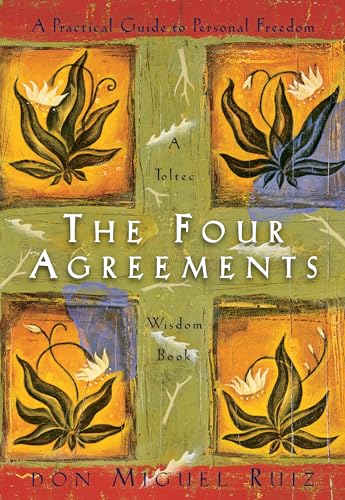
The Four Agreements: A Practical Guide to Personal Freedom
In The Four Agreements, don Miguel Ruiz reveals the source of self-limiting beliefs that rob us of joy and create needless suffering. Based on ancient Toltec wisdom, the Four Agreements offer a powerful code of conduct that can rapidly transform our lives to a new experience of freedom, true happiness, and love. The Four Agreements are: Be Impeccable With Your Word, Don't Take Anything Personally, Don't Make Assumptions, Always Do Your Best.
Question: What are the books that had a major influence on you? Or simply the ones you like the most. : Tao te Ching, score takes care of itself, between the world and me, the four agreements, the old man and the sea...I love reading! [source]
Karlie Kloss
I just think it’s got a lot of great principles and ideas. [source]
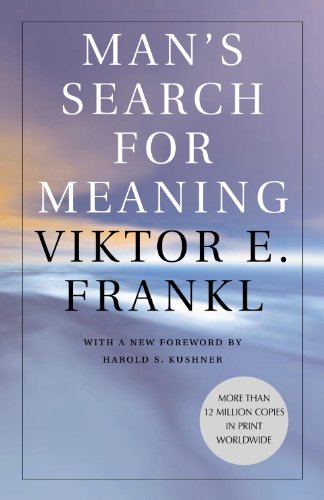
Man's Search for Meaning has riveted generations of readers with its descriptions of life in Nazi death camps and its lessons for spiritual survival. Between 1942 and 1945 psychiatrist Viktor Frankl labored in four different camps, including Auschwitz, while his parents, brother, and pregnant wife perished. Based on his own experience and the stories of his many patients, Frankl argues that we cannot avoid suffering but we can choose how to cope with it, find meaning in it, and move forward with renewed purpose. Frankl's theory—known as logotherapy, from the Greek word logos ("meaning")—holds that our primary drive in life is not pleasure, as Freud maintained, but the discovery and pursuit of what we personally find meaningful. In the decades since its first publication in 1959, Man's Search for Meaning has become a classic, with more than twelve million copies in print around the world. A 1991 Library of Congress survey that asked readers to name a "book that made a difference in your life" found Man's Search for Meaning among the ten most influential books in America. At once a memoir, a meditation, a treatise, and a history, it continues to inspire us all to find significance in the very act of living. (back cover)
…
Recommended by Tony Robbins, Dustin Moskovitz, Ev Williams, and 60 others.
Another book that I’ve read dozens of times. It taught me that if you change the meaning, you change everything. Meaning equals emotion, and emotion equals life. [source]
Dustin Moskovitz
Co-founder/Facebook and Asana
Dustin Moskovitz recommended this book on Twitter. [source]
I read it while spending ten days in the ICU of Bellevue hospital trying to reattach my finger from a ring avulsion accident in my kitchen. It talks about the meaning of life, and I believe you come out a better person from reading it. [source]
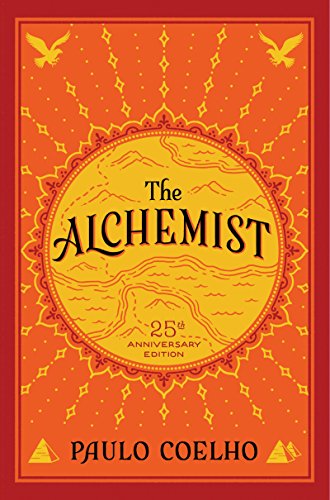
Paulo Coelho's enchanting novel has inspired a devoted following around the world. This story, dazzling in its powerful simplicity and inspiring wisdom, is about an Andalusian shepherd boy named Santiago who travels from his homeland in Spain to the Egyptian desert in search of a treasure buried in the Pyramids. What starts out as a journey to find worldly goods turns into a discovery of the treasure found within. Lush, evocative, and deeply humane, the story of Santiago is an eternal testament to the transforming power of our dreams and the importance of listening to our hearts.
There's a great quote in this book: When you're on the right path the universe conspires to help you! [source]
Daniel Ek
It was fascinating to talk to the author about how this book came to be such a hit—he never backed down, and he allowed people to read it for free in order to then boost sales—much like how Spotify’s freemium model was perceived in the early days. [source]
Eric Ripert
Speaks of everyone having an ultimate goal in life, but most of us are too afraid to pursue it. The encouragement to fulfill your dreams is very inspirational! [source]
Cover unavailable
5
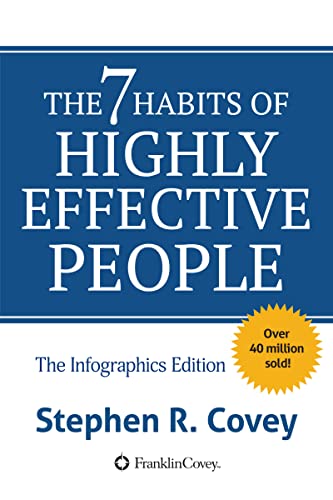
The 7 Habits of Highly Effective People: Powerful Lessons in Personal Change
When Stephen Covey first released The Seven Habits of Highly Effective People, the book became an instant rage because people suddenly got up and took notice that their lives were headed off in the wrong direction; and more than that, they realized that there were so many simple things they could do in order to navigate their life correctly. This book was wonderful education for people, education in how to live life effectively and get closer to the ideal of being a ‘success’ in life.
But not everyone understands Stephen Covey’s model fully well, or maybe there are some people who haven’t read it yet. This is definitely true because we still see so much failure all around us. Now, I am not saying that by using Covey’s model, or anyone else’s model for that matter, you can become a sure-shot success, but at least we should have seen many more successes around us already judging by the number of copies the book has sold! So, where is the shortcoming?
There are two main problems here, and we are talking only about the people who have read the book already. The first problem is that most people are too lazy to implement the ideals of Stephen Covey in their lives. They consider his masterpiece of a book as a mere coffee-table book or a book that you use for light reading when you are traveling and then forget all about it. They do not realize that this book contains life-changing information. Or, they take the information and do not make the effort to actually utilize it so that it becomes knowledge for them.
The second problem is that a lot of people have a myopic view of Covey’s ideals. These are people who are impressed by the book already. If you ask them what the seven habits are, they can rattle them off end to end, but then they miss the larger picture. They do not understand that Covey was trying to tell more than he wrote in words. There are hidden implications in this book, yes, and a lot of people have just failed to see through them.
That is what we are trying to do. We are trying to show you how Covey’s book, or rather, his model, was a complete model in itself. There was nothing amiss about it. If you implement it, there should be no aspect of your life that should go untouched. The only thing is that you have to understand these ideals and try to implement them in your life.
But, before we barge into that area, it is extremely important to understand what these ideals are. What was the model that was propounded by Stephen Covey in his mega-famous book? We shall begin by trying to understand his model first, and then interpret it in such a way that it pertains to every aspect of our life
Dave Ramsey recommended this book on his website. [source]
Dustin Moskovitz
Co-founder/Facebook and Asana
I was surprised at how familiar the topics felt. [source]
Joe Martin
@benmorris @audible_com @Gladwell I enjoy the quiet on the way home, but on the way to work I am listening to the 7 habits book by Stephen Coveru, a fave of mine [source]
Cover unavailable
6
Enlightenment Now: The Case for Reason, Science, Humanism, and Progress
If you think the world is coming to an end, think again: people are living longer, healthier, freer, and happier lives, and while our problems are formidable, the solutions lie in the Enlightenment ideal of using reason and science.
Is the world really falling apart? Is the ideal of progress obsolete? In this elegant assessment of the human condition in the third millennium, cognitive scientist and public intellectual Steven Pinker urges us to step back from the gory headlines and prophecies of doom, which play to our psychological biases. Instead, follow the data: In seventy-five jaw-dropping graphs, Pinker shows that life, health, prosperity, safety, peace, knowledge, and happiness are on the rise, not just in the West, but worldwide. This progress is not the result of some cosmic force. It is a gift of the Enlightenment: the conviction that reason and science can enhance human flourishing.
Far from being a naïve hope, the Enlightenment, we now know, has worked. But more than ever, it needs a vigorous defense. The Enlightenment project swims against currents of human nature–tribalism, authoritarianism, demonization, magical thinking–which demagogues are all too willing to exploit. Many commentators, committed to political, religious, or romantic ideologies, fight a rearguard action against it. The result is a corrosive fatalism and a willingness to wreck the precious institutions of liberal democracy and global cooperation.
With intellectual depth and literary flair, Enlightenment Now makes the case for reason, science, and humanism: the ideals we need to confront our problems and continue our progress.
Pinker is at his best when he analyzes historic trends and uses data to put the past into context. I was already familiar with a lot of the information he shares—especially about health and energy—but he understands each subject so deeply that he’s able to articulate his case in a way that feels fresh and new. I love how he’s willing to dive deep into primary data sources and pull out unexpected signs of progress. I tend to point to things like dramatic reductions in poverty and childhood deaths, because I think they’re such a good measure of how we’re doing as a society. Pinker covers those areas, but he also looks at more obscure topics. Here are five of my favorite facts from the book that show how the world is improving: 1. You’re 37 times less likely to be killed by a bolt of lightning than you were at the turn of the century—and that’s not because there are fewer thunderstorms today. It’s because we have better weather prediction capabilities, improved safety education, and more people living in cities. 2. Time spent doing laundry fell from 11.5 hours a week in 1920 to an hour and a half in 2014. This might sound trivial in the grand scheme of progress. But the rise of the washing machine has improved quality of life by freeing up time for people—mostly women—to enjoy other pursuits. That time represents nearly half a day every week that could be used for everything from binge-watching Ozark or reading a book to starting a new business. 3. You’re way less likely to die on the job. Every year, 5,000 people die from occupational accidents in the U.S. But in 1929—when our population was less than two-fifths the size it is today—20,000 people died on the job. People back then viewed deadly workplace accidents as part of the cost of doing business. Today, we know better, and we’ve engineered ways to build things without putting nearly as many lives at risk. 4. The global average IQ score is rising by about 3 IQ points every decade. Kids’ brains are developing more fully thanks to improved nutrition and a cleaner environment. Pinker also credits more analytical thinking in and out of the classroom. Think about how many symbols you interpret every time you check your phone’s home screen or look at a subway map. Our world today encourages abstract thought from a young age, and it’s making us smarter. 5. War is illegal. This idea seems obvious. But before the creation of the United Nations in 1945, no institution had the power to stop countries from going to war with each other. Although there have been some exceptions, the threat of international sanctions and intervention has proven to be an effective deterrent to wars between nations. [source]
100,000 years ago, at least six human species inhabited the earth. Today there is just one. Us. Homo sapiens.
How did our species succeed in the battle for dominance? Why did our foraging ancestors come together to create cities and kingdoms? How did we come to believe in gods, nations and human rights; to trust money, books and laws; and to be enslaved by bureaucracy, timetables and consumerism? And what will our world be like in the millennia to come?
In Sapiens, Dr Yuval Noah Harari spans the whole of human history, from the very first humans to walk the earth to the radical – and sometimes devastating – breakthroughs of the Cognitive, Agricultural and Scientific Revolutions. Drawing on insights from biology, anthropology, paleontology and economics, he explores how the currents of history have shaped our human societies, the animals and plants around us, and even our personalities. Have we become happier as history has unfolded? Can we ever free our behaviour from the heritage of our ancestors? And what, if anything, can we do to influence the course of the centuries to come?
Bold, wide-ranging and provocative, Sapiens challenges everything we thought we knew about being human: our thoughts, our actions, our power ... and our future.
Both Melinda and I read this one, and it has sparked lots of great conversations at our dinner table. Harari takes on a daunting challenge: to tell the entire history of the human race in just 400 pages. He also writes about our species today and how artificial intelligence, genetic engineering, and other technologies will change us in the future. Although I found things to disagree with—especially Harari’s claim that humans were better off before we started farming—I would recommend Sapiens to anyone who’s interested in the history and future of our species. [source]
Major New York Times bestseller Winner of the National Academy of Sciences Best Book Award in 2012 Selected by the New York Times Book Review as one of the best books of 2011 A Globe and Mail Best Books of the Year 2011 Title One of The Economist's 2011 Books of the Year One of The Wall Street Journal's Best Nonfiction Books of the Year 2011 2013 Presidential Medal of Freedom Recipient
In the international bestseller, Thinking, Fast and Slow, Daniel Kahneman, the renowned psychologist and winner of the Nobel Prize in Economics, takes us on a groundbreaking tour of the mind and explains the two systems that drive the way we think. System 1 is fast, intuitive, and emotional; System 2 is slower, more deliberative, and more logical. The impact of overconfidence on corporate strategies, the difficulties of predicting what will make us happy in the future, the profound effect of cognitive biases on everything from playing the stock market to planning our next vacation—each of these can be understood only by knowing how the two systems shape our judgments and decisions. Engaging the reader in a lively conversation about how we think, Kahneman reveals where we can and cannot trust our intuitions and how we can tap into the benefits of slow thinking. He offers practical and enlightening insights into how choices are made in both our business and our personal lives—and how we can use different techniques to guard against the mental glitches that often get us into trouble. Winner of the National Academy of Sciences Best Book Award and the Los Angeles Times Book Prize and selected by The New York Times Book Review as one of the ten best books of 2011, Thinking, Fast and Slow is destined to be a classic.
A few months ago, Mr. Obama read “Thinking, Fast and Slow,” by Daniel Kahneman, about how people make decisions — quick, instinctive thinking versus slower, contemplative deliberation. For Mr. Obama, a deliberator in an instinctive business, this may be as instructive as any political science text. [source]
Captivating dive into human decision making, marred by inclusion of several/many? psychology studies that fail to replicate. Will stand as a cautionary tale? [source]
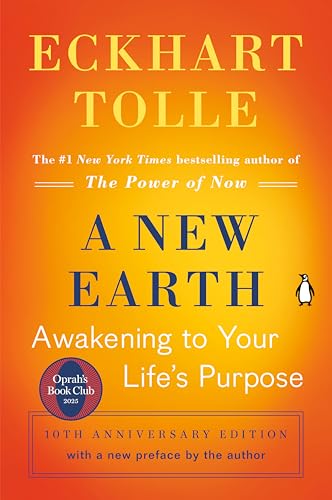
Building on the astonishing success of The Power of Now, Eckhart Tolle presents readers with an honest look at the current state of humanity: He implores us to see and accept that this state, which is based on an erroneous identification with the egoic mind, is one of dangerous insanity.
Tolle tells us there is good news, however. There is an alternative to this potentially dire situation. Humanity now, perhaps more than in any previous time, has an opportunity to create a new, saner, more loving world. This will involve a radical inner leap from the current egoic consciousness to an entirely new one.
In illuminating the nature of this shift in consciousness, Tolle describes in detail how our current ego-based state of consciousness operates. Then gently, and in very practical terms, he leads us into this new consciousness. We will come to experience who we truly are—which is something infinitely greater than anything we currently think we are—and learn to live and breathe freely.
…
Recommended by Abid Zaidi, Aubrey Marcus, Catherine Molloy, and 1 others.
Abid Zaidi
Day 1 : #30Days of posting cover of books I love (1 book a day for 30 days). No expectations, no reviews, just the covers #MyFavouriteBooks Not invited by @rekha_bhardwaj ji or @virtual_opinion but still posting: 😊 https://t.co/rDKfaLADsm [source]
Catherine Molloy
I am an experiential learner I need to see it, feel it, etc. so the book must move me to do something, feel something. With A New Earth I even read snippets to my students as I have experienced a lot of these concepts and write and train in similar concepts. [source]
Patricia Reed
"The Power of Now", by Eckhart Tolle, as well as "A New Earth". Understanding the ego, and being able to separate it from self, is a powerful thing. It has changed my outlook on people and situations, and made me able to see my inner critic for what it is, and choose how I want to engage or respond to situations. [source]
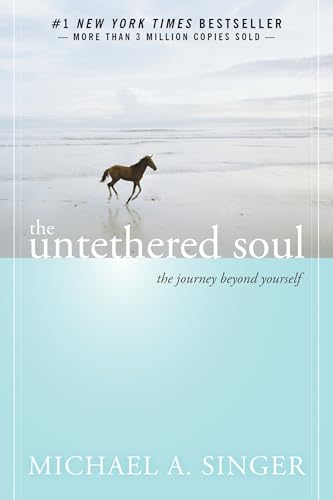
Who are you? When you start to explore this question, you find out how elusive it really is. Are you a physical body? A collection of experiences and memories? A partner in a relationship? Each time you consider these aspects of yourself, you realize that there is much more to you than any of these can define.
InThe Untethered Soul—now a New York Times bestseller—spiritual teacher Michael Singer explores the question of who we are and arrives at the conclusion that our identity is to be found in our consciousness, the fact of our ability to observe ourselves, and the world around us. By tapping into traditions of meditation and mindfulness, Singer shows how the development of consciousness can enable us all to dwell in the present moment and let go of painful thoughts and memories that keep us from achieving happiness and self-realization.
This book, copublished with the Institute of Noetic Sciences (IONS), offers a frank and friendly discussion of consciousness and how we can develop it. In part one, he examines the notion of self and the inner dialogue we all live with. Part two examines the experience of energy as it flows through us and works to show readers how to open their hearts to the energy of experience that permeates their lives. Ways to overcome tendencies to close down to the rest of the world are the subject of part three. Enlightenment, the embrace of universal consciousness, is the subject of part four. And finally, in part five, Singer returns to daily life and the pursuit of unconditional happiness. Throughout, the book maintains a light and engaging tone, free from heavy dogma and prescriptive religious references. The easy exercises that figure in each chapter help readers experience the ideas that Singer presents.
Visit www.untetheredsoul.com for more information.
In the book The Untethered Soul, Michael A. Singer takes you step-by-step through the process of Gyana, the yoga of the Intellect, to the Source. Moreover, he does it with elegant simplicity. Read this book carefully, and you will get more than a glimpse of eternity. [source]
Michael moved to an empty patch of forest, set up his trailer, and started to meditate in the early 70s. He surrendered to whatever happened in his life. Well...what ended up happening is that he created a multi-billion dollar company. His book is about the spiritual beauty of surrender. And how that can go hand in hand with financial success. I was so astonished by the book that I contacted him and flew down to Florida and stayed several days in his “compound” and interviewed him about his success. I re-read the book at least once every few months. [source]
East is East and West is West, but Michael A. Singer bridges these two great traditions in a radiant treatise on how to succeed in life from our spiritual quest to our everyday tribulations. Freud said that life was composed of love and work. With great eloquence, wit, and compelling logic, Singer’s brilliant book completes this thought by showing them to be two poles of the same selfless devotion. [source]
Cover unavailable
11
Candide, ou l'Optimisme
Voltaire, Tobias Smollett
4.5
Candide, ou l'Optimisme is a French satire first published in 1759 by Voltaire, a philosopher of the Age of Enlightenment. The novella has been widely translated, with English versions titled Candide: or, All for the Best (1759); Candide: or, The Optimist (1762); and Candide: or, Optimism (1947). It begins with a young man, Candide, who is living a sheltered life in an Edenic paradise and being indoctrinated with Leibnizian optimism (or simply Optimism) by his mentor, Pangloss. The work describes the abrupt cessation of this lifestyle, followed by Candide's slow, painful disillusionment as he witnesses and experiences great hardships in the world. Voltaire concludes with Candide, if not rejecting optimism outright, advocating a deeply practical precept, "we must cultivate our garden," in lieu of the Leibnizian mantra of Pangloss, "all is for the best" in the "best of all possible worlds." Candide is characterised by its sarcastic tone, as well as by its erratic, fantastical and fast-moving plot. A picaresque novel with a story similar to that of a more serious bildungsroman, it parodies many adventure and romance cliches, the struggles of which are caricatured in a tone that is mordantly matter-of-fact. Still, the events discussed are often based on historical happenings, such as the Seven Years' War and the 1755 Lisbon earthquake. As philosophers of Voltaire's day contended with the problem of evil, so too does Candide in this short novel, albeit more directly and humorously. Voltaire ridicules religion, theologians, governments, armies, philosophies, and philosophers through allegory; most conspicuously, he assaults Leibniz and his optimism. As expected by Voltaire, Candide has enjoyed both great success and great scandal. Immediately after its secretive publication, the book was widely banned because it contained religious blasphemy, political sedition and intellectual hostility hidden under a thin veil of naivete. However, with its sharp wit and insightful portrayal of the human condition, the novel has since inspired many later authors and artists to mimic and adapt it. Today, Candide is recognized as Voltaire's magnum opus and is often listed as part of the Western canon; it is arguably taught more than any other work of French literature. In his book of intellectual history Martin Seymour-Smith listed Candide as one of The 100 Most Influential Books Ever Written. Candide contains thirty episodic chapters, which may be grouped into two main schemes: one consists of two divisions, separated by the protagonist's hiatus in El Dorado; the other consists of three parts, each defined by its geographical setting. By the former scheme, the first half of Candide constitutes the rising action and the last part the resolution. This view is supported by the strong theme of travel and quest, reminiscent of adventure and picaresque novels, which tend to employ such a dramatic structure. By the latter scheme, the thirty chapters may be grouped into three parts each comprising ten chapters and defined by locale: I-X are set in Europe, XI-XX are set in the Americas, and XXI-XXX are set in Europe and the Ottoman Empire. The plot summary that follows uses this second format and includes Voltaire's additions of 1761. Chapters I-X The tale of Candide begins in the castle of the Baron Thunder-ten-Tronckh in Westphalia, home to the Baron's daughter, Lady Cunegonde; his bastard nephew, Candide; a tutor, Pangloss; a chambermaid, Paquette; and the rest of the Baron's family. The protagonist, Candide, is romantically attracted to Cunegonde. He is a child of "the most unaffected simplicity," whose face is "the index of his mind." Dr. Pangloss, professor of "metaphysico-theologo-cosmolonigologie" (English translation: "metaphysico-theologo-cosmonigology") and self-proclaimed optimist, teaches his pupils that they live in the "best of all possible worlds" and that "all is for the best."
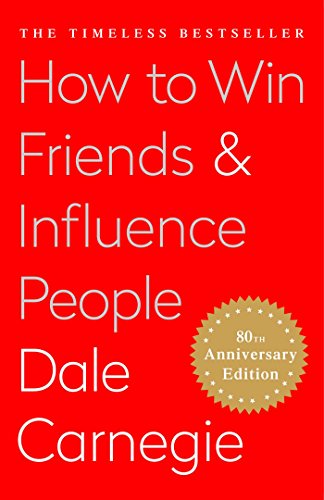
You can go after the job you want—and get it! You can take the job you have—and improve it! You can take any situation—and make it work for you!
Dale Carnegie’s rock-solid, time-tested advice has carried countless people up the ladder of success in their business and personal lives. One of the most groundbreaking and timeless bestsellers of all time, How to Win Friends & Influence People will teach you:
-Six ways to make people like you -Twelve ways to win people to your way of thinking -Nine ways to change people without arousing resentment
And much more! Achieve your maximum potential—a must-read for the twenty-first century with more than 15 million copies sold!
…
Recommended by Dave Ramsey, Daymond John, Dustin Moskovitz, and 58 others.
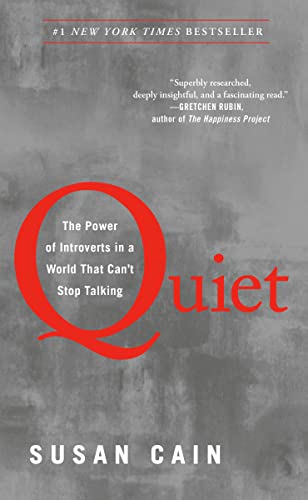
At least one-third of the people we know are introverts. They are the ones who prefer listening to speaking; who innovate and create but dislike self-promotion; who favor working on their own over working in teams. It is to introverts—Rosa Parks, Chopin, Dr. Seuss, Steve Wozniak—that we owe many of the great contributions to society.
In Quiet, Susan Cain argues that we dramatically undervalue introverts and shows how much we lose in doing so. She charts the rise of the Extrovert Ideal throughout the twentieth century and explores how deeply it has come to permeate our culture. She also introduces us to successful introverts—from a witty, high-octane public speaker who recharges in solitude after his talks, to a record-breaking salesman who quietly taps into the power of questions. Passionately argued, superbly researched, and filled with indelible stories of real people, Quiet has the power to permanently change how we see introverts and, equally important, how they see themselves.
Now with Extra Libris material, including a reader’s guide and bonus content.
Leaders needn’t be the loudest. Leadership is not about theater. It’s not about dominance. It is about putting the lives of others before any other priority. In Quiet, Cain affirms to a good many of us who are introverts by nature that we needn’t try to be extroverts if we want to lead. Simply being ourselves is more important — and more effective. [source]
Danielle Morrill
Co-founder/Mattermark
Anyway, maybe you’re like me and figuring this out for yourself. It’s a good book for introverts and for those who love them [source]
Probably half the world is introverts. Maybe more. It’s not an easy life to live. I sometimes have that feeling in a room full of people, “uh-oh. I just shut down. I can’t talk anymore and there’s a lock on my mouth and this crowd threw away the key.” Do you ever get that feeling? Please? I hope you do. Let’s try to lock eyes at the party. “Quiet” shows the reader how to unlock the secret powers that probably half the world needs to unlock. [source]
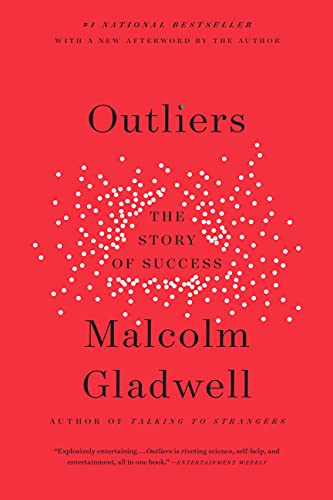
In this stunning new book, Malcolm Gladwell takes us on an intellectual journey through the world of "outliers"--the best and the brightest, the most famous and the most successful. He asks the question: what makes high-achievers different?
His answer is that we pay too much attention to what successful people are like, and too little attention to where they are from: that is, their culture, their family, their generation, and the idiosyncratic experiences of their upbringing. Along the way he explains the secrets of software billionaires, what it takes to be a great soccer player, why Asians are good at math, and what made the Beatles the greatest rock band.
Gladwell is not the first person to come up with the 10,000 hour rule. Nor is he the first person to document what it takes to become the best in the world at something. But his stories are so great as he explains these deep concepts. How did the Beatles become the best? Why are professional hockey players born in January, February and March? And so on. [source]
Alex Circei
Question: What five books would you recommend to young people interested in your career path & why? Answer: Screw It, Let's Do It: Lessons In Life by Richard Branson Outliers: The Story of Success by Malcolm Gladwell Start With Why: How Great Leaders Inspire Everyone To Take Action by Simon Sinek The Hard Thing About Hard Things: Building a Business When There Are No Easy Answers by Ben Horowitz Rich Dad Poor Dad: What the Rich Teach Their Kids About Money That the Poor and Middle Class Do Not! by Robert T. Kiyosaki [source]
Cover unavailable
15
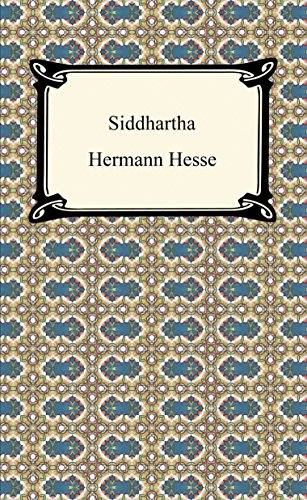
Siddhartha
Hermann Hesse
4.4
Herman Hesse's classic novel has delighted, inspired, and influenced generations of readers, writers, and thinkers. In this story of a wealthy Indian Brahmin who casts off a life of privilege to seek spiritual fulfillment. Hesse synthesizes disparate philosophies--Eastern religions, Jungian archetypes, Western individualism--into a unique vision of life as expressed through one man's search for meaning.
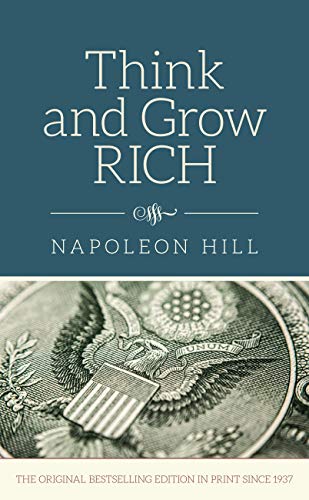
One of the most popular personal development and self-improvement books of all time, Think and Grow Rich has sold over 100 million copies worldwide since its first publication during the Great Depression. In this hardcover edition, Napoleon Hill presents a "Philosophy of Achievement" in 13 principles drawn from the success stories of such greats as Andrew Carnegie, Henry Ford, Thomas Edison, and other millionaires of his time.
Think and Grow Rich reveals the secrets that can bring you fortune. By suppressing negative thoughts and keeping your focus on the long term, you can find true and lasting success. Napoleon Hill details his philosophy through the following 13 principles:
Desire Faith Autosuggestion Specialized Knowledge Imagination Organized Planning Decision Persistence Power of the Master Mind The Mystery of Sex Transmutation The Subconscious Mind The Brain The Sixth Sense Follow the steps outlined here, and you may just find the path to your own personal fortune.
For anyone interested in my career path, I’d recommend books in various genres. On a real practical level, I’d certainly recommend reading any and all plant/mushroom/tree/ecology/nature books you can acquire. It’s even more helpful to read the books that pertain specifically to your ecosystem and bioregion. Additionally, I’d also recommend reading a plethora of business and marketing books — both old and new alike. Think And Grow Rich by Napoleon Hill, Crush It! by Gary Vaynerchuk, Influence: The Psychology of Persuasion by Robert Cialdini, and anything by Seth Godin would be my top recommendations. And of course, every book I mentioned in the previous answers are strongly recommended as well. [source]
Alan Pierce
This book dramatically changed the way I structured my day to day life. Based on over two decades of personal interviews and studies of some of history's’ greatest minds, the author distills the lessons he learned and details how you can train and condition your mind through daily habit to master your actions. The way it promotes a disciplined and holistic approach of continual self-improvement, goal setting and strategic decision making really resonated with me. [source]
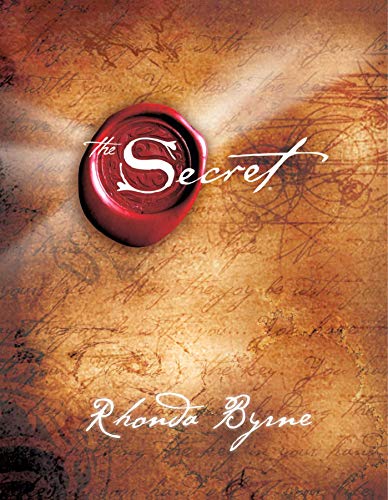
The Secret’s 10th Anniversary Edition includes a new foreword by Rhonda Byrne, and 10 of the most life-changing insights she’s had over the last 10 years of practicing and living The Secret every day. The 10 insights alone will accelerate your understanding and mastery of the law of attraction.
Recommended by Ntwana Kasi. and Woman In Purpose.
Ntwana Kasi.
@Sibongubuhle_N Don't you have pdf of it i love this book [source]
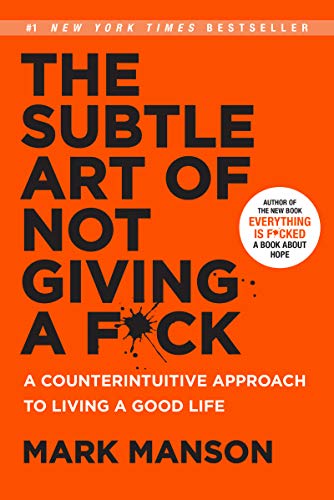
In this generation-defining self-help guide, a superstar blogger cuts through the crap to show us how to stop trying to be "positive" all the time so that we can truly become better, happier people.
For decades, we’ve been told that positive thinking is the key to a happy, rich life. "Fk positivity," Mark Manson says. "Let’s be honest, shit is fked and we have to live with it." In his wildly popular Internet blog, Manson doesn’t sugarcoat or equivocate. He tells it like it is—a dose of raw, refreshing, honest truth that is sorely lacking today. The Subtle Art of Not Giving a Fk is his antidote to the coddling, let’s-all-feel-good mindset that has infected American society and spoiled a generation, rewarding them with gold medals just for showing up.
Manson makes the argument, backed both by academic research and well-timed poop jokes, that improving our lives hinges not on our ability to turn lemons into lemonade, but on learning to stomach lemons better. Human beings are flawed and limited—"not everybody can be extraordinary, there are winners and losers in society, and some of it is not fair or your fault." Manson advises us to get to know our limitations and accept them. Once we embrace our fears, faults, and uncertainties, once we stop running and avoiding and start confronting painful truths, we can begin to find the courage, perseverance, honesty, responsibility, curiosity, and forgiveness we seek.
There are only so many things we can give a fk about so we need to figure out which ones really matter, Manson makes clear. While money is nice, caring about what you do with your life is better, because true wealth is about experience. A much-needed grab-you-by-the-shoulders-and-look-you-in-the-eye moment of real-talk, filled with entertaining stories and profane, ruthless humor, The Subtle Art of Not Giving a F**k is a refreshing slap for a generation to help them lead contented, grounded lives.
…
Recommended by Ryan Holiday, Alex Blackwell, Aunty Ada, and 21 others.
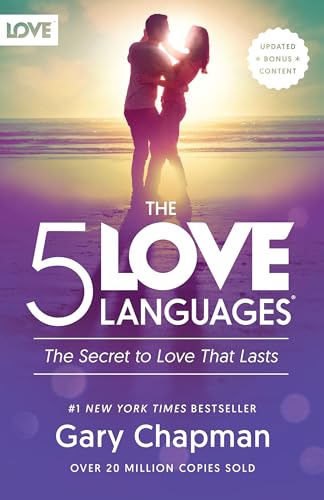
Couples who understand each other's love language hold a priceless advantage in the quest for love that lasts a lifetime -- they know how to effectively and consistently make each other feel truly and deeply loved. That gift never fades away.
Recommended by Dustin Moskovitz, James Altucher, Kaci Lambe Kai, and 1 others.
Dustin Moskovitz
Co-founder/Facebook and Asana
Dustin Moskovitz recommended this book on Twitter. [source]
Kaci Lambe Kai
The Five Love Languages by Gary Chapman impacted how I interpret and receive love. Not just romantically, but in my friendships and business relationships. I had several personal and professional relationships that improved when I could appreciate that their "love language" was different than mine. I could at least see their efforts as an attempt at showing me love and kindness, even if it wasn't how I best receive or give love. This is pivotal. And if you can separate out the idea of it being for romantic partners only, I'd say this is critical reading for leaders. Not everyone is motivated and feels appreciation by a raise. Sometimes, public recognition of kind words or an act of kindness will feel better than anything else you can do. [source]
Pedro Cortés
The books that had the biggest impact are the ones that are controversial and challenge people's beliefs around work, relationships, life, and money most of them were things I already thought about (that's how I found them or decided to read them) but just by putting it in an actionable and structured way it made me think 100x more clearly about my goals and beliefs. Such examples could be the 4hww, Rich Dad Poor Dad, F.U. Money, The Five Love Languages, So good they can't ignore, Predictably Irrational and Ego is the Enemy are the ones who stand out the most. [source]
Cover unavailable
20
Tao Te Ching: By Lao Tzu - Illustrated
Lao Tse
4.4
A lucid translation of the well-known Taoist classic by a leading scholar-now in a Shambhala Pocket Library edition. Written more than two thousand years ago, the Tao Teh Ching, or -The Classic of the Way and Its Virtue, - is one of the true classics of the world of spiritual literature. Traditionally attributed to the legendary -Old Master, - Lao Tzu, the Tao Teh Ching teaches that the qualities of the enlightened sage or ideal ruler are identical with those of the perfected individual. Today, Lao Tzu's words are as useful in mastering the arts of leadership in business and politics as they are in developing a sense of balance and harmony in everyday life. To follow the Tao or Way of all things and realize their true nature is to embody humility, spontaneity, and generosity. John C. H. Wu has done a remarkable job of rendering this subtle text into English while retaining the freshness and depth of the original. A jurist and scholar, Dr. Wu was a recognized authority on Taoism and the translator of several Taoist and Zen texts and of Chinese poetry. This book is part of the Shambhala Pocket Library series. The Shambhala Pocket Library is a collection of short, portable teachings from notable figures across religious traditions and classic texts. The covers in this series are rendered by Colorado artist Robert Spellman. The books in this collection distill the wisdom and heart of the work Shambhala Publications has published over 50 years into a compact format that is collectible, reader-friendly, and applicable to everyday life.
Q: What are the books that had a major influence on you? Or simply the ones you like the most. : Tao te Ching, score takes care of itself, between the world and me, the four agreements, the old man and the sea...I love reading! [source]
According to a Yibada interview with Chen Wei, who wrote Ma’s 2014 authorized biography, the Alibaba founder and executive chairman always carries the Tao Te Ching, the foundational text of Taoist philosophy, religion and ethics composed by Lao Tzu in the sixth century B.C. [source]
For more than two thousand years, The Art of War has stood as a cornerstone of Chinese culture-a lucid epigrammatic text that reveals as much about human psychology, politics, and economics as it does about battlefield strategy. The influence of Sun-tzu's text has grown tremendously in the West in recent years, with military leaders, politicians, and corporate executives alike finding valuable insight in these ancient words. In his crisp, accessible new translation, scholar John Minford brings this seminal work to life for modern readers.
Minford opens with a lively, learned introduction in which he explores the life and times of Sun-tzu, looks at The Art of War in the context of the turbulent Warring States period, and discusses how best to read and understand the work today. There follows Minford's translation of the core text itself in two different formats-first, the unadorned thirteen chapters of the original work and then the same text reprinted with extensive running commentary by classical Chinese scholars as well as Minford himself. The result is an opportunity for Western readers to experience Sun-tzu's work in all its intensity as it applies to many aspects of our lives.
Which books should be read by every single intelligent person on planet? … The Art of War (Sun Tsu) to learn that the act of killing fellow humans can be raised to an art. If you read all of the above works you will glean profound insight into most of what has driven the history of the western world. [source]
Cover unavailable
22
Zen and the Art of Motorcycle Maintenance: An Inquiry Into Values
This lyrical, evocative, thought-provoking journal of a man's quest for truth - and for himself - has touched and changed an entire generation, and is ready to reach out to a new one. At its heart, the story is all too simple: a man and his son take a motorcycle trip across America. But this is not a simple trip at all, for around every corner, through mountain and desert, wind and rain, and searing heat and biting cold, their pilgrimage leads them to new vistas of self-discovery and renewal.
Zen and the Art of Motorcycle Maintenance is an elemental work that has helped to shape and define the past 25-years of American culture. This special audio edition presents this adventure in an exciting new way - for the millions who have already taken this journey and want to travel these roads again, and for the many more who will discover for the first time the wonders and challenges of a story that will change the way they think and feel about their lives. Unique to audio, this edition features a new introduction by the author.
…
Recommended by Brad Feld, Drew Houston, Ev Williams, and 7 others.
Brad Feld
Co-Founder/Foundry Group
I think every entrepreneur or aspiring entrepreneur should read the book Zen and the Art of Motorcycle Maintenance. It was written in the 1970s by a guy named Robert Pirsig. It was his first book, it's kind of a hippie philosophy treatised journey. The word that sort of came out of it was Chautauqua, he's like having a conversation with his son as they do a motorcycle trip across the country, and it's just this incredible treatise on philosophy, product, quality, accomplishing what your goal is, against the backdrop of the narrator, the author, going crazy and having a psychotic break. And so it's this very powerful mix of accessible philosophy, combined with this pretty captivating journey in a book that, again, anybody who builds anything, there's so much in it that's so worth reading and just soaking in. But it's not what you'd expect, it's not a "here's how you do it", you have to read it slowly and think about it. So, it's one of my favorites. [source]
Drew Houston
CEO/Dropbox
There are engineers who dismiss all these things that can’t be fit into an algorithm, or that don’t have some kind of mathematical rigor underpinning them, this book is about that question. [source]
Honorable mentions: Jonathan Livingston Seagull, Zen and the Art of Motorcycle Maintenance, and The Joy of Sex, all given to me by my mother. I believe they helped inculcate some of the 1960s-70s ethos of individual freedom into my thinking. [source]
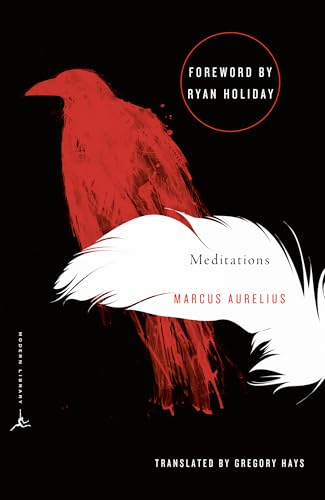
One measure, perhaps, of a book's worth, is its intergenerational pliancy: do new readers acquire it and interpret it afresh down through the ages? The Meditations of Marcus Aurelius, translated and introduced by Gregory Hays, by that standard, is very worthwhile, indeed. Hays suggests that its most recent incarnation--as a self-help book--is not only valid, but may be close to the author's intent. The book, which Hays calls, fondly, a "haphazard set of notes," is indicative of the role of philosophy among the ancients in that it is "expected to provide a 'design for living.'" And it does, both aphoristically ("Think of yourself as dead. You have lived your life. Now take what's left and live it properly.") and rhetorically ("What is it in ourselves that we should prize?"). Whether these, and other entries ("Enough of this wretched, whining monkey life.") sound life-changing or like entries in a teenager's diary is up to the individual reader, as it should be. Hays's introduction, which sketches the life of Marcus Aurelius (emperor of Rome A.D. 161-180) as well as the basic tenets of stoicism, is accessible and jaunty. --H. O'Billovich
…
Recommended by Arianna Huffington, Naval Ravikant, Chip Conley, and 12 others.
Arianna Huffington
Founder/The Huffington Post
I find this book so inspirational and instructive, it lives on my nightstand. [source]
Chip Conley
I have given this book away to a number of people. [source]
Marvin Liao
Partner/500 Startups
My list would be (besides the ones I mentioned in answer to the previous question) both business & Fiction/Sci-Fi and ones I personally found helpful to myself. The business books explain just exactly how business, work & investing are in reality & how to think properly & differentiate yourself. On the non-business side, a mix of History & classic fiction to understand people, philosophy to make sense of life and Science fiction to picture what the future could be like (not always utopian). [source]
Cover unavailable
24
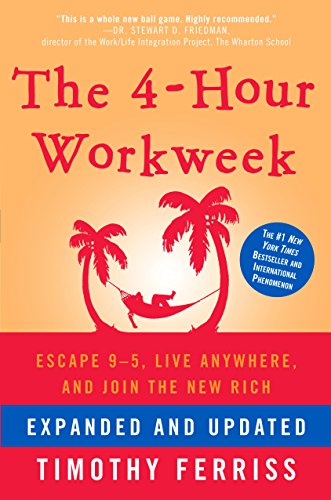
The 4-Hour Workweek: Escape 9-5, Live Anywhere, and Join the New Rich
More than 100 pages of new, cutting-edge content. Forget the old concept of retirement and the rest of the deferred-life plan there is no need to wait and every reason not to, especially in unpredictable economic times. Whether your dream is escaping the rat race, experiencing high-end world travel, earning a monthly five-figure income with zero management, or just living more and working less, The 4-Hour Workweek is the blueprint. This step-by-step guide to luxury lifestyle design teaches: How Tim went from $40,000 per year and 80 hours per week to $40,000 per month and 4 hours per week. How to outsource your life to overseas virtual assistants for $5 per hour and do whatever you want How blue-chip escape artists travel the world without quitting their jobs How to eliminate 50% of your work in 48 hours using the principles of a forgotten Italian economist How to trade a long-haul career for short work bursts and frequent mini-retirements The new expanded edition of Tim Ferriss The 4-Hour Workweek includes: More than 50 practical tips and case studies from readers (including families) who have doubled income, overcome common sticking points, and reinvented themselves using the original book as a starting point Real-world templates you can copy for eliminating e-mail, negotiating with bosses and clients, or getting a private chef for less than $8 a meal How Lifestyle Design principles can be suited to unpredictable economic times The latest tools and tricks, as well as high-tech shortcuts, for living like a diplomat or millionaire without being either"
Eric Weinstein recommended this book on Twitter. [source]
Tim Draper
Founder/Draper Fisher Jurvetson
With this kind of time management and focus on the important things in life, people should be able to get 15 times as much done in a normal work week. [source]
It's about time this book was written. It is a long-overdue manifesto for the mobile lifestyle, and Tim Ferriss is the ideal ambassador. This will be huge. [source]
A lot of professors give talks titled 'The Last Lecture'. Professors are asked to consider their demise and to ruminate on what matters most to them: What wisdom would we impart to the world if we knew it was our last chance? If we had to vanish tomorrow, what would we want as our legacy?
When Randy Pausch, a computer science professor at Carnegie Mellon, was asked to give such a lecture, he didn't have to imagine it as his last, since he had recently been diagnosed with terminal cancer. But the lecture he gave, 'Really Achieving Your Childhood Dreams', wasn't about dying. It was about the importance of overcoming obstacles, of enabling the dreams of others, of seizing every moment (because time is all you have and you may find one day that you have less than you think). It was a summation of everything Randy had come to believe. It was about living.
In this book, Randy Pausch has combined the humour, inspiration, and intelligence that made his lecture such a phenomenon and given it an indelible form. It is a book that will be shared for generations to come.
…
Recommended by Gabriel Coarna.
Gabriel Coarna
I read "The Last Lecture" because I had seen Randy Pausch give this talk: https://www.youtube.com/watch?v=ji5_MqicxSo [source]
Cover unavailable
26
Emotional Intelligence: Why It Can Matter More Than IQ
Everyone knows that high IQ is no guarantee of success, happiness, or virtue, but until Emotional Intelligence, we could only guess why. Daniel Goleman's brilliant report from the frontiers of psychology and neuroscience offers startling new insight into our "two minds"—the rational and the emotional—and how they together shape our destiny.
Through vivid examples, Goleman delineates the five crucial skills of emotional intelligence, and shows how they determine our success in relationships, work, and even our physical well-being. What emerges is an entirely new way to talk about being smart.
The best news is that "emotional literacy" is not fixed early in life. Every parent, every teacher, every business leader, and everyone interested in a more civil society, has a stake in this compelling vision of human possibility.
From the Trade Paperback edition.
…
Recommended by Drew Houston, Drew Huston, Magda Marcu, and 4 others.
Drew Houston
CEO/Dropbox
It’s nonfiction, but it spelled out something that I just didn’t know you could kind of break down in a logical way. And, suddenly, I had this understanding about the world that I didn’t have before. [source]
Magda Marcu
One of the most eye opening for me was “Emotional Intelligence: Why It Can Matter More Than IQ” as it offered a different perspective on leadership, and how empathy can make you a more successful leader. Every person has some degree of empathy and through this book you understand how to apply it more intently. [source]
Robert Kelsey
Yes, that’s the key revelation. But another key element, which was quite revelatory for me when I read it, is about the impact of fear on your brain. The impact of fear as a physiological response was well known when he wrote the book, but what was less well known was the idea of fear as a neurological response. He pointed to research showing what happens to the brain when fear is triggered, and it’s very damaging. There’s a part of the brain called the amygdala, which is part of the limbic system, and deals with emotions such as fear and distress. Its main purpose is to alert you to danger and it sends an emergency signal. All those physiological responses you have are basically the body’s response to that emergency signal. That’s what people experience when they experience fear, but it’s not just the fear of a dog barking at you or someone attacking you, it’s fear based on a fear conditioning. These are moments when something happens to you that induces fear or distress, and can include fear of failure or fear of being upset, and the same response occurs. [source]
In his book, Smith fervently extolled the simple yet enlightened notion that individuals are fully capable of setting and regulating prices for their own goods and services. He argued passionately in favor of free trade, yet stood up for the little guy. The Wealth of Nations provided the first--and still the most eloquent--integrated description of the workings of a market economy.
Obama, unsurprisingly, appears to be more drawn to stories sympathetic to the working classes than is McCain. Obama cites John Steinbeck’s “In Dubious Battle,” about a labor dispute; Robert Caro’s “Power Broker,” about Robert Moses; and Studs Terkel’s “Working.” But he also includes Adam Smith’s “Wealth of Nations” and “Theory of Moral Sentiments” on his list. [source]
Which books should be read by every single intelligent person on planet? … The Wealth of Nations (Smith) to learn that capitalism is an economy of greed, a force of nature unto itself. If you read all of the above works you will glean profound insight into most of what has driven the history of the western world. [source]
Cover unavailable
28
Be Here Now
Ram Dass
4.3
Describes one man's transformation upon his acceptance of the principles of Yoga & gives a modern restatement of the importance of the spiritual side of human nature. Illustrated. The book is divided into four sections: Journey: The Transformation: Dr Richard Alpert, PhD into Baba Ram Dass From Bindu to Ojas: The Core Book Cookbook for a Sacred Life: A Manual for Conscious Being Painted Cakes (Do Not Satisfy Hunger): Books
…
Recommended by Steve Jobs, Jack Kornfield, and Travis Brewer.
In late 1972, Jobs had just started at Reed College, an elite liberal arts school in Portland, Oregon. He started doing lots of LSD and reading lots of books about spirituality. [source]
Travis Brewer said this is one of his most-recommended books. [source]
Cover unavailable
29
Zen Mind, Beginner's Mind
Shunryu Suzuki, David Chadwick
4.3
"In the beginner's mind there are many possibilities, but in the expert's there are few." So begins this most beloved of all American Zen books. Seldom has such a small handful of words provided a teaching as rich as has this famous opening line of Shunryu Suzuki's classic. In a single stroke, the simple sentence cuts through the pervasive tendency students have of getting so close to Zen as to completely miss what it's all about. An instant teaching on the first page. And that's just the beginning.
In the thirty years since its original publication, Zen Mind, Beginner's Mind has become one of the great modern Zen classics, much beloved, much re-read, and much recommended as the best first book to read on Zen. Suzuki Roshi presents the basics—from the details of posture and breathing in zazen to the perception of nonduality—in a way that is not only remarkably clear, but that also resonates with the joy of insight from the first to the last page. It's a book to come back to time and time again as an inspiration to practice.
often used the methods found in this book to center himself during difficult moments in his career. He was such an avid practitioner that he considered going to Japan to continue his practice, but was advised against it. [source]
Isn’t a religious book, but more on self-realization, study on yourself, breathing exercises, relaxation and understanding human nature. Really cool book, very short read and you will really enjoy reading. [source]
I really think it’s one of the best books on the planet. Every time I read it, even now when I reckon I’ve read it more than 40 or 50 times, it still has the effect of pulling me out of everyday thinking, out of everyday life, and making me see the world in a very different way. [source]
Cover unavailable
30
The Seven Spiritual Laws of Success: A Practical Guide to the Fulfillment of Your Dreams
This is a book you will cherish for a lifetime, for within is pages are the secrets of making all your dreams come true. Based on natural laws that govern all of creation, this book shatters the myth that success is the result of hard work, exacting plans, or driving ambition.
Instead, Deepak Chopra offers a life-altering perspective on the attainment of success: When we understand our true nature and learn to live in harmony with natural law, a sense of well-being, good health, fulfilling relationships, and material abundance spring forth easily and effortlessly.
Deepak Chopra is the bestselling author of numerous books and audio programs that cover every aspect of mind, body, and spirit. His groundbreaking books blend physics and philosophy, the practical and the spiritual, with dynamic results.
The Seven Laws of Success distills the essence of Chopra's teachings into seven simple, yet powerful, principles that can easily be applied to create success in all areas of your life. Filled with timeless wisdom and practical steps you can apply right away, this is a book you will want to read and refer to again and again.
…
Recommended by Big Sean and Haris Siddique.
Big Sean
Will help you implement ways of applying successful traits to your life that will take you up. [source]
Haris Siddique
A very powerful book which provides amazing tools and techniques to create a more effective version of reality. [source]
Cover unavailable
31
The Enlightenment: The Rise of Modern Paganism
Peter Gay
4.3
The eighteenth-century Enlightenment marks the beginning of the modern age, when the scientific method and belief in reason and progress came to hold sway over the Western world. In the twentieth century, however, the Enlightenment has often been judged harshly for its apparently simplistic optimism. Here a master historian goes back to the sources to give us both a more sophisticated and a more intriguing view of the philosophes, their world and their ideas.
…
Cover unavailable
32
Way of the Peaceful Warrior: A Book That Changes Lives
Dan Millman
4.3
Way of the Peaceful Warrior is based on the story of Dan Millman, a world champion athlete, who journeys into realms of romance and magic, light and darkness, body, mind, and spirit. Guided by a powerful old warrior named Socrates and tempted by an elusive, playful woman named Joy, Dan is led toward a final confrontation that will deliver or destroy him. Readers join Dan as he learns to live as a peaceful warrior. This international bestseller conveys piercing truths and humorous wisdom, speaking directly to the universal quest for happiness.
…
Recommended by Brian MacKenzie and Greg Norman.
Brian MacKenzie
It takes you from a basic 'here’s what’s going on' to 'here’s ultimate potential.' [source]
Greg Norman
Greg Norman said this is one of his most-recommended books. [source]
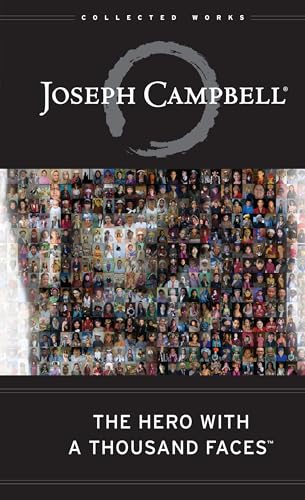
The first popular work to combine the spiritual and psychological insights of modern psychoanalysis with the archetypes of world mythology, the book creates a roadmap for navigating the frustrating path of contemporary life. Examining heroic myths in the light of modern psychology, it considers not only the patterns and stages of mythology but also its relevance to our lives today--and to the life of any person seeking a fully realized existence.
Myth, according to Campbell, is the projection of a culture's dreams onto a large screen; Campbell's book, like Star Wars, the film it helped inspire, is an exploration of the big-picture moments from the stage that is our world. It is a must-have resource for both experienced students of mythology and the explorer just beginning to approach myth as a source of knowledge.
The book I’d give every graduating senior in college or high school would be … Joseph Campbell’s 'Hero of a Thousand Faces'. It's little bit dense but it’s so rich, so it’s a good one. [source]
Joseph Campbell was the first person to really open my eyes to the compassionate side of life, or of thought... Campbell was the guy who really kind of put it all together for me, and not in a way I could put my finger on... It made you just glad to be alive, realizing how vast this world is, and how similar and how different we are. [source]
Catherine Plano
Was mind blowing, it really helped me put into perspective, that there are cycles and rhythms, and I now call them initiations, when you are faced with fear we are never too sure of our potential unless we know how to fail, what did we learn from it and what are we going to do differently the next time. There is a lesson in everything we experience, as long as we slow down enough to reflect. The other thing in the hero's journey is that even when you say 'yes' to a project, it really doesn't mean that you are going to succeed at it, but if you go into a project with an open mind and embrace that you are here to learn, the journey itself is rewarding, not always the outcome and when we really look at our failures, they weren't real failures after all, but a stepping stone onto something greater. [source]
Cover unavailable
34
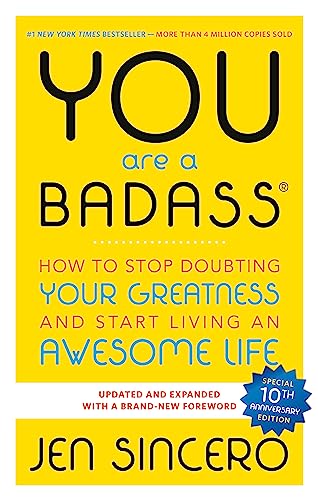
You Are a Badass: How to Stop Doubting Your Greatness and Start Living an Awesome Life
The #1 New York Times Bestseller You Are A Badass is the self-help book for people who desperately want to improve their lives but don't want to get busted doing it.
In this refreshingly entertaining how-to guide, #1 New York Times Bestselling Author and world-traveling success coach, Jen Sincero, serves up 27 bite-sized chapters full of hilariously inspiring stories, sage advice, easy exercises, and the occasional swear word. If you're ready to make some serious changes around here, You Are a Badass will help you: Identify and change the self-sabotaging beliefs and behaviors that stop you from getting what you want, blast past your fears so you can take big exciting risks, figure out how to make some damn money already, learn to love yourself and others, set big goals and reach them - it will basically show you how to create a life you totally love, and how to create it now.
By the end of You Are a Badass, you'll understand why you are how you are, how to love what you can't change, how to change what you don't love, and how to use The Force to kick some serious ass.
…
Recommended by Chelsea Frank, Jessica Lauria, and Stacey Minton.
Chelsea Frank
I read everything with an open mind, often challenging myself by choosing books with an odd perspective or religious/spiritual views. These books do not reflect my personal feelings but are books that helped shape my perspective on life, love, and happiness. [source]
Jessica Lauria
I bought this book because I was curious about the title. I loved it and bought it for my entire team. The universe matches the energy you put out. It’s so true. If you put out positivity, you get it back. It’s a great reminder that you are in charge of your destiny. Another point in this book that I love - if someone has a problem with you, it’s their issue. Not yours. We put some much weight on what people think about us, when it really shouldn’t matter. [source]
Stacey Minton
That book helped me realize I wasn’t alone in not necessarily having direction or all of the answers, but as long as I put one foot in front of the other, I would get to where I wanted to be. [source]
Cover unavailable
35
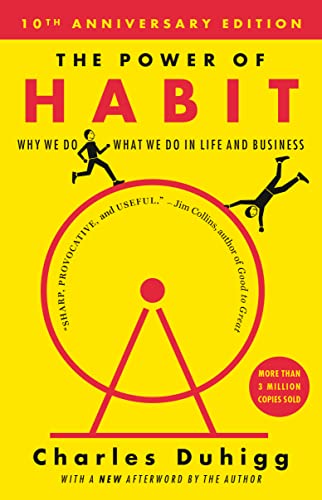
The Power of Habit: Why We Do What We Do in Life and Business
A young woman walks into a laboratory. Over the past two years, she has transformed almost every aspect of her life. She has quit smoking, run a marathon, and been promoted at work. The patterns inside her brain, neurologists discover, have fundamentally changed.
Marketers at Procter & Gamble study videos of people making their beds. They are desperately trying to figure out how to sell a new product called Febreze, on track to be one of the biggest flops in company history. Suddenly, one of them detects a nearly imperceptible pattern—and with a slight shift in advertising, Febreze goes on to earn a billion dollars a year.
An untested CEO takes over one of the largest companies in America. His first order of business is attacking a single pattern among his employees—how they approach worker safety—and soon the firm, Alcoa, becomes the top performer in the Dow Jones.
What do all these people have in common? They achieved success by focusing on the patterns that shape every aspect of our lives.
They succeeded by transforming habits.
In The Power of Habit, award-winning New York Times business reporter Charles Duhigg takes us to the thrilling edge of scientific discoveries that explain why habits exist and how they can be changed. With penetrating intelligence and an ability to distill vast amounts of information into engrossing narratives, Duhigg brings to life a whole new understanding of human nature and its potential for transformation.
Along the way we learn why some people and companies struggle to change, despite years of trying, while others seem to remake themselves overnight. We visit laboratories where neuroscientists explore how habits work and where, exactly, they reside in our brains. We discover how the right habits were crucial to the success of Olympic swimmer Michael Phelps, Starbucks CEO Howard Schultz, and civil-rights hero Martin Luther King, Jr. We go inside Procter & Gamble, Target superstores, Rick Warren’s Saddleback Church, NFL locker rooms, and the nation’s largest hospitals and see how implementing so-called keystone habits can earn billions and mean the difference between failure and success, life and death.
At its core, The Power of Habit contains an exhilarating argument: The key to exercising regularly, losing weight, raising exceptional children, becoming more productive, building revolutionary companies and social movements, and achieving success is understanding how habits work.
Habits aren’t destiny. As Charles Duhigg shows, by harnessing this new science, we can transform our businesses, our communities, and our lives.
…
Recommended by Naval Ravikant, Blake Irving, Alden Mills, and 15 others.
I also recently finished The Power of Habit, or close to finish as I get. That one was interesting, not because of its content necessarily, but because it’s good for me to always keep on top of mind how powerful my habits are. … I think learning how to break habits is a very important meta-skill that can serve you better in life than almost anything else. Although you can read tons of books on it, the reality is you’re never going to learn how to break bad habits until you just break them. [source]
Blake Irving
CEO/GoDaddy
You know, there's a book called The Power of Habit by Charles Duhigg. Simple read book about just how to build positive habits that can be I think I what I'd call you know whether in your personal life or whether in your business life to help you build you know, have a loop that can build your success and that's one I mean there are so many great books out there. [source]
Alden Mills
More recent books that have had a significant impact on me are The Power of Habit and The Diamond Cutter. Both represent different forces for me – the former helps me tactically with making incremental improvements in my life. [source]
Cover unavailable
36
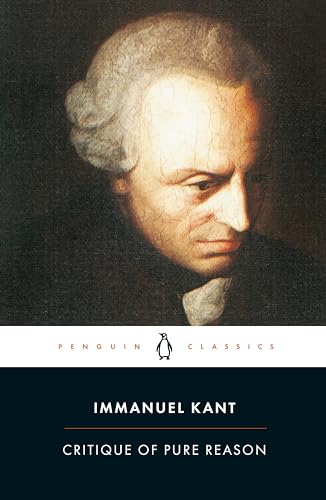
Critique of Pure Reason
Immanuel Kant, Paul Guyer, et al.
4.3
'The purpose of this critique of pure speculative reason consists in the attempt to change the old procedure of metaphysics and to bring about a complete revolution'
Kant's Critique of Pure Reason (1781) is the central text of modern philosophy. It presents a profound and challenging investigation into the nature of human reason, its knowledge and its illusions. Reason, Kant argues, is the seat of certain concepts that precede experience and make it possible, but we are not therefore entitled to draw conclusions about the natural world from these concepts. The Critique brings together the two opposing schools of philosophy: rationalism, which grounds all our knowledge in reason, and empiricism, which traces all our knowledge to experience. Kant's transcendental idealism indicates a third way that goes far beyond these alternatives.
…
Recommended by Adrian Moore, Luciano Floridi, and Simon Blackburn.
Adrian Moore
This is the greatest philosophical book of all time. This is Kant’s masterpiece. [source]
"Man is born free; and everywhere he is in chains."
These are the famous opening words of a treatise that has not ceased to stir vigorous debate since its first publication in 1762. Rejecting the view that anyone has a natural right to wield authority over others, Rousseau argues instead for a pact, or ‘social contract’, that should exist between all the citizens of a state and that should be the source of sovereign power. From this fundamental premise, he goes on to consider issues of liberty and law, freedom and justice, arriving at a view of society that has seemed to some a blueprint for totalitarianism, to others a declaration of democratic principles.
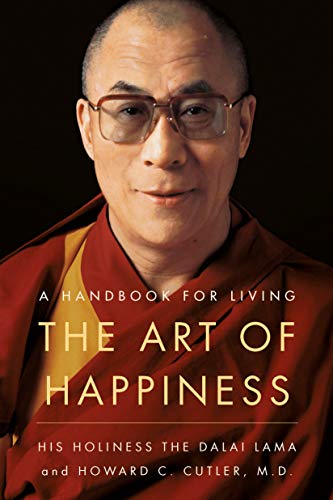
Nearly every time you see him, he's laughing, or at least smiling. And he makes everyone else around him feel like smiling. He's the Dalai Lama, the spiritual and temporal leader of Tibet, a Nobel Prize winner, and an increasingly popular speaker and statesman. What's more, he'll tell you that happiness is the purpose of life, and that "the very motion of our life is towards happiness." How to get there has always been the question. He's tried to answer it before, but he's never had the help of a psychiatrist to get the message across in a context we can easily understand. Through conversations, stories, and meditations, the Dalai Lama shows us how to defeat day-to-day anxiety, insecurity, anger, and discouragement. Together with Dr. Cutler, he explores many facets of everyday life, including relationships, loss, and the pursuit of wealth, to illustrate how to ride through life's obstacles on a deep and abiding source of inner peace.
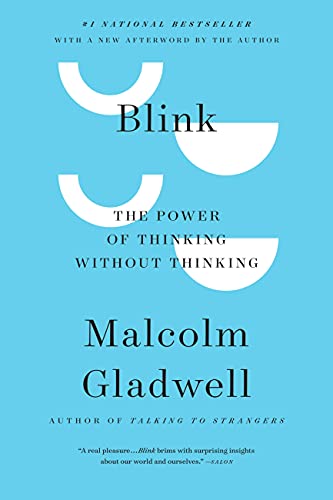
Drawing on cutting-edge neuroscience and psychology and displaying all of the brilliance that made The Tipping Point a classic, Blink changes the way you'll understand every decision you make. Never again will you think about thinking the same way.
Malcolm Gladwell redefined how we understand the world around us. Now, in Blink, he revolutionizes the way we understand the world within. Blink is a book about how we think without thinking, about choices that seem to be made in an instant - in the blink of an eye - that actually aren't as simple as they seem. Why are some people brilliant decision makers, while others are consistently inept? Why do some people follow their instincts and win, while others end up stumbling into error? How do our brains really work - in the office, in the classroom, in the kitchen, and in the bedroom? And why are the best decisions often those that are impossible to explain to others?
In Blink we meet the psychologist who has learned to predict whether a marriage will last, based on a few minutes of observing a couple; the tennis coach who knows when a player will double-fault before the racket even makes contact with the ball; the antiquities experts who recognize a fake at a glance. Here, too, are great failures of "blink": the election of Warren Harding; "New Coke"; and the shooting of Amadou Diallo by police. Blink reveals that great decision makers aren't those who process the most information or spend the most time deliberating, but those who have perfected the art of "thin-slicing" - filtering the very few factors that matter from an overwhelming number of variables.
…
Recommended by Ev Williams, Mike Shinoda, Marillyn Hewson, and 4 others.
Mike Shinoda
I know most of the guys in the band read this book. [source]
Marillyn Hewson
CEO/Lockheed Martin
CEO Marilyn Hewson recommends this book because it helped her to trust her instincts in business. [source]
Antonio Eram
When asked to name some books that had a big impact on him, Antonio mentioned Blink: The Power of Thinking Without Thinking by Malcolm Gladwell. [source]
Cover unavailable
40
An Enquiry Concerning Human Understanding
David Hume
4.2
A landmark of Enlightenment thought, Hume's An Enquiry Concerning Human Understanding is accompanied here by two shorter works that shed light on it: A Letter from a Gentleman to His Friend in Edinburgh, Hume's response to those accusing him of atheism, of advocating extreme skepticism, and of undermining the foundations of morality; and his Abstract of A Treatise of Human Nature, which anticipates discussions developed in the Enquiry.
Hume thought that overconfidence and dogmatism led to intolerance, to faction, to a lot of the crimes of human history. [source]
Cover unavailable
41
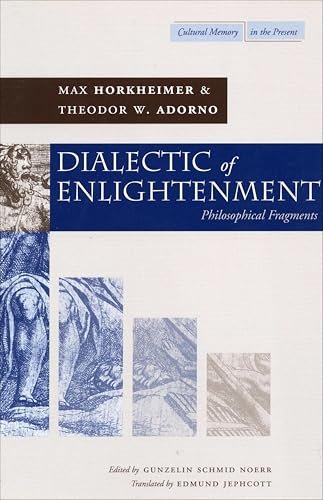
Dialectic of Enlightenment: Philosophical Fragments
Max Horkheimer, Theodor W. Adorno, Gunzelin Schmid Noerr, Edmund Jephcott
4.2
Dialectic of Enlightenment is undoubtedly the most influential publication of the Frankfurt School of Critical Theory. Written during the Second World War and circulated privately, it appeared in a printed edition in Amsterdam in 1947. "What we had set out to do," the authors write in the Preface, "was nothing less than to explain why humanity, instead of entering a truly human state, is sinking into a new kind of barbarism."
Yet the work goes far beyond a mere critique of contemporary events. Historically remote developments, indeed, the birth of Western history and of subjectivity itself out of the struggle against natural forces, as represented in myths, are connected in a wide arch to the most threatening experiences of the present.
The book consists in five chapters, at first glance unconnected, together with a number of shorter notes. The various analyses concern such phenomena as the detachment of science from practical life, formalized morality, the manipulative nature of entertainment culture, and a paranoid behavioral structure, expressed in aggressive anti-Semitism, that marks the limits of enlightenment. The authors perceive a common element in these phenomena, the tendency toward self-destruction of the guiding criteria inherent in enlightenment thought from the beginning. Using historical analyses to elucidate the present, they show, against the background of a prehistory of subjectivity, why the National Socialist terror was not an aberration of modern history but was rooted deeply in the fundamental characteristics of Western civilization.
Adorno and Horkheimer see the self-destruction of Western reason as grounded in a historical and fateful dialectic between the domination of external nature and society. They trace enlightenment, which split these spheres apart, back to its mythical roots. Enlightenment and myth, therefore, are not irreconcilable opposites, but dialectically mediated qualities of both real and intellectual life. "Myth is already enlightenment, and enlightenment reverts to mythology." This paradox is the fundamental thesis of the book.
This new translation, based on the text in the complete edition of the works of Max Horkheimer, contains textual variants, commentary upon them, and an editorial discussion of the position of this work in the development of Critical Theory.
…
Recommended by Jack Zipes.
Jack Zipes
The two authors are also Jewish refugees from Germany in the 1940s. They published their book in 1947, and they share a great deal with Ernst Bloch, whom they knew, although they had different perspectives in regard to philosophy and sociology. Horkheimer and Adorno began as sociologists. [source]
Cover unavailable
42
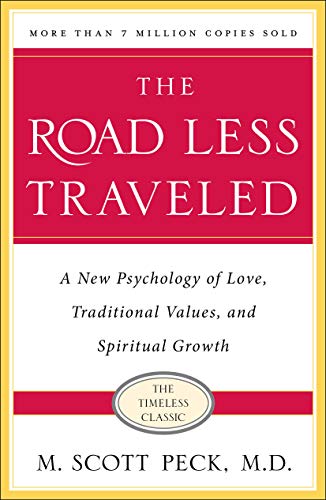
The Road Less Traveled: A New Psychology of Love, Traditional Values and Spiritual Growth
The Road Less Traveled: A New Psychology of Love, Traditional Values and Spiritual Growth 316 pp. "Psychotherapy is all things to all people in this mega-selling pop-psychology watershed, which features a new introduction by the author in this 25th anniversary edition. His agenda in this tome, which was first published in 1978 but didn't become a bestseller until 1983, is to reconcile the psychoanalytic tradition with the conflicting cultural currents roiling the 70s. In the spirit of Me-Decade individualism and libertinism, he celebrates self-actualization as life's highest purpose and flirts with the notions of open marriage and therapeutic sex between patient and analyst. But because he is attuned to the nascent conservative backlash against the therapeutic worldview, Peck also cites Gospel passages, recruits psychotherapy to the cause of traditional religion (he even convinces a patient to sign up for divinity school) and insists that problems must be overcome through suffering, discipline and hard work (with a therapist.) Often departing from the cerebral and rationalistic bent of Freudian discourse for a mystical, Jungian tone more compatible with New Age spirituality, Peck writes of psychotherapy as an exercise in "love" and "spiritual growth," asserts that "our unconscious is God" and affirms his belief in miracles, reincarnation and telepathy. Peck's synthesis of such clashing elements (he even throws in a little thermodynamics) is held together by a warm and lucid discussion of psychiatric principles and moving accounts of his own patients' struggles and breakthroughs. Harmonizing psychoanalysis and spirituality, Christ and Buddha, Calvinist work ethic and interminable talking cures, this book is a touchstone of our contemporary religio-therapeutic culture." -- Publishers WeeklyKeywords: MIND & BODY PSYCHOLOGY SOCIOLOGY RELIGION
…
Recommended by John C. Maxwell, Iulian Stanciu, and 1 others.
Iulian Stanciu
It helps you take a deeper look and understand why certain things happen in your life. It's an introduction to psychology. It helps you divide a person, just like you would do with a mathematical equation. [source]
At Walden Pond, Henry David Thoreau reflected on simpler living in the natural world. By removing himself from the distractions of materialism, Thoreau hoped to not only improve his spiritual life but also gain a better understanding of society through solitary introspection.
In Walden, Thoreau condenses his two-year, two-month, two-day stay into a single year, using the four seasons to symbolize human development—a cycle of life shared by both nature and man. A celebration of personal renewal through self-reliance, independence, and simplicity, composed for all of us living in “quiet desperation,” Walden is eternal.
…
Recommended by Emma Watson, Donna Dickenson, Emily Thomas, and 5 others.
Donna Dickenson
He discusses how the original ideals that America was founded on were being compromised, and how massive industrial interests were starting to dominate. [source]
Emily Thomas
The beginning is hard going. Once you get past that, then suddenly you’re into these beautiful and inspiring descriptions of nature. [source]
Joan Boixados
In case you were deceived and expected me to name Walden by Henry David Thoreau, you should read it too if you haven’t, it obviously is the inspiration to Walden Two. :) [source]
Cover unavailable
44
The Autobiography of Benjamin Franklin (Classic Biography)
I copied Franklin in my own book. He believed that we all could determinately sit down and come up with practical steps to make changes in our life. He identified 13 virtues that he wanted to imbue in himself and made a weekly chart to help him track his daily progress. I copied my resolutions chart from him. [source]
Cory Booker
The author didn’t mean to write his autobiography. He wanted to write a note to his family about what he’d learned in his experiments. [source]
"Thought-provoking and charming."-- "Library Journal" Not all Great Masters of Wisdom are venerable graybeards. One is as familiar to us as that beloved teddy bear Winnie the Pooh. From the "how" of Pooh to the Tao of Pooh is a simple, effortless, joyous step...a delicious journey to Pooh Corner illuminated by the timeless teachings of the Taoist immortals.
Recommended by Audrey Russo.
Audrey Russo
Question: What books would you recommend to young people interested in your career path? Answer: Anything by Peter Senge. The Hard Thing About Hard Things – Ben Horowitz Once you are Lucky, Twice you are good – Sara Lacey Revolutionary Wealth – Alvin Toffler Black Swan – Taleb Reset: My Fight for Inclusion and Lasting Change, by Ellen Pao. Creative Class – Richard Florida Creativity Inc. by Ed Catmull & Amy Wallace Liar’s Poker by Michael Lewis American Government 101: From the Continental Congress to the Iowa Caucus, Everything You Need to Know About US Politics – Kathleen Spears The Tao of Pooh by Benjamin Hoff. Anna Karenina by Leo Tolstoy. Any book by Herman Hesse The Art of War by Sun Tzu. [source]
Cover unavailable
46
The Book of Awakening: Having the Life You Want by Being Present to the Life You Have
Mark Nepo
4.2
Philosopher-poet and cancer survivor, Mark Nepo opens a new season of freedom and joy--an escape from deadening, asleep-at-the wheel sameness--that is both profound and clarifying. His spiritual daybook is a summons to reclaim aliveness, liberate the self, take each day one at a time, and to savor the beauty offered by life's unfolding. Reading his poetic prose is like being given second sight, exposing the reader to life's multiple dimensions, each one drawn with awe and affection. The Book of Awakening is the result of his journey of the soul and will inspire others to embark on their own. Nepo speaks of spirit and friendship, urging readers to stay vital and in love with this life, no matter the hardships. Encompassing many traditions and voices, Nepo's words offer insight on pain, wonder, and love. Each entry is accompanied by an exercise that will surprise and delight the reader in its mind-waking ability.
The most important book I have ever read, the best gift I have ever given. A daily touchstone to center, balance, inspire & comfort. I was honored @marknepo asked me to write the forward for this 20th anniversary edition. It is available now for pre-order. Publication date 1/1/20 https://t.co/6PIQFBI1Wz [source]
Autobiography of a Yogi is one of the best-selling spiritual biographies of all time. The book is not merely read it is treasured and cherished by millions of spiritual seekers throughout the world.
Recommended by Steve Jobs, Marc Benioff, Dan Engle, and 2 others.
One book in particular stayed with Jobs his entire life, and Isaacson noted that it was the only book Jobs had downloaded on his iPad 2: “Autobiography of a Yogi,” “the guide to meditation and spirituality that he had first read as a teenager,” Isaacson writes, “then re-read in India and had read once a year ever since.” [source]
Marc Benioff
CEO/Salesforce
If you haven't read it, and if you want to understand Steve Jobs, it's a goood idea to dip into this book. [source]
Dan Engle
One of the more impactful books for me when I was living down in the jungle and experiencing more of the deeper reflections through the medicine space. [source]
Cover unavailable
48
Conversations with God: An Uncommon Dialogue, Book 1
Neale Donald Walsch
4.2
Suppose you could ask God the most puzzling questions about existence - questions about love and faith, life and death, good and evil. Suppose God provided clear, understandable answers. It happened to Neale Donald Walsch. It can happen to you. You are about to have a conversation...
I have heard the crying of your heart. I have seen the searching of your soul. I know how deeply you have desired the Truth. In pain have you called out for it, and in joy. Unendingly have you beseeched Me. Show Myself. Explain Myself. Reveal Myself.
I am doing so here, in terms so plain, you cannot misunderstand. In language so simple, you cannot be confused. In vocabulary so common, you cannot get lost in the verbiage.
So go ahead now. Ask Me anything. Anything. I will contrive to bring you the answer. The whole universe will I use to do this. So be on the lookout; this book is far from My only tool. You may ask a question, then put this book down. But watch.
Listen.
The words to the next song you hear. The information in the next article you read. The story line of the next movie you watch. The chance utterance of the next person you meet. Or the whisper of the next river, the next ocean, the next breeze that caresses your ear - all these devices are Mine; all these avenues are open to Me. I will speak to you if you will listen. I will come to you if you will invite Me. I will show you then that I have always been there.
All ways.
…
Recommended by Stephen Lew, Travis Brewer, and Yaro Starak.
Stephen Lew
Conversations with God by Neale Donald Walsch is the top of the list. This series of books brought simple and amazing insights, initially I thought it was just another category of religious books (given the titles), and I didn’t like the idea of subscribing to organised religions due to the limitation of perspectives. However, this book opened “doors of perceptions” for me, and I was peeled to almost every page of the book. The amount of higher intelligence, wisdom and critical thinking is captured brilliantly in concise philosophical points through the dialogue between the author and his connection to the higher self/or universal being. The books offers spiritual (non-religious) and universal insights to human experiences, meaning, life and death, evolution and nature, metaphysics and quantum science. This book “came" to me almost 18 years ago, it was given by a dear friend, during the time when I began my journey of self discovery. The books ignited a flame within me, and charted a path towards spiritual awakening and higher learnings. My "existential identity” began with that book. It connected many dots, and answered many questions I posed. [source]
Travis Brewer
Travis Brewer said this is one of his most-recommended books. [source]
Yaro Starak
I’m always going through Neale Donald Walsch’s series called “Conversations with God”. He’s got 9 books in his dialogue series; I’m always going through one of them. I love “Conversations with God” from Neale Donald Walsch. [source]
Cover unavailable
49
The Demon-haunted World: Science As a Candle in the Dark
How can we make intelligent decisions about our increasingly technology-driven lives if we don’t understand the difference between the myths of pseudoscience and the testable hypotheses of science? Pulitzer Prize-winning author and distinguished astronomer Carl Sagan argues that scientific thinking is critical not only to the pursuit of truth but to the very well-being of our democratic institutions.
Casting a wide net through history and culture, Sagan examines and authoritatively debunks such celebrated fallacies of the past as witchcraft, faith healing, demons, and UFOs. And yet, disturbingly, in today’s so-called information age, pseudoscience is burgeoning with stories of alien abduction, channeling past lives, and communal hallucinations commanding growing attention and respect. As Sagan demonstrates with lucid eloquence, the siren song of unreason is not just a cultural wrong turn but a dangerous plunge into darkness that threatens our most basic freedoms.
…
Recommended by Dallas Campbell, Edip Yüksel, James Randi, and 2 others.
Dallas Campbell
@TheChilterns Even if you profoundly disagree with Clarke, it’s very detailed. The classic is of course ‘The Demon Haunted World’ by Carl Sagan. When I’m Prime Minister it will be compulsory reading at school! Best book on what science is/isn’t and why we think the way we do. 👍 [source]
Edip Yüksel
For Philosophy of Science class, I am now using Carl Sagan's book as the REQUIRED text book. Instead of bombarding students with terminology and names, we should let them enjoy the dancing of synapses in their own 3-pound grey jelly. In this thread I will share quotes from Sagan. https://t.co/rBEPVvEiuO [source]
James Randi
First of all, Carl was my very good friend, and we had a lot of confidences over the years. He was the epitome of the scientific mind and the scientific thinker. In The Demon-Haunted World, one of his later books, he investigates pseudoscience, frauds and fakes, and the mistakes that scientists made over the years. It’s very comprehensive. He had a whole chapter devoted to “Carlos” – or Jose Alvarez, who travelled all over the world doing this act as a fake psychic, and then revealed the whole thing on Australian television. Carl was quite taken with that story, and he and Jose spent a couple of hours together at a scientific conference that they both attended. [source]
Cover unavailable
50
The Better Angels of Our Nature: Why Violence Has Declined
Steven Pinker
4.2
Believe it or not, today we may be living in the most peaceful moment in our species' existence. In his gripping and controversial new work, New York Times bestselling author Steven Pinker shows that despite the ceaseless news about war, crime, and terrorism, violence has actually been in decline over long stretches of history. Exploding myths about humankind's inherent violence and the curse of modernity, this ambitious book continues Pinker's exploration of the essence of human nature, mixing psychology and history to provide a remarkable picture of an increasingly enlightened world.
Yong succeeds in his intention to give us a 'grander view of life' and does so without falling prey to grand, unifying explanations that are far too simplistic. He presents our inner ecosystems in all their wondrous messiness and complexity. And he offers realistic optimism that our growing knowledge of the human microbiome will lead to great new opportunities for enhancing our health. [source]
My second book of the year is The Better Angels of Our Nature by Steven Pinker. It's a timely book about how and why violence has steadily decreased throughout our history, and how we can continue this trend. Recent events might make it seem like violence and terrorism are more common than ever, so it's worth understanding that all violence -- even terrorism -- is actually decreasing over time. If we understand how we are achieving this, we can continue our path towards peace. A few people I trust have told me this is the best book they've ever read. It's a long book, so I plan on taking a month to read it rather than two weeks. I'll add a third book in two weeks that will be a shorter read to complement this. If you want to follow along with the books I'm reading and participate in conversations with the authors, you can like the page A Year of Books. [source]
I read The Bhagavad Gita, which is something I wasn’t ready for before, but glad to finally understand. [source]
Bernard Tan
The “Tao Te King” by Lao Tzu probably resonated with me the strongest, but others like the “Art of War” by Sun Tzu, “Bhagavad Gita” or Zen Buddhist scriptures were also real eye-openers, even for a non-religious person like myself. [source]
Bill Liao
The human world occurs in language so best get good at it! [source]
Cover unavailable
52
I Am That: Talks with Sri Nisargadatta Maharaj
Nisargadatta Maharaj, Sudhaker S. Dikshit, Maurice Frydman
4.2
This collection of the timeless teachings of one of the greatest sages of India, Sri Nisargadatta Maharaj, is a testament to the uniqueness of the seer's life and work and is regarded by many as a "modern spiritual classic".
I Am That preserves Maharaj's dialogues with the followers who came from around the world seeking his guidance in destroying false identities. The sage's sole concern was with human suffering and the ending of suffering. It was his mission to guide the individual to an understanding of his true nature and the timelessness of being. He taught that mind must recognize and penetrate its own state of being, "being this or that, here or that, then or now," but just timeless being.
…
Recommended by Bill Liao.
Bill Liao
The human world occurs in language so best get good at it! [source]
Cover unavailable
53
Awakening the Buddha Within: Eight Steps to Enlightenment
Lama Surya Das
4.2
Lama Surya Das, the most highly trained American lama in the Tibetan tradition, presents the first comprehensive book of Western Buddhism for the modern-day spiritual seeker. Buddhism offers a profound yet practical path to enlightenment. In this loving and generous book, the American-born and Tibetan-trained Lama Surya Das offers at once a definitive and nonsectarian guide to the wisdom found in ancient Tibetan teachings and a tried and true path of spiritual transformation. The radical and compelling message of Buddhism tells us that each of us has the wisdom, awareness, love, and power of the Buddha within; yet most of us are too often like sleeping Buddhas. Surya Das shows how we can awaken to who we really are and thus walk the liberating, peaceful path of mindful and compassionate living. With lively language, meditations, and spiritual practices, this unique book provides a bridge between East and West, past, present, and future. "Awakening the Buddha Within" offers a complete yet accessible understanding of the unique Buddhist teachings embodied in the traditional Noble Eight-Fold Path and its Three Enlightenment Trainings, common to all schools of Buddhism: * Wisdom Training: Developing clear vision, insight, and inner understanding--seeing reality and ourselves as we really are. * Ethics Training: Cultivating virtue, self-discipline, integrity, and compassion in what we say and do. * Meditation Training: Practicing mindfulness, concentration, and awareness of the present moment. This fresh and original work illuminates such key principles as karma (what we do does matter), rebirth (every moment is an opportunity to start afresh), letting go(simplifying our lives by clarifying our hearts and minds), as well as conscious living and dying, and Dzogchen, the ultimate, mystical teaching of Tibet. In this wonderful marriage of the timeless and the timely, Surya Das has written an invaluable, authoritative text for the novice and the experienced student of Buddhism alike. "Awakening the Buddha Within" reveals how sacred wisdom, contemplative practice, and altruism can be integrated into our outer and inner lives--in our relationships, in the workplace, and at home. Here is a guidebook to enlightenment--a sourcebook of the sacred for anyone who wants to lead a more serene and beautiful life. For almost thirty years, Lama Surya Das has studied and lived with the great spiritual masters of Asia. He has twice completed the traditional three-year Vajrayana meditation retreat. A leading spokesperson for the emerging Western Buddhism, he is a Dzogchen lineage holder and the founder of the Dzogchen Foundation. A poet, translator, and full-time spiritual teacher, Surya Das lectures and leads meditation retreats and workshops worldwide, brings Tibetan lamas to the West to teach, and regularly organizes the annual Western Buddhist Teachers Conference with the Dalai Lama in Dharmasala, India and is active in interfaith dialogue. He is the author of "The Snow Lion's Mane: Wisdom Tales from Tibet" and "Natural Great Perfection" (with Nyoshul Khenpo Rinpoche). Surya Das lives outside of Boston, Massachusetts.
…
Cover unavailable
54
The Tibetan Book of Living and Dying
Sogyal Rinpoche
4.2
A newly revised and updated edition of the internationally bestselling spiritual classic, The Tibetan Book of Living and Dying, written by Sogyal Rinpoche, is the ultimate introduction to Tibetan Buddhist wisdom. An enlightening, inspiring, and comforting manual for life and death that the New York Times calls, “The Tibetan equivalent of [Dante’s] The Divine Comedy,” this is the essential work that moved Huston Smith, author of The World’s Religions, to proclaim, “I have encountered no book on the interplay of life and death that is more comprehensive, practical, and wise.”
…
Cover unavailable
55
The Age of Reason
Thomas Paine
4.1
The Age of Reason represents the results of years of study and reflection by Thomas Paine on the place of religion in society.
Paine wrote: "Of all the tyrannies that affect mankind, tyranny in religion is the worst; every other species of tyranny is limited to the world we live in; but this attempts to stride beyond the grave, and seeks to pursue us into eternity."
The cool rationale of Paine's The Age of Reason influenced religious thinking throughout the world; and its pervasieve influence continues to the present day.
Which books should be read by every single intelligent person on planet? … The Age of Reason (Paine) to learn how the power of rational thought is the primary source of freedom in the world. If you read all of the above works you will glean profound insight into most of what has driven the history of the western world. [source]
Susan Jacoby
Simply put, this book excoriates the idea that any religious book was written by God. They were all written by man, and while many of them have excellent principles, they are principles that any man can discern through his own reason. You don’t have to have all these supernatural events. He specifically mentions the Hebrew Bible, the Christian Bible and the Koran – the big three. These sacred books were written by man, and they can only be understood in terms of the period of history in which they were written. That’s all The Age of Reason is about, but it lost Paine all his positive fame. He was one of the most famous people in America because of his writing, which galvanized the colonists during the Revolutionary War. He lost all of that as a result of writing The Age of Reason, and he does die alone. No church cemetery will allow him to be buried there. The only religion he ever really admired were the Quakers and even the Quaker cemetery in New Rochelle New York wouldn’t let him be buried there. The Age of Reason ought to be uncontroversial today, but it’s not in America, simply because there are these 25% of Americans who believe that the Bible is literally true and that it was written by God. That’s the strange thing. The Age of Reason was on the Catholic Church’s index forever when there was an index, but I don’t think anybody would think much of it today in Europe. The idea that the Bible wasn’t something written by God is something that’s accepted by the vast majority of Christians. [source]
Cover unavailable
56
When Things Fall Apart: Heart Advice for Difficult Times
There is a fundamental opportunity for happiness right within our reach, yet we usually miss it—ironically while we are caught up in attempts to escape pain and suffering. Drawn from traditional Buddhist wisdom, Pema Chödrön's radical and compassionate advice for what to do when things fall apart in our lives goes against the grain of our usual habits and expectations. There is only one approach to suffering that is of lasting benefit, Pema teaches, and that approach involves moving toward painful situations with friendliness and curiosity, relaxing into the essential groundlessness of our entire situation. It is there, in the midst of chaos, that we can discover the truth and love that are indestructible.
The Shambhala Library is a series of exquisitely designed and produced cloth editions of the world's spiritual and literary classics, both ancient and modern. Perfect for collecting or as gifts, each volume features a sewn binding, decorative endsheets, and a ribbon marker—in a delightful-to-hold 4¼ x 6¾ trim size.
Almost the flip side. I'm so much better at protracted difficult periods because of Pema and because of meditation and because of knowing how to sit with it and not insist that the tension go away. [source]
Cover unavailable
57
Wherever You Go, There You Are: Mindfulness Meditation in Everyday Life
In this book, the author maps out a simple path for cultivating mindfulness in one's own life. It speaks both to those coming to meditation for the first time and to longtime practitioners, anyone who cares deeply about reclaiming the richness of his or her moments.
It’s a great book if you’ve never meditated, and if you’ve been meditating for 50 years. [source]
Henry Medine
I promote range and diversity. Thus, I recommend readers to expose themselves to as many different topics as possible. I usually have 2-4 books I refer back to at any given time. They range in topics from management, art, spirituality and philosophy. Trying to get the engineering thing going but don't much of a mind for science. [source]
Throughout history, some books have changed the world. They have transformed the way we see ourselves—and each other. They have inspired debate, dissent, war and revolution. They have enlightened, outraged, provoked and comforted. They have enriched lives—and destroyed them.
Published anonymously in 1776, six months before the Declaration of Independence, Thomas Paine’s Common Sense was a radical and impassioned call for America to free itself from British rule and set up an independent republican government. Savagely attacking hereditary kingship and aristocratic institutions, Paine urged a new beginning for his adopted country in which personal freedom and social equality would be upheld and economic and cultural progress encouraged.
His pamphlet was the first to speak directly to a mass audience—it went through fifty-six editions within a year of publication—and its assertive and often caustic style both embodied the democratic spirit he advocated, and converted thousands of citizens to the cause of American independence.
"Without The Artist's Way, there would have been no Eat, Pray, Love.” —Elizabeth Gilbert
A stunning gift edition of the powerful bestselling book on creativity.The Artist’s Way is one of the bestselling gift books of all time. Beautifully packaged with a slipcase and ribbon, this tenth anniversary gift edition is the ideal gift for loved ones engaged in creative lives.
Recommended by Anand C and Emma Gannon.
Anand C
STARTING FROM AUTHENTICITY: by observing, showing humility and being grateful - I started being open to what’s in the sub-conscious more (30+ sessions in). Speaking your truth is a powerful result of this. One great book to help explore this. https://t.co/sOAgAHhWsO [source]
Emma Gannon
Instead of all these fast paced books saying: ‘Here’s how to be amazing, here’s how to get a side hustle, here’s how to hustle, hustle, hustle.’ This is the total opposite. It’s about slowing right down and connecting with yourself again. [source]
Cover unavailable
60
The Prophet
Kahlil Gibran
4.1
Kahlil Gibran’s masterpiece, The Prophet, is one of the most beloved classics of our time. Published in 1923, it has been translated into more than twenty languages, and the American editions alone have sold more than nine million copies.
The Prophet is a collection of poetic essays that are philosophical, spiritual, and, above all, inspirational. Gibran’s musings are divided into twenty-eight chapters covering such sprawling topics as love, marriage, children, giving, eating and drinking, work, joy and sorrow, housing, clothes, buying and selling, crime and punishment, laws, freedom, reason and passion, pain, self-knowledge, teaching, friendship, talking, time, good and evil, prayer, pleasure, beauty, religion, and death.
…
Recommended by Naval Ravikant, Daylon Soh, Jason Nemer, and 3 others.
It actually read like a modern-day poetic religious tome. Up there with the Bhagavad-gita, the Tao Te Ching, The Bible, The Qur’an. It was written in that style where it had that feel of religiosity and truth, but it was very approachable and beautiful and non-denominational and non-secretarian. I really liked that. I loved that book. He has a gift for poetically describing what children are like, what lovers are like, what marriage should be like, how you should treat your enemies and your friends, how you should work with money, what can you think of every time you have to kill something to eat it. I felt, like the great religious books, it gave a very deep, very philosophical, but very true answer to how to approach the major problems in life. I recommend The Prophet to anybody, whether you’re religious or not. Whether you are Christian or Hindu or Jewish or Atheist. I think it’s a beautiful book, and it’s worth reading. [source]
Daylon Soh
The non-business book that has connected to my being most deeply would be poems in The Prophet by Kahlil Gibran. [source]
Jason Nemer
I love really condensed, shakti empowerment-filled, energy-filled statements - something that you can read in a few minutes or you can read for your whole life. [source]
With the same extraordinary skill that he used to demystify scientific abstraction and the new physics, Gary Zukay, the award-winning author of The Dancing Wu Li Masters, here takes us on a brilliant and penetrating exploration of the new phase of evolution we have now entered. With lucidity and elegance, Zukav explains that we are evolving from a species that pursues power based upon the perceptions of the five senses -- external power -- into a species that pursues authentic power -- power that is based upon the perceptions and values of the spirit. He shows how the pursuit of external power has produced our survival-of-the-fittest understanding of evolution, generated conflict between lovers, communities, and superpowers, and brought us to the edge of destruction. Using his scientist's eye and philosopher's heart, Zukav shows how infusing the activities of life with reverence, compassion, and trust makes them come alive with meaning and purpose. He illustrates how the emerging values of the spirit are changing marriages into spiritual partnerships, psychology into spiritual psychology, and transforming our everyday lives. The Seat of the Soul describes the remarkable journey to the spirit that each of us is on.
These are the books I recommend people to listen to on @applebooks. [source]
Cover unavailable
62
The Enlightenment: The Science of Freedom
Peter Gay
4.1
The Science of Freedom completes Peter Gay's brilliant reinterpretation of the Enlightenment of the philosophes begun in The Enlightenment: The Rise of Modern Paganism. In that book, Mr. Gray analyzed the struggle in qhich the philosophes pitted classical pagan thought against their Christian heritage. In the present book, which can be read independently as a social history of the Enlightenment, he describes the philosophes' environment, their program, their views of progress, of science, of art, of society, and of politics. He explains the complex relantionship an interaction between the two Enlightenments—the philosophic movement and the environment from which the philosophes drew ideas and support. His masterful appraisal opens a new range of insights into the Enlightenment's critical method and its humane and libertarian vision.
…
Cover unavailable
63
The Essential Rumi
Jalal al-Din Rumi
4.1
This revised and expanded edition of The Essential Rumi includes a new introduction by Coleman Barks and more than 80 never-before-published poems.
Through his lyrical translations, Coleman Barks has been instrumental in bringing this exquisite literature to a remarkably wide range of readers, making the ecstatic, spiritual poetry of thirteenth-century Sufi Mystic Rumi more popular than ever.
The Essential Rumi continues to be the bestselling of all Rumi books, and the definitive selection of his beautiful, mystical poetry.
…
Recommended by Adam Robinson, Adam Robinson, and Zainab Salbi.
Adam Robinson
The author’s gotten me in touch with the mystical, and the mysterious, and the magical in life. [source]
Adam Robinson
The author’s gotten me in touch with the mystical, and the mysterious, and the magical in life. [source]
Zainab Salbi
In the evolution of my journey I learned that the way that we can transform women’s lives and our lives generally is not necessarily only through the warrior’s ways. I do not deny the warrior’s ways. I have ridden the horse and carried the armour! But as I evolve in my own growth I have learnt that the way we can truly achieve transformation and change is through our own inner peace. It is through seeing our inner joy and inner happiness and through love. [source]
Cover unavailable
64
The Celestine Prophecy
James Redfield
4.1
The Celestine Prophecy contains secrets that are currently changing our world. Drawing on ancient wisdom, it tells you how to make connections among the events happening in your own life right now...and lets you see what is going to happen to you in the years to come!
A book that has been passed from hand to hand, from friend to friend, since it first appeared in small bookshops across America, The Celestine Prophecy is a work that has come to light at a time when the world deeply needs to read its words. The story it tells is a gripping one of adventure and discovery, but it is also a guidebook that has the power to crystallize your perceptions of why you are where you are in life...and to direct your steps with a new energy and optimism as you head into tomorrow.
A few months ago, I was drinking a Noah’s Mill whiskey (cute) with my good buddy Brian Balfour and talking about life... During the conversation, we got on the topic of books that changed our lives. I want to share them with you. I judge a book's success if a year later I'm still using at least 1 thing from the book. [source]
Stephen Lew
“The Celestine Prophecy” by James Redfield, that book pivoted my journey towards personal development and human excellence. At the point of time, nearly 2 decades ago, I started an inner quest of holistic wisdom, through the studies of metaphysics, meditation practices, philosophy, popular psychology, transpersonal psychology, dreams interpretations and comparative religions, I discovered an unconscious part or of the human selves, and its correlation to our psyche/spiritual developments. [source]
Cover unavailable
65
Practicing the Power of Now: Essential Teachings, Meditations, and Exercises from the Power of Now
Eckhart Tolle
4.1
This manual-style book instantly dives into Eckhart Tolle's principles of "living in the moment," which could be a jarring experience for readers who haven't read his preceding book, The Power of Now. For the initiated, though, this makes an excellent companion guide--rich in exercises and meditations to help readers get out of their minds so they can live more peacefully in their bodies. Sometimes it's hard to fathom what on earth Tolle is talking about: "To regain awareness of Being and to abide in that state of 'feeling-realization' is enlightenment." Be patient. All concepts will be revealed (or at least more carefully explained). Ultimately, Tolle leads readers into a new form of thinking (or actually not thinking) that erases the consuming habits of waiting, worrying, and being in fear. The first step is ending the "delusion of time." He asks, "Are you always trying to get somewhere other than where you are? ... Is most of your doing just a means to an end?" If so, Tolle has a book full of advice for you. As simplistic as this may sound, Tolle's work has spiritual merit and depth, especially for frantic Westerners who find their lives diminished by packed schedules and busy-ness. --Gail Hudson
…
Cover unavailable
66
Radical Enlightenment: Philosophy and the Making of Modernity 1650-1750
Jonathan I. Israel
4.1
In the wake of the Scientific Revolution, the late seventeenth and eighteenth centuries saw the complete demolition of traditional structures of authority, scientific thought, and belief by the new philosophy and the philosophers, including Voltaire, Diderot, and Rousseau. The Radical Enlightenment played a part in this revolutionary process, which effectively overthrew all justification for monarchy, aristocracy, and ecclesiastical power, as well as man's dominance over woman, theological dominance of education, and slavery. Despite the present day interest in the revolutions of the eighteenth century, the origins and rise of the Radical Enlightenment have received limited scholarly attention. The greatest obstacle to the movement finding its proper place in modern historical writing is its international scope: the Radical Enlightenment was not French, British, German, Italian, Jewish or Dutch, but all of these at the same time.
In this wide-ranging volume, Jonathan Israel offers a novel interpretation of the Radical Enlightenment down to La Mettie and Diderot, two of its key exponents. Particular emphasis is placed on the pivotal role of Spinoza and the widespread underground international philosophical movement known before 1750 as Spinozism.
…
Recommended by Kenan Malik.
Cover unavailable
67
The Dhammapada
Gil Fronsdal and Jack Kornfield
4.1
The Dhammapada (Pāli; Prakrit: धम्मपद Dhammapada; Sanskrit: धर्मपद Dharmapada) is a collection of sayings of the Buddha in verse form and one of the most widely read and best known Buddhist scriptures. The original version of the Dhammapada is in the Khuddaka Nikaya, a division of the Pali Canon of Theravada Buddhism. The Buddhist scholar and commentator Buddhaghosa explains that each saying recorded in the collection was made on a different occasion in response to a unique situation that had arisen in the life of the Buddha and his monastic community. His commentary, the Dhammapada Atthakatha, presents the details of these events and is a rich source of legend for the life and times of the Buddha.
The Dhammapada is one of the greatest psychological works ever written, and certainly one of the greatest before 1900. It is masterful in its understanding of the nature of consciousness, and in particular the way we are always striving and never satisfied. You can turn to it – and people have turned to it throughout the ages – at times of trouble, at times of disappointment, at times of loss, and it takes you out of yourself. It shows you that your problems, your feelings, are just timeless manifestations of the human condition. It also gives specific recommendations for how to deal with those problems, which is to let go, to accept, and to work on yourself. So I think this is a kind of tonic that we ambitious Westerners often need to hear. [source]
The Buddhist collection of sayings. And it begins with, basically, the idea that we create the world with our minds. [source]
Cover unavailable
68
Leviathan
Thomas Hobbes
4.1
'The life of man, solitary, poore, nasty, brutish, and short'
Written during the chaos of the English Civil War, Thomas Hobbes' Leviathan asks how, in a world of violence and horror, can we stop ourselves from descending into anarchy? Hobbes' case for a 'common-wealth' under a powerful sovereign - or 'Leviathan' - to enforce security and the rule of law, shocked his contemporaries, and his book was publicly burnt for sedition the moment it was published. But his penetrating work of political philosophy - now fully revised and with a new introduction for this edition - opened up questions about the nature of statecraft and society that influenced governments across the world.
The best reason for reading Hobbes is that no other philosopher has ever used the English language to such powerful effect. It is a really remarkable feat of dialectic. You find yourself agreeing with him at each stage of the reasoning as he builds up his case then, quite suddenly, you find that you’ve arrived at a conclusion which seems intolerable. [source]
Jonathan Wolff
Written more than three-and-a-half centuries ago in the shadow of the English Civil War, Leviathan remains a profound and relevant study. [source]
Michael Peel
The idea of ‘the war of all against all’, what a man wins through strength is what he gets, has parallels in modern Nigeria. [source]
Cover unavailable
69
التنوير في إسقاط التدبير
ابن عطاء الله السكندري
4.1
كتاب عزيز نادر في موضوعه نافع في مادته، وهو نور بين يدي قارئه، يعلمنا فيه سيدنا الإمام ابن عطاء الله كيف نسقط التدبير مع الله وكيف نفوض أمر الرزق لله وكيف نتوكل على الله وكيف لا يكون لنا حول ولا قوة مع الله وكيف نريح أنفسنا من كدر التدبير وكيف نرضى بما قسم لنا وكيف نصل إلى مراد الله منا في ذلك إلى غير ذلك من الكنوز التي لا يعلم قدرها إلا المؤمن العاقل الحريص على السعادة في الدارين، وعلى الوقوف عل مرضاة ربه قبل ذلك وكل هذا لا يكون إلا بالتربي على عالم مثل سيدي ابن عطاء الله ولا يكون إلا بالمجاهدة التي ربما استغرقت عمر المؤمن كله، وقد يفتح الله عليه في لحظة بكرمه وإنعامه.
…
Cover unavailable
70
The Origin of Species by Means of Natural Selection: Or, the Preservation of Favored Races in the Struggle for Life
Charles Darwin
4.1
Darwin's theory of natural selection issued a profound challenge to orthodox thought and belief: no being or species has been specifically created; all are locked into a pitiless struggle for existence, with extinction looming for those not fitted for the task.
Yet The Origin of Species (1859) is also a humane and inspirational vision of ecological interrelatedness, revealing the complex mutual interdependencies between animal and plant life, climate and physical environment, and—by implication—within the human world.
Written for the general reader, in a style which combines the rigour of science with the subtlety of literature, The Origin of Species remains one of the founding documents of the modern age.
Which books should be read by every single intelligent person on planet? … On the Origin of Species (Darwin) to learn of our kinship with all other life on Earth. If you read all of the above works you will glean profound insight into most of what has driven the history of the western world. [source]
It is one of the most important books written, and I always urge people to read it. [source]
Adam Maloof
For me (and many others) this book forms the foundation for modern biology. It is all about humans’ concept of themselves. [source]
Cover unavailable
71
The Miracle of Mindfulness: An Introduction to the Practice of Meditation (Gift Edition)
Thich Nhat Hanh
4.1
In this beautiful and lucid guide, Zen master Thich Nhat Hanh offers gentle anecdotes and practical exercise as a means of learning the skills of mindfulness--being awake and fully aware. From washing the dishes to answering the phone to peeling an orange, he reminds us that each moment holds within it an opportunity to work toward greater self-understanding and peacefulness.
Hume's brilliant and dispassionate essay "Of Miracles" has been added in this expanded edition of his Dialogues Concerning Natural Religion, which also includes "Of the Immortality of the Soul", "Of Suicide", and Richard Popkin's illuminating Introduction.
Cover unavailable
73
Spiritual Enlightenment: The Damnedest Thing
Jed McKenna
4.1
Cover unavailable
74
The Philosophy of the Enlightenment
Ernst Cassirer, James P. Pettegrove, Fritz C.A. Koelin
4.1
In this classic work of intellectual history, Ernst Cassirer provides both a cogent synthesis & a penetrating analysis of one of history's greatest intellectual epochs: the Enlightenment. Arguing that there was a common foundation beneath the diverse strands of thought of this period, he shows how Enlightenment philosophers drew upon the ideas of preceding centuries even while radically transforming them to fit the modern world. In Cassirer's view, the Enlightenment liberated philosophy from the realm of pure thought & restored it to its true place as an active & creative force thru which knowledge of the world is achieved.
…
Cover unavailable
75
A Wicked Company: The Forgotten Radicalism of the European Enlightenment
Philipp Blom
4.1
The flourishing of radical philosophy in Baron Thierry Holbach’s Paris salon from the 1750s to the 1770s stands as a seminal event in Western history. Holbach’s house was an international epicenter of revolutionary ideas and intellectual daring, bringing together such original minds as Denis Diderot, Laurence Sterne, David Hume, Adam Smith, Ferdinando Galiani, Horace Walpole, Benjamin Franklin, Guillaume Raynal, and Jean-Jacques Rousseau.
In A Wicked Company, acclaimed historian Philipp Blom retraces the fortunes of this exceptional group of friends. All brilliant minds, full of wit, courage, and insight, their thinking created a different and radical French Enlightenment based on atheism, passion, reason, and truly humanist thinking. A startlingly relevant work of narrative history, A Wicked Company forces us to confront with new eyes the foundational debates about modern society and its future.
In his sensational international bestseller, the preeminent scientist and outspoken atheist Richard Dawkins delivers a hard-hitting, impassioned, but humorous, rebuttal of religious belief. With rigor and wit, Dawkins eviscerates the arguments for religion and demonstrates the supreme improbability of the existence of a supreme being. He makes a compelling case that faith is not just irrational but potentially deadly. In a preface written for the paperback edition, Dawkins responds to some of the controversies the book has incited. This brilliantly argued, provocative book challenges all of us to examine our belifs, no matter what beliefs we hold.
…
Recommended by Brian Armstrong, Antonio Eram, Susan Jacoby, and 1 others.
Antonio Eram
This book was recommended by Antonio when asked for titles he would recommend to young people interested in his career path. [source]
Susan Jacoby
Richard Dawkins is very funny. One of the reasons for reading The God Delusion is that it will disabuse you of the idea – which is a common stereotype of atheists – that they are utterly humourless. You hear this over and over again. I’m often invited to college campuses to give lectures, and often they’re religious schools – not fundamentalist schools, but colleges of a historically religious type. And very often I will hear: “Oh I expected you to be small and dark-haired and wear glasses!” The image of the atheist woman is kind of like what the image of the feminist used to be, someone too ugly to get a man. But part of it is also humorlessness. People will often say to me, “Oh you’re so funny.” “Well, yeah!” [source]
Vote Dem For The Planet
@KimBledsoe14 @Goodbye_Jesus @Ian313f There were a lot of rebels and drifters in those days against the repressive regime. They had followers. Have you read “The God Delusion”? Great book. [source]
A celebrated writer's irresistible, candid, and eloquent account of her pursuit of worldly pleasure, spiritual devotion, and what she really wanted out of life.
Around the time Elizabeth Gilbert turned thirty, she went through an early-onslaught midlife crisis. She had everything an educated, ambitious American woman was supposed to want—a husband, a house, a successful career. But instead of feeling happy and fulfilled, she was consumed with panic, grief, and confusion. She went through a divorce, a crushing depression, another failed love, and the eradication of everything she ever thought she was supposed to be.
To recover from all this, Gilbert took a radical step. In order to give herself the time and space to find out who she really was and what she really wanted, she got rid of her belongings, quit her job, and undertook a yearlong journey around the world—all alone. Eat, Pray, Love is the absorbing chronicle of that year. Her aim was to visit three places where she could examine one aspect of her own nature set against the backdrop of a culture that has traditionally done that one thing very well. In Rome, she studied the art of pleasure, learning to speak Italian and gaining the twenty-three happiest pounds of her life. India was for the art of devotion, and with the help of a native guru and a surprisingly wise cowboy from Texas, she embarked on four uninterrupted months of spiritual exploration. In Bali, she studied the art of balance between worldly enjoyment and divine transcendence. She became the pupil of an elderly medicine man and also fell in love the best way—unexpectedly.
An intensely articulate and moving memoir of self-discovery, Eat, Pray, Love is about what can happen when you claim responsibility for your own contentment and stop trying to live in imitation of society’s ideals. It is certain to touch anyone who has ever woken up to the unrelenting need for change.
…
Recommended by Chelsea Frank and Gabriel Coarna.
Chelsea Frank
I read everything with an open mind, often challenging myself by choosing books with an odd perspective or religious/spiritual views. These books do not reflect my personal feelings but are books that helped shape my perspective on life, love, and happiness. [source]
Gabriel Coarna
I started reading "Eat, Pray, Love" as soon as I finished watching Elizabeth Gilbert give this talk. [source]
Cover unavailable
78
Daring Greatly: How the Courage to Be Vulnerable Transforms the Way We Live, Love, Parent, and Lead
Researcher and thought leader Dr. Brené Brown offers a powerful new vision that encourages us to dare greatly: to embrace vulnerability and imperfection, to live wholeheartedly, and to courageously engage in our lives.
“It is not the critic who counts; not the man who points out how the strong man stumbles, or where the doer of deeds could have done them better. The credit belongs to the man who is actually in the arena, whose face is marred by dust and sweat and blood; who strives valiantly; . . . who at best knows in the end the triumph of high achievement, and who at worst, if he fails, at least fails while daring greatly.” —Theodore Roosevelt
Every day we experience the uncertainty, risks, and emotional exposure that define what it means to be vulnerable, or to dare greatly. Whether the arena is a new relationship, an important meeting, our creative process, or a difficult family conversation, we must find the courage to walk into vulnerability and engage with our whole hearts.
In Daring Greatly, Dr. Brown challenges everything we think we know about vulnerability. Based on twelve years of research, she argues that vulnerability is not weakness, but rather our clearest path to courage, engagement, and meaningful connection. The book that Dr. Brown’s many fans have been waiting for, Daring Greatly will spark a new spirit of truth—and trust—in our organizations, families, schools, and communities.
…
Recommended by AnneMarie Schindler, Chase Jarvis, and Chelsea Frank.
AnneMarie Schindler
I suggest these books because they really open up 'how' you think about life and in turn work, success/challenges/setbacks, and in general, yourself. I believe that the more you can understand yourself and broaden your approach to work, the easier it will be to find work that energizes you. Finally, I'm a team player at heart, and love working with others to achieve a huge goal so a portion of these deal with team composition and performance too. [source]
Chase Jarvis
Chase Jarvis recommended this book on the podcast "The Tim Ferriss Show". [source]
Chelsea Frank
I read everything with an open mind, often challenging myself by choosing books with an odd perspective or religious/spiritual views. These books do not reflect my personal feelings but are books that helped shape my perspective on life, love, and happiness. [source]
Hailed by Thomas Jefferson as “the best commentary on the principles of government which was ever written", The Federalist Papers is a collection of eighty-five essays published by Founding Fathers Alexander Hamilton, James Madison, and John Jay from 1787 to 1788, as a means to persuade the public to ratify the Constitution of the United States.
With nearly two-thirds of the essays written by Hamilton, this enduring classic is perfect for modern audiences passionate about his work or seeking a deeper understanding of one of the most important documents in US history.
AmazonClassics brings you timeless works from iconic authors. Ideal for anyone who wants to read a great work for the first time or revisit an old favorite, these new editions open the door to the stories and ideas that have shaped our world.
According to the president’s Facebook page and a 2008 interview with the New York Times, these titles are among his most influential forever favorites: Moby Dick, Herman Melville Self-Reliance, Ralph Waldo Emerson Song Of Solomon, Toni Morrison Parting The Waters, Taylor Branch Gilead, Marylinne Robinson Best and the Brightest, David Halberstam The Federalist, Alexander Hamilton Souls of Black Folk, W.E.B. Du Bois The Power and the Glory, Graham Greene The Quiet American, Graham Greene Cancer Ward, Aleksandr Solzhenitsyn Gandhi’s autobiography Working, Studs Terkel Wealth of Nations, Adam Smith Theory of Moral Sentiments, Adam Smith All the King’s Men, Robert Penn Warren [source]
I think this is the greatest explanation, in one place, of the American constitution, of the essential underpinnings and structures that make American democracy possible. This is how to view the constitution in its proper perspective, as a document of limited government, and enormous personal freedom – as an attempt to understand human nature and draw on both its strengths and its weaknesses to achieve a community and nation. [source]
Cover unavailable
80
On Liberty
John Stuart Mill
4.1
Alternate cover edition of ISBN 9780140432077
Published in 1859, John Stuart Mill's On Liberty presented one of the most eloquent defenses of individual freedom in nineteenth-century social and political philosophy and is today perhaps the most widely-read liberal argument in support of the value of liberty. Mill's passionate advocacy of spontaneity, individuality, and diversity, along with his contempt for compulsory uniformity and the despotism of popular opinion, has attracted both admiration and condemnation.
…
Recommended by A C Grayling, Anne Heller, Brink Lindsey, and 7 others.
On Liberty is a very important document, and one which, because of the clarity with which one can read it and its brevity, is slightly passed over. [source]
Anne Heller
Imagine how John Stuart Mill would feel if he were made to wear a seatbelt because the federal government tells him so. [source]
Brink Lindsey
I think liberals, of both a libertarian, classical, liberal stripe and a more modern egalitarian stripe, see John Stuart Mill as a common ancestor. [source]
Cover unavailable
81
Second Treatise of Government
John Locke and C. B. Macpherson
4.1
The Second Treatise is one of the most important political treatises ever written and one of the most far-reaching in its influence. In his provocative 15-page introduction to this edition, the late eminent political theorist C. B. Macpherson examines Locke's arguments for limited, conditional government, private property and right of revolution and suggests reasons for the appeal of these arguments in Locke's time and since.
…
Recommended by Donna Dickenson.
Donna Dickenson
I am interested in the book mainly because it is where we find Locke putting across the now very familiar idea about the relationship between labour and property. [source]
Cover unavailable
82
The Confusion (The Baroque Cycle, #2)
Neal Stephenson
4.1
In the year 1689, a cabal of Barbary galley slaves -- including one Jack Shaftoe, aka King of the Vagabonds, aka Half-Cocked Jack -- devises a daring plan to win freedom and fortune. A great adventure ensues -- a perilous race for an enormous prize of silver ... nay, gold ... nay, legendary gold.
In Europe, the exquisite and resourceful Eliza, Countess de la Zeur, is stripped of her immense personal fortune by France's most dashing privateer. Penniless and at risk from those who desire either her or her head (or both), she is caught up in a web of international intrigue, even as she desperately seeks the return of her most precious possession.
Meanwhile, Newton and Leibniz continue to propound their grand theories as their infamous rivalry intensifies, stubborn alchemy does battle with the natural sciences, dastardly plots are set in motion ... and Daniel Waterhouse seeks passage to the Massachusetts colony in hopes of escaping the madness into which his world has descended.
This P.S. edition features an extra 16 pages of insights into the book, including author interviews, recommended reading, and more.
…
Cover unavailable
83
The Book of Secrets: Unlocking the Hidden Dimensions of Your Life
Deepak Chopra M.D.
4.1
We all want to know how to find a soul mate, what career would be most fulfilling, how to live a life with meaning, and how to teach our children well. We are looking for a personal breakthrough, a turning point, a revelation that brings with it new meaning. The Book of Secrets--a crystalline distillation of insights and wisdom accumulated over the lifetime of one of the great spiritual thinkers of our time--provides an exquisite new tool for achieving just that.
Every life is a book of secrets, ready to be opened. The secret of perfect love is found there, along with the secrets of healing, compassion, faith, and the most elusive one of all: who we really are. We are still mysteries to ourselves, despite the proximity of these answers, and what we most long to know remains lodged deep inside.
Because answers to the questions at the center of life are counterintuitive, they are often hidden from view, sequestered from our everyday gaze. In his ongoing quest to elevate our experience, bestselling author Deepak Chopra has isolated fifteen secrets that drive the narrative of this inspiring book--and of our lives. From "The World Is in You" and "What You Seek, You Already Are" to "Evil Is Not Your Enemy" and "You Are Truly Free When You Are Not a Person," The Book of Secrets is rich with insights, a priceless treasure that can transport us beyond change to transformation, and from there to a sacred place where we can savor the nectar of enlightenment.
"The Book of Secrets is the finest and most profound of Deepak Chopra’s books to date. Want the answers to the secrets of life? Let me recommend that you start right here." -- Ken Wilber, author of A Brief History of Everything
From the Hardcover edition.
…
Cover unavailable
84
Two Treatises of Government
John Locke
4.1
Cover unavailable
85
The Shack
William P. Young
4.0
The Shack, the cherished novel that sold over 23 million copies worldwide, spent 147 weeks on the bestseller list, and went on to become a major motion picture, is now available in a beautiful keepsake edition to celebrate its tenth anniversary of touching lives all over the world.
Mackenzie Allen Phillips's youngest daughter, Missy, has been abducted during a family vacation, and evidence that she may have been brutally murdered is found in an abandoned shack deep in the Oregon wilderness. Four years later, in the midst of his Great Sadness, Mack receives a suspicious note, apparently from God, inviting him back to that shack for a weekend. Against his better judgment he arrives at the shack on a wintry afternoon and walks back into his darkest nightmare. What he find there will change his life forever.
In an age where religion seems to grow increasingly irrelevant, The Shack wrestles with the timeless question: Where is God in a world so filled with unspeakable pain? Discover the answers that astounded and transformed Mack in this special leather edition, and find out why The Shack has stolen the hearts of millions for ten years.
…
Recommended by Ashton Kutcher.
Ashton Kutcher
Sensational read. Forces you to find the God like features in everyone and every thing. [source]
New York Times best-selling author and professor Brené Brown offers a powerful and inspiring book that explores how to cultivate the courage, compassion, and connection to embrace your imperfections and to recognize that you are enough.
Each day we face a barrage of images and messages from society and the media telling us who, what, and how we should be. We are led to believe that if we could only look perfect and lead perfect lives, we'd no longer feel inadequate. So most of us perform, please, and perfect, all the while thinking, What if I can't keep all of these balls in the air? Why isn't everyone else working harder and living up to my expectations? What will people think if I fail or give up? When can I stop proving myself?In The Gifts of Imperfection, Bren頂rown, PhD, a leading expert on shame, authenticity and belonging, shares what she's learned from a decade of research on the power of Wholehearted Living--a way of engaging with the world from a place of worthiness.In her ten guideposts, Brown engages our minds, hearts, and spirits as she explores how we can cultivate the courage, compassion, and connection to wake up in the morning and think, No matter what gets done and how much is left undone, I am enough, and to go to bed at night thinking, Yes, I am sometimes afraid, but I am also brave. And, yes, I am imperfect and vulnerable, but that doesn't change the truth that I am worthy of love and belonging.
…
Cover unavailable
87
Rights of Man (Chump Change Edition)
Thomas Paine
4.0
REPELS PESTS & RODENTS BY LATEST ULTRASONIC TECHNOLOGY: our ultrasonic pest control uses low fequency sound waves to repel away mice, cockroaches, rodents, spiders, ants and rats from your home. None are immune to the sound and all will leave after 3 weeks of use.
Cover unavailable
88
Discourse on the Origin of Inequality
Jean-Jacques Rousseau
4.0
If humans are benevolent by nature, how do societies become corrupt? And how do governments founded upon the defense of individual rights degenerate into tyranny? These are the questions addressed by Jean-Jacques Rousseau's Discourse on the Origin of Inequality, a strikingly original inquiry into much-explored issues of 18th-century (and subsequent) philosophy: human nature and the best form of government.
Rousseau takes an innovative approach by introducing a "hypothetical history" that presents a theoretical view of people in a pre-social condition and the ensuing effects of civilization. In his sweeping account of humanity's social and political development, the author develops a theory of human evolution that prefigures Darwinian thought and encompasses aspects of ethics, sociology, and epistemology. He concludes that people are inevitably corrupt as a result of both natural (or physical) inequalities and moral (or political) inequalities.
One of the most influential works of the Enlightenment, the Discourse on the Origin of Inequality offers a thought-provoking account of society's origins and a keen criticism of unequal modern political institutions.
…
Recommended by Dallas Denery.
Dallas Denery
Rousseau is really the first argue that lying is not a religious problem, it is a natural phenomenon. [source]
Cover unavailable
89
Women Who Run With the Wolves: Myths and Stories of the Wild Woman Archetype
Clarissa Pinkola Estés
4.0
Within every woman there is a wild and natural creature, a powerful force, filled with good instincts, passionate creativity, and ageless knowing. Her name is Wild Woman, but she is an endangered species. Clarissa Pinkola Estes, Ph.D., Jungian analyst and cantadora storyteller shows how women's vitality can be restored through what she calls "psychic archeological digs" into the ruins of the female unconsious. Using multicultural myths, fairy tales, folk tales, and stories, Dr. Estes helps women reconnect with the healthy, instinctual, visionary attributes of the Wild Woman archetype.
Dr. Estes has created a new lexicon for describing the female psyche. Fertile and life-giving, it is a psychology of women in the truest sense, a knowing of the soul.
I’m reading more books at the same time. Guilty. Some of them are Tools of Titans - Tim Ferriss, My Berlin Child – Anne Wiazemsky, Women who Run with the Wolves - Clarissa Pinkola Estés. Tim is full of lessons to learn, remember & implement, I’ll see what the rest of the books will unfold. [source]
Cover unavailable
90
The Republic: The Influential Classic
Plato
4.0
The newest deluxe edition in the bestselling Capstone Classics Series This ancient classic has had a make-over. In recent years these Capstone Classic deluxe editions have caught the book buying public's imagination. The volumes of international bestsellers such as Think and Grow Rich and The Art of War have quickly become the market leaders. Now Plato's best known work, one of the most intellectually and historically influential works of philosophy and political theory, has been brought to life in this luxury, hardback, keep-sake edition.
This edition includes:
Plato's plans for a perfect society characterised by a blend of wisdom, courage, self-discipline and justice Lessons to learn about living according to eternal truths, instead of existing simply for survival and pleasure A new introduction by Tom Butler Bowdon, the classic personal development expert
It’s very readable even if you aren’t a professional philosopher. Take the story of ‘The Ring of Gyges,’ which raises the question of whether you would continue to act like a good person if you had a ring of invisibility that let you get away with doing whatever you wanted to do. That’s a fascinating thought experiment that anybody can appreciate. [source]
I’m about a third through this and still can’t tell whether Plato is making a mockery of Socrates ideas for the idyllic society or not. So many of the arguments presented as Socrates’ are so tortured and with so disconnected leaps of logic that it’s hard to take it at face value. Yet still, it’s good fun to follow the dialogue. It reads more like a play than a book, and again, immensely accessible. It’s fun to see the lines that continue from a book like this to the considerations of the Stoics all the way to Adam Smith and the Wealth of Nations and then onto a modern critique and history in that Debt: First 5,000 Years. A conversation spanning millennia. [source]
Jonathan Glover
It contains a tremendous amount of nonsense about what the ideal society would be like. But it is an unmissable book because of Socrates. He invented the method of doing and teaching philosophy that has never been improved on. [source]
Cover unavailable
91
Illusions: The Adventures of a Reluctant Messiah
Richard Bach
4.0
In the cloud-washed airspace between the cornfields of Illinois and blue infinity, a man puts his faith in the propeller of his biplane. For disillusioned writer and itinerant barnstormer Richard Bach, belief is as real as a full tank of gas and sparks firing in the cylinders...until he meets Donald Shimoda — former mechanic and self-described messiah who can make wrenches fly and Richard's imagination soar....
In Illusions, Richard Bach takes to the air to discover the ageless truths that give our souls wings: that people don't need airplanes to soar...that even the darkest clouds have meaning once we lift ourselves above them... and that messiahs can be found in the unlikeliest places — like hay fields, one-traffic-light midwestern towns, and most of all, deep within ourselves.
What would a messiah be like if he lived now. Would he care about politics? Would he care about the constant things people scream about on social media? Or would he care about peace in the heart. And peace in our every day activities. And beauty. And being calm. And trusting the universe around us. I go with the latter and so does this book. [source]
How do you lead a fulfilling life? That profound question animates this book of inspiration and insight from world-class business strategist and bestselling author of The Innovator's Dilemma, Clayton Christensen.After beating a heart attack, advanced-stage cancer and a stroke in three successive years, the world-renowned innovation expert and author of one of the best selling and most influential business books of all time The Innovator's Dilemma Clayton M. Christensen delivered a short but powerful speech to the Harvard Business School graduating class. He presented a set of personal guidelines that have helped him find meaning and happiness in his life- a challenge even the brightest and most motivated of students find daunting.Akin to The Last Lecture in its revelatory perspective following life-altering events, that speech subsequently became a hugely popular article in the Harvard Business Review and is now a groundbreaking book, putting forth a series of questions and models for success that have long been applied in the world of business, but also can be used to find cogent answers to pressing life questions: How can I be sure that I?ll find satisfaction in my career? How can I be sure that my relationships with my spouse, my family and my close friends become enduring sources of happiness? How can I avoid compromising my integrity (and stay out of jail)?How Will You Measure Your Life is a highly original, surprising book from a singular business figure. Its a book sure to inspire and educate readers,companies and individuals, students of business, mid-career professionals, and even parents the world over.
…
Recommended by Nir Eyal, Dmitry Dragilev, Dragos Novac, and 5 others.
Dmitry Dragilev
How Will You Measure Your Life by Clayton Christensen is a wonderful book in terms of figuring out what is you’re doing with life in general. [source]
Dragos Novac
Clay’s Innovator’s Dilemma was important. Also, about 10 years later, he had another which really had a profound impact on me and on my belief systems – How will you measure your life. [source]
Iulia Ghita
Christensen’s writings are so powerful that they make you rethink your life and your business strategies. How Will You Measure Your Life taught me that it’s easier to hold on to my principles 100% of the time than it is to hold on to them 98% of the time. Made me realize there is no “just this once” in life. [source]
Cover unavailable
93
Democratic Enlightenment: Philosophy, Revolution, and Human Rights 1750-1790
Jonathan I. Israel
4.0
That the Enlightenment shaped modernity is uncontested. Yet remarkably few historians or philosophers have attempted to trace the process of ideas from the political and social turmoil of the late eighteenth century to the present day. This is precisely what Jonathan Israel now does.
In Democratic Enlightenment, Israel demonstrates that the Enlightenment was an essentially revolutionary process, driven by philosophical debate. The American Revolution and its concerns certainly acted as a major factor in the intellectual ferment that shaped the wider upheaval that followed, but the radical philosophes were no less critical than enthusiastic about the American model. From 1789, the General Revolution's impetus came from a small group of philosophe-revolutionnaires, men such as Mirabeau, Sieyes, Condorcet, Volney, Roederer, and Brissot. Not aligned to any of the social groups represented in the French National assembly, they nonetheless forged "la philosophie moderne"-in effect Radical Enlightenment ideas-into a world-transforming ideology that had a lasting impact in Latin America, Canada and Eastern Europe as well as France, Italy, Germany, and the Low Countries. In addition, Israel argues that while all French revolutionary journals powerfully affirmed that la philosophie moderne was the main cause of the French Revolution, the main stream of historical thought has failed to grasp what this implies. Israel sets the record straight, demonstrating the true nature of the engine that drove the Revolution, and the intimate links between the radical wing of the Enlightenment and the anti-Robespierriste "Revolution of reason."
The Radical Enlightenment is the key to understanding universal human rights. [source]
Cover unavailable
94
Quicksilver (The Baroque Cycle, #1)
Neal Stephenson
4.0
Quicksilver is the story of Daniel Waterhouse, fearless thinker and conflicted Puritan, pursuing knowledge in the company of the greatest minds of Baroque-era Europe, in a chaotic world where reason wars with the bloody ambitions of the mighty, and where catastrophe, natural or otherwise, can alter the political landscape overnight.
It is a chronicle of the breathtaking exploits of "Half-Cocked Jack" Shaftoe--London street urchin turned swashbuckling adventurer and legendary King of the Vagabonds--risking life and limb for fortune and love while slowly maddening from the pox.
And it is the tale of Eliza, rescued by Jack from a Turkish harem to become spy, confidante, and pawn of royals in order to reinvent Europe through the newborn power of finance.
A gloriously rich, entertaining, and endlessly inventive novel that brings a remarkable age and its momentous events to vivid life, Quicksilver is an extraordinary achievement from one of the most original and important literary talents of our time.
And it's just the beginning...
(back cover)
This P.S. edition includes 16 pages of supplementary materials.
Cover design by Richard L. Aquan Cover illustration from the Mary Evans Picture Library; painting of Great Fire of London on stepback
…
Cover unavailable
95
The System of the World (The Baroque Cycle, #3)
Neal Stephenson
4.0
The System of the World, the third and concluding volume of Neal Stephenson's shelf-bending Baroque Cycle (Quicksilver and The Confusion), brings the epic historical saga to its thrilling - and truly awe-inspiring - conclusion.
Set in the early 18th century and featuring a diverse cast of characters that includes alchemists, philosophers, mathematicians, spies, thieves, pirates, and royalty, The System of the World follows Daniel Waterhouse, an unassuming philosopher and confidant to some of the most brilliant minds of the age, as he returns to England to try and repair the rift between geniuses Sir Isaac Newton and Gottfried Wilhelm Leibniz. After reluctantly leaving his family in Boston, Waterhouse arrives in England and is almost killed by a mysterious Infernal Device. Having been away from the war-decimated country for two decades, Waterhouse quickly learns that although many things have changed, there is still violent revolution simmering just beneath the surface of seemingly civilized society. With Queen Anne deathly ill and Tories and Whigs jostling for political supremacy, Waterhouse and Newton vow to figure out who is trying to kill certain scientists and decipher the riddle behind the legend of King Solomon's gold, a mythical hoard of precious metal with miraculous properties.
Arguably one of the most ambitious -- and most researched -- stories ever written, Stephenson's Baroque Cycle is set in one of the most turbulent and exciting times in human history. Filled with wild adventure, political intrigue, social upheaval, civilization-changing discoveries, cabalistic mysticism, and even a little romance, this massive saga is worth its weight in (Solomon's) gold. Paul Goat Allen
Which books should be read by every single intelligent person on planet? … The System of the World (Newton) to learn that the universe is a knowable place. If you read all of the above works you will glean profound insight into most of what has driven the history of the western world. [source]
Cover unavailable
96
Cutting Through Spiritual Materialism
Chogyam Trungpa, Sakyong Mipham
4.0
In this modern spiritual classic, the Tibetan meditation master Chögyam Trungpa highlights a common pitfall to which every aspirant on the spiritual path falls prey: what he calls spiritual materialism. The universal human tendency, he shows, is to see spirituality as a process of self-improvement—the impulse to develop and refine the ego when the ego is, by nature, essentially empty. “The problem,” Trungpa says, “is that ego can convert anything to its own use, even spirituality.” His incisive, compassionate teachings serve to wake us up from this trick we all play on ourselves, and to offer us a far brighter reality: the true and joyous liberation that inevitably involves letting go of the self rather than working to improve it. It is a message that has resonated with students for over thirty years and remains fresh as ever today.
This edition includes a foreward by Chögyam Trungpa’s son and lineage holder Sakyong Mipham.
During his freshman year at Reed College, Jobs befriended Daniel Kottke, who went on to work at Apple, and together they devoured books such as Shunryu Suzuki’s “Zen Mind, Beginner’s Mind,” Chogyam Trungpa’s “Cutting Through Spiritual Materialism” and Paramahansa Yogananda’s “Autobiography of a Yogi,” a book Jobs read and re-read many times during his life. [source]
He was calling out probably the biggest trap in the journey of self-discovery, that of spiritual materialism … If we meditate in order to let go of labels, to let go of identity, the last thing we want to do is take on another label: of being ‘spiritual.’ We’re looking to let go of that kind of judgment. [source]
Cover unavailable
97
Peace Is Every Step
Thich Nhat Hanh
4.0
Thich Nhat Hahn is a Vietnamese Zen master, poet and writer whose humane, benevolent presence and spiritual influence is comparable only to that of the Dalai Lama. His teachings show how to use Zen mindfulness in everyday aspects of life, live in the world peacefully, and weather daily mundane crises as well as larger spiritual trials.
Recommended by Joel Gascoigne.
Joel Gascoigne
Around two and a half years ago I found myself on a very organic path from business, success and self-improvement books to those that spanned both personal success and spirituality. Books like The Monk and the Riddle mentioned above address this topic. After reading some of these books, I naturally found myself interested in meditation and Zen Buddhism. One of the most fascinating Zen Buddhists and authors for me has been Thich Nhat Hahn who has written many books. [source]
Cover unavailable
98
Radical Acceptance: Embracing Your Life With the Heart of a Buddha
For many of us, feelings of deficiency are right around the corner. It doesn’t take much--just hearing of someone else’s accomplishments, being criticized, getting into an argument, making a mistake at work--to make us feel that we are not okay. Beginning to understand how our lives have become ensnared in this trance of unworthiness is our first step toward reconnecting with who we really are and what it means to live fully. --fromRadical Acceptance
Radical Acceptance
“Believing that something is wrong with us is a deep and tenacious suffering,” says Tara Brach at the start of this illuminating book. This suffering emerges in crippling self-judgments and conflicts in our relationships, in addictions and perfectionism, in loneliness and overwork--all the forces that keep our lives constricted and unfulfilled. Radical Acceptance offers a path to freedom, including the day-to-day practical guidance developed over Dr. Brach’s twenty years of work with therapy clients and Buddhist students.
Writing with great warmth and clarity, Tara Brach brings her teachings alive through personal stories and case histories, fresh interpretations of Buddhist tales, and guided meditations. Step by step, she leads us to trust our innate goodness, showing how we can develop the balance of clear-sightedness and compassion that is the essence of Radical Acceptance. Radical Acceptance does not mean self-indulgence or passivity. Instead it empowers genuine change: healing fear and shame and helping to build loving, authentic relationships. When we stop being at war with ourselves, we are free to live fully every precious moment of our lives.
This book was recommended to me by a PhD neuroscientist and is what finally helped me tame anger, one of my most destructive (and persistent) emotions. It’s easy to aim for 'successful' and be miserable. This book is the antidote. [source]
In his definitive introduction to Zen Buddhism, Alan Watts explains the principles and practices of this ancient religion to Western readers. With a rare combination of freshness and lucidity, he delves into the origins and history of Zen to explain what it means for the world today with incredible clarity. Watts saw Zen as “one of the most precious gifts of Asia to the world,” and in The Way of Zen he gives this gift to readers everywhere.
…
Cover unavailable
100
Reflections on the Revolution in France
Edmund Burke, L. G. Mitchell
4.0
This new and up-to-date edition of a book that has been central to political philosophy, history, and revolutionary thought for two hundred years offers readers a dire warning of the consequences that follow the mismanagement of change. Written for a generation presented with challenges of terrible proportions--the Industrial, American, and French Revolutions, to name the most obvious--Burke's Reflections of the Revolution in France displays an acute awareness of how high political stakes can be, as well as a keen ability to set contemporary problems within a wider context of political theory.


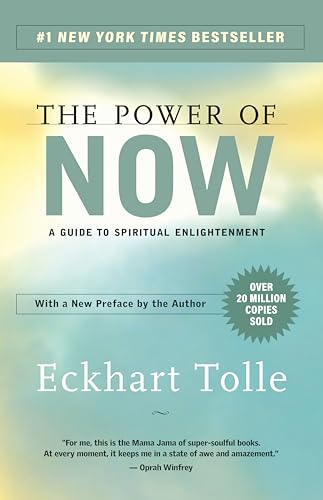 1
1