We've ranked the best drawing books using expert recommendations, sales data, and millions of reader ratings. At Shortform, we know books. Our book guides are the best in the world. Learn why.
Cover unavailable
1
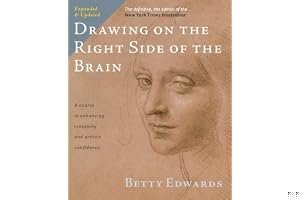
The New Drawing on the Right Side of the Brain
Betty Edwards
5.0
When Drawing on the Right Side of the Brain was first published in 1979, it hit the New York Times bestseller list within two weeks and stayed there for more than a year. In 1989, when Dr. Betty Edwards revised the book, it went straight to the Times list again. Now Dr. Edwards celebrates the twentieth anniversary of her classic book with a second revised edition.Over the last decade, Dr. Edwards has refined her material through teaching hundreds of workshops and seminars. Truly The New Drawing on the Right Side of the Brain, this edition includes:
the very latest developments in brain research new material on using drawing techniques in the corporate world and in education instruction on self-expression through drawing an updated section on using color detailed information on using the five basic skills of drawing for problem solving
…
Recommended by Adam Robinson and Adam Robinson.
Adam Robinson
One of five books that confirm there is far, far more in our unconscious mind than is dreamt of in our philosophy. [source]
Adam Robinson
One of five books that confirm there is far, far more in our unconscious mind than is dreamt of in our philosophy. [source]
Cover unavailable
2
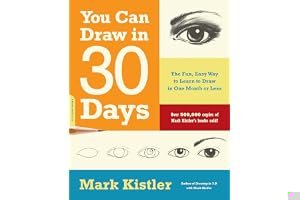
You Can Draw in 30 Days: The Fun, Easy Way to Learn to Draw in One Month or Less
Mark Kistler
4.7
Pick up your pencil, embrace your inner artist, and learn how to draw in thirty days with this approachable step-by-step guide from an Emmy award-winning PBS host. Drawing is an acquired skill, not a talent -- anyone can learn to draw! All you need is a pencil, a piece of paper, and the willingness to tap into your hidden artistic abilities. With Emmy award-winning, longtime PBS host Mark Kistler as your guide, you'll learn the secrets of sophisticated three-dimensional renderings, and have fun along the way -- in just twenty minutes a day for a month. Inside you'll find: Quick and easy step-by-step instructions for drawing everything from simple spheres to apples, trees, buildings, and the human hand and face More than 500 line drawings, illustrating each step Time-tested tips, techniques, and tutorials for drawing in 3-D The 9 Fundamental Laws of Drawing to create the illusion of depth in any drawing 75 student examples to encourage you in the process
…
Cover unavailable
3
Keys to Drawing
Bert Dodson
4.7
Anyone who can hold a pencil can learn to draw.
In this book, Bert Dodson shares his complete drawing system--fifty-five "keys" that you can use to render any subject with confidence, even if you're a beginner.
These keys, along with dozens of practice exercises, will help you draw like an artist in no time.
You'll learn how to:
Restore, focus, map, and intensify Free your hand action, then learn to control it Convey the illusions of light, depth, and texture Stimulate your imagination through "creative play"
…
Cover unavailable
4
Figure Drawing: Design and Invention
Michael Hampton
4.7
Figure Drawing: Design and Invention is an instructional figure drawing book geared towards the novice and experienced artist alike. This book emphasizes a simplified understanding of surface anatomy, in order to clarify the mechanics of the figure, facilitate invention, and ultimately create a skill-set that can be successfully applied to other media. In addition, this book focuses very strongly on practical usage, making sure the artist is able to assimilate the steps presented here into a cohesive working process. (Fourth printing, September 2011)
Influence, the classic book on persuasion, explains the psychology of why people say "yes"—and how to apply these understandings. Dr. Robert Cialdini is the seminal expert in the rapidly expanding field of influence and persuasion. His thirty-five years of rigorous, evidence-based research along with a three-year program of study on what moves people to change behavior has resulted in this highly acclaimed book.
You'll learn the six universal principles, how to use them to become a skilled persuader—and how to defend yourself against them. Perfect for people in all walks of life, the principles of Influence will move you toward profound personal change and act as a driving force for your success.
100,000 years ago, at least six human species inhabited the earth. Today there is just one. Us. Homo sapiens.
How did our species succeed in the battle for dominance? Why did our foraging ancestors come together to create cities and kingdoms? How did we come to believe in gods, nations and human rights; to trust money, books and laws; and to be enslaved by bureaucracy, timetables and consumerism? And what will our world be like in the millennia to come?
In Sapiens, Dr Yuval Noah Harari spans the whole of human history, from the very first humans to walk the earth to the radical – and sometimes devastating – breakthroughs of the Cognitive, Agricultural and Scientific Revolutions. Drawing on insights from biology, anthropology, paleontology and economics, he explores how the currents of history have shaped our human societies, the animals and plants around us, and even our personalities. Have we become happier as history has unfolded? Can we ever free our behaviour from the heritage of our ancestors? And what, if anything, can we do to influence the course of the centuries to come?
Bold, wide-ranging and provocative, Sapiens challenges everything we thought we knew about being human: our thoughts, our actions, our power ... and our future.
Both Melinda and I read this one, and it has sparked lots of great conversations at our dinner table. Harari takes on a daunting challenge: to tell the entire history of the human race in just 400 pages. He also writes about our species today and how artificial intelligence, genetic engineering, and other technologies will change us in the future. Although I found things to disagree with—especially Harari’s claim that humans were better off before we started farming—I would recommend Sapiens to anyone who’s interested in the history and future of our species. [source]
The 35th anniversary edition of the classic how-to book that has helped millions of artists learn to draw.
When it was originally published in 1970, How to Draw What You See zoomed to the top of Watson-Guptill's best-seller list--and it has remained there ever since. "I believe that you must be able to draw things as you see them--realistically," wrote Rudy de Reyna in his introduction.

Today, generations of artists have learned to draw what they see, to truly capture the world around them, using de Reyna's methods. How to Draw What You See shows artists how to recognize the basic shape of an object--cube, cylinder, cone, or sphere--and use that shape to draw the object, no matter how much detail it contains.
…
Cover unavailable
9
Figure Drawing for All It's Worth (How to draw and paint)
Andrew Loomis
4.5
The illustrator Andrew Loomis (1892-1959) is revered among artists - including comics superstar Alex Ross - for his mastery of figure drawing and clean, Realist style.
His hugely influential series of art instruction books have never been bettered, and Figure Drawing is the first in Titan's programme of facsimile editions, returning these classic titles to print for the first time in decades.
Cover unavailable
10
How to Draw: Drawing and Sketching Objects and Environments from Your Imagination
Scott Robertson
4.5
Cover unavailable
11
How to Draw Comics the Marvel Way
Stan Lee and John Buscema
4.5
One of the first and still one of the best, Stan Lee’s How to Draw Comics the Marvel Way has been the primary resource for any and all who want to master the art of illustrating comic books and graphic novels.
Stan Lee, the Mighty Man from Marvel, and John Buscema, active and adventuresome artist behind the Silver Surfer, Conan the Barbarian, the Mighty Thor and Spider-Man, have collaborated on this comics compendium: an encyclopedia of information for creating your own superhero comic strips. Using artwork from Marvel comics as primary examples, Buscema graphically illustrates the hitherto mysterious methods of comic art. Stan Lee’s pithy prose gives able assistance and advice to the apprentice artist. Bursting with Buscema’s magnificent illustrations and Lee’s laudable word-magic, How to Draw Comics the Marvel Way belongs in the library of everyone who has ever wanted to illustrate his or her own comic strip.
…
Cover unavailable
12
Drawing the Head and Figure
Jack Hamm
4.5
A how-to handbook that makes drawing easy. Offers simplified techniques and scores of brand-new hints and helps. Step by step procedures. Hundreds of illustrations.
Cover unavailable
13
The Natural Way to Draw
Kimon Nicolaides
4.5
Great for the beginner and the expert, this book offers readers exercises to improve their work.
Cover unavailable
14
Fun with a Pencil
Andrew Loomis
4.5
Andrew Loomis (1892-1959) is revered amongst artists - including comics superstar Alex Ross - for his mastery of drawing. His first book, Fun With a Pencil, published in 1939 is a wonderfully crafted and engaging introduction to drawing, cartooning, and capturing the essence of a subject all while having fun. With delightful step-by-step instruction from Professor Blook, Loomis's charming alter ego on the page.
…
Cover unavailable
15
Successful Drawing
Andrew Loomis
4.4
The illustrator Andrew Loomis is revered amongst artists for his mastery of drawing technique and his clean, realist style. His hugely influential series of art instruction books have never been bettered and Successful Drawing, the third in Titan's programme of facsimile editions, returns this classic title to print for the first time in decades.
For over 60 years Successful Drawing has provided a superb resource covering all the techniques needed to master three-dimensional drawing. From the fundamentals of proportion, placement, perspective, planes and pattern, through a detailed examination of scale and the effects and capture of light, to the mastery of conception, construction, contour, character and consistency, Successful Drawing is filled with step-by-step instruction, professional tips and beautiful illustration.
Engaging, witty, and wonderfully executed, this is a masterclass for amateur artists and professional illustrators alike.
…
Cover unavailable
16
The Subtle Art of Not Giving a F*ck: A Counterintuitive Approach to Living a Good Life
In this generation-defining self-help guide, a superstar blogger cuts through the crap to show us how to stop trying to be "positive" all the time so that we can truly become better, happier people.
For decades, we’ve been told that positive thinking is the key to a happy, rich life. "Fk positivity," Mark Manson says. "Let’s be honest, shit is fked and we have to live with it." In his wildly popular Internet blog, Manson doesn’t sugarcoat or equivocate. He tells it like it is—a dose of raw, refreshing, honest truth that is sorely lacking today. The Subtle Art of Not Giving a Fk is his antidote to the coddling, let’s-all-feel-good mindset that has infected American society and spoiled a generation, rewarding them with gold medals just for showing up.
Manson makes the argument, backed both by academic research and well-timed poop jokes, that improving our lives hinges not on our ability to turn lemons into lemonade, but on learning to stomach lemons better. Human beings are flawed and limited—"not everybody can be extraordinary, there are winners and losers in society, and some of it is not fair or your fault." Manson advises us to get to know our limitations and accept them. Once we embrace our fears, faults, and uncertainties, once we stop running and avoiding and start confronting painful truths, we can begin to find the courage, perseverance, honesty, responsibility, curiosity, and forgiveness we seek.
There are only so many things we can give a fk about so we need to figure out which ones really matter, Manson makes clear. While money is nice, caring about what you do with your life is better, because true wealth is about experience. A much-needed grab-you-by-the-shoulders-and-look-you-in-the-eye moment of real-talk, filled with entertaining stories and profane, ruthless humor, The Subtle Art of Not Giving a F**k is a refreshing slap for a generation to help them lead contented, grounded lives.
…
Recommended by Ryan Holiday, Alex Blackwell, Aunty Ada, and 21 others.
Finally done! Amazing book, I recommend😊 https://t.co/IDTawuWn8f [source]
Cover unavailable
17
Color and Light: A Guide for the Realist Painter
James Gurney
4.4
From New York Times best-selling author of the Dinotopia series, James Gurney, comes a carefully crafted and researched study on color and light in paintings. This art instruction book will accompany the acclaimed Imaginative Realism: How to Paint What Doesn't Exist.
James Gurney, New York Times best-selling author and artist of the Dinotopia series, follows Imaginative Realism with his second art-instruction book, Color and Light: A Guide for the Realist Painter. A researched study on two of art's most fundamental themes, Color and Light bridges the gap between abstract theory and practical knowledge. Beginning with a survey of underappreciated masters who perfected the use of color and light, the book examines how light reveals form, the properties of color and pigments, and the wide variety of atmospheric effects. Gurney cuts though the confusing and contradictory dogma about color, testing it in the light of science and observation. A glossary, pigment index, and bibliography complete what will ultimately become an indispensable tool for any artist.
This book is the second in a series based on his blog, gurneyjourney.com. His first in the series, Imaginative Realism, was widely acclaimed in the fantastical art world, and was ranked the #1 Bestseller on the Amazon list for art instruction.
"James Gurney's new book, Color and Light, cleverly bridges the gap between artistic observation and scientific explanation. Not only does he eloquently describe all the effects of color and light an artist might encounter, but he thrills us with his striking paintings in the process." --Armand Cabrera, Artist
…
Cover unavailable
18
Understanding Comics: The Invisible Art
Scott McCloud
4.4
The bestselling international classic on storytelling and visual communication
"You must read this book." — Neil Gaiman
Praised throughout the cartoon industry by such luminaries as Art Spiegelman, Matt Groening, and Will Eisner, Scott McCloud's Understanding Comics is a seminal examination of comics art: its rich history, surprising technical components, and major cultural significance. Explore the secret world between the panels, through the lines, and within the hidden symbols of a powerful but misunderstood art form.
…
Recommended by Ev Williams, Austin Kleon, Bret Victor, and 1 others.
Unsolicited, but here’s my advice for visual thinkers (and others) who want to be better writers: … Cartoonists, because their work demands work from two disciplines (writing/art, poetry/design, words/pictures), are highly instructive when it comes to visual people learning to write, writers learning to make art, etc. (Check out Scott McCloud’s Understanding Comics for more.) [source]
Will Brooker
Understanding Comics is a book about how comics work, told in comic form. It’s very accessible, it’s for the general reader and is about comics in general, not just superhero comics. It explores areas like pacing and editing – how motion can be created through static panels on a page, and how arranging those panels in different ways, or drawing in different styles, or combining text and image, has different effects. It’s almost like a book on film study which explores the role of sound, lighting or editing. Scott McCloud is an artist himself, and he draws pastiches to show how different styles produce different effects. [source]
Cover unavailable
19
Dynamic Figure Drawing
Burne Hogarth
4.4
This powerful book offers a systematic approach to rendering action figures that seem to leap off the page.
Cover unavailable
20
Pen and Ink Drawing: A Simple Guide
Alphonso Dunn
4.3
Pen & Ink Drawing: A Simple Guide covers the essential aspects of pen and ink drawing and more. It explores basic materials and instruments; fundamental properties of strokes and pen control; key elements of shading; and indispensable techniques for creating vibrant textures. As a bonus, a chapter is devoted to what the author refers to as, the secret Line of Balance. This book is not just written to instruct but also to intrigue and inspire enthusiasts of pen and ink drawing.
…
Cover unavailable
21
Drawing Lessons from the Great Masters: 100 Great Drawings Analyzed, Figure Drawing Fundamentals Defined
Robert Beverly Hale, Jacob Collins
4.3
A book whose sales have not diminished but rather increased dramatically since its publication 45 years ago, this bestselling classic is the ultimate manual of drawing taught by the late Robert Beverly Hale, who’s famed lectures and classes at New York City’s Art Student League captivated artists and art educators from around the world.
Faithfully producing and methodically analyzing 100 master drawings—including works of Michelangelo, Leonardo da Vinci, Rodin, Goya, and Rembrandt among others—Hale shows how these artists tackled basic problems such as line, light and planes, mass, position and thrust, and anatomy. With detailed analytical captions and diagrams, every lesson is clearly delineated and illustrated. Throughout, also, is commentary that sheds light on the creative process of drawing and offers deep insight into the unsurpassed achievements of the masters.
…
Cover unavailable
22
Drawing Dynamic Hands
Burne Hogarth
4.3
The most comprehensive book ever published on drawing hands, it uses a revolutionary system for visualizing the hand in an almost infinite number of positions.
Cover unavailable
23
Creative Illustration
Andrew Loomis
4.3
During his career as one of America's most sought-after illustrators, Andrew Loomis (1889-1959) taught at the American Academy of Art in Chicago, and in 1939 he codified his lessons in his first manual, Fun with a Pencil. Four years later it had already been through six printings, and he followed up over the next two decades with a series of even more successful how-to books that remain the gold standard for artists to this day.
Creative Illustration is considered Loomis's magnum opus, which was aimed primarily at the professional-level illustrator. Divided into seven sections: Line, Tone, Color, Telling the Story, Creating Ideas, Fields of Illustration, and Experimenting and Studies, this book is filled with instructions, tips, insider experiences, and incredible illustrations.
…
Cover unavailable
24
The Practice and Science of Drawing
Harold Speed
4.3
Much of the learning to practice as well as to appreciate art is concerned with understanding the basic principles. One of these principles is what Harold Speed calls "dither," the freedom that allows realism and the artistic vision to play against each other. Very important to any artist or work of art, this quality separates the scientifically accurate from the artistically accurate. Speed's approach to this problem is now considered a classic, one of the few books from the early years of this century that has continued to be read and recommended by those in the graphic arts. In this work, Harold Speed approaches this dynamic aspect of drawing and painting from many different points of view. He plays the historical against the scientific, theory against precise artistic definition. He begins with a study of line drawing and mass drawing, the two basic approaches the artist needs to learn. Further sections carry the artistic vision through unity and variety of line and mass, balance, proportion, portrait drawing, the visual memory, materials, and procedures. Throughout, Speed combines historical backgrounds, dynamic aspects which each technique brings to a work of art, and specific exercises through which the young draughtsman may begin his training. Although not a technique book in the strict sense of the terms, The Practice and Science of Drawing brings to the beginner a clear statement of the principles that he will have to develop and their importance in creating a work of art. Ninety-three plates and diagrams, masterfully selected, reinforce Speed's always clear presentation. Harold Speed, master of the art of drawing and brilliant teacher, has long been cited for this important work. For the beginner, Speed will develop a sense for the many different aspects which go into an artistic education. For the person who enjoys looking at drawings and paintings, Speed will aid developing the ability to see a work of art as the artist meant it to be seen.
The past is a source of inspiration and fellowship, allowing our solitary lives and artistic body of work to be seen in a larger context, and we are propelled forward in its current.The book is a hundred years old, yet is as true and useful now as when it was first released. An underlying theme through all the books we’re discussing is that art is a skill that can be taught and mastery achieved by cultivating your skills [source]
Cover unavailable
25
The Animator's Survival Kit: A Manual of Methods, Principles and Formulas for Classical, Computer, Games, Stop Motion and Internet Animators
Richard Williams
4.3
The definitive book on animation, from the Academy Award-winning animator behind Who Framed Roger Rabbit?
Animation is one of the hottest areas of filmmaking today--and the master animator who bridges the old generation and the new is Richard Williams. During his fifty years in the business, Williams has been one of the true innovators, winning three Academy Awards and serving as the link between Disney's golden age of animation by hand and the new computer animation exemplified by Toy Story.
Perhaps even more important, though, has been his dedication in passing along his knowledge to a new generation of animators so that they in turn could push the medium in new directions. In this book, based on his sold-out master classes in the United States and across Europe, Williams provides the underlying principles of animation that every animator--from beginner to expert, classic animator to computer animation whiz --needs. Urging his readers to "invent but be believable," he illustrates his points with hundreds of drawings, distilling the secrets of the masters into a working system in order to create a book that will become the standard work on all forms of animation for professionals, students, and fans.
…
Cover unavailable
26
Perspective Made Easy
Ernest R. Norling
4.3
Perspective, the author tells us, is easy; yet surprisingly few artists are aware of the simple rules that make it so. This easy-to-follow book — the first devoted entirely to clarifying the laws of perspective — remedies the situation. In it, the author uses over 250 simple line drawings to illustrate the concepts involved. Beginning with clear, concise, immediately applicable discussions of the horizon, vanishing point, and the crucial relationship of eye level to perspective drawing, you'll learn how to place figures and objects in a drawing, depict interiors, create shade and shadows, and achieve all the other elements necessary for a successful perspective drawing. By repeatedly stressing important points, Mr. Norling teaches you to make them second-nature. Moreover, his approach is so simple and direct that no matter how little raw talent or experience you have, you will soon be able to apply these techniques almost instinctively. Mastery of perspective is a basic skill every artist must have. This simple, nontechnical guide will enable you to master its essentials in a relatively short time. Clear and concise, this book is an essential addition to any artist's bookshelf.
…
Cover unavailable
27
Drawing for the Absolute Beginner: A Clear & Easy Guide to Successful Drawing
Mark Willenbrink and Mary Willenbrink
4.3
This inspiring book makes drawing in a realistic style easier than you may think and more fun than you ever imagined!
Authors Mark and Mary Willenbrink (Watercolor for the Absolute Beginner) cover it all--from choosing materials and the correct way to hold your pencil, to expert advice on the tricky stuff, like getting proportions and perspective right, drawing reflections, and designing strong compositions. (It's not as scary as it sounds...not with Mark and Mary as your guide!)
At the heart of this book, a series of fun, hands-on exercises help you practice and perfect your strokes--24 mini-demos lead up to 9 full step-by-step demos. Each exercise builds on the previous one as you develop your skills, build your confidence, and enjoy yourself along the way. The lessons you learn by drawing simple subjects such as coffee mugs, clouds and trees will help you take on progressively more challenging matter like animals, still lifes, landscapes and portraits...the kinds of subjects and scenes you've always dreamt of drawing.
This book is just the ticket for budding artists of any age. It's never too early and never too late to discover the pure joy of drawing!
…
Cover unavailable
28
Imaginative Realism: How to Paint What Doesn't Exist
James Gurney
4.3
From the award-winning artist, learn to see and shape the world in a way you never before imagined.
An award-winning fantasy artist and the creator of Dinotopia, James Gurney instructs and inspires in Imaginative Realism: How to Paint What Doesn't Exist. Renowned for his uncanny ability to incorporate amazing detail and imagination into stunningly realistic fantasy settings, James Gurney teaches budding artists and fans of fantasy art step-by-step the techniques that won him worldwide critical acclaim. This groundbreaking work examines the practical methods for creating believable pictures of imaginary subjects, such as dinosaurs, ancient Romans, alien creatures, and distant worlds.
Beginning with a survey of imaginative paintings from the Renaissance to the golden Age of American illustration, the book then goes on to explain not just techniques like sketching and composition, but also the fundamentals of believable world building including archaeology, architecture, anatomy for creatures and aliens, and fantastic engineering. It concludes with details and valuable advice on careers in fantasy illustration, including video game and film concept art and toy design.
More than an instruction book, this is the ultimate reference for fans of science fiction and fantasy illustration.
"Gurney's Imaginative Realism is a gold mine for artists who want to create images that sing with authority and delight the viewer with rich otherworldly visuals." --Erik Tiemens, concept artist, Star Wars: Episodes II and III
"Imaginative Realism is an indispensable, flawless reference for vision makers in any discipline to create their own imaginative realms." --Frank M. Costantino, ASAI, SI, FSAI, JARA, cofounder, American Society of Architectural Illustrators
…
Cover unavailable
29
Drawing Realistic Textures in Pencil
J. D. Hillberry
4.3
You won't believe the incredible drawings you can create using common pencils and the special techniques illustrated in this book. These methods are so easy that anyone--from doodler to advanced artist--can master them in minutes! Step by step, you'll learn how to capture the look of metal, glass, weathered wood, skin, hair and other textures. Two detailed start-to-finish demonstrations show you how to use these textures to create drawings that look so real they seem to leap right off the page.
…
Cover unavailable
30
Keys to Drawing with Imagination: Strategies and Exercises for Gaining Confidence and Enhancing Your Creativity
Bert Dodson
4.3
Draw with Confidence and Creativity!
Creativity occurs in action: It is not a trait; it is something you do. To be creative, you need to engage in the art-making process. When you are "in the flow," you shift out of the future and into the present, making connections, generating variations and surrendering to the process. Keys to Drawing With Imagination is a course for artists in how to take something, do something to it, and make something new.
Best-selling author Bert Dodson, author of the best-selling Keys to Drawing, is back with fun techniques and mind-stretching strategies to get you drawing better and more imaginatively than you ever have before. In every section, he offers you basic guidelines that help you channel your creative energies in the right direction. Before you know it, you'll lose yourself in the process, enjoying the experience as you create something gratifying and worthwhile.
The subjects covered in this hands-on book are as vast as the imagination itself. Through 36 exercises and 13 step-by-step demonstrations, you'll explore how to:
- Take your doodling from mindless to masterful - Create your own reality by crumbling, melting or breaking objects - Flip the familiar on its ear to create something utterly original - Experiment with visual paradox and metaphor - Tell vivid stories through the details in your drawings - Play with patterns to create captivating compositions - Build your drawings by borrowing ideas from different cultures - Develop a theme in your work
Along the way, Dodson offers you priceless advice on the creative process culled from his 60 years of drawing and teaching. For additional inspiration and encouragement, he even includes the work of well-known artists. So what are you waiting for? Grab this book and start drawing! You'll be amazed at what you can create.
…
Cover unavailable
31
The Artist's Complete Guide to Facial Expression
Gary Faigin
4.3
This instructional and reference manual is a visual index of facial expressions. It centres on the muscles of expression and their effects as a basis for understanding and analyzing those expressions they see on models and in photographs. Artists will be aided in understanding expression and in creating expression. The book is organized around three parts - part one analyzes the basic structures of the head, the fundamental forms of the skull and recurring proportions, all in preparation for understanding full facial expression in part three. Part two describes the muscles of expression in the three key parts of the face. In part three, the basic facial forms from part two are combined to form the six basic human expressions - joy, sadness, anger, fear, disgust and surprise. Each expression is depicted in steadily increasing intensity. Examples of facial images are drawn from a variety of photographic art and artistic sources.
…
Cover unavailable
32
How to Draw Cool Stuff
Catherine V Holmes
4.3
How to Draw Cool Stuff shows simple step-by-step illustrations that make it easy for anyone to draw cool stuff with precision and confidence. These pages will guide you through the basic principles of illustration by concentrating on easy-to-learn shapes that build into complex drawings. With the step-by-step guidelines provided, anything can become easy to draw. This book contains a series of fun, hands-on exercises that will help you see line, shape, space and other elements in everyday objects and turn them into detailed works of art in just a few simple steps. The exercises in this book will help train your brain so you can visualize ordinary objects in a different manner, allowing you to see through the eyes of an artist. From photorealistic faces to holiday themes and tattoo drawings, How to Draw Cool Stuff makes drawing easier than you would think and more fun than you ever imagined! Now is the time to learn how to draw the subjects and scenes you've always dreamt of drawing. How to Draw Cool Stuff is suitable for artists of any age benefiting everyone from teachers and students to self-learners and hobbyists. How to Draw Cool Stuff will help you realize your artistic potential and expose you to the pure joy of drawing!
…
Cover unavailable
33
Lessons in Classical Drawing: Essential Techniques from Inside the Atelier
Juliette Aristides
4.3
The practice of drawing…distilled to its essential elements.
In this elegant and inspiring primer, master contemporary artist and author Juliette Aristides breaks down the drawing process into small, manageable lessons; introduces time-tested principles and techniques that are easily accessible; and shares the language and context necessary to understand the artistic process and create superior, well-crafted drawings.
The companion DVD enclosed inside, beautifully filmed in Florence, Italy, provides real-time drawing lessons so that any gaps in the learning process are filled in with live instruction.
…
Cover unavailable
34
The Creative License: Giving Yourself Permission to Be The Artist You Truly Are
Danny Gregory
4.2
The author of "Everyday Matters: A New York Diary" teaches readers to open their lives to creativity and fulfillment by relearning how to draw. Handwritten and illustrated in color throughout.
Cover unavailable
35
How to Draw Animals
Jack Hamm
4.2
Simple, clear instructions for drawing animals with more than a thousand step-by-step illustrations. Basic fundamentals for the beginner, new principles and techniques for the professional. A detailed guide for everyone who enjoys—or wants to enjoy—drawing.
Cover unavailable
36
Atlas of Human Anatomy for the Artist
Stephen Rogers Peck
4.2
Stephen Rogers Peck's Atlas of Human Anatomy for the Artist remains unsurpassed as a manual for students. It includes sections on bones, muscles, surface anatomy, proportion, equilibrium, and locomotion. Other unique features are sections on the types of human physique, anatomy from birth to old age, an orientation on racial anatomy, and an analysis of facial expressions. The wealth of information offered by the Atlas ensures its place as a classic for the study of the human form.
…
Cover unavailable
37
Drawing on the Artist Within
Betty Edwards
4.2
Whether you are a business manager, teacher, writer, technician, or student, you'll find Drawing on the Artist Within the most effective program ever created for tapping your creative powers. Profusely illustrated with hundreds of instructional drawings and the work of master artists, this book is written for people with no previous experience in art.
AH-HA! I SEE IT NOW! Everyone has experienced that joyful moment when the light flashes on -- the Ah-Ha! of creativity.
Creativity. It is the force that drives problem-solving, informs effective decision-making and opens new frontiers for ambition and intelligence. Those who succeed have learned to harness their creative power by keeping that light bulb turned on.
Now, Betty Edwards, author of Drawing on the Right Side of the Brain, the million-copy best-seller that proved all people can draw well just as they can read well, has decoded the secrets of the creative process to help you tap your full creative potential and apply that power to everyday problems. How does Betty Edwards do this? Through the power of drawing -- power you can harness to see problems in new ways.
You will learn how the creative process progresses from stage to stage and how to move your own problem-solving through these key steps: * First insight * Saturation * Incubation * Illumination (the Ah-Ha!) * Verification
Through simple step-by-step exercises that require no special artistic abilities, Betty Edwards will teach you how to take a new point of view, how to look at things from a different perspective, how to see the forest and the trees, in short, how to bring your visual, perceptual brainpower to bear on creative problem-solving.
…
Cover unavailable
38
Drawn to Life: 20 Golden Years of Disney Master Classes: Volume 1: The Walt Stanchfield Lectures
Walt Stanchfield, Don Hahn
4.2
Discover the lessons that helped bring about a new golden age of Disney animation!Published for the first time ever, Drawn to Life is a two volume collection of the legendary lectures from long-time Disney animator Walt Stanchfield. For over twenty years, Walt helped breathe life into the new golden age of animation with these teachings at the Walt Disney Animation Studios and influenced such talented artists as Tim Burton, Brad Bird, Glen Keane, and John Lasseter. These writings represent the quintessential refresher for fine artists and film professionals, and it is a vital tutorial for students who are now poised to be part of another new generation in the art form.Written by Walt Stanchfield (1919-2000), who began work for the Walt Disney Studios in the 1950s. His work can be seen in films like Sleeping Beauty, The Jungle Book, 101 Dalmatians, and Peter Pan.Edited by Academy Award(R)-nominated producer Don Hahn, who has prduced such classic Disney films as Beauty and the Beast and The Lion King.
…
Cover unavailable
39
The Artist's Complete Guide to Figure Drawing: A Contemporary Master Reveals the Secrets of Drawing the Human Form
Anthony Ryder
4.2
Many of us want to learn "how to draw." But as artist Anthony Ryder explains, it's much more important to learn what to draw. In other words, to observe and draw what we actually see, rather than what we think we see. When it comes to drawing the human figure, this means letting go of learned ideas and expectation of what the figure should look like. It means carefully observing the interplay of form and light, shape and line, that combine to create the actual appearance of human form. In The Artist's Complete Guide to Figure Drawing, amateur and experienced artists alike are guided toward this new way of seeing and drawing the figure with a three-step drawing method.
The book's progressive course starts with the block-in, an exercise in seeing and establishing the figure's shape. It then build to the contour, a refined line drawing that represents the figure's silhouette. The last step is tonal work on the inside of the contour, when light and shadow are shaped to create the illusion of form. Separate chapters explore topics critical to the method: gesture, which expresses a sense of living energy to the figure; light, which largely determines how we see the model; and form, which conveys the figure's volume and mass. Examples, step-by-steps, and special "tips" offer helpful hints and practical guidance throughout.
Lavishly illustrated with the author's stunning artwork, The Artist's Complete Guide to Figure Drawing combines solid instruction with thoughtful meditations on the art of drawing, to both instruct and inspire artists of all levels.
…
Cover unavailable
40
Force: Dynamic Life Drawing for Animators
Mike Mattesi
4.2
Force: Dynamic Life Drawing for AnimatorsCapture the force in your life drawing subjects with this practical guide to dynamic drawing techniques - packed with superb, powerfully drawn examples that show you how to: • Bring your work to life with rhythmic drawing techniques • Create appealing and dynamic poses in your drawings* Experience the figure's energy in three dimensional space* Use the asymmetry of straight and curved lines to clarify the direction of force in the body* Build on your foundational anatomy and figure drawing skills to animate your drawings *Apply the theory of force to your on-location and animal drawing observationsWhether you are an animator, comic book artist, illustrator or fine arts' student you'll learn to use rhythm, shape, and line to bring out the life in any subject while Mike Mattesi's infectious enthusiasm will have you reaching for your pencils!Mike Mattesi is the owner and founder of Entertainment Art Academy (www.enterartacad.com) based in Southern California. He has been a professional production artist and instructor for the last fifteen years with clients including Disney, Marvel Comics, Hasbro Toys, ABC, Microsoft, Electronic Arts, DreamWorks and Nickelodeon.Audience level: Intermediate to advanced
…
Cover unavailable
41
Making Comics: Storytelling Secrets of Comics, Manga and Graphic Novels
Scott McCloud
4.2
"Magnificent! The best how-to manual ever published." — Kevin Kelly, Cool Tools
Scott McCloud tore down the wall between high and low culture in 1993 with Understanding Comics, a massive comic book about comics, linking the medium to such diverse fields as media theory, movie criticism, and web design. In Reinventing Comics, McCloud took this to the next level, charting twelve different revolutions in how comics are generated, read, and perceived today. Now, in Making Comics, McCloud focuses his analysis on the art form itself, exploring the creation of comics, from the broadest principles to the sharpest details (like how to accentuate a character's facial muscles in order to form the emotion of disgust rather than the emotion of surprise.) And he does all of it in his inimitable voice and through his cartoon stand–in narrator, mixing dry humor and legitimate instruction. McCloud shows his reader how to master the human condition through word and image in a brilliantly minimalistic way. Both comic book devotees and the uninitiated will marvel at this journey into a once–underappreciated art form.
…
Recommended by Bret Victor.
Cover unavailable
42
Drawing the Human Head
Burne Hogarth
4.2
In 300 extraordinary drawings, Hogarth shows how to draw the head from every angle, age the face from infancy to old age, and delineate every feature and wrinkle.
Cover unavailable
43
Anatomy for the Artist
Sarah Simblet, John Davis
4.2
Unlock your inner artist and learn how to draw the human body in this beautifully illustrated art book by celebrated artist and teacher Sarah Simblet.
This visually striking guide takes a fresh approach to drawing the human body. A combination of innovative photography and drawings, practical life-drawing lessons, and in-depth explorations of the body's surface and underlying structure are used to reveal and celebrate the human form.
Combining specially-commissioned photographs of models with historical and contemporary works of art and her own dynamic life drawing, Sarah leads us inside the human body to map its skeleton, muscle groups, and body systems. Detailed line drawings superimposed over photographs reveal the links between the body's appearance and its construction. Six drawing classes show how to observe different parts of the body and give expert guidance on how to draw them. Inspirational master classes on famous works, ranging from a Michelangelo study to a Degas painting, show how artists have depicted the human body over the centuries. Each master class includes a photograph of a model holding the same pose as in the painting, to highlight details of anatomy and show how the artist has interpreted them.
Understanding anatomy is the key to drawing the human body successfully. As well as being the perfect reference, Anatomy for the Artist will inspire you to find a model, reach for your pencil, and start drawing.
…
Cover unavailable
44
The Art of Animal Drawing: Construction, Action Analysis, Caricature
Ken Hultgren
4.2
"You'll learn everything there is to learn about drawing animals." — Collectors' Corner This thoughtful and incisive guidebook, written by a former animator for Walt Disney Studios, will help artists at many skill levels improve their ability to draw a wide variety of animal forms both realistically and as caricatures. You'll learn why the author considers construction, action analysis, and caricature all-important for a clear understanding of animal anatomy and movement. You'll also benefit from Mr. Hultgren's expert advice and tips on catching the essential movement and character of animals and avoiding the stiff, wooden poses that are the frequent and unfortunate result of much sketching of animals from life. Throughout, the emphasis is on construction drawings (there are over 700 line illustrations and halftones) rather than on text. This means the student is able to view the development process of the drawing by example rather than theory or description. The book begins with introductory chapters on the special techniques of drawing animals, the use of line, establishing mood and feeling, conveying action, and brush techniques. Mr. Hultgren then turns to individual animal forms — horses, deer, cats, cows and bulls, giraffes, camels, gorillas, pigs, and many more. His instruction on animal caricature will be especially valuable to the legions of artists avidly interested in the subject. The Art of Animal Drawing belongs in the library of any artist — student, amateur, or professional — who is interested in drawing animals.
…
Cover unavailable
45
Bridgman's Complete Guide to Drawing From Life: Over 1,000 Illustrations
George B. Bridgman
4.2
“An indispensable volume...published for the first time in paperback....More than 200 illustrations of hands and hundreds of images of arms, shoulders, heads, torsos, legs, knees, and feet.” —Library Journal. “It will...meet a deeply felt need to draw the human figure from a vantage point of understanding and visual acuity.”—Arts & Activities.
Cover unavailable
46
The Art of Urban Sketching: Drawing On Location Around The World
Gabriel Campanario
4.2
The Art of Urban Sketching is both a comprehensive guide and a showcase of location drawings by artists around the world who draw the cities where they live and travel. Authored by the founder of the nonprofit organization Urban Sketchers (www.urbansketchers.org), this beautiful, 320-page volume explains urban sketching within the context of a long historical tradition and how it is being practiced today. With profiles of leading practitioners and discussions of the benefits of working in this art form, this inspiring book shows how one can participate and experience this creative outlet through modern-day social networks and online activity. You'll find more than 600 beautiful, contemporary illustrations, as well as artists' profiles and extended captions where these urban sketchers share their stories, how they work, sketching tips, and the tools behind each drawing. With sketches and observations from more than 50 cities in more than 30 countries, The Art of Urban Sketching offers a visually arresting, storytelling take on urban life from different cultures and artistic styles, as well as insight into various drawing techniques and mediums.
…
Cover unavailable
47
Drawing Lab for Mixed-Media Artists: 52 Creative Exercises to Make Drawing Fun
Carla Sonheim
4.2
Carla Sonheim is an artist and creativity workshop instructor known for her fun and innovative projects and techniques designed to help adult students recover a more spontaneous, playful approach to creating. Her innovative ideas are now collected and elaborated on in this unique volume. Carla offers a year's worth of assignments, projects, ideas, and techniques that will introduce more creativity and nonsense into your art and life. Drawing Lab for Mixed-Media Artists offers readers a fun way to learn and gain expertise in drawing through experimentation and play. There is no right or wrong result, yet, the readers gain new skills and confidence, allowing them to take their work to a new level.
…
Cover unavailable
48
Framed Ink: Drawing and Composition for Visual Storytellers
Marcos Mateu-Mestre
4.2
The ultimate guide to visual storytelling! How to make the audience "feel" the story while they are "reading" the story. Using his experiences from working in the comic book industry, movie studios and teaching, Marcos introduces the reader to a step-by-step system that will create the most successful storyboards and graphics for the best visual communication.
After a brief discussion on narrative art, Marcos introduces us to drawing and composing a single image, to composing steady shots to drawing to compose for continuity between all the shots. These lessons are then applied to three diverse story lines - a train accident, a cowboy tale and bikers approaching a mysterious house.
In addition to setting up the shots, he also explains and illustrates visual character development, emotive stances and expressions along with development of the environmental setting to fully develop the visual narrative.
…
Cover unavailable
49
The Laws Guide to Drawing Birds
John Muir Laws
4.2
This is more than a guide to drawing birds it is also an introduction to the lives, forms, and postures of the birds themselves.An imaginative field instruction book for really seeing and drawing birds by the bestselling author of the innovative field guides on the Sierra and San Francisco Bay.
Cover unavailable
50
Zen of Seeing: Seeing/Drawing as Meditation
Frederick Franck
4.2
A Dutch artist offers his concept of seeing and drawing as a discipline by which the world may be rediscovered, a way of experiencing Zen.
Cover unavailable
51
Rendering in Pen and Ink: The Classic Book on Pen and Ink Techniques for Artists, Illustrators, Architects, and Designers
Arthur L. Guptill, Susan E. Meyer
4.1
Arthur L. Guptill's classic Rendering in Pen and Ink has long been regarded as the most comprehensive book ever published on the subject of ink drawing. This is a book designed to delight and instruct anyone who draws with pen and ink, from the professional artist to the amateur and hobbyist. It is of particular interest to architects, interior designers, landscape architects, industrial designers, illustrators, and renderers.
Contents include a review of materials and tools of rendering; handling the pen and building tones; value studies; kinds of outline and their uses; drawing objects in light and shade; handling groups of objects; basic principles of composition; using photographs, study of the work of well-known artists; on-the-spot sketching; representing trees and other landscape features; drawing architectural details; methods of architectural rendering; examination of outstanding examples of architectural rendering; solving perspective and other rendering problems; handling interiors and their accessories; and finally, special methods of working with pen including its use in combination with other media.
The book is profusely illustrated with over 300 drawings that include the work of famous illustrators and renderers of architectural subjects such as Rockwell Kent, Charles Dana Gibson, James Montgomery Flagg, Willy Pogany, Reginald Birch, Harry Clarke, Edward Penfield, Joseph Clement Coll, F.L. Griggs, Samuel V. Chamberlain, Louis C. Rosenberg, John Floyd Yewell, Chester B. Price, Robert Lockwood, Ernest C. Peixotto, Harry C. Wilkinson, Bertram Grosvenor Goodhue, and Birch Burdette Long. Best of all, Arthur Guptill enriches the text with drawings of his own.
…
Cover unavailable
52
The Urban Sketcher: Techniques for Seeing and Drawing on Location
Marc Taro Holmes
4.1
Make the world your studio!
Capture the bustle and beauty of life in your town.
Experience life as only an artist can! Join the rapidly growing, international movement of artists united by a passion for drawing on location in the cities, towns and villages where they live and travel. Packed with art and advice from Marc Taro Holmes, artist and co-founder of Urbansketchers.org, this self-directed workshop shows you how to draw inspiration from real life and bring that same excitement into your sketchbook. Inside you'll fi nd everything you need to tackle subjects ranging from still lifes and architecture to people and busy street scenes.
15 step-by-step demonstrations cover techniques for creating expressive drawings using pencil, pen and ink, and watercolor. Expert tips for achieving a balance of accuracy, spontaneity and speed. Practical advice for working in the field, choosing subjects, coping with onlookers, capturing people in motion and more. Daily exercises and creative prompts for everything from improving essential skills to diverse approaches, such as montages, storytelling portraits and one-page graphic novels. Whether you are a habitual doodler or a seasoned artist, The Urban Sketcher will have you out in the world sketching from the very first page. By completing drawings on the spot, in one session, you achieve a fresh impression of not just what you see, but also what it feels like to be there . . . visual life stories as only you can experience them.
…
Cover unavailable
53
Colored Pencil Painting Bible: Techniques for Achieving Luminous Color and Ultrarealistic Effects
Alyona Nickelsen
4.1
Learn to color with groundbreaking new techniques for a favorite medium!
• Dazzling colors, incredible realism—with simple step-by-step demonstrations • Easy-to-follow coloring instructions from a top colored-pencil artist • Master the wide range of coloring effects possible, including blending, layering, translucent effects, and more
Radiant color…painterly finishes…astonishing realism…with colored pencils! Achieve rich, luminous color and eye-popping ultra-realistic effects. Artists of every level will be inspired by the amazing new techniques created by Alyona Nickelsen, presented in Colored Pencil Painting Bible for the very first time.
Nickelsen’s innovations will delight readers and detailed you-can-do-it processes bring her striking results within reach for every artist. Take colored pencils beyond the ordinary with Colored Pencil Painting Bible!
…
Cover unavailable
54
An Illustrated Life: Drawing Inspiration From The Private Sketchbooks Of Artists, Illustrators And Designers
Danny Gregory
4.1
Find Insight and Inspiration for Your Creative Life
An artist's journal is packed with sketches and captions; some rough, some polished. The margins sometimes spill over with hurriedly scrawled shopping lists and phone numbers. The cover may be travel-worn and the pages warped from watercolors. Open the book, and raw creativity seeps from each color and line. The intimacy and freedom on its pages are almost like being inside the artist's mind: You get a direct window into risks, lessons, mistakes, and dreams.
The private worlds of these visual journals are exactly what you'll find inside An Illustrated Life. This book offers a sneak peak into the wildly creative imaginations of 50 top illustrators, designers and artists. Included are sketchbook pages from R. Crumb, Chris Ware, James Jean, James Kochalka, and many others. In addition, author Danny Gregory has interviewed each artist and shares their thoughts on living the artistic life through journaling.
Watch artists—through words and images—record the world they see and craft the world as they want it to be. The pages of An Illustrated Life are sometimes startling, sometimes endearing, but always inspiring. Whether you're an illustrator, designer, or simply someone searching for inspiration, these pages will open a whole new world to you.
…
Cover unavailable
55
Charles Bargue and Jean-Leon Gerome: Drawing Course
Gerald M. Ackerman, Graydon Parrish, Charles Bargue
4.1
The Bargue-Gerome Drawing Course is a complete reprint of a famous, late nineteenth century drawing course.
Cover unavailable
56
The Artist's Complete Guide to Drawing the Head
William Maughan
4.1
In this innovative guide, master art instructor William Maughan demonstrates how to create a realistic human likeness by using the classic and highly accurate modeling technique of chiaroscuro (Italian for “light and dark”) developed by Leonardo da Vinci during the High Renaissance.
Maughan first introduces readers to the basics of this centuries-old technique, showing how to analyze form, light, and shadow; use dark pencil, white pencil, and toned paper to create a full range of values; use the elements of design to enhance a likeness; and capture a sitter’s gestures and proportions. He then demonstrates, step by step, how to draw each facial feature, develop visual awareness, and render the head in color with soft pastels.
…
Cover unavailable
57
Drawing Scenery: Seascapes and Landscapes
Jack Hamm
4.1
The how-to handbook that exactly explains and illustrates the step-by-step processes for drawing complete, succesful landscapes and seascapes and teaches the fundamentals of good composition as well as the separate picture elements. This guide combines the simplest kind of scenery sketching with the most complex renderings to give every artist, beginner or professional, essential scenery drawing techniques.More than 900 diagrams, pictorial explanations, and pictures
…
Cover unavailable
58
Journey
Aaron Becker
4.1
Follow a girl on an elaborate flight of fancy in a wondrously illustrated, wordless picture book about self-determination — and unexpected friendship.
A lonely girl draws a magic door on her bedroom wall and through it escapes into a world where wonder, adventure, and danger abound. Red marker in hand, she creates a boat, a balloon, and a flying carpet that carry her on a spectacular journey toward an uncertain destiny. When she is captured by a sinister emperor, only an act of tremendous courage and kindness can set her free. Can it also lead her home and to her heart’s desire? With supple line, luminous color, and nimble flights of fancy, author-illustrator Aaron Becker launches an ordinary child on an extraordinary journey toward her greatest and most exciting adventure of all.
…
Cover unavailable
59
Artist's Journal Workshop: Creating Your Life in Words and Pictures
Cathy Johnson
4.1
Discover the Joy of Art Journaling
An artist's journal is a powerful creative tool, offering you a safe place to experiment, explore, consider and improve. Artist's Journal Workshop provides all the guidance, structure and inspiration you need to create a meaningful art-journaling practice. Starting with the question, "What do you want from your journal?" you'll build a sound journaling concept that will serve your unique creative needs and give you the freedom to practice, play and develop as an artist. Featuring rich visual examples on every page, you'll receive continual guidance and inspiration from:
- 27 international artists who share pages and advice from their own art journals - More than 25 hands-on exercises to help you personalize your journal while developing new ideas and techniques - Journal pages featuring travel sketching, nature studies and celebrations of daily life - Prompts for visually commemorating life events and milestones - Support for working through creative doubts and blocks - A range of artistic styles and perspectives to study and admire - Instruction for trying your hand at new methods and materials
This is the perfect opportunity for you to begin realizing your artistic potential--one page at a time. Begin the journey today!
…
Cover unavailable
60
Perspective Drawing Handbook
Joseph D'Amelio
4.1
This handy guide provides numerous insights and shortcuts to drawing and sketching effectively. Describing mandatory skills for beginning and advanced students, the text covers such subjects as diminution, foreshortening, convergence, shade and shadow, and other visual principles of perspective drawing. Accompanying a concise and thoughtfully written text are more than 150 simply drawn illustrations that depict a sense of space and depth, demonstrate vanishing points and eye level, and explain such concepts as appearance versus reality; perspective distortion; determining heights, depths, and widths; and the use of circles, cylinders, and cones. Artists, architects, designers, and engineers will find this book invaluable in creating works with convincing perspective.
…
Cover unavailable
61
The Big Book of Realistic Drawing Secrets: Easy Techniques for Drawing People, Animals and More
Carrie Stuart Parks and Rick Parks
4.1
This is the book that can teach anyone to draw (yes, even you!)
If you're not getting the kind of true-to-life results you want in your drawings (or if you can't even draw a straight line), Carrie and Rick Parks can help. As award-winning teachers, they have a proven game plan for helping artists of all levels overcome common problems and see immediate improvement in their work. As professional composite artists, they know the tricks and tools for achieving incredibly lifelike results. In this friendly, foolproof guide to drawing, they share it all:
Easy-to-master techniques for achieving a convincing sense of depth How to draw challenging textures like metal and fur Putting personality into your portraits 40+ step-by-step demonstrations featuring a variety of people, animals and nature Easy enough so that beginners can jump right in, and comprehensive enough to help more accomplished artists refine their skills. This book covers all the essentials, teaching you the secrets of realistic drawing one step at a time, building the skills you need to tackle any subject convincingly--even those you've always thought were beyond your reach. Before you know it, you'll be turning out picturesque landscapes, stellar portraits--any subject that inspires you to put pencil to paper!
…
Cover unavailable
62
The Illusion of Life: Disney Animation
Ollie Johnston, Frank Thomas
4.1
The most complete book on the subject ever written, this is the fascinating inside story by two long-term Disney animators of the gradual perfecting of a relatively young and particularly American art from, which no other move studio has ever been able to equal. The authors, Frank Thomas and Ollie Johnston, worked not only with the legendary Walt Disney himself but also with other leading figures in the half-century of Disney films. They personally animated leading characters in most of the famous films, and have decades of close association with the other men and women who helped perfect this extremely difficult and time-consuming art form (each feature requires some two and half million drawings!). Not to be mistaken for just a "how-to-do-it," this voluminously illustrated volume (like the classic Disney films themselves) is definitely intended for everyone to enjoy. Besides relating the painstaking trial-and-error development of Disney's charcter animation technology, this book irresistibly charms us with almost an overabundance of the original historic drawings used in creating some of the best-loved characters in American culture: Mickey Mouse and Donald Duck, Snow White and Bambi (among many, many others) as well as early sketches used in developing memorable sequences from classic features such as Fantasia and Pinocchio. With the full cooperation fo Walt Disney Productions and free access to the studio's priceless archives, the authors took unparalleled advantage of their intimate long-term experience with animated films to choose the precise drawings to illustrate their points from among hundreds of thousands of pieces of artwork carefully stored away. The book answers everybody's question about how the amazingly lifelike effects of Disney character animation were achieved, including charming stories of the ways that many favorite animated figures got their unique personalities. From the perspective of two men who had an important role in shaping the art of animation, and within the context of the history of animation and the growth of the Disney studio, this is the definitive volume on the work and achievement of one of America's best-known and most widely loved cultural institutions. Nostalgia and film buffs, students of popular culture, and that very broad audience who warmly responds to the Disney "illusion of life" will find this book compelling reading (and looking!).
…
Cover unavailable
63
Cartooning the Head and Figure
Jack Hamm
4.1
THE QUESTION: Are there new ways of opening the field of cartooning to any one who likes to draw?THE ANSWER: Yes! Here are tried and proven methods that explain, simplify and teach every one, regardless of age, the art of cartooning. Step by step procedures with more than 3,000 illustrations . . .
Cover unavailable
64
One Zentangle A Day: A 6-Week Course in Creative Drawing for Relaxation, Inspiration, and Fun
Beckah Krahula
4.1
Take your doodles to a whole new level with this best-selling and preeminent guidebook to the meditative art of the Zentangle, featuring the incredibly beautiful and inspiring artwork of author Beckah Krahula. This step-by-step book is divided into six chapters, each with seven daily exercises. The Zentangle method was created by Rick Roberts and Maria Thomas as a way to practice focus and meditation through drawing by using repetitive lines, marks, circles, and shapes. Each mark is called a "tangle," and you combine various tangles into patterns to create "tiles," or small square drawings.
Each of the six chapters explores a different aspect of Zentangle: Basics and Enhancements Tangles and Value Patterns Geometric and Organic Patterns Understanding and Using Color Defining and Using Style Creating the Rest of Your Zentangle Journey Each exercise includes new tangles to draw in sketchbooks or on Tiepolo (an Italian-made paper), teaches daily tile design, offers tips on related art principles, and contains an inspirational "ZIA" (Zentangle Inspired Art) project on a tile that incorporates patterns, art principals, and new techniques.
Drawing Zentangles is a relaxing and replenishing diversion that can be enjoyed by people of all ages and skill levels. In addition to its soothing benefits, a Zentangle practice can also help with self-image, phobias, addictions, pain management, conflict resolution, and coping with grief.
Step away from the daily hustle and untangle with a Zentangle.
…
Cover unavailable
65
Dragonart
Jessica Neon Dragon Peffer
4.1
Thirty step-by-step demos use brightly colored progressive line art for easy-to-follow instruction. Additional demonstrations cover other fantasy creatures, such as wyverns, basilisks, and gargoyles.
"Without The Artist's Way, there would have been no Eat, Pray, Love.” —Elizabeth Gilbert
A stunning gift edition of the powerful bestselling book on creativity.The Artist’s Way is one of the bestselling gift books of all time. Beautifully packaged with a slipcase and ribbon, this tenth anniversary gift edition is the ideal gift for loved ones engaged in creative lives.
Recommended by Anand C and Emma Gannon.
Anand C
STARTING FROM AUTHENTICITY: by observing, showing humility and being grateful - I started being open to what’s in the sub-conscious more (30+ sessions in). Speaking your truth is a powerful result of this. One great book to help explore this. https://t.co/sOAgAHhWsO [source]
Emma Gannon
Instead of all these fast paced books saying: ‘Here’s how to be amazing, here’s how to get a side hustle, here’s how to hustle, hustle, hustle.’ This is the total opposite. It’s about slowing right down and connecting with yourself again. [source]
Cover unavailable
67
An Illustrated Journey: Inspiration From the Private Art Journals of Traveling Artists, Illustrators and Designers
Danny Gregory
4.1
Travel + Sketching = Inspiration
When we travel, we don't want to follow the same itinerary as everyone who's come before us. We want to feel like explorers, adventurers in undiscovered territory. And that's exactly what sketching can bring to the travel experience.
An Illustrated Journey captures the world through the eyes of 40 talented artists, illustrators and designers. You'll experience the wonder of seeing familiar sights through a fresh lens but, more important, you'll be inspired to set pen to paper and capture your own vistas.
The really wonderful thing about a sketchbook is that it can be totally private. You don't have to have an ounce of talent to enjoy learning how to really see what's in front of you. But lucky for us, the sketchbooks captured here are lovely, creative, intimate windows into each artist's mind.
So, whether you're just returning to the art of drawing, abandoned by most of us after childhood, or you're looking for inspiration to take your illustration work in a new direction, An Illustrated Journey will take you on a wonderful trip of the imagination. All you need to pack are a pencil and a piece of paper.
…
Cover unavailable
68
Harold and the Purple Crayon (Harold, #1)
Crockett Johnson
4.1
"One night, after thinking it over for some time, Harold decided to go for a walk in the moonlight." So begins this gentle story that shows just how far your imagination can take you. Armed only with an oversized purple crayon, young Harold draws himself a landscape full of beauty and excitement. But this is no hare-brained, impulsive flight of fantasy. Cherubic, round-headed Harold conducts his adventure with the utmost prudence, letting his imagination run free, but keeping his wits about him all the while. He takes the necessary purple-crayon precautions: drawing landmarks to ensure he won't get lost; sketching a boat when he finds himself in deep water; and creating a purple pie picnic when he feels the first pangs of hunger.
…
Cover unavailable
69
Drawing for the Absolute and Utter Beginner
Claire Watson Garcia
4.1
Based upon the author’s own successful workshops, Drawing for the Absolute and Utter Beginner helps new artists create competent, often eloquent drawings. A series of progressive lessons demonstrates such essential skills as recording edges, creating dimension, adding accuracy, developing value, balancing compositional elements, and drawing the human face, both frontal and profile views. Step by step, readers learn how to create a reasonable likeness of an object and give it spatial depth using such simple black-and-white mediums as pens, pencils, charcoal, and graphite wash. Inspirational examples and tips for success from beginning students who have worked on the same material confirm readers’ successes, and allow readers to consider the advice and impressions of others at the same level.
…
Cover unavailable
70
Classical Drawing Atelier: A Contemporary Guide to Traditional Studio Practice
Juliette Aristides
4.1
Ateliers have produced the greatest artists of all time—and now that educational model is experiencing a renaissance. These studios, a return to classical art training, are based on the nineteenth-century model of teaching artists by pairing them with a master artist over a period of years. Students begin by copying masterworks, then gradually progress to painting as their skills develop. Classical Drawing Atelier is an atelier in a book—and the master is Juliette Aristides, a classically trained artist. On every page, Aristides uses the works of works of Old Masters and today’s most respected realist artists to demonstrate and teach the principles of realist drawing and painting, taking students step by step through the learning curve yet allowing them to work at their own pace. Unique and inspiring, Classical Drawing Atelier is a serious art course for serious art students.
…
Cover unavailable
71
Perspective! for Comic Book Artists: How to Achieve a Professional Look in your Artwork
David Chelsea
4.1
This clever book teaches artists the unique skill of drawing perspective for spectacular landscapes, fantastic interiors, and other wildly animated backgrounds to fit comic-strip panels.
Cover unavailable
72
Everyday Matters
Danny Gregory
4.1
In the tradition of Persepolis, In the Shadow of No Towers, and Our Cancer Year, an illustrated memoir of remarkable depth, power, and beauty Danny Gregory and his wife, Patti, hadn't been married long. Their baby, Jack, was ten months old; life was pretty swell. And then Patti fell under a subway train and was paralyzed from the waist down. In a world where nothing seemed to have much meaning, Danny decided to teach himself to draw, and what he learned stunned him. Suddenly things had color again, and value. The result is Everyday Matters, his journal of discovery, recovery, and daily life in New York City. It is as funny, insightful, and surprising as life itself.
…
Cover unavailable
73
Dynamic Wrinkles and Drapery: Solutions for Drawing the Clothed Figure
Burne Hogarth
4.1
Understanding how the body moves is the key to rendering clothing, as world-renowned artist Hogarth demonstrates in this unique book.
Cover unavailable
74
Keeping a Nature Journal: Discover a Whole New Way of Seeing the World Around You
Clare Walker Leslie, Charles E. Roth
4.1
Experience the splendor of nature with fresh eyes! Featuring an inspiring portfolio from Clare Walker Leslie’s nature journals, this guide offers easy-to-learn techniques for capturing the world around you in pictures and words. Encouraging you to make journaling a part of your daily routine, Keeping a Nature Journal is full of engaging exercises and stimulating prompts that will help you hone your powers of observation and appreciate new aspects of nature’s endlessly varied beauty.
…
Cover unavailable
75
Steal Like an Artist: 10 Things Nobody Told You About Being Creative
You don’t need to be a genius, you just need to be yourself. That’s the message from Austin Kleon, a young writer and artist who knows that creativity is everywhere, creativity is for everyone. A manifesto for the digital age, Steal Like an Artist is a guide whose positive message, graphic look and illustrations, exercises, and examples will put readers directly in touch with their artistic side.
Part of ambition is modeling yourself after those you’d like to be like. Austin’s philosophy of ruthlessly stealing and remixing the greats might sound appalling at first but it is actually the essence of art. You learn by stealing, you become creative by stealing, you push yourself to be better by working with these materials. Austin is a fantastic artist, but most importantly he communicates the essence of writing and creating art better than anyone else I can think of. It is a manifesto for any young, creative person looking to make his mark. Pair up with Show Your Work which is also excellent. [source]
Breezy and fun and yes, scary. Scary because it calls your bluff. [source]
Andra Zaharia
While I was thinking of the best books to add to this short list, I realized that not even half of them are directly related to digital marketing. This is because I believe that the best marketers are people who understand human nature deeply and aim to bring out the best in it. Call me naive, but that’s how I see it. If I were to want to pursue a career in marketing, I’d read … Steal Like An Artist. [source]
Cover unavailable
76
Mastering Manga with Mark Crilley: 30 Drawing Lessons from the Creator of Akiko
Mark Crilley
4.1
It's THE book on manga from YouTube's most popular art instruction Guru!
There's more to manga than big, shiny eyes and funky hair. In these action-packed pages, graphic novelist Mark Crilley shows you step-by-step how to achieve an authentic manga style—from drawing faces and figures to laying out awesome, high-drama spreads. You'll learn how a few basic lines will help you place facial features in their proper locations and simple tricks for getting body proportions right. Plus, you'll find inspiration for infusing your work with expression, attitude and action.
This is the book fans have been requesting for years, packed with expert tips on everything from hairstyles and clothing to word bubbles and sound effects, delivered in the same friendly, easy-to-follow style that has made Mark Crilley one of the "25 Most Subscribed to Gurus on YouTube." Take this opportunity to turn the characters and stories in your head into professional-quality art on the page!
Packed with everything you need to make your first (or your best-ever) manga stories!
30 step-by-step demonstrations showing how to draw faces and figures for a variety of ages and body types
Inspirational galleries featuring 101 eyes, 50 ways to draw hands, 40 hairstyles, 12 common expressions, 30 classic poses and more!
Tutorials to create a variety of realistic settings
Advanced lessons on backgrounds, inking, sequencing and layout options
…
Cover unavailable
77
Vilppu Drawing Manual
Glenn Vilppu
4.0
Cover unavailable
78
Cartoon Animation
Preston Blair
4.0
In Cartoon Animation, acclaimed cartoon animator Preston Blair shares his vast practical knowledge to explain and demonstrate the many techniques of cartoon animation. By following his lessons, you can make any character—person, animal, or object—come to life through animated movement!
Animation is the process of drawing and photographing a character in successive positions to create lifelike movement. Animators bring life to their drawings, making the viewer believe that the drawings actually think and have feelings. Cartoon Animation was written by an animator to help you learn how to animate. The pioneers of the art of animation learned many lessons, most through trial and error, and it is this body of knowledge that has established the fundamentals of animation. This book will teach you these fundamentals.
Animators must first know how to draw; good drawing is the cornerstone of their success. The animation process, however, involves much more than just good drawing. This book teaches all the other knowledge and skills animators must have. In chapter one, Preston Blair shows how to construct original cartoon characters, developing a character’s shape, personality, features, and mannerisms. The second chapter explains how to create movements such as running, walking, dancing, posing, skipping, strutting, and more. Chapter three discusses the finer points of animating a character, including creating key character poses and in-betweens. Chapter four is all about dialogue, how to create realistic mouth and body movements, and facial expressions while the character is speaking. There are helpful diagrams in this chapter that show mouth positions, along with a thorough explanation of how sounds are made using the throat, tongue, teeth, and lips. Finally, the fifth chapter has clear explanations of a variety of technical topics, including tinting and spacing patterns, background layout drawings, the cartoon storyboard, and the synchronization of camera, background, characters, sound, and music.
Full of expert advice from Preston Blair, as well as helpful drawings and diagrams, Cartoon Animation is a book no animation enthusiast should be without.
…
Cover unavailable
79
Dynamic Anatomy
Burne Hogarth
4.0
Praised by critics and teachers alike for more than 40 years, Burne Hogarth's Dynamic Anatomy is recognized worldwide as the classic, indispensable text on artistic anatomy. Now revised, expanded, and completely redesigned with 75 never-before-published drawings from the Hogarth archives and 24 pages of new material, this award-winning reference explores the expressive structure of the human form from the artist's point of view.
The 400 remarkable illustrations explain the anatomical details of male and female figures in motion and at rest, always stressing the human form in space. Meticulous diagrams and fascinating action studies examine the rhythmic relationship of muscles and their effect upon surface forms. The captivating text is further enhanced by the magnificent figure drawings of such masters as Michelangelo, Rembrandt, Rodin, Picasso, and other great artists.
Dynamic Anatomy presents a comprehensive, detailed study of the human figure as artistic anatomy. This time-honored book goes far beyond the factual elements of anatomy, providing generations of new artists with the tools they need to make the human figure come alive on paper.
…
Cover unavailable
80
Laws Guide to Nature Drawing and Journaling
John Muir Laws
4.0
The ultimate guide to nature drawing and journaling. This is the how-to guide for becoming a better artist and a more attentive naturalist. In straightforward text complemented by step-by-step illustrations, dozens of exercises lead the hand and mind through creating accurate reproductions of plants and animals as well as landscapes, skies, and more. This book provides clear, practical advice for every step of the process for artists at every level, from the basics of choosing supplies to advanced techniques. While the book’s advice will improve the skills of already accomplished artists, the emphasis on seeing, learning, and feeling will make this book valuable—even revelatory—to anyone interested in the natural world, no matter how rudimentary their artistic abilities.
Ways to use your journal to enhance curiosity, creativity, and sharpen your naturalist’s eye.
Simple techniques to improve your visual memory and help you draw what you see. Lessons on how to use graphite, pen, watercolor and gouache for fast field sketches. Lessons on how to draw wildflowers, trees, mushrooms, mammals, birds, reptiles, amphibians, insects, landscapes, seascapes, and skies.
Paperback, 8.5 x 11, 368 pages, with full-color and black-and-white illustrations throughout.
…
Cover unavailable
81
The Master Guide to Drawing Anime: How to Create and Customize Original Characters of Japanese Animation
Christopher Hart
4.0
Nothing brings anime artists more satisfaction than creating original characters to use in a comic strip or graphic novel. Bestselling how-to-draw author Christopher Hart helps them reach this goal by providing insight into the six most popular anime types: schoolgirls, schoolboys, preteens, vengeful bad guys, humorous personalities, and fantasy figures. He supplies templates for each; an extensive array of “menus” of head and body types, outfits, and accessories; and detailed, accessible, step-by-step demonstrations and drawing exercises. Plus, Hart showcases some of the best anime artists in the world for this title—including Inma R., Tabby Kink, Ayame Shiroi, Euro Pinku, and Tina Francisco. It's the guide every would-be anime artist has been looking for!
…
Cover unavailable
82
Sketch Book for the Artist: An Innovative, Practical Approach to Drawing the World Around You
Sarah Simblet
4.0
Covering a wide range of themes from portraits to plant studies and still life and showing how to tackle each subject in a variety of different ways, the "Sketch Book for the Artist aims to widen the reader's understanding of drawing and to inspire them to pick up a pencil and draw. Alongside drawings by famous artists, the book uses the author's own sketch book as a way to examine attitudes and demonstrate specific techniques.
…
Cover unavailable
83
The Day the Crayons Quit
Drew Daywalt, Oliver Jeffers
4.0
Poor Duncan just wants to color. But when he opens his box of crayons, he finds only letters, all saying the same thing: We quit!
Beige is tired of playing second fiddle to Brown. Blue needs a break from coloring all that water, while Pink just wants to be used. Green has no complaints, but Orange and Yellow are no longer speaking to each other.
What is Duncan to do? Debut author Drew Daywalt and New York Times bestseller Oliver Jeffers create a colorful solution in this playful, imaginative story that will have children laughing and playing with their crayons in a whole new way.
…
Cover unavailable
84
The Drawing Lesson: A Graphic Novel That Teaches You How to Draw
Mark Crille
4.0
An instructional art book in narrative graphic novel form that uses the tale of one aspiring young artist and his reluctant mentor to impart easy-to-follow lessons on the fundamentals of drawing.
With over 10 million views and growing, Mark Crilley's YouTube drawing instruction videos have an enormous worldwide legion of fans and have been featured on sites such as Yahoo News and Reddit. In addition, Crilley is an accomplished graphic novelist. Now for the first time, he pairs both strengths resulting in a one-of-a-kind art instruction experience. Through the story of aspiring, overeager young artist-in-the-making David and his helpful, but often flustered mentor, Becky, readers gain a grounding in the basics of drawing and rendering, along with a helping of laughs and poignant entertainment. Each lesson builds off the previous, with sidebars at the end of each chapter that direct readers to tackle some of the very same drawing exercises that David has just completed. The sequential art format provides the perfect vehicle for these step-by-step lessons, and the Pixar-esque approach to the surrounding characters and story ensures an enjoyable experience that readers will want to revisit again and again.
…
Cover unavailable
85
Art Before Breakfast: A Zillion Ways to be More Creative No Matter How Busy You Are
Danny Gregory
4.0
Packed with the signature can-do attitude that makes beloved artist Danny Gregory a creativity guru to thousands across the globe, this unique guide serves up a hearty helping of inspiration. For aspiring artists who want to draw and paint but just can't seem to find time in the day, Gregory offers 5– to 10–minute exercises for every skill level that fit into any schedule—whether on a plane, in a meeting, or at the breakfast table—along with practical instruction on techniques and materials, plus strategies for making work that's exciting, unintimidating, and fulfilling. Filled with Gregory's encouraging words and motivating illustrations, Art Before Breakfast teaches readers how to develop a creative habit and lead a richer life through making art.
…
Cover unavailable
86
Botanical Line Drawing: 200 Step-by-Step Flowers, Leaves, Cacti, Succulents, and Other Items Found in Nature
Peggy Dean
4.0
Cover unavailable
87
Drawing People: How to Portray the Clothed Figure
Barbara Bradley
4.0
Draw Natural and Believable Clothed Figures
In Drawing People, award-winning illustrator and instructor Barbara Bradley provides all the information you need to render clothed human figures with energy, detail and control.
Bradley begins by teaching the basics of any drawing, including proportion, perspective and value. Next, you'll learn how to overcome the special challenges posed by clothing, including fabric folds and draping effects. Bradley illustrates how they're constructed and how to draw them in different situations--on male and female figures that are active or at rest.
These reliable, proven drawing techniques will add a natural feel to your art, resulting in figures that look as if they could walk, run or dance right off the page.
…
Cover unavailable
88
Art for Kids: Drawing: The Only Drawing Book You'll Ever Need to Be the Artist You've Always Wanted to Be
Kathryn Temple
4.0
The only drawing book children need to become the artists they want to be!
“This is a gold mine of information.”—Library Media Connection
When children draw, they want to create an accurate likeness of the things they see. With this imaginative, informative, and amply illustrated guide, it's amazingly easy for kids to make their art dreams come true. The entertaining, hands-on lessons begin with contour drawing techniques and feature numerous exercises that show budding artists how to make basic shapes and forms, create the illusion of volume with light, use perspective, and accurately draw people, animals, landscapes, and more.
…
Cover unavailable
89
Constructive Anatomy
George B. Bridgman
4.0
"Excellent. The most valuable, detailed anatomical studies (which are also beautifully drawn) of all parts of the figure." — American Artist "The best book on artist's anatomy available anywhere." — Art Students League News Countless artists and students since the 1920s have used this and other books by George B. Bridgman (for nearly 50 years a teacher at the Art Students League in New York) for a solid foundation and understanding of human anatomy. They have found, and continue to find, that his unique way of discovering the vitalizing forces in the human form and realizing them in drawing carries the student pleasantly over one of art's most severe hurdles. Bridgman's superb anatomical sketches, of which there are nearly 500 in the book, also bring clearly to fruition his lucid theories of how to draw the human body in its structure and its complex movements. Constructive Anatomy, an anatomical reference guide for the working artist, sculptor, and student, graphically shows important parts of the human body, both in motion and in repose — hand, wrist, thumb, fingers, forearm, arm, armpit, shoulder, neck, head, eye, nose, ear, mouth, chin, trunk (front, side, and back), pelvis, hip, thigh, leg, knee, ankle, foot, and toes. Drawings of bone and muscle structure of the working of the joints and the interrelation of the various parts of the body are mainly concerned with movement of all sorts — movements that are described in detail as well as illustrated. The bending, twisting,and turning, creasing and interlocking of the various parts of the body are represented in drawing as the wedging of masses in specific ways that are clearly defined by Mr. Bridgman. Every artist will save tedious hours of research with this simple but effective approach, and will be delighted with its directness and fervor.
…
Cover unavailable
90
Drawn Together
Minh Lê, Dan Santat
4.0
When a young boy visits his grandfather, their lack of a common language leads to confusion, frustration, and silence. But as they sit down to draw together, something magical happens-with a shared love of art and storytelling, the two form a bond that goes beyond words.
Cover unavailable
91
Anatomy for the Artist
Jenö Barcsay, Jeno Barcsay
4.0
It’s the classic in its field—a reference work of unparalleled importance for all professionals and students of art.
This superb art manual is the best guide available on a subject that has fascinated artists for centuries: the human body. Jenö Barcsay, a professor who taught applied anatomy at the Budapest Academy of Fine Arts, offers a detailed portrayal of the body for the fine artist in 142 full-page plates. From the entire skeleton and the joints in and out of motion to all the muscles and even facial characteristics, every body part appears in close-up and from varying perspectives. Accompanying the images are brief discussions of male and female anatomical construction, explaining precisely the articulations and movement of the foot, the arm, the trunk, the spinal column, and the skull. In many cases, two sketches appear side by side: one just lightly traced in, and marked with letters to show how proportions and perspective were figured, and another fully finished drawing. Without the indispensable information contained on these illuminating pages, painters cannot observe with understanding all the attitudes, positions, and movements of which the body is capable—and produce a truly magnificent work of art.
Features a new concealed spiral that keeps the book open as you work!
…
Cover unavailable
92
Human Anatomy for Artists: The Elements of Form
Eliot Goldfinger
4.0
The power of the image of the nude--the expressivity of the flesh--has inspired artists from the beginning. An understanding of human form is essential for artists to be able to express themselves with the figure. Anatomy makes the figure. Human Anatomy for Artists: The Elements of Form is the definitive analytical work on the anatomy of the human figure. No longer will working artists have to search high and low to find the information they need. In this, the most up-to-date and fully illustrated guide available, Eliot Goldfinger--sculptor, illustrator, scientific model-maker, and lecturer on anatomy--presents a single, all-inclusive reference to human form, capturing everything artists need in one convenient volume. Five years in the making, and featuring hundreds of photos and illustrations, this guide offers more views of each bone and muscle than any other book ever published: every structure that creates or influences surface form is individually illustrated in clear, carefully lit photographs and meticulous drawings. Informed by the detailed study of both live models and cadavers, it includes numerous unique presentations of surface structures--such as fat pads, veins, and genitalia--and of some muscles never before photographed. In addition, numerous cross sections, made with reference to CT scans, magnetic resonance imaging, and cut cadavers, trace the forms of all body regions and individual muscles. Information on each structure is placed on facing pages for ease of reference, and the attractive two-color format uses red ink to direct readers rapidly to important points and areas. Finally, an invaluable chapter on the artistic development of basic forms shows in a series of sculptures the evolution of the figure, head, and hands from basic axes and volumes to more complex organic shapes. This feature helps place the details of anatomy within the overall context of the figure. Certain to become the standard reference in the field, Human Anatomy for Artists will be indispensable to artists and art students, as well as art historians. It will also be a useful aid for physical and dance therapists, athletes and their trainers, bodybuilders, and anyone concerned with the external form of the human body. With the renewed interest in figurative art today, this will be an especially welcome volume.
…
Cover unavailable
93
Ed Emberley's Drawing Book: Make a World
Ed Emberley
4.0
Using simple shapes, Ed Emberley shows would-be artists how to draw over 400 things, such as an airplane, anteater, submarine, train, kangaroo, gondola, and much much more! This classic book is packed with cool things that kids-and not a few adults-really want to draw. Easy and fun, the book provides hours of art-full entertainment.
I only came to Ed Emberley’s Ed Emberley’s Drawing Book: Make A World last year, but it’s quickly become the #1 book I recommend to people I meet who say, “I can’t draw.” In it, Ed Emberley shows you how to “make a world” with just a few simple shapes, step-by-step. I love the emphasis on simplicity: if you can draw a triangle, a square, a circle, and a line, you’re good to go. [source]
Cover unavailable
94
Complete Guide to Life Drawing
Gottfried Bammes
4.0
Cover unavailable
95
Chalk
Bill Thomson
4.0
Three children discover a magical bag of chalk on a rainy day
Cover unavailable
96
Classic Human Anatomy: The Artist's Guide to Form, Function, and Movement
Valerie L. Winslow
4.0
After more than thirty years of research and teaching, artist Valerie Winslow has compiled her unique methods of drawing human anatomy into one groundbreaking volume: Classic Human Anatomy. This long-awaited book provides simple, insightful approaches to the complex subject of human anatomy, using drawings, diagrams, and reader-friendly text. Three major sections–the skeletal form, the muscular form and action of the muscles, and movement–break the material down into easy-to-understand pieces. More than 800 distinctive illustrations detail the movement and actions of the bones and muscles, and unique charts reveal the origins and insertions of the muscles. Packed with an extraordinary wealth of information, Classic Human Anatomy is sure to become a new classic of art instruction.
…
Cover unavailable
97
Secrets to Drawing Realistic Faces
Carrie Stuart Parks
4.0
Draw amazingly accurate portraits starting today!
Even if you're an absolute beginner, you can render strikingly realistic faces and self-portraits! Instructor and FBI-trained artist Carrie Stuart Parks makes it simple with foolproof step-by-step instructions that are fun and easy to follow. You'll quickly begin to:
- Master proportions and map facial features accurately - Study shapes within a composition and draw them realistically - Use value, light and shading to add life and depth to any portrait - Render tricky details, including eyes, noses, mouths and hair
Proven, hands-on exercises and before-and-after examples from Parks' students ensure instant success! It's all the guidance and inspiration you need to draw realistic faces with precision, confidence and style!
…
Cover unavailable
98
Comics and Sequential Art
Will Eisner
4.0
Eisner presents the principles of graphic storytelling in this guide, which is based on his popular sequential art course at New York's School of Visual Art. Readers will learn the basic anatomy, fundamentals of storycraft and how the medium works as a means of expression.
Cover unavailable
99
10% Happier: How I Tamed the Voice in My Head, Reduced Stress Without Losing My Edge, and Found Self-Help That Actually Works
Nightline anchor Dan Harris embarks on an unexpected, hilarious, and deeply skeptical odyssey through the strange worlds of spirituality and self-help, and discovers a way to get happier that is truly achievable.
After having a nationally televised panic attack on Good Morning America, Dan Harris knew he had to make some changes. A lifelong nonbeliever, he found himself on a bizarre adventure, involving a disgraced pastor, a mysterious self-help guru, and a gaggle of brain scientists. Eventually, Harris realized that the source of his problems was the very thing he always thought was his greatest asset: the incessant, insatiable voice in his head, which had both propelled him through the ranks of a hyper-competitive business and also led him to make the profoundly stupid decisions that provoked his on-air freak-out.
We all have a voice in our head. It’s what has us losing our temper unnecessarily, checking our email compulsively, eating when we’re not hungry, and fixating on the past and the future at the expense of the present. Most of us would assume we’re stuck with this voice – that there’s nothing we can do to rein it in – but Harris stumbled upon an effective way to do just that. It’s a far cry from the miracle cures peddled by the self-help swamis he met; instead, it’s something he always assumed to be either impossible or useless: meditation. After learning about research that suggests meditation can do everything from lower your blood pressure to essentially rewire your brain, Harris took a deep dive into the underreported world of CEOs, scientists, and even marines who are now using it for increased calm, focus, and happiness.
10% Happier takes readers on a ride from the outer reaches of neuroscience to the inner sanctum of network news to the bizarre fringes of America’s spiritual scene, and leaves them with a takeaway that could actually change their lives.
Modulating hormones as necessary - we’ve not really talked about that. Fixing anything that needs to be fixed, on top of that pharmacologically, and I’m a huge proponent of pharmacotherapy under the right setting. The final component is managing your stress. So as a guy who’s thinking about this, I became really interested after actually reading Dan Harris’s book. [source]
Chelsea Frank
I read everything with an open mind, often challenging myself by choosing books with an odd perspective or religious/spiritual views. These books do not reflect my personal feelings but are books that helped shape my perspective on life, love, and happiness. [source]
Chris Goward
I remember reading 10% Happier by Dan Harris on one of my many flights to speak at a conference a couple years ago. I had been practicing meditation for a few years, and had tried to get deeper into learning about it, I struggled with the religious aspect many Buddhist authors brought, which seemed to bring more confusion than clarity. The way Dan described his process of skepticism and discovery of the practical benefits without religion involved was a breath of fresh air. [source]
Cover unavailable
100
Manga for the Beginner: Everything You Need to Know to Get Started Right Away!
Christopher Hart
4.0
Got manga?
Christopher Hart's got manga, and he wants to share it with all his millions of readers--especially the beginners. With Manga for the Beginner, anyone who can hold a pencil can start drawing great manga characters right away. Using his signature step-by-step style, Hart shows how to draw the basic manga head and body, eyes, bodies, fashion, and more. Then he goes way beyond most beginner titles, exploring dynamic action poses, special effects, light and shading, perspective, popular manga types such as animals, anthros, and shoujo and shounen characters. By the end of this big book, the new artist is ready to draw dramatic story sequences full of movement and life.