1100 Best Diseases Books of All Time
We've ranked the best diseases books using expert recommendations, sales data, and millions of reader ratings. At Shortform, we know books. Our book guides are the best in the world. Learn why.
1
2The Fault in Our Stars
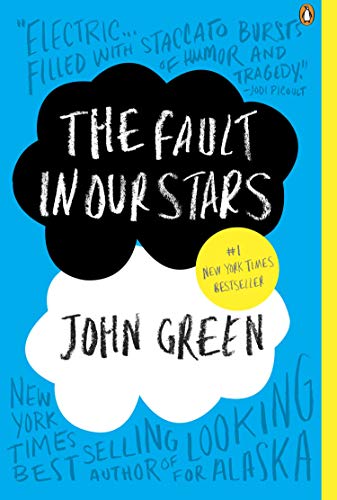
Insightful, bold, irreverent, and raw, The Fault in Our Stars is award-winning author John Green's most ambitious and heartbreaking work yet, brilliantly exploring the funny, thrilling, and tragic business of being alive and in love.
Founder/SpaceX
Must admit to liking this book. Sad, romantic and beautifully named. [source]
@johngreen You should not be. It is a great book. Was recently in Amsterdam and walked some of the scenes with your huge fan, my youngest daughter. Loved hearing from you and meeting you at Kenyon. [source]
3The Immortal Life of Henrietta Lacks
Yet Henrietta Lacks remains virtually unknown, buried in an unmarked grave.
Now Rebecca Skloot takes us on an extraordinary journey, from the “colored” ward of Johns Hopkins Hospital in the 1950s to stark white laboratories with freezers full of HeLa cells; from Henrietta’s small, dying hometown of Clover, Virginia — a land of wooden slave quarters, faith healings, and voodoo — to East Baltimore today, where her children and grandchildren live and struggle with the legacy of her cells.
Henrietta’s family did not learn of her “immortality” until more than twenty years after her death, when scientists investigating HeLa began using her husband and children in research without informed consent. And though the cells had launched a multimillion-dollar industry that sells human biological materials, her family never saw any of the profits. As Rebecca Skloot so brilliantly shows, the story of the Lacks family — past and present — is inextricably connected to the dark history of experimentation on African Americans, the birth of bioethics, and the legal battles over whether we control the stuff we are made of.
Over the decade it took to uncover this story, Rebecca became enmeshed in the lives of the Lacks family—especially Henrietta’s daughter Deborah, who was devastated to learn about her mother’s cells. She was consumed with questions: Had scientists cloned her mother? Did it hurt her when researchers infected her cells with viruses and shot them into space? What happened to her sister, Elsie, who died in a mental institution at the age of fifteen? And if her mother was so important to medicine, why couldn’t her children afford health insurance?
Intimate in feeling, astonishing in scope, and impossible to put down, The Immortal Life of Henrietta Lacks captures the beauty and drama of scientific discovery, as well as its human consequences.

4Fever 1793
5Guns, Germs and Steel: The Fates of Human Societies
CEO/Microsoft
Fascinating.... Lays a foundation for understanding human history. [source]
A brilliant Pulitzer Prize-winning book about how the modern world was formed, analyzing how societies developed differently on different continents. [source]
Author
I’m a fan of books that challenge our assumptions, and Diamond offers us a new and remarkably simple way of looking at our world. Learning to challenge existing assumptions is core to effective leadership for it trains us to keep an open mind. [source]
6The Great Influenza: The Story of the Deadliest Pandemic in History
This book was recommended by , Founder of NETOPIA mobilPay, when asked for titles he would recommend to people interested in understanding the world around them. [source]
I guess it is a good time to point out that "The Great Influenza" is a great book. If you think modern medicine would have mitigate this one, you haven't read the book. https://t.co/t4uHPgfLE6 [source]
@heshsson yes1 brilliant book, which also explains flu better than most other things you will read [source]
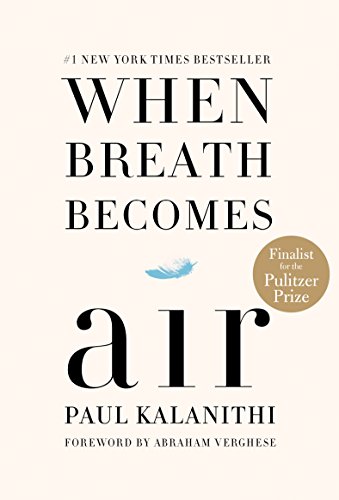
7When Breath Becomes Air
What makes life worth living in the face of death? What do you do when the future, no longer a ladder toward your goals in life, flattens out into a perpetual present? What does it mean to have a child, to nurture a new life as another fades away? These are some of the questions Kalanithi wrestles with in this profoundly moving, exquisitely observed memoir.
CEO/Microsoft
I don’t know how Kalanithi found the physical strength to write this book while he was so debilitated by the disease and then potent chemotherapy. But I’m so glad he did. He spent his whole brief life searching for meaning in one way or another -- through books, writing, medicine, surgery, and science. I’m grateful that, by reading this book, I got to witness a small part of that journey. I just wish the journey hadn’t been cut so short [source]
Author
Despite its popularity, When Breath Becomes Air is actually underrated. It’s make-you-cry good. [source]
More Shabbat reading recommendations: This book was breathtaking and such a powerful advertisement for the joy of parenthood. https://t.co/V8BH97eiL9 [source]
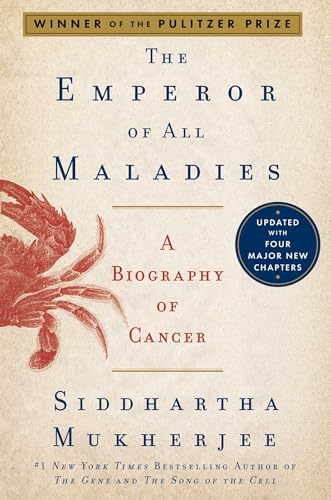
8The Emperor of All Maladies: A Biography of Cancer
The Emperor of All Maladies is a magnificent, profoundly humane “biography” of cancer—from its first documented appearances thousands of years ago through the epic battles in the twentieth century to cure, control, and conquer it to a radical new understanding of its essence.
Physician, researcher, and award-winning science writer, Siddhartha Mukherjee examines cancer with a cellular biologist’s precision, a historian’s perspective, and a biographer’s passion. The result is an astonishingly lucid and eloquent chronicle of a disease humans have lived with—and perished from—for more than five thousand years.
The story of cancer is a story of human ingenuity, resilience, and perseverance, but also of hubris, paternalism, and misperception. Mukherjee recounts centuries of discoveries, setbacks, victories, and deaths, told through the eyes of his predecessors and peers, training their wits against an infinitely resourceful adversary that, just three decades ago, was thought to be easily vanquished in an all-out “war against cancer.”
The book reads like a literary thriller with cancer as the protagonist. From the Persian Queen Atossa, whose Greek slave cut off her malignant breast, to the nineteenth-century recipients of primitive radiation and chemotherapy to Mukherjee’s own leukemia patient, Carla, The Emperor of All Maladies is about the people who have soldiered through fiercely demanding regimens in order to survive—and to increase our understanding of this iconic disease.
Riveting, urgent, and surprising, The Emperor of All Maladies provides a fascinating glimpse into the future of cancer treatments. It is an illuminating book that provides hope and clarity to those seeking to demystify cancer.
CEO/Microsoft
I loved this brilliant book about cancer. [source]
A tremendous amount of cancer biology comes through in that book through the eyes of the victims and the people up close and personal. [source]
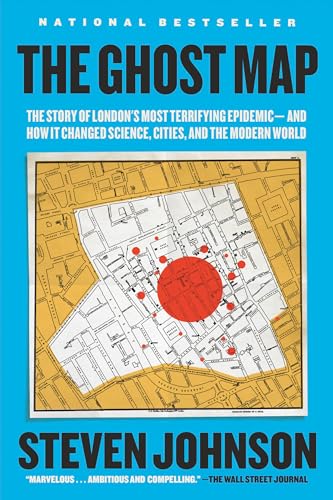
9The Ghost Map: The Story of London's Most Terrifying Epidemic—and How It Changed Science, Cities, and the Modern World
I read the Ghost Map, a book about 1854 London Cholera outbreak. The outbreak was stopped because of a map created by Dr. John Snow. You can see hints of this map in some of our customer discovery tools because it was such an effective way of pinpointing a solution to a seemingly insurmountable problem. [source]
The Ghost Map is a book that I oftentimes give to people to show them how cool and exciting and accessible and gripping stories about scientific discoveries can be. [source]
Johnson looks at London during a specific moment in time, August 1854, and focuses on a particular incident, an outbreak of cholera in Soho, in Central London. [source]
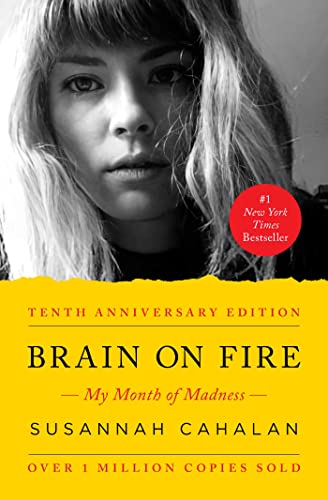
10Brain on Fire: My Month of Madness
When twenty-four-year-old Susannah Cahalan woke up alone in a hospital room, strapped to her bed and unable to move or speak, she had no memory of how she’d gotten there. Days earlier, she had been on the threshold of a new, adult life: at the beginning of her first serious relationship and a promising career at a major New York newspaper. Now she was labeled violent, psychotic, a flight risk. What happened?
In a swift and breathtaking narrative, Cahalan tells the astonishing true story of her descent into madness, her family’s inspiring faith in her, and the lifesaving diagnosis that nearly didn’t happen.
The readability for me is probably the key element for students—and maybe for teachers as well—because it’s a book that you really can’t put down. If that’s what we need to make students readers, then I’m all for it. [source]
Need a fun boost for your team? Want to jump-start great problem-solving? >Book a 1-hour #creativethinking, virtual experience & get a complimentary pdf copy - Brain on Fire: Unleashing Your Creative Superpowers! for each attendee #teambuilding Info here: https://t.co/j6hOxMJrNH https://t.co/b9hAxV90Mf [source]
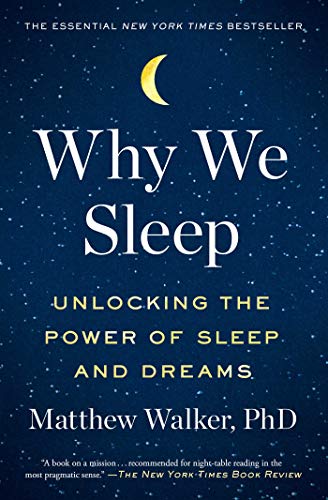
11Why We Sleep: Unlocking the Power of Sleep and Dreams
A New York Times bestseller and international sensation, this “stimulating and important book” (Financial Times) is a fascinating dive into the purpose and power of slumber.
With two appearances on CBS This Morning and Fresh Air's most popular interview of 2017, Matthew Walker has made abundantly clear that sleep is one of the most important but least understood aspects of our life. Until very recently, science had no answer to the question of why we sleep, or what good it served, or why we suffer such devastating health consequences when it is absent. Compared to the other basic drives in life—eating, drinking, and reproducing—the purpose of sleep remains more elusive.
Within the brain, sleep enriches a diversity of functions, including our ability to learn, memorize, and make logical decisions. It recalibrates our emotions, restocks our immune system, fine-tunes our metabolism, and regulates our appetite. Dreaming creates a virtual reality space in which the brain melds past and present knowledge, inspiring creativity.
In this “compelling and utterly convincing” (The Sunday Times) book, preeminent neuroscientist and sleep expert Matthew Walker provides a revolutionary exploration of sleep, examining how it affects every aspect of our physical and mental well-being. Charting the most cutting-edge scientific breakthroughs, and marshalling his decades of research and clinical practice, Walker explains how we can harness sleep to improve learning, mood and energy levels, regulate hormones, prevent cancer, Alzheimer’s and diabetes, slow the effects of aging, and increase longevity. He also provides actionable steps towards getting a better night’s sleep every night.
Clear-eyed, fascinating, and accessible, Why We Sleep is a crucial and illuminating book. Written with the precision of Atul Gawande, Andrew Solomon, and Sherwin Nuland, it is “recommended for night-table reading in the most pragmatic sense” (TheNew York Times Book Review).
CEO/Microsoft
Explains how neglecting sleep undercuts your creativity, problem solving, decision-making, learning, memory, heart health, brain health, mental health, emotional well-being, immune system, and even your life span. [source]
Co-Founder/Foundry Group
Several friends, who know I both love to sleep and am intrigued with how sleep works, recommended that I read Why We Sleep: Unlocking the Power of Sleep and Dreams. It was excellent. While my self-assessment of my sleep habits are very positive, I learned a few things. More importantly, I now have a much better understanding of the “Why” surrounding sleep, especially around sleep’s importance to a healthy and long life. [source]
Agree! Best book I've read this year. Wasted so many hours just proving to myself I'd be the last one up working at @reddit and for what??? Stupid. Diminishing marginal returns after enough hours without sleep. https://t.co/cT7fDNBF3A [source]
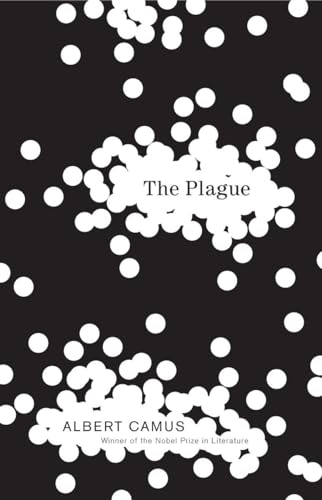
12The plague
It’s an amazing book, considering Camus probably never personally experienced a plague. In his novel, Camus captured everything that we were dealing with in the Aids epidemic without Aids existing at that time. Without his knowing what the consequences of the HIV plague were going to be, he seems to have gotten all the actors in there and the myriad of things that you wrestle with. [source]
Albert Camus’s The Plague probably remains the best-known novel on the topic of epidemic disease. It tells the story of those involved in an epidemic in a North African setting. It is very interested in the details about how quarantines are enforced and the role not just of the government, but of individuals who band together into groups to manage the epidemic. [source]
He talks about the plague. Well, the plague is that part of a human being which can be very evil. That germ, he says at the end, never dies, it simply goes into remission. It lurks. It lurks in the cupboards, it lurks in the hallways, it lurks in the filing cabinets. [source]
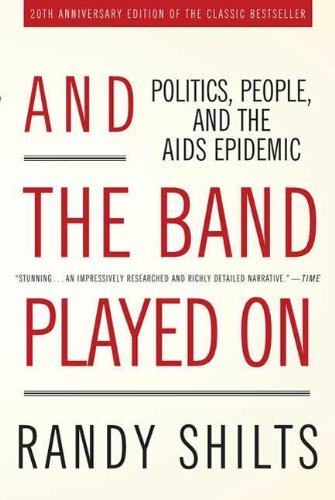
13And the Band Played On: Politics, People, and the AIDS Epidemic
He was concerned because his friends were infected and some of them were dying. [source]
Book is great but the movie pretty great too and horrifying similar failure of politicized science, just a way shorter timetable now https://t.co/TRUiKs9WTR [source]
A harrowing vision of what a world without marriage finally looks like. [source]
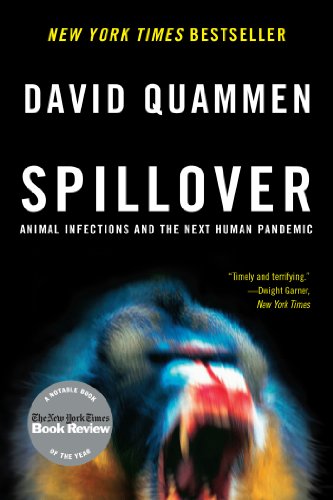
14Spillover: Animal Infections and the Next Human Pandemic
A New York Times Notable Book of the Year, a Scientific American Best Book of the Year, and a Finalist for the National Book Critics Circle Award.
Ebola, SARS, Hendra, AIDS, and countless other deadly viruses all have one thing in common: the bugs that transmit these diseases all originate in wild animals and pass to humans by a process called spillover. In this gripping account, David Quammen takes the reader along on this astonishing quest to learn how, where from, and why these diseases emerge and asks the terrifying question: What might the next big one be?
@rachsyme Spillover is a fantastic book though. I'd also recommend Pandemic and/or The Fever by @soniashah [source]
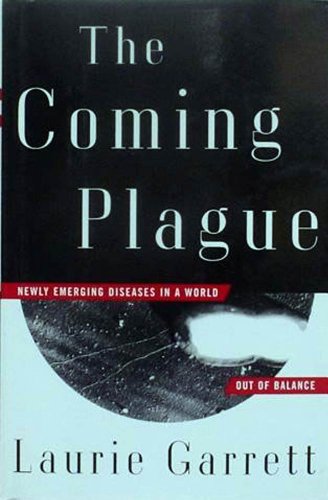
15The Coming Plague: Newly Emerging Diseases in a World Out of Balance
Just as in the Old Testament, I don’t think people always want to hear the message of a prophet. [source]
16The Stand
A patient escapes from a biological testing facility, unknowingly carrying a deadly weapon: a mutated strain of super-flu that will wipe out 99 percent of the world’s population within a few weeks. Those who remain are scared, bewildered, and in need of a leader. Two emerge—Mother Abagail, the benevolent 108-year-old woman who urges them to build a peaceful community in Boulder, Colorado; and Randall Flagg, the nefarious “Dark Man,” who delights in chaos and violence. As the dark man and the peaceful woman gather power, the survivors will have to choose between them—and ultimately decide the fate of all humanity.
(This edition includes all of the new and restored material first published in The Stand: The Complete And Uncut Edition.)
@redsteeze great book though [source]
17Still Alice
Alice Howland, happily married with three grown children and a house on the Cape, is a celebrated Harvard professor at the height of her career when she notices a forgetfulness creeping into her life. As confusion starts to cloud her thinking and her memory begins to fail her, she receives a devastating diagnosis: early onset Alzheimer's disease. Fiercely independent, Alice struggles to maintain her lifestyle and live in the moment, even as her sense of self is being stripped away. In turns heartbreaking, inspiring and terrifying, Still Alice captures in remarkable detail what's it's like to literally lose your mind...
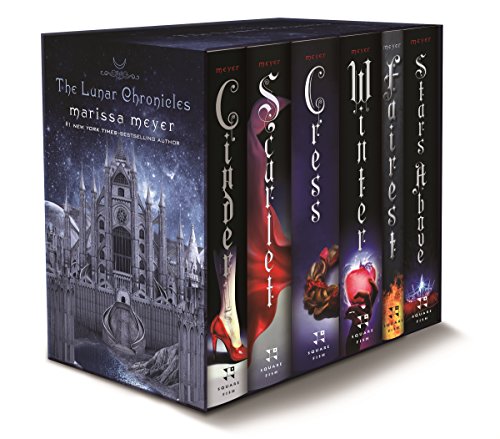
18Cinder (The Lunar Chronicles, #1)
Humans and androids crowd the raucous streets of New Beijing. A deadly plague ravages the population. From space, a ruthless lunar people watch, waiting to make their move. No one knows that Earth's fate hinges on one girl. . . .
Cinder, a gifted mechanic, is a cyborg. She's a second-class citizen with a mysterious past, reviled by her stepmother and blamed for her stepsister's illness. But when her life becomes intertwined with the handsome Prince Kai's, she suddenly finds herself at the center of an intergalactic struggle, and a forbidden attraction. Caught between duty and freedom, loyalty and betrayal, she must uncover secrets about her past in order to protect her world's future.
With high-stakes action and a smart, resourceful heroine, Cinder is a Cinderella retelling that is at once classic and strikingly original.
The story weaves politics, technology and fantasy in with the classic fairytale that we all know and love. [source]
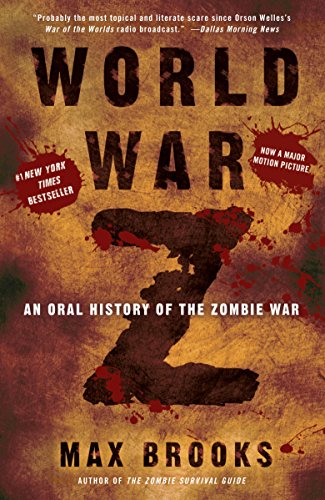
19World War Z: An Oral History of the Zombie War
Ranging from the now infamous village of New Dachang in the United Federation of China, where the epidemiological trail began with the twelve-year-old Patient Zero, to the unnamed northern forests where untold numbers sought a terrible and temporary refuge in the cold, to the United States of Southern Africa, where the Redeker Plan provided hope for humanity at an unspeakable price, to the west-of-the-Rockies redoubt where the North American tide finally started to turn, this invaluable chronicle reflects the full scope and duration of the Zombie War.
Most of all, the book captures with haunting immediacy the human dimension of this epochal event. Facing the often raw and vivid nature of these personal accounts requires a degree of courage on the part of the reader, but the effort is invaluable because, as Mr. Brooks says in his introduction, "By excluding the human factor, aren't we risking the kind of personal detachment from history that may, heaven forbid, lead us one day to repeat it? And in the end, isn't the human factor the only true difference between us and the enemy we now refer to as 'the living dead'?"
Note: Some of the numerical and factual material contained in this edition was previously published under the auspices of the United Nations Postwar Commission.
World War Z is told from multiple different perspectives and multiple different cultures. It’s about how they respond to the impending apocalypse: what the Americans do and what happens in the Middle East, how individuals respond. So you have a couple of people who are already preparing for the end of the world and you’ve got the military view. It’s great because Max Brooks really pulls together this multi-cultural viewpoint, it’s not just a Brad Pitt action-movie vehicle. [source]
World War Z (the book, not the movie) by @maxbrooksauthor is an incredibly well-researched, thoughtful, horrifying page-turner that explores the many ways that people, media, & gov'ts are likely to mismanage global pandemics. Highly prescient must-read. https://t.co/04YMqnu06e https://t.co/7dyx0F9qqB [source]
World War Z is a novel that bridges the gap between pulp and high literature. It takes a subject matter which we would think of as mainstream geek culture, but it finds universal human themes, develops characters that you care about, and also manages to be culturally critical. It is clearly critical of many of the post-9/11 choices made by the United States and Britain. [source]
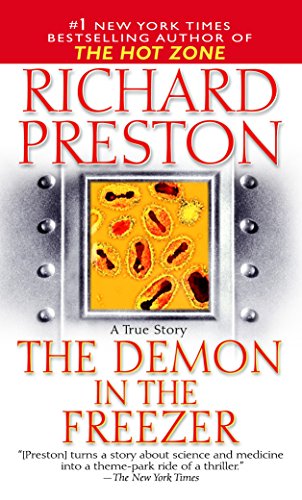
20The Demon in the Freezer
Peter Jahrling, the top scientist at Usamriid, a wry virologist who cut his teeth on Ebola, one of the world’s most lethal emerging viruses, has ORCON security clearance that gives him access to top secret information on bioweapons. His most urgent priority is to develop a drug that will take on smallpox-and win. Eradicated from the planet in 1979 in one of the great triumphs of modern science, the smallpox virus now resides, officially, in only two high-security freezers-at the Centers for Disease Control in Atlanta and in Siberia, at a Russian virology institute called Vector. But the demon in the freezer has been set loose. It is almost certain that illegal stocks are in the possession of hostile states, including Iraq and North Korea. Jahrling is haunted by the thought that biologists in secret labs are using genetic engineering to create a new superpox virus, a smallpox resistant to all vaccines.
Usamriid went into a state of Delta Alert on September 11 and activated its emergency response teams when the first anthrax letters were opened in New York and Washington, D.C. Preston reports, in unprecedented detail, on the government’s response to the attacks and takes us into the ongoing FBI investigation. His story is based on interviews with top-level FBI agents and with Dr. Steven Hatfill.
Jahrling is leading a team of scientists doing controversial experiments with live smallpox virus at CDC. Preston takes us into the lab where Jahrling is reawakening smallpox and explains, with cool and devastating precision, what may be at stake if his last bold experiment fails.
21The Andromeda Strain
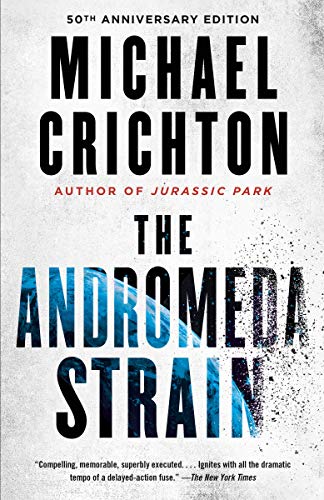
A military space probe, sent to collect extraterrestrial organisms from the upper atmosphere, is knocked out of orbit and falls to Earth. Twelve miles from the crash site, an inexplicable and deadly phenomenon terrorizes the residents of a sleepy desert town in Arizona, leaving only two survivors: an elderly addict and a newborn infant. The United States government is forced to mobilize Project Wildfire, a top-secret emergency response protocol. Four of the nation's most elite biophysicists are summoned to a clandestine underground laboratory located five stories beneath the desert and fitted with an automated atomic self-destruction mechanism for cases of irremediable contamination. Under conditions of total news blackout and the utmost urgency, the scientists race to understand and contain the crisis. But the Andromeda Strain proves different from anything they've ever seen--and what they don't know could not only hurt them, but lead to unprecedented worldwide catastrophe.
22Year of Wonders
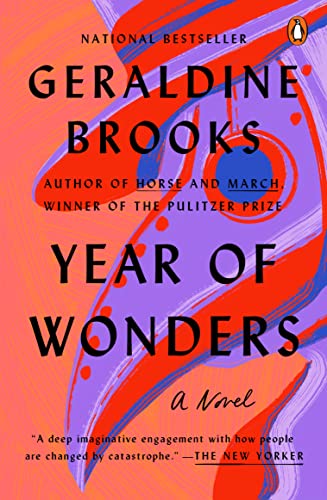
Inspired by the true story of Eyam, a village in the rugged hill country of England, Year of Wonders is a richly detailed evocation of a singular moment in history.
A remarkable story about the Great Plague of London and holds the reader’s attention as if a terrible crime has been committed and wondering what the outcome can be. [source]
23Station Eleven
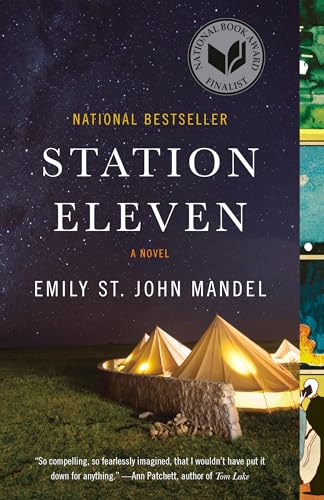
One snowy night a famous Hollywood actor slumps over and dies onstage during a production of King Lear. Hours later, the world as we know it begins to dissolve. Moving back and forth in time—from the actor's early days as a film star to fifteen years in the future, when a theater troupe known as the Traveling Symphony roams the wasteland of what remains—this suspenseful, elegiac, spellbinding novel charts the strange twists of fate that connect five people: the actor, the man who tried to save him, the actor's first wife, his oldest friend, and a young actress with the Traveling Symphony, caught in the crosshairs of a dangerous self-proclaimed prophet.
“What sets Station Eleven apart from so many other recent dystopian novels is the warmness of @EmilyMandel's writing, the lived-in details of each of these characters’ lives… It’s the kind of book that stays with you.” —@TomiObaro https://t.co/tWakW2L6Tq [source]
@nmsonline @katebevan Great book though 🤷♀️ [source]
24Polio: An American Story
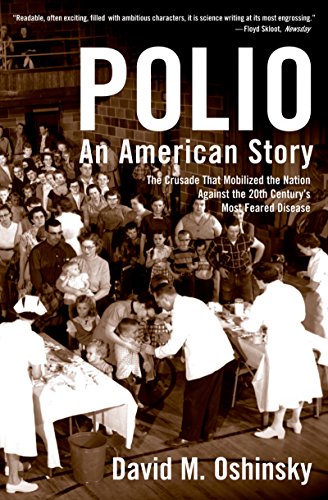
Oshinsky offers an insightful look at the National Foundation for Infantile Paralysis, which was founded in the 1930s by FDR and Basil O'Connor, it revolutionized fundraising and the perception of disease in America. Oshinsky also shows how the polio experience revolutionized the way in which the government licensed and tested new drugs before allowing them on the market, and the way in which the legal system dealt with manufacturers' liability for unsafe products. Finally, and perhaps most tellingly, Oshinsky reveals that polio was never the raging epidemic portrayed by the media, but in truth a relatively uncommon disease. But in baby-booming America--increasingly suburban, family-oriented, and hygiene-obsessed--the specter of polio, like the specter of the atomic bomb, soon became a cloud of terror over daily life.
Both a gripping scientific suspense story and a provocative social and cultural history, Polio opens a fresh window onto postwar America.
CEO/Microsoft
Influenced the decision that Melinda and I made to make polio eradication the top priority of the foundation, as well as my own personal priority. [source]
What I find so impressive about this book is that Oshinsky really does cover the whole history of a disease but does so in a way that you never feel you’re getting a CliffsNotes version. It’s a pretty unwieldy topic: you could write an entire book just about the year the polio vaccine was rolled out, or what happened since then, or you could write a book, as Paul Offit did, just about the Cutter incident. All the way through Polio you feel like you are getting all the details you would want or need. To combine that much information in a way that was not only accessible and exciting and readable but also scientifically rigorous was a real, real accomplishment. [source]
25Plagues and Peoples
Thought-provoking, well-researched, and compulsively readable, Plagues and Peoples is that rare book that is as fascinating as it is scholarly, as intriguing as it is enlightening. "A brilliantly conceptualized and challenging achievement" (Kirkus Reviews), it is essential reading, offering a new perspective on human history.
26The American Plague: The Untold Story of Yellow Fever, the Epidemic That Shaped Our History
"The American Plague" reveals the true story of yellow fever, recounting Memphis, Tennessee's near-destruction and resurrection from the epidemic-and the four men who changed medical history with their battle against an invisible foe that remains a threat to this very day.
27The China Study: Revised and Expanded Edition: The Most Comprehensive Study of Nutrition Ever Conducted and the Startling Implications for Diet, Weight Loss, and Long-Term Health
The science is clear. The results are unmistakable.
You can dramatically reduce your risk of cancer, heart disease, and diabetes just by changing your diet.
More than 30 years ago, nutrition researcher T. Colin Campbell and his team at Cornell, in partnership with teams in China and England, embarked upon the China Study, the most comprehensive study ever undertaken of the relationship between diet and the risk of developing disease. What they found when combined with findings in Colin’s laboratory, opened their eyes to the dangers of a diet high in animal protein and the unparalleled health benefits of a whole foods, plant-based diet.
In 2005, Colin and his son Tom, now a physician, shared those findings with the world in The China Study, hailed as one of the most important books about diet and health ever written.
Featuring brand new content, this heavily expanded edition of Colin and Tom’s groundbreaking book includes the latest undeniable evidence of the power of a plant-based diet, plus updated information about the changing medical system and how patients stand to benefit from a surging interest in plant-based nutrition.
The China Study—Revised and Expanded Edition presents a clear and concise message of hope as it dispels a multitude of health myths and misinformation. The basic message is clear. The key to a long, healthy life lies in three things: breakfast, lunch, and dinner.
Best book I’ve ever read. https://t.co/pc68Yvw7U8 [source]
28Everything, Everything
But then one day, a moving truck arrives. New next door neighbors. I look out the window, and I see him. He’s tall, lean and wearing all black—black t-shirt, black jeans, black sneakers and a black knit cap that covers his hair completely. He catches me looking and stares at me. I stare right back. His name is Olly. I want to learn everything about him, and I do. I learn that he is funny and fierce. I learn that his eyes are Atlantic Ocean-blue and that his vice is stealing silverware. I learn that when I talk to him, my whole world opens up, and I feel myself starting to change—starting to want things. To want out of my bubble. To want everything, everything the world has to offer.
Maybe we can’t predict the future, but we can predict some things. For example, I am certainly going to fall in love with Olly. It’s almost certainly going to be a disaster.
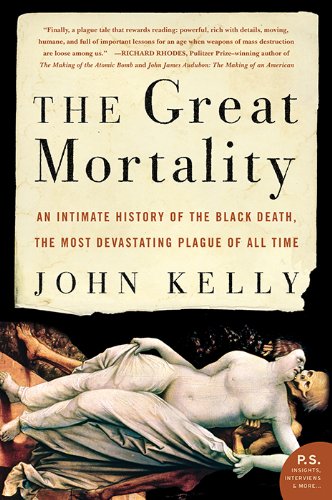
29The Great Mortality: An Intimate History of the Black Death, the Most Devastating Plague of All Time
The plague that devastated Asia and Europe in the 14th century has been of never-ending interest to both scholarly and general readers. Many books on the plague rely on statistics to tell the story: how many people died; how farm output and trade declined. But statistics can’t convey what it was like to sit in Siena or Avignon and hear that a thousand people a day are dying two towns away. Or to have to chose between your own life and your duty to a mortally ill child or spouse. Or to live in a society where the bonds of blood and sentiment and law have lost all meaning, where anyone can murder or rape or plunder anyone else without fear of consequence.
In The Great Mortality, author John Kelly lends an air of immediacy and intimacy to his telling of the journey of the plague as it traveled from the steppes of Russia, across Europe, and into England, killing 75 million people—one third of the known population—before it vanished.
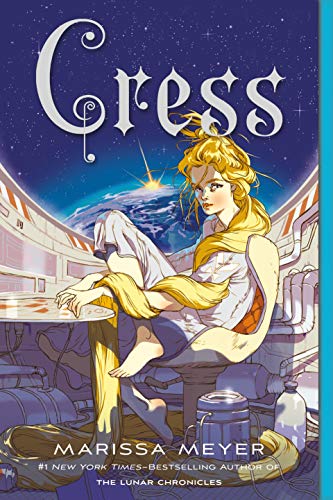
30Cress (The Lunar Chronicles, #3)
Their best hope lies with Cress, a girl imprisoned on a satellite since childhood who's only ever had her netscreens as company. All that screen time has made Cress an excellent hacker. Unfortunately, she's just received orders from Levana to track down Cinder and her handsome accomplice.
When a daring rescue of Cress goes awry, the group is separated. Cress finally has her freedom, but it comes at a higher price. Meanwhile, Queen Levana will let nothing prevent her marriage to Emperor Kai. Cress, Scarlet, and Cinder may not have signed up to save the world, but they may be the only hope the world has.
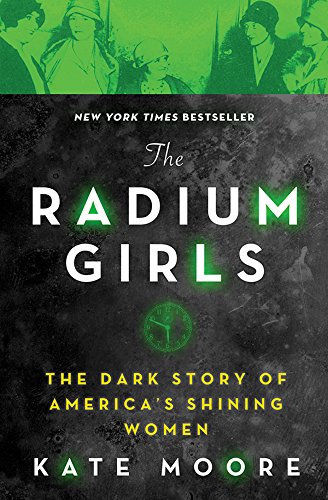
31The Radium Girls: The Dark Story of America's Shining Women
The Curies' newly discovered element of radium makes gleaming headlines across the nation as the fresh face of beauty, and wonder drug of the medical community. From body lotion to tonic water, the popular new element shines bright in the otherwise dark years of the First World War.
Meanwhile, hundreds of girls toil amidst the glowing dust of the radium-dial factories. The glittering chemical covers their bodies from head to toe; they light up the night like industrious fireflies. With such a coveted job, these "shining girls" are the luckiest alive -- until they begin to fall mysteriously ill.
But the factories that once offered golden opportunities are now ignoring all claims of the gruesome side effects, and the women's cries of corruption. And as the fatal poison of the radium takes hold, the brave shining girls find themselves embroiled in one of the biggest scandals of America's early 20th century, and in a groundbreaking battle for workers' rights that will echo for centuries to come.
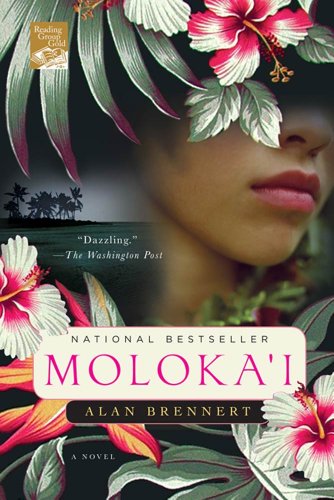
32Moloka'i (Moloka'i #1)
Rachel Kalama, a spirited seven-year-old Hawaiian girl, dreams of visiting far-off lands like her father, a merchant seaman. Then one day a rose-colored mark appears on her skin, and those dreams are stolen from her. Taken from her home and family, Rachel is sent to Kalaupapa, the quarantined leprosy settlement on the island of Moloka'i. Here her life is supposed to end---but instead she discovers it is only just beginning.
33Half the Sky: Turning Oppression Into Opportunity for Women Worldwide
With Pulitzer Prize winners Nicholas D. Kristof and Sheryl WuDunn as our guides, we undertake an odyssey through Africa and Asia to meet the extraordinary women struggling there, among them a Cambodian teenager sold into sex slavery and an Ethiopian woman who suffered devastating injuries in childbirth. Drawing on the breadth of their combined reporting experience, Kristof and WuDunn depict our world with anger, sadness, clarity, and, ultimately, hope.
They show how a little help can transform the lives of women and girls abroad. That Cambodian girl eventually escaped from her brothel and, with assistance from an aid group, built a thriving retail business that supports her family. The Ethiopian woman had her injuries repaired and in time became a surgeon. A Zimbabwean mother of five, counseled to return to school, earned her doctorate and became an expert on AIDS.
Through these stories, Kristof and WuDunn help us see that the key to economic progress lies in unleashing women’s potential. They make clear how so many people have helped to do just that, and how we can each do our part. Throughout much of the world, the greatest unexploited economic resource is the female half of the population. Countries such as China have prospered precisely because they emancipated women and brought them into the formal economy. Unleashing that process globally is not only the right thing to do; it’s also the best strategy for fighting poverty.
Deeply felt, pragmatic, and inspirational, Half the Sky is essential reading for every global citizen.
As for non-fiction, Half the Sky (about crimes against women, especially in the developing world) and Whatever it Takes (about the Harlem Children’s Zone and the work of Geoffrey Canada) both changed my world-view enormously, and I thought they were both super compelling. [source]
Women in so much of the world are doing so much of the labour without having any of the rights or reaping their share of the profits. [source]
One of the most powerful books I've ever read on #GenderEquality is Half the Sky: Turning Oppression into Opportunity for Women Worldwide by @NickKristof & @WuDunn: https://t.co/uj5rfxlmZm. Let's do more to support women in our daily lives! #WomenWednesday #SDGs [source]
34Rabid: A Cultural History of the World's Most Diabolical Virus
35Choke
36The Gene: An Intimate History
CEO/Microsoft
"Mukherjee wrote this book for a lay audience, because he knows that the new genome technologies are at the cusp of affecting us all in profound ways," Gates wrote. Mukherjee is what Gates calls a "quadruple threat." He's a practicing physician, teacher, researcher, and author. [source]
@vikramsathaye @DrSidMukherjee @kiranshaw Great book. [source]
A great book. [source]
37Survival of the Sickest: A Medical Maverick Discovers Why We Need Disease
Dr. Sharon Moalem turns our current understanding of illness on its head and challenges us to fundamentally change the way we think about our bodies, our health, and our relationship to just about every other living thing on earth, from plants and animals to insects and bacteria.
Through a fresh and engaging examination of our evolutionary history, Dr. Moalem reveals how many of the conditions that are diseases today actually gave our ancestors a leg up in the survival sweepstakes. When the option is a long life with a disease or a short one without it, evolution opts for disease almost every time.
Everything from the climate our ancestors lived in to the crops they planted and ate to their beverage of choice can be seen in our genetic inheritance. But Survival of the Sickest doesn't stop there. It goes on to demonstrate just how little modern medicine really understands about human health, and offers a new way of thinking that can help all of us live longer, healthier lives..
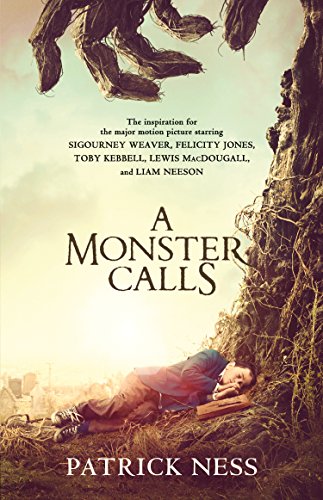
38A Monster Calls
At seven minutes past midnight, thirteen-year-old Conor wakes to find a monster outside his bedroom window. But it isn't the monster Conor's been expecting - he's been expecting the one from his nightmare, the nightmare he's had nearly every night since his mother started her treatments. The monster in his backyard is different. It's ancient. And wild. And it wants something from Conor. Something terrible and dangerous. It wants the truth.
From the final idea of award-winning author Siobhan Dowd - whose premature death from cancer prevented her from writing it herself - Patrick Ness has spun a haunting and darkly funny novel of mischief, loss, and monsters both real and imagined.
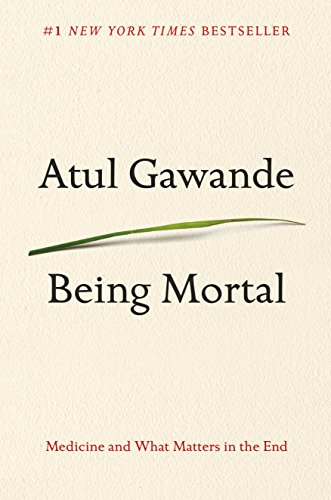
39Being Mortal: Medicine and What Matters in the End
Through eye-opening research and gripping stories of his own patients and family, Atul Gawande, a practicing surgeon, reveals the suffering this dynamic has produced. Nursing homes, devoted above all to safety, battle with residents over the food they are allowed to eat and the choices they are allowed to make. Doctors, uncomfortable discussing patients' anxieties about death, fall back on false hopes and treatments that are actually shortening lives instead of improving them.
In his bestselling books, Gawande has fearlessly revealed the struggles of his profession. Now he examines its ultimate limitations and failures--in his own practices as well as others'--as life draws to a close. Riveting, honest, and humane, Being Mortal shows how the ultimate goal is not a good death but a good life--all the way to the very end.
Former USA President
President Obama is spending his Hawaiian vacation playing golf, getting together with high school friends and reading a handful of dark novels set in foreign lands, according to a book list released by the White House Wednesday. The presidential reading list includes … two works of non-fiction for the trip: … "Being Mortal: Medicine and What Matters in the End" by Dr. Atul Gawande. [source]
Writer & Journalist
American medicine, Being Mortal reminds us, has prepared itself for life but not for death. This is Atul Gawande's most powerful--and moving--book. [source]
Board of Directors/Amazon
Just finished "Being Mortal" by Atul Gawande. A beautifully written book. Captivating. [source]
40Mountains Beyond Mountains: The Quest of Dr. Paul Farmer, a Man Who Would Cure the World
Tracy Kidder is a winner of the Pulitzer Prize and the author of the bestsellers The Soul of a New Machine, House, Among Schoolchildren, and Home Town. He has been described by the Baltimore Sun as the "master of the non-fiction narrative." This powerful and inspiring new book shows how one person can make a difference, as Kidder tells the true story of a gifted man who is in love with the world and has set out to do all he can to cure it.
At the center of Mountains Beyond Mountains stands Paul Farmer. Doctor, Harvard professor, renowned infectious-disease specialist, anthropologist, the recipient of a MacArthur "genius" grant, world-class Robin Hood, Farmer was brought up in a bus and on a boat, and in medical school found his life’s calling: to diagnose and cure infectious diseases and to bring the lifesaving tools of modern medicine to those who need them most. This magnificent book shows how radical change can be fostered in situations that seem insurmountable, and it also shows how a meaningful life can be created, as Farmer—brilliant, charismatic, charming, both a leader in international health and a doctor who finds time to make house calls in Boston and the mountains of Haiti—blasts through convention to get results.
Mountains Beyond Mountains takes us from Harvard to Haiti, Peru, Cuba, and Russia as Farmer changes minds and practices through his dedication to the philosophy that "the only real nation is humanity"—a philosophy that is embodied in the small public charity he founded, Partners in Health. He enlists the help of the Gates Foundation, George Soros, the U.N.’s World Health Organization, and others in his quest to cure the world. At the heart of this book is the example of a life based on hope, and on an understanding of the truth of the Haitian proverb "Beyond mountains there are mountains": as you solve one problem, another problem presents itself, and so you go on and try to solve that one too.
"Mountains Beyond Mountains unfolds with the force of a gathering revelation," says Annie Dillard, and Jonathan Harr says, "[Farmer] wants to change the world. Certainly this luminous and powerful book will change the way you see it."
CEO/Microsoft
On Bill Gates's reading list in 2011. [source]
Founder/Virgin Group
Today is World Book Day, a wonderful opportunity to address this #ChallengeRichard sent in by Mike Gonzalez of New Jersey: Make a list of your top 65 books to read in a lifetime. [source]
Everyone has to read this book. I guess I just picked it for anyone who hasn’t read it and if you’re a progressive and you’re trying to figure out what to do with your life. Tracy Kidder is a great writer so that doesn’t hurt, but Paul Farmer’s story, the story of one person who decides they want to change the world, is so compelling. I think even for the most cynical, hard-bitten progressive you can’t help but read this book and feel inspired. So it’s a lot of levels. [source]
41Get Well Soon: History's Worst Plagues and the Heroes Who Fought Them
In 1518, in a small town in France, Frau Troffea began dancing and didn’t stop. She danced herself to her death six days later, and soon thirty-four more villagers joined her. Then more. In a month more than 400 people had died from the mysterious dancing plague. In late-nineteenth-century England an eccentric gentleman founded the No Nose Club in his gracious townhome—a social club for those who had lost their noses, and other body parts, to the plague of syphilis for which there was then no cure. And in turn-of-the-century New York, an Irish cook caused two lethal outbreaks of typhoid fever, a case that transformed her into the notorious Typhoid Mary and led to historic medical breakthroughs.
Throughout time, humans have been terrified and fascinated by the plagues they've suffered from. Get Well Soon delivers the gruesome, morbid details of some of the worst plagues in human history, as well as stories of the heroic figures who fought to ease their suffering. With her signature mix of in-depth research and upbeat storytelling, and not a little dark humor, Jennifer Wright explores history’s most gripping and deadly outbreaks.
42Flu: The Story Of The Great Influenza Pandemic
How could this disease, now almost trivial to healthy young people, have become so virulent? The answer is complex, invoking epidemiology, immunology, and even psychology, but Kolata cuts a swath through medical papers and statistical reports to tell a story of an out-of-control virus exploiting an exhausted world on the brink of transition into modern society. Through letters, interviews, and news reports, she pieces together a cautionary tale that captures the horror of a devastating illness. Research marches onward, but we're still at the mercy of something as simple as the flu. --Rob Lightner
43Going Bovine
All 16-year-old Cameron wants is to get through high school—and life in general—with a minimum of effort. It’s not a lot to ask. But that’s before he’s given some bad news: he’s sick and he’s going to die. Which totally sucks. Hope arrives in the winged form of Dulcie, a loopy punk angel/possible hallucination with a bad sugar habit. She tells Cam there is a cure—if he’s willing to go in search of it. With the help of a death-obsessed, video-gaming dwarf and a yard gnome, Cam sets off on the mother of all road trips through a twisted America into the heart of what matters most.
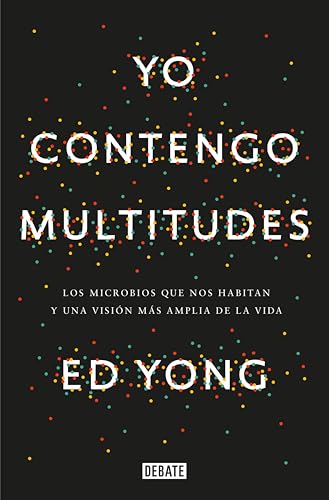
44I Contain Multitudes: The Microbes Within Us and a Grander View of Life
Yong, whose humor is as evident as his erudition, prompts us to look at ourselves and our animal companions in a new light—less as individuals and more as the interconnected, interdependent multitudes we assuredly are. The microbes in our bodies are part of our immune systems and protect us from disease. Those in cows and termites digest the plants they eat. In the deep oceans, mysterious creatures without mouths or guts depend on microbes for all their energy. Bacteria provide squids with invisibility cloaks, help beetles to bring down forests, and allow worms to cause diseases that afflict millions of people.
I Contain Multitudes is the story of these extraordinary partnerships, between the creatures we are familiar with and those we are not. It reveals how we humans are disrupting these partnerships and how we might manipulate them for our own good. It will change both our view of nature and our sense of where we belong in it.
CEO/Microsoft
Helped me see microorganisms in a whole new light. [source]
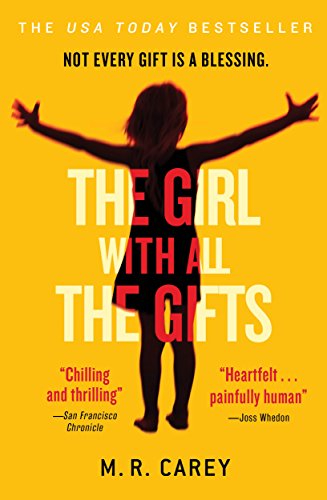
45The Girl With All the Gifts (The Girl With All the Gifts, #1)
Every morning, Melanie waits in her cell to be collected for class. When they come for her, Sergeant Parks keeps his gun pointing at her while two of his people strap her into the wheelchair. She thinks they don't like her. She jokes that she won't bite, but they don't laugh.
Melanie loves school. She loves learning about spelling and sums and the world outside the classroom and the children's cells. She tells her favorite teacher all the things she'll do when she grows up. Melanie doesn't know why this makes Miss Justineau look sad.
The Girl with All the Gifts is a sensational thriller, perfect for fans of Stephen King, Justin Cronin, and Neil Gaiman.
"When it comes to fiction, there are so many to choose from! Some books I've loved in the past year include The Girl with All the Gifts by M. R. Carey." [source]
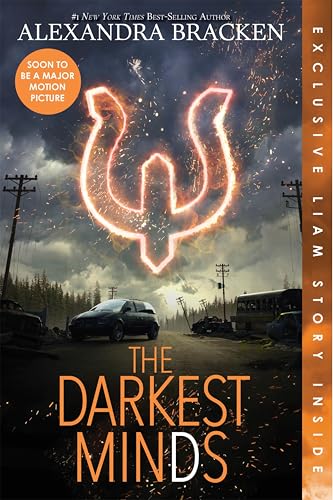
46The Darkest Minds (The Darkest Minds, #1)
Now sixteen, Ruby is one of the dangerous ones.
When the truth comes out, Ruby barely escapes Thurmond with her life. Now she’s on the run, desperate to find the one safe haven left for kids like her—East River. She joins a group of kids who escaped their own camp. Liam, their brave leader, is falling hard for Ruby. But no matter how much she aches for him, Ruby can’t risk getting close. Not after what happened to her parents.
When they arrive at East River, nothing is as it seems, least of all its mysterious leader. But there are other forces at work, people who will stop at nothing to use Ruby in their fight against the government. Ruby will be faced with a terrible choice, one that may mean giving up her only chance at a life worth living.
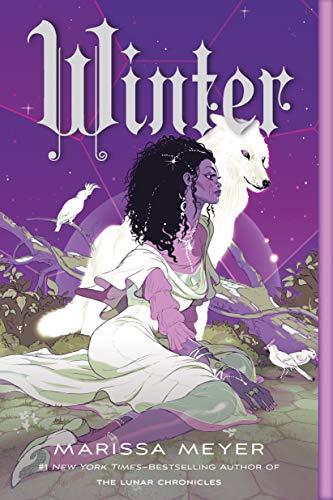
47Winter (The Lunar Chronicles, #4)
When Winter develops feelings for the handsome palace guard, Jacin, she fears the evil Queen will crush their romance before it has a chance to begin.
But there are stirrings against the Queen across the land. Together with the cyborg mechanic, Cinder, and her allies, Winter might even find the power to launch a revolution and win a war that's been raging for far too long.
Can Cinder, Scarlet, Cress, and Winter claim their happily ever afters by defeating Levana once and for all?
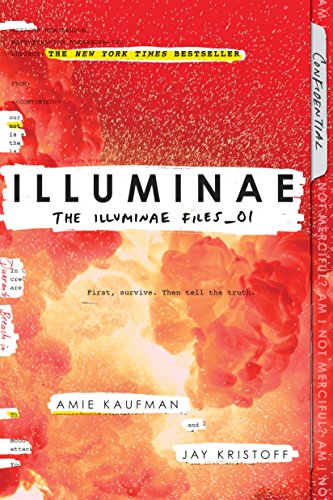
48Illuminae (The Illuminae Files, #1)
But the warship could be the least of their problems. A deadly plague has broken out and is mutating, with terrifying results; the fleet's AI, which should be protecting them, may actually be their biggest threat; and nobody in charge will say what's really going on. As Kady plunges into a web of data hacking to get to the truth, it's clear only one person can help her bring it all to light: Ezra.
Told through a fascinating dossier of hacked documents--including emails, schematics, military files, IMs, medical reports, interviews, and more--Illuminae is the first book in a heart-stopping, high-octane trilogy about lives interrupted, the price of truth, and the courage of everyday heroes.
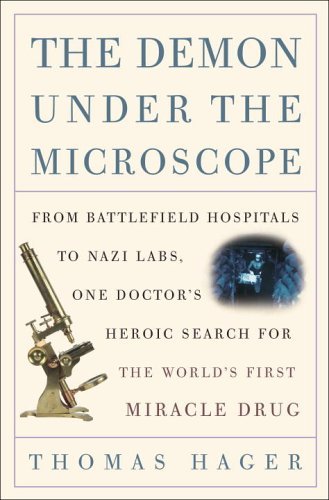
49The Demon Under the Microscope: From Battlefield Hospitals to Nazi Labs, One Doctor's Heroic Search for the World's First Miracle Drug
Sulfa saved millions of lives—among them those of Winston Churchill and Franklin Delano Roosevelt Jr.—but its real effects are even more far reaching. Sulfa changed the way new drugs were developed, approved, and sold; transformed the way doctors treated patients; and ushered in the era of modern medicine. The very concept that chemicals created in a lab could cure disease revolutionized medicine, taking it from the treatment of symptoms and discomfort to the eradication of the root cause of illness.
A strange and colorful story, The Demon Under the Microscope illuminates the vivid characters, corporate strategy, individual idealism, careful planning, lucky breaks, cynicism, heroism, greed, hard work, and the central (though mistaken) idea that brought sulfa to the world. This is a fascinating scientific tale with all the excitement and intrigue of a great suspense novel.
For thousands of years, humans had sought medicines with which they could defeat contagion, and they had slowly, painstakingly, won a few battles: some vaccines to ward off disease, a handful of antitoxins. A drug or two was available that could stop parasitic diseases once they hit, tropical maladies like malaria and sleeping sickness. But the great killers of Europe, North America, and most of Asia—pneumonia, plague, tuberculosis, diphtheria, cholera, meningitis—were caused not by parasites but by bacteria, much smaller, far different microorganisms. By 1931, nothing on earth could stop a bacterial infection once it started. . . .
But all that was about to change. . . . —from The Demon Under the Microscope
50Ghosts
51My Sister's Keeper
A provocative novel that raises some important ethical issues, My Sister's Keeper is the story of one family's struggle for survival at all human costs and a stunning parable for all time.
52Doomsday Book (Oxford Time Travel, #1)
But a crisis strangely linking past and future strands Kivrin in a bygone age as her fellows try desperately to rescue her. In a time of superstition and fear, Kivrin--barely of age herself--finds she has become an unlikely angel of hope during one of history's darkest hours.
Connie Willis draws upon her understanding of the universalities of human nature to explore the ageless issues of evil, suffering, and the indomitable will of the human spirit.
53Beating Back the Devil: On the Front Lines with the Disease Detectives of the Epidemic Intelligence Service
They are the disease detective corps of the US Centers for Disease Control and Prevention (CDC), the federal agency that tracks and tries to prevent disease outbreaks and bioterrorist attacks around the world. They are formally called the Epidemic Intelligence Service (EIS)—a group founded more than fifty years ago out of fear that the Korean War might bring the use of biological weapons—and, like intelligence operatives in the traditional sense, they perform their work largely in anonymity. They are not household names, but over the years they were first to confront the outbreaks that became known as hantavirus, Ebola, and AIDS. Every day they work to protect us by hunting down the deadly threats that we forget until they dominate our headlines, West Nile virus, anthrax, and SARS among others.
In this riveting narrative, Maryn McKenna—the only journalist ever given full access to the EIS in its fifty-three-year history—follows the first class of disease detectives to come to the CDC after September 11, the first to confront not just naturally occurring outbreaks but the man-made threat of bioterrorism. They are talented researchers—many with young families—who trade two years of low pay and extremely long hours for the chance to be part of the group that are on the frontlines, in the yellow suits and masks, that has helped eradicate smallpox, push back polio, and solve the first major outbreaks of Legionnaires’ disease, toxic shock syndrome, and E. coli O157 and works to battle every new disease before it becomes an epidemic.
Urgent, exhilarating, and compelling, Beating Back the Devil takes you inside the world of these medical detectives who are trying to stop the next epidemic—before the epidemics stop us.
I should also take this chance to plug @marynmck book Beating Back The Devil which highlight amazing work by @CDCgov [source]
54The Plant Paradox: The Hidden Dangers in "Healthy" Foods That Cause Disease and Weight Gain
In the deadly game of predator versus prey, an adult gazelle can outrun a hungry lioness, a sparrow can take flight when stalked by a cat, and a skunk can let loose a spray of noxious liquid to temporarily blind a fox. The stakes aren’t always rigged against the prey. But when the prey is a plant, the poor thing is helpless, right? Wrong. Plants actually have an impressive array of defense tactics to protect themselves from predators of all shapes and sizes—including humans.
Dr. Stephen Gundry explains that these defense strategies make the seemingly virtuous plants that we consume every day—fruits, vegetables, grains, nuts, and seeds—far less "good for us" than we assume. Plants may use physical deterrents (think: the spine-tipped leaves of an artichoke or the hard outer coating of a seed) as well as chemical warfare to repel predators. One of the most common forms of plants’ chemical defense system comes in the form of proteins called lectins.
Found in the seeds, grains, skins, rinds, and leaves of most plants, lectins act as smart bombs in the human body, causing toxic or inflammatory reactions that lead to serious conditions such as leaky gut, autoimmune disease, chronic digestive disorders, heart disease, and weight gain.
In The Plant Paradox, Dr. Gundry outlines the health hazards posed by lectins as well as the ways we can avoid them. The main sources of lectins in the American diet include conventionally-raised dairy products, beans, and other legumes, wheat and grains, and specific vegetables and fruits. The simple (and daunting) fact is, lectins are everywhere. But in The Plant Paradox, Dr. Gundry provides simple hacks we easily can employ to avoid this insidious plant toxin, including:
Vegetables like tomatoes and peppers are full of lectins—but most are contained in the skin and seeds. Simply peeling and de-seeding your favorite veggies makes them safer to consume.
Plants want us to eat them when they’re ripe to disperse their seeds! Eating fruit at the peak of ripeness—that means fresh, local, and seasonal—ensure that you will consume fewer lectins.
Think "whole grains" are healthy? Think again. All of those grains and seeds with hard outer coatings are designed by nature to cause digestive distress—and are full of lectins. In fact, wheat contains one very famous lectin: gluten.
With a full list of lectin-containing foods and simple substitutes for each; a step-by-step detox and eating plan; and easy lectin-free recipes, The Plant Paradox illuminates the hidden dangers lurking in your salad bowl—and shows you how to eat whole foods in a whole new way.
He tells you plants are bad for you, essentially. And I don’t know what it is about this book, but it might be a little bit of hocus pocus, but I’m a full believer. [source]
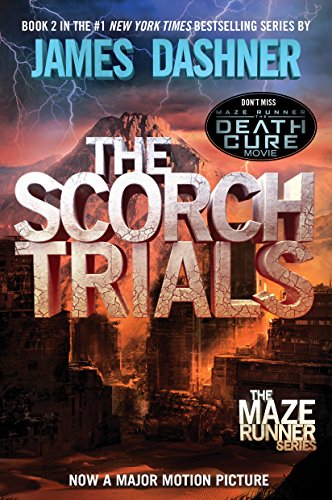
55The Scorch Trials (The Maze Runner, #2)
Thomas was sure that escape from the Maze would mean freedom for him and the Gladers. But WICKED isn’t done yet. Phase Two has just begun. The Scorch.
There are no rules. There is no help. You either make it or you die.
The Gladers have two weeks to cross through the Scorch—the most burned-out section of the world. And WICKED has made sure to adjust the variables and stack the odds against them.
Friendships will be tested. Loyalties will be broken. All bets are off.
There are others now. Their survival depends on the Gladers’ destruction—and they’re determined to survive.
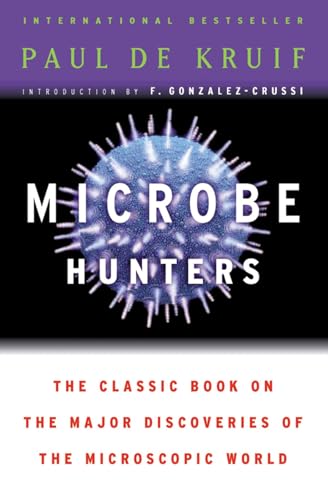
56Microbe Hunters
An international bestseller, translated into eighteen languages, Paul de Kruif’s classic account of the first scientists to see and learn about the microscopic world continues to fascinate new readers. This is a timeless dramatization of the scientists, bacteriologists, doctors, and medical technicians who discovered the microbes and invented the vaccines to counter them. De Kruif writes about how seemingly simple but really fundamental discovers of science—for instance, how a microbe was first viewed in a clear drop of rain water, and when, for the first time, Louis Pasteur discovered that a simple vaccine could save a man from the ravages of rabies by attacking the microbes that cause it.
@ClemensXI Glad you asked. Literally, it's the biology of very small organisms, including bacteria, viruses, protozoa, and fungi. The story of van Leeuvenhoek, the first microbiologist, is fascinating, and you might try the book Microbe Hunters by de Kruif. [source]
It’s such a fun book — to the extent that something about searching for microbes can be fun. I got the sense that the author was saying very consciously, “This is awesome and exciting and I’m going to show that!” I just love those types of stories. It’s one of the reasons I like The Ghost Map also: it’s really a story of this small group of people who changed our entire understanding of the world we live in and in pretty dramatic ways and with very dramatic consequences for public health and the development of new medicines. I just find that so exciting and astounding. I don’t know if you’ve ever read a book by James Watson, one of the people who co-discovered DNA, called The Double Helix, but I love that book as well. Here are two guys who “Oh wow! They just discovered the entire key to life that no one else had ever discovered before!” That’s incredible and you get that in Microbe Hunters as well. [source]
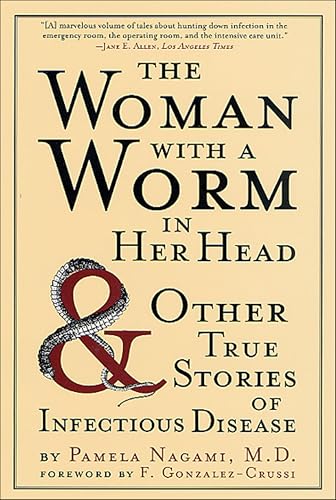
57The Woman with a Worm in Her Head: And Other True Stories of Infectious Disease
A handsome man contracts Chicken Pox and ends up looking like the victim of a third degree burn.
A vigorous young athlete is bitten by an insect and becomes a target for flesh-eating strep.
Even the most innocuous everyday activities such as eating a salad for lunch, getting bitten by an insect, and swimming in the sea bring human beings into contact with dangerous, often deadly microorganisms. In The Woman with a Worm in Her Head, Dr. Pamela Nagami reveals-through real-life cases-the sobering facts about some of the world's most horrific diseases: the warning signs, the consequences, treatments, and most compellingly, what it feels like to make medical and ethical decisions that can mean the difference between life and death.
Unfailingly precise, calmly instructive, and absolutely engrossing, The Woman with the Worm in Her Head offers both useful information and enjoyable reading.
Wonder
Over 6 million people have read the #1 New York Times bestseller WONDER and have fallen in love with Auggie Pullman, an ordinary boy with an extraordinary face.
The book that inspired the Choose Kind movement.
I won’t describe what I look like. Whatever you’re thinking, it’s probably worse.
August Pullman was born with a facial difference that, up until now, has prevented him from going to a mainstream school. Starting 5th grade at Beecher Prep, he wants nothing more than to be treated as an ordinary kid—but his new classmates can’t get past Auggie’s extraordinary face. WONDER, now a #1 New York Times bestseller and included on the Texas Bluebonnet Award master list, begins from Auggie’s point of view, but soon switches to include his classmates, his sister, her boyfriend, and others. These perspectives converge in a portrait of one community’s struggle with empathy, compassion, and acceptance.
“Wonder is the best kids’ book of the year,” said Emily Bazelon, senior editor at Slate.com and author of Sticks and Stones: Defeating the Culture of Bullying and Rediscovering the Power of Character and Empathy. In a world where bullying among young people is an epidemic, this is a refreshing new narrative full of heart and hope. R.J. Palacio has called her debut novel “a meditation on kindness” —indeed, every reader will come away with a greater appreciation for the simple courage of friendship. Auggie is a hero to root for, a diamond in the rough who proves that you can’t blend in when you were born to stand out.
Join the conversation: #thewonderofwonder
Source: penguinrandomhouse.com
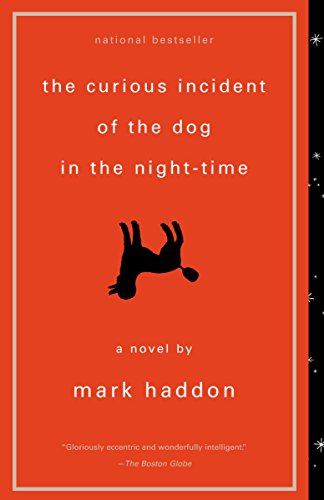
59The Curious Incident of the Dog in the Night-Time
Although gifted with a superbly logical brain, for fifteen-year-old Christopher everyday interactions and admonishments have little meaning. He lives on patterns, rules, and a diagram kept in his pocket. Then one day, a neighbor's dog, Wellington, is killed and his carefully constructive universe is threatened. Christopher sets out to solve the murder in the style of his favourite (logical) detective, Sherlock Holmes. What follows makes for a novel that is funny, poignant and fascinating in its portrayal of a person whose curse and blessing are a mind that perceives the world entirely literally.
Mark Haddon wrote a spy series for eight- or nine-year-olds and then he suddenly comes out with this rather brilliant novel. Is it an adult book? Is it a kids’ book? So many people can read it and approach it. [source]
In fiction the writer has some licence to deviate from what is real – it’s a work of art, ultimately, for people’s interest and enjoyment, but I think that the character is very recognisable of many people with Asperger syndrome. I think the author has done a very good job. [source]
I've always loved fiction - mainly crime and legal thrillers, but there's something wonderful about reading a completely different style of writing from what I'm used to. I found myself absorbed in the narrative of guilt and love in The Kite Runner, and The Curious Incident told me a story from a completely different perspective. [source]
60Vaccinated: One Man's Quest to Defeat the World's Deadliest Diseases
Maurice Hilleman is the father of modern vaccines. Chief among his accomplishments are nine vaccines that practically every child gets, rendering formerly deadly diseases—including mumps, rubella, and measles—nearly forgotten. Author Paul A. Offit’s rich and lively narrative details Hilleman’s research and experiences as the basis for a larger exploration of the development of vaccines, covering two hundred years of medical history and traveling across the globe in the process. The history of vaccines necessarily brings with it a cautionary message, as they have come under assault from those insisting they do more harm than good. Paul Offit clearly and compellingly rebuts these arguments, and, by demonstrating how much the work of Hilleman and others has gained for humanity, shows us how much we have to lose.
Although he was not an easy man to work for, there are few people in the history of humanity who have saved more lives than Maurice Hilleman. [source]
61Biohazard: The Chilling True Story of the Largest Covert Biological Weapons Program in the World--Told from the Inside by the Man Who Ran It
No one knows more about Russia’s astounding experiments with biowarfare than Ken Alibek. Now the mastermind behind Russia’s germ warfare effort reveals two decades of shocking breakthroughs . . . how Moscow’s leading scientists actually reengineered hazardous microbes to make them even more virulent . . . the secrets behind the discovery of an invisible, untraceable new class of biological agents just right for use in political assassinations . . . the startling story behind Russia’s attempt to turn a sample of the AIDS virus into the ultimate bioweapon. And in a chilling work of real-world intrigue, Biohazard offers us all a rare glimpse into a shadowy scientific underworld where doctors manufacture mass destruction, where witnesses to errors are silenced forever, and where ground zero is closer than we ever dared believe.
62Red Book 2018: Report of the Committee on Infectious Diseases
The 31st edition provides evidence-based guidance to practicing clinicians on pediatric infections and vaccinations based on the recommendations of the committee as well as the combined expertise of the CDC, the FDA, and hundreds physician contributors.
New in Red Book 2018:
All chapters were assessed for relevance given the dynamic environment in pediatric medicine today and every chapter has been modified since the last edition
3 new chapters added (Chikungunya, Coagulase-Negative Staphylococcal Infections, and Zika).
Standardized approaches to disease prevention through immunizations, antimicrobial prophylaxis, and infection-control practices have been updated throughout
Recommendations for the use of doxycycline have been liberalized.
References to evidence-based policy recommendations have been recommended
Appropriate chapters have been updated to be consistent with 2018 AAP and CDC vaccine recommendations, CDC recommendations for immunization of health care personnel, and drug recommendations from 2018 Nelson's Pediatric Antimicrobial Therapy.
Red Book® is an indispensable reference for pediatricians and pediatric infectious disease specialists and is useful for family medicine and emergency medicine physicians as well. Public health and school health professionals, medical residents, and students also will find it a high-yield source of pediatric infectious disease and vaccine information.
63Cutting for Stone
Marion and Shiva Stone are twin brothers born of a secret union between a beautiful Indian nun and a brash British surgeon at a mission hospital in Addis Ababa. Orphaned by their mother’s death in childbirth and their father’s disappearance, bound together by a preternatural connection and a shared fascination with medicine, the twins come of age as Ethiopia hovers on the brink of revolution. Yet it will be love, not politics—their passion for the same woman—that will tear them apart and force Marion, fresh out of medical school, to flee his homeland. He makes his way to America, finding refuge in his work as an intern at an underfunded, overcrowded New York City hospital. When the past catches up to him—nearly destroying him—Marion must entrust his life to the two men he thought he trusted least in the world: the surgeon father who abandoned him and the brother who betrayed him.
An unforgettable journey into one man’s remarkable life, and an epic story about the power, intimacy, and curious beauty of the work of healing others.
(front flap)
Former USA President
As a devoted reader, the president has been linked to a lengthy list of novels and poetry collections over the years. [source]
This novel from a decade ago should be read by every American interested in immigration. While it deals with a lot of medical details, the essence of it is about urban life in developing countries and about the immigrant experience. It is both moving and thought-provoking. [source]
64The 5th Wave (The 5th Wave, #1)
Now, it's the dawn of the 5th wave, and on a lonely stretch of highway, Cassie runs from Them. The beings who only look human, who roam the countryside killing anyone they see. Who have scattered Earth's last survivors. To stay alone is to stay alive, Cassie believes, until she meets Evan Walker. Beguiling and mysterious, Evan Walker may be Cassie's only hope for rescuing her brother-or even saving herself. But Cassie must choose: between trust and despair, between defiance and surrender, between life and death. To give up or to get up.
65Out of My Mind
In this breakthrough story, reminiscent of The Diving Bell and the Butterfly, from multiple Coretta Scott King Award-winner Sharon Draper, readers will come to know a brilliant mind and a brave spirit who will change forever how they look at anyone with a disability.
66The Lost City of the Monkey God: A True Story
A Best Book of 2017 from the Boston Globe
One of the 12 Best Books of the Year from National Geographic
Included in Lithub's Ultimate Best Books of 2017 List
A Favorite Science Book of 2017 from Science News
A five-hundred-year-old legend. An ancient curse. A stunning medical mystery. And a pioneering journey into the unknown heart of the world's densest jungle.
Since the days of conquistador Hernán Cortés, rumors have circulated about a lost city of immense wealth hidden somewhere in the Honduran interior, called the White City or the Lost City of the Monkey God. Indigenous tribes speak of ancestors who fled there to escape the Spanish invaders, and they warn that anyone who enters this sacred city will fall ill and die. In 1940, swashbuckling journalist Theodore Morde returned from the rainforest with hundreds of artifacts and an electrifying story of having found the Lost City of the Monkey God-but then committed suicide without revealing its location.
Three quarters of a century later, bestselling author Doug Preston joined a team of scientists on a groundbreaking new quest. In 2012 he climbed aboard a rickety, single-engine plane carrying the machine that would change everything: lidar, a highly advanced, classified technology that could map the terrain under the densest rainforest canopy. In an unexplored valley ringed by steep mountains, that flight revealed the unmistakable image of a sprawling metropolis, tantalizing evidence of not just an undiscovered city but an enigmatic, lost civilization.
Venturing into this raw, treacherous, but breathtakingly beautiful wilderness to confirm the discovery, Preston and the team battled torrential rains, quickmud, disease-carrying insects, jaguars, and deadly snakes. But it wasn't until they returned that tragedy struck: Preston and others found they had contracted in the ruins a horrifying, sometimes lethal-and incurable-disease.
Suspenseful and shocking, filled with colorful history, hair-raising adventure, and dramatic twists of fortune, THE LOST CITY OF THE MONKEY GOD is the absolutely true, eyewitness account of one of the great discoveries of the twenty-first century.
67Prevent and Reverse Heart Disease: The Revolutionary, Scientifically Proven, Nutrition-Based Cure
The proof lies in the incredible outcomes for patients who have followed Dr. Esselstyn's program, including a number of patients in his original study who had been told by their cardiologists that they had less than a year to live. Within months of starting the program, all Dr. Esselstyn’s patients began to improve dramatically, and twenty years later, they remain free of symptoms.
Complete with more than 150 delicious recipes perfect for a plant-based diet, the national bestseller Prevent and Reverse Heart Disease explains the science behind the simple plan that has drastically changed the lives of heart disease patients forever. It will empower readers and give them the tools to take control of their heart health.
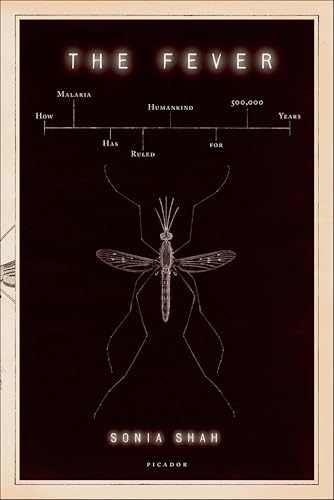
68The Fever: How Malaria Has Ruled Humankind for 500,000 Years
In The Fever, the journalist Sonia Shah sets out to answer these questions, delivering a timely, inquisitive chronicle of the illness and its influence on human lives. Through the centuries, she finds, we’ve invested our hopes in a panoply of drugs and technologies, and invariably those hopes have been dashed. From the settling of the New World to the construction of the Panama Canal, through wars and the advances of the Industrial Revolution, Shah tracks malaria’s jagged ascent and the tragedies in its wake, revealing a parasite every bit as persistent as the insects that carry it. With distinguished prose and original reporting from Panama, Malawi, Cameroon, India, and elsewhere, The Fever captures the curiously fascinating, devastating history of this long-standing thorn in the side of humanity.
CEO/Microsoft
If you want to read just one book about malaria, The Fever is probably the best choice. Author Sonia Shah doesn’t overwhelm you with data and analytics, but she does cover the whole history of the disease, which—as the title suggests—goes back further than you might think. The book was published in 2010, so it’s not totally up to date (most notably, we’ve made progress with rolling out bed nets since then). But it’s a great overview of malaria, its impact, and the solutions to it. [source]
Here’s one for your #SummerReadingList 📚: #TheFever by @soniashah is a terrific book that puts #malaria work into historic context- one of my favorite genres of writing. 🤓 https://t.co/uB6coVU5sf [source]
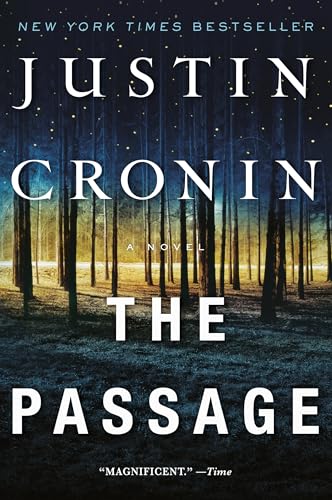
69The Passage (The Passage, #1)
THIRTY-TWO MINUTES FOR ONE WORLD TO DIE, ANOTHER TO BE BORN.
First, the unthinkable: a security breach at a secret U.S. government facility unleashes the monstrous product of a chilling military experiment. Then, the unspeakable: a night of chaos and carnage gives way to sunrise on a nation, and ultimately a world, forever altered. All that remains for the stunned survivors is the long fight ahead and a future ruled by fear--of darkness, of death, of a fate far worse.
As civilization swiftly crumbles into a primal landscape of predators and prey, two people flee in search of sanctuary. FBI agent Brad Wolgast is a good man haunted by what he's done in the line of duty. Six-year-old orphan Amy Harper Bellafonte is a refugee from the doomed scientific project that has triggered apocalypse. Wolgast is determined to protect her from the horror set loose by her captors, but for Amy, escaping the bloody fallout is only the beginning of a much longer odyssey--spanning miles and decades--toward the time an place where she must finish what should never have begun.
With The Passage, award-winning author Justin Cronin has written both a relentlessly suspenseful adventure and an epic chronicle of human endurance in the face of unprecedented catastrophe and unimaginable danger. Its inventive storytelling, masterly prose, and depth of human insight mark it as a crucial and transcendent work of modern fiction.
(front flap)
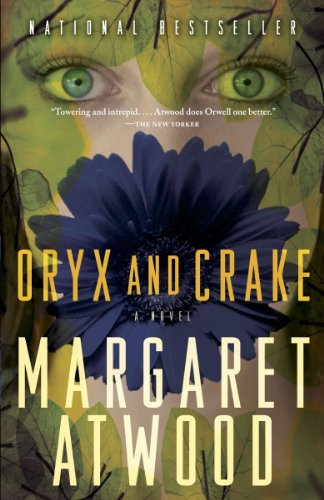
70Oryx and Crake (MaddAddam, #1)
Oryx and Crake is here because it’s about the logical conclusion of a whole set of processes that we could have called progress. In my lecture I talked about the logic of progress: the logic of science and technology, the logic of markets, the logic of bureaucracy. And if you want a wonderful dystopian vision of what happens if you take these forward without any recourse to ethical considerations – without asking what progress represents – then Oryx and Crake does that. This novel was recommended by Karen Buck MP and it has influenced me as a wonderful account of a world run by large biotech corporations, where society is deeply dysfunctional and on the verge of self-destruction because nobody has stopped to say, ‘Is this the right thing to do? Is this the human thing to do? What does it mean to be human and are we still human beings?’ The book is a scream of, ‘When do we ask the big questions about any of this?’ [source]
The theme of hopelessness was the most profound I thought, as the narrative rattles through the devastatingly self-conscious decay of the main character's mind, the echoes of his life writhing and senescing inside his withering brain. Please read this great book :) https://t.co/1XVpw92bbb [source]
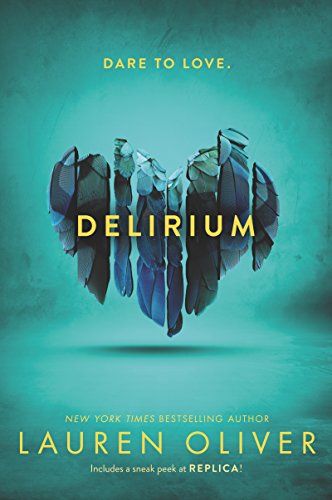
71Delirium (Delirium, #1)
In an alternate United States, love has been declared a dangerous disease, and the government forces everyone who reaches eighteen to have a procedure called the Cure. Living with her aunt, uncle, and cousins in Portland, Maine, Lena Haloway is very much looking forward to being cured and living a safe, predictable life. She watched love destroy her mother and isn't about to make the same mistake.
But with ninety-five days left until her treatment, Lena meets enigmatic Alex, a boy from the "Wilds" who lives under the government's radar. What will happen if they do the unthinkable and fall in love?
Virus Hunter: Thirty Years of Battling Hot Viruses Around the World
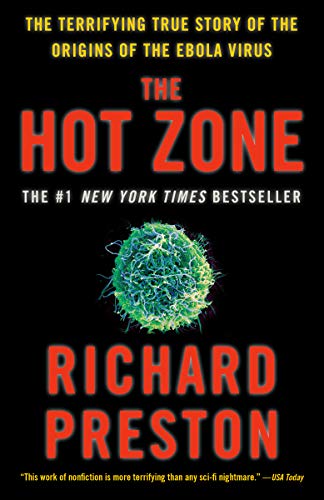
The man who led the battle against Ebola in The Hot Zone teams up with the bestselling co-author of Mind Hunter to chronicle his extraordinary thirty-year career fighting deadly viruses.
For three decades, Dr. C. J. Peters was on the front lines of our biological battle against “hot” viruses around the world. In the course of that career, he learned countless lessons about our interspecies turf wars with infectious agents. Called in to contain an outbreak of deadly hemorrhagic fever in Bolivia, he confronted the despair of trying to save a colleague who accidentally infected himself with an errant scalpel. Working in Level 4 labs on the Machupo and Ebola viruses, he saw time and again why expensive high-tech biohazard containment equipment is only as safe as the people who use it.
Because of new, emerging viruses, and the return of old, “vanquished” ones for which vaccines do not exist, there remains a very real danger of a new epidemic that could, without proper surveillance and early intervention, spread worldwide virtually overnight. And the possibility of foreign countries or terrorist groups using deadly airborne viruses—the poor man’s nuclear arsenal—looms larger than ever.
High-octane science writing at its best and most revealing, Virus Hunter is a thrilling first-person account of what it is like to be a warrior in the Hot Zone.
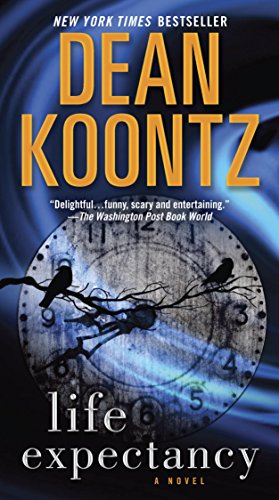
73Life Expectancy
Jimmy Tock comes into the world on the very night his grandfather leaves it. As a violent storm rages outside the hospital, Rudy Tock spends long hours walking the corridors between the expectant fathers' waiting room and his dying father's bedside. It's a strange vigil made all the stranger when, at the very height of the storm's fury, Josef Tock suddenly sits up in bed and speaks coherently for the first and last time since his stroke.
What he says before he dies is that there will be five dark days in the life of his grandson – five dates whose terrible events Jimmy will have to prepare himself to face. The first is to occur in his 20th year; the second in his 23rd year; the third in his 28th; the fourth in his 29th; the fifth in his 30th.
Rudy is all too ready to discount his father's last words as a dying man's delusional rambling. But then he discovers that Josef also predicted the moment of his grandson's birth to the minute, as well as his exact height, weight, and the fact that Jimmy would be born with syndactyly – the unexplained anomaly of fused digits on his left foot. Suddenly, the old man's predictions take on a chilling significance.
What terrifying events await Jimmy on these five dark days? What nightmares will he face? What challenges must he survive? As the novel unfolds, picking up Jimmy's story at each of these crisis points, the path he must follow will defy every expectation. And with each crisis he faces, he will move closer to a fate he could never have imagined. For who Jimmy Tock is and what he must accomplish on the five days his world turns is a mystery as dangerous as it is wondrous – a struggle against an evil so dark and pervasive only the most extraordinary of human spirits can shine through.
74The Family that Couldn't Sleep
For two hundred years a noble Venetian family has suffered from an inherited disease that strikes their members in middle age, stealing their sleep, eating holes in their brains, and ending their lives in a matter of months. In Papua New Guinea, a primitive tribe is nearly obliterated by a sickness whose chief symptom is uncontrollable laughter. Across Europe, millions of sheep rub their fleeces raw before collapsing. In England, cows attack their owners in the milking parlors, while in the American West, thousands of deer starve to death in fields full of grass.
What these strange conditions–including fatal familial insomnia, kuru, scrapie, and mad cow disease–share is their cause: prions. Prions are ordinary proteins that sometimes go wrong, resulting in neurological illnesses that are always fatal. Even more mysterious and frightening, prions are almost impossible to destroy because they are not alive and have no DNA–and the diseases they bring are now spreading around the world.
In The Family That Couldn’t Sleep, essayist and journalist D. T. Max tells the spellbinding story of the prion’s hidden past and deadly future
75Stiff: The Curious Lives of Human Cadavers
76Lifespan: Why We Age—and Why We Don't Have To
In this groundbreaking book, Dr. David Sinclair, leading world authority on genetics and longevity, reveals a bold new theory for why we age. As he writes: “Aging is a disease, and that disease is treatable.”
This book takes us to the frontlines of research many from Dr. David Sinclair’s own lab at Harvard—that demonstrate how we can slow down, or even reverse, aging. The key is activating newly discovered vitality genes, the descendants of an ancient genetic survival circuit that is both the cause of aging and the key to reversing it.
Co-Founder/Sun Microsystem
Reveals incredible scientific breakthroughs about aging and ways we can slow down, or even reverse, the process. [source]
Co-Founder/Sun Microsystem
Reveals incredible scientific breakthroughs about aging and ways we can slow down, or even reverse, the process. [source]
Prepare to have your mind blown. You are holding in your hands the precious results of decades of work, as shared by Dr. David Sinclair, the rock star of aging and human longevity. [source]
77The Kill Order (The Maze Runner, #4)
Mark and Trina were there when it happened, and they survived. But surviving the sun flares was easy compared to what came next. Now a disease of rage and lunacy races across the eastern United States, and there’s something suspicious about its origin. Worse yet, it’s mutating, and all evidence suggests that it will bring humanity to its knees.
Mark and Trina are convinced there’s a way to save those left living from descending into madness. And they’re determined to find it—if they can stay alive. Because in this new, devastated world, every life has a price. And to some, you’re worth more dead than alive.
78Level 4: Virus Hunters of the CDC
79Inside the O'Briens
Huntington’s is a lethal neurodegenerative disease with no treatment and no cure. Each of Joe’s four children has a 50 percent chance of inheriting their father’s disease, and a simple blood test can reveal their genetic fate. While watching her potential future in her father’s escalating symptoms, twenty-one-year-old daughter Katie struggles with the questions this test imposes on her young adult life. Does she want to know? What if she’s gene positive? Can she live with the constant anxiety of not knowing?
As Joe’s symptoms worsen and he’s eventually stripped of his badge and more, Joe struggles to maintain hope and a sense of purpose, while Katie and her siblings must find the courage to either live a life “at risk” or learn their fate.
80Parasite Rex: Inside the Bizarre World of Nature's Most Dangerous Creatures
For centuries, parasites have lived in nightmares, horror stories, and in the darkest shadows of science. Now award-winning writer Carl Zimmer takes us on a fantastic voyage into the secret parasite universe we actually live in but haven't recognized. He reveals not only that parasites are the most successful life-forms on Earth, but that they triggered the development of sex, shape ecosystems, and have driven the engine of evolution.
In mapping the parasite universe, Zimmer makes the astonishing observation that most species are parasites, and that almost every animal, including humans, will at one time or another become the home of a parasite. Zimmer shows how highly evolved parasites are and describes the frightening and amazing ingenuity these commando invaders use to devour their hosts from the inside and control their behavior. The sinister Sacculina carcini makes its home in an unlucky crab and proceeds to eat everything but what the crab needs to put food in its mouth, which Sacculina then consumes. When Sacculina finally reproduces, it places its young precisely where the crab would nurture its own progeny, and then has the crab nurture the foster family members. Single-celled Toxoplasma gondi has an even more insidious role, for it can invade the human brain. There it makes men distrustful and less willing to submit to social mores. Women become more outgoing and warm-hearted. Why would a parasite cause these particular personality changes? It seems Toxoplasma wants its host to be less afraid, to be more prone to danger and a violent end -- so that, in the carnage, it will be able to move on to another host.
From the steamy jungles of Costa Rica to the fetid parasite heaven of rebel-held southern Sudan, Zimmer tracks the genius of parasitic life and its impact on humanity. We hosts have developed remarkable defenses against the indomitable parasite: our mighty immune system, our culturally enforced habit of keeping clean, and, perhaps most intriguingly, sex. But this is not merely a book about the evil power of parasitism and how we must defend against it. On the contrary, Zimmer concludes that humankind itself is a new kind of parasite, one that preys on the entire Earth. If we are to achieve the sophistication of the parasites on display here in vivid detail, if we are to promote the flourishing of life in all its diversity as they do, we must learn the ways nature lives with itself, the laws of Parasite Rex.
81The Infectious Disease Colouring Book:: A Gruesome Colouring Therapy Adventure
Jam-packed with unique images to color. The Infectious Disease Coloring Book makes a funny gift - or keep just it for yourself! With 35 images of syphilis, parasitic worms and infectious diseases, you have never seen an adult coloring book like it - until now!
Let's be honest, we're all a little curious about infectious diseases, especially those of us interested in biology or medicine! We all want to know what they look like and how they affect the body, not to mention what colors they might possess.
Great for med students, people who love science, or even just adults looking to disconnect from the stress of the world and unleash their creativity, this quirky coloring book is an eye-opening experience for anyone who loves to color, draw, and paint. Both a novelty gift and as a way to refocus your mind, choose the Infectious Disease Coloring Book for yourself or surprise someone with the best joke present that's sure to pique their interest!
A great gift!These fun, easy-to-color, and somewhat gross adult coloring books offer:
High-Detailed, Unique, and Creative Graphics
Multiple Diseases (Leprosy, Flesh-Eating Bacteria, Syphilis, and More!
Crisp, Clean, Easy-to-Color Images
More than 35 Individual Coloring Pages
Single-Sided Page Printing (Avoid Bleed Through)
Have a little fun learning about infectious diseases or even just relieve a little stress and anxiety while practicing mindfulness with this original infectious disease coloring books from Nicholas Wright.
Created by author and publisher Nicholas Wright, this one-of-a-kind adult coloring gives you a unique look at major medical diseases-and then lets you color them in your own original and creative style!
82Pale Rider: The Spanish Flu of 1918 and How it Changed the World
In Pale Rider, Laura Spinney recounts the story of an overlooked pandemic, tracing it from Alaska to Brazil, from Persia to Spain, and from South Africa to Odessa. Telling the story from the point of view of those who lived through it, she shows how the pandemic was shaped by the interaction of a virus and the humans it encountered; and how this devastating natural experiment put both the ingenuity and the vulnerability of humans to the test.
Drawing on the latest research in history, virology, epidemiology, psychology, and economics, Laura Spinney narrates a catastrophe that changed humanity for decades to come, and continues to make itself felt today. In the process she demonstrates that the Spanish flu was as significant – if not more so – as two world wars in shaping the modern world; in disrupting, and often permanently altering, global politics, race relations, family structures, and thinking across medicine, religion and the arts.
83Lock In (Lock In, #1)
A quarter of a century later, in a world shaped by what's now known as "Haden's syndrome," rookie FBI agent Chris Shane is paired with veteran agent Leslie Vann. The two of them are assigned what appears to be a Haden-related murder at the Watergate Hotel, with a suspect who is an "integrator" - someone who can let the locked in borrow their bodies for a time. If the Integrator was carrying a Haden client, then naming the suspect for the murder becomes that much more complicated.
But "complicated" doesn't begin to describe it. As Shane and Vann began to unravel the threads of the murder, it becomes clear that the real mystery - and the real crime - is bigger than anyone could have imagined. The world of the locked in is changing, and with the change comes opportunities that the ambitious will seize at any cost. The investigation that began as a murder case takes Shane and Vann from the halls of corporate power to the virtual spaces of the locked in, and to the very heart of an emerging, surprising new human culture. It's nothing you could have expected.
The Death Cure (The Maze Runner, #3)
WICKED has taken everything from Thomas: his life, his memories, and now his only friends—the Gladers. But it’s finally over. The trials are complete, after one final test.
Will anyone survive?
What WICKED doesn’t know is that Thomas remembers far more than they think. And it’s enough to prove that he can’t believe a word of what they say.
The truth will be terrifying.
Thomas beat the Maze. He survived the Scorch. He’ll risk anything to save his friends. But the truth might be what ends it all.
The time for lies is over.
85The Dog Stars
But when a random transmission beams through the radio of his 1956 Cessna, the voice ignites a hope deep inside him that a better life exists outside their tightly controlled perimeter. Risking everything, he flies past his point of no return and follows its static-broken trail, only to find something that is both better and worse than anything he could ever hope for.
I really love this book. I picked it up because I love the stars, basically. [source]
86Tuesdays with Morrie
Maybe, like Mitch, you lost track of this mentor as you made your way, and the insights faded. Wouldn't you like to see that person again, ask the bigger questions that still haunt you?
Mitch Albom had that second chance. He rediscovered Morrie in the last months of the older man's life. Knowing he was dying of ALS - or motor neurone disease - Mitch visited Morrie in his study every Tuesday, just as they used to back in college. Their rekindled relationship turned into one final 'class': lessons in how to live.
Peeps (Peeps, #1)
Last year as college freshman, narrator Cal was infected by exotic goth Morgan with a parasite that caused following girlfriends to become vampire-like ghouls he calls parasite-positives "Peeps". A carrier without symptoms, he hunts his progeny for the centuries old bureaucratic Night Watch. But victims are showing more sanity, pretty human Lacey is pushing his buttons, and her apartment building basement houses fierce hordes of ravening rats, red-eyed cats, and monstrous worms that threaten all. Morgan has the secret to a centuries-old conspiracy and upcoming battle to save the human race.
88Small Steps: The Year I Got Polio
89Partials (Partials Sequence, #1)
Playing on our curiosity of and fascination with the complete collapse of civilization, Partials is, at its heart, a story of survival, one that explores the individual narratives and complex relationships of those left behind, both humans and Partials alike—and of the way in which the concept of what is right and wrong in this world is greatly dependent on one's own point of view.
Supports the Common Core State Standards.
90The Young Elites (The Young Elites, #1)
Adelina Amouteru is a survivor of the blood fever. A decade ago, the deadly illness swept through her nation. Most of the infected perished, while many of the children who survived were left with strange markings. Adelina’s black hair turned silver, her lashes went pale, and now she has only a jagged scar where her left eye once was. Her cruel father believes she is a malfetto, an abomination, ruining their family’s good name and standing in the way of their fortune. But some of the fever’s survivors are rumored to possess more than just scars—they are believed to have mysterious and powerful gifts, and though their identities remain secret, they have come to be called the Young Elites.
Teren Santoro works for the king. As Leader of the Inquisition Axis, it is his job to seek out the Young Elites, to destroy them before they destroy the nation. He believes the Young Elites to be dangerous and vengeful, but it’s Teren who may possess the darkest secret of all.
Enzo Valenciano is a member of the Dagger Society. This secret sect of Young Elites seeks out others like them before the Inquisition Axis can. But when the Daggers find Adelina, they discover someone with powers like they’ve never seen.
Adelina wants to believe Enzo is on her side, and that Teren is the true enemy. But the lives of these three will collide in unexpected ways, as each fights a very different and personal battle. But of one thing they are all certain: Adelina has abilities that shouldn’t belong in this world. A vengeful blackness in her heart. And a desire to destroy all who dare to cross her.
It is my turn to use. My turn to hurt.
91The Great Believers
In 1985, Yale Tishman, the development director for an art gallery in Chicago, is about to pull off an amazing coup, bringing an extraordinary collection of 1920s paintings as a gift to the gallery. Yet as his career begins to flourish, the carnage of the AIDS epidemic grows around him. One by one, his friends are dying and after his friend Nico's funeral, he finds his partner is infected, and that he might even have the virus himself. The only person he has left is Fiona, Nico's little sister.
Thirty years later, Fiona is in Paris tracking down her estranged daughter who disappeared into a cult. While staying with an old friend, a famous photographer who documented the Chicago epidemic, she finds herself finally grappling with the devastating ways the AIDS crisis affected her life and her relationship with her daughter. Yale and Fiona's stories unfold in incredibly moving and sometimes surprising ways, as both struggle to find goodness in the face of disaster.
A post #SNP19 book recommendation - this by @rebeccamakkai is brilliant. Set in mid 1980s Chicago and modern day Paris, it’s a very moving story about the devastation of the AIDS crisis. https://t.co/8pzDEdwrhx [source]
92Disease: The Story of Disease and Mankind's Continuing Struggle Against It
Ebola
It strikes without warning—a lethal disease with no name . . . and no cure.
At a Catholic mission in Yambuku, a remote village sixty miles south of the Ebola River, local teacher Mabalo Lokela visits the clinic with a raging fever. Sister Lucie, a Flemish nun and nurse, gives him a shot of an antimalarial drug, wipes off the syringe, and awaits her next patient. Within days, Mabalo is dead. Soon, others are falling ill. Less than three weeks later, the virus claims Sister Lucie’s life as well. Panic erupts, but as the villagers attempt to flee, all roads leading out of Yambuku are closed off, the dying forced back. And as the single radio connecting the mission to the outside world brings only bad news, the valiant nuns and medical personnel left behind have no choice but to pray, and wonder: Will they survive long enough for help to arrive?
Extraordinary Means
But when he meets Sadie and her friends - a group of eccentric troublemakers - he realises that maybe getting sick is just the beginning. That illness doesn't have to define you, and that falling in love is its own cure.
95Infections and Inequalities: The Modern Plagues
Challenging the accepted methodologies of epidemiology and international health, he points out that most current explanatory strategies, from "cost-effectiveness" to patient "noncompliance," inevitably lead to blaming the victims. In reality, larger forces, global as well as local, determine why some people are sick and others are shielded from risk. Yet this moving account is far from a hopeless inventory of insoluble problems. Farmer writes of what can be done in the face of seemingly overwhelming odds, by physicians determined to treat those in need. "Infections and Inequalities" weds meticulous scholarship with a passion for solutions--remedies for the plagues of the poor and the social maladies that have sustained them.
Updated, with a new preface.
CEO/Microsoft
In this book he really opens your eyes to the vast differences between the health of the rich and the health of the poor. [source]
96Feed (Newsflesh Trilogy, #1)
The infection spread, virus blocks taking over bodies and minds with one, unstoppable command: FEED. Now, twenty years after the Rising, bloggers Georgia and Shaun Mason are on the trail of the biggest story of their lives—the dark conspiracy behind the infected.
The truth will get out, even if it kills them.
This is a whole series of books by one of the most popular writers in science fiction and fantasy working today. When the first book came out, I devoured it. [source]
97Every Note Played
Richard now has ALS, and his entire right arm is paralyzed. His fingers are impotent, still, devoid of possibility. The loss of his hand feels like a death, a loss of true love, a divorce—his divorce.
He knows his left arm will go next.
Three years ago, Karina removed their framed wedding picture from the living room wall and hung a mirror there instead. But she still hasn’t moved on. Karina is paralyzed by excuses and fear, stuck in an unfulfilling life as a piano teacher, afraid to pursue the path she abandoned as a young woman, blaming Richard and their failed marriage for all of it.
When Richard becomes increasingly paralyzed and is no longer able to live on his own, Karina becomes his reluctant caretaker. As Richard’s muscles, voice, and breath fade, both he and Karina try to reconcile their past before it’s too late.
98Deadly Feasts: Tracking the Secrets of a Terrifying New Plague
99Turtles All the Way Down
FEATURED ON 60 MINUTES and FRESH AIR
"So surprising and moving and true that I became completely unstrung." - The New York Times
Named a best book of the year by: TheNew York Times, NPR, TIME, Wall Street Journal, Boston Globe, Entertainment Weekly, Southern Living, Publishers Weekly, BookPage, A.V. Club, Bustle, BuzzFeed, Vulture, and many more!
JOHN GREEN, the acclaimed author of Looking for Alaska and The Fault in Our Stars, returns with a story of shattering, unflinching clarity in this brilliant novel of love, resilience, and the power of lifelong friendship.
Aza Holmes never intended to pursue the disappearance of fugitive billionaire Russell Pickett, but there's a hundred-thousand-dollar reward at stake and her Best and Most Fearless Friend, Daisy, is eager to investigate. So together, they navigate the short distance and broad divides that separate them from Pickett's son Davis.
Aza is trying. She is trying to be a good daughter, a good friend, a good student, and maybe even a good detective, while also living within the ever-tightening spiral of her own thoughts.
CEO/Microsoft
My family loved reading this book together. [source]
The Fireman
The fireman is coming. Stay cool.
No one knows exactly when it began or where it originated. A terrifying new plague is spreading like wildfire across the country, striking cities one by one: Boston, Detroit, Seattle. The doctors call it Draco Incendia Trychophyton. To everyone else it’s Dragonscale, a highly contagious, deadly spore that marks its hosts with beautiful black and gold marks across their bodies—before causing them to burst into flames. Millions are infected; blazes erupt everywhere. There is no antidote. No one is safe.
Harper Grayson, a compassionate, dedicated nurse as pragmatic as Mary Poppins, treated hundreds of infected patients before her hospital burned to the ground. Now she’s discovered the telltale gold-flecked marks on her skin. When the outbreak first began, she and her husband, Jakob, had made a pact: they would take matters into their own hands if they became infected. To Jakob’s dismay, Harper wants to live—at least until the fetus she is carrying comes to term. At the hospital, she witnessed infected mothers give birth to healthy babies and believes hers will be fine too. . . if she can live long enough to deliver the child.
Convinced that his do-gooding wife has made him sick, Jakob becomes unhinged, and eventually abandons her as their placid New England community collapses in terror. The chaos gives rise to ruthless Cremation Squads—armed, self-appointed posses roaming the streets and woods to exterminate those who they believe carry the spore. But Harper isn’t as alone as she fears: a mysterious and compelling stranger she briefly met at the hospital, a man in a dirty yellow fire fighter’s jacket, carrying a hooked iron bar, straddles the abyss between insanity and death. Known as The Fireman, he strolls the ruins of New Hampshire, a madman afflicted with Dragonscale who has learned to control the fire within himself, using it as a shield to protect the hunted . . . and as a weapon to avenge the wronged.
In the desperate season to come, as the world burns out of control, Harper must learn the Fireman’s secrets before her life—and that of her unborn child—goes up in smoke.