We've ranked the best commerce books using expert recommendations, sales data, and millions of reader ratings. At Shortform, we know books. Our book guides are the best in the world. Learn why.
Cover unavailable
1
Good to Great: Why Some Companies Make the Leap... and Others Don't
To find the keys to greatness, Collins's 21-person research team read and coded 6,000 articles, generated more than 2,000 pages of interview transcripts and created 384 megabytes of computer data in a five-year project. The findings will surprise many readers and, quite frankly, upset others.
The Challenge Built to Last, the defining management study of the nineties, showed how great companies triumph over time and how long-term sustained performance can be engineered into the DNA of an enterprise from the very beginning.
But what about the company that is not born with great DNA? How can good companies, mediocre companies, even bad companies achieve enduring greatness?
The Study For years, this question preyed on the mind of Jim Collins. Are there companies that defy gravity and convert long-term mediocrity or worse into long-term superiority? And if so, what are the universal distinguishing characteristics that cause a company to go from good to great?
The Standards Using tough benchmarks, Collins and his research team identified a set of elite companies that made the leap to great results and sustained those results for at least fifteen years. How great? After the leap, the good-to-great companies generated cumulative stock returns that beat the general stock market by an average of seven times in fifteen years, better than twice the results delivered by a composite index of the world's greatest companies, including Coca-Cola, Intel, General Electric, and Merck.
The Comparisons The research team contrasted the good-to-great companies with a carefully selected set of comparison companies that failed to make the leap from good to great. What was different? Why did one set of companies become truly great performers while the other set remained only good?
The Findings The findings of the Good to Great study will surprise many readers and shed light on virtually every area of management strategy and practice. The findings include: Level 5 Leaders: The research team was shocked to discover the type of leadership required to achieve greatness.
The Hedgehog Concept (Simplicity within the Three Circles): To go from good to great requires transcending the curse of competence.
A Culture of Discipline: When you combine a culture of discipline with an ethic of entrepreneurship, you get the magical alchemy of great results. Technology Accelerators: Good-to-great companies think differently about the role of technology.
The Flywheel and the Doom Loop: Those who launch radical change programs and wrenching restructurings will almost certainly fail to make the leap.
"Collins briefed Amazon executives on his seminal management book before its publication. Companies must confront the brutal facts of their business, find out what they are uniquely good at, and master their fly wheel, in which each part of the business reinforces and accelerates the other parts," Stone writes. [source]
If you want to build a better future, you must believe in secrets.
The great secret of our time is that there are still uncharted frontiers to explore and new inventions to create. In Zero to One, legendary entrepreneur and investor Peter Thiel shows how we can find singular ways to create those new things.
Thiel begins with the contrarian premise that we live in an age of technological stagnation, even if we’re too distracted by shiny mobile devices to notice. Information technology has improved rapidly, but there is no reason why progress should be limited to computers or Silicon Valley. Progress can be achieved in any industry or area of business. It comes from the most important skill that every leader must master: learning to think for yourself.
Doing what someone else already knows how to do takes the world from 1 to n, adding more of something familiar. But when you do something new, you go from 0 to 1. The next Bill Gates will not build an operating system. The next Larry Page or Sergey Brin won’t make a search engine. Tomorrow’s champions will not win by competing ruthlessly in today’s marketplace. They will escape competition altogether, because their businesses will be unique.
Zero to One presents at once an optimistic view of the future of progress in America and a new way of thinking about innovation: it starts by learning to ask the questions that lead you to find value in unexpected places.
Most startups fail. But many of those failures are preventable. The Lean Startup is a new approach being adopted across the globe, changing the way companies are built and new products are launched.
Eric Ries defines a startup as an organization dedicated to creating something new under conditions of extreme uncertainty. This is just as true for one person in a garage or a group of seasoned professionals in a Fortune 500 boardroom. What they have in common is a mission to penetrate that fog of uncertainty to discover a successful path to a sustainable business.
The Lean Startup approach fosters companies that are both more capital efficient and that leverage human creativity more effectively. Inspired by lessons from lean manufacturing, it relies on "validated learning," rapid scientific experimentation, as well as a number of counter-intuitive practices that shorten product development cycles, measure actual progress without resorting to vanity metrics, and learn what customers really want. It enables a company to shift directions with agility, altering plans inch by inch, minute by minute.
Rather than wasting time creating elaborate business plans, The Lean Startup offers entrepreneurs - in companies of all sizes - a way to test their vision continuously, to adapt and adjust before it's too late. Ries provides a scientific approach to creating and managing successful startups in a age when companies need to innovate more than ever.
At Asana, we've been lucky to benefit from the author's advice firsthand; this book will enable him to help many more entrepreneurs answer the tough questions about their business. [source]
Cover unavailable
4
The 4-Hour Workweek: Escape 9-5, Live Anywhere, and Join the New Rich
More than 100 pages of new, cutting-edge content. Forget the old concept of retirement and the rest of the deferred-life plan there is no need to wait and every reason not to, especially in unpredictable economic times. Whether your dream is escaping the rat race, experiencing high-end world travel, earning a monthly five-figure income with zero management, or just living more and working less, The 4-Hour Workweek is the blueprint. This step-by-step guide to luxury lifestyle design teaches: How Tim went from $40,000 per year and 80 hours per week to $40,000 per month and 4 hours per week. How to outsource your life to overseas virtual assistants for $5 per hour and do whatever you want How blue-chip escape artists travel the world without quitting their jobs How to eliminate 50% of your work in 48 hours using the principles of a forgotten Italian economist How to trade a long-haul career for short work bursts and frequent mini-retirements The new expanded edition of Tim Ferriss The 4-Hour Workweek includes: More than 50 practical tips and case studies from readers (including families) who have doubled income, overcome common sticking points, and reinvented themselves using the original book as a starting point Real-world templates you can copy for eliminating e-mail, negotiating with bosses and clients, or getting a private chef for less than $8 a meal How Lifestyle Design principles can be suited to unpredictable economic times The latest tools and tricks, as well as high-tech shortcuts, for living like a diplomat or millionaire without being either"
Eric Weinstein recommended this book on Twitter. [source]
Tim Draper
Founder/Draper Fisher Jurvetson
With this kind of time management and focus on the important things in life, people should be able to get 15 times as much done in a normal work week. [source]
It's about time this book was written. It is a long-overdue manifesto for the mobile lifestyle, and Tim Ferriss is the ideal ambassador. This will be huge. [source]
This hardcover edition is cleanly formatted for easy reading. 12 point Garamond, 1.25 spacing. The Richest Man in Babylon is a timeless classic, revealing the secrets to making money and keeping it. This inspirational book is hailed as the greatest of books on finances. It unveils the secrets to wealth, providing priceless suggestions, advice, unforgettable parables, financial problem-solving tools, and invaluable information which will get you on your way to riches. The book to read for all who want financial success.
…
Recommended by Daymond John, Aisha Yesufu, DJ Vlad, and 6 others.
Daymond John
Founder/FUBU
Daymond John said this is one of his most-recommended books. [source]
Aisha Yesufu
@seundavidpaul 👏👏👏👏👏 This is a great book [source]
This is a 1920s classic version of How To Get Rich. The ancestor of all the pale imitations, like Rich Dad/Poor Dad, that came since. And while I scoffed at plenty of the allegories from ancient Babylon that presents the lessons, it was still a neat package. And at least ancient Babylon is a more interesting backdrop for teaching lessons about money than some suburban house flipper. I ended up liking it more at the end than I did at the beginning. It’s also a really interesting tie-in with that debt history book. [source]
Cover unavailable
6
Freakonomics: A Rogue Economist Explores the Hidden Side of Everything
Which is more dangerous, a gun or a swimming pool? What do schoolteachers and sumo wrestlers have in common? Why do drug dealers still live with their moms? How much do parents really matter? What kind of impact did Roe v. Wade have on violent crime? Freakonomics will literally redefine the way we view the modern world.
These may not sound like typical questions for an economist to ask. But Steven D. Levitt is not a typical economist. He is a much heralded scholar who studies the stuff and riddles of everyday life -- from cheating and crime to sports and child rearing -- and whose conclusions regularly turn the conventional wisdom on its head. He usually begins with a mountain of data and a simple, unasked question. Some of these questions concern life-and-death issues; others have an admittedly freakish quality. Thus the new field of study contained in this book: freakonomics.
Through forceful storytelling and wry insight, Levitt and co-author Stephen J. Dubner show that economics is, at root, the study of incentives -- how people get what they want, or need, especially when other people want or need the same thing. In Freakonomics, they set out to explore the hidden side of ... well, everything. The inner workings of a crack gang. The truth about real-estate agents. The myths of campaign finance. The telltale marks of a cheating schoolteacher. The secrets of the Ku Klux Klan.
What unites all these stories is a belief that the modern world, despite a surfeit of obfuscation, complication, and downright deceit, is not impenetrable, is not unknowable, and -- if the right questions are asked -- is even more intriguing than we think. All it takes is a new way of looking. Steven Levitt, through devilishly clever and clear-eyed thinking, shows how to see through all the clutter.
Freakonomics establishes this unconventional premise: If morality represents how we would like the world to work, then economics represents how it actually does work. It is true that readers of this book will be armed with enough riddles and stories to last a thousand cocktail parties. But Freakonomics can provide more than that. It will literally redefine the way we view the modern world. (front flap)
…
Recommended by Malcolm Gladwell, Daymond John, Ev Williams, and 12 others.
One of the most popular personal development and self-improvement books of all time, Think and Grow Rich has sold over 100 million copies worldwide since its first publication during the Great Depression. In this hardcover edition, Napoleon Hill presents a "Philosophy of Achievement" in 13 principles drawn from the success stories of such greats as Andrew Carnegie, Henry Ford, Thomas Edison, and other millionaires of his time.
Think and Grow Rich reveals the secrets that can bring you fortune. By suppressing negative thoughts and keeping your focus on the long term, you can find true and lasting success. Napoleon Hill details his philosophy through the following 13 principles:
Desire Faith Autosuggestion Specialized Knowledge Imagination Organized Planning Decision Persistence Power of the Master Mind The Mystery of Sex Transmutation The Subconscious Mind The Brain The Sixth Sense Follow the steps outlined here, and you may just find the path to your own personal fortune.
For anyone interested in my career path, I’d recommend books in various genres. On a real practical level, I’d certainly recommend reading any and all plant/mushroom/tree/ecology/nature books you can acquire. It’s even more helpful to read the books that pertain specifically to your ecosystem and bioregion. Additionally, I’d also recommend reading a plethora of business and marketing books — both old and new alike. Think And Grow Rich by Napoleon Hill, Crush It! by Gary Vaynerchuk, Influence: The Psychology of Persuasion by Robert Cialdini, and anything by Seth Godin would be my top recommendations. And of course, every book I mentioned in the previous answers are strongly recommended as well. [source]
Alan Pierce
This book dramatically changed the way I structured my day to day life. Based on over two decades of personal interviews and studies of some of history's’ greatest minds, the author distills the lessons he learned and details how you can train and condition your mind through daily habit to master your actions. The way it promotes a disciplined and holistic approach of continual self-improvement, goal setting and strategic decision making really resonated with me. [source]
Cover unavailable
8
The Innovator's Dilemma: When New Technologies Cause Great Firms to Fail
The bestselling classic on disruptive innovation, renowned author Clayton M. Christensen.
His work is cited by the world’s best-known thought leaders, from Steve Jobs to Malcolm Gladwell. In this classic bestseller—now updated with a fresh new package—innovation expert Clayton Christensen shows how even the most outstanding companies can do everything right—yet still lose market leadership. Read this international bestseller to avoid a similar fate.
Clay Christensen—who authored the award-winning Harvard Business Review article “How Will You Measure Your Life?”—explains why most companies miss out on new waves of innovation. No matter the industry, he says a successful company with established products WILL get pushed aside unless managers know how and when to abandon traditional business practices. Offering both successes and failures from leading companies as a guide, The Innovator’s Dilemma gives you a set of rules for capitalizing on the phenomenon of disruptive innovation.
Sharp, cogent, provocative, and one of the most influential business books of all time—The Innovator’s Dilemma is the book no manager or entrepreneur should be without. Add this newly released edition to your library.
Brad Stone's new book, The Everything Store, describes how Bezos developed this strategy after reading another book called The Innovator's Dilemma by Harvard professor Clayton Christensen. [source]
It's important that we make this transformation, because of what Clayton Christensen calls "the innovator's dilemma," where people who invent something are usually the last ones to see past it, and we certainly don't want to be left behind. [source]
Drew Houston
CEO/Dropbox
About how businesses get disrupted, and a lot of those themes are why startups can succeed and thrive even when there are big competitors who you would think would just wipe ’em out. [source]
How do successful companies create products people can’t put down?
Why do some products capture widespread attention while others flop? What makes us engage with certain products out of sheer habit? Is there a pattern underlying how technologies hook us? Nir Eyal answers these questions (and many more) by explaining the Hook Model—a four-step process embedded into the products of many successful companies to subtly encourage customer behavior. Through consecutive “hook cycles,” these products reach their ultimate goal of bringing users back again and again without depending on costly advertising or aggressive messaging.
Hooked is based on Eyal’s years of research, consulting, and practical experience. He wrote the book he wished had been available to him as a start-up founder—not abstract theory, but a how-to guide for building better products. Hooked is written for product managers, designers, marketers, start-up founders, and anyone who seeks to understand how products influence our behavior.
Eyal provides readers with:
• Practical insights to create user habits that stick. • Actionable steps for building products people love.
• Fascinating examples from the iPhone to Twitter, Pinterest to the Bible App, and many other habit-forming products.
…
Recommended by Andrew Chen, Nir Eyal, Ken Norton, and 41 others.
Matt Mullenweg
Founder & CEO/Automattic
Hooked gives you the blueprint for the next generation of products. Read Hooked or the company that replaces you will. [source]
Boris Veldhuijzen van Zanten
The book everyone in Silicon Valley is talking about. [source]
Chandini Jain
One of the five books Chandini would you recommend to young people interested in her career path. [source]
Meadows’ Thinking in Systems, is a concise and crucial book offering insight for problem solving on scales ranging from the personal to the global. Edited by the Sustainability Institute’s Diana Wright, this essential primer brings systems thinking out of the realm of computers and equations and into the tangible world, showing readers how to develop the systems-thinking skills that thought leaders across the globe consider critical for 21st-century life.
Some of the biggest problems facing the world—war, hunger, poverty, and environmental degradation—are essentially system failures. They cannot be solved by fixing one piece in isolation from the others, because even seemingly minor details have enormous power to undermine the best efforts of too-narrow thinking.
While readers will learn the conceptual tools and methods of systems thinking, the heart of the book is grander than methodology. Donella Meadows was known as much for nurturing positive outcomes as she was for delving into the science behind global dilemmas. She reminds readers to pay attention to what is important, not just what is quantifiable, to stay humble, and to stay a learner.
In a world growing ever more complicated, crowded, and interdependent, Thinking in Systems helps readers avoid confusion and helplessness, the first step toward finding proactive and effective solutions.
…
Recommended by Tobi Lütke, Kate Raworth, and Mira Kirshenbaum.
Tobi Lütke
Founder & CEO/Shopify
Tobi Lütke recommended this book on the podcast "The Knowledge Project". [source]
The greatest investment advisor of the twentieth century, Benjamin Graham taught and inspired people worldwide. Graham's philosophy of "value investing" -- which shields investors from substantial error and teaches them to develop long-term strategies -- has made The Intelligent Investor the stock market bible ever since its original publication in 1949.
To invest successfully over a lifetime does not require a stratospheric IQ, unusual business insights, or inside information. What's needed is a sound intellectual framework for making decisions and the ability to keep emotions from corroding that framework. This book precisely and clearly prescribes the proper framework. You must provide the emotional discipline. [source]
The foundation for investing. A lot of people have used this as their guide to getting into investment, basic strategies. Actually Warren Buffett cites this as the book that got him into investing and he says that principles he learned here helped him to become a great investor. Highly recommend this book. It’s a great way understand what’s going on and how to evaluate different companies out there before you make an investment. [source]
DJ Vlad
The single biggest influence on how I buy and sell stocks. [source]
Cover unavailable
12
Predictably Irrational: The Hidden Forces That Shape Our Decisions
Why do our headaches persist after taking a one-cent aspirin but disappear when we take a 50-cent aspirin?
Why does recalling the Ten Commandments reduce our tendency to lie, even when we couldn't possibly be caught?
Why do we splurge on a lavish meal but cut coupons to save twenty-five cents on a can of soup?
Why do we go back for second helpings at the unlimited buffet, even when our stomachs are already full?
And how did we ever start spending $4.15 on a cup of coffee when, just a few years ago, we used to pay less than a dollar?
When it comes to making decisions in our lives, we think we're in control. We think we're making smart, rational choices. But are we?
In a series of illuminating, often surprising experiments, MIT behavioral economist Dan Ariely refutes the common assumption that we behave in fundamentally rational ways. Blending everyday experience with groundbreaking research, Ariely explains how expectations, emotions, social norms, and other invisible, seemingly illogical forces skew our reasoning abilities.
Not only do we make astonishingly simple mistakes every day, but we make the same "types" of mistakes, Ariely discovers. We consistently overpay, underestimate, and procrastinate. We fail to understand the profound effects of our emotions on what we want, and we overvalue what we already own. Yet these misguided behaviors are neither random nor senseless. They're systematic and predictable--making us "predictably" irrational.
From drinking coffee to losing weight, from buying a car to choosing a romantic partner, Ariely explains how to break through these systematic patterns of thought to make better decisions. "Predictably Irrational" will change the way we interact with the world--one small decision at a time.
…
Recommended by Max Levchin, Vinod Khosla, Vinod Khosla, and 22 others.
Max Levchin
Co-founder/PayPal, CEO/Affirm, Investor
Max Levchin recommended this book as an answer to "What business books would you advise young entrepreneurs read?" [source]
Andra Zaharia
'While I was thinking of the best books to add to this short list, I realized that not even half of them are directly related to digital marketing. This is because I believe that the best marketers are people who understand human nature deeply and aim to bring out the best in it. Call me naive, but that’s how I see it. If I were to want to pursue a career in marketing, I’d read … Predictably Irrational. [source]
Chris Goward
Here are some of the books that have been very impactful for me, or taught me a new way of thinking: … Predictably Irrational. [source]
Sheryl Sandberg’s Lean In is a massive cultural phenomenon and its title has become an instant catchphrase for empowering women. The book soared to the top of bestseller lists internationally, igniting global conversations about women and ambition. Sandberg packed theatres, dominated opinion pages, appeared on every major television show and on the cover of Time magazine, and sparked ferocious debate about women and leadership. Ask most women whether they have the right to equality at work and the answer will be a resounding yes, but ask the same women whether they'd feel confident asking for a raise, a promotion, or equal pay, and some reticence creeps in. The statistics, although an improvement on previous decades, are certainly not in women's favour – of 197 heads of state, only twenty-two are women. Women hold just 20 percent of seats in parliaments globally, and in the world of big business, a meagre eighteen of the Fortune 500 CEOs are women. In Lean In, Sheryl Sandberg – Facebook COO and one of Fortune magazine's Most Powerful Women in Business – draws on her own experience of working in some of the world's most successful businesses and looks at what women can do to help themselves, and make the small changes in their life that can effect change on a more universal scale.
For the past five years, I've sat at a desk next to Sheryl and I've learned something from her almost every day. She has a remarkable intelligence that can cut through complex processes and find solutions to the hardest problems. Lean In combines Sheryl's ability to synthesize information with her understanding of how to get the best out of people. The book is smart and honest and funny. Her words will help all readers - especially men - to become better and more effective leaders. [source]
If you loved Sheryl Sandberg's incredible TED talk on why we have too few women leaders, or simply believe as I do that we need equality in the boardroom, then this book is for you. As Facebook's COO, Sheryl Sandberg has first-hand experience of why having more women in leadership roles is good for business as well as society. Lean In is essential reading for anyone interested in righting the injustice of this inequality. [source]
From the Impresario of NBC’s hit show The Apprentice
TRUMP ON TRUMP: “I like thinking big. I always have. To me it’s very simple: if you’re going to be thinking anyway, you might as well think big.”
And here’s how he does it: the art of the deal.
Beginning with a week in Trump’s high-stakes life, Trump: The Art of the Deal gives us Trump in action. We see just how he operates day to day—how he runs his business and how he runs his life—as he chats with friends and family, clashes with enemies, efficiently buys up Atlantic City’s top casinos, changes the face of the New York City skyline . . . and plans the tallest building in the world.
TRUMP ON TRUMP: “I play it very loose. I don’t carry a briefcase. I try not to schedule too many meetings. I leave my door open. . . . I prefer to come to work each day and just see what develops.”
Even a maverick plays by rules, and here Trump formulates his own eleven guidelines for success. He isolates the common elements in his greatest deals; he shatters myths (“You don’t necessarily need the best location. What you need is the best deal”); he names names, spells out the zeros, and fully reveals the deal-maker’s art: from the abandoned property that became the Jacob K. Javits Convention Center to the seedy hotel that became the Grand Hyatt; from the race to rebuild Central Park’s Wollman Skating Rink to the byzantine saga of the property that became Trump Tower. And throughout, Trump talks—really talks—about how he does it.
TRUMP ON TRUMP: “I always go into a deal anticipating the worst. If you plan for the worst—if you can live with the worst—the good will always take care of itself.”
Donald Trump is blunt, brash, surprisingly old-fashioned in spots—and always, always an original. Trump: The Art of the Deal is an unguarded look at the mind of a brilliant entrepreneur and an unprecedented education in the art of the deal. It’s the most streetwise business book there is—and a sizzling read for anyone interested in money and success.
…
Recommended by Jim Hanson, Marc M. Lalonde, Secret Agent Number Six, and 2 others.
Jim Hanson
You already had Trump officials testifythey disagreed w/ @realDonaldTrump Interesting thing about executive power The executive has the power Not the advisers Here's a good book on it https://t.co/KGlUpucCNI Time for the acquittal https://t.co/xICCPPuvM5 [source]
Marc M. Lalonde
The easiest way to Clean Up my Friends List is to post this... I love this book! | Let's get to know each other a little. I'll start... Here's MY Story: https://t.co/o8gIl1TxR7 #AskLalonde #marcmlalonde #wealthy #inspiration https://t.co/6ULSKHiIj3 [source]
Secret Agent Number Six
The failing George W. Washington and his dad George H.W. Washington were fake Presidents. They did not think of The Constitution before I did.They stole all of my ideas for it from "The Art of the Deal" which you should read right now because its the best book ever. No collution! [source]
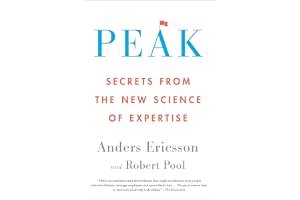
Most athletes are not born with any natural advantage.
Three world-class chess players were sisters, whose success was planned by their parents before they were even born.
Anders Ericsson has spent thirty years studying The Special Ones, the geniuses, sports stars and musical prodigies. And his remarkable finding, revealed in Peak, is that their special abilities are acquired through training. The innate ‘gift’ of talent is a myth. Exceptional individuals are born with just one unique ability, shared by us all – the ability to develop our brains and bodies through our own efforts.
Anders Ericsson’s research was the inspiration for the popular ‘10,000-hour rule’ but, he tells us, this rule is only the beginning of the story. It’s not just the hours that are important but how you use them. We all have the seeds of excellence within us – it’s merely a question of how to make them grow. With a bit of guidance, you’ll be amazed at what the average person can achieve.
The astonishing stories in Peak prove that potential is what you make it.
This book is a breakthrough, a lyrical, powerful, science-based narrative that actually shows us how to get better (much better) at the things we care about. [source]
Sergey Sapelnyk
PEAK by Anders Ericsson phenomenally explains how experts develop their skills. The author makes a profound claim: you can get significantly better at almost anything. This includes your job, a specific skill, or a hobby. From a career perspective, in most instances, the only barrier to personal development and success is effective effort. This book isn’t specific to a career, however it’s highly applicable to any career. The idea of this book is a meaningful one, since it suggests that many goals are achievable and doable. The key differentiator between someone who achieves these goals or does not, is the amount of calculated effort that’s exerted on this task. I think this book will reinforce to young people that nearly any career path is feasible given that a focused effort is made. Aiming to consistently practice and work on your craft, is a very fundamental mindset to personal growth. [source]
Cover unavailable
16
The Five Dysfunctions of a Team: A Leadership Fable
In The Five Dysfunctions of a Team Patrick Lencioni once again offers a leadership fable that is as enthralling and instructive as his first two best-selling books, The Five Temptations of a CEO and The Four Obsessions of an Extraordinary Executive. This time, he turns his keen intellect and storytelling power to the fascinating, complex world of teams.
Kathryn Petersen, Decision Tech's CEO, faces the ultimate leadership crisis: Uniting a team in such disarray that it threatens to bring down the entire company. Will she succeed? Will she be fired? Will the company fail? Lencioni's utterly gripping tale serves as a timeless reminder that leadership requires as much courage as it does insight.
Throughout the story, Lencioni reveals the five dysfunctions which go to the very heart of why teams even the best ones-often struggle. He outlines a powerful model and actionable steps that can be used to overcome these common hurdles and build a cohesive, effective team. Just as with his other books, Lencioni has written a compelling fable with a powerful yet deceptively simple message for all those who strive to be exceptional team leaders.
…
Recommended by AnneMarie Schindler, Holger Seim, Jennifer Rock, and 3 others.
AnneMarie Schindler
I suggest these books because they really open up 'how' you think about life and in turn work, success/challenges/setbacks, and in general, yourself. I believe that the more you can understand yourself and broaden your approach to work, the easier it will be to find work that energizes you. Finally, I'm a team player at heart, and love working with others to achieve a huge goal so a portion of these deal with team composition and performance too. [source]
Holger Seim
Lencioni’s books helped me to shift my focus from individual performance to team performance, and what it takes to make a team perform well. It helped me to realize and take seriously the fact that great team performance doesn’t happen magically but needs conscious effort. When I discovered The Five Dysfunctions of a Team for the first time, we had a dysfunctional team at Blinkist and the book opened my eyes to see the problem clearly and showed clear steps for how they should be tackled. Beforehand I was aware that we had a problem, but I couldn’t pinpoint it specifically and hence, couldn’t solve it easily. This book helped a lot. [source]
Jennifer Rock
In Patrick Lencioni's book The Five Dysfunctions of a Team, the executive asks her senior leaders "Who is your first team?" And they each answer incorrectly that it's the team that reports to him or her. The point is that you need to shift your perspective to understanding your senior leadership peers are your first team. We read that book as a leadership team in a corporation where I worked -- and the environment was very competitive between us. When we agreed that our cross-functional leadership team was our first team, we became more cooperative, innovative and productive. And we vastly boosted our results. [source]
Cover unavailable
17
Good Economics for Hard Times
Abhijit V. Banerjee
4.4
Two prize-winning economists show how economics, when done right, can help us solve the thorniest social and political problems of our day
The experience of the last decade has not been kind to the image of economists: asleep at the wheel (perhaps with the foot on the gas pedal) in the run-up to the great recession, squabbling about how to get out of it, tone-deaf in discussions of the plight of Greece or the Euro area; they seem to have lost the ability to provide reliable guidance on the great problems of the day.
In this ambitious, provocative book Abhijit V. Banerjee and Esther Duflo show how traditional western-centric thinking has failed to explain what is happening to people in a newly globalized world: in short Good Economics has been done badly. This precise but accessible book covers many of the most essential issues of our day--including migration, unemployment, growth, free trade, political polarization, and welfare. Banerjee and Duflo will confound and clarify the presumptions of our times, such as:
Why migration doesn't follow the law of supply and demand Why trade liberalization can drive unemployment up and wages down Why macroeconomists like to bend the data to fit the model Why nobody can really explain why and when growth happens Why economists' assumption that people don't change their minds has made has made polarization worse Why quite often it doesn't take a village, especially if the villagers aren't that nice
In doing so, they seek to reclaim this essential terrain, and to offer readers an economist's view of the great issues of the day--one that is candid about the complexities, the zones of ignorance, and the areas of genuine disagreement.
…
Recommended by Chiki Sarkar and John Quiggin.
Chiki Sarkar
Just in and Looking good - the new book by the best selling and super brilliant authors of poor economics. @juggernautbooks https://t.co/wcHLVehE1x [source]
John Quiggin
It very much reflects the positive direction of economics over the past decade or two. It’s focused on data and randomized control tests. It’s about developing policy improvements that will make life better for people and working out which kinds of policy interventions actually work and which don’t—without an excessively dogmatic starting point. So the general spirit is to say, ‘Let’s look at interventions by making sophisticated use of data,’ rather than rely either on theory or on the fairly sloppy testing that was done in the past. This approach has produced some striking results. [source]
Cover unavailable
18
An American Sickness: How Healthcare Became Big Business and How You Can Take It Back
Award-winning New York Times reporter Dr. Elisabeth Rosenthal reveals the dangerous, expensive, and dysfunctional American healthcare system, and tells us exactly what we can do to solve its myriad of problems. It is well documented that our healthcare system has grave problems, but how, in only a matter of decades, did things get this bad? Dr. Elisabeth Rosenthal doesn't just explain the symptoms; she diagnoses and treats the disease itself. Rosenthal spells out in clear and practical terms exactly how to decode medical doublespeak, avoid the pitfalls of the pharmaceuticals racket, and get the care you and your family deserve. She takes you inside the doctor-patient relationship, explaining step by step the workings of a profession sorely lacking transparency. This is about what we can do, as individual patients, both to navigate a byzantine system and also to demand far-reaching reform. Breaking down the monolithic business into its individual industries--the hospitals, doctors, insurance companies, drug manufacturers--that together constitute our healthcare system, Rosenthal tells the story of the history of American medicine as never before. The situation is far worse than we think, and it has become like that much more recently than we realize. Hospitals, which are managed by business executives, behave like predatory lenders, hounding patients and seizing their homes. Research charities are in bed with big pharmaceutical companies, which surreptitiously profit from the donations made by working people. Americans are dying from routine medical conditions when affordable and straightforward solutions exist. Dr. Rosenthal explains for the first time how various social and financial incentives have encouraged a disastrous and immoral system to spring up organically in a shockingly short span of time. The system is in tatters, but we can fight back. An American Sickness is the frontline defense against a healthcare system that no longer has our well-being at heart.
…
Recommended by Ezekiel J. Emanuel and Ro Khanna.
Ezekiel J. Emanuel
Through vivid, heart wrenching stories and trenchant analysis, Libby Rosenthal unveils the irrationality, indifference, harmfulness, and downright unfairness of the American health care system that can often seem more driven by profit than caring and compassion. She also offers tremendously helpful advice to patients on how to navigate the system to ensure they get the best outcomes. [source]
Ro Khanna
.@RosenthalHealth is 100% correct to go after large hospitals for their excessive fees & executive pay. I represent a district with Sutter & Kaiser, but we need to “rein in hospital excesses.” Her book American Sickness is a must read. https://t.co/sqhPgIcoDN [source]
Cover unavailable
19
Poor Charlie's Almanack: The Wit and Wisdom of Charles T. Munger
From 1733 to 1758, Ben Franklin dispensed useful and timeless advice through Poor Richard's Almanack. Among the virtues extolled were thrift, duty, hard work, and simplicity. Subsequently, two centuries went by during which Ben's thoughts on these subjects were regarded as the last word. Then Charlie Munger stepped forth. [source]
Daniel Ek
I’ve been enjoying Charlie Munger’s speeches online for years; this is the ultimate collection of the best of them. [source]
Cover unavailable
20
The Ascent of Money: A Financial History of the World
Niall Ferguson
4.4
Niall Ferguson follows the money to tell the human story behind the evolution of finance, from its origins in ancient Mesopotamia to the latest upheavals on what he calls Planet Finance. Bread, cash, dosh, dough, loot, lucre, moolah, readies, the wherewithal: Call it what you like, it matters. To Christians, love of it is the root of all evil. To generals, it’s the sinews of war. To revolutionaries, it’s the chains of labor. But in The Ascent of Money, Niall Ferguson shows that finance is in fact the foundation of human progress. What’s more, he reveals financial history as the essential backstory behind all history. With the clarity and verve for which he is known, Ferguson elucidates key financial institutions and concepts by showing where they came from. What is money? What do banks do? What’s the difference between a stock and a bond? Why buy insurance or real estate? And what exactly does a hedge fund do? This is history for the present. Ferguson travels to post-Katrina New Orleans to ask why the free market can’t provide adequate protection against catastrophe. He delves into the origins of the subprime mortgage crisis.
…
Recommended by Max Levchin, Muhtar Kent, and 1 others.
Max Levchin
Co-founder/PayPal, CEO/Affirm, Investor
Max Levchin recommended this book as an answer to "What business books would you advise young entrepreneurs read?" [source]
World-renowned marketing consultants and bestselling authors Al Ries and Jack Trout reveal 22 laws of marketing, with hundreds of examples that illustrate their success, in this innovative and sensible guide to marketing. Each law is described in detail and backed up by numerous examples of what worked and what didn't in the international marketplace.
Question: What books would you recommend to young people interested in your career path? Answer: Purple Cow by Seth Godin End of Jobs by Taylor Pearson Rework by Jason Fried & DHH Trust Me I’m Lying by Ryan Holiday The Complacent Class by Tyler Cowen The 22 Immutable Laws of Marketing by Al Ries and Jack Trout Losing My Virginity by Richard Branson [source]
Question: What five books would you recommend to young people interested in your career path & why? Answer: I know this is sounds self-serving but I’d recommended both of my books, the soon to be released, “Niche Down: How to Become Legendary by Being Different” and Harper Collins’ “instant classic,” “Play Bigger: How Pirates, Dreamers and Innovators Create and Dominate Markets” In addition: The Effective Executive, by Peter Drucker The E-Myth, by Michael Gerber Radical Candor: Be a Kickass Boss Without Losing Your Humanity by Kim Scott Back from the Dead, by Bill Walton The 22 Immutable Laws of Marketing, by Al Ries and Jack Trout [source]
Cover unavailable
22
I Will Teach You to Be Rich: No Guilt. No Excuses. No BS. Just a 6-Week Program That Works
The groundbreaking NEW YORK TIMES and WALL STREET JOURNAL BESTSELLER that taught a generation how to earn more, save more, and live a rich life—now in a revised 2nd edition.
Buy as many lattes as you want. Choose the right accounts and investments so your money grows for you—automatically. Best of all, spend guilt-free on the things you love.
Personal finance expert Ramit Sethi has been called a “wealth wizard” by Forbes and the “new guru on the block” by Fortune. Now he’s updated and expanded his modern money classic for a new age, delivering a simple, powerful, no-BS 6-week program that just works.
I Will Teach You to Be Rich will show you: • How to crush your debt and student loans faster than you thought possible • How to set up no-fee, high-interest bank accounts that won’t gouge you for every penny • How Ramit automates his finances so his money goes exactly where he wants it to—and how you can do it too • How to talk your way out of late fees (with word-for-word scripts) • How to save hundreds or even thousands per month (and still buy what you love) • A set-it-and-forget-it investment strategy that’s dead simple and beats financial advisors at their own game • How to handle buying a car or a house, paying for a wedding, having kids, and other big expenses—stress free • The exact words to use to negotiate a big raise at work
Plus, this 10th anniversary edition features over 80 new pages, including: • New tools • New insights on money and psychology • Amazing stories of how previous readers used the book to create their rich lives
Master your money—and then get on with your life.
…
Recommended by Seth Godin, Bj Fogg, Patrick Mckenzie, and 2 others.
The easiest way to get rich is to inherit. This is the second best way—knowledge and some discipline. If you’re bold enough to do the right thing, Ramit will show you how. Highly recommended. [source]
Bj Fogg
The new edition of Ramit Sethi's book is smart, practical & FUNNY. Really. I laughed out loud about every other page. Great work, @ramit. https://t.co/WPUiZdsiM2 [source]
Patrick Mckenzie
@visakanv @Austen "Why not?" Because while there was interesting sociological work the book doesn't have a comparative advantage over Ramit's I Will Teach You To Be Rich for people working in the tech industry, and you *probably* have more interesting goals. [source]
Cover unavailable
23
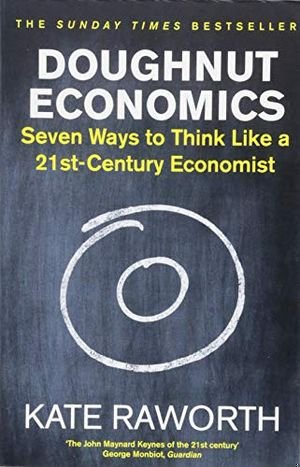
Doughnut Economics: Seven Ways to Think Like a 21st-Century Economist
Economics is the mother tongue of public policy. It dominates our decision-making for the future, guides multi-billion-dollar investments, and shapes our responses to climate change, inequality, and other environmental and social challenges that define our times.
Pity then, or more like disaster, that its fundamental ideas are centuries out of date yet are still taught in college courses worldwide and still used to address critical issues in government and business alike.
That's why it is time, says renegade economist Kate Raworth, to revise our economic thinking for the 21st century. In Doughnut Economics, she sets out seven key ways to fundamentally reframe our understanding of what economics is and does. Along the way, she points out how we can break our addiction to growth; redesign money, finance, and business to be in service to people; and create economies that are regenerative and distributive by design.
Named after the now-iconic -doughnut- image that Raworth first drew to depict a sweet spot of human prosperity (an image that appealed to the Occupy Movement, the United Nations, eco-activists, and business leaders alike), Doughnut Economics offers a radically new compass for guiding global development, government policy, and corporate strategy, and sets new standards for what economic success looks like.
Raworth handpicks the best emergent ideas--from ecological, behavioral, feminist, and institutional economics to complexity thinking and Earth-systems science--to address this question: How can we turn economies that need to grow, whether or not they make us thrive, into economies that make us thrive, whether or not they grow?
Simple, playful, and eloquent, Doughnut Economics offers game-changing analysis and inspiration for a new generation of economic thinkers.
…
Recommended by Tim O'Reilly, Fernando Lelo Larrea, George Monbiot, and 1 others.
Tim O'Reilly
Founder/O'Reilly Media
I am loving @KateRaworth’s book Doughnut Economics. It puts #inequality in a far broader context, connecting a great many 21st century problems with a single vision. Every business leader and every policy maker should read it. For a quick summary, see https://t.co/harwQvlLlC [source]
Fernando Lelo Larrea
🍩Amazing book by @KateRaworth #DoughnutEconomics . I really wish all my Economics students can read it. Fundamental rethinking of our science and what lays ahead. https://t.co/oWUL1TwSYh [source]
Doughnut Economics tries to reconcile an environmental vision with the vision of widely shared prosperity. [source]
Cover unavailable
24
1493: Uncovering the New World Columbus Created
Charles C. Mann
4.3
A deeply engaging new history of how European settlements in the post-Colombian Americas shaped the world, from the bestselling author of 1491. Presenting the latest research by biologists, anthropologists, archaeologists, and historians, Mann shows how the post-Columbian network of ecological and economic exchange fostered the rise of Europe, devastated imperial China, convulsed Africa, and for two centuries made Mexico City—where Asia, Europe, and the new frontier of the Americas dynamically interacted—the center of the world. In this history, Mann uncovers the germ of today's fiercest political disputes, from immigration to trade policy to culture wars. In 1493, Mann has again given readers an eye-opening scientific interpretation of our past, unequaled in its authority and fascination.
…
Recommended by Harsh Gupta, Louise Fresco, and Tim @Realscientists.
Harsh Gupta
Have you read the 1491 and 1493 book series? About the discovery of Americas and what it meant. Fascinating stuff. Have been reading 1493 by Charles Mann on Kindle. [source]
Louise Fresco
Charles Mann has many interesting stories about many foods, but the main message is the importance of trade and the fact that there have been massive movements of foods backwards and forwards. [source]
Tim @Realscientists
I highly recommend @CharlesCMann's fantastic book "1493: Uncovering the New World Columbus Created" for perspective on Andean potato history and its outsized influence on world history (see: Irish potato famine). https://t.co/soMV0uzawP [source]
Cover unavailable
25
The Limits To Growth: the thirty year update
Donella H. Meadows
4.3
Incorporating the thinking on sustainability, ecological footprinting and limits, this book presents future overshoot scenarios and makes an urgent case for a rapid readjustment of the global economy toward a sustainable path. It is suitable for those concerned with our common future.
Recommended by Bill Gates, Andrew Curry, Jerry McNerney, and 2 others.
This is such a depressing book. This is The Limits to Growth: The Thirty Year Update. A lot of people, what they remember about The Limits to Growth is it was published in 1971 and was completely lambasted by economists, technologists, lots and lots of people. What it has sitting underneath it is a model of the world, a model of the world economy, which links population, food, industrial production, pollution, a few other things, it’s quite a complicated systems-dynamics model. Obviously it’s only a model, it’s a picture of the world, it isn’t the world itself. But what it said was that if our behaviour as a society didn’t change, we would end up with industrial collapse in the mid-2020s and a population collapse in the mid-2030s. [source]
Jonathon Porritt
This is a report produced in 1972, but it’s still as current now as it was then and is still available today. It was commissioned by the Club of Rome and produced by Massachusetts Institute of Technology. What they did was simply to look at projections for world population, industrialisation, pollution, food production and resource depletion and draw up models of what would happen to the earth in those areas. [source]
Cover unavailable
26
Blowout: Corrupted Democracy, Rogue State Russia, and the Richest, Most Destructive Industry on Earth
Big Oil and Gas Versus Democracy—Winner Take All
Rachel Maddow’s Blowout offers a dark, serpentine, riveting tour of the unimaginably lucrative and corrupt oil-and-gas industry. With her trademark black humor, Maddow takes us on a switchback journey around the globe—from Oklahoma City to Siberia to Equatorial Guinea—exposing the greed and incompetence of Big Oil and Gas. She shows how Russia’s rich reserves of crude have, paradoxically, stunted its growth, forcing Putin to maintain his power by spreading Russia’s rot into its rivals, its neighbors, the United States, and the West’s most important alliances. Chevron, BP, and a host of other industry players get their star turn, but ExxonMobil and the deceptively well-behaved Rex Tillerson emerge as two of the past century’s most consequential corporate villains. The oil-and-gas industry has weakened democracies in developed and developing countries, fouled oceans and rivers, and propped up authoritarian thieves and killers. But being outraged at it is, according to Maddow, “like being indignant when a lion takes down and eats a gazelle. You can’t really blame the lion. It’s in her nature.”
This book is a clarion call to contain the lion: to stop subsidizing the wealthiest industry on earth, to fight for transparency, and to check the influence of predatory oil executives and their enablers. The stakes have never been higher. As Maddow writes, “Democracy either wins this one or disappears.”
…
Recommended by Josh Long ( ), Joy Reid, Su Mohan Winblue Demswork4usa, and 1 others.
Josh Long ( )
😂 @maddow you’re so amazing. I’m listening to the Audible version of your fantastic book “Blowout” and just got to a part where you detail a sad, lonely existence and then - as an aside - declare “aw! Sad.” in a completely different voice 😂 [source]
This week I had the chance to interview my pal Rachel @Maddow about her amazing new book, Blowout!! Tune in to #amjoy at 10am ET Sunday to check it out (and find out what Equatorial Guinea, Michael Jackson's glove, black oil and Texas tea have in common...! https://t.co/mTQZKIZT2T [source]
Su Mohan Winblue Demswork4usa
.@Maddow deserves Emmy and Pulitzer.. and more.. for her work in the interview of Lev Parnas, and her book "Blowout" - she is the best reporter. True journalist. Watched 1/14 (documents) and 1/15 (Lev Parnas Interview Part-1) shows twice. I can not wait for part-2 - on 1/16/20. [source]
Cover unavailable
27
Incoterms® 2020
International Chamber of Commerce
4.3
Cover unavailable
28
The Total Money Makeover: A Proven Plan for Financial Fitness (Classic Edition)
If you will live like no one else, later you can "live" like no one else.
Build up your money muscles with America's favorite finance coach.
Okay, folks, do you want to turn those fat and flabby expenses into a well-toned budget? Do you want to transform your sad and skinny little bank account into a bulked-up cash machine? Then get with the program, people. There's one sure way to whip your finances into shape, and that's with "The Total Money Makeover: Classic Edition".
By now, you've heard all the nutty get-rich-quick schemes, the fiscal diet fads that leave you with a lot of kooky ideas but not a penny in your pocket. Hey, if you're tired of the lies and sick of the false promises, take a look at this--it's the simplest, most straightforward game plan for completely making over your money habits. And it's based on results, not pie-in-the-sky fantasies.
With "The Total Money Makeover: Classic Edition," you'll be able to: Design a sure-fire plan for paying off all debt--meaning cars, houses, everything Recognize the 10 most dangerous money myths (these will kill you) Secure a big, fat nest egg for emergencies and retirement!
…
Recommended by Eric 'Dids', Sean Si, and Vincent Pugliese.
Eric 'Dids'
Recently listened to the Audiobook "Total Money Makeover" and am amazed how much it has made a difference, arguably more so outside of finance. The motto posed in the book, "Live like nobody else so eventually you can live like nobody else." Is an amazing motto to have in life. [source]
Vincent Pugliese
Linchpin by Seth Godin, The Total Money Makeover by Dave Ramsey, and Rich Dad, Poor Dad had immediate effects on my life. [source]
"This is what the future of work (and the world) looks like. Actually, it's already happening around you." — Tony Hsieh, CEO, Zappos.com
In bestsellers such as Purple Cow and Tribes, Seth Godin taught readers how to make remarkable products and spread powerful ideas. But this book is about you—your choices, your future, and your potential to make a huge difference in whatever field you choose.
There used to be two teams in every workplace: management and labor. Now there's a third team: the linchpins. These people figure out what to do when there's no rule book. They delight and challenge their customers and peers. They love their work, pour their best selves into it, and turn each day into a kind of art.
Linchpins are the essential building blocks of great organizations. They may not be famous but they're indispensable. And in today's world, they get the best jobs and the most freedom.
As Godin writes, "Every day I meet people who have so much to give but have been bullied enough or frightened enough to hold it back. It's time to stop complying with the system and draw your own map. You have brilliance in you, your contribution is essential, and the art you create is precious. Only you can do it, and you must."
…
Recommended by Andra Zaharia, Ann Handley, Armina Sirbu, and 6 others.
Andra Zaharia
While I was thinking of the best books to add to this short list, I realized that not even half of them are directly related to digital marketing. This is because I believe that the best marketers are people who understand human nature deeply and aim to bring out the best in it. Call me naive, but that’s how I see it. If I were to want to pursue a career in marketing, I’d read anything by Seth Godin (Linchpin in particular). [source]
Armina Sirbu
My favorite book is Linchpin by Seth Godin. I think it's business, but it can very well be non-business as well because it's so much about life. I re-read fragments from time to time to get a jump-start when I need it. [source]
Bernard Tan
Now that I look at the books listed, they seem to carry an existential theme. I guess I like to understand humanity and human behaviour ultimately to better understand myself. I find reading a means to connect with people who may have lived before my time, or in a distant country, that I may never have had the chance to connect with in real life. As three-dimensional humans, we are all made up of so many faces and emotional layers that we find it hard to dissect them all, and when we find writers who can explain these thought processes in a way that’s tangible and digestible, there’s this incredibly comforting eureka moment of feeling understood. [source]
Cover unavailable
30
The Essays of Warren Buffett: Lessons for Corporate America
Warren E. Buffett and Lawrence A. Cunningham
4.3
The definitive work concerning Warren Buffett and intelligent investment philosophy, this is a collection of Buffett's letters to the shareholders of Berkshire Hathaway written over the past few decades that together furnish an enormously valuable informal education. The letters distill in plain words all the basic principles of sound business practices. They are arranged and introduced by a leading apostle of the "value" school and noted author, Lawrence Cunningham. Here in one place are the priceless pearls of business and investment wisdom, woven into a delightful narrative on the major topics concerning both managers and investors. These timeless lessons are ever-more important in the current environment.
If you want to get into stock trading or in case you want to become an investor, then I definitely would recommend to read the book I already mentioned and in addition: The Essays of Warren Buffett by Warren Buffett. [source]
Cover unavailable
31
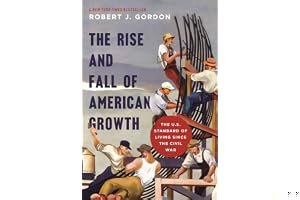
The Rise and Fall of American Growth: The U.S. Standard of Living Since the Civil War
Robert J. Gordon
4.3
How America's high standard of living came to be and why future growth is under threat
In the century after the Civil War, an economic revolution improved the American standard of living in ways previously unimaginable. Electric lighting, indoor plumbing, motor vehicles, air travel, and television transformed households and workplaces. But has that era of unprecedented growth come to an end? Weaving together a vivid narrative, historical anecdotes, and economic analysis, The Rise and Fall of American Growth challenges the view that economic growth will continue unabated, and demonstrates that the life-altering scale of innovations between 1870 and 1970 cannot be repeated. Gordon contends that the nation's productivity growth will be further held back by the headwinds of rising inequality, stagnating education, an aging population, and the rising debt of college students and the federal government, and that we must find new solutions. A critical voice in the most pressing debates of our time, The Rise and Fall of American Growth is at once a tribute to a century of radical change and a harbinger of tougher times to come.
I did find his historical analysis, which makes up the bulk of the book, utterly fascinating. [source]
Brad Feld
Co-Founder/Foundry Group
The Rise and Fall of American Growth: The U.S. Standard of Living since the Civil War: This book was a grind, but it had a lot of good stuff in it. It’s only 784 pages so it took more than a day to read it. If you are trying to understand what is going on in the current American economy, and why the future will not look like the past, this is a good place to start. [source]
Covering everything from the combustion engine to the flush toilet—and judging recent breakthroughs with a skeptical eye—this work of economic history “concludes that innovation is the ultimate source of dramatic improvements in the human condition,” says Nadella. [source]
Cover unavailable
32
Bad Samaritans: The Myth of Free Trade and the Secret History of Capitalism
Ha-Joon Chang
4.2
A rising young star in the field of economics attacks the free-trade orthodoxy of The World Is Flat head-on—a crisp, contrarian history of global capitalism.
One economist has called Ha-Joon Chang "the most exciting thinker our profession has turned out in the past fifteen years." With Bad Samaritans, this provocative scholar bursts into the debate on globalization and economic justice. Using irreverent wit, an engagingly personal style, and a battery of examples, Chang blasts holes in the "World Is Flat" orthodoxy of Thomas Friedman and other liberal economists who argue that only unfettered capitalism and wide-open international trade can lift struggling nations out of poverty. On the contrary, Chang shows, today's economic superpowers—from the U.S. to Britain to his native Korea—all attained prosperity by shameless protectionism and government intervention in industry. We have conveniently forgotten this fact, telling ourselves a fairy tale about the magic of free trade and—via our proxies such as the World Bank, International Monetary Fund, and World Trade Organization—ramming policies that suit ourselves down the throat of the developing world.
Unlike typical economists who construct models of how the marketplace should work, Chang examines the past: what has actually happened. His pungently contrarian history demolishes one pillar after another of free-market mythology. We treat patents and copyrights as sacrosanct—but developed our own industries by studiously copying others' technologies. We insist that centrally planned economies stifle growth—but many developing countries had higher GDP growth before they were pressured into deregulating their economies. Both justice and common sense, Chang argues, demand that we reevaluate the policies we force on nations that are struggling to follow in our footsteps.
…
Recommended by Michael Lind.
Michael Lind
The three leading countries of industrial capitalism – the United States, Germany and Japan – developed by using techniques, as Ha-Joon Chang points out, that are the opposite of what are supposed to work. There are endless bestselling books about how the West developed and how it became rich. It’s a genre that says that if you just have democracy and government acts as an umpire and doesn’t interfere in the market, factories and aerospace industries will somehow just spring out of nowhere. That is not how the industrial world actually developed. Germany in many ways led the world economically before 1945 and it was an authoritarian state for most of that period. The same is true for Japan. China today is an authoritarian state and it’s catching up economically much more quickly than democracies like India. [source]
Cover unavailable
33
The $100 Startup: Reinvent the Way You Make a Living, Do What You Love, and Create a New Future
In The $100 Startup, Chris Guillebeau shows you how to lead of life of adventure, meaning and purpose – and earn a good living.
Still in his early thirties, Chris is on the verge of completing a tour of every country on earth – he’s already visited more than 175 nations – and yet he’s never held a “real job” or earned a regular paycheck. Rather, he has a special genius for turning ideas into income, and he uses what he earns both to support his life of adventure and to give back.
There are manyothers like Chris – those who’ve found ways to opt out of traditional employment and create the time and income to pursue what they find meaningful. Sometimes, achieving that perfect blend of passion and income doesn’t depend on shelving what you currently do. You can start small with your venture, committing little time or money, and wait to take the real plunge when you're sure it's successful.
In preparing to write this book, Chris identified 1,500 individuals who have built businesses earning $50,000 or more from a modest investment (in many cases, $100 or less), and from that group he’s chosen to focus on the 50 most intriguing case studies. In nearly all cases, people with no special skills discovered aspects of their personal passions that could be monetized, and were able to restructure their lives in ways that gave them greater freedom and fulfillment.
Here, finally, distilled into one easy-to-use guide, are the most valuable lessons from those who’ve learned how to turn what they do into a gateway to self-fulfillment. It’s all about finding the intersection between your “expertise” – even if you don’t consider it such -- and what other people will pay for. You don’t need an MBA, a business plan or even employees. All you need is a product or service that springs from what you love to do anyway, people willing to pay, and a way to get paid.
Not content to talk in generalities, Chris tells you exactly how many dollars his group of unexpected entrepreneurs required to get their projects up and running; what these individuals did in the first weeks and months to generate significant cash; some of the key mistakes they made along the way, and the crucial insights that made the business stick. Among Chris’s key principles: if you’re good at one thing, you’re probably good at something else; never teach a man to fish – sell him the fish instead; and in the battle between planning and action, action wins.
In ancient times, people who were dissatisfied with their lives dreamed of finding magic lamps, buried treasure, or streets paved with gold. Today, we know that it’s up to us to change our lives. And the best part is, if we change our own life, we can help others change theirs. This remarkable book will start you on your way.
In this valuable guide Chris Guillebeau shows that transforming an idea into a successful business can be easier than you think…You are in charge of which ideas deserve your time, and this book can help you wake up every morning eager to progress to the next step. [source]
Chelsea Frank
I read everything with an open mind, often challenging myself by choosing books with an odd perspective or religious/spiritual views. These books do not reflect my personal feelings but are books that helped shape my perspective on life, love, and happiness. [source]
Dean Roller
Question: What books would you recommend to young people interested in your career path? Answer: Four Hour Work Week, The $100 startup and Jobs to be done . I like books that share examples of real world approaches to getting something off the ground. [source]
Cover unavailable
34
The Millionaire Fastlane: Crack the Code to Wealth and Live Rich for a Lifetime!
Is the financial plan of mediocrity-a dream-stealing, soul-sucking dogma known as The Slowlane-your plan for creating wealth? You know how it goes-go to school, get a good job, save 10 percent of your paycheck, buy a used car, cancel the movie channels, quit drinking expensive Starbucks mocha lattes, save and penny-pinch your life away, trust your life-savings to the stock market, and one day you can retire rich. The mainstream financial gurus have sold you blindly down the river. For those who don't want a lifetime subscription to "settle for less," and a slight chance of elderly riches, there is an expressway to extraordinary wealth that can burn a trail to financial independence faster than any road out there. Demand the Fastlane, an alternative road to wealth that actually ignites dreams and creates millionaires young, not old. Hit the Fastlane, crack the code to wealth, and find out how to live rich for a lifetime.
…
Recommended by Andreas Zhou, Nick Loper, Scott Oldford, and 2 others.
Andreas Zhou
Great read to help get you into the mindset of building a scalable business to create wealth quickly vs following the stereotypical career path. [source]
Nick Loper
Kinda cheesy with all the supercar references but will motivate you and explains what it really takes to shortcut the traditional path. [source]
Scott Oldford
I don't know how many times I read that book when I was broke but, of course, the sidewalk, slow, and fast lane, I borrowed that for the SSF method that I talk about sidewalk, slow, and fast lane for lead generation. He talks about it from a financial perspective, so almost completely, entirely unrelated but that book was very, very life changing for me. So, two of those books, by far, the best books that from a level of changing my life at the right time. [source]
Cover unavailable
35
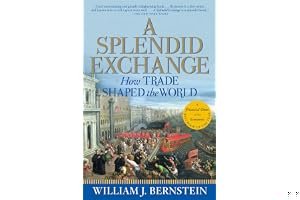
A Splendid Exchange: How Trade Shaped the World from Prehistory to Today
William J. Bernstein
4.2
Acclaimed by readers and critics around the globe, A Splendid Exchange is a sweeping narrative history of world trade—from Mesopotamia in 3000 B.C. to the firestorm over globalization today—that brilliantly explores trade’s colorful and contentious past and provides new insights into its future.
Review
"[An] entertaining and greatly enlightening book . . . Bernstein is a fine writer and knows how to tell a great story well. . . .A Splendid Exchangeis a splendid book." —The New York Times
“Superb . . . [A] significant contribution . . . The chronological range of Bernstein’s book is staggering. . . .A Splendid Exchangeis a work of which Adam Smith and Max Weber would have approved…. What really marks Bernstein out is his talent in understanding, and then explaining, international commercial linkages.” —Paul Kennedy,Foreign Affairs
“Sparkling…Fascinating…One freewheeling historical passage follows another…A Splendid Exchangeis saved from any possible tedium by its feast of contrarian conclusions, its broad historical sweep, and, especially, its vivid characters.” –Businessweek
“Highly entertaining…In an era when trade is defined by interminable World Trade Organization talks and offers nothing more romantic than slab-sided container ships ploughing between nondescript ports, William Bernstein’s book is like a trip to the movies to watch Johnny Depp swinging through the rigging.” –Hugh Carnegy,Financial Times
“Rollicking…Mr. Bernstein whisks his reader on a tumultuous journey….A Splendid Exchangeis a timely and readable reminder that the desire to trade is not only one of the oldest human instincts but also the cause of many of the most important developments in our shared history….For anyone wanting a painless primer in the ideas of Adam Smith, David Ricardo, or more recent economists, such as Paul Samuelson, this is the place to find it.” –The Economist
From the Inside Flap
"A Splendid Exchange is really much more than a history of trade. In William Bernstein's deft treatment, it becomes pretty much a history of the world. The age-old urge to profit by buying low and selling high led to empires, wars, trade restrictions, and--more recently--violent protests against economic and financial globalization. Bernstein's vast knowledge of trade's past is great preparation for dealing effectively with today's controversies about its future." --Richard Sylla, Henry Kaufman Professor of the History of Financial Institutions and Markets, and Professor of Economics, NYU Stern School of Business
"In A Splendid Exchange, Bill Bernstein has further burnished his credentials as both an economic historian and a felicitous writer. He has given us an eye-opening, brilliantly researched, anecdote-laced, and exciting-to-read history of global trade. Readers of this compelling saga will be intellectually rewarded, enticed, and amused--and more sensitively attuned to the challenges of today's version of the globalization that has driven so much of civilization's economic growth and social progress." --John C. Bogle, founder, the Vanguard Group
"A Splendid Exchange is filled with adroit observations on the evolution of trade from the ancient world to today. Bernstein draws upon a vast historical context to show how trade's development is part of society's natural progression toward prosperity, and he makes a convincing case that trade and trade policy have been the catalyst for the development of ambitious nations. He correctly asserts that we must be aware of how it has shaped the past because it will continue to have a pivotal role--for better and for worse--as we move into the future. Politicians take heed!" --Arthur Laffer, founder and chairman, Laffer Associates
"Bernstein illuminates modern debates in a sweeping history of international trade, weaving skillfully between rollicking adventures and scholarship. His history of trade from the ancients to the present is a story of our irrepressible urge to exchange goods, which in turn fostered exchanges of art, science, and ideas. The story of trade is the story of humankind; all in all, a happy story indeed." --Pietra Rivoli, author of The Travels of a T-Shirt in the Global Economy
"Think contentious debate over globalization is something new? Think again. With a staggering understanding of the role of trade in history and a storyteller's touch for illuminating its human impact, William Bernstein takes us back to the days of `ghost ships' and perilous land journeys to explain how age-old debates over trade's winners and losers shape today's bitter divisions over free trade and protectionism. Along the way, Bernstein uncovers the roots of Sino-American trade tensions and explains how century-old backlashes over free trade continue to reverberate as the world's nations become ever more connected to each other through commerce. Bernstein has given us a master's insights into the past to help us understand an issue of deep divisions in the present age." --Sara Bongiorni, author of A Year without "Made in China"
"Bernstein's powerful book demonstrates that trade is a fascinating, pervasive, and often dominant factor in human history. But Bernstein also provides us with memorable stories about nations around the world and through the centuries. Economics, sociology, military strategy, and even health care are here, as well as a striking group of vivid personalities. The book is not just essential reading; it is fun all the way." --Peter L. Bernstein, author of Against the Gods
"Bill Bernstein is a funny, lively storyteller who engages us with rich stories that tell how international trade and economic history have evolved together from the Stone Age on. This book is a wonderful way to learn history, geography and economics. As I read it, I felt like a kid reading about Uncle Scrooge's adventures among old civilizations in strange lands, all the while harvesting ideas for my classes." --Ed Tower, Professor of Economics, Duke University
…
Cover unavailable
36
Poor Economics: A Radical Rethinking of the Way to Fight Global Poverty
Winner of the 2011 Financial Times/Goldman Sachs Best Business Book of the Year Award
Billions of government dollars, and thousands of charitable organizations and NGOs, are dedicated to helping the world's poor. But much of their work is based on assumptions that are untested generalizations at best, harmful misperceptions at worst.
Abhijit Banerjee and Esther Duflo have pioneered the use of randomized control trials in development economics. Work based on these principles, supervised by the Poverty Action Lab, is being carried out in dozens of countries. Drawing on this and their 15 years of research from Chile to India, Kenya to Indonesia, they have identified wholly new aspects of the behavior of poor people, their needs, and the way that aid or financial investment can affect their lives. Their work defies certain presumptions: that microfinance is a cure-all, that schooling equals learning, that poverty at the level of 99 cents a day is just a more extreme version of the experience any of us have when our income falls uncomfortably low.
This important book illuminates how the poor live, and offers all of us an opportunity to think of a world beyond poverty.
Does a great job of bringing alive the complexities of poor people’s lives. [source]
Harini Calamur
@ask0704 Read his book. I don't agree with some of the things he says. But, it is a great read on understanding poverty [source]
Cover unavailable
37
Rich Dad Poor Dad: What The Rich Teach Their Kids About Money - That The Poor And Middle Class Do Not!
Robert T. Kiyosaki
4.2
In Rich Dad Poor Dad, the #1 Personal Finance book of all time, Robert Kiyosaki shares the story of his two dad: his real father, whom he calls his ‘poor dad,’ and the father of his best friend, the man who became his mentor and his ‘rich dad.’ One man was well educated and an employee all his life, the other’s education was “street smarts” over traditional classroom education and he took the path of entrepreneurship…a road that led him to become one of the wealthiest men in Hawaii. Robert’s poor dad struggled financially all his life, and these two dads—these very different points of view of money, investing, and employment—shaped Robert’s thinking about money.
Robert has challenged and changed the way tens of millions of people, around the world, think about money and investing and he has become a global advocate for financial education and the path to financial freedom. Rich Dad Poor Dad (and the Rich Dad series it spawned) has sold over 36 million copies in English and translated editions around the world.
Rich Dad Poor Dad will… • explode the myth that you need to earn a high income to become rich • challenge the belief that your house is an asset • show parents why they can’t rely on the school system to teach their kids about money • define, once and for all, an asset and a liability • explain the difference between good debt and bad debt • teach you to see the world of money from different perspectives • discuss the shift in mindset that can put you on the road to financial freedom
Real marketing isn't about racking up clicks and tweets; it's about connection, empathy, and making a difference.
Over the past quarter century, Seth Godin has taught and inspired millions of entrepreneurs, marketers, leaders, and fans from all walks of life, via his blog, online courses, lectures, and bestselling books. He is the inventor of countless ideas and phrases that have made their way into mainstream business language, from Permission Marketing to Purple Cow to Tribes to The Dip.
Now, for the first time, Godin offers the core of his marketing wisdom in one accessible, timeless package. At the heart of his approach is a big idea: Great marketers don't use consumers to solve their company's problem; they use marketing to solve other people's problems. They don't just make noise; they make the world better. Truly powerful marketing is grounded in empathy, generosity, and emotional labor.
This book teaches you how to identify your smallest viable audience; draw on the right signals and signs to position your offering; build trust and permission with your target market; speak to the narratives your audience tells themselves about status, affiliation, and dominance; spot opportunities to create and release tension; and give people the tools to achieve their goals.
It's time for marketers to stop lying, spamming, and feeling guilty about their work. It's time to stop confusing social media metrics with true connections. It's time to stop wasting money on stolen attention that won't pay off in the long run. THIS IS MARKETING offers a better approach that will still apply for decades to come, no matter how the tactics of marketing continue to evolve.
…
Recommended by Seth Godin, Aaron Watson, and Deke Bridges.
Nobody had written the definitive book of the post-advertising age. It needed to be able to explain everything from Airbnb to Trump to the success of Instagram. If there’s going to be a coherent, unified theory of marketing, it will not only explain what we see, but give us the tools to create our own change in the world. [source]
Aaron Watson
This book is my favorite thing he has produced. Unlike most non-fiction books, This Is Marketing does a good job of not going on too long or belaboring the point. Seth deliver succinct actionable insights, some of which I’ve already implemented with the Piper and Going Deep brands. [source]
Deke Bridges
Up late re-reading some of this book again. Seth Godin's book THIS IS MARKETING is so much more than branding, marketing, advertising, and growth. It really makes you think about how to review life. Fantastic book... all his works make your brain click. Got my copy at @Powells. https://t.co/46hSB0Fhv3 [source]
Cover unavailable
40
Narconomics: How to Run a Drug Cartel
Tom Wainwright
4.1
What drug lords learned from big business
How does a budding cartel boss succeed (and survive) in the 300 billion illegal drug business? By learning from the best, of course. From creating brand value to fine-tuning customer service, the folks running cartels have been attentive students of the strategy and tactics used by corporations such as Walmart, McDonald's, and Coca-Cola. And what can government learn to combat this scourge? By analyzing the cartels as companies, law enforcers might better understand how they work—and stop throwing away 100 billion a year in a futile effort to win the “war” against this global, highly organized business. Your intrepid guide to the most exotic and brutal industry on earth is Tom Wainwright. Picking his way through Andean cocaine fields, Central American prisons, Colorado pot shops, and the online drug dens of the Dark Web, Wainwright provides a fresh, innovative look into the drug trade and its 250 million customers. The cast of characters includes “Bin Laden,” the Bolivian coca guide; “Old Lin,” the Salvadoran gang leader; “Starboy,” the millionaire New Zealand pill maker; and a cozy Mexican grandmother who cooks blueberry pancakes while plotting murder. Along with presidents, cops, and teenage hitmen, they explain such matters as the business purpose for head-to-toe tattoos, how gangs decide whether to compete or collude, and why cartels care a surprising amount about corporate social responsibility. More than just an investigation of how drug cartels do business, Narconomics is also a blueprint for how to defeat them.
…
Cover unavailable
41
The Little Book of Common Sense Investing: The Only Way to Guarantee Your Fair Share of Stock Market Returns
The best-selling investing "bible" offers new information, new insights, and new perspectives
The Little Book of Common Sense Investing is the classic guide to getting smart about the market. Legendary mutual fund pioneer John C. Bogle reveals his key to getting more out of investing: low-cost index funds. Bogle describes the simplest and most effective investment strategy for building wealth over the long term: buy and hold, at very low cost, a mutual fund that tracks a broad stock market Index such as the S&P 500.
While the stock market has tumbled and then soared since the first edition of Little Book of Common Sense was published in April 2007, Bogle's investment principles have endured and served investors well. This tenth anniversary edition includes updated data and new information but maintains the same long-term perspective as in its predecessor.
Bogle has also added two new chapters designed to provide further guidance to investors: one on asset allocation, the other on retirement investing.
A portfolio focused on index funds is the only investment that effectively guarantees your fair share of stock market returns. This strategy is favored by Warren Buffett, who said this about Bogle: "If a statue is ever erected to honor the person who has done the most for American investors, the hands-down choice should be Jack Bogle. For decades, Jack has urged investors to invest in ultra-low-cost index funds. . . . Today, however, he has the satisfaction of knowing that he helped millions of investors realize far better returns on their savings than they otherwise would have earned. He is a hero to them and to me."
Bogle shows you how to make index investing work for you and help you achieve your financial goals, and finds support from some of the world's best financial minds: not only Warren Buffett, but Benjamin Graham, Paul Samuelson, Burton Malkiel, Yale's David Swensen, Cliff Asness of AQR, and many others.
This new edition of TheLittle Book of Common Sense Investing offers you the same solid strategy as its predecessor for building your financial future.
Build a broadly diversified, low-cost portfolio without the risks of individual stocks, manager selection, or sector rotation. Forget the fads and marketing hype, and focus on what works in the real world. Understand that stock returns are generated by three sources (dividend yield, earnings growth, and change in market valuation) in order to establish rational expectations for stock returns over the coming decade. Recognize that in the long run, business reality trumps market expectations. Learn how to harness the magic of compounding returns while avoiding the tyranny of compounding costs. While index investing allows you to sit back and let the market do the work for you, too many investors trade frantically, turning a winner's game into a loser's game. The Little Book of Common Sense Investing is a solid guidebook to your financial future.
In his 2014 shareholder letter, Buffett recommended reading this book over listening to the advice of most financial advisers. [source]
Kaya Thomas
@MegBartelt You’re welcome! Thanks for writing great content. You mentioned John Bogle which book do you recommend I start with, “The Little Book of Common Sense Investing”? [source]
Cover unavailable
42
The Innovator's Mindset: Empower Learning, Unleash Talent, and Lead a Culture of Creativity
George Couros
4.1
Kids walk into schools full of wonder and questions. How you, as an educator, respond to students' natural curiosity can help further their own exploration and shape the way they learn today and in the future. The traditional system of education requires students to hold their questions and compliantly stick to the scheduled curriculum. But our job as educators is to provide new and better opportunities for our students. It's time to recognize that compliance doesn't foster innovation, encourage critical thinking, or inspire creativity--and those are the skills our students need to succeed. In The Innovator's Mindset, George Couros encourages teachers and administrators to empower their learners to wonder, to explore--and to become forward-thinking leaders. If we want innovative students, we need innovative educators. In other words, innovation begins with you. Ultimately, innovation is not about a skill set: it's about a mindset. The Innovator's Mindset is for you if: You are a superintendent, district administrator, or principal who wants to empower your staff to create a culture of innovation You are a school leader - at any level - and want to help students and educators become their personal best. You are a teacher who wants to create relevant learning experiences and help students develop the skills they need to be successful. You'll be inspired to: Connect with other innovative educators Support teachers and leaders as learners Tap into the strength of your learning community Create ongoing opportunities for innovation Seek more effective methods for measuring progress And, most importantly, embrace change and use it to do something amazing
…
Cover unavailable
43
Amazon fba - FBA 2020: The Secret Step-by-Step Guide to a Successful Private Label to Build at least $ 7,000 / Month E-Commerce Business by Selling on Amazon. Beginner's guide.
Jay Kingsley
4.1
Cover unavailable
44
Owning Our Future: The Emerging Ownership Revolution
Marjorie Kelly
4.1
Building an Economy That Works for All
As long as businesses are set up to focus exclusively on maximizing financial income for the few, our economy will be locked into endless growth and widening inequality. But now people are experimenting with new forms of ownership, which Marjorie Kelly calls generative: aimed at creating the conditions for life for many generations to come. These designs may hold the key to the deep transformation our civilization needs.
To understand these emerging alternatives, Kelly reports from all over the world, visiting a community-owned wind facility in Massachusetts, a lobster cooperative in Maine, a multibillion-dollar employee-owned department-store chain in London, a foundation-owned pharmaceutical company in Denmark, a farmer-owned dairy in Wisconsin, and other places where a hopeful new economy is being built. Along the way, she finds the five essential patterns of ownership design that make these models work.
Winner of the 2013 Nautilus Silver Award in the category of Business/Leadership.
Goes straight to the question of how a company is set up, structured, owned, financed, and networked. [source]
Cover unavailable
45
The Three Secret Cities (Jack West Jr #5)
Matthew Reilly
4.1
The thrilling new novel featuring Jack West, Jr. from New York Times and #1 international bestselling author Matthew Reilly!
A shadow world behind the real world
When Jack West, Jr. won the Great Games, he threw the four legendary kingdoms into turmoil.
A world with its own history, rules and prisons
Now these dark forces are coming after Jack...in ruthless fashion.
That is reaching into our world...explosively
With the end of all things rapidly approaching, Jack must find the Three Secret Cities, three incredible lost cities of legend.
It’s an impossible task by any reckoning, but Jack must do it while he is being hunted...by the greatest hunters in history.
…
Cover unavailable
46
Q: The Autobiography of Quincy Jones
Quincy Jones
4.1
For work that spans every style of American popular music, Quincy Jones has garnered an incredible 76 Grammy nominations and has carved out a reputation as a pioneering music executive and film and TV producer. This no-holds-barred self-portrait encompasses an astonishing cast of show business giants and tells what amounts to one of the great African-American success stories of the century. of photos.
It’s about Quincy Jones’s journey. He started out poor, born on the South Side of Chicago to a mentally ill mother. He went on to become one of the most influential producers in the industry. Music sort of saved him. He started to tour as a back-up musician in his teens with these amazing jazz bands. He ended up scoring all these movies, and then he got into producing. Quincy Jones produced the main Michael Jackson records. He started so young and he accomplished so much. [source]
Cover unavailable
47
Start-up Nation: The Story of Israel's Economic Miracle
Dan Senor
4.1
Start-Up Nation addresses the trillion dollar question: How is it that Israel -- a country of 7.1 million, only 60 years old, surrounded by enemies, in a constant state of war since its founding, with no natural resources-- produces more start-up companies than large, peaceful, and stable nations like Japan, China, India, Korea, Canada and the UK?
With the savvy of foreign policy insiders, Senor and Singer examine the lessons of the country's adversity-driven culture, which flattens hierarchy and elevates informality-- all backed up by government policies focused on innovation. In a world where economies as diverse as Ireland, Singapore and Dubai have tried to re-create the "Israel effect", there are entrepreneurial lessons well worth noting. As America reboots its own economy and can-do spirit, there's never been a better time to look at this remarkable and resilient nation for some impressive, surprising clues.
…
Recommended by Amnon Rubinstein, Bogdana Butnar, Iulian Stanciu, and 1 others.
Amnon Rubinstein
This is a new book which has become very successful in America, though it is less well-known in England. It is a book which seeks to explain the economic success of Israel. Israel has withstood the recent crunch, the recent depression, more successfully than other industrial societies and this book seeks to explain that. One of the things that the authors explain is the spirit of leadership and entrepreneurship which is part and parcel of the fact that most Israelis serve in the Israeli army. The regular army of Israel educates its draftees to a position of leadership so when they enter university they are already more adult, more experienced, more likely to be go-getters and they have more knowledge of technology. So I thought this was interesting because I think it’s a fact that many people are not aware of. And there is a flipside to this, which is that those elements in Israeli society that do not go into the army, namely the Arabs and the ultra-orthodox Jews, miss something important. They are the poorer elements of Israeli society and the fact that they do not go into the army, and have many children, exacerbates their position. This explains why the social gap in Israeli society grows by leaps and bounds from year to year. The ultra-orthodox don’t go into the army because it’s part of a political concession, given to them by successive governments who need their support in the Knesset. It’s a very controversial issue back home. These two poor elements make things worse by not participating in the army which contributes so much to the economic success of Israel. [source]
Bogdana Butnar
I thought I might put my money where my mouth is. I keep whining that young people are not in touch with some essential books on advertising that have helped me shape the way I practise my trade today, but I never did anything about it. So I am starting here the ultimate books to read list. I will add to it as I get suggestions and as more good books get written. [source]
Iulian Stanciu
In every good or bad decision, there is a lesson. The real win is not having done something right, but having learned something you can apply in the future. I've let people make the wrong decisions even if I knew they were wrong, because I knew that would teach them something better than I ever could. Why the "Start-up Nation" book? Because lots of things are BS free. If someone in the company thinks I did something stupid, they're free to tell me why. Let's call things as we see them. [source]
Cover unavailable
48
The Most Important Thing: Uncommon Sense for the Thoughtful Investor
"This is that rarity, a useful book."--Warren Buffett
Howard Marks, the chairman and cofounder of Oaktree Capital Management, is renowned for his insightful assessments of market opportunity and risk. After four decades spent ascending to the top of the investment management profession, he is today sought out by the world's leading value investors, and his client memos brim with insightful commentary and a time-tested, fundamental philosophy. Now for the first time, all readers can benefit from Marks's wisdom, concentrated into a single volume that speaks to both the amateur and seasoned investor.
Informed by a lifetime of experience and study, The Most Important Thing explains the keys to successful investment and the pitfalls that can destroy capital or ruin a career. Utilizing passages from his memos to illustrate his ideas, Marks teaches by example, detailing the development of an investment philosophy that fully acknowledges the complexities of investing and the perils of the financial world. Brilliantly applying insight to today's volatile markets, Marks offers a volume that is part memoir, part creed, with a number of broad takeaways.
Marks expounds on such concepts as "second-level thinking," the price/value relationship, patient opportunism, and defensive investing. Frankly and honestly assessing his own decisions--and occasional missteps--he provides valuable lessons for critical thinking, risk assessment, and investment strategy. Encouraging investors to be "contrarian," Marks wisely judges market cycles and achieves returns through aggressive yet measured action. Which element is the most essential? Successful investing requires thoughtful attention to many separate aspects, and each of Marks's subjects proves to be the most important thing.
Whenever I am assessing an investment decision I refer to Howard Marks (Oaktree Capital Management) The Most Important Thing: Uncommon Sense for the Thoughtful Investor. He lays out explicit techniques for reaching second level thinking and outlines particular questions any investor should ask themselves before making an investment decision. I paraphrased the lessons I found most useful and refer to them whenever I am looking at an investment opportunity. [source]
Cover unavailable
49
The Creature from Jekyll Island: A Second Look at the Federal Reserve
This classic expose of the Fed has become one of the best-selling books in its category of all time. Where does money come from? Where does it go? Who makes it? The money magician's secrets are unveiled. Here is a close look at their mirrors and smoke machines, the pulleys, cogs, and wheels that create the grand illusion called money. A boring subject? Just wait. You'll be hooked in five minutes. It reads like a detective story - which it really is, but it's all true. This book is about the most blatant scam of history. It's all here: the cause of wars, boom-bust cycles, inflation, depression, prosperity. Your world view will definitely change. Putting it quite simply, this may be the most important book on world affairs you will ever read. The 5th Edition includes a no-holds barred analysis of bank bailouts under the Bush and Obama Administrations that are shown to be nothing less than legalized plunder of the American people. Many other updates have been added, including a revision to the list of those who attended the historic meeting at Jekyll Island, where the Federal Reserve was created.
…
Recommended by Marvin Liao.
Marvin Liao
Partner/500 Startups
I tend to jump from book to book and may switch if I am interested in some new topic. This is a pleasure for me (which I also do benefit work wise from too). It’s quite a random list because I have eclectic interests (or just scatterbrained most likely) on tech business, AI, general global economy, geopolitics, rising Biotech economy & history. I'm basically 15% to 50% into all these books. [source]
Cover unavailable
50
So Good They Can't Ignore You: Why Skills Trump Passion in the Quest for Work You Love
In an unorthodox approach, Georgetown University professor Cal Newport debunks the long-held belief that "follow your passion" is good advice, and sets out on a quest to discover the reality of how people end up loving their careers.
Not only are pre-existing passions rare and have little to do with how most people end up loving their work, but a focus on passion over skill can be dangerous, leading to anxiety and chronic job hopping. Spending time with organic farmers, venture capitalists, screenwriters, freelance computer programmers, and others who admitted to deriving great satisfaction from their work, Newport uncovers the strategies they used and the pitfalls they avoided in developing their compelling careers.
Cal reveals that matching your job to a pre-existing passion does not matter. Passion comes after you put in the hard work to become excellent at something valuable, not before. In other words, what you do for a living is much less important than how you do it.
With a title taken from the comedian Steve Martin, who once said his advice for aspiring entertainers was to "be so good they can't ignore you," Cal Newport's clearly written manifesto is mandatory reading for anyone fretting about what to do with their life, or frustrated by their current job situation and eager to find a fresh new way to take control of their livelihood. He provides an evidence-based blueprint for creating work you love, and will change the way you think about careers, happiness, and the crafting of a remarkable life.
Entrepreneurial professionals must develop a competitive advantage by building valuable skills. This book offers advice based on research and reality--not meaningless platitudes-- on how to invest in yourself in order to stand out from the crowd. An important guide to starting up a remarkable career. [source]
Do what you love and the money will follow' sounds like great advice -- until it's time to get a job and disillusionment quickly sets in. Cal Newport ably demonstrates how the quest for 'passion' can corrode job satisfaction. If all he accomplished with this book was to turn conventional wisdom on its head, that would be interesting enough. But he goes further -- offering advice and examples that will help you bypass the disillusionment and get right to work building skills that matter. [source]
Stop worrying about what you feel like doing (and what the world owes you) and instead, start creating something meaningful and then give it to the world. Cal really delivers with this one. [source]
Cover unavailable
51
Utopia for Realists: And How We Can Get There
Rutger (Translated by Elizabeth Manton) Bregman
4.1
We live in a time of unprecedented upheaval, with questions about the future, society, work, happiness, family and money, and yet no political party of the right or left is providing us with answers. Rutger Bregman, a bestselling Dutch historian, explains that it needn't be this way.
Bregman shows that we can construct a society with visionary ideas that are, in fact, wholly implementable. Every milestone of civilization – from the end of slavery to the beginning of democracy – was once considered a utopian fantasy. New utopian ideas such as universal basic income and a 15-hour work week can become reality in our lifetime.
This guide to a revolutionary yet achievable utopia is supported by multiple studies, lively anecdotes and numerous success stories. From a Canadian city that once completely eradicated poverty, to Richard Nixon's near implementation of a basic income for millions of Americans, Bregman takes us on a journey through history, beyond the traditional left-right divides, as he introduces ideas whose time has come.
…
Recommended by Duan Pavlovi.
Duan Pavlovi
Thank you @rcbregman for this great book! (I am writing a short review, but only in Serbian for a Serbian daily.) [source]
Cover unavailable
52
Business Adventures: Twelve Classic Tales from the World of Wall Street
"Business Adventures remains the best business book I've ever read." --Bill Gates, The Wall Street Journal
What do the $350 million Ford Motor Company disaster known as the Edsel, the fast and incredible rise of Xerox, and the unbelievable scandals at General Electric and Texas Gulf Sulphur have in common? Each is an example of how an iconic company was defined by a particular moment of fame or notoriety; these notable and fascinating accounts are as relevant today to understanding the intricacies of corporate life as they were when the events happened.
Stories about Wall Street are infused with drama and adventure and reveal the machinations and volatile nature of the world of finance. Longtime New Yorker contributor John Brooks's insightful reportage is so full of personality and critical detail that whether he is looking at the astounding market crash of 1962, the collapse of a well-known brokerage firm, or the bold attempt by American bankers to save the British pound, one gets the sense that history repeats itself.
Five additional stories on equally fascinating subjects round out this wonderful collection that will both entertain and inform readers . . . Business Adventures is truly financial journalism at its liveliest and best.
Brooks’s work is a great reminder that the rules for running a strong business and creating value haven’t changed. For one thing, there’s an essential human factor in every business endeavor. It doesn’t matter if you have a perfect product, production plan, and marketing pitch; you’ll still need the right people to lead and implement those plans. [source]
In 1991, Bill Gates asked Buffett for his favorite book. In reply, Buffett sent the Microsoft founder his personal copy of Business Adventures, a collection of New Yorker stories by John Brooks. [source]
In this 1960s classic, Brooks, a longtime New Yorker contributor, tells the stories of 12 notable companies and how they navigated the trials and tribulations of corporate life in America back in the day. [source]
Cover unavailable
53
Small Is Beautiful: Economics as if People Mattered
E. F. Schumacher
4.1
"Nothing less than a full-scale assault on conventional economic wisdom." —Newsweek
One the 100 most influential books published since World War II —The Times Literary Supplement
Hailed as an "eco-bible" by Time magazine, E.F. Schumacher's riveting, richly researched statement on sustainability has become more relevant and vital with each year since its initial groundbreaking publication during the 1973 energy crisis. A landmark statement against "bigger is better" industrialism, Schumacher's Small Is Beautiful paved the way for twenty-first century books on environmentalism and economics, like Jeffrey Sachs's The End of Poverty, Paul Hawken's Natural Capitalism, Mohammad Yunis's Banker to the Poor, and Bill McKibben's Deep Economy. This timely reissue offers a crucial message for the modern world struggling to balance economic growth with the human costs of globalization.
Work Rules!: Insights from Inside Google That Will Transform How You Live and Lead
Laszlo Bock
4.1
From the visionary head of Google's innovative People Operations comes a groundbreaking inquiry into the philosophy of work-and a blueprint for attracting the most spectacular talent to your business and ensuring that they succeed.
"We spend more time working than doing anything else in life. It's not right that the experience of work should be so demotivating and dehumanizing." So says Laszlo Bock, head of People Operations at the company that transformed how the world interacts with knowledge.
This insight is the heart of WORK RULES!, a compelling and surprisingly playful manifesto that offers lessons including:
Take away managers' power over employees Learn from your best employees-and your worst Hire only people who are smarter than you are, no matter how long it takes to find them Pay unfairly (it's more fair!) Don't trust your gut: Use data to predict and shape the future Default to open-be transparent and welcome feedback If you're comfortable with the amount of freedom you've given your employees, you haven't gone far enough.
Drawing on the latest research in behavioral economics and a profound grasp of human psychology, WORK RULES! also provides teaching examples from a range of industries-including lauded companies that happen to be hideous places to work and little-known companies that achieve spectacular results by valuing and listening to their employees. Bock takes us inside one of history's most explosively successful businesses to reveal why Google is consistently rated one of the best places to work in the world, distilling 15 years of intensive worker R&D into principles that are easy to put into action, whether you're a team of one or a team of thousands.
WORK RULES! shows how to strike a balance between creativity and structure, leading to success you can measure in quality of life as well as market share. Read it to build a better company from within rather than from above; read it to reawaken your joy in what you do.
…
Recommended by Ken Norton.
Cover unavailable
55
The Moon Sister
Lucinda Riley
4.1
From New York Times bestselling author and "remarkable reading phenomenon" (Lancashire Post) Lucinda Riley, The Moon Sister transports you to the grandeur of the remote Scottish Highlands and the gypsy caves of Granada, just as Spain descends into civil war, interweaving the stories of two women searching for their destinies, at the risk of potentially losing their chance at love.
Tiggy D'Apli�se spends her days experiencing the raw beauty of the Scottish Highlands doing a job she loves at a deer sanctuary. But when the sanctuary is forced to close, she is offered a job as a wildlife consultant on the vast and isolated estate of the elusive and troubled laird, Charlie Kinnaird. She has no idea that the move will not only irrevocably alter her future, but also bring her face-to-face with her past.
At the estate, she meets Chilly, a gypsy who fled from Spain seventy years before. He tells her that not only does she possess a sixth sense passed down from her ancestors, but it was foretold long ago that he would be the one to send her back home...
In 1912, in the poor gypsy community outside the city walls of Granada, Luc�a Amaya-Albaycin is born. Destined to be the greatest flamenco dancer of her generation--and named La Candela, due to the inner flame that burns through her when she dances-- Luc�a is whisked away by her ambitious and talented guitarist father at the tender age of ten to dance in the flamenco bars of Barcelona. Her mother is devastated by the loss of her daughter and as civil war threatens in Spain, tragedy strikes the rest of her family. Now in Madrid, Luc�a and her troupe of dancers are forced to flee for their lives, their journey taking them far across the water to South America and eventually, to North America and New York--Luc�a's long-held dream. But to pursue it, she must choose between her passion for her career and the man she adores.
Featuring Lucinda Riley's "addictive storytelling with a moving, emotional heart" (Dinah Jeffries), The Moon Sister follows these two women on their journey to discover their true futures--but at the risk of potentially losing the men they had hoped to build futures with.
…
Cover unavailable
56
Exit, Voice, and Loyalty: Responses to Decline in Firms, Organizations, and States
Albert O. Hirschman
4.1
An innovator in contemporary thought on economic and political development looks here at decline rather than growth. Albert O. Hirschman makes a basic distinction between alternative ways of reacting to deterioration in business firms and, in general, to dissatisfaction with organizations: one, "exit," is for the member to quit the organization or for the customer to switch to the competing product, and the other, "voice," is for members or customers to agitate and exert influence for change "from within." The efficiency of the competitive mechanism, with its total reliance on exit, is questioned for certain important situations. As exit often undercuts voice while being unable to counteract decline, loyalty is seen in the function of retarding exit and of permitting voice to play its proper role. The interplay of the three concepts turns out to illuminate a wide range of economic, social, and political phenomena. As the author states in the preface, "having found my own unifying way of looking at issues as diverse as competition and the two-party system, divorce and the American character, black power and the failure of 'unhappy' top officials to resign over Vietnam, I decided to let myself go a little."
…
Recommended by Jason Furman and Richard B Freeman.
Economics is largely the study of what the brilliant Albert Hirschman called ‘exit.’ If you don’t like a product, you stop buying it and instead purchase an alternative, exercising your ability to exit the product. Hirschman, however, points out that in society more broadly, and even in the economy specifically, ‘exit’ is not our only option—we also have voice. [source]
Richard B Freeman
What did Hirschman mean by exit and voice? Say you are in a restaurant and your soup is too salty. One option is too storm out. That’s exit. The other option is to call the waiter over and say, ‘Please bring the soup back and ask the chef to make it less salty.’ That’s voice. [source]
Cover unavailable
57
Walkable City: How Downtown Can Save America, One Step at a Time
Jeff Speck
4.1
Jeff Speck has dedicated his career to determining what makes cities thrive. And he has boiled it down to one key factor: walkability. The very idea of a modern metropolis evokes visions of bustling sidewalks, vital mass transit, and a vibrant, pedestrian-friendly urban core. But in the typical American city, the car is still king, and downtown is a place that's easy to drive to but often not worth arriving at. Making walkability happen is relatively easy and cheap; seeing exactly what needs to be done is the trick. In this essential new book, Speck reveals the invisible workings of the city, how simple decisions have cascading effects, and how we can all make the right choices for our communities. Bursting with sharp observations and real-world examples, giving key insight into what urban planners actually do and how places can and do change, Walkable City lays out a practical, necessary, and eminently achievable vision of how to make our normal American cities great again.
…
Cover unavailable
58
The Victory Garden
Rhys Bowen
4.1
From the bestselling author of The Tuscan Child comes a beautiful and heart-rending novel of a woman’s love and sacrifice during the First World War.
As the Great War continues to take its toll, headstrong twenty-one-year-old Emily Bryce is determined to contribute to the war effort. She is convinced by a cheeky and handsome Australian pilot that she can do more, and it is not long before she falls in love with him and accepts his proposal of marriage.
When he is sent back to the front, Emily volunteers as a “land girl,” tending to the neglected grounds of a large Devonshire estate. It’s here that Emily discovers the long-forgotten journals of a medicine woman who devoted her life to her herbal garden. The journals inspire Emily, and in the wake of devastating news, they are her saving grace. Emily’s lover has not only died a hero but has left her terrified—and with child. Since no one knows that Emily was never married, she adopts the charade of a war widow.
As Emily learns more about the volatile power of healing with herbs, the found journals will bring her to the brink of disaster, but may open a path to her destiny.
…
Cover unavailable
59
Scale: The Universal Laws of Growth, Innovation, Sustainability, and the Pace of Life in Organisms, Cities, Economies, and Companies
Geoffrey West
4.1
The former head of the Sante Fe Institute, visionary physicist Geoffrey West is a pioneer in the field of complexity science, the science of emergent systems and networks. The term “complexity” can be misleading, however, because what makes West’s discoveries so beautiful is that he has found an underlying simplicity that unites the seemingly complex and diverse phenomena of living systems, including our bodies, our cities and our businesses.
Fascinated by issues of aging and mortality, West applied the rigor of a physicist to the biological question of why we live as long as we do and no longer. The result was astonishing, and changed science, creating a new understanding of energy use and metabolism: West found that despite the riotous diversity in the sizes of mammals, they are all, to a large degree, scaled versions of each other. If you know the size of a mammal, you can use scaling laws to learn everything from how much food it eats per day, what its heart-rate is, how long it will take to mature, its lifespan, and so on. Furthermore, the efficiency of the mammal’s circulatory systems scales up precisely based on weight: if you compare a mouse, a human and an elephant on a logarithmic graph, you find with every doubling of average weight, a species gets 25% more efficient—and lives 25% longer. This speaks to everything from how long we can expect to live to how many hours of sleep we need. Fundamentally, he has proven, the issue has to do with the fractal geometry of the networks that supply energy and remove waste from the organism's body.
West's work has been game-changing for biologists, but then he made the even bolder move of exploring his work's applicability to cities. Cities, too, are constellations of networks and laws of scalability relate with eerie precision to them. For every doubling in a city's size, the city needs 15% less road, electrical wire, and gas stations to support the same population. More amazingly, for every doubling in size, cities produce 15% more patents and more wealth, as well as 15% more crime and disease. This broad pattern lays the groundwork for a new science of cities.
Recently, West has applied his revolutionary work on cities and biological life to the business world. This investigation has led to powerful insights into why some companies thrive while others fail. The implications of these discoveries are far-reaching, and are just beginning to be explored. Scale is a thrilling scientific adventure story about the elemental natural laws that bind us together in simple but profound ways. Through the brilliant mind of Geoffrey West, we can envision how cities, companies and biological life alike are dancing to the same simple, powerful tune, however diverse and unrelated they are to each other.
The physics behind biology, cities, economics and companies. Do they grow, scale and die by the same math equations? New insights that are enlightening and delightful. [source]
Cover unavailable
60
Outrank: Your Guide to Making More Online By Showing Up Higher on Search Engines and Outranking Your Competition
Damon Burton
4.1
If you are ready to grow your online presence, Outrank is the place to start. Damon Burton, decades-long search engine optimization ("SEO") expert that's been featured by Forbes, Entrepreneur, and countless other media outlets, is the voice of reason, pulling back the curtain and showing readers detailed steps to outrank their competition.
Unphased by an increasingly noisy internet, Outrank takes no prisoners as it tackles the numerous myths and misconceptions about SEO and gives you a clear outline for increasing your visibility and profitability with search engines.
Given the rapidly changing search engine algorithms, Outrank boldly predicts trends that will impact online visibility into the next 5-10 years, putting readers ahead of the curve.
Although Outrank is a precise blueprint for increasing your online traffic, it also provides insights to make informed decisions about hiring and leveraging the right SEO company at the right time, should you prefer to hire an SEO expert instead of becoming one. Regardless of your business or budget, it is in reach to outrank your competition with Outrank.
…
Cover unavailable
61
I Liked My Life
Abby Fabiaschi
4.1
A story from debut author Abby Fabiaschi that is "as absorbing as it is illuminating, and as witty as it is heartbreaking."
Maddy is a devoted stay-at-home wife and mother, host of excellent parties, giver of thoughtful gifts, and bestower of a searingly perceptive piece of advice or two. She is the cornerstone of her family, a true matriarch...until she commits suicide, leaving her husband Brady and teenage daughter Eve heartbroken and reeling, wondering what happened. How could the exuberant, exacting woman they loved disappear so abruptly, seemingly without reason, from their lives? How they can possibly continue without her? As they sift through details of her last days, trying to understand the woman they thought they knew, Brady and Eve are forced to come to terms with unsettling truths.
Maddy, however, isn’t ready to leave her family forever. Watching from beyond, she tries to find the perfect replacement for herself. Along comes Rory: pretty, caring, and spontaneous, with just the right bit of edge...but who also harbors a tragedy of her own. Will the mystery of Maddy ever come to rest? And can her family make peace with their history and begin to heal?
…
Cover unavailable
62
The Wal-Mart Effect: How the World's Most Powerful Company Really Works--and How It's Transforming the American Economy
Charles Fishman
4.1
An award-winning journalist breaks through the wall of secrecy to reveal the many astonishing ways Wal-Mart's power affects our lives and reaches all around the world. The Wal-Mart Effect: The overwhelming impact of the world's largest company--due to its relentless pursuit of low prices--on retailers and manufacturers, wages and jobs, the culture of shopping, the shape of our communities, and the environment; a global force of unprecedented nature. Wal-Mart is not only the world's largest company; it is also the largest company in the history of the world. Americans spend $26 million "every hour" at Wal-Mart, twenty-four hours of every day, every day of the year. Is the company a good thing or a bad thing? On the one hand, market guru Warren Buffett estimates that the company's low prices save American consumers $10 billion a year. On the other, the behemoth is the #1 employer in thirty-seven of the fifty states yet has never let a union in the door. Though 70 percent of Americans now live within a fifteen-minute drive of a Wal-Mart store, we have not even begun to understand the true power of the company and the many ways it is shaping American life. We know about the lawsuits and the labor protests, but what we don't know is how profoundly the "Wal-Mart effect" is shaping our lives. "Fast Company" senior editor Fishman, whose revelatory cover story on Wal-Mart generated the strongest reader response in the history of the magazine, takes us on an unprecedented behind-the-scenes investigative expedition deep inside the many worlds of Wal-Mart. He reveals the radical ways in which the company is transforming America's economy, our workforce, our communities, and our environment. Fishman penetrated the secrecy of Wal-Mart headquarters, interviewing twenty-five high-level ex-executives; he journeyed into the world of a host of Wal-Mart's suppliers to uncover how the company strong-arms even the most established brands; and journeyed to the ports and factories, the fields and forests where Wal-Mart's power is warping the very structure of the world's market for goods. Wal-Mart is not just a retailer anymore, Fishman argues. It has become a kind of economic ecosystem, and anyone who wants to understand the forces shaping our world today must understand the company's hidden reach.
…
Recommended by Craig Pearce.
Craig Pearce
The first book I read about business was The Walmart Effect. I think I picked it up at an airport and read the entire thing on the ensuing plane ride. It was this book that got me interested in reading about the early stages of companies. I would have never guessed they could be so entertaining. [source]
Cover unavailable
63
How Asia Works
Joe Studwell
4.1
“Pithy, well-written and intellectually vigorous . . . Studwell’s thesis is bold, his arguments persuasive, and his style pugnacious. It adds up to a highly readable and important book.” —Financial Times
In the 1980s and 1990s many in the West came to believe in the myth of an East-Asian economic miracle, with countries seen as not just development prodigies but as a unified bloc, culturally and economically similar, and inexorably on the rise. In How Asia Works, Joe Studwell distills extensive research into the economics of nine countries—Japan, South Korea, Taiwan, Indonesia, Malaysia, Thailand, the Philippines, Vietnam, and China—into an accessible, readable narrative that debunks Western misconceptions, shows what really happened in Asia and why, and for once makes clear why some countries have boomed while others have languished. Impressive in scope, How Asia Works is essential reading for anyone interested in a region that will shape the future of the world.
Studwell produces compelling answers to two of the greatest questions in development economics: How did countries like Japan, Taiwan, South Korea, and China achieve sustained, high growth? And why have so few other countries managed to do so? His answers come in the form of a simple—and yet hard to execute—formula: (1) create conditions for small farmers to thrive, (2) use the proceeds from agricultural surpluses to build a manufacturing base focused on exports, and (3) nurture both these sectors with financial institutions closely controlled by the government. The agriculture section of the book was particularly insightful. It provided ample food for thought for me as well as the whole Agriculture team at our foundation. And it left us thinking about whether parts of the Asian model can apply in Africa. [source]
Cover unavailable
64
Economics: The User's Guide
Ha-Joon Chang
4.1
In his bestselling 23 Things They Don't Tell You About Capitalism, Cambridge economist Ha-Joon Chang brilliantly debunked many of the predominant myths of neoclassical economics. Now, in an entertaining and accessible primer, he explains how the global economy actually works—in real-world terms. Writing with irreverent wit, a deep knowledge of history, and a disregard for conventional economic pieties, Chang offers insights that will never be found in the textbooks.
Unlike many economists, who present only one view of their discipline, Chang introduces a wide range of economic theories, from classical to Keynesian, revealing how each has its strengths and weaknesses, and why there is no one way to explain economic behavior. Instead, by ignoring the received wisdom and exposing the myriad forces that shape our financial world, Chang gives us the tools we need to understand our increasingly global and interconnected world often driven by economics. From the future of the Euro, inequality in China, or the condition of the American manufacturing industry here in the United States—Economics: The User’s Guide is a concise and expertly crafted guide to economic fundamentals that offers a clear and accurate picture of the global economy and how and why it affects our daily lives.
…
Recommended by Ella Botting.
Ella Botting
A simple but in depth guide to economics that isn’t patronising. Always good to know about money & financial systems once you start earning! [source]
Cover unavailable
65
Ecommerce Evolved: The Essential Playbook to Build, Grow & Scale a Successful Ecommerce Business
Tanner Larsson
4.1
As whole, the ecommerce industry is ANTIQUATED. It's out of date! and is way way way behind in terms of what's actually working in the world of online business.
Most ecommerce business owners are still doing things in the same way they were done back in the early dot com days. And that my friend is a recipe for disaster.
There is SO much more to ecommerce than building a store, filling it with products and driving some traffic.
If that describes you and your business, then let this be your wake up call!
There is a transformative shift happening in the ecommerce industry right now.
What worked before is either no longer an option or is rapidly losing its effectiveness.
It's time for you as an ecommerce entrepreneur to evolve your brand, your business and your brain.
THIS BOOK, Is the playbook for capitalizing on this evolution.
Ecommerce Evolved contains a simple, repeatable and proven formula to help you build, grow and scale a wildly profitable ecommerce business in today's competitive market.
You will find Zero Theory inside this book. Tanner Larsson has distilled years of research & practical in-the-trenches ecommerce experience into a hard hitting ecommerce blueprint.
The book is broken up into 4 distinct parts and each part is then broken down into a number of focused chapters.
The book kicks off with the 12 Principles of Ecommerce that have been developed after working with over 10,000 different businesses. These 12 principles...of which we can almost guarantee you are violating over half of...are what differentiate the thriving ecommerce businesses from the mediocre ones.
Part 1 which is called Evolved Strategy and is where we pull back the curtain, take you behind the scenes, and show you how 7, 8 and 9 figure ecommerce businesses really work.
Part 2 is called Evolved Intelligence and deals with the most underutilized aspect of most ecommerce businesses...your Data.
Part 3 is called Evolved Marketing. In this section you will learn how to leverage the your business's structure and data to build create systematic and highly automated marketing campaigns for both the front end and back end of your business that produce massive return on investment. Ecommerce Evolved takes you through the exact same processes I take my high level clients through as we restructure their businesses for maximum growth, profitability and most importantly longevity.
As an added benefit... Ecommerce evolved is also the key that will unlock access to my private ecommerce community.
This is an up till now secret group of ecommerce professionals where we talk shop, strategize and grow our businesses through the collective genius of the group.
This book is literally the step-by-step blueprint to building a successful and highly profitable ecommerce business and the private community is the support group that will help you along the way.
…
Cover unavailable
66
Button Man
Andrew Gross
4.1
Morris, Sol, and Harry Rabinowitz grew up poor but happy in a tiny flat on the Lower East Side, until the death of their father thrust them into having to fend for themselves and support their large family. Morris apprenticed himself at twelve years old to a garment cutter in a clothing factory; Sol headed to college and became an accountant; and Harry, the youngest, fell in with a gang as a teenager and can’t escape. Morris steadily climbs through the ranks at the factory until he’s running the place and buys out the owner, and Sol comes to work with him. But Harry can’t be lured away from the glamour, the power, and the money that comes from working for mobster Louis Buchalter, an old bully from the neighborhood. And when Louis sets his sights on the unions that staff the garment makers’ factories, a fatal showdown is inevitable, and puts brother against brother.
This new novel is equal parts historical thriller, rich with the detail of a vibrant New York City in the 1920s and 1930s, and family saga, based in part on Andrew Gross’s family history, and will cement his reputation as today’s most atmospheric and original historical thriller writer.
…
Cover unavailable
67
Weapons of Math Destruction: How Big Data Increases Inequality and Threatens Democracy
Longlisted for the National Book Award New York Times Bestseller
A former Wall Street quant sounds an alarm on the mathematical models that pervade modern life -- and threaten to rip apart our social fabric
We live in the age of the algorithm. Increasingly, the decisions that affect our lives--where we go to school, whether we get a car loan, how much we pay for health insurance--are being made not by humans, but by mathematical models. In theory, this should lead to greater fairness: Everyone is judged according to the same rules, and bias is eliminated.
But as Cathy O'Neil reveals in this urgent and necessary book, the opposite is true. The models being used today are opaque, unregulated, and uncontestable, even when they're wrong. Most troubling, they reinforce discrimination: If a poor student can't get a loan because a lending model deems him too risky (by virtue of his zip code), he's then cut off from the kind of education that could pull him out of poverty, and a vicious spiral ensues. Models are propping up the lucky and punishing the downtrodden, creating a "toxic cocktail for democracy." Welcome to the dark side of Big Data.
Tracing the arc of a person's life, O'Neil exposes the black box models that shape our future, both as individuals and as a society. These "weapons of math destruction" score teachers and students, sort resumes, grant (or deny) loans, evaluate workers, target voters, set parole, and monitor our health.
O'Neil calls on modelers to take more responsibility for their algorithms and on policy makers to regulate their use. But in the end, it's up to us to become more savvy about the models that govern our lives. This important book empowers us to ask the tough questions, uncover the truth, and demand change.
-- Longlist for National Book Award (Non-Fiction) -- Goodreads, semi-finalist for the 2016 Goodreads Choice Awards (Science and Technology) -- Kirkus, Best Books of 2016 -- New York Times, 100 Notable Books of 2016 (Non-Fiction) -- The Guardian, Best Books of 2016 -- WBUR's "On Point," Best Books of 2016: Staff Picks -- Boston Globe, Best Books of 2016, Non-Fiction
…
Recommended by Paula Boddington and Ramesh Srinivasan.
Paula Boddington
How the use of algorithms has affected people’s lives and occasionally ruined them. [source]
Ramesh Srinivasan
This book is a really fantastic analysis of how quantification, the collection of data, the modelling around data, the predictions made by using data, the algorithmic and quantifiable ways of predicting behaviour based on data, are all built by elites for elites and end up, quite frankly, screwing over everybody else. [source]
Cover unavailable
68
Black Edge: Inside Information, Dirty Money, and the Quest to Bring Down the Most Wanted Man on Wall Street
Sheelah Kolhatkar
4.1
The story of billionaire trader Steven Cohen, the rise and fall of his hedge fund SAC Capital, and the largest insider trading investigation in history for readers of The Big Short, Den of Thieves, and Dark Money
Steven A. Cohen changed Wall Street. He and his fellow pioneers of the hedge fund industry didn't lay railroads, build factories, or invent new technologies. Rather, they made their billions through speculation, by placing bets in the market that turned out to be right more often than wrong and for this, they gained not only extreme personal wealth but formidable influence throughout society. Hedge funds now oversee more than $3 trillion in assets, and the competition between them is so fierce that traders will do whatever they can to get an edge.
Cohen was one of the industry's biggest success stories, the person everyone else in the business wanted to be. Born into a middle-class family on Long Island, he longed from an early age to be a star on Wall Street. He mastered poker in high school, went off to Wharton, and in 1992 launched the hedge fund SAC Capital, which he built into a $15 billion empire, almost entirely on the basis of his wizard like stock trading. He cultivated an air of mystery, reclusiveness, and excess, building a 35,000-square-foot mansion in Greenwich, Connecticut, flying to work by helicopter, and amassing one of the largest private art collections in the world. On Wall Street, Cohen was revered as a genius: one of the greatest traders who ever lived.
That image was shattered when SAC Capital became the target of a sprawling, seven-year investigation, led by a determined group of FBI agents, prosecutors, and SEC enforcement attorneys. Labeled by prosecutors as a magnet for market cheaters whose culture encouraged the relentless pursuit of edge and even black edge, which is inside information SAC Capital was ultimately indicted and pleaded guilty to charges of securities and wire fraud in connection with a vast insider trading scheme, even as Cohen himself was never charged.
Black Edge offers a revelatory look at the gray zone in which so much of Wall Street functions. It's a riveting, true-life legal thriller that takes readers inside the government's pursuit of Cohen and his employees, and raises urgent and troubling questions about the power and wealth of those who sit at the pinnacle of modern Wall Street.
…
Recommended by Max Levchin.
Max Levchin
Co-founder/PayPal, CEO/Affirm, Investor
Documents the SEC’s investigation into hedge fund SAC Capital Advisors and several individuals including Steven Cohen. [source]
Cover unavailable
69
The Age of Surveillance Capitalism: The Fight for a Human Future at the New Frontier of Power
The challenges to humanity posed by the digital future, the first detailed examination of the unprecedented form of power called "surveillance capitalism," and the quest by powerful corporations to predict and control our behavior.
In this masterwork of original thinking and research, Shoshana Zuboff provides startling insights into the phenomenon that she has named surveillance capitalism. The stakes could not be higher: a global architecture of behavior modification threatens human nature in the twenty-first century just as industrial capitalism disfigured the natural world in the twentieth.
Zuboff vividly brings to life the consequences as surveillance capitalism advances from Silicon Valley into every economic sector. Vast wealth and power are accumulated in ominous new "behavioral futures markets," where predictions about our behavior are bought and sold, and the production of goods and services is subordinated to a new "means of behavioral modification."
The threat has shifted from a totalitarian Big Brother state to a ubiquitous digital architecture: a "Big Other" operating in the interests of surveillance capital. Here is the crucible of an unprecedented form of power marked by extreme concentrations of knowledge and free from democratic oversight. Zuboff's comprehensive and moving analysis lays bare the threats to twenty-first century society: a controlled "hive" of total connection that seduces with promises of total certainty for maximum profit--at the expense of democracy, freedom, and our human future.
With little resistance from law or society, surveillance capitalism is on the verge of dominating the social order and shaping the digital future--if we let it.
Table of contents
INTRODUCTION 1. Home or exile in the digital future
I. THE FOUNDATIONS OF SURVEILLANCE CAPITALISM 2. August 9, 2011: Setting the stage for Surveillance Capitalism 3. The discovery of behavioral surplus 4. The moat around the castle 5. The elaboration of Surveillance Capitalism: Kidnap, corner, compete 6. Hijacked: The division of learning in society
II. THE ADVANCE OF SURVEILLANCE CAPITALISM 7. The reality business 8. Rendition: From experience to data 9. Rendition from the depths 10. Make them dance 11. The right to the future tense
III. INSTRUMENTARIAN POWER FOR A THIRD MODERNITY 12. Two species of power 13. Big Other and the rise of instrumentarian power 14. A utopia of certainty 15, The instrumentarian collective 16. Of life in the hive 17. The right to sanctuary
CONCLUSION 18. A coup from above
Acknowledgements About the author Detailed table of contents Notes Index
…
Recommended by Clive Lewis Mp, Dilip Cherian, John Tasioulas, and 3 others.
Clive Lewis Mp
Cant make the brilliant event below? Havent had a chance to read @shoshanazuboff groundbreaking book, ‘Surveillance Capitalism’? Then listen to this brilliant interview with the author as she explains the terrifying scale&ambition of Facebook/Google et al https://t.co/DCtNlFbmE0 https://t.co/ZX0YpW5pOo [source]
Dilip Cherian
Brave New World? Thanks @shoshanazuboff for that amazing book. It's compulsory reading for those trying to make sense of our world now. https://t.co/5nBJWoLS9p [source]
John Tasioulas
2019... Best book: Shoshana Zuboff, “The Age of Surveillance Capitalism: The Fight for a Human Future at the New Frontier of Power” Best political commentary: @HelenHet20 Best film @jokermovie Best restaurant: @farangLDN & @Trullo_LDN (London); Shinoki (Melbourne) [source]
Cover unavailable
70
Hard Landing
Thomas Petzinger
4.1
In this updated paperback edition of a "rich, readable, and authoritative" Fortune) book, Wall Street Journal reporter Petzinger tells the dramatic story of how a dozen men, including Robert Crandall of American Airlines, Frank Borman of Eastern, and Richard Ferris of United, battled for control of the world's airlines. 416 pp. Radio drive-time pubilcity. 20,000 print.
From the Trade Paperback edition.
…
Recommended by Matt Calkins.
Matt Calkins
I grabbed a bunch of books because I was writing a board game on building an airline in the 1930s. The dependence on experienced labor, and thus the vulnerability to strikes; the dependence on the cost of fuel, an enormous input that fluctuates; and nationalism, the fact that nations subsidize their airlines—these factors make the airline industry so vulnerable. [source]
Cover unavailable
71
Spies and Scholars: Chinese Secrets and Imperial Russia's Quest for World Power
Gregory Afinogenov
4.0
The untold story of how Russian espionage in imperial China shaped the emergence of the Russian Empire as a global power.
From the seventeenth to the nineteenth century, the Russian Empire made concerted efforts to collect information about China. It bribed Chinese porcelain-makers to give up trade secrets, sent Buddhist monks to Mongolia on intelligence-gathering missions, and trained students at its Orthodox mission in Beijing to spy on their hosts. From diplomatic offices to guard posts on the Chinese frontier, Russians were producing knowledge everywhere, not only at elite institutions like the Academy of Sciences in St. Petersburg. But that information was secret, not destined for wide circulation.
Gregory Afinogenov distinguishes between the kinds of knowledge Russia sought over the years and argues that they changed with the shifting aims of the state and its perceived place in the world. In the seventeenth century, Russian bureaucrats were focused on China and the forbidding Siberian frontier. They relied more on spies, including Jesuit scholars stationed in China. In the early nineteenth century, the geopolitical challenge shifted to Europe: rivalry with Britain drove the Russians to stake their prestige on public-facing intellectual work, and knowledge of the East was embedded in the academy. None of these institutional configurations was especially effective in delivering strategic or commercial advantages. But various knowledge regimes did have their consequences. Knowledge filtered through Russian espionage and publication found its way to Europe, informing the encounter between China and Western empires.
Based on extensive archival research in Russia and beyond, Spies and Scholars breaks down long-accepted assumptions about the connection between knowledge regimes and imperial power and excavates an intellectual legacy largely neglected by historians.
…
Cover unavailable
72
The New Confessions of an Economic Hit Man
John Perkins
4.0
Shocking Bestseller: The original version of this astonishing tell-all book spent 73 weeks on the New York Times bestseller list, has sold more than 1.25 million copies, and has been translated into 32 languages.
New Revelations: Featuring 15 explosive new chapters, this expanded edition of Perkins's classic bestseller brings the story of economic hit men (EHMs) up to date and, chillingly, home to the US. Over 40 percent of the book is new, including chapters identifying today's EHMs and a detailed chronology extensively documenting EHM activity since the first edition was published in 2004.
Former economic hit man John Perkins shares new details about the ways he and others cheated countries around the globe out of trillions of dollars. Then he reveals how the deadly EHM cancer he helped create has spread far more widely and deeply than ever in the US and everywhere else--to become the dominant system of business, government, and society today. Finally, he gives an insider view of what we each can do to change it.
Economic hit men are the shock troops of what Perkins calls the corporatocracy, a vast network of corporations, banks, colluding governments, and the rich and powerful people tied to them. If the EHMs can't maintain the corrupt status quo through nonviolent coercion, the jackal assassins swoop in. The heart of this book is a completely new section, over 100 pages long, that exposes the fact that all the EHM and jackal tools--false economics, false promises, threats, bribes, extortion, debt, deception, coups, assassinations, unbridled military power--are used around the world today exponentially more than during the era Perkins exposed over a decade ago.
The material in this new section ranges from the Seychelles, Honduras, Ecuador, and Libya to Turkey, Western Europe, Vietnam, China, and, in perhaps the most unexpected and sinister development, the United States, where the new EHMs--bankers, lobbyists, corporate executives, and others--"con governments and the public into submitting to policies that make the rich richer and the poor poorer."
But as dark as the story gets, this reformed EHM also provides hope. Perkins offers a detailed list of specific actions each of us can take to transform what he calls a failing Death Economy into a Life Economy that provides sustainable abundance for all.
…
Recommended by John Cusack.
John Cusack
Book inspired groove point blank and war inc “@im_noexpert recommend "Confessions of an Economic Hitman"the US, World Bank & IMF extract a "pound of flesh" from struggling countries to maintain the US strangle hold on our planet & resources. A scary but insightful read!”had [source]
Cover unavailable
73
The Men Who United the States: America's Explorers, Inventors, Eccentrics and Mavericks, and the Creation of One Nation, Indivisible
Simon Winchester
4.0
The acclaimed New York Times bestselling author of Atlantic delivers his first book about America: a fascinating look at the men whose efforts and achievements helped unify the States and create one cohesive nation
"History is rarely as charming and entertaining as when it's told by Simon Winchester."-New York Times Book Review
For more than two centuries, E pluribus unum-Out of many, one-has been featured on America's official government seals and stamped on its currency. But how did America become "one nation, indivisible"? What unified a growing number of disparate states into the modern country we recognize today? In this monumental history, Simon Winchester addresses these questions, bringing together the breathtaking achievements that helped forge and unify America and the pioneers who have toiled fearlessly to discover, connect, and bond the citizens and geography of the U.S.A. from its beginnings.
Winchester follows in the footsteps of America's most essential explorers, thinkers, and innovators, including Lewis and Clark and their Corps of Discovery Expedition to the Pacific Coast, the builders of the first transcontinental telegraph, and the powerful civil engineer behind the Interstate Highway System. He treks vast swaths of territory, from Pittsburgh to Portland; Rochester to San Francisco; Truckee to Laramie; Seattle to Anchorage, introducing these fascinating men and others-some familiar, some forgotten, some hardly known-who played a pivotal role in creating today's United States. Throughout, he ponders whether the historic work of uniting the States has succeeded, and to what degree.
Featuring 32 illustrations throughout the text, The Men Who United the States is a fresh, lively, and erudite look at the way in which the most powerful nation on earth came together, from one of our most entertaining, probing, and insightful observers.
…
Cover unavailable
74
How To Market A Book
Joanna Penn
4.0
The first job of an author is, of course, to write great books, but these days, their second job is to market them.
Marketing isn't a skill that most authors have naturally, and there is little formal training. But when your book hits the shelves, and the sales don't start rolling in, there's only two things an author can do. Keep writing more books and ... Get to grips with marketing.
This book is for authors who want to sell more books, but it's also for those writers who want to think more like an entrepreneur. It's for traditionally published authors who want to take control of their future, and for self-published authors who want to jumpstart a career.
There are some short-term tactics for those who want to kick up immediate sales, but the focus of the book is more about instilling values and marketing principles that will help your long-term career as a writer.
It's also about going beyond just the book, because the methods in this guide can take you from being an author into professional speaking, making money from other products and creating opportunities that you can't even imagine yet.
There are no rules in this game, but learning this kind of authentic marketing has certainly changed my life, so read on and I'll share everything I know with you.
How To Market A Book covers an extensive range of marketing principles, strategies and tactics:
Part 1: Marketing Principles - including myths, how to balance your time, co-opetition and generosity
Part 2: Prerequisites for Success - including an understanding of yourself and your target market, professional editing and cover design, your book page on the retailer websites, pricing and the use of free
Part 3: No Platform Needed - Short-term Marketing - including how to get book reviews, paid advertising, using traditional media and tips for TV, radio and press releases
Part 4: The Author Platform - Long-term Marketing - including the reasons why a platform is a good thing, author branding, your author website, list-building and email marketing, content marketing and blogging, audio and podcasting, video and book trailers, social networking, professional speaking, and becoming an author-entrepreneur.
Part 5: Launching Your Book - including how launching has changed, soft launch, launch spikes, post launch and relaunches as well as lessons learned from some major book launches.
Plus/ tips for when you get overwhelmed and plenty more links to further resources.
…
Cover unavailable
75
A Quiet Flame (Bernie Gunther, #5)
Philip Kerr
4.0
Philip Kerr returns with his best-loved character, Bernie Gunther, in the fifth novel in what is now a series: a tight, twisting, compelling thriller that is firmly rooted in history.
A Quiet Flame opens in 1950. Falsely fingered a war criminal, Bernie Gunther has booked passage to Buenos Aires, lured, like the Nazis whose company he has always despised, by promises of a new life and a clean passport from the Perón government. But Bernie doesn't have the luxury of settling into his new home and lying low. He is soon pressured by the local police into taking on a case in which a girl has turned up dead, gruesomely mutilated, and another--the daughter of a wealthy German banker--has gone missing. Both crimes seem to connect to an unsolved case Bernie worked on back in Berlin in 1932. It's not so far-fetched that the cases might be linked: after all, the scum of the earth has been washing up on Argentine shores--state-licensed murderers and torturers--so why couldn't a serial killer be among them?
But Argentina, just like Germany, holds terrible secrets within its corrupt halls of power. When beautiful Anna Yagubsky seeks Gunther out, desperate for help, to find out what happened to her Jewish aunt and uncle who have disappeared, he is drawn into a horror story that rivals everything he has tried so hard to leave behind half a world away.
In this new postwar world, Bernie Gunther is a man without a name or a country, but still in full possession of his conscience. He is "the right kind of hero for his time--and ours."
From the Bestselling Author of Cod and The Basque History of the World
In his fifth work of nonfiction, Mark Kurlansky turns his attention to a common household item with a long and intriguing history: salt. The only rock we eat, salt has shaped civilization from the very beginning, and its story is a glittering, often surprising part of the history of humankind. A substance so valuable it served as currency, salt has influenced the establishment of trade routes and cities, provoked and financed wars, secured empires, and inspired revolutions. Populated by colorful characters and filled with an unending series of fascinating details, Salt by Mark Kurlansky is a supremely entertaining, multi-layered masterpiece.
Mark Kurlansky is the author of many books including Cod, The Basque History of the World, 1968, and The Big Oyster. His newest book is Birdseye.
…
Cover unavailable
77
Launch: How Ordinary People Are Creating Extraordinary Success Online
Jeff Walker
4.0
Is your product or business going to achieve nearly instant momentum and sales, or will it start off slow and fade away from there? The start of every business is critically important. . .and every truly successful product or business starts with a successful launch. Unfortunately, most entrepreneurs put all their focus into "getting the doors open," without giving much thought to creating a great launch. It doesn't have to be that way. Since 1996 Jeff Walker has been creating hugely successful launches in our increasingly digital world. Bootstrapping his first Internet business from his basement, he quickly developed an underground zero-budget process for launching new products with then-unheard of success. But the success-train was just getting started---once he started teaching his formula to other entrepreneurs the results were simply breathtaking. Tiny home-based businesses started doing launches that sold tens of thousands. . .hundreds of thousands. . .and even millions of dollars in just a few days. What you have in your hands is the treasure map into that world---an almost secret digital society of entrepreneurs who have learned to create cash-on-demand paydays with their product launches and business launches. Whether you have an existing business with existing products, or whether you have a service-based business and you want to develop your own products so you can leverage your time and your impact, or whether you're still in the planning phase and haven't quite started yet. . .this is your owners manual on how to start. This formula is how you engineer massive success. Now the question is. . .are you going to start slow, and fade away from there? Or are you ready to engineer a launch that will change the future of your business and your life?
…
Recommended by Christian Mickelson, Eric T. Wagner, Michael Hyatt, and 4 others.
Christian Mickelson
This book isn’t just for people who want to make a lot of money in their businesses really fast. This is for people who want to live their best life, doing what they were born to do, and serving the world. I highly recommend this book to anyone that wants to make a bigger impact along with a much bigger income. [source]
Eric T. Wagner
Wow! What can you say about Jeff Walker? This guy owns the launch space. Believe me—if you’re looking to launch a product, business, or even a book, then pick up this book and read it NOW. I guarantee you won’t regret it. [source]
This is not just a book. It’s a license to print money. (Okay, maybe I’m overstating it a bit, but not by much.) I used Jeff’s Product Launch Formula to create a seven-figure-plus business I absolutely love. And unlike some successful entrepreneurs, he holds nothing back. It’s all here—a proven strategy, real world examples, and step-by-step instructions—everything you need to create a business you’re crazy about while making an incredible living doing it. [source]

Cover unavailable
78
Schism: China, America, and the Fracturing of the Global Trading System
Paul Blustein
4.0
China's entry into the World Trade Organization (WTO) in 2001 was heralded as historic, and for good reason: the world's most populous nation was joining the rule-based system that has governed international commerce since World War II. But the full ramifications of that event are only now becoming apparent, as the Chinese economic juggernaut has evolved in unanticipated and profoundly troublesome ways. In this book, journalist Paul Blustein chronicles the contentious process resulting in China's WTO membership and the transformative changes that followed, both good and bad - for China, for its trading partners, and for the global trading system as a whole. The book recounts how China opened its markets and underwent far-reaching reforms that fuelled its economic takeoff, but then adopted policies - a cheap currency and heavy-handed state intervention - that unfairly disadvantaged foreign competitors and circumvented WTO rules. Events took a potentially catastrophic turn in 2018 with the eruption of a trade war between China and the United States, which has brought the trading system to a breaking point. Regardless of how the latest confrontation unfolds, the world will be grappling for decades with the challenges posed by China Inc." China's entry into the World Trade Organization (WTO) in 2001 was heralded as historic, and for good reason: the world's most populous nation was joining the rule-based system that has governed international commerce since World War II. But the full ramifications of that event are only now becoming apparent, as the Chinese economic juggernaut has evolved in unanticipated and profoundly troublesome ways. In this book, journalist Paul Blustein chronicles the contentious process resulting in China's WTO membership and the transformative changes that followed, both good and bad - for China, for its trading partners, and for the global trading system as a whole. The book recounts how China opened its markets and underwent far-reaching reforms that fuelled its economic takeoff, but then adopted policies - a cheap currency and heavy-handed state intervention - that unfairly disadvantaged foreign competitors and circumvented WTO rules. Events took a potentially catastrophic turn in 2018 with the eruption of a trade war between China and the United States, which has brought the trading system to a breaking point. Regardless of how the latest confrontation unfolds, the world will be grappling for decades with the challenges posed by China Inc.
…
Cover unavailable
79
Tax-Free Wealth: How to Build Massive Wealth by Permanently Lowering Your Taxes
Tom Wheelwright
4.0
Tax-Free Wealth is about tax planning concepts. It’s about how to use your country’s tax laws to your benefit. In this book, Tom Wheelwright will tell you how the tax laws work. And how they are designed to reduce your taxes, not to increase your taxes. Once you understand this basic principle, you no longer need to be afraid of the tax laws. They are there to help you and your business—not to hinder you.
Once you understand the basic principles of tax reduction, you can begin, immediately, reducing your taxes. Eventually, you may even be able to legally eliminate your income taxes and drastically reduce your other taxes. Once you do that, you can live a life of Tax-Free Wealth.
…
Cover unavailable
80
Bloody Sunday (Dewey Andreas, #8)
Ben Coes
4.0
North Korea, increasingly isolated from most of the rest of the world, is led by an absolute dictator and a madman with a major goal―he's determined to launch a nuclear attack on the United States. While they have built, and continue to successfully test nuclear bombs, North Korea has yet to develop a ballistic missile with the range necessary to attack America. But their missiles are improving, reaching a point where the U.S. absolutely must respond.
What the U.S. doesn't know is that North Korea has made a deal with Iran. In exchange for effective missiles from Iran, they will trade nuclear triggers and fissionable material. An exchange, if it goes through, that will create two new nuclear powers, both with dangerous plans.
Dewey Andreas, still reeling from recent revelations about his own past, is ready to retire from the CIA. But he's the only available agent with the skills to carry out the CIA's plan to stop North Korea. The plan is to inject a singular designer poison into the head of the North Korean military and in exchange for the nuclear plans, provide him with the one existing dose of the antidote. But it goes awry when Dewey manages to inject a small amount of the poison into himself. Now, to survive, Dewey must get into North Korea and access the antidote and, while there, thwart the nuclear ambitions of both North Korea and Iran. And he has less than 24 hours to do so―in the latest thriller from Ben Coes.
…
Cover unavailable
81
Civilization and Capitalism 15th-18th Century, Vol 2: The Wheels of Commerce
Fernand Braudel and Siân Reynolds
4.0
The subject of The Wheels of Commerce is the development of mechanisms of exchange—shops, markets, trade networks, and banking—in the pre-industrial stages of capitalism.
As you said, Braudel’s book is the second in this series. Civilization and Capitalism is a monumental undertaking. In these three volumes, Braudel did what no one else had attempted before and he did it more successfully than anyone I know of, that is to try to understand the beginning of capitalism – particularly the kind of capitalism that has now become dominant in the world, the capitalism that started in Europe between the 15th and 18th centuries. What I like about the second volume, The Wheels of Commerce, is that he understood that the banking and the trading systems that evolved in Europe between the 15th and 18th centuries were run, dominated, and designed by a different group entirely from the actual people who developed the goods and services that would be traded within this emerging system – the merchants, the craftsmen, the farmers. They were all part of capitalism, but the actual organisation of capitalism was through this ever more complex banking and trading system and the evolution of credit. Braudel recognises that credit is the key. He understands that between the 15th and 18th centuries, the invention of banking and of a system of credit and fundamentally a system of trust among a people who understood that they had every selfish reason to trust one another, was the essence and the genius of the development of capitalism. [source]
In this instant New York Times Bestseller, Geoff Smart and Randy Street provide a simple, practical, and effective solution to what The Economist calls "the single biggest problem in business today" unsuccessful hiring. The average hiring mistake costs a company $1.5 million or more a year and countless wasted hours. This statistic becomes even more startling when you consider that the typical hiring success rate of managers is only 50 percent.
The silver lining is that "who" problems are easily preventable. Based on more than 1,300 hours of interviews with more than 20 billionaires and 300 CEOs, Who presents Smart and Street's A Method for Hiring. Refined through the largest research study of its kind ever undertaken, the A Method stresses fundamental elements that anyone can implement-and it has a 90 percent success rate.
Whether you're a member of a board of directors looking for a new CEO, the owner of a small business searching for the right people to make your company grow, or a parent in need of a new babysitter, it's all about Who. Inside you'll learn how to
- avoid common "voodoo hiring" methods - define the outcomes you seek - generate a flow of A Players to your team-by implementing the #1 tactic used by successful businesspeople - ask the right interview questions to dramatically improve your ability to quickly distinguish an A Player from a B or C candidate - attract the person you want to hire, by emphasizing the points the candidate cares about most
In business, you are who you hire. In Who, Geoff Smart and Randy Street offer simple, easy-to-follow steps that will put the right people in place for optimal success.
…
Recommended by Daniël Lakens and Matthieu David-Experton.
Daniël Lakens
@TheNewStats Thanks. I think saying the correctly used p-value needs an effect size and CI is a perfect example of the Statistician's Fallacy. Your books are great - I learned a lot from Geoff's 2012 book. But the issue is not 'is there good stuff out there' but 'how do we teach it to > [source]
Performing China: Virtue, Commerce, and Orientalism in Eighteenth-Century England, 1660–1760
Chi-ming Yang
4.0
China in the seventeenth and eighteenth centuries was a model of economic and political strength, viewed by many as the greatest empire in the world. While the importance of China to eighteenth-century English consumer culture is well documented, less so is its influence on English values. Through a careful study of the literature, drama, philosophy, and material culture of the period, this book articulates how Chinese culture influenced English ideas about virtue.
Discourses of virtue were significantly shaped by the intensified trade with the East Indies. Chi-ming Yang focuses on key forms of virtue—heroism, sincerity, piety, moderation, sensibility, and patriotism—whose meanings and social importance developed in the changing economic climate of the period. She highlights the ways in which English understandings of Eastern values transformed these morals.
The book is organized by type of performance—theatrical, ethnographic, and literary—and by performances of gender, identity fraud, and religious conversion. In her analysis of these works, Yang brings to light surprising connections between figures as disparate as Confucius and a Chinese Amazon and between cultural norms as far removed as Hindu reincarnation and London coffeehouse culture.
Part of a new wave of cross-disciplinary scholarship, where Chinese studies meets the British eighteenth century, this novel work will appeal to scholars in a number of fields, including performance studies, East Asian studies, British literature, cultural history, gender studies, and postcolonial studies.
…
Cover unavailable
84
The Power of Broke: How Empty Pockets, a Tight Budget, and a Hunger for Success Can Become Your Greatest Competitive Advantage
Daymond John, Daniel Paisner
4.0
Daymond John has been practicing the power of broke ever since he started selling his home-sewn t-shirts on the streets of Queens. With no funding and a $40 budget, Daymond had to come up with out-of-the box ways to promote his products. Luckily, desperation breeds innovation, and so he hatched an idea for a creative campaign that eventually launched the FUBU brand into a $6 billion dollar global phenomenon. But it might not have happened if he hadn’t started out broke - with nothing but a heart full of hope and a ferocious drive to succeed by any means possible.
Here, the FUBU founder and star of ABC’s Shark Tank shows that, far from being a liability, broke can actually be your greatest competitive advantage as an entrepreneur. Why? Because starting a business from broke forces you to think more creatively. It forces you to use your resources more efficiently. It forces you to connect with your customers more authentically, and market your ideas more imaginatively. It forces you to be true to yourself, stay laser focused on your goals, and come up with those innovative solutions required to make a meaningful mark.
Drawing his own experiences as an entrepreneur and branding consultant, peeks behind-the scenes from the set of Shark Tank, and stories of dozens of other entrepreneurs who have hustled their way to wealth, John shows how we can all leverage the power of broke to phenomenal success. You’ll meet:
· Steve Aoki, the electronic dance music (EDM) deejay who managed to parlay a series of $100 gigs into becoming a global superstar who has redefined the music industry · Gigi Butler, a cleaning lady from Nashville who built cupcake empire on the back of a family recipe, her maxed out credit cards, and a heaping dose of faith · 11-year old Shark Tank guest Mo Bridges who stitched together a winning clothing line with just his grandma’s sewing machine, a stash of loose fabric, and his unique sartorial flair
When your back is up against the wall, your bank account is empty, and creativity and passion are the only resources you can afford, success is your only option. Here you’ll learn how to tap into that Power of Broke to scrape, hustle, and dream your way to the top.
…
Recommended by Daymond John and Sujan Patel.
Sujan Patel
The Power of Broke is for anyone looking to crush those excuses for whatever is holding him or her back from success. Bootstrapping your way to success can be a viable and sustainable way to grow your empire. Author (and Shark Tank entreprepreneur) Daymond John built his own fashion label starting with home-sewn clothes and almost no money; he turned around his "broke" status with pure innovation. The book also explores how other everyday people took a similar approach. One entrepreneur, for instance, started a million-dollar cupcake business with the $33 balance in her checking account. [source]
Cover unavailable
85
The Art of Statistics: How to Learn from Data
David Spiegelhalter
4.0
The definitive guide to statistical thinking Statistics are everywhere, as integral to science as they are to business, and in the popular media hundreds of times a day. In this age of big data, a basic grasp of statistical literacy is more important than ever if we want to separate the fact from the fiction, the ostentatious embellishments from the raw evidence -- and even more so if we hope to participate in the future, rather than being simple bystanders. In The Art of Statistics, world-renowned statistician David Spiegelhalter shows readers how to derive knowledge from raw data by focusing on the concepts and connections behind the math. Drawing on real world examples to introduce complex issues, he shows us how statistics can help us determine the luckiest passenger on the Titanic, whether a notorious serial killer could have been caught earlier, and if screening for ovarian cancer is beneficial. The Art of Statistics not only shows us how mathematicians have used statistical science to solve these problems -- it teaches us how we too can think like statisticians. We learn how to clarify our questions, assumptions, and expectations when approaching a problem, and -- perhaps even more importantly -- we learn how to responsibly interpret the answers we receive. Combining the incomparable insight of an expert with the playful enthusiasm of an aficionado, The Art of Statistics is the definitive guide to stats that every modern person needs.
…
Recommended by Dan Davies.
Dan Davies
@amoralelite @d_spiegel It's a great book. I thought it was like coming home because I've always tried to avoid calculation due to the dyspraxia and it was just "yes, that's how you think about it" [source]
Cover unavailable
86
Stealing Fire: How Silicon Valley, the Navy SEALs, and Maverick Scientists Are Revolutionizing the Way We Live and Work
CNBC and Strategy + Business Best Business Book of the Year
It’s the biggest revolution you’ve never heard of, and it’s hiding in plain sight. Over the past decade, Silicon Valley executives like Eric Schmidt and Elon Musk, Special Operators like the Navy SEALs and the Green Berets, and maverick scientists like Sasha Shulgin and Amy Cuddy have turned everything we thought we knew about high performance upside down. Instead of grit, better habits, or 10,000 hours, these trailblazers have found a surprising short cut. They're harnessing rare and controversial states of consciousness to solve critical challenges and outperform the competition.
New York Times bestselling author Steven Kotler and high performance expert Jamie Wheal spent four years investigating the leading edges of this revolution—from the home of SEAL Team Six to the Googleplex, the Burning Man festival, Richard Branson’s Necker Island, Red Bull’s training center, Nike’s innovation team, and the United Nations’ Headquarters. And what they learned was stunning: In their own ways, with differing languages, techniques, and applications, every one of these groups has been quietly seeking the same thing: the boost in information and inspiration that altered states provide.
Today, this revolution is spreading to the mainstream, fueling a trillion dollar underground economy and forcing us to rethink how we can all lead richer, more productive, more satisfying lives. Driven by four accelerating forces—psychology, neurobiology, technology and pharmacology—we are gaining access to and insights about some of the most contested and misunderstood terrain in history. Stealing Fire is a provocative examination of what’s actually possible; a guidebook for anyone who wants to radically upgrade their life.
Steven and Jamie have done a wonderful job of balancing the promises, perils, and how-to prescriptions of engineering peak states such as 'flow.' [source]
Adam Johnston
Stealing Fire discusses the many alternate states of consciousness and how to leverage them to achieve creativity, vision, and FLOW. While this isn’t 100% a business book, it has had the biggest impact on me professionally by helping me find and stay in flow. The book’s greatest lesson, however, is in realizing why FLOW is so important - it leads to the best quality of work. Maximum output for minimal input. [source]
Cover unavailable
87
University of Berkshire Hathaway: 30 Years of Lessons Learned from Warren Buffett & Charlie Munger at the Annual Shareholders Meeting
Daniel Pecaut
4.0
Will there ever be another investing book like this? It's unlikely.
University of Berkshire Hathaway is a remarkable retelling of the lessons, wisdom, and investment strategies handed down personally from Warren Buffett and Charlie Munger to shareholders during 30 years of their closed-door annual meetings.
From this front row seat, you'll see one of the greatest wealth-building records in history unfold, year by year.
If you're looking for dusty old investment theory, there are hundreds of other books waiting to cure you of insomnia. However, if you're looking for an investing book that's as personal as it is revelatory, look no further.
Packed with Buffett and Munger's timeless, generous, and often hilarious wisdom, University of Berkshire Hathaway will keep serious investors turning pages late into the night:
• Get unique insight into the thinking, strategies, and decisions--both good and bad--that made Buffett and Munger two of the world's greatest investors.
• Understand the critical reasoning that leads Buffett and Munger to purchase a particular company, including their methods for assigning value.
• Learn the central tenets of Buffett's value-investing philosophy "straight from the horse's mouth."
• Enjoy Munger's biting wit as he goes after any topic that offends him.
• Discover Buffett's distaste for "commonly accepted strategies" like modern portfolio theory.
• See why these annual meetings are often called "an MBA in a weekend."
The international bestseller—now with a new preface by author John Kotter.
Millions worldwide have read and embraced John Kotter’s ideas on change management and leadership. From the ill-fated dot-com bubble to unprecedented M&A activity to scandal, greed, and ultimately, recession—we’ve learned that widespread and difficult change is no longer the exception. It’s the rule. Now with a new preface, this refreshed edition of the global bestseller Leading Change is more relevant than ever.
John Kotter’s now-legendary eight-step process for managing change with positive results has become the foundation for leaders and organizations across the globe. By outlining the process every organization must go through to achieve its goals, and by identifying where and how even top performers derail during the change process, Kotter provides a practical resource for leaders and managers charged with making change initiatives work. Leading Change is widely recognized as his seminal work and is an important precursor to his newer ideas on acceleration published in Harvard Business Review.
Needed more today than at any time in the past, this bestselling business book serves as both visionary guide and practical toolkit on how to approach the difficult yet crucial work of leading change in any type of organization. Reading this highly personal book is like spending a day with the world’s foremost expert on business leadership. You’re sure to walk away inspired—and armed with the tools you need to inspire others.
Published by Harvard Business Review Press.
…
Recommended by Helen Bevan.
Helen Bevan
Kotter's book "Leading Change", published 23 years ago, introduced us to the 8 steps model, the best known/used model for planning change in the world. Kotter has updated the model, based on new research & you can get the eBook for free: https://t.co/4dqW7x2fvm Via @KotterInc https://t.co/33DKCcj8DZ [source]
Cover unavailable
89
A Man for All Markets
Edward O. Thorp
4.0
The incredible true story of the card-counting mathematics professor who taught the world how to beat the dealer and, as the first of the great quantitative investors, ushered in a revolution on Wall Street.
A child of the Great Depression, legendary mathematician Edward O. Thorp invented card counting, proving the seemingly impossible: that you could beat the dealer at the blackjack table. As a result he launched a gambling renaissance. His remarkable success--and mathematically unassailable method--caused such an uproar that casinos altered the rules of the game to thwart him and the legions he inspired. They barred him from their premises, even put his life in jeopardy. Nonetheless, gambling was forever changed.
Thereafter, Thorp shifted his sights to "the biggest casino in the world" Wall Street. Devising and then deploying mathematical formulas to beat the market, Thorp ushered in the era of quantitative finance we live in today. Along the way, the so-called godfather of the quants played bridge with Warren Buffett, crossed swords with a young Rudy Giuliani, detected the Bernie Madoff scheme, and, to beat the game of roulette, invented, with Claude Shannon, the world's first wearable computer.
Here, for the first time, Thorp tells the story of what he did, how he did it, his passions and motivations, and the curiosity that has always driven him to disregard conventional wisdom and devise game-changing solutions to seemingly insoluble problems. An intellectual thrill ride, replete with practical wisdom that can guide us all in uncertain financial waters, A Man for All Markets is an instant classic--a book that challenges its readers to think logically about a seemingly irrational world.
Praise for A Man for All Markets
"In A Man for All Markets, [Thorp] delightfully recounts his progress (if that is the word) from college teacher to gambler to hedge-fund manager. Along the way we learn important lessons about the functioning of markets and the logic of investment."--The Wall Street Journal
"[Thorp] gives a biological summation (think Richard Feynman's Surely You're Joking, Mr. Feynman!) of his quest to prove the aphorism 'the house always wins' is flawed. . . . Illuminating for the mathematically inclined, and cautionary for would-be gamblers and day traders"-- Library Journal
In times like these, it's more important than ever to know the difference between making a living and making a life. Your Money or Your Life is even more relevant today than it was when the book first hit the stands, and a great publicity campaign will bring this already strong-selling book to a whole new audience.
Cover unavailable
91
Runner (Sam Dryden, #1)
Patrick Lee
4.0
Sam Dryden, retired special forces, lives a quiet life in a small town on the coast of Southern California. While out on a run in the middle of the night, a young girl runs into him on the seaside boardwalk. Barefoot and terrified, she’s running from a group of heavily armed men with one clear goal—to kill the fleeing child. After Dryden helps her evade her pursuers, he learns that the eleven year old, for as long as she can remember, has been kept in a secret prison by forces within the government. But she doesn’t know much beyond her own name, Rachel. She only remembers the past two months of her life—and that she has a skill that makes her very dangerous to these men and the hidden men in charge.
Dryden, who lost his wife and young daughter in an accident five years ago, agrees to help her try to unravel her own past and make sense of it, to protect her from the people who are moving heaven and earth to find them both. Although Dryden is only one man, he’s a man with the extraordinary skills and experience—as a Ranger, a Delta, and five years doing off-the-book black ops with an elite team. But, as he slowly begins to discover, the highly trained paramilitary forces on their heels is the only part of the danger they must face. Will Rachel’s own unremembered past be the most deadly of them all?
…
Cover unavailable
92
The Thicket
Joe R. Lansdale
4.0
Love and vengeance at the dark dawn of the East Texas oil boom from Joe Lansdale, "a true American original" (Joe Hill, author of Heart-Shaped Box).
Jack Parker thought he'd already seen his fair share of tragedy. His grandmother was killed in a farm accident when he was barely five years old. His parents have just succumbed to the smallpox epidemic sweeping turn-of-the-century East Texas -- orphaning him and his younger sister, Lula.
Then catastrophe strikes on the way to their uncle's farm, when a traveling group of bank-robbing bandits murder Jack's grandfather and kidnap his sister. With no elders left for miles, Jack must grow up fast and enlist a band of heroes the likes of which has never been seen if his sister stands any chance at survival. But the best he can come up with is a charismatic, bounty-hunting dwarf named Shorty, a grave-digging son of an ex-slave named Eustace, and a street-smart woman-for-hire named Jimmie Sue who's come into some very intimate knowledge about the bandits (and a few members of Jack's extended family to boot).
In the throes of being civilized, East Texas is still a wild, feral place. Oil wells spurt liquid money from the ground. But as Jack's about to find out, blood and redemption rule supreme.
In The Thicket, award-winning novelist Joe R. Lansdale lets loose like never before, in a rip-roaring adventure equal parts True Grit and Stand by Me - - the perfect introduction to an acclaimed writer whose work has been called "as funny and frightening as anything that could have been dreamed up by the Brothers Grimm -- or Mark Twain" (New York Times Book Review).
…
Cover unavailable
93
Getting Past No: Negotiating in Difficult Situations
William Ury
4.0
We all want to get to yes, but what happens when the other person keeps saying no?
How can you negotiate successfully with a stubborn boss, an irate customer, or a deceitful coworker?
In Getting Past No, William Ury of Harvard Law School’s Program on Negotiation offers a proven breakthrough strategy for turning adversaries into negotiating partners. You’ll learn how to:
• Stay in control under pressure • Defuse anger and hostility • Find out what the other side really wants • Counter dirty tricks • Use power to bring the other side back to the table • Reach agreements that satisfies both sides' needs
Getting Past No is the state-of-the-art book on negotiation for the twenty-first century. It will help you deal with tough times, tough people, and tough negotiations. You don’t have to get mad or get even. Instead, you can get what you want!
…
Cover unavailable
94
This Time Is Different: Eight Centuries of Financial Folly
Carmen Reinhart
4.0
Throughout history, rich and poor countries alike have been lending, borrowing, crashing--and recovering--their way through an extraordinary range of financial crises. Each time, the experts have chimed, "this time is different"--claiming that the old rules of valuation no longer apply and that the new situation bears little similarity to past disasters. With this breakthrough study, leading economists Carmen Reinhart and Kenneth Rogoff definitively prove them wrong. Covering sixty-six countries across five continents, This Time Is Different presents a comprehensive look at the varieties of financial crises, and guides us through eight astonishing centuries of government defaults, banking panics, and inflationary spikes--from medieval currency debasements to today's subprime catastrophe. Carmen Reinhart and Kenneth Rogoff, leading economists whose work has been influential in the policy debate concerning the current financial crisis, provocatively argue that financial combustions are universal rites of passage for emerging and established market nations. The authors draw important lessons from history to show us how much--or how little--we have learned.
Using clear, sharp analysis and comprehensive data, Reinhart and Rogoff document that financial fallouts occur in clusters and strike with surprisingly consistent frequency, duration, and ferocity. They examine the patterns of currency crashes, high and hyperinflation, and government defaults on international and domestic debts--as well as the cycles in housing and equity prices, capital flows, unemployment, and government revenues around these crises. While countries do weather their financial storms, Reinhart and Rogoff prove that short memories make it all too easy for crises to recur.
An important book that will affect policy discussions for a long time to come, This Time Is Different exposes centuries of financial missteps.
They…took an enormous amount of time to put together datasets that allow us to look back eight centuries and ask, quantitatively, whether there are any common denominators to financial crises. And the not-surprising answer is, ‘Yes, absolutely.’ [source]
Charles Morris
The great thing that Rogoff and Reinhart have done is they’ve assembled this huge database. They’ve gone back 800 years and you can see roughly what’s been going on with government borrowing and lending over that time. [source]

Cover unavailable
95
The Four: The Hidden DNA of Amazon, Apple, Facebook, and Google
Amazon, Apple, Facebook, and Google are the four most influential companies on the planet. Just about everyone thinks they know how they got there. Just about everyone is wrong.
For all that's been written about the Four over the last two decades, no one has captured their power and staggering success as insightfully as Scott Galloway.
Instead of buying the myths these compa-nies broadcast, Galloway asks fundamental questions. How did the Four infiltrate our lives so completely that they're almost impossible to avoid (or boycott)? Why does the stock market forgive them for sins that would destroy other firms? And as they race to become the world's first trillion-dollar company, can anyone chal-lenge them?
In the same irreverent style that has made him one of the world's most celebrated business professors, Galloway deconstructs the strategies of the Four that lurk beneath their shiny veneers. He shows how they manipulate the fundamental emotional needs that have driven us since our ancestors lived in caves, at a speed and scope others can't match. And he reveals how you can apply the lessons of their ascent to your own business or career.
Whether you want to compete with them, do business with them, or simply live in the world they dominate, you need to understand the Four.
…
Recommended by Angela Pham, Cat Williams-Treloar, Craig Pearce, and 1 others.
Angela Pham
I’m in the middle of The Four, which takes an awestruck-but-critical look at the four largest tech companies. [source]
Cat Williams-Treloar
Scott Galloway "The four" - because that's where the Marketing world is. I like the book for its honesty. [source]
Craig Pearce
I am currently reading The Four: The Hidden DNA of Amazon, Apple, Facebook, and Google. I was introduced to the author, Scott Galloway during his appearance on the aforementioned Recode Decode podcast, specifically episode released on September 14. His opinion and thoughts on the big 4 (Apple, Amazon, Facebook and Google) lead me to research him. I put a hold on his book from my local library and waited a few weeks. A great thing about this book is its recency, for example, it includes Amazon’s recent acquisition of WholeFoods. So far, it has covered, in entertaining detail, Amazon and Apple. The author writes with great knowledge, mixed with the right amount of wit. The author argues that Apple is sex, Google is God, Facebook is love and Amazon is our gut. By aligning with these roles in our lives, they have become wildly successful. I hope to hear an expansion of his positions he discussed on the podcast, and hope to apply some of strategies into my own startup. [source]
Cover unavailable
96
Uncommon Carriers
John McPhee
4.0
What John McPhee's books all have in common is that they are about real people in real places. Here, at his adventurous best, he is out and about with people who work in freight transportation.
Over the past eight years, John McPhee has spent considerable time in the company of people who work in freight transportation. Uncommon Carriers is his sketchbook of them and of his journeys with them. He rides from Atlanta to Tacoma alongside Don Ainsworth, owner and operator of a sixty-five-foot, eighteen-wheel chemical tanker carrying hazmats. McPhee attends ship-handling school on a pond in the foothills of the French Alps, where, for a tuition of $15,000 a week, skippers of the largest ocean ships refine their capabilities in twenty-foot scale models. He goes up the "tight-assed" Illinois River on a "towboat" pushing a triple string of barges, the overall vessel being "a good deal longer than the Titanic." And he travels by canoe up the canal-and-lock commercial waterways traveled by Henry David Thoreau and his brother, John, in a homemade skiff in 1839.
Uncommon Carriers is classic work by McPhee, in prose distinguished, as always, by its author's warm humor, keen insight, and rich sense of human character.
…
Cover unavailable
97
The Last Painting of Sara de Vos
Dominic Smith
4.0
This is what we long for: the profound pleasure of being swept into vivid new worlds, worlds peopled by characters so intriguing and real that we can't shake them, even long after the reading's done. In his earlier, award-winning novels, Dominic Smith demonstrated a gift for coaxing the past to life. Now, in The Last Painting of Sara de Vos, he deftly bridges the historical and the contemporary, tracking a collision course between a rare landscape by a female Dutch painter of the golden age, an inheritor of the work in 1950s Manhattan, and a celebrated art historian who painted a forgery of it in her youth.
In 1631, Sara de Vos is admitted as a master painter to the Guild of St. Luke's in Holland, the first woman to be so recognized. Three hundred years later, only one work attributed to de Vos is known to remain--a haunting winter scene, At the Edge of a Wood, which hangs over the bed of a wealthy descendant of the original owner. An Australian grad student, Ellie Shipley, struggling to stay afloat in New York, agrees to paint a forgery of the landscape, a decision that will haunt her. Because now, half a century later, she's curating an exhibit of female Dutch painters, and both versions threaten to arrive. As the three threads intersect, The Last Painting of Sara de Vos mesmerizes while it grapples with the demands of the artistic life, showing how the deceits of the past can forge the present.
…
Cover unavailable
98
The Deceivers (John Wells, #12)
Alex Berenson
4.0
The Russians don't just want to influence American elections--they want it all. Former CIA agent John Wells confronts a plot of astonishing audacity as New York Times-bestselling author Alex Berenson goes beyond today's headlines to tomorrow's all-too-real threats.
It was supposed to be a terrorist sting. The guns were supposed to be disabled. Then why was there so much blood?
The target was the American Airlines Center, the home of the Dallas Mavericks. The FBI had told Ahmed Shakir that his drug bust would go away if he helped them, and they'd supply all the weaponry, carefully removing the firing pins before the main event. It never occurred to Sami to doubt them, until it was too late.
When John Wells is called to Washington, he's sure it's to investigate the carnage in Dallas, but it isn't. The former CIA director, now president, Vinnie Duto has plenty of people working in Texas. He wants Wells to go to Colombia. An old asset there has information to share--and it will lead Wells to the deadliest mission of his life, an extraordinary confluence of sleeper cells, sniper teams, false flag operations, double agents high in the U.S. government--and a Russian plot to take over the government itself. If it succeeds, what happened in Texas will only be a prelude.
…
Cover unavailable
99
The Music Shop
Rachel Joyce
4.0
From the author of the world-wide bestseller, The Unlikely Pilgrimage of Harold Fry, a new novel about learning how to listen and how to feel; and about second chances and choosing to be brave despite the odds. Because in the end, music can save us all ...
1988. Frank owns a music shop. It is jam-packed with records of every speed, size and genre. Classical, jazz, punk – as long as it’s vinyl he sells it. Day after day Frank finds his customers the music they need.
Then into his life walks Ilse Brauchmann.
Ilse asks Frank to teach her about music. His instinct is to turn and run. And yet he is drawn to this strangely still, mysterious woman with her pea-green coat and her eyes as black as vinyl. But Ilse is not what she seems. And Frank has old wounds that threaten to re-open and a past he will never leave behind ...
…
Cover unavailable
100
Bound Together: How Traders, Preachers, Adventurers, and Warriors Shaped Globalization
Nayan Chanda
4.0
Since humans migrated from Africa and dispersed throughout the world, they have found countless ways and reasons to reconnect with each other. In this entertaining book, Nayan Chanda follows the exploits of traders, preachers, adventurers, and warriors throughout history as they have shaped and reshaped the world. For Chanda, globalization is a process of ever-growing interconnectedness and interdependence that began thousands of years ago and continues to this day with increasing speed and ease. In the end, globalization—from the lone adventurer carving out a new trade route to the expanding ambitions of great empires—is the product of myriad aspirations and apprehensions that define just about every aspect of our lives: what we eat, wear, ride, or possess is the product of thousands of years of human endeavor and suffering across the globe. Chanda reviews and illustrates the economic and technological forces at play in globalization today and concludes with a thought-provoking discussion of how we can and should embrace an inevitably global world.