Law of the Few: Why Do Influencers Have So Much Power?

Law of the Few: Why Do Influencers Have So Much Power?

What is the Law of the Few? Where does it come from? Why is it important in business, sales, and marketing? The Law of the Few is the idea that certain types of people are especially effective at spreading an infectious idea, product, or behavior. This idea was popularized in Malcolm Gladwell’s book The Tipping Point. We’ll cover examples of the Law of the Few and look at why the messengers matter in the art of marketing.

Early Adopters Model: Your Most Important Customers

Early Adopters Model: Your Most Important Customers

What is the early adopters model? How do innovators and early adopters affect the success of your marketing strategy? What is an early adopter example? The “early adopters” model is a system in sociology that explains how a contagious idea or product spreads among people who adopt it at different phases. In the model, an idea spreads from innovators and early adopters all the way to the laggards. We’ll cover how the early adopters model works, what an early adopters example looks like, and why innovators and early adopters should be important elements of your marketing strategy.

Spread Ideas to Create an Epidemic: 3 Surefire Strategies

Spread Ideas to Create an Epidemic: 3 Surefire Strategies

How do you create a trend, or a social movement, or a product that people can’t get enough of? How do you spread ideas? What you are trying to ignite is a social epidemic, when an idea, message, or product spreads through the public masses like wildfire and creates a craze. Take a cue from medical epidemics: When a virus spreads, it starts with one person — Patient Zero — who gets sick and infects a handful of others. Then each infected person passes the germs to more people, and with exponential speed and reach the virus spreads until it

The Stickiness Factor: Make Your Ideas Catch On and Spread

The Stickiness Factor: Make Your Ideas Catch On and Spread

What is the “Stickiness Factor”? Where does it come from? Why is it important in business, sales, and marketing? The Stickiness Factor is the idea that you can change the presentation of a message to make it more contagious and stickier (having a more lasting impact). This idea was popularized in Malcolm Gladwell’s book The Tipping Point. We’ll cover examples of products and messages that have the stickiness factor and look at why the message needs to be sticky for businesses to succeed.

Power of Context–Your Idea Won’t Spread in the Wrong Setting

Power of Context–Your Idea Won’t Spread in the Wrong Setting

What is the “Power of Context”? Where does it come from? Why is it important in business, sales, and marketing? The Power of Context is the idea that the environment in which the message or idea is delivered can have a huge impact on whether enough people adopt and spread it to create an epidemic. This idea was popularized in Malcolm Gladwell’s book The Tipping Point. We’ll cover examples of the power of context and look at why the context of a message can make all the difference.

Malcolm Gladwell’s Maven: Why You Need One on Your Team

Malcolm Gladwell’s Maven: Why You Need One on Your Team

Who is Malcolm Gladwell’s “maven”? How are mavens crucial to the spread of ideas and important for business? Mavens are information specialists. They are the kinds of people who are endlessly curious and adept at gathering and retaining information on a wide variety of (sometimes obscure) topics. The term comes from Malcolm Gladwell’s The Tipping Point. We’ll cover the role of Malcolm Gladwell’s mavens in business and why they’re crucial to the spread of ideas, services, and products.

Connectors, Mavens, and Salesmen: Key Players in Marketing

Connectors, Mavens, and Salesmen: Key Players in Marketing

Who are connectors, mavens, and salesmen? Where do these distinctions come from, and how are these three types of people crucial to the spread of ideas and important for business? Connectors are sociable, gregarious, and naturally skilled at making friends and acquaintances. Mavens are endlessly curious and adept at gathering and retaining information on a wide variety of topics. Salesmen are the people who pitch the idea or message behind an epidemic and persuade people to jump on board. The terms comes from Malcolm Gladwell’s The Tipping Point. We’ll cover the role of connectors, mavens, and salesmen in business and

Social Epidemic: How to Make Your Ideas Spread Like Viruses

Social Epidemic: How to Make Your Ideas Spread Like Viruses

What is a social epidemic? How does it start? Can social epidemics be useful? A social epidemic is the spread of ideas, messages, behaviors, and products through a population in the same way that viruses spread. The idea was popularized in the book The Tipping Point, by Malcolm Gladwell. We’ll cover the requirements of social epidemics and how to create social epidemics to spread your ideas and sell your products.

“Six Degrees of Separation” Theory: How We’re All Connected

“Six Degrees of Separation” Theory: How We’re All Connected

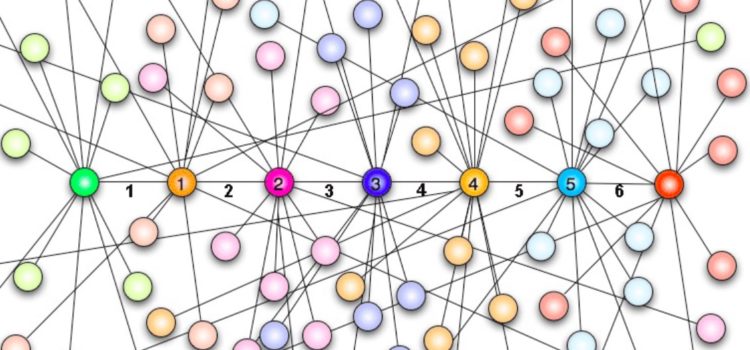
What is the “six degrees of separation” theory? What does it say about how we’re connected? What is a 6 degrees of separation example? The six degrees of separation theory is the idea that every person in the world is connected to every other person in the world by a chain of family members, friends, or acquaintances that number no more than 5 people. The idea was popularized by the game “Six Degrees of Kevin Bacon.” We’ll cover the origins of the “six degrees of separation” theory, look at a 6-degrees-of-separation example, and see how the theory is connected to