

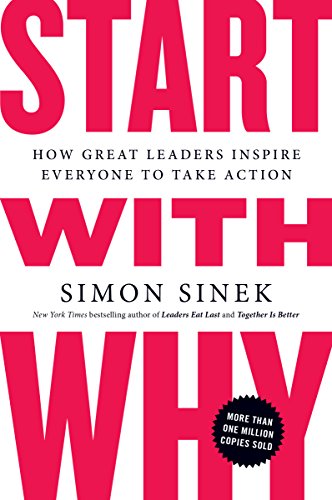
This article is an excerpt from the Shortform summary of "Start With Why" by Simon Sinek. Shortform has the world's best summaries of books you should be reading.
Like this article? Sign up for a free trial here .
Motivation is a well-acknowledged aspect of good management. What are Simon Sinek’s views on motivation? Does he have any thoughts on how to increase motivation in employees and inspire a team?
We’ll cover Simon Sinek’s thoughts on motivation from his book Start with Why. Then we’ll look at how success can actually be detrimental to an organization’s motivation, and how to keep motivation alive and your company on track.
- Originally Published: January 25, 2020
- Last Updated: January 20, 2026
Simon Sinek on Motivation & Inspiration
Those who lead aren’t necessarily #1 in terms of market share, but they’re the companies or people who are setting the course for their industries. Apple computers only make up 3 percent of the global home computing market share; however, Apple leads the technology industry because of its impact and vision. Other technology companies are trying to become Apple, not the other way around. Simon Sinek believes motivation is the key to changing the industry.
Great leaders:
- Create a following of loyal people who rally around their WHY.
- Inspire people to act because they want to, not because they’re responding to an outside incentive.
- Belong to all different sectors and aren’t just business tycoons or politicians. Great leaders can come from any walk of life or industry.
- Have exceptional amounts of influence inside and outside of their industries.
Simon Sinek: Motivation & Its Value
Studies show that most people are disengaged from their job. They lack a sense of purpose. And this feeling often starts from the top. Simon Sinek believes motivation is lacking because there’s no WHY. Instead, if every leader started with WHY, great results might happen:
- People would love their jobs. Right now, 80 percent of Americans say they don’t have their “dream job.” By embracing WHY, organizations create inspirational environments—which in turn lead to happy workers.
- People would be more productive. People with their dream jobs love going to work in the morning, which leads to more creativity and productivity.
- People would just be happier. When you’re more fulfilled at work, you bring that joy home with you, too.
- Companies and economies would grow stronger. They would operate on trust, not fear, which would lead to growth.
Simon Sinek on Success & Decreased Motivation
When a successful company transforms from a WHY organization to a WHAT organization, it’s what Sinek calls “the split.” The split happens when the leadership of a company starts focusing too much on measurable metrics, like sales and financial growth. The organization starts focusing on its WHAT, not its WHY, and stagnates as a result. It becomes concerned with how to manipulate customers and boost metrics, rather than with inspirational new innovations that help fulfill its mission.
(Shortform note: As your company grows, you may be able to avoid this pitfall through the judicious use of delegation. In How to Get Rich, Felix Dennis explains that many people who start companies only stay minimally involved in the long term, since it’s easier and more efficient to allow skilled managers to handle day-to-day operations. However, he adds that it’s important to set clear guidelines about which actions or decisions need your personal approval. In the context of Start With Why, this might mean that any high-level decisions about business strategy or messaging have to go through you. This strategy ensures that the company stays true to your vision and avoids manipulative advertising tactics that may damage trust.)
However, Sinek says the split doesn’t have to happen. Here are strategies for keeping the focus on WHY as your company grows:
Make sure the WHY trickles down from the top to every single employee. This will keep everyone, from executives to frontline workers, focused on the ultimate goal. (Shortform note: Ensuring that your WHY trickles down from the top means starting with yourself. The authors of CEO Excellence emphasize that your employees will pay much more attention to what you do than to what you say, so you must embody your company’s culture and mission in your daily actions. This is especially true when staying true to that mission involves some personal sacrifice or risk—for example, you might cut your own pay to fund a new initiative or cover losses.)
Measure only the metrics that count. When you’re focused on your beliefs and use those to measure your success, your company will continue to start with WHY. For example, if your WHY is to protect the environment, you might measure success by your organization’s carbon footprint for the past year rather than by its profits.
(Shortform note: Sinek suggests you only track metrics that relate to your WHY, but doesn’t give much specific advice about how to do so. In Measure What Matters, venture capitalist John Doerr provides an effective framework for this: Define your company’s objectives (clear and specific goals), key results (metrics or outcomes that indicate you’re on track to meet those goals), and a goal-setting cycle—how frequently you adjust goals or set new ones based on the company’s key results. There are a total of nine parts to Doerr’s system, with the remaining six steps providing more details about how to apply this framework.)
Plan for leadership transitions. Even the most visionary people can’t lead forever, so make sure to line up new leaders who support the company’s WHY just as strongly as current leadership does.
(Shortform note: Jim Collins and Jerry Porras emphasize the importance of planning for leadership transitions in Built to Last. They say that every leader must be committed to continuing the succession plan—in other words, as soon as a new leader takes over, they should start evaluating candidates to eventually take over from them. This continuous succession planning creates what the authors call a “leadership continuity loop,” which ensures that power can smoothly transition from one person to another whenever necessary.)
The School Bus Test
To counter the problem of losing your WHY, use the School Bus Test is simple: if your CEO was hit by a school bus tomorrow, would the organization continue to thrive? Would the motivation be alive?
- If yes, that means the founder’s WHY has been embraced by the company from the top down. Even without the CEO, the mission remains clear.
- If not, that means your WHY is too dependent on the CEO’s presence. Without a clear legacy of WHY, the organization will eventually split into WHAT, which will erode the company’s competitive edge.
Strong, inspirational leaders like Steve Jobs, Bill Gates, and Sam Walton do more than just share their company’s values: they embody them and maintain discipline throughout the organization. So when those leaders are gone, the company runs the risk of moving into the split. In other words, a change in leadership is a good time for the company to lose sight of its WHY. Simon Sinek believes motivation can decrease during these transitions.
Unfortunately, this is a common issue. Here are three examples of companies that haven’t planned for succession, and as a result, have gone through the split:
- Walmart: After founder Sam Walton died, the company stopped working on being a part of the community and instead focused on selling goods at low prices.
- Microsoft: When co-founder Bill Gates stepped down, Microsoft stopped being a company out to change the world, and instead became a software company.
- Starbucks: With the exit of founder Howard Shultz, Starbucks stopped being the “third space” for people to meet and exchange ideas. It became a premium coffee shop instead.
Plan Smooth Successions
Since the WHY usually comes from the company’s founder, it’s important to plan for a smooth succession that keeps your WHY intact when he or she eventually leaves.
In order to make the transition successful, the original founder needs to make their WHY as clear as possible. They have to leave a clear cause/belief for their successor to champion. Without that, the next leader is more likely to focus on the company’s WHAT.
Successors to influential leaders need to be picked based on their belief in the company’s WHY, not necessarily their skills or current position. If the new leader can’t communicate the company’s vision and values clearly, then the employees in the organization won’t be able to, either. Simon Sinek believes motivation is the key to a successful business, but a successful business can ruin motivation.
———End of Preview———
Like what you just read? Read the rest of the world's best summary of "Start With Why" at Shortform . Learn the book's critical concepts in 20 minutes or less .
Here's what you'll find in our full Start With Why summary :
- What Steve Jobs did right compared to every other business leader
- How to define your organization's WHY
- How to help your organization avoid losing its edge as it succeeds






That was a concise summary thank you for saving my time from reading the whole book