
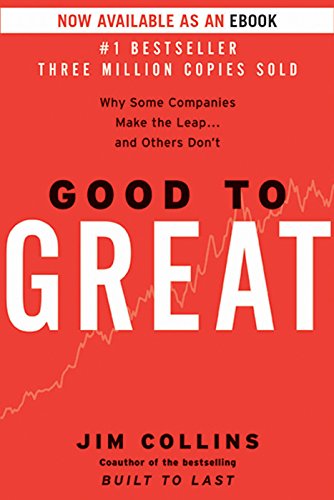
This article is an excerpt from the Shortform summary of "Good to Great" by Jim Collins. Shortform has the world's best summaries of books you should be reading.
Like this article? Sign up for a free trial here .
What are “Level 5” leaders? How do you become one? Level 5 leadership is a principle behind “good-to-great” companies that are led by “Level 5” leaders. These leaders are personally humble but professionally driven executives, and they make the best leaders of companies.
Level 5 leadership is a rare type that can help your business soar. We’ll cover what Jim Collins’s Level 5 leadership concept is (from Good to Great), who Level 5 leaders are, and how to become one.
Originally Published: December 19, 2019
Last Updated: January 25, 2026
Cultivating Singular Leadership
Collins says that the first principle behind good-to-great companies is that part of their strategy includes “Level 5” leadership. He explains that there are five levels of contributors in a company:
- Level 1: A capable individual contributor
- Level 2: A productive team member
- Level 3: An effective manager
- Level 4: A leader who can inspire subordinates
- Level 5: An exceptional leader
Collins describes Level 5 leaders as humble, almost shy, but highly driven professionally. They avoid the limelight and tend to credit external forces or colleagues for their companies’ successes. Although they’re often likable and inspiring, they’re not usually “charismatic.” Their lack of ego enables them to concentrate on the company’s success, not their own.
How to Achieve It
Collins acknowledges that Level 5 characteristics are likely a product of both nature and nurture, and so are difficult to create out of whole cloth; he also doesn’t have hard data to back up any suggestions he might make. His best advice for aspiring Level 5 leaders is to follow the other principles he outlines. That way, even if you aren’t a Level 5 leader, you’ll at least be acting like one.
(Shortform note: Unlike Collins, in The 5 Levels of Leadership, Maxwell gives a few practical tips for acting like a Level 5 leader. First, give others the opportunity to lead. Second, create an environment that breeds leaders. Third, think of the possibilities for your organization and make them happen. Fourth, surround yourself with a trusted group of fellow leaders who can keep you in check. Lastly, think about how you can use your influence to benefit others and leave a legacy that goes beyond your organization.)
Another Take on the Five-Level Framework
Similar to Collins, John C. Maxwell also calls exceptional leaders “Level 5” leaders in The 5 Levels of Leadership. However, Maxwell’s five levels differ slightly from Collins’s. The main difference is that Collins doesn’t view those at the lower levels as leaders:
| Collins | Maxwell | |
| Level 1 | A capable individual contributor | A person who has the job title of a leader but who lacks real power other than the authority to lead |
| Level 2 | A productive team member | A leader who can influence others and who has gained their trust |
| Level 3 | An effective manager | A leader who can get things done: someone who serves as an example to others by being self-motivated, disciplined, and organized |
| Level 4 | A leader who can inspire subordinates | A leader who develops skilled, dedicated employees |
| Level 5 | An exceptional leader | A leader with a reputation for developing strong leaders and strong organizations |
Maxwell adds that a Level 5 leader is focused on leaving a legacy by developing Level 4 leaders so that the organization continues to thrive after they’re gone. While Maxwell doesn’t detail specific personality traits the way Collins does, both authors write that a Level 5 leader is focused on making a lasting impact and ensuring a company’s long-term success.
———End of Preview———
Like what you just read? Read the rest of the world's best summary of "Good to Great" at Shortform . Learn the book's critical concepts in 20 minutes or less .
Here's what you'll find in our full Good to Great summary :
- The 3 key attributes of Great companies
- Why it's better to focus on your one core strength than get spread thin
- How to build a virtuous cycle, or flywheel effect, in your business