
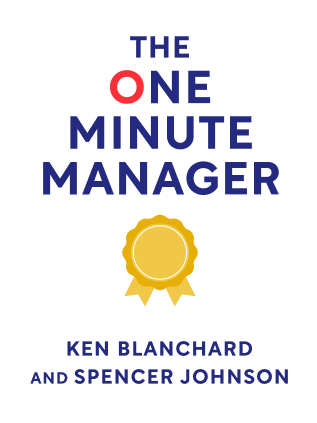
This article is an excerpt from the Shortform book guide to "The One-Minute Manager" by Ken Blanchard and Spencer Johnson. Shortform has the world's best summaries and analyses of books you should be reading.
Like this article? Sign up for a free trial here .
Managing people doesn’t have to be complicated or time-consuming. Ken Blanchard’s The One-Minute Manager proves that effective leadership can be simple, fast, and powerful.
The book — and its updated version The New One-Minute Manager — introduce three core techniques that help managers bring out the best in their teams: goal setting, praising, and redirects. Each one takes just a minute but creates lasting impact. Keep reading to see how these strategies work and why they’re so effective.
The One-Minute Manager by Ken Blanchard
Ken Blanchard’s The One-Minute Manager and The New One-Minute Manager teach managers how to get the most out of their employees. After all, the essence of management is getting results out of an organization’s most important asset: its people. One-minute managers are those who recognize that productivity is a function of both quality and quantity: you need to get good results, and quickly.
They do this by empowering employees and giving them the motivation to do well on their own. One-minute managers do not tell people what to do: they help them realize on their own what they need to do.
New one-minute managers get great results from people by using three simple, but effective management techniques:
- Goal Setting: makes clear what is important to focus on, and provides a way to measure performance
- Praising: gives employees confidence that they’re doing well and meeting goals
- Redirects: holds employees accountable for lower performance and gets the employee back on track to meeting goals
One-Minute Goal Setting
This entails having employees set a 250-word goal for each new task. It puts managers and employees on the same page. The manager knows what the employee is supposed to achieve, while the employee knows what to do without needing constant direction and input.
How They Work
The manager and the employee sit down together to come up with task-specific goals, each readable in one minute or less. These are specific, measurable goals with deadlines, where success is clearly defined. The employee then emails the goals to the manager so they can always be checked for reference and follows up with regular progress reports.
Why They Work
These are effective because they define what constitutes success and promote accountability for achieving specific results. They work because employees are motivated when they have a clear idea of exactly what they’re supposed to be doing. In an ever-changing business world, managers don’t have the time to micromanage their employees. One-minute goals empower employees to be self-starters and stewards of their own success.
One-Minute Praising
New one-minute managers deliver immediate and thoughtful praise when an employee does something well.
How They Work
The key to a one-minute praising is that it be immediate. The manager has to be on the lookout for good behavior and praise it in real time. Instead of looking to catch their employees doing something wrong, one-minute managers make a conscious effort to catch their employees doing something right.
Good one-minute praisings are specific and consistent, and the manager must explain why the employee’s success has contributed to organizational goals. The manager then encourages the employee to do more of the same and reiterates that they are pushing for the employee to succeed.
Why They Work
Employees gain the confidence to achieve bigger goals later on when they receive quick praise for small accomplishments when they’re just starting out. They are also able to link their positive performance with the praising, because the praising is immediate and focused on a specific achievement. Contrast this approach with that of managers who deliver vague and dilatory positive feedback: the employee doesn’t know what they did right and therefore won’t be able to replicate it. One-minute praisings are also highly motivating for employees, as they begin catching themselves doing things right.
One-Minute Redirects
Managers deliver quick, specific, and consistent redirects when an employee who ought to know better makes a mistake.
How They Work
One-minute redirects must be linked to the defined goals above: you can’t hold people accountable for not doing things they weren’t told they needed to do.
Redirects happen in two parts. In the first part, the manager clearly conveys that they are disappointed in the employee because they failed to achieve a specific goal or meet a specific deadline. They also need to demonstrate to the employee why their mistake hurts the organization as a whole. This needs to immediately follow the mistake and it needs to be specific to that mistake.The goal is to help people learn from errors so they don’t repeat them: this won’t happen if the redirect is vague and scattershot.
In the second part, the manager pauses and then reminds the employee that they still think highly of them overall and that the behavior, not the person, is being critiqued. Lastly, when the redirect is over, it’s over. The manager bears no lingering ill will and treats the employee no differently than before, as long as the mistake isn’t repeated.
Why They Work
Employees don’t feel mistreated and don’t view you as an enemy. They’re being criticized for a behavior they can improve, not for a personality flaw that they can’t change.
Employees also appreciate the honesty and openness. They’re being held accountable immediately following a mistake, instead of being blindsided by it months later at a performance review (as so many managers choose to do). The redirects give the employee an opportunity to improve right away and they offer negative feedback at a manageable volume: piecemeal, as it happens, instead of all-at-once.
Explore Further
To examine the ideas in Blanchard’s books The One-Minute Manager and The New One-Minute Manager in greater detail, read our full guide.
———End of Preview———
Like what you just read? Read the rest of the world's best book summary and analysis of Ken Blanchard and Spencer Johnson's "The One-Minute Manager" at Shortform .
Here's what you'll find in our full The One-Minute Manager summary :
- How to empower your employees and teach them to succeed
- Why immediate and direct feedback is the most effective
- How to offer constructive criticism to correct behavior