We've ranked the best venture capital books using expert recommendations, sales data, and millions of reader ratings. At Shortform, we know books. Our book guides are the best in the world. Learn why.
Cover unavailable
1
The Lean Startup: How Today's Entrepreneurs Use Continuous Innovation to Create Radically Successful Businesses
Most startups fail. But many of those failures are preventable. The Lean Startup is a new approach being adopted across the globe, changing the way companies are built and new products are launched.
Eric Ries defines a startup as an organization dedicated to creating something new under conditions of extreme uncertainty. This is just as true for one person in a garage or a group of seasoned professionals in a Fortune 500 boardroom. What they have in common is a mission to penetrate that fog of uncertainty to discover a successful path to a sustainable business.
The Lean Startup approach fosters companies that are both more capital efficient and that leverage human creativity more effectively. Inspired by lessons from lean manufacturing, it relies on "validated learning," rapid scientific experimentation, as well as a number of counter-intuitive practices that shorten product development cycles, measure actual progress without resorting to vanity metrics, and learn what customers really want. It enables a company to shift directions with agility, altering plans inch by inch, minute by minute.
Rather than wasting time creating elaborate business plans, The Lean Startup offers entrepreneurs - in companies of all sizes - a way to test their vision continuously, to adapt and adjust before it's too late. Ries provides a scientific approach to creating and managing successful startups in a age when companies need to innovate more than ever.

At Asana, we've been lucky to benefit from the author's advice firsthand; this book will enable him to help many more entrepreneurs answer the tough questions about their business. [source]
Cover unavailable
2
Zero to One: Notes on Startups, or How to Build the Future
If you want to build a better future, you must believe in secrets.
The great secret of our time is that there are still uncharted frontiers to explore and new inventions to create. In Zero to One, legendary entrepreneur and investor Peter Thiel shows how we can find singular ways to create those new things.
Thiel begins with the contrarian premise that we live in an age of technological stagnation, even if we’re too distracted by shiny mobile devices to notice. Information technology has improved rapidly, but there is no reason why progress should be limited to computers or Silicon Valley. Progress can be achieved in any industry or area of business. It comes from the most important skill that every leader must master: learning to think for yourself.
Doing what someone else already knows how to do takes the world from 1 to n, adding more of something familiar. But when you do something new, you go from 0 to 1. The next Bill Gates will not build an operating system. The next Larry Page or Sergey Brin won’t make a search engine. Tomorrow’s champions will not win by competing ruthlessly in today’s marketplace. They will escape competition altogether, because their businesses will be unique.
Zero to One presents at once an optimistic view of the future of progress in America and a new way of thinking about innovation: it starts by learning to ask the questions that lead you to find value in unexpected places.
A lot of people talk about how great it is to start a business, but only Ben Horowitz is brutally honest about how hard it is to run one.
In The Hard Thing About Hard Things, Ben Horowitz, cofounder of Andreessen Horowitz and one of Silicon Valley's most respected and experienced entrepreneurs, draws on his own story of founding, running, selling, buying, managing, and investing in technology companies to offer essential advice and practical wisdom for navigating the toughest problems business schools don't cover. His blog has garnered a devoted following of millions of readers who have come to rely on him to help them run their businesses. A lifelong rap fan, Horowitz amplifies business lessons with lyrics from his favorite songs and tells it straight about everything from firing friends to poaching competitors, from cultivating and sustaining a CEO mentality to knowing the right time to cash in.
His advice is grounded in anecdotes from his own hard-earned rise—from cofounding the early cloud service provider Loudcloud to building the phenomenally successful Andreessen Horowitz venture capital firm, both with fellow tech superstar Marc Andreessen (inventor of Mosaic, the Internet's first popular Web browser). This is no polished victory lap; he analyzes issues with no easy answers through his trials, including
demoting (or firing) a loyal friend; whether you should incorporate titles and promotions, and how to handle them; if it's OK to hire people from your friend's company; how to manage your own psychology, while the whole company is relying on you; what to do when smart people are bad employees; why Andreessen Horowitz prefers founder CEOs, and how to become one; whether you should sell your company, and how to do it. Filled with Horowitz's trademark humor and straight talk, and drawing from his personal and often humbling experiences, The Hard Thing About Hard Things is invaluable for veteran entrepreneurs as well as those aspiring to their own new ventures.
Ben's book is a great read - with uncomfortable truths about entrepreneurship and how to lead to a company. It's also an inspiring story of a business rebirth through sheer willpower. [source]
Ben's experience and expertise make him one of the most important leaders not just in Silicon Valley but also in the global knowledge economy. For anyone interested in building, growing or leading a great company, this book is an incredibly valuable resource - and a funny and insightful read. [source]
Drew Houston
CEO/Dropbox
One of the great things that the author wrote in this book is the hardest part of being a CEO is managing your psychology. [source]
Ray Dalio, one of the world’s most successful investors and entrepreneurs, shares the unconventional principles that he’s developed, refined, and used over the past forty years to create unique results in both life and business—and which any person or organization can adopt to help achieve their goals.
In 1975, Ray Dalio founded an investment firm, Bridgewater Associates, out of his two-bedroom apartment in New York City. Forty years later, Bridgewater has made more money for its clients than any other hedge fund in history and grown into the fifth most important private company in the United States, according to Fortune magazine. Dalio himself has been named to Time magazine’s list of the 100 most influential people in the world. Along the way, Dalio discovered a set of unique principles that have led to Bridgewater’s exceptionally effective culture, which he describes as “an idea meritocracy that strives to achieve meaningful work and meaningful relationships through radical transparency.” It is these principles, and not anything special about Dalio—who grew up an ordinary kid in a middle-class Long Island neighborhood—that he believes are the reason behind his success.
In Principles, Dalio shares what he’s learned over the course of his remarkable career. He argues that life, management, economics, and investing can all be systemized into rules and understood like machines. The book’s hundreds of practical lessons, which are built around his cornerstones of “radical truth” and “radical transparency,” include Dalio laying out the most effective ways for individuals and organizations to make decisions, approach challenges, and build strong teams. He also describes the innovative tools the firm uses to bring an idea meritocracy to life, such as creating “baseball cards” for all employees that distill their strengths and weaknesses, and employing computerized decision-making systems to make believability-weighted decisions. While the book brims with novel ideas for organizations and institutions, Principles also offers a clear, straightforward approach to decision-making that Dalio believes anyone can apply, no matter what they’re seeking to achieve.
Here is a rare opportunity to gain proven advice unlike anything you’ll find in the conventional business press.
I found it to be truly extraordinary. Every page is full of so many principles of distinction and insights—and I love how Ray incorporates his history and his life in such an elegant way. [source]
Cover unavailable
5
Technological Revolutions and Financial Capital: The Dynamics of Bubbles and Golden Ages
Recommended by Steve Blank, Azeem Azhar, Andrew Curry, and 1 others.
Andrew Curry
Carlota Perez comes out of a whole set of arguments which basically go back to Kondratiev. Kondratiev was the Soviet economist who said there seem to be long-wave downturns and upturns in cycles of around fifty years. He got shot by Stalin for his trouble. He first wrote the paper in 1924. There follows seventy years of argument whether it’s true – the price evidence seem to think it’s true: long upswing, long downswing – and why it’s true, and there’s different views on that: some of it’s about economics, some of it’s about capital investment, some of it’s about innovation cycles. Carlota Perez effectively cut through the disputes. [source]
Meltem Demirors
@amazon 3/ if we look at bitcoin investing, it follows the cyclical trend outlined by the brilliant @CarlotaPrzPerez in her book "technological revolutions and financial bubbles" bitcoin is a secular investment (if you zoom out, up and to the right) that operates in cycles https://t.co/5e0XRUgzae [source]
Cover unavailable
6
Venture Deals: Be Smarter Than Your Lawyer and Venture Capitalist
Brad Feld, Jason Mendelson
4.6
Get the inside scoop on what venture capitalists want to see in your startup as you hit the fundraising trail.
This is the highly anticipated third edition of the best-selling book which has become the definitive resource for understanding venture capital fundraising. Whether you are an entrepreneur, lawyer, student or just have an interest in the venture capital ecosystem, Venture Deals is for you. The book dives deeply into how deals are constructed, why certain terms matter (and others don't), and more importantly, what motivates venture capitalists to propose certain outcomes. You'll see the process of negotiating from the eyes of two seasoned venture capitalists who have over 40 years of investing experience as VCs, LPs, angels, and founders. They will teach you how to develop a fundraising strategy that will be a win for all parties involved.
This book is designed to bring transparency to the venture capital funding process and includes such topics as:
How to raise money; What terms matter and which ones don't; How to negotiate a fair deal for everyone; What makes venture capitalists tick, including how they are compensated and motivated; How companies are valued by venture capitalists; How all current structures of funding work, including convertible debt, crowdfunding, pre-sales and other non-traditional methods; How these particular issues change through different stages of financing (seed, early, mid and late); and How to avoid business and legal pitfalls that many entrepreneurs make. And as in the previous editions, this book isn't just a one-sided opinion from venture capitalists, but also has helpful commentary throughout from a veteran CEO who has raised many rounds of financing from many different investors.
If you are ready to learn all the secrets and ins and outs of fundraising, Venture Deals is an essential read.
…
Recommended by Timothy Ferriss, Danielle Morrill, Auston Bunsen, and 6 others.
For the fellow tech nerds among you, here are a few resources for learning about angel investing, founding tech companies, or picking the right startup to work for. [source]
Auston Bunsen
I’m actually a self-taught programmer, so these books have really helped me with practical skills that I could put to use & yield results. The return on investment for these kinds of books is off the charts for me! [source]
Erik Cheong
One of the biggest challenges for startups is fund raising. Learn and know what the investors are thinking and what they looking for. [source]
Cover unavailable
7
Mastering the VC Game: A Venture Capital Insider Reveals How to Get from Start-up to IPO on Your Terms
Jeffrey Bussgang
4.6
"Read this book right now so you can look your potential VC in the eye with confidence." -David Meerman Scott, author of "The New Rules of Marketing & PR"
Finding the right venture capitalist to back your start-up is a challenge. Even if you manage to get backing, you want your VC to be a partner, not some dictator who will undermine your vision and take control of your life's work.
Jeffrey Bussgang is one of a very few people who have played on both sides of this high-stakes game. Now he draws on his unique perspective to offer high-level insights, colorful stories, and practical advice gathered from his own experience as well as from interviews with dozens of the most successful entrepreneurs and VCs. He reveals how to get noticed, perfect a pitch, and negotiate a partnership that works for everyone.
…
Cover unavailable
8
Secrets of Sand Hill Road: Venture Capital and How to Get It
Scott Kupor
4.6
A Wall Street Journal Bestseller!
What are venture capitalists saying about your startup behind closed doors? And what can you do to influence that conversation?
If Silicon Valley is the greatest wealth-generating machine in the world, Sand Hill Road is its humming engine. That's where you'll find the biggest names in venture capital, including famed VC firm Andreessen Horowitz, where lawyer-turned-entrepreneur-turned-VC Scott Kupor serves as managing partner.
Whether you're trying to get a new company off the ground or scale an existing business to the next level, you need to understand how VCs think. In Secrets of Sand Hill Road, Kupor explains exactly how VCs decide where and how much to invest, and how entrepreneurs can get the best possible deal and make the most of their relationships with VCs. Kupor explains, for instance:
- Why most VCs typically invest in only one startup in a given business category.
- Why the skill you need most when raising venture capital is the ability to tell a compelling story.
- How to handle a "down round," when startups have to raise funds at a lower valuation than in the previous round.
- What to do when VCs get too entangled in the day-to-day operations of the business.
- Why you need to build relationships with potential acquirers long before you decide to sell.
Filled with Kupor's firsthand experiences, insider advice, and practical takeaways, Secrets of Sand Hill Road is the guide every entrepreneur needs to turn their startup into the next unicorn.
As someone who’s helped a small company become a huge, valuable company, I know firsthand the power of the startup ecosystem and entrepreneurship. This book is the definitive book on navigating VC as part of that. [source]
I’ve observed thousands of founders and thought a lot about what it takes to create something important and to achieve outlier success. Kupor’s book takes founders who want to do both through everything from how VCs raise money and evaluate deals, to how to think about term sheets and set up boards. It’s a valuable resource for any founder who wants to work with VCs. [source]
@MahapatraChirag Hope you enjoy it! @skupor's book is great. [source]
Cover unavailable
9
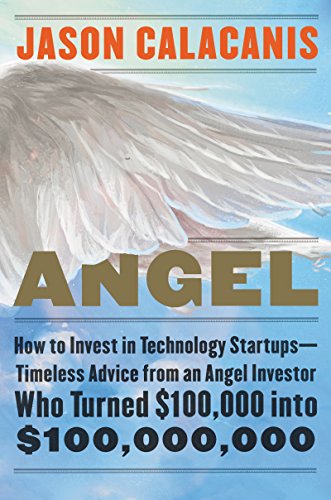
Angel: How to Invest in Technology Startups—Timeless Advice from an Angel Investor Who Turned $100,000 into $100,000,000
Jason Calacanis
4.5
One of Silicon Valley’s most successful angel investors shares his rules for investing in startups.
There are two ways to make money in startups: create something valuable—or invest in the people that are creating valuable things.
Over the past twenty-five years, Jason Calacanis has made a fortune investing in creators, spotting and helping build and fund a number of successful technology startups—investments that have earned him tens of millions of dollars. Now, in this enlightening guide that is sure to become the bible for twenty-first century investors, Calacanis takes potential angels step-by-step through his proven method of creating massive wealth: startups.
As Calacanis makes clear, you can get rich—even if you came from humble beginnings (his dad was a bartender, his mom a nurse), didn’t go to the right schools, and weren’t a top student. The trick is learning how angel investors think. Calacanis takes you inside the minds of these successful moneymen, helping you understand how they prioritize and make the decisions that have resulted in phenomenal profits. He guides you step by step through the process, revealing how leading investors evaluate new ventures, calculating the risks and rewards, and explains how the best startups leverage relationships with angel investors for the best results.
Whether you’re an aspiring investor or a budding entrepreneur, Angel will inspire and educate you on all the ins of outs. Buckle up for a wild ride into the world of angel investing!
…
Recommended by Brad Feld, Jonah Lupton, and Matthew Stafford.
Brad Feld
Co-Founder/Foundry Group
Angel: How to Invest in Technology Startups – Timeless Advice from an Angel Investor Who Turned $100,000 into $100,000,000: I met Jason Calacanis in the mid-1990s when he was peddling his Silicon Alley Reporter magazine. We’ve been friends ever since and I give him a big hug whenever our paths cross. He’s his normal outspoken and bombastic self in this book, which has lots of gems buried in it. I smiled a lot when I read it. And how about that subtitle … [source]
Jonah Lupton
@Jason The Angel book and podcast are two of my all time favorites. I’ve listened to the book twice on audible. Tons of great advice for every aspiring angel investor. https://t.co/Gp2zQMIkNs [source]
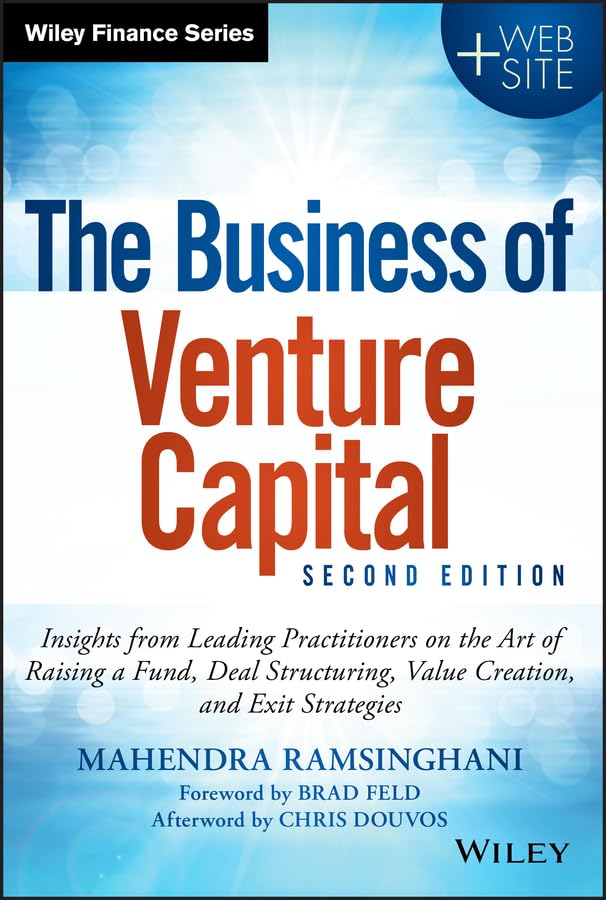
The Business of Venture Capital: Insights from Leading Practitioners on the Art of Raising a Fund, Deal Structuring, Value Creation, and Exit Strategies
Mahendra Ramsinghani
4.5
The definitive guide demystifying the venture capital business
The Business of Venture Capital covers the entire spectrum of a venture capital business, from raising venture funds to structuring investments, value creation as board member and assessing exit pathways. Author Mahendra Ramsinghani covers the distinct aspects of the venture capital fund raising and investment process with insights and perspectives from leading experts. Interviewees include Limited Partners (LPs) such as Credit Suisse, Grove Street Advisors and General Partners (GPs) from Foundry Group, Spark Capital, Benchmark Capital, Norwest Venture Partners, Shasta Ventures and Bessemer Venture Partners. If you're curious about venture capital businesses, you've found the only book that covers it all.
- The first book to address the full investment cycle of the venture capital business - Demystifies the key aspects of the business - raising venture funds, fund-level due diligence and fund terms, structuring investments, value creation, and exits - Foreword by Mark Heesen, President, National Venture Capital Association - Benefit from the experiences of the best-in-class practitioners, who have made investments in leading companies like Zynga, Twitter & Foursquare - Describes how venture capital is an art as well as a science
In-depth and thorough, The Business of Venture Capital is the one book that includes insights, tools and real world examples every practitioner can benefit from.
…
Cover unavailable
11
Start-up Nation: The Story of Israel's Economic Miracle
Dan Senor
4.5
Start-Up Nation addresses the trillion dollar question: How is it that Israel -- a country of 7.1 million, only 60 years old, surrounded by enemies, in a constant state of war since its founding, with no natural resources-- produces more start-up companies than large, peaceful, and stable nations like Japan, China, India, Korea, Canada and the UK?
With the savvy of foreign policy insiders, Senor and Singer examine the lessons of the country's adversity-driven culture, which flattens hierarchy and elevates informality-- all backed up by government policies focused on innovation. In a world where economies as diverse as Ireland, Singapore and Dubai have tried to re-create the "Israel effect", there are entrepreneurial lessons well worth noting. As America reboots its own economy and can-do spirit, there's never been a better time to look at this remarkable and resilient nation for some impressive, surprising clues.
…
Recommended by Amnon Rubinstein, Bogdana Butnar, Iulian Stanciu, and 1 others.
Amnon Rubinstein
This is a new book which has become very successful in America, though it is less well-known in England. It is a book which seeks to explain the economic success of Israel. Israel has withstood the recent crunch, the recent depression, more successfully than other industrial societies and this book seeks to explain that. One of the things that the authors explain is the spirit of leadership and entrepreneurship which is part and parcel of the fact that most Israelis serve in the Israeli army. The regular army of Israel educates its draftees to a position of leadership so when they enter university they are already more adult, more experienced, more likely to be go-getters and they have more knowledge of technology. So I thought this was interesting because I think it’s a fact that many people are not aware of. And there is a flipside to this, which is that those elements in Israeli society that do not go into the army, namely the Arabs and the ultra-orthodox Jews, miss something important. They are the poorer elements of Israeli society and the fact that they do not go into the army, and have many children, exacerbates their position. This explains why the social gap in Israeli society grows by leaps and bounds from year to year. The ultra-orthodox don’t go into the army because it’s part of a political concession, given to them by successive governments who need their support in the Knesset. It’s a very controversial issue back home. These two poor elements make things worse by not participating in the army which contributes so much to the economic success of Israel. [source]
Bogdana Butnar
I thought I might put my money where my mouth is. I keep whining that young people are not in touch with some essential books on advertising that have helped me shape the way I practise my trade today, but I never did anything about it. So I am starting here the ultimate books to read list. I will add to it as I get suggestions and as more good books get written. [source]
Iulian Stanciu
In every good or bad decision, there is a lesson. The real win is not having done something right, but having learned something you can apply in the future. I've let people make the wrong decisions even if I knew they were wrong, because I knew that would teach them something better than I ever could. Why the "Start-up Nation" book? Because lots of things are BS free. If someone in the company thinks I did something stupid, they're free to tell me why. Let's call things as we see them. [source]
Cover unavailable
12
#BreakIntoVC: How to Break Into Venture Capital and Think Like an Investor Whether You're a Student, Entrepreneur or Working Professional
Bradley Miles
4.4
If you are interested in habits to develop the investor mindset then grab a copy today before the price goes up.
#BreakIntoVC: How to Break Into Venture Capital And Think Like an Investor gives you the insight to understand technology investing without endlessly scouring the internet or having access to the top venture firms in the industry.
What if a few new habits could help you understand the complex and ever-changing landscape of the technology sector? What if you could tell a great business from a good business with a few simple steps? Imagine being one of the smartest people in the room when it comes to transportation technology, drones or healthcare technology.
Bradley Miles, in his first book, covers multiple ways to analyze and understand the complex and opaque world of technology investing.
Here are a few things that you will get out of #BreakIntoVC.
In this book, you will learn: The fundamentals of the venture capital industry and how it works The difference between accelerators, angel investors, early stage VCs and late stage VCs How to understand any market The key metrics that matter to VCs How to value early and late stage technology companies How to reach venture capitalists How to land a job, internship or learning-based opportunity at a venture capital firm How to handle a mock call with a venture capitalist How to spot great technology businesses in your everyday life How to pitch a business to venture capitalists Case studies on how five other people broke into the venture capital BONUS: A step-by-step method to pitching a company that Bradley has utilized when speaking with venture capital investors and current businesses that he recommends you use when setting up your first pitch.
Buy this book NOW to learn everything you need to know to access the world of venture capital.
Pick up your copy today by clicking the BUY NOW button at the top of this page.
To get access to the bonus materials other resources (all for FREE) be sure to visit breakintovc.com
…
Cover unavailable
13
Blitzscaling: The Lightning-Fast Path to Building Massively Valuable Companies
LinkedIn co-founder, legendary investor and author of the NYT Bestseller The Start-up of You reveals the secret to starting and scaling massively valuable companies.
For most of the world, the terms "Silicon Valley" and "startup" are synonymous. Indeed, Silicon Valley is home to a disproportionate number of companies that have grown from garage startups into global giants. But what is the secret to these startups' extraordinary success? Contrary to the popular narrative, it's not their superhuman founders or savvy venture capitalists. Rather, it's that they have learned how to Blitzscale. Blitzscaling is a specific set of practices for igniting and managing dizzying growth; an accelerated path to the stage in a startup's life-cycle where the most value is created. It prioritizes speed over efficiency in an environment of uncertainty, and allows a company to go from "startup" to "scaleup" at a furious pace that captures the market. Drawing on their experiences scaling startups into billion-dollar businesses, Hoffman and Yeh offer a framework for blitzscaling that can be replicated in any region or industry. Readers will learn how to design business models that support lightning-fast growth, navigate necessary shifts in strategy at each level of scale, and weather the management challenges that arise as their company grows.
The case studies you’re about to explore and the tools you’re about to gain have never been more relevant. This is an ideal moment to be reading this book. [source]
The secret of Silicon Valley is that it keeps updating the playbook. Each new success - from Google to Facebook to Airbnb and Uber - develops new techniques for world-transforming products. Blitzscaling paints the picture, with key case studies, of what it really takes to build a market-leading company. If you want to learn how to manage growth amid the controlled chaos that has become the new normal for startups and legacy businesses alike, read this book. [source]
Sheryl Sandberg
COO/Facebook
Blitzscaling shows how companies can build value for customers and shareholders in the digital age. A compelling inside view of how the new economy is being built and is transforming global business. [source]

Cover unavailable
14
Creative Capital: Georges Doriot and the Birth of Venture Capital
Spencer E. Ante
4.4
Venture capitalists are the handmaidens of innovation. Operating in the background, they provide the fuel needed to get fledgling companies off the ground--and the advice and guidance that helps growing companies survive their adolescence.
In Creative Capital, Spencer Ante tells the compelling story of the enigmatic and quirky man--Georges Doriot--who created the venture capital industry. The author traces the pivotal events in Doriot's life, including his experience as a decorated brigadier general during World War II; as a maverick professor at Harvard Business School; and as the architect and founder of the first venture capital firm, American Research and Development. It artfully chronicles Doriot's business philosophy and his stewardship in startups, such as the important role he played in the formation of Digital Equipment Corporation and many other new companies that later grew to be influential and successful.
An award-winning Business Week journalist, Ante gives us a rare look at a man who overturned conventional wisdom by proving that there is big money to be made by investing in small and risky businesses. This vivid portrait of Georges Doriot reveals the rewards that come from relentlessly pursuing what-if possibilities--and offers valuable lessons for business managers and investors alike.
…
Cover unavailable
15
Crossing the Chasm: Marketing and Selling Disruptive Products to Mainstream Customers
The bible for bringing cutting-edge products to larger markets--now revised and updated with new insights into the realities of high-tech marketing
In Crossing the Chasm, Geoffrey A. Moore shows that in the Technology Adoption Life Cycle--which begins with innovators and moves to early adopters, early majority, late majority, and laggards--there is a vast chasm between the early adopters and the early majority. While early adopters are willing to sacrifice for the advantage of being first, the early majority waits until they know that the technology actually offers improvements in productivity. The challenge for innovators and marketers is to narrow this chasm and ultimately accelerate adoption across every segment.
This third edition brings Moore's classic work up to date with dozens of new examples of successes and failures, new strategies for marketing in the digital world, and Moore's most current insights and findings. He also includes two new appendices, the first connecting the ideas in Crossing the Chasm to work subsequently published in his Inside the Tornado, and the second presenting his recent groundbreaking work for technology adoption models for high-tech consumer markets.
…
Recommended by Andrew Chen, Drew Houston, Ev Williams, and 28 others.
Drew Houston
CEO/Dropbox
It’s about how do technology products make their way from early adopters t the mainstream. [source]
Ron Conway
Bestselling guide that created a new game plan for marketing in high-tech industries. [source]
This is a key component in my Purple Cow thinking, but with a twist. I'm not as worried about the chasm as I am about the desire of marketers to go for the big middle. [source]
Cover unavailable
16
Venture Capital Deal Terms: A guide to negotiating and structuring venture capital transactions
Harm de Vries, Menno van Loon, et al.
4.3
This new book of investor Harm de Vries and VC lawyers Menno van Loon and Sjoerd Mol, who together have been involved in hundreds of venture capital transactions, explains all of the most common clauses used in VC deals.
The book provides an in-depth look on how venture capital deals are constructed and how deal terms work out in practice. It includes many examples, as well as negotiation tips for both entrepreneurs and investors and a full term sheet template as annex.
Furthermore, the book explains the economics behind the deal terms, which makes them easier to understand. The result is a practical guide to venture capital deals.
All venture capital transactions start out with the execution of a term sheet, a document summarizing the basic terms and conditions under which a potential investment will be made. A well-drafted term sheet serves as a tool to focus attention of the parties on the essential deal terms, and serves as an instrument to investigate whether there is common ground between them with respect to the most important investment conditions before they spend further time, energy and money on negotiating a deal. Effective participation in the negotiations of a venture capital transaction is possible only once each party involved fully understands the scope and consequences of all the deal terms included in the term sheet.
The book provides a clear understanding of the most frequently used practices, terms and conditions and will benefit anyone involved in venture capital transactions - investor, entrepreneur or advisor.
…
Cover unavailable
17
Get Backed: Craft Your Story, Build the Perfect Pitch Deck, and Launch the Venture of Your Dreams
Evan Baehr
4.3
HOW DO YOU LAUNCH THE VENTURE OF YOUR DREAMS?
Get Backed isn’t just about startup fundraising. It’s a handbook for anyone who has an idea and needs to build relationships to get it off the ground.
Over the last 3 years, entrepreneurs Evan Loomis and Evan Baehr have raised over $45 million for their own ventures, including the second largest round on the fundraising platform AngelList. In Get Backed, they show you exactly what they and dozens of others did to raise money -- even the mistakes they made -- uncovering the secrets of the world’s best storytellers, fundraisers, and startup accelerators. Get trained in “the friendship loop”, a step-by-step process that can be used to meet and build relationships with anyone, from investors to potential cofounders. They also show you how to create a pitch deck, building off the actual examples of 15 ventures that have raised over $150 million.
Get Backed won't just show you exactly what it takes to get funded, it will give you the tools to make any idea a reality.
…
Cover unavailable
18
The Art of Startup Fundraising
Alejandro Cremades, Barbara Corcoran
4.3
The Art of Startup Fundraising takes a fresh look at raising money for startups, with a focus on the changing face of startup finance. New regulations are making the old go-to advice less relevant, as startup money is increasingly moving online. These new waters are all but uncharted—and founders need an accessible guide. This book helps you navigate the online world of startup fundraising with easy-to-follow explanations and expert perspective on the new digital world of finance. You'll find tips and tricks on raising money and investing in startups from early stage to growth stage, and develop a clear strategy based on the new realities surrounding today's startup landscape.
The finance world is in a massive state of flux. Changes are occurring at an increasing pace in all sectors, but few more intensely than the startup sphere. When the paradigm changes, your processes must change with it. This book shows you how startup funding works, with expert coaching toward the new rules on the field.
-Learn how the JOBS Act impacts the fundraising model -Gain insight on startups from early stage to growth stage -Find the money you need to get your venture going -Craft your pitch and optimize the strategy -Build momentum -Identify the right investors -Avoid the common mistakes
Don't rely on the "how we did it" tales from superstar startups, as these stories are unique and applied to exceptional scenarios. The game has changed, and playing by the old rules only gets you left behind. Whether you're founding a startup or looking to invest, The Art of Startup Fundraising provides the up-to-the-minute guidance you need.
PRAISE FOR THE ART OF STARTUP FUNDRAISING:
“The Art of Startup Fundraising is a must read for anyone who even considers starting a business. Fundraising is hard. This book gives you the roadmap to get where you are going. Alejandro Cremades speaks with wisdom and from experience.“
- Tim Draper , Founder of Draper Associates, DFJ, and Draper University.
"The Art of Startup Fundraising should be a mandatory reading for entrepreneurs that are looking to raise capital. This book will enable Alejandro to help many more early stage companies answer the tough questions when fundraising."
- Marco Landi, Former Chief Operating Officer at Apple and Chairman at Atlantis Ventures
"Raising capital is often the most daunting and least understood aspects of starting a new business and there are few people more experienced than Alejandro Cremades to act as a guide. The Art of Startup Fundraising unlocks key secrets of fundraising for newly minted entrepreneurs."
- Jeff Stibel, Chairman of BrainGate, Inc. and Vice Chairman of Dun & Bradstreet, Inc.; New York Times bestselling author of Breakpoint and Wired for Thought.
"This book provides a clear, concise tour of the fundraising game. With his crowdfunding and entrepreneurial expertise in full display, Cremades does a terrific job making a complicated process simple and accessible."
- Jeff Bussgang, General Partner at Flybridge Capital Partners and Senior Lecturer at Harvard Business School
“Entrepreneurs need to be amazing at recruiting, selling and fundraising. The Art of Startup Fundraising provides the essential toolkit for mastering a core skill for any entrepreneur.”
- Gil Penchina, serial entrepreneur and prolific angel investor
“For many entrepreneurs finding the right investor for their venture can be a daunting task. Alejandro's experience with equity crowdfunding gives a unique perspective on the fundraising game. The Art of Startup Fundraising is very insightful for entrepreneurs looking to close a round of financing and changing the world.”
- Anyndya Ghose, Professor at NYU Stern School of Business
“There is no perfect approach to raising investment for a startup, but there is a certain tribal knowledge out there, that most of us had to learn through several failed attempts. The Art of Startup Fundraising captures every bit of advice (and then some!) that I would give to any entrepreneur looking for funding.”
- Paul Murphy, Partner at Betaworks and CoFounder of Playdots
“Alejandro's The Art of Startup Fundraising is a must read for any entrepreneur. Clear and concise, he outlines in today's startup community the steps to successfully fundraise. This is the golden era for entrepreneurs, any good idea with proof of concept can get access to money. Know your options!”
- Angelo J. Robles, Founder and CEO of Family Office Association
“It doesn't matter how great of a business you can build. If you can't raise money, you're toast. Master this book.”
- Ilya Pozin, Forbes Contributor and CoFounder of Pluto TV and CoFounder of Coplex
"The Art of Startup Fundraising translates art into science. By sharing proven formulas, strategies, and case studies that work, Alejandro Cremades provides a needed service to future entrepreneurs."
- Josh Cohen, Managing Partner at City Light Capital
“This ought to be a reading requirement for all entrepreneurs when building a business and raising capital. This is a very well written and informative book, written by a man who is a testament to dedication and creativity when confronted with the challenges of being an entrepreneur and raising capital.”
- Carter Caldwell, serial entrepreneur and Principal at Cross Atlantic Capital Partners
“Alejandro is on the bleeding edge of equity crowdfunding today. When he talks about fundraising, startups listen.”
- Andrew Ackerman, Managing Director at Dreamit Ventures
“Raising capital can be tough. Alejandro provides a step-by-step guidebook to all entrepreneurs that rather spend their time thinking about changing the world instead of thinking of how to raise funds.”
- Tobias P. Schirmer, Managing Partner of JOIN Capital
"A superb book on fundraising. Alejandro's guidance should arm entrepreneurs with the necessary tools to close with success a meaningful round of financing."
- Ellen Weber, Executive Director at Robin Hood Ventures
“The Art of Startup Fundraising is a practical and comprehensive resource for entrepreneurs to use again and again. It captures what startups need to do to be successful in the rapidly evolving financing world, while also providing tips on the fundamentals of building businesses that don’t change over time.”
- Marianne Hudson, Executive Director at Angel Capital Association
“Raising money is hard. But start-up founders all over the world can make it exponentially easier by educating themselves on the process of raising equity capital before they dive into it. The practical, hands-on advice from Alejandro Cremades in this book provides a solid foundation in that self-education process. Delivered in an approachable format with a key lesson to take-away every few pages, “The Art of Startup Fundraising” is essential reading for entrepreneurs everywhere.”
- Allen Taylor, Managing Director at Endeavor
…
Cover unavailable
19
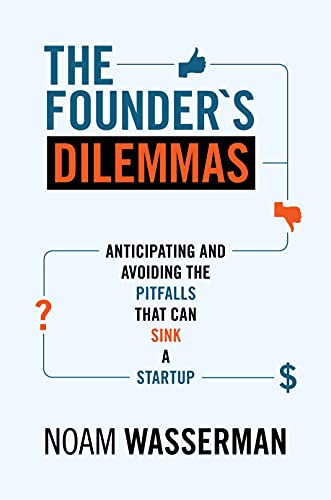
The Founder's Dilemmas: Anticipating and Avoiding the Pitfalls That Can Sink a Startup
Noam Wasserman
4.3
Often downplayed in the excitement of starting up a new business venture is one of the most important decisions entrepreneurs will face: should they go it alone, or bring in cofounders, hires, and investors to help build the business? More than just financial rewards are at stake. Friendships and relationships can suffer. Bad decisions at the inception of a promising venture lay the foundations for its eventual ruin. The Founder's Dilemmas is the first book to examine the early decisions by entrepreneurs that can make or break a startup and its team.
Drawing on a decade of research, Noam Wasserman reveals the common pitfalls founders face and how to avoid them. He looks at whether it is a good idea to cofound with friends or relatives, how and when to split the equity within the founding team, and how to recognize when a successful founder-CEO should exit or be fired. Wasserman explains how to anticipate, avoid, or recover from disastrous mistakes that can splinter a founding team, strip founders of control, and leave founders without a financial payoff for their hard work and innovative ideas. He highlights the need at each step to strike a careful balance between controlling the startup and attracting the best resources to grow it, and demonstrates why the easy short-term choice is often the most perilous in the long term.
The Founder's Dilemmas draws on the inside stories of founders like Evan Williams of Twitter and Tim Westergren of Pandora, while mining quantitative data on almost ten thousand founders.
People problems are the leading cause of failure in startups. This book offers solutions.
…
Recommended by Cody McLain and Thomas Hellmann.
Cody McLain
Will assume career path is running a startup, getting clients and managing a team of employees or collaborating with founders. These are some of the best books to cover these areas. It’s hard running a startup, let alone being the person who has to make the highest decisions in the organization. These books help provide the framework in how to run a successful organization but also share some of the stories and pitfalls from other founders so you can avoid making the same mistakes. [source]
Thomas Hellmann
It looks at the human or personal aspect of entrepreneurship. [source]
Cover unavailable
20
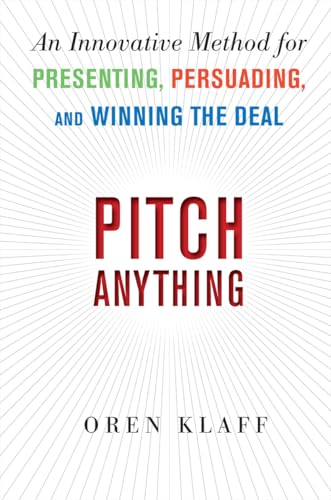
Pitch Anything: An Innovative Method for Presenting, Persuading, and Winning the Deal
When it comes to delivering a pitch, Oren Klaff has unparalleled credentials. Over the past 13 years, he has used his one-of-a- kind method to raise more than $400 million--and now, for the first time, he describes his formula to help you deliver a winning pitch in any business situation.
Whether you're selling ideas to investors, pitching a client for new business, or even negotiating for a higher salary, "Pitch Anything "will transform the way you position your ideas.
According to Klaff, creating and presenting a great pitch isn't an art--it's a simple science. Applying the latest findings in the field of neuroeconomics, while sharing eye-opening stories of his method in action, Klaff describes how the brain makes decisions and responds to pitches. With this information, you'll remain in complete control of every stage of the pitch process.
"Pitch Anything" introduces the exclusive STRONG method of pitching, which can be put to use immediately:
Setting the Frame
Telling the Story
Revealing the Intrigue
Offering the Prize
Nailing the Hookpoint
Getting a Decision
One truly great pitch can improve your career, make you a lot of money--and even change your life. Success is dependent on the method you use, not how hard you try. "Better method, more money," Klaff says. "Much better method, much more money." Klaff is the best in the business because his method is much better than anyone else's. And now it's yours.
Apply the tactics and strategies outlined in "Pitch Anything" to engage and persuade your audience--and you'll have more funding and support than you ever thought possible.
…
Recommended by Alice Kemper, Jeff Gibbard, Michael Herrmann, and 1 others.
Jeff Gibbard
This book single-handedly changed my life. BY learning the principles of "Frame Control" I have had much greater success in sales, public speaking, and in managing my team. [source]
Michael Herrmann
Great book on pitching, and more generally, sales. Funny too. Has some ideas very reminiscent of Thinking Fast and Slow. [source]
Cover unavailable
21
Term Sheets & Valuations: An Inside Look at the Intricacies of Term Sheets & Valuations
Alex Wilmerding, Aspatore Books Staff, et al.
4.3
Term Sheets & Valuations is the first ever in-depth look at the nuts and buts of terms sheets and valuations. The book, written by leading venture capitalist Alexander Wilmerding of Boston Capital Ventures, covers topics such What is a Term Sheet, How to Examine a Term Sheet, A Section-by-Section View of a Term Sheet, Valuations, What Every Entrepreneur & Executive Needs to Know About Term Sheets, Valuation Parameters, and East Coast Versus West Coast Rules. In addition, the book includes an actual term sheet from a leading law firm with line by line descriptions of each clause, what can/should be negotiated, and the important points to pay attention to. A must have book for any executive, entrepreneur, or financial professional.
…
Recommended by Nir Eyal.
Cover unavailable
22
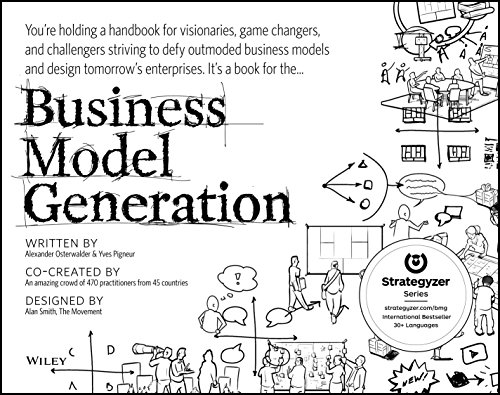
Business Model Generation: A Handbook for Visionaries, Game Changers, and Challengers
Business Model Generation is a handbook for visionaries, game changers, and challengers striving to defy outmoded business models and design tomorrow's enterprises. If your organization needs to adapt to harsh new realities, but you don't yet have a strategy that will get you out in front of your competitors, you need Business Model Generation. Co-created by 470 -Business Model Canvas- practitioners from 45 countries, the book features a beautiful, highly visual, 4-color design that takes powerful strategic ideas and tools, and makes them easy to implement in your organization. It explains the most common Business Model patterns, based on concepts from leading business thinkers, and helps you reinterpret them for your own context. You will learn how to systematically understand, design, and implement a game-changing business model--or analyze and renovate an old one. Along the way, you'll understand at a much deeper level your customers, distribution channels, partners, revenue streams, costs, and your core value proposition.
Business Model Generation features practical innovation techniques used today by leading consultants and companies worldwide, including 3M, Ericsson, Capgemini, Deloitte, and others. Designed for doers, it is for those ready to abandon outmoded thinking and embrace new models of value creation: for executives, consultants, entrepreneurs, and leaders of all organizations. If you're ready to change the rules, you belong to -the business model generation!-
…
Recommended by Nir Eyal, Steve Blank, Alexandra Stroe, and 3 others.
Alexandra Stroe
I'd recommend The Lean Startup by Eric Ries, Business Model Generation by Alexander Osterwalder and Yves Pigneur and Zero to One by Peter Thiel when they are in the starting phase of a business that needs to validate its business model. [source]
Ashley Hathaway
I could probably name a dozen books here, but I’ll point out The Business Model Generation and Value Prop Design from Strategyzer. I steal from these constantly and are engrained in my work process. These books put into practice really taught me how to think. As soon as I saw that everything should have a foundation of empathy, what good user-testing looks like, how to test and iterate it changed everything. After that any problem could be solved. It wasn’t solving one big monolithic problem. It was going through a process. [source]
Kaci Lambe Kai
This was a great book, because it opened up the idea of what a business model is supposed to be vs what it can be. It doesn't have to be a stuffy, boring document. [source]
Cover unavailable
23
High Growth Handbook
Elad Gil
4.3
Well-known technology executive and angel investor Elad Gil has worked with high growth tech companies like Airbnb, Twitter, Google, Instacart, Coinbase, Stripe, and Square as they've grown from small companies into global brands. Across all of these break-out companies, a set of common patterns has evolved into a repeatable playbook that Gil has codified in High Growth Handbook.
Covering key topics including the role of the CEO, managing your board, recruiting and managing an executive team, M&A, IPOs and late stage funding rounds, and interspersed with over a dozen interviews with some of the biggest names in Silicon Valley including Reid Hoffman (LinkedIn), Marc Andreessen (Andreessen Horowitz), and Aaron Levie (Box), High Growth Handbook presents crystal clear guidance for navigating the most complex challenges that confront leaders and operators in high-growth startups.
In what Reid Hoffman, cofounder of LinkedIn and co-author of the #1 NYT bestsellers The Alliance and The Startup of You calls "a trenchant guide," High Growth Handbook is the playbook for turning a startup into a unicorn.
"Elad Gil is one of Silicon Valley's seriously knowledgeable and battle-tested players. If you want the chance to turn your startup into the next Google or Twitter, then read this trenchant guide from someone who played key roles in the growth of these companies." - Reid Hoffman, co-founder of LinkedIn, co-author of the #1 NYT bestsellers "The Alliance" and "The Startup of You," and host of the podcast Masters of Scale
"Elad eschews trite management aphorisms in favor of pragmatic and straight-shooting insights on complex topics like managing a board of directors, executing functional re-organizations with as little trauma as possible, and everything in-between." - Dick Costolo, former CEO of Twitter and serial entrepreneur
"Elad first invested in Airbnb when we were less than 10 people and provided early advice on scaling the company. This book shares these learnings for the next generation of entrepreneurs." - Nathan Blecharczyk, cofounder of Airbnb, Chief Strategy Officer, and Chairman of Airbnb China
"Elad jam-packs every useful lesson about building and scaling companies into a single, digestible book. My only gripe is that he didn't write this when we were in the early days of Box as it would have saved my ass countless times." -Aaron Levie, cofounder and CEO of Box
"Armed with observations gathered scaling some of the most successful and important companies of Silicon Valley, Elad has no-nonsense, highly applicable advice to any operator transitioning a company from the proverbial garage to the next stage and beyond." - Max Levchin, cofounder and CEO of Affirm, cofounder and CTO of PayPal
"Elad is one of the most experienced operators in Silicon Valley having seen numerous companies hit their inflection point. His advice has been key for Coinbase as we go through hypergrowth, from hiring executives to improving M&A." - Brian Armstrong, cofounder and CEO of Coinbase
"Elad is one of the best connected and respected early stage investors in the Valley - he invested in Minted when we had fewer than 50 employees and his advice was critical to us in growing our business to where we are now, in the low hundreds of millions in sales. In his book, he crystallizes all of these learnings for the next generation of companies." -Mariam Naficy, cofounder and CEO of Minted
…
Recommended by Brian Armstrong, Alok Kejriwal, and Joe Martin.
Alok Kejriwal
Will I work with me? In the book High Growth Handbook, a paragraph was stunning : “Founders should write a guide to working with them. It would be to clarify the founder’s role: “What do I want to be involved in?” Check pic note WHY this is a great idea.. https://t.co/xzdv8cuR4D [source]
Raising Venture Capital for the Serious Entrepreneur
Dermot Berkery
4.3
Have the negotiating edge when getting your new business off the ground
Written by Dermot Berkery, an internationally known venture capitalist with Delta Partners, this complete toolbook thoroughly details how venture capitalists arrange the financing for a company; what they look for in a business plan; how they value a business; and how they structure the terms of an agreement. Within its pages, you'll find everything you need to successfully raise new business capital with the most attractive terms possible.
Using informative case studies, detailed charts, and term sheet exercises, Raising Venture Capital for the Serious Entrepreneur discusses the basic principles of the venture capital method, strategies for raising capital, methods of valuing the early-stage venture, and proven techniques for negotiating the deal. The author leads you step-by-step through:
Developing a Financing Map Getting to the First Stepping Stone Understanding the Unique Cash Flow and Risk Dynamics of Early Stage Ventures Determining the Amount of Capital to Raise and What to Spend It on Learning How Venture Capital Firms Think Creating a Winning Business Plan Funding Early-Stage Companies Agreeing on a Term Sheet with a Venture Capitalist Setting Terms for Splitting the Rewards Allocating Control between Founders/Management and Investors Aligning the Interests of Founders/Management and Investors This invaluable guide also includes term sheet exercises that test your understanding of various financing situations facing companies. In addition, the book features three extensive case studies: the first covering a fictional start-up company used throughout the book, the second offering a stepping stone map, and the third presenting a term sheet used in practice by venture capitalists.
…
Cover unavailable
25
Angel Investing: The Gust Guide to Making Money & Having Fun Investing in Startups
David S. Rose, Reid Hoffman
4.3
They deliver more capital to entrepreneurs than any other source. And they often receive an incredible return on their investments. They’re angel investors, some of the most important—and least understood—players in business today, whose investments in startups exceed $20 billion per year. Many, if not most, of the world’s largest companies were originally funded by angels—companies like Apple, Microsoft, LinkedIn and Amazon.com.
But until now, little has been written about these angels, due in part to their preference for anonymity. ANGEL INVESTING: The Gust Guide to Making Money and Having Fun Investing in Startups by David S. Rose provides an inside look at who these angels are, how they operate, and how anyone with six figures to invest can potentially generate annual returns of 25% while funding tomorrow’s industry leaders…and having a lot of fun in the process.
In the past few years, angel investing has moved from an arcane, tiny backwater of the financial world to a business arena that receives coverage in mainstream newspapers and smash hit television shows such as ABC’s Shark Tank. Every year angels invest over $20 billion into startup companies in the US alone (and double that amount worldwide). Historically this been a virtually random activity, but over the past several years angel investing has begun to be recognized as a legitimate part of the Alternative Investments asset class.
With a foreword by Reid Hoffman—co-founder of LinkedIn and a prolific angel investor himself—together with hard research studies and a host of stories from his personal experience as one of the world’s leading angels, Rose explains in this book precisely how angels and venture capitalists differ, describes proven ways for entrepreneurs to attract them, and provides all the relevant resources for investors to enter into the world of startup funding.
Rose tackles all the challenging questions that have long confounded angel investors and the entrepreneurs seeking to attract them:
• Who can be an angel…and who should be an angel? • Where do angels find hidden startup gems before the public hears about them? • How should an angel build a portfolio that can return 25% annually over a decade? • What is it like to lose all of an investor’s money? And, conversely, what does it feel like to invest in a failed startup as an angel investor? • What are some common mistakes that inexperienced angel investors make?
Successful angels know that investing in entrepreneurial ventures is more than just providing money. ANGEL INVESTING is the first complete, up-to-date guide to the subject, including what angel investing is, how one gets started, how to find deal flow, evaluate opportunities, negotiate terms, join an angel group, structure investments, and work with venture capital funds.
ANGEL INVESTING includes tools, tactics, and strategies for high-tech, low-tech, and every other kind of early-stage investing. Rose opens the doors to those angels who have limited experience, while augmenting the experience of seasoned investors. Entrepreneurs will gain access to the mind-set of winning angels, and learn how best to win them over, as well as finding information on how to value, structure and bring their companies to a successful exit.
The combination of advancing technology, changing federal regulations, rapidly dropping startup costs and new online investment platforms means that it is now possible for any serious investor to undertake angel investing the right way—and that is what the book ANGEL INVESTING is all about.
ABOUT DAVID S. ROSE: David S. Rose is an Inc. 500 CEO, serial entrepreneur and angel investor who has founded or funded over 90 pioneering companies. He has been described by Forbes as "New York's Archangel", by BusinessWeek as a “world conquering entrepreneur”, by Crain's New York Business as "the father of angel investing in New York", and by Red Herring magazine as “patriarch of Silicon Alley.”
PRAISE FOR ANGEL INVESTING:
"As an angel investor and a long-time fan of David S. Rose, I was delighted to hear he finally captured his wit and wisdom in the pages of a book. David is a born teacher — clear minded, witty and provocative, with amazing stories to illustrate every key idea and insight. Those gifts — as well as his unsurpassed knowledge of his field — are teaching me so much more about investing than I've learned over the years doing it! Read every page of Angel Investing."
Barbara Corcoran Real Estate Mogul, Shark Tank star, Angel Investor
“From the secret economics of angel investing and the best methods for finding and picking tomorrow’s big winners to proven techniques for adding value to any business you invest in, Angel Investing provides readers with everything they need to know to get started in this fascinating, fun—and lucrative—business arena.”
David Bach #1 New York Times bestselling author of The Automatic Millionaire and Start Late Finish Rich, Angel Investor
“This is the most comprehensive and readable guide to angel investing ever written. The chapter on valuation and expectations lays out a clear framework for understanding one of the least well-known pitfalls in the angel world. And its emphasis on creating a win-win relationship with the entrepreneur is at the heart of being a long-term successful angel—and continuing to see the best deal flow. I recommend this book to anyone even thinking about making or receiving angel investments.”
Howard L. Morgan Founding Partner, First Round Capital
“The world of entrepreneurial startups is where the most exciting and creative action is happening in today’s business world, which is why I was a strong supporter of the JOBS Act of 2012. No wonder millions of people are wondering how they can get involved as investors. There’s no better place to start than by reading David S. Rose’s Angel Investing.”
U.S. Senator Charles E. Schumer Senate Finance Committee
“David S. Rose’s Angel Investing is the best book on early stage investing ever written. His method of step-by-step explanation is better than any I have read in 20+ years of professional angel investing. I will recommend this to every serious entrepreneur seeking investment as required reading before the effort.”
Dave Berkus Chairman Emeritus, Tech Coast Angels and Author of Berkonomics
“Only an angel who has backed over 90 start-ups could possess the mastery to provide such illumination into our craft. David’s candor and insights will attract more investors to this entertaining and lucrative activity so essential to economic growth.”
John Huston Founder & Manager, The OhioTechAngel Funds
"Angel Investing is an engaging, easy read, full of real stories and hard numbers, actual cases and a whole lot of good advice. David S. Rose brings tons of real-world knowledge to the subject that makes this required reading for every new angel."
Tim Berry Author of Business Plan Pro, Entrepreneur, Angel Investor
"David S. Rose is one of the most insightful thinkers about the angel and venture investment markets. It's rare that an investment leader with so much experience and success takes the time to share (systematically!) his knowledge so openly. Whether you are new to angel investing or someone with lots of experience, you will learn a ton from reading this book."
Marc Bodnick Co-Founder, Elevation Partners
“David S. Rose has distilled his vast knowledge into an easy to read yet comprehensive guide to angel investing. It is a must read for all angel investors as well as for entrepreneurs seeking angel financing.”
Jeffrey Seltzer Managing Partner, Pierce Yates Ventures, Former Deputy Chairman, CIBC World Markets, Angel Investor
"Anyone with a checkbook can be an angel investor, but it takes insight to do it well. David S. Rose has written a terrific new book that will help would-be angels make money, rather than lose it. From explaining the value of diversification, to tips on evaluating deals, to offering up plans to attract good deals, Angel Investing will help you move from a money-losing amateur to a money-making professional angel. And if you’re an entrepreneur looking for angel money, you should read this book too. It will help you understand what knowledgeable angels are seeking and how they will evaluate you."
Scott Shane Author of Fool’s Gold? The Truth Behind Angel Investing in America
“The future of financial markets will be based on the democratization of capital, as the funding of innovation is no longer limited to large institutions and venture capitalists. Angel Investing is the definitive guidebook for visionary investors seeking to profit from the startups of today that will become the superstars of tomorrow. David S. Rose is both a brilliant futurist and an engaging, accessible writer, and his book reveals the secrets behind investing at the leading edge of technologies and markets."
Faith Popcorn Futurist, CEO and Author of The Popcorn Report
Well, just finished listening to @davidsrose Angel Investing audio book. Great context on the industry and how to jump into it with great risk mitigation measures. Thanks for this jem, David. BTW, are you attending NY Tech @Meetup next week? https://t.co/L2OJRsKdY7 https://t.co/gjCKdTQVFj [source]
Cover unavailable
26
Venture Deals: Be Smarter Than Your Lawyer and Venture Capitalist
Brad Feld
4.3
Help take your startup to the next step with the new and revised edition of the popular book on the VC deal process--from the co-founders of the Foundry Group
How do venture capital deals come together? This is one of the most frequent questions asked by each generation of new entrepreneurs. Surprisingly, there is little reliable information on the subject. No one understands this better than Brad Feld and Jason Mendelson. The founders and driving force behind the Foundry Group--a venture capital firm focused on investing in early-stage information technology companies--Brad and Jason have been involved in hundreds of venture capital financings. Their investments range from small startups to large Series A venture financing rounds. The new edition of Venture Deals continues to show fledgling entrepreneurs the inner-workings of the VC process, from the venture capital term sheet and effective negotiating strategies to the initial seed and the later stages of development.
Fully updated to reflect the intricacies of startups and entrepreneurship in today's dynamic economic environment, this new edition includes revisions and updates to coverage on negotiating, gender issues, ICO's, and economic terms. New chapters examine legal and procedural considerations relevant to fundraising, bank debt, equity and convertible debt, how to hire an investment banker to sell a company, and more.
Provides valuable, real-world insights into venture capital structure and strategy Explains and clarifies the VC term sheet and other misunderstood aspects of capital funding Helps to build collaborative and supportive relationships between entrepreneurs and investors Draws from the author's years of practical experience in the VC arena Includes extensively revised and updated content throughout to increase readability and currency Venture Deals: Be Smarter Than Your Lawyer and Venture Capitalist is a must-have resource for Any aspiring entrepreneur, venture capitalist, or lawyer involved in VC deals as well as students and instructors in related areas of study.
…
Cover unavailable
27
Venture Capital for Dummies
Nicole Gravagna and Peter K. Adams
4.3
Secure venture capital? Easy.Getting a business up and running or pushing a brilliant product to the marketplace requires capital. For many entrepreneurs, a lack of start-up capital can be the single biggest roadblock to their dreams of success and fortune. "Venture Capital For Dummies" takes entrepreneurs step by step through the process of finding and securing venture capital for their own projects.Find and secure venture capital for your businessGet your business up and runningPush a product to the marketplace
If you're an entrepreneur looking for hands-on guidance on how to secure capital for your business, the information in "Venture Capital For Dummies" gives you the edge you need to succeed.
…
Cover unavailable
28
The $100 Startup: Reinvent the Way You Make a Living, Do What You Love, and Create a New Future
In The $100 Startup, Chris Guillebeau shows you how to lead of life of adventure, meaning and purpose – and earn a good living.
Still in his early thirties, Chris is on the verge of completing a tour of every country on earth – he’s already visited more than 175 nations – and yet he’s never held a “real job” or earned a regular paycheck. Rather, he has a special genius for turning ideas into income, and he uses what he earns both to support his life of adventure and to give back.
There are manyothers like Chris – those who’ve found ways to opt out of traditional employment and create the time and income to pursue what they find meaningful. Sometimes, achieving that perfect blend of passion and income doesn’t depend on shelving what you currently do. You can start small with your venture, committing little time or money, and wait to take the real plunge when you're sure it's successful.
In preparing to write this book, Chris identified 1,500 individuals who have built businesses earning $50,000 or more from a modest investment (in many cases, $100 or less), and from that group he’s chosen to focus on the 50 most intriguing case studies. In nearly all cases, people with no special skills discovered aspects of their personal passions that could be monetized, and were able to restructure their lives in ways that gave them greater freedom and fulfillment.
Here, finally, distilled into one easy-to-use guide, are the most valuable lessons from those who’ve learned how to turn what they do into a gateway to self-fulfillment. It’s all about finding the intersection between your “expertise” – even if you don’t consider it such -- and what other people will pay for. You don’t need an MBA, a business plan or even employees. All you need is a product or service that springs from what you love to do anyway, people willing to pay, and a way to get paid.
Not content to talk in generalities, Chris tells you exactly how many dollars his group of unexpected entrepreneurs required to get their projects up and running; what these individuals did in the first weeks and months to generate significant cash; some of the key mistakes they made along the way, and the crucial insights that made the business stick. Among Chris’s key principles: if you’re good at one thing, you’re probably good at something else; never teach a man to fish – sell him the fish instead; and in the battle between planning and action, action wins.
In ancient times, people who were dissatisfied with their lives dreamed of finding magic lamps, buried treasure, or streets paved with gold. Today, we know that it’s up to us to change our lives. And the best part is, if we change our own life, we can help others change theirs. This remarkable book will start you on your way.
In this valuable guide Chris Guillebeau shows that transforming an idea into a successful business can be easier than you think…You are in charge of which ideas deserve your time, and this book can help you wake up every morning eager to progress to the next step. [source]
Chelsea Frank
I read everything with an open mind, often challenging myself by choosing books with an odd perspective or religious/spiritual views. These books do not reflect my personal feelings but are books that helped shape my perspective on life, love, and happiness. [source]
Dean Roller
Question: What books would you recommend to young people interested in your career path? Answer: Four Hour Work Week, The $100 startup and Jobs to be done . I like books that share examples of real world approaches to getting something off the ground. [source]
Cover unavailable
29
eBoys: The First Inside Account of Venture Capitalists at Work
Randall E. Stross
4.2
Randall Stross takes us behind the scenes, and inside the heads of the gutsy entrepreneurs who financed the hottest businesses on the Web. This is an inside account of the venture capitalists at work, detailing the drama, risk-taking and excitement which characterized the glory days of a great business adventure.
Recommended by Jeff Morris Jr..
Jeff Morris Jr.
I finished reading eBoys yesterday. Best book ever on VC: * Benchmark allowed a journalist inside partner meetings & you see internal debates /eBay creation. * Firsthand account of @bgurley being recruited to Benchmark. * Wish more VC's gave this access. https://t.co/rVZhiGfcxk [source]
Cover unavailable
30
Bitcoin Billionaires: A True Story of Genius, Betrayal, and Redemption
Ben Mezrich
4.2
The fascinating story of brothers Tyler and Cameron Winklevoss's big bet on crypto-currency and its dazzling pay-off.
Planning to start careers as venture capitalists, the brothers quickly discover that no one will take their money after their fight with Zuckerberg. While nursing their wounds in Ibiza, they accidentally run into an eccentric character who tells them about a brand-new idea: cryptocurrency. Immersing themselves in what is then an obscure and sometimes sinister world, they begin to realize “crypto” is, in their own words, "either the next big thing or total bulls--t." There’s nothing left to do but make a bet.
From the Silk Road to the halls of the Securities and Exchange Commission, Bitcoin Billionaires will take us on a wild and surprising ride while illuminating a tantalizing economic future. On November 26, 2017, the Winklevoss brothers became the first bitcoin billionaires. Here’s the story of how they got there—as only Ben Mezrich could tell it.
…
Recommended by Kim Dotcom and Bill Lee.
Kim Dotcom
The Winklevoss brothers mailed me this awesome must-read book #bitcoinbillionaires with a really nice personal note. Thank you @winklevoss and @tylerwinklevoss. Facebook was stolen from you but what you’ve created since then is even more impressive. Crypto is the future. https://t.co/iAkfU1Dm65 [source]
Bill Lee
Thank you @tylerwinklevoss @winklevoss for sending me the must read @benmezrich book with the nice signed note. You guys are ushering in the crypto revolution and have captured lightning in a bottle again. #respect #BitcoinBillionaires https://t.co/QNaJLkQPJa [source]
Cover unavailable
31
Founders at Work: Stories of Startups' Early Days
Jessica Livingston
4.2
Founders at Work: Stories of Startups' Early Days is a collection of interviews with founders of famous technology companies about what happened in the very earliest days. These people are celebrities now. What was it like when they were just a couple friends with an idea? Founders like Steve Wozniak (Apple), Caterina Fake (Flickr), Mitch Kapor (Lotus), Max Levchin (PayPal), and Sabeer Bhatia (Hotmail) tell you in their own words about their surprising and often very funny discoveries as they learned how to build a company.
Where did they get the ideas that made them rich? How did they convince investors to back them? What went wrong, and how did they recover?
Nearly all technical people have thought of one day starting or working for a startup. For them, this book is the closest you can come to being a fly on the wall at a successful startup, to learn how it's done.
But ultimately these interviews are required reading for anyone who wants to understand business, because startups are business reduced to its essence. The reason their founders become rich is that startups do what businesses do--create value--more intensively than almost any other part of the economy. How? What are the secrets that make successful startups so insanely productive? Read this book, and let the founders themselves tell you.
…
Recommended by Andrew Chen, Paul Graham, Ron Conway, and 9 others.
Paul Graham
Probably the single most valuable book a startup founder could read. [source]
Ron Conway
Collection of interviews with founders of famous technology companies about what happened in the very earliest days. [source]
Alexis Ohanian
Co-founder/Reddit
A bunch of really great interviews Jessica did with a bunch of just OGs of entrepreneurship. [source]
Cover unavailable
32
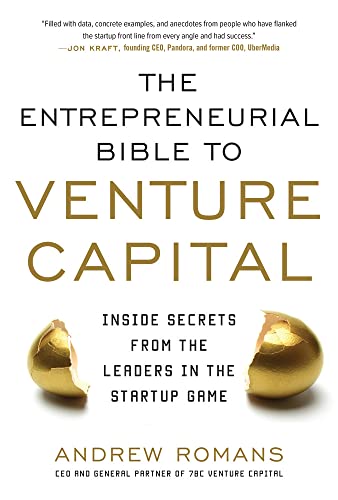
The Entrepreneurial Bible to Venture Capital: Inside Secrets from the Leaders in the Startup Game
Andrew Romans
4.2
40 leading venture capitalists come together to teach entrepreneurs how to succeed with their startup The Entrepreneurial Bible to Venture Capital is packed with invaluable advice about how to raise angel and venture capital funding, how to build value in a startup, and how to exit a company with maximum value for both founders and investors. It guides entrepreneurs through every step in an entrepreneurial venture from the legalities of raising initial capital to knowing when to change tactics.
Andrew Romans is the co-founder and general partner of Rubicon Venture Capital, a venture capital fund that invests in privately held technology companies and enables its investors to co-invest along side the fund on a deal-by-deal basis via innovative sidecar funds right up to IPO or M&A exit.
…
Cover unavailable
33
The Four Steps to the Epiphany: Successful Strategies for Products That Win
Steve Blank
4.2
The bestselling classic that launched 10,000 startups and new corporate ventures - The Four Steps to the Epiphany is one of the most influential and practical business books of all time. The Four Steps to the Epiphany launched the Lean Startup approach to new ventures. It was the first book to offer that startups are not smaller versions of large companies and that new ventures are different than existing ones.
Startups search for business models while existing companies execute them. The book offers the practical and proven four-step Customer Development process for search and offers insight into what makes some startups successful and leaves others selling off their furniture.
Rather than blindly execute a plan, The Four Steps helps uncover flaws in product and business plans and correct them before they become costly. Rapid iteration, customer feedback, testing your assumptions are all explained in this book.
Packed with concrete examples of what to do, how to do it and when
Too much (good) info but thankfully there's a summary in the Appendix. [source]
Antonio Eram
This book was recommended by Antonio when asked for titles he would recommend to young people interested in his career path. [source]
Craig Pearce
If you are reading to learn skills that can be implemented in your startup, I’d recommend The Lean Startup: How Today's Entrepreneurs Use Continuous Innovation to Create Radically Successful by Eric Reis and actually avoid its predecessor The Four Steps to the Epiphany: Successful Strategies for Products That Win by Steve Blank until later in your career. [source]
Cover unavailable
34
The Art of the Start 2.0: The Time-Tested, Battle-Hardened Guide for Anyone Starting Anything
Guy Kawasaki
4.2
A new product, a new service, a new company, a new division, a new organization, a new anything—where there’s a will, here’s the way. It begins with a dream that just won’t quit, the once-in-a-lifetime thunderbolt of pure inspiration, the obsession, the world-beater, the killer app, the next big thing. Everyone who wants to make the world a better place becomes possessed by a grand idea. But what does it take to turn your idea into action? Whether you are an entrepreneur, intrapreneur, or not-for-profit crusader, there’s no shortage of advice available on issues such as writing a business plan, recruiting, raising capital, and branding. In fact, there are so many books, articles, and Web sites that many startups get bogged down to the point of paralysis. Or else they focus on the wrong priorities and go broke before they discover their mistakes. In The Art of the Start, Guy Kawasaki brings two decades of experience as one of business’s most original and irreverent strategists to offer the essential guide for anyone starting anything, from a multinational corporation to a church group. At Apple in the 1980s, he helped lead one of the great companies of the century, turning ordinary consumers into evangelists. As founder and CEO of Garage Technology Ventures, a venture capital firm, he has field-tested his ideas with dozens of newly hatched companies. And as the author of bestselling business books and articles, he has advised thousands of people who are making their startup dreams real. From raising money to hiring the right people, from defining your positioning to creating a brand, from creating buzz to buzzing the competition, from managing a board to fostering a community, this book will guide you through an adventure that’s more art than science—the art of the start.
…
Recommended by Ev Williams and Deepak Hariharan.
Deepak Hariharan
Art of the Start by Guy Kawasaki was my bible when I started up. If you plan to become an entrepreneur – this is an absolute must-read. [source]
Cover unavailable
35
The Startup Game: Inside the Partnership between Venture Capitalists and Entrepreneurs
William H. Draper III, Eric Schmidt
4.2
Entrepreneurs drive the future, and the last several decades have been a thrilling ride of astounding, far-reaching innovation. Behind this transformative progress are also the venture capitalists - who are at once the investors, coaches and allies of the entrepreneurs. William H. Draper III knows this story first-hand, because as a venture capitalist, he helped write it. For more than 40 years, Bill Draper has worked with top entrepreneurs in fabled Silicon Valley, where today's vision is made into tomorrow's reality. The Startup Game is the first up-close look at how the relationship between venture capitalists and entrepreneurs is critical to enhancing the success of any economy.
From a venture capitalist who saw the potential of Skype, Apollo Computer, Hotmail, OpenTable, and many other companies, come firsthand stories of success. In these pages, Draper explores how to evaluate innovative ideas and the entrepreneurs behind those ideas, and he shares lessons from Yahoo, Zappos, Baidu, Tesla Motors, Activision, Measurex, and more. Also, in revealing his on-the-ground account of how Deng Xiaoping brought China roaring into the modern world and how Manmohan Singh unlocked the creative genius of Indian entrepreneurs, Draper stresses the essential value of farsighted political leadership in creating opportunity.
The author also discusses his efforts to bring best practices of the venture capitalist/entrepreneur partnership to the social sector.
Written in an engaging narrative, and incorporating many of the author's personal experiences, this book provides a much-needed look at how the world of venture capital and entrepreneurship works.
…
Cover unavailable
36
Venture Capitalists At Work: How VCs Identify And Build Billion Dollar Successes
Tarang Shah and Shital Shah
4.2
"This is probably the single most valuable resource for the entrepreneurs aspiring to build successful companies" Ron Conway, Special Adviser, SV Angel, and investor in Facebook, Google, Twitter, Foursquare, PayPal, Zappos "I highly recommend Venture Capitalists at Work. This book captures the personalities and approaches of a number of leading VC practitioners and displays the heart and soul of the venture capital process, by offering an exclusive window into the voice of the practitioners." Gus Tai, Trinity Ventures? "Venture Capitalists at Work is a foundational pillar in an entrepreneur's understanding and resources. This is a first in terms of the level of detail, quality of discussion, and value to the entrepreneur." George Zachary, Charles River Ventures and Investor in Twitter Venture Capitalists at Work: How VCs Identify and Build Billion-Dollar Successes offers unparalleled insights into the funding and management of companies like YouTube, Zappos, Twitter, Starent, Facebook, and Groupon. The venture capitalists profiled?among the best in the business?also reveal how they identify promising markets, products, and entrepreneurs. Author Tarang Shah, a venture capital?professional?himself, interviews rising VC stars, Internet and software investment pioneers, and venture investment thought leaders. You?ll learn firsthand what criteria venture capitalists use to make investments, how they structure deals, the many ways they help the companies they fund, avoidable mistakes they see all too often, the role of luck in a success, and why so many startups fail. Venture Capitalists at Work also contains interviews with those on the receiving end of venture money?entrepreneurs in high-profile startups that went on to achieve great success. Whether you?re an entrepreneur, an aspiring VC, an M&A professional, or an ambitious student, the knowledge you will gain from Venture Capitalists at Work could provide a significant shortcut to success. Other books in the Apress At Work Series: Coders at Work, Seibel, 978-1-4302-1948-4 CIOs at Work, Yourdon, 978-1-4302-3554-5 CTOs at Work, Donaldson, Seigel, & Donaldson, 978-1-4302-3593-4 Founders at Work, Livingston, 978-1-4302-1078-8 European Founders at Work, Santos, 978-1-4302-3906-2 Women Leaders at Work, Ghaffari, 978-1-4302-3729-7 Advertisers at Work, Tuten, 978-1-4302-3828-7 Gamers at Work, Ramsay. 978-1-4302-3351-0 What you?ll learn How venture capitalists identify promising markets, entrepreneurs, and companies What venture capitalists?are looking for in entrepreneurs and business plans How to build an ?A? team and a culture of success Successful relationship dynamics between entrepreneur and investors When to slow down, ramp up, and scale companies Knowing when to sell a business, keep growing, or shut it down Why startups fail Common entrepreneurial mistakes you can avoid Who this book is for
This book is a must-read for entrepreneurs and venture capital/private equity investors. It's also for venture capitalists and entrepreneurs in emerging markets who want to apply to homegrown ventures the Silicon Valley model of building billion-dollar startups. Corporate executives focused on innovation or mergers and acquisitions will find the book's insights priceless. Finally, business students and aspiring entrepreneurs will find this book a great reference guide and how-to manual for starting companies, building new products and services, and helping move the 21st century economy forward. Table of Contents Chapter 1: Roelof Botha, Sequoia Capital Chapter 2: Mike Maples, FLOODGATE Fund Chapter 3: George Zachary, Charles River Ventures Chapter 4: Sean Dalton, Highland Capital Partners Chapter 5: Alex Mehr, Zoosk Chapter 6: Howard Morgan, First Round Capital and Idealab Chapter 7: Tim Draper, DFJ Chapter 8: Osman Rashid, Chegg Chapter 9: Harry Weller, NEA Chapter 10: David Cowan, Bessemer Venture Partners Chapter 11: Michael Birch, Bebo and Birthday Alarm Chapter 12: Mitchell Kertzman, Hummer Winblad Venture Partners Chapter 13: Scott Sandell, NEA Chapter 14: Gus Tai, Trinity Ventures Chapter 15: Steven Dietz, GRP Partners Chapter 16: Paul Scanlan, MobiTV Chapter 17: Ann Winblad, Hummer Winblad Venture Partners Chapter 18: Jim Goetz, Sequoia Capital Chapter 19: Roger Lee, Battery Ventures Chapter 20: Ken Howery, Founders Fund Chapter 21: Alfred Lin, Sequoia Capital and Zappos Chapter 22: Kevin Hartz, Xoom and Eventbrite Chapter 23: Eric Hippeau, Lerer Ventures and SoftBank Capital Chapter 24: David Lee, SV Angels Chapter 25: Ted Alexander, Mission Ventures Chapter 26: Robert Kibble, Mission Ventures Chapter 27: Rajiv Laroia, Flarion Chapter 28: Jim Boettcher and Kevin McQuillan, Focus Ventures Chapter 29: Mike Hodges, ATA Ventures Chapter 30: Alan Patricof, Greycroft Partners Chapter 31: Ben Elowitz, Blue Nile and Wet Paint Chapter 32: Vish Mishra, Clearstone Venture Partners Chapter 33: Richard Wong, Accel Partners Chapter 34: Randy Komisar, Kleiner Perkins Caufield & Byers Chapter 35: Peter Wagner, Accel Partners
…
Cover unavailable
37
Raising Private Capital: Building Your Real Estate Empire Using Other People's Money
Matt Faircloth
4.2
This book is intended to be a roadmap for real estate investors who are looking to raise their game by injecting more private capital into their business. In the word of real estate, there is more than one way to obtain the money you need: Traditional lending may work for some investors, but going to a bank is simply not an option. Matt will provide the step by step process to acquiring, securing and protecting private money. This book will teach investors how to look into their current network for potential private money partners. It will also teach them how to provide a win-win proposition to money partners all while building the real estate investor's own business. Matt will discuss the specific roles in a deal: the person providing the deal and the person providing the cash and how they both benefit. The book will go into a deep discussion on how to work with your money partners and what types of deals will best benefit them based on their goals and the source of their capital.
…
Cover unavailable
38
The Launch Pad: Inside Y Combinator, Silicon Valley's Most Exclusive School for Startups
Randall Stross
4.2
Number of teams that applied to Y Combinator’s summer 2011 batch: 2,089Teams interviewed: 170
Minutes per interview: 10
Teams accepted and funded: 64
Months to build a viable startup: 3
Possibilities: BOUNDLESS
Investment firm Y Combinator is the most sought-after home for startups in Silicon Valley. Twice a year, it funds dozens of just-founded startups and provides three months of guidance from Paul Graham, YC’s impresario, and his partners, also entrepreneurs and mostly YC alumni. The list of YC-funded success stories includes Dropbox (now valued at $5 billion) and Airbnb ($1.3 billion).
Receiving an offer from YC creates the opportunity of a lifetime — it’s like American Idol for budding entrepreneurs.
Acclaimed journalist Randall Stross was granted unprecedented access to Y Combinator’s summer 2011 batch of young companies, offering a unique inside tour of the world of software startups. Most of the founders were male programmers in their mid-twenties or younger. Over the course of the summer, they scrambled to heed Graham’s seemingly simple advice: make something people want.
We watch the founders work round-the-clock, developing and retooling products as diverse as a Web site that can teach anyone programming, to a Wikipedia-like site for rap lyrics, to software written by a pair of attorneys who seek to “make attorneys obsolete.”
Founders are guided by Graham’s notoriously direct form of tough-love feedback. “Here, we don’t fire you,” he says. “The market fires you. If you’re sucking, I’m not going to run along behind you, saying, ‘You’re sucking, you’re sucking, c’mon, stop sucking.’” Some teams would even abandon their initial idea midsummer and scramble to begin anew.
The program culminated in “Demo Day,” when founders pitched their startup to several hundred top angel investors and venture capitalists. A lucky few attracted capital that gave their startup a valuation of multiple millions of dollars. Others went back to the drawing board.
This is the definitive story of a seismic shift that’s occurred in the business world, in which coding skill trumps employment experience, pairs of undergraduates confidently take on Goliaths, tiny startups working out of an apartment scale fast, and investors fall in love.
…
Recommended by Garry Tan and Scott Johnson.
Scott Johnson
If you're interested in high tech as a career path then I'd recommend a series of case studies around the development of products / founding of companies. Here are four examples: Soul of a New Machine by Tracy Kidder (1981) Startup: A Silicon Valley Adventure by Jerry Kaplan (1996) Show Stopper by G Pascal Zachary (1994) The Launch Pad: Inside Y Combinator by Randall Stross (2013) The Everything Store by Brad Stone (2014) These books all tell the tale of starting a company or building a product and despite covering a time span of 30+ years and multiple generations of technology the remarkable thing is just how very, very similar they are. While the technology changes, the process of creating something from whole cloth doesn't. That's a great lesson for people to learn. [source]
Cover unavailable
39
Masters of Corporate Venture Capital: Collective Wisdom from 50 Vcs Best Practices for Corporate Venturing How to Access Startup Innovation & How to Get Funded
Andrew Romans, Ty Nowicki, et al.
4.2
Andrew Romans captured wisdom from interviews with 100+ Corporate Venture Capitalists (CVCs), independent VCs, CEOs of startups, bankers and lawyers to write the definitive book on the topic of CVC. Masters of Corporate Venture Capital is packed with invaluable advice about how to best raise capital from CVCs, unlock synergies of partnering startups with large corporations for rapid international growth and avoid potential disasters and other dangers related to CVC. More than 20% of all Venture Capital financings include at least one CVC and thus startups need to understand this previously misunderstood area of funding. Corporations need to establish their own CVC arms to access external innovation and learn how to bring this inside via VC investing, partnerships and M&A. We work in a very complex ecosystem and this book captures stories that bring the complexity to life with simple lessons. This book is for: -Entrepreneurs -VCs -Angel investors -Family offices -CVCs -Corporates thinking about launching a CVC -Anyone advising startups.
Master the fundamentals, hone your business instincts, and save a fortune in tuition.
The consensus is clear: MBA programs are a waste of time and money. Even the elite schools offer outdated assembly-line educations about profit-and-loss statements and PowerPoint presentations. After two years poring over sanitized case studies, students are shuffled off into middle management to find out how business really works.
Josh Kaufman has made a business out of distilling the core principles of business and delivering them quickly and concisely to people at all stages of their careers. His blog has introduced hundreds of thousands of readers to the best business books and most powerful business concepts of all time. In The Personal MBA, he shares the essentials of sales, marketing, negotiation, strategy, and much more.
True leaders aren't made by business schools-they make themselves, seeking out the knowledge, skills, and experiences they need to succeed. Read this book and in one week you will learn the principles it takes most people a lifetime to master.
…
Recommended by Brian Burkhart, Ola Olusoga, and 1 others.
Brian Burkhart
It’s jam-packed with little digestible bites of wisdom—from finance to marketing to organizational development. It’s the guru bible of business. [source]
Ola Olusoga
For business, I've read Influence by Robert Cialdini 3 times, and Traction by Gabriel Weinberg twice, so if number of times read indicates favor, then those are it. There are a whole bunch of others, like The Personal MBA by Josh Kaufman, Confession of an Advertising Man by David Ogilvy, The 4 Hour Work Week by Tim Ferriss, and Running Lean by Ash Maurya, that I've also enjoyed and recommend to people. [source]
Cover unavailable
41
That Will Never Work: The Birth of Netflix and the Amazing Life of an Idea
Marc Randolph
4.2
In the tradition of Phil Knight's Shoe Dog comes the incredible untold story of how Netflix went from concept to company-all revealed by co-founder and first CEO Marc Randolph. Once upon a time, brick-and-mortar video stores were king. Late fees were ubiquitous, video-streaming unheard was of, and widespread DVD adoption seemed about as imminent as flying cars. Indeed, these were the widely accepted laws of the land in 1997, when Marc Randolph had an idea. It was a simple thought-leveraging the internet to rent movies-and was just one of many more and far worse proposals, like personalized baseball bats and a shampoo delivery service, that Randolph would pitch to his business partner, Reed Hastings, on their commute to work each morning.
But Hastings was intrigued, and the pair-with Hastings as the primary investor and Randolph as the CEO-founded a company. Now with over 150 million subscribers, Netflix's triumph feels inevitable, but the twenty first century's most disruptive start up began with few believers and calamity at every turn. From having to pitch his own mother on being an early investor, to the motel conference room that served as a first office, to server crashes on launch day, to the now-infamous meeting when Netflix brass pitched Blockbuster to acquire them, Marc Randolph's transformational journey exemplifies how anyone with grit, gut instincts and determination can change the world-even with an idea that many think will never work.
What emerges,though, isn't just the inside story of one of the world's most iconic companies. Full of counter-intuitive concepts and written in binge-worthy prose, it answers some of our most fundamental questions about taking that leap of faith in business or in life: How do you begin? How do you weather disappointment and failure? How do you deal with success? What even is success?
From idea generation to team building to knowing when it's time to let go, That Will Never Work is not only the ultimate follow-your-dreams parable, but also one of the most dramatic and insightful entrepreneurial stories of our time.
…
Recommended by Dharmesh Shah and The CEO Library Community (through anonymous form).
Really enjoying the book "That Will Never Work" from one of the founders of Netflix. Really insightful and interesting read on the life of an idea. By @mbrandolph Recommended: https://t.co/KB4xoquzBd https://t.co/mPBIMARFNo [source]
The CEO Library Community (through anonymous form)
One of the best 3 books I've read in 2019 [source]
Cover unavailable
42
Built to Sell: Creating a Business That Can Thrive Without You
According to John Warrillow, the number one mistake entrepreneurs make is to build a business that relies too heavily on them. Thus, when the time comes to sell, buyers aren't confident that the company-even if it's profitable-can stand on its own. To illustrate this, Warrillow introduces us to a fictional small business owner named Alex who is struggling to sell his advertising agency. Alex turns to Ted, an entrepreneur and old family friend, who encourages Alex to pursue three criteria to make his business sellable: • Teachable: focus on products and services that you can teach employees to deliver. • Valuable: avoid price wars by specialising in doing one thing better than anyone else. • Repeatable: generate recurring revenue by engineering products that customers have to repurchase often.
…
Recommended by Turgay Birand.
Turgay Birand
"Built to Sell" is great for entrepreneurs to start thinking about how to have a business that can run without them from the get go, which should be the aim! [source]
Cover unavailable
43
Trillion Dollar Coach: The Leadership Playbook of Silicon Valley's Bill Campbell
The team behind How Google Works returns with management lessons from legendary coach and business executive, Bill Campbell, whose mentoring of some of our most successful modern entrepreneurs has helped create well over a trillion dollars in market value.
Bill Campbell played an instrumental role in the growth of several prominent companies, such as Google, Apple, and Intuit, fostering deep relationships with Silicon Valley visionaries, including Steve Jobs, Larry Page, and Eric Schmidt. In addition, this business genius mentored dozens of other important leaders on both coasts, from entrepreneurs to venture capitalists to educators to football players, leaving behind a legacy of growing companies, successful people, respect, friendship, and love after his death in 2016.
Leaders at Google for over a decade, Eric Schmidt, Jonathan Rosenberg, and Alan Eagle experienced firsthand how the man fondly known as Coach Bill built trusting relationships, fostered personal growth—even in those at the pinnacle of their careers—inspired courage, and identified and resolved simmering tensions that inevitably arise in fast-moving environments. To honor their mentor and inspire and teach future generations, they have codified his wisdom in this essential guide.
Based on interviews with over eighty people who knew and loved Bill Campbell, Trillion Dollar Coach explains the Coach’s principles and illustrates them with stories from the many great people and companies with which he worked. The result is a blueprint for forward-thinking business leaders and managers that will help them create higher performing and faster moving cultures, teams, and companies.
…
Recommended by Sheryl Sandberg, Tim Cook, Sundar Pichai, and 5 others.
Sheryl Sandberg
COO/Facebook
Bill shared his wisdom generously, expecting nothing back but the joy he got from teaching others. I was privileged to have him as my coach for several years. Many times since then, when asked for advice by others, I think of Bill and try to live up to the example he set. [source]
Tim Cook
CEO/Apple
Bill's passion for innovation and teamwork was a gift to Apple and the world. Trillion Dollar Coach has captured his tireless spirit so future generations can learn from one of our industry's greatest leaders. [source]
Whenever I saw Bill, he gave me great perspective about what really matters. At the end of the day, it's the people in your life. Bill had such strong principles around community and how to bring people together. We used those principles - detailed in Trillion Dollar Coach - to form the foundation of Google's leadership training, so all of our leaders can continue to learn from Bill. [source]
Cover unavailable
44
Startup Communities: Building an Entrepreneurial Ecosystem in Your City
Brad Feld
4.2
An essential guide to building supportive entrepreneurial communities"Startup communities" are popping up everywhere, from cities like Boulder to Boston and even in countries such as Iceland. These types of entrepreneurial ecosystems are driving innovation and small business energy. "Startup Communities" documents the buzz, strategy, long-term perspective, and dynamics of building communities of entrepreneurs who can feed off of each other's talent, creativity, and support.
Based on more than twenty years of Boulder-based entrepreneur turned-venture capitalist Brad Feld's experience in the field?as well as contributions from other innovative startup communities?this reliable resource skillfully explores what it takes to create an entrepreneurial community in any city, at any time. Along the way, it offers valuable insights into increasing the breadth and depth of the entrepreneurial ecosystem by multiplying connections among entrepreneurs and mentors, improving access to entrepreneurial education, and much more.Details the four critical principles needed to form a sustainable startup communityPerfect for entrepreneurs and venture capitalists seeking fresh ideas and new opportunitiesWritten by Brad Feld, a thought-leader in this field who has been an early-stage investor and successful entrepreneur for more than twenty years
Engaging and informative, this practical guide not only shows you how startup communities work, but it also shows you how to make them work anywhere in the world.
Traction: How Any Startup Can Achieve Explosive Customer Growth
Gabriel Weinberg, Justin Mares
4.2
Two successful startup founders offer a comprehensive overview of the various ways startups can achieve strong, sustainable growth, and a guide to choosing the ones that will make the differencce.
Why do so many startups fail? According to entrepreneurs Gabriel Weinberg and Justin Mares, most failed startups don’t get off the ground not because of a bad product, but because they don’t have enough customers. They make the fatal mistake of putting all their effort into perfecting their product at the cost of reaching out to potential users. Instead, they should be putting half their resources into getting traction.
TRACTION is the essential guide for any startup looking to stay ahead of the curve and start building a user base early in the game. The book offers no one-size-fits-all solution: every startup is unique, so no single method is guaranteed to generate traction. Instead, the authors identify nineteen different traction channels from viral marketing to trade shows, offer insights on how to exploit each one to its fullest potential, and provide a framework to test various channels and identify the best one for any startup.
Drawing on advice from more than 40 successful startup founders and marketers, from Wikipedia’s Jimmy Wales to American Apparel’s Ryan Holiday, TRACTION is a comprehensive textbook for marketing your way to growth.
…
Recommended by Nir Eyal, Cory Zue, Dave Child, and 13 others.
Cory Zue
The business book I find myself recommending the most often is Traction, which is an excellent practical and high-level take on strategies for getting traction for your products. I found it particularly helpful because it prevents a framework and strategies you can actually execute and follow yourself instead of just pontificating about ideas. [source]
Dave Child
Recently, I've been reading Traction by Gabriel Weinberg. Readable.io has been growing well, and we've been exploring new marketing avenues and ideas. Traction is a really useful book to read in that regard - it explores a variety of different approaches to marketing, each paired with some direct experiences from someone who has achieved success with that approach. We're a small team, with limited resources, and the approach of Traction is working well for us so far. Seeing ideas explored and balanced with some real-world experiences is a nice way to get yourself to think about marketing possibilities, and less dry than some of the other books I've tried. [source]
Gunhee Park
This book lays out a framework to help any startup brainstorm ways to gain more customer traction. [source]
Cover unavailable
46
Cryptoassets: The Innovative Investor's Guide to Blockchain Assets
Chris Burniske, Jack Tatar
4.2
The innovative investor's guide to an entirely new asset class--from two experts on the cutting edge
One of the fastest growing investment opportunities in the world today, blockchain assets such as bitcoin and other cryptocurrencies are changing the way investors think, use, and grow their money. This clear, concise, and accessible guide from two industry experts is the first book of its kind to explain this brave new world to investors who want to explore the potential of blockchain assets in their portfolios.
It gives readers an understanding of how this new asset class has evolved over the last decade, as well as an actionable framework with which to evaluate new blockchain assets and position investment portfolios in the coming wave of blockchain asset innovation. Investors will learn how to securitize these assets in familiar investment vehicles and leverage multiple platforms to achieve their financial goals. This is the future of money.
…
Recommended by Marvin Liao and 1 others.
Marvin Liao
Partner/500 Startups
I tend to jump from book to book and may switch if I am interested in some new topic. This is a pleasure for me (which I also do benefit work wise from too). It’s quite a random list because I have eclectic interests (or just scatterbrained most likely) on tech business, AI, general global economy, geopolitics, rising Biotech economy & history. I'm basically 15% to 50% into all these books. [source]
Cover unavailable
47
The Pumpkin Plan: A Simple Strategy to Grow a Remarkable Business in Any Field
Each year Americans start one million new businesses, nearly 80 percent of which fail within the first five years. Under such pressure to stay alive—let alone grow—it’s easy for entrepreneurs to get caught up in a never-ending cycle of “sell it—do it, sell it—do it” that leaves them exhausted, frustrated, and unable to get ahead no matter how hard they try.
This is the exact situation Mike Michalowicz found himself in when he was trying to grow his first company. Although it was making steady money, there was never very much left over and he was chasing customers left and right, putting in twenty-eight-hour days, eight days a week. The punishing grind never let up. His company was alive but stunted, and he was barely breathing. That’s when he discovered an unlikely source of inspiration—pumpkin farmers.
After reading an article about a local farmer who had dedicated his life to growing giant pumpkins, Michalowicz realized the same process could apply to growing a business. He tested the Pumpkin Plan on his own company and transformed it into a remarkable, multimillion-dollar industry leader. First he did it for himself. Then for others. And now you. So what is the Pumpkin Plan?
Plant the right seeds: Don’t waste time doing a bunch of different things just to please your customers. Instead, identify the thing you do better than anyone else and focus all of your attention, money, and time on figuring out how to grow your company doing it. Weed out the losers: In a pumpkin patch small, rotten pumpkins stunt the growth of the robust, healthy ones. The same is true of customers. Figure out which customers add the most value and provide the best opportunities for sustained growth. Then ditch the worst of the worst. Nurture the winners: Once you figure out who your best customers are, blow their minds with care. Discover their unfulfilled needs, innovate to make their wishes come true, and overdeliver on every single promise.
Full of stories of other successful entrepreneurs, The Pumpkin Plan guides you through unconventional strategies to help you build a truly profitable blue-ribbon company that is the best in its field.
Here are some that might help: (...) - The Pumpkin Plan for differentiation [source]
Cover unavailable
48
In the Plex: How Google Thinks, Works, and Shapes Our Lives
Steven Levy
4.2
Written with full cooperation from top management, including cofounders Sergey Brin and Larry Page, this is the inside story behind Google, the most successful and most admired technology company of our time, told by one of our best technology writers.
Few companies in history have ever been as successful and as admired as Google, the company that has transformed the Internet and become an indispensable part of our lives. How has Google done it? Veteran technology reporter Steven Levy was granted unprecedented access to the company, and in this revelatory book he takes readers inside Google headquarters—the Googleplex—to show how Google works.
While they were still students at Stanford, Google cofounders Larry Page and Sergey Brin revolutionized Internet search. They followed this brilliant innovation with another, as two of Google’s earliest employees found a way to do what no one else had: make billions of dollars from Internet advertising. With this cash cow, Google was able to expand dramatically and take on other transformative projects: more efficient data centers, open-source cell phones, free Internet video (YouTube), cloud computing, digitizing books, and much more.
The key to Google’s success in all these businesses, Levy reveals, is its engineering mind-set and adoption of such Internet values as speed, openness, experimentation, and risk taking. After its unapologetically elitist approach to hiring, Google pampers its engineers—free food and dry cleaning, on-site doctors and masseuses—and gives them all the resources they need to succeed. Even today, with a workforce of more than 23,000, Larry Page signs off on every hire.
But has Google lost its innovative edge? With its newest initiative, social networking, Google is chasing a successful competitor for the first time. Some employees are leaving the company for smaller, nimbler start-ups. Can the company that famously decided not to be evil still compete?
No other book has ever turned Google inside out as Levy does with In the Plex.
I’m currently reading “In the Plex: How Google Thinks, Works and Shapes Our Life" and am excited on gaining more insight into how google is changing the world and hopefully to get some valuable understanding I can use to maximize business decisions and read future trends while assessing investment opportunities for my company, ABM Investments. [source]
Bill Slawski
In The Plex is a great introduction to Google, and the many who work there. I knew many by the patents they file, so it was good to learn more about them as people. Some good insights to some algorithms in the book, too. https://t.co/TVz7GsD8nX [source]
Cover unavailable
49
Venture Capital Strategy: How to Think Like a Venture Capitalist
Patrick Vernon
4.2
Cover unavailable
50
She Means Business: Turn Your Ideas into Reality and Become a Wildly Successful Entrepreneur
Carrie Green
4.2
Are you ready to turn your ideas into reality and build a wildly successful business?
There has never been a better time to say yes! With a computer and an Internet connection you can get your ideas, messages, and business out there like never before and create so much success.In this book, Carrie Greenshows you how.
Carrie started her first online business at the age of 20—she knows what it’s like to be an ambitious and creative woman with big dreams and huge determination . . . but she also knows the challenges of starting and running a business, including the fears, overwhelm, confusion, and blocks that entrepreneurs face. Based on her personal, tried-and-tested experience, she offers valuable guidance and powerful exercises to help you:
Get clear on your business vision Move past the fears and doubts that can get in the way Understand your audience, so you can truly connect with them Create your brand and build a tribe of raving fans, subscribers, and customers Manage your time, maintain focus, and keep going in the right direction Condition yourself for success . . . and so much more! If you’re a creative and ambitious female entrepreneur, or are contemplating the entrepreneurial path, this book will provide the honest, realistic, and practical tools you need to follow your heart and bring your vision to life.
…
Recommended by Stacey Minton.
Stacey Minton
I would say for sure, She Means Business. I found it very empowering and encouraging and it had a ton of fantastic ideas. [source]
Cover unavailable
51
Running Lean: Iterate from Plan A to a Plan That Works
Ash Maurya
4.2
We live in an age of unparalleled opportunity for innovation. We’re building more products than ever before, but most of them fail—not because we can’t complete what we set out to build, but because we waste time, money, and effort building the wrong product.
What we need is a systematic process for quickly vetting product ideas and raising our odds of success. That’s the promise of Running Lean.
In this inspiring book, Ash Maurya takes you through an exacting strategy for achieving a "product/market fit" for your fledgling venture, based on his own experience in building a wide array of products from high-tech to no-tech. Throughout, he builds on the ideas and concepts of several innovative methodologies, including the Lean Startup, Customer Development, and bootstrapping.
Running Lean is an ideal tool for business managers, CEOs, small business owners, developers and programmers, and anyone who’s interested in starting a business project.
Find a problem worth solving, then define a solution Engage your customers throughout the development cycle Continually test your product with smaller, faster iterations Build a feature, measure customer response, and verify/refute the idea Know when to "pivot" by changing your plan’s course Maximize your efforts for speed, learning, and focus Learn the ideal time to raise your "big round" of funding
Get on track with The Lean Series Presented by Eric Ries—bestselling author of The Lean Startup: How Today’s Entrepreneurs Use Continuous Innovation to Create Radically Successful Businesses—The Lean Series gives you solid footing in a proven methodology that will help your business succeed.
…
Recommended by Ash Maurya, Garrett Moon, and Ola Olusoga.
Garrett Moon
Running Lean by Ash Maurya: Learn to build products the lean way! [source]
Ola Olusoga
For business, I've read Influence by Robert Cialdini 3 times, and Traction by Gabriel Weinberg twice, so if number of times read indicates favor, then those are it. There are a whole bunch of others, like The Personal MBA by Josh Kaufman, Confession of an Advertising Man by David Ogilvy, The 4 Hour Work Week by Tim Ferriss, and Running Lean by Ash Maurya, that I've also enjoyed and recommend to people. [source]
Cover unavailable
52
Private Equity Investing in Direct Selling: Identifying Risks & Rewards
Brett A Blake
4.2
Cover unavailable
53
The Monk and the Riddle: The Education of a Silicon Valley Entrepreneur
Randy Komisar
4.2
This book describes how one Silicon Valley insider has blazed a path of professional - and personal - success playing the game by his own rules. Silicon Valley is filled with garage-to-riches stories and hot young entrepreneurs with big ideas. Yet even in this place where the exceptional is common, Randy Komisar is a breed apart. Currently a "Virtual CEO" who provides "leadership on demand" for several renowned companies, Komisar was recently described by the "Washington Post" as a "combined professional mentor, minister without portfolio, in-your-face investor, trouble-shooter and door opener." But even more interesting than what he does is how - and why - he does it. Komisar has found a way to turn an ambitious and challenging work life into his life's work."The Monk and the Riddle" is unlike any other business book you've read. Transcending the typical "leadership book" model of lists and frameworks on how to succeed in business, "The Monk and the Riddle" is instead a lively and humorous narrative about the education of a unique Valley insider. It unfolds over the course of an ongoing dialogue between Komisar and would-be entrepreneurs, "Lenny and Allison," and is at once a portal into the inner workings of Silicon Valley - from how startups get launched to how venture capitalists do their deals to how plans get prepared and pitched - and a deeply personal account of how one mover and shaker found fulfillment, not in work's rewards but in work itself.As the narrative follows Komisar through meetings with venture capitalists and eager entrepreneurs, and as his conversations with Lenny evolve toward a resolution, "The Monk and the Riddle" imparts invaluable lessons about the differences between leadership and management and passion and drive, and about the meaning of professional and personal success. "When all is said and done," writes Komisar, "the journey is the reward."
…
Recommended by Ev Williams, Simon Sinek, Marvin Liao, and 1 others.
Marvin Liao
Partner/500 Startups
The Joy of Not Working (Zelinkski), Flash Foresight (Burrus), The Art of Worldly Wisdom (Gracian), Sapiens (Yuval), The End of Jobs (Pearson), Deep Work (Newport), Sovereign Individual (Davidson), The Fourth Economy (Davison) & The Monk & the Riddle (Komisar). Every single one of these books completely changed how I looked at everything in the world & literally pushed my life in a new direction. They were Paradigm Shifting as they say. (hate that word but it really was a Paradigm Shift for me). [source]
Joel Gascoigne
I first heard the term 'deferred life plan' in this fantastic book by Randy Komisar. It has been especially relevant for me, since it is a story about a silicon valley entrepreneur and teaches the idea that there are many things more important than money. The book poses the question "what would you be willing to do for the rest of your life?" and persuasively argues that if you will do that, the money will follow. [source]
Cover unavailable
54
Leading: Learning from Life and My Years at Manchester United
Alex Ferguson
4.1
From the winningest soccer coach ever, best known for 27 triumphant years with Manchester United, comes the book that decodes the key tools he used to deliver sustained success on and off the field.
After an astonishing career-first in Scotland, and then over 27 years with Manchester United Football Club, Sir Alex Ferguson analyzes the pivotal leadership decisions of his 38 years as a manager and, with his friend and collaborator Sir Michael Moritz, draws out lessons that anyone can use in business and life to generate long-term transformational success.
From hiring practices to firing decisions, from dealing with transition to teamwork, from mastering the boardroom to responding to failure and adversity, Leading is as inspiring as it is practical, and a go-to reference for any leader in business, sports, and life.
…
Recommended by Daniel Ek.
Daniel Ek
I struggled with whether or not to include this one, as I’m a Gooner (that means Arsenal fan, by the way), but the fact is that the author grew Manchester United into one of the best known brands today, and that’s what fascinates me about him. [source]
Cover unavailable
55
The Four: The Hidden DNA of Amazon, Apple, Facebook, and Google
Amazon, Apple, Facebook, and Google are the four most influential companies on the planet. Just about everyone thinks they know how they got there. Just about everyone is wrong.
For all that's been written about the Four over the last two decades, no one has captured their power and staggering success as insightfully as Scott Galloway.
Instead of buying the myths these compa-nies broadcast, Galloway asks fundamental questions. How did the Four infiltrate our lives so completely that they're almost impossible to avoid (or boycott)? Why does the stock market forgive them for sins that would destroy other firms? And as they race to become the world's first trillion-dollar company, can anyone chal-lenge them?
In the same irreverent style that has made him one of the world's most celebrated business professors, Galloway deconstructs the strategies of the Four that lurk beneath their shiny veneers. He shows how they manipulate the fundamental emotional needs that have driven us since our ancestors lived in caves, at a speed and scope others can't match. And he reveals how you can apply the lessons of their ascent to your own business or career.
Whether you want to compete with them, do business with them, or simply live in the world they dominate, you need to understand the Four.
…
Recommended by Angela Pham, Cat Williams-Treloar, Craig Pearce, and 1 others.
Angela Pham
I’m in the middle of The Four, which takes an awestruck-but-critical look at the four largest tech companies. [source]
Cat Williams-Treloar
Scott Galloway "The four" - because that's where the Marketing world is. I like the book for its honesty. [source]
Craig Pearce
I am currently reading The Four: The Hidden DNA of Amazon, Apple, Facebook, and Google. I was introduced to the author, Scott Galloway during his appearance on the aforementioned Recode Decode podcast, specifically episode released on September 14. His opinion and thoughts on the big 4 (Apple, Amazon, Facebook and Google) lead me to research him. I put a hold on his book from my local library and waited a few weeks. A great thing about this book is its recency, for example, it includes Amazon’s recent acquisition of WholeFoods. So far, it has covered, in entertaining detail, Amazon and Apple. The author writes with great knowledge, mixed with the right amount of wit. The author argues that Apple is sex, Google is God, Facebook is love and Amazon is our gut. By aligning with these roles in our lives, they have become wildly successful. I hope to hear an expansion of his positions he discussed on the podcast, and hope to apply some of strategies into my own startup. [source]
Cover unavailable
56
King of Capital: The Remarkable Rise, Fall, and Rise Again of Steve Schwarzman and Blackstone
David Carey, John E. Morris
4.1
Strippers and Flippers . . . or a New Positive Force Helping to Drive the Economy . . .
The untold story of Steve Schwarzman and Blackstone, the financier and his financial powerhouse that avoided the self-destructive tendencies of Wall Street. David Carey and John Morris show how Blackstone (and other private equity firms) transformed themselves from gamblers, hostile-takeover artists, and ‘barbarians at the gate’ into disciplined, risk-conscious investors. The financial establishment—banks and investment bankers such as Citigroup, Bear Stearns, Lehman, UBS, Goldman Sachs, Merrill Lynch, Morgan Stanley—were the cowboys, recklessly assuming risks, leveraging up to astronomical levels and driving the economy to the brink of disaster. Blackstone is now ready to break out once again since it is sitting on billions of dollars that can be invested at a time when the market is starved for capital.
The story of a financial revolution—the greatest untold success story on Wall Street: Not only have Blackstone and a small coterie of competitors wrested control of corporations around the globe, but they have emerged as a major force on Wall Street, challenging the likes of Goldman Sachs and Morgan Stanley for dominance. Great human interest story: How Blackstone went from two guys and a secretary to being one of Wall Street’s most powerful institutions, far outgrowing its much older rival KKR; and how Steve Schwarzman, with a pay packet one year of $398 million and $684 million from the Blackstone IPO, came to epitomize the spectacular new financial fortunes amassed in the 2000s. Controversial: Analyzes the controversies surrounding Blackstone and whether it and other private equity firms suck the lifeblood out of companies to enrich themselves—or whether they are a force that helps make the companies they own stronger and thereby better competitors. The story by two insiders with access: Insightful and hard-hitting, filled with never-before-revealed details about the workings of a heretofore secretive company that was the personal fiefdom of Schwarzman and Peter Peterson. Forward-looking: How Blackstone and private equity will drive the economy and provide a model for how financing will work.
…
Recommended by Bogdan Iordache.
Bogdan Iordache
There are quite a few good business books on technology, and I'll list below some I find to be a good starting point. Personally, I like biographies a lot and I mostly read biographies of dead people, because those are the most honest ones. So because the computer age is still very young, there won't be a lot of biographies in my list. [source]
Cover unavailable
57
Venture Deals, 4th Edition: Be Smarter than Your Lawyer and Venture Capitalist
Brad Feld
4.1
Cover unavailable
58
The Fundraising Rules
Mark Peter Davis
4.1
Cover unavailable
59
Meant for More: The Proven Formula to Turn Your Knowledge Into Profits
Lisa Sasevich
4.1
An award-winning entrepreneur and business coach outlines an easy-to-follow formula that helps you own your unique value, make more money, have more impact, and get more out of life--all without being pushy or sales-y.
Meant for More is a How to Win Friends and Influence People for the modern age. It shows you how to stand out in an increasingly noisy world by simply offering your unique skills and talents and helping others do the same. It offers tangible skills to use in all areas of your life, including work, to increase your success and do good while you're at it. It speaks to people looking to leave the 9-to-5 for more freedom and fulfillment; stay-at-home moms going back to work; young Boomers worried they're too senior (and expensive) to find new jobs; idealistic Gen Xers and Millennials unwilling to toe the company line; and experts in any field who want to cash in on their expertise while making a difference. In Meant for More, an award-winning entrepreneur and business coach outlines the formula for getting the "more" you've been longing for: a proven system to sell yourself and your one-of-a-kind gifts to the people you were meant to help and reap the rewards that come when you stop giving away your gifts for free. The Meant for More Formula helps you upgrade your mind-set, unwrap your unique gifts, claim your value, and make irresistible offers so you can get what you're worth and make the difference you're here to make--in a way that isn't remotely pushy or sales-y. We all long for more: More impact. More success. More fulfillment. More abundance. More freedom. More joy. But it's not necessarily easy to fulfill this longing. We all know someone who clearly has so much to offer the world but who holds back out of fear--fear of failure, or of success; fear of putting herself "out there"; fear of being perceived as pushy or full of himself. Maybe that person is you.
…
Cover unavailable
60
The Innovation Blind Spot: Why We Back the Wrong Ideas And What to Do about It
Ross Baird, Steve Case
4.1
Our innovation economy is broken. But there's good news: The ideas that will solve our problems are hiding in plain sight.
While big companies in the American economy have never been more successful, entrepreneurial activity is near a 30-year low. More businesses are dying than starting every day. Investors continue to dump billions of dollars into photo-sharing apps and food-delivery services, solving problems for only a wealthy sliver of the world's population, while challenges in health, food security, and education grow more serious.
In The Innovation Blind Spot, entrepreneur and venture capitalist Ross Baird argues that the innovations that truly matter don't see the light of day--for reasons entirely of our own making. A handful of people in a handful of cities are deciding, behind closed doors, which entrepreneurs get a shot to succeed. And most investors are what Baird calls "two-pocket thinkers"--artificially separating their charitable work from their day job of making a profit.
The resulting system creates rising income inequality, stifled entrepreneurial ambition, social distrust, and political uncertainty. Our innovation problem makes all our other problems harder to solve. In this book, Baird demonstrates how and where to find better ideas by lifting up people, places, and industries that are often overlooked. What's more, Baird ultimately outlines how to create long-term success through "one-pocket thinking"--eliminating the blind spot that separates "what we do for a living" and "what we really care about."
…
Recommended by Victor Asemota.
Victor Asemota
I honestly think most US VC should read @rossbaird’s book on “Innovation Blindspots”. This was a great response to another tweet below. If it is just about picking then ML will make VC obsolete quickly. https://t.co/P1iZ381NO2 [source]
Cover unavailable
61
The Power of Broke: How Empty Pockets, a Tight Budget, and a Hunger for Success Can Become Your Greatest Competitive Advantage
Daymond John, Daniel Paisner
4.1
Daymond John has been practicing the power of broke ever since he started selling his home-sewn t-shirts on the streets of Queens. With no funding and a $40 budget, Daymond had to come up with out-of-the box ways to promote his products. Luckily, desperation breeds innovation, and so he hatched an idea for a creative campaign that eventually launched the FUBU brand into a $6 billion dollar global phenomenon. But it might not have happened if he hadn’t started out broke - with nothing but a heart full of hope and a ferocious drive to succeed by any means possible.
Here, the FUBU founder and star of ABC’s Shark Tank shows that, far from being a liability, broke can actually be your greatest competitive advantage as an entrepreneur. Why? Because starting a business from broke forces you to think more creatively. It forces you to use your resources more efficiently. It forces you to connect with your customers more authentically, and market your ideas more imaginatively. It forces you to be true to yourself, stay laser focused on your goals, and come up with those innovative solutions required to make a meaningful mark.
Drawing his own experiences as an entrepreneur and branding consultant, peeks behind-the scenes from the set of Shark Tank, and stories of dozens of other entrepreneurs who have hustled their way to wealth, John shows how we can all leverage the power of broke to phenomenal success. You’ll meet:
· Steve Aoki, the electronic dance music (EDM) deejay who managed to parlay a series of $100 gigs into becoming a global superstar who has redefined the music industry · Gigi Butler, a cleaning lady from Nashville who built cupcake empire on the back of a family recipe, her maxed out credit cards, and a heaping dose of faith · 11-year old Shark Tank guest Mo Bridges who stitched together a winning clothing line with just his grandma’s sewing machine, a stash of loose fabric, and his unique sartorial flair
When your back is up against the wall, your bank account is empty, and creativity and passion are the only resources you can afford, success is your only option. Here you’ll learn how to tap into that Power of Broke to scrape, hustle, and dream your way to the top.
…
Recommended by Daymond John and Sujan Patel.
Sujan Patel
The Power of Broke is for anyone looking to crush those excuses for whatever is holding him or her back from success. Bootstrapping your way to success can be a viable and sustainable way to grow your empire. Author (and Shark Tank entreprepreneur) Daymond John built his own fashion label starting with home-sewn clothes and almost no money; he turned around his "broke" status with pure innovation. The book also explores how other everyday people took a similar approach. One entrepreneur, for instance, started a million-dollar cupcake business with the $33 balance in her checking account. [source]
Cover unavailable
62
The Masters of Private Equity and Venture Capital: Management Lessons from the Pioneers of Private Investing
Robert Finkel
4.1
Ten Leading private investors share their secrets to maximum profitability
In The Masters of Private Equity and Venture Capital, the pioneers of the industry share the investing and management wisdom they have gained by investing in and transforming their portfolio companies.
Based on original interviews conducted by the authors, this book is filled with colorful stories on the subjects that most matter to the high-level investor, such as selecting and working with management, pioneering new markets, adding value through operational improvements, applying private equity principles to non-profits, and much more.
…
Cover unavailable
63
#GIRLBOSS
Sophia Amoruso
4.1
In the New York Times bestseller that the Washington Post called “Lean In for misfits,” Sophia Amoruso shares how she went from dumpster diving to founding one of the fastest-growing retailers in the world.
Amoruso spent her teens hitchhiking, committing petty theft, and scrounging in dumpsters for leftover bagels. By age twenty-two she had dropped out of school, and was broke, directionless, and checking IDs in the lobby of an art school—a job she’d taken for the health insurance. It was in that lobby that Sophia decided to start selling vintage clothes on eBay.
Flash forward to today, and she’s the founder of Nasty Gal and the founder and CEO of Girlboss. Sophia was never a typical CEO, or a typical anything, and she’s written #GIRLBOSS for other girls like her: outsiders (and insiders) seeking a unique path to success, even when that path is windy as all hell and lined with naysayers.
#GIRLBOSS proves that being successful isn’t about where you went to college or how popular you were in high school. It’s about trusting your instincts and following your gut; knowing which rules to follow and which to break; when to button up and when to let your freak flag fly.
“A witty and cleverly told account . . . It’s this kind of honest advice, plus the humorous ups and downs of her rise in online retail, that make the book so appealing.” —Los Angeles Times
“Amoruso teaches the innovative and entrepreneurial among us to play to our strengths, learn from our mistakes, and know when to break a few of the traditional rules.” —Vanity Fair
“#GIRLBOSS is more than a book . . . #GIRLBOSS is a movement.” —Lena Dunham
…
Recommended by Andrea Loubier, Chelsea Frank, and Vincenzo Ruggiero.
Andrea Loubier
The 10% Entrepreneur and Girlboss. Both empower people to create a strategic plan and risk-taking that are needed for considering entrepreneurship. A lot of it is experimenting, learning and just doing. [source]
Chelsea Frank
I read everything with an open mind, often challenging myself by choosing books with an odd perspective or religious/spiritual views. These books do not reflect my personal feelings but are books that helped shape my perspective on life, love, and happiness. [source]

Vincenzo Ruggiero
Question: What books would you recommend to young people interested in your career path? Answer: Rework, Getting real and Remote - The combo from Fried and DHH. Girlboss by Sophia Amoruso From Impossible To Inevitable by Aaron Ross & Jason Lemkin How To Win Friends and Influence People by Dale Carnegie Predictable Revenue by Aaron Ross Content Machine by Dan Norris Elon Musk: Tesla, SpaceX, and the Quest for a Fantastic Future by Ashlee Vance Contagious by Jonah Berger [source]
Cover unavailable
64
Clockwork: Design Your Business to Run Itself
Mike Michalowicz
4.1
Do you worry that your business will collapse without your constant presence? Are you sacrificing your family, friendships, and freedom to keep your business alive? What if instead your business could run itself, freeing you to do what you love when you want, while it continues to grow and turn a profit?
It's possible. And it's easier than you think.
If you're like most entrepreneurs, you started your business so you could be your own boss, make the money you deserve, and live life on your own terms. In reality, you're bogged down in the daily grind, constantly putting out fires, answering an endless stream of questions, and continually hunting for cash.
Now, Mike Michalowicz, the author of Profit First and other small-business bestsellers, offers a straightforward step-by-step path out of this dilemma. In Clockwork, he draws on more than six years of research and real life examples to explain his simple approach to making your business ultra-efficient. Among other powerful strategies, you will discover how to:
- Make your employees act like owners: Free yourself from micromanaging by using a simple technique to empower your people to make smart decisions without you.
- Pinpoint your business's most important function: Unleash incredible efficiency by identifying and focusing everyone on the one function that is most crucial to your business.
- Know what to fix next: Most entrepreneurs try to fix every inefficiency at once and end up fixing nothing. Use the "weakest link in the chain" method to find the one fix that will add the most value now.
Whether you have a staff of one, one hundred, or somewhere in between, whether you're a new entrepreneur or have been overworked and overstressed for years, Clockwork is your path to finally making your business work for you.
…
Cover unavailable
65
VC: An American History
Tom Nicholas
4.1
"In principle, venture capital is where the ordinarily conservative, cynical domain of big money touches dreamy, long-shot enterprise. In practice, it has become the distinguishing big-business engine of our time...[A] first-rate history." --New Yorker
"An excellent and original economic history of venture capital." --Tyler Cowen, Marginal Revolution
"It is an article of faith that ready access to venture capital makes an economy more dynamic. Nicholas frames the case historically." --Wall Street Journal
"A detailed, fact-filled account of America's most celebrated moneymen." --New Republic
VC tells the riveting story of how the venture capital industry arose from America's longstanding identification with entrepreneurship and risk-taking. Whether the venture is a whaling voyage setting sail from New Bedford (as in VC's infancy) or the latest Silicon Valley startup, VC is a state of mind as much as a way of doing business, exemplified by an appetite for seeking extreme financial rewards, a tolerance for failure and experimentation, and a faith in the promise of innovation to generate new wealth.
Tom Nicholas's authoritative history takes us on a roller coaster of entrepreneurial successes and setbacks. It describes how iconic firms like Kleiner Perkins and Sequoia invested in Genentech and Apple as it tells the larger story of VC's birth and evolution, revealing along the way why it is such a quintessentially American institution--one that has proven difficult to recreate elsewhere.
…
Recommended by Anurag Ramdasan.
Anurag Ramdasan
A comprehensive history of the original of venture capital and what it has shaped up to today.
Cover unavailable
66
Side Hustle: From Idea to Income in 27 Days
Guillebeau Chris
4.1
The author of the New York Times Bestseller THE $100 STARTUP shows how to launch a profitable side hustle in just 27 days.
For some people, the thought of quitting their day job to pursue the entrepreneurial life is exhilarating. For many others, it's terrifying. After all, a stable job that delivers a regular paycheck is a blessing. And not everyone has the means or the desire to take on the risks and responsibilities of working for themselves.
But what if we could quickly and easily create an additional stream of income without giving up the security of a full-time job? Enter the side hustle.
Chris Gullibeau is no stranger to this world, having launched more than a dozen side hustles over his career. Here, he offers a step-by-step guide that takes you from idea to income in just 27 days.
Designed for the busy and impatient, this detailed roadmap will show you how to select, launch, refine, and make money from your side hustle in under a month. You'll learn how to:
- Brainstorm, borrow, and steal to build an arsenal of great side hustle ideas (day 3) - Apply "Tinder for Side Hustle" logic to pick the best idea at any time (day 6) - Learn, gather, or create everything you need to launch; then set up a real life way to get paid (days 13-14) - Start raking in the money by channeling your inner Girl Scout (day 18) - Master the art of deals, discounts, and special offers (day 21) - Raise your game: improve, expand, or make more money off your hustle (days 24-26)
A side hustle is more than just another stream of income, it's also the new job security. When you receive paychecks from different sources, it allows you to take more chances in your "regular" career. More income means more options. More options equals freedom. You don't need entrepreneurial experience to launch a profitable side hustle. You don't have to have an MBA, or know how to code, or be an expert marketer. You don't need employees or investors. With Chris as a guide, anyone can make more money, pursue a passion, and enjoy greater security - without quitting their day job.
…
Recommended by Jane Friedman.
Jane Friedman
@michellemdutt great to meet you! and just to be sure, here’s a direct link to that book I recommended - https://t.co/ne91rOHoiU [source]
Cover unavailable
67
Alpha Girls: The Women Upstarts Who Took on Silicon Valley's Male Culture and Made the Deals of a Lifetime
Julian Guthrie
4.1
An unforgettable story of four women who, through grit and ingenuity, became stars in the cutthroat, high-stakes, male dominated world of venture capital in Silicon Valley, and helped build some of the foremost companies of our time.
In Alpha Girls, award-winning journalist Julian Guthrie takes readers behind the closed doors of venture capital, an industry that transforms economies and shapes how we live. We follow the lives and careers of four women who were largely written out of history - until now.
Magdalena Yesil, who arrived in America from Turkey with $43 to her name, would go on to receive her electrical engineering degree from Stanford, found some of the first companies to commercialize internet access, and help Marc Benioff build Salesforce. Mary Jane Elmore went from the corn fields of Indiana to Stanford and on to the storied venture capital firm IVP - where she was one of the first women in the U.S. to make partner - only to be pulled back from the glass ceiling by expectations at home. Theresia Gouw, an overachieving first-generation Asian American from a working-class town, dominated the foosball tables at Brown (she would later reluctantly let Sergey Brin win to help Accel Partners court Google), before she helped land and build companies including Facebook, Trulia, Imperva, and ForeScout. Sonja Hoel, a Southerner who became the first woman investing partner at white-glove Menlo Ventures, invested in McAfee, Hotmail, Acme Packet, and F5 Networks. As her star was still rising at Menlo, a personal crisis would turn her into an activist overnight, inspiring her to found an all-women's investment group and a national nonprofit for girls.
These women, juggling work and family, shaped the tech landscape we know today while overcoming unequal pay, actual punches, betrayals, and the sexist attitudes prevalent in Silicon Valley and in male-dominated industries everywhere. Despite the setbacks, they would rise again to rewrite the rules for an industry they love. In Alpha Girls, Guthrie reveals their untold stories.
…
Recommended by Reid Hoffman, Amber Atherton, Kerri Walsh Jennings, and 2 others.
Julian Guthrie, in her new book ALPHA GIRLS, tells the stories of how four extraordinary women navigated the tech industry and, in doing so, shaped the world we live in today. A must-read: https://t.co/DbXASXKPYy [source]
Amber Atherton
Talking to some other @ycombinator female founders about @JulianGuthrie's brilliant new book and we all admitted to making similar behaviour changes to compete in a male dominated environment. Suits over dresses. Short hair over long. https://t.co/KD3SezqWOR [source]
Kerri Walsh Jennings
🌎, Check out this inspiring & empowering book, #alphagirls It’s about kick 🍑#womenintech & how they’re positively disrupting the status quo. Those who challenge the status quo allow for so much ... expansion, inspiration, improvement & an expanded awareness of greater potential https://t.co/2RCa54Z9MA [source]
Cover unavailable
68
The Start-up of You: Adapt to the Future, Invest in Yourself, and Transform Your Career
From the co-founder and chairman of LinkedIn and author Ben Casnocha comes a revolutionary new book on how to apply the strategies of successful entrepreneurship to your career: in other words, how to run the 'start-up of you'.
In a world where wages are virtually stagnant, creative disruption is rocking every industry, global competition for jobs is fierce, and job security is a thing of the past, we're all on our own when it comes to our careers. In the face of such uncertainty, the key to success is to think and act like an entrepreneur: to be nimble and self-reliant, to be innovative, and to know how to network and stand out from the crowd. And this is precisely what Hoffman and Casnocha show you how to do in a book that is both inspirational and supremely practical.
Just as LinkedIn is the one online community that no professional can afford not to belong to, this is the book that no professional can afford to be without.
Everyone, women and men alike, needs to think big to succeed. This is a practical book that shows you how to take control and build a career that will enable you to have real impact. [source]
The Startup of You" describes how to take the Silicon Valley approach to building a life: start with an idea, and work over your entire career to turn it something remarkable. In the world today, I think that the startup approach to life is necessary. This book distills the key techniques needed to succeed. [source]
The same extraordinary vision and timing that enabled Reid to found LinkedIn is once again on display with his book "the start-up of YOU." His central thesis, that every individual can benefit from acting as the entrepreneur of their own life and career, has never been more important than it is in today's increasingly globalized, competitive, and networked world. [source]
Cover unavailable
69
Onward: How Starbucks Fought for Its Life without Losing Its Soul
In 2008, Howard Schultz, the president and chairman of Starbucks, made the unprecedented decision to return as the CEO eight years after he stepped down from daily oversight of the company and became chairman. Concerned that Starbucks had lost its way, Schultz was determined to help it return to its core values and restore not only its financial health, but also its soul. In Onward, he shares the remarkable story of his return and the company's ongoing transformation under his leadership, revealing how, during one of the most tumultuous economic times in history, Starbucks again achieved profitability and sustainability without sacrificing humanity.
Offering readers a snapshot of a moment in history that left no company unscathed, the book zooms in to show, in riveting detail, how one company struggled and recreated itself in the midst of it all. The fastpaced narrative is driven by day-to-day tension as conflicts arise and lets readers into Schultz's psyche as he comes to terms with his limitations and evolving leadership style. Onward is a compelling, candid narrative documenting the maturing of a brand as well as a businessman.
Onward represents Schultz's central leadership philosophy: It's not just about winning, but the right way to win. Ultimately, he gives readers what he strives to deliver every day - sense of hope that, no matter how tough times get, the future can be just as or more successful than the past, whatever one defines success to be.
…
Recommended by Ron Conway.
Ron Conway
Story of his return to Starbucks, and the success of the company in a tumlutuous economic time in history. [source]
Cover unavailable
70
Do More Faster: Techstars Lessons to Accelerate Your Startup
Brad Feld and David B. Cohen
4.1
Practical advice from some of today's top early stage investors and entrepreneurs TechStars is a mentorship-driven startup accelerator with operations in three U.S. cities. Once a year in each city, it funds about ten Internet startups with a small amount of capital and surrounds them with around fifty top Internet entrepreneurs and investors. Historically, about seventy-five percent of the companies that go through TechStars raise a meaningful amount of angel or venture capital. Do More Faster: TechStars Lessons to Accelerate Your Startup is a collection of advice that comes from individuals who have passed through, or are part of, this proven program. Each vignette is an exploration of information often heard during the TechStars program and provides practical insights into early stage entrepreneurship.
Contains seven sections, each focusing on a major theme within the TechStars program, including idea and vision, fundraising, legal and structure, and work/life balance Created by two highly regarded experts in the world of early stage investing Essays in each section come from the experienced author team as well as TechStar mentors, entrepreneurs, and founders of companies While you'll ultimately have to make your own decisions about what's right for your business, Do More Faster: TechStars Lessons to Accelerate Your Startup can get your entrepreneurial endeavor headed in the right direction.
…
Recommended by Jilliene Helman, Joel Gascoigne, Magda Marcu, and 1 others.
Jilliene Helman
If you're truly really, really early stage and you're just getting started, there's different books than I think if you are growing a company or nearing 100 employees or like the challenges are different. I'd say like in the very, very early days my favorite book was Do More Faster, which is the tech star's book about how to get a company off the ground and pitfalls and all those kinds of things. Now, I really like reading books more about how people created the vision of their company and how people created the culture of their company, and how people grew exponentially, so it just depends on stage but those are some of my favorite books. [source]
Joel Gascoigne
There is so much great content packed into this book across all aspects of a start: ideas, execution, culture, hiring, firing, fundraising, product, metrics, incorporation, work-life balance. It is a book I can highly recommend if you're interested in or are getting started with a startup. Brad Feld and David Cohen are super smart and have a lot of experience, and it shows. I especially loved the chapter titled "If you want money, ask for advice". It's something I've tried to apply ever since reading the book. I've found that genuinely seeking advice is often more productive and leads to more opportunities than asking for money or a partnership or a sale. [source]
Magda Marcu
My career path took many turns over the years, and in the end I think that my core prevailed. As an entrepreneur, one must be a dreamer, a risk-taker, an agent of change and not be afraid of barriers. For young people interested in that, I recommend a few great books recommended to me by the Techstars incubator when my company Sailo went through their program: “Do more faster” “The Lean Startup” “Venture Deals” [source]
Cover unavailable
71
Startup: A Silicon Valley Adventure
Jerry Kaplan
4.1
Kaplan, a well-known figure in the computer industry, founded GO Corporation in 1987, and for several years it was one of the hottest new ventures in the Valley. Startup tells the story of Kaplan's wild ride: how he assembled a brilliant but fractious team of engineers, software designers, and investors; pioneered the emerging market for hand-held computers operated with a pen instead of a keyboard; and careened from crisis to crisis without ever losing his passion for a revolutionary idea. Along the way, Kaplan vividly recreates his encounters with eccentric employees, risk-addicted venture capitalists, and industry giants such as Bill Gates, John Sculley, and Mitchell Kapor. And no one - including Kaplan himself - is spared his sharp wit and observant eye.
…
Recommended by Scott Johnson.
Scott Johnson
If you're interested in high tech as a career path then I'd recommend a series of case studies around the development of products / founding of companies. Here are four examples: Soul of a New Machine by Tracy Kidder (1981) Startup: A Silicon Valley Adventure by Jerry Kaplan (1996) Show Stopper by G Pascal Zachary (1994) The Launch Pad: Inside Y Combinator by Randall Stross (2013) The Everything Store by Brad Stone (2014) These books all tell the tale of starting a company or building a product and despite covering a time span of 30+ years and multiple generations of technology the remarkable thing is just how very, very similar they are. While the technology changes, the process of creating something from whole cloth doesn't. That's a great lesson for people to learn. [source]
Cover unavailable
72
The New New Thing: A Silicon Valley Story
Michael Lewis
4.1
New York Times Bestseller. “A superb book. . . . [Lewis] makes Silicon Valley as thrilling and intelligible as he made Wall Street in his best-selling Liar’s Poker.”—TimeIn the weird glow of the dying millennium, Michael Lewis set out on a safari through Silicon Valley to find the world’s most important technology entrepreneur. He found this in Jim Clark, a man whose achievements include the founding of three separate billion-dollar companies. Lewis also found much more, and the result—the best-selling book The New New Thing—is an ingeniously conceived history of the Internet revolution.
…
Cover unavailable
73
Startup Boards: Reinventing the Board of Directors to Better Support the Entrepreneur
Brad Feld, Mahendra Ramsinghani
4.1
An essential guide to understanding the dynamics of a startup's board of directorsLets face it, as founders and entrepreneurs, you have a lot on your plate--getting to your minimum viable product, developing customer interaction, hiring team members, and managing the accounts/books. Sooner or later, you have a board of directors, three to five (or even seven) Type A personalities who seek your attention and at times will tell you what to do. While you might be hesitant to form a board, establishing an objective outside group is essential for startups, especially to keep you on track, call you out when you flail, and in some cases, save you from yourself.
In "Startup Boards," Brad Feld--a Boulder, Colorado-based entrepreneur turned-venture capitalist--shares his experience in this area by talking about the importance of having the right board members on your team and how to manage them well. Along the way, he shares valuable insights on various aspects of the board, including how they can support you, help you understand your startup's milestones and get to them faster, and hold you accountable.Details the process of choosing board members, including interviewing many people, checking references, and remembering that there should be no fear in rejecting a wrong fitExplores the importance of running great meetings, mixing social time with business time, and much moreRecommends being a board member yourself at some other organization so you see the other side of the equation
Engaging and informative, "Startup Boards" is a practical guide to one of the most important pieces of the startup puzzle.
…
Recommended by Eric Ries, Steve Case, David Cohen, and 1 others.
In addition to walking you through, in great detail, how a board functions, Brad has adopted many of the Lean Startup approaches to building, operating, and managing your board in a way that resembles continuous deployments. Any practitioner of Lean Startup would do well to use this approach to building their board. [source]
Steve Case
CEO/Revolution, Co-founder/AOL
I've had the opportunity to serve on a range of boards for companies at various stages in their lifecycle—so I know firsthand that building an effective board, and leveraging it wisely, is both a challenge and an opportunity. This new Brad Feld book will help you get it right. [source]
David Cohen
co-CEO/Techstars
I've been fortunate enough to sit on a few startup boards with Brad. His 'less is more' approach to board meetings keeps the process efficient and focused on strategy. If you have any role on a board of directors, stop messing with PowerPoint and read this book right now. I guarantee that you'll get far more satisfaction from your future interactions. [source]
Cover unavailable
74
The Business Book: Big Ideas Simply Explained
DK
4.1
Packed with innovative graphics and simple explanations of business concepts, from managing risk and alternative business models to effective leadership and thinking outside the box, The Business Book covers every facet of business management. Big ideas make great business thinkers and leaders. From Adam Smith and Andrew Carnegie to Bill Gates and Warren Buffett, The Business Book is perfect for college students, would-be entrepreneurs, or anyone interested in how business works.
The Business Book is the perfect primer to key theories of business and management, covering inspirational business ideas, business strategy and alternative business models. One hundred key quotations introduce you to the work of great commercial thinkers, leaders, and gurus from Henry Ford to Steve Jobs, and to topics spanning from start-ups to ethics.
…
Cover unavailable
75
Startup CEO: How to Build a Company to Success
Matt Blumberg
4.1
A definitive book for any CEO--first time or otherwise--of a high-growth companyWhile big company CEOs are usually groomed for the job for years, startup CEOs aren't--and they're often young and relatively inexperienced in business in general. Author Matt Blumberg, a technology and marketing entrepreneur, knows this all too well. Back in 1999, he started a company called Return Path, which later became the driving force behind the creation of his blog, OnlyOnce--because "you're only a first time CEO once."
Now, more than a decade later, he's written "Startup CEO." As the fifth book in the "StartUp Revolution" series, this reliable resource is based on Blumberg's experience as a startup CEO and covers a number of issues he's faced over the dozen years he's been a CEO.Offers valuable insights into how the CEO sets the overall vision and strategy of the company and communicates it to all stakeholdersDiscusses how to build a company's human capital by recruiting, hiring, and retaining the very best talentExamines how a CEO must align available resources with the company's strategy in order to ensure successAddresses what it takes to master the "How" of being a CEO--from leading an executive team to managing in any type of market
Engaging and informative, this book is essential reading for any, and every, CEO.
…
Cover unavailable
76
Venture Capital Due Diligence: A Guide to Making Smart Investment Choices and Increasing Your Portfolio Returns
Justin J. Camp
4.1
The first book to offer a comprehensive framework for conducting the venture capital due diligence process Venture capitalists and other professional investors use due diligence to uncover all of the critical aspects of a company in which they are considering investing in an attempt to estimate the ROI of this decision. The state of the market, management expertise within the firm, legal concerns, location, and environmental issues are just a few of the factors investors include in their due diligence analyses. This book is the only guide to provide investors with a rigorous due diligence framework that can be customized to fit the practice of the firm. The book provides readers with a clear and complete understanding of the due diligence process and formalizes the process for the VC community. The book is structured around key criteria presented in the form of questions. Each question is followed by in-depth explanations and analyses that incorporate the best practices of today's top VCs, including John Doerr, Don Valentine, Kevin Fong, and Ann Winblad.
…
Cover unavailable
77
Influencer: Building Your Personal Brand in the Age of Social Media
Brittany Hennessy
4.1
If you’ve ever scrolled through your Instagram feed and thought, I wear clothes, eat avocado toast and like sunsets, why can’t someone pay me to live my best life? this book is for you . Every one of your favorite influencers started with zero followers and had to make a lot of mistakes to get where they are today—earning more money each year than their parents made in the last decade. But to become a top creator, you need to understand the strategies behind the Insta-ready lifestyle . . .
As nightlife blogger, then social media strategist, and now Senior Director of Influencer Strategy and Talent Partnerships at Hearst Magazines Digital Media, Brittany Hennessy has seen the role of influencers evolve and expand into something that few could have imagined when social media first emerged. She has unrivaled insight into where the branded content industry was, where it is, and where it's going. In this book she'll reveal how to:
*Build an audience and keep them engaged *Package your brand and pitch your favorite companies *Monetize your influence and figure out how much to charge Plus tips on: *Landing an agent *Getting on the radar of your favorite sites *Praising a brand without alienating their competitors
Whether you’re just starting out or you're ready for bigger campaigns, Hennessy guides you through core influencer principles. From creating content worth double tapping and using hashtags to get discovered, to understanding FTC rules and delivering metrics, she’ll show you how to elevate your profile, embrace your edge, and make money—all while doing what you love.
…
Cover unavailable
78
Doing Capitalism in the Innovation Economy: Markets, Speculation and the State
William H. Janeway
4.1
Combining insights from a lifetime's career in venture capitalism and a sophisticated understanding of the most up-to-date scholarship, William H. Janeway provides an accessible pathway for readers to appreciate the dynamics of the interaction between the state, financiers and entrepreneurs in the innovation economy.
Cover unavailable
79
The Startup Checklist: 25 Steps to a Scalable, High-Growth Business
David S. Rose, Bill Gross
4.1
25 Steps to Found and Scale a High-Growth BusinessThe Startup Checklist is the entrepreneur's essential companion. While most entrepreneurship books focus on strategy, this invaluable guide provides the concrete steps that will get your new business off to a strong start. You'll learn the ins and outs of startup execution, management, legal issues, and practical processes throughout the launch and growth phases, and how to avoid the critical missteps that threaten the foundation of your business. Instead of simply referring you to experts, this discussion shows you exactly which experts you need, what exactly you need them to do, and which tools you will use to support them--and you'll gain enough insight to ask smart questions that help you get your money's worth. If you're ready to do big things, this book has you covered from the first business card to the eventual exit.
Over two thirds of startups are built on creaky foundations, and over two thirds of startup costs go directly toward cleaning up legal and practical problems caused by an incomplete or improper start. This book helps you sidestep the messy and expensive clean up process by giving you the specific actions you need to take right from the very beginning.
Understand the critical intricacies of legally incorporating and running a startup Learn which experts you need, and what exactly you need from them Make more intelligent decisions independent of your advisors Avoid the challenges that threaten to derail great young companies The typical American startup costs over $30,000 and requires working with over two dozen professionals and service providers before it even opens for business--and the process is so complex that few founders do it correctly. Their startups errors often go unnoticed until the founder tries to seek outside capital, at which point they can cost thousands of dollars to fix. . . or even completely derail an investment. The Startup Checklist helps you avoid these problems and lay a strong foundation, so you can focus on building your business.
…
Cover unavailable
80
The 3-Minute Rule: Say Less to Get More from Any Pitch or Presentation
Brant Pinvidic
4.1
Cover unavailable
81
The Innovation Stack: Building an Unbeatable Business One Crazy Idea at a Time
Jim McKelvey
4.1
From the cofounder of Square, an inspiring and entertaining account of what it means to be a true entrepreneur and what it takes to build a resilient, world-changing company
In 2009, a St. Louis glassblowing artist and recovering computer scientist named Jim McKelvey lost a sale because he couldn't accept American Express cards. Frustrated by the high costs and difficulty of accepting credit card payments, McKelvey joined his friend Jack Dorsey (the cofounder of Twitter) to launch Square, a startup that would enable small merchants to accept credit card payments on their mobile phones. With no expertise or experience in the world of payments, they approached the problem of credit cards with a new perspective, questioning the industry's assumptions, experimenting and innovating their way through early challenges, and achieving widespread adoption from merchants small and large.
But just as Square was taking off, Amazon launched a similar product, marketed it aggressively, and undercut Square on price. For most ordinary startups, this would have spelled the end. Instead, less than a year later, Amazon was in retreat and soon discontinued its service. How did Square beat the most dangerous company on the planet? Was it just luck? These questions motivated McKelvey to study what Square had done differently from all the other companies Amazon had killed. He eventually found the key: a strategy he calls the Innovation Stack.
McKelvey's fascinating and humorous stories of Square's early days are blended with historical examples of other world-changing companies built on the Innovation Stack to reveal a pattern of ground-breaking, competition-proof entrepreneurship that is rare but repeatable.
The Innovation Stack is a thrilling business narrative that's much bigger than the story of Square. It is an irreverent first-person look inside the world of entrepreneurship, and a call to action for all of us to find the entrepreneur within ourselves and identify and fix unsolved problems--one crazy idea at a time.
…
Cover unavailable
82
Billion Dollar Brand Club: The Rebel Startups Disrupting Industry Empires
Lawrence Ingrassia
4.0
A leading business journalist takes us inside a business revolution: the upstart brands taking on the empires that long dominated the trillion-dollar consumer economy.
Dollar Shave Club and its hilarious marketing. Casper mattresses popping out of a box. Third Love’s lingerie designed specifically for each woman’s body. Warby Parker mailing you five pairs of glasses to choose from. You’ve seen their ads. You (or someone you know) use their products. Each may appear, in isolation, as a rare David with the bravado to confront a Goliath, but taken together they represent a seismic shift in a business model that has lasted more than a century.
As Lawrence Ingrassia shows in this timely and eye-opening book, a growing number of digital entrepreneurs have found new and creative ways to crack the code on the bonanza of physical goods that move through our lives every day. They have discovered that manufacturing, marketing, logistics, and customer service have all been flattened—where there were once walls that protected big brands like Gillette, Sealy, Victoria’s Secret, or Lenscrafters, savvy and hungry innovators now can compete on price, value, quality, speed, convenience, and service.
Billion Dollar Brand Club reveals the world of the entrepreneurs, venture capitalists, and corporate behemoths battling over this terrain. And what fun it is. It’s a massive, high-stakes business saga animated by the personalities, flashes of insight, and stories behind the stuff we use every day.
…
Cover unavailable
83
Structuring Venture Capital, Private Equity and Entrepreneurial Transactions: 2018 Edition
Jack S. Levin and Donald E. Rocap
4.0
The cornerstone resource from two of the industry's leading authorities is now available with analysis ofextensivechanges resulting from the Tax Act and Proposed Regulations including
Code Section 199A - Reduces the tax rate for certain qualified owners of flow through business entities Reduction of the corporate income tax rate to 21% Imposition of greater than 4 year holding period for carried interest for capital gains interest formula Code Section 163(j) - New limitations on Section 163(j) formula limitations deduction business interests (which applies regardless of whether the business is a corporation, partnership, or sole proprietorships) Structuring Venture Capital, Private Equity and Entrepreneurial Transactions, 2018 Edition, will guide you through the complex changes in the Tax Act and help you and avoid legal pitfalls and minimize your clients' tax liability, as well as maximize returns on successful transactions.
With extensive updates and practical explanations, Structuring Venture Capital gives you one-step-at-a-time, start-to-finish structural guidance for the following common business transactions:
Venture capital financing New business start-ups Brains-and-money deals Growth-equity investments Leveraged and management buyouts Industry consolidations Troubled company workouts and reorganizations Going public Selling a business Forming a private equity fund Guided by Jack S. Levin and Donald E. Rocap's dynamic, transaction-by-transaction approach, you'll make the tax, legal, and economic structuring consequences of every deal benefit your client every time. In this extraordinary hands-on resource by the most sought-after authorities in the field, you'll see exactly how to:
Distribute the tax burden in your client's favor Maximize returns on successful transactions Control future rights to exit a profitable investment And turn every transaction into a winning venture!
…
Cover unavailable
84
Investment Banking + Dg, 2nd Edition, University Edition
Joshua Pearl and Joshua Rosenbaum
4.0
World-class valuation and transaction models to complement the global best-selling guide to investment banking
Five valuation models templates along with completed versions are accessible for purchase and use--downloadable in electronic format on the book's website, www.wiley.com/go/investmentbanking2e. Each model comes complete with a user's guide.
The models includeComparable Companies AnalysisPrecedent Transactions AnalysisDiscounted Cash Flow AnalysisLeverage Buyout AnalysisNEW! M&A Model
…
Cover unavailable
85
The Entrepreneurial State: Debunking Public vs. Private Sector Myths
Mariana Mazzucat
4.0
This book debunks the myth of the State as a large bureaucratic organization that can at best facilitate the creative innovation which happens in the dynamic private sector. Analysing various case studies of innovation-led growth, it describes the opposite situation, whereby the private sector only becomes bold enough to invest after the courageous State has made the high-risk investments.
The volume argues that in the history of modern capitalism, the State has generated economic activity that would not otherwise have happened, and has actively opened up new technologies and markets that private investors can later move into. Far from the often heard criticisms of the State potentially 'crowding out' private investments, the State makes them happen, shaping and creating markets, not only 'fixing' them. Ignoring this reality only serves ideological ends, and hurts effective policymaking.
This book examines case studies ranging from the advent of the Internet to the emergence of the biotechnology and nanotechnology industries. In particular, the volume debunks the myth that Silicon Valley was created by entrepreneurial venture capital. A key chapter focuses on the State investments behind Apple's success, and reveals that every major technology behind the iPhone owes its source to public funds. Thus, while entrepreneurial individuals like Steve Jobs are needed, their success is nearly impossible without their ability to ride the wave of State investments. And if Europe wants its own Googles, it needs more State action, not less.
Two forward-looking chapters focus on the emergence of the next big thing after the internet: the 'green revolution'. Both solar and wind technology are currently being led by State spending, whether through the US ARPA-E programme or the Chinese and Brazilian State investment banks. The discussion refreshingly moves beyond the usual division between proponents of austerity vs. the proponents of fiscal stimulus. It argues that State investments not only help kick-start growth during periods of recession, but that they also, even in boom periods, lead to productive investments in radical new technologies which later foster decades of growth.
The book ends with a fundamental question: if the State is so important to investments in high-risk innovation, why does it capture so little direct return?
…
Cover unavailable
86
Company of One: Why Staying Small Is the Next Big Thing for Business
What if the real key to a richer and more fulfilling career was not to create and scale a new start-up, but rather, to be able to work for yourself, determine your own hours, and become a (highly profitable) and sustainable company of one? Suppose the better—and smarter—solution is simply to remain small? This book explains how to do just that.
Company of One is a refreshingly new approach centered on staying small and avoiding growth, for any size business. Not as a freelancer who only gets paid on a per piece basis, and not as an entrepreneurial start-up that wants to scale as soon as possible, but as a small business that is deliberately committed to staying that way. By staying small, one can have freedom to pursue more meaningful pleasures in life, and avoid the headaches that result from dealing with employees, long meetings, or worrying about expansion. Company of One introduces this unique business strategy and explains how to make it work for you, including how to generate cash flow on an ongoing basis.
Paul Jarvis left the corporate world when he realized that working in a high-pressure, high profile world was not his idea of success. Instead, he now works for himself out of his home on a small, lush island off of Vancouver, and lives a much more rewarding and productive life. He no longer has to contend with an environment that constantly demands more productivity, more output, and more growth.
In Company of One, Jarvis explains how you can find the right pathway to do the same, including planning how to set up your shop, determining your desired revenues, dealing with unexpected crises, keeping your key clients happy, and of course, doing all of this on your own.
Jarvis makes a compelling case for making your business better instead of bigger. Company of One is a must-read for any entrepreneur who prioritizes a rich life over riches. [source]
Ben Chestnut
Founder & CEO/MailChimp
Ever since starting MailChimp 18 years ago, I’ve always been told that my way was wrong. My way has never been to “be big.” My way was always to “be useful.” My company has become a global brand with millions of customers, over $525 million in annual revenue, and almost 1000 employees united by a single mission to help companies of one and entrepreneurs. Go figure. There’s not one, right way. Only your way. Paul’s book, Company of One, can help you find your way. [source]

You’re not a machine, so why would you run your business like one? Company of One shows you another way. If you’ve ever wondered how to have a business that works for you—instead of the other way around—you need this book. [source]
Cover unavailable
87
Nuts!
Kevin Freiberg
4.0
Twenty-five years ago, Herb Kelleher reinvented air travel when he founded Southwest Airlines, where the planes are painted like killer whales, a typical company maxim is "Hire people with a sense of humor," and in-flight meals are never served--just sixty million bags of peanuts a year. By sidestepping "reengineering," "total quality management," and other management philosophies and employing its own brand of business success, Kelleher's airline has turned a profit for twenty-four consecutive years and seen its stock soar 300 percent since 1990.
Today, Southwest is the safest airline in the world and ranks number one in the industry for service, on-time performance, and lowest employee turnover rate; and Fortune magazine has twice ranked Southwest one of the ten best companies to work for in America. How do they do it?
With unlimited access to the people and inside documents of Southwest Airlines, authors Kevin and Jackie Freiberg share the secrets behind the greatest success story in commercial aviation. Read it and discover how to transfer the Southwest inspiration to your own business and personal life.
…
Cover unavailable
88
Restaurant Success by the Numbers, Second Edition: A Money-Guy's Guide to Opening the Next New Hot Spot
Roger Fields
4.0
This one-stop guide to opening a restaurant from an accountant-turned-restaurateur shows aspiring proprietors how to succeed in the crucial first year and beyond.
Ninety percent of all restaurants fail, and those that succeed happened upon that mysterious X factor, right? Wrong! A man of many hats—money-guy, restaurant owner, and restaurant consultant—Roger Fields shows how a restaurant can survive its first year and keep diners coming back for years. Featuring real-life start-up stories (including many of the author’s own), this comprehensive how-to walks readers through the logistics of opening a restaurant: concept, location, menu, ambiance, staff, and, most important, profit. Updated to address current trends such as food trucks and to tackle online opportunities (and pitfalls!) including Groupon, Yelp, and Twitter, Restaurant Success by the Numbers remains a critical resource for navigating the food industry. Opening a restaurant isn’t easy, but this realistic dreamer’s guide helps set the table for lasting success.
…
Recommended by Gregoire Jacquet.
Gregoire Jacquet
After being in the business for many years, I thought I knew everything, but working with Roger showed me how much more there is to know. Restaurant Success by the Numbers contains the know-how you’ll need to open and run a thriving restaurant. If you want to succeed in the restaurant business, read it! [source]
Cover unavailable
89
Magnetic Capital: Raise All the Money for Any Worthy Venture
Victor J Menasce
4.0
This book describes the criteria and systems to successfully raise all the capital you need for any worthy venture.
Cover unavailable
90
Startup Success: Funding the Early Stages of Your Venture
Gordon Daugherty
4.0
Cover unavailable
91
Little Bets: How Breakthrough Ideas Emerge from Small Discoveries
Peter Sims
4.0
What do Apple CEO Steve Jobs, comedian Chris Rock, prize-winning architect Frank Gehry, the story developers at Pixar films, and the Army Chief of Strategic Plans all have in common? Bestselling author Peter Sims found that all of them have achieved breakthrough results by methodically taking small, experimental steps in order to discover and develop new ideas. Rather than believing they have to start with a big idea or plan a whole project out in advance, trying to foresee the final outcome, they make a series of little bets about what might be a good direction, learning from lots of little failures and from small but highly significant wins that allow them to happen upon unexpected avenues and arrive at extraordinary outcomes. Based on deep and extensive research, including more than 200 interviews with leading innovators, Sims discovered that productive, creative thinkers and doers—from Ludwig van Beethoven to Thomas Edison and Amazon’s Jeff Bezos—practice a key set of simple but ingenious experimental methods—such as failing quickly to learn fast, tapping into the genius of play, and engaging in highly immersed observation—that free their minds, opening them up to making unexpected connections and perceiving invaluable insights. These methods also unshackle them from the constraints of overly analytical thinking and linear problem solving that our education places so much emphasis on, as well as from the fear of failure, all of which thwart so many of us in trying to be more innovative. Reporting on a fascinating range of research, from the psychology of creative blocks to the influential Silicon Valley–based field of design thinking, Sims offers engaging and wonderfully illuminating accounts of breakthrough innovators at work, including how Hewlett-Packard stumbled onto the breakaway success of the first hand-held calculator; the remarkable storyboarding process at Pixar films that has been the key to their unbroken streak of box office successes; the playful discovery process by which Frank Gehry arrived at his critically acclaimed design for Disney Hall; the aha revelation that led Amazon to pursue its wildly successful affiliates program; and the U.S. Army’s ingenious approach to counterinsurgency operations that led to the dramatic turnaround in Iraq. Fast paced and as entertaining as it is illuminating, Little Bets offers a whole new way of thinking about how to break away from the narrow strictures of the methods of analyzing and problem solving we were all taught in school and unleash our untapped creative powers.
…
Cover unavailable
92
Deal Terms: The Finer Points of Venture Capital Deal Structures, Valuations, Term Sheets, Stock Options and Getting Deals Done
Alex Wilmerding
4.0
Deal Terms is the first ever in-depth look at valuations, preferred stock, stock options and other variables that affect deal structure, written by Alex Wilmerding (a venture capitalist at Boston Capital Ventures and best selling author of Term Sheets & Valuations). Written from a venture capital perspective, however applicable for all types of financings, Deal Terms includes actual term sheets, valuation methodology and analysis, assessment of stock option programs and their impact on valuations and capital structures and other real world documents used by leading venture capitalists and lawyers analyzed from multiple perspectives. A must have book for any executive, entrepreneur, or financial professional, this timeless classic is an unprecedented resource that will help you avoid costly mistakes, understand various structures and terms, and understand wording and language from other deal sheets to help you get deals done.
…
Cover unavailable
93
Rich Dad Advisors: Writing Winning Business Plans: How to Prepare a Business Plan that Investors will Want to Read - and Invest In
Garrett Sutton
4.0
To win in business requires a winning business plan. To write a winning business plan requires listening to Garrett Sutton's dynamic audiobook on the topic. Writing Winning Business Plans provides the insights and the direction on how to do it well and do it right.
Rich Dad/Poor Dad author Robert Kiyosaki says, "The first step in business is a great business plan. It must be a page turner that hooks and holds a potential investor. Garrett Sutton's Writing Winning Business Plans is THE book for key strategies on preparing winning plans for both business and real estate ventures." Crisply told and featuring real life illustrative stories, Writing Winning Business Plans discusses all the key elements for a successful plan. Topics include focusing your business vision, understanding your financials and analyzing your competition. Also covered are how to really use your business plan as a tool and how to attract funding for your new or existing businesses. As business plan competitions become more popular around the world Writing Winning Business Plans also discusses how to enter and how to win these ever more lucrative contests.
…
Cover unavailable
94
The Money of Invention: How Venture Capital Creates New Wealth
Paul A. Gompers, Josh Lerner
4.0
This volume provides a meaningful framework for understanding the relationship between venture capital and entrepreneurial success. It helps readers spot the real limitations of and challenges facing venture capitalists, entrepreneurs and individuals or institutions who want to play either role in the venture game. The authors give the background to why venture capital has exploded as an industry by explaining how venture capitalism drives - and has always driven - innovation, economic growth and job creation beyond high technology and industrialized countries.
…
Cover unavailable
95
Private Equity Defined: Venture, Growth, and Buyouts
Claudia Zeisberger
4.0
The definitive guide to private equity for investors, finance professionals managers and business owners.Private Equity Defined: Venture, Growth and Buyouts presents a unique handbook and valuable on-demand tool for investors, (finance) professionals, managers and business owners looking to engage with private equity or venture funds.
The book systematically distills the essence of private equity across key strategies - Venture Capital, Growth Capital and Leveraged Buyouts - into core concepts, while also presenting standard market practice across all steps of the investment process. Both developed and emerging market considerations are addressed. The book is complimented by Private Equity in Practice: Case Studies from the World of Venture, Growth, and Buyouts, a case book which provides rich, real-life applications of core concepts.
The complexity of the private equity model continues to confuse industry outsiders, with the success of the industry often attributed either to a mystical 'secret sauce' or a ruthless approach to cost cutting and asset stripping. In the authors' experience, however, the competitive advantage of private equity comes from the diligent application of best practices, as described in this book, a keen focus on big drivers of risk and opportunity and, above all, a lot of hard work.
This book provides a comprehensive, unbiased guide to investing market practices, enabling its readers to better understand the inner workings of the private equity model. It can equally serve as a standard introduction to investment professionals new to the field, as a reference book for specific steps along the investment process, or as a comprehensive overview of the mechanics of private equity to students of alternative investing.
Each diligently researched and concisely presented chapter focuses on one specific aspect of private equity and is complemented by a comment from our Guest Authors - all seasoned Private Equity and Venture Capital professionals or founding partners of established funds.
The team of experienced authors ensures the right balance of academic rigor and industry relevancy, given their experience in the world of alternative investments. The chapters and case studies have been refined through in-class discussion at one of the world's preeminent business schools, INSEAD, and bolstered by the research engine of the Global Private Equity Initiative (GPEI), a leading private equity research institution.
…
Cover unavailable
96
Writing Winning Business Plans: How to Prepare a Business Plan That Investors Will Want to Read and Invest in (Revised)
Garrett Sutton
4.0
To win in business requires a winning business plan. To write a winning business plan requires reading Garrett Sutton s dynamic book on the topic. Writing Winning Business Plans provides the insights and the direction on how to do it well and do it right. Rich Dad/Poor Dad author Robert Kiyosaki says, The first step in business is a great business plan. It must be a page turner that hooks and holds a potential investor. Garrett Sutton s Writing Winning Business Plans is THE book for key strategies on preparing winning plans for both business and real estate ventures. Crisply written and featuring real life illustrative stories, Writing Winning Business Plans discusses all the key elements for a successful plan. Topics include focusing your business vision, understanding your financials and analyzing your competition. Also covered are how to really use your business plan as a tool and how to attract funding for your new or existing businesses. As business plan competitions become more popular around the world Writing Winning Business Plans also discusses how to enter and how to win these ever more lucrative contests. In addition, how to quickly interest a potential investor, also known as the elevator pitch, is explained. And, as opportunities arise around the world, how to present your plan in various countries is explored. Writing Winning Business Plans is the complete compendium for this essential business rite of passage preparing a winning plan.
…
Cover unavailable
97
Done Deals: Venture Capitalists Tell Their Stories
Udayan Gupta
4.0
This work provides a revealing history of the venture capital industry as told through first-person accounts. It chronicles the industry's beginnings and highlights the differences between America's West and East coast firms. More than thirty leading venture capitalists - from early pioneers such as Eugene Kleiner and Arthur Rock to current top players like Geoff Yang and John Dorrer - reveal insights gleaned from their personal experiences in successful deal-making.
…
Cover unavailable
98
Venture Capital Fund Management: A Comprehensive Approach to Investment Practices & the Entire Operations of a VC Firm
Lin Hong Wong
4.0
Written by a seasoned practitioner, Venture Capital Fund Management arguably provides the most comprehensive coverage of the entire professional practice of a venture capital firm. Offering in-depth explanations of concepts, practical advice on methodologies, and suggestions of best practices, this book covers topics such as venture capital fund-raising, deal sourcing and screening, due diligence, valuation, deal structuring, deal negotiation, and legal documentation, as well as the post-investment processes of monitoring, adding value, and divestment. This book also provides readers with crucial information surrounding issues that commonly affect venture capital firms, such as corporate governance, public disclosure, corporate structure, corporate qualities, fund performance measures, investor relations, tax, legal, and staffing issues.
…
Cover unavailable
99
Venture Capital, Private Equity, and the Financing of Entrepreneurship
Josh Lerner, Ann Leamon, Felda Hardymon
4.0
Venture Capital, Private Equity, and the Financing of Entrepreneurship explores the exciting world of active investing and lays out in a clear and readily accessible way their key features, ways of doing business and likely evolution. The book follows the cycle of active investing. Raising funds, considering transactions, structuring and overseeing transactions, and exiting investments are considered in turn. The focus is not just on the U.S. market, but on the increasingly global nature of these activities.