We've ranked the best translated books using expert recommendations, sales data, and millions of reader ratings. At Shortform, we know books. Our book guides are the best in the world. Learn why.
Cover unavailable
1
One Hundred Years of Solitude
Gabriel Garcia Marquez
5.0
The brilliant, bestselling, landmark novel that tells the story of the Buendia family, and chronicles the irreconcilable conflict between the desire for solitude and the need for love—in rich, imaginative prose that has come to define an entire genre known as "magical realism."
When asked what books he recommended to his 18-year-old daughter Malia, Obama gave the Times a list that included The Naked and the Dead and One Hundred Years of Solitude. “I think some of them were sort of the usual suspects … I think she hadn’t read yet. Then there were some books that are not on everybody’s reading list these days, but I remembered as being interesting.” Here’s what he included: The Naked and the Dead, Norman Mailer One Hundred Years of Solitude, Gabriel García Márquez The Golden Notebook, Doris Lessing The Woman Warrior, Maxine Hong Kingston [source]
Brace yourselves—One Hundred Years of Solitude by Gabriel García Márquez is as steamy, dense and sensual as the jungle that surrounds the surreal town of Macondo! [source]
Today is World Book Day, a wonderful opportunity to address this #ChallengeRichard sent in by Mike Gonzalez of New Jersey: Make a list of your top 65 books to read in a lifetime. [source]
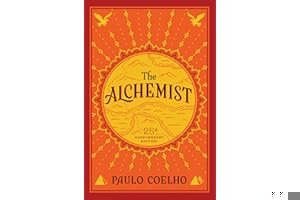
Paulo Coelho's enchanting novel has inspired a devoted following around the world. This story, dazzling in its powerful simplicity and inspiring wisdom, is about an Andalusian shepherd boy named Santiago who travels from his homeland in Spain to the Egyptian desert in search of a treasure buried in the Pyramids. What starts out as a journey to find worldly goods turns into a discovery of the treasure found within. Lush, evocative, and deeply humane, the story of Santiago is an eternal testament to the transforming power of our dreams and the importance of listening to our hearts.
There's a great quote in this book: When you're on the right path the universe conspires to help you! [source]
Daniel Ek
It was fascinating to talk to the author about how this book came to be such a hit—he never backed down, and he allowed people to read it for free in order to then boost sales—much like how Spotify’s freemium model was perceived in the early days. [source]
Eric Ripert
Speaks of everyone having an ultimate goal in life, but most of us are too afraid to pursue it. The encouragement to fulfill your dreams is very inspirational! [source]
Cover unavailable
3
The Little Prince Family Storybook: Unabridged Original Text
Antoine de Saint-Exupéry
5.0
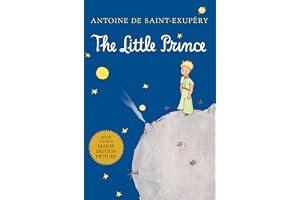
Rediscover Antoine de Saint-Exupery's universal masterpiece with original text and magnificent new illustrations created by masters of film animation. This wise and enchanginting fable teaches the secret of what is really important in life.
Recommended by Ryan Holiday, Brandon Stanton, Evan Goldberg, and 1 others.
Equally allegorical, I read The Little Prince for the first time which for some reason I’d never been exposed to before. If you’re in the same boat, read it. It’s short but great. [source]
Brandon Stanton
Brandon Stanton recommended this book on the podcast "The Tim Ferriss Show". [source]
Mikhail Bulgakov's devastating satire of Soviet life was written during the darkest period of Stalin's regime. Combining two distinct yet interwoven parts—one set in ancient Jerusalem, one in contemporary Moscow—the novel veers from moods of wild theatricality with violent storms, vampire attacks, and a Satanic ball; to such somber scenes as the meeting of Pilate and Yeshua, and the murder of Judas in the moonlit garden of Gethsemane; to the substanceless, circus-like reality of Moscow. Its central characters, Woland (Satan) and his retinue—including the vodka-drinking black cat, Behemoth; the poet, Ivan Homeless; Pontius Pilate; and a writer known only as The Master, and his passionate companion, Margarita—exist in a world that blends fantasy and chilling realism, an artful collage of grotesqueries, dark comedy, and timeless ethical questions.
Though completed in 1940, "The Master and Margarita" wasn't published in Moscow until 1966, when the first part appeared in the magazine "Moskva." It was an immediate and enduring success: audiences responded with great enthusiasm to its expression of artistic and spiritual freedom.
…
Recommended by Max Levchin, Neil Gaiman, Andi Dumitrescu, and 5 others.
Max Levchin
Co-founder/PayPal, CEO/Affirm, Investor
One of the finest works of fiction of the last century. [source]
If I had to make a more rational choice, I’d go with Ulises or The Master and Margareta, but I think that choice is a bit snobbish. [source]
Cover unavailable
5
The Odyssey
Homer
4.9
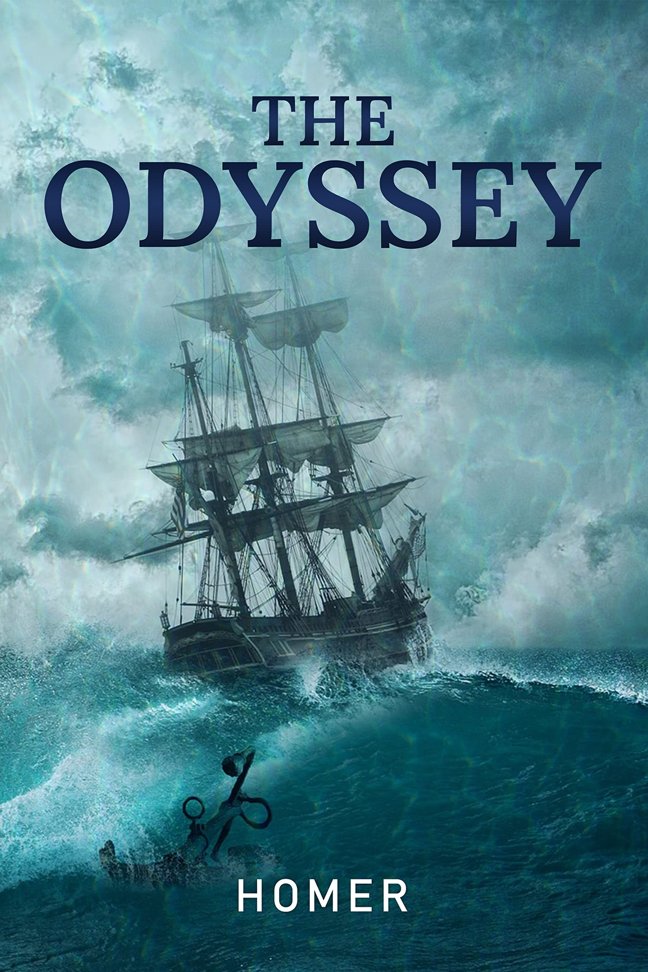
After enduring the Trojan War, Odysseus begins the treacherous journey home to Ithaca. On the way, he faces ravenous monsters and vengeful gods. But the real battle awaits, as his kingdom is under siege by unruly suitors vying for his wife’s hand—and his son’s head. To reclaim his throne and save his family, Odysseus must rely on his wits…and help from the unpredictable gods.
Homer’s The Odyssey was composed around 700 BC. It is one of the earliest epics in existence and remains one of the most influential works of literature today.
Revised edition: Previously published as The Odyssey, this edition of The Odyssey (AmazonClassics Edition) includes editorial revisions.
…
Recommended by Caterina Fake, Ted Turner, Charlotte Higgins, and 3 others.
When I got to college, I was a classics major, and that was mainly the study of Greek - and to a lesser extent Roman - history and culture, and that fascinated me: the Iliad, the Odyssey, the Aeneid by Virgil. [source]
Charlotte Higgins
It’s a very easy read, and a completely different world from The Iliad. Whereas The Iliad depicts a militaristic and war-wrecked world, The Odyssey is like a fairytale and it’s fascinatingly complex. It’s told in flashbacks, it has time that’s extended and time that’s compressed, and it’s told from different viewpoints. [source]
Janine di Giovanni
The thing I loved about Ulysses was that he’s so in love with adventure and with love. [source]
Cover unavailable
6
Crime and Punishment: A Russian Realistic Novel
Fyodor Dostoyevsky
4.9
This work has been selected by scholars as being culturally important, and is part of the knowledge base of civilization as we know it. This work was reproduced from the original artifact, and remains as true to the original work as possible. Therefore, you will see the original copyright references, library stamps (as most of these works have been housed in our most important libraries around the world), and other notations in the work.This work is in the public domain in the United States of America, and possibly other nations. Within the United States, you may freely copy and distribute this work, as no entity (individual or corporate) has a copyright on the body of the work.As a reproduction of a historical artifact, this work may contain missing or blurred pages, poor pictures, errant marks, etc. Scholars believe, and we concur, that this work is important enough to be preserved, reproduced, and made generally available to the public. We appreciate your support of the preservation process, and thank you for being an important part of keeping this knowledge alive and relevant.
It is not a crime book in the way that we understand crime fiction today. Instead it is like an existential psychological thriller. [source]
Cover unavailable
7
The Shadow of the Wind (The Cemetery of Forgotten Books, #1)
Carlos Ruiz Zafon and Lucia Grave
4.9
Barcelona, 1945: A city slowly heals from its war wounds, and Daniel, an antiquarian book dealer's son who mourns the loss of his mother, finds solace in a mysterious book entitled The Shadow of the Wind, by one Julian Carax. But when he sets out to find the author's other works, he makes a shocking discovery: someone has been systematically destroying every copy of every book Carax has written. In fact, Daniel may have the last of Carax's books in existence. Soon Daniel's seemingly innocent quest opens a door into one of Barcelona's darkest secrets--an epic story of murder, madness, and doomed love. --back cover
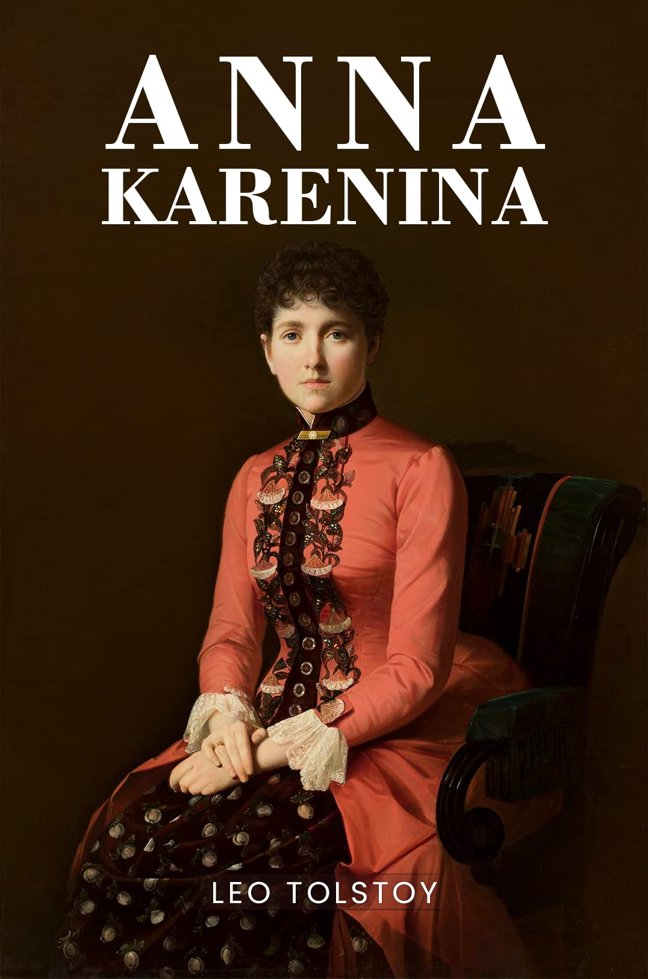
Tolstoy's epic novel of love, destiny and self-destruction, in a gorgeous new clothbound edition from Penguin Classics. Anna Karenina seems to have everything - beauty, wealth, popularity and an adored son. But she feels that her life is empty until the moment she encounters the impetuous officer Count Vronsky. Their subsequent affair scandalizes society and family alike and soon brings jealously and bitterness in its wake. Contrasting with this tale of love and self-destruction is the vividly observed story of Levin, a man striving to find contentment and a meaning to his life - and also a self-portrait of Tolstoy himself. This acclaimed modern translation by Richard Pevear and Larissa Volokhonsky won the PEN/ Book of the Month Club Translation Prize in 2001. Their translation is accompanied in this edition by an introduction by Richard Pevear and a preface by John Bayley. "The new and brilliantly witty translation by Richard Pevear and Larissa Volokhonsky is a must". (Lisa Appignanesi, Independent, Books of the Year). "Pevear and Volokhonsky are at once scrupulous translators and vivid stylists of English, and their superb rendering allows us, as perhaps never before, to grasp the palpability of Tolstoy's "characters, acts, situations"". (James Wood, New Yorker).
…
Recommended by Chelsea Handler, Marvin Liao, Audrey Russo, and 5 others.
I don't know if I have to expound on why I love this book, but everyone should read this author, and this was the first one of his works I read. So, it's like a first boyfriend. Or my first Cabbage Patch Kid. [source]
Marvin Liao
Partner/500 Startups
My list would be (besides the ones I mentioned in answer to the previous question) both business & Fiction/Sci-Fi and ones I personally found helpful to myself. The business books explain just exactly how business, work & investing are in reality & how to think properly & differentiate yourself. On the non-business side, a mix of History & classic fiction to understand people, philosophy to make sense of life and Science fiction to picture what the future could be like (not always utopian). [source]
Audrey Russo
Question: What books would you recommend to young people interested in your career path? Answer: Anything by Peter Senge. The Hard Thing About Hard Things – Ben Horowitz Once you are Lucky, Twice you are good – Sara Lacey Revolutionary Wealth – Alvin Toffler Black Swan – Taleb Reset: My Fight for Inclusion and Lasting Change, by Ellen Pao. Creative Class – Richard Florida Creativity Inc. by Ed Catmull & Amy Wallace Liar’s Poker by Michael Lewis American Government 101: From the Continental Congress to the Iowa Caucus, Everything You Need to Know About US Politics – Kathleen Spears The Tao of Pooh by Benjamin Hoff. Anna Karenina by Leo Tolstoy. Any book by Herman Hesse The Art of War by Sun Tzu. [source]
Cover unavailable
9
The Girl with the Dragon Tattoo (Millennium, #1)
Stieg Larsson and Reg Keelan
4.8
Harriet Vanger, a scion of one of Sweden’s wealthiest families disappeared over forty years ago. All these years later, her aged uncle continues to seek the truth. He hires Mikael Blomkvist, a crusading journalist recently trapped by a libel conviction, to investigate. He is aided by the pierced and tattooed punk prodigy Lisbeth Salander. Together they tap into a vein of unfathomable iniquity and astonishing corruption.
An international publishing sensation, Stieg Larsson’s The Girl with the Dragon Tattoo combines murder mystery, family saga, love story, and financial intrigue into one satisfyingly complex and entertainingly atmospheric novel.
Alternate Cover Edition ISBN 0307269752 (ISBN13: 9780307269751)
…
Cover unavailable
10
Convenience Store Woman
Sayaka Murata, Ginny Tapley Takemori
4.8
The surprise hit of the summer and winner of Japan's prestigious Akutagawa Prize, Convenience Store Woman is the incomparable story of Keiko Furukura, a thirty-six-year-old Tokyo resident who has been working at the Hiiromachi "Smile Mart" for the past eighteen years. Keiko has never fit in, neither in her family, nor in school, but in her convenience store, she is able to find peace and purpose with rules clearly delineated clearly by the store's manual, and copying her colleagues' dress, mannerisms, and speech. She plays the part of a "normal person" excellently--more or less. Keiko is very happy, but those close to her pressure her to find a husband and a proper career, prompting her to take desperate action. A sharp-eyed look at contemporary work culture and the pressures we all feel to conform, Convenience Store Woman offers a brilliant depiction of a world hidden from view and a charming and fresh portrait of an unforgettable heroine.
…
Recommended by Candace Bushnell and Linda Flores.
Candace Bushnell
Love this book #ConvenienceStoreWoman. It’s also very funny. https://t.co/1On1xoprYH [source]
Linda Flores
Convenience Store Woman says something about how we articulate subjectivity when social norms impose limitations on our individual identity. [source]
Cover unavailable
11
The Stranger
Albert Camus, Jonathan Davis, et al
4.8
Through the story of an ordinary man unwittingly drawn into a senseless murder on an Algerian beach, Camus explored what he termed "the nakedness of man faced with the absurd." First published in English in 1946; now in a new translation by Matthew Ward.
Seminal novel on existentialism and the absurd by Albert Camus from 1946. Explores that feeling of disconnectedness from society, its norms, and the absurdity of every day life. Striking first-person account in a powerful, direct language. [source]
Kyle Maynard
Kyle Maynard said this is one of his most-recommended books. [source]
Cover unavailable
12
A Man Called Ove
Fredrik Backman
4.8
A grumpy yet loveable man finds his solitary world turned on its head when a boisterous young family moves in next door.
Meet Ove. He’s a curmudgeon—the kind of man who points at people he dislikes as if they were burglars caught outside his bedroom window. He has staunch principles, strict routines, and a short fuse. People call him “the bitter neighbor from hell.” But must Ove be bitter just because he doesn’t walk around with a smile plastered to his face all the time?
Behind the cranky exterior there is a story and a sadness. So when one November morning a chatty young couple with two chatty young daughters move in next door and accidentally flatten Ove’s mailbox, it is the lead-in to a comical and heartwarming tale of unkempt cats, unexpected friendship, and the ancient art of backing up a U-Haul. All of which will change one cranky old man and a local residents’ association to their very foundations.
…
Recommended by Abid Zaidi.
Abid Zaidi
Day 6 : #30Days of posting cover of books I love (1 book a day for 30 days). No expectations, no reviews, just the covers. Inspired by @rekha_bhardwaj #MyFavouriteBooks https://t.co/rl0foOp6hK [source]
In Everyman’s Library for the first time—one of the most moving and eloquent accounts of the Holocaust, read by tens of millions of people around the world since its publication in 1947. The Diary of a Young Girl is the record of two years in the life of a remarkable Jewish girl whose triumphant humanity in the face of unfathomable deprivation and fear has made the book one of the most enduring documents of our time.
The Everyman’s hardcover edition reprints the Definitive Edition authorized by the Frank estate, plus a new introduction, a bibliography, and a chronology of Anne Frank’s life and times.
…
Recommended by Alice Little, Catalina Penciu, and Tim Fargo.
Alice Little
I remember being a fourth grader and trying to check out this book and being told it was grossly inappropriate and going so far as to have my parents take it to the school board and petition for me to be allowed to read this book. [source]
Catalina Penciu
I'm a huge fan of personal stories and biographies like this one. [source]
Tim Fargo
@Quixoticnance Good point, Nancy. The museum is a powerful experience, esp. when you've read her book. [source]
Cover unavailable
14
The Count of Monte Cristo
Alexandre Dumas père, Robin Buss
4.8
Thrown in prison for a crime he has not committed, Edmond Dantes is confined to the grim fortress of If. There he learns of a great hoard of treasure hidden on the Isle of Monte Cristo and he becomes determined not only to escape, but also to unearth the treasure and use it to plot the destruction of the three men responsible for his incarceration. Dumas’ epic tale of suffering and retribution, inspired by a real-life case of wrongful imprisonment, was a huge popular success when it was first serialized in the 1840s.
Robin Buss’s lively English translation is complete and unabridged, and remains faithful to the style of Dumas’s original. This edition includes an introduction, explanatory notes and suggestions for further reading.
…
Recommended by Ryan Holiday, Chris Kutarna, and Sol Orwell.
I thought I’d read this book before but clearly they gave me some sort of children’s version. Because the one I’d read as a kid wasn’t a 1,200 page epic of some of the most brilliant, beautiful and complicated storytelling ever put to paper. What a book! When I typed out my notes (and quotes) after finishing this book, it ran some 3,000 words. I was riveted from cover to cover. I enjoyed all the stuff I missed as a kid: the Counts struggle with his faith in light of what was done to him, the Hundred Days of Napoleon’s return, his rants against technology, the criticism of newspapers, the influence of ancient philosophy, ultimately, a warning against being consumed by revenge. Please—if you’re going on a long trip or looking to check out of modern events for a while—get this book. I recommend the Penguin Classics edition. [source]
Chris Kutarna
The Count of Monte Cristo it is about revenge and the cost of revenge. Being careful what you wish for. The other theme is about riches and wealth and what is truly valuable. [source]
Sol Orwell
I have to go with Count of Monte Cristo. An unparalleled revenge story. [source]
Man's Search for Meaning has riveted generations of readers with its descriptions of life in Nazi death camps and its lessons for spiritual survival. Between 1942 and 1945 psychiatrist Viktor Frankl labored in four different camps, including Auschwitz, while his parents, brother, and pregnant wife perished. Based on his own experience and the stories of his many patients, Frankl argues that we cannot avoid suffering but we can choose how to cope with it, find meaning in it, and move forward with renewed purpose. Frankl's theory—known as logotherapy, from the Greek word logos ("meaning")—holds that our primary drive in life is not pleasure, as Freud maintained, but the discovery and pursuit of what we personally find meaningful. In the decades since its first publication in 1959, Man's Search for Meaning has become a classic, with more than twelve million copies in print around the world. A 1991 Library of Congress survey that asked readers to name a "book that made a difference in your life" found Man's Search for Meaning among the ten most influential books in America. At once a memoir, a meditation, a treatise, and a history, it continues to inspire us all to find significance in the very act of living. (back cover)
…
Recommended by Tony Robbins, Dustin Moskovitz, Ev Williams, and 60 others.
Another book that I’ve read dozens of times. It taught me that if you change the meaning, you change everything. Meaning equals emotion, and emotion equals life. [source]
Dustin Moskovitz
Co-founder/Facebook and Asana
Dustin Moskovitz recommended this book on Twitter. [source]
I read it while spending ten days in the ICU of Bellevue hospital trying to reattach my finger from a ring avulsion accident in my kitchen. It talks about the meaning of life, and I believe you come out a better person from reading it. [source]
Cover unavailable
16
Kafka on the Shore
Haruki Murakami
4.7
Kafka on the Shore, a tour de force of metaphysical reality, is powered by two remarkable characters: a teenage boy, Kafka Tamura, who runs away from home either to escape a gruesome oedipal prophecy or to search for his long-missing mother and sister; and an aging simpleton called Nakata, who never recovered from a wartime affliction and now is drawn toward Kafka for reasons that, like the most basic activities of daily life, he cannot fathom. Their odyssey, as mysterious to them as it is to us, is enriched throughout by vivid accomplices and mesmerizing events. Cats and people carry on conversations, a ghostlike pimp employs a Hegel-quoting prostitute, a forest harbors soldiers apparently unaged since World War II, and rainstorms of fish (and worse) fall from the sky. There is a brutal murder, with the identity of both victim and perpetrator a riddle—yet this, along with everything else, is eventually answered, just as the entwined destinies of Kafka and Nakata are gradually revealed, with one escaping his fate entirely and the other given a fresh start on his own.
…
Recommended by Bernard Tan, Brian Koppelman, and John Craig.
Bernard Tan
I’m also a Murakami and Vonnegut fan, Kafka on the Shore, The Wind-up Bird Chronicle, Norwegian Wood, Slaughterhouse-Five, etc. Now that I look at the books listed, they seem to carry an existential theme. I guess I like to understand humanity and human behaviour ultimately to better understand myself. I find reading a means to connect with people who may have lived before my time, or in a distant country, that I may never have had the chance to connect with in real life. As three-dimensional humans, we are all made up of so many faces and emotional layers that we find it hard to dissect them all, and when we find writers who can explain these thought processes in a way that’s tangible and digestible, there’s this incredibly comforting eureka moment of feeling understood. [source]
If you have always wanted to read this author, I think this Covid-19 period of time is perfect for it. He could have conceived of this whole thing. [source]
John Craig
The only book, or should I say author, that takes priority is Haruki Murakami. He is a Japanese novelist that takes me into the next world. His style is surreal. Check it out. Start with Kafka on the Shore. [source]
Cover unavailable
17
The Three-Body Problem (Remembrance of Earth’s Past #1)
Cixin Liu, Ken Liu
4.7
The Three-Body Problem is the first chance for English-speaking readers to experience the Hugo Award-winning phenomenon from China's most beloved science fiction author, Liu Cixin.
Set against the backdrop of China's Cultural Revolution, a secret military project sends signals into space to establish contact with aliens. An alien civilization on the brink of destruction captures the signal and plans to invade Earth. Meanwhile, on Earth, different camps start forming, planning to either welcome the superior beings and help them take over a world seen as corrupt, or to fight against the invasion. The result is a science fiction masterpiece of enormous scope and vision.
As a devoted reader, the president has been linked to a lengthy list of novels and poetry collections over the years — he admits he enjoys a thriller. [source]
It's a Chinese science fiction book that has gotten so popular there's now a Hollywood movie being made based on it. This will also be a fun break from all the economics and social science books I've read recently. [source]
I felt like I was getting a Chinese version of Chinese culture. And that frame felt unique. [source]
Cover unavailable
18
The Wind-Up Bird Chronicle
Haruki Murakami, Jay Rubin
4.7
Japan's most highly regarded novelist now vaults into the first ranks of international fiction writers with this heroically imaginative novel, which is at once a detective story, an account of a disintegrating marriage, and an excavation of the buried secrets of World War II.
In a Tokyo suburb a young man named Toru Okada searches for his wife's missing cat. Soon he finds himself looking for his wife as well in a netherworld that lies beneath the placid surface of Tokyo. As these searches intersect, Okada encounters a bizarre group of allies and antagonists: a psychic prostitute; a malevolent yet mediagenic politician; a cheerfully morbid sixteen-year-old-girl; and an aging war veteran who has been permanently changed by the hideous things he witnessed during Japan's forgotten campaign in Manchuria.
Gripping, prophetic, suffused with comedy and menace, The Wind-Up Bird Chronicle is a tour de force equal in scope to the masterpieces of Mishima and Pynchon.
Three books in one volume: The Thieving Magpie, Bird as Prophet, The Birdcatcher. This translation by Jay Rubin is in collaboration with the author.
…
Recommended by Bernard Tan, Brian Koppelman, and Sung J. Woo.
Bernard Tan
I’m also a Murakami and Vonnegut fan, Kafka on the Shore, The Wind-up Bird Chronicle, Norwegian Wood, Slaughterhouse-Five, etc. Now that I look at the books listed, they seem to carry an existential theme. I guess I like to understand humanity and human behaviour ultimately to better understand myself. I find reading a means to connect with people who may have lived before my time, or in a distant country, that I may never have had the chance to connect with in real life. As three-dimensional humans, we are all made up of so many faces and emotional layers that we find it hard to dissect them all, and when we find writers who can explain these thought processes in a way that’s tangible and digestible, there’s this incredibly comforting eureka moment of feeling understood. [source]
If you have always wanted to read this author, I think this Covid-19 period of time is perfect for it. He could have conceived of this whole thing. [source]
Sung J. Woo
He’s the best-known Japanese writer right now and this book I would consider to be his opus. It’s a big sprawling book that deals with weighty subjects like the Second World War and Japan’s part in that. There is a horrifying section set when the Japanese had occupied Manchuria and the Chinese are approaching and it’s told from the point of view of a soldier who is told to kill all the animals in the zoo as the Chinese close in. It’s a harrowing tale of this Japanese soldier going round the cages killing these magnificent animals. [source]
Cover unavailable
19
Norwegian Wood
Haruki Murakami, Jay Rubin
4.7
Toru, a quiet and preternaturally serious young college student in Tokyo, is devoted to Naoko, a beautiful and introspective young woman, but their mutual passion is marked by the tragic death of their best friend years before. Toru begins to adapt to campus life and the loneliness and isolation he faces there, but Naoko finds the pressures and responsibilities of life unbearable. As she retreats further into her own world, Toru finds himself reaching out to others and drawn to a fiercely independent and sexually liberated young woman.
A magnificent blending of the music, the mood, and the ethos that was the sixties with the story of one college student's romantic coming of age, Norwegian Wood brilliantly recaptures a young man's first, hopeless, and heroic love.
…
Recommended by Bernard Tan.
Bernard Tan
I’m also a Murakami and Vonnegut fan, Kafka on the Shore, The Wind-up Bird Chronicle, Norwegian Wood, Slaughterhouse-Five, etc. Now that I look at the books listed, they seem to carry an existential theme. I guess I like to understand humanity and human behaviour ultimately to better understand myself. I find reading a means to connect with people who may have lived before my time, or in a distant country, that I may never have had the chance to connect with in real life. As three-dimensional humans, we are all made up of so many faces and emotional layers that we find it hard to dissect them all, and when we find writers who can explain these thought processes in a way that’s tangible and digestible, there’s this incredibly comforting eureka moment of feeling understood. [source]
Cover unavailable
20
The Vegetarian
Han Kan
4.6
Before the nightmare, Yeong-hye and her husband lived an ordinary life. But when splintering, blood-soaked images start haunting her thoughts, Yeong-hye decides to purge her mind and renounce eating meat. In a country where societal mores are strictly obeyed, Yeong-hye's decision to embrace a more “plant-like” existence is a shocking act of subversion. And as her passive rebellion manifests in ever more extreme and frightening forms, scandal, abuse, and estrangement begin to send Yeong-hye spiraling deep into the spaces of her fantasy. In a complete metamorphosis of both mind and body, her now dangerous endeavor will take Yeong-hye—impossibly, ecstatically, tragically—far from her once-known self altogether.
…
Cover unavailable
21
My Brilliant Friend (The Neapolitan Novels, #1)
Elena Ferrante and Ann Goldstein
4.6
A modern masterpiece from one of Italy's most acclaimed authors, My Brilliant Friend is a rich, intense and generous hearted story about two friends, Elena and Lila. Ferrante's inimitable style lends itself perfectly to a meticulous portrait of these two women that is also the story of a nation and a touching meditation on the nature of friendship. Through the lives of these two women, Ferrante tells the story of a neighbourhood, a city and a country as it is transformed in ways that, in turn, also transform the relationship between her two protagonists.
…
Recommended by Flora Pringle and Nicole Baldinu.
Flora Pringle
I think Elena Ferrante writes brilliantly about the challenges of motherhood and building something for yourself. In the Neapolitan Novels she talks about her character breaking out of her poor, restrictive, mafia background through reading and learning. She breaks her boundaries and becomes an accomplished writer. In the third book particularly, Elena speaks fluently about the envy we feel of the accomplishments of others, the insecure we feel even in the traits that others so admire about us. The frustrations of motherhood and how it can impinge professional accomplishments whether we want it to or not. A powerful book. [source]
Nicole Baldinu
I didn’t want this book to end. And I’ve gone back and listened to the audio version in Italian too. I’m lucky that my second language is Italian, as I got to enjoy it twice over! This book was wildly successful and for good reasons, it has everything you’d want in a story, love, friendship, history, humor, sadness and tragedy. All in four delicious volumes that, again, you wish would keep going and going. [source]
Cover unavailable
22
The Brothers Karamazov
Fyodor Dostoevsky
4.6
The Brothers Karamasov is a murder mystery, a courtroom drama, and an exploration of erotic rivalry in a series of triangular love affairs involving the “wicked and sentimental” Fyodor Pavlovich Karamazov and his three sons―the impulsive and sensual Dmitri; the coldly rational Ivan; and the healthy, red-cheeked young novice Alyosha. Through the gripping events of their story, Dostoevsky portrays the whole of Russian life, is social and spiritual striving, in what was both the golden age and a tragic turning point in Russian culture.
This award-winning translation by Richard Pevear and Larissa Volokhonsky remains true to the verbal inventiveness of Dostoevsky’s prose, preserving the multiple voices, the humor, and the surprising modernity of the original. It is an achievement worthy of Dostoevsky’s last and greatest novel.
…
Recommended by Randall Stephenson, Adam Townsend, Christian B Miller, and 3 others.
@FinchmanWill @jposhaughnessy @Cernovich @mcclay_roman My son's favorite book of all time [source]
Christian B Miller
A host of deep philosophical questions are at work in the book: about, say, the existence of God, the nature of morality without God, and the role of free will. [source]
Cover unavailable
23
The Unbearable Lightness of Being
Milan Kundera
4.6
In The Unbearable Lightness of Being, Milan Kundera tells the story of a young woman in love with a man torn between his love for her and his incorrigible womanizing and one of his mistresses and her humbly faithful lover. This magnificent novel juxtaposes geographically distant places; brilliant and playful reflections; and a variety of styles to take its place as perhaps the major achievement of one of the world’s truly great writers.
This book was recommended by on page 488 in "Tools of Titans". [source]
Bernard Tan
I wasn’t expecting anything going into it, but I am currently quite engrossed by Kundera’s understanding of humanity and his beautiful writing style. [source]
Cover unavailable
24
War And Peace
Leo Tolstoi, Louise Maude, Aylmer Maude
4.6
War and Peace broadly focuses on Napoleon's invasion of Russia in 1812 and follows three of the most well-known characters in literature: Pierre Bezukhov, the illegitimate son of a count who is fighting for his inheritance and yearning for spiritual fulfillment; Prince Andrei Bolkonsky, who leaves his family behind to fight in the war against Napoleon; and Natasha Rostov, the beautiful young daughter of a nobleman who intrigues both men.
As Napoleon's army invades, Tolstoy brilliantly follows characters from diverse backgrounds—peasants and nobility, civilians and soldiers—as they struggle with the problems unique to their era, their history, and their culture. And as the novel progresses, these characters transcend their specificity, becoming some of the most moving—and human—figures in world literature. Translated by Louise and Aylmer Maude.
Three-Volume Boxed Set
…
Recommended by Andrei Maylunas, Cécile Fabre, Kate McLoughlin, and 6 others.
One doesn’t have to invent the bicycle, there is one: it’s War and Peace. It’s about how Russia won the Napoleonic wars, and moved into the first row of nations who dealt with European history. It’s set during the peak of Russian culture, the age of Pushkin, who created the modern Russian language. It’s the peak…The only thing I would recommend to modern readers is to skip all those parts – which are completely separate from the other parts of the book – where Tolstoy is philosophising about the role of the individual in history. It’s maybe 15 per cent of the book, in separate chapters, and I would definitely recommend to skip those because they are not interesting today. [source]
Cécile Fabre
One of the key questions that Tolstoy asks in the appendix is the central question of War and Peace: how can we explain the fact that, on orders, millions of people go out and kill one another, when they know that killing another human being is morally wrong? [source]
Kate McLoughlin
Tolstoy didn’t fight in the Napoleonic wars, but he did fight in the Crimean war, so he drew on his experiences in that when he wrote War and Peace. [source]
Cover unavailable
25
The Girl Who Played with Fire (Millennium, #2)
Stieg Larsson, Reg Keeland
4.6
Part blistering espionage thriller, part riveting police procedural, and part piercing exposé on social injustice, The Girl Who Played with Fire is a masterful, endlessly satisfying novel.
Mikael Blomkvist, crusading publisher of the magazine Millennium, has decided to run a story that will expose an extensive sex trafficking operation. On the eve of its publication, the two reporters responsible for the article are murdered, and the fingerprints found on the murder weapon belong to his friend, the troubled genius hacker Lisbeth Salander. Blomkvist, convinced of Salander’s innocence, plunges into an investigation. Meanwhile, Salander herself is drawn into a murderous game of cat and mouse, which forces her to face her dark past.
From the Trade Paperback edition.
…
Cover unavailable
26
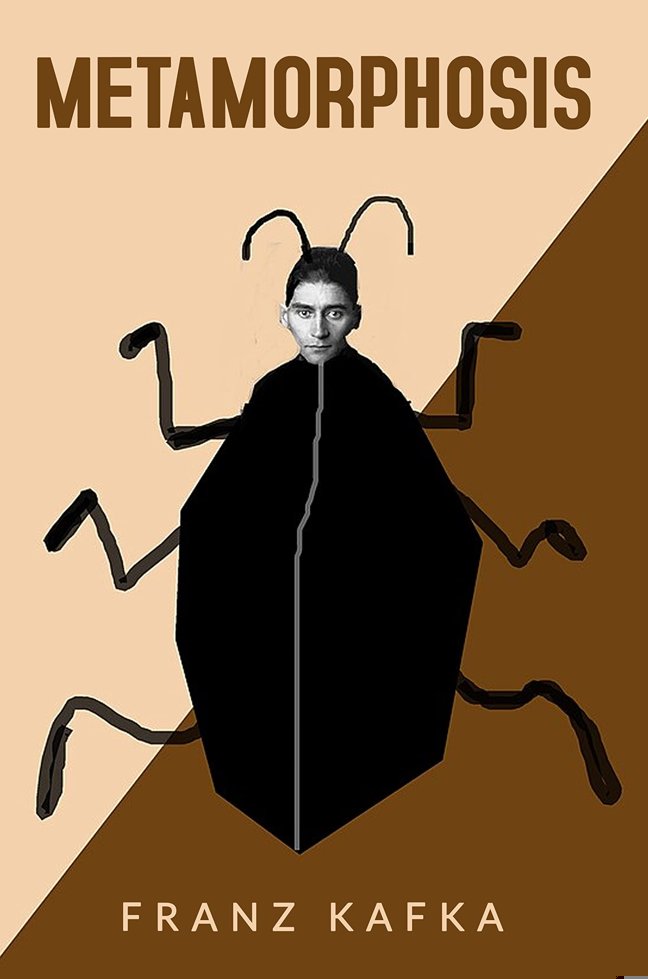
The Metamorphosis
Franz Kafka
4.6
Alternate cover edition of ISBN 0553213695 / 9780553213690
"As Gregor Samsa awoke one morning from uneasy dreams he found himself transformed in his bed into a gigantic insect. He was laying on his hard, as it were armor-plated, back and when he lifted his head a little he could see his domelike brown belly divided into stiff arched segments on top of which the bed quilt could hardly keep in position and was about to slide off completely. His numerous legs, which were pitifully thin compared to the rest of his bulk, waved helplessly before his eyes."
With it's startling, bizarre, yet surprisingly funny first opening, Kafka begins his masterpiece, The Metamorphosis. It is the story of a young man who, transformed overnight into a giant beetle-like insect, becomes an object of disgrace to his family, an outsider in his own home, a quintessentially alienated man. A harrowing—though absurdly comic—meditation on human feelings of inadequacy, guilt, and isolation, The Metamorphosis has taken its place as one of the most widely read and influential works of twentieth-century fiction. As W.H. Auden wrote, "Kafka is important to us because his predicament is the predicament of modern man."
David Lynch said this is one of his most-recommended books. [source]
David Lynch
David Lynch said this is one of his most-recommended books. [source]
Cover unavailable
27
Night
Elie Wiesel
4.5
Night is Elie Wiesel's masterpiece, a candid, horrific, and deeply poignant autobiographical account of his survival as a teenager in the Nazi death camps. This new translation by Marion Wiesel, Elie's wife and frequent translator, presents this seminal memoir in the language and spirit truest to the author's original intent. And in a substantive new preface, Elie reflects on the enduring importance of Night and his lifelong, passionate dedication to ensuring that the world never forgets man's capacity for inhumanity to man.
Night offers much more than a litany of the daily terrors, everyday perversions, and rampant sadism at Auschwitz and Buchenwald; it also el
…
Recommended by Johanna Reiss and Steven Katz.
Johanna Reiss
Elie Wiesel wrote..that he was considering running into the barbed wire once, but he didn’t because his father needed him. [source]
Steven Katz
Probably the best known memoir that has been written about the experience of the death camps. [source]
Cover unavailable
28
Love in the Time of Cholera
Gabriel Garcia Marquez
4.5
From the Nobel Prize-winning author of One Hundred Years of Solitude comes a masterly evocation of an unrequited passion so strong that it binds three people's lives together for more than fifty years. In the story of Florentino Ariza, who waits more than half a century to declare his undying love to the beautiful Fermina Daza, whom he lost to Dr. Juvenal Urbino so many years before, García Márquez has created a vividly absorbing fictional world, as lush and dazzling as a dream and as real and immediate as our own deepest longings. Now available for the first time in the Contemporary Classics series!
…
Recommended by Bryan Callen, Kate Figes, and Tendai Biti.
So here are my three must read books. I've been reading a lot of great books like: Outsmart Your Instincts, The Culture Code, and Antonio Damasio’s The Strange Order, and sometimes when you read a lot of nonfiction it’s very enriching, sometimes you need a novel. I really believe you should take a minute and read something beautiful. Listen, listen to Lolita by Nabokov. But also listen to Blood Meridian by Cormac McCarthy and listen to Richard Poe narrate that. Those are two of the greatest feats of the english language that I can think of. Then there’s Fortress of Solitude, an amazing book, Extremely Loud and Incredibly Close, these are great novels. Cold Mountain is a beautiful novel, Snow Falling On Cedars, I mean they’ve been around for a while. But goddamnit, get those under your belt. Those are the novels I think you should read. You know Love In The Time Of Cholera it just makes you ache. Kind of like a Hemingway thing, where Hemingway “ahh!”, it’s the same thing, you know. So I don’t know, I’m a fan of all those books. Those are my 3 slash 20 books. [source]
Kate Figes
It’s partly such a passionate book because of the beauty of the prose, describing love through time and how she found contentment – love, passion and sex all in one. [source]
Tendai Biti
2)Marquez s “Love in the time of cholera” & “100 yrs of solitude “ are two of my top books but one still weeps reading or re- reading Tolstoy s “ War & Peace “a book bettered only by “ Anna Karenina. Not a fan of these motivational books but that “f#cked “ up book is quite funny [source]
Cover unavailable
29
Les Misérables
Victor Hugo, Isabel F. Hapgood, et al.
4.5
Introducing one of the most famous characters in literature, Jean Valjean—the noble peasant imprisoned for stealing a loaf of bread—Les Misérables ranks among the greatest novels of all time. In it, Victor Hugo takes readers deep into the Parisian underworld, immerses them in a battle between good and evil, and carries them to the barricades during the uprising of 1832 with a breathtaking realism that is unsurpassed in modern prose. Within his dramatic story are themes that capture the intellect and the emotions: crime and punishment, the relentless persecution of Valjean by Inspector Javert, the desperation of the prostitute Fantine, the amorality of the rogue Thénardier, and the universal desire to escape the prisons of our own minds. Les Misérables gave Victor Hugo a canvas upon which he portrayed his criticism of the French political and judicial systems, but the portrait that resulted is larger than life, epic in scope—an extravagant spectacle that dazzles the senses even as it touches the heart.
…
Recommended by Christian B Miller and David Bellos.
Christian B Miller
Vividly illustrates two ideas about character. The first is that our characters can change over time, the second is that role models can be powerful sources of character change. [source]
David Bellos
Because it’s so huge and so capacious and contains so many different stories and takes on the world, you can make anything out of Les Misérables. [source]
Cover unavailable
30
The Girl Who Kicked the Hornet's Nest (Millennium, #3)
Stieg Larsson, Reg Keeland
4.5
The stunning third and final novel in Stieg Larsson's internationally best-selling trilogy.
Lisbeth Salander - the heart of Larsson's two previous novels - lies in critical condition, a bullet wound to her head, in the intensive care unit of a Swedish city hospital. She's fighting for her life in more ways than one: if and when she recovers, she'll be taken back to Stockholm to stand trial for three murders. With the help of her friend, journalist Mikael Blomkvist, she will not only have to prove her innocence, but also identify and denounce those in authority who have allowed the vulnerable, like herself, to suffer abuse and violence. And, on her own, she will plot revenge - against the man who tried to kill her, and the corrupt government institutions that very nearly destroyed her life.
Once upon a time, she was a victim. Now Salander is fighting back.
~from the jacket
…
Cover unavailable
31
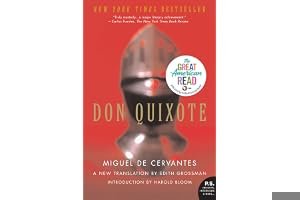
Don Quixote
Miguel de Cervantes, Edith Grossman
4.5
Edith Grossman's definitive English translation of the Spanish masterpiece, in an expanded P.S. edition
Widely regarded as one of the funniest and most tragic books ever written, Don Quixote chronicles the adventures of the self-created knight-errant Don Quixote of La Mancha and his faithful squire, Sancho Panza, as they travel through sixteenth-century Spain. You haven't experienced Don Quixote in English until you've read this masterful translation.
This P.S. edition features an extra 16 pages of insights into the book, including author interviews, recommended reading, and more.
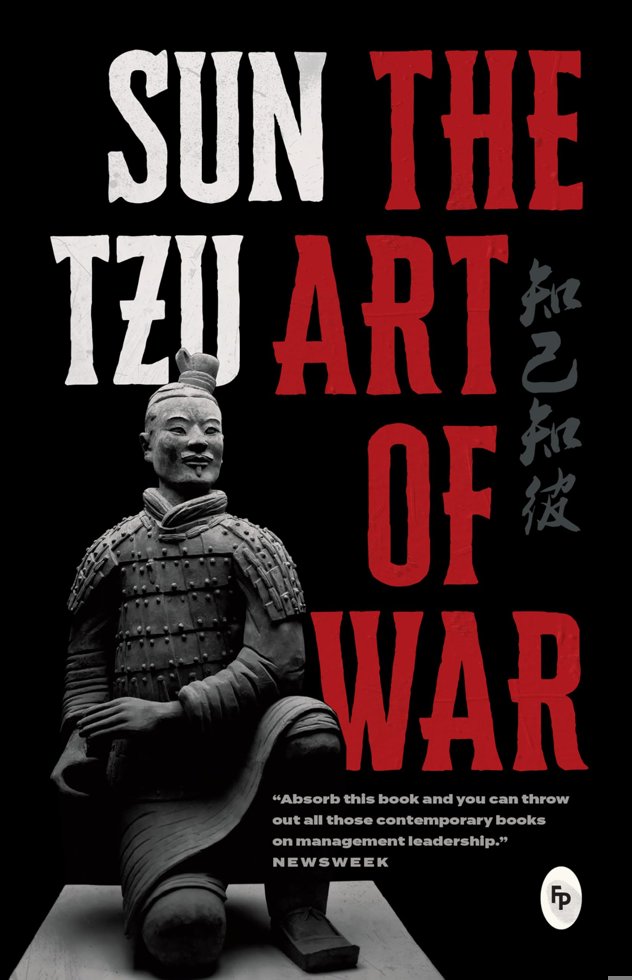
For more than two thousand years, The Art of War has stood as a cornerstone of Chinese culture-a lucid epigrammatic text that reveals as much about human psychology, politics, and economics as it does about battlefield strategy. The influence of Sun-tzu's text has grown tremendously in the West in recent years, with military leaders, politicians, and corporate executives alike finding valuable insight in these ancient words. In his crisp, accessible new translation, scholar John Minford brings this seminal work to life for modern readers.
Minford opens with a lively, learned introduction in which he explores the life and times of Sun-tzu, looks at The Art of War in the context of the turbulent Warring States period, and discusses how best to read and understand the work today. There follows Minford's translation of the core text itself in two different formats-first, the unadorned thirteen chapters of the original work and then the same text reprinted with extensive running commentary by classical Chinese scholars as well as Minford himself. The result is an opportunity for Western readers to experience Sun-tzu's work in all its intensity as it applies to many aspects of our lives.
Which books should be read by every single intelligent person on planet? … The Art of War (Sun Tsu) to learn that the act of killing fellow humans can be raised to an art. If you read all of the above works you will glean profound insight into most of what has driven the history of the western world. [source]
Cover unavailable
33
1Q84 (1Q84 #1-3)
Haruki Murakami, Jay Rubin, Philip Gabriel
4.5
The year is 1984 and the city is Tokyo.
A young woman named Aomame follows a taxi driver’s enigmatic suggestion and begins to notice puzzling discrepancies in the world around her. She has entered, she realizes, a parallel existence, which she calls 1Q84 —“Q is for ‘question mark.’ A world that bears a question.” Meanwhile, an aspiring writer named Tengo takes on a suspect ghostwriting project. He becomes so wrapped up with the work and its unusual author that, soon, his previously placid life begins to come unraveled.
As Aomame’s and Tengo’s narratives converge over the course of this single year, we learn of the profound and tangled connections that bind them ever closer: a beautiful, dyslexic teenage girl with a unique vision; a mysterious religious cult that instigated a shoot-out with the metropolitan police; a reclusive, wealthy dowager who runs a shelter for abused women; a hideously ugly private investigator; a mild-mannered yet ruthlessly efficient bodyguard; and a peculiarly insistent television-fee collector.
A love story, a mystery, a fantasy, a novel of self-discovery, a dystopia to rival George Orwell’s—1Q84 is Haruki Murakami’s most ambitious undertaking yet: an instant best seller in his native Japan, and a tremendous feat of imagination from one of our most revered contemporary writers.
Seriously, one of my favorite books of all time. [source]
Cover unavailable
34
The Iliad
Homer, Robert Fagles, Bernard Knox
4.4
Dating to the ninth century B.C., Homer’s timeless poem still vividly conveys the horror and heroism of men and gods wrestling with towering emotions and battling amidst devastation and destruction, as it moves inexorably to the wrenching, tragic conclusion of the Trojan War. Renowned classicist Bernard Knox observes in his superb introduction that although the violence of the Iliad is grim and relentless, it coexists with both images of civilized life and a poignant yearning for peace.
Combining the skills of a poet and scholar, Robert Fagles, winner of the PEN/Ralph Manheim Medal for Translation and a 1996 Academy Award in Literature from the American Academy of Arts and Letters, brings the energy of contemporary language to this enduring heroic epic. He maintains the drive and metric music of Homer’s poetry, and evokes the impact and nuance of the Iliad’s mesmerizing repeated phrases in what Peter Levi calls “an astonishing performance.”
When I got to college, I was a classics major, and that was mainly the study of Greek - and to a lesser extent Roman - history and culture, and that fascinated me: the Iliad, the Odyssey, the Aeneid by Virgil. [source]
Charlotte Higgins
I think The Iliad has much to say to politicians now – it’s completely clear-eyed about collateral damage, about problems of post-conflict and about the ghastly things that happen to women and children in war. [source]
There are always new translations of The Iliad coming out, but this one has a very specific approach, both in terms of its philosophy of translation and its approach to the text. [source]
Cover unavailable
35
Beartown (Beartown, #1)
Fredrik Backman
4.4
People say Beartown is finished. A tiny community nestled deep in the forest, it is slowly losing ground to the ever-encroaching trees. But down by the lake stands an old ice rink, built generations ago by the working men who founded town. And that rink is the reason people in Beartown believe tomorrow will be better than today. Their junior hockey team is about to compete in the national championships, and they actually have a shot at winning. All the hopes and dreams of the town now rest on the shoulders of a handful of teenage boys.
A victory would send star player Kevin onto a brilliant professional future in the NHL. It would mean everything to Amat, a scrawny fifteen-year-old treated like an outcast everywhere but on the ice. And it would justify the choice that Peter, the team's general manager, and his wife, Kira, made to return to his hometown and raise their children in this beautiful but isolated place.
Being responsible for the hopes of an entire town is a heavy burden, and the semifinal match is the catalyst for a violent act that leaves a young girl traumatized and a town in turmoil. Hers is a story no one wants to believe since the truth would mean the end of the dream. Accusations are made, and like ripples on a pond, they travel through all of Beartown, leaving no resident unaffected.
Fathers Day Book 1: “Beartown,” by Fredrik Backman. Terrific, disturbing speed-read about hockey’s grip on a small Swedish town, and how the addiction to the game warps good people. Sports are fun. Sports are not life. Great lessons here. Could not put this book down. [source]
Cover unavailable
36
Perfume: The Story of a Murderer
Patrick Suskind, J.E. Woods
4.4
An acclaimed bestseller and international sensation, Patrick Suskind's classic novel provokes a terrifying examination of what happens when one man's indulgence in his greatest passion—his sense of smell—leads to murder.
In the slums of eighteenth-century France, the infant Jean-Baptiste Grenouille is born with one sublime gift—an absolute sense of smell. As a boy, he lives to decipher the odors of Paris, and apprentices himself to a prominent perfumer who teaches him the ancient art of mixing precious oils and herbs. But Grenouille's genius is such that he is not satisfied to stop there, and he becomes obsessed with capturing the smells of objects such as brass doorknobs and fresh-cut wood. Then one day he catches a hint of a scent that will drive him on an ever-more-terrifying quest to create the "ultimate perfume"—the scent of a beautiful young virgin. Told with dazzling narrative brilliance, Perfume is a hauntingly powerful tale of murder and sensual depravity.
…
Recommended by Denise Hamilton.
Denise Hamilton
It’s a very lush, richly imagined book. It just bursts with sensuality and the smells of Paris in the 18th century. [source]
Cover unavailable
37
The Life-Changing Magic of Tidying Up: The Japanese Art of Decluttering and Organizing
Despite constant efforts to declutter your home, do papers still accumulate like snowdrifts and clothes pile up like a tangled mess of noodles?
Japanese cleaning consultant Marie Kondo takes tidying to a whole new level, promising that if you properly simplify and organize your home once, you'll never have to do it again. Most methods advocate a room-by-room or little-by-little approach, which doom you to pick away at your piles of stuff forever. The KonMari Method, with its revolutionary category-by-category system, leads to lasting results. In fact, none of Kondo's clients have lapsed (and she still has a three-month waiting list).
With detailed guidance for determining which items in your house "spark joy" (and which don't), this international best seller featuring Tokyo's newest lifestyle phenomenon will help you clear your clutter and enjoy the unique magic of a tidy home - and the calm, motivated mindset it can inspire.
…
Recommended by Andra Zaharia, Annie Loves Covfefe, Benjamin Spall, and 3 others.
Andra Zaharia
I’ve gone through quite a few experiences brought on or shaped by what I’ve learned from books. … a more frivolous example is The Life-Changing Magic of Tidying. I read this one when moving apartments a few years ago and it made me throw or give away ⅓ of my stuff. The result: freeing up space, both physical and mental, and acquiring some home organizing skills that have stuck with me ever since. My home is tidier and my mind is clearer because of this book. [source]
Annie Loves Covfefe
@Benny29143790 @Thereal_ssteele Oh how I love Kondo cleaning. Her first book is fantastic too!! [source]
Benjamin Spall
The Life-Changing Magic of Tidying Up by Marie Kondo … I started reading on vacation. I interviewed Marie for my own book and while the translation is somewhat quirky in places, her book is worth the hype. [source]
Cover unavailable
38
The House of the Spirits
Isabel Allende, Magda Bogin
4.4
In one of the most important and beloved Latin American works of the twentieth century, Isabel Allende weaves a luminous tapestry of three generations of the Trueba family, revealing both triumphs and tragedies.
Here is patriarch Esteban, whose wild desires and political machinations are tempered only by his love for his ethereal wife, Clara, a woman touched by an otherworldly hand. Their daughter, Blanca, whose forbidden love for a man Esteban has deemed unworthy infuriates her father, yet will produce his greatest joy: his granddaughter Alba, a beautiful, ambitious girl who will lead the family and their country into a revolutionary future.
The House of the Spirits is an enthralling saga that spans decades and lives, twining the personal and the political into an epic novel of love, magic, and fate.
…
Cover unavailable
39
The Story of a New Name (The Neapolitan Novels, #2)
Elena Ferrante, Ann Goldstein
4.4
In 2012, Elena Ferrante's My Brilliant Friend introduced readers to the unforgettable Elena and Lila, whose lifelong friendship provides the backbone for the Neapolitan Novels. The Story of a New Name is the second book in this series. With these books, which the New Yorker's James Wood described as "large, captivating, amiably peopled ... a beautiful and delicate tale of confluence and reversal," Ferrante proves herself to be one of Italy's most accomplished storytellers. She writes vividly about a specific neighborhood of Naples from the late-1950s through to the current day and about two remarkable young women who are very much the products of that place and time. Yet in doing so she has created a world in which readers will recognize themselves and has drawn a marvelously nuanced portrait of friendship.
In The Story of a New Name, Lila has recently married and made her entrée into the family business; Elena, meanwhile, continues her studies and her exploration of the world beyond the neighborhood that she so often finds stifling. Love, jealousy, family, freedom, commitment, and above all friendship: these are signs under which both women live out this phase in their stories. Marriage appears to have imprisoned Lila, and the pressure to excel is at times too much for Elena. Yet the two young women share a complex and evolving bond that is central to their emotional lives and is a source of strength in the face of life's challenges. In these Neapolitan Novels, Elena Ferrante, the acclaimed author of The Days of Abandonment, gives readers a poignant and universal story about friendship and belonging.
…
Cover unavailable
40
All Quiet on the Western Front
Erich Maria Remarque, A W. Wheen
4.4
One by one the boys begin to fall…
In 1914 a room full of German schoolboys, fresh-faced and idealistic, are goaded by their schoolmaster to troop off to the ‘glorious war’. With the fire and patriotism of youth they sign up. What follows is the moving story of a young ‘unknown soldier’ experiencing the horror and disillusionment of life in the trenches.
Recommended by Cécile Fabre.
Cécile Fabre
He knows that his pleasure at a beautiful landscape, at the smell of good food, will forever be coloured by what the landscape looked like in the trenches, by the food that was cooked in the trenches. [source]
Cover unavailable
41
Blindness
Jose Saramago
4.3
From Nobel Prize–winning author José Saramago, a magnificent, mesmerizing parable of loss
A city is hit by an epidemic of "white blindness" that spares no one. Authorities confine the blind to an empty mental hospital, but there the criminal element holds everyone captive, stealing food rations and assaulting women. There is one eyewitness to this nightmare who guides her charges—among them a boy with no mother, a girl with dark glasses, a dog of tears—through the barren streets, and their procession becomes as uncanny as the surroundings are harrowing. As Blindness reclaims the age-old story of a plague, it evokes the vivid and trembling horrors of the twentieth century, leaving readers with a powerful vision of the human spirit that's bound both by weakness and exhilarating strength.
…
Recommended by Leah Lizarondo and Samantha Harvey.
Leah Lizarondo
The version of dystopia in this book is provocative but truly, the style and structure is what makes the book even more memorable. I always think about our humanity and how fallible we are. I love that this book tackles that but ultimately, our true core--what is good--triumphs. That is pretty much how I look at life. [source]
Samantha Harvey
It because it brings up the question of what conditions are necessary for sanity and what happens when you take those conditions away. [source]
Cover unavailable
42
If on a Winter's Night a Traveler
Italo Calvino and William Weave
4.3
If on a Winter's Night a Traveler is a marvel of ingenuity, an experimental text that looks longingly back to the great age of narration—"when time no longer seemed stopped and did not yet seem to have exploded." Italo Calvino's novel is in one sense a comedy in which the two protagonists, the Reader and the Other Reader, ultimately end up married, having almost finished If on a Winter's Night a Traveler. In another, it is a tragedy, a reflection on the difficulties of writing and the solitary nature of reading. The Reader buys a fashionable new book, which opens with an exhortation: "Relax. Concentrate. Dispel every other thought. Let the world around you fade." Alas, after 30 or so pages, he discovers that his copy is corrupted, and consists of nothing but the first section, over and over. Returning to the bookshop, he discovers the volume, which he thought was by Calvino, is actually by the Polish writer Bazakbal. Given the choice between the two, he goes for the Pole, as does the Other Reader, Ludmilla. But this copy turns out to be by yet another writer, as does the next, and the next.
The real Calvino intersperses 10 different pastiches—stories of menace, spies, mystery, premonition—with explorations of how and why we choose to read, make meanings, and get our bearings or fail to. Meanwhile the Reader and Ludmilla try to reach, and read, each other. If on a Winter's Night is dazzling, vertiginous, and deeply romantic. "What makes lovemaking and reading resemble each other most is that within both of them times and spaces open, different from measurable time and space."
…
Cover unavailable
43
Madame Bovary
Gustave Flaubert, Margaret Mauldon, Malcolm Bowie, Mark Overstall
4.3
Clicca qui per l'edizione "Storie senza tempo".
'Oh, why, dear God, did I marry him?'
Emma Bovary is beautiful and bored, trapped in her marriage to a mediocre doctor and stifled by the banality of provincial life. An ardent devourer of sentimental novels, she longs for passion and seeks escape in fantasies of high romance, in voracious spending and, eventually, in adultery. But even her affairs bring her disappointment, and when real life continues to fail to live up to her romantic expectations, the consequences are devastating. Flaubert's erotically charged and psychologically acute portrayal of Emma Bovary caused a moral outcry on its publication in 1857. It was deemed so lifelike that many women claimed they were the model for his heroine; but Flaubert insisted: 'Madame Bovary, c'est moi.'
This modern translation by Flaubert's biographer, Geoffrey Wall, retains all the delicacy and precision of the French original. The edition also contains a preface by the novelist Michèle Roberts.
…
Cover unavailable
44
Kitchen
Banana Yoshimoto, Megan Backus
4.3
Banana Yoshimoto's novels have made her a sensation in Japan and all over the world, and Kitchen, the dazzling English-language debut that is still her best-loved book, is an enchantingly original and deeply affecting book about mothers, love, tragedy, and the power of the kitchen and home in the lives of a pair of free-spirited young women in contemporary Japan. Mikage, the heroine of Kitchen, is an orphan raised by her grandmother, who has passed away. Grieving, she is taken in by her friend Yoichi and his mother (who was once his father), Eriko. As the three of them form an improvised family that soon weathers its own tragic losses, Yoshimoto spins a lovely, evocative tale that recalls early Marguerite Duras. Kitchen and its companion story, "Moonlight Shadow," are elegant tales whose seeming simplicity is the ruse of a writer whose voice echoes in the mind and the soul.
…
Cover unavailable
45
The Name of the Rose
Umberto Eco, William Weaver
4.3
The year is 1327. Benedictines in a wealthy Italian abbey are suspected of heresy, and Brother William of Baskerville arrives to investigate. When his delicate mission is suddenly overshadowed by seven bizarre deaths, Brother William turns detective. His tools are the logic of Aristotle, the theology of Aquinas, the empirical insights of Roger Bacon—all sharpened to a glistening edge by wry humor and a ferocious curiosity. He collects evidence, deciphers secret symbols and coded manuscripts, and digs into the eerie labyrinth of the abbey, where “the most interesting things happen at night.”
…
Recommended by Vanora Bennett.
Vanora Bennett
I read this a few years ago and it was one of those books you always remember because it creates a whole new way of thinking. I had no idea at the time that the medieval mindset was any different to the modern one. It is about the adventure of a Franciscan friar and his novice in medieval Italy and it is part murder mystery, part game with semiotics and medieval knowledge. At university I read lots of French books referring to this medieval period where all knowledge was supposed to be classified, and re-classified and super-classified, and it became sort of idiotic, this academic approach that these monks had. Yet there was something amazing about this belief that you could classify knowledge. It’s also very good storytelling, but the part I remember was the sort of library filled with knowledge and these games, which teased you with knowing things and not knowing things. It’s just this very complex mindset that’s really different from our own and because I knew nothing about it, it was just terribly exciting to be taken off into this world. [source]
Cover unavailable
46
Invisible Cities
Italo Calvino
4.3
"Kublai Khan does not necessarily believe everything Marco Polo says when he describes the cities visited on his expeditions, but the emperor of the Tartars does continue listening to the young Venetian with greater attention and curiosity than he shows any other messenger or explorer of his." So begins Italo Calvino's compilation of fragmentary urban images. As Marco tells the khan about Armilla, which "has nothing that makes it seem a city, except the water pipes that rise vertically where the houses should be and spread out horizontally where the floors should be," the spider-web city of Octavia, and other marvelous burgs, it may be that he is creating them all out of his imagination, or perhaps he is recreating fine details of his native Venice over and over again, or perhaps he is simply recounting some of the myriad possible forms a city might take.
Oh God. Well, officially it’s Marco Polo describing the cities of his travels to Kublai Khan. It’s been opined that every city he describes is a version of Venice, but I think that doesn’t really work. They seem to me to be marvellous imaginative fantasies, which sometimes reproduce states of mind. There are 40 or so cities described, all entirely imaginary I think, and that’s what’s so magical about them. But there are passages that are suggestive of something, and nearly always of the way memory works. It’s a very hard book to describe, because the cities are never just a description of a place. They all mirror states of mind and being. [source]
James Meek
It has different layers. The set-up is that Kublai Khan has conquered this vast empire; an empire so large that he, sitting at the centre of it, cannot know all the many parts of it. He can’t visit them, he can’t see them, and if he goes to one part all the other parts have changed. So he sits there at the centre of his empire and Marco Polo travels around and visits the various cities and comes back and describes them to Kublai Khan. [source]
Cover unavailable
47
Elegance of the Hedgehog
Barbery M Muriel Barbery
4.3
Rene is the concierge of a grand Parisian apartment building. She maintains a carefully constructed persona as someone uncultivated but reliable, in keeping with what she feels a concierge should be. But beneath this facade lies the real Rene: passionate about culture and the arts, and more knowledgeable in many ways than her employers with their outwardly successful but emotionally void lives. Down in her lodge, apart from weekly visits by her one friend Manuela, Rene lives with only her cat for company. Meanwhile, several floors up, twelve-year-old Paloma Josse is determined to avoid the pampered and vacuous future laid out for her, and decides to end her life on her thirteenth birthday. But unknown to them both, the sudden death of one of their privileged neighbours will dramatically alter their lives forever. By turns moving and hilarious, this unusual and insightful novel is now an international publishing sensation, with sales of over 10 million copies.
…
Recommended by Leo Babauta.
Cover unavailable
48
Human Acts
Han Kang
4.3
From the internationally bestselling author of The Vegetarian, a rare and astonishing (The Observer) portrait of political unrest and the universal struggle for justice.
In the midst of a violent student uprising in South Korea, a young boy named Dong-ho is shockingly killed.
The story of this tragic episode unfolds in a sequence of interconnected chapters as the victims and the bereaved encounter suppression, denial, and the echoing agony of the massacre. From Dong-ho's best friend who meets his own fateful end; to an editor struggling against censorship; to a prisoner and a factory worker, each suffering from traumatic memories; and to Dong-ho's own grief-stricken mother; and through their collective heartbreak and acts of hope is the tale of a brutalized people in search of a voice.
An award-winning, controversial bestseller, Human Acts is a timeless, pointillist portrait of an historic event with reverberations still being felt today, by turns tracing the harsh reality of oppression and the resounding, extraordinary poetry of humanity.
…
Cover unavailable
49
Candide, ou l'Optimisme
Voltaire, Tobias Smollett
4.3
Candide, ou l'Optimisme is a French satire first published in 1759 by Voltaire, a philosopher of the Age of Enlightenment. The novella has been widely translated, with English versions titled Candide: or, All for the Best (1759); Candide: or, The Optimist (1762); and Candide: or, Optimism (1947). It begins with a young man, Candide, who is living a sheltered life in an Edenic paradise and being indoctrinated with Leibnizian optimism (or simply Optimism) by his mentor, Pangloss. The work describes the abrupt cessation of this lifestyle, followed by Candide's slow, painful disillusionment as he witnesses and experiences great hardships in the world. Voltaire concludes with Candide, if not rejecting optimism outright, advocating a deeply practical precept, "we must cultivate our garden," in lieu of the Leibnizian mantra of Pangloss, "all is for the best" in the "best of all possible worlds." Candide is characterised by its sarcastic tone, as well as by its erratic, fantastical and fast-moving plot. A picaresque novel with a story similar to that of a more serious bildungsroman, it parodies many adventure and romance cliches, the struggles of which are caricatured in a tone that is mordantly matter-of-fact. Still, the events discussed are often based on historical happenings, such as the Seven Years' War and the 1755 Lisbon earthquake. As philosophers of Voltaire's day contended with the problem of evil, so too does Candide in this short novel, albeit more directly and humorously. Voltaire ridicules religion, theologians, governments, armies, philosophies, and philosophers through allegory; most conspicuously, he assaults Leibniz and his optimism. As expected by Voltaire, Candide has enjoyed both great success and great scandal. Immediately after its secretive publication, the book was widely banned because it contained religious blasphemy, political sedition and intellectual hostility hidden under a thin veil of naivete. However, with its sharp wit and insightful portrayal of the human condition, the novel has since inspired many later authors and artists to mimic and adapt it. Today, Candide is recognized as Voltaire's magnum opus and is often listed as part of the Western canon; it is arguably taught more than any other work of French literature. In his book of intellectual history Martin Seymour-Smith listed Candide as one of The 100 Most Influential Books Ever Written. Candide contains thirty episodic chapters, which may be grouped into two main schemes: one consists of two divisions, separated by the protagonist's hiatus in El Dorado; the other consists of three parts, each defined by its geographical setting. By the former scheme, the first half of Candide constitutes the rising action and the last part the resolution. This view is supported by the strong theme of travel and quest, reminiscent of adventure and picaresque novels, which tend to employ such a dramatic structure. By the latter scheme, the thirty chapters may be grouped into three parts each comprising ten chapters and defined by locale: I-X are set in Europe, XI-XX are set in the Americas, and XXI-XXX are set in Europe and the Ottoman Empire. The plot summary that follows uses this second format and includes Voltaire's additions of 1761. Chapters I-X The tale of Candide begins in the castle of the Baron Thunder-ten-Tronckh in Westphalia, home to the Baron's daughter, Lady Cunegonde; his bastard nephew, Candide; a tutor, Pangloss; a chambermaid, Paquette; and the rest of the Baron's family. The protagonist, Candide, is romantically attracted to Cunegonde. He is a child of "the most unaffected simplicity," whose face is "the index of his mind." Dr. Pangloss, professor of "metaphysico-theologo-cosmolonigologie" (English translation: "metaphysico-theologo-cosmonigology") and self-proclaimed optimist, teaches his pupils that they live in the "best of all possible worlds" and that "all is for the best."
…
Cover unavailable
50
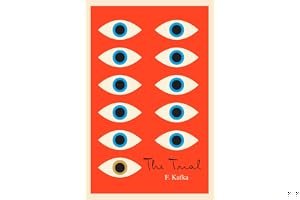
The Trial
Franz Kafka, Breon Mitchell
4.3
Written in 1914 but not published until 1925, a year after Kafka's death, The Trial is one of the most important novels of the twentieth century: the terrifying tale of Josef K., a respectable bank officer who is suddenly and inexplicably arrested and must defend himself against a charge about which he can get no information. Whether read as an existential tale, a parable, or a prophecy of the excesses of modern bureaucracy wedded to the madness of totalitarianism, Kafka's nightmare has resonated with chilling truth for generations of readers. This new edition is based upon the work of an international team of experts who have restored the text, the sequence of chapters, and their division to create a version that is as close as possible to the way the author left it.
In his brilliant translation, Breon Mitchell masterfully reproduces the distinctive poetics of Kafka's prose, revealing a novel as full of energy and power as when it was first written.
It’s a fascinating writing style with a 3rd party observer that’s treated as an extension of the protagonists own sentiments and mind. It’s also just exquisitely written. And the concept of being on trial for charges unknown by a vast, impersonal, yet petty, bureaucracy pulls from a timeless well of societal anxieties. So far, so very good. About half way through. [source]
Michael Peel
I read this before going to Nigeria but moving there made me think about it a lot. The idea that the system always wins. [source]
Cover unavailable
51
The Three Musketeers (The D'Artagnan Romances, #1)
Alexandre Dumas and William Robso
4.3
Alexandre Dumas’s most famous tale— and possibly the most famous historical novel of all time— in a handsome hardcover volume.
This swashbuckling epic of chivalry, honor, and derring-do, set in France during the 1620s, is richly populated with romantic heroes, unattainable heroines, kings, queens, cavaliers, and criminals in a whirl of adventure, espionage, conspiracy, murder, vengeance, love, scandal, and suspense. Dumas transforms minor historical figures into larger- than-life characters: the Comte d’Artagnan, an impetuous young man in pursuit of glory; the beguilingly evil seductress “Milady”; the powerful and devious Cardinal Richelieu; the weak King Louis XIII and his unhappy queen—and, of course, the three musketeers themselves, Athos, Porthos, and Aramis, whose motto “all for one, one for all” has come to epitomize devoted friendship. With a plot that delivers stolen diamonds, masked balls, purloined letters, and, of course, great bouts of swordplay, The Three Musketeers is eternally entertaining.
…
Cover unavailable
52
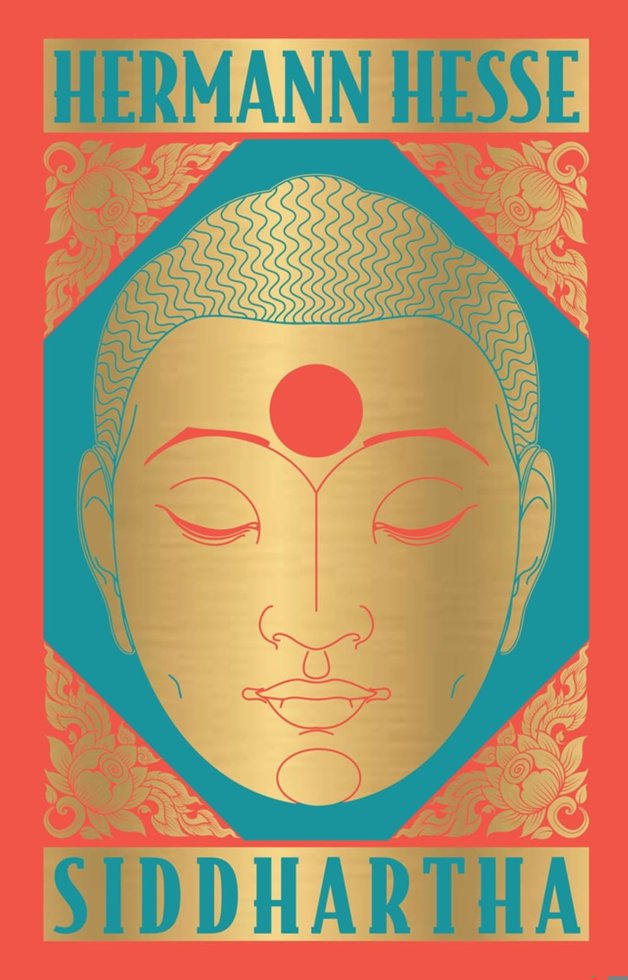
Siddhartha
Hermann Hesse
4.3
Herman Hesse's classic novel has delighted, inspired, and influenced generations of readers, writers, and thinkers. In this story of a wealthy Indian Brahmin who casts off a life of privilege to seek spiritual fulfillment. Hesse synthesizes disparate philosophies--Eastern religions, Jungian archetypes, Western individualism--into a unique vision of life as expressed through one man's search for meaning.
He says, 'Love is stronger than hate. Soft is stronger than hard. Water is stronger than stone.' [source]
Cover unavailable
53
The Last Wish: Introducing the Witcher (The Witcher, #0.5)
Andrzej Sapkowski
4.3
A special collector's edition of the New York Times bestselling novel that inspired the international hit video game: The Witcher.
Geralt of Rivia is a witcher. A cunning sorcerer. A merciless assassin.
And a cold-blooded killer.
His sole purpose: to destroy the monsters that plague the world.
But not everything monstrous-looking is evil and not everything fair is good. . . and in every fairy tale there is a grain of truth.
For fans of the video game and the uninitiated alike, The Last Wish is the opening chapter of The Witcher series. Witcher collections The Last Wish Sword of Destiny
Witcher novels
Blood of Elves The Time of Contempt Baptism of Fire The Tower of Swallows Lady of the Lake
The Malady and Other Stories: An Andrzej Sapkowski Sampler (e-only)
Translated from original Polish by Danusia Stok
…
Recommended by Rachel Miner.
Rachel Miner
@tenoko1 @audible_com Feel ill equipped to answer as I have not read most of these, I am currently on book 4 of the Witcher series, I did enjoy book 1, I like the world and found some of the commentary of magic especially to be inspired, but it is flawed, you have to be forgiving to enjoy the journey [source]
Cover unavailable
54
Colorless Tsukuru Tazaki and His Years of Pilgrimage
Haruki Murakami, Philip Gabriel
4.3
A New York Times and Washington Post notable book, and one of the Financial Times, St. Louis Post-Dispatch, Slate, Mother Jones, The Daily Beast, and BookPage's best books of the year
An instant #1 New York Times Bestseller, Colorless Tsukuru Tazaki and His Years of Pilgrimage is the remarkable story of a young man haunted by a great loss; of dreams and nightmares that have unintended consequences for the world around us; and of a journey into the past that is necessary to mend the present. Here Haruki Murakami—one of the most revered voices in literature today—gives us a story of love, friendship, and heartbreak for the ages.
If you have always wanted to read this author, I think this Covid-19 period of time is perfect for it. He could have conceived of this whole thing. [source]
Cover unavailable
55
The Story of the Lost Child (The Neapolitan Novels, #4)
Elena Ferrante, Ann Goldstein
4.3
Here is the dazzling saga of two women, the brilliant, bookish Elena and the fiery, uncontainable Lila. Both are now adults; life’s great discoveries have been made, its vagaries and losses have been suffered. Through it all, the women’s friendship has remained the gravitational center of their lives.
Both women once fought to escape the neighborhood in which they grew up—a prison of conformity, violence, and inviolable taboos. Elena married, moved to Florence, started a family, and published several well-received books. In this final book, she has returned to Naples. Lila, on the other hand, never succeeded in freeing herself from the city of her birth. She has become a successful entrepreneur, but her success draws her into closer proximity with the nepotism, chauvinism, and criminal violence that infect her neighborhood. Proximity to the world she has always rejected only brings her role as its unacknowledged leader into relief. For Lila is unstoppable, unmanageable, unforgettable!
Against the backdrop of a Naples that is as seductive as it is perilous and a world undergoing epochal change, the story of a lifelong friendship is told with unmatched honesty and brilliance. The four volumes in this series constitute a long remarkable story that readers will return to again and again, and every return will bring with it new revelations.
…
Cover unavailable
56
The plague
Albert Camus, Stuart Gilbert
4.3
A gripping tale of human unrelieved horror, of survival and resilience, and of the ways in which humankind confronts death, The Plague is at once a masterfully crafted novel, eloquently understated and epic in scope, and a parable of ageless moral resonance, profoundly relevant to our times. In Oran, a coastal town in North Africa, the plague begins as a series of portents, unheeded by the people. It gradually becomes a omnipresent reality, obliterating all traces of the past and driving its victims to almost unearthly extremes of suffering, madness, and compassion.
…
Recommended by Jim Collins, Arthur Ammann, Jenny Davidson, and 1 others.
Arthur Ammann
It’s an amazing book, considering Camus probably never personally experienced a plague. In his novel, Camus captured everything that we were dealing with in the Aids epidemic without Aids existing at that time. Without his knowing what the consequences of the HIV plague were going to be, he seems to have gotten all the actors in there and the myriad of things that you wrestle with. [source]
Jenny Davidson
Albert Camus’s The Plague probably remains the best-known novel on the topic of epidemic disease. It tells the story of those involved in an epidemic in a North African setting. It is very interested in the details about how quarantines are enforced and the role not just of the government, but of individuals who band together into groups to manage the epidemic. [source]
Stephen Breyer
He talks about the plague. Well, the plague is that part of a human being which can be very evil. That germ, he says at the end, never dies, it simply goes into remission. It lurks. It lurks in the cupboards, it lurks in the hallways, it lurks in the filing cabinets. [source]
Cover unavailable
57
Those Who Leave and Those Who Stay (The Neapolitan Novels, #3)
Elena Ferrante and Ann Goldstei
4.3
Since the publication of My Brilliant Friend, the first of the Neapolitan novels, Elena Ferrante's fame as one of our most compelling, insightful, and stylish contemporary authors has grown enormously. She has gained admirers among authors--Jhumpa Lahiri, Elizabeth Strout, Claire Messud, to name a few--and critics--James Wood, John Freeman, Eugenia Williamson, for example. But her most resounding success has undoubtedly been with readers, who have discovered in Ferrante a writer who speaks with great power and beauty of the mysteries of belonging, human relationships, love, family, and friendship.
In this third Neapolitan novel, Elena and Lila, the two girls whom readers first met in My Brilliant Friend, have become women. Lila married at sixteen and has a young son; she has left her abusive husband and now works as a common laborer. Elena has left the neighborhood, earned her college degree, and published a successful novel, all of which have opened the doors to a world of learned interlocutors and richly furnished salons. Both women have pushed against the walls of a prison that would have seen them living a life of misery, ignorance, and submission. They are afloat on the great sea of opportunities that opened up during the nineteen-seventies. Yet they are still very much bound to each other by a strong, unbreakable bond.
…
Cover unavailable
58
One Day in the Life of Ivan Denisovich
Alexander Solzhenitsyn, Yevgeny Yevtushenko, Eric Bogosian
4.2
Solzhenitsyn's first book, this economical, relentless novel is one of the most forceful artistic indictments of political oppression in the Stalin-era Soviet Union. The simply told story of a typical, grueling day of the titular character's life in a labor camp in Siberia, is a modern classic of Russian literature and quickly cemented Solzhenitsyn's international reputation upon publication in 1962. It is painfully apparent that Solzhenitsyn himself spent time in the gulags--he was imprisoned for nearly a decade as punishment for making derogatory statements about Stalin in a letter to a friend. Introduction by Yevgeny Yevtushenko
…
Recommended by Robert Conquest.
Robert Conquest
Yes let’s do that as I’ve quite a lot to say about old Solzh. It was a critical book – an entirely objective account of a victim in a labour camp. Just one day in an ordinary labour camp. Not exaggerated, not even a particularly nasty day. The most extraordinary part is how is got printed. It ran contrary to everyone in the Communist Party in Russia, but the Novy Mir editor Tvardovsky snuck a copy in to Khrushchev and said, ‘This is awfully good, you ought to publish it’. And he did. It was an extraordinary stroke of luck. And once it was printed, as Galina put it, ‘The Soviet government had let the genie out of the bottle, and however hard they tried later, they couldn’t put it back in.’ [source]
Cover unavailable
59
Like Water for Chocolate
Laura Esquivel, Carol Christensen, Thomas Christensen
4.2
Earthy, magical, and utterly charming, this tale of family life in turn-of-the-century Mexico became a best-selling phenomenon with its winning blend of poignant romance and bittersweet wit.
The number one bestseller in Mexico and America for almost two years, and subsequently a bestseller around the world, Like Water For Chocolate is a romantic, poignant tale, touched with moments of magic, graphic earthiness, bittersweet wit - and recipes.
A sumptuous feast of a novel, it relates the bizarre history of the all-female De La Garza family. Tita, the youngest daughter of the house, has been forbidden to marry, condemned by Mexican tradition to look after her mother until she dies. But Tita falls in love with Pedro, and he is seduced by the magical food she cooks. In desperation, Pedro marries her sister Rosaura so that he can stay close to her, so that Tita and Pedro are forced to circle each other in unconsummated passion. Only a freakish chain of tragedies, bad luck and fate finally reunite them against all the odds.
…
Cover unavailable
60
The 100-Year-Old Man Who Climbed Out the Window and Disappeared (The Hundred-Year-Old Man, #1)
Jonas Jonasso
4.2
After a long and eventful life, Allan Karlsson ends up in a nursing home, believing it to be his last stop. The only problem is that he’s still in good health. A big celebration is in the works for his 100th birthday, but Allan really isn’t interested (and he’d like a bit more control over his alcohol consumption), so he decides to escape. He climbs out the window in his slippers and embarks on a hilarious and entirely unexpected journey. It would be the adventure of a lifetime for anyone else, but Allan has a larger-than-life backstory: he has not only witnessed some of the most important events of the 20th century, but actually played a key role in them. Quirky and utterly unique, The 100-Year-Old Man Who Climbed Out the Window and Disappeared has charmed readers across the world.
…
Cover unavailable
61
The Memory Police
Yoko Ogawa and Stephen Snyder
4.2
* 2019 NATIONAL BOOK AWARD FINALIST * * NEW YORK TIMES 100 NOTABLE BOOKS OF THE YEAR •
A haunting Orwellian novel about the terrors of state surveillance, from the acclaimed author of The Housekeeper and the Professor.
On an unnamed island off an unnamed coast, objects are disappearing: first hats, then ribbons, birds, roses--until things become much more serious. Most of the island's inhabitants are oblivious to these changes, while those few imbued with the power to recall the lost objects live in fear of the draconian Memory Police, who are committed to ensuring that what has disappeared remains forgotten.
When a young woman who is struggling to maintain her career as a novelist discovers that her editor is in danger from the Memory Police, she concocts a plan to hide him beneath her floorboards. As fear and loss close in around them, they cling to her writing as the last way of preserving the past.
A surreal, provocative fable about the power of memory and the trauma of loss, The Memory Police is a stunning new work from one of the most exciting contemporary authors writing in any language.
…
Cover unavailable
62
Battle Royale
Koushun Takami
4.2
Koushun Takami's notorious high-octane thriller is based on an irresistible premise: a class of junior high school students is taken to a deserted island where, as part of a ruthless authoritarian program, they are provided arms and forced to kill one another until only one survivor is left standing. Criticized as violent exploitation when first published in Japan - where it then proceeded to become a runaway bestseller - Battle Royale is a Lord of the Flies for the 21st century, a potent allegory of what it means to be young and (barely) alive in a dog-eat-dog world. Made into a controversial hit movie of the same name, Battle Royale is already a contemporary Japanese pulp classic, now available for the first time in the English language.
…
Cover unavailable
63
Drive Your Plow Over the Bones of the Dead
Olga Tokarczuk, Antonia Lloyd-Jones
4.2
WINNER OF THE NOBEL PRIZE IN LITERATURE
"A brilliant literary murder mystery." --Chicago Tribune "Extraordinary. Tokarczuk's novel is funny, vivid, dangerous, and disturbing, and it raises some fierce questions about human behavior. My sincere admiration for her brilliant work." --Annie Proulx
In a remote Polish village, Janina devotes the dark winter days to studying astrology, translating the poetry of William Blake, and taking care of the summer homes of wealthy Warsaw residents. Her reputation as a crank and a recluse is amplified by her not-so-secret preference for the company of animals over humans.
Then a neighbor, Big Foot, turns up dead. Soon other bodies are discovered, in increasingly strange circumstances. As suspicions mount, Janina inserts herself into the investigation, certain that she knows whodunit. If only anyone would pay her mind...
A deeply satisfying thriller cum fairy tale, Drive Your Plow over the Bones of the Dead is a provocative exploration of the murky borderland between sanity and madness, justice and tradition, autonomy and fate. Whom do we deem sane? it asks. Who is worthy of a voice?
…
Cover unavailable
64
Voices from Chernobyl
Svetlana Alexievich
4.2
On April 26, 1986, the worst nuclear reactor accident in history occurred at the Chernobyl complex in Pripyat. English-language reportage on the incident has, so far, focused on facts, names, and data; Voices from Chernobyl presents first-hand accounts of what happened to the people of Belarus and the fear, anger, and uncertainty that they lived through. In order to give voice to their experiences, Svetlana Alexievich interviewed hundreds of people (firefighters, disaster-cleanup technicians, and innocent citizens alike) affected by the meltdown. She presents these interviews in monologue form, giving readers a harrowing inside view into the minds of the affected people. No spin, no accusations, and no summary judgment: just the lifeshattering pain of the meltdown and the aftermath.
…
Recommended by Caterina Fake, Craig Mazin, Kate Brown, and 1 others.
These are sources I found fascinating and useful. Not ALL of them, but a bunch. First up, obviously... Svetlana Alexievich's Voices From Chernobyl. Absolutely essential, and heartbreaking, reading. There's a reason Ms. Alexievich has a Nobel Prize. [source]
Kate Brown
It’s a very beautiful work and I think it gives you the emotional landscape of how people dealt with their anxieties, fears, the health problems that ensued, and their growing sense of disillusionment with their political leaders and the Communist party. [source]
Rebecca Altman
What follows events like Chernobyl is a politics of measurement. Who counts? What counts? Who does the counting? How are boundaries drawn for the purposes of counting and comparing? And what is discounted, or never counted at all? [source]
Cover unavailable
65
Beowulf
Seamus Heaney
4.2
Beowulf is a major epic of Anglo-Saxon literature, probably composed between the first half of the seventh century and the end of the first millennium. The poem was inspired by the oral tradition Anglo-Saxon and Germanic transcribed a verse epic, recounting the exploits of Beowulf hero who gave his name to the poem, on which are grafted chretiens additions.
Cover unavailable
66
The Summer Book
Tove Jansson, Thomas Teal, Kathryn Davis
4.2
In The Summer Book Tove Jansson distills the essence of the summer—its sunlight and storms—into twenty-two crystalline vignettes. This brief novel tells the story of Sophia, a six-year-old girl awakening to existence, and Sophia’s grandmother, nearing the end of hers, as they spend the summer on a tiny unspoiled island in the Gulf of Finland. The grandmother is unsentimental and wise, if a little cranky; Sophia is impetuous and volatile, but she tends to her grandmother with the care of a new parent. Together they amble over coastline and forest in easy companionship, build boats from bark, create a miniature Venice, write a fanciful study of local bugs. They discuss things that matter to young and old alike: life, death, the nature of God and of love. “On an island,” thinks the grandmother, “everything is complete.” In The Summer Book, Jansson creates her own complete world, full of the varied joys and sorrows of life.
Tove Jansson, whose Moomintroll comic strip and books brought her international acclaim, lived for much of her life on an island like the one described in The Summer Book, and the work can be enjoyed as her closely observed journal of the sounds, sights, and feel of a summer spent in intimate contact with the natural world.
The Summer Book is translated from the Swedish by Thomas Teal.
…
Recommended by Austin Kleon, Jean Webb, and Zoe Kazan.
All of Jansson’s work makes me want to move to Finland and live on an island. Less fanciful than my beloved Moomin comics, these stories have an undercurrent of sorrow to them. Really gorgeous book. [source]
Jean Webb
On the island the grandmother, who is an artist, creates a whole world—a forest with animals made from pieces of wood for the granddaughter. The book explores ways in which they engage with each other. [source]
Zoe Kazan
@nanzhda I love this book. I’ve given it away so many times I no longer have a copy x [source]
Cover unavailable
67
Hard-Boiled Wonderland and the End of the World
Haruki Murakami
4.2
'A narrative particle accelerator that zooms between Wild Turkey Whiskey and Bob Dylan, unicorn skulls and voracious librarians, John Coltrane and Lord Jim. Science fiction, detective story and post-modern manifesto all rolled into one rip-roaring novel, Hard-Boiled Wonderland and the End of the World is the tour de force that expanded Haruki Murakami's international following. Tracking one man's descent into the Kafkaesque underworld of contemporary Tokyo, Murakami unites East and West, tragedy and farce, compassion and detachment, slang and philosophy.'
…
Cover unavailable
68
VIP: Liberdade que vicia
Ky Crossfire
4.2
Cover unavailable
69
The Complete Persepolis (Persepolis, #1-4)
Marjane Satrapi
4.2
Here, in one volume: Marjane Satrapi's best-selling, internationally acclaimed graphic memoir.
Persepolis is the story of Satrapi's unforgettable childhood and coming of age within a large and loving family in Tehran during the Islamic Revolution; of the contradictions between private life and public life in a country plagued by political upheaval; of her high school years in Vienna facing the trials of adolescence far from her family; of her homecoming--both sweet and terrible; and, finally, of her self-imposed exile from her beloved homeland. It is the chronicle of a girlhood and adolescence at once outrageous and familiar, a young life entwined with the history of her country yet filled with the universal trials and joys of growing up.
Edgy, searingly observant, and candid, often heartbreaking but threaded throughout with raw humor and hard-earned wisdom--Persepolis is a stunning work from one of the most highly regarded, singularly talented graphic artists at work today.
Persepolis: The Story of a Childhood (Persepolis, #1)
Marjane Satrapi
4.2
A New York Times Notable Book A Time Magazine “Best Comix of the Year” A San Francisco Chronicle and Los Angeles Times Best-seller
Wise, funny, and heartbreaking, Persepolis is Marjane Satrapi’s memoir of growing up in Iran during the Islamic Revolution. In powerful black-and-white comic strip images, Satrapi tells the story of her life in Tehran from ages six to fourteen, years that saw the overthrow of the Shah’s regime, the triumph of the Islamic Revolution, and the devastating effects of war with Iraq. The intelligent and outspoken only child of committed Marxists and the great-granddaughter of one of Iran’s last emperors, Marjane bears witness to a childhood uniquely entwined with the history of her country.
Persepolis paints an unforgettable portrait of daily life in Iran and of the bewildering contradictions between home life and public life. Marjane’s child’s-eye view of dethroned emperors, state-sanctioned whippings, and heroes of the revolution allows us to learn as she does the history of this fascinating country and of her own extraordinary family. Intensely personal, profoundly political, and wholly original, Persepolis is at once a story of growing up and a reminder of the human cost of war and political repression. It shows how we carry on, with laughter and tears, in the face of absurdity. And, finally, it introduces us to an irresistible little girl with whom we cannot help but fall in love.
…
Recommended by Pooneh Ghoddoosi.
Pooneh Ghoddoosi
I read the book and it was great, but more people saw the film because it was nominated for an Academy Award. And after seeing the movie, so many people I knew came up to me and told me that they thought it was exactly the story of my life. And not just me, but most of my Iranian friends had the same feeling of “Oh God, that could have been me, I could have written that book – it could have been the story of my life and my family, and that’s exactly how I felt in high school.” [source]
Cover unavailable
71
Notes From The Underground
Fyodor Mikhailovich Dostoyevsky, Richard Pevear, David Magarshack
4.1
Notes from Underground (Russian ??????? ?? ????????, Zapíski iz podpól'ja, also translated in English as Notes from the Underground or Letters from the Underworld while Notes from Underground is the most literal translation) (1864) is a short novel by Fyodor Dostoevsky. It is considered by many to be the world's first existentialist novel. It presents itself as an excerpt from the rambling memoirs of a bitter, isolated, unnamed narrator (generally referred to by critics as the Underground Man) who is a retired civil servant living in St. Petersburg.
It’s such a lovely weird book. Partly, it’s Dostoyevsky giving us an account, through the fictional narrator, of his view on the human condition. Just one quote: “But man has such a predilection for systems and abstract deductions that he is ready to distort the truth intentionally, he is ready to deny the evidence of his senses only to justify his logic”. The idea of humans being suckered into living only according to “logic”, and not only the vanity of such a pursuit, but the impossibility of it, is a wonderful antidote to much of contemporary morality and wonkness. In the same vein, I found the attack on the core underpinning concept of much of 20th century economics, that people are rational beings making rational choices to optimize their own advantage, so forward for its time. Notes from Underground is from 1864, yet manages to expertly debunk that narrow view. Freedom, not material advantage, is the “most advantageous advantage”, even when that’s the freedom to do yourself harm. (Any analysis of Brexit and Trump would do well to consult with Dostoyevsky). Also, major bonus points for being a short book, yet packing so much punch. [source]
Notes from Underground by Fyodor Dostoevsky https://t.co/WuSwComIfi, a book from my great books list https://t.co/AxBNX3QpMb [source]
Cover unavailable
72
Inferno
Dante Alighieri
4.1
This work is designed as an introduction to Dante's Inferno. With this in mind, Longfellow's poetic translation has been juxtaposed side by side with a prose version -- the poem for enjoying the poetry without the interruption of footnotes; the prose for delving more deeply into various aspects of the work.
Most of the footnotes are taken from various translations and commentaries (listed below), some of which utilize many of the older commentators such as Boccacio, Benvenuto, Scartazzini, etc. I have avoided material thats get overly involved in language issues or meter, since these are interpretative aspects more interesting to the Dante scholar than a lay reader.
In the prose version I have tried to give a reading that is more easily understood than the poetry by itself, while trying to maintain something of the nature of the text, and have attempted to clarify remaining vagaries with footnotes. Other footnotes are either informational, giving historical or biographical background, or try to give an idea of some of the interpretations available for various passages.
…
Recommended by Chris Walsh and Nick Havely.
Chris Walsh
The Inferno is the classic moment of people not wanting to talk about cowardice. [source]
Nick Havely
It is a close and reliable translation, with the original text on the facing page, and it also has excellent notes. [source]
Cover unavailable
73
The Prince
Nicollo Machiavelli, Tim Parks
4.1
Niccolo Machiavelli's "The Prince" is intended to be a treatise on ruling and is considered by many to be a classic of political science. In the book Machiavelli offers many bits of practical advice on how to rule and even though the book was written in the early 16th century its ideas are still very relevant today. Where "The Prince" differs from other political literature before it is in its separation of the lofty idealism of morality and ethics from the practical demands of governing. It is this very aspect of Machiavelli's work that has made his name synonymous with an almost immoral opportunism and his book a timeless classic.
Which books should be read by every single intelligent person on planet? … The Prince (Machiavelli) to learn that people not in power will do all they can to acquire it, and people in power will do all they can to keep it. If you read all of the above works you will glean profound insight into most of what has driven the history of the western world. [source]
Of course, this is a must read. Machiavelli is one of those figures and writers who is tragically overrated and underrated at the same time. Unfortunately that means that many people who read him miss the point and other people avoid him and miss out altogether. Take Machiavelli slow, and really read him. Also understand the man behind the book–not just as a masterful writer but a man who withstood heinous torture and exile with barely a whimper. Machiavelli is a glimpse into a time when power was literal and out for public viewing–when he talks about making an example of someone, he doesn’t mean calling them out, he means putting their head on a pike. Don’t let that scare you because we’re not as far from that world as we’d like to think. Deny that at your own peril. [source]
Cover unavailable
74
The Dark Forest
Cixin Liu, Joel Martinsen
4.1
With the scope of Dune and the rousing action of Independence Day this near-future trilogy is the first chance for English-speaking readers to experience this multple-award-winning phenemonenon from Cixin Liu Chinas most beloved science fiction author In DarkForest Earth is reeling from the revelation of a coming alien invasionin just four centuries time The aliens human collaborators may have been defeated but the presence of the sophons the subatomic particles that allow Trisolaris instant access to all human information means that Earths defense plans are totally exposed to the enemy Only the human mind remains a secret This is the motivation for the Wallfacer Project a daring plan that grants four men enormous resources to design secret strategies hidden through deceit and misdirection fromEarth and Trisolaris alike Three of the Wallfacers are influential statesmen and scientists but the fourth is a total unknown Luo Ji an unambitious Chinese astronomer and sociologist is baffled by his new status All he knows is that hes the one Wallfacer that Trisolaris wants dead
…
Recommended by Adam Savage, Ben Brode, and The Centre for the Study of Existential Risk.
I felt like I was getting a Chinese version of Chinese culture. And that frame felt unique. [source]
Ben Brode
@noahmp @devonzuegel I thought book 2 and of the series that starts with “the three body problem” fulfilled this condition and was awesome [source]
The Centre for the Study of Existential Risk
It makes the point that humanity is fairly weak, and that if we’re ever faced by a really big threat, we most likely won’t survive it. [source]
Cover unavailable
75
After Dark
Haruki Murakami, Jay Rubin
4.1
A short, sleek novel of encounters set in Tokyo during the witching hours between midnight and dawn, and every bit as gripping as Haruki Murakami’s masterworks The Wind-Up Bird Chronicle and Kafka on the Shore.
At its center are two sisters—Eri, a fashion model slumbering her way into oblivion, and Mari, a young student soon led from solitary reading at an anonymous Denny’s toward people whose lives are radically alien to her own: a jazz trombonist who claims they’ve met before, a burly female “love hotel” manager and her maid staff, and a Chinese prostitute savagely brutalized by a businessman. These “night people” are haunted by secrets and needs that draw them together more powerfully than the differing circumstances that might keep them apart, and it soon becomes clear that Eri’s slumber—mysteriously tied to the businessman plagued by the mark of his crime—will either restore or annihilate her. After Dark moves from mesmerizing drama to metaphysical speculation, interweaving time and space as well as memory and perspective into a seamless exploration of human agency—the interplay between self-expression and empathy, between the power of observation and the scope of compassion and love. Murakami’s trademark humor, psychological insight, and grasp of spirit and morality are here distilled with an extraordinary, harmonious mastery.
…
Cover unavailable
76
The Door
Magda Szabo
4.1
A busy young writer struggling to cope with domestic chores, hires a housekeeper recommended by a friend. The housekeeper's reputation is one built on dependable efficiency, though she is something of an oddity. Stubborn, foul-mouthed and with a flagrant disregard for her employer's opinions she may even be crazy. She allows no-one to set foot inside her house; she masks herself with a veil and is equally guarded about her personal life. And yet Emerence is revered as much as she is feared. As the story progresses her energy and passion to help becomes clear, extinguishing any doubts arising out of her bizarre behaviour. A stylishly told tale which recounts a strange relationship built up over 20 years between a writer and her housekeeper. After an unpromising and caustic start benign feelings develop and ultimately the writer benefits from what becomes an inseparable relationship. Simultaneously we learn Emerence's tragic past which is revealed in snapshots throughout the book.
…
Cover unavailable
77
The Reader
Bernhard Schlink, Carol Brown Janeway
4.1
Hailed for its coiled eroticism and the moral claims it makes upon the reader, this mesmerizing novel is a story of love and secrets, horror and compassion, unfolding against the haunted landscape of postwar Germany.
When he falls ill on his way home from school, fifteen-year-old Michael Berg is rescued by Hanna, a woman twice his age. In time she becomes his lover—then she inexplicably disappears. When Michael next sees her, he is a young law student, and she is on trial for a hideous crime. As he watches her refuse to defend her innocence, Michael gradually realizes that Hanna may be guarding a secret she considers more shameful than murder.
…
Cover unavailable
78
Sputnik Sweetheart
Haruki Murakami
4.1
alternate cover can be found here
Sumire is in love with a woman seventeen years her senior. But whereas Miu is glamorous and successful, Sumire is an aspiring writer who dresses in an oversized second-hand coat and heavy boots like a character in a Kerouac novel.
Sumire spends hours on the phone talking to her best friend K about the big questions in life: what is sexual desire, and should she ever tell Miu how she feels for her? Meanwhile K wonders whether he should confess his own unrequited love for Sumire.
Then, a desperate Miu calls from a small Greek island: Sumire has mysteriously vanished...
…
Cover unavailable
79
Let the Right One In
John Ajvide (Translated by Ebba Segerberg) Lindqvist
4.1
It is autumn 1981 when the inconceivable comes to Blackeberg, a suburb in Sweden. The body of a teenage boy is found, emptied of blood, the murder rumored to be part of a ritual killing. Twelve-year-old Oskar is personally hoping that revenge has come at long last—revenge for the bullying he endures at school, day after day.
But the murder is not the most important thing on his mind. A new girl has moved in next door—a girl who has never seen a Rubik's Cube before, but who can solve it at once. There is something wrong with her, though, something odd. And she only comes out at night....
…
Cover unavailable
80
Harry Potter and the Sorcerer's Stone
J. K. Rowling
4.1
Harry Potter has never been the star of a Quidditch team, scoring points while riding a broom far above the ground. He knows no spells, has never helped to hatch a dragon, and has never worn a cloak of invisibility.
All he knows is a miserable life with the Dursleys, his horrible aunt and uncle, and their abominable son, Dudley - a great big swollen spoiled bully. Harry’s room is a tiny closet at the foot of the stairs, and he hasn’t had a birthday party in eleven years.
But all that is about to change when a mysterious letter arrives by owl messenger: a letter with an invitation to an incredible place that Harry - and anyone who reads about him - will find unforgettable.
For it’s there that he finds not only friends, aerial sports, and magic in everything from classes to meals, but a great destiny that’s been waiting for him…if Harry can survive the encounter. (front flap)
…
Recommended by Joe Lycett.
Joe Lycett
guys i just read this book called harry potter well worth checking out it’s about a really interesting magic lad [source]
Cover unavailable
81
Fever Dream
Samanta Schweblin, Megan McDowell
4.1
Experience the blazing, surreal sensation of a fever dream…
A young woman named Amanda lies dying in a rural hospital clinic. A boy named David sits beside her. She’s not his mother. He’s not her child. Together, they tell a haunting story of broken souls, toxins, and the power and desperation of family.
Fever Dream is a nightmare come to life, a ghost story for the real world, a love story and a cautionary tale. One of the freshest new voices to come out of the Spanish language and translated into English for the first time, Samanta Schweblin creates an aura of strange psychological menace and otherworldly reality in this absorbing, unsettling, taut novel.
…
Cover unavailable
82
Signs Preceding the End of the World
Yuri Herrera, Lisa Dillman
4.1
Winner of the 2016 Best Translated Book Award for Fiction
Signs Preceding the End of the World is one of the most arresting novels to be published in Spanish in the last ten years. Yuri Herrera does not simply write about the border between Mexico and the United States and those who cross it. He explores the crossings and translations people make in their minds and language as they move from one country to another, especially when there’s no going back.
Traversing this lonely territory is Makina, a young woman who knows only too well how to survive in a violent, macho world. Leaving behind her life in Mexico to search for her brother, she is smuggled into the USA carrying a pair of secret messages – one from her mother and one from the Mexican underworld.
…
Cover unavailable
83
The Phantom of the Opera
Gaston Leroux
4.1
First published in French as a serial in 1909, The Phantom of the Opera is a riveting story that revolves around the young, Swedish Christine Daaé. Her father, a famous musician, dies, and she is raised in the Paris Opera House with his dying promise of a protective angel of music to guide her. After a time at the opera house, she begins hearing a voice, who eventually teaches her how to sing beautifully. All goes well until Christine's childhood friend Raoul comes to visit his parents, who are patrons of the opera, and he sees Christine when she begins successfully singing on the stage. The voice, who is the deformed, murderous 'ghost' of the opera house named Erik, however, grows violent in his terrible jealousy, until Christine suddenly disappears. The phantom is in love, but it can only spell disaster.
Leroux's work, with characters ranging from the spoiled prima donna Carlotta to the mysterious Persian from Erik's past, has been immortalized by memorable adaptations. Despite this, it remains a remarkable piece of Gothic horror literature in and of itself, deeper and darker than any version that follows.
…
Cover unavailable
84
A Wild Sheep Chase (The Rat, #3)
Haruki Murakami, Alfred Birnbaum
4.0
His life was like a recurring nightmare: a train to nowhere. But an ordinary life has a way of taking an extraordinary turn. Add a girl whose ears are so exquisite that, when uncovered, they improve sex a thousand-fold, a runaway friend, a right-wing politico, an ovine-obsessed professor and a manic-depressive in a sheep outfit, implicate them in a hunt for a sheep, that may or may not be running the world, and the upshot is another singular masterpiece from Japan's finest novelist.
If you have always wanted to read this author, I think this Covid-19 period of time is perfect for it. He could have conceived of this whole thing. [source]
Cover unavailable
85
We
Yevgeny Zamyatin, Clarence Brown
4.0
The exhilarating dystopian novel that inspired George Orwell's 1984 and foreshadowed the worst excesses of Soviet Russia
Yevgeny Zamyatin's We is a powerfully inventive vision that has influenced writers from George Orwell to Ayn Rand. In a glass-enclosed city of absolute straight lines, ruled over by the all-powerful 'Benefactor', the citizens of the totalitarian society of OneState live out lives devoid of passion and creativity - until D-503, a mathematician who dreams in numbers, makes a discovery: he has an individual soul. Set in the twenty-sixth century AD, We is the classic dystopian novel and was the forerunner of works such as George Orwell's 1984 and Aldous Huxley's Brave New World. It was suppressed for many years in Russia and remains a resounding cry for individual freedom, yet is also a powerful, exciting and vivid work of science fiction. Clarence Brown's brilliant translation is based on the corrected text of the novel, first published in Russia in 1988 after more than sixty years' suppression.
…
Cover unavailable
86
My Grandmother Asked Me to Tell You She's Sorry
Fredrik Backman, Henning Koch
4.0
Elsa is seven years old and different. Her grandmother is seventy-seven years old and crazy, standing-on-the-balcony-firing-paintball-guns-at-men-who-want-to-talk-about-Jesus-crazy. She is also Elsa's best, and only, friend. At night Elsa takes refuge in her grandmother's stories, in the Land of Almost-Awake and the Kingdom of Miamas where everybody is different and nobody needs to be normal.
When Elsa's grandmother dies and leaves behind a series of letters apologizing to people she has wronged, Elsa's greatest adventure begins. Her grandmother's letters lead her to an apartment building full of drunks, monsters, attack dogs, and totally ordinary old crones, but also to the truth about fairytales and kingdoms and a grandmother like no other.
…
Cover unavailable
87
Labyrinths: Selected Stories and Other Writings
Jorge Luis Borges, James E. Irby, Donald A. Yates, Andre Maurois
4.0
Although his work has been restricted to the short story, the essay, and poetry, Jorge Luis Borges of Argentina is recognized all over the world as one of the most original and significant figures in modern literature. In his preface, Andre Maurois writes: "Borges is a great writer who has composed only little essays or short narratives. Yet they suffice for us to call him great because of their wonderful intelligence, their wealth of invention, and their tight, almost mathematical style."
Labyrinths is a representative selection of Borges' writing, some forty pieces drawn from various books of his published over the years. The translations are by Harriet de Onis, Anthony Kerrigan, and others, including the editors, who have provided a biographical and critical introduction, as well as an extensive bibliography.
…
Recommended by Caterina Fake, John King, and Nicholas Shakespeare.
If you are going to think about Latin American literature, Borges is always a good place to start. [source]
Nicholas Shakespeare
No writer embodied libraries more than the immobile, blind Argentine, Jorge Luis Borges. [source]
Cover unavailable
88
The Hunchback of Notre-Dame
Victor Hugo, Walter J. Cobb
4.0
This extraordinary historical novel, set in Medieval Paris under the twin towers of its greatest structure and supreme symbol, the cathedral of Notre-Dame, is the haunting drama of Quasimodo, the hunchback; Esmeralda, the gypsy dancer; and Claude Frollo, the priest tortured by the specter of his own damnation. Shaped by a profound sense of tragic irony, it is a work that gives full play to Victor Hugo's brilliant historical imagination and his remarkable powers of description.
…
Cover unavailable
89
Chronicle of a Death Foretold
Gabriel García Márquez, Gregory Rabassa
4.0
A man returns to the town where a baffling murder took place twenty-seven years earlier, determined to get to the bottom of the story. Just hours after marrying the beautiful Angela Vicario, everyone agrees, Bayardo San Roman returned his bride in disgrace to her parents. Her distraught family forced her to name her first lover; and her twin brothers announced their intention to murder Santiago Nasar for dishonoring their sister.
Yet if everyone knew the murder was going to happen, why did no one intervene to try and stop it? The more that is learned, the less is understood, and as the story races to its inexplicable conclusion, an entire society--not just a pair of murderers—is put on trial.
…
Cover unavailable
90
The Idiot
Fyodor Dostoevsky, Richard Pevear, et al.
4.0
Returning to Russia from a sanitarium in Switzerland, the Christ-like epileptic Prince Myshkin finds himself enmeshed in a tangle of love, torn between two women—the notorious kept woman Nastasya and the pure Aglaia—both involved, in turn, with the corrupt, money-hungry Ganya. In the end, Myshkin’s honesty, goodness, and integrity are shown to be unequal to the moral emptiness of those around him.
Loved this book, had to read it twice! Dostoevsky is recognized as one of the most accomplished writers + philosophers ever. What appeals to me most in The Idiot is how deep and consistent Dostoevsky gets with his protagonist character, Prince Lev Nokolayevich Myshkin. Myshkin is constantly put through challenging moments where he is lied to, manipulated, stolen from but remains compassionate through it all. The stubborn consistency of Myshkin's compassionate character opened my mind to what it means to building strong character, to remaining constantly good when everything around you is chaotic. [source]
The Idiot by Fyodor Dostoevsky https://t.co/cInEojC9OO, a book from my great books list https://t.co/AxBNX3QpMb [source]
Cover unavailable
91
Inkheart (Inkworld, #1)
Cornelia Funke
4.0
Alternate cover edition: 9780439709101
From internationally acclaimed storyteller Cornelia Funke, this bestselling, magical epic is now out in paperback!
One cruel night, Meggie's father reads aloud from a book called INKHEART-- and an evil ruler escapes the boundaries of fiction and lands in their living room. Suddenly, Meggie is smack in the middle of the kind of adventure she has only read about in books. Meggie must learn to harness the magic that has conjured this nightmare. For only she can change the course of the story that has changed her life forever.
This is INKHEART--a timeless tale about books, about imagination, about life. Dare to read it aloud.
…
Cover unavailable
92
Britt-Marie Was Here
Fredrik Backman
4.0
Britt-Marie can’t stand mess. A disorganized cutlery drawer ranks high on her list of unforgivable sins. She is not one to judge others—no matter how ill-mannered, unkempt, or morally suspect they might be. It’s just that sometimes people interpret her helpful suggestions as criticisms, which is certainly not her intention. But hidden inside the socially awkward, fussy busybody is a woman who has more imagination, bigger dreams, and a warmer heart that anyone around her realizes.
When Britt-Marie walks out on her cheating husband and has to fend for herself in the miserable backwater town of Borg—of which the kindest thing one can say is that it has a road going through it—she finds work as the caretaker of a soon-to-be demolished recreation center. The fastidious Britt-Marie soon finds herself being drawn into the daily doings of her fellow citizens, an odd assortment of miscreants, drunkards, layabouts. Most alarming of all, she’s given the impossible task of leading the supremely untalented children’s soccer team to victory. In this small town of misfits, can Britt-Marie find a place where she truly belongs?
…
Cover unavailable
93
Strange Weather in Tokyo
Hiromi Kawakami
4.0
Tsukiko, thirty-eight, works in an office and lives alone. One night, she happens to meet one of her former high school teachers, "Sensei" in a local bar. Tsukiko had only ever called him "Sensei" ("Teacher"). He is thirty years her senior, retired, and presumably a widower. Their relationship, traced by Kawakami’s gentle hints at the changing seasons, develops from a perfunctory acknowledgment of each other as they eat and drink alone at the bar, to an enjoyable sense of companionship, and finally into a deeply sentimental love affair.
As Tsukiko and Sensei grow to know and love one another, time’s passing comes across through the seasons and the food and beverages they consume together. From warm sake to chilled beer, from the buds on the trees to the blooming of the cherry blossoms, the reader is enveloped by a keen sense of pathos and both characters’ keen loneliness.
…
Cover unavailable
94
Tao Te Ching: By Lao Tzu - Illustrated
Lao Tse
4.0
A lucid translation of the well-known Taoist classic by a leading scholar-now in a Shambhala Pocket Library edition. Written more than two thousand years ago, the Tao Teh Ching, or -The Classic of the Way and Its Virtue, - is one of the true classics of the world of spiritual literature. Traditionally attributed to the legendary -Old Master, - Lao Tzu, the Tao Teh Ching teaches that the qualities of the enlightened sage or ideal ruler are identical with those of the perfected individual. Today, Lao Tzu's words are as useful in mastering the arts of leadership in business and politics as they are in developing a sense of balance and harmony in everyday life. To follow the Tao or Way of all things and realize their true nature is to embody humility, spontaneity, and generosity. John C. H. Wu has done a remarkable job of rendering this subtle text into English while retaining the freshness and depth of the original. A jurist and scholar, Dr. Wu was a recognized authority on Taoism and the translator of several Taoist and Zen texts and of Chinese poetry. This book is part of the Shambhala Pocket Library series. The Shambhala Pocket Library is a collection of short, portable teachings from notable figures across religious traditions and classic texts. The covers in this series are rendered by Colorado artist Robert Spellman. The books in this collection distill the wisdom and heart of the work Shambhala Publications has published over 50 years into a compact format that is collectible, reader-friendly, and applicable to everyday life.
Q: What are the books that had a major influence on you? Or simply the ones you like the most. : Tao te Ching, score takes care of itself, between the world and me, the four agreements, the old man and the sea...I love reading! [source]
According to a Yibada interview with Chen Wei, who wrote Ma’s 2014 authorized biography, the Alibaba founder and executive chairman always carries the Tao Te Ching, the foundational text of Taoist philosophy, religion and ethics composed by Lao Tzu in the sixth century B.C. [source]
In the philosophy side, I’ve been rereading the Tao Te Ching. [source]
Cover unavailable
95
Chess Story
Stefan Zweig, Joel Rotenberg, Peter Gay
4.0
Chess Story, also known as The Royal Game, is the Austrian master Stefan Zweig's final achievement, which was completed in Brazilian exile and sent off to his American publisher only a matter of days before his suicide in 1942. It is the only story in which Zweig looks at Nazism, and he does so with characteristic emphasis on the psychological.
Travelers by ship from New York to Buenos Aires find that on board with them is the world champion of chess, an arrogant and unfriendly man. They come together to try their skills against him and are soundly defeated. Then a mysterious passenger steps forward to advise them and their fortunes change. How he came to possess his extraordinary grasp of the game of chess and at what cost lie at the heart of Zweig's story.
This new translation of Chess Story brings out the work's unusual mixture of high suspense and poignant reflection.
…
Cover unavailable
96
Confessions
Kanae Minato, Stephen Snyder
4.0
HER PUPILS KILLED HER DAUGHTER. NOW, SHE WILL HAVE HER REVENGE.
After calling off her engagement in wake of a tragic revelation, Yuko Moriguchi had nothing to live for except her only child, four-year-old Manami. Now, following an accident on the grounds of the middle school where she teaches, Yuko has given up and tendered her resignation.
But first she has one last lecture to deliver. She tells a story that upends everything her students ever thought they knew about two of their peers, and sets in motion a maniacal plot for revenge.
Narrated in alternating voices, with twists you'll never see coming, Confessions explores the limits of punishment, despair, and tragic love, culminating in a harrowing confrontation between teacher and student that will place the occupants of an entire school in danger. You'll never look at a classroom the same way again.
…
Cover unavailable
97
The Devotion of Suspect X (Detective Galileo, #1)
Keigo Higashino
4.0
Yasuko Hanaoka is a divorced, single mother who thought she had finally escaped her abusive ex-husband Togashi. When he shows up one day to extort money from her, threatening both her and her teenaged daughter Misato, the situation quickly escalates into violence and Togashi ends up dead on her apartment floor. Overhearing the commotion, Yasuko’s next door neighbor, middle-aged high school mathematics teacher Ishigami, offers his help, disposing not only of the body but plotting the cover-up step-by-step.
When the body turns up and is identified, Detective Kusanagi draws the case and Yasuko comes under suspicion. Kusanagi is unable to find any obvious holes in Yasuko’s manufactured alibi and yet is still sure that there’s something wrong. Kusanagi brings in Dr. Manabu Yukawa, a physicist and college friend who frequently consults with the police. Yukawa, known to the police by the nickname Professor Galileo, went to college with Ishigami. After meeting up with him again, Yukawa is convinced that Ishigami had something to do with the murder. What ensues is a high level battle of wits, as Ishigami tries to protect Yasuko by outmaneuvering and outthinking Yukawa, who faces his most clever and determined opponent yet.
…
Cover unavailable
98
The Murmur of Bees
Sofía Segovia
4.0
From a beguiling voice in Mexican fiction comes an astonishing novel—her first to be translated into English—about a mysterious child with the power to change a family’s history in a country on the verge of revolution.
From the day that old Nana Reja found a baby abandoned under a bridge, the life of a small Mexican town forever changed. Disfigured and covered in a blanket of bees, little Simonopio is for some locals the stuff of superstition, a child kissed by the devil. But he is welcomed by landowners Francisco and Beatriz Morales, who adopt him and care for him as if he were their own. As he grows up, Simonopio becomes a cause for wonder to the Morales family, because when the uncannily gifted child closes his eyes, he can see what no one else can—visions of all that’s yet to come, both beautiful and dangerous. Followed by his protective swarm of bees and living to deliver his adoptive family from threats—both human and those of nature—Simonopio’s purpose in Linares will, in time, be divined.
Set against the backdrop of the Mexican Revolution and the devastating influenza of 1918, The Murmur of Bees captures both the fate of a country in flux and the destiny of one family that has put their love, faith, and future in the unbelievable.
…
Cover unavailable
99
Roadside Picnic
Arkady Strugatsky, Boris Strugatsky
4.0
Red Schuhart is a stalker, one of those young rebels who are compelled, in spite of extreme danger, to venture illegally into the Zone to collect the mysterious artifacts that the alien visitors left scattered around. His life is dominated by the place and the thriving black market in the alien products. But when he and his friend Kirill go into the Zone together to pick up a “full empty,” something goes wrong. And the news he gets from his girlfriend upon his return makes it inevitable that he’ll keep going back to the Zone, again and again, until he finds the answer to all his problems.
Yes, Roadside Picnic is the single greatest work of sci-fi fiction, written by these two scientist brothers. It is what Tarkovsky’s great and weird film Stalker is based on. The story, like a lot of Soviet science fiction, is set safely outside the Soviet Union in a capitalist wasteland, where interesting things can happen that you can talk about! [source]
Cover unavailable
100
The Neverending Story
Michael Ende, Ralph Manheim
4.0
This epic work of the imagination has captured the hearts of millions of readers worldwide since it was first published more than a decade ago. Its special story within a story is an irresistible invitation for readers to become part of the book itself. And now this modern classic and bibliophile's dream is available in hardcover again.
The story begins with a lonely boy named Bastian and the strange book that draws him into the beautiful but doomed world of Fantastica. Only a human can save this enchanted place by giving its ruler, the Childlike Empress, a new name. But the journey to her tower leads through lands of dragons, giants, monsters, and magic and once Bastian begins his quest, he may never return. As he is drawn deeper into Fantastica, he must find the courage to face unspeakable foes and the mysteries of his own heart.
Readers, too, can travel to the wondrous, unforgettable world of Fantastica if they will just turn the page... --front flap
…
Recommended by Jamie Grayson and Yaro Starak.
Jamie Grayson
@frigay13 Boys. My love is very deep for this book & film. This is a painting I have. https://t.co/x7crDkEuFu [source]
Yaro Starak
During the early days of my life, my mother read to me the classics, like “The Hobbit”, “The Lord of the Rings”, Enid Blyton, “The Land of the Faraway Tree”, “The Narnia Chronicles”, “The Neverending Story” . All these books were really important to me as a kid and they became just as important to me as an adult because I read through most of them again, for example (obviously) The Lord of the Rings and The Hobbit and also The Narnia Chronicles. Went through all of those again and got something powerful out of them because you don’t realise as a child what kind of maybe more spiritual or religious or conceptual or psychological or philosophical messages are hidden within the stories, that you just can’t see them as a child, so it was really great to see them as an adult and take away that extra layer from those kind of books. [source]


 1