We've ranked the best public domain books using expert recommendations, sales data, and millions of reader ratings. At Shortform, we know books. Our book guides are the best in the world. Learn why.
Cover unavailable
1
Little Women
Louisa May Alcott
5.0
A beautiful unabridged 150th Anniversary Edition with 200 original illustrations and a Foreword by Alice L. George entitled "Why Little Women Endures 150 Years Later."
Little Women was originally published in two volumes in 1868 and 1869. This edition contains both volumes. It follows the lives of the four March sisters--Meg, Jo, Beth and Amy-- from childhood to womanhood and is loosely based on the author and her three sisters. Although Little Women was a novel for girls, it differed notably from the current writings for children, especially girls. The book was an immediate commercial and critical success and has since been adapted for cinema, TV, Broadway and even the opera.
…
Recommended by Amy Chua, Anne Thériault, Jay Kleinberg, and 1 others.
Amy Chua
Marmee is a character that really resonates for me. She’s obviously not Chinese, but she believes that integrity and hard work are the most important things in life. She holds her daughters to very high standards. She doesn’t sugarcoat much. She also reveals to her rebellious daughter Jo, the star of the book and a character loosely modeled on Louisa May Alcott herself, that she had a bad temper too when she was younger. That’s exactly what I did with my own daughter Louisa…….The kinds of mistakes that Marmee allows her daughters to make are very similar to the kinds of mistakes that I allow my daughters to make. [source]
Anne Thériault
@mmarmoset I love that book so much, and then I got to see Patty Smith perform the year I read it, and she made a Little Women reference during the show, and my heart overflowed [source]
Jay Kleinberg
Nancy Drew is another series which follows in those footsteps. The book is all led by her. I think if one looks in the magazine literature it would be hard to find a similar character at that time. These were stories initially published in a magazine and then bound together as a book. [source]
So begins the Time Traveller’s astonishing firsthand account of his journey 800,000 years beyond his own era—and the story that launched H.G. Wells’s successful career and earned him his reputation as the father of science fiction. With a speculative leap that still fires the imagination, Wells sends his brave explorer to face a future burdened with our greatest hopes...and our darkest fears. A pull of the Time Machine’s lever propels him to the age of a slowly dying Earth. There he discovers two bizarre races—the ethereal Eloi and the subterranean Morlocks—who not only symbolize the duality of human nature, but offer a terrifying portrait of the men of tomorrow as well. Published in 1895, this masterpiece of invention captivated readers on the threshold of a new century. Thanks to Wells’s expert storytelling and provocative insight, The Time Machine will continue to enthrall readers for generations to come.
…
Recommended by Adam Roberts, Adam Roberts, and Roger Luckhurst.
Adam Roberts
It is a short novel, almost a novella, but it is smoothly and evocatively written, and it manages to open a chink in the reader’s mind that gives a her dizzying, thrilling glimpse down the vertiginous perspectives of long time. My favourite moment comes near the end, after the time traveller has left the Eloi and Morlocks behind him (as it were) and travelled more than 30 million years into the far distant future. He finds himself on a desolate beach, seemingly lifeless but for green slime on the rocks, the sun grown to massive proportions, and witnesses an eclipse [source]
It is a short novel, almost a novella, but it is smoothly and evocatively written, and it manages to open a chink in the reader’s mind that gives a her dizzying, thrilling glimpse down the vertiginous perspectives of long time. My favourite moment comes near the end, after the time traveller has left the Eloi and Morlocks behind him (as it were) and travelled more than 30 million years into the far distant future. He finds himself on a desolate beach, seemingly lifeless but for green slime on the rocks, the sun grown to massive proportions, and witnesses an eclipse [source]
Roger Luckhurst
It invents the idea of far-future visions that science fiction writers such as Isaac Asimov and Arthur C. Clarke have constantly tried to achieve. [source]
Cover unavailable
3
Jane Eyre
Charlotte Brontë
5.0
Orphaned as a child, Jane has felt an outcast her whole young life. Her courage is tested once again when she arrives at Thornfield Hall, where she has been hired by the brooding, proud Edward Rochester to care for his ward Adèle. Jane finds herself drawn to his troubled yet kind spirit. She falls in love. Hard.
But there is a terrifying secret inside the gloomy, forbidding Thornfield Hall. Is Rochester hiding from Jane? Will Jane be left heartbroken and exiled once again?
…
Recommended by Audrey Penn, John Sutherland, Lucy Atkins, and 2 others.
Audrey Penn
My next one is Jane Eyre. She was orphaned and sent to a very rich aunt, who had her own very selfish children. Jane Eyre was not the perfect child and she was sent to live in a girls’ school. She made one friend, but unfortunately the little girl died, so she had to toughen up. She grew up there and learned everything she needed to know about teaching. She was a very good artist, she played a little piano, she learned French. When she got older she became the governess for a little French girl who was the ward of a man who lived in a manor. They fell in love, but it turned out that he had a wife, who was insane and lived in the attic. So Jane Eyre ran away and found out she had an uncle who had left her a great deal of money. But she couldn’t get the man out of her mind, so she went back. She found out that after she left, the man’s wife had set the place on fire. The wife had died in the fire, and it had blinded him. They were still very much in love and they married. And they lived happily ever after. [source]
John Sutherland
There is an interesting debate … that the real heroine of Jane Eyre is not the plain little governess but the mad woman in the attic, Bertha Mason [source]
I think Charlotte Brontë’s most accomplished book is Villette. It’s probably a better book, it’s tighter and more sophisticated in some ways. But there’s something about Jane Eyre that is just deeply emotionally compelling for me. [source]
For more than two thousand years, The Art of War has stood as a cornerstone of Chinese culture-a lucid epigrammatic text that reveals as much about human psychology, politics, and economics as it does about battlefield strategy. The influence of Sun-tzu's text has grown tremendously in the West in recent years, with military leaders, politicians, and corporate executives alike finding valuable insight in these ancient words. In his crisp, accessible new translation, scholar John Minford brings this seminal work to life for modern readers.
Minford opens with a lively, learned introduction in which he explores the life and times of Sun-tzu, looks at The Art of War in the context of the turbulent Warring States period, and discusses how best to read and understand the work today. There follows Minford's translation of the core text itself in two different formats-first, the unadorned thirteen chapters of the original work and then the same text reprinted with extensive running commentary by classical Chinese scholars as well as Minford himself. The result is an opportunity for Western readers to experience Sun-tzu's work in all its intensity as it applies to many aspects of our lives.
Which books should be read by every single intelligent person on planet? … The Art of War (Sun Tsu) to learn that the act of killing fellow humans can be raised to an art. If you read all of the above works you will glean profound insight into most of what has driven the history of the western world. [source]
Cover unavailable
5
Dracula
Bram Stoker
4.9
“Welcome to my house. Come freely. Go safely; and leave something of the happiness you bring.”
Recommended by Andrei Codrescu, Becky Cloonan, Claire Jarvis, and 1 others.
Andrei Codrescu
Vampirism is a growth industry. Dracula is bigger than Jesus now. [source]
Becky Cloonan
@Noise_Raptor Oh, thank you so much! This book was such a delight, and such a challenge! Dracula is one of my favorites- funny enough I'd jump at the chance to do this again XD [source]
Claire Jarvis
Dracula is very explicit. That’s what’s so surprising about it. [source]
Cover unavailable
6
The Picture of Dorian Gray
Oscar Wilde
4.9
On its first publication The Picture of Dorian Gray was regarded as dangerously modern in its depiction of fin-de-siècle decadence. In this updated version of the Faust story, the tempter is Lord Henry Wotton, who lives selfishly for amoral pleasure; Dorian's good angel is the portrait painter Basil Hallward, whom Dorian murders. The book highlights the tension between the polished surface of high society and the life of secret vice. Although sin is punished in the end the book has a flavour of the elegantly perverse.
With an Afterword by Peter Harness.
Designed to appeal to the booklover, the Macmillan Collector's Library is a series of beautifully bound gift editions of much loved classic titles. Bound in real cloth, printed on high quality paper, and featuring ribbon markers and gilt edges, Macmillan Collector's Library are books to love and treasure.
…
Recommended by Andra Zaharia, Eric Berkowitz, Marc Montagne, and 1 others.
Andra Zaharia
A copy from 1903 of this book is my most prized possession. [source]
Eric Berkowitz
The Picture of Dorian Gray is now a part of the canon that no one would admit to not having read. Most of us have read it and delighted in its witticisms. It’s hard to imagine, but when Dorian Gray was first published, the book was not well received at all. It was totally panned. It was held against him as being an example of an effete character. It was being serialised by Lippincott’s Magazine, and the serialisation of the novel stopped when it became too inflammatory. [source]
Marc Montagne
My favorite fiction book is the The Picture of Dorian Gray by Oscar Wilde. I'm a huge Oscar Wilde fan, he has one of the brightest minds and the Picture is a masterpiece and his unique novel. I consider that you should only read books that you would consider reading again at some point while still enjoying the same pleasure. The Picture is definitely one of those. [source]
Cover unavailable
7
Pride and Prejudice
Jane Auste
4.9
Alternate cover edition of ISBN 9780679783268
Since its immediate success in 1813, Pride and Prejudice has remained one of the most popular novels in the English language. Jane Austen called this brilliant work "her own darling child" and its vivacious heroine, Elizabeth Bennet, "as delightful a creature as ever appeared in print." The romantic clash between the opinionated Elizabeth and her proud beau, Mr. Darcy, is a splendid performance of civilized sparring. And Jane Austen's radiant wit sparkles as her characters dance a delicate quadrille of flirtation and intrigue, making this book the most superb comedy of manners of Regency England.
…
Recommended by Meg Rosoff.
Meg Rosoff
It’s a coming-of-age story, because she throws aside her prejudices but also sees the house and realises that she could be quite comfortable and maybe realises how important that is. [source]
Cover unavailable
8
Frankenstein
Mary Shelley
4.8
Mary Shelley began writing Frankenstein when she was only eighteen. At once a Gothic thriller, a passionate romance, and a cautionary tale about the dangers of science, Frankenstein tells the story of committed science student Victor Frankenstein. Obsessed with discovering the cause of generation and life and bestowing animation upon lifeless matter, Frankenstein assembles a human being from stolen body parts but; upon bringing it to life, he recoils in horror at the creature's hideousness. Tormented by isolation and loneliness, the once-innocent creature turns to evil and unleashes a campaign of murderous revenge against his creator, Frankenstein.
Frankenstein, an instant bestseller and an important ancestor of both the horror and science fiction genres, not only tells a terrifying story, but also raises profound, disturbing questions about the very nature of life and the place of humankind within the cosmos: What does it mean to be human? What responsibilities do we have to each other? How far can we go in tampering with Nature? In our age, filled with news of organ donation genetic engineering, and bio-terrorism, these questions are more relevant than ever.
…
Recommended by Michael Arrington, Adam Roberts, Adam Roberts, and 5 others.
Michael Arrington
Founder/TechCrunch
Shelley wrote this book as a teenager, and most of us read it in high school. Often credited as the first science fiction novel. You can read just about any political viewpoint you want into the book, and there are strong undertones that technology isn’t all good. But what I get out of it is the creativeness that can come with solitude, and how new technology can be misunderstood, even perhaps by the creator (see Twitter). Key thing to remember: Frankenstein is the name of the scientist/creator, not the Monster. Everybody forgets that. [source]
Adam Roberts
Brian Aldiss has famously argued that science fiction starts with Mary Shelley’s novel, and many people have agreed with him. [source]
Brian Aldiss has famously argued that science fiction starts with Mary Shelley’s novel, and many people have agreed with him. [source]
Cover unavailable
9
Crime and Punishment: A Russian Realistic Novel
Fyodor Dostoyevsky
4.8
This work has been selected by scholars as being culturally important, and is part of the knowledge base of civilization as we know it. This work was reproduced from the original artifact, and remains as true to the original work as possible. Therefore, you will see the original copyright references, library stamps (as most of these works have been housed in our most important libraries around the world), and other notations in the work.This work is in the public domain in the United States of America, and possibly other nations. Within the United States, you may freely copy and distribute this work, as no entity (individual or corporate) has a copyright on the body of the work.As a reproduction of a historical artifact, this work may contain missing or blurred pages, poor pictures, errant marks, etc. Scholars believe, and we concur, that this work is important enough to be preserved, reproduced, and made generally available to the public. We appreciate your support of the preservation process, and thank you for being an important part of keeping this knowledge alive and relevant.
It is not a crime book in the way that we understand crime fiction today. Instead it is like an existential psychological thriller. [source]
Cover unavailable
10
The Adventures of Huckleberry Finn
Mark Twain
4.7
Adventures of Huckleberry Finn (or, in more recent editions, The Adventures of Huckleberry Finn) is a novel by Mark Twain, first published in the United Kingdom in December 1884 and in the United States in February 1885. Commonly named among the Great American Novels, the work is among the first in major American literature to be written throughout in vernacular English, characterized by local color regionalism. It is told in the first person by Huckleberry "Huck" Finn, the narrator of two other Twain novels (Tom Sawyer Abroad and Tom Sawyer, Detective) and a friend of Tom Sawyer. It is a direct sequel to The Adventures of Tom Sawyer.
Today is World Book Day, a wonderful opportunity to address this #ChallengeRichard sent in by Mike Gonzalez of New Jersey: Make a list of your top 65 books to read in a lifetime. [source]
I enjoy nearly everything Mark Twain ever wrote, but my favorite is The Adventures of Huckleberry Finn. This novel showcases Twain at the top of his game in terms of acerbic wit, sharp societal observations and the use of regional dialects - for which he initially garnered great criticism, before the passage of time enabled critics to understand and acknowledge its authenticity. [source]
Cover unavailable
11
A Christmas Carol
Charles Dickens
4.7
'If I had my way, every idiot who goes around with Merry Christmas on his lips, would be boiled with his own pudding, and buried with a stake of holly through his heart. Merry Christmas? Bah humbug!'
Introduction and Afterword by Joe Wheeler To bitter, miserly Ebenezer Scrooge, Christmas is just another day. But all that changes when the ghost of his long-dead business partner appears, warning Scrooge to change his ways before it's too late.
Part of the Focus on the Family Great Stories collection, this edition features an in-depth introduction and discussion questions by Joe Wheeler to provide greater understanding for today's reader. "A Christmas Carol" captures the heart of the holidays like no other novel.
…
Cover unavailable
12
War And Peace
Leo Tolstoi, Louise Maude, Aylmer Maude
4.7
War and Peace broadly focuses on Napoleon's invasion of Russia in 1812 and follows three of the most well-known characters in literature: Pierre Bezukhov, the illegitimate son of a count who is fighting for his inheritance and yearning for spiritual fulfillment; Prince Andrei Bolkonsky, who leaves his family behind to fight in the war against Napoleon; and Natasha Rostov, the beautiful young daughter of a nobleman who intrigues both men.
As Napoleon's army invades, Tolstoy brilliantly follows characters from diverse backgrounds—peasants and nobility, civilians and soldiers—as they struggle with the problems unique to their era, their history, and their culture. And as the novel progresses, these characters transcend their specificity, becoming some of the most moving—and human—figures in world literature. Translated by Louise and Aylmer Maude.
Three-Volume Boxed Set
…
Recommended by Andrei Maylunas, Cécile Fabre, Kate McLoughlin, and 6 others.
One doesn’t have to invent the bicycle, there is one: it’s War and Peace. It’s about how Russia won the Napoleonic wars, and moved into the first row of nations who dealt with European history. It’s set during the peak of Russian culture, the age of Pushkin, who created the modern Russian language. It’s the peak…The only thing I would recommend to modern readers is to skip all those parts – which are completely separate from the other parts of the book – where Tolstoy is philosophising about the role of the individual in history. It’s maybe 15 per cent of the book, in separate chapters, and I would definitely recommend to skip those because they are not interesting today. [source]
Cécile Fabre
One of the key questions that Tolstoy asks in the appendix is the central question of War and Peace: how can we explain the fact that, on orders, millions of people go out and kill one another, when they know that killing another human being is morally wrong? [source]
Kate McLoughlin
Tolstoy didn’t fight in the Napoleonic wars, but he did fight in the Crimean war, so he drew on his experiences in that when he wrote War and Peace. [source]
Cover unavailable
13
The Count of Monte Cristo
Alexandre Dumas père, Robin Buss
4.7
Thrown in prison for a crime he has not committed, Edmond Dantes is confined to the grim fortress of If. There he learns of a great hoard of treasure hidden on the Isle of Monte Cristo and he becomes determined not only to escape, but also to unearth the treasure and use it to plot the destruction of the three men responsible for his incarceration. Dumas’ epic tale of suffering and retribution, inspired by a real-life case of wrongful imprisonment, was a huge popular success when it was first serialized in the 1840s.
Robin Buss’s lively English translation is complete and unabridged, and remains faithful to the style of Dumas’s original. This edition includes an introduction, explanatory notes and suggestions for further reading.
…
Recommended by Ryan Holiday, Chris Kutarna, and Sol Orwell.
I thought I’d read this book before but clearly they gave me some sort of children’s version. Because the one I’d read as a kid wasn’t a 1,200 page epic of some of the most brilliant, beautiful and complicated storytelling ever put to paper. What a book! When I typed out my notes (and quotes) after finishing this book, it ran some 3,000 words. I was riveted from cover to cover. I enjoyed all the stuff I missed as a kid: the Counts struggle with his faith in light of what was done to him, the Hundred Days of Napoleon’s return, his rants against technology, the criticism of newspapers, the influence of ancient philosophy, ultimately, a warning against being consumed by revenge. Please—if you’re going on a long trip or looking to check out of modern events for a while—get this book. I recommend the Penguin Classics edition. [source]
Chris Kutarna
The Count of Monte Cristo it is about revenge and the cost of revenge. Being careful what you wish for. The other theme is about riches and wealth and what is truly valuable. [source]
Sol Orwell
I have to go with Count of Monte Cristo. An unparalleled revenge story. [source]
Cover unavailable
14
Don Quixote
Miguel de Cervantes, Edith Grossman
4.6
Edith Grossman's definitive English translation of the Spanish masterpiece, in an expanded P.S. edition
Widely regarded as one of the funniest and most tragic books ever written, Don Quixote chronicles the adventures of the self-created knight-errant Don Quixote of La Mancha and his faithful squire, Sancho Panza, as they travel through sixteenth-century Spain. You haven't experienced Don Quixote in English until you've read this masterful translation.
This P.S. edition features an extra 16 pages of insights into the book, including author interviews, recommended reading, and more.
I read this book as a child and then, reread many times as an adult. And he’s my favorite character. [source]
Cover unavailable
15
The Odyssey
Homer
4.6
After enduring the Trojan War, Odysseus begins the treacherous journey home to Ithaca. On the way, he faces ravenous monsters and vengeful gods. But the real battle awaits, as his kingdom is under siege by unruly suitors vying for his wife’s hand—and his son’s head. To reclaim his throne and save his family, Odysseus must rely on his wits…and help from the unpredictable gods.
Homer’s The Odyssey was composed around 700 BC. It is one of the earliest epics in existence and remains one of the most influential works of literature today.
Revised edition: Previously published as The Odyssey, this edition of The Odyssey (AmazonClassics Edition) includes editorial revisions.
…
Recommended by Caterina Fake, Ted Turner, Charlotte Higgins, and 3 others.
When I got to college, I was a classics major, and that was mainly the study of Greek - and to a lesser extent Roman - history and culture, and that fascinated me: the Iliad, the Odyssey, the Aeneid by Virgil. [source]
Charlotte Higgins
It’s a very easy read, and a completely different world from The Iliad. Whereas The Iliad depicts a militaristic and war-wrecked world, The Odyssey is like a fairytale and it’s fascinatingly complex. It’s told in flashbacks, it has time that’s extended and time that’s compressed, and it’s told from different viewpoints. [source]
Janine di Giovanni
The thing I loved about Ulysses was that he’s so in love with adventure and with love. [source]
At Walden Pond, Henry David Thoreau reflected on simpler living in the natural world. By removing himself from the distractions of materialism, Thoreau hoped to not only improve his spiritual life but also gain a better understanding of society through solitary introspection.
In Walden, Thoreau condenses his two-year, two-month, two-day stay into a single year, using the four seasons to symbolize human development—a cycle of life shared by both nature and man. A celebration of personal renewal through self-reliance, independence, and simplicity, composed for all of us living in “quiet desperation,” Walden is eternal.
…
Recommended by Emma Watson, Donna Dickenson, Emily Thomas, and 5 others.
Donna Dickenson
He discusses how the original ideals that America was founded on were being compromised, and how massive industrial interests were starting to dominate. [source]
Emily Thomas
The beginning is hard going. Once you get past that, then suddenly you’re into these beautiful and inspiring descriptions of nature. [source]
Joan Boixados
In case you were deceived and expected me to name Walden by Henry David Thoreau, you should read it too if you haven’t, it obviously is the inspiration to Walden Two. :) [source]
In his book, Smith fervently extolled the simple yet enlightened notion that individuals are fully capable of setting and regulating prices for their own goods and services. He argued passionately in favor of free trade, yet stood up for the little guy. The Wealth of Nations provided the first--and still the most eloquent--integrated description of the workings of a market economy.
Obama, unsurprisingly, appears to be more drawn to stories sympathetic to the working classes than is McCain. Obama cites John Steinbeck’s “In Dubious Battle,” about a labor dispute; Robert Caro’s “Power Broker,” about Robert Moses; and Studs Terkel’s “Working.” But he also includes Adam Smith’s “Wealth of Nations” and “Theory of Moral Sentiments” on his list. [source]
Which books should be read by every single intelligent person on planet? … The Wealth of Nations (Smith) to learn that capitalism is an economy of greed, a force of nature unto itself. If you read all of the above works you will glean profound insight into most of what has driven the history of the western world. [source]
Cover unavailable
18
The Secret Garden
Frances Hodgson Burnett
4.6
"One of the most delightful and enduring classics of children's literature, The Secret Garden by Victorian author Frances Hodgson Burnett has remained a firm favorite with children the world over ever since it made its first appearance. Initially published as a serial story in 1910 in The American Magazine, it was brought out in novel form in 1911.
The plot centers round Mary Lennox, a young English girl who returns to England from India, having suffered the immense trauma by losing both her parents in a cholera epidemic. However, her memories of her parents are not pleasant, as they were a selfish, neglectful and pleasure-seeking couple. Mary is given to the care of her uncle Archibald Craven, whom she has never met. She travels to his home, Misselthwaite Manor located in the gloomy Yorkshire, a vast change from the sunny and warm climate she was used to. When she arrives, she is a rude, stubborn and given to stormy temper tantrums. However, her nature undergoes a gradual transformation when she learns of the tragedies that have befallen her strict and disciplinarian uncle whom she earlier feared and despised. Once when he's away from home, Mary discovers a charming walled garden which is always kept locked. The mystery deepens when she hears sounds of sobbing from somewhere within her uncle's vast mansion. The kindly servants ignore her queries or pretend they haven't heard, spiking Mary's curiosity.
The Secret Garden appeals to both young and old alike. It has wonderful elements of mystery, spirituality, charming characters and an authentic rendering of childhood emotions and experiences. Commonsense, truth and kindness, compassion and a belief in the essential goodness of human beings lie at the heart of this unforgettable story. It is the best known of Frances Hodgson Burnett's works, though most of us have definitely heard of, if not read, her other novel Little Lord Fauntleroy.
The book has been adapted extensively on stage, film and television and translated into all the world's major languages. In 1991, a Japanese anime version was launched for television in Japan. It remains a popular and beloved story of a child's journey into maturity, and a must-read for every child, parent, teacher and anyone who would enjoy this fascinating glimpse of childhood. One of the most delightful and enduring classics of children's literature, The Secret Garden by Victorian author Frances Hodgson Burnett has remained a firm favorite with children the world over ever since it made its first appearance. Initially published as a serial story in 1910 in The American Magazine, it was brought out in novel form in 1911."
…
Recommended by Clare Morpurgo and M G Leonard.
Clare Morpurgo
The book is about a girl coming to live in England from India. She is a sickly child who had a pretty awful early childhood in India. [source]
M G Leonard
The redemptive power of the natural world and gardening was something that struck a chord with me. [source]
Cover unavailable
19
The Wonderful Wizard of Oz (Oz, #1)
L. Frank Baum
4.6
When Dorothy and her little dog Toto are caught in a tornado, they and their Kansas farmhouse are suddenly transported to Oz, where Munchkins live, monkeys fly and Wicked Witches rule. Desperate to return home, and with the Wicked Witch of the West on their trail, Dorothy and Toto - together with new friends the Tin Woodsman, Scarecrow and cowardly Lion - embark on a fantastic quest along the Yellow Brick Road in search of the Emerald City. There they hope to meet the legendary, all-powerful Wizard of Oz, who alone may hold the power to grant their every wish.
Just as captivating as it was a hundred years ago, this is a story that all ages will love.
…
Cover unavailable
20
Moby-Dick
Herman Melville
4.5
Journey to the heart of the sea with this larger-than-life classic.
Regarded as a Great American Novel, "Moby Dick" is the ultimate tale of seeking vengeance.
Narrated by the crew member Ishmael, this epic whaling adventure follows the crew of the "Pequod," as its captain, Ahab, descends deeper and deeper into madness on his quest to find and kill the white whale that maimed him. Beyond the surface--of ship life, whaling, and the hunt for the elusive Moby Dick--are allegorical references to life--and even the universe--in this masterpiece by Herman Melville.
Complete and unabridged, this elegantly designed clothbound edition features an elastic closure and a new introduction by Christopher McBride.
According to the president’s Facebook page and a 2008 interview with the New York Times, this title is among his most influential forever favorites. [source]
Jobs told me that "Moby-Dick" was among his favorite books and he reread it a lot when he was a teen. [source]
Adam Haslett
Evil derives from the violent avoidance of the realisation of our own mortality and there could be few better examples of this in literature than Melville’s portrait of Ahab in Moby-Dick. [source]
Cover unavailable
21
Wuthering Heights
Emily Bronte
4.5
You can find the redesigned cover of this edition HERE.
This best-selling Norton Critical Edition is based on the 1847 first edition of the novel. For the Fourth Edition, the editor has collated the 1847 text with several modern editions and has corrected a number of variants, including accidentals. The text is accompanied by entirely new explanatory annotations.
New to the fourth Edition are twelve of Emily Bronte's letters regarding the publication of the 1847 edition of Wuthering Heights as well as the evolution of the 1850 edition, prose and poetry selections by the author, four reviews of the novel, and poetry selections by the author, four reviews of the novel, and Edward Chitham's insightful and informative chronology of the creative process behind the beloved work.
Five major critical interpretations of Wuthering Heights are included, three of them new to the Fourth Edition. A Stuart Daley considers the importance of chronology in the novel. J. Hillis Miller examines Wuthering Heights's problems of genre and critical reputation. Sandra M. Gilbert assesses the role of Victorian Christianity plays in the novel, while Martha Nussbaum traces the novel's romanticism. Finally, Lin Haire-Sargeant scrutinizes the role of Heathcliff in film adaptations of Wuthering Heights.
A Chronology and updated Selected Bibliography are also included.
…
Recommended by Claire Jarvis, John Sutherland, Rachel Hickman, and 2 others.
Claire Jarvis
Wuthering Heights is a strange novel in a lot of ways. It’s a standalone—there’s not really another book like it. [source]
John Sutherland
The Brontës had this idea of a Samson figure. Rochester, like Samson, has to be mutilated before he can be domesticated. What is interesting about Heathcliff, in Wuthering Heights, is that he isn’t. He remains this superman. He is greater than a human being. He is named after two elemental things, the heath and the cliff. We never know what his first name is. [source]
Rachel Hickman
In Wuthering Heights once again it’s the landscape that underlines the choices the characters must make. Cathy must choose between the grand house in the lush valley: protected, comfortable and tame; or the wild, exhilarating bleakness of Wuthering Heights. [source]
Cover unavailable
22
Treasure Island
Robert Louis Stevenson
4.5
The most popular pirate story ever written in English, featuring one of literature's most beloved villains, Treasure Island has been happily devoured by several generations of boys-and girls-and grownups.
During a trip to a public library in Washington’s Anacostia neighborhood in 2015, Obama shared some of his childhood favorites with a group of young students. He also read (and acted out) Where the Wild Things Are by Maurice Sendak to kids at the White House in 2014. Treasure Island, Robert Louis Stevenson Of Mice and Men, John Steinbeck The Great Gatsby, F. Scott Fitzgerald Where the Wild Things Are, Maurice Sendak [source]
Today is World Book Day, a wonderful opportunity to address this #ChallengeRichard sent in by Mike Gonzalez of New Jersey: Make a list of your top 65 books to read in a lifetime. [source]
This is the first book that I ever read on my own and I take great pleasure and pride in that. It was the first book where I really identified strongly with the boy Jim in it. He was about the same age as I was when I began reading it. [source]
Cover unavailable
23
A Tale of Two Cities
Charles Dickens
4.5
This work has been selected by scholars as being culturally important and is part of the knowledge base of civilization as we know it.
This work is in the public domain in the United States of America, and possibly other nations. Within the United States, you may freely copy and distribute this work, as no entity (individual or corporate) has a copyright on the body of the work.
Scholars believe, and we concur, that this work is important enough to be preserved, reproduced, and made generally available to the public. To ensure a quality reading experience, this work has been proofread and republished using a format that seamlessly blends the original graphical elements with text in an easy-to-read typeface.
We appreciate your support of the preservation process, and thank you for being an important part of keeping this knowledge alive and relevant.
…
Recommended by Amelia Boone, Antonio Villaraigosa, and May Witwit.
As mayor of a large metropolis, the living conditions of our residents are always present in my mind. Every decision I make, I try to evaluate if it will help improve the quality of life of every Angeleno. But Dickens really dissects both the aristocrats and the revolutionaries, to show that change is never easy. As progressives, we value government’s role and power to improve our cities and communities, but at the same time we must never forget that the ends never justify the means. And that the majority cannot deprive the minority of their inalienable rights that come with a democracy. [source]
May Witwit
I started a paper about the historical reality in this book. And as I studied it more deeply I got depressed because the things that were happening were similar to Iraq. How the mob could be turned against people by devious minds. They just killed people without even knowing them. The people who were killed were probably very good people, you never know. You just can’t kill haphazardly, heads rolling everywhere for nothing. There must be a way to check these things [source]
Cover unavailable
24
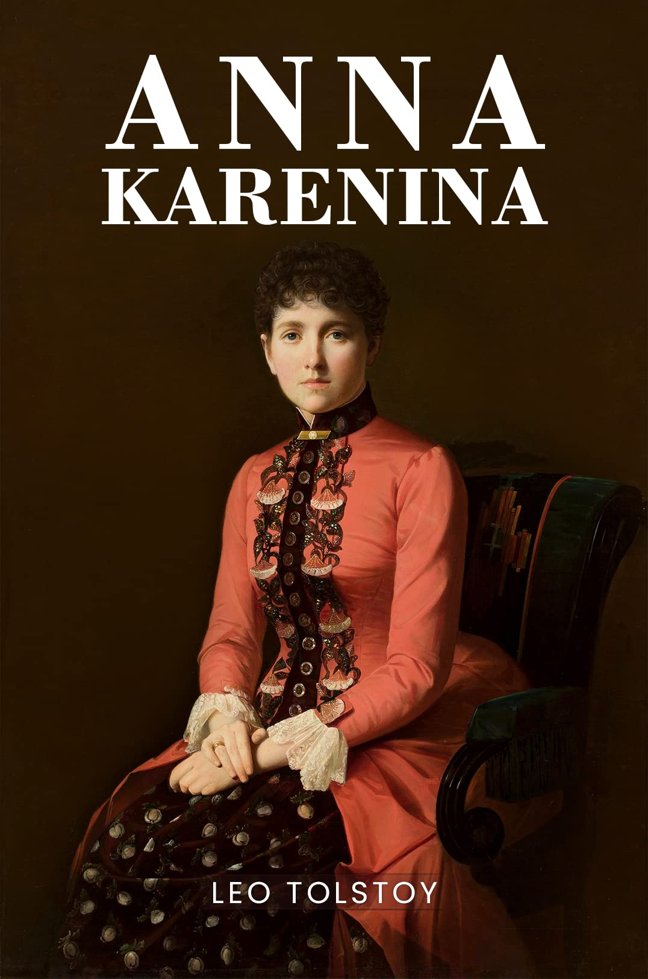
Anna Karenina
Leo Tolstoy
4.5
Tolstoy's epic novel of love, destiny and self-destruction, in a gorgeous new clothbound edition from Penguin Classics. Anna Karenina seems to have everything - beauty, wealth, popularity and an adored son. But she feels that her life is empty until the moment she encounters the impetuous officer Count Vronsky. Their subsequent affair scandalizes society and family alike and soon brings jealously and bitterness in its wake. Contrasting with this tale of love and self-destruction is the vividly observed story of Levin, a man striving to find contentment and a meaning to his life - and also a self-portrait of Tolstoy himself. This acclaimed modern translation by Richard Pevear and Larissa Volokhonsky won the PEN/ Book of the Month Club Translation Prize in 2001. Their translation is accompanied in this edition by an introduction by Richard Pevear and a preface by John Bayley. "The new and brilliantly witty translation by Richard Pevear and Larissa Volokhonsky is a must". (Lisa Appignanesi, Independent, Books of the Year). "Pevear and Volokhonsky are at once scrupulous translators and vivid stylists of English, and their superb rendering allows us, as perhaps never before, to grasp the palpability of Tolstoy's "characters, acts, situations"". (James Wood, New Yorker).
…
Recommended by Chelsea Handler, Marvin Liao, Audrey Russo, and 5 others.
I don't know if I have to expound on why I love this book, but everyone should read this author, and this was the first one of his works I read. So, it's like a first boyfriend. Or my first Cabbage Patch Kid. [source]
Marvin Liao
Partner/500 Startups
My list would be (besides the ones I mentioned in answer to the previous question) both business & Fiction/Sci-Fi and ones I personally found helpful to myself. The business books explain just exactly how business, work & investing are in reality & how to think properly & differentiate yourself. On the non-business side, a mix of History & classic fiction to understand people, philosophy to make sense of life and Science fiction to picture what the future could be like (not always utopian). [source]
Audrey Russo
Question: What books would you recommend to young people interested in your career path? Answer: Anything by Peter Senge. The Hard Thing About Hard Things – Ben Horowitz Once you are Lucky, Twice you are good – Sara Lacey Revolutionary Wealth – Alvin Toffler Black Swan – Taleb Reset: My Fight for Inclusion and Lasting Change, by Ellen Pao. Creative Class – Richard Florida Creativity Inc. by Ed Catmull & Amy Wallace Liar’s Poker by Michael Lewis American Government 101: From the Continental Congress to the Iowa Caucus, Everything You Need to Know About US Politics – Kathleen Spears The Tao of Pooh by Benjamin Hoff. Anna Karenina by Leo Tolstoy. Any book by Herman Hesse The Art of War by Sun Tzu. [source]
Cover unavailable
25
David Copperfield
Charles Dickens
4.5
David Copperfield is the story of a young man's adventures on his journey from an unhappy and impoverished childhood to the discovery of his vocation as a successful novelist. Among the gloriously vivid cast of characters he encounters are his tyrannical stepfather, Mr Murdstone; his brilliant, but ultimately unworthy school-friend James Steerforth; his formidable aunt, Betsey Trotwood; the eternally humble, yet treacherous Uriah Heep; frivolous, enchanting Dora Spenlow; and the magnificently impecunious Wilkins Micawber, one of literature's great comic creations. In David Copperfield - the novel he described as his 'favourite child' - Dickens drew revealingly on his own experiences to create one of the most exuberant and enduringly popular works, filled with tragedy and comedy in equal measure. This edition uses the text of the first volume publication of 1850, and includes updated suggestions for further reading, original illustrations by 'Phiz', a revised chronology and expanded notes. In his new introduction, Jeremy Tambling discusses the novel's autobiographical elements, and its central themes of memory and identity.
…
Recommended by Jenny Hartley.
Jenny Hartley
That famous Victorian imperative: Make ’em laugh; make ’em cry; make ’em wait. It does all that in that spades. [source]
Cover unavailable
26
The Iliad
Homer, Robert Fagles, Bernard Knox
4.5
Dating to the ninth century B.C., Homer’s timeless poem still vividly conveys the horror and heroism of men and gods wrestling with towering emotions and battling amidst devastation and destruction, as it moves inexorably to the wrenching, tragic conclusion of the Trojan War. Renowned classicist Bernard Knox observes in his superb introduction that although the violence of the Iliad is grim and relentless, it coexists with both images of civilized life and a poignant yearning for peace.
Combining the skills of a poet and scholar, Robert Fagles, winner of the PEN/Ralph Manheim Medal for Translation and a 1996 Academy Award in Literature from the American Academy of Arts and Letters, brings the energy of contemporary language to this enduring heroic epic. He maintains the drive and metric music of Homer’s poetry, and evokes the impact and nuance of the Iliad’s mesmerizing repeated phrases in what Peter Levi calls “an astonishing performance.”
When I got to college, I was a classics major, and that was mainly the study of Greek - and to a lesser extent Roman - history and culture, and that fascinated me: the Iliad, the Odyssey, the Aeneid by Virgil. [source]
Charlotte Higgins
I think The Iliad has much to say to politicians now – it’s completely clear-eyed about collateral damage, about problems of post-conflict and about the ghastly things that happen to women and children in war. [source]
There are always new translations of The Iliad coming out, but this one has a very specific approach, both in terms of its philosophy of translation and its approach to the text. [source]
Cover unavailable
27
Great Expectations
Charles Dickens, Margaret Cardwell, Kate Flint
4.5
Recommended by Richard Branson, Marvin Liao, Audrey Russo, and 5 others.
Today is World Book Day, a wonderful opportunity to address this #ChallengeRichard sent in by Mike Gonzalez of New Jersey: Make a list of your top 65 books to read in a lifetime. [source]
Marvin Liao
Partner/500 Startups
My list would be (besides the ones I mentioned in answer to the previous question) both business & Fiction/Sci-Fi and ones I personally found helpful to myself. The business books explain just exactly how business, work & investing are in reality & how to think properly & differentiate yourself. On the non-business side, a mix of History & classic fiction to understand people, philosophy to make sense of life and Science fiction to picture what the future could be like (not always utopian). [source]
Audrey Russo
So many novels; Lord of the Flies, Great Gatsby, Great Expectations; all the Nancy Drew books; Catcher in the Rye, Books written by Zora Neale Hurston; Pat Conroy – all because of the view about different people who endure despite adversity while kindling the hearts of the human spirit. [source]
Cover unavailable
28
Les Misérables
Victor Hugo, Isabel F. Hapgood, et al.
4.5
Introducing one of the most famous characters in literature, Jean Valjean—the noble peasant imprisoned for stealing a loaf of bread—Les Misérables ranks among the greatest novels of all time. In it, Victor Hugo takes readers deep into the Parisian underworld, immerses them in a battle between good and evil, and carries them to the barricades during the uprising of 1832 with a breathtaking realism that is unsurpassed in modern prose. Within his dramatic story are themes that capture the intellect and the emotions: crime and punishment, the relentless persecution of Valjean by Inspector Javert, the desperation of the prostitute Fantine, the amorality of the rogue Thénardier, and the universal desire to escape the prisons of our own minds. Les Misérables gave Victor Hugo a canvas upon which he portrayed his criticism of the French political and judicial systems, but the portrait that resulted is larger than life, epic in scope—an extravagant spectacle that dazzles the senses even as it touches the heart.
…
Recommended by Christian B Miller and David Bellos.
Christian B Miller
Vividly illustrates two ideas about character. The first is that our characters can change over time, the second is that role models can be powerful sources of character change. [source]
David Bellos
Because it’s so huge and so capacious and contains so many different stories and takes on the world, you can make anything out of Les Misérables. [source]
Cover unavailable
29
The Brothers Karamazov
Fyodor Dostoevsky
4.4
The Brothers Karamasov is a murder mystery, a courtroom drama, and an exploration of erotic rivalry in a series of triangular love affairs involving the “wicked and sentimental” Fyodor Pavlovich Karamazov and his three sons―the impulsive and sensual Dmitri; the coldly rational Ivan; and the healthy, red-cheeked young novice Alyosha. Through the gripping events of their story, Dostoevsky portrays the whole of Russian life, is social and spiritual striving, in what was both the golden age and a tragic turning point in Russian culture.
This award-winning translation by Richard Pevear and Larissa Volokhonsky remains true to the verbal inventiveness of Dostoevsky’s prose, preserving the multiple voices, the humor, and the surprising modernity of the original. It is an achievement worthy of Dostoevsky’s last and greatest novel.
…
Recommended by Randall Stephenson, Adam Townsend, Christian B Miller, and 3 others.
@FinchmanWill @jposhaughnessy @Cernovich @mcclay_roman My son's favorite book of all time [source]
Christian B Miller
A host of deep philosophical questions are at work in the book: about, say, the existence of God, the nature of morality without God, and the role of free will. [source]
Cover unavailable
30
Anne of Green Gables (Anne of Green Gables, #1)
L. M. Montgomery, Jennifer Lee Carroll
4.4
As soon as Anne Shirley arrives at the snug white farmhouse called Green Gables, she is sure she wants to stay forever . . . but will the Cuthberts send her back to to the orphanage? Anne knows she's not what they expected—a skinny girl with fiery red hair and a temper to match. If only she can convince them to let her stay, she'll try very hard not to keep rushing headlong into scrapes and blurting out the first thing that comes to her mind. Anne is not like anyone else, the Cuthberts agree; she is special—a girl with an enormous imagination. This orphan girl dreams of the day when she can call herself Anne of Green Gables.
…
Cover unavailable
31
The Strange Case of Dr. Jekyll and Mr. Hyde
Robert Louis Stevenson
4.4
Strange Case of Dr Jekyll and Mr Hyde is the original title of a novella written by the famous Scottish author Robert Louis Stevenson that was first published in 1886. The work is commonly known today as The Strange Case of Dr Jekyll and Mr Hyde, Dr Jekyll and Mr Hyde, or simply Jekyll & Hyde. It is about a London lawyer named John Gabriel Utterson who investigates strange occurrences between his old friend, Dr Henry Jekyll, and the evil Edward Hyde.
…
Cover unavailable
32
Journey to the Center of the Earth (Extraordinary Voyages, #3)
Jules Verne
4.4
The intrepid Professor Liedenbrock embarks upon the strangest expedition of the nineteenth century: a journey down an extinct Icelandic volcano to the Earth's very core. In his quest to penetrate the planet's primordial secrets, the geologist--together with his quaking nephew Axel and their devoted guide, Hans--discovers an astonishing subterranean menagerie of prehistoric proportions. Verne's imaginative tale is at once the ultimate science fiction adventure and a reflection on the perfectibility of human understanding and the psychology of the questor.
…
Recommended by Roxana Bitoleanu, Simon Winchester, and Tullis Onstott.
Roxana Bitoleanu
If I have to choose only one non-business book I would pick Jules Verne's "A journey to the center of the earth", as a symbolic journey to the unknown, deep down, just like our personal search for meaning, for our inner driver. [source]
A fantastic piece of science fiction – it’s basically about explorers who want to know what’s inside the earth. [source]
Tullis Onstott
The book has just enough science that it seems real. [source]
Cover unavailable
33
Oliver Twist
Charles Dickens
4.4
Oliver is an orphan living on the dangerous London streets with no one but himself to rely on. Fleeing from poverty and hardship, he falls in with a criminal street gang who will not let him go, however hard he tries to escape.
One of the most swiftly moving and unified of Charles Dickens’s great novels, Oliver Twist is also famous for its re-creation–through the splendidly realized figures of Fagin, Nancy, the Artful Dodger, and the evil Bill Sikes–of the vast London underworld of pickpockets, thieves, prostitutes, and abandoned children. Victorian critics took Dickens to task for rendering this world in such a compelling, believable way, but readers over the last 150 years have delivered an alternative judgment by making this story of the orphaned Oliver Twist one of its author’s most loved works.
…
Recommended by Ann Widdecombe, Audrey Penn, and Chigozie Obioma.
Ann Widdecombe
Oliver is a boy who has escaped the workhouse and is adopted by a family of pickpockets. He’s the exception – because he’s being manipulated by the grownups… [source]
Audrey Penn
I’m going to go with Oliver Twist. I was raised on all of these books, but I loved Oliver Twist. I have always believed that people, no matter how bad they are, when they see a really good kid in trouble, they’re going to help. [source]
Chigozie Obioma
One day he had this radical idea that, if you want something, you can actually make a demand on life. [source]
Cover unavailable
34
The Scarlet Letter
Nathaniel Hawthorne, Thomas E. Connolly, Nina Baym
4.4
Nathaniel Hawthorne's THE SCARLET LETTER reaches to our nation's historical and moral roots for the material of great tragedy. Set in an early New England colony, the novel shows the terrible impact a single, passionate act has on the lives of three members of the community: the defiant Hester Prynne; the fiery, tortured Reverend Dimmesdale; and the obsessed, vengeful Chillingworth.
With THE SCARLET LETTER, Hawthorne became the first American novelist to forge from our Puritan heritage a universal classic, a masterful exploration of humanity's unending struggle with sin, guilt and pride.
…
Recommended by Carol Gilligan.
Carol Gilligan
The Scarlet Letter is a tragic love story, but it’s also a story about resistance and transformation. [source]
Cover unavailable
35
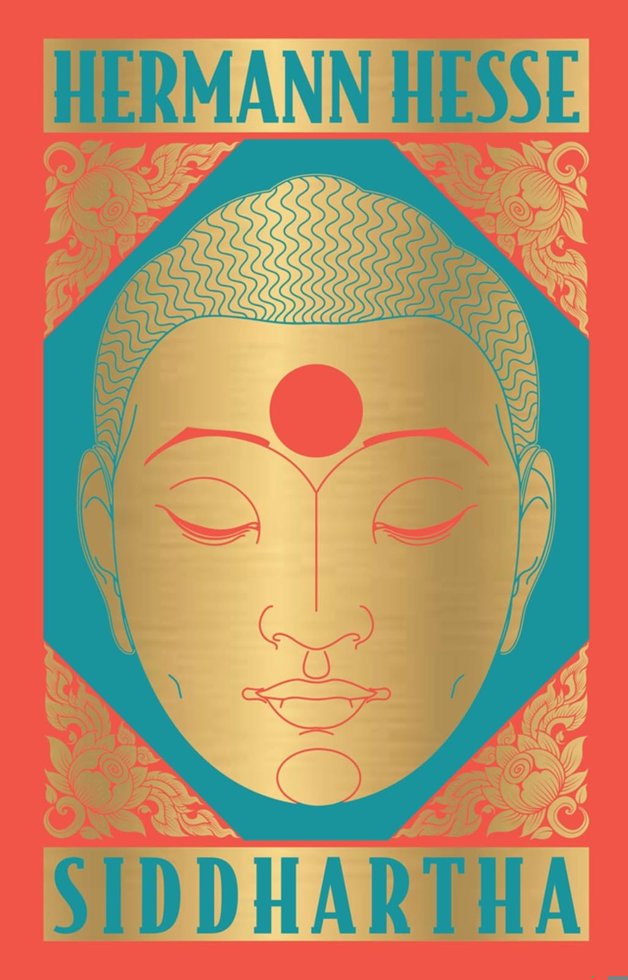
Siddhartha
Hermann Hesse
4.4
Herman Hesse's classic novel has delighted, inspired, and influenced generations of readers, writers, and thinkers. In this story of a wealthy Indian Brahmin who casts off a life of privilege to seek spiritual fulfillment. Hesse synthesizes disparate philosophies--Eastern religions, Jungian archetypes, Western individualism--into a unique vision of life as expressed through one man's search for meaning.
He says, 'Love is stronger than hate. Soft is stronger than hard. Water is stronger than stone.' [source]
Cover unavailable
36
The Adventures of Tom Sawyer
Mark Twain and Scott McKowen
4.4
Who could forget the pranks, the adventures, the sheer fun of Tom Sawyer? It’s something every child should experience and every child will love. From Tom’s sly trickery with the whitewashed fence—when he cleverly manipulates everyone so they happily do his work for him—to his and Becky Thatcher’s calamities in Bat Cave, the enjoyment just never ends. The illustrations for this series were created by Scott McKowen, who, with his wife Christina Poddubiuk, operates Punch & Judy Inc., a company specializing in design and illustration for theater and performing arts. Their projects often involve research into the visual aspects of historical settings and characters. Christina is a theater set and costume designer and contributed advice on the period clothing for the illustrations.
Scott created these drawings in scratchboard an engraving medium which evokes the look of popular art from the period of these stories. Scratchboard is an illustration board with a specifically prepared surface of hard white chalk. A thin layer of black ink is rolled over the surface, and lines are drawn by hand with a sharp knife by scraping through the ink layer to expose the white surface underneath. The finished drawings are then scanned and the color is added digitally.
Today is World Book Day, a wonderful opportunity to address this #ChallengeRichard sent in by Mike Gonzalez of New Jersey: Make a list of your top 65 books to read in a lifetime. [source]
Ovidiu Drugan
Question:What books had the biggest impact on you? (perhaps changed the way you see things, dramatically changed your career path) Answer: Dune – Frank Herbert Write It Down, Make It Happen – Henriette Anne Klauser Two years vacations – Jules Verne (and all the well known books) – navigation & cast away story The Seven Habits of Highly Effective People – Stephen Covey Huckleberry Finn – Mark Twain (and Tom Sawyer) – river expedition The Foundation Cycle – Isaac Asimov War books – Sven Hassel – changed the way I see the army, conflicts, war Crime and Punishment – Fyodor Dostoyevsky – any crime comes with inner suffering so better not do it Nansen, Kon-Tiki, Expedition Ra – all expedition books form north pole to across the oceans with ships or rafts [source]
Cover unavailable
37
Persuasion
Jane Austen
4.4
Twenty-seven-year old Anne Elliot is Austen's most adult heroine. Eight years before the story proper begins, she is happily betrothed to a naval officer, Frederick Wentworth, but she precipitously breaks off the engagement when persuaded by her friend Lady Russell that such a match is unworthy. The breakup produces in Anne a deep and long-lasting regret. When later Wentworth returns from sea a rich and successful captain, he finds Anne's family on the brink of financial ruin and his own sister a tenant in Kellynch Hall, the Elliot estate. All the tension of the novel revolves around one question: Will Anne and Wentworth be reunited in their love?
Jane Austen once compared her writing to painting on a little bit of ivory, 2 inches square. Readers of Persuasion will discover that neither her skill for delicate, ironic observations on social custom, love, and marriage nor her ability to apply a sharp focus lens to English manners and morals has deserted her in her final finished work.
…
Recommended by Jenny Davidson.
Jenny Davidson
Persuasion is an unusually brilliant novel, just in terms of its style of narration. Out of all of the novels Austen published in her short life, this one feels most to me like a real love story. [source]
Cover unavailable
38
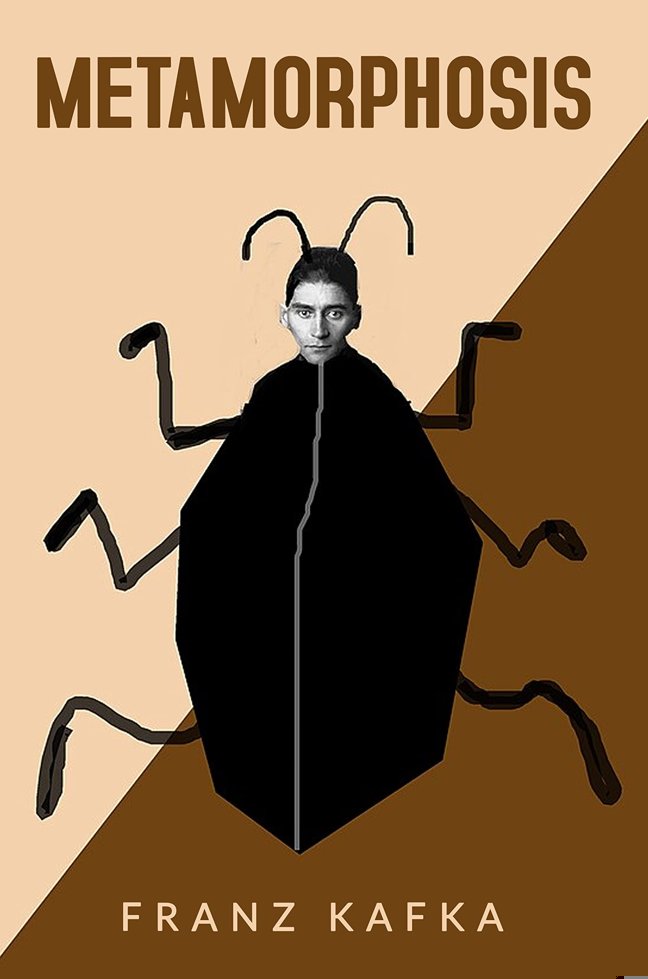
The Metamorphosis
Franz Kafka
4.4
Alternate cover edition of ISBN 0553213695 / 9780553213690
"As Gregor Samsa awoke one morning from uneasy dreams he found himself transformed in his bed into a gigantic insect. He was laying on his hard, as it were armor-plated, back and when he lifted his head a little he could see his domelike brown belly divided into stiff arched segments on top of which the bed quilt could hardly keep in position and was about to slide off completely. His numerous legs, which were pitifully thin compared to the rest of his bulk, waved helplessly before his eyes."
With it's startling, bizarre, yet surprisingly funny first opening, Kafka begins his masterpiece, The Metamorphosis. It is the story of a young man who, transformed overnight into a giant beetle-like insect, becomes an object of disgrace to his family, an outsider in his own home, a quintessentially alienated man. A harrowing—though absurdly comic—meditation on human feelings of inadequacy, guilt, and isolation, The Metamorphosis has taken its place as one of the most widely read and influential works of twentieth-century fiction. As W.H. Auden wrote, "Kafka is important to us because his predicament is the predicament of modern man."
David Lynch said this is one of his most-recommended books. [source]
David Lynch
David Lynch said this is one of his most-recommended books. [source]
Cover unavailable
39
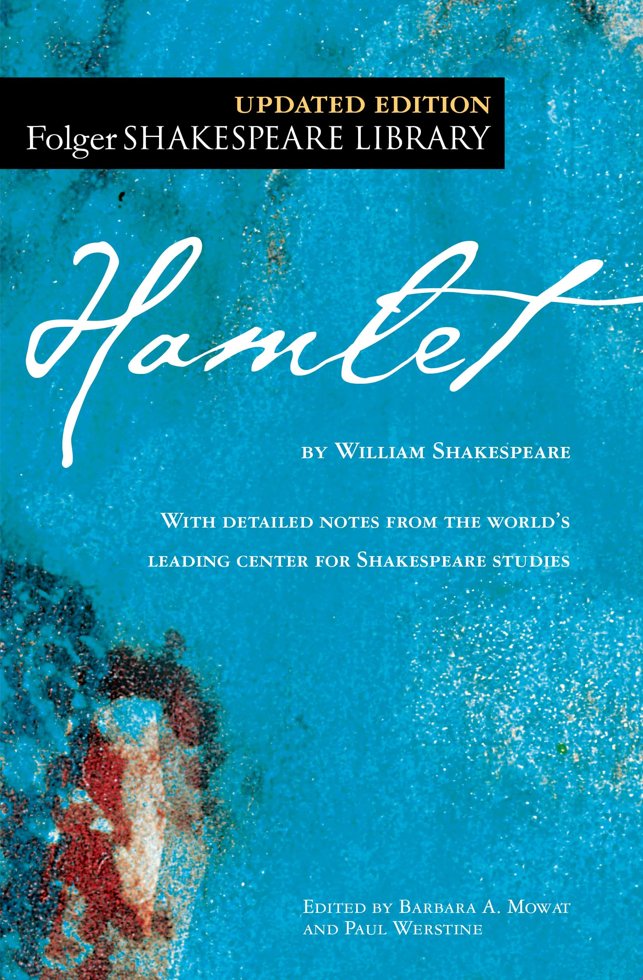
Hamlet
William Shakespeare
4.4
No Fear Shakespeare gives you the complete text of Hamlet on the left-hand page, side-by-side with an easy-to-understand translation on the right.
"Hamlet" is the story of the Prince of Denmark who learns of the death of his father at the hands of his uncle, Claudius. Claudius murders Hamlet's father, his own brother, to take the throne of Denmark and to marry Hamlet's widowed mother. Hamlet is sunk into a state of great despair as a result of discovering the murder of his father and the infidelity of his mother. Hamlet is torn between his great sadness and his desire for the revenge of his father's murder.
Philosophy runs through this play–all sorts of great lines. There are gems like “..for there is nothing either good or bad, but thinking makes it so” which I used in my last book and “Beware of entrance to a quarrel; but, being in, bear it, that the opposed may beware of thee.” was a favorite of Sherman. [source]
Tim Lott
I love the speech when Hamlet’s uncle Claudius admits to being inflicted with the primal eldest curse for killing his brother, and begs on his knees for forgiveness for this ultimate violation of the law of nature. [source]
Cover unavailable
40
The Importance of Being Earnest
Oscar Wilde
4.4
Oscar Wilde's madcap farce about mistaken identities, secret engagements, and lovers entanglements still delights readers more than a century after its 1895 publication and premiere performance. The rapid-fire wit and eccentric characters of The Importance of Being Earnest have made it a mainstay of the high school curriculum for decades.
Cecily Cardew and Gwendolen Fairfax are both in love with the same mythical suitor. Jack Worthing has wooed Gwendolen as Ernest while Algernon has also posed as Ernest to win the heart of Jack's ward, Cecily. When all four arrive at Jack's country home on the same weekend the "rivals" to fight for Ernest's undivided attention and the "Ernests" to claim their beloveds pandemonium breaks loose. Only a senile nursemaid and an old, discarded hand-bag can save the day!
…
Cover unavailable
41
20,000 Leagues Under the Sea
Jules Verne, William O'Connor
4.4
Go 20,000 Leagues Under the Sea with Sterling's Illustrated Classics series, and see Jules Verne's fantastic water-world as never before: through more than 70 stunning steampunk images illustrated by the incredible William O'Connor. Originally published in 1870, Verne’s amazing adventure is one of the earliest sci-fi novels ever written—and one of the most popular. Come on board the Nautilus and plunge below the waves with Captain Nemo on a voyage of exploration and imagination.
Today is World Book Day, a wonderful opportunity to address this #ChallengeRichard sent in by Mike Gonzalez of New Jersey: Make a list of your top 65 books to read in a lifetime. [source]
Re-reading it recently, I was struck not just by its dynamic plot, but also by how much science he smuggled in. [source]
Cover unavailable
42
The Three Musketeers (The D'Artagnan Romances, #1)
Alexandre Dumas and William Robso
4.3
Alexandre Dumas’s most famous tale— and possibly the most famous historical novel of all time— in a handsome hardcover volume.
This swashbuckling epic of chivalry, honor, and derring-do, set in France during the 1620s, is richly populated with romantic heroes, unattainable heroines, kings, queens, cavaliers, and criminals in a whirl of adventure, espionage, conspiracy, murder, vengeance, love, scandal, and suspense. Dumas transforms minor historical figures into larger- than-life characters: the Comte d’Artagnan, an impetuous young man in pursuit of glory; the beguilingly evil seductress “Milady”; the powerful and devious Cardinal Richelieu; the weak King Louis XIII and his unhappy queen—and, of course, the three musketeers themselves, Athos, Porthos, and Aramis, whose motto “all for one, one for all” has come to epitomize devoted friendship. With a plot that delivers stolen diamonds, masked balls, purloined letters, and, of course, great bouts of swordplay, The Three Musketeers is eternally entertaining.
…
Cover unavailable
43
Sense and Sensibility
Jane Austen
4.3
Alternate cover edition of ISBN 9780141439662
'The more I know of the world, the more am I convinced that I shall never see a man whom I can really love. I require so much!'
Marianne Dashwood wears her heart on her sleeve, and when she falls in love with the dashing but unsuitable John Willoughby she ignores her sister Elinor's warning that her impulsive behaviour leaves her open to gossip and innuendo. Meanwhile Elinor, always sensitive to social convention, is struggling to conceal her own romantic disappointment, even from those closest to her. Through their parallel experience of love—and its threatened loss—the sisters learn that sense must mix with sensibility if they are to find personal happiness in a society where status and money govern the rules of love.
This edition includes explanatory notes, textual variants between the first and second editions, and Tony Tanner's introduction to the original Penguin Classic edition.
…
Recommended by Edward Skidelsky.
Edward Skidelsky
Jane Austen’s purpose is to illustrate this very Aristotelian virtue of prudence: that you’ve got to look out for your interests, you mustn’t just give in to passion. [source]
Cover unavailable
44
The Wind in the Willows
Kenneth Grahame, Charles van Sandwyk
4.3
Since 1903, the escapades of Mole, his friend Water Rat, shy Badger, and Toad of Toad Hall have delighted children, and adults, too. Follow the winning foursome through the seasons as they sail the river, get lost in the Wild Wood, take off on a merry adventure in Toad's colorful carriage, and rescue Toad Hall from a band of nasty marauding weasels.
Recommended by Neil Gaiman, M G Leonard, Melvin Burgess, and 1 others.
I think The Wind in the Willows is an excellent candidate for Best Book Ever Written. https://t.co/Uepg8wc1uE [source]
M G Leonard
The characters are alive in my head and I love every single one of them. [source]
Melvin Burgess
It’s the first book I fell in love with. The fiction that I liked when I was young was very much about cosy little adventures with animals. [source]
Cover unavailable
45
The Invisible Man (AmazonClassics Edition)
H. G. Wells
4.3
This masterpiece of science fiction is the fascinating story of Griffin, a scientist who creates a serum to render himself invisible, and his descent into madness that follows.
Cover unavailable
46
The War of the Worlds
H. G. Wells, Arthur C. Clarke
4.3
When an army of invading Martians lands in England, panic and terror seize the population. As the aliens traverse the country in huge three-legged machines, incinerating all in their path with a heat ray and spreading noxious toxic gases, the people of the Earth must come to terms with the prospect of the end of human civilization and the beginning of Martian rule.
Inspiring films, radio dramas, comic-book adaptations, television series and sequels,The War of the Worlds is a prototypical work of science fiction which has influenced every alien story that has come since, and is unsurpassed in its ability to thrill, well over a century since it was first published.
…
Recommended by Roger Luckhurst.
Roger Luckhurst
Wells’ brilliant satirical stroke of turning colonialism on its head. [source]
Cover unavailable
47
Alice's Adventures in Wonderland & Through the Looking-Glass
Lewis Carroll
4.3
In 1862 Charles Lutwidge Dodgson, a shy Oxford mathematician with a stammer, created a story about a little girl tumbling down a rabbit hole. Thus began the immortal adventures of Alice, perhaps the most popular heroine in English literature.
Countless scholars have tried to define the charm of the Alice books--with those wonderfully eccentric characters the Queen of Hearts, Tweedledum, and Tweedledee, the Cheshire Cat, Mock Turtle, the Mad Hatter et al.--by proclaiming that they really comprise a satire on language, a political allegory, a parody of Victorian children's literature, even a reflection of contemporary ecclesiastical history.
Perhaps, as Dodgson might have said, Alice is no more than a dream, a fairy tale about the trials and tribulations of growing up--or down, or all turned round--as seen through the expert eyes of a child.
…
Recommended by Eric Weinstein, Jean Webb, Larry Doyle, and 1 others.
Eric Weinstein recommended this book on Twitter. [source]
Jean Webb
An imaginative, clever and fun fantasy story that satirises nineteenth century England at the same time as celebrating academic thinking. [source]
Larry Doyle
You’d have to be a zombie to miss the humour in it – it’s hilarious. Although the book is ancient, the humour feels modern [source]
Cover unavailable
48
A Study in Scarlet
Arthur Conan Doyle
4.3
"A Study in Scarlet" is the first published story of one of the most famous literary detectives of all time, Sherlock Holmes. Here Dr. Watson, who has just returned from a war in Afghanistan, meets Sherlock Holmes for the first time when they become flat-mates at the famous 221 B Baker Street. In "A Study in Scarlet" Sherlock Holmes investigates a murder at Lauriston Gardens as Dr. Watson tags along with Holmes while narratively detailing his amazing deductive abilities.
If you’ve never read any Sherlock Holmes books you really need to start with that one because it introduces this rather mysterious and romantic character. At the beginning, Doctor Watson tries to puzzle out the profession of his strange roommate at 221b Baker Street. He makes lists of what Holmes seems to know a lot about and what he doesn’t seem to know about at all – including the Copernican theory. In short, this is an introduction to a partnership and friendship that will be chronicled over 56 short stories and four novels. [source]
Cover unavailable
49
Alice's Adventures in Wonderland (Wisehouse Classics - Original 1865 Edition with the Complete Illustrations by Sir John Tenniel) (2016)
Lewis Carroll, Sam Vaseghi, et al.
4.3
Alice's Adventures in Wonderland is a work of children's literature by the English mathematician and author, the Reverend Charles Lutwidge Dodgson, written under the pseudonym Lewis Carroll. It tells the story of a girl named Alice who falls down a rabbit-hole into a fantasy realm populated by grotesque figures like talking playing cards and anthropomorphic creatures. The Wonderland described in the tale plays with logic in ways that have made the story of lasting popularity with adults as well as children. It is considered to be one of the most characteristic examples of the genre of literary nonsense.
…
Recommended by Georg Grey.
Georg Grey
The best book on programming for the layman is Alice in Wonderland; but that's because it's the best book on anything for laymen. [source]
Cover unavailable
50
Peter Pan
J. M. Barrie, Michael Hague
4.3
Peter Pan by J. M. Barrie Peter Pan, the mischievous boy who refuses to grow up, lands in the Darling's proper middle-class home to look for his shadow. He befriends Wendy, John and Michael and teaches them to fly (with a little help from fairy dust). He and Tinker Bell whisk them off to Never-land where they encounter the Red Indians, the Little Lost Boys, pirates and the dastardly Captain Hook.
Cover unavailable
51
The Hound of the Baskervilles
Sir Arthur Conan Doyle and Anne Perry
4.3
We owe The Hound of the Baskervilles (1902) to Arthur Conan Doyle's good friend Fletcher "Bobbles" Robinson, who took him to visit some scary English moors and prehistoric ruins, and told him marvelous local legends about escaped prisoners and a 17th-century aristocrat who fell afoul of the family dog. Doyle transmogrified the legend: generations ago, a hound of hell tore out the throat of devilish Hugo Baskerville on the moonlit moor. Poor, accursed Baskerville Hall now has another mysterious death: that of Sir Charles Baskerville. Could the culprit somehow be mixed up with secretive servant Barrymore, history-obsessed Dr. Frankland, butterfly-chasing Stapleton, or Selden, the Notting Hill murderer at large? Someone's been signaling with candles from the mansion's windows. Nor can supernatural forces be ruled out. Can Dr. Watson--left alone by Sherlock Holmes to sleuth in fear for much of the novel--save the next Baskerville, Sir Henry, from the hound's fangs?
Many Holmes fans prefer Doyle's complete short stories, but their clockwork logic doesn't match the author's boast about this novel: it's "a real Creeper!" What distinguishes this particular Hound is its fulfillment of Doyle's great debt to Edgar Allan Poe--it's full of ancient woe, low moans, a Grimpen Mire that sucks ponies to Dostoyevskian deaths, and locals digging up Neolithic skulls without next-of-kins' consent. "The longer one stays here the more does the spirit of the moor sink into one's soul," Watson realizes. "Rank reeds and lush, slimy water-plants sent an odour of decay ... while a false step plunged us more than once thigh-deep into the dark, quivering mire, which shook for yards in soft undulations around our feet ... it was as if some malignant hand was tugging us down into those obscene depths." Read on--but, reader, watch your step! --Tim Appelo
Holmes turns to Mortimer and says, A man’s or a woman’s? and Mortimer delivers the greatest reply in 20th century literature, Mr Holmes, they were the footprints of a gigantic hound! I shivered with pleasure and realised that life didn’t get much better than that. [source]
It actually scared me the first time I read it as a kid. And I have always liked it. It is my favourite of all his books and it has a very clever ending. [source]
Cover unavailable
52
The Adventures of Sherlock Holmes
Sir Arthur Conan Doyle
4.3
Sir Arthur Ignatius Conan Doyle, DL (22 May 1859 – 7 July 1930) was a Scottish author most noted for his stories about the detective Sherlock Holmes, which are generally considered a major innovation in the field of crime fiction, and the adventures of Professor Challenger. He was a prolific writer whose other works include science fiction stories, historical novels, plays and romances, poetry, and non-fiction. Conan was originally a given name, but Doyle used it as part of his surname in his later years.
…
Cover unavailable
53
Emma
Jane Austen, Fiona Stafford
4.3
Emma Woodhouse is one of Austen's most captivating and vivid characters. Beautiful, spoilt, vain and irrepressibly witty, Emma organizes the lives of the inhabitants of her sleepy little village and plays matchmaker with devastating effect.
Emma is the Regency novel in the sense that it was written and published during the Regency. I think the feel of much of Jane Austen is really in the late 1790s – the beginning of the French Wars. Jane Austen wasn’t writing about politics. She is famously someone who writes about what she knows. Her world is essentially a provincial world of manners. [source]
Cover unavailable
54
The Woman in White
Wilkie Collins and Matthew Sweet
4.3
'In one moment, every drop of blood in my body was brought to a stop... There, as if it had that moment sprung out of the earth, stood the figure of a solitary Woman, dressed from head to foot in white'
The Woman in White famously opens with Walter Hartright's eerie encounter on a moonlit London road. Engaged as a drawing master to the beautiful Laura Fairlie, Walter becomes embroiled in the sinister intrigues of Sir Percival Glyde and his 'charming' friend Count Fosco, who has a taste for white mice, vanilla bonbons, and poison. Pursuing questions of identity and insanity along the paths and corridors of English country houses and the madhouse, The Woman in White is the first and most influential of the Victorian genre that combined Gothic horror with psychological realism.
Matthew Sweet's introduction explores the phenomenon of Victorian 'sensation' fiction, and discusses Wilkie Collins's biographical and societal influences. Included in this edition are appendices on theatrical adaptations of the novel and its serialisation history.
I’ve only read it twice, but it’s lingered in my consciousness: the images and the feel of it. [source]
Cover unavailable
55
Uncle Tom's Cabin
Harriet Beecher Stowe
4.3
Uncle Tom's Cabin; or, Life Among the Lowly, is an anti-slavery novel by American author Harriet Beecher Stowe. Published in 1852, the novel "helped lay the groundwork for the Civil War," according to Will Kaufman. Stowe, a Connecticut-born teacher at the Hartford Female Seminary and an active abolitionist, featured the character of Uncle Tom, a long-suffering black slave around whom the stories of other characters revolve. The sentimental novel depicts the reality of slavery while also asserting that Christian love can overcome something as destructive as enslavement of fellow human beings. Uncle Tom's Cabin was the best-selling novel of the 19th century and the second best-selling book of that century, following the Bible. It is credited with helping fuel the abolitionist cause in the 1850s. In the first year after it was published, 300,000 copies of the book were sold in the United States; one million copies in Great Britain. In 1855, three years after it was published, it was called "the most popular novel of our day." The impact attributed to the book is great, reinforced by a story that when Abraham Lincoln met Stowe at the start of the Civil War, Lincoln declared, "So this is the little lady who started this great war." The quote is apocryphal; it did not appear in print until 1896, and it has been argued that "The long-term durability of Lincoln's greeting as an anecdote in literary studies and Stowe scholarship can perhaps be explained in part by the desire among many contemporary intellectuals ... to affirm the role of literature as an agent of social change." The book and the plays it inspired helped popularize a number of stereotypes about black people. These include the affectionate, dark-skinned "mammy"; the "pickaninny" stereotype of black children; and the "Uncle Tom," or dutiful, long-suffering servant faithful to his white master or mistress. In recent years, the negative associations with Uncle Tom's Cabin have, to an extent, overshadowed the historical impact of the book as a "vital antislavery tool."
Uncle Tom's Cabin is one of the best books I ever read. Abraham Lincoln said to its author, "So you're the little woman who wrote the book that made this great war." It's alternatively heartbreaking and laugh out loud funny. But Greg Fergus thinks it's an instruction manual. https://t.co/K53AJsQnKK [source]
I actually have a first edition of this book. [source]
Cover unavailable
56
Mansfield Park
Jane Austen, Margaret Drabble
4.2
Adopted into the household of her uncle, Sir Thomas Bertram, Fanny Price grows up a meek outsider among her cousins in the unaccustomed elegance of Mansfield Park. Soon after Sir Thomas absents himself on estate business in Antigua (the family's investment in slavery and sugar is considered in the Introduction in a new, post-colonial light), Mary Crawford and her brother Henry arrive at Mansfield, bringing with them London glamour, and the seductive taste for flirtation and theatre that precipitates a crisis. While Mansfield Park appears in some ways to continue where Pride and Prejudice left off, it is, as Kathryn Sutherland shows in her illuminating Introduction, a much darker work, which challenges 'the very values (of tradition, stability, retirement and faithfulness) it appears to endorse'. This new edition provides an accurate text based, for the first time since its original publication, on the first edition of 1814.
…
Recommended by Mary Warnock.
Mary Warnock
This is an oddity but it is a highly moralistic novel. Fanny Price, the heroine, whom many people find rather tiresome, is a highly moral and articulate character and one of the things that intrigues me so much is that Jane Austen at the beginning of the 19th century had the correct view that you can’t be morally involved unless you feel strongly that some things are good and some things are bad. [source]
Cover unavailable
57
Gulliver's Travels
Jonathan Swift
4.2
For the last 250 years people everywhere have enjoyed reading about Lemuel Gulliver's travels in the strange countries of Lilliput and Brobdingnag. The people of these countries, with all their curiously human failings, come to life in Martin Aitchison's vivid illustrations. Here is a story to make you laugh - but to make you think, too.
Which books should be read by every single intelligent person on planet? … Gulliver's Travels (Swift) to learn, among other satirical lessons, that most of the time humans are Yahoos. If you read all of the above works you will glean profound insight into most of what has driven the history of the western world. [source]
In the first place, it is very funny. We read it first as an adventure story, when we were kids, without understanding the political context in Europe or the philosophical context. Then when we read it again as adults we realise that Swift is having a good deal of fun here. Just the religious allegory with the Big-enders and the Little-enders and the idea of people who live for ever. And don’t they just turn out to be the kind of people who live for ever today? They show every sign of Alzheimer’s. [source]
Cover unavailable
58
The Autobiography of Benjamin Franklin (Classic Biography)
I copied Franklin in my own book. He believed that we all could determinately sit down and come up with practical steps to make changes in our life. He identified 13 virtues that he wanted to imbue in himself and made a weekly chart to help him track his daily progress. I copied my resolutions chart from him. [source]
Cory Booker
The author didn’t mean to write his autobiography. He wanted to write a note to his family about what he’d learned in his experiments. [source]
A shipwrecked Edward Prendick finds himself stranded on a remote Noble island, the guest of a notorious scientist, Doctor Moreau. Disturbed by the cries of animals in pain, and by his encounters with half-bestial creatures, Edward slowly realizes his danger and the extremes of the Doctor's experiments.
Saturated in pain and disgust, suffused with grotesque and often unbearable images of torture and bodily mutilation, The Island of Doctor Moreau is unquestionably a shocking novel. It is also a serious, and highly knowledgeable, philosophical engagement with Wells's times, with their climate of scientific openness and advancement, but also their anxieties about the ethical nature of scientific discoveries, and their implications for religion. Darryl Jones's introduction places the book in both its scientific and literary context; with the Origin of Species and Gulliver's Travels, and argues that The Island of Doctor Moreau is, like all of Wells's best fiction, is fundamentally a novel of ideas.
…
Recommended by Roger Luckhurst.
Roger Luckhurst
It explores the horrific malleability of human form: the idea that the animal is barely hidden beneath the surface. [source]
Cover unavailable
60
The Great Gatsby
F. Scott Fitzgerald
4.2
A young man, newly rich, tries to recapture the past and win back his former love, despite the fact that she has married.
When he got to high school, the president said, his tastes changed and he learned to enjoy classics like “Of Mice and Men” and “The Great Gatsby.” [source]
Melinda and I really like this book. When we were first dating, she had a green light that she would turn on when her office was empty and it made sense for me to come over. [source]
Marvin Liao
Partner/500 Startups
For Non-Business, I'd have to say Dune (Herbert), Emergency (Strauss), The Great Gatsby (Fitzgerald) or Flint (L'Amour). I re-read these books every year because they are just so well written & great stories that I get new perspective & details every time I read them. [source]
Cover unavailable
61
The Elements of Style
William Jr. Strunk
4.2
You know the authors' names. You recognize the title. You've probably used this book yourself. And now "The Elements of Style"-the most widely read and employed English style manual-is available in a specially bound 50th Anniversary Edition that offers the title's vast audience an opportunity to own a more durable and elegantly bound edition of this time-tested classic. Offering the same content as the Fourth Edition, revised in 1999, the new casebound 50th Anniversary Edition includes a brief overview of the book's illustrious history. Used extensively by individual writers as well as high school and college students of writing, it has conveyed the principles of English style to millions of readers. This new deluxe edition makes the perfect gift for writers of any age and ability level. Fifty Years of Acclaim for "The Elements of Style," by William Strunk Jr. and E.B. White "I first read "Elements of Style" during the summer before I went off to Exeter, and I still direct my students at Harvard to their definition about the difference between 'that' and 'which.' It is the Bible for good, clear writing." -- Henry Louis Gates Jr. "For writers of all kinds and sizes the world begins and ends with Strunk and White's "Elements of Style." Only something to actually write about trumps the list of what is required to put words together in some kind of coherent way. I treasure its presence in my life and salute its fifty years of glory and accomplishment." -- Jim Lehrer ""The Elements of Style" remains an unwavering beacon of light in these grammatically troubled times. I would be lost without it." -- Ann Patchett "To the extent I know how to write clearly at all, I probably taught myself while I was teaching others -- seventh graders, in Flint, Michigan, in 1967. I taught them with a copy of Strunk & White lying in full view on my desk, sort of in the way the Gideons leave Bibles in cheap hotel rooms, as a way of saying to the hapless inhabitant: 'In case your reckless ways should strand you here, there's help.' S&W doesn't really teach you how to write, it just tantalizingly reminds you that there's an orderly way to go about it, that clarity's ever your ideal, but -- really -- it's all going to be up to you." -- Richard Ford ""The Elements of Style" never seems to go out of date. Its counsel is sound and funny, wise and unpretentious. And while its precepts are a foundation of direct communication, Strunk and White do not insist on a way of writing beyond clear expression. The rest is up to the imagination, the intelligence within." -- David Remnick, editor of "The New Yorker" "It's the toughness-the irreverence and implicit laughter-that attracted me to the little book when I was seventeen. I fell in love with Strunk & White's loathing for cant and bloviation, the ruthless cutting of crap, jargon, and extra words. For me, that skeptical directness included a tacit permission by "The Elements of Style" to break its rules on occasion: an alloy of generosity in the blade, a grace I still admire and still learn from." -- Robert Pinsky "In the quest for clarity, one can have no better guides than Strunk and White. For me, their book has been invaluable and remains essential." -- Dan Rather "Eschew surplusage! A perfect book." --Jonathan Lethem "Not until I started teaching writing and I reread "The Elements of Style" did I realize that most everything I would be teaching young writers, and everything I would be learning myself as a writer, was contained between the covers of this slim, elegant, wise little book." -- Julia Alvarez "Strunk and White seared their way into my brain long ago, and I benefit from them daily." -- Steven J. Dubner, co-author of "Freakonomics" "Since high school, I have kept a copy of this book handy. That should be unnecessary. I should, by now, have fully internalized "The Elements of Style." But sometimes I get entangled in a paragraph that refuses to be 'clear, brief, bold.' I dip back into "The Elements of Style" and am refreshed. After Scott Simon interviewed me on NPR about whether the word 'e-mail' needs a hyphen (yes, it does), some listeners, including friends of mine, wondered why I had answered in the affirmative when asked, in passing, 'Are you a drunken white man?' Those listeners misheard. 'Strunk and White man' was what Scott said." -- Roy Blount Jr. "Strunk & White--writing's good-natured law firm--still contains enough sparkling good sense to clean up the whole bloviating blogosphere." -- Thomas Mallon "I used Strunk -- that's what we called it, Strunk -- as a student at Berkeley fifty years ago. I didn't know that it was new, and that we were the first generation to be educated in "The Elements of Style." I got a firm foundation in the English language, learned to write basically, and could depict the realistic world. Then I was able to become an impressionist and expressionist." -- Maxine Hong Kingston "Strunk and White's gigantic little book must be the most readable advice on writing ever written. Side by side with Roget, Shakespeare, the Bible, and a dictionary, it's an essential for every writer's shelf." -- X.J. Kennedy" ""With what joy I welcome the fiftieth anniversary of "The Elements of Style." I am greatly indebted to this book for the invaluable help it has given me all these years." -- Horton Foote "Elegant, droll, and perfectly proportioned, and like your favorite aunt, strict but affectionate. And, like your favorite aunt, full of optimism: You can, and will, be a better writer! There has never been a better, briefer, or more loved book about the art and craft of communicating." -- Susan Orlean "This book is an essential tool. It has been of great use to me and is probably responsible for my best writing. I owe my success to Strunk and White; only the mistakes are mine." -- Ben Affleck, in "O, the Oprah Magazine" "This book is a wonderful example of teaching by example. Not only does it recommend clear and concise writing, it demonstrates it. Written in the style of a friend offering help, it is a godsend to anyone wanting to put words on paper. Thank you, Messieurs Strunk and White. And Happy Anniversary, "Elements of Style."" -- S.E. Hinton "When I began to have ... I wouldn't say arguments but conversations in my mind with Strunk and White about a few of their rules and principles, I knew I was coming into my own. If only they were still here to talk things over! No doubt their side of the exchange would be kindly put, well-informed, and wise. They'd probably help me with my side of it. What more could one want from writers reaching out to help other writers?" -- Barbara Wallraff, language columnist for "The Atlantic" "I don't believe there is a serious writer alive who doesn't have a worn copy of 'Strunk & White'on his or her bookshelf." -- Mignon Fogarty, author of "Grammar Girl's Quick and Dirty Tips ""for Better Writing" "This little book has inspired hundreds of thousands of people to write better -- partly by precept and partly by example. It continues to influence more writers than any other. It's a force for good in the world." -- Bryan A. Garner, author of "Garner's Modern American Usage" "I can think of no better guide to good writing, and I always think of this little classic with a warm heart. More importantly, I revisit its pages often. It's the one essential book on writing." -- Jay Parini, author of "Why Poetry Matters" "Clarity and simplicity have always been the goals, and this book shows the way. It has always been a lighthouse in the dark and stormy night of student prose, of all of our prose." -- Ron Carlson "The only rules you are ever going to get from me are all in Strunk and White." --Ursula K. Le Guin, from "Steering the Craft " "["The Elements of Style "is] a book to which I return from time to time, the way I periodically reread Shakespeare. I always discover something new, settle a question that has been puzzling me, or learn a principle of usage that I have been pretending to know, a pretense that has resulted in inconsistency and in the sort of errors from which I can only pray some saintly copy editor will save me." -- Francine Prose, from "Reading"" Like A Writer" ..".still a little book, small enough and important enough to carry in your pocket, as I carry mine." -- Charles Osgood "Almost every writer has a Strunk and White story. One journalism professor spends the first two weeks of school forcing his students to memorize the book. A top editor at a major paper buys copies at yard sales to distribute to her writers and interns. It has even caused love affairs. . . . Could its greatness be any more clear?" -- Jesse Sheidlower, American Editor of the "Oxford"" English Dictionary," on NPR" ""If the English language is one of the finest homes ever devised for the human spirit, "Elements" is the best guided house tour we've got." --David Gelernter, "The Wall Street Journal" ..".Should be the daily companion of anyone who writes for a living and, for that matter, anyone who writes at all." "--"Jonathan Yardley, " Greensboro (N.C.) Daily News" "No book in shorter space, with fewer words, will help any writer more than this persistent little volume." -- Herbert A. Kenny, "The Boston Globe" "Buy it, study it, enjoy it. It's as timeless as a book can be in our age of volubility." -- Charles Poore, "The New York Times" "White is one of the best stylists and most lucid minds in this country. What he says and his way of saying it are equally rewarding." "-- "Edmund Fuller, "The Wall Street Journal ""If you have any young friends who aspire to become writers, the second greatest favor you can do them is to present them with copies of "The Elements of Style." The first greatest, of course, is to shoot them now, while they're happy." -- Dorothy Parker, "Esquire"
…
Recommended by Tobi Lütke, Alina Varlanuta, Ann Handley, and 3 others.
Tobi Lütke
Founder & CEO/Shopify
My most frequently gifted book is this book because I like good writing. [source]
Alina Varlanuta
My professional path – copywriting – somehow intertwines with my unprofessional (hahaha) path – writing so I would recommend reading literature for both. Somehow reading and writing are two ways of doing the same thing: storytelling (even when you read you tell yourself a story in your own voice, bringing your personal emotion and empathy to the story you’re reading). The only difference is that when I’m reading, panic is far away from me, in a safe place. Nevertheless, the words below helped me rewrite and think twice before adding an exclamation point: The Elements of Style. [source]
Bill Nye
This is my guide. I accept that I’ll never write anything as good as the introductory essay by the author. It’s brilliant. [source]
Cover unavailable
62
Flatland: A Romance of Many Dimensions
Edwin A. Abbott
4.2
This masterpiece of science (and mathematical) fiction is a delightfully unique and highly entertaining satire that has charmed readers for more than 100 years. The work of English clergyman, educator and Shakespearean scholar Edwin A. Abbott (1838-1926), it describes the journeys of A. Square [sic – ed.], a mathematician and resident of the two-dimensional Flatland, where women-thin, straight lines-are the lowliest of shapes, and where men may have any number of sides, depending on their social status. Through strange occurrences that bring him into contact with a host of geometric forms, Square has adventures in Spaceland (three dimensions), Lineland (one dimension) and Pointland (no dimensions) and ultimately entertains thoughts of visiting a land of four dimensions—a revolutionary idea for which he is returned to his two-dimensional world. Charmingly illustrated by the author, Flatland is not only fascinating reading, it is still a first-rate fictional introduction to the concept of the multiple dimensions of space. "Instructive, entertaining, and stimulating to the imagination." — Mathematics Teacher.
Bryan Johnson recommended this book on Twitter. [source]
Cover unavailable
63
Candide, ou l'Optimisme
Voltaire, Tobias Smollett
4.2
Candide, ou l'Optimisme is a French satire first published in 1759 by Voltaire, a philosopher of the Age of Enlightenment. The novella has been widely translated, with English versions titled Candide: or, All for the Best (1759); Candide: or, The Optimist (1762); and Candide: or, Optimism (1947). It begins with a young man, Candide, who is living a sheltered life in an Edenic paradise and being indoctrinated with Leibnizian optimism (or simply Optimism) by his mentor, Pangloss. The work describes the abrupt cessation of this lifestyle, followed by Candide's slow, painful disillusionment as he witnesses and experiences great hardships in the world. Voltaire concludes with Candide, if not rejecting optimism outright, advocating a deeply practical precept, "we must cultivate our garden," in lieu of the Leibnizian mantra of Pangloss, "all is for the best" in the "best of all possible worlds." Candide is characterised by its sarcastic tone, as well as by its erratic, fantastical and fast-moving plot. A picaresque novel with a story similar to that of a more serious bildungsroman, it parodies many adventure and romance cliches, the struggles of which are caricatured in a tone that is mordantly matter-of-fact. Still, the events discussed are often based on historical happenings, such as the Seven Years' War and the 1755 Lisbon earthquake. As philosophers of Voltaire's day contended with the problem of evil, so too does Candide in this short novel, albeit more directly and humorously. Voltaire ridicules religion, theologians, governments, armies, philosophies, and philosophers through allegory; most conspicuously, he assaults Leibniz and his optimism. As expected by Voltaire, Candide has enjoyed both great success and great scandal. Immediately after its secretive publication, the book was widely banned because it contained religious blasphemy, political sedition and intellectual hostility hidden under a thin veil of naivete. However, with its sharp wit and insightful portrayal of the human condition, the novel has since inspired many later authors and artists to mimic and adapt it. Today, Candide is recognized as Voltaire's magnum opus and is often listed as part of the Western canon; it is arguably taught more than any other work of French literature. In his book of intellectual history Martin Seymour-Smith listed Candide as one of The 100 Most Influential Books Ever Written. Candide contains thirty episodic chapters, which may be grouped into two main schemes: one consists of two divisions, separated by the protagonist's hiatus in El Dorado; the other consists of three parts, each defined by its geographical setting. By the former scheme, the first half of Candide constitutes the rising action and the last part the resolution. This view is supported by the strong theme of travel and quest, reminiscent of adventure and picaresque novels, which tend to employ such a dramatic structure. By the latter scheme, the thirty chapters may be grouped into three parts each comprising ten chapters and defined by locale: I-X are set in Europe, XI-XX are set in the Americas, and XXI-XXX are set in Europe and the Ottoman Empire. The plot summary that follows uses this second format and includes Voltaire's additions of 1761. Chapters I-X The tale of Candide begins in the castle of the Baron Thunder-ten-Tronckh in Westphalia, home to the Baron's daughter, Lady Cunegonde; his bastard nephew, Candide; a tutor, Pangloss; a chambermaid, Paquette; and the rest of the Baron's family. The protagonist, Candide, is romantically attracted to Cunegonde. He is a child of "the most unaffected simplicity," whose face is "the index of his mind." Dr. Pangloss, professor of "metaphysico-theologo-cosmolonigologie" (English translation: "metaphysico-theologo-cosmonigology") and self-proclaimed optimist, teaches his pupils that they live in the "best of all possible worlds" and that "all is for the best."
…
Cover unavailable
64
Northanger Abbey
Jane Austen and Alfred Mac Adam
4.2
Jane Austen's first novel—published posthumously in 1818—tells the story of Catherine Morland and her dangerously sweet nature, innocence, and sometime self-delusion. Though Austen's fallible heroine is repeatedly drawn into scrapes while vacationing at Bath and during her subsequent visit to Northanger Abbey, Catherine eventually triumphs, blossoming into a discerning woman who learns truths about love, life, and the heady power of literature. The satirical novel pokes fun at the gothic novel while earnestly emphasizing caution to the female sex.
…
Cover unavailable
65
Romeo and Juliet
William Shakespeare, Dr. Barbara A. Mowat, Paul Werstine Ph.D.
4.2
In Romeo and Juliet, Shakespeare creates a violent world, in which two young people fall in love. It is not simply that their families disapprove; the Montagues and the Capulets are engaged in a blood feud.
In this death-filled setting, the movement from love at first sight to the lovers’ final union in death seems almost inevitable. And yet, this play set in an extraordinary world has become the quintessential story of young love. In part because of its exquisite language, it is easy to respond as if it were about all young lovers.
…
Cover unavailable
66
The Phantom of the Opera
Gaston Leroux
4.2
First published in French as a serial in 1909, The Phantom of the Opera is a riveting story that revolves around the young, Swedish Christine Daaé. Her father, a famous musician, dies, and she is raised in the Paris Opera House with his dying promise of a protective angel of music to guide her. After a time at the opera house, she begins hearing a voice, who eventually teaches her how to sing beautifully. All goes well until Christine's childhood friend Raoul comes to visit his parents, who are patrons of the opera, and he sees Christine when she begins successfully singing on the stage. The voice, who is the deformed, murderous 'ghost' of the opera house named Erik, however, grows violent in his terrible jealousy, until Christine suddenly disappears. The phantom is in love, but it can only spell disaster.
Leroux's work, with characters ranging from the spoiled prima donna Carlotta to the mysterious Persian from Erik's past, has been immortalized by memorable adaptations. Despite this, it remains a remarkable piece of Gothic horror literature in and of itself, deeper and darker than any version that follows.
…
Cover unavailable
67
The Prince
Nicollo Machiavelli, Tim Parks
4.2
Niccolo Machiavelli's "The Prince" is intended to be a treatise on ruling and is considered by many to be a classic of political science. In the book Machiavelli offers many bits of practical advice on how to rule and even though the book was written in the early 16th century its ideas are still very relevant today. Where "The Prince" differs from other political literature before it is in its separation of the lofty idealism of morality and ethics from the practical demands of governing. It is this very aspect of Machiavelli's work that has made his name synonymous with an almost immoral opportunism and his book a timeless classic.
Which books should be read by every single intelligent person on planet? … The Prince (Machiavelli) to learn that people not in power will do all they can to acquire it, and people in power will do all they can to keep it. If you read all of the above works you will glean profound insight into most of what has driven the history of the western world. [source]
Of course, this is a must read. Machiavelli is one of those figures and writers who is tragically overrated and underrated at the same time. Unfortunately that means that many people who read him miss the point and other people avoid him and miss out altogether. Take Machiavelli slow, and really read him. Also understand the man behind the book–not just as a masterful writer but a man who withstood heinous torture and exile with barely a whimper. Machiavelli is a glimpse into a time when power was literal and out for public viewing–when he talks about making an example of someone, he doesn’t mean calling them out, he means putting their head on a pike. Don’t let that scare you because we’re not as far from that world as we’d like to think. Deny that at your own peril. [source]
Cover unavailable
68
The Divine Comedy
Dante Alighieri
4.2
"Dante and Shakespeare divide the world between them, there is no third." T. S. Eliot
"Ciardi has given us a credible, passionate persona of the poet, stripped of the customary gauds of rhetoric and false decoration, strong and noble in utterance." Dudley Fitts
"A sensitive and perceptive translation;a spectacular achievement." Archibald MacLeish
Belonging in the immortal company of the great works of literature, Dante Alighieri's poetic masterpiece, The Divine Comedy, is a moving human drama, an unforgettable visionary journey through the infinite torment of Hell, up the arduous slopes of Purgatory, and on to the glorious realm of Paradise; the sphere of universal harmony and eternal salvation.
Now, for the first time, John Ciardi's brilliant and authoritative translations of Dante's three soaring canticles The Inferno, The Purgatorio, and The Paradiso have been gathered together in a single volume. Crystallizing the power and beauty inherent in the great poet's immortal conception of the aspiring soul, The Divine Comedy is a dazzling work of sublime truth and mystical intensity.
"I think [Ciardi's] version of Dante will be in many respects the best we have seen." John Crowe Ransom
I don’t think there’s anything in world literature to compare with the last few cantos of the Paradiso as a Christian statement. [source]
Cover unavailable
69
Around the World in Eighty Days (Extraordinary Voyages, #11)
Jules Verne, Michael Glencross, Brian Aldiss
4.2
One night in the reform club, Phileas Fogg bets his companions that he can travel across the globe in just eighty days. Breaking the well-established routine of his daily life, he immediately sets off for Dover with his astonished valet Passepartout. Passing through exotic lands and dangerous locations, they seize whatever transportation is at hand—whether train or elephant—overcoming set-backs and always racing against the clock.
…
Recommended by Cristina Riesen.
Cristina Riesen
Chronologically, my first favourite book probably was Jules Verne’s Around the World in Eighty Days. [source]
Cover unavailable
70
The Scarlet Pimpernel
Baroness Orczy, Emmuska Orczy
4.1
Armed with only his wits and his cunning, one man recklessly defies the French revolutionaries and rescues scores of innocent men, women, and children from the deadly guillotine. His friends and foes know him only as the Scarlet Pimpernel. But the ruthless French agent Chauvelin is sworn to discover his identity and to hunt him down.
Cover unavailable
71
Macbeth
William Shakespeare, Dr. Barbara A. Mowat, Paul Werstine Ph.D.
4.1
One night on the heath, the brave and respected general Macbeth encounters three witches who foretell that he will become king of Scotland. At first sceptical, he’s urged on by the ruthless, single-minded ambitions of Lady Macbeth, who suffers none of her husband’s doubt. But seeing the prophecy through to the bloody end leads them both spiralling into paranoia, tyranny, madness, and murder.
This shocking tragedy - a violent caution to those seeking power for its own sake - is, to this day, one of Shakespeare’s most popular and influential masterpieces.
…
Cover unavailable
72
The Jungle Books
Rudyard Kipling
4.1
"The Jungle Books", which includes Rudyard Kipling's "The Jungle Book" and "The Second Jungle Book" is a classic collection of fables with animal characters used to teach moral lessons. Among the most famous are the stories of Mowgli, a 'man-cub' raised by wolves in the Indian jungle; that of Rikki-Tikki-Tavi, a heroic mongoose; and 'Toomai of the Elephants', the story of a young elephant-handler. Interspersed with numerous poems "The Jungle Books" are regarded as some of Kipling's most memorable tales which will enchant and educate readers both young and old.
Today is World Book Day, a wonderful opportunity to address this #ChallengeRichard sent in by Mike Gonzalez of New Jersey: Make a list of your top 65 books to read in a lifetime. [source]
Ann Widdecombe
Mowgli has great adventures: we have the Bandar-log, and Kaa the snake who at one point almost swallows up Mowgli’s later protector, Bagheera the panther. But there is nobody else. [source]
Cover unavailable
73
North and South
Elizabeth Cleghorn Gaskell
4.1
Exclusively from Audible
Written at the request of Charles Dickens, North and South is a book about rebellion; it poses fundamental questions about the nature of social authority and obedience. Gaskell expertly blends individual feeling with social concern, and her heroine, Margaret Hale, is one of the most original creations of Victorian literature.
When Margaret Hale's father leaves the Church in a crisis of conscience she is forced to leave her comfortable home in the tranquil countryside of Hampshire and move with her family to the fictional industrial town of Milton in the north of England. Though at first disgusted by her new surroundings, she witnesses the brutality wrought by the Industrial Revolution and becomes aware of the poverty and suffering of the local mill workers. Sympathetic to the poor she makes friends among them and develops a fervent sense of social justice. She clashes with the mill-owner and self-made man, John Thornton, who is contemptuous of his workers. However, their fierce opposition masks a deeper attraction.
Gaskell based her depiction of Milton on Manchester, where she lived as the wife of a Unitarian minister. She was an accomplished writer, much of her work published in Charles Dickens' magazine Household Words including North and South which was originally published as a serial. She was also friends with Charlotte Brontë and after her death, her father, Patrick Brontë, chose Gaskell to write The Life of Charlotte Brontë.
…
Cover unavailable
74
The Origin of Species by Means of Natural Selection: Or, the Preservation of Favored Races in the Struggle for Life
Charles Darwin
4.1
Darwin's theory of natural selection issued a profound challenge to orthodox thought and belief: no being or species has been specifically created; all are locked into a pitiless struggle for existence, with extinction looming for those not fitted for the task.
Yet The Origin of Species (1859) is also a humane and inspirational vision of ecological interrelatedness, revealing the complex mutual interdependencies between animal and plant life, climate and physical environment, and—by implication—within the human world.
Written for the general reader, in a style which combines the rigour of science with the subtlety of literature, The Origin of Species remains one of the founding documents of the modern age.
Which books should be read by every single intelligent person on planet? … On the Origin of Species (Darwin) to learn of our kinship with all other life on Earth. If you read all of the above works you will glean profound insight into most of what has driven the history of the western world. [source]
It is one of the most important books written, and I always urge people to read it. [source]
Adam Maloof
For me (and many others) this book forms the foundation for modern biology. It is all about humans’ concept of themselves. [source]
Cover unavailable
75
A Little Princess
Frances Hodgson Burnett, U. C. Knoepflmacher
4.1
Sara Crewe, an exceptionally intelligent and imaginative student at Miss Minchin's Select Seminary for Young Ladies, is devastated when her adored, indulgent father dies. Now penniless and banished to a room in the attic, Sara is demeaned, abused, and forced to work as a servant. How this resourceful girl's fortunes change again is at the center of A Little Princess, one of the best-loved stories in all of children's literature.
This unique and fully annotated edition appends excerpts from Frances Hodgson Burnett's original 1888 novella Sara Crewe and the stage play that preceded the novel, as well as an early story, "Behind the White Brick," allowing readers to see how A Little Princess evolved. In his delightful introduction, U. C. Knoepflmacher considers the fairy-tale allusions and literary touchstones that place the book among the major works of Victorian literature, and shows it to be an exceptionally rich and resonant novel.
…
Cover unavailable
76
Heart of Darkness
Joseph Conrad
4.1
Heart of Darkness, a novel by Joseph Conrad, was originally a three-part series in Blackwood's Magazine in 1899. It is a story within a story, following a character named Charlie Marlow, who recounts his adventure to a group of men onboard an anchored ship. The story told is of his early life as a ferry boat captain. Although his job was to transport ivory downriver, Charlie develops an interest in investing an ivory procurement agent, Kurtz, who is employed by the government. Preceded by his reputation as a brilliant emissary of progress, Kurtz has now established himself as a god among the natives in “one of the darkest places on earth.” Marlow suspects something else of Kurtz: he has gone mad.
A reflection on corruptive European colonialism and a journey into the nightmare psyche of one of the corrupted, Heart of Darkness is considered one of the most influential works ever written.
"A spectre is haunting Europe," Karl Marx and Frederic Engels wrote in 1848, "the spectre of Communism." This new edition of The Communist Manifesto, commemorating the 150th anniversary of its publication, includes an introduction by renowned historian Eric Hobsbawm which reminds us of the document's continued relevance. Marx and Engels's critique of capitalism and its deleterious effect on all aspects of life, from the increasing rift between the classes to the destruction of the nuclear family, has proven remarkably prescient. Their spectre, manifested in the Manifesto's vivid prose, continues to haunt the capitalist world, lingering as a ghostly apparition even after the collapse of those governments which claimed to be enacting its principles.
…
Recommended by Felipe Fernández-Armesto and Peter Singer.
Felipe Fernández-Armesto
Marx and Engels’s historical analysis is breathtakingly, brilliantly simple. I think it’s wrong but, again, you’ve just got to admire its genius. Obviously, without understanding the historical basis of Marx’s thought you can’t understand anything else in Marxism. [source]
Yes, it is. I chose The Communist Manifesto, rather than, say, Capital because it shows in a much easier-to-read, shorter work something that is central to Marx’s vision. Capital is much drier, and a lot of it is focused on economics, although there are some remarkable passages of Capital describing the conditions of industrial workers in England at the time. [source]
Cover unavailable
78
The Call of the Wild
Jack London
4.1
First published in 1903, The Call of the Wild is regarded as Jack London's masterpiece. Based on London's experiences as a gold prospector in the Canadian wilderness and his ideas about nature and the struggle for existence, The Call of the Wild is a tale about unbreakable spirit and the fight for survival in the frozen Alaskan Klondike.
Cover unavailable
79
The Hunchback of Notre-Dame
Victor Hugo, Walter J. Cobb
4.1
This extraordinary historical novel, set in Medieval Paris under the twin towers of its greatest structure and supreme symbol, the cathedral of Notre-Dame, is the haunting drama of Quasimodo, the hunchback; Esmeralda, the gypsy dancer; and Claude Frollo, the priest tortured by the specter of his own damnation. Shaped by a profound sense of tragic irony, it is a work that gives full play to Victor Hugo's brilliant historical imagination and his remarkable powers of description.
…
Cover unavailable
80
The Complete Grimm's Fairy Tales
Grimm Brothers Grimm, Jacob Ludwig Carl Grimm, Wilhelm Grimm
4.1
Once upon a time, two brothers wished to preserve their German folklore in a collection of tales that they believed had been handed down for generations. When they began in 1812 they had just 86 stories that rather harshly reflected the difficult life of European peasantry. Subsequent editions would grow to hold over 200 tales. As time passed, the Brothers Grimm found that their collection of fairy tales, with all of its royalty, magical creatures, and brave adventures, entranced those who read them. This compilation of fairy tales which includes the complete canon of over 200 tales has become a beloved set of classical stories the world over. Presented here in this edition is the faithful translation of Margaret Hunt.
…
Recommended by Uta Frith.
Uta Frith
I think of this as a story about our genetic endowment at birth. We are all dealt out gifts of good genes and also some not so good ones. [source]
Cover unavailable
81
The Lost World (Professor Challenger, #1)
Arthur Conan Doyle, Michael Crichton
4.1
It's London, 1907. Journalist Edward Malone, rejected by the woman he loves because he is too prosaic, decides to go in search of adventure and fame to prove himself worthy of her. Soon after, he meets Professor George Challenger, a scientist who claims to have discovered a 'lost world' populated by pterodactyls and other prehistoric monsters.
One of the aims of my little book On Conan Doyle is to urge people to explore Conan Doyle’s many wonderful non-Sherlockian works. Certainly the one that most people should start with is The Lost World. It introduces Professor George Edward Challenger, a self-important but wonderfully funny and committed scientist who discovers a plateau in a South American jungle where dinosaurs still roam the earth. This is based on some actual historical explorations that were going on at the time. The novel obviously inspired Jurassic Park. It is one of the great classic versions of a lost civilisation. [source]
Cover unavailable
82
The Republic: The Influential Classic
Plato
4.1
The newest deluxe edition in the bestselling Capstone Classics Series This ancient classic has had a make-over. In recent years these Capstone Classic deluxe editions have caught the book buying public's imagination. The volumes of international bestsellers such as Think and Grow Rich and The Art of War have quickly become the market leaders. Now Plato's best known work, one of the most intellectually and historically influential works of philosophy and political theory, has been brought to life in this luxury, hardback, keep-sake edition.
This edition includes:
Plato's plans for a perfect society characterised by a blend of wisdom, courage, self-discipline and justice Lessons to learn about living according to eternal truths, instead of existing simply for survival and pleasure A new introduction by Tom Butler Bowdon, the classic personal development expert
It’s very readable even if you aren’t a professional philosopher. Take the story of ‘The Ring of Gyges,’ which raises the question of whether you would continue to act like a good person if you had a ring of invisibility that let you get away with doing whatever you wanted to do. That’s a fascinating thought experiment that anybody can appreciate. [source]
I’m about a third through this and still can’t tell whether Plato is making a mockery of Socrates ideas for the idyllic society or not. So many of the arguments presented as Socrates’ are so tortured and with so disconnected leaps of logic that it’s hard to take it at face value. Yet still, it’s good fun to follow the dialogue. It reads more like a play than a book, and again, immensely accessible. It’s fun to see the lines that continue from a book like this to the considerations of the Stoics all the way to Adam Smith and the Wealth of Nations and then onto a modern critique and history in that Debt: First 5,000 Years. A conversation spanning millennia. [source]
Jonathan Glover
It contains a tremendous amount of nonsense about what the ideal society would be like. But it is an unmissable book because of Socrates. He invented the method of doing and teaching philosophy that has never been improved on. [source]
Cover unavailable
83
Alice in Wonderland
Lewis Carroll, Rene Cloke
4.1
This is an adaptation. For the editions of the original book, see here.
Alice's Adventures in Wonderland (commonly shortened to Alice in Wonderland) is an 1865 novel written by English mathematician Charles Lutwidge Dodgson under the pseudonym Lewis Carroll. It tells of a girl named Alice falling through a rabbit hole into a fantasy world populated by peculiar, anthropomorphic creatures. The tale plays with logic, giving the story lasting popularity with adults as well as with children. It is considered to be one of the best examples of the literary nonsense genre. Its narrative course and structure, characters and imagery have been enormously influential in both popular culture and literature, especially in the fantasy genre.
…
Recommended by Foti Panagio.
Foti Panagio
As for a non-business book, it’s got to be Alice in Wonderland by C. S. Lewis. It’s an unrivalled work of imagination and shows what it looks like to “think outside the box”. Sometimes I like to flick through a copy and look at the illustrations if I’m stuck on a problem and need some inspiration. [source]
Cover unavailable
84
Paradise Lost
John Milton
4.1
In Paradise, God’s favored new creations—Adam and Eve—live in bliss, untainted by sin. In another realm, Satan and his banished rebel angels collude to destroy God’s tranquil new design. Into this idyll called Earth, and the confidence of Adam and Eve, Satan will instigate the fall of man.
At the heart of this complex, audacious epic poem is a drama driven by the most recognizable human flaws. More than a story from Genesis, it is the extraordinary expression of Milton’s search for personal truth and the meaning of existence, written to “justify the ways of God to men.”
AmazonClassics brings you timeless works from the masters of storytelling. Ideal for anyone who wants to read a great work for the first time or rediscover an old favorite, these new editions open the door to literature’s most unforgettable characters and beloved worlds.
Paradise Lost is a homecoming story of marital breakup and martial reunion, just as the Odyssey is. They’re also both epics about redefining a community in the wake of a devastating war, and about whether there will ever be an end to war. [source]
Milton’s astonishing intervention in the Adam and Eve story includes thinking how it was possible—not for ignorant children, but knowing, thoughtful, complex human beings in a relationship with one another—to do what they did. [source]
Cover unavailable
85
Bleak House
Charles Dickens, Nicola Bradbury, Hablot K. Brown
4.1
Bleak House opens in the twilight of foggy London, where fog grips the city most densely in the Court of Chancery. The obscure case of Jarndyce and Jarndyce, in which an inheritance is gradually devoured by legal costs, the romance of Esther Summerson and the secrets of her origin, the sleuthing of Detective Inspector Bucket and the fate of Jo the crossing-sweeper, these are some of the lives Dickens invokes to portray London society, rich and poor, as no other novelist has done. Bleak House, in its atmosphere, symbolism and magnificent bleak comedy, is often regarded as the best of Dickens. A 'great Victorian novel', it is so inventive in its competing plots and styles that it eludes interpretation.
Bleak House is the work which most powerfully suggests the darkness of London. It conveys a haunted city, half pantomime-half graveyard. [source]
Trevor Phillips
Bleak House tells us not to rely on the courts for justice. In the end, a just society can’t be delivered by people in a courtroom. [source]
Cover unavailable
86
White Fang
Jack London and K. A. Applegate
4.1
White Fang is part dog and part wolf, and the lone survivor of his family. In his lonely world, he soon learns to follow the harsh law of the North--kill or be killed. But nothing in White Fang's life can prepare him for the cruel owner who turns him into a vicious killer. Will White Fang ever know the kindness of a gentle master?
Cover unavailable
87
The Yellow Wall-Paper
Charlotte Perkins Gilman, Elaine Hedges
4.1
‘It is stripped off - the paper - in great patches . . . The colour is repellent . . . In the places where it isn’t faded and where the sun is just so - I can see a strange, provoking, formless sort of figure, that seems to skulk about . . .’
Based on the author’s own experiences, 'The Yellow Wallpaper' is the chilling tale of a woman driven to the brink of insanity by the ‘rest cure’ prescribed after the birth of her child. Isolated in a crumbling colonial mansion, in a room with bars on the windows, the tortuous pattern of the yellow wallpaper winds its way into the recesses of her mind.
Charlotte Perkins Gilman was America’s leading feminist intellectual of the early twentieth century. In addition to her masterpiece 'The Yellow Wallpaper', this new edition includes a selection of her best short fiction and extracts from her autobiography.
…
Cover unavailable
88
Through the Looking-Glass and What Alice Found There (Alice's Adventures in Wonderland, #2)
Lewis Carroll, John Tenniel
4.1
In 1865, English author CHARLES LUTWIDGE DODGSON (1832-1898), aka Lewis Carroll, wrote a fantastical adventure story for the young daughters of a friend. The adventures of Alice-named for one of the little girls to whom the book was dedicated-who journeys down a rabbit hole and into a whimsical underworld realm instantly struck a chord with the British public, and then with readers around the world. In 1872, in reaction to the universal acclaim *Alice's Adventures in Wonderland* received, Dodgson published this sequel. Nothing is quite what it seems once Alice journeys through the looking-glass, and Dodgson's wit is infectious as he explores concepts of mirror imagery, time running backward, and strategies of chess-all wrapped up in the exploits of a spirited young girl who parries with the Red Queen, Tweedledee and Tweedledum, and other unlikely characters. In many ways, this sequel has had an even greater impact on today's pop culture than the first book.
…
Cover unavailable
89
The Sign of Four (Sherlock Holmes, #2)
Sir Arthur Conan Doyle, Ed Glinert, Peter Ackroyd
4.1
As a dense yellow fog swirls through the streets of London, a deep melancholy has descended on Sherlock Holmes, who sits in a cocaine-induced haze at 221B Baker Street. His mood is only lifted by a visit from a beautiful but distressed young woman - Mary Morstan, whose father vanished ten years before. Four years later she began to receive an exquisite gift every year: a large, lustrous pearl. Now she has had an intriguing invitation to meet her unknown benefactor and urges Holmes and Watson to accompany her. And in the ensuing investigation - which involves a wronged woman, a stolen hoard of Indian treasure, a wooden-legged ruffian, a helpful dog and a love affair - even the jaded Holmes is moved to exclaim, 'Isn't it gorgeous!'
--back cover
…
Cover unavailable
90
The Idiot
Fyodor Dostoevsky, Richard Pevear, et al.
4.1
Returning to Russia from a sanitarium in Switzerland, the Christ-like epileptic Prince Myshkin finds himself enmeshed in a tangle of love, torn between two women—the notorious kept woman Nastasya and the pure Aglaia—both involved, in turn, with the corrupt, money-hungry Ganya. In the end, Myshkin’s honesty, goodness, and integrity are shown to be unequal to the moral emptiness of those around him.
Loved this book, had to read it twice! Dostoevsky is recognized as one of the most accomplished writers + philosophers ever. What appeals to me most in The Idiot is how deep and consistent Dostoevsky gets with his protagonist character, Prince Lev Nokolayevich Myshkin. Myshkin is constantly put through challenging moments where he is lied to, manipulated, stolen from but remains compassionate through it all. The stubborn consistency of Myshkin's compassionate character opened my mind to what it means to building strong character, to remaining constantly good when everything around you is chaotic. [source]
The Idiot by Fyodor Dostoevsky https://t.co/cInEojC9OO, a book from my great books list https://t.co/AxBNX3QpMb [source]
Cover unavailable
91
Middlemarch
George Eliot, Michel Faber
4.1
Taking place in the years leading up to the First Reform Bill of 1832, Middlemarch explores nearly every subject of concern to modern life: art, religion, science, politics, self, society, human relationships. Among her characters are some of the most remarkable portraits in English literature: Dorothea Brooke, the heroine, idealistic but naive; Rosamond Vincy, beautiful and egoistic: Edward Casaubon, the dry-as-dust scholar: Tertius Lydgate, the brilliant but morally-flawed physician: the passionate artist Will Ladislaw: and Fred Vincey and Mary Garth, childhood sweethearts whose charming courtship is one of the many humorous elements in the novel's rich comic vein.
…
Cover unavailable
92
Robinson Crusoe
Daniel Defoe
4.1
Daniel Defoe relates the tale of an English sailor marooned on a desert island for nearly three decades. An ordinary man struggling to survive in extraordinary circumstances, Robinson Crusoe wrestles with fate and the nature of God. This edition features maps.
Recommended by Neil Griffiths.
Neil Griffiths
Quite apart from the rendering of its themes, what makes this book so wonderful for me is its gentle sentence-making. Boyle was (and might still be) poet. I love the way, in about a page and a half, Boyle reduces something essential about Englishness, colonialism, the public school system to the self-sufficiency of Robinson Crusoe, and then just riffs on that, with erudition, wit and warmth. What more do you want from a short fiction than to do all that? [source]
Cover unavailable
93
A Princess of Mars (Barsoom, #1)
Edgar Rice Burroughs, John Seelye
4.1
A Princess of Mars is the first of eleven thrilling novels that comprise Edgar Rice Burroughs' most exciting saga, known as The Martian Series. It's the beginning of an incredible odyssey in which John Carter, a gentleman from Virginia and a Civil War veteran, unexpectedly finds himself on to the red planet, scene of continuing combat among rival tribes. Captured by a band of six-limbed, green-skinned savage giants called Tharks, Carter soon is accorded all the honor of a chieftain after it's discovered that his muscles, accustomed to Earth's greater gravity, now give him a decided advantage in strength. And when his captors take as prisoner Dejah Thoris, the lovely human-looking princess of the city of Helium, Carter must call upon every ounce of strength, courage, and ingenuity to rescue her-before Dejah becomes the slave of the depraved Thark leader, Tal Hajus!
Excerpt: Her oval face was beautiful in the extreme, her every feature finely chisled and exquisite, her eyes large and lustrous and her head surmounted by a mass of coal black, waving hair, caught loosely into a strange yet becoming coiffure. Similar in face and figure to women of Earth, she was nevertheless a true Martian--and prisoner of the fierce green giants who held me captive, as well!
…
Cover unavailable
94
Aesop's Fables
Aesop
4.0
Aesop, an ancient Greek poet who was sold into slavery in the early sixth century BC, relied on animal stories to convey his key points to his masters in court. Aesop's Fables are classic, memorable morality plays in which amusing animal characters drive home thought-provoking morals to generations of listeners and modern-day audiences. They illustrate what was fundamental to Greek culture, yet their appeal lies in logic we still understand. Translated into countless languages and familiar to people around the world, Aesop's fables never tarnish despite being told again and again.
…
Cover unavailable
95
Tess of the D'Urbervilles
Thomas Hardy, Tim Dolin, Margaret Randolph Higonnet
4.0
An alternate cover edition for this ISBN can be found here.
'How could I be expected to know? I was a child when I left this house four months ago. Why didn't you tell me there was danger in men-folk? Why didn't you warn me? '
When Tess Durbeyfield is driven by family poverty to claim kinship with the wealthy D'Urbervilles and seek a portion of their family fortune, meeting her 'cousin' Alec proves to be her downfall. A very different man, Angel Clare, seems to offer her love and salvation, but Tess must choose whether to reveal her past or remain silent in the hope of a peaceful future. With its sensitive depiction of the wronged Tess and powerful criticism of social convention, Tess of the D'Urbervilles, subtitled "A Pure Woman," is one of the most moving and poetic of Hardy's novels.
…
Recommended by Meg Rosoff.
Meg Rosoff
It’s very much about trying to find a place of happiness for yourself in a world full of obstacles, in a terrible maze of social change and convention at the end of the industrial revolution. [source]
Cover unavailable
96
The Moonstone
Wilkie Collins, Carolyn G. Heilbrun
4.0
"The Moonstone is a page-turner", writes Carolyn Heilbrun. "It catches one up and unfolds its amazing story through the recountings of its several narrators, all of them enticing and singular." Wilkie Collins’s spellbinding tale of romance, theft, and murder inspired a hugely popular genre–the detective mystery. Hinging on the theft of an enormous diamond originally stolen from an Indian shrine, this riveting novel features the innovative Sergeant Cuff, the hilarious house steward Gabriel Betteridge, a lovesick housemaid, and a mysterious band of Indian jugglers.
This Modern Library Paperback Classic is set from the definitive 1871 edition.
…
Recommended by Jason Hall.
Jason Hall
Like The Woman in White, it’s one of the more famous novels by Collins. It’s another with several characters, lots of perspectives, a great mystery at the middle of it [source]
Cover unavailable
97
Devils
Fyodor Dostoyevsky
4.0
Devils, also known in English as The Possessed and The Demons, was first published in 1871-2. The third of Dostoevsky's five major novels, it is at once a powerful political tract and a profound study of atheism, depicting the disarray which follows the appearance of a band of modish radicals in a small provincial town. Dostoevsky compares infectious radicalism to the devils that drove the Gadarene swine over the precipice in his vision of a society possessed by demonic creatures that produce devastating delusions of rationality. Dostoevsky weaves suicide, rape, and a multiplicity of scandals into a compelling story of political evil, yet he is at his most humorous in Devils: the novel is full of buffoonery and a grotesque comedy.
This new translation also includes the chapter `Stavrogin's Confession', which was initially considered to be too shocking to print. In this edition it appears where the author originally intended it.
You can’t retell the book, but it’s about Russia and what’s coming out of it. It’s the chaos of politics and morals and religion at the end of the imperial period, reflected in this mystical Russian national character. It sounds silly to speak of, but there is a certain mystical quality to the Russian soul. [source]
Ari Iaccarino
I’m currently reading The Devils by Dostoevsky, and I expect to glean absolutely nothing from it but the pleasure of disconnecting from any other literature that requires me to learn a skill for the company. The overburdening characters and plethora of words for something that could otherwise be said in an instant is a type of therapeutic brain massage in an environment where saying as little as possible with maximum effect is the plow that tills the soil in startup atmosphere. [source]
When Walt Whitman self-published "Leaves of Grass" in 1855, he rocked the literary world and forever changed the course of poetry. In subsequent editions, Whitman continued to revise and expand his poems--but none matched the raw power and immediacy of the first edition. This beautifully designed volume presents the 1855 "Leaves of Grass" in its entirety, unchanged, along with Ralph Waldo Emerson's famous letter to Whitman. [Published by www.AmericanRenaissanceBooks.com.]
While reading this classic poetic ode to America and possibilities ('I am multitude!') my gasket blew, and I became seized with an unstoppable urge to travel. [source]
Cover unavailable
99
Nicholas Nickleby
Charles Dickens, Paul Schlicke
4.0
Our hero confronts a large and varied cast, including Wackford Squeers, the fantastic ogre of a schoolmaster, and Vincent Crummles, the grandiloquent ham actor, on his comic and satirical adventures up and down the country. Punishing wickedness, befriending the helpless, strutting the stage, and falling in love, Nicholas shares some of his creator's energy and earnestness as he faces the pressing issues of early Victorian society.
About the Series: For over 100 years Oxford World's Classics has made available the broadest spectrum of literature from around the globe. Each affordable volume reflects Oxford's commitment to scholarship, providing the most accurate text plus a wealth of other valuable features, including expert introductions by leading authorities, voluminous notes to clarify the text, up-to-date bibliographies for further study, and much more.
…
Recommended by David Hargreaves.
David Hargreaves
Deeply frightening. Dickens captures something here that is absolutely essential about our choices and our obligations in the world. [source]
Cover unavailable
100
Ulysses
James Joyce
4.0
Loosely based on the Odyssey, this landmark of modern literature follows ordinary Dubliners in 1904. Capturing a single day in the life of Dubliner Leopold Bloom, his friends Buck Mulligan and Stephen Dedalus, his wife Molly, and a scintillating cast of supporting characters, Joyce pushes Celtic lyricism and vulgarity to splendid extremes. Captivating experimental techniques range from interior monologues to exuberant wordplay and earthy humor. A major achievement in 20th century literature.
…
Recommended by Andi Dumitrescu, Charles Fernyhough, Debbie Millman, and 4 others.
Andi Dumitrescu
If I had to make a more rational choice, I’d go with Ulises or The Master and Margareta, but I think that choice is a bit snobbish. [source]
Charles Fernyhough
The archetypal stream of consciousness novel. Joyce didn’t invent the technique, but he makes it flourish in the most extraordinary way. [source]
Debbie Millman
I also really love a line from this book, which is 'The longest way around is the shortest way home.' [source]


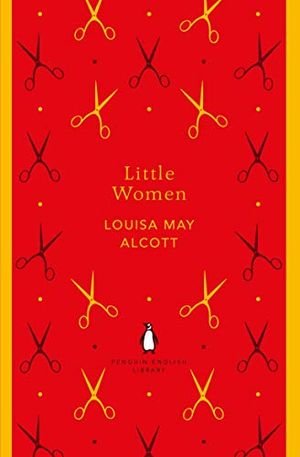 1
1

 Recommended by Amy Chua, Anne Thériault, Jay Kleinberg, and 1 others.