We've ranked the best psychotherapy books using expert recommendations, sales data, and millions of reader ratings. At Shortform, we know books. Our book guides are the best in the world. Learn why.
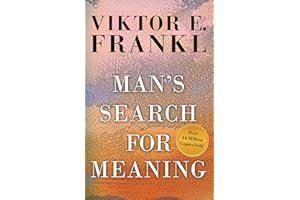
Man's Search for Meaning has riveted generations of readers with its descriptions of life in Nazi death camps and its lessons for spiritual survival. Between 1942 and 1945 psychiatrist Viktor Frankl labored in four different camps, including Auschwitz, while his parents, brother, and pregnant wife perished. Based on his own experience and the stories of his many patients, Frankl argues that we cannot avoid suffering but we can choose how to cope with it, find meaning in it, and move forward with renewed purpose. Frankl's theory—known as logotherapy, from the Greek word logos ("meaning")—holds that our primary drive in life is not pleasure, as Freud maintained, but the discovery and pursuit of what we personally find meaningful. In the decades since its first publication in 1959, Man's Search for Meaning has become a classic, with more than twelve million copies in print around the world. A 1991 Library of Congress survey that asked readers to name a "book that made a difference in your life" found Man's Search for Meaning among the ten most influential books in America. At once a memoir, a meditation, a treatise, and a history, it continues to inspire us all to find significance in the very act of living. (back cover)
…
Recommended by Tony Robbins, Dustin Moskovitz, Ev Williams, and 60 others.
Another book that I’ve read dozens of times. It taught me that if you change the meaning, you change everything. Meaning equals emotion, and emotion equals life. [source]
Dustin Moskovitz
Co-founder/Facebook and Asana
Dustin Moskovitz recommended this book on Twitter. [source]
I read it while spending ten days in the ICU of Bellevue hospital trying to reattach my finger from a ring avulsion accident in my kitchen. It talks about the meaning of life, and I believe you come out a better person from reading it. [source]
Cover unavailable
2
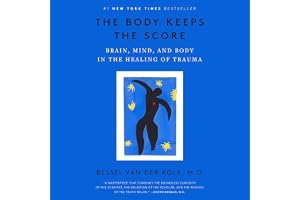
The Body Keeps the Score: Brain, Mind, and Body in the Healing of Trauma
“Packed with science and human stories, the book is an intense read. . . . The struggle and resilience of [van der Kolk’s] patients is very moving.” —New Scientist
A pioneering researcher transforms our understanding of trauma and offers a bold new paradigm for healing
Trauma is a fact of life. Veterans and their families deal with the painful aftermath of combat; one in five Americans has been molested; one in four grew up with alcoholics; one in three couples have engaged in physical violence. Dr. Bessel van der Kolk, one of the world’s foremost experts on trauma, has spent over three decades working with survivors. In The Body Keeps the Score, he uses recent scientific advances to show how trauma literally reshapes both body and brain, compromising sufferers’ capacities for pleasure, engagement, self-control, and trust. He explores innovative treatments—from neurofeedback and meditation to sports, drama, and yoga—that offer new paths to recovery by activating the brain’s natural neuroplasticity. Based on Dr. van der Kolk’s own research and that of other leading specialists, The Body Keeps the Score exposes the tremendous power of our relationships both to hurt and to heal—and offers new hope for reclaiming lives.
…
Recommended by Matthew Green.
Matthew Green
Reading The Body Keeps the Score was a eureka moment for me. [source]
Cover unavailable
3
The Gift of Therapy: An Open Letter to a New Generation of Therapists and Their Patients
Irvin Yalom
4.6
Cover unavailable
4
Love's Executioner and Other Tales of Psychotherapy
Irvin D. Yalom
4.5
The collection of ten absorbing tales by master psychotherapist Irvin D. Yalom uncovers the mysteries, frustrations, pathos, and humor at the heart of the therapeutic encounter. In recounting his patients' dilemmas, Yalom not only gives us a rare and enthralling glimpse into their personal desires and motivations but also tells us his own story as he struggles to reconcile his all-too human responses with his sensibility as a psychiatrist. Not since Freud has an author done so much to clarify what goes on between a psychotherapist and a patient.
…
Recommended by Stephen Lew.
Stephen Lew
When asked what books he would recommend to youngsters interested in his professional path, Stephen mentioned Love's executioner and other tales of psychotherapy. [source]
Cover unavailable
5
Maybe You Should Talk to Someone: A Therapist, Her Therapist, and Our Lives Revealed
One day, Lori Gottlieb is a therapist who helps patients in her Los Angeles practice. The next, a crisis causes her world to come crashing down. Enter Wendell, the quirky but seasoned therapist in whose office she suddenly lands. With his balding head, cardigan, and khakis, he seems to have come straight from Therapist Central Casting. Yet he will turn out to be anything but.
As Gottlieb explores the inner chambers of her patients' lives -- a self-absorbed Hollywood producer, a young newlywed diagnosed with a terminal illness, a senior citizen threatening to end her life on her birthday if nothing gets better, and a twenty-something who can't stop hooking up with the wrong guys -- she finds that the questions they are struggling with are the very ones she is now bringing to Wendell.
…
Recommended by Arianna Huffington, Andrea Barber, Chris Abraham, and 2 others.
Arianna Huffington
Founder/The Huffington Post
This is a daring, delightful, and transformative book. Lori Gottlieb takes us inside the most intimate of encounters as both clinician and patient and leaves us with a surprisingly fresh understanding of ourselves, one another, and the human condition. Her willingness to expose her own blind spots along with her patients’ shows us firsthand that we aren’t alone in our struggles and that maybe we should talk more about them! Maybe You Should Talk to Someone is funny, hopeful, wise, and engrossing—all at the same time. [source]
Andrea Barber
My new favorite book 😍😍 @LoriGottlieb1 https://t.co/7iQsEH7sDa [source]
Chris Abraham
I would like to introduce Zandria and Lori because Zan just read Lori's amazing new book this month, Maybe You Should Talk to Someone; and, since I adore you both, you should be friends. https://t.co/lwQJSJHQxb [source]
Cover unavailable
6
On Becoming a Person: A Therapist's View of Psychotherapy
Carl Rogers and Peter D. Kramer M.D.
4.4
The late Carl Rogers, founder of the humanistic psychology movement, revolutionized psychotherapy with his concept of "client-centered therapy." His influence has spanned decades, but that influence has become so much a part of mainstream psychology that the ingenious nature of his work has almost been forgotten. A new introduction by Peter Kramer sheds light on the significance of Dr. Rogers's work today. New discoveries in the field of psychopharmacology, especially that of the antidepressant Prozac, have spawned a quick-fix drug revolution that has obscured the psychotherapeutic relationship. As the pendulum slowly swings back toward an appreciation of the therapeutic encounter, Dr. Rogers's "client-centered therapy" becomes particularly timely and important.
…
Cover unavailable
7
The Theory and Practice of Group Psychotherapy
Irvin D. Yalom, Molyn Leszcz
4.3
The classic work on group psychotherapy Hailed by Jerome Frank as "the best book that exists on the subject," Irvin D. Yalom's The Theory and Practice of Group Psychotherapy has been the standard text in the field for decades. In this completely revised and updated fifth edition, Dr. Yalom and his collaborator Dr. Molyn Leszcz expand the book to include the most recent developments in the field, drawing on nearly a decade of new research as well as their broad clinical wisdom and expertise. New topics include: online therapy, specialized groups, ethnocultural diversity, trauma and managed care. At once scholarly and lively, this is the most up-to-date, incisive, and comprehensive text available on group psychotherapy.
…
Recommended by Susan Llewelyn.
Susan Llewelyn
Yalom’s book was really helpful. What Yalom says—from his clinical experience, but later backed up by researchers including some of my own studies—is that are eleven curative factors that can describe what is going on. [source]
Cover unavailable
8
The Road Less Traveled: A New Psychology of Love, Traditional Values and Spiritual Growth
The Road Less Traveled: A New Psychology of Love, Traditional Values and Spiritual Growth 316 pp. "Psychotherapy is all things to all people in this mega-selling pop-psychology watershed, which features a new introduction by the author in this 25th anniversary edition. His agenda in this tome, which was first published in 1978 but didn't become a bestseller until 1983, is to reconcile the psychoanalytic tradition with the conflicting cultural currents roiling the 70s. In the spirit of Me-Decade individualism and libertinism, he celebrates self-actualization as life's highest purpose and flirts with the notions of open marriage and therapeutic sex between patient and analyst. But because he is attuned to the nascent conservative backlash against the therapeutic worldview, Peck also cites Gospel passages, recruits psychotherapy to the cause of traditional religion (he even convinces a patient to sign up for divinity school) and insists that problems must be overcome through suffering, discipline and hard work (with a therapist.) Often departing from the cerebral and rationalistic bent of Freudian discourse for a mystical, Jungian tone more compatible with New Age spirituality, Peck writes of psychotherapy as an exercise in "love" and "spiritual growth," asserts that "our unconscious is God" and affirms his belief in miracles, reincarnation and telepathy. Peck's synthesis of such clashing elements (he even throws in a little thermodynamics) is held together by a warm and lucid discussion of psychiatric principles and moving accounts of his own patients' struggles and breakthroughs. Harmonizing psychoanalysis and spirituality, Christ and Buddha, Calvinist work ethic and interminable talking cures, this book is a touchstone of our contemporary religio-therapeutic culture." -- Publishers WeeklyKeywords: MIND & BODY PSYCHOLOGY SOCIOLOGY RELIGION
…
Recommended by John C. Maxwell, Iulian Stanciu, and 1 others.
Iulian Stanciu
It helps you take a deeper look and understand why certain things happen in your life. It's an introduction to psychology. It helps you divide a person, just like you would do with a mathematical equation. [source]
Cover unavailable
9
The Boy Who Was Raised as a Dog: And Other Stories from a Child Psychiatrist's Notebook
A renowned psychiatrist reveals how trauma affects children--and outlines the path to recoveryHow does trauma affect a child's mind--and how can that mind recover? In the classic The Boy Who Was Raised as a Dog, Dr. Perry explains what happens to the brains of children exposed to extreme stress and shares their lessons of courage, humanity, and hope. Only when we understand the science of the mind and the power of love and nurturing, can we hope to heal the spirit of even the most wounded child.
…
Cover unavailable
10
The Man Who Mistook His Wife for a Hat and Other Clinical Tales
If a man has lost a leg or an eye, he knows he has lost a leg or an eye; but if he has lost a self—himself—he cannot know it, because he is no longer there to know it. Dr. Oliver Sacks recounts the stories of patients struggling to adapt to often bizarre worlds of neurological disorder. Here are people who can no longer recognize everyday objects or those they love; who are stricken with violent tics or shout involuntary obscenities; who have been dismissed as autistic or retarded, yet are gifted with uncanny artistic or mathematical talents. If inconceivably strange, these brilliant tales illuminate what it means to be human.
…
Recommended by Bradley Voytek, Suzanne O'Sullivan, and Tanya Byron.
Bradley Voytek
I can’t imagine one day waking up and not knowing who my wife is, or seeing my wife and thinking that she was replaced by some sort of clone or robot. But that could happen to any of us. [source]
Suzanne O'Sullivan
I didn’t choose neurology because of it but the way Oliver Sacks writes about neurology is very compelling. [source]
Tanya Byron
This is a seminal book that anyone who wants to work in mental health should read. It is a charming and gentle and also an honest exposé of what can happen to us when our mental health is compromised for whatever reason. [source]
The fiftieth Anniversary Edition of the groundbreaking international bestseller that has shown millions of readers how to achieve rich, productive lives by developing their hidden capacities for love
Most people are unable to love on the only level that truly matters: love that is compounded of maturity, self-knowledge, and courage. As with every art, love demands practice and concentration, as well as genuine insight and understanding.
In his classic work, The Art of Loving, renowned psychoanalyst and social philosopher Erich Fromm explores love in all its aspects—not only romantic love, steeped in false conceptions and lofty expectations, but also brotherly love, erotic love, self-love, the love of God, and the love of parents for their children.
The noted Stanford University psychiatrist distills the essence of a wide range of therapies into a masterful, creative synthesis, opening up a new way of understanding each person's confrontation with four ultimate concerns: isolation, meaninglessness, death, and freedom.
We think we’re relating to other people–but actually we’re all playing games.
Forty years ago, Games People Play revolutionized our understanding of what really goes on during our most basic social interactions. More than five million copies later, Dr. Eric Berne’s classic is as astonishing–and revealing–as it was on the day it was first published. This anniversary edition features a new introduction by Dr. James R. Allen, president of the International Transactional Analysis Association, and Kurt Vonnegut’s brilliant Life magazine review from 1965. We play games all the time–sexual games, marital games, power games with our bosses, and competitive games with our friends. Detailing status contests like “Martini” (I know a better way), to lethal couples combat like “If It Weren’t For You” and “Uproar,” to flirtation favorites like “The Stocking Game” and “Let’s You and Him Fight,” Dr. Berne exposes the secret ploys and unconscious maneuvers that rule our intimate lives. Explosive when it first appeared, Games People Play is now widely recognized as the most original and influential popular psychology book of our time. It’s as powerful and eye-opening as ever.
The latest edition of the communication guide that has sold more than 1,000,000 copies
An enlightening look at how peaceful communication can create compassionate connections with family, friends, and other acquaintances, this international bestseller uses stories, examples, and sample dialogues to provide solutions to communication problems both at home and in the workplace. Guidance is provided on identifying and articulating feelings and needs, expressing anger fully, and exploring the power of empathy in order to speak honestly without creating hostility, break patterns of thinking that lead to anger and depression, and communicate compassionately. Included in the new edition is a chapter on conflict resolution and mediation.
…
Recommended by Dustin Moskovitz, Satya Nadella, Chad Dickerson, and 3 others.
Upon becoming CEO, Nadella confronted Microsoft’s legendarily combative culture by urging his new reports to read this book, which preaches the power of empathy, self-awareness, and authenticity in collaboration in the workplace, at home, and beyond. Like many of his favorites, it was first recommended to him by his wife, Anu: “I’m heavily influenced by the books she reads more than the books I read [source]
Chad Dickerson
Rosenberg’s book Nonviolent Communication is a life-changing text. Reading just now & his concept of “life-alienating communication” basically describes the worst of twitter. Love this, though: “Out beyond ideas of wrongdoing & right-doing, there is a field. I’ll meet you there.” https://t.co/9f9gK6pVSE [source]
The personal memoir of a manic depressive and an authority on the subject describes the onset of the illness during her teenage years and her determined journey through the realm of available treatments.
Recommended by Jonathan Glover and Tanya Byron.
Jonathan Glover
Kay Redfield Jamison is a psychologist who has co-authored the major psychiatric textbook on manic depression. It authoritatively covers every aspect of the science, from genetics to pharmacology, and also has chapters on the links with creativity and on what the illness feels like. The chapters on the subjective experience are enriched with vivid quotations from patients. In her autobiography, An Unquiet Mind, Kay Jamison came out as not only an expert on the illness but also someone who has it. The power of her book comes from her understanding it both scientifically and from the inside. [source]
Tanya Byron
This is a divine book. A patient of mine who suffers with a bipolar illness, an absolutely inspiring young genius, recommended it to me. So I read it, and then we discussed it in a lot of our sessions together. [source]
Cover unavailable
16
Attachment in Psychotherapy
David J. Wallin
4.3
This eloquent book translates attachment theory and research into an innovative framework that grounds adult psychotherapy in the facts of childhood development. Advancing a model of treatment as transformation through relationship, the author integrates attachment theory with neuroscience, trauma studies, relational psychotherapy, and the psychology of mindfulness. Vivid case material illustrates how therapists can tailor interventions to fit the attachment needs of their patients, thus helping them to generate the internalized secure base for which their early relationships provided no foundation. Demonstrating the clinical uses of a focus on nonverbal interaction, the book describes powerful techniques for working with the emotional responses and bodily experiences of patient and therapist alike.
…
Cover unavailable
17
The Drama of the Gifted Child: The Search for the True Self
Alice Miller
4.3
The bestselling book on childhood trauma and the enduring effects of repressed anger and pain
Why are many of the most successful people plagued by feelings of emptiness and alienation? This wise and profound book has provided millions of readers with an answer--and has helped them to apply it to their own lives.
Far too many of us had to learn as children to hide our own feelings, needs, and memories skillfully in order to meet our parents' expectations and win their "love." Alice Miller writes, "When I used the word 'gifted' in the title, I had in mind neither children who receive high grades in school nor children talented in a special way. I simply meant all of us who have survived an abusive childhood thanks to an ability to adapt even to unspeakable cruelty by becoming numb.... Without this 'gift' offered us by nature, we would not have survived." But merely surviving is not enough. The Drama of the Gifted Child helps us to reclaim our life by discovering our own crucial needs and our own truth.
All about the fact that stuff happens to us as children, negative things happen. Then, we adapt to those things by taking on certain defensive ways of being. And then, we live the rest of our lives from those defensive modes. [source]
Cover unavailable
18
The 5 Love Languages: The Secret to Love that Lasts
Couples who understand each other's love language hold a priceless advantage in the quest for love that lasts a lifetime -- they know how to effectively and consistently make each other feel truly and deeply loved. That gift never fades away.
Recommended by Dustin Moskovitz, James Altucher, Kaci Lambe Kai, and 1 others.
Dustin Moskovitz
Co-founder/Facebook and Asana
Dustin Moskovitz recommended this book on Twitter. [source]
Kaci Lambe Kai
The Five Love Languages by Gary Chapman impacted how I interpret and receive love. Not just romantically, but in my friendships and business relationships. I had several personal and professional relationships that improved when I could appreciate that their "love language" was different than mine. I could at least see their efforts as an attempt at showing me love and kindness, even if it wasn't how I best receive or give love. This is pivotal. And if you can separate out the idea of it being for romantic partners only, I'd say this is critical reading for leaders. Not everyone is motivated and feels appreciation by a raise. Sometimes, public recognition of kind words or an act of kindness will feel better than anything else you can do. [source]
Pedro Cortés
The books that had the biggest impact are the ones that are controversial and challenge people's beliefs around work, relationships, life, and money most of them were things I already thought about (that's how I found them or decided to read them) but just by putting it in an actionable and structured way it made me think 100x more clearly about my goals and beliefs. Such examples could be the 4hww, Rich Dad Poor Dad, F.U. Money, The Five Love Languages, So good they can't ignore, Predictably Irrational and Ego is the Enemy are the ones who stand out the most. [source]
Cover unavailable
19
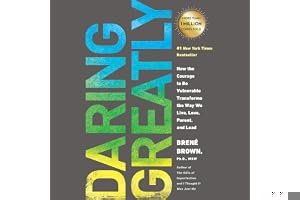
Daring Greatly: How the Courage to Be Vulnerable Transforms the Way We Live, Love, Parent, and Lead
Researcher and thought leader Dr. Brené Brown offers a powerful new vision that encourages us to dare greatly: to embrace vulnerability and imperfection, to live wholeheartedly, and to courageously engage in our lives.
“It is not the critic who counts; not the man who points out how the strong man stumbles, or where the doer of deeds could have done them better. The credit belongs to the man who is actually in the arena, whose face is marred by dust and sweat and blood; who strives valiantly; . . . who at best knows in the end the triumph of high achievement, and who at worst, if he fails, at least fails while daring greatly.” —Theodore Roosevelt
Every day we experience the uncertainty, risks, and emotional exposure that define what it means to be vulnerable, or to dare greatly. Whether the arena is a new relationship, an important meeting, our creative process, or a difficult family conversation, we must find the courage to walk into vulnerability and engage with our whole hearts.
In Daring Greatly, Dr. Brown challenges everything we think we know about vulnerability. Based on twelve years of research, she argues that vulnerability is not weakness, but rather our clearest path to courage, engagement, and meaningful connection. The book that Dr. Brown’s many fans have been waiting for, Daring Greatly will spark a new spirit of truth—and trust—in our organizations, families, schools, and communities.
…
Recommended by AnneMarie Schindler, Chase Jarvis, and Chelsea Frank.
AnneMarie Schindler
I suggest these books because they really open up 'how' you think about life and in turn work, success/challenges/setbacks, and in general, yourself. I believe that the more you can understand yourself and broaden your approach to work, the easier it will be to find work that energizes you. Finally, I'm a team player at heart, and love working with others to achieve a huge goal so a portion of these deal with team composition and performance too. [source]
Chase Jarvis
Chase Jarvis recommended this book on the podcast "The Tim Ferriss Show". [source]
Chelsea Frank
I read everything with an open mind, often challenging myself by choosing books with an odd perspective or religious/spiritual views. These books do not reflect my personal feelings but are books that helped shape my perspective on life, love, and happiness. [source]
Cover unavailable
20
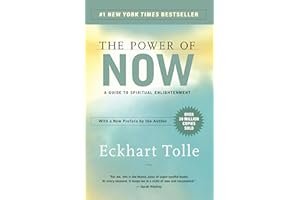
The Power of Now: A Guide to Spiritual Enlightenment
Eckhart Tolle is emerging as one of today's most inspiring teachers. In The Power of Now, a #1 national bestseller, the author describes his transition from despair to self-realization soon after his 29th birthday. Tolle took another ten years to understand this transformation, during which time he evolved a philosophy that has parallels in Buddhism, relaxation techniques, and meditation theory but is also eminently practical. In The Power of Now he shows readers how to recognize themselves as the creators of their own pain, and how to have a pain-free existence by living fully in the present. Accessing the deepest self, the true self, can be learned, he says, by freeing ourselves from the conflicting, unreasonable demands of the mind and living present, fully, and intensely, in the Now.
…
Recommended by Bill Liao, Catherine Plano, Darrah Brustein, and 7 others.
Bill Liao
The human world occurs in language so best get good at it! [source]
Catherine Plano
The one that really resonates with me and still to this day is The Power of NOW from Eckhart Tolle because as an entrepreneur we get so caught up in the future that we fail to be 'present'. The reality of it all when you really think about it - the present is all we have that is real, it requires no effort, nor time. I practice this daily, if I feel uncomfortable then I know I am trying too hard and not being present but when I am being present it is easier to think about what I have to do right now, because now is all that matters. [source]
Darrah Brustein
Others include The Power Of Now which is powerful reminder that all we have is the present and helps give you meaningful ways to live in it, not in the past or the future. [source]
Cover unavailable
21
Trauma and Recovery: The Aftermath of Violence--From Domestic Abuse to Political Terror
Judith L. Herman
4.2
When Trauma and Recovery was first published in 1992, it was hailed as a groundbreaking work. In the intervening years, Herman’s volume has changed the way we think about and treat traumatic events and trauma victims. In a new afterword, Herman chronicles the incredible response the book has elicited and explains how the issues surrounding the topic have shifted within the clinical community and the culture at large.Trauma and Recovery brings a new level of understanding to a set of problems usually considered individually. Herman draws on her own cutting-edge research in domestic violence as well as on the vast literature of combat veterans and victims of political terror, to show the parallels between private terrors such as rape and public traumas such as terrorism. The book puts individual experience in a broader political frame, arguing that psychological trauma can be understood only in a social context. Meticulously documented and frequently using the victims’ own words as well as those from classic literary works and prison diaries, Trauma and Recovery is a powerful work that will continue to profoundly impact our thinking.
New York Times best-selling author and professor Brené Brown offers a powerful and inspiring book that explores how to cultivate the courage, compassion, and connection to embrace your imperfections and to recognize that you are enough.
Each day we face a barrage of images and messages from society and the media telling us who, what, and how we should be. We are led to believe that if we could only look perfect and lead perfect lives, we'd no longer feel inadequate. So most of us perform, please, and perfect, all the while thinking, What if I can't keep all of these balls in the air? Why isn't everyone else working harder and living up to my expectations? What will people think if I fail or give up? When can I stop proving myself?In The Gifts of Imperfection, Bren頂rown, PhD, a leading expert on shame, authenticity and belonging, shares what she's learned from a decade of research on the power of Wholehearted Living--a way of engaging with the world from a place of worthiness.In her ten guideposts, Brown engages our minds, hearts, and spirits as she explores how we can cultivate the courage, compassion, and connection to wake up in the morning and think, No matter what gets done and how much is left undone, I am enough, and to go to bed at night thinking, Yes, I am sometimes afraid, but I am also brave. And, yes, I am imperfect and vulnerable, but that doesn't change the truth that I am worthy of love and belonging.
…
Cover unavailable
23
How to Change Your Mind: What the New Science of Psychedelics Teaches Us About Consciousness, Dying, Addiction, Depression, and Transcendence
Could psychedelic drugs change our worldview? One of America's most admired writers takes us on a mind-altering journey to the frontiers of human consciousness
When LSD was first discovered in the 1940s, it seemed to researchers, scientists and doctors as if the world might be on the cusp of psychological revolution. It promised to shed light on the deep mysteries of consciousness, as well as offer relief to addicts and the mentally ill. But in the 1960s, with the vicious backlash against the counter-culture, all further research was banned. In recent years, however, work has quietly begun again on the amazing potential of LSD, psilocybin and DMT. Could these drugs in fact improve the lives of many people? Diving deep into this extraordinary world and putting himself forward as a guinea-pig, Michael Pollan has written a remarkable history of psychedelics and a compelling portrait of the new generation of scientists fascinated by the implications of these drugs. How to Change Your Mind is a report from what could very well be the future of human consciousness.
Michael Pollan masterfully guides us through the highs, lows, and highs again of psychedelic drugs. How to Change Your mind chronicles how it’s been a longer and stranger trip than most any of us knew. [source]
Changed my mind, or at least some of the ideas held in my mind. [source]
Andrew Weil
Michael Pollan assembles a great deal of information here on the history, science, and effects of psychedelics. I found his frank recounting of his recent experiences with LSD, psilocybin, and toad venom most revealing. They appear to have softened his materialistic views and opened him to the possibilities of higher consciousness. He did, indeed, change his mind. [source]
Cover unavailable
24
Waking the Tiger: Healing Trauma
Peter A. Levine
4.2
Waking the Tiger offers a new and hopeful vision of trauma. It views the human animal as a unique being, endowed with an instinctual capacity. It asks and answers an intriguing question: why are animals in the wild, though threatened routinely, rarely traumatized? By understanding the dynamics that make wild animals virtually immune to traumatic symptoms, the mystery of human trauma is revealed.
Waking the Tiger normalizes the symptoms of trauma and the steps needed to heal them. People are often traumatized by seemingly ordinary experiences. The reader is taken on a guided tour of the subtle, yet powerful impulses that govern our responses to overwhelming life events. To do this, it employs a series of exercises that help us focus on bodily sensations. Through heightened awareness of these sensations trauma can be healed.
The author's first book. And he’s written many wonderful books since then. [source]
Cover unavailable
25
Staring at the Sun: Overcoming the Terror of Death
Irvin D. Yalom
4.2
Written in Irv Yalom's inimitable story-telling style, Staring at the Sun is a profoundly encouraging approach to the universal issue of mortality. In this magisterial opus, capping a lifetime of work and personal experience, Dr. Yalom helps us recognize that the fear of death is at the heart of much of our anxiety. Such recognition is often catalyzed by an "awakening experience"--a dream, or loss (the death of a loved one, divorce, loss of a job or home), illness, trauma, or aging. Once we confront our own mortality, Dr. Yalom writes, we are inspired to rearrange our priorities, communicate more deeply with those we love, appreciate more keenly the beauty of life, and increase our willingness to take the risks necessary for personal fulfillment.
…
Cover unavailable
26
Creatures of a Day: And Other Tales of Psychotherapy
Irvin D. Yalom
4.2
"The publication of Creatures of a Day is reason to celebrate." --Steven Pinker In this stunning collection of stories, renowned psychiatrist Irvin D. Yalom describes his patients' struggles--as well as his own--to come to terms with the two great challenges of existence: how to have a meaningful life yet reckon with its inevitable end. We meet a nurse who must stifle the pain of losing her son in order to comfort her patients' pains, a newly minted psychologist whose studies damage her treasured memories of a lost friend, and a man whose rejection of psychological inquiry forces even Yalom himself into a crisis of confidence.
Creatures of a Day is a radically honest statement about the difficulties of human life, but also a celebration of some of the finest fruits--love, family, friendship--it can offer. Marcus Aurelius has written that "we are all creatures of a day." With Yalom as our guide, we will find the means to make our own day not only bearable, but also meaningful and joyful.
…
Cover unavailable
27
When Nietzsche Wept
Irvin D. Yalom
4.2
In 19th-century Vienna, a drama of love, fate, and will is played out amid the intellectual ferment that defined the era.
Josef Breuer, one of the founding fathers of psychoanalysis, is at the height of his career. Friedrich Nietzsche, Europe's greatest philosopher, is on the brink of suicidal despair, unable to find a cure for the headaches and other ailments that plague him. When he agrees to treat Nietzsche with his experimental "talking cure", Breuer never expects that he, too, will find solace in their sessions. Only through facing his own inner demons can the gifted healer begin to help his patient.
In When Nietzsche Wept, Irvin Yalom blends fact and fiction, atmosphere and suspense to unfold an unforgettable story about the redemptive power of friendship.
…
Recommended by Alexandra Stroe, Mark Pellegrino, Sid Lowe, and 1 others.
Alexandra Stroe
One of my favorite non-business books is When Nietzsche Wept by Irvin D. Yalom. His books combine psychotherapy, philosophy and science fiction and they address issues like death, growing old, love and the meaning of life in a very honest way. Many of his books give you an insight into the conversations between the psychotherapist and his patients and the interaction between them is always human and sincere. The therapist makes mistakes, sometimes says the wrong thing and this makes the story exciting and extremely real. [source]
Mark Pellegrino
@TeresaRJ3 He was a bundle of contradictions... read: When Nietzsche Wept. Great book. [source]
Sid Lowe
This is a thing of beauty. @45footballCom has an astonishing collection of football singles. And now 900 or so sleeves are in a brilliant book. Here come some lovely ones... https://t.co/H1xTZj58Ec [source]
Cover unavailable
28
Emotional Intelligence: Why It Can Matter More Than IQ
Everyone knows that high IQ is no guarantee of success, happiness, or virtue, but until Emotional Intelligence, we could only guess why. Daniel Goleman's brilliant report from the frontiers of psychology and neuroscience offers startling new insight into our "two minds"—the rational and the emotional—and how they together shape our destiny.
Through vivid examples, Goleman delineates the five crucial skills of emotional intelligence, and shows how they determine our success in relationships, work, and even our physical well-being. What emerges is an entirely new way to talk about being smart.
The best news is that "emotional literacy" is not fixed early in life. Every parent, every teacher, every business leader, and everyone interested in a more civil society, has a stake in this compelling vision of human possibility.
From the Trade Paperback edition.
…
Recommended by Drew Houston, Drew Huston, Magda Marcu, and 4 others.
Drew Houston
CEO/Dropbox
It’s nonfiction, but it spelled out something that I just didn’t know you could kind of break down in a logical way. And, suddenly, I had this understanding about the world that I didn’t have before. [source]
Magda Marcu
One of the most eye opening for me was “Emotional Intelligence: Why It Can Matter More Than IQ” as it offered a different perspective on leadership, and how empathy can make you a more successful leader. Every person has some degree of empathy and through this book you understand how to apply it more intently. [source]
Robert Kelsey
Yes, that’s the key revelation. But another key element, which was quite revelatory for me when I read it, is about the impact of fear on your brain. The impact of fear as a physiological response was well known when he wrote the book, but what was less well known was the idea of fear as a neurological response. He pointed to research showing what happens to the brain when fear is triggered, and it’s very damaging. There’s a part of the brain called the amygdala, which is part of the limbic system, and deals with emotions such as fear and distress. Its main purpose is to alert you to danger and it sends an emergency signal. All those physiological responses you have are basically the body’s response to that emergency signal. That’s what people experience when they experience fear, but it’s not just the fear of a dog barking at you or someone attacking you, it’s fear based on a fear conditioning. These are moments when something happens to you that induces fear or distress, and can include fear of failure or fear of being upset, and the same response occurs. [source]
Cover unavailable
29
Quiet: The Power of Introverts in a World That Can't Stop Talking
At least one-third of the people we know are introverts. They are the ones who prefer listening to speaking; who innovate and create but dislike self-promotion; who favor working on their own over working in teams. It is to introverts—Rosa Parks, Chopin, Dr. Seuss, Steve Wozniak—that we owe many of the great contributions to society.
In Quiet, Susan Cain argues that we dramatically undervalue introverts and shows how much we lose in doing so. She charts the rise of the Extrovert Ideal throughout the twentieth century and explores how deeply it has come to permeate our culture. She also introduces us to successful introverts—from a witty, high-octane public speaker who recharges in solitude after his talks, to a record-breaking salesman who quietly taps into the power of questions. Passionately argued, superbly researched, and filled with indelible stories of real people, Quiet has the power to permanently change how we see introverts and, equally important, how they see themselves.
Now with Extra Libris material, including a reader’s guide and bonus content.
Leaders needn’t be the loudest. Leadership is not about theater. It’s not about dominance. It is about putting the lives of others before any other priority. In Quiet, Cain affirms to a good many of us who are introverts by nature that we needn’t try to be extroverts if we want to lead. Simply being ourselves is more important — and more effective. [source]
Danielle Morrill
Co-founder/Mattermark
Anyway, maybe you’re like me and figuring this out for yourself. It’s a good book for introverts and for those who love them [source]
Probably half the world is introverts. Maybe more. It’s not an easy life to live. I sometimes have that feeling in a room full of people, “uh-oh. I just shut down. I can’t talk anymore and there’s a lock on my mouth and this crowd threw away the key.” Do you ever get that feeling? Please? I hope you do. Let’s try to lock eyes at the party. “Quiet” shows the reader how to unlock the secret powers that probably half the world needs to unlock. [source]
Psychologist Mihaly Csikszentmihalyi's famous investigations of "optimal experience" have revealed that what makes an experience genuinely satisfying is a state of consciousness called flow. During flow, people typically experience deep enjoyment, creativity, and a total involvement with life. In this new edition of his groundbreaking classic work, Csikszentmihalyi demonstrates the ways this positive state can be controlled, not just left to chance. Flow: The Psychology of Optimal Experience teaches how, by ordering the information that enters our consciousness, we can discover true happiness and greatly improve the quality of our lives.
While re-reading Mihaly Csikszentmihalyi’s wonderful book Flow: The Psychology of Optimal Experience, I came across this passage on working crossword puzzles. I think he could just as well be talking about making blackout poems: "There is much to be said in favor of this popular pastime, which in its best form resembles the ancient riddle contests. It is inexpensive and portable, its challenges can be finely graduated so that both novices and experts can enjoy it, and its solution produces a sense of pleasing order that gives one a satisfying feeling of accomplishment. It provides opportunities to experience a mild state of flow to many people who are stranded in airport lounges, who travel on commuter trains, or who are simply whiling away Sunday mornings." [source]
Tom Chatfield
The notion of flow is the idea that there is a state that is characterised by complete immersion in an activity, by a constant response to stimuli, and a perfect match between your ability and the challenge in front of you. [source]
Cover unavailable
31
Codependent No More: How to Stop Controlling Others and Start Caring for Yourself
The healing touchstone of millions, this modern classic by one of America's best-loved and most inspirational authors holds the key to understanding codependency and to unlocking its stultifying hold on your life.
Is someone else's problem your problem? If, like so many others, you've lost sight of your own life in the drama of tending to someone else's, you may be codependent--and you may find yourself in this book--Codependent No More.The healing touchstone of millions, this modern classic by one of America's best-loved and most inspirational authors holds the key to understanding codependency and to unlocking its stultifying hold on your life.With instructive life stories, personal reflections, exercises, and self-tests, Codependent No More is a simple, straightforward, readable map of the perplexing world of codependency--charting the path to freedom and a lifetime of healing, hope, and happiness.Melody Beattie is the author of Beyond Codependency, The Language of Letting Go, Stop Being Mean to Yourself, The Codependent No More Workbook and Playing It by Heart.
If you want to know more about codependence I would say read this book. [source]
Cover unavailable
32
Dibs in Search of Self
Virginia M. Axline
4.2
The portrait of a little boy achieving, under therapy, a successful struggle for identity.
Recommended by Dorothy Singer and Tanya Byron.
Dorothy Singer
This is a wonderful book. I’ve read it several times and it’s almost guaranteed to make you cry. Dibs came from an academic family that was well off. He was having trouble in school and his parents thought he was autistic. Axline accepted his idiosyncrasies and offered him a respectful outlet for his imagination and worked with the parents. They began to be more accepting of him and Dibs began to be more accepting of himself. It’s a small book, but very moving and very powerfully written. [source]
Tanya Byron
Virginia Axline is a family therapist, and I like this book because it really resonates in terms of why I do what I do and, particularly, why I am passionate about child and adolescent mental health. The book is all about child therapy and a boy called Dibs who wouldn’t talk and wouldn’t play. He has lots of difficulties and issues, and I think he represents a lot of children with mental health problems who are easily misunderstood. We get very anxious about mental health – and when it comes to children we get deeply, deeply anxious about it. [source]
Cover unavailable
33
The Whole-Brain Child: 12 Revolutionary Strategies to Nurture Your Child's Developing Mind
“Simple, smart, and effective solutions to your child’s struggles.”—Harvey Karp, M.D.
“Daniel Siegel and Tina Payne Bryson have created a masterly, reader-friendly guide to helping children grow their emotional intelligence. This brilliant method transforms everyday interactions into valuable brain-shaping moments. Anyone who cares for children—or who loves a child—should read The Whole-Brain Child.”—Daniel Goleman, author of Emotional Intelligence
In this pioneering, practical book, Daniel J. Siegel, neuropsychiatrist and author of the bestselling Mindsight, and parenting expert Tina Payne Bryson offer a revolutionary approach to child rearing with twelve key strategies that foster healthy brain development, leading to calmer, happier children. The authors explain—and make accessible—the new science of how a child’s brain is wired and how it matures. The “upstairs brain,” which makes decisions and balances emotions, is under construction until the mid-twenties. And especially in young children, the right brain and its emotions tend to rule over the logic of the left brain. No wonder kids throw tantrums, fight, or sulk in silence. By applying these discoveries to everyday parenting, you can turn any outburst, argument, or fear into a chance to integrate your child’s brain and foster vital growth.
Complete with age-appropriate strategies for dealing with day-to-day struggles and illustrations that will help you explain these concepts to your child, The Whole-Brain Child shows you how to cultivate healthy emotional and intellectual development so that your children can lead balanced, meaningful, and connected lives. “[A] useful child-rearing resource for the entire family . . . The authors include a fair amount of brain science, but they present it for both adult and child audiences.”—Kirkus Reviews “Strategies for getting a youngster to chill out [with] compassion.”—The Washington Post “This erudite, tender, and funny book is filled with fresh ideas based on the latest neuroscience research. I urge all parents who want kind, happy, and emotionally healthy kids to read The Whole-Brain Child. This is my new baby gift.”—Mary Pipher, Ph.D., author of Reviving Ophelia and The Shelter of Each Other
“Gives parents and teachers ideas to get all parts of a healthy child’s brain working together.”—Parent to Parent
…
Recommended by Genevieve Von Lob and Graham Duncan.
Genevieve Von Lob
Siegel uses what neuroscience tells us about how a child’s brain develops to provide practical tips for parents. [source]
Graham Duncan
Graham Duncan recommended this book on the podcast "The Tim Ferriss Show". [source]

Cover unavailable
34
Attached: The New Science of Adult Attachment and How It Can Help You find and Keep love
We rely on science to tell us everything from what to eat to when and how long to exercise, but what about relationships? Is there a scientific explanation for why some people seem to navigate relationships effortlessly, while others struggle? According to psychiatrist and neuroscientist Dr. Amir Levine and Rachel Heller, the answer is a resounding "yes."In Attached, Levine and Heller reveal how an understanding of adult attachment-the most advanced relationship science in existence today-can help us find and sustain love. Pioneered by psychologist John Bowlby in the 1950s, the field of attachment posits that each of us behaves in relationships in one of three distinct ways:
Anxious people are often preoccupied with their relationships and tend to worry about their partner's ability to love them back Avoidant people equate intimacy with a loss of independence and constantly try to minimize closeness. Secure people feel comfortable with intimacy and are usually warm and loving.
In this book Levine and Heller guide readers in determining what attachment style they and their mate (or potential mate) follow, offering a road map for building stronger, more fulfilling connections with the people they love.
…
Cover unavailable
35
Complex PTSD: From Surviving to Thriving: A Guide and Map for Recovering from Childhood Trauma
I have Complex PTSD [Cptsd] and wrote this book from the perspective of someone who has experienced a great reduction of symptoms over the years. I also wrote it from the viewpoint of someone who has discovered many silver linings in the long, windy, bumpy road of recovering from Cptsd. I felt encouraged to write this book because of thousands of e-mail responses to the articles on my website that repeatedly expressed gratitude for the helpfulness of my work. An often echoed comment sounded like this: At last someone gets it. I can see now that I am not bad, defective or crazy...or alone! The causes of Cptsd range from severe neglect to monstrous abuse. Many survivors grow up in houses that are not homes - in families that are as loveless as orphanages and sometimes as dangerous. If you felt unwanted, unliked, rejected, hated and/or despised for a lengthy portion of your childhood, trauma may be deeply engrained in your mind, soul and body. This book is a practical, user-friendly self-help guide to recovering from the lingering effects of childhood trauma, and to achieving a rich and fulfilling life. It is copiously illustrated with examples of my own and my clients' journeys of recovering. This book is also for those who do not have Cptsd but want to understand and help a loved one who does. This book also contains an overview of the tasks of recovering and a great many practical tools and techniques for recovering from childhood trauma. It extensively elaborates on all the recovery concepts explained on my website, and many more. However, unlike the articles on my website, it is oriented toward the layperson. As such, much of the psychological jargon and dense concentration of concepts in the website articles has been replaced with expanded and easier to follow explanations. Moreover, many principles that were only sketched out in the articles are explained in much greater detail. A great deal of new material is also explored. Key concepts of the book include managing emotional flashbacks, understanding the four different types of trauma survivors, differentiating the outer critic from the inner critic, healing the abandonment depression that come from emotional abandonment and self-abandonment, self-reparenting and reparenting by committee, and deconstructing the hierarchy of self-injuring responses that childhood trauma forces survivors to adopt. The book also functions as a map to help you understand the somewhat linear progression of recovery, to help you identify what you have already accomplished, and to help you figure out what is best to work on and prioritize now. This in turn also serves to help you identify the signs of your recovery and to develop reasonable expectations about the rate of your recovery. I hope this map will guide you to heal in a way that helps you to become an unflinching source of kindness and self-compassion for yourself, and that out of that journey you will find at least one other human being who will reciprocally love you well enough in that way.
…
Cover unavailable
36
Becoming Supernatural: How Common People Are Doing the Uncommon
What would it mean to become supernatural? What if you could train your brain to tune in to frequencies beyond our material world . . . change your brain circuitry and chemistry to access transcendent level of awareness . . . and transform your very biology to enable profound healing?
This one of the abilities Dr. Joe Dispenza offers in this revolutionary book: a set of tools that allow ordinary people to reach extraordinary states of being.
Dr. Joe, author of the New York Times bestseller You Are The Placebo draws on up-to-the-minute research in neuroscience, epigenetics, psychoneuroimmunology, neurocardiology, electromagnetism, and quantum physics to show how human transformation and change takes place and what it can mean for our lives. In these pages, you'll explore how to free yourself from the past by reconditioning your body to new mind; how to shift your awareness into the quantum field of infinite possibilities; and much more. Using tools and practices ranging from state-of-the-art brain imaging to exercises such as a walking meditation and a technique to strengthen your immune system by thoughts alone, Dr. Joe offers nothing less than a program for stepping outside our physical reality and into a new world.
…
Cover unavailable
37
Psychoanalytic Diagnosis: Understanding Personality Structure in the Clinical Process
Nancy McWilliams
4.2
This is the first text to come along in many years that makes psychoanalytic personality theory and its implications for practice accessible to beginning practitioners. The last book of its kind, which was published more than 20 years ago, predated the development of such significant concepts as borderline syndromes, narcissistic pathology, dissociative disorders and self-defeating personality. Contemporary students often react with bewilderment to the language of pioneering analysts like Reich and Fenichel and, since 1980, the various volumes of the Diagnostic and Statistical Manual of Mental Disorders (DSM) have reflected an empirical-descriptive orientation that deliberately eschews psychodynamic assumptions. Consequently, today's therapist in training may have little exposure to the rich clinical and theoretical history behind each disorder mentioned in DSM; to psychoanalytic expertise with widely recognized character patterns not mentioned in DSM, such as depressive and hypomanic psychologies, high-functioning schizoid personalities, and hysterical personalities; or to a comprehensive, theoretically sophisticated rationale that links assessment to treatment. Filling the need for a text that clearly lays out the conceptual heritage that psychoanalytic practitioners take for granted, this important new volume explicates the major clinically important character types and suggests how an appreciation of the patients' individual personality structure should influence the therapist's focus and style of intervention. Dispensing with the dense jargon that often discourages people from learning, Nancy McWilliams writes in a lucid, personal manner that demystifies psychodynamic theory and practice. Innumerable clinical vignettes are presented with humor, candor, and compassion, bringing abstract concepts to life. Comprehensive in scope, Psychoanalytic Diagnosis will be valued by seasoned clinicians and students alike. Psychodynamically oriented readers will find it an excellent introduction to psychoanalytic diagnostic thinking. For those identified with other approaches, it will foster psychoanalytic literacy, providing them with the capacity to better understand the approaches of their analytically oriented colleagues.
…
Cover unavailable
38
When the Body Says No: Understanding the Stress-Disease Connection
Now in paperback, the bestselling exploration of the effects of the mind-body connection on stress and diseaseCan a person literally die of loneliness? Is there such a thing as a ""cancer personality""? Drawing on scientific research and the author's decades of experience as a practicing physician, this book provides answers to these and other important questions about the effect of the mind-body link on illness and health and the role that stress and one's individual emotional makeup play in an array of common diseases.Explores the role of the mind-body link in conditions and diseases such as arthritis, cancer, diabetes, heart disease, IBS, and multiple sclerosisDraws on medical research and the author's clinical experience as a family physicianIncludes The Seven A's of Healing-principles of healing and the prevention of illness from hidden stress
Shares dozens of enlightening case studies and stories, including those of people such as Lou Gehrig (ALS), Betty Ford (breast cancer), Ronald Reagan (Alzheimer's), Gilda Radner (ovarian cancer), and Lance Armstrong (testicular cancer)
An international bestseller translated into fifteen languages, "When the Body Says No" promotes learning and healing, providing transformative insights into how disease can be the body's way of saying no to what the mind cannot or will not acknowledge.
Once thought to be in the domain of genes, our health and behavior have recently been revealed to be controlled by our perception of the environment and our beliefs. Gabor Mate, M.D., skillfully blends recent advances in biomedicine with the personal insights of his patients to provide empowering insight into how deeply developmental experiences shape our health, behavior, attitudes, and relationships. A must-read for health professionals and lay readers seeking awareness of how the mind controls health. [source]
Gabor Maté’s connections—between the intensely personal and the global, the spiritual and the medical, the psychological and the political—are bold, wise and deeply moral. He is a healer to be cherished [source]
Cover unavailable
39
On Being a Therapist
Jeffrey A. Kottler
4.2
Since it was first published in 1986, On Being a Therapist has become a classic book in the field and has proved to be one of the most inspiring sources of guidance for aspiring and seasoned practitioners alike. Jeffrey Kottler provides a candid account of the profound ways in which therapists influence clients and, in turn, are impacted personally and professionally by these encounters. He shows how therapists can learn, develop, and grow during the process of therapy and explains how practitioners can use the professional skills and insights gained from their sessions to address their own personal issues, realize positive change in themselves, and so become better helpers for others. This thoroughly revised edition includes discussion about how the business and practice of therapy has changed in recent years, the effects of technology and managed care, the breakdown of theoretical orientation, and the greater client diversity represented in contemporary practice.
…
Cover unavailable
40
Radical Acceptance: Embracing Your Life With the Heart of a Buddha
For many of us, feelings of deficiency are right around the corner. It doesn’t take much--just hearing of someone else’s accomplishments, being criticized, getting into an argument, making a mistake at work--to make us feel that we are not okay. Beginning to understand how our lives have become ensnared in this trance of unworthiness is our first step toward reconnecting with who we really are and what it means to live fully. --fromRadical Acceptance
Radical Acceptance
“Believing that something is wrong with us is a deep and tenacious suffering,” says Tara Brach at the start of this illuminating book. This suffering emerges in crippling self-judgments and conflicts in our relationships, in addictions and perfectionism, in loneliness and overwork--all the forces that keep our lives constricted and unfulfilled. Radical Acceptance offers a path to freedom, including the day-to-day practical guidance developed over Dr. Brach’s twenty years of work with therapy clients and Buddhist students.
Writing with great warmth and clarity, Tara Brach brings her teachings alive through personal stories and case histories, fresh interpretations of Buddhist tales, and guided meditations. Step by step, she leads us to trust our innate goodness, showing how we can develop the balance of clear-sightedness and compassion that is the essence of Radical Acceptance. Radical Acceptance does not mean self-indulgence or passivity. Instead it empowers genuine change: healing fear and shame and helping to build loving, authentic relationships. When we stop being at war with ourselves, we are free to live fully every precious moment of our lives.
This book was recommended to me by a PhD neuroscientist and is what finally helped me tame anger, one of my most destructive (and persistent) emotions. It’s easy to aim for 'successful' and be miserable. This book is the antidote. [source]
Cover unavailable
41
Man and His Symbols
Carl G. Jung
4.2
Man and His Symbols owes its existence to one of Jung's own dreams. The great psychologist dreamed that his work was understood by a wide public, rather than just by psychiatrists, and therefore he agreed to write and edit this fascinating book. Here, Jung examines the full world of the unconscious, whose language he believed to be the symbols constantly revealed in dreams. Convinced that dreams offer practical advice, sent from the unconscious to the conscious self, Jung felt that self-understanding would lead to a full and productive life. Thus, the reader will gain new insights into himself from this thoughtful volume, which also illustrates symbols throughout history. Completed just before his death by Jung and his associates, it is clearly addressed to the general reader.
…
Cover unavailable
42
Memories, Dreams, Reflections
C.G. Jung
4.2
In the spring of 1957, when he was eighty-one years old, C. G. Jung undertook the telling of his life story. At regular intervals he had conversations with his colleague and friend Aniela Jaffé, and collaborated with her in the preparation of the text based on these talks. On occasion, he was moved to write entire chapters of the book in his own hand, and he continued to work on the final stages of the manuscript until shortly before his death on June 6, 1961.
…
Recommended by Arianna Huffington and Richard Cohen.
Arianna Huffington
Founder/The Huffington Post
A great guide to how important dreams are as a gateway to our own intuition and wisdom. [source]
Richard Cohen
One of the things he writes about wonderfully well is how important the sun is to us in our conscious and our unconscious lives. [source]
Cover unavailable
43
Cognitive Behavior Therapy: Basics and Beyond
Judith S. Beck
4.2
The leading text for students and practicing therapists who want to learn the fundamentals of cognitive behavior therapy (CBT), this book is eminently practical and authoritative. In a highly accessible, step-by-step style, master clinician Judith S. Beck demonstrates how to engage patients, develop a sound case conceptualization, plan treatment, and structure sessions effectively. Core cognitive, behavioral, and experiential techniques are explicated and strategies are presented for troubleshooting difficulties and preventing relapse. An extended case example and many vignettes and transcripts illustrate CBT in action. Reproducible clinical tools can be downloaded and printed in a convenient 8 1/2" x 11" size.
See also Dr. Beck's Cognitive Therapy for Challenging Problems: What to Do When the Basics Don't Work, which addresses ways to solve frequently encountered problems with patients who are not making progress.
New to This Edition *Reflects over 15 years of research advances and the author's ongoing experience as a clinician, teacher, and supervisor. *Chapters on the evaluation session and behavioral activation. *Increased emphasis on the therapeutic relationship, building on patients' strengths, and homework. *Now even more practical: features reproducibles and a sample case write-up.
…
Cover unavailable
44
Getting the Love You Want: A Guide for Couples: Third Edition
The New York Times bestselling guide to transforming an intimate relationship into a lasting source of love and companionship, now fully revised with a new forward and a brand new chapter.
Getting the Love You Want has helped millions of people experience more satisfying relationships and is recommended every day by professional therapists and happy couples around the world. Dr. Harville Hendrix and Dr. Helen LaKelly Hunt explain how to revive romance and remove negativity from daily interactions, to help you:
- Discover why you chose your mate - Resolve the power struggle that prevents greater intimacy - Learn to listen - really listen - to your partner - Increase fun and laughter in your relationship - Begin healing early childhood experiences by stretching into new behaviors - Become passionate friends with your partner - Achieve a common vision of your dream relationship
Become the most connected couple you know with this revolutionary guide, combining behavioral science, depth psychology, social learning theory, Gestalt therapy, and interpersonal neuroscience to help you and your partner recapture joy, enhance closeness, and experience the reward of a deeply fulfilling relationship.
As a traditional psychotherapist, Dr. Brian Weiss was astonished and skeptical when one of his patients began recalling past-life traumas that seemed to hold the key to her recurring nightmares and anxiety attacks. His skepticism was eroded, however, when she began to channel messages from "the space between lives," which contained remarkable revelations about Dr. Weiss's family and his dead son. Using past-life therapy, he was able to cure the patient and embark on a new, more meaningful phase of his own career. (back cover)
…
Cover unavailable
46
In the Realm of Hungry Ghosts: Close Encounters with Addiction
Gabor Maté
4.2
Based on Gabor Maté’s two decades of experience as a medical doctor and his groundbreaking work with the severely addicted on Vancouver’s skid row, In the Realm of Hungry Ghosts radically reenvisions this much misunderstood field by taking a holistic approach. Dr. Maté presents addiction not as a discrete phenomenon confined to an unfortunate or weak-willed few, but as a continuum that runs throughout (and perhaps underpins) our society; not a medical "condition" distinct from the lives it affects, rather the result of a complex interplay among personal history, emotional, and neurological development, brain chemistry, and the drugs (and behaviors) of addiction. Simplifying a wide array of brain and addiction research findings from around the globe, the book avoids glib self-help remedies, instead promoting a thorough and compassionate self-understanding as the first key to healing and wellness. In the Realm of Hungry Ghosts argues persuasively against contemporary health, social, and criminal justice policies toward addiction and those impacted by it. The mix of personal stories—including the author’s candid discussion of his own "high-status" addictive tendencies—and science with positive solutions makes the book equally useful for lay readers and professionals.
Are you, like milllions of Americans, caught in the happiness trap? Russ Harris explains that the way most of us go about trying to find happiness ends up making us miserable, driving the epidemics of stress, anxiety, and depression. This empowering book presents the insights and techniques of ACT (Acceptance and Commitment Therapy) a revolutionary new psychotherapy based on cutting-edge research in behavioral psychology. By clarifying your values and developing mindfulness (a technique for living fully in the present moment), ACT helps you escape the happiness trap and find true satisfaction in life.
The techniques presented in The Happiness Trap will help readers to:
• Reduce stress and worry • Handle painful feelings and thoughts more effectively • Break self-defeating habits • Overcome insecurity and self-doubt • Create a rich, full, and meaningful life
…
Cover unavailable
48
The Seven Principles for Making Marriage Work: A Practical Guide from the Country's Foremost Relationship Expert
Just as Masters and Johnson were pioneers in the study of human sexuality, so Dr. John Gottman has revolutionized the study of marriage. As a professor of psychology at the University of Washington and the founder and director of the Seattle Marital and Family Institute, he has studied the habits of married couples in unprecedented detail over the course of many years. His findings, and his heavily attended workshops, have already turned around thousands of faltering marriages.
This book is the culmination of his life's work: the seven principles that guide couples on the path toward a harmonious and long-lasting relationship. Straightforward in their approach, yet profound in their effect, these principles teach partners new and startling strategies for making their marriage work. Gottman helps couples focus on each other, on paying attention to the small day-to-day moments that, strung together, make up the heart and soul of any relationship. Being thoughtful about ordinary matters provides spouses with a solid foundation for resolving conflict when it does occur and finding strategies for living with those issues that cannot be resolved.
Packed with questionnaires and exercises whose effectiveness has been proven in Dr. Gottman's workshops, The Seven Principles for Making Marriage Work is the definitive guide for anyone who wants their relationship to attain its highest potential.
The Seven Principles for Making Marriage Work is the result of Dr. John Gottman's many years of closely observing thousands of marriages. This kind of longitudinal research has never been done before. Based on his findings, he has culled seven principles essential to the success of any marriage. Maintain a love map. Foster fondness and admiration. Turn toward instead of away. Accept influence. Solve solvable conflicts. Cope with conflicts you can't resolve. Create shared meaning.
Dr. Gottman's unique questionnaires and exercises will guide couples on the road to revitalizing their marriage, or making a strong one even better.
…
Cover unavailable
49
The Body Remembers: The Psychophysiology of Trauma and Trauma Treatment
Babette Rothschild
4.1
This book illuminates that physiology, shining a bright light on the impact of trauma on the body and the phenomenon of somatic memory.
It is now thought that people who have been traumatized hold an implicit memory of traumatic events in their brains and bodies. That memory is often expressed in the symptomatology of posttraumatic stress disorder-nightmares, flashbacks, startle responses, and dissociative behaviors. In essence, the body of the traumatized individual refuses to be ignored.
While reducing the chasm between scientific theory and clinical practice and bridging the gap between talk therapy and body therapy, Rothschild presents principles and non-touch techniques for giving the body its due. With an eye to its relevance for clinicians, she consolidates current knowledge about the psychobiology of the stress response both in normally challenging situations and during extreme and prolonged trauma. This gives clinicians from all disciplines a foundation for speculating about the origins of their clients' symptoms and incorporating regard for the body into their practice. The somatic techniques are chosen with an eye to making trauma therapy safer while increasing mind-body integration.
Packed with engaging case studies, The Body Remembers integrates body and mind in the treatment of posttraumatic stress disorder. It will appeal to clinicians, researchers, students, and general readers.
…
Cover unavailable
50
Motivational Interviewing: Helping People Change
William R. Miller
4.1
This bestselling work for professionals and students is the authoritative presentation of motivational interviewing (MI), the powerful approach to facilitating change. The book elucidates the four processes of MI--engaging, focusing, evoking, and planning--and vividly demonstrates what they look like in action. A wealth of vignettes and interview examples illustrate the "dos and don'ts" of successful implementation in diverse contexts. Highly accessible, the book is infused with respect and compassion for clients. The companion Web page provides additional helpful resources, including reflection questions, an extended bibliography, and annotated case material. This book is in the Applications of Motivational Interviewing series. New to This Edition: *Reflects major advances in understanding and teaching MI. *Fully restructured around the new four-process model. *Additional case examples and counseling situations. *Reviews the growing evidence base and covers ways to assess MI fidelity. Pedagogical Features Include: *Online reflection questions and annotated cases, ideal for classroom discussion. *Key points at the end of each chapter. *Engaging boxes with special topics and personal reflections. *Extended bibliography and quick-reference glossary.
…
Cover unavailable
51
Feeling Good: The New Mood Therapy
David D. Burns
4.1
The good news is that anxiety, guilt, pessimism, procrastination, low self-esteem, and other "black holes" of depression can be cured without drugs. In Feeling Good, eminent psychiatrist, David D. Burns, M.D., outlines the remarkable, scientifically proven techniques that will immediately lift your spirits and help you develop a positive outlook on life. Now, in this updated edition, Dr. Burns adds an All-New Consumer′s Guide To Anti-depressant Drugs as well as a new introduction to help answer your questions about the many options available for treating depression.
- Recognise what causes your mood swings - Nip negative feelings in the bud - Deal with guilt - Handle hostility and criticism - Overcome addiction to love and approval - Build self-esteem - Feel good everyday
…
Cover unavailable
52
Thoughts Without A Thinker: Psychotherapy From A Buddhist Perspective
Mark Epstein, The Dalai Lama
4.1
Traditional distinctions between matters of the mind and matters of the spirit are increasingly being questioned, and people are searching for alternate perspectives on these issues. Thoughts Without a Thinker is a major contribution to today's exploding discussion of how Eastern spirituality can enhance Western psychology. In it, Mark Epstein argues that the contemplative traditions of the East can be extremely beneficial to patients, not just in helping them recognize their problems, but by giving them the strength to heal. Clearly written and very accessible, this enlightening guide explains the unique psychological contributions of the teachings of Buddhism, describes the path of meditation in contemporary psychological language, and lays out the possibility of a meditation-inspired psychotherapy.
…
Cover unavailable
53
A Way of Being
Carl Rogers
4.1
A profound and deeply personal collection of essays by renowned psychologist Carl Rogers
The late Carl Rogers, founder of the humanistic psychology movement and father of client-centered therapy, based his life's work on his fundamental belief in the human potential for growth. A Way of Being was written in the early 1980s, near the end of Carl Rogers's career, and serves as a coda to his classic On Becoming a Person. More philosophical than his earlier writings, it traces his professional and personal development and ends with a prophetic call for a more humane future.
…
Cover unavailable
54
Trauma and the Body: A Sensorimotor Approach to Psychotherapy
Pat Ogden, Kekuni Minton, Clare Pain, Daniel J. Siegel, Bessel van der Kolk
4.1
Psychotherapists who have been trained in models of psychodynamic, psychoanalytic, or cognitive therapeutic approaches are skilled at listening to the language and affect of the client. They track the clients' associations, fantasies, and signs of psychic conflict, distress, and defenses. Yet while the majority of therapists are trained to notice the appearance and even the movements of the client's body, thoughtful engagement with the client's embodied experience has remained peripheral to traditional therapeutic interventions. Trauma and the Body is a detailed review of research in neuroscience, trauma, dissociation, and attachment theory that points to the need for an integrative mind-body approach to trauma. The premise of this book is that, by adding body-oriented interventions to their repertoire, traditionally trained therapists can increase the depth and efficacy of their clinical work. Sensorimotor psychotherapy is an approach that builds on traditional psychotherapeutic understanding but includes the body as central in the therapeutic field of awareness, using observational skills, theories, and interventions not usually practiced in psychodynamic psychotherapy. By synthesizing bottom-up and top down interventions, the authors combine the best of both worlds to help chronically traumatized clients find resolution and meaning in their lives and develop a new, somatically integrated sense of self.
Topics addressed include: Cognitive, emotional, and sensorimotor dimensions of information processing • modulating arousal • dyadic regulation and the body • the orienting response • defensive subsystems • adaptation and action systems • treatment principles • skills for working with the body in present time • developing somatic resources for stabilization • processing
…
Cover unavailable
55
No Bad Parts: Healing Trauma and Restoring Wholeness with the Internal Family Systems Model
Echoing Socrates' time-honoured statement that the unexamined life is not worth living, psychoanalyst Stephen Grosz draws short, vivid stories from his 25-five-year practice in order to track the collaborative journey of therapist and patient as they uncover the hidden feelings behind ordinary behaviour. These beautifully rendered tales illuminate the fundamental pathways of life from birth to death. A woman finds herself daydreaming as she returns home from a business trip; a young man loses his wallet. We learn, too, from more extreme examples: the patient who points an unloaded gun at a police officer, the compulsive liar who convinces his wife he's dying of cancer. The stories invite compassionate understanding, suggesting answers to the questions that compel and disturb us most about love and loss, parents and children, work and change. The resulting journey will spark new ideas about who we are and why we do what we do.
A chance to reflect on your own life and flaws by reading how others deal with theirs. I also love how short the vignettes are. Usually just a few pages. It’s immensely readable, and the whole book is refreshingly succinct as well. [source]
Suzanne O'Sullivan
I found it an incredibly wise and insightful book. [source]
Cover unavailable
57
Psychoanalytic Psychotherapy: A Practitioner's Guide
Nancy McWilliams
4.1
Addressing the art and science of psychodynamic treatment, Nancy McWilliams distills the essential principles of clinical practice, including effective listening and talking; transference and countertransference; emotional safety; and an empathic, attuned attitude toward the patient. The book describes the values, assumptions, and clinical and research findings that guide the psychoanalytic enterprise, and shows how to integrate elements of other theoretical perspectives. It discusses the phases of treatment and covers such neglected topics as educating the client about the therapeutic process, handling complex challenges to boundaries, and attending to self-care. Presenting complex information in personal, nontechnical language enriched by in-depth clinical vignettes, this is an essential psychoanalytic work and training text for therapists.
…
Cover unavailable
58
Trauma Stewardship: An Everyday Guide to Caring for Self While Caring for Others
A longtime trauma worker, Laura van Dernoot Lipsky offers a deep and empathetic survey of the often-unrecognized toll on those working to make the world a better place. We may feel tired, cynical, numb, or like we can never do enough. These, and other symptoms, affect us individually and collectively, sapping the energy and effectiveness we so desperately need if we are to benefit humankind, other animals, and the planet itself. Through Trauma Stewardship, we are called to meet these challenges in an intentional way--not by becoming overwhelmed but by developing a quality of mindful presence. Joining the wisdom of ancient cultural traditions with modern psychological research, Lipsky offers a variety of simple and profound practices that will allow us to remake ourselves--and ultimately the world.
…
Cover unavailable
59
The Schopenhauer Cure
Irvin Yalom
4.1
Suddenly confronted with his own mortality after a routine checkup, eminent psychotherapist Julius Hertzfeld is forced to reexamine his life and work -- and seeks out Philip Slate, a sex addict whom he failed to help some twenty years earlier. Yet Philip claims to be cured -- miraculously transformed by the pessimistic teachings of German philosopher Arthur Schopenhauer -- and is, himself, a philosophical counselor in training. Philips dour, misanthropic stance compels Julius to invite Philip to join his intensive therapy group in exchange for tutoring on Schopenhauer. But with mere months left, life may be far too short to help Philip or to compete with him for the hearts and minds of the group members. And then again, it might be just long enough.
…
Cover unavailable
60
Becoming Myself: A Psychiatrist's Memoir
Irvin Yalom
4.1
Bestselling writer and psychotherapist Irvin D. Yalom puts himself on the couch in a lapidary memoir.
Irvin D. Yalom has made a career of investigating the lives of others. In this profound memoir, he turns his writing and his therapeutic eye on himself. He opens his story with a nightmare: He is twelve and is riding his bike past the home of an acne-scarred girl. Like every morning, he calls out, hoping to befriend her, "Hello Measles!" But in his dream, the girl's father makes Yalom understand that his daily greeting had hurt her. For Yalom, this was the birth of empathy; he would not forget the lesson. As Becoming Myself unfolds, we see the birth of the insightful thinker whose books have been a beacon to so many. This is not simply a man's life story, Yalom's reflections on his life and development are an invitation for us to reflect on the origins of our own selves and the meanings of our lives.
…
Cover unavailable
61
How to Do the Work: Recognize Your Patterns, Heal from Your Past, and Create Your Self
What kinds of questions do experienced therapists ask themselves when facing a new client? How can clinical expertise be taught? From the author of the landmark Psychoanalytic Diagnosis, this book takes clinicians step-by- step through developing an understanding of each client's unique psychology and using this information to guide and inform treatment decisions. McWilliams shows that while seasoned practitioners rely upon established diagnostic categories for record-keeping and insurance purposes, their actual clinical concepts and practices reflect more inferential, subjective, and intuitive processes. Interweaving illustrative case examples with theoretical insights and clinically significant research, chapters cover assessment of client temperament, developmental issues, defenses, affects, identifications, relational patterns, self-esteem needs, and pathogenic beliefs.
Winner--Gradiva Award, National Association for the Advancement of Psychoanalysis
…
Cover unavailable
63
A Shining Affliction: A Story of Harm and Healing in Psychotherapy
Annie G. Rogers
4.1
A moving account of a true-life double healing through psychotherapy.
In this brave, iconoclastic, and utterly unique book, psychotherapist Annie Rogers chronicles her remarkable bond with Ben, a severely disturbed 5-year-old. Orphaned, fostered, neglected, and "forgotten" in a household fire, Ben finally begins to respond to Annie in their intricate and revealing place therapy.
But as Ben begins to explore the trauma of his past, Annie finds herself being drawn downward into her own mental anguish. Catastrophically failed by her own therapist, she is hospitalised with a breakdown that renders her unable to even speak.
Then she and her gifted new analyst must uncover where her story of childhood terror overlaps with Ben's, and learn how she can complete her work with the child by creating a new story from the old - one that ultimately heals them both.
…
Cover unavailable
64
Schopenhauer's Porcupines: Intimacy And Its Dilemmas: Five Stories Of Psychotherapy
Deborah Luepnitz
4.1
The classic compilation of psychological case studies from a master clinician and lyrical writer
Each generation of therapists can boast of only a few writers like Deborah Luepnitz, whose sympathy and wit shine in her fine, luminous prose. In Schopenhauer's Porcupines, she recounts five true stories from her practice, stories of patients who range from the super-rich to the destitute, who grapple with panic attacks, psychosomatic illness, marital despair, and sexual recklessness. Intimate, original, and triumphantly funny, Schopenhauer's Porcupines goes further than any other book in illuminating "how talking helps."
…
Recommended by Stephen Lew.
Stephen Lew
When asked what books he would recommend to youngsters interested in his professional path, Stephen mentioned Schopenhauer's porcupines intimacy and its dilemmas. [source]

Cover unavailable
65
The Complete Adult Psychotherapy Treatment Planner: Includes Dsm-5 Updates
Arthur E. Jongsma Jr.
4.1
"The Complete Adult Psychotherapy Treatment Planner, Fifth Edition, " is fully revised to meet the changing needs of mental health professionals. This time-saving resource now reflects DSM-5 diagnostic suggestions and detailed evidence-based treatment plan language required by many public funding sources, private insurers, and accrediting agencies. The Fifth Edition features treatment organized around more than 40 main presenting problems, including depression, intimate relationship conflicts, chronic pain, anxiety, chemical dependence, borderline personality, anger management, and phobia. Its easy-to-use format helps clinicians to locate treatment plan components by behavioral problem.
…
Cover unavailable
66
The Interpretation of Dreams
Sigmund Freud
4.1
What are the most common dreams and why do we have them? What does a dream about death mean? What do dreams of swimming, failing, or flying symbolize?First published by Sigmund Freud in 1899, The Interpretation of Dreams considers why we dream and what it means in the larger picture of our psychological lives. Delving into theories of manifest and latent dream content, the special language of dreams, dreams as wish fulfillments, the significance of childhood experiences, and much more, Freud, widely considered the “father of psychoanalysis,” thoroughly and thoughtfully examines dream psychology. Encompassing dozens of case histories and detailed analyses of actual dreams, this landmark text presents Freud’s legendary work as a tool for comprehending our sleeping experiences.
Renowned for translating Freud’s German writings into English, James Strachey—with the assistance of Anna Freud—first published this edition in 1953. Incorporating all textual alterations made by Freud over a period of thirty years, it remains the most complete translation of the work in print.
Completely redesigned and available for the first time in trade paperback
…
Cover unavailable
67
The Dance of Anger: A Woman's Guide to Changing the Patterns of Intimate Relationships
Harriet Lerner
4.1
"Anger is a signal and one worth listening to," writes Dr. Harriet Lerner, in her renowned classic that has transformed the lives of millions of readers. While anger deserves our attention and respect, women still learn to silence our anger, to deny it entirely, or to vent it in a way that leaves us feeling helpless and powerless. In this engaging and eminently wise book, Dr. Lerner teaches women to identify the true sources of our anger and to use anger as a powerful vehicle for creating lasting change.
Helpful for couples in that 'I’m screaming and he’s/she’s shutting down' cycle. [source]

Asha Rangappa
@ashleyjb33 @WalshFreedom @gtconway3d It's a great book. The concept of the "drama triangle," which was developed by Dr. Stephen Karpman in the 1960's, is also really illuminating [source]
I give out a lot of books. My go-to list includes The Dance of Anger by Harriet Lerner (so helpful for couples in that “I’m screaming and he’s/she’s shutting down” cycle) and her new book, Why Won’t You Apologize? (Turns out that most of us are pretty terrible apologizers - this really changed me.). [source]
Cover unavailable
68
Momma and the Meaning of Life: Tales of Psychotherapy
Irvin D. Yalom
4.1
Psychotherapist Irvin D. Yalom probes further into the mysteries of the therapeutic encounter in this entertaining and thoughtful follow-up to his bestselling Love's Executioner
In six enthralling stories drawn from his own clinical experience, Irvin D. Yalom once again proves himself an intrepid explorer of the human psyche as he guides his patients--and himself--toward transformation. With eloquent detail and sharp-eyed observation Yalom introduces us to a memorable cast of characters. Drifting through his dreams and trampling through his thoughts are Paula, Yalom's "courtesan of death"; Myrna, whose eavesdropping gives new meaning to patient confidentiality; Magnolia, into whose ample lap Yalom longs to pour his own sorrows, even as he strives to ease hers; and Momma--ill-tempered, overpowering, and suffocating her son with both love and disapproval.
A richly rewarding, almost illicit glimpse into the therapist's heart and mind, Momma and the Meaning of Life illuminates the unique potential of every human relationship.
…
Cover unavailable
69
Learned Optimism: How to Change Your Mind and Your Life
Known as the father of the new science of positive psychology, Martin E.P. Seligman draws on more than twenty years of clinical research to demonstrate how optimism enchances the quality of life, and how anyone can learn to practice it. Offering many simple techniques, Dr. Seligman explains how to break an “I—give-up” habit, develop a more constructive explanatory style for interpreting your behavior, and experience the benefits of a more positive interior dialogue. These skills can help break up depression, boost your immune system, better develop your potential, and make you happier.. With generous additional advice on how to encourage optimistic behavior at school, at work and in children, Learned Optimism is both profound and practical–and valuable for every phase of life.
…
Recommended by Shaen Yeo.
Shaen Yeo
Learned Optimism by Martin Seligman because it was the turning point in psychology: a focus on the positive and human potential to flourish. As a speaker in this field, I would say this book is really inspiring material. [source]
Why have people from different cultures and eras formulated myths and stories with similar structures? What does this similarity tell us about the mind, morality, and structure of the world itself? Jordan Peterson offers a provocative new hypothesis that explores the connection between what modern neuropsychology tells us about the brain and what rituals, myths, and religious stories have long narrated. A cutting-edge work that brings together neuropsychology, cognitive science, and Freudian and Jungian approaches to mythology and narrative, Maps ofMeaning presents a rich theory that makes the wisdom and meaning of myth accessible to the critical modern mind.
…
Cover unavailable
71
Hold Me Tight: Seven Conversations for a Lifetime of Love
Dr. Sue Johnson EdD
4.1
Heralded by the New York Times and Time as the couples therapy with the highest rate of success, Emotionally Focused Therapy works because it views the love relationship as an attachment bond.
This idea, once controversial, is now supported by science, and has become widely popular among therapists around the world. In Hold Me Tight, Dr. Sue Johnson presents Emotionally Focused Therapy to the general public for the first time. Johnson teaches that the way to save and enrich a relationship is to reestablish safe emotional connection and preserve the attachment bond. With this in mind, she focuses on key moments in a relationship-from "Recognizing the Demon Dialogue" to "Revisiting a Rocky Moment" -- and uses them as touch points for seven healing conversations.
Through case studies from her practice, illuminating advice, and practical exercises, couples will learn how to nurture their relationships and ensure a lifetime of love.
…
Cover unavailable
72
The Dialectical Behavior Therapy Skills Workbook: Practical DBT Exercises for Learning Mindfulness, Interpersonal Effectiveness, Emotion Regulation, and Distress Tolerance
Matthew McKay PhD
4.1
A clear and effective approach to learning evidence-based DBT skills—now in a fully revised and updated second edition.
Do you have trouble managing your emotions? First developed by Marsha M. Linehan for treating borderline personality disorder, dialectical behavior therapy (DBT) has proven effective as treatment for a range of other mental health problems, and can greatly improve your ability to handle distress without losing control and acting destructively. However, to make use of these techniques, you need to build skills in four key areas: distress tolerance, mindfulness, emotion regulation, and interpersonal effectiveness.
The Dialectical Behavior Therapy Skills Workbook, a collaborative effort from three esteemed authors, offers evidence-based, step-by-step exercises for learning these concepts and putting them to work for real and lasting change. Start by working on the introductory exercises and, after making progress, move on to the advanced-skills chapters. Whether you’re a mental health professional or a general reader, you'll benefit from this clear and practical guide to better managing your emotions.
This fully revised and updated second edition also includes new chapters on cognitive rehearsal, distress tolerance, and self-compassion. Once you’ve completed the exercises in this book and are ready to move on to the next level, check out the authors’ new book, The New Happiness Workbook.
This book has been awarded The Association for Behavioral and Cognitive Therapies Self-Help Seal of Merit — an award bestowed on outstanding self-help books that are consistent with cognitive behavioral therapy (CBT) principles and that incorporate scientifically tested strategies for overcoming mental health difficulties. Used alone or in conjunction with therapy, our books offer powerful tools readers can use to jump-start changes in their lives.
Find more help online at elearning.newharbinger.com. New Harbinger Online Learning offers web-based treatment for borderline personality disorder (BPD) and emotion dysregulation based on the book The Dialectical Behavior Therapy Skills Workbook. Other New Harbinger Online Learning modules offer treatment for stress, anxiety, depression, and anger.
…
Cover unavailable
73
The Divided Self: An Existential Study in Sanity and Madness
R D Laing
4.1
Dr. Laing's first purpose is to make madness and the process of going mad comprehensible. In this, with case studies of schizophrenic patients, he succeeds brilliantly, but he does more: through a vision of sanity and madness as 'degrees of conjunction and disjunction between two persons where the one is sane by common consent' he offers a rich existential analysis of personal alienation.
The outsider, estranged from himself and society, cannot experience either himself or others as 'real'. He invents a false self and with it he confronts both the outside world and his own despair. The disintegration of his real self keeps pace with the growing unreality of his false self until, in the extremes of schizophrenic breakdown, the whole personality disintegrates.
…
Recommended by Simon Critchley.
Simon Critchley
The question that he’s asking in the book is about how we categorise the mad and the sane. [source]
Cover unavailable
74
Mindsight: The New Science of Personal Transformation
Daniel Siegel
4.1
From a pioneer in the field of mental health comes a groundbreaking book on the healing power of "mindsight," the potent skill that is the basis for both emotional and social intelligence. Mindsight allows you to make positive changes in your brain-and in your life.
- Is there a memory that torments you, or an irrational fear you can' t shake? - Do you sometimes become unreasonably angry or upset and find it hard to calm down? - Do you ever wonder why you can't stop behaving the way you do, no matter how hard you try? - Are you and your child (or parent, partner, or boss) locked in a seemingly inevitable pattern of conflict?
What if you could escape traps like these and live a fuller, richer, happier life? This isn't mere speculation but the result of twenty-five years of careful hands-on clinical work by Daniel J. Siegel, M.D. A Harvard-trained physician, Dr. Siegel is one of the revolutionary global innovators in the integration of brain science into the practice of psychotherapy. Using case histories from his practice, he shows how, by following the proper steps, nearly everyone can learn how to focus their attention on the internal world of the mind in a way that will literally change the wiring and architecture of their brain.
Through his synthesis of a broad range of scientific research with applications to everyday life, Dr. Siegel has developed novel approaches that have helped hundreds of patients heal themselves from painful events in the past and liberate themselves from obstacles blocking their happiness in the present. And now he has written the first book that will help all of us understand the potential we have to create our own lives. Showing us mindsight in action, Dr. Siegel describes
- a sixteen-year-old boy with bipolar disorder who uses meditation and other techniques instead of drugs to calm the emotional storms that made him suicidal - a woman paralyzed by anxiety, who uses mindsight to discover, in an unconscious memory of a childhood accident, the source of her dread - a physician-the author himself-who pays attention to his intuition, which he experiences as a "vague, uneasy feeling in my belly, a gnawing restlessness in my heart and my gut," and tracks down a patient who could have gone deaf because of an inaccurately written prescription for an ear infection - a twelve-year-old girl with OCD who learns a meditation that is "like watching myself from outside myself" and, using a form of internal dialogue, is able to stop the compulsive behaviors that have been tormenting her
These and many other extraordinary stories illustrate how mindsight can help us master our emotions, heal our relationships, and reach our fullest potential.
A book as inspiring as it is informative, as practical as it is profound, Mindsight offers exciting new proof that we aren't hardwired to behave in certain ways, but instead have the ability to harness the power of our minds to resculpt the neural pathways of our brains in ways that will be life-transforming.
…
Recommended by Kara Nortman.
Kara Nortman
@patrick_oshag @JohnCGreer @zackkanter Mindsight by @DrDanSiegel - Great book on board and executive team management w/o intending to be Meant to be a summary of broad range of research on brain science + best ways to impact your brain (for better outcomes) in the moment https://t.co/sMH9rfO0Ba [source]
Cover unavailable
75
Internal Family Systems Therapy
Richard C. Schwartz
4.1
Cover unavailable
76
On Death and Dying: What the Dying Have to Teach Doctors, Nurses, Clergy and Their Own Families
Elisabeth Kübler-Ross
4.1
Fifty years after its original publication, a commemorative edition with a new introduction and updated resources section of Dr. Elisabeth Kübler-Ross’s beloved, groundbreaking classic on the five stages of grief.
One of the most important psychological studies of the late twentieth century, On Death and Dying grew out of Dr. Kübler-Ross’s famous interdisciplinary seminar on death, life, and transition. In this remarkable book, Dr. Kübler-Ross first explored the now-famous five stages of death: denial and isolation, anger, bargaining, depression, and acceptance. Through sample interviews and conversations, she gives readers a better understanding of how imminent death affects the patient, the professionals who serve that patient, and the patient's family, bringing hope to all who are involved.
This edition includes an elegant, enlightening introduction by Dr. Ira Byock, a prominent palliative care physician and the author of Dying Well, as well as Congressional testimony given by Dr. Kübler-Ross on death with dignity.
…
Cover unavailable
77
Lying on the Couch
Irvin D. Yalom
4.1
From the bestselling author of Love's Executioner and When Nietzsche Wept comes a provocative exploration of the unusual relationships three therapists form with their patients. Seymour is a therapist of the old school who blurs the boundary of sexual propriety with one of his clients. Marshal, who is haunted by his own obsessive-compulsive behaviors, is troubled by the role money plays in his dealings with his patients. Finally, there is Ernest Lash. Driven by his sincere desire to help and his faith in psychoanalysis, he invents a radically new approach to therapy -- a totally open and honest relationship with a patient that threatens to have devastating results. Exposing the many lies that are told on and off the psychoanalyst's couch, Lying on the Couch gives readers a tantalizing, almost illicit, glimpse at what their therapists might really be thinking during their sessions. Fascinating, engrossing and relentlessly intelligent, it ultimately moves readers with a denouncment of surprising humanity and redemptive faith.
…
Recommended by Catalina Penciu.
Catalina Penciu
I'm a huge fan of personal stories and biographies like this one. [source]
Cover unavailable
78
Get Out of Your Mind and Into Your Life: The New Acceptance and Commitment Therapy
Alan Watts
4.1
Get ready to take a different perspective on your problems and your life—and the way you live it.
Acceptance and commitment therapy (ACT) is a new, scientifically based psychotherapy that takes a fresh look at why we suffer and even what it means to be mentally healthy. What if pain were a normal, unavoidable part of the human condition, but avoiding or trying to control painful experience were the cause of suffering and long-term problems that can devastate your quality of life? The ACT process hinges on this distinction between pain and suffering. As you work through this book, you’ll learn to let go of your struggle against pain, assess your values, and then commit to acting in ways that further those values.
ACT is not about fighting your pain; it’s about developing a willingness to embrace every experience life has to offer. It’s not about resisting your emotions; it’s about feeling them completely and yet not turning your choices over to them. ACT offers you a path out of suffering by helping you choose to live your life based on what matters to you most. If you’re struggling with anxiety, depression, or problem anger, this book can help—clinical trials suggest that ACT is very effective for a whole range of psychological problems. But this is more than a self-help book for a specific complaint—it is a revolutionary approach to living a richer and more rewarding life.
Learn why the very nature of human language can cause suffering Escape the trap of avoidance Foster willingness to accept painful experience Practice mindfulness skills to achieve presence in the moment Discover the things you really value most Commit to living a vital, meaningful life This book has been awarded The Association for Behavioral and Cognitive Therapies Self-Help Seal of Merit — an award bestowed on outstanding self-help books that are consistent with cognitive behavioral therapy (CBT) principles and that incorporate scientifically tested strategies for overcoming mental health difficulties. Used alone or in conjunction with therapy, our books offer powerful tools readers can use to jump-start changes in their lives.
…
Cover unavailable
79
ACT Made Simple: An Easy-To-Read Primer on Acceptance and Commitment Therapy
Russ Harris
4.1
Now fully-revised and updated, this second edition of ACT Made Simple includes new information and chapters on self-compassion, flexible perspective taking, working with trauma, and more.
Why is it so hard to be happy? Why is life so difficult? Why do humans suffer so much? And what can we realistically do about it? No matter how rewarding your job, as a mental health professional, you may sometimes feel helpless in the face of these questions. You are also well aware of the challenges and frustrations that can present during therapy.
If you’re looking for ways to optimize your client sessions, consider joining the many thousands of therapists and life coaches worldwide who are learning acceptance and commitment therapy (ACT). With a focus on mindfulness, client values, and a commitment to change, ACT is proven-effective in treating depression, anxiety, stress, addictions, eating disorders, schizophrenia, borderline personality disorder (BPD), and myriad other psychological issues. It’s also a revolutionary new way to view the human condition—packed full of exciting new tools, techniques, and strategies for promoting profound behavioral change.
A practical primer, ideal for ACT newcomers and experienced ACT professionals alike, ACT Made Simple offers clear explanations of the six ACT processes and a set of real-world tips and solutions for rapidly and effectively implementing them in your practice. This book gives you everything you need to start using ACT with your clients for impressive results. Inside, you’ll find: scripts, exercises, metaphors, and worksheets to use with your clients; a session-by-session guide to implementing ACT; transcripts from therapy sessions; guidance for creating your own therapeutic techniques and exercises; and practical tips to overcome “therapy roadblocks.”
This book aims to take the complex theory and practice of ACT and make it accessible and enjoyable for therapists and clients.
…
Cover unavailable
80
The Archetypes and the Collective Unconscious (Collected Works 9i)
C. G. Jung
4.0
Essays which state the fundamentals of Jung's psychological system: "On the Psychology of the Unconscious" and "The Relations Between the Ego and the Unconscious," with their original versions in an appendix.
Nathaniel Branden's book is the culmination of a lifetime of clinical practice and study, already hailed in its hardcover edition as a classic and the most significant work on the topic. Immense in scope and vision and filled with insight into human motivation and behavior, The Six Pillars Of Self-Esteem is essential reading for anyone with a personal or professional interest in self-esteem. The book demonstrates compellingly why self-esteem is basic to psychological health, achievement, personal happiness, and positive relationships. Branden introduces the six pillars—six action-based practices for daily living that provide the foundation for self-esteem—and explores the central importance of self-esteem in five areas: the workplace, parenting, education, psychotherapy, and the culture at large. The work provides concrete guidelines for teachers, parents, managers, and therapists who are responsible for developing the self-esteem of others. And it shows why-in today's chaotic and competitive world-self-esteem is fundamental to our personal and professional power.
…
Cover unavailable
82
Healing the Shame that Binds You
John Bradshaw
4.0
“I used to drink,” writes John Bradshaw, “to solve the problems caused by drinking. The more I drank to relieve my shame-based loneliness and hurt, the more I felt ashamed.”
Shame is the motivator behind our toxic behaviors: the compulsion, co-dependency, addiction and drive to superachieve that breaks down the family and destroys personal lives. This book has helped millions identify their personal shame, understand the underlying reasons for it, address these root causes and release themselves from the shame that binds them to their past failures.
Key Features This is not just a recovery book. Among other things, it is a classic book on identifying and working through unresolved family issues. Includes affirmations, visualizations, inner voice and feeling exercises. Strong supporting studies make this a popular book with counselors and other professionals. Completely updated and revised
…
Cover unavailable
83
The Neuroscience of Psychotherapy: Building and Rebuilding the Human Brain
Louis Cozolino
4.0
In contrast to this view, recent theoretical perspectives and technological advances in brain imaging have revealed that the brain is an organ continually built and re-built by one's experiences. We are now beginning to learn that many forms of psychotherapy, developed in the absence of any scientific understanding of the brain, are supported by neuroscientific findings.
Louis Cozolino's The Neuroscience of Psychotherapy illustrates in a clearly written and accessible way how the brain's architecture is related to the problems, passions, and aspirations of human beings. As Cozolino so eloquently argues, all forms of psychotherapy-from psychoanalysis to behavioral interventions-are successful to the extent to which they enhance change in relevant neural circuits.
Beginning with an overview of the intersecting fields of neuroscience and psychotherapy, this book delves into the brain's inner workings, from basic neuronal building blocks to complex systems of memory, language, and the organization of experience. It continues by explaining the development and organization of the healthy brain and the unhealthy brain. Common problems such as anxiety, trauma, and codependency are discussed from a scientific and clinical perspective. Cozolino concludes by introducing the emerging paradigm of the psychotherapist-as-neuroscientist and presents some practical applications of neuroscience to psychotherapy. Throughout the book, the science behind the brain's workings is applied to day-to-day experience and clinical practice.
Written for psychotherapists and others interested in the relationship between brain and behavior, this book encourages us to consider the brain when attempting to understand human development, mental illness, and psychological health.
…
Cover unavailable
84
Healing the Fragmented Selves of Trauma Survivors: Overcoming Internal Self-Alienation
Janina Fisher
4.0
Healing the Fragmented Selves of Trauma Survivors integrates a neurobiologically informed understanding of trauma, dissociation, and attachment with a practical approach to treatment, all communicated in straightforward language accessible to both client and therapist. Readers will be exposed to a model that emphasizes "resolution"--a transformation in the relationship to one's self, replacing shame, self-loathing, and assumptions of guilt with compassionate acceptance. Its unique interventions have been adapted from a number of cutting-edge therapeutic approaches, including Sensorimotor Psychotherapy, Internal Family Systems, mindfulness-based therapies, and clinical hypnosis. Readers will close the pages of Healing the Fragmented Selves of Trauma Survivors with a solid grasp of therapeutic approaches to traumatic attachment, working with undiagnosed dissociative symptoms and disorders, integrating "right brain-to-right brain" treatment methods, and much more. Most of all, they will come away with tools for helping clients create an internal sense of safety and compassionate connection to even their most dis-owned selves.
…
Cover unavailable
85
For Your Own Good: Hidden Cruelty in Child-Rearing and the Roots of Violence
Alice Miller, Hildegarde Hannum, Hunter Hannum
4.0
For Your Own Good, the contemporary classic exploring the serious if not gravely dangerous consequences parental cruelty can bring to bear on children everywhere, is one of the central works by Alice Miller, the celebrated Swiss psychoanalyst.
With her typically lucid, strong, and poetic language, Miller investigates the personal stories and case histories of various self-destructive and/or violent individuals to expand on her theories about the long-term affects of abusive child-rearing. Her conclusions—on what sort of parenting can create a drug addict, or a murderer, or a Hitler—offer much insight, and make a good deal of sense, while also straying far from psychoanalytic dogma about human nature, which Miller vehemently rejects.
This important study paints a shocking picture of the violent world—indeed, of the ever-more-violent world—that each generation helps to create when traditional upbringing, with its hidden cruelty, is perpetuated. The book also presents readers with useful solutions in this regard—namely, to resensitize the victimized child who has been trapped within the adult, and to unlock the emotional life that has been frozen in repression.
…
Cover unavailable
86
Gestalt Therapy Verbatim
Frederick S. Perls
4.0
Originally published: Lafayette, CA: Real People Press, 1969.
Cover unavailable
87
Cognitive-Behavioral Treatment of Borderline Personality Disorder
Marsha Linehan
4.0
For the average clinician, individuals with borderline personality disorder (BPD) often represent the most challenging, seemingly insoluble cases. This volume is the authoritative presentation of dialectical behavior therapy (DBT), Marsha M. Linehan's comprehensive, integrated approach to treating individuals with BPD. DBT was the first psychotherapy shown in controlled trials to be effective with BPD. It has since been adapted and tested for a wide range of other difficult-to-treat disorders involving emotion dysregulation. While focusing on BPD, this book is essential reading for clinicians delivering DBT to any clients with complex, multiple problems.
Companion volumes: The latest developments in DBT skills training, together with essential materials for teaching the full range of mindfulness, interpersonal effectiveness, emotion regulation, and distress tolerance skills, are presented in Linehan's DBT Skills Training Manual, Second Edition, and DBT Skills Training Handouts and Worksheets, Second Edition. Also available: Linehan's instructive skills training videos for clients--Crisis Survival Skills: Part One, Crisis Survival Skills: Part Two, From Suffering to Freedom, This One Moment, and Opposite Action.
…
Cover unavailable
88
It Didn't Start with You: How Inherited Family Trauma Shapes Who We Are and How to End the Cycle
A groundbreaking approach to transforming traumatic legacies passed down in families over generations, by an acclaimed expert in the field
Depression. Anxiety. Chronic Pain. Phobias. Obsessive thoughts. The evidence is compelling: the roots of these difficulties may not reside in our immediate life experience or in chemical imbalances in our brains--but in the lives of our parents, grandparents, and even great-grandparents. The latest scientific research, now making headlines, supports what many have long intuited--that traumatic experience can be passed down through generations. It Didn't Start with You builds on the work of leading experts in post-traumatic stress, including Mount Sinai School of Medicine neuroscientist Rachel Yehuda and psychiatrist Bessel van der Kolk, author of The Body Keeps the Score. Even if the person who suffered the original trauma has died, or the story has been forgotten or silenced, memory and feelings can live on. These emotional legacies are often hidden, encoded in everything from gene expression to everyday language, and they play a far greater role in our emotional and physical health than has ever before been understood.
As a pioneer in the field of inherited family trauma, Mark Wolynn has worked with individuals and groups on a therapeutic level for over twenty years. It Didn't Start with You offers a pragmatic and prescriptive guide to his method, the Core Language Approach. Diagnostic self-inventories provide a way to uncover the fears and anxieties conveyed through everyday words, behaviors, and physical symptoms. Techniques for developing a genogram or extended family tree create a map of experiences going back through the generations. And visualization, active imagination, and direct dialogue create pathways to reconnection, integration, and reclaiming life and health. It Didn't Start With You is a transformative approach to resolving longstanding difficulties that in many cases, traditional therapy, drugs, or other interventions have not had the capacity to touch.
…
Cover unavailable
89
Toxic Parents: Overcoming Their Hurtful Legacy and Reclaiming Your Life
Susan Forward, Craig Buck
4.0
All parents fall short from time to time. But Susan Forward pulls no punches when it comes to those whose deficiencies cripple their children emotionally. Her brisk, unreserved guide to overcoming the stultifying agony of parental manipulation—from power trips to guilt trips and all other killers of self worth—will help deal with the pain of childhood and move beyond the frustrating relationship patterns learned at home.
Source: Amazon.com
…
Cover unavailable
90
Women Who Run With the Wolves: Myths and Stories of the Wild Woman Archetype
Clarissa Pinkola Estés
4.0
Within every woman there is a wild and natural creature, a powerful force, filled with good instincts, passionate creativity, and ageless knowing. Her name is Wild Woman, but she is an endangered species. Clarissa Pinkola Estes, Ph.D., Jungian analyst and cantadora storyteller shows how women's vitality can be restored through what she calls "psychic archeological digs" into the ruins of the female unconsious. Using multicultural myths, fairy tales, folk tales, and stories, Dr. Estes helps women reconnect with the healthy, instinctual, visionary attributes of the Wild Woman archetype.
Dr. Estes has created a new lexicon for describing the female psyche. Fertile and life-giving, it is a psychology of women in the truest sense, a knowing of the soul.
I’m reading more books at the same time. Guilty. Some of them are Tools of Titans - Tim Ferriss, My Berlin Child – Anne Wiazemsky, Women who Run with the Wolves - Clarissa Pinkola Estés. Tim is full of lessons to learn, remember & implement, I’ll see what the rest of the books will unfold. [source]
Cover unavailable
91
Learning from the Patient
Patrick Casement
4.0
In one volume, this book presents Patrick Casement's two classic works, On Learning from the Patient and Further Learning from the Patient. The patient's unconscious contribution to analytic work is fully explored. Casement writes with unusual openness about what really happens in the consulting room, including mistakes--his own as well as others'. Everything in psychoanalytic theory and technique is up for questioning and for careful testing in the clinical setting. Casement provides fresh insights on familiar concepts as well as developing a number that are new; every concept is explained and illustrated with clinical examples.
…
Cover unavailable
92
Sybil: The Classic True Story of a Woman Possessed by Sixteen Personalities
Flora Rheta Schreiber
4.0
Here is the unbelievable yet true story of Sybil Dorsett, a survivor of terrible childhood abuse who as an adult was a victim of sudden and mysterious blackouts. What happened during those blackouts has made Sybil's experience one of the most famous psychological cases in the world.
Cover unavailable
93
The Family Crucible: The Intense Experience of Family Therapy
Augustus Y. Napier, Carl Whitaker
4.0
“If you have a troubled marriage, a troubled child, a troubled self, if you’re in therapy or think that there’s no help for your predicament, The Family Crucible will give you insights . . . that are remarkably fresh and helpful.”—New York Times Book Review
The classic groundbreaking book on family therapy by acclaimed experts Augustus Y. Napier, Ph.D., and Carl Whitaker, M.D.
This extraordinary book presents scenarios of one family’s therapy experience and explains what underlies each encounter. You will discover the general patterns that are common to all families—stress, polarization and escalation, scapegoating, triangulation, blaming, and the diffusion of identity—and you will gain a vivid understanding of the intriguing field of family therapy.
…
Recommended by Mira Kirshenbaum.
Mira Kirshenbaum
Whitaker embodies the family therapy revolution in the most amazing way [source]
Cover unavailable
94
The Science of the Art of Psychotherapy
Allan N. Schore Ph.D.
4.0
Focusing on the hottest topics in psychotherapy—attachment, developmental neuroscience, trauma, the developing brain—this book provides a window into the ideas of one of the best-known writers on these topics. Following Allan Schore’s very successful books on affect regulation and dysregulation, also published by Norton, this is the third volume of the trilogy. It offers a representative collection of essential expansions and elaborations of regulation theory, all written since 2005.
As in the first two volumes of this series, each chapter represents a further development of the theory at a particular point in time, presented in chronological order. Some of the earlier chapters have been re-edited: those more recent contain a good deal of new material that has not been previously published.
The first part of the book, Affect Regulation Therapy and Clinical Neuropsychoanalysis, contains chapters on the art of the craft, offering interpersonal neurobiological models of the change mechanism in the treatment of all patients, but especially in patients with a history of early relational trauma. These chapters contain contributions on “modern attachment theory” and its focus on the essential nonverbal, unconscious affective mechanisms that lie beneath the words of the patient and therapist; on clinical neuropsychoanalytic models of working with relational trauma and pathological dissociation: and on the use of affect regulation therapy (ART) in the emotionally stressful, heightened affective moments of clinical enactments.
The chapters in the second part of the book on Developmental Affective Neuroscience and Developmental Neuropsychiatry address the science that underlies regulation theory’s clinical models of development and psychopathogenesis. Although most mental health practitioners are actively involved in child, adolescent, and adult psychotherapeutic treatment, a major theme of the latter chapters is that the field now needs to more seriously attend to the problem of early intervention and prevention.
Praise for Allan N. Schore:
"Allan Schore reveals himself as a polymath, the depth and breadth of whose reading–bringing together neurobiology, developmental neurochemistry, behavioral neurology, evolutionary biology, developmental psychoanalysis, and infant psychiatry–is staggering." –British Journal of Psychiatry
"Allan Schore's...work is leading to an integrated evidence-based dynamic theory of human development that will engender a rapproachement between psychiatry and neural sciences."–American Journal of Psychiatry
"One cannot over-emphasize the significance of Schore's monumental creative labor...Oliver Sacks' work has made a great deal of difference to neurology, but Schore's is perhaps even more revolutionary and pivotal...His labors are Darwinian in scope and import."–Contemporary Psychoanalysis
"Schore's model explicates in exemplary detail the precise mechanisms in which the infant brain might internalize and structuralize the affect-regulating functions of the mother, in circumscribed neural tissues, at specifiable points in it epigenetic history." –Journal of the American Psychoanalytic
"Allan Schore has become a heroic figure among many psychotherapists for his massive reviews of neuroscience that center on the patient-therapist relationship." –Daniel Goleman, author of Social Intelligence
…
Cover unavailable
95
The Haunted Self: Structural Dissociation and the Treatment of Chronic Traumatization
Onno van der Hart Ph.D., Ellert R. S. Nijenhuis Ph.D., Kathy Steele
4.0
They typically have a wide array of symptoms, often classified under different combinations of comorbidity, which can make assessment and treatment complicated and confusing for the therapist.
Many patients have substantial problems with daily living and relationships, including serious intrapsychic conflicts and maladaptive coping strategies. Their suffering essentially relates to a terrifying and painful past that haunts them. Even when survivors attempt to hide their distress beneath a facade of normality—a common strategy—therapists often feel besieged by their many symptoms and serious pain. Small wonder that many survivors of chronic traumatization have seen several therapists with little if any gains, and that quite a few have been labeled as untreatable or resistant.
In this book, three leading researchers and clinicians share what they have learned from treating and studying chronically traumatized individuals across more than 65 years of collective experience. Based on the theory of structural dissociation of the personality in combination with a Janetian psychology of action, the authors have developed a model of phase-oriented treatment that focuses on the identification and treatment of structural dissociation and related maladaptive mental and behavioral actions. The foundation of this approach is to support patients in learning more effective mental and behavioral actions that will enable them to become more adaptive in life and to resolve their structural dissociation. This principle implies an overall therapeutic goal of raising the integrative capacity, in order to cope with the demands of daily life and deal with the haunting remnants of the past, with the “unfinished business” of traumatic memories.
Of interest to clinicians, students of clinical psychology and psychiatry, as well as to researchers, all those interested in adult survivors of chronic child abuse and neglect will find helpful insights and tools that may make the treatment more effective and efficient, and more tolerable for the suffering patient.
…
Cover unavailable
96
Between Therapist and Client: The New Relationship
Michael Kahn
4.0
Perhaps the most important aspect of the therapeutic process is the relationship between therapist and client. For years, two major schools of thought have strongly disagreed about what the nature of that relationship should be. The humanists emphasized warmth and empathy. The psychoanalysts kept a neutral, cool distance. Recently, however, the beginnings of a reconciliation between these traditions have opened new possibilities for the way therapists relate to clients.
In Between Therapist and Client, Michael Kahn shows why this new consensus is promising. Beginning with Freud's discovery of transference, Kahn traces the history of the clinical relationship from Carl Rogers' introduction of humanistic concerns through Merton Gill's theory and technique of transference analysis, to the pioneering work of Heinz Kohut, who has most successfully brought together psychoanalytic and humanistic thought. Using vivid examples from his own practice, Kahn shows how a coherent synthesis of these various approaches leads to the most successful clinical relationships.
Completely updated with greater discussion of ethics and countertransference, the new edition of Between Therapist and Client is essential reading for those in psychotherapy both therapist and client.
…
Cover unavailable
97
Schema Therapy: A Practitioner's Guide
Jeffrey E. Young, Janet S. Klosko, Marjorie E. Weishaar
4.0
Designed to meet the formidable challenges of treating personality disorders and other complex difficulties, schema therapy combines proven cognitive-behavioral techniques with elements of other widely practiced therapies. This book--written by the model's developer and two of its leading practitioners--is the first major text for clinicians wishing to learn and use this popular approach. Described are innovative ways to rapidly conceptualize challenging cases, explore the client's childhood history, identify and modify self-defeating patterns, use imagery and other experiential techniques in treatment, and maximize the power of the therapeutic relationship. Including detailed protocols for treating borderline personality disorder and narcissistic personality disorder, the book is illustrated with numerous clinical examples.
…
Cover unavailable
98
The Will to Meaning: Foundations and Applications of Logotherapy
Viktor E. Frankl
4.0
From the author of Man's Search for Meaning, one of the most influential works of psychiatric literature since Freud."Perhaps the most significant thinker since Freud and Adler," said The American Journal of Psychiatry about Europe's leading existential psychologist, the founder of logotherapy.
Frankl is one of the most profound modern thinkers on meaning and purpose. His contribution was to change the question from the vague philosophy of “What is the meaning of life?” to man being asked and forced to answer with his actions. He looks at how we find purpose by dedicating ourselves to a cause, learning to love and finding a meaning to our suffering. His other two books on the topic, Will To Meaning and Man’s Search for Ultimate Meaning have gems in them as well. [source]

Cover unavailable
99
The State of Affairs: Rethinking Infidelity
Esther Perel
4.0
Iconic couples’ therapist and bestselling author of Mating in Captivity Esther Perel returns with a provocative look at relationships through the lens of infidelity.
An affair: it can rob a couple of their relationship, their happiness, their very identity. And yet, this extremely common human experience is so poorly understood. What are we to make of this time-honored taboo—universally forbidden yet universally practiced? Why do people cheat—even those in happy marriages? Why does an affair hurt so much? When we say infidelity, what exactly do we mean? Do our romantic expectations of marriage set us up for betrayal? Is there such a thing as an affair-proof marriage? Is it possible to love more than one person at once? Can an affair ever help a marriage? Perel weaves real-life case stories with incisive psychological and cultural analysis in this fast-paced and compelling book.
For the past ten years, Perel has traveled the globe and worked with hundreds of couples who have grappled with infidelity. Betrayal hurts, she writes, but it can be healed. An affair can even be the doorway to a new marriage—with the same person. With the right approach, couples can grow and learn from these tumultuous experiences, together or apart.
Affairs, she argues, have a lot to teach us about modern relationships—what we expect, what we think we want, and what we feel entitled to. They offer a unique window into our personal and cultural attitudes about love, lust, and commitment. Through examining illicit love from multiple angles, Perel invites readers into an honest, enlightened, and entertaining exploration of modern marriage in its many variations.
Fiercely intelligent, The State of Affairs provides a daring framework for understanding the intricacies of love and desire. As Perel observes, “Love is messy; infidelity more so. But it is also a window, like no other, into the crevices of the human heart.”
…
Cover unavailable
100
Girl, Interrupted
Susanna Kaysen
4.0
In 1967, after a session with a psychiatrist she'd never seen before, eighteen-year-old Susanna Kaysen was put in a taxi and sent to McLean Hospital. She spent most of the next two years on the ward for teenage girls in a psychiatric hospital as renowned for its famous clientele--Sylvia Plath, Robert Lowell, James Taylor, and Ray Charles--as for its progressive methods of treating those who could afford its sanctuary.
Kaysen's memoir encompasses horror and razor-edged perception while providing vivid portraits of her fellow patients and their keepers. It is a brilliant evocation of a "parallel universe" set within the kaleidoscopically shifting landscape of the late sixties. Girl, Interrupted is a clear-sighted, unflinching documnet that gives lasting and specific dimension to our definitions of sane and insane, mental illness and recovery.
…
Recommended by Rae Earl.
Rae Earl
In this book and in her use of language she explores how the brain tumbles [source]