Want to know what books Johann Hari recommends? We've researched interviews, social media posts, podcasts, and articles to build a comprehensive list of Johann Hari's favorite book recommendations of all time. At Shortform, we know books. Our book guides are the best in the world. Learn why.
Cover unavailable
1
Drug Addicts Are Human Beings: The Story of Our Billion-Dollar Drug Racket, How We Created It and How We Can Wipe It Out
Anslinger loved the true crime genre and these books are written as sexy, thrilling, captivating stories of their time. [source]
Cover unavailable
3
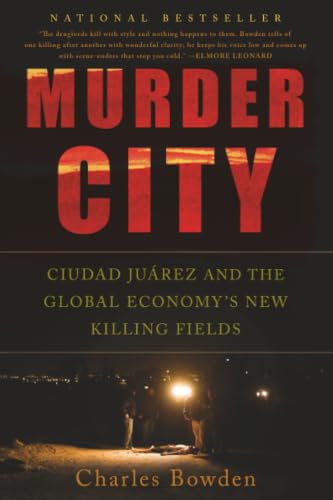
Murder City: Ciudad Juarez and the Global Economy's New Killing Fields
Charles Bowden
3.9
Ciudad Juarez lies just across the Rio Grande from El Paso, Texas. A once-thriving border town, it now resembles a failed state. Infamously known as the place where women disappear, its murder rate exceeds that of Baghdad.
In Murder City, Charles Bowden-one of the few journalists who spent extended periods of time in Juarez-has written an extraordinary account of what happens when a city disintegrates. Interweaving stories of its inhabitants-a beauty queen who was raped, a repentant hitman, a journalist fleeing for his life-with a broader meditation on the town's descent into anarchy, Bowden reveals how Juarez's culture of violence will not only worsen, but inevitably spread north.
Heartbreaking, disturbing, and unforgettable, Murder City was written at the height of his powers and established Bowden as one of America's leading journalists.
It’s a study of Ciudad Juarez, a city in northern Mexico, on the border with the United States. At the time Charles Bowden was there, it was the deadliest city in the world. [source]
Cover unavailable
4
The Globalization of Addiction: A Study in Poverty of the Spirit
Bruce Alexander
4.4
'The Globalization of Addiction' presents a radical rethink about the nature of addiction. Scientific medicine has failed when it comes to addiction. There are no reliable methods to cure it, prevent it, or take the pain out of it. There is no durable consensus on what addiction is, what causes it, or what should be done about it. Meanwhile, it continues to increase around the world. This book argues that the cause of this failure to control addiction is that the conventional wisdom of the 19th and 20th centuries focused too single-mindedly on the afflicted individual addict. Although addiction obviously manifests itself in individual cases, its prevalence differs dramatically between societies. For example, it can be quite rare in a society for centuries, and then become common when a tribal culture is destroyed or a highly developed civilization collapses. When addiction becomes commonplace in a society, people become addicted not only to alcohol and drugs, but to a thousand other destructive pursuits: money, power, dysfunctional relationships, or video games. A social perspective on addiction does not deny individual differences in vulnerability to addiction, but it removes them from the foreground of attention, because social determinants are more powerful. This book shows that the social circumstances that spread addiction in a conquered tribe or a falling civilisation are also built into today's globalizing free-market society. A free-market society is magnificently productive, but it subjects people to irresistible pressures towards individualism and competition, tearing rich and poor alike from the close social and spiritual ties that normally constitute human life. People adapt to their dislocation by finding the best substitutes for a sustaining social and spiritual life that they can, and addiction serves this function all too well. The book argues that the most effective response to a growing addiction problem is
What Bruce shows is that both the right-wing and left-wing theories of addiction are wrong. [source]
Cover unavailable
5
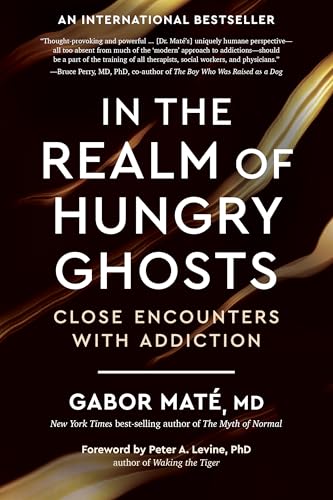
In the Realm of Hungry Ghosts: Close Encounters with Addiction
Gabor Maté
4.6
Based on Gabor Maté’s two decades of experience as a medical doctor and his groundbreaking work with the severely addicted on Vancouver’s skid row, In the Realm of Hungry Ghosts radically reenvisions this much misunderstood field by taking a holistic approach. Dr. Maté presents addiction not as a discrete phenomenon confined to an unfortunate or weak-willed few, but as a continuum that runs throughout (and perhaps underpins) our society; not a medical "condition" distinct from the lives it affects, rather the result of a complex interplay among personal history, emotional, and neurological development, brain chemistry, and the drugs (and behaviors) of addiction. Simplifying a wide array of brain and addiction research findings from around the globe, the book avoids glib self-help remedies, instead promoting a thorough and compassionate self-understanding as the first key to healing and wellness. In the Realm of Hungry Ghosts argues persuasively against contemporary health, social, and criminal justice policies toward addiction and those impacted by it. The mix of personal stories—including the author’s candid discussion of his own "high-status" addictive tendencies—and science with positive solutions makes the book equally useful for lay readers and professionals.


 Recommended by Johann Hari.