100 Best Plato Books of All Time

We've ranked the best plato books using expert recommendations, sales data, and millions of reader ratings. At Shortform, we know books. Our book guides are the best in the world. Learn why.

The Republic: The Influential Classic book cover1

The Republic: The Influential Classic

Plato

5.0
The newest deluxe edition in the bestselling Capstone Classics Series This ancient classic has had a make-over. In recent years these Capstone Classic deluxe editions have caught the book buying public's imagination. The volumes of international bestsellers such as Think and Grow Rich and The Art of War have quickly become the market leaders. Now Plato's best known work, one of the most intellectu
The Symposium book cover2

The Symposium

Plato, Christopher Gill

4.9
A fascinating discussion on sex, gender, and human instincts, as relevant today as ever.

In the course of a lively drinking party, a group of Athenian intellectuals exchange views on eros, or desire. From their conversation emerges a series of subtle reflections on gender roles, sex in society and the sublimation of basic human instincts. The discussion culminates in a radical challenge to conventi
Five Dialogues: Euthyphro, Apology, Crito, Meno, Phaedo book cover3

Five Dialogues: Euthyphro, Apology, Crito, Meno, Phaedo

Plato, John M. Cooper, et al.

4.7
The second edition of Five Dialogues presents G. M. A. Grube's distinguished translations, as revised by John Cooper for Plato, Complete Works (Hacket, 1997). Cooper has also contributed a number of new or expanded footnotes and updated Suggestions for Further Reading.
The Trial and Death of Socrates (Euthyphro, Apology, Crito, Phaedo (death scene only)) book cover4

The Trial and Death of Socrates (Euthyphro, Apology, Crito, Phaedo (death scene only))

Plato

4.6
Chronicling the life and death of the father of western philosophy, and charting his influence on the most influential ancient Greek philosophers, Plato's The Last Days of Socrates is translated from the Greek by Hugh Tredennick, revised with an introduction and notes by Harold Tarrant in Penguin Classics.

The trial and condemnation of Socrates on charges of heresy and corrupting young minds is a d
Apology book cover5

Apology

Plato and James J. Helm

4.6
The Apology of Socrates is Plato's version of the speech given by Socrates as he unsuccessfully defended himself in 399BCE against the charges of "corrupting the young, and by not believing in the gods in whom the city believes, but in other daimonia that are novel" (24b). "Apology" here has its earlier meaning (now usually expressed by the word "apologia") of speaking in defense of a cause or of
Gorgias book cover6

Gorgias

Plato, Robin Waterfield

4.6
One of Plato's most widely read dialogues, Gorgias treats the temptations of worldly success and the rewards of the genuinely moral life. Appealing to philosophers as a classic text of moral philosophy--and to everyone for its vividness, clarity, and occassional bitter humor--this new translation is accompanied by explanatory notes and an illuminating and accessible introduction.

About the Series:
A History of Western Philosophy book cover7

A History of Western Philosophy

Bertrand Russell

4.6
Since its first publication in 1945 Lord Russell's A History of Western Philosophy has been universally acclaimed as the outstanding one-volume work on the subject—unparalleled in its comprehensiveness, its clarity, its erudition, its grace and wit. In seventy-six chapters he traces philosophy from the rise of Greek civilization to the emergence of logical analysis in the twentieth century. Among
Phaedrus book cover8

Phaedrus

Plato, Alexander Nehamas, et al.

4.5
Set in the idyllic countryside outside Athens, the Phaedrus is a dialogue between the philosopher Socrates and his young friend Phaedrus, inspired by their reading of a clumsy speech by the writer Lysias about love. After first considering the virtues of romantic love, their conversation develops into a wide-ranging discussion on such subjects as the pursuit of beauty, the nature of humanity, the
Phaedo book cover9

Phaedo

Plato and David Gallop

4.5
The Phaedo is acknowledged to be one of Plato's masterpieces, showing him both as a philosopher and as a dramatist at the height of his powers. For its moving account of the execution of Socrates, the Phaedo ranks among the supreme literary achievements of antiquity. It is also a document crucial to the understanding of many ideas deeply ingrained in western culture, and provides one of the best i
Sophist: The Professor of Wisdom book cover10

Sophist: The Professor of Wisdom

Plato and Eva Brann

4.5
This is an English translation of Plato presenting a new conception of the Theory of Forms. Socrates and others discuss the epistemological and metaphysical puzzles of the Parmenides, with aims to define the meaning of the Sophist. The glossary of key terms is a unique addition to Platonic literature by which concepts central to each dialogue are discussed and cross-referenced as to their occurren
Theaetetus book cover11

Theaetetus

Plato, Robin H. Waterfield

4.5
Set immediately prior to the trial and execution of Socrates in 399 BC, Theaetetus shows the great philosopher considering the nature of knowledge itself, in a debate with the geometrician Theodorus and his young follower Theaetetus. Their dialogue covers many questions, such as: is knowledge purely subjective, composed of the ever-changing flow of impressions we receive from the outside world? Is
Meno book cover12

Meno

Plato and G. M. A. Grube

4.5
This is an English translation of Plato’s Socratic dialogue attempting to achieve a definition of virtue that applies equally to all particular virtues and serves as a great introduction to Socratic dialogues. It contains a short introduction, notes, standard Stephanus numbers, speech numbers, and an appendix containing a unique gallery of step-by-step geometrical diagrams. It also includes illust
Crito book cover13

Crito

. Plato, C.J. Emlyn-Jones

4.5
Plato's Socrates, in prison and being urged to flee execution, raises in acute form, and for the first time in European thought, a central question: is it right to disobey the state? Socrates' controversial answer in "Crito" has generated much contemporary literature, but no English commentary of the Greek text for seventy-five years. This new edition aims to provide an up-to-date literary and phi
The Laws of Plato book cover14

The Laws of Plato

Plato, Thomas L. Pangle

4.5
The Laws, Plato's longest dialogue, has for centuries been recognized as the most comprehensive exposition of the practical consequences of his philosophy, a necessary corrective to the more visionary and utopian Republic. In this animated encounter between a foreign philosopher and a powerful statesman, not only do we see reflected, in Plato's own thought, eternal questions of the relation betwee
The Cave and the Light: Plato Versus Aristotle, and the Struggle for the Soul of Western Civilization book cover15

The Cave and the Light: Plato Versus Aristotle, and the Struggle for the Soul of Western Civilization

Arthur Herman

4.5
Arthur Herman has now written the definitive sequel to his New York Times bestseller, How the Scots Invented the Modern World, and extends the themes of the book—which sold half a million copies worldwide—back to the ancient Greeks and forward to the age of the Internet. The Cave and the Light is a magisterial account of how the two greatest thinkers of the ancient world, Plato and Aristotle, lai
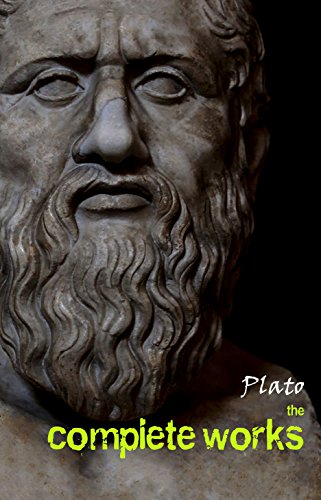
Plato: The Complete Works book cover16

Plato: The Complete Works

Plato

4.5
This ebook contains Plato's complete works.

This edition has been professionally formatted and contains several tables of contents. The first table of contents (at the very beginning of the ebook) lists the titles of all novels included in this volume. By clicking on one of those titles you will be redirected to the beginning of that work, where you'll find a new TOC that lists all the chapters an
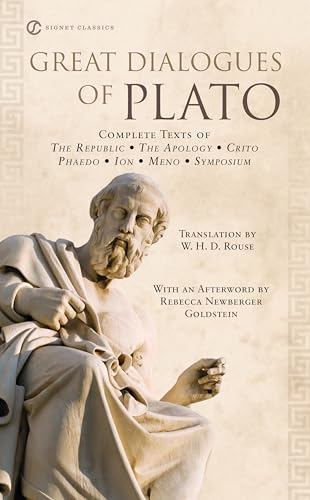
Great Dialogues of Plato book cover17

Great Dialogues of Plato

Plato

4.4
“Plato is philosophy, and philosophy, Plato.”—Emerson

The Republic and other great dialogues by the immortal Greek philosopher Plato are masterpieces that form part of the most important single body of writing in the history of philosophy. Beauty, love, immortality, knowledge, and justice are discussed in these dialogues, which magnificently express the glowing spirit of Platonic philosophy.

Transl
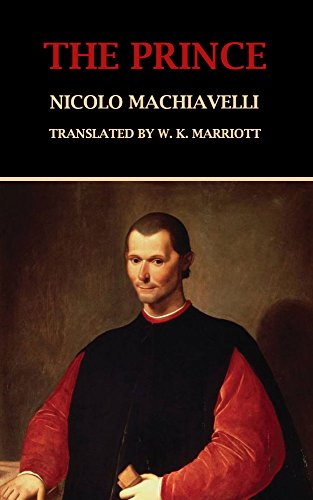
The Prince book cover18

The Prince

Nicollo Machiavelli, Tim Parks

4.4
Niccolo Machiavelli's "The Prince" is intended to be a treatise on ruling and is considered by many to be a classic of political science. In the book Machiavelli offers many bits of practical advice on how to rule and even though the book was written in the early 16th century its ideas are still very relevant today. Where "The Prince" differs from other political literature before it is in its sep
Protagoras book cover19

Protagoras

Plato, Michael Frede, Stanley Lombardo, Karen Bell

4.4
«A competição do diálogo chega assim ao fim e até parece ter sido bem sucedida: Protágoras "conseguiu convencer" Sócrates de que pode ensinar a aretê, Sócrates "levou" Protágoras "a admitir" que se age bem por sabedoria. Contudo, esta aparente conciliação levanta um novo e redobrado problema. As objecções de cada um em relação à tese contrária acabam por entrar em conflito com as suas próprias tes
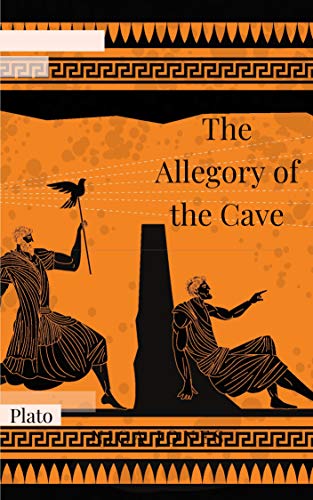
The Allegory of the Cave book cover20

The Allegory of the Cave

Plato

4.4
The Allegory of the Cave (Republic)

The Allegory of the Cave, or Plato's Cave, was presented by the Greek philosopher Plato in his work Republic (514a–520a) to compare "the effect of education (παιδεία) and the lack of it on our nature". It is written as a dialogue between Plato's brother Glaucon and his mentor Socrates, narrated by the latter. The allegory is presented after the analogy of the sun
Plato and a Platypus Walk Into a Bar: Understanding Philosophy Through Jokes book cover21

Plato and a Platypus Walk Into a Bar: Understanding Philosophy Through Jokes

Thomas Cathcart, Daniel Klein

4.4
Here's a lively, hilarious, not-so-reverent crash course through the great philosophical traditions, schools, concepts, and thinkers. Its Philosophy 101 for everyone who knows not to take all this heavy stuff too seriously. Some of the Big Ideas are Existentialism (what do Hegel and Bette Midler have in common?), Philosophy of Language (how to express what its like being stranded on a desert islan
Cratylus book cover22

Cratylus

Plato, C. D. C. Reeve

4.4
"It is. . . remarkable that Reeve's is the first new English translation since Fowler's Loeb edition of 1926. Fortunately, Reeve has done an excellent job. His version is not slavishly literal but is in general very accurate. It is also very clear and readable. Reeve is particularly to be congratulated for having produced versions of some of the more torturous passages, which are not only faithful
Charmides book cover23

Charmides

Plato, Thomas G. West

4.4
A literal translation, allowing the simplicity and vigor of the Greek diction to shine through.
24

Letters of Note: An Eclectic Collection of Correspondence Deserving of a Wider Audience (Historical Nonfiction Letters, Letters from Famous People, Book of Letters and Correspondance)

Shaun Usher

4.3
This spectacular collection of more than 125 letters offers a never-before-seen glimpse of the events and people of history—the brightest and best, the most notorious, and the endearingly everyday. Entries include a transcript of the letter; a short contextual introduction; and, in 100 cases, a captivating facsimile of the letter itself. The artfulness of Shaun Usher's eclectic arrangement creates
Parmenides book cover25

Parmenides

Plato, Albert Keith Whitaker

4.3
This is an English translation of one of the more challenging and enigmatic of Plato's dialogues between Socrates and Parmenides and Zeno of Elea, that begins with Zeno defending his treatise of Parmenidean monism against those partisans of plurality.

Focus Philosophical Library translations are close to and are non-interpretative of the original text, with the notes and a glossary intending to pro
Philebus book cover26

Philebus

Plato, Robin H. Waterfield

4.3
Taking the form of a discussion between the hedonist Philebus, his naïve disciple Protarchus and Socrates, Philebus is a compelling consideration of the popular belief that pleasure is the greatest attainable good. Here, Socrates speculates on the differing intensities of both pleasure and pain; explores the notion that they can be divided into pure and impure types; considers the relationship bet
Timaeus and Critias book cover27

Timaeus and Critias

Plato

4.3
Timaeus and Critias is a Socratic dialogue in two parts. A response to an account of an ideal state told by Socrates, it begins with Timaeus’s theoretical exposition of the cosmos and his story describing the creation of the universe, from its very beginning to the coming of man. Timaeus introduces the idea of a creator God and speculates on the structure and composition of the physical world. Cri
Protagoras and Meno book cover28

Protagoras and Meno

Plato, Adam Beresford, Lesley Brown

4.3
Exploring the question of what exactly makes good people good, Protagoras and Meno are two of the most enjoyable and accessible of all of Plato's dialogues. Widely regarded as his finest dramatic work, the Protagoras, set during the golden age of Pericles, pits a youthful Socrates against the revered sophist Protagoras, whose brilliance and humanity make him one the most interesting and likeable o
Critias book cover29

Critias

Plato

4.3
Plato (428/427 BC-348/347 BC), whose original name was Aristocles, was an ancient Greek philosopher, the second of the great trio of ancient Greeks - succeeding Socrates and preceding Aristotle - who between them laid the philosophical foundations of Western culture. Plato was also a mathematician, writer of philosophical dialogues, and founder of the Academy in Athens, the first institution of hi
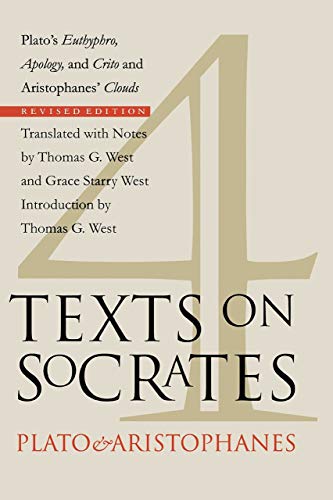
Four Texts on Socrates: Euthyphro/Apology/Crito/Aristophanes' Clouds book cover30

Four Texts on Socrates: Euthyphro/Apology/Crito/Aristophanes' Clouds

Plato, Aristophanes, et al.

4.3
Widely adopted for classroom use, this book offers translations of four major works of ancient Greek literature which treat the life and thought of Socrates, focusing particularly on his trial and defense (three dialogues by Plato: Euthyphro, Apology of Socrates, and Crito) and on the charges against Socrates (Aristophanes' comedy Clouds).

This is the only collection of the three Platonic dialogues
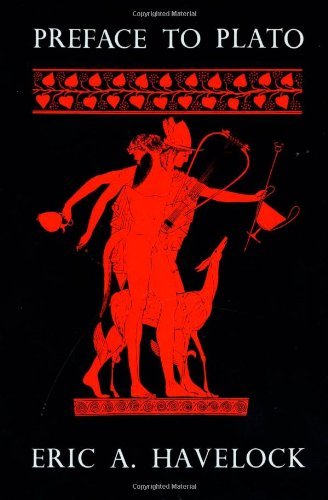
Preface to Plato book cover31

Preface to Plato

Eric A. Havelock

4.3
Plato's frontal attack on poetry has always been a problem for sympathetic students, who have often minimized or avoided it. Beginning with the premise that the attack must be taken seriously, Eric Havelock shows that Plato's hostility is explained by the continued domination of the poetic tradition in contemporary Greek thought.

The reason for the dominance of this tradition was technological. In
Timaeus book cover32

Timaeus

Plato, Donald J. Zeyl

4.3
First published in Plato: Complete Works, Donald J. Zeyl's masterful translation of Timaeus is presented along with his 75 page introductory essay, which discusses points of contemporary interest in the Timaeus, deals at length with long-standing and current issues of interpretation, and provides a consecutive commentary on the work as a whole. Includes an analytic table of contents and a select b
33

The Open Society and Its Enemies - Volume One: The Spell of Plato

Karl R. Popper

4.3
Popper was born in 1902 to a Viennese family of Jewish origin. He taught in Austria until 1937, when he emigrated to New Zealand in anticipation of the Nazi annexation of Austria the following year, and he settled in England in 1949. Before the annexation, Popper had written mainly about the philosophy of science, but from 1938 until the end of the Second World War he focused his energies on polit
Hippias Major book cover34

Hippias Major

Plato, Paul Woodruff

4.3
In the Hippias Major, Socrates and Hippias set out to find a definition for "beauty", but are destined to fail due to their inability to formulate an answer which encompasses the entire concept. The actual Greek term that is used in the dialogue is καλόν, which as an adjective often means fine or noble as well as beautiful. For this reason, translators such as Paul Woodruff typically translate the
Alcibiades book cover35

Alcibiades

Nicholas Plato

4.3
The Alcibiades was widely read in antiquity as the very best introduction to Plato. In spite of its ancient reputation, many modern scholars have thought that the Alcibiades is not by Plato and it has therefore lacked a decent commentary. This edition remedies that situation. The notes explain difficulties of linguistic, literary and philosophical detail. The introduction includes a discussion of
Statesman book cover36

Statesman

Julia Plato

4.3
The Statesman is Plato's neglected political work, but it is crucial for an understanding of the development of his political thinking. It continues themes from the Republic, particularly the importance of knowledge as entitlement to rule. But there are also changes: Plato has altered his view of the moral psychology of the citizen, and revised his position on the role of law and institutions. Thi
The Dream of Reason: A History of Western Philosophy from the Greeks to the Renaissance book cover37

The Dream of Reason: A History of Western Philosophy from the Greeks to the Renaissance

Anthony Gottlieb

4.3
Already a classic, this landmark study of early Western thought now appears in a new edition with expanded coverage of the Middle Ages. This landmark study of Western thought takes a fresh look at the writings of the great thinkers of classic philosophy and questions many pieces of conventional wisdom. The book invites comparison with Bertrand Russell's monumental History of Western Philosophy, "b
Ion book cover38

Ion

Plato

4.3
In Plato's Ion Socrates discusses with the titular character, a professional rhapsode who also lectures on Homer, the question of whether the rhapsode, a performer of poetry, gives his performance on account of his skill and knowledge or by virtue of divine possession. It is one of the shortest of Plato's dialogues
The Roots of Political Philosophy: Ten Forgotten Socratic Dialogues book cover39

The Roots of Political Philosophy: Ten Forgotten Socratic Dialogues

Thomas L. Pangle

4.3
s/t: Ten Forgotten Socratic Dialogues Translated, with Interpretive Studies
This book consists of literal English translations of ten Socratic dialogues that have been largely neglected for the last century. Although everyone of these dialogues belongs to the classical canon of Platonic writings and was accepted as genuine in antiquity, most were condemned as forgeries in the early nineteenth cent
Euthyphro, Apology, Crito book cover40

Euthyphro, Apology, Crito

Plato, F.J. Church

4.3
Euthyphro has come to indict his own father for the murder of one of their laborers, and Socrates questions him about the nature of justice and his grounds for taking action against his father. Is he impious for attempting to indict his own father, yet would he be guilty of impiety if he does not seek justice for the laborer's murder? Together Euthyphro and Socrates examine the question.
Lysis book cover41

Lysis

Plato

4.2
This scarce antiquarian book is a facsimile reprint of the original. Due to its age, it may contain imperfections such as marks, notations, marginalia and flawed pages. Because we believe this work is culturally important, we have made it available as part of our commitment for protecting, preserving, and promoting the world's literature in affordable, high quality, modern editions that are true t
Common Sense book cover42

Common Sense

Thomas Paine

4.2
Throughout history, some books have changed the world. They have transformed the way we see ourselves—and each other. They have inspired debate, dissent, war and revolution. They have enlightened, outraged, provoked and comforted. They have enriched lives—and destroyed them.

Published anonymously in 1776, six months before the Declaration of Independence, Thomas Paine’s Common Sense was a radical a
Plato: The Man and His Work book cover43

Plato: The Man and His Work

A. E. Taylor

4.2
One of the greatest thinkers of the ancient world, Plato instigated groundbreaking inquiries into morality, ethics, and the quest for happiness that continue to inform and influence philosophical discussion today. In this outstanding work of scholarship, a renowned expert on Plato presents a scrupulously accurate historical view of the great philosopher's life and works. Distinguished by its dispa
Eros the Bittersweet book cover44

Eros the Bittersweet

Anne Carson

4.2
A book about love as seen by the ancients, Eros is Anne Carson's exploration of the concept of "eros" in both classical philosophy and literature. Beginning with: "It was Sappho who first called eros 'bittersweet.' No one who has been in love disputes her. What does the word mean?", Carson examines her subject from numerous points of view and styles, transcending the constraints of the scholarly e
Plato: A Very Short Introduction book cover45

Plato: A Very Short Introduction

Julia Annas

4.2
This lively and accessible book focuses on the philosophy and argument of Plato's writings, drawing the reader into Plato's way of doing philosophy and the general themes of his thinking. It discusses Plato's style of writing: his use of the dialogue form, his use of what we today call fiction, and his philosophical transformation of myths. It also looks at his discussions of love and philosophy,
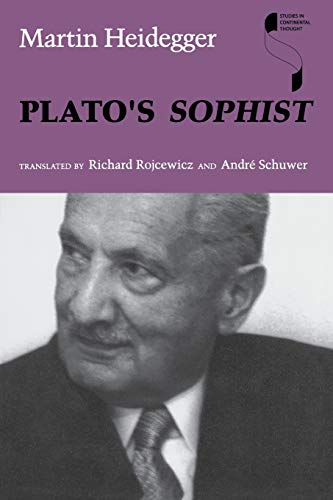
Plato's Sophist book cover46

Plato's Sophist

Martin Heidegger

4.2
This volume reconstructs Martin Heidegger's lecture course at the University of Marburg in the winter semester of 1924-25, which was devoted to an interpretation of Plato and Aristotle. Published for the first time in German in 1992 as volume 19 of Heidegger's Collected Works, it is a major text not only because of its intrinsic importance as an interpretation of the Greek thinkers, but also becau
Plato Six Pack 2: The Republic, Timaeus, Critias, Meno, Plato essay and Plato Biography book cover47

Plato Six Pack 2: The Republic, Timaeus, Critias, Meno, Plato essay and Plato Biography

Plato, Ralph Waldo Emerson, et al.

4.2
Plato Six Pack 2 presents Plato's most important work The Republic in its entirety, as well as three dialogues, Timaeus, Critias and Meno, an essay on Plato by Ralph Waldo Emerson and a biographical sketch of Plato by Elbert Hubbard.
The Being of the Beautiful: Plato's Theaetetus, Sophist and Statesman book cover48

The Being of the Beautiful: Plato's Theaetetus, Sophist and Statesman

Plato, Seth Benardete

4.2
The Being of the Beautiful collects Plato’s three dialogues, the Theaetetus, Sophist, and Statesman, in which Socrates formulates his conception of philosophy while preparing for trial. Renowned classicist Seth Benardete’s careful translations clearly illuminate the dramatic and philosophical unity of these dialogues and highlight Plato’s subtle interplay of language and structure. Extensive notes
Plato Six Pack: Euthyphro, Apology, Crito, Phaedo, The Allegory of the Cave and Symposium book cover49

Plato Six Pack: Euthyphro, Apology, Crito, Phaedo, The Allegory of the Cave and Symposium

Plato and Benjamin Jowett

4.2
Plato Six Pack represents the full-range of Plato's philosophy. Included are six of his original works - Euthyphro, Apology, Crito, Phaedo, The Allegory of the Cave and Symposium.
Laches book cover50

Laches

Plato

4.2
This scarce antiquarian book is a facsimile reprint of the original. Due to its age, it may contain imperfections such as marks, notations, marginalia and flawed pages. Because we believe this work is culturally important, we have made it available as part of our commitment for protecting, preserving, and promoting the world's literature in affordable, high quality, modern editions that are true t
Republic (Penguin Classics) by Plato (2012-09-27) book cover51

Republic (Penguin Classics) by Plato (2012-09-27)

Plato

4.2
From Plato to Platonism book cover52

From Plato to Platonism

Lloyd P. Gerson

4.2
Was Plato a Platonist? While ancient disciples of Plato would have answered this question in the affirmative, modern scholars have generally denied that Plato's own philosophy was in substantial agreement with that of the Platonists of succeeding centuries. In From Plato to Platonism, Lloyd P. Gerson argues that the ancients were correct in their assessment. He arrives at this conclusion in an esp
The Woman Question in Plato's Republic book cover53

The Woman Question in Plato's Republic

Mary Townsend

4.2
In this book, Mary Townsend proposes that, contrary to the current scholarship on Plato's Republic, Socrates does not in fact set out to prove the weakness of women. Rather, she argues that close attention to the drama of the Republic reveals that Plato dramatizes the reluctance of men to allow women into the public sphere and offers a deeply aporetic vision of women's nature and political positio
Lesser Hippias book cover54

Lesser Hippias

Plato and Harold North Fowler

4.2
The People of Plato: A Prosopography of Plato and Other Socratics book cover55

The People of Plato: A Prosopography of Plato and Other Socratics

Debra Nails

4.2
The People of Plato is the first study since 1823 devoted exclusively to the identification of, and relationships among, the individuals represented in the complete Platonic corpus. It provides details of their lives, and it enables one to consider the persons of Plato's works, and those of other Socratics, within a nexus of important political, social, and familial relationships.

Debra Nails makes
Finitude And Transcendence In The Platonic Dialogues book cover56

Finitude And Transcendence In The Platonic Dialogues

Drew A. Hyland

4.2
This book explains how to read Plato, emphasizing the philosophic importance of the dramatic aspects of the dialogues, and showing that Plato is an ironic thinker and that his irony is deeply rooted in his philosophy.
Timaeus/Critias/Cleitophon/Menexenus/Epistles book cover57

Timaeus/Critias/Cleitophon/Menexenus/Epistles

Plato, R. G. Bury

4.2
Plato, the great philosopher of Athens, was born in 427 BCE. In early manhood an admirer of Socrates, he later founded the famous school of philosophy in the grove Academus. Much else recorded of his life is uncertain; that he left Athens for a time after Socrates' execution is probable; that later he went to Cyrene, Egypt, and Sicily is possible; that he was wealthy is likely; that he was critica
Alfarabi's Philosophy of Plato and Aristotle book cover58

Alfarabi's Philosophy of Plato and Aristotle

Alfarabi, Muhsin Mahdi, Charles E. Butterworth, Thomas L. Pangle

4.2
This long-awaited reissue of the 1969 Cornell edition of Alfarabi's Philosophy of Plato and Aristotle contains Muhsin Mahdi's substantial original introduction and a new foreword by Charles E. Butterworth and Thomas L. Pangle. The three parts of the book, "Attainment of Happiness," "Philosophy of Plato," and "Philosophy of Aristotle," provide a philosophical foundation for Alfarabi's political wor
The Cambridge Companion to Plato book cover59

The Cambridge Companion to Plato

Richard Kraut

4.2
Plato stands as the fount of our philosophical tradition, being the first Western thinker to produce a body of writing that touches upon a wide range of topics still discussed by philosophers today. In a sense he invented philosophy as a distinct subject, for although many of these topics were discussed by his intellectual predecessors and contemporaries, he was the first to bring them together by
Republic (Hackett Classics) book cover60

Republic (Hackett Classics)

Plato

4.2
Socrates: Ironist and Moral Philosopher book cover61

Socrates: Ironist and Moral Philosopher

Gregory Vlastos

4.2
Vlastos's new book begins from the conviction that Socrates strangeness is the key to his philosophy. It is a marvelous book, in which no major aspect of Socrates career is eclipsed. The rigor of his arguments, the depth of his moral commitment and understanding, his complex relationship to Athenian ethical traditions, his rational religion: all this comes to life in writing whose vigor and lucidi
The City and Man book cover62

The City and Man

Leo Strauss

4.2
The City and Man consists of provocative essays by the late Leo Strauss on Aristotle's Politics, Plato's Republic, and Thucydides' Peloponnesian Wars. Together, the essays constitute a brilliant attempt to use classical political philosophy as a means of liberating modern political philosophy from the stranglehold of ideology. The essays are based on a long and intimate familiarity with the works,
63

Euthydemus

Plato, Rosamond Kent Sprague

4.2
"This is the best translation available of a lively and challenging dialogue, which sets before the reader profound questions about the use and misuse of reason." --Myles Burnyeat, University of Cambridge
Dialogue and Dialectic: Eight Hermeneutical Studies on Plato book cover64

Dialogue and Dialectic: Eight Hermeneutical Studies on Plato

Hans-Georg Gadamer

4.2
“This book is a virtual case study in the application of hermeneutical principles to illuminate philosophical texts. The book contains translations of eight of Gadamer’s best known essays on Plato….These studies, spanning a period of almost fifty years, are important not only for what they have to say concerning Plato, but also for what they reveal about the development and insightfulness of Gadam
Republic of Plato 2ND EDITION book cover65

Republic of Plato 2ND EDITION

Plato

4.2
Plato's Ethics book cover66

Plato's Ethics

Terence Irwin

4.2
This exceptional book examines and explains Plato's answer to the normative question, "How ought we to live?" It discusses Plato's conception of the virtues; his views about the connection between the virtues and happiness; and the account of reason, desire, and motivation that underlies his arguments about the virtues. Plato's answer to the epistemological question, "How can we know how we ought
Plato at the Googleplex: Why Philosophy Won't Go Away book cover67

Plato at the Googleplex: Why Philosophy Won't Go Away

Rebecca Goldstein

4.2
Is philosophy obsolete? Are the ancient questions still relevant in the age of cosmology and neuroscience, not to mention crowd-sourcing and cable news? The acclaimed philosopher and novelist Rebecca Newberger Goldstein provides a dazzlingly original plunge into the drama of philosophy, revealing its hidden role in today’s debates on religion, morality, politics, and science.

At the origin of Weste
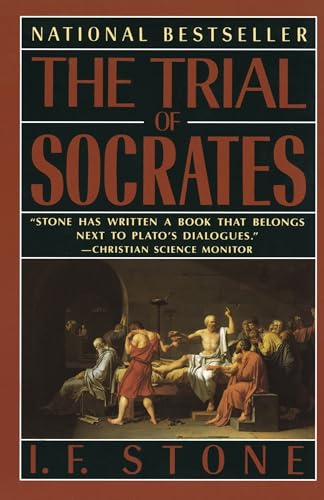
The Trial of Socrates book cover68

The Trial of Socrates

i.f.stone

4.2
In a feat of investigative journalism and classical scholarship, a veteran Washington correspondent has gone back almost twenty-five hundred years to throw fresh light on the most famous free speech case of all time - the trial of Socrates.

The book tries to unravel some of the mysteries behind the trial. It helps us to understand why Athens waited until Socrates was seventy before bringing him to
The Seventh Letter book cover69

The Seventh Letter

Plato Wilhelm Plato

4.1
"The Seventh Letter is a literary and philosophical text of the mid-fourth century BC (ca. 360 BC), the authorship of which has long been disputed by classical scholars. Much contemporary scholarly opinion favors the authenticity of the text-i.e. that it was written by Plato himself, or by a student of Plato who possessed direct and intimate knowledge of the events and circumstances involved.

For r
Studies in Platonic Political Philosophy book cover70

Studies in Platonic Political Philosophy

Leo Strauss

4.1
One of the outstanding thinkers of our time offers in this book his final words to posterity. Studies in Platonic Political Philosophy was well underway at the time of Leo Strauss's death in 1973. Having chosen the title for the book, he selected the most important writings of his later years and arranged them to clarify the issues in political philosophy that occupied his attention throughout his
Self Knowledge In Plato's Phaedrus book cover71

Self Knowledge In Plato's Phaedrus

Charles Griswold Jr.

4.1
In this award-winning study of the Phaedrus, Charles Griswold focuses on the theme of "self-knowledge". Relying on the principle that form and content are equally important to the dialogue's meaning, Griswold shows how the concept of self-knowledge unifies the profusion of issues set forth by Plato. Included are a new preface and an updated comprehensive bibliography of works on the Phaedrus.
Plato's Trilogy: Theaetetus, the Sophist, and the Statesman book cover72

Plato's Trilogy: Theaetetus, the Sophist, and the Statesman

Jacob Klein

4.1
A Plato Reader: Eight Essential Dialogues book cover73

A Plato Reader: Eight Essential Dialogues

Plato and C. D. C. Reeve

4.1
Plato, Volume 1: Metaphysics and Epistemology book cover74

Plato, Volume 1: Metaphysics and Epistemology

Gail Fine

4.1
This series aims to bring together important recent writing in major areas of philosophical inquiry, selected from a variety of sources. The editor of each volume contributes an introductory essay on the items chosen and on the questions with which they deal. A selective bibliography is appended as a guide to further reading.
By Plato - The Last Days of Socrates (Penguin Classics) book cover75

By Plato - The Last Days of Socrates (Penguin Classics)

Plato

4.1
Alcibiades I book cover76

Alcibiades I

Plato

4.1
Alcibiades II book cover77

Alcibiades II

Plato and J. Burnet

4.1
This book was converted from its physical edition to the digital format by a community of volunteers. You may find it for free on the web. Purchase of the Kindle edition includes wireless delivery.
Philosophy for Kids: 40 Fun Questions That Help You Wonder...about Everything! book cover78

Philosophy for Kids: 40 Fun Questions That Help You Wonder...about Everything!

David White

4.1
Inspire animated discussions of questions that concern kids--and all of us--with this innovative, interactive book. Open your students' minds to the wonders of philosophy.
Allow them to grapple with the questions philosophers have discussed since the ancient Greeks. Questions include: "Who are your friends?," "Can computers think?," "Can something logical not make sense?," and "Can you think about
Vom Wesen der Wahrheit book cover79

Vom Wesen der Wahrheit

Martin Heidegger, Ted Sadler

4.1
The Essence of Truth must count as one of Heidegger's most important works, for nowhere else does he give a comparably thorough explanation of what is arguably the most fundamental and abiding theme of his entire philosophy, namely the difference between truth as the "unhiddenness of beings" and truth as the "correctness of propositions." For Heidegger, it is by neglecting the former primordial co
The Fire and the Sun: Why Plato Banished the Artists book cover80

The Fire and the Sun: Why Plato Banished the Artists

Iris Murdoch

4.1
Meno and Other Dialogues book cover81

Meno and Other Dialogues

Plato, Robin Waterfield

4.1
A unique selection of four dialogues in which Plato considers virtue-- individual virtue as well as virtue as a whole-- and its definition. Charmides, Laches, and Lysis investigate the specific virtues of self-control, courage, and friendship. The later Meno discusses the concept of virtue as awhole, and whether it is something that can be taught.
Plato is a major figure in the history of Western
Menexenus book cover82

Menexenus

Plato

4.1
The Menexenus is a Socratic dialogue of Plato, traditionally included in the seventh tetralogy along with the Greater and Lesser Hippias and the Ion. The speakers are Socrates and Menexenus, who is not to be confused with Socrates' son Menexenus. The Menexenus of Plato's dialogue appears also in the Lysis, where he is identified as the "son of Demophon",[1] as well as the Phaedo.
The Menexenus cons
Şölen - Dostluk book cover83

Şölen - Dostluk

Platon (Eflatun)

4.1
Lectures on the History of Philosophy 2: Plato & the Platonists book cover84

Lectures on the History of Philosophy 2: Plato & the Platonists

Georg Wilhelm Friedrich Hegel, E. S. Haldane, Frances H. Simson

4.1
G. W. F. Hegel (1770–1831), the influential German philosopher, believed that human history was advancing spiritually and morally according to God's purpose. At the beginning of Lectures on the History of Philosophy, Hegel writes: "What the history of Philosophy shows us is a succession of noble minds, a gallery of heroes of thought, who, by the power of Reason, have penetrated into the being of t
The Works of Plato: Complete and Unabridged in One Volume: With a New and Original Translation of Halcyon and Epigrams by Jake E. Stief book cover85

The Works of Plato: Complete and Unabridged in One Volume: With a New and Original Translation of Halcyon and Epigrams by Jake E. Stief

Plato, Jake E Stief, et al.

4.1
Introduction, by Irwin Edman, The Jowett Translation
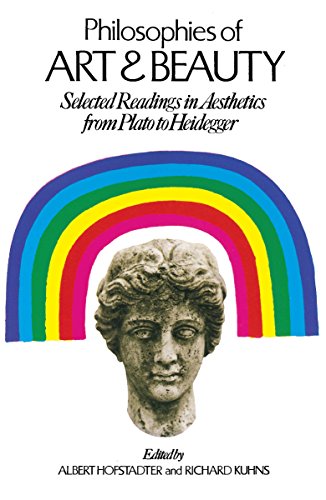
Philosophies of Art and Beauty: Selected Readings in Aesthetics from Plato to Heidegger book cover86

Philosophies of Art and Beauty: Selected Readings in Aesthetics from Plato to Heidegger

Albert Hofstadter, Richard Kuhns

4.1
This anthology is remarkable not only for the selections themselves, among which the Schelling and the Heidegger essays were translated especially for this volume, but also for the editors' general introduction and the introductory essays for each selection, which make this volume an invaluable aid to the study of the powerful, recurrent ideas concerning art, beauty, critical method, and the natur
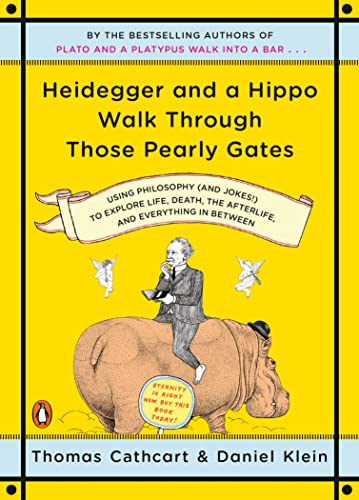
Heidegger and a Hippo Walk Through Those Pearly Gates: Using Philosophy (and Jokes!) to Explore Life, Death, the Afterlife, and Everything in Between book cover87

Heidegger and a Hippo Walk Through Those Pearly Gates: Using Philosophy (and Jokes!) to Explore Life, Death, the Afterlife, and Everything in Between

Thomas Cathcart and Daniel Klein

4.1
Q. Why are there almost as many jokes about death as there are about sex?

A. Because they both scare the pants off us.

Thomas Cathcart and Daniel Klein first made a name for themselves with the outrageously funny New York Times bestseller Plato and a Platypus Walk into a Bar.... Now they turn their attention to the Big "D" and share the timeless wisdom of the great philosophers, theologians, psyc
Minos book cover88

Minos

Denise Mina, Cathleen McCarron, et al

4.1
She was mine. Our love unquestioned. Our futures planned. But she didn't show. All that we had, all that we meant, and after all that was said, she just didn't show. That one act by her changed everything, but it especially changed me and from that moment on, there was no going back. No words of love, no whispered promises, just sex and drugs and rock and roll. No one gets a piece of Reed, but wha
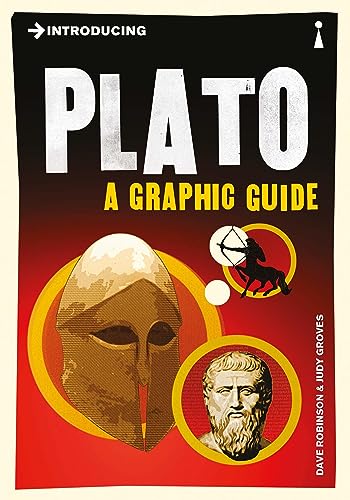
Introducing Plato: A Graphic Guide (Introducing...) book cover89

Introducing Plato: A Graphic Guide (Introducing...)

Dave Robinson

4.1
"Introducing Plato" begins by explaining how philosophers like Socrates and Pythagoras influenced Plato's thought. It provides a clear account of Plato's puzzling theory of knowledge, and explains how this theory then directed his provocative views on politics, ethics and individual liberty. It offers detailed critical commentaries on all of the key doctrines of Platonism, especially the very odd
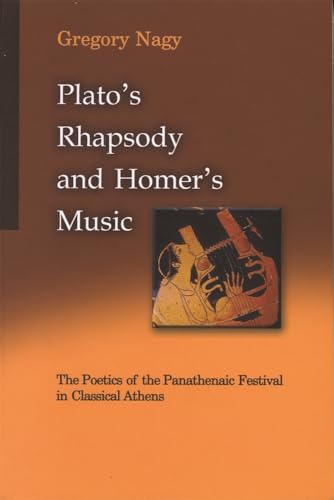
Plato's Rhapsody and Homer's Music: The Poetics of the Panathenaic Festival in Classical Athens book cover90

Plato's Rhapsody and Homer's Music: The Poetics of the Panathenaic Festival in Classical Athens

Gregory Nagy

4.1
The festival of the Panathenaia, held in Athens every summer to celebrate the birthday of the city's goddess, Athena, was the setting for performances of the Homeric Iliad and Odyssey by professional reciters or "rhapsodes." The works of Plato are our main surviving source of information about these performances. Through his references, a crucial phase in the history of the Homeric tradition can b
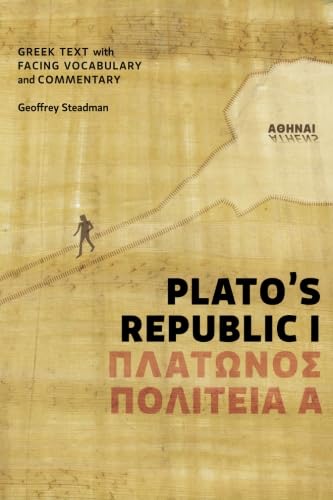
Plato's Republic I: Greek Text with Facing Vocabulary and Commentary book cover91

Plato's Republic I: Greek Text with Facing Vocabulary and Commentary

Geoffrey Steadman

4.1
Facing each of the 44 pages of John Burnet's Greek edition of Plato's Republic I (originally published by Oxford University Press in 1903) is a single page of corresponding vocabulary and intermediate level grammatical commentary. Once readers have memorized the core vocabulary list, they will be able to read the classical Greek and consult all relevant vocabulary and commentary without turning th
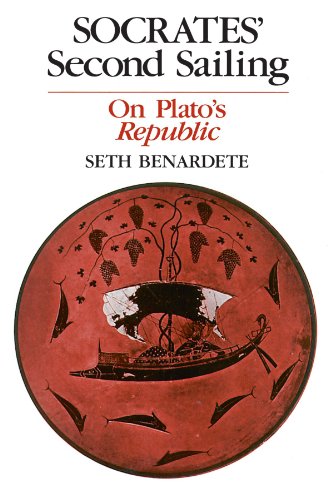
Socrates' Second Sailing: On Plato's Republic book cover92

Socrates' Second Sailing: On Plato's Republic

Seth Benardete

4.1
In this section-by-section commentary, Benardete argues that Plato's Republic is a holistic analysis of the beautiful, the good, and the just. This book provides a fresh interpretation of the Republic and a new understanding of philosophy as practiced by Plato and Socrates.

"Cryptic allusions, startling paradoxes, new questions . . . all work to give brilliant new insights into the Platonic text."—
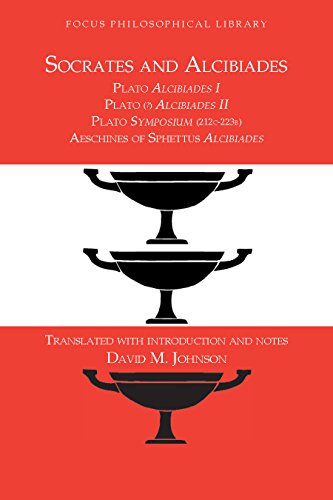
Socrates and Alcibiades: Four Texts: Plato's Alcibiades 1-2, Symposium 212c-223a, Aeschines' Alcibiades book cover93

Socrates and Alcibiades: Four Texts: Plato's Alcibiades 1-2, Symposium 212c-223a, Aeschines' Alcibiades

David Johnson

4.0
Socrates and Alcibiades: Four Texts gathers together translations our four most important sources for the relationship between Socrates and the most controversial man of his day, the gifted and scandalous Alcibiades. In addition to Alcibiades’ famous speech from Plato’s Symposium, this text includes two dialogues, the Alcibiades I and Alcibiades II, attributed to Plato in antiquity but unjustly ne
Boxing Plato's Shadow: An Introduction to the Study of Human Communication book cover94

Boxing Plato's Shadow: An Introduction to the Study of Human Communication

Michael Dues and Mary Brown

4.0
Designed to introduce students to the academic discipline of Communication, this text describes the scope and methods of communication studies, and sketches its history from the work of the early sophists to contemporary research efforts. "Boxing Plato s Shadow" helps explain why, despite its long and venerable history of scholarly endeavor, Communication continues to struggle for recognition of i
Apology/Crito/Phaedo book cover95

Apology/Crito/Phaedo

Plato, Christopher Emlyn-Jones, et al.

4.0
Gorgias/Phaedrus (Agora) book cover96

Gorgias/Phaedrus (Agora)

Plato, James H. Nichols

4.0

With a masterful sense of the place of rhetoric in both thought and practice and an ear attuned to the clarity, natural simplicity, and charm of Plato's Greek prose, James H. Nichols, Jr., offers precise yet unusually readable translations of two great Platonic dialogues on rhetoric.

The Gorgias presents an intransigent argument that justice is superior to injustice—to the extent that suffering an

A History of Greek Philosophy, Volume 4: Plato: The Man and His Dialogues: Earlier Period book cover97

A History of Greek Philosophy, Volume 4: Plato: The Man and His Dialogues: Earlier Period

Guthrie

4.0
The fourth volume of Professor Guthrie's great history of Greek thought deals exclusively with Plato. Plato, however, so prolific a writer, so profoundly original in his thought, and so colossal an influence on the later history of philosophy, that it has not been possible to confine him to one volume. Volume IV therefore offers a general introduction to his life and writings, and covers the so-ca
Plato's Podcasts: The Ancients' Guide to Modern Living book cover98

Plato's Podcasts: The Ancients' Guide to Modern Living

Mark Vernon

4.0
Use Ancient Wisdom to revitalise your life!

Do you ever get the feeling that something went wrong? What with credit crunches, wars, congestion charges, and unemployment, it is natural to hark back to less complicated times. In this witty and inspiring book, Mark Vernon does just that. However, we are not talking about the 1980s - try 400BC! Filled with timeless insight into life, relationships, wor
Plato's Phaedrus: The Philosophy of Love book cover99

Plato's Phaedrus: The Philosophy of Love

Graeme Nicholson

4.0
The Pbaedrus lies at the heart of Plato's work, and the topics it discusses are central to his thought. In its treatment of the topics of the soul, the ideas and love, it is closely tied to the other dialogues of Plato's "middle period," the Pbaedo, the Symposium, and the Republic.
Plato's 'Laws': A Critical Guide book cover100

Plato's 'Laws': A Critical Guide

Christopher Bobonich

4.0
Long understudied, Plato's Laws has been the object of renewed attention in the past decade, and is now considered to be his major work of political philosophy besides the Republic. In his last dialogue, Plato returns to the project of describing the foundation of a just city and sketches in considerable detail its constitution, laws and other social institutions. Written by leading Platonists, th