We've ranked the best physiology books using expert recommendations, sales data, and millions of reader ratings. At Shortform, we know books. Our book guides are the best in the world. Learn why.
Man's Search for Meaning has riveted generations of readers with its descriptions of life in Nazi death camps and its lessons for spiritual survival. Between 1942 and 1945 psychiatrist Viktor Frankl labored in four different camps, including Auschwitz, while his parents, brother, and pregnant wife perished. Based on his own experience and the stories of his many patients, Frankl argues that we cannot avoid suffering but we can choose how to cope with it, find meaning in it, and move forward with renewed purpose. Frankl's theory—known as logotherapy, from the Greek word logos ("meaning")—holds that our primary drive in life is not pleasure, as Freud maintained, but the discovery and pursuit of what we personally find meaningful. In the decades since its first publication in 1959, Man's Search for Meaning has become a classic, with more than twelve million copies in print around the world. A 1991 Library of Congress survey that asked readers to name a "book that made a difference in your life" found Man's Search for Meaning among the ten most influential books in America. At once a memoir, a meditation, a treatise, and a history, it continues to inspire us all to find significance in the very act of living. (back cover)
…
Recommended by Tony Robbins, Dustin Moskovitz, Ev Williams, and 60 others.
Another book that I’ve read dozens of times. It taught me that if you change the meaning, you change everything. Meaning equals emotion, and emotion equals life. [source]
Dustin Moskovitz
Co-founder/Facebook and Asana
Dustin Moskovitz recommended this book on Twitter. [source]
I read it while spending ten days in the ICU of Bellevue hospital trying to reattach my finger from a ring avulsion accident in my kitchen. It talks about the meaning of life, and I believe you come out a better person from reading it. [source]
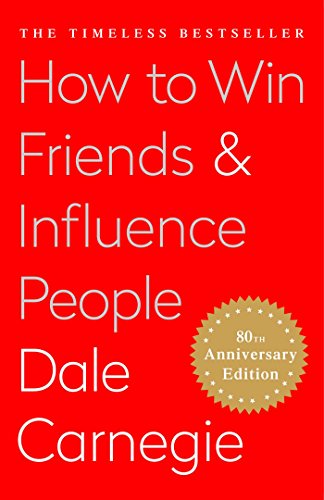
You can go after the job you want—and get it! You can take the job you have—and improve it! You can take any situation—and make it work for you!
Dale Carnegie’s rock-solid, time-tested advice has carried countless people up the ladder of success in their business and personal lives. One of the most groundbreaking and timeless bestsellers of all time, How to Win Friends & Influence People will teach you:
-Six ways to make people like you -Twelve ways to win people to your way of thinking -Nine ways to change people without arousing resentment
And much more! Achieve your maximum potential—a must-read for the twenty-first century with more than 15 million copies sold!
…
Recommended by Dave Ramsey, Daymond John, Dustin Moskovitz, and 58 others.
“Why We Sleep is an important and fascinating book…Walker taught me a lot about this basic activity that every person on Earth needs. I suspect his book will do the same for you.” —Bill Gates
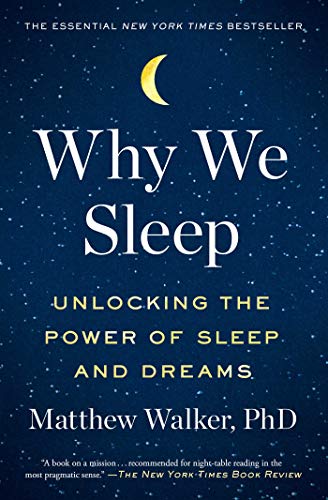
A New York Times bestseller and international sensation, this “stimulating and important book” (Financial Times) is a fascinating dive into the purpose and power of slumber.
With two appearances on CBS This Morning and Fresh Air's most popular interview of 2017, Matthew Walker has made abundantly clear that sleep is one of the most important but least understood aspects of our life. Until very recently, science had no answer to the question of why we sleep, or what good it served, or why we suffer such devastating health consequences when it is absent. Compared to the other basic drives in life—eating, drinking, and reproducing—the purpose of sleep remains more elusive.
Within the brain, sleep enriches a diversity of functions, including our ability to learn, memorize, and make logical decisions. It recalibrates our emotions, restocks our immune system, fine-tunes our metabolism, and regulates our appetite. Dreaming creates a virtual reality space in which the brain melds past and present knowledge, inspiring creativity.
In this “compelling and utterly convincing” (The Sunday Times) book, preeminent neuroscientist and sleep expert Matthew Walker provides a revolutionary exploration of sleep, examining how it affects every aspect of our physical and mental well-being. Charting the most cutting-edge scientific breakthroughs, and marshalling his decades of research and clinical practice, Walker explains how we can harness sleep to improve learning, mood and energy levels, regulate hormones, prevent cancer, Alzheimer’s and diabetes, slow the effects of aging, and increase longevity. He also provides actionable steps towards getting a better night’s sleep every night.
Clear-eyed, fascinating, and accessible, Why We Sleep is a crucial and illuminating book. Written with the precision of Atul Gawande, Andrew Solomon, and Sherwin Nuland, it is “recommended for night-table reading in the most pragmatic sense” (TheNew York Times Book Review).
…
Recommended by Bill Gates, Brad Feld, Alexis Ohanian Sr., and 11 others.
Explains how neglecting sleep undercuts your creativity, problem solving, decision-making, learning, memory, heart health, brain health, mental health, emotional well-being, immune system, and even your life span. [source]
Brad Feld
Co-Founder/Foundry Group
Several friends, who know I both love to sleep and am intrigued with how sleep works, recommended that I read Why We Sleep: Unlocking the Power of Sleep and Dreams. It was excellent. While my self-assessment of my sleep habits are very positive, I learned a few things. More importantly, I now have a much better understanding of the “Why” surrounding sleep, especially around sleep’s importance to a healthy and long life. [source]
Alexis Ohanian Sr.
Agree! Best book I've read this year. Wasted so many hours just proving to myself I'd be the last one up working at @reddit and for what??? Stupid. Diminishing marginal returns after enough hours without sleep. https://t.co/cT7fDNBF3A [source]
Cover unavailable
4
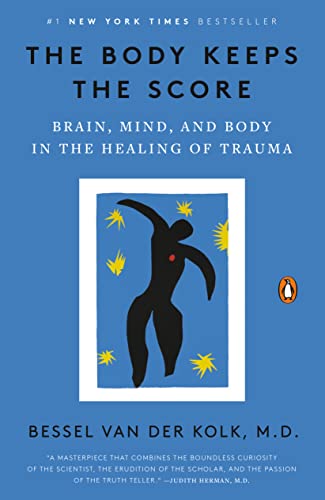
The Body Keeps the Score: Brain, Mind, and Body in the Healing of Trauma
“Packed with science and human stories, the book is an intense read. . . . The struggle and resilience of [van der Kolk’s] patients is very moving.” —New Scientist
A pioneering researcher transforms our understanding of trauma and offers a bold new paradigm for healing
Trauma is a fact of life. Veterans and their families deal with the painful aftermath of combat; one in five Americans has been molested; one in four grew up with alcoholics; one in three couples have engaged in physical violence. Dr. Bessel van der Kolk, one of the world’s foremost experts on trauma, has spent over three decades working with survivors. In The Body Keeps the Score, he uses recent scientific advances to show how trauma literally reshapes both body and brain, compromising sufferers’ capacities for pleasure, engagement, self-control, and trust. He explores innovative treatments—from neurofeedback and meditation to sports, drama, and yoga—that offer new paths to recovery by activating the brain’s natural neuroplasticity. Based on Dr. van der Kolk’s own research and that of other leading specialists, The Body Keeps the Score exposes the tremendous power of our relationships both to hurt and to heal—and offers new hope for reclaiming lives.
…
Recommended by Matthew Green.
Matthew Green
Reading The Body Keeps the Score was a eureka moment for me. [source]
Cover unavailable
5
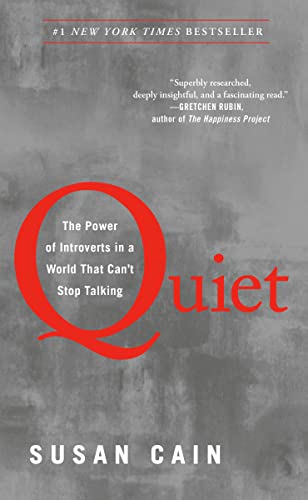
Quiet: The Power of Introverts in a World That Can't Stop Talking
At least one-third of the people we know are introverts. They are the ones who prefer listening to speaking; who innovate and create but dislike self-promotion; who favor working on their own over working in teams. It is to introverts—Rosa Parks, Chopin, Dr. Seuss, Steve Wozniak—that we owe many of the great contributions to society.
In Quiet, Susan Cain argues that we dramatically undervalue introverts and shows how much we lose in doing so. She charts the rise of the Extrovert Ideal throughout the twentieth century and explores how deeply it has come to permeate our culture. She also introduces us to successful introverts—from a witty, high-octane public speaker who recharges in solitude after his talks, to a record-breaking salesman who quietly taps into the power of questions. Passionately argued, superbly researched, and filled with indelible stories of real people, Quiet has the power to permanently change how we see introverts and, equally important, how they see themselves.
Now with Extra Libris material, including a reader’s guide and bonus content.
Leaders needn’t be the loudest. Leadership is not about theater. It’s not about dominance. It is about putting the lives of others before any other priority. In Quiet, Cain affirms to a good many of us who are introverts by nature that we needn’t try to be extroverts if we want to lead. Simply being ourselves is more important — and more effective. [source]
Danielle Morrill
Co-founder/Mattermark
Anyway, maybe you’re like me and figuring this out for yourself. It’s a good book for introverts and for those who love them [source]
Probably half the world is introverts. Maybe more. It’s not an easy life to live. I sometimes have that feeling in a room full of people, “uh-oh. I just shut down. I can’t talk anymore and there’s a lock on my mouth and this crowd threw away the key.” Do you ever get that feeling? Please? I hope you do. Let’s try to lock eyes at the party. “Quiet” shows the reader how to unlock the secret powers that probably half the world needs to unlock. [source]
Cover unavailable
6
The Power of Habit: Why We Do What We Do in Life and Business
A young woman walks into a laboratory. Over the past two years, she has transformed almost every aspect of her life. She has quit smoking, run a marathon, and been promoted at work. The patterns inside her brain, neurologists discover, have fundamentally changed.
Marketers at Procter & Gamble study videos of people making their beds. They are desperately trying to figure out how to sell a new product called Febreze, on track to be one of the biggest flops in company history. Suddenly, one of them detects a nearly imperceptible pattern—and with a slight shift in advertising, Febreze goes on to earn a billion dollars a year.
An untested CEO takes over one of the largest companies in America. His first order of business is attacking a single pattern among his employees—how they approach worker safety—and soon the firm, Alcoa, becomes the top performer in the Dow Jones.
What do all these people have in common? They achieved success by focusing on the patterns that shape every aspect of our lives.
They succeeded by transforming habits.
In The Power of Habit, award-winning New York Times business reporter Charles Duhigg takes us to the thrilling edge of scientific discoveries that explain why habits exist and how they can be changed. With penetrating intelligence and an ability to distill vast amounts of information into engrossing narratives, Duhigg brings to life a whole new understanding of human nature and its potential for transformation.
Along the way we learn why some people and companies struggle to change, despite years of trying, while others seem to remake themselves overnight. We visit laboratories where neuroscientists explore how habits work and where, exactly, they reside in our brains. We discover how the right habits were crucial to the success of Olympic swimmer Michael Phelps, Starbucks CEO Howard Schultz, and civil-rights hero Martin Luther King, Jr. We go inside Procter & Gamble, Target superstores, Rick Warren’s Saddleback Church, NFL locker rooms, and the nation’s largest hospitals and see how implementing so-called keystone habits can earn billions and mean the difference between failure and success, life and death.
At its core, The Power of Habit contains an exhilarating argument: The key to exercising regularly, losing weight, raising exceptional children, becoming more productive, building revolutionary companies and social movements, and achieving success is understanding how habits work.
Habits aren’t destiny. As Charles Duhigg shows, by harnessing this new science, we can transform our businesses, our communities, and our lives.
…
Recommended by Naval Ravikant, Blake Irving, Alden Mills, and 15 others.
I also recently finished The Power of Habit, or close to finish as I get. That one was interesting, not because of its content necessarily, but because it’s good for me to always keep on top of mind how powerful my habits are. … I think learning how to break habits is a very important meta-skill that can serve you better in life than almost anything else. Although you can read tons of books on it, the reality is you’re never going to learn how to break bad habits until you just break them. [source]
Blake Irving
CEO/GoDaddy
You know, there's a book called The Power of Habit by Charles Duhigg. Simple read book about just how to build positive habits that can be I think I what I'd call you know whether in your personal life or whether in your business life to help you build you know, have a loop that can build your success and that's one I mean there are so many great books out there. [source]
Alden Mills
More recent books that have had a significant impact on me are The Power of Habit and The Diamond Cutter. Both represent different forces for me – the former helps me tactically with making incremental improvements in my life. [source]
Cover unavailable
7
The Man Who Mistook His Wife for a Hat and Other Clinical Tales
If a man has lost a leg or an eye, he knows he has lost a leg or an eye; but if he has lost a self—himself—he cannot know it, because he is no longer there to know it. Dr. Oliver Sacks recounts the stories of patients struggling to adapt to often bizarre worlds of neurological disorder. Here are people who can no longer recognize everyday objects or those they love; who are stricken with violent tics or shout involuntary obscenities; who have been dismissed as autistic or retarded, yet are gifted with uncanny artistic or mathematical talents. If inconceivably strange, these brilliant tales illuminate what it means to be human.
…
Recommended by Bradley Voytek, Suzanne O'Sullivan, and Tanya Byron.
Bradley Voytek
I can’t imagine one day waking up and not knowing who my wife is, or seeing my wife and thinking that she was replaced by some sort of clone or robot. But that could happen to any of us. [source]
Suzanne O'Sullivan
I didn’t choose neurology because of it but the way Oliver Sacks writes about neurology is very compelling. [source]
Tanya Byron
This is a seminal book that anyone who wants to work in mental health should read. It is a charming and gentle and also an honest exposé of what can happen to us when our mental health is compromised for whatever reason. [source]
The personal memoir of a manic depressive and an authority on the subject describes the onset of the illness during her teenage years and her determined journey through the realm of available treatments.
Recommended by Jonathan Glover and Tanya Byron.
Jonathan Glover
Kay Redfield Jamison is a psychologist who has co-authored the major psychiatric textbook on manic depression. It authoritatively covers every aspect of the science, from genetics to pharmacology, and also has chapters on the links with creativity and on what the illness feels like. The chapters on the subjective experience are enriched with vivid quotations from patients. In her autobiography, An Unquiet Mind, Kay Jamison came out as not only an expert on the illness but also someone who has it. The power of her book comes from her understanding it both scientifically and from the inside. [source]
Tanya Byron
This is a divine book. A patient of mine who suffers with a bipolar illness, an absolutely inspiring young genius, recommended it to me. So I read it, and then we discussed it in a lot of our sessions together. [source]
Cover unavailable
9
Gut: The Inside Story of Our Body’s Most Underrated Organ
A cheeky up-close and personal guide to the secrets and science of our digestive system. For too long, the gut has been the body’s most ignored and least appreciated organ, but it turns out that it’s responsible for more than just dirty work: our gut is at the core of who we are. Gut: The Inside Story of our Body's Most Underrated Organ gives the alimentary canal its long-overdue moment in the spotlight. With quirky charm, rising science star Giulia Enders explains the gut’s magic, answering questions like: Why does acid reflux happen? What’s really up with gluten and lactose intolerance? How does the gut affect obesity and mood? Communication between the gut and the brain is one of the fastest-growing areas of medical research—on par with stem-cell research. Our gut reactions, we learn, are intimately connected with our physical and mental well-being. Aided with cheerful illustrations by Enders’s sister Jill, this beguiling manifesto will make you finally listen to those butterflies in your stomach: they’re trying to tell you something important.
…
Cover unavailable
10
Physiology (Board Review Series)
Linda S. Costanzo
4.3
Thoroughly updated for its Fourth Edition, BRS Physiology is an excellent aid for students preparing for the USMLE Step 1. The book concisely reviews key physiological principles and includes clinical correlations throughout to emphasize connections between basic physiology and clinical medicine. Numerous illustrations, tables, and flow charts help students visualize material quickly and aid in long-term retention. End-of-chapter USMLE-style questions and a comprehensive end-of-book exam test the student's problem-solving skills, and clearly explained answers guide the student through the correct steps in reasoning. This edition features increased coverage of pathophysiology, new questions, and a new two-color design and artwork.
…
Cover unavailable
11
Being Mortal: Medicine and What Matters in the End
Medicine has triumphed in modern times, transforming the dangers of childbirth, injury, and disease from harrowing to manageable. But when it comes to the inescapable realities of aging and death, what medicine can do often runs counter to what it should.
Through eye-opening research and gripping stories of his own patients and family, Atul Gawande, a practicing surgeon, reveals the suffering this dynamic has produced. Nursing homes, devoted above all to safety, battle with residents over the food they are allowed to eat and the choices they are allowed to make. Doctors, uncomfortable discussing patients' anxieties about death, fall back on false hopes and treatments that are actually shortening lives instead of improving them.
In his bestselling books, Gawande has fearlessly revealed the struggles of his profession. Now he examines its ultimate limitations and failures--in his own practices as well as others'--as life draws to a close. Riveting, honest, and humane, Being Mortal shows how the ultimate goal is not a good death but a good life--all the way to the very end.
President Obama is spending his Hawaiian vacation playing golf, getting together with high school friends and reading a handful of dark novels set in foreign lands, according to a book list released by the White House Wednesday. The presidential reading list includes … two works of non-fiction for the trip: … "Being Mortal: Medicine and What Matters in the End" by Dr. Atul Gawande. [source]
American medicine, Being Mortal reminds us, has prepared itself for life but not for death. This is Atul Gawande's most powerful--and moving--book. [source]
Just finished "Being Mortal" by Atul Gawande. A beautifully written book. Captivating. [source]
Cover unavailable
12
Born to Run: A Hidden Tribe, Superathletes, and the Greatest Race the World Has Never Seen
Christopher McDougall
4.3
Full of incredible characters, amazing athletic achievements, cutting-edge science, and, most of all, pure inspiration, Born to Run is an epic adventure that began with one simple question: Why does my foot hurt? In search of an answer, Christopher McDougall sets off to find a tribe of the world’s greatest distance runners and learn their secrets, and in the process shows us that everything we thought we knew about running is wrong.
Isolated by the most savage terrain in North America, the reclusive Tarahumara Indians of Mexico’s deadly Copper Canyons are custodians of a lost art. For centuries they have practiced techniques that allow them to run hundreds of miles without rest and chase down anything from a deer to an Olympic marathoner while enjoying every mile of it. Their superhuman talent is matched by uncanny health and serenity, leaving the Tarahumara immune to the diseases and strife that plague modern existence. With the help of Caballo Blanco, a mysterious loner who lives among the tribe, the author was able not only to uncover the secrets of the Tarahumara but also to find his own inner ultra-athlete, as he trained for the challenge of a lifetime: a fifty-mile race through the heart of Tarahumara country pitting the tribe against an odd band of Americans, including a star ultramarathoner, a beautiful young surfer, and a barefoot wonder.
With a sharp wit and wild exuberance, McDougall takes us from the high-tech science labs at Harvard to the sun-baked valleys and freezing peaks across North America, where ever-growing numbers of ultrarunners are pushing their bodies to the limit, and, finally, to the climactic race in the Copper Canyons. Born to Run is that rare book that will not only engage your mind but inspire your body when you realize that the secret to happiness is right at your feet, and that you, indeed all of us, were born to run.
…
Recommended by Ed Stafford and Turia Pitt.
Ed Stafford
An honour to be asked to do an impromptu little talk tonight after #christophermcdougall. Great to see the big man in the flesh in the UK. #BornToRun was a book that definitely changed the path of my life. #legend @vivobarefoot #barefootrunning https://t.co/3QgVKZ0OQ4 [source]
Turia Pitt
If people are interested in running, I give them this book. [source]
Cover unavailable
13
Textbook of Medical Physiology
Arthur C. Guyton, John E. Hall
4.3
Physiology's classic text continues to uphold its rich tradition-presenting key physiology concepts in a remarkably clear and engaging manner. Guyton & Hall's Textbook of Medical Physiology covers all of the major systems in the human body, while emphasizing system interaction, homeostasis, and pathophysiology. This very readable, easy-to-follow, and thoroughly updated, 11th Edition features a new full-color layout, short chapters, clinical vignettes, and shaded summary tables that allow for easy comprehension of the material.
The smart way to study! Elsevier titles with STUDENT CONSULT will help you master difficult concepts and study more efficiently in print and online! Perform rapid searches. Integrate bonus content from other disciplines. Download text to your handheld device. And a lot more. Each STUDENT CONSULT title comes with full text online, a unique image library, case studies, USMLE style questions, and online note-taking to enhance your learning experience. Presents short, easy-to-read chapters in keeping with the Guyton and Hall tradition. Provides shaded summary tables for easy reference. Includes clinical vignettes, which allow readers to see core concepts applied to real-life situations. Offers specific discussions of pathophysiology in most clinical areas of medicine. Ensures a strong grasp of physiology concepts through well-illustrated discussions of the most essential principles. Now in full color! Offers access to the full text and other valuable features online via the STUDENT CONSULT website. Uses full-color illustrations throughout, including 486 figures, 277 charts and graphs, 100 brand-new line drawings, and 36 ECGs. Features a new full-color design that makes information more engaging and even easier to read. Updated throughout to reflect the latest knowledge in the field.
In the bestselling, prize-winning A Short History of Nearly Everything, Bill Bryson achieved the seemingly impossible by making the science of our world both understandable and entertaining to millions of people around the globe.
Now he turns his attention inwards to explore the human body, how it functions and its remarkable ability to heal itself. Full of extraordinary facts and astonishing stories, The Body: A Guide for Occupants is a brilliant, often very funny attempt to understand the miracle of our physical and neurological make up.
A wonderful successor to A Short History of Nearly Everything, this book will have you marvelling at the form you occupy, and celebrating the genius of your existence, time and time again.
…
Cover unavailable
15
The Emperor of All Maladies: A Biography of Cancer
Alternate Cover Edition ISBN 1439107955 (ISBN13: 9781439107959)
The Emperor of All Maladies is a magnificent, profoundly humane “biography” of cancer—from its first documented appearances thousands of years ago through the epic battles in the twentieth century to cure, control, and conquer it to a radical new understanding of its essence.
Physician, researcher, and award-winning science writer, Siddhartha Mukherjee examines cancer with a cellular biologist’s precision, a historian’s perspective, and a biographer’s passion. The result is an astonishingly lucid and eloquent chronicle of a disease humans have lived with—and perished from—for more than five thousand years.
The story of cancer is a story of human ingenuity, resilience, and perseverance, but also of hubris, paternalism, and misperception. Mukherjee recounts centuries of discoveries, setbacks, victories, and deaths, told through the eyes of his predecessors and peers, training their wits against an infinitely resourceful adversary that, just three decades ago, was thought to be easily vanquished in an all-out “war against cancer.”
The book reads like a literary thriller with cancer as the protagonist. From the Persian Queen Atossa, whose Greek slave cut off her malignant breast, to the nineteenth-century recipients of primitive radiation and chemotherapy to Mukherjee’s own leukemia patient, Carla, The Emperor of All Maladies is about the people who have soldiered through fiercely demanding regimens in order to survive—and to increase our understanding of this iconic disease.
Riveting, urgent, and surprising, The Emperor of All Maladies provides a fascinating glimpse into the future of cancer treatments. It is an illuminating book that provides hope and clarity to those seeking to demystify cancer.
…
Recommended by Bill Gates and Timothy J. Jorgensen.
"It's no exaggeration to say that Behave is one of the best nonfiction books I've ever read." --David P. Barash, The Wall Street Journal
"It has my vote for science book of the year." --Parul Sehgal, The New York Times
"Hands-down one of the best books I've read in years. I loved it." --Dina Temple-Raston, TheWashington Post Named a Best Book of the Year by The Washington Post and The Wall Street Journal
From the celebrated neurobiologist and primatologist, a landmark, genre-defining examination of human behavior, both good and bad, and an answer to the question: Why do we do the things we do?
Sapolsky's storytelling concept is delightful but it also has a powerful intrinsic logic: he starts by looking at the factors that bear on a person's reaction in the precise moment a behavior occurs, and then hops back in time from there, in stages, ultimately ending up at the deep history of our species and its evolutionary legacy.
And so the first category of explanation is the neurobiological one. A behavior occurs--whether an example of humans at our best, worst, or somewhere in between. What went on in a person's brain a second before the behavior happened? Then Sapolsky pulls out to a slightly larger field of vision, a little earlier in time: What sight, sound, or smell caused the nervous system to produce that behavior? And then, what hormones acted hours to days earlier to change how responsive that individual is to the stimuli that triggered the nervous system? By now he has increased our field of vision so that we are thinking about neurobiology and the sensory world of our environment and endocrinology in trying to explain what happened.
Sapolsky keeps going: How was that behavior influenced by structural changes in the nervous system over the preceding months, by that person's adolescence, childhood, fetal life, and then back to his or her genetic makeup? Finally, he expands the view to encompass factors larger than one individual. How did culture shape that individual's group, what ecological factors millennia old formed that culture? And on and on, back to evolutionary factors millions of years old.
The result is one of the most dazzling tours d'horizon of the science of human behavior ever attempted, a majestic synthesis that harvests cutting-edge research across a range of disciplines to provide a subtle and nuanced perspective on why we ultimately do the things we do...for good and for ill. Sapolsky builds on this understanding to wrestle with some of our deepest and thorniest questions relating to tribalism and xenophobia, hierarchy and competition, morality and free will, and war and peace. Wise, humane, often very funny, Behave is a towering achievement, powerfully humanizing, and downright heroic in its own right.
Bryan Johnson recommended this book on Twitter. [source]
Cover unavailable
18
Anatomy Coloring Book
Stephanie McCann and Eric Wise
4.2
Coloring the body and its systems is the most effective way to study the structure and functions of human anatomy. Kaplan's Anatomy Coloring Book provides realistic drawings, clear descriptions, and must-know terms for an easy way to learn anatomy.
Anatomy Coloring Book features detailed illustrations of the body's anatomical systems in a spacious page design with no back-to-back images--goodbye, bleed-through! Plus, Color Guides on every 2-page spread offer instructions for best coloring results so you can get the most out of your study. The Best Review More than 450 detailed, realistic medical illustrations, including microscopic views of cells and tissues Exclusive perforated, flashcard-format illustrations of 96 muscle structures to color and study on-the-go Clear descriptive overview on the page opposite each illustration, with key learning terms in boldface Self-quizzing for each illustration, with convenient same-page answer keys Full coverage of the major body systems, plus physiological information on cells, tissues, muscles, and development Expert GuidanceWe invented test prep—Kaplan (www.kaptest.com) has been helping students for almost 80 years. Our proven strategies have helped legions of students achieve their dreams.
…
Cover unavailable
19
Anatomy and Physiology for Dummies
Erin Odya
4.2
Learn about the human body from the inside out Some people think that knowing about what goes on inside the human body can sap life of its mystery--which is too bad for them. Anybody who's ever taken a peak under the hood knows that the human body, and all its various structures and functions, is a realm of awe-inspiring complexity and countless wonders. The dizzying dance of molecule, cell, tissue, organ, muscle, sinew, and bone that we call life can be a thing of breathtaking beauty and humbling perfection.
Anatomy & Physiology For Dummies combines anatomical terminology and function so you'll learn not only names and terms but also gain an understanding of how the human body works. Whether you're a student, an aspiring medical, healthcare or fitness professional, or just someone who's curious about the human body and how it works, this book offers you a fun, easy way to get a handle on the basics of anatomy and physiology.
Understand the meaning of terms in anatomy and physiology Get to know the body's anatomical structures--from head to toe Explore the body's systems and how they interact to keep us alive Gain insight into how the structures and systems function in sickness and health Written in plain English and packed with beautiful illustrations, Anatomy & Physiology For Dummies is your guide to a fantastic voyage of the human body.
…
Cover unavailable
20
The Sports Gene: Inside the Science of Extraordinary Athletic Performance
Now a New York Times Bestseller! With a new chapter added to the paperback.
In high school, I wondered whether the Jamaican Americans who made our track team so successful might carry some special speed gene from their tiny island. In college, I ran against Kenyans, and wondered whether endurance genes might have traveled with them from East Africa. At the same time, I began to notice that a training group on my team could consist of five men who run next to one another, stride for stride, day after day, and nonetheless turn out five entirely different runners. How could this be?
We all knew a star athlete in high school. The one who made it look so easy. He was the starting quarterback and shortstop; she was the all-state point guard and high-jumper. Naturals. Or were they?
The debate is as old as physical competition. Are stars like Usain Bolt, Michael Phelps, and Serena Williams genetic freaks put on Earth to dominate their respective sports? Or are they simply normal people who overcame their biological limits through sheer force of will and obsessive training? The truth is far messier than a simple dichotomy between nature and nurture. In the decade since the sequencing of the human genome, researchers have slowly begun to uncover how the relationship between biological endowments and a competitor’s training environment affects athleticism. Sports scientists have gradually entered the era of modern genetic research.
In this controversial and engaging exploration of athletic success, Sports Illustrated senior writer David Epstein tackles the great nature vs. nurture debate and traces how far science has come in solving this great riddle. He investigates the so-called 10,000-hour rule to uncover whether rigorous and consistent practice from a young age is the only route to athletic excellence.
Along the way, Epstein dispels many of our perceptions about why top athletes excel. He shows why some skills that we assume are innate, like the bullet-fast reactions of a baseball or cricket batter, are not, and why other characteristics that we assume are entirely voluntary, like an athlete’s will to train, might in fact have important genetic components.
This subject necessarily involves digging deep into sensitive topics like race and gender. Epstein explores controversial questions such as: Are black athletes genetically predetermined to dominate both sprinting and distance running, and are their abilities influenced by Africa’s geography? Are there genetic reasons to separate male and female athletes in competition? Should we test the genes of young children to determine if they are destined for stardom? Can genetic testing determine who is at risk of injury, brain damage, or even death on the field? Through on-the-ground reporting from below the equator and above the Arctic Circle, revealing conversations with leading scientists and Olympic champions, and interviews with athletes who have rare genetic mutations or physical traits, Epstein forces us to rethink the very nature of athleticism.
…
Recommended by Dan Pink, Gabriel Coarna, and Paul Kedrosky.
Gabriel Coarna
David Epstein's "The Sports Gene" made me decide to never tell a child that "if you really really want something, and you work really really hard, then you can achieve your dream" -- not when it comes to sports, at least. [source]
Paul Kedrosky
@fromedome @nkl Start with @DavidEpstein’s terrific book The Sports Gene. Great independently, but many academic references as well. [source]
Cover unavailable
21
The Righteous Mind: Why Good People Are Divided by Politics and Religion
Why can’t our political leaders work together as threats loom and problems mount? Why do people so readily assume the worst about the motives of their fellow citizens? In The Righteous Mind, social psychologist Jonathan Haidt explores the origins of our divisions and points the way forward to mutual understanding.
His starting point is moral intuition—the nearly instantaneous perceptions we all have about other people and the things they do. These intuitions feel like self-evident truths, making us righteously certain that those who see things differently are wrong. Haidt shows us how these intuitions differ across cultures, including the cultures of the political left and right. He blends his own research findings with those of anthropologists, historians, and other psychologists to draw a map of the moral domain. He then examines the origins of morality, overturning the view that evolution made us fundamentally selfish creatures. But rather than arguing that we are innately altruistic, he makes a more subtle claim—that we are fundamentally groupish. It is our groupishness, he explains, that leads to our greatest joys, our religious divisions, and our political affiliations. In a stunning final chapter on ideology and civility, Haidt shows what each side is right about, and why we need the insights of liberals, conservatives, and libertarians to flourish as a nation.
…
Recommended by A.J. Jacobs, Akin Oyebode, Andrew M. Mwenda, and 3 others.
A.J. Jacobs
All about trying to figure out the gap between the red and blue states – Republican and Democrat – and it’s really interesting. [source]
Akin Oyebode
@eggheader @OnemuVictor1 @JonHaidt Abeg order two. I read Righteous Mind which he also wrote, and that was a very fascinating book. [source]
Andrew M. Mwenda
The best work on this is a book by Jonathan Haidt “The Righteous Mind: Why good People are Divided by Religion and Politics.” He argues that human beings have deeply entrenched moral intuitions which guide their assessment of reality. Facts matter very little if at all. [source]
Cover unavailable
22
Packing for Mars: The Curious Science of Life in the Void
Mary Roach
4.2
The best-selling author of Stiff and Bonk explores the irresistibly strange universe of space travel and life without gravity. From the Space Shuttle training toilet to a crash test of NASA’s new space capsule, Mary Roach takes us on the surreally entertaining trip into the science of life in space and space on Earth.
Recommended by Deborah Blum.
Deborah Blum
I picked this book because, as I talk about science as part of the everyday world, it is so good to find writers who really make an effort to reach out to a wider community. I really admire Mary Roach’s ability to take science and make it both fascinating and accessible to people who wouldn’t normally love science. She does a great job of keeping science incredibly accurate and yet making it very friendly. [source]
Cover unavailable
23
The Origin of Consciousness in the Breakdown of the Bicameral Mind
Julian Jaynes
4.2
At the heart of this seminal book is Julian Jaynes's still-controversial thesis that consciousness didn't begin far back in animal evolution but instead is a learned process that came about only 3000 years ago & is still developing. The implications of this revolutionary scientific paradigm extend into virtually all aspects of psychology, history & religion. Preface Introduction The mind of man The consciousness of consciousness Consciousness The mind of Iliad The bicameral mind The double brain The origin of civilization -- The witness of history Gods, graves & idols Literate bicameral theocracies The causes of consciousness A change of mind in Mesopotamia The intellectual consciousness of Greece The moral consciousness of the Khabiru Vestiges of the bicameral mind in the modern world The quest for authorization Of prophets and possession Of poetry & music Hypnosis Schizophrenia The auguries of science Index
…
Recommended by Adam Robinson, Adam Robinson, Bret Victor, and 1 others.
Adam Robinson
One of five books (this one perhaps most of all) that confirm there is far, far more in our unconscious mind than is dreamt of in our philosophy. [source]
Adam Robinson
One of five books (this one perhaps most of all) that confirm there is far, far more in our unconscious mind than is dreamt of in our philosophy. [source]
Susan Blackmore
Jaynes thinks we only started talking and thinking about consciousness and the problem of consciousness within historical times. [source]
Cover unavailable
24
Endure: Mind, Body, and the Curiously Elastic Limits of Human Performance
Alex Hutchinson
4.2
From the National Magazine Award-winning Runner’s World columnist, frequent New Yorker online contributor, and Cambridge-trained physicist: a fascinating and definitive exploration of the extraordinary science of human endurance and the secrets of human performance, for fans of The Sports Gene, Born to Run, and Grit.
From running a two-hour marathon to summiting Mount Everest, we’re fascinated by the extremes of human endurance, constantly testing both our physical and psychological limits.
How high or far or fast can humans go? And what about individual potential: what defines a person’s limits?
For years, physiology determined the answer: heart size, lung capacity, and muscle strength. But over the past decade, a wave of dramatic findings in the cutting-edge science of endurance has completely overturned our understanding of human limitation. Endure widely disseminates these findings for the first time: It’s the brain that dictates how far we can go—which means we can always push ourselves further.
Hutchinson presents an overview of science’s search for understanding human fatigue, from crude experiments with electricity and frogs’ legs to sophisticated brain imaging technology. Going beyond the traditional mechanical view of human limits (like a car with a brick on its gas pedal, we go until the tank runs out of gas), he instead argues that a key element in endurance is how the brain responds to distress signals—whether heat, or cold, or muscles screaming with lactic acid—and reveals that we can train to improve brain response.
An elite distance runner himself, Hutchinson takes us to the forefront of the new sports psychology—brain electrode jolts, computer-based training, subliminal messaging—and presents startling new discoveries enhancing the performance of athletes today and shows how anyone can utilize these tactics to bolster their own performance—and get the most out of their bodies.
If you want to gain insight into the mind of great athletes, adventurers, and peak performers then prepare to be enthralled by Alex Hutchinson’s Endure. [source]
An astonishing new science called neuroplasticity is overthrowing the centuries-old notion that the human brain is immutable. Psychiatrist and psychoanalyst, Norman Doidge, M.D., traveled the country to meet both the brilliant scientists championing neuroplasticity and the people whose lives they’ve transformed - people whose mental limitations or brain damage were seen as unalterable. We see a woman born with half a brain that rewired itself to work as a whole, blind people who learn to see, learning disorders cured, IQs raised, aging brains rejuvenated, stroke patients learning to speak, children with cerebral palsy learning to move with more grace, depression and anxiety disorders successfully treated, and lifelong character traits changed. Using these marvelous stories to probe mysteries of the body, emotion, love, sex, culture, and education, Dr. Doidge has written an immensely moving, inspiring book that will permanently alter the way we look at our brains, human nature, and human potential.
For me it was exciting to read this book because while my research shows a growth mindset is really good for you, this book shows that a growth mindset also has a strong basis in modern neuroscience. It illustrates, though fascinating case histories and descriptions of recent research, the amazing power of the brain to change and even to reorganise itself with practice and experience. [source]
Bogdana Butnar
I don't have favourite books. I equate a favourite something with wanting to do it over and over again and I've never wanted to read a book too many times. I have favourite authors and I have books that changed me in significant ways because they moved me or taught me something or changed my view of the world. So, here's some of those books... [source]
I think the book that I really, really enjoy was, "The Brain That Changes Itself." It's all about neuroplasticity, you'd really love that book. [source]
Cover unavailable
26
Stiff: The Curious Lives of Human Cadavers
Mary Roach
4.2
Stiff is an oddly compelling, often hilarious exploration of the strange lives of our bodies postmortem. For two thousand years, cadavers—some willingly, some unwittingly—have been involved in science's boldest strides and weirdest undertakings. In this fascinating account, Mary Roach visits the good deeds of cadavers over the centuries and tells the engrossing story of our bodies when we are no longer with them.
…
Cover unavailable
27
Starting Strength: Basic Barbell Training
Mark Rippetoe
4.1
Starting Strength: Basic Barbell Training is the new expanded version of the book that has been called "the best and most useful of fitness books." It picks up where Starting Strength: A Simple and Practical Guide for Coaching Beginners leaves off. With all new graphics and more than 750 illustrations, a more detailed analysis of the five most important exercises in the weight room, and a new chapter dealing with the most important assistance exercises, Basic Barbell Training offers the most complete examination in print of the most effective way to exercise.
…
Cover unavailable
28
The Physiology Coloring Book
Wynn Kapit, Robert I. Macey, et al.
4.1
This coloring book offers an enjoyable, highly effective way for students to learn physiology. Topics are covered in self-contained two-page spreads, allowing students to easily focus on the material being presented. A unique combination of introductory material, names and illustrations to be colored, and substantive captions deliver a comprehensive, yet easy-to-understand, treatment of physiology. The Physiology Coloring Book is the companion to the extremely successful Anatomy Coloring Book, which has sold more than 2.5 million copies.
…
Cover unavailable
29
Strength Training Anatomy
Frederic Delavier
4.1
The third edition of Strength Training Anatomy offers the most compelling artwork ever applied to a strength training resource.
Packed with over 600 anatomical illustrations of muscles from each major muscle group, the updated edition features 48 additional pages, 12 new exercises, and 18 stretches.
Cover unavailable
30
On Combat: The Psychology and Physiology of Deadly Conflict in War and in Peace
Dave Grossman
4.1
Following his best selling, Pulitzer Prize nominated book On Killing, Lt. Col. Dave Grossman, with Loren W. Christensen, present On Combat, a ground-breaking examination of what it takes to perform, cope and survive in the toxicity of deadly combat as a soldier in a foreign land, and a police officer in the mean streets of urban America.
Written by two warriors who have been there and done that, On Combat looks at what happens to the human body under the stresses of deadly battle the impact on the nervous system, heart, breathing, visual and auditory perception, memory – then discusses new research findings as to what measures warriors can take to prevent such debilitations so they can stay in the fight, survive, and win.
…
Cover unavailable
31
Becoming a Supple Leopard
Kelly Starrett
4.1
LEARN HOW TO HACK HUMAN MOVEMENT
Join the movement that has reached millions of athletes and coaches; learn how to perform basic maintenance on your body, unlock your human potential, live pain free…and become a Supple Leopard.
Improve your athletic performance, extend your athletic career, treat body stiffness and achy joints, and rehabilitate injuries—all without having to seek out a coach, doctor, chiropractor, physical therapist, or masseur. In Becoming a Supple Leopard, Kelly Starrett—founder of MobilityWod.com—shares his revolutionary approach to mobility and maintenance of the human body and teaches you how to hack your own human movement, allowing you to live a healthy, happier, more fulfilling life.
Performance is what drives the human animal, but the human animal can be brought to an abrupt halt by dysfunctional movement patterns. Oftentimes, the factors that impede performance are invisible to not only the untrained eye, but also the majority of athletes and coaches. Becoming a Supple Leopard makes the invisible visible. In this one of a kind training manual, Starrett maps out a detailed system comprised of more than two hundred techniques and illuminates common movement errors that cause injury and rob you of speed, power, endurance, and strength. Whether you are a professional athlete, a weekend warrior, or simply someone wanting to live healthy and free from restrictions, Becoming a Supple Leopard, will teach you how to maintain your body and harness your genetic potential.
Learn How to: Pprevent and rehabilitate common athletic injuries Overhaul your movement habits quickly identify, diagnose, and fix inefficient movement patterns Problem solve for pain and dysfunction in austere environments with little equipment Fix poor mechanics that rob power, bleed force, and dump torque Unlock reservoirs of athletic capacity you didn't know you had Identify and fix poor movement patterns in children Reverse the aging process Develop strategies that restore function to your joints and tissues Accelerate recovery after training sessions and competition Create personalized mobility prescriptions to improve movement efficiency Improve your quality of life through regained work capacity Run faster, jump higher, and throw farther
…
Cover unavailable
32
Genome: The Autobiography of a Species In 23 Chapters
Matt Ridley
4.1
The human genome, the complete set of genes housed in twenty-three pairs of chromosomes, is nothing less than an autobiography of our species. Spelled out in a billion three-letter words using the four-letter alphabet of DNA, the genome has been edited, abridged, altered and added to as it has been handed down, generation to generation, over more than three billion years. With the first draft of the human genome due to be published in 2000, we, this lucky generation, are the first beings who are able to read this extraordinary book and to gain hitherto unimaginable insights into what it means to be alive, to be human, to be conscious or to be ill.
By picking one newly discovered gene from each of the twenty-three human chromosomes and telling its story, Matt Ridley recounts the history of our species and its ancestors from the dawn of life to the brink of future medicine. He finds genes that we share with bacteria, genes that distinguish us from chimpanzees, genes that can condemn us to cruel diseases, genes that may influence our intelligence, genes that enable us to use grammatical language, genes that guide the development of our bodies and our brains, genes that allow us to remember, genes that exhibit the strange alchemy of nature and nurture, genes that parasitise us for their own selfish ends, genes that battle with one another and genes that record the history of human migrations. From Huntington's disease to cancer, he explores the applications of genetics: the search for understanding and therapy, the horrors of eugenics and the philosophical implications for understanding the paradox of free will.
This book aims to tell a history of humanity from the perspective of genetics rather than sociology. This should complement the other broad histories I've read this year, as well as follow "Energy" well in focusing on science. I've wanted to read Matt Ridley's books for a while. His recent book "The Rational Optimist" about how progress and the economy evolve is also near the top of my ever-growing pile of books to read. [source]
Getting into the more evolution, science kind of books, I really highly, highly recommend picking up Genome … . [source]
Cover unavailable
33
Phantoms in the Brain: Probing the Mysteries of the Human Mind
V. S. Ramachandran, Sandra Blakeslee, et al.
4.1
Neuroscientist V.S. Ramachandran is internationally renowned for uncovering answers to the deep and quirky questions of human nature that few scientists have dared to address. His bold insights about the brain are matched only by the stunning simplicity of his experiments -- using such low-tech tools as cotton swabs, glasses of water and dime-store mirrors. In Phantoms in the Brain, Dr. Ramachandran recounts how his work with patients who have bizarre neurological disorders has shed new light on the deep architecture of the brain, and what these findings tell us about who we are, how we construct our body image, why we laugh or become depressed, why we may believe in God, how we make decisions, deceive ourselves and dream, perhaps even why we're so clever at philosophy, music and art. Some of his most notable cases:
A woman paralyzed on the left side of her body who believes she is lifting a tray of drinks with both hands offers a unique opportunity to test Freud's theory of denial. A man who insists he is talking with God challenges us to ask: Could we be "wired" for religious experience? A woman who hallucinates cartoon characters illustrates how, in a sense, we are all hallucinating, all the time. Dr. Ramachandran's inspired medical detective work pushes the boundaries of medicine's last great frontier -- the human mind -- yielding new and provocative insights into the "big questions" about consciousness and the self.
…
Recommended by Lewis Wolpert.
Lewis Wolpert
It’s really about how people who have some physical injury to their brain can have fantasies that bear no relationship to reality whatsoever. [source]
Renowned primatologist Robert Sapolsky offers a completely revised and updated edition of his most popular work, with nearly 90,000 copies in print
Now in a third edition, Robert M. Sapolsky's acclaimed and successful Why Zebras Don't Get Ulcers features new chapters on how stress affects sleep and addiction, as well as new insights into anxiety and personality disorder and the impact of spirituality on managing stress.
As Sapolsky explains, most of us do not lie awake at night worrying about whether we have leprosy or malaria. Instead, the diseases we fear--and the ones that plague us now--are illnesses brought on by the slow accumulation of damage, such as heart disease and cancer. When we worry or experience stress, our body turns on the same physiological responses that an animal's does, but we do not resolve conflict in the same way--through fighting or fleeing. Over time, this activation of a stress response makes us sick.
Combining cutting-edge research with a healthy dose of good humor and practical advice, Why Zebras Don't Get Ulcers explains how prolonged stress causes or intensifies a range of physical and mental afflictions, including depression, ulcers, colitis, heart disease, and more. It also provides essential guidance to controlling our stress responses. This new edition promises to be the most comprehensive and engaging one yet.
Robert M. Sapolsky is one of the best science writers of our time. [source]
Cover unavailable
35
Introduction to Animal and Veterinary Anatomy and Physiology
Victoria Aspinall and Melanie Cappello
4.1
A sound knowledge of anatomy and physiology is an essential basis for the effective clinical treatment of companion animals and farm animals alike. The fourth edition of this bestselling book continues to provide a comprehensive description of the anatomy and physiology of dogs and cats. The book builds on these foundations with detailed descriptions of exotic small species including birds, and domestic farm animals, including cows, sheep and pigs, as well as the horse. The text:
Contains detailed descriptions of the systematic anatomy and physiology of a wide range of animal species Covers clinical conditions and disease examples related to the individual body systems Includes applied anatomy tips that relate theory to clinical practice Is written by expert authors with a wealth of veterinary, animal science and teaching experience Includes more clinical application examples and question and answer tests to reinforce student learning Has been updated with more information for animal science students This text provides an essential basis for all those embarking upon a veterinary, animal science or animal management career.
…
Cover unavailable
36
Bonk: The Curious Coupling of Science and Sex
Mary Roach
4.1
In Bonk, the best-selling author of Stiff turns her outrageous curiosity and insight on the most alluring scientific subject of all: sex. Can a person think herself to orgasm? Why doesn't Viagra help women-or, for that matter, pandas? Can a dead man get an erection? Is vaginal orgasm a myth? Mary Roach shows us how and why sexual arousal and orgasm-two of the most complex, delightful, and amazing scientific phenomena on earth-can be so hard to achieve and what science is doing to make the bedroom a more satisfying place.
…
Cover unavailable
37
Atlas of Human Anatomy
Frank H. Netter MD
4.1
The only anatomy atlas illustrated by physicians, Atlas of Human Anatomy, 7th edition, brings you world-renowned, exquisitely clear views of the human body with a clinical perspective. In addition to the famous work of Dr. Frank Netter, you'll also find nearly 100 paintings by Dr. Carlos A. G. Machado, one of today's foremost medical illustrators. Together, these two uniquely talented physician-artists highlight the most clinically relevant views of the human body. In addition, more than 50 carefully selected radiologic images help bridge illustrated anatomy to living anatomy as seen in everyday practice.
…
Cover unavailable
38
The Story of the Human Body: Evolution, Health, and Disease
Daniel Lieberman, Sean Runnette, et al
4.1
A landmark book of popular science—a lucid, engaging account of how the human body evolved over millions of years and of how the increasing disparity between the jumble of adaptations in our Stone Age bodies and the modern world is fueling the paradox of greater longevity but more chronic disease. In a book that illuminates, as never before, the evolutionary story of the human body, Daniel Lieberman deftly examines the major transformations that contributed key adaptations to the body: the advent of bipedalism; the shift to a non-fruit-based diet; the rise of hunting and gathering and our superlative endurance athletic abilities; the development of a very large brain; and the incipience of modern cultural abilities. He elucidates how cultural evolution differs from biological evolution, and how it further transformed our bodies during the Agricultural and Industrial Revolutions. Lieberman illuminates how these ongoing changes have brought many benefits, but also have created novel conditions to which our bodies are not entirely adapted, resulting in a growing incidence of obesity and new but avoidable diseases, including type-2 diabetes. He proposes that many of these chronic illnesses persist and in some cases are intensifying because of "dysevolution," a pernicious dynamic whereby only the symptoms rather than the causes of these maladies are treated. And finally—provocatively—he advocates the use of evolutionary information to help nudge, push, and sometimes oblige us to create a more salubrious environment.
(With charts and line drawings throughout.)
From the Hardcover edition.
…
Recommended by Suzana Herculano-Houzel.
Suzana Herculano-Houzel
Dan Lieberman puts the brain into the context of the body as a whole. [source]
Cover unavailable
39
West's Respiratory Physiology: The Essentials
John B. West MDPhDDSc and Andrew M. Luks MD
4.1
West’s Respiratory Physiology: The Essentials is the gold standard text for learning respiratory physiology quickly and easily. This highly readable, must-have text serves as an introduction to students and a review for licensing and other exams. The Tenth Edition features the addition of Dr. Andrew M. Luks as co-author along with new clinical vignettes, additional multiple-choice review questions, and updated information on key topics in respiratory physiology, such as blood flow and metabolism, gas transport by the blood, and the physiology of high altitude.
New! Clinical vignettes with questions emphasize how the physiology described can be applied to clinical situations and reinforce reasoning and critical thinking.
More than 100 multiple-choice questions with full explanations provide self-testing of key concepts for comprehension and exam preparation.
Clinical boxes and Key Concepts summaries provide bullet-point reviews.
Appendices of important equations and answers to all questions are easily referenced.
Online resources include animations that expand on and clarify challenging topics, an interactive question bank , and lectures by Dr. West.
…
Cover unavailable
40
Gulp: Adventures on the Alimentary Canal
Mary Roach
4.1
“America’s funniest science writer” (Washington Post) takes us down the hatch on an unforgettable tour. The alimentary canal is classic Mary Roach terrain: the questions explored in Gulp are as taboo, in their way, as the cadavers in Stiff and every bit as surreal as the universe of zero gravity explored in Packing for Mars. Why is crunchy food so appealing? Why is it so hard to find words for flavors and smells? Why doesn’t the stomach digest itself? How much can you eat before your stomach bursts? Can constipation kill you? Did it kill Elvis? In Gulp we meet scientists who tackle the questions no one else thinks of—or has the courage to ask. We go on location to a pet-food taste-test lab, a fecal transplant, and into a live stomach to observe the fate of a meal. With Roach at our side, we travel the world, meeting murderers and mad scientists, Eskimos and exorcists (who have occasionally administered holy water rectally), rabbis and terrorists—who, it turns out, for practical reasons do not conceal bombs in their digestive tracts. Like all of Roach’s books, Gulp is as much about human beings as it is about human bodies.
…
Cover unavailable
41
The New Encyclopedia of Modern Bodybuilding: The Bible of Bodybuilding, Fully Updated and Revised
Arnold Schwarzenegger
4.1
From elite bodybuilding competitors to gymnasts, from golfers to fitness gurus, anyone who works out with weights must own this book—a book that only Arnold Schwarzenegger could write, a book that has earned its reputation as “the bible of bodybuilding.”
Inside, Arnold covers the very latest advances in both weight training and bodybuilding competition, with new sections on diet and nutrition, sports psychology, the treatment and prevention of injuries, and methods of training, each illustrated with detailed photos of some of bodybuilding's newest stars. Plus, all the features that have made this book a classic are here:
-Arnold's tried-and-true tips for sculpting, strengthening, and defining each and every muscle to create the ultimate buff physique
-The most effective methods of strength training to stilt your needs, whether you're an amateur athlete or a pro bodybuilder preparing for a competition
-Comprehensive information on health, nutrition, and dietary supplements to help you build muscle, lose fat, and maintain optimum energy
-Expert advice on the prevention and treatment of sports-related injuries
-Strategies and tactics for competitive bodybuilders from selecting poses to handling publicity
-The fascinating history and growth of bodybuilding as a sport, with a photographic “Bodybuilding Hall of Fame”
-And, of course, Arnold's individual brand of inspiration and motivation throughout
Covering every level of expertise and experience, The New Encyclopedia of Modern Bodybuilding will help you achieve your personal best. With his unique perspective as a seven-time winner of the Mr. Olympia title and all international film star, Arnold shares his secrets to dedication, training, and commitment, and shows you how to take control of your body and realize your own potential for greatness.
…
Cover unavailable
42
When the Body Says No: Understanding the Stress-Disease Connection
Now in paperback, the bestselling exploration of the effects of the mind-body connection on stress and diseaseCan a person literally die of loneliness? Is there such a thing as a ""cancer personality""? Drawing on scientific research and the author's decades of experience as a practicing physician, this book provides answers to these and other important questions about the effect of the mind-body link on illness and health and the role that stress and one's individual emotional makeup play in an array of common diseases.Explores the role of the mind-body link in conditions and diseases such as arthritis, cancer, diabetes, heart disease, IBS, and multiple sclerosisDraws on medical research and the author's clinical experience as a family physicianIncludes The Seven A's of Healing-principles of healing and the prevention of illness from hidden stress
Shares dozens of enlightening case studies and stories, including those of people such as Lou Gehrig (ALS), Betty Ford (breast cancer), Ronald Reagan (Alzheimer's), Gilda Radner (ovarian cancer), and Lance Armstrong (testicular cancer)
An international bestseller translated into fifteen languages, "When the Body Says No" promotes learning and healing, providing transformative insights into how disease can be the body's way of saying no to what the mind cannot or will not acknowledge.
Once thought to be in the domain of genes, our health and behavior have recently been revealed to be controlled by our perception of the environment and our beliefs. Gabor Mate, M.D., skillfully blends recent advances in biomedicine with the personal insights of his patients to provide empowering insight into how deeply developmental experiences shape our health, behavior, attitudes, and relationships. A must-read for health professionals and lay readers seeking awareness of how the mind controls health. [source]
Gabor Maté’s connections—between the intensely personal and the global, the spiritual and the medical, the psychological and the political—are bold, wise and deeply moral. He is a healer to be cherished [source]
Cover unavailable
43
Do No Harm: Stories of Life, Death and Brain Surgery
Henry Marsh
4.1
What is it like to be a brain surgeon? How does it feel to hold someone's life in your hands, to cut into the stuff that creates thought, feeling, and reason? How do you live with the consequences of performing a potentially lifesaving operation when it all goes wrong?
In neurosurgery, more than in any other branch of medicine, the doctor's oath to "do no harm" holds a bitter irony. Operations on the brain carry grave risks. Every day, leading neurosurgeon Henry Marsh must make agonizing decisions, often in the face of great urgency and uncertainty.
If you believe that brain surgery is a precise and exquisite craft, practiced by calm and detached doctors, this gripping, brutally honest account will make you think again. With astonishing compassion and candor, Marsh reveals the fierce joy of operating, the profoundly moving triumphs, the harrowing disasters, the haunting regrets, and the moments of black humor that characterize a brain surgeon's life.
Do No Harm provides unforgettable insight into the countless human dramas that take place in a busy modern hospital. Above all, it is a lesson in the need for hope when faced with life's most difficult decisions.
…
Cover unavailable
44
Spark: The Revolutionary New Science of Exercise and the Brain
The authors embark upon a fascinating journey through the mind-body connection, showing how exercise is truly our best defense against everything from depression to ADD, from addiction to Alzheimer's.
Cover unavailable
45
Principles of Anatomy and Physiology
Gerard J. Tortora, Bryan H. Derrickson
4.1
Cover unavailable
46
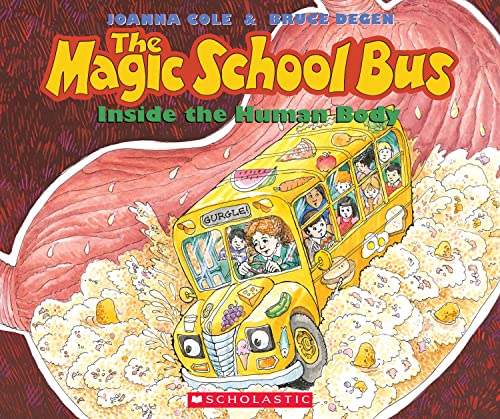
Inside the Human Body (The Magic School Bus, #3)
Joanna Cole, Bruce Degen
4.1
Talk about a change of plans! Ms. Frizzle and her class are on the Magic School Bus headed for a museum. They have been studying how the body turns food into energy, and now they are going to see an exhibit on the human body. Things seem fine until they stop for lunch. A strange mishap causes the bus to shrink and then be swallowed! Ms. Frizzle's class is suddenly inside a real human body!
Cover unavailable
47
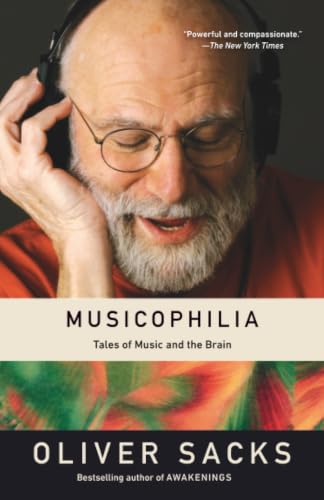
Musicophilia: Tales of Music and the Brain
Oliver Sacks
4.1
With the same trademark compassion and erudition he brought to The Man Who Mistook His Wife for a Hat, Oliver Sacks explores the place music occupies in the brain and how it affects the human condition. In Musicophilia, he shows us a variety of what he calls “musical misalignments.” Among them: a man struck by lightning who suddenly desires to become a pianist at the age of forty-two; an entire group of children with Williams syndrome, who are hypermusical from birth; people with “amusia,” to whom a symphony sounds like the clattering of pots and pans; and a man whose memory spans only seven seconds-for everything but music. Illuminating, inspiring, and utterly unforgettable, Musicophilia is Oliver Sacks’ latest masterpiece.
…
Recommended by Aniela Gregorek and Justin Boreta.
Aniela Gregorek
I gained a deeper understanding of how music affects our moods and our brains. [source]
Justin Boreta
Justin Boreta said this is one of his most-recommended books. [source]
Cover unavailable
48
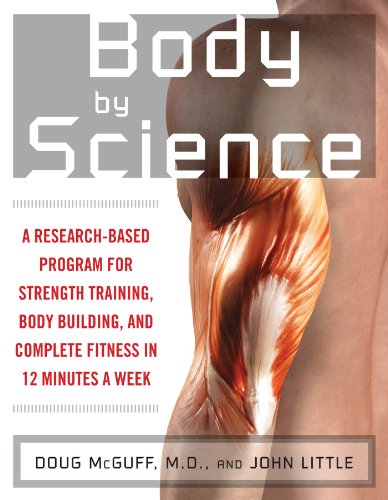
Body by Science: A Research-Based Program for Strength Training, Body Building, and Complete Fitness in 12 Minutes a Week
John Little
4.1
Building muscle has never been faster or easier than with this revolutionary once-a-week training program
In Body By Science, bodybuilding powerhouse John Little teams up with fitness medicine expert Dr. Doug McGuff to present a scientifically proven formula for maximizing muscle development in just 12 minutes a week. Backed by rigorous research, the authors prescribe a weekly high-intensity program for increasing strength, revving metabolism, and building muscle for a total fitness experience.
I feel guilty for not having posted a review earlier: I owe a lot to this book. I figured out the value of intensity training and maximizing recovery. I use the ideas but with minor modifications (my own personal workout is entirely based on free weights and barbells, but I incur --and accept --a risk of injury). I have been applying the ideas for more than three years. Just get over the inhibitions (and illusions of control) and accept the idea of training less. Gratitude. [source]
Rob Leathern
@MikeIsaac Get this book. 12 mins a week... love it; it’s not the end-all but I’ve found these approaches better than regular gym https://t.co/s8KRF8luKs [source]
Cover unavailable
49
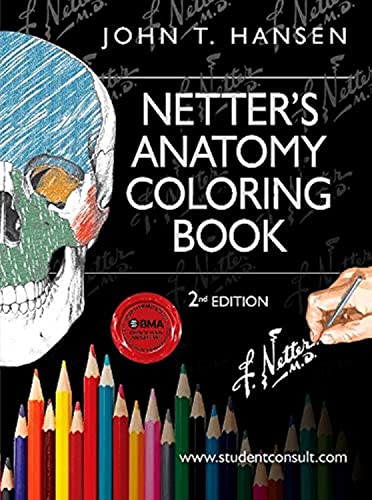
Netter's Anatomy Coloring Book Updated Edition
John T. Hansen PhD
4.1
Learn and master anatomy with ease, while having fun, through the unique approach of Netter's Anatomy Coloring Book, 2nd Edition. You can trace arteries, veins, and nerves through their courses and bifurcations...reinforce your understanding of muscle origins and insertions from multiple views and dissection layers...and develop a better understanding of the integration of individual organs in the workings of each body system throughout the human form. Whether you are taking an anatomy course or just curious about how the body works, let the art of Netter guide you!
Key Features
Netter's Anatomy Coloring Book is a perfect companion to the Atlas of Human Anatomy by Frank H. Netter, MD as well as Netter's Anatomy Flash Cards and Netter's Clinical Anatomy textbook.
Understand the correlation between structures. Outlines of Netter anatomical illustrations in multiple views, magnifications, and dissection layers, accompanied by high-yield information reinforce visual recognition and provide context.
Master challenging structures through illustrations small enough for quick coloring, but large enough to provide you with important details.
Facilitate learning by following tips for coloring key structures and quizzing yourself with end-of-section review questions.
Quickly review key concepts with accompanying tables that review muscle attachments, innervation, and actions.
Understand the role of anatomy in medicine through Clinical Notes which highlight examples.
…
Cover unavailable
50
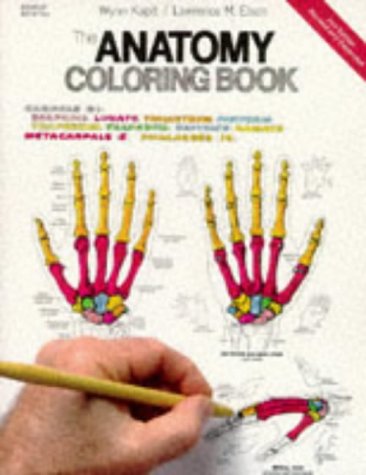
The Anatomy Coloring Book
Wynn Kapit and Lawrence M. Elson
4.1
Why use this coloring book? For more than 35 years, The Anatomy Coloring Book has been the #1 best-selling human anatomy coloring book! A useful tool for anyone with an interest in learning anatomical structures, this concisely written text features precise, extraordinary hand-drawn figures that were crafted especially for easy coloring and interactive study. Organized according to body systems, each of the 162 two-page spreads featured in this book includes an ingenious color-key system where anatomical terminology is linked to detailed illustrations of the structures of the body. When you color to learn with The Anatomy Coloring Book, you make visual associations with key terminology, and assimilate information while engaging in kinesthetic learning. Studying anatomy is made easy and fun! The Fourth Edition features user-friendly two-page spreads with enlarged art, clearer, more concise text descriptions, and new boldface headings that make this classic coloring book accessible to a wider range of learners.
…
Cover unavailable
51
The Wise Heart: A Guide to the Universal Teachings of Buddhist Psychology
Jack Kornfield
4.1
You have within you unlimited capacities for love, for joy, for communion with life, and for unshakable freedom—and here is how to awaken them. In The Wise Heart, one of the leading spiritual teachers of our time offers the most accessible and illuminating guide to Buddhism’s transformational psychology ever published in the West.
Trained as a monk in Thailand, Burma, and India, Jack Kornfield experienced at first hand the life-changing power of Buddhist teachings: the emphasis on the nobility and sacredness of the human spirit, the fine-grained analysis of emotion and thought, the precise techniques for healing, training, and transforming the mind and heart. In contrast to the medical orientation of most Western psychology and psychiatry, here is a vision of radiant human dignity, and a practical path for realizing it in our own lives.
The Wise Heart is the fruit of a life’s work that includes such classics as A Path with Heart and After the Ecstasy, the Laundry. Filled with stories from Kornfield’s Buddhist psychotherapy practice and portraits of remarkable teachers, it also includes a moving account of his own recovery from a violence-filled childhood. For meditators and mental health professionals, Buddhists and non-Buddhists alike, The Wise Heart offers an extraordinary journey from the roots of consciousness to the highest expression of human possibility.
…
Cover unavailable
52
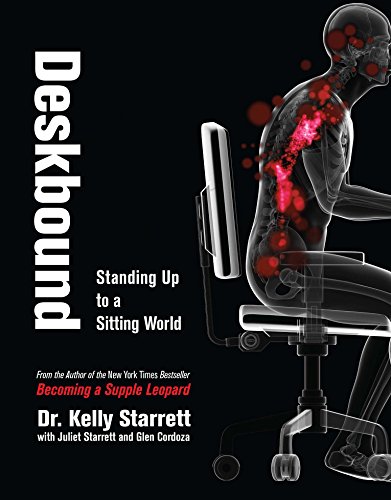
Deskbound: Standing Up to a Sitting World
Kelly Starrett, Juliet Starrett, Glen Cordoza
4.1
You’d better stand up for this bit of news.
Sitting can wreak havoc on your health, and not just in the form of minor aches and pains. Recent studies show that too much sitting contributes to a host of diseases—from obesity and diabetes to cancer and depression—and literally shortens your life. The facts are in: your chair is your enemy, and it is murdering your body. In Deskbound, Dr. Kelly Starrett—physical therapist and author of the New York Times and Wall Street Journal bestselling book Becoming a Supple Leopard—unveils how your sedentary lifestyle is killing you and, more important, what you can do to change it. Deskbound offers a detailed battle plan for surviving the chair and reclaiming your birthright of mobility and freedom from pain. It provides creative solutions to reduce the amount of time you spend perched on your backside, as well as strategies for the workplace and school that will improve your productivity and your overall health. You will learn how to identify and fix poor posture while sitting and standing; how to prevent, treat, and resolve low back, neck, shoulder, and wrist pain; and avoid and reverse repetitive stress injuries like carpal tunnel and tendonitis. Whether your goal is to maximize your performance in and out of the workplace or simply to live pain free, Deskbound is the blueprint. Dr. Starrett provides a revolutionary cure for desk-death.
…
Cover unavailable
53
Brain Rules: 12 Principles for Surviving and Thriving at Work, Home, and School
Most of us have no idea what’s really going on inside our heads. Yet brain scientists have uncovered details every business leader, parent, and teacher should know—like the need for physical activity to get your brain working its best.
How do we learn? What exactly do sleep and stress do to our brains? Why is multi-tasking a myth? Why is it so easy to forget—and so important to repeat new knowledge? Is it true that men and women have different brains?
In Brain Rules, Dr. John Medina, a molecular biologist, shares his lifelong interest in how the brain sciences might influence the way we teach our children and the way we work. In each chapter, he describes a brain rule—what scientists know for sure about how our brains work—and then offers transformative ideas for our daily lives.
Medina’s fascinating stories and infectious sense of humor breathe life into brain science. You’ll learn why Michael Jordan was no good at baseball. You’ll peer over a surgeon’s shoulder as he proves that most of us have a Jennifer Aniston neuron. You’ll meet a boy who has an amazing memory for music but can’t tie his own shoes.
You will discover how:
Every brain is wired differently Exercise improves cognition We are designed to never stop learning and exploring Memories are volatile Sleep is powerfully linked with the ability to learn Vision trumps all of the other senses Stress changes the way we learn
In the end, you’ll understand how your brain really works—and how to get the most out of it.
Discusses how to keep your brain healthy. [source]
Dmitry Dragilev
There’s a book called Brain Rules, also a great book, by John Medina, sort of like how your brain works. [source]
Cover unavailable
54
Delusions of Gender: How Our Minds, Society, and Neurosexism Create Difference
Cordelia Fine
4.1
It’s the twenty-first century, and although we tried to rear unisex children--boys who play with dolls and girls who like trucks--we failed. Even though the glass ceiling is cracked, most women stay comfortably beneath it, and everywhere we hear about vitally important “hardwired” differences between male and female brains. The neuroscience we read about in magazines, newspaper articles, books, and sometimes even scientific journals increasingly tells a tale of two brains, and the result is more often than not a validation of the status quo. Women, it seems, are just too intuitive for math, men too focused for housework.
Drawing on the latest research in neuroscience and psychology, Cordelia Fine debunks the myth of hardwired differences between men’s and women’s brains, unraveling the evidence behind such claims as men’s brains aren’t wired for empathy, and women’s brains aren’t made to fix cars. She then goes one step further, offering a very different explanation of the dissimilarities between men’s and women’s behavior. Instead of a “male brain” and a “female brain,” Fine gives us a glimpse of plastic, mutable minds that are continuously influenced by cultural assumptions about gender.
Delusions of Gender provides us with a much-needed corrective to the belief that men’s and women’s brains are intrinsically different--a belief that, as Fine shows with insight and humor--all too often works to the detriment of ourselves and our society.
…
Recommended by Nicholas Epley.
Nicholas Epley
Cornelia’s book is a rigorous walk through the scientific literature that presents the facts about gender differences. She blows up a lot of the popular books which posited that ‘men are from Mars and women are from Venus’ and described the male and female brain as fundamentally different. Cordelia’s book puts the real and relatively small differences between men and women into perspective. [source]
Cover unavailable
55
A Child is Born
Lennart Nilsson
4.1
This completely revised edition of the beloved international classic is now entirely in color, with historic, never-before-seen photos in every chapter and an entirely new text.
Recommended by Vivette Glover.
Vivette Glover
This is the most outstanding book of photography showing the development of a child from the very beginning. It shows the initial blob of a few cells after the sperm meets the egg, and all the later developmental stages, culminating in the fetus at the end of pregnancy, just ready to be born as a new baby. It shows the development of all the organs, and of the hands and feet, and an unborn baby sucking its thumb at 20 weeks gestation. [source]
Cover unavailable
56
Life at the Extremes
Frances Ashcroft
4.1
The debut of a female Steve Jones – likeable, literate, lucid and laconic. A sprightly, lavishly illustrated book on the science of human survival.
How do people survive extremes of heat, cold, depth, speed and altitude? This book explores the limits of human survival and the physiological adaptations which enable us to exist under extreme conditions. In man’s battle for survival in the harshest of environments, the knowledge imparted by physiology, the ‘logic of life’, is crucial. What causes mountain sickness? Why is it possible to reach the top of Everest without supplementary oxygen, yet be killed if a plane depressurises suddenly at the same altitude. Why are astronauts unable to stand without fainting when they return to Earth? Why do human divers get the bends but sperm whales don’t? Will men always be able to run faster than women? Why don’t penguins get frostbite?
…
Cover unavailable
57
The Human Body Coloring Book: The Ultimate Anatomy Study Guide
DK
4.1
An essential workbook that will appeal to all students of anatomy, "The Human Body Coloring Book" takes an interactive approach to human anatomy that will help users learn, understand, and revisit the subject with ease.
Drawing on an unparalleled library of state-of-the-art specialist anatomical illustrations, "The Human Body Coloring Book" is structured system by system for ease of use, with comprehensive coverage of the human body from cell to system.
"The Human Body Coloring Book" is a unique study aid that provides students with an innovative approach to learning, while the opportunity to self-test maximizes the ability to recall knowledge.
…
Cover unavailable
58
The Complete Human Body: The Definitive Visual Guide
DK Publishing, Dr. Alice Roberts, Medi-Mation
4.1
We inhabit it, we are it, and we are surrounded by 6.8 billion examples of it on the planet - the human body. Some parts of it are still mysteries to science and much is a mystery to the average person on the street. But we've come a long way from the sketches and diagrams drawn by the first anatomists in Ancient Greece. New medical procedures and imaging techniques have allowed "access all areas", revealing incredible detail and providing a much deeper understanding of how our bodies work. Making full use of all the latest knowledge, The Complete Human Body is the definitive guide to the development, form, function, and disorders of the human body, illustrated with unprecedented clarity by new computer-generated artworks and the latest medical and microscopic imaging.
The Complete Human Body consists of five chapters. The first provides an overview of the human as an organism, covering human evolution, genetics, and the composition of the body. The second chapter explores human anatomy, looking at the body region by region (head and neck; thorax; abdomen and pelvis; upper arm; forearm and hand; hip and thigh; lower leg). The third chapter explores and explains how the body works, from individual organs to whole systems. Chapters four and five trace the human life cycle from zygote to old age, and profile the major diseases and disorders that can affect us.
Contents PRELIMS (5pp) 1. INTEGRATED BODY (20pp) Human evolution - from our primate ancestors to modern humans. The human genome - our unique genetic makeup. Body composition - what the body is made up of. The complete human - how body systems work together to maintain health and equilibrium.
2. ANATOMY (240pp) Body Systems - an overview of the anatomy of the body systems: Skin, hair, and nails Skeletal system Muscular system Nervous system Cardiovascular system Lymphatic system Endocrine system Respiratory system Digestive system Urinary system Reproductive system Anatomy atlas - a detailed look at the anatomy of the human body, organized by body regions: Head and neck Torso (divided into thorax and abdomen) Shoulder and arm (divided into upper and lower) Hip and leg (divided into upper and lower)
3. HOW THE BODY WORKS (120pp) Skin, hair, and nails: includes skin functions, skin renewal, skin healing, hair growth. Skeletal system: includes bone functions, bone growth, making blood vessels, different types of joint, cartilages and ligaments, functions of the skull, functions of the spine, ribs, sternum, and pelvis. Muscular system: includes muscle functions, different types of muscle, how muscles work. Nervous system: includes nerve impulses, nerve regeneration, central nervous system, brain functions, the limbic system, the hypothalamus, peripheral nervous system, autonomic nervous system, voluntary and involuntary responses, reflexes, the senses. Cardiovascular system: includes blood functions, blood formation, how the heart works, circulation, arteries and veins. Endocrine system: includes gland functions, hormone secretion, how hormones work, triggers, controls, feedback. Lymphatic and immune system: includes body defenses, non-specific and specific responses, types and functions of white cells, fighting infections, spleen functions. Respiratory system: includes breathing, how the lungs work, gas exchange, vocalization, sneezing and coughing. Digestive system: includes teeth and chewing, production and function of saliva, swallowing, how the stomach works, function of the intestines, how the liver works, processing nutrients. Urinary system: includes blood filtration, blood volume and pressure regulation, producing urine, urine removal. Reproductive system: includes production of sperm and seminal fluid, female reproductive system, sexual intercourse, milk production.
4. LIFE CYCLE (46pp) - covers our development from conception to old age. Includes life cycle overview, inheritance and genes, conception and embryo development,fetal development, changes in the mother during pregnancy, labor and birth, newborn babies, childhood, puberty and adolescence, the aging process and death.
5. DISEASES AND DISORDERS (60pp) - profiles the major diseases and disorders; organized by system.
INDEX (12pp) GLOSSARY (7pp) ACKNOWLEDGMENTS (2pp)
…
Cover unavailable
59
Civilization and Its Discontents
Sigmund Freud
4.1
It stands as a brilliant summary of the views on culture from a psychoanalytic perspective that he had been developing since the turn of the century. It is both witness and tribute to the late theory of mind—the so-called structural theory, with its stress on aggression, indeed the death drive, as the pitiless adversary of eros.
Civilization and Its Discontents is one of the last of Freud's books, written in the decade before his death and first published in German in 1929. In it he states his views on the broad question of man's place in the world, a place Freud defines in terms of ceaseless conflict between the individual's quest for freedom and society's demand for conformity.
Freud's theme is that what works for civilization doesn't necessarily work for man. Man, by nature aggressive and egotistical, seeks self-satisfaction. But culture inhibits his instinctual drives. The result is a pervasive and familiar guilt.
Of the various English translations of Freud's major works to appear in his lifetime, only one was authorized by Freud himself: The Standard Edition of the Complete Psychological Works of Sigmund Freud under the general editorship of James Strachey.
Freud approved the overall editorial plan, specific renderings of key words and phrases, and the addition of valuable notes, from bibliographical and explanatory. Many of the translations were done by Strachey himself; the rest were prepared under his supervision. The result was to place the Standard Edition in a position of unquestioned supremacy over all other existing versions.
Civilisation, as Freud understands it, begins with the restraint of violence… which means that the civilisational condition is one of discontent. [source]
David Bell
A dispassionate view of the cost of civilisation to the individual. [source]
A rough synopsis of the book is that love is a social construct designed to prevent us from murdering each other, at the expense of creating profound neurosis, so definitely a bold choice for a second date. https://t.co/pEnlgR6aiL [source]
Cover unavailable
60
Anatomy Trains: Myofascial Meridians for Manual and Movement Therapists
Thomas W. Myers
4.1
An accessible and comprehensive approach to the anatomy and function of the fascial system in the body combined with a holistic overview of myofascial therapy. Many different therapists now use myofascial techniques to influence postural change and pain relief. This book demonstrates exactly how the muscles connect within the connect tissue to affect posture, compensatory strain, and pain patterns. The aim is to present scientifically sound and often complicated material in a way which can be easily learned, understood, and applied by those who do not necessarily have a scientific background. ANATOMY TRAINS is written and presented in a style that allows this new information on the myofascial system to be easily absorbed by a wide range of readers: from the student, athlete, or client to the most experienced therapist.Includes full-colour illustrations of 11 myofascial meridians and the rules for discovering other meridiansUses numerous two-colour charts and drawings to detail the muscular and fascial structures involved in the meridiansPresents information on assessment of structural and movement patterns and gives related applications to manual therapy and movement educationProvides a selection of techniques from the library of structural integrationIncludes an introduction to the fascial system as a whole, with new points-of-view and new research findings on the fascial system's responsesOffers a fun approach to learning essential structural anatomy, comparing the connective tissue system to a railway network
…
Cover unavailable
61
Incognito: The Secret Lives of the Brain
David Eagleman
4.1
If the conscious mind—the part you consider you—accounts for only a tiny fraction of the brain’s function, what is all the rest doing? This is the question that David Eagleman—renowned neuroscientist and acclaimed author of Sum—answers in a book as accessible and entertaining as it is deeply informed by startling, up-to-the-minute research.
At a conference I recently attended, David talked about his work. It's all anyone discussed for the next two days. This book will help you understand the meat/electricity/chemicals you're carrying around inside your head better than you ever have before. [source]
Louis Grenier
“Incognito: The Secret Lives of the Brain” and “Predictably Irrational” are 2 very good books on psychology that I think you should read. [source]
Cover unavailable
62
Emf*d: 5g, Wi-Fi & Cell Phones: Hidden Harms and How to Protect Yourself
Dr. Joseph Mercola
4.1
The dangers of electromagnetic fields are real--and now a renowned health authority reveals exactly what they are and how you can protect yourself.
The hazards of electronic pollution may once have been the stuff of science fiction, but now we know they're all too real. And with the advent of 5G ultra-wideband technology, the danger is greater than ever. Dr. Joseph Mercola, one of the world's foremost authorities on alternative health, has mined the scientific literature to offer a radical new understanding of how electromagnetic fields impact your body and mind. In this first-of-its-kind guide, he reveals: - What EMFs (electromagnetic fields) actually are, where you find them in your daily life, and how they affect you - The toll that EMFs have been proven to take in conditions such as cancer, heart disease, and neuropsychiatric illnesses - Why you've been largely kept in the dark about this threat to your health - How you can actually repair the damage done by EMFs at a cellular level - Practical strategies to protect yourself and your loved ones from EMFs at home, at work, and out in the world
The coming 5G technology will be pervasive and powerful. It will also be one of the largest public-health experiments in history-with no way of opting out. That's why you need to read this book. Now.
…
Cover unavailable
63
Shadows of Forgotten Ancestors
Carl Sagan, Ann Druyan
4.1
NATIONAL BESTSELLER - "Exciting and provocative . . . A tour de force of a book that begs to be seen as well as to be read."--The Washington Post Book World
World renowned scientist Carl Sagan and acclaimed author Ann Druyan have written a Roots for the human species, a lucid and riveting account of how humans got to be the way we are. Shadows of Forgotten Ancestors is a thrilling saga that starts with the origin of the Earth. It shows with humor and drama that many of our key traits--self-awareness, technology, family ties, submission to authority, hatred for those a little different from ourselves, reason, and ethics--are rooted in the deep past, and illuminated by our kinship with other animals.
Sagan and Druyan conduct a breathtaking journey through space and time, zeroing in on critical turning points in evolutionary history, and tracing the origins of sex, altruism, violence, rape, and dominance. Their book culminates in a stunningly original examination of the connection between primate and human traits. Astonishing in its scope, brilliant in its insights, and an absolutely compelling read, Shadows of Forgotten Ancestors is a triumph of popular science.
…
Cover unavailable
64
Why We Get Fat: And What to Do About It
Gary Taubes
4.1
An eye-opening, myth-shattering examination of what makes us fat, from acclaimed science writer Gary Taubes.
In his New York Times best seller, Good Calories, Bad Calories, Taubes argued that our diet’s overemphasis on certain kinds of carbohydrates—not fats and not simply excess calories—has led directly to the obesity epidemic we face today. The result of thorough research, keen insight, and unassailable common sense, Good Calories, Bad Calories immediately stirred controversy and acclaim among academics, journalists, and writers alike. Michael Pollan heralded it as “a vitally important book, destined to change the way we think about food.”
Building upon this critical work in Good Calories, Bad Calories and presenting fresh evidence for his claim, Taubes now revisits the urgent question of what’s making us fat—and how we can change—in this exciting new book. Persuasive, straightforward, and practical, Why We Get Fat makes Taubes’s crucial argument newly accessible to a wider audience.
Taubes reveals the bad nutritional science of the last century, none more damaging or misguided than the “calories-in, calories-out” model of why we get fat, and the good science that has been ignored, especially regarding insulin’s regulation of our fat tissue. He also answers the most persistent questions: Why are some people thin and others fat? What roles do exercise and genetics play in our weight? What foods should we eat, and what foods should we avoid?
Packed with essential information and concluding with an easy-to-follow diet, Why We Get Fat is an invaluable key in our understanding of an international epidemic and a guide to what each of us can do about it.
…
Recommended by Dr. Monali Y. Desai.
Dr. Monali Y. Desai
I get most of my information about nutrition from medical studies. I haven’t read any books about nutrition that I agree with 100%. These are a few nutrition related books that I’ve read recently that I thought were interesting: Eat to Live (Joel Fuhrman), Why We Get Fat (Gary Taubes), and The 4-Hour Body (Tim Ferris). [source]
Cover unavailable
65
What Doesn't Kill Us: How Freezing Water, Extreme Altitude and Environmental Conditioning will Renew our Lost Evolutionary Strength
Scott Carney
4.1
What Doesn't Kill Us traces our evolutionary journey back to a time when survival depended on how well we adapted to the environment around us. Our ancestors crossed the Alps in animal skins and colonized the New World in loin cloths. They evaded predators and built civilizations with just their raw brainpower and inner grit. But things have changed and now comfort is king. Today we live in the thrall of constant climate control and exercise only when our office schedules permit. The technologies that we use to make us comfortable are so all-encompassing that they sever the biological link to a changing environment. Now we hate the cold and the heat. We suffer from autoimmune diseases. And many of us are chronically overweight. Most of us don't even realize that natural variation--sweating and shivering--is actually good for us.
What Doesn't Kill Us uncovers how just about anyone can reclaim a measure of our species' evolutionary strength by tapping into the things that feel uncomfortable. When we slightly reimagine how our body fits into the world, we can condition ourselves to find resilience in unfamiliar environments.
The feeling that something is missing from our daily routines is growing and has spawned a movement. Every year, millions of people forgo traditional gyms and push the limits of human endurance by doing boot camp style workouts in raw conditions. These extreme athletes train in CrossFit boxes, compete in Tough Mudders and challenge themselves in Spartan races. They are connecting with their environment and, whether they realize it or not, are changing their bodies.
No one exemplifies this better than Dutch fitness guru Wim Hof, whose remarkable ability to control his body temperature in extreme cold has sparked a whirlwind of scientific study. Because of him, scientists in the United States and Europe are just beginning to understand how cold adaptation might help combat autoimmune diseases and chronic pains and, in some cases, even reverse diabetes.
Award winning investigative journalist, Scott Carney dives into the fundamental philosophy at the root of this movement in three interlocking narratives. His own journey culminates in a record bending 28-hour climb up to the snowy peak of Mt. Kilimanjaro wearing nothing but a pair of running shorts and sneakers.
…
Cover unavailable
66
Physiology (Quick Study Academic)
Inc. BarCharts
4.1
Cover unavailable
67
Human Anatomy & Physiology
Elaine N. Marieb, Katja Hoehn
4.1
With each edition of her top-selling Human Anatomy & Physiology text, Elaine N. Marieb draws on her own, unique experience as a full-time A&P professor and part-time nursing student to explain concepts and processes in a meaningful and memorable way. With the Seventh Edition, Dr. Marieb has teamed up with co-author Katja Hoehn to produce the most exciting edition yet, with beautifully-enhanced muscle illustrations, updated coverage of factual material and topic boxes, new coverage of high-interest topics such as Botox, designer drugs, and cancer treatment, and a comprehensive instructor and student media package. Package Components *NEW! InterActive Physiology(R) 9-System Suite CD-ROM *Student Access Kit for MyA&P (CourseCompass) and the Anatomy & Physiology Place companion website *REVISED! A Brief Atlas of the Human Body, Second Edition
…
Cover unavailable
68
Anatomy & Physiology Workbook for Dummies with Online Practice
Odya
4.1
Practice your way to a high score in your anatomy & physiology class
The human body has 11 major anatomical systems, 206 bones, and dozens of organs, tissues, and fluids--that's a lot to learn if you want to ace your anatomy & physiology class! Luckily, you can master them all with this hands-on book + online experience. Memorization is the key to succeeding in A&P, and Anatomy & Physiology Workbook For Dummies gives you all the practice you need to score high.
Inside and online, you'll find exactly what you need to help you understand, memorize, and retain every bit of the human body. Jam packed with memorization tricks, test-prep tips, and hundreds of practice exercises, it's the ideal resource to help you make anatomy and physiology your minion!
Take an online review quiz for every chapter Use the workbook as a supplement to classroom learning Be prepared for whatever comes your way on test day Gain confidence with practical study tips If you're gearing up for a career in the medical field and need to take this often-tough class to fulfill your academic requirements as a high school or college student, this workbook gives you the edge you need to pass with flying colors.
…
Cover unavailable
69
Anatomy of Movement
Blandine Calais-Germain
4.0
Anatomy of Movement is a dynamic, integrated approach to the study of the physical structures of the musculoskeletal system and their functional relationship to the movements of the human body. The emphasis is on basic human anatomy as it relates to external body movement. In clear and concise text illustrated with more than a thousand graphic drawings, the author takes the reader on a lively tour of the muscles, bones, ligaments and joints of the arms, legs and trunk. The focus throughout the book is on anatomy not for its own sake, but in its functional relationship to the actual movements of the body in physical disciplines. Features: *
…
Cover unavailable
70
The Female Brain
Louann Brizendine M.D.
4.0
This comprehensive new look at the hormonal roller coaster that rules women's lives down to the cellular level, "a user's guide to new research about the female brain and the neurobehavioral systems that make us women," offers a trove of information, as well as some stunning insights. Though referenced like a work of research, Brizedine's writing style is fully accessible. Brizendine provides a fascinating look at the life cycle of the female brain from birth ("baby girls will connect emotionally in ways that baby boys don't") to birthing ("Motherhood changes you because it literally alters a woman's brain-structurally, functionally, and in many ways, irreversibly") to menopause (when "the female brain is nowhere near ready to retire") and beyond. At the same time, Brizedine is not above reviewing the basics: "We may think we're a lot more sophisticated than Fred or Wilma Flintstone, but our basic mental outlook and equipment are the same." While this book will be of interest to anyone who wonders why men and women are so different, it will be particularly useful for women and parents of girls.
A new edition of the bestselling classic – published with a special introduction to mark its 10th anniversary
This pioneering account sets out to understand the structure of the human brain – the place where mind meets matter. Until recently, the left hemisphere of our brain has been seen as the ‘rational’ side, the superior partner to the right. But is this distinction true?
Drawing on a vast body of experimental research, Iain McGilchrist argues while our left brain makes for a wonderful servant, it is a very poor master. As he shows, it is the right side which is the more reliable and insightful. Without it, our world would be mechanistic – stripped of depth, colour and value.
“A veritable tour de force, gradually and skilfully revealed. I know of no better exposition of the current state of functional brain neuroscience.”—W. F. Bynum, TLS
“A profound examination.”—Philip Pullman
“Persuasively argues that our society is suffering from the consequences of an over-dominant left hemisphere losing touch with its natural regulative ‘master’ the right. Brilliant and disturbing.”—Salley Vickers, a Guardian Best Book of the Year
“Clear, penetrating, lively, thorough and fascinating. . . . I couldn’t put it down.”—Mary Midgley, The Guardian
…
Cover unavailable
72
Anatomy and Physiology Coloring Workbook: A Complete Study Guide
Elaine N. Marieb and Simone Brito
4.0
For courses in 1- and 2-semester Anatomy & PhysiologySimplify your Study of Anatomy & Physiology. Combining a wide range and variety of engaging coloring activities, exercises, and self-assessments into an all-in-one Study Guide, the Anatomy and Physiology Coloring Workbook helps you simplify your study of A&P. Featuring contributions from new co-author Simone Brito, the 12th edition of this best-selling guide continues to reinforce the fundamentals of anatomy and physiology through a variety of unique, interactive activities. You now benefit from new crossword puzzles in each chapter, along with dozens of strengthened and expanded exercises, illustrations, and over 100 coloring exercises. Additional self-assessments, "At The Clinic" short answer questions, and unique "Incredible Journey" visualization exercises, further reinforce basic concepts that are relevant to health care careers.
…
Cover unavailable
73
Introduction to Veterinary Anatomy and Physiology Workbook
Sally J. Bowden VN
4.0
Understanding companion animal anatomy and physiology is the foundation to providing good veterinary care, but the underlying concepts covered in the classroom are not always easy to relate to everyday clinical practice.
The new edition of Introduction to Veterinary Anatomy and Physiology Workbook continues to provide a fun and interactive means to test the student's knowledge, using crosswords, word searches, mnemonics, quizzes, labelling diagrams, and more. A unique way to revise a complex subject Includes hints and tips for effective study Interactive quizzes and practical tasks facilitate group study New chapters on birds, mammals, reptiles, fish, and horses cover all major companion animal species
…
Cover unavailable
74
Ready to Run: Unlocking Your Potential to Run Naturally
Kelly Starrett
4.0
Are You Ready to Run?
Is there a bridge from the injury-ridden world of the modern runner to the promised land that barefoot running and Born to Run have led us to believe exists? Can we really live the running life free from injury? Is there an approach designed to unlock all the athletic potential that may be hidden within? Can we run faster, longer, and more efficiently?
In a direct answer to the modern runner’s needs, Dr. Kelly Starrett, author of the bestseller Becoming a Supple Leopard: The Ultimate Guide to Resolving Pain, Preventing Injury, and Optimizing Athletic Performance, has focused his revolutionary movement and mobility philosophy on the injury-plagued world of running.
Despite the promises of the growing minimalist-shoe industry and a rush of new ideas on how to transform running technique, more than three out of four runners suffer at least one injury per year. Although we may indeed be “Born to Run,” life in the modern world has trashed and undercut dedicated runners wishing to transform their running. The harsh effects of too much sitting and too much time wearing the wrong shoes has left us shackled to lower back problems, chronic knee injuries, and debilitating foot pain.
In this book, you will learn the 12 standards that will prepare your body for a lifetime of top-performance running. You won’t just be prepared to run in a minimalist shoe–you’ll be Ready to Run, period.
In Ready to Run, you will learn:
• The 12 performance standards you must work toward and develop on an ongoing basis. • How to tap into all of your running potential and access a fountain of youth for lifelong running. • How to turn your weaknesses into strengths. • How to prevent chronic overuse injuries by building powerful injury-prevention habits into your day. • How to prepare your body for the demands of changing your running shoes and running technique. • How to treat pain and swelling with cutting-edge modalities and accelerate your recovery. • How to equip your home mobility gym. • A set of mobility exercises for restoring optimal function and range of motion to your joints and tissues. • How to run faster, run farther, and run better.
…
Cover unavailable
75
8 Steps to a Pain-Free Back: Natural Posture Solutions for Pain in the Back, Neck, Shoulder, Hip, Knee, and Foot
Esther Gokhale, Susan Adams
4.0
With a fresh approach to a common problem, this self-help guide to overcoming back pain advocates adopting the natural, healthy posture of athletes, young children, and people from traditional societies the world over. Arguing that most of what our culture has taught us about posture is misguided—even unhealthy—and exploring the current epidemic of back pain, many of the commonly cited reasons for the degeneration of spinal discs and the stress on muscles that leads to back pain are examined and debunked. The historical and anthropological roots of poor posture in Western cultures are studied as is the absence of back pain complaints in the cultures of Africa, Asia, South America, and rural Europe. Eight detailed chapters provide illustrated step-by-step instructions for making simple, powerful changes to seated, standing, and sleeping positions. No special equipment or exercise is required, and effects are often immediate.
…
Cover unavailable
76
Woman: An Intimate Geography
Natalie Angier
4.0
With the clarity, insight, and sheer exuberance of language that make her one of The New York Times's premier stylists, Pulitzer Prize-winner Natalie Angier lifts the veil of secrecy from that most enigmatic of evolutionary masterpieces, the female body. Angier takes readers on a mesmerizing tour of female anatomy and physiology that explores everything from organs to orgasm, and delves into topics such as exercise, menopause, and the mysterious properties of breast milk.
A self-proclaimed "scientific fantasia of womanhood." Woman ultimately challenges widely accepted Darwinian-based gender stereotypes. Angier shows how cultural biases have influenced research in evolutionary psychology (the study of the biological bases of behavior) and consequently led to dubious conclusions about "female nature." such as the idea that women are innately monogamous while men are natural philanderers.
But Angier doesn't just point fingers; she offers optimistic alternatives and transcends feminist polemics with an enlightened subversiveness that makes for a joyful, fresh vision of womanhood. Woman is a seminal work that will endure as an essential read for anyone intersted in how biology affects who we are as women, as men, and as human beings.
…
Cover unavailable
77
The Yoga Anatomy Coloring Book: A Visual Guide to Form, Function, and Movement
Kelly Solloway
4.0
This fun mix of coloring book and instructional guide demystifies anatomy for the yoga enthusiast and teacher.
Yoga instructor, licensed massage therapist, and anatomy teacher Kelly Solloway provides an entertaining and informative journey through the human body, focusing on the bones, joints, and muscles used in yoga. After an overview of helpful terms, Kelly covers the skeletal system, joints, and connective tissue, followed by the muscular system. Each anatomical feature is illustrated with a beautiful black-and-white drawing of a yoga posture, or asana, to color. Coloring the bones and muscles, and their names, will help you to remember their location and function, and 32 perforated flash cards enable readers to quiz themselves and study yoga anatomy on the go.
…
Cover unavailable
78
Anatomy Coloring Workbook: An Easier and Better Way to Learn Anatomy
The Princeton Review and Edward Alcamo
4.0
An Easier and Better Way to Learn Anatomy.
The Anatomy Coloring Workbook, 4th Edition uses the act of coloring to provide you with a clear and concise understanding of anatomy. This interactive approach takes less time than rote memorization, and thoroughly fixes anatomical concepts in your mind for easier visual recall later.
An invaluable resource for students of anatomy, physiology, biology, psychology, nursing & nutrition, medicine, fitness education, art, and more, the Anatomy Coloring Workbook includes:
- 126 coloring plates with precise, easy-to-follow renderings of anatomical structures - Comprehensive explanations of the pictured structures and anatomical concepts - An introductory section on terminology to get you started and coloring suggestions to assist you - A glossary of common anatomical terms for quick reference - New injury & ailment appendices, with additional memorization techniques
The includes the following sections: - Introduction to Anatomy - The Integumentary System - The Skeletal System - The Muscular System - The Nervous System - The Endocrine System - The Circulatory System - The Lymphatic System - The Digestive System - The Respiratory System - The Urinary System - The Reproductive System
…
Cover unavailable
79
Earthing: The Most Important Health Discovery Ever!
Clinton Ober
4.0
Revised and updated with new research and doctors' commentaries, this bestselling book introduces readers to the landmark discovery that living in contact with the Earth's natural surface charge - being "grounded" - naturally discharges and prevents chronic inflammation in the body. This effect has massive health implications because of the well-established link between chronic inflammation and all chronic diseases, including the diseases of aging and the aging process itself.
…
Cover unavailable
80
The Mind's Eye
Oliver W. Sacks
4.0
In Musicophilia, Oliver Sacks explored music and the brain; now, in The Mind's Eye, he writes about the myriad ways in which we experience the visual world: how we see in three dimensions; how we recognize individual faces or places; how we use language to communicate verbally; how we translate marks on paper into words and paragraphs; and, even how we represent the world internally when our eyes are closed. Alongside remarkable stories of people who have lost these abilities but adapted with courage, resilience and ingenuity, there is an added, personal element: one day in late 2005, Sacks became aware of a dazzling, flashing light in one part of his visual field; it was not the familiar migraine aura he had experienced since childhood, and just two days later a malignant tumor in one eye was diagnosed. In subsequent journal entries - some of which are included in The Mind's Eye - he chronicled the experience of living with cancer, recording both the effects of the tumor itself, and radiation therapy. In turning himself into a case history, Sacks has given us perhaps his most intimate, impressive and insightful (no pun intended) book yet.
…
Cover unavailable
81
Survival of the Sickest: A Medical Maverick Discovers Why We Need Disease
Dr. Sharon Moalem, Jonathan Prince
4.0
Was diabetes evolution's response to the last Ice Age? Did a deadly genetic disease help our ancestors survive the bubonic plagues of Europe? Will a visit to the tanning salon help lower your cholesterol? Why do we age? Why are some people immune to HIV? Can your genes be turned on -- or off?
Dr. Sharon Moalem turns our current understanding of illness on its head and challenges us to fundamentally change the way we think about our bodies, our health, and our relationship to just about every other living thing on earth, from plants and animals to insects and bacteria.
Through a fresh and engaging examination of our evolutionary history, Dr. Moalem reveals how many of the conditions that are diseases today actually gave our ancestors a leg up in the survival sweepstakes. When the option is a long life with a disease or a short one without it, evolution opts for disease almost every time.
Everything from the climate our ancestors lived in to the crops they planted and ate to their beverage of choice can be seen in our genetic inheritance. But Survival of the Sickest doesn't stop there. It goes on to demonstrate just how little modern medicine really understands about human health, and offers a new way of thinking that can help all of us live longer, healthier lives..
…
Cover unavailable
82
The Non-Tinfoil Guide to EMFs: How to Fix Our Stupid Use of Technology
Nicolas Pineault
4.0
Cover unavailable
83
Zen Body-Being: An Enlightened Approach to Physical Skill, Grace, and Power
Peter Ralston, Laura Ralston
4.0
In this inspiring guide, Peter Ralston presents a program of "physical education" for anyone interested in body improvement. Using simple, clear language to demystify the Zen mindset, he draws on more than three decades of experience teaching students and apprentices worldwide who have applied his body-being approach. More of a transformative guide than a specific list of exercises devoted to any particular physical approach, Zen Body-Being explains how to create a state of mental control, enhanced feeling-awareness, correct structural alignment, increased spatial acuity, and even a greater interactive presence. Exercises are simple, often involving feeling-imagery and meditative awareness, which have a profound and sometimes instant effect. Where similar guides teach readers what to do, this book teaches readers how to be.
…
Cover unavailable
84
CliffsNotes Anatomy & Physiology Quick Review
Steven Bassett
4.0
CliffsQuickReview course guides cover the essentials of your toughest classes. Get a firm grip on core concepts and key material, and test your newfound knowledge with review questions.Whether you're in high school or medical school, "CliffsQuickReview Anatomy and Physiology" can help you understand how your body is built and the different functions it performs. This guide introduces each topic, defines key terms, and carefully walks you through each sample problem step-by-step. In no time, you'll be ready to tackle other concepts in this book such asCell divisionOrganization of the skeletal systemNervous system organizationHormonesImmune system and other body defensesReproductive system
"CliffsQuickReview Anatomy and Physiology" acts as a supplement to your textbook and to classroom lectures. Use this reference in any way that fits your personal style for study and review -- you decide what works best with your needs. Here are just a few ways you can search for topics: Use the free Pocket Guide full of essential informationGet a glimpse of what you'll gain from a chapter by reading through the Chapter Check-In at the beginning of each chapterUse the Chapter Checkout at the end of each chapter to gauge your grasp of the important information you need to knowTest your knowledge more completely in the CQR Review and look for additional sources of information in the CQR Resource CenterUse the glossary to find key terms fast.
With titles available for all the most popular high school and college courses, CliffsQuickReview guides are a comprehensive resource that can help you get the best possible grades.
…
Cover unavailable
85
Renal Pathophysiology: The Essentials
Dr. Helmut G. Rennke MD and Dr. Bradley M. Denker MD
4.0
Renal pathophysiology can be a difficult subject even for the most advanced medical students. This Fifth Edition of Renal Pathophysiology: The Essentials provides an easy-to-read, case-based approach to learning the mechanisms of renal disease. Each chapter focuses on a mechanism of kidney disease and includes an opening case, learning objectives, integrated open-ended questions, and chapter-ending summaries. Updated with the latest clinical advances and research, this edition also features full-color illustrations and photomicrographs, suggested readings, and online and in-book Q&As.
Updated chapter-opening Case Presentations (with Summary and Case Discussion at the end of chapter) introduce real-life clinical situations and allow students to apply what they’ve learned.
New illustrations and clinical images clarify key concepts, key terms are now bolded, and a new appendix lists formulas and lab values for easy reference.
Open-ended and multiple-choice questions stimulate critical thinking and allow students to gauge their mastery of the information.
Separate Summary and Case Discussion boxes provide at-a-glance, bulleted information for easy review.
eBook available for purchase. Fast, smart, and convenient, today’s eBooks can transform learning. These interactive, fully searchable tools offer 24/7 access on multiple devices, the ability to highlight and share notes, and more
…
Cover unavailable
86
The Tell-Tale Brain: A Neuroscientist's Quest for What Makes Us Human
V. S. Ramachandran
4.0
V. S. Ramachandran is at the forefront of his field-so much so that Richard Dawkins dubbed him the "Marco Polo of neuroscience." Now, in a major new work, Ramachandran sets his sights on the mystery of human uniqueness. Taking us to the frontiers of neurology, he reveals what baffling and extreme case studies can teach us about normal brain function and how it evolved. Synesthesia becomes a window into the brain mechanisms that make some of us more creative than others. And autism--for which Ramachandran opens a new direction for treatment--gives us a glimpse of the aspect of being human that we understand least: self-awareness. Ramachandran tackles the most exciting and controversial topics in neurology with a storyteller's eye for compelling case studies and a researcher's flair for new approaches to age-old questions. Tracing the strange links between neurology and behavior, this book unveils a wealth of clues into the deepest mysteries of the human brain.
…
Cover unavailable
87
Man and His Symbols
Carl G. Jung
4.0
Man and His Symbols owes its existence to one of Jung's own dreams. The great psychologist dreamed that his work was understood by a wide public, rather than just by psychiatrists, and therefore he agreed to write and edit this fascinating book. Here, Jung examines the full world of the unconscious, whose language he believed to be the symbols constantly revealed in dreams. Convinced that dreams offer practical advice, sent from the unconscious to the conscious self, Jung felt that self-understanding would lead to a full and productive life. Thus, the reader will gain new insights into himself from this thoughtful volume, which also illustrates symbols throughout history. Completed just before his death by Jung and his associates, it is clearly addressed to the general reader.
…
Cover unavailable
88
Anatomy Student's Review Workbook: Test and reinforce your anatomical knowledge
Ken Ashwell Ph.D.
4.0
The Anatomy Student's Review Workbook features detailed illustrations, clear labels and explanations, and self-test practice questions. Barron’s guide is a compact and convenient learning resource that includes:
More than 1,000 quiz questions, including a mix of questions and self-assessment activities, fill-in-the-blank questions and matching statements to reasons Color and label activities with accurate anatomical illustrations to help you identify and remember locations of different body parts and systems Full-color illustrations, with body systems summaries and glossary for each body area Call-outs throughout the text that summarize simple clinical concepts related to each body system Full answers, so you can check results
Whether you’re taking a class, teaching yourself, or pursuing a healthcare career, this must-have guide will help increase your knowledge of core material, reinforce your understanding of key concepts, and help you master this vital topic.
…
Cover unavailable
89
The Body Electric: Electromagnetism and the Foundation of Life
Robert Becker
4.0
"In this landmark book, Robert O. Becker, M.D., a pioneer in the field of bioelectric science, presents a fascinating look at the role electricity plays in healing, challenging the traditional mechanistic model of the body. Colorful and controversial, this is a tale of engrossing research, scientific and medical politics, and breakthrough discoveries that offer new possibilities for fighting disease and harnessing the body's healing powers.
…
Cover unavailable
90
Vitamin K2 and the Calcium Paradox: How a Little-Known Vitamin Could Save Your Life
Kate Rheaume-Bleue
4.0
Cover unavailable
91
Which Comes First, Cardio or Weights?: Fitness Myths, Training Truths, and Other Surprising Discoveries from the Science of Exercise
Alex Hutchinson
4.0
In Which Comes First, Cardio or Weights? Alex Hutchinson, a physicist, award-winning journalist, and contributing editor of Popular Mechanics magazine, reveals the little-known and often surprising truths that science has uncovered about exercise. A book that ranges from cardio and weights to competition and weight loss, here are fascinating facts and practical tips for fitness buffs, competitive athletes, and popular science fans alike.
…
Recommended by Dr. Martin Gibala.
Dr. Martin Gibala
I think there’s a gift there in terms of boiling this complex science down into compelling narratives that people can read and understand. [source]
Cover unavailable
92
Human Anatomy Coloring Book: An Entertaining and Instructive Guide to the Human Body - Bones, Muscles, Blood, Nerves, and How They Work
Margaret Matt and Joe Ziemian
4.0
From a biological point of view, the human body is an infinitely complex marvel of fine design, superbly adapted to its functions by eons of evolutionary development. Hundreds of specialized organs, bones, muscles, nerve fibers, blood vessels, and other anatomical features comprise an interdependent network of bodily systems that enables the human organism to survive. Now the component parts of this intricate flesh-and-bone machine can be absorbed and understood by means of an ingenious format: a coloring book that can help mature children and adult colorists learn anatomy. An affordable anatomy class, this easy learning study aid contains careful, scientifically accurate line renderings of the body's organs and major systems: skeletal, muscular, nervous, digestive, reproductive, and more. A total of 43 coloring pages (often with several illustrations on each) offers numerous views, cross-sections, diagrams and detailed closeups, labelled and numbered to correspond with suggestions for coloring. These suggestions are specially designed to emphasize the structural relationship in the body. By working through each system, the reader will gain not only an intimate knowledge of the location, appearance and role of the body parts, this learning tool will also be laying the groundwork for more sophisticated studies of anatomy.
…
Cover unavailable
93
Introduction to Veterinary Anatomy and Physiology Textbook
Victoria Aspinall BVScMRCVS and Melanie Cappello BSc(Hons)ZoologyPGCEVN
4.0
A sound knowledge of anatomy and physiology is an essential basis for the effective clinical treatment of companion animals. The new third edition Introduction to Veterinary Anatomy and Physiology Textbook offers clear and comprehensive of the common companion animal species. Updated throughout with a new section added on large animals, the new edition features augmented online learning resources with new questions and quizzes. Students can test their knowledge with multi-choice questions, drag and drop exercises and an image bank, while instructors can download questions, figures and exercises to use as teaching aids.
An essential first purchase for all those embarking upon a veterinary career
Includes augmented on-line resources with self-assessment tools and teaching aids
Comprehensive coverage of all major companion animal species
New large animal section added covering the cow, sheep and pig
'Applied Anatomy' tips relate theory to clinical practice, showing the relationship between anatomy and physiology and the disease process
…
Cover unavailable
94
Saunders Veterinary Anatomy Coloring Book
. Saunders
4.0
Saunders Veterinary Anatomy Coloring Book includes approximately 300 illustrations to study and color. The coloring book helps you memorize the anatomy content you need to know in both veterinary medicine and veterinary technology and gives you a fun way to review the information you have studied. All illustrations in the book are suitable for coloring and are of the highest quality, created by expert medical illustrators.
Organized by body region, the book is divided into sections devoted to the head and neck; neck, back, and vertebral column; thorax; abdomen; pelvis; forlimb; and hindlimb.
Numbered lead lines clearly identify structures to be colored and correspond to a numbered list beneath the illustration so you can easily visualize the veterinary anatomy. Plus, you can create your own color code using the numbered boxes provided for each illustration.
Comprehensive veterinary anatomy coverage helps you reinforce your understanding of canine, feline, equine, porcine, ruminants, and avian anatomy.
High quality illustrations make it easy for you to color in each anatomic region and review anatomic details.
Self-study format provides a fun and interactive way to prepare for exams throughout your veterinary courses.
Part of Elsevier's complete veterinary anatomy learning system, integrating core anatomy knowledge, engaging review, hands-on practice, and clinical application to give you a solid foundation for success!
…
Cover unavailable
95
Why Do Men Have Nipples?: Hundreds of Questions You'd Only Ask a Doctor After Your Third Martini
Mark Leyner, Billy Goldberg
4.0
Is There a Doctor in the House?
Say you’re at a party. You’ve had a martini or three, and you mingle through the crowd, wondering how long you need to stay before going out for pizza. Suddenly you’re introduced to someone new, Dr. Nice Tomeetya. You forget the pizza. Now is the perfect time to bring up all those strange questions you’d like to ask during an office visit with your own doctor but haven’t had the guts (or more likely the time) to do so. You’re filled with liquid courage . . . now is your chance! If you’ve ever wanted to ask a doctor . . .
•How do people in wheelchairs have sex?
•Why do I get a killer headache when I suck down my milkshake too fast?
•Can I lose my contact lens inside my head forever?
•Why does asparagus make my pee smell?
•Why do old people grow hair on their ears?
•Is the old adage “beer before liquor, never sicker, liquor before beer . . .” really true?
. . . then Why Do Men Have Nipples? is the book for you.
Compiled by Billy Goldberg, an emergency medicine physician, and Mark Leyner, bestselling author and well-known satirist, Why Do Men Have Nipples? offers real factual and really funny answers to some of the big questions about the oddities of our bodies.
…
Cover unavailable
96
Medical Physiology
Walter F. Boron MD PhD, Emile L. Boulpaep MD
4.0
Medical Physiology, Updated Edition, is a full-color, comprehensive textbook designed for modern medical school courses in human physiology. The most up-to-date and beautifully illustrated text on the market, it has a strong molecular and cellular approach, firmly relating the molecular and cellular biological underpinnings of physiology to the study of human physiology and disease. Contributions from leading physiologists ensure authoritative, cutting-edge information, and thorough and consistent editing have produced a readable and student-friendly text.
The smart way to study! Elsevier titles with STUDENT CONSULT will help you master difficult concepts and study more efficiently in print and online! Perform rapid searches. Integrate bonus content from other disciplines. Download text to your handheld device. And a lot more. Each STUDENT CONSULT title comes with full text online, a unique image library, case studies, USMLE style questions, and online note-taking to enhance your learning experience.
…
Cover unavailable
97
Power, Sex, Suicide: Mitochondria and the Meaning of Life
Nick Lane
4.0
If it weren't for mitochondria, scientists argue, we'd all still be single-celled bacteria. Indeed, these tiny structures inside our cells are important beyond imagining. Without mitochondria, we would have no cell suicide, no sculpting of embryonic shape, no sexes, no menopause, no aging.
In this fascinating and thought-provoking book, Nick Lane brings together the latest research in this exciting field to show how our growing insight into mitochondria has shed light on how complex life evolved, why sex arose (why don't we just bud?), and why we age and die. These findings are of fundamental importance, both in understanding life on Earth, but also in controlling our own illnesses, and delaying our degeneration and death. Readers learn that two billion years ago, mitochondria were probably bacteria living independent lives and that their capture within larger cells was a turning point in the evolution of life, enabling the development of complex organisms.
Lane describes how mitochondria have their own DNA and that its genes mutate much faster than those in the nucleus. This high mutation rate lies behind our aging and certain congenital diseases. The latest research suggests that mitochondria play a key role in degenerative diseases such as cancer. We also discover that mitochondrial DNA is passed down almost exclusively via the female line. That's why it has been used by some researchers to trace human ancestry daughter-to-mother, to "Mitochondrial Eve," giving us vital information about our evolutionary history.
Written by Nick Lane, a rising star in popular science, Power, Sex, Suicide is the first book for general readers on the nature and function of these tiny, yet fascinating structures.
…
Cover unavailable
98
The Fifth Vital Sign: Master Your Cycles & Optimize Your Fertility
Lisa Hendrickson-Jack
4.0
MENSTRUATION ISN'T JUST ABOUT HAVING BABIESYour menstrual cycle is a vital sign, just like your pulse, temperature, respiration rate, and blood pressure. And it provides you with essential information about your health.The Fifth Vital Sign: Master Your Cycles and Optimize Your Fertility brings together over 1,000 meticulously researched scientific references in a textbook-quality guide to understanding your menstrual cycle. In this book you'll learn: What a normal cycle looks like; The best way to chart your cycle and increase your fertility awareness; How best to manage critical aspects of your health, including better sleep, exercise and a healthier diet; Natural methods for managing period pain and PMS; How to successfully avoid pregnancy without the pill; and How to plan ahead if you do want to get pregnant. The Fifth Vital Sign aims to better connect women with their menstrual cycles, to break the myth that ovulation is only important when you're ready to have a baby. READ THE FIFTH VITAL SIGN TO BETTER UNDERSTAND YOUR HEALTH AND FERTILITYWhether children are a part of your future plans or not, your health matters. Start learning more now, and take control of your health. ABOUT THE AUTHORLisa Hendrickson-Jack is a certified Fertility Awareness Educator and Holistic Reproductive Health Practitioner. She teaches women to chart their menstrual cycles for natural birth control, conception, and overall health monitoring. In her work, Lisa draws heavily from the current scientific literature and presents an evidence-based approach to fertility awareness and menstrual cycle optimization.
…
Cover unavailable
99
Exercise Physiology: Energy, Nutrition, and Human Performance
William D. McArdle, Frank I. Katch, Victor L. Katch
4.0
2002 BMA Book Competition Award Winner! Exercise Physiology, 5/e received First Prize in the Medicine Category of the 2002 BMA Book Competition. Make sure your students get the power and authority of McArdle, Katch and Katch, world class specialists in exercise, energy and nutrition in this new edition of Exercise Physiology . The extensive revision of this masterpiece combines the strengths of previous editions with content updates necessary for today's students. The Fifth Edition is a must for building a healthy foundation in nutrition, energy transfer, and exercise training. Exceptional full-colour illustrations have always been a hallmark of Exercise Physiology, and the new Fifth Edition has the most exquisite art program yet. The numerous high-quality figures, charts, tables and photographs enhance your students' understanding of important topics and reinforce key concepts. Now every copy of Exercise Physiology: Energy, Nutrition and Human Performance, Fifth Edition is packaged with a new three-dimensional anatomy CD-ROM from Primal Pictures. This CD-ROM is the world's first complete 3D computer graphic model of the human body. Primal's imagery delivers a level of detail, cla
…
Cover unavailable
100
Stress and Your Body
Robert M. Sapolsky
4.0
Feeling stressed? You're not alone. Stress is an inherent aspect of life that can have tremendous negative effects on your mental and physical health. This makes coping with stress a critical part of how well we live. Once you understand the inner workings of your stress response system, you'll possess powerful knowledge that will help you understand and better deal with this common aspect of your busy life. Now, from one of the world's foremost researchers on stress and neurobiology, comes a fascinating series of 24 lectures that guide you through the psychological and psychosocial stress that is a central part of everyday life in Western society. You'll learn how the stress-response system is actually a natural survival system-giving, for example, a zebra the best chance to escape from a pursuing lion - that can change from a safety mechanism into a real problem for our physical and mental well-being. You'll see it coming into play against situations it wasn't designed to combat, such as traffic, troublesome thoughts and memories, and concerns over the economy, environment, and international events. And you'll gain valuable insights into how and why stress can affect every part of your body-including your cardiovascular, digestive, and immune systems - and learn about its relationship to important disorders and behaviors, like depression, anxiety, and even addiction.


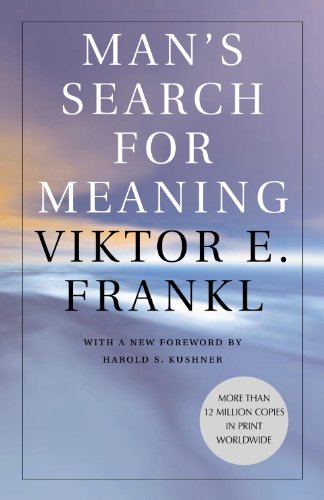 1
1