We've ranked the best meditation books using expert recommendations, sales data, and millions of reader ratings. At Shortform, we know books. Our book guides are the best in the world. Learn why.
Cover unavailable
1
Wherever You Go, There You Are: Mindfulness Meditation in Everyday Life
In this book, the author maps out a simple path for cultivating mindfulness in one's own life. It speaks both to those coming to meditation for the first time and to longtime practitioners, anyone who cares deeply about reclaiming the richness of his or her moments.
It’s a great book if you’ve never meditated, and if you’ve been meditating for 50 years. [source]
Henry Medine
I promote range and diversity. Thus, I recommend readers to expose themselves to as many different topics as possible. I usually have 2-4 books I refer back to at any given time. They range in topics from management, art, spirituality and philosophy. Trying to get the engineering thing going but don't much of a mind for science. [source]
Cover unavailable
2
10% Happier: How I Tamed the Voice in My Head, Reduced Stress Without Losing My Edge, and Found Self-Help That Actually Works
Nightline anchor Dan Harris embarks on an unexpected, hilarious, and deeply skeptical odyssey through the strange worlds of spirituality and self-help, and discovers a way to get happier that is truly achievable.
After having a nationally televised panic attack on Good Morning America, Dan Harris knew he had to make some changes. A lifelong nonbeliever, he found himself on a bizarre adventure, involving a disgraced pastor, a mysterious self-help guru, and a gaggle of brain scientists. Eventually, Harris realized that the source of his problems was the very thing he always thought was his greatest asset: the incessant, insatiable voice in his head, which had both propelled him through the ranks of a hyper-competitive business and also led him to make the profoundly stupid decisions that provoked his on-air freak-out.
We all have a voice in our head. It’s what has us losing our temper unnecessarily, checking our email compulsively, eating when we’re not hungry, and fixating on the past and the future at the expense of the present. Most of us would assume we’re stuck with this voice – that there’s nothing we can do to rein it in – but Harris stumbled upon an effective way to do just that. It’s a far cry from the miracle cures peddled by the self-help swamis he met; instead, it’s something he always assumed to be either impossible or useless: meditation. After learning about research that suggests meditation can do everything from lower your blood pressure to essentially rewire your brain, Harris took a deep dive into the underreported world of CEOs, scientists, and even marines who are now using it for increased calm, focus, and happiness.
10% Happier takes readers on a ride from the outer reaches of neuroscience to the inner sanctum of network news to the bizarre fringes of America’s spiritual scene, and leaves them with a takeaway that could actually change their lives.
Modulating hormones as necessary - we’ve not really talked about that. Fixing anything that needs to be fixed, on top of that pharmacologically, and I’m a huge proponent of pharmacotherapy under the right setting. The final component is managing your stress. So as a guy who’s thinking about this, I became really interested after actually reading Dan Harris’s book. [source]
Chelsea Frank
I read everything with an open mind, often challenging myself by choosing books with an odd perspective or religious/spiritual views. These books do not reflect my personal feelings but are books that helped shape my perspective on life, love, and happiness. [source]
Chris Goward
I remember reading 10% Happier by Dan Harris on one of my many flights to speak at a conference a couple years ago. I had been practicing meditation for a few years, and had tried to get deeper into learning about it, I struggled with the religious aspect many Buddhist authors brought, which seemed to bring more confusion than clarity. The way Dan described his process of skepticism and discovery of the practical benefits without religion involved was a breath of fresh air. [source]
Cover unavailable
3
The Power of Now: A Guide to Spiritual Enlightenment
Eckhart Tolle is emerging as one of today's most inspiring teachers. In The Power of Now, a #1 national bestseller, the author describes his transition from despair to self-realization soon after his 29th birthday. Tolle took another ten years to understand this transformation, during which time he evolved a philosophy that has parallels in Buddhism, relaxation techniques, and meditation theory but is also eminently practical. In The Power of Now he shows readers how to recognize themselves as the creators of their own pain, and how to have a pain-free existence by living fully in the present. Accessing the deepest self, the true self, can be learned, he says, by freeing ourselves from the conflicting, unreasonable demands of the mind and living present, fully, and intensely, in the Now.
…
Recommended by Bill Liao, Catherine Plano, Darrah Brustein, and 7 others.
Bill Liao
The human world occurs in language so best get good at it! [source]
Catherine Plano
The one that really resonates with me and still to this day is The Power of NOW from Eckhart Tolle because as an entrepreneur we get so caught up in the future that we fail to be 'present'. The reality of it all when you really think about it - the present is all we have that is real, it requires no effort, nor time. I practice this daily, if I feel uncomfortable then I know I am trying too hard and not being present but when I am being present it is easier to think about what I have to do right now, because now is all that matters. [source]
Darrah Brustein
Others include The Power Of Now which is powerful reminder that all we have is the present and helps give you meaningful ways to live in it, not in the past or the future. [source]
One measure, perhaps, of a book's worth, is its intergenerational pliancy: do new readers acquire it and interpret it afresh down through the ages? The Meditations of Marcus Aurelius, translated and introduced by Gregory Hays, by that standard, is very worthwhile, indeed. Hays suggests that its most recent incarnation--as a self-help book--is not only valid, but may be close to the author's intent. The book, which Hays calls, fondly, a "haphazard set of notes," is indicative of the role of philosophy among the ancients in that it is "expected to provide a 'design for living.'" And it does, both aphoristically ("Think of yourself as dead. You have lived your life. Now take what's left and live it properly.") and rhetorically ("What is it in ourselves that we should prize?"). Whether these, and other entries ("Enough of this wretched, whining monkey life.") sound life-changing or like entries in a teenager's diary is up to the individual reader, as it should be. Hays's introduction, which sketches the life of Marcus Aurelius (emperor of Rome A.D. 161-180) as well as the basic tenets of stoicism, is accessible and jaunty. --H. O'Billovich
…
Recommended by Arianna Huffington, Naval Ravikant, Chip Conley, and 12 others.
Arianna Huffington
Founder/The Huffington Post
I find this book so inspirational and instructive, it lives on my nightstand. [source]
Chip Conley
I have given this book away to a number of people. [source]
Marvin Liao
Partner/500 Startups
My list would be (besides the ones I mentioned in answer to the previous question) both business & Fiction/Sci-Fi and ones I personally found helpful to myself. The business books explain just exactly how business, work & investing are in reality & how to think properly & differentiate yourself. On the non-business side, a mix of History & classic fiction to understand people, philosophy to make sense of life and Science fiction to picture what the future could be like (not always utopian). [source]
Cover unavailable
5
The Miracle of Mindfulness: An Introduction to the Practice of Meditation (Gift Edition)
Thich Nhat Hanh
4.7
In this beautiful and lucid guide, Zen master Thich Nhat Hanh offers gentle anecdotes and practical exercise as a means of learning the skills of mindfulness--being awake and fully aware. From washing the dishes to answering the phone to peeling an orange, he reminds us that each moment holds within it an opportunity to work toward greater self-understanding and peacefulness.
"In the beginner's mind there are many possibilities, but in the expert's there are few." So begins this most beloved of all American Zen books. Seldom has such a small handful of words provided a teaching as rich as has this famous opening line of Shunryu Suzuki's classic. In a single stroke, the simple sentence cuts through the pervasive tendency students have of getting so close to Zen as to completely miss what it's all about. An instant teaching on the first page. And that's just the beginning.
In the thirty years since its original publication, Zen Mind, Beginner's Mind has become one of the great modern Zen classics, much beloved, much re-read, and much recommended as the best first book to read on Zen. Suzuki Roshi presents the basics—from the details of posture and breathing in zazen to the perception of nonduality—in a way that is not only remarkably clear, but that also resonates with the joy of insight from the first to the last page. It's a book to come back to time and time again as an inspiration to practice.
often used the methods found in this book to center himself during difficult moments in his career. He was such an avid practitioner that he considered going to Japan to continue his practice, but was advised against it. [source]
Isn’t a religious book, but more on self-realization, study on yourself, breathing exercises, relaxation and understanding human nature. Really cool book, very short read and you will really enjoy reading. [source]
I really think it’s one of the best books on the planet. Every time I read it, even now when I reckon I’ve read it more than 40 or 50 times, it still has the effect of pulling me out of everyday thinking, out of everyday life, and making me see the world in a very different way. [source]
Since Mindfulness in Plain English was first published in 1994, it has become one of the bestselling — and most influential — books in the field of mindfulness. It’s easy to see why.
Author Bhante Gunaratana, a renowned meditation master, takes us step by step through the myths, realities, and benefits of meditation and the practice of mindfulness. The book showcases Bhante’s trademark clarity and wit, as he explores the tool of meditation, what it does, and how to make it work.
This expanded edition includes the complete text of its predecessor along with a new chapter on cultivating loving kindness, an especially important topic in today’s world. For anyone who is new to meditation, this is a great resource for learning how to live a more productive and peaceful life.
For the millions of Americans who want spirituality without religion, Sam Harris’s new book is a guide to meditation as a rational spiritual practice informed by neuroscience and psychology.
From multiple New York Times bestselling author, neuroscientist, and “new atheist” Sam Harris, Waking Up is for the 30 percent of Americans who follow no religion, but who suspect that Jesus, Buddha, Lao Tzu, Rumi, and the other saints and sages of history could not have all been epileptics, schizophrenics, or frauds. Throughout the book, Harris argues that there are important truths to be found in the experiences of such contemplatives—and, therefore, that there is more to understanding reality than science and secular culture generally allow.
Waking Up is part seeker’s memoir and part exploration of the scientific underpinnings of spirituality. No other book marries contemplative wisdom and modern science in this way, and no author other than Sam Harris—a scientist, philosopher, and famous skeptic—could write it.
…
Recommended by Susan Cain, Chris Goward, Fabrice Grinda, and 1 others.
Susan Cain
Author
Such a fantastic book. And it was really, for me, completely lifechanging. [source]
Chris Goward
I also highly recommend Sam Harris' Waking Up, which is a more well-rounded unpacking of non-religious mindfulness practice. [source]
Fabrice Grinda
Very well thought through analysis of spirituality without religion. [source]
Cover unavailable
9
The Mind Illuminated: A Complete Meditation Guide Integrating Buddhist Wisdom and Brain Science for Greater Mindfulness
A revolutionary, science-based approach to meditation from a neuroscientist turned meditation master, The Mind Illuminated is an accessible, step-by-step toolkit for anyone looking to start—or improve—their daily meditation practice.
The book that bestselling meditation teacher Sharon Salzberg raves “brings the path of meditation to life,” The Mind Illuminated is the first how-to meditation guide from a neuroscientist who is also an acclaimed meditation master. This innovative book offers a 10-stage program that is both deeply grounded in ancient spiritual teachings about mindfulness and holistic health, and also draws from the latest brain science to provide a roadmap for anyone interested in achieving the benefits of mindfulness. Dr. John Yates offers a new and fascinating model of how the mind works, including steps to overcome mind wandering and dullness, extending your attention span while meditating, and subduing subtle distractions.
This groundbreaking manual provides illustrations and charts to help you work through each stage of the process, offering tools that work across all types of meditation practices. The Mind Illuminated is an essential read, whether you are a beginner wanting to establish your practice or a seasoned veteran ready to master the deepest state of peace and mindfulness.
…
Cover unavailable
10
The Four Agreements: A Practical Guide to Personal Freedom
In The Four Agreements, don Miguel Ruiz reveals the source of self-limiting beliefs that rob us of joy and create needless suffering. Based on ancient Toltec wisdom, the Four Agreements offer a powerful code of conduct that can rapidly transform our lives to a new experience of freedom, true happiness, and love. The Four Agreements are: Be Impeccable With Your Word, Don't Take Anything Personally, Don't Make Assumptions, Always Do Your Best.
Question: What are the books that had a major influence on you? Or simply the ones you like the most. : Tao te Ching, score takes care of itself, between the world and me, the four agreements, the old man and the sea...I love reading! [source]
Karlie Kloss
I just think it’s got a lot of great principles and ideas. [source]
Who are you? When you start to explore this question, you find out how elusive it really is. Are you a physical body? A collection of experiences and memories? A partner in a relationship? Each time you consider these aspects of yourself, you realize that there is much more to you than any of these can define.
InThe Untethered Soul—now a New York Times bestseller—spiritual teacher Michael Singer explores the question of who we are and arrives at the conclusion that our identity is to be found in our consciousness, the fact of our ability to observe ourselves, and the world around us. By tapping into traditions of meditation and mindfulness, Singer shows how the development of consciousness can enable us all to dwell in the present moment and let go of painful thoughts and memories that keep us from achieving happiness and self-realization.
This book, copublished with the Institute of Noetic Sciences (IONS), offers a frank and friendly discussion of consciousness and how we can develop it. In part one, he examines the notion of self and the inner dialogue we all live with. Part two examines the experience of energy as it flows through us and works to show readers how to open their hearts to the energy of experience that permeates their lives. Ways to overcome tendencies to close down to the rest of the world are the subject of part three. Enlightenment, the embrace of universal consciousness, is the subject of part four. And finally, in part five, Singer returns to daily life and the pursuit of unconditional happiness. Throughout, the book maintains a light and engaging tone, free from heavy dogma and prescriptive religious references. The easy exercises that figure in each chapter help readers experience the ideas that Singer presents.
Visit www.untetheredsoul.com for more information.
In the book The Untethered Soul, Michael A. Singer takes you step-by-step through the process of Gyana, the yoga of the Intellect, to the Source. Moreover, he does it with elegant simplicity. Read this book carefully, and you will get more than a glimpse of eternity. [source]
Michael moved to an empty patch of forest, set up his trailer, and started to meditate in the early 70s. He surrendered to whatever happened in his life. Well...what ended up happening is that he created a multi-billion dollar company. His book is about the spiritual beauty of surrender. And how that can go hand in hand with financial success. I was so astonished by the book that I contacted him and flew down to Florida and stayed several days in his “compound” and interviewed him about his success. I re-read the book at least once every few months. [source]
East is East and West is West, but Michael A. Singer bridges these two great traditions in a radiant treatise on how to succeed in life from our spiritual quest to our everyday tribulations. Freud said that life was composed of love and work. With great eloquence, wit, and compelling logic, Singer’s brilliant book completes this thought by showing them to be two poles of the same selfless devotion. [source]
Cover unavailable
12
When Things Fall Apart: Heart Advice for Difficult Times
There is a fundamental opportunity for happiness right within our reach, yet we usually miss it—ironically while we are caught up in attempts to escape pain and suffering. Drawn from traditional Buddhist wisdom, Pema Chödrön's radical and compassionate advice for what to do when things fall apart in our lives goes against the grain of our usual habits and expectations. There is only one approach to suffering that is of lasting benefit, Pema teaches, and that approach involves moving toward painful situations with friendliness and curiosity, relaxing into the essential groundlessness of our entire situation. It is there, in the midst of chaos, that we can discover the truth and love that are indestructible.
The Shambhala Library is a series of exquisitely designed and produced cloth editions of the world's spiritual and literary classics, both ancient and modern. Perfect for collecting or as gifts, each volume features a sewn binding, decorative endsheets, and a ribbon marker—in a delightful-to-hold 4¼ x 6¾ trim size.
Almost the flip side. I'm so much better at protracted difficult periods because of Pema and because of meditation and because of knowing how to sit with it and not insist that the tension go away. [source]
Cover unavailable
13
Peace Is Every Step
Thich Nhat Hanh
4.5
Thich Nhat Hahn is a Vietnamese Zen master, poet and writer whose humane, benevolent presence and spiritual influence is comparable only to that of the Dalai Lama. His teachings show how to use Zen mindfulness in everyday aspects of life, live in the world peacefully, and weather daily mundane crises as well as larger spiritual trials.
Recommended by Joel Gascoigne.
Joel Gascoigne
Around two and a half years ago I found myself on a very organic path from business, success and self-improvement books to those that spanned both personal success and spirituality. Books like The Monk and the Riddle mentioned above address this topic. After reading some of these books, I naturally found myself interested in meditation and Zen Buddhism. One of the most fascinating Zen Buddhists and authors for me has been Thich Nhat Hahn who has written many books. [source]
Building on the astonishing success of The Power of Now, Eckhart Tolle presents readers with an honest look at the current state of humanity: He implores us to see and accept that this state, which is based on an erroneous identification with the egoic mind, is one of dangerous insanity.
Tolle tells us there is good news, however. There is an alternative to this potentially dire situation. Humanity now, perhaps more than in any previous time, has an opportunity to create a new, saner, more loving world. This will involve a radical inner leap from the current egoic consciousness to an entirely new one.
In illuminating the nature of this shift in consciousness, Tolle describes in detail how our current ego-based state of consciousness operates. Then gently, and in very practical terms, he leads us into this new consciousness. We will come to experience who we truly are—which is something infinitely greater than anything we currently think we are—and learn to live and breathe freely.
The reason I’m choosing it for the second time is that this book transformed my life ... I already had a life’s purpose in 2008 but it enhanced the purpose that I was living here on earth and I know it can do it for everyone who reads it. [source]
Abid Zaidi
Day 1 : #30Days of posting cover of books I love (1 book a day for 30 days). No expectations, no reviews, just the covers #MyFavouriteBooks Not invited by @rekha_bhardwaj ji or @virtual_opinion but still posting: 😊 https://t.co/rDKfaLADsm [source]
Catherine Molloy
I am an experiential learner I need to see it, feel it, etc. so the book must move me to do something, feel something. With A New Earth I even read snippets to my students as I have experienced a lot of these concepts and write and train in similar concepts. [source]
Cover unavailable
15
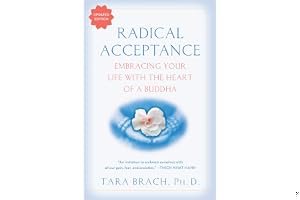
Radical Acceptance: Embracing Your Life With the Heart of a Buddha
For many of us, feelings of deficiency are right around the corner. It doesn’t take much--just hearing of someone else’s accomplishments, being criticized, getting into an argument, making a mistake at work--to make us feel that we are not okay. Beginning to understand how our lives have become ensnared in this trance of unworthiness is our first step toward reconnecting with who we really are and what it means to live fully. --fromRadical Acceptance
Radical Acceptance
“Believing that something is wrong with us is a deep and tenacious suffering,” says Tara Brach at the start of this illuminating book. This suffering emerges in crippling self-judgments and conflicts in our relationships, in addictions and perfectionism, in loneliness and overwork--all the forces that keep our lives constricted and unfulfilled. Radical Acceptance offers a path to freedom, including the day-to-day practical guidance developed over Dr. Brach’s twenty years of work with therapy clients and Buddhist students.
Writing with great warmth and clarity, Tara Brach brings her teachings alive through personal stories and case histories, fresh interpretations of Buddhist tales, and guided meditations. Step by step, she leads us to trust our innate goodness, showing how we can develop the balance of clear-sightedness and compassion that is the essence of Radical Acceptance. Radical Acceptance does not mean self-indulgence or passivity. Instead it empowers genuine change: healing fear and shame and helping to build loving, authentic relationships. When we stop being at war with ourselves, we are free to live fully every precious moment of our lives.
This book was recommended to me by a PhD neuroscientist and is what finally helped me tame anger, one of my most destructive (and persistent) emotions. It’s easy to aim for 'successful' and be miserable. This book is the antidote. [source]
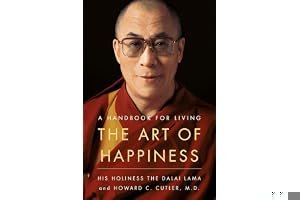
Nearly every time you see him, he's laughing, or at least smiling. And he makes everyone else around him feel like smiling. He's the Dalai Lama, the spiritual and temporal leader of Tibet, a Nobel Prize winner, and an increasingly popular speaker and statesman. What's more, he'll tell you that happiness is the purpose of life, and that "the very motion of our life is towards happiness." How to get there has always been the question. He's tried to answer it before, but he's never had the help of a psychiatrist to get the message across in a context we can easily understand. Through conversations, stories, and meditations, the Dalai Lama shows us how to defeat day-to-day anxiety, insecurity, anger, and discouragement. Together with Dr. Cutler, he explores many facets of everyday life, including relationships, loss, and the pursuit of wealth, to illustrate how to ride through life's obstacles on a deep and abiding source of inner peace.
…
Cover unavailable
17
Om Chanting and Meditation
Amit Ra
4.4
The book provides some powerful Om chanting and meditation techniques to bring balance health and harmony in life. In Eastern religions, Om (AUM) is considered as the most sacred mantra. Om is the mantra of integration; integration of individual with the Whole. Om is the mantra of harmony and celebration. Om is the mantra to access the Supreme Divinity residing within us. In this book Amit Ray describes several Om chanting and Om meditation methods in detail in a lucid and plain English. Om chanting and meditations have healing effects on the body and the mind. This book is a step-by-step guide to practise meditations with the Om. As you practise, a long-lasting sense of well-being manifests in your life. You will notice a sense of joyfulness entering your life along with an ability to appreciate the many gifts that surround you. This book will help both the beginners as well as the advanced practitioners.
…
Cover unavailable
18
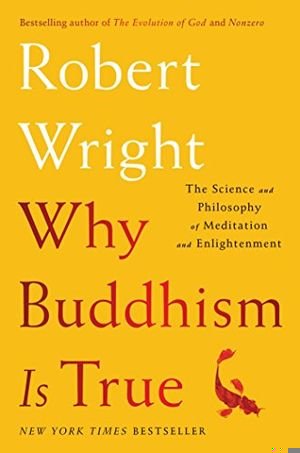
Why Buddhism is True: The Science and Philosophy of Meditation and Enlightenment
Robert Wright
4.4
From one of America’s greatest minds, a journey through psychology, philosophy, and lots of meditation to show how Buddhism holds the key to moral clarity and enduring happiness.
Robert Wright famously explained in The Moral Animal how evolution shaped the human brain. The mind is designed to often delude us, he argued, about ourselves and about the world. And it is designed to make happiness hard to sustain.
But if we know our minds are rigged for anxiety, depression, anger, and greed, what do we do? Wright locates the answer in Buddhism, which figured out thousands of years ago what scientists are only discovering now. Buddhism holds that human suffering is a result of not seeing the world clearly—and proposes that seeing the world more clearly, through meditation, will make us better, happier people.
In Why Buddhism is True, Wright leads readers on a journey through psychology, philosophy, and a great many silent retreats to show how and why meditation can serve as the foundation for a spiritual life in a secular age. At once excitingly ambitious and wittily accessible, this is the first book to combine evolutionary psychology with cutting-edge neuroscience to defend the radical claims at the heart of Buddhist philosophy. With bracing honesty and fierce wisdom, it will persuade you not just that Buddhism is true—which is to say, a way out of our delusion—but that it can ultimately save us from ourselves, as individuals and as a species.
Wright has a degree of evangelism about him, but he’s not saying this is the only way to achieve a better life. He says it’s a way of eliminating suffering from many people’s lives, and it worked for him. [source]
Cover unavailable
19
Siddhartha
Hermann Hesse
4.4
Herman Hesse's classic novel has delighted, inspired, and influenced generations of readers, writers, and thinkers. In this story of a wealthy Indian Brahmin who casts off a life of privilege to seek spiritual fulfillment. Hesse synthesizes disparate philosophies--Eastern religions, Jungian archetypes, Western individualism--into a unique vision of life as expressed through one man's search for meaning.
Autobiography of a Yogi is one of the best-selling spiritual biographies of all time. The book is not merely read it is treasured and cherished by millions of spiritual seekers throughout the world.
Recommended by Steve Jobs, Marc Benioff, Dan Engle, and 2 others.
One book in particular stayed with Jobs his entire life, and Isaacson noted that it was the only book Jobs had downloaded on his iPad 2: “Autobiography of a Yogi,” “the guide to meditation and spirituality that he had first read as a teenager,” Isaacson writes, “then re-read in India and had read once a year ever since.” [source]
Marc Benioff
CEO/Salesforce
If you haven't read it, and if you want to understand Steve Jobs, it's a goood idea to dip into this book. [source]
Dan Engle
One of the more impactful books for me when I was living down in the jungle and experiencing more of the deeper reflections through the medicine space. [source]
Cover unavailable
21
The Headspace Guide to Meditation & Mindfulness
Andy Puddicombe
4.4
This program was previously published as Get Some Headspace: How Mindfulness Can Change Your Life in Ten Minutes a Day.
Quiet the mind, feel less stressed and less tired, and achieve a new level of calm and fulfillment in just ten minutes a day.
Andy Puddicombe, a former Buddhist monk, the Voice of Headspace, and the UK's foremost mindfulness expert, is on a mission: to get people to take 10 minutes out of their day to sit in the here and now.
Like his readers and students, Andy began his own meditation practice as a normal, busy person with everyday concerns, and he has since designed a program of mindfulness and guided meditation that fits neatly into a jam-packed daily routine - proving that just 10 minutes a day can make a world of difference.
Accessible and portable, The Headspace Guide to Meditation and Mindfulness offers simple but powerful meditation techniques that positively impact every area of physical and mental health: from productivity and focus, to stress and anxiety relief, sleep, weight-loss, personal relationships...the benefits are limitless. The result? More headspace, less stress. Andy brings this ancient practice into the modern world, tailor made for the most time starved among us.
Switch off after work Fall asleep at night Feel less anxious, sad, or angry Control your cravings Find a healthy weight
I’m sure 25-year-old me would scoff at this one, but Melinda and I have gotten really into meditation lately. The book starts with Puddicombe’s personal journey from a university student to a Buddhist monk and then becomes an entertaining explainer on how to meditate. If you’re thinking about trying mindfulness, this is the perfect introduction. [source]
Alexandra Stroe
I am trying to bring some daily habits into my life, such as meditation, that would help me stay balanced and present in everyday moments. One of the books that helped me understand more about the practice of meditation is The Headspace Guide to Meditation and Mindfulness by Andy Puddicombe. After reading this book, I understood that meditation does not have to be some sacred, difficult practice that lasts for hours on end. It’s enough to dedicate 10 minutes a day in order to relax and get at ease with my thoughts and emotions. [source]
@Property531 Best way to start is to simply do - Try one of the following app courses @wakingup @Headspace @10percent They are all good choices. If you want to read a book https://t.co/yEwmKHTUUL is decent as well. [source]
Cover unavailable
22
Real Happiness, 10th Anniversary Edition: A 28-Day Program to Realize the Power of Meditation
Sharon Salzberg
4.4
A New York Times best seller—now revised and updated with new exercises and guided meditations.
“An inviting gateway to the interior territory of profound well-being and wisdom.”—Jon Kabat-Zinn, author of Wherever You Go, There You Are
From Sharon Salzberg, a pioneer in the field of meditation and world-renowned teacher acclaimed for her down-to-earth style, Real Happiness is a complete guide to starting and maintaining a meditation practice. Beginning with the simplest breathing and sitting techniques, and based on three key skills—concentration, mindfulness, and lovingkindness—it’s a practice anyone can do and that can transform our lives by bringing us greater resiliency, creativity, peace, clarity, and balance.
This updated 10th anniversary edition includes exercises, journal prompts, and ten guided meditations available for download online and through scannable QR codes.
…
Cover unavailable
23
Meditation: Insights and Inspirations
Amit Ray
4.4
In this beautiful and lucid guide, Dr. Amit Ray, presents a holistic, integrated, lifestyle oriented approach of meditation. With penetrating insights and wisdom, Ray reveals an integrated framework of meditation for living a happy and meaningful life. The book explains the bigger pictures of meditation as well as step-by-step techniques of meditation. By presenting the key meditation concepts clearly Dr. Ray enables readers to walk into the higher levels of meditation. Written in clear and concise language, and beautifully illustrated, the book is enjoyable to read and easy to practice. As you practice these meditations, a long lasting sense of well-being, manifests in your life. You may notice a sense of joyfulness entering your life along with an ability to appreciate the many gifts that surround you. This book will help both the beginners as well as the advanced practitioners of meditation.
…
Cover unavailable
24
Full Catastrophe Living: Using the Wisdom of Your Body and Mind to Face Stress, Pain, and Illness
Jon Kabat-Zinn
4.3
2005 15th anniversary edition reprint
Kabat-Zinn, founder of the Stress Reduction Clinic at the University of Massachusetts Medical Center, is perhaps the best-known proponent of using meditation to help patients deal with illness. (The somewhat confusing title is from a line in Zorba the Greek in which the title character refers to the ups and downs of family life as "the full catastrophe.") But this book is also a terrific introduction for anyone who has considered meditating but was afraid it would be too difficult or would include religious practices they found foreign. Kabat-Zinn focuses on "mindfulness," a concept that involves living in the moment, paying attention, and simply "being" rather than "doing." While you can practice anything "mindfully," from taking a walk to cleaning your house, Kabat-Zinn presents several meditation techniques that focus the attention most clearly, whether it's on a simple phrase, your breathing, or various parts of your body. The book goes into detail about how hospital patients have either improved their health or simply come to feel better despite their illness by using these techniques, but these meditations can help anyone deal with stress and gain a calmer outlook on life. "When we use the word healing to describe the experiences of people in the stress clinic, what we mean above all is that they are undergoing a profound transformation of view," Kabat-Zinn writes. "Out of this shift in perspective comes an ability to act with greater balance and inner security in the world." --Ben Kallen
A celebrated writer's irresistible, candid, and eloquent account of her pursuit of worldly pleasure, spiritual devotion, and what she really wanted out of life.
Around the time Elizabeth Gilbert turned thirty, she went through an early-onslaught midlife crisis. She had everything an educated, ambitious American woman was supposed to want—a husband, a house, a successful career. But instead of feeling happy and fulfilled, she was consumed with panic, grief, and confusion. She went through a divorce, a crushing depression, another failed love, and the eradication of everything she ever thought she was supposed to be.
To recover from all this, Gilbert took a radical step. In order to give herself the time and space to find out who she really was and what she really wanted, she got rid of her belongings, quit her job, and undertook a yearlong journey around the world—all alone. Eat, Pray, Love is the absorbing chronicle of that year. Her aim was to visit three places where she could examine one aspect of her own nature set against the backdrop of a culture that has traditionally done that one thing very well. In Rome, she studied the art of pleasure, learning to speak Italian and gaining the twenty-three happiest pounds of her life. India was for the art of devotion, and with the help of a native guru and a surprisingly wise cowboy from Texas, she embarked on four uninterrupted months of spiritual exploration. In Bali, she studied the art of balance between worldly enjoyment and divine transcendence. She became the pupil of an elderly medicine man and also fell in love the best way—unexpectedly.
An intensely articulate and moving memoir of self-discovery, Eat, Pray, Love is about what can happen when you claim responsibility for your own contentment and stop trying to live in imitation of society’s ideals. It is certain to touch anyone who has ever woken up to the unrelenting need for change.
…
Recommended by Chelsea Frank and Gabriel Coarna.
Chelsea Frank
I read everything with an open mind, often challenging myself by choosing books with an odd perspective or religious/spiritual views. These books do not reflect my personal feelings but are books that helped shape my perspective on life, love, and happiness. [source]
Gabriel Coarna
I started reading "Eat, Pray, Love" as soon as I finished watching Elizabeth Gilbert give this talk. [source]
Cover unavailable
26
Be Here Now
Ram Dass
4.3
Describes one man's transformation upon his acceptance of the principles of Yoga & gives a modern restatement of the importance of the spiritual side of human nature. Illustrated. The book is divided into four sections: Journey: The Transformation: Dr Richard Alpert, PhD into Baba Ram Dass From Bindu to Ojas: The Core Book Cookbook for a Sacred Life: A Manual for Conscious Being Painted Cakes (Do Not Satisfy Hunger): Books
…
Recommended by Steve Jobs, Jack Kornfield, and Travis Brewer.
In late 1972, Jobs had just started at Reed College, an elite liberal arts school in Portland, Oregon. He started doing lots of LSD and reading lots of books about spirituality. [source]
Travis Brewer said this is one of his most-recommended books. [source]
Cover unavailable
27
Mindfulness: An Eight-Week Plan for Finding Peace in a Frantic World
Mark Williams and Danny Penman
4.3
From one of the leading thinkers on Mindfulness-Based Cognitive Therapy, a pioneering set of simple practices to dissolve anxiety, stress, exhaustion, and unhappiness.In "Mindfulness," Oxford professor Mark Williams and award-winning journalist Dr. Danny Penman reveal the secrets to living a happier and less anxious, stressful and exhausting life. Based on the techniques of Mindfulness-Based Cognitive Therapy, the unique program developed by Williams and his colleagues, the book offers simple and straightforward forms of mindfulness meditation that can be done by anyone--and it can take just 10-20 minutes a day for the full benefits to be revealed.
…
Recommended by Tessa Watt and Will MacAskill.
Tessa Watt
This is the book that I would recommend as the most practical…It takes you through an eight-week course and it has audio to go with it. [source]
Will MacAskill
This book is a friendly and accessible introduction to mindfulness meditation, and includes an 8-week guided meditation course. Will completed this course, and it had a significant impact on his life. [source]
Cover unavailable
28
Search Inside Yourself: The Unexpected Path to Achieving Success, Happiness (And World Peace)
Chade-Meng Tan, Daniel Goleman, Jon Kabat-Zinn
4.3
With Search Inside Yourself, Chade-Meng Tan, one of Google’s earliest engineers and personal growth pioneer, offers a proven method for enhancing mindfulness and emotional intelligence in life and work.
Meng’s job is to teach Google’s best and brightest how to apply mindfulness techniques in the office and beyond; now, readers everywhere can get insider access to one of the most sought after classes in the country, a course in health, happiness and creativity that is improving the livelihood and productivity of those responsible for one of the most successful businesses in the world.
With forewords by Daniel Goleman, author of the international bestseller Emotional Intelligence, and Jon Kabat-Zinn, renowned mindfulness expert and author of Coming To Our Senses, Meng’s Search Inside Yourself is an invaluable guide to achieving your own best potential.
…
Recommended by Eric Schmidt, Tony Hsieh, Chip Conley, and 3 others.
Chip Conley
Chip Conley recommended this book on the podcast "The Tim Ferriss Show". [source]
Henry Medine
This book is written by an early core member/lead engineer from Google. Chade does a fantastic job proving the reader reasons why soft skills like emotional intelligence, acceptance, and empathy matter in a work environment. The book is great for any business person who wants to establish a strong company culture that promotes longevity, employee empowerment and self confidence. Chade reveals how soft skills that typically get lost in the sea of performance metrics of work culture really do matter. This book provided me with confidence to lead with my emotional skills and I carry many of the mindfulness practice techniques he outlines to this day. [source]
Cover unavailable
29
The Daily Stoic: 366 Meditations for Clarity, Effectiveness, and Serenity
A beautifully packaged, gifty daily devotional of Stoic wisdom, from the author of The Obstacle is the Way. Modern readers praise Stoic philosophy for its unique blend of practicality and wisdom. But it's admittedly hard for the average reader to decipher the Dover Thrift edition of Marcus Aurelius' work. The antiquated, needlessly formal language of most modern translations is stripped down in this book, revealing powerful aphorisms that cut straight to the heart of our day-to-day challenges.
Presented in a page-per-day format, this daily resource of Stoic inspiration combines new translations of Seneca, Epictetus, Zeno by Stephen Hanselman with calls to further reflection--and action--by Ryan Holiday. Arranged topically following the same three movements (Perception, Action, Will) that Holiday used inThe Obstacle is the Way, this guide features twelve principles for overcoming obstacles and achieving greater satisfaction.
Aimed at the high-octane, action-oriented, doers of our wired world, this book is intended to open to them a new daily ritual and a new orientation that will bring balanced action, insight, effectiveness, and serenity.
…
Recommended by Brad Feld, Jack Canfield, and Louis Grenier.
Brad Feld
Co-Founder/Foundry Group
This book was a delight. I started reading it earlier this year, caught up quickly (I started in July), and then mostly read a page each day when I was in the bathroom in the morning. I let it unfold slowly, reading the daily quote and Ryan Holiday’s (and Stephen Hanselman’s) thoughts on the quote, and then rereading the quote. [source]
A richly rewarding spring of practical wisdom to help you focus on what's in your control, eliminate false and limiting beliefs, and take more effective action. Make The Daily Stoic your guide and you will grow in clarity, efectiveness, and serenity each day! [source]
Louis Grenier
About tranquility and stoicism and focusing on change, you need to read “The Daily Stoic” which is 365 essays, small essays about stoicism and why you should focus on things that don’t change. [source]
Cover unavailable
30
Mindfulness: A Practical Guide to Awakening
Joseph Goldstein
4.3
The mind contains the seeds of its own awakening--seeds that we can cultivate to bring forth the fruits of a life lived consciously. With Mindfulness, Joseph Goldstein shares the wisdom of his four decades of teaching and practice in a book that will serve as a lifelong companion for anyone committed to mindful living and the realization of inner freedom.Goldstein's source teaching is the Satipatthana Sutta, the Buddha's legendary discourse on the four foundations of mindfulness that became the basis for the many types of Vipassana (or insight meditation) found today. Exquisite in detail yet wholly accessible and relevant for the modern student, Mindfulness takes us through a profound study of: Ardency, clear knowing, mindfulness, and concentration--how to develop these four qualities of mind essential for walking the path wiselyThe Satipatthana refrain--how deeply contemplating the four foundations of mindfulness opens us to bare knowing and continuity of mindfulnessMindfulness of the body, including the breath, postures, activities, and physical characteristicsMindfulness of feelings--how the experience of our sense perceptions influences our inner and outer worldsMindfulness of mind--learning to recognize skillful and unskillful states of mind and thoughtMindfulness of dhammas (or categories of experience), including the Five Hindrances, the Six Sense Spheres, the Seven Factors of Awakening, and much more "There is a wealth of meaning and nuance in the experience of mindfulness that can enrich our lives in unimagined ways," writes Goldstein. In Mindfulness you have the tools to mine these riches for yourself.
…
Cover unavailable
31
Tao Te Ching: By Lao Tzu - Illustrated
Lao Tse
4.3
A lucid translation of the well-known Taoist classic by a leading scholar-now in a Shambhala Pocket Library edition. Written more than two thousand years ago, the Tao Teh Ching, or -The Classic of the Way and Its Virtue, - is one of the true classics of the world of spiritual literature. Traditionally attributed to the legendary -Old Master, - Lao Tzu, the Tao Teh Ching teaches that the qualities of the enlightened sage or ideal ruler are identical with those of the perfected individual. Today, Lao Tzu's words are as useful in mastering the arts of leadership in business and politics as they are in developing a sense of balance and harmony in everyday life. To follow the Tao or Way of all things and realize their true nature is to embody humility, spontaneity, and generosity. John C. H. Wu has done a remarkable job of rendering this subtle text into English while retaining the freshness and depth of the original. A jurist and scholar, Dr. Wu was a recognized authority on Taoism and the translator of several Taoist and Zen texts and of Chinese poetry. This book is part of the Shambhala Pocket Library series. The Shambhala Pocket Library is a collection of short, portable teachings from notable figures across religious traditions and classic texts. The covers in this series are rendered by Colorado artist Robert Spellman. The books in this collection distill the wisdom and heart of the work Shambhala Publications has published over 50 years into a compact format that is collectible, reader-friendly, and applicable to everyday life.
Q: What are the books that had a major influence on you? Or simply the ones you like the most. : Tao te Ching, score takes care of itself, between the world and me, the four agreements, the old man and the sea...I love reading! [source]
According to a Yibada interview with Chen Wei, who wrote Ma’s 2014 authorized biography, the Alibaba founder and executive chairman always carries the Tao Te Ching, the foundational text of Taoist philosophy, religion and ethics composed by Lao Tzu in the sixth century B.C. [source]
In the philosophy side, I’ve been rereading the Tao Te Ching. [source]
Cover unavailable
32
How to Meditate: A Practical Guide to Making Friends with Your Mind
Pema Chödrön
4.3
When it comes to meditation, Pema Chödrön is widely regarded as one of the world's foremost teachers. Yet she's never offered an introductory course on audio--until now.
On How to Meditate with Pema Chödrön, the American-born Tibetan Buddhist nun and bestselling author presents her first complete spoken-word course for those new to meditation.
Through traditional insights and her personal guidance, offered in 12 sitting sessions, Pema Chödrön will help you honestly meet and compassionately relate with your mind as you explore:
The basics of mindfulness awareness practice, from proper posture to learning to settle to breathing and relaxation - Gentleness, patience, and humor--three ingredients for a well-balanced practice - Shamatha (or calm abiding), the art of stabilizing the mind to remain present with whatever arises - Thoughts and emotions as "sheer delight"--instead of obstacles--in meditation "From my own experience and from listening to many people over the years, I've tried to offer here what I feel are the essential points of meditation," explains Pema Chödrön. Now this beloved voice shares with you her accessible approach--simple and down-to-earth while informed by the highest traditions of Tibetan Buddhism--on How to Meditate with Pema Chödrön.
…
Cover unavailable
33
Meditation for Fidgety Skeptics: A 10% Happier How-To Book
Dan Harris, Jeffrey Warren, et al.
4.3
THE NEW YORK TIMES BESTSELLER FROM THE AUTHOR OF 10% HAPPIER
Too busy to meditate? Can't turn off your brain? Curious about mindfulness but more comfortable in the gym? This book is for you.
You'll also get access to guided audio meditations on the 10% Happier app, to jumpstart your practice from day one.
ABC News anchor Dan Harris used to think that meditation was for people who collect crystals, play Ultimate Frisbee, and use the word "namaste" without irony. After he had a panic attack on live television, he went on a strange and circuitous journey that ultimately led him to become one of meditation's most vocal public proponents.
Harris found that meditation made him more focused and less yanked around by his emotions. According to his wife, it also made him less annoying. Science suggests that the practice can lower your blood pressure, mitigate depression and anxiety, and literally rewire key parts of the brain. So what's holding you back?
In Meditation for Fidgety Skeptics, Harris and Jeff Warren, a masterful teacher and "Meditation MacGyver," embark on a gonzo cross-country quest to tackle the myths, misconceptions, and self-deceptions that keep people from meditating. It is filled with game-changing and deeply practical meditation instructions--all of which are also available (for free) on the 10% Happier app. This book is a trip worth taking.
Praise for Meditation for Fidgety Skeptics
"If you're intrigued by meditation but don't know how to begin--or you've benefited from meditation in the past but need help to get started again--Dan Harris has written the book for you. Well researched, practical, and crammed with expert advice, it's also an irreverent, hilarious page-turner."--Gretchen Rubin, author of The Happiness Project
"The ABC News anchor, a 'defender of worrying' who once had an anxiety attack on air, offers a hilarious and stirring account of his two-steps-forward-one-step-back campaign to sort 'useless rumination' from 'constructive anguish' via mindfulness, along with invaluable suggestions for following in his footsteps."--O: The Oprah Magazine
If you’re intrigued by meditation but don’t know how to begin—or you’ve benefited from meditation in the past but need help to get started again—Dan Harris has written the book for you. Well researched, practical, and crammed with expert advice, it’s also an irreverent, hilarious page-turner. [source]
A gold mine of wise guidance for fidgety skeptics and experienced meditators alike . . .With Dan’s humorous, self-revelatory style and incisive questioning and Jeff’s down-to-earth, transforming wisdom, this book addresses the common obstacles people face as they begin and deepen their meditation practice. . . . Highly recommended. [source]
If your mind has a mind of its own, this is the book for you! With humor, generosity, and devastating candor, Dan Harris makes meditation make sense. This is news we can all use. [source]
Cover unavailable
34
Becoming Supernatural: How Common People Are Doing the Uncommon
What would it mean to become supernatural? What if you could train your brain to tune in to frequencies beyond our material world . . . change your brain circuitry and chemistry to access transcendent level of awareness . . . and transform your very biology to enable profound healing?
This one of the abilities Dr. Joe Dispenza offers in this revolutionary book: a set of tools that allow ordinary people to reach extraordinary states of being.
Dr. Joe, author of the New York Times bestseller You Are The Placebo draws on up-to-the-minute research in neuroscience, epigenetics, psychoneuroimmunology, neurocardiology, electromagnetism, and quantum physics to show how human transformation and change takes place and what it can mean for our lives. In these pages, you'll explore how to free yourself from the past by reconditioning your body to new mind; how to shift your awareness into the quantum field of infinite possibilities; and much more. Using tools and practices ranging from state-of-the-art brain imaging to exercises such as a walking meditation and a technique to strengthen your immune system by thoughts alone, Dr. Joe offers nothing less than a program for stepping outside our physical reality and into a new world.
…
Cover unavailable
35
Lovingkindness: The Revolutionary Art of Happiness
Sharon Salzberg
4.3
Throughout our lives we long to love ourselves more deeply and find a greater sense of connection with others. Our fear of intimacy—both with others and with ourselves—creates feelings of pain and longing. But these feelings can also awaken in us the desire for freedom and the willingness to take up the spiritual path.
In this inspiring book, Sharon Salzberg, one of America's leading spiritual teachers, shows us how the Buddhist path of lovingkindness ( metta in Pali), can help us discover the radiant, joyful heart within each of us. This practice of lovingkindness is revolutionary because it has the power to radically change our lives, helping us create true happiness in ourselves and genuine compassion for others. The Buddha described the nature of such a spiritual path as "the liberation of the heart, which is love." The author draws on simple Buddhist teachings, wisdom stories from various traditions, guided meditation practices, and her own experience from twenty-five years of practice and teaching to illustrate how each one of us can cultivate love, compassion, joy, and equanimity—the four "heavenly abodes" of traditional Buddhism.
…
Cover unavailable
36
Mindfulness for Beginners
Jon Kabat-Zinn
4.3
What if you could profoundly change your life just by becoming more mindful of your breathing? According to Jon Kabat-Zinn, you can. What if paying attention on purpose (and nonjudgmentally) could improve your health? Again, according to Dr. Kabat-Zinn--it can.
On Mindfulness for Beginners, this internationally known scientist, bestselling author, and teacher who brought mindfulness meditation into the mainstream of medicine and society gives you immediate access to a practice that can potentially add years to your life, and will certainly enhance the quality of your moments and your years.
Join Dr. Kabat-Zinn to:
Explore five guided meditations that lead you breath-by-breath into the essence of Mindfulness-Based Stress Reduction (MBSR), a program offered in medical clinics and hospitals around the world - Cultivate the Seven Key Attitudinal Factors of MBSR--qualities of heart and mind that lay the foundation for mindfulness practice and for seeing and accepting things as they are as a first step to working wisely and compassionately with stress, pain, illness, and sorrow as well as life's joys and pleasures - Free yourself from limiting perspectives, and become more intimate with your own boundless awareness
You're already in the perfect moment for inhabiting this liberating awareness, which is always available, teaches Jon Kabat-Zinn. With Mindfulness for Beginners, he invites you to cultivate mindfulness as if your life depended on it, which it surely does, and experience the magnitude and beauty of who you already are.
Course objectives:
Apply an understanding of the concept of mindfulness - Utilize simple guided meditations led by Kabat-Zinn - List the ethical and attitudinal foundations necessary to cultivating mindfulness - Assess how we can choose where to focus our awareness - Plan to use mindfulness to help us develop compassion and insight into our true nature
…
Recommended by Ev Williams.
Cover unavailable
37
Altered Traits: Science Reveals How Meditation Changes Your Mind, Brain, and Body
Daniel Goleman, Richard J. Davidson
4.2
Two New York Times-bestselling authors unveil new research showing what meditation can really do for the brain.
In the last twenty years, meditation and mindfulness have gone from being kind of cool to becoming an omnipresent Band-Aid for fixing everything from your weight to your relationship to your achievement level. Unveiling here the kind of cutting-edge research that has made them giants in their fields, Daniel Goleman and Richard Davidson show us the truth about what meditation can really do for us, as well as exactly how to get the most out of it.
Sweeping away common misconceptions and neuromythology to open readers' eyes to the ways data has been distorted to sell mind-training methods, the authors demonstrate that beyond the pleasant states mental exercises can produce, the real payoffs are the lasting personality traits that can result. But short daily doses will not get us to the highest level of lasting positive change--even if we continue for years--without specific additions. More than sheer hours, we need smart practice, including crucial ingredients such as targeted feedback from a master teacher and a more spacious, less attached view of the self, all of which are missing in widespread versions of mind training. The authors also reveal the latest data from Davidson's own lab that point to a new methodology for developing a broader array of mind-training methods with larger implications for how we can derive the greatest benefits from the practice.
Exciting, compelling, and grounded in new research, this is one of those rare books that has the power to change us at the deepest level.
…
Cover unavailable
38
The Book of Joy: Lasting Happiness in a Changing World
Two great spiritual masters share their own hard-won wisdom about living with joy even in the face of adversity. The occasion was a big birthday. And it inspired two close friends to get together in Dharamsala for a talk about something very important to them. The friends were His Holiness the Dalai Lama and Archbishop Desmond Tutu. The subject was joy. Both winners of the Nobel Prize, both great spiritual masters and moral leaders of our time, they are also known for being among the most infectiously happy people on the planet.
From the beginning the book was envisioned as a three-layer birthday cake: their own stories and teachings about joy, the most recent findings in the science of deep happiness, and the daily practices that anchor their own emotional and spiritual lives. Both the Dalai Lama and Archbishop Tutu have been tested by great personal and national adversity, and here they share their personal stories of struggle and renewal. Now that they are both in their eighties, they especially want to spread the core message that to have joy yourself, you must bring joy to others.
Most of all, during that landmark week in Dharamsala, they demonstrated by their own exuberance, compassion, and humor how joy can be transformed from a fleeting emotion into an enduring way of life.
…
Recommended by Bogdan Lucaciu and Chelsea Frank.
Bogdan Lucaciu
I recently read “The Book of Joy”. It’s a series of dialogues between Dalai Lama and Archbishop Tutu (beautifully narrated in the audio version). They share their view on living a happy life in the face of adversity. The book brought profound clarity on topics like compassion, gratitude, generosity, and it deeply resonated with my worldview. If there’s one book you end up reading from my list, I hope it’s this one. [source]
Chelsea Frank
I read everything with an open mind, often challenging myself by choosing books with an odd perspective or religious/spiritual views. These books do not reflect my personal feelings but are books that helped shape my perspective on life, love, and happiness. [source]
Cover unavailable
39
Self-Compassion: The Proven Power of Being Kind to Yourself
From leading psychologist Dr. Kristin Neff comes a step-by-step guide explaining how to be more self-compassionate and achieve your dreams in life
The relentless pursuit of high self-esteem has become a virtual religion—and a tyrannical one at that. Our ultracompetitive culture tells us we need to be constantly above average to feel good about ourselves, but there is always someone more attractive, successful, or intelligent than we are. And even when we do manage to grab hold of high self-esteem for a brief moment, we can't seem to keep it. Our sense of self-worth goes up and down like a ping-pong ball, rising and falling in lockstep with our latest success or failure.
Fortunately, there is an alternative to self-esteem that many experts believe is a better and more effective path to happiness: self-compassion. The research of Dr. Kristin Neff and other leading psychologists indicates that people who are compassionate toward their failings and imperfections experience greater well-being than those who repeatedly judge themselves. The feelings of security and self-worth provided by self-compassion are also highly stable, kicking in precisely when self-esteem falls down. This book powerfully demonstrates why it's so important to be self-compassionate and give yourself the same caring support you'd give to a good friend.
This groundbreaking work will show you how to let go of debilitating self-criticism and finally learn to be kind to yourself. Using solid empirical research, personal stories, practical exercises, and humor, Dr. Neff—the world's foremost expert on self-compassion—explains how to heal destructive emotional patterns so that you can be healthier, happier, and more effective. Engaging, highly readable, and eminently accessible, this book has the power to change your life.
…
Recommended by Genevieve Von Lob.
Genevieve Von Lob
I learnt to treat myself more gently after reading this. I also learnt the power of really beginning to feel my own feelings. [source]
Cover unavailable
40
Mastering the Core Teachings of the Buddha: An Unusually Hardcore Dharma Book
Daniel M Ingram
4.2
• Author posits that enlightenment is an attainable goal* Argues that meditation is a method for examining reality. The very idea that the teachings of meditation can be mastered will arouse controversy within Buddhist circles. Even so, Ingram insists that enlightenment is an attainable goal, once our fanciful notions of it are stripped away, and we have learned to use meditation as a method for examining reality rather than an opportunity to wallow in self-absorbed mind-noise .Ingram sets out concisely the difference between concentration-based and insight (Vipassana) meditation; he provides example practices; and most importantly he presents detailed maps of the states of mind we are likely to encounter, and the stages we must negotiate as we move through clearly-defined cycles of insight. It s easy to feel overawed, at first, by Ingram s assurance and ease in the higher levels of consciousness, but consistently he writes as a down-to-earth and compassionate guide to the practitioner willing to commit themselves this is a glittering gift of a book."
That’s a great book. Recommended to me by a friend. It’s available online. I would get that one. If you’re interested in Buddhism, meditation, insight, I thought that one brought everything together, while leaving the mysticism out of it. That should give you the indication. [source]
Joel Gascoigne
My co-founder Leo and I discovered this book, essentially the Bible of Buddhism, when we were on vacation together in Hawaii. We found it in the hotel rooms and we ended up taking it around the resort with us and discussing the wisdom and stories over lunch. It was fascinating. There are some religious teachings in the Teaching of Buddha. At the same time, there are just as many philosophical teachings and stories that would be enjoyable for anyone to read. [source]
Cover unavailable
41
The Joy of Living: Unlocking the Secret and Science of Happiness
Eric Swanson
4.2
For millennia, Buddhists have enjoyed the limitless benefits of meditation. But how does it work? And why? The principles behind this ancient practice have long eluded some of the best minds in modern science. Until now.
In this groundbreaking work, world-renowned Buddhist teacher Yongey Mingyur Rinpoche invites us to join him in unlocking the secrets behind the practice of meditation. Working with neuroscientists at the Waisman Laboratory for Brain Imaging and Behavior, Yongey Mingyur provides clear insights into modern research indicating that systematic training in meditation can enhance activity in areas of the brain associated with happiness and compassion. He has also worked with physicists across the country to develop a fresh, scientifically based interpretation of the Buddhist understanding of the nature of reality.
With an infectious joy and insatiable curiosity, Yongey Mingyur weaves together the principles of Tibetan Buddhism, neuroscience, and quantum physics in a way that will forever change the way we understand the human experience. Using the basic meditation practices he provides, we can discover paths through everyday problems, transforming obstacles into opportunities to recognize the unlimited potential of our own minds.
With a foreword by bestselling author Daniel Goleman, The Joy of Living is a stunning breakthrough, an illuminating vision of the science of Buddhism and a handbook for transforming our minds, bodies, and lives.
From the Hardcover edition.
…
Cover unavailable
42
Meditation for Beginners
Jack Kornfield
4.2
Meditation is a doorway to freedom-a doorway that is open to anyone, at any time. Meditation for Beginners introduces you to this ancient art, and shows you, step-by-step, how it can help you feel truly alive and connected with the treasure each moment brings. In this complete video beginners' course, Jack Kornfield introduces you to the "insight" practice of meditation. Buddhist monks draw from this same tradition; anyone can use its principles to cultivate a profound inner calm and awaken to the truth behind the power of their presence. Four easy-to-learn meditations cover postures and breathing, beginner's mind, awareness practices, lovingkindness, and much more. Join this respected teacher and learn the time-honored secrets of mindfulness and inner freedom on Meditation for Beginners.
…
Recommended by Catherine Plano.
Catherine Plano
Every morning I get up at 5am to meditate for half an hour - I like to listen to binaural beats to allow my brain to go into Theta because when you go into a deep meditation, your brain releases the good feel hormones like serotonin, dopamine and endorphins that make you feel happy. I started meditating a very long time ago, over 20 years ago through my studies in Metaphysics. I also invested many years of my life studying and practicing Buddhism where I invested a lot of time in Ashrams where we practiced meditation daily. Gosh... I could go on about meditation. I wrote a whole section in my book - Getting to the Heart of the Matter. A meditation book that I would recommend is - Meditation for Beginners by Jack Kornfield. [source]
I read The Bhagavad Gita, which is something I wasn’t ready for before, but glad to finally understand. [source]
Bernard Tan
The “Tao Te King” by Lao Tzu probably resonated with me the strongest, but others like the “Art of War” by Sun Tzu, “Bhagavad Gita” or Zen Buddhist scriptures were also real eye-openers, even for a non-religious person like myself. [source]
Bill Liao
The human world occurs in language so best get good at it! [source]
Cover unavailable
44
The Art of Living: Vipassana Meditation: As Taught by S. N. Goenka
William Hart
4.2
The Ancient Meditation Technique that Brings Real Peace of MindVipassand-bhavand, "the development of insight," embodies the essence of the teaching of the Buddha. As taught by S. N. Goenka, this path to self-awareness is extraordinary in its simplicity, its lack of dogma and, above all, its results. The Vipassana technique can be successfully applied by anyone.
Based on the lectures and writings of S. N. Goenka--and prepared under his direct guidance--The Art of Living shows how this technique can be used to solve problems, develop unused potential, and lead a peaceful, productive life. It includes stories by S. N. Goenka, as well as answers to students' questions, that convey a vivid sense of his teaching.
S. N. Goenka's Vipassana courses have attracted thousands of people of every background. Unique among teachers of meditation, Goenka is a retired industrialist and former leader of the Indian Community in Burma. Although a layman, his teaching has won the approval of senior Buddhist monks in Burma, India, and Sri Lanka, a number of whom have taken courses under his guidance. Despite his magnetism, he has no wish to be a "guru" --instead he teaches self-responsibility. This is the first systematic study of his teachings to appear in English.
…
Cover unavailable
45
Zen and the Art of Motorcycle Maintenance: An Inquiry Into Values
This lyrical, evocative, thought-provoking journal of a man's quest for truth - and for himself - has touched and changed an entire generation, and is ready to reach out to a new one. At its heart, the story is all too simple: a man and his son take a motorcycle trip across America. But this is not a simple trip at all, for around every corner, through mountain and desert, wind and rain, and searing heat and biting cold, their pilgrimage leads them to new vistas of self-discovery and renewal.
Zen and the Art of Motorcycle Maintenance is an elemental work that has helped to shape and define the past 25-years of American culture. This special audio edition presents this adventure in an exciting new way - for the millions who have already taken this journey and want to travel these roads again, and for the many more who will discover for the first time the wonders and challenges of a story that will change the way they think and feel about their lives. Unique to audio, this edition features a new introduction by the author.
…
Recommended by Brad Feld, Drew Houston, Ev Williams, and 7 others.
Brad Feld
Co-Founder/Foundry Group
I think every entrepreneur or aspiring entrepreneur should read the book Zen and the Art of Motorcycle Maintenance. It was written in the 1970s by a guy named Robert Pirsig. It was his first book, it's kind of a hippie philosophy treatised journey. The word that sort of came out of it was Chautauqua, he's like having a conversation with his son as they do a motorcycle trip across the country, and it's just this incredible treatise on philosophy, product, quality, accomplishing what your goal is, against the backdrop of the narrator, the author, going crazy and having a psychotic break. And so it's this very powerful mix of accessible philosophy, combined with this pretty captivating journey in a book that, again, anybody who builds anything, there's so much in it that's so worth reading and just soaking in. But it's not what you'd expect, it's not a "here's how you do it", you have to read it slowly and think about it. So, it's one of my favorites. [source]
Drew Houston
CEO/Dropbox
There are engineers who dismiss all these things that can’t be fit into an algorithm, or that don’t have some kind of mathematical rigor underpinning them, this book is about that question. [source]
Honorable mentions: Jonathan Livingston Seagull, Zen and the Art of Motorcycle Maintenance, and The Joy of Sex, all given to me by my mother. I believe they helped inculcate some of the 1960s-70s ethos of individual freedom into my thinking. [source]
Cover unavailable
46
Yoga and Vipassana: An Integrated Life Style
Amit Ray
4.2
In modern first paced life Yoga is not only necessary relaxation but it is also essential for a happy life. On the physical side yoga makes our body strong and flexible. Yoga brings relaxations in our muscles and it also helps to improve the blood circulation in our body. Yoga brings harmony in body mind and soul. The peaceful and calming effect of Vipassana is also time tested. The insight meditation, mindfulness of Vipassana meditation removes the past impressions.
The author Amit Ray, shares the benefits of yoga and vipassan in an integrated way, which is easy to follow. This is a practical and valuable guide for all, who wants to enjoy the combine fruits of the ancient practices of yoga and vipassana.
…
Cover unavailable
47
How to Change Your Mind: What the New Science of Psychedelics Teaches Us About Consciousness, Dying, Addiction, Depression, and Transcendence
Could psychedelic drugs change our worldview? One of America's most admired writers takes us on a mind-altering journey to the frontiers of human consciousness
When LSD was first discovered in the 1940s, it seemed to researchers, scientists and doctors as if the world might be on the cusp of psychological revolution. It promised to shed light on the deep mysteries of consciousness, as well as offer relief to addicts and the mentally ill. But in the 1960s, with the vicious backlash against the counter-culture, all further research was banned. In recent years, however, work has quietly begun again on the amazing potential of LSD, psilocybin and DMT. Could these drugs in fact improve the lives of many people? Diving deep into this extraordinary world and putting himself forward as a guinea-pig, Michael Pollan has written a remarkable history of psychedelics and a compelling portrait of the new generation of scientists fascinated by the implications of these drugs. How to Change Your Mind is a report from what could very well be the future of human consciousness.
Michael Pollan masterfully guides us through the highs, lows, and highs again of psychedelic drugs. How to Change Your mind chronicles how it’s been a longer and stranger trip than most any of us knew. [source]
Changed my mind, or at least some of the ideas held in my mind. [source]
Andrew Weil
Michael Pollan assembles a great deal of information here on the history, science, and effects of psychedelics. I found his frank recounting of his recent experiences with LSD, psilocybin, and toad venom most revealing. They appear to have softened his materialistic views and opened him to the possibilities of higher consciousness. He did, indeed, change his mind. [source]
In The Obstacle Is the Way and Ego Is the Enemy, bestselling author Ryan Holiday made ancient wisdom wildly popular with a new generation of leaders in sports, politics, and technology. In his new book, Stillness Is the Key, Holiday draws on timeless Stoic and Buddhist philosophy to show why slowing down is the secret weapon for those charging ahead.
All great leaders, thinkers, artists, athletes, and visionaries share one indelible quality. It enables them to conquer their tempers. To avoid distraction and discover great insights. To achieve happiness and do the right thing. Ryan Holiday calls it stillness--to be steady while the world spins around you.
In this book, he outlines a path for achieving this ancient, but urgently necessary way of living. Drawing on a wide range of history's greatest thinkers, from Confucius to Seneca, Marcus Aurelius to Thich Nhat Hanh, John Stuart Mill to Nietzsche, he argues that stillness is not mere inactivity, but the doorway to self-mastery, discipline, and focus.
Holiday also examines figures who exemplified the power of stillness: baseball player Sadaharu Oh, whose study of Zen made him the greatest home run hitter of all time; Winston Churchill, who in balancing his busy public life with time spent laying bricks and painting at his Chartwell estate managed to save the world from annihilation in the process; Fred Rogers, who taught generations of children to see what was invisible to the eye; Anne Frank, whose journaling and love of nature guided her through unimaginable adversity.
More than ever, people are overwhelmed. They face obstacles and egos and competition. Stillness Is the Key offers a simple but inspiring antidote to the stress of 24/7 news and social media. The stillness that we all seek is the path to meaning, contentment, and excellence in a world that needs more of it than ever.
Ryan Holiday is among the most psychologically wise writers I know. I'm a fan of all of his work, including this new gem, Stillness is the Key. If you struggle—as I do—to find your center in the increasingly noisy and frenetic world we live in, then this book is for you. [source]
Arianna Huffington
Founder/The Huffington Post
Whether you are an athlete, an investor, a writer or an entrepreneur, this little but wise and soulful book will open the door to a healthier, less anxious and more productive life and career. [source]
Some authors give advice. Ryan Holiday distills wisdom. This book is a must read for anyone feeling overwhelmed by the frenetic demands of modern life. [source]
The mind guides our footsteps as we progress along the pathway of life.
Purity of mind leads inevitably to purity of life, to the precious love and understanding that should control our everyday acts and attitudes towards friends and foes.
But where must one look for guidance? How does one achieve purity of mind that alone brings happiness and confidence?
The author offers his clear answers in this book As A Man Thinketh. His words have helped millions for more than a century--and they continue to point the true way to a better life for a troubled humanity.
"Out of a clean heart comes a clean life and a clean body," James Allen writes. "Out of a defiled mind proceeds a defiled life and a corrupt body."
Too many mortals strive to improve only their wordly position--and too few seek spiritual betterment. Such is the problem James Allen faced in his own time. The ideas he found in his inner-most heart after great searching guided him as they will guide you.
I’ve read this book more than a dozen times and often give it as a gift. [source]
Shay Carl
One of my favorite books. I think that we so undervalue the power of thought. [source]
Cover unavailable
50
Practicing the Power of Now: Essential Teachings, Meditations, and Exercises from the Power of Now
Eckhart Tolle
4.2
This manual-style book instantly dives into Eckhart Tolle's principles of "living in the moment," which could be a jarring experience for readers who haven't read his preceding book, The Power of Now. For the initiated, though, this makes an excellent companion guide--rich in exercises and meditations to help readers get out of their minds so they can live more peacefully in their bodies. Sometimes it's hard to fathom what on earth Tolle is talking about: "To regain awareness of Being and to abide in that state of 'feeling-realization' is enlightenment." Be patient. All concepts will be revealed (or at least more carefully explained). Ultimately, Tolle leads readers into a new form of thinking (or actually not thinking) that erases the consuming habits of waiting, worrying, and being in fear. The first step is ending the "delusion of time." He asks, "Are you always trying to get somewhere other than where you are? ... Is most of your doing just a means to an end?" If so, Tolle has a book full of advice for you. As simplistic as this may sound, Tolle's work has spiritual merit and depth, especially for frantic Westerners who find their lives diminished by packed schedules and busy-ness. --Gail Hudson
…
Cover unavailable
51
Cutting Through Spiritual Materialism
Chogyam Trungpa, Sakyong Mipham
4.2
In this modern spiritual classic, the Tibetan meditation master Chögyam Trungpa highlights a common pitfall to which every aspirant on the spiritual path falls prey: what he calls spiritual materialism. The universal human tendency, he shows, is to see spirituality as a process of self-improvement—the impulse to develop and refine the ego when the ego is, by nature, essentially empty. “The problem,” Trungpa says, “is that ego can convert anything to its own use, even spirituality.” His incisive, compassionate teachings serve to wake us up from this trick we all play on ourselves, and to offer us a far brighter reality: the true and joyous liberation that inevitably involves letting go of the self rather than working to improve it. It is a message that has resonated with students for over thirty years and remains fresh as ever today.
This edition includes a foreward by Chögyam Trungpa’s son and lineage holder Sakyong Mipham.
During his freshman year at Reed College, Jobs befriended Daniel Kottke, who went on to work at Apple, and together they devoured books such as Shunryu Suzuki’s “Zen Mind, Beginner’s Mind,” Chogyam Trungpa’s “Cutting Through Spiritual Materialism” and Paramahansa Yogananda’s “Autobiography of a Yogi,” a book Jobs read and re-read many times during his life. [source]
He was calling out probably the biggest trap in the journey of self-discovery, that of spiritual materialism … If we meditate in order to let go of labels, to let go of identity, the last thing we want to do is take on another label: of being ‘spiritual.’ We’re looking to let go of that kind of judgment. [source]
Cover unavailable
52
The Wisdom of Insecurity: A Message for an Age of Anxiety
In this fascinating book, Alan Watts explores man's quest for psychological security, examining our efforts to find spiritual and intellectual certainty in the realms of religion and philosophy. The Wisdom of Insecurity underlines the importance of our search for stability in an age where human life seems particularly vulnerable and uncertain. Watts argues our insecurity is the consequence of trying to be secure and that, ironically, salvation and sanity lie in the recognition that we have no way of saving ourselves.
This is a very thin book but a mind-blowing one. In many ways it was part of my motivation to write my book. Alan Watts was a philosophical populariser. He called himself a “spiritual entertainer”, and went around the world giving lectures and writing popular books about Eastern philosophies such as Zen Buddhism and Taoism. This book is about non-dualism – the theory that in some sense, everything is one. It’s the principle encapsulated in the symbols of yin and yang. These days it is often seen as cheesy and New Age. But there’s vastly more to it than that. [source]
Cover unavailable
53
A Path with Heart: A Guide Through the Perils and Promises of Spiritual Life
Jack Kornfield
4.2
A guide to reconciling Buddhist spirituality with the American way of life addresses the challenges of spiritual living in the modern world and offers guidance for bringing a sense of the sacred to everyday experience.
Cover unavailable
54
Turning the Mind Into an Ally
Sakyong Mipham, Pema Chodron
4.2
Strengthening, calming, and stabilizing the mind is the essential first step in accomplishing nearly any goal. Growing up American with a Tibetan twist, Sakyong Mipham talks to Westerners as no one can: in idiomatic English with stories and wisdom from American culture and the great Buddhist teachers. Turning the Mind Into an Ally makes it possible for anyone to achieve peace and clarity in their lives.
…
Cover unavailable
55
Mindfulness Living in the Moment - Living in the Breath
Amit Ray
4.2
Living in the moment - living in the breath is the foundation of mindfulness. In this book Dr. Ray explores mindfulness as the source of inspiration and inner peace. He shows the ways to transform our fear, expectation, anger, regret, cravings, frustration, and fatigue into positive energy of love and compassion. Ray explains how to apply mindfulness to everything we encounter so we can transcend unconscious habits of misunderstanding that have imprisoned us for so long. The book is a treasury of wisdom. Dr. Ray presents us with information that can help us live long, healthy and happy lives. A selection of mindfulness practices of varying lengths and levels of difficulty provides challenges and inspiration for beginner, intermediate, and advanced meditators. The book has five parts. It discusses the hierarchy of mindfulness, factors of mindfulness, micro-mindfulness, frameworks of mindfulness, goal setting and planning with mindfulness, and many other aspects of mindfulness. It explained several daily mindfulness meditation techniques in detail. Life is a collection of moments. In every moment there are so many miracles around us. Mostly we are unconscious about the miracles around us. In this book Dr. Ray helps us understand the miracles of the moments. . He shows us the ways and means to live in the moment and to live in the breath.
In his definitive introduction to Zen Buddhism, Alan Watts explains the principles and practices of this ancient religion to Western readers. With a rare combination of freshness and lucidity, he delves into the origins and history of Zen to explain what it means for the world today with incredible clarity. Watts saw Zen as “one of the most precious gifts of Asia to the world,” and in The Way of Zen he gives this gift to readers everywhere.
…
Cover unavailable
57
Catching the Big Fish: Meditation, Consciousness, and Creativity
David Lynch
4.1
Where do ideas come from?
In Catching the Big Fish, internationally acclaimed filmmaker David Lynch provides a rare window into his methods as an artist, his personal working style, and the immense creative benefits he has experienced from the practice of meditation.
Lynch describes the experience of "diving within" and "catching" ideas like fish - and then preparing them for television or movie screens, and other mediums in which he works, such as painting, music, and design. Lynch writes for the first time about his more than three-decade commitment to Transcendental Meditation and the difference it has made in his creative process.
In brief chapters, Lynch explains the development of his ideas - where they came from, how he grasps them, and which ones appeal to him the most. He specifically discusses how he puts his thoughts into action and how he engages with others around him. Finally, he considers the self and the surrounding world - and how the process of "diving within" that has so deeply affected his own work can directly benefit others.
Catching the Big Fish comes as a revelation to the legion of fans who have longed to better understand Lynch's personal vision. And it is equally intriguing to those who wonder how they can nurture their own creativity.
The Places That Scare You: A Guide to Fearlessness in Difficult Times
Pema Chodron
4.1
We always have a choice, Pema Chodron teaches: We can let the circumstances of our lives harden us and make us increasingly resentful and afraid, or we can let them soften us and make us kinder. Here Pema provides the tools to deal with the problems and difficulties that life throws our way. This wisdom is always available to us, she teaches, but we usually block it with habitual patterns rooted in fear. Beyond that fear lies a state of openheartedness and tenderness. This book teaches us how to awaken our basic goodness and connect with others, to accept ourselves and others complete with faults and imperfections, and to stay in the present moment by seeing through the strategies of ego that cause us to resist life as it is.
…
Cover unavailable
59
The Wise Heart: A Guide to the Universal Teachings of Buddhist Psychology
Jack Kornfield
4.1
You have within you unlimited capacities for love, for joy, for communion with life, and for unshakable freedom—and here is how to awaken them. In The Wise Heart, one of the leading spiritual teachers of our time offers the most accessible and illuminating guide to Buddhism’s transformational psychology ever published in the West.
Trained as a monk in Thailand, Burma, and India, Jack Kornfield experienced at first hand the life-changing power of Buddhist teachings: the emphasis on the nobility and sacredness of the human spirit, the fine-grained analysis of emotion and thought, the precise techniques for healing, training, and transforming the mind and heart. In contrast to the medical orientation of most Western psychology and psychiatry, here is a vision of radiant human dignity, and a practical path for realizing it in our own lives.
The Wise Heart is the fruit of a life’s work that includes such classics as A Path with Heart and After the Ecstasy, the Laundry. Filled with stories from Kornfield’s Buddhist psychotherapy practice and portraits of remarkable teachers, it also includes a moving account of his own recovery from a violence-filled childhood. For meditators and mental health professionals, Buddhists and non-Buddhists alike, The Wise Heart offers an extraordinary journey from the roots of consciousness to the highest expression of human possibility.
…
Cover unavailable
60
The Science of Enlightenment: Teachings and Meditations for Awakening Through Self-Investigation
Shinzen Young
4.1
What is enlightenment? Is it a myth or is it real? On The Science of Enlightenment, you will learn that the liberated state is as real as the sensations you are having right now. For it is through the investigation of your own thoughts and feelings that you can awaken to clear insight and a happiness independent of conditions: the state of enlightenment.
Through his expertise in both science and spirituality, meditation teacher Shinzen Young demystifies the principles of awakening hidden within the world's great spiritual traditions and shows you how to use them in your own life.
Here, in an unequaled 14-CD course covering traditional teachings, scientific insights, and practical instructions, you will test for yourself the discoveries of the great wisdom traditions, including Buddhism, Christianity, Jewish mysticism, Sufism, Hinduism, shamanism, and many others.
Why is single-pointed concentration so highly regarded on every contemplative path? How do you move beyond emotional/intellectual blocks and into a state of highest presence? Where do psychic powers and other mystical phenomena fit in the architecture of enlightenment? How do you know if your meditation practice is working?
On The Science of Enlightenment, Shinzen Young elucidates these questions with precision and intelligence, demonstrating why he is regarded as one of the Western world's most articulate and understandable teachers of classical mystical experience.
The search for awakening is not limited to a chosen few. It is a field open for you to investigate--once you possess the inner technologies to do so. Now you can begin that investigation with The Science of Enlightenment. Includes six complete guided meditation sessions.
Learn More About:
Six common traps on the path to awakening - and how to avoid them - Ancient mystical teachings in clear, modern language - Fascinating research about meditation and your brain-wave states, perceptual acuity, oxygen levels, and aging - How meditation enhances your learning, athletic performance, relationships, and emotional life - Why your body is the greatest mystical teacher - How to digest harmful mental blockages through inner work - Samadhi--your inner microscope for self-understanding - Inner healing techniques you won't learn in psychotherapy - What to do if you lack discipline - An expansive survey of awakening practices from their tribal roots to the Information Age Course objectives:
Discuss the benefits of having a regular meditation practice - Recognize the similarities between the world's oldest and largest spiritual traditions in terms of practices of concentration and ideas of enlightenment - Utilize meditation practices that focus on relaxation, the body, thinking, the sense of self, expanding and contracting, and the sensory field - Describe the meaning of enlightenment and the Buddhist practices used to reach enlightenment - Summarize the Buddhist perspective on the self, "the no-self," and how this is brought into meditation practice - Apply Western scientific knowledge to Eastern spiritual practices in order to understand the benefits of both - Identify the differences between reaching the source of consciousness/enlightenment, and the realm of power/new age phenomena
…
Cover unavailable
61
Insight Meditation: A Psychology of Freedom
Joseph Goldstein
4.1
The fruit of some twenty years' experience leading Buddhist meditation retreats, this book touches on a wide range of topics raised repeatedly by meditators and includes favorite stories, key Buddhist teachings, and answers to most-asked questions.
Cover unavailable
62
You Are Here: Discovering the Magic of the Present Moment
Thich Nhat Hanh
4.1
In this book Thich Nhat Hanh, the renowned Zen monk, author, and meditation master, distills the essence of Buddhist thought and practice, emphasizing the power of mindfulness to transform our lives. “Mindfulness is not an evasion or an escape,” he explains. “It means being here, present, and totally alive. It is true freedom—and without this freedom, there is no happiness.”
Based on a retreat that Thich Nhat Hanh led for Westerners, this book offers a range of simple, effective practices for cultivating mindfulness, including awareness of breathing and walking, deep listening, and skillful speech. You Are Here also offers guidance on healing emotional pain and manifesting real love and compassion in our relationships with others.
Simple, warm, direct, and startlingly potent, this book reveals the heart of the Buddhist path and helps us to reconnect with the joy and wonder of being alive, regardless of life’s changing circumstances.
Praise for Thich Nhat Hanh
“Among Buddhist leaders influential in the West, Thich Nhat Hanh ranks second only to the Dalai Lama.”—New York Times
“Thich Nhat Hanh writes with the voice of the Buddha.”—Sogyal Rinpoche, author of The Tibetan Book of Living and Dying
Hay's internationally acclaimed bestseller--in which the author shares her personal experiences with healing, including how she cured herself after being diagnosed with "incurable" cancer--is now available in a beautifully bound gift edition.
Recommended by Chude Jideonwo.
Chude Jideonwo
I haven’t read a book this compassionate and loving and warm before. I could feel Louise Hay reaching out to me and to all her readers, with a love that is easy to touch, and easy to embrace. https://t.co/znmOT744iX #ChudesBookClub #YouCanHealYourLife #MostHighlyRecommended https://t.co/OafIU4Vd0P [source]
Cover unavailable
64
Buddha's Brain: The Practical Neuroscience of Happiness, Love, and Wisdom
Rick Hanson
4.1
Jesus, Moses, the Buddha, and other great teachers were born with brains built essentially like anyone else's. Then they used their minds to change their brains in ways that changed history.
With the new breakthroughs in neuroscience, combined with the insights from thousands of years of contemplative practice, you, too, can shape your own brain for greater happiness, love, and wisdom.
Buddha's Brain joins the forces of modern science with ancient teachings to show readers how to have greater emotional balance in turbulent times, as well as healthier relationships, more effective actions, and a deeper religious or spiritual practice.
Well-referenced and grounded in science, the book is full of practical tools and skills readers can use in daily life to tap the unused potential of the brain-and rewire it over time for greater peace and well-being.
If you can change your brain, you can change your life.
…
Cover unavailable
65
The Heart of the Buddha's Teaching: Transforming Suffering into Peace, Joy, and Liberation
Thich Nhat Hanh
4.1
“If there is a candidate for ‘Living Buddha’ on earth today, it is Thich Nhat Hanh.” – Richard Baker-roshi In The Heart of the Buddha’s Teaching, now with added material and new insights, Thich Nhat Hanh introduces us to the core teachings of Buddhism and shows us that the Buddha’s teachings are accessible and applicable to our daily lives. With poetry and clarity, Nhat Hanh imparts comforting wisdom about the nature of suffering and its role in creating compassion, love, and joy – all qualities of enlightenment. Covering such significant teachings as the Four Noble Truths, the Noble Eightfold Path, the Three Doors of Liberation, the Three Dharma Seals, and the Seven Factors of Awakening, The Heart of the Buddha’s Teaching is a radiant beacon on Buddhist thought for the initiated and uninitiated alike.
“Thich Nhat Hanh shows us the connection between personal, inner peace, and peace on earth.” – His Holiness the Dalai Lama
“Thich Nhat Hanh is a real poet.” – Robert Lowell
…
Cover unavailable
66
Attached: The New Science of Adult Attachment and How It Can Help You find and Keep love
We rely on science to tell us everything from what to eat to when and how long to exercise, but what about relationships? Is there a scientific explanation for why some people seem to navigate relationships effortlessly, while others struggle? According to psychiatrist and neuroscientist Dr. Amir Levine and Rachel Heller, the answer is a resounding "yes."In Attached, Levine and Heller reveal how an understanding of adult attachment-the most advanced relationship science in existence today-can help us find and sustain love. Pioneered by psychologist John Bowlby in the 1950s, the field of attachment posits that each of us behaves in relationships in one of three distinct ways:
Anxious people are often preoccupied with their relationships and tend to worry about their partner's ability to love them back Avoidant people equate intimacy with a loss of independence and constantly try to minimize closeness. Secure people feel comfortable with intimacy and are usually warm and loving.
In this book Levine and Heller guide readers in determining what attachment style they and their mate (or potential mate) follow, offering a road map for building stronger, more fulfilling connections with the people they love.
…
Cover unavailable
67
Start Where You Are: A Guide to Compassionate Living
Pema Chodron
4.1
Start Where You Are is an indispensable handbook for cultivating fearlessness and awakening a compassionate heart. With insight and humor, Pema Chödrön presents down-to-earth guidance on how we can "start where we are"—embracing rather than denying the painful aspects of our lives. Pema Chödrön frames her teachings on compassion around fifty-nine traditional Tibetan Buddhist maxims, or slogans, such as: "Always apply only a joyful state of mind," "Don't seek others' pain as the limbs of your own happiness," and "Always meditate on whatever provokes resentment."
Working with these slogans and through the practice of meditation, Start Where You Are shows how we can all develop the courage to work with our inner pain and discover joy, well-being, and confidence.
…
Cover unavailable
68
The Dhammapada
Gil Fronsdal and Jack Kornfield
4.1
The Dhammapada (Pāli; Prakrit: धम्मपद Dhammapada; Sanskrit: धर्मपद Dharmapada) is a collection of sayings of the Buddha in verse form and one of the most widely read and best known Buddhist scriptures. The original version of the Dhammapada is in the Khuddaka Nikaya, a division of the Pali Canon of Theravada Buddhism. The Buddhist scholar and commentator Buddhaghosa explains that each saying recorded in the collection was made on a different occasion in response to a unique situation that had arisen in the life of the Buddha and his monastic community. His commentary, the Dhammapada Atthakatha, presents the details of these events and is a rich source of legend for the life and times of the Buddha.
The Dhammapada is one of the greatest psychological works ever written, and certainly one of the greatest before 1900. It is masterful in its understanding of the nature of consciousness, and in particular the way we are always striving and never satisfied. You can turn to it – and people have turned to it throughout the ages – at times of trouble, at times of disappointment, at times of loss, and it takes you out of yourself. It shows you that your problems, your feelings, are just timeless manifestations of the human condition. It also gives specific recommendations for how to deal with those problems, which is to let go, to accept, and to work on yourself. So I think this is a kind of tonic that we ambitious Westerners often need to hear. [source]
The Buddhist collection of sayings. And it begins with, basically, the idea that we create the world with our minds. [source]
Cover unavailable
69
Buddhism without Beliefs: A Contemporary Guide to Awakening
Stephen Batchelor
4.1
A national bestseller and acclaimed guide to Buddhism for beginners and practitioners alike
In this simple but important volume, Stephen Batchelor reminds us that the Buddha was not a mystic who claimed privileged, esoteric knowledge of the universe, but a man who challenged us to understand the nature of anguish, let go of its origins, and bring into being a way of life that is available to us all. The concepts and practices of Buddhism, says Batchelor, are not something to believe in but something to do—and as he explains clearly and compellingly, it is a practice that we can engage in, regardless of our background or beliefs, as we live every day on the path to spiritual enlightenment.
The Mindful Way through Depression: Freeing Yourself from Chronic Unhappiness
Mark Williams, John Teasdale, Zindel Segal, Jon Kabat-Zinn
4.1
The Mindful Way through Depression draws on the collective wisdom of four internationally renowned cognitive therapy and mindfulness experts, including bestselling author Jon Kabat-Zinn, to help you break the mental habits that can lead to despair. This authoritative, easy-to-use self-help program is based on methods clinically proven to reduce the recurrence of chronic unhappiness. Informative chapters reveal the hidden psychological mechanisms that cause depression and demonstrate powerful ways to strengthen your resilience in the face of life's misfortunes. Kabat-Zinn lends his calm, familiar voice to the accompanying CD of guided meditations, making this a complete package for anyone looking to regain a sense of balance and contentment.
…
Cover unavailable
71
Comfortable with Uncertainty: 108 Teachings on Cultivating Fearlessness and Compassion
Pema Chodron
4.1
These are essential teachings for developing compassion and clarity amid the anxieties and hardships of real life. Collecting some of the most powerful passages from Pema Chödrön’s many beloved books, this compact handbook for spiritual practice is rich with inspiration and insight. Here she explores life-changing concepts, themes, and practices from the Buddhist tradition, showing how anyone (not just Buddhists) can draw from them to become more courageous, aware, and kindhearted. It includes the benefits of meditation and mindfulness, letting go of the fixations that weigh us down, working directly with fear and other painful emotions, and much more. With these teachings, Pema lays the groundwork for how we can start to overcome the habitual patterns that so often hinder compassion for ourselves and others—and that hold us back from embracing our lives joyfully and fearlessly. To anyone who ever wanted to experience true freedom, these teachings are a shining light on the path.
…
Cover unavailable
72
The Book: On the Taboo Against Knowing Who You Are
Alan Watts asks what is the cause of the illusion that the self is a separate ego, housed in a bag of skin, and which confronts a universe of physical objects that are alien to it. Rather a person's identity (their ego) binds them to the physical universe, creating a relationship with their environment and other people. The separation of the self and the physical world leads to the misuse of technology and the attempt to violently subjugate man's natural environment, leading to its destruction.
Explaining man's role in the universe as a unique expression of the total universe, and interdependent on it, Alan Watts offers a new understanding of personal identity. It reveals the mystery of existence, presenting and alternative to the feelings of alienation that is prevalent in Western society, and a vision of how we can come to understand the cosmic self that is within every living thing.
…
Recommended by Kevin Lamping and Kyle Russell.
Kevin Lamping
Not a business book, but *The Book* is one that I can say shines out among the other stars. It's hard to pick a book that's had the most impact on me, because they always have some effect. But there was something so calming, so reassuring about *The Book* that really helped me in a time of lots of self-doubt. I know this is supposed to focus on less "spiritual" books, and I'm not a religious guy, but I really enjoyed the notions put forth by *The Book*. Watts, the author, has some really profound thinking, and his writing guides you through Eastern thought for Western thinkers. I highly recommend this book for anyone searching for answers to the unknown. [source]
Kyle Russell
Book 20 Lesson: Distinction is not separation. To understand something, you must also understand its relationships with other parts of the environment or context around it. https://t.co/DB453aY565 [source]
Cover unavailable
73
The Wisdom of No Escape: How to Love Yourself and Your World
Pema Chodron
4.1
It’s true, as they say, that we can only love others when we first love ourselves and we can only experience real joy when we stop running from pain. The key to understanding these truisms lies in remaining open to life in all circumstances, and here Pema Chödrön shows us how. Because when we embrace the happiness and suffering, intelligence and confusion that are a natural part of life, we can begin to discover a wellspring of courageous love within our hearts.
Achieve absolute well-being with the classical science of yoga
The practice of what is commonly known as hatha yoga is but one of eight branches of the body of knowledge that is yoga. Yoga is a sophisticated system of self-empowerment that is capable of harnessing and activating inner energies in such a way that your body and mind function at their optimal capacity. It is a means to create inner situations exactly the way you want them, turning you into the architect of your own joy. A yogi lives life in this expansive state, and in this transformative book Sadhguru tells the story of his own awakening from a boy with an unusual affinity for the natural world to a young daredevil who crossed the Indian continent on his motorcycle. He relates the moment of his enlightenment on a mountaintop in southern India, where time stood still and he emerged radically changed.
Teachings and tools for a life of joy
As Sadhguru explains, the term guru means, "Dispeller of darkness, someone who opens the door for you. As a guru, I have no doctrine to teach, no philosophy to impart, no belief to propagate. And that is because the only solution for all the ills that plague humanity is self-transformation. Self-transformation means that nothing of the old remains. It is a dimensional shift in the way you perceive and experience life." The wisdom distilled in this accessible, profound, and engaging audiobook offers you time-tested tools that are fresh, alive, and radiantly new. Inner Engineering presents a revolutionary way of thinking about our humanity and the opportunity to achieve nothing less than a life of joy.
…
Cover unavailable
75
How to Sit (Mindfulness Essentials, #1)
Thich Nhat Hanh
4.0
How to Sit is the first in a new series of how-to titles by Zen Master Thich Nhat Hanh that introduces beginners to and reminds seasoned practitioners of the essentials of mindfulness practice. Pocket-sized with bold black-and-white illustrations by Jason DeAntonis, How to Sit provides explicit, simple directions on the mechanics of posture and breathing, along with instructions for how best to achieve the awakened, relaxed state of clarity to cultivate concentration and compassion. Following the instructions, Thich Nhat Hanh shares a series of secular guided meditations that help us return to our breath, spend some time in the present moment, and come home to ourselves.
The function of meditation practice is to heal and transform. Scientific studies indicate that meditation contributes tremendously to well-being, general health, and longevity. How to Sit is a unique gift for those who want a comprehensive yet simple guide to getting started with meditation practice, as well as meditators with training in any spiritual tradition who want to be reminded of the foundation of practice.
…
Cover unavailable
76
Practicing Mindfulness: 75 Essential Meditations to Reduce Stress, Improve Mental Health, and Find Peace in the Everyday Paperback
Matthew Sockolov
4.0
It’s easy to disconnect when life moves fast. Practicing Mindfulness offers effective exercises and meditations to live every moment of your daily routine, in the moment.
From finding your breath to feeling grounded, these practice-based exercises make integrating mindfulness into your routine easy. With over 75 essential meditations―that take between 5-20 minutes from start to finish―Practicing Mindfulness is an approachable way to apply mindfulness in your day-to-day life.
Reduce stress, improve mental health, and stay present no matter what the day holds when you practice mindfulness, with:
Mindfulness 101 that provides clear explanations of what mindfulness is, along with why and how it helps in your day-to-day life 75 mindfulness exercises that are organized by difficulty to help develop your practice Practical advice for overcoming obstacles to your mindfulness practice like how to deal with distracting noises or fight off sleepiness Today and every day, mindfulness takes practice. Practicing Mindfulness offers effective, modern meditations and exercises to start practicing everyday mindfulness, today.
…
Cover unavailable
77
The Attention Revolution: Unlocking the Power of the Focused Mind
B. Alan Wallace, Daniel Goleman
4.0
Meditation offers, in addition to its many other benefits, a method for achieving previously inconceivable levels of concentration. Author B. Alan Wallace has nearly thirty years' practice in attention-enhancing meditation, including a retreat he performed under the guidance of the Dalai Lama. An active participant in the much-publicized dialogues between Buddhists and scientists, Alan is uniquely qualified to speak intelligently to both camps, and The Attention Revolution is the definitive presentation of his knowledge.
Beginning by pointing out the ill effects that follow from our inability to focus, Wallace moves on to explore a systematic path of meditation to deepen our capacity for deep concentration. The result is an exciting, rewarding "expedition of the mind," tracing everything from the confusion at the bottom of the trail to the extraordinary clarity and power that come with making it to the top. Along the way, the author also provides interludes and complementary practices for cultivating love, compassion, and clarity in our waking and dreaming lives.
Attention is the key that makes personal change possible, and the good news is that it can be trained. This book shows how.
…
Cover unavailable
78
The Yoga Sutras of Patanjali
Sri Swami Satchidananda
4.0
This valuable book provides a complete manual for the study and practice of Raja Yoga, the path of concentration and meditation. This new edition of these timeless teachings is a treasure to be read and referred to again and again by seekers treading the spiritual path. The classic Sutras (thought-threads), at least four thousand years old, cover the yogic teachings on ethics, meditation, and physical postures, and provide directions for dealing with situations in daily life. The Sutras are presented here in the purest form, with the original Sanskrit and with translation, transliteration, and commentary by Sri Swami Satchidananda, one of the most respected and revered contemporary Yoga masters. In this classic context, Sri Swami offers practical advice, based on his own experience, for mastering the mind and achieving physical, mental, and emotional harmony.
…
Cover unavailable
79
The Experience of Insight: A Simple & Direct Guide to Buddhist Meditation (Shambhala Dragon Editions)
Joseph Goldstein
4.0
Here is a modern classic of unusually clear, practical instruction for the practice of Buddhist meditation: sitting and walking meditation, how one relates with the breath, feelings, thought, sense perceptions, consciousness, and everyday activities. Basic Buddhist topics such as the nature of karma, the four noble truths, the factors of enlightenment, dependent origination, and devotion are discussed.
…
Cover unavailable
80
Coming to Our Senses: Healing Ourselves and the World Through Mindfulness
Jon Kabat-Zinn PhD
4.0
Come to your senses with the definitive guide to living a meaningful life from a world expert in the connection between mindfulness and physical and spiritual wellbeing.
"[The] journey toward health and sanity is nothing less than an invitation to wake up to the fullness of our lives as if they actually mattered . . ." --Jon Kabat-Zinn, from the Introduction
Jon Kabat-Zinn changed the way we thought about awareness in everyday life with his now-classic introduction to mindfulness, Wherever You Go, There You Are. Now, with Coming to Our Senses, he provides the definitive book for our time on the connection between mindfulness and our physical and spiritual wellbeing. With scientific rigor, poetic deftness, and compelling personal stories, Jon Kabat-Zinn examines the mysteries and marvels of our minds and bodies, describing simple, intuitive ways in which we can come to a deeper understanding, through our senses, of our beauty, our genius, and our life path in a complicated, fear-driven, and rapidly changing world.
In each of the book's eight parts, Jon Kabat-Zinn explores another facet of the great adventure of healing ourselves -- and our world -- through mindful awareness, with a focus on the "sensescapes" of our lives and how a more intentional awareness of the senses, including the human mind itself, allows us to live more fully and more authentically. By "coming to our senses" -- both literally and metaphorically by opening to our innate connectedness with the world around us and within us -- we can become more compassionate, more embodied, more aware human beings, and in the process, contribute to the healing of the body politic as well as our own lives in ways both little and big.
In The Power of Your Subconscious Mind, Dr. Joseph Murphy gives you the tools you will need to unlock the awesome powers of your subconscious mind. You can improve your relationships, your finances, your physical well-being. Once you learn how to use this unbelievably powerful force there is nothing you will not be able to accomplish. Join the millions of people who have already unlocked the power of their subconscious minds. I urge you to study this book and apply the techniques outlined therein; and as you do, I feel absolutely convinced that you will lay hold of a miracle-working power that will lift you up from confusion, misery, melancholy, and failure, and guide you to your true place, solve your difficulties, sever you from emotional and physical bondage, and place you on the royal road to freedom, happiness, and peace of mind.- Dr. Joseph Murphy
…
Recommended by The CEO Library Community (through anonymous form).
The CEO Library Community (through anonymous form)
One of the best 3 books I've read in 2019 [source]
Cover unavailable
82
Meditation in Action
Chogyam Trungpa
4.0
This classic teaching by a Tibetan master continues to inspire both beginners and long-time practitioners of Buddhist meditation. Chögyam Trungpa Rinpoche shows that meditation extends beyond the formal practice of sitting to build the foundation for compassion, awareness, and creativity in all aspects of life.
He explores the six activities associated with meditation in action—generosity, discipline, patience, energy, clarity, and wisdom—revealing that through simple, direct experience, one can attain real wisdom: the ability to see clearly into situations and deal with them skillfully, without the self-consciousness connected with ego.
…
Cover unavailable
83
Awakening Inner Guru
Banani Ray, Amit Ray
4.0
Awakening Inner Guru is a clear and straightforward guide to awaken the light within. The book is about awakening your inner wisdom, inner power, inner beauty, your inner self. Living a fulfilling life is a skill that requires both practice and understanding. This book provides both. This can be used for inspiration, or instruction. It can be read countless times for added insight. You may also enjoy reading this book if you really want to explore the full potential of your inner strength. It offers a very down-to-earth approach to understanding, in detail and simple language. For those who are truly interested to attain spiritual freedom and fulfillment in every sphere of life, this book is a practical and personal manual.
…
Cover unavailable
84
Meditations from the Mat: Daily Reflections on the Path of Yoga
Rolf Gates
4.0
Cover unavailable
85
Think Like a Monk: Train Your Mind for Peace and Purpose Every Day
As human beings, we all share the desire for happiness and meaning in our lives. According to His Holiness the Dalai Lama, the ability to find true fulfillment lies within each of us. In this very special book, the spiritual and temporal leader of Tibet, Nobel Prize winner, and bestselling author helps readers embark upon the path to enlightenment with a stunning illumination of the timeless wisdom and an easy-access reference for daily practice. Divided into a series of distinct steps that will lead spiritual seekers toward enlightenment, How to Practice is a constant companion in the quest to practice morality, meditation, and wisdom. This accessible book will guide you toward opening your heart, refraining from doing harm, and maintiaining mentaltranquility as the Dalai Lama shows you how to overcome everyday obstacles, from feelings of anger and mistrust to jealousy, insecurity, and counterproductive thinking. Imbued with His Holiness' vivacious spirit and sense of playfulness, How to Practice offers sage and practical insight into the human psyche and into the deepest aspirations that bind us all together.
…
Cover unavailable
88
Anger: Wisdom for Cooling the Flames
Thich Nhat Hanh
4.0
It was under the bodhi tree in India twenty-five centuries ago that Buddha achieved the insight that three states of mind were the source of all our unhappiness: wrong knowing, obsessive desire, and anger. All are difficult, but in one instant of anger—one of the most powerful emotions—lives can be ruined, and health and spiritual development can be destroyed. With exquisite simplicity, Buddhist monk and Vietnam refugee Thich Nhat Hanh gives tools and advice for transforming relationships, focusing energy, and rejuvenating those parts of ourselves that have been laid waste by anger. His extraordinary wisdom can transform your life and the lives of the people you love, and in the words of Thich Nhat Hanh, can give each reader the power to "change everything."
…
Cover unavailable
89
Being Peace (Being Peace, #1)
Thich Nhat Hanh, Arnold Kotler, Mayumi Oda
4.0
Since its publication in 1987, "Being Peace" has become a classic of contemporary religious literature. In his simple and readable style, Thich Nhat Hanh shows how our state of mind and body can make the world a peaceful place. We learn to transform the very situations that pressure and antagonize us into opportunities for practicing mindfulness.
Cover unavailable
90
Seeking the Heart of Wisdom: The Path of Insight Meditation
Joseph Goldstein, Jack Kornfield, Dalai Lama, Robert K. Hall M.D.
4.0
In Seeking the Heart of Wisdom Goldstein and Kornfield present the central teachings and practices of insight meditation in a clear and personal language. The path of insight meditation is a journey of understanding our bodies, our minds, and our lives, of seeing clearly the true nature of experience. The authors guide the reader in developing the openness and compassion that are at the heart of this spiritual practice. For those already treading the path, as well as those just starting out, this book will be a welcome companion along the way. Among the topics covered are:
• The hindrances to meditation—ranging from doubt and fear to painful knees—and skillful means of overcoming them • How compassion can arise in response to the suffering we see in our own lives and in the world • How to integrate a life of responsible action and service with a meditative life based on nonattachment
Useful exercises are presented alongside the teachings to help readers deepen their understanding of the subjects.
…
Cover unavailable
91
Going to Pieces Without Falling Apart: A Buddhist Perspective on Wholeness
Mark Epstein M.D.
4.0
For decades, Western psychology has promised fulfillment through building and strengthening the ego. We are taught that the ideal is a strong, individuated self, constructed and reinforced over a lifetime. But Buddhist psychiatrist Mark Epstein has found a different way. Going to Pieces Without Falling Apart shows us that happiness doesn't come from any kind of acquisitiveness, be it material or psychological. Happiness comes from letting go. Weaving together the accumulated wisdom of his two worlds--Buddhism and Western psychotherapy--Epstein shows how "the happiness that we seek depends on our ability to balance the ego's need to do with our inherent capacity to be." He encourages us to relax the ever-vigilant mind in order to experience the freedom that comes only from relinquishing control. Drawing on events in his own life and stories from his patients, Going to Pieces Without Falling Apart teaches us that only by letting go can we start on the path to a more peaceful and spiritually satisfying life.
About The Author: Mark Epstein, M.D., is a psychiatrist in private practice and the author of Thoughts Without a Thinker . He is a contributing editor to Tricycle: The Buddhist Review and clinical assistant professor of psychology at New York University. He lives in New York City.
…
Cover unavailable
92
The Miracle Morning: The Not-So-Obvious Secret Guaranteed to Transform Your Life: Before 8AM
What if you could miraculously wake up tomorrow and any—or every area of your life was transformed? What would be different? Would you be happier? Healthier? More successful? In better shape? Would you have more energy? Less Stress? More Money? Better relationships? Which of your problems would be solved?
What if I told you that there is a "not-so-obvious" secret that is guaranteed to transform any—or literally every area of your life, faster than you ever thought possible? What if I told you it would only take 6 minutes a day?
Enter The Miracle Morning. What’s now being practiced by thousands of people around the world could perhaps be the simplest approach to creating the life you’ve always wanted. It’s been right there in front of us, but this book has finally brought it to life.
Are you ready? The next chapter of your life—the most extraordinary life you've ever imagined—is about to begin.
YOU DESERVE AN EXTRAORDINARY LIFE. IT’S TIME TO WAKE UP TO YOUR FULL POTENTIAL
…
Cover unavailable
93
How to Love (Mindfulness Essentials, #3)
Thich Nhat Hanh
4.0
The third title in Parallax’s Mindfulness Essentials Series of how-to titles by Zen Master Thich Nhat Hanh, How to Love introduces beginners and reminds seasoned practitioners of the essentials of mindfulness practice. This time Nhat Hanh brings his signature clarity, compassion, and humor to the thorny question of how to love and distills one of our strongest emotions down to four essentials: you can only love another when you feel true love for yourself; love is understanding; understanding brings compassion; and deep listening and loving speech are key ways of showing our love. Featuring original illustrations by Jason DeAntonis, How to Love shows that when we feel closer to our loved ones, we are also more connected to the world as a whole. With sections on Love vs. Need, Being in Love, Reverence, Intimacy, Children and Family, Reconciling with Parents, and more, How to Love includes meditations readers can do alone or with a partner to expand their capacity to love. This comprehensive guide to understanding the many different kinds of love also includes meditative practices that expand the understanding of and capacity for love, appropriate for those practicing in any spiritual tradition, whether seasoned practitioners or new to meditation.
…
Cover unavailable
94
Meditation: The First and Last Freedom
Osho Osho
4.0
The first upgrade to meditation since Buddha's time
In this essential meditation handbook for the 21st century, Osho turns the traditional notion of meditation practice on its head. Meditation: The First and Last Freedom shows that meditation is not a spiritual discipline separate from everyday life in the real world. In essence, it is simply the art of being aware of what is going on inside and around us. As we acquire the knack, meditation can be our companion wherever we are-at work, at play, at rest.
Meditation contains practical, step-by-step guides to a wide variety of meditation techniques selected by and/or created by Osho, including the unique OSHO Active Meditations which deal with the special tensions of contemporary life. Recognizing that it's almost impossible for most people these days just to stop and sit silently, these meditations - including the Osho Dynamic Meditation and Osho Kundalini Meditation - begin with one or more stages of vigorous physical activity. This brings our physical and mental energies to a peak, so that the following silence is easy -- leaving us alert, refreshed, and newly energized.
Newly revised and resized into a handy portable format, Meditation is the perfect text to begin or continue exploring the joys of meditation.
…
Cover unavailable
95
King, Warrior, Magician, Lover: Rediscovering the Archetypes of the Mature Masculine
The corporate "yes man," the wife-beater, the hot-shot male junior executive and the emotionally distant father are all boys pretending to be men, observe the authors of this liberating guide to self-transformation. Writing within a Jungian framework, they perceive symptoms of "Boycaps per book psychology" all around us--in men's abusive behaviors, passivity and inability to act creatively. To help males become more nurturing and mature, Moore and Gillette identify four archetypes of masculine energies from myth and literature: the Lover, brimming with vitality and sensitivity; the Magician, guider of the processes of inner and outer transformation; the selfless and wise King identified with Adam or primordial man; and the Warrior, whose energies often go awry in destructive activity. Dream analysis, meditation, Jungian "active imagination" and ritual processes are among the tools set forth in a clear, concise map to territories of masculine selfhood.
Additionally, there have been a few books that have been instrumental in helping me figure out my role, purpose, and mission in life. Such books include Iron John: A Book About Men by Robert Bly; King, Warrior, Magician, Lover: Rediscovering the Archetypes of the Mature Masculine by Doug Gillette and Robert L. Moore; and Way Of The Superior Man by David Deida. [source]
Cover unavailable
96
Silence: The Power of Quiet in a World Full of Noise
Thich Nhat Hanh
4.0
The Zen master and one of the world's most beloved teachers returns with a concise, practical guide to understanding and developing our most powerful inner resource—silence—to help us find happiness, purpose, and peace.
Many people embark on a seemingly futile search for happiness, running as if there is somewhere else to get to, when the world they live in is full of wonder. To be alive is a miracle. Beauty calls to us every day, yet we rarely are in the position to listen. To hear the call of beauty and respond to it, we need silence.
Silence shows us how to find and maintain our equanimity amid the barrage of noise. Thich Nhat Hanh guides us on a path to cultivate calm even in the most chaotic places. This gift of silence doesn't require hours upon hours of silent meditation or an existing practice of any kind. Through careful breathing and mindfulness techniques he teaches us how to become truly present in the moment, to recognize the beauty surrounding us, and to find harmony. With mindfulness comes stillness—and the silence we need to come back to ourselves and discover who we are and what we truly want, the keys to happiness and well-being.
…
Cover unavailable
97
Everyday Zen: Love and Work
Charlotte Joko Beck, Steve Smith
4.0
A Zen guide to the problems of daily living, love, relationships, work, fear and suffering. Combining earthly wisdom with spiritual enlightenment, it describes how to live each moment to the full and shows the relevance of Zen to every aspect of life.
Recommended by Ari Iaccarino.
Ari Iaccarino
I have no favorite book, but I can tell you a particular genre that continues to capture my literary interests: metacognition. Books like The Tao of Physics, Everyday Zen, Zen and the Art of Motorcycle Maintenance, Buddhist Biology, Zen and the Brain, and The Physics of Consciousness all run the gamut of challenging and considering to think of how we think. [source]
Cover unavailable
98
Why Meditate: Working with Thoughts and Emotions
Matthieu Ricard
4.0
Wherever he goes, Buddhist monk Matthieu Ricard is asked to explain what meditation is, how it is done, and what it can achieve. In this elegant, authoritative, and entirely accessible book, he sets out to answer these questions.
Although meditation is a lifelong process even for the wisest, Why Meditate? demonstrates that by practicing it on a daily basis we can change our understanding of ourselves and the world around us. In this brilliant short book and the accompanying audio download, Ricard talks us through the theory, spirituality, and practical aspects of meditation. He illustrates each stage of his teaching with examples, leading readers deeper into their own practice.
Through his experience as a monk, his close reading of sacred texts, and his deep knowledge of the Buddhist masters, Ricard shows the significant benefits that meditation, based on selfless love and compassion, can bring to each of us.
…
Cover unavailable
99
Stages of Meditation
Dalai Lama, Kamalashila, Geshe Lobsang Jordhen, Losang Choephel Ganchenpa, Jeremy Russell
4.0
The Dalai Lama explains the principles of meditation in a practice-oriented format especially suited to Westerners. Based upon the middle section of the Bhavanakrama by Kamalashila, a translation of which is included, this is the most extensive commentary given by the Dalai Lama on this concise but important meditation handbook. It is a favorite text of the Dalai Lama, and he often takes the opportunity to give teachings on it to audiences throughout the world. In his words, "This text can be like a key that opens the door to all other major Buddhist scriptures." Topics include the nature of mind, how to develop compassion and loving-kindness, calm abiding wisdom, and how to establish a union of calm abiding and special insight.
…
Cover unavailable
100
Focused and Fearless: A Meditator's Guide to States of Deep Joy, Calm, and Clarity
Shaila Catherine
4.0
With this accesssible guide, meditators (and non-meditators) can understand how to attain extraordinary states with relative ease. Blended with contemporary examples and pragmatic "how to" instructions that anyone can try, Focused and Fearless provides a wealth of tools to cultivate non-distracted attention in daily life and on retreat. Shaila Catherine has a friendly, wise approach to the meditative states (jhanas) that lead to liberating insight.
Focused and Fearless is about much more than merely meditation or concentration. It offers a complete path towards bliss, fearlessness, and true awakening.


 1