 1
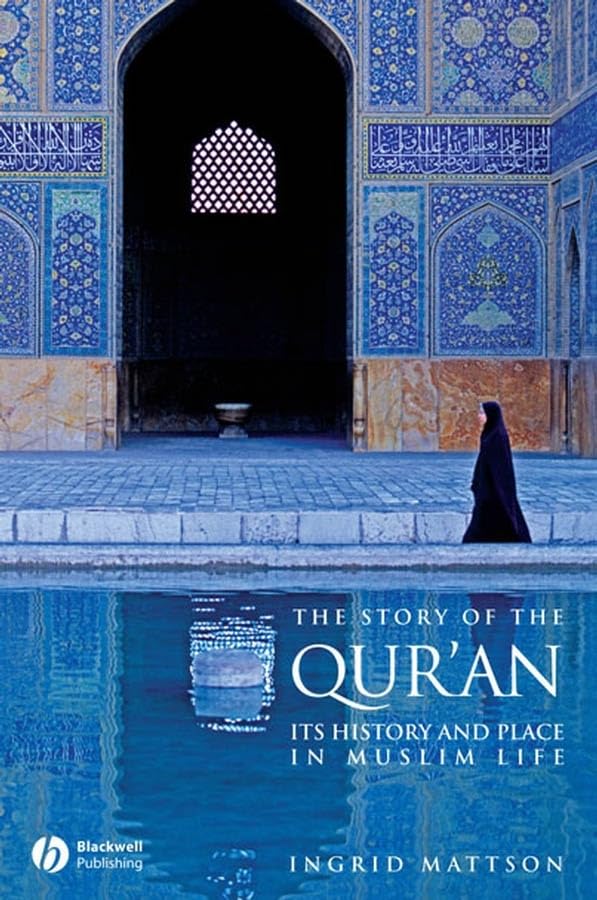
1The Qur'an
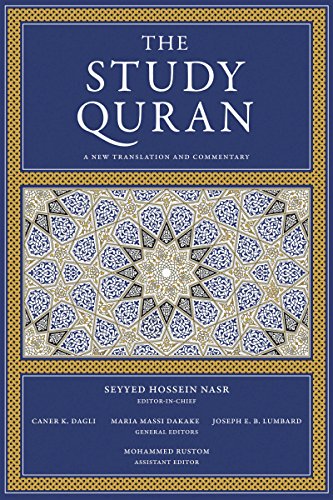
This superb new translation of the Qur'an is written in contemporary language that remains faithful to the meaning and spirit of the original, making the text crystal clear while retaining all of this great work's eloquence. The translation is accurate and completely free from the archaisms, incoherence, and alien structures that mar existing translations. Thus, for the first time, English-speaking readers will have a text of the Qur'an which is easy to use and comprehensible. Furthermore, Haleem includes notes that explain geographical, historical, and personal allusions as well as an index in which Qur'anic material is arranged into topics for easy reference. His introduction traces the history of the Qur'an, examines its structure and stylistic features, and considers issues related to militancy, intolerance, and the subjection of women.
Clearly written and filled with helpful information and guidance, this brilliant translation of the Qur'an is the best available introduction to the faith of Moslems around the world.

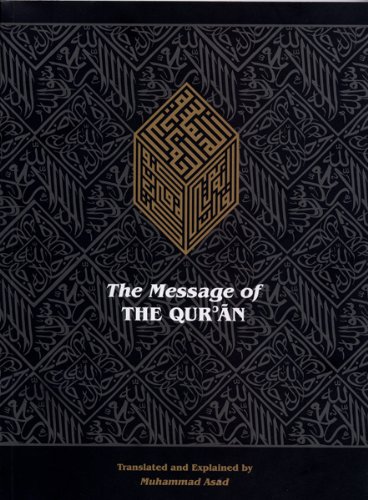
When I accepted Islam I’d done it on the basis of meeting Shaykh Abdalqadir and the people around him, and I realised that I knew nothing about it really. So obviously one of the first things was to learn the basics – and I thought I’d better read the Qur’an because that’s the book of the Muslims! At the time I had the Arberry translation which is accurate, and which in some measure conveys the poetry of the very pure Arabic of the original. In fact, at the time of the Prophet, blessings and peace be on him, some people accepted Islam on the basis of the purity of the Arabic in which the Qur’an is written: they said, ‘This couldn’t have been written by a human being!’ As the years passed I had access to the Muhammad Pickthall and Yusuf Ali translations, which are written in a rather Biblical English. Their use of vocabulary was not always appropriate, because sometimes it included words that have taken on certain connotations through the way they are used in the European Christian tradition. For example, the word ‘sin’ is used to translate the word dhanb in Arabic – but dhanb really means a wrong action which holds you back from the mercy of your Lord. So this is a completely different way of looking at a wrong action, and there’s no guilt attached to it. The Bewley translation is a beautiful translation, where some of the key terms are not translated but transliterated, with a small glossary at the back defining what each term means. This helps you to keep to the original meaning of the Qur’an – it’s a clear, crisp rendering of its meaning in English. I often read a translation of an ayat and I think I never remember reading that before, and I compare it with how Pickthall or Yusuf Ali translated it – and I see that they didn’t quite hit the mark. Read 4 Al-Muwatta of Imam Malik by Translated by Aisha Bewley and Ya'qub Johnson Read [source]

The Koran is supposed to be the words of God and the Hadith are the sayings and deeds of the prophet. The Koran has the basic commands; the Hadith or the Sunna, is a sort of manual. It is supposed to be a guideline of how to understand the Koran, because people say that it’s not explicit enough. The Hadith is a compilation of six volumes and they are called the Sahith Sitta – Sitta just means six and Sahith means authentic. [source]

The judiciary must not forget that far far above our constitution is the ultimate book of principles and that is the wholly Quran. Every judge in the country must keep a copy of Quran with translation on his/ her desk so that the judge can realise that the Law of God is Supreme. [source]