 1
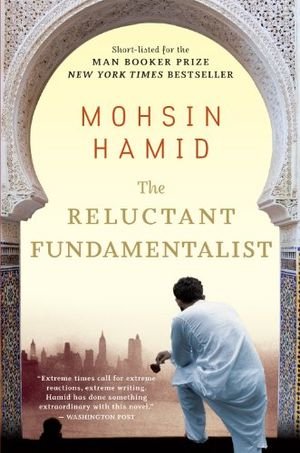
1The Reluctant Fundamentalist
Changez is living an immigrant's dream of America. At the top of his class at Princeton, he is snapped up by an elite valuation firm. He thrives on the energy of New York, and his budding romance with elegant, beautiful Erica promises entry into Manhattan society at the same exalted level once occupied by his own family back in Lahore.
But in the wake of September 11, Changez finds his position in his adopted city suddenly overturned and his relationship with Erica shifting. And Changez's own identity is in seismic shift as well, unearthing allegiances more fundamental than money, power, and maybe even love.

This is an amazing book, and it’s a shame that it didn’t win the Man Booker Prize in 2007 – in my opinion it was the best of the bunch. I think it’s going to become a modern classic in five or 10 years’ time, if it’s not already regarded as one. This novel speaks for so many peoples’ experiences in the aftermath of 9/11. The prose is very tight and the title is also very clever. [source]

You’re right – the protagonist has a completely different profile from the humble one in Harbor. Changez is from a prestigious Pakistani family, but one without a lot of money. He comes to the United States to attend Princeton on a scholarship and then is recruited into the corporate world. The whole novel is a monologue. This character, in a café in Lahore, is talking to an unidentified American, telling his story about the life he led in the United States. How he was enamoured of New York, yet smiled as the Towers fell and grew even more embittered toward America in the wake of the attacks. The structure is original and well executed. [source]

Well, it’s an odd kind of book. I think what’s especially useful about it is the way in which it describes the transformation in this man’s thinking. The protagonist is somebody who had been living in New York and been a banker and he gradually turns into, as the title says, a reluctant fundamentalist. This is something that I have seen among my friends in Pakistan. People who I have always thought of as very, very Westernised. They went to school abroad and certainly didn’t have the habits of religious types. But they are increasingly angry with the West and sympathetic to an anti-Western agenda and propaganda and very receptive to all kind of thoughts. These are really rational people who will now tell me straight out that September 11 was actually perpetrated by the Israelis and had nothing to do with Al-Qaeda. To me their theories seem absolutely loony and yet these guys have come out with something radically different. [source]