We've ranked the best corporate finance books using expert recommendations, sales data, and millions of reader ratings. At Shortform, we know books. Our book guides are the best in the world. Learn why.
Cover unavailable
1
The Intelligent Investor: The Classic Text on Value Investing
The greatest investment advisor of the twentieth century, Benjamin Graham taught and inspired people worldwide. Graham's philosophy of "value investing" -- which shields investors from substantial error and teaches them to develop long-term strategies -- has made The Intelligent Investor the stock market bible ever since its original publication in 1949.
To invest successfully over a lifetime does not require a stratospheric IQ, unusual business insights, or inside information. What's needed is a sound intellectual framework for making decisions and the ability to keep emotions from corroding that framework. This book precisely and clearly prescribes the proper framework. You must provide the emotional discipline. [source]
The foundation for investing. A lot of people have used this as their guide to getting into investment, basic strategies. Actually Warren Buffett cites this as the book that got him into investing and he says that principles he learned here helped him to become a great investor. Highly recommend this book. It’s a great way understand what’s going on and how to evaluate different companies out there before you make an investment. [source]
DJ Vlad
The single biggest influence on how I buy and sell stocks. [source]
In this candid and riveting memoir, for the first time ever, Nike founder and CEO Phil Knight shares the inside story of the company’s early days as an intrepid start-up and its evolution into one of the world’s most iconic, game-changing, and profitable brands.
In 1962, fresh out of business school, Phil Knight borrowed $50 from his father and created a company with a simple mission: import high-quality, low-cost athletic shoes from Japan. Selling the shoes from the trunk of his lime green Plymouth Valiant, Knight grossed $8,000 his first year. Today, Nike’s annual sales top $30 billion. In an age of startups, Nike is the ne plus ultra of all startups, and the swoosh has become a revolutionary, globe-spanning icon, one of the most ubiquitous and recognizable symbols in the world today.
But Knight, the man behind the swoosh, has always remained a mystery. Now, for the first time, in a memoir that is candid, humble, gutsy, and wry, he tells his story, beginning with his crossroads moment. At 24, after backpacking around the world, he decided to take the unconventional path, to start his own business—a business that would be dynamic, different.
Knight details the many risks and daunting setbacks that stood between him and his dream—along with his early triumphs. Above all, he recalls the formative relationships with his first partners and employees, a ragtag group of misfits and seekers who became a tight-knit band of brothers. Together, harnessing the transcendent power of a shared mission, and a deep belief in the spirit of sport, they built a brand that changed everything.
This memoir, by the co-founder of Nike, is a refreshingly honest reminder of what the path to business success really looks like: messy, precarious, and riddled with mistakes. I’ve met Knight a few times over the years. He’s super nice, but he’s also quiet and difficult to get to know. Here Knight opens up in a way few CEOs are willing to do. I don’t think Knight sets out to teach the reader anything. Instead, he accomplishes something better. He tells his story as honestly as he can. It’s an amazing tale. [source]
I've known Phil Knight since I was a kid, but I didn't really know him until I opened this beautiful, startling, intimate book. And the same goes for Nike. I've worn the gear with pride, but I didn't realize the remarkable saga of innovation and survival and triumph that stood behind every swoosh. Candid, funny, suspenseful, literary - this is a memoir for people who love sport, but above all it's a memoir for people who love memoirs. [source]
Cover unavailable
3
Good to Great: Why Some Companies Make the Leap... and Others Don't
To find the keys to greatness, Collins's 21-person research team read and coded 6,000 articles, generated more than 2,000 pages of interview transcripts and created 384 megabytes of computer data in a five-year project. The findings will surprise many readers and, quite frankly, upset others.
The Challenge Built to Last, the defining management study of the nineties, showed how great companies triumph over time and how long-term sustained performance can be engineered into the DNA of an enterprise from the very beginning.
But what about the company that is not born with great DNA? How can good companies, mediocre companies, even bad companies achieve enduring greatness?
The Study For years, this question preyed on the mind of Jim Collins. Are there companies that defy gravity and convert long-term mediocrity or worse into long-term superiority? And if so, what are the universal distinguishing characteristics that cause a company to go from good to great?
The Standards Using tough benchmarks, Collins and his research team identified a set of elite companies that made the leap to great results and sustained those results for at least fifteen years. How great? After the leap, the good-to-great companies generated cumulative stock returns that beat the general stock market by an average of seven times in fifteen years, better than twice the results delivered by a composite index of the world's greatest companies, including Coca-Cola, Intel, General Electric, and Merck.
The Comparisons The research team contrasted the good-to-great companies with a carefully selected set of comparison companies that failed to make the leap from good to great. What was different? Why did one set of companies become truly great performers while the other set remained only good?
The Findings The findings of the Good to Great study will surprise many readers and shed light on virtually every area of management strategy and practice. The findings include: Level 5 Leaders: The research team was shocked to discover the type of leadership required to achieve greatness.
The Hedgehog Concept (Simplicity within the Three Circles): To go from good to great requires transcending the curse of competence.
A Culture of Discipline: When you combine a culture of discipline with an ethic of entrepreneurship, you get the magical alchemy of great results. Technology Accelerators: Good-to-great companies think differently about the role of technology.
The Flywheel and the Doom Loop: Those who launch radical change programs and wrenching restructurings will almost certainly fail to make the leap.
"Collins briefed Amazon executives on his seminal management book before its publication. Companies must confront the brutal facts of their business, find out what they are uniquely good at, and master their fly wheel, in which each part of the business reinforces and accelerates the other parts," Stone writes. [source]
Most startups fail. But many of those failures are preventable. The Lean Startup is a new approach being adopted across the globe, changing the way companies are built and new products are launched.
Eric Ries defines a startup as an organization dedicated to creating something new under conditions of extreme uncertainty. This is just as true for one person in a garage or a group of seasoned professionals in a Fortune 500 boardroom. What they have in common is a mission to penetrate that fog of uncertainty to discover a successful path to a sustainable business.
The Lean Startup approach fosters companies that are both more capital efficient and that leverage human creativity more effectively. Inspired by lessons from lean manufacturing, it relies on "validated learning," rapid scientific experimentation, as well as a number of counter-intuitive practices that shorten product development cycles, measure actual progress without resorting to vanity metrics, and learn what customers really want. It enables a company to shift directions with agility, altering plans inch by inch, minute by minute.
Rather than wasting time creating elaborate business plans, The Lean Startup offers entrepreneurs - in companies of all sizes - a way to test their vision continuously, to adapt and adjust before it's too late. Ries provides a scientific approach to creating and managing successful startups in a age when companies need to innovate more than ever.
At Asana, we've been lucky to benefit from the author's advice firsthand; this book will enable him to help many more entrepreneurs answer the tough questions about their business. [source]
Cover unavailable
5
Zero to One: Notes on Startups, or How to Build the Future
If you want to build a better future, you must believe in secrets.
The great secret of our time is that there are still uncharted frontiers to explore and new inventions to create. In Zero to One, legendary entrepreneur and investor Peter Thiel shows how we can find singular ways to create those new things.
Thiel begins with the contrarian premise that we live in an age of technological stagnation, even if we’re too distracted by shiny mobile devices to notice. Information technology has improved rapidly, but there is no reason why progress should be limited to computers or Silicon Valley. Progress can be achieved in any industry or area of business. It comes from the most important skill that every leader must master: learning to think for yourself.
Doing what someone else already knows how to do takes the world from 1 to n, adding more of something familiar. But when you do something new, you go from 0 to 1. The next Bill Gates will not build an operating system. The next Larry Page or Sergey Brin won’t make a search engine. Tomorrow’s champions will not win by competing ruthlessly in today’s marketplace. They will escape competition altogether, because their businesses will be unique.
Zero to One presents at once an optimistic view of the future of progress in America and a new way of thinking about innovation: it starts by learning to ask the questions that lead you to find value in unexpected places.
The full inside story of the breathtaking rise and shocking collapse of a multibillion-dollar startup, by the prize-winning journalist who first broke the story and pursued it to the end in the face of pressure and threats from the CEO and her lawyers.
In 2014, Theranos founder and CEO Elizabeth Holmes was widely seen as the female Steve Jobs: a brilliant Stanford dropout whose startup "unicorn" promised to revolutionize the medical industry with a machine that would make blood tests significantly faster and easier. Backed by investors such as Larry Ellison and Tim Draper, Theranos sold shares in a fundraising round that valued the company at $9 billion, putting Holmes's worth at an estimated $4.7 billion. There was just one problem: The technology didn't work.
For years, Holmes had been misleading investors, FDA officials, and her own employees. When Carreyrou, working at The Wall Street Journal, got a tip from a former Theranos employee and started asking questions, both Carreyrou and the Journal were threatened with lawsuits. Undaunted, the newspaper ran the first of dozens of Theranos articles in late 2015. By early 2017, the company's value was zero and Holmes faced potential legal action from the government and her investors. Here is the riveting story of the biggest corporate fraud since Enron, a disturbing cautionary tale set amid the bold promises and gold-rush frenzy of Silicon Valley.
A bunch of my friends recommended this one to me. Carreyrou gives you the definitive insider’s look at the rise and fall of Theranos. The story is even crazier than I expected, and I found myself unable to put it down once I started. This book has everything: elaborate scams, corporate intrigue, magazine cover stories, ruined family relationships, and the demise of a company once valued at nearly $10 billion. [source]
Finished “bad blood” on the Theranos scandal. Wow. Just wow. It’s a must read for everyone in tech and startups. Just 1-click buy it :) Amazing how far charisma and social proof got them. Here’s the NYT review of the book https://t.co/PyMGxfoG2R [source]
Brad Feld
Co-Founder/Foundry Group
Every entrepreneur and VC should read this book. John Carreyrou has done something important here. Maybe this book will finally put a nail in the phrase “fake it till you make it”, but I doubt it. The amount of lying, disingenuousness, blatant and unjustified self-promotion, and downright deceit that exists in entrepreneurship right now is at a local maximum. This always happens when entrepreneurship gets trendy. Carreyrou just wrote a long warning for entrepreneurs and VCs. [source]
Cover unavailable
7
The Snowball: Warren Buffett and the Business of Life
Here is THE book recounting the life and times of one of the most respected men in the world, Warren Buffett. The legendary Omaha investor has never written a memoir, but now he has allowed one writer, Alice Schroeder, unprecedented access to explore directly with him and with those closest to him his work, opinions, struggles, triumphs, follies, and wisdom. The result is the personally revealing and complete biography of the man known everywhere as “The Oracle of Omaha.”
Although the media track him constantly, Buffett himself has never told his full life story. His reality is private, especially by celebrity standards. Indeed, while the homespun persona that the public sees is true as far as it goes, it goes only so far. Warren Buffett is an array of paradoxes. He set out to prove that nice guys can finish first. Over the years he treated his investors as partners, acted as their steward, and championed honesty as an investor, CEO, board member, essayist, and speaker. At the same time he became the world’s richest man, all from the modest Omaha headquarters of his company Berkshire Hathaway. None of this fits the term “simple.”
When Alice Schroeder met Warren Buffett she was an insurance industry analyst and a gifted writer known for her keen perception and business acumen. Her writings on finance impressed him, and as she came to know him she realized that while much had been written on the subject of his investing style, no one had moved beyond that to explore his larger philosophy, which is bound up in a complex personality and the details of his life. Out of this came his decision to cooperate with her on the book about himself that he would never write.
Never before has Buffett spent countless hours responding to a writer’s questions, talking, giving complete access to his wife, children, friends, and business associates—opening his files, recalling his childhood. It was an act of courage, as The Snowball makes immensely clear. Being human, his own life, like most lives, has been a mix of strengths and frailties. Yet notable though his wealth may be, Buffett’s legacy will not be his ranking on the scorecard of wealth; it will be his principles and ideas that have enriched people’s lives. This book tells you why Warren Buffett is the most fascinating American success story of our time.
…
Recommended by Marvin Liao, Chude Jideonwo, DJ Vlad, and 5 others.
Marvin Liao
Partner/500 Startups
My list would be (besides the ones I mentioned in answer to the previous question) both business & Fiction/Sci-Fi and ones I personally found helpful to myself. The business books explain just exactly how business, work & investing are in reality & how to think properly & differentiate yourself. On the non-business side, a mix of History & classic fiction to understand people, philosophy to make sense of life and Science fiction to picture what the future could be like (not always utopian). [source]
Chude Jideonwo
It's been so long, and I've been so busy that I haven't been able to recommend a book. I am sorry! I have read so many fantastic ones though, no matter how busy I have been. And I am soooooo excited to recommend this one. I love Warren Buffett ... https://t.co/ML0pM3G29k https://t.co/6yhfhT8WF5 [source]
DJ Vlad
If I had to pick one book that changed the way I look at investing, this would be it. [source]
One of the most popular personal development and self-improvement books of all time, Think and Grow Rich has sold over 100 million copies worldwide since its first publication during the Great Depression. In this hardcover edition, Napoleon Hill presents a "Philosophy of Achievement" in 13 principles drawn from the success stories of such greats as Andrew Carnegie, Henry Ford, Thomas Edison, and other millionaires of his time.
Think and Grow Rich reveals the secrets that can bring you fortune. By suppressing negative thoughts and keeping your focus on the long term, you can find true and lasting success. Napoleon Hill details his philosophy through the following 13 principles:
Desire Faith Autosuggestion Specialized Knowledge Imagination Organized Planning Decision Persistence Power of the Master Mind The Mystery of Sex Transmutation The Subconscious Mind The Brain The Sixth Sense Follow the steps outlined here, and you may just find the path to your own personal fortune.
For anyone interested in my career path, I’d recommend books in various genres. On a real practical level, I’d certainly recommend reading any and all plant/mushroom/tree/ecology/nature books you can acquire. It’s even more helpful to read the books that pertain specifically to your ecosystem and bioregion. Additionally, I’d also recommend reading a plethora of business and marketing books — both old and new alike. Think And Grow Rich by Napoleon Hill, Crush It! by Gary Vaynerchuk, Influence: The Psychology of Persuasion by Robert Cialdini, and anything by Seth Godin would be my top recommendations. And of course, every book I mentioned in the previous answers are strongly recommended as well. [source]
Alan Pierce
This book dramatically changed the way I structured my day to day life. Based on over two decades of personal interviews and studies of some of history's’ greatest minds, the author distills the lessons he learned and details how you can train and condition your mind through daily habit to master your actions. The way it promotes a disciplined and holistic approach of continual self-improvement, goal setting and strategic decision making really resonated with me. [source]
Cover unavailable
9
Getting to Yes: Negotiating Agreement Without Giving in
The key text on problem-solving negotiation-updated and revised
Getting to Yes has helped millions of people learn a better way to negotiate. One of the primary business texts of the modern era, it is based on the work of the Harvard Negotiation Project, a group that deals with all levels of negotiation and conflict resolution.
Getting to Yes offers a proven, step-by-step strategy for coming to mutually acceptable agreements in every sort of conflict. Thoroughly updated and revised, it offers readers a straight- forward, universally applicable method for negotiating personal and professional disputes without getting angry-or getting taken.
…
Recommended by Charles T. Munger, Drew Houston, Dustin Moskovitz, and 8 others.
A black swan is a highly improbable event with three principal characteristics: It is unpredictable; it carries a massive impact; and, after the fact, we concoct an explanation that makes it appear less random, and more predictable, than it was.
The astonishing success of Google was a black swan; so was 9/11. For Nassim Nicholas Taleb, black swans underlie almost everything about our world, from the rise of religions to events in our own personal lives.
Why do we not acknowledge the phenomenon of black swans until after they occur? Part of the answer, according to Taleb, is that humans are hardwired to learn specifics when they should be focused on generalities.
We concentrate on things we already know and time and time again fail to take into consideration what we don’t know. We are, therefore, unable to truly estimate opportunities, too vulnerable to the impulse to simplify, narrate, and categorize, and not open enough to rewarding those who can imagine the “impossible.”
For years, Taleb has studied how we fool ourselves into thinking we know more than we actually do. We restrict our thinking to the irrelevant and inconsequential, while large events continue to surprise us and shape our world. Now, in this revelatory book, Taleb explains everything we know about what we don’t know. He offers surprisingly simple tricks for dealing with black swans and benefiting from them.
Elegant, startling, and universal in its applications The Black Swan will change the way you look at the world. Taleb is a vastly entertaining writer, with wit, irreverence, and unusual stories to tell. He has a polymathic command of subjects ranging from cognitive science to business to probability theory.
The Black Swan is a landmark book – itself a black swan.
The book also contains a 4-page glossary; 19 pages of notes; and, a 28-page bibliography in addition to an index.
From the book "The Everything Store: and the Age of Amazon" “The scholar argues that people are wired to see patterns in chaos while remaining blind to unpredictable events, with massive consequences. Experimentation and empiricism trumps the easy and obvious narrative,” Stone writes. [source]
And throw in “The Black Swan” and “Fooled by Randomness”. “Fragile” means if you hit something might break. “Resilient” means if you hit something, it will stay the same. On my podcast Nassim discusses “Antifragility” – building a system, even on that works for you on a personal level, where you if you harm your self in some way it becomes stronger. That podcast changed my life He discusses Antifragility throughout history, up to our current economic situation, and even in our personal situations. [source]
In his book, Smith fervently extolled the simple yet enlightened notion that individuals are fully capable of setting and regulating prices for their own goods and services. He argued passionately in favor of free trade, yet stood up for the little guy. The Wealth of Nations provided the first--and still the most eloquent--integrated description of the workings of a market economy.
Obama, unsurprisingly, appears to be more drawn to stories sympathetic to the working classes than is McCain. Obama cites John Steinbeck’s “In Dubious Battle,” about a labor dispute; Robert Caro’s “Power Broker,” about Robert Moses; and Studs Terkel’s “Working.” But he also includes Adam Smith’s “Wealth of Nations” and “Theory of Moral Sentiments” on his list. [source]
Which books should be read by every single intelligent person on planet? … The Wealth of Nations (Smith) to learn that capitalism is an economy of greed, a force of nature unto itself. If you read all of the above works you will glean profound insight into most of what has driven the history of the western world. [source]
Cover unavailable
12
Blue Ocean Strategy: How To Create Uncontested Market Space And Make The Competition Irrelevant
Winning by not competing! This international best seller upends traditional thinking with principles and tools to make the competition irrelevant. In an audiobook that challenges everything you thought you knew, W. Chan Kim and Renee Mauborgne assert that tomorrow's leading companies will succeed, not by battling their rivals for market share in the bloody "red ocean" of a shrinking profit pool, but by creating "blue oceans" of untapped new market spaces ripe for growth.
Based on a study of 150 strategic moves, spanning more than 100 years and 30 industries, they provide a systematic approach that every company can use to render rivals obsolete and unleash new demand:
Reconstruct market boundaries Focus on the big picture Reach beyond existing demand Get the strategic sequence right Overcome organizational hurdles Build execution into strategy
Recommended by Daymond John, Steve Blank, Danielle Morrill, and 13 others.
Daymond John
Founder/FUBU
There are the normal ones that everybody loves. There would be "Rich Dad Poor Dad," "Who Moved My Cheese?;" I love all the Dale Carnegie books; "The One Minute Manager." I love newer ones like "Blue Ocean Strategy" and all the "Freaknomics" books. [source]
I don’t remember who originally told me to read Blue Ocean Strategy but I’m glad they did because this simple recommendation would substantially shape the course of my life and my career. [source]
Ayush Kumar
One doesn't necessarily need to take from others to fill their glass & you can always build a successful business in any industry. [source]
Cover unavailable
13
Profit First: Transform Your Business from a Cash-Eating Monster to a Money-Making Machine
Author of cult classics The Pumpkin Plan and The Toilet Paper Entrepreneur offers a simple, counterintuitive cash management solution that will help small businesses break out of the doom spiral and achieve instant profitability.
Conventional accounting uses the logical (albeit, flawed) formula: Sales - Expenses = Profit. The problem is, businesses are run by humans, and humans aren't always logical. Serial entrepreneur Mike Michalowicz has developed a behavioral approach to accounting to flip the formula: Sales - Profit = Expenses. Just as the most effective weight loss strategy is to limit portions by using smaller plates, Michalowicz shows that by taking profit first and apportioning only what remains for expenses, entrepreneurs will transform their businesses from cash-eating monsters to profitable cash cows. Using Michalowicz's Profit First system, readers will learn that:
- Following 4 simple principles can simplify accounting and make it easier to manage a profitable business by looking at bank account balances. - A small, profitable business can be worth much more than a large business surviving on its top line. - Businesses that attain early and sustained profitability have a better shot at achieving long-term growth.
With dozens of case studies, practical, step-by-step advice, and his signature sense of humor, Michalowicz has the game-changing roadmap for any entrepreneur to make money they always dreamed of.
…
Recommended by Bill Widmer and Jacqui Pretty.
Bill Widmer
I also recommend Profit First by Mike Michalowicz to learn how to put profit first in your business. [source]
Jacqui Pretty
The most recent business book I found that had a transformative impact on my business is Profit First by Mike Michalowicz, which completely changed the way we manage our finances at Grammar Factory. [source]
Cover unavailable
14
Built to Last: Successful Habits of Visionary Companies
"This is not a book about charismatic visionary leaders. It is not about visionary product concepts or visionary products or visionary market insights. Nor is it about just having a corporate vision. This is a book about something far more important, enduring, and substantial. This is a book about visionary companies." So write Jim Collins and Jerry Porras in this groundbreaking book that shatters myths, provides new insights, and gives practical guidance to those who would like to build landmark companies that stand the test of time.
Drawing upon a six-year research project at the Stanford University Graduate School of Business, Collins and Porras took eighteen truly exceptional and long-lasting companies -- they have an average age of nearly one hundred years and have outperformed the general stock market by a factor of fifteen since 1926 -- and studied each company in direct comparison to one of its top competitors. They examined the companies from their very beginnings to the present day -- as start-ups, as midsize companies, and as large corporations. Throughout, the authors asked: "What makes the truly exceptional companies different from other companies?"
What separates General Electric, 3M, Merck, Wal-Mart, Hewlett-Packard, Walt Disney, and Philip Morris from their rivals? How, for example, did Procter & Gamble, which began life substantially behind rival Colgate, eventually prevail as the premier institution in its industry? How was Motorola able to move from a humble battery repair business into integrated circuits and cellular communications, while Zenith never became dominant in anything other than TVs? How did Boeing unseat McDonnell Douglas as the world's best commercial aircraft company -- what did Boeing have that McDonnell Douglas lacked?
By answering such questions, Collins and Porras go beyond the incessant barrage of management buzzwords and fads of the day to discover timeless qualities that have consistently distinguished out-standing companies. They also provide inspiration to all executives and entrepreneurs by destroying the false but widely accepted idea that only charismatic visionary leaders can build visionary companies.
Filled with hundreds of specific examples and organized into a coherent framework of practical concepts that can be applied by managers and entrepreneurs at all levels, Built to Last provides a master blueprint for building organizations that will prosper long into the twenty-first century and beyond.
…
Recommended by Jeff Bezos, Drew Huston, Ev Williams, and 13 others.
recommends this book because it shows how to create a long lasting company. [source]
Tim O'Reilly
Founder/O'Reilly Media
Built to Last, by James Collins and Jerry Porras. The idea here is that great companies aren't afraid to have strong values. In fact, their cult-like values are what make them stand out from the norm. [source]
Alden Mills
Built to Last focused my daydreaming mind into what it takes to build truly great companies. [source]
Cover unavailable
15
Built to Sell: Creating a Business That Can Thrive Without You
According to John Warrillow, the number one mistake entrepreneurs make is to build a business that relies too heavily on them. Thus, when the time comes to sell, buyers aren't confident that the company-even if it's profitable-can stand on its own. To illustrate this, Warrillow introduces us to a fictional small business owner named Alex who is struggling to sell his advertising agency. Alex turns to Ted, an entrepreneur and old family friend, who encourages Alex to pursue three criteria to make his business sellable: • Teachable: focus on products and services that you can teach employees to deliver. • Valuable: avoid price wars by specialising in doing one thing better than anyone else. • Repeatable: generate recurring revenue by engineering products that customers have to repurchase often.
…
Recommended by Turgay Birand.
Turgay Birand
"Built to Sell" is great for entrepreneurs to start thinking about how to have a business that can run without them from the get go, which should be the aim! [source]
Cover unavailable
16
The Pumpkin Plan: A Simple Strategy to Grow a Remarkable Business in Any Field
Each year Americans start one million new businesses, nearly 80 percent of which fail within the first five years. Under such pressure to stay alive—let alone grow—it’s easy for entrepreneurs to get caught up in a never-ending cycle of “sell it—do it, sell it—do it” that leaves them exhausted, frustrated, and unable to get ahead no matter how hard they try.
This is the exact situation Mike Michalowicz found himself in when he was trying to grow his first company. Although it was making steady money, there was never very much left over and he was chasing customers left and right, putting in twenty-eight-hour days, eight days a week. The punishing grind never let up. His company was alive but stunted, and he was barely breathing. That’s when he discovered an unlikely source of inspiration—pumpkin farmers.
After reading an article about a local farmer who had dedicated his life to growing giant pumpkins, Michalowicz realized the same process could apply to growing a business. He tested the Pumpkin Plan on his own company and transformed it into a remarkable, multimillion-dollar industry leader. First he did it for himself. Then for others. And now you. So what is the Pumpkin Plan?
Plant the right seeds: Don’t waste time doing a bunch of different things just to please your customers. Instead, identify the thing you do better than anyone else and focus all of your attention, money, and time on figuring out how to grow your company doing it. Weed out the losers: In a pumpkin patch small, rotten pumpkins stunt the growth of the robust, healthy ones. The same is true of customers. Figure out which customers add the most value and provide the best opportunities for sustained growth. Then ditch the worst of the worst. Nurture the winners: Once you figure out who your best customers are, blow their minds with care. Discover their unfulfilled needs, innovate to make their wishes come true, and overdeliver on every single promise.
Full of stories of other successful entrepreneurs, The Pumpkin Plan guides you through unconventional strategies to help you build a truly profitable blue-ribbon company that is the best in its field.
“One of the finest, most compelling accounts of what happened to corporate America and Wall Street in the 1980’s.” —New York Times Book Review
A #1 New York Times bestseller and arguably the best business narrative ever written, Barbarians at the Gate is the classic account of the fall of RJR Nabisco. An enduring masterpiece of investigative journalism by Bryan Burrough and John Helyar, it includes a new afterword by the authors that brings this remarkable story of greed and double-dealings up to date twenty years after the famed deal. The Los Angeles Times calls Barbarians at the Gate, “Superlative.” The Chicago Tribune raves, “It’s hard to imagine a better story...and it’s hard to imagine a better account.” And in an era of spectacular business crashes and federal bailouts, it still stands as a valuable cautionary tale that must be heeded.
…
Recommended by Bill Liao, Bogdan Iordache, David Rothschild, and 2 others.
Bill Liao
The human world occurs in language so best get good at it! [source]
Bogdan Iordache
There are quite a few good business books on technology, and I'll list below some I find to be a good starting point. Personally, I like biographies a lot and I mostly read biographies of dead people, because those are the most honest ones. So because the computer age is still very young, there won't be a lot of biographies in my list. [source]
Scott Kupor
@JPHampstead @TimParksauthor Barbarians is a great book. Hope you enjoy mine! [source]
Cover unavailable
18
The Essays of Warren Buffett: Lessons for Corporate America, Fifth Edition
The New York Times bestselling author and social media expert returns with hard-won advice on how to connect with customers and beat the competition by mastering social media marketing
When managers and marketers outline their social media strategies, they often plan for the "right hook"-their next highly anticipated sale or campaign that's going to put the competition out for the count. Even companies committed to jabbing-patiently engaging with customers to build the relationships so crucial to successful social media campaigns-still yearn to land the powerful, bruising swing that will knock out their opponent or their customer's resistance in one tooth-spritzing, killer blow. Right hooks, after all, convert traffic to sales. They easily show results and ROI. Except when they don't.
In the same passionate, street-wise style readers have come to expect, Gary Vaynerchuk is on a mission to improve marketers' right hooks by changing the way they fight to make their customers happy, and ultimately to compete. Thanks to the massive change and proliferation in social media platforms in the last four years, the winning combination of jabs and right hooks is different now. Communication is still key, but context matters more than ever. It's not just about developing high-quality content, but developing high-quality content perfectly adapted to specific social media platforms and mobile devices-content tailor-made for Facebook, YouTube, Instagram, Pinterest, Twitter, and Tumblr. A mash-up of the best elements of Crush It! and The Thank You Economy with a 2013 spin, here is a blueprint to social media marketing strategies that really works.
…
Recommended by Daymond John, Marvin Liao, Aaron Agius, and 35 others.
Marvin Liao
Partner/500 Startups
My list would be (besides the ones I mentioned in answer to the previous question) both business & Fiction/Sci-Fi and ones I personally found helpful to myself. The business books explain just exactly how business, work & investing are in reality & how to think properly & differentiate yourself. On the non-business side, a mix of History & classic fiction to understand people, philosophy to make sense of life and Science fiction to picture what the future could be like (not always utopian). [source]
Alex Circei
Question: What five books would you recommend to young people interested in your career path & why? Answer: Screw It, Let's Do It: Lessons In Life by Richard Branson Outliers: The Story of Success by Malcolm Gladwell Start With Why: How Great Leaders Inspire Everyone To Take Action by Simon Sinek The Hard Thing About Hard Things: Building a Business When There Are No Easy Answers by Ben Horowitz Rich Dad Poor Dad: What the Rich Teach Their Kids About Money That the Poor and Middle Class Do Not! by Robert T. Kiyosaki [source]
Auston Bunsen
I’ve got a few, one book that really impacted me early on as someone coming from a middle-class family was “Rich dad, Poor dad”. [source]
Master the fundamentals, hone your business instincts, and save a fortune in tuition.
The consensus is clear: MBA programs are a waste of time and money. Even the elite schools offer outdated assembly-line educations about profit-and-loss statements and PowerPoint presentations. After two years poring over sanitized case studies, students are shuffled off into middle management to find out how business really works.
Josh Kaufman has made a business out of distilling the core principles of business and delivering them quickly and concisely to people at all stages of their careers. His blog has introduced hundreds of thousands of readers to the best business books and most powerful business concepts of all time. In The Personal MBA, he shares the essentials of sales, marketing, negotiation, strategy, and much more.
True leaders aren't made by business schools-they make themselves, seeking out the knowledge, skills, and experiences they need to succeed. Read this book and in one week you will learn the principles it takes most people a lifetime to master.
…
Recommended by Brian Burkhart, Ola Olusoga, and 1 others.
Brian Burkhart
It’s jam-packed with little digestible bites of wisdom—from finance to marketing to organizational development. It’s the guru bible of business. [source]
Ola Olusoga
For business, I've read Influence by Robert Cialdini 3 times, and Traction by Gabriel Weinberg twice, so if number of times read indicates favor, then those are it. There are a whole bunch of others, like The Personal MBA by Josh Kaufman, Confession of an Advertising Man by David Ogilvy, The 4 Hour Work Week by Tim Ferriss, and Running Lean by Ash Maurya, that I've also enjoyed and recommend to people. [source]
Cover unavailable
21
Business Adventures: Twelve Classic Tales from the World of Wall Street
"Business Adventures remains the best business book I've ever read." --Bill Gates, The Wall Street Journal
What do the $350 million Ford Motor Company disaster known as the Edsel, the fast and incredible rise of Xerox, and the unbelievable scandals at General Electric and Texas Gulf Sulphur have in common? Each is an example of how an iconic company was defined by a particular moment of fame or notoriety; these notable and fascinating accounts are as relevant today to understanding the intricacies of corporate life as they were when the events happened.
Stories about Wall Street are infused with drama and adventure and reveal the machinations and volatile nature of the world of finance. Longtime New Yorker contributor John Brooks's insightful reportage is so full of personality and critical detail that whether he is looking at the astounding market crash of 1962, the collapse of a well-known brokerage firm, or the bold attempt by American bankers to save the British pound, one gets the sense that history repeats itself.
Five additional stories on equally fascinating subjects round out this wonderful collection that will both entertain and inform readers . . . Business Adventures is truly financial journalism at its liveliest and best.
Brooks’s work is a great reminder that the rules for running a strong business and creating value haven’t changed. For one thing, there’s an essential human factor in every business endeavor. It doesn’t matter if you have a perfect product, production plan, and marketing pitch; you’ll still need the right people to lead and implement those plans. [source]
In 1991, Bill Gates asked Buffett for his favorite book. In reply, Buffett sent the Microsoft founder his personal copy of Business Adventures, a collection of New Yorker stories by John Brooks. [source]
In this 1960s classic, Brooks, a longtime New Yorker contributor, tells the stories of 12 notable companies and how they navigated the trials and tribulations of corporate life in America back in the day. [source]
Cover unavailable
22
Secrets of the Millionaire Mind: Mastering the Inner Game of Wealth
In his groundbreaking Secrets of the Millionaire Mind, T. Harv Eker states: "Give me five minutes, and I can predict your financial future for the rest of your life!" Eker does this by identifying your "money and success blueprint." This blueprint determines your financial life. If your money blueprint is not set for a high level of success, you will never have a lot of money, and if somehow you do, you will most likely lose it! The good news is that now you can actually reset your money blueprint to create natural and automatic success.
…
Recommended by Jochen Siepmann and Lewis Smith.
Jochen Siepmann
Question: What books had the biggest impact on you? Perhaps changed the way you see things or dramatically changed your career path. Answer: Rich Dad, Poor Dad (Robert Kiyosaki) Money, Master The Game (Anthony Robbins) Secrets Of The Millionaire Mind (T Harv Eker) [source]
Lewis Smith
"Secrets of the Millionaire Mind" by T Harv Eker has also had a radical impact on me in recent years and on my attitude towards money. I find it almost embarrassing to recommend because the ideas are very radical and "woo woo", but if you stick with it, it can change your perspective totally. [source]
Cover unavailable
23
Measure What Matters: How Google, Bono, and the Gates Foundation Rock the World with OKRs
Legendary venture capitalist John Doerr reveals how the goal-setting system of Objectives and Key Results (OKRs) has helped tech giants from Intel to Google achieve explosive growth--and how it can help any organization thrive.
In the fall of 1999, John Doerr met with the founders of a start-up whom he'd just given $12.5 million, the biggest investment of his career. Larry Page and Sergey Brin had amazing technology, entrepreneurial energy, and sky-high ambitions, but no real business plan. For Google to change the world (or even to survive), Page and Brin had to learn how to make tough choices on priorities while keeping their team on track. They'd have to know when to pull the plug on losing propositions, to fail fast. And they needed timely, relevant data to track their progress -- to measure what mattered.
Doerr taught them about a proven approach to operating excellence: Objectives and Key Results. He had first discovered OKRs in the 1970s as an engineer at Intel, where the legendary Andy Grove ("the greatest manager of his or any era") drove the best-run company Doerr had ever seen. Later, as a venture capitalist, Doerr shared Grove's brainchild with more than fifty companies. Wherever the process was faithfully practiced, it worked.
In this goal-setting system, objectives define what we seek to achieve; key results are how those top-priority goals will be attained with specific, measurable actions within a set time frame. Everyone's goals, from entry level to CEO, are transparent to the entire organization.
The benefits are profound. OKRs surface an organization's most important work. They focus effort and foster coordination. They keep employees on track. They link objectives across silos to unify and strengthen the entire company. Along the way, OKRs enhance workplace satisfaction and boost retention.
In Measure What Matters, Doerr shares a broad range of first-person, behind-the-scenes case studies, with narrators including Bono and Bill Gates, to demonstrate the focus, agility, and explosive growth that OKRs have spurred at so many great organizations. This book will help a new generation of leaders capture the same magic.
John explains how OKRs Objectives and Key Results work and shows how you can apply them in all sorts of situations. I’d recommend John’s book for anyone interested in becoming a better manager (and I’d say that even if I hadn’t been interviewed for a super-nice chapter about the Gates Foundation). [source]
Whether you're a seasoned CEO or a first-time entrepreneur, you'll find valuable lessons, tools, and inspiration in the pages of Measure What Matters. I'm glad John invested the time to share these ideas with the world. [source]
In this indispensable book, the most important venture capitalist of our era reveals a key to business innovation and success. This crisp and colorful book combines fascinating case studies with insightful personal stories to show how OKRs can add magic to organizations of any size. [source]
Cover unavailable
24
The $100 Startup: Reinvent the Way You Make a Living, Do What You Love, and Create a New Future
In The $100 Startup, Chris Guillebeau shows you how to lead of life of adventure, meaning and purpose – and earn a good living.
Still in his early thirties, Chris is on the verge of completing a tour of every country on earth – he’s already visited more than 175 nations – and yet he’s never held a “real job” or earned a regular paycheck. Rather, he has a special genius for turning ideas into income, and he uses what he earns both to support his life of adventure and to give back.
There are manyothers like Chris – those who’ve found ways to opt out of traditional employment and create the time and income to pursue what they find meaningful. Sometimes, achieving that perfect blend of passion and income doesn’t depend on shelving what you currently do. You can start small with your venture, committing little time or money, and wait to take the real plunge when you're sure it's successful.
In preparing to write this book, Chris identified 1,500 individuals who have built businesses earning $50,000 or more from a modest investment (in many cases, $100 or less), and from that group he’s chosen to focus on the 50 most intriguing case studies. In nearly all cases, people with no special skills discovered aspects of their personal passions that could be monetized, and were able to restructure their lives in ways that gave them greater freedom and fulfillment.
Here, finally, distilled into one easy-to-use guide, are the most valuable lessons from those who’ve learned how to turn what they do into a gateway to self-fulfillment. It’s all about finding the intersection between your “expertise” – even if you don’t consider it such -- and what other people will pay for. You don’t need an MBA, a business plan or even employees. All you need is a product or service that springs from what you love to do anyway, people willing to pay, and a way to get paid.
Not content to talk in generalities, Chris tells you exactly how many dollars his group of unexpected entrepreneurs required to get their projects up and running; what these individuals did in the first weeks and months to generate significant cash; some of the key mistakes they made along the way, and the crucial insights that made the business stick. Among Chris’s key principles: if you’re good at one thing, you’re probably good at something else; never teach a man to fish – sell him the fish instead; and in the battle between planning and action, action wins.
In ancient times, people who were dissatisfied with their lives dreamed of finding magic lamps, buried treasure, or streets paved with gold. Today, we know that it’s up to us to change our lives. And the best part is, if we change our own life, we can help others change theirs. This remarkable book will start you on your way.
In this valuable guide Chris Guillebeau shows that transforming an idea into a successful business can be easier than you think…You are in charge of which ideas deserve your time, and this book can help you wake up every morning eager to progress to the next step. [source]
Chelsea Frank
I read everything with an open mind, often challenging myself by choosing books with an odd perspective or religious/spiritual views. These books do not reflect my personal feelings but are books that helped shape my perspective on life, love, and happiness. [source]
Dean Roller
Question: What books would you recommend to young people interested in your career path? Answer: Four Hour Work Week, The $100 startup and Jobs to be done . I like books that share examples of real world approaches to getting something off the ground. [source]
Life is getting better—and at an accelerating rate. Food availability, income, and life span are up; disease, child mortality, and violence are down — all across the globe. Though the world is far from perfect, necessities and luxuries alike are getting cheaper; population growth is slowing; Africa is following Asia out of poverty; the Internet, the mobile phone, and container shipping are enriching people’s lives as never before. The pessimists who dominate public discourse insist that we will soon reach a turning point and things will start to get worse. But they have been saying this for two hundred years.
Yet Matt Ridley does more than describe how things are getting better. He explains why. Prosperity comes from everybody working for everybody else. The habit of exchange and specialization—which started more than 100,000 years ago—has created a collective brain that sets human living standards on a rising trend. The mutual dependence, trust, and sharing that result are causes for hope, not despair.
This bold book covers the entire sweep of human history, from the Stone Age to the Internet, from the stagnation of the Ming empire to the invention of the steam engine, from the population explosion to the likely consequences of climate change. It ends with a confident assertion that thanks to the ceaseless capacity of the human race for innovative change, and despite inevitable disasters along the way, the twenty-first century will see both human prosperity and natural biodiversity enhanced. Acute, refreshing, and revelatory, The Rational Optimist will change your way of thinking about the world for the better.
My next book for A Year of Books is The Rational Optimist by Matt Ridley. Two of the books I've read this year -- The Better Angels of Our Nature: and Why Nations Fail -- have explored how social and economic progress work together to make the world better. The Better Angels argues for that the two feed off each other, whereas Why Nations Fail argues that social and political progress ultimately controls the economic progress a society makes. This next book argues the opposite -- that economic progress is the greater force is pushing society forward. I'm interested to see which idea resonates more after exploring both frameworks. This is also the second one of Ridley's books I've read this year. Here's a photo from a few weeks back of me reading his book Genome with my dog Beast. [source]
Sparkling explanation of how the economy evolves, producing the glorious cornucopia of goods and services available all around us. How to feel good about the future even in dark times. [source]
Cover unavailable
26
The Most Important Thing: Uncommon Sense for the Thoughtful Investor
"This is that rarity, a useful book."--Warren Buffett
Howard Marks, the chairman and cofounder of Oaktree Capital Management, is renowned for his insightful assessments of market opportunity and risk. After four decades spent ascending to the top of the investment management profession, he is today sought out by the world's leading value investors, and his client memos brim with insightful commentary and a time-tested, fundamental philosophy. Now for the first time, all readers can benefit from Marks's wisdom, concentrated into a single volume that speaks to both the amateur and seasoned investor.
Informed by a lifetime of experience and study, The Most Important Thing explains the keys to successful investment and the pitfalls that can destroy capital or ruin a career. Utilizing passages from his memos to illustrate his ideas, Marks teaches by example, detailing the development of an investment philosophy that fully acknowledges the complexities of investing and the perils of the financial world. Brilliantly applying insight to today's volatile markets, Marks offers a volume that is part memoir, part creed, with a number of broad takeaways.
Marks expounds on such concepts as "second-level thinking," the price/value relationship, patient opportunism, and defensive investing. Frankly and honestly assessing his own decisions--and occasional missteps--he provides valuable lessons for critical thinking, risk assessment, and investment strategy. Encouraging investors to be "contrarian," Marks wisely judges market cycles and achieves returns through aggressive yet measured action. Which element is the most essential? Successful investing requires thoughtful attention to many separate aspects, and each of Marks's subjects proves to be the most important thing.
Whenever I am assessing an investment decision I refer to Howard Marks (Oaktree Capital Management) The Most Important Thing: Uncommon Sense for the Thoughtful Investor. He lays out explicit techniques for reaching second level thinking and outlines particular questions any investor should ask themselves before making an investment decision. I paraphrased the lessons I found most useful and refer to them whenever I am looking at an investment opportunity. [source]
Cover unavailable
27
Build: An Unorthodox Guide to Making Things Worth Making
Ben Horowitz, a leading venture capitalist, modern management expert, and New York Times bestselling author, combines lessons both from history and from modern organizational practice with practical and often surprising advice to help executives build cultures that can weather both good and bad times.
Ben Horowitz has long been fascinated by history, and particularly by how people behave differently than you’d expect. The time and circumstances in which they were raised often shapes them—yet a few leaders have managed to shape their times. In What You Do Is Who You Are, he turns his attention to a question crucial to every organization: how do you create and sustain the culture you want?
To Horowitz, culture is how a company makes decisions. It is the set of assumptions employees use to resolve everyday problems: should I stay at the Red Roof Inn, or the Four Seasons? Should we discuss the color of this product for five minutes or thirty hours? If culture is not purposeful, it will be an accident or a mistake.
What You Do Is Who You Are explains how to make your culture purposeful by spotlighting four models of leadership and culture-building—the leader of the only successful slave revolt, Haiti’s Toussaint Louverture; the Samurai, who ruled Japan for seven hundred years and shaped modern Japanese culture; Genghis Khan, who built the world’s largest empire; and Shaka Senghor, a man convicted of murder who ran the most formidable prison gang in the yard and ultimately transformed prison culture.
Horowitz connects these leadership examples to modern case-studies, including how Louverture’s cultural techniques were applied (or should have been) by Reed Hastings at Netflix, Travis Kalanick at Uber, and Hillary Clinton, and how Genghis Khan’s vision of cultural inclusiveness has parallels in the work of Don Thompson, the first African-American CEO of McDonalds, and of Maggie Wilderotter, the CEO who led Frontier Communications. Horowitz then offers guidance to help any company understand its own strategy and build a successful culture.
What You Do Is Who You Are is a journey through culture, from ancient to modern. Along the way, it answers a question fundamental to any organization: who are we? How do people talk about us when we’re not around? How do we treat our customers? Are we there for people in a pinch? Can we be trusted?
Who you are is not the values you list on the wall. It’s not what you say in company-wide meeting. It’s not your marketing campaign. It’s not even what you believe. Who you are is what you do. This book aims to help you do the things you need to become the kind of leader you want to be—and others want to follow.
Today, you can finally read my colleague and mentor @bhorowitz 2nd book, called “What you do is who you are” on creating and sustaining culture. Great examples from: - Bushido, Genghis Khan - the Haitian slave revolt - Uber and new tech cos Buy it here: https://t.co/5dTB5AHVKb [source]
"If you don’t methodically set your culture, then two-thirds of it will end up being accidental and the rest will be a mistake." Love this quote from @bhorowitz and highly recommend his new book that dives into this topic in more detail, coming out 10/29 https://t.co/p8aq4Rk1hq [source]
Cover unavailable
29
How to Measure Anything: Finding the Value of "Intangibles" in Business
Praise for How to Measure Anything: Finding the Value of Intangibles in Business
"I love this book. Douglas Hubbard helps us create a path to know the answer to almost any question in business, in science, or in life . . . Hubbard helps us by showing us that when we seek metrics to solve problems, we are really trying to know something better than we know it now. How to Measure Anything provides just the tools most of us need to measure anything better, to gain that insight, to make progress, and to succeed." -Peter Tippett, PhD, M.D. Chief Technology Officer at CyberTrust and inventor of the first antivirus software
"Doug Hubbard has provided an easy-to-read, demystifying explanation of how managers can inform themselves to make less risky, more profitable business decisions. We encourage our clients to try his powerful, practical techniques." -Peter Schay EVP and COO of The Advisory Council
"As a reader you soon realize that actually everything can be measured while learning how to measure only what matters. This book cuts through conventional cliches and business rhetoric and offers practical steps to using measurements as a tool for better decision making. Hubbard bridges the gaps to make college statistics relevant and valuable for business decisions." -Ray Gilbert EVP Lucent
"This book is remarkable in its range of measurement applications and its clarity of style. A must-read for every professional who has ever exclaimed, 'Sure, that concept is important, but can we measure it?'" -Dr. Jack Stenner Cofounder and CEO of MetraMetrics, Inc.
…
Recommended by Julia Galef and Nick Ganju.
Julia Galef
Has some good advice on how to improve your ability to make accurate predictions. [source]
Nick Ganju
About being outcome-based and getting these measurable outcomes. [source]
Cover unavailable
30
Applied Corporate Finance
Aswath Damodaran
4.3
Applied Corporate Finance provides a user's perspective to corporate finance, by posing the three major questions that every business has to answer, and then providing the tools and the analytical techniques needed to answer them. The three questions are: 1. Where do we invest our resources? (The Investment Decision) 2. How should we fund these investments? (The Financing Decision) 3. How much cash can and should we return to the owners? (The Dividend Decision). In summary, this is a book about coming up with real solutions to real problems, using real-time data on real companies.
…
Cover unavailable
31
The Start-up of You: Adapt to the Future, Invest in Yourself, and Transform Your Career
From the co-founder and chairman of LinkedIn and author Ben Casnocha comes a revolutionary new book on how to apply the strategies of successful entrepreneurship to your career: in other words, how to run the 'start-up of you'.
In a world where wages are virtually stagnant, creative disruption is rocking every industry, global competition for jobs is fierce, and job security is a thing of the past, we're all on our own when it comes to our careers. In the face of such uncertainty, the key to success is to think and act like an entrepreneur: to be nimble and self-reliant, to be innovative, and to know how to network and stand out from the crowd. And this is precisely what Hoffman and Casnocha show you how to do in a book that is both inspirational and supremely practical.
Just as LinkedIn is the one online community that no professional can afford not to belong to, this is the book that no professional can afford to be without.
Everyone, women and men alike, needs to think big to succeed. This is a practical book that shows you how to take control and build a career that will enable you to have real impact. [source]
The Startup of You" describes how to take the Silicon Valley approach to building a life: start with an idea, and work over your entire career to turn it something remarkable. In the world today, I think that the startup approach to life is necessary. This book distills the key techniques needed to succeed. [source]
The same extraordinary vision and timing that enabled Reid to found LinkedIn is once again on display with his book "the start-up of YOU." His central thesis, that every individual can benefit from acting as the entrepreneur of their own life and career, has never been more important than it is in today's increasingly globalized, competitive, and networked world. [source]
Cover unavailable
32
The Four: The Hidden DNA of Amazon, Apple, Facebook, and Google
Amazon, Apple, Facebook, and Google are the four most influential companies on the planet. Just about everyone thinks they know how they got there. Just about everyone is wrong.
For all that's been written about the Four over the last two decades, no one has captured their power and staggering success as insightfully as Scott Galloway.
Instead of buying the myths these compa-nies broadcast, Galloway asks fundamental questions. How did the Four infiltrate our lives so completely that they're almost impossible to avoid (or boycott)? Why does the stock market forgive them for sins that would destroy other firms? And as they race to become the world's first trillion-dollar company, can anyone chal-lenge them?
In the same irreverent style that has made him one of the world's most celebrated business professors, Galloway deconstructs the strategies of the Four that lurk beneath their shiny veneers. He shows how they manipulate the fundamental emotional needs that have driven us since our ancestors lived in caves, at a speed and scope others can't match. And he reveals how you can apply the lessons of their ascent to your own business or career.
Whether you want to compete with them, do business with them, or simply live in the world they dominate, you need to understand the Four.
…
Recommended by Angela Pham, Cat Williams-Treloar, Craig Pearce, and 1 others.
Angela Pham
I’m in the middle of The Four, which takes an awestruck-but-critical look at the four largest tech companies. [source]
Cat Williams-Treloar
Scott Galloway "The four" - because that's where the Marketing world is. I like the book for its honesty. [source]
Craig Pearce
I am currently reading The Four: The Hidden DNA of Amazon, Apple, Facebook, and Google. I was introduced to the author, Scott Galloway during his appearance on the aforementioned Recode Decode podcast, specifically episode released on September 14. His opinion and thoughts on the big 4 (Apple, Amazon, Facebook and Google) lead me to research him. I put a hold on his book from my local library and waited a few weeks. A great thing about this book is its recency, for example, it includes Amazon’s recent acquisition of WholeFoods. So far, it has covered, in entertaining detail, Amazon and Apple. The author writes with great knowledge, mixed with the right amount of wit. The author argues that Apple is sex, Google is God, Facebook is love and Amazon is our gut. By aligning with these roles in our lives, they have become wildly successful. I hope to hear an expansion of his positions he discussed on the podcast, and hope to apply some of strategies into my own startup. [source]
From bestselling writer David Graeber, a powerful argument against the rise of meaningless, unfulfilling jobs, and their consequences.
Does your job make a meaningful contribution to the world? In the spring of 2013, David Graeber asked this question in a playful, provocative essay titled “On the Phenomenon of Bullshit Jobs.” It went viral. After a million online views in seventeen different languages, people all over the world are still debating the answer.
There are millions of people—HR consultants, communication coordinators, telemarketing researchers, corporate lawyers—whose jobs are useless, and, tragically, they know it. These people are caught in bullshit jobs.
Graeber explores one of society’s most vexing and deeply felt concerns, indicting among other villains a particular strain of finance capitalism that betrays ideals shared by thinkers ranging from Keynes to Lincoln. Bullshit Jobs gives individuals, corporations, and societies permission to undergo a shift in values, placing creative and caring work at the center of our culture. This book is for everyone who wants to turn their vocation back into an avocation.
…
Cover unavailable
34
Onward: How Starbucks Fought for Its Life without Losing Its Soul
In 2008, Howard Schultz, the president and chairman of Starbucks, made the unprecedented decision to return as the CEO eight years after he stepped down from daily oversight of the company and became chairman. Concerned that Starbucks had lost its way, Schultz was determined to help it return to its core values and restore not only its financial health, but also its soul. In Onward, he shares the remarkable story of his return and the company's ongoing transformation under his leadership, revealing how, during one of the most tumultuous economic times in history, Starbucks again achieved profitability and sustainability without sacrificing humanity.
Offering readers a snapshot of a moment in history that left no company unscathed, the book zooms in to show, in riveting detail, how one company struggled and recreated itself in the midst of it all. The fastpaced narrative is driven by day-to-day tension as conflicts arise and lets readers into Schultz's psyche as he comes to terms with his limitations and evolving leadership style. Onward is a compelling, candid narrative documenting the maturing of a brand as well as a businessman.
Onward represents Schultz's central leadership philosophy: It's not just about winning, but the right way to win. Ultimately, he gives readers what he strives to deliver every day - sense of hope that, no matter how tough times get, the future can be just as or more successful than the past, whatever one defines success to be.
…
Recommended by Ron Conway.
Ron Conway
Story of his return to Starbucks, and the success of the company in a tumlutuous economic time in history. [source]
Cover unavailable
35
Financial Shenanigans: How to Detect Accounting Gimmicks and Fraud in Financial Reports
Howard Schilit and Jeremy Perler
4.2
The bestselling classic from the "Sherlock Holmes of Accounting"--updated to reflect the key case studies and most important lessons from the past quarter century. This fourth edition of the classic guide shines a light on the most shocking frauds and financial reporting offenders of the last twenty-five years, and gives investors the tools they need to detect: -Corporate cultures that incentivize dishonest practices-The latest tricks companies use to exaggerate revenue and earnings-Techniques devised by management to manipulate cash flow as easily as earnings-Companies that use misleading metrics to fool investors about their financial performance-How companies use acquisitions to hide deterioration in their underlying business This new edition focuses on the key case studies and most important lessons from the past quarter century, and brings you up to date on accounting chicanery in the global markets. Howard Schilit and his team of renowned forensic accounting experts expose financial reporting miscreants and unveil the latest methods companies use to mislead investors. You'll learn everything you need to know to unearth deceptive reporting and avoid costly mistakes.
Warren Buffett Accounting Book: Reading Financial Statements for Value Investing
Stig Brodersen and Preston Pysh
4.2
This book is the second volume to the Amazon Bestseller Warren Buffett's Three Favorite Books. In this book, you will learn how to: Pick stocks like Warren Buffett Calculate the intrinsic value of stocks using two methods During the second half of the book, readers will learn in-depth methods for: Read an income statement Read a balance sheet Read a cash flow statement Calculate and interpret key ratios
…
Recommended by Chris Mobbs.
Chris Mobbs
Warren Buffett Accounting Book: Reading Financial Statements for Value Investing (Warren Buffett’s 3 Favorite Books Book 2) https://t.co/uwVh05lLJH https://t.co/sR5CEeOEDf [source]
Cover unavailable
37
Financial Institutions, Investments, & Management: An Introduction
Herbert B. Mayo
4.2
A general introduction to the three primary aspects of Finance and examination of how they interrelate. The book discusses financial institutions and their roles in helping to allocate savings in the economy, along with a description and analysis of securities issued and traded in money and capital markets. The book covers fundamentals of investing in stocks, mutual funds, derivatives, and other marketable securities with an emphasis on securities markets, mechanics of trading, techniques of analysis, diversification, and valuation of assets. Finally, the book lays out the processes, decisions structures, and institutional arrangements concerned with the use and acquisition of funds by a firm. This will include the management of the asset and liability structure of the firm under certain and risky situations.
…
Cover unavailable
38
Company of One: Why Staying Small Is the Next Big Thing for Business
What if the real key to a richer and more fulfilling career was not to create and scale a new start-up, but rather, to be able to work for yourself, determine your own hours, and become a (highly profitable) and sustainable company of one? Suppose the better—and smarter—solution is simply to remain small? This book explains how to do just that.
Company of One is a refreshingly new approach centered on staying small and avoiding growth, for any size business. Not as a freelancer who only gets paid on a per piece basis, and not as an entrepreneurial start-up that wants to scale as soon as possible, but as a small business that is deliberately committed to staying that way. By staying small, one can have freedom to pursue more meaningful pleasures in life, and avoid the headaches that result from dealing with employees, long meetings, or worrying about expansion. Company of One introduces this unique business strategy and explains how to make it work for you, including how to generate cash flow on an ongoing basis.
Paul Jarvis left the corporate world when he realized that working in a high-pressure, high profile world was not his idea of success. Instead, he now works for himself out of his home on a small, lush island off of Vancouver, and lives a much more rewarding and productive life. He no longer has to contend with an environment that constantly demands more productivity, more output, and more growth.
In Company of One, Jarvis explains how you can find the right pathway to do the same, including planning how to set up your shop, determining your desired revenues, dealing with unexpected crises, keeping your key clients happy, and of course, doing all of this on your own.
Jarvis makes a compelling case for making your business better instead of bigger. Company of One is a must-read for any entrepreneur who prioritizes a rich life over riches. [source]
Ben Chestnut
Founder & CEO/MailChimp
Ever since starting MailChimp 18 years ago, I’ve always been told that my way was wrong. My way has never been to “be big.” My way was always to “be useful.” My company has become a global brand with millions of customers, over $525 million in annual revenue, and almost 1000 employees united by a single mission to help companies of one and entrepreneurs. Go figure. There’s not one, right way. Only your way. Paul’s book, Company of One, can help you find your way. [source]
You’re not a machine, so why would you run your business like one? Company of One shows you another way. If you’ve ever wondered how to have a business that works for you—instead of the other way around—you need this book. [source]
Cover unavailable
39
Secrets of Sand Hill Road: Venture Capital and How to Get It
Scott Kupor
4.2
A Wall Street Journal Bestseller!
What are venture capitalists saying about your startup behind closed doors? And what can you do to influence that conversation?
If Silicon Valley is the greatest wealth-generating machine in the world, Sand Hill Road is its humming engine. That's where you'll find the biggest names in venture capital, including famed VC firm Andreessen Horowitz, where lawyer-turned-entrepreneur-turned-VC Scott Kupor serves as managing partner.
Whether you're trying to get a new company off the ground or scale an existing business to the next level, you need to understand how VCs think. In Secrets of Sand Hill Road, Kupor explains exactly how VCs decide where and how much to invest, and how entrepreneurs can get the best possible deal and make the most of their relationships with VCs. Kupor explains, for instance:
- Why most VCs typically invest in only one startup in a given business category.
- Why the skill you need most when raising venture capital is the ability to tell a compelling story.
- How to handle a "down round," when startups have to raise funds at a lower valuation than in the previous round.
- What to do when VCs get too entangled in the day-to-day operations of the business.
- Why you need to build relationships with potential acquirers long before you decide to sell.
Filled with Kupor's firsthand experiences, insider advice, and practical takeaways, Secrets of Sand Hill Road is the guide every entrepreneur needs to turn their startup into the next unicorn.
As someone who’s helped a small company become a huge, valuable company, I know firsthand the power of the startup ecosystem and entrepreneurship. This book is the definitive book on navigating VC as part of that. [source]
I’ve observed thousands of founders and thought a lot about what it takes to create something important and to achieve outlier success. Kupor’s book takes founders who want to do both through everything from how VCs raise money and evaluate deals, to how to think about term sheets and set up boards. It’s a valuable resource for any founder who wants to work with VCs. [source]
@MahapatraChirag Hope you enjoy it! @skupor's book is great. [source]
Cover unavailable
40
Financial Statements, Third Edition: A Step-by-Step Guide to Understanding and Creating Financial Reports (Over 200,000 copies sold!)
Thomas Ittelson
4.2
Over 200,000 copies sold!
Thomas R. Ittelson’s master work for entrepreneurs, non-financial managers, business students, lawyers, lenders, and investors—the bestselling book of its kind, with over 200,000 copies in print—has gotten even better with this 20th anniversary edition.
Ittelson is an expert at translating complicated financial topics in an accessible way for non-financial audiences. In this book, he empowers readers by clearly and simply demonstrating how the three major accounting statements interact to offer a snapshot of a company's financial health.
This book teaches readers how to use specialized accounting vocabulary and makes accessible the structure and purpose of the three major numeric statements that describe a company’s financial condition. Each statement paints a different and essential picture—the “three-legged stool” of company reporting: The income statement shows the manufacturing (or service offerings) and selling actions of the company that result in profit or loss during a period. It gives a very important perspective on the company’s performance, its profitability.The cash flow statement details cash into and out of the company for a period. You need money to make money. Running out of cash is bad. Duh. The balance sheet records at the end of a period, an instant in time, what the company owns and what it owes, including the owners’ stake, called shareholders’ equity. With two new major topic sections (nonprofit organization accounting and pricing theory for profitability) and spot color reformatting to improve comprehension, this third edition of Financial Statements is simply the clearest and most comprehensive introduction to financial reporting available. No accounting background is required.
…
Cover unavailable
41
Capital budgeting. Sistema aziendale e decisioni d'investimento. Con CD-ROM
Mirella Muffarotto
4.2
Il futuro di un'impresa dipende dalle decisioni assunte nel presente. Lo studio preventivo della migliore allocazione di una risorsa scarsa, qual è il capitale, tra diverse possibili alternative d'impiego, assume, perciò, carattere prevalente per gli imprenditori come per le banche finanziatrici. In un'ottica in cui la banca affianca l'azienda, l'analisi di budget, piani d'impresa, relazioni programmatiche di progetto, flussi finanziari costituisce, infatti, il presupposto indispensabile per una completa e ponderata valutazione del rischio e, conseguentemente, del merito creditizio. Attraverso il capital budgeting è possibile stimare, selezionare e sviluppare piani d'investimento in modo da determinare il potenziale di reddito di ciascuna iniziativa: il volume ne svela le principali tecniche, illustrando gli strumenti necessari per una lettura integrata degli indicatori di convenienza economica. Di grande utilità, le applicazioni Excel - contenute nel CD-Rom allegato - per la valutazione economica dei progetti d'investimento mediante impiego di flussi di cassa e simulazioni economico-finanziarie.
…
Cover unavailable
42
The Theory of Corporate Finance
Jean Tirole
4.1
The past twenty years have seen great theoretical and empirical advances in the field of corporate finance. Whereas once the subject addressed mainly the financing of corporations--equity, debt, and valuation--today it also embraces crucial issues of governance, liquidity, risk management, relationships between banks and corporations, and the macroeconomic impact of corporations. However, this progress has left in its wake a jumbled array of concepts and models that students are often hard put to make sense of.
Here, one of the world's leading economists offers a lucid, unified, and comprehensive introduction to modern corporate finance theory. Jean Tirole builds his landmark book around a single model, using an incentive or contract theory approach. Filling a major gap in the field, The Theory of Corporate Finance is an indispensable resource for graduate and advanced undergraduate students as well as researchers of corporate finance, industrial organization, political economy, development, and macroeconomics.
Tirole conveys the organizing principles that structure the analysis of today's key management and public policy issues, such as the reform of corporate governance and auditing; the role of private equity, financial markets, and takeovers; the efficient determination of leverage, dividends, liquidity, and risk management; and the design of managerial incentive packages. He weaves empirical studies into the book's theoretical analysis. And he places the corporation in its broader environment, both microeconomic and macroeconomic, and examines the two-way interaction between the corporate environment and institutions.
Setting a new milestone in the field, The Theory of Corporate Finance will be the authoritative text for years to come.
…
Cover unavailable
43
Corporate Finance: Theory & Practice Test Bank
Aswath Damodaran
4.1
Cover unavailable
44
Main Street Millionaire: How to Make Extraordinary Wealth Buying Ordinary Businesses
Codie Sanchez
4.1
Cover unavailable
45
Corporate Finance: The Ultimate Guide to Financial Reporting, Business Valuation, Risk Management, Financial Management, and Financial Statements
Greg Shields
4.1
Cover unavailable
46
Valuation: Measuring and Managing the Value of Companies
McKinsey & Company Inc., Tim Koller, Marc Goedhart, David Wessels
4.1
Hailed by financial professionals worldwide as the single best guide of its kind, Valuation, Fourth Edition is thoroughly revised and expanded to reflect business conditions in today's volatile global economy. Valuation provides up-to-date insights and practical advice on how to create, manage, and measure an organization's value. Along with all-new case studies that illustrate how valuation techniques and principles are applied in real-world situations, this comprehensive guide has been updated to reflect the events of the Internet bubble and its effect on stock markets, new developments in academic finance, changes in accounting rules (both U. S. and IFRS), and an enhanced global perspective. This edition contains the solid framework that managers at all levels, investors, and students have come to trust.
…
Cover unavailable
47
Buy Then Build: How Acquisition Entrepreneurs Outsmart the Startup Game
Walker Deibel
4.1
Entrepreneurs have a problem: startups. Almost all startups either fail or never truly reach a sustainable size. Despite the popularity of entrepreneurship, we haven't engineered a better way to start. ...Until now.What if you could skip the startup phase and generate profitable revenue on day one?In Buy Then Build, acquisition entrepreneur Walker Deibel shows you how to begin with a sustainable, profitable company and grow from there. You'll learn how to: ● Buy an existing company rather than starting from scratch● Use ownership as a path to financial independence● Spend a fraction of the time raising capital● Find great brokers, generate your own "deal flow," and see new listings early● Uncover the best opportunities and biggest risks of any company● Navigate the acquisition process● Become a successful acquisition entrepreneur● And moreBuy Then Build is your guide to outsmart the startup game, live the entrepreneurial lifestyle, and reap the financial rewards of ownership now.
…
Cover unavailable
48
The ChatGPT Millionaire: Making Money Online has never been this EASY (Chat GPT and Generative AI Mastery Series)
HBR Guide to Buying a Small Business (HBR Guide Series)
Richard S. Ruback
4.1
Are you looking for an alternative career path at a big firm? Does founding your own start-up seem too risky? There is a radical third path open to you. You can buy a small business and run it as CEO. Purchasing a small company offers significant financial rewards - as well as personal and professional fulfillment. Leading a firm means you can be your own boss, put your executive skills to work, fashion a company environment that meets your own needs, and profit directly from your success.
'HBR GUIDE TO BUYING A SMALL BUSINESS, Harvard Business school professors Richard Ruback and Royce Yudkoff help you:
1. Determine if this path is right for you 2. Raise capital for your acquisition 3. Find and evaluate the right prospects 4. Avoid the pitfalls that could derail your search 5. Understand why a "dull" business might be the best investment 6. Negotiate a potential deal with the seller 7. Avoid deals that fall through at the last minute
What It Takes: Lessons in the Pursuit of Excellence
Stephen A. Schwarzman
4.1
NEW YORK TIMES BESTSELLER
From Blackstone chairman, CEO, and co-founder Stephen A. Schwarzman, a long-awaited book that uses impactful episodes from Schwarzman's life to show readers how to build, transform, and lead thriving organizations. Whether you are a student, entrepreneur, philanthropist, executive, or simply someone looking for ways to maximize your potential, the same lessons apply.
People know who Stephen Schwarzman is—at least they think they do. He’s the man who took $400,000 and co-founded Blackstone, the investment firm that manages over $500 billion (as of January 2019). He’s the CEO whose views are sought by heads of state. He’s the billionaire philanthropist who founded Schwarzman Scholars, this century’s version of the Rhodes Scholarship, in China. But behind these achievements is a man who has spent his life learning and reflecting on what it takes to achieve excellence, make an impact, and live a life of consequence.
Folding handkerchiefs in his father’s linen shop, Schwarzman dreamed of a larger life, filled with purpose and adventure. His grades and athleticism got him into Yale. After starting his career in finance with a short stint at a financial firm called DLJ, Schwarzman began working at Lehman Brothers where he ascended to run the mergers and acquisitions practice. He eventually partnered with his mentor and friend Pete Peterson to found Blackstone, vowing to create a new and different kind of financial institution.
Building Blackstone into the leading global financial institution it is today didn’t come easy. Schwarzman focused intensely on culture, hiring great talent, and establishing processes that allow the firm to systematically analyze and evaluate risk. Schwarzman’s simple mantra “don’t lose money” has helped Blackstone become a leading private equity and real estate investor, and manager of alternative assets for institutional investors globally. Both he and the firm are known for the rigor of their investment process, their innovative approach to deal making, the diversification of their business lines, and a conviction to be the best at everything they do.
Schwarzman is also an active philanthropist, having given away more than a billion dollars. In philanthropy, as in business, he is drawn to situations where his capital and energy can be applied to drive transformative solutions and change paradigms, notably in education. He uses the skills learned over a lifetime in finance to design, establish, and support impactful and innovative organizations and initiatives. His gifts have ranged from creating a new College of Computing at MIT for the study of artificial intelligence, to establishing a first-of-its-kind student and performing arts center at Yale, to enabling the renovation of the iconic New York Public Library, to founding the Schwarzman Scholars fellowship program at Tsinghua University in Beijing—the single largest philanthropic effort in China’s history from international donors.
Schwarzman’s story is an empowering, entertaining, and informative guide for anyone striving for greater personal impact. From deal making to investing, leadership to entrepreneurship, philanthropy to diplomacy, Schwarzman has lessons for how to think about ambition and scale, risk and opportunities, and how to achieve success through the relentless pursuit of excellence. Schwarzman not only offers readers a thoughtful reflection on all his own experiences, but in doing so provides a practical blueprint for success.
Reveals how the author has achieved the rarest kind of leverage in multiple fields. [source]
Norman Ornstein
What it Takes remains the best book written about American politics and politicians. i reread every few years. Want to know about Biden? Read it! https://t.co/ZlLwbRqADa [source]
Cover unavailable
51
The Value of Everything: Making and Taking in the Global Economy
Mariana Mazzucato
4.1
Modern economies reward activities that extract value rather than create it. This must change to insure a capitalism that works for us all.
In this scathing indictment of our current global financial system, The Value of Everything rigorously scrutinizes the way in which economic value has been determined and reveals how the difference between value creation and value extraction has become increasingly blurry. Mariana Mazzucato argues that this blurriness allowed certain actors in the economy to portray themselves as value creators, while in reality they were just moving existing value around or, even worse, destroying it.
The book uses case studies - from Silicon Valley to the financial sector to big pharma - to show how the foggy notions of value create confusion between rents and profits, a difference that distorts the measurements of growth and GDP.
The lesson here is urgent and sobering: to rescue our economy from the next, inevitable crisis and to foster long-term economic growth, we will need to rethink capitalism, rethink the role of public policy and the importance of the public sector, and redefine how we measure value in our society.
…
Recommended by Pia Mancini.
Pia Mancini
@soulafloat @MazzucatoM @ValeriaLuiselli @MazzucatoM's one is great book! Super insightful. I'll add @ValeriaLuiselli to my list! Thank you [source]
Cover unavailable
52
Financial Intelligence, Revised Edition: A Manager's Guide to Knowing What the Numbers Really Mean
Karen Berman and Joe Knight
4.1
Inc. magazine calls it one of “the best, clearest guides to the numbers” on the market. Readers agree, saying it’s exactly “what I need to know” and calling it a “must-read” for decision makers without expertise in finance.
Since its release in 2006, Financial Intelligence has become a favorite among managers who need a guided tour through the numbers—helping them to understand not only what the numbers really mean, but also why they matter.
This new, completely updated edition brings the numbers up to date and continues to teach the basics of finance to managers who need to use financial data to drive their business. It also addresses issues that have become even more important in recent years—including questions around the financial crisis and those around broader financial and accounting literacy.
Accessible, jargon-free, and filled with entertaining stories of real companies, Financial Intelligence gives nonfinancial managers the confidence to understand the nuance beyond the numbers—to help bring everyday work to a new level.
…
Cover unavailable
53
Venture Deals: Be Smarter Than Your Lawyer and Venture Capitalist
Brad Feld
4.1
Help take your startup to the next step with the new and revised edition of the popular book on the VC deal process--from the co-founders of the Foundry Group
How do venture capital deals come together? This is one of the most frequent questions asked by each generation of new entrepreneurs. Surprisingly, there is little reliable information on the subject. No one understands this better than Brad Feld and Jason Mendelson. The founders and driving force behind the Foundry Group--a venture capital firm focused on investing in early-stage information technology companies--Brad and Jason have been involved in hundreds of venture capital financings. Their investments range from small startups to large Series A venture financing rounds. The new edition of Venture Deals continues to show fledgling entrepreneurs the inner-workings of the VC process, from the venture capital term sheet and effective negotiating strategies to the initial seed and the later stages of development.
Fully updated to reflect the intricacies of startups and entrepreneurship in today's dynamic economic environment, this new edition includes revisions and updates to coverage on negotiating, gender issues, ICO's, and economic terms. New chapters examine legal and procedural considerations relevant to fundraising, bank debt, equity and convertible debt, how to hire an investment banker to sell a company, and more.
Provides valuable, real-world insights into venture capital structure and strategy Explains and clarifies the VC term sheet and other misunderstood aspects of capital funding Helps to build collaborative and supportive relationships between entrepreneurs and investors Draws from the author's years of practical experience in the VC arena Includes extensively revised and updated content throughout to increase readability and currency Venture Deals: Be Smarter Than Your Lawyer and Venture Capitalist is a must-have resource for Any aspiring entrepreneur, venture capitalist, or lawyer involved in VC deals as well as students and instructors in related areas of study.
…
Cover unavailable
54
The Spider Network: The Wild Story of a Math Genius, a Gang of Backstabbing Bankers, and One of the Greatest Scams in Financial History
David Enrich
4.1
The Wall Street Journal's award-winning business reporter unveils the bizarre and sinister story of how a math genius named Tom Hayes, a handful of outrageous confederates, and a deeply corrupt banking system ignited one of the greatest financial scandals in history. The paperback edition includes a new chapter discussing further fallout from the scandal.
In 2006, an oddball group of bankers, traders and brokers from some of the world’s largest financial institutions made a startling realization: Libor—the London interbank offered rate, which determines interest rates on trillions in loans worldwide—was set daily by a small group of easily manipulated functionaries. Tom Hayes, a brilliant but troubled mathematician, became the lynchpin of shadowy team that used hook and crook to take over the process and set rates that made them a fortune, no matter the cost to others. Among the motley crew was a French trader nicknamed “Gollum”; the broker “Abbo,” who liked to publicly strip naked when drinking; a Kazakh chicken farmer turned something short of financial whiz kid; an executive called “Clumpy” because of his patchwork hair loss; and a broker uncreatively nicknamed “Big Nose.” Eventually known as the “Spider Network,” Hayes’s circle generated untold riches —until it all unraveled in spectacularly vicious, backstabbing fashion.
Praised as reading “like a fast-paced John le Carré thriller” (New York Times), “compelling” (Washington Post)and “jaw-dropping” (Financial Times), The Spider Network is not only a rollicking account of the scam, but a provocative examination of a financial system that was warped and shady throughout.
"Billions"-esque saga of global financial market manipulation, at mind-boggling scale and hiding in plain sight, by a small cabal of bankers in London. [source]
Cover unavailable
55
Fix This Next: Pinpoint and Solve Your Company's Biggest Problem
The Fire Starter Sessions: A Soulful + Practical Guide to Creating Success on Your Own Terms
Danielle LaPorte
4.1
The Fire Starter Sessions is an apathy-kicking, integrity-infusing guide to defining success on your own terms.
As the creator of DanielleLaPorte.com--deemed “the best place online for kick-ass spirituality,” Danielle LaPorte’s straight-talk life-and-livelihood sermons have been read by over one million people. Bold but empathetic, she reframes popular self-help and success concepts:
: Life balance is a myth, and the pursuit of it is causing us more stress then the craving for balance itself. : Being well-rounded is over-rated. When you focus on developing your true strengths, you enter your mastery zone. : Screw your principles (they might be holding you back). : We have ambition backwards. Getting clear on how you want to feel in your life + work is more important than setting goals. It's the most potent form of clarity that you can have, and it's what leads to true fulfillment.
…
Cover unavailable
57
The Little Book of Behavioral Investing: How Not to Be Your Own Worst Enemy
James Montier
4.1
A detailed guide to overcoming the most frequently encountered psychological pitfalls of investing Bias, emotion, and overconfidence are just three of the many behavioral traits that can lead investors to lose money or achieve lower returns. Behavioral finance, which recognizes that there is a psychological element to all investor decision-making, can help you overcome this obstacle.
In The Little Book of Behavioral Investing, expert James Montier takes you through some of the most important behavioral challenges faced by investors. Montier reveals the most common psychological barriers, clearly showing how emotion, overconfidence, and a multitude of other behavioral traits, can affect investment decision-making.
Offers time-tested ways to identify and avoid the pitfalls of investor bias Author James Montier is one of the world's foremost behavioral analysts Discusses how to learn from our investment mistakes instead of repeating them Explores the behavioral principles that will allow you to maintain a successful investment portfolio Written in a straightforward and accessible style, The Little Book of Behavioral Investing will enable you to identify and eliminate behavioral traits that can hinder your investment endeavors and show you how to go about achieving superior returns in the process.
Praise for The Little Book Of Behavioral Investing
"The Little Book of Behavioral Investing is an important book for anyone who is interested in understanding the ways that human nature and financial markets interact." --Dan Ariely, James B. Duke Professor of Behavioral Economics, Duke University, and author of Predictably Irrational
"In investing, success means�being on the right side of most trades. No book provides a better starting point toward that goal than this one." --Bruce Greenwald, Robert Heilbrunn Professor of Finance and Asset Management, Columbia Business School
"'Know thyself.' Overcoming human instinct is key to becoming a better investor.� You would be irrational if you did not read this book." --Edward Bonham-Carter, Chief Executive and Chief Investment Officer, Jupiter Asset Management
"There is not an investor anywhere who wouldn't profit from reading this book." --Jeff Hochman, Director of Technical Strategy, Fidelity Investment Services Limited
"James Montier gives us a very accessible version of why we as investors are so predictably irrational, and a guide to help us channel our 'Inner Spock' to make better investment decisions. Bravo!" --John Mauldin, President, Millennium Wave Investments
…
Cover unavailable
58
Valuation: Measuring and Managing the Value of Companies
McKinsey & Company Inc.
4.1
Valuation is the single best guide of its kind, helping financial professionals worldwide excel at measuring, managing, and maximizing shareholder and company value. This new seventh edition provides insights on the strategic advantages of value-based management, complete detailed instruction, and nuances managers should know about valuation and valuation techniques as applied to different industries, emerging markets, and other special situations.
…
Cover unavailable
59
The Dark Side of Valuation
Aswath Damodaran
4.1
Financial professionals have long faced the challenge of accurately valuing companies that are difficult to value using conventional methodologies. Years ago, this challenge was most keenly felt in the "dot-com" industries, and many professionals fell victim to the "dark side," creating values that were simply unsustainable. Now, amidst today's global financial crisis, the same challenge applies to a far wider spectrum of enterprises and assets, ranging from Asian equities to mortgage-backed securities, financial services firms like Lehman to real estate firms like Sears. In The Dark Side of Valuation, the world's top expert on valuation brings together today's best practices for accurately valuing young, distressed, and complex businesses. Aswath Damodaran has thoroughly revised this book, broadening its perspective to consider all companies that resist easy valuation. He covers the entire corporate lifecycle, from "idea" and "nascent growth" companies to those in decline and distress; and offers specific guidance for valuing infrastructure, real estate, technology, human capital, commodity, and cyclical firms. Damodaran places special emphasis on the financial sector, illuminating the implications of today's radically changed credit markets for valuation. Along the way, he addresses valuation questions that have suddenly gained urgency, ranging from "Are US treasuries risk-free?" to "How do you value assets in highly illiquid markets?"
…
Cover unavailable
60
Damodaran on Valuation: Security Analysis for Investment and Corporate Finance
Aswath Damodaran
4.1
"Aswath Damodaran is simply the best valuation teacher around. If you are interested in the theory or practice of valuation, you should have Damodaran on Valuation on your bookshelf. You can bet that I do." -- Michael J. Mauboussin, Chief Investment Strategist, Legg Mason Capital Management and author of More Than You Know: Finding Financial Wisdom in Unconventional Places In order to be a successful CEO, corporate strategist, or analyst, understanding the valuation process is a necessity. The second edition of Damodaran on Valuation stands out as the most reliable book for answering many of today's critical valuation questions. Completely revised and updated, this edition is the ideal book on valuation for CEOs and corporate strategists. You'll gain an understanding of the vitality of today's valuation models and develop the acumen needed for the most complex and subtle valuation scenarios you will face.
…
Cover unavailable
61
Bargaining for Advantage: Negotiation Strategies for Reasonable People
G. Richard Shell
4.1
As director of the renowned Wharton Executive Negotiation Workshop, Professor G. Richard Shell has taught thousands of business leaders, administrators, and other professionals how to survive and thrive in the sometimes rough-and-tumble world of negotiation. His systematic, step-by-step approach comes to life in this book, which is available in over ten foreign editions and combines lively storytelling, proven tactics, and reliable insights gleaned from the latest negotiation research.This updated edition includes:
A brand-new "Negotiation I.Q." test designed by Shell and used by executives at the Wharton workshop that reveals each reader's unique strengths and weaknesses as a negotiator
A concise manual on how to avoid the perils and pitfalls of online negotiations involving e-mail and instant messaging
A detailed look at how gender and cultural differences can derail negotiations, and advice for putting talks back on track
…
Cover unavailable
62
Equity Crowdfunding: The Complete Guide for Startups and Growing Companies
Nathan Rose
4.1
Raise Money & Gain Exposure At The Same Time!Tired of fruitless pitch meetings with investors and the limitations of trying to grow a business through bootstrapping? Equity crowdfunding is a new, fresh alternative to Silicon Valley venture capital. Hundreds of thousands, or even millions of dollars, can be raised by offering shares in your startup to members of the public. Gaining marketing exposure and raising business funding are #1 and #2 on the priority list for many entrepreneurs. But they were always separate activities - first raise the money, then spend it on marketing. Until now! A New Hybrid of Venture Capital & Kickstarter. Equity crowdfunding is a new form of investment banking for startups, small business and new business, enabled by advances in fintech. The entrepreneurs set their own offer terms, retain their company culture, and bring on dozens, or even hundreds of shareholders and gain all the promotional benefits that come with a larger 'crowd'.
And unlike the "rewards" crowdfunding offered by sites like Kickstarter and Indiegogo, equity crowdfunding allows a company to offer shares, instead of a pre-ordered product. This means it can be used by more varied business models, and typically attracts a lot more money. If you are successful at equity crowdfunding, your days of bootstrapping your product launch will be over!
This Book Will Show You How. Equity crowdfunding offers amazing potential for startups and growing companies, but it is also a very steep learning curve. Many companies begin with no real idea of how to choose a platform, how to craft their pitch, or what they should be doing to drive people to their offer page and invest. The author, Nathan Rose, comes from an investment banking background, advising companies on initial public offerings. Now, he brings the same practical experience to new business, small business, and startups.
In this step-by-step guide, you will learn: - The forces in fintech which have brought equity crowdfunding to where it is today - A comparison with business funding through bootstrapping, family & friends, incubators, Silicon Valley venture capital, and Kickstarter. - The biggest mistakes that can kill an offer before it has even begun - How to build critical momentum - one company raised 1 million in 96 seconds! - How to construct a marketing plan to get people literally counting down to your launch - How to salvage an offer which is "stuck," and re-ignite the momentum - What past campaigns wished they had known before they had started - The incredible impact equity crowdfunding can have on your business and profile
The World's Most Comprehensive ResourceThe very best strategies from 20 real companies who have used equity crowdfunding to raise millions of dollars, euros and pounds. And the expert advice from 12 market-leading platforms at the forefront of the equity crowdfunding revolution. Featuring contributions from the United Kingdom, the United States, France, the Netherlands, Germany, Sweden, Finland, Estonia, Canada, the Middle East, Australia and New Zealand.
The only book necessary for startups, incubators, accelerators, co-working spaces, universities, education institutions, and business networks.
Buy this book to learn everything about equity crowdfunding... from the ground up.
…
Cover unavailable
63
How Finance Works: The HBR Guide to Thinking Smart about the Numbers
Mihir Desai
4.1
Cover unavailable
64
Dear Chairman: Boardroom Battles and the Rise of Shareholder Activism
Jeff Gramm
4.1
A sharp and illuminating history of one of capitalism’s longest running tensions—the conflicts of interest among public company directors, managers, and shareholders—told through entertaining case studies and original letters from some of our most legendary and controversial investors and activists.
Recent disputes between shareholders and major corporations, including Apple and DuPont, have made headlines. But the struggle between management and those who own stock has been going on for nearly a century. Mixing never-before-published and rare, original letters from Wall Street icons—including Benjamin Graham, Warren Buffett, Ross Perot, Carl Icahn, and Daniel Loeb—with masterful scholarship and professional insight, Dear Chairman traces the rise in shareholder activism from the 1920s to today, and provides an invaluable and unprecedented perspective on what it means to be a public company, including how they work and who is really in control.
Jeff Gramm analyzes different eras and pivotal boardroom battles from the last century to understand the factors that have caused shareholders and management to collide. Throughout, he uses the letters to show how investors interact with directors and managers, how they think about their target companies, and how they plan to profit. Each is a fascinating example of capitalism at work told through the voices of its most colorful, influential participants.
A hedge fund manager and an adjunct professor at Columbia Business School, Gramm has spent as much time evaluating CEOs and directors as he has trying to understand and value businesses. He has seen public companies that are poorly run, and some that willfully disenfranchise their shareholders. While he pays tribute to the ingenuity of public company investors, Gramm also exposes examples of shareholder activism at its very worst, when hedge funds engineer stealthy land-grabs at the expense of a company’s long term prospects. Ultimately, he provides a thorough, much-needed understanding of the public company/shareholder relationship for investors, managers, and everyone concerned with the future of capitalism.
…
Cover unavailable
65
Understanding Stocks
Michael Sincere
4.1
Revised and updated--the new edition of the stock investing classic is packed with powerful new strategies for today's market realities
"Understanding Stocks, Second Edition" gives you the information you need to do everything from opening an account to making informed decisions when evaluating stocks and making trades. New chapters cover short selling, alternative investments such as commodities and bonds, and candlestick charting.
Michael Sincere is a full-time columnist, writer, and author of nine books, including "The After-Hours Trader, Understanding Options," and "All About Market Indicators."
…
Cover unavailable
66
Traction: How Any Startup Can Achieve Explosive Customer Growth
Gabriel Weinberg, Justin Mares
4.1
Two successful startup founders offer a comprehensive overview of the various ways startups can achieve strong, sustainable growth, and a guide to choosing the ones that will make the differencce.
Why do so many startups fail? According to entrepreneurs Gabriel Weinberg and Justin Mares, most failed startups don’t get off the ground not because of a bad product, but because they don’t have enough customers. They make the fatal mistake of putting all their effort into perfecting their product at the cost of reaching out to potential users. Instead, they should be putting half their resources into getting traction.
TRACTION is the essential guide for any startup looking to stay ahead of the curve and start building a user base early in the game. The book offers no one-size-fits-all solution: every startup is unique, so no single method is guaranteed to generate traction. Instead, the authors identify nineteen different traction channels from viral marketing to trade shows, offer insights on how to exploit each one to its fullest potential, and provide a framework to test various channels and identify the best one for any startup.
Drawing on advice from more than 40 successful startup founders and marketers, from Wikipedia’s Jimmy Wales to American Apparel’s Ryan Holiday, TRACTION is a comprehensive textbook for marketing your way to growth.
…
Recommended by Nir Eyal, Cory Zue, Dave Child, and 13 others.
Cory Zue
The business book I find myself recommending the most often is Traction, which is an excellent practical and high-level take on strategies for getting traction for your products. I found it particularly helpful because it prevents a framework and strategies you can actually execute and follow yourself instead of just pontificating about ideas. [source]
Dave Child
Recently, I've been reading Traction by Gabriel Weinberg. Readable.io has been growing well, and we've been exploring new marketing avenues and ideas. Traction is a really useful book to read in that regard - it explores a variety of different approaches to marketing, each paired with some direct experiences from someone who has achieved success with that approach. We're a small team, with limited resources, and the approach of Traction is working well for us so far. Seeing ideas explored and balanced with some real-world experiences is a nice way to get yourself to think about marketing possibilities, and less dry than some of the other books I've tried. [source]
Gunhee Park
This book lays out a framework to help any startup brainstorm ways to gain more customer traction. [source]
Cover unavailable
67
Super Pumped: The Battle for Uber
Mike Isaac
4.1
In June 2017, Travis Kalanick, the hard-charging CEO of Uber, was ousted in a boardroom coup that capped a brutal year for the transportation giant. Uber had catapulted to the top of the tech world, yet for many came to symbolize everything wrong with Silicon Valley.
Award-winning New York Times technology correspondent Mike Isaac’s Super Pumped presents the dramatic rise and fall of Uber, set against an era of rapid upheaval in Silicon Valley. Backed by billions in venture capital dollars and led by a brash and ambitious founder, Uber promised to revolutionize the way we move people and goods through the world. A near instant “unicorn,” Uber seemed poised to take its place next to Amazon, Apple, and Google as a technology giant.
What followed would become a corporate cautionary tale about the perils of startup culture and a vivid example of how blind worship of startup founders can go wildly wrong. Isaac recounts Uber’s pitched battles with taxi unions and drivers, the company’s toxic internal culture, and the bare-knuckle tactics it devised to overcome obstacles in its quest for dominance. With billions of dollars at stake, Isaac shows how venture capitalists asserted their power and seized control of the startup as it fought its way toward its fateful IPO.
Based on hundreds of interviews with current and former Uber employees, along with previously unpublished documents, Super Pumped is a page-turning story of ambition and deception, obscene wealth, and bad behavior that explores how blistering technological and financial innovation culminated in one of the most catastrophic twelve-month periods in American corporate history.
…
Recommended by John Carreyrou, Aaron W. Gordon, Cz Binance, and 4 others.
John Carreyrou
Author, Journalist
The tale of Uber, the queen of the so-called ‘unicorns,’ is a parable about power―and the lengths to which some startup founders will go to amass it and hold onto it. Aside from being a delicious read, Mike Isaac’s account is also teeming with new revelations that will shock and outrage you. [source]
Aaron W. Gordon
Read @MikeIsaac's book on Uber in one sitting, so props to him on that. It is truly a stunning work on just how much wealth can be generated and squandered by a gang of—to use his favorite word— douchebags solely based on the failures of American public transportation policy. [source]
@gautamchhugani Great book, recommended to all of our team. [source]
Cover unavailable
68
Lost and Founder: The Mostly Awful, Sometimes Awesome Truth about Building a Tech Startup
Rand Fishkin
4.1
Rand Fishkin, the founder and former CEO of Moz, reveals how traditional Silicon Valley "wisdom" leads far too many startups astray, with the transparency and humor that his hundreds of thousands of blog readers have come to love.
Everyone knows how a startup story is supposed to go: A young, brilliant entrepreneur has an cool idea, drops out of college, defies the doubters, overcomes all odds, makes billions, and becomes the envy of the technology world.
This is not that story.
It's not that things went badly for Rand Fishkin; they just weren't quite so Zuckerberg-esque. His company, Moz, makers of marketing software, is now a $45 million/year business, and he's one of the world's leading experts on SEO. But his business and reputation took fifteen years to grow, and his startup began not in a Harvard dorm room but as a mother-and-son family business that fell deeply into debt.
Now Fishkin pulls back the curtain on tech startup mythology, exposing the ups and downs of startup life that most CEOs would rather keep secret. For instance: A minimally viable product can be destructive if you launch at the wrong moment. Growth hacking may be the buzzword du jour, but initiatives can fizzle quickly. Revenue and growth won't protect you from layoffs. And venture capital always comes with strings attached.
Fishkin's hard-won lessons are applicable to any kind of business environment. Up or down the chain of command, at both early stage startups and mature companies, whether your trajectory is riding high or down in the dumps: this book can help solve your problems, and make you feel less alone for having them.
You won't find a more honest, raw, and helpful look into the trenches of founding a tech startup than this book. Rand Fishkin shares the rare hard-won insight no one else dares tell you. [source]
Rand Fishkin is the real deal. This book is an honest, generous and useful look at what actually happens when you build a company, including the downs as well as the ups... I wish I had read it thirty years ago. [source]
This is a truly courageous book. It's one part business-building guide and two parts Indiana Jones-style adventure memoir. And if you've ever wondered if the 'timeless wisdom' you often hear about startups is bullsh*t, here's the proof. [source]
Cover unavailable
69
Applied Corporate Finance
WILEY INDIA
4.1
Cover unavailable
70
Corporate Finance for Dummies
Michael Taillard
4.1
Score your highest in corporate finance The math, formulas, and problems associated with corporate finance can be daunting to the uninitiated. Corporate Finance For Dummies introduces you to the practices of determining an operating budget, calculating future cash flow, and scenario analysis in a friendly, un-intimidating way that makes comprehension easy.
Corporate Finance For Dummies covers everything you'll encounter in a course on corporate finance, including accounting statements, cash flow, raising and managing capital, choosing investments; managing risk; determining dividends; mergers and acquisitions; and valuation.
Serves as an excellent resource to supplement coursework related to corporate finance Gives you the tools and advice you need to understand corporate finance principles and strategies Provides information on the risks and rewards associated with corporate finance and lending With easy-to-understand explanations and examples, Corporate Finance For Dummies is a helpful study guide to accompany your coursework, explaining the tough stuff in a way you can understand.
…
Cover unavailable
71
Technical Analysis of the Financial Markets
John J. Murphy
4.0
John J. Murphy has updated his landmark bestseller Technical Analysis of the Futures Markets, to include all of the financial markets.This outstanding reference has already taught thousands of traders the concepts of technical analysis and their application in the futures and stock markets. Covering the latest developments in computer technology, technical tools, and indicators, the second edition features new material on candlestick charting, intermarket relationships, stocks and stock rotation, plus state-of-the-art examples and figures. From how to read charts to understanding indicators and the crucial role technical analysis plays in investing, readers gain a thorough and accessible overview of the field of technical analysis, with a special emphasis on futures markets. Revised and expanded for the demands of today's financial world, this book is essential reading for anyone interested in tracking and analyzing market behavior.
…
Recommended by Luke Beller.
Luke Beller
If you want to learn about technical analysis this is a great book. https://t.co/PxE5SOXtlY [source]
Cover unavailable
72
Narrative and Numbers: The Value of Stories in Business
Aswath Damodaran
4.0
How can a company that has never turned a profit have a multibillion dollar valuation? Why do some start-ups attract large investments while others do not? Aswath Damodaran, finance professor and experienced investor, argues that the power of story drives corporate value, adding substance to numbers and persuading even cautious investors to take risks. In business, there are the storytellers who spin compelling narratives and the number-crunchers who construct meaningful models and accounts. Both are essential to success, but only by combining the two, Damodaran argues, can a business deliver and sustain value.
Through a range of case studies, Narrative and Numbers describes how storytellers can better incorporate and narrate numbers and how number-crunchers can calculate more imaginative models that withstand scrutiny. Damodaran considers Uber's debut and how narrative is key to understanding different valuations. He investigates why Twitter and Facebook were valued in the billions of dollars at their public offerings, and why one (Twitter) has stagnated while the other (Facebook) has grown. Damodaran also looks at more established business models such as Apple and Amazon to demonstrate how a company's history can both enrich and constrain its narrative. And through Vale, a global Brazil-based mining company, he shows the influence of external narrative, and how country, commodity, and currency can shape a company's story. Narrative and Numbers reveals the benefits, challenges, and pitfalls of weaving narratives around numbers and how one can best test a story's plausibility.
…
Cover unavailable
73
That Will Never Work: The Birth of Netflix and the Amazing Life of an Idea
Marc Randolph
4.0
In the tradition of Phil Knight's Shoe Dog comes the incredible untold story of how Netflix went from concept to company-all revealed by co-founder and first CEO Marc Randolph. Once upon a time, brick-and-mortar video stores were king. Late fees were ubiquitous, video-streaming unheard was of, and widespread DVD adoption seemed about as imminent as flying cars. Indeed, these were the widely accepted laws of the land in 1997, when Marc Randolph had an idea. It was a simple thought-leveraging the internet to rent movies-and was just one of many more and far worse proposals, like personalized baseball bats and a shampoo delivery service, that Randolph would pitch to his business partner, Reed Hastings, on their commute to work each morning.
But Hastings was intrigued, and the pair-with Hastings as the primary investor and Randolph as the CEO-founded a company. Now with over 150 million subscribers, Netflix's triumph feels inevitable, but the twenty first century's most disruptive start up began with few believers and calamity at every turn. From having to pitch his own mother on being an early investor, to the motel conference room that served as a first office, to server crashes on launch day, to the now-infamous meeting when Netflix brass pitched Blockbuster to acquire them, Marc Randolph's transformational journey exemplifies how anyone with grit, gut instincts and determination can change the world-even with an idea that many think will never work.
What emerges,though, isn't just the inside story of one of the world's most iconic companies. Full of counter-intuitive concepts and written in binge-worthy prose, it answers some of our most fundamental questions about taking that leap of faith in business or in life: How do you begin? How do you weather disappointment and failure? How do you deal with success? What even is success?
From idea generation to team building to knowing when it's time to let go, That Will Never Work is not only the ultimate follow-your-dreams parable, but also one of the most dramatic and insightful entrepreneurial stories of our time.
…
Recommended by Dharmesh Shah and The CEO Library Community (through anonymous form).
Really enjoying the book "That Will Never Work" from one of the founders of Netflix. Really insightful and interesting read on the life of an idea. By @mbrandolph Recommended: https://t.co/KB4xoquzBd https://t.co/mPBIMARFNo [source]
The CEO Library Community (through anonymous form)
One of the best 3 books I've read in 2019 [source]
Cover unavailable
74
Corporate Finance, Study Guide and Problems Manual: Theory and Practice
Aswath Damodaran
4.0
A text with a thoroughly integrated applications orientation revolving around the philosophy that companies need to know how to finance organizations in order to reach optimal capital structure. Recognizing that every investment decision involves choosing the right amount of debt and equity, the text suggests readers look at data and ask, "What is relevant? Why is this detail important? How does it answer the question?"
…
Cover unavailable
75
Options, Futures and Other Derivatives
John C. Hull
4.0
Bridge the gap between theory and practice.
Designed to bridge the gap between theory and practice, this introductory text on the futures and options markets is ideal for those with a limited background in mathematics.
The eighth edition has been updated and improved–featuring a new chapter on securitization and the credit crisis, and increased discussion on the way commodity prices are modeled and commodity derivatives valued.
0132777428 / 9780132777421 Options, Futures, and Other Derivatives and DerivaGem CD Package
Package consists of:
0132164949 / 9780132164948 Options, Futures, and Other Derivatives
0132165112 / 9780132165112 DerivaGem CD for Options, Futures, and Other Derivatives
…
Cover unavailable
76
Click: How to Make What People Want
Jake Knapp and John Zeratsky
4.0
Cover unavailable
77
The Credit Investor’s Handbook: Leveraged Loans, High Yield Bonds, and Distressed Debt (Wiley Finance)
Michael Gatto
4.0
Cover unavailable
78
Business Brilliant: Surprising Lessons from the Greatest Self-Made Business Icons
Lewis Schiff
4.0
Ask a member of the middle class what it takes to become wealthy, and she'll tell you it takes a bold new idea. Tell that to a self-made millionaire, and he'll vehemently disagree. What explains the difference in mind-set between the self-made wealthy and the rest of us? It's not what you think, as journalist and entrepreneur Lewis Schiff convincingly illustrates through groundbreaking research and compelling storytelling.
For decades, the middle class has believed that the road to success meant working hard and playing by rules passed down from previous generations. But as the 2008 economic crisis has made clear, the old rules no longer apply. While household net worth has declined for most, self-made business leaders—entrepreneurially minded individuals born into the middle class who have accumulated significant wealth—have prospered. What makes these have-mores financially successful while the rest of us have never felt more uncertain about our professional and financial futures?
In Business Brilliant, Lewis Schiff reveals the eye-opening findings from a national survey of middle-class workers and self-made millionaires, offering practical guidance to show the rest of us what America's self-made rich already know. Through his research, he holds a mirror to our most commonly held beliefs about success and then reveals the truth about how wealth is really created by surveying the truly wealthy. In doing so, he explodes the conventional wisdom and identifies the distinct principles practiced by individuals who may or may not be any smarter than the rest of the population but seem to understand instinctively how money is made. They don't employ business-as-usual practices; they adopt a "Business Brilliant" mind-set. The book illustrates how these self-made millionaires choose their careers, negotiate to win, and leverage social networks to accumulate their wealth.
Schiff argues that it is the synergy behind seven uncommon practices, not serendipity or luck, that produces success. He offers a practical four-step program anyone can follow to position themselves to succeed more often and a roadmap to compare your own Business Brilliance to the executives and entrepreneurs who have successfully navigated our rapidly changing economy. While Business Brilliant doesn't promise to make you rich, it can help you achieve better results in your career and accumulate wealth faster.
…
Cover unavailable
79
The Business Book: Big Ideas Simply Explained
DK
4.0
Packed with innovative graphics and simple explanations of business concepts, from managing risk and alternative business models to effective leadership and thinking outside the box, The Business Book covers every facet of business management. Big ideas make great business thinkers and leaders. From Adam Smith and Andrew Carnegie to Bill Gates and Warren Buffett, The Business Book is perfect for college students, would-be entrepreneurs, or anyone interested in how business works.
The Business Book is the perfect primer to key theories of business and management, covering inspirational business ideas, business strategy and alternative business models. One hundred key quotations introduce you to the work of great commercial thinkers, leaders, and gurus from Henry Ford to Steve Jobs, and to topics spanning from start-ups to ethics.
…
Cover unavailable
80
The Art of Startup Fundraising
Alejandro Cremades, Barbara Corcoran
4.0
The Art of Startup Fundraising takes a fresh look at raising money for startups, with a focus on the changing face of startup finance. New regulations are making the old go-to advice less relevant, as startup money is increasingly moving online. These new waters are all but uncharted—and founders need an accessible guide. This book helps you navigate the online world of startup fundraising with easy-to-follow explanations and expert perspective on the new digital world of finance. You'll find tips and tricks on raising money and investing in startups from early stage to growth stage, and develop a clear strategy based on the new realities surrounding today's startup landscape.
The finance world is in a massive state of flux. Changes are occurring at an increasing pace in all sectors, but few more intensely than the startup sphere. When the paradigm changes, your processes must change with it. This book shows you how startup funding works, with expert coaching toward the new rules on the field.
-Learn how the JOBS Act impacts the fundraising model -Gain insight on startups from early stage to growth stage -Find the money you need to get your venture going -Craft your pitch and optimize the strategy -Build momentum -Identify the right investors -Avoid the common mistakes
Don't rely on the "how we did it" tales from superstar startups, as these stories are unique and applied to exceptional scenarios. The game has changed, and playing by the old rules only gets you left behind. Whether you're founding a startup or looking to invest, The Art of Startup Fundraising provides the up-to-the-minute guidance you need.
PRAISE FOR THE ART OF STARTUP FUNDRAISING:
“The Art of Startup Fundraising is a must read for anyone who even considers starting a business. Fundraising is hard. This book gives you the roadmap to get where you are going. Alejandro Cremades speaks with wisdom and from experience.“
- Tim Draper , Founder of Draper Associates, DFJ, and Draper University.
"The Art of Startup Fundraising should be a mandatory reading for entrepreneurs that are looking to raise capital. This book will enable Alejandro to help many more early stage companies answer the tough questions when fundraising."
- Marco Landi, Former Chief Operating Officer at Apple and Chairman at Atlantis Ventures
"Raising capital is often the most daunting and least understood aspects of starting a new business and there are few people more experienced than Alejandro Cremades to act as a guide. The Art of Startup Fundraising unlocks key secrets of fundraising for newly minted entrepreneurs."
- Jeff Stibel, Chairman of BrainGate, Inc. and Vice Chairman of Dun & Bradstreet, Inc.; New York Times bestselling author of Breakpoint and Wired for Thought.
"This book provides a clear, concise tour of the fundraising game. With his crowdfunding and entrepreneurial expertise in full display, Cremades does a terrific job making a complicated process simple and accessible."
- Jeff Bussgang, General Partner at Flybridge Capital Partners and Senior Lecturer at Harvard Business School
“Entrepreneurs need to be amazing at recruiting, selling and fundraising. The Art of Startup Fundraising provides the essential toolkit for mastering a core skill for any entrepreneur.”
- Gil Penchina, serial entrepreneur and prolific angel investor
“For many entrepreneurs finding the right investor for their venture can be a daunting task. Alejandro's experience with equity crowdfunding gives a unique perspective on the fundraising game. The Art of Startup Fundraising is very insightful for entrepreneurs looking to close a round of financing and changing the world.”
- Anyndya Ghose, Professor at NYU Stern School of Business
“There is no perfect approach to raising investment for a startup, but there is a certain tribal knowledge out there, that most of us had to learn through several failed attempts. The Art of Startup Fundraising captures every bit of advice (and then some!) that I would give to any entrepreneur looking for funding.”
- Paul Murphy, Partner at Betaworks and CoFounder of Playdots
“Alejandro's The Art of Startup Fundraising is a must read for any entrepreneur. Clear and concise, he outlines in today's startup community the steps to successfully fundraise. This is the golden era for entrepreneurs, any good idea with proof of concept can get access to money. Know your options!”
- Angelo J. Robles, Founder and CEO of Family Office Association
“It doesn't matter how great of a business you can build. If you can't raise money, you're toast. Master this book.”
- Ilya Pozin, Forbes Contributor and CoFounder of Pluto TV and CoFounder of Coplex
"The Art of Startup Fundraising translates art into science. By sharing proven formulas, strategies, and case studies that work, Alejandro Cremades provides a needed service to future entrepreneurs."
- Josh Cohen, Managing Partner at City Light Capital
“This ought to be a reading requirement for all entrepreneurs when building a business and raising capital. This is a very well written and informative book, written by a man who is a testament to dedication and creativity when confronted with the challenges of being an entrepreneur and raising capital.”
- Carter Caldwell, serial entrepreneur and Principal at Cross Atlantic Capital Partners
“Alejandro is on the bleeding edge of equity crowdfunding today. When he talks about fundraising, startups listen.”
- Andrew Ackerman, Managing Director at Dreamit Ventures
“Raising capital can be tough. Alejandro provides a step-by-step guidebook to all entrepreneurs that rather spend their time thinking about changing the world instead of thinking of how to raise funds.”
- Tobias P. Schirmer, Managing Partner of JOIN Capital
"A superb book on fundraising. Alejandro's guidance should arm entrepreneurs with the necessary tools to close with success a meaningful round of financing."
- Ellen Weber, Executive Director at Robin Hood Ventures
“The Art of Startup Fundraising is a practical and comprehensive resource for entrepreneurs to use again and again. It captures what startups need to do to be successful in the rapidly evolving financing world, while also providing tips on the fundamentals of building businesses that don’t change over time.”
- Marianne Hudson, Executive Director at Angel Capital Association
“Raising money is hard. But start-up founders all over the world can make it exponentially easier by educating themselves on the process of raising equity capital before they dive into it. The practical, hands-on advice from Alejandro Cremades in this book provides a solid foundation in that self-education process. Delivered in an approachable format with a key lesson to take-away every few pages, “The Art of Startup Fundraising” is essential reading for entrepreneurs everywhere.”
- Allen Taylor, Managing Director at Endeavor
…
Cover unavailable
81
Angel: How to Invest in Technology Startups—Timeless Advice from an Angel Investor Who Turned $100,000 into $100,000,000
Jason Calacanis
4.0
One of Silicon Valley’s most successful angel investors shares his rules for investing in startups.
There are two ways to make money in startups: create something valuable—or invest in the people that are creating valuable things.
Over the past twenty-five years, Jason Calacanis has made a fortune investing in creators, spotting and helping build and fund a number of successful technology startups—investments that have earned him tens of millions of dollars. Now, in this enlightening guide that is sure to become the bible for twenty-first century investors, Calacanis takes potential angels step-by-step through his proven method of creating massive wealth: startups.
As Calacanis makes clear, you can get rich—even if you came from humble beginnings (his dad was a bartender, his mom a nurse), didn’t go to the right schools, and weren’t a top student. The trick is learning how angel investors think. Calacanis takes you inside the minds of these successful moneymen, helping you understand how they prioritize and make the decisions that have resulted in phenomenal profits. He guides you step by step through the process, revealing how leading investors evaluate new ventures, calculating the risks and rewards, and explains how the best startups leverage relationships with angel investors for the best results.
Whether you’re an aspiring investor or a budding entrepreneur, Angel will inspire and educate you on all the ins of outs. Buckle up for a wild ride into the world of angel investing!
…
Recommended by Brad Feld, Jonah Lupton, and Matthew Stafford.
Brad Feld
Co-Founder/Foundry Group
Angel: How to Invest in Technology Startups – Timeless Advice from an Angel Investor Who Turned $100,000 into $100,000,000: I met Jason Calacanis in the mid-1990s when he was peddling his Silicon Alley Reporter magazine. We’ve been friends ever since and I give him a big hug whenever our paths cross. He’s his normal outspoken and bombastic self in this book, which has lots of gems buried in it. I smiled a lot when I read it. And how about that subtitle … [source]
Jonah Lupton
@Jason The Angel book and podcast are two of my all time favorites. I’ve listened to the book twice on audible. Tons of great advice for every aspiring angel investor. https://t.co/Gp2zQMIkNs [source]
The 5x CEO: Learn the Strategies and Tactics of Top Private Equity CEOs to Accelerate Value and Maximize Returns
Samantha Allison, Taavo Godtfredsen
4.0
If you're a CEO in a private equity-backed company, the clock is ticking and expectations are sky-high. Your mission is clear: create extraordinary value, move fast, and deliver results that justify the investment. But how do the top-performing CEOs deliver outstanding returns while others fall short?The 5x CEO is your answer. Based on a two-year research study of over 50 private equity-backed CEOs who achieved exceptional outcomes, averaging a 6.2x Multiple on Invested Capital (MOIC), this book pulls back the curtain on what actually drives success. Co-authors Samantha Allison and Taavo Godtfredsen, experienced coaches and strategic advisors, go beyond theory to give you the playbook elite leaders use to win.At the heart of this book is the 5x Model, a practical framework that reveals what highly successful private equity CEOs do to accelerate execution and maximize value creation. Built around five critical disciplines—Strategic Clarity, Scalable Talent, Relentless Focus, Disciplined Execution, and Energized Culture—the model defines the essential responsibilities CEOs and their leadership teams must master to outperform in today’s high-pressure, high-stakes environment.Packed with insights from both CEOs and private equity sponsors, The 5x CEO gives you a proven blueprint for creating value faster, avoiding costly mistakes, and building a legacy of repeatable success.To access a PDF Audiobook Companion containing images from the book, go to advantageceo.com/audiobook-companion.
…
Cover unavailable
83
The (Mis)Behaviour of Markets: A Fractal View of Risk, Ruin and Reward
Benoit Mandelbrot, Richard L. Hudson
4.0
From the world-famous inventor of fractal geometry, a revolutionary new theory that turns on its head our understanding of how markets work. Fractal geometry is the mathematics of roughness: how to reduce the outline of a jagged leaf, a rocky coastline or static in a computer connection to a few simple mathematical properties - to make the complex simple. With his fractal tools, Benoit Mandelbrot has got to the bottom of how financial markets really work. He finds they have a shifting sense of time, a unique dimension and a wild kind of behaviour that makes them volatile, dangerous - and also beautiful. In Mandelbrot's fractal models, the complex gyrations of IBM's stock price, the FTSE 100, cotton trading and exchange rates can be reduced to straightforward formulae that yield a much more accurate description of the risks involved.
What Mandelbrot realised early on, at the start of the 1960s, was that the kind of assumptions about statistics that everyone was making were wrong. [source]
Cover unavailable
84
Fundamentals of Corporate Finance
David Moles, Peter; Parrino, Robert; Kidwell
4.0
'Fundamentals of Corporate Finance' helps students develop the intuition and analytical skills necessary to apply financial tools in real-world decision-making situations. The authors provide a fully integrated framework for understanding how value creation relates to all aspects of corporate finance.
Cover unavailable
85
Leading: Learning from Life and My Years at Manchester United
Alex Ferguson
4.0
From the winningest soccer coach ever, best known for 27 triumphant years with Manchester United, comes the book that decodes the key tools he used to deliver sustained success on and off the field.
After an astonishing career-first in Scotland, and then over 27 years with Manchester United Football Club, Sir Alex Ferguson analyzes the pivotal leadership decisions of his 38 years as a manager and, with his friend and collaborator Sir Michael Moritz, draws out lessons that anyone can use in business and life to generate long-term transformational success.
From hiring practices to firing decisions, from dealing with transition to teamwork, from mastering the boardroom to responding to failure and adversity, Leading is as inspiring as it is practical, and a go-to reference for any leader in business, sports, and life.
…
Recommended by Daniel Ek.
Daniel Ek
I struggled with whether or not to include this one, as I’m a Gooner (that means Arsenal fan, by the way), but the fact is that the author grew Manchester United into one of the best known brands today, and that’s what fascinates me about him. [source]
Cover unavailable
86
You Can Negotiate Anything: The World's Best Negotiator Tells You How To Get What You Want
Herb Cohen
4.0
Herb Cohen believes the world is a giant negotiating table and, like it or not, you're a negotiator. Whether you're dealing with your spouse, boss, department store, bank manager, children, solicitor, or best friend - in every encounter with other people, negotiating is always taking place. And how well you handle those encounters determines whether you prosper happily or suffer frustration and loss. With his helpful and sensible approach Cohen shows that negotiating is a process you can understand and predict - and most importantly, that it's a practical skill you can learn and improve upon.
…
Cover unavailable
87
The Ten-Day MBA 4th Ed.: A Step-by-Step Guide to Mastering the Skills Taught In America's Top Business Schools
Steven Silbiger
4.0
Steven Silbiger's international bestseller, "The Ten-Day MBA," has already helped thousands master the skills taught at America's top-ten business schools--and at a fraction of the time and staggering cost that acquiring an MBA typically demands. This newly revised fourth edition contains the most up-to-date information available for understanding the intricacies of today's complex global business world. Distilling the material contained in most popular business courses presently offered at Harvard, Stanford, the University of Pennsylvania, the University of Chicago, Northwestern, and the University of Virginia--including leadership, corporate ethics and compliance, financial planning, real estate, and all the latest topics--this invaluable volume will teach you how to: Read and understand financial statements Draft and adopt effective and comprehensive marketing plans Comprehend accounting rules and methods Manage your relationship with your boss Develop corporate strategies Understand the present value concept Use quantitative techniques to evaluate projects Value stock, bond, and option investments Interpret the language of business law Master the most-used MBA jargon . . . and more
The information, the expertise, and the confidence you need for success are all in the pages of this remarkable book--at the rate of one easy-to-follow chapter per day.
…
Cover unavailable
88
Incerto: Fooled by Randomness the Black Swan the Bed of Procrustes Antifragile
Nassim Nicholas Taleb
4.0
Nassim Nicholas Taleb s landmark Incerto series is an investigation of luck, uncertainty, probability, opacity, human error, risk, disorder, and decision-making in a world we don t understand, in nonoverlapping and standalone books. All four volumes "Antifragile, The Black Swan, Fooled by Randomness, "and the expanded edition of" The Bed of Procrustes, "updated with more than 50 percent new material are now together in one boxed set. ANTIFRAGILE Startling . . . richly crammed with insights, stories, fine phrases and intriguing asides. " The Wall Street Journal" Just as human bones get stronger when subjected to stress and tension, many things in life benefit from disorder, volatility, and turmoil. What Taleb has identified and calls antifragile is that category of things that not only gain from chaos but need it in order to survive and flourish. The resilient resists shocks and stays the same; the antifragile gets better and better. What is crucial is that the antifragile loves errors, as it incurs small harm and large benefits from them. Spanning politics, urban planning, war, personal finance, economic systems, and medicine in an interdisciplinary and erudite style, "Antifragile" is a blueprint for living in a Black Swan world. THE BLACK SWAN [A book] that altered modern thinking. "The Times" (London) A black swan is a highly improbable event with three principal characteristics: It is unpredictable; it carries a massive impact; and, after the fact, we concoct an explanation that makes it appear less random and more predictable. The astonishing success of Google was a black swan; so was 9/11. In this groundbreaking and prophetic book, Taleb shows that black swan events underlie almost everything about our world, from the rise of religions to events in our own personal lives, and yet we especially the experts are blind to them. FOOLED BY RANDOMNESS ["Fooled by Randomness"] is to conventional Wall Street wisdom approximately what Martin Luther s ninety-five theses were to the Catholic Church. Malcolm Gladwell, "The New Yorker" Are we capable of distinguishing the fortunate charlatan from the genuine visionary? Must we always try to uncover nonexistent messages in random events? "Fooled by Randomness" is about luck: more precisely, about how we perceive luck in our personal and professional experiences. Set against the backdrop of the most conspicuous forum in which luck is mistaken for skill the markets "Fooled by Randomness" is an irreverent, eye-opening, and endlessly entertaining exploration of one of the least understood forces in our lives. THE BED OF PROCRUSTES Taleb s crystalline nuggets of thought stand alone like esoteric poems. "Financial Times" This collection of aphorisms and meditations expresses Taleb s major ideas in ways you least expect. "The Bed of Procrustes" takes its title from Greek mythology: the story of a man who made his visitors fit his bed to perfection by either stretching them or cutting their limbs. With a rare combination of pointed wit and potent wisdom, Taleb plows through human illusions, contrasting the classical views of courage, elegance, and erudition against the modern diseases of nerdiness, philistinism, and phoniness."
…
Cover unavailable
89
The Private Equity Advantage: Balancing Price, Terms, and Legacy When Selling Your Business
Scott Hanson
4.0
When is the right time to sell your business? And how do you ensure the deal protects both value and legacy?For business owners who have spent decades building their firms, the decision to sell represents both opportunity and complexity. The financial stakes are significant. The emotional dimensions run deeper. And the landscape of buyers—from strategic acquirers to private equity firms—can feel difficult to navigate.The Private Equity Advantage provides a comprehensive road map. Scott Hanson, who has founded and successfully sold multiple businesses to both Fortune 500 companies and private equity firms, guides owners through every critical decision. From recognizing optimal timing to understanding private equity partnerships, from structuring tax-efficient deals to communicating effectively with employees, this book addresses the full spectrum of challenges.Readers will learn how to evaluate potential buyers and partnership structures, minimize tax impact while maximizing proceeds, balance financial goals with personal and professional objectives, navigate legal complexities with confidence, and prepare for life after the sale.Featuring expert interviews with investment bankers, attorneys, tax specialists, and private equity professionals, plus real-world case studies, this book delivers practical strategies for one of the most important financial decisions of your career.
…
Cover unavailable
90
How To Swing Trade
Brian Pezim
4.0
Cover unavailable
91
Options as a Strategic Investment
Lawrence G. McMillan
4.0
The market in listed options and non-equity option products provides investors and traders with a wealth of new, strategic opportunities for managing their investments. This updated and revised Fifth Edition of the bestselling Options as a Strategic Investment gives you the latest market-tested tools for improving the earnings potential of your portfolio while reducing downside risk—no matter how the market is performing.
Inside this revised edition are scores of proven techniques and business-tested tactics for investing in many of the innovative new options products available. You will find:
•Buy and sell strategies for Long Term Equity Anticipation Securities (LEAPS) •A thorough analysis of neutral trading, how it works, and various ways it can improve readers’ overall profit picture •Detailed guidance for investing in Preferred Equity Redemption Cumulative Stocks (PERCS) and how to hedge them with common and regular options •An extensive overview of futures and futures options
Written especially for investors who have some familiarity with the option market, this comprehensive reference also shows you the concepts and applications of various option strategies -- how they work, in which situations, and why; techniques for using index options and futures to protect one’s portfolio and improve one’s return; and the implications of the tax laws for option writers, including allowable long-term gains and losses. Detailed examples, exhibits, and checklists show you the power of each strategy under carefully described market conditions.
…
Cover unavailable
92
Corporate Finance
Jonathan Berk and Peter DeMarzo
4.0
Using the unifying valuation framework based on the Law of One Price, this work covers time-tested principles and the advancements with the practical perspective of the financial manager.
Cover unavailable
93
The McGraw-Hill 36-Hour Course in Finance for Non-Financial Managers
Robert Cooke
4.0
Gives you the working knowledge you need to understand what the numbers are really saying, without unnecessary backroom accounting terms. This book provides information on: the essential concepts of finance, so that you can ask intelligent questions and understand the answers; vital statements and reports; and, auditing - what is measured and how.
Cover unavailable
94
Venture Deals: Be Smarter Than Your Lawyer and Venture Capitalist
Brad Feld, Jason Mendelson
4.0
Get the inside scoop on what venture capitalists want to see in your startup as you hit the fundraising trail.
This is the highly anticipated third edition of the best-selling book which has become the definitive resource for understanding venture capital fundraising. Whether you are an entrepreneur, lawyer, student or just have an interest in the venture capital ecosystem, Venture Deals is for you. The book dives deeply into how deals are constructed, why certain terms matter (and others don't), and more importantly, what motivates venture capitalists to propose certain outcomes. You'll see the process of negotiating from the eyes of two seasoned venture capitalists who have over 40 years of investing experience as VCs, LPs, angels, and founders. They will teach you how to develop a fundraising strategy that will be a win for all parties involved.
This book is designed to bring transparency to the venture capital funding process and includes such topics as:
How to raise money; What terms matter and which ones don't; How to negotiate a fair deal for everyone; What makes venture capitalists tick, including how they are compensated and motivated; How companies are valued by venture capitalists; How all current structures of funding work, including convertible debt, crowdfunding, pre-sales and other non-traditional methods; How these particular issues change through different stages of financing (seed, early, mid and late); and How to avoid business and legal pitfalls that many entrepreneurs make. And as in the previous editions, this book isn't just a one-sided opinion from venture capitalists, but also has helpful commentary throughout from a veteran CEO who has raised many rounds of financing from many different investors.
If you are ready to learn all the secrets and ins and outs of fundraising, Venture Deals is an essential read.
…
Recommended by Timothy Ferriss, Danielle Morrill, Auston Bunsen, and 6 others.
For the fellow tech nerds among you, here are a few resources for learning about angel investing, founding tech companies, or picking the right startup to work for. [source]
Auston Bunsen
I’m actually a self-taught programmer, so these books have really helped me with practical skills that I could put to use & yield results. The return on investment for these kinds of books is off the charts for me! [source]
Erik Cheong
One of the biggest challenges for startups is fund raising. Learn and know what the investors are thinking and what they looking for. [source]
Cover unavailable
95
At the Corner of Destiny and Ingenuity: Lessons from an Entrepreneur's Improbable Life
Paul Owhadi
4.0
Cover unavailable
96
Make Them Smile: Why Customer Satisfaction Is the Key to Rapid and Sustainable Growth
Dr. Sulman Ahmed
4.0
Cover unavailable
97
The Art of Profitability
Adrian Slywotzky
4.0
An extraordinarily new business slant on how companies can generate greater profits. Presented in 23 compact lessons, "The Art of Profitability" features an ongoing tutorial between two fictitious individuals.
Cover unavailable
98
Big Money in Franchising: Scaling Your Enterprise in the Era of Private Equity
La ganancia es primero: Transforma tu negocio en una máquina de hacer dinero y logra una rentabilidad inmediata / Profit First: Transforma tu negocio ... una rentabilidad inmediata (Spanish Edition)


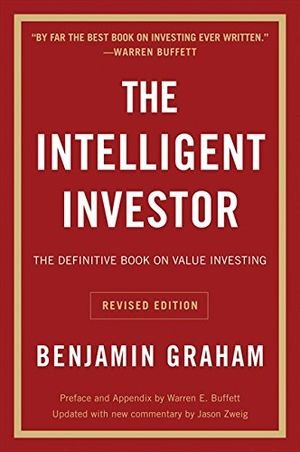 1