1100 Best Civil Engineering Books of All Time
We've ranked the best civil engineering books using expert recommendations, sales data, and millions of reader ratings. At Shortform, we know books. Our book guides are the best in the world. Learn why.
1
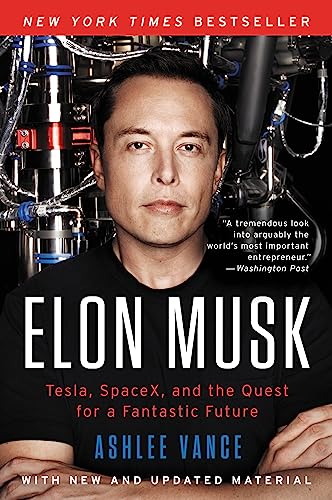
2Elon Musk: Tesla, SpaceX, and the Quest for a Fantastic Future
Founder/Virgin Group
Elon Musk is a man after my own heart: a risk taker undaunted by setbacks and ever driven to ensure a bright future for humanity. Ashlee Vance's stellar biography captures Musk's remarkable life story and irrepressible spirit. [source]
Founder/368 Creative Space
I'm fascinated by Elon Musk, I own a Tesla, I read Ashlee Vance's biography on Elon Musk. I think he's a very interesting charachter. [source]
Elon Musk: Tesla, SpaceX, and the Quest for a Fantastic Future as this was still in the first couple of years of me starting my own company, Mailbird and it was inspiring and visionary. It helps you go from a small voice in a big corporate company, to thinking big and voicing your wild opinions and creating plan to work towards it. [source]
3The Feynman Lectures on Physics
"The whole thing was basically an experiment," Richard Feynman said late in his career, looking back on the origins of his lectures. The experiment turned out to be hugely successful, spawning a book that has remained a definitive introduction to physics for decades. Ranging from the most basic principles of Newtonian physics through such formidable theories as general relativity and quantum mechanics, Feynman's lectures stand as a monument of clear exposition and deep insight. Now, we are reintroducing the printed books to the trade, fully corrected, for the first time ever, and in collaboration with Caltech. Timeless and collectible, the lectures are essential reading, not just for students of physics but for anyone seeking an introduction to the field from the inimitable Feynman.
CEO/Microsoft
You don't have to take a course to learn physics. If you're hardcore, read the Feynman book and do the problems. [source]
I think that he is one of the most intelligent people to live in the 20th century. Yet at the same time, surprisingly, he is an amazingly good teacher. This is quite an unusual combination. [source]
4Silent Spring
I’d start with Silent Spring by Rachel Carson, which looked at how pesticide use was harming, and in some cases killing, animals and humans, and really was the first book of its kind to illustrate this environmental destruction. I’ve been so involved in the environment for years and years and that has been a great guideline – it was really the awakening, if you will, to the environmental movement and to the progress we’ve made over the last quarter century or more. [source]
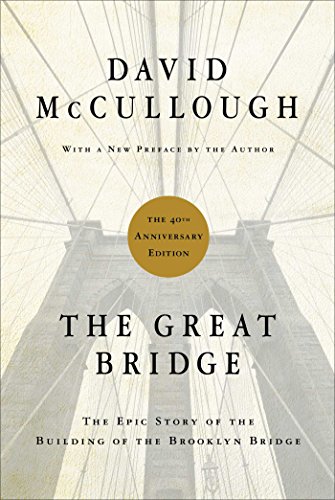
5The Great Bridge: The Epic Story of the Building of the Brooklyn Bridge
Built to join the rapidly expanding cities of New York and Brooklyn, the Brooklyn Bridge was thought by many at the start to be an impossibility destined to fail if not from insurmountable technical problems then from political corruption. (It was the heyday of Boss Tweed in New York.)
But the Brooklyn Bridge was at once the greatest engineering triumph of the age, a surpassing work of art, a proud American icon, and a story like no other in our history. Courage, chicanery, unprecedented ingenuity and plain blundering, heroes, rascals, all the best and worst in human nature played a part. At the center of the drama were the stricken chief engineer, Washington Roebling and his remarkable wife, Emily Warren Roebling, neither of whom ever gave up in the face of one heartbreaking setback after another.
The Great Bridge is a sweeping narrative of a stupendous American achievement that rose up out of its era like a cathedral, a symbol of affirmation then and still in our time.
6Abundance: The Future Is Better Than You Think
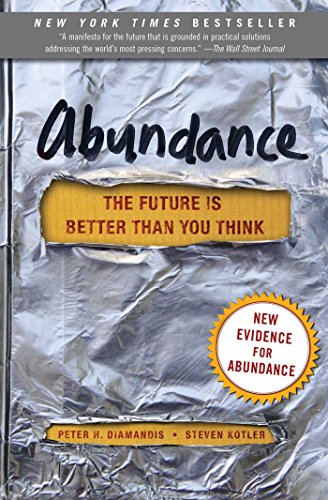
We will soon be able to meet and exceed the basic needs of every man, woman and child on the planet. Abundance for all is within our grasp. This bold, contrarian view, backed up by exhaustive research, introduces our near-term future, where exponentially growing technologies and three other powerful forces are conspiring to better the lives of billions. An antidote to pessimism by tech entrepreneur turned philanthropist, Peter H. Diamandis and award-winning science writer Steven Kotler.
Since the dawn of humanity, a privileged few have lived in stark contrast to the hardscrabble majority. Conventional wisdom says this gap cannot be closed. But it is closing—fast. The authors document how four forces—exponential technologies, the DIY innovator, the Technophilanthropist, and the Rising Billion—are conspiring to solve our biggest problems. Abundance establishes hard targets for change and lays out a strategic roadmap for governments, industry and entrepreneurs, giving us plenty of reason for optimism.
Examining human need by category—water, food, energy, healthcare, education, freedom—Diamandis and Kotler introduce dozens of innovators making great strides in each area: Larry Page, Steven Hawking, Dean Kamen, Daniel Kahneman, Elon Musk, Bill Joy, Stewart Brand, Jeff Skoll, Ray Kurzweil, Ratan Tata, Craig Venter, among many, many others.
CEO/Microsoft
On Bill Gates's reading list in 2012. [source]
Founder/Virgin Group
Today is World Book Day, a wonderful opportunity to address this #ChallengeRichard sent in by Mike Gonzalez of New Jersey: Make a list of your top 65 books to read in a lifetime. [source]
CEO/Dell Computers
The authors of Abundance go so far as to claim that "technology has the potential to significantly raise the basic standards of living for every man, woman, and child on the planet." Before you disagree, read the book. They make a fascinating argument, and make me happier than ever that I ditched my dream of being a doctor to enter the unpredictable world of IT. We live in exciting times. [source]
7Chernobyl: History of a Tragedy
In Chernobyl, award-winning historian Serhii Plokhy draws on recently opened archives to recreate these events in all their drama, telling the stories of the scientists, workers, soldiers, and policemen who found themselves caught in a nuclear nightmare. While the immediate cause of the accident was a turbine test gone wrong, he shows how its deeper roots lay in the nature of the Soviet political system and the ingrained flaws of its nuclear industry. A little more than five years later, the Soviet Union would fall apart, destroyed from within by its unsustainable ideology and the dysfunctional systems laid bare in the wake of the disaster.
A moment by moment account of the heroes, perpetrators and victims of a tragedy, Chernobyl is the first full account of a gripping, unforgettable Cold War story.
He’s really good here at laying down the background of the disaster itself, the plant’s construction, the days leading up to it, the moments the accident occurred. He talks about the accident itself, the delay in informing the public, the censorship of news, the trial of the nuclear power plant operators who he thinks were treated as scapegoats, and the political outcomes of all this deception. [source]
It’s just a really thrilling book, as well as being a really interesting history of that time. But the reason why I think it’s also a brilliant political book is fundamentally what Plokhii reveals in his writing, is that the failure of Chernobyl was fundamentally a failure of a political system, as well as a failure of a scientific system. [source]
The Big Burn: Teddy Roosevelt and the Fire That Saved America
Egan narrates the struggles of the overmatched rangers against the implacable fire with unstoppable dramatic force. Equally dramatic is the larger story he tells of outsized president Teddy Roosevelt and his chief forester, Gifford Pinchot. Pioneering the notion of conservation, Roosevelt and Pinchot did nothing less than create the idea of public land as our national treasure, owned by and preserved for every citizen. The robber barons fought Roosevelt and Pinchot’s rangers, but the Big Burn saved the forests even as it destroyed them: the heroism shown by the rangers turned public opinion permanently in their favor and became the creation myth that drove the Forest Service, with consequences still felt in the way our national lands are protected — or not — today.
9Fundamentals of Structural Analysis
10Architecture: Form, Space, & Order
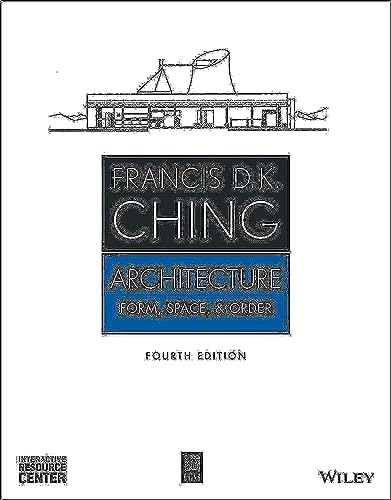
For more than forty years, the beautifully illustrated Architecture: Form, Space, and Order has served as the classic introduction to the basic vocabulary of architectural design. The updated and revised Fourth Edition features the fundamental elements of space and form and is designed to encourage critical thought in order to promote a more evocative understanding of architecture.
Architecture: Form, Space, and Order distills complex concepts of design into a clear focus and brings difficult abstractions to life. The book explains form and space in relation to light, view, openings, and enclosures and explores the organization of space, and the elements and relationships of circulation, as well as proportion and scale. In addition, the text's detailed illustrations demonstrate the concepts presented and reveal the relationships between fundamental elements of architecture through the ages and across cultures.
This edition includes an access card with a redemption code for the online Interactive Resource Center, which features thirty-five animations, flashcards of key architectural terms, and an image gallery showcasing hundreds of photos that enrich the book's content.
11FE Civil Practice
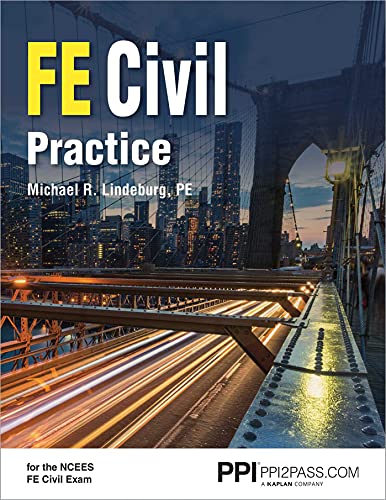
FE Civil Practice offers comprehensive practice for the NCEES FE Civil exam. This book is part of an integrated review program designed to help you pass the FE exam the first time.
FE Civil Practice features include:
over 460 three-minute, multiple-choice, exam-like practice problems to illustrate the type of problems you’ll encounter during the exam
clear, complete, and easy-to-follow solutions to deepen your understanding of all knowledge areas covered in the exam
step-by-step calculations using equations and nomenclature from the NCEES FE Reference Handbook to familiarize you with the reference you’ll have on exam day
Exam Topics Covered
Mathematics
Probability and Statistics
Fluid Mechanics
Hydraulics and Hydrologic Systems
Environmental Engineering
Geotechnical Engineering
Statics
Dynamics
Mechanics of Materials
Materials
Structural Design
Transportation and Surveying
Construction
Computational Tools
Engineering Economics
Ethics and Professional Practice
12Why Buildings Fall Down: Why Structures Fail
Structural Analysis
Structural Analysis, 10th Edition, presents the theory and applications of structural analysis as it applies to trusses, beams, and frames. Through its reader-friendly, clear organization, the text emphasizes developing the ability to model and analyze a structure in preparation for professional practice. The text is designed to ensure those taking their first course in this subject understand some of the more important classical methods of structural analysis, in order to obtain a better understanding of how loads are transmitted through a structure, and how the structure will deform under load. The large number of problems cover realistic situations involving various levels of difficulty. The updated 10th edition features 30% new problems and an expanded discussion of structural modeling, specifically the importance of modeling a structure so it can be used in computer analysis. Newly added material includes anupdate to the ASCE/SEI 2106 specifications, a discussion of catenary cables, and further clarification for drawing moment and deflection diagrams for beams and frames. Personalize learning with Mastering Engineering. Mastering (TM) Engineering is an online homework, tutorial, and assessment program designed to work with this text to engage students and improve results. Interactive, self-paced tutorials provide individualized coaching to help students stay on track. With a wide range of activities available, students can actively learn, understand, and retain even the most difficult concepts. The text and Mastering Engineering work together to guide students through engineering concepts with a multi-step approach to problems.
Also available with Mastering Engineering. Mastering (TM) Engineering is an online homework, tutorial, and assessment program designed to work with this text to engage students and improve results. Interactive, self-paced tutorials provide individualized coaching to help students stay on track. With a wide range of activities available, students can actively learn, understand, and retain even the most difficult concepts. The text and Mastering Engineering work together to guide students through engineering concepts with a multi-step approach to problems.
Note: You are purchasing a standalone product; Mastering Engineering does not come packaged with this content. Students, if interested in purchasing this title with Mastering Engineering, ask your instructor for the correct package ISBN and Course ID. Instructors, contact your Pearson representative for more information.
If you would like to purchase both the physical text and Mastering Engineering, search for: 0134679725 / 9780134679723 Structural Analysis Plus MasteringEngineering with Pearson eText -- Access Card Package Package consists of: 0134610679 / 9780134610672 Structural Analysis0134701453 / 9780134701455 MasteringEngineering with Pearson eText -- Standalone Access Card -- for Structural Analysis
14The Johnstown Flood
Graced by David McCullough's remarkable gift for writing richly textured, sympathetic social history, The Johnstown Flood is an absorbing, classic portrait of life in nineteenth-century America, of overweening confidence, of energy, and of tragedy. It also offers a powerful historical lesson for our century and all times: the danger of assuming that because people are in positions of responsibility they are necessarily behaving responsibly.
15What the Eyes Don't See: A Story of Crisis, Resistance, and Hope in an American City
Flint was already a troubled city in 2014 when the state of Michigan--in the name of austerity--shifted the source of its water supply from Lake Huron to the Flint River. Soon after, citizens began complaining about the water that flowed from their taps--but officials rebuffed them, insisting that the water was fine. Dr. Mona Hanna-Attisha, a pediatrician at the city's public hospital, took state officials at their word and encouraged the parents and children in her care to continue drinking the water--after all, it was American tap water, blessed with the state's seal of approval.
But a conversation at a cookout with an old friend, leaked documents from a rogue environmental inspector, and the activism of a concerned mother raised red flags about lead--a neurotoxin whose irreversible effects fall most heavily on children. Even as circumstantial evidence mounted and protests grew, Dr. Mona knew that the only thing that could stop the lead poisoning was undeniable proof-- and that to get it, she'd have to enter the fight of her life.
What the Eyes Don't See is the inspiring story of how Dr. Mona--accompanied by an idiosyncratic team of researchers, parents, friends, and community leaders--proved that Flint's kids were exposed to lead and then fought her own government and a brutal backlash to expose that truth to the world. Paced like a scientific thriller, this book shows how misguided austerity policies, the withdrawal of democratic government, and callous bureaucratic indifference placed an entire city at risk. And at the center of the story is Dr. Mona herself--an immigrant, doctor, scientist, and mother whose family's activist roots inspired her pursuit of justice.
What the Eyes Don't See is a riveting, beautifully rendered account of a shameful disaster that became a tale of hope, the story of a city on the ropes that came together to fight for justice, self-determination, and the right to build a better world for their--and all of our--children.
Congrats Doctor Hanna-Attisha. Well deserved. It’s a great book https://t.co/XgoMjECOOW [source]
16The New Science of Strong Materials: Or Why You Don't Fall Through the Floor
CEO/Microsoft
A recapitulation of the history of materials told in an interesting and approachable way. [source]
17The Art of Construction: Projects and Principles for Beginning Engineers Architects
18Building Construction Illustrated
19Cadillac Desert: The American West and Its Disappearing Water
Based on more than a decade of research, Cadillac Desert is a stunning expose and a dramatic, intriguing history of the creation of an Eden—an Eden that may be only a mirage.
20The Fourth Phase of Water: Beyond Solid, Liquid, and Vapor
For instance, have you ever wondered. . .
How do clouds made up of dense water droplets manage to float in the sky? Why don't your joints squeak as they rub together? Why do you sink in dry sand, but not in wet sand? How does capillary action manage to raise water up a 100 foot tree? Why does warm water freeze quicker than cool water?
Pollack uses a recent and fundamental scientific finding - EZ water - to help explain these and many other head-scratchers.
When touching most surfaces, water transforms itself into so-called EZ (Exclusion Zone) water, also known as structured water or fourth phase water. EZ water, whose formula is H3O2, differs dramatically from H2O. And, there is a lot of it, everywhere.
This award-winning book provides ample evidence for the existence of EZ water. Pollack writes in a clear, eloquent style.
PLEASE NOTE: If you chose to purchase this title in the Audible format, the accompanying PDF will be available in your Audible Library along with the audio.
©2013 Gerald H. Pollack (P)2019 Tantor
21Civil Engineering Formulas (Pocket Guide)
22Mixing Secrets for the Small Studio
Mixing Secrets For The Small Studio is a down-to-earth primer for small-studio enthusiasts who want chart-ready sonics in a hurry. Drawing on the back-room strategies of more than 100 famous names, this entertaining guide leads you step-by-step through the entire mixing process. On the way, you'll unravel the mysteries of every type of mix processing, from simple EQ and compression through to advanced spectral dynamics and 'fairy dust' effects. User-friendly explanations introduce technical concepts on a strictly need-to-know basis, while chapter summaries and assignments are perfect for school and college use.
* Learn the subtle editing, arrangement, and monitoring tactics which give industry insiders their competitive edge, and master the psychological tricks which protect you from all the biggest rookie mistakes.
* Find out where you don't need to spend money, as well as how to make a limited budget really count.
* Pick up tricks and tips from leading-edge engineers working on today's multi-platinum hits, including Michael Brauer, Serban Ghenea, the Lord-Alge brothers, Tony Maserati, Manny Marroquin, Dave 'Hard Drive' Pensado, Jack Joseph Puig, Mark 'Spike' Stent, Phil Tan, Andy Wallace, and many, many more...
Mike Senior is a professional engineer who has worked with Wet Wet Wet, The Charlatans, Reef, Therapy, and Nigel Kennedy. He specialises in adapting the techniques of top producers for those working on a budget. Since 2007 he has transformed dozens of amateur productions for Sound On Sound magazine's popular 'Mix Rescue' column, proving time and again that you can achieve commercial-grade results with affordable gear -- once you know how!
Cry of the Kalahari
Carrying little more than a change of clothes and a pair of binoculars, two young Americans, Mark and Delia Owens, caught a plane to Africa, bought a thirdhand Land Rover, and drove deep into the Kalahari Desert. There they lived for seven years, in an unexplored area with no roads, no people, and no source of water for thousands of square miles. In this vast wilderness the Owenses began their zoology research, working along animals that had never before been exposed to humans.
An international bestseller, Cry of the Kalahari is the story of the Owenses’s life with lions, brown hyenas, jackals, giraffes, and the many other creatures they came to know. It is also a gripping account of how they survived the dangers of living in one of the last and largest pristine areas on Earth.
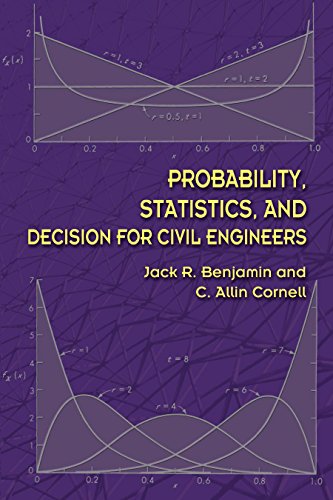
24Probability, Statistics, and Decision for Civil Engineers
A focus on fundamentals includes such subjects as Bayesian statistical decision theory, subjective probability, and utility theory. This makes the material accessible to engineers trained in classical statistics and also provides a brief elementary introduction to probability. The coverage also addresses in detail the methods for analyzing engineering economic decisions in the face of uncertainty. An Appendix of tables makes this volume particularly useful as a reference text.
25A Dictionary of Construction, Surveying, and Civil Engineering
26Eager: The Surprising, Secret Life of Beavers and Why They Matter
Washington Post "50 Notable Works of Nonfiction"
Science News "Favorite Science Books of 2018"
Booklist "Top Ten Science/Technology Book of 2018"
"A marvelously humor-laced page-turner about the science of semi-aquatic rodents.... A masterpiece of a treatise on the natural world."--The Washington Post
In Eager, environmental journalist Ben Goldfarb reveals that our modern idea of what a healthy landscape looks like and how it functions is wrong, distorted by the fur trade that once trapped out millions of beavers from North America's lakes and rivers. The consequences of losing beavers were profound: streams eroded, wetlands dried up, and species from salmon to swans lost vital habitat. Today, a growing coalition of "Beaver Believers"--including scientists, ranchers, and passionate citizens--recognizes that ecosystems with beavers are far healthier, for humans and non-humans alike, than those without them. From the Nevada deserts to the Scottish highlands, Believers are now hard at work restoring these industrious rodents to their former haunts. Eager is a powerful story about one of the world's most influential species, how North America was colonized, how our landscapes have changed over the centuries, and how beavers can help us fight drought, flooding, wildfire, extinction, and the ravages of climate change. Ultimately, it's about how we can learn to coexist, harmoniously and even beneficially, with our fellow travelers on this planet.
27PPI FE Review Manual: Rapid Preparation for the Fundamentals of Engineering Exam, 3rd Edition (Paperback) – A Comprehensive Preparation Guide for the FE Exam
FE Review Manual, 3rd Edition
Michael R. Lindeburg PE’s FE Review Manual, 3rd Edition offers complete review for the FE exam. This book is part of comprehensive learning management systems designed to help you pass the FE exam the first time.
Select your discipline below and see the details of our complete learning management systems.
FE Industrial Review Bundle (FEIERB)
FE Environmental Review Bundle (FEENRB)
Topics Covered
Computational Tools
Dynamics, Kinematics, and Vibrations
Electricity and Magnetism
Engineering Economics
Ethics and Professional Practice
Fluid Mechanics
Heat Transfer
Material Properties and Processing
Mathematics
Materials
Measurement, Instrumentation, and Controls
Mechanical Design and Analysis
Mechanics of Materials
Probability and Statistics
Statics
Thermodynamics
Key Features:
Equations, figures, and tables for NCEES FE Reference Handbook to familiarize you with the reference you’ll have on exam day.
Concise explanations supported by exam-like example problems, with step-by-step solutions to reinforce the theory and application of fundamental concepts.
A robust index with thousands of terms to facilitate referencing.
Binding: Paperback
Publisher: PPI, A Kaplan Company
Important notice! It has been brought to our attention that counterfeit PPI books have been circulating. Counterfeit books have missing material as well as incorrect and outdated content.
While we are actively working to resolve this issue, we would like our customers to be aware that this issue exists and to be leary of books not purchased directly through PPI. If you suspect a fraudulent seller, please email details to marketing@ppi2pass.com.
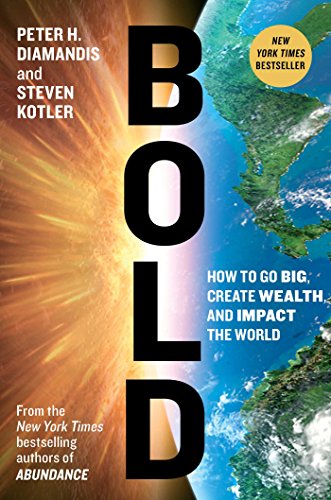
28Bold: How to Go Big, Create Wealth and Impact the World
From the coauthors of the New York Times bestseller Abundance comes their much anticipated follow-up: Bold—a radical, how-to guide for using exponential technologies, moonshot thinking, and crowd-powered tools to create extraordinary wealth while also positively impacting the lives of billions.
Bold unfolds in three parts. Part One focuses on the exponential technologies that are disrupting today’s Fortune 500 companies and enabling upstart entrepreneurs to go from "I’ve got an idea" to "I run a billion-dollar company" far faster than ever before. The authors provide exceptional insight into the power of 3D printing, artificial intelligence, robotics, networks and sensors, and synthetic biology. Part Two of the book focuses on the Psychology of Bold, drawing on insights from billionaire entrepreneurs Larry Page, Elon Musk, Richard Branson, and Jeff Bezos. In addition, Diamandis reveals his entrepreneurial secrets garnered from building fifteen companies, including such audacious ventures as Singularity University, XPRIZE, Planetary Resources, and Human Longevity, Inc. Finally, Bold closes with a look at the best practices that allow anyone to leverage today’s hyper-connected crowd like never before. Here, the authors teach how to design and use incentive competitions, launch million-dollar crowdfunding campaigns to tap into ten’s of billions of dollars of capital, and finally how to build communities—armies of exponentially enabled individuals willing and able to help today’s entrepreneurs make their boldest dreams come true.
Bold is both a manifesto and a manual. It is today’s exponential entrepreneur’s go-to resource on the use of emerging technologies, thinking at scale, and the awesome power of crowd-powered tools.
Former USA President
Bold is a visionary roadmap for people who believe they can change the world---and offers invaluable advice about bringing together the partners and technologies to help them do it. [source]
CEO/Google
Abundance showed us where our world can be in 20 years. BOLD is a roadmap for entrepreneurs to help us get there. [source]
CEO/Dell Computers
I loved Peter Diamandis’ and Steven Kotler’s book Abundance, their writing and their Vision. BOLD is an amazing sequel, a book that every entrepreneur should read. It is inspiring, filled with incredible insights and offers a practical how-to game plan for going big and impacting the world. [source]
29FE Civil Practice Problems
Comprehensive Practice for the Computer-Based FE Civil Exam
FE Civil Practice Problems contains 466 problems designed to reinforce your knowledge of important civil engineering topics. Short, three-minute, multiple-choice problems illustrate the type and length of problem you’ll encounter on the FE Civil exam.
Solutions proceed logically and are clear, complete, and easy to follow. Calculations use equations and nomenclature from the NCEES FE Reference Handbook to familiarize you with the reference you’ll have on exam day. Solutions are presented in whichever system of units (customary U.S. or SI) you’ll use during the exam, and units are meticulously identified and rigorously carried through in all calculations.
Exam Topics Covered
Computational Tools
Construction
Dynamics
Engineering Economics
Environmental Engineering
Ethics and Professional Practice
Fluid Mechanics
Geotechnical Engineering
Hydraulics and Hydrologic Systems
Materials
Mathematics
Mechanics of Materials
Probability and Statistics
Statics
Structural Analysis
Structural Design
Surveying
Transportation Engineering
Integrated Products and Support Through feprep.com
FE Civil Practice Problems web book: the online version of this book provides automatic scoring and comparative reporting
FE Civil Review Manual: a comprehensive review manual with complete coverage of the FE Civil exam knowledge areas and relevant elements from the NCEES FE Reference Handbook;the online version offers full-text searching, note-taking, and bookmarking capabilities, and integrated interactive diagnostic exam problems with automatic scoring
FE Civil Practice Exam: an online simulated exam experience, with automatic scoring and comparative reporting
FE Civil Assessments: online problems to evaluate your familiarity with exam topics, with automatic scoring and comparative reporting
FE Civil Flashcards: online flashcards for quick, on-the-go review
FE Review Programs: online programs providing structure and personal feedback as you prepare for the FE exam
Study Schedule: an online, customizable study schedule with targeted reading and homework assignments
30Pipe Fitters Blue Book Revised
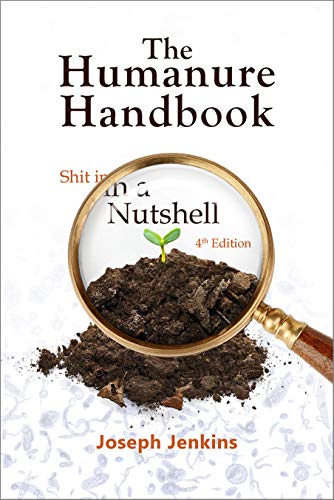
31The Humanure Handbook: Shit in a Nutshell
This is the 4th edition of a self-published book that no respectable publisher would touch with a ten-foot shovel. The 1st edition was published in 1994 with a print run of 600 copies, which the author expected to watch decompose in his garage for the rest of his life. Now, 24 years later, the book has sold over 65,000 print copies in the U.S. alone, been translated in whole or in part into 19 languages and been published in foreign editions on four continents.
The previous editions won numerous awards, including the Independent Publisher Outstanding Book of the Year Award, deeming the book "Most Likely to Save the Planet." The book has been mentioned on such diverse media outlets as: Mother Earth News, Whole Earth Review, Countryside Journal, The Journal of Environmental Quality, Natural Health, NPR, BBC, CBC, Howard Stern, The Wall Street Journal, Playboy Magazine, Organic Gardening Magazine, the History Channel, Tree House Masters, and many other national and international venues.
The 4th edition is a completely revised, expanded, and updated version of what has become an underground classic bestseller. The author draws from 40 years of research, experience, and travel, to expand and clarify your knowledge and understanding of... your poop!
Not only does the book address what to do with human turds, but it is also a priceless manual for anyone involved in composting or gardening, or looking for basic survival skills. There is no other book like this in print!
Tending the Wild: Native American Knowledge and the Management of California's Natural Resources
M. Kat Anderson presents a wealth of information on native land management practices gleaned in part from interviews and correspondence with Native Americans who recall what their grandparents told them about how and when areas were burned, which plants were eaten and which were used for basketry, and how plants were tended. The complex picture that emerges from this and other historical source material dispels the hunter-gatherer stereotype long perpetuated in anthropological and historical literature. We come to see California's indigenous people as active agents of environmental change and stewardship. Tending the Wild persuasively argues that this traditional ecological knowledge is essential if we are to successfully meet the challenge of living sustainably.
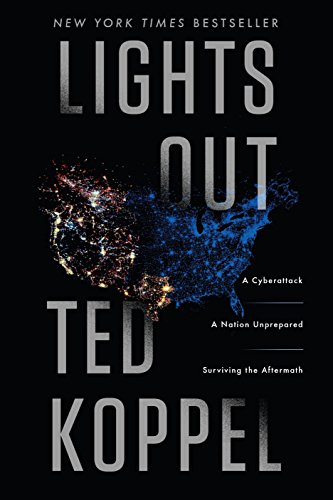
33Lights Out: A Cyberattack: A Nation Unprepared: Surviving the Aftermath
Imagine a blackout lasting not days, but weeks or months. Tens of millions of people over several states are affected. For those without access to a generator, there is no running water, no sewage, no refrigeration or light. Food and medical supplies are dwindling. Devices we rely on have gone dark. Banks no longer function, looting is widespread, and law and order are being tested as never before.
It isn't just a scenario. A well-designed attack on just one of the nation's three electric power grids could cripple much of our infrastructure--and in the age of cyberwarfare, a laptop has become the only necessary weapon. Several nations hostile to the United States could launch such an assault at any time. In fact, as a former chief scientist of the NSA reveals, China and Russia have already penetrated the grid. And a cybersecurity advisor to President Obama believes that independent actors--from "hacktivists" to terrorists--have the capability as well. "It's not a question of if," says Centcom Commander General Lloyd Austin, "it's a question of when."
And yet, as Koppel makes clear, the federal government, while well prepared for natural disasters, has no plan for the aftermath of an attack on the power grid. The current Secretary of Homeland Security suggests keeping a battery-powered radio.
In the absence of a government plan, some individuals and communities have taken matters into their own hands. Among the nation's estimated three million "preppers," we meet one whose doomsday retreat includes a newly excavated three-acre lake, stocked with fish, and a Wyoming homesteader so self-sufficient that he crafted the thousands of adobe bricks in his house by hand. We also see the unrivaled disaster preparedness of the Mormon church, with its enormous storehouses, high-tech dairies, orchards, and proprietary trucking company - the fruits of a long tradition of anticipating the worst. But how, Koppel asks, will ordinary civilians survive?
With urgency and authority, one of our most renowned journalists examines a threat unique to our time and evaluates potential ways to prepare for a catastrophe that is all but inevitable.
It was a really interesting read, and it scared the crap out of me. [source]
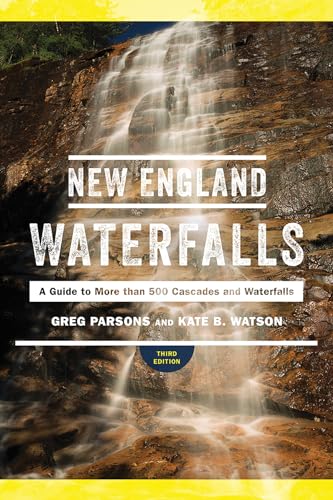
34New England Waterfalls: A Guide to More than 500 Cascades and Waterfalls
With easy- to- follow maps and appendices of the best swimming holes and day trips, New England Waterfalls delivers a wealth of information for seekers of these regional treasures.
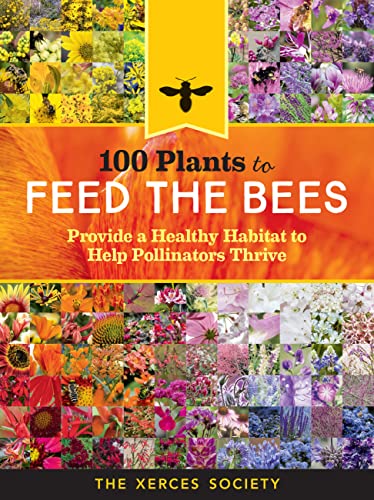
35100 Plants to Feed the Bees: Provide a Healthy Habitat to Help Pollinators Thrive
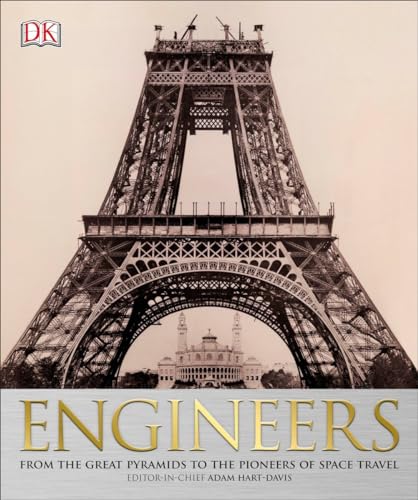
36Engineers
This full-color book covers more than 100 architects, designers, and engineers in detail, including blueprints of their work, biographical information, and insights into the particular genius of each. Engineers also includes timeline spreads to add context for the groundbreaking — and sometimes controversial — projects that made history
With original sketches and drawings as well as contemporary photography, Engineers makes an ideal gift book for artists, architects, scientists, and those who are fascinated by technology.
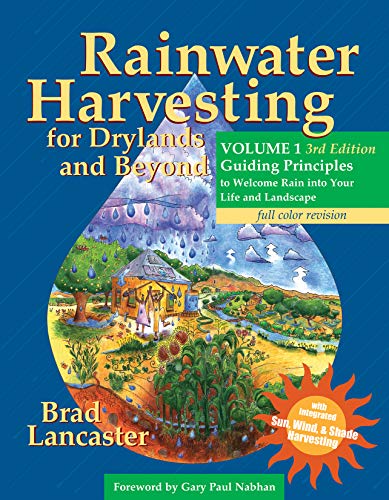
37Rainwater Harvesting for Drylands and Beyond, Volume 1: Guiding Principles to Welcome Rain Into Your Life and Landscape
"Rainwater Harvesting for Drylands and Beyond, Volume 1, 3rd Edition" is the best-selling, award-winning guide on how to conceptualize, design, and implement life-enhancing water-, sun-, wind-, and shade-harvesting systems for your home, landscape, and community. This book enables you to assess your on-site resources, gives you a diverse array of strategies to maximize their potential, and empowers you with guiding principles to create an integrated, multi-functional plan specific to your site and needs.
Clearly written with more than 290 illustrations, this full-color edition helps bring your site to life, reduce your cost of living, endow yourself and your community with skills of self-reliance and cooperation, and create living air conditioners of vegetation growing beauty, food, and wildlife habitat. Stories of people who are successfully welcoming rain into their life and landscape will invite you to do the same.
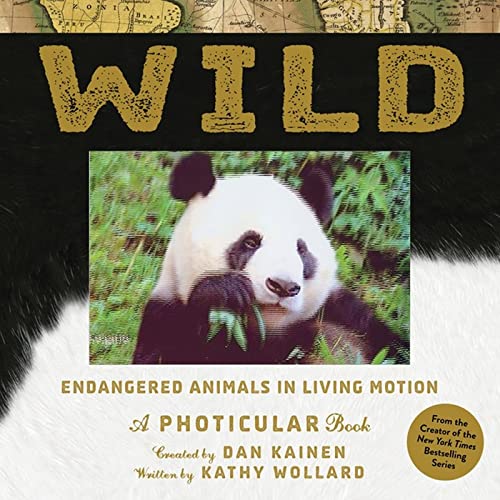
38Wild: A Photicular Book
Come face to face with our vanishing wildlife. Using unique Photicular technology, Wild brings to vivid life the animals who are under threat of extinction. It turns abstract numbers and names into touching and unforgettable images.
From the cover panda, lazily munching on leaves, to an albatross swooping its magnificent wings, to the hovering bumblebee, among the most critical of threatened animals in terms of its effect on the global food supply, Wild captures eight endangered animals in living motion. We see gorillas at play, a rhinoceros and its baby trotting across the savanna, a pangolin skittering along the landscape, an elephant bathing in a river.
An opening essay explores the environmental and economic threats to animal populations and how conservationists are working to slow—and when they can, reverse—the damage. Profiles of each animal accompany the images.
Wild joins four other books in the Photicular series—Safari, Ocean, Polar, and Jungle.
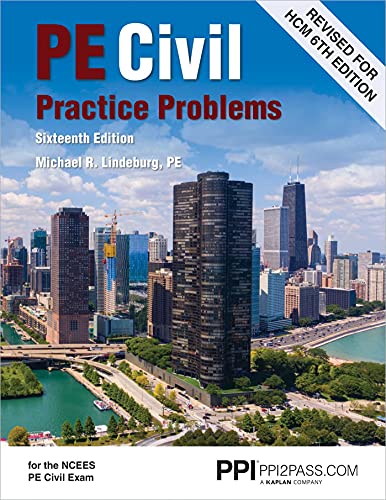
39PPI PE Civil Practice Problems, 16th Edition (Paperback) – Comprehensive Practice for the NCEES PE Civil Exam
PE Civil Practice Problems contains over 900 problems designed to reinforce your knowledge of the topics presented in the PE Civil Reference Manual. Short, six-minute, multiple-choice problems follow the NCEES PE Civil exam problem format and focus on individual engineering concepts. Longer, more complex problems challenge your skills in identifying and applying related engineering concepts. Problems will also familiarize you with the codes and standards you’ll use on the exam.
Solutions are clearly written, complete, and easy to follow. U.S. customary and SI units are equally supported, and units are meticulously identified and carried through in all calculations. All solution methodologies permitted by the NCEES PE Civil exam (e.g., ASD and LRFD) are presented. Frequent references to figures, tables, equations, and appendices in the PE Civil Reference Manual and the exam-adopted codes and standards will direct you to relevant support material.
Topics Covered:
Civil Breadth Project Planning; Means and Methods; Soil Mechanics; Structural Mechanics; Hydraulics and Hydrology; Geometrics; Materials; Site Development
Construction Earthwork Construction and Layout; Estimating Quantities and Costs; Construction Operations and Methods; Scheduling; Material Quality Control and Production; Temporary Structures; Health and Safety
Geotechnical Site Characterization; Soil Mechanics, Laboratory Testing, and Analysis; Field Materials Testing, Methods, and Safety; Earthquake Engineering and Dynamic Loads; Earth Structures; Groundwater and Seepage; Problematic Soil and Rock Conditions; Earth Retaining Structures; Shallow Foundations; Deep Foundations
Structural Analysis of Structures; Design and Details of Structures; Codes and Construction
Transportation Traffic Engineering; Horizontal Design; Vertical Design; Intersection Geometry; Roadside and Cross-Section Design; Signal Design; Traffic Control Design; Geotechnical and Pavement; Drainage; Alternatives Analysis
Water Resources and Environmental Analysis and Design; Hydraulics–Closed Conduit; Hydraulics–Open Channel; Hydrology; Groundwater and Wells; Wastewater Collection and Treatment; Water Quality; Drinking Water Distribution and Treatment; Engineering Economic Analysis
Key Features:
Over 900 practice problems to help prepare you for the NCEES PE Civil Exam.
Frequent references to figures, tables, equations, and appendices in the PE Civil Reference Manual.
Binding: Paperback
Publisher: PPI, A Kaplan Company
An Empire of Their Own: How the Jews Invented Hollywood
I’ll start with An Empire of Their Own, because it’s just so difficult for us to understand what Hollywood was like then, particularly for these guys who were either first generation, or immigrant German, or East European Jews, who’d come largely from running things like nickelodeon outfits on the East Coast, and ended up creating this extraordinary confection out in California. Bearing in mind that they weren’t allowed in the country clubs and things like that, they ended up trying to suppress their Jewishness in almost every way. [source]
41Gettysburg--The Second Day
Harry Pfanz, a former historian at Gettysburg National Military Park, has written a definitive account of the second day's brutal combat. He begins by introducing the men and units that were to do battle, analyzing the strategic intentions of Lee and Meade as commanders of the opposing armies, and describing the concentration of forces in the area around Gettysburg. He then examines the development of tactical plans and the deployment of troops for the approaching battle. But the emphasis is on the fighting itself. Pfanz provides a thorough account of the Confederates' smashing assaults -- at Devil's Den and Litle Round Top, through the Wheatfield and the Peach Orchard, and against the Union center at Cemetery Ridge. He also details the Union defense that eventually succeeded in beating back these assaults, depriving Lee's gallant army of victory.
Pfanz analyzes decisions and events that have sparked debate for more than a century. In particular he discusses factors underlying the Meade-Sickles controversy and the questions about Longstreet's delay in attacking the Union left. The narrative is also enhanced by thirteen superb maps, more than eighty illustrations, brief portraits of the leading commanders, and observations on artillery, weapons, and tactics that will be of help even to knowledgeable readers.
Gettysburg--The Second Day is certain to become a Civil War classic. What makes the work so authoritative is Pfanz' mastery of the Gettysburg literature and his unparalleled knowledge of the ground on which the fighting occurred. His sources include the Official Records, regimental histories and personal reminiscences from soldiers North and South, personal papers and diaries, newspaper files, and last -- but assuredly not least -- the Gettysburg battlefield. Pfanz's career in the National Park Service included a ten-year assignment as a park historian at Gettysburg. Without doubt, he knows the terrain of the battle as well as he knows the battle itself.
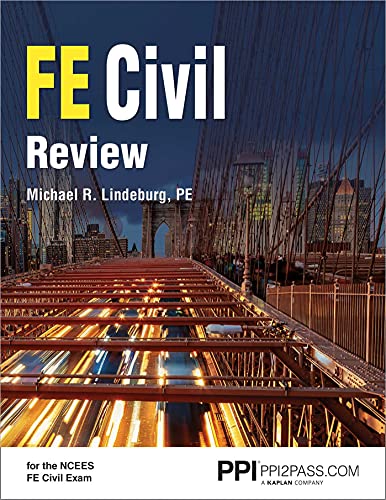
42FE Civil Review
Michael R. Lindeburg PE’s FE Civil Review offers complete review of all knowledge areas for the FE Civil exam.
Features of FE Civil Review include:
complete coverage of all exam knowledge areas
equations, figures, and tables for version 9.4 of the NCEES FE Reference Handbook to familiarize you with the reference you’ll have on exam day
concise explanations supported by exam-like example problems, with step-by-step solutions to reinforce the theory and application of fundamental concepts
a robust index with thousands of terms to facilitate referencing
Topics Covered
Computational Tools
Construction
Dynamics
Engineering Economics
Environmental Engineering
Ethics and Professional Practice
Fluid Mechanics
Geotechnical Engineering
Hydraulics and Hydrologic Systems
Materials
Mathematics
Mechanics of Materials
Probability and Statistics
Statics
Structural Analysis
Structural Design
Surveying
Transportation Engineering
Important notice! It has been brought to our attention that counterfeit PPI books have been circulating. Counterfeit books have missing material as well as incorrect and outdated content.
While we are actively working to resolve this issue, we would like our customers to be aware that this issue exists and to be leary of books not purchased directly through PPI. If you suspect a fraudulent seller, please email details to marketing@ppi2pass.com.
43Properties of Concrete
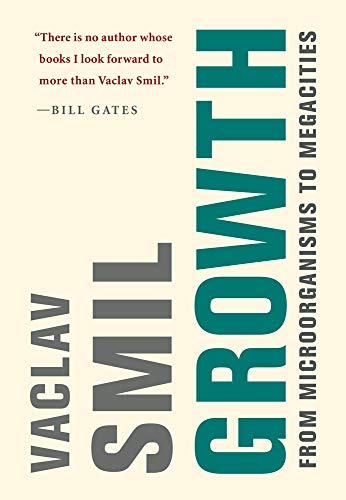
44Growth: From Microorganisms to Megacities
Growth has been both an unspoken and an explicit aim of our individual and collective striving. It governs the lives of microorganisms and galaxies; it shapes the capabilities of our extraordinarily large brains and the fortunes of our economies. Growth is manifested in annual increments of continental crust, a rising gross domestic product, a child's growth chart, the spread of cancerous cells. In this magisterial book, Vaclav Smil offers systematic investigation of growth in nature and society, from tiny organisms to the trajectories of empires and civilizations.
Smil takes readers from bacterial invasions through animal metabolisms to megacities and the global economy. He begins with organisms whose mature sizes range from microscopic to enormous, looking at disease-causing microbes, the cultivation of staple crops, and human growth from infancy to adulthood. He examines the growth of energy conversions and man-made objects that enable economic activities--developments that have been essential to civilization. Finally, he looks at growth in complex systems, beginning with the growth of human populations and proceeding to the growth of cities. He considers the challenges of tracing the growth of empires and civilizations, explaining that we can chart the growth of organisms across individual and evolutionary time, but that the progress of societies and economies, not so linear, encompasses both decline and renewal. The trajectory of modern civilization, driven by competing imperatives of material growth and biospheric limits, Smil tells us, remains uncertain.
CEO/Microsoft
The newest of 39 brilliant books by one of my favorite thinkers. [source]
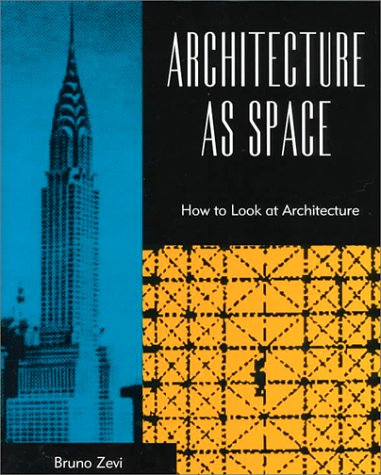
45Architecture As Space
46Surveying And Levelling
47Best-Selling 1-Story Home Plans, Updated 4th Edition: Over 360 Dream-Home Plans in Full Color
48Zero Waste Home: The Ultimate Guide to Simplifying Your Life by Reducing Your Waste
In Zero Waste Home, Bea Johnson shares her story and lays out the system by which she and her family have reached and maintained their own Zero Waste goals—a lifestyle that has yielded bigger surprises than they ever dreamed possible. They now have more time together as a family, they have cut their annual spending by a remarkable 40%, and they are healthier than they've ever been, both emotionally and physically.
This book shares how-to advice and essential secrets and insights based on the author’s own experience. She demystifies the process of going Zero Waste with hundreds of easy tips for sustainable living that even the busiest people can integrate: from making your own mustard, to packing kids' lunches without plastic, to cancelling your junk mail, to enjoying the holidays without the guilt associated with overconsumption.
Stylish and completely relatable, Zero Waste Home is a practical, step-by-step guide that gives readers the tools and tips to improve their overall health, save money and time, and achieve a brighter future for their families—and the planet.
Getting to Know Arcgis Desktop
Getting to Know ArcGIS Desktop, fifth edition, is a comprehensive introduction to the features and tools of ArcGIS Desktop. Through hands-on exercises, readers will discover, use, make, and share maps with meaningful content. They will also learn how to build geodatabases, query data, analyze geospatial data, and more. The latest edition has been updated to the most current version of ArcGIS Desktop 10.6. Getting to Know ArcGIS Desktop is suited for classroom use, independent study, and as a reference.
Data for completing the exercises and a 180-day free trial of ArcGIS Desktop are available for download.
An e-book of Getting to Know ArcGIS Desktop, fifth edition, ISBN 9781589485112, $99.99, is available at most e-book retailers. Note: Esri Press e-books do not include 180-day trial software. Instead, you can download the ArcGIS Trial at http: //www.esri.com/arcgis/trial.
50People Skills for Engineers
PPI FE Mechanical Practice Problems, 1st Edition (Paperback) – Comprehensive Practice for the FE Mechanical Exam
FE Mechanical Practice Problems offers comprehensive practice for the NCEES FE Electrical and Computer exam.
Exam Topics Covered
Computational Tools
Dynamics, Kinematics, and Vibrations
Electricity and Magnetism
Engineering Economics
Ethics and Professional Practice
Fluid Mechanics
Heat Transfer
Material Properties and Processing
Mathematics
Materials
Measurement, Instrumentation, and Controls
Mechanical Design and Analysis
Mechanics of Materials
Probability and Statistics
Statics
Thermodynamics
Key Features:
Over 460 three-minute, multiple-choice, exam-like practice problems to illustrate the type of problems you’ll encounter during the exam.
Clear, complete, and easy-to-follow solutions to deepen your understanding of all knowledge areas covered in the exam.
Step-by-step calculations using equations and nomenclature from the NCEES FE Reference Handbook to familiarize you with the reference you’ll have on exam day.
Binding: Paperback
Publisher: Kaplan
52Civil Engineering Reference Manual for the PE Exam
As the most comprehensive reference and study guide available for engineers preparing for the morning and afternoon topics on the Civil PE exam, the 11th edition of the Civil Engineering Reference Manual provides a concentrated review of the exam topics. No other exam-focused publication is more complete.
The Most Trusted Reference for the Civil PE Exam is also the Most Up-To-Date
A complete introduction to the exam format and content A suggested study schedule, plus tips for successful exam preparation Nearly 500 solved example problems Hundreds of key tables, charts, and figures at your fingertips An easy-to-use index and full glossary for quick reference Perfect for post-exam reference
What's New in the 11th Edition
4 new construction engineering chapters Over 35 updated chapters—including extensively revised structural and transportation chapters 100 new equations Over 300 new, easy-to-use index entries
Exam Topics Covered
Construction—New
Geotechnical—Updated
Structural—Updated
Transportation—Updated
Water Resources & Environmental—Updated
Since 1975 more than 2 million people preparing for their engineering, surveying, architecture, LEED®, interior design, and landscape architecture exams have entrusted their exam prep to PPI. For more information, visit us at www.ppi2pass.com.
53The A To Z of Practical Building Construction and its Management
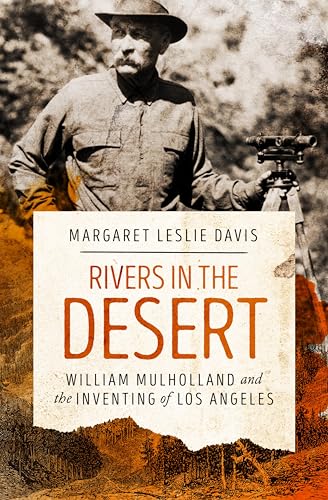
54Rivers in the Desert: William Mulholland and the Inventing of Los Angeles
55Mechanics of Materials
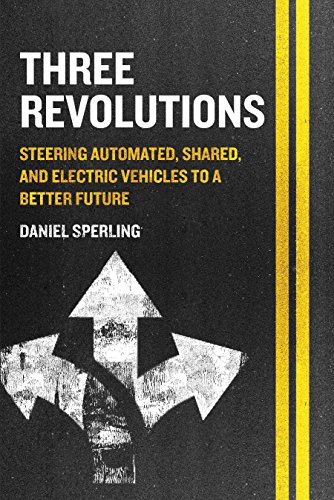
56Three Revolutions: Steering Automated, Shared, and Electric Vehicles to a Better Future
The dream scenario could bring huge public and private benefits, including more transportation choices, greater affordability and accessibility, and healthier, more livable cities, along with reduced greenhouse gas emissions. The nightmare scenario could bring more urban sprawl, energy use, greenhouse gas emissions, and unhealthy cities and individuals.
In Three Revolutions, transportation expert Dan Sperling, along with seven other leaders in the field, share research–based insights on potential public benefits and impacts of the three transportation revolutions. They describe innovative ideas and partnerships, and explore the role government policy can play in steering the new transportation paradigm toward the public interest—toward our dream scenario of social equity, environmental sustainability, and urban livability.
Many factors will influence these revolutions—including the willingness of travelers to share rides and eschew car ownership; continuing reductions in battery, fuel cell, and automation costs; and the adaptiveness of companies. But one of the most important factors is policy.
Three Revolutions offers policy recommendations and provides insight and knowledge that could lead to wiser choices by all. With this book, Sperling and his collaborators hope to steer these revolutions toward the public interest and a better quality of life for everyone.
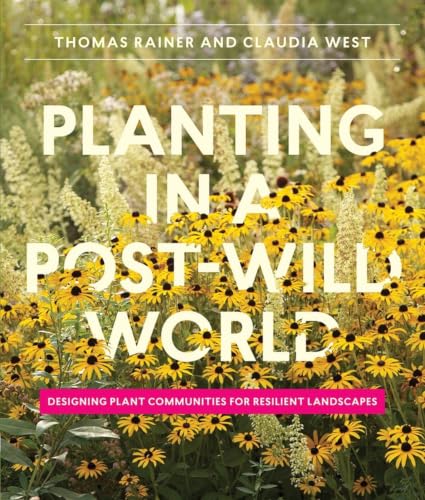
57Planting in a Post-Wild World: Designing Plant Communities for Resilient Landscapes
Over time, with industrialization and urban sprawl, we have driven nature out of our neighborhoods and cities. But we can invite it back by designing landscapes that look and function more like they do in the wild: robust, diverse, and visually harmonious. Planting in a Post-Wild World by Thomas Rainer and Claudia West is an inspiring call to action dedicated to the idea of a new nature—a hybrid of both the wild and the cultivated—that can flourish in our cities and suburbs. This is both a post-wild manifesto and practical guide that describes how to incorporate and layer plants into plant communities to create an environment that is reflective of natural systems and thrives within our built world.
Young Men and Fire
Alongside Maclean’s now-canonical A River Runs through It and Other Stories, Young Men and Fire is recognized today as a classic of the American West. This twenty-fifth anniversary edition of Maclean’s later triumph—the last book he would write—includes a powerful new foreword by Timothy Egan, author of The Big Burn and The Worst Hard Time. As moving and profound as when it was first published, Young Men and Fire honors the literary legacy of a man who gave voice to an essential corner of the American soul.
59Sound Reinforcement Handbook
60Secondhand: Travels in the New Global Garage Sale
In Secondhand, journalist Adam Minter takes us on an unexpected adventure into the often-hidden, multibillion-dollar industry of reuse: thrift stores in the American Southwest to vintage shops in Tokyo, flea markets in Southeast Asia to used-goods enterprises in Ghana, and more. Along the way, Minter meets the fascinating people who handle-and profit from-our rising tide of discarded stuff, and asks a pressing question: In a world that craves shiny and new, is there room for it all?
Secondhand offers hopeful answers and hard truths. A history of the stuff we've used and a contemplation of why we keep buying more, it also reveals the marketing practices, design failures, and racial prejudices that push used items into landfills instead of new homes. Secondhand shows us that it doesn't have to be this way, and what really needs to change to build a sustainable future free of excess stuff.
Anyone in B2B or business media, want to learn how to make your subject and writing interesting and big picture, read this. Certainly the most interesting book I have read in a while. https://t.co/gXHdAHBnA2 https://t.co/MfUXyXWNa6 [source]
61Design of Reinforced Concrete: Aci 318-05 Code
62Modern Recording Techniques
A robust companion website features video tutorials, web-links, an online glossary, flashcards, and a link to the author's blog. Instructor resources include a test bank and an instructor's manual.
The ninth edition includes:
Updated tips, tricks and insights for getting the best out of your studio
An introduction to the Apple iOS in music production
Introductions to new technologies and important retro studio techniques
The latest advancements in DAW systems, signal processing, mixing and mastering
63Fashionopolis: The Price of Fast Fashion and the Future of Clothes
What should I wear? It's one of the fundamental questions we ask ourselves every day. More than ever, we are told it should be something new. Today, the clothing industry churns out 80 billion garments a year and employs every sixth person on Earth. Historically, the apparel trade has exploited labor, the environment, and intellectual property--and in the last three decades, with the simultaneous unfurling of fast fashion, globalization, and the tech revolution, those abuses have multiplied exponentially, primarily out of view. We are in dire need of an entirely new human-scale model. Bestselling journalist Dana Thomas has traveled the globe to discover the visionary designers and companies who are propelling the industry toward that more positive future by reclaiming traditional craft and launching cutting-edge sustainable technologies to produce better fashion.
In Fashionopolis, Thomas sees renewal in a host of developments, including printing 3-D clothes, clean denim processing, smart manufacturing, hyperlocalism, fabric recycling--even lab-grown materials. From small-town makers and Silicon Valley whizzes to such household names as Stella McCartney, Levi's, and Rent the Runway, Thomas highlights the companies big and small that are leading the crusade.
We all have been casual about our clothes. It's time to get dressed with intention. Fashionopolis is the first comprehensive look at how to start.
64The Grid: Electrical Infrastructure for a New Era
Cultural anthropologist Gretchen Bakke unveils the many facets of America's energy infrastructure, its most dynamic moments and its most stable ones, and its essential role in personal and national life. The grid, she argues, is an essentially American artifact, one which developed with us: a product of bold expansion, the occasional foolhardy vision, some genius technologies, and constant improvisation. Most of all, her focus is on how Americans are changing the grid right now, sometimes with gumption and big dreams and sometimes with legislation or the brandishing of guns.
The Grid tells--entertainingly, perceptively--the story of what has been called “the largest machine in the world”: its fascinating history, its problematic present, and its potential role in a brighter, cleaner future.
CEO/Microsoft
This book, about our aging electrical grid, fits in one of my favorite genres: 'Books About Mundane Stuff That Are Actually Fascinating. [source]
The New Create an Oasis with Greywater: Integrated Design for Water Conservation, Reuse, Rainwater Harvesting, and Sustainable Landscaping
Save freshwater by irrigating with washwater
Relieve strain on your septic tank
Purify wastewater without energy or chemicals
Increase your water security
Make your home more resilient to drought, flood, and climate change
Other topics include: why to use or not use grey water, health guidelines, grey water sources, irrigation requirements, seventeen system examples and selection chart, biocompatible cleaners, grey water plumbing principles and components, maintenance and troubleshooting, freezing, rain, preserving soil quality, storing rainwater, compendium of common grey water errors and preferred practices, suppliers, and references.
This 6th edition of the world’s best-selling greywater book includes extensive revisions to every page, a dozen pages of new text, dozens of new photos and figures, as well as complete information on the Laundry to Landscape system (from the originator of this design). Do-it-yourself Laundry to Landscape is the simplest, least expensive, lowest-effort way to get the most greywater onto the home landscape.
This book is of interest to homeowners, do-it-yourselfers, back-to-the-landers, conservationists, gardeners, developers, builders, plumbers, regulators, policy makers, development workers, and researchers.
66Mechanics of Materials
67How to Read Water: Clues and Patterns from Puddles to the Sea: Learn to Gauge Depth, Navigate, Forecast Weather, and Make Other Predictions with Water
How to find your way with puddles
How to identify lighthouses with the aid of elephants
How to read the sea using ancient Viking methods
How to spot dangerous water in the pitch black with the help of a clock face
How to interpret ponds like a Polynesian
How to decipher patterns on beaches
From streams, ponds, puddles, rivers, oceans, waterfalls, and more, How To Read Water reveals the many ways to read the water all around us.
68PPI PE Civil Reference Manual, 16th Edition (Hardcover) – Comprehensive Reference Manual for the NCEES PE Civil Exam
Michael R. Lindeburg, PE’s PE Civil Reference Manual, 16th Edition (Also known as CERM16) is the only reference you need to prepare for the Breadth portion of the PE Civil exam. This comprehensive manual follows NCEES PE Civil exam specifications and addresses complex topics by parsing them into condensed, understandable, readable sections. Offering a complete review of all exam topics, this reference manual is up-to-date to the current exam specifications and design standards, and employs instructional design to enable comprehensive understanding that builds exam confidence. The PE Civil exam is an 8-hour, open book exam. Use this reference manual to fully prepare for the exam, and bring it with you on exam-day for your must-have reference.
Also available is the new PE Civil Companion for the 16th Edition, which offers a convenient side-by-side companion offering a comprehensive index with thousands of entries covering all topics; over 100 appendices; and over 550 common civil engineering definitions. For more details, go to ppi2pass.com/cermc16-offer
Key Features:
Complete exam review for the Breadth portion of the PE Civil exam:
Project Planning
Means and Methods
Soil Mechanics
Structural Mechanics
Hydraulics and Hydrology
Geometrics
Materials
Site Development
Brief overview of each afternoon Depth exam.
Up-to-date codes including: AASHTO, HCM, IBC, ACI and more.
Recommendations for a study schedule to keep you on track.
Exam tips for exam-day readiness.
Binding: Paperback
Publisher: PPI, A Kaplan Company
After you pass the exam
PE Civil Reference Manual, 16th Ed. (CERM16) will serve as an invaluable reference throughout your civil engineering career.
*Add the convenience of accessing this book anytime, anywhere on your personal device with the eTextbook version for only $59 at ppi2pass.com/etextbook-program.*
69Why Should I Recycle?
70Two-Stroke Engine Repair and Maintenance
Get Peak Performance from Two-Stroke Engines
Do you spend more time trying to start your weed trimmer than you do enjoying your backyard? With this how-to guide, you can win the battle with the temperamental two-stroke engine.
Written by long-time mechanic and bestselling author Paul Dempsey, Two-Stroke Engine Repair & Maintenance shows you how to fix the engines that power garden equipment, construction tools, portable pumps, mopeds, generators, trolling motors, and more. Detailed drawings, schematics, and photographs along with step-by-step instructions make it easy to get the job done quickly. Save time and money when you learn how to:
Troubleshoot the engine to determine the source of the problem
Repair magnetos and solid-state systems--both analog and digital ignition modules
Adjust and repair float-type, diaphragm, and variable venturi carburetors
Fabricate a crankcase pressure tester
Fix rewind starters of all types
Overhaul engines--replace crankshaft seals, main bearings, pistons, and rings
Work with centrifugal clutches, V-belts, chains, and torque converters
FE Supplied-Reference Handbook
72Strength Of Materials: Mechanics Of Solids
73Advanced Engineering Mathematics
74Architects' Data
- building components
- services
- heating
- lighting
- thermal and sound insulation
- fire protection
- designing for the disabled
An extensive bibliography and a detailed set of metric/imperial conversion tables are included.
Since it was first published in Germany in 1936, Ernst Neufert's handbook has been progressively revised and updated through 35 editions and many translations. This Third Edition of the English language version has been revised for the first time in 20 years and completely reworked, with 40% more material, to provide a major new edition for an international readership.
Browse sample pages and buy online: http: //www.blackwellpublishing.com/architect...
75The Tower and the Bridge: The New Art of Structural Engineering
-- "New York Times Book Review"
76Handyman In-Your-Pocket
77Basic Machines and How They Work
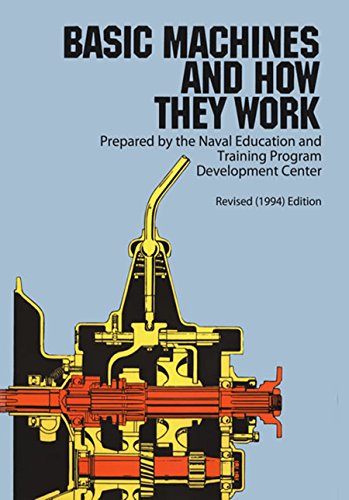
Beginning with the simplest of machines — the lever — the text proceeds to discussions of the block and tackle (pulleys and hoists), wheel and axle, the inclined plane and the wedge, the screw, and different types of gears (simple, spur, bevel, herringbone, spiral, worm, etc.). A chapter on the concept of work discusses the measurement of work, friction, and efficiency; this is followed by investigations of power, force, and pressure, with explanations of the uses of scales, balances, gauges, and barometers. The fundamentals of hydrostatic and hydraulic machines (such as the hydraulic braking system and the hydraulic press) are discussed in detail.
The remaining chapters cover machine elements (bearings and springs), basic mechanisms (gear differential, couplings, cams, clutches), the internal combustion engine and power trains (including explanations of various transmission systems — synchromesh, auxiliary, etc.).
Every concept is clearly defined, and discussions always build easily from elementary theory to specific applications familiar to anyone with the slightest interest in mechanics. Important concepts, machine components, and techniques are clearly illustrated in more than 200 diagrams, drawings, and cross-sections that reveal inner workings — all of these help to clarify even further an already clear and well-organized presentation.
Although it was originally designed for use in U.S. Naval Training Schools, this book can be used to great advantage as a basic text in mechanical engineering in standard technical schools, and it will be immensely valuable even to lay readers who desire a basic knowledge of mechanics.
Young Gunz
79Smoke your Firefighter Interview
80Builder's Essentials: Plan Reading & Material Takeoff
Each chapter covers a major construction division, such as concrete, masonry and carpentry -- and uses plans, details and tables to illustrate plan reading and takeoff procedures. A checklist for each material division helps ensure that nothing is left out of your takeoff.
Includes a complete set of residential plans from Home Planners, Inc., the nation's leading provider of home plans. With a detailed material takeoff, from site work to electrical.
With over 160 illustrations, including commercial construction details.
81Engineering Mechanics: Statics
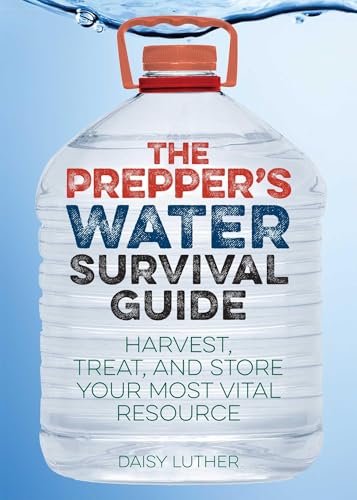
82The Prepper's Water Survival Guide: Harvest, Treat, and Store Your Most Vital Resource
Humans can survive up to three weeks without food, but only around three days without water! Of all the resources needed after a catastrophe strikes—food, heat, electricity, communication, transportation—none are as important as simple water. While a substantial supply should be stored, water's size and weight make storage impractical for long-term survival. Therefore it's equally critical to know how to acquire and purify additional water supplies over time. This guide addresses all of these factors and more with straight-forward instruction anyone can follow.
Suitable for novice and expert preppers alike, this book's laser-sharp focus on water allows for a depth of information not found in any other guide. Storage is the first area covered including details on types of containers, where to store them, and how to avoid contamination—from basic bottles to large tanks. The author follows with real-world applications for harvesting water from every possible source including digging a well, collecting rain, and purifying lake and river water.
Whether you are looking to set up a supply for a week, month, year, or longer, this book offers a solution for your specific need.
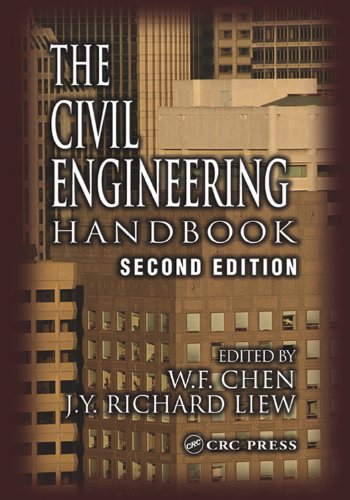
83The Civil Engineering Handbook (New Directions in Civil Engineering)
The Civil Engineering Handbook, Second Edition is more comprehensive than ever. You'll find new, updated, and expanded coverage in every section. In fact, more than 1/3 of the handbook is new or substantially revised. In particular you'll find increased focus on computing reflecting the rapid advances in computer technology that has revolutionized many aspects of civil engineering.
You'll use it as a survey of the field, you'll use it to explore a particular subject, but most of all you'll use The Civil Engineering Handbook to answer the problems, questions, and conundrums you encounter in practice.
84101 Things I Learned in Engineering School
An experienced civil engineer presents the physics and fundamentals underlying the many fields of engineering. Far from a dry, nuts-and-bolts exposition, 101 Things I Learned(R) in Engineering School uses real-world examples to show how the engineer's way of thinking can illuminate questions from the simple to the profound: Why shouldn't soldiers march across a bridge? Why do buildings want to float and cars want to fly? What is the difference between thinking systemically and thinking systematically? This informative resource will appeal to students, general readers, and even experienced engineers, who will discover within many provocative insights into familiar principles.
85Foundation Analysis and Design
86Civil Engineering: A Very Short Introduction
87Engineering the City: How Infrastructure Works
88Norman Hall's Firefighter Exam Preparation Book
Want to be a firefighter? Do you know what is involved in taking the exam? Don't take a chance at failing a test you could ace--learn from the expert, Norman Hall.
For more than a decade, Norman Hall's Firefighter Exam Preparation Book has been the #1 test preparation book for prospective firefighters. Back by popular demand, Norman Hall has completely updated and revised this hugely successful book for this second edition, presenting new tips and time-tested methods for attaining the highest scores.
Practice your skills using features such as tips on how to pass the physical requirements, practice exams with answer keys, memory aids to help you master the recall test, tables for self-scoring, insights on what a career in firefighting entails, and a discussion of the final interview.
You will score 80% to 100% using Norman Hall's proven system. If you don't, your purchase price for this book will be fully refunded. See inside for details! Use Norman Hall's Firefighter Exam Preparation Book, 2nd Edition to study hard and score at the top!
89Engineering Mechanics of Solids
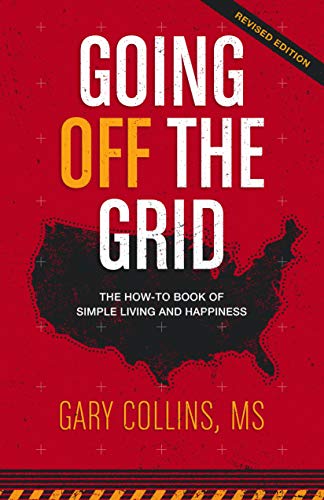
90Going Off the Grid: The How-To Book of Simple Living and Happiness
Included are tips for how to deal with general contractors and a review of common types of off-the-grid home construction (standard, straw
bale, logs, and green cinder block) that highlights energy efficiency and insulation. All the basics are thoroughly covered, such as well water, septic and sewage disposal, and off-the-grid energy options (solar, wind, hydro, and geothermal). Factored in are contemporary concerns, including access to internet and cell phone service and the importance of an effective security system.Chapter summaries drive home key points for success, and a list of resources directs readers to key information.
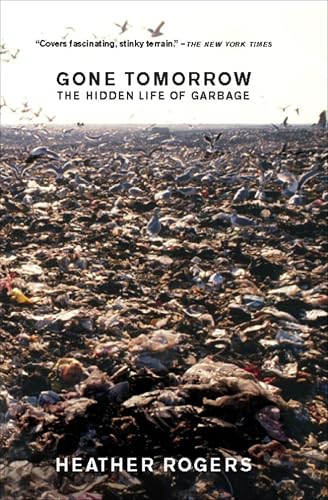
91Gone Tomorrow: The Hidden Life of Garbage
Said to “read like a thriller” (Library Journal), Gone Tomorrow excavates the history of rubbish handling from the 1800s to the present, pinpointing the roots of today’s waste-addicted society. With a “lively authorial voice” (New York Press), Rogers draws connections between modern industrial production, consumer culture, and our throwaway lifestyle. She also investigates controversial topics like the politics of recycling and the export of trash to poor countries, while offering a potent argument for change.
Fire in Paradise: An American Tragedy
Fire in Paradise is a dramatic and moving narrative of the disaster based on hundreds of in-depth interviews with residents, firefighters and police, and scientific experts. Alastair Gee and Dani Anguiano are California-based journalists who have reported on Paradise since the day the fire began. Together they reveal the heroics of the first responders, the miraculous escapes of those who got out of Paradise, and the horrors experienced by those who were trapped. Their accounts are intimate and unforgettable, including the local who left her home on foot as fire approached while her 82-year-old father stayed to battle it; the firefighter who drove into the heart of the inferno in his bulldozer; the police officer who switched on his body camera to record what he thought would be his final moments as the flames closed in; and the mother who, less than 12 hours after giving birth in the local hospital, thought she would die in the chaotic evacuation with her baby in her lap. Gee and Anguiano also explain the science of wildfires, write powerfully about the role of the power company PG in the blaze, and describe the poignant efforts to raise Paradise from the ruins.
This is the story of a town at the forefront of a devastating global shift—of a remarkable landscape sucked ever drier of moisture and becoming inhospitable even to trees, now dying in their tens of millions and turning to kindling. It is also the story of a lost community, one that epitomized a provincial, affordable kind of Californian existence that is increasingly unattainable. It is, finally, a story of a new kind of fire behavior that firefighters have never witnessed before and barely know how to handle. What happened in Paradise was unprecedented in America. Yet according to climate scientists and fire experts, it will surely happen again.
93The Big Book of Small Home Plans: Over 360 Home Plans Under 1200 Square Feet
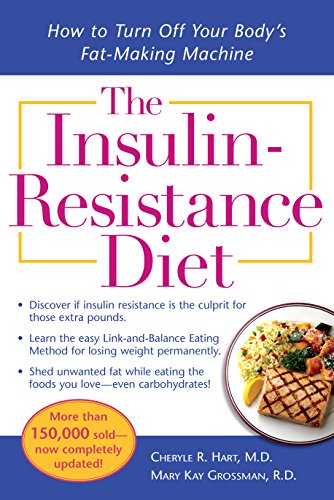
94The Insulin-Resistance Diet--Revised and Updated
95Surveying
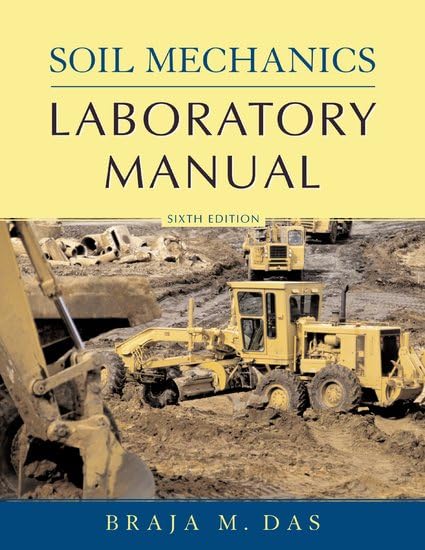
96Soil Mechanics Laboratory Manual
To improve ease and accessibility of use, this new edition includes not only the stand-alone version of the Soil Mechanics Laboratory Test software but also ready-made Microsoft Excel(r) templates designed to perform the same calculations. With the convenience of point and click data entry, these interactive programs can be used to collect, organize, and evaluate data for each of the book's eighteen labs. The resulting tables can be printed with their corresponding graphs, creating easily generated reports that display and analyze data obtained from the manual's laboratory tests.
Features
. Includes sample calculations and graphs relevant to each laboratory test
. Supplies blank tables (that accompany each test) for laboratory use and report preparation
. Contains a complete chapter on soil classification (Chapter 9)
. Provides references and three useful appendices:
Appendix A: Weight-Volume Relationships
Appendix B: Data Sheets for Laboratory Experiments
Appendix C: Data Sheets for Preparation of Laboratory Reports"
97The State of Water: Understanding California's Most Precious Resource
98Fundamentals of Geotechnical Engineering
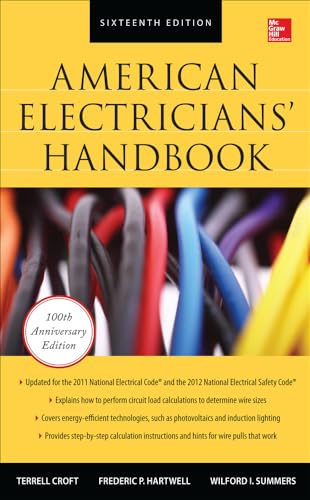
99American Electricians' Handbook, Sixteenth Edition
FULLY UPDATED FOR THE LATEST ELECTRICAL CODES AND STANDARDSFor a century, the American Electricians' Handbook has served as the definitive industry reference for information on designing, installing, operating, and maintaining electrical systems and equipment. The Sixteenth Edition is revised to complywith the 2011 National Electrical Code and the 2012 National Electrical Safety Code, and covers current energy-efficient technologies, such as photovoltaics and induction lighting. Detailed photos, diagrams, charts, tables, and calculations are included throughout. This practical, on-the-job resource is a must-have tool for every professional electrician.
Covers:
Fundamentals
Properties and splicing of conductors
Circuits and circuit calculations
General electrical equipment and batteries
Transformers
Solid-state devices and circuits
Generators and motors
Outside distribution
Interior wiring
Electric lighting
Optical fiber
Wiring and design tables
100