1100 Best Cinematography Books of All Time
We've ranked the best cinematography books using expert recommendations, sales data, and millions of reader ratings. At Shortform, we know books. Our book guides are the best in the world. Learn why.
1
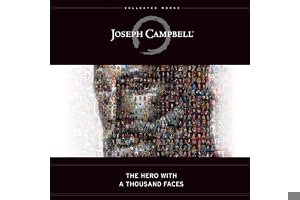
2The Hero With a Thousand Faces
The first popular work to combine the spiritual and psychological insights of modern psychoanalysis with the archetypes of world mythology, the book creates a roadmap for navigating the frustrating path of contemporary life. Examining heroic myths in the light of modern psychology, it considers not only the patterns and stages of mythology but also its relevance to our lives today--and to the life of any person seeking a fully realized existence.
Myth, according to Campbell, is the projection of a culture's dreams onto a large screen; Campbell's book, like Star Wars, the film it helped inspire, is an exploration of the big-picture moments from the stage that is our world. It is a must-have resource for both experienced students of mythology and the explorer just beginning to approach myth as a source of knowledge.
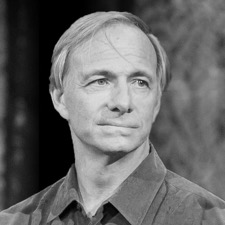
Founder/Bridgewater Associates
The book I’d give every graduating senior in college or high school would be … Joseph Campbell’s 'Hero of a Thousand Faces'. It's little bit dense but it’s so rich, so it’s a good one. [source]
Joseph Campbell was the first person to really open my eyes to the compassionate side of life, or of thought... Campbell was the guy who really kind of put it all together for me, and not in a way I could put my finger on... It made you just glad to be alive, realizing how vast this world is, and how similar and how different we are. [source]
Was mind blowing, it really helped me put into perspective, that there are cycles and rhythms, and I now call them initiations, when you are faced with fear we are never too sure of our potential unless we know how to fail, what did we learn from it and what are we going to do differently the next time. There is a lesson in everything we experience, as long as we slow down enough to reflect. The other thing in the hero's journey is that even when you say 'yes' to a project, it really doesn't mean that you are going to succeed at it, but if you go into a project with an open mind and embrace that you are here to learn, the journey itself is rewarding, not always the outcome and when we really look at our failures, they weren't real failures after all, but a stepping stone onto something greater. [source]
3Cinematography: Theory and Practice: Image Making for Cinematographers and Directors
Cinematography: Theory and Practice covers both the artistry and craftsmanship of cinematography and visual storytelling. Few art forms are as tied to their tools and technology as is cinematography. Take your mastery of these new tools, techniques, and roles to the next level with this cutting-edge roadmap from author and filmmaker Blain Brown.
Whether you are a student of filmmaking, just breaking into the business, currently working in the industry and looking to move up to the next level, or an experienced professional who wants to update their knowledge of tools and techniques, this book provides both a basic introduction to these issues as well as more advanced and in-depth coverage of the subject.
The companion website features additional material, including lighting demonstrations, basic methods of lighting, using diffusion and other topics.
Topics Include:
Visual language Visual storytelling Continuity and coverage Cameras and digital sensors Exposure techniques for film and video Color in-depth Understanding digital images Waveform monitors, vectorscopes, and test charts Using linear, gamma, and log encoded video Image control and grading on the set The tools and basics of film lighting ASC-CDL, ACES and other new methods Optics and focus Camera movement Set operations Green screen, high speed and other topics
4Save the Cat: The Last Book on Screenwriting You'll Ever Need
Managing Director/Thiel Capital
Eric Weinstein recommended this book on Twitter. [source]
The human world occurs in language so best get good at it! [source]
It takes you through 11 different 'archetypes' of screenplays you can write, and the exact elements each needs to be a great story. [source]
5Notes on the Cinematograph
Bresson upends inherited truths with empirical ones, calling for film to divest itself of the trappings of theater in order to come into its own as an art form. While theater is capable of simulation, film can capture immanent being. Therefore, he argues, the two forms are innately at odds: “No marriage of theater and cinematography without both being exterminated.”
To this end, Bresson rechristens his actors “models” and conducts them through grueling shoots where they repeat their lines and movements until he deems them vacant of actorly intention and charged, instead, with inscrutability: “A model. Enclosed in his mysterious appearance. He has brought home to him all of him that was outside. He is there, behind that forehead, those cheeks.”
6Making Movies
It’s an incredibly clear, honest, and precise discussion of the films Lumet made over the course of his career. There are many pearls of wisdom about directing and filmmaking in the book. [source]
7Painting With Light
8Master Shots Vol 1, 1st edition: 100 Advanced Camera Techniques to Get an Expensive Look on Your Low-Budget Movie
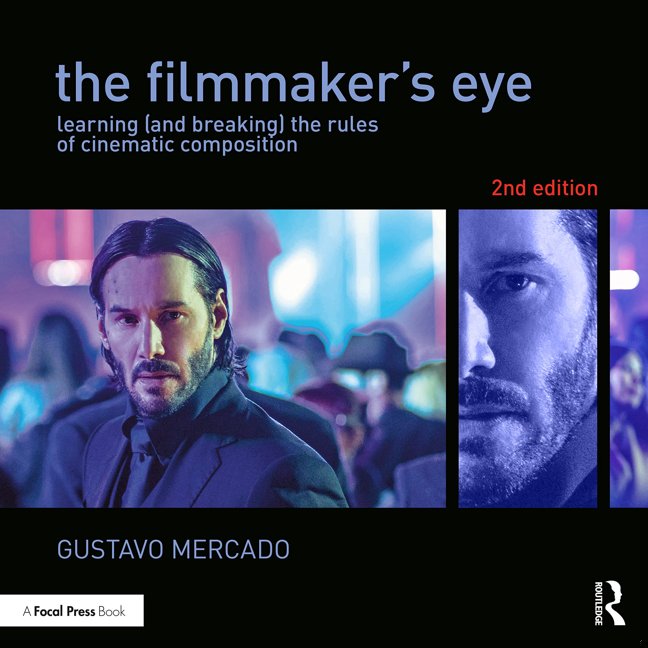
9The Filmmaker's Eye: Learning (and Breaking) the Rules of Cinematic Composition
Loaded with hundreds of full-color examples, The Filmmaker's Eye is a focused, easy-to-reference guide that shows you how to become a strong visual storyteller through smart, effective choices for your shots. This book has struck a chord worldwide and is being translated into several languages
After a short introduction to basic principles, a variety of shots are deconstructed in the following format:
- Why It Works: an introduction to a particular type of shot
- How It Works: callouts point out exactly how the shot works the way it does--the visual rules and technical aspects in action
- Technical Considerations: the equipment and techniques needed to get the shot.
- Breaking the Rules: examples where the "rules" are brilliant subverted
10Story: Substance, Structure, Style, and the Principles of Screenwriting
The human world occurs in language so best get good at it! [source]
11Hitchcock. Edition définitive
Naît alors l'idée du «Hitchbook» : un livre dont Truffaut serait l'initiateur, le «provocateur» même, et qui révèlerait la vraie nature de l'homme, vulnérable, sensible, et aussi les secrets perdus que détiennent les grands cinéastes qui ont commencé à l'époque du muet.
Hitchcock accepte le principe de répondre à 500 questions portant exclusivement sur sa carrière. Pendant cet entretien qui va durer 4 ans, Truffaut va l'interroger à la façon dont Œdipe allait consulter l'Oracle. Il tentera d'élucider à travers toute l'œuvre de Hitchcock les mécanismes de ce «langage d'émotion» qui est le ressort de son style inimitable et le classe dans la catégorie des «artistes inquiets comme Kafka, Dostoïevski ou Poe».
12Master Shots Vol 3: The Director's Vision: 100 Setups, Scenes and Moves for Your Breakthrough Movie
13Lighting for Cinematography: A Practical Guide to the Art and Craft of Lighting for the Moving Image
Lighting for Cinematography, the first volume in the new CineTech Guides to the Film Crafts series, is the indispensable guide for film and video lighting. Written by veteran gaffer and cinematographer David Landau, the book helps the reader create lighting that supports the emotional moment of the scene, contributes to the atmosphere of the story and augments an artistic style. Structured to mimic a 14 week semester, the chapters cover such things as lighting for movement, working with windows, night lighting, lighting the three plains of action and non-fiction lighting. Every chapter includes stills, lighting diagrams and key advice from professionals in the field, as well as lighting exercises to help the reader put into practice what was covered.
14The Visual Story: Creating the Visual Structure of Film, TV and Digital Media
If you can't make it to one of Bruce Block's legendary visual storytelling seminars, then you need his book! Now in full color for the first time, this best-seller offers a clear view of the relationship between the story/script structure and the visual structure of a film, video, animated piece, or video game. You'll learn how to structure your visuals as carefully as a writer structures a story or a composer structures music. Understanding visual structure allows you to communicate moods and emotions, and most importantly, reveals the critical relationship between story structure and visual structure.
The Visual Story offers a clear view of the relationship between the story/script structure and the visual structure of a film, video, or multimedia work. An understanding of the visual components will serve as the guide to strengthening the overall story.
The Visual Story divides what is seen on screen into tangible sections: contrast and affinity, space, line and shape, tone, color, movement, and rhythm. The vocabulary as well as the insight is provided to purposefully control the given components to create the ultimate visual story. For example: know that a saturated yellow will always attract a viewer's eye first; decide to avoid abrupt editing by mastering continuum of movement; and benefit from the suggested list of films to study rhythmic control. The Visual Story shatters the wall between theory and practice, bringing these two aspects of the craft together in an essential connection for all those creating visual stories.
Bruce Block has the production credentials to write this definitive guide. His expertise is in demand, and he gives seminars at the American Film Institute, PIXAR Studios, Walt Disney Feature and Television Animation, Dreamworks Animation, Nickelodeon Animation Studios, Industrial Light & Magic and a variety of film schools in Europe.
The concepts in this book will benefit writers, directors, photographers, production designers, art directors, and editors who are always confronted by the same visual problems that have faced every picture maker in the past, present, and future.
• Now in full color!
• Written by a renowned producer, visual consultant, and teacher
• The material in this books applies to any kind of visual story, including films, animated pieces, video games, and television

15In the Blink of an Eye
A short, brilliant book about film editing that has quite a few lessons for writers, too. (It would make an excellent companion to Sidney Lumet’s Making Movies.) I first read about Murch in Lawrence Weschler’s book about his adventures in astrophysics, Waves Passing In The Night, which I picked randomly off my local library’s New Arrivals shelf. [source]
16Film Directing: Shot by Shot - 25th Anniversary Edition: Visualizing from Concept to Screen
17The Filmmaker's Handbook: A Comprehensive Guide for the Digital Age: 2013 Edition
Widely acknowledged as the “bible” of video and film production, and used in courses around the world, The Filmmaker’s Handbook is now updated with the latest advances in HD and new digital formats. For students and teachers, professionals and novices, this indispensable handbook covers all aspects of movie making.
* Techniques for making dramatic features, documentaries, corporate, broadcast, and experimental videos and films
* Shooting with DSLRs, video, film, and digital cinema cameras
* Digital editing with the latest video editing systems
* In-depth coverage of lenses, lighting, sound recording, and mixing
* The business aspects of funding and producing your project
* Getting your movie shown in theaters, on TV, and on the Web
Master Shots Volume 2: Shooting Great Dialogue Scenes
19Set Lighting Technician's Handbook: Film Lighting Equipment, Practice, and Electrical Distribution
The Set Lighting Technician's Handbook focuses on what is important when working on-set: trouble-shooting, teamwork, set protocol, and safety. It describes tricks and techniques for operating a vast array of lighting equipment including LEDs, xenons, camera synchronous strobes, black lights, underwater units, lighting effects units, and many others. Since its first edition, this handy on-set reference continues to be widely adopted as a training and reference manual by union training programs as well as top university film production programs.
New to the fourth edition:
* More coverage of the aesthetics of lighting
* Detailed information on LED technology and gear
* Material is harmonized with industry safety and skills training curriculum
* More coverage than ever before about setting up and running DMX512 networks and DMX512 enabled devices, including wireless DMX512 networks
* Completely revised and updated sections of HMIs, tungsten light fixtures, and fluorescent technologies
* Additional information on dealing with current harmonics, working with portable generators.
* New section on using 480V power
* In addition to previsualization software, new material provides a primer on creating professional light plots and using computer aided design software
* New additions to the arsenal of electrical distribution equipment that make our sets safer and easier to power
* More rigging tricks and techniques
* Written in the same friendly, easy-to-read style that has made this book so popular
* Companion Web site contains exclusive articles written by the author, illustrations, and an indispensable resource center with key industry links. Please visit
www.focalpress.com/cw/box-9780240810751
20Rebel Without a Crew: Or, How a 23-year-old Film Maker with $7,000 Became a Hollywood Player
Yes, I remember growing up and really wanting to be a film-maker. I didn’t understand how films were made. There wasn’t a huge amount of information at the time. It seemed like an impossible dream to go off and become a director – there was no sure-fire route. There still isn’t. I remember going to the careers adviser at school and saying I want to be a director and he pretty much laughed at me and said, ‘Well you can’t!’ [source]
21Adventures in the Screen Trade
No one knows the writer's Hollywood more intimately than William Goldman. Two-time Academy Award-winning screenwriter and the bestselling author of Marathon Man, Tinsel, Boys and Girls Together, and other novels, Goldman now takes you into Hollywood's inner sanctums...on and behind the scenes for Butch Cassidy and the Sundance Kid, All the President's Men, and other films...into the plush offices of Hollywood producers...into the working lives of acting greats such as Redford, Olivier, Newman, and Hoffman...and into his own professional experiences and creative thought processes in the crafting of screenplays. You get a firsthand look at why and how films get made and what elements make a good screenplay. Says columnist Liz Smith, "You'll be fascinated.
22Easy Riders, Raging Bulls
Highly recommend it. … About filmmaking in the glory days of the '70s. [source]
This is an incredibly delicious read—just a great, great account of that era from Easy Rider (’69) through the mid-’70s. It’s the story of all those great filmmakers—my icons—Scorsese, Coppola, Friedkin, and Bogdanovich. They changed the way movies were made in America. It recounts their adventures in making movies. [source]
Stranger Things: Worlds Turned Upside Down: The Official Behind-the-Scenes Companion
Note: This book has been designed to mimic a used book. The marks, scuffs, and tears on the cover and pages are an intentional design element.
Stranger things have happened. . . .
When the first season of Stranger Things debuted on Netflix in the summer of 2016, the show struck a nerve with millions of viewers worldwide and received broad critical acclaim. The series has gone on to win six Emmy Awards, but its success was driven more than anything by word of mouth, resonating across generations. Viewers feel personal connections to the characters. Now fans can immerse themselves in the world—or worlds—of Hawkins, Indiana, like never before. Inside you’ll find
• original commentary and a foreword from creators Matt and Ross Duffer
• exclusive interviews with the stars of the show, including Millie Bobby Brown, Finn Wolfhard, and David Harbour
• the show’s earliest drafts, pitches to Netflix, and casting calls
• insights into the Duffers’ creative process from the entire crew—from costume and set designers to composers and visual-effects specialists
• deep dives into the cultural artifacts and references that inspired the look and feel of the show
• a map of everyday Hawkins—with clues charting the network of the Upside Down
• the Morse code disk Eleven uses, so you can decipher secret messages embedded throughout the text
• a look into the future of the series—including a sneak preview of season three!
Adding whole new layers to enrich the viewing experience, this keepsake is essential reading for anyone and everyone who loves Stranger Things.
24How to Shoot Video That Doesn't Suck: Advice to Make Any Amateur Look Like a Pro
Here’s how to think in shots—how to move-point-shoot-stop-repeat, instead of planting yourself in one spot and pressing “Record” for five minutes. Why never to shoot until you see the whites of your subject’s eyes. Why to “zoom” with your feet and not the lens. How to create intrigue on camera. The book covers the basics of video production: framing, lighting, sound (use an external mic), editing, special effects (turn them off!), and gives advice on shooting a variety of specific situations: sporting events, parties and family gatherings, graduations and performances. Plus, how to make instructional and promotional videos, how to make a music video, how to capture stunts, and much more. At the end of every chapter is a suggestion of how to immediately put what you’ve learned into practice, so the next time you’re shooting you’ll have begun to master the skill. Steve’s website (stevestockman.com) provides video examples to illustrate different production ideas, techniques, and situations, and his latest thoughts on all things video.
Sculpting in Time
Andrey Tarkovsky, the genius of modern Russian cinema--hailed by Ingmar Bergman as "the most important director of our time"--died an exile in Paris in December 1986. In Sculpting in Time, he has left his artistic testament, a remarkable revelation of both his life and work. Since Ivan's Childhood won the Golden Lion at the Venice Film Festival in 1962, the visionary quality and totally original and haunting imagery of Tarkovsky's films have captivated serious movie audiences all over the world, who see in his work a continuation of the great literary traditions of nineteenth-century Russia. Many critics have tried to interpret his intensely personal vision, but he himself always remained inaccessible.
In Sculpting in Time, Tarkovsky sets down his thoughts and his memories, revealing for the first time the original inspirations for his extraordinary films--Ivan's Childhood, Andrey Rublyov, Solaris, The Mirror, Stalker, Nostalgia, and The Sacrifice. He discusses their history and his methods of work, he explores the many problems of visual creativity, and he sets forth the deeply autobiographical content of part of his oeuvre--most fascinatingly in The Mirror and Nostalgia. The closing chapter on The Sacrifice, dictated in the last weeks of Tarkovsky's life, makes the book essential reading for those who already know or who are just discovering his magnificent work.
Motion Picture and Video Lighting
A Man With A Camera
Masters of Light: Conversations with Contemporary Cinematographers
29The Writer's Journey: Mythic Structure for Writers
It’s the Bible for screenwriters. I think it’s the best book on how to write a screenplay ever written. It helped me get through so many roadblocks as a writer. [source]
30The Bare Bones Camera Course for Film and Video
Written by a working professional, here is the most user-friendly book available on the subject of film and video production; it reduces the shooting experience to its essence, making complicated concepts easy to grasp. Using simple clear language and more than 150 illustrations, the book explains:
Exposure
Lenses
Composition
Basic sequence
Crossing the line
Lighting
Montages
Sound
Editing
And much more!
When you finish this book, you will know and understand how to shoot good pictures that will edit together seamlessly in post-production. With added chapters on sound and editing, this new edition of The Bare Bones Camera Course for Film and Video rounds out the education of any filmmaker.
Allworth Press, an imprint of Skyhorse Publishing, publishes a broad range of books on the visual and performing arts, with emphasis on the business of art. Our titles cover subjects such as graphic design, theater, branding, fine art, photography, interior design, writing, acting, film, how to start careers, business and legal forms, business practices, and more. While we don't aspire to publish a New York Times bestseller or a national bestseller, we are deeply committed to quality books that help creative professionals succeed and thrive. We often publish in areas overlooked by other publishers and welcome the author whose expertise can help our audience of readers.
Film Lighting
On Filmmaking: An Introduction to the Craft of the Director
Mackendrick produced hundreds of pages of masterly handouts and sketches, designed to guide his students to a finer understanding of how to write a story, and then use those devices peculiar to cinema in order to tell that story as effectively as possible. Gathered and edited in this collection, Mackendrick's teachings reveal that he had the talent not only to make great films, but also to articulate the process with a clarity and insight that will still inspire any aspirant film-maker.
Cinematic Storytelling
My career path is made of several components, all of them main ones: sound engineering, film montage, movie directing, composition and vocal singing. That’s what I want to do in life and this is what makes me happy. For each of these, I’ve had book to help me along the way: The Eye is Quicker, by Richard D. Pepperman, Cut by Cut by Gael Chandler, The Technique of Film and Video Editing by Ken Dancyger, Directing by Mike Goodridge, Cinematic Storytelling by Jennifer Van Sijll, Sound for Picture by Tom Kenny and The Rock'n'Roll Singer's Survival Manual by Mark Baxter. [source]
Reflections: Twenty-One Cinematographers at Work
Twilight: The Complete Illustrated Movie Companion
Designed as a celebration of the film, this lavishly illustrated paperback edition is an exclusive behind-the-scenes guide featuring full-color photos of the cast, locations, and sets, as well as storyboards, interviews, details of the special effects, and much more.
36The Anatomy of Story: 22 Steps to Becoming a Master Storyteller
The foundations of story that Truby lays out are so fundamental they are applicable--and essential--to all writers, from novelists and short-story writers to journalists, memoirists, and writers of narrative non-fiction.
37Creating Character Arcs: The Masterful Author's Guide to Uniting Story Structure, Plot, and Character Development (Helping Writers Become Authors Book 7)
Powerful Character Arcs Create Powerful Stories
Have you written a story with an exciting concept and interesting characters—but it just isn’t grabbing the attention of readers or agents? It’s time to look deeper into the story beats that create realistic and compelling character arcs. Internationally published, award-winning novelist K.M. Weiland shares her acclaimed method for achieving memorable and moving character arcs in every book you write.
By applying the foundation of the Three-Act Story Structure and then delving even deeper into the psychology of realistic and dynamic human change, Weiland offers a beat-by-beat checklist of character arc guidelines that flexes to fit any type of story.
This comprehensive book will teach you:
Why you should NEVER pit plot against character. Instead, learn how to blend story structure and character development.
How to recognize and avoid the worst pitfalls of writing novels without character arcs.
How to hack the secret to using overarching character arcs to create amazing trilogies and series.
And much more!
Gaining an understanding of how to write character arcs is a game-changing moment in any author’s pursuit of the craft.
Bring your characters to unforgettable and realistic life—and take your stories from good to great!
38Cinema Speculation
Cinematography
40The Genius of the System: Hollywood Filmmaking in the Studio Era
This is an amazing book. It’s an academic book, but it reads like a novel. It was a very important book for me when I was studying film and television. Film theory was dominated for many years by the idea of the auteur, the single visionary director who managed, in the hell of the industrial system that was Hollywood’s studio system, to nonetheless produce amazing individual work. Thomas Schatz’s book is a complete antidote to that. While he doesn’t in any way argue that Alfred Hitchcock or John Ford weren’t great directors, he talks about the vigour and energy of the classical Hollywood system. It’s not about these maverick individuals succeeding by fighting against the system. [source]
It’s about how gradually the stars became more savvy: they started saying I want to do this or that kind of movie, because people don’t like to be told they’re one sort of star. But people didn’t want to see Bogart going insane for example: he’s a cynic, and also a romantic, and you want to see that Warners’ style. That’s something Schatz deals with – that all the major studios developed a very specific house style. MGM was the kind of massive, prestige house – they famously said they never made B-grade movies – whereas Warners had this reputation for gang movies, and Jimmy Cagney was their big star. Universal developed the horror genre which was cheap, and as a result the players that were contracted to these studios fitted those house styles. But the stars become more important, and eventually the directors did too, largely down to Hitchcock, who inspired auteurs like Spielberg, Cimino and Coppola. [source]
New Moon: The Complete Illustrated Movie Companion (The Twilight Saga: The Official Illustrated Movie Companion, #2)
With never-before-seen images, exclusive interviews and personal stories, renowned author Mark Cotta Vaz takes you behind the scenes with cast and crew, uncovering intimate details of the filmmaking process.
GoPro: How To Use The GoPro HERO 8 Black
43The Basics of Filmmaking: Screenwriting, Producing, Directing, Cinematography, Audio, & Editing
The book takes a behind-the-scenes look at every aspect of the filmmaking process: writing the screenplay (and getting it critiqued by a professional), pre-production, cinematography, lighting, the shooting process, getting good audio, editing, and even going to a pitch meeting to sell it. It addresses the real fundamentals, the mechanics and the basic concepts of how to write, produce, direct, shoot, record, and edit your movie.
Written by Blain Brown, a seasoned expert who has worked professionally as a cinematographer, screenwriter, director, producer, line producer, assistant director, gaffer, grip, and editor; this is a must have resource for any filmmaking student.
Featuring an accompanying companion website with video examples of scene directing methods, continuity and coverage, working with the camera, lighting, audio, and editing, and downloadable production forms you can fill out and use for your projects.
Cinematography for Directors: A Guide for Creative Collaboration
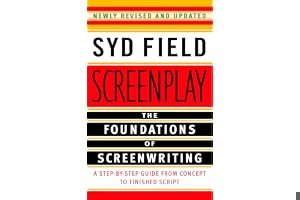
45Screenplay: The Foundations of Screenwriting
•Why the first ten pages of your script are crucially important
•How to visually “grab” the reader from page one, word one
•Why structure and character are the essential foundation of your screenplay
•How to adapt a novel, a play, or an article into a screenplay
•Tips on protecting your work—three legal ways to claim ownership of your screenplay
•The essentials of writing great dialogue, creating character, building a story line, overcoming writer’s block, getting an agent, and much more.
With this newly updated edition of his bestselling classic, Syd Field proves yet again why he is revered as the master of the screenplay—and why his celebrated guide has become the industry’s gold standard for successful screenwriting.
46Directing Actors
Lynch on Lynch
David Lynch erupted onto the cinema landscape in 1977 with Eraserhead, establishing himself as one of the most original and imaginative directors at work in contemporary cinema. Over the course of his career, he has remained true to a vision of the innocent lost in darkness and confusion, balancing hallucination and surrealism with a sense of Americana that is as pure and simple as his compelling storylines. In this volume, Lynch speaks openly about his films as well as about his lifelong commitment to painting, his work in photography, his television projects, and his musical collaborations with Angelo Badalamenti.
The Negative (Ansel Adams Photography, #2)
Anchored by a detailed discussion of Adams' Zone System and his seminal concept of visualization, The Negative covers artificial and natural light, film and exposure, and darkoom equipment and techniques. Numerous examples of Adams' work clarify the principles discussed. Beautifully illustrated with photographs by Adams as well as instructive line drawings, this classic manual can dramatically improve your photography.
The Art and Making of Penny Dreadful
New Cinematographers
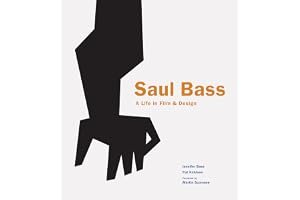
51Saul Bass: A Life in Film and Design
Color Correction Handbook: Professional Techniques for Video and Cinema
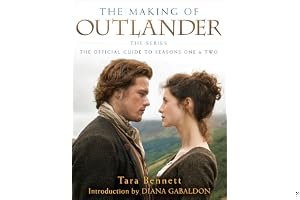
53The Making of Outlander: The Official Guide to Seasons 1 & 2
It was only a matter of time before Diana Gabaldon's bestselling Outlander saga made the leap from book to hit TV series, and the millions of readers captivated by the epic romance of Claire Beauchamp Randall and Jamie Fraser have eagerly followed.
Now the must-watch drama has inspired this must-have guide, which reveals that it takes a village (or perhaps a Scottish isle) to bring the breathtaking world of Outlander to life in front of our eyes. Spanning the first two seasons of the Starz network sensation, The Making of Outlander leads readers behind the scenes and straight into the action as cast members, writers, producers, musicians, costume designers, set decorators, technicians, and more share the many adventures and challenges they face to make this sweeping saga come alive on the screen.
In exclusive interviews, the show's stars, including Caitriona Balfe (Claire), Sam Heughan (Jamie), and Tobias Menzies (Frank Randall/Black Jack Randall), discuss the daunting task of embodying some of fiction's most beloved characters--and satisfying the high expectations of devoted Outlander readers. Executive producer and showrunner Ronald D. Moore looks at the inner workings of the writers' room, shares his crew's travels to the authentic overseas locations, and chronicles the brainstorming, building, breakneck pacing, and boundless energy that make everything from the show's architecture to its outfits period-perfect. In addition, the book examines all the Outlander episodes through exclusive interviews with their writers and directors, providing fascinating facts into the making of each hour.
Best of all, The Making of Outlander offers a veritable feast of lavish photographs--including an array of images spotlighting the stars in all their characters' grandeur and up-close personal portraits. Featuring an introduction by Diana Gabaldon herself, this magnificent insider's look at the world of the Outlander TV series is the companion all fans will want by their side.
54Nikon D7500 For Dummies (For Dummies (Computer/Tech))
Film Directing: Cinematic Motion
The book uses extensive illustrations to explain how to create extended sequence shots, elaborate moving camera choreography, and tracking shots with multiple story points.
56GoPro: How To Use The GoPro HERO 13 Black
Learn with YOUTUBER JORDAN HETRICK- THE #1 AMAZON BEST SELLING AUTHOR on GoPro cameras. Jordan Hetrick's simple, yet thorough teaching style will give you the knowledge to film and share your stories like never before!Jordan Hetrick has been writing books for each GoPro camera model for more than 10 years, helping thousands of BEGINNERS and new users just like you to get the most out of their GoPro cameras.Everything you need to get the best results with the GoPro HERO 13 BLACK is here for you in this simple, step-by-step guide. This book is packed with colorful images and real life examples that make learning easy and enjoyable for any beginner.What's In This Book:Through the SEVEN EASY STEPS in this book, you will learn:The Basics of Operating your HERO13 cameraPresets for Every ScenarioTips for the Most Useful GoPro Mounts and AccessoriesEasy, Effective Photography & Cinematography TipsCreative Photo, Video and Time Lapse Editing TechniquesHow to Share your First Edited Videos and Photos...And So Much More!This book is perfect for beginners, but also provides in depth knowledge that will transform intermediate camera users into expert content creators. By the time you finish this book, you will possess all of the skills needed to share stories that will inspire and entertain loved ones for generations to come!Click the "Buy Now" Button for instant access and let's start creating!*Made for the HERO13 Black and HERO13 Black Creator Edition.
57Cinematography: Theory and Practice: For Cinematographers and Directors
This book covers both the artistry and craftsmanship of cinematography and visual storytelling. Few art forms are as tied to their tools and technology as is cinematography. Take your mastery of these new tools, techniques, and roles to the next level with this cutting-edge roadmap from author and filmmaker Blain Brown.This 4th edition has been thoroughly updated throughout to include detailed information on the latest lighting and camera equipment, as well as expanded and updated discussion on the following areas: shooting on a budget, color spaces with emphasis on the new UHD standards, the decision-making process in choosing what lights and equipment to use, considerations concerning power issues, safety and what electrical supply is needed for various types of lights, an examination of the cinematographer’s role in preproduction, and much more. Topics Include:• Visual storytelling• Continuity and coverage• Cameras and digital sensors• The tools and basics of film lighting• Methods of shooting a scene• Continuity and coverage• Exposure• Color• Understanding digital images• Using linear, gamma, and log video• Image control and grading on the set• Data management and the DIT• Optics and focus• Camera movement• Set operations• Green screen, high speed, and other topics.Whether you are a student of filmmaking, someone just breaking into the business, working in the field and looking to move up the ladder, or an experienced filmmaker updating your knowledge of tools and techniques, this book provides both the artistic background of visual language and also the craft of shooting for continuity, lighting tools and methods, and the technical side of capturing images on digital or on film.The companion website (www.routledge.com/cw/brown) features additional material, including lighting demonstrations, basic methods of lighting, methods of shooting a scene, using diffusion, and other topics.
58Eternal Sunshine of the Spotless Mind: The Shooting Script
Kaufman also provides commentary on stills from the movie, revealing remarkable details about the editing process, set construction, and shooting techniques that were used to tell this unconventional story.
In the film, Joel ( Jim Carrey) is stunned to discover that his girlfriend Clementine (Kate Winslet) has had her memories of their tumultuous relationship erased. Out of desperation, he contacts the inventor of the process, Dr. Howard Mierzwiak (Tom Wilkinson), to have Clementine removed from his own memory. But as Joel's memories progressively disappear, he begins to rediscover their earlier passion. From deep within the recesses of his brain, Joel attempts to escape the procedure.As Dr. Mierzwiak and his crew chase him through the maze of his memories, it's clear that Joel just can't get her out of his head.The movie stars Jim Carrey, Kate Winslet, Kirsten Dunst,Tom Wilkinson, Elijah Wood, and Mark Ruffalo.
In the acclaimed Newmarket Shooting Script® format, the book includes an introduction by director Michel Gondry (Human Nature), a facsimile of the script, a Q&A with Kaufman, a selection of black-and-white movie stills with commentary, and the complete cast and crew credits.
The 360° Video Handbook: A step-by-step guide to creating video for virtual reality (VR)
60INSTA360 X6 USER GUIDE: A Practical Step by Step Handbook to Mastering 360° Photography, Video Recording, Camera Settings, Reframing, Creative Shooting, and More
Master Every Feature of Your Insta360 X6 — From Your First 360° Shot to Your Best EditYou didn't buy a flagship 8K 360 camera to leave it in Auto mode. This guide walks you through everything the X6 can actually do — and, more importantly, how to use it — so you stop guessing in menus and start capturing footage that looks professionally shot and edited.Inside, you'll learn how to unlock the camera's full potential, including the powerful software and AI tools that make the X6 more than just a camera:AI Director & Auto Edit 2.0 — how the X6 analyzes your footage while charging and turns it into a ready-to-share highlight reel with one tapMoments Pro Cloud Editing — a plain-English walkthrough of the app's AI-powered cloud editing tool, so you can polish clips without touching a desktopPanoMind AI Reframing — trained on thousands of hours of real 360 footage, this feature turns raw 360 clips into perfectly framed flat videos automatically — this guide shows you how to guide it, not just trust itNative In-Camera Dolby Vision & 10-bit I-Log — a clear breakdown of when to shoot each, plus how to carry that color data through to Insta360 Studio or DaVinci ResolveFlowState Stabilization & Single-Lens Flat Mode — turn the X6 into a rock-steady action cam whenever you don't need the full 360° viewReframing, Keyframes & Aspect Ratios — step-by-step workflows for exporting the same 360 clip as a vertical TikTok, a widescreen YouTube video, or a cinematic panorama — without reshootingWhether you're a travel vlogger, an action-sports creator, or someone who just bought their first 360 camera and feels overwhelmed by the app, this guide breaks down every mode, setting, and software feature into simple, step-by-step instructions — no jargon, no fluff, no fumbling mid-shoot.Stop fighting your camera's menus. Start shooting — and editing — with confidence.
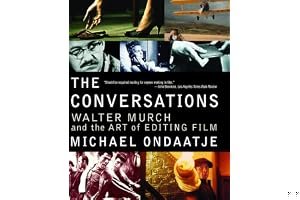
61The Conversations: Walter Murch and the Art of Editing Film
It was on the set of the movie adaptation of his Booker Prize-winning novel, The English Patient, that Michael Ondaatje met the master film and sound editor Walter Murch, and the two began a remarkable personal conversation about the making of films and books in our time that continued over two years. From those conversations stemmed this enlightened, affectionate book -- a mine of wonderful, surprising observations and information about editing, writing and literature, music and sound, the I-Ching, dreams, art and history.
The Conversations is filled with stories about how some of the most important movies of the last thirty years were made and about the people who brought them to the screen. It traces the artistic growth of Murch, as well as his friends and contemporaries -- including directors such as Francis Ford Coppola, George Lucas, Fred Zinneman and Anthony Minghella -- from the creation of the independent, anti-Hollywood Zoetrope by a handful of brilliant, bearded young men to the recent triumph of Apocalypse Now Redux.
Among the films Murch has worked on are American Graffiti, The Conversation, the remake of A Touch of Evil, Julia, Apocalypse Now, The Godfather (all three), The Talented Mr. Ripley, and The English Patient.
"Walter Murch is a true oddity in Hollywood. A genuine intellectual and renaissance man who appears wise and private at the centre of various temporary storms to do with film making and his whole generation of filmmakers. He knows, probably, where a lot of the bodies are buried."
Once Upon a Time in the West: Shooting a Masterpiece
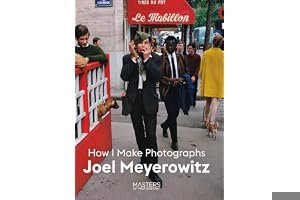
63Joel Meyerowitz: How I Make Photographs
The Magic Lantern
More grand mosaic than linear account, Bergman’s vignettes trace his life from a rural Swedish childhood through his work in theater to Hollywood’s golden age, and a tumultuous romantic history that includes five wives and more than a few mistresses. Throughout, Bergman recounts his life in a series of deeply personal flashbacks that document some of the most important moments in twentieth-century filmmaking as well as the private obsessions of the man behind them. Ambitious in scope yet sensitively wrought, The Magic Lantern is a window to the mind of one of our era’s great geniuses.
“[Bergman] has found a way to show the soul’s landscape . . . . Many gripping revelations.”—New York Times Book Review
“Joan Tate’s translation of this book has delicacy and true pitch . . . The Magic Lantern is as personal and penetrating as a Bergman film, wry, shadowy, austere.”—New Republic
“[Bergman] keeps returning to his past, reassessing it, distilling its meaning, offering it to his audiences in dazzling new shapes.”—New York Times
“What Bergman does relate, particularly his tangled relationships with his parents, is not only illuminating but quite moving. No ‘tell-all’ book this one, but revealing in ways that much longer and allegedly ‘franker’ books are not.”—Library Journal
What You Don't Learn in Film School: A Complete Guide to (Independent) Filmmaking
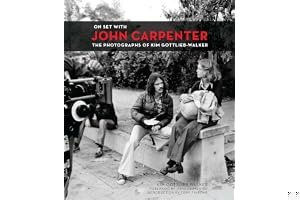
66On Set with John Carpenter
Halloween
The Fog
Escape from New York
Halloween II
Christine
Collected together here for the first time is the best of that on-set photography, with iconic, rare, and previously unseen images. All accompanied by exclusive commentary from those involved, including John Carpenter himself, and other key crew and cast.
From production stills, to candids of the stars between takes, and the crew in action, alongside portrait shots of the actors who would eagerly pose for Kim, this book gives an unprecedented glimpse into the action on set with John Carpenter.
Grammar of the Film Language
Film Art: An Introduction
Cinema 2: The Time-Image
Deleuze ascribes this shift to the condition of postwar Europe: the situations and spaces 'we no longer know how to describe'—buildings deserted but inhabited, cities undergoing demolition or reconstruction—and the new race of characters who emerged from this rubble, mutants who 'saw rather than acted.' Deleuze discusses the films of Rossellini, De Sica, Fellini, Godard, Resnais, Antonioni, Pasolini, Rohmer, Ophuls, and many others, suggesting that contemporary cinema, far from being dead, is only beginning to find new ways to capture time in the image.
The Shut Up and Shoot Documentary Guide: A Down & Dirty DV Production
Every Frame a Rembrandt: Art and Practice of Cinematography
Filmcraft: Directing
like Pedro Almod var, create inimitable visual and tonal styles that set their films apart from the crowd. Unlike the other volumes in the series, Directing covers all disciplines of film art that pass through the director's hands, from development and writing, to working with actors, designers and cinematographers, to post-production and distribution.
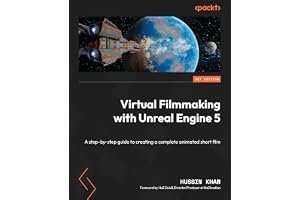
73Virtual Filmmaking with Unreal Engine 5: A step-by-step guide to creating a complete animated short film
Filmcraft: Producing
What is Cinema?: Volume 1
Bazin believed that films should be smooth, and needn’t be so socially weighty; he felt that films should have a realism to them. [source]
76On Directing Film
Costume Design
Stanley Kubrick: Interviews
Kubrick (1928-1999) has remained as elusive as the subjects of his films. Unlike many other filmmakers he was not inclined to grant interviews, instead preferring to let his movies speak for themselves. By allowing both critics and moviegoers to see the inner workings of this reclusive filmmaker, this first comprehensive collection of his relatively few interviews is invaluable. Ranging from 1959 to 1987 and including Kubrick's conversations with Gene Siskel, Jeremy Bernstein, Gene D. Phillips, and others, this book reveals Kubrick's diverse interests -- nuclear energy and its consequences, space exploration, science fiction, literature, religion, psychoanalysis, the effects of violence, and even chess -- and discloses how each affects his films. He enthusiastically speaks of how advances in camera and sound technology made his films more effective.
Kubrick details his hands-on approach to filmmaking as he discusses why he supervises nearly every aspect of production. "All the hand-held camerawork is mine," he says in a 1972 interview about A Clockwork Orange. "In addition to the fun of doing the shooting myself, I find it virtually impossible to explain what I want in a hand-held shot to even the most talented and sensitive camera operator. "
Neither guarded nor evasive, the Kubrick who emerges from these interviews is candid, opinionated, confident, and articulate. His incredible memory and his gift for organization come to light as he quotes verbatim sections of reviews, books, and articles. Despite his reputation as a recluse, the Kubrick of these interviews is approachable, witty, full of anecdotes, and eager to share a fascinating story.
Cinematography
Optics and Focus for Camera Assistants: Art, Science and Zen
Contemporary Cinematographers on Their Art
Star Wars Art: Illustration
Now the third book in the Star Wars Art series, Illustration, collects the best of these artworks, as curated by George Lucas. Featuring previously unpublished, rarely seen, and fan-favorite art from Mark Chiarello, Dave Dorman, Hugh Fleming, Tim and Greg Hildebrandt, Ralph McQuarrie, Jon J. Muth, Tsuneo Sanda, Drew Struzan, Jerry Vanderstelt, Christian Waggoner, and many others, Star Wars Art: Illustration explores the wide range of styles that illustrators have brought to bear on a galaxy far, far away . . .
The Grip Book: The Studio Grip's Essential Guide
In The Grip Book, seasoned Hollywood grip Michael G. Uva teaches you to install, set up, maintain, and ensure the safety of all equipment on a set, such as C-stands, cameras, and any specialty gear needed for a shoot. Guidelines for on-set etiquette and how to succeed as a technical crew member will jumpstart your career and make you a valuable asset on any film or television crew.
This new 6th edition marks the books 30th anniversary and has been fully revised and updated to include expanded coverage of on-set scenarios, such as gripping near water and at heights; a brand-new chapter dedicated to providing insider solutions to various gripping problems that can often appear insurmountable to the uninitiated; and a brand-new companion website featuring a downloadable reference guide on grip equipment, and extensive how-to video demonstrations.
Other features include technical expertise on maintaining the latest and greatest filmmaking equipment; an updated self-test section containing over one hundred questions and answers; a comprehensive appendix containing a robust glossary of insider and equipment terms; and guidelines on what a grip has to be physically able to perform in their day-to-day duties.
The Smartphone Filmmaking Handbook: Revealing the secrets of smartphone movie making
Introduction to Cinematography: Learning Through Practice
Richly illustrated, the book incorporates exercises and sample scripts throughout, exploring light, color, movement, 'blocking', and pacing scenes. The principles and techniques of shaping and controlling light are applied to working with natural light, film lamps, and, as with all areas of cinematography, to low budget alternatives. This makes Introduction to Cinematography the perfect newcomer's guide to learning the skills of cinematography that enables seamless progression from exercises through to full feature shoots. Assessment rubrics provide a framework to measure progress as the reader's ability to visually interpret scripts and enhance the director's vision develops.
The book also teaches readers:
To understand and develop the combination of skills and creativity involved in cinematography; Photographic principles and how they are applied to control focus exposure, motion blur, and image sharpness; To identify the roles and skills of each member of the camera department, and how and when each are required during a shoot; The order and process of lighting on all scales of productions and the use and application of the four main types of lamps; How to use waveforms, false color, and zebras for monitoring light levels, and meters for guiding exposure choices; The principles of the color wheel, color palettes, and the psychological effects of color choices; How to shoot for different types of fiction and nonfiction/documentary films and how to apply these skills to other genres of TV and film production; Strategies for both starting and progressing your career within cinematography and the camera department.
Winner of 'Best new Textbook in Humanities and Media Arts' in the Taylor and Francis Editorial Awards 2018
Fantastic Beasts and Where to Find Them – Newt Scamander: A Movie Scrapbook (Fantastic Beasts Film Tie in)
How To Start Vlogging: A Complete Beginner's Guide to Vlog
Theory of Film: The Redemption of Physical Reality
How to Read a Film: The World of Movies, Media, Multimedia: Language, History, Theory
Looking at film from many vantage points, How to Read a Film: Movies, Media, Multimedia explores the medium as both art and craft, sensibility and science, tradition and technology. After examining film's close relation to such other narrative media as the novel, painting, photography, television, and even music, Monaco discusses those elements necessary to understand how films convey meaning and, more importantly, how we can best discern all that a film is attempting to communicate.
In a key departure from the book's previous editions, the new and still-evolving digital context of film is now emphasized throughout How to Read a Film. A new chapter on multimedia brings media criticism into the twenty-first century with a thorough discussion of topics like virtual reality, cyberspace, and the proximity of both to film. Monaco has likewise doubled the size and scope of his "Film and Media: A Chronology" appendix. The book also features a new introduction, an expanded bibliography, and hundreds of illustrative black-and-white film stills and diagrams. It is a must for all film students, media buffs, and movie fans.
Cinema 1: The Movement-Image
GoPro: How To Use The GoPro HERO 7 Black
The Technique of Special Effects Cinematography
Forbidden Hollywood: The Pre-Code Era (1930-1934) (Turner Classic Movies): When Sin Ruled the Movies
Forbidden Hollywood is a history of "pre-Code" like none other: you will eavesdrop on production conferences, read nervous telegrams from executives to censors, and hear Americans argue about "immoral" movies. You will see decisions artfully wrought, so as to fool some of the people long enough to get films into theaters. You will read what theater managers thought of such craftiness, and hear from fans as they applauded creativity or condemned crassness. You will see how these films caused a grass-roots movement to gain control of Hollywood-and why they were "forbidden" for fifty years.
The book spotlights the twenty-two films that led to the strict new Code of 1934, including Red-Headed Woman, Call Her Savage, and She Done Him Wrong. You'll see Paul Muni shoot a path to power in the original Scarface; Barbara Stanwyck climb the corporate ladder on her own terms in Baby Face; and misfits seek revenge in Freaks.
More than 200 newly restored (and some never-before-published) photographs illustrate pivotal moments in the careers of Clara Bow, Joan Crawford, Norma Shearer, and Greta Garbo; and the pre-Code stardom of Claudette Colbert, Cary Grant, Marlene Dietrich, James Cagney, and Mae West. This is the definitive portrait of an unforgettable era in filmmaking.
GoPro: How To Use The GoPro Hero 5 Black
The Filmmaker's Guide to Visual Effects: The Art and Techniques of Vfx for Directors, Producers, Editors and Cinematographers
The book will help readers:
Learn what it takes for editors, cinematographers, directors, producers, gaffers, and other filmmakers to work more effectively with the visual effects team during pre-production, on the set and in post, use visual effects as a narrative aid, reduce production costs, and solve problems on location;
Achieve a deeper understanding of 3D, 2D, and 2.5D workflows; the various VFX crafts from matchmove to compositing; essential concepts like photorealism, parallax, roto, and extraction; become familiar with the most common types of VFX, their role in filmmaking, and learn how to plan effectively for the cost and complexity of VFX shots;
See visual effects concepts brought to life in practical, highly illustrated examples drawn from the real-world experiences of industry professionals, and discover how to better integrate visual effects into your own projects.
Godard on Godard: Critical Writings
Light on Her Face
Practical Cinematography
Film Theory and Criticism: Introductory Readings
The sixth edition features several new essays that discuss the impact of digital technology on the traditional conceptions of what films do and how they manage to do it. Additional selections from the important works of Gilles Deleuze round out sections dealing with the theories of such writers as Sergei Eisenstein, Andre Bazin, and Christian Metz, among others. New essays also strengthen sections dealing with the idea of "excess" in film, film spectatorship, the horror genre, and feminist criticism. Film Theory and Criticism, 6/e, is ideal for undergraduate and graduate courses in film theory and criticism."