The Marie Kondo method of cleaning asks one major question: “Does it spark joy?” But it’s not clear what this really means, and when it applies and doesn’t.
Does It Spark Joy? What This Question Really Means


The World's Best Book Summaries
The Marie Kondo method of cleaning asks one major question: “Does it spark joy?” But it’s not clear what this really means, and when it applies and doesn’t.

Learn how to tidy clothes using Marie Kondo’s famous method.
Step 1: Gather all your clothes from all over your home and put them in one place, on your bed or on your bedroom floor. When you think you’ve finished, ask yourself if there could be anything else hiding anywhere else…
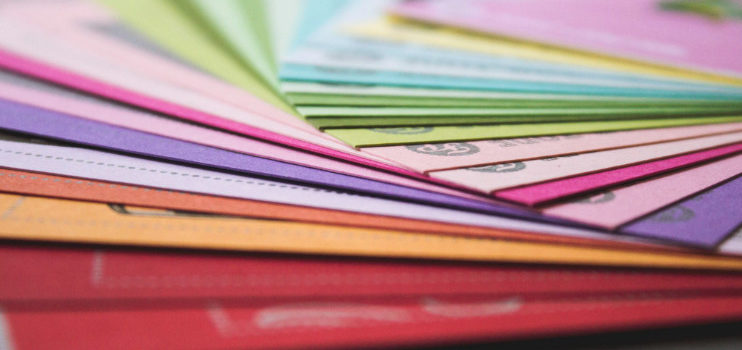
Papers are essentially any mail or documents that we receive, notes we take in school or outside classes, or manuals and instructions that come with appliances or electronics.
Remember, this category doesn’t include things like love letters or special cards–those are mementos, and go in the last category. And it doesn’t include any books or magazines, but it does include newspapers.

Have too much stuff, and not sure how best to get rid of it? Marie Kondo is a world-renowned expert on tidying, and this book teaches you how to get past the most common barriers preventing you from decluttering. Go through the Konmari method once, and you may find your relationship with things to be changed permanently.
Tidying by category lets us do one kind of work in totality, no matter where the objects are in your space. Plus, most of us have no idea how much stuff we own, so tidying by category is the wake up call we need.
The correct sequence of categories: clothes, books, papers, komono/miscellany, mementos. In each category, gather all the items together at once, discard first, then organize what’s left.
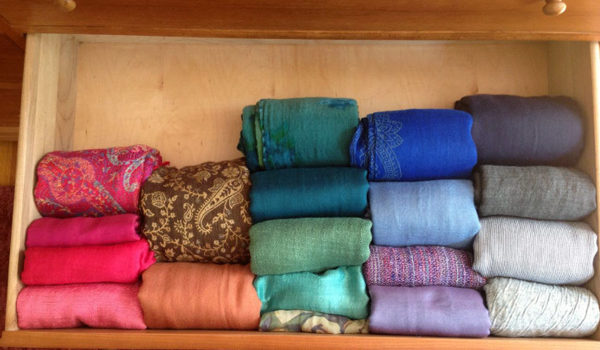
So you’ve finished discarding the clothes that don’t spark joy for you. Now you have a big pile of clothes to organize and fold.
How does Marie Kondo advocate folding? Here’s our complete guide to folding clothes with the Konmari Method.