We've ranked the best travelogue books using expert recommendations, sales data, and millions of reader ratings. At Shortform, we know books. Our book guides are the best in the world. Learn why.
Cover unavailable
1
A Walk in the Woods: Rediscovering America on the Appalachian Trail
Bill Bryson
5.0
The Appalachian Trail stretches from Georgia to Maine and covers some of the most breathtaking terrain in America—majestic mountains, silent forests, sparking lakes. If you’re going to take a hike, it’s probably the place to go. And Bill Bryson is surely the most entertaining guide you’ll find. He introduces us to the history and ecology of the trail and to some of the other hardy (or just foolhardy) folks he meets along the way—and a couple of bears. Already a classic, A Walk in the Woods will make you long for the great outdoors (or at least a comfortable chair to sit and read in).
…
Cover unavailable
2
Travels with Charley: In Search of America
John Steinbeck
4.8
To hear the speech of the real America, to smell the grass and the trees, to see the colors and the light— these were John Steinbeck's goals as he set out, at the age of fifty-eight, to rediscover the country he had been writing about for so many years.
I wanted to include an older book that has been on my bookshelves for decades, and is a less obvious example of reading to lead. John Steinbeck took a road trip with his dog Charley for company across the length and breadth of the US, and recorded what he saw, who he met and what he learned. With his inimitable charm, it opens your eyes to the small pleasures of life, and the great wonders of humanity in the little moments that matter. Less a direction on how to lead, you could see it as a subtle guide on how to live. [source]
Cover unavailable
3
In a Sunburned Country
Bill Bryson
4.8
A CLASSIC FROM THE NEW YORK TIMES BESTSELLING AUTHOR OF ONE SUMMER
Every time Bill Bryson walks out the door, memorable travel literature threatens to break out. His previous excursion along the Appalachian Trail resulted in the sublime national bestseller A Walk in the Woods. In A Sunburned Country is his report on what he found in an entirely different place: Australia, the country that doubles as a continent, and a place with the friendliest inhabitants, the hottest, driest weather, and the most peculiar and lethal wildlife to be found on the planet. The result is a deliciously funny, fact-filled, and adventurous performance by a writer who combines humor, wonder, and unflagging curiousity.
Despite the fact that Australia harbors more things that can kill you in extremely nasty ways than anywhere else, including sharks, crocodiles, snakes, even riptides and deserts, Bill Bryson adores the place, and he takes his readers on a rollicking ride far beyond that beaten tourist path. Wherever he goes he finds Australians who are cheerful, extroverted, and unfailingly obliging, and these beaming products of land with clean, safe cities, cold beer, and constant sunshine fill the pages of this wonderful book. Australia is an immense and fortunate land, and it has found in Bill Bryson its perfect guide.
…
Cover unavailable
4
Wild: From Lost to Found on the Pacific Crest Trail
Cheryl Strayed
4.8
An alternate cover for this ISBN can be found here.
At twenty-two, Cheryl Strayed thought she had lost everything. In the wake of her mother’s death, her family scattered and her own marriage was soon destroyed. Four years later, with nothing more to lose, she made the most impulsive decision of her life. With no experience or training, driven only by blind will, she would hike more than a thousand miles of the Pacific Crest Trail from the Mojave Desert through California and Oregon to Washington State — and she would do it alone. Told with suspense and style, sparkling with warmth and humor, Wild powerfully captures the terrors and pleasures of one young woman forging ahead against all odds on a journey that maddened, strengthened, and ultimately healed her.
I found the narrative honest and riveting. The author used the journey through the hiking trail to work out her problems. [source]
Cover unavailable
5
Notes from a Small Island
Bill Bryson
4.7
"Suddenly, in the space of a moment, I realized what it was that I loved about Britain-which is to say, all of it."
After nearly two decades spent on British soil, Bill Bryson - bestselling author of The Mother Tongue and Made in America-decided to return to the United States. ("I had recently read," Bryson writes, "that 3.7 million Americans believed that they had been abducted by aliens at one time or another, so it was clear that my people needed me.") But before departing, he set out on a grand farewell tour of the green and kindly island that had so long been his home.
Veering from the ludicrous to the endearing and back again, Notes from a Small Island is a delightfully irreverent jaunt around the unparalleled floating nation that has produced zebra crossings, Shakespeare, Twiggie Winkie's Farm, and places with names like Farleigh Wallop and Titsey. The result is an uproarious social commentary that conveys the true glory of Britain, from the satiric pen of an unapologetic Anglophile.
…
Cover unavailable
6
Into the Wild
Jon Krakauer
4.6
Librarian's Note: An alternate cover edition can be found here
In April, 1992, a young man from a well-to-do family hitchhiked to Alaska and walked alone into the wilderness north of Mt. McKinley. His name was Christopher Johnson McCandless. He had given $25,000 in savings to charity, abandoned his car and most of his possessions, burned all the cash in his wallet, and invented a new life for himself. Four months later, a party of moose hunters found his decomposed body. How McCandless came to die is the unforgettable story of Into the Wild.
Immediately after graduating from college in 1991, McCandless had roamed through the West and Southwest on a vision quest like those made by his heroes Jack London and John Muir. In the Mojave Desert he abandoned his car, stripped it of its license plates, and burned all of his cash. He would give himself a new name, Alexander Supertramp, and, unencumbered by money and belongings, he would be free to wallow in the raw, unfiltered experiences that nature presented. Craving a blank spot on the map, McCandless simply threw away the maps. Leaving behind his desperate parents and sister, he vanished into the wild.
…
Recommended by Holger Seim.
Holger Seim
When it comes to adventure stories, Into the Wild. [source]
Cover unavailable
7
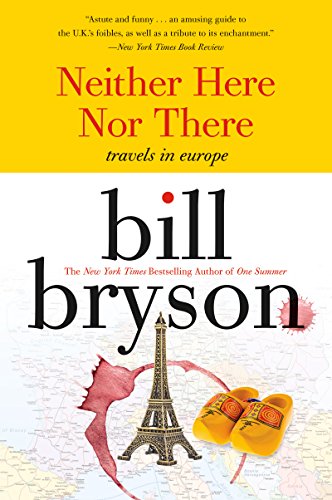
Neither Here nor There: Travels in Europe
Bill Bryson
4.5
Bill Bryson's first travel book, The Lost Continent, was unanimously acclaimed as one of the funniest books in years. In Neither Here nor There he brings his unique brand of humour to bear on Europe as he shoulders his backpack, keeps a tight hold on his wallet, and journeys from Hammerfest, the northernmost town on the continent, to Istanbul on the cusp of Asia. Fluent in, oh, at least one language, he retraces his travels as a student twenty years before.
Whether braving the homicidal motorist of Paris, being robbed by gypsies in Florence, attempting not to order tripe and eyeballs in a German restaurant, window-shopping in the sex shops of the Reeperbahn or disputing his hotel bill in Copenhagen, Bryson takes in the sights, dissects the culture and illuminates each place and person with his hilariously caustic observations. He even goes to Liechtenstein.
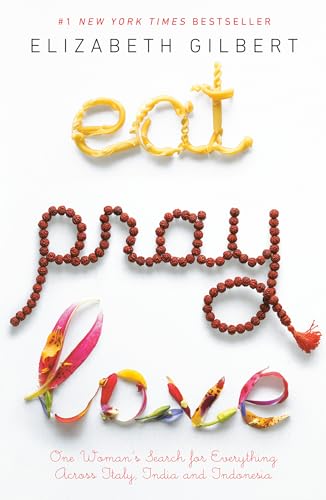
A celebrated writer's irresistible, candid, and eloquent account of her pursuit of worldly pleasure, spiritual devotion, and what she really wanted out of life.
Around the time Elizabeth Gilbert turned thirty, she went through an early-onslaught midlife crisis. She had everything an educated, ambitious American woman was supposed to want—a husband, a house, a successful career. But instead of feeling happy and fulfilled, she was consumed with panic, grief, and confusion. She went through a divorce, a crushing depression, another failed love, and the eradication of everything she ever thought she was supposed to be.
To recover from all this, Gilbert took a radical step. In order to give herself the time and space to find out who she really was and what she really wanted, she got rid of her belongings, quit her job, and undertook a yearlong journey around the world—all alone. Eat, Pray, Love is the absorbing chronicle of that year. Her aim was to visit three places where she could examine one aspect of her own nature set against the backdrop of a culture that has traditionally done that one thing very well. In Rome, she studied the art of pleasure, learning to speak Italian and gaining the twenty-three happiest pounds of her life. India was for the art of devotion, and with the help of a native guru and a surprisingly wise cowboy from Texas, she embarked on four uninterrupted months of spiritual exploration. In Bali, she studied the art of balance between worldly enjoyment and divine transcendence. She became the pupil of an elderly medicine man and also fell in love the best way—unexpectedly.
An intensely articulate and moving memoir of self-discovery, Eat, Pray, Love is about what can happen when you claim responsibility for your own contentment and stop trying to live in imitation of society’s ideals. It is certain to touch anyone who has ever woken up to the unrelenting need for change.
…
Recommended by Chelsea Frank and Gabriel Coarna.
Chelsea Frank
I read everything with an open mind, often challenging myself by choosing books with an odd perspective or religious/spiritual views. These books do not reflect my personal feelings but are books that helped shape my perspective on life, love, and happiness. [source]
Gabriel Coarna
I started reading "Eat, Pray, Love" as soon as I finished watching Elizabeth Gilbert give this talk. [source]
Cover unavailable
9
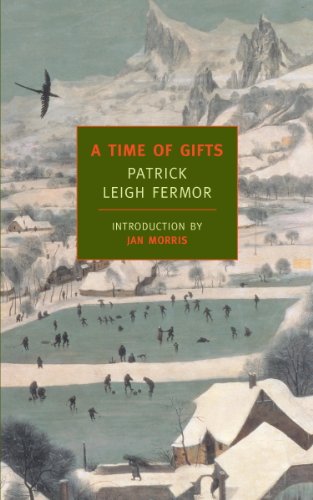
A Time of Gifts
Patrick Leigh Fermor, Jan Morris
4.5
In 1933, at the age of 18, Patrick Leigh Fermor set out on an extraordinary journey by foot - from the Hook of Holland to Constantinople. A Time of Gifts is the first volume in a trilogy recounting the trip, and takes the reader with him as far as Hungary. It is a book of compelling glimpses - not only of the events which were curdling Europe at that time, but also of its resplendent domes and monasteries, its great rivers, the sun on the Bavarian snow, the storks and frogs, the hospitable burgomasters who welcomed him, and that world's grandeurs and courtesies. His powers of recollection have astonishing sweep and verve, and the scope is majestic. First published to enormous acclaim, it confirmed Fermor's reputation as the greatest living travel writer, and has, together with its sequel Between the Woods and the Water (the third volume is famously yet to be published), been a perennial seller for 25 years.
This is the first volume of his journey in 1933-34 from the Hook of Holland, as he called it, to what he insisted on calling Constantinople (Istanbul). It was to be in three volumes. This one takes him beyond Vienna. The second volume, Between the Woods and the Water, takes him through Hungary to the Balkans. The third volume was going to get him across Romania to Istanbul, but he never wrote it. There is a very modified version of it, which will probably be published – people are so longing to see this third volume that even an outline of it will suffice. But it’s not finished by his standards, which were very exacting. [source]
Quentin Hardy
@parul_sehgal @DwightGarner @jenszalai Excellent list. "This Boy's Life" pairs well with "The Duke of Deception," brother Geoffrey Wolff's boyhood with their con man father. Also "A Time of Gifts" is a memoir as well as a great travel book, particularly when the way it came about becomes part of the tale. [source]
Cover unavailable
10
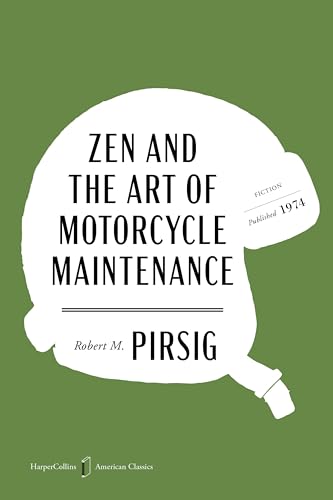
Zen and the Art of Motorcycle Maintenance: An Inquiry Into Values
This lyrical, evocative, thought-provoking journal of a man's quest for truth - and for himself - has touched and changed an entire generation, and is ready to reach out to a new one. At its heart, the story is all too simple: a man and his son take a motorcycle trip across America. But this is not a simple trip at all, for around every corner, through mountain and desert, wind and rain, and searing heat and biting cold, their pilgrimage leads them to new vistas of self-discovery and renewal.
Zen and the Art of Motorcycle Maintenance is an elemental work that has helped to shape and define the past 25-years of American culture. This special audio edition presents this adventure in an exciting new way - for the millions who have already taken this journey and want to travel these roads again, and for the many more who will discover for the first time the wonders and challenges of a story that will change the way they think and feel about their lives. Unique to audio, this edition features a new introduction by the author.
…
Recommended by Brad Feld, Drew Houston, Ev Williams, and 7 others.
Brad Feld
Co-Founder/Foundry Group
I think every entrepreneur or aspiring entrepreneur should read the book Zen and the Art of Motorcycle Maintenance. It was written in the 1970s by a guy named Robert Pirsig. It was his first book, it's kind of a hippie philosophy treatised journey. The word that sort of came out of it was Chautauqua, he's like having a conversation with his son as they do a motorcycle trip across the country, and it's just this incredible treatise on philosophy, product, quality, accomplishing what your goal is, against the backdrop of the narrator, the author, going crazy and having a psychotic break. And so it's this very powerful mix of accessible philosophy, combined with this pretty captivating journey in a book that, again, anybody who builds anything, there's so much in it that's so worth reading and just soaking in. But it's not what you'd expect, it's not a "here's how you do it", you have to read it slowly and think about it. So, it's one of my favorites. [source]
Drew Houston
CEO/Dropbox
There are engineers who dismiss all these things that can’t be fit into an algorithm, or that don’t have some kind of mathematical rigor underpinning them, this book is about that question. [source]
Honorable mentions: Jonathan Livingston Seagull, Zen and the Art of Motorcycle Maintenance, and The Joy of Sex, all given to me by my mother. I believe they helped inculcate some of the 1960s-70s ethos of individual freedom into my thinking. [source]
Cover unavailable
11
The Snow Leopard
Peter Matthiessen
4.4
When Matthiessen went to Nepal to study the Himalayan blue sheep and, possibly, to glimpse the rare and beautiful snow leopard, he undertook his five-week trek as winter snows were sweeping into the high passes. This is a radiant and deeply moving account of a "true pilgrimage, a journey of the heart."
Recommended by Nick Pyenson.
Nick Pyenson
The book stands apart and it remains fresh because of the ways that Matthiessen weaves his exploration of the outer world with his own inner one. [source]
Cover unavailable
12
Into Thin Air: A Personal Account of the Mt. Everest Disaster
Jon Krakauer
4.4
When Jon Krakauer reached the summit of Mt. Everest in the early afternoon of May 10, 1996, he hadn't slept in fifty-seven hours and was reeling from the brain-altering effects of oxygen depletion. As he turned to begin his long, dangerous descent from 29,028 feet, twenty other climbers were still pushing doggedly toward the top. No one had noticed that the sky had begun to fill with clouds. Six hours later and 3,000 feet lower, in 70-knot winds and blinding snow, Krakauer collapsed in his tent, freezing, hallucinating from exhaustion and hypoxia, but safe. The following morning, he learned that six of his fellow climbers hadn't made it back to their camp and were desperately struggling for their lives. When the storm finally passed, five of them would be dead, and the sixth so horribly frostbitten that his right hand would have to be amputated.
Into Thin Air is the definitive account of the deadliest season in the history of Everest by the acclaimed journalist and author of the bestseller Into the Wild. On assignment for Outside Magazine to report on the growing commercialization of the mountain, Krakauer, an accomplished climber, went to the Himalayas as a client of Rob Hall, the most respected high-altitude guide in the world. A rangy, thirty-five-year-old New Zealander, Hall had summited Everest four times between 1990 and 1995 and had led thirty-nine climbers to the top. Ascending the mountain in close proximity to Hall's team was a guided expedition led by Scott Fischer, a forty-year-old American with legendary strength and drive who had climbed the peak without supplemental oxygen in 1994. But neither Hall nor Fischer survived the rogue storm that struck in May 1996.
Krakauer examines what it is about Everest that has compelled so many people -- including himself -- to throw caution to the wind, ignore the concerns of loved ones, and willingly subject themselves to such risk, hardship, and expense. Written with emotional clarity and supported by his unimpeachable reporting, Krakauer's eyewitness account of what happened on the roof of the world is a singular achievement.
Into the Wild is available on audio, read by actor Campbell Scott.
…
Recommended by Richard Branson, Cristina Riesen, Fabrice Grinda, and 2 others.
Today is World Book Day, a wonderful opportunity to address this #ChallengeRichard sent in by Mike Gonzalez of New Jersey: Make a list of your top 65 books to read in a lifetime. [source]
Cristina Riesen
First, a word on career paths. In time, I realised that career paths are like one-way streets. Magic happens in unexplored territories. Plus life is how you choose to live every moment, every day. So today, rather than building a career, I prefer to make lateral moves in life, working with great people and being part of ambitious projects impacting the world. There are a few books that got me here: … Jon Krakauer "Into Thin Air". [source]
Fabrice Grinda
I have lots of books to recommend, but they are not related to my career path. The only one that is remotely related is Peter Thiel’s Zero to One. That said here are books I would recommend. [source]
Cover unavailable
13
The Lost Continent: Travels in Small Town America
Bill Bryson
4.4
'I come from Des Moines. Somebody had to'
And, as soon as Bill Bryson was old enough, he left. Des Moines couldn't hold him, but it did lure him back. After ten years in England, he returned to the land of his youth, and drove almost 14,000 miles in search of a mythical small town called Amalgam, the kind of trim and sunny place where the films of his youth were set. Instead, his search led him to Anywhere, USA; a lookalike strip of gas stations, motels and hamburger outlets populated by lookalike people with a penchant for synthetic fibres. Travelling around thirty-eight of the lower states - united only in their mind-numbingly dreary uniformity - he discovered a continent that was doubly lost; lost to itself because blighted by greed, pollution, mobile homes and television; lost to him because he had become a stranger in his own land.
The Lost Continent is a classic of travel literature - hilariously, stomach-achingly funny, yet tinged with heartache - and the book that first staked Bill Bryson's claim as the most beloved writer of his generation.
…
Cover unavailable
14
The Great Railway Bazaar
Paul Theroux
4.4
First published in 1975, Paul Theroux's strange, unique, and hugely entertaining railway odyssey has become a modern classic of travel literature. Here Theroux recounts his early adventures on an unusual grand continental tour. Asia's fabled trains -- the Orient Express, the Khyber Pass Local, the Frontier Mail, the Golden Arrow to Kuala Lumpur, the Mandalay Express, the Trans-Siberian Express -- are the stars of a journey that takes him on a loop eastbound from London's Victoria Station to Tokyo Central, then back from Japan on the Trans-Siberian. Brimming with Theroux's signature humor and wry keen observations, this engrossing chronicle is essential reading for both the ardent adventurer and the armchair traveler.
…
Cover unavailable
15
A Year in Provence
Peter Mayle
4.4
National Bestseller
In this witty and warm-hearted account, Peter Mayle tells what it is like to realize a long-cherished dream and actually move into a 200-year-old stone farmhouse in the remote country of the Lubéron with his wife and two large dogs. He endures January's frosty mistral as it comes howling down the Rhône Valley, discovers the secrets of goat racing through the middle of town, and delights in the glorious regional cuisine. A Year in Provence transports us into all the earthy pleasures of Provençal life and lets us live vicariously at a tempo governed by seasons, not by days.
…
Recommended by Fabrice Grinda.
Fabrice Grinda
I have lots of books to recommend, but they are not related to my career path. The only one that is remotely related is Peter Thiel’s Zero to One. That said here are books I would recommend. [source]
Cover unavailable
16
City of Djinns: A Year in Delhi
William Dalrymple
4.4
Sparkling with irrepressible wit, City of Djinns peels back the layers of Delhi's centuries-old history, revealing an extraordinary array of characters along the way-from eunuchs to descendants of great Moguls. With refreshingly open-minded curiosity, William Dalrymple explores the seven "dead" cities of Delhi as well as the eighth city-today's Delhi. Underlying his quest is the legend of the djinns, fire-formed spirits that are said to assure the city's Phoenix-like regeneration no matter how many times it is destroyed. Entertaining, fascinating, and informative, City of Djinns is an irresistible blend of research and adventure.
…
Cover unavailable
17
Pyongyang: A Journey in North Korea
Guy Delisle, Helge Dascher
4.4
Famously referred to as one of the "Axis of Evil" countries, North Korea remains one of the most secretive and mysterious nations in the world today. In early 2001 cartoonist Guy Delisle became one of the few Westerners to be allowed access to the fortress-like country. While living in the nation's capital for two months on a work visa for a French film animation company, Delisle observed what he was allowed to see of the culture and lives of the few North Koreans he encountered; his findings form the basis of this graphic novel.
Guy Delisle was born in Quebec City in 1966 and has spent the last decade living and working in the South of France with his wife and son. Delisle has spent ten years, mostly in Europe, working in animation, an experience that taught him about movement and drawing. He is now currently focusing on his cartooning. Delisle has written and drawn six graphic novels, including "Pyongyang," his first graphic novel in English.
…
Recommended by Sung J. Woo.
Sung J. Woo
Well, this is a comic book really, or a graphic novel if you want to make it sound more serious. Although it’s non-fiction, actually. It’s by a French guy, which is surprising. He went to Pyongyang, the capital of North Korea, to supervise an animation and he was there for two months getting to know the country. So this book is really a collection of his observations and how he saw the country and how strange it was to be there. The thing about the comic medium is that it’s perfect for representing the completely unreal state of that nation. This is a country unlike anywhere else and the comic book is more apt than any other form. There is a huge amount of propaganda in North Korea against South Korea, where I’m from. They say everyone’s spy, the living conditions are terrible and how horrible it is. But in South Korea there is the exact flip side of that. When I was growing up they said it’s terrible in North Korea, everyone’s a spy and the living conditions are horrible. [source]
Cover unavailable
18
Blue Highways
William Least Heat Moon
4.4
Hailed as a masterpiece of American travel writing, Blue Highways is an unforgettable journey along our nation's backroads. William Least Heat-Moon set out with little more than the need to put home behind him and a sense of curiosity about "those little towns that get on the map-if they get on at all-only because some cartographer has a blank space to fill: Remote, Oregon; Simplicity, Virginia; New Freedom, Pennsylvania; New Hope, Tennessee; Why, Arizona; Whynot, Mississippi." His adventures, his discoveries, and his recollections of the extraordinary people he encountered along the way amount to a revelation of the true American experience.
An exhilarating look at a place that still retains the exotic mystery of a far-off, unseen land, Bruce Chatwin’s exquisite account of his journey through Patagonia teems with evocative descriptions, remarkable bits of history, and unforgettable anecdotes. Fueled by an unmistakable lust for life and adventure and a singular gift for storytelling, Chatwin treks through “the uttermost part of the earth”— that stretch of land at the southern tip of South America, where bandits were once made welcome—in search of almost forgotten legends, the descendants of Welsh immigrants, and the log cabin built by Butch Cassidy. An instant classic upon publication in 1977, In Patagonia is a masterpiece that has cast a long shadow upon the literary world.
Today is World Book Day, a wonderful opportunity to address this #ChallengeRichard sent in by Mike Gonzalez of New Jersey: Make a list of your top 65 books to read in a lifetime. [source]
This struck me as a rather different way of travel writing. It is very individual, with stark, short passages….His research isn’t a history of that area, it’s all about the strange inhabitants of it, and the weird leftovers. Anything that was incongruous he loved – a Welsh community in southern Argentina, that sort of thing. It was a world of oddities, of leftovers, of communities that had been isolated, people that had gone there for God knows what reason. He always felt himself to be an outsider in the world, and that’s what fascinated him. [source]
Cover unavailable
20
On the Road
Jack Kerouac
4.4
When Jack Kerouac’s On the Road first appeared in 1957, readers instantly felt the beat of a new literary rhythm. A fictionalised account of his own journeys across America with his friend Neal Cassady, Kerouac’s beatnik odyssey captured the soul of a generation and changed the landscape of American fiction for ever.
Influenced by Jack London and Thomas Wolfe, Kerouac always wanted to be a writer, but his true voice only emerged when he wrote about his own experiences in On the Road. Leaving a broken marriage behind him, Sal Paradise (Kerouac) joins Dean Moriarty (Cassady), a tearaway and former reform school boy, on a series of journeys that takes them from New York to San Francisco, then south to Mexico. Hitching rides and boarding buses, they enter a world of hobos and drifters, fruit-pickers and migrant families, small towns and wide horizons. Adrift from conventional society, they experience America in the raw: a place where living is hard, but ‘life is holy and every moment is precious’.
With its smoky, jazz-filled atmosphere and its restless, yearning spirit of adventure, On the Road left its mark on the culture of the late 20th century, influencing countless books, films and songs. Kerouac’s prose is remarkable both for its colloquial swing and for the pure lyricism inspired by the American landscape – ‘the backroads, the black-tar roads that curve among the mournful rivers like Susquehanna, Monongahela, old Potomac and Monocacy’. This Folio Society edition is illustrated with evocative photographs of Kerouac and the landscapes of 1950s America. Now acknowledged as a modern classic, On the Road remains a thrilling and poignant story of the road less travelled.
…
Recommended by Ev Williams and Bogdan Iordache.
Bogdan Iordache
My favourite book is "On the road" by Jack Kerouac. Apart from being probably one of the best well written books in the world, I appreciate Kerouac's philosophy to dedicate himself entirely to what was important to him, something that I have applied in my life as much as possible. I've simplified my life in many ways, and stay focused on what I think it's really important. For Jack it was the experimentation of life with friends, drinks and jazz, and the dedication he put into it is simply transformative. For me it is a very different mix, though, but doing things your way will make your life meaningful and unique. Obviously, first of all you have to decide what is important for you, that's a process in itself. Also, I loved the "own less, live more" approach he took at life. I don't plan to be a bum, but even if someday I will own billions of dollars I don't want to worry about a yacht in some harbour, I find it meaningless. But I know that's also a trait of our generation, to pay for experience and not for ownership. [source]
Cover unavailable
21
Seven Years in Tibet
Heinrich Harrer, Richard Graves, Peter Fleming, His Holiness The Dalai Lama
4.3
Recounts how the author, an Austrian, escaped from an English internment camp in India in 1943 and spent the next seven years in Tibet, observing its social practices, religion, politics, and people.
Cover unavailable
22
I'm a Stranger Here Myself: Notes on Returning to America After Twenty Years Away
Bill Bryson
4.3
After living in Britain for two decades, Bill Bryson recently moved back to the United States with his English wife and four children (he had read somewhere that nearly 3 million Americans believed they had been abducted by aliens--as he later put it, "it was clear my people needed me"). They were greeted by a new and improved America that boasts microwave pancakes, twenty-four-hour dental-floss hotlines, and the staunch conviction that ice is not a luxury item.
Delivering the brilliant comic musings that are a Bryson hallmark, I'm a Stranger Here Myself recounts his sometimes disconcerting reunion with the land of his birth. The result is a book filled with hysterical scenes of one man's attempt to reacquaint himself with his own country, but it is also an extended if at times bemused love letter to the homeland he has returned to after twenty years away.
…
Cover unavailable
23
Turn Right at Machu Picchu: Rediscovering the Lost City One Step at a Time
Mark Adams
4.3
What happens when an adventure travel expert-who's never actually done anything adventurous-tries to re-create the original expedition to Machu Picchu?
July 24, 1911, was a day for the history books. For on that rainy morning, the young Yale professor Hiram Bingham III climbed into the Andes Mountains of Peru and encountered an ancient city in the clouds: the now famous citadel of Machu Picchu. Nearly a century later, news reports have recast the hero explorer as a villain who smuggled out priceless artifacts and stole credit for finding one of the world's greatest archaeological sites.
Mark Adams has spent his career editing adventure and travel magazines, so his plan to investigate the allegations against Bingham by retracing the explorer's perilous path to Machu Picchu isn't completely far- fetched, even if it does require him to sleep in a tent for the first time. With a crusty, antisocial Australian survivalist and several Quechua-speaking, coca-chewing mule tenders as his guides, Adams takes readers through some of the most gorgeous and historic landscapes in Peru, from the ancient Inca capital of Cusco to the enigmatic ruins of Vitcos and Vilcabamba.
Along the way he finds a still-undiscovered country populated with brilliant and eccentric characters, as well as an answer to the question that has nagged scientists since Hiram Bingham's time: Just what was Machu Picchu?
…
Cover unavailable
24
The Road to Little Dribbling: Adventures of an American in Britain
Bill Bryson
4.3
The hilarious and loving sequel to a hilarious and loving classic of travel writing: Notes from a Small Island, Bill Bryson’s valentine to his adopted country of England
In 1995 Bill Bryson got into his car and took a weeks-long farewell motoring trip about England before moving his family back to the United States. The book about that trip, Notes from a Small Island, is uproarious and endlessly endearing, one of the most acute and affectionate portrayals of England in all its glorious eccentricity ever written. Two decades later, he set out again to rediscover that country, and the result is The Road to Little Dribbling. Nothing is funnier than Bill Bryson on the road—prepare for the total joy and multiple episodes of unseemly laughter.
…
Cover unavailable
25
Burma Chronicles
Guy Delisle, Helge Dascher
4.3
A timely and incisive portrait of a country on the tipping point
After developing his acclaimed style of firsthand reporting with his bestselling graphic novels Pyongyang: A Journey in North Korea and Shenzhen: A Travelogue from China, Guy Delisle is back with The Burma Chronicles. In this country notorious for its use of concealment and isolation as social control—where scissors-wielding censors monitor the papers, the de facto leader of the opposition has been under decade-long house arrest, insurgent-controlled regions are effectively cut off from the world, and rumor is the most reliable source of current information—he turns his gaze to the everyday for a sense of the big picture.
Delisle's deft and recognizable renderings take note of almsgiving rituals, daylong power outages, and rampant heroin use in outlying regions, in this place where catastrophic mismanagement and ironhanded rule come up against profound resilience of spirit, expatriate life ambles along, and nongovernmental organizations struggle with the risk of co-option by the military junta. The Burma Chronicles is drawn with a minimal line, and interspersed with wordless vignettes and moments of Delisle's distinctive slapstick humor.
…
Recommended by Emma Larkin.
Emma Larkin
This is a graphic novel written by Guy Delisle who was a househusband – his wife was working for Médecins Sans Frontiers in Burma. He went to live there with her and this book is all about his observations of everyday life. It has an ex-pat kind of bent to it and focuses mainly on life in Rangoon. He has lovely details in there about the mundane happenings of Rangoon life. For example, he talks about electricity and how you can suddenly be plunged into darkness when you least expect it and how that affects your day-to-day life and your evenings with your friends. He explores the lack of modern-day amenities and how this leads to a rather old-fashioned life-style. [source]
Cover unavailable
26
Last Chance to See
Douglas Adams, Mark Carwardine
4.3
"Very funny and moving...The glimpses of rare fauna seem to have enlarged [Adams'] thinking, enlivened his world; and so might the animals do for us all, if we were to help them live." THE WASHINGTON POST BOOK WORLD Join bestselling author Douglas Adams and zooligist Mark Carwardine as they take off around the world in search of exotic, endangered creatures. Hilarious and poignant--as only Douglas Adams can be--LAST CHANCE TO SEE is an entertaining and arresting odyssey through the Earth's magnificent wildlife galaxy.
…
Recommended by Beth Shapiro, Gaia Vince, and Mark Lynas.
Beth Shapiro
He describes in this book not only the beauty of these animals, but the human landscape they live in and what a disastrous time he has getting to these locations. [source]
Gaia Vince
This is a book obviously for readers but it’s also a book for writers of science to understand how to capture the imagination of readers. [source]
Mark Lynas
For me, Last Chance to See is a real eye-opener, with the idea that you can take a depressing subject – species on the verge of extinction – and present it in a way which is so engaging, so funny and so humane. [source]
Cover unavailable
27
The Motorcycle Diaries: Notes on a Latin American Journey
Ernesto Che Guevara
4.3
The young Che Guevara’s lively and highly entertaining travel diary, now a popular movie and a New York Times bestseller.
This new, expanded edition features exclusive, unpublished photos taken by the 23-year-old Ernesto on his journey across a continent, and a tender preface by Aleida Guevara, offering an insightful perspective on the man and the icon.
Features of this edition include:
A preface by Che Guevara’s daughter Aleida Introduction by Cintio Vintier, well-known Latin American poet Photos & maps from the original journey Postcript: Che’s personal reflections on his formative years: “A child of my environment.”
Published in association with the Che Guevara Studies Center, Havana
…
Cover unavailable
28
The Lost City of Z: A Tale of Deadly Obsession in the Amazon
DAVID GRANN
4.3
A grand mystery reaching back centuries. A sensational disappearance that made headlines around the world. A quest for truth that leads to death, madness or disappearance for those who seek to solve it. The Lost City of Z is a blockbuster adventure narrative about what lies beneath the impenetrable jungle canopy of the Amazon.
After stumbling upon a hidden trove of diaries, New Yorker writer David Grann set out to solve "the greatest exploration mystery of the 20th century": What happened to the British explorer Percy Fawcett & his quest for the Lost City of Z?
In 1925, Fawcett ventured into the Amazon to find an ancient civilization, hoping to make one of the most important discoveries in history. For centuries Europeans believed the world's largest jungle concealed the glittering kingdom of El Dorado. Thousands had died looking for it, leaving many scientists convinced that the Amazon was truly inimical to humans. But Fawcett, whose daring expeditions inspired Conan Doyle's The Lost World, had spent years building his scientific case. Captivating the imagination of millions round the globe, Fawcett embarked with his 21-year-old son, determined to prove that this ancient civilisation--which he dubbed Z--existed. Then his expedition vanished. Fawcett's fate, & the tantalizing clues he left behind about Z, became an obsession for hundreds who followed him into the uncharted wilderness.
For decades scientists & adventurers have searched for evidence of Fawcett's party & the lost City of Z. Countless have perished, been captured by tribes or gone mad. As Grann delved ever deeper into the mystery surrounding Fawcett's quest, & the greater mystery of what lies within the Amazon, he found himself, like the generations who preceded him, being irresistibly drawn into the jungle's green hell. His quest for the truth & discoveries about Fawcett's fate & Z form the heart of this complexly enthralling narrative.
…
Recommended by The Jupiter Girl.
The Jupiter Girl
The Lost City of Z (I have the book and it remains unread in Australia) is an odd little film, it's really more about the father-son relationship rather than what motivates Fawcett. It's a slow and dreamy film about a dreamer searching for some great achievement in his life [source]
Cover unavailable
29
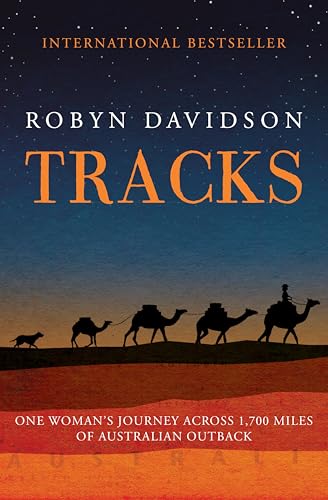
Tracks: A Woman's Solo Trek Across 1700 Miles of Australian Outback
Robyn Davidson
4.3
NOW A MAJOR MOTION PICTURE
Robyn Davidson's opens the memoir of her perilous journey across 1,700 miles of hostile Australian desert to the sea with only four camels and a dog for company with the following words: “I experienced that sinking feeling you get when you know you have conned yourself into doing something difficult and there's no going back."
Enduring sweltering heat, fending off poisonous snakes and lecherous men, chasing her camels when they get skittish and nursing them when they are injured, Davidson emerges as an extraordinarily courageous heroine driven by a love of Australia's landscape, an empathy for its indigenous people, and a willingness to cast away the trappings of her former identity. Tracks is the compelling, candid story of her odyssey of discovery and transformation.
“An unforgettably powerful book.”—Cheryl Strayed, author of Wild
Now with a new postscript by Robyn Davidson.
…
Recommended by Alastair Humphreys.
Alastair Humphreys
Tracks is just fantastically well written. [source]
Cover unavailable
30
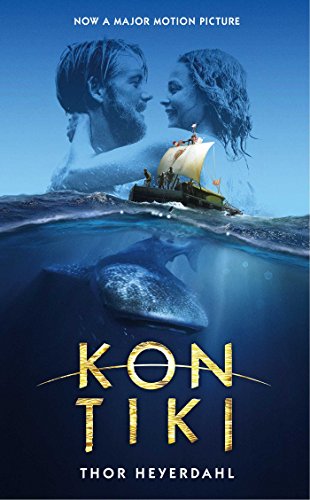
Kon-Tiki
Thor Heyerdahl
4.3
Kon-Tiki is the record of an astonishing adventure -- a journey of 4,300 nautical miles across the Pacific Ocean by raft. Intrigued by Polynesian folklore, biologist Thor Heyerdahl suspected that the South Sea Islands had been settled by an ancient race from thousands of miles to the east, led by a mythical hero, Kon-Tiki. He decided to prove his theory by duplicating the legendary voyage.
On April 28, 1947, Heyerdahl and five other adventurers sailed from Peru on a balsa log raft. After three months on the open sea, encountering raging storms, whales, and sharks, they sighted land -- the Polynesian island of Puka Puka.
Translated into sixty-five languages, Kon-Tiki is a classic, inspiring tale of daring and courage -- a magnificent saga of men against the sea.
Washington Square Press' Enriched Classics present the great works of world literature enhanced for the contemporary reader. This edition of Kon-Tiki has been prepared by an editorial committee headed by Harry Shefter, professor of English at New York University. It includes a foreword by the author, a selection of critical excerpts, notes, an index, and a unique visual essay of the voyage.
…
Recommended by Ovidiu Drugan.
Ovidiu Drugan
Expedition books from north pole to across the oceans with ships or rafts. [source]
Cover unavailable
31
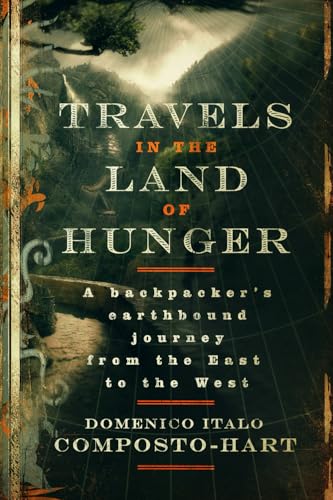
Travels in the Land of Hunger: A backpacker's earthbound journey from the East to the West
Domenico Italo Composto-Hart
4.3
In the spring of 2004 – after living in Tokyo, Japan for over three years pursuing a career as a freelance musician – science fiction and fantasy author Domenico Italo Composto-Hart set off on a half-year backpacking journey through the lands of East and Southeast Asia, Siberia, Central Russia, the Baltic states, the Nordic countries, and Eastern and Western Europe.
Traveling by foot, bus, train, and boat – and seeing the world through the analytical lens of anthropology, archaeology, and economics – Domenico documents, researches, and deciphers the developing nations he encounters as they rise through the turbulence of unregulated Western capitalism and globalization.
Travels in the Land of Hunger is the author’s reflective account of the dark, long-lasting impact of Western colonialism and imperialism, the Vietnam War, the Khmer Rouge regime, the 1997 Asian financial crisis, and the sex tourism and sex trafficking industries in Southeast and East Asia. It is also a narrative of finding exotic beauty, inspiration, inner strength, and unexpected love.
…
Cover unavailable
32
Chroniques de Jérusalem
Guy Delisle
4.3
Guy Delisle et sa famille s’installent pour une année à Jérusalem. Pas évident de se repérer dans cette ville aux multiples visages, animée par les passions et les conflits depuis près de 4000 ans. Au détour d’une ruelle, à la sortie d’un lieu saint, à la terrasse d’un café, le dessinateur laisse éclater des questions fondamentales et nous fait découvrir un Jérusalem comme on ne l’a jamais vu.
Cover unavailable
33
Arabian Sands
Wilfred Thesiger
4.3
"Arabian Sands" is Wilfred Thesiger's record of his extraordinary journey through the parched "Empty Quarter" of Arabia. Educated at Eton and Oxford, Thesiger was repulsed by the softness and rigidity of Western life-"the machines, the calling cards, the meticulously aligned streets." In the spirit of T. E. Lawrence, he set out to explore the deserts of Arabia, traveling among peoples who had never seen a European and considered it their duty to kill Christian infidels. His now-classic account is invaluable to understanding the modern Middle East.
…
Recommended by Bernard Haykel and Jo Tatchell.
Bernard Haykel
This is an older book and an unusual choice. I contracted malaria when I was in Yemen doing fieldwork. Between bouts of feverish hallucination, I read this book. It’s the authority on the Arabian Desert. He ventures into The Empty Quarter, one of the great deserts of the world. Arabia was an incredibly harsh place for human beings to live. Thesiger shows how Arabs, especially nomadic Arabs, were in tune with this ecology. They developed a culture that enabled them to survive. He shows the humanity of the Bedouin, otherwise thought to be savages. [source]
Jo Tatchell
This was written in the 1950s after Thesiger returned from five years of Arabian travel. He was one of the few non-indigenous people to cross “the Empty Quarter”, the desert that occupies a huge part of what is now Saudi Arabia and the United Arab Emirates. It’s almost a million square kilometres of billowing amber dunes – and more terrifying than an ocean. Usually, people travelled around the peninsula by sea, hugging the coast to get from town to town. A group travelling from Qatar to Mecca would make their way around the southern part of the peninsula. But there were ways of crossing it and, after World War II, Thesiger was offered a role mapping out the patters of locusts travelling across the desert. He jumped at the chance and joined the Rashid, a Bedu tribe, who lived in the old way, unsullied by the modernity that would soon accompany the arrival of oil prospectors. Thesiger relished the intimacy of the desert brotherhood. His passion for their simple way of life grew ever greater as he spent time with them. They cared for each other, knowing their lives depended upon it. And it had to be so; if one is cast out in the wilderness like that, it isn’t possible to survive alone. The camaraderie he describes is exclusively male; but he appreciated the regimen of the desert’s “barbaric splendour”. He valued the austerity of the lifestyle and the keen hardness of the people he declared most noble, pure in thought and deed. [source]
Cover unavailable
34
Dark Star Safari: Overland from Cairo to Cape Town
Paul Theroux
4.3
In Dark Star Safari the wittily observant and endearingly irascible Paul Theroux takes readers the length of Africa by rattletrap bus, dugout canoe, cattle truck, armed convoy, ferry, and train. In the course of his epic and enlightening journey, he endures danger, delay, and dismaying circumstances.
Gauging the state of affairs, he talks to Africans, aid workers, missionaries, and tourists. What results is an insightful mediation on the history, politics, and beauty of Africa and its people.
In a new postscript, Theroux recounts the dramatic events of a return to Africa to visit Zimbabwe.
…
Cover unavailable
35
Desert Solitaire
Edward Abbey
4.3
First published in 1968, Desert Solitaire is one of Edward Abbey’s most critically acclaimed works and marks his first foray into the world of nonfiction writing. Written while Abbey was working as a ranger at Arches National Park outside of Moab, Utah, Desert Solitaire is a rare view of one man’s quest to experience nature in its purest form.
Through prose that is by turns passionate and poetic, Abbey reflects on the condition of our remaining wilderness and the future of a civilization that cannot reconcile itself to living in the natural world as well as his own internal struggle with morality. As the world continues its rapid development, Abbey’s cry to maintain the natural beauty of the West remains just as relevant today as when this book was written.
Abbey is full of passion, fury and contempt – a fiery fighter to shake up the sometimes over-tranquil atmosphere of nature writing. [source]
Cover unavailable
36
The Shadow of the Sun
Ryszard Kapuscinski
4.2
In 1957, Ryszard Kapuscinski arrived in Africa to witness the beginning of the end of colonial rule as the first African correspondent of Poland's state newspaper. From the early days of independence in Ghana to the ongoing ethnic genocide in Rwanda, Kapuscinski has crisscrossed vast distances pursuing the swift, and often violent, events that followed liberation. Kapuscinski hitchhikes with caravans, wanders the Sahara with nomads, and lives in the poverty-stricken slums of Nigeria. He wrestles a king cobra to the death and suffers through a bout of malaria. What emerges is an extraordinary depiction of Africa--not as a group of nations or geographic locations--but as a vibrant and frequently joyous montage of peoples, cultures, and encounters. Kapuscinski's trenchant observations, wry analysis and overwhelming humanity paint a remarkable portrait of the continent and its people. His unorthodox approach and profound respect for the people he meets challenge conventional understandings of the modern problems faced by Africa at the dawn of the twenty-first century.
Once you discover Kapuściński, it’s a love affair for life. He’s such a beautiful writer. [source]
Cover unavailable
37
Empires of the Indus: The Story of a River
Alice Albinia
4.2
“Alice Albinia is the most extraordinary traveler of her generation. . . . A journey of astonishing confidence and courage.”—Rory Stewart
One of the largest rivers in the world, the Indus rises in the Tibetan mountains and flows west across northern India and south through Pakistan. It has been worshipped as a god, used as a tool of imperial expansion, and today is the cement of Pakistan’s fractious union. Alice Albinia follows the river upstream, through two thousand miles of geography and back to a time five thousand years ago when a string of sophisticated cities grew on its banks. “This turbulent history, entwined with a superlative travel narrative” (The Guardian) leads us from the ruins of elaborate metropolises, to the bitter divisions of today. Like Rory Stewart’s The Places In Between, Empires of the Indus is an engrossing personal journey and a deeply moving portrait of a river and its people. 18 illustrations
I chose this because it beautifully tells the story of this legacy of conquest, of the empires and colonialism and all the politics that go along with that. And also we know that the wars of this century are more than anything else going to be about resources, one of which is water. If you look at South Asia you can see that water is a huge part of that conflict. There is all the flooding in Pakistan today. The Indus is a life force for this country. It is the birthplace of what is now Pakistan. And Albinia’s book starts with Pakistan and follows the Indus all the way up to China and talks about not just the British Raj and its role in destroying the Indus delta but also as far back as Alexander the Great and his conquests and why his conquests were so successful. [source]
Victor Mallet
A wonderful book. It’s an adventure story, apart from anything else. She starts at the mouth of the Indus, and heads to the source. [source]
Cover unavailable
38
From the Holy Mountain: A Journey Among the Christians of the Middle East
WILLIAM DALRYMPLE
4.2
In 587 a.d., two monks set off on an extraordinary journey that would take them in an arc across the entire Byzantine world, from the shores of the Bosphorus to the sand dunes of Egypt. On the way John Moschos and his pupil Sophronius the Sophist stayed in caves, monasteries, and remote hermitages, collecting the wisdom of the stylites and the desert fathers before their fragile world finally shattered under the great eruption of Islam. More than a thousand years later, using Moschos's writings as his guide, William Dalrymple sets off to retrace their footsteps and composes "an evensong for a dying civilization" --Kirkus Reviews, starred review
…
Cover unavailable
39
The Innocents Abroad
Mark Twain and Jane Jacobs
4.2
The Innocents Abroad is one of the most prominent and influential travel books ever written about Europe and the Holy Land.
Recommended by Charles Glass.
Charles Glass
In 1867, Mark Twain accompanied a group of American Christian pilgrims to the Holy Land. As part of this excursion, they also enter Russia and various places in and around continental Europe. In this book, he sends them up marvellously – their pretensions, their messianic belief that they were better than anyone else in the world and their inability to understand what was going on around them. It’s a wonderfully wry look at a certain type of American who is striding the world, probably at just about the stage where America was about to take over the world. [source]
Cover unavailable
40
Down and Out in Paris and London
George Orwell
4.2
This unusual fictional memoir - in good part autobiographical - narrates without self-pity and often with humor the adventures of a penniless British writer among the down-and-outs of two great cities. The Parisian episode is fascinating for its expose of the kitchens of posh French restaurants, where the narrator works at the bottom of the culinary echelon as dishwasher, or plongeur. In London, while waiting for a job, he experiences the world of tramps, street people, and free lodging houses. In the tales of both cities we learn some sobering Orwellian truths about poverty and of society.
…
Recommended by D J Taylor, David Downie, David Kramaley, and 2 others.
D J Taylor
The fascination of Down and Out in Paris and London is that it’s his first book. In it, you can see Orwell stumbling, moving towards the kind of writer he wants to be, choosing the sort of subject matter he thinks will be appropriate. He spent time in Paris, working humbly in hotels and restaurants as what the French called a plongeur, someone who basically does the washing up. Then, he came back to England and went on what he called his ‘tramping adventures,’ masquerading as a down and out. [source]
David Downie
That is a book I read when I was young – in my teens – and it really marked me. [source]
David Kramaley
I really enjoyed Down and Out in Paris and London. I think it’s meant to be a semi-autobiographical novel by George Orwell. I liked it because it was one of those books that had a big influence on the way I perceive and think about the world. Highly recommended. [source]
Cover unavailable
41
The Geography of Bliss: One Grump's Search for the Happiest Places in the World
Eric Weiner
4.2
Weiner spent a decade as a foreign correspondent reporting from such discontented locales as Iraq, Afghanistan, and Indonesia. Unhappy people living in profoundly unstable states, he notes, inspire pathos and make for good copy, but not for good karma. So Weiner, admitted grump and self-help book aficionado, undertook a year's research to travel the globe, looking for the "unheralded happy places." The result is this book, equal parts laugh-out-loud funny and philosophical, a journey into both the definition of and the destination for true contentment.
Apparently, the happiest places on earth include, somewhat unexpectedly, Iceland, Bhutan, and India. Weiner also visits the country deemed most malcontent, Moldova, and finds real merit in the claim.
But the question remains: What makes people happy? Is it the freedom of the West or the myriad restrictions of Singapore? The simple ashrams of India or the glittering shopping malls of Qatar? From the youthful drunkenness of Iceland to the despond of Slough, a sad but resilient town in Heathrow's flight path, Weiner offers wry yet profound observations about the way people relate to circumstance and fate.
Both revealing and inspirational, perhaps the best thing about this hilarious trip across four continents is that for the reader, the "geography of bliss" is wherever they happen to find themselves while reading it.
…
Cover unavailable
42
The Sex Lives of Cannibals: Adrift in the Equatorial Pacific
J. Maarten Troost
4.2
At the age of twenty-six, Maarten Troost who had been pushing the snooze button on the alarm clock of life by racking up useless graduate degrees and muddling through a series of temp jobs decided to pack up his flip-flops and move to Tarawa, a remote South Pacific island in the Republic of Kiribati. He was restless and lacked direction, and the idea of dropping everything and moving to the ends of the Earth was irresistibly romantic. He should have known better. The Sex Lives of Cannibals tells the hilarious story of what happens when Troost discovers that Tarawa is not the island paradise he dreamed of. Falling into one amusing misadventure after another, Troost struggles through relentless, stifling heat, a variety of deadly bacteria, polluted seas, toxic fish, and worst of all, no television or coffee. And that's just the first day. Sunburned, emaciated, and stinging with sea lice, Troost spends the next two years battling incompetent government officials, alarmingly large critters, erratic electricity, and a paucity of food options. He contends with a cast of bizarre local characters, including "Half-Dead Fred" and the self-proclaimed Poet Laureate of Tarawa (a British drunkard who's never written a poem in his life), and eventually settles into the ebb and flow of island life, just before his return to the culture shock of civilization. With the rollicking wit of Bill Bryson, the brilliant travel exposition of Paul Theroux, and a hipster edge that is entirely Troost's own, The Sex Lives of Cannibals is the ultimate vicarious adventure. Readers may never long to set foot on Tarawa, but they'll want to travel with Troost time and time again.
…
Recommended by Jennifer Steil.
Jennifer Steil
The Sex Lives of Cannibals. I’m not sure the book legitimises the title and, in any case, it’s such a funny, engaging book that it doesn’t need a title like that. It’s the funniest of all the books I read. It’s about this guy, the author J Maarten Troost, who’s in his early 20s, hasn’t developed a career yet, hasn’t launched into a job after university, and how his girlfriend gets a job with an NGO in this tiny Pacific island nation called Kiribati, on a tiny strip of land called the Tarawa atoll. It’s the middle absolutely nowhere, zillions of miles from civilisation, and it’s this flat, baking strip of land that’s overpopulated, full of trash, people defecating on the sea shore: the worst detritus of modern society. All there is to eat is tuna. And while his girlfriend’s working there, he’s trying to write the great American novel. [source]
Cover unavailable
43
Under the Tuscan Sun
Frances Mayes
4.2
An enchanting and lyrical look at the life, the traditions, and the cuisine of Tuscany, in the spirit of Peter Mayle's A Year in Provence.
Frances Mayes entered a wondrous new world when she began restoring an abandoned villa in the spectacular Tuscan countryside. There were unexpected treasures at every turn: faded frescos beneath the whitewash in her dining room, a vineyard under wildly overgrown brambles in the garden, and, in the nearby hill towns, vibrant markets and delightful people. In Under the Tuscan Sun, she brings the lyrical voice of a poet, the eye of a seasoned traveler, and the discerning palate of a cook and food writer to invite readers to explore the pleasures of Italian life and to feast at her table.
…
Cover unavailable
44
A Cook's Tour: Global Adventures in Extreme Cuisines
Anthony Bourdain
4.2
From the star of No Reservations, Anthony Bourdain's New York Times-bestselling chronicle of travelling the world in search the globe's greatest cuilnary adventures
The only thing "gonzo gastronome" and internationally bestselling author Anthony Bourdain loves as much as cooking is traveling. Inspired by the question, "What would be the perfect meal?," Tony sets out on a quest for his culinary holy grail, and in the process turns the notion of "perfection" inside out. From California to Cambodia, A Cooks' Tour chronicles the unpredictable adventures of America's boldest and bravest chef.
Fans of Bourdain will find much to love in revisting this classic culinary and travel memoir.
…
Cover unavailable
45
The Old Ways: A Journey on Foot
Robert Macfarlane
4.2
Cover unavailable
46
Blue Latitudes: Boldly Going Where Captain Cook Has Gone Before
Tony Horwitz
4.2
Boldly Going Where Captain Cook Has Gone BeforeTwo centuries after James Cook's epic voyages of discovery, Tony Horwitz takes readers on a wild ride across hemispheres and centuries to recapture the Captain's adventures and explore his embattled legacy in today's Pacific. Horwitz, a Pulitzer Prize-winner and author of Confederates in the Attic, works as a sailor aboard a replica of Cook's ship, meets island kings and beauty queens, and carouses the South Seas with a hilarious and disgraceful travel companion, an Aussie named Roger. He also creates a brilliant portrait of Cook: an impoverished farmboy who became the greatest navigator in British history and forever changed the lands he touched. Poignant, probing, antic, and exhilarating, Blue Latitudes brings to life a man who helped create the global village we inhabit today.
…
Cover unavailable
47
Confederates in the Attic: Dispatches from the Unfinished Civil War
Tony Horwitz
4.2
When prize-winning war correspondent Tony Horwitz leaves the battlefields of Bosnia and the Middle East for a peaceful corner of the Blue Ridge Mountains, he thinks he's put war zones behind him. But awakened one morning by the crackle of musket fire, Horwitz starts filing front-line dispatches again this time from a war close to home, and to his own heart.
Propelled by his boyhood passion for the Civil War, Horwitz embarks on a search for places and people still held in thrall by America's greatest conflict. The result is an adventure into the soul of the unvanquished South, where the ghosts of the Lost Cause are resurrected through ritual and remembrance.
In Virginia, Horwitz joins a band of 'hardcore' reenactors who crash-diet to achieve the hollow-eyed look of starved Confederates; in Kentucky, he witnesses Klan rallies and calls for race war sparked by the killing of a white man who brandishes a rebel flag; at Andersonville, he finds that the prison's commander, executed as a war criminal, is now exalted as a martyr and hero; and in the book's climax, Horwitz takes a marathon trek from Antietam to Gettysburg to Appomattox in the company of Robert Lee Hodge, an eccentric pilgrim who dubs their odyssey the 'Civil Wargasm.'
Written with Horwitz's signature blend of humor, history, and hard-nosed journalism, Confederates in the Attic brings alive old battlefields and new ones 'classrooms, courts, country bars' where the past and the present collide, often in explosive ways. Poignant and picaresque, haunting and hilarious, it speaks to anyone who has ever felt drawn to the mythic South and to the dark romance of the Civil War.
…
Recommended by Robert Maguire.
Robert Maguire
Please take this sad news as an opportunity to read, or re-read, Confederates in the Attic. It is a remarkable book that is sadly still very relevant 20 years later https://t.co/zAyPfq8xBK [source]
Cover unavailable
48
Homage to Catalonia
George Orwell
4.2
In 1936 George Orwell travelled to Spain to report on the Civil War and instead joined the fight against the Fascists. This famous account describes the war and Orwell’s own experiences. Introduction by Lionel Trilling.
The other reason I picked this book is that Orwell, like Dan Schorr, was an outsider. When he went to Spain, he was an unknown. He wasn’t Hemingway. He wasn’t a well-connected intellectual. He just had this amazing eye for detail. He was an amazing observer, and he could write so powerfully. This book, to me, is just one of the classics of foreign reporting. [source]
Anyone who wants to go off and write about Egypt, Tunisia or Libya today should pack a copy of Homage to Catalonia. It’s brilliant reportage. As you know, it opens with a vignette of an Italian militiaman in the barracks in Barcelona and he only saw this guy for a few moments but it captures the excitement. [source]
Cover unavailable
49
Voyage of the Beagle
Charles Darwin
4.2
s/t: Charles Darwin's Journal of Researches When the Beagle sailed out of Devonport on 27 December 1831, Charles Darwin was twenty-two and setting off on the voyage of a lifetime. It was to last five years and transform him from an amiable and somewhat aimless young man into a scientific celebrity. Even more vitally, it was to set in motion the intellectual currents that culminated in the arrival of The Origin of Species in Victorian drawing-rooms in 1859. His journal, reprinted here in a shortened version, is vivid and immediate, showing us a naturalist making patient observations, above all in geology. As well as a profusion of natural history detail, it records many other things that caught Darwin’s eye, from civil war in Argentina to the new colonial settlements of Australia. The editors have provided an excellent introduction and notes for this Penguin Classics edition, which also contains maps and appendices, including an essay on scientific geology and the Bible by Robert FitzRoy, Darwin’s friend and captain of the Beagle.
…
Recommended by Tim White and Tom Clarke.
Tim White
Darwin is a great writer and an excellent observer so it is a good place to start understanding where we came from, and how we came to that understanding. [source]
Tom Clarke
Darwin sees Valparaiso destroyed by an earthquake erupting and is horrified by the brutality of nature. [source]
Cover unavailable
50
Baghdad Without a Map and Other Misadventures in Arabia
Tony Horwitz
4.2
"A very funny and frequently insightful look at the world's most combustible region."--The New York Times Book Review NATIONAL BESTSELLER
With razor-sharp wit and insight, intrepid journalist Tony Horwitz gets beyond solemn newspaper headlines and romantic myths of Arabia to offer startling close-ups of a volatile region few Westerners understand. His quest for hot stories takes him from the tribal wilds of Yemen to the shell-pocked shores of Lebanon; from the malarial sands of the Sudan to the eerie souks of Saddam Hussein's Iraq, a land so secretive that even street maps and weather reports are banned.
As an oasis in the Empty Quarter, a veiled woman offers tea and a mysterious declaration of love. In Cairo, "politeness police" patrol seedy nightclubs to ensure that belly dancers don't show any belly. And at the Ayatollah's funeral in Tehran a mourner chants, "Death to America," then confesses to the author his secret dream--to visit Disneyland.
Careening through thirteen Muslim countries and Israel, Horwitz travels light, packing a keen eye, a wicked sense of humor, and chutzpah in almost suicidal measure. This wild and comic tale of Middle East misadventure reveals a fascinating world in which the ancient and the modern collide.
…
Recommended by Karim Sadjadpour.
Karim Sadjadpour
Sad to hear about the untimely death of Tony Horwitz. His book 'Baghdad without a Map' was a wonderful collection of stories from his travels in the Middle East, written with great wit, empathy, and humility https://t.co/Np9Rt6GzQI [source]
Cover unavailable
51
River Town: Two Years on the Yangtze
Peter Hessler
4.2
In the heart of China's Sichuan province lies the small city of Fuling. Surrounded by the terraced hills of the Yangtze River valley, Fuling has long been a place of continuity, far from the bustling political centers of Beijing and Shanghai. But now Fuling is heading down a new path, and gradually, along with scores of other towns in this vast and ever-evolving country, it is becoming a place of change and vitality, tension and reform, disruption and growth. As the people of Fuling hold on to the China they know, they are also opening up and struggling to adapt to a world in which their fate is uncertain.
Fuling's position at the crossroads came into remarkably sharp focus when Peter Hessler arrived as a Peace Corps volunteer in 1996, marking the first time in more than half a century that the city had an American resident. He found himself teaching English and American literature at the local college, discovering how Shakespeare and other classics look when seen through the eyes of students who have been raised in the Sichuan countryside and educated in Communist Party doctrine. His students, though, are the ones who taught him about the ways of Fuling — and about the complex process of understanding that takes place when one is immersed in a radically different society.
As he learns the language and comes to know the people, Hessler begins to see that it is indeed a unique moment for Fuling. In its past is Communist China's troubled history — the struggles of land reform, the decades of misguided economic policies, and the unthinkable damage of the Cultural Revolution — and in the future is the Three Gorges Dam, which upon completion will partly flood thecity and force the resettlement of more than a million people. Making his way in the city and traveling by boat and train throughout Sichuan province and beyond, Hessler offers vivid descriptions of the people he meets, from priests to prostitutes and peasants to professors, and gives voice to their views. This is both an intimate personal story of his life in Fuling and a colorful, beautifully written account of the surrounding landscape and its history. Imaginative, poignant, funny, and utterly compelling, River Town is an unforgettable portrait of a city that, much like China itself, is seeking to understand both what it was and what it someday will be.
…
Recommended by Jennifer Steil.
Jennifer Steil
Let’s start with River Town by Peter Hessler. River Town is his memoir of two years teaching for the Peace Corps at a teacher training college in China in a very remote city – a small city of 200,000 people or so, very few of whom had ever met foreigners. So Hessler really was in a very isolated, alien place. I love this book for many reasons. Firstly because he’s a beautiful writer and he gives you this wonderful sense of what it’s like to actually be there: the landscape and the people and the hustle and bustle, the pollution and the way the city’s built in the mountains with stairs going up and down, and the porters to carry your stuff that they call ‘stick-stick men’. He makes it really easy for you to visualise this foreign place. [source]
Cover unavailable
52
The Travels of Ibn Battutah
Tim Mackintosh-Smith
4.2
Ibn Battutah was just 21 when he set out in 1325 from his native Tangier on a pilgrimage to Mecca. He did not return to Morocco for another 29 years, traveling instead through more than 40 countries on the modern map, covering 75,000 miles and getting as far north as the Volga, as far east as China, and as far south as Tanzania. He wrote of his travels, and comes across as a superb ethnographer, biographer, anecdotal historian, and occasional botanist and gastronome. With this edition by Mackintosh-Smith, Battuta's Travels takes its place alongside other indestructible masterpieces of the travel-writing genre.
…
Recommended by Tim Mackintosh-Smith and Ziauddin Sardar.
Tim Mackintosh-Smith
If you read this book, it seems quite chaotic, but there is an underlying structure to it. I think there are two elements to this structure. [source]
Ziauddin Sardar
Travel is both a physical and a mental exercise – it is about immersing yourself in another culture. Travelling is the process of letting go of yourself and immersing yourself into different ways of knowing and seeing. If you cannot do this, you haven’t travelled. It’s certainly not a holiday – travelling is not staying in five-star hotels. [source]
Cover unavailable
53
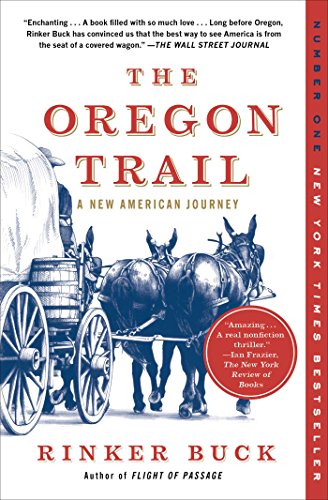
The Oregon Trail: A New American Journey
Rinker Buck
4.2
In the bestselling tradition of Bill Bryson and Tony Horwitz, Rinker Buck's "The Oregon Trail" is a major work of participatory history: an epic account of traveling the 2,000-mile length of the Oregon Trail the old-fashioned way, in a covered wagon with a team of mules--which hasn't been done in a century--that also tells the rich history of the trail, the people who made the migration, and its significance to the country.
Spanning 2,000 miles and traversing six states from Missouri to the Pacific Ocean, the Oregon Trail is the route that made America. In the fifteen years before the Civil War, when 400,000 pioneers used it to emigrate West--historians still regard this as the largest land migration of all time--the trail united the coasts, doubled the size of the country, and laid the groundwork for the railroads. The trail years also solidified the American character: our plucky determination in the face of adversity, our impetuous cycle of financial bubbles and busts, the fractious clash of ethnic populations competing for the same jobs and space. Today, amazingly, the trail is all but forgotten. Rinker Buck is no stranger to grand adventures. "The New Yorker "described his first travel narrative, "Flight of Passage," as "a funny, cocky gem of a book," and with "The Oregon Trail "he seeks to bring the most important road in American history back to life. At once a majestic American journey, a significant work of history, and a personal saga reminiscent of bestsellers by Bill Bryson and Cheryl Strayed, the book tells the story of Buck's 2,000-mile expedition across the plains with tremendous humor and heart. He was accompanied by three cantankerous mules, his boisterous brother, Nick, and an "incurably filthy" Jack Russell terrier named Olive Oyl. Along the way, Buck dodges thunderstorms in Nebraska, chases his runaway mules across miles of Wyoming plains, scouts more than five hundred miles of nearly vanished trail on foot, crosses the Rockies, makes desperate fifty-mile forced marches for water, and repairs so many broken wheels and axels that he nearly reinvents the art of wagon travel itself. Apart from charting his own geographical and emotional adventure, Buck introduces readers to the evangelists, shysters, natives, trailblazers, and everyday dreamers who were among the first of the pioneers to make the journey west. With a rare narrative power, a refreshing candor about his own weakness and mistakes, and an extremely attractive obsession for history and travel, "The Oregon Trail" draws readers into the journey of a lifetime.
…
Cover unavailable
54
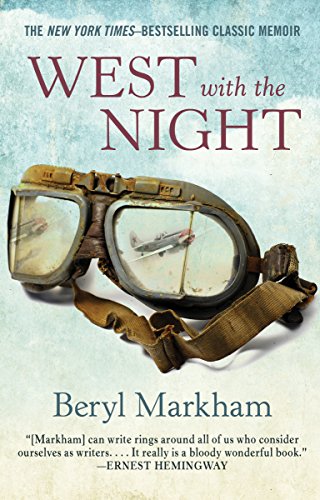
West with the Night
Beryl Markham
4.2
West with the Night is the story of Beryl Markham--aviator, racehorse trainer, beauty--and her life in the Kenya of the 1920s and '30s.
Recommended by Cal Fussman and David Maraniss.
Cal Fussman
"I note: Tim Ferriss asked Cal, "If you were a billionaire and could give 2 to 3 books to every graduating high school senior in the country this year, what would they be?" His answer (updated since the podcast) is: "For everyone: How to Win Friends and Influence People by Dale Carnegie. For females: West with the Night by Beryl Markham. For males: The Right Stuff by Tom Wolfe. That's a good start for a journey". [source]
David Maraniss
She’s always been attracted to flying and space, she grew up near O’Hare Airport. [source]
Cover unavailable
55
Between the Woods and the Water
Patrick Leigh Fermor, Jan Morris
4.2
Continuing the epic foot journey across Europe begun in A Time of Gifts
The journey that Patrick Leigh Fermor set out on in 1933—to cross Europe on foot with an emergency allowance of one pound a day—proved so rich in experiences that when much later he sat down to describe them, they overflowed into more than one volume. Undertaken as the storms of war gathered, and providing a background for the events that were beginning to unfold in Central Europe, Leigh Fermor’s still-unfinished account of his journey has established itself as a modern classic. Between the Woods and the Water, the second volume of a projected three, has garnered as many prizes as its celebrated predecessor, A Time of Gifts.
The opening of the book finds Leigh Fermor crossing the Danube—at the very moment where his first volume left off. A detour to the luminous splendors of Prague is followed by a trip downriver to Budapest, passage on horseback across the Great Hungarian Plain, and a crossing of the Romanian border into Transylvania. Remote castles, mountain villages, monasteries and towering ranges that are the haunt of bears, wolves, eagles, gypsies, and a variety of sects are all savored in the approach to the Iron Gates, the division between the Carpathian mountains and the Balkans, where, for now, the story ends.
…
Cover unavailable
56
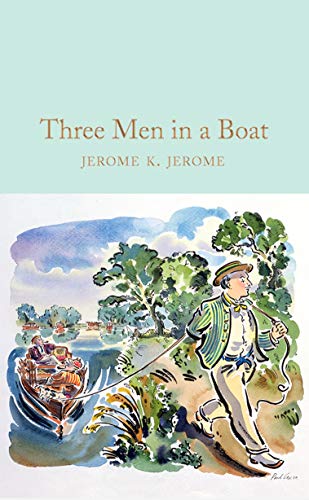
Three Men in a Boat (Three Men, #1)
Jerome K. Jerome
4.2
A comic masterpiece that has never been out of print since it was first published in 1889, Jerome K. Jerome's Three Men in a Boat includes an introduction and notes by Jeremy Lewis in Penguin Classics.
Martyrs to hypochondria and general seediness, J. and his friends George and Harris decide that a jaunt up the Thames would suit them to a 'T'. But when they set off, they can hardly predict the troubles that lie ahead with tow-ropes, unreliable weather forecasts and tins of pineapple chunks - not to mention the devastation left in the wake of J.'s small fox-terrier Montmorency. Three Men in a Boat was an instant success when it appeared in 1889, and, with its benign escapism, authorial discursions and wonderful evocation of the late-Victorian 'clerking classes', it hilariously captured the spirit of its age.
In his introduction, Jeremy Lewis examines Jerome K. Jerome's life and times, and the changing world of Victorian England he depicts - from the rise of a new mass-culture of tabloids and bestselling novels to crazes for daytripping and bicycling.
…
Recommended by Allen MacDuffie.
Allen MacDuffie
The story is about three friends taking a weekend trip up the Thames in a rowing boat. But then there’s the dog … [source]
Cover unavailable
57
The Old Patagonian Express: By Train Through the Americas
Paul Theroux
4.2
A witty sharply observed journey down the length of North and South America.
Beginning his journey in Boston, where he boarded the subway commuter train, and catching trains of all kinds on the way, Paul Theroux tells of his voyage from ice-bound Massachusetts and Illinois to the arid plateau of Argentina's most southerly tip. Sweating and shivering by turns as the temperature and altitude shoot up and down, thrown in with the appalling Mr Thornberry in Limón and reading nightly to the blind writer, Borges, in Buenos Aires, Theroux vividly evokes the contrasts of a journey 'to the end of the line'.
…
Cover unavailable
58
Blood River: A Journey to Africa's Broken Heart
Tim Butcher
4.2
A compulsively readable account of a journey to the Congo — a country virtually inaccessible to the outside world — vividly told by a daring and adventurous journalist.
Ever since Stanley first charted its mighty river in the 1870s, the Congo has epitomized the dark and turbulent history of a failed continent. However, its troubles only served to increase the interest of Daily Telegraph correspondent Tim Butcher, who was sent to cover Africa in 2000. Before long he became obsessed with the idea of recreating Stanley’s original expedition — but travelling alone.
Despite warnings Butcher spent years poring over colonial-era maps and wooing rebel leaders before making his will and venturing to the Congo’s eastern border. He passed through once thriving cities of this country and saw the marks left behind by years of abuse and misrule. Almost, 2,500 harrowing miles later, he reached the Atlantic Ocean, a thinner and a wiser man.
Butcher’s journey was a remarkable feat. But the story of the Congo, vividly told in Blood River, is more remarkable still.
From the Hardcover edition.
…
Cover unavailable
59
My Family and Other Animals (Corfu Trilogy #1)
Gerald Durrell
4.2
When the unconventional Durrell family can no longer endure the damp, gray English climate, they do what any sensible family would do: sell their house and relocate to the sunny Greek isle of Corfu. My Family and Other Animals was intended to embrace the natural history of the island but ended up as a delightful account of Durrell's family's experiences, from the many eccentric hangers-on to the ceaseless procession of puppies, toads, scorpions, geckoes, ladybugs, glowworms, octopuses, bats, and butterflies into their home.
…
Recommended by M G Leonard.
M G Leonard
It’s a real work of genius and needs to be kept on every child’s bedside table. [source]
Cover unavailable
60
Shantaram
Gregory David Roberts
4.2
"It took me a long time and most of the world to learn what I know about love and fate and the choices we make, but the heart of it came to me in an instant, while I was chained to a wall and being tortured."
So begins this epic, mesmerizing first novel set in the underworld of contemporary Bombay. Shantaram is narrated by Lin, an escaped convict with a false passport who flees maximum security prison in Australia for the teeming streets of a city where he can disappear.
Accompanied by his guide and faithful friend, Prabaker, the two enter Bombay's hidden society of beggars and gangsters, prostitutes and holy men, soldiers and actors, and Indians and exiles from other countries, who seek in this remarkable place what they cannot find elsewhere.
As a hunted man without a home, family, or identity, Lin searches for love and meaning while running a clinic in one of the city's poorest slums, and serving his apprenticeship in the dark arts of the Bombay mafia. The search leads him to war, prison torture, murder, and a series of enigmatic and bloody betrayals. The keys to unlock the mysteries and intrigues that bind Lin are held by two people. The first is Khader Khan: mafia godfather, criminal-philosopher-saint, and mentor to Lin in the underworld of the Golden City. The second is Karla: elusive, dangerous, and beautiful, whose passions are driven by secrets that torment her and yet give her a terrible power.
Burning slums and five-star hotels, romantic love and prison agonies, criminal wars and Bollywood films, spiritual gurus and mujaheddin guerrillas – this huge novel has the world of human experience in its reach, and a passionate love for India at its heart. Based on the life of the author, it is by any measure the debut of an extraordinary voice in literature.
…
Recommended by Richard Branson, Henry Medine, Irina Marinescu, and 3 others.
Today is World Book Day, a wonderful opportunity to address this #ChallengeRichard sent in by Mike Gonzalez of New Jersey: Make a list of your top 65 books to read in a lifetime. [source]
Henry Medine
I promote range and diversity. Thus, I recommend readers to expose themselves to as many different topics as possible. I usually have 2-4 books I refer back to at any given time. They range in topics from management, art, spirituality and philosophy. Trying to get the engineering thing going but don't much of a mind for science. [source]
Irina Marinescu
I am always eager to learn how people think and form friendships, how they deal with life's challenges and still remain human. This book delivers that and even more! Shantaram takes you on an incredible journey and you return a changed person. [source]
Cover unavailable
61
Country Driving: A Journey Through China from Farm to Factory
Peter Hessler
4.2
From the bestselling author of Oracle Bones and River Town comes the final book in his award-winning trilogy, on the human side of the economic revolution in China. In the summer of 2001, Peter Hessler, the longtime Beijing correspondent for The New Yorker, acquired his Chinese driver's license. For the next seven years, he traveled the country, tracking how the automobile and improved roads were transforming China. Hessler writes movingly of the average people farmers, migrant workers, entrepreneurs who have reshaped the nation during one of the most critical periods in its modern history.
Country Driving begins with Hessler's 7,000-mile trip across northern China, following the Great Wall, from the East China Sea to the Tibetan plateau. He investigates a historically important rural region being abandoned, as young people migrate to jobs in the southeast. Next Hessler spends six years in Sancha, a small farming village in the mountains north of Beijing, which changes dramatically after the local road is paved and the capital's auto boom brings new tourism. Finally, he turns his attention to urban China, researching development over a period of more than two years in Lishui, a small southeastern city where officials hope that a new government-built expressway will transform a farm region into a major industrial center. Hessler, whom The Wall Street Journal calls "one of the Western world's most thoughtful writers on modern China," deftly illuminates the vast, shifting landscape of a traditionally rural nation that, having once built walls against foreigners, is now building roads and factory towns that look to the outside world.
…
Cover unavailable
62
Long Way Round: Chasing Shadows Across the World
Ewan McGregor, Charley Boorman
4.2
It started as a daydream. Poring over a map of the world at home one quiet Saturday afternoon, Ewan McGregor - actor and self-confessed bike nut - noticed that it was possible to ride all the way round the world, with just one short hop across the Bering Strait from Russia to Alaska. It was a revelation he couldn't get out of his head. So he picked up the phone and called Charley Boorman, his best friend, fellow actor and bike enthusiast. 'Charley, ' he said. 'I think you ought to come over for dinner...'From London to New York, Ewan and Charley chased their shadows through Europe, the Ukraine, Kazakhstan, Mongolia and Russia, across the Pacific to Alaska, then down through Canada and America. But as the miles slipped beneath the tyres of their big BMWs, their troubles started. Exhaustion, injury and accidents tested their strength. Treacherous roads, unpredictable weather and turbulent politics challenged their stamina. They were chased by paparazzi in Kazakhstan, courted by men with very large guns in the Ukraine, hassled by the police, and given bulls' testicles for supper by Mongolian nomads.
And yet despite all these obstacles they managed to ride over 20,000 miles in four months, changing their lives forever in the process. As they travelled they documented their trip, taking photographs, and writing diaries by the campfire. "Long Way Round" is the result of their adventures - a fascinating, frank and highly entertaining travel book about two friends riding round the world together and, against all the odds, realising their dream.
…
Cover unavailable
63
The Road to Oxiana
Robert Byron and Paul Fussell
4.2
In 1933 the delightfully eccentric Robert Byron set out on a journey through the Middle East via Beirut, Jerusalem, Baghdad and Teheran to Oxiana -the country of the Oxus, the ancient name for the river Amu Darya which forms part of the border between Afghanistan and the Soviet Union. His arrival at his destination, the legendary tower of Qabus, although a wonder in itself, it not nearly so amazing as the thoroughly captivating, at times zany, record of his adventures.
In addition to its entertainment value, The Road to Oxiana also serves as a rare account of the architectural treasures of a region now inaccessible to most Western travellers. When Paul Fussell "rediscovered" The Road to Oxiana in his recent book Abroad, he whetted the appetite of a whole new generation of readers. In his new introduction, written especially for this volume, Fussell writes: "Reading the book is like stumbling into a modern museum of literary kinds presided over by a benign if eccentric curator. Here armchair travellers will find newspaper clippings, public signs and notices, official forms, letters, diary entries, essays on current politics, lyric passages, historical and archaeological dissertations, brief travel narratives (usually of comic-awful delays and disasters), and--the triumph of the book--at least twenty superb comic dialogues, some of them virtually playlets, complete with stage directions and musical scoring."
…
Recommended by Colin Thubron, Nicholas Shakespeare, Sandy Gall, and 1 others.
Oxiana is a coinage of his, and it doesn’t geographically specifically exist. It was a way of saying Persia (as it was to him) and Afghanistan. Byron’s journey starts in Venice and ends in what is now Pakistan. He went there in 1933-34, not long before he died in World War II, drowned when his ship was torpedoed. Although the book is terrifically chauvinistic – he’s appalling when he writes about the local people, almost always without sympathy and sometimes with extreme colonial arrogance – it’s full of wonderful descriptions. [source]
Nicholas Shakespeare
Byron was Chatwin’s first conscious model. The book is a candid account of a journey made in 1933 in search of Seljuk tombs. [source]
Sandy Gall
One of the classic books about travelling in Afghanistan. It’s fun to travel with Byron and hear what he has to say, although he is quite a snob. [source]
Cover unavailable
64
The Worst Journey In The World
Apsley CHERRY-GARRARD
4.1
In his introduction to the harrowing story of the Scott expedition to the South Pole, Apsley Cherry-Garrard states that 'Polar Exploration is at once the cleanest and most isolated way of having a bad time which has been devised.' The Worst Journey in the World is his gripping account of an expedition gone disastrously wrong. One of the youngest members of Scott's team, the author was later part of the rescue party that eventually found the frozen bodies of Scott and three men who had accompanied him on the final push to the Pole. Prior to this sad denouement, Cherry-Garrard's account is filled with details of scientific discovery and anecdotes of human resilience in a harsh environment, supported by diary excerpts and accounts from other explorers. Summing up the reasons for writing the book, Cherry-Garrard says 'To me, and perhaps to you, the interest in this story is the men, and it is the spirit of the men, "the response of the spirit", which is interesting rather than what they did or failed to do: except in a superficial sense they never failed-It is a story about human minds with all kinds of ideas and questions involved, which stretch beyond the furthest horizons.'
The worst journey in the world which he describes isn’t Scott’s race to the pole, it’s Cherry-Garrard’s trip with two other men to find the emperor penguins. The book is framed by Scott’s expedition, but the quest for the penguins is the centre of it. [source]
Sara Wheeler
It is ostensibly the story of Captain Scott’s 1912 expedition to the Antarctic, but it’s really about all places in all times and is possibly the best book ever written. [source]
Hemingway's memories of his life as an unknown writer living in Paris in the twenties are deeply personal, warmly affectionate, and full of wit. Looking back not only at his own much younger self, but also at the other writers who shared Paris with him - James Joyce, Wyndham Lewis, Scott and Zelda Fitzgerald - he recalls the time when, poor, happy, and writing in cafes, he discovered his vocation. Written during the last years of Hemingway's life, his memoir is a lively and powerful reflection of his genius that scintillates with the romance of the city.
…
Recommended by Janine di Giovanni, Mohsin Hamid, and Wai Chee Dimock.
Janine di Giovanni
The fact that Hemingway writes it as an old, rather bitter man trapped in his Idaho home with a bullying wife while he dreams of his youth in Paris with his first wife and child is so touching to me. [source]
We think of Hemingway as an American writer, but much of his writing is set outside of the United States, just as much of his life was set outside of the United States. [source]
Wai Chee Dimock
This is a memoir by Hemingway about his time in Paris, which includes sketches of people like F Scott Fitzgerald. [source]
Cover unavailable
66
The Age of Kali: Indian Travels & Encounters
William Dalrymple
4.1
William Dalrymple has proved himself to be one of the most perceptive and enjoyable travel writers of the 1990s. His first book, In Xanadu, became an instant backpacker's classic, winning a stream of literary prizes. City of Djinns and From the Holy Mountain soon followed, to universal critical praise. Yet it is India that Dalrymple continues to return to in his travels, and his fourth book, The Age of Kali, is his most reflective book to date.
The result of 10 year's living and traveling throughout the Indian subcontinent, The Age of Kali emerges from Dalrymple's uneasy sense that the region is slipping into the most fearsome of all epochs in ancient Hindu cosmology: "the Kali Yug, the Age of Kali, the lowest possible throw, an epoch of strife, corruption, darkness, and disintegration." "The brilliance of this book lies in its refusal to reflect any cultural pessimism. Dalrymple's love for the subcontinent, and his feel for its diverse cultural identity, comes across in every page, which makes its chronicles of political corruption, ethnic violence, and social disintegration all the more poignant. The scope of the book is particularly impressive, from the vivid opening chapters portraying the lawless caste violence of Bihar, to interviews with the drug barons on the North-West Frontier, and Dalrymple's extraordinary encounter with the Tamil Tigers in Sri Lanka. Some of the most fascinating sections of the book are Dalrymple's interviews with Imran Khan and Benazir Bhutto in Pakistan, which read like nonfiction companion pieces to Salman Rushdie's bitterly satirical Shame. The Age of Kali is a dark, disturbing book that takes the pulse of a continent facing some tough questions. --Jerry Brotton, Amazon.co.uk
…
Cover unavailable
67
Underland
Robert Macfarlane
4.1
From the best-selling, award-winning author of Landmarks and The Old Ways, a haunting voyage into the planet’s past and future.
Hailed as "the great nature writer of this generation" (Wall Street Journal), Robert Macfarlane is the celebrated author of books about the intersections of the human and the natural realms. In Underland, he delivers his masterpiece: an epic exploration of the Earth’s underworlds as they exist in myth, literature, memory, and the land itself.
In this highly anticipated sequel to his international bestseller The Old Ways, Macfarlane takes us on an extraordinary journey into our relationship with darkness, burial, and what lies beneath the surface of both place and mind. Traveling through “deep time”—the dizzying expanses of geologic time that stretch away from the present—he moves from the birth of the universe to a post-human future, from the prehistoric art of Norwegian sea caves to the blue depths of the Greenland ice cap, from Bronze Age funeral chambers to the catacomb labyrinth below Paris, and from the underground fungal networks through which trees communicate to a deep-sunk “hiding place” where nuclear waste will be stored for 100,000 years to come. Woven through Macfarlane’s own travels are the unforgettable stories of descents into the underland made across history by explorers, artists, cavers, divers, mourners, dreamers, and murderers, all of whom have been drawn for different reasons to seek what Cormac McCarthy calls “the awful darkness within the world.”
Global in its geography and written with great lyricism and power, Underland speaks powerfully to our present moment. Taking a deep-time view of our planet, Macfarlane here asks a vital and unsettling question: “Are we being good ancestors to the future Earth?” Underland marks a new turn in Macfarlane’s long-term mapping of the relations of landscape and the human heart. From its remarkable opening pages to its deeply moving conclusion, it is a journey into wonder, loss, fear, and hope. At once ancient and urgent, this is a book that will change the way you see the world.
…
Recommended by Alastair Humphreys, Cal Flyn, and Jonathan Green.
Alastair Humphreys
The cleverest and nicest man in the world of travel writing has just published a brilliant new book which you should definitely buy. And so has @robgmacfarlane... 😂 https://t.co/7tWMRoB08W https://t.co/2UmUfDUqpt [source]
Cal Flyn
Having climbed the highest heights in his debut Mountains of the Mind, Macfarlane now dives down to the lowest of the lows. He goes caving in limestone caverns deep underground, rattles through salt mines under the sea in carts and stumbles across (literal) underground subcultures in the Paris catacombs, all interwoven with learned digressions into geological epochs and classical conceptions of the underworld. What can I say? Macfarlane is the most remarkable writer. [source]
Jonathan Green
@mmbrenn yes the best book i read last year without question. beautiful. harrowing. [source]
Cover unavailable
68
Riding the Iron Rooster
Paul Theroux
4.1
Paul Theroux invites you to join him on the journey of a lifetime, in the grand romanttic tradition, by train across Euope, through the vast underbelly of Asia and in the heart of Russia, and then up to China. Here is China by rail, as seen and heard through the eyes and ears of one of the most intrepid and insightful travel writers of our time.
Cover unavailable
69
The Places in Between
Rory Stewart
4.1
In January 2002 Rory Stewart walked across Afghanistan-surviving by his wits, his knowledge of Persian dialects and Muslim customs, and the kindness of strangers. By day he passed through mountains covered in nine feet of snow, hamlets burned and emptied by the Taliban, and communities thriving amid the remains of medieval civilizations. By night he slept on villagers' floors, shared their meals, and listened to their stories of the recent and ancient past. Along the way Stewart met heroes and rogues, tribal elders and teenage soldiers, Taliban commanders and foreign-aid workers. He was also adopted by an unexpected companion-a retired fighting mastiff he named Babur in honor of Afghanistan's first Mughal emperor, in whose footsteps the pair was following. Through these encounters--by turns touching, confounding, surprising, and funny--Stewart makes tangible the forces of tradition, ideology, and allegiance that shape life in the map's countless places in between.
…
Cover unavailable
70
Ghost Train to the Eastern Star
Paul Therou
4.1
National Bestseller
In Ghost Train to the Eastern Star, Theroux recreates an epic journey he took thirty years ago, a giant loop by train (mostly) through Eastern Europe, Turkey, the Caucasus, Central Asia, the Indian Subcontinent, China, Japan, and Siberia. In short, he traverses all of Asia top to bottom, and end to end. In the three decades since he first travelled this route, Asia has undergone phenomenal change. The Soviet Union has collapsed, China has risen, India booms, Burma slowly smothers, and Vietnam prospers despite the havoc unleashed upon it the last time Theroux passed through. He witnesses all this and so much more in a 25,000 mile journey, travelling as the locals do, by train, car, bus, and foot.
His odyssey takes him from Eastern Europe, still hungover from Communism, through tense but thriving Turkey, into the Caucasus, where Georgia limps back toward feudalism while its neighbour Azerbaijan revels in oil-driven capitalism. As he penetrates deeper into Asia’s heart, his encounters take on an otherworldly cast. The two chapters that follow show us Turkmenistan, a profoundly isolated society at the mercy of an almost comically egotistical dictator, and Uzbekistan, a ruthless authoritarian state. From there, he retraces his steps through India, Mayanmar, China, and Japan, providing his penetrating observations on the changes these countries have undergone.
Brilliant, caustic, and totally addictive, Ghost Train to the Eastern Star is Theroux at his very best.
…
Cover unavailable
71
Shenzhen: A Travelogue from China
Guy Delisle
4.1
Shenzhen is entertainingly compact with Guy Delisle's observations of life in urban southern China, sealed off from the rest of the country by electric fences and armed guards. With a dry wit and a clean line, Delisle makes the most of his time spent in Asia overseeing outsourced production for a French animation company. He brings to life the quick pace of Shenzhen's crowded streets. By translating his fish-out-of-water experiences into accessible graphic novels, Delisle skillfully notes the differences between Western and Eastern cultures, while also conveying his compassion for the simple freedoms that escape his colleagues in the Communist state.
…
Cover unavailable
72
Are We Nearly There Yet?: A Family's 8000-Mile Car Journey Around Britain
Ben Hatch
4.1
The story of a madcap five-month family trip to write a travel guide—embracing the freedom of the open road with a spirit of discovery and an industrial supply of baby wipes
"Hurry up," I shout at Dinah, whilst on the overhead telly Ray Mears’ Survival is playing extraordinarily loudly because Charlie sat on the volume button of the remote. The kids writhe about in the V05 shampoo they just spilt, laughing as the last of their clean clothes bite the dust, and I'm thinking: "Survive driving round England with two under 4s, staying at a different hotel each night and visiting four or five attractions a day and sometimes a restaurant in the evening. Sleep all in the same room, go to bed at 7 p.m. after having had no evening to yourself, wake up at 7 a.m. and do it all again the next day with the prospect of another 140 nights of the same—then come and tell me about survival in your khaki ****ing shorts, Ray."
They were bored, broke, burned out, and turning 40. So when Ben and his wife Dinah were approached to write a guidebook about family travel, they embraced the open road, ignoring friends' warnings: "One of you will come back chopped up in a bin bag in the roof box." Featuring deadly puff adders, Billie Piper's pajamas, and a friend of Hitler's, it's a story about love, death, falling out, moving on, and growing up, and 8,000 misguided miles in a Vauxhall Astra.
…
Cover unavailable
73
Without Reservations: The Travels of an Independent Woman
Alice Steinbach
4.1
"In many ways, I was an independent woman," writes Pulitzer Prize–winning journalist Alice Steinbach. “For years I’d made my own choices, paid my own bills, shoveled my own snow.” But somehow she had become dependent in quite another way. “I had fallen into the habit of defining myself in terms of who I was to other people and what they expected of me.” But who was she away from the people and things that defined her? In this exquisite book, Steinbach searches for the answer to this question in some of the most beautiful and exciting places in the world: Paris, where she finds a soul mate; Oxford, where she takes a course on the English village; and Milan, where she befriends a young woman about to be married.
Beautifully illustrated with postcards from Steinbach’s journeys, this revealing and witty book transports you into a fascinating inner and outer journey, an unforgettable voyage of discovery.
…
Cover unavailable
74
The Songlines
Bruce Chatwin
4.1
In this extraordinary book, Bruce Chatwin has adapted a literary form common until the eighteenth century though rare in ours; a story of ideas in which two companions, traveling and talking together, explore the hopes and dreams that animate both them and the people they encounter. Set in almost uninhabitable regions of Central Australia, The Songlines asks and tries to answer these questions: Why is man the most restless, dissatisfied of animals? Why do wandering people conceive the world as perfect whereas sedentary ones always try to change it? Why have the great teachers—Christ or the Buddha—recommended the Road as the way. to salvation? Do we agree with Pascal that all man's troubles stem from his inability to sit quietly in a room?
We do not often ask these questions today for we commonly assume that living in a house is normal and that the wandering life is aberrant. But for more than twenty years Chatwin has mulled over the possibility that the reverse might be the case.
Pre-colonial Australia was the last landmass on earth peopled not by herdsmen, farmers, or city dwellers, but by hunter-gatherers. Their labyrinths of invisible pathways across the continent are known to us as Songlines or Dreaming Tracks, but to the Aboriginals as the tracks of their ancestors—the Way of the Law. Along these "roads" they travel in order to perform all those activities that are distinctively human—song, dance, marriage, exchange of ideas, and arrangements of territorial boundaries by agreement rather than force.
In Chatwin's search for the Songlines, Arkady is an ideal friend and guide: Australian by birth, the son of a Cossack exile, with all the strength and warmth of his inheritance. Whether hunting kangaroo from a Land Cruiser, talking to the diminutive Rolf in his book-crammed trailer, buying drinks for a bigoted policeman (and would-be writer), cheering as Arkady's true love declares herself (part of The Songlines is a romantic comedy), Chatwin turns this almost implausible picaresque adventure into something approaching the scale of a Greek tragedy.
The life of the Aboriginals stands in vivid contrast, of course, to the prevailing cultures of our time. And The Songlines presents unforgettable details about the kinds of disputes we know all too well from less traumatic confrontations: over sacred lands invaded by railroads, mines, and construction sites, over the laws and rights of a poor people versus a wealthy invasive one. To Chatwin these are but recent, local examples of an eternal basic distinction between settlers and wanderers. His book, devoted to the latter, is a brilliant evocation of this profound optimism: that man is by nature not a bellicose aggressor but a pacific, song-creating, adaptive species whose destiny is to quest for the truth.
…
Cover unavailable
75
Democracy in America
Alexis de Tocqueville, Isaac Kramnick, Gerald Bevan
4.1
Democracy in America has had the singular honor of being even to this day the work that political commentators of every stripe refer to when they seek to draw large conclusions about the society of the USA. Alexis de Tocqueville, a young French aristocrat, came to the young nation to investigate the functioning of American democracy & the social, political & economic life of its citizens, publishing his observations in 1835 & 1840. Brilliantly written, vividly illustrated with vignettes & portraits, Democracy in America is far more than a trenchant analysis of one society at a particular point in time. What will most intrigue modern readers is how many of the observations still hold true: on the mixed advantages of a free press, the strained relations among the races & the threats posed to democracies by consumerism & corruption. So uncanny is Tocqueville’s insight & so accurate are his predictions, that it seems as tho he were not merely describing the American identity but actually helping to create it.
Tocqueville was seized by the sharp contrast between Paris and America, where people did not wait for the central government, but went ahead on their own, and I think that’s vital part of what it is to be both an American and a vital part of what is America. [source]
Tocqueville was not only a brilliant sociologist but he also saw the connections between American society and the budding capitalism of the 1830s. [source]
Stephen Breyer
It’s a masterpiece of sociological and political analysis. Tocqueville’s work still helps us understand America, 170 years after he wrote it. [source]
Cover unavailable
76
Nine Lives
William Dalrymple
4.1
From the author of The Last Mughal and In Xanadu, comes a mesmerizing book that explores how traditional religions are observed in today’s India, revealing ways of life that we might otherwise never have known.
A middle-class woman from Calcutta finds unexpected fulfillment living as a Tantric in an isolated, skull-filled cremation ground . . . A prison warder from Kerala is worshipped as an incarnate deity for two months of every year . . . A Jain nun tests her powers of detachment watching her closest friend ritually starve herself to death . . . The twenty-third in a centuries-old line of idol makers struggles to reconcile with his son’s wish to study computer engineering . . . An illiterate goatherd keeps alive in his memory an ancient 200,000-stanza sacred epic . . . A temple prostitute, who resisted her own initiation into sex work, pushes her daughters into the trade she nonetheless regards as a sacred calling.
William Dalrymple tells these stories, among others, with expansive insight and a spellbinding evocation of remarkable circumstance, giving us a dazzling travelogue of both place and spirit
…
Cover unavailable
77
The Art of Travel
Alain De Botton
4.1
Any Baedeker will tell us where we ought to travel, but only Alain de Botton will tell us how and why. With the same intelligence and insouciant charm he brought to How Proust Can Save Your Life, de Botton considers the pleasures of anticipation; the allure of the exotic, and the value of noticing everything from a seascape in Barbados to the takeoffs at Heathrow.
Even as de Botton takes the reader along on his own peregrinations, he also cites such distinguished fellow-travelers as Baudelaire, Wordsworth, Van Gogh, the biologist Alexander von Humboldt, and the 18th-century eccentric Xavier de Maistre, who catalogued the wonders of his bedroom. The Art of Travel is a wise and utterly original book. Don’t leave home without it.
…
Recommended by Emily Thomas.
Emily Thomas
It’s a thoughtful account of de Botton’s engagement with artists about travel. He focuses on painters and novelists with a view to asking what light they can shed on why we travel, and picking up titbits from them for our own travels. One of my favourite examples he discusses is Edward Hopper. [source]
Cover unavailable
78
Toujours Provence
Peter Mayle
4.1
Taking up where his beloved A Year in Provence leaves off, Peter Mayle offers us another funny, beautifully (and deliciously) evocative book about life in Provence. With tales only one who lives there could know—of finding gold coins while digging in the garden, of indulging in sumptuous feasts at truck stops—and with characters introduced with great affection and wit—the gendarme fallen from grace, the summer visitors ever trying the patience of even the most genial Provençaux, the straightforward dog "Boy"—Toujours Provence is a heart-warming portrait of a place where, if you can't quite "get away from it all," you can surely have a very good time trying.
…
Cover unavailable
79
Travels
Michael Crichton
4.1
Medical student, writer, film-director, modern-day adventurer, Michael Crichton now gives his fans an extraordinarily candid and revealing account of his most enthralling and important journeys--physical, emotional, and psychic--during the past two decades in a book every bit as riveting as his bestselling novels.
Recommended by Ev Williams.
Cover unavailable
80
Black Lamb and Grey Falcon: A Journey through Yugoslavia
Rebecca West
4.1
Part travelogue, part history, part love letter on a thousand-page scale, Rebecca West's Black Lamb and Grey Falcon is a genre-bending masterwork written in elegant prose. But what makes it so unlikely to be confused with any other book of history, politics, or culture--with, in fact, any other book--is its unashamed depth of feeling: think The Decline and Fall of the Roman Empire crossed with Let Us Now Praise Famous Men. West visited Yugoslavia for the first time in 1936. What she saw there affected her so much that she had to return--partly, she writes, because it most resembled "the country I have always seen between sleeping and waking," and partly because "it was like picking up a strand of wool that would lead me out of a labyrinth in which, to my surprise, I had found myself immured." Black Lamb is the chronicle of her travels, but above all it is West following that strand of wool: through countless historical digressions; through winding narratives of battles, slavery, and assassinations; through Shakespeare and Augustine and into the very heart of human frailty.
West wrote on the brink of World War II, when she was "already convinced of the inevitability of the second Anglo-German war." The resulting book is colored by that impending conflict, and by West's search for universals amid the complex particulars of Balkan history. In the end, she saw the region's doom--and our own--in a double infatuation with sacrifice, the "black lamb and grey falcon" of her title. It's the story of Abraham and Isaac without the last-minute reprieve: those who hate are all too ready to martyr the innocent in order to procure their own advantage, and the innocent themselves are all too eager to be martyred. To West, in 1941, "the whole world is a vast Kossovo, an abominable blood-logged plain." Unfortunately, little has happened since then to prove her wrong. --Mary Park
I guess it’s good that we’re starting with this, because it’s a seriously off-putting book. It’s close to 1,200 pages – a travelogue-history of Yugoslavia. [source]
Cover unavailable
81
Assassination Vacation
Sarah Vowell
4.0
Sarah Vowell exposes the glorious conundrums of American history and culture with wit, probity, and an irreverent sense of humor. With Assassination Vacation, she takes us on a road trip like no other—a journey to the pit stops of American political murder and through the myriad ways they have been used for fun and profit, for political and cultural advantage.
From Buffalo to Alaska, Washington to the Dry Tortugas, Vowell visits locations immortalized and influenced by the spilling of politically important blood, reporting as she goes with her trademark blend of wisecracking humor, remarkable honesty, and thought-provoking criticism. We learn about the jinx that was Robert Todd Lincoln (present at the assassinations of Presidents Lincoln, Garfield, and McKinley) and witness the politicking that went into the making of the Lincoln Memorial. The resulting narrative is much more than an entertaining and informative travelogue—it is the disturbing and fascinating story of how American death has been manipulated by popular culture, including literature, architecture, sculpture, and—the author's favorite— historical tourism. Though the themes of loss and violence are explored and we make detours to see how the Republican Party became the Republican Party, there are all kinds of lighter diversions along the way into the lives of the three presidents and their assassins, including mummies, show tunes, mean-spirited totem poles, and a nineteenth-century biblical sex cult.
…
Cover unavailable
82
Around the World in Eighty Days (Extraordinary Voyages, #11)
Jules Verne, Michael Glencross, Brian Aldiss
4.0
One night in the reform club, Phileas Fogg bets his companions that he can travel across the globe in just eighty days. Breaking the well-established routine of his daily life, he immediately sets off for Dover with his astonished valet Passepartout. Passing through exotic lands and dangerous locations, they seize whatever transportation is at hand—whether train or elephant—overcoming set-backs and always racing against the clock.
…
Recommended by Cristina Riesen.
Cristina Riesen
Chronologically, my first favourite book probably was Jules Verne’s Around the World in Eighty Days. [source]
Cover unavailable
83
The Wild Places
Robert Macfarlane
4.0
"An eloquent (and compulsively readable) reminder that, though we're laying waste the world, nature still holds sway over much of the earth's surface." Bill McKibben
Are there any genuinely wild places left in Britain and Ireland? That is the question that Robert Macfarlane poses to himself as he embarks on a series of breathtaking journeys through some of the archipelago's most remarkable landscapes. He climbs, walks, and swims by day and spends his nights sleeping on cliff-tops and in ancient meadows and wildwoods. With elegance and passion he entwines history, memory, and landscape in a bewitching evocation of wildness and its vital importance. A unique travelogue that will intrigue readers of natural history and adventure, The Wild Places solidifies Macfarlane's reputation as a young writer to watch.
…
Cover unavailable
84
One Man's Wilderness: An Alaskan Odyssey
Richard Louis Proenneke
4.0
To live in a pristine land unchanged by man...to roam a wilderness through which few other humans have passed...to choose an idyllic site, cut trees and build a log cabin...to be a self-sufficient craftsman, making what is needed from materials available...to be not at odds with the world but content with one's own thoughts and company.
Thousands have had such dreams, but Richard Proenneke lived them. He found a place, built a cabin, and stayed to become part of the country. One Man's Wilderness is a simple account of the day-to-day explorations and activities he carried out alone, and the constant chain of nature's events that kept him company.
From Proenneke's journals, and with first-hand knowledge of his subject and the setting, Sam Keith has woven a tribute to a man who carved his masterpiece out of the beyond.
…
Cover unavailable
85
McCarthy's Bar: A Journey of Discovery in Ireland
Pete McCarthy
4.0
The #1 Irish Bestseller
Despite the many exotic places Pete McCarthy has visited, he finds that nowhere else can match the particular magic of Ireland, his mother's homeland. In McCarthy's Bar, his journey begins in Cork and continues along the west coast to Donegal in the north. Traveling through spectacular landscapes, but at all times obeying the rule, "never pass a bar that has your name on it," he encounters McCarthy's bars up and down the land, meeting fascinating people before pleading to be let out at four o'clock in the morning.
Written by someone who is at once an insider and an outside, McCarthy's Bar is a wonderfully funny and affectionate portrait of a rapidly changing country.
…
Cover unavailable
86
Arctic Dreams
Barry Lopez
4.0
Barry Lopez's National Book Award-winning classic study of the Far North is widely considered his masterpiece.
Lopez offers a thorough examination of this obscure world-its terrain, its wildlife, its history of Eskimo natives and intrepid explorers who have arrived on their icy shores. But what turns this marvelous work of natural history into a breathtaking study of profound originality is his unique meditation on how the landscape can shape our imagination, desires, and dreams. Its prose as hauntingly pure as the land it describes, Arctic Dreams is nothing less than an indelible classic of modern literature.
this book doesn’t directly address climate change. That’s one of the things I love about it. We so often hear about the Arctic in the context of threats: it’s disappearing, it’s changing, we’ll never see it again. I think it’s useful, though, to stop thinking of the Arctic only as a symbol of climate change and to remember it’s a real place. If we appreciate the Arctic for itself, maybe that makes it harder to write it off as an inevitable casualty of climate change………..I included Arctic Dreams on my list because it’s the only ‘science’ book I’ve read that’s really got close to my experience of doing science. It’s meandering and there’s no real structure; there are seriously pages and pages describing how ice melts in great detail. And then a meditation on musk oxen, and then some more ice melting. It’s all a bit of a mess, but there’s a real sense of wonder and gratitude and beauty that permeate the book. [source]
This book changed my life and really made me become a writer, if any one book did. I remember finding a very battered secondhand copy of it in a bookshop in Vancouver while I was out climbing in the Rockies, in my early twenties. [source]
Sara Wheeler
Barry Lopez is an American man and in Arctic Dreams he describes the clarity of the landscape that has such a profound effect on the human spirit. Everyone says it has a profound effect.He’s a proper nature writer and it’s a brilliant book. He wrote it 25 years ago, I think, and it’s very lyrical and uplifting………..It takes you outside your normal existence and sets you loose from your spiritual moorings. Everywhere in the Antarctic is like that and in the Arctic you feel it when you get away from the settlements. [source]
Cover unavailable
87
A Short Walk in the Hindu Kush
Eric Newby
4.0
When Eric Newby, fashion industry worker and inexperienced hill walker, decided after 10 years in haute couture he needed a change he took 4 days training in Wales then walked the Hindu Kush. This is his account of an entertaining time in the hills!
Recommended by Sandy Gall.
Sandy Gall
Well, it’s terribly funny. I think Eric Newby is one of the best travel writers Britain has ever produced. I love reading this book. I’ve read it two or three times, and each time I fell about laughing. He writes terribly well. Evelyn Waugh actually wrote the preface to this book thinking it was by another Eric Newby, and ended up admiring this one. The book is about Newby and his young diplomat friend who went off on an expedition to Afghanistan in the 1950s with the intention of climbing Mir Samir – the highest mountain there – although neither had any experience of mountaineering or had even used a rope before. But they were young, fit and enthusiastic and they very nearly got to the top. [source]
Cover unavailable
88
Displacement: A Travelogue
Lucy Knisley
4.0
In her graphic memoirs, New York Times-best selling cartoonist Lucy Knisley paints a warts-and-all portrait of contemporary, twentysomething womanhood, like writer Lena Dunham (Girls). In the next installment of her graphic travelogue series, Displacement, Knisley volunteers to watch over her ailing grandparents on a cruise. (The book s watercolors evoke the ocean that surrounds them.) In a book that is part graphic memoir, part travelogue, and part family history, Knisley not only tries to connect with her grandparents, but to reconcile their younger and older selves. She is aided in her quest by her grandfather s WWII memoir, which is excerpted. Readers will identify with Knisley s frustration, her fears, her compassion, and her attempts to come to terms with mortality, as she copes with the stress of travel complicated by her grandparents frailty."
…
Cover unavailable
89
Holy Cow: An Indian Adventure
Sarah Macdonald
4.0
In her twenties, journalist Sarah Macdonald backpacked around India and came away with a lasting impression of heat, pollution and poverty. So when an airport beggar read her palm and told her she would return to India—and for love—she screamed, “Never!” and gave the country, and him, the finger.
But eleven years later, the prophecy comes true. When the love of Sarah’s life is posted to India, she quits her dream job to move to the most polluted city on earth, New Delhi. For Sarah this seems like the ultimate sacrifice for love, and it almost kills her, literally. Just settled, she falls dangerously ill with double pneumonia, an experience that compels her to face some serious questions about her own fragile mortality and inner spiritual void. “I must find peace in the only place possible in India,” she concludes. “Within.” Thus begins her journey of discovery through India in search of the meaning of life and death.
Holy Cow is Macdonald’s often hilarious chronicle of her adventures in a land of chaos and contradiction, of encounters with Hinduism, Islam and Jainism, Sufis, Sikhs, Parsis and Christians and a kaleidoscope of yogis, swamis and Bollywood stars. From spiritual retreats and crumbling nirvanas to war zones and New Delhi nightclubs, it is a journey that only a woman on a mission to save her soul, her love life—and her sanity—can survive.
…
Cover unavailable
90
Lost on Planet China: The Strange and True Story of One Man's Attempt to Understand the World's Most Mystifying Nation, or How He Became Comfortable Eating Live Squid
J. Maarten Troost
4.0
The bestselling author of The Sex Lives of Cannibals returns with a sharply observed, hilarious account of his adventures in China—a complex, fascinating country with enough dangers and delicacies to keep him, and readers, endlessly entertained.
Maarten Troost has charmed legions of readers with his laugh-out-loud tales of wandering the remote islands of the South Pacific. When the travel bug hit again, he decided to go big-time, taking on the world’s most populous and intriguing nation. In Lost on Planet China, Troost escorts readers on a rollicking journey through the new beating heart of the modern world, from the megalopolises of Beijing and Shanghai to the Gobi Desert and the hinterlands of Tibet. Lost on Planet China finds Troost dodging deadly drivers in Shanghai; eating Yak in Tibet; deciphering restaurant menus (offering local favorites such as Cattle Penis with Garlic); visiting with Chairman Mao (still dead, very orange); and hiking (with 80,000 other people) up Tai Shan, China’s most revered mountain. But in addition to his trademark gonzo adventures, the book also delivers a telling look at a vast and complex country on the brink of transformation that will soon shape the way we all work, live, and think. As Troost shows, while we may be familiar with Yao Ming or dim sum or the cheap, plastic products that line the shelves of every store, the real China remains a world—indeed, a planet--unto itself.
Maarten Troostbrings China to life as you’ve never seen it before, and his insightful, rip-roaringly funny narrative proves that once again he is one of the most entertaining and insightful armchair travel companions around.
…
Cover unavailable
91
Paris to the Moon
Adam Gopnik
4.0
With singular wit and insight, Gopnik weaves the magical with the mundane in a wholly delightful, often hilarious look at what it was to be an American family man in Paris at the end of the twentieth century.
Paris. The name alone conjures images of chestnut-lined boulevards, sidewalk cafés, breathtaking façades around every corner--in short, an exquisite romanticism that has captured the American imagination for as long as there have been Americans.
In 1995, Adam Gopnik, his wife, and their infant son left the familiar comforts and hassles of New York City for the urbane glamour of the City of Light. Gopnik is a longtime New Yorker writer, and the magazine has sent its writers to Paris for decades--but his was above all a personal pilgrimage to the place that had for so long been the undisputed capital of everything cultural and beautiful. It was also the opportunity to raise a child who would know what it was to romp in the Luxembourg Gardens, to enjoy a croque monsieur in a Left Bank café--a child (and perhaps a father, too) who would have a grasp of that Parisian sense of style we Americans find so elusive.
So, in the grand tradition of the American abroad, Gopnik walked the paths of the Tuileries, enjoyed philosophical discussions at his local bistro, wrote as violet twilight fell on the arrondissements. Of course, as readers of Gopnik's beloved and award-winning "Paris Journals" in The New Yorker know, there was also the matter of raising a child and carrying on with day-to-day, not-so-fabled life. Evenings with French intellectuals preceded middle-of-the-night baby feedings; afternoons were filled with trips to the Musée d'Orsay and pinball games; weekday leftovers were eaten while three-star chefs debated a "culinary crisis."
As Gopnik describes in this funny and tender book, the dual processes of navigating a foreign city and becoming a parent are not completely dissimilar journeys--both hold new routines, new languages, a new set of rules by which everyday life is lived. With singular wit and insight, Gopnik weaves the magical with the mundane in a wholly delightful, often hilarious look at what it was to be an American family man in Paris at the end of the twentieth century. "We went to Paris for a sentimental reeducation - I did anyway - even though the sentiments we were instructed in were not the ones we were expecting to learn, which I believe is why they call it an education."
…
Cover unavailable
92
Full Tilt: Ireland to India with a Bicycle
Dervla Murphy
4.0
Based on her daily diary, this is Dervla Murphy’s account of her ride, in 1963, across frozen Europe and through Persia and Afghanistan, over the Himalayas to Pakistan and into India, during one of the worst winters in memory. She has written other travel books, including In Ethiopia with a Mule.
Cover unavailable
93
Maximum City: Bombay Lost and Found
Suketu Mehta
4.0
A native of Bombay, Suketu Mehta gives us an insider’s view of this stunning metropolis. He approaches the city from unexpected angles, taking us into the criminal underworld of rival Muslim and Hindu gangs; following the life of a bar dancer raised amid poverty and abuse; opening the door into the inner sanctums of Bollywood; and delving into the stories of the countless villagers who come in search of a better life and end up living on the sidewalks.
…
Cover unavailable
94
Three Cups of Tea: One Man's Mission to Promote Peace ... One School at a Time
Greg Mortenson, David Oliver Relin
4.0
The inspiring account of one man's campaign to build schools in the most dangerous, remote, and anti-American reaches of Asia.
In April 2011, the CBS documentary "60 Minutes" called into question Greg Mortenson's work. The program alleged several inaccuracies in Three Cups of Tea, and its sequel, Stones into Schools, as well as financial improprieties in the operation of Mortenson's Central Asia Institute. Questions were also raised about Mortenson's claim that he got lost near K2 and ended up in Korphe; that he was captured by the Taliban in 1996; the number of schools the CAI claimed to have built; and whether CAI funds had been used appropriately for Mortenson's book tours. Jon Krakauer, who had supported the CAI to the tune of $75,000, also questioned Mortenson's accounts, and released his allegations in a lengthy article titled Three Cups of Deceit.
…
Recommended by Gretchen Peters, Jennifer Steil, and Nicholas Kristof.
Gretchen Peters
I went to a refugee camp after 9/11 where people were living in tents and boiling grass to make tea and at least one family offered to let me sleep in their tent. [source]
Jennifer Steil
Greg Mortenson has changed literally thousands and thousands of lives. [source]
I think Greg does a very good job of providing a more nuanced portrait of the Islamic world and what is possible in it. [source]
Cover unavailable
95
Travels with Herodotus
Ryszard Kapuscinski
4.0
From the master of literary reportage whose acclaimed books include Shah of Shahs, The Emperor, and The Shadow of the Sun, an intimate account of his first youthful forays beyond the Iron Curtain.
Just out of university in 1955, Kapuscinski told his editor that he’d like to go abroad. Dreaming no farther than Czechoslovakia, the young reporter found himself sent to India. Wide-eyed and captivated, he would discover in those days his life’s work—to understand and describe the world in its remotest reaches, in all its multiplicity. From the rituals of sunrise at Persepolis to the incongruity of Louis Armstrong performing before a stone-faced crowd in Khartoum, Kapuscinski gives us the non-Western world as he first saw it, through still-virginal Western eyes.
The companion on his travels: a volume of Herodotus, a gift from his first boss. Whether in China, Poland, Iran, or the Congo, it was the “father of history”—and, as Kapuscinski would realize, of globalism—who helped the young correspondent to make sense of events, to find the story where it did not obviously exist. It is this great forerunner’s spirit—both supremely worldly and innately Occidental—that would continue to whet Kapuscinski’s ravenous appetite for discovering the broader world and that has made him our own indispensable companion on any leg of that perpetual journey.
…
Cover unavailable
96
A Fine Romance: Falling in Love with the English Countryside
Susan Branch
4.0
A thrilling ocean voyage on the Queen Mary 2 from New York City to Southampton culminating in a two-month ramble through the charming backroads and small villages of the pastoral English countryside in the spring of last year is the subject of this delicious travel journal that Susan has painstakingly hand-lettered and watercolored in the way many of us have grown to love over the years.
Join Susan as she recounts her lighthearted ramble of discovery through the historical homes and gardens of art and literary heroes, along ancient footpaths, through wildflower meadows and fields of lambs, into tea rooms, pubs and antique stores. This lovely hard-cover book includes hundreds of photographs and a red ribbon sewn-in book mark. A Fine Romance is a work of art, part love story, part travel guide and all dream come true.
…
Cover unavailable
97
A Voyage Long and Strange: Rediscovering the New World
Tony Horwitz
4.0
On a chance visit to Plymouth Rock, Tony Horwitz realizes he's mislaid more than a century of American history, from Columbus’s sail in 1492 to Jamestown's founding in 16-oh-something. Did nothing happen in between? Determined to find out, he embarks on a journey of rediscovery, following in the footsteps of the many Europeans who preceded the Pilgrims to America.
An irresistible blend of history, myth, and misadventure, A Voyage Long and Strange captures the wonder and drama of first contact. Vikings, conquistadors, French voyageurs — these and many others roamed an unknown continent in quest of grapes, gold, converts, even a cure for syphilis. Though most failed, their remarkable exploits left an enduring mark on the land and people encountered by late-arriving English settlers.
Tracing this legacy with his own epic trek — from Florida's Fountain of Youth to Plymouth's sacred Rock, from desert pueblos to subarctic sweat lodges, Tony Horwitz explores the revealing gap between what we enshrine and what we forget. Displaying his trademark talent for humor, narrative, and historical insight, A Voyage Long and Strange allows us to rediscover the New World for ourselves.
…
Cover unavailable
98
Destinations of a Lifetime: 225 of the World's Most Amazing Places
National Geographic
4.0
National Geographic takes you on a photographic tour of the world’s most spectacular destinations, inspiring tangible ideas for your next trip. Hundreds of the most breathtaking locales—both natural and man-made—are illustrated with vivid images taken by the organization's world-class photographers. These images, coupled with evocative text, feature a plethora of visual wonders: ancient monoliths, scenic islands, stunning artwork, electric cityscapes, white-sand seashores, rain forests, ancient cobbled streets, and both classic and innovative architecture. Loaded with hard service information for each location, Places of a Lifetime has it all: when to go, where to eat, where to stay, and what to do to ensure the most enriching and authentic experience.
…
Cover unavailable
99
Chasing the Monsoon
Alexander Frater
4.0
The fascinating and revealing story of Frater's journey through India in pursuit of the astonishing Indian summer monsoon. On 20th May the Indian summer monsoon will begin to envelop the country in two great wet arms, one coming from the east, the other from the west. They are united over central India around 10th July, a date that can be calculated within seven or eight days. Frater aims to follow the monsoon, staying sometimes behind it, sometimes in front of it, and everywhere watching the impact of this extraordinary phenomenon. During the anxious period of waiting, the weather forecaster is king, consulted by pie-crested cockatoos, and a joyful period ensues: there is a period of promiscuity, and scandals proliferate. Frater's journey takes him to Bangkok and the cowboy town on the Thai-Malaysian border to Rangoon and Akyab in Burma (where the front funnels up between the mountains and the sea). Alexander Frater's fascinating narrative reveals the exotic, often startling discoveries of an ambitious and irresistibly romantic adventure
…
Cover unavailable
100
From Here to Eternity: Traveling the World to Find the Good Death
Caitlin Doughty
4.0
The best-selling author of Smoke Gets in Your Eyes expands our sense of what it means to treat the dead with “dignity.”
Fascinated by our pervasive terror of dead bodies, mortician Caitlin Doughty set out to discover how other cultures care for their dead. In rural Indonesia, she observes a man clean and dress his grandfather’s mummified body. Grandpa’s mummy has lived in the family home for two years, where the family has maintained a warm and respectful relationship. She meets Bolivian natitas (cigarette-smoking, wish-granting human skulls), and introduces us to a Japanese kotsuage, in which relatives use chopsticks to pluck their loved-ones’ bones from cremation ashes.
With curiosity and morbid humor, Doughty encounters vividly decomposed bodies and participates in compelling, powerful death practices almost entirely unknown in America. Featuring Gorey-esque illustrations by artist Landis Blair, From Here to Eternity introduces death-care innovators researching green burial and body composting, explores new spaces for mourning—including a glowing-Buddha columbarium in Japan and America’s only open-air pyre—and reveals unexpected new possibilities for our own death rituals.
…
Recommended by Dylan Thuras.
Dylan Thuras
Caitlin Doughty is razor sharp, and writes about death with exceptional clarity and style. From Here to Eternity manages to be both an extremely funny travelogue and a deeply moving book about what death means to us all. [source]


 1
1