We've ranked the best sound books using expert recommendations, sales data, and millions of reader ratings. At Shortform, we know books. Our book guides are the best in the world. Learn why.
Cover unavailable
1
Musicophilia: Tales of Music and the Brain
Oliver Sacks
5.0
With the same trademark compassion and erudition he brought to The Man Who Mistook His Wife for a Hat, Oliver Sacks explores the place music occupies in the brain and how it affects the human condition. In Musicophilia, he shows us a variety of what he calls “musical misalignments.” Among them: a man struck by lightning who suddenly desires to become a pianist at the age of forty-two; an entire group of children with Williams syndrome, who are hypermusical from birth; people with “amusia,” to whom a symphony sounds like the clattering of pots and pans; and a man whose memory spans only seven seconds-for everything but music. Illuminating, inspiring, and utterly unforgettable, Musicophilia is Oliver Sacks’ latest masterpiece.
…
Recommended by Aniela Gregorek and Justin Boreta.
Aniela Gregorek
I gained a deeper understanding of how music affects our moods and our brains. [source]
Justin Boreta
Justin Boreta said this is one of his most-recommended books. [source]
Cover unavailable
2
Mixing Secrets for the Small Studio
Mike Senior
4.9
Discover how to achieve release-quality mixes even in the smallest studios by applying power-user techniques from the world's most successful producers.
Mixing Secrets For The Small Studio is a down-to-earth primer for small-studio enthusiasts who want chart-ready sonics in a hurry. Drawing on the back-room strategies of more than 100 famous names, this entertaining guide leads you step-by-step through the entire mixing process. On the way, you'll unravel the mysteries of every type of mix processing, from simple EQ and compression through to advanced spectral dynamics and 'fairy dust' effects. User-friendly explanations introduce technical concepts on a strictly need-to-know basis, while chapter summaries and assignments are perfect for school and college use.
* Learn the subtle editing, arrangement, and monitoring tactics which give industry insiders their competitive edge, and master the psychological tricks which protect you from all the biggest rookie mistakes.
* Find out where you don't need to spend money, as well as how to make a limited budget really count.
* Pick up tricks and tips from leading-edge engineers working on today's multi-platinum hits, including Michael Brauer, Serban Ghenea, the Lord-Alge brothers, Tony Maserati, Manny Marroquin, Dave 'Hard Drive' Pensado, Jack Joseph Puig, Mark 'Spike' Stent, Phil Tan, Andy Wallace, and many, many more...
Mike Senior is a professional engineer who has worked with Wet Wet Wet, The Charlatans, Reef, Therapy, and Nigel Kennedy. He specialises in adapting the techniques of top producers for those working on a budget. Since 2007 he has transformed dozens of amateur productions for Sound On Sound magazine's popular 'Mix Rescue' column, proving time and again that you can achieve commercial-grade results with affordable gear -- once you know how!
…
Cover unavailable
3
This Is Your Brain on Music: The Science of a Human Obsession
Daniel J. Levitin
4.7
Whether you load your iPod with Bach or Bono, music has a significant role in your life—even if you never realized it. Why does music evoke such powerful moods? The answers are at last be- coming clear, thanks to revolutionary neuroscience and the emerging field of evolutionary psychology. Both a cutting-edge study and a tribute to the beauty of music itself, This Is Your Brain on Music unravels a host of mysteries that affect everything from pop culture to our understanding of human nature, including: • Are our musical preferences shaped in utero? • Is there a cutoff point for acquiring new tastes in music? • What do PET scans and MRIs reveal about the brain’s response to music? • Is musical pleasure different from other kinds of pleasure?
This Is Your Brain on Music explores cultures in which singing is considered an essential human function, patients who have a rare disorder that prevents them from making sense of music, and scientists studying why two people may not have the same definition of pitch. At every turn, this provocative work unlocks deep secrets about how nature and nurture forge a uniquely human obsession.
Goes into the evolutionary thinking behind why music does what it does. [source]
Cover unavailable
4
Polar Bear, Polar Bear, What Do You Hear?
Bill Martin Jr., Eric Carle
4.7
What will you hear when you read this book to a preschool child?
Lots of noise!
Children will chant the rhythmic words. They'll make the sounds the animals make. And they'll pretend to be the zoo animals featured in the book-- look at the last page!
Bill Martin Jr. and Eric Carle are two of the most respected names in children's education and children's illustrations. This collaboration, their first since the classic Brown Bear, Brown Bear, What Do You See? (published more than thirty years ago and still a best-seller) shows two masters at their best.
A Redbook Children's Picture Book Award winner
The rollicking companion to Brown Bear, Brown Bear, What Do You See?
…
Cover unavailable
5
Horton Hears a Who!
Dr. Seuss
4.6
Academy Award winner Dustin Hoffman's masterful narration brings to life the heartwarming tale of Horton the elephant. Original music and sound effects complement the retelling. An exclusive paperback edition of the book is packaged with the audio cassette. Cassette running time: approx. 20 min.
Cover unavailable
6
A Visit from the Goon Squad
Jennifer Egan
4.6
Jennifer Egan’s spellbinding interlocking narratives circle the lives of Bennie Salazar, an aging former punk rocker and record executive, and Sasha, the passionate, troubled young woman he employs. Although Bennie and Sasha never discover each other’s pasts, the reader does, in intimate detail, along with the secret lives of a host of other characters whose paths intersect with theirs, over many years, in locales as varied as New York, San Francisco, Naples, and Africa.
We first meet Sasha in her mid-thirties, on her therapist’s couch in New York City, confronting her long-standing compulsion to steal. Later, we learn the genesis of her turmoil when we see her as the child of a violent marriage, then as a runaway living in Naples, then as a college student trying to avert the suicidal impulses of her best friend. We plunge into the hidden yearnings and disappointments of her uncle, an art historian stuck in a dead marriage, who travels to Naples to extract Sasha from the city’s demimonde and experiences an epiphany of his own while staring at a sculpture of Orpheus and Eurydice in the Museo Nazionale. We meet Bennie Salazar at the melancholy nadir of his adult life—divorced, struggling to connect with his nine-year-old son, listening to a washed-up band in the basement of a suburban house—and then revisit him in 1979, at the height of his youth, shy and tender, reveling in San Francisco’s punk scene as he discovers his ardor for rock and roll and his gift for spotting talent. We learn what became of his high school gang—who thrived and who faltered—and we encounter Lou Kline, Bennie’s catastrophically careless mentor, along with the lovers and children left behind in the wake of Lou’s far-flung sexual conquests and meteoric rise and fall.
A Visit from the Goon Squad is a book about the interplay of time and music, about survival, about the stirrings and transformations set inexorably in motion by even the most passing conjunction of our fates. In a breathtaking array of styles and tones ranging from tragedy to satire to PowerPoint, Egan captures the undertow of self-destruction that we all must either master or succumb to; the basic human hunger for redemption; and the universal tendency to reach for both—and escape the merciless progress of time—in the transporting realms of art and music. Sly, startling, exhilarating work from one of our boldest writers.
I love this novel. It is wonderfully written, brilliantly imaginative and engaging, funny and sad and smart. I also love it because of what it says about SF. That in a genre often caricatured (by those who don’t know it very well) as being about the wish-fulfillment fantasies of adolescent boys – huge space weapons, scantily clad astro-girls and so on – some of the very best work is being written by women. [source]
I love this novel. It is wonderfully written, brilliantly imaginative and engaging, funny and sad and smart. I also love it because of what it says about SF. That in a genre often caricatured (by those who don’t know it very well) as being about the wish-fulfillment fantasies of adolescent boys – huge space weapons, scantily clad astro-girls and so on – some of the very best work is being written by women. [source]
@Egangoonsquad @EW I loved this book. Great pick. [source]
Cover unavailable
7
How Music Works
David Byrne
4.6
*Updated with a new chapter on digital curation*
How Music Works is David Byrne's incisive and enthusiastic look at the musical art form, from its very inceptions to the influences that shape it, whether acoustical, economic, social or technological. Utilizing his incomparable career and inspired collaborations with Talking Heads, Brian Eno, and many others, Byrne taps deeply into his lifetime of knowledge to explore the panoptic elements of music, how it shapes the human experience, and reveals the impetus behind how we create, consume, distribute, and enjoy the songs, symphonies, and rhythms that provide the backbeat of life. Byrne's magnum opus uncovers ever-new and thrilling realizations about the redemptive liberation that music brings us all.
…
Cover unavailable
8
The Sound of a Wild Snail Eating
Elisabeth Tova Bailey
4.5
In a work that beautifully demonstrates the rewards of closely observing nature, Elisabeth Bailey shares an inspiring and intimate story of her uncommon encounter with a Neohelix albolabris —a common woodland snail.
While an illness keeps her bedridden, Bailey watches a wild snail that has taken up residence on her nightstand. As a result, she discovers the solace and sense of wonder that this mysterious creature brings and comes to a greater understanding of her own confined place in the world.
Intrigued by the snail’s molluscan anatomy, cryptic defenses, clear decision making, hydraulic locomotion, and mysterious courtship activities, Bailey becomes an astute and amused observer, providing a candid and engaging look into the curious life of this underappreciated small animal.
Told with wit and grace, The Sound of a Wild Snail Eating is a remarkable journey of survival and resilience, showing us how a small part of the natural world illuminates our own human existence and provides an appreciation of what it means to be fully alive.
This is the autobiographical story of a woman who gets ill with a mysterious virus that totally incapacitates her for years. Somebody brings her a violet in a pot which has a snail on it, and she becomes fascinated with this snail. And she starts to learn everything about snails, which are not what you would have as the usual household pet. It is an engaging story of snails, which is surprising. This is also an example of a book that you would want to have in your library, because it is such a handsome book and nicely illustrated. It is a beautiful little book which is written with a real gentleness and is very enjoyable to read. [source]
Cover unavailable
9
Click, Clack, Moo: Cows That Type
Doreen Cronin, Betsy Lewin
4.5
Farmer Brown has a problem.
His cows like to type.
All day long he hears
Click, clack, MOO.
Click, clack, MOO.
Clickety, clack, MOO.
But Farmer Brown's problems REALLY begin when his cows start leaving him notes....
Doreen Cronin's understated text and Betsy Lewin's expressive illustrations make the most of this hilarious situation. Come join the fun as a bunch of literate cows turn Farmer Brown's farm upside down.
…
Cover unavailable
10
Modern Recording Techniques
David Miles Huber
4.5
Modern Recording Techniques is the bestselling, authoritative guide to sound and music recording. Whether you're just starting out or are looking for a step-up in the industry, Modern Recording Techniques provides an in-depth read on the art and technologies of music production. It's a must-have reference for all audio bookshelves. Using its familiar and accessible writing style, this ninth edition has been fully updated, presenting the latest production technologies and includes an in-depth coverage of the DAW, networked audio, MIDI, signal processing and much more.
A robust companion website features video tutorials, web-links, an online glossary, flashcards, and a link to the author's blog. Instructor resources include a test bank and an instructor's manual.
The ninth edition includes:
Updated tips, tricks and insights for getting the best out of your studio
An introduction to the Apple iOS in music production
Introductions to new technologies and important retro studio techniques
The latest advancements in DAW systems, signal processing, mixing and mastering
…
Cover unavailable
11
The Mixing Engineer's Handbook
Bobby Owsinski
4.5
Mixing music -the process of combining and shaping the component parts of a song into a polished, completed recording -was once considered an unteachable art. The first edition of Bobby Owsinski's The Mixing Engineer's Handbook destroyed that myth forever, breaking the craft of mixing down into discrete, understandable steps and showing musicians, audio engineers, and producers exactly how to get great results in the studio. The book has since become the go-to text on mixing for recording programs in colleges and universities around the world. Now available in a completely revised fourth edition, The Mixing Engineer's Handbook remains the best, most up-to-date source for mastering the art and science of creating pro-quality mixes
Topics covered include: The six elements of a mix, from achieving balance to creating interest
The secrets of equalization and "magic frequencies"
Advanced techniques expected of today's mixer, like track cleanup, adjusting track timing, pitch correction, sound replacement, and automation tricks
Easy-to-grasp methods for adding effects, sonic layering, calculating delay times, and much more The book also features interviews with some of the music industry's most successful and celebrated audio engineers/producers/mixers, who share their expertise, insights, and philosophies about mixing.
Learn the art of mixing from start to finish, and pick up tips and techniques from the pros, with The Mixing Engineer's Handbook, Fourth Edition.
…
Recommended by Andi Dumitrescu.
Andi Dumitrescu
The Recording Engineer Handbook and The Mixing Engineer Handbook. These are the books that helped me record music at the level I hoped for. For years I lived frustrated that Romania doesn’t have even one sound engineer that could rise to the level of Western ones and this frustration pushed me to learn recording techniques which are, in my opinion, the most important steps in producing an album. Even more important than mixing or mastering. [source]
Cover unavailable
12
Here, There and Everywhere: My Life Recording the Music of the Beatles
Geoff Emerick, Howard Massey
4.5
Geoff Emerick became an assistant engineer at the legendary Abbey Road Studios in 1962 at age fifteen, and was present as a new band called the Beatles recorded their first songs. He later worked with the Beatles as they recorded their singles “She Loves You” and “I Want to Hold Your Hand,” the songs that would propel them to international superstardom. In 1964 he would witness the transformation of this young and playful group from Liverpool into professional, polished musicians as they put to tape classic songs such as “Eight Days A Week” and “I Feel Fine.” Then, in 1966, at age nineteen, Geoff Emerick became the Beatles’ chief engineer, the man responsible for their distinctive sound as they recorded the classic album Revolver, in which they pioneered innovative recording techniques that changed the course of rock history. Emerick would also engineer the monumental Sgt. Pepper and Abbey Road albums, considered by many the greatest rock recordings of all time. In Here, There and Everywhere he reveals the creative process of the band in the studio, and describes how he achieved the sounds on their most famous songs. Emerick also brings to light the personal dynamics of the band, from the relentless (and increasingly mean-spirited) competition between Lennon and McCartney to the infighting and frustration that eventually brought a bitter end to the greatest rock band the world has ever known.
…
Cover unavailable
13
How Music Got Free: The End of an Industry, the Turn of the Century, and the Patient Zero of Piracy
Stephen Witt
4.4
What happens when an entire generation commits the same crime?
How Music Got Free is a riveting story of obsession, music, crime, and money, featuring visionaries and criminals, moguls and tech-savvy teenagers. It’s about the greatest pirate in history, the most powerful executive in the music business, a revolutionary invention and an illegal website four times the size of the iTunes Music Store.
Journalist Stephen Witt traces the secret history of digital music piracy, from the German audio engineers who invented the mp3, to a North Carolina compact-disc manufacturing plant where factory worker Dell Glover leaked nearly two thousand albums over the course of a decade, to the high-rises of midtown Manhattan where music executive Doug Morris cornered the global market on rap, and, finally, into the darkest recesses of the Internet.
Through these interwoven narratives, Witt has written a thrilling book that depicts the moment in history when ordinary life became forever entwined with the world online — when, suddenly, all the music ever recorded was available for free. In the page-turning tradition of writers like Michael Lewis and Lawrence Wright, Witt’s deeply-reported first book introduces the unforgettable characters—inventors, executives, factory workers, and smugglers—who revolutionized an entire artform, and reveals for the first time the secret underworld of media pirates that transformed our digital lives.
An irresistible never-before-told story of greed, cunning, genius, and deceit, How Music Got Free isn’t just a story of the music industry—it’s a must-read history of the Internet itself.
Named one of Time magazine’s Best Books of 2015 So Far • Long-listed for the 2015 Financial Times and McKinsey Business Book of the Year A New York Times
…
Recommended by Paolo Gregoletto.
Paolo Gregoletto
Great book about it all https://t.co/hFLhiZOwRo [source]
Cover unavailable
14
The Secrets of Dance Music Production
David Felton
4.4
The world's leading electronic music production magazine delivers the definitive guide to making cutting-edge dance music. Featuring 312 color pages packed with technique, tips, illustrations and hands-on walkthroughs, The Secrets of Dance Music Production pulls together everything you need to take a mix from concept to club-ready master - whether you make house or techno, 2-step or D&B, EDM or trance. Topics include studio fundamentals, the golden rules of mixing, essential techniques, improving writing chops, bigger beats, learning from the masters and more.
…
Cover unavailable
15
Silence: Lectures and Writings
John Cage
4.4
Silence, A Year from Monday, M, Empty Words and X (in this order) form the five parts of a series of books in which Cage tries, as he says, to find a way of writing which comes from ideas, is not about them, but which produces them. Often these writings include mesostics and essays created by subjecting the work of other writers to chance procedures using the I Ching (what Cage called writing through).
John Cage is one of the composers most associated with minimalism. He’s a kind of pioneer, not just in music, but also for the arts, and for philosophy as well. In the 1940s and 1950s, he had already cultivated an interest in Zen philosophy. He experimented with these forms of emptiness in art that were very radical at the time. [source]
Cover unavailable
16
Mr. Brown Can Moo! Can You?
Dr. Seuss
4.4
Moo moo! Hoo hoo! Cock-a-doodle-doo! Oh, the wonderful sounds Mr. Brown can do. Now see if you can do them too! This fabulous book is ideal for teaching young children all about noises!
This delightful book forms part of the second stage in HarperCollins’ major Dr. Seuss rebrand programme. With the relaunch of 10 more titles in August 2003, such all-time favourites as How the Grinch Stole Christmas!, Mr. Brown Can Moo! Can You? and Dr. Seuss’ Sleep Book boast bright new covers that incorporate much needed guidance on reading levels: Blue Back Books are for parents to share with young children, Green Back Books are for budding readers to tackle on their own, and Yellow Back Books are for older, more fluent readers to enjoy. Mr. Brown Can Moo! Can You? belongs to the Blue Back Book range.
…
Cover unavailable
17
The Soundscape: Our Environment and the Tuning of the World
R. Murray Schafer
4.4
The soundscape--a term coined by the author--is our sonic environment, the ever-present array of noises with which we all live. Beginning with the primordial sounds of nature, we have experienced an ever-increasing complexity of our sonic surroundings. As civilization develops, new noises rise up around us: from the creaking wheel, the clang of the blacksmith’s hammer, and the distant chugging of steam trains to the “sound imperialism” of airports, city streets, and factories. The author contends that we now suffer from an overabundance of acoustic information and a proportionate diminishing of our ability to hear the nuances and subtleties of sound. Our task, he maintains, is to listen, analyze, and make distinctions.
As a society we have become more aware of the toxic wastes that can enter our bodies through the air we breathe and the water we drink. In fact, the pollution of our sonic environment is no less real. Schafer emphasizes the importance of discerning the sounds that enrich and feed us and using them to create healthier environments. To this end, he explains how to classify sounds, appreciating their beauty or ugliness, and provides exercises and “soundwalks” to help us become more discriminating and sensitive to the sounds around us. This book is a pioneering exploration of our acoustic environment, past and present, and an attempt to imagine what it might become in the future.
…
Cover unavailable
18
The Audible Past: Cultural Origins of Sound Reproduction
Jonathan Sterne
4.4
The Audible Past explores the cultural origins of sound reproduction. It describes a distinctive sound culture that gave birth to the sound recording and the transmission devices so ubiquitous in modern life. With an ear for the unexpected, scholar and musician Jonathan Sterne uses the technological and cultural precursors of telephony, phonography, and radio as an entry point into a history of sound in its own right. Sterne studies the constantly shifting boundary between phenomena organized as "sound" and "not sound." In The Audible Past, this history crisscrosses the liminal regions between bodies and machines, originals and copies, nature and culture, and life and death. Blending cultural studies and the history of communication technology, Sterne follows modern sound technologies back through a historical labyrinth. Along the way, he encounters capitalists and inventors, musicians and philosophers, embalmers and grave robbers, doctors and patients, deaf children and their teachers, professionals and hobbyists, folklorists and tribal singers. The Audible Past tracks the connections between the history of sound and the defining features of modernity: from developments in medicine, physics, and philosophy to the tumultuous shifts of industrial capitalism, colonialism, urbanization, modern technology, and the rise of a new middle class.
A provocative history of sound, The Audible Past challenges theoretical commonplaces such as the philosophical privilege of the speaking subject, the visual bias in theories of modernity, and static descriptions of nature. It will interest those in cultural studies, media and communication studies, the new musicology, and the history of technology.
…
Cover unavailable
19
The Complete Beatles Recording Sessions: The Official Story of the Abbey Road Years 1962-1970
Mark Lewisohn
4.3
One of the most important and successful rock 'n' roll books ever published is now available in paperback. This is the definitive guide to every recording session done by the Beatles at EMI's Abbey Road recording studio. 150 full-color, 100 duotone, and 100 black-and-white photographs.
Cover unavailable
20
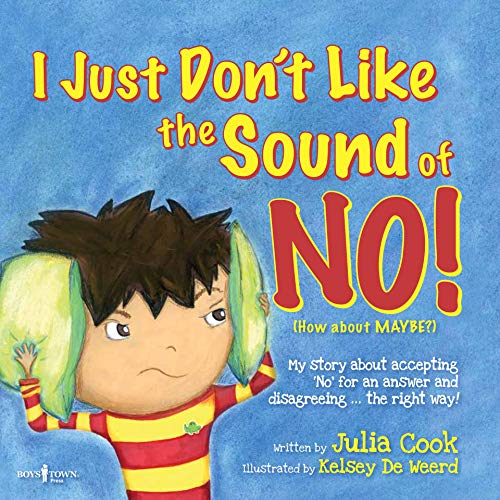
I Just Don't Like the Sound of No!: My Story about Accepting 'No' for an Answer and Disagreeing...the Right Way!
Julia Cook, Kelsey De Weerd
4.3
Winner of the 2011 MOMs Choice Awards Honoring Excelence. Author Julia Cook helps K-6 readers laugh and learn along with RJ as he understands the benefits of demonstrating the social skills of accepting "No" for an answer and disagreeing appropriately both at home and in school. Tips for parents and educators on how to teach and encourage kids to use the skills appropriately are included in the book.
…
Cover unavailable
21
The Quiet Book
Deborah Underwood, Renata Liwska
4.3
All quiet is not created equal. In this irresistibly charming picture book, many different quiet moments are captured, from the anticipation-heavy “Top of the roller coaster quiet” to the shocked-into-silence “First look at your new hairstyle quiet.” The impossibly sweet bears, rabbits, fish, birds, and iguanas are all rendered in soft pencils and colored digitally, and, as in all of the best picture books, the illustrations propel the story far beyond the words. A sure-to-be-a-classic bedtime favorite.
Awards: 2011 ALA Notable Children's Book, 2010–2011, New York Times bestseller, 2011 CCBC Choices, 2011 NCTE Notable Children's Trade Book, 2010 New York Times Notable Book, 2010 Publishers Weekly Best Book of the Year, 2010 School Library Journal Best Book of the Year
…
Cover unavailable
22
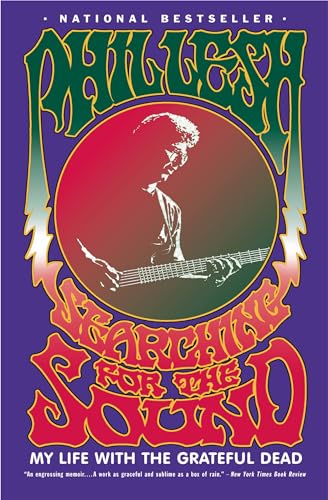
Searching for the Sound: My Life with the Grateful Dead
Phil Lesh
4.3
The legendary bass player tells the full, true story of his years with Jerry Garcia and the Grateful Dead in this "insightful and entertaining" (Austin Chronicle) memoir of life in the greatest improvisational band in American history. In a book "as graceful and sublime as a box of rain" (New York Times Book Review), the beloved bassist tells the stories behind the songs, tours, and jams in the Grateful Dead's long, strange trip from the 1960s to the death of Jerry Garcia in 1995 and beyond. From Ken Kesey's "acid tests" to the Summer of Love to bestselling albums and worldwide tours, the Dead's story has never been told as honestly or as memorably as in this remarkable memoir. "A fun ride...Even for the most well-read Deadhead, there's enough between the covers to make Searching for the Sound worth a look." --Associated Press
…
Cover unavailable
23
Ted Templeman: A Platinum Producer's Life in Music
Gregg Renoff and Ted Templeman
4.3
Crafting smash hits with Van Halen, The Doobie Brothers, Nicolette Larson, and Van Morrison, legendary music producer Ted Templeman changed the course of rock history
This autobiography (as told to Greg Renoff) recounts Templeman's remarkable life from child jazz phenom in Santa Cruz, California, in the 1950s to Grammy-winning music executive during the '70s and '80s. Along the way, Ted details his late '60s stint as an unlikely star with the sunshine pop outfit Harpers Bizarre and his grind-it-out days as a Warner Bros. tape listener, including the life-altering moment that launched his career as a producer: his discovery of the Doobie Brothers.
Ted Templeman: A Platinum Producer's Life in Music takes us into the studio sessions of No. 1 hits like "Black Water" by the Doobie Brothers and "Jump" by Van Halen, as Ted recounts memories and the behind-the-scene dramas that engulfed both massively successful acts. Throughout, Ted also reveals the inner workings of his professional and personal relationships with some of the most talented and successful recording artists in history, including Steven Tyler and Joe Perry of Aerosmith, Eric Clapton, Lowell George, Sammy Hagar, Linda Ronstadt, David Lee Roth, and Carly Simon.
I read an advance copy of this book, and if you are at all interested in how records were made in the 60s, 70s, 80s, what a producer does, what it all feels like, this kills. Totally entertaining. Totally engaging. Great work, @GregRenoff https://t.co/plJn5eyPmK [source]
Cover unavailable
24
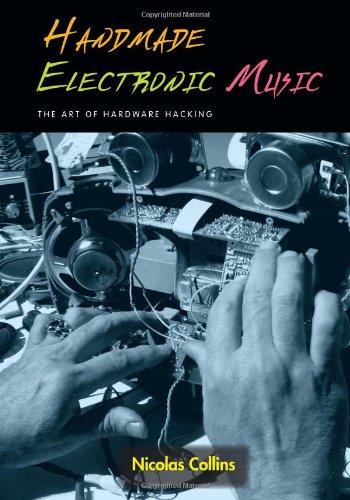
Handmade Electronic Music: The Art of Hardware Hacking
Nicolas Collins
4.3
Cover unavailable
25
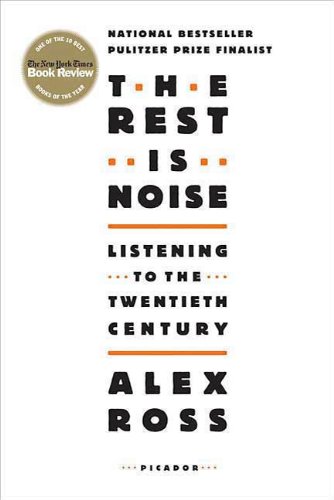
The Rest Is Noise: Listening to the Twentieth Century
Alex Ross
4.3
The Rest Is Noise: Listening to the Twentieth Century is a voyage into the labyrinth of modern music, which remains an obscure world for most people. While paintings of Picasso and Jackson Pollock sell for a hundred million dollars or more, and lines from T. S. Eliot are quoted on the yearbook pages of alienated teenagers across the land, twentieth-century classical music still sends ripples of unease through audiences. At the same time, its influence can be felt everywhere. Atonal chords crop up in jazz. Avant-garde sounds populate the soundtracks of Hollywood thrillers. Minimalism has had a huge effect on rock, pop, and dance music from the Velvet Underground onward.
The Rest Is Noise shows why twentieth-century composers felt compelled to create a famously bewildering variety of sounds, from the purest beauty to the purest noise. It tells of a remarkable array of maverick personalities who resisted the cult of the classical past, struggled against the indifference of a wide public, and defied the will of dictators. Whether they have charmed audiences with sweet sounds or battered them with dissonance, composers have always been exuberantly of the present, defying the stereotype of classical music as a dying art. The narrative goes from Vienna before the First World War to Paris in the twenties, from Hitler's Germany and Stalin's Russia to downtown New York in the sixties and seventies. We follow the rise of mass culture and mass politics, of dramatic new technologies, of hot and cold wars, of experiments, revolutions, riots, and friendships forged and broken. The end result is not so much a history of twentieth-century music as a history of the twentieth century through its music.
…
Cover unavailable
26
Sound Reinforcement Handbook
Gary Davis
4.3
(Yamaha Products). Sound reinforcement is the use of audio amplification systems. This book is the first and only book of its kind to cover all aspects of designing and using such systems for public address and musical performance. The book features information on both the audio theory involved and the practical applications of that theory, explaining everything from microphones to loudspeakers. This revised edition features almost 40 new pages and is even easier to follow with the addition of an index and a simplified page and chapter numbering system. New topics covered include: MIDI, Synchronization, and an Appendix on Logarithms. 416 Pages.
…
Cover unavailable
27
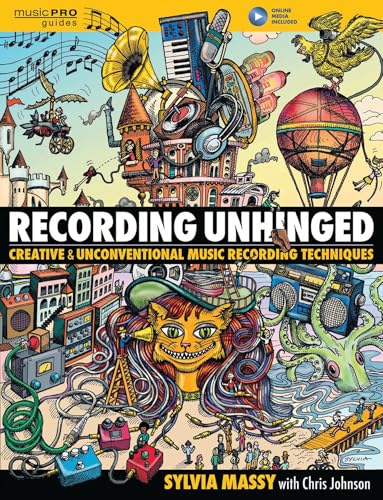
Recording Unhinged: Creative and Unconventional Music Recording Techniques
Sylvia Massy
4.3
(Music Pro Guides). Recording Unhinged: Creative and Unconventional Music Recording Techniques dares you to "unlearn" safe record-making, to get out from behind the windshield, stick your head out the sunroof, and put the pedal to the metal! Sylvia Massy and her cohort of celebrity music industry producers, engineers, and recording stars discard fixed notions about how music should be recorded and explore techniques that fall outside the norm and yield emotionally powerful, incredibly personal, gut-wrenching, and even scary recordings. Joined by Hans Zimmer, Al Schmitt, Bruce Swedien, Jack Joseph Puig, Dave Pensado, Tchad Blake, Bob Clearmountain, Linda Perry, Michael Franti, Michael Beinhorn, Bob Ezrin, Geoff Emerick, and many others, this book has the stories, tips, recipes, photos, advice, diagrams, exercises, illustrations, and jokes that you won't find in any other instructional manual. And what about that cover? Recording Unhinged contains many eye-popping illustrations by Sylvia herself. As if being a celebrated producer isn't enough, Sylvia's iconic illustrations bring real and imaginary recording situations to life. Catchy Bass Lines? Engineering Marvels? How to Mic a Chicken?!! Do a swan-dive into the unknown and make studio magic with inspiration from Recording Unhinged.
…
Cover unavailable
28
Miles: The Autobiography
Miles Davis, Quincy Troupe
4.3
For more than forty years Miles Davis has been in the front rank of American music. Universally acclaimed as a musical genius, Miles is one of the most important and influential musicians in the world. The subject of several biographies, now Miles speaks out himself about his extraordinary life.
Miles: The Autobiography, like Miles himself, holds nothing back. For the first time Miles talks about his five-year silence. He speaks frankly and openly about his drug problem and how he overcame it. He condemns the racism he has encountered in the music business and in American society generally. And he discusses the women in his life. But above all, Miles talks about music and musicians, including the legends he has played with over the years: Bird, Dizzy, Monk, Trane, Mingus, and many others.
The man who has given us some of the most exciting music of the past few decades has now given us a compelling and fascinating autobiography, featuring a concise discography and thirty-two pages of photographs.
…
Recommended by Andi Dumitrescu.
Andi Dumitrescu
I am currently reading: Bruce Springsteen - Born to Run, Einstein's Puzzle Universe, Miles Davis with Quincy Troupe and I am Ozzy. (I’m going through a physics and biographies period) [source]
Cover unavailable
29
The Reading Lesson: Teach Your Child to Read in 20 Easy Lessons
Michael Levin MD
4.3
The Reading Lesson is a bestselling program that teaches young children to read in 20 easy lessons. It is designed as a step-by-step course for parents who want to teach their young children to read at home. The teaching method is based on phonics and key-word recognition, and with its innovative and guided approach, the 20 step-by-step lessons provide an easy-to-follow recipe for teaching children to read. Developed by pediatrician Michael Levin, the program has also been used successfully for children with disabilities.
How do I use the Reading Lesson?
There are twenty lessons in this book. Each lesson takes about two weeks to complete (with about 15 minutes of study per day). Before starting a lesson, we suggest that you read the instructions for that lesson. Each lesson begins with an introduction and a description of how to proceed. For example, lesson two introduces the letters “m”, “d”, and “r”. At the beginning of the lesson, there is an introduction with some words of advice and thoughts on how to go through the sounds of those letters and how to read them in words.
Each lesson consists of words, exercises and short stories. When reading the words, ask the child to tell you what the word means. Before you read the story, read the title and talk a little bit about the content of the story. Approximately 300 key words form the basis of reading skills in this course. Each lesson introduces a set of key words. Your child should learn them well before you proceed to the next lesson, since these words are used in later lessons.
For many young readers (including children who are familiar with the alphabet), the letters in words seem to melt together. The instructions in Lesson One teach the child basic sound blending. The special typography and font style the book uses will help your child to identify and separate the letters she already knows. These bars, dots, and special graphics are there as guides and are used to blend the sounds into words. This process is called “sounding out”. At first, blending is difficult for most children. You will need to help the child but he will get better at it with practice.
How fast should I go through the book?
The length and the pace of the daily lessons will vary with your child's age and abilities. We suggest the following schedule: For children under five, one page per day will suffice and maintain their concentration on the lesson. For children between five and six, two to three pages per day will be sufficient. For children over six, three or more pages per day will be fine.
Children have a very short attention span. Try to keep each lesson under fifteen minutes, and spend no more than five to seven minutes per page. If your child is young, don't rush! Work at a leisurely and comfortable pace. Remember: you have plenty of time to complete the course and, if necessary, to go back and repeat the course before your child starts reading instruction in school.
How old should my child be when we start the Reading Lesson?
The book is meant for children between the ages of 3 and 8. We do not suggest that you try to teach a child under the age of three to read. Contrary to some books that suggest that you can teach infants to read, there is no proof that such a thing is possible. Children need certain developmental skills before they can read. Flashing cards with letters and words at a baby is a fun thing to do and makes us feel like good parents, but it does not work!
The Reading Lesson is a totally developmentally appropriate course that is easy to follow, and makes learning to read fun for parents and kids. The book is an easy and cheap solution to teaching your children to read at home, and has been a success with families all around the world. Give it a try – you’re sure to love it.
…
Cover unavailable
30
The Rolling Stones All the Songs: The Story Behind Every Track
Philippe Margotin
4.3
Comprehensive visual history of the "World's Greatest Rock & Roll Band" as told through the recording of their monumental catalog, including 29 studio and 24 compilation albums, and more than a hundred singles. Since 1963, The Rolling Stones have been recording and touring, selling more than 200 million records worldwide. While much is known about this iconic group, few books provide a comprehensive history of their time in the studio. In The Rolling Stones All the Songs, authors Margotin and Guesdon describe the origin of their 340 released songs, details from the recording studio, what instruments were used, and behind-the-scenes stories of the great artists who contributed to their tracks. Organized chronologically by album, this massive, 704-page hardcover begins with their 1963 eponymous debut album recorded over five days at the Regent Studio in London; through their collaboration with legendary producer Jimmy Miller in the ground-breaking albums from 1968 to 1973; to their later work with Don Was, who has produced every album since Voodoo Lounge. Packed with more than 500 photos, All the Songs is also filled with stories fans treasure, such as how the mobile studio they pioneered was featured in Deep Purple's classic song "Smoke on the Water" or how Keith Richards used a cassette recording of an acoustic guitar to get the unique riff on "Street Fighting Man."
…
Cover unavailable
31
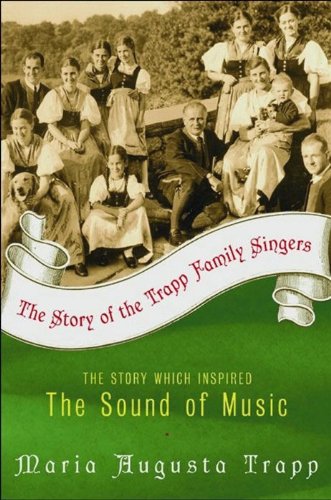
The Story of the Trapp Family Singers
Maria A Trapp
4.3
With nearly 1,500 Broadway performances, six Tony Awards, more than three million albums sold, and five Academy Awards, The Sound of Music, based on the lives of Maria, the baron, and their singing children, is as familiar to most of us as our own family history. But much about the real-life woman and her family was left untold.
Here, Baroness Maria Augusta Trapp tells in her own beautiful, simple words the extraordinary story of her romance with the baron, their escape from Nazi-occupied Austria, and their life in America.
Now with photographs from the original edition.
…
Cover unavailable
32
Birds of the Puget Sound Region - Coast to Cascades
Dennis Paulson;Bob Morse;Tom Aversa;Hal Opperman and Dennis Paulson;Christina Duchesne Morse
4.3
Designed for beginning and experienced birders, this new edition expands the best-selling regional guide, Birds of the Puget Sound Region (out of print), to include all of western Washington, from the Coast to the Cascades. Lead author Dennis Paulson, ornithologist and regional expert on birding, has revised and updated this guide. The 450 new photographs are state of the art digital images. Pocket sized for easy traveling. Species pages are organized in our best-selling format: Description, Similar Species, Status and Habitat, Behavior, Voice and Did You Know. Eleven habitats are described in six pages. A Quick Guide to Local Birds, at the front of the book, provides an easy reference to the pages that provide a complete description of the different birds.
…
Cover unavailable
33
Musician's Survival Guide to a Killer Record
Mixerman
4.3
You're a musician. Like most musicians, you write songs. And when you write a song that you're all excited about, you record it, probably mostly at home, perhaps in some local studios too. You may even invite some friends to participate. Then you probably put your new record on streaming sites, band sites, and social media sites, perhaps all of those, because you feel you absolutely killed it, and the whole world needs to hear your new song right now. Some months later, you listen to your record again, only to realize you still adore the song, but the record itself fell short. Just like the last one did.
Which brings up a very important question: Are you 100% satisfied with your records?
Most of you are going to answer 'no' to that. Some of you probably believe that it's not even possible to be fully satisfied with your records. I'm here to tell you that it is. Who am I? I'm Mixerman, a producer, mixer, and recordist with multiple gold and platinum awards to my name. I was in precisely your position when I started out. I was a musician, happy with my songs, but frustrated with the recordings. In fact, it took me years to figure out how to make a Killer Record. The good news? I can help you to accelerate the learning curve considerably.
It doesn't matter whether you make hip-hop or country, electronica or metal, indie rock or power pop, no matter the genre, there are certain truths that are universal to all music. You are operating within a set of limitations both musically and technically and that's where your creativity must shine. You have what you have, and what you have is going to change. Your great Art is made manifest with the resources available to you right now.
This Survival Guide will help you overcome any impediment that might prevent you from achieving the record you intend, regardless of your recording environment, regardless of your gear, and regardless of your current skillset.
You can make a Killer Record under nearly any circumstance. It just requires the right mindset.
…
Cover unavailable
34
Designing Sound
Andy Farnell
4.3
A practitioner's guide to the basic principles of creating sound effects using easily accessed free software.
Designing Sound teaches students and professional sound designers to understand and create sound effects starting from nothing. Its thesis is that any sound can be generated from first principles, guided by analysis and synthesis. The text takes a practitioner's perspective, exploring the basic principles of making ordinary, everyday sounds using an easily accessed free software. Readers use the Pure Data (Pd) language to construct sound objects, which are more flexible and useful than recordings. Sound is considered as a process, rather than as data--an approach sometimes known as "procedural audio." Procedural sound is a living sound effect that can run as computer code and be changed in real time according to unpredictable events. Applications include video games, film, animation, and media in which sound is part of an interactive process. The book takes a practical, systematic approach to the subject, teaching by example and providing background information that offers a firm theoretical context for its pragmatic stance. [Many of the examples follow a pattern, beginning with a discussion of the nature and physics of a sound, proceeding through the development of models and the implementation of examples, to the final step of producing a Pure Data program for the desired sound. Different synthesis methods are discussed, analyzed, and refined throughout.] After mastering the techniques presented in Designing Sound, students will be able to build their own sound objects for use in interactive applications and other projects
…
Cover unavailable
35
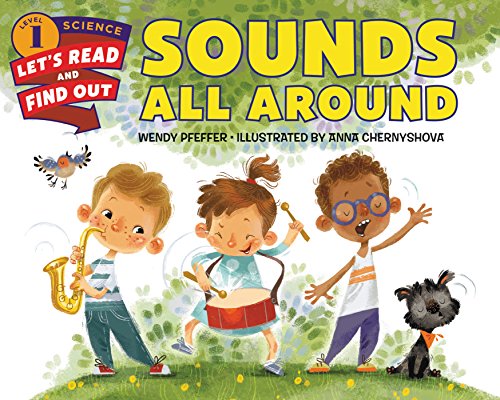
Sounds All Around: Let's Read and Find out Science - 1
Wendy Pfeffer, Holly Keller
4.3
Sounds are all around us. Clap your hands, snap your fingers: You’re making sounds. Read and find out how people and animals use different kinds of sounds to communicate. With colorful illustrations from Anna Chernyshova and engaging text from Wendy Pfeffer, Sounds All Around is a fascinating look into how sound works!
Featuring rich vocabulary bolded throughout the text, this book also includes a Find-Out-More section with additional experiments, such as finding out how sound travels through water. Both the text and the artwork were vetted by Dr. Agnieszka Roginska, Professor of Music Technology at New York University.
This is a Level 1 Let’s-Read-and-Find-Out, which means the book explores introductory concepts perfect for children in the primary grades and supports the Common Core Learning Standards, Next Generation Science Standards, and the Science, Technology, Engineering, and Math (STEM) standards. Let’s-Read-and-Find-Out Science is the winner of the American Association for the Advancement of Science/Subaru Science Books & Films Prize for Outstanding Science Series.
…
Cover unavailable
36
Audio Power Amplifier Design
Douglas Self
4.3
Book by Self, Douglas
Cover unavailable
37
The Sound of Silence
Katrina Goldsaito, Julia Kuo
4.3
"Do you have a favorite sound?" little Yoshio asks. The musician answers, "The most beautiful sound is the sound of ma, of silence."
But Yoshio lives in Tokyo, Japan: a giant, noisy, busy city. He hears shoes squishing through puddles, trains whooshing, cars beeping, and families laughing. Tokyo is like a symphony hall!
Where is silence?
Join Yoshio on his journey through the hustle and bustle of the city to find the most beautiful sound of all.
…
Cover unavailable
38
Step By Step Mixing: How to Create Great Mixes Using Only 5 Plug-ins
Bjorgvin Benediktsson and James Wasem
4.2
Cover unavailable
39
The Loud Book!
Deborah Underwood, Renata Liwska
4.2
BANG! CRACKLE! BOO!
Just like there are lots of quiets, there are also lots of louds:
Good louds (HOORAY!)
and bad louds
(CRASH!)And louds that make you feel like you are the center of attention (BURP!).
The Loud Book compiles all these kid-friendly noises from morning to night, in a way that is sure to make readers CHEER!
Cover unavailable
40
The Sound Effects Bible: How to Create and Record Hollywood Style Sound Effects
Ric Viers
4.2
The Sound Effects Bible is a complete guide to recording and editing sound effects. The book covers topics such as microphone selection, field recorders, the ABCs of digital audio, understanding Digital Audio Workstations, building your own Foley stage, designing your own editing studio, and more.
Cover unavailable
41
The Listening Walk
Paul Showers, Aliki
4.2
With art by home and classroom favorite Aliki, The Listening Walk will remind both adults and kids of the wonders all around them...if they slow down and listen. This picture book is an excellent choice to share during homeschooling, in particular for children ages 4 to 6. It’s a fun way to learn to read and as a supplement for activity books for children.
“A fine resource for studying the senses.”—Booklist
Put on your socks and shoes—and don't forget your ears! We're going on a listening walk. Shhhhh. Do not talk. Do not hurry. Get ready to fill your ears with a world of wonderful and surprising sounds.
A little girl and her father take a quiet walk and identify the sounds around them. Soon the girl discovers an extraordinary world of sounds in her everyday environment.
…
Cover unavailable
42
Sound Design: The Expressive Power of Music, Voice and Sound Effects in Cinema
David Sonnenschein
4.2
Offers user-friendly knowledge and stimulating exercises to help compose story, develop characters and create emotion through skillful creation of the sound track.
Cover unavailable
43
Audio Culture: Readings in Modern Music
Christoph Cox, Daniel Warner
4.2
Cover unavailable
44
Sounds of the Eternal: A Celtic Psalter: Morning and Night Prayer
John Philip Newell and Tobi Kahn
4.2
Lavishly illustrated with inspiring Celtic art, Sounds of the Eternal is unlike any seven-day devotional currently available. Inspired by the great Celtic teachings from throughout history, the daily readings carry a special theme. In this way each day brings a new perspective on God and the life of faith. (October)
Cover unavailable
45
The Billboard Book of Top 40 Hits
Joel Whitburn
4.2
The Essential Reference Guide to America’s Most Popular Songs and Artists Spanning More than Fifty Years of Music
Beginning with Bill Haley & His Comets’ seminal “Rock Around the Clock” all the way up to Lady Gaga and her glammed-out “Poker face,” this updated and unparalleled resource contains the most complete chart information on every artist and song to hit Billboard’s Top 40 pop singles chart all the way back to 1955. Inside, you’ll find all of the biggest-selling, most-played hits for the past six decades. Each alphabetized artist entry includes biographical info, the date their single reached the Top 40, the song’s highest position, and the number of weeks on the charts, as well as the original record label and catalog number. Other sections—such as “Record Holders,” “Top Artists by Decade,” and “#1 Singles 1955-2009”—make The Billboard Book of Top 40 Hits the handiest and most indispensable music reference for record collectors, trivia enthusiasts, industry professionals and pop music fans alike.
Did you know?
• Beyoncé’s 2003 hit “Crazy in Love” spent 24 weeks in the Top 40 and eight of them in the #1 spot. • Billy Idol has had a total of nine Top 40 hits over his career, the last being “Cradle of Love” in 1990. • Of Madonna’s twelve #1 hits, her 1994 single “Take a Bow” held the spot the longest, for seven weeks—one week longer than her 1984 smash “Like a Virgin.” • Marvin Gaye’s song “Sexual Healing” spent 15 weeks at #3 in 1982, while the same song was #1 on the R&B chart for 10 weeks. • Male vocal group Boyz II Men had three of the biggest chart hits of all time during the 1990s. • The Grateful Dead finally enjoyed a Top 10 single in 1987 after 20 years of touring. • Janet Jackson has scored an impressive 39 Top 40 hits—one more than her megastar brother Michael!
…
Cover unavailable
46
Perfecting Sound Forever: An Aural History of Recorded Music
Greg Milner
4.2
In 1915, Thomas Edison proclaimed that he could record a live performance and reproduce it perfectly, shocking audiences who found themselves unable to tell whether what they were hearing was an Edison Diamond Disc or a flesh-and-blood musician. Today, the equation is reversed. Whereas Edison proposed that a real performance could be rebuilt with absolute perfection, Pro Tools and digital samplers now allow musicians and engineers to create the illusion of performances that never were. In between lies a century of sonic exploration into the balance between the real and the represented.
Tracing the contours of this history, Greg Milner takes us through the major breakthroughs and glorious failures in the art and science of recording. An American soldier monitoring Nazi radio transmissions stumbles onto the open yet revolutionary secret of magnetic tape. Japanese and Dutch researchers build a first-generation digital audio format and watch as their "compact disc" is marketed by the music industry as the second coming of Edison yet derided as heretical by analog loyalists. The music world becomes addicted to volume in the nineties and fights a self-defeating "loudness war" to get its fix.
From Les Paul to Phil Spector to King Tubby, from vinyl to pirated CDs to iPods, Milner's Perfecting Sound Forever pulls apart musical history to answer a crucial question: Should a recording document reality as faithfully as possible, or should it improve upon or somehow transcend the music it records? The answers he uncovers will change the very way we think about music.
…
Cover unavailable
47
The Computer Music Tutorial
Curtis Roads
4.2
A comprehensive text and reference that covers all aspects of computer music, including digital audio, synthesis techniques, signal processing, musical input devices, performance software, editing systems, algorithmic composition, MIDI, synthesizer architecture, system interconnection, and psychoacoustics.
The Computer Music Tutorial is a comprehensive text and reference that covers all aspects of computer music, including digital audio, synthesis techniques, signal processing, musical input devices, performance software, editing systems, algorithmic composition, MIDI, synthesizer architecture, system interconnection, and psychoacoustics. A special effort has been made to impart an appreciation for the rich history behind current activities in the field. Profusely illustrated and exhaustively referenced and cross-referenced, The Computer Music Tutorial provides a step-by-step introduction to the entire field of computer music techniques. Written for nontechnical as well as technical readers, it uses hundreds of charts, diagrams, screen images, and photographs as well as clear explanations to present basic concepts and terms. Mathematical notation and program code examples are used only when absolutely necessary. Explanations are not tied to any specific software or hardware.
The material in this book was compiled and refined over a period of several years of teaching in classes at Harvard University, Oberlin Conservatory, the University of Naples, IRCAM, Les Ateliers UPIC, and in seminars and workshops in North America, Europe, and Asia.
…
Cover unavailable
48
The Sound of Silence: The Selected Teachings
Ajahn Sumedho, Samanera Amaranatho, et al.
4.2
The sound of silence is like a subtlety behind everything that you awaken to; you don't notice it if you're seeking the extremes. Yet as we start to become more poised, more present, fully receptive of all this moment has to offer, we start to experience it vividly and listening to it can draw us ever--deeper into the mysteries of now.
Always skillful and good humored, Ajahn Sumedho's teachings defy boundaries. Anyone--from laypeople looking to deepen their grasp of the Buddha's message, to lifetime Buddhist monastics--will appreciate the author's sparkling insights into to such key Buddhist themes as awareness, consciousness, identity, relief from suffering, and mindfulness of the body. The Sound of Silence represents the best of Ajahn Sumedho's masterful work to help us all see each life with a new and sustaining clarity.
…
Cover unavailable
49
Audio Engineering 101: A Beginner's Guide to Music Production
Tim Dittmar
4.2
Pratical, concise, and approachable, Audio Engineering 101, Second Edition covers everything aspiring audio engineers need to know to make it in the recording industry, from the characteristics of sound to microphones, analog versus digital recording, EQ/compression, mixing, mastering, and career skills. Filled with hand-on, step-by-step technique breakdowns and all-new interviews with active professionals, this updated edition includes instruction in using digital consoles, iPads for mixing, audio apps, plug-ins, home studios, and audio for podcasts. An extensive companion website features fifteen new video tutorials, audio clips, equipment lists, quizzes, and student exercises.
…
Cover unavailable
50
The Location Sound Bible: How to Record Professional Dialog for Film and TV
Ric Viers
4.2
Written by a seasoned professional, Viers explains how to achieve Hollywood-quality sound that will make productions stand out from the rest.
Cover unavailable
51
Audio-Vision: Sound on Screen
Michel Chion, Claudia Gorbman, Walter Murch
4.2
In "Audio-Vision: Sound on Screen," French critic and composer Michel Chion reassesses audiovisual media since the revolutionary 1927 debut of recorded sound in cinema, shedding crucial light on the mutual relationship between sound and image in audiovisual perception.
Chion argues that sound film qualitatively produces a new form of perception: we don't see images and hear sounds as separate channels, we "audio-view" a trans-sensory whole. Expanding on arguments made in his influential books The "Voice in Cinema" and "Sound in Cinema," Chion provides lapidary insight into the functions and aesthetics of sound in film and television. He considers the effects of such evolving technologies as widescreen, multitrack, and Dolby; the influences of sound on the perception of space and time; and the impact of such contemporary forms of audio-vision as music videos, video art, and commercial television. Chion concludes with an original and useful model for the audiovisual analysis of film.
…
Cover unavailable
52
The Sound Book: The Science of the Sonic Wonders of the World
Trevor Cox
4.2
In this tour of the world’s most unexpected sounds, Trevor Cox—the “David Attenborough of the acoustic realm” (Observer)—discovers the world’s longest echo in a hidden oil cavern in Scotland, unlocks the secret of singing sand dunes in California, and alerts us to the aural gems that exist everywhere in between. Using the world’s most amazing acoustic phenomena to reveal how sound works in everyday life, The Sound Book inspires us to become better listeners in a world dominated by the visual and to open our ears to the glorious cacophony all around us.
…
Cover unavailable
53
The Sound and the Fury
William Faulkner, Grover Gardner, et al
4.2
This is an alternate cover ed. for ISBN 0679732241.
The Sound and the Fury is the tragedy of the Compson family, featuring some of the most memorable characters in literature: beautiful, rebellious Caddy; the manchild Benjy; haunted, neurotic Quentin; Jason, the brutal cynic; and Dilsey, their black servant. Their lives fragmented and harrowed by history and legacy, the character’s voices and actions mesh to create what is arguably Faulkner’s masterpiece and one of the greatest novels of the twentieth century.
…
Cover unavailable
54
Rattletrap Car
Phyllis Root and Jill Barton
4.2
"A picture book that passes the fun test with flying fizz." — BOOKLIST
It’s hot. Hot, hot, hot! So Junie and Jake and Poppa and the baby want to go to the lake. But can they make it there in their rattletrap car? It doesn’t go fast, and it doesn’t go far — but with the help of some razzleberry dazzleberry snazzleberry fizz, a beach ball, a surfboard, and a three-speed, wind-up, paddle-wheel boat, they’re off to the lake where it’s cool, cool, cool! Phyllis Root’s wonderfully inventive wordplay and Jill Barton’s spirited, expressive illustrations make this a read-aloud road trip to remember.
…
Cover unavailable
55
Electronic Music and Sound Design - Theory and Practice with Max/Msp - Volume 1
Alessandro Cipriani, Maurizio Giri
4.2
Structured for use in university courses, the book is an overview of the theory and practice of Max/MSP, with a glossary of terms and suggested tests that allow students to evaluate their progress. Comprehensive online support, running parallel to the explanations in the book, includes hundreds of sample patches, analyses, interactive sound-building exercises, and reverse engineering exercises. This book will provide a reader with skill and understanding in using Max/MSP for sound design and musical composition.
…
Cover unavailable
56
Mixing Audio: Concepts, Practices and Tools
Roey Izhaki
4.2
Cover unavailable
57
Film, a Sound Art
Michel Chion, Claudia Gorbman
4.2
French critic and composer Michel Chion argues that watching movies is more than just a visual exercise--it enacts a process of "audio-viewing." The audiovisual makes use of a wealth of tropes, devices, techniques, and effects that convert multiple sensations into image and sound, therefore rendering, instead of reproducing, the world through cinema.
The first half of "Film, A Sound Art" considers developments in technology, aesthetic trends, and individual artistic style that recast the history of film as the evolution of a truly audiovisual language. The second half explores the intersection of auditory and visual realms. With restless inventiveness, Chion develops a rhetoric that describes the effects of audio-visual combinations, forcing us to rethink sound film. He claims, for example, that the silent era (which he terms "deaf cinema") did not end with the advent of sound technology but continues to function underneath and within later films. Expanding our appreciation of cinematic experiences ranging from Dolby multitrack in action films and the eerie tricycle of Stanley Kubrick's "The Shining" to the way actors from different nations use their voices and words, "Film, A Sound Art" showcases the vast knowledge and innovative thinking of a major theorist.
…
Cover unavailable
58
Mastering Audio: The Art and the Science
Bob Katz
4.2
Mastering Audio explains leading-edge audio concepts in an easy-to-grasp, holistic manner, including an ear-opening investigation of the mysteries of jitter, dither and wordlengths, high sample rates, distortion, headroom, monitor calibration, metering, depth perception, compression and expansion, equipment interconnection and much more. Mastering Audio is for everyone who wants to increase their mastery of digital and analog audio: musicians, producers, A&R, mastering, recording and mixing engineers, and students.
…
Cover unavailable
59
Dialogue Editing for Motion Pictures: A Guide to the Invisible Art
John Purcell
4.2
Dialogue editing is a crucial yet invisible part of filmmaking. Do it right, and no one notices. Do it wrong, and your film or video sounds messy, distracting, and unrealistic. This is a book for people who need to edit production sound for film, TV, or video but were never taught how to do it. It goes step by step through the process and covers all the workflows you are likely to encounter. Efficient working practices are emphasized throughout, so you learn to save time and avoid needless repetition.Many dialogue editors are hobbled by a lack of understanding of the non-sound aspects of filmmaking. Unlike editors who cut effects, backgrounds or Foley, a dialogue editor's work is directly affected by what has gone on before. How a film was shot, recorded and edited will dramatically influence the dialogue editing process. Much of this book, then, deals with things which at first glance don't appear to be dialogue. You will find overviews of film picture and sound postproduction--film, tape, NTSC, PAL, 24p, and HD. There are summaries of film picture editing, OMF manipulation, and ADR management.
…
Cover unavailable
60
Help Me Talk Right: How to Teach a Child to Say the 'R' Sound in 15 Easy Lessons
Mirla G. Raz
4.1
Cover unavailable
61
Silence is a Scary Sound: And Other Stories on Living Through the Terrible Twos and Threes
Clint Edwards
4.1
I’d gone to college. I’d written for the New York Times. I had a solid credit score. How did I end up here?
After his breakout hit book I’m Sorry . . . Love, Your Husband, Clint Edwards has more laugh-out-loud tales, this time from the “terrible twos” and “threenager” phases each of his kids went through.
His relatable toddler stories leave parents and caregivers cackling, and remind us all that no one is the perfect parent. In fact, sometimes the only thing that gets Clint through the day is thinking about when his kids grow up . . . and all the ways he can finally exact his revenge. Like leaving a leaky sippy cup full of milk to rot under the back seat of his daughter’s car, or waking up at 4 a.m. to incessantly ask his son for a cheese stick.
With essays like Locking Doors Is Hilarious Until the Fire Department Arrives, Poop Doesn’t Go Easily Down a Tub Drain, Dad’s Never the Favorite, and Face It—You’ll Never Pee Alone, Clint knows exactly what’s “terrible” about the twos . . . and threes.
…
Cover unavailable
62
Music Theory for Computer Musicians (Computer Musicians, #1)
Michael Hewitt
4.1
Cover unavailable
63
Sweet Anticipation: Music and the Psychology of Expectation
David Huron
4.1
The psychological theory of expectation that David Huron proposes in Sweet Anticipation grew out of the author's experimental efforts to understand how music evokes emotions. These efforts evolved into a general theory of expectation that will prove informative to readers interested in cognitive science and evolutionary psychology as well as those interested in music. The book describes a set of psychological mechanisms and illustrates how these mechanisms work in the case of music. All examples of notated music can be heard on the Web.
Huron proposes that emotions evoked by expectation involve five functionally distinct response systems: reaction responses (which engage defensive reflexes); tension responses (where uncertainty leads to stress); prediction responses (which reward accurate prediction); imagination responses (which facilitate deferred gratification); and appraisal responses (which occur after conscious thought is engaged). For real-world events, these five response systems typically produce a complex mixture of feelings. The book identifies some of the aesthetic possibilities afforded by expectation, and shows how common musical devices (such as syncopation, cadence, meter, tonality, and climax) exploit the psychological opportunities. The theory also provides new insights into the physiological psychology of awe, laughter, and spine-tingling chills. Huron traces the psychology of expectations from the patterns of the physical/cultural world through imperfectly learned heuristics used to predict that world to the phenomenal qualia we experienced as we apprehend the world.
…
Recommended by Morten Kringelbach.
Morten Kringelbach
Why is music so powerful? Why it is that music can evoke emotion within two bars as opposed to a story that takes a long time to develop? [source]
Cover unavailable
64
The Sound of Music
Richard Rodgers
4.1
(Vocal Selections). Entertainment Weekly says The Sound of Music has "an irresistible score that's always in tune!" Our deluxe revised Vocal Selections features 13 terrific songs by Rodgers & Hammerstein, a biography, plot synopsis, history of the show and photos! Includes: Climb Ev'ry Mountain • Do-Re-Mi • Edelweiss • Maria • My Favorite Things • So Long, Farewell • The Sound of Music • and more.
Cover unavailable
65
The Music of Life (Revised)
Khan, Hazrat Inayat
4.1
Teachings on sound presenting a vision of the harmony which underlies and infuses every aspect of life. Science of breath, law of rhythm, the creative process, healing power and psychological influence of music.
Cover unavailable
66
A Field Guide to Long Island Sound: Coastal Habitats, Plant Life, Fish, Seabirds, Marine Mammals, and Other Wildlife
Patrick J. Lynch
4.1
A lavishly illustrated and long-overdue guidebook to the rich natural history of Long Island Sound and its coastlines, a region beloved by millions of people
Long Island Sound consists of a diverse collection of unique marine, estuarine, and terrestrial ecosystems located in one of the most densely populated regions in the United States. The Sound and its coastlines are home not only to myriad species of plants and animals—from shorebirds and turtles to whales, seals, and fish—but also to more than twenty million people.
Until now there has been no one-stop reference for those interested in exploring the Sound’s rich natural history. Author, photographer, and scientific illustrator Patrick Lynch has filled this gap. Brimming with maps, photographs, and drawings, Lynch’s guide introduces readers to the full breadth of the Sound’s environs from shorelines to deepest waters. With coastal areas at particular risk from climate change and pollution, his timing couldn’t be better. Whether readers are interested in the area’s geology and meteorology, its history of human intervention, or simply locating nature reserves and bird sanctuaries, they’re sure to find Lynch’s compendium indispensable.
…
Cover unavailable
67
True Facts That Sound Like Bull$#*t: 500 Insane-But-True Facts That Will Shock and Impress Your Friends
Shane Carley
4.1
Prove your awesomeness—or bolster your stockpile of conversation starters! Either way, prove you’re the smartest schmuck in the room with over 500 absurdly real facts!
With over 500 outrageous and real facts on everything from hippo sweat to stars in the galaxy, you're sure to impress your friends, stump your colleagues, and crush the trivia night competition! Discover insane-but-true factoids and prove you really do know it all! Test out the True or False questions covering the gamut of science, sports, history, pop culture, and a potpourri of others, like: *True or False: A chicken once survived almost two years after having its head cut off. *True or False: The dog that played Toto in The Wizard of Oz was paid a salary. *How many baseballs does the MLB use every season? *What state has jousting as its official sport? *True or False: Most Canadians live south of Seattle. Put your game face on, and prove once and for all who is the real know-it-all! Gather your friends and family 'round and get ready to learn some wild and crazy trivia!
…
Cover unavailable
68
The Sound of Music: Beginners Piano Book
Mark Nevin
4.1
(Easy Piano Vocal Selections). Easy piano arrangements of 8 popular songs from the musical masterpiece, including: Climb Ev'ry Mountain • Do-Re-Mi • Edelweiss • Maria • My Favorite Things • Sixteen Going on Seventeen • So Long, Farewell • The Sound of Music.
Cover unavailable
69
In the Field: The art of field recording
Angus Lane, Cathy, and Carlyle
4.1
This is a collection of interviews with contemporary sound artists who use field recording in their work. From its early origins in wildlife sound and in ethnographic research, field recording has expanded over the last few decades into a diverse range of practices which explore and investigate aspects of the lived environment, from the microscopic to the panoramic, through the medium of recorded sound. These conversations explore the fundamental issues that underlie the development of field recording as the core of their activity. Recurring themes include early motivations, aesthetic preferences, the audible presence of the recordist and the nature of the field.
Conversations with Andrea Polli, Annea Lockwood, Antye Greie, Budhaditya Chattopadhyay, Christina Kubisch, Davide Tidoni, Felicity Ford, Francisco López, Hildegard Westerkamp, Hiroki Sasajima, Ian Rawes, Jana Winderen, Jez Riley French, Lasse-Marc Riek, Manuela Barile, Peter Cusack, Steven Feld and Viv Corringham.
…
Cover unavailable
70
Handbook for Sound Engineers
Glen Ballou
4.1
Handbook for Sound Engineers is a complete reference for audio engineers. Written by many of the top professionals in the field, including Glen Ballou, Ken Pohlmann, David Miles Huber, Dr. Eugene Patronis, Bill Whitlock, Pat Brown, Ray Rayburn, Dr. Wolfgang Ahnert.
Cover unavailable
71
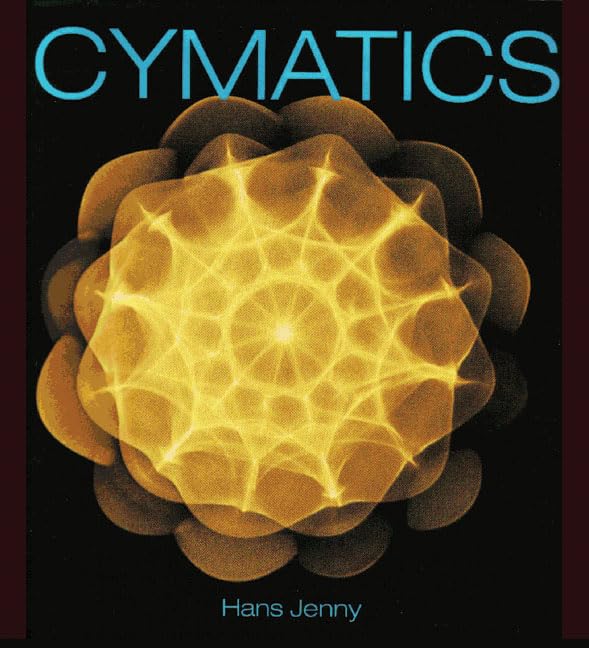
Cymatics: A Study of Wave Phenomena and Vibration
Hans Jenny
4.1
Cover unavailable
72
The Mixing Mindset: The Step-By-Step Formula For Creating Professional Rock Mixes From Your Home Studio
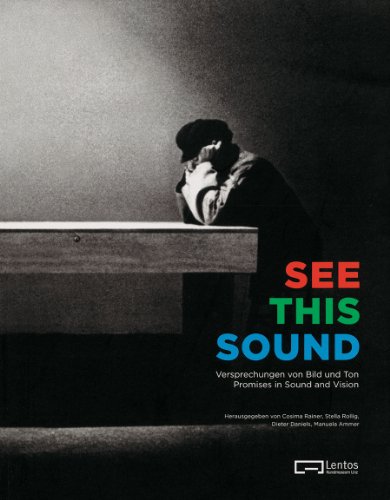
As the status of sound in art and music evolves and redefines itself, so too does sound art find new ways of describing its history. See This Sound compiles a huge number of artists, filmmakers, composers and performers, reaching back into the early twentieth century and into the present to survey overlaps between not only sound and art, sound and film, and the metaphor of cinema as rhythm or symphony. Proceeding chronologically, the book takes the early cinematic "eye music" of Hans Richter as a starting point, noting parallel works by Walter Ruttmann and Oskar Fischinger; moving into the postwar period, the art/cinema/ music experiments of Peter Kubelka, Valie Export and Michael Snow are discussed, establishing precedents to similar work by Rodney Graham, Carsten Nicolai, Jeremy Deller and many others. In its scope and intelligence, See This Sound is a unique survey of this realm.
…
Cover unavailable
74
Tara: The Liberating Power of the Female Buddha
Rachael Wooten Ph.D.
4.1
A practical guide for invoking the power and blessings of Tara, the beloved female buddha of Tibet
Known as "the female Buddha" in Tibet and India, Tara connects us to the archetypal Divine Feminine—an energetic force that exists within us and all around us, and has been available to all humans since our earliest origin.
While there are many books on Tara, this practical guide shows us how those of any tradition can directly access her, through clear instruction and authentic Tibetan Buddhist teachings.
Jungian analyst, scholar, and spiritual practitioner Dr. Rachael Wooten combines the ancient Tara tradition with depth psychology to help us connect with each of Tara's manifestations and access her blessings within ourselves and in the external world.
In her myriad forms, Tara has the power to protect us from inner and outer negativity, illuminate our self-sabotaging habits, cleanse mental and physical poisons, address emotional trauma, open us to abundance, give us strength and peace, help us fulfill our life purposes, and more.
Here, you will explore all 22 manifestations of Tara. Each chapter begins with an epigraph that captures the spiritual and psychological essence of the emanation, explains her purpose, and teaches you specific visualizations, praises, mantra chants, and other ways of invoking her presence in yourself and the world.
"If ever the voice of wisdom and compassion was needed in the form of an awakened female figure such as Tara," writes Dr. Wooten, "that time is now." This book illuminates the way to her healing, blessings, and aid.
…
Cover unavailable
75
Master Handbook of Acoustics, Sixth Edition
F. Alton Everest
4.1
Publisher's Note: Products purchased from Third Party sellers are not guaranteed by the publisher for quality, authenticity, or access to any online entitlements included with the product. The most complete and current guide to architectural acoustics principles and practicesDesign and construct audiophile-quality sonic environments of all sizes--from home theaters and project studios to large-scale recording studios. Thoroughly revised to include new acoustical design techniques, Master Handbook of Acoustics, Sixth Edition, explains the art and science of room acoustics and architecture by combining theoretical instruction with matter-of-fact engineering advice.
Written by renowned experts in the field and refined through several editions, this fully updated classic describes the fundamentals of acoustical properties, as well as the latest solutions to acoustical problems. Throughout, this authoritative text provides clear explanations, describes hands-on techniques, and features numerous room designs that can be built as presented, or adapted to your particular needs.
Understand how sound waves travel in free fields and in enclosed spaces Learn how human sound perception and psychoacoustics affect room design Calculate and predict reflections, reverberation times, and room modes Perform acoustical measurements and site surveys, and choose construction materials Design, build, and install treatment modules to optimize early reflections, reverberation, and diffusion Design and build home theaters, home studios, control rooms, recording studios, and other acoustically sensitive spaces Reduce HVAC noise levels, and achieve excellent sound isolation with proven wall, window, and door designs Understand the acoustics of auditoriums and concert halls Utilize the supplied cost-effective plans and specifications for a variety of recording and listening rooms
…
Cover unavailable
76
The Great Animal Orchestra: Finding the Origins of Music in the World's Wild Places
Bernie Krause
4.1
Musician and naturalist Bernie Krause is one of the world's leading experts in natural sound, and he's spent his life discovering and recording nature's rich chorus. Searching far beyond our modern world's honking horns and buzzing machinery, he has sought out the truly wild places that remain, where natural soundscapes exist virtually unchanged from when the earliest humans first inhabited the earth.
Krause shares fascinating insight into how deeply animals rely on their aural habitat to survive and the damaging effects of extraneous noise on the delicate balance between predator and prey. But natural soundscapes aren't vital only to the animal kingdom; Krause explores how the myriad voices and rhythms of the natural world formed a basis from which our own musical expression emerged.
From snapping shrimp, popping viruses, and the songs of humpback whales-whose voices, if unimpeded, could circle the earth in hours-to cracking glaciers, bubbling streams, and the roar of intense storms; from melody-singing birds to the organlike drone of wind blowing over reeds, the sounds Krause has experienced and describes are like no others. And from recording jaguars at night in the Amazon rain forest to encountering mountain gorillas in Africa's Virunga Mountains, Krause offers an intense and intensely personal narrative of the planet's deep and connected natural sounds and rhythm.
The Great Animal Orchestra is the story of one man's pursuit of natural music in its purest form, and an impassioned case for the conservation of one of our most overlooked natural resources-the music of the wild.
…
Cover unavailable
77
Listening
Jean-Luc Nancy, Charlotte Mandell
4.1
In this lyrical meditation on listening, Jean-Luc Nancy examines sound in relation to the human body. How is listening different from hearing? What does listening entail? How does what is heard differ from what is seen? Can philosophy even address listening, ecouter, as opposed to entendre, which means both hearing and understanding?
Unlike the visual arts, sound produces effects that persist long after it has stopped. The body, Nancy says, is itself like an echo chamber, responding to music by inner vibrations as well as outer attentiveness. Since "the ear has no eyelid" (Quignard), sound cannot be blocked out or ignored: our whole being is involved in listening, just as it is involved in interpreting what it hears.
The mystery of music and of its effects on the listener is subtly examined. Nancy's skill as a philosopher is to bring the reader companionably along with him as he examines these fresh and vital questions; by the end of the book the reader feels as if listening very carefully to a person talking quietly, close to the ear.
…
Cover unavailable
78
The Philosophy of Mixing: The Thought Processes Behind a Truly Great Mix (The Art of Mixing Series Book 1)
Thomas Juth
4.1
Cover unavailable
79
Alpha Tales: Grades Prek-1
Scholastic and Scholastic Teaching Resources
4.1
Learning the ABCs is loads of fun with this totally charming collection of alliterative stories—one for each letter of the alphabet! Children will love listening to the rib-tickling adventures of Abby the Alligator, Bubble Bear, the Copycats, and more as they build all-important letter recognition skills that lay the foundation for reading success. Each book includes an irresistible story PLUS a hide-and-seek picture page and a rhyming letter poem to ensure kids get lots of practice with every letter. Includes a complete teacher's guide filled with easy lessons, teacher-tested activities, and mini-book versions of all 26 books so each child can take home their very own set. A playful way to build phonemic awareness and make sure kids really know their ABCs! For use with Grades PreK–1.
…
Cover unavailable
80
What's That Sound?: An Introduction to Rock and Its History
John Covach and Andrew Flory
4.1
The perfect mix of music and history
Cover unavailable
81
Pink Noises: Women on Electronic Music and Sound
Tara Rodgers
4.1
Pink Noises brings together twenty-four interviews with women in electronic music and sound cultures, including club and radio DJs, remixers, composers, improvisers, instrument builders, and installation and performance artists. The collection is an extension of Pinknoises.com, the critically-acclaimed website founded by musician and scholar Tara Rodgers in 2000 to promote women in electronic music and make information about music production more accessible to women and girls. That site featured interviews that Rodgers conducted with women artists, exploring their personal histories, their creative methods, and the roles of gender in their work. This book offers new and lengthier interviews, a critical introduction, and resources for further research and technological engagement.Contemporary electronic music practices are illuminated through the stories of women artists of different generations and cultural backgrounds. They include the creators of ambient soundscapes, “performance novels,” sound sculptures, and custom software, as well as the developer of the Deep Listening philosophy and the founders of the Liquid Sound Lounge radio show and the monthly Basement Bhangra parties in New York. These and many other artists open up about topics such as their conflicted relationships to formal music training and mainstream media representations of women in electronic music. They discuss using sound to work creatively with structures of time and space, and voice and language; challenge distinctions of nature and culture; question norms of technological practice; and balance their needs for productive solitude with collaboration and community. Whether designing and building modular synthesizers with analog circuits or performing with a wearable apparatus that translates muscle movements into electronic sound, these artists expand notions of who and what counts in matters of invention, production, and noisemaking. Pink Noises is a powerful testimony to the presence and vitality of women in electronic music cultures, and to the relevance of sound to feminist concerns.
There’s a reason today’s ubiquitous pop hits are so hard to ignore—they’re designed that way. The Song Machine goes behind the scenes to offer an insider’s look at the global hit factories manufacturing the songs that have everyone hooked. Full of vivid, unexpected characters—alongside industry heavy-hitters like Katy Perry, Rihanna, Max Martin, and Ester Dean—this fascinating journey into the strange world of pop music reveals how a new approach to crafting smash hits is transforming marketing, technology, and even listeners’ brains. You’ll never think about music the same way again.
I've been meaning to read this book for a while, and after I did I bought copies for everyone at my company (since we produce books and other kinds of content). In the book, Seabrook explains how just a few men and women are responsible for producing nearly every hit song you hear on the radio, see on YouTube or listen to on Spotify. He explains the economics of the music industry in a way that allows you to understand why music is the way that is today (the good parts and the bad parts). As someone who tends to listen to songs on repeat while I write--usually bad songs--it was interesting to hear how many of them were made. My only gripe: He neglects a couple people I would have liked to hear more about like Sia and Linda Perry who are just as prolific as Dr. Luke and Max Martin. [source]
Cover unavailable
83
The Healing Power of Sound: Recovery from Life-Threatening Illness Using Sound, Voice, and Music
Mitchell L. Gaynor MD
4.0
Since 1991, Dr. Mitchell Gaynor has been achieving remarkable results by integrating music, vocalization, breathing, and meditation techniques in his work with patients. In The Healing Power of Sound, he presents his sound-based techniques for self-healing—techniques that anyone can use, whether faced with a life-threatening disease or simply seeking relief from the stresses of daily life.
Numerous studies have demonstrated the health benefits of music: it can lower blood pressure and heart and respiratory rates; reduce cardiac complications; increase the immune response; and boost our natural opiates. Gaynor shows how, when integrated as part of a mind-body-spirit approach to wellness, music can play a significant part in maintaining a healthy lifestyle or in healing serious disease. The Healing Power of Sound includes twelve exercises involving breathing, meditation, and "toning"—using pure vocal sound to resolve tension, release emotion, and spur the healing process—that can be used by anyone to improve health and quality of life.
…
Cover unavailable
84
Acoustic Communication
Barry Truax
4.0
Cover unavailable
85
Dust & Grooves: Adventures in Record Collecting
Eilon Paz
4.0
Dust & Grooves: Adventures in Record Collecting is an inside look into the world of vinyl record collectors in the most intimate of environments—their record rooms. Compelling photographic essays from photographer Eilon Paz are paired with in-depth and insightful interviews to illustrate what motivates these collectors to keep digging for more records. The reader gets an up close and personal look at a variety of well-known vinyl champions, including Gilles Peterson and King Britt, as well as a glimpse into the collections of known and unknown DJs, producers, record dealers, and everyday enthusiasts. Driven by his love for vinyl records, Paz takes us on a five-year journey unearthing the very soul of the vinyl community.
…
Cover unavailable
86
Sound Reproduction: The Acoustics and Psychoacoustics of Loudspeakers and Rooms
Floyd Toole
4.0
Floyd Toole, a leading expert in the field of sound reproduction, explains how to design the best possible listening experience for recording control rooms and home entertainment systems. This comprehensive work covers the whole sound reproduction chain from multi-channel audio configurations and the loudspeaker/room system to acoustics and psychoacoustics and the evaluation process. Part 1 shows the reader how to create the best listening experience, offering practical approaches to the sound reproduction chain. Parts 2 and 3 are an in-depth consideration of acoustics and psychoacoustics.
…
Cover unavailable
87
Vinyl . Album . Cover . Art: the complete Hipgnosis catalogue
Aubrey Powell
4.0
The complete, definitive, and never-before-published catalogue of album covers created by the legendary design agency Hipgnosis, this volume finally does justice to the work of the most important design collective in music history. Founded in 1967 by Storm Thorgerson, Aubrey “Po" Powell, and Peter Christopherson, Hipgnosis gained a legendary status in graphic design, transforming the look of album art forever and winning five Grammy nominations for package design. Their revolutionary cover art departed from the conventional group shots favored by record companies of the day, resulting in groundbreaking, often surreal designs inextricable from the major albums of many of the biggest names in the history of popular music: AC/DC, Black Sabbath, The Police, Genesis, Led Zeppelin, Pink Floyd, Paul McCartney, Syd Barrett, The Who, Wings, Yes, and XTC, to name but a few.
Arranged chronologically, Hipgnosis: The Complete Album Covers features stunning reproductions of every single Hipgnosis cover—more than 300 in total—for the first time, along with pertinent insights from the rock ’n’ roll legends whose albums are featured and behind-the-scenes photography. The text, written by Powell, and with contributions by Peter Gabriel, Robert Plant, and Nick Mason, brims with information that illuminates the album art and the compelling stories behind each cover’s creation.
…
Cover unavailable
88
Perrine's Literature: Structure, Sound, and Sense
Greg Johnson and Thomas R. Arp
4.0
An authoritative, continually updated bestseller for over sixty years, PERRINE'S LITERATURE: STRUCTURE, SOUND, AND SENSE, 13e provides the most effective introduction to literature for a new generation of learners. Written for students beginning a serious study of literature, the text introduces the fundamental elements of fiction, poetry, and drama in a concise and engaging way, addressing vital questions that other texts ignore, such as "Is some literature better?" and "How can it be evaluated?" A rich and diverse selection of classic, modern, and contemporary readings brings the elements of literature to life and is updated with new stories, poems, and plays by some of the finest authors of any era. In addition, the thirteenth edition reflects the most recently published MLA guide (8th edition, 2016).
…
Cover unavailable
89
A Cappella Arranging
Deke Sharon
4.0
The world loves to sing. From barbershop groups to madrigal choirs to vocal rock bands, there are tens of thousands of vocal groups in America. The success of mainstream television programs such as Glee and The Sing-Off not only demonstrates the rising popularity of vocal music; it reflects how current trends inspire others to join in. In addition, through various online and on-the-ground vocal music societies, the "a cappella market" is well defined and well connected. Like singing itself, a cappella is a global phenomenon. At the heart of every vocal group is the music it performs. This often means writing its own arrangements of popular or traditional songs. This book is the long-awaited definitive work on the subject, wide ranging both in its scope and in its target audience - which spans beginners, music students, and community groups to professional and semi-professional performers, vocal/instrumental songwriters, composers, and producers - providing genre-specific insight on a cappella writing. The tone of the book is instructive and informative, yet conversational: it is intended to stand alongside any academic publication while remaining interesting and fun. A Cappella Arranging is a good textbook - and a "good read" - for every vocal arranger, whether amateur or professional; every vocal music classroom, and any professional recording studio.
…
Cover unavailable
90
Max Found Two Sticks
Brian Pinkney
4.0
It was a day when Max didn't feel like talking to anyone. He just sat on his front steps and watched the clouds gather in the sky.A strong breeze shook the tree in front of his house, and Max saw two heavy twigs fall to the ground.
So begins this story of a young boy's introduction to the joys of making music.
Max picks up the sticks and begins tapping out the rhythms of everything he sees and hears around him...the sound of pigeons startled into flight, of rain against the windows, of distant church bells and the rumble of a subway. And then, when a marching band rounds Max's corner, something wonderful happens.
Brian Pinkney's rhythmic text and lively pictures are certain to get many a child's foot tapping, many a youngster drumming.
…
Cover unavailable
91
Sound Reporting: The NPR Guide to Audio Journalism and Production
Jonathan Kern
4.0
Perhaps you’ve always wondered how public radio gets that smooth, well-crafted sound. Maybe you’re thinking about starting a podcast, and want some tips from the pros. Or maybe storytelling has always been a passion of yours, and you want to learn to do it more effectively. Whatever the case—whether you’re an avid NPR listener or you aspire to create your own audio, or both—Sound Reporting: The NPR Guide to Audio Journalism and Production will give you a rare tour of the world of a professional broadcaster.
Jonathan Kern, who has trained NPR’s on-air staff for years, is a gifted guide, able to narrate a day in the life of a host and lay out the nuts and bolts of production with equal wit and warmth. Along the way, he explains the importance of writing the way you speak, reveals how NPR books guests ranging from world leaders to neighborhood newsmakers, and gives sage advice on everything from proposing stories to editors to maintaining balance and objectivity. Best of all—because NPR wouldn’t be NPR without its array of distinctive voices—lively examples from popular shows and colorful anecdotes from favorite personalities animate each chapter.
As public radio’s audience of millions can attest, NPR’s unique guiding principles and technical expertise combine to connect with listeners like no other medium can. With today’s technologies allowing more people to turn their home computers into broadcast studios, Sound Reporting couldn’t have arrived at a better moment to reveal the secrets behind the story of NPR’s success.
…
Cover unavailable
92
J Dilla's Donuts
Jordan Ferguson
4.0
From a Los Angeles hospital bed, equipped with little more than a laptop and a stack of records, James "J Dilla" Yancey crafted a set of tracks that would forever change the way beatmakers viewed their artform. The songs on Donuts are not hip hop music as "hip hop music" is typically defined; they careen and crash into each other, in one moment noisy and abrasive, gorgeous and heartbreaking the next. The samples and melodies tell the story of a man coming to terms with his declining health, a final love letter to the family and friends he was leaving behind. As a prolific producer with a voracious appetite for the history and mechanics of the music he loved, J Dilla knew the records that went into constructing Donuts inside and out. He could have taken them all and made a much different, more accessible album. If the widely accepted view is that his final work is a record about dying, the question becomes why did he make this record about dying?
Drawing from philosophy, critical theory and musicology, as well as Dilla's own musical catalogue, Jordan Ferguson shows that the contradictory, irascible and confrontational music found on Donuts is as much a result of an artist's declining health as it is an example of what scholars call "late style," placing the album in a musical tradition that stretches back centuries.
…
Cover unavailable
93
Himalayan Sound Revelations: The Complete Singing Bowl Book
Frank Perry
4.0
Second, expanded edition of the 'bible' of Himalayan Singing Bowls and their sounds. Particularly useful is the wide scope of the book, which includes not just Tibetan and other bowls and the techniques used to sound them but Chinese bells, drilbu and ding-sha, the planets, elements and chakras, cymatics, overtones and partials, nada yoga, mantras, symbolism and astrology of the bowls, their relation to western music, Pythagoras and Newton, and the psychic integrity and true awareness of the bowl user. There is almost nothing that is not here. Although in the 1970s Frank Perry was one of the earliest practitioners of Himalayan Bowls his music has also been profoundly experimental, so that there are techniques in this book not to be found elsewhere alongside the clearest and most detailed analysis of how to 'play' the bowls, a combination which shows in Perry's bestselling albums Deep Peace and Celestial Harmonies. Not only can you sound your bowls and perform with them, you can understand their overtones and harmonics and thus appreciate the tradition from which they come and the subtle symbols and messages associated with them Frank's writing is also a revelation of his personal contact with living Himalayan Masters, his immersion in esoteric traditions and mysticism, and his understanding of other art forms such as the paintings of Nicholas Roerich, where he is an expert. He is the author many articles but this is his first book. As a musician he is widely mentioned in books on both percussion and improvisation, including those by Derek Bailey and Bettine and Taylor. He has recorded with Brian Eno and is an international performer familiar with both radio, television and modern media. Nonetheless he is in private a true ascetic, for whom the sound experience he is hearing and maybe creating is paramount. The second edition is expanded and corrected, with the addition of a chapter and a further appendix.
…
Cover unavailable
94
Reality Radio
John Biewen, Alexa Dilworth
4.0
Over the last few decades, the radio documentary has developed into a strikingly vibrant form of creative expression. Millions of listeners hear arresting, intimate storytelling from an ever-widening array of producers on programs including This American Life, StoryCorps, and Radio Lab; online through such sites as Transom, the Public Radio Exchange, Hearing Voices, and Soundprint; and through a growing collection of podcasts.
Reality Radio celebrates today's best audio documentary work by bringing together some of the most influential and innovative practitioners from the United States, Canada, the United Kingdom, and Australia. In these nineteen essays, documentary artists tell--and demonstrate, through stories and transcripts--how they make radio the way they do, and why.
Whether the contributors to the volume call themselves journalists, storytellers, even audio artists--and although their essays are just as diverse in content and approach--all use sound to tell true stories, artfully.
Contributors: Jad Abumrad Jay Allison damali ayo John Biewen Emily Botein Chris Brookes Scott Carrier Katie Davis Sherre DeLys Lena Eckert-Erdheim Ira Glass Alan Hall Natalie Kestecher The Kitchen Sisters Maria Martin Karen Michel Rick Moody Joe Richman Dmae Roberts Stephen Smith Sandy Tolan
…
Cover unavailable
95
Call of the Sound Dragon: A Branches Book (Dragon Masters #16)
Tracey West and Matt Loveridge
4.0
Drake needs to stop a dangerous wizard battle in this action-packed, bestselling series! Pick a book. Grow a Reader!
This series is part of Scholastic's early chapter book line, Branches, aimed at newly independent readers. With easy-to-read text, high-interest content, fast-paced plots, and illustrations on every page, these books will boost reading confidence and stamina. Branches books help readers grow!
Magic from a wizards' battle is destroying the city of Remus! A new Dragon Master named Tessa and her Sound Dragon, Sono, will need help in order to stop it! But they won't be able to stop this dangerous duel without a special Power Crystal. Can Drake, Petra, and Griffith find the crystal and save the city?
…
Cover unavailable
96
Sound of the Beast: The Complete Headbanging History of Heavy Metal
Ian Christe
4.0
The definitive history of the first 30 years of heavy metal, containing over 100 interviews with members of Black Sabbath, Metallica, Judas Priest, Twisted Sister, Slipknot, Kiss, Megadeth, Public Enemy, Napalm Death, and more.
More than 30 years after Black Sabbath released the first complete heavy metal album, its founder, Ozzy Osbourne, is the star of The Osbournes, TV's favourite new reality show. Contrary to popular belief, headbangers and the music they love are more alive than ever. Yet there has never been a comprehensive book on the history of heavy metal - until now. Featuring interviews with members of the biggest bands in the genre, Sound of the Beast gives an overview of the past 30-plus years of heavy metal, delving into the personalities of those who created it. Everything is here, from the bootlegging beginnings of fans like Lars Ulrich (future founder of Metallica) to the sold-out stadiums and personal excesses of the biggest groups. From heavy metal's roots in the work of breakthrough groups such as Black Sabbath and Led Zeppelin to MTV hair metal, courtroom controversies, black metal murderers and Ozzfest, Sound of the Beast offers the final word on this elusive, extreme, and far-reaching form of music.


 1
1
 Recommended by Aniela Gregorek and Justin Boreta.