1100 Best Prison Books of All Time
We've ranked the best prison books using expert recommendations, sales data, and millions of reader ratings. At Shortform, we know books. Our book guides are the best in the world. Learn why.
1
2The New Jim Crow: Mass Incarceration in the Age of Colorblindness
As the United States celebrates the nation's "triumph over race" with the election of Barack Obama, the majority of young black men in major American cities are locked behind bars or have been labeled felons for life. Although Jim Crow laws have been wiped off the books, an astounding percentage of the African American community remains trapped in a subordinate status--much like their grandparents before them.
In this incisive critique, former litigator-turned-legal-scholar Michelle Alexander provocatively argues that we have not ended racial caste in America: we have simply redesigned it. Alexander shows that, by targeting black men and decimating communities of color, the U.S. criminal justice system functions as a contemporary system of racial control, even as it formally adheres to the principle of color blindness. The New Jim Crow challenges the civil rights community--and all of us--to place mass incarceration at the forefront of a new movement for racial justice in America.
Founder/Facebook
I read The New Jim Crow, a study of how the U.S. justice system disproportionately criminalizes and jails blacks and Latinos. Making our criminal justice system fairer and more effective is a huge challenge for our country. I’m going to keep learning about this topic, but some things are already clear: We can’t jail our way to a just society, and our current system isn’t working (adapted with permission from Facebook’s A Year of Books project). [source]
The new Jim Crow that Michelle Alexander is talking about is mass incarceration. [source]
3Man's Search for Meaning
(back cover)
Life Coach
Another book that I’ve read dozens of times. It taught me that if you change the meaning, you change everything. Meaning equals emotion, and emotion equals life. [source]
Co-founder/Facebook and Asana
Dustin Moskovitz recommended this book on Twitter. [source]
TV Host
I read it while spending ten days in the ICU of Bellevue hospital trying to reattach my finger from a ring avulsion accident in my kitchen. It talks about the meaning of life, and I believe you come out a better person from reading it. [source]
4Unbroken: A World War II Story of Survival, Resilience and Redemption
In her long-awaited new book, Laura Hillenbrand writes with the same rich and vivid narrative voice she displayed in Seabiscuit. Telling an unforgettable story of a man's journey into extremity, Unbroken is a testament to the resilience of the human mind, body, and spirit.On a May afternoon in 1943, an Army Air Forces bomber crashed into the Pacific Ocean and disappeared, leaving only a spray of debris and a slick of oil, gasoline, and blood. Then, on the ocean surface, a face appeared. It was that of a young lieutenant, the plane's bombardier, who was struggling to a life raft and pulling himself aboard. So began one of the most extraordinary odysseys of the Second World War.
The lieutenant’s name was Louis Zamperini. In boyhood, he'd been a cunning and incorrigible delinquent, breaking into houses, brawling, and fleeing his home to ride the rails. As a teenager, he had channeled his defiance into running, discovering a prodigious talent that had carried him to the Berlin Olympics and within sight of the four-minute mile. But when war had come, the athlete had become an airman, embarking on a journey that led to his doomed flight, a tiny raft, and a drift into the unknown.
Ahead of Zamperini lay thousands of miles of open ocean, leaping sharks, a foundering raft, thirst and starvation, enemy aircraft, and, beyond, a trial even greater. Driven to the limits of endurance, Zamperini would answer desperation with ingenuity; suffering with hope, resolve, and humor; brutality with rebellion. His fate, whether triumph or tragedy, would be suspended on the fraying wire of his will.

5The Green Mile
Welcome to Cold Mountain Penitentiary, home to the Depression-worn men of E Block. Convicted killers all, each awaits his turn to walk the Green Mile, keeping a date with "Old Sparky," Cold Mountain's electric chair. Prison guard Paul Edgecombe has seen his share of oddities in his years working the Mile. But he's never seen anyone like John Coffey, a man with the body of a giant and the mind of a child, condemned for a crime terrifying in its violence and shocking in its depravity. In this place of ultimate retribution, Edgecombe is about to discover the terrible, wondrous truth about Coffey, a truth that will challenge his most cherished beliefes... and yours.
It’s an immensely courageous book for such a famous author to write. It’s written from the perspective of the warder, whose job is to supervise death row and the execution of prisoners. The story is ultimately about a guy called John Coffey, a Christ-like figure who gets executed. [source]
6American Prison: A Reporter's Undercover Journey into the Business of Punishment
Former USA President
As 2018 draws to a close, I’m continuing a favorite tradition of mine and sharing my year-end lists. It gives me a moment to pause and reflect on the year through the books I found most thought-provoking, inspiring, or just plain loved. It also gives me a chance to highlight talented authors – some who are household names and others who you may not have heard of before. Here’s my best of 2018 list.
Sometimes the only way to get the full story is to put yourself into it as an ‘immersion journalist.’ Shane Bauer wanted to know more about for-profit prisons so he got a job in one as a correction officer, or guard, and reports his experiences grippingly while weaving in the social and economic factors that give rise to these horrors. His book reveals much that that we didn’t want to know about but, having learned about, can never forget. [source]
7Just Mercy: A Story of Justice and Redemption
Bryan Stevenson was a young lawyer when he founded the Equal Justice Initiative, a legal practice dedicated to defending those most desperate and in need: the poor, the wrongly condemned, and women and children trapped in the farthest reaches of our criminal justice system. One of his first cases was that of Walter McMillian, a young man who was sentenced to die for a notorious murder he insisted he didn’t commit. The case drew Bryan into a tangle of conspiracy, political machination, and legal brinksmanship—and transformed his understanding of mercy and justice forever.
Just Mercy is at once an unforgettable account of an idealistic, gifted young lawyer’s coming of age, a moving window into the lives of those he has defended, and an inspiring argument for compassion in the pursuit of true justice.
--randomhousebooks.com
Founder/Virgin Group
Today is World Book Day, a wonderful opportunity to address this #ChallengeRichard sent in by Mike Gonzalez of New Jersey: Make a list of your top 65 books to read in a lifetime. [source]
Proud that @crystale and I could help fund the making of a film about one of our heroes, Bryan Stevenson. If you’ve read the book, then you know how powerful this film is. #JustMercy https://t.co/vNfXK4Imwr [source]
CEO/Starbucks
Perhaps one of the most powerful and important stories of our time. [source]
8Are Prisons Obsolete?
In Are Prisons Obsolete?, Professor Davis seeks to illustrate that the time for the prison is approaching an end. She argues forthrightly for "decarceration", and argues for the transformation of the society as a whole.
9Papillon
Charrière's astonishing autobiography, Papillon, was published in France to instant acclaim in 1968, more than twenty years after his final escape. Since then, it has become a treasured classic -- the gripping, shocking, ultimately uplifting odyssey of an innocent man who simply would not be defeated.
More than career paths, I like to look at life trajectories. There are some books who will forever change who you are. When I was around 12 years old, my father brought home Henri Charriere's "Papillon". He told me that it was totally inappropriate for my age but he wanted me to read it so that I can understand what persistence and grit means and how important it is to learn to develop them. I did and I must say it was a life-changing experience on so many levels. Enlightening not only because of the extraordinary story and skilful storytelling but also because, now looking back, my father's gesture empowered me so much. You will not be surprised that persistence and grit are still my top skills, even today. [source]
10One Day in the Life of Ivan Denisovich
Yes let’s do that as I’ve quite a lot to say about old Solzh. It was a critical book – an entirely objective account of a victim in a labour camp. Just one day in an ordinary labour camp. Not exaggerated, not even a particularly nasty day. The most extraordinary part is how is got printed. It ran contrary to everyone in the Communist Party in Russia, but the Novy Mir editor Tvardovsky snuck a copy in to Khrushchev and said, ‘This is awfully good, you ought to publish it’. And he did. It was an extraordinary stroke of luck. And once it was printed, as Galina put it, ‘The Soviet government had let the genie out of the bottle, and however hard they tried later, they couldn’t put it back in.’ [source]
11Protection & Reversal Magick: A Witch's Defense Manual (Beyond 101)
All people, witches or not, are susceptible to these attacks. The difference: witches and magicians can do something about it. Now you can too.
Protection & Reversal Magick is a complete how-to manual on preventing, defending, and reversing magickal attacks of any kind. You will learn to:
Set up early-warning systems.
Appease angry spirits through offerings.
Perform daily banishings and make amulets that will prevent most attacks.
Make magickal "decoys" to absorb attacks against you
Summon guardian spirits or gods for help.
Bind, confuse, or expel a persistent enemy who will not leave you be.
These techniques aren't just for Wiccans, either, but for ceremonial magicians, rootdoctors, witches, and anyone else who puts magick to a practical use.
Like the cunning men and women of old, now you can defend yourself and your loved ones against even the strongest attacks!
12The Count of Monte Cristo
Robin Buss’s lively English translation is complete and unabridged, and remains faithful to the style of Dumas’s original. This edition includes an introduction, explanatory notes and suggestions for further reading.
Author
I thought I’d read this book before but clearly they gave me some sort of children’s version. Because the one I’d read as a kid wasn’t a 1,200 page epic of some of the most brilliant, beautiful and complicated storytelling ever put to paper. What a book! When I typed out my notes (and quotes) after finishing this book, it ran some 3,000 words. I was riveted from cover to cover. I enjoyed all the stuff I missed as a kid: the Counts struggle with his faith in light of what was done to him, the Hundred Days of Napoleon’s return, his rants against technology, the criticism of newspapers, the influence of ancient philosophy, ultimately, a warning against being consumed by revenge. Please—if you’re going on a long trip or looking to check out of modern events for a while—get this book. I recommend the Penguin Classics edition. [source]
The Count of Monte Cristo it is about revenge and the cost of revenge. Being careful what you wish for. The other theme is about riches and wealth and what is truly valuable. [source]
I have to go with Count of Monte Cristo. An unparalleled revenge story. [source]
13Discipline and Punish: The Birth of the Prison
In this brilliant work, the most influential philosopher since Sartre suggests that such vaunted reforms as the abolition of torture and the emergence of the modern penitentiary have merely shifted the focus of punishment from the prisoner’s body to his soul.
14An American Marriage
Former USA President
As 2018 draws to a close, I’m continuing a favorite tradition of mine and sharing my year-end lists. It gives me a moment to pause and reflect on the year through the books I found most thought-provoking, inspiring, or just plain loved. It also gives me a chance to highlight talented authors – some who are household names and others who you may not have heard of before. Here’s my best of 2018 list. [source]
CEO/Microsoft
A moving look at how incarceration changes relationships. [source]
15Straight Boy (Straight Guys, #0.5)
When he's released from prison, Sage finds himself needing and wanting things he shouldn't want. Sage is straight. He really is. He has a girlfriend. What happened in prison stayed in prison--or so Sage tells himself.
Until he meets his former cellmate again. Xavier. The guy he hates and craves.
This short novelette contains explicit language and very steamy M/M sex. For mature audiences only. ~12,500 words
16The Sun Does Shine: How I Found Life and Freedom on Death Row
Eventually his case was taken up by the award-winning lawyer, Bryan Stevenson, who managed to have him exonerated, though it took 15 years for this to happen. How did Hinton cope with the mental and emotional torture of his situation, and emerge full of compassion and forgiveness? This is a story of hope and the resilience of the human spirit.
Founder/Virgin Group
If there is ever a story that needs to be told, it is this one. Anthony Ray Hinton is extraordinary, an example to us all of the power of the human spirit to rise above complete injustice. He is using his experience as a way to turn the broken criminal justice system upside down. He is a brilliant storyteller, and his book will make people laugh, cry, and change their own lives for the better. It will also inspire people to never accept the unacceptable, like the death penalty. The Sun Does Shine will be a book that people all around the world will never forget. [source]
Nelson Mandela spent 27 years in prison for opposing a racist system in South Africa. Anthony Ray Hinton spent 30 years on death row because a racist system still exists in America. Both emerged from their incarceration with a profound capacity to forgive. They are stunning examples of how the most horrendous cruelty can lead to the most transcendent compassion. The Sun Does Shine is both a cautionary tale for all who think that a great nation can easily forget its past and inspiring proof of the inability to condemn a man's capacity for hope, love, and joy. An amazing and heartwarming story, it restores our faith in the inherent goodness of humanity. [source]
17Incarceron (Incarceron, #1)
18The Autobiography of Malcolm X
In the searing pages of this classic autobiography, originally published in 1964, Malcolm X, the Muslim leader, firebrand, and anti-integrationist, tells the extraordinary story of his life and the growth of the Black Muslim movement to veteran writer and journalist Alex Haley . In a unique collaboration, Haley worked with Malcolm X for nearly two years, interviewing, listening to, and understanding the most controversial leader of his time.
Raised in Lansing, Michigan, Malcolm Little journeyed on a road to fame as astonishing as it was unpredictable. Drifting from childhood poverty to petty crime, Malcolm found himself in jail. It was there that he came into contact with the teachings of a little-known Black Muslim leader renamed Elijah Muhammad. The newly renamed Malcolm X devoted himself body and soul to the teachings of Elijah Muhammad and the world of Islam, becoming the Nation’s foremost spokesman. When his conscience forced him to break with Elijah Muhammad, Malcolm founded the Organization of Afro-American Unity to reach African Americans across the country with an inspiring message of pride, power, and self-determination.
Founder/368 Creative Space
Aside from The Autobiography of Malcolm X, Casey's favorite book is The Second World War by John Keegan. [source]
Author
I forget who said it but I heard someone say that Catcher in the Rye was to young white boys what the Autobiography of Malcolm X was to young black boys. Personally, I prefer that latter over the former. I would much rather read about and emulate a man who is born into adversity and pain, struggles with criminality, does prison time, teaches himself to read through the dictionary, finds religion and then becomes an activist for Civil Rights before being gunned down by his former supporters when he tempers the hate and anger that had long defined parts of his message. [source]
His memoir describes that process of transformation from a common narrative of street hustler and limited opportunities, struggling in a racist society, to this radicalization in part through literacy, in part through literature and religion. [source]
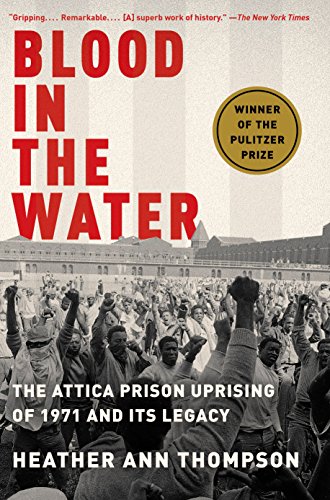
19Blood in the Water: The Attica Prison Uprising of 1971 and Its Legacy
On September 9, 1971, nearly 1,300 prisoners took over the Attica Correctional Facility in upstate New York to protest years of mistreatment. Holding guards and civilian employees hostage, during the four long days and nights that followed, the inmates negotiated with state officials for improved living conditions. On September 13, the state abruptly ended talks and sent hundreds of heavily armed state troopers and corrections officers to retake the prison by force. In the ensuing gunfire, thirty-nine men were killed, hostages as well as prisoners, and close to one hundred were severely injured. After the prison was secured, troopers and officers brutally retaliated against the prisoners during the weeks that followed. For decades afterward, instead of charging any state employee who had committed murder or carried out egregious human rights abuses, New York officials prosecuted only the prisoners and failed to provide necessary support to the hostage survivors or the families of any of the men who'd been killed.
Heather Ann Thompson sheds new light on one of the most important civil rights stories of the last century, exploring every aspect of the uprising and its legacy from the perspectives of all of those involved in this forty-five-year fight for justice: the prisoners, the state officials, the lawyers on both sides, the state troopers and corrections officers, and the families of the slain men.
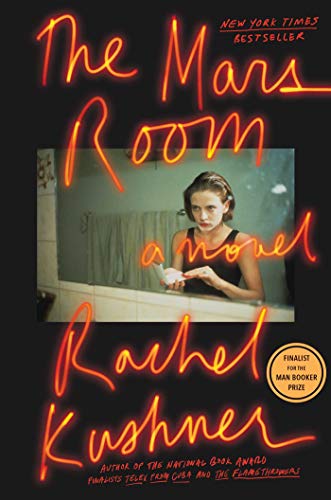
20The Mars Room
This is a novel set in a part of modern life unfamiliar to most of us: a women’s prison. This novel is the one that made me feel I should go out and do something—that I should vote for prison reform. [source]
21Newjack: Guarding Sing Sing
22Al Capone Does My Shirts (Tales from Alcatraz, #1)
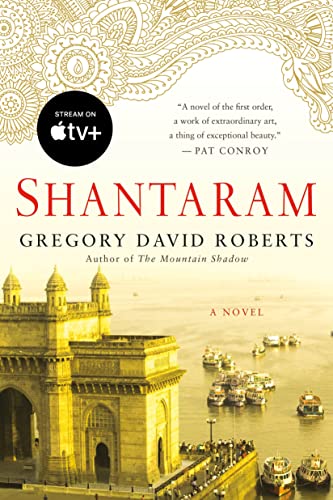
23Shantaram
So begins this epic, mesmerizing first novel set in the underworld of contemporary Bombay. Shantaram is narrated by Lin, an escaped convict with a false passport who flees maximum security prison in Australia for the teeming streets of a city where he can disappear.
Accompanied by his guide and faithful friend, Prabaker, the two enter Bombay's hidden society of beggars and gangsters, prostitutes and holy men, soldiers and actors, and Indians and exiles from other countries, who seek in this remarkable place what they cannot find elsewhere.
As a hunted man without a home, family, or identity, Lin searches for love and meaning while running a clinic in one of the city's poorest slums, and serving his apprenticeship in the dark arts of the Bombay mafia. The search leads him to war, prison torture, murder, and a series of enigmatic and bloody betrayals. The keys to unlock the mysteries and intrigues that bind Lin are held by two people. The first is Khader Khan: mafia godfather, criminal-philosopher-saint, and mentor to Lin in the underworld of the Golden City. The second is Karla: elusive, dangerous, and beautiful, whose passions are driven by secrets that torment her and yet give her a terrible power.
Burning slums and five-star hotels, romantic love and prison agonies, criminal wars and Bollywood films, spiritual gurus and mujaheddin guerrillas – this huge novel has the world of human experience in its reach, and a passionate love for India at its heart. Based on the life of the author, it is by any measure the debut of an extraordinary voice in literature.
Founder/Virgin Group
Today is World Book Day, a wonderful opportunity to address this #ChallengeRichard sent in by Mike Gonzalez of New Jersey: Make a list of your top 65 books to read in a lifetime. [source]
I promote range and diversity. Thus, I recommend readers to expose themselves to as many different topics as possible. I usually have 2-4 books I refer back to at any given time. They range in topics from management, art, spirituality and philosophy. Trying to get the engineering thing going but don't much of a mind for science. [source]
I am always eager to learn how people think and form friendships, how they deal with life's challenges and still remain human. This book delivers that and even more! Shantaram takes you on an incredible journey and you return a changed person. [source]
24The Fence And Then The Trees
Jack Carber was in a bad spot. Betrayed and thrown in prison, he had to figure out fast how to survive, and with no idea who to trust and who not to trust. To make matters worse, he had already gotten on the bad side of The Kennel on day one. But his biggest threat was the vacant psychopath named Adder, whose cell he found himself sharing. And with this one, his best tools for survival, his skills as a con man, had no effect at all.
How would you survive?
Jack faced dangerous enemies, an indifferent prison administration, and an inmate advocate with his own twisted agenda. He was determined to keep himself alive and sane, even as he began to slowly give up on himself.
As long as he kept his head down and didn’t fall prey to the fatal mistake of trusting anyone ever again, he’d eventually get out alive... in body if not in spirit. And that seemed like the most he could expect.
What would keep you going?
A sudden revelation and the resulting puzzle, though, throws his world into a wildly different light. He’s unexpectedly clutching at a glimmer of hope, something more than mere survival, and yet fighting to not repeat the mistakes of his past again. But something deep inside him begs him to take that risk one more time.
Because, exactly how far would you be willing to go to protect the best thing that ever happened to you, especially when it hadn’t even happened?
25Monster
Fade In: Interior Court. A guard sits at a desk behind Steve. Kathy O'Brien, Steve's lawyer, is all business as she talks to Steve.
O'Brien
Let me make sure you understand what's going on. Both you and this king character are on trial for felony murder. Felony Murder is as serious as it gets. . . . When you're in court, you sit there and pay attetion. You let the jury know that you think the case is a serious as they do. . . .
Steve
You think we're going to win ?
O'Brien (seriously)
It probably depends on what you mean by "win."
Sixteen-year-old Steve Harmon is on trial for murder. A Harlem drugstore owner was shot and killed in his store, and the word is that Steve served as the lookout.
Guilty or innocent, Steve becomes a pawn in the hands of "the system," cluttered with cynical authority figures and unscrupulous inmates, who will turn in anyone to shorten their own sentences. For the first time, Steve is forced to think about who he is as he faces prison, where he may spend all the tomorrows of his life.
As a way of coping with the horrific events that entangle him, Steve, an amateur filmmaker, decides to transcribe his trial into a script, just like in the movies. He writes it all down, scene by scene, the story of how his whole life was turned around in an instant. But despite his efforts, reality is blurred and his vision obscured until he can no longer tell who he is or what is the truth. This compelling novel is Walter Dean Myers's writing at its best.
Hold (Hold, #1)
Convicted of a minor crime, Riana is sentenced to a prison planet—a dark primitive hold filled with convicts vying for power. Her only chance of survival is with Cain, a mysterious loner who has won his territory in the prison through intelligence and brute strength. Sex is all she has to offer, so she uses it. She’s under no delusions here. No one is ever released, and no one ever escapes. Survival is all she can hope for—until Cain.
An earlier version of this book was published under the same title and a different penname by Ellora’s Cave. It has since been substantially revised and expanded.
27Different Seasons
Apt Pupil--a golden California schoolboy and an old man whose hideous past he uncovers enter into a fateful and chilling mutual parasitism.
The Body--four rambunctious young boys venture into the Maine woods and in sunlight and thunder find life, death, and intimations of their own mortality.
The Breathing Method--a tale told in a strange club about a woman determined to give birth no matter what.
source: stephenking.com
28The Enchanted
The enchanted place is an ancient stone prison, viewed through the eyes of a death row inmate who finds escape in his books and in re-imagining life around him, weaving a fantastical story of the people he observes and the world he inhabits. Fearful and reclusive, he senses what others cannot. Though bars confine him every minute of every day, he marries magical visions of golden horses running beneath the prison, heat flowing like molten metal from their backs, with the devastating violence of prison life.
Two outsiders venture here: a fallen priest, and the Lady, an investigator who searches for buried information from prisoners' pasts that can save those soon-to-be-executed. Digging into the background of a killer named York, she uncovers wrenching truths that challenge familiar notions of victim and criminal, innocence and guilt, honour and corruption-ultimately revealing shocking secrets of her own.
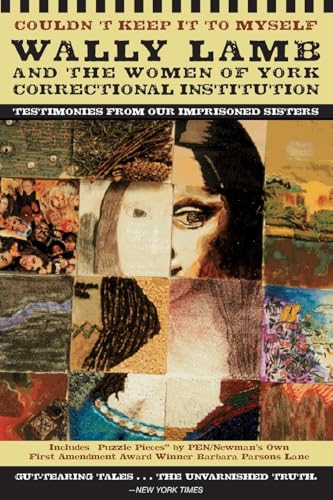
29Couldn't Keep It to Myself: Testimonies from Our Imprisoned Sisters
What I hope is that people reading this book will bear in mind that we are human beings first, inmates second.In a stunning new work of insight and hope, New York Times bestselling author Wally Lamb once again reveals his unmatched talent for finding the humanity in the lost and lonely and celebrates the transforming power of the written word.
--Bonnie Foreshaw
For the past several years, Lamb has taught writing to a group of women prisoners at York Correctional Institution. At first mistrustful of Lamb, one another, and the writing process, over time these students let down their guard, picked up their pens, and discovered their voices. In this unforgettable collection, the women of York describe in their own words how they were imprisoned by abuse, rejection, and their own self-destructive impulses long before they entered the criminal justice system. Yet these are stories of hope, humor, and triumph in the face of despair. Having used writing as a tool to unlock their creativity and begin the process of healing, these amazing writers have left victimhood behind.
In his powerful introduction, Lamb describes the incredible journey of expression and self-awareness the women took through their writings and shares how they challenged him as a teacher and as a fellow author. In "Hair Chronicles," Tabatha Rowley tells her life history through her past hairstyles -- outer signals to the world each time she reinvented herself and eventually came to prize her own self-worth. Brenda Medina admits in "Hell, and How I got Here" that she continued to rebel in prison until her parents' abiding love made her realize that her misbehavior was hurting them and herself deeply. In "Faith, Power, and Pants," Bonnie Foreshaw describes how faith has carried her through trials in life and in prison and has allowed her to understand her past actions, to look toward the future, and to believe that she will once again taste home cooking. Couldn't Keep It to Myself is a true testament to the process of finding oneself and working toward a better day.
Wally Lamb’s book is one of several that raises up the voices of women prisoners who have suffered through unspeakable traumas before they committed their crimes. [source]
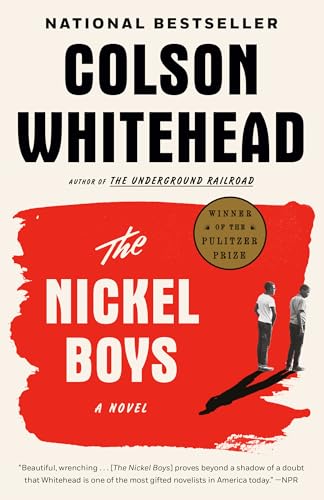
30The Nickel Boys
As the Civil Rights movement begins to reach the black enclave of Frenchtown in segregated Tallahassee, Elwood Curtis takes the words of Dr. Martin Luther King to heart: He is “as good as anyone.” Abandoned by his parents, but kept on the straight and narrow by his grandmother, Elwood is a high school senior about to start classes at a local college. But for a black boy in the Jim Crow South of the early 1960s, one innocent mistake is enough to destroy the future. Elwood is sentenced to a juvenile reformatory called the Nickel Academy, whose mission statement says it provides “physical, intellectual and moral training” so the delinquent boys in their charge can become “honorable and honest men.”
In reality, the Nickel Academy is a grotesque chamber of horrors where the sadistic staff beats and sexually abuses the students, corrupt officials and locals steal food and supplies, and any boy who resists is likely to disappear “out back.” Stunned to find himself in such a vicious environment, Elwood tries to hold onto Dr. King’s ringing assertion “Throw us in jail and we will still love you.” His friend Turner thinks Elwood is worse than naive, that the world is crooked, and that the only way to survive is to scheme and avoid trouble.
The tension between Elwood’s ideals and Turner’s skepticism leads to a decision with repercussions that will echo down the decades. Formed in the crucible of the evils Jim Crow wrought, the boys’ fates will be determined by what they endured at the Nickel Academy.
Based on the real story of a reform school in Florida that operated for one hundred and eleven years and warped the lives of thousands of children, The Nickel Boys is a devastating, driven narrative that showcases a great American novelist writing at the height of his powers.
@DanTelvock Nickel Boys by Colson Whitehead. The MVP Machine is a great book about what’s happening in baseball. [source]
31UnPrison
37,550 words.
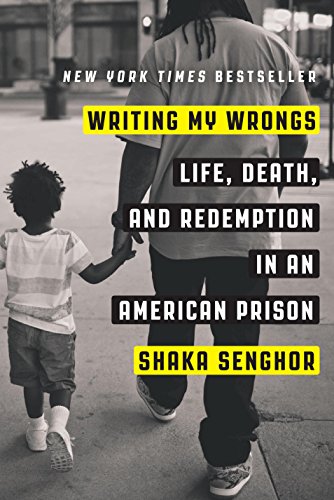
32Writing My Wrongs: Life, Death, and Redemption in an American Prison
In life, it's not how you start that matters. It's how you finish.
Shaka Senghor was raised in a middle class neighborhood on Detroit s east side during the height of the 1980s crack epidemic. An honor roll student and a natural leader, he dreamed of becoming a doctor but at age 11, his parents' marriage began to unravel, and the beatings from his mother worsened, sending him on a downward spiral that saw him run away from home, turn to drug dealing to survive, and end up in prison for murder at the age of 19, fuming with anger and despair.
"Writing My Wrongs" is the story of what came next. During his nineteen-year incarceration, seven of which were spent in solitary confinement, Senghor discovered literature, meditation, self-examination, and the kindness of others tools he used to confront the demons of his past, forgive the people who hurt him, and begin atoning for the wrongs he had committed. Upon his release at age thirty-eight, Senghor became an activist and mentor to young men and women facing circumstances like his. His work in the community and the courage to share his story led him to fellowships at the MIT Media Lab and the Kellogg Foundation and invitations to speak at events like TED and the Aspen Ideas Festival.
In equal turns, "Writing My Wrongs" is a page-turning portrait of life in the shadow of poverty, violence, and fear; an unforgettable story of redemption, reminding us that our worst deeds don t define us; and a compelling witness to our country s need for rethinking its approach to crime, prison, and the men and women sent there.
"From the Hardcover edition."
Co-founder/Andreessen Horowitz
The memoir of a man who went to prison for 19 years, then became an author and MIT fellow. [source]
Shaka Senghor grew up in the 80s and 90s. He was a young man when the crack epidemic took the country by storm. He grew up in Detroit and became a dealer pretty young. He was shot at and he shot at people and eventually killed somebody. [source]
33And So Is Love
34Life After Death
In a shocking reversal of events, all three were suddenly released in August 2011. This is Damien Echols' story in full: from abuses by prison guards and wardens, to descriptions of inmates and deplorable living conditions, to the incredible reserves of patience, spirituality, and perseverance that kept him alive and sane for nearly two decades. Echols also writes about his complicated and painful childhood. Like Dead Man Walking, Life After Death is destined to be a classic.
35All Rise for the Honorable Perry T. Cook
From Leslie Connor, award-winning author of Waiting for Normal and Crunch, comes a soaring and heartfelt story about love, forgiveness, and how innocence makes us all rise up. All Rise for the Honorable Perry T. Cook is a powerful story, perfect for fans of Wonder and When You Reach Me.
Eleven-year-old Perry was born and raised by his mom at the Blue River Co-ed Correctional Facility in tiny Surprise, Nebraska. His mom is a resident on Cell Block C, and so far Warden Daugherty has made it possible for them to be together. That is, until a new district attorney discovers the truth—and Perry is removed from the facility and forced into a foster home.
When Perry moves to the “outside” world, he feels trapped. Desperate to be reunited with his mom, Perry goes on a quest for answers about her past crime. As he gets closer to the truth, he will discover that love makes people resilient no matter where they come from . . . but can he find a way to tell everyone what home truly means?
36Lockdown (Escape from Furnace, #1)
Furnace Penitentiary: the world’s most secure prison for young offenders, buried a mile beneath the earth’s surface. Convicted of a murder he didn’t commit, sentenced to life without parole, “new fish” Alex Sawyer knows he has two choices: find a way out, or resign himself to a death behind bars, in the darkness at the bottom of the world. Except in Furnace, death is the least of his worries. Soon Alex discovers that the prison is a place of pure evil, where inhuman creatures in gas masks stalk the corridors at night, where giants in black suits drag screaming inmates into the shadows, where deformed beasts can be heard howling from the blood-drenched tunnels below. And behind everything is the mysterious, all-powerful warden, a man as cruel and dangerous as the devil himself, whose unthinkable acts have consequences that stretch far beyond the walls of the prison.
Together with a bunch of inmates—some innocent kids who have been framed, others cold-blooded killers—Alex plans an escape. But as he starts to uncover the truth about Furnace’s deeper, darker purpose, Alex’s actions grow ever more dangerous, and he must risk everything to expose this nightmare that’s hidden from the eyes of the world.
37Soledad Brother: The Prison Letters of George Jackson
38Les Misérables
Vividly illustrates two ideas about character. The first is that our characters can change over time, the second is that role models can be powerful sources of character change. [source]
Because it’s so huge and so capacious and contains so many different stories and takes on the world, you can make anything out of Les Misérables. [source]
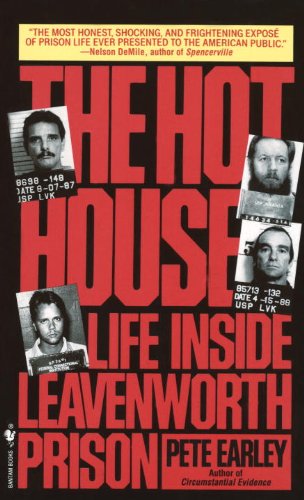
39The Hot House: Life Inside Leavenworth Prison
"A page-turner, as compelling and evocative as the finest novel. The best book on prison I've ever read."--Jonathan Kellerman
The most dreaded facility in the prison system because of its fierce population, Leavenworth is governed by ruthless clans competing for dominance. Among the "star" players in these pages: Carl Cletus Bowles, the sexual predator with a talent for murder; Dallas Scott, a gang member who has spent almost thirty of his forty-two years behind bars; indomitable Warden Robert Matthews, who put his shoulder against his prison's grim reality; Thomas Silverstein, a sociopath confined in "no human contact" status since 1983; "tough cop" guard Eddie Geouge, the only officer in the penitentiary with the authority to sentence an inmate to "the Hole"; and William Post, a bank robber with a criminal record going back to when he was eight years old--and known as the "Catman" for his devoted care of the cats who live inside the prison walls.
Pete Earley, celebrated reporter and author of Family of Spies, all but lived for nearly two years inside the primordial world of Leavenworth, where he conducted hundreds of interviews. Out of this unique, extraordinary access comes the riveting story of what life is actually like in the oldest maximum-security prison in the country.
Praise for The Hot House
"Reporting at its very finest."--Los Angeles Times
"The book is a large act of courage, its subject an important one, and . . . Earley does it justice."--The Washington Post Book World
"[A] riveting, fiercely unsentimental book . . . To [Earley's] credit, he does not romanticize the keepers or the criminals. His cool and concise prose style serves him well. . . . This is a gutsy book."--Chicago Tribune
"Harrowing . . . an exceptional work of journalism."--Detroit Free Press
"If you're going to read any book about prison, The Hot House is the one. . . . It is the most realistic, unbuffed account of prison anywhere in print."--Kansas City Star
"A superb piece of reporting."--Tom Clancy
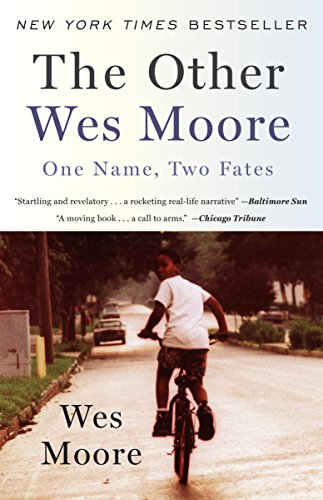
40The Other Wes Moore: One Name, Two Fates
In December 2000, the Baltimore Sun ran a small piece about Wes Moore, a local student who had just received a Rhodes Scholarship. The same paper also ran a series of articles about four young men who had allegedly killed a police officer in a spectacularly botched armed robbery. The police were still hunting for two of the suspects who had gone on the lam, a pair of brothers. One was named Wes Moore.
Wes just couldn’t shake off the unsettling coincidence, or the inkling that the two shared much more than space in the same newspaper. After following the story of the robbery, the manhunt, and the trial to its conclusion, he wrote a letter to the other Wes, now a convicted murderer serving a life sentence without the possibility of parole. His letter tentatively asked the questions that had been haunting him: Who are you? How did this happen?
That letter led to a correspondence and relationship that have lasted for several years. Over dozens of letters and prison visits, Wes discovered that the other Wes had had a life not unlike his own: Both had grown up in similar neighborhoods and had had difficult childhoods, both were fatherless; they’d hung out on similar corners with similar crews, and both had run into trouble with the police. At each stage of their young lives they had come across similar moments of decision, yet their choices would lead them to astonishingly different destinies.
Told in alternating dramatic narratives that take readers from heart-wrenching losses to moments of surprising redemption, The Other Wes Moore tells the story of a generation of boys trying to find their way in a hostile world.
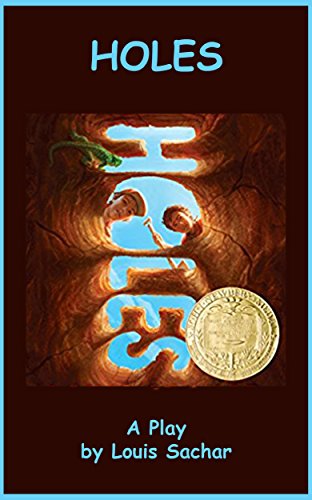
41Holes (Holes, #1)
Stanley Yelnats is under a curse. A curse that began with his no-good-dirty-rotten- pig-stealing-great-great-grandfather and has since followed generations of Yelnats. Now Stanley has been unjustly sent to a boys' detention center, Camp Green Lake, where the warden makes the boys "build character" by spending all day, every day, digging holes: five feet wide and five feet deep. It doesn't take long for Stanley to realize there's more than character improvement going on at Camp Green Lake. The boys are digging holes because the warden is looking for something. Stanley tries to dig up the truth in this inventive and darkly humorous tale of crime and punishment—and redemption.
42Prisoner (Criminals & Captives, #1)
So I hide behind my prim glasses and my book like I always do, because I have secrets too. Then he shows up in the prison writing class I have to teach, and he blows me away with his honesty. He tells me secrets in his stories, and it’s getting harder to hide mine. I shiver when he gets too close, with only the cuffs and the bars and the guards holding him back. At night I can’t stop thinking about him in his cell.
But that’s the thing about an animal in a cage—you never know when he’ll bite. He might use you to escape. He might even pull you into a forest and hold a hand over your mouth so you can’t call for the cops. He might make you come so hard, you can’t think.
And you might crave him more than your next breath.
43Escape from Camp 14: One Man's Remarkable Odyssey from North Korea to Freedom in the West
North Korea is isolated and hungry, bankrupt and belligerent. It is also armed with nuclear weapons. Between 150,000 and 200,000 people are being held in its political prison camps, which have existed twice as long as Stalin's Soviet gulags and twelve times as long as the Nazi concentration camps. Very few born and raised in these camps have escaped. But Shin Donghyuk did.
In Escape from Camp 14, acclaimed journalist Blaine Harden tells the story of Shin Dong-hyuk and through the lens of Shin's life unlocks the secrets of the world's most repressive totalitarian state. Shin knew nothing of civilized existence-he saw his mother as a competitor for food, guards raised him to be a snitch, and he witnessed the execution of his own family. Through Harden's harrowing narrative of Shin's life and remarkable escape, he offers an unequaled inside account of one of the world's darkest nations and a riveting tale of endurance, courage, and survival.
44In Cold Blood
As Truman Capote reconstructs the murder and the investigation that led to the capture, trial, and execution of the killers, he generates both mesmerizing suspense and astonishing empathy. At the center of his study are the amoral young killers Perry Smith and Dick Hickcock, who, vividly drawn by Capote, are shown to be reprehensible yet entirely and frighteningly human. In Cold Blood is a seminal work of modern prose, a remarkable synthesis of journalistic skill and powerfully evocative narrative.
Truman Capote's best book. It's a really, really good book. [source]
One of the reasons I like this true crime novelisation is down to the fact it was so out of character for Capote and took everyone by surprise. It is also an excellent, almost biographical, insight into the two young killers’ minds. [source]
I think in all honesty it is one of the finest books ever written. It took him six years to finish it because he had to wait for the court case and the final verdict which was the two perpetrators being executed. [source]
45Running the Books: The Adventures of an Accidental Prison Librarian
The prison library counter, his new post, attracts con men, minor prophets, ghosts, and an assortment of quirky regulars searching for the perfect book and a connection to the outside world. There’s an anxious pimp who solicits Steinberg’s help in writing a memoir. A passionate gangster who dreams of hosting a cooking show titled Thug Sizzle. A disgruntled officer who instigates a major feud over a Post-it note. A doomed ex-stripper who asks Steinberg to orchestrate a reunion with her estranged son, himself an inmate. Over time, Steinberg is drawn into the accidental community of outcasts that has formed among his bookshelves — a drama he recounts with heartbreak and humor. But when the struggles of the prison library — between life and death, love and loyalty — become personal, Steinberg is forced to take sides.
Running the Books is a trenchant exploration of prison culture and an entertaining tale of one young man’s earnest attempt to find his place in the world while trying not to get fired in the process.
Live from Death Row
"Resonates with the moral force of Martin Luther King, Jr.'s Letter From Birmingham Jail." –Boston Globe
After twenty years on death row, Mumia Abu-Jamal has been released from his death sentence . . .but not the conviction. This once prominent radio reporter was convicted for the murder of Philadelphia police officer Daniel Faulkner in 1982, after a trial many have criticized as profoundly biased. Live from Death Row is a collection of his prison writings--and impassioned yet unflinching account of the brutalities and humiliations of prison life, and a scathing indictment of racism and political bias in the American judicial system.
47Blindly Indicted (Paranormal Prison)
I’ve always been told stories about the real world, but I haven’t seen it for myself. All I have ever known is pain.
And darkness.
They tell me I have been blind since birth.
When I make my escape, I think freedom is finally within my grasp...
Until I’m captured by the paranormal police for a murder I didn’t commit. Apparently, I have powers—powers I have always suspected myself of having.
Normal people can’t see through other people’s eyes, right?
Thrust into Nightmare Penitentiary, I meet a group of hard, alpha, psychotic inmates who believe I’m the answer to all their prayers. Me? I’m just trying to survive and figure out what it means to live. My new home isn’t just a prison, but a labyrinth with horrors around every corner.
But what if the cost of my life is my freedom? Am I willing to trade one cage for another?
Welcome to Nightmare Penitentiary where you come in handcuffs and leave in a body bag.
This is NOT a bully romance. These men are all hardened criminals and extreme alphas, but they adore their female. Be prepared to enjoy a painfully naïve female main character who slowly grows as the book progresses and a group of psychotic, murderous males. This book contains strong language, sexual situations, and a reverse harem romance.
48Alias Grace
An up-and-coming expert in the burgeoning field of mental illness is engaged by a group of reformers and spiritualists who seek a pardon for Grace. He listens to her story while bringing her closer and closer to the day she cannot remember. What will he find in attempting to unlock her memories?
Captivating and disturbing, Alias Grace showcases best-selling, Booker Prize-winning author Margaret Atwood at the peak of her powers.
Historical fiction set in Canada around the mid-1800’s. Grace Marks, the main character, really was a person. She was put into prison for her role in the murder of a farming family. [source]
49Night
Night offers much more than a litany of the daily terrors, everyday perversions, and rampant sadism at Auschwitz and Buchenwald; it also el
50The Gulag Archipelago: (Abridged edition)
The work is based on the testimony of some two hundred survivors, and on the recollection of Solzhenitsyn's own eleven years in labour camps and exile. It is both a thoroughly researched document and a feat of literary and imaginative power. This edition has been abridged into one volume at the author's wish and with his full co-operation.
"The Gulag Archipelago" audiobook is available now in the UK (https://t.co/FwqDKSEp2w) with a forward narrated by me as well as a Q&A with myself and Ignat Solzhenitsyn at the end of the book that I believe you'll enjoy! Who here has previously read the book? https://t.co/SHldoeI0sY [source]
51American Gods (American Gods, #1)
A storm is coming . . .
Locked behind bars for three years, Shadow did his time, quietly waiting for the magic day when he could return to Eagle Point, Indiana. A man no longer scared of what tomorrow might bring, all he wanted was to be with Laura, the wife he deeply loved, and start a new life.
But just days before his release, Laura and Shadow’s best friend are killed in an accident. With his life in pieces and nothing to keep him tethered, Shadow accepts a job from a beguiling stranger he meets on the way home, an enigmatic man who calls himself Mr. Wednesday. A trickster and rogue, Wednesday seems to know more about Shadow than Shadow does himself.
Life as Wednesday’s bodyguard, driver, and errand boy is far more interesting and dangerous than Shadow ever imagined—it is a job that takes him on a dark and strange road trip and introduces him to a host of eccentric characters whose fates are mysteriously intertwined with his own. Along the way Shadow will learn that the past never dies; that everyone, including his beloved Laura, harbors secrets; and that dreams, totems, legends, and myths are more real than we know. Ultimately, he will discover that beneath the placid surface of everyday life a storm is brewing—an epic war for the very soul of America—and that he is standing squarely in its path.
Relevant and prescient, American Gods has been lauded for its brilliant synthesis of “mystery, satire, sex, horror, and poetic prose” (Michael Dirda, Washington Post Book World) and as a modern phantasmagoria that “distills the essence of America” (Seattle Post-Intelligencer). It is, quite simply, an outstanding work of literary imagination that will endure for generations.
Basically, first of all, I am a huge fan of science fiction and fantasy books and I grew up with Douglas Adams and Arthur C Clarke. For me, this is the best of Gaiman’s books and I’ve got all of them. It’s set in the present time and talks about settlers who have settled a continent and have brought their gods with them. So, if you are Swedish and you cherish Nordic gods and move to the US, the gods go with you and the more you believe in them the stronger they are. But if fewer people start believing in them then they get weaker and eventually they become mortal and die. So, it’s about all these forgotten gods. It’s a horror story in which nobody dies. It’s a metaphor for our society – if you replace gods with values then you get the same thing. [source]
Nobody can break my family.I’m proud to be apart of this diverse cast & crew who are working their butts off to deliver a fantastic season 3 continuing to tell Shadows story and the awesome characters he meets along the way as in @neilhimself incredible book #readit #details🤔 https://t.co/PahPC9j3HB [source]
American Gods by Neil Gaiman. This is a brilliant thought experiment about what happens to a god when its believers stop believing. My preferred edition is the 10th Anniversary release with expanded text. [source]
52Marching Powder: A True Story of Friendship, Cocaine, and South America's Strangest Jail
This book establishes that San Pedro is not your average prison. Inmates are expected to buy their cells from real estate agents. Others run shops and restaurants. Women and children live with imprisoned family members. It is a place where corrupt politicians and drug lords live in luxury apartments, while the poorest prisoners are subjected to squalor and deprivation. Violence is a constant threat, and sections of San Pedro that echo with the sound of children by day house some of Bolivia's busiest cocaine laboratories by night. In San Pedro, cocaine--"Bolivian marching powder"--makes life bearable. Even the prison cat is addicted.
Yet Marching Powder is also the tale of friendship, a place where horror is countered by humor and cruelty and compassion can inhabit the same cell. This is cutting-edge travel-writing and a fascinating account of infiltration into the South American drug culture.
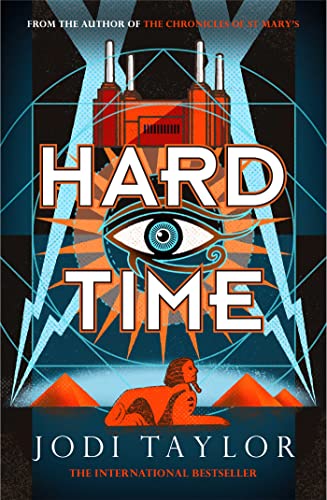
53Hard Time
He was big. Tall frame, wide shoulders-but not burly. His near-black hair was due for a cut, curling under his ears. Dark brows, dark stubble, dark lashes and eyes.
And he was handsome. So handsome it broke your heart.
A deck of cards was split between his hands, paused midshuffle. Some of the men wore navy scrub tops and bottoms, some navy tee shirts, a few white undershirts. This man wore a tee, with COUSINS stenciled on the front, above the number 802267. Those digits imprinted on my brain, burned black as a brand.
He watched me. But not the way the others did. If he was trying to picture me naked, his poker face was strong, though his attention anything but subtle. His entire head moved as I passed through his domain, but his eyes were languorous. Lazy and half-lidded, yet intense. A hundred looks in one. I didn't like it. Couldn't read it. At least with the horny jerk-offs, I knew where I stood.
I wondered what the worst thing you could do and still only get sent to a medium-security prison was. I hoped not to ever learn the answer.
And I hoped to heaven inmate 802267 hadn't signed up for any of the day's programs.
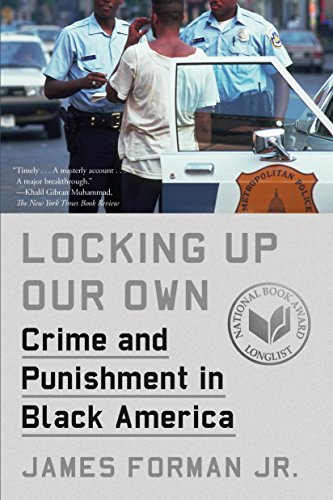
54Locking Up Our Own: Crime and Punishment in Black America
Forman shows us that the first substantial cohort of black mayors, judges, and police chiefs took office amid a surge in crime and drug addiction. Many prominent black officials, including Washington, D.C. mayor Marion Barry and federal prosecutor Eric Holder, feared that the gains of the civil rights movement were being undermined by lawlessness—and thus embraced tough-on-crime measures, including longer sentences and aggressive police tactics. In the face of skyrocketing murder rates and the proliferation of open-air drug markets, they believed they had no choice. But the policies they adopted would have devastating consequences for residents of poor black neighborhoods.
A former D.C. public defender, Forman tells riveting stories of politicians, community activists, police officers, defendants, and crime victims. He writes with compassion about individuals trapped in terrible dilemmas—from the men and women he represented in court to officials struggling to respond to a public safety emergency. Locking Up Our Own enriches our understanding of why our society became so punitive and offers important lessons to anyone concerned about the future of race and the criminal justice system in this country.
55Defined By Deceit
He tried to drown his demons, only to find they could swim.
Life isn't always fair. Llewellyn Gardner knows that first hand. He was on the fast track—college dreams, a boyfriend—until one night of extreme passion changed everything. Eight years later and out of prison, he still lives with the aftershocks of that night. Everywhere he turns there’s another reminder of the crime people insist he committed, so he runs away to a new town to start over.
For Shane Smith, Jr., owner of Smith Construction, there’s something about the gorgeous, misunderstood man with the overly expressive eyes and dark past. Shane sees the good in Llewellyn— it’s why he hired him—and he isn’t going to let the man cut himself off from the world.
Llewellyn isn’t sure what to think about Shane. After years of protecting himself from being tricked twice, he’s worried. What will happen if Shane doesn’t believe the truth about his past?
56Brute
Rumors say the prisoner, Gray Leynham, is a witch and a traitor. What is certain is that he has spent years in misery: blind, chained, and rendered nearly mute by an extreme stutter. And he dreams of people’s deaths—dreams that come true.
As Brute becomes accustomed to palace life and gets to know Gray, he discovers his own worth, first as a friend and a man and then as a lover. But Brute also learns heroes sometimes face difficult choices and that doing what is right can bring danger of its own.
57Assata: An Autobiography
This intensely personal and political autobiography belies the fearsome image of JoAnne Chesimard long projected by the media and the state. With wit and candor, Assata Shakur recounts the experiences that led her to a life of activism and portrays the strengths, weaknesses, and eventual demise of Black and White revolutionary groups at the hand of government officials. The result is a signal contribution to the literature about growing up Black in America that has already taken its place alongside The Autobiography of Malcolm X and the works of Maya Angelou.
Two years after her conviction, Assata Shakur escaped from prison. She was given political asylum by Cuba, where she now resides.
58We Got This.: Equity, Access, and the Quest to Be Who Our Students Need Us to Be
In We Got This Cornelius Minor describes how this conversation moved him toward realizing that listening to children is one of the most powerful things a teacher can do. By listening carefully, Cornelius discovered something that kids find themselves having to communicate far too often. That "my lessons were not, at all, linked to that student's reality."
While challenging the teacher as hero trope, We Got This shows how authentically listening to kids is the closest thing to a superpower that we have. What we hear can spark action that allows us to make powerful moves toward equity by broadening access to learning for all children. A lone teacher can't eliminate inequity, but Cornelius demonstrates that a lone teacher can confront the scholastic manifestations of racism, sexism, ableism and classism by showing:
exactly how he plans and revises lessons to ensure access and equity ways to look anew at explicit and tacit rules that consistently affect groups of students unequally suggestions for leaning into classroom community when it feels like the kids are against you ideas for using universal design that make curriculum relevant and accessible advocacy strategies for making classroom and schoolwide changes that expand access to opportunity to your students "We cannot guarantee outcomes, but we can guarantee access" Cornelius writes. "We can ensure that everyone gets a shot. In this book we get to do that. Together. Consider this book a manual for how to begin that brilliantly messy work. We got this."
59Sing, Unburied, Sing
In Jesmyn Ward’s first novel since her National Book Award–winning Salvage the Bones, this singular American writer brings the archetypal road novel into rural twenty-first-century America. Drawing on Morrison and Faulkner, The Odyssey and the Old Testament, Ward gives us an epochal story, a journey through Mississippi’s past and present that is both an intimate portrait of a family and an epic tale of hope and struggle. Ward is a major American writer, multiply awarded and universally lauded, and in Sing, Unburied, Sing she is at the height of her powers.
Jojo and his toddler sister, Kayla, live with their grandparents, Mam and Pop, and the occasional presence of their drug-addicted mother, Leonie, on a farm on the Gulf Coast of Mississippi. Leonie is simultaneously tormented and comforted by visions of her dead brother, which only come to her when she’s high; Mam is dying of cancer; and quiet, steady Pop tries to run the household and teach Jojo how to be a man. When the white father of Leonie’s children is released from prison, she packs her kids and a friend into her car and sets out across the state for Parchman farm, the Mississippi State Penitentiary, on a journey rife with danger and promise.
Sing, Unburied, Sing grapples with the ugly truths at the heart of the American story and the power, and limitations, of the bonds of family. Rich with Ward’s distinctive, musical language, Sing, Unburied, Sing is a majestic new work and an essential contribution to American literature.
60Beautiful Boy: A Father's Journey Through His Son's Addiction
David Sheff traces the first subtle warning signs: the denial, the 3 A.M. phone calls (is it Nic? The police? The hospital?), the rehabs. His preoccupation with Nic became an addiction in itself, and the obsessive worry and stress took a tremendous toll, but as a journalist, he instinctively researched every avenue of treatment that might save his son and refused to give up on him. Beautiful Boy is a fiercely candid memoir that brings immediacy to the emotional roller coaster of loving a child who seems beyond help.
61Conveniently Convicted (Paranormal Prison)
For others, this might be cause for freaking the hell out. But for me, it's a fucking relief.
You see, I've been sold off to the big bad asshole, Alpha Bowen - thanks mom and dad! But if they think I'm going to go quietly, or at all, they haven't been paying attention to how I roll.
Nightmare Penitentiary is the perfect place to escape, and I'm ready. If only people would stop trying to break me out. Seriously, it's annoying.
I'm ready to relax and serve my sentence, but then I meet the prison guard, Rook. I can't seem to escape his heated stares, the head wobbles, or the dimples. Sweet pop rocks, the dimples!
You're not supposed to meet the male of your dreams in prison, but tell that to fate. Too bad I'm not as out of reach from the troubles hunting me down as I thought... and now, there's nowhere to run because, like, I got myself imprisoned. FML.
62Prison Writings: My Life Is My Sun Dance
In 1977, Leonard Peltier received a life sentence for the murder of two FBI agents. He has affirmed his innocence ever since--his case was made fully and famously in Peter Matthiessen's bestselling In the Spirit of Crazy Horse--and many remain convinced he was wrongly convicted. Prison Writings is a wise and unsettling book, both memoir and manifesto, chronicling his life in Leavenworth Prison in Kansas. Invoking the Sun Dance, in which pain leads one to a transcendent reality, Peltier explores his suffering and the insights it has borne him. He also locates his experience within the history of the American Indian peoples and their struggles to overcome the federal government's injustices.
63Slavery by Another Name: The Re-Enslavement of Black Americans from the Civil War to World War II
Under laws enacted specifically to intimidate blacks, tens of thousands of African Americans were arbitrarily arrested, hit with outrageous fines, and charged for the costs of their own arrests. With no means to pay these ostensible “debts,” prisoners were sold as forced laborers to coal mines, lumber camps, brickyards, railroads, quarries, and farm plantations. Thousands of other African Americans were simply seized by southern landowners and compelled into years of involuntary servitude. Government officials leased falsely imprisoned blacks to small-town entrepreneurs, provincial farmers, and dozens of corporations—including U.S. Steel—looking for cheap and abundant labor. Armies of “free” black men labored without compensation, were repeatedly bought and sold, and were forced through beatings and physical torture to do the bidding of white masters for decades after the official abolition of American slavery.
The neoslavery system exploited legal loopholes and federal policies that discouraged prosecution of whites for continuing to hold black workers against their wills. As it poured millions of dollars into southern government treasuries, the new slavery also became a key instrument in the terrorization of African Americans seeking full participation in the U.S. political system.
Based on a vast record of original documents and personal narratives, Slavery by Another Name unearths the lost stories of slaves and their descendants who journeyed into freedom after the Emancipation Proclamation and then back into the shadow of involuntary servitude. It also reveals the stories of those who fought unsuccessfully against the re-emergence of human labor trafficking, the modern companies that profited most from neoslavery, and the system’s final demise in the 1940s, partly due to fears of enemy propaganda about American racial abuse at the beginning of World War II.
Slavery by Another Name is a moving, sobering account of a little-known crime against African Americans, and the insidious legacy of racism that reverberates today.
To overcome racial inequality, we must confront our history. Share this #racialinjustice https://t.co/UmFQG4kImW The Alabama Prison System banned the book "Slavery by another name" claiming it was too "proactive." EJI sued, now any prisoner can read the book! You should too! [source]
64Golden Gulag: Prisons, Surplus, Crisis, and Opposition in Globalizing California
In an informed and impassioned account, Ruth Wilson Gilmore examines this issue through statewide, rural, and urban perspectives to explain how the expansion developed from surpluses of finance capital, labor, land, and state capacity. Detailing crises that hit California’s economy with particular ferocity, she argues that defeats of radical struggles, weakening of labor, and shifting patterns of capital investment have been key conditions for prison growth. The results—a vast and expensive prison system, a huge number of incarcerated young people of color, and the increase in punitive justice such as the “three strikes” law—pose profound and troubling questions for the future of California, the United States, and the world. Golden Gulag provides a rich context for this complex dilemma, and at the same time challenges many cherished assumptions about who benefits and who suffers from the state’s commitment to prison expansion.
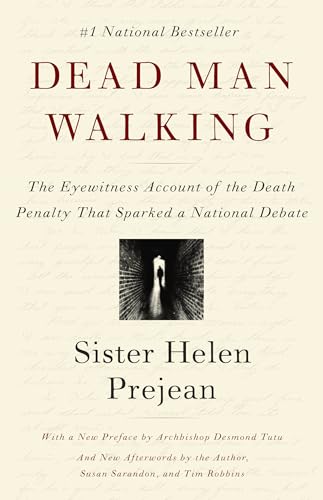
65Dead Man Walking: The Eyewitness Account of the Death Penalty That Sparked a National Debate
Out of that dreadful intimacy comes a profoundly moving spiritual journey through our system of capital punishment. Here Sister Helen confronts both the plight of the condemned and the rage of the bereaved, the fears of a society shattered by violence and the Christian imperative of love. On its original publication in 1993, Dead Man Walking emerged as an unprecedented look at the human consequences of the death penalty. Now, some two decades later, this story—which has inspired a film, a stage play, an opera and a musical album—is more gut-wrenching than ever, stirring deep and life-changing reflection in all who encounter it.
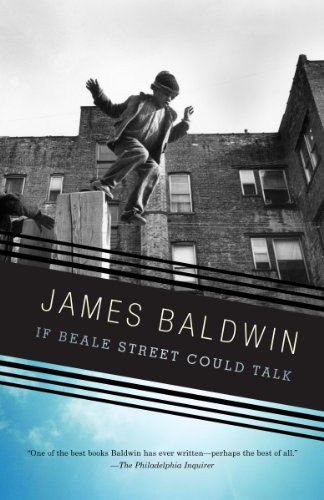
66If Beale Street Could Talk
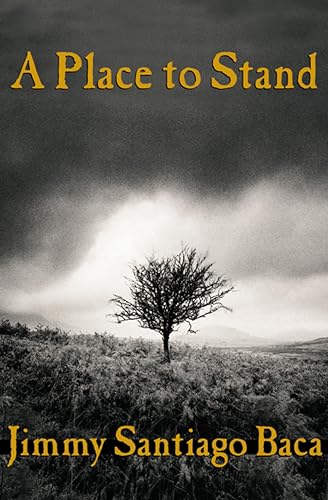
67A Place to Stand
Jimmy Santiago Baca, in his memoir, writes about how, when he was 20 or 21, he realized he was an illiterate Chicano in this very violent, maximum security prison. He knew he wanted to get out and lead a better life. [source]
68Guardian (Prison Planet, #1)
Audra Copeland is among dozens of newly convicted felons dropped off on the prison planet Rhodon, where she discovers that the women of zone four have a long-standing arrangement with the men. If they hand over six of the new arrivals, the men won’t raid. And Audra has just been drafted.
She can take her chances on her own, or select a guardian. The deal is simple, if barbaric: sex, in exchange for food and safety from the other two hundred men in zone four. It’s a terrifying proposal. The men are violent, filthy degenerates.
Then Audra sees Tyson at the edge of the crowd. A hulking, scarred figure, the other men call him a savage, but his clothes are clean, and he’s holding a freshly caught rabbit. He can clearly protect what’s his.
As compassionate as he is powerful, Tyson ignites something fierce in Audra, and their connection is white-hot. The problem? Every thirty days, she’ll have to pick a new guardian.
Now that he’s found Audra, Ty has every intention of keeping her for himself. Even if he has to destroy the fragile zone four peace treaty to do it.
69Riot (Predators MC, #1)
As president of the Predators’ MC, my men and I are used to preying on the weak and those stupid enough to cross our paths. So why does a straitlaced teacher make me sit up and take notice when I see her for the first time? The brothers all think she makes me weak, and believe me, weak in their eyes isn’t where I want to be. She wants me to prove she means more to me than the club, and when I fail, she thinks she can just walk away. She’s wrong. I’m a Predator, and nothing escapes me.
Grace
As a teacher, I’m supposed to want to educate those who want to learn, right? That’s what I believed until I was told I’d have to teach a class at the prison. I didn’t move to a town labeled as one of the safest places in America only to be faced with a bunch of Predators. He expects me to trust him despite being the reason I’m trapped in the middle of a prison riot. His club means more to him than I ever will, and if I give him a chance, he will break the fragile peace I have managed to find. It’s not the first time I’ve had to escape a predator.
Warning: This work of fiction is intended for mature audiences only. All sexually active characters portrayed in this ebook are eighteen years of age or older. Please do not buy if strong sexual situations, multiple partners, extreme violence, drugs, and explicit language offends you.
70The Freshman Survival Guide: Soulful Advice for Studying, Socializing, and Everything In Between
A completely revised and updated values-based guide to navigating the first year of college that speaks to college students in their own language and offers practical tools that readers need to keep from drinking, sleeping, or skipping their way out of college.
In the four years since its initial publication, THE FRESHMAN SURVIVAL GUIDE has helped thousands of first year students make a successful transition to college life. However, much has changed on campuses. The explosion of technology, ubiquity of social media, and culture changes have all added new layers of complexity to the leap from high school to college. THE FRESHMAN SURVIVAL GUIDE's updated edition features new research and advice on issues such as mental health, sexual assault, and finding balance. It also features expanded sections on dating, money management, and an increased focus on how the over 1.5 million incoming freshman can prepare themselves for the biggest change they've encountered in their lives: heading off to college.
71A Pound of Flesh (A Pound of Flesh, #1)
Haunted by nightmares of her father’s street murder fifteen years ago, Kat Lane decides to face her fears and uphold his legacy of helping others by teaching inmates at a New York prison. There she meets arrogant Wesley Carter, who’s as handsome as he is dangerous, as mysterious as he is quick-witted, and with a reputation that ensures people will keep their distance.
As teacher and student, Kat and Carter are forced to leave their animosities at the door and learn that one should never judge a book by its cover. As Carter’s barriers begin to crumble, Kat realizes there’s much more to her angry student than she thought, leaving them to face a new, perilous obstacle: their undeniable attraction to one another.
72Behind Bars (Cell Mates #1)
The Gulag Archipelago, 1918-1956: An Experiment in Literary Investigation, Volume 1
74Visiting Day
Only on visiting day is there chicken frying in the kitchen at 6 a.m. And Grandma in her Sunday dress, humming soft and low... As the little girl and her grandmother get ready for visiting day, her father, who adores her, is getting ready, too. The community of families who take the long bus ride upstate to visit loved ones share hope and give comfort to each other. Love knows no boundaries. Here is a story of strong families who understand the meaning of unconditional love.
75The Scar (New Crobuzon, #2)
For Bellis, the plan is clear: live among the new frontiersmen of the colony until it is safe to return home. But when the ship is besieged by pirates on the Swollen Ocean, the senior officers are summarily executed. The surviving passengers are brought to Armada, a city constructed from the hulls of pirated ships, a floating, landless mass ruled by the bizarre duality called the Lovers. On armada, everyone is given work, and even Remades live as equals to humans, Cactacae, and Cray. Yet no one may ever leave.
Lonely and embittered in her captivity, Bellis knows that to show dissent is a death sentence. Instead, she must furtively seek information about Armada's agenda. The answer lies in the dark, amorphous shapes that float undetected miles below the waters—terrifying entities with a singular, chilling mission.
One of the few books I brought with me when I moved was The Scar by China Mieville. I love the steampunk world that was built, the storytelling, and prose. [source]
76Sapphique (Incarceron, #2)
Incarceron, the living prison, has lost one of its inmates to the outside world: Finn's escaped, only to find that Outside is not at all what he expected. Used to the technologically advanced, if violently harsh, conditions of the prison, Finn is now forced to obey the rules of Protocol, which require all people to live without technology. To Finn, Outside is just a prison of another kind, especially when Claudia, the daughter of the prison's warden, declares Finn the lost heir to the throne. When another claimant emerges, both Finn's and Claudia's very lives hang on Finn convincing the Court of something that even he doesn't fully believe.
Meanwhile, Finn's oathbrother Keiro and his friend Attia are still trapped inside Incarceron. They are searching for a magical glove, which legend says Sapphique used to escape. To find it, they must battle the prison itself, because Incarceron wants the glove too.
77You Got Nothing Coming: Notes From a Prison Fish
It is your worst nightmare. You wake up in an 8' x 6' concrete-and-steel cell designated "Suicide Watch #3." The cell is real. Jimmy Lerner, formerly a suburban husband and father, and corporate strategic planner and survivor, is about to become a prison "fish," or green new arrival. Taken to a penitentiary in the Nevada desert to begin serving a twelve-year term for voluntary manslaughter, this once nice Jewish boy from Brooklyn ends up sharing a claustrophobic cell with Kansas, a hugely muscled skinhead with a swastika engraved on his neck and a serious set of issues. And if he dares complain, the guards will bluntly tell him, "You got nothing coming."
Bringing us into a world of petty corruption, racial strife, and crank-addicted neo-Nazis, Jimmy Lerner gives us a fish’s progress: a brash, compelling, and darkly comic story peopled with characters who are at various times funny, violent, and surprisingly tender. His rendering of prison language is mesmerizingly vivid and exact, and his search for a way not simply to survive but to craft a new way to live, in the most unpropitious of circumstances, is a tale filled with resilience, dignity, and a profound sense of the absurd. In the book’s climax, we learn just what demonic set of circumstances–a compound of bad luck and worse judgment–led him to the lethal act of self-defense that landed him in a circle of an American hell.
Electrifying, unforgettable, bracingly cynical, and perceptive, You Got Nothing Coming is impossible to put down or shake off. What the cult favorite Oz is to television, this book is to prose–and all of the events are real.
From the Hardcover edition.
78Outlander (Outlander, #1)
In 1945, Claire Randall, a former combat nurse, is back from the war and reunited with her husband on a second honeymoon when she innocently touches a boulder in one of the ancient stone circles that dot the British Isles. Suddenly she is a Sassenach an 'outlander' in a Scotland torn by war and raiding border clans in the year of our Lord...1743.
Hurled back in time by forces she cannot understand, Claire's destiny in soon inextricably intertwined with Clan MacKenzie and the forbidden Castle Leoch. She is catapulted without warning into the intrigues of lairds and spies that may threaten her life ...and shatter her heart. For here, James Fraser, a gallant young Scots warrior, shows her a passion so fierce and a love so absolute that Claire becomes a woman torn between fidelity and desire...and between two vastly different men in two irreconcilable lives.
I just voted for Outlander (Series) #VOTEOutlander! https://t.co/MM628DhkE9 Because @Writer_DG is a flipping genius. I dare you to read the first book and not fall in love with the series. Be forewarned, you’ll lose sleep because you...can’t...stop...reading! [source]
Rita Hayworth and Shawshank Redemption: A Story from Different Seasons
Source: stephenking.com
80One Flew Over the Cuckoo's Nest
81Hole in My Life
Becoming a writer the hard way
In the summer of 1971, Jack Gantos was an aspiring writer looking for adventure, cash for college tuition, and a way out of a dead-end job. For ten thousand dollars, he recklessly agreed to help sail a sixty-foot yacht loaded with a ton of hashish from the Virgin Islands to New York City, where he and his partners sold the drug until federal agents caught up with them. For his part in the conspiracy, Gantos was sentenced to serve up to six years in prison.
In Hole in My Life, this prizewinning author of over thirty books for young people confronts the period of struggle and confinement that marked the end of his own youth. On the surface, the narrative tumbles from one crazed moment to the next as Gantos pieces together the story of his restless final year of high school, his short-lived career as a criminal, and his time in prison. But running just beneath the action is the story of how Gantos - once he was locked up in a small, yellow-walled cell - moved from wanting to be a writer to writing, and how dedicating himself more fully to the thing he most wanted to do helped him endure and ultimately overcome the worst experience of his life.
82Resistance Behind Bars: The Struggles of Incarcerated Women
83Slammer
Putting your hands on a prison employee will get you the hole, but some things are worth their punishment, and something tells him Lyla will be worth more than he bargained for.
Lyla Evans isn’t sure about her new job at a maximum security prison, but showing uncertainty and weakness isn’t an option. Taking care of murderers and rapists isn’t ideal, but survival is key. She’s warned ahead of time about a prisoner named X, but when she’s attacked, it’s the dangerous X that saves her. Fraternizing with the prisoners is forbidden, but sometimes the most forbidden things are the sweetest.
84The House of the Dead
As with a number of the author's other works, this profoundly influential novel brilliantly explores his characters' thoughts while probing the depths of the human soul. Describing in relentless detail the physical and mental suffering of the convicts, Dostoyevsky's character never loses faith in human qualities and the goodness of man.
A haunting and remarkable work filled with wonder and resignation, The House of the Dead ranks among the Russian novelist's greatest masterpieces. Of this powerful autobiographical novel, Tolstoy wrote, "I know no better book in all modern literature."
85Locked Down, Locked Out: Why Prison Doesn't Work and How We Can Do Better
“This book has the power to transform hearts and minds, opening us to new ways of imagining what justice can mean for individuals, families, communities, and our nation as a whole. I turned the last page feeling nothing less than inspired.”
–Michelle Alexander, author of The New Jim Crow
“Maya Schenwar’s stories about prisoners, their families (including her own), and the thoroughly broken punishment system are rescued from any pessimism such narratives might inspire by the author’s brilliant juxtaposition of abolitionist imaginaries and radical political practices.”
–Angela Davis, author of Are Prisons Obsolete?
“A tour de force! Schenwar has written a must-read, damning account of the twisted philosophy and practice of incarceration…Until society changes its approach toward its ‘offenders,’ until we leaven punishment with forgiveness, reconciliation, and restorative justice, we are all guilty as charged.”
—Dennis J. Kucinich, US Congressman (1997–2013) and presidential candidate
86Fish: A Memoir of a Boy in a Man's Prison
87Cold (Cold, #1)
Prison is a brutal, heartless, and demeaning environment. No one knows this better than a man sentenced to life in prison for murder. Lem Porter is a high-profile prisoner who had a solid career ahead of him in a field he loved until he killed his brother. He has spent almost eighteen years behind bars and doesn’t have much hope left.
Anderson Passero had it all. He built a career, a name, and a relationship with a man he thought he loved. Only after he very publicly landed in prison did he realize how ignorant he’d been. He has eight months left on his sentence and he is eager to go home and put prison life behind him. He doesn’t know it yet, but he will always carry these eight months with him, and they may just help him to understand what love really means.
88Breakout
Told in letters, poems, text messages, news stories, and comics--a series of documents Nora collects for the Wolf Creek Community Time Capsule Project.
89Prisoner 374215
90A Lesson Before Dying
Abolition Democracy: Beyond Empire, Prisons, and Torture (Open Media Series)
Throughout these interviews, Davis returns to her critique of a democracy that has been compromised by its racist origins and institutions. Discussing the most recent disclosures about the disavowed "chain of command," and the formal reports by the Red Cross and Human Rights Watch denouncing U.S. violation of human rights and the laws of war in Guantánamo, Afghanistan and Iraq, Davis focuses on the underpinnings of prison regimes in the United States.
92Fake Love Letters, Forged Telegrams, and Prison Escape Maps: Designing Graphic Props for Filmmaking
Although graphic props such as invitations, letters, tickets, and packaging are rarely seen close-up by a cinema audience, they are designed in painstaking detail. Dublin-based designer Annie Atkins invites readers into the creative process behind her intricately designed, rigorously researched, and visually stunning graphic props. These objects may be given just a fleeting moment of screen time, but their authenticity is vital and their role is crucial: to nudge both the actors on set and the audience just that much further into the fictional world of the film.
👏👏👏👏👏👏👏👏👏👏👏👏 @AnnieAtkins work is genuinely amazing (you'll have seen it on a screen somewhere near you) and a @Phaidon book is a major milestone in the work of any artist. Fair play 😎 https://t.co/qhPKEcyru2 [source]
93Fellside
It's a place where even the walls whisper.
And one voice belongs to a little boy with a message for Jess.
Will she listen?
94Abolition Now!: Ten Years of Strategy and Struggle Against the Prison Industrial Complex
The number of people in prison in the United States has risen 400 percent in the last twenty years—the world’s highest incarceration rate. Over seven million people currently live under the control of US jail, prison, probation, or parole systems—the vast majority of them people of color and young people. Policing at all levels is increasingly militarized and demands more and more resources.
For a decade, Critical Resistance has organized to abolish the reliance on imprisonment, policing, and surveillance, seeing the prison industrial complex (PIC) not as a broken system to be fixed, but a well-oiled machine that must be eliminated entirely.
Published in honor of Critical Resistance’s tenth anniversary, Abolition Now! reflects the organization’s themes: Dismantle, Change, and Build. It presents bold strategies to create a stronger movement of people committed to PIC abolition and building stronger, safer, healthier communities, not more elaborate forms of repression.
The CR10 Publications Collective is a national grassroots organization with thousands of members and supporters working toward reducing the current prison population, stopping construction of new prisons, and developing alternative public safety models.
The Shot Caller: A Latino Gangbanger’s Miraculous Escape from a Life of Violence to a New Life in Christ
The son of El Salvadorian immigrants, Casey Diaz was brought to Los Angeles at the age of two. An abusive, impoverished family life propelled Casey at only eleven years of age into the Rockwood Street Locos gang. Casey was willing to do anything to be number one, but years of chasing rival gang members led to a dramatic ambush and arrest by the LAPD.
At just sixteen, Casey was sentenced to more than twelve years in solitary confinement in California’s toughest prison as one of the state’s most violent offenders. He thought his life was over.
Yet, when a determined elderly woman paid Casey a visit, a whole new world of possibilities began to unfold. Casey scoffed as she quietly insisted God was going to use him. As the days in solitary wore on, Casey realized Someone else was calling the shots. What happened next can only be described as a miracle.
Perfect for:
People who believe they’re too far gone
Parents who want to keep their kids out of gangs – what are the warning signs
Social workers who interact with at-risk youth
Those looking for a gritty, informed perspective on LA street gangs and gang culture
A visceral insider’s look at the violent world of gangs and prison life, The Shot Caller is a remarkable demonstration of God’s reckless, unending grace and His desire to reach even the worst of sinners—no matter where they are.
96The Lucifer Effect: Understanding How Good People Turn Evil
The Lucifer Effect explains how—and the myriad reasons why—we are all susceptible to the lure of “the dark side.” Drawing on examples from history as well as his own trailblazing research, Zimbardo details how situational forces and group dynamics can work in concert to make monsters out of decent men and women.
Here, for the first time and in detail, Zimbardo tells the full story of the Stanford Prison Experiment, the landmark study in which a group of college-student volunteers was randomly divided into “guards” and “inmates” and then placed in a mock prison environment. Within a week, the study was abandoned, as ordinary college students were transformed into either brutal, sadistic guards or emotionally broken prisoners.
By illuminating the psychological causes behind such disturbing metamorphoses, Zimbardo enables us to better understand a variety of harrowing phenomena, from corporate malfeasance to organized genocide to how once upstanding American soldiers came to abuse and torture Iraqi detainees in Abu Ghraib. He replaces the long-held notion of the “bad apple” with that of the “bad barrel”—the idea that the social setting and the system contaminate the individual, rather than the other way around.
97King (King, #1)
Doe has no memories of who she is or where she comes from.
A notorious career criminal just released from prison, King is someone you don’t want to cross unless you’re prepared to pay him back in blood, sweat, pu$y or a combination of all three.
King’s future hangs in the balance. Doe’s is written in her past. When they come crashing together, they will have to learn that sometimes in order to hold on, you have to first let go.
Warning: This book contains graphic violence, consensual and nonconsensual sex, drug use, abuse, and other taboo subjects and adult subject matter. Although originally slated to be a standalone, KING is now a two part series.
98The Master Plan: My Journey from Life in Prison to a Life of Purpose
Growing up in a tough Washington, DC, neighborhood, Chris Wilson was so afraid for his life he wouldn't leave the house without a gun. One night, defending himself, he killed a man. At 18, he was sentenced to life in prison with no hope of parole.
But what should have been the end of his story became the beginning. Deciding to make something of his life, Chris embarked on a journey of self-improvement--reading, working out, learning languages, even starting a business. He wrote his Master Plan: a list of all he expected to accomplish or acquire. He worked his plan every day for years, and in his mid 30s he did the impossible: he convinced a judge to reduce his sentence and became a free man. Today, Chris is a successful social entrepreneur who employs returning citizens; a mentor; and a public speaker. He is the embodiment of second chances, and this is his unforgettable story.
99God Will Use This for Good: Surviving the Mess of Life
When tragedy strikes, people desperately search for answers. Believers and unbelievers alike find themselves turning to God. Bestselling author and pastor Max Lucado tells us that though it may not be quick or painless, God will use this mess for good.
In this booklet, Max Lucado will help you:
Find courage to never give up during turbulent times
Trust God to help you through all of life’s trials
Remember that God will use every painful circumstance for good
Scriptures for Your Turbulent Times also included.
Letters to an Incarcerated Brother: Encouragement, Hope, and Healing for Inmates and Their Loved Ones
After the publication of the bestselling Letters to a Young Brother, accomplished actor and speaker Hill Harper began to receive an increasing number of moving letters from inmates who yearned for a connection with a successful role model. With disturbing statistics on African-American incarceration rates on his mind, Harper set out to address the specific needs of inmates. Harper’s powerful message from the heart provides advice and inspiration in the face of despair along with encouraging words for restoring a sense of self-worth. Uplifting and insightful, Letters to an Incarcerated Brother provides the hope and inspiration inmates and their families need.