We've ranked the best operations management books using expert recommendations, sales data, and millions of reader ratings. At Shortform, we know books. Our book guides are the best in the world. Learn why.
Written in a fast-paced thriller style, 'The Goal' contains a serious message for all managers in industry and explains the ideas which underline the Theory of Constraints developed by the author.
Recommended by Jeff Bezos, Danielle Morrill, Kevin Systrom, and 4 others.
Encourages companies to identify the biggest constraints in their operations and then structure their organizations to get the most out of those constraints. [source]
Kevin Systrom
About basically manufacturing and supply chain management. It sounds really boring, but I promise you it’s really good. [source]
Chris Goward
Here are some of the books that have been very impactful for me, or taught me a new way of thinking: … The Goal. [source]
Cover unavailable
2
Good to Great: Why Some Companies Make the Leap... and Others Don't
To find the keys to greatness, Collins's 21-person research team read and coded 6,000 articles, generated more than 2,000 pages of interview transcripts and created 384 megabytes of computer data in a five-year project. The findings will surprise many readers and, quite frankly, upset others.
The Challenge Built to Last, the defining management study of the nineties, showed how great companies triumph over time and how long-term sustained performance can be engineered into the DNA of an enterprise from the very beginning.
But what about the company that is not born with great DNA? How can good companies, mediocre companies, even bad companies achieve enduring greatness?
The Study For years, this question preyed on the mind of Jim Collins. Are there companies that defy gravity and convert long-term mediocrity or worse into long-term superiority? And if so, what are the universal distinguishing characteristics that cause a company to go from good to great?
The Standards Using tough benchmarks, Collins and his research team identified a set of elite companies that made the leap to great results and sustained those results for at least fifteen years. How great? After the leap, the good-to-great companies generated cumulative stock returns that beat the general stock market by an average of seven times in fifteen years, better than twice the results delivered by a composite index of the world's greatest companies, including Coca-Cola, Intel, General Electric, and Merck.
The Comparisons The research team contrasted the good-to-great companies with a carefully selected set of comparison companies that failed to make the leap from good to great. What was different? Why did one set of companies become truly great performers while the other set remained only good?
The Findings The findings of the Good to Great study will surprise many readers and shed light on virtually every area of management strategy and practice. The findings include: Level 5 Leaders: The research team was shocked to discover the type of leadership required to achieve greatness.
The Hedgehog Concept (Simplicity within the Three Circles): To go from good to great requires transcending the curse of competence.
A Culture of Discipline: When you combine a culture of discipline with an ethic of entrepreneurship, you get the magical alchemy of great results. Technology Accelerators: Good-to-great companies think differently about the role of technology.
The Flywheel and the Doom Loop: Those who launch radical change programs and wrenching restructurings will almost certainly fail to make the leap.
"Collins briefed Amazon executives on his seminal management book before its publication. Companies must confront the brutal facts of their business, find out what they are uniquely good at, and master their fly wheel, in which each part of the business reinforces and accelerates the other parts," Stone writes. [source]
The New York Times bestselling author of Better and Complications reveals the surprising power of the ordinary checklist
We live in a world of great and increasing complexity, where even the most expert professionals struggle to master the tasks they face. Longer training, ever more advanced technologies‚neither seems to prevent grievous errors. But in a hopeful turn, acclaimed surgeon and writer Atul Gawande finds a remedy in the humblest and simplest of techniques: the checklist.
First introduced decades ago by the U.S. Air Force, checklists have enabled pilots to fly aircraft of mind-boggling sophistication. Now innovative checklists are being adopted in hospitals around the world, helping doctors and nurses respond to everything from flu epidemics to avalanches. Even in the immensely complex world of surgery, a simple ninety-second variant has cut the rate of fatalities by more than a third.
In riveting stories, Gawande takes us from Austria, where an emergency checklist saved a drowning victim who had spent half an hour underwater, to Michigan, where a cleanliness checklist in intensive care units virtually eliminated a type of deadly hospital infection. He explains how checklists actually work to prompt striking and immediate improvements. And he follows the checklist revolution into fields well beyond medicine, from homeland security to investment banking, skyscraper construction, and businesses of all kinds.
An intellectual adventure in which lives are lost and saved and one simple idea makes a tremendous difference, The Checklist Manifesto is essential reading for anyone working to get things right.
Atul is really talking about how absolutely powerful checklists are, and I think he makes a very creative point: that checklist are not just some static, boring thing. They actually allow you to do excellent work and free up your brain by not having to keep remembering what you need to do when. That then allows your brain to be a lot more creative about whatever it is you’re doing. [source]
In her long-awaited new book, Laura Hillenbrand writes with the same rich and vivid narrative voice she displayed in Seabiscuit. Telling an unforgettable story of a man's journey into extremity, Unbroken is a testament to the resilience of the human mind, body, and spirit.
On a May afternoon in 1943, an Army Air Forces bomber crashed into the Pacific Ocean and disappeared, leaving only a spray of debris and a slick of oil, gasoline, and blood. Then, on the ocean surface, a face appeared. It was that of a young lieutenant, the plane's bombardier, who was struggling to a life raft and pulling himself aboard. So began one of the most extraordinary odysseys of the Second World War.
The lieutenant’s name was Louis Zamperini. In boyhood, he'd been a cunning and incorrigible delinquent, breaking into houses, brawling, and fleeing his home to ride the rails. As a teenager, he had channeled his defiance into running, discovering a prodigious talent that had carried him to the Berlin Olympics and within sight of the four-minute mile. But when war had come, the athlete had become an airman, embarking on a journey that led to his doomed flight, a tiny raft, and a drift into the unknown.
Ahead of Zamperini lay thousands of miles of open ocean, leaping sharks, a foundering raft, thirst and starvation, enemy aircraft, and, beyond, a trial even greater. Driven to the limits of endurance, Zamperini would answer desperation with ingenuity; suffering with hope, resolve, and humor; brutality with rebellion. His fate, whether triumph or tragedy, would be suspended on the fraying wire of his will.
…
Cover unavailable
5
Measure What Matters: How Google, Bono, and the Gates Foundation Rock the World with OKRs
Legendary venture capitalist John Doerr reveals how the goal-setting system of Objectives and Key Results (OKRs) has helped tech giants from Intel to Google achieve explosive growth--and how it can help any organization thrive.
In the fall of 1999, John Doerr met with the founders of a start-up whom he'd just given $12.5 million, the biggest investment of his career. Larry Page and Sergey Brin had amazing technology, entrepreneurial energy, and sky-high ambitions, but no real business plan. For Google to change the world (or even to survive), Page and Brin had to learn how to make tough choices on priorities while keeping their team on track. They'd have to know when to pull the plug on losing propositions, to fail fast. And they needed timely, relevant data to track their progress -- to measure what mattered.
Doerr taught them about a proven approach to operating excellence: Objectives and Key Results. He had first discovered OKRs in the 1970s as an engineer at Intel, where the legendary Andy Grove ("the greatest manager of his or any era") drove the best-run company Doerr had ever seen. Later, as a venture capitalist, Doerr shared Grove's brainchild with more than fifty companies. Wherever the process was faithfully practiced, it worked.
In this goal-setting system, objectives define what we seek to achieve; key results are how those top-priority goals will be attained with specific, measurable actions within a set time frame. Everyone's goals, from entry level to CEO, are transparent to the entire organization.
The benefits are profound. OKRs surface an organization's most important work. They focus effort and foster coordination. They keep employees on track. They link objectives across silos to unify and strengthen the entire company. Along the way, OKRs enhance workplace satisfaction and boost retention.
In Measure What Matters, Doerr shares a broad range of first-person, behind-the-scenes case studies, with narrators including Bono and Bill Gates, to demonstrate the focus, agility, and explosive growth that OKRs have spurred at so many great organizations. This book will help a new generation of leaders capture the same magic.
John explains how OKRs Objectives and Key Results work and shows how you can apply them in all sorts of situations. I’d recommend John’s book for anyone interested in becoming a better manager (and I’d say that even if I hadn’t been interviewed for a super-nice chapter about the Gates Foundation). [source]
Whether you're a seasoned CEO or a first-time entrepreneur, you'll find valuable lessons, tools, and inspiration in the pages of Measure What Matters. I'm glad John invested the time to share these ideas with the world. [source]
In this indispensable book, the most important venture capitalist of our era reveals a key to business innovation and success. This crisp and colorful book combines fascinating case studies with insightful personal stories to show how OKRs can add magic to organizations of any size. [source]
Do you have a grip on your business, or does your business have a grip on you?
All entrepreneurs and business leaders face similar frustrations—personnel conflict, profit woes, and inadequate growth. Decisions never seem to get made, or, once made, fail to be properly implemented. But there is a solution. It’s not complicated or theoretical.The Entrepreneurial Operating System® is a practical method for achieving the business success you have always envisioned. More than 2,000 companies have discovered what EOS can do.
In Traction, you’ll learn the secrets of strengthening the six key components of your business. You’ll discover simple yet powerful ways to run your company that will give you and your leadership team more focus, more growth, and more enjoyment. Successful companies are applying Traction every day to run profitable, frustration-free businesses—and you can too.
Meadows’ Thinking in Systems, is a concise and crucial book offering insight for problem solving on scales ranging from the personal to the global. Edited by the Sustainability Institute’s Diana Wright, this essential primer brings systems thinking out of the realm of computers and equations and into the tangible world, showing readers how to develop the systems-thinking skills that thought leaders across the globe consider critical for 21st-century life.
Some of the biggest problems facing the world—war, hunger, poverty, and environmental degradation—are essentially system failures. They cannot be solved by fixing one piece in isolation from the others, because even seemingly minor details have enormous power to undermine the best efforts of too-narrow thinking.
While readers will learn the conceptual tools and methods of systems thinking, the heart of the book is grander than methodology. Donella Meadows was known as much for nurturing positive outcomes as she was for delving into the science behind global dilemmas. She reminds readers to pay attention to what is important, not just what is quantifiable, to stay humble, and to stay a learner.
In a world growing ever more complicated, crowded, and interdependent, Thinking in Systems helps readers avoid confusion and helplessness, the first step toward finding proactive and effective solutions.
…
Recommended by Tobi Lütke, Kate Raworth, and Mira Kirshenbaum.
Tobi Lütke
Founder & CEO/Shopify
Tobi Lütke recommended this book on the podcast "The Knowledge Project". [source]
Bill is an IT manager at Parts Unlimited. It's Tuesday morning and on his drive into the office, Bill gets a call from the CEO.
The company's new IT initiative, code named Phoenix Project, is critical to the future of Parts Unlimited, but the project is massively over budget and very late. The CEO wants Bill to report directly to him and fix the mess in ninety days or else Bill's entire department will be outsourced.
With the help of a prospective board member and his mysterious philosophy of The Three Ways, Bill starts to see that IT work has more in common with manufacturing plant work than he ever imagined. With the clock ticking, Bill must organize work flow streamline interdepartmental communications, and effectively serve the other business functions at Parts Unlimited.
In a fast-paced and entertaining style, three luminaries of the DevOps movement deliver a story that anyone who works in IT will recognize. Readers will not only learn how to improve their own IT organizations, they'll never view IT the same way again.
…
Recommended by Jeffrey Snover and Louis Nyffenegger.
Jeffrey Snover
Great thread. I know of a number of devops people that haven't read this book. Ya'll should fix that. https://t.co/Yri4JJ0jBZ [source]
Louis Nyffenegger
I don't think I have a specific book that I can call my favourite. Some books have had a big impact on my view of how to build a product/company ("Rework"), some were very enjoyable to read ("The Phoenix Project"), some helped me improve the way I think ("The Pleasure Of Finding Things Out") and some the way I live ("Essentialism") or work ("Deep Work"). [source]
Cover unavailable
9
The E-Myth Revisited: Why Most Small Businesses Don't Work and What to Do About It
E-Myth \ 'e-,'mith\ n 1: the entrepreneurial myth: the myth that most people who start small businesses are entrepreneurs 2: the fatal assumption that an individual who understands the technical work of a business can successfully run a business that does that technical work
Voted #1 business book by Inc. 500 CEOs.
An instant classic, this revised and updated edition of the phenomenal bestseller dispels the myths about starting your own business. Small business consultant and author Michael E. Gerber, with sharp insight gained from years of experience, points out how common assumptions, expectations, and even technical expertise can get in the way of running a successful business.
Gerber walks you through the steps in the life of a business—from entrepreneurial infancy through adolescent growing pains to the mature entrepreneurial perspective: the guiding light of all businesses that succeed—and shows how to apply the lessons of franchising to any business, whether or not it is a franchise. Most importantly, Gerber draws the vital, often overlooked distinction between working on your business and working in your business.
The E-Myth Revisited will help you grow your business in a productive, assured way.
After reading The E-Myth Revisited by Michael Gerber and The 80/20 Principle by Richard Koch, I decided that extreme questions were the forcing function I needed. [source]
Brian Scudamore
Founder & CEO/1-800-GOT-JUNK?
The book that’s had the biggest impact on me is The E-Myth by Michael Gerber (I even wrote about it in my own book). I read it front to back, then reread it right away. Gerber takes you through every step of a running a business from start to finish, and shows you what you need to make it successful. I read it when I was looking to take 1-800-GOT-JUNK? to the next level, and I had an epiphany: people don’t fail, systems do. Reading his book got me to take a good, hard look at my business and focus on developing our systems and hiring happy people. His book is one of the reasons we were able to sell out of 1-800-GOT-JUNK? franchises and scale that success into three other home-service companies, WOW 1 DAY PAINTING, You Move Me, and Shack Shine under the O2E Brands banner. [source]
Cover unavailable
10
The Everything Store: Jeff Bezos and the Age of Amazon
The definitive story of Amazon.com, one of the most successful companies in the world, and of its driven, brilliant founder, Jeff Bezos.
Amazon.com started off delivering books through the mail. But its visionary founder, Jeff Bezos, wasn't content with being a bookseller. He wanted Amazon to become the everything store, offering limitless selection and seductive convenience at disruptively low prices. To do so, he developed a corporate culture of relentless ambition and secrecy that's never been cracked. Until now. Brad Stone enjoyed unprecedented access to current and former Amazon employees and Bezos family members, giving readers the first in-depth, fly-on-the-wall account of life at Amazon. Compared to tech's other elite innovators--Jobs, Gates, Zuckerberg--Bezos is a private man. But he stands out for his restless pursuit of new markets, leading Amazon into risky new ventures like the Kindle and cloud computing, and transforming retail in the same way Henry Ford revolutionized manufacturing.
The Everything Store will be the revealing, definitive biography of the company that placed one of the first and largest bets on the Internet and forever changed the way we shop and read.
…
Recommended by Doug McMillon, Aaron Watson, Alan Pierce, and 10 others.
I read and give this book because you need to understand what you’re up against. [source]
Aaron Watson
Amazon is going to rule the world unless governments decide to break them up. It just makes sense to understand the most powerful company on the planet. Also, there is a (small) chance that Amazon sets up HQ2 in my hometown (Pittsburgh). [source]
Alan Pierce
This was an amazing glimpse into one of the most disruptive companies in history as well as the past and future trajectory of e-commerce and retail. It is also a testament to unwavering self-belief. The thing that impressed me the most is that Jeff Bezos intentionally built an entire department dedicated to making his primary business obsolete which allowed him to take the lead in the next development, e-books. His foresight is extraordinary and he is an inspirational big thinker. [source]
Cover unavailable
11
The Hard Thing About Hard Things: Building a Business When There Are No Easy Answers
A lot of people talk about how great it is to start a business, but only Ben Horowitz is brutally honest about how hard it is to run one.
In The Hard Thing About Hard Things, Ben Horowitz, cofounder of Andreessen Horowitz and one of Silicon Valley's most respected and experienced entrepreneurs, draws on his own story of founding, running, selling, buying, managing, and investing in technology companies to offer essential advice and practical wisdom for navigating the toughest problems business schools don't cover. His blog has garnered a devoted following of millions of readers who have come to rely on him to help them run their businesses. A lifelong rap fan, Horowitz amplifies business lessons with lyrics from his favorite songs and tells it straight about everything from firing friends to poaching competitors, from cultivating and sustaining a CEO mentality to knowing the right time to cash in.
His advice is grounded in anecdotes from his own hard-earned rise—from cofounding the early cloud service provider Loudcloud to building the phenomenally successful Andreessen Horowitz venture capital firm, both with fellow tech superstar Marc Andreessen (inventor of Mosaic, the Internet's first popular Web browser). This is no polished victory lap; he analyzes issues with no easy answers through his trials, including
demoting (or firing) a loyal friend; whether you should incorporate titles and promotions, and how to handle them; if it's OK to hire people from your friend's company; how to manage your own psychology, while the whole company is relying on you; what to do when smart people are bad employees; why Andreessen Horowitz prefers founder CEOs, and how to become one; whether you should sell your company, and how to do it. Filled with Horowitz's trademark humor and straight talk, and drawing from his personal and often humbling experiences, The Hard Thing About Hard Things is invaluable for veteran entrepreneurs as well as those aspiring to their own new ventures.
Ben's book is a great read - with uncomfortable truths about entrepreneurship and how to lead to a company. It's also an inspiring story of a business rebirth through sheer willpower. [source]
Ben's experience and expertise make him one of the most important leaders not just in Silicon Valley but also in the global knowledge economy. For anyone interested in building, growing or leading a great company, this book is an incredibly valuable resource - and a funny and insightful read. [source]
Drew Houston
CEO/Dropbox
One of the great things that the author wrote in this book is the hardest part of being a CEO is managing your psychology. [source]
Cover unavailable
12
Leadership and Self-Deception: Getting Out of the Box
Since its original publication in 2000, Leadership and Self-Deception has become a word-of-mouth phenomenon. Its sales continue to increase year after year, and the book's popularity has gone global, with editions now available in over twenty languages.
Leadership and Self-Deception shows how the problems that typically prevent superior performance in organizations and cause conflicts in our personal lives are the result of a little-known problem called self-deception. People who are in self-deception live and work as if trapped in a box. They can't see the reality around them--they're blind to the self-serving motivations that are sabotaging them on the job and at home. But there is a way out. Through an entertaining and engaging story, Leadership and Self-Deception shows what self-deception is, how it operates, the damage it does, and, most importantly, what can be done about it.This third edition includes new research about the self-deception gap in organizations and the keys to closing this gap so that people take responsibility for their own problems and for organizational problems. It also includes the first chapter from Arbinger's latest bestseller, The Outward Mindset.
…
Recommended by Dustin Moskovitz, Bruce L. Christensen, Dave Browne, and 9 others.
Dustin Moskovitz
Co-founder/Facebook and Asana
Dustin Moskovitz recommended this book on Twitter. [source]
Bruce L. Christensen
CEO/PBS
After decades of executive leadership in senior management positions, I’ve finally found in Arbinger what I consider to be the best means of improving every measure of success. From boosting the bottom line to increasing personal joy, this book shows the way. [source]
Dave Browne
Former President & CEO/LensCrafters
Remarkable. Arbinger possesses the hidden key to productivity and creativity. Do whatever you can to get your hands on this material. [source]
Cover unavailable
13
Blitzscaling: The Lightning-Fast Path to Building Massively Valuable Companies
LinkedIn co-founder, legendary investor and author of the NYT Bestseller The Start-up of You reveals the secret to starting and scaling massively valuable companies.
For most of the world, the terms "Silicon Valley" and "startup" are synonymous. Indeed, Silicon Valley is home to a disproportionate number of companies that have grown from garage startups into global giants. But what is the secret to these startups' extraordinary success? Contrary to the popular narrative, it's not their superhuman founders or savvy venture capitalists. Rather, it's that they have learned how to Blitzscale. Blitzscaling is a specific set of practices for igniting and managing dizzying growth; an accelerated path to the stage in a startup's life-cycle where the most value is created. It prioritizes speed over efficiency in an environment of uncertainty, and allows a company to go from "startup" to "scaleup" at a furious pace that captures the market. Drawing on their experiences scaling startups into billion-dollar businesses, Hoffman and Yeh offer a framework for blitzscaling that can be replicated in any region or industry. Readers will learn how to design business models that support lightning-fast growth, navigate necessary shifts in strategy at each level of scale, and weather the management challenges that arise as their company grows.
The case studies you’re about to explore and the tools you’re about to gain have never been more relevant. This is an ideal moment to be reading this book. [source]
The secret of Silicon Valley is that it keeps updating the playbook. Each new success - from Google to Facebook to Airbnb and Uber - develops new techniques for world-transforming products. Blitzscaling paints the picture, with key case studies, of what it really takes to build a market-leading company. If you want to learn how to manage growth amid the controlled chaos that has become the new normal for startups and legacy businesses alike, read this book. [source]
Sheryl Sandberg
COO/Facebook
Blitzscaling shows how companies can build value for customers and shareholders in the digital age. A compelling inside view of how the new economy is being built and is transforming global business. [source]
Cover unavailable
14
The 4 Disciplines of Execution: Achieving Your Wildly Important Goals
“The 4 Disciplines of Execution is a book every leader should read.” —Clayton Christensen, Professor, Harvard Business School, and author of The Innovator’s Dilemma
For fans of Good to Great and The First 90 Days, The Four Disciplines of Execution is the foundational text for creating lasting organizational change. A #1 Wall Street Journal bestseller with more than 500,000 copies sold, The Four Disciplines of Execution will radically change your business.
Do you remember the last major initiative you watched die in your organization? Did it go down with a loud crash? Or was it slowly and quietly suffocated by other competing priorities? By the time it finally disappeared, it’s likely no one even noticed. What happened?
Often, the answer is that the “whirlwind” of urgent activity required to keep things running day-to-day devoured all the time and energy you needed to invest in executing your strategy for tomorrow. The 4 Disciplines of Execution can change that forever.
The 4 Disciplines of Execution (4DX) is a simple, repeatable, and proven formula for executing your most important strategic priorities in the midst of the whirlwind. By following the 4 Disciplines—Focus on the Wildly Important; Act on Lead Measures; Keep a Compelling Scoreboard; Create a Cadence of Accountability—leaders can produce breakthrough results, even when executing the strategy requires a significant change in behavior from their teams.
4DX is not theory. It is a proven set of practices that have been tested and refined by hundreds of organizations and thousands of teams over many years. When a company or an individual adheres to these disciplines, they achieve superb results, regardless of the goal. 4DX represents a new way to think and work that is essential to thriving in today’s competitive climate. The 4 Disciplines of Execution is one book that no business leader can afford to miss.
To most people, Fiona Bristow seems to have an idyllic life: a quaint house on an island off Seattle's coast, a thriving dog-training school, and a challenging volunteer job performing canine search and rescue. Not to mention her three intensely loyal Labs. But Fiona got to this point by surviving a nightmare.
Several years ago, she was the only survivor of a serial killer — a madman who stalked and abducted young women, strangled them, and left them buried with a red scarf on their bodies. As authorities were closing in on the Red Scarf Killer, he shot and killed Fiona's cop fiancé and his K-9 partner.
On Orcas Island, Fiona has found the peace and solitude she needed to rebuild her life. Yet all that changes on the day Simon Doyle barrels up her drive, desperate for her help. He's the reluctant owner of an out-of-control puppy, foisted upon him by his mother. Jaws has eaten through Simon's house, and he's at his wit's end.
To Fiona, Jaws is nothing she can't handle. Simon is another matter. A newcomer to Orcas, he's a rugged and intensely private artist, known for creating exquisite furniture. Simon never wanted a puppy, and he most definitely doesn't want a woman. Besides, the lanky redhead is not his type. But tell that to the laws of attraction.
As Fiona embarks on training Jaws and as Simon begins to appreciate both dog and trainer, the past tears back into Fiona's life. A copycat killer has emerged out of the shadows, a man whose bloodlust has been channeled by a master with one motive: to reclaim the woman who slipped out of his hands.
An unabridged recording in 15 parts (14 hours, 54 minutes).
…
Cover unavailable
16
Protect and Defend (Mitch Rapp, #10)
Vince Flynn
4.3
"New York Times" bestselling author Vince Flynn returns with his most explosive political thriller yet. A tour de force of action-packed suspense, "Protect and Defend" delivers an all-too-realistic and utterly compelling vision of nations navigating the minefield of international intrigue. A true "heavyweight in the political thriller arena" ("Minneapolis Star Tribune"), Vince Flynn has created a flesh-and-blood hero that readers can cheer for and a "finger-blistering page-turner" they won't dare put down.
In "Protect and Defend, " the action begins in the heart of Iran, where billions of dollars are being spent on the development of a nuclear program. No longer willing to wait for the international community to stop its neighboring enemy, Israel launches one of the most creative and daring espionage operations ever conceived. The attack leaves a radioactive tomb and environmental disaster in the middle of Iran's second largest city. An outraged Iranian government publicly blames both Israel and the United States for the attack and demands retribution. Privately, Iran's bombastic president wants much more. He wants America and Israel to pay for their aggression with blood.
Enter Mitch Rapp, America's top counterterrorism operative. Used to employing deception, Rapp sees an opportunity where others see only Iranian reprisals that could leave thousands of Americans dead. Rapp convinces President Josh Alexander to sign off on a risky operation that will further embarrass the Iranian government and push their country to the brink of revolution. As part of the plan, CIA director Irene Kennedy is dispatched to the region for a clandestine meeting with Azad Ashani, her Iranian counterpart.
But Rapp isn't the only one hatching plans. Iran's President Amatullah has recruited Hezbollah master terrorist Imad Mukhtar to do his dirty work. For decades Mukhtar has acted as a surrogate for Iran, blazing a trail of death and destruction across the Middle East and beyond. When Kennedy's meeting with Ashani goes disastrously wrong, Rapp and Mukhtar are set on a collision course that threatens to engulf the entire region in war. With the clock ticking, Rapp is given twenty-four hours, no questions asked, to do whatever it takes to stop Mukhtar, and avert an unthinkable catastrophe.
…
Cover unavailable
17
Helmet for My Pillow: From Parris Island to the Pacific
Robert Lecki
4.3
Now the inspiration behind the HBO series THE PACIFIC
Here is one of the most riveting first-person accounts to ever come out of the Second World War. Robert Leckie was 21 when he enlisted in the US Marine Corps in January 1942. In Helmet for My Pillow we follow his journey, from boot camp on Parris Island, South Carolina, all the way to the raging battles in the Pacific, where some of the war's fiercest fighting took place. Recounting his service with the 1st Marine Division and the brutal action on Guadalcanal, New Britain and Peleliu, Leckie spares no detail of the horrors and sacrifice of war, painting an unsentimental portrait of how real warriors are made, fight, and all too often die in the defence of their country.
From the live-for-today rowdiness of Marines on leave to the terrors of jungle warfare against an enemy determined to fight to the last man, Leckie describes what it's really like when victory can only be measured inch by bloody inch. Unparalleled in its immediacy and accuracy, Helmet for My Pillow is a gripping account from an ordinary soldier fighting in extraordinary conditions. This is a book that brings you as close to the mud, the blood, and the experience of war as it is safe to come.
Helmet for My Pillow is a grand and epic prose poem.Robert Leckie's theme is the purely human experience of war in the Pacific, written in the graceful imagery of a human being who - somehow - survived- Tom Hanks
…
Cover unavailable
18
Bravo Two Zero
Andy McNab Andy McNab
4.3
In January 1991, eight members of the SAS regiment embarked upon a top secret mission that was to infiltrate them deep behind enemy lines. Under the command of Sergeant Andy McNab, they were to sever the underground communication link between Baghdad and north-west Iraq, and to seek and destroy mobile Scud launchers. Their call sign: BRAVO TWO ZERO.
Each man laden with 15 stone of equipment, they patrolled 20km across flat desert to reach their objective. Within days, their location was compromised. After a fierce fire fight, they were forced to escape and evade on foot to the Syrian border. In the desperate action that followed, though stricken by hypothermia and other injuries, the patrol 'went ballistic'. Four men were captured. Three died. Only one escaped. For the survivors, however, the worst ordeals were to come. Delivered to Baghdad, they were tortured with a savagery for which not even their intensive SAS training had prepared them.
Bravo Two Zero is a breathtaking account of Special Forces soldiering: a chronicle of superhuman courage, endurance and dark humour in the face of overwhelming odds.
…
Recommended by Pete Winner.
Pete Winner
This is an excellent book all about survival. That is the survival of the human spirit against adversity. When the chips were down Andy and the other men with him had to escape and evade detection across hundreds of miles of open desert in the extreme cold before they could get to safety. And they weren’t really equipped for that kind of harsh weather. [source]
Cover unavailable
19
The Toyota Way: 14 Management Principles from the World's Greatest Manufacturer
Jeffrey Liker
4.3
"This book will give you an understanding of what has made Toyota successful and some practical ideas that you can use to develop your own approach to business."--Gary Convis, Managing Office of Toyota
Fewer man-hours. Less inventory. The highest quality cars with the fewest defects of any competing manufacturer. In factories around the globe, Toyota consistently raises the bar for manufacturing, product development, and process excellence. The result is an amazing business success story: steadily taking market share from price-cutting competitors, earning far more profit than any other automaker, and winning the praise of business leaders worldwide.
The Toyota Way reveals the management principles behind Toyota's worldwide reputation for quality and reliability. Dr. Jeffrey Liker, a renowned authority on Toyota's Lean methods, explains how you can adopt these principles--known as the "Toyota Production System" or "Lean Production"--to improve the speed of your business processes, improve product and service quality, and cut costs, no matter what your industry.
Drawing on his extensive research on Toyota, Dr. Liker shares his insights into the foundational principles at work in the Toyota culture. He explains how the Toyota Production System evolved as a new paradigm of manufacturing excellence, transforming businesses across industries. You'll learn how Toyota fosters employee involvement at all levels, discover the difference between traditional process improvement and Toyota's Lean improvement, and learn why companies often think they are Lean--but aren't.
…
Cover unavailable
20
Sprint: How to Solve Big Problems and Test New Ideas in Just Five Days
A fantastic, proven formula for moving from idea to prototyping to decision making within five days, based on a process he developed while working at Google and later GV. [source]
Cat Williams-Treloar
Jake Knapp, John Zeratsky & Braden Kowitz "Sprint" - the go-to guide on how to sprint. You may not follow everything to the tee, but it's simple, clean and full of great examples of how to move fast with structure. [source]
Javed Khatri
This book details the "sprint" process used at Google Ventures. We follow a similar process at Kustard to validate business ideas and to solve problems without wasting much time, money and energy. If you want to quickly validate an idea, this is a proven model and a must read. [source]
Cover unavailable
21
Tinker, Tailor, Soldier, Spy
John le Carre
4.2
A modern classic in which John le Carré expertly creates a total vision of a secret world, Tinker, Tailor, Soldier, Spy begins George Smiley's chess match of wills and wits with Karla, his Soviet counterpart.
It is now beyond a doubt that a mole, implanted decades ago by Moscow Centre, has burrowed his way into the highest echelons of British Intelligence. His treachery has already blown some of its most vital operations and its best networks. It is clear that the double agent is one of its own kind. But which one? George Smiley is assigned to identify him. And once identified, the traitor must be destroyed.
…
Recommended by Andy Beckett, Robert Baer, and Sam Bourne.
Andy Beckett
I find the darkness in le Carré particularly interesting because it’s quite melancholic. It evokes a sadness about Britain and the establishment at that time. There’s a sense of the world closing in. He really captures that in the book. [source]
Robert Baer
Le Carré has the ability to add drama and colour. For classic espionage in a little town in Germany, you can’t do better than le Carré. [source]
Sam Bourne
This is an example of the meticulously supreme thriller. John le Carré really is the master of the form, and any list of thrillers has to include that book. It’s a very emboldening book for thriller writers, because it teaches you not to underestimate the understanding of your reader. They can be pushed and pushed. It is an incredibly intricate plot and yet, if you write it well enough, as he does, readers will stay with you. [source]
Cover unavailable
22
The DevOps Handbook: How to Create World-Class Agility, Reliability, and Security in Technology Organizations
Gene Kim, Patrick Debois, John Willis, Jez Humble, John Allspaw
4.2
Increase profitability, elevate work culture, and exceed productivity goals through DevOps practices.
More than ever, the effective management of technology is critical for business competitiveness. For decades, technology leaders have struggled to balance agility, reliability, and security. The consequences of failure have never been greater whether it's the healthcare.gov debacle, cardholder data breaches, or missing the boat with Big Data in the cloud.
And yet, high performers using DevOps principles, such as Google, Amazon, Facebook, Etsy, and Netflix, are routinely and reliably deploying code into production hundreds, or even thousands, of times per day.
Following in the footsteps of The Phoenix Project, The DevOps Handbook shows leaders how to replicate these incredible outcomes, by showing how to integrate Product Management, Development, QA, IT Operations, and Information Security to elevate your company and win in the marketplace."
Table of contents
Preface Spreading the Aha! Moment Introduction
PART I: THE THREE WAYS 1. Agile, continuous delivery and the three ways 2. The First Way: The Principles of Flow 3. The Second Way: The Principle of Feedback 4. The Third Way: The Principles of Continual Learning
PART II: WHERE TO START 5. Selecting which value stream to start with 6. Understanding the work in our value stream… 7. How to design our organization and architecture 8. How to get great outcomes by integrating operations into the daily work for development
PART III: THE FIRST WAY: THE TECHNICAL PRACTICES OF FLOW 9. Create the foundations of our deployment pipeline 10. Enable fast and reliable automated testing 11. Enable and practice continuous integration 12. Automate and enable low-risk releases 13. Architect for low-risk releases
PART IV: THE SECOND WAY: THE TECHNICAL PRACTICES OF FEEDBACK 14*. Create telemetry to enable seeing abd solving problems 15. Analyze telemetry to better anticipate problems 16. Enable feedbackso development and operation can safely deploy code 17. Integrate hypothesis-driven development and A/B testing into our daily work 18. Create review and coordination processes to increase quality of our current work
PART V: THE THRID WAY: THE TECHNICAL PRACTICES OF CONTINUAL LEARNING 19. Enable and inject learning into daily work 20. Convert local discoveries into global improvements 21. Reserve time to create organizational learning 22. Information security as everyone’s job, every day 23. Protecting the deployment pipeline
PART VI: CONCLUSION A call to action Conclusion to the DevOps Handbook
APPENDICES 1. The convergence of Devops 2. The theory of constraints and core chronic conflicts 3. Tabular form of downward spiral 4. The dangers of handoffs and queues 5. Myths of industrial safety 6. The Toyota Andon Cord 7. COTS Software 8. Post-mortem meetings 9. The Simian Army 10. Transparent uptime
Additional Resources Endnotes
…
Cover unavailable
23
The Forgotten 500: The Untold Story of the Men Who Risked All For the Greatest Rescue Mission of World War II
Gregory A. Freeman
4.2
In 1944 the OSS set out to recover more than 500 airmen trapped and sheltered for months by villagers behind enemy lines in Yugoslavia. Classified for over half a century for political reasons, this is the full account of Operation Halyard, a story of loyalty, self-sacrifice, and bravery.
"Execution may very well be the best business book of the year, and one of the most useful to have come around in a long time. This smart and pithy book focuses on a simple though vexing challenge: How can the leaders of an organization exhort their people to deliver on the most important goals?....It's rare to find a book like this that blends smart practice with intelligent articulation of how to get things done. Do yourself a favor. Buy it." --The Boston Globe
"Making all of the moving parts of an organization function smoothly together is just plain hard work. By describing how he has done it, Mr. Bossidy has come up with a valuable and practical management guide that is must-reading for everyone who cares about business." --The New York Times
"If you want to be a CEO--or if you are a CEO and want to keep your job--read Execution and put its principles to work." --Michael Dell, chairman and CEO, Dell Computer Corp.
"A how-to book for the can-do boss....If even half the corporations in America pondered their suggestions, the economy would be in much better shape. Moreover, Bossidy and Charan boast an impressive enough track record that anyone who wants to stay sharp at the helm will welcome their assistance." --BusinessWeek
"Sound, practical advice on how to make things happen." --Ralph S. Larsen, chairman and CEO, Johnson & Johnson
"Here's the real deal.... This is no-nonsense stuff.... The leaders who sweat the small stuff, hire the right people, make the tough decisions and stick around to see that they're carried out are the real winners.... Forget the swarmy memoirs, cheesy parables, advice for idiots, and leadership secrets of despots and barbarians. Getting it done is, according to Bossidy and Charan, the only way to grow." --The Miami Herald
"Captures a lifetime of building winning formulas and puts them in a simple, practical context for executives at any level." --Ivan Seidenberg, president and CEO, Verizon
…
Recommended by Faisal Amin.
Faisal Amin
‘Execution’ by Lawrence Bossidy and Ram Charan is a book that talks about decentralization and the fact that you are supposed to relinquish control to get things done. However, It’s one of the key learnings that most startups fail to understand. Luckily, the book has taught me great things about entrepreneurship. [source]
Cover unavailable
25
Toyota Production System: Beyond large-scale production
Taiichi Ohno
4.2
In this classic text, Taiichi Ohno--inventor of the Toyota Production System and Lean manufacturing--shares the genius that sets him apart as one of the most disciplined and creative thinkers of our time. Combining his candid insights with a rigorous analysis of Toyota's attempts at Lean production, Ohno's book explains how Lean principles can improve any production endeavor. A historical and philosophical description of just-in-time and Lean manufacturing, this work is a must read for all students of human progress. On a more practical level, it continues to provide inspiration and instruction for those seeking to improve efficiency through the elimination of waste.
…
Recommended by Grey Baker.
Grey Baker
Perhaps the only business book I’ve read and truly loved is Taiichi Ohno’s “The Toyota Production System”. It’s referenced a lot as the origin of the “Lean” movement, but it’s a much more enjoyable read than that makes it sound. Rather than management guru speak, it’s a wonderful book about the hard-won lessons Taiichi Ohno learned on the factory floor at Toyota. It won’t teach you what kanban means in modern management, but learning about Ohno’s desire to build an information nervous system for Toyota’s plants is so much more interesting! [source]
Cover unavailable
26
It's Not Luck
Eliyahu M. Goldratt
4.2
There has been a shift of policy at board level. Cash is needed and Alex Rogo's companies are to be put on the block. Alex faces a cruel dilemma. If he successfully completes the turnaround of his companies they can be sold for the maximum return: if he fails they will be closed down. Either way Alex and his team will be out of work. It looks like lose-lose, both for Alex and for his team. And as if he doesn't have enough to deal with, his two children have become teenagers. As Alex grapples with problems at work and at home, we begin to understand the full scope of Eli Goldratt's powerful techniques. It's Not Luck reveals more of the Thinking Process-techniques that consistently produce win-win solutions to seemingly impossible problems.
…
Cover unavailable
27
The Last Stand of the Tin Can Sailors: The Extraordinary World War II Story of the U.S. Navy's Finest Hour
James D. Hornfischer
4.2
“This will be a fight against overwhelming odds from which survival cannot be expected. We will do what damage we can.”
With these words, Lieutenant Commander Robert W. Copeland addressed the crew of the destroyer escort USS Samuel B. Roberts on the morning of October 25, 1944, off the Philippine Island of Samar. On the horizon loomed the mightiest ships of the Japanese navy, a massive fleet that represented the last hope of a staggering empire. All that stood between it and Douglas MacArthur’s vulnerable invasion force were the Roberts and the other small ships of a tiny American flotilla poised to charge into history.
In the tradition of the #1 New York Times bestseller Flags of Our Fathers, James D. Hornfischer paints an unprecedented portrait of the Battle of Samar, a naval engagement unlike any other in U.S. history—and captures with unforgettable intensity the men, the strategies, and the sacrifices that turned certain defeat into a legendary victory.
From the Hardcover edition.
…
Cover unavailable
28
We Were Soldiers Once . . . and Young: Ia Drang-The Battle That Changed the War in Vietnam
Harold G. Moore
4.2
The New York Times bestseller, hailed as a “powerful and epic story . . . the best account of infantry combat I have ever read, and the most significant book to come out of the Vietnam War” by Col. David Hackworth, author of the bestseller About Face
In November 1965, some 450 men of the First Battalion, Seventh Cavalry, under the command of Lt. Col. Harold Moore, were dropped into a small clearing in the Ia Drang Valley. They were immediately surrounded by 2,000 North Vietnamese soldiers. Three days later, only two and a half miles away, a sister battalion was brutally slaughtered. Together, these actions at the landing zones X-Ray and Albany constituted one of the most savage and significant battles of the Vietnam War. They were the first major engagements between the US Army and the People’s Army of Vietnam.
How these Americans persevered—sacrificing themselves for their comrades and never giving up—creates a vivid portrait of war at its most devastating and inspiring. Lt. Gen. Moore and Joseph L. Galloway—the only journalist on the ground throughout the fighting—interviewed hundreds of men who fought in the battle, including the North Vietnamese commanders. Their poignant account rises above the ordeal it chronicles to depict men facing the ultimate challenge, dealing with it in ways they would have once found unimaginable. It reveals to us, as rarely before, man’s most heroic and horrendous endeavor.
…
Recommended by Stephane Grand.
Stephane Grand
When a look back at my career path, it is the one of an entrepreneur. I have built various businesses, from accounting and financial advisory firms to tech and security businesses. I have also spent most of my adult life in China, a country that is quite hostile to foreigners and very unfair. I have accepted to suffer the hardships of building my business without any investment from anybody, and stick very firmly to my values. I would recommend young people to read about adventure, hardships, and moral choices. Of course, it would be important to also read about the drivers of our humanity, hence the motley list below: … We were soldiers once, and young … because entrepreneurship is infantry combat. [source]
Cover unavailable
29
By Order of the President (Presidential Agent, #1)
W.E.B. Griffin
4.2
Over the years, W.E.B. Griffin's stories of the military and police, told with crackling realism and rich characters, have won him millions of fans and acclaim as "the dean of the American war adventure" ("Publishers Weekly"). Now he vaults into the present day with a series as exciting as anything he has ever written.
At an airfield in Angola, two men board a leased Boeing 727; then, once it is in the air, slit the pilot's throat and fly to parts unknown. The consternation is immediate, as the CIA, FBI, FAA, and other agencies race to find out what has happened, in the process elbowing each other in the sides a little too vigorously.
Fed up, the President of the United States turns to an outside investigator to determine the truth, an Army intelligence officer serving as special assistant to the Director of Homeland Security. Major Carlos Guillermo Castillo, known as Charley, is the son of a German mother and a Tex-Mex father, a Medal of Honor winner who died in Vietnam. A pilot, West Point graduate, and veteran of Desert Storm and the Special Forces, Castillo has a sharp eye for the facts-and the reality behind the facts. Traveling undercover, he flies to Africa, and there, helped and hindered by unexpected allies and determined enemies, begins to untangle a story of frightening dimensions-a story that, unless he can do something about it, will end very, very badly.
…
Cover unavailable
30
Be the Go-To: How to Own Your Competitive Market, Charge More, and Have Customers Love You For It
Theresa M. Lina
4.2
Are customers failing to see what sets your brand apart, pushing your prices (and margins) down? Healthy prices and profits are a company's lifeblood, critical for funding current operations and future growth. Yet too many businesses look alike and are then forced to compete on price alone. Instead, they should aim for clear, sustainable differentiation, owning the market as the enduring Go-To brand.
Theresa M. Līna will help you escape the commodity trap.
In Be the Go-To, Theresa reveals a groundbreaking, step-by-step approach called the Apollo Method for Market Dominance. It's a detailed, pragmatic recipe for becoming your market's Go-To brand, brought to life through fascinating, behind-the-scenes stories from the Apollo Space Program, Tesla, Disney, Apple, Lego, Salesforce, Amazon, REI, and more.
Use her four pillars of sustainable differentiation to call your own moonshots and dominate markets for highly profitable growth. If you want to drive game-changing solutions into your markets and deliver results that have customers flocking to you, this entertaining and well-researched strategy playbook will help you develop your own plan for becoming the Go-To!
…
Cover unavailable
31
The Lean Product Playbook: How to Innovate with Minimum Viable Products and Rapid Customer Feedback
Dan Olsen
4.2
The missing manual on how to apply Lean Startup to build products that customers love"The Lean Product Playbook" is a practical guide to building products that customers love. Whether you work at a startup or a large, established company, we all know that building great products is hard. Most new products fail. This book helps improve your chances of building successful products through clear, step-by-step guidance and advice.
The Lean Startup movement has contributed new and valuable ideas about product development and has generated lots of excitement. However, many companies have yet to successfully adopt Lean thinking. Despite their enthusiasm and familiarity with the high-level concepts, many teams run into challenges trying to adopt Lean because they feel like they lack specific guidance on what exactly they should be doing.
If you are interested in Lean Startup principles and want to apply them to develop winning products, this book is for you. This book describes the Lean Product Process: a repeatable, easy-to-follow methodology for iterating your way to product-market fit. It walks you through how to: - Determine your target customers - Identify underserved customer needs - Create a winning product strategy - Decide on your Minimally Viable Product (MVP) - Design your MVP prototypeTest your MVP with customers - Iterate rapidly to achieve product-market fit
This book was written by entrepreneur and Lean product expert Dan Olsen whose experience spans product management, UX design, coding, analytics, and marketing across a variety of products. As a hands-on consultant, he refined and applied the advice in this book as he helped many companies improve their product process and build great products. His clients include Facebook, Box, Hightail, Epocrates, and Medallia.
Executives, product managers, designers, developers, marketers, analysts and anyone who is passionate about building great products will find "The Lean Product Playbook" an indispensable, hands-on resource.
…
Recommended by Nir Eyal, Ken Norton, Dan Olsen, and 2 others.
Julia Enthoven
For people interested in designing or building software products: The Design of Everyday Things by Don Norman and The Lean Product Playbook by Dan Olsen. Both books have informed my product sense and helped me make decisions about great UX. [source]
Cover unavailable
32
The Unicorn Project: A Novel About Developers, Digital Disruption, and Thriving in the Age of Data
This highly anticipated follow-up to the bestselling title The Phoenix Project takes another look at Parts Unlimited, this time from the perspective of software development. In The Phoenix Project, Bill, an IT manager at Parts Unlimited, is tasked with a project critical to the future of the business, code named Phoenix Project. But the project is massively over budget and behind schedule. The CEO demands Bill fix the mess in ninety days or else Bill's entire department will be outsourced. In The Unicorn Project, we follow Maxine, a senior lead developer and architect, as she is exiled to the Phoenix Project, to the horror of her friends and colleagues, as punishment for contributing to a payroll outage. She tries to survive in what feels like a heartless and uncaring bureaucracy and to work within a system where no one can get anything done without endless committees, paperwork, and approvals. One day, she is approached by a ragtag bunch of misfits who say they want to overthrow the existing order, to liberate developers, to bring joy back to technology work, and to enable the business to win in a time of digital disruption. To her surprise, she finds herself drawn ever further into this movement, eventually becoming one of the leaders of the Rebellion, which puts her in the crosshairs of some familiar and very dangerous enemies. The Age of Software is here, and another mass extinction event looms--this is a story about "red shirt" developers and business leaders working together, racing against time to innovate, survive, and thrive in a time of unprecedented uncertainty...and opportunity.
…
Cover unavailable
33
Operations Management for Dummies
Mary Ann Anderson
4.2
Score your highest in Operations Management Operations management is an important skill for current and aspiring business leaders to develop and master. It deals with the design and management of products, processes, services, and supply chains. Operations management is a growing field and a required course for most undergraduate business majors and MBA candidates. Now, Operations Management For Dummies serves as an extremely resourceful aid for this difficult subject.
Tracks to a typical course in operations management or operations strategy, and covers topics such as evaluating and measuring existing systems' performance and efficiency, materials management and product development, using tools like Six Sigma and Lean production, designing new, improved processes, and defining, planning, and controlling costs of projects.
Clearly organizes and explains complex topics Serves as an supplement to your Operations Management textbooks Helps you score your highest in your Operations Management course Whether your aim is to earn an undergraduate degree in business or an MBA, Operations Management For Dummies is indispensable supplemental reading for your operations management course.
…
Cover unavailable
34
Crave (Fallen Angels, #2)
J.R. Ward
4.2
Seven deadly sins. Seven souls that must be saved. One more no-holds-barred battle between a fallen angel with a hardened heart and a demon with everything to lose.
Isaac Rothe is a black ops soldier with a dark past and a grim future. The target of an assassin, he finds himself behind bars, his fate in the hands of his gorgeous public defender Grier Childe. His hot attraction to her can only lead to trouble—and that's before Jim Heron tells him his soul is in danger. Caught up in a wicked game with the demon who shadows Jim, Isaac must decide whether the soldier in him can believe that true love is the ultimate weapon against evil.
…
Cover unavailable
35
Machine that Changed the World
James P. Womack
4.2
Today, the industrial world is experiencing the most revolutionary change since Henry Ford's assembly line -- which forever changed the way things are made. Japanese companies are sweeping the world, as Western companies and governments struggle to find ways to emulate them. The Machine That Changed the World points for the first time to a positive way out of this dilemma. It shows that being defeatist about the Japanese threat, and tougher protectionism, are not the answers. This book outlines the enormous tasks facing Western companies in the 1990s and has cogent messages for Japanese firms as well, as they move abroad. The Machine That Changed the World is based on the largest and most thorough study ever undertaken in any industry: the Massachusetts Institute of Technology five-million-dollar, five-year, fourteen-country International Motor Vehicle Program's study of the worldwide auto industry. Twice in this century the auto industry has changed our most fundamental ideas about how to make things. Now it is doing it again. Just as mass production swept away craft production, so a new way of making things, called lean production, is now rapidly making mass production obsolete. Lean production is the Japanese secret weapon in the industrial wars and is spreading throughout the world. If Western companies and their managers and workers are to survive in the 1990s, they must learn and adapt to lean production. Some of the smartest already have begun to do so. Lean production welds the activities of everyone from top management to line workers, to suppliers, into a tightly integrated whole that can respond almost instantly to marketing demands from consumers. It can also double production and quality, while keeping costs down. Its adoption, as it inevitably spreads beyond the auto industry, will change almost every industry and consequently how we work, how we live, and the fate of companies and nations as they respond to its impact. In clear and compelling terms, this book explains what lean production is, and its global implications for all of us.
…
Recommended by Robin Sloan and 1 others.
Robin Sloan
I got this book because I am lately into 1980s "business book" time capsules , but in fact it is beautifully written and dizzyingly interesting, even in 2019!! https://t.co/5R8o4MWhpk [source]
Cover unavailable
36
Wraith Squadron (Star Wars: X-Wing, #5)
Aaron Allston
4.2
They are the galaxy’s most elite fighting force. And as the battle against the Empire rages, the X-wing fighters risk life and machine to protect the Rebel Alliance. Now they must go on a daring undercover mission—as the crew of an Imperial warship.
It is Wedge Antilles’ boldest creation: a covert-action unit of X-wing fighters, its pilots drawn from the dregs of other units, castoffs and rejects given one last chance. But before the new pilots can complete their training, the squadron’s base is attacked by former Imperial Admiral Trigit, and Wraith Squadron is forced to swing into action—taking over an Imperial warship and impersonating its crew. The mission: to gain vital intelligence about Trigit’s secret weapons, to sabotage the admiral’s plans, and to lure him into an Alliance trap. But the high-stakes gamble pits Wraith Squadron’s ragtag renegades against the Empire’s most brilliant master of guile and deception.
Are they up to the challenge?
If not, the penalty is instant death.
…
Cover unavailable
37
The Caine Mutiny
Herman Wouk
4.2
The novel that inspired the now-classic film The Caine Mutiny and the hit Broadway play The Caine Mutiny Court-Martial, Herman Wouk's boldly dramatic, brilliantly entertaining novel of life-and mutiny-on a Navy warship in the Pacific theater was immediately embraced, upon its original publication in 1951, as one of the first serious works of American fiction to grapple with the moral complexities and the human consequences of World War II. In the intervening half century, The Caine Mutiny has become a perennial favorite of readers young and old, has sold millions of copies throughout the world, and has achieved the status of a modern classic.
…
Cover unavailable
38
The Far Side of the World (Aubrey & Maturin #10)
Patrick O'Brian
4.2
The war of 1812 continues, and Jack Aubrey sets course for Cape Horn on a mission after his own heart: intercepting a powerful American frigate outward bound to play havoc with the British whaling trade. Stephen Maturin has fish of his own to fry in the world of secret intelligence. Disaster in various guises awaits them in the Great South Sea and in the far reaches of the Pacific: typhoons, castaways, shipwrecks, murder, and criminal insanity.
…
Cover unavailable
39
Black Ops (Presidential Agent, #5)
W.E.B. Griffin
4.2
Cover unavailable
40
The Fifth Discipline: The Art & Practice of the Learning Organization
This revised edition of Peter Senge’s bestselling classic, The Fifth Discipline, is based on fifteen years of experience in putting the book’s ideas into practice. As Senge makes clear, in the long run the only sustainable competitive advantage is your organization’s ability to learn faster than the competition. The leadership stories in the book demonstrate the many ways that the core ideas in The Fifth Discipline, many of which seemed radical when first published in 1990, have become deeply integrated into people’s ways of seeing the world and their managerial practices.
In The Fifth Discipline, Senge describes how companies can rid themselves of the learning “disabilities” that threaten their productivity and success by adopting the strategies of learning organizations—ones in which new and expansive patterns of thinking are nurtured, collective aspiration is set free, and people are continually learning how to create results they truly desire.
The updated and revised Currency edition of this business classic contains over one hundred pages of new material based on interviews with dozens of practitioners at companies like BP, Unilever, Intel, Ford, HP, Saudi Aramco, and organizations like Roca, Oxfam, and The World Bank. It features a new Foreword about the success Peter Senge has achieved with learning organizations since the book’s inception, as well as new chapters on Impetus (getting started), Strategies, Leaders’ New Work, Systems Citizens, and Frontiers for the Future.
Mastering the disciplines Senge outlines in the book will:
• Reignite the spark of genuine learning driven by people focused on what truly matters to them • Bridge teamwork into macro-creativity • Free you of confining assumptions and mindsets • Teach you to see the forest and the trees • End the struggle between work and personal time
…
Recommended by Brian Tracy, Jana Eggers, Josh Brewer, and 2 others.
Jana Eggers
My entrepreneurial and leadership inspiration came from a long line of amazing women in my family that always acted independently and gave me the fire and confidence to chose my path, and some fantastic and inspiring men who always expected me to do more. What I love about 5th Discipline is that it focuses on learning, specifically teaching and inspiring your organization to be a learning org. It is more critical than now than ever before that we be able to learn from customers and the current context of our business for adapting to new challenges. One of my favorite parts of the book is how it teaches teams to work across boundaries -- systems thinking. I've found this builds amazingly cohesive and respectful teams. So this is a business book, but it is really about organizations and how to get them learning and working together for a common purpose. [source]
Josh Brewer
After working at many startups and now running my own company, the one difference I have observed between good and great companies (and products) is how oriented the org is toward learning, The more people in an organization learn, the more value they create for the whole company. [source]
Cover unavailable
41
Security Operations Management
Robert D. McCrie
4.2
Security Operations Management, 3rd edition, is the latest edition the seminal reference on corporate security management operations for today's security management professionals and students. The bookexplores the characteristics of today's globalized workplaces, why security has a key role within them, and what the greatest concern are to security practitioners and senior managers. Incorporating the latest security research and best practices, updates to Security Operations Management 3rd edition include explorations of the key skills needed by security managers to demonstrate the value of their security program, greater emphasis on identifying and managing risk, and coverage of the latest technological advances in security control, command, communications, and computing. The third edition also delves more deeply than previous editions into online security training practices, as well as investigates the changing roles of women and minorities in security operations.
…
Cover unavailable
42
Lost in Shangri-la: A True Story of Survival, Adventure, and the Most Incredible Rescue Mission of World War II
Mitchell Zuckoff
4.2
“A lost world, man-eating tribesmen, lush andimpenetrable jungles, stranded American fliers (one of them a dame withgreat gams, for heaven's sake), a startling rescue mission. . . . This is atrue story made in heaven for a writer as talented as Mitchell Zuckoff. Whew—what an utterly compelling and deeplysatisfying read!" —Simon Winchester, author of Atlantic Award-winning former Boston Globe reporter Mitchell Zuckoffunleashes the exhilarating, untold story of an extraordinary World War IIrescue mission, where a plane crash in the South Pacific plunged a trio of U.S.military personnel into a land that time forgot. Fans of Hampton Sides’ Ghost Soldiers, Marcus Luttrell’s Lone Survivor, and David Grann’s The Lost Cityof Z will be captivated by Zuckoff’s masterfullyrecounted, all-true story of danger, daring, determination, and discovery injungle-clad New Guinea during the final days of WWII.
…
Cover unavailable
43
Continuous Delivery: Reliable Software Releases Through Build, Test, and Deployment Automation
Jez Humble and David Farley
4.2
Winner of the 2011 Jolt Excellence Award!
Getting software released to users is often a painful, risky, and time-consuming process. This groundbreaking new book sets out the principles and technical practices that enable rapid, incremental delivery of high quality, valuable new functionality to users. Through automation of the build, deployment, and testing process, and improved collaboration between developers, testers, and operations, delivery teams can get changes released in a matter of hours-- sometimes even minutes-no matter what the size of a project or the complexity of its code base. Jez Humble and David Farley begin by presenting the foundations of a rapid, reliable, low-risk delivery process. Next, they introduce the "deployment pipeline," an automated process for managing all changes, from check-in to release. Finally, they discuss the "ecosystem" needed to support continuous delivery, from infrastructure, data and configuration management to governance. The authors introduce state-of-the-art techniques, including automated infrastructure management and data migration, and the use of virtualization. For each, they review key issues, identify best practices, and demonstrate how to mitigate risks. Coverage includes - Automating all facets of building, integrating, testing, and deploying software - Implementing deployment pipelines at team and organizational levels - Improving collaboration between developers, testers, and operations - Developing features incrementally on large and distributed teams - Implementing an effective configuration management strategy - Automating acceptance testing, from analysis to implementation - Testing capacity and other non-functional requirements - Implementing continuous deployment and zero-downtime releases - Managing infrastructure, data, components and dependencies - Navigating risk management, compliance, and auditing Whether you're a developer, systems administrator, tester, or manager, this book will help your organization move from idea to release faster than ever--so you can deliver value to your business rapidly and reliably.
…
Cover unavailable
44
Cleft Palate and Craniofacial Conditions: A Comprehensive Guide to Clinical Management
Ann W. Kummer
4.2
Cleft Palate and Craniofacial Conditions: A Comprehensive Guide to Clinical Management, Fourth Edition is ideal for the graduate course on cleft palate and craniofacial conditions, or as a source book for healthcare professionals who provide services in this area. Updated with full color illustrations and photos, the Fourth Edition of this bestselling title has been reorganized to improve clarity and flow, with new references and information reflecting the most current research in the field. Key features such as Case Studies help the learner understand how to apply key information in a clinical setting, while Speech Notes highlight how anomalies and surgeries affect speech and resonance. As the most comprehensive text in the market, Cleft Palate and Craniofacial Conditions answers the questions of 'when, ' 'what, ' 'why, ' and most importantly 'how' when ensuring evaluation results in an accurate diagnosis. Because the author is both an experienced clinician and instructor, this textbook goes beyond the classroom, serving as a very practical "how-to" guide as well as a source of didactic and theoretical information. KEY FEATURES New full-color design includes 689 photos and illustrations A complete Glossary of over 650 defined terms Information is summarized in tables for easy learning, including tables of terms for normal and abnormal craniofacial, oral, dental, and pharyngeal structures and anomalies A robust pedagogy includes Chapter Outlines, illustrations, Case Studies, Speech Notes, definitions, and Discussion Questions 295 Clinical Videos illustrate speech samples, evaluation techniques, videofluoroscopy, nasopharyngoscopy, nasometry, and speech therapy techniques, more than any other text in the field! New full-color design includes 689 photos and illustrations A complete Glossary of over 650 defined terms Information is summarized in tables for easy learning, including tables of terms for normal and abnormal craniofacial, oral, dental, and pharyngeal structures and anomalies A robust pedagogy includes Chapter Outlines, illustrations, Case Studies, Speech Notes, definitions, and Discussion Questions 295 Clinical Videos illustrate speech samples, evaluation techniques, videofluoroscopy, nasopharyngoscopy, nasometry, and speech therapy techniques, more than any other text in the field!
A few months ago, I was drinking a Noah’s Mill whiskey (cute) with my good buddy Brian Balfour and talking about life... During the conversation, we got on the topic of books that changed our lives. I want to share them with you. I judge a book's success if a year later I'm still using at least 1 thing from the book. [source]
Ola Olusoga
Like Charlie Munger once said: “I’ve long believed that a certain system - which almost any intelligent person can learn - works way better than the systems most people use to understand the world. What you need is a latticework of mental models in your head. And, with that system, things gradually fit together in a way that enhances cognition. Just as multiple factors shape every system, multiple mental models from a variety of disciplines are necessary to understand that system". You can read this book to start building a "latticework of mental models in your head". [source]
Yaro Starak
I’ve just been wrapping up a book by Chet Holmes “The Ultimate Sales Machine”. He was a really well known and very respected sales and marketing guy, especially for sales and sales is not my strong point so the book, on some levels, has been a reminder of what is important in sales. [source]
Cover unavailable
46
The Shooters (Presidential Agent, #4)
W.E.B. Griffin
4.2
The #1 "New York Times"-bestselling series returns with a story as up-to-date as the headlines. The novels of W. E. B. Griffin featuring Delta Force officer Charley Castillo and his band of troubleshooters have won wide praise for their realism, action, and "punchy prose that connects like a right hook" (Chicago Tribune).
Now, still in Argentina tying up loose ends from his investigation into the UN oil-for-food scandal, Castillo is startled when a young man is marched into his office at gunpoint, caught trying to sneak through the fence. It turns out he's an American officer, a lieutenant assigned to the embassy in Paraguay.
A key agent for the DEA has disappeared while trying to interdict drugs and very little is being done about it, for phony diplomatic reasons. The lieutenant's heard of Castillo, knows what he's done, and wants his help in getting the agent back. More than that, he's got an innovative plan for dealing with the drug lords themselves. Intrigued, Castillo gets permission to try it, but the President has just one warning for him: Don't get caught. Charley couldn't agree more-but it might turn out to be something easier said than done. . . .
Filled with Griffin's trademark rich characters and cutting-edge drama, this is an exceptional novel by "a writer of true virtuosity and talent" ("Fort Worth Star-Telegram").
…
Cover unavailable
47
The Bourne Legacy (Jason Bourne, #4)
Eric Van Lustbader
4.1
JASON BOURNE RETURNS FROM THE SHADOWS AS THE WORLD'S #1 ASSASSIN…
Once, Jason Bourne was notorious in the clandestine world of covert-ops as one of the CIA's most expert international killers for hire. Out of the ashes of his violent past he's emerged today as a Georgetown professor, living a quiet life, retired from danger—until he narrowly escapes the bullet of a faceless assassin. And when two of Bourne's closest associates are murdered, Bourne knows that his legacy has followed him—and set him up as prime suspect for the brutal crimes.
AND THE WORLD'S #1 TARGET.
The quicksand of lies and betrayals is deeper than Bourne ever imagined. Hunted by the CIA as a dangerous rogue agent, he has only one option to stay alive—and one last chance to stay one step ahead of an unseen assailant whose vengeance is personal. Pursued across the globe, Bourne's on the run, and on the edge of discovering the truth—that he's become the expendable pawn in an international terrorist plot. One that's taking every living witness with it and plunging Bourne one step closer to the world-shattering consequences of…
THE BOURNE LEGACY
…
Cover unavailable
48
Making Work Visible: Exposing Time Theft to Optimize Work & flow
Dominica Degrandis
4.1
In this timely book by Information Technology time management expert Dominica DeGrandis, the real crime of the century is revealed--time theft, one of the most costly factors impacting enterprises in their day-to-day operations. In three parts, DeGrandis reveals the five primary causes (a.k.a. the five thieves of time) of value stream delays, the simple yet highly effective solutions that make work visible, and the metrics needed to track the flow of work to better apply time saving solutions. Throughout the book, readers will learn effective practices that create high-performing flow within an organization. Using full-color illustrations and other visual cues, this book isn't your normal stodgy or hard to understand IT book, it sets itself apart from the Lean, Kanban, and -make work visible- titles by 'showing' as well as telling how to utilize visual tools in the most effective way possible, increasing work flow in quantitative ways. Exercises, bulleted takeaways, and real-world examples from DeGrandis' own work experience all underpin the utility of the book's content. Additional vignettes throughout the book also show how other practices within an enterprise, such as marketing and financial departments, can use the same methods to solve and prevent time theft crimes within their own practices.
…
Cover unavailable
49
Lean Thinking
"Daniel T. Jones;James P. Womack"
4.1
In the revised and updated edition of Lean Thinking: Banish Waste and Create Wealth in Your Corporation, authors James P. Womack and Daniel T. Jones provide a thoughtful expansion upon their value-based business system based on the Toyota model. Along the way they update their action plan in light of new research and the increasing globalization of manufacturing, and they revisit some of their key case studies (most of which still derive, however, from the automotive, aerospace, and other manufacturing industries).
The core of the lean model remains the same in the new edition. All businesses must define the "value" that they produce as the product that best suits customer needs. The leaders must then identify and clarify the "value stream," the nexus of actions to bring the product through problems solving, information management, and physical transformation tasks. Next, "lean enterprise" lines up suppliers with this value stream. "Flow" traces the product across departments. "Pull" then activates the flow as the business re-orients towards the pull of the customer's needs. Finally, with the company reengineered towards its core value in a flow process, the business re-orients towards "perfection," rooting out all the remaining muda (Japanese for "waste") in the system.
Despite the authors' claims to "actionable principles for creating lasting value in any business during any business conditions," the lean model is not demonstrated with broad applications in the service or retail industries. But those manager's whose needs resonate with those described in the Lean Thinking case studies will find a host of practical guidelines for streamlining their processes and achieving manufacturing efficiencies. --Patrick O'Kelley
is known as an authoritarian leader. He has established rules, processes and methods that are strictly followed. Jeff’s Reading List is a list of 12 books Bezos expects Amazon employees to read. Many are related to business, but there are other themes as well. Author Brad Stone who wrote the Bezos biography The Everything Store lists those 12 books. The author says the books have shaped Bezos’ leadership style and way of thinking. Lean Thinking is one of those 12 books. [source]
Cover unavailable
50
How to be a Chief Operating Officer: 16 Disciplines for Success
Jennifer Geary
4.1
Cover unavailable
51
Devil's Keep (Bravo Cell One Nine, #1)
Cynthia Ede
4.1
BORN TO KILL
Even trained warriors often feel an internal blink of resistance when the killing takes place within the zone of body heat. Not Ray Favor. He killed with the ease of flipping a light switch.
ONE SHOT AT REDEMPTION
A decade ago, Ray Favor was a remorseless killer for the Black Ops cell Bravo One Nine. He did what he was hired to do out of patriotism and duty. Now, having amassed a fortune but deeply troubled by his past and suspicious of his own nature, Favor is motivated by something more: a chance to right the wrongs he committed and restore balance. He gets that chance deep in the Philippines, where the disappearance of two teenagers leads Favor and his Bravo team to confront an illegal operation by the Russian mob — and an evil so deplorable that it can only be righted by the means Favor once used to wreak destruction. Now, driven by a hungry sense of purpose, Ray Favor will seek retribution by any means necessary. And exact a violent justice without mercy — or regret.
First in Phillip Finch's stunning new series, Devil's Keep is a suspense-packed international thriller introducing a powerful, complex, and memorable action hero.
…
Cover unavailable
52
Change (the) Management: Why We as Leaders Must Change for the Change to Last
Al Comeaux
4.1
There's a reason two-thirds of organizational change initiatives are unsuccessful and an estimated $2 trillion is wasted on change each year: change efforts are largely one-dimensional. Now, Change (the) Management brings a second dimension to the conversation. In addition to setting rational goals, leaders also must become deeply involved in the change process--not outsourcing it to others. They must pull their people through the change, reaching them on an emotional level rather than pushing change on their people transactionally. With well-told stories that illustrate the need for this fundamentally new way of thinking, this book finally speaks straight to leaders to help them re-think how to manage change...and even how to lead every day. Instead of drawing on the work of outside observers, Change (the) Management draws on the author's decades of experience in-seat as a change champion and senior executive at well-known companies as well as decades of research on the subject of organizational change.
…
Cover unavailable
53
Greenhouse Operation and Management
Paul Nelson
4.1
Based on the author's life-long practical experiences both in the industry and in research, this best-selling, state-of-the-art guide to the operation of commercial flower and vegetable greenhouses presents coverage in the order in which decision-making concerns occur. Exceptionally comprehensive-yet accessible-it provides detailed, step-by-step instructions in layman's terms for ALL aspects of the business-from the physical facilities, to the day-to-day operations, to business management and marketing. Specific chapter topics cover greenhouse construction, heating, and cooling; environmental control systems; root substrate; root substrate pasteurization; watering; fertilization; alternative cropping system; carbon dioxide fertilization; light and temperature; chemical growth regulation; insect control; disease control; postproduction quality; marketing; and business management. MARKET: For individuals entering the greenhouse business.
…
Cover unavailable
54
Crooked Little Vein
Warren Ellis
4.1
Burned-out private detective and self-styled shit magnet Michael McGill needed a wake-up call to jump-start his dead career. What he got was a virtual cattle prod to the crotch, in the form of an impossible assignment delivered directly from the president's heroin-addict chief of staff. It seems the Constitution of the United States has some skeletons in its closet: the Founding Fathers doubted that the document would be able to stave off human nature indefinitely, so they devised a backup Constitution to deploy at the first sign of crisis. In the government's eyes, that time is now, as America is overgrown with perverts who spend more time surfing the Web for fetish porn than they do reading a newspaper. They want to use this "Secret Constitution" to drive the country back to a time when civility, God, and mom's homemade apple pie were all that mattered.
The only problem is, no one can seem to find it . . .
So who better to track it down than a private dick who's so down-and-out that he's coming up the other side, a shamus whose only skill is stumbling into every depraved situation imaginable?
With no lead to speak of, and no knowledge of the underground world in which the Constitution has traveled, McGill embarks on a cross-country odyssey of America's darkest, dankest underbelly. Along the way, his white-bread sensibilities are treated to a smorgasbord of depravity that runs the gamut of human imagination. The filth mounts; it is clear that this isn't the kind of life, liberty, or happiness that Thomas Jefferson thought Americans would enjoy in the twenty-first century.
But what McGill learns as he closes in on the real Constitution is that freedom takes many forms, the most important of which may be the fight against the "good old days." Like Vonnegut, Orwell, and Huxley before him, Warren Ellis deftly exposes the hypocrisy of the "moral majority" by giving us a glimpse at the monstrous outcome that their overzealous policies would achieve.
…
Cover unavailable
55
The Goal: A Business Graphic Novel
Eliyahu Goldratt and Dwight Zimmerman
4.1
Alex Rogo is a harried plant manager who has been given 90 days to save his failing factory. If he doesn't improve the plant's performance, corporate headquarters will close it down and hundreds of workers will lose their jobs. It takes a chance meeting with Jonah, a former professor, to help him break out of his conventional thinking and figure out what needs to be done. As Alex identifies the plant's problems and works with his team to find solutions, the reader gains an understanding of the fundamental concepts behind the Theory of Constraints. Visual and fun to read, "The Goal: A Business Graphic Novel" offers an accessible introduction to the Theory of Constraints concepts presented in "The Goal," the business novel on which it was based. "The Goal" is widely considered to be one of the most influential business books of all time. A bestseller since it was first published in 1984, the business novel has sold over 7 million copies, been translated into 32 languages.
…
Cover unavailable
56
Nonprofit Management 101: A Complete and Practical Guide for Leaders and Professionals
Darian Rodriguez Heyman and Laila Brenner
4.1
A new edition of the essential guide to nonprofit management
This intensely practical, comprehensive guidebook is for both leaders new to the nonprofit sector looking for a quick primer on all the issues that matter, as well as established veterans looking to understand how all the pieces fit together. Showcasing practical tips and takeaways, this how-to manual and resource guide provides easy to implement solutions for organizations seeking to expand impact and meet mission. Seasoned veterans including Van Jones, Fair Trade founder Paul Rice, Lynne Twist, Kay Sprinkel Grace, Joan Garry, and more share knowledge and useful insights on all aspects of nonprofit management, including:
Fundraising from individuals, companies, and foundations Online fundraising, social networking, and effective use of technology Marketing, public relations, and events Board and volunteer engagement Human resources and career planning Lobbying and advocacy Legal and financial management Leadership and strategic planning This is essential reading for anyone in the nonprofit sector looking for the latest information in the field.
…
Cover unavailable
57
Dead or Alive (Jack Ryan Universe, #13)
Tom Clancy, Grant Blackwood
4.1
Jack Ryan, the former president of the United States, is out of office, but not out of the loop about his brainchild, the Campus, a highly effective, counter-terrorism organization that operates outside the Washington hierarchy. But what Ryan doesn't know is that his son, Jack Ryan, Jr., has joined his cousins, Brian and Dominic Caruso, at the shadowy Campus. While a highly effective analyst, young Ryan hungers for the action of a field agent.The Campus has now turned their sights on the Emir, the number one terrorist threat to western civilization. A reclusive figure and mastermind of vicious terrorist acts, the Emir has eluded capture by the world's law enforcement agencies. But now with the help of ex-CIA agent John Clark and pro Marine Colonel Ding Chavez the Campus is in on the hunt. The mission: to bring the Emir in dead or alive.
…
Cover unavailable
58
Kaizen: The Complete Guide to Implementing the Smart Concept of Continuous Improvement of All the Strategic Operations in the Development Process Involving the Lean and Agile Startup Team
Josh Wright
4.1
Cover unavailable
59
Site Reliability Engineering: How Google Runs Production Systems
Niall Richard Murphy, Betsy Beyer, et al.
4.1
The overwhelming majority of a software system's lifespan is spent in use, not in design or implementation. So, why does conventional wisdom insist that software engineers focus primarily on the design and development of large-scale computing systems?
In this collection of essays and articles, key members of Google's Site Reliability Team explain how and why their commitment to the entire lifecycle has enabled the company to successfully build, deploy, monitor, and maintain some of the largest software systems in the world. You'll learn the principles and practices that enable Google engineers to make systems more scalable, reliable, and efficient--lessons directly applicable to your organization.
This book is divided into four sections: Introduction--Learn what site reliability engineering is and why it differs from conventional IT industry practicesPrinciples--Examine the patterns, behaviors, and areas of concern that influence the work of a site reliability engineer (SRE)Practices--Understand the theory and practice of an SRE's day-to-day work: building and operating large distributed computing systemsManagement--Explore Google's best practices for training, communication, and meetings that your organization can use
…
Cover unavailable
60
Pro Git
Scott Chacon
4.1
Git is the version control system developed by Linus Torvalds for Linux kernel development. It took the open source world by storm since its inception in 2005, and is used by small development shops and giants like Google, Red Hat, and IBM, and of course many open source projects.
A book by Git experts to turn you into a Git expert. Introduces the world of distributed version control Shows how to build a Git development workflow.
…
Cover unavailable
61
Double Star
Robert A. Heinlein
4.1
One minute, down and out actor Lorenzo Smythe was — as usual — in a bar, drinking away his troubles as he watched his career go down the tubes. Then a space pilot bought him a drink, and the next thing Smythe knew, he was shanghaied to Mars.
Suddenly he found himself agreeing to the most difficult role of his career: impersonating an important politician who had been kidnapped. Peace with the Martians was at stake — failure to pull off the act could result in interplanetary war. And Smythe's own life was on the line — for if he wasn't assassinated, there was always the possibility that he might be trapped in his new role forever!
…
Cover unavailable
62
Radical Focus: Achieving Your Most Important Goals with Objectives and Key Results
Christina Wodtke
4.1
"This book is useful, actionable, and actually fun to read! If you want to get your team aligned around real, measurable goals, Radical Focus will teach you how to do it quickly and clearly." - Laura Klein, Principal, Users Know
An actionable business book in the form of a fable.
Radical Focus tackles the OKR movement and better goal setting through the powerful story of Hanna and Jack's struggling tea startup. When the two receive an ultimatum from their only investor, they must learn how to employ Objectives and Key Results (OKRs) with radical focus to get the right things done. Will they be able to accomplish the few critical actions that will save their startup? Or will they end up mired in distractions and choices as their time runs out?
The author pulls from her experience with Silicon Valley's hottest companies to teach practical insights on goal setting in fable form. How do you inspire a diverse team to work together, going all out in pursuit of a single, challenging goal? How do you stay motivated despite setbacks and failures? As you see through Hanna and Jack's story, it's about creating a framework for regular check-ins, key results, and most of all, the beauty of a good fail. Wodtke adds a bonus section in the second half of the book to lay out her most practical insights into applying Objectives and Key Results (OKRs) to your specific workplace and challenges.
Ready to move your team in the right direction? Read this book together, and learn Wodtke's powerful system of decision making to create your focus and find success.
The Amazon Way: 14 Leadership Principles Behind the World's Most Disruptive Company
John Rossman
4.1
In just twenty years, Amazon.com has gone from a start-up internet bookseller to a global company revolutionizing and disrupting multiple industries, including retail, publishing, logistics, devices, apparel, and cloud computing.
But what is at the heart of Amazon.com’s rise to success? Is it the tens of millions of items in stock, the company’s technological prowess, or the many customer service innovations like “one-click”?
As a leader at Amazon who had a front-row seat during its formative years, John Rossman understands the iconic company better than most. From the launch of Amazon’s third-party seller program to their foray into enterprise services, he witnessed it all—the amazing successes, the little-known failures, and the experiments whose outcomes are still in doubt.
In The Amazon Way, Rossman introduces readers to the unique corporate culture of the world’s largest Internet retailer, with a focus on the fourteen leadership principles that have guided and shaped its decisions and its distinctive leadership culture.
Peppered with humorous and enlightening firsthand anecdotes from the author’s career at Amazon, this revealing business guide is also filled with the valuable lessons that have served Jeff Bezos’s “everything store” so well—providing expert advice for aspiring entrepreneurs, CEOs, and investors alike.
…
Cover unavailable
64
The Faithful Spy (John Wells, #1)
Alex Berenson
4.1
John Wells penetrates al Qaeda for ten years until only CIA handler Jennifer Exley believes he is still true blue. Omar Khadri, malicious mastermind, plots major strike in States, orders Well in from the cold. Tarik Durant, abusive husband in Montreal, concocts in basement lab. Neither Khadri, still suspicious, nor Exley, romantically intrigued, knows what to expect next.
Cover unavailable
65
Lola Carlyle Reveals All
Rachel Gibson
4.1
When ex-supermodel Lola Carlyle learns that some very--ahem--private photos of herself are being peddled on the Internet, she hides out where there's sun and--she thinks--safety, until the gossip dies out. Then the private yacht she's blissfully napping on is "commandeered" by some man who says his name is Max Zamora, and that he works for the government.
It sounds crazy, but Max is telling the truth--his cover's been blown, he's on the run, and now he's confronted by a very angry--and beautiful--woman. He's seen Lola before--barely clothed on covers of fashion magazines. But she's more beautiful in person. From the top of her pert blonde head to the tips of her little painted toes, Max finds her sexy, curvy... and a pain in the butt. And that's before she blows up the ship!
Now, the unlikely pair is stranded in the middle of the ocean, it's getting very hot--not just from the sun--and Lola is about to reveal it all...
…
Cover unavailable
66
Divorced, Desperate and Deceived (Divorced and Desperate #3)
Christie Craig
4.1
Of the Divorced, Desperate and Delicious club, Kathy Callahan is the last surviving member. Oh, her two friends haven't died or anything. They just gave up their vows of chastity. They went for hot sex with hot cops and happy second marriages—something Kathy can never consider, given her past. Yet there's always her plumber, Stan Bradley. He seems honest, hardworking...and skilled with a tool.
PLUMB CRAZY
Kathy's best-laid plans are about to hit a clog. The guy snaking her drain isn't what he seems. He's handier with a pistol than a pipe wrench, and she's about to see more action than Jason Statham. The next forty-eight hours promise hot pursuit, hotter passion and a super perky pug. And at the end of this wild escapade, Kathy and her own undercover lawman will be flush with happiness . . . assuming they both survive..
…
Cover unavailable
67
Value Stream Mapping: How to Visualize Work and Align Leadership for Organizational Transformation
Karen Martin
4.1
The first of its kind—a Value Stream Mapping book written for those in service and office environments who need to streamline operations
Value Stream Mapping is a practical, how-to guide that helps decision-makers improve value stream efficiency in virtually any setting, including construction, energy, financial service, government, healthcare, R&D, retail, and technology. It gives you the tools to address a wider range of important VSM issues than any other such book, including the psychology of change, leadership, creating teams, building consensus, and charter development.
Karen Martin is principal consultant for Karen Martin & Associates, LLC, instructor for the University of California, San Diego's Lean Enterprise program, and industry advisor to the University of San Diego's Industrial and Systems Engineering program. Mike Osterling provides support and leadership to manufacturing and non-manufacturing organizations on their Lean Transformation Journey. In a continuous improvement leadership role for six years, Mike played a key role in Square D Company's lean transformation in the 1990s.
…
Cover unavailable
68
Warehouse Management: A Complete Guide to Improving Efficiency and Minimizing Costs in the Modern Warehouse
Gwynne Richards
4.1
Offering comprehensive advice on all aspects of managing a warehouse, the third edition of Warehouse Management is an ideal guide and detailed reference book for anyone looking to gain a real insight into warehouse operations. It examines everything from the latest technological advances, operations and people management to current environmental issues.
This third edition of Warehouse Managementincludes definitive updates across the industry, such as the vast expansion of warehouse technology and robotics, warehouse design and the increasing challenges posed by e-commerce. Gwynne Richards tackles the core challenges for today's managers, offering experienced advice on how to reduce lead times, increase productivity and improve customer service.
Revamped with more practical case studies and an array of downloadable warehouse tools, this new edition of Warehouse Management includes useful warehouse audit checklists and is firmly supported with insightful photographs, video links and projections.
…
Cover unavailable
69
Golden Buddha (Oregon Files, #1)
Clive Cussler
4.1
Juan Cabrillo skippers a disguised spy ship - for hire for covert missions. In this adventure he must find and seize a golden Buddha - the artifact and its contents are vital to striking a deal with the Russians and the Chinese and restoring the Dalai Lama to power in Tibet.
Cover unavailable
70
Critical Chain
Eliyahu M. Goldratt
4.1
"Critical Chain," a gripping fast-paced business novel, does for Project Management what Eli Goldratt's other novels have done for Production and Marketing. Dr. Goldratt's books have transformed the thinking and actions of management throughout the world.
Cover unavailable
71
The Principles of Product Development Flow: Second Generation Lean Product Development
Donald G. Reinertsen
4.1
In this book, Reinertsen provides an examination of product development practices. He explains why invisible and unmanaged queues are the underlying root cause of poor product development performance. He shows why these queues form and how they undermine the speed, quality, and efficiency in product development.
Cover unavailable
72
The Good Jobs Strategy: How the Smartest Companies Invest in Employees to Lower Costs and Boost Profits
Zeynep Ton
4.1
Almost one in four American working adults has a job that pays less than a living wage. Conventional wisdom says that’s how the world has to work. Bad jobs with low wages, minimal benefits, little training, and chaotic schedules are the only way companies can keep costs down and prices low. If companies were to offer better jobs, customers would have to pay more or companies would have to make less.
But in The Good Jobs Strategy, Zeynep Ton, a professor at the MIT Sloan School of Management, makes the compelling case that even in low-cost settings, leaving employees behind—with bad jobs—is a choice, not a necessity. Drawing on more than a decade of research, Ton shows how operational excellence enables companies to offer the lowest prices to customers while ensuring good jobs for their employees and superior results for their investors.
Ton describes the elements of the good jobs strategy in a variety of successful companies around the world, including Southwest Airlines, UPS, Toyota, Zappos, and In-N-Out Burger. She focuses on four model retailers—Costco, Mercadona, Trader Joe’s, and QuikTrip—to demonstrate the good jobs strategy at work and reveals four choices that have transformed these companies’ high investment in workers into lower costs, higher profits, and greater customer satisfaction.
Full of surprising, counterintuitive insights, the book answers questions such as: How can offering fewer products increase customer satisfaction? Why would having more employees than you need reduce costs and boost profits? How can companies simultaneously standardize work and empower employees?
The Good Jobs Strategy outlines an invaluable blueprint for any organization that wants to pursue a sustainable competitive strategy in which everyone—employees, customers, and investors—wins.
Here's a list of the top books that taught and inspired me this year. I go back to Sam Walton's book frequently and was struck, this year, by some common principles between Sam and General McChrystal. It seems they learned some similar things about what works when it comes to leading teams. For example, fostering a shared consciousness and empowering execution delivers results. Greg Foran shared The Good Jobs Strategy with me and I see a connection to Tim Brown's Change by Design. We are making progress in designing a "system" for our associates that results in opportunities for them and an even better work environment. #ReadToLead [source]
Sarah Taber
Also check out @zeynepton's Good Jobs Strategy book for some FANTASTIC info about how to organize a business for good working conditions & wages. It's both very much against the MBA consensus & super well-backed by research into real business's results with alternative methods. [source]
Cover unavailable
73
The Cobra
Frederick Forsyth
4.1
An extraordinary cutting-edge thriller from the New York Times-bestselling grandmaster of international suspense.
Meticulous research, crisp narratives, plots as current as today's headlines-Frederick Forsyth has helped define the international thriller as we know it. And now he does it again.
What if you had carte blanche to fight evil? Nothing held back, nothing off the table. What would you do? For decades, the world has been fighting the drug cartels, and losing, their billions of dollars making them the most powerful and destructive organizations on earth. Until one man is asked to take charge. Paul Devereaux used to run Special Operations for the CIA before they retired him for being too ruthless. Now he can have anything he requires, do anything he thinks necessary. No boundaries, no rules, no questions asked.
The war is on-though who the ultimate winner will be, no one can tell...
…
Cover unavailable
74
Beyond The Phoenix Project: The Origins and Evolution Of DevOps (Official Transcript of The Audio Series)
Gene Kim
4.1
Cover unavailable
75
Night Whispers (Second Opportunities, #3)
Judith McNaught
4.1
A policewoman in a small Florida community, Sloan Reynolds knows that her modest upbringing was a long way from the social whirl of Palm Beach, the world inhabited by her father and her sister, Paris. Total strangers to Sloan, they have never tried to contact her — until a sudden invitation arrives, to meet them and indulge in the Palm Beach social season.
A woman who values her investigative work, Sloan is unmoved by the long-overdue parental gesture. But when FBI agent Paul Richardson informs her that her father and his associates are suspected of fraud, conspiracy, and murder, Sloan agrees to enter into her father's life — while hiding her true profession.
Sloan's on top of her game until she meets Noah Maitland, a multinational corporate player and one of the FBI's prime suspects — and finds herself powerfully attracted to him, against her deepest instincts. When a shocking murder shatters the seductive facade of the wealth and glamour surrounding her, Sloan must maneuver through a maze of deceit and passion, to find someone to trust — and to decipher the truth behind those terrifying whispers in the dark.
…
Cover unavailable
76
Logistics & Supply Chain Management
Martin Christopher
4.0
The UK's bestselling book on logistics and supply chain management - over 100,000 copies sold.
Effective development and management of supply chain networks helps businesses cut costs and enhance customer value. This updated 5th edition is a clear guide to all the key topics in an integrated approach to supply chains.
As well as new and updated examples and case studies, there are two new chapters:
Routes to Market: Many companies now have to manage multiple distribution channels - this chapter covers strategic issues on how companies "go to market" along with the cost implications of using alternative channels.
Service Logistics: As companies begin to sell performance rather than physical product, this chapter explores the implications for logistics management as the need to provide higher levels of service and customer support becomes ever more critical.
…
Cover unavailable
77
Home Service Millionaire: How I Went from $50,000 in Debt to a $30 Million+ Business in Seven Years
Tommy Mello
4.0
Cover unavailable
78
The Other Side of Innovation: Solving the Execution Challenge
Vijay Govindarajan and Chris Trimble
4.0
Recommended by Steve Blank.
Cover unavailable
79
Web Operations: Keeping the Data on Time
John Allspaw, Jesse Robbins
4.0
A web application involves many specialists, but it takes people in web ops to ensure that everything works together throughout an application's lifetime. It's the expertise you need when your start-up gets an unexpected spike in web traffic, or when a new feature causes your mature application to fail. In this collection of essays and interviews, web veterans such as Theo Schlossnagle, Baron Schwartz, and Alistair Croll offer insights into this evolving field. You'll learn stories from the trenches--from builders of some of the biggest sites on the Web--on what's necessary to help a site thrive.
Learn the skills needed in web operations, and why they're gained through experience rather than schooling Understand why it's important to gather metrics from both your application and infrastructure Consider common approaches to database architectures and the pitfalls that come with increasing scale Learn how to handle the human side of outages and degradations Find out how one company avoided disaster after a huge traffic deluge Discover what went wrong after a problem occurs, and how to prevent it from happening again Contributors include:
John Allspaw
Heather Champ
Michael Christian
Richard Cook
Alistair Croll
Patrick Debois
Eric Florenzano
Paul Hammond
Justin Huff
Adam Jacob
Jacob Loomis
Matt Massie
Brian Moon
Anoop Nagwani
Sean Power
Eric Ries
Theo Schlossnagle
Baron Schwartz Andrew Shafer
…
Cover unavailable
80
Bulletproof Bride
Diana Duncan
4.0
Bulletproof Bride by Diana Duncan released on Feb 23, 2004 is available now for purchase.
Cover unavailable
81
Smart Baseball: The Story Behind the Old Stats That Are Ruining the Game, the New Ones That Are Running It, and the Right Way to Think About Baseball
Keith Law
4.0
Predictably Irrational meets Moneyball in ESPN veteran writer and statistical analyst Keith Law’s iconoclastic look at the numbers game of baseball, proving why some of the most trusted stats are surprisingly wrong, explaining what numbers actually work, and exploring what the rise of Big Data means for the future of the sport.
For decades, statistics such as batting average, saves recorded, and pitching won-lost records have been used to measure individual players’ and teams’ potential and success. But in the past fifteen years, a revolutionary new standard of measurement—sabermetrics—has been embraced by front offices in Major League Baseball and among fantasy baseball enthusiasts. But while sabermetrics is recognized as being smarter and more accurate, traditionalists, including journalists, fans, and managers, stubbornly believe that the "old" way—a combination of outdated numbers and "gut" instinct—is still the best way. Baseball, they argue, should be run by people, not by numbers.?
In this informative and provocative book, teh renowned ESPN analyst and senior baseball writer demolishes a century’s worth of accepted wisdom, making the definitive case against the long-established view. Armed with concrete examples from different eras of baseball history, logic, a little math, and lively commentary, he shows how the allegiance to these numbers—dating back to the beginning of the professional game—is firmly rooted not in accuracy or success, but in baseball’s irrational adherence to tradition.
While Law gores sacred cows, from clutch performers to RBIs to the infamous save rule, he also demystifies sabermetrics, explaining what these "new" numbers really are and why they’re vital. He also considers the game’s future, examining how teams are using Data—from PhDs to sophisticated statistical databases—to build future rosters; changes that will transform baseball and all of professional sports.
…
Cover unavailable
82
Product Roadmaps Relaunched: How to Set Direction while Embracing Uncertainty
C. Todd Lombardo
4.0
Cover unavailable
83
Necessary But Not Sufficient: A Theory Of Constraints Business Novel
Eliyahu M. Goldratt
4.0
After reading the newspapers and following the sharp oscillations of the stock market, it becomes apparent that hi-tech companies are of a different breed. Never before have the chances of making a fortune been so realistic and never before have large companies been so fragile. What is really going on inside these hi-tech companies? What types of pressures and challenges are they facing? And how do they cope? Computer software providers, especially the ones that specialise in handling the data needs of organizations, are prime examples of these volatile companies. In the nineties we witnessed their growth from small businesses into multi-billion dollar giants. No wonder investors were attracted. In 1998 it was easy for such companies to raise as much money as they wanted. But now, investment funds have dried up. Why? And more importantly, is there a way to reverse the trend? This book gives the answers.
…
Cover unavailable
84
Scaling Up Excellence: Getting to More Without Settling for Less
Robert I. Sutton, Huggy Rao
4.0
In Scaling Up Excellence, bestselling author Robert Sutton and Stanford colleague Huggy Rao tackle a challenge that determines every organization’s success: scaling up farther, faster, and more effectively as a program or an organization creates a larger footprint. Sutton and Rao have devoted much of the last decade to uncovering what it takes to build and uncover pockets of exemplary performance, to help spread them, and to keep recharging organizations with ever better work practices. Drawing on inside accounts and case studies and academic research from a wealth of industries – including start-ups, pharmaceuticals, airlines, retail, financial services, high-tech, education, non-profits, government, and healthcare -- Sutton and Rao identify the key scaling challenges that confront every organization. They tackle the difficult trade-offs that organizations must make between “Buddhism” versus “Catholicism” -- whether to encourage individualized approaches tailored to local needs or to replicate the same practices and customs as an organization or program expands. They reveal how the best leaders and teams develop, spread, and instill the right mindsets in their people -- rather than ruining or watering down the very things that have fueled successful growth in the past. They unpack the principles that help to cascade excellence throughout an organization, as well as show how to eliminate destructive beliefs and behaviors that will hold them back.
Scaling Up Excellence is the first major business book devoted to this universal and vexing challenge. It is destined to become the standard bearer in the field.
…
Cover unavailable
85
Change by Design, Revised and Updated: How Design Thinking Transforms Organizations and Inspires Innovation
Tim Brown
4.0
The subject of “design thinking” is the rage at business schools, throughout corporations, and increasingly in the popular press—due in large part to the work of IDEO, a leading design firm, and its celebrated CEO, Tim Brown, who uses this book to show how the techniques and strategies of design belong at every level of business.
The myth of innovation is that brilliant ideas leap fully formed from the minds of geniuses. The reality is that most innovations come from a process of rigorous examination through which great ideas are identified and developed before being realized as new offerings and capabilities.
Change by Design explains design thinking, the collaborative process by which the designer’s sensibilities and methods are employed to match people’s needs, not only with what is technically feasible, but what is viable to the bottom line. Design thinking converts need into demand. It’s a human-centered approach to problem solving that helps people and organizations become more innovative and more creative.
Introduced a decade ago, the concept of design thinking remains popular at business schools, throughout corporations, and increasingly in the popular press—due in large part to work of IDEO, the undisputed world leading strategy, innovation, and design firm headed by Tim Brown. As he makes clear in this visionary guide—now updated with addition material, including new case studies, and a new introduction—design thinking is not just applicable to so-called creative industries or people who work in the design field. It’s a methodology that has been used by organizations such as Kaiser Permanente, to increase the quality of patient care by re-examining the ways that their nurses manage shift change, or Kraft, to rethink supply chain management.
Change by Design is not a book by designers for designers; it is a book for creative leaders seeking to infuse design thinking into every level of an organization, product, or service to drive new alternatives for business and society.
Here's a list of the top books that taught and inspired me this year. I go back to Sam Walton's book frequently and was struck, this year, by some common principles between Sam and General McChrystal. It seems they learned some similar things about what works when it comes to leading teams. For example, fostering a shared consciousness and empowering execution delivers results. Greg Foran shared The Good Jobs Strategy with me and I see a connection to Tim Brown's Change by Design. We are making progress in designing a "system" for our associates that results in opportunities for them and an even better work environment. [source]
Cover unavailable
86
Project to Product: How to Survive and Thrive in the Age of Digital Disruption with the Flow Framework
Mik Kersten
4.0
Cover unavailable
87
Healthcare Management Engineering: What Does This Fancy Term Really Mean?: The Use of Operations Management Methodology for Quantitative Decision-Making in Healthcare Settings
Alexander Kolker
4.0
This Briefs Series book illustrates in depth a concept of healthcare management engineering and its domain for hospital and clinic operations. Predictive and analytic decision-making power of management engineering methodology is systematically compared to traditional management reasoning by applying both side by side to analyze 26 concrete operational management problems adapted from hospital and clinic practice. The problem types include: clinic, bed and operating rooms capacity; patient flow; staffing and scheduling; resource allocation and optimization; forecasting of patient volumes and seasonal variability; business intelligence and data mining; and game theory application for allocating cost savings between cooperating providers.
Detailed examples of applications are provided for quantitative methods such as discrete event simulation, queuing analytic theory, linear and probabilistic optimization, forecasting of a time series, principal component decomposition of a data set and cluster analysis, and the Shapley value for fair gain sharing between cooperating participants. A summary of some fundamental management engineering principles is provided.
The goal of the book is to help to bridge the gap in mutual understanding and communication between management engineering professionals and hospital and clinic administrators.
The book is intended primarily for hospital/clinic leadership who are in charge of making managerial decisions. This book can also serve as a compendium of introductory problems/projects for graduate students in Healthcare Management and Administration, as well as for MBA programs with an emphasis in Healthcare.
…
Cover unavailable
88
Who Gets What — and Why: The New Economics of Matchmaking and Market Design
Alvin E. Roth
4.0
A Nobel laureate reveals the often surprising rules that govern a vast array of activities — both mundane and life-changing — in which money may play little or no role.
If you’ve ever sought a job or hired someone, applied to college or guided your child into a good kindergarten, asked someone out on a date or been asked out, you’ve participated in a kind of market. Most of the study of economics deals with commodity markets, where the price of a good connects sellers and buyers. But what about other kinds of “goods,” like a spot in the Yale freshman class or a position at Google? This is the territory of matching markets, where “sellers” and “buyers” must choose each other, and price isn’t the only factor determining who gets what.
Alvin E. Roth is one of the world’s leading experts on matching markets. He has even designed several of them, including the exchange that places medical students in residencies and the system that increases the number of kidney transplants by better matching donors to patients. In Who Gets What — And Why, Roth reveals the matching markets hidden around us and shows how to recognize a good match and make smarter, more confident decisions.
…
Recommended by Lucas Morales.
Lucas Morales
Depending on your interest and goals, if you are like me and always looking for the trends in the big picture then I highly recommend being an active contrarian reader. Read what no one else is reading. Your goal is to think outside the box. To look at the world and ask “why hasn’t this been solved?” And that gives you a roadmap as to what opportunities may exist for your entrepreneurial efforts. So to that, here’s a snapshot, in no particular order, of what might help you push your intellectual boundaries: Born a Crime: Stories from a South African Childhood by Trevor Noah 23 Things They Don't Tell You About Capitalism by Ha-Joon Chang Postcapitalism: A Guide to Our Future by Paul Mason Capital in the Twenty-First Century by Thomas Piketty Who Gets What--And Why: The New Economics of Matchmaking and Market Design by Alvin E. Roth The Political Economy of Participatory Economics by Michael Albert and Robin Hahnel The Zero Marginal Cost Society: The Internet of Things, the Collaborative Commons, and the Eclipse of Capitalism by Jeremy Rifkin Why America Misunderstands the World by Paul R. Pillar A Theory of Justice by John Rawls Prisoners of Geography by Tim Marshall [source]
Cover unavailable
89
The Tourist (Milo Weaver #1)
Olen Steinhauer
4.0
Milo Weaver has tried to leave his old life of secrets and lies behind by giving up his job as a “tourist” for the CIA—an undercover agent with no home, no identity.
Now he’s working a desk at the agency’s New York headquarters. But when the arrest of a long-sought-after assassin sets off an investigation into a colleague, exposing new layers of intrigue in his old cases, he has no choice but to go back undercover and find out who’s been behind it all from the very beginning.
…
Cover unavailable
90
The White War: Life and Death on the Italian Front 1915 - 1919
Mark R. Thompson
4.0
This is the story of the First World War in Italy, a war that gave birth to fascism. Mussolini fought in these trenches, as did most of his collaborators. But so did many of the greatest modernist writers in Italian and German - Ungaretti, Gadda, Musil.
Cover unavailable
91
After The Rain (Phil Broker, #5)
Chuck Logan
4.0
Phil Broker’s latest adventure hits close to home, when he finds his estranged wife and daughter caught in a web of deception that may conceal a terrorist plot to bomb Minneapolis’s nuclear power plant
When Phil Broker’s estranged wife, Nina, and his daughter, Kit, disappeared months ago, he wasn’t surprised. Nina has a mysterious and dangerous job working for the government, and her work has taken her in harm’s way before. Broker sets out on a mission to find Nina and force her to choose between life as a soldier or a mother, and take Kit out of danger once and for all.
At the end of Vapor Trail, Broker learns that Kit has been abandoned by Nina at a motel in Langdon, North Dakota. But when he arrives, the situation is far more complicated than he imagined. Kit is, bizarrely, accompanied by a “babysitter” named Jane, who claims to be Nina’s estranged girlfriend. Buddy Yelton, a local legend and hopeless womanizer, has apparently taken up with Nina. But Buddy Yelton is no harmless local—he has hidden connections to the Aryan Nation, and possibly Middle Eastern terrorists as well. And two motel guests are equally mysterious—Broker can’t help thinking he remembers them as former GIs he knew back in Laos in ’72. Obviously, all is not as it appears—and more than Kit’s life is in danger—the fate of the entire Minneapolis-St. Paul Metro area is in Broker’s hands.
…
Cover unavailable
92
Operations and Supply Chain Management Essentials You Always Wanted to Know
Vibrant Publishers
4.0
After reading this book, you will be able to answer the following questions:
What is Operations and Supply Chain Managementand why is it important? What are the key functions within this field, and how do they interact with one another and the broader business? What are the responsibilities and decisions that managers in each functional area think about? How will disruptions in the Supply Chain impact the business world and our lives going forward? What are the practical applications of the knowledge gained around Supply Chain Operations? Have you ever wondered what your peers meant by "Supply Chain" or "Operations", or why either of these fields matter? What about people that work in these roles - what do they actually do? In Operations and Supply Chain Management Essentials You Always Wanted to Know these questions will be answered, and more. This practical, yet simple, guide uses a hypothetical company and the consumer product they make, to explain how the various functions within the Supply Chain intertwine and contribute to bring a finished product to life for consumers in the market. You don't need a management background to understand our story of how new demands, changing preferences, and unforeseen circumstances force this fictional company to adapt in order to survive. By posing questions that Supply Chain Operations Manager's face, you will start to think like a Supply Chain Operations professional, whether it be in professional or personal applications. You may not be inspired to make a career shift into these areas or chat Supply Chain topics at the dinner table, however, you will gain an understanding and appreciation for how these activities make everyday products and services at our disposal - and why this is increasingly important for companies to pay attention to.
About the Author
Ashley McDonough is a Supply Chain and Finance professional who holds an M.B.A from the Hong Kong University of Science and Technology, one of the top M.B.A. programs in the world. She also holds a Bachelor's degree from the University of Minnesota, with an emphasis in Supply Chain, Operations Management, and Economics.
Ashley has worked in various Supply Chain functions including planning, manufacturing, quality, logistics, continuous improvement, research and development, and project management. She has over 5 years of experience in large corporations as well as start-ups, in the United States and across Asia. This exposure is spread across various industries, including electronics, agriculture, FMCG, banking, retail, and apparel. As a firm believer in making complex Supply Chain concepts understandable, and a desire to share her experiences, Ashley has served as a corporate trainer on digital transformation and continuous improvement, both with emphasis on the implications to the Supply Chain.
Her diverse work history prepared her to write her first published piece as a contributing author to Food Safety for the 21st Century, highlighting her experiences working with dairy and packaging start-ups in Sri Lanka on their quality and environmental plans. Her exposure in the developing world gave her an understanding of how Supply Chain practices can be modified or simplified given the context in which they are being applied.
By complementing her professional experience with a passion for writing, Ashley hopes to share with others the complexities, challenges, and excitement that comes with working in the Supply Chain in a simple, yet practical way that is easy for anyone to understand.
…
Cover unavailable
93
The Field Guide to Understanding 'human Error'
Sidney Dekker
4.0
Cover unavailable
94
Lean Production Simplified, Second Edition: A Plain-Language Guide to the World's Most Powerful Production System
Pascal Dennis
4.0
Winner of a Shingo Research and Professional Publication Award
Lean Production Simplified, Second Edition is a plain language guide to the lean production system written for the practitioner by a practitioner. It delivers a comprehensive insider's view of lean manufacturing. The author helps the reader to grasp the system as a whole and the factors that animate it by organizing the book around an image of a house of lean production.
Highlights include: A comprehensive view of Toyota�s lean manufacturing system A look at the origins and underlying principles of lean Identifying the goals of lean production Practical problem solving for lean production Activities that support involvement - Kaizen circles, suggestion systems, and problem solving This second edition has been updated with expanded information on the Lean Improvement Process; Production Physics and Little's Law - the fundamental equation for both manufacturing and service industries (cycle time = work in process/throughput); Value Stream Thinking - combining processes required to bring the product or service to the customer; Hoshin Planning -- using the Planning and Execution Tree diagram and Problem Solving -- including the "Five Why" method and how to use it.
Lean Production Simplified, Second Edition covers each of the components of lean within the context of the entire lean production system. The author's straightforward common sense approach makes this book an easily accessible on-the-floor resource for every operator.
…
Cover unavailable
95
Supply Chain Management: A Logistics Perspective
John J. Coyle
4.0
The tenth edition of SUPPLY CHAIN MANAGEMENT: A LOGISTICS PERSPECTIVE refined its focus on the supply chain approach by blending logistics theory with practical applications and includes updated material on the latest technology, transportation regulations, pricing, and other issues. Students are introduced to real-world companies, people and events with applied examples of hands-on managerial experience. "Supply Chain Technology" boxes appear throughout the text assisting students relate technological developments to supply chain management concepts and logistics practices while taking in consideration global changes. Short Cases at the end of each chapter are updated and build on what students have learned in the chapter.
…
Cover unavailable
96
Operations Management: Sustainability and Supply Chain Management
Jay Heizer
4.0
For undergraduate Operations Management courses. A broad, practical introduction to operations, reinforced with an extensive collection of practice problems. Operations Management presents a broad introduction to the field of operations in a realistic and practical manner, while offering the largest and most diverse collection of problems on the market. The problems found in this text also contain ample support--found in the book's solved-problems, worked examples, and myomlab, Pearson's new online homework and tutorial system--to help students complete and understand assignments even when they're not in class. Note: This is the standalone book, if you want the book/access card order the ISBN below: 0133130762 / 9780133130768 Operations Management Plus NEW MyOmLab with Pearson eText -- Access Card Package Package consists of: 013292062X / 9780132920629 NEW MyOMLab with Pearson eText -- Access Card -- for Operations Management 0132921146 / 9780132921145 Operations Management
…
Cover unavailable
97
Sales and Operations Planning the How-To Handbook
Thomas F. Wallace and Robert A Stahl
4.0
Implementing S&OP now, or getting ready to? This book will make your implementation more sure-footed, less risky, and more successful. Bob & Tom cover all aspects of successful implementation, from composition of the Executive Team to the nitty-gritty of the S&OP spreadsheet design. Already operating S&OP? Learn how to improve the process and make it more effective and beneficial. The 3rd Edition explains S&OP and How It Works, How To Implement It, with Low Cost, Low Risk, Quickly, with High Impact. How to Make It Better . . . and Better We've added new or enhanced material on: • Implementation Methodology • The "People" Part Implementation • Change Management • New Product Introduction • Highly Variable Supply • Managing Risk • Graphical Displays (in color) • Software Selection Criteria • Fixing a Broken S&OP Process • Examples from Real World Companies "Recommended reading for the CEO, as well as marketing, engineering and operations executives . . .
…
Cover unavailable
98
The Visible Ops Handbook: Starting ITIL in 4 Practical Steps
Kevin Behr, Gene Kim, George Spafford
4.0
Cover unavailable
99
Quality Management: Essential Planning for Breweries
Mary Pellettieri
4.0
Craft beer sales are flourishing across the U.S. and breweries are opening at a rapid rate. Without a continual emphasis on producing the highest quality beer, the health of the entire craft brewing industry is jeopardized. In other words, proper quality management for small, regional and national breweries is critical. This guidebook decodes how to create and manage a quality system in the context of the brewery environment. Written for staff who manage quality in breweries of all types and sizes new and established alike this book affords an understanding of how quality management is intertwined at all levels of the operation. Whether you are a brewmaster wearing many hats, lab staff, production staff or on a quality team, this book will guide you in developing a comprehensive program that will grow with your brewery, help ensure quality processes in the brewery and continue providing great beer for your fans."
…
Cover unavailable
100
The Face of the Assassin
David Lindsey
4.0
When a mysterious woman arrives at the home of Paul Bern, a forensic artist who lives in Austin, Texas, she brings him two things: a human skull that she smuggled out of Mexico and an incredible secret that brings Paul face to face with the unimaginable.


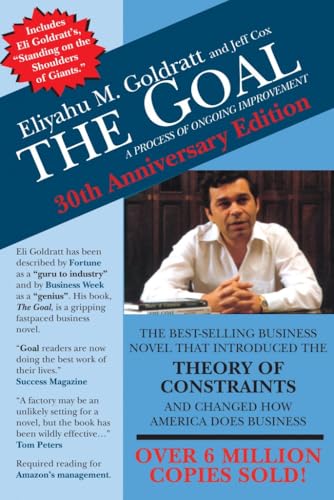 1
1