We've ranked the best middle east books using expert recommendations, sales data, and millions of reader ratings. At Shortform, we know books. Our book guides are the best in the world. Learn why.
Cover unavailable
1
A Thousand Splendid Suns
Khaled Hosseini
5.0
A Thousand Splendid Suns is a breathtaking story set against the volatile events of Afghanistan's last thirty years—from the Soviet invasion to the reign of the Taliban to post-Taliban rebuilding—that puts the violence, fear, hope, and faith of this country in intimate, human terms. It is a tale of two generations of characters brought jarringly together by the tragic sweep of war, where personal lives—the struggle to survive, raise a family, find happiness—are inextricable from the history playing out around them.
Propelled by the same storytelling instinct that made The Kite Runner a beloved classic, A Thousand Splendid Suns is at once a remarkable chronicle of three decades of Afghan history and a deeply moving account of family and friendship. It is a striking, heart-wrenching novel of an unforgiving time, an unlikely friendship, and an indestructible love—a stunning accomplishment. --front flap

I would encourage people to read it because it gives you a sense of Afghanistan’s incredible history and the role women have played within that history [source]
Cover unavailable
2
The Kite Runner
Khaled Hosseini and Simon & Schuster Audi
5.0
The unforgettable, heartbreaking story of the unlikely friendship between a wealthy boy and the son of his father’s servant, The Kite Runner is a beautifully crafted novel set in a country that is in the process of being destroyed. It is about the power of reading, the price of betrayal, and the possibility of redemption; and an exploration of the power of fathers over sons—their love, their sacrifices, their lies.
A sweeping story of family, love, and friendship told against the devastating backdrop of the history of Afghanistan over the last thirty years, The Kite Runner is an unusual and powerful novel that has become a beloved, one-of-a-kind classic. --khaledhosseini.com
…
Recommended by James Altucher, Ann Miura-Ko, Magda Marcu, and 1 others.
Ann Miura-Ko recommended this book on the podcast "The Tim Ferriss Show". [source]
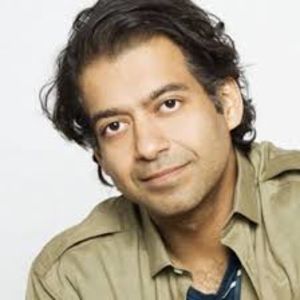
Magda Marcu
I’m currently reading “The Kite Runner”. I never have expectations from books, I let them surprise me as I get into the story. Learning about characteristics of different cultures, in this case the Afghan one, it’s one aspect I am interested in. [source]
Cover unavailable
3
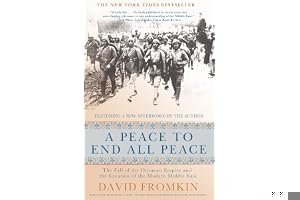
A Peace to End All Peace: The Fall of the Ottoman Empire and The Creation of the Modern Middle East
The critically acclaimed New York Times bestselling account of how the modern Middle East came into being after World War I, and why it is in upheaval today
In our time the Middle East has proven a battleground of rival religions, ideologies, nationalisms, and dynasties. All of these conflicts, including the hostilities between Arabs and Israelis that have flared yet again, come down, in a sense, to the extent to which the Middle East will continue to live with its political inheritance: the arrangements, unities, and divisions imposed upon the region by the Allies after the First World War.
In A Peace to End All Peace, David Fromkin reveals how and why the Allies came to remake the geography and politics of the Middle East, drawing lines on an empty map that eventually became the new countries of Iraq, Israel, Jordan, and Lebanon. Focusing on the formative years of 1914 to 1922, when all-even an alliance between Arab nationalism and Zionism-seemed possible he raises questions about what might have been done differently, and answers questions about why things were done as they were. The current battle for a Palestinian homeland has its roots in these events of 85 years ago.
…
Cover unavailable
4
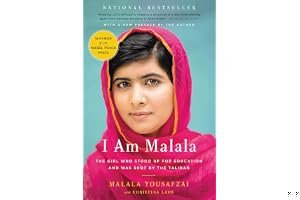
I Am Malala: The Story of the Girl Who Stood Up for Education and Was Shot by the Taliban
I come from a country that was created at midnight. When I almost died it was just after midday.
When the Taliban took control of the Swat Valley in Pakistan, one girl spoke out. Malala Yousafzai refused to be silenced and fought for her right to an education.
On Tuesday, October 9, 2012, when she was fifteen, she almost paid the ultimate price. She was shot in the head at point-blank range while riding the bus home from school, and few expected her to survive.
Instead, Malala's miraculous recovery has taken her on an extraordinary journey from a remote valley in northern Pakistan to the halls of the United Nations in New York. At sixteen, she has become a global symbol of peaceful protest and the youngest-ever Nobel Peace Prize laureate.
I Am Malala is the remarkable tale of a family uprooted by global terrorism, of the fight for girls' education, of a father who, himself a school owner, championed and encouraged his daughter to write and attend school, and of brave parents who have a fierce love for their daughter in a society that prizes sons.
…
Recommended by Adrienne Kisner.
Adrienne Kisner
Malala’s story of triumph is a battle cry for girls (and boys) everywhere. Education can set you free. [source]
Cover unavailable
5
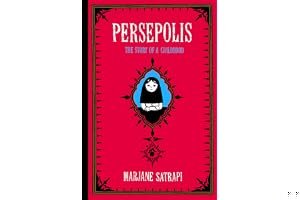
Persepolis: The Story of a Childhood (Persepolis, #1)
Marjane Satrapi
4.7
A New York Times Notable Book A Time Magazine “Best Comix of the Year” A San Francisco Chronicle and Los Angeles Times Best-seller
Wise, funny, and heartbreaking, Persepolis is Marjane Satrapi’s memoir of growing up in Iran during the Islamic Revolution. In powerful black-and-white comic strip images, Satrapi tells the story of her life in Tehran from ages six to fourteen, years that saw the overthrow of the Shah’s regime, the triumph of the Islamic Revolution, and the devastating effects of war with Iraq. The intelligent and outspoken only child of committed Marxists and the great-granddaughter of one of Iran’s last emperors, Marjane bears witness to a childhood uniquely entwined with the history of her country.
Persepolis paints an unforgettable portrait of daily life in Iran and of the bewildering contradictions between home life and public life. Marjane’s child’s-eye view of dethroned emperors, state-sanctioned whippings, and heroes of the revolution allows us to learn as she does the history of this fascinating country and of her own extraordinary family. Intensely personal, profoundly political, and wholly original, Persepolis is at once a story of growing up and a reminder of the human cost of war and political repression. It shows how we carry on, with laughter and tears, in the face of absurdity. And, finally, it introduces us to an irresistible little girl with whom we cannot help but fall in love.
…
Recommended by Pooneh Ghoddoosi.
Pooneh Ghoddoosi
I read the book and it was great, but more people saw the film because it was nominated for an Academy Award. And after seeing the movie, so many people I knew came up to me and told me that they thought it was exactly the story of my life. And not just me, but most of my Iranian friends had the same feeling of “Oh God, that could have been me, I could have written that book – it could have been the story of my life and my family, and that’s exactly how I felt in high school.” [source]
Cover unavailable
6
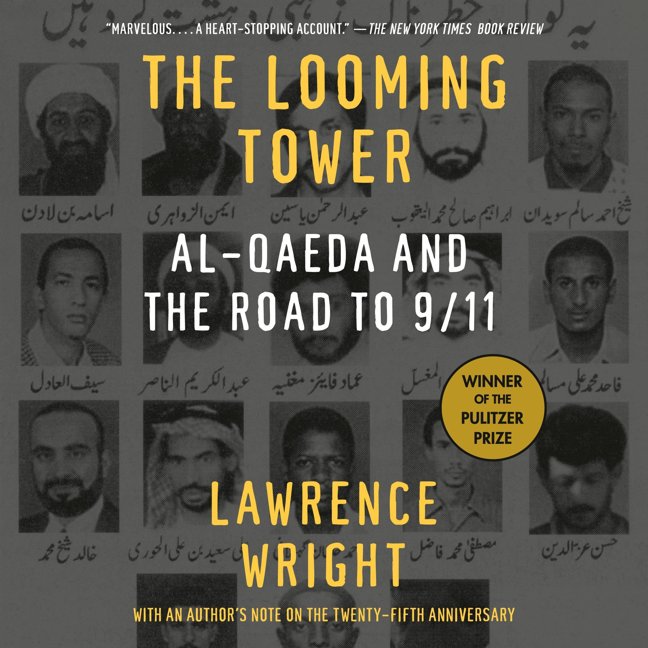
The Looming Tower: Al-Qaeda and the Road to 9/11
Lawrence Wright
4.6
A sweeping narrative history of the events leading to 9/11, a groundbreaking look at the people and ideas, the terrorist plans and the Western intelligence failures that culminated in the assault on America. Lawrence Wright's remarkable book is based on five years of research and hundreds of interviews that he conducted in Egypt, Saudi Arabia, Pakistan, Afghanistan, Sudan, England, France, Germany, Spain, and the United States.
The Looming Tower achieves an unprecedented level of intimacy and insight by telling the story through the interweaving lives of four men: the two leaders of al-Qaeda, Osama bin Laden and Ayman al-Zawahiri; the FBI's counterterrorism chief, John O'Neill; and the former head of Saudi intelligence, Prince Turki al-Faisal.
As these lives unfold, we see revealed: the crosscurrents of modern Islam that helped to radicalize Zawahiri and bin Laden . . . the birth of al-Qaeda and its unsteady development into an organization capable of the American embassy bombings in Kenya and Tanzania and the attack on the USS Cole . . . O'Neill's heroic efforts to track al-Qaeda before 9/11, and his tragic death in the World Trade towers . . . Prince Turki's transformation from bin Laden's ally to his enemy . . . the failures of the FBI, CIA, and NSA to share intelligence that might have prevented the 9/11 attacks.
The Looming Tower broadens and deepens our knowledge of these signal events by taking us behind the scenes. Here is Sayyid Qutb, founder of the modern Islamist movement, lonely and despairing as he meets Western culture up close in 1940s America; the privileged childhoods of bin Laden and Zawahiri; family life in the al-Qaeda compounds of Sudan and Afghanistan; O'Neill's high-wire act in balancing his all-consuming career with his equally entangling personal life--he was living with three women, each of them unaware of the others' existence--and the nitty-gritty of turf battles among U.S. intelligence agencies.
Brilliantly conceived and written, The Looming Tower draws all elements of the story into a galvanizing narrative that adds immeasurably to our understanding of how we arrived at September 11, 2001. The richness of its new information, and the depth of its perceptions, can help us deal more wisely and effectively with the continuing terrorist threat.
…
Recommended by Audrey Kurth Cronin, Bryan Callen, Lloyd Gardner, and 5 others.
Audrey Kurth Cronin
Reading this one book gives you an excellent grasp of the human story and the context from which al-Qaeda emerged. [source]
Wright looks at the linkage between the Egyptian Jihad and Al-Qaeda. It is a worthwhile book to read to try to understand the whole problem. [source]
Cover unavailable
7
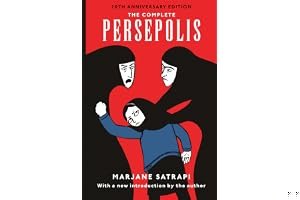
The Complete Persepolis (Persepolis, #1-4)
Marjane Satrapi
4.6
Here, in one volume: Marjane Satrapi's best-selling, internationally acclaimed graphic memoir.
Persepolis is the story of Satrapi's unforgettable childhood and coming of age within a large and loving family in Tehran during the Islamic Revolution; of the contradictions between private life and public life in a country plagued by political upheaval; of her high school years in Vienna facing the trials of adolescence far from her family; of her homecoming--both sweet and terrible; and, finally, of her self-imposed exile from her beloved homeland. It is the chronicle of a girlhood and adolescence at once outrageous and familiar, a young life entwined with the history of her country yet filled with the universal trials and joys of growing up.
Edgy, searingly observant, and candid, often heartbreaking but threaded throughout with raw humor and hard-earned wisdom--Persepolis is a stunning work from one of the most highly regarded, singularly talented graphic artists at work today.
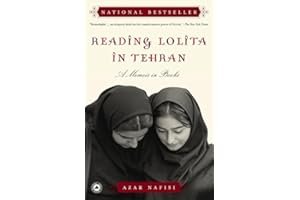
Every Thursday morning for two years in the Islamic Republic of Iran, a bold and inspired teacher named Azar Nafisi secretly gathered seven of her most committed female students to read forbidden Western classics. As Islamic morality squads staged arbitrary raids in Tehran, fundamentalists seized hold of the universities, and a blind censor stifled artistic expression, the girls in Azar Nafisi's living room risked removing their veils and immersed themselves in the worlds of Jane Austen, F. Scott Fitzgerald, Henry James, and Vladimir Nabokov. In this extraordinary memoir, their stories become intertwined with the ones they are reading. Reading Lolita in Tehran is a remarkable exploration of resilience in the face of tyranny and a celebration of the liberating power of literature.
More than three decades after its first publication, Edward Said's groundbreaking critique of the West's historical, cultural, and political perceptions of the East has become a modern classic.
In this wide-ranging, intellectually vigorous study, Said traces the origins of "orientalism" to the centuries-long period during which Europe dominated the Middle and Near East and, from its position of power, defined "the orient" simply as "other than" the occident. This entrenched view continues to dominate western ideas and, because it does not allow the East to represent itself, prevents true understanding. Essential, and still eye-opening, Orientalism remains one of the most important books written about our divided world.
…
Cover unavailable
10
And the Mountains Echoed
Khaled Hosseini
4.5
So, then. You want a story and I will tell you one...Afghanistan, 1952. Abdullah and his sister Pari live with their father and stepmother in the small village of Shadbagh. Their father, Saboor, is constantly in search of work and they struggle together through poverty and brutal winters. To Abdullah, Pari - as beautiful and sweet-natured as the fairy for which she was named - is everything. More like a parent than a brother, Abdullah will do anything for her, even trading his only pair of shoes for a feather for her treasured collection. Each night they sleep together in their cot, their heads touching, their limbs tangled. One day the siblings journey across the desert to Kabul with their father. Pari and Abdullah have no sense of the fate that awaits them there, for the event which unfolds will tear their lives apart; sometimes a finger must be cut to save the hand. Crossing generations and continents, moving from Kabul, to Paris, to San Francisco, to the Greek island of Tinos, with profound wisdom, depth, insight and compassion, Khaled Hosseini writes about the bonds that define us and shape our lives, the ways in which we help our loved ones in need, how the choices we make resonate through history and how we are often surprised by the people closest to us.
…
Cover unavailable
11
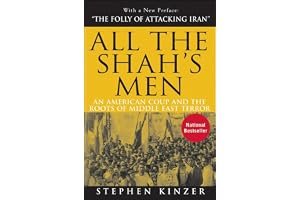
All the Shah's Men: An American Coup and the Roots of Middle East Terror
Stephen Kinzer
4.5
An American Coup & the Roots of Middle East Terror Half a century ago, the United States overthrew a Middle Eastern government for the first time. The victim was Mohammad Mossadegh, the democratically elected prime minister of Iran. Although the coup seemed a success at first, today it serves as a chilling lesson about the dangers of foreign intervention.In this book, veteran New York Times correspondent Stephen Kinzer gives the first full account of this fateful operation. His account is centered around an hour-by-hour reconstruction of the events of August 1953, and concludes with an assessment of the coup's "haunting and terrible legacy."Operation Ajax, as the plot was code-named, reshaped the history of Iran, the Middle East, and the world. It restored Mohammad Reza Shah to the Peacock Throne, allowing him to impose a tyranny that ultimately sparked the Islamic Revolution of 1979. The Islamic Revolution, in turn, inspired fundamentalists throughout the Muslim world, including the Taliban and terrorists who thrived under its protection."It is not far-fetched," Kinzer asserts in this book, "to draw a line from Operation Ajax through the Shah's repressive regime and the Islamic Revolution to the fireballs that engulfed the World Trade Center in New York."Drawing on research in the United States and Iran, and using material from a long-secret CIA report, Kinzer explains the background of the coup and tells how it was carried out. It is a cloak-and-dagger story of spies, saboteurs, and secret agents. There are accounts of bribes, staged riots, suitcases full of cash, and midnight meetings between the Shah and CIA agent Kermit Roosevelt, who was smuggled in and out of the royal palace under a blanket in the back seat of a car. Roosevelt,the grandson of President Theodore Roosevelt, was a real-life James Bond in an era when CIA agents operated mainly by their wits. After his first coup attempt failed, he organized a second attempt that succeeded three days later.The colorful cast of characters includes the terrified young Shah, who fled his country at the first sign of trouble; General H. Norman Schwarzkopf, father of the Gulf War commander and the radio voice of "Gang Busters," who flew to Tehran on a secret mission that helped set the coup in motion; and the fiery Prime Minister Mossadegh, who outraged the West by nationalizing the immensely profitable Anglo-Iranian Oil Company. The British, outraged by the seizure of their oil company, persuaded President Dwight Eisenhower that Mossadegh was leading Iran toward Communism. Eisenhower and Prime Minister Winston Churchill of Great Britain became the coup's main sponsors.Brimming with insights into Middle Eastern history and American foreign policy, this book is an eye-opening look at an event whose unintended consequences--Islamic revolution and violent anti-Americanism--have shaped the modern world. As the United States assumes an ever-widening role in the Middle East, it is essential reading.
…
Recommended by Chris Abbott and Demetri Sevastopulo.
Chris Abbott
Kinzer gives a good and quick introduction to Iranian history and its relationships with America and Britain. [source]
Demetri Sevastopulo
On a totally different topic, this book by @stephenkinzer is a great look at US & UK relations with #Iran before the revolution. Lots of interesting similarities with the situation today. https://t.co/rlv8Ip0Kjn https://t.co/gz7InQkMk4 [source]
Cover unavailable
12
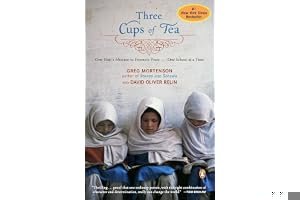
Three Cups of Tea: One Man's Mission to Promote Peace ... One School at a Time
Greg Mortenson, David Oliver Relin
4.5
The inspiring account of one man's campaign to build schools in the most dangerous, remote, and anti-American reaches of Asia.
In April 2011, the CBS documentary "60 Minutes" called into question Greg Mortenson's work. The program alleged several inaccuracies in Three Cups of Tea, and its sequel, Stones into Schools, as well as financial improprieties in the operation of Mortenson's Central Asia Institute. Questions were also raised about Mortenson's claim that he got lost near K2 and ended up in Korphe; that he was captured by the Taliban in 1996; the number of schools the CAI claimed to have built; and whether CAI funds had been used appropriately for Mortenson's book tours. Jon Krakauer, who had supported the CAI to the tune of $75,000, also questioned Mortenson's accounts, and released his allegations in a lengthy article titled Three Cups of Deceit.
…
Recommended by Gretchen Peters, Jennifer Steil, and Nicholas Kristof.
Gretchen Peters
I went to a refugee camp after 9/11 where people were living in tents and boiling grass to make tea and at least one family offered to let me sleep in their tent. [source]
Jennifer Steil
Greg Mortenson has changed literally thousands and thousands of lives. [source]
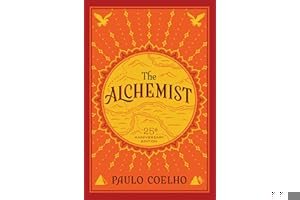
Paulo Coelho's enchanting novel has inspired a devoted following around the world. This story, dazzling in its powerful simplicity and inspiring wisdom, is about an Andalusian shepherd boy named Santiago who travels from his homeland in Spain to the Egyptian desert in search of a treasure buried in the Pyramids. What starts out as a journey to find worldly goods turns into a discovery of the treasure found within. Lush, evocative, and deeply humane, the story of Santiago is an eternal testament to the transforming power of our dreams and the importance of listening to our hearts.
There's a great quote in this book: When you're on the right path the universe conspires to help you! [source]
Daniel Ek
It was fascinating to talk to the author about how this book came to be such a hit—he never backed down, and he allowed people to read it for free in order to then boost sales—much like how Spotify’s freemium model was perceived in the early days. [source]
Eric Ripert
Speaks of everyone having an ultimate goal in life, but most of us are too afraid to pursue it. The encouragement to fulfill your dreams is very inspirational! [source]
Cover unavailable
14
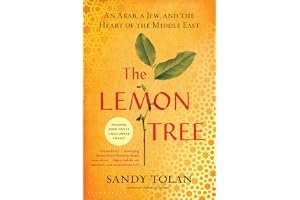
The Lemon Tree: An Arab, a Jew, and the Heart of the Middle East
Sandy Tolan
4.4
In 1967, Bashir Al-Khayri, a Palestinian twenty-five-year-old, journeyed to Israel, with the goal of seeing the beloved old stone house, with the lemon tree behind it, that he and his family had fled nineteen years earlier. To his surprise, when he found the house he was greeted by Dalia Ashkenazi Landau, a nineteen-year-old Israeli college student, whose family fled Europe for Israel following the Holocaust. On the stoop of their shared home, Dalia and Bashir began a rare friendship, forged in the aftermath of war and tested over the next thirty-five years in ways that neither could imagine on that summer day in 1967. Based on extensive research, and springing from his enormously resonant documentary that aired on NPR’s Fresh Air in 1998, Sandy Tolan brings the Israeli-Palestinian conflict down to its most human level, suggesting that even amid the bleakest political realities there exist stories of hope and reconciliation.
…
Cover unavailable
15
Mornings in Jenin
Susan Abulhawa
4.4
A heart-wrenching, powerfully written novel that could do for Palestine what The Kite Runner did for Afghanistan. Forcibly removed from the ancient village of Ein Hod by the newly formed state of Israel in 1948, the Abulhejas are moved into the Jenin refugee camp. There, exiled from his beloved olive groves, the family patriarch languishes of a broken heart, his eldest son fathers a family and falls victim to an Israeli bullet, and his grandchildren struggle against tragedy toward freedom, peace, and home. This is the Palestinian story, told as never before, through four generations of a single family. The very precariousness of existence in the camps quickens life itself. Amal, the patriarch's bright granddaughter, feels this with certainty when she discovers the joys of young friendship and first love and especially when she loses her adored father, who read to her daily as a young girl in the quiet of the early dawn. Through Amal we get the stories of her twin brothers, one who is kidnapped by an Israeli soldier and raised Jewish; the other who sacrifices everything for the Palestinian cause. Amal’s own dramatic story threads between the major Palestinian-Israeli clashes of three decades; it is one of love and loss, of childhood, marriage, and parenthood, and finally of the need to share her history with her daughter, to preserve the greatest love she has. The deep and moving humanity of Mornings in Jenin forces us to take a fresh look at one of the defining political conflicts of our lifetimes.
…
Recommended by Robin Yassin-Kassab.
Robin Yassin-Kassab
This is the first English-language epic novel to comprehensively express the Palestinian tragedy….It is a great interpenetration of fiction and documentary. Although the subject matter is necessarily political, it remains a great work of fiction and the characters are not ciphers for a political message. [source]
Cover unavailable
16
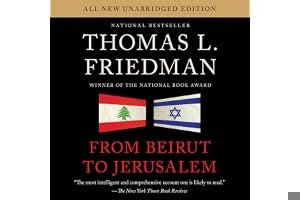
From Beirut to Jerusalem
Thomas L. Friedman
4.4
This extraordinary bestseller is still the most incisive, thought-provoking book ever written about the Middle East. Thomas L. Friedman, twice winner of the Pulitzer Prize for international reporting, and now the Foreign Affairs columnist on the op-ed page of the New York Times, drew on his ten years in the Middle East to write a book that The Wall Street Journal called "a sparkling intellectual guidebook... an engrossing journey not to be missed." Now with a new chapter that brings the ever-changing history of the conflict in the Middle East up to date, this seminal historical work reaffirms both its timeliness and its timelessness. "If you're only going to read one book on the Middle East, this is it." -- Seymour Hersh
…
Cover unavailable
17
Lawrence in Arabia: War, Deceit, Imperial Folly, and the Making of the Modern Middle East
Scott Anderson
4.4
A thrilling and revelatory narrative of one of the most epic and consequential periods in 20th century history – the Arab Revolt and the secret “great game” to control the Middle East
The Arab Revolt against the Turks in World War One was, in the words of T.E. Lawrence, “a sideshow of a sideshow.” Amidst the slaughter in European trenches, the Western combatants paid scant attention to the Middle Eastern theater. As a result, the conflict was shaped to a remarkable degree by a small handful of adventurers and low-level officers far removed from the corridors of power.
Curt Prüfer was an effete academic attached to the German embassy in Cairo, whose clandestine role was to foment Islamic jihad against British rule. Aaron Aaronsohn was a renowned agronomist and committed Zionist who gained the trust of the Ottoman governor of Syria. William Yale was the fallen scion of the American aristocracy, who traveled the Ottoman Empire on behalf of Standard Oil, dissembling to the Turks in order gain valuable oil concessions. At the center of it all was Lawrence. In early 1914 he was an archaeologist excavating ruins in the sands of Syria; by 1917 he was the most romantic figure of World War One, battling both the enemy and his own government to bring about the vision he had for the Arab people.
The intertwined paths of these four men – the schemes they put in place, the battles they fought, the betrayals they endured and committed – mirror the grandeur, intrigue and tragedy of the war in the desert. Prüfer became Germany’s grand spymaster in the Middle East. Aaronsohn constructed an elaborate Jewish spy-ring in Palestine, only to have the anti-Semitic and bureaucratically-inept British first ignore and then misuse his organization, at tragic personal cost. Yale would become the only American intelligence agent in the entire Middle East – while still secretly on the payroll of Standard Oil. And the enigmatic Lawrence rode into legend at the head of an Arab army, even as he waged secret war against his own nation’s imperial ambitions.
Based on years of intensive primary document research, LAWRENCE IN ARABIA definitively overturns received wisdom on how the modern Middle East was formed. Sweeping in its action, keen in its portraiture, acid in its condemnation of the destruction wrought by European colonial plots, this is a book that brilliantly captures the way in which the folly of the past creates the anguish of the present.
…
Cover unavailable
18
Black Flags: The Rise of ISIS
Joby Warrick
4.3
Pulitzer Prize-winning reporter Joby Warrick reveals how the strain of militant Islam now raising its banner across Iraq and Syria spread from a remote Jordanian prison with the unwitting aid of American military intervention.
When he succeeded his father in 1999, King Abdullah of Jordan released a batch of political prisoners in the hopes of smoothing his transition to power. Little did he know that among those released was Abu Musab al-Zarqawi, a man who would go on to become a terrorist mastermind too dangerous even for al-Qaeda and give rise to an Islamist movement bent on dominating the Middle East. Zarqawi began by directing hotel bombings and assassinations in Jordan from a base in northern Iraq, but it was the American invasion of that country in 2003 that catapulted him to the head of a vast insurgency. By identifying him as the link between Saddam and bin Laden, the CIA inadvertently created a monster. Like-minded radicals saw him as a hero resisting the infidel occupiers and rallied to his cause. Their wave of brutal beheadings and suicide bombings continued for years until Jordanian intelligence provided the Americans with the crucial intelligence needed to eliminate Zarqawi in a 2006 airstrike. But his movement endured, first called al-Qaeda in Iraq, then renamed Islamic State of Iraq and Syria, or ISIS, seeking refuge in unstable, ungoverned pockets on the Iraq-Syria border. And as the Syrian civil war broke out in 2011, ISIS seized its chance to pursue Zarqawi's dream of a sweeping, ultra-conservative Islamic caliphate. Drawing on unique access to CIA and Jordanian sources, Joby Warrick weaves together heart-pounding, moment-by-moment operational details with overarching historical perspectives to reveal the long trajectory of today's most dangerous Islamic extremist threat.
From the Hardcover edition.
…
Cover unavailable
19
Persepolis 2: The Story of a Return (Persepolis, #2)
Marjane Satrapi
4.3
In Persepolis, heralded by the Los Angeles Times as "one of the freshest and most original memoirs of our day," Marjane Satrapi dazzled us with her heartrending memoir-in-comic-strips about growing up in Iran during the Islamic Revolution. Here is the continuation of her fascinating story. In 1984, Marjane flees fundamentalism and the war with Iraq to begin a new life in Vienna. Once there, she faces the trials of adolescence far from her friends and family, and while she soon carves out a place for herself among a group of fellow outsiders, she continues to struggle for a sense of belonging.
Finding that she misses her home more than she can stand, Marjane returns to Iran after graduation. Her difficult homecoming forces her to confront the changes both she and her country have undergone in her absence and her shame at what she perceives as her failure in Austria. Marjane allows her past to weigh heavily on her until she finds some like-minded friends, falls in love, and begins studying art at a university. However, the repression and state-sanctioned chauvinism eventually lead her to question whether she can have a future in Iran.
As funny and poignant as its predecessor, Persepolis 2 is another clear-eyed and searing condemnation of the human cost of fundamentalism. In its depiction of the struggles of growing up--here compounded by Marjane's status as an outsider both abroad and at home--it is raw, honest, and incredibly illuminating.
…
Cover unavailable
20
The Prophet
Kahlil Gibran
4.3
Kahlil Gibran’s masterpiece, The Prophet, is one of the most beloved classics of our time. Published in 1923, it has been translated into more than twenty languages, and the American editions alone have sold more than nine million copies.
The Prophet is a collection of poetic essays that are philosophical, spiritual, and, above all, inspirational. Gibran’s musings are divided into twenty-eight chapters covering such sprawling topics as love, marriage, children, giving, eating and drinking, work, joy and sorrow, housing, clothes, buying and selling, crime and punishment, laws, freedom, reason and passion, pain, self-knowledge, teaching, friendship, talking, time, good and evil, prayer, pleasure, beauty, religion, and death.
…
Recommended by Naval Ravikant, Daylon Soh, Jason Nemer, and 3 others.
It actually read like a modern-day poetic religious tome. Up there with the Bhagavad-gita, the Tao Te Ching, The Bible, The Qur’an. It was written in that style where it had that feel of religiosity and truth, but it was very approachable and beautiful and non-denominational and non-secretarian. I really liked that. I loved that book. He has a gift for poetically describing what children are like, what lovers are like, what marriage should be like, how you should treat your enemies and your friends, how you should work with money, what can you think of every time you have to kill something to eat it. I felt, like the great religious books, it gave a very deep, very philosophical, but very true answer to how to approach the major problems in life. I recommend The Prophet to anybody, whether you’re religious or not. Whether you are Christian or Hindu or Jewish or Atheist. I think it’s a beautiful book, and it’s worth reading. [source]
Daylon Soh
The non-business book that has connected to my being most deeply would be poems in The Prophet by Kahlil Gibran. [source]
Jason Nemer
I love really condensed, shakti empowerment-filled, energy-filled statements - something that you can read in a few minutes or you can read for your whole life. [source]
The sun is setting on the Western world. Slowly but surely, the direction in which the world spins has reversed: where for the last five centuries the globe turned westwards on its axis, it now turns to the east...For centuries, fame and fortune was to be found in the west - in the New World of the Americas. Today, it is the east which calls out to those in search of adventure and riches. The region stretching from eastern Europe and sweeping right across Central Asia deep into China and India, is taking centre stage in international politics, commerce and culture - and is shaping the modern world. This region, the true centre of the earth, is obscure to many in the English-speaking world. Yet this is where civilization itself began, where the world's great religions were born and took root. The Silk Roads were no exotic series of connections, but networks that linked continents and oceans together. Along them flowed ideas, goods, disease and death. This was where empires were won - and where they were lost. As a new era emerges, the patterns of exchange are mirroring those that have criss-crossed Asia for millennia. The Silk Roads are rising again. A major reassessment of world history, The Silk Roads> is an important account of the forces that have shaped the global economy and the political renaissance in the re-emerging east.
…
Recommended by Professor Frank Mcdonough and Raoul Pal.
Professor Frank Mcdonough
Christmas is coming and if you want to give a thought-provoking book to that history fan in your life then the recent books by the brilliant @peterfrankopan will satisfy. Some write books, this guy changes perceptions. https://t.co/gWZWZnv5TN [source]
Raoul Pal
@The92ers @zerohedge It’s fascinating. The Peter Frankopan book on the Silk Roads told history well from the perspective of Iran in particular [source]
Cover unavailable
22
The Red Tent
Anita Diamant
4.3
Her name is Dinah. In the Bible, her life is only hinted at in a brief and violent detour within the more familiar chapters of the Book of Genesis that are about her father, Jacob, and his dozen sons. Told in Dinah's voice, this novel reveals the traditions and turmoils of ancient womanhood--the world of the red tent. It begins with the story of her mothers--Leah, Rachel, Zilpah, and Bilhah--the four wives of Jacob. They love Dinah and give her gifts that sustain her through a hard-working youth, a calling to midwifery, and a new home in a foreign land. Dinah's story reaches out from a remarkable period of early history and creates an intimate connection with the past. Deeply affecting, The Red Tent combines rich storytelling with a valuable achievement in modern fiction: a new view of biblical women's society.
…
Cover unavailable
23
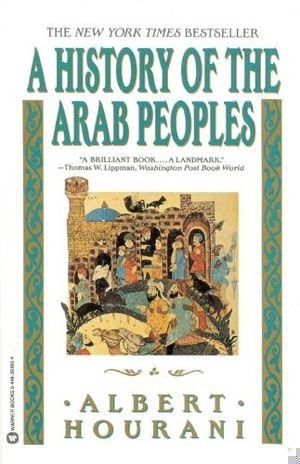
A History of the Arab Peoples
Albert Hourani
4.3
Encyclopedic and panoramic in its scope, this fascinating work chronicles the rich spiritual, political, and cultural institutions of Arab history through 13 centuries.
No region in the world today is more important than the Middle East: no people more misunderstood than the Arabs. In this definitive masterwork, distinguished Oxford historian Albert Hourani offers the most lucid, enlightening history ever written on the subject. From the rise of Islam to the Palestinian issue, from the Prophet Mohammed to Mu'ammar al-Qadhafi. A History of the Arab Peoples chronicles the rich spiritual, political and cultural institutions of this civilization through thirteen centuries of war, peace, literature and religion. Lauded by authorities, encyclopedic and panoramic in its scope, here is a remarkable window on today's conflicts and on the future of a glorious and troubled land.
Hourani picked up on Khaldun’s cyclical notion of the rise and fall of Arab empires, and these almost Weberian notions of loyalty, as the key themes with which to weave a history of the Arab peoples. [source]
Tarek Osman
The key illuminating point is how the culture that has emerged in that part of the world has gathered those people and really united them by a common thread. [source]
Cover unavailable
24
Nine Parts of Desire: The Hidden World of Islamic Women
Geraldine Brooks
4.3
With a New Afterword
As a prizewinning foreign correspondent for The Wall Street Journal, Geraldine Brooks spent six years covering the Middle East through wars, insurrections, and the volcanic upheaval of resurgent fundamentalism. Yet for her, headline events were only the backdrop to a less obvious but more enduring drama: the daily life of Muslim women. Nine Parts of Desireis the story of Brooks' intrepid journey toward an understanding of the women behind the veils, and of the often contradictory political, religious, and cultural forces that shape their lives. Defying our stereotypes about the Muslim world, Brooks' acute analysis of the world's fastest growing religion deftly illustrates how Islam's holiest texts have been misused to justify repression of women, and how male pride and power have warped the original message of a once liberating faith.
…
Cover unavailable
25
The Bookseller of Kabul
Asne Seierstad, Ingrid Christophersen
4.3
In spring 2002, following the fall of the Taliban, Åsne Seierstad spent four months living with a bookseller and his family in Kabul.
For more than twenty years Sultan Khan defied the authorities—be they communist or Taliban—to supply books to the people of Kabul. He was arrested, interrogated and imprisoned by the communists, and watched illiterate Taliban soldiers burn piles of his books in the street. He even resorted to hiding most of his stock—almost ten thousand books—in attics all over Kabul.
But while Khan is passionate in his love of books and his hatred of censorship, he also has strict views on family life and the role of women. As an outsider, Åsne Seierstad found herself in a unique position, able to move freely between the private, restricted sphere of the women—including Khan’s two wives—and the freer, more public lives of the men.
It is an experience that Seierstad finds both fascinating and frustrating. As she steps back from the page and allows the Khans to speak for themselves, we learn of proposals and marriages, hope and fear, crime and punishment. The result is a genuinely gripping and moving portrait of a family, and a clear-eyed assessment of a country struggling to free itself from history.' to 'This mesmerizing portrait of a proud man who, through three decades and successive repressive regimes, heroically braved persecution to bring books to the people of Kabul has elicited extraordinary praise throughout the world and become a phenomenal international bestseller. The Bookseller of Kabul is startling in its intimacy and its details—a revelation of the plight of Afghan women and a window into the surprising realities of daily life in today’s Afghanistan.'
…
Cover unavailable
26
Ghost Wars: The Secret History of the CIA, Afghanistan, and Bin Laden from the Soviet Invasion to September 10, 2001
Steve Coll
4.3
The news-breaking book that has sent shockwaves through the Bush White House, Ghost Wars is the most accurate and revealing account yet of the CIA's secret involvement in al-Qaeda's evolution. It won the Pulitzer Prize in 2005.
Prize-winning journalist Steve Coll has spent years reporting from the Middle East, accessed previously classified government files and interviewed senior US officials and foreign spymasters. Here he gives the full inside story of the CIA's covert funding of an Islamic jihad against Soviet forces in Afghanistan, explores how this sowed the seeds of Bin Laden's rise, traces how he built his global network and brings to life the dramatic battles within the US government over national security. Above all, he lays bare American intelligence's continual failure to grasp the rising threat of terrorism in the years leading to 9/11 - and its devastating consequences.
…
Cover unavailable
27
Princess: A True Story of Life Behind the Veil in Saudi Arabia
Jean Sasson
4.3
Sultana is a Saudi Arabian princess, a woman born to fabulous, uncountable wealth. She has four mansions on three continents, her own private jet, glittering jewels, designer dresses galore. But in reality she lives in a gilded cage. She has no freedom, no control over her own life, no value but as a bearer of sons. Hidden behind her black floor-length veil, she is a prisoner, jailed by her father, her husband, her sons, and her country.Sultana is a member of the Saudi royal family, closely related to the king. For the sake of her daughters, she has decided to take the risk of speaking out about the life of women in her country, regardless of their rank. She must hide her identity for fear that the religious leaders in her country would call for her death to punish her honesty. Only a woman in her position could possibly hope to escape from being revealed and punished, despite her cloak and anonymity. Sultana tells of her own life, from her turbulent childhood to her arranged marriage--a happy one until her husband decided to displace her by taking a second wife--and of the lives of her sisters, her friends and her servants. Although they share affection, confidences and an easy camaraderie within the confines of the women's quarters, they also share a history of appalling oppression, everyday occurrences that in any other culture would be seen as shocking human rights violations; thirteen-year-old girls forced to marry men five times their age, young women killed by drowning, stoning, or isolation in the women's room, a padded, windowless cell where women are confined with neither light nor conversation until death claims them.By speaking out, Sultana risks bringing the wrath of the Saudi establishment upon her head and the heads of her children. But by telling her story to Jean Sasson, Sultana has allowed us to see beyond the veils of this secret society, to the heart of a nation where sex, money, and power reign supreme.
…
Cover unavailable
28
Infidel
Ayaan Hirsi Ali
4.2
One of today’s most admired and controversial political figures, Ayaan Hirsi Ali burst into international headlines following the murder of Theo van Gogh by an Islamist who threatened that she would be next. She made headlines again when she was stripped of her citizenship and resigned from the Dutch Parliament.
Infidel shows the coming of age of this distinguished political superstar and champion of free speech as well as the development of her beliefs, iron will, and extraordinary determination to fight injustice. Raised in a strict Muslim family, Hirsi Ali survived civil war, female mutilation, brutal beatings, adolescence as a devout believer during the rise of the Muslim Brotherhood, and life in four troubled, unstable countries ruled largely by despots. She escaped from a forced marriage and sought asylum in the Netherlands, where she earned a college degree in political science, tried to help her tragically depressed sister adjust to the West, and fought for the rights of Muslim women and the reform of Islam as a member of Parliament. Under constant threat, demonized by reactionary Islamists and politicians, disowned by her father, and expelled from family and clan, she refuses to be silenced.
Ultimately a celebration of triumph over adversity, Hirsi Ali’s story tells how a bright little girl evolves out of dutiful obedience to become an outspoken, pioneering freedom fighter. As Western governments struggle to balance democratic ideals with religious pressures, no other book could be more timely or more significant.
…
Cover unavailable
29
No god but God: The Origins, Evolution and Future of Islam
Reza Aslan
4.2
A fascinating, accessible introduction to Islam from the author of the #1 New York Times bestseller Zealot
INTERNATIONAL BESTSELLER • A finalist for the Guardian First Book Award
In No god but God, internationally acclaimed scholar Reza Aslan explains Islam—the origins and evolution of the faith—in all its beauty and complexity. This updated edition addresses the events of the past decade, analyzing how they have influenced Islam’s position in modern culture. Aslan explores what the popular demonstrations pushing for democracy in the Middle East mean for the future of Islam in the region, how the Internet and social media have affected Islam’s evolution, and how the war on terror has altered the geopolitical balance of power in the Middle East. He also provides an update on the contemporary Muslim women’s movement, a discussion of the controversy over veiling in Europe, an in-depth history of Jihadism, and a look at how Muslims living in North America and Europe are changing the face of Islam. Timely and persuasive, No god but God is an elegantly written account that explains this magnificent yet misunderstood faith.
…
Recommended by David Cortright.
David Cortright
For me, this is the best introduction to Islam. I think all of us in the West are trying to learn more about Islamic culture and religion. Aslan writes so beautifully about what Islam represents – its theological, cultural and economic dimensions. It’s the most eye-opening and illuminating book I’ve read on the subject. It gave me a sense of respect for Islamic culture and the great scientific and cultural contributions of its past. [source]
Cover unavailable
30
Exit West
Mohsin Hamid
4.2
In a country teetering on the brink of civil war, two young people meet—sensual, fiercely independent Nadia and gentle, restrained Saeed. They embark on a furtive love affair and are soon cloistered in a premature intimacy by the unrest roiling their city. When it explodes, turning familiar streets into a patchwork of checkpoints and bomb blasts, they begin to hear whispers about doors—doors that can whisk people far away, if perilously and for a price. As the violence escalates, Nadia and Saeed decide that they no longer have a choice. Leaving their homeland and their old lives behind, they find a door and step through.
Exit West follows these characters as they emerge into an alien and uncertain future, struggling to hold on to each other, to their past, to the very sense of who they are. Profoundly intimate and powerfully inventive, it tells an unforgettable story of love, loyalty, and courage that is both completely of our time and for all time.
…
Cover unavailable
31
Destiny Disrupted: A History of the World Through Islamic Eyes
Tamim Ansary
4.2
We in the west share a common narrative of world history. But our story largely omits a whole civilization whose citizens shared an entirely different narrative for a thousand years.In Destiny Disrupted, Tamim Ansary tells the rich story of world history as the Islamic world saw it, from the time of Mohammed to the fall of the Ottoman Empire and beyond. He clarifies why our civilizations grew up oblivious to each other, what happened when they intersected, and how the Islamic world was affected by its slow recognition that Europe—a place it long perceived as primitive and disorganized—had somehow hijacked destiny.
…
Cover unavailable
32
The Reluctant Fundamentalist
Mohsin Hamid
4.2
At a cafe table in Lahore, a bearded Pakistani man converses with an uneasy American stranger. As dusk deepens to night, he begins the tale that has brought them to this fateful encounter...
Changez is living an immigrant's dream of America. At the top of his class at Princeton, he is snapped up by an elite valuation firm. He thrives on the energy of New York, and his budding romance with elegant, beautiful Erica promises entry into Manhattan society at the same exalted level once occupied by his own family back in Lahore.
But in the wake of September 11, Changez finds his position in his adopted city suddenly overturned and his relationship with Erica shifting. And Changez's own identity is in seismic shift as well, unearthing allegiances more fundamental than money, power, and maybe even love.
…
Recommended by Ahmede Hussain, Amy Waldman, and Daniyal Mueenuddin.
This is an amazing book, and it’s a shame that it didn’t win the Man Booker Prize in 2007 – in my opinion it was the best of the bunch. I think it’s going to become a modern classic in five or 10 years’ time, if it’s not already regarded as one. This novel speaks for so many peoples’ experiences in the aftermath of 9/11. The prose is very tight and the title is also very clever. [source]
Amy Waldman
You’re right – the protagonist has a completely different profile from the humble one in Harbor. Changez is from a prestigious Pakistani family, but one without a lot of money. He comes to the United States to attend Princeton on a scholarship and then is recruited into the corporate world. The whole novel is a monologue. This character, in a café in Lahore, is talking to an unidentified American, telling his story about the life he led in the United States. How he was enamoured of New York, yet smiled as the Towers fell and grew even more embittered toward America in the wake of the attacks. The structure is original and well executed. [source]
Daniyal Mueenuddin
Well, it’s an odd kind of book. I think what’s especially useful about it is the way in which it describes the transformation in this man’s thinking. The protagonist is somebody who had been living in New York and been a banker and he gradually turns into, as the title says, a reluctant fundamentalist. This is something that I have seen among my friends in Pakistan. People who I have always thought of as very, very Westernised. They went to school abroad and certainly didn’t have the habits of religious types. But they are increasingly angry with the West and sympathetic to an anti-Western agenda and propaganda and very receptive to all kind of thoughts. These are really rational people who will now tell me straight out that September 11 was actually perpetrated by the Israelis and had nothing to do with Al-Qaeda. To me their theories seem absolutely loony and yet these guys have come out with something radically different. [source]
Cover unavailable
33
Six Days of War: June 1967 and the Making of the Modern Middle East
Michael B. Oren
4.2
Though it lasted for only six tense days in June, the 1967 Arab-Israeli war never really ended. Every crisis that has ripped through this region in the ensuing decades, from the Yom Kippur War of 1973 to the ongoing intifada, is a direct consequence of those six days of fighting. Michael B. Oren’s magnificent Six Days of War, an internationally acclaimed bestseller, is the first comprehensive account of this epoch-making event.
Writing with a novelist’s command of narrative and a historian’s grasp of fact and motive, Oren reconstructs both the lightning-fast action on the battlefields and the political shocks that electrified the world. Extraordinary personalities—Moshe Dayan and Gamal Abdul Nasser, Lyndon Johnson and Alexei Kosygin—rose and toppled from power as a result of this war; borders were redrawn; daring strategies brilliantly succeeded or disastrously failed in a matter of hours. And the balance of power changed—in the Middle East and in the world. A towering work of history and an enthralling human narrative, Six Days of War is the most important book on the Middle East conflict to appear in a generation.
…
Cover unavailable
34
Jerusalem: The Biography
Simon Sebag-Montefiore
4.2
Jerusalem is the universal city, the capital of two peoples, the shrine of three faiths; it is the prize of empires, the site of Judgement Day and the battlefield of today’s clash of civilizations. From King David to Barack Obama, from the birth of Judaism, Christianity and Islam to the Israel-Palestine conflict, this is the epic history of three thousand years of faith, slaughter, fanaticism and coexistence.
How did this small, remote town become the Holy City, the “center of the world” and now the key to peace in the Middle East? In a gripping narrative, Simon Sebag Montefiore reveals this ever-changing city in its many incarnations, bringing every epoch and character blazingly to life. Jerusalem’s biography is told through the wars, love affairs and revelations of the men and women—kings, empresses, prophets, poets, saints, conquerors and whores—who created, destroyed, chronicled and believed in Jerusalem. As well as the many ordinary Jerusalemites who have left their mark on the city, its cast varies from Solomon, Saladin and Suleiman the Magnificent to Cleopatra, Caligula and Churchill; from Abraham to Jesus and Muhammad; from the ancient world of Jezebel, Nebuchadnezzar, Herod and Nero to the modern times of the Kaiser, Disraeli, Mark Twain, Lincoln, Rasputin, Lawrence of Arabia and Moshe Dayan.
Drawing on new archives, current scholarship, his own family papers and a lifetime’s study, Montefiore illuminates the essence of sanctity and mysticism, identity and empire in a unique chronicle of the city that many believe will be the setting for the Apocalypse. This is how Jerusalem became Jerusalem, and the only city that exists twice—in heaven and on earth.
From the Hardcover edition.
…
Recommended by Ghanem Nuseibeh.
Ghanem Nuseibeh
Brilliant! If you want to read about Jerusalem’s history, it’s Simon’s book! https://t.co/vHyCpMu0eh [source]
Cover unavailable
35
The Arabs: A History
Eugene Rogan
4.2
To American observers, the Arab world often seems little more than a distant battleground characterized by religious zealotry and political chaos. Years of tone-deaf US policies have left the region powerless to control its own destiny—playing into a longstanding sense of shame and impotence for a once-mighty people. In this definitive account, preeminent historian Eugene Rogan traces five centuries of Arab history, from the Ottoman conquests through the British and French colonial periods and up to the present age of unipolar American hegemony. The Arab world is now more acutely aware than ever of its own vulnerability, and this sense of subjection carries with it vast geopolitical consequences.
Drawing from Arab sources little known to Western readers, Rogan's The Arabs will transform our understanding of the past, present, and future of one of the world's most tumultuous regions.
…
Recommended by Issandr El Amrani.
Issandr El Amrani
I chose this book because I think the weight of history and the historical context is really important. There have been a number of general histories of the Arab world. What Eugene Rogan does in this book is to provide a very well written, comprehensive and general history of the Arab world in modern times. What he does well is to highlight how much interaction there has been in the Arab world with outside forces, especially the West, and how so much of the modern region has come out of that experience – imperialism, colonisation and so on. [source]
Cover unavailable
36
A History of the Modern Middle East
William L. Cleveland and Martin Bunton
4.2
A History of the Modern Middle East examines the profound and often dramatic transformations of the region in the past two centuries, from the Ottoman and Egyptian reforms, through the challenge of Western imperialism, to the impact of US foreign policies. Built around a framework of political history, while also carefully integrating social, cultural, and economic developments, this expertly crafted account provides readers with the most comprehensive, balanced and penetrating analysis of the modern Middle East.
The sixth edition has been revised to provide a thorough account of the major developments since 2012, including the tumultuous aftermath of the Arab uprisings, the sectarian conflict in Iraq and civil war in Syria that led to the rise of ISIS, the crises in Libya and Yemen, and the United States' nuclear talks with Iran. With brand-new timelines in each part, updated select bibliographies, and expanded online instructor resources, A History of the Modern Middle East remains the quintessential text for courses on Middle East history.
…
Cover unavailable
37
America's War for the Greater Middle East
Andrew J. Bacevich, Rob Shapiro, et al
4.2
Retired army colonel and New York Times bestselling author Andrew J. Bacevich provides a searing reassessment of U.S. military policy in the Middle East over the past four decades.
From the end of World War II until 1980, virtually no American soldiers were killed in action while serving in the Greater Middle East. Since 1990, virtually no American soldiers have been killed in action anywhere else. What caused this shift? Andrew J. Bacevich, one of the country’s most respected voices on foreign affairs, offers an incisive critical history of this ongoing military enterprise—now more than thirty years old and with no end in sight.
During the 1980s, Bacevich argues, a great transition occurred. As the Cold War wound down, the United States initiated a new conflict—a War for the Greater Middle East—that continues to the present day. The long twilight struggle with the Soviet Union had involved only occasional and sporadic fighting. But as this new war unfolded, hostilities became persistent. From the Balkans and East Africa to the Persian Gulf and Central Asia, U.S. forces embarked upon a seemingly endless series of campaigns across the Islamic world. Few achieved anything remotely like conclusive success. Instead, actions undertaken with expectations of promoting peace and stability produced just the opposite. As a consequence, phrases like “permanent war” and “open-ended war” have become part of everyday discourse.
Connecting the dots in a way no other historian has done before, Bacevich weaves a compelling narrative out of episodes as varied as the Beirut bombing of 1983, the Mogadishu firefight of 1993, the invasion of Iraq in 2003, and the rise of ISIS in the present decade. Understanding what America’s costly military exertions have wrought requires seeing these seemingly discrete events as parts of a single war. It also requires identifying the errors of judgment made by political leaders in both parties and by senior military officers who share responsibility for what has become a monumental march to folly. This Bacevich unflinchingly does.
A twenty-year army veteran who served in Vietnam, Andrew J. Bacevich brings the full weight of his expertise to this vitally important subject. America’s War for the Greater Middle East is a bracing after-action report from the front lines of history. It will fundamentally change the way we view America’s engagement in the world’s most volatile region.
Advance praise for America’s War for the Greater Middle East
“In one arresting book after another, Bacevich has relentlessly laid bare the failings of American foreign policy since the Cold War. This one is his sad crowning achievement: the story of our long and growing military entanglement in the region of the most tragic, bitter, and intractable of conflicts.”—Richard K. Betts, director, Saltzman Institute of War and Peace Studies, Columbia University
“An unparalleled historical tour de force certain to affect the formation of future U.S. foreign policy . . . Every citizen aspiring to high office needs not only to read but to study and learn from this important book. This is one of the most serious and essential books I have read in more than half a century of public service.”—Lieutenant General Paul K. Van Riper, U.S. Marine Corps (Ret.)
“Bacevich asks and answers a provocative, inconvenient question: In a multigenerational war in the Middle East, ‘Why has the world’s mightiest military achieved so little?’ ”—Graham Allison, director, Belfer Center for Science and International Affairs, and Douglas Dillon Professor of Government at Harvard’s John F. Kennedy School of Government
From the Hardcover edition.
…
Cover unavailable
38
Exodus
Leon Uris
4.2
Exodus is an international publishing phenomenon--the towering novel of the twentieth century's most dramatic geopolitical event. Leon Uris magnificently portrays the birth of a new nation in the midst of enemies--the beginning of an earthshaking struggle for power. Here is the tale that swept the world with its fury: the story of an American nurse, an Israeli freedom fighter caught up in a glorious, heartbreaking, triumphant era.
Exodus is a book that had a profound impact on how many Americans thought about Israel. [source]
Cover unavailable
39
The Ethnic Cleansing of Palestine
Ilan Pappe
4.2
Since the Holocaust, it has been almost impossible to hide large-scale crimes against humanity. In our communicative world, few modern catastrophes are concealed from the public eye. And yet, Ilan Pappe unveils, one such crime has been erased from the global public memory: the ethnic cleansing of the Palestinians in 1948. But why is it denied, and by whom? The Ethnic Cleansing of Palestine offers an investigation of this mystery.
…
Recommended by Robin Yassin-Kassab.
Robin Yassin-Kassab
Pappe has written a great historical work on the ethnic cleansing of Palestine in 1947/8 and he shows that it was organised and planned, called Plan D, or plan Dalit, and he has exploded the myths that were current until his work. [source]
Cover unavailable
40
I Am Nujood, Age 10 and Divorced
Nujood Ali, Delphine Minoui, Linda Coverdale
4.2
“I’m a simple village girl who has always obeyed the orders of my father and brothers. Since forever, I have learned to say yes to everything. Today I have decided to say no.”
Nujood Ali's childhood came to an abrupt end in 2008 when her father arranged for her to be married to a man three times her age. With harrowing directness, Nujood tells of abuse at her husband's hands and of her daring escape. With the help of local advocates and the press, Nujood obtained her freedom—an extraordinary achievement in Yemen, where almost half of all girls are married under the legal age. Nujood's courageous defiance of both Yemeni customs and her own family has inspired other young girls in the Middle East to challenge their marriages. Hers is an unforgettable story of tragedy, triumph, and courage.
…
Cover unavailable
41
Seven Pillars of Wisdom: A Triumph
T.E. Lawrence
4.2
Seven Pillars of Wisdom is an unusual and rich work. It encompasses an account of the Arab Revolt against the Turks during the First World War alongside general Middle Eastern and military history, politics, adventure and drama. It is also a memoir of the soldier known as 'Lawrence of Arabia'.Lawrence is a fascinating and controversial figure and his talent as a vivid and imaginative writer shines through on every page of this, his masterpiece. Seven Pillars of Wisdom provides a unique portrait of this extraordinary man and an insight into the birth of the Arab nation.
Yes, it’s a book about Lawrence’s experiences during World War I, when he was stationed in North African and the Middle East. He writes about some of the lessons that he learnt from the military leaders from the Allies, and the Bedouin and tribal leaders. The book was influential to me because I can see his contribution as an Arabist. [source]
Someone once asked me, if a fire burnt down my house what would be the one thing I would walk out with? And it’s a first-edition, leather-bound copy of this incredible book signed by my grandfather. My grandfather was himself a surgeon at a casualty clearing station on the Western Front. [source]
Cover unavailable
42
Palace Walk (The Cairo Trilogy, #1)
Naguib Mahfouz
4.2
Volume I of the masterful Cairo Trilogy. A national best-seller in both hardcover and paperback, it introduces the engrossing saga of a Muslim family in Cairo during Egypt's occupation by British forces in the early 1900s.
Cover unavailable
43
Fiasco: The American Military Adventure in Iraq
Thomas E. Ricks
4.2
This is the Story of The American Military Adventure in Iraq. The Heart of the story Fiasco has to tell, which has never been told before, is that of a Military occupation whose leaders failed to see a blooming insurgency for what it was and as a result lead their soldiers in such a way that the insurgency became inevitable.
Recommended by Bryan Callen, Jeremy Greenstock, and Patrick Cockburn.
Bryan Callen recommended this book on the podcast "The Tim Ferriss Show". [source]
Jeremy Greenstock
Ricks writes fluently and eloquently. His book shows what the Americans thought about Iraq, and what they thought the Iraqis thought. [source]
Patrick Cockburn
When you read about Iraq, you need to know that it is a country more divided than almost anywhere else in the world. [source]
Cover unavailable
44
My Promised Land: The Triumph and Tragedy of Israel
Ari Shavit
4.2
A groundbreaking, ambitious, and authoritative examination of Israel by one of the most influential columnists writing about the Middle East today
My Promised Land tells the story of Israel as it has never been told before. Facing unprecedented internal and external pressures, Israel today is at a moment of existential crisis. Through revealing stories of significant events and of ordinary individuals—pioneers, immigrants, entrepreneurs, scientists, army generals, peaceniks, settlers, and Palestinians—Israeli journalist Ari Shavit illuminates many of the pivotal moments of the Zionist century that led Israel to where it is today. We meet the youth group leader who recognized the potential of Masada as a powerful symbol for Zionism; the young farmer who bought an orange grove from his Arab neighbor in the 1920s, and with the Jaffa orange helped to create a booming economy in Palestine; the engineer who was instrumental in developing Israel’s nuclear program; the religious Zionists who started the settler movement. Over an illustrious career that has spanned almost thirty years, Shavit has had rare access to people from across the Israeli political, economic, and social spectrum, and in this ambitious work he tells a riveting story that is both deeply human and of profound historical dimension.
As it examines the complexities and contradictions of the Israeli condition, My Promised Land asks difficult but important questions: Why did Israel come to be? How did it come to be? And can Israel survive? Culminating with an analysis of the issues and threats that Israel is currently facing, both internal and external, My Promised Land uses the defining events of the past to shed new light on the present. The result is a landmark portrait of a small, vibrant country living on the edge, whose identity and presence play a crucial role in today’s global political landscape.
…
Cover unavailable
45
The Yacoubian Building
Alaa Al Aswany
4.2
This controversial bestselling novel in the Arab world reveals the political corruption, sexual repression, religious extremism, and modern hopes of Egypt today.
All manner of flawed and fragile humanity reside in the Yacoubian Building, a once-elegant temple of Art Deco splendor now slowly decaying in the smog and bustle of downtown Cairo: a fading aristocrat and self-proclaimed "scientist of women"; a sultry, voluptuous siren; a devout young student, feeling the irresistible pull toward fundamentalism; a newspaper editor helplessly in love with a policeman; a corrupt and corpulent politician, twisting the Koran to justify his desires.
These disparate lives careen toward an explosive conclusion in Alaa Al Aswany's remarkable international bestseller. Teeming with frank sexuality and heartfelt compassion, this book is an important window on to the experience of loss and love in the Arab world.
…
Recommended by Humphrey Davies.
Humphrey Davies
The Yacoubian Builiding is celebrated, possibly even notorious, for being a real bestseller — originally in Egypt and the Arab world and subsequently in the West, in English and in many other languages. It tells the story of a building in downtown Cairo, and the changes that have affected the building and its inhabitants. So it encapsulates the last 80 years of Egyptian history and it provides a series of extremely sharply drawn sketches of what you might call archetypal figures of our day. You have the ageing aristocrat; you have the doorkeeper’s son who becomes a terrorist when his career ambitions are thwarted by the system. There’s a corrupt mega-businessman who winds up trying to battle the government when it wants to take what he considers too big a bite of his business — and a whole range of other poor and middle class characters who are adapting to the situation as best they can. It’s beautifully written; it’s incredibly readable; it’s often very funny — and I suspect it will go on being read for many years as a kind of portrait of Egypt on the eve of the events that are taking place now. [source]
Cover unavailable
46
My Name Is Red
Orhan Pamuk and Erdag Gokna
4.2
At once a fiendishly devious mystery, a beguiling love story, and a brilliant symposium on the power of art, My Name Is Red is a transporting tale set amid the splendor and religious intrigue of sixteenth-century Istanbul, from one of the most prominent contemporary Turkish writers.
The Sultan has commissioned a cadre of the most acclaimed artists in the land to create a great book celebrating the glories of his realm. Their task: to illuminate the work in the European style. But because figurative art can be deemed an affront to Islam, this commission is a dangerous proposition indeed. The ruling elite therefore mustn’t know the full scope or nature of the project, and panic erupts when one of the chosen miniaturists disappears. The only clue to the mystery–or crime? –lies in the half-finished illuminations themselves. Part fantasy and part philosophical puzzle, My Name is Red is a kaleidoscopic journey to the intersection of art, religion, love, sex and power.
…
Cover unavailable
47
The Blood of Flowers
Anita Amirrezvani
4.1
In the fabled city of Isfahan, in seventeenth-century Persia, a young woman confronts a dismal fate: Her beloved father had died and left her without a dowry. Forced to work as a servant in the home of her uncle, a rich rug designer in the court of the Shah, the young woman blossoms as a brilliant designer of carpets. But while her talent flourishes, her prospects for a happy marriage grow dim, and she finds herself faced with a daunting decision--to forsake her own dignity or to risk everything in an effort to maintain it.
Both a sweeping love story and a luminous portrait of a city, THE BLOOD OF FLOWERS is the mesmerizing historical novel of an ill-fated young woman whose gift as a rug designer transforms her life. Illuminated with glorious detail of Persian rug-making, and brilliantly bringing to life the sights sounds and life of 17th-century Isfahan, THE BLOOD OF FLOWERS has captured readers' imaginations everywhere as a timeless tale of one woman's struggle to live a life of her choosing.
…
Cover unavailable
48
A Tale of Love and Darkness
Amos Oz
4.1
Tragic, comic, and utterly honest, A Tale of Love and Darkness is at once a family saga and a magical self-portrait of a writer who witnessed the birth of a nation and lived through its turbulent history.
It is the story of a boy growing up in the war-torn Jerusalem of the forties and fifties, in a small apartment crowded with books in twelve languages and relatives speaking nearly as many. The story of an adolescent whose life has been changed forever by his mother's suicide when he was twelve years old. The story of a man who leaves the constraints of his family and its community of dreamers, scholars, and failed businessmen to join a kibbutz, change his name, marry, have children. The story of a writer who becomes an active participant in the political life of his nation. (back cover)
…
Recommended by Michael Goldfarb.
Cover unavailable
49
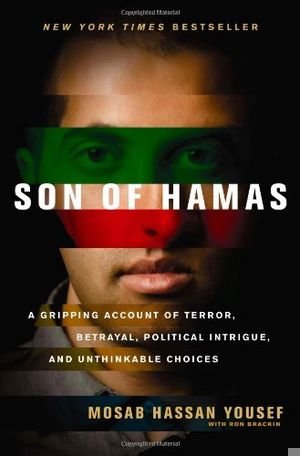
Son of Hamas
Mosab Hassan Yousef
4.1
Since he was a small boy, Mosab Hassan Yousef has had an inside view of the deadly terrorist group Hamas. The oldest son of Sheikh Hassan Yousef, a founding member of Hamas and its most popular leader, young Mosab assisted his father for years in his political activities while being groomed to assume his legacy, politics, status . . . and power. But everything changed when Mosab turned away from terror and violence, and embraced instead the teachings of another famous Middle East leader. In Son of Hamas, Mosab Yousef—now called “Joseph”—reveals new information about the world’s most dangerous terrorist organization and unveils the truth about his own role, his agonizing separation from family and homeland, the dangerous decision to make his newfound faith public, and his belief that the Christian mandate to “love your enemies” is the only way to peace in the Middle East.
Yes. That is the good thing about it. I always get these accusations, ‘Oh, but you are just from Somalia’, your case is not representative. There are many memoirs, but again, if you tell me to reduce it to just one, I pick his. I read a review of this book and it made me buy it instantly. What I liked about it is that it is by a man. It is the story of a man who grew up as the son of a prominent person in Hamas, immersed in the doctrine and the suicide killings. But he ends up living in a US suburb and completely adopting American values. [source]
Cover unavailable
50
Not Without My Daughter
Betty Mahmoody
4.1
In August 1984, Michigan housewife Betty Mahmoody accompanied her husband to his native Iran for a two-week vacation that turned into a permanent stay. To her horror, she found herself and her four-year-old daughter, Mahtob, virtual prisoners of a man rededicated to his Shiite Moslem faith, in a land where women are near-slaves and Americans despised. Their only hope for escape lay in a dangerous underground that would not take her child.
…
Cover unavailable
51
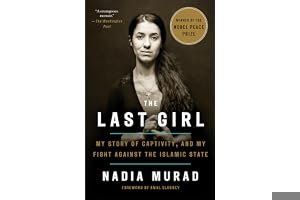
The Last Girl: My Story of Captivity, and My Fight Against the Islamic State
Nadia Murad
4.1
WINNER OF THE NOBEL PEACE PRIZE
In this intimate memoir of survival, a former captive of the Islamic State tells her harrowing and ultimately inspiring story. Nadia Murad was born and raised in Kocho, a small village of farmers and shepherds in northern Iraq. A member of the Yazidi community, she and her brothers and sisters lived a quiet life. Nadia had dreams of becoming a history teacher or opening her own beauty salon.
On August 15th, 2014, when Nadia was just twenty-one years old, this life ended. Islamic State militants massacred the people of her village, executing men who refused to convert to Islam and women too old to become sex slaves. Six of Nadia's brothers were killed, and her mother soon after, their bodies swept into mass graves. Nadia was taken to Mosul and forced, along with thousands of other Yazidi girls, into the ISIS slave trade.
Nadia would be held captive by several militants and repeatedly raped and beaten. Finally, she managed a narrow escape through the streets of Mosul, finding shelter in the home of a Sunni Muslim family whose eldest son risked his life to smuggle her to safety.
Today, Nadia's story--as a witness to the Islamic State's brutality, a survivor of rape, a refugee, a Yazidi--has forced the world to pay attention to an ongoing genocide. It is a call to action, a testament to the human will to survive, and a love letter to a lost country, a fragile community, and a family torn apart by war.
…
Cover unavailable
52
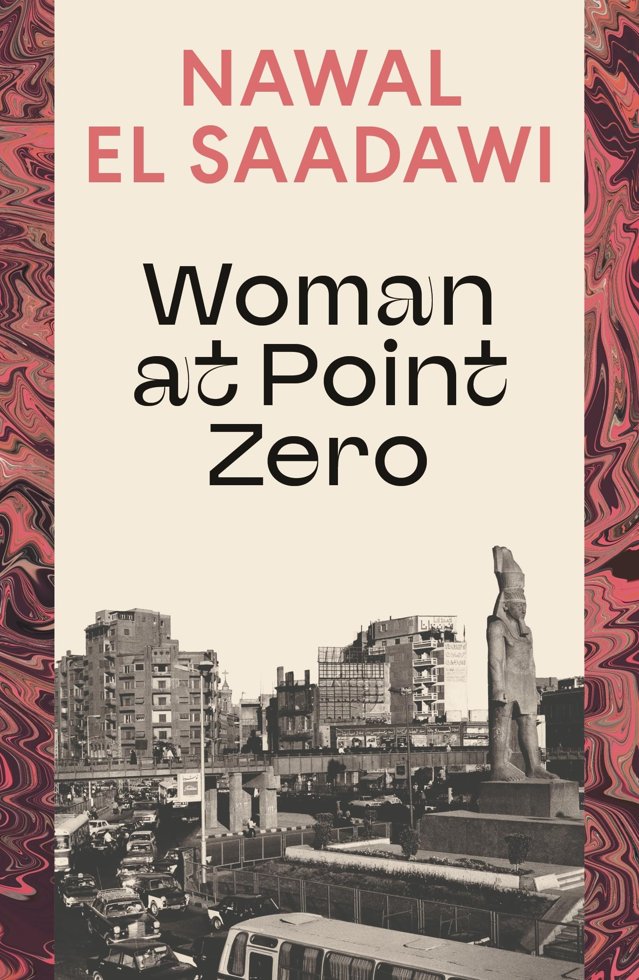
Woman at Point Zero
Nawal El Saadawi, Sherif Hetata
4.1
From her prison cell, Firdaus, sentenced to die for having killed a pimp in a Cairo street, tells of her life from village childhood to city prostitute. Society's retribution for her act of defiance - death - she welcomes as the only way she can finally be free.
Cover unavailable
53
Arabian Sands
Wilfred Thesiger
4.1
"Arabian Sands" is Wilfred Thesiger's record of his extraordinary journey through the parched "Empty Quarter" of Arabia. Educated at Eton and Oxford, Thesiger was repulsed by the softness and rigidity of Western life-"the machines, the calling cards, the meticulously aligned streets." In the spirit of T. E. Lawrence, he set out to explore the deserts of Arabia, traveling among peoples who had never seen a European and considered it their duty to kill Christian infidels. His now-classic account is invaluable to understanding the modern Middle East.
…
Recommended by Bernard Haykel and Jo Tatchell.
Bernard Haykel
This is an older book and an unusual choice. I contracted malaria when I was in Yemen doing fieldwork. Between bouts of feverish hallucination, I read this book. It’s the authority on the Arabian Desert. He ventures into The Empty Quarter, one of the great deserts of the world. Arabia was an incredibly harsh place for human beings to live. Thesiger shows how Arabs, especially nomadic Arabs, were in tune with this ecology. They developed a culture that enabled them to survive. He shows the humanity of the Bedouin, otherwise thought to be savages. [source]
Jo Tatchell
This was written in the 1950s after Thesiger returned from five years of Arabian travel. He was one of the few non-indigenous people to cross “the Empty Quarter”, the desert that occupies a huge part of what is now Saudi Arabia and the United Arab Emirates. It’s almost a million square kilometres of billowing amber dunes – and more terrifying than an ocean. Usually, people travelled around the peninsula by sea, hugging the coast to get from town to town. A group travelling from Qatar to Mecca would make their way around the southern part of the peninsula. But there were ways of crossing it and, after World War II, Thesiger was offered a role mapping out the patters of locusts travelling across the desert. He jumped at the chance and joined the Rashid, a Bedu tribe, who lived in the old way, unsullied by the modernity that would soon accompany the arrival of oil prospectors. Thesiger relished the intimacy of the desert brotherhood. His passion for their simple way of life grew ever greater as he spent time with them. They cared for each other, knowing their lives depended upon it. And it had to be so; if one is cast out in the wilderness like that, it isn’t possible to survive alone. The camaraderie he describes is exclusively male; but he appreciated the regimen of the desert’s “barbaric splendour”. He valued the austerity of the lifestyle and the keen hardness of the people he declared most noble, pure in thought and deed. [source]
Cover unavailable
54
The Qur'an
Maulana Muhammad Ali
4.1
One of the most influential books in the history of literature, recognized as the greatest literary masterpiece in Arabic, the Qur'an is the supreme authority and living source of all Islamic teaching, the sacred text that sets out the creed, rituals, ethics, and laws of Islam. Yet despite the growing interest in Islamic teachings and culture, there has never been a truly satisfactory English translation of the Qur'an, until now. This superb new translation of the Qur'an is written in contemporary language that remains faithful to the meaning and spirit of the original, making the text crystal clear while retaining all of this great work's eloquence. The translation is accurate and completely free from the archaisms, incoherence, and alien structures that mar existing translations. Thus, for the first time, English-speaking readers will have a text of the Qur'an which is easy to use and comprehensible. Furthermore, Haleem includes notes that explain geographical, historical, and personal allusions as well as an index in which Qur'anic material is arranged into topics for easy reference. His introduction traces the history of the Qur'an, examines its structure and stylistic features, and considers issues related to militancy, intolerance, and the subjection of women. Clearly written and filled with helpful information and guidance, this brilliant translation of the Qur'an is the best available introduction to the faith of Moslems around the world.
…
Recommended by Ahmad Thomson, Ayaan Hirsi Ali, and Naeem Ul Haque.
Ahmad Thomson
When I accepted Islam I’d done it on the basis of meeting Shaykh Abdalqadir and the people around him, and I realised that I knew nothing about it really. So obviously one of the first things was to learn the basics – and I thought I’d better read the Qur’an because that’s the book of the Muslims! At the time I had the Arberry translation which is accurate, and which in some measure conveys the poetry of the very pure Arabic of the original. In fact, at the time of the Prophet, blessings and peace be on him, some people accepted Islam on the basis of the purity of the Arabic in which the Qur’an is written: they said, ‘This couldn’t have been written by a human being!’ As the years passed I had access to the Muhammad Pickthall and Yusuf Ali translations, which are written in a rather Biblical English. Their use of vocabulary was not always appropriate, because sometimes it included words that have taken on certain connotations through the way they are used in the European Christian tradition. For example, the word ‘sin’ is used to translate the word dhanb in Arabic – but dhanb really means a wrong action which holds you back from the mercy of your Lord. So this is a completely different way of looking at a wrong action, and there’s no guilt attached to it. The Bewley translation is a beautiful translation, where some of the key terms are not translated but transliterated, with a small glossary at the back defining what each term means. This helps you to keep to the original meaning of the Qur’an – it’s a clear, crisp rendering of its meaning in English. I often read a translation of an ayat and I think I never remember reading that before, and I compare it with how Pickthall or Yusuf Ali translated it – and I see that they didn’t quite hit the mark. Read 4 Al-Muwatta of Imam Malik by Translated by Aisha Bewley and Ya'qub Johnson Read [source]
The Koran is supposed to be the words of God and the Hadith are the sayings and deeds of the prophet. The Koran has the basic commands; the Hadith or the Sunna, is a sort of manual. It is supposed to be a guideline of how to understand the Koran, because people say that it’s not explicit enough. The Hadith is a compilation of six volumes and they are called the Sahith Sitta – Sitta just means six and Sahith means authentic. [source]
Naeem Ul Haque
The judiciary must not forget that far far above our constitution is the ultimate book of principles and that is the wholly Quran. Every judge in the country must keep a copy of Quran with translation on his/ her desk so that the judge can realise that the Law of God is Supreme. [source]
Cover unavailable
55
Rooftops of Tehran
Mahbod Seraji
4.1
From "a striking new talent"(Sandra Dallas, author of Tallgrass) comes an unforgettable debut novel of young love and coming of age in an Iran headed toward revolution.
In this poignant, eye-opening and emotionally vivid novel, Mahbod Seraji lays bare the beauty and brutality of the centuries-old Persian culture, while reaffirming the human experiences we all share.
In a middle-class neighborhood of Iran's sprawling capital city, 17-year-old Pasha Shahed spends the summer of 1973 on his rooftop with his best friend Ahmed, joking around one minute and asking burning questions about life the next. He also hides a secret love for his beautiful neighbor Zari, who has been betrothed since birth to another man. But the bliss of Pasha and Zari's stolen time together is shattered when Pasha unwittingly acts as a beacon for the Shah's secret police. The violent consequences awaken him to the reality of living under a powerful despot, and lead Zari to make a shocking choice...
…
Cover unavailable
56
The Epic of Gilgamesh
Anonymous
4.1
Andrew George's "masterly new translation" (The Times) of the world's first truly great work of literature
Miraculously preserved on clay tablets dating back as much as four thousand years, the poem of Gilgamesh, king of Uruk, is the world’s oldest epic, predating Homer by many centuries. The story tells of Gilgamesh’s adventures with the wild man Enkidu, and of his arduous journey to the ends of the earth in quest of the Babylonian Noah and the secret of immortality. Alongside its themes of family, friendship and the duties of kings, the Epic of Gilgamesh is, above all, about mankind’s eternal struggle with the fear of death.
The Babylonian version has been known for over a century, but linguists are still deciphering new fragments in Akkadian and Sumerian. Andrew George’s gripping translation brilliantly combines these into a fluent narrative and will long rank as the definitive English Gilgamesh.
For more than seventy years, Penguin has been the leading publisher of classic literature in the English-speaking world. With more than 1,700 titles, Penguin Classics represents a global bookshelf of the best works throughout history and across genres and disciplines. Readers trust the series to provide authoritative texts enhanced by introductions and notes by distinguished scholars and contemporary authors, as well as up-to-date translations by award-winning translators.
I read this on my honeymoon (probably the only person on the beach reading it, if I had to guess). Especially when I learned after that a new introduction paragraph had been discovered only recently. His tomb may have been found recently too. Imagine if Homer’s works had only been discovered in the mid 1800’s after being lost to history for thousands of years. How crazy would that be? Reading the classic epics can feel like work but there is value in it. These works are timeless and universal. Such a great line [source]
Stephen Cave
Gilgamesh is a hero in the ancient mould. He’s half-god, enormously strong, a bit randy, a bit dim, and he goes through adventures which embody the human experience writ large. He starts off as the king of a small kingdom, making a nuisance of himself – enforcing droit du seigneur, sleeping with women on their marriage night, pushing other men around, being a bit of an arse. So the gods make a rival to him in strength, a wild man. They fight, realise neither can win, then become best friends and go off on all sorts of adventures. They kill all sorts of ogres and beasts, until the gods think this is getting a bit much and decide Gilgamesh’s friend has to die. [source]
Cover unavailable
57
Alif the Unseen
G. Willow Wilson
4.1
In an unnamed Middle Eastern security state, a young Arab-Indian hacker shields his clients—dissidents, outlaws, Islamists, and other watched groups—from surveillance and tries to stay out of trouble. He goes by Alif—the first letter of the Arabic alphabet, and a convenient handle to hide behind. The aristocratic woman Alif loves has jilted him for a prince chosen by her parents, and his computer has just been breached by the state’s electronic security force, putting his clients and his own neck on the line. Then it turns out his lover’s new fiancé is the "Hand of God," as they call the head of state security, and his henchmen come after Alif, driving him underground.
When Alif discovers The Thousand and One Days, the secret book of the jinn, which both he and the Hand suspect may unleash a new level of information technology, the stakes are raised and Alif must struggle for life or death, aided by forces seen and unseen.
…
Cover unavailable
58
An Unnecessary Woman
Rabih Alameddine
4.1
One of Beirut’s most celebrated voices, Rabih Alameddine follows his international bestseller, The Hakawati, with a heartrending novel that celebrates the singular life of an obsessive introvert, revealing Beirut’s beauties and horrors along the way.
Aaliya Sohbi lives alone in her Beirut apartment, surrounded by stockpiles of books. Godless, fatherless, divorced, and childless, Aaliya is her family’s "unnecessary appendage.” Every year, she translates a new favorite book into Arabic, then stows it away. The thirty-seven books that Aaliya has translated have never been read—by anyone. After overhearing her neighbors, "the three witches,” discussing her too-white hair, Aaliya accidentally dyes her hair too blue.
In this breathtaking portrait of a reclusive woman’s late-life crisis, readers follow Aaliya’s digressive mind as it ricochets across visions of past and present Beirut. Insightful musings on literature, philosophy, and art are invaded by memories of the Lebanese Civil War and Aaliya’s volatile past. As she tries to overcome her aging body and spontaneous emotional upwellings, Aaliya is faced with an unthinkable disaster that threatens to shatter the little life she has left.
A love letter to literature and its power to define who we are, the gifted Rabih Alameddine has given us a nuanced rendering of a single woman's reclusive life in the Middle East.
…
Cover unavailable
59
The Crusades Through Arab Eyes
Amin Maalouf
4.1
The author has combed the works of contemporary Arab chronicles of the Crusades, eyewitnesses, and often participants. He retells their story and offers insights into the historical forces that shape Arab and Islamic consciousness today.
Cover unavailable
60
The Arabian Nights
Richard Burton, A. S. Byatt
4.1
This volume reproduces the 1932 Modern Library edition, for which Bennett A. Cerf chose the most famous and representative stories from Sir Richard F. Burton's multivolume translation, and includes Burton's extensive and acclaimed explanatory notes.
The tales of told by Shahrazad over a thousand and one nights to delay her execution by the vengeful King Shahriyar have become among the most popular in both Eastern and Western literature, as recounted by Sir Francis Burton. From the epic adventures of "Aladdin and the Enchanted Lamp" to the farcical "Young Woman and her Five Lovers" and the social criticism of "The Tale of the Hunchback", the stories depict a fabulous world of all-powerful sorcerers, jinns imprisoned in bottles and enchanting princesses. But despite their imaginative extravagance, the Tales are anchored to everyday life by their realism, providing a full and intimate record of medieval Islam.'
…
Cover unavailable
61
The Underground Girls of Kabul: In Search of a Hidden Resistance in Afghanistan
Jenny Nordberg
4.1
An investigative journalist uncovers a hidden custom that will transform your understanding of what it means to grow up as a girl.
In Afghanistan, a culture ruled almost entirely by men, the birth of a son is cause for celebration and the arrival of a daughter is often mourned as misfortune. A bacha posh (literally translated from Dari as "dressed up like a boy") is a third kind of child – a girl temporarily raised as a boy and presented as such to the outside world. Jenny Nordberg, the reporter who broke the story of this phenomenon for the New York Times, constructs a powerful and moving account of those secretly living on the other side of a deeply segregated society where women have almost no rights and little freedom.
The Underground Girls of Kabul is anchored by vivid characters who bring this remarkable story to life: Azita, a female parliamentarian who sees no other choice but to turn her fourth daughter Mehran into a boy; Zahra, the tomboy teenager who struggles with puberty and refuses her parents' attempts to turn her back into a girl; Shukria, now a married mother of three after living for twenty years as a man; and Nader, who prays with Shahed, the undercover female police officer, as they both remain in male disguise as adults.
At the heart of this emotional narrative is a new perspective on the extreme sacrifices of Afghan women and girls against the violent backdrop of America's longest war. Divided into four parts, the book follows those born as the unwanted sex in Afghanistan, but who live as the socially favored gender through childhood and puberty, only to later be forced into marriage and childbirth. The Underground Girls of Kabul charts their dramatic life cycles, while examining our own history and the parallels to subversive actions of people who live under oppression everywhere.
…
Cover unavailable
62
I Shall Not Hate: A Gaza Doctor's Journey on the Road to Peace and Human Dignity
Izzeldin Abuelaish
4.1
By turns inspiring and heart-breaking, hopeful and horrifying, I Shall Not Hate is Izzeldin Abuelaish's account of an extraordinary life. A Harvard-trained Palestinian doctor who was born and raised in the Jabalia refugee camp in the Gaza Strip and "who has devoted his life to medicine and reconciliation between Israelis and Palestinians" (New York Times), Abuelaish has been crossing the lines in the sand that divide Israelis and Palestinians for most of his life - as a physician who treats patients on both sides of the line, as a humanitarian who sees the need for improved health and education for women as the way forward in the Middle East. And, most recently, as the father whose daughters were killed by Israeli soldiers on January 16, 2009, during Israel's incursion into the Gaza Strip. His response to this tragedy made news and won him humanitarian awards around the world. Instead of seeking revenge or sinking into hatred, Abuelaish called for the people in the region to start talking to each other. His deepest hope is that his daughters will be "the last sacrifice on the road to peace between Palestinians and Israelis."
…
Cover unavailable
63
The Map of Salt and Stars
Zeyn Joukhadar
4.1
This powerful and lyrical debut novel is to Syria what The Kite Runner was to Afghanistan; the story of two girls living eight hundred years apart—a modern-day Syrian refugee seeking safety and an adventurous mapmaker’s apprentice—“perfectly aligns with the cultural moment” (The Providence Journal) and “shows how interconnected two supposedly opposing worlds can be” (The New York Times Book Review).
This “beguiling” (Seattle Times) and stunning novel begins in the summer of 2011. Nour has just lost her father to cancer, and her mother moves Nour and her sisters from New York City back to Syria to be closer to their family. In order to keep her father’s spirit alive as she adjusts to her new home, Nour tells herself their favorite story—the tale of Rawiya, a twelfth-century girl who disguised herself as a boy in order to apprentice herself to a famous mapmaker.
But the Syria Nour’s parents knew is changing, and it isn’t long before the war reaches their quiet Homs neighborhood. When a shell destroys Nour’s house and almost takes her life, she and her family are forced to choose: stay and risk more violence or flee across seven countries of the Middle East and North Africa in search of safety—along the very route Rawiya and her mapmaker took eight hundred years before in their quest to chart the world. As Nour’s family decides to take the risk, their journey becomes more and more dangerous, until they face a choice that could mean the family will be separated forever.
Following alternating timelines and a pair of unforgettable heroines coming of age in perilous times, The Map of Salt and Stars is the “magical and heart-wrenching” (Christian Science Monitor) story of one girl telling herself the legend of another and learning that, if you listen to your own voice, some things can never be lost.
…
Cover unavailable
64
The Fall of the Ottomans: The Great War in the Middle East
Eugene Rogan
4.1
In 1914 the Ottoman Empire was depleted of men and resources after years of war against Balkan nationalist and Italian forces. But in the aftermath of the assassination in Sarajevo, the powers of Europe were sliding inexorably toward war, and not even the Middle East could escape the vast and enduring consequences of one of the most destructive conflicts in human history. The Great War spelled the end of the Ottomans, unleashing powerful forces that would forever change the face of the Middle East.
In The Fall of the Ottomans, award-winning historian Eugene Rogan brings the First World War and its immediate aftermath in the Middle East to vivid life, uncovering the often ignored story of the region's crucial role in the conflict. Bolstered by German money, arms, and military advisors, the Ottomans took on the Russian, British, and French forces, and tried to provoke Jihad against the Allies in their Muslim colonies. Unlike the static killing fields of the Western Front, the war in the Middle East was fast-moving and unpredictable, with the Turks inflicting decisive defeats on the Entente in Gallipoli, Mesopotamia, and Gaza before the tide of battle turned in the Allies' favor. The great cities of Baghdad, Jerusalem, and, finally, Damascus fell to invading armies before the Ottomans agreed to an armistice in 1918.
The postwar settlement led to the partition of Ottoman lands between the victorious powers, and laid the groundwork for the ongoing conflicts that continue to plague the modern Arab world. A sweeping narrative of battles and political intrigue from Gallipoli to Arabia, The Fall of the Ottomans is essential reading for anyone seeking to understand the Great War and the making of the modern Middle East.
…
Cover unavailable
65
The Pearl That Broke Its Shell
Nadia Hashimi
4.1
Afghan-American Nadia Hashimi's literary debut novel, The Pearl that Broke Its Shell is a searing tale of powerlessness, fate, and the freedom to control one's own fate that combines the cultural flavor and emotional resonance of the works of Khaled Hosseini, Jhumpa Lahiri, and Lisa See.
In Kabul, 2007, with a drug-addicted father and no brothers, Rahima and her sisters can only sporadically attend school, and can rarely leave the house. Their only hope lies in the ancient custom of bacha posh, which allows young Rahima to dress and be treated as a boy until she is of marriageable age. As a son, she can attend school, go to the market, and chaperone her older sisters.
But Rahima is not the first in her family to adopt this unusual custom. A century earlier, her great-aunt, Shekiba, left orphaned by an epidemic, saved herself and built a new life the same way.
Crisscrossing in time, The Pearl the Broke Its Shell interweaves the tales of these two women separated by a century who share similar destinies. But what will happen once Rahima is of marriageable age? Will Shekiba always live as a man? And if Rahima cannot adapt to life as a bride, how will she survive?
…
Cover unavailable
66
A Line in the Sand: Britain, France and the Struggle that Shaped the Middle East
James Barr
4.1
Through a stellar cast of politicians, diplomats, spies and soldiers - including T.E. Lawrence, Winston Churchill and Charles de Gaulle - 'A Line in the Sand' tells the story of the short but crucial era when Britain and France ruled the Middle East.
Cover unavailable
67
NIV, Maxwell Leadership Bible, 3rd Edition, Premium Bonded Leather, Burgundy, Comfort Print: Holy Bible, New International Version
Thomas Nelson
4.1
Every believer is a person of influence. In the Maxwell Leadership Bible, leadership expert John C. Maxwell shows you the principles of leadership taught in God’s Word and how to use them. Whether you are an employee, a boss, a parent, or a neighbor, you are a person of influence in your part of the world. Throughout the pages of Scripture, John Maxwell has assembled the time-tested and irrefutable biblical principles of leadership to equip and encourage leaders with his signature approach, including the 21 Laws of Leadership, the 21 Qualities of a Leader, biographical profiles, and hundreds of notes.Features include:Bible book introductions provide an overview of the background and historical context of the book about to be readOver 120 “Profiles in Leadership” lessons drawn from the people of the BibleHundreds of Leadership Principles provide concise guidance for leaders directly from Scripture21 Irrefutable Laws of Leadership articles draw from John C. Maxwell’s vast leadership experience21 Indispensable Qualities of a Leader articles focus on important qualities found in leaders exemplified through the lives of men and women in the BibleA complete reference index to help easily navigate all 21 Laws of Leadership and the 21 Qualities of a LeaderEasy-to-read large 10-point NIV Comfort Print
…
Cover unavailable
68
Finding Nouf (Nayir Sharqi & Katya Hijazi #1)
Zoë Ferraris
4.1
A novel of taut psychological suspense, offering an unprecedented window into Saudi Arabia and the lives of the men and women who live there.
Zoë Ferraris’s electrifying debut of taut psychological suspense offers an unprecedented window into Saudi Arabia and the lives of men and women there.
When sixteen-year-old Nouf goes missing, along with a truck and her favorite camel, her prominent family calls on Nayir al-Sharqi, a desert guide, to lead a search party. Ten days later, just as Nayir is about to give up in frustration, her body is discovered by anonymous desert travelers. But when the coroner’s office determines that Nouf died not of dehydration but from drowning, and her family seems suspiciously uninterested in getting at the truth, Nayir takes it upon himself to find out what really happened to her.
This mission will push gentle, hulking, pious Nayir, a Palestinian orphan raised by his bachelor uncle, to delve into the secret life of a rich, protected teenage girl -- in one of the most rigidly gender-segregated of Middle Eastern societies. Initially horrified at the idea of a woman bold enough to bare her face and to work in public, Nayir soon realizes that if he wants to gain access to the hidden world of women, he will have to join forces with Katya Hijazi, a lab worker at the coroner’s office. Their partnership challenges Nayir, bringing him face to face with his desire for female companionship and the limitations imposed by his beliefs. It also ultimately leads them both to surprising revelations.
Fast-paced and utterly transporting, Finding Nouf offers an intimate glimpse inside a closed society and a riveting literary mystery.
First published as Night of the Mi'raj in the UK.
…
Cover unavailable
69
The Forty Rules of Love
Elif Shafa
4.1
In this lyrical, exuberant follow-up to her 2007 novel, The Bastard of Istanbul, acclaimed Turkish author Elif Shafak unfolds two tantalizing parallel narratives—one contemporary and the other set in the thirteenth century, when Rumi encountered his spiritual mentor, the whirling dervish known as Shams of Tabriz—that together incarnate the poet's timeless message of love.
Ella Rubenstein is forty years old and unhappily married when she takes a job as a reader for a literary agent. Her first assignment is to read and report on Sweet Blasphemy, a novel written by a man named Aziz Zahara. Ella is mesmerized by his tale of Shams's search for Rumi and the dervish's role in transforming the successful but unhappy cleric into a committed mystic, passionate poet, and advocate of love. She is also taken with Shams's lessons, or rules, that offer insight into an ancient philosophy based on the unity of all people and religions, and the presence of love in each and every one of us. As she reads on, she realizes that Rumi's story mirrors her own and that Zahara—like Shams—has come to set her free.
…
Cover unavailable
70
Black Wave: Saudi Arabia, Iran, and the Forty-Year Rivalry That Unraveled Culture, Religion, and Collective Memory in the Middle East
Kim Ghattas
4.1
The bestselling author of The Secretary: A Journey with Hillary Clinton from Beirut to the Heart of American Power tells the gripping story of the real roots of the Middle East Sunni-Shia conflict in the 1979 Iran Revolution that changed the region forever.
Black Wave is a paradigm-shifting recasting of the modern history of the Middle East, telling the largely unexplored story of the rivalry between Sunni Saudi Arabia and Shia Iran--a rivalry born out of the sparks of the 1979 Iranian revolution--that has dramatically transformed the culture, identity, and collective memory of millions of Muslims over four decades. Like George Packer did in The Unwinding, Kim Ghattas follows everyday citizens whose lives have been affected by the geopolitical drama, making her account both immediate and intimate.
Most Americans assume that extremism, Sunni-Shia antagonism, and anti-Americanism have always existed in the Middle East, but prior to 1979, Saudi Arabia and Iran were working allies. It was only after that year--a remarkable turning point--that Shia Iran and Sunni Saudi Arabia began to use religion as a tool in their competition for dominance in the region, igniting the culture wars that led to the 1991 American invasion of Iraq, the September 11th terrorist attacks, and the rise of ISIS.
Ghattas shows how Saudi Arabia and Iran went from allies against the threat of communism from Russia, with major roles in the US anti-Soviet strategy, to mortal enemies that use religious conservatism to incite division and unrest from Egypt to Pakistan. Black Wave will significantly influence both perception of and conversation about the modern history of the Middle East.
…
Recommended by Adam Edelen, Faysal Itani, and Isabella Steger.
Adam Edelen
I love when a book exceeds high expectations. @KimGhattas ”Black Wave” is a book of the year. Her writing is a compelling narrative, relentlessly clear-eyed in its analysis. It recalls @tomfriedman ”Beirut to Jerusalem” as a Middle East primer for the 21st century. Bravo! https://t.co/1qblYyqb7T [source]
Faysal Itani
'Black Wave' by @KimGhattas is such an important and timely book. I'm glad it exists, and it should be required reading for anyone trying to understand how we (Islamic world/Middle east) got were we are. Big historical narratives and fascinating detail as well. [source]
Isabella Steger
i just read it it’s a great book https://t.co/8NWa8ZXkeL [source]
Cover unavailable
71
The Arab of the Future: A Childhood in the Middle East, 1978-1984: A Graphic Memoir
Riad Sattouf
4.1
The Arab of the Future, the #1 French best-seller, tells the unforgettable story of Riad Sattouf's childhood, spent in the shadows of 3 dictators—Muammar Gaddafi, Hafez al-Assad, and his father
In striking, virtuoso graphic style that captures both the immediacy of childhood and the fervor of political idealism, Riad Sattouf recounts his nomadic childhood growing up in rural France, Gaddafi's Libya, and Assad's Syria--but always under the roof of his father, a Syrian Pan-Arabist who drags his family along in his pursuit of grandiose dreams for the Arab nation.
Riad, delicate and wide-eyed, follows in the trail of his mismatched parents; his mother, a bookish French student, is as modest as his father is flamboyant. Venturing first to the Great Socialist People's Libyan Arab State and then joining the family tribe in Homs, Syria, they hold fast to the vision of the paradise that always lies just around the corner. And hold they do, though food is scarce, children kill dogs for sport, and with locks banned, the Sattoufs come home one day to discover another family occupying their apartment. The ultimate outsider, Riad, with his flowing blond hair, is called the ultimate insult… Jewish. And in no time at all, his father has come up with yet another grand plan, moving from building a new people to building his own great palace.
Brimming with life and dark humor, The Arab of the Future reveals the truth and texture of one eccentric family in an absurd Middle East, and also introduces a master cartoonist in a work destined to stand alongside Maus and Persepolis.
…
Cover unavailable
72
Palestine
Joe Sacco
4.1
Prior to Safe Area Gorazde: The War In Eastern Bosnia 1992-1995—Joe Sacco's breakthrough novel of graphic journalism—the acclaimed author was best known for Palestine, a two-volume graphic novel that won an American Book Award in 1996.
Fantagraphics Books is pleased to present the first single-volume collection of this landmark of journalism and the art form of comics.
Based on several months of research and an extended visit to the West Bank and Gaza Strip in the early 1990s (where he conducted over 100 interviews with Palestinians and Jews), Palestine was the first major comics work of political and historical nonfiction by Sacco, whose name has since become synonymous with this graphic form of New Journalism. Like Safe Area Gorazde, Palestine has been favorably compared to Art Spiegelman's Pulitzer Prize-winning Maus for its ability to brilliantly navigate such socially and politically sensitive subject matter within the confines of the comic book medium.
Sacco has often been called the first comic book journalist, and he is certainly the best. This edition of Palestine also features an introduction from renowned author, critic, and historian Edward Said (Peace and Its Discontents and The Question of Palestine), one of the world's most respected authorities on the Middle Eastern conflict.
…
Cover unavailable
73
A Woman Is No Man
Etaf Rum
4.1
A NEW YORK TIMES BESTSELLER • A READ WITH JENNATODAY SHOW BOOK CLUB PICK
A New York Times Book Review Editors’ Choice • A Washington Post 10 Books to Read in March • A Marie Claire Best Women’s Fiction of 2019 • A USA Today Best Book of the Week • A Washington Book Review Difficult-To-Put-Down Novel • A Refinery 29 Best Books of the Month • An Electric Lit 20 Best Debuts of the First Half of 2019 • A The Millions Most Anticipated Books of 2019
“Garnering justified comparisons to Khaled Hosseini’s A Thousand Splendid Suns... Etaf Rum’s debut novel is a must-read about women mustering up the bravery to follow their inner voice.” —Refinery 29
In her debut novel Etaf Rum tells the story of three generations of Palestinian-American women struggling to express their individual desires within the confines of their Arab culture in the wake of shocking intimate violence in their community—a story of culture and honor, secrets and betrayals, love and violence. Set in an America at once foreign to many and staggeringly close at hand, A Woman Is No Man is an intimate glimpse into a controlling and closed cultural world, and a universal tale about family and the ways silence and shame can destroy those we have sworn to protect.
"Where I come from, we’ve learned to silence ourselves. We’ve been taught that silence will save us. Where I come from, we keep these stories to ourselves. To tell them to the outside world is unheard of—dangerous, the ultimate shame.”
Palestine, 1990. Seventeen-year-old Isra prefers reading books to entertaining the suitors her father has chosen for her. Over the course of a week, the naïve and dreamy girl finds herself quickly betrothed and married, and is soon living in Brooklyn. There Isra struggles to adapt to the expectations of her oppressive mother-in-law Fareeda and strange new husband Adam, a pressure that intensifies as she begins to have children—four daughters instead of the sons Fareeda tells Isra she must bear.
Brooklyn, 2008. Eighteen-year-old Deya, Isra’s oldest daughter, must meet with potential husbands at her grandmother Fareeda’s insistence, though her only desire is to go to college. Deya can’t help but wonder if her options would have been different had her parents survived the car crash that killed them when Deya was only eight. But her grandmother is firm on the matter: the only way to secure a worthy future for Deya is through marriage to the right man.
But fate has a will of its own, and soon Deya will find herself on an unexpected path that leads her to shocking truths about her family—knowledge that will force her to question everything she thought she knew about her parents, the past, and her own future.
…
Cover unavailable
74
The Forever War
Dexter Filkins
4.1
From the front lines of the battle against Islamic fundamentalism, a searing, unforgettable book that captures the human essence of the greatest conflict of our time.
Through the eyes of Dexter Filkins, the prizewinning New York Times correspondent whose work was hailed by David Halberstam as “reporting of the highest quality imaginable,” we witness the remarkable chain of events that began with the rise of the Taliban in the 1990s, continued with the attacks of 9/11, and moved on to the wars in Afghanistan and Iraq.
Filkins’s narrative moves across a vast and various landscape of amazing characters and astonishing scenes: deserts, mountains, and streets of carnage; a public amputation performed by Taliban; children frolicking in minefields; skies streaked white by the contrails of B-52s; a night’s sleep in the rubble of Ground Zero.
We embark on a foot patrol through the shadowy streets of Ramadi, venture into a torture chamber run by Saddam Hussein. We go into the homes of suicide bombers and into street-to-street fighting with a battalion of marines. We meet Iraqi insurgents, an American captain who loses a quarter of his men in eight days, and a young soldier from Georgia on a rooftop at midnight reminiscing about his girlfriend back home. A car bomb explodes, bullets fly, and a mother cradles her blinded son.
Like no other book, The Forever War allows us a visceral understanding of today’s battlefields and of the experiences of the people on the ground, warriors and innocents alike. It is a brilliant, fearless work, not just about America’s wars after 9/11, but ultimately about the nature of war itself.
…
Recommended by Kanan Makiya.
Kanan Makiya
Iraq is a country with a particularly violent history of formation. In this book you capture a flavour of some of the human complexity that history left behind. [source]
Cover unavailable
75
The Wrath and the Dawn (The Wrath and the Dawn, #1)
Renée Ahdieh
4.1
One Life to One Dawn.
In a land ruled by a murderous boy-king, each dawn brings heartache to a new family. Khalid, the eighteen-year-old Caliph of Khorasan, is a monster. Each night he takes a new bride only to have a silk cord wrapped around her throat come morning. When sixteen-year-old Shahrzad's dearest friend falls victim to Khalid, Shahrzad vows vengeance and volunteers to be his next bride. Shahrzad is determined not only to stay alive, but to end the caliph's reign of terror once and for all.
Night after night, Shahrzad beguiles Khalid, weaving stories that enchant, ensuring her survival, though she knows each dawn could be her last. But something she never expected begins to happen: Khalid is nothing like what she'd imagined him to be. This monster is a boy with a tormented heart. Incredibly, Shahrzad finds herself falling in love. How is this possible? It's an unforgivable betrayal. Still, Shahrzad has come to understand all is not as it seems in this palace of marble and stone. She resolves to uncover whatever secrets lurk and, despite her love, be ready to take Khalid's life as retribution for the many lives he's stolen. Can their love survive this world of stories and secrets?
…
Cover unavailable
76
Pity the Nation: Lebanon at War
Robert Fisk
4.0
Account of war in the late-20th century both as historical document and as an eyewitness testament to human savagery. Written by one of Britain's foremost journalists, this book combines political analysis and war reporting: it is an epic account of the Lebanon conflict by an author who has personally witnessed the carnage of Beirut for over a decade. Fisk's book recounts the details of a terrible war but it also tells a story of betrayal and illusion, of Western blindness that had led inevitably to political and military catastrophe. Fisk's book gives us a further insight into this troubled part of the world.
Fisk writes the most compassionate and engaging prose about his own experiences in Lebanon. As a journalist he seems to get underneath the skin of that society better than just about anyone I know. And it’s a book I relate to very personally, having lived for five years in Lebanon and having been forced to leave the country because of the outbreak of the civil war. So I felt very close to his subject. Fisk, of course, stayed through the very worst days of the conflict, when any rat worth his skin was going to get on a ship and get out of Lebanon. And so he wrote the story of the horrors that he saw in war-torn Lebanon in the 1970s and 1980s, and I think it probably stands as the best example of a book of political journalism of conflict in the Middle East that I can think of. He just writes like an angel. [source]
Cover unavailable
77
Jesus Through Middle Eastern Eyes: Cultural Studies in the Gospels
Kenneth E. Bailey
4.0
Beginning with Jesus' birth, Ken Bailey leads you on a kaleidoscopic study of Jesus throughout the four Gospels. Bailey examines the life and ministry of Jesus with attention to the Lord's Prayer, the Beatitudes, Jesus' relationship to women, and especially Jesus' parables. Through it all, Bailey employs his trademark expertise as a master of Middle Eastern culture to lead you into a deeper understanding of the person and significance of Jesus within his own cultural context. With a sure but gentle hand, Bailey lifts away the obscuring layers of modern Western interpretation to reveal Jesus in the light of his actual historical and cultural setting. This entirely new material from the pen of Ken Bailey is a must-have for any student of the New Testament. If you have benefited from Bailey's work over the years, this book will be a welcome and indispensable addition to your library. If you are unfamiliar with Bailey's work, this book will introduce you to a very old yet entirely new way of understanding Jesus.
…
Cover unavailable
78
Rise and Kill First: The Secret History of Israel's Targeted Assassinations
Ronen Bergman
4.0
The first definitive history of the Mossad, Shin Bet, and the IDF’s targeted killing programs, from the man hailed by David Remnick as “arguably [Israel’s] best investigative reporter”
The Talmud says: “If someone comes to kill you, rise up and kill him first.” This instinct to take every measure, even the most aggressive, to defend the Jewish people is hardwired into Israel’s DNA. From the very beginning of its statehood in 1948, protecting the nation from harm has been the responsibility of its intelligence community and armed services, and there is one weapon in their vast arsenal that they have relied upon to thwart the most serious threats: Targeted assassinations have been used countless times, on enemies large and small, sometimes in response to attacks against the Israeli people and sometimes preemptively. In this page-turning, eye-opening book, journalist and military analyst Ronen Bergman offers a riveting inside account of the targeted killing programs—their successes, their failures, and the moral and political price exacted on the men and women who approved and carried out the missions.
Bergman has gained the exceedingly rare cooperation of many current and former members of the Israeli government, including Prime Ministers Shimon Peres, Ehud Barak, Ariel Sharon, and Benjamin Netanyahu, as well as high-level figures in the country’s military and intelligence services: the IDF (Israel Defense Forces), the Mossad (the world’s most feared intelligence agency), Caesarea (a “Mossad within the Mossad” that carries out attacks on the highest-value targets), and the Shin Bet (an internal security service that implemented the largest targeted assassination campaign ever, in order to stop what had once appeared to be unstoppable: suicide terrorism).
Including never-before-reported, behind-the-curtain accounts of key operations, and based on hundreds of on-the-record interviews and thousands of files to which Bergman has gotten exclusive access over his decades of reporting, Rise and Kill First brings us deep into the heart of Israel’s most secret activities. Bergman traces, from statehood to the present, the gripping events and thorny ethical questions underlying Israel’s targeted killing campaign, which has shaped the Israeli nation, the Middle East, and the entire world.
I’m shocked this book was released. It shares unbelievable stories about Israel secret intelligence and perseverance. [source]
Rory Cormac
In stark contrast to some of the other books which were written by insiders, this book is 100 per cent unofficial and unauthorised. It’s written by a journalist, albeit a journalist with a history PhD. It’s based on interviews and documents that he’s been given over the years. It’s the kind of story that the Israelis didn’t want telling and, in fact, tried to prevent the book from being published. [source]
Cover unavailable
79
Girls of Riyadh
rajaa-alsanea
4.0
When Rajaa Alsanea boldly chose to open up the hidden world of Saudi women—their private lives and their conflicts with the traditions of their culture—she caused a sensation across the Arab world.
Now in English, Alsanea’s tale of the personal struggles of four young upper-class women offers Westerners an unprecedented glimpse into a society often veiled from view. Living in restrictive Riyadh but traveling all over the globe, these modern Saudi women literally and figuratively shed traditional garb as they search for love, fulfillment, and their place somewhere in between Western society and their Islamic home.
…
Cover unavailable
80
NIV, Maxwell Leadership Bible, 3rd Edition, Hardcover, Comfort Print: Holy Bible, New International Version
Thomas Nelson
4.0
Every believer is a person of influence. In the Maxwell Leadership Bible, leadership expert John C. Maxwell shows you the principles of leadership taught in God’s Word and how to use them. Whether you are an employee, a boss, a parent, or a neighbor, you are a person of influence in your part of the world. Throughout the pages of Scripture, John Maxwell has assembled the time-tested and irrefutable biblical principles of leadership to equip and encourage leaders with his signature approach, including the 21 Laws of Leadership, the 21 Qualities of a Leader, biographical profiles, and hundreds of notes.Features include:Bible book introductions provide an overview of the background and historical context of the book about to be readOver 120 “Profiles in Leadership” lessons drawn from the people of the BibleHundreds of Leadership Principles provide concise guidance for leaders directly from Scripture21 Irrefutable Laws of Leadership articles draw from John C. Maxwell’s vast leadership experience21 Indispensable Qualities of a Leader articles focus on important qualities found in leaders exemplified through the lives of men and women in the BibleA complete reference index to help easily navigate all 21 Laws of Leadership and the 21 Qualities of a LeaderEasy-to-read large 10-point NIV Comfort Print
…
Cover unavailable
81
Kabul Beauty School: An American Woman Goes Behind the Veil
Deborah Rodriguez, Kristin Ohlson
4.0
Soon after the fall of the Taliban, in 2001, Deborah Rodriguez went to Afghanistan as part of a group offering humanitarian aid to this war-torn nation. Surrounded by men and women whose skills–as doctors, nurses, and therapists–seemed eminently more practical than her own, Rodriguez, a hairdresser and mother of two from Michigan, despaired of being of any real use. Yet she soon found she had a gift for befriending Afghans, and once her profession became known she was eagerly sought out by Westerners desperate for a good haircut and by Afghan women, who have a long and proud tradition of running their own beauty salons. Thus an idea was born.
With the help of corporate and international sponsors, the Kabul Beauty School welcomed its first class in 2003. Well meaning but sometimes brazen, Rodriguez stumbled through language barriers, overstepped cultural customs, and constantly juggled the challenges of a postwar nation even as she learned how to empower her students to become their families’ breadwinners by learning the fundamentals of coloring techniques, haircutting, and makeup.
Yet within the small haven of the beauty school, the line between teacher and student quickly blurred as these vibrant women shared with Rodriguez their stories and their hearts: the newlywed who faked her virginity on her wedding night, the twelve-year-old bride sold into marriage to pay her family’s debts, the Taliban member’s wife who pursued her training despite her husband’s constant beatings. Through these and other stories, Rodriguez found the strength to leave her own unhealthy marriage and allow herself to love again, Afghan style.
With warmth and humor, Rodriguez details the lushness of a seemingly desolate region and reveals the magnificence behind the burqa. Kabul Beauty School is a remarkable tale of an extraordinary community of women who come together and learn the arts of perms, friendship, and freedom.
From the Hardcover edition.
…
Cover unavailable
82
The Return: Fathers, Sons and the Land In Between
Hisham Matar
4.0
Hisham Matar was nineteen when his father was kidnapped and taken to prison in Libya. He would never see him again. Twenty-two years later, the fall of Gaddafi meant he was finally able to return to his homeland. In this moving memoir, the author takes us on an illuminating journey, both physical and psychological; a journey to find his father and rediscover his country.
Recommended by Barack Obama and Stephanie Flanders.
As 2018 draws to a close, I’m continuing a favorite tradition of mine and sharing my year-end lists. It gives me a moment to pause and reflect on the year through the books I found most thought-provoking, inspiring, or just plain loved. It also gives me a chance to highlight talented authors – some who are household names and others who you may not have heard of before. Here’s my best of 2018 list. [source]
Stephanie Flanders
It’s about a UK-based writer whose father disappeared in Libya. [source]
Cover unavailable
83
The Shahnameh: The Persian Book Of Kings
Abolqasem Ferdowsi, Dick Davis
4.0
THE SHAHNAMEH (Book of Kings) is the national epic of Iran composed by the poet Ferdowsi between 980 and 1010 AD. It tells the story of ancient Persia, beginning in the mythic time of Creation and continuing forward to the Arab-Islamic invasion in the seventh century. Brilliantly translated into prose and verse (in the naqqali tradition) by the poet and Ferdowsi scholar Dick Davis and magnificently illustrated with miniatures from the greatest Shahnameh manuscripts of the 14th to 17th centuries (in museums and private collections around the world), these volumes give English-language readers access to a world of vanished wonders.
THE LION AND THE THRONE, volume I of this series of the major stories of the Shahnameh, covers the first third of the poem and broaches the themes of Ferdowsi’s epic: the origins of civilization; the notion of kingship; tenderness and a longing for justice and social order. The stories in this volume include: The First Kings; The Demon-King Zahhak; Feraydun & His Three Sons; The Story of Iraj; The Vengeance of Manuchehr; Sam & the Simorgh; Zal & Rudabeh; Rostam, the Son of Zal-Dastan; Iran & Turan; Rostam & His Horse, Rakhsh; Rostam & Kay Qobad; Kay Qobad & Afrasyab; Kay Kavus; War Against the Demons of Mazandaran; The Seven Trials of Rostam; The King of Hamaveran & His Daughter Sudabeh; The Tragic Tale of Sohrab. There are also a glossary of names and their pronunciation, a summary of the complete Shahnameh, and a guide to the Persian miniatures which illuminate the tales.
FATHERS AND SONS, volume II of the series, opens and closes with tales of tragic conflict between a king and his son: Prince Seyavash and Prince Esfandyar are both driven from the court by their foolish fathers to confront destiny and death in distant lands. Interwoven with Seyavash’s story is the tale of his stepmother Sudabeh’s lust for her young stepson, and of his escape from her tricks by the famous trial by fire; Esfandyar’s story involves the last combat of the great Rostam, a fight to the death which leads to Rostam’s own demise at the hands of his evil brother Shaghad. Between these two stories the reader travels through a wondrous landscape of romance (Bizhan and Manizheh), demons (the Akvan Div), heroic despair (the tale of Forud) and mystical renunciation of the world (Kay Khosrow’s mysterious last journey).
SUNSET OF EMPIRE, the third and final volume of the series, moves from mythology and legend to romanticized history. Here the mighty events that shook ancient Persia from the time of Alexander of Macedon’s conquest to the Arab invasion of the seventh century are reflected in the stirring and poignant narratives of Ferdowsi, the master poet who took on himself the task of preserving his country’s great pre-Islamic heritage. Vast empires rise and fall, the rule of noble kings and cruel tyrants, the fortunes of a people buffeted by contending tides of history. Larger than life individuals are vividly depicted—the impulsive, pleasure-loving king Bahram Gur, the wise, long-suffering vizier Bozorjmehr, the brave rebel Bahram Chubineh, his loyal defiant sister Gordyeh, and many others—but we also see many vignettes of everyday life in the villages and towns of ancient Persia, and in this part of the Shahnameh Ferdowsi indulges his talent for sly humor much more than in the earlier tales. The poem rises to its magnificent climax in its last pages, when the tragic end of an era is recorded, and Ferdowsi and his characters look with foreboding towards an unstable and fearful future.
…
Recommended by Ali Ansari.
Ali Ansari
Yes, the Shahnameh is an epic poetic rendition of what is generally described as the national myth of Iran. It is in effect a creation myth which looks at mythical and legendary kings down into the historical period of the last two pre-Islamic dynasties. What Ferdowsi, the author of this poem, did at the cusp of the 11th century was put this monumental prose material into poetic form. And this was a form that could be memorised so that the history and identity of a people who had suffered defeat in a conquest could also be maintained for prosperity. The edition I am looking at is an abridged translation by Dick Davis and I think it is probably the best on the market. The original is twice the length of the Iliad: it is a huge, huge text which many Persians and Iranians can recite part of. But I think this text and the way in which Dick Davis has managed to bring some of the lyrical beauty of the text into English is also a great way for a non-Persian speaker to be able to access the myths and legends of the Iranians. [source]
Cover unavailable
84
Imperial Life in the Emerald City: Inside Iraq's Green Zone
Rajiv Chandrasekaran
4.0
An unprecedented account of life in Baghdad’s Green Zone, a walled-off enclave of towering plants, posh villas, and sparkling swimming pools that was the headquarters for the American occupation of Iraq.
The Washington Post’s former Baghdad bureau chief Rajiv Chandrasekaran takes us with him into the Zone: into a bubble, cut off from wartime realities, where the task of reconstructing a devastated nation competed with the distractions of a Little America—a half-dozen bars stocked with cold beer, a disco where women showed up in hot pants, a movie theater that screened shoot-’em-up films, an all-you-could-eat buffet piled high with pork, a shopping mall that sold pornographic movies, a parking lot filled with shiny new SUVs, and a snappy dry-cleaning service—much of it run by Halliburton. Most Iraqis were barred from entering the Emerald City for fear they would blow it up.
Drawing on hundreds of interviews and internal documents, Chandrasekaran tells the story of the people and ideas that inhabited the Green Zone during the occupation, from the imperial viceroy L. Paul Bremer III to the fleet of twentysomethings hired to implement the idea that Americans could build a Jeffersonian democracy in an embattled Middle Eastern country.
In the vacuum of postwar planning, Bremer ignores what Iraqis tell him they want or need and instead pursues irrelevant neoconservative solutions—a flat tax, a sell-off of Iraqi government assets, and an end to food rationing. His underlings spend their days drawing up pie-in-the-sky policies, among them a new traffic code and a law protecting microchip designs, instead of rebuilding looted buildings and restoring electricity production. His almost comic initiatives anger the locals and help fuel the insurgency.
Chandrasekaran details Bernard Kerik’s ludicrous attempt to train the Iraqi police and brings to light lesser known but typical travesties: the case of the twenty-four-year-old who had never worked in finance put in charge of reestablishing Baghdad’s stock exchange; a contractor with no previous experience paid millions to guard a closed airport; a State Department employee forced to bribe Americans to enlist their help in preventing Iraqi weapons scientists from defecting to Iran; Americans willing to serve in Iraq screened by White House officials for their views on Roe v. Wade; peoplewith prior expertise in the Middle East excluded in favor of lesser-qualified Republican Party loyalists. Finally, he describes Bremer’s ignominious departure in 2004, fleeing secretly in a helicopter two days ahead of schedule.
This is a startling portrait of an Oz-like place where a vital aspect of our government’s folly in Iraq played out. It is a book certain to be talked about for years to come.
…
Cover unavailable
85
Footnotes in Gaza
Joe Sacco
4.0
From the great cartoonist-reporter, a sweeping, original investigation of a forgotten crime in the most vexed of places
Rafah, a town at the bottommost tip of the Gaza Strip, is a squalid place. Raw concrete buildings front trash-strewn alleys. The narrow streets are crowded with young children and unemployed men. On the border with Egypt, swaths of Rafah have been bulldozed to rubble. Rafah is today and has always been a notorious flashpoint in this bitterest of conflicts.
Buried deep in the archives is one bloody incident in 1956, that left 111 Palestinians dead, shot by Israeli soldiers. Seemingly a footnote to a long history of killing, that day in Rafah—cold-blooded massacre or dreadful mistake—reveals the competing truths that have come to define an intractable war. In a quest to get to the heart of what happened, Joe Sacco immerses himself in daily life of Rafah and the neighboring town of Khan Younis, uncovering Gaza past and present. Spanning fifty years, moving fluidly between one war and the next, alive with the voices of fugitives and schoolchildren, widows and sheikhs, Footnotes in Gaza captures the essence of a tragedy.
As in Palestine and Safe Area Goražde, Sacco’s unique visual journalism has rendered a contested landscape in brilliant, meticulous detail. Footnotes in Gaza, his most ambitious work to date, transforms a critical conflict of our age into an intimate and immediate experience.
…
Recommended by Hillary Chute and Raja Shehadeh.
Hillary Chute
Joe Sacco is the foremost figure in what he calls ‘comics journalism’ – he really established this category. [source]
Raja Shehadeh
This is an amazing, graphic and emotional book about the massacres carried out by the Israelis in the Gaza Strip in 1956. [source]
Cover unavailable
86
The City of Brass (The Daevabad Trilogy, #1)
S. A Chakraborty
4.0
Nahri has never believed in magic. Certainly, she has power; on the streets of 18th century Cairo, she’s a con woman of unsurpassed talent. But she knows better than anyone that the trade she uses to get by—palm readings, zars, healings—are all tricks, sleights of hand, learned skills; a means to the delightful end of swindling Ottoman nobles.
But when Nahri accidentally summons an equally sly, darkly mysterious djinn warrior to her side during one of her cons, she’s forced to accept that the magical world she thought only existed in childhood stories is real. For the warrior tells her a new tale: across hot, windswept sands teeming with creatures of fire, and rivers where the mythical marid sleep; past ruins of once-magnificent human metropolises, and mountains where the circling hawks are not what they seem, lies Daevabad, the legendary city of brass, a city to which Nahri is irrevocably bound.
In that city, behind gilded brass walls laced with enchantments, behind the six gates of the six djinn tribes, old resentments are simmering. And when Nahri decides to enter this world, she learns that true power is fierce and brutal. That magic cannot shield her from the dangerous web of court politics. That even the cleverest of schemes can have deadly consequences.
After all, there is a reason they say be careful what you wish for...
…
Cover unavailable
87
We Crossed a Bridge and It Trembled: Voices from Syria
Wendy Pearlman
4.0
LONG-LISTED FOR THE CARNEGIE MEDAL
Reminiscent of the work of Nobel Prize winner Svetlana Alexievich, an astonishing collection of intimate wartime testimonies and poetic fragments from a cross-section of Syrians whose lives have been transformed by revolution, war, and flight.
Against the backdrop of the wave of demonstrations known as the Arab Spring, in 2011 hundreds of thousands of Syrians took to the streets demanding freedom, democracy and human rights. The government’s ferocious response, and the refusal of the demonstrators to back down, sparked a brutal civil war that over the past five years has escalated into the worst humanitarian catastrophe of our times.
Yet despite all the reporting, the video, and the wrenching photography, the stories of ordinary Syrians remain unheard, while the stories told about them have been distorted by broad brush dread and political expediency. This fierce and poignant collection changes that. Based on interviews with hundreds of displaced Syrians conducted over four years across the Middle East and Europe, We Crossed a Bridge and It Trembled is a breathtaking mosaic of first-hand testimonials from the frontlines. Some of the testimonies are several pages long, eloquent narratives that could stand alone as short stories; others are only a few sentences, poetic and aphoristic. Together, they cohere into an unforgettable chronicle that is not only a testament to the power of storytelling but to the strength of those who face darkness with hope, courage, and moral conviction.
…
Cover unavailable
88
Salt Houses
Hala Alyan
4.0
On the eve of her daughter Alia’s wedding, Salma reads the girl’s future in a cup of coffee dregs. She sees an unsettled life for Alia and her children; she also sees travel, and luck. While she chooses to keep her predictions to herself that day, they will all soon come to pass when the family is uprooted in the wake of the Six-Day War of 1967.
Salma is forced to leave her home in Nablus; Alia’s brother gets pulled into a politically militarized world he can’t escape; and Alia and her gentle-spirited husband move to Kuwait City, where they reluctantly build a life with their three children. When Saddam Hussein invades Kuwait in 1990, Alia and her family once again lose their home, their land, and their story as they know it, scattering to Beirut, Paris, Boston, and beyond. Soon Alia’s children begin families of their own, once again navigating the burdens (and blessings) of assimilation in foreign cities.
Lyrical and heartbreaking, Salt Houses is a remarkable debut novel that challenges and humanizes an age-old conflict we might think we understand—one that asks us to confront that most devastating of all truths: you can’t go home again.
…
Cover unavailable
89
The Middle East: A Brief History of the Last 2,000 Years
Bernard Lewis
4.0
In a sweeping and vivid survey, renowned historian Bernard Lewis charts the history of the Middle East over the last 2,000 years, from the birth of Christianity through the modern era, focusing on the successive transformations that have shaped it.
Drawing on material from a multitude of sources, including the work of archaeologists and scholars, Lewis chronologically traces the political, economical, social, and cultural development of the Middle East, from Hellenization in antiquity to the impact of westernization on Islamic culture. Meticulously researched, this enlightening narrative explores the patterns of history that have repeated themselves in the Middle East.
From the ancient conflicts to the current geographical and religious disputes between the Arabs and the Israelis, Lewis examines the ability of this region to unite and solve its problems and asks if, in the future, these unresolved conflicts will ultimately lead to the ethnic and cultural factionalism that tore apart the former Yugoslavia.
Elegantly written, scholarly yet accessible, The Middle East is the most comprehensive single volume history of the region ever written from the world’s foremost authority on the Middle East.
…
Cover unavailable
90
Habibi
Craig Thompson
4.0
From the internationally acclaimed author of Blankets , a highly anticipated new graphic novel. Sprawling across an epic landscape of deserts, harems, and modern industrial clutter, Habibi tells the tale of Dodola and Zam, refugee child slaves bound to each other by chance, by circumstance, and by the love that grows between them. We follow them as their lives unfold together and apart; as they struggle to make a place for themselves in a world (not unlike our own) fueled by fear, lust, and greed; and as they discover the extraordinary depth—and frailty—of their connection.
At once contemporary and timeless, Habibi gives us a love story of astounding resonance: a parable about our relationship to the natural world, the cultural divide between the first and third worlds, the common heritage of Christianity and Islam, and, most potently, the magic of storytelling.
…
Cover unavailable
91
The Dovekeepers
Alice Hoffman
4.0
Over five years in the writing, The Dovekeepers is Alice Hoffman's most ambitious and mesmerizing novel, a tour de force of imagination and research, set in ancient Israel.
In 70 C.E., nine hundred Jews held out for months against armies of Romans on Masada, a mountain in the Judean desert. According to the ancient historian Josephus, two women and five children survived. Based on this tragic and iconic event, Hoffman's novel is a spellbinding tale of four extraordinarily bold, resourceful, and sensuous women, each of whom has come to Masada by a different path. Yael's mother died in childbirth, and her father, an expert assassin, never forgave her for that death. Revka, a village baker's wife, watched the horrifically brutal murder of her daughter by Roman soldiers; she brings to Masada her young grandsons, rendered mute by what they have witnessed. Aziza is a warrior's daughter, raised as a boy, a fearless rider and an expert marksman who finds passion with a fellow soldier. Shirah, born in Alexandria, is wise in the ways of ancient magic and medicine, a woman with uncanny insight and power.
The lives of these four complex and fiercely independent women intersect in the desperate days of the siege. All are dovekeepers, and all are also keeping secrets - about who they are, where they come from, who fathered them, and whom they love.
…
Cover unavailable
92
The Source
James A. Michener, Steve Berry
4.0
In the grand storytelling style that is his signature, James Michener sweeps us back through time to the very beginnings of the Jewish faith, thousands of years ago. Through the predecessors of four modern men and women, we experience the entire colorful history of the Jews, including the life of the early Hebrews and their persecutions, the impact of Christianity, the Crusades, and the Spanish Inquisition, all the way to the founding of present-day Israel and the Middle-East conflict. "A sweeping chronology filled with excitement." THE PHILADELPHIA INQUIRER
Basically a bunch of short stories. But a bunch of them are really, really compelling and interesting. … It's a long read but it's an easy read. [source]
Cover unavailable
93
The Bastard of Istanbul
Elif Shafak
4.0
From one of Turkey’s most acclaimed and outspoken writers, a novel about the tangled histories of two families.
In her second novel written in English, Elif Shafak confronts her country’s violent past in a vivid and colorful tale set in both Turkey and the United States. At its center is the “bastard” of the title, Asya, a nineteen-year-old woman who loves Johnny Cash and the French Existentialists, and the four sisters of the Kazanci family who all live together in an extended household in Istanbul: Zehila, the zestful, headstrong youngest sister who runs a tattoo parlor and is Asya’s mother; Banu, who has newly discovered herself as a clairvoyant; Cevriye, a widowed high school teacher; and Feride, a hypochondriac obsessed with impending disaster. Their one estranged brother lives in Arizona with his wife and her Armenian daughter, Armanoush. When Armanoush secretly flies to Istanbul in search of her identity, she finds the Kazanci sisters and becomes fast friends with Asya. A secret is uncovered that links the two families and ties them to the 1915 Armenian deportations and massacres. Full of vigorous, unforgettable female characters, The Bastard of Istanbul is a bold, powerful tale that will confirm Shafak as a rising star of international fiction.
…
Cover unavailable
94
Headscarves and Hymens: Why the Middle East Needs a Sexual Revolution
Mona Eltahawy
4.0
The journalist Mona Eltahawy is no stranger to controversy. Through her articles and actions she has fought for the autonomy, security, and dignity of Muslim women, drawing vocal supporters and detractors. Now, in her first book, Headscarves and Hymens, Eltahawy has prepared a definitive condemnation of the repressive forces--political, cultural, and religious--that reduce millions of women to second-class citizens.
Drawing on her years as a campaigner for and commentator on women's issues in the Middle East, she explains that since the Arab Spring began in 2010, women in the Arab world have had two revolutions to undertake: one fought alongside men against oppressive regimes, and another fought against an entire political and economic system that represses women in Egypt, Saudi Arabia, Tunisia, Libya, Yemen, and other nations.
Eltahawy has traveled across the Middle East and North Africa, meeting with women and listening to their stories. Her book is a plea for outrage and action on their behalf, confronting a "toxic mix of culture and religion that few seem willing or able to disentangle lest they blaspheme or offend." A manifesto motivated by hope and fury in equal measure, Headscarves and Hymens is as illuminating as it is incendiary.
…
Recommended by Mike Forsythe.
Mike Forsythe
What a great event! Thank you magnificent moderator @monaeltahawy and thank you @strandbookstore for hosting @LetaHong for hosting a #BetrayingBigBrother book event. Mona’s “Headscarves and Hymens” also for sale! https://t.co/bqL2v1UbYN [source]
Cover unavailable
95
In the Land of Invisible Women: A Female Doctor's Journey in the Saudi Kingdom
Qanta Ahmed
4.0
"In this stunningly written book, a Western trained Muslim doctor brings alive what it means for a woman to live in the Saudi Kingdom. I've rarely experienced so vividly the shunning and shaming, racism and anti-Semitism, but the surprise is how Dr. Ahmed also finds tenderness at the tattered edges of extremism, and a life-changing pilgrimage back to her Muslim faith." - Gail Sheehy The decisions that change your life are often the most impulsive ones. Unexpectedly denied a visa to remain in the United States, Qanta Ahmed, a young British Muslim doctor, becomes an outcast in motion. On a whim, she accepts an exciting position in Saudi Arabia. This is not just a new job; this is a chance at adventure in an exotic land she thinks she understands, a place she hopes she will belong. What she discovers is vastly different. The Kingdom is a world apart, a land of unparralled contrast. She finds rejection and scorn in the places she believed would most embrace her, but also humor, honesty, loyalty and love. And for Qanta, more than anything, it is a land of opportunity. A place where she discovers what it takes for one woman to recreate herself in the land of invisible women.
…
Cover unavailable
96
Shah of Shahs
Ryszard Kapuscinski
4.0
In Shah of Shahs Kapuscinski brings a mythographer's perspective and a novelist's virtuosity to bear on the overthrow of the last Shah of Iran, one of the most infamous of the United States' client-dictators, who resolved to transform his country into "a second America in a generation," only to be toppled virtually overnight. From his vantage point at the break-up of the old regime, Kapuscinski gives us a compelling history of conspiracy, repression, fanatacism, and revolution.
…
Recommended by Jasmin Darznik and Steve Crawshaw.
Jasmin Darznik
Kapuscinski is widely regarded as the greatest travel writer of the 20th century. Polish by birth, he witnessed some 40 revolutions and wars during his time as a journalist. He had already built a long and illustrious career when he found his way to Iran on the eve of the 1979 revolution. At that moment it was still a populist revolution rather than an Islamic one – the contours of the revolution were as yet undefined. So it is an interesting moment for him to have found himself on the streets of Tehran. [source]
Steve Crawshaw
Kapuściński’s writing has a poetry to it that I adore. He was a journalist, working for the Polish state news agency, writing a lot of routine stories. Books were his release, a chance to get at the inner truth of what was happening. Some have accused him of imagining too much, but I remain loyal. Fundamentally, he doesn’t distort in the big picture. He lets things speak. It’s like a playwright’s writing, but it’s not fiction. He stands the test of time. [source]
Cover unavailable
97
Red Platoon: A True Story of American Valor
Clinton Romesha
4.0
THE NEW YORK TIMES BESTSELLER
The only comprehensive, firsthand account of the fourteen-hour firefight at the Battle of Keating by Medal of Honor recipient Clinton Romesha, for readers of Black Hawk Down by Mark Bowden and Lone Survivor by Marcus Luttrell.
"'It doesn't get better.' To us, that phrase nailed one of the essential truths, maybe even the essential truth, about being stuck at an outpost whose strategic and tactical vulnerabilities were so glaringly obvious to every soldier who had ever set foot in that place that the name itself--Keating--had become a kind of backhanded joke."
In 2009, Clinton Romesha of Red Platoon and the rest of the Black Knight Troop were preparing to shut down Command Outpost (COP) Keating, the most remote and inaccessible in a string of bases built by the US military in Nuristan and Kunar in the hope of preventing Taliban insurgents from moving freely back and forth between Afghanistan and Pakistan. Three years after its construction, the army was finally ready to concede what the men on the ground had known immediately: it was simply too isolated and too dangerous to defend.
On October 3, 2009, after years of constant smaller attacks, the Taliban finally decided to throw everything they had at Keating. The ensuing fourteen-hour battle--and eventual victory--cost eight men their lives.
Red Platoon is the riveting firsthand account of the Battle of Keating, told by Romesha, who spearheaded both the defense of the outpost and the counterattack that drove the Taliban back beyond the wire and received the Medal of Honor for his actions.
"A vitally important story that needs to be understood by the public, and I cannot imagine an account that does it better justice that Romesha's."--Sebastian Junger, journalist and author of The Perfect Storm
"Red Platoon is sure to become a classic of the genre."--Hampton Sides, author of Ghost Soldiers and In the Kingdom of Ice
…
Cover unavailable
98
The Places in Between
Rory Stewart
4.0
In January 2002 Rory Stewart walked across Afghanistan-surviving by his wits, his knowledge of Persian dialects and Muslim customs, and the kindness of strangers. By day he passed through mountains covered in nine feet of snow, hamlets burned and emptied by the Taliban, and communities thriving amid the remains of medieval civilizations. By night he slept on villagers' floors, shared their meals, and listened to their stories of the recent and ancient past. Along the way Stewart met heroes and rogues, tribal elders and teenage soldiers, Taliban commanders and foreign-aid workers. He was also adopted by an unexpected companion-a retired fighting mastiff he named Babur in honor of Afghanistan's first Mughal emperor, in whose footsteps the pair was following. Through these encounters--by turns touching, confounding, surprising, and funny--Stewart makes tangible the forces of tradition, ideology, and allegiance that shape life in the map's countless places in between.
…
Cover unavailable
99
Iran Awakening: A Memoir of Revolution and Hope
Shirin Ebadi, Azadeh Moaveni
4.0
The moving, inspiring memoir of one of the great women of our times, Shirin Ebadi, winner of the 2003 Nobel Peace Prize and advocate for the oppressed, whose spirit has remained strong in the face of political persecution and despite the challenges she has faced raising a family while pursuing her work. Best known in this country as the lawyer working tirelessly on behalf of Canadian photojournalist, Zara Kazemi - raped, tortured and murdered in Iran - Dr. Ebadi offers us a vivid picture of the struggles of one woman against the system. The book movingly chronicles her childhood in a loving, untraditional family, her upbringing before the Revolution in 1979 that toppled the Shah, her marriage and her religious faith, as well as her life as a mother and lawyer battling an oppressive regime in the courts while bringing up her girls at home. Outspoken, controversial, Shirin Ebadi is one of the most fascinating women today. She rose quickly to become the first female judge in the country; but when the religious authorities declared women unfit to serve as judges she was demoted to clerk in the courtroom she had once presided over. She eventually fought her way back as a human rights lawyer, defending women and children in politically charged cases that most lawyers were afraid to represent. She has been arrested and been the target of assassination, but through it all has spoken out with quiet bravery on behalf of the victims of injustice and discrimination and become a powerful voice for change, almost universally embraced as a hero. Her memoir is a gripping story - a must-read for anyone interested in Zara Kazemi's case, in the life of a remarkable woman, or in understandingthe political and religious upheaval in our world.
…
Cover unavailable
100
And Then All Hell Broke Loose: Two Decades in the Middle East
Richard Engel
4.0
Based on two decades of reporting, NBC’s chief foreign correspondent’s riveting story of the Middle East revolutions, the Arab Spring, war, and terrorism seen up-close—sometimes dangerously so.
When he was just twenty-three, a recent graduate of Stanford University, Richard Engel set off to Cairo with $2,000 and dreams of being a reporter. Shortly thereafter he was working freelance for Arab news sources and got a call that a busload of Italian tourists were massacred at a Cairo museum. This is his first view of the carnage these years would pile on. Over two decades Engel has been under fire, blown out of hotel beds, taken hostage. He has watched Mubarak and Morsi in Egypt arrested and condemned, reported from Jerusalem, been through the Lebanese war, covered the whole shooting match in Iraq, interviewed Libyan rebels who toppled Gaddafi, reported from Syria as Al-Qaeda stepped in, was kidnapped in the Syrian crosscurrents of fighting. He goes into Afghanistan with the Taliban and to Iraq with ISIS. In the page-turning And Then All Hell Broke Loose, he shares his adventure tale.
Engel takes chances, though not reckless ones, keeps a level head and a sense of humor, as well as a grasp of history in the making. Reporting as NBC’s Chief-Foreign Correspondent, he reveals his unparalleled access to the major figures, the gritty soldiers, and the helpless victims in the Middle East during this watershed time. We can experience the unforgettable suffering and despair of the local populations. Engel’s vivid description is intimate and personal. Importantly, it is a succinct and authoritative account of the ever-changing currents in that dangerous land.