We've ranked the best manufacturing books using expert recommendations, sales data, and millions of reader ratings. At Shortform, we know books. Our book guides are the best in the world. Learn why.
Written in a fast-paced thriller style, 'The Goal' contains a serious message for all managers in industry and explains the ideas which underline the Theory of Constraints developed by the author.
Recommended by Jeff Bezos, Danielle Morrill, Kevin Systrom, and 4 others.
Encourages companies to identify the biggest constraints in their operations and then structure their organizations to get the most out of those constraints. [source]
Kevin Systrom
About basically manufacturing and supply chain management. It sounds really boring, but I promise you it’s really good. [source]
Chris Goward
Here are some of the books that have been very impactful for me, or taught me a new way of thinking: … The Goal. [source]
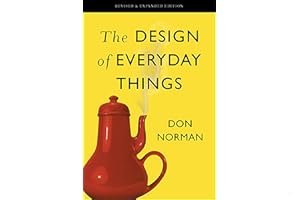
Even the smartest among us can feel inept as we fail to figure out which light switch or oven burner to turn on, or whether to push, pull, or slide a door. The fault, argues this ingenious—even liberating—book, lies not in ourselves, but in product design that ignores the needs of users and the principles of cognitive psychology. The problems range from ambiguous and hidden controls to arbitrary relationships between controls and functions, coupled with a lack of feedback or other assistance and unreasonable demands on memorization. The Design of Everyday Things shows that good, usable design is possible. The rules are simple: make things visible, exploit natural relationships that couple function and control, and make intelligent use of constraints. The goal: guide the user effortlessly to the right action on the right control at the right time.
In this entertaining and insightful analysis, cognitive scientist Don Norman hails excellence of design as the most important key to regaining the competitive edge in influencing consumer behavior. Now fully expanded and updated, with a new introduction by the author, The Design of Everyday Things is a powerful primer on how—and why—some products satisfy customers while others only frustrate them.
…
Recommended by Andrew Chen, Marissa Mayer, Nir Eyal, and 23 others.
Grey Baker
I mainly read to decompress and change my state of mind, so it’s hard to point to an insight I read that helped me. Reading fiction has pulled me out of a bad mood more times than I can count, though, and always reenergises me to attack problems that had stumped me again. That said, I read and loved Norman Norman’s “The Design of Everyday Things”, and it’s helped me think through design problems ever since. [source]
Julia Enthoven
For people interested in designing or building software products: The Design of Everyday Things by Don Norman and The Lean Product Playbook by Dan Olsen. Both books have informed my product sense and helped me make decisions about great UX. [source]
Kaci Lambe
These three books are about how people actually use design in their lives. They helped me understand this very basic idea: There are no dumb users, only bad designers. Take the time to create based on how your design will be interacted with. Test it. Iterate. That's how you become a good designer. [source]
Cover unavailable
3
Cradle to Cradle: Remaking the Way We Make Things
William McDonough
4.4
"Reduce, reuse, recycle," urge environmentalists; in other words, do more with less in order to minimize damage. But as architect William McDonough and chemist Michael Braungart point out in this provocative, visionary book, such an approach only perpetuates the one-way, "cradle to grave" manufacturing model, dating to the Industrial Revolution, that creates such fantastic amounts of waste and pollution in the first place. Why not challenge the belief that human industry must damage the natural world? In fact, why not take nature itself as our model for making things? A tree produces thousands of blossoms in order to create another tree, yet we consider its abundance not wasteful but safe, beautiful, and highly effective.
Waste equals food.
Guided by this principle, McDonough and Braungart explain how products can be designed from the outset so that, after their useful lives, they will provide nourishment for something new. They can be conceived as "biological nutrients" that will easily reenter the water or soil without depositing synthetic materials and toxins. Or they can be "technical nutrients" that will continually circulate as pure and valuable materials within closed-loop industrial cycles, rather than being "recycled" -- really, downcycled -- into low-grade materials and uses. Drawing on their experience in (re)designing everything from carpeting to corporate campuses, McDonough and Braungart make an exciting and viable case for putting eco-effectiveness into practice, and show how anyone involved with making anything can begin to do as well.
…
Recommended by Joe Gebbia, Jerry McNerney, and Kate Raworth.
Helped me to reimagine how industry could be designed to work with, rather than against, the cycles of the living world. [source]
Cover unavailable
4
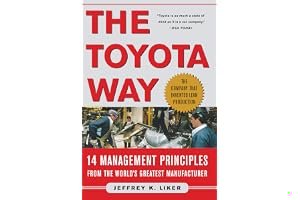
The Toyota Way: 14 Management Principles from the World's Greatest Manufacturer
Jeffrey Liker
4.4
"This book will give you an understanding of what has made Toyota successful and some practical ideas that you can use to develop your own approach to business."--Gary Convis, Managing Office of Toyota
Fewer man-hours. Less inventory. The highest quality cars with the fewest defects of any competing manufacturer. In factories around the globe, Toyota consistently raises the bar for manufacturing, product development, and process excellence. The result is an amazing business success story: steadily taking market share from price-cutting competitors, earning far more profit than any other automaker, and winning the praise of business leaders worldwide.
The Toyota Way reveals the management principles behind Toyota's worldwide reputation for quality and reliability. Dr. Jeffrey Liker, a renowned authority on Toyota's Lean methods, explains how you can adopt these principles--known as the "Toyota Production System" or "Lean Production"--to improve the speed of your business processes, improve product and service quality, and cut costs, no matter what your industry.
Drawing on his extensive research on Toyota, Dr. Liker shares his insights into the foundational principles at work in the Toyota culture. He explains how the Toyota Production System evolved as a new paradigm of manufacturing excellence, transforming businesses across industries. You'll learn how Toyota fosters employee involvement at all levels, discover the difference between traditional process improvement and Toyota's Lean improvement, and learn why companies often think they are Lean--but aren't.
…
Cover unavailable
5
User Friendly: How the Hidden Rules of Design Are Changing the Way We Live, Work, and Play
In User Friendly, Cliff Kuang and Robert Fabricant reveal the untold story of a paradigm that quietly rules our modern lives: the assumption that machines should anticipate what we need. Spanning over a century of sweeping changes, from women's rights to the Great Depression to World War II to the rise of the digital era, this book unpacks the ways in which the world has been--and continues to be--remade according to the principles of the once-obscure discipline of user-experience design. In this essential text, Kuang and Fabricant map the hidden rules of the designed world and shed light on how those rules have caused our world to change--an underappreciated but essential history that's pieced together for the first time. Combining the expertise and insight of a leading journalist and a pioneering designer, User Friendly provides a definitive, thoughtful, and practical perspective on a topic that has rapidly gone from arcane to urgent to inescapable. In User Friendly, Kuang and Fabricant tell the whole story for the first time--and you'll never interact with technology the same way again.
…
Recommended by Debbie Millman and J Wolfgang Goerlich.
Debbie Millman
“Design presumes that we can make objects humane, but doing so requires a different way of seeing the world.” 21 lessons from @cliffkuang and @fabtweets’ brilliant new book, USER FRIENDLY: https://t.co/AT87gFmDht https://t.co/hhj51lMHgR [source]
J Wolfgang Goerlich
@APhoenixinflame User Friendly, Cliff Kuang, is my favorite Audible book I’ve read this year. Very applicable to tech. [source]
Cover unavailable
6
Masters of Doom: How Two Guys Created an Empire and Transformed Pop Culture
David Kushner
4.4
Masters of Doom is the amazing true story of the Lennon and McCartney of video games: John Carmack and John Romero. Together, they ruled big business. They transformed popular culture. And they provoked a national controversy. More than anything, they lived a unique and rollicking American Dream, escaping the broken homes of their youth to produce the most notoriously successful game franchises in history—Doom and Quake— until the games they made tore them apart. This is a story of friendship and betrayal, commerce and artistry—a powerful and compassionate account of what it's like to be young, driven, and wildly creative.
…
Recommended by Alexis Ohanian, Chris Oliver, Duncan Jones, and 2 others.
Alexis Ohanian
Co-founder/Reddit
Made my co-founder and I think, 'Well, if these guys could do it, why can’t we?' [source]
Chris Oliver
Masters of Doom. Many of us started our careers in programming because we wanted to make games. This book covers the story of John Romero and John Carmack as they created ID software making Doom, Quake, and many other games we grew up playing as kids. It's truly inspiring for any software developer. [source]
Duncan Jones
@dannyodwyer I cant wait to see this. The book is fascinating, and I remember watching with bulging fan-boy eyes during those halcyon days! [source]
From the Bestselling Author of Cod and The Basque History of the World
In his fifth work of nonfiction, Mark Kurlansky turns his attention to a common household item with a long and intriguing history: salt. The only rock we eat, salt has shaped civilization from the very beginning, and its story is a glittering, often surprising part of the history of humankind. A substance so valuable it served as currency, salt has influenced the establishment of trade routes and cities, provoked and financed wars, secured empires, and inspired revolutions. Populated by colorful characters and filled with an unending series of fascinating details, Salt by Mark Kurlansky is a supremely entertaining, multi-layered masterpiece.
Mark Kurlansky is the author of many books including Cod, The Basque History of the World, 1968, and The Big Oyster. His newest book is Birdseye.
…
Cover unavailable
8
Machine that Changed the World
James P. Womack
4.3
Today, the industrial world is experiencing the most revolutionary change since Henry Ford's assembly line -- which forever changed the way things are made. Japanese companies are sweeping the world, as Western companies and governments struggle to find ways to emulate them. The Machine That Changed the World points for the first time to a positive way out of this dilemma. It shows that being defeatist about the Japanese threat, and tougher protectionism, are not the answers. This book outlines the enormous tasks facing Western companies in the 1990s and has cogent messages for Japanese firms as well, as they move abroad. The Machine That Changed the World is based on the largest and most thorough study ever undertaken in any industry: the Massachusetts Institute of Technology five-million-dollar, five-year, fourteen-country International Motor Vehicle Program's study of the worldwide auto industry. Twice in this century the auto industry has changed our most fundamental ideas about how to make things. Now it is doing it again. Just as mass production swept away craft production, so a new way of making things, called lean production, is now rapidly making mass production obsolete. Lean production is the Japanese secret weapon in the industrial wars and is spreading throughout the world. If Western companies and their managers and workers are to survive in the 1990s, they must learn and adapt to lean production. Some of the smartest already have begun to do so. Lean production welds the activities of everyone from top management to line workers, to suppliers, into a tightly integrated whole that can respond almost instantly to marketing demands from consumers. It can also double production and quality, while keeping costs down. Its adoption, as it inevitably spreads beyond the auto industry, will change almost every industry and consequently how we work, how we live, and the fate of companies and nations as they respond to its impact. In clear and compelling terms, this book explains what lean production is, and its global implications for all of us.
…
Recommended by Robin Sloan and 1 others.
Robin Sloan
I got this book because I am lately into 1980s "business book" time capsules , but in fact it is beautifully written and dizzyingly interesting, even in 2019!! https://t.co/5R8o4MWhpk [source]
Cover unavailable
9
The Reckoning
David Halberstam
4.3
"In just 25 years we have gone from the American century to the American crisis," Felix Rohatyn, financier & social critic, sets the theme: the fateful challenge to American industrial supremacy. Five years in the making, THE RECKONING reveals a society that got too rich for its own good, racing thru its postwar prosperity, developing wasteful habits. Finally in the mid-70s it fell prey to an unlikely rival: Japan, a nation only recently scorned for the low quality of its goods. This chastening study, portrays the conflict between the culture of affluence & that of adversity. It's a high-minded reminder that America's greatness is on the line & that vigilance is the price of survival. Maxwell's warning -- Amaya surveys the oil age -- Detroit's bleak winter of 1982 -- The founder -- The destroyer -- The victor -- The banker -- The turning point -- The crushing of Masuda -- Tough little rich boy -- The whiz kids -- Ford goes public -- The quiet man -- The Gaijin teachers -- The engineer -- The first victory -- Deming finds an audience -- Henry Kaiser tries Detroit -- The organizer -- The Mustang -- The rivals -- The statue -- The boss -- The pioneer -- The liberation of Yukata Katayama -- The Emperor Shioji -- War and oil -- Henry Ford besieged -- The alienated -- Citizen Nader -- Datsun saves -- The struggle at the top -- Big cars again -- A vacancy at Chrysler -- The arrivistes -- Greathouse in Tokyo -- A man of the system -- Hard times come home -- The fall of a free trader -- Amaya ends an era -- The defection of Marvin Runyon -- The hammer and the nail -- A grateful worker -- Bonus time again -- The scion -- The new American hero -- The raiders -- OPEC unravels -- The upstarts -- The jobs depart -- Instant replay : the rise of Korea -- The venerables -- The reckoning -- The past becomes the future Author's Note Bibliography Index
This one sort of speaks to something I’ve long been interested in. We get this general education in schools that follows the basic themes of presidents and wars and that kind of thing and then there’s this alternative history of finance and economics, and Lords of Finance impressed me because it gives you that alternative history, particularly through the inter-war years from the end of World War I into the Great Depression. A buddy of mine described it as The Guns of August for global finance and I think that sums it up nicely. It’s a great history. [source]
Cover unavailable
10
Forging Ahead: How Five Generations of Small-Town Values Collided with Big Ambitions to Spark One of America's Fastest-Growin
Angie Klink
4.2
Cover unavailable
11
The Lean Six SIGMA Pocket Toolbook: A Quick Reference Guide to Nearly 100 Tools for Improving Quality and Speed: A Quick Reference Guide to 70 Tools for Improving Quality and Speed
Michael L. George
4.2
Provides the tools for implementing Lean Six Sigma - what they are, how they work, and which to use. This book presents the tools and concepts needed to understand, implement, and leverage Lean Six Sigma. It provides analyses of nearly 100 tools and methodologies - from DMAIC and Pull Systems to Control Charts and Pareto Charts.
Cover unavailable
12
Toyota Kata: Managing People for Improvement, Adaptiveness and Superior Results
Mike Rother
4.2
"How any organization in any industry can progress from old-fashioned management by results to a strikingly different and better way."--James P. Womack, Chairman and Founder, Lean Enterprise Institute. This game-changing book puts you behind the curtain of Toyota, providing new insight into the legendary automaker's management practices and offering practical guidance for leading and developing people in a way that makes the best use of their brainpower. Drawing on six years of research into Toyota's employee-management routines, Toyota Kata examines and elucidates, for the first time, the company's organizational routines--called kata--that power its success with continuous improvement and adaptation. The book also reaches beyond Toyota to explain issues of human behavior in organizations and provide specific answers to questions such as: How can we make improvement and adaptation part of everyday work throughout the organization? How can we develop and utilize the capability of everyone in the organization to repeatedly work toward and achieve new levels of performance? How can we give an organization the power to handle dynamic, unpredictable situations and keep satisfying customers? Mike Rother explains how to improve our prevailing management approach through the use of two kata: Improvement Kata--a repeating routine of establishing challenging target conditions, working step-by-step through obstacles, and always learning from the problems we encounter; and Coaching Kata: a pattern of teaching the improvement kata to employees at every level to ensure it motivates their ways of thinking and acting. With clear detail, an abundance of practical examples, and a cohesive explanation from start to finish, Toyota Kata gives executives and managers at any level actionable routines of thought and behavior that produce superior results and sustained competitive advantage.
…
Cover unavailable
13
Poorly Made in China: An Insider's Account of the China Production Game
Paul Midler
4.2
An insider reveals what can--and does--go wrong when companies shift production to China In this entertaining behind-the-scenes account, Paul Midler tells us all that is wrong with our effort to shift manufacturing to China. Now updated and expanded, Poorly Made in China reveals industry secrets, including the dangerous practice of quality fade--the deliberate and secret habit of Chinese manufacturers to widen profit margins through the reduction of quality inputs. U.S. importers don't stand a chance, Midler explains, against savvy Chinese suppliers who feel they have little to lose by placing consumer safety at risk for the sake of greater profit. This is a lively and impassioned personal account, a collection of true stories, told by an American who has worked in the country for close to two decades. Poorly Made in China touches on a number of issues that affect us all.
…
Recommended by Joseph Liu.
Joseph Liu
Poorly Made in China is a revealing book about the cost of consumer consumption and pressures of producing products at the lowest possible cost to drive the greatest possible profit. Getting a glimpse into the cost of outsourcing radically changed my consumer behavior. I now try my best to more carefully consider my own material consumption, and make a point to consider where products are made before I purchase them. [source]
Cover unavailable
14
Precision Manufacturing, Precision Business: How the Best Machine Shops Turn Discipline into Profit
Paul Van Metre
4.2
Most machine shop owners are excellent at making parts. Far fewer have been taught how to build a business that is profitable, scalable, transferable and calm enough to run without constant firefighting. This book closes that gap.Drawing from decades of experience in the business, Paul Van Metre shows shop owners how to turn technical excellence into business excellence.Inside, you’ll learn how to:Build business systems that reduce owner dependence and increase profitsStrengthen estimating, quoting, job costing, and cash flowCreate a shop floor where work flows instead of stallsDevelop a culture where good people stay and improve the businessMake your company more valuable, whether you ever sell it or notWhether you’re starting a shop, buying one, trying to grow past the owner-operator stage, preparing for an eventual exit, or simply tired of carrying the whole business on your back, this book gives you a practical roadmap for building a company that can thrive.
…
Cover unavailable
15
Manufacturing Processes for Design Professionals
Rob Thompson
4.2
Today's product designers are presented with a myriad of choices when creating their work and preparing it for manufacture. They have to be knowledgeable about a vast repertoire of processes, ranging from what used to be known as traditional "crafts" to the latest technology, to enable their designs to be manufactured effectively and efficiently. Information on the internet about such processes is often unreliable, and search engines do not usefully organize material for designers.
This fundamental new resource explores innovative production techniques and materials that are having an impact on the design industry worldwide. Organized into four easily referenced parts—Forming, Cutting, Joining, and Finishing—over seventy manufacturing processes are explained in depth with full technical descriptions; analyses of the typical applications, design opportunities, and considerations each process offers; and information on cost, speed, and environmental impact. The accompanying step-by-step case studies look at a product or component being manufactured at a leading international supplier.
A directory of more than fifty materials includes a detailed technical profile, images of typical applications and finishes, and an overview of each material's design characteristics. With some 1,200 color photographs and technical illustrations, specially commissioned for this book, this is the definitive reference for product designers, 3D designers, engineers, and architects who need a convenient, highly accessible, and practical reference.
…
Cover unavailable
16
Story-Driven Smart Products: How to Create and Launch Smart Products that Resonate and Captivate Customers Through Storytelli
Ravi Kurani, Jarie Bolander, and Adam Levinter
4.2
Cover unavailable
17
Exposure: Poisoned Water, Corporate Greed, and One Lawyer's Twenty-Year Battle against DuPont
Robert Bilott
4.2
“For Erin Brockovich fans, a David vs. Goliath tale with a twist.” —The New York Times Book Review
The story that inspired the major motion picture Dark Waters, starring Mark Ruffalo as Robert Bilott.
In 1998, Rob Bilott began a legal battle against DuPont that would consume the next twenty years of his life, uncovering the worst case of environmental contamination in modern history and a corporate cover-up that put the health of hundreds of thousands of people at risk. Representing a single farmer who was convinced the creek on his property had been poisoned by runoff from a nearby DuPont landfill, Rob ultimately discovers the truth about PFAS—unregulated, toxic chemicals used in the manufacturing of Teflon and a host of other household goods. DuPont’s own scientists had issued internal warnings for years about the harmful effects of PFAS on human health, but the company continued to allow these chemicals to leach into public drinking water. Until Rob forced them to face the consequences.
Exposure is an unforgettable legal drama about malice and manipulation, the failings of environmental regulation, and one lawyer’s quest to expose the truth about this previously unknown—and still unregulated—chemical that presents one of the greatest human health crises of the 21st century.
…
Cover unavailable
18
A Redneck's Guide to Kaizen: How to See Waste, Fix Work, and Cut Through Improvement Theater
Jason Hall
4.1
Every plant has a cart that pulls left.At Clear Fork Works they called it Ol' Lefty, and they had been steering it by hand so long that steering it by hand had become the job.Then somebody set an empty coffee can beside it and dropped in one steel washer every time a person corrected what the cart could not do for itself. By the end of the shift, fifty-three.Nobody had lied about the cart. Nobody had counted it either.Clear Fork has twelve weeks to prove it deserves the product line keeping it alive. Its people are busy, loyal, and losing. The schedule is green. The customer is not. And every real problem is being quietly carried by somebody's back, memory, or judgment instead of by the system that is supposed to do it.This is a business parable in the tradition of the plant-floor novel, and it teaches by showing rather than lecturing. No certification path. No slide deck. No improvement theater.By the end you will be able to:Spot borrowed capability, the performance a system only appears to own because people are quietly supplying what it lacksTell the difference between clean and ready, and between busy and productiveFind out what a workaround is protecting before you take it awayRun a bounded experiment before lunch instead of a plant-wide rolloutAsk why at the mechanism instead of at the personMake normal and abnormal conditions visible to the next person who walks upWhat I mean by redneck. Not stupid. That joke has been told enough, usually by people who could not back a trailer into a county. I mean practical resourcefulness, mechanical curiosity, and skepticism toward fancy explanations that do not survive contact with a broken pump. Redneck is not a race, income, accent, political party, or zip code. A farmer, nurse, welder, engineer, manager, teacher, or warehouse worker may recognize the same relationship with work.Written by a man who spent thirty years restarting dormant operations and stabilizing flow while the work was still moving. The people in it are fictional. The problems are not.If you are tired of solving the wrong problems perfectly, start with the cart.
…
Cover unavailable
19
The Entrepreneur's Guide to Sewn Product Manufacturing
Kathleen Fasanella
4.1
Cover unavailable
20
Behind the Curve: Can Manufacturing Still Provide Inclusive Growth?
The biggest driving force behind politicians misleading the public about trade is the desire to restore a lost heyday of highly paid manufacturing jobs for men without college degrees. This book provides a comprehensive, global, and factually grounded rebuttal to this hope. Full disclosure: Its author, Robert Lawrence, is my colleague at Harvard and the Peterson Institute for International Economics, but I am recommending this because it is the most reliable and comprehensive book on a very important topic. [source]
Cover unavailable
21
Toyota Production System: Beyond large-scale production
Taiichi Ohno
4.1
In this classic text, Taiichi Ohno--inventor of the Toyota Production System and Lean manufacturing--shares the genius that sets him apart as one of the most disciplined and creative thinkers of our time. Combining his candid insights with a rigorous analysis of Toyota's attempts at Lean production, Ohno's book explains how Lean principles can improve any production endeavor. A historical and philosophical description of just-in-time and Lean manufacturing, this work is a must read for all students of human progress. On a more practical level, it continues to provide inspiration and instruction for those seeking to improve efficiency through the elimination of waste.
…
Recommended by Grey Baker.
Grey Baker
Perhaps the only business book I’ve read and truly loved is Taiichi Ohno’s “The Toyota Production System”. It’s referenced a lot as the origin of the “Lean” movement, but it’s a much more enjoyable read than that makes it sound. Rather than management guru speak, it’s a wonderful book about the hard-won lessons Taiichi Ohno learned on the factory floor at Toyota. It won’t teach you what kanban means in modern management, but learning about Ohno’s desire to build an information nervous system for Toyota’s plants is so much more interesting! [source]
Cover unavailable
22
Charleston Beer: A High-Gravity History of Lowcountry Brewing (American Palate)
Timmons Pettigrew and Chrys Rynearson
4.1
Cover unavailable
23
Freedom's Forge: How American Business Produced Victory in World War II
Arthur Herman
4.1
SELECTED BY THE ECONOMIST AS ONE OF THE BEST BOOKS OF THE YEAR
Remarkable as it may seem today, there once was a time when the president of the United States could pick up the phone and ask the president of General Motors to resign his position and take the reins of a great national enterprise. And the CEO would oblige, no questions asked, because it was his patriotic duty.
In Freedom’s Forge, bestselling author Arthur Herman takes us back to that time, revealing how two extraordinary American businessmen—automobile magnate William Knudsen and shipbuilder Henry J. Kaiser—helped corral, cajole, and inspire business leaders across the country to mobilize the “arsenal of democracy” that propelled the Allies to victory in World War II.
“Knudsen? I want to see you in Washington. I want you to work on some production matters.” With those words, President Franklin D. Roosevelt enlisted “Big Bill” Knudsen, a Danish immigrant who had risen through the ranks of the auto industry to become president of General Motors, to drop his plans for market domination and join the U.S. Army. Commissioned a lieutenant general, Knudsen assembled a crack team of industrial innovators, persuading them one by one to leave their lucrative private sector positions and join him in Washington, D.C. Dubbed the “dollar-a-year men,” these dedicated patriots quickly took charge of America’s moribund war production effort.
Henry J. Kaiser was a maverick California industrialist famed for his innovative business techniques and his can-do management style. He, too, joined the cause. His Liberty ships became World War II icons—and the Kaiser name became so admired that FDR briefly considered making him his vice president in 1944. Together, Knudsen and Kaiser created a wartime production behemoth. Drafting top talent from companies like Chrysler, Republic Steel, Boeing, Lockheed, GE, and Frigidaire, they turned auto plants into aircraft factories and civilian assembly lines into fountains of munitions, giving Americans fighting in Europe and Asia the tools they needed to defeat the Axis. In four short years they transformed America’s army from a hollow shell into a truly global force, laying the foundations for a new industrial America—and for the country’s rise as an economic as well as military superpower.
Featuring behind-the-scenes portraits of FDR, George Marshall, Henry Stimson, Harry Hopkins, Jimmy Doolittle, and Curtis LeMay, as well as scores of largely forgotten heroes and heroines of the wartime industrial effort, Freedom’s Forge is the American story writ large. It vividly re-creates American industry’s finest hour, when the nation’s business elites put aside their pursuit of profits and set about saving the world.
Praise for Freedom’s Forge
“A rambunctious book that is itself alive with the animal spirits of the marketplace.”—The Wall Street Journal
“A rarely told industrial saga, rich with particulars of the growing pains and eventual triumphs of American industry . . . Arthur Herman has set out to right an injustice: the loss, down history’s memory hole, of the epic achievements of American business in helping the United States and its allies win World War II.”—The New York Times Book Review
“Magnificent . . . It’s not often that a historian comes up with a fresh approach to an absolutely critical element of the Allied victory in World War II, but Pulitzer finalist Herman . . . has done just that.”—Kirkus Reviews (starred review)
From the Hardcover edition.
…
Cover unavailable
24
Creative Selection: Inside Apple's Design Process During the Golden Age of Steve Jobs
Ken Kocienda
4.1
An insider's account of Apple's creative process during the golden years of Steve Jobs.
Hundreds of millions of people use Apple products every day; several thousand work on Apple's campus in Cupertino, California; but only a handful sit at the drawing board. Creative Selection recounts the life of one of the few who worked behind the scenes, a highly-respected software engineer who worked in the final years the Steve Jobs era--the Golden Age of Apple.
Ken Kocienda offers an inside look at Apple's creative process. For fifteen years, he was on the ground floor of the company as a specialist, directly responsible for experimenting with novel user interface concepts and writing powerful, easy-to-use software for products including the iPhone, the iPad, and the Safari web browser. His stories explain the symbiotic relationship between software and product development for those who have never dreamed of programming a computer, and reveal what it was like to work on the cutting edge of technology at one of the world's most admired companies.
Kocienda shares moments of struggle and success, crisis and collaboration, illuminating each with lessons learned over his Apple career. He introduces the essential elements of innovation--inspiration, collaboration, craft, diligence, decisiveness, taste, and empathy--and uses these as a lens through which to understand productive work culture.
An insider's tale of creativity and innovation at Apple, Creative Selection shows readers how a small group of people developed an evolutionary design model, and how they used this methodology to make groundbreaking and intuitive software which countless millions use every day.
…
Recommended by Patrick Thornton.
Patrick Thornton
@kocienda @jgulden @DanHigbie @mayli Read the book and loved it. Is the idea of outsourcing product work to a designated product manager antithetical to building great products at Apple? [source]
Cover unavailable
25
Lean Thinking
"Daniel T. Jones;James P. Womack"
4.1
In the revised and updated edition of Lean Thinking: Banish Waste and Create Wealth in Your Corporation, authors James P. Womack and Daniel T. Jones provide a thoughtful expansion upon their value-based business system based on the Toyota model. Along the way they update their action plan in light of new research and the increasing globalization of manufacturing, and they revisit some of their key case studies (most of which still derive, however, from the automotive, aerospace, and other manufacturing industries).
The core of the lean model remains the same in the new edition. All businesses must define the "value" that they produce as the product that best suits customer needs. The leaders must then identify and clarify the "value stream," the nexus of actions to bring the product through problems solving, information management, and physical transformation tasks. Next, "lean enterprise" lines up suppliers with this value stream. "Flow" traces the product across departments. "Pull" then activates the flow as the business re-orients towards the pull of the customer's needs. Finally, with the company reengineered towards its core value in a flow process, the business re-orients towards "perfection," rooting out all the remaining muda (Japanese for "waste") in the system.
Despite the authors' claims to "actionable principles for creating lasting value in any business during any business conditions," the lean model is not demonstrated with broad applications in the service or retail industries. But those manager's whose needs resonate with those described in the Lean Thinking case studies will find a host of practical guidelines for streamlining their processes and achieving manufacturing efficiencies. --Patrick O'Kelley
is known as an authoritarian leader. He has established rules, processes and methods that are strictly followed. Jeff’s Reading List is a list of 12 books Bezos expects Amazon employees to read. Many are related to business, but there are other themes as well. Author Brad Stone who wrote the Bezos biography The Everything Store lists those 12 books. The author says the books have shaped Bezos’ leadership style and way of thinking. Lean Thinking is one of those 12 books. [source]
Cover unavailable
26
Shaping the Industrial Century: The Remarkable Story of the Evolution of the Modern Chemical and Pharmaceutical Industries (H
Alfred D. Chandler Jr.
4.1
Cover unavailable
27
Good Manufacturing Practices for Soap and Cosmetic Handcrafters
Marie Gale
4.1
Cover unavailable
28
The Evolution of Products & Packaging: How a spec-first approach is revolutionizing the way companies make things
Matthew Wright
4.1
Cover unavailable
29
Dynamic Capacity Management for Healthcare: Advanced Methods and Tools for Optimization
Pierce Story
4.1
Cover unavailable
30
They Poisoned the World: Life and Death in the Age of Forever Chemicals
Mariah Blake
4.1
Cover unavailable
31
Brain Glue: How Selling Becomes Much Easier By Making Your Ideas "Sticky"
James I. Bond
4.1
Cover unavailable
32
2018 International Residential Code for One- And Two-Family Dwellings
International Code Council
4.1
This comprehensive code comprises all building, plumbing, mechanical, fuel gas and electrical requirements for one- and two-family dwellings and townhouses up to three stories. The IRC contains many important changes such as: An updated seismic map reflects the most conservative Seismic Design Category (SDC) based on any soil type and a new map reflects less conservative SDCs when Site Class A, B or D is applicable. The townhouse separation provisions now include options for using two separate fire-resistant-rated walls or a common wall. An emergency escape and rescue opening is no longer required in basement sleeping rooms where the dwelling has an automatic fire sprinkler system and the basement has a second means of egress or an emergency escape opening. The exemption for interconnection of smoke alarms in existing areas has been deleted. New girder/header tables have been revised to incorporate the use of #2 Southern Pine in lieu of #1 Southern Pine. New tables address alternative wood stud heights and the required number of full height studs in high wind areas.
…
Recommended by Alan Pierce.
Alan Pierce
This is a great book for overall understanding of primarily modern western building and the many different building styles and materials employed. [source]
Cover unavailable
33
Simple Strategies: A Model-Based Guide to Solving Complex Problems
John Allen
4.1
Cover unavailable
34
Ignite Topline Growth: How RevOps and Go-To-Market Alignment Spark Success
Melanie R. Varin
4.1
Cover unavailable
35
Selling in Manufacturing and Logistics: The Twelve Key Strategies for Managers and Salespeople
Mike Jones and Ken Guest
4.1
Cover unavailable
36
Industry 5.0: Mastering AI for Smart Manufacturing Excellence
Gowrisankar Krishnamoorthy
4.1
Cover unavailable
37
The Toyota Way Fieldbook
JeffreyLiker and David Meier
4.1
The Toyota Way Fieldbook is a companion to the international bestseller The Toyota Way. The Toyota Way Fieldbook builds on the philosophical aspects of Toyota's operating systems by detailing the concepts and providing practical examples for application that leaders need to bring Toyota's success-proven practices to life in any organization. The Toyota Way Fieldbook will help other companies learn from Toyota and develop systems that fit their unique cultures.
The book begins with a review of the principles of the Toyota Way through the 4Ps model-Philosophy, Processes, People and Partners, and Problem Solving. Readers looking to learn from Toyota's lean systems will be provided with the inside knowledge they need to
Define the companies purpose and develop a long-term philosophy Create value streams with connected flow, standardized work, and level production Build a culture to stop and fix problems Develop leaders who promote and support the system Find and develop exceptional people and partners Learn the meaning of true root cause problem solving Lead the change process and transform the total enterprise The depth of detail provided draws on the authors combined experience of coaching and supporting companies in lean transformation. Toyota experts at the Georgetown, Kentucky plant, formally trained David Meier in TPS. Combined with Jeff Liker's extensive study of Toyota and his insightful knowledge the authors have developed unique models and ideas to explain the true philosophies and principles of the Toyota Production System.
…
Cover unavailable
38
Sustaining a Family Jewel: Planning For and Driving Generational Succession in Family-Owned American Manufacturing Companies
Davis Given Anderson
4.1
Cover unavailable
39
The Lean Manufacturing Pocket Handbook
Kenneth W. Dailey
4.1
Cover unavailable
40
Consequences of Capitalism: Manufacturing Discontent and Resistance
Noam Chomsky and Marv Waterstone
4.1
Cover unavailable
41
Starting a Business QuickStart Guide: The Simplified Beginner's Guide to Launching a Successful Small Business, Turning Your Vision into Reality, and Achieving Your Entrepreneurial Dream
Ken Colwell PhD MBA
4.1
Starting a Business QuickStart Guide: The Simplified Beginner's Guide to Launching a Successful Small Business, Turning Your Vision into Reality, and Achieving Your Entrepreneurial Dream
THE ULTIMATE BEGINNER'S GUIDE TO STARTING A BUSINESS IN 2019!
Have you ever dreamt of starting your own business and living life on your terms?
This book shows you EXACTLY what you need to know to stand out from the crowd!
Do you have an idea for an amazing product or service but you aren't sure how to build a business around it?
Then you NEED this book. Buy now and start reading today!
Are you a current business owner who struggles to identify your customers and deliver true world-class value?
Everything you need to know is included in these pages!
Do you want to build your hobby business into a fully-fledged venture that will help you build the life you deserve?
Then you NEED this book. Buy now and start reading today!
The most comprehensive guide ever developed for starting and growing a business in 2019!
In the highly competitive world of business, what makes or breaks a new entrepreneur?
Sourced from over twenty years of firsthand experience working with entrepreneurs, new ventures, and high-growth startups, author Ken Colwell, PHD, MBA has the answers.
In his comprehensive Starting a Business QuickStart Guide, Ken Colwell concisely presents the core fundamentals that all new entrepreneurs need to know to get started, find success, and live the life of their dreams.
Business and entrepreneurship students, small business owners, managers, and soon-to-be entrepreneurs will all find a wealth of value within the pages of the Starting a Business QuickStart Guide.
From the very first steps conceptualizing your venture to winning your first customers, delivering value, and turning a profit, this book acts as an invaluable blueprint for your path to entrepreneurial success. Colwell's clear voice, extensive experience, and easy-to-understand presentation come together to make this book a must-have resource in the library of every budding entrepreneur!
Perfect For:
Would-Be Entrepreneurs With a Ton of Passion! Entrepreneurial Students of All Ages! Beginners with Zero Prior Experience! Managers, Business Owners, and Decisions Makers Growing into a New Role! You'll Discover:
The Difference Between an Idea and an Opportunity! What Makes an Entrepreneurial Opportunity Great! The Very First Steps You Need To Take To Get Your Venture Off The Ground! Pricing, Competition, Customer Identification, Marketing, and Distribution Demystified! The REAL Components of an Entrepreneurial Mindset! Exactly How To Craft Your Value Proposition! How to Write a Comprehensive Business Plan! **LIFETIME ACCESS TO FREE RESOURCES & INVESTING SUPPORT*: Each book comes with free lifetime access to tons of exclusive online resources to help you become a better business owner such as workbooks, cheat sheets and reference guides. You also receive lifetime access to our online coaching community to help you achieve all of your financial goals!.*
…
Cover unavailable
42
Out of the Crisis
W. Edwards Deming
4.1
Deming offers a theory of management based on his famous 14 Points for Management.
"Long-term commitment to new learning and new philosophy is required of any management that seeks transformation. The timid and the fainthearted, and the people that expect quick results, are doomed to disappointment."
According to W. Edwards Deming, American companies require nothing less than a transformation of management style and of governmental relations with industry. In Out of the Crisis, originally published in 1982, Deming offers a theory of management based on his famous 14 Points for Management. Management's failure to plan for the future, he claims, brings about loss of market, which brings about loss of jobs. Management must be judged not only by the quarterly dividend, but by innovative plans to stay in business, protect investment, ensure future dividends, and provide more jobs through improved product and service. In simple, direct language, he explains the principles of management transformation and how to apply them.
Previously published by MIT-CAES
…
Cover unavailable
43
Strategies and Tips for Time Management: Secrets to Organizing Yourself and Ending Procrastination (Focus, Motivation, Organization, Goal Setting, Productivity, and Success Organizing Your Home)
Jack Barrett
4.1
Cover unavailable
44
The Toyota Mindset, The Ten Commandments of Taiichi Ohno
Yoshihito Wakamatsu
4.1
Cover unavailable
45
Makers: The New Industrial Revolution
Chris Anderson
4.1
Wired magazine editor and bestselling author Chris Anderson takes you to the front lines of a new industrial revolution as today’s entrepreneurs, using open source design and 3-D printing, bring manufacturing to the desktop. In an age of custom-fabricated, do-it-yourself product design and creation, the collective potential of a million garage tinkerers and enthusiasts is about to be unleashed, driving a resurgence of American manufacturing. A generation of “Makers” using the Web’s innovation model will help drive the next big wave in the global economy, as the new technologies of digital design and rapid prototyping gives everyone the power to invent -- creating “the long tail of things”.
Ruimin names Anderson's books in response to a question about the management theories which have most influenced Haier's current direction. [source]
Cover unavailable
46
Taiichi Ohno's Workplace Management
Taiichi Ohno
4.1
Cover unavailable
47
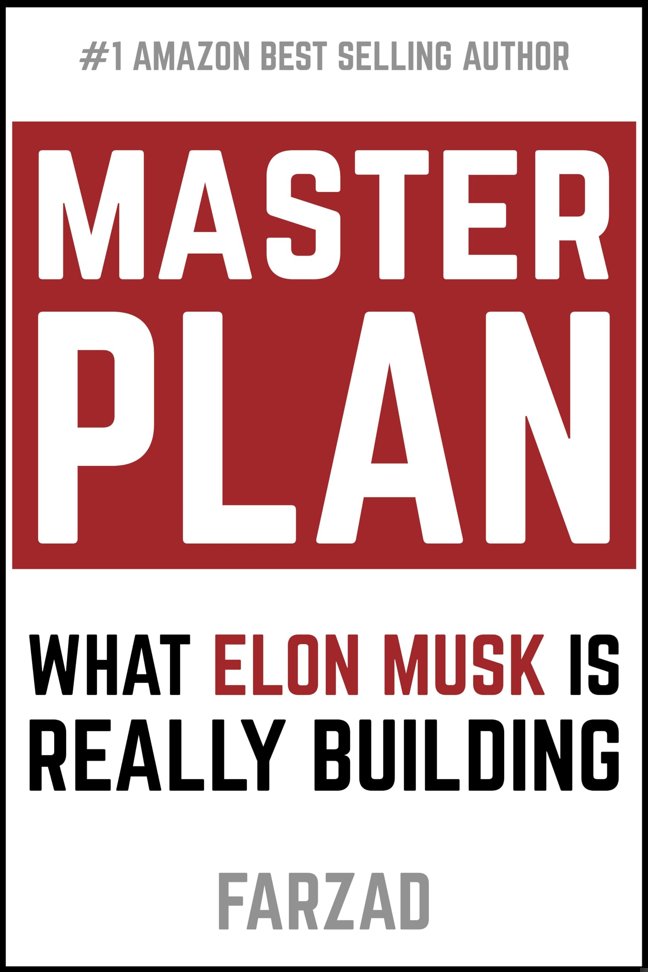
Master Plan: What Elon Musk Is Really Building (The Future Book 2)
Farzad Mesbahi
4.0
Elon Musk is building the foundation of the next generation of Civilization, and most people have no idea.Most people see Elon Musk as spread too thin. A CEO running too many companies, missing too many deadlines, making too many promises. Farzad Mesbahi sees something different. After working at Tesla, investing 90% of his portfolio in the thesis, and spending 14 years tracking every move across the Musk ecosystem, he's identified the architecture underneath - and it changes everything.Master Plan is abook that maps what Musk is actually building: a vertically integrated system where cars train AI, AI powers robots, robots build rockets, rockets deploy satellites, satellites connect it all, and everything in between. Each company feeds the others. Each breakthrough compounds. And the convergence of near-free energy, near-free intelligence, and near-free labor is about to restructure the global economy in ways most people aren't prepared for.This isn't a biography or a fan book. It's a field guide to the most consequential engineering project in human history - written by someone with skin in the game who presents the bull case, the bear case, and what you should actually do about it.Fact-checked claim-by-claim. Sourced end-to-end. No hedging.
…
Cover unavailable
48
The Most They Ever Had
Rick Bragg
4.0
Normal0falsefalsefalseMicrosoftInternetExplorer4In the spring of 2001, a community of people in the Appalachian foothills of northern Alabama had come to the edge of all they had ever known. Across the South, padlocks and logging chains bound the doors of silent mills, and it seemed a miracle to blue-collar people in Jacksonville that their mill still bit, shook, and roared. The century-old hardwood floors still trembled under whirling steel, and people worked on, in a mist of white air. The mill had become almost a living thing, rewarding the hardworking and careful with the best payday they ever had, but punishing the careless and clumsy, taking a finger, a hand, more. The mill was here before the automobile, before the flying machine, and the mill workers served it even as it filled their lungs with lint and shortened their lives. In return, it let them live in stiff-necked dignity in the hills of their fathers. So, when death did come, no one had to ship their bodies home on a train. This is a mill story—not of bricks, steel, and cotton, but of the people who suffered it to live.
…
Cover unavailable
49
Dark, Dirty, Dangerous: Building the Vibrant Future of Manufacturing
Karla Trotman
4.0
Cover unavailable
50
Requiem for the American Dream: The 10 Principles of Concentration of Wealth & Power
Noam Chomsky
4.0
NOAM CHOMSKY is widely regarded as the most influential thinker of our time, but never before has he devoted a major book to one topic, income inequality: -During the Great Depression, things were much worse than they are today, but there was an expectation that things were going to get better. There was a real sense of hopefulness. There isn't today. . . . Inequality is really unprecedented. In terms of total inequality, it's like the worst periods in American history. But if you refine it more closely, the inequality comes from the extreme wealth in a tiny sector of the population, a fraction of 1 percent. . . . Not only is it extremely unjust in itself, inequality has highly negative consequences on the society as a whole because the very fact of inequality has a corrosive, harmful effect on democracy.- --NOAM CHOMSKY, in Requiem for the American Dream Requiem for the American Dream is not an essay collection but an entire work of some 70,000 words based on four years of interviews with Chomsky by the editors. Chomsky considers these to be his final, long-form documentary interviews. It is a book that makes Chomsky's breadth and depth accessible, and at the same gives us his most powerful political ideas with unprecedented, breathtaking directness. It will go down as one of his greatest and most lasting contributions. Requiem for the American Dream is being produced in tandem with the film of the same name that was recently released in selected theaters to rave reviews and standing ovations and will be on Netflix and touring colleges prior to the book's release.
…
Cover unavailable
51
Bethlehem Steel: Rusting Relic (America Through Time)
Steven Landis
4.0
Cover unavailable
52
Leadership at the Edge of Innovation: Navigating the 4th Industrial Revolution in Manufacturing
Dennis Kuzmenko
4.0
Cover unavailable
53
The Lean Tech Manifesto: Learn the Secrets of Tech Leaders to Grasp the Full Benefits of Agile at Scale
Fabrice Bernhard
4.0
Cover unavailable
54
Gemba Kaizen: A Commonsense Approach to a Continuous Improvement Strategy, Second Edition
Masaaki Imai
4.0
Publisher's Note: Products purchased from Third Party sellers are not guaranteed by the publisher for quality, authenticity, or access to any online entitlements included with the product.
The definitive, fully up-to-date guide to continuous improvement in the workplace"An updated version of a classic book that shares a wealth of new healthcare examples and case studies from around the world. The methods in this book will help you improve quality and safety, reduce waiting times, and improve the long-term financial position of your organization. Highly recommended!" --Mark Graban, author of Lean Hospitals and coauthor of Healthcare Kaizen
"Every business faces the iron triangle of quality, cost, and delivery. Conventional thinking claims you cannot have all three. Not only does Mr. Imai turn that thinking on its head, but he shows you exactly how to do it." -- Matthew E. May, author of The Elegant Solution and The Laws of Subtraction
"Masaaki Imai has done it again. The second edition of his famous book not only describes all the tools necessary for any type of business to implement a lean strategy but also includes a large number of excellent case studies." -- Art Byrne, author of The Lean Turnaround
Written by Masaaki Imai, pioneer of modern business operational excellence and founder of the Kaizen Institute, Gemba Kaizen, Second Edition is an in-depth revision of this renowned, bestselling work. The book reveals how to implement cost-effective, incremental improvements in your most critical business processes. Global case studies from a wide range of industries demonstrate how gemba kaizen has been successfully used to:
Maximize capacity and reduce inventory at Unga Limited, one of Kenya's largest flour-milling operations Change the IT culture at Achmea, a large European insurance firm Exceed customer expectations at Walt Disney World in the United States Improve quality at Inoue Hospital in Japan Transform retail processes at Sonae MC, Portugal's largest employer Practice daily kaizen at Tork Ledervin, a weaving plant in Brazil Stamp out muda at Sunclipse, an industrial packaging distributor in the United States Manage quality improvement by total workforce involvement at Xuji Group Corporation, an electrical manufacturer in China Implement gemba kaizen at many other companies worldwide To thrive in today's competitive global economy, organizations need to operate more effectively and profitably than ever before. Developing problem solvers, increasing productivity, improving quality, and reducing waste are essential success factors. Proven strategies for achieving these goals are included in this pioneering guide.
This comprehensive resource offers detailed coverage of important gemba kaizen topics, including:
Quality, cost, and delivery in the gemba The five steps of workplace organization Identifying and eliminating muda--any non-value-adding activity Visual management Supervisors' roles in the lean workplace Gemba managers' roles and accountability in sustaining high performance Just-in-time and total flow management The CEO's role in leading a kaizen culture The methods presented in Gemba Kaizen, Second Edition reveal that when management focuses on implementing kaizen (incremental, continuous improvement) in the gemba (the worksite) unique opportunities can be discovered for increasing the success and profitability of any organization.
…
Cover unavailable
55
Manufacturing Independence: Industrial Innovation in the American Revolution
Robert F. Smith
4.0
Cover unavailable
56
Implantable Medical Devices and Healthcare Affordability: Exposing the Spiderweb
Mark C. West
4.0
Cover unavailable
57
The Origins of Efficiency
Brian Potter
4.0
Cover unavailable
58
On The Plant Floor: A practical guide to daily leadership in the manufacturing factory
Bryan D Geary and Carlton F Sorrell
4.0
Boots on the ground manufacturing professionals with over 50 collective years of experience on the plant floor. The book provides a practical guide to daily leadership in the manufacturing environment. The work is educational, inspiring, and entertaining to all markets interested in management and leadership improvements.
Cover unavailable
59
Winnebago County Beer: A Heady History (American Palate)
Lee Reiherzer
4.0
Cover unavailable
60
My Life In Advertising; Scientific Advertising
Claude Hopkins
4.0
Book may have numerous typos, missing text, images, or index. Purchasers can download a free scanned copy of the original book (without typos) from the publisher. 1917. Excerpt: ... Chapter Seventeen SCIENTIFIC ADVERTISING THROUGH a book I wrote my name has become connected with "Scientific Advertising." That is, advertising based on fixed principles and done according to fundamental laws. I learned those principles through thirty-six years of traced advertising. Through conducting campaigns on some hundreds of different lines. Through comparing on some lines, by keyed returns, thousands of pieces of copy. Always, since I sent out my first thousand letters to the time when $5,000,000 yearly was being spent on my copy, I have had to face records on cost and result. So I have naturally proved out many fundamentals which should always be applied. I have little respect for most theories of advertising, because they have not been proved. They are based on limited experiences, on exceptional conditions. Some lines seem to succeed on methods of advertising which every traced return proves impossible. The reasons for success have little to do with the advertising. The line may have succeeded in spite of the advertising. Many unadvertised lines become highly successful, because of some wanted quality which people soon discover. Or because dealers are in some way induced to feature it. Or because of a name which in itself tells an appealing story. Cream of Wheat is an example. The name alone tells the story. So with Spearmint Gum. All successful gums have succeeded through fortunate names. There is almost no story to tell. There are no great distinctions. The very men who succeeded with one name failed again, and again with others. Any conclusions drawn from such experiences are bound to lead others astray. The cases where they apply are rare. Safe principles are evolved only by those who know with reasonable exactness what the advertising does, and who compare results...
Analytical Precision: Root Cause Analysis Techniques (Quality Management Insights)
Laine Griffey, Bob McCoy, and Kalaine Fields
4.0
Cover unavailable
72
Soap and Cosmetic Labeling: How to Follow the Rules and Regs Explained in Plain English
Marie Gale
4.0
Cover unavailable
73
The Heartless Stone: A Journey Through the World of Diamonds, Deceit, and Desire
Tom Zoellner
4.0
In 2000, Tom Zoellner purchased a diamond engagement ring and proposed. His girlfriend said, "yes" and then, suddenly, walked out of his life making Tom the owner of a used engagement ring. Instead of hitting the self-help shelves of his local bookstore, he hit the road travelling to diamond mines in Africa, Canada, India, Brazil and Russia to discover the true worth of this shining gem. He travelled to Japan to understand how diamonds were linked with engagements and delved into the history of our own American romance with the diamond ring. He gained entry to DeBeers, the London diamond merchants. He visited shopping mall jewellers with starry-eyed couples. Through all of his travels, he searched for an answer to the question "How has one stone created empires, ruined lives, inspired lust and emptied wallets throughout history?" A diamond version of Susan Orleans's The Orchid Thief, Tom Zoellner's The Heartless Stone is a journey to the cold heart of the world's most unyielding gem.
…
Cover unavailable
74
Sacramento Beer: A Craft History
Justin Chechourka and Moffatt - Fountainhead Brewing Company
4.0
Cover unavailable
75
Demand Driven Material Requirements Planning (DDMRP), Version 3
Carol Ptak
4.0
In the 1950s, a method called Material Requirements Planning (or “MRP”) changed the world of manufacturing forever. But times have changed—customer tolerance times are shorter, product variety and complexity has increased, and supply chains have spread around the world. MRP is dramatically failing in this “New Normal.”
Demand Driven Material Requirements Planning (DDMRP), Version 3 presents a practical, proven, and emerging method for supply chain planning and execution that effectively brings the 1950s concept into the modern era. The foundation of DDMRP is based upon the connection between the creation, protection, and acceleration of the flow of relevant materials and information to drive returns on asset performance in the New Normal.
Using an innovative multi-echelon “Position, Protect and Pull” approach, DDMRP helps plan and manage inventories and materials in today’s more complex supply scenarios, with attention being paid to ownership, the market, engineering, sales, and the supply base. It enables a company to decouple forecast error from supply order generation and build in line to actual market requirements, and promotes better and quicker decisions and actions at the planning and execution level. DDMRP is already in use by MAJOR Global 1000 companies. This book is THE definitive work on DDMRP, and will be required as courseware for all those taking the Certified Demand Driven Planner (CDDP) Program.
New Features in Version 3 Full color, with the use in specific, consistent, and focused ways to clearly and effectively highlight planning, execution, and model reconfiguration priorities. Expanded Appendix E, looking at the most recent innovations of DDMRP. Revised graphics scattered throughout the book.
…
Cover unavailable
76
Tredegar Iron Works:: Richmond’s Foundry on the James (Landmarks)
Nathan Vernon Madison
4.0
Cover unavailable
77
Buildings That Create Jobs: A Guide to Business Incubators from the Family Who Invented the Concept
B Thomas Mancuso
4.0
Cover unavailable
78
The Hardware Hacker: Adventures in Making and Breaking Hardware
Andrew Bunnie Huang
4.0
For over a decade, Andrew "bunnie" Huang, one of the world's most esteemed hackers, has shaped the fields of hacking and hardware, from his cult-classic book Hacking the Xbox to the open-source laptop Novena and his mentorship of various hardware startups and developers. In The Hardware Hacker, Huang shares his experiences in manufacturing and open hardware, creating an illuminating and compelling career retrospective.
Huang's journey starts with his first visit to the staggering electronics markets in Shenzhen, with booths overflowing with capacitors, memory chips, voltmeters, and possibility. He shares how he navigated the overwhelming world of Chinese factories to bring chumby, Novena, and Chibitronics to life, covering everything from creating a Bill of Materials to choosing the factory to best fit his needs.
Through this collection of personal essays and interviews on topics ranging from the legality of reverse engineering to a comparison of intellectual property practices between China and the United States, bunnie weaves engineering, law, and society into the tapestry of open hardware.
With highly detailed passages on the ins and outs of manufacturing and a comprehensive take on the issues associated with open source hardware, The Hardware Hacker is an invaluable resource for aspiring hackers and makers.
…
Cover unavailable
79
THE REAL FALL OF UNION CARBIDE: FRAUD, CORRUPTION AND MISMANAGEMENT
Thomas Thorndike
4.0
Cover unavailable
80
Cornerstone of the Nation: The Defense Industry and the Building of Modern Korea under Park Chung Hee (Harvard East Asian Monographs)
Peter Banseok Kwon
4.0
Cover unavailable
81
The SAFE Framework: A Business Owner’s Guide to Injury Prevention & Risk Reduction
Nicholas Eckert
4.0
Cover unavailable
82
Learning to See Version 1.3
Mike Rother, John Shook, Jim Womack, Dan Jones
4.0
Much more important, these simple maps - often drawn on scrap paper - showed where steps could be eliminated, flows smoothed, and pull systems introduced in order to create a truly lean value stream for each product family.In 1998 John teamed with Mike Rother of the University of Michigan to write down Toyota's mapping methodology for the first time in "Learning to See." This simple tool makes it possible for you to see through the clutter of a complex plant. You'll soon be able to identify all of the processing steps along the path from raw materials to finished goods for each product and all of the information flows going back from the customer through the plant and upstream to suppliers. With this knowledge in hand it is much easier to envision a "future state" for each product family in which wasteful actions are eliminated and production can be pulled smoothly ahead by the customer.
In plain language and with detailed drawings, this workbook explains everything you will need to know to create accurate current-state and future- state maps for each of your product families and then to turn the current state into the future state rapidly and sustainably.
In "Learning to See" you will find:
A foreword by Jim Womack and Dan Jones explaining the need for this tool. An introduction by Mike Rother and John Shook describing how they discovered the mapping tool in their study of Toyota. Guidance on identifying your product families. A detailed explanation of how to draw a current-state map. A practice case permitting you to draw a current-state map on your own, with feedback from Mike and John in the appendix on how you did. A detailed explanation of how to draw a future-state map. A second practice case permitting you to draw a future-state map, with "the answer" provided in the appendix. Guidance on how to designate a manager for each value stream. Advice on breaking implementation into easy steps. An explanation of how to use the yearly value stream plan to guide each product family through successive future states. More than 50,000 copies of "Learning to See" have been sold in the past two years. Readers from across the world report that value stream mapping has been an invaluable tool to start their lean transformation and to make the best use of kaizen events.
…
Cover unavailable
83
Kaizen: The Complete Guide to Implementing the Smart Concept of Continuous Improvement of All the Strategic Operations in the Development Process Involving the Lean and Agile Startup Team
Josh Wright
4.0
Cover unavailable
84
Artificial Intelligence WILL Revolutionize Manufacturing: Manufacturers embracing AI will replace manufacturers that don’t - which side of the coin do you want to be on?
Dr. Markus Guerster
4.0
Cover unavailable
85
Continuous Improvement: Seek Perfection, Embrace Scientific Thinking, Focus on Process, Assure Quality at the Source, and Imp
Larry Anderson, Dan Fleming, Bruce Hamilton, and Pat Wardwell
4.0
Cover unavailable
86
Trouble in the Making?: The Future of Manufacturing-Led Development
Mary Hallward-Driemeier and Gaurav Nayyar
4.0
Cover unavailable
87
Grow Your Factory, Grow Your Profits
Timothy McLean
4.0
Cover unavailable
88
Strong Supply Chains Through Resilient Operations: Five Principles for Leaders to Win in a Volatile World
Suketu Gandhi
4.0
Cover unavailable
89
Workplace Safety Culture Success: Transformative Leadership Strategies to Overcome Resistance, Strengthen Accountability, and
Oliver Greer
4.0
Cover unavailable
90
Lean Sustainability: Creating Safe, Enduring, and Profitable Operations
Dennis Averill
4.0
Cover unavailable
91
2024-2025 Pocket Planner: Small 2 Year Pocket Calendar Monthly Agenda For Purse, from January 2024 to December 2025, Floral Cover size 4 x 6.5 Size
Wabist Press
4.0
Cover unavailable
92
Quality First: Developing Effective Quality Systems (Quality Management Insights)
Laine Griffey
4.0
Cover unavailable
93
Delaware Beer: The Story of Brewing in the First State (American Palate)
Tony Russo and Jim Lutz
4.0
Cover unavailable
94
The CM2 Approach to Change and Configuration Management: The DNA of the business ecosystem needed to drive evolution within organizations
Joseph S Anderson
4.0
Cover unavailable
95
Quality Management Beyond the Basics: Advanced Quality Management Techniques for Modern Manufacturing (Quality Management Ins
Kalaine Fields
4.0
Cover unavailable
96
Making Steel: Sparrows Point and the Rise and Ruin of American Industrial Might
Mark Reutter
4.0
Cover unavailable
97
The Toyota Economic System
Olivier Larue
4.0
Cover unavailable
98
The Art of Ethical Fashion: A stunning glimpse into the world of conscious garment manufacturing
Hayley Besheer Santell and Tara Shupe
4.0
Cover unavailable
99
How to Fix a Factory: A practical approach to clarify and resolve underlying challenges in your factory
Rob Tracy
4.0
Cover unavailable
100
Effective Transition from Design to Production (Resource Management)


 1
1