We've ranked the best japanese books using expert recommendations, sales data, and millions of reader ratings. At Shortform, we know books. Our book guides are the best in the world. Learn why.
Cover unavailable
1
Memoirs of a Geisha
Arthur Golden
5.0
A literary sensation and runaway bestseller, this brilliant debut novel presents with seamless authenticity and exquisite lyricism the true confessions of one of Japan's most celebrated geisha.
In Memoirs of a Geisha, we enter a world where appearances are paramount; where a girl's virginity is auctioned to the highest bidder; where women are trained to beguile the most powerful men; and where love is scorned as illusion. It is a unique and triumphant work of fiction - at once romantic, erotic, suspenseful - and completely unforgettable.
…
Recommended by Alice Little.
Alice Little
The author uses language that is very, very rich and colorful. … You can really immerse yourself into that world and kind of get a sense of what things were like, at that time. [source]
Cover unavailable
2
The Wind-Up Bird Chronicle
Haruki Murakami, Jay Rubin
5.0
Japan's most highly regarded novelist now vaults into the first ranks of international fiction writers with this heroically imaginative novel, which is at once a detective story, an account of a disintegrating marriage, and an excavation of the buried secrets of World War II.
In a Tokyo suburb a young man named Toru Okada searches for his wife's missing cat. Soon he finds himself looking for his wife as well in a netherworld that lies beneath the placid surface of Tokyo. As these searches intersect, Okada encounters a bizarre group of allies and antagonists: a psychic prostitute; a malevolent yet mediagenic politician; a cheerfully morbid sixteen-year-old-girl; and an aging war veteran who has been permanently changed by the hideous things he witnessed during Japan's forgotten campaign in Manchuria.
Gripping, prophetic, suffused with comedy and menace, The Wind-Up Bird Chronicle is a tour de force equal in scope to the masterpieces of Mishima and Pynchon.
Three books in one volume: The Thieving Magpie, Bird as Prophet, The Birdcatcher. This translation by Jay Rubin is in collaboration with the author.
…
Recommended by Bernard Tan, Brian Koppelman, and Sung J. Woo.
Bernard Tan
I’m also a Murakami and Vonnegut fan, Kafka on the Shore, The Wind-up Bird Chronicle, Norwegian Wood, Slaughterhouse-Five, etc. Now that I look at the books listed, they seem to carry an existential theme. I guess I like to understand humanity and human behaviour ultimately to better understand myself. I find reading a means to connect with people who may have lived before my time, or in a distant country, that I may never have had the chance to connect with in real life. As three-dimensional humans, we are all made up of so many faces and emotional layers that we find it hard to dissect them all, and when we find writers who can explain these thought processes in a way that’s tangible and digestible, there’s this incredibly comforting eureka moment of feeling understood. [source]

If you have always wanted to read this author, I think this Covid-19 period of time is perfect for it. He could have conceived of this whole thing. [source]
Sung J. Woo
He’s the best-known Japanese writer right now and this book I would consider to be his opus. It’s a big sprawling book that deals with weighty subjects like the Second World War and Japan’s part in that. There is a horrifying section set when the Japanese had occupied Manchuria and the Chinese are approaching and it’s told from the point of view of a soldier who is told to kill all the animals in the zoo as the Chinese close in. It’s a harrowing tale of this Japanese soldier going round the cages killing these magnificent animals. [source]

Cover unavailable
3
Shōgun: The Epic Novel of Japan (Asian Saga, 1)
James Clavell
4.9
Alternate Cover for ISBN: 0440178002
A bold English adventurer. An invincible Japanese warlord. A beautiful woman torn between two ways of life. All brought together in an extraordinary saga aflame with passion, conflict, ambition, and the struggle for power.
Here is the world-famous novel of Japan that is the earliest book in James Clavell’s masterly Asian saga. Set in the year 1600, it tells the story of a bold English pilot whose ship was blown ashore in Japan, where he encountered two people who were to change his life: a warlord with his own quest for power, and a beautiful interpreter torn between two ways of life and two ways of love.
The principal figures are John Blackthorne, whose dream it is to be the first Englishman to circumnavigate the globe, to wrest control of the trade between Japan and China from Portuguese, and to return home a man of wealth and position; Toranaga, the most powerful feudal lord in Japan, who strives and schemes to seize ultimate power by becoming Shogun—the Supreme Military Dictator—and to unite the warring samurai fiefdoms under his own masterly and farsighted leadership; and the Lady Mariko, a Catholic convert whose conflicting loyalties to the Church and her country are compounded when she falls in love with Blackthorne, the barbarian intruder.
In dramatizing how a Westerner, the representative man of his time, comes to be altered by his exposure to an alien culture, Mr. Clavell provides a spellbinding depiction of a nation seething with violence and intrigue as it moves from the medieval world to the modern.
…
Recommended by Edward Norton, Ian Mortimer, and Tradeciety Rolf.
Yes, I was 15, I think, when I read it. I couldn’t believe that no one had ever written other books like it. I remember going to my English master at school and saying “What else is like this? I want to read more books like this!” I can’t remember what he recommended, but I can remember picking them up and thinking they were nothing like Shogun. I was so entranced by the world of the 16th century he created that I’ve really had a fascination for it all my life. I never really enjoyed anything else that James Clavell wrote, but that book really stands tall. There’s so many clever ideas in there, like introducing Japanese lines so the reader flatters himself that he’s understanding a bit of Japanese as he goes through it. It’s a book that people can easily fall in love with. [source]
Tradeciety Rolf
The best fiction book I've read since "The player of games". Can't put it down :) https://t.co/goANBDBjY3 [source]
Cover unavailable
4
Kafka on the Shore
Haruki Murakami
4.8
Kafka on the Shore, a tour de force of metaphysical reality, is powered by two remarkable characters: a teenage boy, Kafka Tamura, who runs away from home either to escape a gruesome oedipal prophecy or to search for his long-missing mother and sister; and an aging simpleton called Nakata, who never recovered from a wartime affliction and now is drawn toward Kafka for reasons that, like the most basic activities of daily life, he cannot fathom. Their odyssey, as mysterious to them as it is to us, is enriched throughout by vivid accomplices and mesmerizing events. Cats and people carry on conversations, a ghostlike pimp employs a Hegel-quoting prostitute, a forest harbors soldiers apparently unaged since World War II, and rainstorms of fish (and worse) fall from the sky. There is a brutal murder, with the identity of both victim and perpetrator a riddle—yet this, along with everything else, is eventually answered, just as the entwined destinies of Kafka and Nakata are gradually revealed, with one escaping his fate entirely and the other given a fresh start on his own.
…
Recommended by Bernard Tan, Brian Koppelman, and John Craig.
Bernard Tan
I’m also a Murakami and Vonnegut fan, Kafka on the Shore, The Wind-up Bird Chronicle, Norwegian Wood, Slaughterhouse-Five, etc. Now that I look at the books listed, they seem to carry an existential theme. I guess I like to understand humanity and human behaviour ultimately to better understand myself. I find reading a means to connect with people who may have lived before my time, or in a distant country, that I may never have had the chance to connect with in real life. As three-dimensional humans, we are all made up of so many faces and emotional layers that we find it hard to dissect them all, and when we find writers who can explain these thought processes in a way that’s tangible and digestible, there’s this incredibly comforting eureka moment of feeling understood. [source]
If you have always wanted to read this author, I think this Covid-19 period of time is perfect for it. He could have conceived of this whole thing. [source]
John Craig
The only book, or should I say author, that takes priority is Haruki Murakami. He is a Japanese novelist that takes me into the next world. His style is surreal. Check it out. Start with Kafka on the Shore. [source]
Cover unavailable
5
Norwegian Wood
Haruki Murakami, Jay Rubin
4.8
Toru, a quiet and preternaturally serious young college student in Tokyo, is devoted to Naoko, a beautiful and introspective young woman, but their mutual passion is marked by the tragic death of their best friend years before. Toru begins to adapt to campus life and the loneliness and isolation he faces there, but Naoko finds the pressures and responsibilities of life unbearable. As she retreats further into her own world, Toru finds himself reaching out to others and drawn to a fiercely independent and sexually liberated young woman.
A magnificent blending of the music, the mood, and the ethos that was the sixties with the story of one college student's romantic coming of age, Norwegian Wood brilliantly recaptures a young man's first, hopeless, and heroic love.
…
Recommended by Bernard Tan.
Bernard Tan
I’m also a Murakami and Vonnegut fan, Kafka on the Shore, The Wind-up Bird Chronicle, Norwegian Wood, Slaughterhouse-Five, etc. Now that I look at the books listed, they seem to carry an existential theme. I guess I like to understand humanity and human behaviour ultimately to better understand myself. I find reading a means to connect with people who may have lived before my time, or in a distant country, that I may never have had the chance to connect with in real life. As three-dimensional humans, we are all made up of so many faces and emotional layers that we find it hard to dissect them all, and when we find writers who can explain these thought processes in a way that’s tangible and digestible, there’s this incredibly comforting eureka moment of feeling understood. [source]
Cover unavailable
6
1Q84 (1Q84 #1-3)
Haruki Murakami, Jay Rubin, Philip Gabriel
4.7
The year is 1984 and the city is Tokyo.
A young woman named Aomame follows a taxi driver’s enigmatic suggestion and begins to notice puzzling discrepancies in the world around her. She has entered, she realizes, a parallel existence, which she calls 1Q84 —“Q is for ‘question mark.’ A world that bears a question.” Meanwhile, an aspiring writer named Tengo takes on a suspect ghostwriting project. He becomes so wrapped up with the work and its unusual author that, soon, his previously placid life begins to come unraveled.
As Aomame’s and Tengo’s narratives converge over the course of this single year, we learn of the profound and tangled connections that bind them ever closer: a beautiful, dyslexic teenage girl with a unique vision; a mysterious religious cult that instigated a shoot-out with the metropolitan police; a reclusive, wealthy dowager who runs a shelter for abused women; a hideously ugly private investigator; a mild-mannered yet ruthlessly efficient bodyguard; and a peculiarly insistent television-fee collector.
A love story, a mystery, a fantasy, a novel of self-discovery, a dystopia to rival George Orwell’s—1Q84 is Haruki Murakami’s most ambitious undertaking yet: an instant best seller in his native Japan, and a tremendous feat of imagination from one of our most revered contemporary writers.
Seriously, one of my favorite books of all time. [source]
Cover unavailable
7
Pachinko
Min Jin Lee
4.7
In the early 1900s, teenaged Sunja, the adored daughter of a crippled fisherman, falls for a wealthy stranger at the seashore near her home in Korea. He promises her the world, but when she discovers she is pregnant--and that her lover is married--she refuses to be bought. Instead, she accepts an offer of marriage from a gentle, sickly minister passing through on his way to Japan. But her decision to abandon her home, and to reject her son's powerful father, sets off a dramatic saga that will echo down through the generations.
Richly told and profoundly moving, Pachinko is a story of love, sacrifice, ambition, and loyalty. From bustling street markets to the halls of Japan's finest universities to the pachinko parlors of the criminal underworld, Lee's complex and passionate characters--strong, stubborn women, devoted sisters and sons, fathers shaken by moral crisis--survive and thrive against the indifferent arc of history.
Member of the Group of 30, and former CEO of Westpac will be spending her summer months reading a memoir, a novel and historical non-fiction. Lab Girl—Hope Jahren Pachinko—Min Jin Lee The Boys in the Boat: Nine Americans and Their Epic Quest for Gold at the 1936 Berlin Olympics—Daniel James Brown [source]
Cover unavailable
8
Convenience Store Woman
Sayaka Murata, Ginny Tapley Takemori
4.6
The surprise hit of the summer and winner of Japan's prestigious Akutagawa Prize, Convenience Store Woman is the incomparable story of Keiko Furukura, a thirty-six-year-old Tokyo resident who has been working at the Hiiromachi "Smile Mart" for the past eighteen years. Keiko has never fit in, neither in her family, nor in school, but in her convenience store, she is able to find peace and purpose with rules clearly delineated clearly by the store's manual, and copying her colleagues' dress, mannerisms, and speech. She plays the part of a "normal person" excellently--more or less. Keiko is very happy, but those close to her pressure her to find a husband and a proper career, prompting her to take desperate action. A sharp-eyed look at contemporary work culture and the pressures we all feel to conform, Convenience Store Woman offers a brilliant depiction of a world hidden from view and a charming and fresh portrait of an unforgettable heroine.
…
Recommended by Candace Bushnell and Linda Flores.
Candace Bushnell
Love this book #ConvenienceStoreWoman. It’s also very funny. https://t.co/1On1xoprYH [source]
Linda Flores
Convenience Store Woman says something about how we articulate subjectivity when social norms impose limitations on our individual identity. [source]
Cover unavailable
9
Hard-Boiled Wonderland and the End of the World
Haruki Murakami
4.6
'A narrative particle accelerator that zooms between Wild Turkey Whiskey and Bob Dylan, unicorn skulls and voracious librarians, John Coltrane and Lord Jim. Science fiction, detective story and post-modern manifesto all rolled into one rip-roaring novel, Hard-Boiled Wonderland and the End of the World is the tour de force that expanded Haruki Murakami's international following. Tracking one man's descent into the Kafkaesque underworld of contemporary Tokyo, Murakami unites East and West, tragedy and farce, compassion and detachment, slang and philosophy.'
…
Cover unavailable
10
Colorless Tsukuru Tazaki and His Years of Pilgrimage
Haruki Murakami, Philip Gabriel
4.6
A New York Times and Washington Post notable book, and one of the Financial Times, St. Louis Post-Dispatch, Slate, Mother Jones, The Daily Beast, and BookPage's best books of the year
An instant #1 New York Times Bestseller, Colorless Tsukuru Tazaki and His Years of Pilgrimage is the remarkable story of a young man haunted by a great loss; of dreams and nightmares that have unintended consequences for the world around us; and of a journey into the past that is necessary to mend the present. Here Haruki Murakami—one of the most revered voices in literature today—gives us a story of love, friendship, and heartbreak for the ages.
If you have always wanted to read this author, I think this Covid-19 period of time is perfect for it. He could have conceived of this whole thing. [source]
Cover unavailable
11
Kokoro
Natsume Soseki, Meredith McKinney
4.6
No collection of Japanese literature is complete without Natsume Soseki's Kokoro, his most famous novel and the last he completed before his death in 1916. Published here in the first new translation in more than fifty years, Kokoro—meaning "heart"—is the story of a subtle and poignant friendship between two unnamed characters, a young man and an enigmatic elder whom he calls "Sensei". Haunted by tragic secrets that have cast a long shadow over his life, Sensei slowly opens up to his young disciple, confessing indiscretions from his own student days that have left him reeling with guilt, and revealing, in the seemingly unbridgeable chasm between his moral anguish and his student's struggle to understand it, the profound cultural shift from one generation to the next that characterized Japan in the early twentieth century.
…
Recommended by Linda Flores.
Linda Flores
This novel articulates the sensibilities of the late Meiji era and the tensions of a modernising nation. [source]
Cover unavailable
12
The Life-Changing Magic of Tidying Up: The Japanese Art of Decluttering and Organizing
Despite constant efforts to declutter your home, do papers still accumulate like snowdrifts and clothes pile up like a tangled mess of noodles?
Japanese cleaning consultant Marie Kondo takes tidying to a whole new level, promising that if you properly simplify and organize your home once, you'll never have to do it again. Most methods advocate a room-by-room or little-by-little approach, which doom you to pick away at your piles of stuff forever. The KonMari Method, with its revolutionary category-by-category system, leads to lasting results. In fact, none of Kondo's clients have lapsed (and she still has a three-month waiting list).
With detailed guidance for determining which items in your house "spark joy" (and which don't), this international best seller featuring Tokyo's newest lifestyle phenomenon will help you clear your clutter and enjoy the unique magic of a tidy home - and the calm, motivated mindset it can inspire.
…
Recommended by Andra Zaharia, Annie Loves Covfefe, Benjamin Spall, and 3 others.
Andra Zaharia
I’ve gone through quite a few experiences brought on or shaped by what I’ve learned from books. … a more frivolous example is The Life-Changing Magic of Tidying. I read this one when moving apartments a few years ago and it made me throw or give away ⅓ of my stuff. The result: freeing up space, both physical and mental, and acquiring some home organizing skills that have stuck with me ever since. My home is tidier and my mind is clearer because of this book. [source]
Annie Loves Covfefe
@Benny29143790 @Thereal_ssteele Oh how I love Kondo cleaning. Her first book is fantastic too!! [source]
Benjamin Spall
The Life-Changing Magic of Tidying Up by Marie Kondo … I started reading on vacation. I interviewed Marie for my own book and while the translation is somewhat quirky in places, her book is worth the hype. [source]
Cover unavailable
13
A Wild Sheep Chase (The Rat, #3)
Haruki Murakami, Alfred Birnbaum
4.6
His life was like a recurring nightmare: a train to nowhere. But an ordinary life has a way of taking an extraordinary turn. Add a girl whose ears are so exquisite that, when uncovered, they improve sex a thousand-fold, a runaway friend, a right-wing politico, an ovine-obsessed professor and a manic-depressive in a sheep outfit, implicate them in a hunt for a sheep, that may or may not be running the world, and the upshot is another singular masterpiece from Japan's finest novelist.
If you have always wanted to read this author, I think this Covid-19 period of time is perfect for it. He could have conceived of this whole thing. [source]
Cover unavailable
14
Kitchen
Banana Yoshimoto, Megan Backus
4.6
Banana Yoshimoto's novels have made her a sensation in Japan and all over the world, and Kitchen, the dazzling English-language debut that is still her best-loved book, is an enchantingly original and deeply affecting book about mothers, love, tragedy, and the power of the kitchen and home in the lives of a pair of free-spirited young women in contemporary Japan. Mikage, the heroine of Kitchen, is an orphan raised by her grandmother, who has passed away. Grieving, she is taken in by her friend Yoichi and his mother (who was once his father), Eriko. As the three of them form an improvised family that soon weathers its own tragic losses, Yoshimoto spins a lovely, evocative tale that recalls early Marguerite Duras. Kitchen and its companion story, "Moonlight Shadow," are elegant tales whose seeming simplicity is the ruse of a writer whose voice echoes in the mind and the soul.
…
Cover unavailable
15
A Tale for the Time Being
Ruth Ozeki
4.5
In Tokyo, sixteen-year-old Nao has decided there’s only one escape from her aching loneliness and her classmates’ bullying. But before she ends it all, Nao plans to document the life of her great-grandmother, a Buddhist nun who’s lived more than a century. A diary is Nao’s only solace—and will touch lives in a ways she can scarcely imagine.
Across the Pacific, we meet Ruth, a novelist living on a remote island who discovers a collection of artifacts washed ashore in a Hello Kitty lunchbox—possibly debris from the devastating 2011 tsunami. As the mystery of its contents unfolds, Ruth is pulled into the past, into Nao’s drama and her unknown fate, and forward into her own future.
Full of Ozeki’s signature humour and deeply engaged with the relationship between writer and reader, past and present, fact and fiction, quantum physics, history, and myth, A Tale for the Time Being is a brilliantly inventive, beguiling story of our shared humanity and the search for home.
…
Cover unavailable
16
In Praise of Shadows
Jun'ichiro Tanizaki
4.5
An essay on aesthetics by the Japanese novelist, this book explores architecture, jade, food, and even toilets, combining an acute sense of the use of space in buildings. The book also includes descriptions of laquerware under candlelight, and women in the darkness of the house of pleasure.
Tanizaki is mourning what has been paved over, which is the old Japanese aesthetic of darkness, of softness, of appreciating the imperfect—rather than the cold, glossy surfaces of industrialized modernity that the West had brought to Japan at that moment. For me, that’s really valuable, because it does preserve a different way of looking at the world. [source]
Cover unavailable
17
Unbroken: A World War II Story of Survival, Resilience and Redemption
In her long-awaited new book, Laura Hillenbrand writes with the same rich and vivid narrative voice she displayed in Seabiscuit. Telling an unforgettable story of a man's journey into extremity, Unbroken is a testament to the resilience of the human mind, body, and spirit.
On a May afternoon in 1943, an Army Air Forces bomber crashed into the Pacific Ocean and disappeared, leaving only a spray of debris and a slick of oil, gasoline, and blood. Then, on the ocean surface, a face appeared. It was that of a young lieutenant, the plane's bombardier, who was struggling to a life raft and pulling himself aboard. So began one of the most extraordinary odysseys of the Second World War.
The lieutenant’s name was Louis Zamperini. In boyhood, he'd been a cunning and incorrigible delinquent, breaking into houses, brawling, and fleeing his home to ride the rails. As a teenager, he had channeled his defiance into running, discovering a prodigious talent that had carried him to the Berlin Olympics and within sight of the four-minute mile. But when war had come, the athlete had become an airman, embarking on a journey that led to his doomed flight, a tiny raft, and a drift into the unknown.
Ahead of Zamperini lay thousands of miles of open ocean, leaping sharks, a foundering raft, thirst and starvation, enemy aircraft, and, beyond, a trial even greater. Driven to the limits of endurance, Zamperini would answer desperation with ingenuity; suffering with hope, resolve, and humor; brutality with rebellion. His fate, whether triumph or tragedy, would be suspended on the fraying wire of his will.
…
Cover unavailable
18
Sputnik Sweetheart
Haruki Murakami
4.5
alternate cover can be found here
Sumire is in love with a woman seventeen years her senior. But whereas Miu is glamorous and successful, Sumire is an aspiring writer who dresses in an oversized second-hand coat and heavy boots like a character in a Kerouac novel.
Sumire spends hours on the phone talking to her best friend K about the big questions in life: what is sexual desire, and should she ever tell Miu how she feels for her? Meanwhile K wonders whether he should confess his own unrequited love for Sumire.
Then, a desperate Miu calls from a small Greek island: Sumire has mysteriously vanished...
…
Cover unavailable
19
After Dark
Haruki Murakami, Jay Rubin
4.5
A short, sleek novel of encounters set in Tokyo during the witching hours between midnight and dawn, and every bit as gripping as Haruki Murakami’s masterworks The Wind-Up Bird Chronicle and Kafka on the Shore.
At its center are two sisters—Eri, a fashion model slumbering her way into oblivion, and Mari, a young student soon led from solitary reading at an anonymous Denny’s toward people whose lives are radically alien to her own: a jazz trombonist who claims they’ve met before, a burly female “love hotel” manager and her maid staff, and a Chinese prostitute savagely brutalized by a businessman. These “night people” are haunted by secrets and needs that draw them together more powerfully than the differing circumstances that might keep them apart, and it soon becomes clear that Eri’s slumber—mysteriously tied to the businessman plagued by the mark of his crime—will either restore or annihilate her. After Dark moves from mesmerizing drama to metaphysical speculation, interweaving time and space as well as memory and perspective into a seamless exploration of human agency—the interplay between self-expression and empathy, between the power of observation and the scope of compassion and love. Murakami’s trademark humor, psychological insight, and grasp of spirit and morality are here distilled with an extraordinary, harmonious mastery.
…
Cover unavailable
20
Silence
Shusaku Endo, William Johnston
4.5
"In my opinion one of the finest novels of our time." - Graham Greene
Shusaku Endo is Japan's foremost novelist, and Silence is generally regarded to be his masterpiece. In a perfect fusion of treatment and theme, this powerful novel tells the story of a seventeenth-century Portuguese priest in Japan at the height of the fearful persecution of the small Christian community.
Cover unavailable
21
No Longer Human
Osamu Dazai
4.5
Osamu Dazai's No Longer Human, this leading postwar Japanese writer's second novel, tells the poignant and fascinating story of a young man who is caught between the breakup of the traditions of a northern Japanese aristocratic family and the impact of Western ideas. In consequence, he feels himself "disqualified from being human" (a literal translation of the Japanese title).
Donald Keene, who translated this and Dazai's first novel, The Setting Sun, has said of the author's work: "His world … suggests Chekhov or possibly postwar France, … but there is a Japanese sensibility in the choice and presentation of the material. A Dazai novel is at once immediately intelligible in Western terms and quite unlike any Western book." His writing is in some ways reminiscent of Rimbaud, while he himself has often been called a forerunner of Yukio Mishima.
Cover painting by Noe Nojechowiz, from the collection of John and Barbara Duncan; design by Gertrude Huston
…
Cover unavailable
22
South of the Border, West of the Sun
Haruki Murakami, Philip Gabriel
4.5
Alternate cover edition here.
Growing up in the suburbs of post-war Japan, it seemed to Hajime that everyone but him had brothers and sisters. His sole companion was Shimamoto, also an only child. Together they spent long afternoons listening to her father's record collection. But when his family moved away, the two lost touch. Now Hajime is in his thirties. After a decade of drifting he has found happiness with his loving wife and two daughters, and success running a jazz bar. Then Shimamoto reappears. She is beautiful, intense, enveloped in mystery. Hajime is catapulted into the past, putting at risk all he has in the present.
…
Cover unavailable
23
The Thousand Autumns of Jacob de Zoet
David Mitchell
4.5
By the New York Times bestselling author of The Bone Clocks and Cloud Atlas | Longlisted for the Man Booker Prize
In 2007, Time magazine named him one of the most influential novelists in the world. He has twice been short-listed for the Man Booker Prize. The New York Times Book Review called him simply “a genius.” Now David Mitchell lends fresh credence to The Guardian’s claim that “each of his books seems entirely different from that which preceded it.” The Thousand Autumns of Jacob de Zoet is a stunning departure for this brilliant, restless, and wildly ambitious author, a giant leap forward by even his own high standards. A bold and epic novel of a rarely visited point in history, it is a work as exquisitely rendered as it is irresistibly readable.
The year is 1799, the place Dejima in Nagasaki Harbor, the “high-walled, fan-shaped artificial island” that is the Japanese Empire’s single port and sole window onto the world, designed to keep the West at bay; the farthest outpost of the war-ravaged Dutch East Indies Company; and a de facto prison for the dozen foreigners permitted to live and work there. To this place of devious merchants, deceitful interpreters, costly courtesans, earthquakes, and typhoons comes Jacob de Zoet, a devout and resourceful young clerk who has five years in the East to earn a fortune of sufficient size to win the hand of his wealthy fiancée back in Holland.
But Jacob’s original intentions are eclipsed after a chance encounter with Orito Aibagawa, the disfigured daughter of a samurai doctor and midwife to the city’s powerful magistrate. The borders between propriety, profit, and pleasure blur until Jacob finds his vision clouded, one rash promise made and then fatefully broken. The consequences will extend beyond Jacob’s worst imaginings. As one cynical colleague asks, “Who ain’t a gambler in the glorious Orient, with his very life?”
A magnificent mix of luminous writing, prodigious research, and heedless imagination, The Thousand Autumns of Jacob de Zoet is the most impressive achievement of its eminent author.
Praise for The Thousand Autumns of Jacob de Zoet “A page-turner . . . [David] Mitchell’s masterpiece; and also, I am convinced, a masterpiece of our time.”—Richard Eder, The Boston Globe “An achingly romantic story of forbidden love . . . Mitchell’s incredible prose is on stunning display. . . . A novel of ideas, of longing, of good and evil and those who fall somewhere in between [that] confirms Mitchell as one of the more fascinating and fearless writers alive.”—Dave Eggers, The New York Times Book Review
“The novelist who’s been showing us the future of fiction has published a classic, old-fashioned tale . . . an epic of sacrificial love, clashing civilizations and enemies who won’t rest until whole family lines have been snuffed out.”—Ron Charles, The Washington Post
“By any standards, The Thousand Autumns of Jacob de Zoet is a formidable marvel.”—James Wood, The New Yorker
“A beautiful novel, full of life and authenticity, atmosphere and characters that breathe.”—Maureen Corrigan, NPR
Look for special features inside. Join the Random House Reader’s Circle for author chats and more.
…
Recommended by Caterina Fake.
Cover unavailable
24
Spring Snow
Yukio Mishima
4.4
Yukio Mishima’s Spring Snow is the first novel in his masterful tetralogy, The Sea of Fertility. Here we meetShigekuni Honda, who narrates this epic tale of what he believes are the successive reincarnations of his friend, Kiyoaki Matsugae. It is 1912 in Tokyo, and the hermetic world of the ancient aristocracy is being breached for the first time by outsiders — rich provincial families unburdened by tradition, whose money and vitality make them formidable contenders for social and political power. Shigekuni Honda, an aspiring lawyer and his childhood friend, Kiyoaki Matsugae, are the sons of two such families. As they come of age amidst the growing tensions between old and new, Kiyoaki is plagued by his simultaneous love for and loathing of the spirited young woman Ayakura Satoko. But Kiyoaki’s true feelings only become apparent when her sudden engagement to a royal prince shows him the magnitude of his passion — and leads to a love affair both doomed and inevitable.
…
Cover unavailable
25
Battle Royale
Koushun Takami
4.4
Koushun Takami's notorious high-octane thriller is based on an irresistible premise: a class of junior high school students is taken to a deserted island where, as part of a ruthless authoritarian program, they are provided arms and forced to kill one another until only one survivor is left standing. Criticized as violent exploitation when first published in Japan - where it then proceeded to become a runaway bestseller - Battle Royale is a Lord of the Flies for the 21st century, a potent allegory of what it means to be young and (barely) alive in a dog-eat-dog world. Made into a controversial hit movie of the same name, Battle Royale is already a contemporary Japanese pulp classic, now available for the first time in the English language.
…
Cover unavailable
26
What I Talk About When I Talk About Running
Haruki Murakami
4.4
An intimate look at writing, running, and the incredible way they intersect, from the incomparable, bestselling author Haruki Murakami.While simply training for New York City Marathon would be enough for most people, Haruki Murakami's decided to write about it as well. The result is a beautiful memoir about his intertwined obsessions with running and writing, full of vivid memories and insights, including the eureka moment when he decided to become a writer. By turns funny and sobering, playful and philosophical, What I Talk About When I Talk About Runningis rich and revelatory, both for fans of this masterful yet guardedly private writer and for the exploding population of athletes who find similar satisfaction in athletic pursuit.
On the non-business side of things, “What I Talk about When I Talk About Running” by Haruki Murakami is my recent favorite. I’m a long distance runner and I was extremely delighted to find out that one of the top fiction writers in the world draws a huge chunk of his inspiration from long distance running. In this book, Murakami beautifully connects running to writing, which are two skills close to me that I want to get better at. [source]
The single best distillation of the kind of focus, commitment, and sense of mission it takes to become a great artist. [source]
Cover unavailable
27
Dance Dance Dance
Haruki Murakami, Alfred Birnbaum
4.4
Alternate cover edition here.
High-class call girls billed to Mastercard. A psychic 13-year-old dropout with a passion for Talking Heads. A hunky matinee idol doomed to play dentists and teachers. A one-armed beach-combing poet, an uptight hotel clerk and one very bemused narrator caught in the web of advanced capitalist mayhem. Combine this offbeat cast of characters with Murakami's idiosyncratic prose and out comes Dance Dance Dance.
…
Cover unavailable
28
Snow Country
Yasunari Kawabata, Edward G. Seidensticker
4.4
Nobel Prize recipient Yasunari Kawabata's Snow Country is widely considered to be the writer's masterpiece, a powerful tale of wasted love set amid the desolate beauty of western Japan.
At an isolated mountain hot spring, with snow blanketing every surface, Shimamura, a wealthy dilettante meets Komako, a lowly geisha. She gives herself to him fully and without remorse, despite knowing that their passion cannot last and that the affair can have only one outcome. In chronicling the course of this doomed romance, Kawabata has created a story for the ages, a stunning novel dense in implication and exalting in its sadness.
…
Cover unavailable
29
Musashi
Eiji Yoshikawa, Charles Terry
4.4
The classic samurai novel about the real exploits of the most famous swordsman.
Miyamoto Musashi was the child of an era when Japan was emerging from decades of civil strife. Lured to the great Battle of Sekigahara in 1600 by the hope of becoming a samurai-without really knowing what it meant-he regains consciousness after the battle to find himself lying defeated, dazed and wounded among thousands of the dead and dying. On his way home, he commits a rash act, becomes a fugitive and brings life in his own village to a standstill-until he is captured by a weaponless Zen monk.
The lovely Otsu, seeing in Musashi her ideal of manliness, frees him from his tortuous punishment, but he is recaptured and imprisoned. During three years of solitary confinement, he delves into the classics of Japan and China. When he is set free again, he rejects the position of samurai and for the next several years pursues his goal relentlessly, looking neither to left nor to right.
Ever so slowly it dawns on him that following the Way of the Sword is not simply a matter of finding a target for his brute strength. Continually striving to perfect his technique, which leads him to a unique style of fighting with two swords simultaneously, he travels far and wide, challenging fighters of many disciplines, taking nature to be his ultimate and severest teacher and undergoing the rigorous training of those who follow the Way. He is supremely successful in his encounters, but in the Art of War he perceives the way of peaceful and prosperous governance and disciplines himself to be a real human being.
He becomes a reluctant hero to a host of people whose lives he has touched and been touched by. And, inevitably, he has to pit his skill against the naked blade of his greatest rival.
Musashi is a novel in the best tradition of Japanese story telling. It is a living story, subtle and imaginative, teeming with memorable characters, many of them historical. Interweaving themes of unrequited love, misguided revenge, filial piety and absolute dedication to the Way of the Samurai, it depicts vividly a world Westerners know only vaguely. Full of gusto and humor, it has an epic quality and universal appeal.
I bought this book at Kinokuniya bookstore in Shinjuku, Tokyo. It is as thick as a Harry Potter book, probably thicker, but the pages are as thin as onion skin. It’s a serious tome. I never expected to finish it, and I tore through it in less than two weeks. If you’re like me and enjoy a good Samurai story – the wandering ronin, epic battle scenes with lots of penetrating (wisdom), then you’ll love Eiji Yoshikawa’s Musashi. It’s sold more than 100 million copies in Japanese. Musashi’s transformation from talented yet conflicted young warrior to one of the greatest (perhaps the greatest) swordsman of all time teaches you about critical thinking, strategizing, and ultimately, that there is more to life than merely surviving. Musashi re-created himself from nothing and rose from destitution to legend. [source]
Cliff Hartono
My favourite non-business book is probably Musashi by Eiji Yoshikawa. It is a fictionalized history of Musashi Miyamoto, who is known in Japan as its greatest swordsman and warrior. He is probably one of the most underappreciated people in history – after being undefeated in countless duels, he became an accomplished architect, painter, sculptor, writer and philosopher. A captivating book about an endlessly fascinating person. [source]
Cover unavailable
30
The Woman in the Dunes
Kobo Abe
4.4
The Woman in the Dunes, by celebrated writer and thinker Kobo Abe, combines the essence of myth, suspense and the existential novel.
After missing the last bus home following a day trip to the seashore, an amateur entomologist is offered lodging for the night at the bottom of a vast sand pit. But when he attempts to leave the next morning, he quickly discovers that the locals have other plans. Held captive with seemingly no chance of escape, he is tasked with shoveling back the ever-advancing sand dunes that threaten to destroy the village. His only companion is an odd young woman, and together their fates become intertwined as they work side by side through this Sisyphean of tasks.
…
Cover unavailable
31
The Devotion of Suspect X (Detective Galileo, #1)
Keigo Higashino
4.4
Yasuko Hanaoka is a divorced, single mother who thought she had finally escaped her abusive ex-husband Togashi. When he shows up one day to extort money from her, threatening both her and her teenaged daughter Misato, the situation quickly escalates into violence and Togashi ends up dead on her apartment floor. Overhearing the commotion, Yasuko’s next door neighbor, middle-aged high school mathematics teacher Ishigami, offers his help, disposing not only of the body but plotting the cover-up step-by-step.
When the body turns up and is identified, Detective Kusanagi draws the case and Yasuko comes under suspicion. Kusanagi is unable to find any obvious holes in Yasuko’s manufactured alibi and yet is still sure that there’s something wrong. Kusanagi brings in Dr. Manabu Yukawa, a physicist and college friend who frequently consults with the police. Yukawa, known to the police by the nickname Professor Galileo, went to college with Ishigami. After meeting up with him again, Yukawa is convinced that Ishigami had something to do with the murder. What ensues is a high level battle of wits, as Ishigami tries to protect Yasuko by outmaneuvering and outthinking Yukawa, who faces his most clever and determined opponent yet.
…
Cover unavailable
32
The Elephant Vanishes
Haruki Murakami
4.4
In these stories, a man sees his favorite elephant vanish into thin air; a newlywed couple suffers attacks of hunger that drive them to hold up a McDonald’s in the middle of the night; and a young woman discovers that she has become irresistible to a little green monster who burrows up through her backyard. By turns haunting and hilarious, in The Elephant Vanishes Murakami crosses the border between separate realities—and comes back bearing remarkable treasures
…
Recommended by Susan J Napier.
Susan J Napier
Murakami is writer who creates wonderful visions the stranger aspects of our mundane world. Some people call him a magical realist; Murakami has our normal world being invaded by, by strange things. [source]

Cover unavailable
33
Hiroshima
John Hersey
4.4
On August 6, 1945, Hiroshima was destroyed by the first atom bomb ever dropped on a city. This book, John Hersey's journalistic masterpiece, tells what happened on that day. Told through the memories of survivors, this timeless, powerful and compassionate document has become a classic "that stirs the conscience of humanity" (The New York Times).
Almost four decades after the original publication of this celebrated book, John Hersey went back to Hiroshima in search of the people whose stories he had told. His account of what he discovered about them is now the eloquent and moving final chapter of Hiroshima.
…
Recommended by Alex Blumberg.
Alex Blumberg
I had always been interested in this kind of … long form narrative nonfiction. [source]
Cover unavailable
34
After the Quake
Haruki Murakami and Jay Rubi
4.4
The six stories in Haruki Murakami’s mesmerizing collection are set at the time of the catastrophic 1995 Kobe earthquake, when Japan became brutally aware of the fragility of its daily existence. But the upheavals that afflict Murakami’s characters are even deeper and more mysterious, emanating from a place where the human meets the inhuman.
An electronics salesman who has been abruptly deserted by his wife agrees to deliver an enigmatic package—and is rewarded with a glimpse of his true nature. A man who has been raised to view himself as the son of God pursues a stranger who may or may not be his human father. A mild-mannered collection agent receives a visit from a giant talking frog who enlists his help in saving Tokyo from destruction. As haunting as dreams, as potent as oracles, the stories inAfter the Quake are further proof that Murakami is one of the most visionary writers at work today.
…
Cover unavailable
35
Out
Natsuo Kirino
4.4
Natsuo Kirino's novel tells a story of random violence in the staid Tokyo suburbs, as a young mother who works a night shift making boxed lunches brutally strangles her deadbeat husband and then seeks the help of her co-workers to dispose of the body and cover up her crime.
The ringleader of this cover-up, Masako Katori, emerges as the emotional heart of Out and as one of the shrewdest, most clear-eyed creations in recent fiction. Masako's own search for a way out of the straitjacket of a dead-end life leads her, too, to take drastic action.
The complex yet riveting narrative seamlessly combines a convincing glimpse into the grimy world of Japan's yakuza with a brilliant portrayal of the psychology of a violent crime and the ensuing game of cat-and-mouse between seasoned detectives and a group of determined but inexperienced criminals. Kirino has mastered a Thelma and Louise kind of graveyard humor that illuminates her stunning evocation of the pressures and prejudices that drive women to extreme deeds and the friendship that bolsters them in the aftermath.
…
Cover unavailable
36
Strange Weather in Tokyo
Hiromi Kawakami
4.4
Tsukiko, thirty-eight, works in an office and lives alone. One night, she happens to meet one of her former high school teachers, "Sensei" in a local bar. Tsukiko had only ever called him "Sensei" ("Teacher"). He is thirty years her senior, retired, and presumably a widower. Their relationship, traced by Kawakami’s gentle hints at the changing seasons, develops from a perfunctory acknowledgment of each other as they eat and drink alone at the bar, to an enjoyable sense of companionship, and finally into a deeply sentimental love affair.
As Tsukiko and Sensei grow to know and love one another, time’s passing comes across through the seasons and the food and beverages they consume together. From warm sake to chilled beer, from the buds on the trees to the blooming of the cherry blossoms, the reader is enveloped by a keen sense of pathos and both characters’ keen loneliness.
…
Cover unavailable
37
The Sailor Who Fell from Grace with the Sea
Yukio Mishima
4.4
The Sailor Who Fell from Grace with the Sea tells the tale of a band of savage thirteen-year-old boys who reject the adult world as illusory, hypocritical and sentimental, and train themselves in a brutal callousness they call "objectivity." When the mother of one of them begins an affair with a ship's officer, he and his friends idealize the man at first; but it is not long before they conclude that he is in fact soft and romantic. They regard their disappointment in him as an act of betrayal on his part, and react violently.
Written over three centuries ago by a Samurai warrior, the book has been hailed as a limitless source of psychological insight for businessmen-or anyone who relies on strategy and tactics for outwitting the competition.
Recommended by Steve Blank, Ryan Holiday, Bill Liao, and 2 others.
Widely held as a classic, this book is much more than a manifesto and manual on swordsmanship and martial arts. It’s about the mindset, the discipline, and the perception necessary to win in life or death situations. As a swordsman, Musashi fought mostly by himself, for himself. His wisdom, therefore, is mostly internal. He tells you how to out-think and out-move your enemies. He tells you how to fend for yourself and live by a code. And isn’t that precisely what so many of us need help with every day? [source]
Bill Liao
The human world occurs in language so best get good at it! [source]
Stephane Grand
I do not believe there are business and non-business books. Business is life, you do business like the man or woman you excavate from the person you are told you are. Hence, the most potent business books are not about business, in my opinion. What makes a great business book is that it is a book that helps you find a better version of yourself. Therefore, I would say that my favorite business book is Miyamoto Musashi’s Book of Five Rings. It is an amazing inwards look at how to win battles. [source]
Cover unavailable
39
The Makioka Sisters
Junichiro Tanizaki
4.3
In Osaka in the years immediately before World War II, four aristocratic women try to preserve a way of life that is vanishing. As told by Junichiro Tanizaki, the story of the Makioka sisters forms what is arguably the greatest Japanese novel of the twentieth century, a poignant yet unsparing portrait of a family–and an entire society–sliding into the abyss of modernity.
Tsuruko, the eldest sister, clings obstinately to the prestige of her family name even as her husband prepares to move their household to Tokyo, where that name means nothing. Sachiko compromises valiantly to secure the future of her younger sisters. The unmarried Yukiko is a hostage to her family’s exacting standards, while the spirited Taeko rebels by flinging herself into scandalous romantic alliances. Filled with vignettes of upper-class Japanese life and capturing both the decorum and the heartache of its protagonist, The Makioka Sisters is a classic of international literature.
…
Cover unavailable
40
The Remains of the Day
Kazuo Ishiguro
4.3
An elegant Everyman's Library hardcover edition of the universally acclaimed novel—winner of the Booker Prize, a bestseller and a perpetually strong backlist title, and the basis for an award-winning film—with full-cloth binding, a silk ribbon marker, a chronology, and a new introduction by Salman Rushdie.
Here is Kazuo Ishiguro's profoundly compelling portrait of Stevens, the perfect butler, and of his fading, insular world in post-World War II England. Stevens, at the end of three decades of service at Darlington Hall, spending a day on a country drive, embarks as well on a journey through the past in an effort to reassure himself that he has served humanity by serving the "great gentleman," Lord Darlington. But lurking in his memory are doubts about the true nature of Lord Darlington's "greatness," and much graver doubts about the nature of his own life.
If you read The Remains of the Day, which is one of my favorite books, you can't help but come away and think, I just spent 10 hours living an alternate life and I learned something about life and about regret. You can't do that in a blog post. [source]

Riz Khan
About missed chances and what the British character does to a person’s emotions. There is this brick wall that they can’t crack through and after a while a bit of the grout wears away. [source]
Cover unavailable
41
Confessions of a Mask
Yukio Mishima
4.3
Confessions of a Mask tells the story of Kochan, an adolescent boy tormented by his burgeoning attraction to men: he wants to be “normal.” Kochan is meek-bodied and unable to participate in the more athletic activities of his classmates. He begins to notice his growing attraction to some of the boys in his class, particularly the pubescent body of his friend Omi. To hide his homosexuality, he courts a woman, Sonoko, but this exacerbates his feelings for men. As news of the war reaches Tokyo, Kochan considers the fate of Japan and his place within its deeply rooted propriety. Confessions of a Mask reflects Mishima’s own coming of age in post-war Japan. Its publication in English – praised by Gore Vidal, James Baldwin, and Christopher Isherwood – propelled the young Yukio Mishima to international fame.
…
Cover unavailable
42
Geisha, a Life
Mineko Iwasaki
4.3
"No woman in the three-hundred-year history of the karyukai has ever come forward in public to tell her story. We have been constrained by unwritten rules not to do so, by the robes of tradition and by the sanctity of our exclusive calling...But I feel it is time to speak out."
Celebrated as the most successful geisha of her generation, Mineko Iwasaki was only five years old when she left her parents' home for the world of the geisha. For the next twenty-five years, she would live a life filled with extraordinary professional demands and rich rewards. She would learn the formal customs and language of the geisha, and study the ancient arts of Japanese dance and music. She would enchant kings and princes, captains of industry, and titans of the entertainment world, some of whom would become her dearest friends. Through great pride and determination, she would be hailed as one of the most prized geishas in Japan's history, and one of the last great practitioners of this now fading art form.
In Geisha, a Life, Mineko Iwasaki tells her story, from her warm early childhood, to her intense yet privileged upbringing in the Iwasaki okiya (household), to her years as a renowned geisha, and finally, to her decision at the age of twenty-nine to retire and marry, a move that would mirror the demise of geisha culture. Mineko brings to life the beauty and wonder of Gion Kobu, a place that "existed in a world apart, a special realm whose mission and identity depended on preserving the time-honored traditions of the past." She illustrates how it coexisted within post-World War II Japan at a time when the country was undergoing its radical transformation from a post-feudal society to a modern one.
"There is much mystery and misunderstanding about what it means to be a geisha. I hope this story will help explain what it is really like and also serve as a record of this unique component of Japan's cultural history," writes Mineko Iwasaki. Geisha, a Life is the first of its kind, as it delicately unfolds the fabric of a geisha's development. Told with great wisdom and sensitivity, it is a true story of beauty and heroism, and of a time and culture rarely revealed to the Western world.
…
Cover unavailable
43
Embracing Defeat: Japan in the Wake of World War II
John W. Dower
4.3
Winner of the Pulitzer Prize, the 1999 National Book Award for Nonfiction, finalist for the Lionel Gelber Prize and the Kiriyama Pacific Rim Book Prize, Embracing Defeat is John W. Dower's brilliant examination of Japan in the immediate, shattering aftermath of World War II.
Drawing on a vast range of Japanese sources and illustrated with dozens of astonishing documentary photographs, Embracing Defeat is the fullest and most important history of the more than six years of American occupation, which affected every level of Japanese society, often in ways neither side could anticipate. Dower, whom Stephen E. Ambrose has called "America's foremost historian of the Second World War in the Pacific," gives us the rich and turbulent interplay between West and East, the victor and the vanquished, in a way never before attempted, from top-level manipulations concerning the fate of Emperor Hirohito to the hopes and fears of men and women in every walk of life. Already regarded as the benchmark in its field, Embracing Defeat is a work of colossal scholarship and history of the very first order.
…
Recommended by John David Lewis.
John David Lewis
This is a key study in the effects on the Japanese of the defeat of Japan by the United States in World War II. It shows the actual effects of a ruthless military victory magnanimously enforced by the victor over a defeated nation, and the beneficial consequences that followed for millions of people. The fundamental reason for this success is the shift in the ideas held by the Japanese people. In all the five books I have chosen the role of ideas is essential to the workings of foreign policy and war. [source]
Cover unavailable
44
Across the Nightingale Floor (Tales of the Otori, #1)
Lian Hearn
4.3
In his black-walled fortress at Inuyama, the warlord Iida Sadamu surveys his famous nightingale floor. Constructed with exquisite skill, it sings at the tread of each human foot. No assassin can cross it unheard. The youth Takeo has been brought up in a remote mountain village among the Hidden, a reclusive and spiritual people who have taught him only the ways of peace. But unbeknownst to him, his father was a celebrated assassin and a member of the Tribe, an ancient network of families with extraordinary, preternatural skills. When Takeo's village is pillaged, he is rescued and adopted by the mysterious Lord Otori Shigeru. Under the tutelage of Shigeru, he learns that he too possesses the skills of the Tribe. And, with this knowledge, he embarks on a journey that will lead him across the famed nightingale floor—and to his own unimaginable destiny...
…
Cover unavailable
45
Tokyo Vice: An American Reporter on the Police Beat in Japan
Jake Adelstein
4.3
A riveting true-life tale of newspaper noir and Japanese organized crime from an American investigative journalist.
Jake Adelstein is the only American journalist ever to have been admitted to the insular Tokyo Metropolitan Police Press Club, where for twelve years he covered the dark side of Japan: extortion, murder, human trafficking, fiscal corruption, and of course, the yakuza. But when his final scoop exposed a scandal that reverberated all the way from the neon soaked streets of Tokyo to the polished Halls of the FBI and resulted in a death threat for him and his family, Adelstein decided to step down. Then, he fought back. In Tokyo Vice he delivers an unprecedented look at Japanese culture and searing memoir about his rise from cub reporter to seasoned journalist with a price on his head.
…
Recommended by Ben Smith.
Ben Smith
The @jakeadelstein book on which this is based is one of the great guides to beat reporting https://t.co/Jet6ZKq7Ho [source]

Cover unavailable
46
I Am a Cat
Soseki Natsume, Aiko Ito, Graeme Wilson
4.3
I am a cat. As yet I have no name.
So begins one of the most original and unforgettable works in Japanese literature.
Richly allegorical and delightfully readable, I Am a Cat is the chronicle of an unloved, unwanted, wandering kitten who spends all his time observing human nature - from the dramas of businessmen and schoolteachers to the foibles of priests and potentates. From this unique perspective, author Sōseki Natsume offers a biting commentary - shaped by his training in Chinese philosophy - on the social upheaval of the Meiji era.
I Am a Cat first appeared in ten installments in the literary magazine Hotoguisu (Cuckoo), between 1905 and 1906. Sōseki had not intended to write more than the short story that makes up the first chapter of this book. After its great critical and popular success, he expanded it into this epic novel, which is universally recognised as a classic of world literature.
…
Cover unavailable
47
The Buddha in the Attic
Julie Otsuka
4.3
Julie Otsuka’s long-awaited follow-up to When the Emperor Was Divine is a tour de force of economy and precision, a novel that tells the story of a group of young women brought from Japan to San Francisco as “picture brides” nearly a century ago.
In eight incantatory sections, The Buddha in the Attic traces the picture brides’ extraordinary lives, from their arduous journey by boat, where they exchange photographs of their husbands, imagining uncertain futures in an unknown land; to their arrival in San Francisco and their tremulous first nights as new wives; to their backbreaking work picking fruit in the fields and scrubbing the floors of white women; to their struggles to master a new language and a new culture; to their experiences in childbirth, and then as mothers, raising children who will ultimately reject their heritage and their history; to the deracinating arrival of war.
Julie Otsuka’s novel is an amazing first-person plural account of the mass migration of what were called Japanese ‘picture brides’ in the years leading up to, and during, World War II. [source]
Cover unavailable
48
The Pillow Book
Sei Shonagon
4.3
The classic portrayal of court life in tenth-century Japan
Written by the court gentlewoman Sei Shonagon, ostensibly for her own amusement, The Pillow Book offers a fascinating exploration of life among the nobility at the height of the Heian period, describing the exquisite pleasures of a confined world in which poetry, love, fashion, and whim dominated, while harsh reality was kept firmly at a distance. Moving elegantly across a wide range of themes including nature, society, and her own flirtations, Sei Shonagon provides a witty and intimate window on a woman's life at court in classical Japan.
…
Cover unavailable
49
The Tale of Genji
Murasaki Shikibu
4.3
An abridged edition of the world's first novel, in a translation that is "likely to be the definitive edition . . . for many years to come" (The Wall Street Journal)
The inspiration behind The Metropolitan Museum of Art's "The Tale of Genji A Japanese Classic Illuminated" -- Now through June 16 at The Met Fifth Avenue
A Penguin Classic
Written in the eleventh century, this exquisite portrait of courtly life in medieval Japan is widely celebrated as the world's first novel--and is certainly one of its finest. Genji, the Shining Prince, is the son of an emperor. He is a passionate character whose tempestuous nature, family circumstances, love affairs, alliances, and shifting political fortunes form the core of this magnificent epic.
Royall Tyler's superior translation is detailed, poetic, and superbly true to the Japanese original while allowing the modern reader to appreciate it as a contemporary treasure. In this deftly abridged edition, Tyler focuses on the early chapters, which vividly evoke Genji as a young man and leave him at his first moment of triumph. This edition also includes detailed notes, glossaries, character lists, and chronologies.
…
Cover unavailable
50
Blind Willow, Sleeping Woman
Haruki Murakami, Philip Gabriel, Jay Rubin
4.2
Collection of twenty-four stories that generously expresses Murakami’s mastery of the form. From the surreal to the mundane, these stories exhibit his ability to transform the full range of human experience in ways that are instructive, surprising, and relentlessly entertaining. Here are animated crows, a criminal monkey, and an iceman, as well as the dreams that shape us and the things we might wish for. Whether during a chance reunion in Italy, a romantic exile in Greece, a holiday in Hawaii, or in the grip of everyday life, Murakami’s characters confront grievous loss, or sexuality, or the glow of a firefly, or the impossible distances between those who ought to be closest of all.
…
Cover unavailable
51
An Artist of the Floating World
Kazuo Ishiguro
4.2
In the face of the misery in his homeland, the artist Masuji Ono was unwilling to devote his art solely to the celebration of physical beauty. Instead, he put his work in the service of the imperialist movement that led Japan into World War II.
Now, as the mature Ono struggles through the aftermath of that war, his memories of his youth and of the “floating world”—the nocturnal world of pleasure, entertainment, and drink—offer him both escape and redemption, even as they punish him for betraying his early promise. Indicted by society for its defeat and reviled for his past aesthetics, he relives the passage through his personal history that makes him both a hero and a coward but, above all, a human being.
…
Cover unavailable
52
Underground: The Tokyo Gas Attack and the Japanese Psyche
Haruki Murakami
4.2
It was a clear spring day, Monday, March 20, 1995, when five members of the religious cult Aum Shinrikyo conducted chemical warfare on the Tokyo subway system using sarin, a poison gas twenty-six times as deadly as cyanide. The unthinkable had happened, a major urban transit system had become the target of a terrorist attack.
In an attempt to discover why, Haruki Murakami, internationally acclaimed author of The Wind-Up Bird Chronicle and arguably Japan’s most important contemporary novelist, talked to the people who lived through the catastrophe—from a Subway Authority employee with survivor guilt, to a fashion salesman with more venom for the media than for the perpetrators, to a young cult member who vehemently condemns the attack though he has not quit Aum. Through these and many other voices, Murakami exposes intriguing aspects of the Japanese psyche. And as he discerns the fundamental issues leading to the attack, we achieve a clear vision of an event that could occur anytime, anywhere. Hauntingly compelling and inescapably important, Underground is a powerful work of journalistic literature from one of the world’s most perceptive writers.
…
Cover unavailable
53
A Man Called Ove
Fredrik Backman
4.2
A grumpy yet loveable man finds his solitary world turned on its head when a boisterous young family moves in next door.
Meet Ove. He’s a curmudgeon—the kind of man who points at people he dislikes as if they were burglars caught outside his bedroom window. He has staunch principles, strict routines, and a short fuse. People call him “the bitter neighbor from hell.” But must Ove be bitter just because he doesn’t walk around with a smile plastered to his face all the time?
Behind the cranky exterior there is a story and a sadness. So when one November morning a chatty young couple with two chatty young daughters move in next door and accidentally flatten Ove’s mailbox, it is the lead-in to a comical and heartwarming tale of unkempt cats, unexpected friendship, and the ancient art of backing up a U-Haul. All of which will change one cranky old man and a local residents’ association to their very foundations.
…
Recommended by Abid Zaidi.
Abid Zaidi
Day 6 : #30Days of posting cover of books I love (1 book a day for 30 days). No expectations, no reviews, just the covers. Inspired by @rekha_bhardwaj #MyFavouriteBooks https://t.co/rl0foOp6hK [source]
Cover unavailable
54
Thousand Cranes
Yasunari Kawabata
4.2
An alternate cover of this ISBN can be found here.
Nobel Prize winner Yasunari Kawabata’s Thousand Cranes is a luminous story of desire, regret, and the almost sensual nostalgia that binds the living to the dead.
While attending a traditional tea ceremony in the aftermath of his parents’ deaths, Kikuji encounters his father’s former mistress, Mrs. Ota. At first Kikuji is appalled by her indelicate nature, but it is not long before he succumbs to passion—a passion with tragic and unforeseen consequences, not just for the two lovers, but also for Mrs. Ota’s daughter, to whom Kikuji’s attachments soon extend. Death, jealousy, and attraction convene around the delicate art of the tea ceremony, where every gesture is imbued with profound meaning.
…
Cover unavailable
55
The Temple of the Golden Pavilion
Yukio Mishima, Ivan Morris, Donald Keene
4.2
In The Temple of the Golden Pavilion, celebrated Japanese novelist Yukio Mishima creates a haunting and vivid portrait of a young man’s obsession with idealized beauty and his destructive quest to possess it fully.
Mizoguchi, an ostracized stutterer, develops a childhood fascination with Kyoto’s famous Golden Temple. While an acolyte at the temple, he fixates on the structure’s aesthetic perfection and it becomes the one and only object of his desire. But as Mizoguchi begins to perceive flaws in the temple, he determines that the only true path to beauty lies in an act of horrendous violence. Based on a real incident that occurred in 1950, The Temple of the Golden Pavilion brilliantly portrays the passions and agonies of a young man in postwar Japan, bringing to the subject the erotic imagination and instinct for the dramatic moment that marked Mishima as one of the towering makers of modern fiction. With an introduction by Donald Keene; Translated from the Japanese by Ivan Morris.
(Book Jacket Status: Jacketed)
…
Cover unavailable
56
The Sound of the Mountain
Yasunari Kawabata, Edward G. Seidensticker
4.2
An alternate cover of this ISBN can be found here.
Ogata Shingo is growing old, and his memory is failing him. At night he hears only the sound of death in the distant rumble from the mountain. The relationships which have previously defined his life - with his son, his wife, and his attractive daughter-in-law - are dissolving, and Shingo is caught between love and destruction. Lyrical and precise,The Sound of the Mountain explores in immaculately crafted prose the changing roles of love and the truth we face in ageing.
…
Recommended by Mona Simpson.
Mona Simpson
This is a book where the father does live with the family. I just love Kawabata. To me this is a beautiful book about middle age and old age. The thing I like so much about it is that each member of the family is going through a particular change or journey or revelation at the same time, and yet they’re not aware of each others’ struggles. They’re only glimpsingly aware and yet they live together in this home. It’s a beautiful evocation of how the family contains these separate missions. [source]
Cover unavailable
57
VIP: Liberdade que vicia
Ky Crossfire
4.2
Cover unavailable
58
The Sound of Waves
Yukio Mishima
4.2
Set in a remote fishing village in Japan, The Sound of Waves is a timeless story of first love. A young fisherman is entranced at the sight of the beautiful daughter of the wealthiest man in the village. They fall in love, but must then endure the calumny and gossip of the villagers.
Cover unavailable
59
The Samurai's Garden
Gail Tsukiyama
4.2
A 20-year-old Chinese painter named Stephen is sent to his family's summer home in a Japanese coastal village to recover from a bout with tuberculosis. Here he is cared for by Matsu, a reticent housekeeper and a master gardener. Over the course of a remarkable year, Stephen learns Matsu's secret and gains not only physical strength, but also profound spiritual insight. Matsu is a samurai of the soul, a man devoted to doing good and finding beauty in a cruel and arbitrary world, and Stephen is a noble student, learning to appreciate Matsu's generous and nurturing way of life and to love Matsu's soul-mate, gentle Sachi, a woman afflicted with leprosy.
…
Cover unavailable
60
The Book of Tea
Okakura Kakuzo
4.2
Discover the fascinating character of Okakura Kakuzo and the story of how he came to write one of the twentieth century’s most influential books on art, beauty, and simplicity—all steeped in the world’s communal cup of tea.
His incredible journey took him from Yokohama to New York, Paris, Bombay, and Boston, where his life intertwined with such luminaries as Rabindranath Tagore, John Singer Sargent, Henry James, John La Farge, Isabella Stewart Gardner, and Henri Matisse. His original 1906 Book of Tea influenced the work of such notable artists as Frank Lloyd Wright and Georgia O’Keeffe.
…
Cover unavailable
61
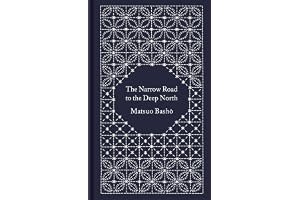
The Narrow Road to the Deep North and Other Travel Sketches (Yuasa)
Matsuo Basho, Nobuyuki Yuasa
4.2
In later life Basho turned to Zen Buddhism, and the travel sketched in this volume relfect his attempts to cast off earthly attachments and reach out to spiritual fulfillment. The sketches are written in the "haibun" style--a linking of verse and prose. The title piece, in particular, reveals Basho striving to discover a vision of eternity in the transient world around him and his personal evocation of the mysteries of the universe.
He was a 17th century haiku poet, and this is the record of his journey through the Japanese countryside. It’s a very beautiful travelogue. [source]
Cover unavailable
62
The Setting Sun
Osamu Dazai
4.2
The post-war period in Japan was one of immense social change as Japanese society adjusted to the shock of defeat and to the occupation of Japan by American forces and their allies. Osamu Dazai’s The Setting Sun takes this milieu as its background to tell the story of the decline of a minor aristocratic family.
The story is told through the eyes of Kazuko, the unmarried daughter of a widowed aristocrat. Her search for self meaning in a society devoid of use for her forms the crux of Dazai’s novel. It is a sad story, and structurally is a novel very much within the confines of the Japanese take on the novel in a way reminiscent of authors such as Nobel Prize winner Yasunari Kawabata – the social interactions are peripheral and understated, nuances must be drawn, and for readers more used to Western novelistic forms this comes across as being rather wishy-washy.
Kazuko’s mother falls ill, and due to their financial circumstances they are forced to take a cottage in the countryside. Her brother, who became addicted to opium during the war is missing. When he returns, Kazuko attempts to form a liaison with the novelist Uehara. This romantic displacement only furthers to deepen her alienation from society.
…
Cover unavailable
63
Runaway Horses
Yukio Mishima
4.2
Yukio Mishima’s Runaway Horses is the second novel in his masterful tetralogy, The Sea of Fertility. Again we encounter Shigekuni Honda, who narrates this epic tale of what he believes are the successive reincarnations of his childhood friend Kiyoaki Matsugae. In 1932, Shigeuki Honda has become a judge in Osaka. Convinced that a young rightist revolutionary, Isao, is the reincarnation of his friend Kiyoaki, Honda commits himself to saving the youth from an untimely death. Isao, driven to patriotic fanaticism by a father who instilled in him the ethos of the ancient samurai, organizes a violent plot against the new industrialists who he believes are usurping the Emperor’s rightful power and threatening the very integrity of the nation. Runaway Horses is the chronicle of a conspiracy — a novel about the roots and nature of Japanese fanaticism in the years that led to war.
…
Cover unavailable
64
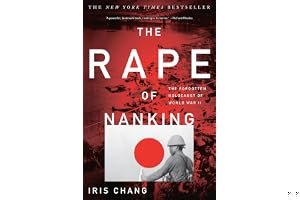
The Rape of Nanking
Iris Chang
4.2
In December 1937, the Japanese army invaded the ancient city of Nanking, systematically raping, torturing, and murdering more than 300,000 Chinese civilians.
This book tells the story from three perspectives: of the Japanese soldiers who performed it, of the Chinese civilians who endured it, and of a group of Europeans and Americans who refused to abandon the city and were able to create a safety zone that saved many.
…
Cover unavailable
65
Hombres sin mujeres
Haruki Murakami
4.1
Haruki Murakami ofrece a los lectores siete relatos en torno al aislamiento y la soledad que preceden o siguen a la relación amorosa: hombres que han perdido a una mujer, o cuya relación ha estado marcada por el desencuentro, asisten inermes al regreso de los fantasmas del pasado, viven el enamoramiento como una enfermedad letal, son incapaces de establecer una comunicación plena con la pareja, o ven extrañamente interrumpida su historia de amor. Otros experimentan atormentados amores no correspondidos o, incluso, como en el relato protagonizado por una metamorfosis kafkiana, desconocen todavía los mecanismos del afecto y del sexo. Sin embargo, las verdaderas protagonistas de estos relatos —llenos de guiños a los Beatles, el jazz, Kafka, Las mil y una noches o, en el caso del título, Hemingway—, son ellas, las mujeres, que, misteriosas, irrumpen en la vida de los hombres para desaparecer, dejando una huella imborrable en la vida de aquellos que las han amado, o de los que, al menos, intentaron amarlas.
…
Cover unavailable
66
In the Miso Soup
Ryu Murakami and Ralph McCarthy
4.1
It is just before New Year's. Frank, an overweight American tourist, has hired Kenji to take him on a guided tour of Tokyo's sleazy nightlife on three successive evenings. But Frank's behavior is so strange that Kenji begins to entertain a horrible suspicion: that his new client is in fact the serial killer currently terrorizing the city. It isn't until later, however, that Kenji learns exactly how much he has to fear and how irrevocably his encounter with this great white whale of an American will change his life.
…
Cover unavailable
67
A Geek in Japan: Discovering the Land of Manga, Anime, Zen, and the Tea Ceremony
Hector Garcia
4.1
For every fan of manga, anime, J-pop, or Zen, A Geek in Japan is a hip, smart and concise guide to the land that is their source.
Comprehensive and well informed, it covers a wide array of topics in short articles accompanied by sidebars and numerous photographs, providing a lively digest of the society and culture of Japan. Designed to appeal to the generations of Westerners who grew up on Pokemon, manga and video games, A Geek in Japan reinvents the culture guide for readers in the Internet age.
Spotlighting the originality and creativity of the Japanese, debunking myths about them, and answering nagging questions like why they're so fond of robots, author Hector Garcia has created the perfect book for the growing ranks of Japanophiles in this inspired, insightful and highly informative guide.
This is the book I've given most often as a gift because I’m fascinated with understanding the mindset of a place. [source]
Cover unavailable
68
Rashōmon and Seventeen Other Stories
Ryunosuke Akutagawa, Yoshihiro Tatsumi, Jay Rubin, Haruki Murakami
4.1
This collection features a brilliant new translation of the Japanese master's stories, from the source for the movie Rashōmon to his later, more autobiographical writings.
Ryūnosuke Akutagawa (1892-1927) is one of Japan’s foremost stylists - a modernist master whose short stories are marked by highly original imagery, cynicism, beauty and wild humour. ‘Rashōmon’ and ‘In a Bamboo Grove’ inspired Kurosawa’s magnificent film and depict a past in which morality is turned upside down, while tales such as ‘The Nose’, ‘O-Gin’ and ‘Loyalty’ paint a rich and imaginative picture of a medieval Japan peopled by Shoguns and priests, vagrants and peasants. And in later works such as ‘Death Register’, ‘The Life of a Stupid Man’ and ‘Spinning Gears’, Akutagawa drew from his own life to devastating effect, revealing his intense melancholy and terror of madness in exquisitely moving impressionistic stories.
A WORLD IN DECAY - Rashōmon - In a Bamboo Grove - The Nose - Dragon: The Old Potter's Tale - The Spider Thread - Hell Screen UNDER THE SWORD - Dr. Ogata Ryōsai: Memorandum - O-Gin - Loyalty MODERN TRAGICOMEDY - The Story of a Head That Fell Off - Green Onions - Horse Legs AKUTAGAWA'S OWN STORY - Daidōji Shinsuke: The Early Years - The Writer's Craft - The Baby's Sickness - Death Register - The Life of a Stupid Man - Spinning Gears
…
Cover unavailable
69
Japanese Stories for Language Learners: Bilingual Stories in Japanese and English (MP3 Audio Disc Included)
Anne McNulty
4.1
A great story can lead a reader down a rabbit hole of discovery--especially if it's presented in two languages! Beautifully illustrated in a traditional style, Japanese Stories for Language Learners offers five compelling stories with Japanese and English language versions appearing on facing pages. Taking learners on an exciting cultural and linguistic journey, each story is followed by detailed translator's notes, vocabulary lists, and grammar points along with a set of discussion questions and exercises. The first two are very famous traditional folktales: Urashima Taro (Tale of a Fisherman) and Yuki Onna (The Snow Woman). These are followed by three short stories by notable 20th century authors: Kumo no Ito (The Spider's Thread) by Akutagawa Ryunosuke (1892u1927), Oborekaketa Kyodai (The Siblings Who Almost Drowned) by Arishima Takeo (1878u1923), and Serohiki no Goshu (Gauche the Cellist) by Miyazawa Kenji (1896-1933). The latter stories are unabridged and unedited except for the addition of furigana pronunciations above the kanji characters.
Reading these stories in the original Japanese--and hearing native-speakers read them aloud in the accompanying free audio recording--helps students at every level deepen their comprehension of the beauty and subtlety of the Japanese language.
…
Cover unavailable
70
A Personal Matter
Kenzaburo Oë, John Nathan
4.1
Kenzaburō Ōe, the winner of the 1994 Nobel Prize for Literature, is internationally acclaimed as one of the most important and influential post-World War II writers, known for his powerful accounts of the atomic bombing of Hiroshima and his own struggle to come to terms with a mentally handicapped son. The Swedish Academy lauded Ōe for his "poetic force [that] creates an imagined world where life and myth condense to form a disconcerting picture of the human predicament today."
His most personal book, A Personal Matter, is the story of Bird, a frustrated intellectual in a failing marriage whose utopian dream is shattered when his wife gives birth to a brain-damaged child.
…
Cover unavailable
71
Japanese From Zero! 1: Proven Methods to Learn Japanese with integrated Workbook and Online Support
George Trombley and Yukari Takenaka
4.1
Japanese From Zero is an innovative and integrated approach to learning Japanese developed by professional Japanese interpreter George Trombley and co-writer Yukari Takenaka. The lessons and techniques used in this series have been taught successfully for over ten years in classrooms throughout the world.Using up-to-date and easy-to-grasp grammar, Japanese From Zero is the perfect course for current students of Japanese as well as absolute beginners.In Book 1 of the Japanese From Zero series, readers are taught new grammar concepts, over 800 new words and expressions, and also learn the hiragana writing system.Features of Book 1: • Integrated Workbook with Answer Key* Over 800 New Words and Expressions* Learn to Read and Write Hiragana* Easy-to-Understand Example Dialogues* Culture Points about Japan* Bilingual Glossaries with Kana and Romaji...and much more
…
Cover unavailable
72
Hokkaido Highway Blues: Hitchhiking Japan
Will Ferguson
4.1
It had never been done before. Not in 4000 years of Japanese recorded history had anyone followed the Cherry Blossom Front from one end of the country to the other. Nor had anyone hitchhiked the length of Japan. But, heady on sakura and sake, Will Ferguson bet he could do both. The resulting travelogue is one of the funniest and most illuminating books ever written about Japan. And, as Ferguson learns, it illustrates that to travel is better than to arrive.
…
Cover unavailable
73
The Strange Library
Haruki Murakami, Ted Goossen
4.1
From internationally acclaimed author Haruki Murakami—a fantastical illustrated short novel about a boy imprisoned in a nightmarish library. Opening the flaps on this unique little book, readers will find themselves immersed in the strange world of best-selling Haruki Murakami's wild imagination. The story of a lonely boy, a mysterious girl, and a tormented sheep man plotting their escape from a nightmarish library, the book is like nothing else Murakami has written. Designed by Chip Kidd and fully illustrated, in full color, throughout, this small format, 96 page volume is a treat for book lovers of all ages.
…
Cover unavailable
74
A Pale View of Hills
Kazuo Ishiguro
4.1
In his highly acclaimed debut, A Pale View of Hills, Kazuo Ishiguro tells the story of Etsuko, a Japanese woman now living alone in England, dwelling on the recent suicide of her daughter. Retreating into the past, she finds herself reliving one particular hot summer in Nagasaki, when she and her friends struggled to rebuild their lives after the war. But then as she recalls her strange friendship with Sachiko - a wealthy woman reduced to vagrancy - the memories take on a disturbing cast.
…
Cover unavailable
75
Beauty and Sadness
Yasunari Kawabata, Howard S. Hibbett
4.1
Beauty and Sadness (Japanese: 美しさと哀しみと Utsukushisa to kanashimi to) is a 1964 novel by Japanese Nobel Prize winning author Yasunari Kawabata.
Opening on the train to Kyoto, the narrative, in characteristic Kawabata fashion, subtly brings up issues of tradition and modernity as it explores writer Oki Toshio's reunion with a young lover from his past, Otoko Ueno, who is now a famous artist and recluse. Ueno is now living with her protegée and a jealous lover, Keiko Sakami, and the unfolding relationships between Oki, Otoko, and Keiko form the plot of the novel. Keiko states several times that she will avenge Otoko for Oki's abandonment, and the story coalesces into a climactic ending.
…
Cover unavailable
76
Grass for His Pillow (Tales of the Otori, #2)
Lian Hearn
4.1
Praised for its epic scope and descriptive detail, Across the Nightingale Floor, the first book in the Tales of the Otori series, was an international bestseller and critical success, named by the London Times as "the most compelling novel to have been published this year." With Grass for His Pillow, Book Two, we return to the medieval Japan of Lian Hearn's creation—a land of harsh beauty and deceptive appearances.In a complex social hierarchy, amid dissembling clans and fractured allegiances, there is no place for passionate young love. The orphan Takeo has been condemned to work as an assassin—an enforced occupation that his father sacrificed his own life to escape. Meanwhile, Takeo’s beloved Shirakawa Kaede, heir to the Murayama and alone in the world, must find a way to unify the domain she has inherited, as she fights off the advances of would-be suitors and hopes against fading hope that Takeo will return to her...
…
Cover unavailable
77
Killing Commendatore
Haruki Murakami
4.1
The epic new novel from the internationally acclaimed and best-selling author of 1Q84
In Killing Commendatore, a thirty-something portrait painter in Tokyo is abandoned by his wife and finds himself holed up in the mountain home of a famous artist, Tomohiko Amada. When he discovers a previously unseen painting in the attic, he unintentionally opens a circle of mysterious circumstances. To close it, he must complete a journey that involves a mysterious ringing bell, a two-foot-high physical manifestation of an Idea, a dapper businessman who lives across the valley, a precocious thirteen-year-old girl, a Nazi assassination attempt during World War II in Vienna, a pit in the woods behind the artist’s home, and an underworld haunted by Double Metaphors. A tour de force of love and loneliness, war and art—as well as a loving homage to The Great Gatsby—Killing Commendatore is a stunning work of imagination from one of our greatest writers.
…
Cover unavailable
78
Confessions
Kanae Minato, Stephen Snyder
4.1
HER PUPILS KILLED HER DAUGHTER. NOW, SHE WILL HAVE HER REVENGE.
After calling off her engagement in wake of a tragic revelation, Yuko Moriguchi had nothing to live for except her only child, four-year-old Manami. Now, following an accident on the grounds of the middle school where she teaches, Yuko has given up and tendered her resignation.
But first she has one last lecture to deliver. She tells a story that upends everything her students ever thought they knew about two of their peers, and sets in motion a maniacal plot for revenge.
Narrated in alternating voices, with twists you'll never see coming, Confessions explores the limits of punishment, despair, and tragic love, culminating in a harrowing confrontation between teacher and student that will place the occupants of an entire school in danger. You'll never look at a classroom the same way again.
…
Cover unavailable
79
My Year of Meats
Ruth Ozeki
4.1
In a single eye-opening year, two women, worlds apart, experience parallel awakenings. In New York, Jane Takagi-Little has landed a job producing Japanese docu-soap My American Wife! But as she researches the consumption of meat in the American home, she begins to realize that her ruthless search for a story is deeply compromising her morals. Meanwhile, in Tokyo, housewife Akiko Ueno diligently prepares the recipes from Jane's programme. Struggling to please her husband, she increasingly doubts her commitment to the life she has fallen into. As Jane and Akiko both battle to assert their individuality on opposite sides of the globe, they are drawn together in a startling story of strength, courage, love.
…
Recommended by Louise Gray.
Louise Gray
It makes you think about why we eat meat; a lot of it is because of cultural reasons [source]
Cover unavailable
80
The Old Capital
Yasunari Kawabata, J. Martin Holman
4.0
The Old Capital is one of the three novels cited specifically by the Nobel Committee when they awarded Kawabata the Nobel Prize for Literature in 1968. With the ethereal tone and aesthetic styling characteristic of Kawabata's prose, The Old Capital tells the story of Chieko, the adopted daughter of a Kyoto kimono designer, Takichiro, and his wife, Shige.
Set in the traditional city of Kyoto, Japan, this deeply poetic story revolves around Chieko who becomes bewildered and troubled as she discovers the true facets of her past. With the harmony and time-honored customs of a Japanese backdrop, the story becomes poignant as Chieko’s longing and confusion develops.
…
Cover unavailable
81
The Guest Cat
Takashi Hiraide, Eric Selland
4.0
A bestseller in France and winner of Japan’s Kiyama Shohei Literary Award, The Guest Cat, by the acclaimed poet Takashi Hiraide, is a subtly moving and exceptionally beautiful novel about the transient nature of life and idiosyncratic but deeply felt ways of living. A couple in their thirties live in a small rented cottage in a quiet part of Tokyo; they work at home, freelance copy-editing; they no longer have very much to say to one another. But one day a cat invites itself into their small kitchen. It leaves, but the next day comes again, and then again and again. Soon they are buying treats for the cat and enjoying talks about the animal and all its little ways. Life suddenly seems to have more promise for the husband and wife — the days have more light and color. The novel brims with new small joys and many moments of staggering poetic beauty, but then something happens….
As Kenzaburo Oe has remarked, Takashi Hiraide’s work "really shines." His poetry, which is remarkably cross-hatched with beauty, has been acclaimed here for "its seemingly endless string of shape-shifting objects and experiences,whose splintering effect is enacted via a unique combination of speed and minutiae."
…
Cover unavailable
82
Revenge
James Patterson
4.0
From the author of Sunday Times no. 1 bestseller, The President is Missing.
MURDER
Former SAS soldier David Shelley was part of the most covert operations team in the special forces. Now settling down to civilian life in London, he has plans for a safer and more stable existence. But the shocking death of a young woman Shelley once helped protect puts those plans on hold.
BETRAYAL
The police rule the death a suicide but the grieving parents can't accept their beloved Emma would take her own life. They need to find out what really happened, and they turn to their former bodyguard, Shelley, for help.
REVENGE
When they discover that Emma had fallen into a dark and seedy world of drugs and online pornography, the father demands retribution.
But his desire for revenge will make enemies of people that even Shelley may not be able to protect them from, and take them into a war from which there may be no escape.
…
Cover unavailable
83
Hagakure: The Book of the Samurai
Yamamoto Tsunetomo, William Scott Wilson
4.0
Hagakure ("In the Shadow of Leaves") is a manual for the samurai classes consisting of a series of short anecdotes and reflections that give both insight and instruction-in the philosophy and code of behavior that foster the true spirit of Bushido-the Way of the Warrior. It is not a book of philosophy as most would understand the word: it is a collection of thoughts and sayings recorded over a period of seven years, and as such covers a wide variety of subjects, often in no particular sequence. The work represents an attitude far removed from our modern pragmatism and materialism, and possesses an intuitive rather than rational appeal in its assertion that Bushido is a Way of Dying, and that only a samurai retainer prepared and willing to die at any moment can be totally true to his lord. While Hagakure was for many years a secret text known only to the warrior vassals of the Hizen fief to which the author belonged, it later came to be recognized as a classic exposition of samurai thought and came to influence many subsequent generations, including Yukio Mishima. This translation offers 300 selections that constitute the core texts of the 1,300 present in the original. Hagakure was featured prominently in the film Ghost Dog, by Jim Jarmusch.
…
Cover unavailable
84
The Memory Police
Yoko Ogawa and Stephen Snyder
4.0
* 2019 NATIONAL BOOK AWARD FINALIST * * NEW YORK TIMES 100 NOTABLE BOOKS OF THE YEAR •
A haunting Orwellian novel about the terrors of state surveillance, from the acclaimed author of The Housekeeper and the Professor.
On an unnamed island off an unnamed coast, objects are disappearing: first hats, then ribbons, birds, roses--until things become much more serious. Most of the island's inhabitants are oblivious to these changes, while those few imbued with the power to recall the lost objects live in fear of the draconian Memory Police, who are committed to ensuring that what has disappeared remains forgotten.
When a young woman who is struggling to maintain her career as a novelist discovers that her editor is in danger from the Memory Police, she concocts a plan to hide him beneath her floorboards. As fear and loss close in around them, they cling to her writing as the last way of preserving the past.
A surreal, provocative fable about the power of memory and the trauma of loss, The Memory Police is a stunning new work from one of the most exciting contemporary authors writing in any language.
This engaging series of childhood recollections tells about an ideal school in Tokyo during World War II that combined learning with fun, freedom, and love. This unusual school had old railroad cars for classrooms, and it was run by an extraordinary man-its founder and headmaster, Sosaku Kobayashi--who was a firm believer in freedom of expression and activity.
In real life, the Totto-chan of the book has become one of Japan's most popular television personalities--Tetsuko Kuroyanagi. She attributes her success in life to this wonderful school and its headmaster.
The charm of this account has won the hearts of millions of people of all ages and made this book a runaway bestseller in Japan, with sales hitting the 4.5 million mark in its first year.
The book has sold something like 5 million copies in Japan alone (an insane number). Totto-Chan is a special figure in modern Japanese culture—she is a celebrity on par with Oprah or Ellen, with a magazine, news show and exalted position to boot. The book describes a childhood in pre-WWII Japan as a poorly misunderstood girl who obviously suffered from attention disorders and excess energy. It wasn’t until she met a special school principal—unlike any I have ever heard of—who finally GOT her. And I mean understood and cared about and unconditionally supported her in a way that both inspires me and makes me deeply jealous. If only all of us could be so lucky… [source]
Cover unavailable
86
The Chrysanthemum and the Sword: Patterns of Japanese Culture
Ruth Benedict
4.0
A recognized classic of cultural anthropology, this book explores the political, religious, and economic life of Japan from the seventh century through the mid-twentieth, as well as personal family life.
Cover unavailable
87
Ring (Ring, #1)
Koji Suzuki, Glynne Walley
4.0
A mysterious videotape warns that the viewer will die in one week unless a certain, unspecified act is performed. Exactly one week after watching the tape, four teenagers die one after another of heart failure.
Asakawa, a hardworking journalist, is intrigued by his niece's inexplicable death. His investigation leads him from a metropolitan tokyo teeming with modern society's fears to a rural Japan--a mountain resort, a volcanic island, and a countryside clinic--haunted by the past. His attempt to solve the tape's mystery before it's too late--for everyone--assumes an increasingly deadly urgency. Ring is a chillingly told horror story, a masterfully suspenseful mystery, and post-modern trip.
…
Cover unavailable
88
Stupeur et tremblements
Amelie Nothomb, A Nothomb, et al.
4.0
This is an alternate cover edition for isbn13: 9782253150718
Au début des années 90, la narratrice est embauchée par Yumimoto, une puissante firme japonaise. Elle va découvrir à ses dépens l'implacable rigeur de l'autorité d'entreprise, en même temps qu les codes de conduite, incompréhensibles au profane, qui gouvernent la vie sociale au pays du Soleil levant.
D'erreurs en maladresses et en échecs, commence alors pour elle, comme dans un mauvais rêve, la descente inexorable dans les degrés de la hiérarchie, jusqu'au rang de surveillante des toilettes, celui de l'humiliation dernière. Une course absurde vers l'abîme - image de la vie -, où l'humour percutant d'Amélie Nothomb fait mouche à chaque ligne.
Entre le rire et l'angoisse, cette satire des nouveaux despotismes aux échos kafkaïens a conquis un immense public et valu à l'auteur d'Hygiène de l'assassin le Grand Prix du roman de l'Académie française en 1999.
…
Cover unavailable
89
Goodbye Tsugumi
Banana Yoshimoto, Michael Emmerich
4.0
Banana Yoshimoto's novels of young life in Japan have made her an international sensation. Goodbye Tsugumi is an offbeat story of a deep and complicated friendship between two female cousins that ranks among her best work. Maria is the only daughter of an unmarried woman. She has grown up at the seaside alongside her cousin Tsugumi, a lifelong invalid, charismatic, spoiled, and occasionally cruel. Now Maria's father is finally able to bring Maria and her mother to Tokyo, ushering Maria into a world of university, impending adulthood, and a "normal" family. When Tsugumi invites Maria to spend a last summer by the sea, a restful idyll becomes a time of dramatic growth as Tsugumi finds love and Maria learns the true meaning of home and family. She also has to confront both Tsugumi's inner strength and the real possibility of losing her. Goodbye Tsugumi is a beguiling, resonant novel from one of the world's finest young writers.
…
Cover unavailable
90
Black Rain
Masuji Ibuse, John Bester
4.0
Black Rain is a novel by Japanese author Masuji Ibuse. Ibuse began serializing Black Rain in the magazine Shincho in January 1965. The novel is based on historical records of the devastation caused by the atomic bombing of Hiroshima.
Cover unavailable
91
The Street of a Thousand Blossoms
Gail Tsukiyama
4.0
"Just remember," Yoshio said quietly to his grandsons. "Every day of your lives, you must always be sure what you're fighting for."
It is Tokyo in 1939. On the Street of a Thousand Blossoms, two orphaned brothers are growing up with their loving grandparents, who inspire them to dream of a future firmly rooted in tradition. The older boy, Hiroshi, shows unusual skill at the national obsession of sumo wrestling, while Kenji is fascinated by the art of creating hard-carved masks for actors in the Noh theater. Across town, a renowned sumo master, Sho Tanaka, lives with his wife and their two young daughters: the delicate, daydreaming Aki and her independent sister, Haru. Life seems full of promise as Kenji begins an informal apprenticeship with the most famous mask-maker in Japan and Hiroshi receives a coveted invitation to train with Tanaka. But then Pearl Harbor changes everything. As the ripples of war spread to both families' quiet neighborhoods, all of the generations must put their dreams on hold---and then find their way in a new Japan. In an exquisitely moving story that spans almost thirty years, Gail Tsukiyama draws us irresistibly into the world of the brothers and the women who love them. It is a world of tradition and change, of heartbreaking loss and surprising hope, and of the impact of events beyond their control on ordinary, decent men and women. Above all, The Street of a Thousand Blossoms is a masterpiece about love and family from a glorious storyteller at the height of her powers.
…
Cover unavailable
92
Sadako and the Thousand Paper Cranes
Eleanor Coerr and Ronald Himle
4.0
Hiroshima-born Sadako is lively and athletic--the star of her school's running team. And then the dizzy spells start. Soon gravely ill with leukemia, the "atom bomb disease," Sadako faces her future with spirit and bravery. Recalling a Japanese legend, Sadako sets to work folding paper cranes. For the legend holds that if a sick person folds one thousand cranes, the gods will grant her wish and make her healthy again. Based on a true story, Sadako and the Thousand Paper Cranes celebrates the extraordinary courage that made one young woman a heroine in Japan.
…
Cover unavailable
93
Asleep
Banana Yoshimoto, Michael Emmerich
4.0
Banana Yoshimoto has a magical ability to animate the lives of her young characters, and here she spins the stories of three women, all bewitched into a spiritual sleep. One, mourning a lost lover, finds herself sleepwalking at night. Another, who has embarked on a relationship with a man whose wife is in a coma, finds herself suddenly unable to stay awake. A third finds her sleep haunted by another woman whom she was once pitted against in a love triangle. Sly and mystical as a ghost story, with a touch of Kafkaesque surrealism, Asleep is an enchanting book from one of the best writers in contemporary international fiction.
…
Cover unavailable
94
Genki 1 2 , Learning Japanese for Beginners 4 Book Bundle Set , An Integrated Course in Elementary Workbook and Textbook With Original Sticky Notes
Eri Banno, Yoko Ikeda, et al.
4.0
Cover unavailable
95
I'm Learning Japanese!: Learn to Speak, Read and Write the Basics
Christian Galan and Florence Lerot-Calvo
4.0
Cover unavailable
96
The Decay of the Angel
Yukio Mishima
4.0
As the dramatic climax of The Sea of Fertility, 'The Decay of the Angel' brings together the dominant themes of the three previous novels- the meaning and decay of Japan's courtly tradition and samurai ideal; the essence and value of Buddhist philosophy and aesthetics; and, underlying all, Mishima's apocalyptic vision of the modern era, which saw the dissolution of the moral and cultural forces that throughout the ages nourished a people and a world. The time is the late 1960s. Honda, now an aged and wealthy man, discovers and adopts a sixteen-year-old orphan, Toru, as his heir, identifying him with the tragic protagonists of the three previous novels, each of whom died at the age of twenty. Honda raises and educates the boy, yet watches him, waiting.
…
Cover unavailable
97
1Q84 (1Q84, #3)
Haruki Murakami
4.0
1949年にジョージ・オーウェルは、近未来小説としての『1984』を刊行した。
そして2009年、『1Q84』は逆の方向から1984年を描いた近過去小説である。
そこに描かれているのは「こうであったかもしれない」世界なのだ。
私たちが生きている現在が、「そうではなかったかもしれない」世界であるのと、ちょうど同じように。
Cover unavailable
98
Lost Japan
Alex Kerr
4.0
An enchanting and fascinating insight into Japanese landscape, culture, history and future.
Originally written in Japanese, this passionate, vividly personal book draws on the author's experiences in Japan over thirty years. Alex Kerr brings to life the ritualized world of Kabuki, retraces his initiation into Tokyo's boardrooms during the heady Bubble Years, and tells the story of the hidden valley that became his home.
But the book is not just a love letter. Haunted throughout by nostalgia for the Japan of old, Kerr's book is part paean to that great country and culture, part epitaph in the face of contemporary Japan's environmental and cultural destruction.
Winner of Japan's 1994 Shincho Gakugei Literature Prize.
Alex Kerr is an American writer, antiques collector and Japanologist. Lost Japan is his most famous work. He was the first foreigner to be awarded the Shincho Gakugei Literature Prize for the best work of non-fiction published in Japan.
…
Cover unavailable
99
Brilliance of the Moon (Tales of the Otori, #3)
Lian Hearn
4.0
A beautiful, haunting evocation of the medieval Japan of Lian Hearn's imagination, this thrilling follow-up to Grass for His Pillow and Across the Nightingale Floor delves deeper into the complex loyalties that bind its characters from birth. Filled with adventure and surprising twists of plot and fortune, this final volume travels beyond the Three Countries, to the outside influences that threaten to intrude upon this isolated realm.
…
Cover unavailable
100
Grotesque
Natsuo Kirino, Rebecca Copeland
4.0
Tokyo prostitutes Yuriko and Kazue have been brutally murdered, their deaths leaving a wake of unanswered questions about who they were, who their murderer is, and how their lives came to this end. As their stories unfurl in an ingeniously layered narrative, coolly mediated by Yuriko’s older sister, we are taken back to their time in a prestigious girls’ high school—where a strict social hierarchy decided their fates — and follow them through the years as they struggle against rigid societal conventions.
Shedding light on the most hidden precincts of Japanese society today, Grotesque is both a psychological investigation into the female psyche and a work of noir fiction that confirms Natsuo Kirino’s electrifying gifts.