We've ranked the best iraq war books using expert recommendations, sales data, and millions of reader ratings. At Shortform, we know books. Our book guides are the best in the world. Learn why.
Cover unavailable
1
Extreme Ownership: How U.S. Navy Seals Lead and Win
An updated edition of the blockbuster bestselling leadership book that took America and the world by storm, two U.S. Navy SEAL officers who led the most highly decorated special operations unit of the Iraq War demonstrate how to apply powerful leadership principles from the battlefield to business and life.
Combat, the most intense and dynamic environment imaginable, teaches the toughest leadership lessons, with absolutely everything at stake. Jocko Willink and Leif Babin learned this reality first-hand on the most violent and dangerous battlefield in Iraq. As leaders of SEAL Team Three's Task Unit Bruiser, their mission was one many thought impossible: help U.S. forces secure Ramadi, a violent, insurgent-held city deemed "all but lost." In gripping, firsthand accounts of heroism, tragic loss, and hard-won victories, they learned that leadership--at every level--is the most important factor in whether a team succeeds or fails.
Willink and Babin returned home from deployment and instituted SEAL leadership training to pass on their harsh lessons learned in combat to help forge the next generation of SEAL leaders. After leaving the SEAL Teams, they launched a company, Echelon Front, to teach those same leadership principles to leaders in businesses, companies, and organizations across the civilian sector. Since that time, they have trained countless leaders and worked with hundreds of companies in virtually every industry across the U.S. and internationally, teaching them how to develop their own high-performance teams and most effectively lead those teams to dominate their battlefields.
Since it's release in October 2015, Extreme Ownership has revolutionized leadership development and set a new standard for literature on the subject. Required reading for many of the most successful organizations, it has become an integral part of the official leadership training programs for scores of business teams, military units, and first responders. Detailing the mindset and principles that enable SEAL units to accomplish the most difficult combat missions, Extreme Ownership demonstrates how to apply them to any team or organization, in any leadership environment. A compelling narrative with powerful instruction and direct application, Extreme Ownership challenges leaders everywhere to fulfill their ultimate purpose: lead and win.
Jocko is also the co-author of Extreme Ownership: How U.S. Navy SEALs Lead and Win — which I loved. [source]
Roger Ailes
CEO/Fox News
This is the SEAL Leadership book we have been waiting for. Poignant, powerful, practical. A must read for every leader. [source]
Cover unavailable
2
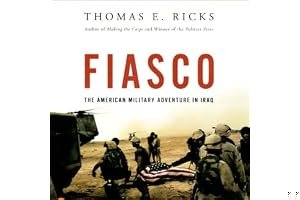
Fiasco: The American Military Adventure in Iraq
Thomas E. Ricks
5.0
This is the Story of The American Military Adventure in Iraq. The Heart of the story Fiasco has to tell, which has never been told before, is that of a Military occupation whose leaders failed to see a blooming insurgency for what it was and as a result lead their soldiers in such a way that the insurgency became inevitable.
Recommended by Bryan Callen, Jeremy Greenstock, and Patrick Cockburn.
Bryan Callen recommended this book on the podcast "The Tim Ferriss Show". [source]
Jeremy Greenstock
Ricks writes fluently and eloquently. His book shows what the Americans thought about Iraq, and what they thought the Iraqis thought. [source]
Patrick Cockburn
When you read about Iraq, you need to know that it is a country more divided than almost anywhere else in the world. [source]
Cover unavailable
3
The Forever War
Dexter Filkins
4.7
From the front lines of the battle against Islamic fundamentalism, a searing, unforgettable book that captures the human essence of the greatest conflict of our time.
Through the eyes of Dexter Filkins, the prizewinning New York Times correspondent whose work was hailed by David Halberstam as “reporting of the highest quality imaginable,” we witness the remarkable chain of events that began with the rise of the Taliban in the 1990s, continued with the attacks of 9/11, and moved on to the wars in Afghanistan and Iraq.
Filkins’s narrative moves across a vast and various landscape of amazing characters and astonishing scenes: deserts, mountains, and streets of carnage; a public amputation performed by Taliban; children frolicking in minefields; skies streaked white by the contrails of B-52s; a night’s sleep in the rubble of Ground Zero.
We embark on a foot patrol through the shadowy streets of Ramadi, venture into a torture chamber run by Saddam Hussein. We go into the homes of suicide bombers and into street-to-street fighting with a battalion of marines. We meet Iraqi insurgents, an American captain who loses a quarter of his men in eight days, and a young soldier from Georgia on a rooftop at midnight reminiscing about his girlfriend back home. A car bomb explodes, bullets fly, and a mother cradles her blinded son.
Like no other book, The Forever War allows us a visceral understanding of today’s battlefields and of the experiences of the people on the ground, warriors and innocents alike. It is a brilliant, fearless work, not just about America’s wars after 9/11, but ultimately about the nature of war itself.
…
Recommended by Kanan Makiya.
Kanan Makiya
Iraq is a country with a particularly violent history of formation. In this book you capture a flavour of some of the human complexity that history left behind. [source]
Cover unavailable
4
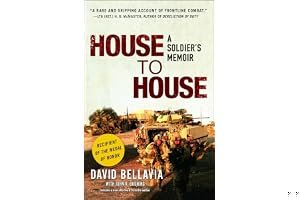
House to House: An Epic Memoir of War
David Bellavia, John Bruning
4.7
One of the great heroes of the Iraq War, Staff Sergeant David Bellavia captures the brutal action and raw intensity of leading his Third Platoon, Alpha Company, into a lethally choreographed kill zone: the booby-trapped, explosive-laden houses of Fallujah's militant insurgents. Bringing to searing life the terrifying intimacy of hand-to-hand infantry combat, this stunning war memoir features an indelibly drawn cast of characters, not all of whom would make it out of the city alive, as well as chilling accounts of Bellavia's singular courage: Entering one house alone, he used every weapon at his disposal in the fight of his life against America's most implacable enemy.
…
Cover unavailable
5
Generation Kill: Devil Dogs, Iceman, Captain America, and the New Face of American War
Evan Wright
4.6
Another nameless town, another target for First Recon. It's only five in the afternoon, but a sandtorm has plunged everything into a hellish twilight of murky, red dust. On rooftops, in alleyways lurk militiamen with machine guns, AK rifles and the odd rocket-propelled grenade. Artillery bombardment has shattered the town's sewers and rubble is piled up in lagoons of human excrement. It stinks. Welcome to Iraq...
Within hours of 9/11, America's war on terrorism fell to those like the 23 Marines of the First Recon Battalion, the first generation dispatched into open-ed combat since Vietnam. They were a new breed of American warrior unrecognizable to their forebears-soldiers raised on hip hop, Internet porn, Marilyn Manson, video games and The Real World, a band of born-again Christians, dopers, Buddhists, and New Agers who gleaned their precepts from kung fu movies and Oprah Winfrey. Cocky, brave, headstrong, wary, and mostly unprepared for the physical, emotional, and moral horrors ahead, the "First Suicide Battalion" would spearhead the blitzkrieg on Iraq, and fight against the hardest resistance Saddam had to offer. Generation Kill is the funny, frightening, and profane firsthand account of these remarkable men, of the personal toll of victory, and of the randomness, brutality, and camaraderie of a new American war.
…
Cover unavailable
6
American Sniper: The Autobiography of the Most Lethal Sniper in U.S. Military History
Chris Kyle
4.6
From 1999 to 2009, U.S. Navy SEAL Chris Kyle recorded the most career sniper kills in United States military history. The Pentagon has officially confirmed more than 150 of Kyle's kills (the previous American record was 109), but it has declined to verify the astonishing total number for this book. Iraqi insurgents feared Kyle so much they named him al-Shaitan (“the devil”) and placed a bounty on his head. Kyle earned legendary status among his fellow SEALs, Marines, and U.S. Army soldiers, whom he protected with deadly accuracy from rooftops and stealth positions. Gripping and unforgettable, Kyle’s masterful account of his extraordinary battlefield experiences ranks as one of the great war memoirs of all time.
A native Texan who learned to shoot on childhood hunting trips with his father, Kyle was a champion saddle-bronc rider prior to joining the Navy. After 9/11, he was thrust onto the front lines of the War on Terror, and soon found his calling as a world-class sniper who performed best under fire. He recorded a personal-record 2,100-yard kill shot outside Baghdad; in Fallujah, Kyle braved heavy fire to rescue a group of Marines trapped on a street; in Ramadi, he stared down insurgents with his pistol in close combat. Kyle talks honestly about the pain of war—of twice being shot and experiencing the tragic deaths of two close friends.
American Sniper also honors Kyles fellow warriors, who raised hell on and off the battlefield. And in moving first-person accounts throughout, Kyles wife, Taya, speaks openly about the strains of war on their marriage and children, as well as on Chris.
Adrenaline-charged and deeply personal, American Sniper is a thrilling eyewitness account of war that only one man could tell.
…
Cover unavailable
7
The Good Soldiers
David Finkel
4.6
It was the last-chance moment of the war. In January 2007, President George W. Bush announced a new strategy for Iraq. He called it the surge. “Many listening tonight will ask why this effort will succeed when previous operations to secure Baghdad did not. Well, here are the differences,” he told a skeptical nation. Among those listening were the young, optimistic army infantry soldiers of the 2-16, the battalion nicknamed the Rangers. About to head to a vicious area of Baghdad, they decided the difference would be them.
Fifteen months later, the soldiers returned home forever changed. Pulitzer Prize-winning Washington Post reporter David Finkel was with them in Bagdad, and almost every grueling step of the way.
What was the true story of the surge? And was it really a success? Those are the questions he grapples with in his remarkable report from the front lines. Combining the action of Mark Bowden’s Black Hawk Down with the literary brio of Tim O’Brien’s The Things They Carried, The Good Soldiers is an unforgettable work of reportage. And in telling the story of these good soldiers, the heroes and the ruined, David Finkel has also produced an eternal tale—not just of the Iraq War, but of all wars, for all time.
…
Cover unavailable
8
The Shock Doctrine: The Rise of Disaster Capitalism
In her ground-breaking reporting from Iraq, Naomi Klein exposed how the trauma of invasion was being exploited to remake the country in the interest of foreign corporations. She called it "disaster capitalism." Covering Sri Lanka in the wake of the tsunami, and New Orleans post-Katrina, she witnessed something remarkably similar. People still reeling from catastrophe were being hit again, this time with economic "shock treatment" losing their land and homes to rapid-fire corporate makeovers. The Shock Doctrine retells the story of the most dominant ideology of our time, Milton Friedman's free market economic revolution. In contrast to the popular myth of this movement's peaceful global victory, Klein shows how it has exploited moments of shock and extreme violence in order to implement its economic policies in so many parts of the world from Latin America and Eastern Europe to South Africa, Russia, and Iraq. At the core of disaster capitalism is the use of cataclysmic events to advance radical privatization combined with the privatization of the disaster response itself. By capitalizing on crises, created by nature or war, Klein argues that the disaster capitalism complex now exists as a booming new economy, and is the violent culmination of a radical economic project that has been incubating for fifty years.
…
Recommended by Donna Dickenson, George Monbiot, and Mat Whitecross.
Donna Dickenson
Naomi Klein’s argument is that capitalism actually requires deliberately engineered shocks to the economic systems. [source]
The Shock Doctrine explains some of the mechanisms by which patrimonial capital acquires power and enhances its wealth. It’s a brilliant piece of work, and one of those rare books that changes the way you perceive the world. [source]
Mat Whitecross
It starts with the theory that moments of crisis have been utilised by the right wing in the US and other countries to manipulate people into following their agenda. [source]
Cover unavailable
9
Black Hearts: One Platoon's Descent into Madness in Iraq's Triangle of Death
Jim Frederick
4.5
This is the story of a small group of soldiers from the 101st Airborne Division’s fabled 502nd Infantry Regiment—a unit known as “the Black Heart Brigade.” Deployed in late 2005 to Iraq’s so-called Triangle of Death, a veritable meat grinder just south of Baghdad, the Black Hearts found themselves in arguably the country’s most dangerous location at its most dangerous time.
Hit by near-daily mortars, gunfire, and roadside bomb attacks, suffering from a particularly heavy death toll, and enduring a chronic breakdown in leadership, members of one Black Heart platoon—1st Platoon, Bravo Company, 1st Battalion—descended, over their year-long tour of duty, into a tailspin of poor discipline, substance abuse, and brutality.
Four 1st Platoon soldiers would perpetrate one of the most heinous war crimes U.S. forces have committed during the Iraq War—the rape of a fourteen-year-old Iraqi girl and the cold-blooded execution of her and her family. Three other 1st Platoon soldiers would be overrun at a remote outpost—one killed immediately and two taken from the scene, their mutilated corpses found days later booby-trapped with explosives.
Black Hearts is an unflinching account of the epic, tragic deployment of 1st Platoon. Drawing on hundreds of hours of in-depth interviews with Black Heart soldiers and first-hand reporting from the Triangle of Death, Black Hearts is a timeless story about men in combat and the fragility of character in the savage crucible of warfare. But it is also a timely warning of new dangers emerging in the way American soldiers are led on the battlefields of the twenty-first century.
From the Hardcover edition.
…
Cover unavailable
10
The Looming Tower: Al-Qaeda and the Road to 9/11
Lawrence Wright
4.5
A sweeping narrative history of the events leading to 9/11, a groundbreaking look at the people and ideas, the terrorist plans and the Western intelligence failures that culminated in the assault on America. Lawrence Wright's remarkable book is based on five years of research and hundreds of interviews that he conducted in Egypt, Saudi Arabia, Pakistan, Afghanistan, Sudan, England, France, Germany, Spain, and the United States.
The Looming Tower achieves an unprecedented level of intimacy and insight by telling the story through the interweaving lives of four men: the two leaders of al-Qaeda, Osama bin Laden and Ayman al-Zawahiri; the FBI's counterterrorism chief, John O'Neill; and the former head of Saudi intelligence, Prince Turki al-Faisal.
As these lives unfold, we see revealed: the crosscurrents of modern Islam that helped to radicalize Zawahiri and bin Laden . . . the birth of al-Qaeda and its unsteady development into an organization capable of the American embassy bombings in Kenya and Tanzania and the attack on the USS Cole . . . O'Neill's heroic efforts to track al-Qaeda before 9/11, and his tragic death in the World Trade towers . . . Prince Turki's transformation from bin Laden's ally to his enemy . . . the failures of the FBI, CIA, and NSA to share intelligence that might have prevented the 9/11 attacks.
The Looming Tower broadens and deepens our knowledge of these signal events by taking us behind the scenes. Here is Sayyid Qutb, founder of the modern Islamist movement, lonely and despairing as he meets Western culture up close in 1940s America; the privileged childhoods of bin Laden and Zawahiri; family life in the al-Qaeda compounds of Sudan and Afghanistan; O'Neill's high-wire act in balancing his all-consuming career with his equally entangling personal life--he was living with three women, each of them unaware of the others' existence--and the nitty-gritty of turf battles among U.S. intelligence agencies.
Brilliantly conceived and written, The Looming Tower draws all elements of the story into a galvanizing narrative that adds immeasurably to our understanding of how we arrived at September 11, 2001. The richness of its new information, and the depth of its perceptions, can help us deal more wisely and effectively with the continuing terrorist threat.
…
Recommended by Audrey Kurth Cronin, Bryan Callen, Lloyd Gardner, and 5 others.
Audrey Kurth Cronin
Reading this one book gives you an excellent grasp of the human story and the context from which al-Qaeda emerged. [source]
Wright looks at the linkage between the Egyptian Jihad and Al-Qaeda. It is a worthwhile book to read to try to understand the whole problem. [source]
Cover unavailable
11
Tribe: On Homecoming and Belonging
Sebastian Junger
4.5
Sebastian Junger, the bestselling author of War and The Perfect Storm, takes a critical look at post-traumatic stress disorder and the many challenges today’s returning veterans face in modern society.
There are ancient tribal human behaviors-loyalty, inter-reliance, cooperation-that flare up in communities during times of turmoil and suffering. These are the very same behaviors that typify good soldiering and foster a sense of belonging among troops, whether they’re fighting on the front lines or engaged in non-combat activities away from the action. Drawing from history, psychology, and anthropology, bestselling author Sebastian Junger shows us just how at odds the structure of modern society is with our tribal instincts, arguing that the difficulties many veterans face upon returning home from war do not stem entirely from the trauma they’ve suffered, but also from the individualist societies they must reintegrate into.
A 2011 study by the Canadian Forces and Statistics Canada reveals that 78 percent of military suicides from 1972 to the end of 2006 involved veterans. Though these numbers present an implicit call to action, the government is only just taking steps now to address the problems veterans face when they return home. But can the government ever truly eliminate the challenges faced by returning veterans? Or is the problem deeper, woven into the very fabric of our modern existence? Perhaps our circumstances are not so bleak, and simply understanding that beneath our modern guises we all belong to one tribe or another would help us face not just the problems of our nation but of our individual lives as well.
Well-researched and compellingly written, this timely look at how veterans react to coming home will reconceive our approach to veteran’s affairs and help us to repair our current social dynamic.
To balance out that depressing book, I highly recommend David Brooks’ The Road To Character, Sebastian Junger’s Tribe and Chuck Klosterman’s What If We’re Wrong. [source]
Andrew Youderian
And finally, the book "Tribe" by Sebastian Junger reinforced in my the importance of relationships and in-person community, and made it something I'm trying to prioritize more in my life. [source]
Jason Kander
After years of people recommending it, I finally picked up Tribe by @SebastianJunger. I’m halfway done and it’s already the best non-fiction book I’ve read in years. [source]
Cover unavailable
12
One Bullet Away: The Making of a Marine Officer
Nathaniel Fick
4.5
A former captain in the Marines’ First Recon Battalion, who fought in Afghanistan and Iraq, reveals how the Corps trains its elite and offers a point-blank account of twenty-first-century battle.
If the Marines are “the few, the proud,” Recon Marines are the fewest and the proudest. Only one Marine in a hundred qualifies for Recon, charged with working clandestinely, often behind enemy lines. Fick’s training begins with a hellish summer at Quantico, after his junior year at Dartmouth, and advances to the pinnacle—Recon—four years later, on the eve of war with Iraq. Along the way, he learns to shoot a man a mile away, stays awake for seventy-two hours straight, endures interrogation and torture at the secretive SERE course, learns to swim with Navy SEALs, masters the Eleven Principles of Leadership, and much more.
His vast skill set puts him in front of the front lines, leading twenty-two Marines into the deadliest conflict since Vietnam. He vows he will bring all his men home safely, and to do so he’ll need more than his top-flight education. He’ll need luck and an increasingly clear vision of the limitations of his superiors and the missions they assign him. Fick unveils the process that makes Marine officers such legendary leaders and shares his hard-won insights into the differences between the military ideals he learned and military practice, which can mock those ideals. One Bullet Away never shrinks from blunt truths, but it is an ultimately inspiring account of mastering the art of war.
With profound emotional insight, especially into the effects of a hidden war on mothers and families at home, The Yellow Birds is a groundbreaking novel about the costs of war that is destined to become a classic.
"The war tried to kill us in the spring," begins this breathtaking account of friendship and loss. In Al Tafar, Iraq, twenty-one-year old Private Bartle and eighteen-year-old Private Murphy cling to life as their platoon launches a bloody battle for the city. In the endless days that follow, the two young soldiers do everything to protect each other from the forces that press in on every side: the insurgents, physical fatigue, and the mental stress that comes from constant danger.
Bound together since basic training when their tough-as-nails Sergeant ordered Bartle to watch over Murphy, the two have been dropped into a war neither is prepared for. As reality begins to blur into a hazy nightmare, Murphy becomes increasingly unmoored from the world around him and Bartle takes impossible actions.
With profound emotional insight, especially into the effects of a hidden war on mothers and families at home, The Yellow Birds a groundbreaking novel about the costs of war that is destined to become a classic.
…
Cover unavailable
14
The Lucky One
Nicholas Sparks
4.4
When U.S. Marine Logan Thibault finds a photograph of a smiling young woman half-buried in the dirt during his third tour of duty in Iraq, his first instinct is to toss it aside. Instead, he brings it back to the base for someone to claim, but when no one does, he finds himself always carrying the photo in his pocket. Soon Thibault experiences a sudden streak of luck—winning poker games and even surviving deadly combat that kills two of his closest buddies. Only his best friend, Victor, seems to have an explanation for his good fortune: the photograph—his lucky charm. Back home in Colorado, Thibault can’t seem to get the photo—and the woman in it—out of his mind. Believing that she somehow holds the key to his destiny, he sets out on a journey across the country to find her, never expecting the strong but vulnerable woman he encounters in Hampton, North Carolina—Elizabeth, a divorced mother with a young son—to be the girl he’s been waiting his whole life to meet. Caught off guard by the attraction he feels, Thibault keeps the story of the photo, and his luck, a secret. As he and Elizabeth embark upon a passionate and all-consuming love affair, the secret he is keeping will soon threaten to tear them apart—destroying not only their love, but also their lives. Filled with tender romance and terrific suspense, The Lucky One is Nicholas Sparks at his best—an unforgettable story about the surprising paths our lives often take and the power of fate to guide us to true and everlasting love.
…
Cover unavailable
15
The Operator: Firing the Shots that Killed Osama bin Laden and My Years as a SEAL Team Warrior
Robert O'Neill
4.4
Stirringly evocative, thought-provoking, and often jaw-dropping, The Operator ranges across SEAL Team Operator Robert O’Neill’s awe-inspiring four-hundred-mission career that included his involvement in attempts to rescue “Lone Survivor” Marcus Luttrell and abducted-by-Somali-pirates Captain Richard Phillips and culminated in those famous three shots that dispatched the world’s most wanted terrorist, Osama bin Laden.
In these pages, O’Neill describes his idyllic childhood in Butte, Montana; his impulsive decision to join the SEALs; the arduous evaluation and training process; and the even tougher gauntlet he had to run to join the SEALs’ most elite unit. After officially becoming a SEAL, O’Neill would spend more than a decade in the most intense counterterror effort in US history. For extended periods, not a night passed without him and his small team recording multiple enemy kills—and though he was lucky enough to survive, several of the SEALs he’d trained with and fought beside never made it home.
The Operator describes the nonstop action of O’Neill’s deployments in Iraq and Afghanistan, evokes the black humor of years-long combat, brings to vivid life the lethal efficiency of the military’s Tier One units, and reveals firsthand details of the most celebrated terrorist takedown in history.
…
Cover unavailable
16
Outlaw Platoon: Heroes, Renegades, Infidels, and the Brotherhood of War in Afghanistan
Sean Parnell and John Bruning
4.4
A riveting story of American fighting men, Outlaw Platoon is Lieutenant Sean Parnell’s stunning personal account of the legendary U.S. Army’s 10th Mountain Division’s heroic stand in the mountains of Afghanistan.
Acclaimed for its vivid, poignant, and honest recreation of sixteen brutal months of nearly continuous battle in the deadly Hindu Kesh, Outlaw Platoon is a Band of Brothers or We Were Soldiers Once and Young for the early 21st century—an action-packed, highly emotional true story of enormous sacrifice and bravery.
A magnificent account of heroes, renegades, infidels, and brothers, it stands with Sebastian Junger’s War as one of the most important books to yet emerge from the heat, smoke, and fire of America’s War in Afghanistan.
…
Cover unavailable
17
Lone Survivor: The Eyewitness Account of Operation Redwing and the Lost Heroes of SEAL Team 10
Marcus Luttrell
4.4
On a clear night in late June 2005, four U.S. Navy SEALs left their base in northern Afghanistan for the mountainous Pakistani border. Their mission was to capture or kill a notorious al Qaeda leader known to be ensconced in a Taliban stronghold surrounded by a small but heavily armed force. Less then twenty-four hours later, only one of those Navy SEALs remained alive.
This is the story of fire team leader Marcus Luttrell, the sole survivor of Operation Redwing, and the desperate battle in the mountains that led, ultimately, to the largest loss of life in Navy SEAL history. But it is also, more than anything, the story of his teammates, who fought ferociously beside him until he was the last one left-blasted unconscious by a rocket grenade, blown over a cliff, but still armed and still breathing. Over the next four days, badly injured and presumed dead, Luttrell fought off six al Qaeda assassins who were sent to finish him, then crawled for seven miles through the mountains before he was taken in by a Pashtun tribe, who risked everything to protect him from the encircling Taliban killers.
A six-foot-five-inch Texan, Leading Petty Officer Luttrell takes us, blow-by-blow, through the brutal training of America's warrior elite and the relentless rites of passage required by the Navy SEALs. He transports us to a monstrous battle fought in the desolate peaks of Afghanistan, where the beleaguered American team plummeted headlong a thousand feet down a mountain as they fought back through flying shale and rocks. In this rich , moving chronicle of courage, honor, and patriotism, Marcus Luttrell delivers one of the most powerful narratives ever written about modern warfare-and a tribute to his teammates, who made the ultimate sacrifice for their country.
…
Cover unavailable
18
The Assassins' Gate: America in Iraq
George Packer
4.4
THE ASSASSINS' GATE: AMERICA IN IRAQ recounts how the United States set about changing the history of the Middle East and became ensnared in a guerilla war in Iraq. It brings to life the people and ideas that created the Bush administration's war policy and led America to the Assassins' Gate--the main point of entry into the American zone in Baghdad. The consequences of that policy are shown in the author's brilliant reporting on the ground in Iraq, where he made four tours on assignment for "The New Yorker." We see up close the struggles of American soldiers and civilians and Iraqis from all backgrounds, thrown together by a war that followed none of the preconceived scripts. "The Assassins' Gate" also describes the place of the war in American life: the ideological battles in Washington that led to chaos in Iraq, the ordeal of a fallen soldier's family, and the political culture of a country too bitterly polarized to realize such a vast and morally complex undertaking. George Packer's first-person narrative combines the scope of an epic history with the depth and intimacy of a novel, creating a masterful account of America's most controversial foreign venture since Vietnam. George Packer is a staff writer for "The New Yorker" and the author of several books, most recently "Blood of the Liberals," winner of the 2001 Robert F. Kennedy Award. He is also the editor of the anthology "The Fight Is for Democracy"."" He lives in Brooklyn. Winner of the Overseas Press Club's Cornelius Ryan Award for Best Nonfiction Book on International Affairs Winner of the New York Public Library Helen Bernstein Book AwardA "New York Times" Best Book of the YearA "New York Times "Notable BookA "Chicago Tribune "Best Book of the YearA "Boston Globe "Best Book of the YearA "Washington Post" Best Book of the YearA "San Francisco Chronicle "Best Book of the Year "The Assassins' Gate: America in Iraq" recounts how the United States set about changing the history of the Middle East and became ensnared in a guerilla war in Iraq. It brings to life the people and ideas that created the Bush administration's war policy and led America to the Assassins' Gate--the main point of entry into the American zone in Baghdad. The consequences of that policy are shown in the author's reporting on the ground in Iraq, where he made four tours on assignment for "The New Yorker." We see up close the struggles of American soldiers and civilians and Iraqis from all backgrounds, thrown together by a war that followed none of the preconceived scripts. "The Assassins' Gate" also describes the place of the war in America life: the ideological battles in Washington that led to chaos in Iraq, the ordeal of a fallen soldier's family, and the political culture of a country too bitterly polarized to realize such a vast and morally complex undertaking. George Packer's first-person narrative combines the scope of an epic history with the depth and intimacy of a novel, creating a masterful account of America's most controversial foreign venture since Vietnam. "A comprehensive look at the largest foreign policy gamble in a generation, by a "New Yorker" reporter who traces the full arc of the war, from the pre-invasion debate through the action on the ground."--"The New York Time Book Review" "A comprehensive look at the largest foreign policy gamble in a generation, by a "New Yorker" reporter who traces the full arc of the war, from the pre-invasion debate through the action on the ground."--"The New York Time Book Review" "Masterful . . . Packer's sketch of the prewar debates is subtle, sharp and poignant . . . His reporting from Iraq was always good, but the book is even better, putting the reader at the side of Walter Benjamin's angel of history, watching helplessly as the wrechage unfolds at his feet."--Gideon Rose, "The Washington Post Book World" "A deftly constructed and eloquently told account of the war's origins and aftermath . . . Although he works in snapshots and anecdotes, every time an image might allow him to settle into a simple conclusion about the war's worthiness, he turns his attention--and his considerable powers of description and dramatization--to another image that points to the opposite conclusion. The cumulative effect is a wrenching cognitive dissonance--the kind, Packer observes, that few Americans can stand but with which Iraqis live every day . . . Packer makes it deeply human and maddeningly vivid."--Daniel Kurtz-Phelan, "Los Angeles Book Review" "[Packer] has succeeded in creating a book that is not only relevant but discerning and provocative. Using on-the-ground reporting and a talent for storytelling, he offers the vivid detail and balanced analysis that have made him one of the leading chroniclers of the Iraq war."--Yonatan Lupu, "San Francisco Chronicle" "Packer covers the same ground as the other authors -- the war dreamed up by fevered minds in Washington, the strange world of diaspora politics, the lack of planning in the Department of Defense, the occupation, and the insurgency -- but he does it from the perspective of a journalist rather than of a participant. The result is a beautifully written, poignant, and fair-minded narrative of two dreams deferred."--Mark Leonard, "The Chronicle of Higher Education" "Read George Packer's book "The Assassin's Gate ." . . And I wish . . . I had been able to help George Packer write that book. In some places I could have given him a hell of a lot more specifics . . . But if you want to read how the Cheney-Rumsfeld cabal flummoxed the process, read that book. And, of course, there are other names in there, Under Secretary of Defense Doug Feith, whom most of you probably know Tommy Frank said was the 'stupidest blankety blank man in the world.' He was. Let me testify to that. He was. Seldom in my life have I met a dumber man. And yet, and yet, after the Secretary of State agrees to a $400 billion department, rather than a $30 billion department, having control, at least in the immediate post-war period in Iraq, this man is put in charge. Not only is he put in charge, he is given carte blanche to tell the State Department to go screw themselves in a closet somewhere. That's not making excuses for the State Department. That's telling you how decisions were made and telling you how things got accomplished. Read George's book."--Larry Wilkerson "A brilliant new book."--Richard Holbrooke, "The Washington Post" "[Packer's] own reportage of the effects of the war on the individuals involved . . . [is] much fresher and more compelling."--"The Boston Globe" "Brutal analyses and trenchant on-the-spot reportage for the ""New Yorker"" magazine over the past two years provide the core of this devastating critique . . . Mr. Packer brilliantly describes the evolving mindset of the neoconservatives who took hold of policy towards Iraq in the run-up to the war, as well as the hopes and arguments of their assorted Iraqi allies in exile . . . Where he scores most is in his portraying the psychology of Iraqis, their ambivalence to the liberation/occupation . . . . Mr. Packer empathizes with them in all their diversity, drawing a remarkable cast of sharply defined characters."--"The Economist" "George Packer, a staff writer for "The New Yorker," blends on-the-scene reporting and thoughtful analysis in a sobering account of the unfinished war in Iraq and its impact on Americans and Iraqis. He cheers the demise of Saddam, while questioning a war with deep roots in history, but far from inevitable."--"USA Today" ""The Assassins' Gate "is almost certain to stand as the most comprehensive journalistic account of the greatest foreign-policy debacle in U.S. history . . . the best book yet about the Iraq war . . . Packer is a rare combination: an excellent reporter, a sophisticated analyst and a fine writer. He was also ubiquitous. No other journalist can match the breadth of Packer's Iraq coverage . . . exceptional--varied, empathetic and intelligent . . . "The Assassins' Gate" is required reading for anyone who wants to understand the terrible predicament in which we now find ourselves, how we got there, and why we must not repeat the same tragic mistake."--Gary Kamiya, "Salon" "Wrenching dispatches from the heart of the war that won't end."--"New York Magazine" "The great strength of George Packer's book is that it gives a fair hearing to both views. Free of cant--but not, crucially, of anger--Mr. Packer has written an account of the Iraq war that will stand alongside such narrative histories as "A Bright Shining Lie," "Fire in the Lake" and "Hell in a Very Small Place." As a meditation on the limits of American power, it's sobering. As a pocket history of Iraq and the United States' tangled history, it's indispensible. As an examination of the collision between arrogance and good intentions, it could scarcely be improved upon . . . In short, "The Assassins' Gate" is a book every American needs to read."--"The New York Observer " "In ""The Assassins' Gate"," the most complete, sweeping, and powerful account of the Iraq War yet written, George acker tries to see, to really see, how this all happened and what has happened since . . . The tale of [Packer's] disillusionment is slow, eloquent, but if you've been following the news, unsurprising . . . It is heartbreaking to read, because we know how it will end . . . Was it right to invade Iraq? . . . He never gets any answers, but becasue he keeps going back, the characters in his book develop, return, advance, fail. The middle 200 pages of ""The Assassins' Gate"" are like a great big-picture realist novel, from the top American administrator on down, and though Packer never quite says as much, the portrait he paints of Iraq in the year and a half after the invasion is full and vivid and utterly, utterly damning . . . Packer has done something more valuable than write the tale of his own disillusionment. He has depicted in stark colors the disillsuionment of an entire nation. By the end of the book, all the people who'd had great hopes for the Americans no longer do."--Keith Gessen, "New York Magazine" "Want to know what really happened in Iraq? This intelligent, vivid account from an 'ambivalently pro-war liberal' chronicles the buildup to the war and its repercussions firsthand and doesn't let ideology get in the way."--"Details" "A brilliantly reported analysis of the war in Iraq."--"GQ" "The best book yet written on the Iraq war."--"The New York Sun" "["The Assassins' Gate"] isn't a 'policy' book or an 'I-was-there' battlefield account. It is a rigorous, sustained inquiry into the clashing expectations for Iraq, how the war was planned, and the staggering wreckage of Iraqi society."--Bob Ruby, "The Baltimore Sun" "A sobering tale . . . It's hard to think of a journalist better suited to the task . . . first-rate on-the-ground reporting and gritty insider accounts."--John Freeman, "The ""Plain Dealer "(Cleveland) "Extremely powerful . . . consistently moving and provocative."--David Glenn," ""Columbia"" Journalism Review" "[Packer anchors] a complex narrative with rich and insightful portraits of the people caught up in the conflict."--Charles Matthews, "The San Jose Mercury" "In the midst of a war that has raised thousands of questions, George Packer has given us a brilliant, moving, and essential book with answers. Packer, who was an up close witness to the pre-war debates and the wartime carnage, cuts past the simplistic recriminations and takes us on an unforgettable journey that begins on a trail of good intentions and winds up on a devastating trail of tears. If you want to understand how Iraq became a quagmire, and who the human beings are who suffer its consequences, you must read this book."--Samantha Power, Pulitzer Prize-winning author of ""A Problem from Hell": America and the Age of Genocide " "Memorable . . . and of surpassing immediacy."--"Kirkus Reviews "(starred review) "It is a pleasure to find a work that strives for balance, fairness, and understanding in surveying the causes and course of the ongoing Iraqi war . . . This is a troubling but deeply moving examination of a struggle that seems far from resolution."--Jay Freeman, "Booklist" "What a mess! That is Packer's analysis of America in Iraq. He summarizes the political and intellectual basis for the U.S. presence there as emerging from the neoconservative thinking of Paul Wolfowitz, Robert Kagan, Richard Perle, William Bennett, and other Bush administration figures. He also points to the justification embedded in Arab tyranny, weapons proliferation, strategic threats to oil, the weakness of Democratic party leadership, and security for Israel. Political philosopher Leo Strauss is characterized as the intellectual spinal cord of the Republicans, in neat contrast to Packer's implication of the lack of intellectual capacity or practice by members of the Bush administration. Packer (staff writer, "The New Yorker"; "Blood of the Liberals") moves the focus in the second half of his work from Washington to Iraq to record the experiences and thinking of the lower-level administrators and soldiers as they apply neoconservative policy. Although it has been said that truth is the first thing to disappear in war, Packer meets head on the failings of Washington policy as implemented by those administrators and soldiers on the ground in Iraq . . . disturbing and thought-provoking."--"Library Journal" "The Iraq debate has long needed someone who is both tough-minded enough, and sufficiently sensitive, to register all its complexities. In George Packer's work, this need is answered . . . Packer shows himself once more to be the best chronicler . . . that the conflict has produced . . . He makes an impressively intelligent guide . . . Packer has a genuine instinct for what the Iraqi people have endured and are enduring and writes with admirable empathy. His own opinions are neither suppressed nor intrusive: he clearly welcomes the end of Saddam while having serious doubts about the wisdom of the war, and he continually tests himself against experience."--Christopher Hitchens, " Publishers Weekly""" ""The "Iraq book to watch this season."--"Publishers Weekly"
Packer is open about his views. He didn’t go to Iraq to fight, obviously, but he was a liberal interventionist, cautiously supportive of the invasion of Iraq, believing that it would liberate people from living under the tyranny of a madman. His intention was not to go to Iraq and cover a failed experiment. [source]
Cover unavailable
19
Cobra II: The Inside Story of the Invasion and Occupation of Iraq
Michael R. Gordon and Bernard E. Trainor
4.4
Written by the chief military correspondent of the New York Times and a prominent retired Marine general, this is the definitive account of the invasion of Iraq.A stunning work of investigative journalism, Cobra II describes in riveting detail how the American rush to Baghdad provided the opportunity for the virulent insurgency that followed. As Gordon and Trainor show, the brutal aftermath was not inevitable and was a surprise to the generals on both sides. Based on access to unseen documents and exclusive interviews with the men and women at the heart of the war, Cobra II provides firsthand accounts of the fighting on the ground and the high-level planning behind the scenes. Now with a new afterword that addresses what transpired after the fateful events of the summer of 2003, this is a peerless re-creation and analysis of the central event of our times.
…
Cover unavailable
20
Imperial Life in the Emerald City: Inside Iraq's Green Zone
Rajiv Chandrasekaran
4.4
An unprecedented account of life in Baghdad’s Green Zone, a walled-off enclave of towering plants, posh villas, and sparkling swimming pools that was the headquarters for the American occupation of Iraq.
The Washington Post’s former Baghdad bureau chief Rajiv Chandrasekaran takes us with him into the Zone: into a bubble, cut off from wartime realities, where the task of reconstructing a devastated nation competed with the distractions of a Little America—a half-dozen bars stocked with cold beer, a disco where women showed up in hot pants, a movie theater that screened shoot-’em-up films, an all-you-could-eat buffet piled high with pork, a shopping mall that sold pornographic movies, a parking lot filled with shiny new SUVs, and a snappy dry-cleaning service—much of it run by Halliburton. Most Iraqis were barred from entering the Emerald City for fear they would blow it up.
Drawing on hundreds of interviews and internal documents, Chandrasekaran tells the story of the people and ideas that inhabited the Green Zone during the occupation, from the imperial viceroy L. Paul Bremer III to the fleet of twentysomethings hired to implement the idea that Americans could build a Jeffersonian democracy in an embattled Middle Eastern country.
In the vacuum of postwar planning, Bremer ignores what Iraqis tell him they want or need and instead pursues irrelevant neoconservative solutions—a flat tax, a sell-off of Iraqi government assets, and an end to food rationing. His underlings spend their days drawing up pie-in-the-sky policies, among them a new traffic code and a law protecting microchip designs, instead of rebuilding looted buildings and restoring electricity production. His almost comic initiatives anger the locals and help fuel the insurgency.
Chandrasekaran details Bernard Kerik’s ludicrous attempt to train the Iraqi police and brings to light lesser known but typical travesties: the case of the twenty-four-year-old who had never worked in finance put in charge of reestablishing Baghdad’s stock exchange; a contractor with no previous experience paid millions to guard a closed airport; a State Department employee forced to bribe Americans to enlist their help in preventing Iraqi weapons scientists from defecting to Iran; Americans willing to serve in Iraq screened by White House officials for their views on Roe v. Wade; peoplewith prior expertise in the Middle East excluded in favor of lesser-qualified Republican Party loyalists. Finally, he describes Bremer’s ignominious departure in 2004, fleeing secretly in a helicopter two days ahead of schedule.
This is a startling portrait of an Oz-like place where a vital aspect of our government’s folly in Iraq played out. It is a book certain to be talked about for years to come.
…
Cover unavailable
21
We Were One: Shoulder to Shoulder with the Marines Who Took Fallujah
Patrick K. O'Donnell
4.4
A riveting first-hand account of the fierce battle for Fallujah during the Iraq War and the Marines who fought there--a story of brotherhood and sacrifice in a platoon of heroes Five months after being deployed to Iraq, Lima Company's 1st Platoon, 3rd Battalion, 1st Marine Regiment, found itself in Fallujah, embroiled in some of the most intense house-to-house, hand-to-hand urban combat since World War II. In the city's bloody streets, they came face-to-face with the enemy-radical insurgents high on adrenaline, fighting to a martyr's death, and suicide bombers approaching from every corner. Award-winning author and historian Patrick O'Donnell stood shoulder to shoulder with this modern band of brothers as they marched and fought through the streets of Fallujah, and he stayed with them as the casualties mounted.
…
Cover unavailable
22
Redeployment
Phil Klay
4.4
Phil Klay's Redeployment takes readers to the frontlines of the wars in Iraq and Afghanistan, asking us to understand what happened there, and what happened to the soldiers who returned. Interwoven with themes of brutality and faith, guilt and fear, helplessness and survival, the characters in these stories struggle to make meaning out of chaos.
In "Redeployment", a soldier who has had to shoot dogs because they were eating human corpses must learn what it is like to return to domestic life in suburbia, surrounded by people "who have no idea where Fallujah is, where three members of your platoon died." In "After Action Report", a Lance Corporal seeks expiation for a killing he didn't commit, in order that his best friend will be unburdened. A Morturary Affairs Marine tells about his experiences collecting remains - of U.S. and Iraqi soldiers both. A chaplain sees his understanding of Christianity, and his ability to provide solace through religion, tested by the actions of a ferocious Colonel. And in the darkly comic "Money as a Weapons System", a young Foreign Service Officer is given the absurd task of helping Iraqis improve their lives by teaching them to play baseball. These stories reveal the intricate combination of monotony, bureaucracy, comradeship and violence that make up a soldier's daily life at war, and the isolation, remorse, and despair that can accompany a soldier's homecoming.
Redeployment is poised to become a classic in the tradition of war writing. Across nations and continents, Klay sets in devastating relief the two worlds a soldier inhabits: one of extremes and one of loss. Written with a hard-eyed realism and stunning emotional depth, this work marks Phil Klay as one of the most talented new voices of his generation.
As a devoted reader, the president has been linked to a lengthy list of novels and poetry collections over the years — he admits he enjoys a thriller. [source]
Cover unavailable
23
Joker One: A Marine Platoon's Story of Courage, Leadership, and Brotherhood
Donovan Campbell
4.3
After graduating from Princeton, Donovan Campbell, motivated by his unwavering patriotism and commitment, decided to join the service, realizing that becoming a Marine officer would allow him to give back to his country, engage in the world, and learn to lead. In this immediate, thrilling, and inspiring memoir, Campbell recounts a timeless and transcendent tale of brotherhood, courage, and sacrifice.
As commander of a forty-man infantry platoon called Joker One, Campbell had just months to train and transform a ragtag group of brand-new Marines into a first-rate cohesive fighting unit, men who would become his family: Sergeant Leza, the house intellectual who read Che Guevara; Sergeant Mariano Noriel, the “Filipino ball of fire” who would become Campbell’s closest confidant and friend; Lance Corporal William Feldmeir, a narcoleptic who fell asleep during battle; and a lieutenant known simply as “the Ox,” whose stubborn aggressiveness would be more curse than blessing.
Campbell and his men were assigned to Ramadi, that capital of the Sunni-dominated Anbar province that was an explosion just waiting to happen. And when it did happen–with the chilling cries of “Jihad, Jihad, Jihad!” echoing from minaret to minaret–Campbell and company were there to protect the innocent, battle the insurgents, and pick up the pieces. After seven months of day-to-day, house-to-house combat, nearly half of Campbell’s platoon had been wounded, a casualty rate that went beyond that of any Marine or Army unit since Vietnam. Yet unlike Fallujah, Ramadi never fell to the enemy.
Told by the man who led the unit of hard-pressed Marines, Joker One is a gripping tale of a leadership, loyalty, faith, and camaraderie throughout the best and worst of times.
…
Cover unavailable
24
Billy Lynn's Long Halftime Walk
Ben Fountain
4.3
Billy Lynn's Long Half-Time Walk is a razor-sharp satire set in Texas during America's war in Iraq. It explores the gaping national disconnect between the war at home and the war abroad.
Ben Fountain’s remarkable debut novel follows the surviving members of the heroic Bravo Squad through one exhausting stop in their media-intensive "Victory Tour" at Texas Stadium, football mecca of the Dallas Cowboys, their fans, promoters, and cheerleaders.
…
Cover unavailable
25
The Dark Side: The Inside Story of How the War on Terror Turned Into a War on American Ideals
Jane Mayer
4.3
In the days immediately following September 11th, the most powerful people in the country were panic-stricken. The radical decisions about how to combat terrorists and strengthen national security were made in a state of utter chaos and fear, but the key players, Vice President Dick Cheney and his powerful, secretive adviser David Addington, used the crisis to further a long held agenda to enhance Presidential powers to a degree never known in U.S. history, and obliterate Constitutional protections that define the very essence of the American experiment.
The Dark Side is a dramatic, riveting, and definitive narrative account of how the United States made terrible decisions in the pursuit of terrorists around the world-- decisions that not only violated the Constitution to which White House officials took an oath to uphold, but also hampered the pursuit of Al Qaeda. In gripping detail, acclaimed New Yorker writer and bestselling author, Jane Mayer, relates the impact of these decisions—U.S.-held prisoners, some of them completely innocent, were subjected to treatment more reminiscent of the Spanish Inquisition than the twenty-first century.
The Dark Side will chronicle real, specific cases, shown in real time against the larger tableau of what was happening in Washington, looking at the intelligence gained—or not—and the price paid. In some instances, torture worked. In many more, it led to false information, sometimes with devastating results. For instance, there is the stunning admission of one of the detainees, Sheikh Ibn al-Libi, that the confession he gave under duress—which provided a key piece of evidence buttressing congressional support of going to war against Iraq--was in fact fabricated, to make the torture stop.
In all cases, whatever the short term gains, there were incalculable losses in terms of moral standing, and our country's place in the world, and its sense of itself. The Dark Side chronicles one of the most disturbing chapters in American history, one that will serve as the lasting legacy of the George W. Bush presidency.
…
Recommended by Peter Taylor.
Peter Taylor
Because it is a remarkable account of a remarkable period. I was covering Northern Ireland in the late 1970s when there were allegations of abuse – the IRA called it torture, although I didn’t believe it was torture. But there were allegations of IRA suspects and a few Loyalist suspects being beaten up by police officers during interrogation. I investigated those allegations, decided they were basically true and wrote a book about it called Beating the Terrorists? I think that is probably a pretty definitive account of what was going on in that particular period of the history of the Northern Ireland conflict. When I was covering Al-Qaeda in the 10 years since 9/11, I never really came to terms with CIA black sites, with extraordinary rendition, and in particular with enhanced interrogation techniques. [source]
Cover unavailable
26
Sniper One: The Blistering True Story of a British Battle Group Under Siege
Dan Mills
4.3
The gritty, awe-inspiring true story that takes you right into the heart of the Iraq war from Sunday Times No.1 bestseller Sgt. Dan Mills.
'One of the best first-hand accounts of combat that I've ever read' Andy McNab
'We all saw it at once. Half a dozen voices screamed 'Grenade!' simultaneously. Then everything went into slow motion...'
April 2004: Dan Mills and his platoon of snipers fly into southern Iraq, part of an infantry battalion sent to win hearts and minds. They were soon fighting for their lives.
Back home we were told they were peacekeeping. But there was no peace to keep. Because within days of arriving in theatre, Mills and his men were caught up in the longest, most sustained fire fight British troops had faced for over fifty years.
This awe-inspiring account tells of total war in throat-burning winds and fifty-degree heat, blasted by mortars and surrounded by heavily armed militias - you won't be able to put this down.
'If I could give it more stars I would' 5* reader review
'A truly stunning story. I have read this 4 times and it's still as captivating now as the first time' 5* reader review
…
Cover unavailable
27
Black Flags: The Rise of ISIS
Joby Warrick
4.3
Pulitzer Prize-winning reporter Joby Warrick reveals how the strain of militant Islam now raising its banner across Iraq and Syria spread from a remote Jordanian prison with the unwitting aid of American military intervention.
When he succeeded his father in 1999, King Abdullah of Jordan released a batch of political prisoners in the hopes of smoothing his transition to power. Little did he know that among those released was Abu Musab al-Zarqawi, a man who would go on to become a terrorist mastermind too dangerous even for al-Qaeda and give rise to an Islamist movement bent on dominating the Middle East. Zarqawi began by directing hotel bombings and assassinations in Jordan from a base in northern Iraq, but it was the American invasion of that country in 2003 that catapulted him to the head of a vast insurgency. By identifying him as the link between Saddam and bin Laden, the CIA inadvertently created a monster. Like-minded radicals saw him as a hero resisting the infidel occupiers and rallied to his cause. Their wave of brutal beheadings and suicide bombings continued for years until Jordanian intelligence provided the Americans with the crucial intelligence needed to eliminate Zarqawi in a 2006 airstrike. But his movement endured, first called al-Qaeda in Iraq, then renamed Islamic State of Iraq and Syria, or ISIS, seeking refuge in unstable, ungoverned pockets on the Iraq-Syria border. And as the Syrian civil war broke out in 2011, ISIS seized its chance to pursue Zarqawi's dream of a sweeping, ultra-conservative Islamic caliphate. Drawing on unique access to CIA and Jordanian sources, Joby Warrick weaves together heart-pounding, moment-by-moment operational details with overarching historical perspectives to reveal the long trajectory of today's most dangerous Islamic extremist threat.
From the Hardcover edition.
…
Cover unavailable
28
Hubris: The Inside Story of Spin, Scandal, and the Selling of the Iraq War
Michael Isikoff and David Corn
4.3
Filled with news-making revelations that made it a New York Times bestseller, Hubris takes us behind the scenes at the White House, CIA, Pentagon, State Department, and Congress to show how George W. Bush came to invade Iraq - and how his administration struggled with the devastating fallout.
Hubris connects the dots between Bush's expletive-laden outbursts at Saddam Hussein, the bitter battles between the CIA and the White House, the fights within the intelligence community over Saddam's supposed weapons of mass destruction, the outing of an undercover CIA officer, and the Bush administration's misleading sales campaign for war. Written by veteran reporters Michael Isikoff and David Corn, this is an inside look at how a president took the nation to war using faulty and fraudulent intelligence. It's a dramatic page-turner and an intriguing account of conspiracy, backstabbing, bureaucratic ineptitude, journalistic malfeasance, and arrogance.
…
Cover unavailable
29
No Easy Day: The Firsthand Account of the Mission That Killed Osama Bin Laden
Mark Owen, Kevin Maurer
4.3
For the first time anywhere, the first-person account of the planning and execution of the Bin Laden raid from a Navy Seal who confronted the terrorist mastermind and witnessed his final moment
From the streets of Iraq to the rescue of Captain Richard Phillips in the Indian Ocean, and from the mountaintops of Afghanistan to the third floor of Osama Bin Laden's compound, operator Mark Owen of the U.S. Naval Special Warfare Development Group--commonly known as SEAL Team Six--has been a part of some of the most memorable special operations in history, as well as countless missions that never made headlines.
No Easy Day puts readers alongside Owen and the other handpicked members of the twenty-four-man team as they train for the biggest mission of their lives. The blow-by-blow narrative of the assault, beginning with the helicopter crash that could have ended Owen's life straight through to the radio call confirming Bin Laden’s death, is an essential piece of modern history.
In No Easy Day, Owen also takes readers onto the field of battle in America's ongoing War on Terror and details the selection and training process for one of the most elite units in the military. Owen's story draws on his youth in Alaska and describes the SEALs' quest to challenge themselves at the highest levels of physical and mental endurance. With boots-on-the-ground detail, Owen describes numerous previously unreported missions that illustrate the life and work of a SEAL and the evolution of the team after the events of September 11. In telling the true story of the SEALs whose talents, skills, experiences, and exceptional sacrifices led to one of the greatest victories in the War on Terror, Mark Owen honors the men who risk everything for our country, and he leaves readers with a deep understanding of the warriors who keep America safe.
…
Cover unavailable
30
No True Glory: A Frontline Account of the Battle for Fallujah
Bing West
4.3
"This is the face of war as only those who have fought it can describe it."–Senator John McCain
Fallujah: Iraq’s most dangerous city unexpectedly emerged as the major battleground of the Iraqi insurgency. For twenty months, one American battalion after another tried to quell the violence, culminating in a bloody, full-scale assault. Victory came at a terrible price: 151 Americans and thousands of Iraqis were left dead.
The epic battle for Fallujah revealed the startling connections between policy and combat that are a part of the new reality of war.
The Marines had planned to slip into Fallujah “as soft as fog.” But after four American contractors were brutally murdered, President Bush ordered an attack on the city–against the advice of the Marines. The assault sparked a political firestorm, and the Marines were forced to withdraw amid controversy and confusion–only to be ordered a second time to take a city that had become an inferno of hate and the lair of the archterrorist al-Zarqawi.
Based on months spent with the battalions in Fallujah and hundreds of interviews at every level–senior policymakers, negotiators, generals, and soldiers and Marines on the front lines–No True Glory is a testament to the bravery of the American soldier and a cautionary tale about the complex–and often costly–interconnected roles of policy, politics, and battle in the twenty-first century.
From the Hardcover edition.
…
Cover unavailable
31
Sunrise Over Fallujah
Walter Dean Myers
4.3
Robin "Birdy" Perry, a new army recruit from Harlem, isn't quite sure why he joined the army, but he's sure where he's headed: Iraq. Birdy and the others in the Civilian Affairs Battalion are supposed to help secure and stabilize the country and successfully interact with the Iraqi people. Officially, the code name for their maneuvers is Operation Iraqi Freedom. But the young men and women in the CA unit have a simpler name for it: WAR
…
Cover unavailable
32
The Last Punisher: A SEAL Team Three Sniper's True Account of the Battle of Ramadi
Kevin Lacz
4.3
“One of the very best books to come out of the war in Iraq,” (Lt. Col. Dave Grossman, bestselling author of On Killing), The Last Punisher is a gripping and intimate on-the-ground memoir from a Navy SEAL who was part of SEAL Team THREE with American Sniper Chris Kyle. Experience his deployment, from his first mission to his first kill to his eventual successful return to the United States to play himself in the Oscar-nominated film directed by Clint Eastwood and starring Bradley Cooper.
The Last Punisher is a “thoughtful, funny, and raw…always compelling” (Bing West, New York Times bestselling author of No True Glory) first-person account of the Iraq War. With wry humor and moving testimony, Kevin Lacz tells the bold story of his tour in Iraq with SEAL Team THREE, the warrior elite of the Navy. This legendary unit, known as “The Punishers,” included Chris Kyle (American Sniper), Mike Monsoor, Ryan Job, and Marc Lee. These brave men were instrumental in securing the key locations in the pivotal 2006 Battle of Ramadi.
Minute by minute, Lacz relays the edge-of-your-seat details of his team’s missions in Ramadi, offering a firsthand glimpse into the heated combat, extreme conditions, and harrowing experiences they faced every day. Through it all, Lacz and his teammates formed unbreakable bonds and never lost sight of the cause: protecting America with their fight.
“A rare glimpse into the mind of a Navy SEAL,” (Clint Emerson, New York Times bestselling author of 100 Deadly Skills) Kevin Lacz brings you onto the battlefield and relays the tough realities of war. At the same time, Lacz shares how these experiences made him a better man and how proud he is of his contributions to one of this country’s most difficult military campaigns.
The Last Punisher is the story of a SEAL and an “honest-to-God American hero” (Mike Huckabee, #1 bestselling author) who was never afraid to answer the call.
…
Cover unavailable
33
The Accidental Guerrilla: Fighting Small Wars in the Midst of a Big One
David Kilcullen
4.3
David Kilcullen is one of the world's most influential experts on counterinsurgency and modern warfare, a ground-breaking theorist whose ideas "are revolutionizing military thinking throughout the west" (Washington Post). Indeed, his vision of modern warfare powerfully influenced America's decision to rethink its military strategy in Iraq and implement "the Surge," now recognized as a dramatic success. In The Accidental Guerrilla, Kilcullen provides a remarkably fresh perspective on the War on Terror. Kilcullen takes us "on the ground" to uncover the face of modern warfare, illuminating both the big global war (the "War on Terrorism") and its relation to the associated "small wars" across the globe: Iraq, Afghanistan, Indonesia, Thailand, the Pakistani tribal zones, East Timor and the horn of Africa. Kilcullen sees today's conflicts as a complex interweaving of contrasting trends--local insurgencies seeking autonomy caught up in a broader pan-Islamic campaign--small wars in the midst of a big one. He warns that America's actions in the war on terrorism have tended to conflate these trends, blurring the distinction between local and global struggles and thus enormously complicating our challenges. Indeed, the US had done a poor job of applying different tactics to these very different situations, continually misidentifying insurgents with limited aims and legitimate grievances--whom he calls "accidental guerrillas"--as part of a coordinated worldwide terror network. We must learn how to disentangle these strands, develop strategies that deal with global threats, avoid local conflicts where possible, and win them where necessary. Colored with gripping battlefield experiences that range from the jungles and highlands of Southeast Asia to the mountains of the Afghanistan-Pakistan border to the dusty towns of the Middle East, The Accidental Guerrilla will, quite simply, change the way we think about war. This book is a must read for everyone concerned about the war on terror.
…
Recommended by Mary Habeck and Mary Kaldor.
Mary Habeck
Kilcullen writes from both a theoretical and an experiential point of view. [source]
Mary Kaldor
Counter-insurgency, according to Kilcullen, is about protecting people and about separating the accidental guerrillas from the real Al-Qaida people. [source]
Cover unavailable
34
The Gamble: General David Petraeus and the American Military Adventure in Iraq, 2006-2008
Thomas E. Ricks
4.2
The Gamble tells the gripping story of how, in the Iraq War's darkest hour, an unlikely collection of dissident generals, scholars and foreign experts pulled the country back from the edge of the abyss and saved countless lives. This was 'the surge', and at its helm was General David Petraeus, now acknowledged as one of the greatest military tacticians in US history. Based on unprecedented access to the entire chain of army command - at the top and fighting on the ground - this is the definitive account of one of America's biggest ever military gambles, and what it means for the future of Iraq.
…
Cover unavailable
35
The Last True Story I'll Ever Tell: An Accidental Soldier's Account of the War in Iraq
John Crawford
4.2
In the tradition of Michael Herr's Dispatches, a National Guardsman's account of the war in Iraq.
John Crawford joined the Florida National Guard to pay for his college tuition, willingly exchanging one weekend a month and two weeks a year for a free education. But in Autumn 2002, one semester short of graduating and newly married--in fact, on his honeymoon--he was called to active duty and sent to the front lines in Iraq.Crawford and his unit spent months upon months patrolling the streets of Baghdad, occupying a hostile city. During the breaks between patrols, Crawford began recording what he and his fellow soldiers witnessed and experienced. Those stories became The Last True Story I'll Ever Tell--a haunting and powerful, compellingly honest book that imparts the on-the-ground reality of waging the war in Iraq, and marks as the introduction of a mighty literary voice forged in the most intense of circumstances.
…
Cover unavailable
36
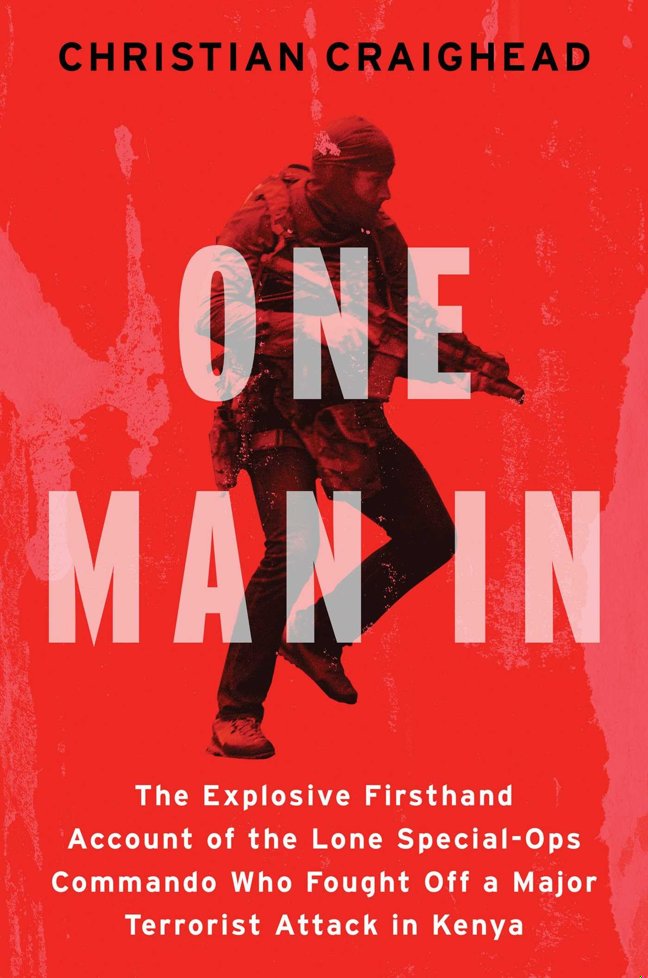
One Man In: The Explosive Firsthand Account of the Lone Special-Ops Commando Who Fought Off a Major Terrorist Attack in Kenya
Christian Craighead
4.2
The gripping and heroic firsthand account—like American Sniper mixed with a real-life version of Die Hard—by an off-duty special forces soldier who battled against a terrorist attack for twenty-two hours, and saved scores of American, Kenyan, and European lives.After an otherwise ordinary morning of training with his firearms, British SAS soldier Chris Craighead was just beginning to relax in his new home in the bustling city of Nairobi, Kenya. Then the phone rang. It was a friend, a former British soldier. In the background, Chris heard gunfire. The friend gave the address of an upscale DusitD2 hotel and office complex in Nairobi’s affluent Westgate neighborhood. He said it was under attack. Within minutes, Chris was in his pickup truck with his weapons case in the back seat, racing to the scene. For the next twenty-two hours, he relied on his nearly three decades of elite military training to win a deadly game of hide-and-seek with a unit of ethnic Somali terrorists who had already detonated one suicide bomb and were intent on killing as many other people as possible. Told in white-knuckle, minute-by-minute detail, One Man In is an unforgettable true story of heroism from a special forces soldier who happened to be in the right place at the right time—and decided to act.
…
Cover unavailable
37
Hitch 22: A Memoir
Christopher Hitchens
4.2
Over the course of his 60 years, Christopher Hitchens has been a citizen of both the United States and the United Kingdom. He has been both a socialist opposed to the war in Vietnam and a supporter of the U.S. war against Islamic extremism in Iraq. He has been both a foreign correspondent in some of the world's most dangerous places and a legendary bon vivant with an unquenchable thirst for alcohol and literature. He is a fervent atheist, raised as a Christian, by a mother whose Jewish heritage was not revealed to him until her suicide.
In other words, Christopher Hitchens contains multitudes. He sees all sides of an argument. And he believes the personal is political.
This is the story of his life, a life lived large.
You can get the benefit of both his voice and his writing if you listen to this audiobook. [source]
Jesper Bylund
I’m currently reading Hitch 22 by the late, and amazing, Christopher Hitchens. And I’m expecting to be blown away, because he was a spectacular author. But I have no idea how. Not sure what the book is really about. He’s just that good. [source]
Cover unavailable
38
All Secure: A Special Operations Soldier's Fight to Survive on the Battlefield and the Homefront
Tom Satterly
4.2
One of the most highly regarded special operations soldiers in American military history shares his war stories and personal battle with PTSD.
As a senior non-commissioned officer of the most elite and secretive special operations unit in the U.S. military, Command Sergeant Major Tom Satterly fought some of this country's most fearsome enemies. Over the course of twenty years and thousands of missions, he's fought desperately for his life, rescued hostages, killed and captured terrorist leaders, and seen his friends maimed and killed around him.
All Secure is in part Tom's journey into a world so dark and dangerous that most Americans can't contemplate its existence. It recounts what it is like to be on the front lines with one of America's most highly trained warriors. As action-packed as any fiction thriller, All Secure is an insider's view of "The Unit."
Tom is a legend even among other Tier One special operators. Yet the enemy that cost him three marriages, and ruined his health physically and psychologically, existed in his brain. It nearly led him to kill himself in 2014; but for the lifeline thrown to him by an extraordinary woman it might have ended there. Instead, they took on Satterly's most important mission-saving the lives of his brothers and sisters in arms who are killing themselves at a rate of more than twenty a day.
Told through Satterly's firsthand experiences, it also weaves in the reasons-the bloodshed, the deaths, the intense moments of sheer terror, the survivor's guilt, depression, and substance abuse-for his career-long battle against the most insidious enemy of all: Post Traumatic Stress. With the help of his wife, he learned that by admitting his weaknesses and faults he sets an example for other combat veterans struggling to come home.
…
Cover unavailable
39
Fall and Rise: The story of 9/11
Mitchell Zuckoff
4.2
Years in the making, this spellbinding, heartbreaking, and ultimately uplifting narrative is an unforgettable portrait of 9/11.
This is a 9/11 book like no other. Masterfully weaving together multiple strands of the events in New York; at the Pentagon; and in Shanksville, Pennsylvania, Fall and Rise is a mesmerizing, minute-by-minute account of that terrible day.
In the days and months after 9/11, Mitchell Zuckoff, then a reporter for the Boston Globe, wrote about the attacks, the victims, and their families. After additional years of meticulous reporting, Zuckoff has filled Fall and Rise with voices of the lost and the saved. The result is an utterly gripping book filled with intimate stories of people most affected by the events of that sunny Tuesday in September: an out-of-work actor stuck in an elevator in the North Tower of the World Trade Center; the heroes aboard Flight 93 deciding to take action; a veteran trapped in the inferno in the Pentagon; the fire chief among the first on the scene in sleepy Shanksville; a team of firefighters racing to save an injured woman and themselves; and the men, women, and children flying across the country who suddenly faced terrorists bent on murder.
Fall and Rise will open new avenues of understanding for everyone who thinks they know the story of 9/11, bringing to life—and in some cases, bringing back to life—the extraordinary ordinary people who experienced the worst day in modern American history.
…
Cover unavailable
40
Paradise General: Riding the Surge at a Combat Hospital in Iraq
Dr. Dave Hnida
4.2
Cover unavailable
41
Echo in Ramadi: The Firsthand Story of US Marines in Iraq's Deadliest City
Scott A. Huesing
4.2
Winner of the 2019 Gold Medal Award, Best Military History Memoir, Military Writers Society of America
Ranked in the "Top 10 Military Books of 2018" by Military Times.
"In war, destruction is everywhere. It eats everything around you. Sometimes it eats at you." —Major Scott Huesing, Echo Company Commander
From the winter of 2006 through the spring of 2007, two-hundred-fifty Marines from Echo Company, Second Battalion, Fourth Marine Regiment fought daily in the dangerous, dense city streets of Ramadi, Iraq during the Multi-National Forces Surge ordered by President George W. Bush. The Marines' mission: to kill or capture anti-Iraqi forces. Their experience: like being in Hell.
Now Major Scott A. Huesing, the commander who led Echo Company through Ramadi, takes readers back to the streets of Ramadi in a visceral, gripping portrayal of modern urban combat. Bound together by brotherhood, honor, and the horror they faced, Echo's Marines battled day-to-day on the frontline of a totally different kind of war, without rules, built on chaos. In Echo in Ramadi, Huesing brings these resilient, resolute young men to life and shows how the savagery of urban combat left indelible scars on their bodies, psyches, and souls. Like war classics We Were Soldiers, The Yellow Birds, and Generation Kill, Echo in Ramadi is an unforgettable capsule of one company's experience of war that will leave readers stunned.
…
Cover unavailable
42
Fool's Errand: Time to End the War in Afghanistan
Scott Horton
4.2
“In Fool’s Errand, Scott Horton masterfully explains the tragedy of America’s longest war and makes the case for immediate withdrawal. I highly recommend this excellent book on America’s futile and self-defeating occupation of Afghanistan.” — Daniel Ellsberg, Pentagon Papers whistleblower and author of The Doomsday Machine: Confessions of a Nuclear War Planner
“The real story of the disastrous U.S. war in Afghanistan must be written so that future generations may understand the folly of Washington’s warmongers. Scott Horton’s Afghan war history is an important contribution to this vital effort.” — Ron Paul, M.D., former U.S. congressman and author of Swords into Plowshares: A Life in Wartime and a Future of Peace and Prosperity
“Scott Horton’s, Fool’s Errand: Time to End the War in Afghanistan, is a definitive, authoritative and exceptionally well-resourced accounting of America’s disastrous war in Afghanistan since 2001. Scott’s book deserves not just to be read, but to be kept on your shelf, because as with David Halberstam’s The Best and Brightest or Neil Sheehan’s A Bright Shining Lie, I expect Horton’s book to not just explain and interpret a current American war, but to explain and interpret the all too predictable future American wars, and the unavoidable waste and suffering that will accompany them.” — Capt. Matthew Hoh, USMC (ret.), former senior State Department official, Zabul Province, Afghanistan, Senior Fellow at the Center for International Policy
“Fool’s Errand is a hidden history of America’s forgotten war, laid bare in damning detail. Scott Horton masterfully retells the story of America’s failed intervention, exposes how Obama’s troop surge did not bring Afghanistan any closer to peace, and warns that the conflict could go on in perpetuity — unless America ends the war. As Trump threatens to send more troops to Afghanistan, Horton shows why the answer to a brutal civil war is not more war, which makes Fool’s Errand a scintillating and sorely needed chronicle of the longest war in American history.” — Anand Gopal, journalist and author of No Good Men Among the Living: America, the Taliban, and the War Through Afghan Eyes
“Scott Horton’s new book Fool’s Errand: Time to End the War in Afghanistan has a title that tells you where it is going, but to think that is all it is about would be to sell short a comprehensive work that takes the reader on a long journey starting in the 1980s. Indeed, if there were a university course on what went wrong with Afghanistan, starting with Ronald Reagan’s Holy Warriors and continuing with George W. Bush’s ouster of the Taliban leading to 15 years of feckless nation building, this book could well serve as the textbook. Horton provides insights into key decision-making along the way as he meticulously documents the dreadful series of misadventures that have brought us to the latest surge, which will fail just like all the others. The book is highly recommended both for readers who already know a lot about Afghanistan as well as for those who want to learn the basics about America’s longest war.” — Philip Giraldi, former CIA and DIA officer, executive director of the Council for the National Interest
…
Cover unavailable
43
Dog Company: A True Story of American Soldiers Abandoned by Their High Command
Roger Hill
4.2
Now with a foreword by Sean Hannity!
The Army does not want you to read this book. It does not want to advertise its detention system that coddles enemy fighters while putting American soldiers at risk. It does not want to reveal the new lawyered-up Pentagon war ethic that prosecutes U.S. soldiers and Marines while setting free spies who kill Americans. This very system ambushed Captain Roger Hill and his men. Hill, a West Point grad and decorated combat veteran, was a rising young officer who had always followed the letter of the military law. In 2007, Hill got his dream job: infantry commander in the storied 101st Airborne. His new unit, Dog Company, 1-506th, had just returned stateside from the hell of Ramadi. The men were brilliant in combat but unpolished at home, where paperwork and inspections filled their days. With tough love, Hill and his First Sergeant, an old-school former drill instructor named Tommy Scott, turned the company into the top performers in the battalion. Hill and Scott then led Dog Company into combat in Afghanistan, where a third of their men became battlefield casualties after just six months. Meanwhile, Hill found himself at war with his own battalion commander, a charismatic but difficult man who threatened to relieve Hill at every turn. After two of his men died on a routine patrol, Hill and a counterintelligence team busted a dozen enemy infiltrators on their base in the violent province of Wardak. Abandoned by his high command, Hill suddenly faced an excruciating choice: follow Army rules the way he always had, or damn the rules to his own destruction and protect the men he'd grown to love.
…
Cover unavailable
44
Decision Points
George W. Bush
4.2
In this candid and gripping account, President George W. Bush describes the critical decisions that shaped his presidency and personal life.
George W. Bush served as president of the United States during eight of the most consequential years in American history. The decisions that reached his desk impacted people around the world and defined the times in which we live. Decision Points brings readers inside the Texas governor’s mansion on the night of the 2000 election, aboard Air Force One during the harrowing hours after the attacks of September 11, 2001, into the Situation Room moments before the start of the war in Iraq, and behind the scenes at the White House for many other historic presidential decisions.
For the first time, we learn President Bush’s perspective and insights on:
His decision to quit drinking and the journey that led him to his Christian faith
The selection of the vice president, secretary of defense, secretary of state, Supreme Court justices, and other key officials
His relationships with his wife, daughters, and parents, including heartfelt letters between the president and his father on the eve of the Iraq War
His administration’s counterterrorism programs, including the CIA’s enhanced interrogations and the Terrorist Surveillance Program
Why the worst moment of the presidency was hearing accusations that race played a role in the federal government’s response to Hurricane Katrina, and a critical assessment of what he would have done differently during the crisis
His deep concern that Iraq could turn into a defeat costlier than Vietnam, and how he decided to defy public opinion by ordering the troop surge
His legislative achievements, including tax cuts and reforming education and Medicare, as well as his setbacks, including Social Security and immigration reform
The relationships he forged with other world leaders, including an honest assessment of those he did and didn’t trust
Why the failure to bring Osama bin Laden to justice ranks as his biggest disappointment and why his success in denying the terrorists their fondest wish—attacking America again—is among his proudest achievements
A groundbreaking new brand of presidential memoir, Decision Points will captivate supporters, surprise critics, and change perspectives on eight remarkable years in American history—and on the man at the center of events.
…
Cover unavailable
45
Service: A Navy SEAL at War
Marcus Luttrell, James D. Hornfischer
4.2
Navy SEAL Marcus Luttrell returned from his star-crossed mission in Afghanistan with his bones shattered and his heart broken. So many had given their lives to save him-and he would have readily done the same for them. As he recuperated, he wondered why he and others, from America's founding to today, had been willing to sacrifice everything-including themselves-for the sake of family, nation, and freedom.
In Service, we follow Marcus Luttrell to Iraq, where he returns to the battlefield as a member of SEAL Team 5 to help take on the most dangerous city in the world: Ramadi, the capital of war-torn Al Anbar Province. There, in six months of high-intensity urban combat, he would be part of what has been called the greatest victory in the history of U.S. Special Operations forces. We also return to Afghanistan and Operation Redwing, where Luttrell offers powerful new details about his miraculous rescue. Throughout, he reflects on what it really means to take on a higher calling, about the men he's seen lose their lives for their country, and the legacy of those who came and bled before.
A thrilling war story, Service is also a profoundly moving tribute to the warrior brotherhood, to the belief that nobody goes it alone, and no one will be left behind.
…
Cover unavailable
46
Brothers Forever: The Enduring Bond between a Marine and a Navy SEAL that Transcended Their Ultimate Sacrifice
Tom Sileo, Tom Manion
4.2
Four weeks after Navy SEALs had killed Osama bin Laden, the President of the United States stood in Arlington National Cemetery. In his Memorial Day address, he extolled the courage and sacrifice of the two young men buried side by side in the graves before him: Travis Manion, a fallen US Marine, and Brendan Looney, a fallen US Navy SEAL. Although they were killed three years apart, one in Iraq and one in Afghanistan, these two best friends and former roommates were now buried together—“brothers forever.”
Award-winning journalist Tom Sileo and Travis’s father, former Marine colonel Tom Manion, tell the intimate and personal story of how these Naval Academy roommates defined a generation’s sacrifice after 9/11, and how Travis and Brendan’s loved ones overcame heartbreak to carry on in their memory. From Travis’s incredible heroism on the streets of Fallujah to Brendan’s anguished Navy SEAL training in the wake of his friend’s death and his own heroism in the mountains of Afghanistan, Brothers Forever is a remarkable story of friendship, family, and war.
…
Cover unavailable
47
The Heart and the Fist: The Education of a Humanitarian, the Making of a Navy SEAL
Eric Greitens Navy SEAL
4.2
Cover unavailable
48
Drift: The Unmooring of American Military Power
Rachel Maddow
4.1
"One of my favorite ideas is, never to keep an unnecessary soldier," Thomas Jefferson wrote in 1792. Neither Jefferson nor the other Founders could ever have envisioned the modern national security state, with its tens of thousands of "privateers"; its bloated Department of Homeland Security; its rusting nuclear weapons, ill-maintained and difficult to dismantle; and its strange fascination with an unproven counterinsurgency doctrine.
Written with bracing wit and intelligence, Rachel Maddow's Drift argues that we've drifted away from America's original ideals and become a nation weirdly at peace with perpetual war, with all the financial and human costs that entails. To understand how we've arrived at such a dangerous place, Maddow takes us from the Vietnam War to today's war in Afghanistan, along the way exploring the disturbing rise of executive authority, the gradual outsourcing of our war-making capabilities to private companies, the plummeting percentage of American families whose children fight our constant wars for us, and even the changing fortunes of G.I. Joe. She offers up a fresh, unsparing appraisal of Reagan's radical presidency. Ultimately, she shows us just how much we stand to lose by allowing the priorities of the national security state to overpower our political discourse.
Sensible yet provocative, dead serious yet seriously funny, Drift will reinvigorate a "loud and jangly" political debate about how, when, and where to apply America's strength and power--and who gets to make those decisions.
From the Hardcover edition.
…
Cover unavailable
49
Home Front
Kristin Hannah
4.1
"Home Front is Hannah's crowning achievement." —The Huffington Post
In this powerhouse of a novel, Kristin Hannah explores the intimate landscape of a troubled marriage with this provocative and timely portrait of a husband and wife, in love and at war.
All marriages have a breaking point. All families have wounds. All wars have a cost. . . .
Like many couples, Michael and Jolene Zarkades have to face the pressures of everyday life—children, careers, bills, chores—even as their twelve-year marriage is falling apart. Then a deployment sends Jolene deep into harm's way and leaves defense attorney Michael at home, unaccustomed to being a single parent to their two girls. As a mother, it agonizes Jolene to leave her family, but as a solider, she has always understood the true meaning of duty. In her letters home, she paints a rose-colored version of her life on the front lines, shielding her family from the truth. But war will change Jolene in ways that none of them could have foreseen. When tragedy strikes, Michael must face his darkest fear and fight a battle of his own—for everything that matters to his family.
At once a profoundly honest look at modern marriage and a dramatic exploration of the toll war takes on an ordinary American family, Home Front is a story of love, loss, heroism, honor, and ultimately, hope.
"Hannah has written a remarkable tale of duty, love, strength, and hope that is at times poignant and always thoroughly captivating and relevant." —Library Journal (starred review)
…
Cover unavailable
50
Purple Heart
Patricia McCormick
4.1
When Private Matt Duffy wakes up in an army hospital in Iraq, he's honored with a Purple Heart. But he doesn't feel like a hero.
There's a memory that haunts him: an image of a young Iraqi boy as a bullet hits his chest. Matt can't shake the feeling that he was somehow involved in his death. But because of a head injury he sustained just moments after the boy was shot, Matt can't quite put all the pieces together.
Eventually Matt is sent back into combat with his squad—Justin, Wolf, and Charlene—the soldiers who have become his family during his time in Iraq. He just wants to go back to being the soldier he once was. But he sees potential threats everywhere and lives in fear of not being able to pull the trigger when the time comes. In combat there is no black-and-white, and Matt soon discovers that the notion of who is guilty is very complicated indeed.
National Book Award Finalist Patricia McCormick has written a visceral and compelling portrait of life in a war zone, where loyalty is valued above all, and death is terrifyingly commonplace.
…
Cover unavailable
51
Here, Bullet
Brian Turner
4.1
Adding his voice to the current debate about the US occupation of Iraq, in poems written in the tradition of such poets as Wilfred Owen, Yusef Komunyakaa (Dien Cai Dau), Bruce Weigl (Song of Napalm) and Alice James’ own Doug Anderson (The Moon Reflected Fire), Iraqi war veteran Brian Turner writes power-fully affecting poetry of witness, exceptional for its beauty, honesty, and skill. Based on Turner’s yearlong tour in Iraq as an infantry team leader, the poems offer gracefully rendered, unflinching description but, remarkably, leave the reader to draw conclusions or moral lessons. Here, Bullet is a must-read for anyone who cares about the war, regardless of political affiliation.
…
Cover unavailable
52
Shooter: The Autobiography of the Top-Ranked Marine Sniper
Sgt. Jack Coughlin, Casey Kuhlman, et al.
4.1
Jack Coughlin is the Marine Corps' top-ranked sniper, the man who personally brings America's military muscle to the enemy's front door. In twenty years of active service, he has accumulated one of the most impressive records in the Corps, ranging through many of the world's hot spots. During Operation Iraqi Freedom alone, he recorded at least thirty-six kills, thirteen of them in a single twenty-four-hour period.
In Shooter, Coughlin has written a highly personal story about his deadly craft, taking readers deep inside an invisible society that is off-limits to outsiders. This is not a heroic battlefield memoir, but the careful study of an exceptional man as he carries forward one of the deadliest legacies in the U.S. military.
…
Cover unavailable
53
From Baghdad, With Love: A Marine, the War, and a Dog Named Lava (Lava #1)
Jay Kopelman, Melinda Roth
4.1
When Marines enter an abandoned house in Fallujah, Iraq, and hear a suspicious noise, they clench their weapons, edge around the corner, and prepare to open fire.
What they find during the U.S -led attack on the "most dangerous city on Earth," however, is not an insurgent bent on revenge, but a tiny puppy left behind when most of the city’s population fled before the bombing. Despite military law that forbids the keeping of pets, the Marines de-flea the pup with kerosene, de-worm him with chewing tobacco, and fill him up on Meals Ready to Eat. Thus begins the dramatic rescue attempt of a dog named Lava and Lava’s rescue of at least one Marine, Lieutenant Colonel Jay Kopelman, from the emotional ravages of war.
From hardened Marines to war-time journalists to endangered Iraqi citizens, From Baghdad, With Love tells an unforgettable true story of an unlikely band of heroes who learn unexpected lessons about life, death, and war from a mangy little flea-ridden refugee.
…
Cover unavailable
54
Sea Stories: My Life in Special Operations
William H. McRaven
4.1
The #1 New York Times bestselling author of Make Your Bed is back with a wise and witty memoir of life lessons from his 37-year career as a Navy SEAL and commander of America's Special Forces.
Admiral William H. McRaven is a part of American military history, having orchestrated some of the most famous missions in recent memory, including the capture of Saddam Hussein, the rescue of Captain Richard Phillips, and the raid to kill Osama bin Laden.
Sea Stories begins in 1963 at a French Officer's Club in Paris, where Allied officers and their wives gathered to have drinks and tell stories about their adventures during World War II -- the place where a young William McRaven learned the value of a good story. Sea Stories is an unforgettable look back on one man's incredible life, from childhood days sneaking into high-security nuclear sites to a day job of hunting terrorists and rescuing hostages.
Action-packed, humorous, and full of valuable life lessons like those exemplified in McRaven's bestselling book, Make Your Bed, Sea Stories is a remarkable memoir from one of America's most accomplished leaders.
…
Cover unavailable
55
Call Sign Chaos: Learning to Lead
Jim Mattis
4.1
#1 NEW YORK TIMES BESTSELLER • A clear-eyed account of learning how to lead in a chaotic world, by General Jim Mattis—the former Secretary of Defense and one of the most formidable strategic thinkers of our time—and Bing West, a former assistant secretary of defense and combat Marine. “A four-star general’s five-star memoir.”—The Wall Street Journal Call Sign Chaos is the account of Jim Mattis’s storied career, from wide-ranging leadership roles in three wars to ultimately commanding a quarter of a million troops across the Middle East. Along the way, Mattis recounts his foundational experiences as a leader, extracting the lessons he has learned about the nature of warfighting and peacemaking, the importance of allies, and the strategic dilemmas—and short-sighted thinking—now facing our nation. He makes it clear why America must return to a strategic footing so as not to continue winning battles but fighting inconclusive wars. Mattis divides his book into three parts: Direct Leadership, Executive Leadership, and Strategic Leadership. In the first part, Mattis recalls his early experiences leading Marines into battle, when he knew his troops as well as his own brothers. In the second part, he explores what it means to command thousands of troops and how to adapt your leadership style to ensure your intent is understood by your most junior troops so that they can own their mission. In the third part, Mattis describes the challenges and techniques of leadership at the strategic level, where military leaders reconcile war’s grim realities with political leaders’ human aspirations, where complexity reigns and the consequences of imprudence are severe, even catastrophic. Call Sign Chaos is a memoir of a life of warfighting and lifelong learning, following along as Mattis rises from Marine recruit to four-star general. It is a journey about learning to lead and a story about how he, through constant study and action, developed a unique leadership philosophy, one relevant to us all.
Combining simplicity and thoughtfulness, Jim Mattis has produced a classic account of a lifetime of service. Call Sign Chaos is a lesson in leadership and an evocation of humanity in the cause of peace. [source]
Cover unavailable
56
Arguably: Essays
Christopher Hitchens
4.1
The first new book of essays by Christopher Hitchens since 2004, Arguably offers an indispensable key to understanding the passionate and skeptical spirit of one of our most dazzling writers, widely admired for the clarity of his style, a result of his disciplined and candid thinking.
Topics range from ruminations on why Charles Dickens was among the best of writers and the worst of men to the haunting science fiction of J.G. Ballard; from the enduring legacies of Thomas Jefferson and George Orwell to the persistent agonies of anti-Semitism and jihad. Hitchens even looks at the recent financial crisis and argues for the enduring relevance of Karl Marx.
The book forms a bridge between the two parallel enterprises of culture and politics. It reveals how politics justifies itself by culture, and how the latter prompts the former. In this fashion, Arguably burnishes Christopher Hitchens' credentials as (to quote Christopher Buckley) our "greatest living essayist in the English language."
…
Recommended by Le Grove.
Le Grove
@billysubway Hitchens book under your arm. I’m reading Arguably. When he’s at his best, he is a savage. Unbelievable prose. [source]
Cover unavailable
57
Thunder Run: The Armored Strike to Capture Baghdad
David Zucchino, Mark Bowden
4.1
Based on reporting that was a finalist for the Pulitzer Prize, Thunder Run chronicles one of the boldest gambles in modern military history. Three battalions and fewer than a thousand men launched a violent thrust of tanks and Bradley Fighting Vehicles into the heart of a city of 5 million people and in three days of bloody combat ended the Iraqi war. Thunder Run is the story of the surprise assault on Baghdad—one of the most decisive battles in American combat history—by the Spartan Brigade, the Second Brigade of the Third Infantry Division (Mechanized). More than just a rendering of a single battle, Thunder Run candidly recounts how soldiers respond under fire and stress and how human frailties are magnified in a war zone. The product of over a hundred interviews with commanders and men from the Second Brigade, Thunder Run is a riveting firsthand account of how a single armored brigade was able to capture an Arab capital defended by one of the world's largest armies.
…
Cover unavailable
58
On Call In Hell: A Doctor's Iraq War Story
Cdr. Richard Jadick, Thomas Hayden
4.1
A riveting memoir from the Navy doctor praised as "Hero, M.D." on the cover of Newsweek.
Cdr. Richard Jadick's story is one of the most extraordinary to come out of the war in Iraq. At thirty-eight, the last place the Navy doctor was expected to be was on the front lines. He was too old to be called up, but not too old to volunteer. In November 2004, with the military reeling from an acute doctor shortage, Jadick chose to accompany the First Battalion, Eighth Marine Regiment (the "1/8") to Iraq. During the Battle of Fallujah, Jadick and his team worked tirelessly and courageously around the clock to save their troops in the worst street fighting Americans had faced since Vietnam. It is estimated that without Jadick at the front, the Marines would have lost an additional thirty men. Of the hundreds of men he treated, only one died after reaching a hospital. This is the inspiring story of his decision to enter into the fray, a fascinating glimpse into wartime triage, and a compelling account of courage under fire.
…
Cover unavailable
59
Fives and Twenty-Fives
Michael Pitre
4.1
It's the rule-always watch your fives and twenty-fives. When a convoy halts to investigate a possible roadside bomb, stay in the vehicle and scan five meters in every direction. A bomb inside five meters cuts through the armor, killing everyone in the truck. Once clear, get out and sweep twenty-five meters. A bomb inside twenty-five meters kills the dismounted scouts investigating the road ahead.
Fives and twenty-fives mark the measure of a marine's life in the road repair platoon. Dispatched to fill potholes on the highways of Iraq, the platoon works to assure safe passage for citizens and military personnel. Their mission lacks the glory of the infantry, but in a war where every pothole contains a hidden bomb, road repair brings its own danger.
Lieutenant Donavan leads the platoon, painfully aware of his shortcomings and isolated by his rank. Doc Pleasant, the medic, joined for opportunity, but finds his pride undone as he watches friends die. And there's Kateb, known to the Americans as Dodge, an Iraqi interpreter whose love of American culture-from hip-hop to the dog-eared copy of Huck Finn he carries-is matched only by his disdain for what Americans are doing to his country.
Returning home, they exchange one set of decisions and repercussions for another, struggling to find a place in a world that no longer knows them. A debut both transcendent and rooted in the flesh, Fives and Twenty-Fives is a deeply necessary novel.
…
Cover unavailable
60
In The Company of Soldiers: A Chronicle of Combat In Iraq
Rick Atkinson
4.1
During the recent war in Iraq, renowned historian Rick Atkinson was embedded with the 101st Airbourne Division of the US forces. He had access to the headquarters command post and the top-secret plans tent and spent most days at the elbow of Major General David H. Petraeus as he directed attacks on the cities of Najaf, Karbala, Hilla and, ultimately, southern Baghdad. This short book, written with a strong first-person narrative, will not only provide a unique insight into the course of events; using the microcosm of the 101st, Atkinson will also reveal much about the contemporary US military and the soldiers who compose it. In his unique hands this book is set to become a classic of war journalism and the only book to buy for an insider's account of America's war in Iraq.
…
Cover unavailable
61
The Mission, the Men, and Me: Lessons from a Former Delta Force Commander
Pete Blaber
4.1
As a commander in Delta Force-the most elite counter-terrorist organization in the world-Pete Blaber has taken part in some of the most dangerous, controversial, and significant military and political events of our time. And he's learned and experienced more about the real world and how things really work than most people could imagine.
Cover unavailable
62
My War: Killing Time in Iraq
Colby Buzzell
4.1
An underemployed, skateboarding party animal, Colby Buzzell traded a dead-end future for the army--and ended up as a machine gunner in Iraq. To make sense of the absurd and frightening events surrounding him, he started writing a blog about the war--and how it differed from the government's official version. But as his blog's popularity grew, Buzzell became the embedded reporter the Army couldn't control--despite its often hilarious efforts to do so. The result is an extraordinary narrative, rich with unforgettable scenes: the Iraqi woman crying uncontrollably during a raid on her home; the soldier too afraid to fight; the troops chain-smoking in a guard tower and counting tracer rounds; the first, fierce firefight against the "men in black." Drawing comparisons to everything from Charles Bukowski to Catch-22, My War depicts a generation caught in a complicated and dangerous world--and marks the debut of a raw, remarkable new voice.
…
Cover unavailable
63
America's War for the Greater Middle East
Andrew J. Bacevich, Rob Shapiro, et al
4.1
Retired army colonel and New York Times bestselling author Andrew J. Bacevich provides a searing reassessment of U.S. military policy in the Middle East over the past four decades.
From the end of World War II until 1980, virtually no American soldiers were killed in action while serving in the Greater Middle East. Since 1990, virtually no American soldiers have been killed in action anywhere else. What caused this shift? Andrew J. Bacevich, one of the country’s most respected voices on foreign affairs, offers an incisive critical history of this ongoing military enterprise—now more than thirty years old and with no end in sight.
During the 1980s, Bacevich argues, a great transition occurred. As the Cold War wound down, the United States initiated a new conflict—a War for the Greater Middle East—that continues to the present day. The long twilight struggle with the Soviet Union had involved only occasional and sporadic fighting. But as this new war unfolded, hostilities became persistent. From the Balkans and East Africa to the Persian Gulf and Central Asia, U.S. forces embarked upon a seemingly endless series of campaigns across the Islamic world. Few achieved anything remotely like conclusive success. Instead, actions undertaken with expectations of promoting peace and stability produced just the opposite. As a consequence, phrases like “permanent war” and “open-ended war” have become part of everyday discourse.
Connecting the dots in a way no other historian has done before, Bacevich weaves a compelling narrative out of episodes as varied as the Beirut bombing of 1983, the Mogadishu firefight of 1993, the invasion of Iraq in 2003, and the rise of ISIS in the present decade. Understanding what America’s costly military exertions have wrought requires seeing these seemingly discrete events as parts of a single war. It also requires identifying the errors of judgment made by political leaders in both parties and by senior military officers who share responsibility for what has become a monumental march to folly. This Bacevich unflinchingly does.
A twenty-year army veteran who served in Vietnam, Andrew J. Bacevich brings the full weight of his expertise to this vitally important subject. America’s War for the Greater Middle East is a bracing after-action report from the front lines of history. It will fundamentally change the way we view America’s engagement in the world’s most volatile region.
Advance praise for America’s War for the Greater Middle East
“In one arresting book after another, Bacevich has relentlessly laid bare the failings of American foreign policy since the Cold War. This one is his sad crowning achievement: the story of our long and growing military entanglement in the region of the most tragic, bitter, and intractable of conflicts.”—Richard K. Betts, director, Saltzman Institute of War and Peace Studies, Columbia University
“An unparalleled historical tour de force certain to affect the formation of future U.S. foreign policy . . . Every citizen aspiring to high office needs not only to read but to study and learn from this important book. This is one of the most serious and essential books I have read in more than half a century of public service.”—Lieutenant General Paul K. Van Riper, U.S. Marine Corps (Ret.)
“Bacevich asks and answers a provocative, inconvenient question: In a multigenerational war in the Middle East, ‘Why has the world’s mightiest military achieved so little?’ ”—Graham Allison, director, Belfer Center for Science and International Affairs, and Douglas Dillon Professor of Government at Harvard’s John F. Kennedy School of Government
From the Hardcover edition.
…
Cover unavailable
64
Against All Enemies
Richard A Clarke
4.1
"The [Bush] administration has squandered the opportunity to eliminate al Qaeda....A new al Qaeda has emerged and is growing stronger, in part because of our own actions and inactions. It is in many ways a tougher opponent than the original threat we faced before September 11, and we are not doing what is necessary to make America safe from that threat."
No one has more authority to make that claim than Richard Clarke, the former counterterrorism czar for both Bill Clinton and George W. Bush. The one person who knows more about Usama bin Laden and al Qaeda than anyone else in this country, he has devoted two decades of his professional life to combating terrorism. Richard Clarke served seven presidents and worked inside the White House for George H.W. Bush, Bill Clinton, and George W. Bush until he resigned in March 2003. He knows, better than anyone, the hidden successes and failures of the Clinton years. He knows, better than anyone, why we failed to prevent 9/11. He knows, better than anyone, how President Bush reacted to the attack and what happened behind the scenes in the days that followed. He knows whether or not Iraq presented a terrorist threat to the United States and whether there were hidden costs to the invasion of that country.
Most disturbing of all are Clarke's revelations about the Bush administration's lack of interest in al Qaeda prior to September 11. From the moment the Bush team took office and decided to retain Clarke in his post as the counterterrorism czar, Clarke tried to persuade them to take al Qaeda as seriously as had Bill Clinton. For months, he was denied the opportunity even to make his case to Bush. He encountered key officials who gave the impression that they had never heard of al Qaeda; who focused incessantly on Iraq; who even advocated long-discredited conspiracy theories about Saddam's involvement in previous attacks on the United States.
Clarke was the nation's crisis manager on 9/11, running the Situation Room -- a scene described here for the first time -- and then watched in dismay at what followed. After ignoring existing plans to attack al Qaeda when he first took office, George Bush made disastrous decisions when he finally did pay attention. Coming from a man known as one of the hard-liners against terrorists, Against All Enemies is both a powerful history of our two-decades-long confrontation with terrorism and a searing indictment of the current administration.
…
Recommended by Yosri Fouda.
Yosri Fouda
Richard Clarke was the man who ruled America on 9/11 when the rulers were all trying to hide underground. [source]
Cover unavailable
65
The Trident: The Forging and Reforging of a Navy SEAL Leader
Jason Redman
4.1
A Navy SEAL’s highly-charged account of combat, his growth as a leader, his near fatal wounds, and his remarkable recovery—a wounded warrior whose strength and fortitude have made him a national symbol
Decorated Navy SEAL Lieutenant Jason Redman served his country in Columbia, Peru, Afghanistan and Iraq, where he commanded mobility and assault forces. In western Iraq alone, he conducted over forty capture-kill missions with his men, successfully locating more than 120 Al Qaida insurgents. In September 2007, while leading a mission against a key senior Al Qaida commander, his team was ambushed and he was critically wounded by machine-gun fire at point blank range.
During the intense recovery that followed—a years-long process that included 37 surgeries—Redman gained national media attention when he posted a sign on his door at Bethesda Naval Medical Center, warning all who entered not to “feel sorry for my wounds.” Redman’s sign became both a statement and a symbol for wounded warriors everywhere.
The Trident is an unforgettable story of one man’s determination to overcome adversity. Redman recounts his story, from his grueling SEAL training to how he found the balance between arrogance and humility all while fighting America’s enemies on far flung battlefields. He speaks candidly of the grit that helped him carry on despite grievous wounds, and of the extraordinary love and devotion of his wife, Erica, and family, without whom he would not have survived.
Vivid and powerful, emotionally resonant and illuminating, filled with sixteen pages of photos, The Trident traces the evolution of a modern warrior, husband, and father—a man who has come to embody the never-say-die spirit that defines America’s elite fighting force.
…
Cover unavailable
66
Until Tuesday: A Wounded Warrior and the Golden Retriever Who Saved Him
Luis Carlos Montalvan, Bret Witter
4.1
A heartwarming dog story like no other: Tuesday, a lovable golden retriever, changes a former soldier's life forever.
A highly decorated captain in the U.S. Army, Luis Montalván never backed down from a challenge during his two tours of duty in Iraq. After returning home from combat, however, his physical wounds and crippling post-traumatic stress disorder began to take their toll. He wondered if he would ever recover.
Then Luis met Tuesday, a sensitive golden retriever trained to assist the disabled. Tuesday had lived among prisoners and at a home for troubled boys, and he found it difficult to trust in or connect with a human being--until Luis.
Until Tuesday is the story of how two wounded warriors, who had given so much and suffered the consequences, found salvation in each other. It is a story about war and peace, injury and recovery, psychological wounds and spiritual restoration. But more than that, it is a story about the love between a man and dog, and how, together, they healed each other's souls.
…
Cover unavailable
67
Duty: Memoirs of a Secretary at War
Robert M. Gates
4.1
From the former secretary of defense, a strikingly candid, vividly written account of his experience serving Presidents George W. Bush and Barack Obama during the wars in Iraq and Afghanistan.
Before Robert M. Gates received a call from the White House in 2006, he thought he’d left Washington politics behind: after working for six presidents in both the CIA and the National Security Council, he was happy in his role as president of Texas A&M University. But when he was asked to help a nation mired in two wars and to aid the troops doing the fighting, he answered what he felt was the call of duty. Now, in this unsparing memoir, meticulously fair in its assessments, he takes us behind the scenes of his nearly five years as a secretary at war: the battles with Congress, the two presidents he served, the military itself, and the vast Pentagon bureaucracy; his efforts to help Bush turn the tide in Iraq; his role as a guiding, and often dissenting, voice for Obama; the ardent devotion to and love for American soldiers—his “heroes”—he developed on the job.
In relating his personal journey as secretary, Gates draws us into the innermost sanctums of government and military power during the height of the Iraq and Afghanistan wars, illuminating iconic figures, vital negotiations, and critical situations in revealing, intimate detail. Offering unvarnished appraisals of Dick Cheney, Joe Biden, Hillary Clinton, and Presidents Bush and Obama among other key players, Gates exposes the full spectrum of behind-closed-doors politicking within both the Bush and Obama administrations.
He discusses the great controversies of his tenure—surges in both Iraq and Afghanistan, how to deal with Iran and Syria, “Don’t Ask Don’t Tell,” Guantánamo Bay, WikiLeaks—as they played out behind the television cameras. He brings to life the Situation Room during the Bin Laden raid. And, searingly, he shows how congressional debate and action or inaction on everything from equipment budgeting to troop withdrawals was often motivated, to his increasing despair and anger, more by party politics and media impact than by members’ desires to protect our soldiers and ensure their success.
However embroiled he became in the trials of Washington, Gates makes clear that his heart was always in the most important theater of his tenure as secretary: the front lines. We journey with him to both war zones as he meets with active-duty troops and their commanders, awed by their courage, and also witness him greet coffin after flag-draped coffin returned to U.S. soil, heartbreakingly aware that he signed every deployment order. In frank and poignant vignettes, Gates conveys the human cost of war, and his admiration for those brave enough to undertake it when necessary. Duty tells a powerful and deeply personal story that allows us an unprecedented look at two administrations and the wars that have defined them.
…
Cover unavailable
68
Deliberate Discomfort: How U.S. Special Operations Forces Overcome Fear and Dare to Win by Getting Comfortable Being Uncomfortable
Jason Van Camp
4.1
Twelve decorated combat veterans take you firsthand through the intense, traumatic battles they fought and won, sharing lessons learned from those incredible challenges. Green Beret Jason Van Camp and a cadre of scientists further break down those experiences, translating them into digestible and relatable action items, showing the average person how they can apply them to their own lives. Read Medal of Honor recipient Leroy Petry's firsthand account of grabbing an enemy grenade in Afghanistan and throwing it, saving the life of a fellow soldier but losing his hand in the process. Hear from fellow Medal of Honor recipient Florent Groberg what he was thinking as he tackled a suicide bomber. Feel what Marine Joey Jones felt as he was flying through the air, weightless, after stepping on the IED that would take both his legs.
Deliberate Discomfort is the ultimate book on leadership and self-improvement, depicting how these warriors found a way to win under incredible odds with never-quit attitudes. The authors don't just tell you how to thrive under pressureƒ‚‚"ƒ‚‚€ƒ‚‚"they show you how, in heart-racing, first-person narratives.
…
Cover unavailable
69
Darkhorse: Harnessing Hidden Potential in War and Life
Amatangelo “AJ” Pasciuti, Neil McGinness
4.1
The best book by a sniper since American Sniper. “Darkhorse isn’t just about combat. It’s about leading from the front, learning from failure, and showing up every day to be useful. If you want an example of true strength, read this.” —Arnold SchwarzeneggerA transformative war story that challenges traditional views of toughness and leadership, where masculinity develops from empathy, grit is born from failure, and power comes from placing service above self.In Darkhorse, Amatangelo “AJ” Pasciuti delivers an entirely new war narrative: an intense exploration of authentic leadership, sacrifice, and the resilience of the human spirit. By challenging established notions of masculinity and authority, Pasciuti shows that true strength lies in our hidden potential.Compelled to serve by the events of 9/11, AJ enlisted in the Marine Corps at the age of 17, embarking on a 21-year odyssey through some of the most harrowing battles of the Global War on Terror. Serving as an Infantry Marine, Scout Sniper, and Force Reconnaissance Marine, while completing seven deployments across the globe and leading elite teams in high-stakes special operations missions, taught him that courage is useless without compassion.A pivotal moment came during his legendary sniper vs sniper duel with the infamous enemy sniper, Juba–the first sniper battle since the Vietnam War. His actions saved countless lives and recovered a stolen Marine sniper rifle, highlighting how intellect, strategy, and the ability to look at problems differently can transform the nature of warfare.Driven by a strong commitment to advocate for the voiceless and a desire to push the limits of possibility, AJ set out to reform the Marine Corps Infantry education system and redefine Marine infantry training to make the finest fighting force the world has ever known even better. This challenge proved to be one of AJ’s toughest battles, confronting the very institution that shaped him. But what kind of person would AJ be if he settled for anything less?Darkhorse serves as both an impactful memoir and a call to action. It’s a must-read for warriors, leaders, and anyone eager to grasp the strength found in serving others and the boundless potential that resides within us all.
…
Cover unavailable
70
Operation Retrospect: A Soldier's Journal in a Veteran's Reunion
Paul Endris
4.1
Cover unavailable
71
Plan of Attack
Bob Woodward
4.1
Plan of Attack is the definitive account of how and why President George W. Bush, his war council, and allies launched a preemptive attack to topple Saddam Hussein and occupy Iraq. Bob Woodward's latest landmark account of Washington decision making provides an original, authoritative narrative of behind-the-scenes maneuvering over two years, examining the causes and consequences of the most controversial war since Vietnam. Based on interviews with 75 key participants and more than three and a half hours of exclusive interviews with President Bush, Plan of Attack is part presidential history charting the decisions made during 16 critical months; part military history revealing precise details and the evolution of the Top Secret war planning under the restricted codeword Polo Step; and part a harrowing spy story as the CIA dispatches a covert paramilitary team into northern Iraq six months before the start of the war. This team recruited 87 Iraqi spies designated with the cryptonym DB/ROCKSTARS, one of whom turned over the personnel files of all 6,000 men in Saddam Hussein's personal security organization. What emerges are astonishingly intimate portraits: President Bush in war cabinet meetings in the White House Situation Room and the Oval Office, and in private conversation; Dick Cheney, the focused and driven vice president; Colin Powell, the conflicted and cautious secretary of state; Donald Rumsfeld, the controlling war technocrat; George Tenet, the activist CIA director; Tommy Franks, the profane and demanding general; Condoleezza Rice, the ever-present referee and national security adviser; Karl Rove, the hands-on political strategist; other key members of the White House staff and congressional leadership; and foreign leaders ranging from British Prime Minister Blair to Russian President Putin. Plan of Attack provides new details on the intelligence assessments of Iraq's alleged weapons of mass destruction and the planning for the war's aftermath.
…
Cover unavailable
72
The Prisoner in His Palace: Saddam Hussein, His American Guards, and What History Leaves Unsaid
Will Bardenwerper
4.1
In the haunting tradition of In Cold Blood and The Executioner’s Song, this remarkably insightful and surprisingly intimate portrait of Saddam Hussein lifts away the top layer of a dictator’s evil and finds complexity beneath as it invites us to take a journey with twelve young American soldiers in the summer of 2006. Trained to aggressively confront the enemy in combat, the men learn, shortly after being deployed to Iraq, that fate has assigned them a different role. It becomes their job to guard the country’s notorious leader in the months leading to his execution.
Living alongside, and caring for, their “high value detainee” in a former palace dubbed The Rock and regularly transporting him to his raucous trial, many of the men begin questioning some of their most basic assumptions—about the judicial process, Saddam’s character, and the morality of modern war. Although the young soldiers’ increasingly intimate conversations with the once-feared dictator never lead them to doubt his responsibility for unspeakable crimes, the men do discover surprising new layers to his psyche that run counter to the media’s portrayal of him.
Woven from first-hand accounts provided by many of the American guards, government officials, interrogators, scholars, spies, lawyers, family members, and victims, The Prisoner in His Palace shows two Saddams coexisting in one person: the defiant tyrant who uses torture and murder as tools, and a shrewd but contemplative prisoner who exhibits surprising affection, dignity, and courage in the face of looming death.
In this artfully constructed narrative, Saddam, the “man without a conscience,” gets many of those around him to examine theirs. Wonderfully thought-provoking, The Prisoner in His Palace reveals what it is like to discover in one’s ruthless enemy a man, and then deliver him to the gallows.
…
Cover unavailable
73
You Are Worth It: Building a Life Worth Fighting For
Kyle Carpenter, Don Yaeger, and HarperAudio
4.1
Cover unavailable
74
Babylon's Ark: The Incredible Wartime Rescue of the Baghdad Zoo
Lawrence Anthony, Graham Spence
4.1
When the Iraq war began, conservationist Lawrence Anthony could think of only one thing: the fate of the Baghdad Zoo, located in the city center and caught in the war's crossfire. Once Anthony entered Baghdad he discovered that full-scale combat and uncontrolled looting had killed nearly all the animals of the zoo.
But not all of them. U.S. soldiers had taken the time to help care for the remaining animals, and the zoo's staff had returned to work in spite of the constant firefights. Together the Americans and Iraqis had managed to keep alive the animals that had survived the invasion.
Babylon's Ark chronicles the zoo's transformation from bombed-out rubble to peaceful park. Along the way, Anthony recounts hair-raising efforts to save a pride of the dictator's lions, close a deplorable black-market zoo, and rescue Saddam's Arabian horses. His unique ground-level experience makes Babylon's Ark an uplifting story of both sides working together for the sake of innocent animals caught in the war's crossfire.
…
Cover unavailable
75
Dear John
Nicholas Sparks
4.1
An angry rebel, John dropped out of school and enlisted in the Army, not knowing what else to do with his life--until he meets the girl of his dreams, Savannah. Their mutual attraction quickly grows into the kind of love that leaves Savannah waiting for John to finish his tour of duty, and John wanting to settle down with the woman who has captured his heart.
But 9/11 changes everything. John feels it is his duty to re-enlist. And sadly, the long separation finds Savannah falling in love with someone else.
Dear John, the letter read... and with those two words, a heart was broken and two lives were changed forever. Returning home, John must come to grips with the fact that Savannah, now married, is still his true love—and face the hardest decision of his life.
…
Cover unavailable
76
Portraits of Courage: A Commander in Chief's Tribute to America's Warriors
George W. Bush
4.1
#1 NEW YORK TIMES BESTSELLER - A vibrant collection of oil paintings and stories by President George W. Bush honoring the sacrifice and courage of America's military veterans.
With Forewords by former First Lady Laura Bush and General Peter Pace, 16th Chairman of the Joint Chiefs of Staff.
Growing out of President Bush's own outreach and the ongoing work of the George W. Bush Institute's Military Service Initiative, Portraits of Courage brings together sixty-six full-color portraits and a four-panel mural painted by President Bush of members of the United States military who have served our nation with honor since 9/11--and whom he has come to know personally.
Our men and women in uniform have faced down enemies, liberated millions, and in doing so showed the true compassion of our nation. Often, they return home with injuries--both visible and invisible--that intensify the challenges of transitioning into civilian life. In addition to these burdens, research shows a civilian-military divide. Seventy-one percent of Americans say they have little understanding of the issues facing veterans, and veterans agree: eighty-four percent say that the public has "little awareness" of the issues facing them and their families.
Each painting in this meticulously produced hardcover volume is accompanied by the inspiring story of the veteran depicted, written by the President. Readers can see the faces of those who answered the nation's call and learn from their bravery on the battlefield, their journeys to recovery, and the continued leadership and contributions they are making as civilians. It is President Bush's desire that these stories of courage and resilience will honor our men and women in uniform, highlight their family and caregivers who bear the burden of their sacrifice, and help Americans understand how we can support our veterans and empower them to succeed.
President Bush will donate his net author proceeds from PORTRAITS OF COURAGEto the George W. Bush Presidential Center, a non-profit organization whose Military Service Initiative works to ensure that post-9/11 veterans and their families make successful transitions to civilian life with a focus on gaining meaningful employment and overcoming the invisible wounds of war.
…
Cover unavailable
77
Lest We Forget: An Army Ranger Medic's Journey
leo jenkins
4.1
The expanded second edition of the best selling memoir by Ranger medic, Leo JenkinsA rare look inside the experience of an Army Ranger medic. The compelling true story of what it takes to become and work as a special operations combat medic during the height of the global war on terrorism.Detailed accounts (and pictures) from the search and rescue operation for the US Navy Seals who were compromised in the mountains of Afghanistan during operation Redwings (best selling book, Lone Survivor by Marcus Luttrell) is just one of the many combat operations described in this thrilling book. Take a look inside the US special operations medical course as the author trains for the reality of combat in Iraq and Afghanistan. This expanded second edition includes roughly twenty percent more vulgar, honest, laugh out loud, content.
…
Recommended by Grant Shapps Mp.
Grant Shapps Mp
Great to meet Andy Chapman who’s the Chairman of Lemsford Local History Group. Andy has written a fascinating book about local Lemsford residents who fought in WW1 and their incredibly poignant stories. Find out more here: https://t.co/vD0DcRvegE https://t.co/WBvMtHFZzD [source]
Cover unavailable
78
SOG: The Secret Wars of America's Commandos in Vietnam
John L. Plaster
4.1
John Plaster’s riveting account of his covert activities as a member of a special operations team during the Vietnam War is “a true insider’s account, this eye-opening report will leave readers feeling as if they’ve been given a hot scoop on a highly classified project” (Publishers Weekly).
Code-named the Studies and Observations Group, SOG was the most secret elite US military unit to serve in the Vietnam War—so secret its very existence was denied by the government. Composed entirely of volunteers from such ace fighting units as the Army Green Berets, Air Force Air Commandos, and Navy SEALs, SOG took on the most dangerous covert assignments, in the deadliest and most forbidding theaters of operation.
In SOG, Major John L. Plaster, a three-tour SOG veteran, shares the gripping exploits of these true American warriors in a minute-by-minute, heartbeat-by-heartbeat account of the group’s stunning operations behind enemy lines—penetrating heavily defended North Vietnamese military facilities, holding off mass enemy attacks, launching daring missions to rescue downed US pilots. Some of the most extraordinary true stories of honor and heroism in the history of the US military, from sabotage to espionage to hand-to-hand combat, Plaster’s account is “a detailed history of this little-known aspect of the Vietnam War…a worthy act of historical rescue from an unjustified, willed oblivion” (The New York Times).
…
Cover unavailable
79
The Endgame: The Inside Story of the Struggle for Iraq, from George W. Bush to Barack Obama
Michael R. Gordon, Bernard E. Trainor
4.1
Eagerly anticipated in the wake of their national best seller Cobra II (“The superb, must-read military history of the invasion of Iraq”—Thomas L. Friedman), The Endgame is Michael R. Gordon and General Bernard E. Trainor’s most ambitious and news-breaking book to date. A peerless work of investigative journalism and historical recreation ranging from 2003 to 2012, it gives us the first comprehensive, inside account of arguably the most widely reported yet least understood war in American history—from the occupation of Iraq to the withdrawal of American troops.
Prodigiously researched, The Endgame is not only based on an abundance of highly classified, still-secret government documents but is also brilliantly informed by access to key figures in the White House, the military, the State and Defense departments, the intelligence community, and, most strikingly, by extensive interviews with both Sunni and Shiite leaders, key Kurdish politicians, tribal sheikhs, former insurgents, Sadrists, and senior Iraqi military officers, whose insights about critical turning points and previously unknown decisions made during the war have heretofore been conspicuously missing from the media’s coverage of it.
The Endgame is riveting as a blow-by-blow chronicle of the fighting. It is also relentlessly revealing, as it deftly pieces together the puzzle of the prosecution of American, Iraqi, and Iranian objectives, and the diplomatic intrigue and political struggle within Iraq since the American invasion.
…
Cover unavailable
80
Blackwater: The Rise of the World's Most Powerful Mercenary Army
Jeremy Scahill
4.0
The groundbreaking bestselling expose of the shadowy mercenary army that perpetrated horrific war crimes in America's name. On September 16, 2007, machine gun fire erupted in Baghdad's Nisour Square, leaving seventeen Iraqi civilians dead, among them women and children. The shooting spree, labeled "Baghdad's Bloody Sunday," was neither the work of Iraqi insurgents nor U.S. soldiers. The shooters were private forces, subcontractors working for the secretive mercenary company, Blackwater Worldwide, led by Erik Prince
Award-winning journalist Jeremy Scahill takes us from the bloodied streets of Iraq to hurricane-ravaged New Orleans to the chambers of power in Washington, to reveal the frightening new face of the U.S. military machine, and what happens when you outsource war."A crackling expose" -- New York Times Book Review"[Scahill] is a one-man truth squad" -- Bill Moyers"[An] utterly gripping and explosive story" -- Naomi Klein, The Guardian
…
Recommended by Stephen Armstrong.
Stephen Armstrong
Well this is the exact opposite of The Circuit, in that it is much more academic. I think they are both incredibly important books. Blackwater is written by a US journalist called Jeremy Scahill. The book shows the beauty of American print journalism. It is so well researched and thoroughly documented that it moves beyond a research book and into an impassioned, well written, freely flowing account of the story of Blackwater – the security firm. [source]
Cover unavailable
81
The Long Walk: A Story of War and the Life That Follows
Brian Castner
4.0
In the tradition of Michael Herr’s Dispatches and works by such masters of the memoir as Mary Karr and Tobias Wolff, a powerful account of war and homecoming.
Brian Castner served three tours of duty in the Middle East, two of them as the commander of an Explosive Ordnance Disposal unit in Iraq. Days and nights he and his team—his brothers—would venture forth in heavily armed convoys from their Forward Operating Base to engage in the nerve-racking yet strangely exhilarating work of either disarming the deadly improvised explosive devices that had been discovered, or picking up the pieces when the alert came too late. They relied on an army of remote-controlled cameras and robots, but if that technology failed, a technician would have to don the eighty-pound Kevlar suit, take the Long Walk up to the bomb, and disarm it by hand. This lethal game of cat and mouse was, and continues to be, the real war within America’s wars in Iraq and Afghanistan. But The Long Walk is not just about battle itself. It is also an unflinching portrayal of the toll war exacts on the men and women who are fighting it. When Castner returned home to his wife and family, he began a struggle with a no less insidious foe, an unshakable feeling of fear and confusion and survivor’s guilt that he terms The Crazy. His thrilling, heartbreaking, stunningly honest book immerses the reader in two harrowing and simultaneous realities: the terror and excitement and camaraderie of combat, and the lonely battle against the enemy within—the haunting memories that will not fade, the survival instincts that will not switch off. After enduring what he has endured, can there ever again be such a thing as “normal”? The Long Walk will hook you from the very first sentence, and it will stay with you long after its final gripping page has been turned.
…
Cover unavailable
82
Imperial Grunts: On the Ground with the American Military, from Mongolia to the Philippines to Iraq and Beyond
Robert D. Kaplan
4.0
A fascinating, unprecedented first-hand look at the soldiers on the front lines on the Global War on Terror. Plunging deep into midst of some of the hottest conflicts on the globe, Robert D. Kaplan takes us through mud and jungle, desert and dirt to the men and women on the ground who are leading the charge against threats to American security. These soldiers, fighting in thick Colombian jungles or on dusty Afghani plains, are the forefront of the new American foreign policy, a policy being implemented one soldier at a time. As Kaplan brings us inside their thoughts, feelings, and operations, these modern grunts provide insight and understanding into the War on Terror, bringing the war, which sometimes seems so distant, vividly to life.
…
Cover unavailable
83
The Impossible Knife of Memory
Laurie Halse Anderson
4.0
For the past five years, Hayley Kincain and her father, Andy, have been on the road, never staying long in one place as he struggles to escape the demons that have tortured him since his return from Iraq. Now they are back in the town where he grew up so Hayley can attend school. Perhaps, for the first time, Hayley can have a normal life, put aside her own painful memories, even have a relationship with Finn, the hot guy who obviously likes her but is hiding secrets of his own.
Will being back home help Andy’s PTSD, or will his terrible memories drag him to the edge of hell, and drugs push him over? The Impossible Knife of Memory is Laurie Halse Anderson at her finest: compelling, surprising, and impossible to put down.
…
Cover unavailable
84
Dustoff 7-3: Saving Lives Under Fire in Afghanistan
Erik Sabiston
4.0
Dustoff 7-3 tells the true story of four unlikely heroes in the rugged mountains of Afghanistan, where medics are forced to descend on wires to reach the wounded and helicopter pilots must fight wind, weather, and enemy fire to pluck casualties from some of the world’s most difficult combat arenas. Complete opposites thrown together, cut off, and outnumbered, Chief Warrant Officer Erik Sabiston and his flight crew answered the call in a race against time, not to take lives—but to save them.
The concept of evacuating wounded soldiers by helicopter developed in the Korean War and became a staple during the war in Vietnam where heroic, unarmed chopper crews flew vital missions known to the grateful grunts on the ground as Dustoffs.
The crew of Dustoff 7-3 carried on that heroic tradition, flying over a region that had seen scores of American casualties, known among veterans as the Valley of Death. At the end of Operation Hammer Down, they had rescued 14 soldiers, made three critical supply runs, recovered two soldiers killed in action, and nearly died. It took all of three days.
…
Cover unavailable
85
Ghosts of Fallujah
Coley D Tyler
4.0
A first person account of the Second Battalion, Seventh Cavalry's participation in the Second Battle of Fallujah, the largest single engagement of the Iraq War and the largest urban battle since Hue in 1968. A First Marine Division operation, it was spearheaded by one of the most famous Army units in history. Ghosts of Fallujah is a heartfelt and somber recount of the battle, the influence of history, personal leadership, and how that can change lives.
…
Cover unavailable
86
The Reaper: Autobiography of One of the Deadliest Special Ops Snipers
Nicholas Irving and Gary Brozek
4.0
Groundbreaking, thrilling and revealing, The Reaper is the astonishing memoir of Special Operations Direct Action Sniper Nicholas Irving, the 3rd Ranger Battalion's deadliest sniper with 33 confirmed kills, though his remarkable career total, including probables, is unknown.
Irving shares the true story of his extraordinary military career, including his deployment to Afghanistan in the summer of 2009, when he set another record, this time for enemy kills on a single deployment. His teammates and chain of command labeled him "The Reaper," and his actions on the battlefield became the stuff of legend, culminating in an extraordinary face-off against an enemy sniper known simply as The Chechnian.
Irving's astonishing first-person account of his development into an expert assassin offers a fascinating and extremely rare view of special operations combat missions through the eyes of a Ranger sniper during the Global War on Terrorism. From the brotherhood and sacrifice of teammates in battle to the cold reality of taking a life to protect another, no other book dives so deep inside the life of an Army sniper on point.
…
Cover unavailable
87
Horse Soldiers: The Extraordinary Story of a Band of US Soldiers Who Rode to Victory in Afghanistan
Doug Stanton
4.0
The inspiration for the major motion picture 12 Strong from Jerry Bruckheimer, starring Chris Hemsworth and Michael Shannon.
From the New York Times bestselling author of In Harm’s Way comes a true-life story of American soldiers overcoming great odds to achieve a stunning military victory.
Horse Soldiers is the dramatic account of a small band of Special Forces soldiers who secretly entered Afghanistan following 9/11 and rode to war on horses against the Taliban. Outnumbered forty to one, they pursued the enemy army across the mountainous Afghanistan terrain and, after a series of intense battles, captured the city of Mazar-i-Sharif, which was strategically essential to defeat their opponent throughout the country.
The bone-weary American soldiers were welcomed as liberators as they rode into the city, and the streets thronged with Afghans overjoyed that the Taliban regime had been overthrown.
Then the action took a wholly unexpected turn. During a surrender of six hundred Taliban troops, the Horse Soldiers were ambushed by the would-be POWs. Dangerously overpowered, they fought for their lives in the city’s immense fortress, Qala-i-Janghi, or the House of War. At risk were the military gains of the entire campaign: if the soldiers perished or were captured, the entire effort to outmaneuver the Taliban was likely doomed.
Deeply researched and beautifully written, Stanton’s account of the Americans’ quest to liberate an oppressed people touches the mythic. The soldiers on horses combined ancient strategies of cavalry warfare with twenty-first-century aerial bombardment technology to perform a seemingly impossible feat. Moreover, their careful effort to win the hearts of local townspeople proved a valuable lesson for America’s ongoing efforts in Afghanistan.
…
Cover unavailable
88
Pride of Baghdad
Brian K. Vaughan, Niko Henrichon, Todd Klein
4.0
From one of America’s most critically acclaimed graphic novel writers – inspired by true events, a startlingly original look at life on the streets of Baghdad during the Iraq War.
In his award-winning work on Y THE LAST MAN and EX MACHINA (one of Entertainment Weekly’s 2005 Ten Best Fiction titles), writer Brian K. Vaughan has displayed an understanding of both the cost of survival and the political nuances of the modern world. Now, in this provocative graphic novel, Vaughan examines life on the streets of war-torn Iraq.
In the spring of 2003, a pride of lions escaped from the Baghdad zoo during an American bombing raid. Lost and confused, hungry but finally free, the four lions roamed the decimated streets of Baghdad in a desperate struggle for their lives. In documenting the plight of the lions, PRIDE OF BAGHDAD raises questions about the true meaning of liberation – can it be given or is it earned only through self-determination and sacrifice? And in the end, is it truly better to die free than to live life in captivity?
Based on a true story, VAUGHAN and artist NIKO HENRICHON (Barnum!) have created a unique and heartbreaking window into the nature of life during wartime, illuminating this struggle as only the graphic novel can.
…
Cover unavailable
89
Crusade: The Untold Story of the Persian Gulf War
Rick Atkinson
4.0
Cover unavailable
90
Killing the Killers: The Secret War Against Terrorists (Bill O'Reilly's Killing Series)
Bill O'Reilly and Martin Dugard
4.0
Cover unavailable
91
Viper Pilot: A Memoir of Air Combat
Dan Hampton
4.0
151 combat missions 21 hard kills on surface-to-air-missile sites 4 Distinguished Flying Crosses with Valor 1 Purple Heart
Sure to rank as one of the greatest aviation memoirs ever written, Viper Pilot is an Air Force legend's thrilling eyewitness account of modern air warfare
From 1986 to 2006, Lt. Col. Dan Hampton was a leading member of the Wild Weasels, the elite Air Force fighter squadrons whose mission is recognized as the most dangerous job in modern air combat. Weasels are the first planes sent into a war zone, flying deep behind enemy lines purposely seeking to draw fire from surface-to-air missiles and artillery. They must skillfully evade being shot down—and then return to destroy the threats, thereby making the skies safe for everyone else to follow. Today these vital missions are more hazardous than direct air-to-air engagement with enemy aircraft. Hampton's record number of strikes on high-value targets make him the most lethal F-16 Wild Weasel pilot in American history. This is his remarkable story.
Taught to fly at an early age by his father, Hampton logged twenty years and 608 combat hours in the world's most iconic fighter jet: the F-16 "Fighting Falcon," or "Viper" as its pilots call it. Hampton spearheaded the 2003 invasion of Iraq, leading the first flight of fighters over the border en route to strike Baghdad. In the war that followed, he engaged in a series of brilliantly executed missions that earned him three Distinguished Flying Crosses with Valor; he notably saved a U.S. Marine unit from certain death by taking out the surrounding enemy forces near Nasiriyah. Two years earlier, on 9/11, Hampton's father was inside the Pentagon when it was attacked; with his dad's fate unknown, Hampton was scrambled into American skies and given the unprecedented orders to shoot down any unidentified aircraft. Hampton also flew critical missions in the first Gulf War, served on the Air Combat Command staff during the Kosovo War, and was injured in the 1996 Khobar Towers terrorist attack.
With manned missions rapidly giving way to remote-controlled UAV drones, Viper Pilot may be the last memoir by a true hero of the skies. Gripping and irreverently humorous, it is an unforgettable look into the closed world of fighter pilots and modern air combat.
…
Cover unavailable
92
Relentless Strike: The Secret History of Joint Special Operations Command
Sean Naylor
4.0
Cover unavailable
93
In a Time of War: The Proud and Perilous Journey of West Point's Class of 2002
Bill Murphy
4.0
The dramatic story of West Point's class of 2002, the first in a generation to graduate during wartime
They came to West Point in a time of peace, but soon after the start of their senior year, their lives were transformed by September 11. The following June, when President George W. Bush spoke at their commencement and declared that America would "take the battle to the enemy," the men and women in the class of 2002 understood that they would be fighting on the front lines. In this stirring account of the five years following their graduation from West Point, the class experiences firsthand both the rewards and the costs of leading soldiers in the war on terror.
In a Time of War focuses on two members of the class of 2002 in particular: Todd Bryant, an amiable, funny Californian for whom military service was a family tradition; and Drew Sloan, the hardworking son of liberal parents from Arkansas who is determined to serve his country. On the battlefields of Iraq and Afghanistan, Todd, Drew, and their classmates—the army's newest and youngest officers—lead their troops into harm's way again and again.
Meticulously reported, sweeping in scope, Bill Murphy Jr.'s powerful book follows these brave and idealistic officers—and their families—as they experience the harrowing reality of the modern battlefield. In a Time of War tells a vivid and sometimes heartbreaking story about courage, honor, and what war really means to the soldiers whose lives it defines.
…
Cover unavailable
94
Civilianized: A Young Veteran's Memoir
Michael Anthony
4.0
After twelve months of military service in Iraq, Michael Anthony stepped off a plane, seemingly happy to be home—or at least back on US soil. He was twenty-one years old, a bit of a nerd, and carrying a pack of cigarettes that he thought would be his last. Two weeks later, Michael was stoned on Vicodin, drinking way too much, and picking a fight with a very large Hell’s Angel. At his wit’s end, he came to an agreement with himself: If things didn’t improve in three months, he was going to kill himself. (But in the meantime, he had some dating classes to attend.) Civilianized is a surprising and dark-humored memoir that chronicles Michael's search for meaning in a suddenly destabilized world.
…
Cover unavailable
95
Unremarried Widow
Artis Henderson
4.0
In the tradition of The Year of Magical Thinking and What Remains, this breathtaking memoir by a young Army widow shares her heartbreaking, candid story about recovering from her husband's death.A world traveler, Artis Henderson dreamed of living abroad after college and one day becoming a writer. Marrying a conservative Texan soldier and being an Army wife was never in her plan. Nor was the devastating helicopter crash that took his life soon after their marriage. On November 6, 2006, the Apache helicopter carrying Artis’s husband Miles crashed in Iraq, leaving her—in official military terms—an “unremarried widow.” She was twenty-six years old.
In Unremarried Widow, Artis gracefully and fearlessly traces the arduous process of rebuilding her life after this loss, from the dark hours following the military notification to the first fumbling attempts at new love. She recounts the bond that led her and Miles to start a life together, even in the face of unexpected challenges, and offers a compassionate critique of the difficulties of military life. In one of the book's most unexpected elements, Artis reveals how Miles’s death mirrored her own father’s—in a plane crash that she survived when she was five. In her journey through devastation and heartbreak, Artis is able to reach a new understanding with her widowed mother and together they find solace in their shared loss.
But for all its raw emotion and devastatingly honest reflections, this is more than a grief memoir.Delivered in breathtaking prose, Unremarried Widow is a celebration of the unlikely love between two very different people and the universality of both grief and hope.
…
Cover unavailable
96
I, Who Did Not Die
Zahed Haftlang
4.0
Cover unavailable
97
Goodbye, Darkness: A Memoir of the Pacific War
William Manchester
4.0
Cover unavailable
98
Top Dog: The Story of Marine Hero Lucca
Maria Goodavage
4.0
The New York Times bestselling author of Soldier Dogs delivers the incredible, true story of K-9 Marine hero Lucca, and the handlers who fought alongside her through two bloody wars in Iraq and Afghanistan.
Maria Goodavage takes readers into the life of Lucca K458, a decorated and highly skilled military working dog. An extraordinary bond develops between Lucca and Marine Corps dog handlers Chris Willingham and Juan Rodriguez, in what would become a legendary 400-mission career. A specialized search dog, Lucca belongs to an elite group trained to work off-leash at long distances from her handler to sniff out deadly explosives. She served alongside both Special Forces and regular infantry, and became so sought-after that platoons frequently requested her by name.
Here, in gritty detail, is the gripping account of Lucca's adventures on and off the battlefields, including tense, lifesaving explosives finds and rooftop firefights, as well as the bravery of fellow handlers and dogs they served with. Ultimately we see how the bond between Lucca and her handlers overcame the endless brutalities of war and the traumas such violence can inflict.
Top Dog is a portrait of modern warfare with a heartwarming and inspiring conclusion that will touch dog lovers and the toughest military readers.
…
Cover unavailable
99
Pay Any Price: Greed, Power, and Endless War
James Risen
4.0
War corrupts. Endless war corrupts absolutely.
Ever since 9/11 America has fought an endless war on terror, seeking enemies everywhere and never promising peace. In Pay Any Price, James Risen reveals an extraordinary litany of the hidden costs of that war: from squandered and stolen dollars, to outrageous abuses of power, to wars on normalcy, decency, and truth. In the name of fighting terrorism, our government has done things every bit as shameful as its historic wartime abuses — and until this book, it has worked very hard to cover them up.
Lincoln suspended habeas corpus. FDR authorized the internment of thousands of Japanese Americans. Presidents Bush and Obama now must face their own reckoning. Power corrupts, but it is endless war that corrupts absolutely.
…
Cover unavailable
100
State of Denial
Bob Woodward
4.0
"Insurgents and terrorists retain the resources and capabilities to sustain and even increase current level of violence through the next year." This was the secret Pentagon assessment sent to the White House in May 2006. The forecast of a more violent 2007 in Iraq contradicted the repeated optimistic statements of President Bush, including one, two days earlier, when he said we were at a "turning point" that history would mark as the time "the forces of terror began their long retreat."
State of Denial examines how the Bush administration avoided telling the truth about Iraq to the public, to Congress, and often to themselves. Two days after the May report, the Pentagon told Congress, in a report required by law, that the "appeal and motivation for continued violent action will begin to wane in early 2007."
In this detailed inside story of a war-torn White House, Bob Woodward reveals how White House Chief of Staff Andrew Card, with the indirect support of other high officials, tried for 18 months to get Defense Secretary Donald Rumsfeld replaced. The president and Vice President Cheney refused. At the beginning of Bush's second term, Stephen Hadley, who replaced Condoleezza Rice as national security adviser, gave the administration a "D minus" on implementing its policies. A SECRET report to the new Secretary of State Rice from her counselor stated that, nearly two years after the invasion, Iraq was a "failed state."
State of Denial reveals that at the urging of Vice President Cheney and Rumsfeld, the most frequent outside visitor and Iraq adviser to President Bush is former Secretary of State Henry Kissinger, who, haunted still by the loss in Vietnam, emerges as a hidden and potent voice.
Woodward reveals that the secretary of defense himself believes that the system of coordination among departments and agencies is broken, and in a SECRET May 1, 2006, memo, Rumsfeld stated, "the current system of government makes competence next to impossible."
State of Denial answers the core questions: What happened after the invasion of Iraq? Why? How does Bush make decisions and manage a war that he chose to define his presidency? And is there an achievable plan for victory?
Bob Woodward's third book on President Bush is a sweeping narrative -- from the first days George W. Bush thought seriously about running for president through the recruitment of his national security team, the war in Afghanistan, the invasion and occupation of Iraq, and the struggle for political survival in the second term.
After more than three decades of reporting on national security decision making -- including his two #1 national bestsellers on the wars in Afghanistan and Iraq, Bush at War (2002) and Plan of Attack (2004) -- Woodward provides the fullest account, and explanation, of the road Bush, Cheney, Rumsfeld, Rice and the White House staff have walked.


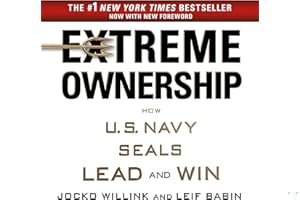 1
1