We've ranked the best folio society books using expert recommendations, sales data, and millions of reader ratings. At Shortform, we know books. Our book guides are the best in the world. Learn why.
Cover unavailable
1
Dune (Dune Chronicles, #1)
Frank Herbert
5.0
A deluxe hardcover edition of the best-selling science-fiction book of all time—part of Penguin Galaxy, a collectible series of six sci-fi/fantasy classics, featuring a series introduction by Neil Gaiman.
Science fiction’s supreme masterpiece, "Dune" will be forever considered a triumph of the imagination. Set on the desert planet Arrakis, it is the story of the boy Paul Atreides, who will become the mysterious man known as Muad’Dib. Paul’s noble family is named stewards of Arrakis, whose sands are the only source of a powerful drug called “the spice.” After his family is brought down in a traitorous plot, Paul must go undercover to seek revenge, and to bring to fruition humankind’s most ancient and unattainable dream. A stunning blend of adventure and mysticism, environmentalism and politics, Dune won the first Nebula Award, shared the Hugo Award, and formed the basis of what is undoubtedly the grandest epic in science fiction.
If you haven't read it, just go read it. It is amazing! [source]
Cover unavailable
2
1984
George Orwell
4.9
A PBS Great American Read Top 100 Pick
With extraordinary relevance and renewed popularity, George Orwell’s 1984 takes on new life in this hardcover edition.
“Orwell saw, to his credit, that the act of falsifying reality is only secondarily a way of changing perceptions. It is, above all, a way of asserting power.”—The New Yorker
In 1984, London is a grim city in the totalitarian state of Oceania where Big Brother is always watching you and the Thought Police can practically read your mind. Winston Smith is a man in grave danger for the simple reason that his memory still functions. Drawn into a forbidden love affair, Winston finds the courage to join a secret revolutionary organization called The Brotherhood, dedicated to the destruction of the Party. Together with his beloved Julia, he hazards his life in a deadly match against the powers that be.
Lionel Trilling said of Orwell’s masterpiece “1984 is a profound, terrifying, and wholly fascinating book. It is a fantasy of the political future, and like any such fantasy, serves its author as a magnifying device for an examination of the present.” Though the year 1984 now exists in the past, Orwell’s novel remains an urgent call for the individual willing to speak truth to power.
Today is World Book Day, a wonderful opportunity to address this #ChallengeRichard sent in by Mike Gonzalez of New Jersey: Make a list of your top 65 books to read in a lifetime. [source]
called this book "one of his favorite" and recommended it to the hires. The book also inspired one the greatest TV ad (made by Jobs) [source]
Andra Zaharia
These books and their core ideas have stuck with me the most and continue to guide me when I hit crossroads along the way. [source]
Cover unavailable
3
The Hobbit
J. R. R. Tolkien
4.8
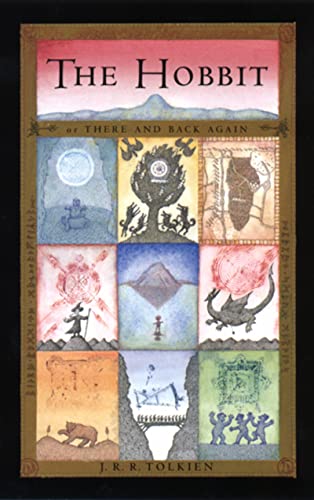
Bilbo Baggins is a hobbit who enjoys a comfortable, unambitious life, rarely traveling any farther than his pantry or cellar. But his contentment is disturbed when the wizard Gandalf and a company of dwarves arrive on his doorstep one day to whisk him away on an adventure. They have launched a plot to raid the treasure hoard guarded by Smaug the Magnificent, a large and very dangerous dragon. Bilbo reluctantly joins their quest, unaware that on his journey to the Lonely Mountain he will encounter both a magic ring and a frightening creature known as Gollum. (back cover)
Today is World Book Day, a wonderful opportunity to address this #ChallengeRichard sent in by Mike Gonzalez of New Jersey: Make a list of your top 65 books to read in a lifetime. [source]
First up, The Hobbit, or There and Back Again, by JRR Tolkien. But you knew I was going to say that. This one book, which was published in 1937, defined so many variables for the fantasy tradition that are still in place today. Tolkien’s extraordinary achievement was to recover the epic landscapes of Anglo-Saxon myth, bring them back to life, and then to take us through them on foot, so we could see the details up close, at human scale. The Hobbit is both mythic and relatable at the same time – The New Yorker writer Adam Gopnik recently called it “an arranged marriage between the Elder Edda and The Wind in the Willows”, and I think that’s entirely fair. Though I would give more credit to the bass register of Tolkien’s imagination, its abyssal depths. Mole never delved as deep as the Mines of Moria. [source]
Cover unavailable
4
The Lord of the Rings (The Lord of the Rings, #1-3)
J.R.R. Tolkien
4.8
One Ring to rule them all, One Ring to find them, One Ring to bring them all and in the darkness bind them
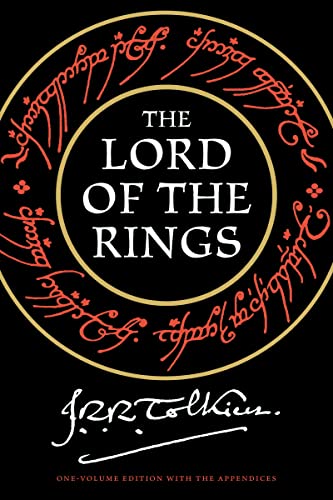
In ancient times the Rings of Power were crafted by the Elven-smiths, and Sauron, the Dark Lord, forged the One Ring, filling it with his own power so that he could rule all others. But the One Ring was taken from him, and though he sought it throughout Middle-earth, it remained lost to him. After many ages it fell by chance into the hands of the hobbit Bilbo Baggins.
From Sauron's fastness in the Dark Tower of Mordor, his power spread far and wide. Sauron gathered all the Great Rings to him, but always he searched for the One Ring that would complete his dominion.
When Bilbo reached his eleventy-first birthday he disappeared, bequeathing to his young cousin Frodo the Ruling Ring and a perilous quest: to journey across Middle-earth, deep into the shadow of the Dark Lord, and destroy the Ring by casting it into the Cracks of Doom.
The Lord of the Rings tells of the great quest undertaken by Frodo and the Fellowship of the Ring: Gandalf the Wizard; the hobbits Merry, Pippin, and Sam; Gimli the Dwarf; Legolas the Elf; Boromir of Gondor; and a tall, mysterious stranger called Strider.
This new edition includes the fiftieth-anniversary fully corrected text setting and, for the first time, an extensive new index.
J.R.R. Tolkien (1892-1973), beloved throughout the world as the creator of The Hobbit, The Lord of the Rings, and The Silmarillion, was a professor of Anglo-Saxon at Oxford, a fellow of Pembroke College, and a fellow of Merton College until his retirement in 1959. His chief interest was the linguistic aspects of the early English written tradition, but while he studied classic works of the past, he was creating a set of his own.
As a boy in Pretoria, Musk was un dersized and picked upon, a smart-aleck known as Muskrat. In his loneliness, he read a lot of fantasy and science fiction. “The heroes of the books I read, ‘The Lord of the Rings’ and the ‘Foundation’ series, always felt a duty to save the world,” he told me. [source]
His alternative world and mythological system is totally coherent–it’s a fantastic gift that he has given us. [source]
Cover unavailable
5
Animal Farm
George Orwell and Christopher Hitchens
4.8
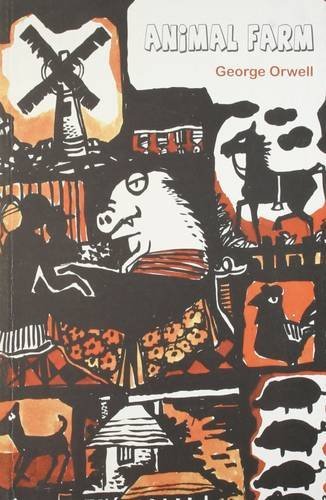
Animal Farm is one of the most famous warnings ever written. Orwell's immortal satire - 'against Stalin' as he wrote to his French translator - can be read on many levels. With its piercing clarity and deceptively simple style it is no surprise that this novel is required reading for schoolchildren and politicians alike. This fable of the steadfast horses Boxer and Clover, the opportunistic pigs Snowball and Napoleon, and the deafening choir of sheep remains an unparalleled masterpiece.
One reviewer wrote 'In a hundred years' time perhaps Animal Farm ... may simply be a fairy story: today it is a fairy story with a good deal of point.' Over sixty years on in the age of spin, it is more relevant than ever.
Rejected by such eminent publishing figures as Victor Gollancz, Jonathan Cape and T.S. Eliot, Animal Farm was published to great acclaim by Martin Secker and Warburg on 17 August 1945 in an edition of 4500 copies. In the centenary year of Martin Secker, Ltd., Harvill Secker is proud to publish this special edition with a brand-new introduction by Christopher Hitchens.
Whitney Cummings recommended this book on the podcast "The Tim Ferriss Show". [source]
Vlad Tenev
When I was in sixth grade I remember being very upset by the ending of this book. [source]
Heather Brooke
I picked Animal Farm because it is an allegory about power and its seductive and corruptive influence on people regardless of their initial good intentions. [source]
Cover unavailable
6
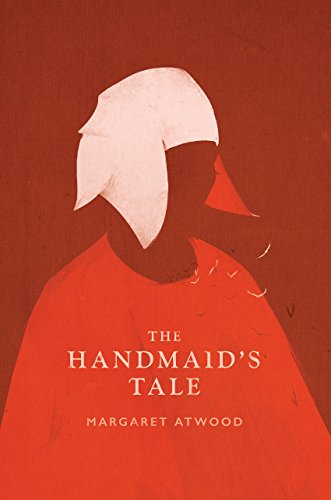
The Handmaid's Tale
Margaret Atwood
4.8
Before The Testaments, there was The Handmaid’s Tale: an instant classic and eerily prescient cultural phenomenon, from “the patron saint of feminist dystopian fiction” (New York Times).
The Handmaid’s Tale is a novel of such power that the reader will be unable to forget its images and its forecast. Set in the near future, it describes life in what was once the United States and is now called the Republic of Gilead, a monotheocracy that has reacted to social unrest and a sharply declining birthrate by reverting to, and going beyond, the repressive intolerance of the original Puritans. The regime takes the Book of Genesis absolutely at its word, with bizarre consequences for the women and men in its population.
The story is told through the eyes of Offred, one of the unfortunate Handmaids under the new social order. In condensed but eloquent prose, by turns cool-eyed, tender, despairing, passionate, and wry, she reveals to us the dark corners behind the establishment’s calm facade, as certain tendencies now in existence are carried to their logical conclusions. The Handmaid’s Tale is funny, unexpected, horrifying, and altogether convincing. It is at once scathing satire, dire warning, and a tour de force. It is Margaret Atwood at her best.
Atwood takes all the hard information about gender inequality that she sees around her and then turns it up a few notches. [source]
Cliff Bleszinski
@HandmaidsOnHulu Done. Love the show, book is a classic, can't wait for season 2. [source]
Grady Booch
I read this several years ago but — much like Orwell’s 1984 — it seems particularly relevant given our current political morass. [source]
Cover unavailable
7
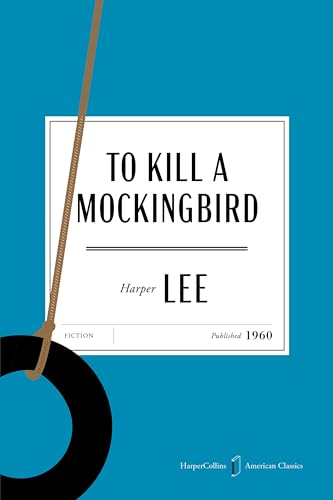
To Kill a Mockingbird
Harper Lee, Sissy Spacek, et al
4.7
The unforgettable novel of a childhood in a sleepy Southern town and the crisis of conscience that rocked it, To Kill A Mockingbird became both an instant bestseller and a critical success when it was first published in 1960. It went on to win the Pulitzer Prize in 1961 and was later made into an Academy Award-winning film, also a classic.
Compassionate, dramatic, and deeply moving, To Kill A Mockingbird takes readers to the roots of human behavior - to innocence and experience, kindness and cruelty, love and hatred, humor and pathos. Now with over 18 million copies in print and translated into forty languages, this regional story by a young Alabama woman claims universal appeal. Harper Lee always considered her book to be a simple love story. Today it is regarded as a masterpiece of American literature.
…
Recommended by Adam Lawrence, Antonio Villaraigosa, Clive Stafford Smith, and 6 others.
Even though I know we’ve made great strides in America, and have come from the reality of Maycomb, we still suffer today from the lingering effects of the bigotry of that era. At the same time, it’s a lesson in standing tall in the face of tremendously hostile circumstances. [source]
Clive Stafford Smith
The book touches on so many issues and deals with so many prejudices – prejudices towards the mentally ill, racial stuff. It’s a book that was way ahead of its time in many ways. It’s also a wonderfully written book – a joy to read. [source]
Cover unavailable
8
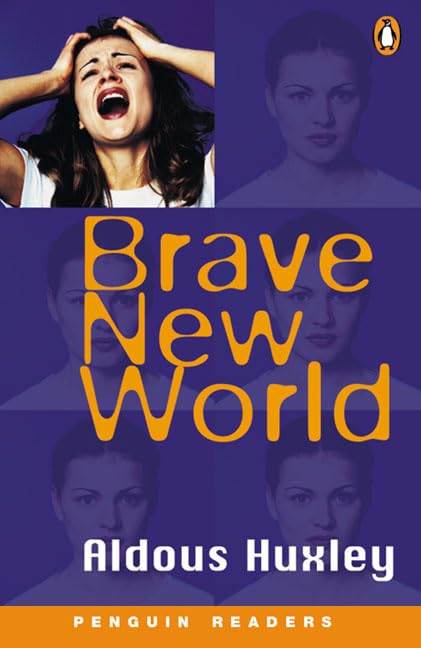
Brave New World
Aldous Huxley
4.7
Now reissued in a gorgeous hardcover edition: "one of the most prophetic dystopian works of the 20th century" (Wall Street Journal) must be read and understood by anyone concerned with preserving the human spirit in the face of our "brave new world." Huxley's masterpiece has become a bestseller once again after the American election.
Aldous Huxley's profoundly important classic of world literature,Brave New World is a searching vision of an unequal, technologically-advanced future where humans are genetically bred, socially indoctrinated, and pharmaceutically anesthetized to passively uphold an authoritarian ruling order whose motto is "Community, Identity, Stability."—all at the cost of our freedom, humanity, and perhaps our souls. "A genius [who] who spent his life decrying the onward march of the Machine" (The New Yorker), Huxley was a man of incomparable talents: equally an artist, a spiritual seeker, and one of history's keenest observers of human nature and civilization. Brave New World, his masterpiece, has enthralled and terrified millions of readers, and retains its urgent relevance to this day as both a warning as we head into tomorrow and as a thought-provoking, satisfying work of literature. Written in the shadow of the rise of fascism during the 1930s, Brave New World likewise speaks to a twenty-first-century world dominated by mass-entertainment, technology, medicine and pharmaceuticals, the arts of persuasion, and the hidden influence of elites.
For more than two thousand years, The Art of War has stood as a cornerstone of Chinese culture-a lucid epigrammatic text that reveals as much about human psychology, politics, and economics as it does about battlefield strategy. The influence of Sun-tzu's text has grown tremendously in the West in recent years, with military leaders, politicians, and corporate executives alike finding valuable insight in these ancient words. In his crisp, accessible new translation, scholar John Minford brings this seminal work to life for modern readers.
Minford opens with a lively, learned introduction in which he explores the life and times of Sun-tzu, looks at The Art of War in the context of the turbulent Warring States period, and discusses how best to read and understand the work today. There follows Minford's translation of the core text itself in two different formats-first, the unadorned thirteen chapters of the original work and then the same text reprinted with extensive running commentary by classical Chinese scholars as well as Minford himself. The result is an opportunity for Western readers to experience Sun-tzu's work in all its intensity as it applies to many aspects of our lives.
Which books should be read by every single intelligent person on planet? … The Art of War (Sun Tsu) to learn that the act of killing fellow humans can be raised to an art. If you read all of the above works you will glean profound insight into most of what has driven the history of the western world. [source]
Mikhail Bulgakov's devastating satire of Soviet life was written during the darkest period of Stalin's regime. Combining two distinct yet interwoven parts—one set in ancient Jerusalem, one in contemporary Moscow—the novel veers from moods of wild theatricality with violent storms, vampire attacks, and a Satanic ball; to such somber scenes as the meeting of Pilate and Yeshua, and the murder of Judas in the moonlit garden of Gethsemane; to the substanceless, circus-like reality of Moscow. Its central characters, Woland (Satan) and his retinue—including the vodka-drinking black cat, Behemoth; the poet, Ivan Homeless; Pontius Pilate; and a writer known only as The Master, and his passionate companion, Margarita—exist in a world that blends fantasy and chilling realism, an artful collage of grotesqueries, dark comedy, and timeless ethical questions.
Though completed in 1940, "The Master and Margarita" wasn't published in Moscow until 1966, when the first part appeared in the magazine "Moskva." It was an immediate and enduring success: audiences responded with great enthusiasm to its expression of artistic and spiritual freedom.
…
Recommended by Max Levchin, Neil Gaiman, Andi Dumitrescu, and 5 others.
Max Levchin
Co-founder/PayPal, CEO/Affirm, Investor
One of the finest works of fiction of the last century. [source]
If I had to make a more rational choice, I’d go with Ulises or The Master and Margareta, but I think that choice is a bit snobbish. [source]
Cover unavailable
11
The Hitchhiker's Guide To The Galaxy (Hitchhiker's Guide to the Galaxy, #1)
Douglas Adams
4.6
One Thursday lunchtime Earth is unexpectedly demolished to make way for a new hyperspace bypass. For Arthur Dent, who has only just had his house demolished that morning, this is already more than he can cope with. Sadly, however, the weekend has only just begun. And the Galaxy is a very, very large and startling place indeed.
I guess when I was around 12 or 15... I had an existential crisis, and I was reading various books on trying to figure out the meaning of life and what does it all mean? It all seemed quite meaningless and then we happened to have some books by Nietzsche and Schopenhauer in the house, which you should not read at age 14 (laughter). It is bad, it’s really negative. So then I read Hitchhikers Guide to the Galaxy which is quite positive I think and it highlighted an important point which is that a lot of times the question is harder than the answer. And if you can properly phrase the question, then the answer is the easy part. So, to the degree that we can better understand the universe, then we can better know what questions to ask. Then whatever the question is that most approximates: what’s the meaning of life? That’s the question we can ultimately get closer to understanding. And so I thought to the degree that we can expand the scope and scale of consciousness and knowledge, then that would be a good thing. [source]
Today is World Book Day, a wonderful opportunity to address this #ChallengeRichard sent in by Mike Gonzalez of New Jersey: Make a list of your top 65 books to read in a lifetime. [source]
Michael Arrington
Founder/TechCrunch
Not sure what you’ll learn from HHGTTG, but it’s one of the funniest series of books of all time and if you haven’t read it you pretty much have to. It’s actually a five book series that’s called a trilogy, and if Adams hadn’t died of a heart attack at age 49 in 2001 there would have likely been more books written. HHGTTG and the WWII epic Catch-22 are among my favorite books when contemplating the meaninglessness and hilarity of life (HHGTTG begins with the Earth being destroyed to to make way for a hyperspatial express route). Like Dune, skip the movie, it doesn’t do the books justice. [source]
Cover unavailable
12
Lord of the Flies
William Golding
4.6
At the dawn of the next world war, a plane crashes on an uncharted island, stranding a group of schoolboys. At first, with no adult supervision, their freedom is something to celebrate; this far from civilization the boys can do anything they want. Anything. They attempt to forge their own society, failing, however, in the face of terror, sin and evil. And as order collapses, as strange howls echo in the night, as terror begins its reign, the hope of adventure seems as far from reality as the hope of being rescued. Labeled a parable, an allegory, a myth, a morality tale, a parody, a political treatise, even a vision of the apocalypse, Lord of the Flies is perhaps our most memorable tale about “the end of innocence, the darkness of man’s heart.”
…
Recommended by Elon Musk, Ev Williams, Audrey Russo, and 5 others.
Audrey Russo
So many novels; Lord of the Flies, Great Gatsby, Great Expectations; all the Nancy Drew books; Catcher in the Rye, Books written by Zora Neale Hurston; Pat Conroy – all because of the view about different people who endure despite adversity while kindling the hearts of the human spirit. [source]
Chigozie Obioma
William Golding imbues some of these children with wisdom that would read, in the hands of a lesser author, as implausibly knowing [source]
Disco Donnie
@JoshRHernandez1 I love the book “Lord of the Flies” so just started watching The Society [source]
Cover unavailable
13
Anna Karenina
Leo Tolstoy
4.6
Tolstoy's epic novel of love, destiny and self-destruction, in a gorgeous new clothbound edition from Penguin Classics. Anna Karenina seems to have everything - beauty, wealth, popularity and an adored son. But she feels that her life is empty until the moment she encounters the impetuous officer Count Vronsky. Their subsequent affair scandalizes society and family alike and soon brings jealously and bitterness in its wake. Contrasting with this tale of love and self-destruction is the vividly observed story of Levin, a man striving to find contentment and a meaning to his life - and also a self-portrait of Tolstoy himself. This acclaimed modern translation by Richard Pevear and Larissa Volokhonsky won the PEN/ Book of the Month Club Translation Prize in 2001. Their translation is accompanied in this edition by an introduction by Richard Pevear and a preface by John Bayley. "The new and brilliantly witty translation by Richard Pevear and Larissa Volokhonsky is a must". (Lisa Appignanesi, Independent, Books of the Year). "Pevear and Volokhonsky are at once scrupulous translators and vivid stylists of English, and their superb rendering allows us, as perhaps never before, to grasp the palpability of Tolstoy's "characters, acts, situations"". (James Wood, New Yorker).
…
Recommended by Chelsea Handler, Marvin Liao, Audrey Russo, and 5 others.
I don't know if I have to expound on why I love this book, but everyone should read this author, and this was the first one of his works I read. So, it's like a first boyfriend. Or my first Cabbage Patch Kid. [source]
Marvin Liao
Partner/500 Startups
My list would be (besides the ones I mentioned in answer to the previous question) both business & Fiction/Sci-Fi and ones I personally found helpful to myself. The business books explain just exactly how business, work & investing are in reality & how to think properly & differentiate yourself. On the non-business side, a mix of History & classic fiction to understand people, philosophy to make sense of life and Science fiction to picture what the future could be like (not always utopian). [source]
Audrey Russo
Question: What books would you recommend to young people interested in your career path? Answer: Anything by Peter Senge. The Hard Thing About Hard Things – Ben Horowitz Once you are Lucky, Twice you are good – Sara Lacey Revolutionary Wealth – Alvin Toffler Black Swan – Taleb Reset: My Fight for Inclusion and Lasting Change, by Ellen Pao. Creative Class – Richard Florida Creativity Inc. by Ed Catmull & Amy Wallace Liar’s Poker by Michael Lewis American Government 101: From the Continental Congress to the Iowa Caucus, Everything You Need to Know About US Politics – Kathleen Spears The Tao of Pooh by Benjamin Hoff. Anna Karenina by Leo Tolstoy. Any book by Herman Hesse The Art of War by Sun Tzu. [source]
Cover unavailable
14
The Wind in the Willows
Kenneth Grahame, Charles van Sandwyk
4.5
Since 1903, the escapades of Mole, his friend Water Rat, shy Badger, and Toad of Toad Hall have delighted children, and adults, too. Follow the winning foursome through the seasons as they sail the river, get lost in the Wild Wood, take off on a merry adventure in Toad's colorful carriage, and rescue Toad Hall from a band of nasty marauding weasels.
Recommended by Neil Gaiman, M G Leonard, Melvin Burgess, and 1 others.
I think The Wind in the Willows is an excellent candidate for Best Book Ever Written. https://t.co/Uepg8wc1uE [source]
M G Leonard
The characters are alive in my head and I love every single one of them. [source]
Melvin Burgess
It’s the first book I fell in love with. The fiction that I liked when I was young was very much about cosy little adventures with animals. [source]
Cover unavailable
15
The Remains of the Day
Kazuo Ishiguro
4.5
An elegant Everyman's Library hardcover edition of the universally acclaimed novel—winner of the Booker Prize, a bestseller and a perpetually strong backlist title, and the basis for an award-winning film—with full-cloth binding, a silk ribbon marker, a chronology, and a new introduction by Salman Rushdie.
Here is Kazuo Ishiguro's profoundly compelling portrait of Stevens, the perfect butler, and of his fading, insular world in post-World War II England. Stevens, at the end of three decades of service at Darlington Hall, spending a day on a country drive, embarks as well on a journey through the past in an effort to reassure himself that he has served humanity by serving the "great gentleman," Lord Darlington. But lurking in his memory are doubts about the true nature of Lord Darlington's "greatness," and much graver doubts about the nature of his own life.
If you read The Remains of the Day, which is one of my favorite books, you can't help but come away and think, I just spent 10 hours living an alternate life and I learned something about life and about regret. You can't do that in a blog post. [source]
Riz Khan
About missed chances and what the British character does to a person’s emotions. There is this brick wall that they can’t crack through and after a while a bit of the grout wears away. [source]
Inheriting the mantle of revolutionary biologist from Darwin, Watson, and Crick, Richard Dawkins forced an enormous change in the way we see ourselves and the world with the publication of The Selfish Gene. Suppose, instead of thinking about organisms using genes to reproduce themselves, as we had since Mendel's work was rediscovered, we turn it around and imagine that "our" genes build and maintain us in order to make more genes. That simple reversal seems to answer many puzzlers which had stumped scientists for years, and we haven't thought of evolution in the same way since.
Why are there miles and miles of "unused" DNA within each of our bodies? Why should a bee give up its own chance to reproduce to help raise her sisters and brothers? With a prophet's clarity, Dawkins told us the answers from the perspective of molecules competing for limited space and resources to produce more of their own kind. Drawing fascinating examples from every field of biology, he paved the way for a serious re-evaluation of evolution. He also introduced the concept of self-reproducing ideas, or memes, which (seemingly) use humans exclusively for their propagation. If we are puppets, he says, at least we can try to understand our strings. --Rob Lightner
recommends this book in the second edition of Poor Charlie’s Almanack. [source]
Matt Ridley
Turned evolutionary biology on its head and was written like a great detective story. [source]
Phil Libin
CEO/Evernote
Had a profound influence on me pretty early on. [source]
Cover unavailable
17
Fahrenheit 451
Ray Bradbury
4.5
Guy Montag is a fireman. In his world, where television rules and literature is on the brink of extinction, firemen start fires rather than put them out. His job is to destroy the most illegal of commodities, the printed book, along with the houses in which they are hidden.
Montag never questions the destruction and ruin his actions produce, returning each day to his bland life and wife, Mildred, who spends all day with her television 'family'. But then he meets an eccentric young neighbor, Clarisse, who introduces him to a past where people did not live in fear and to a present where one sees the world through the ideas in books instead of the mindless chatter of television.
When Mildred attempts suicide and Clarisse suddenly disappears, Montag begins to question everything he has ever known.
This classic work on state censorship remains as relevant in today’s world of digital delights as it was when published in the black-and-white world of 1953. In a futuristic American city, firefighter Guy Montag does not put out blazes; instead, he extinguishes knowledge and promotes ignorance by conducting state decreed book burnings. After an elderly woman chooses a fiery death with her books rather than a life without the written word, he begins questioning not only his profession, but also a society that allows itself to be lulled into complacency by constant exposure to state-controlled, mind-numbing television shows. If you wonder why some people take censorship so seriously, this book will give you the answer. It’s also a fantastically inspiring story of a one-versus-a-million fight that’s worth fighting. Who knows when your turn will come? [source]
I’m not sure what compelled me to pick Fahrenheit 451 back up but I’m so glad I did because I was able to see the book in a very different context. Bradbury’s message (made explicit in his 50th Anniversary Afterword) is much less a warning against government control and much more about a road to hell paved by people attempting to rid the world of offensive speech and conflicting ideas. In a world of microaggressions and outrage porn, this is an important idea to see in such a timeless work of fiction. [source]
Cover unavailable
18
Catch-22
Joseph Heller, Christopher Buckley
4.5
This fiftieth-anniversary edition commemorates Joseph Heller’s masterpiece with a new introduction; critical essays and reviews by Norman Mailer, Alfred Kazin, Anthony Burgess, and others; rare papers and photos; and much more.
Nominated as one of America’s best-loved novels by PBS’s The Great American Read.
Now a Hulu limited series starring Christopher Abbott, George Clooney, Kyle Chandler, and Hugh Laurie.
Fifty years after its original publication, Catch-22 remains a cornerstone of American literature and one of the funniest—and most celebrated—books of all time. In recent years it has been named to “best novels” lists by Time, Newsweek, the Modern Library, and the London Observer.
Set in Italy during World War II, this is the story of the incomparable, malingering bombardier, Yossarian, a hero who is furious because thousands of people he has never met are trying to kill him. But his real problem is not the enemy—it is his own army, which keeps increasing the number of missions the men must fly to complete their service. Yet if Yossarian makes any attempt to excuse himself from the perilous missions he’s assigned, he’ll be in violation of Catch-22, a hilariously sinister bureaucratic rule: a man is considered insane if he willingly continues to fly dangerous combat missions, but if he makes a formal request to be removed from duty, he is proven sane and therefore ineligible to be relieved.
This fiftieth-anniversary edition commemorates Joseph Heller’s masterpiece with a new introduction by Christopher Buckley; a wealth of critical essays and reviews by Norman Mailer, Alfred Kazin, Anthony Burgess, and others; rare papers and photos from Joseph Heller’s personal archive; and much more. Here, at last, is the definitive edition of a classic of world literature.
…
Recommended by Brian Burkhart, Charles Glass, Kate McLoughlin, and 5 others.
Brian Burkhart
This book is a masterpiece and absolutely hilarious. In subtle ways, you realize the main character is questioning not just the notion of authority, but the way authority thinks and how we must react to it. To me, a guy with the core belief “make waves,” it has a great message, which is, “It’s okay to question the status quo.” For people just starting their careers, it’s easy to think our superiors know everything—they’re not quick to admit their insecurities, flaws, and blind spots, but they have them. And having a healthy dose of skepticism isn’t such a terrible thing. Plus, it’s just a fun read. [source]
Charles Glass
It’s one of the funniest books ever written. It’s about the insanity of military life and the absurdity of a big institution. Heller was very good on the absurdity of big institutions. Catch 22 has every character in it that the American military did have at the time and still has today in Iraq and Afghanistan: The money-makers, the crooks, the officers who were trying to claw their way to the top where they get their men killed, the placing in order of priority the pretence of military success at the cost of many civilian lives. [source]
Kate McLoughlin
It gets you to the point where you can’t apply your reason any more and laughter takes over. It’s the laughter of the absurd. [source]
Cover unavailable
19
The Greek Myths
Robert Graves
4.5
Combines in a single volume the complete text of the definitive two-volume classic, citing all the ancient myths. For a full appreciation of literature or visual art, knowledge of the Greek myths is crucial. In this much-loved collection, poet and scholar Robert Graves retells the immortal stories of the Greek myths. Demeter mourning her daughter Persephone, Icarus flying too close to the sun, Theseus and the Minotaur … all are captured here with the author’s characteristic erudition and flair.
The Greek Myths is the culmination of years of research and careful observation, however what makes this collection extraordinary is the imaginative and poetic style of the retelling. Drawing on his experience as a novelist and poet, Graves tells the fantastic stories of Ancient Greece in a style that is both absorbing and easy for the general reader to understand. Each story is accompanied by Graves’ interpretation of the origins and deeper meaning of the story, giving a reader an unparalleled insight into the customs and development of the Greek world.
…
Recommended by Lucy Coats.
Lucy Coats
As far as I know, every single myth and every single variation, every single little nugget of Greek myth that isn’t necessarily even complete, is in there. [source]
Cover unavailable
20
All Quiet on the Western Front
Erich Maria Remarque, A W. Wheen
4.5
One by one the boys begin to fall…
In 1914 a room full of German schoolboys, fresh-faced and idealistic, are goaded by their schoolmaster to troop off to the ‘glorious war’. With the fire and patriotism of youth they sign up. What follows is the moving story of a young ‘unknown soldier’ experiencing the horror and disillusionment of life in the trenches.
Recommended by Cécile Fabre.
Cécile Fabre
He knows that his pleasure at a beautiful landscape, at the smell of good food, will forever be coloured by what the landscape looked like in the trenches, by the food that was cooked in the trenches. [source]
Cover unavailable
21
Alice's Adventures in Wonderland & Through the Looking-Glass
Lewis Carroll
4.5
In 1862 Charles Lutwidge Dodgson, a shy Oxford mathematician with a stammer, created a story about a little girl tumbling down a rabbit hole. Thus began the immortal adventures of Alice, perhaps the most popular heroine in English literature.
Countless scholars have tried to define the charm of the Alice books--with those wonderfully eccentric characters the Queen of Hearts, Tweedledum, and Tweedledee, the Cheshire Cat, Mock Turtle, the Mad Hatter et al.--by proclaiming that they really comprise a satire on language, a political allegory, a parody of Victorian children's literature, even a reflection of contemporary ecclesiastical history.
Perhaps, as Dodgson might have said, Alice is no more than a dream, a fairy tale about the trials and tribulations of growing up--or down, or all turned round--as seen through the expert eyes of a child.
…
Recommended by Eric Weinstein, Jean Webb, Larry Doyle, and 1 others.
Eric Weinstein recommended this book on Twitter. [source]
Jean Webb
An imaginative, clever and fun fantasy story that satirises nineteenth century England at the same time as celebrating academic thinking. [source]
Larry Doyle
You’d have to be a zombie to miss the humour in it – it’s hilarious. Although the book is ancient, the humour feels modern [source]
Cover unavailable
22
War And Peace
Leo Tolstoi, Louise Maude, Aylmer Maude
4.4
War and Peace broadly focuses on Napoleon's invasion of Russia in 1812 and follows three of the most well-known characters in literature: Pierre Bezukhov, the illegitimate son of a count who is fighting for his inheritance and yearning for spiritual fulfillment; Prince Andrei Bolkonsky, who leaves his family behind to fight in the war against Napoleon; and Natasha Rostov, the beautiful young daughter of a nobleman who intrigues both men.
As Napoleon's army invades, Tolstoy brilliantly follows characters from diverse backgrounds—peasants and nobility, civilians and soldiers—as they struggle with the problems unique to their era, their history, and their culture. And as the novel progresses, these characters transcend their specificity, becoming some of the most moving—and human—figures in world literature. Translated by Louise and Aylmer Maude.
Three-Volume Boxed Set
…
Recommended by Andrei Maylunas, Cécile Fabre, Kate McLoughlin, and 6 others.
One doesn’t have to invent the bicycle, there is one: it’s War and Peace. It’s about how Russia won the Napoleonic wars, and moved into the first row of nations who dealt with European history. It’s set during the peak of Russian culture, the age of Pushkin, who created the modern Russian language. It’s the peak…The only thing I would recommend to modern readers is to skip all those parts – which are completely separate from the other parts of the book – where Tolstoy is philosophising about the role of the individual in history. It’s maybe 15 per cent of the book, in separate chapters, and I would definitely recommend to skip those because they are not interesting today. [source]
Cécile Fabre
One of the key questions that Tolstoy asks in the appendix is the central question of War and Peace: how can we explain the fact that, on orders, millions of people go out and kill one another, when they know that killing another human being is morally wrong? [source]
Kate McLoughlin
Tolstoy didn’t fight in the Napoleonic wars, but he did fight in the Crimean war, so he drew on his experiences in that when he wrote War and Peace. [source]
Cover unavailable
23
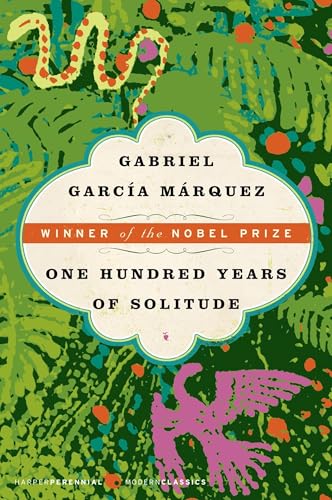
One Hundred Years of Solitude
Gabriel Garcia Marquez
4.4
The brilliant, bestselling, landmark novel that tells the story of the Buendia family, and chronicles the irreconcilable conflict between the desire for solitude and the need for love—in rich, imaginative prose that has come to define an entire genre known as "magical realism."
When asked what books he recommended to his 18-year-old daughter Malia, Obama gave the Times a list that included The Naked and the Dead and One Hundred Years of Solitude. “I think some of them were sort of the usual suspects … I think she hadn’t read yet. Then there were some books that are not on everybody’s reading list these days, but I remembered as being interesting.” Here’s what he included: The Naked and the Dead, Norman Mailer One Hundred Years of Solitude, Gabriel García Márquez The Golden Notebook, Doris Lessing The Woman Warrior, Maxine Hong Kingston [source]
Brace yourselves—One Hundred Years of Solitude by Gabriel García Márquez is as steamy, dense and sensual as the jungle that surrounds the surreal town of Macondo! [source]
Today is World Book Day, a wonderful opportunity to address this #ChallengeRichard sent in by Mike Gonzalez of New Jersey: Make a list of your top 65 books to read in a lifetime. [source]

Cover unavailable
24
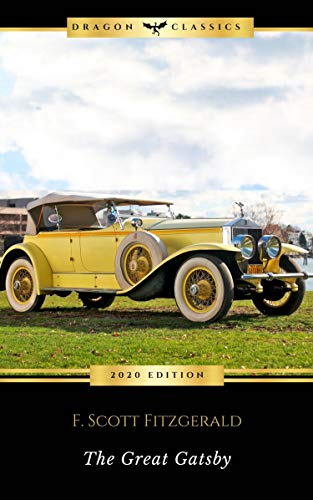
The Great Gatsby
F. Scott Fitzgerald
4.4
A young man, newly rich, tries to recapture the past and win back his former love, despite the fact that she has married.
When he got to high school, the president said, his tastes changed and he learned to enjoy classics like “Of Mice and Men” and “The Great Gatsby.” [source]
Melinda and I really like this book. When we were first dating, she had a green light that she would turn on when her office was empty and it made sense for me to come over. [source]
Marvin Liao
Partner/500 Startups
For Non-Business, I'd have to say Dune (Herbert), Emergency (Strauss), The Great Gatsby (Fitzgerald) or Flint (L'Amour). I re-read these books every year because they are just so well written & great stories that I get new perspective & details every time I read them. [source]
Cover unavailable
25
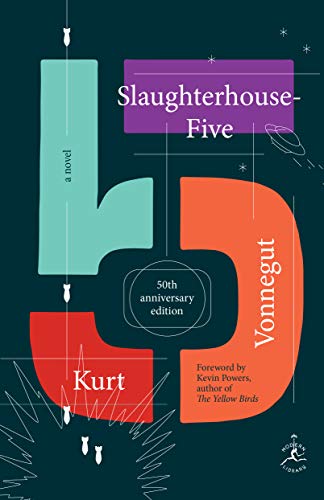
Slaughterhouse-Five
Kurt Vonnegut and Kevin Power
4.4
Selected by the Modern Library as one of the 100 best novels of all time, Slaughterhouse-Five, an American classic, is one of the world's great antiwar books. Centering on the infamous firebombing of Dresden, Billy Pilgrim's odyssey through time reflects the mythic journey of our own fractured lives as we search for meaning in what we fear most.
Recommended by Bernard Tan, Carlos Eire, and Dan Christensen.
Bernard Tan
I’m also a Murakami and Vonnegut fan, Kafka on the Shore, The Wind-up Bird Chronicle, Norwegian Wood, Slaughterhouse-Five, etc. Now that I look at the books listed, they seem to carry an existential theme. I guess I like to understand humanity and human behaviour ultimately to better understand myself. I find reading a means to connect with people who may have lived before my time, or in a distant country, that I may never have had the chance to connect with in real life. As three-dimensional humans, we are all made up of so many faces and emotional layers that we find it hard to dissect them all, and when we find writers who can explain these thought processes in a way that’s tangible and digestible, there’s this incredibly comforting eureka moment of feeling understood. [source]
Carlos Eire
Even though he is no philosopher Vonnegut is still able to ask the questions that all of us think about – how time affects our lives. [source]

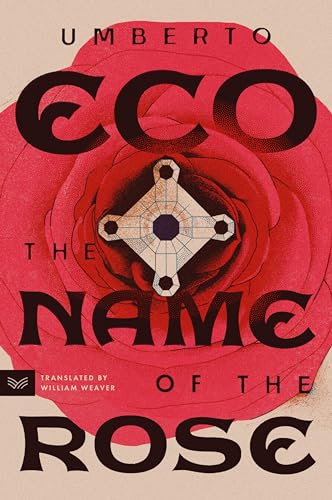
The year is 1327. Benedictines in a wealthy Italian abbey are suspected of heresy, and Brother William of Baskerville arrives to investigate. When his delicate mission is suddenly overshadowed by seven bizarre deaths, Brother William turns detective. His tools are the logic of Aristotle, the theology of Aquinas, the empirical insights of Roger Bacon—all sharpened to a glistening edge by wry humor and a ferocious curiosity. He collects evidence, deciphers secret symbols and coded manuscripts, and digs into the eerie labyrinth of the abbey, where “the most interesting things happen at night.”
…
Recommended by Vanora Bennett.
Vanora Bennett
I read this a few years ago and it was one of those books you always remember because it creates a whole new way of thinking. I had no idea at the time that the medieval mindset was any different to the modern one. It is about the adventure of a Franciscan friar and his novice in medieval Italy and it is part murder mystery, part game with semiotics and medieval knowledge. At university I read lots of French books referring to this medieval period where all knowledge was supposed to be classified, and re-classified and super-classified, and it became sort of idiotic, this academic approach that these monks had. Yet there was something amazing about this belief that you could classify knowledge. It’s also very good storytelling, but the part I remember was the sort of library filled with knowledge and these games, which teased you with knowing things and not knowing things. It’s just this very complex mindset that’s really different from our own and because I knew nothing about it, it was just terribly exciting to be taken off into this world. [source]
Cover unavailable
27
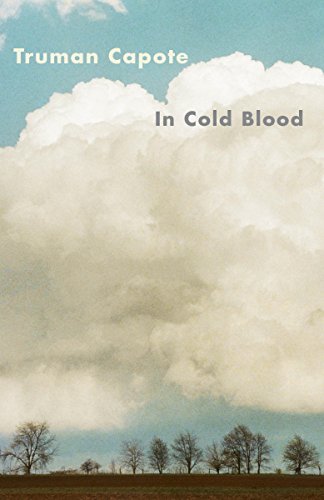
In Cold Blood
Truman Capote
4.4
On November 15, 1959, in the small town of Holcomb, Kansas, four members of the Clutter family were savagely murdered by blasts from a shotgun held a few inches from their faces. There was no apparent motive for the crime, and there were almost no clues.
As Truman Capote reconstructs the murder and the investigation that led to the capture, trial, and execution of the killers, he generates both mesmerizing suspense and astonishing empathy. At the center of his study are the amoral young killers Perry Smith and Dick Hickcock, who, vividly drawn by Capote, are shown to be reprehensible yet entirely and frighteningly human. In Cold Blood is a seminal work of modern prose, a remarkable synthesis of journalistic skill and powerfully evocative narrative.
One of the reasons I like this true crime novelisation is down to the fact it was so out of character for Capote and took everyone by surprise. It is also an excellent, almost biographical, insight into the two young killers’ minds. [source]
I think in all honesty it is one of the finest books ever written. It took him six years to finish it because he had to wait for the court case and the final verdict which was the two perpetrators being executed. [source]

Cover unavailable
28
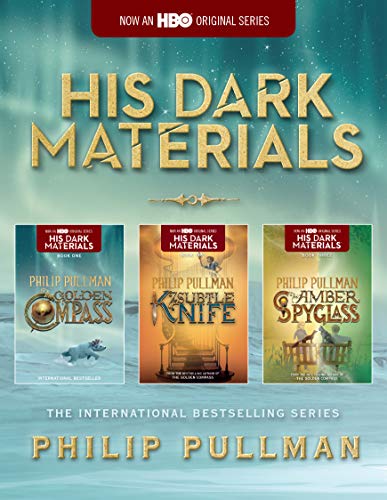
His Dark Materials Trilogy: The Golden Compass / The Subtle Knife / The Amber Spyglass
Philip Pullman
4.4
Box Set Edition of His Dark Materials. Includes: The Golden Compass, The Subtle Knife and The Amber Spyglass.
Other children’s books often have children behaving in terrible ways. Philip himself has acknowledged that his His Dark Materials is, to some extent, a response to the Chronicles of Narnia which has children behaving in all sorts of slavish ways, obeying authority because it is authority, and setting all sorts of poor moral examples. The children in Philip’s books are thoughtful, intelligent, and morally concerned. They are motivated by love and loyalty. And they are very complex. He doesn’t shy away from the moral complexity, the difficulties of choice, the lesser of two evils. That is also something that comes up in his books. There is no perfect solution, you struggle to truth. [source]
This is one of my favourite books. Lyra feels like a natural successor to Matilda. She is a character of action. She isn’t sitting in a corner reading. She is out there and she is having a real effect on her story. She isn’t being buffeted by forces and having to rebel against them, she is out there actively seeking an adventure. I read this when I was eleven and starting secondary school. I remember her really sticking with me not least because she lies so much. [source]
Lewis Smith
His Dark Materials Series by Philip Pullman is my favourite fictional book of all time. I just love this story so much, it's clever and thought provoking, whilst also being accessible and gripping to read. The audiobook version is fantastic too, and narrated by Pullman himself. It's also inspiring because the main characters are just children, but they are so strong and determined. There is always something new to take from it. I love that Lyra is quite a popular girls name now. [source]
Cover unavailable
29
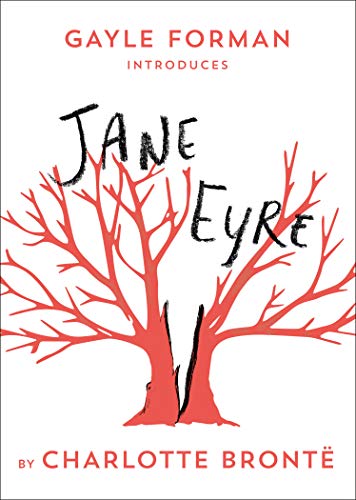
Jane Eyre
Charlotte Brontë
4.4
Orphaned as a child, Jane has felt an outcast her whole young life. Her courage is tested once again when she arrives at Thornfield Hall, where she has been hired by the brooding, proud Edward Rochester to care for his ward Adèle. Jane finds herself drawn to his troubled yet kind spirit. She falls in love. Hard.
But there is a terrifying secret inside the gloomy, forbidding Thornfield Hall. Is Rochester hiding from Jane? Will Jane be left heartbroken and exiled once again?
…
Recommended by Audrey Penn, John Sutherland, Lucy Atkins, and 2 others.
Audrey Penn
My next one is Jane Eyre. She was orphaned and sent to a very rich aunt, who had her own very selfish children. Jane Eyre was not the perfect child and she was sent to live in a girls’ school. She made one friend, but unfortunately the little girl died, so she had to toughen up. She grew up there and learned everything she needed to know about teaching. She was a very good artist, she played a little piano, she learned French. When she got older she became the governess for a little French girl who was the ward of a man who lived in a manor. They fell in love, but it turned out that he had a wife, who was insane and lived in the attic. So Jane Eyre ran away and found out she had an uncle who had left her a great deal of money. But she couldn’t get the man out of her mind, so she went back. She found out that after she left, the man’s wife had set the place on fire. The wife had died in the fire, and it had blinded him. They were still very much in love and they married. And they lived happily ever after. [source]
John Sutherland
There is an interesting debate … that the real heroine of Jane Eyre is not the plain little governess but the mad woman in the attic, Bertha Mason [source]
I think Charlotte Brontë’s most accomplished book is Villette. It’s probably a better book, it’s tighter and more sophisticated in some ways. But there’s something about Jane Eyre that is just deeply emotionally compelling for me. [source]
Cover unavailable
30
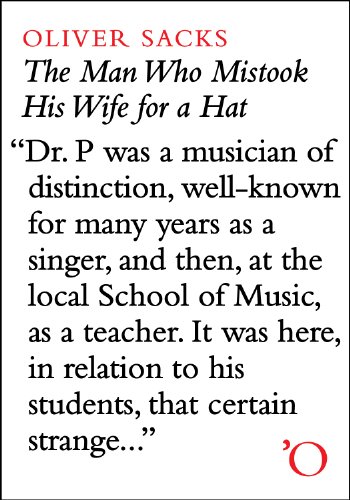
The Man Who Mistook His Wife for a Hat and Other Clinical Tales
If a man has lost a leg or an eye, he knows he has lost a leg or an eye; but if he has lost a self—himself—he cannot know it, because he is no longer there to know it. Dr. Oliver Sacks recounts the stories of patients struggling to adapt to often bizarre worlds of neurological disorder. Here are people who can no longer recognize everyday objects or those they love; who are stricken with violent tics or shout involuntary obscenities; who have been dismissed as autistic or retarded, yet are gifted with uncanny artistic or mathematical talents. If inconceivably strange, these brilliant tales illuminate what it means to be human.
…
Recommended by Bradley Voytek, Suzanne O'Sullivan, and Tanya Byron.
Bradley Voytek
I can’t imagine one day waking up and not knowing who my wife is, or seeing my wife and thinking that she was replaced by some sort of clone or robot. But that could happen to any of us. [source]
Suzanne O'Sullivan
I didn’t choose neurology because of it but the way Oliver Sacks writes about neurology is very compelling. [source]
Tanya Byron
This is a seminal book that anyone who wants to work in mental health should read. It is a charming and gentle and also an honest exposé of what can happen to us when our mental health is compromised for whatever reason. [source]
Cover unavailable
31
Rebecca
Daphne du Maurier, Anna Massey, et al
4.3
Last night I dreamt I went to Manderley again . . .
The novel begins in Monte Carlo, where our heroine is swept off her feet by the dashing widower Maxim de Winter and his sudden proposal of marriage. Orphaned and working as a lady's maid, she can barely believe her luck. It is only when they arrive at his massive country estate that she realizes how large a shadow his late wife will cast over their lives--presenting her with a lingering evil that threatens to destroy their marriage from beyond the grave.
The main thing about Rebecca that I find completely compelling is the way that you, the reader, become complicit in a situation which, eventually, turns into a crime. [source]
Throughout the story, she feels the first wife haunt the house, and she can never quite measure up to her. And then the heroine begins to wonder: What if Rebecca was murdered? What if my husband did it? [source]
Cover unavailable
32
The Adventures of Huckleberry Finn
Mark Twain
4.3
Adventures of Huckleberry Finn (or, in more recent editions, The Adventures of Huckleberry Finn) is a novel by Mark Twain, first published in the United Kingdom in December 1884 and in the United States in February 1885. Commonly named among the Great American Novels, the work is among the first in major American literature to be written throughout in vernacular English, characterized by local color regionalism. It is told in the first person by Huckleberry "Huck" Finn, the narrator of two other Twain novels (Tom Sawyer Abroad and Tom Sawyer, Detective) and a friend of Tom Sawyer. It is a direct sequel to The Adventures of Tom Sawyer.
Today is World Book Day, a wonderful opportunity to address this #ChallengeRichard sent in by Mike Gonzalez of New Jersey: Make a list of your top 65 books to read in a lifetime. [source]
I enjoy nearly everything Mark Twain ever wrote, but my favorite is The Adventures of Huckleberry Finn. This novel showcases Twain at the top of his game in terms of acerbic wit, sharp societal observations and the use of regional dialects - for which he initially garnered great criticism, before the passage of time enabled critics to understand and acknowledge its authenticity. [source]
Cover unavailable
33
The Princess Bride: S. Morgenstern's Classic Tale of True Love and High Adventure
William Goldman
4.3
A Tale of true love and high adventure, pirates, princesses, giants, miracles, fencing, and a frightening assortment of wild beasts - The Princess Bride is a modern storytelling classic.
As Florin and Guilder teeter on the verge of war, the reluctant Princess Buttercup is devastated by the loss of her true love, kidnapped by a mercenary and his henchmen, rescued by a pirate, forced to marry Prince Humperdinck, and rescued once again by the very crew who absconded with her in the first place. In the course of this dazzling adventure, she'll meet Vizzini - the criminal philosopher who'll do anything for a bag of gold; Fezzik - the gentle giant; Inigo - the Spaniard whose steel thirsts for revenge; and Count Rugen - the evil mastermind behind it all. Foiling all their plans and jumping into their stories is Westley, Princess Buttercup's one true love and a very good friend of a very dangerous pirate.
…
Recommended by A.r. Moxon (Julius Goat).
A.r. Moxon (Julius Goat)
@TByrne75 I think the book of the Princess bride is pretty great actually [source]
Cover unavailable
34
The Origin of Species by Means of Natural Selection: Or, the Preservation of Favored Races in the Struggle for Life
Charles Darwin
4.3
Darwin's theory of natural selection issued a profound challenge to orthodox thought and belief: no being or species has been specifically created; all are locked into a pitiless struggle for existence, with extinction looming for those not fitted for the task.
Yet The Origin of Species (1859) is also a humane and inspirational vision of ecological interrelatedness, revealing the complex mutual interdependencies between animal and plant life, climate and physical environment, and—by implication—within the human world.
Written for the general reader, in a style which combines the rigour of science with the subtlety of literature, The Origin of Species remains one of the founding documents of the modern age.
Which books should be read by every single intelligent person on planet? … On the Origin of Species (Darwin) to learn of our kinship with all other life on Earth. If you read all of the above works you will glean profound insight into most of what has driven the history of the western world. [source]
It is one of the most important books written, and I always urge people to read it. [source]
Adam Maloof
For me (and many others) this book forms the foundation for modern biology. It is all about humans’ concept of themselves. [source]
Cover unavailable
35
Dracula
Bram Stoker
4.3
“Welcome to my house. Come freely. Go safely; and leave something of the happiness you bring.”
Recommended by Andrei Codrescu, Becky Cloonan, Claire Jarvis, and 1 others.
Andrei Codrescu
Vampirism is a growth industry. Dracula is bigger than Jesus now. [source]
Becky Cloonan
@Noise_Raptor Oh, thank you so much! This book was such a delight, and such a challenge! Dracula is one of my favorites- funny enough I'd jump at the chance to do this again XD [source]
Claire Jarvis
Dracula is very explicit. That’s what’s so surprising about it. [source]
Cover unavailable
36
Moby-Dick
Herman Melville
4.3
Journey to the heart of the sea with this larger-than-life classic.
Regarded as a Great American Novel, "Moby Dick" is the ultimate tale of seeking vengeance.
Narrated by the crew member Ishmael, this epic whaling adventure follows the crew of the "Pequod," as its captain, Ahab, descends deeper and deeper into madness on his quest to find and kill the white whale that maimed him. Beyond the surface--of ship life, whaling, and the hunt for the elusive Moby Dick--are allegorical references to life--and even the universe--in this masterpiece by Herman Melville.
Complete and unabridged, this elegantly designed clothbound edition features an elastic closure and a new introduction by Christopher McBride.
According to the president’s Facebook page and a 2008 interview with the New York Times, this title is among his most influential forever favorites. [source]
Jobs told me that "Moby-Dick" was among his favorite books and he reread it a lot when he was a teen. [source]
Adam Haslett
Evil derives from the violent avoidance of the realisation of our own mortality and there could be few better examples of this in literature than Melville’s portrait of Ahab in Moby-Dick. [source]
Cover unavailable
37
Wuthering Heights
Emily Bronte
4.3
You can find the redesigned cover of this edition HERE.
This best-selling Norton Critical Edition is based on the 1847 first edition of the novel. For the Fourth Edition, the editor has collated the 1847 text with several modern editions and has corrected a number of variants, including accidentals. The text is accompanied by entirely new explanatory annotations.
New to the fourth Edition are twelve of Emily Bronte's letters regarding the publication of the 1847 edition of Wuthering Heights as well as the evolution of the 1850 edition, prose and poetry selections by the author, four reviews of the novel, and poetry selections by the author, four reviews of the novel, and Edward Chitham's insightful and informative chronology of the creative process behind the beloved work.
Five major critical interpretations of Wuthering Heights are included, three of them new to the Fourth Edition. A Stuart Daley considers the importance of chronology in the novel. J. Hillis Miller examines Wuthering Heights's problems of genre and critical reputation. Sandra M. Gilbert assesses the role of Victorian Christianity plays in the novel, while Martha Nussbaum traces the novel's romanticism. Finally, Lin Haire-Sargeant scrutinizes the role of Heathcliff in film adaptations of Wuthering Heights.
A Chronology and updated Selected Bibliography are also included.
…
Recommended by Claire Jarvis, John Sutherland, Rachel Hickman, and 2 others.
Claire Jarvis
Wuthering Heights is a strange novel in a lot of ways. It’s a standalone—there’s not really another book like it. [source]
John Sutherland
The Brontës had this idea of a Samson figure. Rochester, like Samson, has to be mutilated before he can be domesticated. What is interesting about Heathcliff, in Wuthering Heights, is that he isn’t. He remains this superman. He is greater than a human being. He is named after two elemental things, the heath and the cliff. We never know what his first name is. [source]
Rachel Hickman
In Wuthering Heights once again it’s the landscape that underlines the choices the characters must make. Cathy must choose between the grand house in the lush valley: protected, comfortable and tame; or the wild, exhilarating bleakness of Wuthering Heights. [source]
Cover unavailable
38
Pride and Prejudice
Jane Auste
4.2
Alternate cover edition of ISBN 9780679783268
Since its immediate success in 1813, Pride and Prejudice has remained one of the most popular novels in the English language. Jane Austen called this brilliant work "her own darling child" and its vivacious heroine, Elizabeth Bennet, "as delightful a creature as ever appeared in print." The romantic clash between the opinionated Elizabeth and her proud beau, Mr. Darcy, is a splendid performance of civilized sparring. And Jane Austen's radiant wit sparkles as her characters dance a delicate quadrille of flirtation and intrigue, making this book the most superb comedy of manners of Regency England.
…
Recommended by Meg Rosoff.
Meg Rosoff
It’s a coming-of-age story, because she throws aside her prejudices but also sees the house and realises that she could be quite comfortable and maybe realises how important that is. [source]
Cover unavailable
39
The Restaurant at the End of the Universe (Hitchhiker's Guide to the Galaxy, #2)
Douglas Adams, The Hitchhiker's Guide to the Galaxy By Douglas Adams, et al.
4.2
alternate edition for ISBN 0345418921/9780345418920
Facing annihilation at the hands of the warlike Vogons is a curious time to have a cosmically displaced Arthur Dent and his curious comrades in arms as they hurtle through space powered by pure improbability - and desperately in search of a place to eat. Among Arthur's motley shipmates are Ford Prefect, a long-time friend and contributor to the The Hitch Hiker's Guide to the Galaxy; Zaphod Beeblebrox, the three-armed, two-headed ex-president of the galaxy; Tricia McMilan, a fellow Earth refuge who's gone native (her name is Trillian now); and Marvin, who suffers nothing and no one gladly.
Source: douglasadams.com
…
Cover unavailable
40
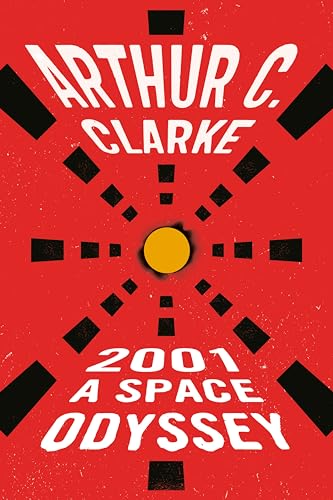
2001: A Space Odyssey
Arthur C. Clarke, Neil Gaiman
4.2
A deluxe hardcover edition of the wondrous space adventure that is the basis for Stanley Kubrick's Oscar-winning film--now celebrating its 50th anniversary
Part of Penguin Galaxy, a collectible series of six sci-fi/fantasy classics, featuring a series introduction by Neil Gaiman
Winner of the AIGA + Design Observer 50 Books - 50 Covers competition
Written when landing on the moon was still a dream, 2001: A Space Odyssey is a science-fiction classic that has changed the way we look at the stars--and ourselves. On the moon, an enigma is uncovered. So great are the implications that, for the first time, men are sent deep into our solar system. But before they can reach their destination, things begin to go very wrong. From the savannas of Africa at the dawn of mankind to the rings of Saturn at the turn of the 21st century, Arthur C. Clarke takes us on a journey unlike any other. Brilliant, compulsive, and prophetic, and the basis for the immensely influential Stanley Kubrick film, 2001: A Space Odyssey tackles the enduring theme of man's--and technology's--place in the universe and lives on as a landmark achievement in storytelling.
Penguin Galaxy
Six of our greatest masterworks of science fiction and fantasy, in dazzling collector-worthy hardcover editions, and featuring a series introduction by #1 New York Times bestselling author Neil Gaiman, Penguin Galaxy represents a constellation of achievement in visionary fiction, lighting the way toward our knowledge of the universe, and of ourselves. From historical legends to mythic futures, monuments of world-building to mind-bending dystopias, these touchstones of human invention and storytelling ingenuity have transported millions of readers to distant realms, and will continue for generations to chart the frontiers of the imagination.
The Once and Future King by T. H. White Stranger in a Strange Land by Robert A. Heinlein Dune by Frank Herbert 2001: A Space Odyssey by Arthur C. Clarke The Left Hand of Darkness by Ursula K. Le Guin Neuromancer by William Gibson
For more than seventy years, Penguin has been the leading publisher of classic literature in the English-speaking world. With more than 1,700 titles, Penguin Classics represents a global bookshelf of the best works throughout history and across genres and disciplines. Readers trust the series to provide authoritative texts enhanced by introductions and notes by distinguished scholars and contemporary authors, as well as up-to-date translations by award-winning translators.
…
Recommended by Bertalan Meskó and Laurie Voss.
Bertalan Meskó
Preparing for my opening keynote, Science Fiction in Healthcare, at #futurelink18 this morning. Please get your tweets ready and challenge me about what the best sci-fi movie or book is. Ever. My vote is for 2001: A Space Odyssey. #digitalhealth [source]
Laurie Voss
2001 the *book* has a great plot and if you've read the book it's clear what's happening but if you haven't read the book the movie is impenetrable, and the movie should not get a pass just because an Explainer Guide was published at the same time. [source]
Cover unavailable
41
Little Women
Louisa May Alcott
4.2
A beautiful unabridged 150th Anniversary Edition with 200 original illustrations and a Foreword by Alice L. George entitled "Why Little Women Endures 150 Years Later."
Little Women was originally published in two volumes in 1868 and 1869. This edition contains both volumes. It follows the lives of the four March sisters--Meg, Jo, Beth and Amy-- from childhood to womanhood and is loosely based on the author and her three sisters. Although Little Women was a novel for girls, it differed notably from the current writings for children, especially girls. The book was an immediate commercial and critical success and has since been adapted for cinema, TV, Broadway and even the opera.
…
Recommended by Amy Chua, Anne Thériault, Jay Kleinberg, and 1 others.
Amy Chua
Marmee is a character that really resonates for me. She’s obviously not Chinese, but she believes that integrity and hard work are the most important things in life. She holds her daughters to very high standards. She doesn’t sugarcoat much. She also reveals to her rebellious daughter Jo, the star of the book and a character loosely modeled on Louisa May Alcott herself, that she had a bad temper too when she was younger. That’s exactly what I did with my own daughter Louisa…….The kinds of mistakes that Marmee allows her daughters to make are very similar to the kinds of mistakes that I allow my daughters to make. [source]
Anne Thériault
@mmarmoset I love that book so much, and then I got to see Patty Smith perform the year I read it, and she made a Little Women reference during the show, and my heart overflowed [source]
Jay Kleinberg
Nancy Drew is another series which follows in those footsteps. The book is all led by her. I think if one looks in the magazine literature it would be hard to find a similar character at that time. These were stories initially published in a magazine and then bound together as a book. [source]
Cover unavailable
42
The Once and Future King
T. H. White, Neil Gaiman
4.2
T.H White′s masterful retelling of the Arthurian legend is an abiding classic. Here all five volumes that make up the story are published in one volume, as White himself always wished. Exquisite comedy offsets the tragedy of Arthur′s personal doom as White brings to life the major British epic of all time with brilliance, grandeur, warmth and charm.
TH White’s The Once and Future King. White is less famous than Lewis and Tolkien, but he was a better writer, at least as far as style goes, and his book is a true masterpiece in its own right – a thoroughly modern re-imagining of the great English epic, the story of King Arthur. Like Tolkien, White takes an ancient, mythic landscape and scales it down to human size (or perhaps he scales us up). But White’s world is more brightly lit than Tolkien’s – he dispenses with all those Wagnerian storm clouds. White’s England is all streaming banners and sun-splashed meadows and shining walls, and he lingers longer over his characters, making them more complex and flawed and divided against themselves. The first part alone, “The Sword in the Stone”, about Arthur’s early years and his education by Merlin, may be the best story of a childhood ever committed to paper. [source]
Cover unavailable
43
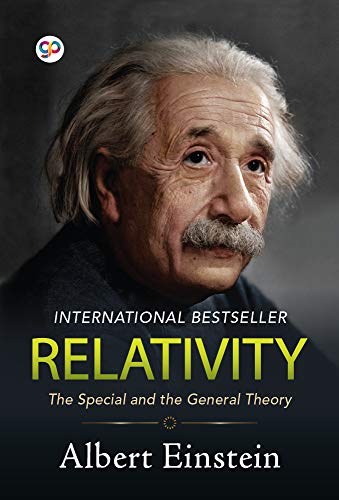
Relativity: The Special and the General Theory
Albert Einstein
4.2
An accesible version of Einstein's masterpiece of theory, written by the genius himself
According to Einstein himself, this book is intended "to give an exact insight into the theory of Relativity to those readers who, from a general scientific and philosophical point of view, are interested in the theory, but who are not conversant with the mathematical apparatus of theoretical physics." When he wrote the book in 1916, Einstein's name was scarcely known outside the physics institutes. Having just completed his masterpiece, The General Theory of Relativity—which provided a brand-new theory of gravity and promised a new perspective on the cosmos as a whole—he set out at once to share his excitement with as wide a public as possible in this popular and accessible book.
Here published for the first time as a Penguin Classic, this edition of Relativity features a new introduction by bestselling science author Nigel Calder.
For more than seventy years, Penguin has been the leading publisher of classic literature in the English-speaking world. With more than 1,700 titles, Penguin Classics represents a global bookshelf of the best works throughout history and across genres and disciplines. Readers trust the series to provide authoritative texts enhanced by introductions and notes by distinguished scholars and contemporary authors, as well as up-to-date translations by award-winning translators.
…
Cover unavailable
44
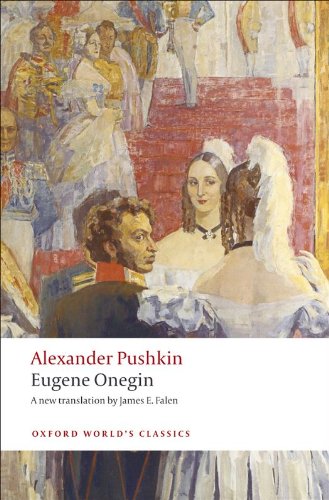
Eugene Onegin
Alexander Pushkin, James E. Falen
4.2
Eugene Onegin is the master work of the poet whom Russians regard as the fountainhead of their literature. Set in imperial Russia during the 1820s, Pushkin's novel in verse follows the emotions and destiny of three men - Onegin the bored fop, Lensky the minor elegiast, and a stylized Pushkin himself - and the fates and affections of three women - Tatyana the provincial beauty, her sister Olga, and Pushkin's mercurial Muse. Engaging, full of suspense, and varied in tone, it also portrays a large cast of other characters and offers the reader many literary, philosophical, and autobiographical digressions, often in a highly satirical vein. Eugene Onegin was Pushkin's own favourite work, and it shows him attempting to transform himself from romantic poet into realistic novelist. This new translation seeks to retain both the literal sense and the poetic music of the original, and capture the poem's spontaneity and wit. The introduction examines several ways of reading the novel, and the text is richly annotated.
…
Cover unavailable
45
American Gods (American Gods, #1)
Neil Gaiman
4.2
First published in 2001, American Gods became an instant classic—an intellectual and artistic benchmark from the multiple-award-winning master of innovative fiction, Neil Gaiman. Now discover the mystery and magic of American Gods in this tenth anniversary edition. Newly updated and expanded with the author’s preferred text, this commemorative volume is a true celebration of a modern masterpiece by the one, the only, Neil Gaiman.
A storm is coming . . .
Locked behind bars for three years, Shadow did his time, quietly waiting for the magic day when he could return to Eagle Point, Indiana. A man no longer scared of what tomorrow might bring, all he wanted was to be with Laura, the wife he deeply loved, and start a new life.
But just days before his release, Laura and Shadow’s best friend are killed in an accident. With his life in pieces and nothing to keep him tethered, Shadow accepts a job from a beguiling stranger he meets on the way home, an enigmatic man who calls himself Mr. Wednesday. A trickster and rogue, Wednesday seems to know more about Shadow than Shadow does himself.
Life as Wednesday’s bodyguard, driver, and errand boy is far more interesting and dangerous than Shadow ever imagined—it is a job that takes him on a dark and strange road trip and introduces him to a host of eccentric characters whose fates are mysteriously intertwined with his own. Along the way Shadow will learn that the past never dies; that everyone, including his beloved Laura, harbors secrets; and that dreams, totems, legends, and myths are more real than we know. Ultimately, he will discover that beneath the placid surface of everyday life a storm is brewing—an epic war for the very soul of America—and that he is standing squarely in its path.
Relevant and prescient, American Gods has been lauded for its brilliant synthesis of “mystery, satire, sex, horror, and poetic prose” (Michael Dirda, Washington Post Book World) and as a modern phantasmagoria that “distills the essence of America” (Seattle Post-Intelligencer). It is, quite simply, an outstanding work of literary imagination that will endure for generations.
…
Recommended by Marko Rakar, Ricky Whittle, and Scott Johnson.
Marko Rakar
Basically, first of all, I am a huge fan of science fiction and fantasy books and I grew up with Douglas Adams and Arthur C Clarke. For me, this is the best of Gaiman’s books and I’ve got all of them. It’s set in the present time and talks about settlers who have settled a continent and have brought their gods with them. So, if you are Swedish and you cherish Nordic gods and move to the US, the gods go with you and the more you believe in them the stronger they are. But if fewer people start believing in them then they get weaker and eventually they become mortal and die. So, it’s about all these forgotten gods. It’s a horror story in which nobody dies. It’s a metaphor for our society – if you replace gods with values then you get the same thing. [source]
Ricky Whittle
Nobody can break my family.I’m proud to be apart of this diverse cast & crew who are working their butts off to deliver a fantastic season 3 continuing to tell Shadows story and the awesome characters he meets along the way as in @neilhimself incredible book #readit #details🤔 https://t.co/PahPC9j3HB [source]
Scott Johnson
American Gods by Neil Gaiman. This is a brilliant thought experiment about what happens to a god when its believers stop believing. My preferred edition is the 10th Anniversary release with expanded text. [source]
Cover unavailable
46
Foundation/Foundation and Empire/Second Foundation
Isaac Asimov, Michael Dirda
4.2
Isaac Asimov’s seminal Foundation trilogy—one of the cornerstones of modern speculative fiction—in a single hardcover volume.
It is the saga of the Galactic Empire, crumbling after twelve thousand years of rule. And it is the particular story of psychohistorian Hari Seldon, the only man who can see the horrors the future has in store—a dark age of ignorance, barbarism, and violence that will last for thirty thousand years. Gathering a band of courageous men and women, Seldon leads them to a hidden location at the edge of the galaxy, where he hopes they can preserve human knowledge and wisdom through the age of darkness.
In 1966, the Foundation trilogy received a Hugo Award for Best All-Time Series, and it remains the only fiction series to have been so honored. More than fifty years after their original publication, the three Foundation novels stand as classics of thrilling, provocative, and inspired world-building.
The Return of the King (The Lord of the Rings, #3)
J. R. R. Tolkien, Rob Inglis, et al
4.2
Alternate cover edition here.
The Companions of the Ring have become involved in separate adventures as the quest continues. Aragorn, revealed as the hidden heir of the ancient Kings of the West, joined with the Riders of Rohan against the forces of Isengard, and took part in the desperate victory of the Hornburg. Merry and Pippin, captured by Orcs, escaped into Fangorn Forest and there encountered the Ents. Gandalf returned, miraculously, and defeated the evil wizard, Saruman. Meanwhile, Sam and Frodo progressed towards Mordor to destroy the Ring, accompanied by SmEagol--Gollum, still obsessed by his 'precious'. After a battle with the giant spider, Shelob, Sam left his master for dead; but Frodo is still alive--in the hands of the Orcs. And all the time the armies of the Dark Lord are massing. J.R.R. Tolkien's great work of imaginative fiction has been labeled both a heroic romance and a classic fantasy fiction. By turns comic and homely, epic and diabolic, the narrative moves through countless changes of scene and character in an imaginary world which is totally convincing in its detail.
…
Cover unavailable
48
Foundation (Foundation, #1)
Isaac Asimov
4.2
For twelve thousand years the Galactic Empire has ruled supreme. Now it is dying. But only Hari Seldon, creator of the revolutionary science of psychohistory, can see into the future -- to a dark age of ignorance, barbarism, and warfare that will last thirty thousand years. To preserve knowledge and save mankind, Seldon gathers the best minds in the Empire -- both scientists and scholars -- and brings them to a bleak planet at the edge of the Galaxy to serve as a beacon of hope for a future generations. He calls his sanctuary the Foundation.
But soon the fledgling Foundation finds itself at the mercy of corrupt warlords rising in the wake of the receding Empire. Mankind's last best hope is faced with an agonizing choice: submit to the barbarians and be overrun -- or fight them and be destroyed.
…
Recommended by Elon Musk, Adam Gazzaley, Amy Webb, and 7 others.
In terms of sci-fi books, I think Isaac Asimov is really great. I like the Foundation series, probably one of the all-time best. [source]
Adam Gazzaley
Life-changing for me as a kid, and have still read it multiple times throughout my life. [source]
Amy Webb
Asimov was a masterful fringe thinker, and this first book in the Foundation series shows just how attuned he was to possible and plausible future scenarios. Although it’s 50 years old, Foundation is especially provocative reading given our current state of world affairs — in order to save humankind and the vast knowledge we have accumulated, the main character gathers the smartest thinkers and forms a secret society. But that doesn’t go exactly as planned, either. [source]
Cover unavailable
49
The Ascent Of Man
Jacob Bronowski, Richard Dawkins
4.2
Dr Jacob Bronowksi's The Ascent of Man traces the development of human society through our understanding of science. First published in 1973 to accompany the groundbreaking BBC television series, it is considered one of the first works of 'popular science', illuminating the historical and social context of scientific development for a generation of readers. In his highly accessible style, Dr Bronowski discusses human invention from the flint tool to geometry, agriculture to genetics, and from alchemy to the theory of relativity, showing how they all are expressions of our ability to understand and control nature. In this new paperback edition, The Ascent of Man inspires, influences and informs as profoundly as ever.
…
Recommended by Caspar Henderson.
Caspar Henderson
It’s a historical document now but it’s very beautiful. [source]
Cover unavailable
50
Great Expectations
Charles Dickens, Margaret Cardwell, Kate Flint
4.2
Recommended by Richard Branson, Marvin Liao, Audrey Russo, and 5 others.
Today is World Book Day, a wonderful opportunity to address this #ChallengeRichard sent in by Mike Gonzalez of New Jersey: Make a list of your top 65 books to read in a lifetime. [source]
Marvin Liao
Partner/500 Startups
My list would be (besides the ones I mentioned in answer to the previous question) both business & Fiction/Sci-Fi and ones I personally found helpful to myself. The business books explain just exactly how business, work & investing are in reality & how to think properly & differentiate yourself. On the non-business side, a mix of History & classic fiction to understand people, philosophy to make sense of life and Science fiction to picture what the future could be like (not always utopian). [source]
Audrey Russo
So many novels; Lord of the Flies, Great Gatsby, Great Expectations; all the Nancy Drew books; Catcher in the Rye, Books written by Zora Neale Hurston; Pat Conroy – all because of the view about different people who endure despite adversity while kindling the hearts of the human spirit. [source]
Cover unavailable
51
The Secret Garden
Frances Hodgson Burnett
4.2
"One of the most delightful and enduring classics of children's literature, The Secret Garden by Victorian author Frances Hodgson Burnett has remained a firm favorite with children the world over ever since it made its first appearance. Initially published as a serial story in 1910 in The American Magazine, it was brought out in novel form in 1911.
The plot centers round Mary Lennox, a young English girl who returns to England from India, having suffered the immense trauma by losing both her parents in a cholera epidemic. However, her memories of her parents are not pleasant, as they were a selfish, neglectful and pleasure-seeking couple. Mary is given to the care of her uncle Archibald Craven, whom she has never met. She travels to his home, Misselthwaite Manor located in the gloomy Yorkshire, a vast change from the sunny and warm climate she was used to. When she arrives, she is a rude, stubborn and given to stormy temper tantrums. However, her nature undergoes a gradual transformation when she learns of the tragedies that have befallen her strict and disciplinarian uncle whom she earlier feared and despised. Once when he's away from home, Mary discovers a charming walled garden which is always kept locked. The mystery deepens when she hears sounds of sobbing from somewhere within her uncle's vast mansion. The kindly servants ignore her queries or pretend they haven't heard, spiking Mary's curiosity.
The Secret Garden appeals to both young and old alike. It has wonderful elements of mystery, spirituality, charming characters and an authentic rendering of childhood emotions and experiences. Commonsense, truth and kindness, compassion and a belief in the essential goodness of human beings lie at the heart of this unforgettable story. It is the best known of Frances Hodgson Burnett's works, though most of us have definitely heard of, if not read, her other novel Little Lord Fauntleroy.
The book has been adapted extensively on stage, film and television and translated into all the world's major languages. In 1991, a Japanese anime version was launched for television in Japan. It remains a popular and beloved story of a child's journey into maturity, and a must-read for every child, parent, teacher and anyone who would enjoy this fascinating glimpse of childhood. One of the most delightful and enduring classics of children's literature, The Secret Garden by Victorian author Frances Hodgson Burnett has remained a firm favorite with children the world over ever since it made its first appearance. Initially published as a serial story in 1910 in The American Magazine, it was brought out in novel form in 1911."
…
Recommended by Clare Morpurgo and M G Leonard.
Clare Morpurgo
The book is about a girl coming to live in England from India. She is a sickly child who had a pretty awful early childhood in India. [source]
M G Leonard
The redemptive power of the natural world and gardening was something that struck a chord with me. [source]
Cover unavailable
52
Tinker, Tailor, Soldier, Spy
John le Carre
4.2
A modern classic in which John le Carré expertly creates a total vision of a secret world, Tinker, Tailor, Soldier, Spy begins George Smiley's chess match of wills and wits with Karla, his Soviet counterpart.
It is now beyond a doubt that a mole, implanted decades ago by Moscow Centre, has burrowed his way into the highest echelons of British Intelligence. His treachery has already blown some of its most vital operations and its best networks. It is clear that the double agent is one of its own kind. But which one? George Smiley is assigned to identify him. And once identified, the traitor must be destroyed.
…
Recommended by Andy Beckett, Robert Baer, and Sam Bourne.
Andy Beckett
I find the darkness in le Carré particularly interesting because it’s quite melancholic. It evokes a sadness about Britain and the establishment at that time. There’s a sense of the world closing in. He really captures that in the book. [source]
Robert Baer
Le Carré has the ability to add drama and colour. For classic espionage in a little town in Germany, you can’t do better than le Carré. [source]
Sam Bourne
This is an example of the meticulously supreme thriller. John le Carré really is the master of the form, and any list of thrillers has to include that book. It’s a very emboldening book for thriller writers, because it teaches you not to underestimate the understanding of your reader. They can be pushed and pushed. It is an incredibly intricate plot and yet, if you write it well enough, as he does, readers will stay with you. [source]
Cover unavailable
53
H.M.S. Surprise (Aubrey & Maturin #3)
Patrick O'Brian
4.1
Amid sights and smells of the Indian subcontinent explore ships of the East India Company. Aubrey is on the defensive, pitting wits and seamanship against an enemy enjoying overwhelming local superiority. Somewhere in the Indian Ocean lies the prize that could make him rich - ships sent by Napoleon to attack the China Fleet.
Cover unavailable
54
The Odyssey
Homer
4.1
After enduring the Trojan War, Odysseus begins the treacherous journey home to Ithaca. On the way, he faces ravenous monsters and vengeful gods. But the real battle awaits, as his kingdom is under siege by unruly suitors vying for his wife’s hand—and his son’s head. To reclaim his throne and save his family, Odysseus must rely on his wits…and help from the unpredictable gods.
Homer’s The Odyssey was composed around 700 BC. It is one of the earliest epics in existence and remains one of the most influential works of literature today.
Revised edition: Previously published as The Odyssey, this edition of The Odyssey (AmazonClassics Edition) includes editorial revisions.
…
Recommended by Caterina Fake, Ted Turner, Charlotte Higgins, and 3 others.
When I got to college, I was a classics major, and that was mainly the study of Greek - and to a lesser extent Roman - history and culture, and that fascinated me: the Iliad, the Odyssey, the Aeneid by Virgil. [source]
Charlotte Higgins
It’s a very easy read, and a completely different world from The Iliad. Whereas The Iliad depicts a militaristic and war-wrecked world, The Odyssey is like a fairytale and it’s fascinatingly complex. It’s told in flashbacks, it has time that’s extended and time that’s compressed, and it’s told from different viewpoints. [source]
Janine di Giovanni
The thing I loved about Ulysses was that he’s so in love with adventure and with love. [source]
Cover unavailable
55
The Shining
Stephen King
4.1
Jack Torrance's new job at the Overlook Hotel is the perfect chance for a fresh start. As the off-season caretaker at the atmospheric old hotel, he'll have plenty of time to spend reconnecting with his family and working on his writing. But as the harsh winter weather sets in, the idyllic location feels ever more remote...and more sinister. And the only one to notice the strange and terrible forces gathering around the Overlook is Danny Torrance, a uniquely gifted five-year-old.
If you think you know the story because you’ve seen the film then you’d be wrong. This book is an absolute classic and a great way into the vast King oeuvre. [source]
I have always rated Stephen King. I think he is so much more than just a commercially successful horror writer. [source]
Cover unavailable
56
The Blind Watchmaker: Why the Evidence of Evolution Reveals a Universe Without Design
Richard Dawkins
4.1
*30th Anniversary Edition* Cover note: Each copy of the anniversary edition of The Blind Watchmaker features a unique biomorph. No two covers are exactly alike.
Acclaimed as the most influential work on evolution written in the last hundred years, The Blind Watchmaker offers an inspiring and accessible introduction to one of the most important scientific discoveries of all time. A brilliant and controversial book which demonstrates that evolution by natural selection - the unconscious, automatic, blind yet essentially non-random process discovered by Darwin - is the only answer to the biggest question of all: why do we exist?
…
Recommended by James Randi, Jerry Coyne, Kenneth Miller, and 1 others.
James Randi
They talk about the blind watchmaker not being able to make a watch, but if you’re given an almost infinite number of combinations and permutations of materials and situations, the world will come about. Or it may not. In our case, it came about. You’re here, I’m here, and I’m very happy about that. [source]
If I had to pick just one self-contained book that lays out Dawkins’s philosophy and methodology, and shows his literary skills, I would have to pick this one. [source]
Kenneth Miller
In the Dawkins book I chose, The Blind Watchmaker, he brilliantly explains how complex mechanisms and structures are put together by the process of evolution. It is true that he makes certain theological points that I don’t agree with. [source]
Cover unavailable
57
As I Lay Dying
William Faulkner
4.1
As I Lay Dying is Faulkner’s harrowing account of the Bundren family’s odyssey across the Mississippi countryside to bury Addie, their wife and mother. Narrated in turn by each of the family members -- including Addie herself -- as well as others; the novel ranges in mood, from dark comedy to the deepest pathos. Considered one of the most influential novels in American fiction in structure, style, and drama, As I Lay Dying is a true 20th-century classic.
This edition reproduces the corrected text of As I Lay Dying as established in 1985 by Noel Polk.
…
Cover unavailable
58
Life: A Natural History of the First Four Billion Years of Life on Earth
Richard Fortey
4.1
A New York Times Book Review Editors' Choice
"Extraordinary. . . . Anyone with the slightest interest in biology should read this book."--The New York Times Book Review
"A marvelous museum of the past four billion years on earth--capacious, jammed with treasures, full of learning and wide-eyed wonder."--The Boston Globe
From its origins on the still-forming planet to the recent emergence of Homo sapiens--one of the world's leading paleontologists offers an absorbing account of how and why life on earth developed as it did. Interlacing the tale of his own adventures in the field with vivid descriptions of creatures who emerged and disappeared in the long march of geologic time, Richard Fortey sheds light upon a fascinating array of evolutionary wonders, mysteries, and debates. Brimming with wit, literary style, and the joy of discovery, this is an indispensable book that will delight the general reader and the scientist alike.
"A drama bolder and more sweeping than Gone with the Wind . . . a pleasure to read."--Science
"A beautifully written and structured work . . . packed with lucid expositions of science."--Natural History
…
Cover unavailable
59
The Unabridged Devil's Dictionary
Ambrose Bierce, David E. Schultz, S. T. Joshi
4.1
If we could only put aside our civil pose and say what we really thought, the world would be a lot like the one alluded to in The Unabridged Devil’s Dictionary. There, a bore is "a person who talks when you wish him to listen," and happiness is "an agreeable sensation arising from contemplating the misery of another." This is the most comprehensive, authoritative edition ever of Ambrose Bierce’s satiric masterpiece. It renders obsolete all other versions that have appeared in the book’s ninety-year history.
A virtual onslaught of acerbic, confrontational wordplay, The Unabridged Devil’s Dictionary offers some 1,600 wickedly clever definitions to the vocabulary of everyday life. Little is sacred and few are safe, for Bierce targets just about any pursuit, from matrimony to immortality, that allows our willful failings and excesses to shine forth.
This new edition is based on David E. Schultz and S. T. Joshi’s exhaustive investigation into the book’s writing and publishing history. All of Bierce’s known satiric definitions are here, including previously uncollected, unpublished, and alternative entries. Definitions dropped from previous editions have been restored while nearly two hundred wrongly attributed to Bierce have been excised. For dedicated Bierce readers, an introduction and notes are also included.
Ambrose Bierce’s Devil’s Dictionary is a classic that stands alongside the best work of satirists such as Twain, Mencken, and Thurber. This unabridged edition will be celebrated by humor fans and word lovers everywhere.
…
Cover unavailable
60
Bleak House
Charles Dickens, Nicola Bradbury, Hablot K. Brown
4.1
Bleak House opens in the twilight of foggy London, where fog grips the city most densely in the Court of Chancery. The obscure case of Jarndyce and Jarndyce, in which an inheritance is gradually devoured by legal costs, the romance of Esther Summerson and the secrets of her origin, the sleuthing of Detective Inspector Bucket and the fate of Jo the crossing-sweeper, these are some of the lives Dickens invokes to portray London society, rich and poor, as no other novelist has done. Bleak House, in its atmosphere, symbolism and magnificent bleak comedy, is often regarded as the best of Dickens. A 'great Victorian novel', it is so inventive in its competing plots and styles that it eludes interpretation.
Bleak House is the work which most powerfully suggests the darkness of London. It conveys a haunted city, half pantomime-half graveyard. [source]
Trevor Phillips
Bleak House tells us not to rely on the courts for justice. In the end, a just society can’t be delivered by people in a courtroom. [source]
Cover unavailable
61
A Clockwork Orange
Anthony Burgess
4.1
In Anthony Burgess’s influential nightmare vision of the future, where the criminals take over after dark, the story is told by the central character, Alex, a teen who talks in a fantastically inventive slang that evocatively renders his and his friends’ intense reaction against their society. Dazzling and transgressive, A Clockwork Orange is a frightening fable about good and evil and the meaning of human freedom. This edition includes the controversial last chapter not published in the first edition, and Burgess’s introduction, “A Clockwork Orange Resucked.”
…
Cover unavailable
62
Beowulf
Seamus Heaney
4.1
Beowulf is a major epic of Anglo-Saxon literature, probably composed between the first half of the seventh century and the end of the first millennium. The poem was inspired by the oral tradition Anglo-Saxon and Germanic transcribed a verse epic, recounting the exploits of Beowulf hero who gave his name to the poem, on which are grafted chretiens additions.
I read The Bhagavad Gita, which is something I wasn’t ready for before, but glad to finally understand. [source]
Bernard Tan
The “Tao Te King” by Lao Tzu probably resonated with me the strongest, but others like the “Art of War” by Sun Tzu, “Bhagavad Gita” or Zen Buddhist scriptures were also real eye-openers, even for a non-religious person like myself. [source]
Bill Liao
The human world occurs in language so best get good at it! [source]
Cover unavailable
64
The Stranger
Albert Camus, Jonathan Davis, et al
4.1
Through the story of an ordinary man unwittingly drawn into a senseless murder on an Algerian beach, Camus explored what he termed "the nakedness of man faced with the absurd." First published in English in 1946; now in a new translation by Matthew Ward.
Seminal novel on existentialism and the absurd by Albert Camus from 1946. Explores that feeling of disconnectedness from society, its norms, and the absurdity of every day life. Striking first-person account in a powerful, direct language. [source]

Kyle Maynard
Kyle Maynard said this is one of his most-recommended books. [source]
Cover unavailable
65
The Two Towers (The Lord of the Rings, #2)
J. R. R. Tolkien
4.1
The Fellowship was scattered. Some were bracing hopelessly for war against the ancient evil of Sauron. Some were contending with the treachery of the wizard Saruman. Only Frodo and Sam were left to take the accursed Ring of Power to be destroyed in Mordor–the dark Kingdom where Sauron was supreme. Their guide was Gollum, deceitful and lust-filled, slave to the corruption of the Ring. Thus continues the magnificent, bestselling tale of adventure begun in The Fellowship of the Ring, which reaches its soul-stirring climax in The Return of the King.
…
Cover unavailable
66
Disgrace
J.M. COETZEE
4.1
After years teaching Romantic poetry at the Technical University of Cape Town, David Lurie, middle-aged and twice divorced, has an impulsive affair with a student. The affair sours; he is denounced and summoned before a committee of inquiry. Willing to admit his guilt, but refusing to yield to pressure to repent publicly, he resigns and retreats to his daughter Lucy's isolated smallholding.
For a time, his daughter's influence and the natural rhythms of the farm promise to harmonise his discordant life. But the balance of power in the country is shifting. He and Lucy become victims of a savage and disturbing attack which brings into relief all the faultlines in their relationship.
…
Recommended by Justin Cartwright and Kevin Bloom.
Justin Cartwright
The book is a sort of farewell note to South Africa – a Goodbye, I’m off. [source]
Kevin Bloom
This book was written in the late 90s and although it is very difficult – especially with writers like J M Coetzee – to link the work to the man, my personal reading of the book is that it is a work of profound disappointment and sadness. It is all about a fifty-something professor, David Lurie, who teaches at a Cape Town university. He has an affair with a young student – Melanie. He gets hauled before a disciplinary panel and refuses to defend himself. [source]

Cover unavailable
67
Master and Commander (Aubrey & Maturin, #1)
Patrick O'Brian
4.1
As the Royal Navy takes part in the wars against Napoleonic France, young Jack Aubrey receives his first command, the small, old, and slow HMS Sophie. Accompanied by his eccentric new friend, the physician and naturalist Stephen Maturin, Aubrey does battle with the naval hierarchy, with his own tendency to make social blunders, and with the challenges of forging an effective crew -- before ultimately taking on enemy ships in a vivid, intricately detailed series of sea battles.
…
Cover unavailable
68
The Epic of Gilgamesh
Anonymous
4.1
Andrew George's "masterly new translation" (The Times) of the world's first truly great work of literature
Miraculously preserved on clay tablets dating back as much as four thousand years, the poem of Gilgamesh, king of Uruk, is the world’s oldest epic, predating Homer by many centuries. The story tells of Gilgamesh’s adventures with the wild man Enkidu, and of his arduous journey to the ends of the earth in quest of the Babylonian Noah and the secret of immortality. Alongside its themes of family, friendship and the duties of kings, the Epic of Gilgamesh is, above all, about mankind’s eternal struggle with the fear of death.
The Babylonian version has been known for over a century, but linguists are still deciphering new fragments in Akkadian and Sumerian. Andrew George’s gripping translation brilliantly combines these into a fluent narrative and will long rank as the definitive English Gilgamesh.
For more than seventy years, Penguin has been the leading publisher of classic literature in the English-speaking world. With more than 1,700 titles, Penguin Classics represents a global bookshelf of the best works throughout history and across genres and disciplines. Readers trust the series to provide authoritative texts enhanced by introductions and notes by distinguished scholars and contemporary authors, as well as up-to-date translations by award-winning translators.
I read this on my honeymoon (probably the only person on the beach reading it, if I had to guess). Especially when I learned after that a new introduction paragraph had been discovered only recently. His tomb may have been found recently too. Imagine if Homer’s works had only been discovered in the mid 1800’s after being lost to history for thousands of years. How crazy would that be? Reading the classic epics can feel like work but there is value in it. These works are timeless and universal. Such a great line [source]
Stephen Cave
Gilgamesh is a hero in the ancient mould. He’s half-god, enormously strong, a bit randy, a bit dim, and he goes through adventures which embody the human experience writ large. He starts off as the king of a small kingdom, making a nuisance of himself – enforcing droit du seigneur, sleeping with women on their marriage night, pushing other men around, being a bit of an arse. So the gods make a rival to him in strength, a wild man. They fight, realise neither can win, then become best friends and go off on all sorts of adventures. They kill all sorts of ogres and beasts, until the gods think this is getting a bit much and decide Gilgamesh’s friend has to die. [source]

Cover unavailable
69
Midnight's Children
Salman Rushdie
4.1
Saleem Sinai was born at midnight, the midnight of India's independence, and found himself mysteriously "handcuffed to history" by the coincidence. He is one of 1,001 children born at the midnight hour, each of them endowed with an extraordinary talent—and whose privilege and curse it is to be both master and victims of their times. Through Saleem's gifts—inner ear and wildly sensitive sense of smell—we are drawn into a fascinating family saga set against the vast, colourful background of the India of the 20th century.
…
Cover unavailable
70
Dubliners
James Joyce, Terence Brown, Roman Muradov, Colum McCann
4.1
For the centennial of its original publication, an irresistible Graphic Deluxe Edition of one of the most beloved books of the 20th century
Perhaps the greatest short story collection in the English language, James Joyce’s Dubliners is a vivid and unflinching portrait of “dear dirty Dublin” at the turn of the twentieth century. These fifteen stories, including such unforgettable ones as “Araby,” “Grace,” and “The Dead,” delve into the heart of the city of Joyce’s birth, capturing the cadences of Dubliners’ speech and portraying with an almost brute realism their outer and inner lives. Dubliners is Joyce at his most accessible and most profound, and this edition is the definitive text, authorized by the Joyce estate and collated from all known proofs, manuscripts, and impressions to reflect the author’s original wishes.
It is the perfect story—you can almost touch the characters, and yet it is told from a remote point of view, from a distance but not without affection [source]
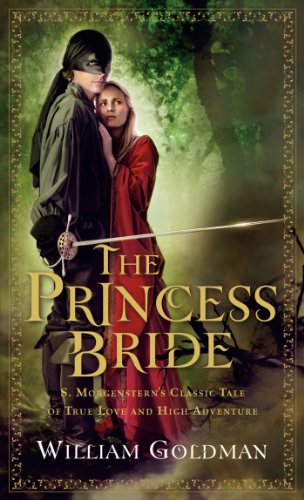
Cover unavailable
71
I, Robot
Isaac Asimov
4.1
The three laws of Robotics: 1) A robot may not injure a human being or, through inaction, allow a human being to come to harm. 2) A robot must obey orders given to it by human beings except where such orders would conflict with the First Law. 3) A robot must protect its own existence as long as such protection does not conflict with the First or Second Law.
With these three, simple directives, Isaac Asimov changed our perception of robots forever when he formulated the laws governing their behavior. In I, Robot, Asimov chronicles the development of the robot through a series of interlinked stories: from its primitive origins in the present to its ultimate perfection in the not-so-distant future--a future in which humanity itself may be rendered obsolete.
Here are stories of robots gone mad, of mind-read robots, and robots with a sense of humor. Of robot politicians, and robots who secretly run the world--all told with the dramatic blend of science fact and science fiction that has become Asimov's trademark.
…
Recommended by Laurie Voss.
Laurie Voss
@ThePenguinLemma @MusingsOfDeimos The I, Robot book (actually a short story collection) is amazing if you've not read it. Enough ideas to make a dozen movies. [source]
Cover unavailable
72
The Chrysalids
John Wyndham, Christopher Priest
4.1
The Chyrsalids is set in the future after a devastating global nuclear war. David, the young hero of the novel, lives in a tight-knit community of religious and genetic fundamentalists, always on the alert for any deviation from the norm of God’s creation. Abnormal plants are publicly burned, with much singing of hymns. Abnormal humans (who are not really human) are also condemned to destruction—unless they succeed in fleeing to the Fringes, that Wild Country where, as the authorities say, nothing is reliable and the devil does his work. David grows up ringed by admonitions: KEEP PURE THE STOCK OF THE LORD; WATCH THOU FOR THE MUTANT.
At first he does not question. Then, however, he realizes that the he too is out of the ordinary, in possession of a power that could doom him to death or introduce h im to a new, hitherto unimagined world of freedom.
The Chrysalids is a perfectly conceived and constructed work form the classic era o science fiction, a Voltairean philosophical tale that has as much resonance in our own day, when religious and scientific dogmatism are both on the march, as when it was written during the cold war.
…
Recommended by Liam Martin.
Liam Martin
The Chrysalids by John Wyndham, great sci-fi and very apt book when looking at our socio-political environment today. [source]
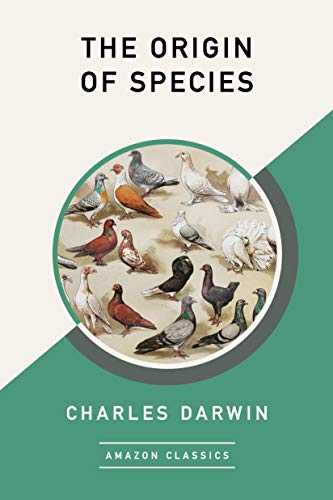
Cover unavailable
73
Desolation Island (Aubrey & Maturin #5)
Patrick O'Brian
4.1
"[O'Brian's] Aubrey-Maturin series, 20 novels of the Royal Navy in the Napoleonic Wars, is a masterpiece. It will outlive most of today's putative literary gems as Sherlock Holmes has outlived Bulwer-Lytton, as Mark Twain has outlived Charles Reade." —David Mamet, New York Times
Commissioned to rescue Governor Bligh of Bounty fame, Captain Jack Aubrey and his friend and surgeon Stephen Maturin sail the Leopard to Australia with a hold full of convicts. Among them is a beautiful and dangerous spy—and a treacherous disease that decimates the crew.
…
Cover unavailable
74
Breakfast at Tiffany's
Truman Capote, Michael C. Hall, et al
4.1
It's New York in the 1940s, where the martinis flow from cocktail hour till breakfast at Tiffany's. And nice girls don't, except, of course, Holly Golightly. Pursued by Mafia gangsters and playboy millionaires, Holly is a fragile eyeful of tawny hair and turned-up nose, a heart-breaker, a perplexer, a traveller, a tease. She is irrepressibly 'top banana in the shock department', and one of the shining flowers of American fiction.
This edition also contains three stories: 'House of Flowers', 'A Diamond Guitar' and 'A Christmas Memory'.
So much of that novella is about personality, and about the way one is liberated by personality or burdened by it. [source]
Cover unavailable
75
One Flew Over the Cuckoo's Nest
Ken Kesey, John C. Reilly, et al
4.1
Tyrannical Nurse Ratched rules her ward in an Oregon State mental hospital with a strict and unbending routine, unopposed by her patients, who remain cowed by mind-numbing medication and the threat of electric shock therapy. But her regime is disrupted by the arrival of McMurphy – the swaggering, fun-loving trickster with a devilish grin who resolves to oppose her rules on behalf of his fellow inmates. His struggle is seen through the eyes of Chief Bromden, a seemingly mute half-Indian patient who understands McMurphy's heroic attempt to do battle with the powers that keep them imprisoned. Ken Kesey's extraordinary first novel is an exuberant, ribald and devastatingly honest portrayal of the boundaries between sanity and madness.
…
Cover unavailable
76
Aesop's Fables
Aesop
4.1
Aesop, an ancient Greek poet who was sold into slavery in the early sixth century BC, relied on animal stories to convey his key points to his masters in court. Aesop's Fables are classic, memorable morality plays in which amusing animal characters drive home thought-provoking morals to generations of listeners and modern-day audiences. They illustrate what was fundamental to Greek culture, yet their appeal lies in logic we still understand. Translated into countless languages and familiar to people around the world, Aesop's fables never tarnish despite being told again and again.
…
Cover unavailable
77
The Mauritius Command (Aubrey & Maturin #4)
Patrick O'Brian
4.1
Captain Jack Aubrey is ashore on half pay without a command—until Stephen Maturin arrives with secret orders for Aubrey to take a frigate to the Cape of Good Hope under a commodore's pennant, there to mount an expedition against the French-held islands of Mauritius and La Réunion. But the difficulties of carrying out his orders are compounded by two of his own captains—Lord Clonfert, a pleasure-seeking dilettante, and Captain Corbett, whose severity pushes his crew to the verge of mutiny.
…
Cover unavailable
78
David Copperfield
Charles Dickens
4.1
David Copperfield is the story of a young man's adventures on his journey from an unhappy and impoverished childhood to the discovery of his vocation as a successful novelist. Among the gloriously vivid cast of characters he encounters are his tyrannical stepfather, Mr Murdstone; his brilliant, but ultimately unworthy school-friend James Steerforth; his formidable aunt, Betsey Trotwood; the eternally humble, yet treacherous Uriah Heep; frivolous, enchanting Dora Spenlow; and the magnificently impecunious Wilkins Micawber, one of literature's great comic creations. In David Copperfield - the novel he described as his 'favourite child' - Dickens drew revealingly on his own experiences to create one of the most exuberant and enduringly popular works, filled with tragedy and comedy in equal measure. This edition uses the text of the first volume publication of 1850, and includes updated suggestions for further reading, original illustrations by 'Phiz', a revised chronology and expanded notes. In his new introduction, Jeremy Tambling discusses the novel's autobiographical elements, and its central themes of memory and identity.
…
Recommended by Jenny Hartley.
Jenny Hartley
That famous Victorian imperative: Make ’em laugh; make ’em cry; make ’em wait. It does all that in that spades. [source]
Cover unavailable
79
The Silmarillion
J.R.R. Tolkien, Christopher Tolkien
4.1
A number-one New York Times bestseller when it was originally published, THE SILMARILLION is the core of J.R.R. Tolkien's imaginative writing, a work whose origins stretch back to a time long before THE HOBBIT. Tolkien considered THE SILMARILLION his most important work, and, though it was published last and posthumously, this great collection of tales and legends clearly sets the stage for all his other writing. The story of the creation of the world and of the the First Age, this is the ancient drama to which the characters in THE LORD OF THE RINGS look back and in whose events some of them, such as Elrond and Galadriel, took part. The three Silmarils were jewels created by Feanor, most gifted of the Elves. Within them was imprisoned the Light of the Two Trees of Valinor before the Trees themselves were destroyed by Morgoth, the first Dark Lord. Thereafter, the unsullied Light of Valinor lived on only in the Silmarils, but they were seized by Morgoth and set in his crown, which was guarded in the impenetrable fortress of Angband in the north of Middle-earth. THE SILMARILLION is the history of the rebellion of Feanor and his kindred against the gods, their exile from Valinor and return to Middle-earth, and their war, hopeless despite all their heroism, against the great Enemy. This second edition features a letter written by J.R.R. Tolkien describing his intentions for the book, which serves as a brilliant exposition of his conception of the earlier Ages of Middle-earth.
…
Recommended by Lucas Morales.
Lucas Morales
My favorite books are Tolkien’s the Lord of the Rings, the Hobbit, and the Silmarillion. In fact these book hold a special place in my memory. In highschool I was so into Tolkien that I delved into linguistics on my own time. I was obsessed with Quenya (Tolkien’s elvish language). I combined that obsession with my mediocre skills as a programmer, and made a sort of dictionary/translator program. This was actually my first venturing into entrepreneurship, because in my naivety I thought I might be able to sell my software to fellow enthusiasts (the first movie was just coming out at the time). [source]
Cover unavailable
80
رباعيات خيام
Umar Khayyam and Kazem Bargnaysi
4.1
The rubaiyat are a series of poems or 'stanzas' by the famous 12th century Persian atronomer and philosopher
The Rubáiyát of Omar Khayyám (Persian: رباعیات عمر خیام) is the title that Edward FitzGerald gave to his translation of a selection of poems, originally written in Persian and numbering about a thousand, attributed to Omar Khayyám (1048–1131), a Persian poet, mathematician and astronomer. A ruba'i is a two-line stanza with two parts (or hemistichs) per line, hence the word rubáiyát (derived from the Arabic language root for "four"), meaning "quatrains". (Courtesy: Wikipedia)(less)
…
Cover unavailable
81
The Trial
Franz Kafka, Breon Mitchell
4.1
Written in 1914 but not published until 1925, a year after Kafka's death, The Trial is one of the most important novels of the twentieth century: the terrifying tale of Josef K., a respectable bank officer who is suddenly and inexplicably arrested and must defend himself against a charge about which he can get no information. Whether read as an existential tale, a parable, or a prophecy of the excesses of modern bureaucracy wedded to the madness of totalitarianism, Kafka's nightmare has resonated with chilling truth for generations of readers. This new edition is based upon the work of an international team of experts who have restored the text, the sequence of chapters, and their division to create a version that is as close as possible to the way the author left it.
In his brilliant translation, Breon Mitchell masterfully reproduces the distinctive poetics of Kafka's prose, revealing a novel as full of energy and power as when it was first written.
It’s a fascinating writing style with a 3rd party observer that’s treated as an extension of the protagonists own sentiments and mind. It’s also just exquisitely written. And the concept of being on trial for charges unknown by a vast, impersonal, yet petty, bureaucracy pulls from a timeless well of societal anxieties. So far, so very good. About half way through. [source]
Michael Peel
I read this before going to Nigeria but moving there made me think about it a lot. The idea that the system always wins. [source]
Cover unavailable
82
Post Captain (Aubrey & Maturin #2)
Patrick O'Brian
4.0
Master and Commander raised almost dangerously high expectations Post Captain triumphantly surpasses them a brilliant book Mary Renault. The best historical novels ever written- New York Times
Cover unavailable
83
The Day of the Triffids
John Wyndham
4.0
In 1951 John Wyndham published his novel The Day of the Triffids to moderate acclaim. Fifty-two years later, this horrifying story is a science fiction classic, touted by The Times (London) as having “all the reality of a vividly realized nightmare.”
Bill Masen, bandages over his wounded eyes, misses the most spectacular meteorite shower England has ever seen. Removing his bandages the next morning, he finds masses of sightless people wandering the city. He soon meets Josella, another lucky person who has retained her sight, and together they leave the city, aware that the safe, familiar world they knew a mere twenty-four hours before is gone forever.
But to survive in this post-apocalyptic world, one must survive the Triffids, strange plants that years before began appearing all over the world. The Triffids can grow to over seven feet tall, pull their roots from the ground to walk, and kill a man with one quick lash of their poisonous stingers. With society in shambles, they are now poised to prey on humankind. Wyndham chillingly anticipates bio-warfare and mass destruction, fifty years before their realization, in this prescient account of Cold War paranoia.
…
Cover unavailable
84
Heart of Darkness
Joseph Conrad
4.0
Heart of Darkness, a novel by Joseph Conrad, was originally a three-part series in Blackwood's Magazine in 1899. It is a story within a story, following a character named Charlie Marlow, who recounts his adventure to a group of men onboard an anchored ship. The story told is of his early life as a ferry boat captain. Although his job was to transport ivory downriver, Charlie develops an interest in investing an ivory procurement agent, Kurtz, who is employed by the government. Preceded by his reputation as a brilliant emissary of progress, Kurtz has now established himself as a god among the natives in “one of the darkest places on earth.” Marlow suspects something else of Kurtz: he has gone mad.
A reflection on corruptive European colonialism and a journey into the nightmare psyche of one of the corrupted, Heart of Darkness is considered one of the most influential works ever written.
…
Cover unavailable
85
The Maltese Falcon
Dashiell Hammett
4.0
Sam Spade is hired by the fragrant Miss Wonderley to track down her sister, who has eloped with a louse called Floyd Thursby. But Miss Wonderley is in fact the beautiful and treacherous Brigid O'Shaughnessy, and when Spade's partner Miles Archer is shot while on Thursby's trail, Spade finds himself both hunter and hunted: can he track down the jewel-encrusted bird, a treasure worth killing for, before the Fat Man finds him?
The Modern Library named The Maltese Falcon one of the top 100 novels of the century. It was the first, and probably the greatest, hard-boiled detective novel. It pretty much invented the genre and its archetypes, including the femme fatale and the hard-drinking detective – in this case Sam Spade. Hammett created a prototype that’s been followed ever since. [source]
James Twining
In this one you’ve got an interesting central character, Sam Spade, who’s bitter and sardonic and plays each side off against the other. [source]
Cover unavailable
86
The Iliad
Homer, Robert Fagles, Bernard Knox
4.0
Dating to the ninth century B.C., Homer’s timeless poem still vividly conveys the horror and heroism of men and gods wrestling with towering emotions and battling amidst devastation and destruction, as it moves inexorably to the wrenching, tragic conclusion of the Trojan War. Renowned classicist Bernard Knox observes in his superb introduction that although the violence of the Iliad is grim and relentless, it coexists with both images of civilized life and a poignant yearning for peace.
Combining the skills of a poet and scholar, Robert Fagles, winner of the PEN/Ralph Manheim Medal for Translation and a 1996 Academy Award in Literature from the American Academy of Arts and Letters, brings the energy of contemporary language to this enduring heroic epic. He maintains the drive and metric music of Homer’s poetry, and evokes the impact and nuance of the Iliad’s mesmerizing repeated phrases in what Peter Levi calls “an astonishing performance.”
When I got to college, I was a classics major, and that was mainly the study of Greek - and to a lesser extent Roman - history and culture, and that fascinated me: the Iliad, the Odyssey, the Aeneid by Virgil. [source]
Charlotte Higgins
I think The Iliad has much to say to politicians now – it’s completely clear-eyed about collateral damage, about problems of post-conflict and about the ghastly things that happen to women and children in war. [source]
There are always new translations of The Iliad coming out, but this one has a very specific approach, both in terms of its philosophy of translation and its approach to the text. [source]
Cover unavailable
87
Grimms' Fairy Tales
Brothers Grimm, Jacob Grimm, et al.
4.0
From the land of fantastical castles, vast lakes and deep forests, the Brothers Grimm collected a treasury of enchanting folk and fairy stories full of giants and dwarfs, witches and princesses, magical beasts and cunning children. From classics such as 'The Frog-Prince' and 'Hansel and Grettel' to the delights of 'Ashputtel' or 'Old Sultan', all hold a timeless magic which has enthralled children for centuries.
…
Cover unavailable
88
The Collected Tales of Nikolai Gogol
Nikolai Vasilevich, Richard Pevear, Larissa Volokhonsky
4.0
When Pushkin first read some of the stories in this collection, he declared himself "amazed." "Here is real gaiety," he wrote, "honest, unconstrained, without mincing, without primness. And in places what poetry! . . . I still haven't recovered."
More than a century and a half later, Nikolai Gogol's stories continue to delight readers the world over. Now a stunning new translation--from an award-winning team of translators--presents these stories in all their inventive, exuberant glory to English-speaking readers. For the first time, the best of Gogol's short fiction is brought together in a single volume: from the colorful Ukrainian tales that led some critics to call him "the Russian Dickens" to the Petersburg stories, with their black humor and wonderfully demented attitude toward the powers that be. All of Gogol's most memorable creations are here: the minor official who misplaces his nose, the downtrodden clerk whose life is changed by the acquisition of a splendid new overcoat, the wily madman who becomes convinced that a dog can tell him everything he needs to know.
These fantastic, comic, utterly Russian characters have dazzled generations of readers and had a profound influence on writers such as Dostoevsky and Nabokov. Now they are brilliantly rendered in the first new translation in twenty-five years--one that is destined to become the definitive edition of Gogol's most important stories.
…
Cover unavailable
89
The Metamorphosis and Other Stories
Franz Kafka, Donna Freed, Jason Baker
4.0
The Metamorphosis and Other Stories, by Franz Kafka, is part of the Barnes & Noble Classicsseries, which offers quality editions at affordable prices to the student and the general reader, including new scholarship, thoughtful design, and pages of carefully crafted extras. Here are some of the remarkable features of Barnes & Noble Classics: All editions are beautifully designed and are printed to superior specifications; some include illustrations of historical interest. Barnes & Noble Classics pulls together a constellation of influences—biographical, historical, and literary—to enrich each reader's understanding of these enduring works.
Virtually unknown during his lifetime, Franz Kafka is now one of the world’s most widely read and discussed authors. His nightmarish novels and short stories have come to symbolize modern man’s anxiety and alienation in a bizarre, hostile, and dehumanized world. This vision is most fully realized in Kafka’s masterpiece, “The Metamorphosis,” a story that is both harrowing and amusing, and a landmark of modern literature.
Bringing together some of Kafka’s finest work, this collection demonstrates the richness and variety of the author’s artistry. “The Judgment,” which Kafka considered to be his decisive breakthrough, and “The Stoker,” which became the first chapter of his novel Amerika, are here included. These two, along with “The Metamorphosis,” form a suite of stories Kafka referred to as “The Sons,” and they collectively present a devastating portrait of the modern family.
Also included are “In the Penal Colony,” a story of a torture machine and its operators and victims, and “A Hunger Artist,” about the absurdity of an artist trying to communicate with a misunderstanding public. Kafka’s lucid, succinct writing chronicles the labyrinthine complexities, the futility-laden horror, and the stifling oppressiveness that permeate his vision of modern life.
Jason Baker is a writer of short stories living in Brooklyn, New York.
…
Cover unavailable
90
Emma
Jane Austen, Fiona Stafford
4.0
Emma Woodhouse is one of Austen's most captivating and vivid characters. Beautiful, spoilt, vain and irrepressibly witty, Emma organizes the lives of the inhabitants of her sleepy little village and plays matchmaker with devastating effect.
Emma is the Regency novel in the sense that it was written and published during the Regency. I think the feel of much of Jane Austen is really in the late 1790s – the beginning of the French Wars. Jane Austen wasn’t writing about politics. She is famously someone who writes about what she knows. Her world is essentially a provincial world of manners. [source]
Cover unavailable
91
The Short Stories
Ernest Hemingway
4.0
At the age of twenty-two, Ernest Hemingway wrote his first short story, "Up in Michigan." Seventeen years and forty-eight titles later, he was the undisputed master of the short-story form and the leading American man of letters. The Short Stories, introduced here with a revealing preface by the author, chronicles Hemingway's development as a writer, from his earliest attempts in the chapbook Three Stories and Ten Poems, published in Paris in 1923, to his more mature accomplishments in Winner Take Nothing. Originally published in 1938 along with The Fifth Column, this collection premiered "The Capital of the World" and "Old Man at the Bridge," which derive from Hemingway's experiences in Spain, as well as "The Short Happy Life of Francis Macomber" and "The Snows of Kilimanjaro," which figure among the finest of Hemingway's short fictions.
…
Cover unavailable
92
Perfume: The Story of a Murderer
Patrick Suskind, J.E. Woods
4.0
An acclaimed bestseller and international sensation, Patrick Suskind's classic novel provokes a terrifying examination of what happens when one man's indulgence in his greatest passion—his sense of smell—leads to murder.
In the slums of eighteenth-century France, the infant Jean-Baptiste Grenouille is born with one sublime gift—an absolute sense of smell. As a boy, he lives to decipher the odors of Paris, and apprentices himself to a prominent perfumer who teaches him the ancient art of mixing precious oils and herbs. But Grenouille's genius is such that he is not satisfied to stop there, and he becomes obsessed with capturing the smells of objects such as brass doorknobs and fresh-cut wood. Then one day he catches a hint of a scent that will drive him on an ever-more-terrifying quest to create the "ultimate perfume"—the scent of a beautiful young virgin. Told with dazzling narrative brilliance, Perfume is a hauntingly powerful tale of murder and sensual depravity.
…
Recommended by Denise Hamilton.
Denise Hamilton
It’s a very lush, richly imagined book. It just bursts with sensuality and the smells of Paris in the 18th century. [source]
Cover unavailable
93
Mort (Death, #1; Discworld, #4)
Terry Pratchett
4.0
Terry Pratchett's profoundly irreverent novels are consistent number one bestseller in England, where they have catapulted him into the highest echelons of parody next to Mark Twain, Kurt Vonnegut, Douglas Adams, and Carl Hiaasen.
In this Discworld installment, Death comes to Mort with an offer he can't refuse -- especially since being, well, dead isn't compulsory. As Death's apprentice, he'll have free board and lodging, use of the company horse, and he won't need time off for family funerals. The position is everything Mort thought he'd ever wanted, until he discovers that this perfect job can be a killer on his love life.
…
Cover unavailable
94
Miss Marple: The Complete Short Stories
Agatha Christie
4.0
Miss Marple: The Complete Short Stories gathers together in one magnificent volume all of Agatha Christie’s short stories featuring her beloved intrepid investigator, Miss Marple. It’s an unparalleled compendium of murder, mayhem, mystery, and detection that represents some of the finest short form fiction in the crime fiction field, and is an essential omnibus for Christie fans.
Described by her friend Dolly Bantry as “the typical old maid of fiction,” Miss Marple has lived almost her entire life in the sleepy hamlet of St. Mary Mead. Yet, by observing village life she has gained an unparalleled insight into human nature—and used it to devastating effect. As her friend Sir Henry Clithering, the ex-Commissioner of Scotland Yard, has been heard to say: “She’s just the finest detective God ever made”—and many Agatha Christie fans would agree.
…
Cover unavailable
95
The Lord of the Rings
J.R.R. Tolkien, Dramatization, Ian Holm
4.0
A full-cast dramatization approx. 4 hours 4 cassettes J.R.R. Tolkien's The Fellowship of the Ring Order the audiobook today before the feature film release this holiday season. J. R. R. Tolkien's groundbreaking epic of good versus evil, extraordinary heroes, wondrous creatures and dark armies of terror will be presented in a trilogy of feature films. "The Fellowship of the Ring" - December 19, 2001 "The Two Towers" - Holiday 2002"The Return of the King" - Holiday 2003 This first book in the classic trilogy will be available for the first time as a stand alone audio program. The full cast BBC dramatization complete with music and sound effects features Ian Holm, who stars as Bilbo Baggins in the motion picture.
…
Cover unavailable
96
The Complete Fairy Tales
Hans Christian Andersen, Lily Owens
4.0
Cover unavailable
97
The Worst Journey In The World
Apsley CHERRY-GARRARD
4.0
In his introduction to the harrowing story of the Scott expedition to the South Pole, Apsley Cherry-Garrard states that 'Polar Exploration is at once the cleanest and most isolated way of having a bad time which has been devised.' The Worst Journey in the World is his gripping account of an expedition gone disastrously wrong. One of the youngest members of Scott's team, the author was later part of the rescue party that eventually found the frozen bodies of Scott and three men who had accompanied him on the final push to the Pole. Prior to this sad denouement, Cherry-Garrard's account is filled with details of scientific discovery and anecdotes of human resilience in a harsh environment, supported by diary excerpts and accounts from other explorers. Summing up the reasons for writing the book, Cherry-Garrard says 'To me, and perhaps to you, the interest in this story is the men, and it is the spirit of the men, "the response of the spirit", which is interesting rather than what they did or failed to do: except in a superficial sense they never failed-It is a story about human minds with all kinds of ideas and questions involved, which stretch beyond the furthest horizons.'
The worst journey in the world which he describes isn’t Scott’s race to the pole, it’s Cherry-Garrard’s trip with two other men to find the emperor penguins. The book is framed by Scott’s expedition, but the quest for the penguins is the centre of it. [source]
Sara Wheeler
It is ostensibly the story of Captain Scott’s 1912 expedition to the Antarctic, but it’s really about all places in all times and is possibly the best book ever written. [source]
Cover unavailable
98
Alexander the Great: The Anabasis and the Indica
Arrian, Martin Hammond, John Atkinson
4.0
'His passion was for glory only, and in that he was insatiable'Although written over four hundred years after Alexander’s death, Arrian’s Campaigns of Alexander is the most reliable account of the man and his achievements we have. Arrian’s own experience as a military commander gave him unique insights into the life of the world’s greatest conqueror. He tells of Alexander’s violent suppression of the Theban rebellion, his total defeat of Persia, and his campaigns through Egypt, India and Babylon – establishing new cities and destroying others in his path. While Alexander emerges from this record as an unparalleled and charismatic leader, Arrian succeeds brilliantly in creating an objective and fully rounded portrait of a man of boundless ambition, who was exposed to the temptations of power and worshipped as a god in his own lifetime.
Aubrey de Sélincourt’s vivid translation is accompanied by J. R. Hamilton’s introduction, which discusses Arrian’s life and times, his synthesis of other classical sources and the composition of Alexander’s army. The edition also includes maps, a list for further reading and a detailed index.
For more than seventy years, Penguin has been the leading publisher of classic literature in the English-speaking world. With more than 1,700 titles, Penguin Classics represents a global bookshelf of the best works throughout history and across genres and disciplines. Readers trust the series to provide authoritative texts enhanced by introductions and notes by distinguished scholars and contemporary authors, as well as up-to-date translations by award-winning translators.
…
Recommended by Hugh Bowden.
Hugh Bowden
Arrian is using Alexander as a model for how to be a king and setting up his bad points as things to avoid and his good points as things to follow. [source]
Cover unavailable
99
The Warden
Anthony Trollope, Louis Auchincloss
4.0
The first of Trollope’s popular Barsetshire novels, set in the fictional cathedral town of Barchester, The Warden centers on the honorable cleric Septimus Harding, one of Trollope’s most memorable characters. When Harding is accused of mismanaging church funds, his predicament lays bare the complexities of the Victorian world and of nineteenth-century provincial life. And, as Louis Auchincloss observes in his Introduction, “The theme of The Warden presents the kind of social problem that always fascinated Trollope: the inevitable clash of ancient privilege with modern social awareness.”
…
Recommended by Kathleen Taylor and Peter Stothard.
Kathleen Taylor
The Warden is interesting because, again, you don’t get that many books…that have an old man as the protagonist. [source]
Peter Stothard
It is a nuanced book and a good one for any editor to read. [source]
Cover unavailable
100
Earth: An Intimate History
Richard Fortey
4.0
In Earth, the acclaimed author of Trilobite! and Life takes us on a grand tour of the earth’s physical past, showing how the history of plate tectonics is etched in the landscape around us.
Beginning with Mt. Vesuvius, whose eruption in Roman times helped spark the science of geology, and ending in a lab in the West of England where mathematical models and lab experiments replace direct observation, Richard Fortey tells us what the present says about ancient geologic processes. He shows how plate tectonics came to rule the geophysical landscape and how the evidence is written in the hills and in the stones. And in the process, he takes us on a wonderful journey around the globe to visit some of the most fascinating and intriguing spots on the planet.