1100 Best Cartoons Books of All Time
We've ranked the best cartoons books using expert recommendations, sales data, and millions of reader ratings. At Shortform, we know books. Our book guides are the best in the world. Learn why.
1
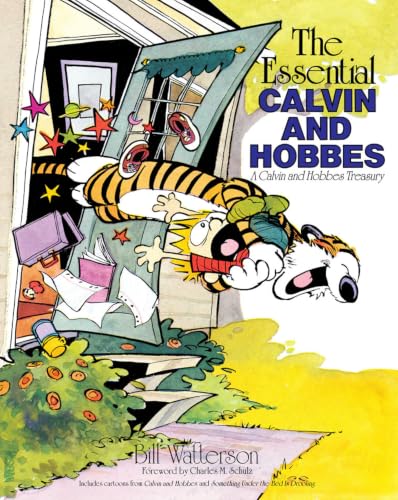
2The Essential Calvin and Hobbes: A Calvin and Hobbes Treasury
Bill Watterson's Calvin and Hobbes has been a worldwide favorite since its introduction in 1985. The strip follows the richly imaginative adventures of Calvin and his trusty tiger, Hobbes. Whether a poignant look at serious family issues or a round of time-travel (with the aid of a well-labeled cardboard box), Calvin and Hobbes will astound and delight you.
Beginning with the day Hobbes sprang into Calvin's tuna fish trap, the first two Calvin and Hobbes collections, Calvin and Hobbes and Something Under The Bed Is Drooling, are brought together in this treasury. Including black-and-white dailies and color Sundays, The Essential Calvin and Hobbes also features an original full-color 16-page story.
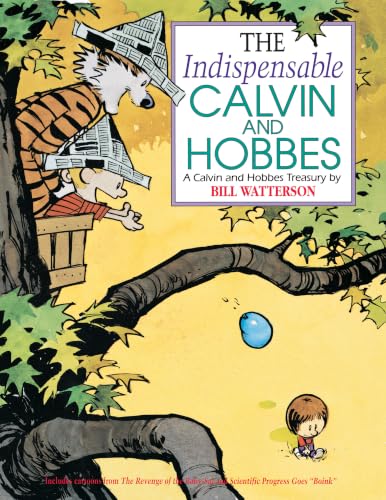
3The Indispensable Calvin and Hobbes
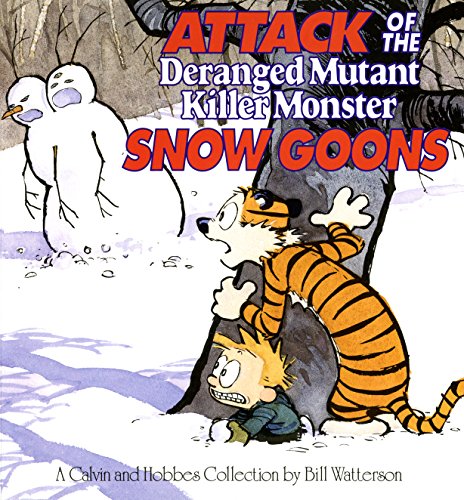
4Attack of the Deranged Mutant Killer Monster Snow Goons (Calvin and Hobbes #7)
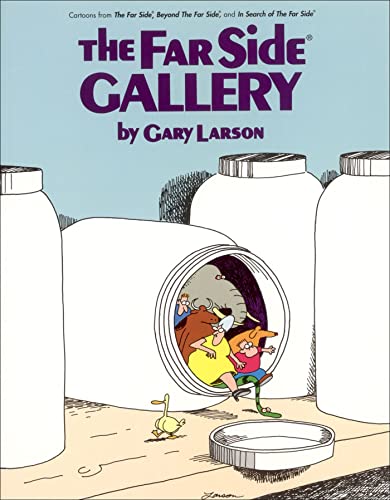
5The Far Side Gallery
The Far Side and the Larson signature are registered trademarks of FarWorks, Inc.
The Far Side Gallery is an anthology of Gary Larson's The Far Side comic strips, which were printed from 1982–1984.
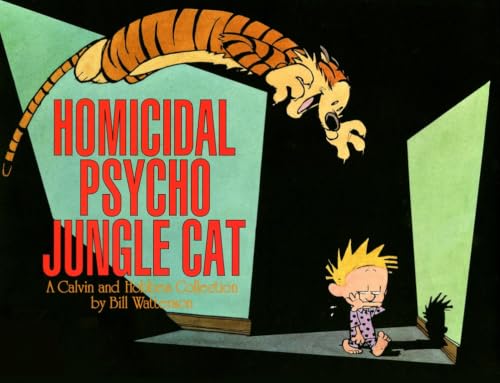
6Homicidal Psycho Jungle Cat (Calvin and Hobbes #9)
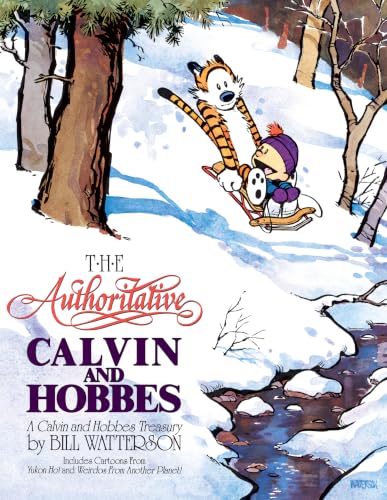
7The Authoritative Calvin and Hobbes: A Calvin and Hobbes Treasury
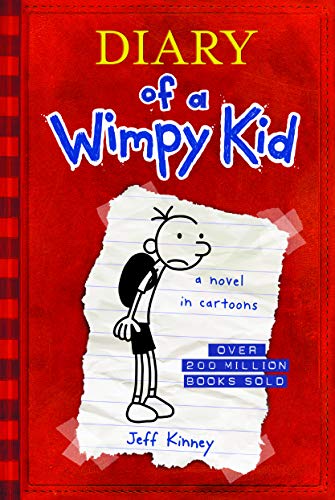
8Diary of a Wimpy Kid (Diary of a Wimpy Kid, #1)
The launch of an exciting and innovatively illustrated new series narrated by an unforgettable kid every family can relate to
It’s a new school year, and Greg Heffley finds himself thrust into middle school, where undersized weaklings share the hallways with kids who are taller, meaner, and already shaving. The hazards of growing up before you’re ready are uniquely revealed through words and drawings as Greg records them in his diary.
In book one of this debut series, Greg is happy to have Rowley, his sidekick, along for the ride. But when Rowley’s star starts to rise, Greg tries to use his best friend’s newfound popularity to his own advantage, kicking off a chain of events that will test their friendship in hilarious fashion.
Author/illustrator Jeff Kinney recalls the growing pains of school life and introduces a new kind of hero who epitomizes the challenges of being a kid. As Greg says in his diary, “Just don’t expect me to be all ‘Dear Diary’ this and ‘Dear Diary’ that.” Luckily for us, what Greg Heffley says he won’t do and what he actually does are two very different things.
Since its launch in May 2004 on Funbrain.com, the Web version of Diary of a Wimpy Kid has been viewed by 20 million unique online readers. This year, it is averaging 70,000 readers a day.
F&P level: T
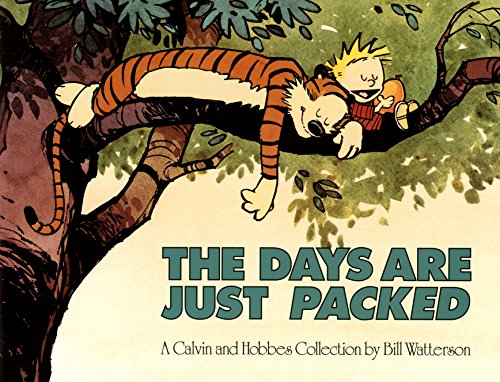
9The Days Are Just Packed
Calvin, the self-proclaimed "Boy of Destiny," continues to save the universe with his alter egos, Spaceman Spiff and Stupendous Man, at least until Miss Wormwood or his mother bring him back to reality. Susie, Calvin's nemesis and love interest, remains Calvin's favorite target. And when he's not recovering from a ferocious tiger attack, Calvin creates hideous snowmen, plays a moral cat-and-mouse game with Santa, conducts his infamous Dad polls, and combats the monsters under his bed.
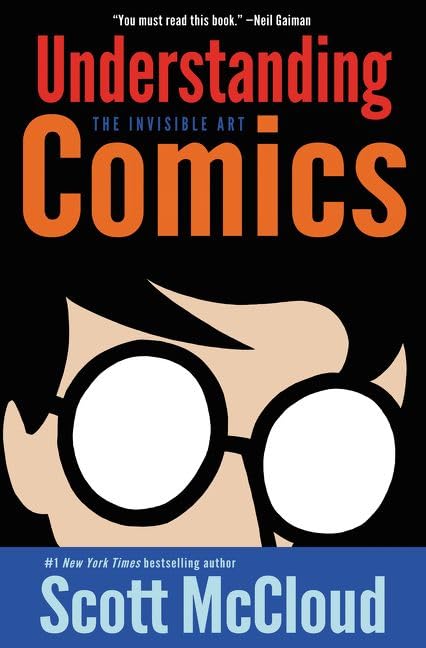
10Understanding Comics: The Invisible Art
"You must read this book." — Neil Gaiman
Praised throughout the cartoon industry by such luminaries as Art Spiegelman, Matt Groening, and Will Eisner, Scott McCloud's Understanding Comics is a seminal examination of comics art: its rich history, surprising technical components, and major cultural significance. Explore the secret world between the panels, through the lines, and within the hidden symbols of a powerful but misunderstood art form.
Unsolicited, but here’s my advice for visual thinkers (and others) who want to be better writers: … Cartoonists, because their work demands work from two disciplines (writing/art, poetry/design, words/pictures), are highly instructive when it comes to visual people learning to write, writers learning to make art, etc. (Check out Scott McCloud’s Understanding Comics for more.) [source]
Understanding Comics is a book about how comics work, told in comic form. It’s very accessible, it’s for the general reader and is about comics in general, not just superhero comics. It explores areas like pacing and editing – how motion can be created through static panels on a page, and how arranging those panels in different ways, or drawing in different styles, or combining text and image, has different effects. It’s almost like a book on film study which explores the role of sound, lighting or editing. Scott McCloud is an artist himself, and he draws pastiches to show how different styles produce different effects. [source]
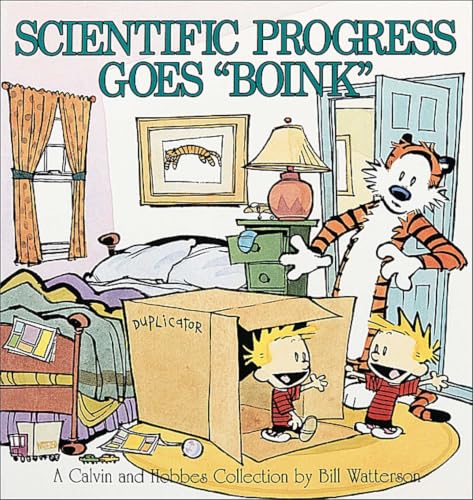
11Scientific Progress Goes "Boink" (Calvin and Hobbes #6)
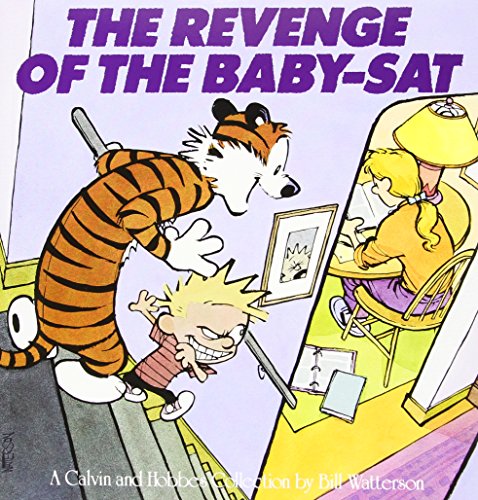
12The Revenge of the Baby-Sat (Calvin and Hobbes #5)
13The Complete Calvin and Hobbes
Calvin and Hobbes is unquestionably one of the most popular comic strips of all time. The imaginative world of a boy and his real-only-to-him tiger was first syndicated in 1985 and appeared in more than 2,400 newspapers when Bill Watterson retired on January 1, 1996. The entire body of Calvin and Hobbes cartoons published in a truly noteworthy tribute to this singular cartoon in The Complete Calvin and Hobbes. Composed of four paperback, four-color volumes in a sturdy slipcase, this New York Times best-selling edition includes all Calvin and Hobbes cartoons that ever appeared in syndication. This is the treasure that all Calvin and Hobbes fans seek.
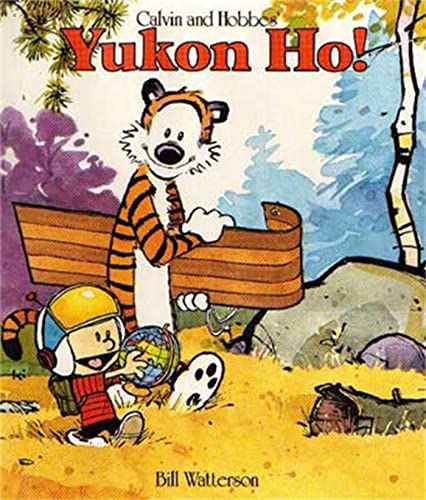
14Yukon Ho! (Calvin and Hobbes #3)
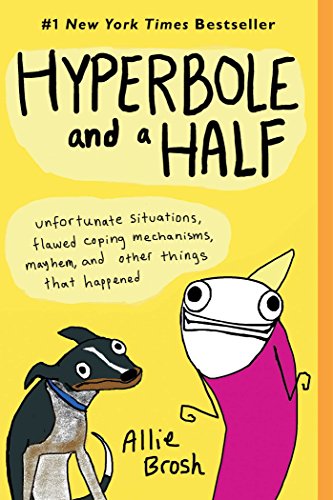
15Hyperbole and a Half: Unfortunate Situations, Flawed Coping Mechanisms, Mayhem, and Other Things That Happened
Pictures
Words
Stories about things that happened to me
Stories about things that happened to other people because of me
Eight billion dollars*
Stories about dogs
The secret to eternal happiness*
*These are lies. Perhaps I have underestimated my sneakiness!
CEO/Microsoft
While she self-deprecatingly depicts herself in words and art as an odd outsider, we can all relate to her struggles. Rather than laughing at her, you laugh with her. It is no hyperbole to say I love her approach -- looking, listening, and describing with the observational skills of a scientist, the creativity of an artist, and the wit of a comedian. [source]
16It's a Magical World (Calvin and Hobbes #11)
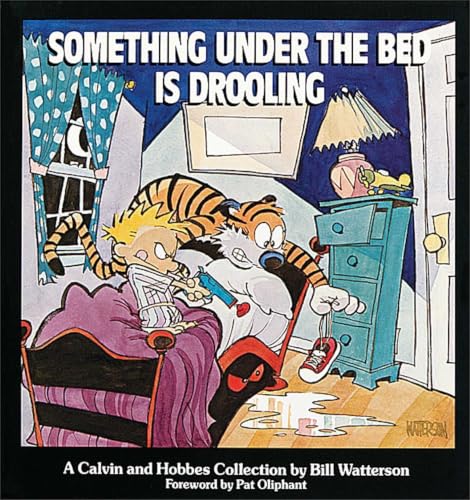
17Something Under the Bed is Drooling (Calvin and Hobbes #2)
18The Calvin and Hobbes Tenth Anniversary Book
19Weirdos from Another Planet! (Calvin and Hobbes #4)
20There's Treasure Everywhere (Calvin and Hobbes #10)
21Fun Home: A Family Tragicomic
Distant and exacting, Bruce Bechdel was an English teacher and director of the town funeral home, which Alison and her family referred to as the Fun Home. It was not until college that Alison, who had recently come out as a lesbian, discovered that her father was also gay. A few weeks after this revelation, he was dead, leaving a legacy of mystery for his daughter to resolve.
Alison has a strip that’s been running for a long time called Dykes to Watch Out For, but this is an autobiographical book. ‘Fun Home’ is short for the funeral home Alison’s dad ran when she was a child. It’s a book that blew me away and continues to blow me away every time I read it – and I must have read it five or six times by now: probably the best book I’ve read in the past ten years in any genre or form. It’s an incredibly crafted book in which the chapters are not chronological but thematic, and each chapter is keyed to a book that her father loved. So it’s not a book about what happened to her father, a closeted gay man who committed suicide a few months after Alison herself came out when she was 19. It’s about looking through a family archive to try and get a sense of her father’s particularity. [source]
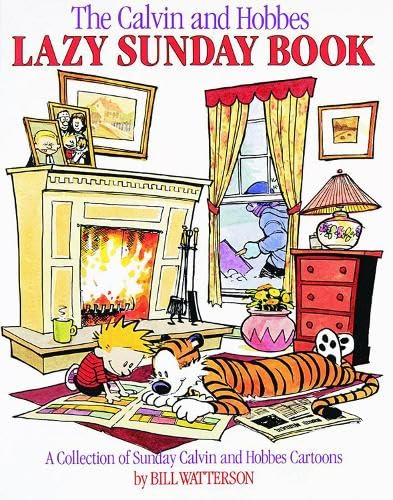
22The Calvin and Hobbes Lazy Sunday Book
This is a collection of the classic comic strip that features Calvin, a rambunctious 6-year-old boy, and his stuffed tiger, Hobbes, who comes charmingly to life. Filled with a Watterson’s full-page Sunday strips, this collection is sure to please fans and newcomers alike.
23The PreHistory of The Far Side: A 10th Anniversary Exhibit
24The Far Side Gallery 3
1988 FarWorks, Inc. All Rights Reserved.
The Far Side and the Larson signature are registered trademarks of FarWorks, Inc.
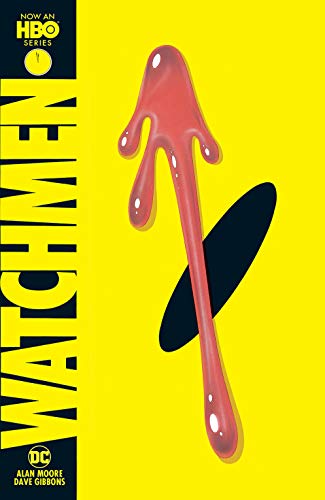
25Watchmen
One of the most influential graphic novels of all time and a perennial bestseller, WATCHMEN has been studied on college campuses across the nation and is considered a gateway title, leading readers to other graphic novels such as V FOR VENDETTA, BATMAN: THE DARK KNIGHT RETURNS and THE SANDMAN series.
I often give this book to people. [source]
Watchmen was originally released in 12 parts, one a month, over a year from 1985 to 1986. There was a film made of it in 2009. And now a controversial prequel series is coming out, done by new writers and artists, which goes back to earlier in the characters’ stories and which has been disavowed by Alan Moore, who created the original. [source]
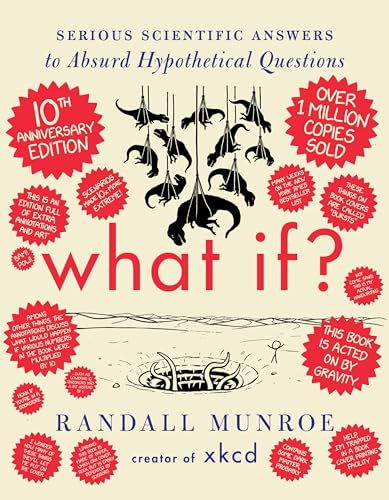
26What If? Serious Scientific Answers to Absurd Hypothetical Questions
If your cells suddenly lost the power to divide, how long would you survive?
How dangerous is it, really, to be in a swimming pool in a thunderstorm?
If we hooked turbines to people exercising in gyms, how much power could we produce?
What if everyone only had one soulmate?
When (if ever) did the sun go down on the British empire?
How fast can you hit a speed bump while driving and live?
What would happen if the moon went away?
In pursuit of answers, Munroe runs computer simulations, pores over stacks of declassified military research memos, solves differential equations, and consults with nuclear reactor operators. His responses are masterpieces of clarity and hilarity, studded with memorable cartoons and infographics. They often predict the complete annihilation of humankind, or at least a really big explosion. Far more than a book for geeks, WHAT IF: Serious Scientific Answers to Absurd Hypothetical Questions explains the laws of science in operation in a way that every intelligent reader will enjoy and feel much the smarter for having read.
CEO/Microsoft
The subtitle of the book is “Serious Scientific Answers to Absurd Hypothetical Questions,” and that’s exactly what it is. People write Munroe with questions that range over all fields of science: physics, chemistry, biology. Questions like, “From what height would you need to drop a steak for it to be cooked when it hit the ground?” (The answer, it turns out, is “high enough that it would disintegrate before it hit the ground.”) Munroe’s explanations are funny, but the science underpinning his answers is very accurate. It’s an entertaining read, and you’ll also learn a bit about things like ballistics, DNA, the oceans, the atmosphere, and lightning along the way. [source]
The kids are obsessed with this. They can quote it from memory. They’ve learned probably more science from this book than they have from their science class in the last two years. [source]
I have lots of books to recommend, but they are not related to my career path. The only one that is remotely related is Peter Thiel’s Zero to One. That said here are books I would recommend. [source]
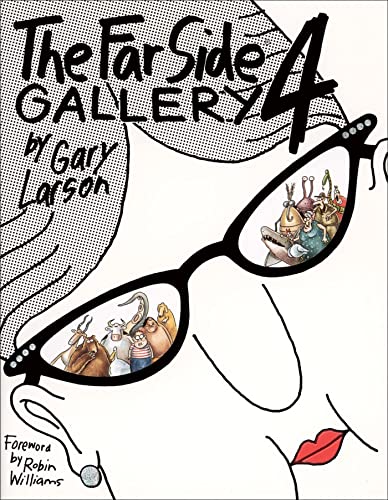
27The Far Side Gallery 4
The Far Side and the Larson signature are registered trademarks of FarWorks, Inc.
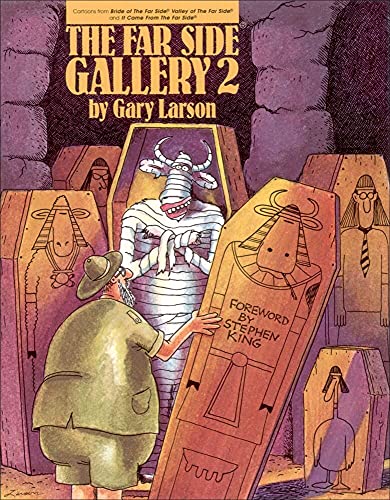
28The Far Side Gallery 2
29Maus I: A Survivor's Tale: My Father Bleeds History (Maus, #1)
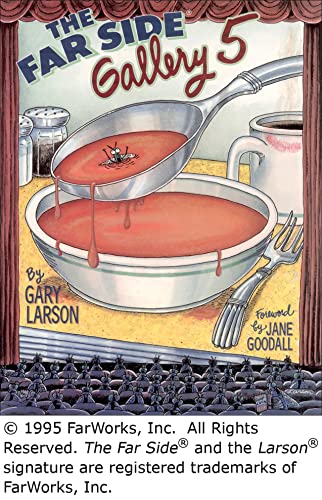
30The Far Side Gallery 5
The Far Side and the Larson signature are registered trademarks of FarWorks, Inc.
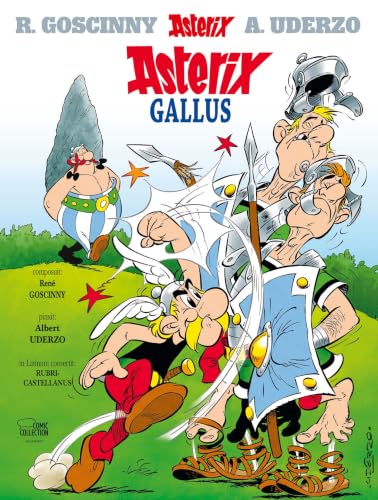
31Asterix Gallus: periculam quoddam Asterigis
It’s a really good way of learning your first proper Latin sentences. [source]
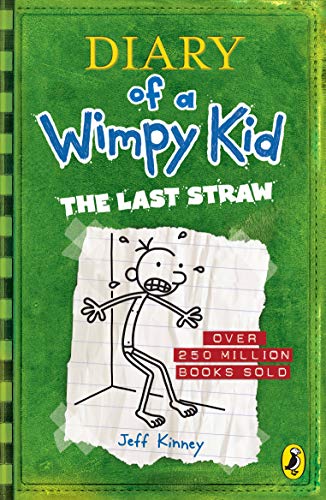
32The Last Straw (Diary of a Wimpy Kid, #3)
33Adulthood Is a Myth (Sarah's Scribbles, #1)
Do you enjoy networking to advance your career?
Is adulthood an exciting new challenge for which you feel fully prepared?
Ugh. Please go away.
This book is for the rest of us. These comics document the wasting of entire beautiful weekends on the internet, the unbearable agony of holding hands on the street with a gorgeous guy, dreaming all day of getting home and back into pajamas, and wondering when, exactly, this adulthood thing begins. In other words, the horrors and awkwardnesses of young modern life.
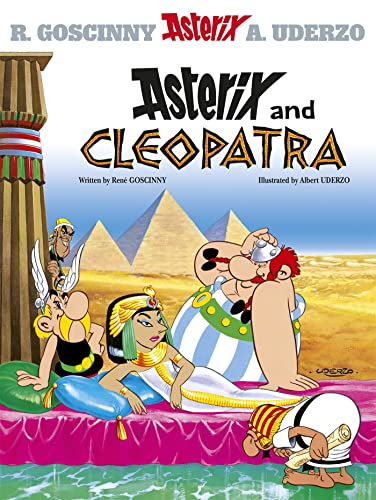
34Asterix and Cleopatra (Asterix, #6)
Asterix (who is a tiny guy with a big moustache) and his friend (who is a big guy) called Obelix are very, very funny. [source]
35Bloom County: Loose Tails
The truth is that the only "cult following" my comic strip had when this book appeared consisted of my mother. Bless her heart, she still reads it daily. She'll hand the funny page to me, point to it, scrunch her eyes together and say, "Honey, what were you trying to say here?" If opus spits watermelon seeds at Milo, she'll say to me, "So this is a sort of comment on the watermelon industry?" So you see, to my publisher and to my mother, I remain a victim of unrealistic expectations.
In the meantime, please accept my apologies for the way Opus is drawn within this volume. I had no experience drawing birds in 1982 and you will notice that his beak tends to randomly shrink or expand. To this day, my mother thinks it symbolically represented the changing fortunes of my bachelor love life. Maybe it did, Mom, and maybe it didn't.
Berke Breathed
August 1987
36Billy and the Boingers Bootleg
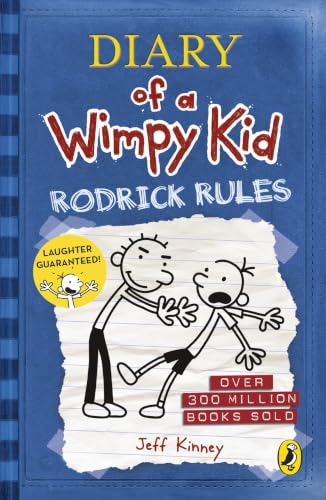
37Rodrick Rules (Diary of a Wimpy Kid, #2)
Secrets have a way of getting out, especially when a diary is involved.
Whatever you do, don’t ask Greg Heffley how he spent his summer vacation, because he definitely doesn’t want to talk about it.
As Greg enters the new school year, he’s eager to put the past three months behind him . . . and one event in particular.
Unfortunately for Greg, his older brother, Rodrick, knows all about the incident Greg wants to keep under wraps. But secrets have a way of getting out . . . especially when a diary is involved.
Diary of a Wimpy Kid: Rodrick Rules chronicles Greg’s attempts to navigate the hazards of middle school, impress the girls, steer clear of the school talent show, and most important, keep his secret safe.
38'Toons for Our Times: A Bloom County Book of Heavy Meadow Rump 'n Roll
39Beyond The Far Side
The Far Side and the Larson signature are registered trademarks of FarWorks, Inc.
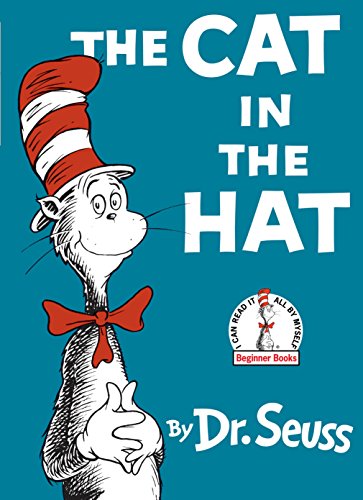
40The Cat in the Hat
Book Details: Format: Hardcover Publication Date: 3/12/1957 Pages: 72 Reading Level: Age 3 and Up
The exuberance and the sheer energy of it is just fantastic. The rhyme and the repetition give it even more momentum and energy. [source]

41The Complete Far Side, 1980–1994
"Every one of these cartoons is just something that drifted into my head when I was alone with my thoughts. And, for better or worse, I 'jotted' them down. It was only later, when perhaps I received an angry letter from someone, that it struck me: Hey! Someone's been reading my diary!"
Gary Larson, from the preface to The Complete Far Side
Revered by its fans as the funniest, most original, most "What the ... ?"-inspiring cartoon ever, The Far Side® debuted in January 1980 and enjoyed an illustrious 14 years on the worlds comics pages until Gary Larson's retirement in 1994.
The Complete Far Side celebrates Gary's twisted, irreverent genius in this ultimate Far Side book, a lavish production, which takes its place alongside collector's-edition art books.
A masterpiece of comic brilliance, The Complete Far Side contains every Far Side cartoon ever syndicated over 4,000 if you must know presented in (more or less) chronological order by year of publication, with more than 1,100 that
have never before appeared in a book. Also included are additional Far Side cartoons Larson created after
his retirement: 13 that appeared in the last Far Side book,
Last Chapter and Worse, and six cartoons that periodically ran as a special feature in The New York Times Science Times section as The Far Side of Science.
Creator Gary Larson offers a rare glimpse into the mind of The Far Side®in quirky and thoughtful introductions to each of the 14 chapters. Complaint letters, fan letters, and queries from puzzled readers appear alongside some of the more provocative or elusive panels. Actor, author,and comedian Steve Martin offers his pithy thoughts in a foreword, and Gary
Larson's former editor describes what it was like to be "the guy who could explain every Far Side cartoon."
The Complete Far Side © 2003 by FarWorks, Inc. All Rights Reserved.
The Far Side ® and the Larson ® signature
are registered trademarks of FarWorks, Inc.
42Strange Planet
Honestly, you are.
It’s the star damage.
I CRAVE STAR DAMAGE.
Straight from the mind of New York Times bestselling author Nathan W. Pyle comes an adorable and profound universe in pink, blue, green, and purple. Based on the phenomenally popular Instagram of the same name, Strange Planet covers a full life cycle of the planet’s inhabitants, including milestones such as:
The Emergence Day
Being Gains a Sibling
The Being Family Attains a Beast
The Formal Education of a Being
Celebration of Special Days
Being Begins a Vocation
The Beings at Home
Health Status of a Being
The Hobbies of a Being
The Extended Family of the Being
The Being Reflects on Life While Watching the Planet Rotate
With dozens of never-before-seen illustrations in addition to old favorites, this book offers a sweet and hilarious look at a distant world not all that unlike our own.
43Tales Too Ticklish to Tell: Bloom County
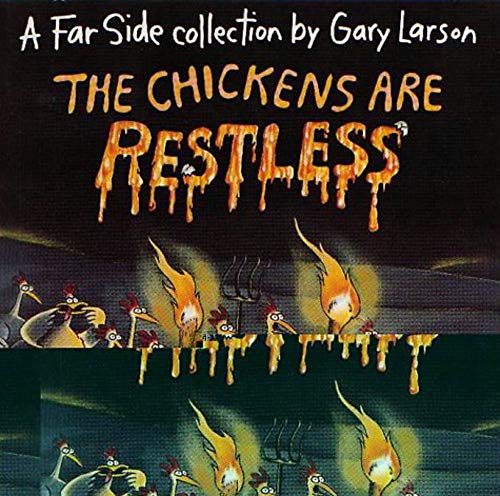
44The Chickens Are Restless
1993 FarWorks, Inc. All Rights Reserved.
The Far Side and the Larson signature are registered trademarks of FarWorks, Inc.
The Far Side is the working of a really strange mind. What really appeals to me about this cartoon – and you get it with all the people I’ve chosen, but particularly I think with Larson – is the way you go back into his world each time. [source]
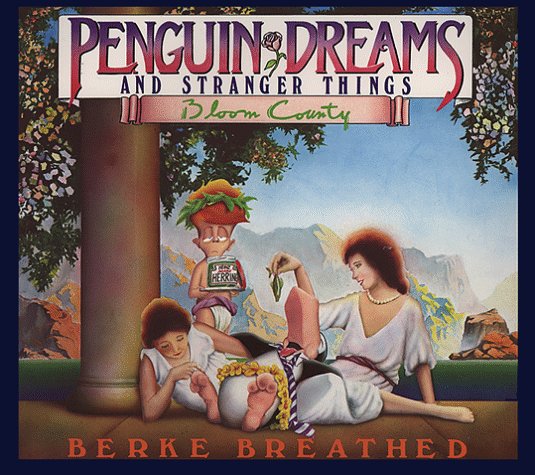
45Penguin Dreams and Stranger Things
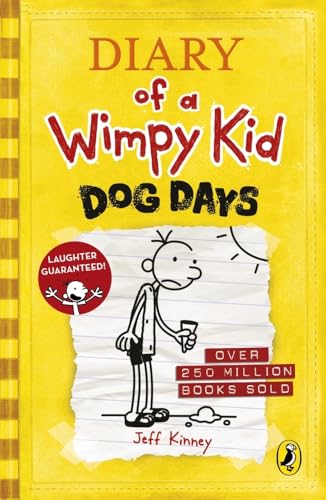
46Dog Days (Diary of a Wimpy Kid, #4)
Greg, a self-confessed "indoor person,” is living out his ultimate summer fantasy: no responsibilities and no rules. But Greg’s mom has a different vision for an ideal summer . . . one packed with outdoor activities and "family togetherness.”
Whose vision will win out? Or will a new addition to the Heffley family change everything?
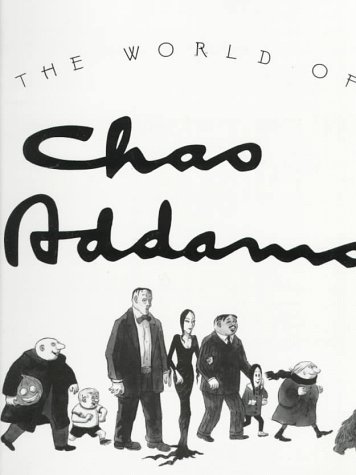
47The World of Chas Addams
48Tintin in Tibet
There’s a lot of adventure and snow and a cute little dog called Snowy. [source]
The Ugly Truth (Diary of a Wimpy Kid, #5)
Greg suddenly finds himself dealing with the pressures of boy-girl parties, increased responsibilities, and even the awkward changes that come with getting older—all without his best friend, Rowley, at his side. Can Greg make it through on his own? Or will he have to face the “ugly truth”?
50Bloom County Babylon: Five Years of Basic Naughtiness
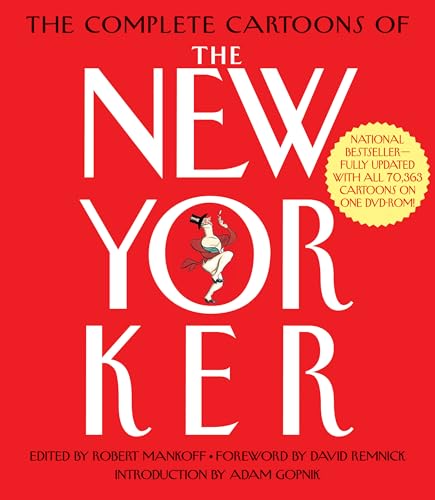
51The Complete Cartoons of The New Yorker
Organized by decade, with commentary by some of the magazine's finest writers, this landmark collection showcases the work of the hundreds of talented artists who have contributed cartoons over the course ofThe New Yorker's eight-two-year history. From the early cartoons of Peter Arno, George Price and Charles Addams to the cutting-edge work of Alex Gregory, Matthew Diffee and Bruce Eric Kaplan (with stops along the way for the genius of Charles Barsotti, Roz Chast, Jack Ziegler, George Booth, and many others), the art collected here forms, as David Remnick puts it in his Foreword, "the longest-running popular comic genre in American life."
Throughout the book, brief overviews of each era's predominant themes—from the Depression and nudity to technology and the Internet, highlight various genres of cartoons and shed light on our pastimes and preoccupations. Brief profiles and mini-portfolios spotlight the work of key cartoonists, including Arno, Chast, Ziegler, and others.
The DVD-ROM included with the book is what really makes the "Complete Cartoons" complete. Compatible with most home computers and easily browsable, the disk contains a mind-boggling 70,363 cartoons, indexed in a variety of ways. Perhaps you'd like to find all the cartoons by your favorite artist. Or maybe you'd like to look up the cartoons that ran the week you were born, or all of the cartoons on a particular subject. Of course, you can always begin at the beginning, February 21, 1925, and experience the unprecedented pleasure of reading through every single cartoon ever published in The New Yorker.
Enjoy this one-of-a-kind protrait of American life over the past eight decades, as captured by the talented pens and singular outlooks of the masters of the cartoonist's art.
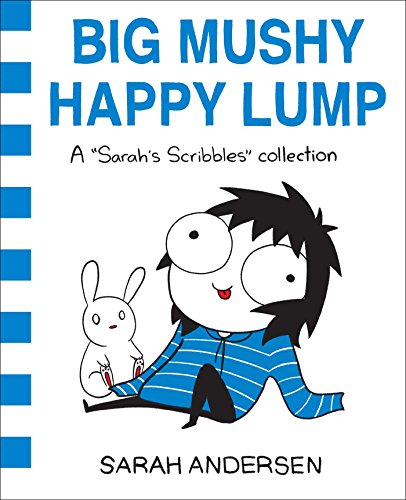
52Big Mushy Happy Lump (Sarah's Scribbles, #2)
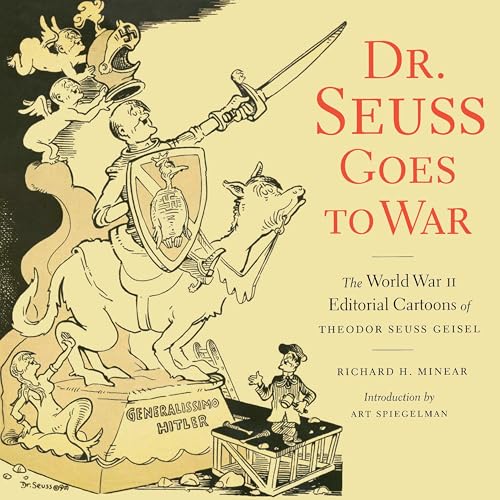
53Dr. Seuss Goes to War: The World War II Editorial Cartoons of Theodor Seuss Geisel
Well before Sam ever considered eating green eggs and ham or Horton heard a who, Dr. Seuss was drawing biting cartoons for adults that expressed his fierce opposition to anti-Semitism and fascism. An editorial cartoonist from 1941 to 1943 for PM magazine, a left-wing daily New York newspaper, Dr. Seuss launched a battle against dictatorial rule abroad and America First (an isolationist organization that argued against U.S. entry into World War II) with more than 400 cartoons urging the United States to fight against Adolf Hitler and his cohorts in fascism, Benito Mussolini, Pierre Laval, and Japan (he never depicted General Tojo Hideki, the wartime prime minister, or Togo Shigenori, the foreign minister). Dr. Seuss Goes to War, by Richard H. Minear, includes 200 of these cartoons, demonstrating the active role Dr. Seuss played in shaping and reflecting how America responded to World War II as events unfolded.
As one of America's leading historians of Japan during World War II, Minear also offers insightful commentary on the historical and political significance of this immense body of work that, until now, has not been seriously considered as part of Dr. Seuss's extraordinary legacy.
Born to a German-American family in Springfield, Massachusetts, in 1904, Theodor Geisel began his cartooning career at Dartmouth College, where he contributed to the humor magazine. After a run-in with college authorities for bootlegging liquor, he had to use a pseudonym to get his work published, choosing his middle name, Seuss, and adding "Dr." several years later when he dropped out of graduate school at Oxford University in England. He had never planned on setting poison political pen to paper until he realized his deep hatred of Italian fascism. The first editorial cartoon he drew depicts the editor of the fascist paper Il Giornale d'Italia wearing a fez (part of Italy's fascist uniform) and banging away at a giant steam typewriter while a winged Mussolini holds up the free end of the banner of paper emerging from the roll. He submitted it to a friend at PM, an outspoken political magazine that was "against people who push other people around," and began his two-year career with the magazine before joining the U.S. Army as a documentary filmmaker in 1943.
Dr. Seuss's first caricature of Hitler appears in the May 1941 cartoon, "The head eats, the rest gets milked," portraying the dictator as the proprietor of "Consolidated World Dairy," merging 11 conquered nations into one cow. Hitler went on to become one of the main caricatures in Seuss's work for the next two years, depicted alone, among his generals and other Germans, and with his allies Benito Mussolini and Pierre Laval. He is also drawn alongside "Japan," which Dr. Seuss portrays quite offensively, with slanted, bespectacled eyes and a sneering grin. While Dr. Seuss was outspoken against antiblack racism in the United States, he held a virulent disdain for the Japanese and rendered sinister and, at times, slanderous caricatures of their wartime actions even before the bombing of Pearl Harbor. But Dr. Seuss's aggression wasn't solely reserved for the fascists abroad. He was also loudly critical of America's initial apathy toward the war, skewering isolationists like America First advocate Charles Lindbergh, the Chicago Tribune's Colonel Robert McCormick, Eleanor Medill Patterson of the Washington Times-Herald, and Joseph Patterson of the New York Daily News, whom he considered as evil as Hitler. He encouraged Americans to buy war savings bonds and stamps and to do everything they could to ensure victory over fascism.
Minear provides historical background in Dr. Seuss Goes to War that not only serves to contextualize these cartoons but also deftly explains the highly problematic anti-Japanese and anticommunist stances held by both Dr. Seuss and PM magazine, which contradicted the leftist sentiments to which they both eagerly adhered. As Minear notes, Dr. Seuss eventually softened his feelings toward communism as Russia and the United States were united on the Allied front, but his stereotypical portrayals of Japanese and Japanese-Americans grew increasingly and undeniably racist as the war raged on, reflecting the troubling public opinion of American citizens. Minear does not attempt to ignore or redeem Dr. Seuss's hypocrisy; rather, he shows how these cartoons evoke the mood and the issues of the era.
After Dr. Seuss left PM magazine, he never drew another editorial cartoon, though we find in these cartoons the genesis of his later characters Yertle the dictating turtle and the Cat in the Hat, who bears a striking resemblance to Uncle Sam. Dr. Seuss Goes to War is an astonishing collection of work that many of his devoted fans have not been able to see until now. But this book is also a comprehensive, thoughtfully researched, and exciting history lesson of the Second World War, by a writer who loves Dr. Seuss as much as those who grow up with his books do.
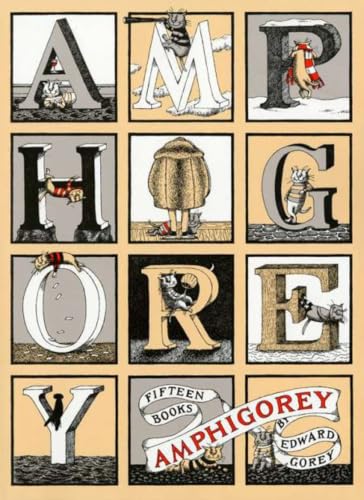
54Amphigorey (Amphigorey, #1)
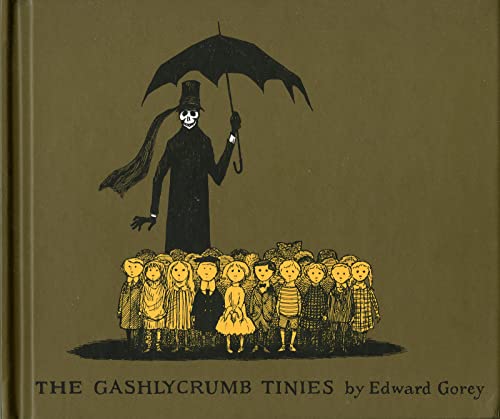
Many of Gorey's tales involve untimely deaths and dreadful mishaps, but much like tragic Irish ballads with their perky rhythms and melodies, they come off as strangely lighthearted. "The Gashlycrumb Tinies," for example, begins like this: "A is for AMY who fell down the stairs, B is for BASIL assaulted by bears," and so on. An eccentric, funny book for either the uninitiated or diehard Gorey fans.
Contains: The Unstrung Harp, The Listing Attic, The Doubtful Guest, The Object Lesson, The Bug Book, The Fatal Lozenge, The Hapless Child, The Curious Sofa, The Willowdale Handcar, The Gashlycrumb Tinies, The Insect God, The West Wing, The Wuggly Ump, The Sinking Spell, and The Remembered Visit.
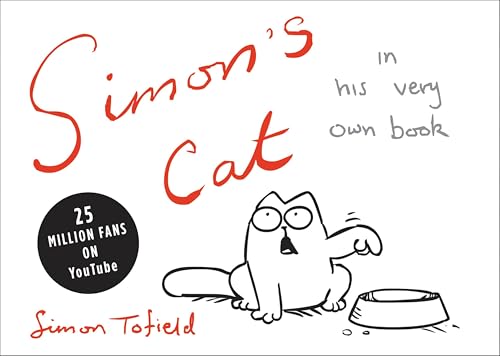
55Simon's Cat (Simon's Cat, #1)
Cabin Fever (Diary of a Wimpy Kid, #6)
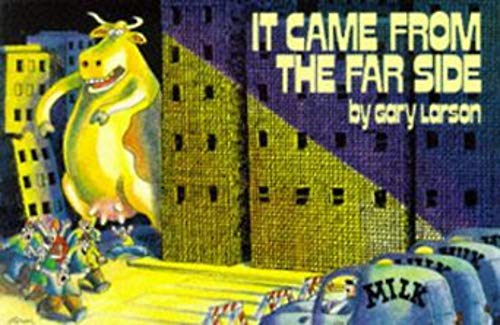
57It Came from The Far Side
58The Doonesbury Chronicles
"It is not only the best comic strip, but the best satire that's come along in a long time."
—Art Buchwald
Carried today by over 350 North American newspapers, Doonesbury's unique blend of social-political satire, cartoon humor, and comic-strip continuity has won a following both improbably diverse and fanatically devoted. In Washington, where Doonesbury is required reading, requests for original strips have come from White House aides, senators, congressmen, and—remarkably—most of the major Watergate conspirators whose maladventures gave the strip grist for some of its most celebrated moments.
"There are only three major vehicles to keep us informed as to what is going on in Washington: the electronic media, the print media, and Doonesbury, not necessarily in that order."
—President Gerald Ford
So loyal has been this following that on occasions when Doonesbury was suddenly notable for its absence from a paper following a satirical thrust that had somehow offended editors' notions of comic-strip propriety, readers have always managed to protest it back onto the page.
The Doonesbury Chronicles marks the first hardcover appearance of Michael J. Doonesbury and cohorts, and is their first collection to include Sunday color pages. In all, 572 strips are presented, as selected by Garry Trudeau and encompassing the full Doonesbury canon, from its cozy campus origins at the frazzled end of the sixties through the stumbling first half of the seventies. Conducting us along the way is a motley though always redeemable cast that includes a student radical turned disc jockey, an immaculately dense but nonetheless charismatic quarterback, a nature freak who has nightmares about Mark Spitz, and a runaway housewife who ends up as a Berkeley law student by way of the Walden Commune Day-Care Center. For those hooked on Trudeau, as well as those still somehow deprived, for giving or hoarding, The Doonesbury Chronicles is a rich and Recession-proof treasure of a book.
59Hark! A Vagrant (Hark! A Vagrant, #1)
60Maus II: A Survivor's Tale: And Here My Troubles Began (Maus, #2)
This second volume, subtitled And Here My Troubles Began, moves us from the barracks of Auschwitz to the bungalows of the Catskills. Genuinely tragic and comic by turns, it attains a complexity of theme and a precision of thought new to comics and rare in any medium. Maus ties together two powerful stories: Vladek's harrowing tale of survival against all odds, delineating the paradox of daily life in the death camps, and the author's account of his tortured relationship with his aging father. At every level this is the ultimate survivor's tale - and that too of the children who somehow survive even the survivors.
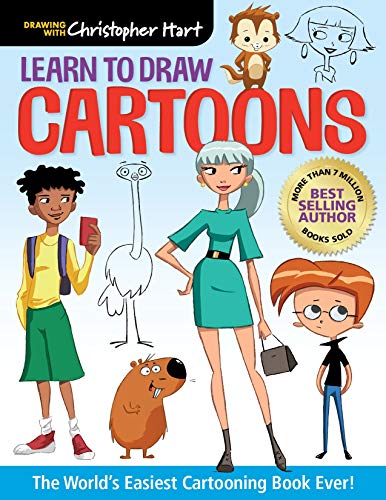
61Learn to Draw Cartoons: The World's Easiest Cartooning Book Ever!
Thanks to Christopher Hart’s simplified process, anyone can start creating dynamic cartoon characters right away. He has developed the easiest-ever approach to drawing the basics like heads, bodies, and those super-important cartoon expressions. Hart then helps beginners apply these fundamentals to a variety of fun types and settings such as animals, under-the-sea locales, famous stock characters, and popular backgrounds. Each lesson is laid out in accessible steps and accompanied by Chris’s personable, quick instruction.
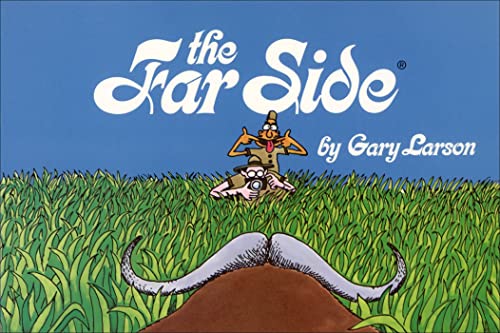
62The Far Side
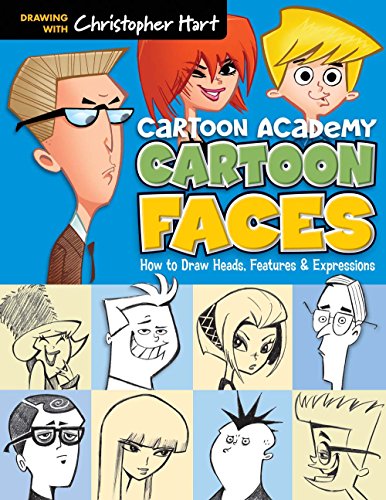
63Cartoon Faces: How to Draw Heads, Features Expressions
64Herding Cats (Sarah's Scribbles, #3)
With characteristic wit and charm, Sarah Andersen's third collection of comics and illustrated personal essays offers a survival guide for frantic modern life: from the importance of avoiding morning people, to Internet troll defense 101, to the not-so-life-changing futility of tidying up. But when all else fails and the world around you is collapsing, make a hot chocolate, count the days until Halloween, and snuggle up next to your furry beacon of hope.
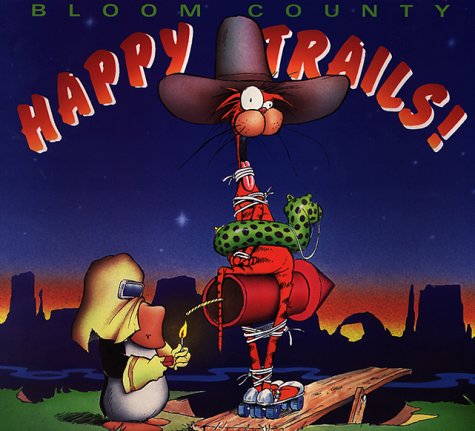
65Happy Trails!
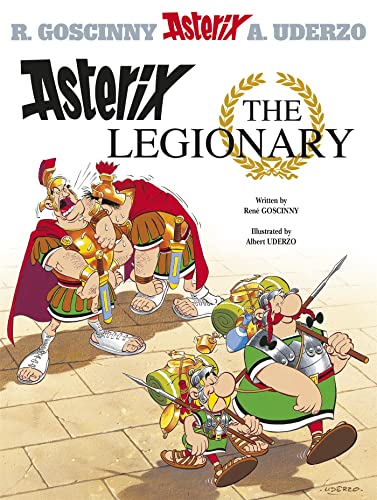
66Asterix the Legionary (Asterix, #10)
67Calvin and Hobbes: Sunday Pages 1985-1995: An Exhibition Catalogue
Everyone misses Calvin and Hobbes.
It reinvented the newspaper comic strip at a time when many had all but buried the funnies as a vehicle for fresh, creative work. Then Bill Watterson came along and reminded a new generation of what older readers and comic strip aficionados knew: A well-written and beautifully drawn strip is an intricate, powerful form of communication. And with Calvin and Hobbes, we had fun—just like readers of Krazy Kat and Pogo did. Opening the newspaper each day was an adventure. The heights of Watterson's creative imagination took us places we had never been. We miss that.
This book was published in conjunction with the first exhibition of original Calvin and Hobbes Sunday pages at The Ohio State University Cartoon Research Library. Although the work was created for reproduction, not for gallery display, was a pleasure to see the cartoonist's carefully placed lines and exquisite brush strokes. In an attempt to share this experience with those who were unable to visit the exhibition, all of the original Sunday pages displayed are reproduced in color in this book so that every detail, such as sketch lines, corrections, and registration marks, are visible. On the opposite page the same comic strip is printed in full color. Because Watterson was unusually intentional and creative in his use of color, this juxtaposition provides Calvin and Hobbes readers the opportunity to consider the impact of color on its narrative and content.
When I first contacted Bill Watterson about the possibility of exhibiting his original work, I used the term "retrospective." He replied that we might be able to do an exhibit, but that calling it a retrospective made him uncomfortable. He felt that a longer time was needed to put Calvin and Hobbes in the historical perspective implied by that term. Nonetheless, this show is a "look back" at the comic strip as we revisit favorites that we remember. Calvin and Hobbes: Sunday Pages 1985-1995 is particularly interesting because each work that is included was selected by Bill Watterson. His comments about the thirty-six Sunday pages he chose are part of this volume. In addition, he reflects on Calvin and Hobbes from the perspective of six years, and his essay provides insights into his life as a syndicated cartoonist.
Reprint books of Calvin and Hobbes are nice to have, but the opportunity to see the original work and read Bill Watterson's thoughts about it is a privilege. He generously shared not only the art, but also his time and his thoughts. When I first reviewed the works included in the exhibit, I knew that everyone who visited it would begin with laughter and end with tears.
On behalf of all who enjoyed Calvin and Hobbes, thank you, Bill Watterson.
--Lucy Shelton Caswell, Professor and Curator The Ohio State University Cartoon Research Library, June 2001
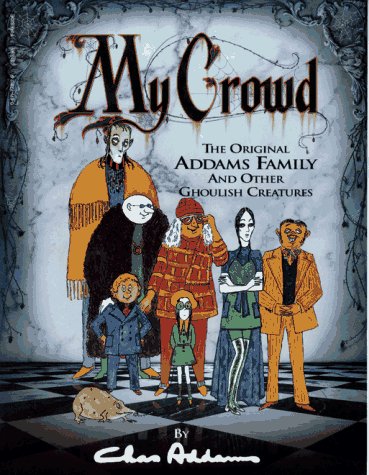
68My Crowd
69Classics of Western Literature: Bloom County, 1986-1989
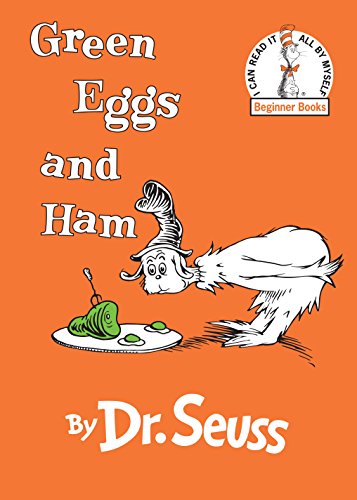
70Green Eggs and Ham
Originally created by Dr. Seuss, Beginner Books encourage children to read all by themselves, with simple words and illustrations that give clues to their meaning.
71Oh, the Places You'll Go!
And will you succeed?
Yes! You will indeed!
(98 and ¾ percent guaranteed.)

A modern classic, Oh, the Places You'll Go! was first published one year before Dr. Seuss's death at the age of eighty-seven. In a mere fifty-six pages, Dr, Seuss managed to impart a lifetime of wisdom. It is the perfect send-off for children starting out in the maze of life, be they nursery school grads or newly-minted PhD's. Everyone will find it inspired good fun.
Founder/Virgin Group
Today is World Book Day, a wonderful opportunity to address this #ChallengeRichard sent in by Mike Gonzalez of New Jersey: Make a list of your top 65 books to read in a lifetime. [source]
Narrowing down a favourite book in either business or non-business from the hundreds of mind-expanding books I've benefited from in the four decades of my life (beginning with Oh, The Places You'll Go! by Dr. Seuss) would be impossible. [source]
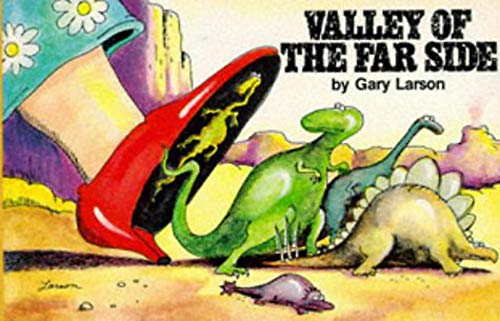
72Valley of The Far Side
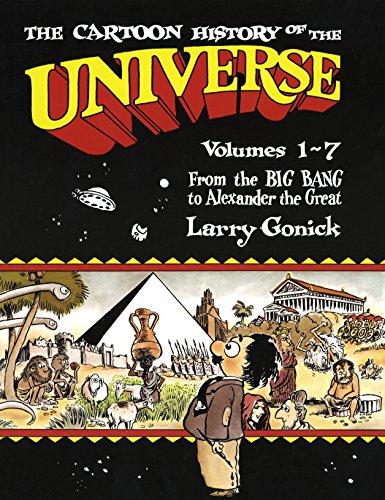
73Cartoon History of the Universe I, Vol. 1-7: From the Big Bang to Alexander the Great
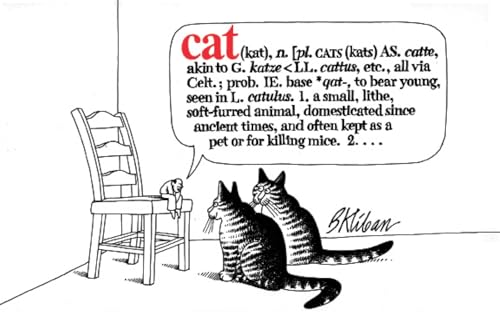
74Cat
Cat is the classic that started it all. It gave a voice to catmaniacs around the country and launched an entire genre in publishing and licensing. Everybody went crazy.
“Neither cute nor mysterious but instead simply and irreverently, even raucously, very funny.”—Village Voice.
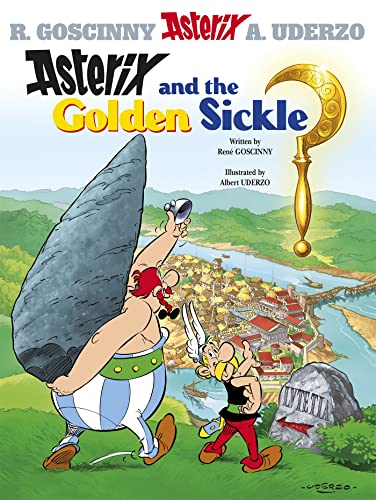
75Asterix and the Golden Sickle (Asterix, #2)
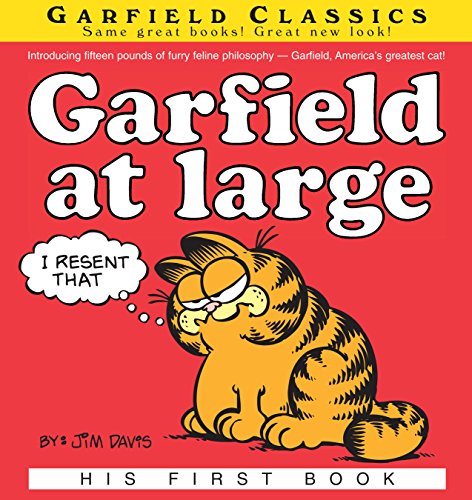
76Garfield at Large: His First Book (Garfield, #1)
The rest is history.
77The Gashlycrumb Tinies (The Vinegar Works, #1)
78Asterix and the Goths (Asterix, #3)
79How Come I Always Get Blamed for the Things I Do?: A Pickles Collection
80Asterix at the Olympic Games (Asterix, #12)
81Cows of Our Planet
82Asterix and the Normans (Asterix, #9)
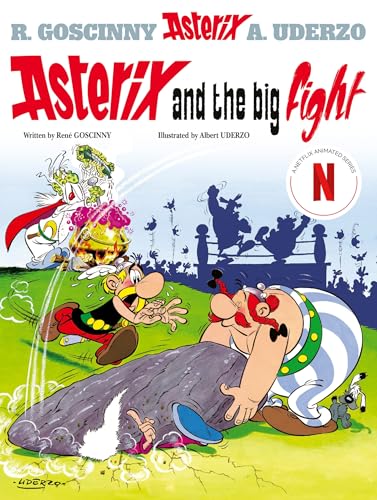
83Asterix and the Big Fight (Asterix, #7)
84How to Tell If Your Cat Is Plotting to Kill You
How to Tell If Your Cat Is Plotting to Kill You presents fan favorites, such as "Cat vs. Internet," "How to Pet a Kitty," and "The Bobcats," plus 17 brand-new, never-before-seen cat jokes. A pullout poster is included at the back of the book.
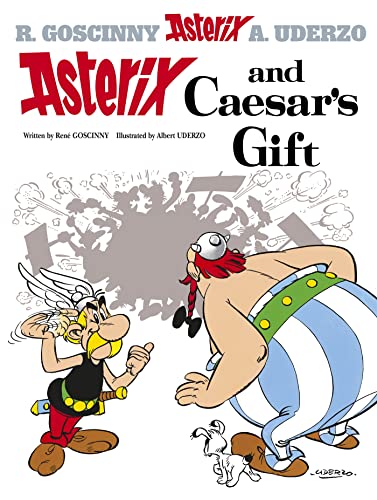
85Asterix and Caesar's Gift (Astérix #21)
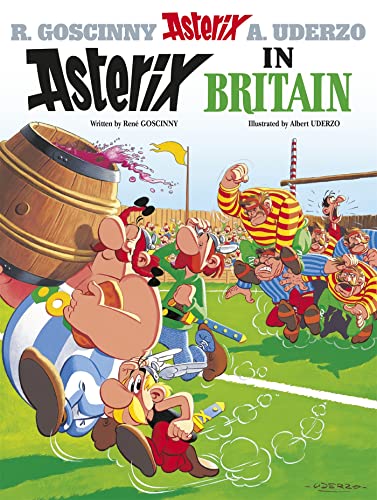
86Asterix in Britain (Asterix, #8)
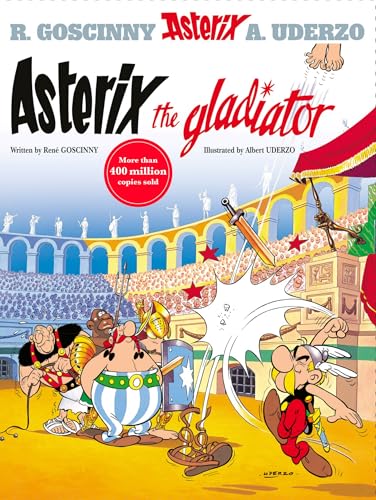
87Asterix the Gladiator (Asterix, #4)
88Bone: The Complete Edition
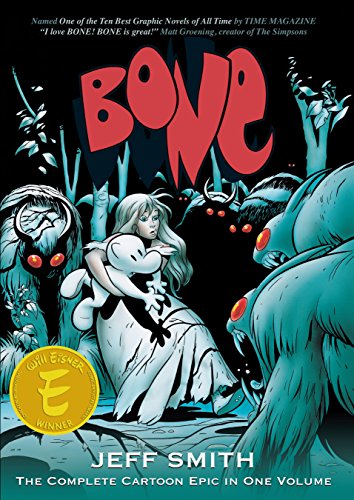
Three modern cartoon cousins get lost in a pre-technological valley, spending a year there making new friends and out-running dangerous enemies. After being run out of Boneville, the three Bone cousins, Fone Bone, Phoney Bone and Smiley Bone are separated and lost in a vast uncharted desert. One by one they find their way into a deep forested valley filled with wonderful and terrifying creatures. It will be the longest -- but funniest -- year of their lives.
89In Search of The Far Side
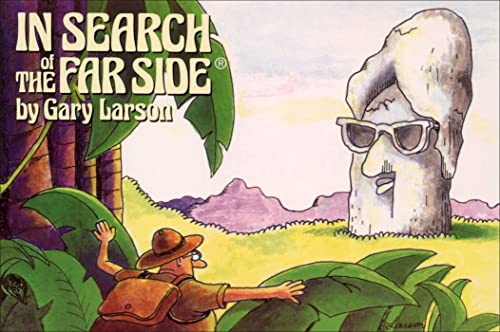
The Far Side® and the Larson® signature are registered trademarks of FarWorks, Inc.
90Unnatural Selections
91One Fish, Two Fish, Red Fish, Blue Fish
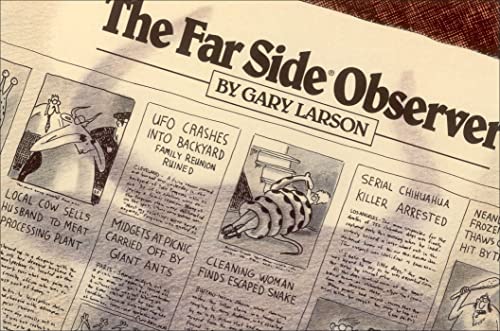
92The Far Side Observer
93Who Was Walt Disney?
His family was poor, and the happiest time of his childhood was spent living on a farm in Missouri. His affection for small-town life is reflected in Disneyland Main Streets around the world.
With black-and-white illustrations throughout, this biography reveals the man behind the magic.
This book is not authorized, licensed or endorsed by the Walt Disney Company or any affiliate.
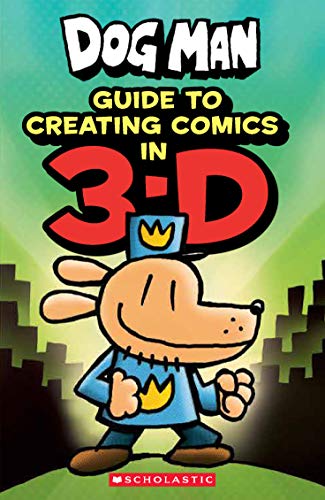
94Guide to Creating Comics in 3-D (Dog Man)
George and Harold know a LOT about making comic books. (Remember their Captain Underpants comics?) But before they told you that story, first they told you the story of Dog Man -- part dog, part man, and all cop!
Want to know how George and Harold come up with hilarious heroes like Dog Man and Li'l Petey and Chief? And how do they think up such wretched villains, like Petey and Piggy and Philly? Now's your chance to find out! The boys will give step-by-step instructions on how to draw some of their best Dog Man characters. Plus, get advice on how to create your own funny comic-book characters -- and bring them to life in 3-D!
This book is packed with 3-D glasses; a write-on, wipe-off pen; a drawing pad; and over 30 stickers from the New York Times bestselling series!
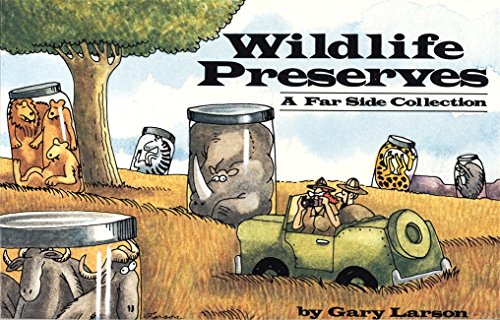
95Wildlife Preserves
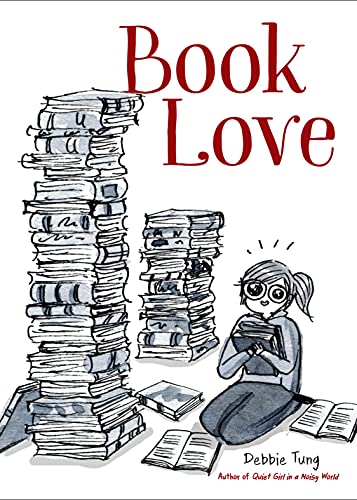
96Book Love
Book Love is a gift book of comics tailor-made for tea-sipping, spine-sniffing, book-hoarding bibliophiles. Debbie Tung’s comics are humorous and instantly recognizable—making readers laugh while precisely conveying the thoughts and habits of book nerds. Book Love is the ideal gift to let a book lover know they’re understood and appreciated.
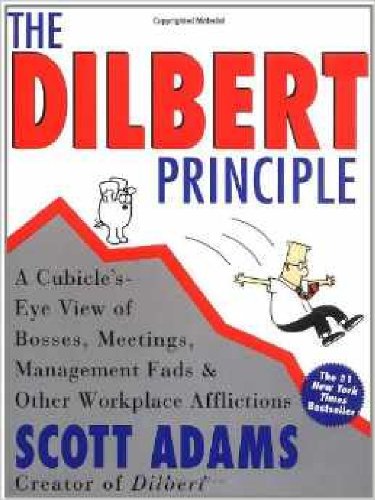
97The Dilbert Principle: A Cubicle's-Eye View of Bosses, Meetings, Management Fads & Other Workplace Afflictions
Since 1989, Scott Adams has been illustrating this principle each day, lampooning the corporate world through Dilbert, his enormously popular comic strip. In Dilbert, the potato-shaped, abuse-absorbing hero of the strip, Adams has given voice to the millions of Americans buffeted by the many adversities of the workplace.
Now he takes the next step, attacking corporate culture head-on in this lighthearted series of essays. Packed with more than 100 hilarious cartoons, these 25 chapters explore the zeitgeist of ever-changing management trends, overbearing egos, management incompetence, bottomless bureaucracies, petrifying performance reviews, three-hour meetings, the confusion of the information superhighway and more. With sharp eyes, and an even sharper wit, Adams exposes -- and skewers -- the bizarre absurdities of everyday corporate life. Readers will be convinced that he must be spying on their bosses, The Dilbert Principle rings so true!
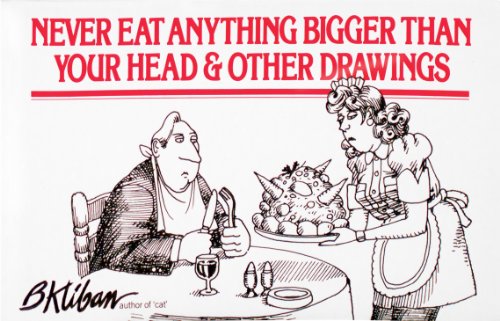
98Never Eat Anything Bigger Than Your Head & Other Drawings
“Not to put down Crumb or Koren or Booth or Rodgriguez or Trudeau or anybody else, but Kliban’s Never Eat Anything Bigger than Your Head & Other Drawings is the only book I’ve read in years that made me howl. I mean thigh-slapping, roll-on-the-ground, can’t-catch-my-breath howling. And every time I go back to it, I find some new detail to chuckle at.”—Charles M. Young, Rolling Stone.
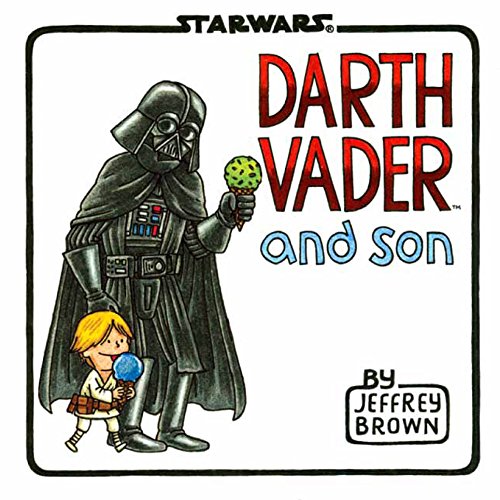
99Darth Vader and Son
Celebrated artist Jeffrey Brown's delightful illustrations give classic Star Wars moments a fresh twist, presenting the trials and joys of parenting through the lens of a galaxy far, far away. Life lessons include lightsaber batting practice, using the Force to raid the cookie jar, Take Your Child to Work Day on the Death Star ("Er, he looks just like you, Lord Vader!"), and the special bond shared between any father and son.
100