We've ranked the best buddhism books using expert recommendations, sales data, and millions of reader ratings. At Shortform, we know books. Our book guides are the best in the world. Learn why.
Cover unavailable
1
Zen Mind, Beginner's Mind
Shunryu Suzuki, David Chadwick
5.0
"In the beginner's mind there are many possibilities, but in the expert's there are few." So begins this most beloved of all American Zen books. Seldom has such a small handful of words provided a teaching as rich as has this famous opening line of Shunryu Suzuki's classic. In a single stroke, the simple sentence cuts through the pervasive tendency students have of getting so close to Zen as to completely miss what it's all about. An instant teaching on the first page. And that's just the beginning.
In the thirty years since its original publication, Zen Mind, Beginner's Mind has become one of the great modern Zen classics, much beloved, much re-read, and much recommended as the best first book to read on Zen. Suzuki Roshi presents the basics—from the details of posture and breathing in zazen to the perception of nonduality—in a way that is not only remarkably clear, but that also resonates with the joy of insight from the first to the last page. It's a book to come back to time and time again as an inspiration to practice.
often used the methods found in this book to center himself during difficult moments in his career. He was such an avid practitioner that he considered going to Japan to continue his practice, but was advised against it. [source]
Isn’t a religious book, but more on self-realization, study on yourself, breathing exercises, relaxation and understanding human nature. Really cool book, very short read and you will really enjoy reading. [source]
I really think it’s one of the best books on the planet. Every time I read it, even now when I reckon I’ve read it more than 40 or 50 times, it still has the effect of pulling me out of everyday thinking, out of everyday life, and making me see the world in a very different way. [source]
Cover unavailable
2
The Heart of the Buddha's Teaching: Transforming Suffering into Peace, Joy, and Liberation
Thich Nhat Hanh
4.8
“If there is a candidate for ‘Living Buddha’ on earth today, it is Thich Nhat Hanh.” – Richard Baker-roshi In The Heart of the Buddha’s Teaching, now with added material and new insights, Thich Nhat Hanh introduces us to the core teachings of Buddhism and shows us that the Buddha’s teachings are accessible and applicable to our daily lives. With poetry and clarity, Nhat Hanh imparts comforting wisdom about the nature of suffering and its role in creating compassion, love, and joy – all qualities of enlightenment. Covering such significant teachings as the Four Noble Truths, the Noble Eightfold Path, the Three Doors of Liberation, the Three Dharma Seals, and the Seven Factors of Awakening, The Heart of the Buddha’s Teaching is a radiant beacon on Buddhist thought for the initiated and uninitiated alike.
“Thich Nhat Hanh shows us the connection between personal, inner peace, and peace on earth.” – His Holiness the Dalai Lama
“Thich Nhat Hanh is a real poet.” – Robert Lowell
…
Cover unavailable
3
The Dhammapada
Gil Fronsdal and Jack Kornfield
4.8
The Dhammapada (Pāli; Prakrit: धम्मपद Dhammapada; Sanskrit: धर्मपद Dharmapada) is a collection of sayings of the Buddha in verse form and one of the most widely read and best known Buddhist scriptures. The original version of the Dhammapada is in the Khuddaka Nikaya, a division of the Pali Canon of Theravada Buddhism. The Buddhist scholar and commentator Buddhaghosa explains that each saying recorded in the collection was made on a different occasion in response to a unique situation that had arisen in the life of the Buddha and his monastic community. His commentary, the Dhammapada Atthakatha, presents the details of these events and is a rich source of legend for the life and times of the Buddha.
The Dhammapada is one of the greatest psychological works ever written, and certainly one of the greatest before 1900. It is masterful in its understanding of the nature of consciousness, and in particular the way we are always striving and never satisfied. You can turn to it – and people have turned to it throughout the ages – at times of trouble, at times of disappointment, at times of loss, and it takes you out of yourself. It shows you that your problems, your feelings, are just timeless manifestations of the human condition. It also gives specific recommendations for how to deal with those problems, which is to let go, to accept, and to work on yourself. So I think this is a kind of tonic that we ambitious Westerners often need to hear. [source]
There is a fundamental opportunity for happiness right within our reach, yet we usually miss it—ironically while we are caught up in attempts to escape pain and suffering. Drawn from traditional Buddhist wisdom, Pema Chödrön's radical and compassionate advice for what to do when things fall apart in our lives goes against the grain of our usual habits and expectations. There is only one approach to suffering that is of lasting benefit, Pema teaches, and that approach involves moving toward painful situations with friendliness and curiosity, relaxing into the essential groundlessness of our entire situation. It is there, in the midst of chaos, that we can discover the truth and love that are indestructible.
The Shambhala Library is a series of exquisitely designed and produced cloth editions of the world's spiritual and literary classics, both ancient and modern. Perfect for collecting or as gifts, each volume features a sewn binding, decorative endsheets, and a ribbon marker—in a delightful-to-hold 4¼ x 6¾ trim size.
Almost the flip side. I'm so much better at protracted difficult periods because of Pema and because of meditation and because of knowing how to sit with it and not insist that the tension go away. [source]
Cover unavailable
5
Siddhartha
Hermann Hesse
4.7
Herman Hesse's classic novel has delighted, inspired, and influenced generations of readers, writers, and thinkers. In this story of a wealthy Indian Brahmin who casts off a life of privilege to seek spiritual fulfillment. Hesse synthesizes disparate philosophies--Eastern religions, Jungian archetypes, Western individualism--into a unique vision of life as expressed through one man's search for meaning.
He says, 'Love is stronger than hate. Soft is stronger than hard. Water is stronger than stone.' [source]
Cover unavailable
6
The Miracle of Mindfulness: An Introduction to the Practice of Meditation (Gift Edition)
Thich Nhat Hanh
4.7
In this beautiful and lucid guide, Zen master Thich Nhat Hanh offers gentle anecdotes and practical exercise as a means of learning the skills of mindfulness--being awake and fully aware. From washing the dishes to answering the phone to peeling an orange, he reminds us that each moment holds within it an opportunity to work toward greater self-understanding and peacefulness.
Thich Nhat Hahn is a Vietnamese Zen master, poet and writer whose humane, benevolent presence and spiritual influence is comparable only to that of the Dalai Lama. His teachings show how to use Zen mindfulness in everyday aspects of life, live in the world peacefully, and weather daily mundane crises as well as larger spiritual trials.
Recommended by Joel Gascoigne.
Joel Gascoigne
Around two and a half years ago I found myself on a very organic path from business, success and self-improvement books to those that spanned both personal success and spirituality. Books like The Monk and the Riddle mentioned above address this topic. After reading some of these books, I naturally found myself interested in meditation and Zen Buddhism. One of the most fascinating Zen Buddhists and authors for me has been Thich Nhat Hahn who has written many books. [source]
Nearly every time you see him, he's laughing, or at least smiling. And he makes everyone else around him feel like smiling. He's the Dalai Lama, the spiritual and temporal leader of Tibet, a Nobel Prize winner, and an increasingly popular speaker and statesman. What's more, he'll tell you that happiness is the purpose of life, and that "the very motion of our life is towards happiness." How to get there has always been the question. He's tried to answer it before, but he's never had the help of a psychiatrist to get the message across in a context we can easily understand. Through conversations, stories, and meditations, the Dalai Lama shows us how to defeat day-to-day anxiety, insecurity, anger, and discouragement. Together with Dr. Cutler, he explores many facets of everyday life, including relationships, loss, and the pursuit of wealth, to illustrate how to ride through life's obstacles on a deep and abiding source of inner peace.
Since Mindfulness in Plain English was first published in 1994, it has become one of the bestselling — and most influential — books in the field of mindfulness. It’s easy to see why.
Author Bhante Gunaratana, a renowned meditation master, takes us step by step through the myths, realities, and benefits of meditation and the practice of mindfulness. The book showcases Bhante’s trademark clarity and wit, as he explores the tool of meditation, what it does, and how to make it work.
This expanded edition includes the complete text of its predecessor along with a new chapter on cultivating loving kindness, an especially important topic in today’s world. For anyone who is new to meditation, this is a great resource for learning how to live a more productive and peaceful life.
A newly revised and updated edition of the internationally bestselling spiritual classic, The Tibetan Book of Living and Dying, written by Sogyal Rinpoche, is the ultimate introduction to Tibetan Buddhist wisdom. An enlightening, inspiring, and comforting manual for life and death that the New York Times calls, “The Tibetan equivalent of [Dante’s] The Divine Comedy,” this is the essential work that moved Huston Smith, author of The World’s Religions, to proclaim, “I have encountered no book on the interplay of life and death that is more comprehensive, practical, and wise.”
…
Cover unavailable
11
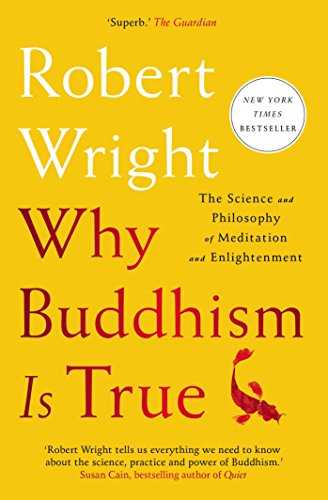
Why Buddhism is True: The Science and Philosophy of Meditation and Enlightenment
Robert Wright
4.5
From one of America’s greatest minds, a journey through psychology, philosophy, and lots of meditation to show how Buddhism holds the key to moral clarity and enduring happiness.
Robert Wright famously explained in The Moral Animal how evolution shaped the human brain. The mind is designed to often delude us, he argued, about ourselves and about the world. And it is designed to make happiness hard to sustain.
But if we know our minds are rigged for anxiety, depression, anger, and greed, what do we do? Wright locates the answer in Buddhism, which figured out thousands of years ago what scientists are only discovering now. Buddhism holds that human suffering is a result of not seeing the world clearly—and proposes that seeing the world more clearly, through meditation, will make us better, happier people.
In Why Buddhism is True, Wright leads readers on a journey through psychology, philosophy, and a great many silent retreats to show how and why meditation can serve as the foundation for a spiritual life in a secular age. At once excitingly ambitious and wittily accessible, this is the first book to combine evolutionary psychology with cutting-edge neuroscience to defend the radical claims at the heart of Buddhist philosophy. With bracing honesty and fierce wisdom, it will persuade you not just that Buddhism is true—which is to say, a way out of our delusion—but that it can ultimately save us from ourselves, as individuals and as a species.
Wright has a degree of evangelism about him, but he’s not saying this is the only way to achieve a better life. He says it’s a way of eliminating suffering from many people’s lives, and it worked for him. [source]
Cover unavailable
12
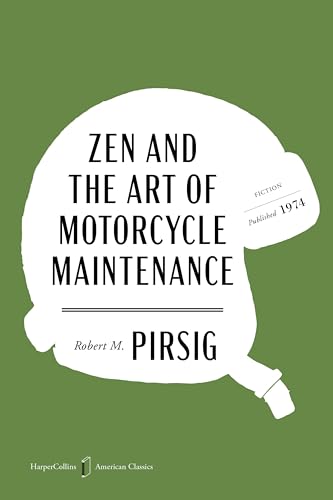
Zen and the Art of Motorcycle Maintenance: An Inquiry Into Values
This lyrical, evocative, thought-provoking journal of a man's quest for truth - and for himself - has touched and changed an entire generation, and is ready to reach out to a new one. At its heart, the story is all too simple: a man and his son take a motorcycle trip across America. But this is not a simple trip at all, for around every corner, through mountain and desert, wind and rain, and searing heat and biting cold, their pilgrimage leads them to new vistas of self-discovery and renewal.
Zen and the Art of Motorcycle Maintenance is an elemental work that has helped to shape and define the past 25-years of American culture. This special audio edition presents this adventure in an exciting new way - for the millions who have already taken this journey and want to travel these roads again, and for the many more who will discover for the first time the wonders and challenges of a story that will change the way they think and feel about their lives. Unique to audio, this edition features a new introduction by the author.
…
Recommended by Brad Feld, Drew Houston, Ev Williams, and 7 others.
Brad Feld
Co-Founder/Foundry Group
I think every entrepreneur or aspiring entrepreneur should read the book Zen and the Art of Motorcycle Maintenance. It was written in the 1970s by a guy named Robert Pirsig. It was his first book, it's kind of a hippie philosophy treatised journey. The word that sort of came out of it was Chautauqua, he's like having a conversation with his son as they do a motorcycle trip across the country, and it's just this incredible treatise on philosophy, product, quality, accomplishing what your goal is, against the backdrop of the narrator, the author, going crazy and having a psychotic break. And so it's this very powerful mix of accessible philosophy, combined with this pretty captivating journey in a book that, again, anybody who builds anything, there's so much in it that's so worth reading and just soaking in. But it's not what you'd expect, it's not a "here's how you do it", you have to read it slowly and think about it. So, it's one of my favorites. [source]
Drew Houston
CEO/Dropbox
There are engineers who dismiss all these things that can’t be fit into an algorithm, or that don’t have some kind of mathematical rigor underpinning them, this book is about that question. [source]
Honorable mentions: Jonathan Livingston Seagull, Zen and the Art of Motorcycle Maintenance, and The Joy of Sex, all given to me by my mother. I believe they helped inculcate some of the 1960s-70s ethos of individual freedom into my thinking. [source]
Cover unavailable
13
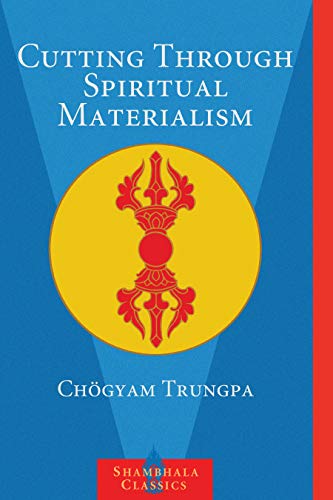
Cutting Through Spiritual Materialism
Chogyam Trungpa, Sakyong Mipham
4.5
In this modern spiritual classic, the Tibetan meditation master Chögyam Trungpa highlights a common pitfall to which every aspirant on the spiritual path falls prey: what he calls spiritual materialism. The universal human tendency, he shows, is to see spirituality as a process of self-improvement—the impulse to develop and refine the ego when the ego is, by nature, essentially empty. “The problem,” Trungpa says, “is that ego can convert anything to its own use, even spirituality.” His incisive, compassionate teachings serve to wake us up from this trick we all play on ourselves, and to offer us a far brighter reality: the true and joyous liberation that inevitably involves letting go of the self rather than working to improve it. It is a message that has resonated with students for over thirty years and remains fresh as ever today.
This edition includes a foreward by Chögyam Trungpa’s son and lineage holder Sakyong Mipham.
During his freshman year at Reed College, Jobs befriended Daniel Kottke, who went on to work at Apple, and together they devoured books such as Shunryu Suzuki’s “Zen Mind, Beginner’s Mind,” Chogyam Trungpa’s “Cutting Through Spiritual Materialism” and Paramahansa Yogananda’s “Autobiography of a Yogi,” a book Jobs read and re-read many times during his life. [source]
He was calling out probably the biggest trap in the journey of self-discovery, that of spiritual materialism … If we meditate in order to let go of labels, to let go of identity, the last thing we want to do is take on another label: of being ‘spiritual.’ We’re looking to let go of that kind of judgment. [source]
Cover unavailable
14
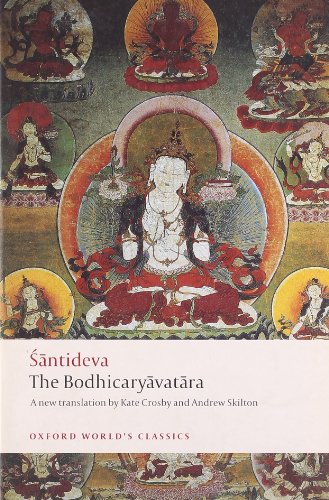
The Bodhicaryāvatāra
Santideva
4.5
Written in India in the early 8th century AD, Śāntideva's Bodhicaryāvatāra addresses the profound desire to become a Buddha and rescue all beings from suffering. The person who acts upon such a desire is a Bodhisattva. Śāntideva not only makes plain what the Bodhisattva must do and become, he also invokes the powerful feelings of aspiration that underlie such a commitment, employing language which has inspired Buddists ever since it first appeared. Indeed, his book has long been regarded as one of the most popular accounts of the Buddhist's spiritual path. Important as a manual of training among Mahayana Buddhists, especially in the Tibetan Buddhist tradition, this text continues to be used as the basis for teaching by modern Buddhist teachers. This new translation from the original language provides detailed annotations explaining allusions and technical references. Also, the Introduction both serve to locate Śāntideva's work in its proper context, and for the first time explain its structure. About the Series: For over 100 years Oxford World's Classics has made available the broadest spectrum of literature from around the globe. Each affordable volume reflects Oxford's commitment to scholarship, providing the most accurate text plus a wealth of other valuable features, including expert introductions by leading authorities, voluminous notes to clarify the text, up-to-date bibliographies for further study, and much more.
The purpose is not to read cover to cover, the purpose is to find out what is the essence you need in that moment that’s going help you live a happier, healthier life, and in turn to help others lead a healthier and happier life. And that’s enough. I still use the book in that way. [source]
Bryan Van Norden
Despite the intimidating title, it’s actually a readable introduction to a certain kind of Mahayana Buddhist philosophy. [source]
Cover unavailable
15
Buddhism without Beliefs: A Contemporary Guide to Awakening
Stephen Batchelor
4.5
A national bestseller and acclaimed guide to Buddhism for beginners and practitioners alike
In this simple but important volume, Stephen Batchelor reminds us that the Buddha was not a mystic who claimed privileged, esoteric knowledge of the universe, but a man who challenged us to understand the nature of anguish, let go of its origins, and bring into being a way of life that is available to us all. The concepts and practices of Buddhism, says Batchelor, are not something to believe in but something to do—and as he explains clearly and compellingly, it is a practice that we can engage in, regardless of our background or beliefs, as we live every day on the path to spiritual enlightenment.
This indispensable volume is a lucid and faithful account of the Buddha’s teachings. “For years,” says the Journal of the Buddhist Society, “the newcomer to Buddhism has lacked a simple and reliable introduction to the complexities of the subject. Dr. Rahula’s What the Buddha Taught fills the need as only could be done by one having a firm grasp of the vast material to be sifted. It is a model of what a book should be that is addressed first of all to ‘the educated and intelligent reader.’ Authoritative and clear, logical and sober, this study is as comprehensive as it is masterly.”
This edition contains a selection of illustrative texts from the Suttas and the Dhammapada (specially translated by the author), sixteen illustrations, and a bibliography, glossary and index.
…
Cover unavailable
17
In the Buddha's Words: An Anthology of Discourses from the Pali Canon
Bhikkhu Bodhi and His Holiness the Dalai Lama
4.5
The works of the Buddha can feel vast, and it is sometimes difficult for even longtime students to know where to look, especially since the Buddha never explicitly defined the framework behind his teachings. Designed to provide just such a framework, In the Buddha's Words is an anthology of the Buddha's works that has been specifically compiled by a celebrated scholar and translator. For easy reference, the book is arrayed in ten thematic sections ranging from "The Human Condition" to "Mastering the Mind" to "The Planes of Realization." Each section comes with introductions, notes, and essays to help beginners and experts alike draw greater meaning from the Buddha's words. The book also features a general introduction by the author that fully lays out how and why he has arranged the Buddha's teachings in this volume. This thoughtful compilation is a valuable resource for both teachers and those who want to read the Buddha on their own.
…
Cover unavailable
18
The Places That Scare You: A Guide to Fearlessness in Difficult Times
Pema Chodron
4.5
We always have a choice, Pema Chodron teaches: We can let the circumstances of our lives harden us and make us increasingly resentful and afraid, or we can let them soften us and make us kinder. Here Pema provides the tools to deal with the problems and difficulties that life throws our way. This wisdom is always available to us, she teaches, but we usually block it with habitual patterns rooted in fear. Beyond that fear lies a state of openheartedness and tenderness. This book teaches us how to awaken our basic goodness and connect with others, to accept ourselves and others complete with faults and imperfections, and to stay in the present moment by seeing through the strategies of ego that cause us to resist life as it is.
…
Cover unavailable
19
The Power of Now: A Guide to Spiritual Enlightenment
Eckhart Tolle is emerging as one of today's most inspiring teachers. In The Power of Now, a #1 national bestseller, the author describes his transition from despair to self-realization soon after his 29th birthday. Tolle took another ten years to understand this transformation, during which time he evolved a philosophy that has parallels in Buddhism, relaxation techniques, and meditation theory but is also eminently practical. In The Power of Now he shows readers how to recognize themselves as the creators of their own pain, and how to have a pain-free existence by living fully in the present. Accessing the deepest self, the true self, can be learned, he says, by freeing ourselves from the conflicting, unreasonable demands of the mind and living present, fully, and intensely, in the Now.
…
Recommended by Bill Liao, Catherine Plano, Darrah Brustein, and 7 others.
Bill Liao
The human world occurs in language so best get good at it! [source]
Catherine Plano
The one that really resonates with me and still to this day is The Power of NOW from Eckhart Tolle because as an entrepreneur we get so caught up in the future that we fail to be 'present'. The reality of it all when you really think about it - the present is all we have that is real, it requires no effort, nor time. I practice this daily, if I feel uncomfortable then I know I am trying too hard and not being present but when I am being present it is easier to think about what I have to do right now, because now is all that matters. [source]
Darrah Brustein
Others include The Power Of Now which is powerful reminder that all we have is the present and helps give you meaningful ways to live in it, not in the past or the future. [source]
Cover unavailable
20
Wherever You Go, There You Are: Mindfulness Meditation in Everyday Life
In this book, the author maps out a simple path for cultivating mindfulness in one's own life. It speaks both to those coming to meditation for the first time and to longtime practitioners, anyone who cares deeply about reclaiming the richness of his or her moments.
It’s a great book if you’ve never meditated, and if you’ve been meditating for 50 years. [source]
Henry Medine
I promote range and diversity. Thus, I recommend readers to expose themselves to as many different topics as possible. I usually have 2-4 books I refer back to at any given time. They range in topics from management, art, spirituality and philosophy. Trying to get the engineering thing going but don't much of a mind for science. [source]
In his definitive introduction to Zen Buddhism, Alan Watts explains the principles and practices of this ancient religion to Western readers. With a rare combination of freshness and lucidity, he delves into the origins and history of Zen to explain what it means for the world today with incredible clarity. Watts saw Zen as “one of the most precious gifts of Asia to the world,” and in The Way of Zen he gives this gift to readers everywhere.
…
Cover unavailable
22
Start Where You Are: A Guide to Compassionate Living
Pema Chodron
4.4
Start Where You Are is an indispensable handbook for cultivating fearlessness and awakening a compassionate heart. With insight and humor, Pema Chödrön presents down-to-earth guidance on how we can "start where we are"—embracing rather than denying the painful aspects of our lives. Pema Chödrön frames her teachings on compassion around fifty-nine traditional Tibetan Buddhist maxims, or slogans, such as: "Always apply only a joyful state of mind," "Don't seek others' pain as the limbs of your own happiness," and "Always meditate on whatever provokes resentment."
Working with these slogans and through the practice of meditation, Start Where You Are shows how we can all develop the courage to work with our inner pain and discover joy, well-being, and confidence.
…
Cover unavailable
23
Buddhism Plain and Simple
Steve Hagen
4.4
This book offers a clear, straightforward approach to Buddhism in general and awareness in particular. It is about being awake and in touch with what is going on here and now. When the Buddha was asked to sum up his teaching in a single word, he said, "Awareness." The Buddha taught how to see directly into the nature of experience. His observations and insights are plain, practical, and down-to-earth, and they deal exclusively with the present. In Buddhism Plain and Simple, Steve Hagen presents these uncluttered, original teachings in everyday, accessible language unencumbered by religious ritual, tradition, or belief.
…
Cover unavailable
24
Radical Acceptance: Embracing Your Life With the Heart of a Buddha
For many of us, feelings of deficiency are right around the corner. It doesn’t take much--just hearing of someone else’s accomplishments, being criticized, getting into an argument, making a mistake at work--to make us feel that we are not okay. Beginning to understand how our lives have become ensnared in this trance of unworthiness is our first step toward reconnecting with who we really are and what it means to live fully. --fromRadical Acceptance
Radical Acceptance
“Believing that something is wrong with us is a deep and tenacious suffering,” says Tara Brach at the start of this illuminating book. This suffering emerges in crippling self-judgments and conflicts in our relationships, in addictions and perfectionism, in loneliness and overwork--all the forces that keep our lives constricted and unfulfilled. Radical Acceptance offers a path to freedom, including the day-to-day practical guidance developed over Dr. Brach’s twenty years of work with therapy clients and Buddhist students.
Writing with great warmth and clarity, Tara Brach brings her teachings alive through personal stories and case histories, fresh interpretations of Buddhist tales, and guided meditations. Step by step, she leads us to trust our innate goodness, showing how we can develop the balance of clear-sightedness and compassion that is the essence of Radical Acceptance. Radical Acceptance does not mean self-indulgence or passivity. Instead it empowers genuine change: healing fear and shame and helping to build loving, authentic relationships. When we stop being at war with ourselves, we are free to live fully every precious moment of our lives.
This book was recommended to me by a PhD neuroscientist and is what finally helped me tame anger, one of my most destructive (and persistent) emotions. It’s easy to aim for 'successful' and be miserable. This book is the antidote. [source]
Cover unavailable
25
Awakening the Buddha Within: Eight Steps to Enlightenment
Lama Surya Das
4.4
Lama Surya Das, the most highly trained American lama in the Tibetan tradition, presents the first comprehensive book of Western Buddhism for the modern-day spiritual seeker. Buddhism offers a profound yet practical path to enlightenment. In this loving and generous book, the American-born and Tibetan-trained Lama Surya Das offers at once a definitive and nonsectarian guide to the wisdom found in ancient Tibetan teachings and a tried and true path of spiritual transformation. The radical and compelling message of Buddhism tells us that each of us has the wisdom, awareness, love, and power of the Buddha within; yet most of us are too often like sleeping Buddhas. Surya Das shows how we can awaken to who we really are and thus walk the liberating, peaceful path of mindful and compassionate living. With lively language, meditations, and spiritual practices, this unique book provides a bridge between East and West, past, present, and future. "Awakening the Buddha Within" offers a complete yet accessible understanding of the unique Buddhist teachings embodied in the traditional Noble Eight-Fold Path and its Three Enlightenment Trainings, common to all schools of Buddhism: * Wisdom Training: Developing clear vision, insight, and inner understanding--seeing reality and ourselves as we really are. * Ethics Training: Cultivating virtue, self-discipline, integrity, and compassion in what we say and do. * Meditation Training: Practicing mindfulness, concentration, and awareness of the present moment. This fresh and original work illuminates such key principles as karma (what we do does matter), rebirth (every moment is an opportunity to start afresh), letting go(simplifying our lives by clarifying our hearts and minds), as well as conscious living and dying, and Dzogchen, the ultimate, mystical teaching of Tibet. In this wonderful marriage of the timeless and the timely, Surya Das has written an invaluable, authoritative text for the novice and the experienced student of Buddhism alike. "Awakening the Buddha Within" reveals how sacred wisdom, contemplative practice, and altruism can be integrated into our outer and inner lives--in our relationships, in the workplace, and at home. Here is a guidebook to enlightenment--a sourcebook of the sacred for anyone who wants to lead a more serene and beautiful life. For almost thirty years, Lama Surya Das has studied and lived with the great spiritual masters of Asia. He has twice completed the traditional three-year Vajrayana meditation retreat. A leading spokesperson for the emerging Western Buddhism, he is a Dzogchen lineage holder and the founder of the Dzogchen Foundation. A poet, translator, and full-time spiritual teacher, Surya Das lectures and leads meditation retreats and workshops worldwide, brings Tibetan lamas to the West to teach, and regularly organizes the annual Western Buddhist Teachers Conference with the Dalai Lama in Dharmasala, India and is active in interfaith dialogue. He is the author of "The Snow Lion's Mane: Wisdom Tales from Tibet" and "Natural Great Perfection" (with Nyoshul Khenpo Rinpoche). Surya Das lives outside of Boston, Massachusetts.
…
Cover unavailable
26
Being Peace (Being Peace, #1)
Thich Nhat Hanh, Arnold Kotler, Mayumi Oda
4.4
Since its publication in 1987, "Being Peace" has become a classic of contemporary religious literature. In his simple and readable style, Thich Nhat Hanh shows how our state of mind and body can make the world a peaceful place. We learn to transform the very situations that pressure and antagonize us into opportunities for practicing mindfulness.
Cover unavailable
27
Living Buddha, Living Christ
Thich Nhat Hanh
4.3
A Vietnamese monk and Buddhist teacher explores the common ground of Christianity and Buddhism on such subjects as compassion and holiness, and offers inspiration to believers in both religions.
Cover unavailable
28
A Path with Heart: A Guide Through the Perils and Promises of Spiritual Life
Jack Kornfield
4.3
A guide to reconciling Buddhist spirituality with the American way of life addresses the challenges of spiritual living in the modern world and offers guidance for bringing a sense of the sacred to everyday experience.
Cover unavailable
29
Anger: Wisdom for Cooling the Flames
Thich Nhat Hanh
4.3
It was under the bodhi tree in India twenty-five centuries ago that Buddha achieved the insight that three states of mind were the source of all our unhappiness: wrong knowing, obsessive desire, and anger. All are difficult, but in one instant of anger—one of the most powerful emotions—lives can be ruined, and health and spiritual development can be destroyed. With exquisite simplicity, Buddhist monk and Vietnam refugee Thich Nhat Hanh gives tools and advice for transforming relationships, focusing energy, and rejuvenating those parts of ourselves that have been laid waste by anger. His extraordinary wisdom can transform your life and the lives of the people you love, and in the words of Thich Nhat Hanh, can give each reader the power to "change everything."
…
Cover unavailable
30
How to Practice: The Way to a Meaningful Life
Dalai Lama, Jeffrey Hopkins
4.3
As human beings, we all share the desire for happiness and meaning in our lives. According to His Holiness the Dalai Lama, the ability to find true fulfillment lies within each of us. In this very special book, the spiritual and temporal leader of Tibet, Nobel Prize winner, and bestselling author helps readers embark upon the path to enlightenment with a stunning illumination of the timeless wisdom and an easy-access reference for daily practice. Divided into a series of distinct steps that will lead spiritual seekers toward enlightenment, How to Practice is a constant companion in the quest to practice morality, meditation, and wisdom. This accessible book will guide you toward opening your heart, refraining from doing harm, and maintiaining mentaltranquility as the Dalai Lama shows you how to overcome everyday obstacles, from feelings of anger and mistrust to jealousy, insecurity, and counterproductive thinking. Imbued with His Holiness' vivacious spirit and sense of playfulness, How to Practice offers sage and practical insight into the human psyche and into the deepest aspirations that bind us all together.
…
Cover unavailable
31
The Wise Heart: A Guide to the Universal Teachings of Buddhist Psychology
Jack Kornfield
4.3
You have within you unlimited capacities for love, for joy, for communion with life, and for unshakable freedom—and here is how to awaken them. In The Wise Heart, one of the leading spiritual teachers of our time offers the most accessible and illuminating guide to Buddhism’s transformational psychology ever published in the West.
Trained as a monk in Thailand, Burma, and India, Jack Kornfield experienced at first hand the life-changing power of Buddhist teachings: the emphasis on the nobility and sacredness of the human spirit, the fine-grained analysis of emotion and thought, the precise techniques for healing, training, and transforming the mind and heart. In contrast to the medical orientation of most Western psychology and psychiatry, here is a vision of radiant human dignity, and a practical path for realizing it in our own lives.
The Wise Heart is the fruit of a life’s work that includes such classics as A Path with Heart and After the Ecstasy, the Laundry. Filled with stories from Kornfield’s Buddhist psychotherapy practice and portraits of remarkable teachers, it also includes a moving account of his own recovery from a violence-filled childhood. For meditators and mental health professionals, Buddhists and non-Buddhists alike, The Wise Heart offers an extraordinary journey from the roots of consciousness to the highest expression of human possibility.
…
Cover unavailable
32
Confession of a Buddhist Atheist
Stephen Batchelor
4.3
Written with the same brilliance and boldness that made Buddhism Without Beliefs a classic in its field, Confession of a Buddhist Atheist is Stephen Batchelor’s account of his journey through Buddhism, which culminates in a groundbreaking new portrait of the historical Buddha.
Stephen Batchelor grew up outside London and came of age in the 1960s. Like other seekers of his time, instead of going to college he set off to explore the world. Settling in India, he eventually became a Buddhist monk in Dharamsala, the Tibetan capital-in-exile, and entered the inner circle of monks around the Dalai Lama. He later moved to a monastery in South Korea to pursue intensive training in Zen Buddhism. Yet the more Batchelor read about the Buddha, the more he came to believe that the way Buddhism was being taught and practiced was at odds with the actual teachings of the Buddha himself.
Charting his journey from hippie to monk to lay practitioner, teacher, and interpreter of Buddhist thought, Batchelor reconstructs the historical Buddha’s life, locating him within the social and political context of his world. In examining the ancient texts of the Pali Canon, the earliest record of the Buddha’s life and teachings, Batchelor argues that the Buddha was a man who looked at human life in a radically new way for his time, more interested in the question of how human beings should live in this world than in notions of karma and the afterlife. According to Batchelor, the outlook of the Buddha was far removed from the piety and religiosity that has come to define much of Buddhism as we know it today.
Both controversial and deeply personal, Confession of a Buddhist Atheist is a fascinating exploration of a religion that continues to engage the West. Batchelor’s insightful, deeply knowledgeable, and persuasive account will be an essential book for anyone interested in Buddhism.
For more than two thousand years, The Art of War has stood as a cornerstone of Chinese culture-a lucid epigrammatic text that reveals as much about human psychology, politics, and economics as it does about battlefield strategy. The influence of Sun-tzu's text has grown tremendously in the West in recent years, with military leaders, politicians, and corporate executives alike finding valuable insight in these ancient words. In his crisp, accessible new translation, scholar John Minford brings this seminal work to life for modern readers.
Minford opens with a lively, learned introduction in which he explores the life and times of Sun-tzu, looks at The Art of War in the context of the turbulent Warring States period, and discusses how best to read and understand the work today. There follows Minford's translation of the core text itself in two different formats-first, the unadorned thirteen chapters of the original work and then the same text reprinted with extensive running commentary by classical Chinese scholars as well as Minford himself. The result is an opportunity for Western readers to experience Sun-tzu's work in all its intensity as it applies to many aspects of our lives.
Which books should be read by every single intelligent person on planet? … The Art of War (Sun Tsu) to learn that the act of killing fellow humans can be raised to an art. If you read all of the above works you will glean profound insight into most of what has driven the history of the western world. [source]
Cover unavailable
34
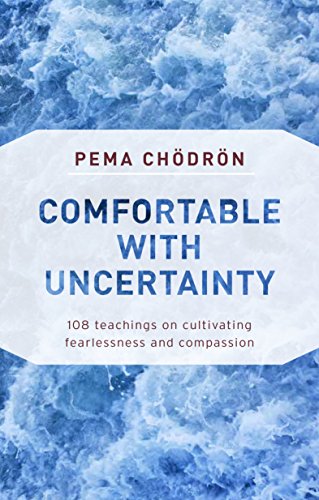
Comfortable with Uncertainty: 108 Teachings on Cultivating Fearlessness and Compassion
Pema Chodron
4.3
These are essential teachings for developing compassion and clarity amid the anxieties and hardships of real life. Collecting some of the most powerful passages from Pema Chödrön’s many beloved books, this compact handbook for spiritual practice is rich with inspiration and insight. Here she explores life-changing concepts, themes, and practices from the Buddhist tradition, showing how anyone (not just Buddhists) can draw from them to become more courageous, aware, and kindhearted. It includes the benefits of meditation and mindfulness, letting go of the fixations that weigh us down, working directly with fear and other painful emotions, and much more. With these teachings, Pema lays the groundwork for how we can start to overcome the habitual patterns that so often hinder compassion for ourselves and others—and that hold us back from embracing our lives joyfully and fearlessly. To anyone who ever wanted to experience true freedom, these teachings are a shining light on the path.
…
Cover unavailable
35
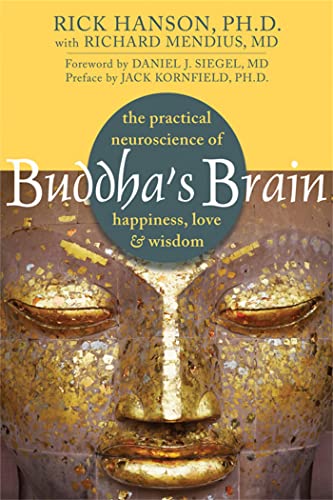
Buddha's Brain: The Practical Neuroscience of Happiness, Love, and Wisdom
Rick Hanson
4.3
Jesus, Moses, the Buddha, and other great teachers were born with brains built essentially like anyone else's. Then they used their minds to change their brains in ways that changed history.
With the new breakthroughs in neuroscience, combined with the insights from thousands of years of contemplative practice, you, too, can shape your own brain for greater happiness, love, and wisdom.
Buddha's Brain joins the forces of modern science with ancient teachings to show readers how to have greater emotional balance in turbulent times, as well as healthier relationships, more effective actions, and a deeper religious or spiritual practice.
Well-referenced and grounded in science, the book is full of practical tools and skills readers can use in daily life to tap the unused potential of the brain-and rewire it over time for greater peace and well-being.
If you can change your brain, you can change your life.
…
Cover unavailable
36
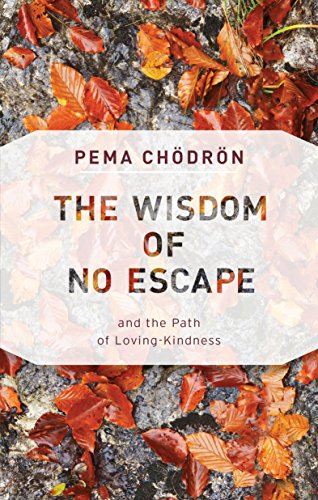
The Wisdom of No Escape: How to Love Yourself and Your World
Pema Chodron
4.3
It’s true, as they say, that we can only love others when we first love ourselves and we can only experience real joy when we stop running from pain. The key to understanding these truisms lies in remaining open to life in all circumstances, and here Pema Chödrön shows us how. Because when we embrace the happiness and suffering, intelligence and confusion that are a natural part of life, we can begin to discover a wellspring of courageous love within our hearts.
4 CDs, 4 ½ hours. Unabridged.
…
Cover unavailable
37
Tao Te Ching: By Lao Tzu - Illustrated
Lao Tse
4.3
A lucid translation of the well-known Taoist classic by a leading scholar-now in a Shambhala Pocket Library edition. Written more than two thousand years ago, the Tao Teh Ching, or -The Classic of the Way and Its Virtue, - is one of the true classics of the world of spiritual literature. Traditionally attributed to the legendary -Old Master, - Lao Tzu, the Tao Teh Ching teaches that the qualities of the enlightened sage or ideal ruler are identical with those of the perfected individual. Today, Lao Tzu's words are as useful in mastering the arts of leadership in business and politics as they are in developing a sense of balance and harmony in everyday life. To follow the Tao or Way of all things and realize their true nature is to embody humility, spontaneity, and generosity. John C. H. Wu has done a remarkable job of rendering this subtle text into English while retaining the freshness and depth of the original. A jurist and scholar, Dr. Wu was a recognized authority on Taoism and the translator of several Taoist and Zen texts and of Chinese poetry. This book is part of the Shambhala Pocket Library series. The Shambhala Pocket Library is a collection of short, portable teachings from notable figures across religious traditions and classic texts. The covers in this series are rendered by Colorado artist Robert Spellman. The books in this collection distill the wisdom and heart of the work Shambhala Publications has published over 50 years into a compact format that is collectible, reader-friendly, and applicable to everyday life.
Q: What are the books that had a major influence on you? Or simply the ones you like the most. : Tao te Ching, score takes care of itself, between the world and me, the four agreements, the old man and the sea...I love reading! [source]
According to a Yibada interview with Chen Wei, who wrote Ma’s 2014 authorized biography, the Alibaba founder and executive chairman always carries the Tao Te Ching, the foundational text of Taoist philosophy, religion and ethics composed by Lao Tzu in the sixth century B.C. [source]
In the philosophy side, I’ve been rereading the Tao Te Ching. [source]
Cover unavailable
38
What Makes You Not a Buddhist
Dzongsar Jamyang Khyentse
4.3
Dzongsar Khyentse is one of the most creative and innovative young Tibetan Buddhist lamas teaching today. The director of two feature films with Buddhist themes (the international sensation The Cup and Travelers and Magicians), this provocative teacher, artist, and poet is widely known and admired by Western Buddhists.
Moving away from conventional presentations of Buddhist teachings, Khyentse challenges readers to make sure they know what they're talking about before they claim to be Buddhist. With wit and irony, Khyentse urges readers to move beyond the superficial trappings of Buddhism beyond a romance with beads, incense, and exotic people in robes straight to the heart of what the Buddha taught.
In essence, this book explains what a Buddhist really is, namely, someone who deeply understands the truth of impermanence and how our emotions can trap us in cycles of suffering. Khyentse presents the fundamental tenets of Buddhism in simple language, using examples we can all relate to.
…
Cover unavailable
39
Old Path White Clouds: Walking in the Footsteps of the Buddha
Thich Nhat Hanh and Nguyen T. Hop
4.3
Drawn from original sources, Old Path White Clouds is the beautiful classic recounting of the life and teachings of Gautama Buddha over the course of eighty years. It is retold alternately through the eyes of Svasti, the buffalo boy who provided kusa grass for the Buddha's enlightenment cushion, and the Buddha himself.
Cover unavailable
40
Lovingkindness: The Revolutionary Art of Happiness
Sharon Salzberg
4.3
Throughout our lives we long to love ourselves more deeply and find a greater sense of connection with others. Our fear of intimacy—both with others and with ourselves—creates feelings of pain and longing. But these feelings can also awaken in us the desire for freedom and the willingness to take up the spiritual path.
In this inspiring book, Sharon Salzberg, one of America's leading spiritual teachers, shows us how the Buddhist path of lovingkindness ( metta in Pali), can help us discover the radiant, joyful heart within each of us. This practice of lovingkindness is revolutionary because it has the power to radically change our lives, helping us create true happiness in ourselves and genuine compassion for others. The Buddha described the nature of such a spiritual path as "the liberation of the heart, which is love." The author draws on simple Buddhist teachings, wisdom stories from various traditions, guided meditation practices, and her own experience from twenty-five years of practice and teaching to illustrate how each one of us can cultivate love, compassion, joy, and equanimity—the four "heavenly abodes" of traditional Buddhism.
…
Cover unavailable
41
Shambhala: The Sacred Path of the Warrior
Chogyam Trungpa
4.3
In this best-selling guide to enlightened living, Chögyam Trungpa offers an inspiring vision for our time, modeled on the universal archetypal symbol of the peaceful warrior. In ancient times, the warrior learned to master the challenges of life, both on and off the battlefield. He acquired a sense of courage and power—not through violence or aggression, but through gentleness, courage, and self-knowledge. With this book the warrior's path is opened to contemporary men and women in search of self-mastery and greater fulfillment. Interpreting the warrior's journey in contemporary terms, Trungpa shows that in discovering the basic goodness of human life, the warrior learns to radiate that goodness out into the world for the peace and sanity of others. The Shambhala teachings—named for the legendary Himalayan Kingdom where prosperity and happiness reign—point to the potential for enlightened conduct that exists within every human being.
The Shambhala Library is a series of exquisitely designed and produced cloth editions of the world's spiritual and literary classics, both ancient and modern. Perfect for collecting or as gifts, each volume features a sewn binding, decorative endsheets, and a ribbon marker—in a delightful-to-hold 4¼ x 6¾ trim size.
…
Recommended by Matthew Bellows.
Matthew Bellows
Founder/Yesware
It's the only guidebook for life that's worked for me consistently over the last 20 years of my career. [source]
Cover unavailable
42
The Three Pillars of Zen
Philip Kapleau Roshi
4.2
Through explorations of the three pillars of Zen--teaching, practice, and enlightenment--Roshi Philip Kapleau presents a comprehensive overview of the history and discipline of Zen Buddhism. An established classic, this 35th anniversary edition features new illustrations and photographs, as well as a new afterword by Sensei Bodhin Kjolhede, who has succeeded Philip Kapleau as spiritual director of the Rochester Zen Center, one of the oldest and most influential Zen centers in the United States.
…
Cover unavailable
43
The Book of Joy: Lasting Happiness in a Changing World
Two great spiritual masters share their own hard-won wisdom about living with joy even in the face of adversity. The occasion was a big birthday. And it inspired two close friends to get together in Dharamsala for a talk about something very important to them. The friends were His Holiness the Dalai Lama and Archbishop Desmond Tutu. The subject was joy. Both winners of the Nobel Prize, both great spiritual masters and moral leaders of our time, they are also known for being among the most infectiously happy people on the planet.
From the beginning the book was envisioned as a three-layer birthday cake: their own stories and teachings about joy, the most recent findings in the science of deep happiness, and the daily practices that anchor their own emotional and spiritual lives. Both the Dalai Lama and Archbishop Tutu have been tested by great personal and national adversity, and here they share their personal stories of struggle and renewal. Now that they are both in their eighties, they especially want to spread the core message that to have joy yourself, you must bring joy to others.
Most of all, during that landmark week in Dharamsala, they demonstrated by their own exuberance, compassion, and humor how joy can be transformed from a fleeting emotion into an enduring way of life.
…
Recommended by Bogdan Lucaciu and Chelsea Frank.
Bogdan Lucaciu
I recently read “The Book of Joy”. It’s a series of dialogues between Dalai Lama and Archbishop Tutu (beautifully narrated in the audio version). They share their view on living a happy life in the face of adversity. The book brought profound clarity on topics like compassion, gratitude, generosity, and it deeply resonated with my worldview. If there’s one book you end up reading from my list, I hope it’s this one. [source]
Chelsea Frank
I read everything with an open mind, often challenging myself by choosing books with an odd perspective or religious/spiritual views. These books do not reflect my personal feelings but are books that helped shape my perspective on life, love, and happiness. [source]
Cover unavailable
44
The Life-Changing Magic of Tidying Up: The Japanese Art of Decluttering and Organizing
Despite constant efforts to declutter your home, do papers still accumulate like snowdrifts and clothes pile up like a tangled mess of noodles?
Japanese cleaning consultant Marie Kondo takes tidying to a whole new level, promising that if you properly simplify and organize your home once, you'll never have to do it again. Most methods advocate a room-by-room or little-by-little approach, which doom you to pick away at your piles of stuff forever. The KonMari Method, with its revolutionary category-by-category system, leads to lasting results. In fact, none of Kondo's clients have lapsed (and she still has a three-month waiting list).
With detailed guidance for determining which items in your house "spark joy" (and which don't), this international best seller featuring Tokyo's newest lifestyle phenomenon will help you clear your clutter and enjoy the unique magic of a tidy home - and the calm, motivated mindset it can inspire.
…
Recommended by Andra Zaharia, Annie Loves Covfefe, Benjamin Spall, and 3 others.
Andra Zaharia
I’ve gone through quite a few experiences brought on or shaped by what I’ve learned from books. … a more frivolous example is The Life-Changing Magic of Tidying. I read this one when moving apartments a few years ago and it made me throw or give away ⅓ of my stuff. The result: freeing up space, both physical and mental, and acquiring some home organizing skills that have stuck with me ever since. My home is tidier and my mind is clearer because of this book. [source]
Annie Loves Covfefe
@Benny29143790 @Thereal_ssteele Oh how I love Kondo cleaning. Her first book is fantastic too!! [source]
Benjamin Spall
The Life-Changing Magic of Tidying Up by Marie Kondo … I started reading on vacation. I interviewed Marie for my own book and while the translation is somewhat quirky in places, her book is worth the hype. [source]
Cover unavailable
45
The Universe in a Single Atom: The Convergence of Science and Spirituality
Dalai Lama
4.2
Galileo, Copernicus, Newton, Niels Bohr, Einstein. Their insights shook our perception of who we are and where we stand in the world, and in their wake have left an uneasy coexistence: science vs. religion, faith vs. empirical inquiry. Which is the keeper of truth? Which is the true path to understanding reality?
After forty years of study with some of the greatest scientific minds, as well as a lifetime of meditative, spiritual, and philosophic study, the Dalai Lama presents a brilliant analysis of why all avenues of inquiry—scientific as well as spiritual—must be pursued in order to arrive at a complete picture of the truth. Through an examination of Darwinism and karma, quantum mechanics and philosophical insight into the nature of reality, neurobiology and the study of consciousness, the Dalai Lama draws significant parallels between contemplative and scientific examinations of reality.
This breathtakingly personal examination is a tribute to the Dalai Lama’s teachers—both of science and spirituality. The legacy of this book is a vision of the world in which our different approaches to understanding ourselves, our universe, and one another can be brought together in the service of humanity.
…
Cover unavailable
46
Hardcore Zen: Punk Rock, Monster Movies and the Truth about Reality
Brad Warner
4.2
This is not your typical Zen book. Brad Warner, a young punk who grew up to be a Zen master, spares no one. This bold new approach to the "Why?" of Zen Buddhism is as strongly grounded in the tradition of Zen as it is utterly revolutionary. Warner's voice is hilarious, and he calls on the wisdom of everyone from punk and pop culture icons to the Buddha himself to make sure his points come through loud and clear. As it prods readers to question everything, Hardcore Zen is both an approach and a departure, leaving behind the soft and lyrical for the gritty and stark perspective of a new generation.
The subtitle says it all: there has never been a book like this.
…
Cover unavailable
47
Taking the Leap: Freeing Ourselves from Old Habits and Fears
Pema Chödrön
4.2
Best-seller Pema Chödrön draws on the Buddhist concept of shenpa to help us see how certain habits of mind tend to “hook” us and get us stuck in states of anger, blame, self-hatred, and addiction. The good news is that once we start to recognize these patterns, they instantly begin to lose their hold on us and we can begin to change our lives for the better.
“This path entails uncovering three basic human qualities,” explains Pema. “They are natural intelligence, natural warmth, and natural openness. Everyone, everywhere, all over the globe, has these qualities and can call on them to help themselves and others.”
This book gives us the insights and practices we can immediately put to use in our lives to awaken these essential qualities. In her friendly and encouraging style, Pema Chödrön helps us take a bold leap toward a new way of living—one that will bring about positive transformation for ourselves and for our troubled world.
…
Cover unavailable
48
Living Beautifully: with Uncertainty and Change
Pema Chodron
4.2
Is it possible to live well when the very ground we stand on is shaky? Yes, says everyone's favorite Buddhist nun, it's even possible to live beautifully, compassionately, and happily on shaky ground—and the secret is: the ground is always shaky. Pema shows how using a traditional Buddhist practice called the Three Vows or Three Commitments is a way to relax into profound sanity in the midst of whatever non-sanity is happening around us. Just making these simple aspirations can change the way we look at the world and can provide us with a lifetime of material for spiritual practice.
The three commitments are three methods for embracing the chaotic, uncertain, dynamic, challenging nature of our situation as a path to awakening. The first of the commitments, traditionally called the Pratimoksha Vow, is the foundation for personal liberation. This is a commitment to doing our best to not cause harm with our actions or words or thoughts, a commitment to being good to each other. It provides a structure within which we learn to work with our thoughts and emotions, and to refrain from speaking or acting out of confusion. The next step toward being comfortable with groundlessness is a commitment to helping others, traditionally called the Bodhisattva Vow. It is a commitment to dedicate our lives to keeping our hearts and minds open, and nurturing our compassion with the longing to ease the suffering of the world. The last of the three commitments, traditionally known as the Samaya Vow, is a resolve to embrace the world just as it is, without bias; a resolve to see everything we encounter, good and bad, pleasant and painful, as a manifestation of awakened energy. It is a commitment to see everything and anything as a means by which we can awaken further.
…
Cover unavailable
49
Everyday Zen: Love and Work
Charlotte Joko Beck, Steve Smith
4.2
A Zen guide to the problems of daily living, love, relationships, work, fear and suffering. Combining earthly wisdom with spiritual enlightenment, it describes how to live each moment to the full and shows the relevance of Zen to every aspect of life.
Recommended by Ari Iaccarino.
Ari Iaccarino
I have no favorite book, but I can tell you a particular genre that continues to capture my literary interests: metacognition. Books like The Tao of Physics, Everyday Zen, Zen and the Art of Motorcycle Maintenance, Buddhist Biology, Zen and the Brain, and The Physics of Consciousness all run the gamut of challenging and considering to think of how we think. [source]
Cover unavailable
50
The Words of My Perfect Teacher
Patrul Rinpoche, Padmakara Translation Group, Dilgo Khyentse, His Holiness the Dalai Lama
4.2
Featuring a preface by Dalai Lama, a classic handbook written in the nineteenth century outlines the spiritual practices common to all Tibetan Buddhist traditions and makes them accessible through examples from daily life. Original. 10,000 first printing.
Recommended by Donald S Lopez Jr.
Donald S Lopez Jr
Tibetan Buddhism had rather bad press in Europe and America, being called Lamaism into the 20th century, as if it did not merit the name ‘Buddhism’. It is only since the Dalai Lama left Tibet and went into exile in 1959 that our perception has changed dramatically. Today, 52 years later, many Tibetan Buddhist texts have been translated and we know a great deal more about the practice of Tibetan Buddhism. Even after 1959, there was a certain prejudice in favour of works from the earlier periods of Tibetan Buddhist history, from the 11th to the 15th centuries. [source]
Cover unavailable
51
No Time to Lose: A Timely Guide to the Way of the Bodhisattva
Pema Chodron
4.2
Over the years, Pema Chödrön's books have offered readers an exciting new way of living: developing fearlessness, generosity, and compassion in all aspects of their lives. In this new book, she invites readers to venture further along the path of the "bodhisattva warrior," explaining in depth how we can awaken the softness of our hearts and develop true confidence amid the challenges of daily living.
In No Time to Lose Chödrön reveals the traditional Buddhist teachings that guide her own life: those of The Way of the Bodhisattva ( Bodhicharyavatara), a text written by the eighth-century sage Shantideva. This treasured Buddhist work is remarkably relevant for our times, describing the steps we can take to cultivate courage, caring, and joy—the key to healing ourselves and our troubled world. Chödrön offers us a highly practical and engaging commentary on this essential text, explaining how its profound teachings can be applied to our daily lives.
Full of illuminating stories and practical exercises, this fresh and accessible guide shows us that the path of the bodhisattva is open to each and every one of us. Pema Chödrön urges us to embark on this transformative path today, writing, "There is no time to lose—but not to worry, we can do it."
…
Cover unavailable
52
Zen in the Art of Archery
Eugen Herrigel
4.2
The path to achieving Zen (a balance between the body and the mind) is brilliantly explained by Professor Eugen Herrigel in this timeless account.
This book is the result of the author’s six year quest to learn archery in the hands of Japanese Zen masters. It is an honest account of one man’s journey to complete abandonment of ‘the self’ and the Western principles that we use to define ourselves. Professor Herrigel imparts knowledge from his experiences and guides the reader through physical and spiritual lessons in a clear and insightful way.
Mastering archery is not the key to achieving Zen, and this is not a practical guide to archery. It is more a guide to Zen principles and learning and perfect for practitioners and non-practitioners alike.
…
Recommended by Adam Robinson, Adam Robinson, Aubrey Marcus, and 1 others.
Adam Robinson
One of five books that confirm there is far, far more in our unconscious mind than is dreamt of in our philosophy. [source]
Adam Robinson
One of five books that confirm there is far, far more in our unconscious mind than is dreamt of in our philosophy. [source]
Zen Flesh, Zen Bones: A Collection of Zen and Pre-Zen Writings
Paul Reps, Nyogen Senzaki
4.2
When Zen Flesh, Zen Bones was published in 1957 it became an instant sensation with an entire generation of readers who were just beginning to experiment with Zen. Over the years it has inspired leading American Zen teachers, students, and practitioners. Its popularity is as high today as ever.
Zen Flesh, Zen Bones is a book that offers a collection of accessible, primary Zen sources so that readers can struggle over the meaning of Zen for themselves. It includes 101 Zen Stories, a collection of tales that recount actual experiences of Chinese and Japanese Zen teachers over a period of more than five centuries; The Gateless Gate, the famous thirteenth-century collection of Zen koans; Ten Bulls, a twelfth century commentary on the stages of awareness leading to enlightenment; and Centering, a 4,000 year-old teaching from India that some consider to be the roots of Zen.
…
Cover unavailable
54
After the Ecstasy, the Laundry: How the Heart Grows Wise on the Spiritual Path
Jack Kornfield
4.2
“Enlightenment does exist,” internationally renowned author and meditation master Jack Kornfield assures us. “Unbounded freedom and joy, oneness with the divine ... these experiences are more common than you know, and not far away.”
But even after achieving such realization — after the ecstasy — we are faced with the day-to-day task of translating that freedom into our imperfect lives. We are faced with the laundry.
Drawing on the experiences and insights of leaders and practitioners within the Buddhist, Christian, Jewish, Hindu, and Sufi traditions, this book offers a uniquely intimate and honest understanding of how the modern spiritual journey unfolds — and how we can prepare our hearts for awakening.
Through moving personal stories and traditional tales, we learn how the enlightened heart navigates the real world of family relationships, emotional pain, earning a living, sickness, loss, and death.
…
Cover unavailable
55
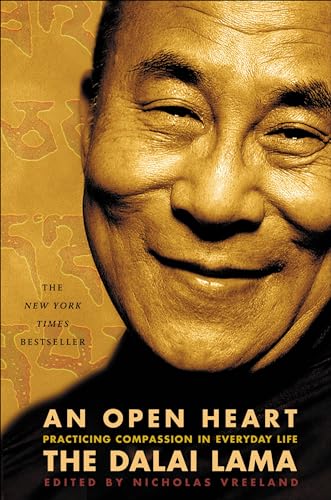
An Open Heart: Practicing Compassion in Everyday Life
Dalai Lama, Nicholas Vreeland, Khyongla Rato, Richard Gere
4.2
How does one actually become a compassionate person? What are the mechanisms by which a selfish heart is transformed into a generous heart? The Dalai Lama's teachings on this essential subject, drawn from talks he delivered during his epochal visit to America in 1999, form the basis of this universally appealing book.
Author Biography: His Holiness the 14th Dalai Lama, Tenzin Gyatso, was recognized at the age of two as the reincarnation of the 13th Dalai Lama. As Tibet's leader-in-exile, he has worked tirelessly not only on behalf of the Tibetan people, but as a voice for human rights worldwide.
…
Cover unavailable
56
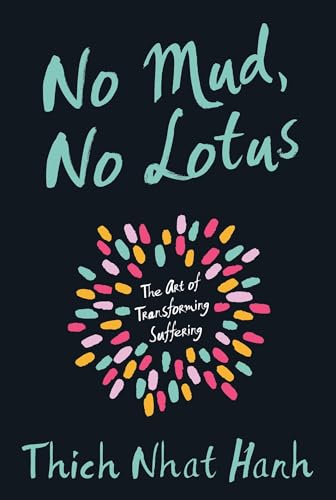
No Mud, No Lotus: The Art of Transforming Suffering
Thich Nhat Hanh
4.2
The secret to happiness is to acknowledge and transform suffering, not to run away from it. In No Mud, No Lotus, Thich Nhat Hanh offers practices and inspiration for transforming suffering and finding true joy. Thich Nhat Hanh acknowledges that because suffering can feel so bad, we try to run away from it or cover it up by consuming. We find something to eat or turn on the television. But unless we’re able to face our suffering, we can’t be present and available to life, and happiness will continue to elude us. Nhat Hanh shares how the practices of stopping, mindful breathing, and deep concentration can generate the energy of mindfulness within our daily lives. With that energy, we can embrace pain and calm it down, instantly bringing a measure of freedom and a clearer mind. No Mud, No Lotus introduces ways to be in touch with suffering without being overwhelmed by it. With his signature clarity and sense of joy, Thich Nhat Hanh helps us recognize the wonders inside us and around us that we tend to take for granted and teaches us the art of happiness.
…
Cover unavailable
57
The Joy of Living: Unlocking the Secret and Science of Happiness
Eric Swanson
4.2
For millennia, Buddhists have enjoyed the limitless benefits of meditation. But how does it work? And why? The principles behind this ancient practice have long eluded some of the best minds in modern science. Until now.
In this groundbreaking work, world-renowned Buddhist teacher Yongey Mingyur Rinpoche invites us to join him in unlocking the secrets behind the practice of meditation. Working with neuroscientists at the Waisman Laboratory for Brain Imaging and Behavior, Yongey Mingyur provides clear insights into modern research indicating that systematic training in meditation can enhance activity in areas of the brain associated with happiness and compassion. He has also worked with physicists across the country to develop a fresh, scientifically based interpretation of the Buddhist understanding of the nature of reality.
With an infectious joy and insatiable curiosity, Yongey Mingyur weaves together the principles of Tibetan Buddhism, neuroscience, and quantum physics in a way that will forever change the way we understand the human experience. Using the basic meditation practices he provides, we can discover paths through everyday problems, transforming obstacles into opportunities to recognize the unlimited potential of our own minds.
With a foreword by bestselling author Daniel Goleman, The Joy of Living is a stunning breakthrough, an illuminating vision of the science of Buddhism and a handbook for transforming our minds, bodies, and lives.
From the Hardcover edition.
…
Cover unavailable
58
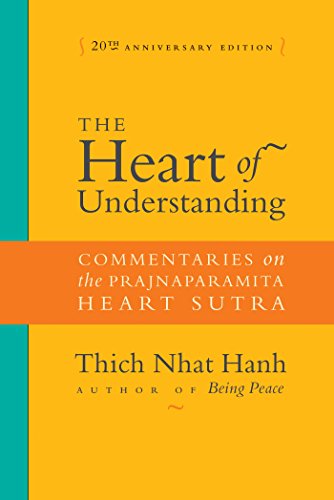
The Heart of Understanding: Commentaries on the Prajnaparamita Heart Sutra
Thich Nhat Hanh, Peter Levitt
4.2
Form is emptiness, emptiness is form. In The Heart of Understanding, Thich Nhat Hanh offers a lucid and engaging interpretation of this core Buddhist text—The Heart Sutra—which is one of the most important sutras, offering subtle and profound teachings on nonduality.
Cover unavailable
59
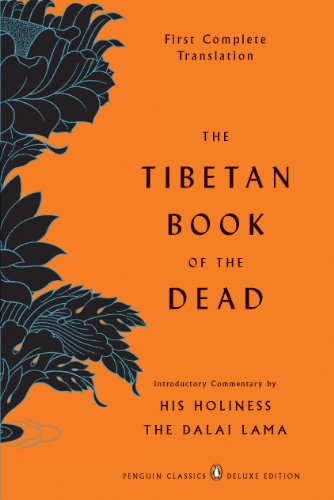
The Tibetan Book of the Dead
Padmasambhava
4.2
The first complete translation of a classic Buddhist text on the journey through living and dying. Graced with opening words by His Holiness The Dalai Lama, the Penguin Deluxe Edition of The Tibetan Book of the Dead is "immaculately rendered in an English both graceful and precise." Translated with the close support of leading contemporary masters and hailed as “a tremendous accomplishment,” this book faithfully presents the insights and intentions of the original work. It includes one of the most detailed and compelling descriptions of the after-death state in world literature, practices that can transform our experience of daily life, guidance on helping those who are dying, and an inspirational perspective on coping with bereavement.
…
Cover unavailable
60
The Middle Length Discourses of the Buddha: A Translation of the Majjhima Nikaya
Bhikkhu Nanamoli, Bhikkhu Bodhi
4.1
This book offers a complete translation of the Majjhima Nikaya, or Middle Length Discourses of the Buddha, one of the major collections of texts in the Pali Canon, the authorized scriptures of Theravada Buddhism. This collection--among the oldest records of the historical Buddha's original teachings--consists of 152 suttas or discourses of middle length, distinguished as such from the longer and shorter suttas of the other collections. The Majjhima Nikaya might be concisely described as the Buddhist scripture that combines the richest variety of contextual settings with the deepest and most comprehensive assortment of teachings. These teachings, which range from basic ethics to instructions in meditation and liberating insight, unfold in a fascinating procession of scenarios that show the Buddha in living dialogue with people from many different strata of ancient Indian society: with kings and princes, priests and ascetics, simple villagers and erudite philosophers. Replete with drama, reasoned argument, and illuminating parable and simile, these discourses exhibit the Buddha in the full glory of his resplendent wisdom, majestic sublimity, and compassionate humanity.
The translation is based on an original draft translation left by the English scholar-monk Bhikkhu Nanamoli, which has been edited and revised by the American monk Bhikkhu Bodhi, who provides a long introduction and helpful explanatory notes. Combining lucidity of expression with accuracy, this translation enables the Buddha to speak across twenty-five centuries in language that addresses the most pressing concerns of the contemporary reader seeking clarification of the timeless issues of truth, value, and the proper conduct of life.
Winner of the 1995 Choice Magazine Outstanding Academic Book Award, and the Tricycle Prize for Excellence in Buddhist Publishing for Dharma Discourse.
…
Cover unavailable
61
10% Happier: How I Tamed the Voice in My Head, Reduced Stress Without Losing My Edge, and Found Self-Help That Actually Works
Nightline anchor Dan Harris embarks on an unexpected, hilarious, and deeply skeptical odyssey through the strange worlds of spirituality and self-help, and discovers a way to get happier that is truly achievable.
After having a nationally televised panic attack on Good Morning America, Dan Harris knew he had to make some changes. A lifelong nonbeliever, he found himself on a bizarre adventure, involving a disgraced pastor, a mysterious self-help guru, and a gaggle of brain scientists. Eventually, Harris realized that the source of his problems was the very thing he always thought was his greatest asset: the incessant, insatiable voice in his head, which had both propelled him through the ranks of a hyper-competitive business and also led him to make the profoundly stupid decisions that provoked his on-air freak-out.
We all have a voice in our head. It’s what has us losing our temper unnecessarily, checking our email compulsively, eating when we’re not hungry, and fixating on the past and the future at the expense of the present. Most of us would assume we’re stuck with this voice – that there’s nothing we can do to rein it in – but Harris stumbled upon an effective way to do just that. It’s a far cry from the miracle cures peddled by the self-help swamis he met; instead, it’s something he always assumed to be either impossible or useless: meditation. After learning about research that suggests meditation can do everything from lower your blood pressure to essentially rewire your brain, Harris took a deep dive into the underreported world of CEOs, scientists, and even marines who are now using it for increased calm, focus, and happiness.
10% Happier takes readers on a ride from the outer reaches of neuroscience to the inner sanctum of network news to the bizarre fringes of America’s spiritual scene, and leaves them with a takeaway that could actually change their lives.
Modulating hormones as necessary - we’ve not really talked about that. Fixing anything that needs to be fixed, on top of that pharmacologically, and I’m a huge proponent of pharmacotherapy under the right setting. The final component is managing your stress. So as a guy who’s thinking about this, I became really interested after actually reading Dan Harris’s book. [source]
Chelsea Frank
I read everything with an open mind, often challenging myself by choosing books with an odd perspective or religious/spiritual views. These books do not reflect my personal feelings but are books that helped shape my perspective on life, love, and happiness. [source]
Chris Goward
I remember reading 10% Happier by Dan Harris on one of my many flights to speak at a conference a couple years ago. I had been practicing meditation for a few years, and had tried to get deeper into learning about it, I struggled with the religious aspect many Buddhist authors brought, which seemed to bring more confusion than clarity. The way Dan described his process of skepticism and discovery of the practical benefits without religion involved was a breath of fresh air. [source]
Cover unavailable
62
True Love: A Practice for Awakening the Heart
Thich Nhat Hanh
4.1
In this little treasure, Thich Nhat Hanh, the renowned Zen monk, offers timeless insight into the nature of real love. With simplicity, warmth, and directness, he explores the four key aspects of love as described in the Buddhist tradition: lovingkindness, compassion, joy, and freedom—explaining how to experience them in our day-to-day lives. He also emphasizes that in order to love in a real way, we must first learn how to be fully present in our lives, and he offers simple techniques from the Buddhist tradition that anyone can use to establish the conditions of love.
Thich Nhat Hanh, a Vietnamese Zen Buddhist monk, is an internationally known author, poet, scholar, and peace activist who was nominated for the Nobel Peace Prize by Martin Luther King Jr.
…
Cover unavailable
63
Turning the Mind Into an Ally
Sakyong Mipham, Pema Chodron
4.1
Strengthening, calming, and stabilizing the mind is the essential first step in accomplishing nearly any goal. Growing up American with a Tibetan twist, Sakyong Mipham talks to Westerners as no one can: in idiomatic English with stories and wisdom from American culture and the great Buddhist teachers. Turning the Mind Into an Ally makes it possible for anyone to achieve peace and clarity in their lives.
…
Cover unavailable
64
You Are Here: Discovering the Magic of the Present Moment
Thich Nhat Hanh
4.1
In this book Thich Nhat Hanh, the renowned Zen monk, author, and meditation master, distills the essence of Buddhist thought and practice, emphasizing the power of mindfulness to transform our lives. “Mindfulness is not an evasion or an escape,” he explains. “It means being here, present, and totally alive. It is true freedom—and without this freedom, there is no happiness.”
Based on a retreat that Thich Nhat Hanh led for Westerners, this book offers a range of simple, effective practices for cultivating mindfulness, including awareness of breathing and walking, deep listening, and skillful speech. You Are Here also offers guidance on healing emotional pain and manifesting real love and compassion in our relationships with others.
Simple, warm, direct, and startlingly potent, this book reveals the heart of the Buddhist path and helps us to reconnect with the joy and wonder of being alive, regardless of life’s changing circumstances.
Praise for Thich Nhat Hanh
“Among Buddhist leaders influential in the West, Thich Nhat Hanh ranks second only to the Dalai Lama.”—New York Times
“Thich Nhat Hanh writes with the voice of the Buddha.”—Sogyal Rinpoche, author of The Tibetan Book of Living and Dying
"Thought-provoking and charming."-- "Library Journal" Not all Great Masters of Wisdom are venerable graybeards. One is as familiar to us as that beloved teddy bear Winnie the Pooh. From the "how" of Pooh to the Tao of Pooh is a simple, effortless, joyous step...a delicious journey to Pooh Corner illuminated by the timeless teachings of the Taoist immortals.
Recommended by Audrey Russo.
Audrey Russo
Question: What books would you recommend to young people interested in your career path? Answer: Anything by Peter Senge. The Hard Thing About Hard Things – Ben Horowitz Once you are Lucky, Twice you are good – Sara Lacey Revolutionary Wealth – Alvin Toffler Black Swan – Taleb Reset: My Fight for Inclusion and Lasting Change, by Ellen Pao. Creative Class – Richard Florida Creativity Inc. by Ed Catmull & Amy Wallace Liar’s Poker by Michael Lewis American Government 101: From the Continental Congress to the Iowa Caucus, Everything You Need to Know About US Politics – Kathleen Spears The Tao of Pooh by Benjamin Hoff. Anna Karenina by Leo Tolstoy. Any book by Herman Hesse The Art of War by Sun Tzu. [source]
Cover unavailable
66
The Heart Sutra
Red Pine
4.1
The short text of The Heart Sutra is Buddhism in a nutshell. It has had the most profound and wide-reaching influence of any text in Buddhism. Its full title, Prajna Paramita Hrdaya Sutra, "The Sutra of the Heart of the Perfection of Wisdom," explains that this sutra contains the essence of the Buddha’s teaching, the core of perfect enlightenment. It is the source of the famous and puzzling declaration, "form is emptiness, emptiness is form."
For this new translation into English, Red Pine, award-winning translator of Chinese poetry and religious texts, has utilized various Sanskrit and Chinese versions, refining the teachings of dozens of ancient teachers together with his own commentary to offer a profound word-for-word explication. The result is a wise book of deep teaching destined to become the standard edition of this timeless statement of Mahayana truth.
…
Cover unavailable
67
No Death, No Fear
Thich Nhat Hanh
4.1
With hard-won wisdom and refreshing insight, Thich Nhat Hanh confronts a subject that has been contemplated by Buddhist monks and nuns for twenty-five-hundred years—and a question that has been pondered by almost anyone who has ever lived: What is death? In No Death, No Fear, the acclaimed teacher and poet examines our concepts of death, fear, and the very nature of existence. Through Zen parables, guided meditations, and personal stories, he explodes traditional myths of how we live and die. Thich Nhat Hanh shows us a way to live a life unfettered by fear.
…
Cover unavailable
68
The Tibetan Book of the Dead
Robert A. F. (translator) Thurman
4.1
In this classic scripture of Tibetan Buddhism—traditionally read aloud to the dying to help them attain liberation—death and rebirth are seen as a process that provides an opportunity to recognize the true nature of mind. This translation of The Tibetan Book of the Dead emphasizes the practical advice that the book offers to the living. The insightful commentary by Chögyam Trungpa, written in clear, concise language, explains what the text teaches us about human psychology. This book will be of interest to people concerned with death and dying, as well as those who seek greater spiritual understanding in everyday life.
…
Cover unavailable
69
Sit Down and Shut Up: Punk Rock Commentaries on Buddha, God, Truth, Sex, Death, and Dogen's Treasury of the Right Dharma Eye
Brad Warner
4.1
In Sit Down and Shut Up, Brad Warner tackles one of the great works of Zen literature, the Shobogenzo by 13th-century Zen master Dogen. Illuminating Dogen’s enigmatic teachings in plain language, Warner intertwines sharp philosophical musings on sex, evil, anger, meditation, enlightenment, death, God, sin, and happiness with an exploration of the power and pain of the punk rock ethos. Riffing on his triumphant return to Ohio for a reunion concert of Akron punk bands, Brad uncovers the real heart of Zen, in teachings and stories with a sharp smack of truth.
…
Cover unavailable
70
Training the Mind and Cultivating Loving-Kindness
Chogyam Trungpa
4.1
Warning: Using this book could be hazardous to your ego! The slogans it contains are designed to awaken the heart and cultivate love and kindness toward others. They are revolutionary in that practicing them fosters abandonment of personal territory in relating to others and in understanding the world as it is.
The fifty-nine provocative slogans presented here—each with a commentary by the Tibetan meditation master Chögyam Trungpa—have been used by Tibetan Buddhists for eight centuries to help meditation students remember and focus on important principles and practices of mind training. They emphasize meeting the ordinary situations of life with intelligence and compassion under all circumstances. Slogans include, "Don't be swayed by external circumstances," "Be grateful to everyone," and "Always maintain only a joyful mind."
This edition contains a new foreword by Pema Chödrön.
…
Cover unavailable
71
The Fundamental Wisdom of the Middle Way: Nāgārjuna's Mūlamadhyamakakārikā
Nagarjuna, Jay L. Garfield
4.1
The Buddhist saint Nagarjuna, who lived in South India in approximately the second century CE, is undoubtedly the most important, influential, and widely studied Mahayana Buddhist philosopher. His many works include texts addressed to lay audiences, letters of advice to kings, and a set of penetrating metaphysical and epistemological treatises. His greatest philosophical work, the Mulamadhyamikakarika—read and studied by philosophers in all major Buddhist schools of Tibet, China, Japan, and Korea—is one of the most influential works in the history of Indian philosophy. Now, in The Fundamental Wisdom of the Middle Way, Jay L. Garfield provides a clear and eminently readable translation of Nagarjuna's seminal work, offering those with little or no prior knowledge of Buddhist philosophy a view into the profound logic of the Mulamadhyamikakarika.
Garfield presents a superb translation of the Tibetan text of Mulamadhyamikakarika in its entirety, and a commentary reflecting the Tibetan tradition through which Nagarjuna's philosophical influence has largely been transmitted. Illuminating the systematic character of Nagarjuna's reasoning, Garfield shows how Nagarjuna develops his doctrine that all phenomena are empty of inherent existence, that is, than nothing exists substantially or independently. Despite lacking any essence, he argues, phenomena nonetheless exist conventionally, and that indeed conventional existence and ultimate emptiness are in fact the same thing. This represents the radical understanding of the Buddhist doctrine of the two truths, or two levels of reality. He offers a verse-by-verse commentary that explains Nagarjuna's positions and arguments in the language of Western metaphysics and epistemology, and connects Nagarjuna's concerns to those of Western philosophers such as Sextus, Hume, and Wittgenstein.
An accessible translation of the foundational text for all Mahayana Buddhism, The Fundamental Wisdom of the Middle Way offers insight to all those interested in the nature of reality.
Nagarjuna’s philosophy is centred on the idea of the interdependence of all things and the absence of autonomous essence of anything. [source]
Cover unavailable
72
Be Here Now
Ram Dass
4.1
Describes one man's transformation upon his acceptance of the principles of Yoga & gives a modern restatement of the importance of the spiritual side of human nature. Illustrated. The book is divided into four sections: Journey: The Transformation: Dr Richard Alpert, PhD into Baba Ram Dass From Bindu to Ojas: The Core Book Cookbook for a Sacred Life: A Manual for Conscious Being Painted Cakes (Do Not Satisfy Hunger): Books
…
Recommended by Steve Jobs, Jack Kornfield, and Travis Brewer.
In late 1972, Jobs had just started at Reed College, an elite liberal arts school in Portland, Oregon. He started doing lots of LSD and reading lots of books about spirituality. [source]
Travis Brewer said this is one of his most-recommended books. [source]
Cover unavailable
73
Thoughts Without A Thinker: Psychotherapy From A Buddhist Perspective
Mark Epstein, The Dalai Lama
4.1
Traditional distinctions between matters of the mind and matters of the spirit are increasingly being questioned, and people are searching for alternate perspectives on these issues. Thoughts Without a Thinker is a major contribution to today's exploding discussion of how Eastern spirituality can enhance Western psychology. In it, Mark Epstein argues that the contemplative traditions of the East can be extremely beneficial to patients, not just in helping them recognize their problems, but by giving them the strength to heal. Clearly written and very accessible, this enlightening guide explains the unique psychological contributions of the teachings of Buddhism, describes the path of meditation in contemporary psychological language, and lays out the possibility of a meditation-inspired psychotherapy.
…
Cover unavailable
74
The Life of Milarepa
Heruka, Lobsang P. Lhalungpa
4.1
The Life of Milarepa is the most beloved story of the Tibetan people amd one of the greatest source books for the contemplative life in all world literature. This biography, a true folk tale from a culture now in crisis, can be read on several levels: a personal and moving introduction to Tibetan Buddhism, it is also a profoundly detailed guidebook in the search for consciousness. It presents the quest for spiritual perfection, tracing the path of a great sinner who became a great saint. But it is also a powerful and graphic folk tale, full of magic, disaster, feuds, deceptions, and humor. This definitive translation, originally published in 1977, was the first to appear in any Western language in half a century and renders this classic of spiritual literature into a simple modern English that reflects the direct power of the original.
This book is a rallying call for giving up life as we know it and transforming the conditioned mind. The fact that I read it, shaved all my hair off, ordained as a Buddhist monk and went into retreat at a monastery is a good indication of how it made me feel. [source]
Cover unavailable
75
Ethics for the New Millennium
Dalai Lama
4.1
In a difficult, uncertain time, it takes a person of great courage, such as the Dalai Lama, to give us hope. Regardless of the violence and cynicism we see on television and read about in the news, there is an argument to be made for basic human goodness. The number of people who spend their lives engaged in violence and dishonesty is tiny compared to the vast majority who would wish others only well. According to the Dalai Lama, our survival has depended and will continue to depend on our basic goodness. Ethics for the New Millennium presents a moral system based on universal rather than religious principles. Its ultimate goal is happiness for every individual, irrespective of religious beliefs. Though he himself a practicing Buddhist, the Dalai Lama's teachings and the moral compass that guides him can lead each and every one of us—Muslim, Christian, Jew, Buddhist, or atheist—to a happier, more fulfilling life.
His Holiness the Dalai Lama's newest book, The Wisdom of Compassion, is now available from Riverhead Books.
Yes, I think it is probably right to start with the new millennium of which we have now completed the first decade. A lot of the writing that I am talking about is focused on the idea that we need to do something new in our new millennium and our new century. The Millennium Development Goals are the most specific manifestation of that idea, the objective of really reaching a new level and a new understanding. The Dalai Lama wrote this book not specifically about the Millennium Development Goals but very much in the spirit of the need to create a new global understanding and global ethic, and to make what is now a global society work. [source]
Cover unavailable
76
Buddhism for Beginners
Thubten Chodron
4.1
"This book is written for people wanting to understand basic Buddhist principles and how to integrate them into their lives.... It will be of much benefit to its readers." —The Dalai Lama
This user’s guide to Buddhist basics takes the most commonly asked questions—beginning with “What is the essence of the Buddha’s teachings?”—and provides simple answers in plain English. Thubten Chodron’s responses to the questions that always seem to arise among people approaching Buddhism make this an exceptionally complete and accessible introduction—as well as a manual for living a more peaceful, mindful, and satisfying Life. Buddhism for Beginners is an ideal first book on the subject for anyone, but it’s also a wonderful resource for seasoned students, since the question-and-answer format makes it easy to find just the topic you’re looking for, such as:
• What is the goal of the Buddhist path? • What is karma? • If all phenomena are empty, does that mean nothing exists? • How can we deal with fear? • How do I establish a regular meditation practice? • What are the qualities I should look for in a teacher? • What is Buddha-nature? • Why can't we remember our past lives?
…
Cover unavailable
77
Eight Mindful Steps to Happiness: Walking the Buddha's Path
Henepola Gunaratana
4.1
From the best-selling author of Mindfulness in Plain English!
In his classic and engaging style, Bhante Gunaratana delves deeply into the noble eightfold path, the Buddha’s most profound teaching on bringing an end to suffering.
With easy-to-understand and specific advice, Eight Mindful Steps to Happiness offers skillful ways to handle anger, find right livelihood, cultivate loving-friendliness, and overcome the mental hindrances that prevent happiness.
Whether you are an experienced meditator or someone who’s only just beginning, this gentle and down-to-earth guide will help you bring the heart of the Buddha’s teachings into every aspect of your life.
…
Cover unavailable
78
Going to Pieces Without Falling Apart: A Buddhist Perspective on Wholeness
Mark Epstein M.D.
4.1
For decades, Western psychology has promised fulfillment through building and strengthening the ego. We are taught that the ideal is a strong, individuated self, constructed and reinforced over a lifetime. But Buddhist psychiatrist Mark Epstein has found a different way. Going to Pieces Without Falling Apart shows us that happiness doesn't come from any kind of acquisitiveness, be it material or psychological. Happiness comes from letting go. Weaving together the accumulated wisdom of his two worlds--Buddhism and Western psychotherapy--Epstein shows how "the happiness that we seek depends on our ability to balance the ego's need to do with our inherent capacity to be." He encourages us to relax the ever-vigilant mind in order to experience the freedom that comes only from relinquishing control. Drawing on events in his own life and stories from his patients, Going to Pieces Without Falling Apart teaches us that only by letting go can we start on the path to a more peaceful and spiritually satisfying life.
About The Author: Mark Epstein, M.D., is a psychiatrist in private practice and the author of Thoughts Without a Thinker . He is a contributing editor to Tricycle: The Buddhist Review and clinical assistant professor of psychology at New York University. He lives in New York City.
…
Cover unavailable
79
No-Nonsense Buddhism for Beginners: Clear Answers to Burning Questions About Core Buddhist Teachings
Noah Rasheta
4.1
Cover unavailable
80
An Introduction to Zen Buddhism
D. T. Suzuki, Carl Jung
4.0
One of the world’s leading authorities on Zen Buddhism, D. T. Suzuki was the author of more than a hundred works on the subject in both Japanese and English, and was most instrumental in bringing the teachings of Zen Buddhism to the attention of the Western world. Written in a lively, accessible, and straightforward manner, An Introduction to Zen Buddhism is illuminating for the serious student and layperson alike. Suzuki provides a complete vision of Zen, which emphasizes self-understanding and enlightenment through many systems of philosophy, psychology, and ethics. With a foreword by the renowned psychiatrist Dr. Carl Jung, this volume has been generally acknowledged a classic introduction to the subject for many years. It provides, along with Suzuki’s Essays and Manual of Zen Buddhism, a framework for living a balanced and fulfilled existence through Zen.
…
Cover unavailable
81
The Quantum and the Lotus: A Journey to the Frontiers Where Science and Buddhism Meet
Matthieu Ricard, Trinh Xuan Thuan
4.0
Matthieu Ricard trained as a molecular biologist, working in the lab of a Nobel prize—winning scientist, but when he read some Buddhist philosophy, he became drawn to Buddhism. Eventually he left his life in science to study with Tibetan teachers, and he is now a Buddhist monk and translator for the Dalai Lama, living in the Shechen monastery near Kathmandu in Nepal. Trinh Thuan was born into a Buddhist family in Vietnam but became intrigued by the explosion of discoveries in astronomy during the 1960s. He made his way to the prestigious California Institute of Technology to study with some of the biggest names in the field and is now an acclaimed astrophysicist and specialist on how the galaxies formed.
When Matthieu Ricard and Trinh Thuan met at an academic conference in the summer of 1997, they began discussing the many remarkable connections between the teachings of Buddhism and the findings of recent science. That conversation grew into an astonishing correspondence exploring a series of fascinating questions. Did the universe have a beginning? Or is our universe one in a series of infinite universes with no end and no beginning? Is the concept of a beginning of time fundamentally flawed? Might our perception of time in fact be an illusion, a phenomenon created in our brains that has no ultimate reality? Is the stunning fine-tuning of the universe, which has produced just the right conditions for life to evolve, a sign that a “principle of creation” is at work in our world? If such a principle of creation undergirds the workings of the universe, what does that tell us about whether or not there is a divine Creator? How does the radical interpretation of reality offered by quantum physics conform to and yet differ from the Buddhist conception of reality? What is consciousness and how did it evolve? Can consciousness exist apart from a brain generating it?
The stimulating journey of discovery the authors traveled in their discussions is re-created beautifully in The Quantum and the Lotus, written in the style of a lively dialogue between friends. Both the fundamental teachings of Buddhism and the discoveries of contemporary science are introduced with great clarity, and the reader will be profoundly impressed by the many correspondences between the two streams of thought and revelation. Through the course of their dialogue, the authors reach a remarkable meeting of minds, ultimately offering a vital new understanding of the many ways in which science and Buddhism confirm and complement each other and of the ways in which, as Matthieu Ricard writes, “knowledge of our spirits and knowledge of the world are mutually enlightening and empowering.”
“The Quantum and the Lotus is a mind-expanding, eye-opening exploration of the exciting parallels between cutting-edge thinking in physics and Buddhism–a scintillating conversation any thinking person would delight in overhearing.” —Daniel Goleman, author of Emotional Intelligence
“The Quantum and the Lotus is the rich and inspiring result of a deeply interesting dialogue between Western science and Buddhist philosophy. This remarkable book will contribute greatly to a better understanding of the true nature of our world and the way we live our lives.” —His Holiness the Dalai Lama
…
Recommended by Eric Ripert.
Eric Ripert
Explore the connections between science and Buddhist philosophy. [source]
Cover unavailable
82
Dharma Punx: A Memoir
Noah Levine
4.0
Fueled by the music of revolution, anger, fear, and despair, we dyed our hair or shaved our heads ... Eating acid like it was candy and chasing speed with cheap vodka, smoking truckloads of weed, all in a vain attempt to get numb and stay numb.
This is the story of a young man and a generation of angry youths who rebelled against their parents and the unfulfilled promise of the sixties. As with many self-destructive kids, Noah Levine's search for meaning led him first to punk rock, drugs, drinking, and dissatisfaction. But the search didn't end there. Having clearly seen the uselessness of drugs and violence, Noah looked for positive ways to channel his rebellion against what he saw as the lies of society. Fueled by his anger at so much injustice and suffering, Levine now uses that energy and the practice of Buddhism to awaken his natural wisdom and compassion.
While Levine comes to embrace the same spiritual tradition as his father, bestselling author Stephen Levine, he finds his most authentic expression in connecting the seemingly opposed worlds of punk and Buddhism. As Noah Levine delved deeper into Buddhism, he chose not to reject the punk scene, instead integrating the two worlds as a catalyst for transformation. Ultimately, this is an inspiring story about maturing, and how a hostile and lost generation is finally finding its footing. This provocative report takes us deep inside the punk scene and moves from anger, rebellion, and self-destruction, to health, service to others, and genuine spiritual growth.
…
Cover unavailable
83
The Wisdom of Insecurity: A Message for an Age of Anxiety
In this fascinating book, Alan Watts explores man's quest for psychological security, examining our efforts to find spiritual and intellectual certainty in the realms of religion and philosophy. The Wisdom of Insecurity underlines the importance of our search for stability in an age where human life seems particularly vulnerable and uncertain. Watts argues our insecurity is the consequence of trying to be secure and that, ironically, salvation and sanity lie in the recognition that we have no way of saving ourselves.
This is a very thin book but a mind-blowing one. In many ways it was part of my motivation to write my book. Alan Watts was a philosophical populariser. He called himself a “spiritual entertainer”, and went around the world giving lectures and writing popular books about Eastern philosophies such as Zen Buddhism and Taoism. This book is about non-dualism – the theory that in some sense, everything is one. It’s the principle encapsulated in the symbols of yin and yang. These days it is often seen as cheesy and New Age. But there’s vastly more to it than that. [source]
Cover unavailable
84
The Mind Illuminated: A Complete Meditation Guide Integrating Buddhist Wisdom and Brain Science for Greater Mindfulness
A revolutionary, science-based approach to meditation from a neuroscientist turned meditation master, The Mind Illuminated is an accessible, step-by-step toolkit for anyone looking to start—or improve—their daily meditation practice.
The book that bestselling meditation teacher Sharon Salzberg raves “brings the path of meditation to life,” The Mind Illuminated is the first how-to meditation guide from a neuroscientist who is also an acclaimed meditation master. This innovative book offers a 10-stage program that is both deeply grounded in ancient spiritual teachings about mindfulness and holistic health, and also draws from the latest brain science to provide a roadmap for anyone interested in achieving the benefits of mindfulness. Dr. John Yates offers a new and fascinating model of how the mind works, including steps to overcome mind wandering and dullness, extending your attention span while meditating, and subduing subtle distractions.
This groundbreaking manual provides illustrations and charts to help you work through each stage of the process, offering tools that work across all types of meditation practices. The Mind Illuminated is an essential read, whether you are a beginner wanting to establish your practice or a seasoned veteran ready to master the deepest state of peace and mindfulness.
…
Cover unavailable
85
The Long Discourses of the Buddha: A Translation of the Digha Nikaya
Maurice Walshe, Venerable Sumedho Thera
4.0
This book offers a complete translation of the Digha Nikaya, the long discourses of the Buddha, one of the major collections of texts in the Pali Canon, the authorized scriptures of Theravada Buddhism. This collection--among the oldest records of the historical Buddha's original teachings, given in India two and a half thousand years ago--consists of thirty-four longer-length suttas, or discourses, distinguished as such from the middle-length and shorter suttas of the other collections.
These suttas reveal the gentleness, compassion, power, and penetrating wisdom of the Buddha. Included are teachings on mindfulness (Mahasatipatthana Sutta); on morality, concentration, and wisdom (Subha Sutta); on dependent origination (Mahanidrana Sutta); on the roots and causes of wrong views (Brahmajala Sutta); and a long description of the Buddha's last days and passing away (Mahaparinibbana Sutta); along with a wealth of practical advice and insight for all those travelling along the spiritual path.
Venerable Sumedho Thera writes in his foreword: "[These suttas] are not meant to be 'sacred scriptures' that tell us what to believe. One should read them, listen to them, think about them, contemplate them, and investigate the present reality, the present experience, with them. Then, and only then, can one insightfully know the truth beyond words."
Introduced with a vivid account of the Buddha's life and times and a short survey of his teachings, The Long Discourses of the Buddha brings us closer in every way to the wise and compassionate presence of Gotama Buddha and his path of truth.
…
Cover unavailable
86
Freedom in Exile: The Autobiography of the Dalai Lama
Dalai Lama
4.0
In this astonishingly frank autobiography, the Dalai Lama reveals the remarkable inner strength that allowed him to master both the mysteries of Tibetan Buddhism and the brutal realities of Chinese Communism.
Cover unavailable
87
Nothing Special
Charlotte J. Beck, Steve Smith
4.0
WHEN NOTHING IS SPECIAL, EVERYTHING CAN BE
The best-selling author of 'Everyday Zen' shows how to awaken to daily life and discover the ideal in the everyday, finding riches in our feelings, relationships, and work. 'Nothing Special' offers the rare and delightful experience of learning in the authentic Buddhist tradition with a wonderfully contemporary Western master.
Cover unavailable
88
Who Ordered This Truckload of Dung?: Inspiring Stories for Welcoming Life's Difficulties
Ajahn Brahm
4.0
“Laugh your way to enlightenment” with this inspirational and light-hearted collection of stories from beloved Buddhist teacher Ajahn Brahm.
The 108 pieces in the international bestseller Who Ordered This Truckload of Dung? offer thoughtful commentary on everything from love and commitment to fear and pain. Drawing from his own life experience, as well as traditional Buddhist folk tales, author Ajahn Brahm uses over thirty years of spiritual growth as a monk to spin delightful tales that can be enjoyed in silence or read aloud to friends and family.
Featuring titles such as “How to Be a VIP” and “The Worm and His Lovely Pile of Dung,” these wry and witty stories provide playful, pithy takes on the basic building blocks of everyday happiness. Suitable for children, adults, and anyone in between, this eloquent volume delivers insight and inspiration in a humorous and engaging voice.
Features of this book:
A collection of stories full of humor and wisdom Useful for stress relief and handling life’s ups and downs Perfect for gifting Written in easy-to-understand language Delightful for Buddhists and non-Buddhists alike This book contains both encouraging, uplifting stories and thoughtful teachings in Ajahn Brahm’s characteristic joyful style. Ajahn Brahm helps us navigate all of life’s difficulties and beautiful moments.Who Ordered this Truckload of Dung? is certain to be an enjoyable addition to any individual or family’s most treasured collection.
…
Recommended by Gunhee Park.
Gunhee Park
For spirituality, I’ve really enjoyed reading Who Ordered This Truckload of Dung?. The title of the book sounds a bit odd, but it is a book full of short stories and lessons by a renowned monk named Ajahn Brahm. [source]
Cover unavailable
89
The Noble Eightfold Path: Way to the End of Suffering
Bhikkhu Bodhi
4.0
This book offers a clear, concise account of the Eightfold Path prescribed to uproot and eliminate the deep underlying cause of suffering—ignorance. Each step of the path is believed to cultivate wisdom through mental training, and includes an enlightened and peaceful middle path that avoids extremes. The theoretical as well as practical angles of each of the paths—right view, right intention, right speech, right action, right livelihood, right effort, right mindfulness, and right concentration—are illustrated through examples from contemporary life. The work's final chapter addresses the Buddhist path and its culmination in enlightenment.
…
Cover unavailable
90
Conocete a ti mismo tal y como realmente eres
Dalai Lama
4.0
Claves para conocerse uno mismo tal y como uno es realmente y poder conseguir así, la felicidad pura.
El Dalai Lama, el líder budista más conocido y respetado, y Premio Nobel de la Paz, enseña en este audiolibro a reconocer las nociones equivocadas que tenemos de nosotros mismos para abordar la realidad desde una perspectiva más certera y humana. Como las dos alas de un pájaro, el amor y el conocimiento interior trabajan juntos para llevarnos a la iluminación.
Con anécdotas personales, el Dalai Lama muestra en este audiolibro las claves que ofrece la tradición budista para el conocimiento personal y el despertar espiritual. Una obra inspiradora, indispensable para todas aquellas personas que necesitan encontrar en su interior las respuestas a los grandes interrogantes de su ser en el mundo.
…
Cover unavailable
91
The Book: On the Taboo Against Knowing Who You Are
Alan Watts asks what is the cause of the illusion that the self is a separate ego, housed in a bag of skin, and which confronts a universe of physical objects that are alien to it. Rather a person's identity (their ego) binds them to the physical universe, creating a relationship with their environment and other people. The separation of the self and the physical world leads to the misuse of technology and the attempt to violently subjugate man's natural environment, leading to its destruction.
Explaining man's role in the universe as a unique expression of the total universe, and interdependent on it, Alan Watts offers a new understanding of personal identity. It reveals the mystery of existence, presenting and alternative to the feelings of alienation that is prevalent in Western society, and a vision of how we can come to understand the cosmic self that is within every living thing.
…
Recommended by Kevin Lamping and Kyle Russell.
Kevin Lamping
Not a business book, but *The Book* is one that I can say shines out among the other stars. It's hard to pick a book that's had the most impact on me, because they always have some effect. But there was something so calming, so reassuring about *The Book* that really helped me in a time of lots of self-doubt. I know this is supposed to focus on less "spiritual" books, and I'm not a religious guy, but I really enjoyed the notions put forth by *The Book*. Watts, the author, has some really profound thinking, and his writing guides you through Eastern thought for Western thinkers. I highly recommend this book for anyone searching for answers to the unknown. [source]
Kyle Russell
Book 20 Lesson: Distinction is not separation. To understand something, you must also understand its relationships with other parts of the environment or context around it. https://t.co/DB453aY565 [source]
Cover unavailable
92
The Zen Teaching of Bodhidharma
Bodhidharma, Red Pine
4.0
A fifth-century Indian Buddhist monk, Bodhidharma is credited with bringing Zen to China. Although the tradition that traces its ancestry back to him did not flourish until nearly two hundred years after his death, today millions of Zen Buddhists and students of kung fu claim him as their spiritual father.
While others viewed Zen practice as a purification of the mind or a stage on the way to perfect enlightenment, Bodhidharma equated Zen with buddhahood and believed that it had a place in everyday life. Instead of telling his disciples to purify their minds, he pointed them to rock walls, to the movements of tigers and cranes, to a hollow reed floating across the Yangtze.
This bilingual edition, the only volume of the great teacher's work currently available in English, presents four teachings in their entirety. "Outline of Practice" describes the four all-inclusive habits that lead to enlightenment, the "Bloodstream Sermon" exhorts students to seek the Buddha by seeing their own nature, the "Wake-up Sermon" defends his premise that the most essential method for reaching enlightenment is beholding the mind. The original Chinese text, presented on facing pages, is taken from a Ch'ing dynasty woodblock edition.
…
Cover unavailable
93
Against the Stream: A Buddhist Manual for Spiritual Revolutionaries
Noah Levine
4.0
Buddha was a revolutionary. His practice was subversive; his message, seditious. His enlightened point of view went against the norms of his day—in his words, "against the stream." His teachings changed the world, and now they can change you too.
Presenting the basics of Buddhism with personal anecdotes, exercises, and guided meditations, bestselling author Noah Levine guides the reader along a spiritual path that has led to freedom from suffering and has saved lives for 2,500 years. Levine should know. Buddhist meditation saved him from a life of addiction and crime. He went on to counsel and teach countless others the Buddhist way to freedom, and here he shares those life-changing lessons with you. Read and awaken to a new and better life.
…
Cover unavailable
94
Happiness: A Guide to Developing Life's Most Important Skill
Matthieu Ricard, Daniel Goleman
4.0
In this groundbreaking book, Matthieu Ricard makes a passionate case for happiness as a goal that deserves as least as much energy as any other in our lives.
Wealth? Fitness? Career success? How can we possibly place these above true and lasting well-being? Drawing from works of fiction and poetry, Western philosophy, Buddhist beliefs, scientific research, and personal experience, Ricard weaves an inspirational and forward-looking account of how we can begin to rethink our realities in a fast-moving modern world. With its revelatory lessons and exercises, Happiness is an eloquent and stimulating guide to a happier life.
Today is World Book Day, a wonderful opportunity to address this #ChallengeRichard sent in by Mike Gonzalez of New Jersey: Make a list of your top 65 books to read in a lifetime. [source]
Joel Gascoigne
The author of this book has sometimes been called the "happiest man in the world". He is a French Biochemist turned Buddhist monk and has been in a unique position to merge science with mindfulness and meditation. The underlying theme of the book is that happiness is indeed within our control, and is much more a skill than something that simply happens to us. One of the biggest revelations for me in this book was the way that it linked happiness with altruism, asserting that there is an undeniable correlation and that helping others can provide a much more lasting satisfaction and happiness than pleasure activities such as watching a movie or enjoying a banana split. This was something I had intuitively when I got into helping early stage founders, and reading it in this book made me recommit to helping others as a way of life, which in turn makes me very happy. [source]
Cover unavailable
95
Not Always So: Practicing the True Spirit of Zen
Shunryu Suzuki, Edward Espe Brown, Zen Center San Francisco
4.0
Practising the true spirit of Zen.
Not Always So is based on Shunryu Suzuki's lectures and is framed in his own inimitable, allusive, paradoxical style, rich with unexpected and off–centre insights. Suzuki knew he was dying at the time of the lectures, which gives his thoughts an urgency and focus even sharper than in the earlier book.
In Not Always So Suzuki once again voices Zen in everyday language with the vigour, sensitivity, and buoyancy of a true friend. Here is support and nourishment. Here is a mother and father lending a hand, but letting you find your own way. Here is guidance which empowers your freedom (or way–seeking mind), rather than pinning you down to directions and techniques. Here is teaching which encourages you to touch and know your true heart and to express yourself fully, teaching which is not teaching from outside, but a voice arising in your own being.
…
Cover unavailable
96
The Book of Awakening: Having the Life You Want by Being Present to the Life You Have
Mark Nepo
4.0
Philosopher-poet and cancer survivor, Mark Nepo opens a new season of freedom and joy--an escape from deadening, asleep-at-the wheel sameness--that is both profound and clarifying. His spiritual daybook is a summons to reclaim aliveness, liberate the self, take each day one at a time, and to savor the beauty offered by life's unfolding. Reading his poetic prose is like being given second sight, exposing the reader to life's multiple dimensions, each one drawn with awe and affection. The Book of Awakening is the result of his journey of the soul and will inspire others to embark on their own. Nepo speaks of spirit and friendship, urging readers to stay vital and in love with this life, no matter the hardships. Encompassing many traditions and voices, Nepo's words offer insight on pain, wonder, and love. Each entry is accompanied by an exercise that will surprise and delight the reader in its mind-waking ability.
The most important book I have ever read, the best gift I have ever given. A daily touchstone to center, balance, inspire & comfort. I was honored @marknepo asked me to write the forward for this 20th anniversary edition. It is available now for pre-order. Publication date 1/1/20 https://t.co/6PIQFBI1Wz [source]
Oh! So GREAT! If you're able, PLEASE read her powerful book. https://t.co/3itlgrS7Mz [source]
Cover unavailable
97
A Tale for the Time Being
Ruth Ozeki
4.0
In Tokyo, sixteen-year-old Nao has decided there’s only one escape from her aching loneliness and her classmates’ bullying. But before she ends it all, Nao plans to document the life of her great-grandmother, a Buddhist nun who’s lived more than a century. A diary is Nao’s only solace—and will touch lives in a ways she can scarcely imagine.
Across the Pacific, we meet Ruth, a novelist living on a remote island who discovers a collection of artifacts washed ashore in a Hello Kitty lunchbox—possibly debris from the devastating 2011 tsunami. As the mystery of its contents unfolds, Ruth is pulled into the past, into Nao’s drama and her unknown fate, and forward into her own future.
Full of Ozeki’s signature humour and deeply engaged with the relationship between writer and reader, past and present, fact and fiction, quantum physics, history, and myth, A Tale for the Time Being is a brilliantly inventive, beguiling story of our shared humanity and the search for home.
…
Cover unavailable
98
It's Easier Than You Think: The Buddhist Way to Happiness
Sylvia Boorstein
4.0
Using delightful and deceptively powerful stories from everyday experiences, beloved Buddhist teacher Sylvia Boorstein demystifies spirituality, charts the path to happiness through the Buddha's basic teachings, shows how to eliminate hindrances to clear seeing, and develops a realistic course toward wisdom and compassion. A wonderfully engaging guide, full of humor, memorable insights, and love.
Cover unavailable
99
Buddha: A Story of Enlightenment
Deepak Chopra
4.0
Bestselling author Deepak Chopra brings the Buddha back to life in this gripping novel of the young prince who abandoned his inheritance to discover his true calling. This iconic journey changed the world forever, and the truths revealed continue to influence every corner of the globe today.
A young man in line for the throne is trapped in his father's kingdom and yearns for the outside world. Betrayed by those closest to him, Siddhartha abandons his palace and princely title. Alone and face-to-face with his demons, he becomes a wandering monk and embarks on a spiritual fast that carries him to the brink of death. Ultimately recognizing his inability to conquer his body and mind by sheer will, Siddhartha transcends his physical pain and achieves enlightenment.
Although we recognize Buddha today as an icon of peace and serenity, his life story was a tumultuous and spellbinding affair filled with love and sex, murder and loss, struggle and surrender. From the rocky terrain of the material world to the summit of the spiritual one, Buddha captivates and inspires—ultimately leading us closer to understanding the true nature of life and our selves.
…
Cover unavailable
100
Waking Up: A Guide to Spirituality Without Religion
For the millions of Americans who want spirituality without religion, Sam Harris’s new book is a guide to meditation as a rational spiritual practice informed by neuroscience and psychology.
From multiple New York Times bestselling author, neuroscientist, and “new atheist” Sam Harris, Waking Up is for the 30 percent of Americans who follow no religion, but who suspect that Jesus, Buddha, Lao Tzu, Rumi, and the other saints and sages of history could not have all been epileptics, schizophrenics, or frauds. Throughout the book, Harris argues that there are important truths to be found in the experiences of such contemplatives—and, therefore, that there is more to understanding reality than science and secular culture generally allow.
Waking Up is part seeker’s memoir and part exploration of the scientific underpinnings of spirituality. No other book marries contemplative wisdom and modern science in this way, and no author other than Sam Harris—a scientist, philosopher, and famous skeptic—could write it.
…
Recommended by Susan Cain, Chris Goward, Fabrice Grinda, and 1 others.
Susan Cain
Author
Such a fantastic book. And it was really, for me, completely lifechanging. [source]
Chris Goward
I also highly recommend Sam Harris' Waking Up, which is a more well-rounded unpacking of non-religious mindfulness practice. [source]
Fabrice Grinda
Very well thought through analysis of spirituality without religion. [source]


 1
1