The Psychology Behind Irrational Decisions

The Psychology Behind Irrational Decisions
Why do people make bad decisions? How do you make a decision when there are just too many variables to consider? Many times, you make bad decisions because you don’t have enough options, information, or experience to make logical ones. However, too many options, information, or experience can also inspire irrational decisions. Let’s take a look at the three situations where excess causes irrationality: 1) too much experience, 2) too many options, and 3) too much information.

Understanding the Psychology of Loss Aversion

The 25 Cognitive Biases: Loss Aversion Bias

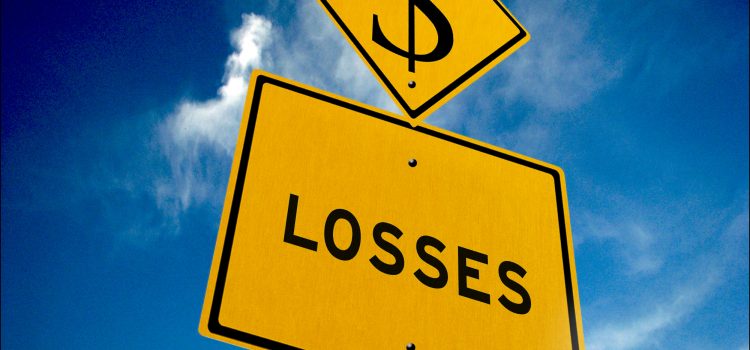
What is loss aversion? Why does losing something have a stronger psychological impact compared to gaining something? As the name suggests, loss aversion is the tendency to have a stronger aversion to losing something compared to gaining something. Loss aversion is an evolutionary trait passed on from early humanity when losing something—be it belongings, weapons, or food supply—was often fatal. Being cautious and avoiding loss kept early humans alive and able to procreate, meaning their cautious genes survived to the current day. Keep reading to learn about the psychology of loss aversion.

Fundamental Attribution Bias—Explained

Fundamental Attribution Bias—Explained

What is fundamental attribution bias? Why do people fall for the attribution effect? Fundamental attribution bias (also known as correspondence bias or attribution effect) is a tendency to attribute others’ behavior to their disposition or personality and disregard external or environmental factors. The attribution effect is the by-product of the way your social brain works. Keep reading to learn about fundamental attribution bias, why it occurs, and how to avoid it.

The Primacy and Recency Effect—Explained

The Primacy and Recency Effect—Explained

What is the primacy and recency effect? Why do we tend to remember the first and the last items well, and the middle ones poorly? The primacy and recency effect (also known as the serial-position effect) is the tendency to recall the first and the last items in a series well, and the middle ones poorly. There’s no consensus as to why this phenomenon occurs, but there are a couple of theories. Keep reading to learn about the primacy and recency effect, why it occurs, and how to overcome it.

The Psychology of Memory: Errors and Fallacies

The Psychology of Memory: Errors and Fallacies

Is memory a fixed record of the past? Do we always recall memories in their original state? People believe their memories are untouchable, stored away, and recalled when needed in perfect condition. However, this isn’t the case. Memory errors are proof that memory isn’t a fixed record of past events—your memory of the past is affected by your feelings, opinions, and situation. Here are some of the most common fallacies and situations in which your memory is unreliable.

The Dangers of the Single-Cause Fallacy

The Dangers of the Single-Cause Fallacy

What is the single cause fallacy? Why does it occur? The single cause fallacy is where you attribute an outcome to a single, simple cause. The single cause fallacy occurs because we dislike uncertainty, and a single-cause pattern provides a sense of understanding. When people feel like they understand a situation, not only are they less uncertain, but they can also better withstand any uncertainty they do feel. Keep reading to learn about the fallacy of the single cause, why it occurs, and how to overcome it.

Rolf Dobelli: What Is the Swimmer’s Body Illusion?

Rolf Dobelli: What Is the Swimmer’s Body Illusion?

What is the “swimmer’s body illusion”? Is a swimmer’s physique the result of training (nurture) or the gift of genetics (nature)? The swimmer’s body illusion is a cognitive bias where you attribute a trait or characteristic to a certain activity, and not the other way around. For example, you might look at a professional swimmer’s toned body and think you can gain that same appearance by swimming. However, these individuals are so good at swimming because they already had that kind of body. Here’s why this effect occurs and how not to fall prey to it.

Heuristic Psychology: Cognitive Errors & Biases

Heuristic Psychology: Cognitive Errors & Biases

What are cognitive errors? Why does the brain make these errors, and how can you override them? Humans have evolved to pay attention to the most memorable or flashy information that comes up, rather than the most pertinent or helpful. The more conspicuous and repeated a piece of information is, the more you’ll believe it. Although it saves the brain’s resources (it takes less time and energy to accept the flashiest information), it results in cognitive errors—faulty ways of thinking that are often inaccurate and/or irrational. Here are some of the most common cognitive errors that result from the brain’s