Invention of Writing: Created to Record Data, Help the Brain

Invention of Writing: Created to Record Data, Help the Brain

What were the causes and consequences of the invention of writing? Where was writing invented, and how did it change human history? The Sumerians invented writing in southern Mesopotamia between 3500 BC and 3000 BC. The invention of writing first affected accountants, not playwrights and poets. We’ll cover the reasons writing was invented and look at how it changed the world.

Homo Sapiens History: From Early Man to Modern Industry

Homo Sapiens History: From Early Man to Modern Industry

In Sapiens, Yuval Noah Harari uses concepts from physics, chemistry, biology, and history to tell the story of us, Homo sapiens history. Homo Sapiens history is punctuated by four major revolutions: The Cognitive Revolution, the Agricultural Revolution, the Scientific Revolution, and the Industrial Revolution. Each revolution ushered in a new era of innovation (and, often, suffering) for humans. In this brief history of Homo sapiens, we’ll look at each revolution and how it dramatically redirected the course of the history of Sapiens. 

How the “Discovery” of America Sparked the Scientific Revolution

How the “Discovery” of America Sparked the Scientific Revolution

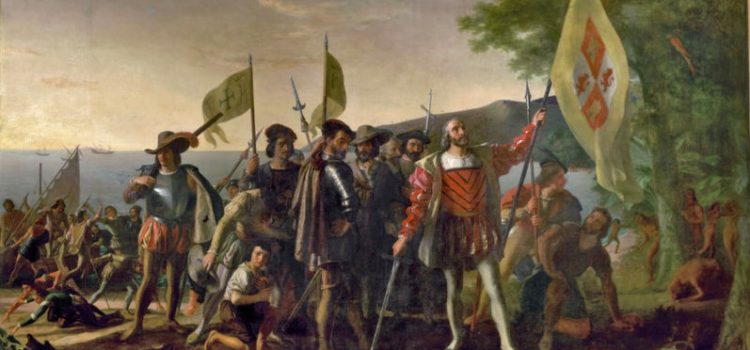
Clearly, ignorance played a role in Christopher Columbus’s “discovery” of America: He thought he had landed at what would later be known as the Indonesian archipelago, for one, and he also thought he was the first European to land there (the first was probably Viking Leif Eriksson). But how did Christopher Columbus’s voyages exemplify the ignorance of his time? And how did his voyages spark the Scientific Revolution? We’ll cover some of the sources of ignorance of Christopher Columbus’s discovery of America and look at how his voyages marked a turn to science.

Hunter-Gatherers’ Food: History’s Healthiest Diet

Hunter-Gatherers’ Food: History’s Healthiest Diet

What were early hunter-gatherers’ food choices? What did they eat? How did their food affect their health? Hunter-gatherers ate broadly: termites, berries, roots, rabbits, bison, and mammoth, among other foods. Their varied diet likely contributed to their health and lack of disease. We’ll cover why hunter-gatherers’ food choices were healthy and how hunter-gatherers lived.

History of Humankind: From Animal to World Domination

History of Humankind: From Animal to World Domination

What are the basic events in the history of humankind? What revolutions characterized the cognitive and cultural evolution of homo sapiens? The history of humankind is punctuated by four major revolutions: The Cognitive Revolution, the Agricultural Revolution, the Industrial Revolution, and the Scientific Revolution. These revolutions changed the history of humankind in ways both positive and negative. We’ll look at each revolution and how it dramatically redirected the course of human history, but to understand these upheavals, we need to go back to a time when Homo sapiens was just one of multiple human species (and not a very distinguished

Cultural Evolution of Man: How Our Global Civilization Began

Cultural Evolution of Man: How Our Global Civilization Began

What are the major events in the cultural evolution of man? How did these events shape our cultures today? The cultural evolution of man has been shaped by changes in the ways we think, our language, and the ways by which we relate to each other. Language, especially, has had a powerful role in creating the global culture we recognize today. We’ll cover the events of man’s cultural evolution and how language brought people together to create a global society.

Why Did Homo Sapiens Survive? How We Outlived 7 Human Species

Why Did Homo Sapiens Survive? How We Outlived 7 Human Species

We think of our own species as the only humans, distinguished from and superior to every other species on earth. But when we, Homo sapiens, arrived on the scene 2.5 million years ago, we weren’t anything special. We existed in the middle of the food chain, as often prey as we were predators, and we weren’t even the only humans. Why did Homo Sapiens survive while other human species disappeared? Homo Sapiens survived due to their advanced linguistic abilities and communication skills. The way Homo Sapiens used language affected their ability to hunt, trade, and dominate the animal kingdom. We’ll

Cognitive Revolution (Sapiens): How Gossip Changed Our Brains

Cognitive Revolution (Sapiens): How Gossip Changed Our Brains

What was the Cognitive Revolution in Sapiens? How did it allow our species to survive, while other human species, such as Neanderthals, disappeared? The Cognitive Revolution was the moment in human history when our ancestors developed three new abilities: flexible language, communication about 3rd parties, and collective fictions. The Cognitive Revolution allowed homo sapiens to develop the societies that characterize the species today. We’ll cover the three aspects of the Cognitive Revolution as described in Yuval Noah Harari’s book Sapiens and expand upon the above Cognitive Revolution definition.

Evolution of Human Intelligence: Language Changed Everything

Evolution of Human Intelligence: Language Changed Everything

What was the process of the evolution of human intelligence? How did the evolution of the human brain occur in tandem with the evolution of human intelligence? The evolution of human intelligence involved an increased brain size and the development of three skills: the creation of flexible language, communication about 3rd parties, and collective fictions. This evolution gave humans a leg-up in the animal world. We’ll cover the characteristics of the evolution of human intelligence and how that evolution shaped the modern world.

Buck’s Peak: Why Tara Westover Escaped the Mountain

A depiction of Buck's Peak in Idaho

Where is Buck’s Peak? What was Educated author Tara Westover’s life there like? Buck’s Peak is a remote mountain in Franklin County, Idaho and childhood home of author Tara Westover. Growing up in Buck’s Peak, Westover experienced more than just ideological extremism. Her parents’ beliefs had real-world consequences for the children, which frequently put Tara and her siblings in grave danger. Whether it was through near-death experiences in car crashes or maimings in the junkyard where her father Gene forced his children to work, it was a constant struggle for survival on Buck’s Peak.