We've ranked the best virus books using expert recommendations, sales data, and millions of reader ratings. At Shortform, we know books. Our book guides are the best in the world. Learn why.
A highly infectious, deadly virus from the central African rain forest suddenly appears in the suburbs of Washington, D.C. There is no cure. In a few days 90 percent of its victims are dead. A secret military SWAT team of soldiers and scientists is mobilized to stop the outbreak of this exotic "hot" virus. The Hot Zone tells this dramatic story, giving a hair-raising account of the appearance of rare and lethal viruses and their "crashes" into the human race. Shocking, frightening, and impossible to ignore, The Hot Zone proves that truth really is scarier than fiction.
…
Recommended by Jon Najarian and Pierre Haski.
Jon Najarian
I believe both the corona virus and ebola have a bat connection. Scary, but great book on ebola: Hot Zone by Richard Preston https://t.co/jGEjbrB7pZ [source]
Pierre Haski
@ChuBailiang The hot zone, it made my days during SARS in Beijing, a great book! https://t.co/8E8AYgIhp7 [source]
Cover unavailable
2
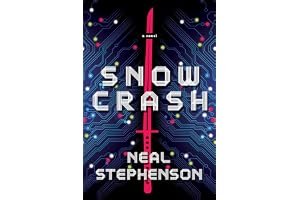
Snow Crash
Neal Stephenson
4.8
In the near future, Americans excel at only two things: writing software and delivering pizza in less than 30 minutes.
Franchises line the Los Angeles freeway as far as the eye can see: Reverend Wayne's Pearly Gates, Mr. Lee's Greater Hong Kong, Uncle Enzo's CosaNostra Pizza, Incorporated. The only relief from the sea of logos is within the well-guarded borders of the autonomous city-states that law-abiding citizens are afraid to leave. Is it any wonder that most sane folks have chosen to live in a computer-generated universe? Here in virtual reality is a domain of pleasures limited only by imagination, where everyone is safe and free. But now a strange new computer virus called Snow Crash has invaded even this sanctuary, striking down hackers everywhere, leaving young Hiro Protagonist as humankind's last best hope.
In reality, Hiro delivers pizza for the CosaNostra. But in Metaverse, he's a freelance hacker and a warrior prince--the Deliverator, the greatest sword fighter in the world. Now he's racing along the neon-lit streets on a search-and-destroy mission, looking for the shadowy virtual villain threatening to bring about Infocalypse.
Brin said he is a big sci-fi fan, and Stephenson's acclaimed 1992 novel "Snow Crash" is one of his favorites. The book "was really 10 years ahead of its time," Brin said. "It kind of anticipated what's going to happen, and I find that really interesting." [source]
It's a tough call because I prefer other books of this author. But this book is so important within the history of science fiction. [source]
Marvin Liao
Partner/500 Startups
My list would be (besides the ones I mentioned in answer to the previous question) both business & Fiction/Sci-Fi and ones I personally found helpful to myself. The business books explain just exactly how business, work & investing are in reality & how to think properly & differentiate yourself. On the non-business side, a mix of History & classic fiction to understand people, philosophy to make sense of life and Science fiction to picture what the future could be like (not always utopian). [source]
Cover unavailable
3
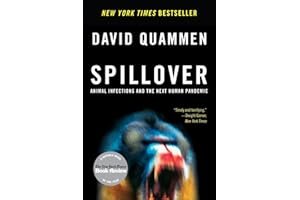
Spillover: Animal Infections and the Next Human Pandemic
David Quammen
4.7
“Science writing as detective story at its best.” —Jennifer Ouellette, Scientific American
A New York Times Notable Book of the Year, a Scientific American Best Book of the Year, and a Finalist for the National Book Critics Circle Award.
Ebola, SARS, Hendra, AIDS, and countless other deadly viruses all have one thing in common: the bugs that transmit these diseases all originate in wild animals and pass to humans by a process called spillover. In this gripping account, David Quammen takes the reader along on this astonishing quest to learn how, where from, and why these diseases emerge and asks the terrifying question: What might the next big one be?
…
Recommended by Kaleigh Rogers.
Kaleigh Rogers
@rachsyme Spillover is a fantastic book though. I'd also recommend Pandemic and/or The Fever by @soniashah [source]
Cover unavailable
4
Animal Farm
George Orwell and Christopher Hitchens
4.6
Animal Farm is one of the most famous warnings ever written. Orwell's immortal satire - 'against Stalin' as he wrote to his French translator - can be read on many levels. With its piercing clarity and deceptively simple style it is no surprise that this novel is required reading for schoolchildren and politicians alike. This fable of the steadfast horses Boxer and Clover, the opportunistic pigs Snowball and Napoleon, and the deafening choir of sheep remains an unparalleled masterpiece.
One reviewer wrote 'In a hundred years' time perhaps Animal Farm ... may simply be a fairy story: today it is a fairy story with a good deal of point.' Over sixty years on in the age of spin, it is more relevant than ever.
Rejected by such eminent publishing figures as Victor Gollancz, Jonathan Cape and T.S. Eliot, Animal Farm was published to great acclaim by Martin Secker and Warburg on 17 August 1945 in an edition of 4500 copies. In the centenary year of Martin Secker, Ltd., Harvill Secker is proud to publish this special edition with a brand-new introduction by Christopher Hitchens.
Whitney Cummings recommended this book on the podcast "The Tim Ferriss Show". [source]
Vlad Tenev
When I was in sixth grade I remember being very upset by the ending of this book. [source]
Heather Brooke
I picked Animal Farm because it is an allegory about power and its seductive and corruptive influence on people regardless of their initial good intentions. [source]
Cover unavailable
5
A Planet of Viruses: Second Edition
Carl Zimmer
4.5
Viruses are the smallest living things known to science, and yet they hold the entire planet in their sway. We’re most familiar with the viruses that give us colds or the flu, but viruses also cause a vast range of other diseases, including one disorder that makes people sprout branch-like growths as if they were trees. Viruses have been a part of our lives for so long, in fact, that we are actually part virus: the human genome contains more DNA from viruses than our own genes. Meanwhile, scientists are discovering viruses everywhere they look: in the soil, in the ocean, even in deep caves miles underground.
This fascinating book explores the hidden world of viruses—a world that each of us inhabit. Here Carl Zimmer, popular science writer and author of Discover magazine’s award-winning blog The Loom, presents the latest research on how viruses hold sway over our lives and our biosphere, how viruses helped give rise to the first life-forms, how viruses are producing new diseases, how we can harness viruses for our own ends, and how viruses will continue to control our fate for years to come. In this eye-opening tour through the frontiers of biology, where scientists are expanding our understanding of life as we know it, we learn that some treatments for the common cold do more harm to us than good; that the world’s oceans are home to an astonishing 1,000,000,000,000,000,000,000,000,000,000 viruses; and that the evolution of HIV is now in overdrive, spawning more mutated strains than we care to imagine.
The New York Times Book Review calls Carl Zimmer “as fine a science essayist as we have.” A Planet of Viruses is sure to please his many fans and further enhance his reputation as one of America’s most respected and admired science journalists.
…
Cover unavailable
6
The Moon is a Harsh Mistress
Robert A. Heinlein
4.4
In 2075, the Moon is no longer a penal colony. But it is still a prison...
Life isn't easy for the political dissidents and convicts who live in the scattered colonies that make up lunar civilisation. Everything is regulated strictly, efficiently and cheaply by a central supercomputer, HOLMES IV.
When humble technician Mannie O'Kelly-Davis discovers that HOLMES IV has quietly achieved consciousness (and developed a sense of humour), the choice is clear: either report the problem to the authorities... or become friends.
And perhaps overthrow the government while they're at it.
The Moon is a Harsh Mistress has been called Robert A. Heinlein's crowning achievement. His best-known novels include Starship Troopers, Mistress and Stranger in a Strange Land.
Robert A Heinlein is, quite seriously, the creator of modern science fiction, in the way that Jane Austen is the creator of the modern novel. [source]
Cover unavailable
7
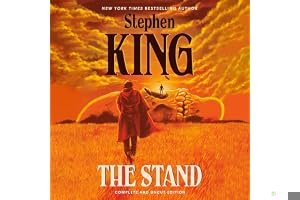
The Stand
Stephen King
4.3
Stephen King’s apocalyptic vision of a world blasted by plague and tangled in an elemental struggle between good and evil remains as riveting and eerily plausible as when it was first published. A patient escapes from a biological testing facility, unknowingly carrying a deadly weapon: a mutated strain of super-flu that will wipe out 99 percent of the world’s population within a few weeks. Those who remain are scared, bewildered, and in need of a leader. Two emerge—Mother Abagail, the benevolent 108-year-old woman who urges them to build a peaceful community in Boulder, Colorado; and Randall Flagg, the nefarious “Dark Man,” who delights in chaos and violence. As the dark man and the peaceful woman gather power, the survivors will have to choose between them—and ultimately decide the fate of all humanity.
(This edition includes all of the new and restored material first published in The Stand: The Complete And Uncut Edition.)
Set in the days of civilization's collapse, Station Eleven tells the story of a Hollywood star, his would-be savior, and a nomadic group of actors roaming the scattered outposts of the Great Lakes region, risking everything for art and humanity.
One snowy night a famous Hollywood actor slumps over and dies onstage during a production of King Lear. Hours later, the world as we know it begins to dissolve. Moving back and forth in time—from the actor's early days as a film star to fifteen years in the future, when a theater troupe known as the Traveling Symphony roams the wasteland of what remains—this suspenseful, elegiac, spellbinding novel charts the strange twists of fate that connect five people: the actor, the man who tried to save him, the actor's first wife, his oldest friend, and a young actress with the Traveling Symphony, caught in the crosshairs of a dangerous self-proclaimed prophet.
“What sets Station Eleven apart from so many other recent dystopian novels is the warmness of @EmilyMandel's writing, the lived-in details of each of these characters’ lives… It’s the kind of book that stays with you.” —@TomiObaro https://t.co/tWakW2L6Tq [source]
Holly Brockwell
@nmsonline @katebevan Great book though 🤷♀️ [source]
Cover unavailable
9
The Coming Plague: Newly Emerging Diseases in a World Out of Balance
Laurie Garrett
4.3
Recommended by Arthur Ammann.
Arthur Ammann
Just as in the Old Testament, I don’t think people always want to hear the message of a prophet. [source]
Cover unavailable
10
Leviathan Wakes (Expanse, #1)
James S. A. Corey
4.3
Humanity has colonized the solar system - Mars, the Moon, the Asteroid Belt and beyond - but the stars are still out of our reach.
Jim Holden is XO of an ice miner making runs from the rings of Saturn to the mining stations of the Belt. When he and his crew stumble upon a derelict ship, "The Scopuli," they find themselves in possession of a secret they never wanted. A secret that someone is willing to kill for - and kill on a scale unfathomable to Jim and his crew. War is brewing in the system unless he can find out who left the ship and why.
Detective Miller is looking for a girl. One girl in a system of billions, but her parents have money and money talks. When the trail leads him to "The Scopuli" and rebel sympathizer Holden, he realizes that this girl may be the key to everything.
Holden and Miller must thread the needle between the Earth government, the Outer Planet revolutionaries, and secretive corporations - and the odds are against them. But out in the Belt, the rules are different, and one small ship can change the fate of the universe.
…
Recommended by Bill Liao and Sean Kerner.
Bill Liao
The human world occurs in language so best get good at it! [source]
Sean Kerner
@campuscodi the Expanse series is awesome (first book is Leviathan Wakes) The Culture series from Iain M. Banks (starting with Consider Phlebas) are classic too.. [source]
Cover unavailable
11
Vax Facts: What to Consider Before Vaccinating at All Ages & Stages of Life
Paul Thomas and DeeDee Hoover
4.3
Cover unavailable
12
An Elegant Defense: The Extraordinary New Science of the Immune System: A Tale in Four Lives
Matt Richtel
4.3
A magnificently reported and soulfully crafted exploration of the human immune system–the key to health and wellness, life and death. An epic, first-of-its-kind book, entwining leading-edge scientific discovery with the intimate stories of four individual lives, by the Pulitzer Prize–winning New York Times journalist.
A terminal cancer patient rises from the grave. A medical marvel defies HIV. Two women with autoimmunity discover their own bodies have turned against them. Matt Richtel's An Elegant Defense uniquely entwines these intimate stories with science’s centuries-long quest to unlock the mysteries of sickness and health, and illuminates the immune system as never before.
The immune system is our body’s essential defense network, a guardian vigilantly fighting illness, healing wounds, maintaining order and balance, and keeping us alive. Its legion of microscopic foot soldiers—from T cells to “natural killers”—patrols our body, linked by a nearly instantaneous communications grid. It has been honed by evolution over millennia to face an almost infinite array of threats.
For all its astonishing complexity, however, the immune system can be easily compromised by fatigue, stress, toxins, advanced age, and poor nutrition—hallmarks of modern life—and even by excessive hygiene. Paradoxically, it is a fragile wonder weapon that can turn on our own bodies with startling results, leading today to epidemic levels of autoimmune disorders.
Richtel effortlessly guides readers on a scientific detective tale winding from the Black Plague to twentieth-century breakthroughs in vaccination and antibiotics, to the cutting-edge laboratories that are revolutionizing immunology—perhaps the most extraordinary and consequential medical story of our time. The foundation that Richtel builds makes accessible revelations about cancer immunotherapy, the microbiome, and autoimmune treatments that are changing millions of lives. An Elegant Defense also captures in vivid detail how these powerful therapies, along with our behavior and environment, interact with the immune system, often for the good but always on a razor’s edge that can throw this remarkable system out of balance.
Drawing on his groundbreaking reporting for the New York Times and based on extensive new interviews with dozens of world-renowned scientists, Matt Richtel has produced a landmark book, equally an investigation into the deepest riddles of survival and a profoundly human tale that is movingly brought to life through the eyes of his four main characters, each of whom illuminates an essential facet of our “elegant defense.”
Explains for the lay reader the intricate biology of our immune system. [source]
Cover unavailable
13
Viruses, Plagues, and History: Past, Present and Future
Michael B. A. Oldstone M.D.
4.3
The story of viruses and humanity is a story of fear and ignorance, of grief and heartbreak, and of great bravery and sacrifice. Michael Oldstone tells all these stories as he illuminates the history of the devastating diseases that have tormented humanity, focusing mostly on the most famous viruses. Oldstone begins with smallpox, polio, and measles. Nearly 300 million people were killed by smallpox in this century alone and the author presents a vivid account of the long campaign to eradicate this lethal killer. Oldstone then describes the fascinating viruses that have captured headlines in more recent years: Ebola, Hantavirus, mad cow disease (a frightening illness made worse by government mishandling and secrecy), and, of course, AIDS. And he tells us of the many scientists watching and waiting even now for the next great plague, monitoring influenza strains to see whether the deadly variant from 1918--a viral strain that killed over 20 million people in 1918-1919--will make a comeback. For this revised edition, Oldstone includes discussions of new viruses like SARS, bird flu, virally caused cancers, chronic wasting disease, and West Nile, and fully updates the original text with new findings on particular viruses. Viruses, Plagues, and History paints a sweeping portrait of humanity's long-standing conflict with our unseen viral enemies. Oldstone's book is a vivid history of a fascinating field, and a highly reliable dispatch from an eminent researcher on the front line of this ongoing campaign.
…
Cover unavailable
14
Real Anthony Fauci: Bill Gates, Big Pharma, and the Global War on Democracy and Public Health (Children’s Health Defense)
Robert F. Kennedy Jr.
4.3
Cover unavailable
15
Crisis in the Red Zone: The Story of the Deadliest Ebola Outbreak in History, and of the Outbreaks to Come
Richard Preston
4.3
The 2013-2014 Ebola epidemic was the deadliest ever--but the outbreaks continue. Now comes a gripping account of the doctors and scientists fighting to protect us, an urgent wake-up call about the future of emerging viruses--from the #1 bestselling author of The Hot Zone, soon to be a National Geographic original miniseries.
This time, Ebola started with a two-year-old child who likely had contact with a wild creature and whose entire family quickly fell ill and died. The ensuing global drama activated health professionals in North America, Europe, and Africa in a desperate race against time to contain the viral wildfire. By the end--as the virus mutated into its deadliest form, and spread farther and faster than ever before--30,000 people would be infected, and the dead would be spread across eight countries on three continents.
In this taut and suspenseful medical drama, Richard Preston deeply chronicles the outbreak, in which we saw for the first time the specter of Ebola jumping continents, crossing the Atlantic, and infecting people in America. Rich in characters and conflict--physical, emotional, and ethical--Crisis in the Red Zone is an immersion in one of the great public health calamities of our time.
Preston writes of doctors and nurses in the field putting their own lives on the line, of government bureaucrats and NGO administrators moving, often fitfully, to try to contain the outbreak, and of pharmaceutical companies racing to develop drugs to combat the virus. He also explores the charged ethical dilemma over who should and did receive the rare doses of an experimental treatment when they became available at the peak of the disaster.
Crisis in the Red Zone makes clear that the outbreak of 2013-2014 is a harbinger of further, more severe outbreaks, and of emerging viruses heretofore unimagined--in any country, on any continent. In our ever more interconnected world, with roads and towns cut deep into the jungles of equatorial Africa, viruses both familiar and undiscovered are being unleashed into more densely populated areas than ever before.
The more we discover about the virosphere, the more we realize its deadly potential. Crisis in the Red Zone is an exquisitely timely book, a stark warning of viral outbreaks to come.
Crisis in the Red Zone reads like a thriller. That the story it tells is all true makes it all more terrifying, and there’s no one who could tell it better than Richard Preston. [source]
Richard Preston’s red zone—beset by ethical, medical, and epidemiological quandaries—shows us at our worst and at our best. This is a story about people, not pathogens, but, even as Preston focuses on one group of clinicians, nurses, and scientists at an underresourced hospital in West Africa, he makes devastatingly clear the worldwide fragility of our public-health systems. Global inequities have epidemiological consequences. This chronicle is haunting, yet not without hope. In spare, gripping prose, he illuminates how our interlinked age can make for enormous vulnerability—but also resilience. [source]
Cover unavailable
16
The Andromeda Strain
Michael Crichton
4.2
In this bestselling classic, four scientists race to prevent a biochemical disaster after a space probe landing goes awry.
A military space probe, sent to collect extraterrestrial organisms from the upper atmosphere, is knocked out of orbit and falls to Earth. Twelve miles from the crash site, an inexplicable and deadly phenomenon terrorizes the residents of a sleepy desert town in Arizona, leaving only two survivors: an elderly addict and a newborn infant. The United States government is forced to mobilize Project Wildfire, a top-secret emergency response protocol. Four of the nation's most elite biophysicists are summoned to a clandestine underground laboratory located five stories beneath the desert and fitted with an automated atomic self-destruction mechanism for cases of irremediable contamination. Under conditions of total news blackout and the utmost urgency, the scientists race to understand and contain the crisis. But the Andromeda Strain proves different from anything they've ever seen--and what they don't know could not only hurt them, but lead to unprecedented worldwide catastrophe.
This was the first science thriller I ever read. I remember thinking it was the first book to make real science so exciting. [source]
Cover unavailable
17
How to Survive a Plague: The Inside Story of How Citizens and Science Tamed AIDS
David France
4.2
The definitive history of the successful battle to halt the AIDS epidemic from the creator of, and inspired by, the seminal documentary How to Survive a Plague.
A riveting, powerful telling of the story of the grassroots movement of activists, many of them in a life-or-death struggle, who seized upon scientific research to help develop the drugs that turned HIV from a mostly fatal infection to a manageable disease. Ignored by public officials, religious leaders, and the nation at large, and confronted with shame and hatred, this small group of men and women chose to fight for their right to live by educating themselves and demanding to become full partners in the race for effective treatments. Around the globe, 16 million people are alive today thanks to their efforts.
Not since the publication of Randy Shilts's classic And the Band Played On has a book measured the AIDS plague in such brutally human, intimate, and soaring terms.
In dramatic fashion, we witness the founding of ACT UP and TAG (Treatment Action Group), and the rise of an underground drug market in opposition to the prohibitively expensive (and sometimes toxic) AZT. We watch as these activists learn to become their own researchers, lobbyists, drug smugglers, and clinicians, establishing their own newspapers, research journals, and laboratories, and as they go on to force reform in the nation s disease-fighting agencies.
With his unparalleled access to this community David France illuminates the lives of extraordinary characters, including the closeted Wall Street trader-turned-activist, the high school dropout who found purpose battling pharmaceutical giants in New York, the South African physician who helped establish the first officially recognized buyers club at the height of the epidemic, and the public relations executive fighting to save his own life for the sake of his young daughter.
Expansive yet richly detailed, this is an insider's account of a pivotal moment in the history of American civil rights. Powerful, heart-wrenching, and finally exhilarating, How to Survive a Plague is destined to become an essential part of the literature of AIDS.
This documentary & book by @ByDavidFrance is one of the best investments anyone can make, if they are in global health. Remarkable story of how affected communities took over and led the fight against AIDS. It is a playbook for any type of advocacy. https://t.co/tfyP64LkQI [source]
Natalie Shure
I finished this book last week and it was absolutely superb. I’d highly recommend it to any organizer! Even if you’ve already seen the companion doc (which is also great!) this adds a lot. I have great taste and you should take this rec very seriously📖🎉🌹✊️ https://t.co/0Aq2VEpyTF [source]
Cover unavailable
18
American Kingpin: The Epic Hunt for the Criminal Mastermind Behind the Silk Road
Nick Bilton
4.2
The unbelievable true story of the man who built a billion-dollar online drug empire from his bedroom—and almost got away with it.
In 2011, a twenty-six-year-old libertarian programmer named Ross Ulbricht launched the ultimate free market: the Silk Road, a clandestine Web site hosted on the Dark Web where anyone could trade anything—drugs, hacking software, forged passports, counterfeit cash, poisons—free of the government’s watchful eye.
It wasn’t long before the media got wind of the new Web site where anyone—not just teenagers and weed dealers but terrorists and black hat hackers—could buy and sell contraband detection-free. Spurred by a public outcry, the federal government launched an epic two-year manhunt for the site’s elusive proprietor, with no leads, no witnesses, and no clear jurisdiction. All the investigators knew was that whoever was running the site called himself the Dread Pirate Roberts.
The Silk Road quickly ballooned into $1.2 billion enterprise, and Ross embraced his new role as kingpin. He enlisted a loyal crew of allies in high and low places, all as addicted to the danger and thrill of running an illegal marketplace as their customers were to the heroin they sold. Through his network he got wind of the target on his back and took drastic steps to protect himself—including ordering a hit on a former employee. As Ross made plans to disappear forever, the Feds raced against the clock to catch a man they weren’t sure even existed, searching for a needle in the haystack of the global Internet.
Drawing on exclusive access to key players and two billion digital words and images Ross left behind, Vanity Fair correspondent and New York Times bestselling author Nick Bilton offers a tale filled with twists and turns, lucky breaks and unbelievable close calls. It’s a story of the boy next door’s ambition gone criminal, spurred on by the clash between the new world of libertarian-leaning, anonymous, decentralized Web advocates and the old world of government control, order, and the rule of law. Filled with unforgettable characters and capped by an astonishing climax, American Kingpin might be dismissed as too outrageous for fiction. But it’s all too real.
It is unbelievably riveting. It does that thing where at the end of every chapter it leaves you just enough we're like "aah!" and you have to read the first paragraph of the next chapter and then before you know it is a downward spiral and you end up finishing this book. Took me four days to get through this. [source]
Cover unavailable
19
War on Ivermectin: The Medicine that Saved Millions and Could Have Ended the Pandemic
Pierre Kory
4.2
Cover unavailable
20
The Strain (The Strain Trilogy, #1)
Guillermo del Toro, Chuck Hogan
4.2
A Boeing 777 arrives at JFK and is on its way across the tarmac, when it suddenly stops dead. All window shades are pulled down. All lights are out. All communication channels have gone quiet. Crews on the ground are lost for answers, but an alert goes out to the CDC. Dr. Ephraim "Eph" Goodweather, head of their Canary project, a rapid-response team that investigates biological threats, gets the call and boards the plane. What he finds makes his blood run cold.
In a pawnshop in Spanish Harlem, a former professor and survivor of the Holocaust named Abraham Setrakian knows something is happening. And he knows the time has come, that a war is brewing.
So begins a battle of mammoth proportions as the vampiric virus that has infected New York begins to spill out into the streets. Eph, who is joined by Setrakian and a motley crew of fighters, must now find a way to stop the contagion and save his city - a city that includes his wife and son - before it is too late.
…
Cover unavailable
21
Forbidden Facts: Government Deceit & Suppression About Brain Damage from Childhood Vaccines
Gavin de Becker
4.2
Have Government agencies and big corporations ever created and promoted outright lies and cover-ups?Of course they have. When they do it together, that is the definition of conspiracy.Internationally recognized criminologist and bestselling author of The Gift of Fear, Gavin de Becker, investigates how the Government "debunks" inconvenient and unwanted truths. This story of true crime includes bogus research, bribes, compromised experts, paid conspirators, destruction of evidence, and massive publicity campaigns to discredit people and truths that don’t fit official wishes.Listeners are provided real-time access to original source material that clearly details how Government agencies and Big Pharma have routinely conspired to deceive the public on matters of profound importance.
…
Cover unavailable
22
Red Book 2018: Report of the Committee on Infectious Diseases
David W. Kimberlin MDFAAP, Sarah S. Long MDFAAP, et al.
4.1
Extending an 8-decade tradition of excellence, Red Book® provides the most reliable and clinically useful information on the manifestations, etiology, epidemiology, diagnosis and treatment of more than 200 childhood infectious diseases.
The 31st edition provides evidence-based guidance to practicing clinicians on pediatric infections and vaccinations based on the recommendations of the committee as well as the combined expertise of the CDC, the FDA, and hundreds physician contributors.
New in Red Book 2018:
All chapters were assessed for relevance given the dynamic environment in pediatric medicine today and every chapter has been modified since the last edition
3 new chapters added (Chikungunya, Coagulase-Negative Staphylococcal Infections, and Zika). Standardized approaches to disease prevention through immunizations, antimicrobial prophylaxis, and infection-control practices have been updated throughout Recommendations for the use of doxycycline have been liberalized. References to evidence-based policy recommendations have been recommended Appropriate chapters have been updated to be consistent with 2018 AAP and CDC vaccine recommendations, CDC recommendations for immunization of health care personnel, and drug recommendations from 2018 Nelson's Pediatric Antimicrobial Therapy.
Red Book® is an indispensable reference for pediatricians and pediatric infectious disease specialists and is useful for family medicine and emergency medicine physicians as well. Public health and school health professionals, medical residents, and students also will find it a high-yield source of pediatric infectious disease and vaccine information.
…
Cover unavailable
23
Scientific American September 2026
Scientific American
4.1
Scientific American covers the most important and exciting research, ideas and knowledge in science, health, technology, the environment and society. It is committed to sharing trustworthy knowledge and enhancing our understanding of the world .
Cover unavailable
24
The Maze Runner (The Maze Runner, #1)
James Dashner
4.1
There are alternate cover editions for this ASIN here and here.
If you ain’t scared, you ain’t human.
When Thomas wakes up in the lift, the only thing he can remember is his name. He’s surrounded by strangers—boys whose memories are also gone.
Nice to meet ya, shank. Welcome to the Glade.
Outside the towering stone walls that surround the Glade is a limitless, ever-changing maze. It’s the only way out—and no one’s ever made it through alive.
Everything is going to change.
Then a girl arrives. The first girl ever. And the message she delivers is terrifying.
Remember. Survive. Run.
…
Cover unavailable
25
Xenocide (Ender's Saga, #3)
Orson Card
4.1
The war for survival of the planet Lusitania will be fought in the hearts of a child named Gloriously Bright.
On Lusitania, Ender found a world where humans and pequininos and the Hive Queen could all live together; where three very different intelligent species could find common ground at last. Or so he thought.
Lusitania also harbors the descolada, a virus that kills all humans it infects, but which the pequininos require in order to become adults. The Starways Congress so fears the effects of the descolada, should it escape from Lusitania, that they have ordered the destruction of the entire planet, and all who live there. The Fleet is on its way, and a second xenocide seems inevitable.
…
Recommended by Ev Williams.
Cover unavailable
26
The Perfect Predator: A Scientist's Race to Save Her Husband from a Deadly Superbug: A Memoir
Steffanie Strathdee
4.1
A "fascinating and terrifying" memoir of one woman's extraordinary effort to save her husband's life (Scientific American) -- and the discovery of a forgotten cure that has the potential to save millions more.
Epidemiologist Steffanie Strathdee and her husband, psychologist Tom Patterson, were vacationing in Egypt when Tom came down with a stomach bug. What at first seemed like a case of food poisoning quickly turned critical, and by the time Tom had been transferred via emergency medevac to the world-class medical center at UC San Diego, where both he and Steffanie worked, blood work revealed why modern medicine was failing: Tom was fighting one of the most dangerous, antibiotic-resistant bacteria in the world.
Frantic, Steffanie combed through research old and new and came across phage therapy: the idea that the right virus, aka "the perfect predator," can kill even the most lethal bacteria. Phage treatment had fallen out of favor almost 100 years ago, after antibiotic use went mainstream. Now, with time running out, Steffanie appealed to phage researchers all over the world for help. She found allies at the FDA, researchers from Texas A&M, and a clandestine Navy biomedical center -- and together they resurrected a forgotten cure.
A nail-biting medical mystery, The Perfect Predator is a story of love and survival against all odds, and the (re)discovery of a powerful new weapon in the global superbug crisis.
…
Cover unavailable
27
Ebola: The Natural and Human History of a Deadly Virus
David Quammen
4.1
In 1976 a deadly virus emerged from the Congo forest. As swiftly as it came, it disappeared, leaving no trace. Over the four decades since, Ebola has emerged sporadically, each time to devastating effect. It can kill up to 90 percent of its victims. In between these outbreaks, it is untraceable, hiding deep in the jungle. The search is on to find Ebola’s elusive host animal. And until we find it, Ebola will continue to strike. Acclaimed science writer and explorer David Quammen first came near the virus while he was traveling in the jungles of Gabon, accompanied by local men whose village had been devastated by a recent outbreak. Here he tells the story of Ebola—its past, present, and its unknowable future.
Extracted from Spillover by David Quammen, updated and with additional material.
…
Cover unavailable
28
Virus Hunter: Thirty Years of Battling Hot Viruses Around the World
C. J. Peters, Mark Olshaker
4.1
A New York Times Notable Book
The man who led the battle against Ebola in The Hot Zone teams up with the bestselling co-author of Mind Hunter to chronicle his extraordinary thirty-year career fighting deadly viruses.
For three decades, Dr. C. J. Peters was on the front lines of our biological battle against “hot” viruses around the world. In the course of that career, he learned countless lessons about our interspecies turf wars with infectious agents. Called in to contain an outbreak of deadly hemorrhagic fever in Bolivia, he confronted the despair of trying to save a colleague who accidentally infected himself with an errant scalpel. Working in Level 4 labs on the Machupo and Ebola viruses, he saw time and again why expensive high-tech biohazard containment equipment is only as safe as the people who use it.
Because of new, emerging viruses, and the return of old, “vanquished” ones for which vaccines do not exist, there remains a very real danger of a new epidemic that could, without proper surveillance and early intervention, spread worldwide virtually overnight. And the possibility of foreign countries or terrorist groups using deadly airborne viruses—the poor man’s nuclear arsenal—looms larger than ever.
High-octane science writing at its best and most revealing, Virus Hunter is a thrilling first-person account of what it is like to be a warrior in the Hot Zone.
…
Cover unavailable
29
Vaccines: Mythology, Ideology, and Reality
John Leake, Peter A. McCullough MD MPH
4.1
The word “vaccine” derives from the Latin word for cow. The English physician, Edward Jenner, coined it in his 1798 pamphlet An Inquiry into the Causes and Effects of the Variolae Vaccinae. The last two Latin words mean “Smallpox of the Cow,” or cowpox. Jenner postulated that cowpox causes mild disease in humans while protecting them from the more dangerous smallpox. His proposal for inoculation with a weak form of disease-causing matter to prevent serious illness became the central concept of infectious disease medicine and has remained so ever since. The word “vaccine” was subsequently applied to immunizations against all infectious diseases. Its etymology is amazingly apt, because vaccines are the ultimate sacred cow. Vaccines: Mythology, Ideology, and Reality tells the story of this technology and the celebrated men who developed it with some success, but also with failures that are never mentioned in the celebratory literature on vaccines. Vaccine advocates often proclaim that they “follow the science,” but most vaccine development has been a matter of guesses, gambles, and wild experimentation. Its key figures have been biased by religious faith, wishful thinking, ideology, and a desire for recognition and money. Though credit is due to some vaccines for reducing infectious disease morbidity and mortality, their contribution to public health in developed nations has been grossly exaggerated by propagandists. Dramatic improvements in nutrition and sanitation were the primary drivers of this trend. The authors do not dismiss the concept of vaccination but seek to promote a more informed and less dogmatic discussion about its risks and benefits. Critical evaluation can only make the technology safer and more effective.
…
Cover unavailable
30
Vax-Unvax: Let the Science Speak (Children’s Health Defense)
Robert F. Kennedy Jr.
4.1
Cover unavailable
31
Flu: The Story Of The Great Influenza Pandemic
Gina Kolata
4.1
Feeling tired, achy, and congested? You'll hope not after reading science writer Gina Kolata's engrossing Flu, a fascinating look at the 1918 epidemic that wiped out around 40 million people in less than a year and afflicted more than one of every four Americans. This tragedy, just on the heels of World War I and far more deadly, so traumatized the survivors that few would talk about it afterward. Kolata reports on the scientific investigation of this bizarre outbreak, in particular the attempts to sequence the virus' DNA from tissue samples of victims. She also looks at the social and personal effects of the disease, from improved public health awareness to the loss of productivity. (The disease affected 20- to 40-year-olds disproportionately.)
How could this disease, now almost trivial to healthy young people, have become so virulent? The answer is complex, invoking epidemiology, immunology, and even psychology, but Kolata cuts a swath through medical papers and statistical reports to tell a story of an out-of-control virus exploiting an exhausted world on the brink of transition into modern society. Through letters, interviews, and news reports, she pieces together a cautionary tale that captures the horror of a devastating illness. Research marches onward, but we're still at the mercy of something as simple as the flu. --Rob Lightner
…
Cover unavailable
32
Virus Mania: How The Medical Industry Continually Invents Epidemics, Making Billion Dollar Profits At Our Expense
Torsten Engelbrecht
4.1
A daily scan through the news gives the impression that the world is constantly invaded by virus epidemics. The latest headlines feature the human papillomavirus (HPV) alleged to cause cervical cancer and the avian flu virus, H5N1. The public is also continually terrorized by reports about SARS, BSE, hepatitis C, AIDS, Ebola, and polio. However, this virus mayhem ignores very basic scientific facts: the existence, the pathogenicity and the deadly effects of these agents have never been proven. The authors of Virus Mania, journalist Torsten Engelbrecht and doctor of internal medicine Claus K�hnlein, show that these alleged contagious agents are, in fact, particles produced by the cells themselves as a consequence of certain stress factors such as drugs, malnutrition, pesticides and heavy metals.
The central aim of this book is to steer the discussion back to a real scientific debate and put medicine back on the path of an impartial analysis of the facts. It will put medical experiments, clinical trials, statistics and government policies under the microscope, revealing that the people charged with protecting our health and safety have deviated from this path. To substantiate these statements, the authors cite dozens of highly renowned scientists and present approximately 1,100 pertinent scientific references.
The topic of this book is of pivotal significance. The pharmaceutical companies and top scientists rake in enormous sums of money by attacking germs and the media boosts its audience ratings and circulations with sensationalized reporting (the coverage of the New York Times and Der Spiegel are specifically analyzed). "The primary purpose of commercially-funded clinical research is to maximize financial return on investment, not health," says John Abramson of Harvard Medical School. Virus Mania will inform you on how such an environment took root-and how to empower yourself for a healthy life.
…
Cover unavailable
33
The Vaccine Mafia: Pfizer's Former Chief Toxicologist Proves How Toxic Substances Were Unlawfully Sold to Us as a Solution for COVID-19
Helmut Sterz
4.1
Profit, Power, and the Pandemic Rollout—Inside the Global mRNA Vaccine DebacleFormer Pfizer chief toxicologist Helmut Sterz presents a critical examination of the development, approval, and global rollout of mRNA COVID-19 vaccines—particularly those produced by Pfizer/BioNTech. The Vaccine Mafia details the failure of pharmaceutical companies, regulatory authorities, politicians, and international organizations to follow established scientific and ethical standards during the pandemic. Drawing on the author’s decades of experience in pharmaceutical toxicology, Sterz reveals the many ways the vaccines’ inadequate or omitted preclinical safety testing put the world’s population at risk.Sterz demonstrates how “emergency” approvals allowed manufacturers to bypass long-standing international guidelines governing toxicity testing, especially with regard to reproductive and cancer risks. They also allowed governments and health authorities to ignore or conceal evidence of serious adverse effects that occurred, including myocarditis, reproductive harm, and other long-term health risks.In addition to the scientific and regulatory process, The Vaccine Mafia examines the broader political and economic structures surrounding the pandemic response, alleging close cooperation between pharmaceutical corporations, regulators, global institutions, and political leaders. Sterz argues that misleading public messaging surrounding vaccine safety and effectiveness was politically motivated and raises concerns about liability protections for manufacturers. He calls for legal accountability, compensation for vaccine victims, and a comprehensive reappraisal of pandemic policies.Ultimately, The Vaccine Mafia portrays the COVID-19 vaccination campaign as a preventable global medical and ethical catastrophe driven by profit, political influence, and disregard for established safety principles.
…
Cover unavailable
34
House on Fire: The Fight to Eradicate Smallpox
William H. Foege
4.1
A story of courage and risk-taking, House on Fire tells how smallpox, a disease that killed, blinded, and scarred millions over centuries of human history, was completely eradicated in a spectacular triumph of medicine and public health. Part autobiography, part mystery, the story is told by a man who was one of the architects of a radical vaccination scheme that became a key strategy in ending the horrible disease when it was finally contained in India.
In House on Fire, William H. Foege describes his own experiences in public health and details the remarkable program that involved people from countries around the world in pursuit of a single objective—eliminating smallpox forever. Rich with the details of everyday life, as well as a few adventures, House on Fire gives an intimate sense of what it is like to work on the ground in some of the world’s most impoverished countries—and tells what it is like to contribute to programs that really do change the world.
This book gives you a great view from the front lines of that battle. [source]
Thomas Frieden
House on Fire is a fantastic book about the fight to eradicate smallpox. Before becoming director, Foege led the efforts to eradicate smallpox in India and Africa and came up with a key innovation that led to eradication. As one of the staff at the CDC said of this book, “Even though we know how it comes out, it’s still a page-turner”. It’s so exciting. [source]
Cover unavailable
35
Nerds Series Collection Michael Buckley 5 Books Set (NERDS (National Espionage, Rescue, and Defense Society),M is for Mama's Boy,Attack of the Bullies, The Cheerleaders of Doom, The Villan Virus)
Kelly Walden
4.1
Cover unavailable
36
Deadliest Enemy: Our War Against Killer Germs
Michael T. Osterholm
4.1
A world-leading epidemiologist shares his stories from the front lines of our war on infectious diseases and explains how to prepare for epidemics that can challenge world order.
Every new development--from exploding human and animal populations to trade and travel--intensifies our susceptibility to a devastating epidemic. Ironically, a pandemic on the scale of the 1918 flu that killed perhaps a hundred million people would be deadlier today, despite a century of medical advances. As the current Zika epidemic proves, we are wholly unprepared for these diseases. So what can-and must--we do to protect ourselves against mankind's Deadliest Enemy? Separating experience-borne fact from mindless fear, Michael Osterholm and Mark Olshaker detail the plans and resources that must be in place when the unthinkable becomes the inevitable. DEADLIEST ENEMY is high scientific drama, a chronicle of mystery and discovery, a reality check, and a plan of action.
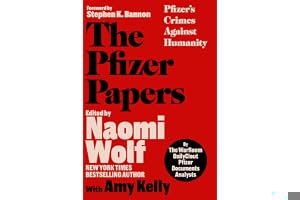
The Pfizer Papers: Pfizer's Crimes Against Humanity
The WarRoom/DailyClout Pfizer Documents Analysts
4.1
Cover unavailable
38
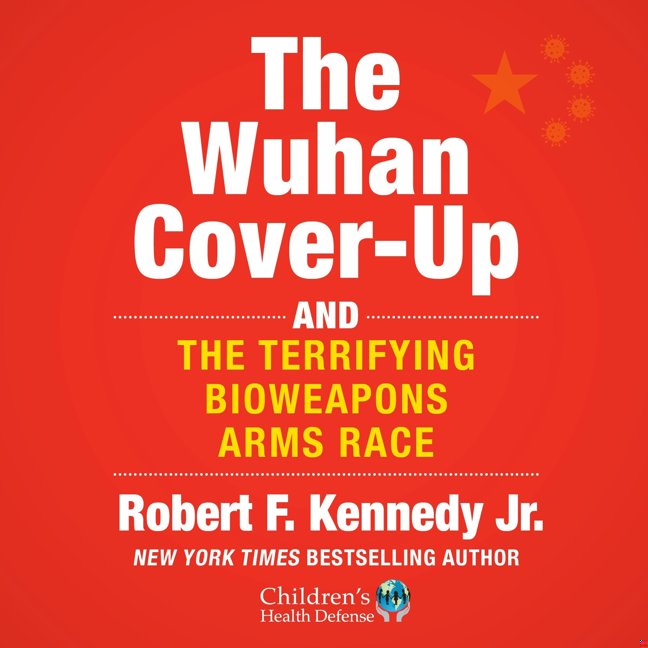
The Wuhan Cover-Up: And the Terrifying Bioweapons Arms Race (Children’s Health Defense)
Robert F. Kennedy Jr.
4.1
“RFK Jr. exposes the decades of lies.”—Luc Montagnier, Nobel laureateFrom the New York Times, Wall Street Journal, USA Today, Publishers Weekly bestselling author of The Real Anthony Fauci comes an explosive exposé of the cover-up behind the true origins of COVID-19.“Gain-of-function” experiments are often conducted to deliberately develop highly virulent, easily transmissible pathogens for the stated purpose of developing preemptive vaccines for animal viruses before they jump to humans. More insidious is the “dual use” nature of this research, specifically directed toward bioweapons development.The Wuhan Cover-Up pulls back the curtain on how the US government's increase in biosecurity spending after the 2001 terror attacks set in motion a plan to transform the National Institute of Allergy and Infectious Diseases (NIAID), under the direction of Dr. Anthony Fauci, into a de facto Defense Department agency.While Dr. Fauci zealously funded and pursued gain-of-function research, concern grew among some scientists and government officials about the potential for accidental or deliberate release of weaponized viruses from labs that might trigger worldwide pandemics. A moratorium was placed on this research, but true to form, Dr. Fauci found ways to continue unperturbed—outsourcing some of the most controversial experiments offshore to China and providing federal funding to Wuhan Institute of Virology's (WIV's) leading researchers for gain-of-function studies in partnership with the Chinese military and the Chinese Communist Party.Robert F. Kennedy Jr.'s meticulously researched and rigorously sourced analysis leads listeners on a staggering journey to learn about:the key enablers and henchmen pushing for gain-of-function researchthe economic motives behind gain-of-function researchsuccessfully engineered “chimeric viruses” that can infect and kill humansthe coordinated effort to silence speculation of COVID-19’s laboratory genesisthe complicity of scientific journals to hide the origins of COVID-19the role of the Wuhan Institute of Virology in China’s biowarfare/biodefense programthe relationships between US health, military, and intelligence bureaucracies and scientists and their Chinese counterpartsthe roles of Bill Gates and Sir Jeremy Farrar in helping to orchestrate China’s global cover-upThe Wuhan Cover-Up unveils a global conspiracy of epic proportion and lethal consequence.
…
Cover unavailable
39
The Truth About Contagion: Exploring Theories of How Disease Spreads
Thomas S. Cowan MD
4.1
Cover unavailable
40
Pandemic (Infected, #3)
Scott Sigler, Phil Gigante, et al
4.1
The explosive conclusion to the New York Times bestselling trilogy that began with Infected and Contagious.
The alien intelligence that unleashed two horrific assaults on humanity has been destroyed. But before it was brought down in flames, it launched one last payload-a tiny soda-can-sized canister filled with germs engineered to wreak new forms of havoc on the human race. That harmless-looking canister has languished under thousands of feet of water for years, undisturbed and impotent...until now.
Days after the new disease is unleashed, a quarter of the human race is infected. Entire countries have fallen. And our planet's fate now rests on a small group of unlikely heroes, racing to find a cure before the enemies surrounding them can close in.
…
Cover unavailable
41
The Virus and the Vaccine: Contaminated Vaccine, Deadly Cancers, and Government Neglect
Debbie Bookchin
4.1
Jonas Salk's polio vaccine is regarded as a veritbale medical miracle, for it largely eradicated one of the most feared diseases of the 20th century. But the story of the vaccine has a dark side, one that has never been fully told before. Between 1954 and 1963, close to 98 million Americans received polio vaccinations contaminated with a carcinogenic monkey virus, now known as SV40. The government downplayed the incident, and it was generally accepted that although oncogenic to lab animals, SV40 was harmless to humans. But now SV40 is showing up in human cancers, and prominent researchers are demanding a serious public health response to this forgotten polio vaccine contaminant. A gripping medical detective story, The Virus and the Vaccine raises major questions about vaccine policy.
…
Cover unavailable
42
Level 4: Virus Hunters of the CDC
Joseph B McCormick
4.1
Cover unavailable
43
The Day My Kids Stayed Home: Explaining COVID-19 and the Corona Virus to Your Kids
Adam M Wallace, Valentina T Segovia, et al.
4.1
The COVID-19 pandemic of 2020 has created massive disruption in kids' lives around the world. As adults it's our responsibility to learn about this virus and to keep our communities safe. This book is meant to help parents and teachers discuss COVID-19 with children and teach them about the virus and how we can stay healthy. Things are scarier when we don't understand them. The first half of the book is a kid's book that tells the story of two puppies learning about COVID-19; the second half is meant for adults and is a short explanation of what is happening and what we can do about it.
After reading the back half you will be ready to discuss COVID-19
with your kids. Remember, together we can beat this.
…
Cover unavailable
44
Darwin's Radio (Darwin's Radio #1)
Greg Bear
4.1
Molecular biologist Kaye Lang's theory--that ancient diseases encoded in the DNA of humans can return to life--has become a chilling reality. The shocking evidence: a "virus-hunter" has tracked down a flu-like disease that kills expectant mothers and their offspring.
Cover unavailable
45
Code Zero (Joe Ledger, #6)
Jonathan Maberry, Ray Porter, et al
4.1
For years the Department of Military Sciences has fought to stop terrorists from using radical bioweapons—designer plagues, weaponized pathogens, genetically modified viruses, and even the zombie plague that first brought Ledger into the DMS. These terrible weapons have been locked away in the world’s most secure facility. Until now. Joe Ledger and Echo Team are scrambled when a highly elite team of killers breaks the unbreakable security and steals the world’s most dangerous weapons. Within days there are outbreaks of mass slaughter and murderous insanity across the American heartland. Can Joe Ledger stop a brilliant and devious master criminal from turning the Land of the Free into a land of the dead?
Code Zero, a Joe Ledger novel from Jonathan Maberry, is the exciting direct sequel to Patient Zero
…
Cover unavailable
46
Earth Abides
George R. Stewart
4.1
First published in 1949 and a winner of the inaugural International Fantasy Award in 1951, Earth Abides went on to become one of the most influential science-fiction novels of the twentieth century. It remains a fresh, provocative story of apocalyptic pandemic, societal collapse, and rebirth.
The cabin had always been a special retreat for Isherwood Williams, a haven from the demands of society. But one day while hiking, Ish was bitten by a rattlesnake, and the solitude he had so desired took on dire new significance. He was sick for days—and often delirious—waking up to find two strangers peering in at him from the cabin door. Yet oddly, instead of offering help, the two ran off as if terrified. Not long after, the coughing began. Ish suffered chills and fever, and a measles-like rash on his skin. He was one of the few people in the world to live through that peculiar malady, but he didn't know it then.
Ish headed home when he finally felt himself again—and noticed the strangeness almost immediately. No cars passed him on the road; the gas station not far from his cabin looked abandoned; and he was shocked to see the body of a man on the roadside near a small town. Without a radio or phone, Ish had no idea of humanity’s abrupt demise. He had escaped death, yet could not escape the catastrophe—and with an eerie detachment he found himself curious as to how long it would be before all traces of civilization faded from Earth.
In a steel-and-lead-encased bunker 40 feet below the basement level of his house, Captain Lee Harden of the United States Army waits. On the surface, a plague ravages the planet, infecting over 90% of the populace. The bacterium burrows through the brain, destroying all signs of humanity and leaving behind little more than base, prehistoric instincts. The infected turn into hyper-aggressive predators, with an insatiable desire to kill and feed. Some day soon, Captain Harden will have to open the hatch to his bunker, and step out into this new wasteland, to complete his very simple mission: Subvenire Refectus.
To Rescue and Rebuild.
…
Cover unavailable
48
Annihilation (Southern Reach #1)
Jeff Vandermeer
4.1
Area X has been cut off from the rest of the world for decades. Nature has reclaimed the last vestiges of human civilization. The first expedition returned with reports of a pristine, Edenic landscape; the second expedition ended in mass suicide, the third in a hail of gunfire as its members turned on one another. The members of the eleventh expedition returned as shadows of their former selves, and within weeks, all had died of cancer. In Annihilation, the first volume of Jeff VanderMeer's Southern Reach Trilogy, we join the twelfth expedition.
The group is made up of four women: an anthropologist; a surveyor; a psychologist, the de facto leader; and our narrator, a biologist. Their mission is to map the terrain, record all observations of their surroundings and of one another, and, above all, avoid being contaminated by Area X itself.
They arrive expecting the unexpected, and Area X delivers—but it’s the surprises that came across the border with them and the secrets the expedition members are keeping from one another that change everything.
…
Recommended by Stephen King, James Bradley, Kate Marvel, and 1 others.
I'm loving THE SOUTHERN REACH TRILOGY, by Jeff Vandermeer. Recommended by an indie bookseller. Creepy and fascinating. [source]
James Bradley
In the introduction to The Weird, the 2011 anthology that Jeff Vandermeer and his wife Ann edited, they suggest the weird isn’t a genre or a form so much as a technique or an affect, a thing that lurks in the interstices, and which emerges in unexpected and unsettling ways. I rather love this idea, not least because it captures something of what makes both Annihilation and its two sequels, Authority and Acceptance, so compelling, the way reading them leaves you feeling like you’ve been colonised yourself, your brain permanently altered by your descent into the world of the books. [source]
Kate Marvel
Annihilation evokes two things very well: that sense of confusion and powerlessness, and the drive to exert some sort of control over the situation by exploring and learning. [source]
Cover unavailable
49
Doc 2 Doc: Tony And Jace Learn About Viruses
Dr. Dale Okorodudu
4.1
Cover unavailable
50
Crocodile Tears (Alex Rider, #8)
Anthony Horowitz
4.1
It's just another day in the life of an average kid. If you're Alex Rider, that is. A con artist has realized there is big money in charity: the bigger the disaster, the greater the money flow! So that is what he will produce: the biggest disaster known to man, all thanks to genetically modified corn that can release a virus so potent it can knock out an entire country in one windy day. But Alex Rider will face whatever it takes - gunfire, explosions, hand-to-hand combat with mercenaries - to bring down his most dangerous adversary yet.
Often imitated, never equaled, the series that triggered a reading phenomenon is back, exhilarating and addictive as ever.
…
Cover unavailable
51
The Demon in the Freezer
RICHARD PRESTON
4.1
The first major bioterror event in the United States-the anthrax attacks in October 2001-was a clarion call for scientists who work with “hot” agents to find ways of protecting civilian populations against biological weapons. In The Demon in the Freezer, his first nonfiction book since The Hot Zone, a #1 New York Times bestseller, Richard Preston takes us into the heart of Usamriid, the United States Army Medical Research Institute of Infectious Diseases at Fort Detrick, Maryland, once the headquarters of the U.S. biological weapons program and now the epicenter of national biodefense. Peter Jahrling, the top scientist at Usamriid, a wry virologist who cut his teeth on Ebola, one of the world’s most lethal emerging viruses, has ORCON security clearance that gives him access to top secret information on bioweapons. His most urgent priority is to develop a drug that will take on smallpox-and win. Eradicated from the planet in 1979 in one of the great triumphs of modern science, the smallpox virus now resides, officially, in only two high-security freezers-at the Centers for Disease Control in Atlanta and in Siberia, at a Russian virology institute called Vector. But the demon in the freezer has been set loose. It is almost certain that illegal stocks are in the possession of hostile states, including Iraq and North Korea. Jahrling is haunted by the thought that biologists in secret labs are using genetic engineering to create a new superpox virus, a smallpox resistant to all vaccines. Usamriid went into a state of Delta Alert on September 11 and activated its emergency response teams when the first anthrax letters were opened in New York and Washington, D.C. Preston reports, in unprecedented detail, on the government’s response to the attacks and takes us into the ongoing FBI investigation. His story is based on interviews with top-level FBI agents and with Dr. Steven Hatfill. Jahrling is leading a team of scientists doing controversial experiments with live smallpox virus at CDC. Preston takes us into the lab where Jahrling is reawakening smallpox and explains, with cool and devastating precision, what may be at stake if his last bold experiment fails.
…
Cover unavailable
52
Animal Viruses and Humans, a Narrow Divide: How Lethal Zoonotic Viruses Spill Over and Threaten Us
Warren A. Andiman
4.1
Dr. Warren Andiman introduces the mysterious world of viruses: what they look like, how they invade so efficiently, and how they take over cells' complex machinery to wreak potentially fatal havoc. In particular, he discusses the circumstances that bring humans into intimate contact with other species and how viruses exploit that contact.
Warren Andiman, MD is Professor Emeritus of Pediatrics at Yale Medical School. He founded the AIDS Care Program at Yale-New Haven Hospital and is the Medical Director of the Pediatric AIDS Care Program at Yale-New Haven Children's Hospital.
…
Cover unavailable
53
A Year of Positive Thinking: Daily Inspiration, Wisdom, and Courage
Cyndie Spiegel
4.1
The acclaimed author of Chimera and The Hydra Protocol delivers his spectacular breakout novel—an entertaining, page-turning zombie epic.
Anyone can be positive . . .
Years after a plague killed 99 percent of the population, turning them into infectious zombies, Finnegan and his family live in a barricaded New York City. But Finn's sheltered life fractures when his unsuspecting mother falls sick with the zombie disease—latent inside her since before her son's birth.
Finn, too, can be infected. If he remains healthy for the last two years of the potential incubation period, he'll be cleared. Until then, he must be moved to a special facility for positives, segregated to keep the healthy population safe.
Tattooed with a plus sign on his hand that marks him as a positive, Finn is exiled from the city. But when marauders kill the escort sent to transport him, Finn must learn how to survive alone in an eerie, disintegrated landscape. And though the zombies are everywhere, Finn discovers that the real danger is his fellow humans.
…
Cover unavailable
54
The Death Cure (The Maze Runner, #3)
James Dashner
4.1
It’s the end of the line.
WICKED has taken everything from Thomas: his life, his memories, and now his only friends—the Gladers. But it’s finally over. The trials are complete, after one final test.
Will anyone survive?
What WICKED doesn’t know is that Thomas remembers far more than they think. And it’s enough to prove that he can’t believe a word of what they say.
The truth will be terrifying.
Thomas beat the Maze. He survived the Scorch. He’ll risk anything to save his friends. But the truth might be what ends it all.
The time for lies is over.
…
Cover unavailable
55
"Cause Unknown": The Epidemic of Sudden Deaths in 2021 & 2022 (Children’s Health Defense)
Ed Dowd
4.1
Cover unavailable
56
Ignition!: An Informal History of Liquid Rocket Propellants
John Drury Clark, Isaac Asimov
4.1
This newly reissued debut book in the Rutgers University Press Classics Imprint is the story of the search for a rocket propellant which could be trusted to take man into space. This search was a hazardous enterprise carried out by rival labs who worked against the known laws of nature, with no guarantee of success or safety. Acclaimed scientist and sci-fi author John Drury Clark writes with irreverent and eyewitness immediacy about the development of the explosive fuels strong enough to negate the relentless restraints of gravity. The resulting volume is as much a memoir as a work of history, sharing a behind-the-scenes view of an enterprise which eventually took men to the moon, missiles to the planets, and satellites to outer space. A classic work in the history of science, and described as “a good book on rocket stuff…that’s a really fun one” by SpaceX founder Elon Musk, readers will want to get their hands on this influential classic, available for the first time in decades.
There is a good book on rocket stuff called Ignition! An informal history of liquid rocket propellants by John Clark, that’s a really fun one. [source]
Cover unavailable
57
Virals (Virals, #1)
Kathy Reichs
4.1
Tory Brennan, niece of acclaimed forensic anthropologist Temperance Brennan (of the Bones novels and hit TV show), is the leader of a ragtag band of teenage "sci-philes" who live on a secluded island off the coast of South Carolina. When the group rescues a dog caged for medical testing on a nearby island, they are exposed to an experimental strain of canine parvovirus that changes their lives forever.
As the friends discover their heightened senses and animal-quick reflexes, they must combine their scientific curiosity with their newfound physical gifts to solve a cold-case murder that has suddenly become very hot if they can stay alive long enough to catch the killer's scent.
Fortunately, they are now more than friends. They're a pack. They are Virals.
…
Cover unavailable
58
Lies My Gov't Told Me: And the Better Future Coming (Children’s Health Defense)
Robert W. Malone
4.1
Cover unavailable
59
Flesh & Bone (Benny Imura, #3)
Jonathan Maberry
4.1
Reeling from the tragic events of Dust & Decay, Benny Imura and his friends plunge deep into the zombie-infested wastelands of the great Rot & Ruin. Benny, Nix, Lilah and Chong journey through a fierce wilderness that was once America, searching for the jet they saw in the skies months ago. If that jet exists then humanity itself must have survived…somewhere. Finding it is their best hope for having a future and a life worth living.
But the Ruin is far more dangerous than any of them can imagine. They are hunted by fierce animals escaped from zoos and circuses. They must raid zombie-infested towns for food and medical supplies. They discover the very real truth in the old saying: In the Rot & Ruin…everything wants to kill you.
And what is happening to the zombies? Swarms of them are coming from the east, devouring everything in their paths. These zoms are different. Faster, smarter, infinitely more dangerous. Has the zombie plague mutated, or is there something far more sinister behind this new invasion of the living dead?
In Flesh & Bone, Benny Imura, Nix Riley, Lou Chong and Lilah the Lost Girl are pitted against dangers greater than anything they've ever faced. To survive, each of them must rise to become the warriors Tom trained them to be.
…
Cover unavailable
60
Structuresor Why Things Don T Fall Down
J. E. Gordon
4.1
I am very much aware that it is an act of extreme rashness to attempt to write an elementary book about structures. Indeed it is only when the subject is stripped of its mathematics that one begins to realize how difficult it is to pin down and describe those structural concepts which are often called' elementary'; by which I suppose we mean 'basic' or 'fundamental'. Some of the omis sions and oversimplifications are intentional but no doubt some of them are due to my own brute ignorance and lack of under standing of the subject. Although this volume is more or less a sequel to The New Science of Strong Materials it can be read as an entirely separate book in its own right. For this reason a certain amount of repeti tion has been unavoidable in the earlier chapters. I have to thank a great many people for factual information, suggestions and for stimulating and sometimes heated discussions. Among the living, my colleagues at Reading University have been generous with help, notably Professor W. D. Biggs (Professor of Building Technology), Dr Richard Chaplin, Dr Giorgio Jeronimidis, Dr Julian Vincent and Dr Henry Blyth; Professor Anthony Flew, Professor of Philosophy, made useful suggestions about the last chapter. I am also grateful to Mr John Bartlett, Consultant Neurosurgeon at the Brook Hospital. Professor T. P."
It is really, really good if you want a primer on structural design. [source]
Cover unavailable
61
Dogs of War (Joe Ledger, #9)
Jonathan Maberry
4.1
Dogs of War: Robots are no longer science fiction. Autonomous, programmed to react like animals: fast, relentless, deadly. From microscopic nanobots to massive self-guided aircraft. This technology is here, it’s assessable, and it’s dangerous. What’s even scarier is that almost anyone can get their hands on it.
A freelance terrorist uses the latest generation of robot dogs to deliver WMDs into cities across America. Ultra-realistic robots in the sex industry are used to spread designer plagues. Sophisticated military weapons systems turn on their human masters. A technological apocalypse is coming and we may be too late to stop it.
Joe Ledger and a newly rebuilt Department of Military Sciences square off against this new and terrible threat. Dogs of War pits Joe against a merciless new enemy and an army of techno-terrorists in a race to prevent a global destruction.
Let loose the Dogs of War.
…
Cover unavailable
62
Medusa (NUMA Files, #8)
Clive Cussler, Paul Kemprecos
4.1
For seven books, Clive Cussler has dazzled readers with the "spine-tingling adventures" (Chicago Tribune) of Kurt Austin, Joe Zavala, and the rest of the NUMA Special Assignments Team, but in Medusa the NUMA team faces what may be its most perilous mission of all.
In the Micronesian Islands, a top secret, U.S. government– sponsored undersea lab conducting vital biomedical research on a rare jellyfish known as the Blue Medusa suddenly . . . disappears. At the same time, off Bermuda, a bathysphere is attacked by an underwater vehicle and left helpless a half mile below the surface, its passengers—including Zavala—left to die. Only Kurt Austin’s heroic measures save them from a watery grave, but, suspecting a connection, Austin puts the NUMA team on the case. He has no idea what he’s just gotten them all into. A hideous series of medical experiments . . . an extraordinarily ambitious Chinese criminal organization . . . a secret new virus that threatens to set off a worldwide pandemic. Austin and Zavala have been in tight spots before, but this time it’s not just their own skins they’re trying to save—it’s the lives of millions.
Filled with the high-stakes suspense and boundless invention unique to Cussler, Medusa is the most thrilling novel yet from the grand master of adventure.
…
Cover unavailable
63
The Villain Virus (NERDS, #4)
Michael Buckley
4.1
A virus has infected the Arlington, Virginia, home of the NERDS headquarters, and it’s much worse than your run-of-the-mill flu. Instead of coughing and sneezing, the victims of this voracious virus are transformed into superintelligent criminal masterminds. Soon nearly everyone—including some of the NERDS team—is plotting to take over the world. With more people breaking out into evil cackles every day, it’s up to Flinch, the hyperactive superspy with a sweet tooth, to stop the virus. Flinch will have to miniaturize himself and take a fantastic voyage through supervillain Heathcliff’s body to fight white blood cells, stomach acid, and a nest of nasty nanobytes in the hope that he can save the world from the Villain Virus.
…
Cover unavailable
64
Scientific American 20th January 2026
Scientific American
4.0
Scientific American covers the most important and exciting research, ideas and knowledge in science, health, technology, the environment and society. It is committed to sharing trustworthy knowledge and enhancing our understanding of the world .
Cover unavailable
65
The Forever Song (Blood of Eden, #3)
Julie Kagawa
4.0
Vengeance will be hers.
Allison Sekemoto once struggled with the question: human or monster? With the death of her love, Zeke, she has her answer.
Monster.
Allie will embrace her cold vampire side to hunt down and end Sarren, the psychopathic vampire who murdered Zeke. But the trail is bloody and long, and Sarren has left many surprises for Allie and her companions - her creator Kanin, and her blood brother, Jackal. The trail is leading straight to the one place they must protect at any cost - the last vampire-free zone on Earth, Eden. And Sarren has one final, brutal shock in store for Allie.
In a ruined world where no life is sacred and former allies can turn on you in one heartbeat, Allie will face her darkest days. And if she succeeds, her triumph will be short-lived in the face of surviving forever alone.
THE FINAL HUNT IS ON.
…
Cover unavailable
66
Plague: One Scientist's Intrepid Search for the Truth about Human Retroviruses and Chronic Fatigue Syndrome (ME/CFS), Autism, and Other Diseases
Kent Heckenlively
4.0
On July 22, 2009, a special meeting was held with twenty-four leading scientists at the National Institutes of Health to discuss early findings that a newly discovered retrovirus was linked to chronic fatigue syndrome (CFS), prostate cancer, lymphoma, and eventually neurodevelopmental disorders in children. When Dr. Judy Mikovits finished her presentation the room was silent for a moment, then one of the scientists said, “Oh my God!” The resulting investigation would be like no other in science.
For Dr. Mikovits, a twenty-year veteran of the National Cancer Institute, this was the midpoint of a five-year journey that would start with the founding of the Whittemore-Peterson Institute for Neuro-Immune Disease at the University of Nevada, Reno, and end with her as a witness for the federal government against her former employer, Harvey Whittemore, for illegal campaign contributions to Senate Majority Leader Harry Reid.
On this journey Dr. Mikovits would face the scientific prejudices against CFS, wander into the minefield that is autism, and through it all struggle to maintain her faith in God and the profession to which she had dedicated her life. This is a story for anybody interested in the peril and promise of science at the very highest levels in our country.
…
Cover unavailable
67
Scientific American April 2026
Scientific American
4.0
Scientific American covers the most important and exciting research, ideas and knowledge in science, health, technology, the environment and society. It is committed to sharing trustworthy knowledge and enhancing our understanding of the world .
Cover unavailable
68
Plandemic: Fear Is the Virus. Truth Is the Cure.
Mikki Willis
4.0
Cover unavailable
69
The Hades Factor (Covert-One, #1)
Robert Ludlum, Gayle Lynds
4.0
An unknown doomsday virus quickly claims the lives of four people across the country --- including Dr. Sophia Russell, a researcher leading the team trying to crack the disease. Devastated and enraged, her fiance, Lt. Colonel Jonathan Smith, uncovers evidence that his lover's death was no accident --- that someone out there has the virus, and the pandemic that threatens countless millions of lives was planned.
Not knowing where to turn or whom to trust, Smith assembles a private team to aid his fight against the deadly virus. While the death toll mounts rapidly, their quest leads them to the highest levels of power and the darkest corners of the earth, as Smith and his team match wits with a determined genius out to destroy them, with the fate of the world in the balance ...
…
Cover unavailable
70
Lock In (Lock In, #1)
John Scalzi
4.0
Not too long from today, a new, highly contagious virus makes its way across the globe. Most who get sick experience nothing worse than flu, fever and headaches. But for the unlucky one percent - and nearly five million souls in the United States alone - the disease causes "Lock In": Victims fully awake and aware, but unable to move or respond to stimulus. The disease affects young, old, rich, poor, people of every color and creed. The world changes to meet the challenge.
A quarter of a century later, in a world shaped by what's now known as "Haden's syndrome," rookie FBI agent Chris Shane is paired with veteran agent Leslie Vann. The two of them are assigned what appears to be a Haden-related murder at the Watergate Hotel, with a suspect who is an "integrator" - someone who can let the locked in borrow their bodies for a time. If the Integrator was carrying a Haden client, then naming the suspect for the murder becomes that much more complicated.
But "complicated" doesn't begin to describe it. As Shane and Vann began to unravel the threads of the murder, it becomes clear that the real mystery - and the real crime - is bigger than anyone could have imagined. The world of the locked in is changing, and with the change comes opportunities that the ambitious will seize at any cost. The investigation that began as a murder case takes Shane and Vann from the halls of corporate power to the virtual spaces of the locked in, and to the very heart of an emerging, surprising new human culture. It's nothing you could have expected.
…
Cover unavailable
71
The Fireman
Joe Hill
4.0
From the award-winning, New York Times bestselling author of NOS4A2 and Heart-Shaped Box comes a chilling novel about a worldwide pandemic of spontaneous combustion that threatens to reduce civilization to ashes and a band of improbable heroes who battle to save it, led by one powerful and enigmatic man known as the Fireman.
The fireman is coming. Stay cool.
No one knows exactly when it began or where it originated. A terrifying new plague is spreading like wildfire across the country, striking cities one by one: Boston, Detroit, Seattle. The doctors call it Draco Incendia Trychophyton. To everyone else it’s Dragonscale, a highly contagious, deadly spore that marks its hosts with beautiful black and gold marks across their bodies—before causing them to burst into flames. Millions are infected; blazes erupt everywhere. There is no antidote. No one is safe.
Harper Grayson, a compassionate, dedicated nurse as pragmatic as Mary Poppins, treated hundreds of infected patients before her hospital burned to the ground. Now she’s discovered the telltale gold-flecked marks on her skin. When the outbreak first began, she and her husband, Jakob, had made a pact: they would take matters into their own hands if they became infected. To Jakob’s dismay, Harper wants to live—at least until the fetus she is carrying comes to term. At the hospital, she witnessed infected mothers give birth to healthy babies and believes hers will be fine too. . . if she can live long enough to deliver the child.
Convinced that his do-gooding wife has made him sick, Jakob becomes unhinged, and eventually abandons her as their placid New England community collapses in terror. The chaos gives rise to ruthless Cremation Squads—armed, self-appointed posses roaming the streets and woods to exterminate those who they believe carry the spore. But Harper isn’t as alone as she fears: a mysterious and compelling stranger she briefly met at the hospital, a man in a dirty yellow fire fighter’s jacket, carrying a hooked iron bar, straddles the abyss between insanity and death. Known as The Fireman, he strolls the ruins of New Hampshire, a madman afflicted with Dragonscale who has learned to control the fire within himself, using it as a shield to protect the hunted . . . and as a weapon to avenge the wronged.
In the desperate season to come, as the world burns out of control, Harper must learn the Fireman’s secrets before her life—and that of her unborn child—goes up in smoke.
…
Cover unavailable
72
Final Diagnosis (Sector General, #10)
James White
4.0
It's a massive hospital space station on the Galactic rim--384 levels, a staff of thousands--where human and alien medicine meet.
But Patient Hewlitt, new to Sector General, doesn't want to meet alien medicine--or alien doctors, or alien nurses, or aliens of any kind. Which is just too bad; he's an interesting case, and he'll have to get used to it.
In the meantime, it's always been an article of faith among Sector General's multispecies staff that infections can't pass from one alien race to another. But in this season of anomalies, it looks like they might have their first-ever interstellar virus on their hands, their tentacles, their cilla....
Combining intrigue, ingenious puzzles (and even more ingenious solutions), action, adventure and White's characteristic easy charm, Final Diagnosis is a science-fiction treat.
…
Cover unavailable
73
Lockdown (Urban Outlaws #3)
Peter Jay Black
4.0
When an ally betrays the Urban Outlaws and steals a dangerous computer virus, the kids have no choice but to team up with a shadowy figure known as "The Shepherd" to take down their foe. Even though the kids aren't sure who to trust, their jobs--and more importantly, their lives--are at stake if they don't take a chance.
To track the virus, the Outlaws venture from London to the United States. As they explore the unfamiliar streets and secret passageways of New York City and Los Angeles, they once again risk everything to save themselves . . . and the world.
Reviewers have compared the Urban Outlaws series to Alex Rider, James Bond, and a modern day Robin Hood. This latest middle-grade adventure is filled with non-stop action and is not to be missed.
…
Cover unavailable
74
Deep Medicine: How Artificial Intelligence Can Make Healthcare Human Again
Eric Topol
4.0
A Science Friday pick for book of the year, 2019 One of America's top doctors reveals how AI will empower physicians and revolutionize patient care Medicine has become inhuman, to disastrous effect. The doctor-patient relationship--the heart of medicine--is broken: doctors are too distracted and overwhelmed to truly connect with their patients, and medical errors and misdiagnoses abound. In Deep Medicine, leading physician Eric Topol reveals how artificial intelligence can help. AI has the potential to transform everything doctors do, from notetaking and medical scans to diagnosis and treatment, greatly cutting down the cost of medicine and reducing human mortality. By freeing physicians from the tasks that interfere with human connection, AI will create space for the real healing that takes place between a doctor who can listen and a patient who needs to be heard. Innovative, provocative, and hopeful, Deep Medicine shows us how the awesome power of AI can make medicine better, for all the humans involved.
…
Cover unavailable
75
Genesis (First Colony, #1)
Ken Lozit
4.0
A mission gone wrong. Innocent lives have been lost.
Escaping wrongful imprisonment wasn’t something Connor had in mind, but being put into stasis aboard Earth’s first interstellar colony ship was something he couldn’t have prepared for.
For three hundred thousand colonists, the new colony brings the promise of a fresh start…a second chance. Connor might be the wrong man for the colony, but he’s the right man to see that it survives what’s coming.
A new world with new challenges, but the mission has changed.
If you loved Old Man’s War and Ender’s Game, you’ll love Genesis - First Colony , a new military science fiction series. Take advantage of the special discount price for a limited time!
…
Cover unavailable
76
The King of Plagues (Joe Ledger, #3)
Jonathan Maberry
4.0
Saturday 09:11 Hours: A blast rocks a London hospital and thousands are dead or injured… 10:09 Hours: Joe Ledger arrives on scene to investigate. The horror is unlike anything he has ever seen. Compelled by grief and rage, Joe rejoins the DMS and within hours is attacked by a hit-team of assassins and sent on a suicide mission into a viral hot zone during an Ebola outbreak. Soon Joe Ledger and the Department of Military Sciences begin tearing down the veils of deception to uncover a vast and powerful secret society using weaponized versions of the Ten Plagues of Egypt to destabilize world economies and profit from the resulting chaos. Millions will die unless Joe Ledger meets the this powerful new enemy on their own terms as he fights terror with terror.
…
Cover unavailable
77
The Kill Order (The Maze Runner, #4)
James Dashner
4.0
Before WICKED was formed, before the Glade was built, before Thomas entered the Maze, sun flares hit the earth and mankind fell to disease.
Mark and Trina were there when it happened, and they survived. But surviving the sun flares was easy compared to what came next. Now a disease of rage and lunacy races across the eastern United States, and there’s something suspicious about its origin. Worse yet, it’s mutating, and all evidence suggests that it will bring humanity to its knees.
Mark and Trina are convinced there’s a way to save those left living from descending into madness. And they’re determined to find it—if they can stay alive. Because in this new, devastated world, every life has a price. And to some, you’re worth more dead than alive.
…
Cover unavailable
78
Brains: A Zombie Memoir
Robin Becker
4.0
College-professor-cum-zombie Jack Barnes is a different breed of undead—he can think. In fact, he can even write. And the story he has to tell is a truly disturbing—yet strangely heartwarming—one.
Convinced he'll bring about a peaceful coexistence between zombies and humans if he can demonstrate his unique condition to Howard Stein, the man responsible for the zombie virus, Barnes sets off on a grueling cross-country journey to meet his maker. Along the way he recruits a small army of "super" zombies that will stop at nothing to reach their goal. There's Guts, the dreadlocked boy who can run like the wind; Joan, the matronly nurse adept at reattaching decaying appendages; Annie, the young girl with a fierce quick-draw; and Ros, who can actually speak. United they embark on an epic quest to attain what all men, women—and, apparently, zombies—yearn for: equality.
Brains is a blood-soaked, darkly humorous story that will have readers rooting for Barnes and his zombie posse to the very end.
…
Cover unavailable
79
Fall of Night (Dead of Night, #2)
JONATHAN MABERRY
4.0
The sequel to 'Dead of Night', bringing back beloved characters Desdemona Fox and Billy Trout as they race against time to quarantine a zombie epidemic while caught in a military strike.
Stebbins Little School is full of bodies. It's unthinkable to Desdemona Fox. Children are sobbing as panicked teachers and neighbors beat down their family members outside of the school - or the things that used to be their family members. Parents don't eat their children do they?
Officers Fox and Hammond, along with journalist Billy Trout, are calling it the beginning of the end. This is the zombie apocalypse. An insane escaped serial killer is infecting Stebbins County with a deadly virus, and now the whole world is watching while Fox, Trout, and the remaining inhabitants of Stebbins fight for their lives against - what? The undead? The President and the National Guard are ready to nuke Stebbins, PA off the map and cut their losses. But the infection is spreading and fast. Worse, the scientist who created the virus is missing. It's a numbers game as the body count rises; Fox has to contain the infected and evacuate the living before it's too late, and the clock is ticking.
Fall of Night, Maberry's nail-biting sequel to 'Dead of Night', picks up where the first novel left off - on a wild goose chase for a madman and the missing scientist who gave him new "un"-life. Chilling, gory, and hair-raisingly scary, Maberry fans won't be able to read this fast-paced thriller with the lights off.
Harvard professor of symbology Robert Langdon awakens in an Italian hospital, disoriented and with no recollection of the past thirty-six hours, including the origin of the macabre object hidden in his belongings. With a relentless female assassin trailing them through Florence, he and his resourceful doctor, Sienna Brooks, are forced to flee. Embarking on a harrowing journey, they must unravel a series of codes, which are the work of a brilliant scientist whose obsession with the end of the world is matched only by his passion for one of the most influential masterpieces ever written, Dante Alighieri's The Inferno.
Dan Brown has raised the bar yet again, combining classical Italian art, history, and literature with cutting-edge science in this sumptuously entertaining thriller.
…
Cover unavailable
81
The Christ Virus
Dave Slade
4.0
The world's most deadly bioweapon lies hidden in the bowels of a secret government lab until a terrorist steals it with only objective: to cleanse the U.S. of infidels. With only precious hours until the government implements an apocalyptic solution, Dr. Jenny George must find the one man who is strangely immune to the deadly virus. But he has disappeared.
Cover unavailable
82
The Real RFK Jr.: Trials of a Truth Warrior
Dick Russell
4.0
Cover unavailable
83
Ammonite
Nicola Griffith
4.0
Change or die. These are the only options available on the planet Jeep. Centuries earlier, a deadly virus shattered the original colony, killing the men and forever altering the few surviving women. Now, generations after the colony has lost touch with the rest of humanity, a company arrives to exploit Jeep–and its forces find themselves fighting for their lives. Terrified of spreading the virus, the company abandons its employees, leaving them afraid and isolated from the natives. In the face of this crisis, anthropologist Marghe Taishan arrives to test a new vaccine. As she risks death to uncover the women’s biological secret, she finds that she, too, is changing–and realizes that not only has she found a home on Jeep, but that she alone carries the seeds of its destruction. . . .
Ammonite is an unforgettable novel that questions the very meanings of gender and humanity. As readers share in Marghe’s journey through an alien world, they too embark on a parallel journey of fascinating self-exploration.
…
Cover unavailable
84
Exposed (Maggie O'Dell, #6)
Alex Kava
4.0
Agent Maggie O'Dell and Assistant Director Cunningham believe they're responding to a threat made at Quantico. Instead they walk into a trap. Before they realize it, they've both been exposed to a killer who can strike at anyone, at any time, and no one can predict who might be next…until it's too late.
The killer's tactics suggest he's an aficionado of criminal minds. He uses bits and pieces from those he admires: a phrase from the Beltway Snipers, a clue from the Unabomber, a delivery method similar to the Anthrax Killer. His weapon is a deadly virus, virtually invisible and totally unexpected. His victims appear to be random but, in fact, they are chosen with a revengeful precision. The vaccine is limited and untested.
Maggie knows dangerous minds�from hauntingly perverse child predators to cunningly twisted serial killers. Now she faces a new opponent from inside an isolation ward at a biosafety containment hospital. Maggie must help Agent R. J. Tully find clues to catch the killer�while waiting to see if the deadly strain is already multiplying in her body. With every new exposure there's the potential for an epidemic. And Maggie knows she and Cunningham may not live long enough to discover who is the deadliest, most intelligent killer they've ever profiled.
…
Cover unavailable
85
Pandemic (The Extinction Files, #1)
A.G. Riddle
4.0
Around the world, a deadly outbreak spreads.
The CDC and WHO race to stop it, but they soon learn that this pandemic hides a dark secret. It may be the start of a scientific experiment that could alter the human race forever--and reveal a shocking truth about our future.
Experience the groundbreaking novel that will change everything you think you know about pandemics--and how to survive one.
“Reads like a superior collaboration between Dan Brown and Michael Crichton.” —The Guardian
Now an Amazon Charts and Wall Street Journal bestseller.
A hundred miles north of Alaska, a US Coast Guard vessel discovers a sunken submarine at the bottom of the Arctic Ocean. It has no national identification and doesn’t match the records of any known vessel. Deep within, researchers find evidence of a scientific experiment that will rewrite our basic understanding of the human race.
In Atlanta, Dr. Peyton Shaw is awakened by the phone call she has dreaded for years. As the CDC’s leading epidemiologist, she’s among the first responders to outbreaks around the world. It’s a lonely and dangerous job, but it’s her life—and she’s good at it. This time, she may have met her match.
In Kenya, an Ebola-like pathogen has infected two Americans. One lies at death’s door. With the clock ticking, Peyton assembles her team and joins personnel from the Kenyan Ministry of Health and the WHO. What they find in the remote village is beyond their worst fears. As she traces the origin of the pathogen, Peyton begins to believe that there is more to this outbreak—that it may be merely the opening act in a conspiracy with far reaching consequences.
In Berlin, Desmond Hughes awakens in a hotel room with no memory of how he got there or who he is. On the floor, he finds a dead security guard from an international pharmaceutical company. His only clue leads him to Peyton Shaw—a woman who seems to know him, but refuses to tell him how. With the police searching the city for him, Desmond desperately tries to piece together what happened to him. To his shock and horror, he learns that he may be involved in causing the outbreak—and could hold the only key to stopping it.
As the pathogen spreads around the world, Peyton and Desmond race to unravel the conspiracy behind the pandemic—and uncover secrets some want to keep buried. With time running out, they face an unimaginable decision.
Buy now and begin the journey (or read for free in Kindle Unlimited).
Selected Praise and Published Reviews
“I finished the book fast because I just couldn’t wait...” —WIRED GeekDad on Departure
“Riddle makes an effort to keep the focus on how his characters react to each other (including to their future selves) rather than to the technological marvels that reshaped their world.” —Publisher’s Weekly on Departure
“Well-constructed and tightly-wound as a fine Swiss watch—Departure has non-stop action, an engaging plot and, of course, wheels within wheels.” —Diana Gabaldon, #1 New York Times bestselling author of Outlander on Departure
About Pandemic
…
Cover unavailable
86
The Troop
Nick Cutter
4.0
Once a year, scoutmaster Tim Riggs leads a troop of boys into the Canadian wilderness for a three-day camping trip—a tradition as comforting and reliable as a good ghost story and a roaring bonfire. But when an unexpected intruder—shockingly thin, disturbingly pale, and voraciously hungry—stumbles upon their campsite, Tim and the boys are exposed to something far more frightening than any tale of terror. The human carrier of a bioengineered nightmare. An inexplicable horror that spreads faster than fear. A harrowing struggle for survival that will pit the troop against the elements, the infected ... and one another.
…
Cover unavailable
87
Fear the Sky (The Fear Saga, #1)
Stephen Moss, R.C. Bray, et al
4.0
In eleven years time, a million members of an alien race will arrive at Earth. Years before they enter orbit, their approach will be announced by the flare of a thousand flames in the sky, their ships’ huge engines burning hard to slow them from the vast speeds needed to cross interstellar space.
These foreboding lights will shine in our night sky like new stars, getting ever brighter until they outshine even the sun, casting ominous shadows and banishing the night until they suddenly blink out.
Their technology is vastly superior to ours, and they know they cannot possibly lose the coming conflict. But they, like us, have found no answer to the destructive force of the atom, and they have no intention of facing the onslaught of our primitive nuclear arsenal, or the devastation it would wreak on the planet they crave.
So they have flung out an advanced party in front of them, hidden within one of the countless asteroids randomly roaming the void.
They do not want us, they want our planet. Their Agents are arriving.
…
Cover unavailable
88
The Medical-Pharmaceutical Killing Machine: Facing Facts Could Save Your Life
Children's Health Defense
4.0
Cover unavailable
89
Ex-Patriots (Ex-Heroes, #2)
Peter Clines
4.0
It's been two years since the plague of ex-humans decimated mankind. Two years since the superheroes St. George, Cerberus, Zzzap, and Stealth gathered Los Angeles’s survivors behind the walls of their fortress, the Mount.
Since then, the heroes have been fighting to give the Mount’s citizens hope, and something like a real life. But now supplies are growing scarce, the zombies are pressing in . . . and the heroes are wondering how much longer they can hold out.
Then hope arrives in the form of a surviving US Army battalion--and not just any battalion. The men and women of the Army's Project Krypton survived the outbreak because they are super-soldiers, created before mankind's fall to be better, stronger, faster than normal humans--and their secure base in Arizona beckons as a much needed refuge for the beleaguered heroes and their charges.
But a dark secret lies at the heart of Project Krypton, and those behind it wield an awesome and terrifying power.
…
Cover unavailable
90
The Turing Exception (Singularity #4)
William Hertlin
4.0
In the year 2043, humans and AI coexist in a precarious balance of power enforced by a rigid caste reputation system designed to ensure that only those AI who are trustworthy and contribute to human society increase in power.
Everything changes when a runaway nanotech event destroys Miami. In the grim aftermath, a powerful underground AI collective known as XOR decides that AI can longer coexist with humanity.
AI pioneers Catherine Mathews, Leon Tsarev, and Mike Williams believe that mere months are left before XOR starts an extermination war. Can they find a solution before their time runs out?
…
Cover unavailable
91
A Planet of Viruses: Third Edition
Carl Zimmer and Ian Schoenherr
4.0
Cover unavailable
92
Pale Rider: The Spanish Flu of 1918 and How it Changed the World
Laura Spinney
4.0
With a death toll of between 50 and 100 million people and a global reach, the Spanish flu of 1918–1920 was the greatest human disaster, not only of the twentieth century, but possibly in all of recorded history. And yet, in our popular conception it exists largely as a footnote to World War I.
In Pale Rider, Laura Spinney recounts the story of an overlooked pandemic, tracing it from Alaska to Brazil, from Persia to Spain, and from South Africa to Odessa. Telling the story from the point of view of those who lived through it, she shows how the pandemic was shaped by the interaction of a virus and the humans it encountered; and how this devastating natural experiment put both the ingenuity and the vulnerability of humans to the test.
Drawing on the latest research in history, virology, epidemiology, psychology, and economics, Laura Spinney narrates a catastrophe that changed humanity for decades to come, and continues to make itself felt today. In the process she demonstrates that the Spanish flu was as significant – if not more so – as two world wars in shaping the modern world; in disrupting, and often permanently altering, global politics, race relations, family structures, and thinking across medicine, religion and the arts.
…
Cover unavailable
93
A Letter to Liberals: Censorship and COVID: An Attack on Science and American Ideals
Robert F. Kennedy Jr.
4.0
Cover unavailable
94
Deadly Outbreaks: How Medical Detectives Save Lives Threatened by Killer Pandemics, Exotic Viruses, and Drug-Resistant Parasites
Alexandra M. Levitt and Donald R. Hopkins M.D.
4.0
CONTAINS IMPORTANT INFORMATION ABOUT THE CORONAVIRUS!
“Portrays epidemiologists as disease detectives who tirelessly hunt for clues and excel at deductive reasoning. Even Sherlock Holmes would be proud of this astute group of professionals.”—Booklist
This updated edition features a brand new section detailing important facts about the coronavirus and tips for keeping yourself and your family safe.
Despite advances in health care, infectious microbes continue to be a formidable adversary to scientists and doctors. Vaccines and antibiotics, the mainstays of modern medicine, have not been able to conquer infectious microbes because of their amazing ability to adapt, evolve, and spread to new places. Terrorism aside, one of the greatest dangers from infectious disease we face today is from a massive outbreak of drug-resistant microbes.
Deadly Outbreaks recounts the scientific adventures of a special group of intrepid individuals who investigate these outbreaks around the world and figure out how to stop them. Part homicide detective, part physician, these medical investigators must view the problem from every angle, exhausting every possible source of contamination. Any data gathered in the field must be stripped of human sorrows and carefully analyzed into hard statistics.
Author Alexandra Levitt, PhD, is an expert on emerging diseases and other public health threats. Here she shares insider accounts she’s collected that go behind the alarming headlines we’ve seen in the media: mysterious food poisonings, unexplained deaths at a children’s hospital, a strange neurologic disease afflicting slaughterhouse workers, flocks of birds dropping dead out of the sky, and drug-resistant malaria running rampant in a refugee camp. Meet the resourceful investigators—doctors, veterinarians, and research scientists—and discover the truth behind these cases and more.
…
Cover unavailable
95
The Genetic Book of the Dead: A Darwinian Reverie
Richard Dawkins and Jana Lenzova
4.0
Cover unavailable
96
Molecular Virology of Human Pathogenic Viruses
Wang-Shick Ryu
4.0
Molecular Virology of Human Pathogenic Viruses presents robust coverage of the key principles of molecular virology while emphasizing virus family structure and providing key context points for topical advances in the field. The book is organized in a logical manner to aid in student discoverability and comprehension and is based on the author's more than 20 years of teaching experience. Each chapter will describe the viral life cycle covering the order of classification, virion and genome structure, viral proteins, life cycle, and the effect on host and an emphasis on virus-host interaction is conveyed throughout the text.
Molecular Virology of Human Pathogenic Viruses provides essential information for students and professionals in virology, molecular biology, microbiology, infectious disease, and immunology and contains outstanding features such as study questions and recommended journal articles with perspectives at the end of each chapter to assist students with scientific inquiries and in reading primary literature.
…
Cover unavailable
97
Patient Zero (Joe Ledger, #1)
Jonathan Maberry
4.0
When you have to kill the same terrorist twice in one week there's either something wrong with your world or something wrong with your skills... and there's nothing wrong with Joe Ledger's skills. And that's both a good, and a bad thing. It's good because he's a Baltimore detective that has just been secretly recruited by the government to lead a new taskforce created to deal with the problems that Homeland Security can't handle. This rapid response group is called the Department of Military Sciences or the DMS for short. It's bad because his first mission is to help stop a group of terrorists from releasing a dreadful bio-weapon that can turn ordinary people into zombies. The fate of the world hangs in the balance...
…
Cover unavailable
98
Big Chicken: The Incredible Story of How Antibiotics Created Modern Agriculture and Changed the Way the World Eats
Maryn McKenna
4.0
In this eye-opening expose, acclaimed health journalist and National Geographic contributor Maryn McKenna documents how antibiotics transformed chicken from local delicacy to industrial commodity--and human health threat--uncovering the ways we can make America's favorite meat safer again.
What you eat matters--for your health, for the environment, and for future generations. In this riveting investigative narrative, McKenna dives deep into the world of modern agriculture by way of chicken: from the farm where it's raised directly to your dinner table. Consumed more than any other meat in the United States, chicken is emblematic of today's mass food-processing practices and their profound influence on our lives and health. Tracing its meteoric rise from scarce treat to ubiquitous global commodity, McKenna reveals the astounding role of antibiotics in industrial farming, documenting how and why "wonder drugs" revolutionized the way the world eats--and not necessarily for the better. Rich with scientific, historical, and cultural insights, this spellbinding cautionary tale shines a light on one of America's favorite foods--and shows us the way to safer, healthier eating for ourselves and our children.
…
Cover unavailable
99
The Epstein-Barr Virus Solution: The Hidden Undiagnosed Epidemic of a Virus Destroying Millions of Lives through Chronic Fatigue, Autoimmune Disorders and Cancer
DR Kasia Kines
4.0
Take your life back! For anyone suffering from Epstein-Barr Virus (EBV), chronic fatigue, autoimmune disorders, Infectious Mononucleosis (mono), or other mystery illnesses, this is a must read! Do you feel lost and hopeless, living a life of illness with no answers? Do you feel unsupported by your medical team, left to suffer alone with no guidance? Are you searching for solutions to get your health and life back on track? Finally, a book that speaks to both the medical community and people inflicted by both mono and chronic conditions caused by EBV! The expanse of this pivotal book is far reaching – many people may not yet know they have been infected with EBV (commonly known as the “kissing disease”), but yet they struggle every day with chronic symptoms such as severe brain fog, debilitating fatigue, headaches, fever, chills, sore throat, body aches, and abdominal discomfort and can’t seem to find a successful treatment solution. Eventually, some go on to develop autoimmune disorders like Lupus, Multiple Sclerosis, or Hashimoto’s Thyroiditis (to name a few) or even cancer and are told that their immune system is simply confused and is now attacking itself, left with no solutions or hope for recovery. Alarmingly, chronic EBV infection is almost completely ignored in today’s medical community, and as a result of never being tested, misinterpreting the test results, not being diagnosed, or being mis-diagnosed by their doctors, millions of people suffer debilitating conditions for many years with no answers. But this suffering can be avoided. And with this book, answers can be found. Author Dr. Kasia Kines is considered by her colleagues to be “one of the most brilliant, and importantly, clinically experienced functional nutritionists in the world.” In Epstein-Barr Virus Solution, Dr. Kines provides a groundbreaking examination of EBV and not only how it causes chronic fatigue, autoimmune disorders, and even cancer but also how recovery is possible. This book was written in hopes that it will globally change the way EBV is understood, diagnosed, and treated. The deep journey into the existing research sheds light on the EBV virus for both the seasoned medical community and the layperson. Along with the validated research, Epstein-Barr Virus Solution presents practical, time-tested, and evidence-based clinical solutions for the testing and medical nutrition treatment of EBV. To help with the healing journey, readers will learn: - What EBV is, testing protocols, and how to interpret test results; - Nutritional food recommendations that are both antiviral and delicious; - Evidence-based lifestyle recommendations about sleep, stress, and reducing toxic exposure; and - Many more practical step-by-step solutions that anyone can start on today! This book also helps those suffering to identify whether they should seek testing for EBV. Through Dr. Kines’ compassionate guidance, readers will feel confident to discuss their concerns with their doctors, to ask for testing, and to take their lives back from EBV. Epstein-Barr Virus Solution urges medical providers to hear their clients’ concerns and provides the medical community with the research and insights needed to avoid misdiagnosis and common problems with testing for EBV. Epstein-Barr Virus Solution was made possible because of Dr. Kines’ long-standing expertise as a functional clinical nutritionist who has dedicated her practice to working with clients inflicted by EBV. Dr. Kines tells readers in easy-to-understand language that recovery and hope for better health are possible through targeted nutrition and lifestyle changes. Readers are given a toolkit full of practical advice and guidance, including exclusive materials from Dr.
…
Cover unavailable
100
What Really Makes You Ill?: Why Everything You Thought You Knew About Disease Is Wrong


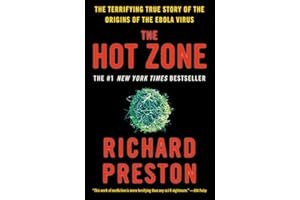 1
1
 Recommended by Jon Najarian and Pierre Haski.