We've ranked the best structural books using expert recommendations, sales data, and millions of reader ratings. At Shortform, we know books. Our book guides are the best in the world. Learn why.
Cover unavailable
1
War And Peace
Leo Tolstoi, Louise Maude, Aylmer Maude
5.0
War and Peace broadly focuses on Napoleon's invasion of Russia in 1812 and follows three of the most well-known characters in literature: Pierre Bezukhov, the illegitimate son of a count who is fighting for his inheritance and yearning for spiritual fulfillment; Prince Andrei Bolkonsky, who leaves his family behind to fight in the war against Napoleon; and Natasha Rostov, the beautiful young daughter of a nobleman who intrigues both men.
As Napoleon's army invades, Tolstoy brilliantly follows characters from diverse backgrounds—peasants and nobility, civilians and soldiers—as they struggle with the problems unique to their era, their history, and their culture. And as the novel progresses, these characters transcend their specificity, becoming some of the most moving—and human—figures in world literature. Translated by Louise and Aylmer Maude.
Three-Volume Boxed Set
…
Recommended by Andrei Maylunas, Cécile Fabre, Kate McLoughlin, and 6 others.
One doesn’t have to invent the bicycle, there is one: it’s War and Peace. It’s about how Russia won the Napoleonic wars, and moved into the first row of nations who dealt with European history. It’s set during the peak of Russian culture, the age of Pushkin, who created the modern Russian language. It’s the peak…The only thing I would recommend to modern readers is to skip all those parts – which are completely separate from the other parts of the book – where Tolstoy is philosophising about the role of the individual in history. It’s maybe 15 per cent of the book, in separate chapters, and I would definitely recommend to skip those because they are not interesting today. [source]
Cécile Fabre
One of the key questions that Tolstoy asks in the appendix is the central question of War and Peace: how can we explain the fact that, on orders, millions of people go out and kill one another, when they know that killing another human being is morally wrong? [source]
Kate McLoughlin
Tolstoy didn’t fight in the Napoleonic wars, but he did fight in the Crimean war, so he drew on his experiences in that when he wrote War and Peace. [source]
Cover unavailable
2
Structuresor Why Things Don T Fall Down
J. E. Gordon
4.7
I am very much aware that it is an act of extreme rashness to attempt to write an elementary book about structures. Indeed it is only when the subject is stripped of its mathematics that one begins to realize how difficult it is to pin down and describe those structural concepts which are often called' elementary'; by which I suppose we mean 'basic' or 'fundamental'. Some of the omis sions and oversimplifications are intentional but no doubt some of them are due to my own brute ignorance and lack of under standing of the subject. Although this volume is more or less a sequel to The New Science of Strong Materials it can be read as an entirely separate book in its own right. For this reason a certain amount of repeti tion has been unavoidable in the earlier chapters. I have to thank a great many people for factual information, suggestions and for stimulating and sometimes heated discussions. Among the living, my colleagues at Reading University have been generous with help, notably Professor W. D. Biggs (Professor of Building Technology), Dr Richard Chaplin, Dr Giorgio Jeronimidis, Dr Julian Vincent and Dr Henry Blyth; Professor Anthony Flew, Professor of Philosophy, made useful suggestions about the last chapter. I am also grateful to Mr John Bartlett, Consultant Neurosurgeon at the Brook Hospital. Professor T. P."
It is really, really good if you want a primer on structural design. [source]
Cover unavailable
3
Hegel's Phenomenology of Spirit
G. W. F. Hegel, A. V. Miller, et al.
4.5
Perhaps one of the most revolutionary works of philosophy ever presented, The Phenomenology of Spirit is Hegel's 1807 work that is in numerous ways extraordinary. It begins with a Preface, created after the rest of the manuscript was completed, that explains the core of his method and what sets it apart from any preceding philosophy. The Introduction, written before the rest of the work, summarizes and completes Kant's ideas on skepticism by rendering it moot and encouraging idealism and self-realization. The body of the work is divided into six sections of varying length, entitled "Consciousness," "Self-Consciousness," "Reason," "Spirit," "Religion," and "Absolute Knowledge." A myriad of topics are discussed, and explained in such a harmoniously complex way that the method has been termed Hegelian dialectic. Ultimately, the work as a whole is a remarkable study of the mind's growth from its direct awareness to scientific philosophy, proving to be a difficult yet highly influential and enduring work.
In order to understand Marx, you really do need to know something about Hegel. It’s a mistake to think you could read Marx as a scientist or an economist without understanding the Hegelian framework of his thought. That’s why I chose to begin with Hegel. [source]
It’s a process of breaking down certain assumptions that ordinary consciousness has, and in so doing leading consciousness to philosophy. However, in Hegel’s case, the process of breaking down assumptions is immanent: it’s carried out by consciousness itself. [source]
Cover unavailable
4
Brief Interviews with Hideous Men
Foster David Wallace
4.5
In his startling and singular new short story collection, David Foster Wallace nudges at the boundaries of fiction with inimitable wit and seductive intelligence. Venturing inside minds and landscapes that are at once recognisable and utterly strange, these stories reaffirm Wallace's reputation as one of his generation's pre-eminent talents, expanding our ides and pleasures fiction can afford.
Among the stories are 'The Depressed Person', a dazzling and blackly humorous portrayal of a woman's mental state; 'Adult World', which reveals a woman's agonised consideration of her confusing sexual relationship with her husband; and 'Brief Interviews with Hideous Men', a dark, hilarious series of portraits of men whose fear of women renders them grotesque. Wallace's stories present a world where the bizarre and the banal are interwoven and where hideous men appear in many different guises. Thought-provoking and playful, this collection confirms David Foster Wallace as one of the most imaginative young writers around. Wallace delights in leftfield observation, mining the ironic, the surprising and the illuminating from every situation. His new collection will delight his growing number of fans, and provide a perfect introduction for new readers.
Marcel Proust, D.J. Enright, C.K. Scott Moncrieff, Terence Kilmartin, Richard Howard
4.5
Swann's Way tells two related stories, the first of which revolves around Marcel, a younger version of the narrator, and his experiences in, and memories of, the French town Combray. Inspired by the "gusts of memory" that rise up within him as he dips a Madeleine into hot tea, the narrator discusses his fear of going to bed at night. He is a creature of habit and dislikes waking up in the middle of the night not knowing where he is.
He claims that people are defined by the objects that surround them and must piece together their identities bit by bit each time they wake up. The young Marcel is so nervous about sleeping alone that he looks forward to his mother's goodnight kisses, but also dreads them as a sign of an impending sleepless night. One night, when Charles Swann, a friend of his grandparents, is visiting, his mother cannot come kiss him goodnight. He stays up until Swann leaves and looks so sad and pitiful that even his disciplinarian father encourages "Mamma" to spend the night in Marcel's room.
…
Recommended by Thomas Graziani.
Thomas Graziani
My favorite book is like "A la recherche du temps perdu" ("In Search of Lost Time”) from Marcel Proust. It is a seven-volumes epic work describing the intricacies of human nature. Proust style is among the most beautiful I've ever read, and he manages to really make you consider every aspect of your daily life in a different and deeper way. [source]
Cover unavailable
6
The Medici Effect: What Elephants and Epidemics Can Teach Us about Innovation
Frans Johansson
4.5
Why do so many world-changing insights come from people with little or no related experience? Charles Darwin was a geologist when he proposed the theory of evolution. And it was an astronomer who finally explained what happened to the dinosaurs.
Frans Johansson's The Medici Effect shows how breakthrough ideas most often occur when we bring concepts from one field into a new, unfamiliar territory, and offers examples how we can turn the ideas we discover into path-breaking innovations.
…
Cover unavailable
7
Linear Algebra Done Right
Sheldon Axler
4.5
This text for a second course in linear algebra is aimed at math majors and graduate students. The novel approach taken here banishes determinants to the end of the book and focuses on the central goal of linear algebra: understanding the structure of linear operators on vector spaces. The author has taken unusual care to motivate concepts and to simplify proofs. For example, the book presents - without having defined determinants - a clean proof that every linear operator on a finite-dimensional complex vector space (or an odd-dimensional real vector space) has an eigenvalue. A variety of interesting exercises in each chapter helps students understand and manipulate the objects of linear algebra. This second edition includes a new section on orthogonal projections and minimization problems. The sections on self-adjoint operators, normal operators, and the spectral theorem have been rewritten. New examples and new exercises have been added, several proofs have been simplified, and hundreds of minor improvements have been made throughout the text.
…
Cover unavailable
8
2666 (2666 #1-5)
Roberto Bolaño, Natasha Wimmer
4.4
Three academics on the trail of a reclusive German author; a New York reporter on his first Mexican assignment; a widowed philosopher; a police detective in love with an elusive older woman—these are among the searchers drawn to the border city of Santa Teresa, where over the course of a decade hundreds of women have disappeared.
I have read this once and I keep dipping back into it because it is endlessly fascinating. Roberto Bolaño is a writer who has found a really important way of dealing with the horrors that the 1970s and subsequent decades have inflicted on Latin America. If you look at Borges, García Márquez and Vargas Llosa, in a sense they grew up in times of optimism, of high modernism, with the hope, at least initially, that change might be possible. Whereas someone like Bolaño was a young man at the time of the Chilean coup in 1973. He drifted around and went into exile in Mexico and then moved to Spain, a witness to the end of the dream. [source]
Cover unavailable
9
Built: The Hidden Stories Behind our Structures
Roma Agrawal
4.4
While our cities are full of incredible engineering feats, most of us live with little idea of what goes into creating the built environment, let alone how a new building goes up, what it is built upon, or how it remains standing.
In this book, Roma Agrawal, the engineer behind the Shard, uncovers the astonishing science behind her profession. Each of the eight chapters will tackle a great engineering challenge—how we keep a building from falling down or how a bridge is built to span vast distances—explaining solutions from modern times, while reaching back to the Romans and other ancient cultures who developed techniques still used today. Interweaving science, history, illustrations, and personal stories, Built offers a fascinating window into a subject that makes up the foundation of our everyday lives.
…
Cover unavailable
10
A Face Like Glass
Frances Hardinge
4.4
In Caverna, lies are an art — and everyone's an artist...
In the underground city of Caverna the world's most skilled craftsmen toil in the darkness to create delicacies beyond compare. They create wines that can remove memories, cheeses that can make you hallucinate and perfumes that convince you to trust the wearer even as they slit your throat. The people of Caverna are more ordinary, but for one thing: their faces are as blank as untouched snow. Expressions must be learned. Only the famous Facesmiths can teach a person to show (or fake) joy, despair or fear — at a price.
Into this dark and distrustful world comes Neverfell, a little girl with no memory of her past and a face so terrifying to those around her that she must wear a mask at all times. For Neverfell's emotions are as obvious on her face as those of the most skilled Facesmiths, though entirely genuine. And that makes her very dangerous indeed...
…
Cover unavailable
11
Dynamics Of Offshore Structures
Minoo H. Patel
4.4
Cover unavailable
12
Life: A User's Manual
Georges Perec, David Bellos
4.4
Life: A User's Manual is an unclassified masterpiece, a sprawling compendium as encyclopedic as Dante's Commedia and Chaucer's Canterbury Tales and, in its break with tradition, as inspiring as Joyce's Ulysses. Perec's spellbinding puzzle begins in an apartment block in the XVIIth arrondissement of Paris where, chapter by chapter, room by room, like an onion being peeled, an extraordinary rich cast of characters is revealed in a series of tales that are bizarre, unlikely, moving, funny, or (sometimes) quite ordinary. From the confessions of a racing cyclist to the plans of an avenging murderer, from a young ethnographer obsessed with a Sumatran tribe to the death of a trapeze artist, from the fears of an ex-croupier to the dreams of a sex-change pop star to an eccentric English millionaire who has devised the ultimate pastime, Life is a manual of human irony, portraying the mixed marriages of fortunes, passions and despairs, betrayals and bereavements, of hundreds of lives in Paris and around the world.
But the novel in more than an extraordinary range of fictions; it is a closely observed account of life and experience. The apartment block's one hundred rooms are arranged in a magic square, and the book as a whole is peppered with a staggering range of literary puzzles and allusions, acrostics, problems of chess and logic, crosswords, and mathematical formulae. All are there for the reader to solve in the best tradition of the detective novel.
…
Recommended by Alina Varlanuta and David Bellos.
Alina Varlanuta
I don’t have a favourite book. But I do have favourite characters: … All inhabitants of the apartment block on 11Rue Simon-Crubellier who lived inside George Perec’s ‘Life. A user’s manual.’. [source]
David Bellos
Some people love it for its cleverness but, behind the cleverness, there is something more, something deeply human. [source]
Cover unavailable
13
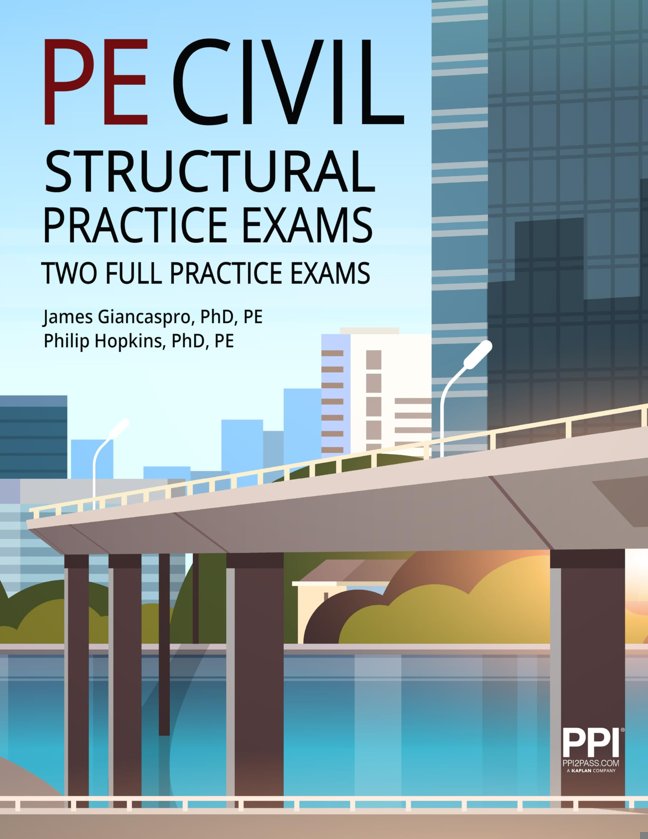
PE Civil Structural Exam Prep: The Most Complete Study Guide with Practice Problems, Step-by-Step Solutions, In-Depth Reviews & Full Exams to Get Ready in No Time and Pass with Confidence
Learnova
4.4
Start studying the smart way and level up your engineering career with this all-in-one blueprint for passing the Civil PE Structural exam!Do you want to access exciting new opportunities in your civil engineering career? Are you feeling overwhelmed and stressed out about your upcoming PE Civil Structural exam? Or are you searching for a comprehensive exam prep to give you the skills and confidence you need to pass on your first attempt? Then keep reading.Featuring an incredible 500+ exam-like practice problems, 6 mock exams, and detailed content reviews that reflect the full depth and complexity of the PE Civil Structural exam, this handbook equips you with a highly organized study plan to build your foundational skills and fast-track your career.With seasoned time-saving tips to eliminate stress and build your confidence, you’ll find essential resources and up-to-date study material that will help you master both the theoretical and practical sides of structural engineering.With this study guide, you will:Become an Expert Structural Engineer With a Full Overview of All Exam Topics, Strengthening Your Knowledge of Engineering Theory & PracticePractice to Perfection With 6 Mock Exams, 500+ Exam-Like Practice Problems, & Dozens of Tables To Build Your ConfidenceReinforce Your Understanding With Step-By-Step Solutions & Detailed Explanations To Hone Your Skills & Fill Gaps In Your KnowledgeSave Time On Exam Day With a Full Breakdown of Complex Building Codes, Standards & The PE Reference HandbookStop Stressing About Studying With Proven Tips & Tricks For Studying Effectively, Time Management, & Stress ReductionGain Exclusive Access To Modulus, Our E-Learning Platform, Able to Generate Unlimited Mock Exams For Endless Practice!And Much More...If you dream of expanding your career and leveling up your earning potential, our PE Civil Structural Exam Prep is a must-have companion guide to help you achieve professional licensure.Are you ready to ace your PE Civil Structural exam and start transforming your career? Then scroll up and click the “buy now” button today!
…
Cover unavailable
14
Master Handbook of Acoustics, Sixth Edition
F. Alton Everest
4.3
Publisher's Note: Products purchased from Third Party sellers are not guaranteed by the publisher for quality, authenticity, or access to any online entitlements included with the product. The most complete and current guide to architectural acoustics principles and practicesDesign and construct audiophile-quality sonic environments of all sizes--from home theaters and project studios to large-scale recording studios. Thoroughly revised to include new acoustical design techniques, Master Handbook of Acoustics, Sixth Edition, explains the art and science of room acoustics and architecture by combining theoretical instruction with matter-of-fact engineering advice.
Written by renowned experts in the field and refined through several editions, this fully updated classic describes the fundamentals of acoustical properties, as well as the latest solutions to acoustical problems. Throughout, this authoritative text provides clear explanations, describes hands-on techniques, and features numerous room designs that can be built as presented, or adapted to your particular needs.
Understand how sound waves travel in free fields and in enclosed spaces Learn how human sound perception and psychoacoustics affect room design Calculate and predict reflections, reverberation times, and room modes Perform acoustical measurements and site surveys, and choose construction materials Design, build, and install treatment modules to optimize early reflections, reverberation, and diffusion Design and build home theaters, home studios, control rooms, recording studios, and other acoustically sensitive spaces Reduce HVAC noise levels, and achieve excellent sound isolation with proven wall, window, and door designs Understand the acoustics of auditoriums and concert halls Utilize the supplied cost-effective plans and specifications for a variety of recording and listening rooms
…
Cover unavailable
15
Best Laid Plans (Jack's Stories, #2)
Nora Roberts
4.3
When Cody Johnson first caught sight of structural engineer Abra Wilson, he thought of endless possibilities. She had style and confidence--and was distracting as hell. She'd called his design an impractical piece of fancy, but then he'd always preferred frankness to subtleties. Abra had met men like Cody before. They usually thought they could smile their way out of trouble, and this overconfident East Coast architect was no exception. She'd told him to back off, but he wasn't listening.
Sparks ignited in the desert building site, and then passion soon followed. But was it enough to stop someone from trying to destroy their first project together? Would they be able to find out who it is before any more damage is done?
…
Cover unavailable
16
Wind Effects On Structures: Fundamentals And Applications To Design
Emil Simiu, Robert H. Scanlan
4.3
Recognized as the sole source of detailed information on the design of wind resistant structures, this edition reflects the numerous changes that have occurred during the past decade. Revised, updated, and augmented, it includes the latest information on such topics as windstorm damage and insurance, hurricane micrometeorology, empirical aeroelastic models, progress and limitations in wind tunnel modeling, designing low-rise buildings, and behavior of roofing. A new chapter has been added on standards which includes a useful reference to a recently issued diskette containing an interactive computer version of the ASCE 7-95 Standard provisions for wind loads.
…
Cover unavailable
17
Dialogues with Leucò
Pavese, Cesare.
4.3
A series of dialogues between mythological figures, treating the question of human destiny as the personal content of myths. In his foreword, Pavese elaborates on his method in the Dialogues: "What is more acutely disturbing than to see familiar scenes troubled into new life? . . . A true revelation, I am convinced, can only emerge from stubborn concentration on a single problem. I have nothing in common with experimentalists, adventurers, with those who travel in strange regions. The surest, and the quickest, way for us to arouse the sense of wonder is to stare, unafraid, at a single object. Suddenly—miraculously—it will look like something we have never seen before."
…
Cover unavailable
18
Species of Spaces and Other Pieces
Georges Perec, John Sturrock
4.3
George Perec produced some of the most entertaining and spirited essays of his age, and Species of Spaces and Other Pieces is edited and translated from the French with an introduction by John Sturrock in Penguin Classics.
Georges Perec, author of Life: A User's Manual, was one of the most surprising and enjoyable of all modern French writers. The pieces in this volume show him to be at times playful, more serious at other, but writing always with the lightest of touches. He had the keenest of eyes for the 'infra-ordinary', the things we do every day - eating, sleeping, working - and the places we do them in without giving them a moment's thought. But behind the lightness and humour, there is also the sadness of a French Jewish boy who lost his parents in the Second World War and found comfort in the material world around him, and above all in writing.
This volume contains a selection of Georges Perec's non-fiction works, along with a charming short story, 'The Winter Journey'. It also includes notes and an introduction describing Perec's life and career.
…
Cover unavailable
19
The Hand-Sculpted House: A Philosophical and Practical Guide to Building a Cob Cottage: A Practical Guide to Building a Cob Cottage (The Real Goods Solar Living Book): 10
Ianto Evans, Michael G. Smith, et al.
4.3
Cover unavailable
20
Dynamics of Structures
Jagmohan L. Humar
4.3
A handbook covering a variety of analysis tools from the traditional to the most up-to-date. Of great practical use to civil, mechanical and aeronautical engineers, this book comprehensively covers a wide range of analytical techniques and includes workable examples and exercises in each chapter. Topics covered include: formulation of the equations of motion using the principles of both vector mechanics and analytical mechanics free vibration response determination of frequencies and mode shapes forced vibration response to harmonic and general forcing functions numerical integration of the equations of motion frequency domain analysis analysis of continuous systems wave propagation analysis.
…
Cover unavailable
21
PPI SE Structural Engineering Reference Manual, 9th Edition (Paperback) – A Comprehensive Reference Guide for the NCEES SE Structural Engineering Exam
Alan Williams PhDSEFICEC Eng
4.3
*Add the convenience of accessing this book anytime, anywhere on your personal device with the eTextbook version for only $59 at ppi2pass.com/etextbook-program.*
NEW EDITION
Updated to the latest NCEES code updates
Get your SE Structural Engineering Reference Manual study schedules at ppi2pass.com/downloads.
Comprehensive Coverage for the SE Structural Engineering Exam The SE Structural Engineering Reference Manual prepares you for the NCEES SE structural engineering exam. It provides a comprehensive review of structural analysis and design methods related to vertical and lateral forces. All exam topics are covered, and exam-adopted codes and standards are frequently referenced. You will learn how to apply concepts by reviewing the 270 example problems, and you will strengthen your problem-solving skills by working the 50 end-of-chapter practice problems. Each problem’s complete solution lets you check your own solving approach.
Access to supportive information is just as important as knowledge and problem-solving efficiency. The SE Structural Engineering Reference Manual’s thorough index easily directs you to the codes and concepts you will need during the exam. Cross references to more than 700 equations, 60 tables, 250 figures, 8 appendices, and relevant codes will point you to additional support material when you need it.
Topics Covered Bridges Foundations and Retaining Structures Lateral Forces (Wind and Seismic) Prestressed Concrete Reinforced Concrete Reinforced Masonry Rock and Soil Mechanics Structural Steel Timber Vertical Forces
Referenced Codes and Standards
AASHTO LRFD Bridge Design Specifications (AASHTO)
Building Code Requirements and Specification for Masonry Structures (TMS 402/602)
Building Code Requirements for Structural Concrete (ACI 318)
International Building Code (IBC)
Minimum Design Loads for Buildings and Other Structures (ASCE 7)
National Design Specification for Wood Construction ASD/LRFD and National Design Specification Supplement, Design Values for Wood Construction (NDS)
North American Specification for the Design of Cold-Formed Steel Structural Members (AISI)
PCI Design Handbook: Precast and Prestressed Concrete (PCI)
Seismic Design Manual (AISC 327)
Special Design Provisions for Wind and Seismic with Commentary (SDPWS)
Steel Construction Manual (AISC 325)
Key Features: A robust index to facilitate quick referencing during the NCEES SE Structural Engineering Exam. Cross references more than 700 equations, 60 tables, 250 figures, 8 appendices, and relevant codes. Binding: Paperback Publisher: PPI, A Kaplan Company
…
Cover unavailable
22
Structured Lineages: Learning from Japanese Structural Design
Guy Nordenson, Sigrid Adriaenssens, et al.
4.3
Cover unavailable
23
Fascial Release for Structural Balance, Revised Edition
Thomas Myers
4.3
This thoroughly revised edition of the authoritative reference Fascial Release for Structural Balance brings the book up to date with all of the most current research on the role of fascia and myofascia in the body, and how treatment affects it. This edition takes advantage of more sophisticated testing to explore in greater detail the relationship between anatomical structure and function, making it an even more essential guide. Offering a detailed introduction to structural anatomy and fascial release therapy, including postural analysis, complete technique descriptions, and the art of proper assessment of a patient through -bodyreading, - the book features 150 color photographs that clearly demonstrate each technique. The authors, both respected bodywork professionals, give any bodywork practitioner using manual therapy--including physiotherapists, osteopaths, chiropractors, myofascial and trigger point therapists, and massage therapists--the information they need to deliver effective treatments and create long-lasting, systemic change in clients' shape and structure. Fascia, the soft tissue surrounding muscles, bones, and organs, plays a crucial role in supporting the body. By learning to intelligently manipulate it, a bodyworker or therapist can help with many chronic conditions that their clients suffer from, providing immediate pain relief as well as reducing the strains that may contribute to the patient's ongoing aches and pains, leading to rapid, effective, and lasting pain relief. James Earls and Thomas Meyers argue that approaching the fascia requires -a different eye, a different touch, and tissue-specific techniques.-
…
Cover unavailable
24
Fundamentals of Structural Engineering
Jerome J. Connor and Susan Faraji
4.3
Cover unavailable
25
Best-Selling 1-Story Home Plans, 5th Edition: Over 360 Dream-Home Plans in Full Color (Creative Homeowner) Craftsman, Country, Contemporary, and Traditional Designs with More Than 250 Color Photos
Editors of Creative Homeowner
4.3
Find your one-story dream home!Over 360 plans to help you find and build your single-story dream homeOver 250 color photos of finished 1-story homes, including a selection of interiorsPlans from top architects and designers from all over North AmericaWide variety of styles and sizes suited for any budget, from Traditional Ranch style to Country Craftsman cottagesSpecial sections featuring outdoor living trends, kitchen design ideas, today's top features in a home, and how to maximize your living spaceCAD blueprint files available for order, for easy customizing to fit you and your family's needsIf you're planning to build your own one-story dream home, this extensive collection will show you the best selling and most stylish designs available today!More than 360 home plans were selected for Best-Selling 1-Story Home Plans, 5th Edition as most desirable house plans based on actual sales data.From convenient ranch homes to traditional cottages, you'll find a wide variety of styles and sizes here to meet your budget. With the complete construction blueprints and CAD files available for each and every house shown, you can build your special home just the way you want it!Look through a selection of the best one-level home plans available and select your new dream home, with Best-Selling 1-Story Home Plans, 5th Edition!
…
Cover unavailable
26
Aircraft Structures for Engineering Students (Aerospace Engineering)
T.H.G. Megson
4.3
Aircraft Structures for Engineering Students, Seventh Edition, is the leading self-contained aircraft structures course text suitable for one or more semesters. It covers all fundamental subjects, including elasticity, structural analysis, airworthiness and aeroelasticity. Now in its seventh edition, the author has continued to expand the book’s coverage of analysis and design of composite materials for use in aircraft and has added more real-world and design-based examples, along with new end-of-chapter problems of varying complexity.Retains its hallmark comprehensive coverage of aircraft structural analysisNew practical and design-based examples and problems throughout the text aid understanding and relate concepts to real world applicationsUpdated and additional Matlab examples and exercises support use of computational tools in analysis and designAvailable online teaching and learning tools include downloadable Matlab code, solutions manual, and image bank of figures from the book
…
Cover unavailable
27
Guastavino Vaulting: The Art of Structural Tile
John Ochsendorf and Michael Freeman
4.3
Since the time of ancient Rome, architects, engineers, and builders have struggled with the problem of building domedceilings over large spaces. No one was more skilled at this than the Rafael Guastavino family, a father and son team of Spanish immigrants who oversaw the construction of thousands of spectacular thin-tile vaults across the United States between the 1880s and the 1950s. These versatile, strong, and fireproof vaults were built by Guastavino in more than two hundred major buildings in Manhattan, and in hundreds more across the country, including Grand Central Terminal, Carnegie Hall, the Biltmore Estate, the Cathedral of St. John the Divine, the Registry Hall at Ellis Island, and many major university buildings. Their patented vaulting techniques made it possible for Beaux-Arts architects such as McKim, Mead and White to create the bold, broad spaces that made them famous. Yet, because the Guastavinos served only as contractors on these projects, their firms accomplishments have remained relatively unknown to the public. Guastavino Vaulting traces the development of the remarkable construction technology from its Mediterranean roots to its highest achievements in the United States. This long overdue first monograph features archival images, drawings, and beautiful new color photography showcasing the most incredible Guastavino vaulted spaces. An extensive appendix lists the addresses of all known extant Guastavino vaults, over six hundred masterpieces small and large.
…
Cover unavailable
28
Building: 3,000 Years of Design, Engineering, and Construction
Bill Addis
4.3
An unprecedeented survey of building engineering history in the Western world.
Cover unavailable
29
The Essential Guide to Passing the Structural Civil PE Exam Written in the form of Questions: 160 CBT Questions Every PE Candidate Must Answer
Dr Jacob Petro PE
4.2
IMPORTANT: To ensure you receive the latest edition, purchase the book from either Amazon or Petro Publications as the seller. Other Amazon sellers may offer used copies or older editions. You can verify the seller on the right-hand side of the Amazon product page. If needed, click the "Other New" section and select either Amazon or Petro Publications as the seller before purchasing.This Third Edition updated to the 2024 and 2026 NCEES Exam Specifications and Design Standards:1- 160 all depth questions2- The use of updated design codes and manuals3- Updating the NCEES Handbook to version 2.2 which is applicable to 2026.What sets it apart is:Comprehensive coverage for all possible exam topicsStructured and guided approach and the presentation of questionsThorough explanations for each questionAlternative solutions providedLRFD and ASD methods usedWith this guide in your hands, you will gain an edge over other candidates as it includes questions of varying lengths and difficulties, some of which are longer than what you would encounter in the actual exam. By tackling these complex questions, you will develop a deep understanding of all exam topics, making the real exam more manageable.Topics covered:Loads and Load Applications covers the principles of structural loads, including dead loads, live loads, wind loads, seismic loads, snow loads, rain loads, etc.Forces & Loads Effectscovers structural and cross-sectional analysis. It also covers topics such as deflection, indeterminate structures, and stability analysis, 2D and 3D trusses, moving loads and many others.Temporary Structures is more relevant to field inspections and special inspections, safety, and the impact of construction on facilities, work zone safety and scaffolding and formwork design.Material & Material Properties covers various types of materials, from soil, to concrete, and wood, steel, masonry, and veneer, etct.Component Design & Detailing covers the design of structural elements such as beams, columns, foundations, and connections. This section of the book provides ample explanation on design requirements, such as strength, serviceability, and stability, and the calculation for the required sizes and shapes for structural members. This part also contains questions on steel design, concrete, masonry, and wood structures.Codes and Design Standard used:IBC 2018ACI 318-14TMS 402/602 year 2016PCI Design Handbook - 7th editionAISC Steel Manual - 8th editionAWC NDS Wood Design - 2018ASCE 7-16AASHTO LRFD 8th edition
…
Cover unavailable
30
High Steel: The Daring Men Who Built the World's Greatest Skyline
Jim Rasenberger
4.2
With the birth of the steel-frame skyscraper in the late nineteenth century came a new breed of man, as bold and untamed as any this country had ever known. These "cowboys of the skies," as one journalist called them, were the structural ironworkers who walked steel beams -- no wider, often, than the face of a hardcover book -- hundreds of feet above ground, to raise the soaring towers and vaulting bridges that so abruptly transformed America in the twentieth century.
Many early ironworkers were former sailors, new Americans of Irish and Scandinavian descent accustomed to climbing tall ships' masts and schooled in the arts of rigging. Others came from a small Mohawk Indian reservation on the banks of the St. Lawrence River or from a constellation of seaside towns in Newfoundland. What all had in common were fortitude, courage, and a short life expectancy. "We do not die," went an early ironworkers' motto. "We are killed."
High Steel is the stirring epic of these men and of the icons they built -- and are building still. Shifting between past and present, Jim Rasenberger travels back to the earliest iron bridges and buildings of the nineteenth century; to the triumph of the Brooklyn Bridge and the 1907 tragedy of the Quebec Bridge, where seventy-five ironworkers, including thirty-three Mohawks, lost their lives in an instant; through New York's skyscraper boom of the late 1920s, when ironworkers were hailed as "industrial age heroes." All the while, Rasenberger documents the lives of several contempor-ary ironworkers raising steel on a twenty-first-century skyscraper, the Time Warner building in New York City.
This is a fast-paced, bare-knuckled portrait of vivid personalities, containing episodes of startling violence (as when ironworkers dynamited the Los Angeles Times building in 1910) and exhilarating adventure. In the end, High Steel is also a moving account of brotherhood and family. Many of those working in the trade today descend from multigenerational dynasties of ironworkers. As they walk steel, they follow in the footsteps of their fathers, grandfathers, and great-grandfathers.
We've all had the experience of looking at a par-ticularly awe-inspiring bridge or building and wondering, How did they do that? Jim Rasenberger asks -- and answers -- the question behind the question: What sort of person would willingly scale such heights, take such chances, face such danger? The result is a depiction of the American working class as it has seldom appeared in literature: strong, proud, autonomous, enduring, and utterly compelling.
…
Cover unavailable
31
16-Hour Structural Engineering (SE) Practice Exam for Buildings
Joseph S. Schuster PE
4.2
16-Hour Structural Engineering (SE) Practice Exam for Buildings is a complete, 16-hour practice exam that prepares you for the Structural SE exam. It mimics the SE exam in terms of topics covered, problem level of difficulty, codes and standards referenced, and overall exam format. Like the SE exam, both the vertical and lateral components are organized into a morning breadth and an afternoon depth module. Each breadth module contains 40 multiple-choice problems, and each depth module contains 4 essay response problems, for a total of 88 exam-like problems. Completing the problems within each module’s allotted four hours will prepare you for the SE exam’s pace and duration.
Comprehensive step-by-step solutions for all problems illustrate accurate and efficient solving methods. The multiple-choice breadth modules also include complete answer keys so you can quickly determine a problem’s correct answer. The essay response afternoon depth modules make use of blue text to call out the text, calculations, and drawings you are expected to include in your exam booklet. Black explanations, calculations, and drawings provide supportive information to further describe a solution’s methodology.
Referenced Codes and Standards
AASHTO LRFD Bridge Design Specifications (AASHTO) Building Code Requirements for Masonry Structures (TMS 402) Building Code Requirements for Structural Concrete (ACI 318) International Building Code (IBC) Minimum Design Loads for Buildings and Other Structures (ASCE 7) National Design Specification for Wood Construction ASD/LRFD (NDS) National Design Specification Supplement, Design Values for Wood Construction (NDS Supp.) North American Specification for the Design of Cold-Formed Steel Structural Members (AISI Specification) PCI Design Handbook (PCI) Seismic Design Manual (Seismic Design Manual) Special Design Provisions for Wind and Seismic with Commentary (SDPWS) Specification for Masonry Structures (TMS 602) Steel Construction Manual (AISC Manual)
Following their introduction in the early 1980s, o-minimal structures have provided an elegant and surprisingly efficient generalization of semialgebraic and subanalytic geometry. This book gives a self-contained treatment of the theory of o-minimal structures from a geometric and topological viewpoint, assuming only rudimentary algebra and analysis. It starts with an introduction and overview of the subject. Later chapters cover the monotonicity theorem, cell decomposition, and the Euler characteristic in the o-minimal setting and show how these notions are easier to handle than in ordinary topology. The remarkable combinatorial property of o-minimal structures, the Vapnik-Chervonenkis property, is also covered. This book should be of interest to model theorists, analytic geometers and topologists.
…
Cover unavailable
33
A Spinoza Reader: The Ethics and Other Works
Benedictus de Spinoza, Edwin Curley
4.2
This anthology of the work of Baruch de Spinoza (1632-1677) presents the text of Spinoza's masterwork, the Ethics, in what is now the standard translation by Edwin Curley. Also included are selections from other works by Spinoza, chosen by Curley to make the Ethics easier to understand, and a substantial introduction that gives an overview of Spinoza's life and the main themes of his philosophy. Perfect for course use, the Spinoza Reader is a practical tool with which to approach one of the world's greatest but most difficult thinkers, a passionate seeker of the truth who has been viewed by some as an atheist and by others as a religious mystic.
The anthology begins with the opening section of the Treatise on the Emendation of the Intellect, which has always moved readers by its description of the young Spinoza's spiritual quest, his dissatisfaction with the things people ordinarily strive for--wealth, honor, and sensual pleasure--and his hope that the pursuit of knowledge would lead him to discover the true good. The emphasis throughout these selections is on metaphysical, epistemological, and religious issues: the existence and nature of God, his relation to the world, the nature of the human mind and its relation to the body, and the theory of demonstration, axioms, and definitions. For each of these topics, the editor supplements the rigorous discussions in the Ethics with informal treatments from Spinoza's other works.
…
Cover unavailable
34
Hexwood
Diana Wynne Jones
4.2
When Controller Borasus receives a strange letter from Earth he is both curious and alarmed. Someone has activated an ancient machine and is using it for most trivial purposes. Surely no one would dare to tamper with Reigner seals in this way? Yet the effects of such interference resonate throughout the universe, so he decides to go to Hexwood Farm to investigate…
On Hexwood Estate, Ann watches the mysterious comings and goings with interest. She knows something deadly is going on – or is Hexwood simply altering her too?
…
Cover unavailable
35
From Tree to Table: How to Make Your Own Rustic Log Furniture
Alan Garbers
4.2
Discover how to build rustic furniture from cut timber in this comprehensive guide for woodworkers. Award-winning outdoor writer and photographer Alan Garbers shows how to use raw logs to make stylish eco-friendly pieces. Alan provides detailed, practical information on procuring and processing logs, with sage troubleshooting advice based on years of experience. Learn which species look best with the bark on, and which work better with the bark off. Find out why wood may shrink, warp, or crack, and how to deal with rot, decay, and insects. Get expert guidance on all the woodworking techniques you need to know, from steam bending and joinery to sanding, gluing, and finishing. From Tree to Table offers instructions for making charming cabin-style beds, tables, benches, lamps, coat racks, kiva ladders, and more.
…
Cover unavailable
36
Principles and Practice of Structural Equation Modeling
Rex B. Kline
4.2
This popular text provides an accessible guide to the application, interpretation, and pitfalls of structural equation modeling (SEM). Reviewed are fundamental statistical concepts--such as correlation, regressions, data preparation and screening, path analysis, and confirmatory factor analysis--as well as more advanced methods, including the evaluation of nonlinear effects, measurement models and structural regression models, latent growth models, and multilevel SEM. The companion Web page offers data and program syntax files for many of the research examples, electronic overheads that can be downloaded and printed by instructors or students, and links to SEM-related resources.
…
Recommended by André Rupp.
André Rupp
This topic, structural equation modelling, represents a very popular, very important family of models. [source]
Cover unavailable
37
Manual of Structural Kinesiology
R .T. Floyd, Clem Thompson
4.2
This book provides a straightforward look at human anatomy and its relation to movement. The text identifies specific muscles and muscle groups and describes exercises for strengthening and developing those muscles. The "Manual of Structural Kinesiology" makes important information readily available to students through a combination of logical presentation and concise writing style.
Cover unavailable
38
Earth Pressure and Earth-Retaining Structures, Third Edition
Chris R.I. Clayton, Rick I. Woods, Andrew J. Bond, Jarbas Milititsky
4.2
Effectively Calculate the Pressures of SoilWhen it comes to designing and constructing retaining structures that are safe and durable, understanding the interaction between soil and structure is at the foundation of it all. Laying down the groundwork for the non-specialists looking to gain an understanding of the background and issues surrounding geotechnical engineering, Earth Pressure and Earth-Retaining Structures, Third Edition introduces the mechanisms of earth pressure, and explains the design requirements for retaining structures. This text makes clear the uncertainty of parameter and partial factor issues that underpin recent codes. It then goes on to explain the principles of the geotechnical design of gravity walls, embedded walls, and composite structures. What’s New in the Third Edition:The first half of the book brings together and describes possible interactions between the ground and a retaining wall. It also includes materials that factor in available software packages dealing with seepage and slope instability, therefore providing a greater understanding of design issues and allowing readers to readily check computer output. The second part of the book begins by describing the background of Eurocode 7, and ends with detailed information about gravity walls, embedded walls, and composite walls. It also includes recent material on propped and braced excavations as well as work on soil nailing, anchored walls, and cofferdams. Previous chapters on the development of earth pressure theory and on graphical techniques have been moved to an appendix. Earth Pressure and Earth-Retaining Structures, Third Edition is written for practicing geotechnical, civil, and structural engineers and forms a reference for engineering geologists, geotechnical researchers, and undergraduate civil engineering students.
…
Cover unavailable
39
PPI PE Structural Reference Manual, 10th Edition – Complete Review for the NCEES PE Structural Engineering (SE) Exam
Alan Williams PhD SE FICE C Eng
4.2
The NCEES SE Exam is Open Book - You Will Want to Bring This Book Into the Exam. Alan Williams' PE Structural Reference Manual Tenth Edition (STRM10) offers a complete review for the NCEES 16-hour Structural Engineering (SE) exam. This book is part of a comprehensive learning management system designed to help you pass the PE Structural exam the first time.PE Structural Reference Manual Tenth Edition (STRM10) features include:Covers all exam topics and provides a comprehensive review of structural analysis and design methodsNew content covering design of slender and shear wallsCovers all up-to-date codes for the October 2021 ExamsExam-adopted codes and standards are frequently referenced, and solving methods—including strength design for timber and masonry—are thoroughly explained270 example problemsStrengthen your problem-solving skills by working the 52 end-of-book practice problemsEach problem’s complete solution lets you check your own solving approachBoth ASD and LRFD/SD solutions and explanations are provided for masonry problems, allowing you to familiarize yourself with different problem solving methods.Topics Covered: BridgesFoundations and Retaining StructuresLateral Forces (Wind and Seismic)Prestressed ConcreteReinforced ConcreteReinforced MasonryStructural SteelTimberReferenced Codes and Standards - Updated to October 2021 Exam Specifications:AASHTO LRFD Bridge Design Specifications (AASHTO)Building Code Requirements and Specification for Masonry Structures (TMS 402/602)Building Code Requirements for Structural Concrete (ACI 318)International Building Code (IBC)Minimum Design Loads for Buildings and Other Structures (ASCE 7)National Design Specification for Wood Construction ASD/LRFD and National Design Specification Supplement, Design Values for Wood Construction (NDS)North American Specification for the Design of Cold-Formed Steel Structural Members (AISI)PCI Design Handbook: Precast and Prestressed Concrete (PCI)Seismic Design Manual (AISC 327)Special Design Provisions for Wind and Seismic with Commentary (SDPWS)Steel Construction Manual (AISC 325)
…
Cover unavailable
40
The Fox, The Fair & The Invention Scare: Christian Kids Book, Ages 4-8
Kirk Cameron, Brave Books
4.2
The Fox, the Fair, and the Invention Scare – A Heartwarming Story for KidsIn the lively setting of the Hive Haven Fair, Stewart the Giraffe dreams of winning top honors. But when an accident derails his hopes, it’s Asher the Fox’s compassionate response that teaches a timeless lesson about selflessness and forgiveness. This Christian children’s book by Kirk Cameron blends faith-based values with colorful storytelling that young readers will love. Inspired by Kirk’s desire to counter the culture of self-love, the story shows that true happiness comes from loving your enemies and helping others. Our kids’ story book perfect for children ages 3–9, it fits beautifully alongside classic children’s books and serves as a gentle learning book for 3-year-olds, toddlers, and young kids exploring big ideas about love and kindness.What Makes This Book SpecialGentle Life Lessons: The story encourages kids to consider love, humility, and faith. It’s an ideal choice for parents seeking Christian children’s books or thoughtful bedtime story books that go beyond simple entertainment.Engaging Storytelling: Kirk Cameron’s heartfelt writing makes kids Christian book easy for young readers to relate to Stewart and Asher. As one of the main BRAVE authors, his narrative brings complex concepts like loving your enemy down to a child’s level, helping them understand forgiveness and compassion.Age‐Appropriate Adventure: With lively scenes and simple language, kirk Cameron book is perfect for children ages 3–9. The tone is fun and imaginative, while the moral is clear and uplifting. It’s also a great fit for those looking for moral story books for kids.Perfect for Family Time: Whether you’re adding to a collection of story books for children or looking for new books for kids to share at bedtime, this Christian book invites families to connect over meaningful discussions and playful moments.Kirk Cameron, known for his impactful films like Fireproof and Lifemark, has a heart for inspiring young minds. This is his third collaboration with BRAVE Books, and parents love it for its engaging story and powerful Christian message. It's a perfect addition to any collection of Christian books, or kids’ books, or Christian books for kids. This Freedom Island book helps children grow in love, faith, and kindness while sparking their imagination.
…
Cover unavailable
41
Bridge Design: Concepts and Analysis
António J. Reis
4.2
A comprehensive guide to bridge design
Bridge Design - Concepts and Analysis provides a unique approach, combining the fundamentals of concept design and structural analysis of bridges in a single volume. The book discusses design solutions from the authors' practical experience and provides insights into conceptual design with concrete, steel or composite bridge solutions as alternatives.
Key features:
Principal design concepts and analysis are dealt with in a unified approach. Execution methods and evolution of the static scheme during construction are dealt with for steel, concrete and composite bridges. Aesthetics and environmental integration of bridges are considered as an issue for concept design. Bridge analysis, including modelling and detail design aspects, is discussed for different bridge typologies and structural materials. Specific design verification aspects are discussed on the basis of present design rules in Eurocodes. The book is an invaluable guide for postgraduate students studying bridge design, bridge designers and structural engineers.
…
Cover unavailable
42
Structural Engineering Handbook
Edwin Gaylord, Charles Gaylord, James Stallmeyer
4.2
Publisher's Note: Products purchased from Third Party sellers are not guaranteed by the publisher for quality, authenticity, or access to any online entitlements included with the product.
Practical and user friendly, this handbook gives you concise, up-to-date information on the planning, design, and construction of a variety of engineered structures, supplemented with practical examples and detailed descriptions of design procedures
The only reference to all important structural engineering principles and design techniques, this best-selling, internationally renowned handbook is updated for current standard specifications and codes (including the 1994 AASHTO specifications) and the latest design developments. Contributions from structural engineers discuss a broad range of vital topics. Concise, practical and user-friendly, this one-of-a-kind resource gives you not only up-to-the-minute information on the planning, design, and construction of a variety of engineered structures, but also practical examples and detailed descriptions of design procedures.
…
Cover unavailable
43
Engineering Investigations of Hurricane Damage: Wind Versus Water
Edited by David B. Peraza
4.2
Sponsored by the Technical Council on Forensic Engineering and the Technical Council on Wind Engineering of ASCE
After a hurricane or tropical storm strikes, civil engineers are often called upon to investigate the resulting damage to structures. One of the common assignments is to distinguish between wind damage and water damage. This task can be complex, requiring expertise in structural engineering, historic building codes, construction practices, wind forces, and water/wave forces, as well as familiarity with meteorology. The engineer may be asked to provide a rational estimate of the extent of wind damage to a structure that was subsequently destroyed by water.
This publication provides civil engineers with the background and guidance necessary to conduct engineering damage investigations of structures following hurricanes, focusing particularly on distinguishing between wind damage and water damage. The first part introduces the scientific background and engineering principles of topics essential to an investigation: hurricane characteristics, wind speeds, storm surges, building codes, and the response of buildings. The second part applies these principles and covers the practical side of carrying out a post-hurricane damage assessment, including planning and managing an investigation, tips for conducting a field investigation, researching specific events, and writing reports. A final chapter offers case studies illustrating ways to synthesize and apply all the collected information.
This valuable resource will assist civil engineers in providing efficient and high-quality services, based on sound technical principles, to clients such as insurance firms, building owners, and local governments.
…
Cover unavailable
44
Lost Technologies of Ancient Egypt: Advanced Engineering in the Temples of the Pharaohs
Christopher Dunn
4.2
A unique study of the engineering and tools used to create Egyptian monuments
• Presents a stone-by-stone analysis of key Egyptian monuments, including the statues of Ramses II and the tunnels of the Serapeum
• Reveals that highly refined tools and mega-machines were used in ancient Egypt
From the pyramids in the north to the temples in the south, ancient artisans left their marks all over Egypt, unique marks that reveal craftsmanship we would be hard pressed to duplicate today. Drawing together the results of more than 30 years of research and nine field study journeys to Egypt, Christopher Dunn presents a stunning stone-by-stone analysis of key Egyptian monuments, including the statue of Ramses II at Luxor and the fallen crowns that lay at its feet. His modern-day engineering expertise provides a unique view into the sophisticated technology used to create these famous monuments in prehistoric times.
Using modern digital photography, computer-aided design software, and metrology instruments, Dunn exposes the extreme precision of these monuments and the type of advanced manufacturing expertise necessary to produce them. His computer analysis of the statues of Ramses II reveals that the left and right sides of the faces are precise mirror images of each other, and his examination of the mysterious underground tunnels of the Serapeum illuminates the finest examples of precision engineering on the planet. Providing never-before-seen evidence in the form of more than 280 photographs, Dunn’s research shows that while absent from the archaeological record, highly refined tools, techniques, and even mega-machines must have been used in ancient Egypt.
…
Cover unavailable
45
Mechanics of Materials
Russell C. Hibbeler
4.2
For undergraduate Mechanics of Materials courses in Mechanical, Civil, and Aerospace Engineering departments.Thorough coverage, a highly visual presentation, and increased problem solving from an author you trust.Mechanics of Materials clearly and thoroughly presents the theory and supports the application of essential mechanics of materials principles. Professor Hibbeler's concise writing style, countless examples, and stunning four-color photorealistic art program -- all shaped by the comments and suggestions of hundreds of reviewers -- help readers visualize and master difficult concepts. The Tenth Edition retains the hallmark features synonymous with the Hibbeler franchise, but has been enhanced with the most current information, a fresh new layout, added problem solving, and increased flexibility in the way topics are covered. Also available with MasteringEngineering(TM). This title is also available with MasteringEngineering, an online homework, tutorial, and assessment program designed to work with this text to engage students and improve results. Interactive, self-paced tutorials provide individualized coaching to help students stay on track. With a wide range of activities available, students can actively learn, understand, and retain even the most difficult concepts. The text and MasteringEngineering work together to guide students through engineering concepts with a multi-step approach to problems. Note: You are purchasing a standalone product; MyLab(TM) & Mastering(TM) does not come packaged with this content. Students, if interested in purchasing this title with MyLab & Mastering, ask your instructor for the correct package ISBN and Course ID. Instructors, contact your Pearson representative for more information. If you would like to purchase both the physical text and MyLab & Mastering, search for: 0134518128 / 9780134518121Mechanics of Materials Plus MasteringEngineering with Pearson eText -- Access Card Package, 10/ePackage consists of: 0134319656 / 9780134319650 Mechanics of Materials, 10/e 0134321286 / 9780134321288 MasteringEngineering with Pearson eText--Standalone Access Card--for Mechanics of Materials
…
Cover unavailable
46
Art Of Japanese Joinery
Kiyosi Seike
4.2
This lively introduction to Japanese joinery not only delves lovingly into the unique history and development of Japanese carpentry, but also reveals many secrets of Japanese joinery. Presenting 48 joints, selected from among the several hundred known and used today, this visually exciting book will please anyone who has ever been moved by the sheer beauty of wood.
With the clear isometric projections complementing the 64 pages of stunning photographs, even the weekend carpenter can duplicate these bequests from the traditional Japanese carpenter, which can be applied to projects as large as the buildings for which most of them were originally devised or to projects as small as a sewing box.
…
Cover unavailable
47
A First Course in Abstract Algebra
John B. Fraleigh
4.2
Considered a classic by many, A First Course in Abstract Algebra, Seventh Edition is an in-depth introduction to abstract algebra. Focused on groups, rings and fields, this text gives students a firm foundation for more specialized work by emphasizing an understanding of the nature of algebraic structures. Sets and Relations; GROUPS AND SUBGROUPS; Introduction and Examples; Binary Operations; Isomorphic Binary Structures; Groups; Subgroups; Cyclic Groups; Generators and Cayley Digraphs; PERMUTATIONS, COSETS, AND DIRECT PRODUCTS; Groups of Permutations; Orbits, Cycles, and the Alternating Groups; Cosets and the Theorem of Lagrange; Direct Products and Finitely Generated Abelian Groups; Plane Isometries; HOMOMORPHISMS AND FACTOR GROUPS; Homomorphisms; Factor Groups; Factor-Group Computations and Simple Groups; Group Action on a Set; Applications of G-Sets to Counting; RINGS AND FIELDS; Rings and Fields; Integral Domains; Fermat's and Euler's Theorems; The Field of Quotients of an Integral Domain; Rings of Polynomials; Factorization of Polynomials over a Field; Noncommutative Examples; Ordered Rings and Fields; IDEALS AND FACTOR RINGS; Homomorphisms and Factor Rings; Prime and Maximal Ideas; Grobner Bases for Ideals; EXTENSION FIELDS; Introduction to Extension Fields; Vector Spaces; Algebraic Extensions; Geometric Constructions; Finite Fields; ADVANCED GROUP THEORY; Isomorphism Theorems; Series of Groups; Sylow Theorems; Applications of the Sylow Theory; Free Abelian Groups; Free Groups; Group Presentations; GROUPS IN TOPOLOGY; Simplicial Complexes and Homology Groups; Computations of Homology Groups; More Homology Computations and Applications; Homological Algebra; Factorization; Unique Factorization Domains; Euclidean Domains; Gaussian Integers and Multiplicative Norms; AUTOMORPHISMS AND GALOIS THEORY; Automorphisms of Fields; The Isomorphism Extension Theorem; Splitting Fields; Separable Extensions; Totally Inseparable Extensions; Galois Theory; Illustrations of Galois Theory; Cyclotomic Extensions; Insolvability of the Quintic; Matrix Algebra For all readers interested in abstract algebra.
…
Cover unavailable
48
Big Book of Small Home Plans, 2nd Edition: Over 360 Home Plans Under 1200 Square Feet (Creative Homeowner) Cabins, Cottages, Tiny Houses, and How to Maximize Your Space with Organizing and Decorating
Design America Inc.
4.2
Select from a catalog of expertly prepared plans for building small homes—all 1,200 square feet or less!Over 360 plans to select from for building a variety of small homes 1,200 square feet or smallerEasy-to-follow construction blueprints and materials lists are available for each project to ensure successVariety of plans including cabins, cottages, small homes, and tiny houses in Craftsman, Country, Contemporary, and Traditional stylesIncludes helpful advice on rightsizing your home, and maximizing your living space with organization, decorating, and storage solutionsPractical do-it-yourself guide helps save money, making planning and cost estimating easier when building the small home of your dreamsBuild the small home of your dreams by doing all or part of the work yourself!Smaller homes are growing in popularity as more of us decide to live simpler yet fuller lives with less square footage, less responsibility, and less stuff. Smaller homes can also provide substantial savings in tax, building, heating, maintenance, and repair costs, with reduced ecological impact.This practical do-it-yourself guide will help you make your dreams a reality. Whether you're looking to build a cabin, cottage, small home, or tiny house, you're sure to find the ideal small home with the features that will fit your lifestyle inside Big Book of Small Home Plans, 2nd Edition.Select from an extensive catalog of more than 360 of today's best small home designs—including 140 new plans in this updated edition—prepared by expert architects and designers, for building a variety of small homes under 1,200 square feet. Easy-to-follow construction blueprints and materials lists are available to purchase for each plan, with the option to customize your plan. Construction blueprints are available in both print and digital formats. This updated edition features revisions to the plans and new plans by new designers with new photography.This 288-page book is also packed with advice for right-sizing your house while maximizing your living space, with useful tips on small home organizing, decorating, and smart storage. Discover, envision, and build the small home of your dreams!Choosing a new house design is exciting but can be a difficult task. The Big Book of Small Home Plans makes it easy with small home designs for everyone, with all the amenities and features homeowners are looking for in a new home.Start your search right now for the perfect small home, with Big Book of Small Home Plans, 2nd Edition!
…
Cover unavailable
49
Why Buildings Stand Up: The Strength of Architecture
Mario Salvadori
4.2
Between a nomad's tent and the Sears Tower lies a revolution in technology, materials, and structures. Here is a clear and enthusiastic introduction to buildings methods from ancient times to the present day, including recent advances in science and technology that have had important effects on the planning and construction of buildings: improved materials (steel, concrete, plastics), progress in antiseismic designs, and the revolutionary changes in both architectural and structural design made possible by the computer.
…
Cover unavailable
50
A Primer on Partial Least Squares Structural Equation Modeling (PLS-SEM)
Joe Hair, G. Tomas M. Hult, et al.
4.2
A Primer on Partial Least Squares Structural Equation Modeling (PLS-SEM) by Joseph F. Hair, Jr., G. Tomas M. Hult, Christian Ringle, and Marko Sarstedt is a practical guide that provides concise instructions on how to use partial least squares structural equation modeling (PLS-SEM), an evolving statistical technique, to conduct research and obtain solutions. Featuring the latest research, new examples using the SmartPLS software, and expanded discussions throughout, the Second Edition is designed to be easily understood by those with limited statistical and mathematical training who want to pursue research opportunities in new ways.
…
Cover unavailable
51
Minimum Design Loads and Associated Criteria for Buildings and Other Structures
American Society of Civil Engineers
4.2
Prepared by the Committee on Minimum Design Loads for Buildings and Other Structures of the Codes and Standards Activities Division of the Structural Engineering Institute of ASCE
Minimum Design Loads and Associated Criteria for Buildings and Other Structures, ASCE/SEI 7-16, provides the most up-to-date and coordinated loading standard for general structural design. ASCE 7-16 describes the means for determining design loads including dead, live, soil, flood, tsunami, snow, rain, atmospheric ice, earthquake, wind, and fire, as well as how to assess load combinations. The 2016 edition of ASCE 7, which supersedes ASCE/SEI 7-10, coordinates with the most recent material standards, including the ACI, AISC, AISI, AWC, and TMS standards. Significant changes in ASCE 7-16 include the following:
new seismic maps reflecting the updated National Seismic Hazard Maps; new wind speed maps, including new Hawaii maps, that result in reduced wind speeds for much of the United States, clarified special wind study zones, and separate Risk Category IV from Category III; new snow load maps incorporating regional snow data for areas that previously required site-specific case study zones; updated rain duration provisions that align design requirements with International Plumbing Code provisions for drainage; entirely new chapter covering tsunami design provisions, which are important to Alaska, Hawaii, California, Oregon, and Washington; and new appendix provisions for fire design.
Standard provisions are accompanied by a detailed commentary with explanatory and supplementary information developed to assist users of the standard, including design practitioners, building code committees, and regulatory authorities.
Standard ASCE/SEI 7 is an integral part of building codes in the United States and is adopted by reference into the International Building Code, the International Existing Building Code, the International Residential Code, and the NFPA 5000 Building Construction and Safety Code. Structural engineers, architects, and those engaged in preparing and administering local building codes will find the structural load requirements essential to their practice.
…
Cover unavailable
52
Why Buildings Fall Down: Why Structures Fail
Matthys Levy, Mario Salvadori, Kevin Woest
4.2
The stories that make up Why Buildings Fall Down are in the end very human ones, tales of the interaction of people and nature, of architects, engineers, builders, materials, and natural forces all coming together in sometimes dramatic (and always instructive) ways.
Cover unavailable
53
Wind Loading of Structures
John D. Holmes
4.2
Wind forces are responsible for in the region of USD10 billion per annum in insured damage. This cost can be mitigated, if not totally eliminated, by the application of wind engineering principless to ensure maximum safety at the lowest cost. This book will assist the practising engineer in understanding the principles of wind engineering, and provide guidance on the successful design of structures to counteract wind loading problems. The principles of meterology, statistics and probability, aerodynamics and structural dynamics are covered in the first half of the book. The second half describes, qualitatively and quantitatively, the nature of wind loads on all types of structures, including low-rise and tall buildings, large stadium roofs, towers and chimneys, bridges, transmission lines, free-standing walls and roofs, and antennae. Special features include coverage of extreme winds in tropical and sub-tropical climates, wind-tunnel testing techniques, a summary of the wind climates of over 50 countries, and detailed coverage of internal as well as external wind pressures on buildings.; A comparison is made of the provisions for wind loads in six major national and international codes and standards. Bridging the gap between wind and structural engineering, Wind Loading of Structures will be essential reading for civil, structural and mechanical engineers.
…
Cover unavailable
54
Introduction to Seismology
Peter M. Shearer
4.2
This third edition provides a concise yet approachable introduction to seismic theory, designed as a first course for graduate students or advanced undergraduate students. It clearly explains the fundamental concepts, emphasizing intuitive understanding over lengthy derivations, and outlines the different types of seismic waves and how they can be used to resolve Earth structure and understand earthquakes. New material and updates have been added throughout, including ambient noise methods, shear-wave splitting, back-projection, migration and velocity analysis in reflection seismology, earthquake rupture directivity, and fault weakening mechanisms. A wealth of both reworked and new examples, review questions and computer-based exercises in MATLAB(R)/Python give students the opportunity to apply the techniques they have learned to compute results of interest and to illustrate Earth's seismic properties. More advanced sections, which are not needed to understand the other material, are flagged so that instructors or students pressed for time can skip them.
…
Cover unavailable
55
Six Minutes
Christine A. Subasic PE
4.2
An unputdownable thriller for fans of Liane Moriarty and Caroline Overington. If you were gripped watching The Cry, you'll be hooked on Six Minutes.
'Impossible to put down and full of twists and turns you won't see coming! I loved this fabulous debut novel.' Liane Moriarty, bestselling author of Nine Perfect Strangers
How can a child disappear from under the care of four playgroup mums?
One Thursday morning, Lexie Parker dashes to the shop for biscuits, leaving Bella in the safe care of the other mums in the playgroup.
Six minutes later, Bella is gone.
Police and media descend on the tiny village of Merrigang on the edge of Canberra. Locals unite to search the dense bushland. But as the investigation continues, relationships start to fracture, online hate messages target Lexie, and the community is engulfed by fear.
Is Bella's disappearance connected to the angry protests at Parliament House? What secrets are the parents hiding? And why does a local teacher keep a photo of Bella in his lounge-room?
What happened in those six minutes and where is Bella?
The clock is ticking…
This gripping novel will keep you guessing to the very last twist.
…
Cover unavailable
56
Structural Equation Modeling with Amos: Basic Concepts, Applications, and Programming
Barbara M. Byrne
4.2
This bestselling text provides a practical guide to structural equation modeling (SEM) using the Amos Graphical approach. Using clear, everyday language, the text is ideal for those with little to no exposure to either SEM or Amos. The author reviews SEM applications based on actual data taken from her own research. Each chapter "walks" readers through the steps involved (specification, estimation, evaluation, and post hoc modification) in testing a variety of SEM models. Accompanying each application is: an explanation of the issues addressed and a schematic presentation of hypothesized model structure; Amos input and output with interpretations; use of the Amos toolbar icons and pull-down menus; and data upon which the model application was based, together with updated references pertinent to the SEM model tested.
Thoroughly updated throughout, the new edition features:
All new screen shots featuring Amos Version 23.
Descriptions and illustrations of Amos new Tables View format which enables the specification of a structural model in spreadsheet form.
Key concepts and/or techniques that introduce each chapter.
Alternative approaches to model analyses when enabled by Amos thereby allowing users to determine the method best suited to their data.
Provides analysis of the same model based on continuous and categorical data (Ch. 5) thereby enabling readers to observe two ways of specifying and testing the same model as well as compare results.
All applications based on the Amos graphical mode interface accompanied by more "how to" coverage of graphical techniques unique to Amos.
More explanation of key procedures and analyses that address questions posed by readers
All application data files are available at www.routledge.com/9781138797031.
The two introductory chapters in Section 1 review the fundamental concepts of SEM methodology and a general overview of the Amos program. Section 2 provides single-group analyses applications including two first-order confirmatory factor analytic (CFA) models, one second-order CFA model, and one full latent variable model. Section 3 presents multiple-group analyses applications with two rooted in the analysis of covariance structures and one in the analysis of mean and covariance structures. Two models that are increasingly popular with SEM practitioners, construct validity and testing change over time using the latent growth curve, are presented in Section 4. The book concludes with a review of the use of bootstrapping to address non-normal data and a review of missing (or incomplete) data in Section 5.
An ideal supplement for graduate level courses in psychology, education, business, and social and health sciences that cover the fundamentals of SEM with a focus on Amos, this practical text continues to be a favorite of both researchers and practitioners. A prerequisite of basic statistics through regression analysis is recommended but no exposure to either SEM or Amos is required.
"
…
Cover unavailable
57
Practical Stress Analysis for Design Engineers: Design and Analysis of Aerospace Vehicle Structures
Jean-Claude Flabel
4.2
Cover unavailable
58
Handbook of Structural Equation Modeling
Rick H. Hoyle
4.2
The first comprehensive structural equation modeling (SEM) handbook, this accessible volume offers broad and deep coverage of both the mechanics of SEM and specific SEM strategies and applications. The editor, contributors, and editorial advisory board are leading methodologists who have organized the book to move from simpler material to more statistically complex modeling approaches. Sections cover the foundations of SEM; statistical underpinnings, from assumptions to model modifications; steps in implementation, from data preparation through writing the SEM report; and basic and advanced applications, including new and emerging topics in SEM, such as intensive longitudinal assessments, dyadic data, brain imaging, and genotyping. Each chapter provides conceptually oriented descriptions, fully explicated analyses, and engaging examples that reveal modeling possibilities for use with readers' data. Many of the chapters also include access to data and syntax files at the companion website, allowing readers to try their hands at reproducing the authors' results.
…
Cover unavailable
59
Thermal Stresses -- Advanced Theory and Applications
Richard B. Hetnarski
4.2
The authors are pleased to present Thermal Stresses Advanced Theory and Applications. This book will serve a wide range of readers, in particular, gr- uate students, PhD candidates, professors, scientists, researchers in various industrial and government institutes, and engineers. Thus, the book should be considered not only as a graduate textbook, but also as a reference handbook to those working or interested in areas of Applied Mathematics, Continuum Mechanics, Stress Analysis, and Mechanical Design. In addition, the book p- vides extensive coverage of great many theoretical problems and numerous references to the literature. The ?eld of Thermal Stresses lies at the crossroads of Stress Analysis, T- ory of Elasticity, Thermodynamics, Heat Conduction Theory, and advanced methods of Applied Mathematics. Each of these areas is covered to the extend it is necessary. Therefore, the book is self-contained, so that the reader should not need to consult other sources while studying the topic. The book starts from basic concepts and principles, and these are developed to more advanced levels as the text progresses. Nevertheless, some basic preparation on the part of the reader in Classical Mechanics, Stress Analysis, and Mathematics, - cluding Vector and Cartesian Tensor Analysis is expected. While selecting material for the book, the authors made every e?ort to present both classical topics and methods, and modern, or more recent, dev- opments in the ?eld. The book comprises ten chapters."
…
Cover unavailable
60
Structural Anthropology
Claude Levi-strauss
4.2
Structural Anthropology provides an introduction to his distinctive approach to anthropology as the study of a science of general principles. The now renowned 'structural method, ' which has changed the face of social anthropology, views man and society in terms of universals--kinship, social organization, religion and mythology, and art.
Cover unavailable
61
Structural Packaging: Design your own Boxes and 3D Forms (Paper engineering for designers and students)
Paul Jackson
4.2
Unlike other packaging titles, which simply provide templates to copy, this book enables designers of all packaging types to create 3-D packaging forms that are specific to their needs rather than based on an existing design. Structural Packaging gives the reader an understanding of the underlying principles of packaging construction and the technical knowledge and confidence to develop a greater number of their own unusual and innovative designs.
…
Cover unavailable
62
The Musical Brain: And Other Stories
César Aira, Chris Andrews
4.2
A delirious collection of short stories from the Latin American master of microfiction, César Aira–the author of at least eighty novels, most of them barely one hundred pages long–The Musical Brain & Other Stories comprises twenty tales about oddballs, freaks, and loonies. Aira, with his fuga hacia adelante or "flight forward" into the unknown, gives us imponderables to ponder and bizarre and seemingly out-of-context plot lines, as well as thoughtful and passionate takes on everyday reality. The title story, first published in the New Yorker, is the creme de la creme of this exhilarating collection.
…
Cover unavailable
63
Minimum Design Loads and Associated Criteria for Buildings and Other Structures (ASCE Standard - ASCE/SEI 7-22) Provisions and Commentary 2-book set (Standards)
American Society of Civil Engineers
4.1
Prepared by the Minimum Design Loads and Associated Criteria for Buildings and Other Structures Standards Committee of the Codes and Standards Activity Division of the Structural Engineering Institute of ASCE Provisions and Commentary of Minimum Design Loads and Associated Criteria for Buildings and Other Structures, ASCE/SEI 7-22 are two separate volumes and sold as a shrink-wrapped set. Any unopened returns to Amazon should include both the “Provisions (Set: 1 of 2)” and “Commentary (Set: 2 of 2)”.Minimum Design Loads and Associated Criteria for Buildings and Other Structures, ASCE/SEI 7-22, provides the most up-to-date and coordinated loading provisions for general structural design. This standard prescribes design loads for all hazards including dead, live, soil, flood, tsunami, snow, rain, atmospheric ice, seismic, wind, and fire, as well as how to evaluate load combinations. The 2022 edition of ASCE 7, which supersedes ASCE 7-16, coordinates with the most current structural material standards including those from ACI, AISC, AISI, AWC, and TMS.Significant technical changes include the following: new target reliability tables for tsunami and extraordinary loads; new alternative method for loads from water in soil; terminology change from guardrail system to guard system; new provisions for emergency vehicle loads; updated tsunami data for Hawaii and many populous locations in California, coordinated with the state agencies; new tsunami provisions for above-ground horizontal pipelines; revised ground snow loads to reflect more recent snow load data and reliability-targeted values; revised method for estimating drifts to include a wind parameter; design rain load revisions to explicitly consider a ponding head; new risk-targeted atmospheric ice load data for the continental United States and Alaska; multi-period response spectrum data that eliminates need for Fa and Fv coefficients; new lateral force resisting systems such as steel and concrete coupled composite plate shear walls, reinforced concrete ductile coupled shear walls, cross-laminated timber shear walls, and concrete tabletop structures; new provisions for rigid wall, flexible diaphragm buildings (big box stores/warehouses); new and updated provisions for supported and interconnected (coupled) nonbuilding structures; new wind provisions for MWFRS and C&C of elevated buildings; new chapter of tornado provisions; new long return period hazard maps for wind and tornado; and digital data available for all hazards at ASCE Hazard Tool (https://asce7hazardtool.online/).In addition to the technical changes, the 2022 edition of ASCE 7 provisions are accompanied by detailed commentary with explanatory and supplementary information developed to assist users of the standard, including design practitioners, building code committees, and regulatory authorities. Standard ASCE/SEI 7 is an integral part of building codes in the United States and around the globe, and is adopted by reference into the International Building Code, International Existing Building Code, International Residential Code, and NFPA 5000 Building Construction and Safety Code.Structural engineers, architects, and those engaged in preparing and administering local building codes will find the structural load requirements essential to their practice.
…
Cover unavailable
64
JR
William Gaddis, Frederick R. Karl
4.1
J R is the long-awaited novel from William Gaddis, author of The Recognitions, that tremendous book which, in the twenty years since its publication, has come to be acknowledged as an American masterpiece. And J R is a book of comparable magnitude, substance, and humor--a rushing, raucous look at money and its influence, at love and its absence, at success and its failures, in the magnificently orchestrated circus of all its larger- and smaller-than-life characters; a frantic, forlorn comedy about who uses -- and misuses -- whom.
At the center: J R, ambitious sixth-grader in torn sneakers, bred on the challenge of "free enterprise" and fired by heady mail-order promises of "success." His teachers would rather be elsewhere, his principal doubles as a bank president, his Long Island classroom mirrors the world he sees around him -- a world of public relations and private betrayals where everything (and everyone) wears a price tag, a world of "deals" where honesty is no substitute for experience, and the letter of the law flouts its spirit at every turn. Operating from the remote anonymity of phone booths and the local post office, with beachheads in a seedy New York cafeteria and a catastrophic, carton-crammed tenement on East 96th Street, J R parlays a deal for thousands of surplus Navy picnic forks through penny stock flyers and a distant textile-mill bankruptcy into a nationwide, hydra-headed "family of companies."
The J R Corp and its Boss engulf brokers, lawyers, Congressmen, disaffected school teachers and disenfranchised Indians, drunks, divorcées, second-hand generals, and a fledgling composer hopelessly entangled in a nightmare marriage of business and the arts. Their bullish ventures -- shaky mineral claims and gas leases, cost-plus defense contracts, a string of nursing homes cum funeral parlors, a formula for frozen music -- burgeon into a paper empire ranging from timber to textiles, from matchbooks to (legalized) marijuana, from prostheses to publishing, inadvertently crushing hopes, careers, an entire town, on a collision course with the bigger world . . . the pragmatic Real World where the business of America is business, where the stock market exists as a convenience, and the tax laws make some people more equal than others . . . the world that makes the rules because it plays to win, and plays for keeps.
Absurdly logical, mercilessly real, gathering its own tumultuous momentum for the ultimate brush with commodity trading when the drop in pork belly futures masks the crumbling of our own, J R captures the reader in the cacophony of voices that revolves around this young captive of his own myths -- voices that dominate the book, talking to each other, at each other, into phones, on intercoms, from TV screens and radios -- a vast mosaic of sound that sweeps the reader into the relentless "real time" of spoken words in a way unprecedented in modern fiction. The disturbing clarity with which this finished writer captures the ways in which we deal, dissemble, stumble through our words -- through our lives -- while the real plans are being made elsewhere makes J R the extraordinary novel that it is.
--From the first-edition dustjacket
…
Cover unavailable
65
Theory of Elastic Stability
Stephen P. Timoshenko and James M. Gere
4.1
The best available guide to the elastic stability of large structures, this book introduces the principles and theory of structural stability. It was co-authored by the father of modern engineering mechanics, Stephen Timoshenko, and James Gere, who updated the materials and worked closely with Dr. Timoshenko. Relevant to aspects of civil, mechanical, and aerospace engineering, this classic covers the essentials of static and dynamic instabilities. Topics range from theoretical explanations of 2- and 3-D stress and strain to practical applications such as torsion, bending, thermal stress, and wave propagation through solids. Additional subjects include beam columns, curved bars and arches, buckling of rings, and experiments and design formulas. Particularly suitable for advanced undergraduate and graduate students of engineering, this volume is also an indispensable reference for professionals.
…
Cover unavailable
66
Usability Engineering
Jakob Nielsen
4.1
Analyzing user needs and designing for usability is an important aspect of software interface design. This book aims to be of use to the user-interface practitioner, and provides a concise introduction to usability engineering, with guidelines and examples.
Work and Revolution in France: The Language of Labor from the Old Regime to 1848
Sewell
4.1
"Work and Revolution in France" is particularly appropriate for studens of French history interested in the crucial revloutions that took place in 1789, 1830, and 1848. Sewell has reconstructed the artisans' world from the corporate communities of the old regime, through the revolutions in 1789 and 1830, to the socialist experiments of 1848.
Cover unavailable
68
The Construction of the Tower of Babel
Juan Benet, Adrian West
4.1
Juan Benet’s penultimate book, The Construction of the Tower of Babel brings together two essays that testify to the multiplicity of the author’s interests, both personal and professional. The titular essay is a meditation on Pieter Bruegel the Elder’s 1563 painting, The Tower of Babel, which Benet calls "the first painting in European art history to feature a building as a protagonist." An engineer by trade, Benet brings his knowledge of building construction to bear on Bruegel’s creation, examining the archways, pillars, windows, and the painter’s meticulously depicted chaos at the heart of the edifice’s centuries-long execution. An unusual analysis of architectural hubris and the linguistic myth that gave rise to it, Benet’s essay builds its own linguistic telescoping structure that could be described as an architextual discourse on the madness of the unending project.
Also included is “On the Necessity of Treason” (a theme of particular interest to Benet, whose father was shot by Republican forces during the Spanish Civil War, and whose brother was forced to escape to France, exiled for his Republican sympathies). Benet considers the essentially dual nature of the spy and the curious World War II cases of Julius Norke and William Joyce (Lord Haw-Haw) to conclude, in a spark of lucid reflection, that within the order of the State, the traitor is not only necessary, but welcome.
A civil engineer by profession, Juan Benet (1927–1993) began writing to pass the long nights of solitude he spent on construction sites in León and Asturias. His self-published first novel, You Will Never Amount to Anything, in 1961. In 1967, he won the Biblioteca Breve Prize for his novel A Meditation.
…
Cover unavailable
69
She Engineers: Outsmart Bias, Unlock your Potential, and Create the Engineering Career of your Dreams
Stephanie Lynn Slocum
4.1
Cover unavailable
70
Unified Design of Steel Structures
Louis Geschwindner, Judy Liu, Charles Carter
4.1
Unified Design of Steel Structures, 4th edition, continues the unified LRFD and ASD approach to teaching structural steel design established in the first three editions. It addresses the design of steel structures for buildings as governed by the ANSI/AISC 360-22 Specification for Structural Steel Buildings, published by the American Institute of Steel Construction (AISC). It is intended primarily as a text for a first course in steel design for civil and architectural engineers. Such a course usually occurs in the third or fourth year of an engineering program. The book can also be used in a second, building-oriented course in steel design, depending on the coverage in the first course. In addition to its use as a textbook, it provides a good review for practicing engineers looking to learn the provisions of the latest specification or to convert their practice from any of the old specifications to the new specification. Users are expected to have a firm knowledge of statics and strength of materials and have easy access to the AISC Steel Construction Manual, 16th Edition. All examples that rely on LRFD and ASD provisions are fully presented, even if it means some duplication, so that regardless of approach being taught, there will be no need to refer to the other approach example. All homework problems that could be LRFD or ASD are presented both ways so that the instructor may choose the approach they want the student to follow. Subjects addressed include: principles of limit states design; load factors, resistance factors, and safety factors; tension member design; column or compression member design; beam or bending member design; plate girder design; design of beam-columns or members subjected to combined axial load and bending; bracing member design; composite member design; connection basics including bolts, welds, and connecting elements; design of shear connections, light bracing connections and direct bearing connections; design of moment connections; and basics of seismic design. Unified Design of Steel Structures, 4th edition, also features multi-chapter problems and an Integrated Design Project. Instructors can add a few, selected problems throughout the term, or include a full project, design of a four-story office building. Either way, all of the tools are here to help students learn how to apply the AISC Specification to the design of a structural steel building. Sample pages from the AISC Steel Construction Manual can be found throughout the book. Students can easily reference design aids and quickly learn how to use them. Keywords: steel design, beam design, column design, beam-column design, composite design, connection design, AISC.
…
Cover unavailable
71
Civil PE Structural Practice Exams: 40 Civil and 80 Structural Practice Problems with Quick Reference Guide
David Gruttadauria PE
4.1
Updated to the October 2019 Specifications this is Version 3 of the Core concepts Structural Series. The book includes 40 Morning Civil and 80 Structural Depth Practice problems. Additionally, this book includes our quick reference guide with a breakdown of Every NCEES topic for the civil and structural depth Civil PE. You can also register your book to receive an additional 40 Civil PE Practice Problems Free.
…
Cover unavailable
72
Correction
Thomas Bernhard
4.1
Roithamer, a character based on Wittgenstein, has committed suicide having been driven to madness by his own frightening powers of pure thought. We witness the gradual breakdown of a genius ceaselessly compelled to correct and refine his perceptions until the only logical conclusion is the negation of his own soul.
Cover unavailable
73
Dynamics of Structures: Theory and Applications to Earthquake Engineering
Anil K. Chopra
4.1
This second edition includes many topics encompassing the theory of structural dynamics and the application of this theory regarding earthquake analysis, response, and design of structures. Covers the inelastic design spectrum to structural design; energy dissipation devices; Eurocode; theory of dynamic response of structures; structural dynamics theory; and more. Ideal for readers interested in Dynamics of Structures and Earthquake Engineering.
…
Cover unavailable
74
Structural Analysis
Russell C. Hibbeler
4.1
For courses in Structural Analysis; also suitable for individuals planning a career as a structural engineer.Applying theory to structural modeling and analysis Structural Analysis, 10th Edition, presents the theory and applications of structural analysis as it applies to trusses, beams, and frames. Through its reader-friendly, clear organization, the text emphasizes developing the ability to model and analyze a structure in preparation for professional practice. The text is designed to ensure those taking their first course in this subject understand some of the more important classical methods of structural analysis, in order to obtain a better understanding of how loads are transmitted through a structure, and how the structure will deform under load. The large number of problems cover realistic situations involving various levels of difficulty. The updated 10th edition features 30% new problems and an expanded discussion of structural modeling, specifically the importance of modeling a structure so it can be used in computer analysis. Newly added material includes anupdate to the ASCE/SEI 2106 specifications, a discussion of catenary cables, and further clarification for drawing moment and deflection diagrams for beams and frames. Personalize learning with Mastering Engineering. Mastering (TM) Engineering is an online homework, tutorial, and assessment program designed to work with this text to engage students and improve results. Interactive, self-paced tutorials provide individualized coaching to help students stay on track. With a wide range of activities available, students can actively learn, understand, and retain even the most difficult concepts. The text and Mastering Engineering work together to guide students through engineering concepts with a multi-step approach to problems. Also available with Mastering Engineering. Mastering (TM) Engineering is an online homework, tutorial, and assessment program designed to work with this text to engage students and improve results. Interactive, self-paced tutorials provide individualized coaching to help students stay on track. With a wide range of activities available, students can actively learn, understand, and retain even the most difficult concepts. The text and Mastering Engineering work together to guide students through engineering concepts with a multi-step approach to problems. Note: You are purchasing a standalone product; Mastering Engineering does not come packaged with this content. Students, if interested in purchasing this title with Mastering Engineering, ask your instructor for the correct package ISBN and Course ID. Instructors, contact your Pearson representative for more information. If you would like to purchase both the physical text and Mastering Engineering, search for: 0134679725 / 9780134679723 Structural Analysis Plus MasteringEngineering with Pearson eText -- Access Card Package Package consists of: 0134610679 / 9780134610672 Structural Analysis0134701453 / 9780134701455 MasteringEngineering with Pearson eText -- Standalone Access Card -- for Structural Analysis
…
Cover unavailable
75
Roark's Formulas for Stress and Strain
Warren Young, Richard Budynas
4.1
The ultimate resource for designers, engineers, and analyst working with calculations of loads and stress.
Cover unavailable
76
Dhalgren
Samuel R. Delany and William Gibso
4.1
A mysterious disaster has stricken the midwestern American city of Bellona, and its aftereffects are disturbing: a city block burns down and is intact a week later; clouds cover the sky for weeks, then part to reveal two moons; a week passes for one person when only a day passes for another. The catastrophe is confined to Bellona, and most of the inhabitants have fled. But others are drawn to the devastated city, among them the Kid, a white/American Indian man who can't remember his own name. The Kid is emblematic of those who live in the new Bellona, who are the young, the poor, the mad, the violent, the outcast--the marginalized.
…
Cover unavailable
77
Cinema 1: The Movement-Image
Gilles Deleuze
4.1
Cover unavailable
78
Cultural Theory
Michael Thompson, Richard J. Ellis, Aaron Wildavsky, Trustee" Mary "Wildavsky
4.1
Why do people want what they want? Why does one person see the world as a place to control, while another feels controlled by the world? A useful theory of culture, the authors contend, should start with these questions, and the answers, given different historical conditions, should apply equally well to people of all times, places, and walks of life.Taking their cue from the pioneering work of anthropologist Mary Douglas, the authors of Cultural Theory have created a typology of five ways of life—egalitarianism, fatalism, individualism, hierarchy, and autonomy—to serve as an analytic tool in examining people, culture, and politics. They then show how cultural theorists can develop large numbers of falsifiable propositions.Drawing on parables, poetry, case studies, fiction, and the Great Books, the authors illustrate how cultural biases and social relationships interact in particular ways to yield life patterns that are viable, sustainable, and ultimately, changeable under certain conditions. Figures throughout the book show the dynamic quality of these ways of life and specifically illustrate the role of surprise in effecting small- and large-scale change.The authors compare Cultural Theory with the thought of master social theorists from Montesquieu to Stinchcombe and then reanalyze the classic works in the political culture tradition from Almond and Verba to Pye. Demonstrating that there is more to social life than hierarchy and individualism, the authors offer evidence from earlier studies showing that the addition of egalitarianism and fatalism facilitates cross-national comparisons.
…
Cover unavailable
79
Structural Engineering Formulas, Second Edition
Ilya Mikhelson
4.1
PRACTICAL, PORTABLE, AND PACKED WITH UP-TO-DATE STRUCTURAL ENGINEERING FORMULAS Thoroughly revised with more than 300 new formulas, this compact yet comprehensive compilation puts essential data related to the design and analysis of engineering structures at your fingertips. "Structural Engineering Formulas," Second Edition covers a wide range of topics, including statics, soils, foundations, retaining structures, pipes, and tunnels, and explains the use and application of each ready-to-use formula. This time-saving reference for civil engineers is also invaluable to students and those studying for licensing exams.
COVERAGE INCLUDES: Stress and strain--methods of analysis - Properties of geometric sections - Beams--diagrams and formulas for various loading conditions - Frames--diagrams and formulas for various static loading conditions - Arches--diagrams and formulas for various loading conditions - Trusses--method of joints and method of section analysis - Plates--bending moments for various support and loading conditions - Soils - Foundations - Retaining structures - Pipes and tunnels--bending moments for various static loading conditions
…
Cover unavailable
80
Unified Design of Steel Structures
Louis F. Geschwindner
4.1
Unified Design of Steel Structures, 3rd edition, continues the unified LRFD and ASD approach to teaching structural steel design established in the first two editions. It addresses the design of steel structures for buildings as governed by the ANSI/AISC 360-16 Specification for Structural Steel Buildings, published by the American Institute of Steel Construction (AISC). It is intended primarily as a text for a first course in steel design for civil and architectural engineers. Such a course usually occurs in the third or fourth year of an engineering program. The book can also be used in a second, building-oriented course in steel design, depending on the coverage in the first course. In addition to its use as a textbook, it provides a good review for practicing engineers looking to learn the provisions of the latest specification or to convert their practice from any of the old specifications to the new specification. Users are expected to have a firm knowledge of statics and strength of materials and have easy access to the AISC Steel Construction Manual, 15th Edition. All examples that rely on LRFD and ASD provisions are fully presented, even if it means some duplication, so that regardless of approach being taught, there will be no need to refer to the other approach example. All homework problems that could be LRFD or ASD are presented both ways so that the instructor may choose the approach they want the student to follow. Subjects addressed include: principles of limit states design; load factors, resistance factors, and safety factors; tension member design; column or compression member design; beam or bending member design; plate girder design; design of beam-columns or members subjected to combined axial load and bending; bracing member design; composite member design; connection basics including bolts, welds, and connecting elements; design of shear connections, light bracing connections and direct bearing connections; design of moment connections; and basics of seismic design. Unified Design of Steel Structures, 3rd edition, also features multi-chapter problems and a new Integrated Design Project. Instructors can add a few, selected problems throughout the term, or include a full project, design of a four-story office building. Either way, all of the tools are here to help students learn how to apply the AISC Specification to the design of a structural steel building. Sample pages from the AISC Steel Construction Manual can be found throughout the book. Students can easily reference design aids and quickly learn how to use them. Keywords: steel design, beam design, column design, beam-column design, composite design, connection design, AISC
…
Cover unavailable
81
Safety & Survival on the Fireground
Vincent Dunn
4.1
Chief Dunn—the recipient of FDNY's Lifetime Achievement Award—has updated his classic book on how to identify and survive hazards on the fireground. Dunn attempts to reduce firefighter deaths and injuries year after year by describing the 15 most dangerous tactics and the 13 most recurring fire and explosion environmental dangers, ranked by degree of danger and frequency of occurrence. This indispensable book will help keep every first responder, firefighter, and fire officer out of harm’s way. It is a must-read and reread for every firefighter who responds to fires and emergencies, every company officer who commands a fire company, and every incident commander or safety officer who is responsible for the safety of firefighters on the fireground.
…
Cover unavailable
82
PPI Structural Engineering Solved Problems for the SE Exam, 7th Edition (Paperback) – Comprehensive Practice in Structural Engineering Concepts, Methods, and Standards for the NCEES SE Exam
C. Dale Buckner PhDPESECB
4.1
Comprehensive Practice in Structural Engineering Concepts, Methods, and Standards
Structural Engineering Solved Problems for the SE Exam contains 100 practice problems representing a broad range of topics on the SE exam. Problems of varied complexity in both qualitative and quantitative formats are included, and solutions use the same codes and standards adopted for the exam. Step-by-step solutions are used to solve numerical problems, and detailed explanations are given for qualitative problems.
Get your SE Structural Engineering Reference Manual study schedules at ppi2pass.com/downloads.
AASHTO LRFD Bridge Design Specifications (AASHTO) Building Code Requirements and Specification for Masonry Structures (TMS 402/602) Building Code Requirements for Structural Concrete (ACI 318) International Building Code (IBC) Minimum Design Loads for Buildings and Other Structures (ASCE/SEI7) National Design Specification for Wood Construction ASD/LRFD and National Design Specification Supplement, Design Values for Wood Construction (NDS) North American Specification for the Design of Cold-Formed Steel Structural Members (AISI) PCI Design Handbook: Precast and Prestressed Concrete (PCI) Seismic Design Manual (AISC 327) Special Design Provisions for Wind and Seismic with Commentary (SDPWS) Steel Construction Manual (AISC 325)
Key Features
Connect relevant structural engineering theories to challenging problems. Assess and strengthen your problem-solving skills. Identify accurate and efficient problem-solving approaches. Binding: Paperback Publisher: PPI, A Kaplan Company
…
Cover unavailable
83
Aircraft Structures
David J. Peery
4.1
Still relevant decades after its initial publication, this legendary reference text on aircraft stress analysis is considered the best book on the subject. It emphasizes basic structural theory, which remains unchanged with the development of new materials and construction methods, and the application of elementary principles of mechanics to analysis of aircraft structures. 1950 edition.
Cover unavailable
84
Geotechnical Engineers Portable Handbook
Robert Day
4.1
Instant access to the latest geotechnical engineering data Fully updated to include the 2012 International Building Code (IBC), "Geotechnical Engineer's Portable Handbook," Second Edition, features a wealth of on-the-job geotechnical and construction related information in a convenient, quick-reference format. This practical resource is filled with essential data, formulas, and guidelines you can access right away. Detailed tables, charts, graphs, and illustrations are included throughout the book for ease of use in the field.
Coverage includes: Field exploration Laboratory testing Soil and rock classification Phase relationships Effective stress and stress distribution Shear strength Permeability and seepage Settlement analyses Bearing capacity analyses Pavement and pipeline design Expansive soil Slope stability Geotechnical earthquake engineering Erosion analyses Retaining walls Deterioration Foundations Grading and other site improvement methods Groundwater and percolation tests Excavation, underpinning, and field lead tests Geosynthetics Instrumentation International Building Code regulations for soils International Building Code regulations for foundations
…
Cover unavailable
85
Dynamics Of Structures
R.W. Clough, Joseph Penzien
4.1
"A textbook for college and university students and a reference book for practicing engineers; the analytical formulations and techniques presented serve as the basis for continued development of new computer programs used by engineers in designing and analyzing structures that function in dynamic environments"--Provided by publisher.
Cover unavailable
86
Building Structures with Young Children (The Young Scientist Series)
Ingrid Chalufour
4.1
Cover unavailable
87
Landscape Construction
David Sauter
4.1
Landscape Construction, 3rd edition, with its simple but complete instructions for a multitude of exterior construction projects, is the ideal learning and resource tool for future landscape contractors and designers. Photos and illustrations support the instructions for such activities as site preparation, grading and drainage, utilities and irrigation, retaining wall construction, paving, exterior carpentry, fencing, and such amenities as pools, ponds, and edging. Readers will appreciate the easy-to-follow process of construction and the review of various materials, tools, and methods. A discussion of estimating and bidding for jobs will be valuable to professionals in their work and also to homeowners as they consider their own exterior projects. Landscape Construction, 3rd edition, is the sole resource needed to accomplish a multitude of hardscape construction goals.
…
Cover unavailable
88
Architectural Acoustics
Marshall Long
4.1
Architectural Acoustics, Second Edition presents a thorough technical overview of the discipline, from basic concepts to specific design advice. Beginning with a brief history, it reviews the fundamentals of acoustics, human perception and reaction to sound, acoustic noise measurements, noise metrics, and environmental noise characterization. In-depth treatment is given to the theoretical principles and practical applications of wave acoustics, sound transmission, vibration and vibration isolation, and noise transmission in floors and mechanical systems.
Chapters on specific design problems demonstrate how to apply the theory, including treatment of multifamily dwellings, office buildings, rooms for speech, rooms for music, multipurpose rooms, auditoriums, sanctuaries, studios, listening rooms, and the design of sound reinforcement systems. Detailed figures illustrate the practical applications of acoustic principles, showing how to implement design ideas in actual structures.
This compendium of theoretical and practical design information brings the relevant concepts, equations, techniques, and specific design problems together in one place, including both fundamentals and more advanced material. Practicing engineers will find it an invaluable reference for their daily work, while advanced students will appreciate its rigorous treatment of the basic building blocks of acoustical theory.
…
Cover unavailable
89
PPI Core Engineering Concepts for Students and Professionals, 1st Edition (Paperback) – A Comprehensive Reference Covering Thousands of Engineering Topics
PE Michael R. Lindeburg
4.1
The Go-To Reference for Engineering Students and Professionals “Core Engineering Concepts is a unique book. It's a blend of the most useful concepts taught in college and the most useful practical knowledge learned afterward.”— Author Michael R. Lindeburg, PE
Core Engineering Concepts for Students and Professionals is a cross-disciplinary reference that can be used by engineers studying or practicing in any engineering field, including civil, mechanical, electrical, structural, environmental, industrial, and chemical engineering.
This authoritative reference provides comprehensive coverage of thousands of engineering concepts in one convenient book, including topics covered in 4- and 5-year engineering degree programs and those encountered in practice. Written for both students and practitioners by a professional engineer, it incorporates more than 30 years of engineering experience.
Topics Covered
Atomic Theory Biology Chemistry Circuits Computer Programming Dynamics Engineering Licensure Engineering Management Fluids Heat Transfer Material Science Mathematics Mechanics of Materials Physical Representation Physics Statics Systems Analysis Thermodynamics
Key Features
Covers the breadth of a 4-year engineering degree Contains civil, mechanical, electrical, chemical, and industrial engineering subjects Features 82 chapters covering thousands of engineering concepts Contains more than 580 examples with step-by-step solutions Presents over 3,700 essential engineering equations and formulas References over 780 tables and 315 conversion factors in detailed appendices Lists fully defined nomenclature for each chapter Includes a comprehensive index Binding: Hardcover Publisher: PPI, A Kaplan Company
…
Cover unavailable
90
The Heights: Anatomy of a Skyscraper
Kate Ascher
4.0
From the author of The Works: Anatomy of a City comes a gorgeous graphic tour through the inner workings of skyscrapers.
The skyscraper is perhaps the most recognizable icon of the modern urban landscape. Providing offices, homes, restaurants, and shopping to thousands of inhabitants, modern skyscrapers function as small cities- with infrastructure not unlike that hidden beneath our streets. Clean water is provided to floors thousands of feet in the sky; elevators move people swiftly and safely throughout the building; and telecom networks allow virtual meetings with people on other continents. How are these services-considered essential, but largely taken for granted- possible in such a complex structure? What does it really take to sustain human life at such enormous heights?
Exploring the interconnected systems that make life livable in the sky is the task of Kate Ascher's stunningly illustrated The Heights: Anatomy of a Skyscraper. Ascher examines skyscrapers from around the world to learn how these incredible structures operate. Just how do skyscrapers sway in the wind, and why exactly is that a good idea? How can a modern elevator be as fast as an airplane? Why are skyscrapers in Asia safer than those in the United States? Have new safeguards been designed to protect skyscrapers from terrorism?
What happens when the power goes out in a building so tall? Why are all modern skyscrapers seemingly made of glass, and how can that be safe? How do skyscrapers age, and how can they be maintained over decades of habitation? No detail is too small, no difficulty too big to escape Ascher's encyclopedic eye.
Along the way, The Heights introduces the reader to every type of person involved in designing, building, and maintaining a skyscraper: the designers who calculate how weight and weather will affect their structures, the workers who dig the foundations and raise the lightning rods, the crews who clean the windows and maintain the air ducts, and the firefighters-whose special equipment allows blazes to be fought at unprecedented heights.
More than a technical survey, Ascher's work is a triumphant ode to the most monumental aspect of modern civilization. Saturated with vivid illustrations and unforgettable anecdotes, The Heights is the ultimate guide to the way things work in the skyscraper.
…
Cover unavailable
91
Australian Guidebook for Structural Engineers
Lonnie Pack
4.0
This guidebook is a practical and essential tool providing everything necessary for structural design engineers to create detailed and accurate calculations.
Basic information is provided for steel, concrete and geotechnical design in accordance with Australian and international standards. Detailed design items are also provided, especially relevant to the mining and oil and gas industries. Examples include pipe supports, lifting analysis and dynamic machine foundation design.
Steel theory is presented with information on fabrication, transportation and costing, along with member, connection, and anchor design. Concrete design includes information on construction costs, as well as detailed calculations ranging from a simple beam design to the manual production of circular column interaction diagrams. For geotechnics, simple guidance is given on the manual production and code compliance of calculations for items such as pad footings, piles, retaining walls, and slabs. Each chapter also includes recommended drafting details to aid in the creation of design drawings.
More generally, highly useful aids for design engineers include section calculations and force diagrams. Capacity tables cover real-world items such as various slab thicknesses with a range of reinforcing options, commonly used steel sections, and lifting lug capacities. Calculations are given for wind, seismic, vehicular, piping, and other loads. User guides are included for Space Gass and Strand7, including a non-linear analysis example for lifting lug design. Users are also directed to popular vendor catalogues to acquire commonly used items, such as steel sections, handrails, grating, grouts and lifting devices.
This guidebook supports practicing engineers in the development of detailed designs and refinement of their engineering skill and knowledge.
…
Cover unavailable
92
PPI PE Civil Structural Practice Exams: Two Full Practice Exams
James Giancaspro PhD PE, Philip Hopkins PhD PE
4.0
Cover unavailable
93
Minimum Design Loads for Buildings and Other Structures
American Society of Civil Engineers
4.0
Prepared by the Committee on Minimum Design Loads for Buildings and Other Structures of the Codes and Standards Activities Division of the Structural Engineering Institute of ASCE.
Minimum Design Loads for Buildings and Other Structures, ASCE/SEI 7-10, provides requirements for general structural design and includes means for determining dead, live, soil, flood, snow, rain, atmospheric ice, earthquake, and wind loads, as well as their combinations, which are suitable for inclusion in building codes and other documents. This Standard, a revision of ASCE/SEI 7-05, offers a complete update and reorganization of the wind load provisions, expanding them from one chapter into six. The Standard contains new ultimate event wind maps with corresponding reductions in load factors, so that the loads are not affected, and updates the seismic loads with new risk-targeted seismic maps. The snow, live, and atmospheric icing provisions are updated as well. In addition, the Standard includes a detailed Commentary with explanatory and supplementary information designed to assist building code committees and regulatory authorities.
The third printing of Standard ASCE/SEI 7-10 incorporates errata and includes Supplement 1. In addition, the seismic commentary has been expanded and completely revised.
Standard ASCE/SEI 7 is an integral part of building codes in the United States. Many of the load provisions are substantially adopted by reference in the International Building Code and the NFPA 5000 Building Construction and Safety Code.
Structural engineers, architects, and those engaged in preparing and administering local building codes will find the structural load requirements essential to their practice.
…
Cover unavailable
94
Structural Analysis in SI Units
Russell Hibbeler
4.0
For courses in Structural Analysis; also suitable for individuals planning a career as a structural engineer. Applying theory to structural modeling and analysisStructural Analysis, 10e in SI Units, presents the theory and applications of structural analysis as it applies to trusses, beams, and frames. Through its student-friendly, clear organization, the text emphasizes developing the ability to model and analyze a structure in preparation for professional practice. The text is designed to ensure students taking their first course in this subject understand some of the more important classical methods of structural analysis, in order to obtain a better understanding of how loads are transmitted through a structure, and how the structure will deform under load. The large number of problems covers realistic situations involving various levels of difficulty. The updated 10th SI edition features many new problems and an expanded discussion of structural modeling, specifically the importance of modeling a structure so it can be used in computer analysis. Newly added material includes a discussion of catenary cables and further clarification for drawing moment and deflection diagrams for beams and frames. MasteringTM Engineering is not included. Students, if Mastering Engineering is a recommended/mandatory component of the course, please ask your instructor for the correct ISBN. Mastering Engineering should only be purchased when required by an instructor. Instructors, contact your Pearson representative for more information. Reach every student by pairing this text with Mastering EngineeringMastering is the teaching and learning platform that empowers you to reach every student. By combining trusted author content with digital tools and a flexible platform, Mastering personalizes the learning experience and improves results for each student.
…
Cover unavailable
95
The Stone Skeleton: Structural Engineering of Masonry Architecture
Jacques Heyman
4.0
What is the time scale for the settlement and cracking of an old stone building? How do the elegant flying buttresses of a Gothic cathedral safely transfer thrust to the foundations? And what is the effect of wind on a stone spire, or bell-ringing on a church tower? These and many other questions pertinent to the upkeep of old stone structures are answered in this clear and authoritative guide. With a firm scientific basis, but without the use of complex mathematics, the author provides a thorough and intuitive understanding of masonry structures. The basis of masonry analysis is introduced in the first two chapters, after which individual structures -- including piers, pinnacles, towers, vaults and domes -- are considered in more detail.This lucid and informative text will be of particular interest to structural engineers, practising architects and others involved in the renovation and care of old stone buildings.
…
Cover unavailable
96
The Limits of Inference Without Theory
Kenneth I. Wolpin
4.0
The role of theory in ex ante policy evaluations and the limits that eschewing theory places on inference
Cover unavailable
97
Steel Design
William T. Segui
4.0
Learn the fundamentals of structural steel design with STEEL DESIGN's unique emphasis on the design of members and their connections. With this best-selling book, you can learn LRFD (Load and Resistance Factor Design) or ASD (Allowable Stress Design), depending on how your course is taught. You will master the application of fundamental principles for design procedures, as well as for practical design. You will also study the theory behind these procedures, which further strengthens your engineering knowledge. While this market-leading book is ideal for your junior-and senior-level steel design class, later chapters are also useful for graduate courses. The book functions as a valuable ongoing reference tool for success in your career as a practicing engineer.
…
Cover unavailable
98
The Big Book of Small Home Plans: Over 360 Home Plans Under 1200 Square Feet
Design America Inc.
4.0
Smaller homes are growing in popularity as more people decide to live simpler yet fuller lives with less square footage, less responsibility, and less stuff. Smaller homes can provide substantial savings in tax, building, heating, maintenance, and repair costs, with reduced ecological impact. Build the small home of your dreams by doing all or part of the work yourself. This practical do-it-yourself guide will help you make your dreams a reality. Whether you're looking to build the ideal cabin, cottage, small home, or tiny house, you're sure to find it here. Select from a catalog of more than 360 expertly prepared plans for building a variety of small homes under 1,200 square feet. Easy-to-follow construction blueprints and materials lists are available for each project to ensure success. Big Book of Small Home Plans is also packed with advice for rightsizing your house while maximizing your living space, with useful tips on small home organizing, decorating, and smart storage.
…
Cover unavailable
99
Best-Selling 1-Story Home Plans, Updated 4th Edition: Over 360 Dream-Home Plans in Full Color
Editors of Creative Homeowner
4.0
If you're planning to build your own one-story dream home, this extensive collection will show you the best selling and most stylish designs available today. More than 350 home plans were selected for Best-Selling 1-Story Home Plans, Updated 4th Edition as most desirable based on actual sales data. From convenient ranch homes to traditional cottages, you'll find a wide variety of styles and sizes here to meet your budget. And with complete construction blueprints available for each and every house shown, you can build your special home just the way you want!


 1
1