We've ranked the best painting books using expert recommendations, sales data, and millions of reader ratings. At Shortform, we know books. Our book guides are the best in the world. Learn why.
Cover unavailable
1
Daily Painting: Paint Small and Often To Become a More Creative, Productive, and Successful Artist
Carol Marine
5.0
A unique system for jump-starting artistic creativity, encouraging experimentation and growth, and increasing sales for artists of all levels, from novices to professionals.
Too many artists find themselves in a frustrating rut: unable to sell paintings hanging in galleries, bogged down by projects they can't finish "or "abandon, and using any excuse to avoid working in the studio. Author Carol Marine was herself suffering from painter's block--until she discovered "daily painting." The idea is simple: do art (usually small) often (how often is up to the individual) and, if you desire, post it and sell it online. Today Marine is among the best and most celebrated daily painters, and the curator of the popular online gallery dailypaintworks.com. In her debut, "Daily Painting," Marine reveals the tips and tricks that helped her and other daily painters pick up the paintbrush and start creating beautiful, bountiful, marketable work.
…
Cover unavailable
2
Color and Light: A Guide for the Realist Painter
James Gurney
4.9
From New York Times best-selling author of the Dinotopia series, James Gurney, comes a carefully crafted and researched study on color and light in paintings. This art instruction book will accompany the acclaimed Imaginative Realism: How to Paint What Doesn't Exist.
James Gurney, New York Times best-selling author and artist of the Dinotopia series, follows Imaginative Realism with his second art-instruction book, Color and Light: A Guide for the Realist Painter. A researched study on two of art's most fundamental themes, Color and Light bridges the gap between abstract theory and practical knowledge. Beginning with a survey of underappreciated masters who perfected the use of color and light, the book examines how light reveals form, the properties of color and pigments, and the wide variety of atmospheric effects. Gurney cuts though the confusing and contradictory dogma about color, testing it in the light of science and observation. A glossary, pigment index, and bibliography complete what will ultimately become an indispensable tool for any artist.
This book is the second in a series based on his blog, gurneyjourney.com. His first in the series, Imaginative Realism, was widely acclaimed in the fantastical art world, and was ranked the #1 Bestseller on the Amazon list for art instruction.
"James Gurney's new book, Color and Light, cleverly bridges the gap between artistic observation and scientific explanation. Not only does he eloquently describe all the effects of color and light an artist might encounter, but he thrills us with his striking paintings in the process." --Armand Cabrera, Artist
"Without The Artist's Way, there would have been no Eat, Pray, Love.” —Elizabeth Gilbert
A stunning gift edition of the powerful bestselling book on creativity.The Artist’s Way is one of the bestselling gift books of all time. Beautifully packaged with a slipcase and ribbon, this tenth anniversary gift edition is the ideal gift for loved ones engaged in creative lives.
Recommended by Anand C and Emma Gannon.
Anand C
STARTING FROM AUTHENTICITY: by observing, showing humility and being grateful - I started being open to what’s in the sub-conscious more (30+ sessions in). Speaking your truth is a powerful result of this. One great book to help explore this. https://t.co/sOAgAHhWsO [source]
Emma Gannon
Instead of all these fast paced books saying: ‘Here’s how to be amazing, here’s how to get a side hustle, here’s how to hustle, hustle, hustle.’ This is the total opposite. It’s about slowing right down and connecting with yourself again. [source]
Cover unavailable
4
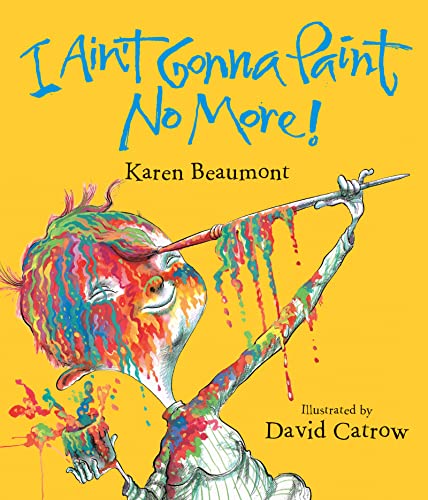
I Ain't Gonna Paint No More!
Karen Beaumont, David Catrow
4.7
A dab of blue here, a splash of red there, a goopy smear of green . . . everywhere. To the tune of "It Ain't Gonna Rain No More," one creative kid floods his world with color, painting first the walls, then the ceiling, then HIMSELF! Before this feisty artist is through, he'll have painted his head, back, hands, legs, feet, and . . . Oh no--here comes Mama!
Karen Beaumont's zippy text and David Catrow's zany illustrations turn an infamous childhood activity into raucous storytime fun, giving a silly twist to the fine art of self-expression.
…
Cover unavailable
5
The Picture of Dorian Gray
Oscar Wilde
4.7
On its first publication The Picture of Dorian Gray was regarded as dangerously modern in its depiction of fin-de-siècle decadence. In this updated version of the Faust story, the tempter is Lord Henry Wotton, who lives selfishly for amoral pleasure; Dorian's good angel is the portrait painter Basil Hallward, whom Dorian murders. The book highlights the tension between the polished surface of high society and the life of secret vice. Although sin is punished in the end the book has a flavour of the elegantly perverse.
With an Afterword by Peter Harness.
Designed to appeal to the booklover, the Macmillan Collector's Library is a series of beautifully bound gift editions of much loved classic titles. Bound in real cloth, printed on high quality paper, and featuring ribbon markers and gilt edges, Macmillan Collector's Library are books to love and treasure.
…
Recommended by Andra Zaharia, Eric Berkowitz, Marc Montagne, and 1 others.
Andra Zaharia
A copy from 1903 of this book is my most prized possession. [source]
Eric Berkowitz
The Picture of Dorian Gray is now a part of the canon that no one would admit to not having read. Most of us have read it and delighted in its witticisms. It’s hard to imagine, but when Dorian Gray was first published, the book was not well received at all. It was totally panned. It was held against him as being an example of an effete character. It was being serialised by Lippincott’s Magazine, and the serialisation of the novel stopped when it became too inflammatory. [source]
Marc Montagne
My favorite fiction book is the The Picture of Dorian Gray by Oscar Wilde. I'm a huge Oscar Wilde fan, he has one of the brightest minds and the Picture is a masterpiece and his unique novel. I consider that you should only read books that you would consider reading again at some point while still enjoying the same pleasure. The Picture is definitely one of those. [source]
Cover unavailable
6
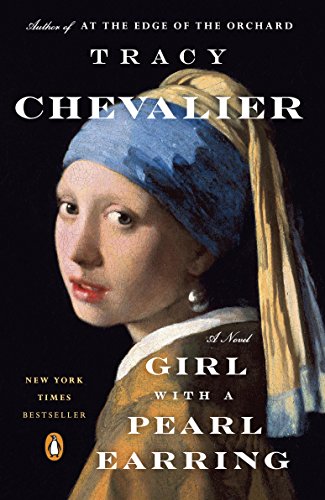
Girl with a Pearl Earring
Tracy Chevalier
4.7
With precisely 35 canvases to his credit, the Dutch painter Johannes Vermeer represents one of the great enigmas of 17th-century art. The meager facts of his biography have been gleaned from a handful of legal documents. Yet Vermeer's extraordinary paintings of domestic life, with their subtle play of light and texture, have come to define the Dutch golden age. His portrait of the anonymous Girl with a Pearl Earring has exerted a particular fascination for centuries - and it is this magnetic painting that lies at the heart of Tracy Chevalier's second novel of the same title.
Girl with a Pearl Earring centers on Vermeer's prosperous Delft household during the 1660s. When Griet, the novel's quietly perceptive heroine, is hired as a servant, turmoil follows. First, the 16-year-old narrator becomes increasingly intimate with her master. Then Vermeer employs her as his assistant--and ultimately has Griet sit for him as a model.
…
Cover unavailable
7
Imaginative Realism: How to Paint What Doesn't Exist
James Gurney
4.6
From the award-winning artist, learn to see and shape the world in a way you never before imagined.
An award-winning fantasy artist and the creator of Dinotopia, James Gurney instructs and inspires in Imaginative Realism: How to Paint What Doesn't Exist. Renowned for his uncanny ability to incorporate amazing detail and imagination into stunningly realistic fantasy settings, James Gurney teaches budding artists and fans of fantasy art step-by-step the techniques that won him worldwide critical acclaim. This groundbreaking work examines the practical methods for creating believable pictures of imaginary subjects, such as dinosaurs, ancient Romans, alien creatures, and distant worlds.
Beginning with a survey of imaginative paintings from the Renaissance to the golden Age of American illustration, the book then goes on to explain not just techniques like sketching and composition, but also the fundamentals of believable world building including archaeology, architecture, anatomy for creatures and aliens, and fantastic engineering. It concludes with details and valuable advice on careers in fantasy illustration, including video game and film concept art and toy design.
More than an instruction book, this is the ultimate reference for fans of science fiction and fantasy illustration.
"Gurney's Imaginative Realism is a gold mine for artists who want to create images that sing with authority and delight the viewer with rich otherworldly visuals." --Erik Tiemens, concept artist, Star Wars: Episodes II and III
"Imaginative Realism is an indispensable, flawless reference for vision makers in any discipline to create their own imaginative realms." --Frank M. Costantino, ASAI, SI, FSAI, JARA, cofounder, American Society of Architectural Illustrators
John Berger’s Classic Text on Art John Berger's Ways of Seeing is one of the most stimulating and the most influential books on art in any language. First published in 1972, it was based on the BBC television series about which the (London) Sunday Times critic commented: "This is an eye-opener in more ways than one: by concentrating on how we look at paintings . . . he will almost certainly change the way you look at pictures." By now he has.
"Berger has the ability to cut right through the mystification of the professional art critics . . . He is a liberator of images: and once we have allowed the paintings to work on us directly, we are in a much better position to make a meaningful evaluation" —Peter Fuller, Arts Review
"The influence of the series and the book . . . was enormous . . . It opened up for general attention to areas of cultural study that are now commonplace" —Geoff Dyer in Ways of Telling
Winner of the 1972 Booker Prize for his novel, G., John Peter Berger (born November 5th, 1926) is an art critic, painter and author of many novels including A Painter of Our Time, From A to X and Bento’s Sketchbook.
You have to understand the Marxist interpretation of art; it is absolutely fundamental to the way that art history departments now study the material. Then you have to critique it, because we’ve moved on from the 1970s and the collapse of Marxism in most of the world shows—amongst other things—that the model was flawed. But it’s still a very good book to read, for a teenager especially. [source]
Cover unavailable
9
The Girl You Left Behind
Jojo Moyes
4.6
From the New York Times bestselling author of The Giver of Stars, a sweeping bestseller of love and loss, deftly weaving two journeys from World War I France to present day London.
Paris, World War I. Sophie Lefèvre must keep her family safe while her adored husband, Édouard, fights at the front. When their town falls to the Germans, Sophie is forced to serve them every evening at her hotel. From the moment the new Kommandant sets eyes on Sophie’s portrait—painted by her artist husband—a dangerous obsession is born.
Almost a century later in London, Sophie’s portrait hangs in the home of Liv Halston, a wedding gift from her young husband before his sudden death. After a chance encounter reveals the portrait’s true worth, a battle begins over its troubled history and Liv’s world is turned upside all over again.
…
Cover unavailable
10
The New Drawing on the Right Side of the Brain
Betty Edwards
4.6
When Drawing on the Right Side of the Brain was first published in 1979, it hit the New York Times bestseller list within two weeks and stayed there for more than a year. In 1989, when Dr. Betty Edwards revised the book, it went straight to the Times list again. Now Dr. Edwards celebrates the twentieth anniversary of her classic book with a second revised edition.Over the last decade, Dr. Edwards has refined her material through teaching hundreds of workshops and seminars. Truly The New Drawing on the Right Side of the Brain, this edition includes:
the very latest developments in brain research new material on using drawing techniques in the corporate world and in education instruction on self-expression through drawing an updated section on using color detailed information on using the five basic skills of drawing for problem solving
…
Recommended by Adam Robinson and Adam Robinson.
Adam Robinson
One of five books that confirm there is far, far more in our unconscious mind than is dreamt of in our philosophy. [source]
Adam Robinson
One of five books that confirm there is far, far more in our unconscious mind than is dreamt of in our philosophy. [source]
Cover unavailable
11
Everyday Watercolor: Learn to Paint Watercolor in 30 Days
Jenna Rainey
4.5
A contemporary paint-every-day watercolor guide that explores foundational strokes and patterns and then builds new skills upon the foundations over the course of 30 days to create finished pieces.
This beautifully illustrated and inspiring guided watercolor-a-day book is perfect for beginning watercolor artists, artists who want to improve their watercolor skills, and visual creatives. From strokes to shapes, this book covers the basics and helps painters gain confidence in themselves along with inspiration to develop their own style over the course of 30 days. Featuring colorful contemporary art from Mon Voir design agency founder and Instagram trendsetter Jenna Rainey, this book's fresh perspective paints watercolor in a whole new light.
…
Cover unavailable
12
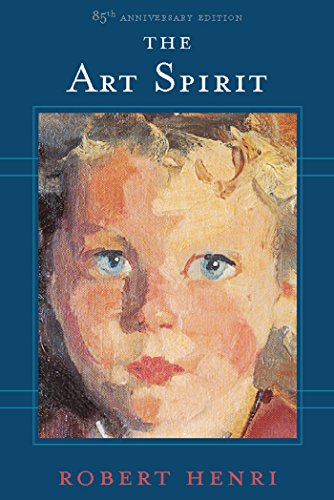
The Art Spirit
Robert Henri and Forbes Watson
4.5
Embodying the entire system of Robert Henri's teaching, The Art Spirit contains much valuable advice, critical comment, and inspiration to every student of the arts.
Recommended by Jack Dorsey, Ron Conway, and Estella Ng.
The first book is a book called The Art Spirit by Robert Henri, who was a painter and I know there’s a lot of affinity for painters in these parts. This is about creativity through the lens of an art student. … What he means by this is purely you have to be a master of your own tools. That mastership is not a destination, it is a process and it’s constant practice that gets you there. [source]
Estella Ng
Question: What five books would you recommend to young people interested in your career path & why? Answer: The Art Spirit by Robert Henri What Me Worry by Andrew Kuo [source]
Cover unavailable
13
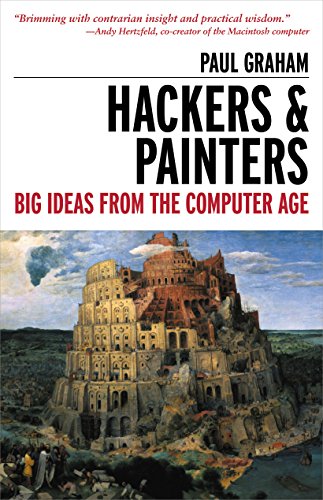
Hackers & Painters: Big Ideas from the Computer Age
Paul Graham
4.5
“The computer world is like an intellectual Wild West, in which you can shoot anyone you wish with your ideas, if you’re willing to risk the consequences.” —from Hackers & Painters: Big Ideas from the Computer Age, by Paul Graham
We are living in the computer age, in a world increasingly designed and engineered by computer programmers and software designers, by people who call themselves hackers. Who are these people, what motivates them, and why should you care?
Consider these facts: Everything around us is turning into computers. Your typewriter is gone, replaced by a computer. Your phone has turned into a computer. So has your camera. Soon your TV will. Your car was not only designed on computers, but has more processing power in it than a room-sized mainframe did in 1970. Letters, encyclopedias, newspapers, and even your local store are being replaced by the Internet.
Hackers & Painters: Big Ideas from the Computer Age, by Paul Graham, explains this world and the motivations of the people who occupy it. In clear, thoughtful prose that draws on illuminating historical examples, Graham takes readers on an unflinching exploration into what he calls “an intellectual Wild West.”
The ideas discussed in this book will have a powerful and lasting impact on how we think, how we work, how we develop technology, and how we live. Topics include the importance of beauty in software design, how to make wealth, heresy and free speech, the programming language renaissance, the open-source movement, digital design, internet startups, and more.
…
Recommended by Ev Williams, Evan Williams, Brian Armstrong, and 8 others.
Evan Williams
Co-creator/Blogger
I want everybody I know to read "How to Make Wealth" and "Mind the Gap" (chapters 6 and 7), which brilliantly articulate the most commonly, and frustratingly, misunderstood core economic principles of everyday life. [source]
Bob Frankston
A wonderful book and required reading. Paul helps others understand why I chose the name 'Software Arts' for the company Dan Bricklin and I started. Those who don't understand the language of software cannot consider themselves literate. [source]
Chris Anderson
A delightful ping-pong around the brain of a really smart guy. The chapter that answers the key question of our age-- why are nerds unpopular?-- is worth the price of admission alone. [source]
Cover unavailable
14
Alla Prima: Everything I Know about Painting
Richard Schmid
4.5
Cover unavailable
15
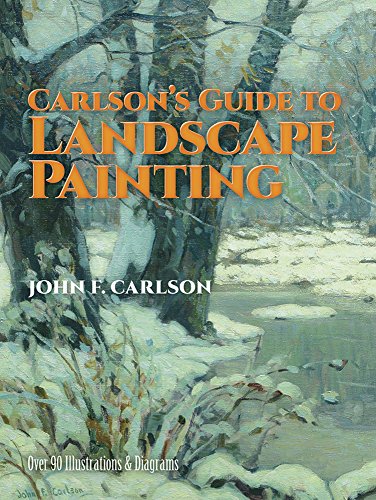
Carlson's Guide to Landscape Painting
John F. Carlson
4.4
Written by a famous American painter and teacher, whose landscapes are found in many of the world's most noted museums, this book is known as one of the art student's most helpful guides. It provides a wealth of advice on the choice of subject; it tells what to look for and aim for, and explains the mysteries of color, atmospheric conditions, and other phenomena to be found in nature. Through his profound understanding of the physical nature of landscapes and his highly developed artistic sense, John Carlson is able to explain both the whys and the hows of the various aspects of landscape painting. Among the subjects covered are angles and consequent values (an insightful concept necessary for strong overall unity of design), aerial and linear perspective, the painting of trees, the emotional properties of line and mass in composition, light, unity of tone, choice of subject, and memory work. In the beginning chapters, the author tells how to make the best of canvas, palette, colors, brushes, and other materials and gives valuable advice about texture, glazing, varnishing, bleaching, retouching, and framing. Thirty-four reproductions of Mr. Carlson's own work and 58 of his explanatory diagrams are shown on pages adjoining the text. As Howard Simon says in the introduction: "Crammed into its pages are the thoughts and experiences of a lifetime of painting and teaching. Undoubtedly it is a good book for the beginner, but the old hand at art will appreciate its honesty and broadness of viewpoint. It confines itself to the mechanics of landscape painting but, philosophically, it roams far and wide. . . . This is a book to keep, to read at leisure, and to look into for the solution of problems as they arise, when the need for an experienced hand is felt."
…
Cover unavailable
16
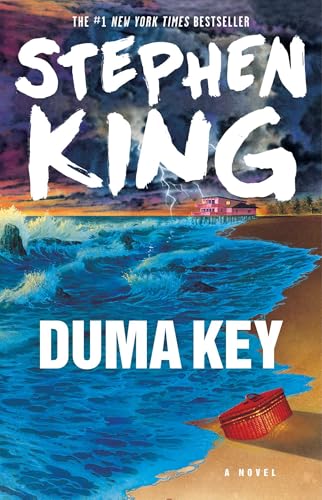
Duma Key
Stephen King
4.4
From the Flap:
NO MORE THAN A DARK PENCIL LINE ON A BLANK PAGE. A HORIZON LINE, MAYBE, BUT ALSO A SLOT FOR BLACKNESS TO POUR THROUGH . . .
A terrible construction site accident takes Edgar Freemantle's right arm and scrambles his memory and his mind, leaving him with little but rage as he begins the ordeal of rehabilitation. A marriage that produced two lovely daughters suddenly ends, and Edgar begins to wish he hadn't survived the injuries that could have killed him. He wants out. His psychologist, Dr. Kamen, suggests a "geographic cure," a new life distant from the Twin Cities and the building business Edgar grew from scratch. And Kamen suggests something else.
"Edgar does anything make you happy?"
"I used to sketch."
"Take it up again. You need hedges . . .
hedges against the night."
Edgar leaves Minnesota for a rented house on Duma Key, a stunningly beautiful, eerily undeveloped splinter of the Florida coast. The sun setting into the Gulf of Mexico and the tidal rattling of shells on the beach call out to him, and Edgar draws. A visit from Ilse, the daughter he dotes on, starts his movement out of solitude. He meets a kindred spirit in Wireman, a man reluctant to reveal his own wounds, and then Elizabeth Eastlake, a sick old woman whose roots are tangled deep in Duma Key. Now Edgar paints, sometimes feverishly, his exploding talent both a wonder and a weapon. Many of his paintings have a power that cannot be controlled. When Elizabeth's past unfolds and the ghosts of her childhood begin to appear, the damage of which they are capable is truly devastating.
The tenacity of love, the perils of creativity, the mysteries of memory and the nature of the supernatural--Stephen King gives us a novel as fascinating as it is gripping and terrifying.
…
Cover unavailable
17
Fill Your Oil Paintings with Light & Color Fill Your Oil Paintings with Light & Color
Kevin Macpherson
4.4
These pages practically glow with Kevin Macpherson's rich and powerful paintings He shares his techniques for quickly capturing the mood of a scene in bold, direct brushstrokes, with step-by-step instructions that make it easy--simply a matter of painting the colors you see. Follow his lead and you too, can create landscapes and still lives in a vibrant, impressionistic style.
Cover unavailable
18
Creative Paint Workshop for Mixed-Media Artists: Experimental Techniques for Composition, Layering, Texture, Imagery, and Encaustic
Ann Baldwin
4.4
A workshop-style book, oriented to the wide community of crafters and artists including those interested in paint, surface design, mixed media, and collage, which explores a wide variety of innovative and experimental paint techniques. Chapters cover composition, abstraction, texture, layering, using found objects, encaustic, integrating text, and adding digital imagery.
Cover unavailable
19
The Goldfinch
Donna Tartt
4.3
A young New Yorker grieving his mother's death is pulled into a gritty underworld of art and wealth in this "extraordinary" and beloved Pulitzer Prize winner that "connects with the heart as well as the mind" (Stephen King, New York Times Book Review).
Theo Decker, a 13-year-old New Yorker, miraculously survives an accident that kills his mother. Abandoned by his father, Theo is taken in by the family of a wealthy friend. Bewildered by his strange new home on Park Avenue, disturbed by schoolmates who don't know how to talk to him, and tormented above all by a longing for his mother, he clings to the one thing that reminds him of her: a small, mysteriously captivating painting that ultimately draws Theo into a wealthy and insular art community.
As an adult, Theo moves silkily between the drawing rooms of the rich and the dusty labyrinth of an antiques store where he works. He is alienated and in love -- and at the center of a narrowing, ever more dangerous circle.
The Goldfinch is a mesmerizing, stay-up-all-night and tell-all-your-friends triumph, an old-fashioned story of loss and obsession, survival and self-invention. From the streets of New York to the dark corners of the art underworld, this "soaring masterpiece" examines the devastating impact of grief and the ruthless machinations of fate (Ron Charles, Washington Post).
…
Recommended by Kaci Lambe Kai.
Kaci Lambe Kai
More modern, I recently read The Goldfinch by Donna Tartt and I love the way it was written. A great story brought to life with long, descriptive, sometimes frenetic sentences. She paints some scenes and some ideas that are unlike anything I've ever read. It's like watching magic on the page. [source]
Cover unavailable
20
Classical Painting Atelier: A Contemporary Guide to Traditional Studio Practice
Juliette Aristides
4.3
Want to paint more like Manet and less like Jackson Pollock?
Students of art hailed Classical Drawing Atelier, Juliette Aristides’s first book, as a dynamic return to the atelier educational model. Ateliers, popular in the nineteenth century, teach emerging artists by pairing them with a master artist over a period of years. The educational process begins as students copy masterworks, then gradually progress to painting as their skills develop. The many artists at every level who learned from Classical Drawing Atelier have been clamoring for more of this sophisticated approach to teaching and learning. In Classical Painting Atelier, Aristides, a leader in the atelier movement, takes students step-by-step through the finest works of Old Masters and today’s most respected realist artists to reveal the principles of creating full-color realist still lifes, portraits, and figure paintings. Rich in tradition, yet practical for today’s artists, Classical Painting Atelier is ideal for serious art students seeking a timeless visual education.
…
Cover unavailable
21
The Story of Art
E.H. Gombrich
4.3
This text is the 16th revised and updated edition of this introduction to art, from the earliest cave paintings to experimental art. Eight new artists from the modern period have been introduced. They are: Corot, Kollwitz, Nolde, de Chirico, Brancussi, Magritte, Nicolson and Morandi. A sequence of new endings have been added, and the captions are now fuller, including the medium and dimension of the works illustrated. Six fold-outs present selected large-scale works. They are: Van Eyck's Ghent Altarpiece, Leonardo's Last Supper, Botticelli's Birth of Venus, Jackson Pollock's One (Number 31, 1950), Van der Weyden's Descent from the Cross and Michelangelo's Sistine Chapel ceiling.
…
Cover unavailable
22
Alla Prima II Everything I Know About Painting - and more
Richard Schmid with Katie Swatland
4.3
Cover unavailable
23
Color: A Natural History of the Palette
Victoria Finlay
4.3
Discover the tantalizing true stories behind your favorite colors. For example: Cleopatra used saffron—a source of the color yellow—for seduction. Extracted from an Afghan mine, the blue “ultramarine” paint used by Michelangelo was so expensive he couldn’t afford to buy it himself. Since ancient times, carmine red—still found in lipsticks and Cherry Coke today—has come from the blood of insects.
If you’re going to do any kind of experimentation about a 17th-century painter, you’ve really got to know something about the materials they’re working with. One of the many books I looked at was Victoria Finlay’s. She not only documented what colours Vermeer used, she went to find them in the real world. So her book is a travelogue. She’s rushing around the world trying to find the source of particular pigments. [source]
Cover unavailable
24
Art and Fear: Observations on the Perils (and Rewards) of Artmaking
David Bayles, Ted Orland
4.3
"This is a book about making art. Ordinary art. Ordinary art means something like: all art not made by Mozart. After all, art is rarely made by Mozart-like people; essentially-statistically speaking-there aren't any people like that. Geniuses get made once-a-century or so, yet good art gets made all the time, so to equate the making of art with the workings of genius removes this intimately human activity to a strangely unreachable and unknowable place. For all practical purposes making art can be examined in great detail without ever getting entangled in the very remote problems of genius." --from the Introduction
The authors believe that art can be taught, and moreover learned, and the traps that waylay our efforts can be avoided or managed with some cheerful guidance. [source]
Cover unavailable
25
Figure Drawing: Design and Invention
Michael Hampton
4.3
Figure Drawing: Design and Invention is an instructional figure drawing book geared towards the novice and experienced artist alike. This book emphasizes a simplified understanding of surface anatomy, in order to clarify the mechanics of the figure, facilitate invention, and ultimately create a skill-set that can be successfully applied to other media. In addition, this book focuses very strongly on practical usage, making sure the artist is able to assimilate the steps presented here into a cohesive working process. (Fourth printing, September 2011)
…
Cover unavailable
26
Art & Max
David Wiesner
4.3
Max and Arthur are friends who share an interest in painting. Arthur is an accomplished painter; Max is a beginner. Max’s first attempt at using a paintbrush sends the two friends on a whirlwind trip through various artistic media, which turn out to have unexpected pitfalls. Although Max is inexperienced, he’s courageous—and a quick learner. His energy and enthusiasm bring the adventure to its triumphant conclusion. Beginners everywhere will take heart.
…
Cover unavailable
27
I'll Give You the Sun
Jandy Nelson
4.3
"We were all heading for each other on a collision course, no matter what. Maybe some people are just meant to be in the same story."
At first, Jude and her twin brother Noah, are inseparable. Noah draws constantly and is falling in love with the charismatic boy next door, while daredevil Jude wears red-red lipstick, cliff-dives, and does all the talking for both of them. Years later, they are barely speaking. Something has happened to change the twins in different yet equally devastating ways . . . but then Jude meets an intriguing, irresistible boy and a mysterious new mentor. The early years are Noah's to tell; the later years are Jude's. But they each have only half the story, and if they can only find their way back to one another, they'll have a chance to remake their world. This radiant, award-winning novel from the acclaimed author of The Sky Is Everywhere will leave you breathless and teary and laughing—often all at once.
Printz Award Winner Stonewall Honor Book.
…
Cover unavailable
28
The Dot
Peter H Reynolds
4.3
With a simple, witty story and free-spirited illustrations, Peter H. Reynolds entices even the stubbornly uncreative among us to make a mark -- and follow where it takes us.
Her teacher smiled. "Just make a mark and see where it takes you."
Art class is over, but Vashti is sitting glued to her chair in front of a blank piece of paper. The words of her teacher are a gentle invitation to express herself. But Vashti can't draw - she's no artist. To prove her point, Vashti jabs at a blank sheet of paper to make an unremarkable and angry mark. "There!" she says.
That one little dot marks the beginning of Vashti's journey of surprise and self-discovery. That special moment is the core of Peter H. Reynolds's delicate fable about the creative spirit in all of us.
…
Cover unavailable
29
Gustav Klimt: 1862-1918
Gilles Neret
4.2
Cult of pleasure: Feminine sensuality by the Vienna Secession's greatest proponent
Gustav Klimt's ornate, sensual, and decadent style made him not only the most prominent of the Vienna Secessionists but one of the best loved artists of all time. In his own time, Kilmt (1862-1918) was a highly successful painter, draftsman, muralist, and graphic artist; in the intervening years, iconic works such asThe Kiss have been elevated to nothing less than cult status. Klimt's unfading popularity attests to the appeal of not only his aesthetic sensibilities but also that of the recurrent universal themes in his work: love, feminine beauty, aging, and death. He once wrote, "I am a painter who paints day after day from morning to night...Who ever wants to know something about me...ought to look carefully at my pictures." With this overview of Klimt's work, readers will delight in taking up that challenge.
About the Series: Each book in TASCHEN's Basic Art series features: a detailed chronological summary of the life and oeuvre of the artist, covering his or her cultural and historical importance a concise biography approximately 100 illustrations with explanatory captions
…
Cover unavailable
30
Urban Watercolor Sketching: A Guide to Drawing, Painting, and Storytelling in Color
Felix Scheinberger
4.2
A guide that shows painters, drawers, doodlers, and urban sketchers how to bring their drawings to life with colorful, bold, yet accessible painting methods.
COLOR YOUR LIFE
Bring new energy to your sketches of urban scenes with this fresh and simple approach to watercolor painting. Whether you’re an amateur artist, drawer, doodler, or sketcher, watercolor is a versatile sketching medium that’s perfect for people on the go—much like pen or pencil. Accomplished designer and illustrator Felix Scheinberger offers a solid foundation in color theory and countless lessons on all aspects of watercolor sketching, including:
Fundamentals like wet-on-wet, glazes, and washes Materials and supplies to bring on your travels Little-known tips and tricks, like painting when water isn’t handy and seeking out inspiration
Vibrant watercolor paintings grace each page, and light-hearted anecdotes (why do fish make great subjects to paint, you may be wondering...) make this a lively guide to the medium. With an open mind and sketchbook, you will be ready to capture the moments around you in luminous color with confidence, creativity, and ease—no matter what your skill level may be.
…
Cover unavailable
31
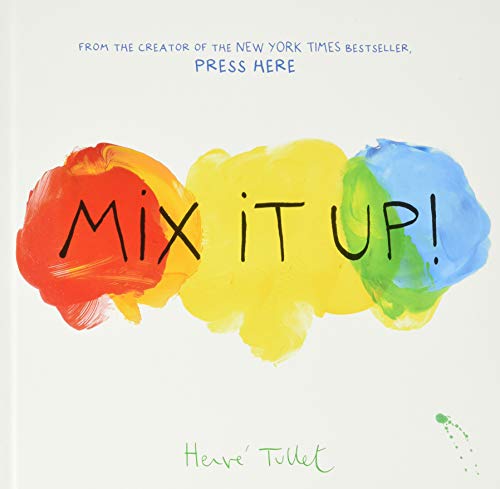
Mix It Up!
Herve Tullet
4.2
Accept Hervé Tullet's irresistible invitation to mix it up in a dazzling adventure of whimsy and wonder. Follow the artist's simple instructions, and suddenly colors appear, mix, splatter, and vanish in a world powered only by the reader's imagination. Tullet—who joins such greats as Eric Carle and Leo Lionni as a master of his craft—sets readers on an extraordinary interactive journey all within the printed page. Tullet prompts plenty of giggles in addition to a profound understanding of colors, and once again displays his unique genius and vision in a work that is a glorious and richly satisfying companion to Press Here.
…
Cover unavailable
32
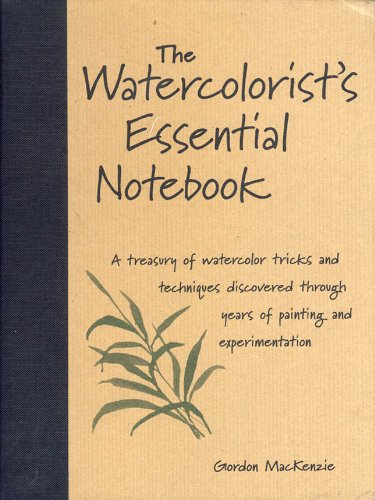
The Watercolorist's Essential Notebook
Gordon MacKenzie
4.2
Painting with watercolors gives you endless opportunities to create the world you want. You choose whether to let the sun blaze or the rain pour, to move a maple tree here or make the trail wind over there, to subdue a hillside with quiet greens or make a forest glow with dazzling golds and reds. It's not only a matter of what to paint, but how to go about painting it.
This book examines, one at a time, the three major elements of landscape painting: water, sky and land. You will be encouraged to try numerous ways of painting each one. Then you can choose the methods that best express how the outdoors speaks to you.
Let this reliable collection of tips, techniques, ideas and lessons be your companion on a sure path to creative fulfillment and better watercolor landscapes.
…
Cover unavailable
33
Compendium of Acrylic Painting Techniques: 300 Tips, Techniques and Trade Secrets
Gill Barron
4.2
Aimed at all painters, from beginners to the more experienced, this book is packed with expert advice on all aspects of acrylic painting: what to do, and what not to do. Learn how to choose and mix colors, and create a multitude of effects using only one set of tubes. Discover how to make your own equipment, set up a "studio" space, and use household materials to save money. Beginners can follow processes stage-by-stage, while more experienced artists can dip in and out for help with specific problems. A unique section on how to develop your art and take it to a wider public is full of professional secrets which can bring you success much more quickly. “Try it” and “Fix it” panels placed throughout the book suggest ways of practicing and developing new skills, and avoiding or correcting common painting errors.
…
Cover unavailable
34
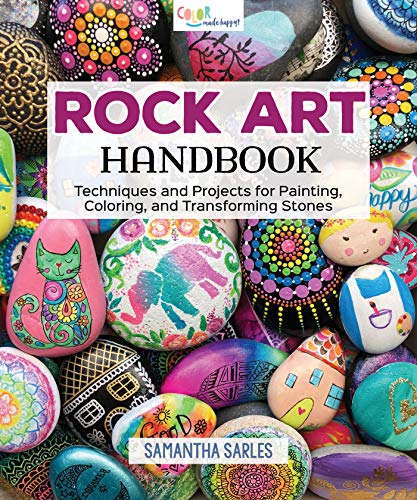
Rock Art Handbook: Techniques and Projects for Painting, Coloring, and Transforming Stones
Samantha Sarles
4.2
Discover all of the best techniques for creating amazing rock art! Brush painting isn't the only way to decorate a rock. Almost anything you do on paper or canvas, you can do on a rock. Rock Art Handbook will show you how, with more than 30 step-by-step tutorials featuring dot painting, marbling, embellishments, and much more. It's the perfect opportunity to use your favorite craft supplies, from nail polish to puff paint to gelly roll pens, or to try something new. There are plenty of kid-friendly options--like chalk, washi tape, and glitter glue--too. And what do you do with the rocks when they're finished? Author Samantha Sarles, who blogs at ColorMadeHappy.com, has plenty of ideas!
…
Cover unavailable
35
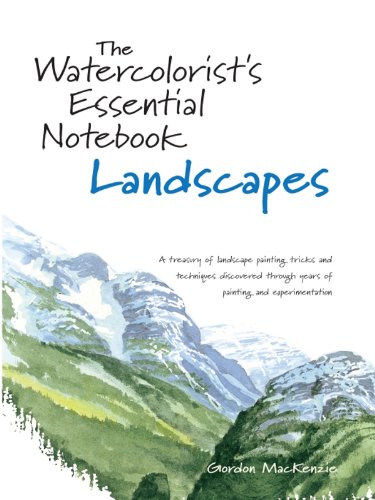
The Watercolorist's Essential Notebook - Landscapes
Gordon MacKenzie
4.2
Painting with watercolors gives you endless opportunities to create the world you want. You choose whether to let the sun blaze or the rain pour, to move a maple tree here or make the trail wind over there, to subdue a hillside with quiet greens or make a forest glow with dazzling golds and reds. It's not only a matter of what to paint, but how to go about painting it.
This book examines, one at a time, the three major elements of landscape painting: water, sky and land. You will be encouraged to try numerous ways of painting each one. Then you can choose the methods that best express how the outdoors speaks to you.
Let this reliable collection of tips, techniques, ideas and lessons be your companion on a sure path to creative fulfillment and better watercolor landscapes.
…
Cover unavailable
36
The Oil Painting Course You've Always Wanted: Guided Lessons for Beginners and Experienced Artists
Kathleen Lochen Staiger
4.2
Everything you always wanted to know about oil painting...but were afraid to ask. Or maybe you weren’t afraid—maybe you just didn’t know what to ask or where to start. In The Oil Painting Course You’ve Always Wanted, author Kathleen Staiger presents crystal clear, step-by-step lessons that build to reinforce learning. Brush control, creating the illusion of three dimensions, foolproof color mixing, still-life painting, landscapes, and portraits—every topic is covered in clear text, diagrams, illustrations, exercises, and demonstrations. Staiger has taught oil painting for more than thirty-five years; many of her students are now exhibiting and selling their paintings. Everyone from beginning hobby painters, to art students, to BFA graduates has questions about oil painting. Here at last are the answers!
…
Cover unavailable
37
Mastering Composition: Techniques and Principles to Dramatically Improve Your Painting (Mastering (North Light Books))
Ian Roberts
4.2
Cover unavailable
38
Oil Painting Techniques and Materials
Harold Speed
4.2
Stimulating, informative guide by noted teacher covers painting technique, painting from life, materials — paints, varnishes, oils and mediums, grounds, etc. — a painter's training, more. Speed also provides expert analysis of works by Velasquez, Reynolds, Gainsborough, Hals, Rembrandt, and others. 64 photos. 5 line drawings.
Cover unavailable
39
The Story of Painting
Wendy Beckett, Sister Wendy Beckett
4.2
Featuring over 450 masterpieces, this best-selling book includes more than 150 oversized details from key paintings.
Cover unavailable
40
The Complete Watercolorist's Essential Notebook: A Treasury of Watercolor Secrets Discovered Through Decades of Painting and Expe Rimentation
Gordon MacKenzie
4.2
This special 10th-anniversary collection combines two of the best-loved North Light watercolor guides available: The Watercolorist's Essential Notebook and The Watercolorist's Essential Notebook: Landscapes. Clarifying and simplifying the various aspects of painting with watercolor, Gordon MacKenzie's The Complete Watercolorist's Essential Notebook will encourage and challenge you with new possibilities.
Rather than a list of rules, this is a collection of principles, concepts and general information designed to expand your creative process. Mackenzie shares with you tips, techniques, ideas and lessons for a sure path to creative fulfillment and better watercolor paintings.
…
Cover unavailable
41
Landscape Painting: Essential Concepts and Techniques for Plein Air and Studio Practice
Mitchell Albala
4.2
Because nature is so expansive and complex, so varied in its range of light, landscape painters often have to look further and more deeply to find form and structure, value patterns, and an organized arrangement of shapes. In Landscape Painting, Mitchell Albala shares his concepts and practices for translating nature's grandeur, complexity, and color dynamics into convincing representations of space and light. Concise, practical, and inspirational, Landscape Painting focuses on the greatest challenges for the landscape artist, such as: • Simplification and Massing: Learn to reduce nature's complexity by looking beneath the surface of a subject to discover the form's basic masses and shapes.• Color and Light: Explore color theory as it specifically applies to the landscape, and learn the various strategies painters use to capture the illusion of natural light.• Selection and Composition: Learn to select wisely from nature's vast panorama. Albala shows you the essential cues to look for and how to find the most promising subject from a world of possibilities. The lessons in Landscape Painting—based on observation rather than imitation and applicable to both plein air and studio practice—are accompanied by painting examples, demonstrations, photographs, and diagrams. Illustrations draw from the work of more than 40 contemporary artists and such masters of landscape painting as John Constable, Sanford Gifford, and Claude Monet. Based on Albala's 25 years of experience and the proven methods taught at his successful plein air workshops, this in-depth guide to all aspects of landscape painting is a must-have for anyone getting started in the genre, as well as more experienced practitioners who want to hone their skills or learn new perspectives.
…
Cover unavailable
42
The Joy of Painting with Bob Ross
Robert N. Ross
4.2
Cover unavailable
43
Lust for Life
Irving Stone
4.2
Lust for Life is the classic fictional re-telling of the incredible life of Vincent Van Gogh.
"Vincent is not dead. He will never die. His love, his genius, the great beauty he has created will go on forever, enriching the world... He was a colossus... a great painter... a great philosopher... a martyr to his love of art. "
Walking down the streets of Paris the young Vincent Van Gogh didn't feel like he belonged. Battling poverty, repeated heartbreak and familial obligation, Van Gogh was a man plagued by his own creative urge but with no outlet to express it. Until the day he picked up a paintbrush.
Written with raw insight and emotion, follow the artist through his tormented life, struggling against critical discouragement and mental turmoil and bare witness to his creative journey from a struggling artist to one of the world's most celebrated artists.
…
Recommended by Magda Marcu.
Magda Marcu
For non-business books, I really enjoyed the book about Vincent Van Gogh’s life “Lust for life”. [source]
Cover unavailable
44
Country Scenes in Acrylic
Jerry Yarnell
4.1
Best-selling author, instructor and PBS TV show host, Jerry Yarnell delivers his latest offering with dozens of all new lessons and 8 full step-by-step landscape painting projects. Features detailed materials lists and advice on how to set up a palette. Learn the terms and techniques necessary to achieve your desired effects. Get lessons on color mixing, composition, negative space, perspective, values and more. With his signature, easy-to-follow style, Jerry Yarnell provides the instruction needed to help you learn how to bring life and beauty to your acrylic landscape paintings.
- Tips on choosing supplies and setting up your painting studio - Techniques for painting the sky, rivers, meadows, flowers, cottages, barns and many other elements of country landscapes - Easy-to-follow step-by-step instruction walks you through 8 complete painting demonstrations
…
Cover unavailable
45
Botany for the Artist: An Inspirational Guide to Drawing Plants
Sarah Simblet
4.1
Following the success of Anatomy for the Artist and Sketch Book for the Artist, this latest title from the acclaimed artist Sarah Simblet investigates the extraordinary structure and variety of every type of plant-from mosses and lichens to flowers and trees-and teaches the reader how to draw them.
The book starts with the history of plant drawing and painting. The author follows the trail of the early plant explorers and shows how the exotic specimens they brought home with them were depicted in botanical illustrations, anthologies, and decorative designs.
The main part of the book examines the structure of plants, with visually stunning chapters on roots and stems, shoots and leaves, buds and flowers, and seeds and fruit, mosses and lichens, and trees. As in Anatomy for the Artist, beautiful, specially commissioned photographs complement Sarah's drawings, illustrating how an understanding of botany really helps you to draw plants. Drawing classes provide a wealth of practical advice on how to draw, and pages from Sarah's sketchbooks show how she records her favorite plants throughout the seasons. Inspirational master classes in each chapter focus on how other artists, from 17th century masters to contemporary botanical illustrators, have portrayed plants.
This lavishly illustrated book will not only be the definitive guide for those wishing to master the art of drawing plants, but a sumptuous gift book for all those passionate about plants and how they are portrayed in art.
…
Cover unavailable
46
Mouse Paint
Ellen Stoll Walsh
4.1
One day three white mice discover three jars of paint--red, blue, and yellow. Both parents and children alike will appreciate this lighthearted presentation of a lesson in color. “Walsh’s cut-paper collage illustrations have bold colors and just the right simplicity for the storyline. A real charmer that’s great fun as well as informative.”--School Library Journal
Cover unavailable
47
Charles Bargue and Jean-Leon Gerome: Drawing Course
Gerald M. Ackerman, Graydon Parrish, Charles Bargue
4.1
The Bargue-Gerome Drawing Course is a complete reprint of a famous, late nineteenth century drawing course.
Cover unavailable
48
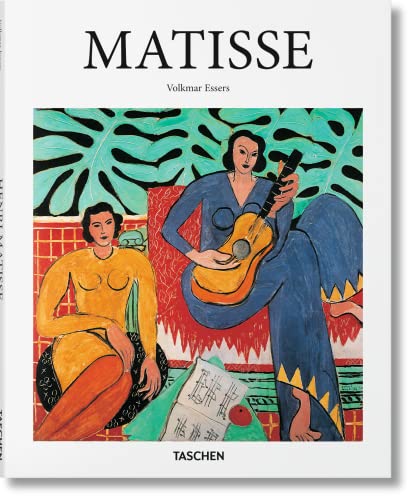
Matisse
Volkmar Essers
4.1
Henri Matisse (1869-1954), a cofounder of Fauvism, understood the expressive power of pure colors and simple forms. As seen here, his color harmonies can be analogous to musical compositions, complex and expressive. Full-color reproductions and thorough text provide a quick yet solid introduction to this master.
Cover unavailable
49
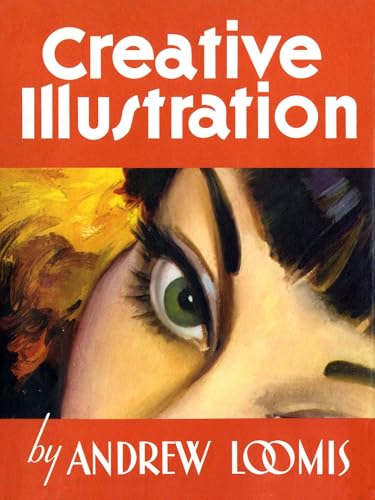
Creative Illustration
Andrew Loomis
4.1
During his career as one of America's most sought-after illustrators, Andrew Loomis (1889-1959) taught at the American Academy of Art in Chicago, and in 1939 he codified his lessons in his first manual, Fun with a Pencil. Four years later it had already been through six printings, and he followed up over the next two decades with a series of even more successful how-to books that remain the gold standard for artists to this day.
Creative Illustration is considered Loomis's magnum opus, which was aimed primarily at the professional-level illustrator. Divided into seven sections: Line, Tone, Color, Telling the Story, Creating Ideas, Fields of Illustration, and Experimenting and Studies, this book is filled with instructions, tips, insider experiences, and incredible illustrations.
…
Cover unavailable
50
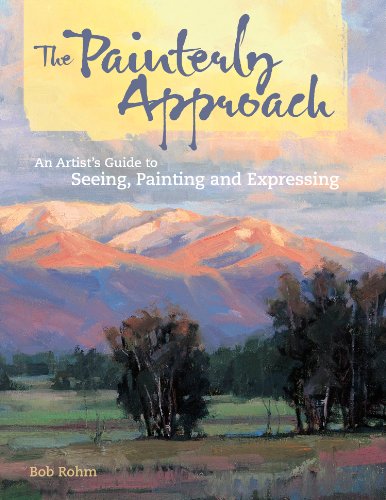
The Painterly Approach: An Artist's Guide to Seeing, Painting and Expressing
Bob Rohm
4.1
Create paintings with feeling
The Painterly Approach bridges the gap between what you see as an artist, and what you feel. More than painting an appealing landscape, it's about making your viewer feel the wind, experience the dance of shadows and sunlight, and admire the wondrous intermingling of colors that attracted you to your subject in the first place.
In this gorgeously illustrated book, Bob Rohm shows you how to see the world from a painterly perspective and translate it into expressive, poetic paintings that elicit an emotional response from your viewer.
Clearly illustrates how to choreograph color, value, composition, texture and other fundamental elements to achieve those elusive qualities of mood and emotion Features 9 step-by-step demonstrations (in oil, pastel and acrylic) on capturing a vivid sense of time and place Covers brushstrokes, painting with a palette knife, edge control, shadows and other advanced art techniques This book focuses primarily on landscape painting but offers valuable lessons for approaching any subject in a personal and engaging way.
…
Cover unavailable
51
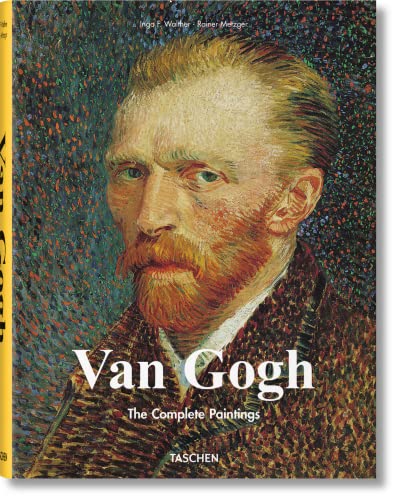
Van Gogh
Rainer Metzger and Ingo F. Walther
4.1
Steven Naifeh and Gregory White Smith galvanized readers with their astonishing Jackson Pollock: An American Saga, winner of the Pulitzer Prize for biography, a book acclaimed for its miraculous research and overwhelming narrative power. Now Naifeh and Smith have written another tour de force—an exquisitely detailed, compellingly readable, and ultimately heartbreaking portrait of creative genius Vincent van Gogh.
Working with the full cooperation of the Van Gogh Museum in Amsterdam, Naifeh and Smith have accessed a wealth of previously untapped materials. While drawing liberally from the artist’s famously eloquent letters, they have also delved into hundreds of unpublished family correspondences, illuminating with poignancy the wanderings of Van Gogh’s troubled, restless soul. Naifeh and Smith bring a crucial understanding to the larger-than-life mythology of this great artist—his early struggles to find his place in the world; his intense relationship with his brother Theo; his impetus for turning to brush and canvas; and his move to Provence, where in a brief burst of incandescent productivity he painted some of the best-loved works in Western art.
The authors also shed new light on many unexplored aspects of Van Gogh’s inner world: his deep immersion in literature and art; his erratic and tumultuous romantic life; and his bouts of depression and mental illness.
Though countless books have been written about Van Gogh, and though the broad outlines of his tragedy have long inhabited popular culture, no serious, ambitious examination of his life has been attempted in more than seventy years. Naifeh and Smith have re-created Van Gogh’s life with an astounding vividness and psychological acuity that bring a completely new and sympathetic understanding to this unique artistic genius whose signature images of sunflowers and starry nights have won a permanent place in the human imagination.
…
Cover unavailable
52
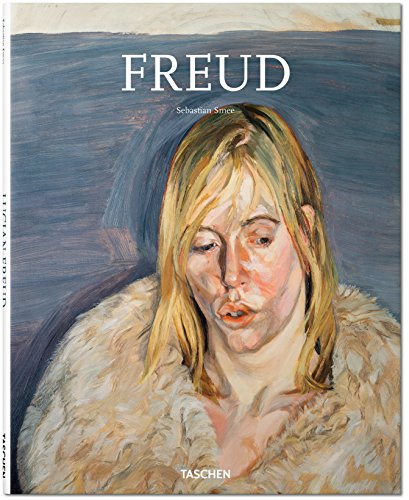
Lucian Freud: Beholding the Animal: Unflinching Truth
Sebastian Smee
4.1
British artist Lucian Freud is widely considered the most important figurative painter working today. Master portraitist and specialist in nudes, Freud uses impasto to create depth and intensity while restraining his color palate to mostly muted hues. His portraits may be physically unflattering to their subjects, but they are honest, frank, and unapologetic. I paint people, Freud has said, not because of what they are like, not exactly in spite of what they are like, but how they happen to be.
…
Cover unavailable
53
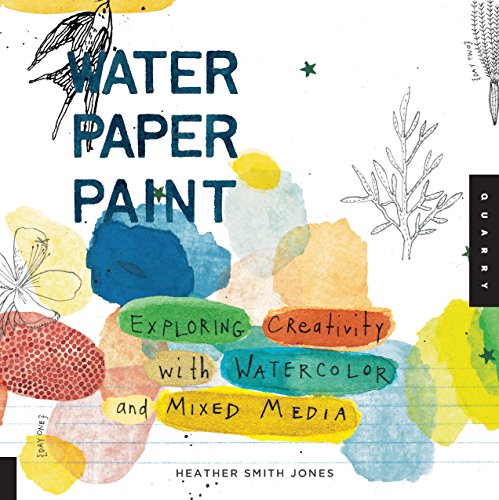
Water Paper Paint: Exploring Creativity with Watercolor and Mixed Media
Heather Jones
4.1
This book is not only for "painters" but for all types of creative individuals who want to experience and play with watercolor, whether their background is mixed-media, textile art, journaling, or paper craft. Unlike the typical watercolor textbooks, this unique, beautiful volume is a field book of inspiration, creative ideas, how to's, and projects, all from an artist's perspective. Each creative exercise features a technique, shows step-by-step photographs, and includes a clever idea for a gift or project that can be made from the painted samples.
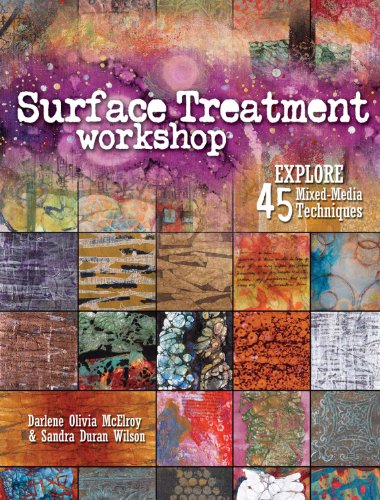
Pondering how to begin a new piece of art? Surface Treatment Workshop has the answer! The authors of Image Transfer Workshop are back to show you 45 stepped-out mixed-media techniques that will add depth and texture to your artwork. These techniques are the perfect jump-off point for creating art you will love to look at, and, in some cases, touch!
In this comprehensive guide, you�+ll find:
- 45 techniques. Exciting new applications such as the use of WonderUnder, pulled paper and plaster-dipped gauze will provide you with fresh ideas--many previously unpublished. - Multiple variations. Each technique features swatches and descriptions to take the techniques in multiple directions with multiple mixed-media products. - Inspirational style. Fully stepped-out projects from two artists will show you how to combine the techniques into finished works of art that can go in any artistic style.
Take Surface Treatment Workshop with you on your artistic journey for beautiful beginnings.
…
Cover unavailable
55
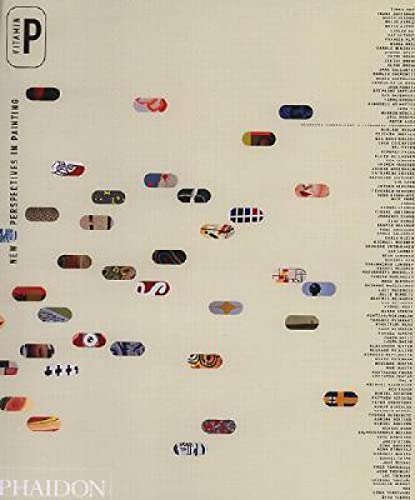
Vitamin P: New Perspectives in Painting
Barry Schwabsky
4.1
This highly illustrated overview of the state of painting documents concerns and ideas among contemporary painters. Often moving beyond the traditional image associated with this medium, this survey illustrates the richness, eclecticism, dynamism and contemporaneity of painting.
Cover unavailable
56
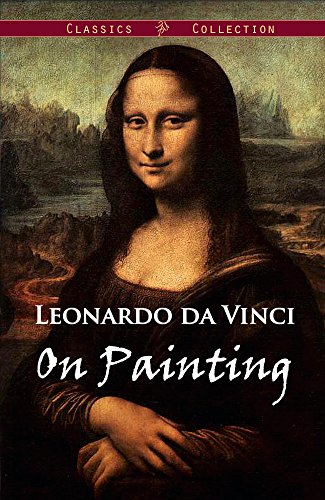
On Painting
Leon Battista Alberti, Martin Kemp
4.1
Artist, architect, poet and philosopher, Leon Battista Alberti revolutionized the history of art with his theories of perspective in On Painting (1435). Inspired by the order and beauty inherent in nature, his groundbreaking work sets out the principles of distance, dimension and proportion; instructs the painter on how to use the rules of composition, representation, light and colour to create work that is graceful and pleasing to the eye; and stipulates the moral and artistic pre-requisites of the successful painter. On Painting had an immediate and profound influence on Italian Renaissance artists including Ghiberti, Fra Angelico and Veneziano and on later figures such as Leonardo da Vinci, and remains a compelling theory of art.
Alberti’s alternation between poetic passages in the text with technical advice is so memorable that you only need to read it once. [source]
Cover unavailable
57
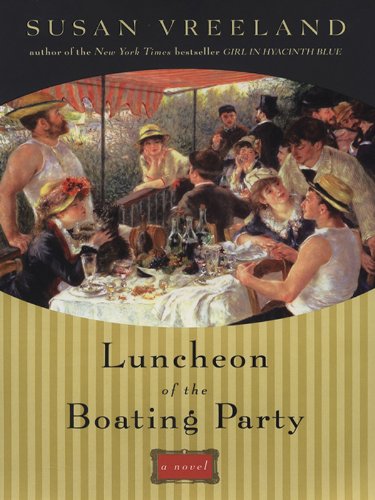
Luncheon of the Boating Party
Susan Vreeland
4.1
Bestselling author Susan Vreeland returns with a vivid exploration of one of the most beloved Renoir paintings in the world
Instantly recognizable, Auguste Renoir's masterpiece depicts a gathering of his real friends enjoying a summer Sunday on a café terrace along the Seine near Paris. A wealthy painter, an art collector, an Italian journalist, a war hero, a celebrated actress, and Renoir's future wife, among others, share this moment of la vie moderne, a time when social constraints were loosening and Paris was healing after the Franco-Prussian War. Parisians were bursting with a desire for pleasure and a yearning to create something extraordinary out of life. Renoir shared these urges and took on this most challenging project at a time of personal crises in art and love, all the while facing issues of loyalty and the diverging styles that were tearing apart the Impressionist group. Narrated by Renoir and seven of the models and using settings in Paris and on the Seine, Vreeland illuminates the gusto, hedonism, and art of the era. With a gorgeous palette of vibrant, captivating characters, she paints their lives, loves, losses, and triumphs in a brilliant portrait of her own.
…
Cover unavailable
58
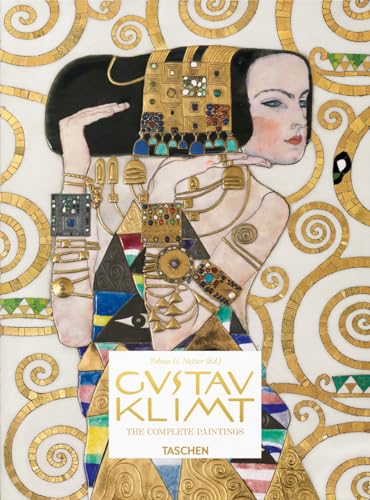
Gustav Klimt: Complete Paintings (XXL)
Tobias Natter
4.1
During his lifetime, Gustav Klimt was a controversial star whose works made passions run high. He stood for Modernism but he also embodied tradition. His pictures polarized and divided the art-loving world. The press and general public alike were split over the question: For or against Klimt?
This monograph explores Klimt’s oeuvre with particular emphasis upon such contemporary voices. With a complete catalogue of his paintings, including new photographs of the Stoclet Frieze commissioned exclusively for this book, it examines the reactions to Klimt’s work throughout his career. Subjects range from Klimt’s portrayal of women to his adoption of landscape painting. The theory that Klimt was a man of few words who rarely put pen to paper is also dispelled with the inclusion of 179 letters, cards, writings, and other documents from the artist.
Contributing authors: Evelyn Benesch, Marian Bisanz-Prakken, Rainald Franz, Anette Freytag, Christoph Grunenberg, Hansjörg Krug, Susanna Partsch, Angelina Pötschner, and Michaela Reichel
The Editor and Author: Tobias G. Natter is an internationally acknowledged expert on art in “Vienna around 1900.” For many years he worked at the Austrian Belvedere Gallery in Vienna, latterly as head curator. He also worked as guest curator at the Tate Liverpool, the Neue Galerie New York, the Hamburger Kunsthalle, the Schirn in Frankfurt am Main, and the Jewish Museum in Vienna. From 2006 to 2011, he directed the Vorarlberg Museum in Bregenz, and from 2011 to 2013 was director of the Leopold Museum in Vienna. In 2014 he founded Natter Fine Arts, which specializes in assessing works of art and developing exhibition concepts. He is the author of TASCHEN’s Gustav Klimt: The Complete Paintings; Art for All: The Colour Woodcut in Vienna around 1900; and Egon Schiele: The Complete Paintings, 1909–1918.
Details: Gustav Klimt: The Complete Paintings Tobias G. Natter Hardcover with fold-outs, 29 x 39.5 cm, 676 pages ISBN 978-3-8365-2795-8 Edition: English
SUZY MENKES: “Surely TASCHEN’s Klimt: The Complete Paintings. Each unfolding page — with its strokeable surface of intense paintwork and its meld of Byzantine imagery and Venetian mosaics — brings to life the exotic eroticism of an exceptional artist.”
…
Cover unavailable
59
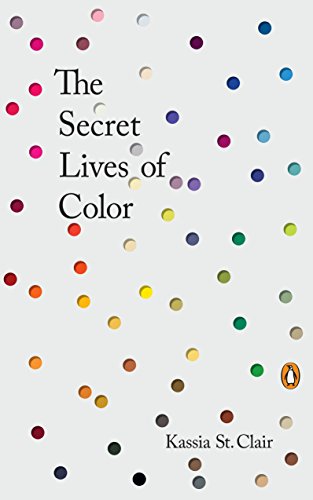
The Secret Lives of Color
Kassia St Clair
4.1
The Secret Lives of Colour tells the unusual stories of seventy-five fascinating shades, dyes and hues. From blonde to ginger, the brown that changed the way battles were fought to the white that protected against the plague, Picasso's blue period to the charcoal on the cave walls at Lascaux, acid yellow to kelly green, and from scarlet women to imperial purple, these surprising stories run like a bright thread throughout history.
In this book, Kassia St. Clair has turned her lifelong obsession with colours and where they come from (whether Van Gogh's chrome yellow sunflowers or punk's fluorescent pink) into a unique study of human civilization. Across fashion and politics, art and war, the secret lives of colour tell the vivid story of our culture.
…
Cover unavailable
60
Vincent and Theo: The Van Gogh Brothers
Deborah Heiligman
4.1
From the author of National Book Award finalist Charles and Emma comes an incredible story of brotherly love.
The deep and enduring friendship between Vincent and Theo Van Gogh shaped both brothers' lives. Confidant, champion, sympathizer, friend--Theo supported Vincent as he struggled to find his path in life. They shared everything, swapping stories of lovers and friends, successes and disappointments, dreams and ambitions. Meticulously researched, drawing on the 658 letters Vincent wrote to Theo during his lifetime, Deborah Heiligman weaves a tale of two lives intertwined and the extraordinary love of the Van Gogh brothers.
Praise for Vincent and Theo: Printz Honor Book YALSA Nonfiction Award Winner SCBWI Golden Kite Winner Boston Globe-Horn Book Awards Winner, Nonfiction Cybils Senior High Nonfiction Award Winner
"A remarkably insightful, profoundly moving story of fraternal interdependence and unconditional love." --Kirkus, starred review
"A breathtaking achievement that will leave teens eager to learn more." --School Library Journal, starred review
…
Recommended by Marc Favreau.
Marc Favreau
Heiligman’s book is a multi-layered work of cultural history. It is a tightly wound story of two brothers, one of whom goes on to become one of the most famous impressionist painters and the other a seller of paintings. Both Van Gogh brothers played a central role in the history of late 19th-century art and ended up dying tragically, within months of one another. [source]
Cover unavailable
61
Bob Ross by the Numbers
Bob Ross
4.1
Discover the joy of painting, just like Bob Ross himself, with this one-of-a-kind mini art set! Kit includes: Three pre-printed canvases with numbered sections -- 2 landscapes and 1 of Bob's famous face. Each canvas in around 3-1/8 x 2-3/4 inches. 7 paint pots Mini paint brush Mini easel for displaying finished paintings Full-color, fold-out sheets with detailed painting instructions 32-page book on Bob Ross, including painting tips
…
Cover unavailable
62
Chinese Painting Techniques for Exquisite Watercolors
Lian Quan Zhen
4.1
Capture the beauty and vitality of Chinese painting in your watercolors!
Using a few brushes, some rice paper and a small number of inks and paints, you can explore new realms of artistic expression in your watercolors. Author and artist Lian Quan Zhen shows you how, providing you with the clear, practical instruction you need to master every element of this intriguing style - from holding a bamboo brush to applying Chinese composition techniques.
Zhen makes learning easy with step-by-step instructions that enable you to apply brushstrokes with strength and confidence - a skill that will carry over into your everyday watercolor work. And you'll find inspiration in Zhen's own works of art - ranging from egrets in flight to gracefully swimming koi - as you discover the best techniques of the East and West. He'll show you that the beauty of fine art crosses every border and that your artistic journey has no limits.
…
Cover unavailable
63
How to Paint Fast, Loose and Bold: Simple Techniques for Expressive Painting
Patti Mollica
4.1
Bold Exciting Powerful A new level of artistic expression!
Every artist strives to achieve the kind of painting that commands attention from across the room and delights the eye up close. In this book, artist and workshop teacher Patti Mollica walks you through surprisingly simple and efficient strategies for achieving that kind of powerful composition, whatever your subject.
Complete with timed exercises and start-to-finish painting demonstrations, this book is for any artist who feels overwhelmed by where to start or daunted by the urge to paint everything in sight. Patti Mollica's mindful approach will lead you to better, bolder results, as well as greater confidence and joy in the process. So load your palette with ample paint, grab some fat brushes and get ready to paint fast, paint loose, paint bold.
Start with a strong, simple value statement Get expressive with color Be brave with your brushwork 5 technique exercises 5 start-to-finish painting demonstrations Paint fearlessly!
…
Cover unavailable
64
Composition of Outdoor Painting
Edgar Payne
4.1
Cover unavailable
65
The Artist's Handbook of Materials and Techniques
Ralph Mayer
4.1
Cover unavailable
66
Learn to Paint in Acrylics with 50 Small Paintings: Pick up the skills * Put on the paint * Hang up your art
Mark Daniel Nelson
4.1
Learn all you need to know about acrylic painting as you create 50 stunning mini paintings. Following an overview of painting fundamentals, illustrated step-by-step instructions accompanied by lessons on specific techniques lead your way.
This unique book is a complete course in acrylic painting, built up from key techniques. As you progress through the sections of the book, the author demonstrates each technique with the creation of a mini painting, measuring 5-inches squared. So by the time you have worked right through to the end, you will have an amazing collection of 50 mini paintings—on board, paper, or canvas—that will be a testament to your skill and creativity.
The subject matter for these squares varies from abstracts and simple color-mixing exercises, through to figurative subjects: a flower, a sunset, a busy street scene—and many more. These can be mounted, exhibited, or simply collected in a portfolio, or given away as gifts for friends to cherish.
If you are coming to acrylics for the first time, or keen to improve your skills and sometimes daunted by the thought of filling a large empty canvas or blank piece of board, this is your ideal guide. Instead, it will free you from creative hang-ups and replace them with an addictive desire to create that next 5-inch square!
…
Cover unavailable
67
Adult Coloring Book: Stress Relieving Designs Animals, Mandalas, Flowers, Paisley Patterns And So Much More: Coloring Book For Adults
Cindy Elsharouni
4.1
64 Unique Designs to Color! - Various Levels Of Intricacy Keeping You Excited! - Garden Designs, Animals, Mandalas, and Paisley Patterns - Each Coloring Page Is Designed To Help Relax And Inspire - Perfect For Every Skill Level - Perfect With Your Choice Of Coloring Tools (Crayon, Gel Pens, Markers, Colored Pencils) - Each Coloring Page Is On One Sheet. Printed One Sided.
Cover unavailable
68
Drawing the Head and Hands
Andrew Loomis
4.1
Cover unavailable
69
Brush of the Gods
Lenore Look, Meilo So
4.1
This gorgeous picture book biography, according to Kirkus Reviews in a starred review, is "a cheerful introduction not only to Wu Daozi, but to the power of inspiration."
Who wants to learn calligraphy when your brush is meant for so much more? Wu Daozi (689-758), known as China's greatest painter and alive during the T'ang Dynasty, is the subject of this stunning picture book. When an old monk attempts to teach young Daozi about the ancient art of calligraphy, his brush doesn't want to cooperate. Instead of characters, Daozi's brush drips dancing peonies and flying Buddhas! Soon others are admiring his unbelievable creations on walls around the city, and one day his art comes to life! Little has been written about Daozi, but Look and So masterfully introduce the artist to children.
…
Cover unavailable
70
Modern Watercolor Botanicals: A Creative Workshop in Watercolor, Gouache, & Ink
Sarah Simon
4.1
Cover unavailable
71
The Letters of Vincent van Gogh
Vincent Van Gogh
4.1
A new selection of post-impressionist painter Vincent Van Gough's letters, The Letters of Vincent van Gogh put a human face on one of the most haunting figures in modern Western culture. In this Penguin Classics edition, the letters are selected and edited by Ronald de Leeuw, and translated by Arnold Pomerans in Penguin Classics.
Few artists' letters are as self-revelatory as Vincent van Gogh's, and this selection, spanning his artistic career, sheds light on every facet of the life and work of this complex and tortured man. Engaging candidly and movingly with his religious struggles, his ill-fated search for love, his attacks of mental illness and his relation with his brother Theo, the letters contradict the popular myth of van Gogh as an anti-social madman and a martyr to art, showing instead a man of great emotional and spiritual depths. Above all, they stand as an intense personal narrative of artistic development and a unique account of the process of creation.
The letters are linked by explanatory biographical passages, revealing van Gogh's inner journey as well as the outer facts of his life. This edition also includes the drawings that originally illustrated the letters.
Vincent Willem van Gogh (1853-1890) was born in Holland. In 1885 he painted his first masterpiece, The Potato Eaters, a haunting scene of domestic poverty. A year later he began studying in Paris, where he met Gauguin, Toulouse-Lautrec and Seurat, who became very important influences on his work. In 1888 he left Paris for the Provencal landscape at Arles, the subject of many of his best works, including Sunflowers.
If you enjoyed The Letters of Vincent van Gogh, you might also like 100 Artists Manifestos, available in Penguin Modern Classics.
'If there was ever any doubt that Van Gogh's letters belong beside those great classics of artistic self-revelation, Cellini's autobiography and Delacroix's journal, this excellent new edition dispels it' The Times
…
Cover unavailable
72
The Judgment of Paris: The Revolutionary Decade That Gave the World Impressionism
Ross King
4.1
With a novelist's skill and the insight of an historian, bestselling author Ross King recalls a seminal period when Paris was the artistic center of the world, and the rivalry between Meissonier and Manet.
While the Civil War raged in America, another revolution took shape across the Atlantic, in the studios of Paris: The artists who would make Impressionism the most popular art form in history were showing their first paintings amidst scorn and derision from the French artistic establishment. Indeed, no artistic movement has ever been quite so controversial. The drama of its birth, played out on canvas and against the backdrop of the Franco-Prussian War and the Commune, would at times resemble a battlefield; and as Ross King reveals, it would reorder both history and culture, and resonate around the world.
…
Cover unavailable
73
Acrylic Revolution: New Tricks and Techniques for Working with the World's Most Versatile Medium
Nancy Reyner
4.0
• Manufacturers see acrylic paint as the most versatile paint with the most growth potential and are putting marketing and product development dollars behind their products to help educate readers on the benefits of this paint—there are currently over 225 different types of acrylic paints
* The first book to address the most popular applications of acrylics and the accompanying mediums
* With 101 tricks and techniques there is literally something for everyone-from artists, to crafters, to weekend enthusiasts, to students of all levels
* Features a contemporary design that reflects the applications and current trends surrounding the medium
Acrylic Revolution will show readers everything they need to know to be successful in their acrylic painting projects. With over 101 of the most popular, interesting, and indispensable tricks for working with acrylic-each with its own step-by-step demonstration-there is literally page after page of acrylic instruction and inspiration for readers to discover. A gallery of finished art at the back of the book will show readers how to combine different tricks to use in their artwork offering them real-life applications for acrylic techniques.
…
Cover unavailable
74
Anatomy for the Artist
Jenö Barcsay, Jeno Barcsay
4.0
It’s the classic in its field—a reference work of unparalleled importance for all professionals and students of art.
This superb art manual is the best guide available on a subject that has fascinated artists for centuries: the human body. Jenö Barcsay, a professor who taught applied anatomy at the Budapest Academy of Fine Arts, offers a detailed portrayal of the body for the fine artist in 142 full-page plates. From the entire skeleton and the joints in and out of motion to all the muscles and even facial characteristics, every body part appears in close-up and from varying perspectives. Accompanying the images are brief discussions of male and female anatomical construction, explaining precisely the articulations and movement of the foot, the arm, the trunk, the spinal column, and the skull. In many cases, two sketches appear side by side: one just lightly traced in, and marked with letters to show how proportions and perspective were figured, and another fully finished drawing. Without the indispensable information contained on these illuminating pages, painters cannot observe with understanding all the attitudes, positions, and movements of which the body is capable—and produce a truly magnificent work of art.
Features a new concealed spiral that keeps the book open as you work!
…
Cover unavailable
75
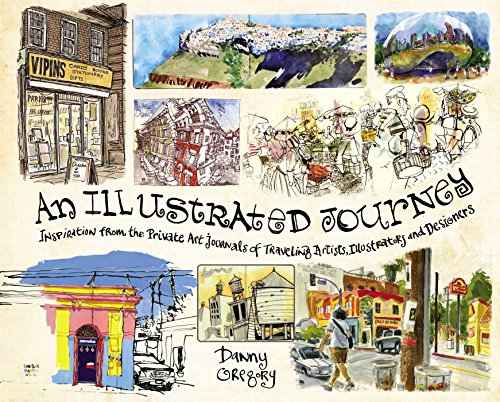
An Illustrated Journey: Inspiration From the Private Art Journals of Traveling Artists, Illustrators and Designers
Danny Gregory
4.0
Travel + Sketching = Inspiration
When we travel, we don't want to follow the same itinerary as everyone who's come before us. We want to feel like explorers, adventurers in undiscovered territory. And that's exactly what sketching can bring to the travel experience.
An Illustrated Journey captures the world through the eyes of 40 talented artists, illustrators and designers. You'll experience the wonder of seeing familiar sights through a fresh lens but, more important, you'll be inspired to set pen to paper and capture your own vistas.
The really wonderful thing about a sketchbook is that it can be totally private. You don't have to have an ounce of talent to enjoy learning how to really see what's in front of you. But lucky for us, the sketchbooks captured here are lovely, creative, intimate windows into each artist's mind.
So, whether you're just returning to the art of drawing, abandoned by most of us after childhood, or you're looking for inspiration to take your illustration work in a new direction, An Illustrated Journey will take you on a wonderful trip of the imagination. All you need to pack are a pencil and a piece of paper.
…
Cover unavailable
76
Secret Knowledge: Rediscovering the Lost Techniques of the Old Masters
David Hockney
4.0
Join one of the most influential artists of our time as he investigates the painting techniques of the Old Masters. Hockney’s extensive research led him to conclude that artists such as Caravaggio, Velázquez, da Vinci, and other hyperrealists actually used optics and lenses to create their masterpieces.In this passionate yet pithy book, Hockney takes readers on a journey of discovery as he builds a case that mirrors and lenses were used by the great masters to create their highly detailed and realistic paintings and drawings. Hundreds of the best-known and best-loved paintings are reproduced alongside his straightforward analysis. Hockney also includes his own photographs and drawings to illustrate techniques used to capture such accurate likenesses. Extracts from historical and modern documents and correspondence with experts from around the world further illuminate this thought-provoking book that will forever change how the world looks at art.
Secret Knowledge will open your eyes to how we perceive the world and how we choose to represent it.
…
Cover unavailable
77
Making Color Sing: Practical Lessons in Color and Design
Jeanne Dobie
4.0
Through clear, illuminating exercises, this best-selling book stimulates new ways to think about color, generating responses that unlock personal creativity and allow artists to express themselves with paint as never before. Readers are shown how the interplay of complementary hues can trigger vibrations; how the push and pull of warm and cool colors can create a feeling of space; how to disguise one color in a scene to accent another; and many more tidbits of colorful advice.
…
Cover unavailable
78
Figure Drawing for All It's Worth (How to draw and paint)
Andrew Loomis
4.0
The illustrator Andrew Loomis (1892-1959) is revered among artists - including comics superstar Alex Ross - for his mastery of figure drawing and clean, Realist style.
His hugely influential series of art instruction books have never been bettered, and Figure Drawing is the first in Titan's programme of facsimile editions, returning these classic titles to print for the first time in decades.
Cover unavailable
79
Harley Brown's Eternal Truths for Every Artist
Harley Brown, Lewis Barrett Lehrman
4.0
Here, Harley Brown offers artists his 'truths' for painting success - the stuff he hopes they teach in art school. A well-established artist, Harley has gained a large following with his frank, no-nonsense approach to teaching art.
Cover unavailable
80
The Swan Thieves
Elizabeth Kostova
4.0
Kostova's masterful new novel travels from American cities to the coast of Normandy, from the late 19th century to the late 20th, from young love to last love. The Swan Thieves is a story of obsession, history's losses, and the power of art to preserve human hope.
Psychiatrist Andrew Marlowe, devoted to his profession and the painting hobby he loves, has a solitary but ordered life. When renowned painter Robert Oliver attacks a canvas in the National Gallery of Art and becomes his patient, Marlow finds that order destroyed. Desperate to understand the secret that torments the genius, he embarks on a journey that leads him into the lives of the women closest to Oliver and a tragedy at the heart of French Impressionism.
Kostova's masterful new novel travels from American cities to the coast of Normandy, from the late 19th century to the late 20th, from young love to last love. The Swan Thieves is a story of obsession, history's losses, and the power of art to preserve human hope.
…
Cover unavailable
81
Leonardo's Notebooks
Leonardo da Vinci
4.0
An all-new, jewel-like, reader-friendly format gives new life to this relaunch of an international best-seller.
Leonardo da Vinci—artist, inventor, and prototypical Renaissance man—is a perennial source of fascination because of his astonishing intellect and boundless curiosity about the natural and man-made world. During his life he created numerous works of art and kept voluminous notebooks that detailed his artistic and intellectual pursuits.
The collection of writings and art in this magnificent book are drawn from his notebooks. The book organizes his wide range of interests into subjects such as human figures, light and shade, perspective and visual perception, anatomy, botany and landscape, geography, the physical sciences and astronomy, architecture, sculpture, and inventions. Nearly every piece of writing throughout the book is keyed to the piece of artwork it describes.
The writing and art is selected by art historian H. Anna Suh, who provides fascinating commentary and insight into the material, making Leonardo's Notebooks an exquisite single-volume compendium celebrating his enduring genius.
…
Cover unavailable
82
If Picasso Painted a Snowman
Amy Newbold, Greg Newbold
4.0
If someone asked you to paint a snowman, you would probably start with three white circles stacked one upon another. Then you would add black dots for eyes, an orange triangle for a nose, and a black dotted smile. But if Picasso painted a snowman…
From that simple premise flows this delightful, whimsical, educational picture book that shows how the artist’s imagination can summon magic from a prosaic subject. Greg Newbold’s chameleon-like artistry shows us Roy Lichtenstein’s snow hero saving the day, Georgia O’Keefe’s snowman blooming in the desert, Claude Monet’s snowmen among haystacks, Grant Wood’s American Gothic snowman, Jackson Pollock’s snowman in ten thousand splats, Salvador Dali’s snowmen dripping like melty cheese, and snowmen as they might have been rendered by J. M. W. Turner, Gustav Klimt, Paul Klee, Marc Chagall, Georges Seurat, Pablita Velarde, Piet Mondrian, Sonia Delaunay, Jacob Lawrence, and Vincent van Gogh. Our guide for this tour is a lively hamster who—also chameleon-like—sports a Dali mustache on one spread, a Van Gogh ear bandage on the next.
“What would your snowman look like?” the book asks, and then offers a page with a picture frame for a child to fill in. Backmatter thumbnail biographies of the artists complete this highly original tour of the creative imagination that will delight adults as well as children.
Fountas Pinnell Level O
…
Cover unavailable
83
Traditional Oil Painting: Advanced Techniques and Concepts from the Renaissance to the Present
Virgil Elliott
4.0
The only book that lets artists explore the highest levels of realistic oil painting.
As more and more artists today look to the past, there has been a tremendous resurgence of interest in painting realistically--in creating convincing illusions of three-dimensional depth on two dimensional surfaces. How did the Old Masters create their masterpieces? What kind of education allowed these great artists to create such beautiful work, and how can an artist learn these lessons today? Traditional Oil Painting answers those questions and many more. This comprehensive sourcebook explores the most advanced levels of oil painting, with full information on the latest scientific discoveries. Author and distinguished artist Virgil Elliott examines the many elements that let artists take the next step in their work: mental attitude, aesthetic considerations, the importance of drawing, principles of visual reality, materials, techniques, portraiture, photographic images versus visual reality, and color. Traditional Oil Painting helps artists master the secrets of realistic painting to create work that will rival that of the masters.
…
Cover unavailable
84
False Impression
Jeffrey Archer
4.0
When an aristocratic old lady is brutally murdered in her country home the night before 9/11, it takes all the resources of the FBI and Interpol to work out the connection between her and the possible motive for her death – a priceless Van Gogh painting. It’s a young woman in the North Tower when the first plane crashed into the building who has the courage and determination to take on both sides of the law and avenge the old lady’s death.
Anna Petrescu is missing, presumed dead, after 9/11 and she uses her new status to escape from America, only to be pursued across the world from Toronto to London, to Hong Kong, Tokyo and Bucharest, but it is only when she returns to New York that the mystery unfolds. Why are so many people willing to risk their own lives and others' to own the Van Gogh Self-Portrait with Bandaged Ear?
Jeffrey Archer, one of the greatest popular novelists of our generation, delivers a truly page-turning thriller.
…
Cover unavailable
85
Monet: Or the Triumph of Impressionism
Taschen
4.0
The definitive Monet biography by Daniel Wildenstein, a leading authority on Impressionist painting and author of the catalogue raisonné of Monet's works, is lavishly illustrated with 572 reproductions and complementary photographic documents. A visual representation of an extraordinary artistic career, that simultaenously brings to life the spirit of a whole era.
The author: Daniel Wildenstein (1917-2001) was an art historian and member of the Académie des Beaux-Arts (Paris). From 1939 onwards, he was Director of the Wildenstein Galleries of New York, London, and Tokyo. He edited several international journals, e.g. the magazine Arts from 1956-1962 and the Gazette des Beaux-Arts after 1963. He co-founded the Fondation Wildenstein in 1970 (it was renamed the Wildenstein Institute in 1984), and was a prime mover in many exhibitions of international repute. Daniel Wildenstein also edited the catalogues raisonnés of various 18th, 19th, and 20th century artists. He was a world authority on Impressionism, and published catalogues of the works of Gauguin, Manet, and Monet.
…
Cover unavailable
86
Bosch
Walter Bosing
4.0
If Hieronymus Bosch (1450-1516) remains an enigma today, it is little wonder. Even his contemporaries found the Dutch painter’s work difficult to decipher—and it still presents riddles to contemporary art historians. Part of the problem in analyzing his shocking and richly allegorical paintings is that virtually nothing is known of the artist himself, apart from his birthplace. There is no record of his life or training, no personal letters, diaries or notebooks, and no contemporary insights into his personality or his thoughts on the meaning of his art. Even his date of birth can only be guessed at, and that based on a drawing assumed to be a self-portrait, made shortly before his death in 1516, which supposedly shows the artist in his late sixties. Bosch remains as mysterious as the worlds he painted. Although rooted in the Old Dutch tradition, Bosch developed a highly subjective, richly suggestive formal language. With a mixture of religious humility and satanic wit, he illustrated both the joys of heaven and the cruelly imaginative tortures of hell. In his pictorial world teeming with surrealistic nightmares, the medieval imagination catches fire in a moment of final brilliance before succumbing to humanism and modern rationalism. Though the man himself remains a mystery, this book pulls together the elusive threads of Bosch’s work into a cohesive and comprehensive analysis of his work and methods.
…
Cover unavailable
87
Vincent Van Gogh: The Complete Paintings
Ingo F Walther
4.0
Van Gogh, who took up a variety of professions before becoming an artist, was a solitary, despairing and self-destructive man. This richly illustrated and expert study follows the artist from the early gloom-laden paintings in which he captured the misery of peasants and workers in his homeland, through his bright and colorful Parisian period, to the work of his final years, spent under a southern sun in Arles.
…
Cover unavailable
88
The Artist's Complete Guide to Drawing the Head
William Maughan
4.0
In this innovative guide, master art instructor William Maughan demonstrates how to create a realistic human likeness by using the classic and highly accurate modeling technique of chiaroscuro (Italian for “light and dark”) developed by Leonardo da Vinci during the High Renaissance.
Maughan first introduces readers to the basics of this centuries-old technique, showing how to analyze form, light, and shadow; use dark pencil, white pencil, and toned paper to create a full range of values; use the elements of design to enhance a likeness; and capture a sitter’s gestures and proportions. He then demonstrates, step by step, how to draw each facial feature, develop visual awareness, and render the head in color with soft pastels.
…
Cover unavailable
89
The Joy of Watercolor: 40 Happy Lessons for Painting the World Around You
Emma Block
4.0
Enjoy the meditative art of watercolor with simple supplies, forty colorful illustrated lessons, and easy step-by-step instructions! For a soothing boost of creativity and whimsy, try your hand at watercolor. With a few simple steps, anyone can discover their artistic side and achieve moments of peace and tranquility. Forty straightforward lessons promise fun and colorful results -- no pressure and no skill required. This simple painting medium produces colorful, modern paintings to adorn invitations, gifts, and walls. The forty lessons cover useful topics like: Painting on vacation Painting your pets Layering colors Mixing colors Painting flowers and plants
The supplies are simple: a basic palette of watercolors, a selection of brushes, and nice thick paper will do the job. Your bright, whimsical art is guaranteed to bring color to any gray day. It's never too late to pick up a new hobby -- start painting your own beautiful cards and artwork today!
…
Cover unavailable
90
The Helga Pictures
John Wilmerding, Andrew Wyeth
4.0
The Helga pictures galvanized public attention in 1986, when articles appeared in the press about a large cache of work previously unknown not only to the art world but even to the Wyeth's wife. At first, attention was given to his private project-depicting the same subject in secrecy from 1971 to '85. Away from the publicity that accompanied the debut of these works, they remain a striking, thoughtful study of an individual who evolved as a model from stranger to acquaintance to friend. The works in the Helga Pictures may also be appreciated for their artistic strengths & for their place within his continuing career as a keen observer of the people & places around his residences in Pennsylvania & Maine. Ultimately, The Helga Pictures is a telling tale of a persistence of vision & technique from a perspective that's both objective & personal. From a distinguished artistic family, Andrew Wyeth (1917-2009) is a painter & draftsman who developed under the watchful eye of his father, artist/illustrator N.C. Wyeth. One of America's most celebrated artists, Wyeth is famous for his tight style of drybrush painting & recognizable subject matter. Dedicated to a characteristic realism in both style & approach to subject matter, he finds resonance & universal meaning in the most commonplace details of the world around him.
…
Cover unavailable
91
Oil Painting Secrets From a Master
Linda Cateura, David A. Leffel
4.0
Some of the most popular art instruction books ever written have been based on student notes culled over the years from actual workshop sessions, with all their power and immediacy - and with practical, on-to-one contact between student and teacher. This is such a book. For more than two years, Linda Cateura has pursued teacher / artist David A. Leffel, notebook in hand, as he critiqued the work of students. Linda Cateura's succinct notes capture his insights, philosophy, painting hints, and general comments.
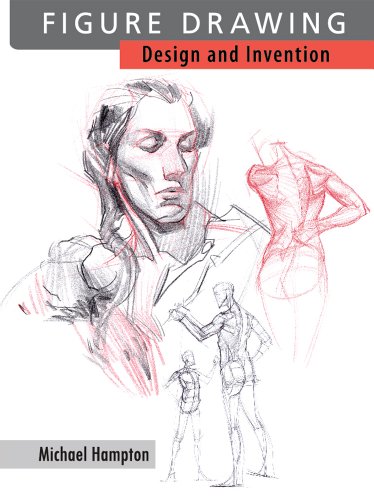
Leffel's classic, painterly, twentieth-century old master style, much in the manner of Rembrandt or Chardin, affords ample illustration of the ideas expressed - through his many paintings, details, demonstrations, and diagrams, almost all in color.
No matter what your level of ability, there is something here to apply to your own work, ideas that will cause you to rething your own ways of painting, hints to save you effort, or solutions to persistent painting problems.
…
Cover unavailable
92
The Practice and Science of Drawing
Harold Speed
4.0
Much of the learning to practice as well as to appreciate art is concerned with understanding the basic principles. One of these principles is what Harold Speed calls "dither," the freedom that allows realism and the artistic vision to play against each other. Very important to any artist or work of art, this quality separates the scientifically accurate from the artistically accurate. Speed's approach to this problem is now considered a classic, one of the few books from the early years of this century that has continued to be read and recommended by those in the graphic arts. In this work, Harold Speed approaches this dynamic aspect of drawing and painting from many different points of view. He plays the historical against the scientific, theory against precise artistic definition. He begins with a study of line drawing and mass drawing, the two basic approaches the artist needs to learn. Further sections carry the artistic vision through unity and variety of line and mass, balance, proportion, portrait drawing, the visual memory, materials, and procedures. Throughout, Speed combines historical backgrounds, dynamic aspects which each technique brings to a work of art, and specific exercises through which the young draughtsman may begin his training. Although not a technique book in the strict sense of the terms, The Practice and Science of Drawing brings to the beginner a clear statement of the principles that he will have to develop and their importance in creating a work of art. Ninety-three plates and diagrams, masterfully selected, reinforce Speed's always clear presentation. Harold Speed, master of the art of drawing and brilliant teacher, has long been cited for this important work. For the beginner, Speed will develop a sense for the many different aspects which go into an artistic education. For the person who enjoys looking at drawings and paintings, Speed will aid developing the ability to see a work of art as the artist meant it to be seen.
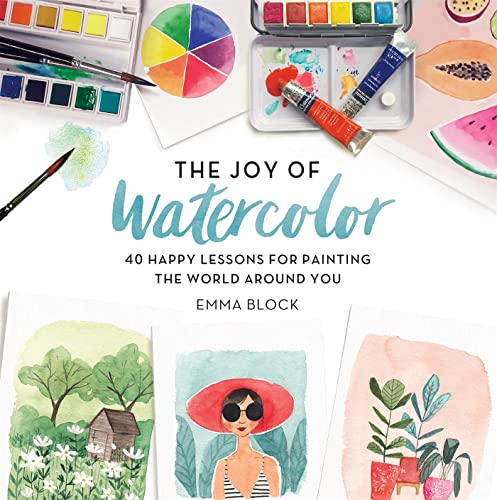
The past is a source of inspiration and fellowship, allowing our solitary lives and artistic body of work to be seen in a larger context, and we are propelled forward in its current.The book is a hundred years old, yet is as true and useful now as when it was first released. An underlying theme through all the books we’re discussing is that art is a skill that can be taught and mastery achieved by cultivating your skills [source]
Cover unavailable
93
Lessons in Classical Painting: Essential Techniques from Inside the Atelier
Juliette Aristides
4.0
Cover unavailable
94
Painting with Bob Ross: Learn to paint in oil step by step!
Bob Ross Inc
4.0
Painting with Bob Ross—with artwork created by Bob Ross himself using his specially formulated oil paints, brushes, basecoats, and other tools—introduces artists and Bob Ross fans to the basics of painting landscapes. Everyone will enjoy Painting with Bob Ross, as his “happy accidents” approach makes this challenging subject matter enjoyable for all ages, regardless of skill level and materials used.
“All you need is the desire to make beautiful things happen on canvas…” —Bob Ross
In 1982, The Joy of Paintingmade its debut on public television. The unrehearsed, unedited show soon became a favorite among aspiring artists and painters. Almost 40 years and 403 episodes after his on-air debut, and decades after his untimely passing, Bob Ross still has enormous global popularity as a beloved painter, affable TV personality, and cultural icon.
With this guide, you can learn to paint a happy tree in seconds, just like Bob Ross! Painting with Bob Ross introduces you to the tools and materials you need to paint beautiful landscapes, as well as basic painting techniques, such as how to load your brush and how to paint with a knife.
Following the introduction are 16 painting projects, each with a complete list of tools and materials needed and instructions for preparing the canvas. Jump into painting with step one, then follow the full-color painting progressions and clearly written instructions until you’ve reached the final step—and your new, joyful work of art! This is the only Bob Ross book with all-color images.
Even if you’re brand new to painting, remember that Bob said, “Talent is nothing more than a pursued interest. All you need to paint is a few tools, a little instruction, and a vision in your mind.” Throughout this book, Bob’s quotes encourage you to keep going.
So grab your copy of Painting with Bob Ross, relax and unwind, and paint a Bob Ross-inspired landscape! You can paint graceful mountains, ocean waves crashing onto rocks, a winter cabin, a lakeside path, a deep forest river, and many more breathtaking views. And don’t forget to sign each of your masterpieces once you’ve completed the last step!
…
Cover unavailable
95
Watercolor Essentials
Birgit O'Connor
4.0
Everything you need to know to make magic with watercolor!
Features 80+ lessons, exercises and demonstrations, including live instruction on the enclosed DVD
Watercolor moves like no other medium. Just add water, and the pigment takes on a life of its own. This book makes learning to paint equally dynamic, with page after page of step-by-step demonstrations, plus more than 40 lessons on the companion DVD.
Get off to a happy start with basics such as laying a wash, applying a glaze and keeping whites white. Expand your skills and discover new ways to express yourself with advanced techniques, including special effects using salt, rubber cement and foil. From selecting and caring for your brushes to secrets for painting big, bold, beautiful shadows, Watercolor Essentials contains everything you need to paint with confidence.
33 exercises, from foundational skills to advanced techniques for painting clouds, rock textures, moonlit water and more 7 start-to-finish demonstrations take you through the process of painting a variety of subjects, including atmospheric landscapes, waterscapes and flowers 70-minute DVD puts it all into action, so you can see how the paint is applied and reacts on the paper
…
Cover unavailable
96
Classical Drawing Atelier: A Contemporary Guide to Traditional Studio Practice
Juliette Aristides
4.0
Ateliers have produced the greatest artists of all time—and now that educational model is experiencing a renaissance. These studios, a return to classical art training, are based on the nineteenth-century model of teaching artists by pairing them with a master artist over a period of years. Students begin by copying masterworks, then gradually progress to painting as their skills develop. Classical Drawing Atelier is an atelier in a book—and the master is Juliette Aristides, a classically trained artist. On every page, Aristides uses the works of works of Old Masters and today’s most respected realist artists to demonstrate and teach the principles of realist drawing and painting, taking students step by step through the learning curve yet allowing them to work at their own pace. Unique and inspiring, Classical Drawing Atelier is a serious art course for serious art students.
…
Cover unavailable
97
Picture This: How Pictures Work
Molly Bang
4.0
Molly Bang's brilliant, insightful, and accessible treatise is now revised and expanded for its 25th anniversary. Bang's powerful ideas—about how the visual composition of images works to engage the emotions, and how the elements of an artwork can give it the power to tell a story—remain unparalleled in their simplicity and genius. Why are diagonals dramatic? Why are curves calming? Why does red feel hot and blue feel cold? First published in 1991, Picture This has changed the way artists, illustrators, reviewers, critics, and readers look at and understand art.
…
Cover unavailable
98
Color Mixing Recipes for Portraits: More Than 500 Color Cominations for Skin, Eyes, Lips, and Hair: Featuring Oil and Acrylic - Plus a Special Section for Watercolor
William Powell
4.0
Cover unavailable
99
Portrait Painting Atelier: Old Master Techniques and Contemporary Applications
Suzanne Brooker, Domenic Cretara
4.0
The art of portraiture approached its apex during the sixteenth century in Europe with the discovery of oil painting when the old masters developed and refined techniques that remain unsurpassed to this day. The ascendance of nonrepresentational art in the middle of the twentieth century displaced these venerable skills, especially in academic art circles. Fortunately for aspiring artists today who wish to learn the methods that allowed the Old Masters to achieve the luminous color and subtle tonalities so characteristic of their work, this knowledge has been preserved in hundreds of small traditional painting ateliers that persevered in the old ways in this country and throughout the world.
Coming out of this dedicated movement, Portrait Painting Atelier is an essential resource for an art community still recovering from a time when solid instruction in art technique was unavailable in our schools. Of particular value here is a demonstration of the Old Masters’ technique of layering paint over a toned-ground surface, a process that builds from the transparent dark areas to the more densely painted lights. This method unifies the entire painting, creating a beautiful glow that illuminates skin tones and softly blends all the color tones. Readers will also find valuable instruction in paint mediums from classic oil-based to alkyd-based, the interactive principles of composition and photograph-based composition, and the anatomy of the human face and the key relationships among its features.
Richly illustrated with the work of preeminent masters such as Millet, Géricault, and van Gogh, as well as some of today’s leading portrait artists—and featuring seven detailed step-by-step portrait demonstrations—Portrait Painting Atelier is the first book in many years to so comprehensively cover the concepts and techniques of traditional portraiture.
…
Cover unavailable
100
Vermeer, 1632-1675: Veiled Emotions
Norbert Schneider
4.0
The 35 paintings that have come down to us from the hand of Jan Vermeer (1632-1675) place him beside Rembrandt and Frans Hals as one of the great masters of the golden age of Dutch art. Most of his pictures, all of which are reproduced in this text, show women about their daily business. Vermeer records the tasks and duties of women, the imperatives of virtue under which their lives were lived, and the dreams that provided the substance of their contrasting counter-world.