We've ranked the best mutual funds books using expert recommendations, sales data, and millions of reader ratings. At Shortform, we know books. Our book guides are the best in the world. Learn why.
This hardcover edition is cleanly formatted for easy reading. 12 point Garamond, 1.25 spacing. The Richest Man in Babylon is a timeless classic, revealing the secrets to making money and keeping it. This inspirational book is hailed as the greatest of books on finances. It unveils the secrets to wealth, providing priceless suggestions, advice, unforgettable parables, financial problem-solving tools, and invaluable information which will get you on your way to riches. The book to read for all who want financial success.
…
Recommended by Daymond John, Aisha Yesufu, DJ Vlad, and 6 others.
Daymond John
Founder/FUBU
Daymond John said this is one of his most-recommended books. [source]
Aisha Yesufu
@seundavidpaul 👏👏👏👏👏 This is a great book [source]
This is a 1920s classic version of How To Get Rich. The ancestor of all the pale imitations, like Rich Dad/Poor Dad, that came since. And while I scoffed at plenty of the allegories from ancient Babylon that presents the lessons, it was still a neat package. And at least ancient Babylon is a more interesting backdrop for teaching lessons about money than some suburban house flipper. I ended up liking it more at the end than I did at the beginning. It’s also a really interesting tie-in with that debt history book. [source]
Cover unavailable
2
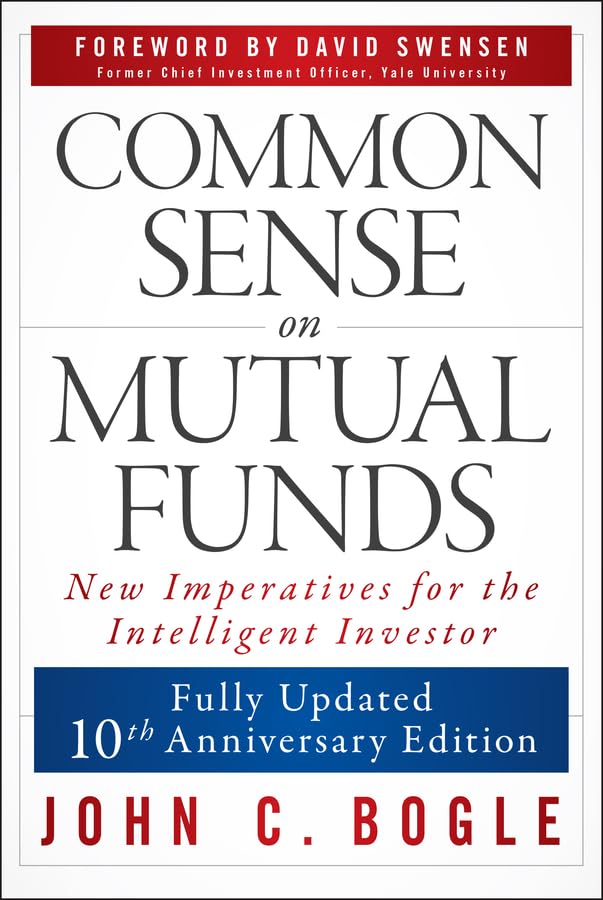
Common Sense on Mutual Funds: New Imperatives for the Intelligent Investor
John C. Bogle
4.9
NATIONAL BESTSELLER! "Cogent, honest, and hard-hitting-a must read for every investor." -Warren E. Buffett Praise for Common Sense on Mutual Funds "Invoking both Thomas Paine and Benjamin Graham, Jack Bogle outlines a supremely logical plan not only to better investors' returns, but to improve the whole fund industry. This isn't just the best book yet by Bogle, it may well be the best book ever on mutual funds." -DON PHILLIPS, President & CEO, Morningstar, Inc. "Buffett cannot teach you or me how to become a Warren Buffett. Bogle's reasoned precepts can enable a few million of us savers to become in twenty years the envy of our suburban neighbors-while at the same time we have slept well in these eventful times."-PAUL A. SAMUELSON, Massachusetts Institute of Technology Department of Economics "After a lifetime of picking stocks, I have to admit that Bogle's arguments in favor of the index fund have me thinking of joining him rather than trying to beat him. Bogle's wisdom and his commonsense way of explaining things make this book indispensable reading for anyone trying to figure out how to invest in this crazy stock market."-JAMES J. CRAMER, Money Manager and Senior Columnist for TheStreet.com "Written in his characteristic forthright and visionary style, Bogle penetrates the myths and jargon to shed a powerful light on the central issues that confront every investor, no matter what their level of experience or sophistication." -MARTIN L. LEIBOWITZ, Vice Chairman and Chief Investment Officer, TIAA-CREF "Jack Bogle is one of the great pioneer/visionaries of the investment business. In this book, he shares his knowledge, experience, and judgment to enable us to become better investors. The final philosophical chapters provide insights that may help some of us become better people." -BYRON R. WIEN, Chief U.S. Investment Strategist Morgan Stanley Dean Witter
This is a wonderful, comprehensive introduction to how the financial markets work. It shows who has your interests at heart, and what the various self-interests are, of all the people you are likely to encounter when you invest. [source]
Peter Mallouk
A book that I read when I was very young that I thought really kind of explained the investing world in plain English. [source]
Cover unavailable
3
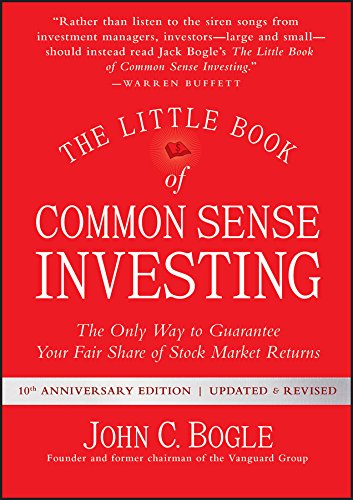
The Little Book of Common Sense Investing: The Only Way to Guarantee Your Fair Share of Stock Market Returns
The best-selling investing "bible" offers new information, new insights, and new perspectives
The Little Book of Common Sense Investing is the classic guide to getting smart about the market. Legendary mutual fund pioneer John C. Bogle reveals his key to getting more out of investing: low-cost index funds. Bogle describes the simplest and most effective investment strategy for building wealth over the long term: buy and hold, at very low cost, a mutual fund that tracks a broad stock market Index such as the S&P 500.
While the stock market has tumbled and then soared since the first edition of Little Book of Common Sense was published in April 2007, Bogle's investment principles have endured and served investors well. This tenth anniversary edition includes updated data and new information but maintains the same long-term perspective as in its predecessor.
Bogle has also added two new chapters designed to provide further guidance to investors: one on asset allocation, the other on retirement investing.
A portfolio focused on index funds is the only investment that effectively guarantees your fair share of stock market returns. This strategy is favored by Warren Buffett, who said this about Bogle: "If a statue is ever erected to honor the person who has done the most for American investors, the hands-down choice should be Jack Bogle. For decades, Jack has urged investors to invest in ultra-low-cost index funds. . . . Today, however, he has the satisfaction of knowing that he helped millions of investors realize far better returns on their savings than they otherwise would have earned. He is a hero to them and to me."
Bogle shows you how to make index investing work for you and help you achieve your financial goals, and finds support from some of the world's best financial minds: not only Warren Buffett, but Benjamin Graham, Paul Samuelson, Burton Malkiel, Yale's David Swensen, Cliff Asness of AQR, and many others.
This new edition of TheLittle Book of Common Sense Investing offers you the same solid strategy as its predecessor for building your financial future.
Build a broadly diversified, low-cost portfolio without the risks of individual stocks, manager selection, or sector rotation. Forget the fads and marketing hype, and focus on what works in the real world. Understand that stock returns are generated by three sources (dividend yield, earnings growth, and change in market valuation) in order to establish rational expectations for stock returns over the coming decade. Recognize that in the long run, business reality trumps market expectations. Learn how to harness the magic of compounding returns while avoiding the tyranny of compounding costs. While index investing allows you to sit back and let the market do the work for you, too many investors trade frantically, turning a winner's game into a loser's game. The Little Book of Common Sense Investing is a solid guidebook to your financial future.
In his 2014 shareholder letter, Buffett recommended reading this book over listening to the advice of most financial advisers. [source]
Kaya Thomas
@MegBartelt You’re welcome! Thanks for writing great content. You mentioned John Bogle which book do you recommend I start with, “The Little Book of Common Sense Investing”? [source]
Cover unavailable
4
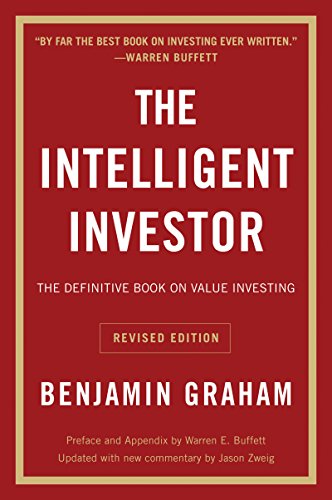
The Intelligent Investor: The Classic Text on Value Investing
The greatest investment advisor of the twentieth century, Benjamin Graham taught and inspired people worldwide. Graham's philosophy of "value investing" -- which shields investors from substantial error and teaches them to develop long-term strategies -- has made The Intelligent Investor the stock market bible ever since its original publication in 1949.
To invest successfully over a lifetime does not require a stratospheric IQ, unusual business insights, or inside information. What's needed is a sound intellectual framework for making decisions and the ability to keep emotions from corroding that framework. This book precisely and clearly prescribes the proper framework. You must provide the emotional discipline. [source]
The foundation for investing. A lot of people have used this as their guide to getting into investment, basic strategies. Actually Warren Buffett cites this as the book that got him into investing and he says that principles he learned here helped him to become a great investor. Highly recommend this book. It’s a great way understand what’s going on and how to evaluate different companies out there before you make an investment. [source]
DJ Vlad
The single biggest influence on how I buy and sell stocks. [source]
Cover unavailable
5
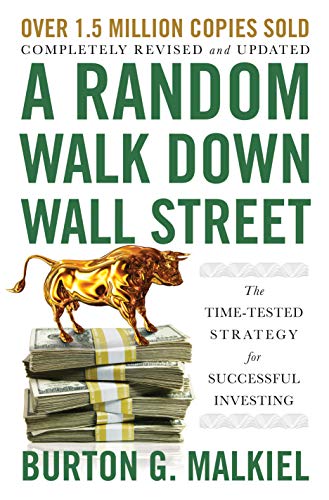
A Random Walk Down Wall Street: The Time-Tested Strategy for Successful Investing
Today’s stock market is not for the faint of heart. At a time of frightening volatility, what is the average investor to do?
The answer: turn to Burton G. Malkiel’s advice in his reassuring, authoritative, gimmick-free, and perennially best-selling guide to investing. Long established as the first book to purchase before starting a portfolio or 401(k), A Random Walk Down Wall Street now features new material on “tax-loss harvesting,” the crown jewel of tax management; the current bitcoin bubble; and automated investment advisers; as well as a brand-new chapter on factor investing and risk parity. And as always, Malkiel’s core insights—on stocks and bonds, as well as real estate investment trusts, home ownership, and tangible assets like gold and collectibles— along with the book’s classic life-cycle guide to investing, will help restore confidence and composure to anyone seeking a calm route through today’s financial markets.
It’s a wonderful read because it doesn’t presuppose any background knowledge of economics or finance…It’s had so much staying power. It was written in the 1970s, a bestseller when it came out, and it’s still a bestseller now. I recommend it to my MBA students today because it’s just a wonderful introduction to the field of finance. At the same time, it provides some very sensible advice for investors about how to manage their own money. [source]
Essentially, the theme of Malkiel’s book was that you could, in effect, do investing yourself. [source]
Michael Hebenstreit
If you want to get into stock trading or in case you want to become an investor, then I definitely would recommend to read the book I already mentioned and in addition: A Random Walk Down Wall Street by Burton Malkiel. [source]
Cover unavailable
6
The White Coat Investor: A Doctor's Guide To Personal Finance And Investing
James M Dahle MD
4.7
Written by a practicing emergency physician, The White Coat Investor is a high-yield manual that specifically deals with the financial issues facing medical students, residents, physicians, dentists, and similar high-income professionals. Doctors are highly-educated and extensively trained at making difficult diagnoses and performing life saving procedures. However, they receive little to no training in business, personal finance, investing, insurance, taxes, estate planning, and asset protection.
This book fills in the gaps and will teach you to use your high income to escape from your student loans, provide for your family, build wealth, and stop getting ripped off by unscrupulous financial professionals. Straight talk and clear explanations allow the book to be easily digested by a novice to the subject matter yet the book also contains advanced concepts specific to physicians you won't find in other financial books.
This book will teach you how to:
Graduate from medical school with as little debt as possible Escape from student loans within two to five years of residency graduation Purchase the right types and amounts of insurance Decide when to buy a house and how much to spend on it Learn to invest in a sensible, low-cost and effective manner with or without the assistance of an advisor Avoid investments which are designed to be sold, not bought Select advisors who give great service and advice at a fair price Become a millionaire within five to ten years of residency graduation Use a "Backdoor Roth IRA" and "Stealth IRA" to boost your retirement funds and decrease your taxes Protect your hard-won assets from professional and personal lawsuits Avoid estate taxes, avoid probate, and ensure your children and your money go where you want when you die Minimize your tax burden, keeping more of your hard-earned money Decide between an employee job and an independent contractor job Choose between sole proprietorship, Limited Liability Company, S Corporation, and C Corporation Take a look at the first pages of the book by clicking on the Look Inside feature
Praise For The White Coat Investor
"Much of my financial planning practice is helping doctors to correct mistakes that reading this book would have avoided in the first place." - Allan S. Roth, MBA, CPA, CFP(R), Author of How a Second Grader Beats Wall Street
"Jim Dahle has done a lot of thinking about the peculiar financial problems facing physicians, and you, lucky reader, are about to reap the bounty of both his experience and his research." - William J. Bernstein, MD, Author of The Investor's Manifesto and seven other investing books
"This book should be in every career counselor's office and delivered with every medical degree." - Rick Van Ness, Author of Common Sense Investing
"The White Coat Investor provides an expert consult for your finances. I now feel confident I can be a millionaire at 40 without feeling like a jerk." - Joe Jones, DO
"Jim Dahle has done for physician financial illiteracy what penicillin did for neurosyphilis." - Dennis Bethel, MD
"An excellent practical personal finance guide for physicians in training and in practice from a non biased source we can actually trust." - Greg E Wilde, M.D
Scroll up, click the buy button, and get started today!
…
Cover unavailable
7
Bogle On Mutual Funds: New Perspectives for the Intelligent Investor
John C. Bogle
4.7
John C. Bogle, founder of the Vanguard Group of Investment Companies, has built a $100 billion mutual fund company on principles of candor, fairness, and low cost. The most outspoken critic of the mutual fund industry, Bogle speaks to the serious mutual fund investor, both novice and seasoned, in this straightforward assessment of an industry Bogle himself helped revolutionize. Here he offers the essential principles of canny mutual fund investing, as well as caveats to protect the investor. Readers will learn how to: Ask three critical questions before investing. Evaluate risk tolerance and design a portfolio to meet current financial objectives. Develop a diversified portfolio of equity funds, bonds, and money market funds that will weather the market's short term variations. Apply Bogle's eight model portfolios to achieve their own financial goals. Always find themselves in a winning money market fund. Protect themselves from inflation Use index funds to effectively balance risk/return. Anyone who is serious about mutual funds can apply the dynamic investment principles of Bogle On Mutual Funds to establish a winning, long-term investment portfolio.
…
Cover unavailable
8
One Up On Wall Street: How to Use What You Already Know to Make Money in the Market
THE NATIONAL BESTSELLING BOOK THAT EVERY INVESTOR SHOULD OWN
Peter Lynch is America's number-one money manager. His mantra: Average investors can become experts in their own field and can pick winning stocks as effectively as Wall Street professionals by doing just a little research.
Now, in a new introduction written specifically for this edition of One Up on Wall Street, Lynch gives his take on the incredible rise of Internet stocks, as well as a list of twenty winning companies of high-tech '90s. That many of these winners are low-tech supports his thesis that amateur investors can continue to reap exceptional rewards from mundane, easy-to-understand companies they encounter in their daily lives.
Investment opportunities abound for the layperson, Lynch says. By simply observing business developments and taking notice of your immediate world -- from the mall to the workplace -- you can discover potentially successful companies before professional analysts do. This jump on the experts is what produces "tenbaggers," the stocks that appreciate tenfold or more and turn an average stock portfolio into a star performer.
The former star manager of Fidelity's multibillion-dollar Magellan Fund, Lynch reveals how he achieved his spectacular record. Writing with John Rothchild, Lynch offers easy-to-follow directions for sorting out the long shots from the no shots by reviewing a company's financial statements and by identifying which numbers really count. He explains how to stalk tenbaggers and lays out the guidelines for investing in cyclical, turnaround, and fast-growing companies.
Lynch promises that if you ignore the ups and downs of the market and the endless speculation about interest rates, in the long term (anywhere from five to fifteen years) your portfolio will reward you. This advice has proved to be timeless and has made One Up on Wall Street a number-one bestseller. And now this classic is as valuable in the new millennium as ever.
…
Recommended by Bill Ackman, Patrick Swalls, and 1 others.
Patrick Swalls
Read this if you want to learn more about the stock market. [source]
Cover unavailable
9
I Will Teach You to Be Rich: No Guilt. No Excuses. No BS. Just a 6-Week Program That Works
The groundbreaking NEW YORK TIMES and WALL STREET JOURNAL BESTSELLER that taught a generation how to earn more, save more, and live a rich life—now in a revised 2nd edition.
Buy as many lattes as you want. Choose the right accounts and investments so your money grows for you—automatically. Best of all, spend guilt-free on the things you love.
Personal finance expert Ramit Sethi has been called a “wealth wizard” by Forbes and the “new guru on the block” by Fortune. Now he’s updated and expanded his modern money classic for a new age, delivering a simple, powerful, no-BS 6-week program that just works.
I Will Teach You to Be Rich will show you: • How to crush your debt and student loans faster than you thought possible • How to set up no-fee, high-interest bank accounts that won’t gouge you for every penny • How Ramit automates his finances so his money goes exactly where he wants it to—and how you can do it too • How to talk your way out of late fees (with word-for-word scripts) • How to save hundreds or even thousands per month (and still buy what you love) • A set-it-and-forget-it investment strategy that’s dead simple and beats financial advisors at their own game • How to handle buying a car or a house, paying for a wedding, having kids, and other big expenses—stress free • The exact words to use to negotiate a big raise at work
Plus, this 10th anniversary edition features over 80 new pages, including: • New tools • New insights on money and psychology • Amazing stories of how previous readers used the book to create their rich lives
Master your money—and then get on with your life.
…
Recommended by Seth Godin, Bj Fogg, Patrick Mckenzie, and 2 others.
The easiest way to get rich is to inherit. This is the second best way—knowledge and some discipline. If you’re bold enough to do the right thing, Ramit will show you how. Highly recommended. [source]
Bj Fogg
The new edition of Ramit Sethi's book is smart, practical & FUNNY. Really. I laughed out loud about every other page. Great work, @ramit. https://t.co/WPUiZdsiM2 [source]
Patrick Mckenzie
@visakanv @Austen "Why not?" Because while there was interesting sociological work the book doesn't have a comparative advantage over Ramit's I Will Teach You To Be Rich for people working in the tech industry, and you *probably* have more interesting goals. [source]
Cover unavailable
10
The Simple Path to Wealth: Your Road Map to Financial Independence and a Rich, Free Life
"In the dark, bewildering, trap-infested jungle of misinformation and opaque riddles that is the world of investment, JL Collins is the fatherly wizard on the side of the path, offering a simple map, warm words of encouragement and the tools to forge your way through with confidence. You'll never find a wiser advisor with a bigger heart." -- Malachi Rempen: Filmmaker, cartoonist, author and self-described ruffian This book grew out of a series of letters to my daughter concerning various things-mostly about money and investing-she was not yet quite ready to hear. Since money is the single most powerful tool we have for navigating this complex world we've created, understanding it is critical. "But Dad," she once said, "I know money is important. I just don't want to spend my life thinking about it." This was eye-opening. I love this stuff. But most people have better things to do with their precious time. Bridges to build, diseases to cure, treaties to negotiate, mountains to climb, technologies to create, children to teach, businesses to run. Unfortunately, benign neglect of things financial leaves you open to the charlatans of the financial world. The people who make investing endlessly complex, because if it can be made complex it becomes more profitable for them, more expensive for us, and we are forced into their waiting arms. Here's an important truth: Complex investments exist only to profit those who create and sell them. Not only are they more costly to the investor, they are less effective. The simple approach I created for her and present now to you, is not only easy to understand and implement, it is more powerful than any other. Together we'll explore: Debt: Why you must avoid it and what to do if you have it. The importance of having F-you Money. How to think about money, and the unique way understanding this is key to building your wealth. Where traditional investing advice goes wrong and what actually works. What the stock market really is and how it really works. Why the stock market always goes up and why most people still lose money investing in it. How to invest in a raging bull, or bear, market. Specific investments to implement these strategies. The Wealth Building and Wealth Preservation phases of your investing life and why they are not always tied to your age. How your asset allocation is tied to those phases and how to choose it. How to simplify the sometimes confusing world of 401(k), 403(b), TSP, IRA and Roth accounts. TRFs (Target Retirement Funds), HSAs (Health Savings Accounts) and RMDs (Required Minimum Distributions). What investment firm to use and why the one I recommend is so far superior to the competition. Why you should be very cautious when engaging an investment advisor and whether you need to at all. Why and how you can be conned, and how to avoid becoming prey. Why I don't recommend dollar cost averaging. What financial independence looks like and how to have your money support you. What the 4% rule is and how to use it to safely spend your wealth. The truth behind Social Security. A Case Study on how this all can be implemented in real life. Don't let any of this intimidate you. Those that have gone before you say: .."..in his patented no-frills and often humorous style, JL makes it both approachable and simple. And powerful." ..".effective message told in a visual, funny style." ..".a refreshingly unique and approachable take on investing." "JL Collins has the gift of making boring financial concepts funny and interesting." "Instead of esoteric equations about measuring a stock's alpha and comparing it to its beta, he lights up the campfire and starts telling stories." Enjoy the read, and the j
…
Recommended by Gunhee Park.
Gunhee Park
Some other books I’ve really enjoyed: … The Simple Path to Wealth. [source]
Cover unavailable
11
The Rise of Mutual Funds: An Insider's View
Matthew P. Fink
4.6
In 1940 few Americans had heard of mutual funds. Today U.S. mutual funds are the largest financial industry in the world, with over 88 million shareholders and over $11 trillion in assets. New and updated to reflect the crash of 2008, Matthew Fink's latest book, The Rise of Mutual Funds: AnInsider's View, Second Edition describes the developments that have produced mutual funds' long history of success. Among these developments are:
* formation of the first mutual funds in the roaring 20s * how the 1929 stock market crash, a disaster for most financial institutions, spurred the growth of mutual funds * establishment in 1934, over FDR's objection, of the United States Securities and Exchange Commission, the federal agency that regulates mutual funds * enactment of the Revenue Act of 1936, the tax law that saved mutual funds from extinction * passage of the Investment Company Act of 1940, the "constitution" of the mutual fund industry * the creation in 1972 of money market funds, which totally changed the mutual fund industry and the entire U.S. financial system *enactment of the Employee Retirement Income Security Act of 1974, which created Individual Retirement Accounts * the accidental development of 401(k) plans, which have revolutionized the way Americans save for retirement * the 2003 trading abuses, the greatest scandal ever in the history of the mutual fund industry
Many events have never been discussed in detail; others have been discussed in works on other subjects. This is the first book that pulls together the many strands of mutual funds' unique history, written by an expert who draws on forty years of personal experience in the fund industry.
…
Cover unavailable
12
The White Coat Investor's Financial Boot Camp: A 12-Step High-Yield Guide to Bring Your Finances Up to Speed
James M Dahle
4.5
Cover unavailable
13
The Only Investment Guide You'll Ever Need
Andrew Tobias
4.5
“The Only Investment Guide You'll Ever Need . . . actually lives up to its name.” — Los Angeles Times
“So full of tips and angles that only a booby or a billionaire could not benefit.” — New York Times
For nearly forty years, The Only Investment Guide You'll Ever Need has been a favorite finance guide, earning the allegiance of more than a million readers across America. This completely updated edition will show you how to use your money to your best advantage in today's financial marketplace, no matter what your means.
Using concise, witty, and truly understandable tips and explanations, Andrew Tobias delivers sensible advice and useful information on savings, investments, preparing for retirement, and much more.
@AndrewTobias wrote a fantastic book about how to think about money, spending, saving, and investing. If you don't have these things in focus, I can STRONGLY recommend this book. https://t.co/wa4eOhkxXb https://t.co/hOU23B43Kl [source]
The terrific new guide to investing in stocks that goes beyond Peter Lynch's previous runaway bestseller, One Up on Wall Street. Lynch explains how he researched and selected the companies he recommended in the 1992 Barron's Roundtable, giving information that readers can use in any market environment to find successful companies and winning stocks.
Cover unavailable
15
More Money Than God: Hedge Funds and the Making of a New Elite
Sebastian Mallaby
4.5
Based on author Sebastian Mallaby's unprecedented access to the industry, including three hundred hours of interviews, More Money Than God tells the inside story of hedge funds, from their origins in the 1960s and 1970s to their role in the financial crisis of 2007-2009.
Wealthy, powerful, and potentially dangerous, hedge fund moguls have become the It Boys of twenty-first century capitalism. Ken Griffin of Citadel started out trading convertible bonds from his dorm room at Harvard. Julian Robertson staffed his hedge fund with college athletes half his age, then he flew them to various retreats in the Rockies and raced them up the mountains. Paul Tudor Jones posed for a magazine photograph next to a killer shark and happily declared that a 1929-style crash would be "total rock-and-roll" for him. Michael Steinhardt was capable of reducing underlings to sobs. "All I want to do is kill myself," one said. "Can I watch?" Steinhardt responded.
Finance professors have long argued that beating the market is impossible, and yet drawing on insights from physics, economics, and psychology, these titans have cracked the market's mysteries and gone on to earn fortunes. Their innovation has transformed the world, spawning new markets in exotic financial instruments and rewriting the rules of capitalism.
More than just a history, More Money Than God is a window on tomorrow's financial system. Hedge funds have been left for dead after past financial panics: After the stock market rout of the early 1970s, after the bond market bloodbath of 1994, after the collapse of Long Term Capital Management in 1998, and yet again after the dot-com crash in 2000. Each time, hedge funds have proved to be survivors, and it would be wrong to bet against them now. Banks such as CitiGroup, brokers such as Bear Stearns and Lehman Brothers, home lenders such as Fannie Mae and Freddie Mac, insurers such as AIG, and money market funds run by giants such as Fidelity-all have failed or been bailed out. But the hedge fund industry has survived the test of 2008 far better than its rivals. The future of finance lies in the history of hedge funds.
…
Recommended by Deepak Shenoy.
Deepak Shenoy
@gauravsabnis @abhijitkadle @mohitsatyanand @tanayingale I fourth that recommendation. That is a brilliant book. [source]
Cover unavailable
16
Financial Shenanigans: How to Detect Accounting Gimmicks and Fraud in Financial Reports
Howard Schilit and Jeremy Perler
4.5
The bestselling classic from the "Sherlock Holmes of Accounting"--updated to reflect the key case studies and most important lessons from the past quarter century. This fourth edition of the classic guide shines a light on the most shocking frauds and financial reporting offenders of the last twenty-five years, and gives investors the tools they need to detect: -Corporate cultures that incentivize dishonest practices-The latest tricks companies use to exaggerate revenue and earnings-Techniques devised by management to manipulate cash flow as easily as earnings-Companies that use misleading metrics to fool investors about their financial performance-How companies use acquisitions to hide deterioration in their underlying business This new edition focuses on the key case studies and most important lessons from the past quarter century, and brings you up to date on accounting chicanery in the global markets. Howard Schilit and his team of renowned forensic accounting experts expose financial reporting miscreants and unveil the latest methods companies use to mislead investors. You'll learn everything you need to know to unearth deceptive reporting and avoid costly mistakes.
Money Honey: A Simple 7-Step Guide for Getting Your Financial $hit Together
Rachel Richards
4.5
Let’s face it: Adulting is hard, especially when it comes to money management. In Money Honey, former financial advisor Rachel Richards achieves the impossible by bringing humor and sass to the dreaded subject of personal finance.
An avid investor and business owner, Rachel talks straight about how to attain financial freedom. You’ll find no shortage of valuable nuggets in this tough-love guide that will teach you how to:
•Double your income and halve your expenses •Consolidate your student loans and lower your interest rate •Open a brokerage account and make a trade so that you can start investing in the stock market •Allocate your money between debt payoff, short-term savings, and retirement •...and lots more!
Most importantly, you’ll learn Rachel’s 7 Simple Steps for getting your financial $hit together. If you’re ready to whip your finances into shape and have fun while doing so, this book is for you.
…
Cover unavailable
18
Mutual Funds for Dummies
Eric Tyson
4.5
Newly revised and updated, "Mutual Funds For Dummies," 7th Edition provides readers with insight on how to find the best-managed funds that match their financial goals. With straightforward advice and a plethora of specific and up-to-date fund recommendations, Eric Tyson helps readers avoid fund-investing pitfalls and maximize their chances of success. It will include updates covering: Discussion of online investment managers including "roboadvisors" Expanded coverage of exchange-traded funds Completely updated coverage of best funds by category Revised discussion of tax laws affecting investments in funds Expanded coverage evaluating different fund investing strategies
…
Cover unavailable
19
If You Can: How Millennials Can Get Rich Slowly
William J Bernstein
4.5
First and foremost, this book available for free (see below for link). Many readers, however, have asked for a hard copy version suitable for gift giving; here it is. With that out of the way: For years I've thought about a project to help today's young people invest for retirement because, frankly, there's still hope for them, unlike for most of their Boomer parents. All they'll have to do is to put away 15% of their salaries into a low-cost target fund or a simple three-fund index allocation for 30 to 40 years. Which is pretty much the same as saying that if someone exercises and eats a lot less, he'll lose 30 pounds. Simple, but not easy. Not easy because unless the millennials learn a small amount about finance, they'll fall victim to the Five Horsemen of Personal Finance Apocalypse: failure to save, ignorance of financial theory, unawareness of financial history, dysfunctional psychology, and the rapacity of the investment industry. If You Can is just the ticket to guide the young-and not so young-investor through this thicket. To repeat, note that this paperback version is intended only for gift-giving; the acrobat and mobi versions are freely downloadable at http: //efficientfrontier.com/ef/0adhoc/2book...
…
Cover unavailable
20
A Handbook of Mutual Fund Investing: A New Perspective, a New Paradigm
Barry G Dolgin
4.5
This book is written for the serious mutual fund investor seeking a new and very different approach to mutual fund portfolio construction. It introduces F.S.I. ("Fund Screen Investigation"), the author's proprietary process for mutual fund portfolio construction. The process is highly structured, analytic, quantitative, and based on a set of assumptions regarding the workings of markets and investor psychology. The acknowledgment and measurement of risk is central to the process. A theme that resonates throughout the book is that things are not always as they appear in the investment world. Accordingly, the reader is offered a new perspective for viewing the investment world and specific suggestions for what to focus on. "Show me the numbers!" is a refrain that reflects and underscores this theme. Fundamental investment topics such as allocation, correlation, diversification, and index investing are also discussed. F.S.I. provides the blueprints for constructing discrete portfolios that vary by historical levels of risk and return. Readers can variably weight these portfolios with their investment dollars to express their overall level of risk tolerance and objectives, thereby creating a uniquely personal investment strategy, and one which offers a significant degree of flexibility, facilitating modification if circumstances change. This flexibility is of particular importance to retirees and investors approaching retirement as they formulate their individual plans.
…
Cover unavailable
21
Investing Quickstart Guide: The Simplified Beginner's Guide to Successfully Navigating the Stock Market, Growing Your Wealth & Creating a Secure Financial Future
Ted D Snow Cfp(r) Mba
4.5
The Ultimate Beginner's Guide to Investing in the Stock Market
The ONLY investing book that is written by a CFP® practitioner with 30+ years of investment experience helping others to invest wisely to achieve all of their financial goals in life.
Ted D. Snow, CFP®, MBA has a knack for making complex ideas clear while endowing his readers with a wealth of powerful new knowledge. Whether you are a newcomer to investing or a veteran looking for a fresh perspective, you will enjoy the unique and practical vision for investing success offered in theInvesting QuickStart Guide.
Bringing the wisdom of 30+ years in the finance industry to bear--much to the benefit of novice learners and experienced investors alike--Snow provides readers with the complete picture on stocks, bonds, treasuries, ETFs, mutual funds, indexes, REITS and several other investment securities. Snow's intrepid but practical asset-allocation investment philosophy is masterfully communicated and highly appropriate for market newcomers.
The key insights of Warren Buffet, Peter Lynch, Burton Malkiel, and James Altucher all play important roles in this seminal investment resource. But unlike most of today's books on investing, the Investing QuickStart Guide is as simple as it is comprehensive. You will learn the market from end-to end, while also enjoying Snow's fascinating personal stories and insights from the front lines of the finance industry.
If you are interested in learning about the stock market but uncertain of where or how to begin, then this book is your ticket into the club and may hold the keys of abundance that could dramatically transform your financial future.
You'll Learn: Everything You Need to Know Before You Make Your First Trade! How To Take Advantage Of Opportunities In The Market Without Relying On Guesswork! How to Evaluate and Compare Stocks and Other Securities! How Disciplined Approaches to Investing Can Lead to Early Retirement and Financial Freedom! How National And Global Economic And Geopolitical Factors Can Influence Investment Prospects! This book has been reviewed by The Financial Industry Regulatory Authority (FINRA).
*FREE INVESTING DIGITAL ASSETS: Each purchase includes access to the ClydeBank Media Investing Digital Asset Vault which contains tons of online resources to help you become a better investor such as workbooks, cheat sheets, reference guides, chapter summaries and more! Follow the instructions in the book to receive your free investing digital resources*
*GIVING BACK: ClydeBank Media proudly supports the non-profit AdoptAClassroom whose mission is to advance equity in K-12 education by supplementing dwindling school funding for vital classroom materials and resources*
…
Cover unavailable
22
The Uneasy Chaperone
James M. Storey and Thomas M. Clyde
4.5
A resource for Independent Directors of mutual funds, revised from the 2000 edition to include updated information for Sarbanes-Oxley and other regulatory changes.
Cover unavailable
23
Investing All-In-One for Dummies
Eric Tyson
4.5
Invest in your financial future Featuring guidance from renowned finance expert Eric Tyson and content from other top selling For Dummies investment titles, Investing All-in-One For Dummies offers the foolproof, time-tested guidance you need to turn those hard-earned dollars into a successful and diversified portfolio. Covering everything from stocks, bonds, mutual funds, real estate, and the latest in online investing, this hands-on resource lays out an arsenal of techniques for you to select the investment accounts that best suit your particular style, needs, and goals. Investing All-in-One For Dummies offers a succinct framework and expert advice to help readers make solid decisions and confidently invest in the marketplace
Develop and manage a winning financial portfolio Find the right investments for you, no matter your age or income bracket Get the latest information on retirement planning, tax laws, investment options, and more Benefit from sound strategies brought to you by a well-recognized personal finance counselor There's no time like the present to invest in your own financial future--and this book shows you how.
…
Cover unavailable
24
Investing Made Simple: Index Fund Investing and Etf Investing Explained in 100 Pages or Less
Mike Piper
4.5
Find all of the following explained in plain-English with no technical jargon: Asset Allocation: What does it mean, why is it so important, and how should you determine your own? How to Pick Mutual Funds: Learn how to choose funds that are mathematically certain to outperform the majority of other mutual funds. Roth IRA vs. Traditional IRA vs. 401(k): What's the difference, and how should you choose between them? Financial Advisors: Learn what to look for as well as pitfalls to avoid. Frequent Investor Mistakes: Learn the most common mistakes and what you can do to avoid them. Calculate Your Retirement Needs: Learn how to calculate how much you'll need saved in order to retire.
Who Is This Book For? Anyone who has questions about investing, but who doesn't want to trudge through a 300-page textbook.
What This Book Is Not: This book is not a great work of literary art. This book is not going to make you an absolute expert on the topic, and This book is not going to provide you with a way to get rich overnight.
What it will do (hopefully) is provide an easy-to-understand, concise introduction to the topic of prudent investing.
…
Cover unavailable
25
A Beginner's Guide to the Stock Market: Everything You Need to Start Making Money Today
Matthew R. Kratter
4.5
Cover unavailable
26
Dividend Growth Machine: How to Supercharge Your Investment Returns With Dividend Stocks (Dividend Investing)
Nathan Winklepleck
4.4
Cover unavailable
27
99 Minute Millionaire: The Simplest and Easiest Book Ever On Getting Started Investing And Becoming Rock Star Rich
Scott Alan Turner
4.4
Cover unavailable
28
Stock Market Investing Made Easy: The #1 Proven Method for Growing Wealth
Luke Williams
4.4
Cover unavailable
29
Mutual Funds Made Easy!
Gerald W. Perritt
4.4
With his newest book, the bestselling author of The Mutual Fund Encyclopedia has written the perfect introduction to mutual funds for novice investors. Step by step, this book gives readers the information they need to invest in mutual funds with confidence, including basics, risk management, types of funds, investment strategies, diversity and selling.
Cover unavailable
30
The Motley Fool Investment Guide: Third Edition: How the Fools Beat Wall Street's Wise Men and How You Can Too
Tom Gardner
4.4
A completely revised and updated edition of an investing classic to help readers make sense of investing today, full of “solid information and advice for individual investors” (The Washington Post).
Today, anyone can be an informed investor, and once you learn to tune out the hype and focus on meaningful factors, you can beat the Street. The Motley Fool Investment Guide, completely revised and updated with clear and witty explanations, deciphers all the current information—from evaluating individual stocks to creating a diverse investment portfolio.
David and Tom Gardner have investing ideas for you, no matter how much time or money you have. This new edition of The Motley Fool Investment Guide is designed for today’s investor, sophisticate and novice alike, with the latest information on: —Finding high-growth stocks that will beat the market over the long term —Identifying volatile young companies that traditional valuation measures may miss —Using online sources to locate untapped wellsprings of vital information
The Motley Fool rose to fame in the 1990s, based on its early recommendations of stocks such as Amazon.com, PayPal, eBay, and Starbucks. Now this revised edition is tailored to help investors tackle today’s market. “If you’ve been looking for a basic book on investing in the stock market, this is it...The Gardners help empower the amateur investor with tools and strategies to beat the pros” (Chicago Tribune).
…
Cover unavailable
31
Mutual Funds: A Powerful Investment Avenue for Individuals.
R K Mohapatra
4.4
The book offers a holistic view of wealth creation and elaborate practical advice with an in-depth analytical study of the subject of equity and equity-related securities.
As a financial expert, Mohapatra has written Mutual Funds: A powerful Investment avenue for individuals that enlighten readers about the concept of mutual funds, its structure, regulation, types, risk & returns along with the benefit of direct investment of mutual funds and taxations.
The book focuses on the individual investor and will enable them to fulfill their financial goals at the right time and in the right place by investing their hard-earned money in the right mutual fund products.
R K Mohapatra-from his wealth of experience-also gave investment tips and advice on how & when investing in various mutual fund products and when to book profit.
As an expert, Mohapatra delved into popular ratios such as “Standard Deviation (SD), Beta, Sharp ratio, Treynor ratio, Alpha and Information ratio (IR)”, which is measuring risks in mutual funds. This book is full of work-examples along with the relevant formulas, visual aids: figures, tables, charts, and graphs, which make it easier for readers to make a meaningful decision about mutual fund investment.
The book, Mutual fund is an insightful guide that speaks the secret of investment in various types of equity mutual funds: Large-cap funds, Mid-cap funds, Small-cap funds, Hybrid funds, multi-cap funds, and debt mutual funds: fixed maturity plans, interval funds, and liquid funds, extensively and enables to understand the risk & returns of other class of assets in comparison to Mutual funds.
…
Cover unavailable
32
One Hour Investor: A Beginner's Guide to Investing Wisely in Stocks, Mutual Funds, and Bonds
Vishal Reddy
4.4
Does the stock market sound like a foreign language to you?
When you see financial experts on television, does their nonstop jargon just fly over your head?
Do you wish you understood how the stock market works so you could make money, too?
Well, your wish has been granted!
In One Hour Investor, you will learn the basics of investing for long-term financial success. Whether you want to learn about stocks, bonds, mutual funds, IRAs, or 401(k)s, all of the foundational keys to investing are in this little book.
Written to be brief and aimed at new investors, One Hour Investor is your handy guide to investing in the stock market and beginning your financial journey.
Whether you’re a teen or 20-something who wants to know how to save for your eventual retirement, a senior who wants a steady stream of income, or anybody in between, the answers are within this book.
One Hour Investor covers all sorts of financial instruments as well as basic financial concepts. You don’t need to be a math whiz or have an MBA to understand how to succeed financially. It’s all laid out for you in plain English so you can easily understand how each investment works for you.
It’s time to stop worrying about your financial future and do something about it! One Hour Investor is the quick and easy beginner’s guide to investing.
Once you read this highly educational book, you’ll have taken the first steps of your journey to financial success.
So, what are you waiting for? In just one hour, you could possess enough financial knowledge for a lifetime!
Fans of Rich Dad Poor Dad by Robert Kiyosaki, The Intelligent Investor by Benjamin Graham, Investing For Dummies by Paul Mladjenovic, and The Little Book of Common Sense Investing by John C. Bogle will love this book.
One Hour Investor is for anyone who wants to:
-Create financial freedom and retire early with extra cash in the bank
-Learn about the best investments available to help you create long-term wealth and financial security no matter how much money you earn
-Master the basics of investing in stocks, bonds, and retirement accounts
…
Cover unavailable
33
Devil Take the Hindmost: A History of Financial Speculation
Edward Chancellor
4.4
A lively, original, and challenging history of stock market speculation from the 17th century to present day.
Is your investment in that new Internet stock a sign of stock market savvy or an act of peculiarly American speculative folly? How has the psychology of investing changed--and not changed--over the last five hundred years?
In Devil Take the Hindmost, Edward Chancellor traces the origins of the speculative spirit back to ancient Rome and chronicles its revival in the modern world: from the tulip scandal of 1630s Holland, to "stockjobbing" in London's Exchange Alley, to the infamous South Sea Bubble of 1720, which prompted Sir Isaac Newton to comment, "I can calculate the motion of heavenly bodies, but not the madness of people."
Here are brokers underwriting risks that included highway robbery and the "assurance of female chastity"; credit notes and lottery tickets circulating as money; wise and unwise investors from Alexander Pope and Benjamin Disraeli to Ivan Boesky and Hillary Rodham Clinton.
From the Gilded Age to the Roaring Twenties, from the nineteenth century railway mania to the crash of 1929, from junk bonds and the Japanese bubble economy to the day-traders of the Information Era, Devil Take the Hindmost tells a fascinating story of human dreams and folly through the ages.
…
Cover unavailable
34
University of Berkshire Hathaway: 30 Years of Lessons Learned from Warren Buffett & Charlie Munger at the Annual Shareholders Meeting
Daniel Pecaut
4.4
Will there ever be another investing book like this? It's unlikely.
University of Berkshire Hathaway is a remarkable retelling of the lessons, wisdom, and investment strategies handed down personally from Warren Buffett and Charlie Munger to shareholders during 30 years of their closed-door annual meetings.
From this front row seat, you'll see one of the greatest wealth-building records in history unfold, year by year.
If you're looking for dusty old investment theory, there are hundreds of other books waiting to cure you of insomnia. However, if you're looking for an investing book that's as personal as it is revelatory, look no further.
Packed with Buffett and Munger's timeless, generous, and often hilarious wisdom, University of Berkshire Hathaway will keep serious investors turning pages late into the night:
• Get unique insight into the thinking, strategies, and decisions--both good and bad--that made Buffett and Munger two of the world's greatest investors.
• Understand the critical reasoning that leads Buffett and Munger to purchase a particular company, including their methods for assigning value.
• Learn the central tenets of Buffett's value-investing philosophy "straight from the horse's mouth."
• Enjoy Munger's biting wit as he goes after any topic that offends him.
• Discover Buffett's distaste for "commonly accepted strategies" like modern portfolio theory.
• See why these annual meetings are often called "an MBA in a weekend."
…
Cover unavailable
35
Investing 101: From Stocks and Bonds to ETFs and IPOs, an Essential Primer on Building a Profitable Portfolio
Michele Cagan
4.4
A crash course in managing personal wealth!
Too often, textbooks turn the noteworthy details of investing into tedious discourse that would put even Warren Buffett to sleep. Investing 101 cuts out the boring explanations, and instead provides a hands-on lesson that keeps you engaged as you learn how to build a portfolio and expand your savings. From value investing to short selling to risk tolerance, this primer is packed with hundreds of entertaining tidbits and concepts that you won't be able to get anywhere else.
So whether you're looking to master the major principles of investing, or just want to learn more about stocks and bonds, Investing 101 has all the answers--even the ones you didn't know you were looking for.
…
Cover unavailable
36
Broke Millennial Takes on Investing: A Beginner's Guide to Leveling Up Your Money
Erin Lowry
4.4
A guide to investing basics by the author of Broke Millennial, for anyone who feels like they aren't ready (or rich enough) to get into the market
Millennials want to learn how to start investing. The problem is that most have no idea where to begin. There's a significant lack of information out there catering to the concerns of new millennial investors, such as:
* Should I invest while paying down student loans? * How do I invest in a socially responsible way? * What about robo-advisors and apps--are any of them any good? * Where can I look online for investment advice?
In this second book in the Broke Millennial series, Erin Lowry answers those questions and delivers all of the investment basics in one easy-to-digest package. Tackling topics ranging from common terminology to how to handle your anxiety to retirement savings and even how to actually buy and sell a stock, this hands-on guide will help any investment newbie become a confident player in the market on their way to building wealth.
…
Cover unavailable
37
Understanding Stocks
Michael Sincere
4.4
Revised and updated--the new edition of the stock investing classic is packed with powerful new strategies for today's market realities
"Understanding Stocks, Second Edition" gives you the information you need to do everything from opening an account to making informed decisions when evaluating stocks and making trades. New chapters cover short selling, alternative investments such as commodities and bonds, and candlestick charting.
Michael Sincere is a full-time columnist, writer, and author of nine books, including "The After-Hours Trader, Understanding Options," and "All About Market Indicators."
…
Cover unavailable
38
The Clash of the Cultures: Investment vs. Speculation
John Bogle's The Clash of the Cultures is another recommendation from the 2012 Buffett's shareholder letter. [source]
Cover unavailable
39
Index Investing for Dummies
Russell Wild
4.4
A recommended, proven way to broaden portfolios and profits Recommended by finance experts and used extensively by institutional investors, index funds and exchange-traded funds (ETFs) provide unmanaged, diversified exposure to a variety of asset classes. Index Investing For Dummies shows active investors how to add index investments to their portfolios and make the most of their money, while protecting their assets. It features plain-English information on the different types of index funds and their advantage over other funds, getting started in index investing, using index funds for asset allocation, understanding returns and risk, diversifying among fund holdings, and applying winning strategies for maximum profit.
…
Cover unavailable
40
How a Second Grader Beats Wall Street: Golden Rules Any Investor Can Learn
Allan S Roth
4.4
Straightforward strategies from a successful young investor In How a Second Grader Beats Wall Street, you'll followthe story of Kevin Roth, an eight-year-old who was schooled insimple approaches to sound investing by his father, seasonedfinancial planner Allan Roth, and discover exactly how simple itcan be to become a successful investor. Page by page, you'll learnhow to create a portfolio with the widest diversification andlowest costs; one that can move up your financial freedom by adecade and dramatically increase your spending rate duringretirement. And all this can be accomplished by using some commonsense techniques.
Along the way, Kevin and his dad discuss fresh, new approachesto investing, and detail some tried-and-true, but lesser knownapproaches. They also take the time to debunk the financial mythsand legends that many of us accept as true, and show you what itreally takes to build long-term wealth with less risk.
Discusses how to design a portfolio composed of a few basicbuilding blocks that can be "tweaked" to fit your personalneeds Addresses how you can reengineer your portfolio in order tostop needlessly paying taxes Reveals how you can increase returns, regardless of whichdirection the market goes, by picking the "low-hanging fruit" weall have in our portfolios With just a little time and a little work, you can become abetter investor. With this book as your guide, you'll discover howa simpler approach to today's markets can put you on the path tofinancial independence.
…
Cover unavailable
41
Heads I Win, Tails You Lose: A Financial Strategy to Reignite the American Dream
Patrick H. Donohoe
4.4
Conventional financial mindsets are failing too many people. We save, invest, and borrow the way Wall Street, banks, and the financial media tell us, but we are left unprepared for market losses, financial hardships, and retirement. The rules of money and financial well-being have changed, and those who follow them are achieving staggering results.In Heads I Win, Tails You Lose, CEO and financial strategist Patrick Donohoe shows you how to embrace a new way of thinking, sharing with you financial secrets used by the wealthy to navigate the rapidly changing economy as well as financial options to help you win no matter what and reach the true American Dream: financial freedom.Discover a new method of managing your money outside of Wall Street using private mutual insurance companies who are redefining themselves as the heroic steward of American savings to prosper a new generation of wealth building tools and techniques. With this book, you will learn the financial strategies that typical advisors, typical financial planners, and the financial media don't dare give-advice that will empower you to take back your financial future, exit the rat race, and live a life you love.
…
Cover unavailable
42
The Fund Industry: How Your Money Is Managed
Robert Pozen, Theresa Hamacher, Don T. Phillips
4.4
Every investor, student of finance and participant in the mutual fund industry needs to read this book The Fund Industry details how mutual funds are marketed, regulated, and invested in stocks and bonds. The book also describes the critical factors needed to choose a specific fund for your investment or retirement plan, including what to look for when reading prospectuses, shareholder reports and third party reviews. In addition, the book: Discusses the spread of mutual funds to Asia, Europe, and Latin America Compares mutual funds to other investment vehicles such as hedge funds and ETFs Shows how to sort mutual funds by categories and subcategories based on security type and investment objective Other titles by Pozen: Too Big to Save? How to Fix the U.S. Financial System, also by Wiley Fundamentals of the Fund Industry is the most in-depth and up-to-date guide to navigating the mutual fund industry, written in an accessible style with many examples and charts.
…
Cover unavailable
43
Invested: Changing Forever the Way Americans Invest
Charles Schwab
4.4
In Invested, Charles Schwab, founder of The Charles Schwab Corporation, recounts the obstacles he encountered starting his fledgling company in the 1970s, its astonishing growth, and the ups and downs it weathered as he made stock investing, once the expensive and clubby reserve of the few, accessible to ordinary Americans.
A deeply personal memoir, Schwab describes his passion to have Main Street participate in the growing economy, as investors and owners, not only earners. Schwab opens up about his dyslexia, how he worked around and ultimately embraced it, and the challenges he faced when, a year into his grand experiment in discounted stock trading, living in a small apartment in Sausalito with his wife Helen and new baby, he carried a six-figure debt and pocketsful of personal loans. As it turned out, customers flocked to Schwab, his small team scrambling with scarce resources and no roadmap to manage the company's growth. He recounts Schwab's game-changing sale to Bank of America - and how, in the end, the merger almost doomed his organization. We learn about the clever and timely leveraged buyout he crafted to regain independence; the crushing stock market collapse of 1987 just weeks after the company had gone public; the dot-com meltdown of 2000 and its reverberating aftermath of economic stagnation, layoffs and the company's eventual reinvention; and how the company's focus on managing risk protected it and its clients during the financial crisis in 2008, propelling its growth.
A remarkable story of a company succeeding by challenging norms and conventions through decades of change, Invested also offers unique insights and lifelong principles Schwab for readers - the values that he has lived and worked by and have made him one of the most successful entrepreneurs of our time. Today, his eponymous company is one of the leading financial services firms in the world, with over 3 trillion dollars in client assets.
…
Cover unavailable
44
Why Bother With Bonds: A Guide To Build All-Weather Portfolio Including CDs, Bonds, and Bond Funds--Even During Low Interest Rates (How To Achieve Financial Independence)
Rick Van Ness
4.4
A practical how-to guide for every investor. For ordinary investors who want to build an all-weather portfolio. It is time-proven wisdom, and encourages you to take control of your finances. Learn how to use CDs, bonds, and bond funds to manage risk/reward even during low interest rates. You will learn:
How to choose your stocks/bonds allocation How to become immune to changing interest rates When to use CDs and individual bonds How to choose a good bond fund How to hedge against unexpected inflation
Contents: Foreword by Larry Swedroe
Introduction
- Who Should Read This Book?
- Start with a Sound Financial Lifestyle
Why Bother With Bonds?
- Stocks are risky in the short-run, and the long run too!
- Bonds Make Risk More Palatable
- Bonds Can Be A Safe Bet
- Bonds Are An Attractive Investment Diversifier
Life Is Complicated. Bonds Are Not.
- What is a Money Market Fund?
- Are CDs Better Than Bonds?
- What Are Bonds?
- What is a Bond Ladder?
- Individual Bonds or a Bond Fund?
Bonds: Risks and Returns
- Yield, Price And Making Comparisons
-- How To Compare Individual Bond Returns
-- How to Compare Bond Fund Returns
-- Total Return: To Measure And Compare Performance
- How To Reduce Risk From Interest Rates Changes
-- Duration: The Point of Indifference to Interest Rates
-- Duration: The Measure of Sensitivity to Interest Rates
- How To Reduce Risk From Unexpected Inflation
-- Real versus Nominal Interest Rates
-- Why Include TIPS In Your Portfolio?
- Credit Quality or Default Risk
Build The Bond Portion Of Your Portfolio
- Start With Your Goals.
- How Much Risk Is Right For You?
-- Understand How Much Risk You're Taking
-- Take Your Risk In Stock Market, Not Bond Market
-- How Much in Bonds? How Much in Stocks?
-- Your Needs Change Over Time
- The Importance of Low Cost
-- How Much To Diversify Bonds?
-- The Importance of Low Cost
-- Five Low-Cost Strategies You Can Do Yourself
- Taxes Matter
- Example Portfolios (both good and bad)
Common Misconceptions Important to Correct
- Stocks Are Safer In The Long Run
- Holding a Bond (or CD) to Maturity Eliminates Risk
- Stocks Are Safer Than Bonds
- The Best Funds Have The Most Stars
- A One Percent Fee Is Small
- Rising Interest Rates are Bad for Bond Holders
- You Can't Beat the Market Using Index Funds
- Use Multiple Investment Companies To Diversify
- You Need Many Mutual Funds to Diversify
…
Cover unavailable
45
Independízate de Papá Estado: Inversión inteligente y simple para lograr la libertad financiera (Spanish Edition)
Carlos Galán Rubio
4.4
Cover unavailable
46
The Everything Guide to Investing in Your 20s 30s: Your Step-by-Step Guide to: * Understanding Stocks, Bonds, and Mutual Funds * Maximizing Your 401(k) * Setting Realistic Goals * Recognizing the Risks and Rewards of Cryptocurrencies * Minimizing Your...
Joe Duarte
4.4
All you need to know about investing safely and smartly, with new information on the latest options—from cryptocurrencies to social media IPOs—in this comprehensive and updated guide to understanding the current market, setting realistic goals, and achieving financial success.
The best time to start investing is now—even as little as a few years can make a difference of hundreds of thousands of dollars by the time retirement comes around. Investing early in your career is the best way to ensure a secure and successful life all the way through retirement.
For years, The Everything Guide to Investing in Your 20s and 30s has been guiding young professionals on how to capitalize on the investing market and make the most out of their money. This all-new and fully updated edition includes all of the tips, tricks, and investing knowledge while also explaining:
—New technological investing options —How the changing political climate affects your money —What the rising interest rates mean —Active investing versus passive investing
The Everything Guide to Investing in Your 20s and 30s teaches you how to maximize your investing strategy and make your money work for you. Don’t wait. Start investing today!
…
Cover unavailable
47
Enough.: True Measures of Money, Business, and Life
John C Bogle
4.4
John Bogle puts our obsession with financial success in perspective Throughout his legendary career, John C. Bogle-founder of the Vanguard Mutual Fund Group and creator of the first index mutual fund-has helped investors build wealth the right way and led a tireless campaign to restore common sense to the investment world. Along the way, he's seen how destructive an obsession with financial success can be. Now, with Enough., he puts this dilemma in perspective.
Inspired in large measure by the hundreds of lectures Bogle has delivered to professional groups and college students in recent years, Enough. seeks, paraphrasing Kurt Vonnegut, "to poison our minds with a little humanity." Page by page, Bogle thoughtfully considers what "enough" actually means as it relates to money, business, and life.
Reveals Bogle's unparalleled insights on money and what we should consider as the true treasures in our lives Details the values we should emulate in our business and professional callings Contains thought-provoking life lessons regarding our individual roles in society Written in a straightforward and accessible style, this unique book examines what it truly means to have "enough" in world increasingly focused on status and score-keeping.
…
Cover unavailable
48
Index Funds & Etfs: What They Are and How to Make Them Work for You
David Schneider
4.4
Do you find yourself lured into the index fund game without knowing what you are actually investing in? Can you be sure you know who really profits from your monthly contributions? Are you tired of always being on the losing end of the money game, while fund providers reap huge profits? With the ever-growing number of index funds and ETFs, it's no wonder that many retail investors are getting lost and confused. Between the jargon, the slick advertising, and the legions of keen advisors insisting that these are the best investment alternative for the average man and woman, it's all too easy to get swept away in the hype. Discover how to make Index Funds and ETFs work for you without falling into the usual traps. This book will offer a different perspective that profits you! This book will offer a different perspective - one that takes into account the history, structuring, and theorizing behind index funds and ETFs, and lay bare the inner working of its profitable industry. It will enable you to develop a neutral view , on index funds and ETFs so that you can cut right through the haze of marketing ploys and polemic criticism. You will learn: - What Index Funds are and how they are formulated - How standard index funds differ to index ETFs (Exchange Traded Funds) - What advantages they have over other mutual fund products - A brief history of the industrial complex behind them - The business behind creating indices, such as S&P Dow Jones or MSCI indices - Their theoretical and practical flaws and shortcomings - The flaws in the logic underlying many index investment plans - A detailed plan how to make the most out of these products - BONUS: How to apply the 80/20 investing approach to index funds investing with several examples and case studies - And much more! In the end, you will realize that passive investing is not so passive after all, and the active vs. passive debate is nothing more than a giant smokescreen. Would You Like To Know More? Become an Index Fund expert today and order you copy here.
…
Cover unavailable
49
Passive Trading: How To Generate Consistent Monthly Income From The Stock Market In Just Minutes A Day
Allen Sama
4.4
Cover unavailable
50
The Investor's Dilemma: How Mutual Funds Are Betraying Your Trust and What to Do about It
Louis Lowenstein, Neil Barsky
4.4
Based on cutting-edge research by leading corporate critic Louis Lowenstein, The Investor's Dilemma: How Mutual Funds Are Betraying Your Trust and What to Do About It reveals how highly overpaid fund sponsors really operate and walks you through the conflicts of interest found throughout the industry. Page by page, you'll discover the real problems within the world of mutual funds and learn how to overcome them through a value-oriented approach to this market.
…
Cover unavailable
51
Common Sense on Mutual Funds: Fully Updated 10th Anniversary Edition
John C Bogle
4.4
Cover unavailable
52
The Wall Street Journal Guide to Understanding Money and Investing
Kenneth M. Morris, Virginia B. Morris
4.4
Cover unavailable
53
The Trouble With Mutual Funds
Richard Rutner
4.4
Cover unavailable
54
Common Sense Investing: Ten Simple Rules to Finance Your Dreams, or Create a Roadmap to Achieve Financial Independence by Investing in Mutual Funds with a Personal Financial Plan
Rick Van Ness
4.4
Learn basic financial concepts to make it more likely that you'll achieve common life goals such as owning a home, providing for yourself or your family, taking fun vacations, and retiring in comfort--all free from financial stress. Topics include: The ten rules to successful investing How to write a personal investment plan How to diversify your investments How to know a good mutual fund How to be a tax-savvy investor
The 108-page book (17,000 words and 52 pictures) teaches beginners learn how to invest money for both short- and long-term goals. Learn the basics that everyone needs to know about investment products like stock, bonds, and mutual funds, and the containers that hold those products, like IRAs, 401(k), Roth IRA, and taxable accounts.
Learn why Warren Buffett, John C. Bogle, and most professional investors recommend that 99% of investors should use low-cost mutual funds called index funds. Learn what they are, what this means, and why they win.
John C. Bogle, founder and former chairman of The Vanguard Group, is hailed by many as the champion of common sense investing. His huge following endearingly call themselves "Bogleheads" in perhaps the most popular personal investment forum and wiki site at bogleheads.org.
""Common Sense Investing" captures the core elements of the Bogleheads investment philosophy in terms any investor can easily understand and implement. Read it and reap!" writes Forbes columnist, Mel Lindauer--also one of the original Boglehead founders.
Many of the tips include examples of how people put the important concepts into practice. Instructional appendixes include: numerous links to free online videos, recommended books, help forums, and other resources.
Author Rick Van Ness is a successful private investor who provides investor education through online videos, short books, and workshops. He has both an engineering degree from Cornell University and a MBA in Finance from New York University.
Praise from professional money managers, academics, and respected authors:
"Here are 10 simple, easy to follow, and proven investing rules. Investing an hour reading this short book will make you a better investor." --Burton G. Malkiel, Princeton University, Professor of Economics Author: "A Random Walk Down Wall Street"
"Crisp, simple, and irrefutably great investment advice." --Allan S. Roth, CBS MoneyWatch columnist Author: "Dare To Be Dull"
"Hide this book in a safe place because grossly overpaid investment advisors are burning every copy they can find." --Rick Ferri, CFA, President, Portfolio Solutions LLC Author: "All About Asset Allocation, All About Index Funds, "and others.
"Rick has produced a masterful financial guide for beginning investors and old hands alike. If you want to get started investing the right way, this book provides the clarity and backbone to achieve your financial destiny." --Bill Schultheis, Financial Adviser, Soundmark Wealth Management, LLC Author: "The New Coffeehouse Investor"
"Rick has provided a great service. In terms that the novice investor can understand, he provides ten simple rules that provide the prescription for investment success. In fact, if you follow his rules you are virtually guaranteed to outperform the majority of investors, both individual and professionals alike." --Larry Swedroe, Principal and Director of Research, Buckingham Family of Financial Services Author of eleven books on investing
…
Cover unavailable
55
Online Investing For Dummies, 10th Edition
Matthew Krantz
4.4
Build a winning portfolio--and reduce your risk--with this bestselling guide
Online investing has never been easier--or more potentially confusing. Now that every broker or finance site has its own app, data, or approach, it can be all too easy to be misled and make a bad decision. Online Investing for Dummies helps you reduce risk and separate the gimmicks from the gold, pointing investors of all experience levels to the pro-tips, calculators, databases, useful sites, and peer communities that will lead to success.
Updated to include information on mobile trading and the influence of social media on the markets, the book also covers the basics--showing you how to figure out how much to invest, find data online, and pick an online broker. It then progresses through to more advanced topics, such as calculating returns, selecting mutual funds, buying bonds, options, commodities, and IPOs, taking you and your money wherever you want to go in the global market.
Set expectations and assess your risk Analyze stocks and financial statements Assemble the suite of tools to calculate your performance Get tips on choosing the right online broker and on protecting your information online It's time to get a pro strategy, and Online Investing for Dummies has all the inside information you need to build up that winning portfolio.
…
Cover unavailable
56
Step by Step Investing: A Beginner's Guide to the Best Investments in Stocks and Bonds
Joseph Hogue
4.4
Cover unavailable
57
Mutual Funds: Comprehensive Beginner's Guide to create Wealth using Mutual Funds
Gregory Becker
4.4
Welcome to the ultimate guide on Mutual funds: Comprehensive Beginner's Guide to create Wealth using Mutual Funds.If you have never come across the term mutual funds, then you are in the right place. In this guide, you will learn everything relating to mutual income. Have you ever tried to invest in stock markets? Do you want to plan for your future with your earnings through investment? Well, mutual funds are here for you whose main agenda is to bring a positive change in the world of investing.In this guide, you will be able to learn on how the cycle of mutual funds revolves around. You will get the whole idea on how a manager or a team of managers invest on behalf of all these investors, for a fee. You will understand why not everyone is fit for the managerial position. All the requirements, strategies, portfolios to follow to ensure you succeed in the field of mutual fund investment are all highlighted in this book.
Just in brief, below is a preview of what you will grasp in this guide: Distinguished types of mutual funds Some mistakes that you should avoid when you engage in mutual fund investment Criteria on how to select mutual funds The process involved in the buying and selling process of mutual funds shares Proven tips to ensure profitability Tax operations in mutual funds How you can measure the performance of the mutual funds Well, it is that time, follow this guide from the beginning to the end to get every bit about mutual funds. Who knows? Your life could change. Grab this copy and let's get moving.
…
Cover unavailable
58
Technical Analysis Explained: The Successful Investor's Guide to Spotting Investment Trends and Turning Points
Martin J. Pring
4.4
Technical analysis is the art of observing how investors have regularly responded to events in the past and using that knowledge to accurately forecast how they may respond in the future. This work shows how to increase trading and investing profits by understanding, interpreting, and forecasting movements in markets and individual stocks.
Cover unavailable
59
The Wall Street Journal Complete Money and Investing Guidebook
Dave Kansas
4.4
Unravel the Mysteries of the Financial Markets—the Language, the Players, and the Strategies for Success
Understanding money and investing has never been more important than it is today, as many of us are called upon to manage our own retirement planning, college savings funds, and health-care costs. Up-to-date and expertly written, The Wall Street Journal Complete Money and Investing Guidebook provides investors with a simple—but not simplistic—grounding in the world of finance. It breaks down the basics of how money and investing work, explaining:
• What must-have information you need to invest in stocks, bonds, and mutual funds
• How to see through the inscrutable theories and arcane jargon of financial insiders and advisers
• What market players, investing strategies, and money and investing history you should know
• Why individual investors should pay attention to the economy
Written in a clear, engaging style by Dave Kansas, one of America’s top business journalists and editor of The Wall Street Journal Money & Investing section, this straightforward book is full of helpful charts, graphs, and illustrations and is an essential source for novice and experienced investors alike.
Get your financial life in order with help from The Wall Street Journal.
Look for:
• The Wall Street Journal Complete Personal Finance Guidebook • The Wall Street Journal Personal Finance Workbook • The Wall Street Journal Complete Real Estate Investing Guidebook
…
Cover unavailable
60
The Handbook of Fixed Income Securities
Frank Fabozzi
4.4
The Definitive Guide to Fixed Income Securities--Revised and Updated for the New Era of Investing
For decades, "The Handbook of Fixed Income Securities" has been the most trusted resource in the world for fixed income investing. Since the publication of the last edition, however, the financial markets have experienced major upheavals, introducing dramatic new opportunities and risks.
This completely revised and expanded eighth edition contains 31 new chapters that bring you up to date on the latest products, analytical tools, methodologies, and strategies for identifying and capitalizing on the potential of the fixed income securities market in order to enhance returns. Among the world's leading authorities on the subject, Frank J. Fabozzi, along with Steven V. Mann, has gathered a powerful global team of leading experts to provide you with the newest and best techniques for taking advantage of this market. New topics include: Electronic trading Macro-economic dynamics and the corporate bond market Leveraged loans Structured and credit-linked notes Exchange-traded funds Covered bonds Collateralized loan obligations Risk analysis from multifactor fixed income models High-yield bond portfolio management Distressed structured credit securities Hedge fund fixed income strategies Credit derivatives valuation and risk Tail risk hedging Principles of performance attribution
Invaluable for its theoretical insights, unsurpassed in its hands-on guidance, and unequaled in the expertise and authority of its contributors, this all-new edition of "The Handbook of Fixed Income Securities" delivers the information and knowledge you need to stay on top of the market and ahead of the curve.
…
Cover unavailable
61
The Only Guide to a Winning Investment Strategy You'll Ever Need: The Way Smart Money Invests Today
Larry E. Swedroe
4.4
Cover unavailable
62
The Vanguard Way
John C. Bogle
4.4
Cover unavailable
63
Wealth Without Stocks or Mutual Funds
John Jamieson and Randy Glasbergen
4.4
Most traditional financial advisors will tell you a "balanced & diversified" portfolio consists of different sectors of stocks. Garbage! You will see that stocks & mutual funds are only one of dozens of ways to create wealth & income.Whether you have extensive assets or are just getting started and need to create more income this book will be your guide. Discover how to: Use the same secret programs banks and corporations have used for years to create wealth Launch your own business and brand on a shoestring and quickly dominate your niche Turn houses for big paychecks even if you have no money, no job, no credit and little time Make 5 figure paychecks on over-financed beautiful houses with no cash or credit Use a secret IRA to grow wealth safely, securely, and invest in almost anything you choose Tap into already set up turnkey real estate investment solutions all over the country Take advantage of the 21st century way to build passive income by networking Make double digit returns and have the government guarantee your results
"John is a knowledgeable, trustworthy, financial wizard" - Dr. Taj Haynes
But wait... there's SO MUCH MORE! Find out why: You should make yourself famous in your own niche to grow your income and sell out for a mint You would access private funds all over the country to fund your business and real estate You will turn your IRA into your own guaranteed lifetime income stream with no market risk You should master marketing to turn any business into a cash flow monster on your terms You should consider safely loaning out your money for high returns You are needlessly paying thousands more of income taxes every year and how to stop it You should change the way you bank and where you park money to rapidly pay down debts
…
Cover unavailable
64
There's Always Something to Do: The Peter Cundill Investment Approach
Christopher Risso-Gill
4.4
In the context of recent financial upheavals and ongoing uncertainty, Peter Cundill's wise and frequently funny reflections are more important than ever. In a seamlessly assembled narrative drawn from interviews, speeches, and exclusive access to the daily journal Cundill kept for forty-five years, Christopher Risso-Gill outlines Cundill's investment approach and provides accounts of his investments and the analytical process that led to their selection. A book for everyday investors as much as professional investors and investment gurus, There's Always Something to Do offers a compelling perspective on global financial markets and on how we can avoid their worst pitfalls and grow our hard-earned capital.
…
Cover unavailable
65
Real Estate Investing 101: From Finding Properties and Securing Mortgage Terms to REITs and Flipping Houses, an Essential Primer on How to Make Money with Real Estate
Michele Cagan CPA
4.3
A comprehensive, accessible, and easy-to-understand guide to everything you need to know about real estate investing.
Real estate investing is a great way to build a business or make money on the side—and you don’t have to be a full-time landlord to do it. Real Estate Investing 101 walks you through everything you need to know, from raising capital to uncovering new opportunities. You’ll learn the difference between purchasing traditional property and investing in funds such as REITs and interval funds—plus new types of realty investment, like crowd-funded real estate, the senior housing boom, eco-housing, and blockchain technology. With the expert advice in Real Estate Investing 101 to guide you, you can invest with confidence and generate profits.
…
Cover unavailable
66
Stock Market Investing For Beginners : Unbreakable Rules You Need For Stock Trading And Investing: Perfect For Swing And Day Trading Options, Futures, Forex And Cryptocurrencies
Mark Robert Rich
4.3
Cover unavailable
67
Exchange-Traded Funds for Dummies
Russell Wild
4.3
The fast and easy way to get a handle on ETFs Exchange-traded funds (ETFs) have a strong foothold in the marketplace, because they are less volatile than individual stocks, cheaper than most mutual funds, and subject to minimal taxation. But how do you use thisfinancial product to diversify your investments in today's fast-growing and ever-changing market?
Exchange-Traded Funds For Dummies shows you in plain English how to weigh your options and pick the exchange-traded fund that's right for you. It tells you everything you need to know about building a lean, mean portfolio and optimizing your profits. Plus, this updated edition covers all of the newest ETF products, providers, and strategies, as well as Commodity ETFs, Style ETFs, Country ETFs, and Inverse ETFs.
Create the stock (equity) side of your portfolio Handle risk control, diversification, and modern portfolio theory Manage small, large, sector, and international investments Add bonds, REITs, and other ETFs Invest smartly in precious metals Work non-ETFs into your investment mix Revamp your portfolio to fit life changes Fund your retirement years Plus, you'll get answers to commonly asked questions about ETFs and advice on how to avoid mistakes that many investors--even the experienced ones--make. It provides forecasts of the future for ETFs and personal spending and also provides a complete list of ETFs and Web resources to assist your investment. With Exchange-Traded Funds For Dummies, you'll soon discover what makes ETFs the hottest investment on the market.
…
Cover unavailable
68
Morningstar Guide to Mutual Funds: Five-Star Strategies for Success
Christine Benz
4.3
GUIDE TO MUTUAL FUNDS
SECOND EDITION
"Picking actively managed mutual funds is no mean challenge. And as the recent era underscores, past performance is of little help. The Morningstar Guide to Mutual Funds helps cut through the fog with a solid volume of constructive information. The central message--'truly diversify, keep it simple, focus on costs, and stick with it'--is not only timeless, it is priceless." --John C. Bogle, founder and former CEO, The Vanguard Group
"Successful investors know they must do their own due diligence. Morningstar has done much of that homework in this guide. Leave it to Morningstar to get it right, offering smart ways to pick, build and monitor a portfolio. It's a commonsense guide that should grace every investor's shelf." --Ted David, CNBC Anchor
"There's nothing Morningstar doesn't know about mutual funds. And at last, for ready reference, there's a book. You'll find everything here you need to know about managing fund investments, inside or outside a 401(k)." --Jane Bryant Quinn, Newsweek columnist and author of Making the Most of Your Money
…
Cover unavailable
69
24 Essential Lessons for Investment Success: Learn the Most Important Investment Techniques from the Founder of Investor's Business Daily
William J. O'Neil
4.3
The Wall Street Journal, New York Times, BusinessWeek, and USA Today Business Bestseller!
From the publisher of Investor's Business Daily and best-selling author of How to Make Money in Stocks, comes the National Bestseller, 24 Essential Lessons for Investment Success, two dozen of the most important lessons for investors. In this one accessible guide, William J. O'Neil puts his popular and easy-to-follow techniques for building a profitable portfolio firmaly in the hands of investors--and the goal of long-term financial security easily within their reach.
24 Essential Lessons for Investment Success is based upon the closely followed "26 Weeks to Investment Success" editorials that appear in Investor's Business Daily. Edited and updated, O'Neil's timeless advice encapsulates such investing nuggets as buy high and sell higher to making a million in mutual funds. Concentrate your investments in a few areas, know them well, and watch them carefully.
Don't just rely upon PE ratios and other common technical tools. Learn to use Relative Price Strength to help you choose stocks. O'Neil's cautionary yet pro-active advice has helped to make Investor's Business Daily one of America's fastest growing and most respected newspapers. Now investor's can benefit from his timeless words of wisdom, collected in one easy-to-use resource.
…
Cover unavailable
70
Step by Step Investing Bundle (4-Book Set): Your Complete Investing Strategy for Stocks and Bonds in Four Investing Books
Joseph Hogue
4.3
Cover unavailable
71
All about Index Funds: The Easy Way to Get Started
Richard Ferri
4.3
All The Tools and Techniques You Need to Invest Successfully in High-Yield, Low-Risk Index Funds
The updated Second Edition of Richard Ferri's bestselling All About Index Funds offers individual investors an easy-to-use guide for capitalizing on one of today's hottest investing areas_index funds. This wealth-building resource provides essential information on index funds; expert advice on how to start investing; and winning strategies for high returns with low risk.
The Second Edition of All About Index Funds features:
Updated tables, charts, and data on performance, fees, and new funds Step-by-step guidance on active indexing and discussion of its expanding role Coverage of all new U.S. equity indexes that have changed the dynamics of the index fund marketplace and a new chapter on commodities and commodity index funds Vanguard's revision of the indexes it uses for benchmarking Discussion of the increasing popularity of ETFs for effective asset allocation
…
Cover unavailable
72
The Million Dollar Decision: Get Out of the Rigged Game of Investing and Add a Million to Your Net Worth
Robert Rolih
4.3
Cover unavailable
73
So Far So Good the First 94 Years
Roy R. Neuberger
4.3
Notorious as one of Wall Street's oldest living legends, Roy Neuberger delivers a truthful and interesting account of his extraordinary life. Focusing on his start in the market from seven months before the 1929 crash, up to the 1987 crash, till today, he shares his 93 years of experience as a market sage. Neuberger also paints a wonderful picture of his love of contemporary art and his role in the art world, his donations to museums throughout the country of hundreds of pieces worth tens of millions.
…
Cover unavailable
74
The Mutual Funds Book: How To Invest In Mutual Funds & Earn High Rates Of Returns Safely
Alan Northcott
4.3
Over the past decade, American investors increasingly have turned to mutual funds to save for retirement and meet other financial goals. Mutual funds can offer the advantages of diversification and professional management. It pays to understand both the upside and the downside of mutual fund investing and how to choose products that match your goals and tolerance for risk. As with other investment choices, investing in mutual funds involves risk, fees, and taxes.
This book explains the basics of mutual fund investing how mutual funds work, what factors to consider before investing, and how to avoid common pitfalls. Mutual funds are not guaranteed or insured by the FDIC or any other government agency. Even if you buy through a bank, and the fund carries the bank's name you can lose money investing in mutual funds. In addition, there are more than 10,000 mutual funds to choose from.
Why should you consider investing in a mutual fund? One reason is simply the high potential returns. Many funds have earnings in the triple digits. This all sounds great, but what is the catch? There really is none, except you must know what you are doing! This book will provide everything you need to know to get you started generating high investment returns with low risk from start to finish. You will learn what mutual funds are, the various types and advantages of each, how to evaluate their risk against other types of investments, how to and how not to invest in them, how to allocate your assets, how to set up your account online, how to choose when to sell, and how to cash them in.
You will pick up the language of mutual fund investing and what the lingo means to you: net asset value, load versus no load, turnover, expenses and total expense ratios, capitalization, share classes, growth versus value, dollar cost averaging and many more. We have also included a history of mutual funds (including their scandals), and we have disclosed the mysteries of documents you will encounter in mutual fund investing, such as their ratings, share classes, fees, annual reports, and indexes.
We show you how to compare your fund to the competition, how to compare it to other types of investments, and how to compare various funds on an after-tax basis. We make it easy for you to grasp strategies for expanding your investments into different market sectors and among various classes of stocks, such as small and micro-cap stocks, mid cap and large cap companies, defensive stocks, and mixtures of stock types. You will develop your own expertise in reading the economy both nationally and globally, handling taxes, devising investment tactics for portfolio allocation whether interest rates are rising or falling, with down-to-earth instructions to help you bring in a high and steady income, all the while evading losses and downfalls.
Atlantic Publishing is a small, independent publishing company based in Ocala, Florida. Founded over twenty years ago in the company president's garage, Atlantic Publishing has grown to become a renowned resource for non-fiction books. Today, over 450 titles are in print covering subjects such as small business, healthy living, management, finance, careers, and real estate. Atlantic Publishing prides itself on producing award winning, high-quality manuals that give readers up-to-date, pertinent information, real-world examples, and case studies with expert advice. Every book has resources, contact information, and web sites of the products or companies discussed.
…
Cover unavailable
75
Getting Started in Mutual Funds
Alvin D. Hall
4.3
Choose the right mutual funds to maximize your investment returns. For forty million Americans, mutual funds are the most attractive investment instruments now available. But with over 7,000 stock, bond, and index funds to choose from, how can you select what's best for you? In this easy-to-follow, commonsense guide, Alvin Hall, the "Professor of Wall Street, "fills you in on everything you need to know to choose mutual funds with confidence. In plain English, he acquaints you with the various types of mutual funds and how they are structured, and he explains the important fund terms and concepts. He helps you to understand clearly those measures you must examine before investing in a fund. And he provides step-by-step guidelines on how to go about selecting the right funds. You'll quickly and painlessly learn: - How to read a fund prospectus - How to assess a fund manager's investment style and its impact on your returns - How to evaluate ongoing fees and expenses - How to evaluate risks - How to calculate return on investments - How to buy, redeem, and exchange mutual funds - How to take advantage of shareholder services
…
Cover unavailable
76
Bonds: The Unbeaten Path to Secure Investment Growth
Hildy Richelson
4.3
Updated edition of the established classic on investing in bonds In Bonds: The Unbeaten Path to Secure Investment Growth, Second Edition, the fully revised and updated edition of the classic guide to demystifying the bonds market, veteran investor husband and wife team Hildy and Stan Richelson expose the myth of stocks' superior investment returns and propose an all-bond portfolio as a sure-footed strategy that will ensure positive returns. Designed to educate novice and sophisticated investors alike, as well as to serve as a tool for financial advisers, the book explains why and when bonds can be the right choice. Case studies, detailed bond strategies, and a financial planning overview bring home the value of bonds in achieving financial goals.
Presenting a broad spectrum of bond-investment options, and describing how to purchase bonds at the best prices, the book shows how to make real money by investing in bonds. The strategies presented here are designed to help the reader determine how to use bonds to take control of their own financial destiny.
New edition includes information on corporate bonds, emerging market bonds, municipal bonds, the new global ratings, and how to protect against municipal defaults Looks at how bond portfolios protected against market volatility in the 2007-2008 crash and how they can do the same in the future Includes information on how the bond market has changed The wealthiest investors and financial advisers use the bond strategies outlined in this book to maximize the return on their portfolios while providing security of principal With more bond options available than ever before, Bonds continues to be a must-have for anyone looking to understand the investment opportunities available to them.
…
Cover unavailable
77
Martin Pring's Introduction to Technical Analysis, 2nd Edition
Martin Pring
4.3
"The technician's technician" (Barron's), Martin Pring gives new traders the tools and insight they need to draw greater profits from today's markets
This new edition of Introduction to Technical Analysis explains how to evaluate trends, highs, lows, price/column relationships, price patterns, moving averages, and momentum indicators for a contemporary audience, using fully new, updated charts, diagrams, and examples.
Pring uses his trademark expertise and engaging writing style to simplify concepts for traders. Links to an exclusive downloadable video featuring original content and in-depth explanations of the material is also included.
You'll learn how to:
Research and construct instantly valuable charts of stock and market activity Interpret the basic concepts of momentum, and apply the theory to actual trades through a common sense set of trading strategies Use price and volume pattern to identify breakouts Analyze and act on peaks and troughs that can signal a change in the prevailing trend Calculate moving averages and gauge their impact. Martin J. Pring is the founder of Pring Research and publisher of Intermarket Review, a monthly market review offering a long-term synopsis of the world's major financial markets. Martin pioneered the introduction of videos as an educational tool for technical analysis in 1987, and was the first to introduce educational, interactive CDs in this field.
…
Cover unavailable
78
Step by Step Dividend Investing: A Beginner's Guide to the Best Dividend Stocks and Income Investments (Step by Step Investing Book 2)
Mr. Joseph Hogue
4.3
Cover unavailable
79
THE PASSIVE AGGRESSIVE EARNER: YOUR GUIDE TO BREAK FREE FROM THE SHACKLE OF 9-5
Jeremy Kho
4.3
Cover unavailable
80
What Wall Street Doesn't Want You to Know: How You Can Build Real Wealth Investing in Index Funds
Larry Swedroe
4.3
Why do so many actively managed funds underperform? Why do passively managed funds provide superior returns, especially after taxes? What are the true interests of fund managers and the financial press? Most important, what strategy is in your best interest?
What Wall Street Doesn't Want You to Know answers all these questions and more, giving you the inside information you need to become a successful investor who plays the winner's game-creating wealth-instead of the loser's game Wall Street wants you to play, of trying to pick stocks and time the market. In his revolutionary new guide, investment professional Larry Swedroe explains why active managers have rarely been able to add value to your portfolio over time. He dispenses with traditional Wall Street wisdom and experts and shows you how to invest the way really smart money invests today.
What Wall Street Doesn't Want You to Know tells you exactly what Wall Street doesn't want you to know: how to avoid the pitfalls of short-term thinking and to invest so that you can create more wealth-much more wealth-over the long term.
…
Cover unavailable
81
The Alpha Masters: Unlocking the Genius of the World's Top Hedge Funds
Maneet Ahuja, Myron Scholes, et al.
4.3
The ultimate behind-the-curtain look at the hedge fund industry, unlocking the most valuable stories, secrets, and lessons directly from those who have played the game best. Written by Maneet Ahuja, the hedge fund industry insider, The Alpha Masters brings the secretive world of hedge funds into the light of day for the first time. As the authority that the biggest names in the business, including John Paulson, David Tepper, and Bill Ackman, go to before breaking major news, Ahuja has access to the innermost workings of the hedge fund industry. For the first time, in Alpha Masters, Ahuja provides both institutional and savvy private investors with tangible, analytical insight into the psychology of the trade, the strategies and investment criteria serious money managers use to determine and evaluate their positions, and special guidance on how the reader can replicate this success themselves.
There are few people with access to the inner chambers of the hedge fund industry, and as a result it remains practically uncharted financial territory. Alpha Masters changes all that, shedding light on star fund managers and how exactly they consistently outperform the market.
The book:
Contains easy-to-follow chapters that are broken down by strategy--Long/Short, Event Arbitrage, Value, Macro, Distressed, Quantitative, Commodities, Activist, pure Short, Fund of Funds Includes insights from the biggest names in the trading game, including Ray Dalio, Marc Lasry, Jim Chanos, Sonia Gardner, Pierre Lagrange, and Tim Wong Features contributions from industry icon Mohamed El-Erian Many of the subjects profiled in this groundbreaking new book have never spoken so candidly about their field, providing extremely provocative, newsworthy analysis of today's investing landscape.
…
Cover unavailable
82
The Family Office Book: Investing Capital for the Ultra-Affluent
Richard C. Wilson
4.3
Key strategies for running a family office for fund managers Understanding the basics of the family office industry is essential if you want to succeed in establishing a successful fund for a wealthy family. That's where The Family Office Book comes in. Outlining key strategies for family offices, from what a family office is to how the industry operates, and important global differences, the book is packed with interviews with experts from leading family offices.
Providing readers with need-to-know tips and tools to succeed, The Family Office Book gives current and future practitioners everything they need to know about this popular segment of the financial industry.
Includes investment criteria, presented as a roadmap showing how several family offices are allocating capita Outlines strategies for fund managers of all types, including mutual funds, real estate funds, private equity, and hedge funds on raising capital in this field Features interviews with the most famous and sought after family offices to give real-life examples of successful family offices in action A comprehensive and reliable resource, The Family Office Book details exactly how family offices are choosing investment managers and why, and how, to break into the industry.
…
Cover unavailable
83
Indian Mutual Funds Handbook
Sunder Sankaran
4.2
Cover unavailable
84
All About Market Timing, Second Edition (All About Series)
Leslie Masonson
4.2
Use market timing to generate positive returns--with lower volatility!
Events of the past decade have proven beyond doubt that buy-and-hold strategies don't work in bear markets. Market timing, however, is extraordinarily effective in declining markets--and it provides positive returns in bull markets, as well.
All About Market Timing, Second Edition, offers easy-to-use market-timing strategies you can weave into your investment approach. And it's not as complex as you may think. In no time, you'll master the skills you need to maximize profits while minimizing risk--no matter what direction the market takes. Devoid of the incomprehensible jargon and complex theories of other books, All About Market Timing covers:
The five most profitable strategies for timing the market The best market-timing resources available today, from newsletters to Web sites to advisors Four indicators for determining the market's health Techniques for timing even the most bearish of markets
…
Cover unavailable
85
Mutual Funds: The Essential Strategies to Make Investing in Mutual Funds Profitable
Dwayne Brown
4.2
Discover The Essential Strategies to Make Investing in Mutual Funds Profitable Today only, get this Kindle book for just $2.99. Regularly priced at $4.99. Read on your PC, Mac, Smartphone, Tablet or Kindle device.
During the past several years, information about finance, securities and investments has significantly increased. This is a direct result of advances in technology that enables every person to be able to make investments easily. However, despite the advances in technology, the most essential benefit of investing in mutual funds versus any other type of financial security is still present such as the benefit of diversification and a team of professional money managers. This book will help you understand these concepts in an in-depth manner so that you will be able to pick the specific Mutual Funds that will help you reach your financial expectations and goals.
Understanding investments such as Mutual Funds is one of the key things that you can do in order to reach your goals, ambitions and aspirations. For example, many people invest in mutual funds either in the long term or in the short term. In the long term, people invest in Mutual Funds to be able to pay for the university education of the children or as a form of a retirement fund. In the short term, people invest in Mutual Funds to be able to pay for the home mortgage or new car. In other words, whatever your goals are, Mutual Funds can certainly help you reach them. What you can do in this respect is to choose the Mutual Fund that is best suited to your investing temperament, your specific needs, your specific goals, your time, your knowledge and of course, your available money or cash for investment. This book will help you decide on the matter.
This book contains the most comprehensive strategies in making your investments in Mutual Funds as profitable as possible. In this way, you will be able to accomplish your personal wealth goals. The objective of this book is to provide the reader with techniques and strategies that they can readily perform. As such, I have made it possible to create a quick guide on Mutual Funds Investing that provides a good working knowledge of the fundamental concepts. In addition, it was made to become highly practical knowledge, instead of passive and abstract. Technical jargon that are unnecessary, together with vague terms and concepts, are avoided in order to make it simple and easy to apply. Moreover, effort has been done to make Mutual Funds: The Essential Strategies to Make Investing in Mutual Funds Profitable as intuitive and easy to learn as possible.
Here is a Preview Of What You Will Learn When You Download Your Copy The Fundamental Principles of Investing in Mutual Funds Things to Consider Before Investing in a Mutual Fund 3 Ways to Make Money on Your Chosen Mutual Fund 5 Essential Strategies That You Should Perform to Make Sure That Your Mutual Funds Investments are Profitable PLUS a Preview of Another Investing Book Take action right away to learn the essential strategies to make investing in Mutual Funds Profitable, by downloading the book, "Mutual Funds: The Essential Strategies to Make Investing in Mutual Funds Profitable", for a limited time discount of only $2.99!
Download Your Special Discounted Copy Today and Learn The Best Way To Make Investing In Mutual Funds Profitable
Tags: Investing, Mutual Funds, Investing in Mutual Funds, Stocks, Stock Market, How to Invest, Mutual Funds for Beginners, Investing for Beginners, Investing for Dummies, Warren Buffet, Robert Kiyosaki,
…
Cover unavailable
86
Penny Stock Trading QuickStart Guide: The Simplified Beginner's Guide to Penny Stock Trading
ClydeBank Finance
4.2
Penny Stock Trading, Made Simple For those who know how to pick the winners, penny stock investing offers an exciting, lucrative opportunity. In Penny Stock Trading QuickStart Guide you'll learn how to avoid the pitfalls, manage the risks, and secure the fortunes that lay ripe and waiting within this exciting market. As is true with all titles from ClydeBank Media, Penny Stock Trading QuickStart Guide provides superior value in an easy-to-read, informative format. You'll learn how to weed out the bad offers and close in on the stocks with maximum potential. You'll see how savvy investors size up the vitality of a company, from its executive board to its operating cash flow ratio. Penny Stock Trading QuickStart Guide is the perfect book both for newcomers to the penny stock game and for veterans looking to shore up or refine their fundamental approach. If you're looking to acquire the knowledge you need to make the right buy at the right time, and if you're ready to realize huge profits at sell-off time, then this book is a must-have. Happy trading! You'll Learn: How to know when a "hot tip" is the real deal, or just hot air How to shop for penny stocks using critical financial investment metrics - such as price-to-book, price-to-sales, market capitalization etc. The differences in the various penny stock markets How to assess the growth patterns of penny stocks How to perform a "technical" and "fundamental" analysis of a penny stock before buying it. How to "scale in" to optimal investment positions Additionally, Everyone Who Purchases the Book Receives: A FREE Audiobook + the Ability To Get Free Books For Life (More Details Inside)A Risk-Free Purchase - No Questions Asked Money Back GuranteeWe are so confident that methods outlined in this book will help you understand Penny Stock Trading that we're willing to let you try the book risk-free. If you are not fully satisfied with the product, simply let us know and we will provide a 100% full refund. That's right, a 100% Money-Back Guarantee! What reason do you have to not give this book a try? Scroll Up To The Top Of The Page And Click The Orange "Buy Now" or "Read For Free" Icon On The Right Side Right Now! ClydeBank Media LLC All Rights Reserved
…
Cover unavailable
87
Mutual Funds For Beginners Book (The Investing Series 3)
John Border
4.2
Cover unavailable
88
All About Bonds, Bond Mutual Funds, and Bond ETFs
Esme Faerber
4.2
Access the unprecedented potential of bond investing! Bonds have come a long way in recent years. No longer just a relatively safe and secure investment, bonds now offer the potential for capital appreciation in addition to interest income. All About Bonds, Bond Mutual Funds, and Bond ETFs is the key to understanding both traditional and new types of bond investments.
This detailed but accessible introduction covers everything from basic bond characteristics to fixed-income investment techniques. You'll gain a thorough education on such topics as yield, liquidity, duration, convexity, valuation, and emerging markets and find the answers to many questions a bond investor will ask, such as:
What percentage of my portfolio should be dedicated to bonds? What are the newest products and where do I find them? What are the risks involved with investing in bonds, bond mutual funds and bond ETFs? How can I use the Internet to my advantage? Whether you're involved in the bond market already or about to enter it, All About Bonds, Bond Mutual Funds, and Bond ETFs will guide you though the process of choosing the best bonds for your needs, evaluating their performance, and managing a bond portfolio.
…
Cover unavailable
89
The Complete Idiot's Guide to Making Money with Mutual Funds
Alan Lavine and Gail Liberman
4.2
This manual provides help in making investments - whether you're saving for college education or retirement. It gives simple advice on how a mutual fund's prospectus can help make wise investments and what to do when interest rates rise.
Cover unavailable
90
Stock Market Investing and Trading for Beginners (2 Manuscripts in 1): Options trading, Penny Stocks, Day Trading, Passive Income, Cash Flow, Value Investing, Investment Guide, Financial Freedom
Victor Adams
4.2
Cover unavailable
91
Investing 101
Kathy Kristof
4.2
People wanting basic advice about stocks, bonds, mutual funds, retirement planning, and tax strategies are often frustrated by information overload. Picking the right book seems as daunting as deciding what to do with their savings and investments. Investing 101: Updated and Expanded removes both roadblocks, putting people on a path that they can understand and stick with. Kristof is renowned for taking the mystery and anxiety out of investing by keeping choices manageable.
Kristof walks readers through the entire investment cycle and the way they think of their financial lives, rather than presenting stand-alone concepts like stocks and real estate. This expanded edition has new information about 529 college savings plans, annuities, Roth IRAs, reverse mortgages, and why declining markets can be good for you. It includes a cautionary look at home mortgages as investments. There's even a portfolio for the lazy investor.
Kristof's loyal readership and the success of this book's first edition demonstrate that she understands what's on the minds of investors as intimately as she knows what's happening in financial markets.
Winner: Cover and Interior Design, The Bookbinders Guild of New York/2009 New York Book Show Awards
…
Cover unavailable
92
The Little Book of Trading: Trend Following Strategy for Big Winnings
Michael W. Covel
4.2
How to get past the crisis and make the market work for you again The last decade has left people terrified of even the safest investment opportunities. This fear is not helping would-be investors who could be making money if they had a solid plan. The Little Book of Trading teaches the average person rules and philosophies that winners use to beat the market, regardless of the financial climate.
The market has always fluctuated, but savvy traders know how to make money in good times and bad. Drawing on author Michael Covel's own trading experience, as well as insights from legendary traders, the book offers sound, practical advice in an easy to understand, readily digestible way. The Little Book of Trading:
Identifies tools, concepts, psychologies, and philosophies that keep people protected and making money when the next market bubble or surprise crisis occurs Features top traders in each chapter that have beaten the market for decades, providing readers with their moneymaking knowledge Shows how traders who beat mutual fund performance make money at different times, not just from stocks alone Most importantly, The Little Book of Trading explains why mutual funds should not be the investment vehicle of choice for people looking to secure retirement, a radical realization highlighting the changed face of investing today.


 1
1

 Recommended by Daymond John, Aisha Yesufu, DJ Vlad, and 6 others.