We've ranked the best mexican books using expert recommendations, sales data, and millions of reader ratings. At Shortform, we know books. Our book guides are the best in the world. Learn why.
Cover unavailable
1
Dad, I Want to Hear Your Story: A Father's Guided Journal To Share His Life & His Love
Jeffrey Mason
5.0
Show You Father How Much You Love and Appreciate Him by Giving Him the Gift of Memories and Legacy
Dad, I Want to Hear Your Story is the place for fathers to tell their tales and create a cherished legacy.
Imagine reading this rich record of your father's journey. Imagine sitting with your children and sharing with them your dad's story and one day them sharing it with their kids.
Dad, I Want to Hear Your Story will guide your father with questions, assisting him in sharing the stories of his childhood, his teens, and his adult years. This will be his tale, his triumphs, his challenges. This will be the story of your hero.
Bestselling author Jeffrey Mason has created a guided journal that will give your father the gift of legacy and you the gift of memories. Buy Dad, I Want to Hear Your Story. Give your father a gift that will give more and more as the years go by..
"I can't wait to read what my Dad writes about his life. There is so much I want to know." -Chris Darling
"My father has always been my hero and I want to know as much as I can about who he is." -Cindy Collingsworth
"This gift if for my dad and me." -Steve Syphax
…
Cover unavailable
2
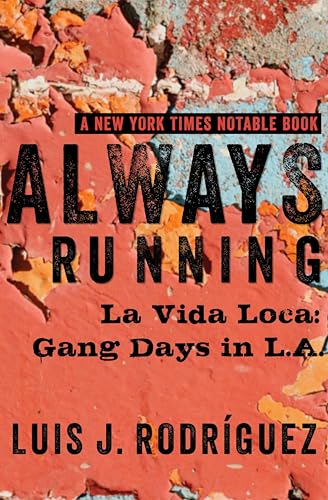
Always Running
Luis J. Rodriguez
4.9
The award-winning and bestselling classic memoir about a young Chicano gang member surviving the dangerous streets of East Los Angeles, now featuring a new introduction by the author.
Winner of the Carl Sandburg Literary Award, hailed as a New York Times notable book, and read by hundreds of thousands, Always Running is the searing true story of one man’s life in a Chicano gang—and his heroic struggle to free himself from its grip.
By age twelve, Luis Rodriguez was a veteran of East Los Angeles gang warfare. Lured by a seemingly invincible gang culture, he witnessed countless shootings, beatings, and arrests and then watched with increasing fear as gang life claimed friends and family members. Before long, Rodriguez saw a way out of the barrio through education and the power of words and successfully broke free from years of violence and desperation.
Achieving success as an award-winning poet, he was sure the streets would haunt him no more—until his young son joined a gang. Rodriguez fought for his child by telling his own story in Always Running, a vivid memoir that explores the motivations of gang life and cautions against the death and destruction that inevitably claim its participants.
At times heartbreakingly sad and brutal, Always Running is ultimately an uplifting true story, filled with hope, insight, and a hard-earned lesson for the next generation.
…
Cover unavailable
3
Abuela
Arthur Dorros
4.9
While riding on a bus with her grandmother, a little girl imagines that they are carried up into the sky and fly over the sights of New York City.
Cover unavailable
4
Unbroken
Bill k. Underwood
4.9
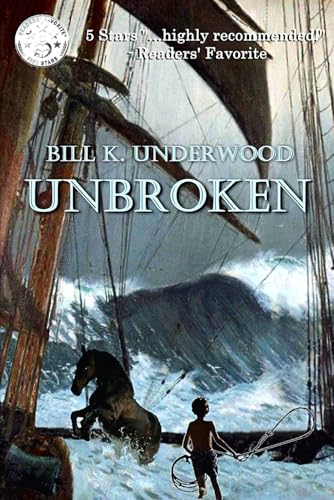
Horses, sailing ships, Mayans, pyramids and conquistadors... Unbroken is being hailed as “a great read for all ages!”
Felipe Ferrer's young life is turned upside down when Hernan Cortes rides into the Ferrer stable yard. Cortes, planning to lead his conquistadors to Mexico, is in desperate need of horses. When Felipe’s father refuses to sell his prize stallion, Majesty, Cortes cheats him out of the horse and sends Ferrer to debtor’s prison. To save Felipe from the same fate his father arranges for Felipe to go along with Cortes as Majesty’s groom.
Thus begins the greatest adventure of Felipe’s life. He will deal with bullies, thieves, a hurricane and a Mayan king. He will save a prince, save a girl, and save a horse.
But all he wants is to get free, get home and exonerate his father.
…
Cover unavailable
5
Chicano! the History of the Mexican American Civil Rights Movement
F. Arturo Rosales and Francisco A. Rosales
4.9
This is the companion volume to the critically acclaimed, four-part documentary series of the same title, which is now available on video following its national airing on the Corporation for Public Broadcasting. Aimed at a broad general audience as well as college and high school students, this milestone volume offers a rich, readable text and unique historical photographs to highlight individuals, issues and pivotal developments that culminated in and comprise a landmark period for the second largest ethnic minority in the United States.
…
Cover unavailable
6
Biblioteca Basica De Historia: America Latina: Epoca Colonial
Gonzalo Zaragoza
4.9
Cover unavailable
7
An Illustrated Dictionary of the Gods and Symbols of Ancient Mexico and the Maya
Mary Ellen Miller
4.9
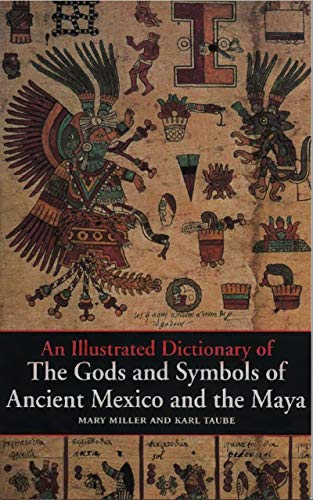
The myths and beliefs of the great Precolumbian civilizations of Mesoamerica have baffled and fascinated outsiders ever since the Spanish Conquest. Yet, until now, no single-volume introduction has existed to act as a guide to this labyrinthine symbolic world. In The Gods and Symbols of Ancient Mexico and the Maya nearly 300 entries, from accession to yoke, describe the main gods and symbols of the Olmecs, Zapotecs, Maya, Teotihuacanos, Mixtecs, Toltecs, and Aztecs. Topics range from jaguar and jester gods to reptile eye and rubber, from creation accounts and sacred places to ritual practices such as bloodletting, confession, dance, and pilgrimage. Two introductory essays provide succinct accounts of Mesoamerican history and religion, while a substantial bibliographical survey directs the reader to original sources and recent discussions. Dictionary entries are illustrated with photographs and specially commissioned line drawings. This authoritative work serves as a standard reference for students, scholars, and travelers.
…
Cover unavailable
8
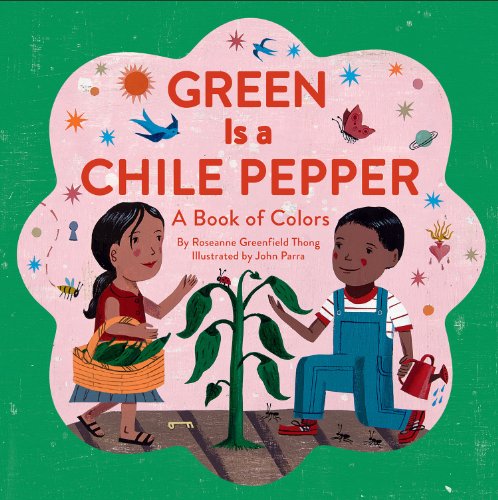
Green Is a Chile Pepper: A Book of Colors
Roseanne Greenfield Thong and John Parra
4.9
Children discover a world of colors all around them. Many of the featured objects are Latino in origin, but all are universal in appeal. With rich, boisterous illustrations, a fun-to-read rhyming text, and an informative glossary, this playful concept book will reinforce the colors found in every childs day!
Cover unavailable
9
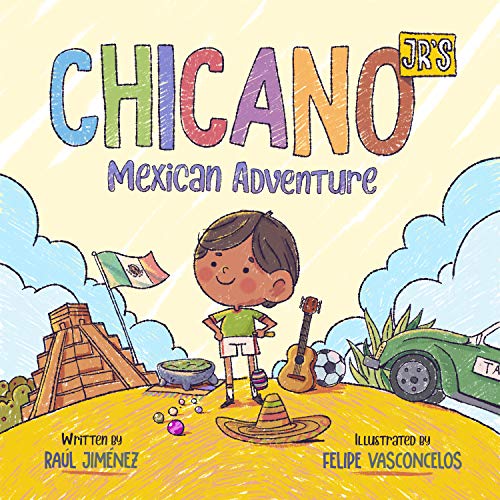
Chicano Jr's Mexican Adventure
Raúl Jiménez and Felipe Vasconcelos
4.8
Cover unavailable
10
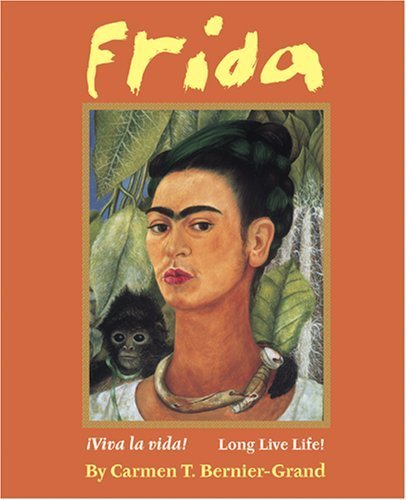
Frida: ¡Viva La Vida! Long Live Life!
Carmen T. Bernier-Grand
4.8
"Wearing the white huipil with the lavender tassel, hiding my amputated leg in red-leather boots, I wheel the wheelchair to the Blue House studio that Diego so lovingly built for me.
I dip the brush in blood-red paint and, embracing life with all its light, I print on a watermelon cut open—like I am— ¡Viva la vida!— a hymn to nature and life."
Frida Kahlo, a native of Mexico, is described here in biographical poems accompanied by her own artwork. Both text and images reveal the anguish and joy of her two marriages to muralist Diego Rivera, her life-long suffering from a crippling bus accident, and her thirst for life, even as she tasted death. Her favorite motto was: ¡Viva la vida! (Long live life!)
Back matter includes excerpts from Frida’s diary and letters, a prose biography, a chronology of the artist’s life, a glossary of Spanish words, sources, and notes.
…
Cover unavailable
11
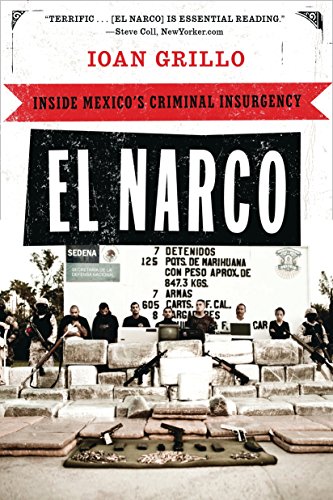
El Narco: Inside Mexico's Criminal Insurgency
Ioan Grillo
4.8
The world has watched stunned at the bloodshed in Mexico. Thirty thousand murdered since 2006; police chiefs shot within hours of taking office; mass graves comparable to those of civil wars; car bombs shattering storefronts; headless corpses heaped in town squares. And it is all because a few Americans are getting high. Or is it? The United States throws Black Hawk helicopters and drug agents at the problem. But in secret, Washington is confused and divided about what to do. Who are these mysterious figures tearing Mexico apart? they wonder. What is El Narco? El Narco draws the first definitive portrait of Mexico's drug cartels and how they have radically transformed in the last decade. El Narco is not a gang; it is a movement and an industry drawing in hundreds of thousands from bullet-ridden barrios to marijuana-growing mountains. And it has created paramilitary death squads with tens of thousands of men-at-arms from Guatemala to the Texas border. Journalist Ioan Grillo has spent a decade in Mexico reporting on the drug wars from the front lines. This piercing book joins testimonies from inside the cartels with firsthand dispatches and unsparing analysis. The devastation may be south of the Rio Grande, El Narco shows, but America is knee-deep in this conflict.
…
Cover unavailable
12
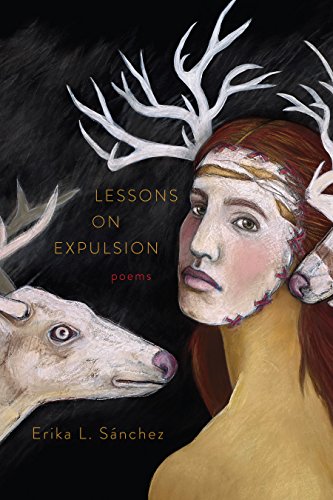
Lessons on Expulsion
Erika L. Sánchez
4.8
An award-winning and hard-hitting new voice in contemporary American poetry
The first time I ever came the light was weak and carnivorous.
I covered my eyes and the night cleared its dumb throat.
I heard my mother wringing her hands the next morning.
Of course I put my underwear on backwards, of course the elastic didn't work.
What I wanted most at that moment was a sandwich.
But I just nursed on this leather whip.
I just splattered my sheets with my sadness.
—from “Poem of My Humiliations”
“What is life but a cross / over rotten water?” Poet, novelist, and essayist Erika L. Sánchez’s powerful debut poetry collection explores what it means to live on both sides of the border—the border between countries, languages, despair and possibility, and the living and the dead. Sánchez tells her own story as the daughter of undocumented Mexican immigrants and as part of a family steeped in faith, work, grief, and expectations. The poems confront sex, shame, race, and an America roiling with xenophobia, violence, and laws of suspicion and suppression. With candor and urgency, and with the unblinking eyes of a journalist, Sánchez roves from the individual life into the lives of sex workers, narco-traffickers, factory laborers, artists, and lovers. What emerges is a powerful, multifaceted portrait of survival. Lessons on Expulsion is the first book by a vibrant, essential new writer now breaking into the national literary landscape.
…
Cover unavailable
13
The Underdogs
Mariano Azuela, Sergio Waisman, Carlos Fuentes
4.8
The greatest novel of the Mexican Revolution, in a brilliant new translation by an award-winning translator
The Underdogs is the first great novel about the first great revolution of the twentieth century. Demetrio Macias, a poor, illiterate Indian, must join the rebels to save his family. Courageous and charismatic, he earns a generalship in Pancho Villa's army, only to become discouraged with the cause after it becomes hopelessly factionalized. At once a spare, moving depiction of the limits of political idealism, an authentic representation of Mexico's peasant life, and a timeless portrait of revolution, The Underdogs is an iconic novel of the Latin American experience and a powerful novel about the disillusionment of war.
…
Recommended by Hugh Thomson.
Hugh Thomson
I first read this when I was 16 or 17 and it made a strong impression on me. It’s a tough, picaresque novel of the Mexican revolution and of what it was like for the soldiers in the north. It’s a good account of how anarchic that revolution must have been and it still has a lot of verve and power, with images of troops spilling out of the trains, the Dorados, the ‘golden ones’, Pancho Villa’s cavalry. Pancho Villa 1878-1923 was the colourful bandit-hero of the Mexican revolution. [source]
Cover unavailable
14
La creación del mundo según el Códice Vindobonensis
Manuel A. Hermann Lejarazu
4.8
Hay pocos libros en el mundo semejantes al Códice Vindobonensis, pues en un solo volumen narra la creación del mundo y registra todos los rituales necesarios para que el universo perdure armoniosamente. Aquí invitamos al lector no sólo a recorrer las insólitas láminas del códice, sino también a intentar leer y descifrar los signos en los cuales los antiguos mexicanos plasmaron sus sistema de creencias, muy diferente al nuestro.
(Descripción tomada de memoriasculturaylibros.blogspot.mx)
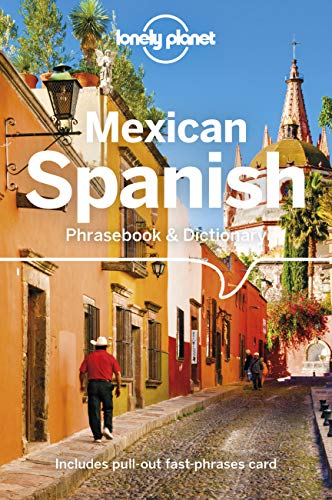
Lonely Planet Mexican Spanish Phrasebook & Dictionary is your passport to the most relevant Mexican Spanish phrases and vocabulary for all your travel needs. Order Mexican delicacies at restaurants, bargain for the best price at markets, and discuss Mayan history with the locals -all with your trusted travel companion. With language tools in your back pocket, you can truly get to the heart of wherever you go, so begin your journey now!
Get More From Your Trip with Easy-to-Find Phrases for Every Travel Situation!
Feel at ease with essential tips on culture, manners, idioms and multiple meanings
Order with confidence, explain food allergies, and try new foods with the menu decoder
Save time and hassles with vital phrases at your fingertips
Never get stuck for words with the 3500-word two-way, quick-reference dictionary
Be prepared for both common and emergency travel situations with practical phrases and terminology
Meet friends with conversation starter phrases
Get your message across with easy-to-use pronunciation guides
User-friendly layout organised by travel scenario categories
Survival phrases inside front cover for at-a-glance on-the-fly cues
Convenient features 5 Phrases to Learn Before You Go 10 Ways to Start a Sentence 10 Phrases to Sound like a Local Listen For - phrases you may hear Look For - phrases you may see on signs Shortcuts - easy-to-remember alternatives to the full phrases Q&A - suggested answers to questions asked
Food - ordering, at the market, at the bar, dishes, ingredients
The Perfect Choice:Lonely Planet Mexican Spanish Phrasebook & Dictionary, a pocket-sized comprehensive language guide, provides on-the-go language assistance. Great for language students and travellers looking to interact with locals and immerse themselves in local culture.
About Lonely Planet: Started in 1973, Lonely Planet is the world's leading travel guide publisher with guidebooks to every destination on the planet, and has been connecting travellers and locals for over 25 years with phrasebooks for 120 languages.
Check out our Fast Talk Phrasebook mobile app for on-the-go language needs. (Available languages: German, Latin Spanish, European Spanish, French, and Italian.)
…
Cover unavailable
16
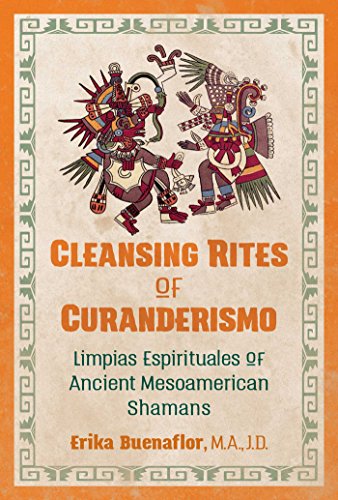
Cleansing Rites of Curanderismo: Limpias Espirituales of Ancient Mesoamerican Shamans
Erika Buenaflor M.A.J.D.
4.8
A tutorial on the ancient practice of limpias to heal the mind, body, and soul
• Offers step-by-step instructions for the practice of limpias, shamanic cleansing rituals to heal, purify, and revitalize people as well as physical spaces
• Examines different types of limpia ceremonies, such as fire rites for transformation, water rites for cleansing and influencing, and sweeping rites for divination
• Explores the sacred stories behind limpia rituals and traces these curanderismo practices to their indigenous roots
Exploring the essential tools and practices of Mesoamerican shamans and curanderos, specifically the ancient Yukatek Maya and Mexica (Aztec), Erika Buenaflor, M.A., J.D., provides a step-by-step guide for conducting the most common practice within curanderismo: limpias. These practical and incredibly effective shamanic cleanses heal, purify, and revitalize people and spaces with herbs, flowers, eggs, feathers, fire, and water. They are also powerful tools for self-empowerment, spiritual growth, soul retrieval, rebirth, and gracefully opening up pathways for new beginnings.
Drawing on her 20 years’ experience as a curandera and her graduate studies focused on Mesoamerican shamanism, the author traces modern curanderismo practices to their indigenous roots. She explores the sacred stories behind limpia rituals and examines different types of limpia ceremonies in depth, such as fire rites for transformation, water rites for cleansing and influencing, and sweeping rites for divination. She outlines how limpias work holistically to enable one to let go and cleanse the body, mind, and spirit of limiting beliefs, traumas, and broken stories; heal acute and chronic illnesses such as depression, insomnia, and anxiety; and revitalize and activate sacred spaces by renewing their essence and clearing negative energies. She explains the healing properties of the plants used in limpia rites and how to perform the medicinal chants used by the curanderos. In addition, the author details how the practice of platicas, heart-straightening talks, supports limpia rites by encouraging one to vocalize their needs as they eject traumas and unwanted energies from the body, setting the stage for self-awareness and healing.
Sharing the story of her own complete healing from a catastrophic injury with limpias as well as inspirational testimonies from others who have experienced limpias, the author provides a personal and thoroughly practical guide to the ancient shamanic method of limpias to promote healing and personal transformation in our times.
…
Cover unavailable
17
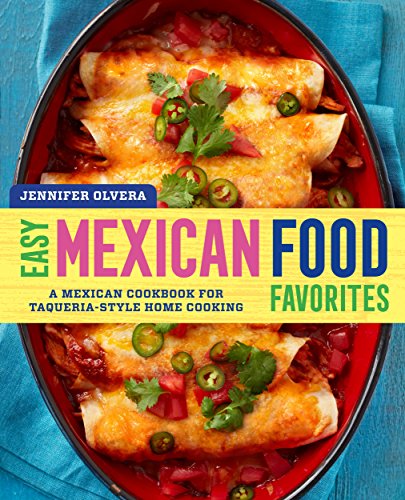
Easy Mexican Food Favorites: A Mexican Cookbook for Taqueria-Style Home Cooking
Jennifer Olvera
4.8
Just like great Mexican food, this Mexican cookbook begins at the source: classic recipes, bold flavors, and fresh ingredients.
Unless you live in a city known for its Mexican food, finding good Mexican cuisine can be challenging--and finding the right Mexican cookbook might be even more difficult.
For food writer and cookbook author Jennifer Olvera, cooking traditional Mexican meals began as a labor of love. As a working mother of 2, she wanted to recreate the traditional recipes she saw flowing freely at family gatherings, but also knew that spending hours in the kitchen wasn't practical.
In Jennifer's first Mexican cookbook, Easy Mexican Food Favorites: A Mexican Cookbook for Taqueria-Style Home Cooking, she shares the Mexican cooking secret she finally discovered--all you need to enjoy delicious Mexican food at home is some simple techniques, time-saving tips, and a gradual, acquired instinct.
115 simple, hassle-free recipes, many of which take less than 45 minutes to prepare
Step-by-step instructions that teach a variety of simple, effective, and fast Mexican cooking techniques Helpful cooking tips for what to prep, what to make ahead, and what to swap if you're missing an ingredient Easy Mexican Food Favorites: A Mexican Cookbook for Taqueria-Style Home Cooking brings you all the Mexican food you love without all the fuss. Whether you're in the mood for salsas and tamales or enchiladas and horchatas, this Mexican cookbook has everything you need to get started.
…
Cover unavailable
18
Round Is a Tortilla: A Book of Shapes
Roseanne Thong and John Parra
4.8
In this lively picture book, children discover shapes all around them: rectangles are ice-cream carts and stone metates, while triangles are slices of watermelon and quesadillas. Many of the featured objects are Latino in origin, and all are universal in appeal. With rich illustrations, a fun-to-read rhyming text, and an informative glossary, this playful concept book will reinforce the shapes found in every child's day!
…
Cover unavailable
19
Medicina Prehispanica De Mexico/Prehispanic Medicine of Mexico
Viesca Trevino
4.8
Cover unavailable
20
Way People Live: Life Among the Aztecs
Rachael Ramey
4.8
Although much is known about the ways in which people of high social status lived in ancient Aztec society, archaeologists today are focusing on the lesser-known lives of the common people on whom the empire depended.
Cover unavailable
21
El Sicario: The Autobiography of a Mexican Assassin
Molly Molloy and Charles Bowden
4.8
In this unprecedented and chilling monologue, a repentant Mexican hitman tells the unvarnished truth about the war on drugs on the American. El Sicario is the hidden face of America's war on drugs. He is a contract killer who functioned as a commandante in the Chihuahuan State police, who was trained in the US by the FBI, and who for twenty years kidnapped, tortured and murdered people for the drug industry at the behest of Mexican drug cartels. He is a hit man who came off the killing fields alive. He left the business and turned to Christ. And then he decided to tell the story of his life and work. Charles Bowden first encountered El Sicario while reporting for the book "Murder City". As trust between the two men developed, Bowden bore witness to the Sicario's unfolding confession, and decided to tell his story. The well-spoken man that emerges from the pages of El Sicario is one who has been groomed by poverty and driven by a refusal to be one more statistic in the failure of Mexico. He is not boastful, he claims no major standing in organized crime. But he can explain in detail not only torture and murder, but how power is distributed and used in the arrangement between the public Mexican state and law enforcement on the ground - where terror and slaughter are simply tools in implementing policy for both the police and the cartels. And he is not an outlaw or a rebel. He is the state. When he headed the state police anti-kidnapping squad in Juarez, he was also running a kidnapping ring in Juarez. When he was killing people for money in Juarez, he was sharpening his marksmanship at the Federal Police range. Now he lives in the United States as a fugitive. One cartel has a quarter million dollar contract on his head. Another cartel is trying to recruit him. He speaks as a free man and of his own free will - there are no charges against him. He is a lonely voice - no one with his background has ever come forward and talked. He is the future - there are thousands of men like him in Mexico and there will be more in other places. He is the truth no one wants to hear.
…
Cover unavailable
22
Drug Lord: The Life and Death of a Mexican Kingpin - A True Story
Terrence E. Poppa and Charles Bowden
4.8
""Drug Lord" is the real thing. Raw, immediate, indispensable."--Don Winslow, author of "The Power of Dog" and "California Fire and Life"
"The drug smuggling] business goes on, the slaughtered dead pile up, the US agencies continue to ratchet up their budgets, the prisons grow larger and all the real rules of the game are in this book, some kind of masterpiece."--Charles Bowden, from the introduction
"Pablo Acosta was a living legend in his Mexican border town of Ojinaga. He smuggled tremendous amounts of drugs into the United States; he survived numerous attempts on his power--and his life--by rivals; and he blessed the town with charity and civic improvements. He was finally slain in 1987 during a raid by Mexican officials with the cooperation of US law enforcement. Poppa has turned out a detailed and exciting book, covering in depth Acosta's life; the other drug factions that battled with him; the village of Ojinaga; and the logistics of the drug operation. The result is a nonfiction account with enough greed, treachery, shoot-outs, and government corruption to fascinate true crime and crime fiction readers alike. Highly recommended."--"Library Journal"
Terrence E. Poppa, an award-winning journalist, was a finalist for a 1987 Pulitzer Prize for his investigations into the connection between crime and government in Mexico. He was featured in "Standoff in Mexico," a PBS production about fraudulent elections in Mexico. Due to his unique insights into the world of Mexican drug trafficking, Poppa has been widely interviewed on radio and television, including "Larry King Live" and "The O'Reilly Factor."
…
Cover unavailable
23
The Toltec Secret: Dreaming Practices of the Ancient Mexicans
Sergio Magana
4.8
When the phase of the Sixth Sun began, it was time for the ancient teachings of Mexico to be shared with the world. Sergio Magaña’s dreaming teacher predicted that, after the eclipse on July 11, 2010, Sergio would be one of the spokespeople to carry the teachings of this rich spiritual tradition, which has been closed to outsiders until now. The original holders of this secret knowledge, the Chichimeca, were considered to be masters, with a deep understanding of the dream state and a working knowledge of how our perceptions form our reality, as well as the capacity to influence matter. In this extraordinary work, Sergio shares the wisdom and practices that inspired Carlos Castaneda to write about nahual and tonal reality, and explains the deep power of dreaming, altered states of perception, and expanded consciousness that will enable you to: • become lucid in your dreams • heal and rejuvenate your body and send healing to others while in the dreaming state • communicate with your ancestors • develop different types of perception to see energy and altered reality • use the mysterious obsidian mirror for cleansing and healing yourself and others • see your teyolia, or path of the soul, to learn who you were in past lives and release parts of yourself that are trapped in old experiences.
…
Cover unavailable
24
The Great Book of Mexico: Interesting Stories, Mexican History & Random Facts About Mexico (History & Fun Facts)
Bill O'Neill
4.8
Cover unavailable
25
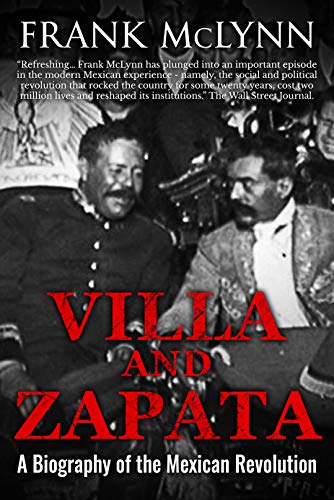
Villa and Zapata: A History of the Mexican Revolution
Frank McLynn
4.8
The Mexican Revolution (1910-19) was the first social upheaval of the 20th century, surpassed only in historical importance by the Russian and Chinese revolutions. Tierra y libertad (Land and Liberty) was the watchword of the revolutionaries who fought a succession of autocrats in Mexico City. The two greatest rebel leaders were Francisco (Pancho) Villa and Emiliano Zapata, who, like Nelson and Wellington, were destined to meet only once. Villa was the Revolution's great military hero, but Zapata was its soul and the only rebel whose revolt was aimed at a genuine transformation of Mexican society. The two reached the peak of their careers in 1914 when they met triumphantly in Mexico City. Failing to make common cause, they gradually fell victim to their great rivals, Obregûn and Carranza.
…
Cover unavailable
26
Fire and Blood: A History of Mexico
T. R. Fehrenbach
4.8
"Mexico's history is a mixture of conquest and plunder, violence and brutality, fabulous civilizations, and spectacular cultural achievements. A fascinating story."--Christian Science Monitor
There have been many Mexicos: the country of varied terrain, of Amerindian heritage, of the Spanish Conquest, of the Revolution, and of the modern era of elections and the rule of bankers. Mexico was forged in the fires of successive civilizations, and baptized with the blood of millions, all of whom added tragic dimensions to the modern Mexican identity. T. R. Fehrenbach brilliantly delineates the contrasts and conflicts between them, unraveling the history while weaving a fascinating tapestry of beauty and brutality: the Amerindians, who wrought from the vulnerable land a great indigenous Meso-American civilization by the first millennium B.C.; the successive reigns of Olmec, Maya, Toltec, and Mexic masters, who ruled through an admirably efficient bureaucracy and the power of the priests, propitiating the capricious gods with human sacrifices; the Spanish conquistadors, who used smallpox, technology, and their own ruthless individualism to erect a new tyranny over the ruins of the old; the agony of independent Mexico, struggling with the weight of its overwhelming past and tremendous potential. Throughout the narrative the author resurrects the great personalities of Mexican history, such as Motecuhzoma, Cortes, Santa Anna, Juárez, Maximilian, Díaz, Pancho Villa, and Zapata. Fehrenbach, who has updated this edition to include recent events, has created a work of scholarly perspective and gripping prose.
…
Cover unavailable
27
Wolf Boys: Two American Teenagers and Mexico's Most Dangerous Drug Cartel
Dan Slater
4.8
The tale of two American teenagers recruited as killers for a Mexican cartel, and the Mexican-American detective who realizes the War on Drugs is unstoppable. “A hell of a story…undeniably gripping.” (The New York Times)
In this astonishing story, journalist Dan Slater recounts the unforgettable odyssey of Gabriel Cardona. At first glance, Gabriel is the poster-boy American teenager: athletic, bright, handsome, and charismatic. But the ghettos of Laredo, Texas—his border town—are full of smugglers and gangsters and patrolled by one of the largest law-enforcement complexes in the world. It isn’t long before Gabriel abandons his promising future for the allure of juvenile crime, which leads him across the river to Mexico’s most dangerous drug cartel: Los Zetas. Friends from his childhood join him and eventually they catch the eye of the cartel’s leadership.
As the cartel wars spill over the border, Gabriel and his crew are sent to the States to work. But in Texas, the teen hit men encounter a Mexican-born homicide detective determined to keep cartel violence out of his adopted country. Detective Robert Garcia’s pursuit of the boys puts him face-to-face with the urgent consequences and new security threats of a drug war he sees as unwinnable.
In Wolf Boys, Slater takes readers on a harrowing, often brutal journey into the heart of the Mexican drug trade. Ultimately though, Wolf Boys is the intimate story of the lobos: teens turned into pawns for the cartels. A nonfiction thriller, it reads with the emotional clarity of a great novel, yet offers its revelations through extraordinary reporting.
…
Cover unavailable
28
The Mexican-American War (Living Through. . .)
John DiConsiglio
4.8
Why was the Mexican American War so important in the formation of the modern United States? Could Texas have survived as an independent nation or part of Mexico? This book seeks to relate the overall events and chronology of the war and shows its impact on everyday lives.
Leyendas Mexicanas de Antes y Despues de la Conquista = Mexican Legends from Before and After the Conquest
Carlos Franco Sodja
4.8
Cover unavailable
31
Santa Muerte: The History, Rituals, and Magic of Our Lady of the Holy Death
Tracey Rollin
4.8
Death welcomes everyone. This is the foundation for the veneration of Santa Muerte, or "Holy Death." Considered to be the female personification of death, she is associated with protection and safe passage to the afterlife. She is also the patron saint of people who live on the fringes of society and often face violence and death. In recent years her constituency has expanded to include the LGBT community and people who are marginalized or whose jobs put them at significant risk of death such as military and police personnel. Santa Muerte is hailed as their potent and powerful protector, capable of delivering them from harm and even granting miracles.
Santa Muerte is a complete ritual guide to working with this famous--and infamous!--Mexican folk saint. It takes us beyond the sensational headlines to reveal the truth about why Santa Muerte is so beloved by so many. Author Tracey Rollin presents simple, straightforward methods for working with Holy Death that may be used alone or easily incorporated into your own magical practice.
…
Cover unavailable
32
The Mexican Mafia
Tony Rafael
4.8
It has been called the most dangerous gang in American history. In Los Angeles alone it is responsible for over 100 homicides per year. Although it has fewer than 300 members, it controls a 40,000-strong street army that is eager to advance its agenda. It waves the flag of the Black Hand and its business is murder. Although known on the streets for over fifty years, the Mexican Mafia has flown under the radar of public awareness and has flourished beneath a deep cover of secrecy. Members are forbidden even to acknowledge its existence. For the first time in its history, the Mexican Mafia is now getting the attention it has been striving to avoid. In this briskly written and thoroughly researched book, Tony Rafael looks at the birth and the blood-soaked growth of this criminal enterprise through the eyes of the victims, the dropouts, the cops and DAs on the front lines of the war against the Mexican Mafia. The first book ever published on the subject, Southern Soldiers is a pioneering work that unveils the operations of this California prison gang and describes how it grew from a small clique of inmates into a transnational criminal organization. As the first prison gang ever to project its power beyond prison walls, the Mexican Mafia controls virtually every Hispanic neighborhood in Southern California and is rapidly expanding its influence into the entire Southwest, across the East Coast, and even into Canada. Riding a wave of unchecked immigration and seemingly beyond the reach of law enforcement, the Mexican Mafia is poised to become the Cosa Nostra of twenty-first-century America.
…
Cover unavailable
33
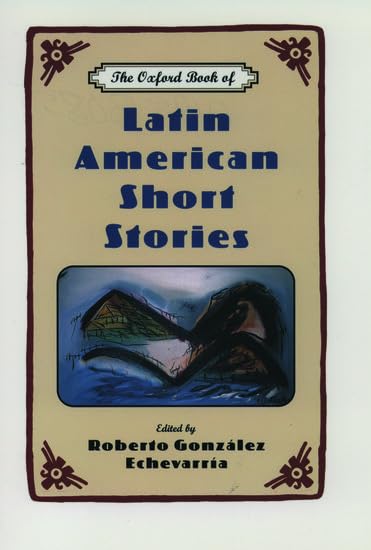
The Oxford Book of Latin American Short Stories
Roberto Gonzalez Echevarria
4.8
When Latin American writers burst onto the world literary scene in the now famous "Boom" of the sixties, it seemed as if an entire literature had invented itself over night out of thin air. Not only was the writing extraordinary but its sudden and spectacular appearance itself seemed magical. In fact, Latin American literature has a long and rich tradition that reaches back to the Colonial period and is filled with remarkable writers too little known in the English-speaking world. The short story has been a central part of this tradition, from Fray Bartolome de las Casas' narrative protests against the Spanish Conquistadors' abuses of Indians, to the world renowned Ficciones of Jorge Luis Borges, to the contemporary works of such masters as Carlos Fuentes, Gabriel Garcia Marquez, Rosario Ferre, and others.
Now, in The Oxford Book of Latin American Short Stories, editor Roberto Gonzalez Echevarria brings together fifty-three stories that span the history of Latin American literature and represent the most dazzling achievements in the form. In his fascinating introduction, Gonzalez Echevarria traces the evolution of the short story in Latin American literature, explaining why the genre has flourished there with such brilliance, and illuminating the various cultural and literary tensions that resolve themselves in "magical realism." The stories themselves exhibit all the inventiveness, the luxuriousness of language, the wild metaphoric leaps and uncanny conjunctions of the ordinary with the fantastic that have given the Latin American short story its distinctive and unforgettable flavor: From the Joycean subtlety of Machado de Assis's "Midnight Mass," to the brutal parable of Julio Ramon Ribeyro's "Featherless Buzzards," to the startling disorientation of Alejo Carpentier's "Journey Back to the Source," (which is told backwards, because a sorcerer has waved his wand and made time flow in reverse), to the haunting reveries of Maria Luisa Bombal's "The Tree." Readers familiar with only the most popular Latin American writers will be delighted to discover many exciting new voices here, including Catalina de Erauso, Ricardo Palma, Rubin Dario, Augusto Roa Bastos, Christina Peri Rossi, along with Borges, Garcia Marquez, Fuentes, Cortazar, Vargas Llosa, and many others. Gonzalez Echevarria also provides brief and extremely helpful headnotes for the each selection, discussing the author's influences, major works, and central themes.
Short story lovers will find a wealth of satisfactions here, in terrains both familiar and uncharted. But the unique strength of The Oxford Book of Latin American Short Stories is that it allows us to see the connections between writers from Peru to Puerto Rico and from the sixteenth century to the present--and thus to view in a single, unprecedented volume one of the most diverse and fertile literary landscapes in the world.
…
Cover unavailable
34
The Course of Mexican History
Susan M. Deeds, Michael C. Meyer, et al.
4.8
Mexico's political, social, and economic landscapes have shifted in very striking ways in recent years and the country now moves cautiously forward, in the twenty-first century. Revised to address these remarkable transformations, The Course of Mexican History, now in its eleventh edition, offers a completely up-to-date, lively, and engaging survey from the pre-Columbian times to the present.
Cover unavailable
35
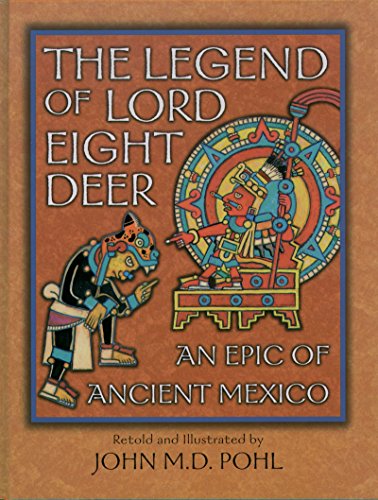
The Legend of Lord Eight Deer: An Epic of Ancient Mexico
John M. D. Pohl
4.8
The Legend of Lord Eight Deer is a retelling of the great epic saga of the Mixtec people of Mexico recorded in pictographs painted on deer-hide codices more than 500 years ago. The legend begins with the mysterious murder of three princes and unfolds as Lord Eight Deer embarks on a quest to rule his kingdom that takes him to the gates of the Sun God himself. It is a story of breathtaking beauty-a story of gods and kings, heroes and princesses, thieves and holy men, and the betrayal of love. John Pohl's vivid retelling and dazzling illustrations brings to life the last great flowering of Mesoamerican civilization. "The Story Behind the Story," an illustrated section immediately following the retelling, offers a dynamic look at the history, religion, warfare, and daily life of the Mixtec people, the ancient codices, and the legacy of the tale today.
…
Cover unavailable
36
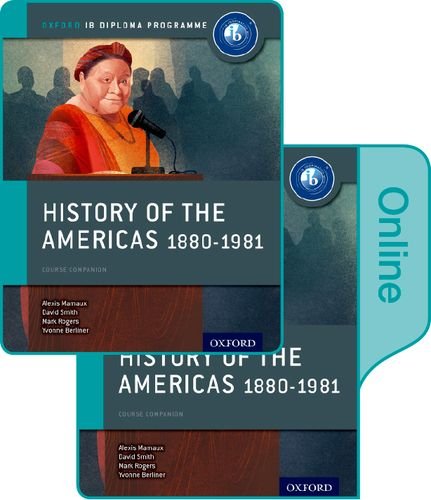
History of the Americas 1880-1981: Course Companion (Oxford IB Diploma Programme)
Alexis Mamaux
4.8
Drive critical, engaged, high level learning and skills. Developed with the IB, this Course Book equips learners to analyze and articulate complex historical concepts and contexts, strengthening performance and potential. Enabling advanced understanding, the student-centred approach actively builds, refines and perfects higher level skills. - Cover the new syllabus in the right level of depth, with rich, thorough subject content from across the Americas for topics 10-17 for Paper 3 - Developed directly the with IB for the new syllabus first examined 2017 - Truly engage learners with topical, relevant material that convincingly connects learning with the modern, global world - Streamline your planning, with a clear and thorough structure helping you logically progress through the syllabus - Build the advanced-level skills learners need for Paper 3, with the student-led approach driving active skills development and strengthening exam performance - Integrate Approaches to learning with ATLs like thinking, communication, research and social skills built directly into learning - Help learners think critically about improving performance with extensive examiner insight and samples based on the latest exam format - Build an advanced level, thematic understanding with fully integrated Global Contexts, Key Concepts and TOK - Also available as an Online Course Book
…
Cover unavailable
37
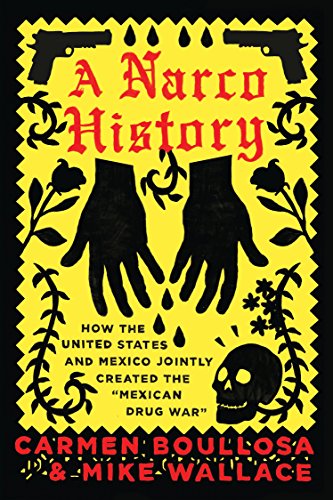
A Narco History: How the United States and Mexico Jointly Created the "Mexican Drug War"
Carmen Boullosa and Mike Wallace
4.8
The term “Mexican Drug War” misleads. It implies that the ongoing bloodbath, which has now killed well over 100,000 people, is an internal Mexican affair.
But this diverts attention from the U.S. role in creating and sustaining the carnage. It’s not just that Americans buy drugs from, and sell weapons to, Mexico’s murderous cartels. It’s that ever since the U.S. prohibited the use and sale of drugs in the early 1900s, it has pressured Mexico into acting as its border enforcer—with increasingly deadly consequences. Mexico was not a helpless victim. Powerful forces within the country profited hugely from supplying Americans with what their government forbade them. But the policies that spawned the drug war have proved disastrous for both countries.
Written by two award-winning authors, one American and the other Mexican, A Narco History reviews the interlocking twentieth-century histories that produced this twenty-first century calamity, and proposes how to end it.
…
Cover unavailable
38
Mexican American Literature: A Portable Anthology
Dagoberto Gilb and Ricardo Angel Gilb
4.8
Mexican American Literature is a comprehensive anthology consisting of powerful selections from 50 Mexian American authors.
Cover unavailable
39
The Dead March: A History of the Mexican-American War
Peter Guardino
4.8
By focusing on the experiences of ordinary Mexicans and Americans, The Dead March offers a clearer historical picture than we have ever had of the brief, bloody war that redrew the map of North America.
Peter Guardino invites skepticism about the received view that the United States emerged victorious in the Mexican-American War (1846–1848) because its democratic system was more stable and its citizens more loyal. In fact, heading into the war, American forces dramatically underestimated the strength of Mexicans’ patriotism and failed to see how bitterly Mexicans resented America’s claims to national and racial superiority. Having regarded the United States as a sister republic, Mexicans were shocked by the scope of America’s expansionist ambitions, and their fierce resistance surprised U.S. political and military leaders, who had expected a quick victory with few casualties. As the fighting intensified over the course of two years, it claimed the lives of thousands of Americans and at least twice as many Mexicans, including many civilians.
As stark as they were, the misconceptions that the Mexican-American War laid bare on both sides did not determine the final victor. What differentiated the two countries in battle was not some notion of American unity and loyalty to democracy but the United States’ huge advantages in economic power and wealth―advantages its poorer Latin American neighbor could not hope to overcome.
…
Cover unavailable
40
From Indians to Chicanos: The Dynamics of Mexican-American Culture
James Diego Vigil
4.8
Considered a pioneering achievement when first published nearly two decades ago, From Indians to Chicanos--now in a completely revised second edition--continues to offer readers an informed and penetrating approach to the history of Chicano development. Anthropologist-historian Diego Vigil shows a perceptive and knowledgeable background in brief, clear outlines of each stage of Mexican-American history, charting the culture change sequences in the Pre-Columbian, Spanish Colonial, Mexican Independence and Nationalism, and Anglo-American periods. He analyzes not only the events and the underlying conditions that affect them but also the dynamics that shaped contemporary Chicano life. The author has absorbed an enormous amount of information and has condensed it in a very readable and understandable fashion. Vigil's ethnohistorical introduction to the Mexican- American experience in the United States is simple yet comprehensive so that readers clearly understand historical developments and the specific socioeconomic, sociocultural and sociopsychological forces involved.
…
Cover unavailable
41
In the Days of the Vaqueros: America's First True Cowboys
Russell Freedman
4.8
In this rousing account of the first true cowboys, Newbery Medalist Russell Freedman brings to life the days when the vaqueros rounded up cattle, brought down steers, and tamed wild broncos. In the service of wealthy Spanish conquistadors in the sixteenth century, Mexican ranch hands began herd- ing cattle, often riding barefoot. They soon developed and perfected the skills for this dangerous work and became expert horsemen. Hundred of years later the vaqueros shared their expertise with the inexperienced cowboys of the American West, who adopted their techniques and their distinctive clothing, tools, and even lingo. Yet today it is the cowboy whom we remember, while the vaquero has all but disappeared from history. The vaqueros are at last given their due in this dramatic narrative, lushly illustrated with beautiful period paintings and drawings.
…
Cover unavailable
42
Ancient Aztecs
Michael Burgan
4.8
In the early 16th century, in what is now central Mexico, the Aztec capital city of Tenochtitlan was home to more than 200,000 people. From the empires earliest roots to its eventual demise, this title details the incredible rise and fall of one of the greatest civilizations in history. It also examines ancient Aztec religious beliefs, scientific innovations, and daily life, as well as how the civilizations culture has affected the world we live in today.
…
Cover unavailable
43
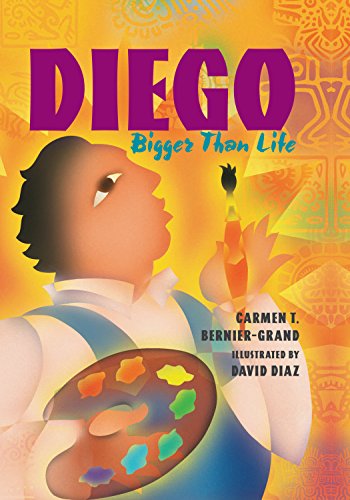
Diego: Bigger Than Life
Carmen Bernier-Grand, David Diaz
4.8
Carmen T. Bernier-Grand's inspiring free verse and David Diaz's vivid paintings capture the defining moments and emotions of Diego Rivera's tumultuous life, including his stormy relationship with artist Frida Kahlo and his passion for his art. Rivera's energy, physique, love for women, and work were all "bigger than life." A biography, chronology, glossary, sources, notes, and famous quotations are included.
…
Cover unavailable
44
The Mexican Mafia Encyclopedia
Rene Enriquez, Ramon Mendoza, et al.
4.8
Cover unavailable
45
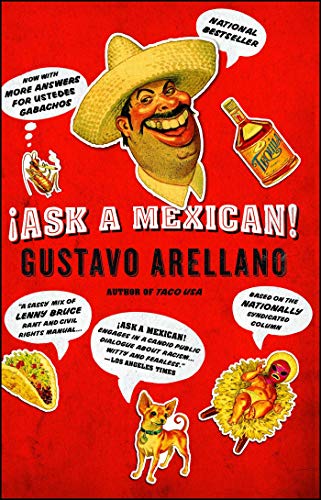
Ask a Mexican
Gustavo Arellano
4.8
DEAR MEXICAN:
WHAT IS ¡ASK A MEXICAN! ?
Questions and answers about our spiciest Americans. I explore the clichés of lowriders, busboys, and housekeepers; drunks and scoundrels; heroes and celebrities; and most important, millions upon millions of law-abiding, patriotic American citizens and their illegal-immigrant cousins who represent some $600 billion in economic power.
WHY SHOULD I READ ¡ASK A MEXICAN! ?
At 37 million strong (or 13 percent of the U.S. population), Latinos have become America's largest minority -- and beaners make up some two-thirds of that number. I confront the bogeymen of racism, xenophobia, and ignorance prompted by such demographic changes through answering questions put to me by readers of my ¡Ask a Mexican! column in California's OC Weekly. I challenge you to find a more entertaining way to immerse yourself in Mexican culture that doesn't involve a taco-and-enchilada combo.
OKAY, WHY DO MEXICANS PARK THEIR CARS ON THE FRONT LAWN?
Where do you want us to park them? The garage we rent out to a family of five? The backyard where we put up our recently immigrated cousins in tool-shack-cum-homes? The street with the red curbs recently approved by city planners? The driveway covered with construction materials for the latest expansion of la casa? The nearby school parking lot frequented by cholos on the prowl for a new radio? The lawn is the only spot Mexicans can park their cars without fear of break-ins, drunken crashes, or an unfortunate keying. Besides, what do you think protects us from drive-bys? The cops?
…
Cover unavailable
46
Down Garrapata Road
Anne Estevis
4.8
Down Garrapata Road is a collection of stories about four Mexican American families who endure poverty, WWII, and responsibilities that affect them all. But they deal with their struggles with the help of family and their community
Cover unavailable
47
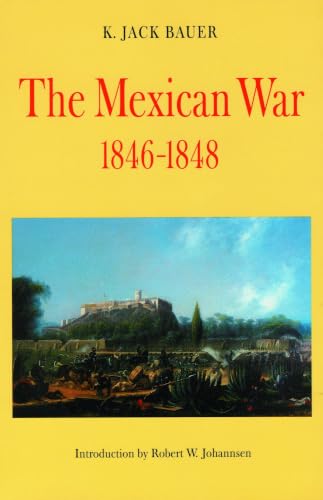
The Mexican War, 1846-1848
K. Jack Bauer and Robert W. Johannsen
4.8
"Much has been written about the Mexican war, but this . . . is the best military history of that conflict. . . . Leading personalities, civilian and military, Mexican and American, are given incisive and fair evaluations. The coming of war is seen as unavoidable, given American expansion and Mexican resistance to loss of territory, compounded by the fact that neither side understood the other. The events that led to war are described with reference to military strengths and weaknesses, and every military campaign and engagement is explained in clear detail and illustrated with good maps. . . . Problems of large numbers of untrained volunteers, discipline and desertion, logistics, diseases and sanitation, relations with Mexican civilians in occupied territory, and Mexican guerrilla operations are all explained, as are the negotiations which led to war's end and the Mexican cession. . . . This is an outstanding contribution to military history and a model of writing which will be admired and emulated."-Journal of American History. K. Jack Bauer was also the author of Zachary Taylor: Soldier, Planter, Statesman of the Old Southwest (1985) and Other Works. Robert W. Johannsen, who introduces this Bison Books edition of The Mexican War, is a professor of history at the University of Illinois, Urbana, and the author of To the Halls of Montezumas: The Mexican War in the American Imagination (1985).
…
Cover unavailable
48
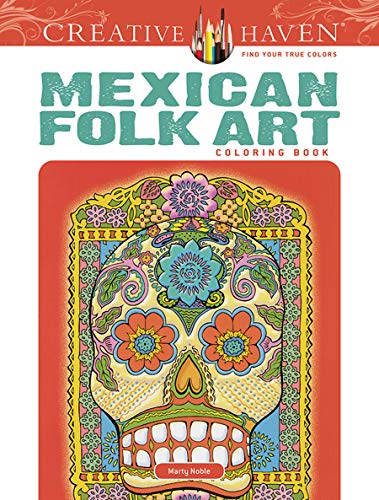
Creative Haven Mexican Folk Art Coloring Book
Marty Noble
4.8
Thirty-one striking adaptations of authentic native art depict, among other subjects, a Mixtec circular design from an incised gourd rattle, religious figures from a Metepec candlestick, and images of jaguars taken from a Guerrero lacquered chest. Pages are perforated and printed on one side only for easy removal and display. Specially designed for experienced colorists, Mexican Folk Art and other Creative Haven® adult coloring books offer an escape to a world of inspiration and artistic fulfillment. Each title is also an effective and fun-filled way to relax and reduce stress. Previously published as Mexican Folk Art Coloring Book.
…
Cover unavailable
49
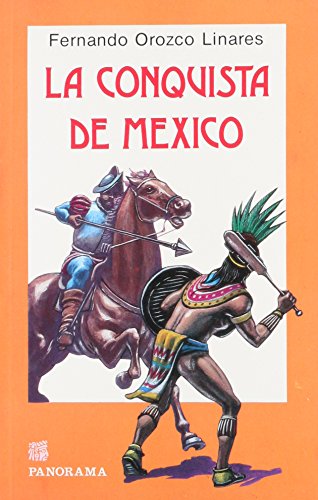
La Conquista de Mexico = Conquest of Mexico
Fernando Orozco
4.7
Cover unavailable
50
La Malinche (Biografia para ninos)
Tere de las Casas
4.7
Cover unavailable
51
A Brief History of Mexico
Lynn V. Foster
4.7
From the rise of the first civilizations of North America to the intensely contested presidential election of 2006, Mexico has had a vibrant and dynamic history. This title discusses developments in Mexico, helping readers to understand the deeper significance of the events.
Cover unavailable
52
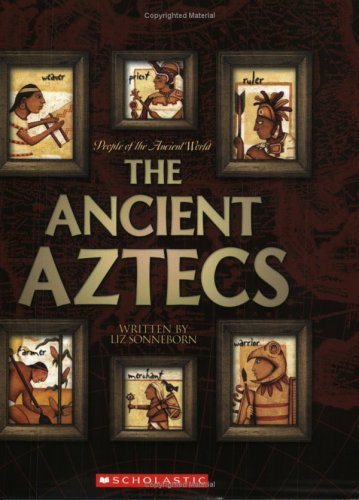
The Ancient Aztecs
Liz Sonneborn
4.7
Who were people of the ancient world? What was it like to be a farmer or a soldier or an artisan in ancient times? This series creates portraits of life in ancient civilizations through the inhabitants. Each chapter focuses on a different part of society, such as peasants, scholars/scribes, priests, soldiers, rulers, and more. Beginning in the late 1300s, the Aztecs were a group of American Indian peoples who lived in what today is Mexico. Most of the Aztecs were commoners, who provided the labor needed for the culture to thrive. They built impressive pyramid-type structures and cities, such as Tenochtitlan. The culture collapsed when Spanish conquistadors overtook the Aztecs in the 1500s.
…
Cover unavailable
53
Mexico for Kids: People, Places and Cultures - Children Explore the World Books
Baby Professor
4.7
Welcome to Mexico! Are you ready to tour around the place and meet new people? Then go ahead and open this book! Here, you will get your first truly Mexican experience through pictures and texts. You will have an idea of what life is like in this part of the planet. You can use this book as an introduction prior to an actual visit. Grab a copy now!
Cover unavailable
54
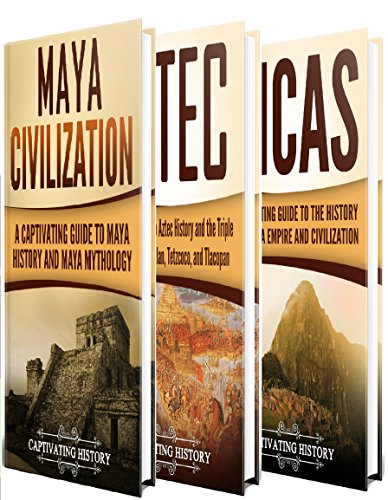
Ancient Civilizations: A Captivating Guide to Mayan History, the Aztecs, and Inca Empire
Captivating History
4.7
Cover unavailable
55
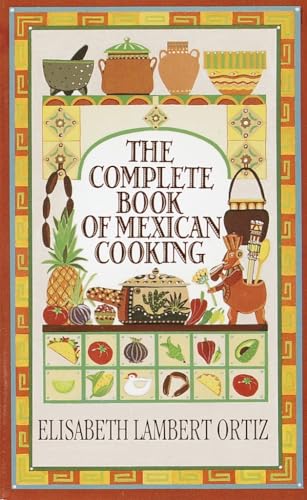
Complete Book of Mexican Cooking
Elisabeth Ortiz
4.7
"Beginning with the Corn Kitchen, the author takes up tortillas and follows through to tacos, tostadas and fillings for quesadillas. There's Green Chicken with Almonds, Red Stew with Mountain Chiles...Plus all of the classic desserts from Bunuelos (fritters) to Flan (caramel pudding). One chapter is devoted to Bebidas (drinks) including the Mexican grasshopper, Margarita and naturally, chocolate."
Cover unavailable
56
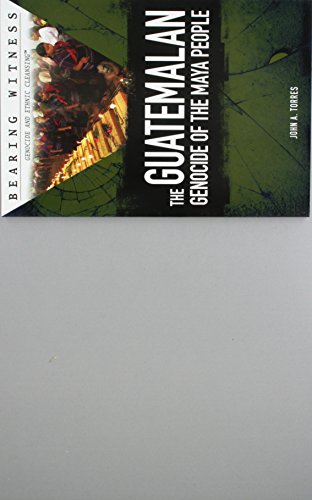
The Guatemalan Genocide of the Maya People
John A. Torres
4.7
The Maya Empire became a thriving civilization between the third century and the seventh century CE, but by 900 CE war, drought, and disease wiped out most of its cities and the Mayan people were greatly reduced. Unfortunately, the greatest threat to their existence was yet to come, when the Guatemalan genocide would decimate those who remained in the 1970s and '80s. The facts of the Mayans' story will be intertwined with profiles of individuals and in-depth looks at related topics. Readers will learn how to help those faced with genocide and understand a history that could otherwise repeat itself.
…
Cover unavailable
57
The Fat Mexican: The Bloody Rise of the Bandidos Motorcycle Club
Alex Caine
4.7
From the #1 national bestselling author of Befriend and Betray, an intimate exposé of a criminal empire and the massacre that nearly started a global biker war.
Having once infiltrated the Bandidos for three years in a landmark police operation, Alex Caine is uniquely positioned to reveal the untold story of the Hells Angels’ fiercest rivals.
Grounded in the crucible of the little understood Shedden massacre of 2006 and one unlikely prospect’s descent into the biker lifestyle, The Fat Mexican exposes the violent criminal history of the Bandidos motorcycle club, the Hells Angels’ fiercest competition: their violent beginnings, the terror their aggressive expansion caused rivals and innocents alike, and the internal politics and rivalries that drive them to this day.
From the Hardcover edition.
…
Cover unavailable
58
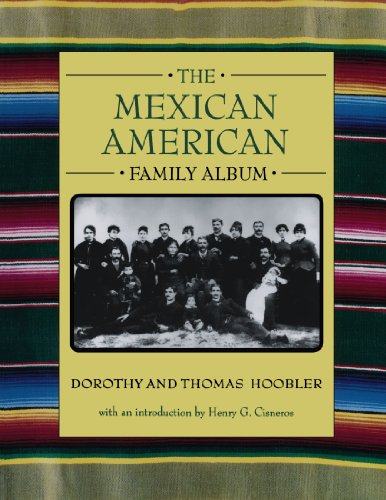
The Mexican American Family Album
Dorothy Hoobler
4.7
Mexican Americans have a unique relationship with the United States. Because of the proximity of the neighboring countries, the old traditions of Mexico remain ever close to their hearts even as they embrace a new life in America. As a matter of fact, the first Mexican Americans did not leave their homeland by choice to come to the United States. Instead, the United States went to them. At the end of the U.S.-Mexican War in 1848, Mexico was forced to cede territory that is now the southwestern United States, and the roughly 80,000 Mexicans who had been living in this vast territory suddenly found themselves living within U.S. borders. As the Tejanos (Texans of Mexican descent) say, -We never crossed a border. The border crossed us.- The Mexican American Family Album is the record of generations of Mexicans who made the journey from the old country to a new life in the United States, told in their own words and photographs. Cesar Ch'avez, Richard Rodriguez, Sandra Cisneros, and others profiled here testify to the success that many immigrants found in this country. But there are also stories from families not so famous. Their diary entries, letters, personal remembrances, and photographs culled from family archives, scrapbooks, and newspapers, tell of the hardship of poverty in the old country, of the decision to leave and the difficulties often encountered in crossing the border, of life in El Barrio, of finding work, putting down roots, and the transition from newcomer to Mexican American. Through it all the common thread is a celebration of the Mexican heritage even as the immigrant becomes more and more -Americanized.- It is that spirit that envelops The Mexican American Family Album--not only as a history of immigration from one country to another, but as a chronicle of the contributions, large and small, made by Mexican Americans. The continuing pride in the culture and traditions of Mexico have enhanced and strengthened their lives in their newly adopted country, and brought new dimensions to the multicultural society of America. The titles in the American Family Albums series tell the multicolored and often heroic stories of American immigrant groups, largely through their own words and pictures. Like any family album or scrapbook, the pages contain many period photographs and other memorabilia. These join with original documents--including selections from diaries, letters, memoirs, and newspapers--to bring the immigrant experience vividly to life.
…
Cover unavailable
59
El Ocaso Del Imperio De Maximiliano Visto Por Un Diplomático Prusiano
Konrad Ratz
4.7
El presente libro, preparado por Konrad Ratz, nos permite examinar el segundo imperio mexicano a través de los informes políticos que un avezado y minucioso diplomático prusiano, como parte de su desempeño profesional en México, rindió a sus superiores en Berlín. Esta nueva publicación tiene grandes méritos, pues aporta el punto de vista de un privilegiado testigo presencial que no sólo observó y palpó directamente los enormes problemas que confrontó el gobierno de Maximiliano, sino que además se convirtió en un importante protagonista en los acontecimientos finales que condujeron al archiduque austriaco al paredón. Como Magnus llegó a México sólo un año antes del fusilamiento de Maximiliano, lo que en realidad presenció fue el fin de su régimen, por lo cual el título que lleva el libro -El ocaso del imperio- no puede ser más acertado y elocuente. El diplomático prusiano narra detalladamente las graves carencias financieras que se enfrentaron, puesto que ya ni siquiera había dinero para seguir pagando a los soldados; la fatal decisión de París de retirar anticipadamente sus tropas, el fallido viaje de Carlota a Europa para tratar de hacer cambiar de opinión a Napoleón III; las presiones de Washington para que se pusiera punto final al proyecto napoleónico; las deserciones y la corrupción que plagaron los rangos imperiales, las propias vacilaciones del emperador, su indecisión sobre abdicar o no, la poco certera decisión que tomó de trasladarse a Querétaro, la resistencia final y la traición de muchos remataron el cuadro de un ilusorio proyecto monárquico que desde un principio estuvo condenado al fracaso. La presente obra aporta un excelente retrato de lo que era la sociedad mexicana -en particular su clase dirigente- y nos permite establecer un estrecho vínculo entre el pasado y el presente, pues a pesar del tiempo transcurrido, muchas cosas no han cambiado del todo y seguirnos confrontando los mismos problemas de siempre que han impedido que seamos capaces de construir un país más equitativo, democrático y justo. A fin de cuentas, la narración de la historia del segundo imperio, tal como nos la presenta esta nueva publicación, es básicamente el recuento de la eterna lucha entre las élites del poder en beneficio de sus propios intereses, y no de los intereses de las mayorías o de la nación en su conjunto.
…
Cover unavailable
60
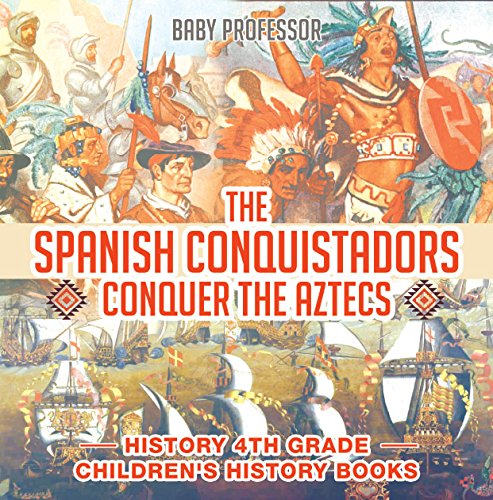
The Spanish Conquistadors Conquer the Aztecs - History 4th Grade Children's History Books
Baby Professor
4.7
What happened when The Spanish Conquistadors Reach Aztec? Explore the world of historical facts and figures using informative edutaining books like this one. The means of explaining historical facts has to appeal to the target readers and that means using age-appropriate words and attention-grabbing images. So, what do you think of this history book?
Cover unavailable
61
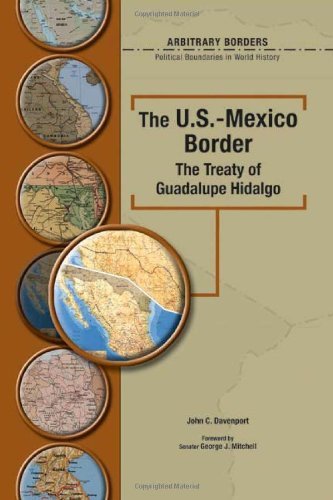
The U.S.-Mexico Border The Treaty Of Guadalupe Hidalgo (Arbitrary Borders)
John Davenport
4.7
International in scope and analytical in approach, Arbitrary Borders: Political Boundaries in World History examines political demarcations that have occurred around the world. While borders may reflect and affirm the cultural, ethnic, or linguistic perimeters that define a people or a country, this series explores how the migration of goods, resources, and people works to undermine the separation imposed by such borders.
…
Cover unavailable
62
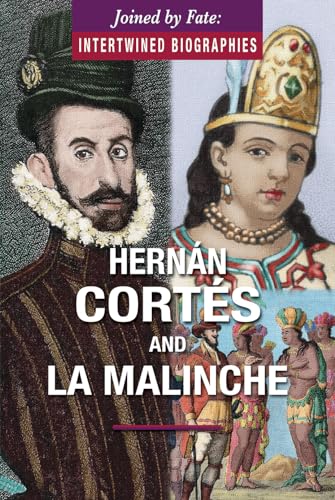
Hernán Cortés and La Malinche
John A. Torres
4.7
Cover unavailable
63
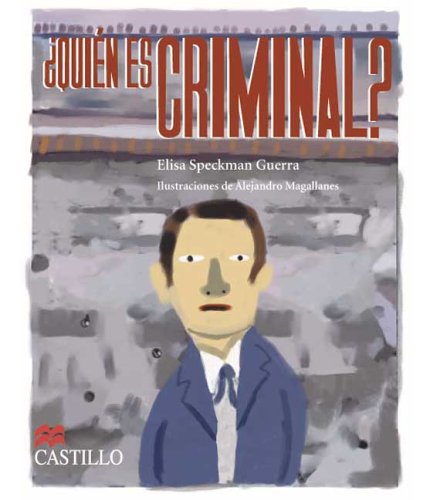
Quien Es Criminal? Un Recorrido Por El Delito, La Ley, La Justicia y El Castigo En Mexico: Desde El Virreinato Hasta El Siglo XX
Elisa Speckman
4.7
Cover unavailable
64
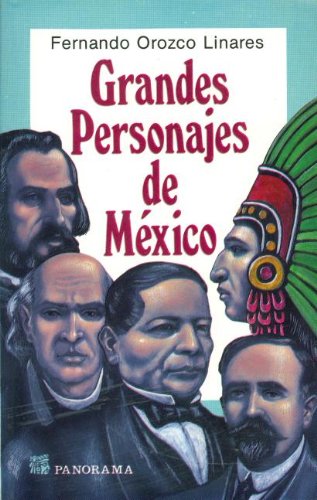
Grandes Personajes de Mexico
Fernando Orozco
4.7
Cover unavailable
65
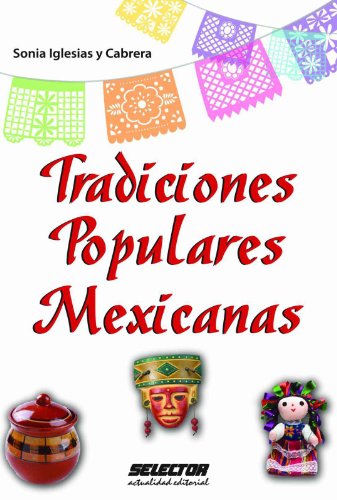
Tradiciones Populares MexicanAS
Sonia Iglesias y Cabrera
4.7
Este libro se propone rescatar y difundir las tradiciones mexicanas, es la tarea que la autora de este libro se propone realizar desde una perspectiva antropológica e histórica. En el podemos conocer cuales fueron los primeros mercados que existieron en el México colonial, el origen del pan, la historia de los"judas"del Sábado de Gloria, la maravilla del telar de cintura, algunos juegos indígenas, la increíble fundación del barrio de Tepito, el primer pan que Cristóbal Colón degustó al llegar a tierras americanas, y muchos temas más que forman parte de nuestras extraordinarias tradiciones mexicanas.