We've ranked the best holocaust books using expert recommendations, sales data, and millions of reader ratings. At Shortform, we know books. Our book guides are the best in the world. Learn why.
Man's Search for Meaning has riveted generations of readers with its descriptions of life in Nazi death camps and its lessons for spiritual survival. Between 1942 and 1945 psychiatrist Viktor Frankl labored in four different camps, including Auschwitz, while his parents, brother, and pregnant wife perished. Based on his own experience and the stories of his many patients, Frankl argues that we cannot avoid suffering but we can choose how to cope with it, find meaning in it, and move forward with renewed purpose. Frankl's theory—known as logotherapy, from the Greek word logos ("meaning")—holds that our primary drive in life is not pleasure, as Freud maintained, but the discovery and pursuit of what we personally find meaningful. In the decades since its first publication in 1959, Man's Search for Meaning has become a classic, with more than twelve million copies in print around the world. A 1991 Library of Congress survey that asked readers to name a "book that made a difference in your life" found Man's Search for Meaning among the ten most influential books in America. At once a memoir, a meditation, a treatise, and a history, it continues to inspire us all to find significance in the very act of living. (back cover)
…
Recommended by Tony Robbins, Dustin Moskovitz, Ev Williams, and 60 others.
Another book that I’ve read dozens of times. It taught me that if you change the meaning, you change everything. Meaning equals emotion, and emotion equals life. [source]
Dustin Moskovitz
Co-founder/Facebook and Asana
Dustin Moskovitz recommended this book on Twitter. [source]
I read it while spending ten days in the ICU of Bellevue hospital trying to reattach my finger from a ring avulsion accident in my kitchen. It talks about the meaning of life, and I believe you come out a better person from reading it. [source]
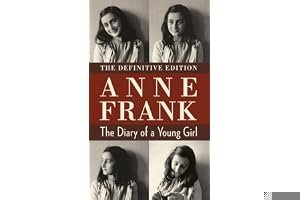
In Everyman’s Library for the first time—one of the most moving and eloquent accounts of the Holocaust, read by tens of millions of people around the world since its publication in 1947. The Diary of a Young Girl is the record of two years in the life of a remarkable Jewish girl whose triumphant humanity in the face of unfathomable deprivation and fear has made the book one of the most enduring documents of our time.
The Everyman’s hardcover edition reprints the Definitive Edition authorized by the Frank estate, plus a new introduction, a bibliography, and a chronology of Anne Frank’s life and times.
…
Recommended by Alice Little, Catalina Penciu, and Tim Fargo.
Alice Little
I remember being a fourth grader and trying to check out this book and being told it was grossly inappropriate and going so far as to have my parents take it to the school board and petition for me to be allowed to read this book. [source]
Catalina Penciu
I'm a huge fan of personal stories and biographies like this one. [source]
Tim Fargo
@Quixoticnance Good point, Nancy. The museum is a powerful experience, esp. when you've read her book. [source]
Cover unavailable
3
Night
Elie Wiesel
4.9
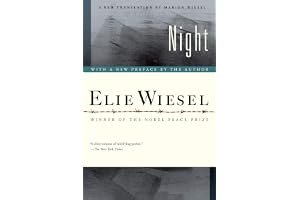
Night is Elie Wiesel's masterpiece, a candid, horrific, and deeply poignant autobiographical account of his survival as a teenager in the Nazi death camps. This new translation by Marion Wiesel, Elie's wife and frequent translator, presents this seminal memoir in the language and spirit truest to the author's original intent. And in a substantive new preface, Elie reflects on the enduring importance of Night and his lifelong, passionate dedication to ensuring that the world never forgets man's capacity for inhumanity to man.
Night offers much more than a litany of the daily terrors, everyday perversions, and rampant sadism at Auschwitz and Buchenwald; it also el
…
Recommended by Johanna Reiss and Steven Katz.
Johanna Reiss
Elie Wiesel wrote..that he was considering running into the barbed wire once, but he didn’t because his father needed him. [source]
Steven Katz
Probably the best known memoir that has been written about the experience of the death camps. [source]
Cover unavailable
4
The Book Thief
Markus Zusak
4.7
It is 1939. Nazi Germany. The country is holding its breath. Death has never been busier, and will be busier still.
By her brother's graveside, Liesel's life is changed when she picks up a single object, partially hidden in the snow. It is The Gravedigger's Handbook, left behind there by accident, and it is her first act of book thievery. So begins a love affair with books and words, as Liesel, with the help of her accordian-playing foster father, learns to read. Soon she is stealing books from Nazi book-burnings, the mayor's wife's library, wherever there are books to be found.
But these are dangerous times. When Liesel's foster family hides a Jew in their basement, Liesel's world is both opened up, and closed down.
In superbly crafted writing that burns with intensity, award-winning author Markus Zusak has given us one of the most enduring stories of our time.
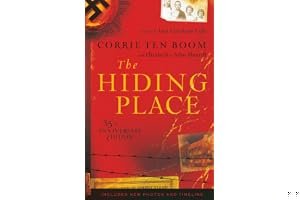
At one time Corrie ten Boom would have laughed at the idea that there would ever be a story to tell. For the first fifty years of her life nothing at all out of the ordinary had ever happened to her. She was an old-maid watchmaker living contentedly with her spinster sister and their elderly father in the tiny Dutch house over their shop. Their uneventful days, as regulated as their own watches, revolved around their abiding love for one another. However, with the Nazi invasion and occupation of Holland, a story did ensue.
Corrie ten Boom and her family became leaders in the Dutch Underground, hiding Jewish people in their home in a specially built room and aiding their escape from the Nazis. For their help, all but Corrie found death in a concentration camp. The Hiding Place is their story.
…
Recommended by Alison Alvarez.
Alison Alvarez
What I really took with me from the book were the descriptions of how she dealt with the stress of solitary confinement and eventually the Ravensbruck concentration camp. I adapted some of her techniques for keeping her mind occupied to deal with my own problems with anxiety and worry. Also, it’s a book with a surprising amount of joy in it for subject matter that is so dark. [source]
In April 1942, Lale Sokolov, a Slovakian Jew, is forcibly transported to the concentration camps at Auschwitz-Birkenau. When his captors discover that he speaks several languages, he is put to work as a Tätowierer (the German word for tattooist), tasked with permanently marking his fellow prisoners.
Imprisoned for over two and a half years, Lale witnesses horrific atrocities and barbarism—but also incredible acts of bravery and compassion. Risking his own life, he uses his privileged position to exchange jewels and money from murdered Jews for food to keep his fellow prisoners alive.
One day in July 1942, Lale, prisoner 32407, comforts a trembling young woman waiting in line to have the number 34902 tattooed onto her arm. Her name is Gita, and in that first encounter, Lale vows to somehow survive the camp and marry her.
A vivid, harrowing, and ultimately hopeful re-creation of Lale Sokolov's experiences as the man who tattooed the arms of thousands of prisoners with what would become one of the most potent symbols of the Holocaust, The Tattooist of Auschwitz is also a testament to the endurance of love and humanity under the darkest possible conditions.
…
Cover unavailable
7
The Boy in the Striped Pajamas
John Boyne
4.6
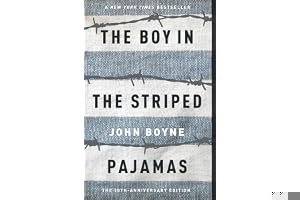
If you start to read this book, you will go on a journey with a nine-year-old boy named Bruno. (Though this isn't a book for nine-year-olds.) And sooner or later you will arrive with Bruno at a fence.
Fences like this exist all over the world. We hop you never have to encounter one.
Cover unavailable
8
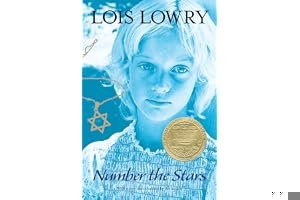
Number the Stars
Lois Lowry
4.5
Ten-year-old Annemarie Johansen and her best friend Ellen Rosen often think of life before the war. It's now 1943 and their life in Copenhagen is filled with school, food shortages, and the Nazi soldiers marching through town. When the Jews of Denmark are "relocated," Ellen moves in with the Johansens and pretends to be one of the family. Soon Annemarie is asked to go on a dangerous mission to save Ellen's life.
…
Cover unavailable
9
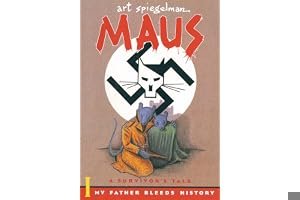
Maus I: A Survivor's Tale: My Father Bleeds History (Maus, #1)
Art Spiegelman
4.5
A story of a Jewish survivor of Hitler's Europe and his son, a cartoonist who tries to come to terms with his father's story and history itself.
Combined for the first time here are Maus I: A Survivor's Tale and Maus II - the complete story of Vladek Spiegelman and his wife, living and surviving in Hitler's Europe. By addressing the horror of the Holocaust through cartoons, the author captures the everyday reality of fear and is able to explore the guilt, relief and extraordinary sensation of survival - and how the children of survivors are in their own way affected by the trials of their parents. A contemporary classic of immeasurable significance.
…
Recommended by Susan Bordo.
Susan Bordo
It’s about the Holocaust. It’s also a comic book, in which the various characters are depicted as animals – the Jews as mice, the Nazis as cats. [source]
Cover unavailable
11
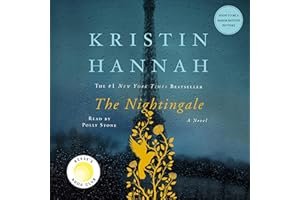
The Nightingale
KRISTIN HANNAH
4.4
In love we find out who we want to be. In war we find out who we are.
FRANCE, 1939
In the quiet village of Carriveau, Vianne Mauriac says goodbye to her husband, Antoine, as he heads for the Front. She doesn’t believe that the Nazis will invade France…but invade they do, in droves of marching soldiers, in caravans of trucks and tanks, in planes that fill the skies and drop bombs upon the innocent. When a German captain requisitions Vianne’s home, she and her daughter must live with the enemy or lose everything. Without food or money or hope, as danger escalates all around them, she is forced to make one impossible choice after another to keep her family alive.
Vianne’s sister, Isabelle, is a rebellious eighteen-year-old girl, searching for purpose with all the reckless passion of youth. While thousands of Parisians march into the unknown terrors of war, she meets Gäetan, a partisan who believes the French can fight the Nazis from within France, and she falls in love as only the young can…completely. But when he betrays her, Isabelle joins the Resistance and never looks back, risking her life time and again to save others.
With courage, grace and powerful insight, bestselling author Kristin Hannah captures the epic panorama of WWII and illuminates an intimate part of history seldom seen: the women’s war. The Nightingale tells the stories of two sisters, separated by years and experience, by ideals, passion and circumstance, each embarking on her own dangerous path toward survival, love, and freedom in German-occupied, war-torn France–a heartbreakingly beautiful novel that celebrates the resilience of the human spirit and the durability of women. It is a novel for everyone, a novel for a lifetime.
…
Cover unavailable
12
Sarah's Key
Tatiana de Rosnay
4.4
Paris, July 1942: Ten-year-old Sarah is brutally arrested with her family in the Vel' d'Hiv' roundup, the most notorious act of French collaboration with the Nazis. but before the police come to take them, Sarah locks her younger brother, Michel, in their favorite hiding place, a cupboard in the family's apartment. She keeps the key, thinking that she will be back within a few hours.
Paris, May 2002: On Vel' d'Hiv's sixtieth anniversary, Julia Jarmond, an American journalist, is asked by her Paris-based American magazine to write an article about this black day in France's past. Julia has lived in Paris for nearly twenty-five years, married a Frenchman, and she is shocked both by her ignorance about the event and the silence that still surrounds it. In the course of her investigation, she stumbles onto a trail of long-hidden family secrets that connects her to Sarah. Julia finds herself compelled to retrace the girl's ordeal, from the terrible days spent shut in at the Vel' d'Hiv' to the camps and beyond. As she probes into Sarah's past, she begins to question her own place in France and to reevaluate her marriage and her life.
Writing about the fate of her country with a pitiless clarity, Tatiana de Rosnay offers us a brilliantly subtle, compelling portrait of France under occupation and reveals the taboos and denial surrounding this painful episode in French history. (front flap)
…
Cover unavailable
13
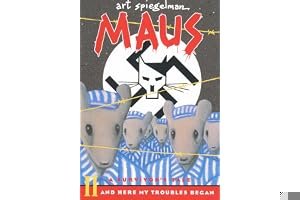
Maus II: A Survivor's Tale: And Here My Troubles Began (Maus, #2)
Art Spiegelman
4.4
Acclaimed as a quiet triumph and a brutally moving work of art, the first volume of Art Spieglman's Maus introduced readers to Vladek Spiegleman, a Jewish survivor of Hitler's Europe, and his son, a cartoonist trying to come to terms with his father, his father's terrifying story, and History itself. Its form, the cartoon (the Nazis are cats, the Jews mice), succeeds perfectly in shocking us out of any lingering sense of familiararity with the events described, approaching, as it does, the unspeakable through the diminutive.
This second volume, subtitled And Here My Troubles Began, moves us from the barracks of Auschwitz to the bungalows of the Catskills. Genuinely tragic and comic by turns, it attains a complexity of theme and a precision of thought new to comics and rare in any medium. Maus ties together two powerful stories: Vladek's harrowing tale of survival against all odds, delineating the paradox of daily life in the death camps, and the author's account of his tortured relationship with his aging father. At every level this is the ultimate survivor's tale - and that too of the children who somehow survive even the survivors.
…
Cover unavailable
14
Eichmann in Jerusalem: A Report on the Banality of Evil
Originally appearing as a series of articles in The New Yorker, Hannah Arendt’s authoritative and stunning report on the trial of Nazi leader Adolf Eichmann sparked a flurry of debate upon its publication. This revised edition includes material that came to light after the trial, as well as Arendt’s postscript directly addressing the controversy that arose over her account. A major journalistic triumph by an intellectual of singular influence, Eichmann in Jerusalem is as shocking as it is informative—an unflinching look at one of the most unsettling and unsettled issues of the twentieth century that remains hotly debated to this day.
…
Recommended by Dr. Phil Zimbardo, Daniel Pick, David Bell, and 1 others.
Dr. Phil Zimbardo
Talks about Eichmann as illustrating the banality of evil. [source]
Daniel Pick
The trial focused public attention on the individual high bureaucrat who had such personal responsibility in the Final Solution. There was, in a way, this enigma of what went on in Eichmann’s mind. [source]
David Bell
Political philosopher Arendt sees the work of the Nazis as the inevitable result of colonialism and industrialisation. [source]
Cover unavailable
15
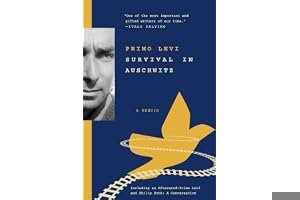
Survival in Auschwitz
Primo Levi
4.3
The true and harrowing account of Primo Levi’s experience at the German concentration camp of Auschwitz and his miraculous survival; hailed by The Times Literary Supplement as a “true work of art, this edition includes an exclusive conversation between the author and Philip Roth.
In 1943, Primo Levi, a twenty-five-year-old chemist and “Italian citizen of Jewish race,” was arrested by Italian fascists and deported from his native Turin to Auschwitz. Survival in Auschwitz is Levi’s classic account of his ten months in the German death camp, a harrowing story of systematic cruelty and miraculous endurance. Remarkable for its simplicity, restraint, compassion, and even wit, Survival in Auschwitz remains a lasting testament to the indestructibility of the human spirit.
…
Cover unavailable
16
Schindler's List
Thomas Keneally
4.3
In the shadow of Auschwitz, a flamboyant German industrialist grew into a living legend to the Jews of Cracow. He was a womaniser, a heavy drinker and a bon viveur, but to them he became a saviour. This is the extraordinary story of Oskar Schindler, who risked his life to protect Jews in Nazi-occupied Poland and who was transformed by the war into a man with a mission, a compassionate angel of mercy.
…
Cover unavailable
17
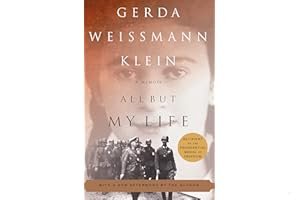
All But My Life: A Memoir
Gerda Weissmann Klein
4.3
All But My Life is the unforgettable story of Gerda Weissmann Klein's six-year ordeal as a victim of Nazi cruelty. From her comfortable home in Bielitz (present-day Bielsko) in Poland to her miraculous survival and her liberation by American troops—including the man who was to become her husband—in Volary, Czechoslovakia, in 1945, Gerda takes the reader on a terrifying journey.
Gerda's serene and idyllic childhood is shattered when Nazis march into Poland on September 3, 1939. Although the Weissmanns were permitted to live for a while in the basement of their home, they were eventually separated and sent to German labor camps. Over the next few years Gerda experienced the slow, inexorable stripping away of "all but her life." By the end of the war she had lost her parents, brother, home, possessions, and community; even the dear friends she made in the labor camps, with whom she had shared so many hardships, were dead.
Despite her horrifying experiences, Klein conveys great strength of spirit and faith in humanity. In the darkness of the camps, Gerda and her young friends manage to create a community of friendship and love. Although stripped of the essence of life, they were able to survive the barbarity of their captors. Gerda's beautifully written story gives an invaluable message to everyone. It introduces them to last century's terrible history of devastation and prejudice, yet offers them hope that the effects of hatred can be overcome.
…
Cover unavailable
18
All the Light We Cannot See
Anthony Doerr
4.3
An alternate cover for this ISBN can be found here
From the highly acclaimed, multiple award-winning Anthony Doerr, the stunningly beautiful instant New York Times bestseller about a blind French girl and a German boy whose paths collide in occupied France as both try to survive the devastation of World War II.
Marie-Laure lives in Paris near the Museum of Natural History, where her father works. When she is twelve, the Nazis occupy Paris and father and daughter flee to the walled citadel of Saint-Malo, where Marie-Laure’s reclusive great uncle lives in a tall house by the sea. With them they carry what might be the museum’s most valuable and dangerous jewel.
In a mining town in Germany, Werner Pfennig, an orphan, grows up with his younger sister, enchanted by a crude radio they find that brings them news and stories from places they have never seen or imagined. Werner becomes an expert at building and fixing these crucial new instruments and is enlisted to use his talent to track down the resistance. Deftly interweaving the lives of Marie-Laure and Werner, Doerr illuminates the ways, against all odds, people try to be good to one another.
…
Recommended by Jason Goldman.
Jason Goldman
All The Light We Cannot See is the best book I've read in a while. I tend to speed read and here I savored every word; the writing is just effortlessly beautiful. I hope it's made it onto high school WWII syllabi by now. [source]
Cover unavailable
19
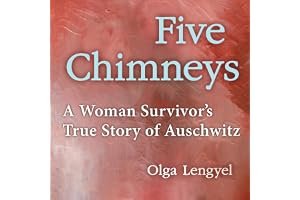
Five Chimneys: A Woman Survivor's True Story of Auschwitz
Olga Lengyel
4.3
Olga Lengyel tells, frankly and without compromise, one of the most horrifying stories of all time. This true, documented chronicle is the intimate, day-to-day record of a beautiful woman who survived the nightmare of Auschwitz and Birchenau.
Having lost her husband, her parents, and her two young sons to the Nazi exterminators, Olga Lengyel had little to live for during her seven-month internment in Auschwitz. Only Lengyel's work in the prisoners' underground resistance and the need to tell this story kept her fighting for survival. She survived by her wit and incredible strength.
Despite her horrifying closeness to the subject, Five Chimneys does not retreat into self-pity or sensationalism. When first published (two years after World War 2 ended), Albert Einstein was so moved by her story that he wrote a personal letter to Lengyel, thanking her for her "very frank, very well written book".
This book is a necessary reminder of one of the ugliest chapters in the history of human civilization. It was a shocking experience. It is a shocking book.
…
Cover unavailable
20
The Nazi Officer's Wife: How One Jewish Woman Survived the Holocaust
Edith Hahn Beer
4.3
Edith Hahn was an outspoken young woman in Vienna when the Gestapo forced her into a ghetto and then into a slave labor camp. When she returned home months later, she knew she would become a hunted woman and went underground. With the help of a Christian friend, she emerged in Munich as Grete Denner. There she met Werner Vetter, a Nazi Party member who fell in love with her. Despite Edith's protests and even her eventual confession that she was Jewish, he married her and kept her identity a secret.
In wrenching detail, Edith recalls a life of constant, almost paralyzing fear. She tells how German officials casually questioned the lineage of her parents; how during childbirth she refused all painkillers, afraid that in an altered state of mind she might reveal something of her past; and how, after her husband was captured by the Soviets, she was bombed out of her house and had to hide while drunken Russian soldiers raped women on the street.
Despite the risk it posed to her life, Edith created a remarkable record of survival. She saved every document, as well as photographs she took inside labor camps. Now part of the permanent collection at the Holocaust Memorial Museum in Washington, D.C., these hundreds of documents, several of which are included in this volume, form the fabric of a gripping new chapter in the history of the Holocaust—complex, troubling, and ultimately triumphant.
…
Cover unavailable
21
The Storyteller
Jodi Picoult
4.3
Some stories live forever . . .
Sage Singer is a baker. She works through the night, preparing the day’s breads and pastries, trying to escape a reality of loneliness, bad memories, and the shadow of her mother’s death. When Josef Weber, an elderly man in Sage’s grief support group, begins stopping by the bakery, they strike up an unlikely friendship. Despite their differences, they see in each other the hidden scars that others can’t, and they become companions.
Everything changes on the day that Josef confesses a long-buried and shameful secret—one that nobody else in town would ever suspect—and asks Sage for an extraordinary favor. If she says yes, she faces not only moral repercussions, but potentially legal ones as well. With her own identity suddenly challenged, and the integrity of the closest friend she’s ever had clouded, Sage begins to question the assumptions and expectations she’s made about her life and her family. When does a moral choice become a moral imperative? And where does one draw the line between punishment and justice, forgiveness and mercy?
In this searingly honest novel, Jodi Picoult gracefully explores the lengths we will go in order to protect our families and to keep the past from dictating the future
…
Cover unavailable
22
The Devil's Arithmetic
Jane Yolen
4.3
Hannah thinks tonight Passover Seder will be the same as always. But this year she will be mysteriously transported into the past. Only she knows the horrors that await.
Cover unavailable
23
We Were the Lucky Ones
Georgia Hunter
4.3
NEW YORK TIMES BESTSELLER
Inspired by the incredible true story of one Jewish family separated at the start of World War II, determined to survive—and to reunite—We Were the Lucky Ones is a tribute to the triumph of hope and love against all odds
“Love in the face of global adversity? It couldn't be more timely.” —Glamour
It is the spring of 1939 and three generations of the Kurc family are doing their best to live normal lives, even as the shadow of war grows closer. The talk around the family Seder table is of new babies and budding romance, not of the increasing hardships threatening Jews in their hometown of Radom, Poland. But soon the horrors overtaking Europe will become inescapable and the Kurcs will be flung to the far corners of the world, each desperately trying to navigate his or her own path to safety.
As one sibling is forced into exile, another attempts to flee the continent, while others struggle to escape certain death, either by working grueling hours on empty stomachs in the factories of the ghetto or by hiding as gentiles in plain sight. Driven by an unwavering will to survive and by the fear that they may never see one another again, the Kurcs must rely on hope, ingenuity, and inner strength to persevere.
An extraordinary, propulsive novel, We Were the Lucky Ones demonstrates how in the face of the twentieth century’s darkest moment, the human spirit can endure and even thrive.
…
Cover unavailable
24
Auschwitz: A Doctor's Eyewitness Account
Miklos Nyiszli
4.3
A New York Times bestseller. The memoir of a Jewish doctor forced to assist Josef Mengele. Shocking and important.
When the Nazis invaded Hungary in 1944, they sent virtually the entire Jewish population to Auschwitz, the concentration camp whose horrors over the years have become synonymous with the Holocaust.
A Jew and a medical doctor, Dr. Miklos Nyiszli was spared from death for a grimmer fate: to perform “scientific research” on his fellow inmates under the supervision of the infamous “Angel of Death”: Dr. Josef Mengele. Nyiszli was named Mengele’s personal research pathologist. During his work, he was eyewitness and involuntary participant, chief physician of the Auschwitz crematoriums, and drafted number affidavits of dissection and forensic finding (signed with his own tattoo number). Miraculously, he survived to give this terrifying and sobering account.
Written in 1946, soon after the end of World War II and the liberation of the concentration cames, Nyiszli’s work was one of the first books to tell the horrors of Auschwitz. It has been numerous languages and has sold hundreds of thousands of copies.
“An honest book, and an important one. It tells of events which though gruesome, need to be sold and retold until their meaning for our times is accepted.”—Bruno Bettelheim, from his Introduction
…
Cover unavailable
25
The Pianist: The Extraordinary Story of One Man's Survival in Warsaw, 1939–45
Władysław Szpilman
4.3
The last live broadcast on Polish Radio, on September 23, 1939, was Chopin's Nocturne in C# Minor, played by a young pianist named Wladyslaw Szpilman, until his playing was interrupted by German shelling. It was the same piece and the same pianist, when broadcasting was resumed six years later. The Pianist is Szpilman's account of the years inbetween, of the death and cruelty inflicted on the Jews of Warsaw and on Warsaw itself, related with a dispassionate restraint borne of shock. Szpilman, now 88, has not looked at his description since he wrote it in 1946 (the same time as Primo Levi's If This Is A Man?; it is too personally painful. The rest of us have no such excuse.
Szpilman's family were deported to Treblinka, where they were exterminated; he survived only because a music-loving policeman recognised him. This was only the first in a series of fatefully lucky escapes that littered his life as he hid among the rubble and corpses of the Warsaw Ghetto, growing thinner and hungrier, yet condemned to live. Ironically it was a German officer, Wilm Hosenfeld, who saved Szpilman's life by bringing food and an eiderdown to the derelict ruin where he discovered him. Hosenfeld died seven years later in a Stalingrad labour camp, but portions of his diary, reprinted here, tell of his outraged incomprehension of the madness and evil he witnessed, thereby establishing an effective counterpoint to ground the nightmarish vision of the pianist in a desperate reality. Szpilman originally published his account in Poland in 1946, but it was almost immediately withdrawn by Stalin's Polish minions as it unashamedly described collaborations by Lithuanians, Ukrainians, Poles and Jews with the Nazis. In 1997 it was published in Germany after Szpilman's son found it on his father's bookcase. This admirably robust translation by Anthea Bell is the first in the English language. There were 3,500,000 Jews in Poland before the Nazi occupation; after it there were 240,000. Wladyslaw Szpilman's extraordinary account of his own miraculous survival offers a voice across the years for the faceless millions who lost their lives. --David Vincent
…
Cover unavailable
26
I Have Lived a Thousand Years
Livia Bitton-Jackson
4.2
What is death all about? What is life all about?
So wonders thirteen-year-old- Elli Friedmann, just one of the many innocent Holocaust victims, as she fights for her life in a concentration camp. It wasn't long ago that Elli led a normal life; a life rich and full that included family, friends, school, and thoughts about boys. A life in which Elli could lie and daydream for hours that she was a beautiful and elegant celebrated poet.
But these adolescent daydreams quickly darken in March 1944, when the Nazis invade Hungary. First Elli can no longer attend school, have possessions, or talk to her neighbors. Then she and her family are forced to leave their house behind to move into a crowded ghetto, where privacy becomes a luxury of the past and food becomes a scarcity. Her strong will and faith allow Elli to manage and adjust somehow, but what Elli doesn't know is that this is only the beginning and the worst is yet to come....
A remarkable memoir. I Have Lived a Thousand Years is a story of cruelty and suffering, but at the same time a story of hope, faith, perseverance and love.
…
Cover unavailable
27
If This Is a Man • The Truce
Primo Levi, Stuart Woolf, Paul Bailey
4.2
'With the moral stamina and intellectual poise of a twentieth-century Titan, this slightly built, dutiful, unassuming chemist set out systematically to remember the German hell on earth, steadfastly to think it through, and then to render it comprehensible in lucid, unpretentious prose. He was profoundly in touch with the minutest workings of the most endearing human events and with the most contemptible. What has survived in Levi's writing isn't just his memory of the unbearable, but also, in The Periodic Table and The Wrench, his delight in what made the world exquisite to him. He was himself a magically endearing man, the most delicately forceful enchanter I've ever known' - Philip Roth.
…
Recommended by Aleksandar Hemon, Andrew Cayley, David Blaine, and 3 others.
Levi regains reason, by treating his experience in Auschwitz as something that is subject to rational analysis. [source]
Andrew Cayley
Primo Levi was an Italian Jew and he was arrested as a member of the anti-fascist resistance towards the end of the war, after Germany had occupied Italy. He was deported to Auschwitz. He survived and then he wrote a book about his experiences there. This really is a book that everybody should be made to read because he very sensitively describes what people become in a concentration camp. [source]
Ordinary Men: Reserve Police Battalion 101 and the Final Solution in Poland
Christopher R. Browning
4.2
Christopher R. Browning’s shocking account of how a unit of average middle-aged Germans became the cold-blooded murderers of tens of thousands of Jews—now with a new afterword and additional photographs.
Ordinary Men is the true story of Reserve Police Battalion 101 of the German Order Police, which was responsible for mass shootings as well as round-ups of Jewish people for deportation to Nazi death camps in Poland in 1942. Browning argues that most of the men of RPB 101 were not fanatical Nazis but, rather, ordinary middle-aged, working-class men who committed these atrocities out of a mixture of motives, including the group dynamics of conformity, deference to authority, role adaptation, and the altering of moral norms to justify their actions. Very quickly three groups emerged within the battalion: a core of eager killers, a plurality who carried out their duties reliably but without initiative, and a small minority who evaded participation in the acts of killing without diminishing the murderous efficiency of the battalion whatsoever.
While this book discusses a specific Reserve Unit during WWII, the general argument Browning makes is that most people succumb to the pressures of a group setting and commit actions they would never do of their own volition.
Ordinary Men is a powerful, chilling, and important work with themes and arguments that continue to resonate today.
“A remarkable—and singularly chilling—glimpse of human behavior...This meticulously researched book...represents a major contribution to the literature of the Holocaust."—Newsweek
…
Recommended by Hester Vaizey, Lawrence Kaplan, Norman Naimark, and 1 others.
Hester Vaizey
One of my students cited this book as the reason that he carried on doing history. [source]
Lawrence Kaplan
The takeaway from reading this horror-filled book is that depredations on the scale of those that Browning describes can be perpetrated anywhere and by anyone. [source]
Norman Naimark
The essential lesson of Ordinary Men is that genocide is not the exclusive preserve of fanatics, racist thugs and homicidal maniacs. It is part of the human condition, especially of humans living in society. [source]
Cover unavailable
29
Lilac Girls (Lilac Girls, #1)
Martha Hall Kelly
4.2
Inspired by the life of a real World War II heroine, this debut novel reveals a story of love, redemption, and secrets that were hidden for decades. New York socialite Caroline Ferriday has her hands full with her post at the French consulate and a new love on the horizon. But Caroline’s world is forever changed when Hitler’s army invades Poland in September 1939—and then sets its sights on France.
An ocean away from Caroline, Kasia Kuzmerick, a Polish teenager, senses her carefree youth disappearing as she is drawn deeper into her role as courier for the underground resistance movement. In a tense atmosphere of watchful eyes and suspecting neighbors, one false move can have dire consequences.
For the ambitious young German doctor, Herta Oberheuser, an ad for a government medical position seems her ticket out of a desolate life. Once hired, though, she finds herself trapped in a male-dominated realm of Nazi secrets and power.
The lives of these three women are set on a collision course when the unthinkable happens and Kasia is sent to Ravensbrück, the notorious Nazi concentration camp for women. Their stories cross continents—from New York to Paris, Germany, and Poland—as Caroline and Kasia strive to bring justice to those whom history has forgotten.
…
Cover unavailable
30
Those Who Save Us
Jenna Blum
4.2
For fifty years, Anna Schlemmer has refused to talk about her life in Germany during World War II. Her daughter, Trudy, was only three when she and her mother were liberated by an American soldier and went to live with him in Minnesota. Trudy's sole evidence of the past is an old photograph: a family portrait showing Anna, Trudy, and a Nazi officer, the Obersturmfuhrer of Buchenwald.
Driven by the guilt of her heritage, Trudy, now a professor of German history, begins investigating the past and finally unearths the dramatic and heartbreaking truth of her mother's life.
Combining a passionate, doomed love story, a vivid evocation of life during the war, and a poignant mother/daughter drama, Those Who Save Us is a profound exploration of what we endure to survive and the legacy of shame.
…
Cover unavailable
31
The Reader
Bernhard Schlink, Carol Brown Janeway
4.2
Hailed for its coiled eroticism and the moral claims it makes upon the reader, this mesmerizing novel is a story of love and secrets, horror and compassion, unfolding against the haunted landscape of postwar Germany.
When he falls ill on his way home from school, fifteen-year-old Michael Berg is rescued by Hanna, a woman twice his age. In time she becomes his lover—then she inexplicably disappears. When Michael next sees her, he is a young law student, and she is on trial for a hideous crime. As he watches her refuse to defend her innocence, Michael gradually realizes that Hanna may be guarding a secret she considers more shameful than murder.
…
Cover unavailable
32
In My Hands: Memories of a Holocaust Rescuer
Irene Opdyke
4.2
"You must understand that I did not become a resistance fighter, a smuggler of Jews, a defier of the SS and the Nazis all at once. One's first steps are always small: I had begun by hiding food under a fence."
Through this intimate and compelling memoir, we are witness to the growth of a hero. Irene Gut was just a girl when the war began: seventeen, a Polish patriot, a student nurse, a good Catholic girl. As the war progressed, the soldiers of two countries stripped her of all she loved -- her family, her home, her innocence -- but the degradations only strengthened her will.
She began to fight back. Irene was forced to work for the German Army, but her blond hair, her blue eyes, and her youth bought her the relatively safe job of waitress in an officers' dining room. She would use this Aryan mask as both a shield and a sword: She picked up snatches of conversation along with the Nazis' dirty dishes and passed the information to Jews in the ghetto. She raided the German Warenhaus for food and blankets. She smuggled people from the work camp into the forest. And, when she was made the housekeeper of a Nazi major, she successfully hid twelve Jews in the basement of his home until the Germans' defeat.
This young woman was determined to deliver her friends from evil. It was as simple and as impossible as that.
…
Cover unavailable
33
Once
gleitzman-morris
4.2
Felix, a Jewish boy in Poland in 1942, is hiding from the Nazis in a Catholic orphanage. The only problem is that he doesn't know anything about the war, and thinks he's only in the orphanage while his parents travel and try to salvage their bookselling business. And when he thinks his parents are in danger, Felix sets off to warn them--straight into the heart of Nazi-occupied Poland.
To Felix, everything is a story: Why did he get a whole carrot in his soup? It must be sign that his parents are coming to get him. Why are the Nazis burning books? They must be foreign librarians sent to clean out the orphanage's outdated library. But as Felix's journey gets increasingly dangerous, he begins to see horrors that not even stories can explain.
Despite his grim suroundings, Felix never loses hope. Morris Gleitzman takes a painful subject and expertly turns it into a story filled with love, friendship, and even humor.
…
Recommended by Beverley Naidoo and Simon Smith.
Beverley Naidoo
The first in a series of children’s novels about a boy called Felix, a Jewish orphan, who is caught in the middle of the Holocaust [source]
Simon Smith
@mr_o_connor Great book. It was in my top twenty. [source]
Cover unavailable
34
The Librarian of Auschwitz
Antonio Iturbe and Lilit Thwaites
4.2
Based on the experience of real-life Auschwitz prisoner Dita Kraus, this is the incredible story of a girl who risked her life to keep the magic of books alive during the Holocaust.
Fourteen-year-old Dita is one of the many imprisoned by the Nazis at Auschwitz. Taken, along with her mother and father, from the Terezín ghetto in Prague, Dita is adjusting to the constant terror that is life in the camp. When Jewish leader Freddy Hirsch asks Dita to take charge of the eight precious volumes the prisoners have managed to sneak past the guards, she agrees. And so Dita becomes the librarian of Auschwitz.
Out of one of the darkest chapters of human history comes this extraordinary story of courage and hope.
This title has Common Core connections.
Godwin Books
…
Cover unavailable
35
In the Garden of Beasts: Love, Terror, and an American Family in Hitler's Berlin
Erik Larson
4.2
Erik Larson, New York Times bestselling author of Devil in the White City, delivers a remarkable story set during Hitler’s rise to power.
The time is 1933, the place, Berlin, when William E. Dodd becomes America’s first ambassador to Hitler’s Nazi Germany in a year that proved to be a turning point in history. A mild-mannered professor from Chicago, Dodd brings along his wife, son, and flamboyant daughter, Martha. At first Martha is entranced by the parties and pomp, and the handsome young men of the Third Reich with their infectious enthusiasm for restoring Germany to a position of world prominence. Enamored of the “New Germany,” she has one affair after another, including with the suprisingly honorable first chief of the Gestapo, Rudolf Diels. But as evidence of Jewish persecution mounts, confirmed by chilling first-person testimony, her father telegraphs his concerns to a largely indifferent State Department back home. Dodd watches with alarm as Jews are attacked, the press is censored, and drafts of frightening new laws begin to circulate. As that first year unfolds and the shadows deepen, the Dodds experience days full of excitement, intrigue, romance—and ultimately, horror, when a climactic spasm of violence and murder reveals Hitler’s true character and ruthless ambition. Suffused with the tense atmosphere of the period, and with unforgettable portraits of the bizarre Göring and the expectedly charming--yet wholly sinister--Goebbels, In the Garden of Beasts lends a stunning, eyewitness perspective on events as they unfold in real time, revealing an era of surprising nuance and complexity. The result is a dazzling, addictively readable work that speaks volumes about why the world did not recognize the grave threat posed by Hitler until Berlin, and Europe, were awash in blood and terror.
…
Recommended by Daniel Hamermesh and Steve Schmidt.
Daniel Hamermesh
At a time of increased danger of totalitarianism in the U.S., reading a history of an insider’s view of its growth in Germany in the 1930s gives a good perspective on our contemporary problems, as well as being fascinating history and biography in its own right. [source]
Steve Schmidt
@egayle333 Ellyn, with respect Hitler was always clear about his intent. A great book to read from a US perspective is In the Garden of Beasts. Trump is much more analogous to Mussolini. [source]
Cover unavailable
36
Survivors: True Stories of Children in the Holocaust
Allan Zullo
4.2
Gripping and inspiring, these true stories of bravery, terror, and hope chronicle nine different children's experiences during the Holocaust.
These are the true-life accounts of nine Jewish boys and girls whose lives spiraled into danger and fear as the Holocaust overtook Europe. In a time of great horror, these children each found a way to make it through the nightmare of war. Some made daring escapes into the unknown, others disguised their true identities, and many witnessed unimaginable horrors. But what they all shared was the unshakable belief in-- and hope for-- survival. Their legacy of courage in the face of hatred will move you, captivate you, and, ultimately, inspire you.
…
Cover unavailable
37
The Choice: Embrace the Possible
Edith Eger
4.2
A New York Times Bestseller
“I’ll be forever changed by Dr. Eger’s story…The Choice is a reminder of what courage looks like in the worst of times and that we all have the ability to pay attention to what we’ve lost, or to pay attention to what we still have.”—Oprah
“Dr. Eger’s life reveals our capacity to transcend even the greatest of horrors and to use that suffering for the benefit of others. She has found true freedom and forgiveness and shows us how we can as well.” —Desmond Tutu, Nobel Peace Prize Laureate
“Dr. Edith Eva Eger is my kind of hero. She survived unspeakable horrors and brutality; but rather than let her painful past destroy her, she chose to transform it into a powerful gift—one she uses to help others heal.” —Jeannette Walls, New York Times bestselling author of The Glass Castle
Winner of the National Jewish Book Award and Christopher Award
At the age of sixteen, Edith Eger was sent to Auschwitz. Hours after her parents were killed, Nazi officer Dr. Josef Mengele, forced Edie to dance for his amusement and her survival. Edie was pulled from a pile of corpses when the American troops liberated the camps in 1945.
Edie spent decades struggling with flashbacks and survivor’s guilt, determined to stay silent and hide from the past. Thirty-five years after the war ended, she returned to Auschwitz and was finally able to fully heal and forgive the one person she’d been unable to forgive—herself.
Edie weaves her remarkable personal journey with the moving stories of those she has helped heal. She explores how we can be imprisoned in our own minds and shows us how to find the key to freedom. The Choice is a life-changing book that will provide hope and comfort to generations of readers.
…
Cover unavailable
38
Between Shades of Gray
Ruta Sepetys
4.2
Lina is just like any other fifteen-year-old Lithuanian girl in 1941. She paints, she draws, she gets crushes on boys. Until one night when Soviet officers barge into her home, tearing her family from the comfortable life they've known. Separated from her father, forced onto a crowded and dirty train car, Lina, her mother, and her young brother slowly make their way north, crossing the Arctic Circle, to a work camp in the coldest reaches of Siberia. Here they are forced, under Stalin's orders, to dig for beets and fight for their lives under the cruelest of conditions.
Lina finds solace in her art, meticulously--and at great risk--documenting events by drawing, hoping these messages will make their way to her father's prison camp to let him know they are still alive. It is a long and harrowing journey, spanning years and covering 6,500 miles, but it is through incredible strength, love, and hope that Lina ultimately survives. Between Shades of Gray is a novel that will steal your breath and capture your heart.
…
Cover unavailable
39
Yellow Star
Jennifer Roy
4.2
The niece of Syvia Perlmutter, one of only twelve child survivors of the Lodz ghetto in Poland, shares her aunt's experiences of the Holocaust in free verse that relates the courage and heartbreak she lived during a time of terrible circumstances.
Cover unavailable
40
Anne Frank Remembered: The Story of the Woman Who Helped to Hide the Frank Family
Miep Gies, Alison Leslie Gold
4.1
The reminiscences of Miep Gies, the woman who hid the Frank family in Amsterdam during the Second World War, presents a vivid story of life under Nazi occupation.
Cover unavailable
41
Auschwitz
Laurence Rees
4.1
Auschwitz-Birkenau is the site of the largest mass murder in human history. Yet its story is not fully known. In Auschwitz, Laurence Rees reveals new insights from more than 100 original interviews with Auschwitz survivors and Nazi perpetrators who speak on the record for the first time. Their testimonies provide a portrait of the inner workings of the camp in unrivalled detail—from the techniques of mass murder, to the politics and gossip mill that turned between guards and prisoners, to the on-camp brothel in which the lines between those guards and prisoners became surprisingly blurred. Rees examines the strategic decisions that led the Nazi leadership to prescribe Auschwitz as its primary site for the extinction of Europe's Jews—their "Final Solution." He concludes that many of the horrors that were perpetrated in Auschwitz were driven not just by ideological inevitability but as a "practical" response to a war in the East that had begun to go wrong for Germany. A terrible immoral pragmatism characterizes many of the decisions that determined what happened at Auschwitz. Thus the story of the camp becomes a morality tale, too, in which evil is shown to proceed in a series of deft, almost noiseless incremental steps until it produces the overwhelming horror of the industrial scale slaughter that was inflicted in the gas chambers of Auschwitz
…
Cover unavailable
42
Rena's Promise: A Story of Sisters in Auschwitz
Rena Kornreich Gelissen, Heather Dune Macadam
4.1
Sent to Auschwitz on the first Jewish transport, Rena Kornreich survived the Nazi death camps for over three years. While there she was reunited with her sister Danka. Each day became a struggle to fulfill the promise Rena made to her mother when the family was forced to split apart--a promise to take care of her sister.
One of the few Holocaust memoirs about the lives of women in the camps, Rena's Promise is a compelling story of the fleeting human connections that fostered determination and made survival a possibility. From the bonds between mothers, daughters, and sisters, to the links between prisoners, and even prisoners and guards, Rena's Promise reminds us of the humanity and hope that survives inordinate inhumanity.
…
Cover unavailable
43
Four Perfect Pebbles: A True Story of the Holocaust
Lila Perl and Marion Blumenthal Lazan
4.1
The twentieth-anniversary edition of Marion Blumenthal Lazan’s acclaimed Holocaust memoir features new material by the author, a reading group guide, a map, and additional photographs. “The writing is direct, devastating, with no rhetoric or exploitation. The truth is in what’s said and in what is left out.”—ALA Booklist (starred review)
Marion Blumenthal Lazan’s unforgettable and acclaimed memoir recalls the devastating years that shaped her childhood. Following Hitler’s rise to power, the Blumenthal family—father, mother, Marion, and her brother, Albert—were trapped in Nazi Germany. They managed eventually to get to Holland, but soon thereafter it was occupied by the Nazis. For the next six and a half years the Blumenthals were forced to live in refugee, transit, and prison camps, including Westerbork in Holland and Bergen-Belsen in Germany, before finally making it to the United States. Their story is one of horror and hardship, but it is also a story of courage, hope, and the will to survive.
Four Perfect Pebbles features forty archival photographs, including several new to this edition, an epilogue, a bibliography, a map, a reading group guide, an index, and a new afterword by the author. First published in 1996, the book was an ALA Notable Book, an ALA Quick Pick for Reluctant Readers, and IRA Young Adults’ Choice, and a Notable Trade Book in the Field of Social Studies, and the recipient of many other honors. “A harrowing and often moving account.”—School Library Journal
…
Cover unavailable
44
Prisoner B-3087
Alan Gratz, Ruth Gruener, Jack Gruener
4.1
Survive. At any cost.
10 concentration camps.
10 different places where you are starved, tortured, and worked mercilessly.
It's something no one could imagine surviving.
But it is what Yanek Gruener has to face.
As a Jewish boy in 1930s Poland, Yanek is at the mercy of the Nazis who have taken over. Everything he has, and everyone he loves, have been snatched brutally from him. And then Yanek himself is taken prisoner -- his arm tattooed with the words PRISONER B-3087.
He is forced from one nightmarish concentration camp to another, as World War II rages all around him. He encounters evil he could have never imagined, but also sees surprising glimpses of hope amid the horror. He just barely escapes death, only to confront it again seconds later.
Can Yanek make it through the terror without losing his hope, his will -- and, most of all, his sense of who he really is inside?
Based on an astonishing true story.
…
Cover unavailable
45
Milkweed
Jerry Spinelli
4.1
He’s a boy called Jew. Gypsy. Stopthief. Runt. Happy. Fast. Filthy son of Abraham.
He’s a boy who lives in the streets of Warsaw. He’s a boy who steals food for himself and the other orphans. He’s a boy who believes in bread, and mothers, and angels. He’s a boy who wants to be a Nazi some day, with tall shiny jackboots and a gleaming Eagle hat of his own. Until the day that suddenly makes him change his mind. And when the trains come to empty the Jews from the ghetto of the damned, he’s a boy who realizes it’s safest of all to be nobody.
Newbery Medalist Jerry Spinelli takes us to one of the most devastating settings imaginable—Nazi-occupied Warsaw of World War II—and tells a tale of heartbreak, hope, and survival through the bright eyes of a young orphan.
From the Hardcover edition.
…
Cover unavailable
46
The Boy on the Wooden Box
Leon Leyson
4.1
Even in the darkest of times—especially in the darkest of times—there is room for strength and bravery. A remarkable memoir from Leon Leyson, one of the youngest children to survive the Holocaust on Oskar Schindler’s list.
Leon Leyson (born Leib Lezjon) was only ten years old when the Nazis invaded Poland and his family was forced to relocate to the Krakow ghetto. With incredible luck, perseverance, and grit, Leyson was able to survive the sadism of the Nazis, including that of the demonic Amon Goeth, commandant of Plaszow, the concentration camp outside Krakow. Ultimately, it was the generosity and cunning of one man, a man named Oskar Schindler, who saved Leon Leyson’s life, and the lives of his mother, his father, and two of his four siblings, by adding their names to his list of workers in his factory—a list that became world renowned: Schindler’s List.
This, the only memoir published by a former Schindler’s List child, perfectly captures the innocence of a small boy who goes through the unthinkable. Most notable is the lack of rancor, the lack of venom, and the abundance of dignity in Mr. Leyson’s telling. The Boy on the Wooden Box is a legacy of hope, a memoir unlike anything you’ve ever read.
…
Cover unavailable
47
This Way for the Gas, Ladies and Gentlemen
Tadeusz Borowski, Barbara Vedder, Michael Kandel, Jan Kott
4.1
Tadeusz Borowski's concentration camp stories were based on his own experiences surviving Auschwitz and Dachau. In spare, brutal prose he describes a world where the will to survive overrides compassion and prisoners eat, work and sleep a few yards from where others are murdered; where the difference between human beings is reduced to a second bowl of soup, an extra blanket or the luxury of a pair of shoes with thick soles, and where the line between normality and abnormality completely vanishes. Published in Poland after the Second World War, these stories constitute a masterwork of world literature.
This is a book of stories which was originally published immediately after WWII, so they were very fresh, by Tadeusz Borowski: a young Pole who was a member of the Resistance, and who was arrested and incarcerated. [source]
Cover unavailable
48
Bloodlands: Europe Between Hitler and Stalin
Timothy Snyder
4.1
Americans call the Second World War “The Good War.” But before it even began, America’s wartime ally Josef Stalin had killed millions of his own citizens—and kept killing them during and after the war. Before Hitler was finally defeated, he had murdered six million Jews and nearly as many other Europeans. At war’s end, both the German and the Soviet killing sites fell behind the iron curtain, leaving the history of mass killing in darkness. Bloodlands is a new kind of European history, presenting the mass murders committed by the Nazi and Stalinist regimes as two aspects of a single history, in the time and place where they occurred: between Germany and Russia, when Hitler and Stalin both held power. Assiduously researched, deeply humane, and utterly definitive, Bloodlands will be required reading for anyone seeking to understand the central tragedy of modern history.
From Booklist
If there is an explanation for the political killing perpetrated in eastern Europe in the 1930s and 1940s, historian Snyder roots it in agriculture. Stalin wanted to collectivize farmers; Hitler wanted to eliminate them so Germans could colonize the land. The dictators wielded frightening power to advance such fantasies toward reality, and the despots toted up about 14 million corpses between them, so stupefying a figure that Snyder sets himself three goals here: to break down the number into the various actions of murder that comprise it, from liquidation of the kulaks to the final solution; to restore humanity to the victims via surviving testimony to their fates; and to deny Hitler and Stalin any historical justification for their policies, which at the time had legions of supporters and have some even today. Such scope may render Snyder’s project too imposing to casual readers, but it would engage those exposed to the period’s chronology and major interpretive issues, such as the extent to which the Nazi and Soviet systems may be compared. Solid and judicious scholarship for large WWII collections.
This book is about…the Stalinist repression of the areas known as the borderlands, which Snyder has termed the bloodlands. Snyder is looking at the deliberate mass murder of civilians in a particular zone of Europe between about 1930, at the start of the second Ukraine famine, and 1945. [source]
Edward Lucas
Bloodlands: Europe Between Hitler and Stalin offers the best account of the most important and terrible years of the last century, when Joseph Stalin and Adolf Hitler jointly consigned the territories and people between their two empires to the meat-grinder. [source]
Cover unavailable
49
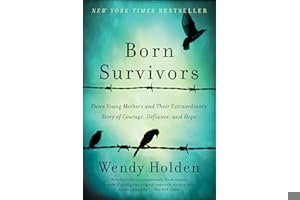
Born Survivors: Three Young Mothers and Their Extraordinary Story of Courage, Defiance, and Hope
Wendy Holden
4.1
The Nazis murdered their husbands but concentration camp prisoners Priska, Rachel, and Anka would not let evil take their unborn children too—a remarkable true story that will appeal to readers of The Lost and The Nazi Officer’s Wife, Born Survivors celebrates three mothers who defied death to give their children life.
Eastern Europe, 1944: Three women believe they are pregnant, but are torn from their husbands before they can be certain. Rachel is sent to Auschwitz, unaware that her husband has been shot. Priska and her husband travel there together, but are immediately separated. Also at Auschwitz, Anka hopes in vain to be reunited with her husband. With the rest of their families gassed, these young wives are determined to hold on to all they have left—their lives, and those of their unborn babies. Having concealed their condition from infamous Nazi doctor Josef Mengele, they are forced to work and almost starved to death, living in daily fear of their pregnancies being detected by the SS.
In April 1945, as the Allies close in, Priska gives birth. She and her baby, along with Anka, Rachel, and the remaining inmates, are sent to Mauthausen concentration camp on a hellish seventeen-day train journey. Rachel gives birth on the train, and Anka at the camp gates. All believe they will die, but then a miracle occurs. The gas chamber runs out of Zyklon-B, and as the Allied troops near, the SS flee. Against all odds, the three mothers and their newborns survive their treacherous journey to freedom.
On the seventieth anniversary of Mauthausen’s liberation from the Nazis by American soldiers, renowned biographer Wendy Holden recounts this extraordinary story of three children united by their mothers’ unbelievable—yet ultimately successful—fight for survival.
…
Cover unavailable
50
The Drowned and the Saved
Primo Levi
4.1
The author tries to understand the rationale behind Auschwitz, Treblinka, Bergen-Belsen. Dismissing stereotyped images of brutal Nazi torturers and helpless victims, Levi draws extensively on his own experiences to delve into the minds and motives of oppressors and oppressed alike. Describing the difficulty and shame of remembering, the limited forms of collaboration between inmates and SS goalers, the exploitation of useless violence and the plight of the intellectual, Levi writes about the issue of power, mercy and guilt, and their effects on the lives of the ordinary people who suffered so incomprehendingly.
…
Recommended by Jonathan Glover.
Jonathan Glover
Primo Levi’s books all reflect his experiences in Auschwitz. Perhaps because he was a scientist, he wrote with a precision and definiteness, at the opposite pole from rhetoric. This gives his books immense power, as what he describes could only be diminished by any striving for effect. The Drowned and the Saved is his most reflective book on the Nazi genocide and on his own experiences and what he saw in other people. The chapter on “The Grey Zone” is a brilliant discussion of tragic choices and moral ambiguities. The Nazis made people operate the gas chambers as a way of deferring their own deaths. One of the most evil things about the Nazis was the way they tried to destroy not only their victims’ lives but also their moral integrity, by means of coercive moral dilemmas. “If you cooperate with us in rounding up your fellow Jews, we will take fewer of them than if you do not.” Levi writes about all this with great understanding of the pressures and how difficult they were to resist. He retains moral standards by which to judge people, but without glib moralising. Few people were either pure saints or pure villains. Those of us without his experience are rightly reluctant to criticise people who failed tests we have not had to face. But because Levi had experienced what he describes, his careful discriminations between degrees of good and bad in the “grey zone” have great authority. [source]
Cover unavailable
51
Sophie's Choice
William Styron
4.1
Three stories are told: a young Southerner wants to become a writer; a turbulent love-hate affair between a brilliant Jew and a beautiful Polish woman; and of an awful wound in that woman's past--one that impels both Sophie and Nathan toward destruction.
Cover unavailable
52
The Zookeeper's Wife
Diane Ackerman
4.1
When Germany invaded Poland, Stuka bombers devastated Warsaw—and the city's zoo along with it. With most of their animals dead, zookeepers Jan and Antonina Zabinski began smuggling Jews into empty cages. Another dozen "guests" hid inside the Zabinskis' villa, emerging after dark for dinner, socializing, and, during rare moments of calm, piano concerts. Jan, active in the Polish resistance, kept ammunition buried in the elephant enclosure and stashed explosives in the animal hospital. Meanwhile, Antonina kept her unusual household afloat, caring for both its human and its animal inhabitants—otters, a badger, hyena pups, lynxes.With her exuberant prose and exquisite sensitivity to the natural world, Diane Ackerman engages us viscerally in the lives of the zoo animals, their keepers, and their hidden visitors. She shows us how Antonina refused to give in to the penetrating fear of discovery, keeping alive an atmosphere of play and innocence even as Europe crumbled around her.
…
Cover unavailable
53
Surviving the Angel of Death: The True Story of a Mengele Twin in Auschwitz
Eva Mozes Kor and Lisa Buccieri
4.1
Eva Mozes Kor was just ten years old when she arrived in Auschwitz. While her parents and two older sisters were taken to the gas chambers, she and her twin, Miriam, were herded into the care of the man known as the Angel of Death, Dr. Josef Mengele. Subjected to sadistic medical experiments, she was forced to fight daily for her and her twin's survival. In this incredible true story written for young adults, readers learn of a child's endurance and survival in the face of truly extraordinary evil. The book also includes an epilogue on Eva's recovery from this experience and her remarkable decision to publicly forgive the Nazis. Through her museum and her lectures, she has dedicated her life to giving testimony on the Holocaust, providing a message of hope for people who have suffered, and working for causes of human rights and peace.
…
Cover unavailable
54
The Invisible Bridge
Julie Orringer, Arthur Morey
4.1
A grand love story and an epic tale of three brothers whose lives are torn apart by war.
Paris, 1937. Andras Lévi, a Hungarian Jewish architecture student, arrives from Budapest with a scholarship, a single suitcase, and a mysterious letter he has promised to deliver to C. Morgenstern on the rue de Sévigné. As he becomes involved with the letter’s recipient, his elder brother takes up medical studies in Modena, their younger brother leaves school for the stage—and Europe’s unfolding tragedy sends each of their lives into terrifying uncertainty.
From the Hungarian village of Konyár to the grand opera houses of Budapest and Paris, from the lonely chill of Andras’s garret to the enduring passion he discovers on the rue de Sévigné, from the despair of a Carpathian winter to an unimaginable life in forced labor camps and beyond, The Invisible Bridge tells the unforgettable story of brothers bound by history and love, of a marriage tested by disaster, of a Jewish family’s struggle against annihilation, and of the dangerous power of art in a time of war.
Length: 27 hrs and 51 mins
…
Cover unavailable
55
Alicia
Alicia Appleman-Jurman
4.1
After losing her entire family to the Nazis at age 13, Alicia Appleman-Jurman went on to save the lives of thousands of Jews, offering them her own courage and hope in a time of upheaval and tragedy. Not since The Diary of Anne Frank has a young voice so vividly expressed the capacity for humanity and heroism in the face of Nazi brutality.
Cover unavailable
56
A Lucky Child: A Memoir of Surviving Auschwitz as a Young Boy
Thomas Buergenthal, Elie Wiesel
4.1
Thomas Buergenthal, now a Judge in the International Court of Justice in The Hague, tells his astonishing experiences as a young boy in his memoir A Lucky Child.
He arrived at Auschwitz at age 10 after surviving two ghettos and a labor camp. Separated first from his mother and then his father, Buergenthal managed by his wits and some remarkable strokes of luck to survive on his own. Almost two years after his liberation, Buergenthal was miraculously reunited with his mother and in 1951 arrived in the U.S. to start a new life. Now dedicated to helping those subjected to tyranny throughout the world, Buergenthal writes his story with a simple clarity that highlights the stark details of unimaginable hardship. A Lucky Child is a book that demands to be read by all.
…
Cover unavailable
57
Hana's Suitcase: A True Story
Karen Levine
4.1
In 2000, a suitcase arrived at a children's Holocaust education center in Tokyo, Japan, marked "Hana Brady, May 16, 1931." The center's curator searches for clues to young Hana and her family, whose happy life in a small Czech town was turned upside down by the invasion of the Nazis.
Cover unavailable
58
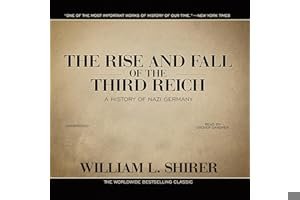
The Rise and Fall of the Third Reich: A History of Nazi Germany
William L. Shirer
4.1
Hitler boasted that The Third Reich would last a thousand years. It lasted only 12. But those 12 years contained some of the most catastrophic events Western civilization has ever known.
No other powerful empire ever bequeathed such mountains of evidence about its birth and destruction as the Third Reich. When the bitter war was over, and before the Nazis could destroy their files, the Allied demand for unconditional surrender produced an almost hour-by-hour record of the nightmare empire built by Adolph Hitler. This record included the testimony of Nazi leaders and of concentration camp inmates, the diaries of officials, transcripts of secret conferences, army orders, private letters—all the vast paperwork behind Hitler's drive to conquer the world.
The famed foreign correspondent and historian William L. Shirer, who had watched and reported on the Nazis since 1925, spent five and a half years sifting through this massive documentation. The result is a monumental study that has been widely acclaimed as the definitive record of one of the most frightening chapters in the history of mankind.
This worldwide bestseller has been acclaimed as the definitive book on Nazi Germany; it is a classic work.
The accounts of how the United States got involved and how Hitler used Mussolini and Japan are astonishing, and the coverage of the war-from Germany's early successes to her eventual defeat-is must reading
…
Recommended by Gunhee Park.
Gunhee Park
A few months back, I read a book called A Higher Call: An Incredible True Story of Combat and Chivalry in the War-Torn Skies of World War II that led me to want to learn more about Nazi Germany and Hitler, so I then picked up The Rise and Fall of the Third Reich, which led me to wanting to learn more about Winston Churchill. [source]
Cover unavailable
59
The Lost Wife
Alyson Richman
4.1
There on her forearm, next to a small brown birthmark, were six tattooed numbers. 'Do you remember me now?' he asked, trembling. She looked at him again, as if giving weight and bone to a ghost. 'Lenka, it's me,' he said. 'Josef. Your husband.' During the last moments of calm in prewar Prague, Lenka, a young art student, falls in love with Josef. They marry - but soon, like so many others, they are torn apart by the currents of war. In America Josef becomes a successful obstetrician and raises a family, though he never forgets the wife he thinks died in the camps. But in the Nazi ghetto of Terez??n - and later in Auschwitz - Lenka has survived, relying on her skills as an artist and the memories of a husband she believes she will never see again. Now, decades later, an unexpected encounter in New York brings Lenka and Josef back together. From the comfort of life in Prague before the occupation to the horrors of Nazi Europe, The Lost Wife explores the endurance of first love, the resilience of the human spirit and our capacity to remember.
…
Cover unavailable
60
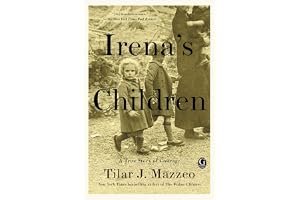
Los Ninos de Irena
Tilar J. Mazzeo
4.1
Tilar J. Mazzeo, autora bestseller de The New York Times, nos presenta una historia inspiradora sobre la extraordinaria y apasionante vida de Irena Sendler, una conmovedora version femenina de Oskar Schindler. La historia de una mujer que tomo grandes riesgos para salvar a 2 500 ninos de la muerte y la deportacion en Polonia, durante la ocupacion de los nazis en la Segunda Guerra Mundial. En 1942, a una joven trabajadora social, Irena Sendler, se le concedio acceso al gueto de Varsovia como especialista en salud publica. Una vez dentro, fue de puerta en puerta para rescatar a los ninos de las familias judias atrapadas en el gueto. Empezo a sacarlos a escondidas del distrito amurallado, convenciendo a sus amigos y vecinos de que los ocultaran en sus casas. Impulsada a tomar medidas extremas y con la ayuda de una red de comerciantes locales, residentes del gueto y su amante, perteneciente a la resistencia judia, ella logro salvar a miles de ninos de los nazis. Irena hizo peligrosos viajes a traves de las alcantarillas de la ciudad, oculto a los ninos en ataudes, los coloco bajo abrigos en los puestos de control y los condujo a traves de pasadizos secretos en edificios abandonados. Y luego mantuvo listas secretas enterradas en botellas debajo de un viejo manzano en el jardin de la casa de una amiga. En las listas estaban los nombres y las verdaderas identidades de los ninos judios, escritos cuidadosamente con la esperanza de que sus familiares pudieran encontrarlos despues de la guerra. Aunque no pudo prever que mas del noventa por ciento de estas familias moriria. La vida de Irena Sendler, sin duda, es mucho mas que una muestra de apego a la vida y carino a los ninos: es un gesto deslumbrante de amor a la humanidad. La critica ha opinado: -Los ninos de Irena teje en una fascinante historia el relato de una ciudad devastada, la depravacion nazi y el extraordinario valor fisico y moral de aquellos que decidieron responder a la inhumanidad con compasion. Este es un libro que se queda contigo mucho despues de pasar la ultima pagina.- -Chaya Deitsch, autora de Here and There: Leaving Hasidism, Keeping My Family- -Un relato fundamental, aunque aterrador, de la historia del Holocausto que hasta ahora era poco conocido: el de como miles de ninos fueron rescatados del gueto de Varsovia por una mujer polaca con mucho valor y una extraordinaria calidad moral.- -Joseph Kanon, autor de Leaving Berlin- -Mazzeo relata un rayo de esperanza en tiempos de desesperacion en esta biografia conmovedora de una mujer que se nego a darse por vencida.- - Kirkus Reviews- -Si bien esta no es la primera biografia de Irena Sendler, su concision y legibilidad presentaran a muchos lectores a una mujer realmente valiente y notable, quien inicio y encabezo -un gran esfuerzo colectivo de decencia.- -Publishers Weekly- ENGLISH DESCRIPTIONA New York Post Best Book of 2016 One of Kirkus Reviews' Ten Most Anticipated Nonfiction Books of Fall 2016 From the New York Times bestselling author of The Widow Clicquot comes an extraordinary and gripping account of Irena Sendler--the -female Oskar Schindler---who took staggering risks to save 2,500 children from death and deportation in Nazi-occupied Poland during World War II. In 1942, one young social worker, Irena Sendler, was granted access to the Warsaw ghetto as a public health specialist. While there, she reached out to the trapped Jewish families, going from door to door and asking the parents to trust her with their young children. She started smuggling them out of the walled district, convincing her friends and neighbors to hide them. Driven to extreme measures and with the help of a network of local tradesmen, ghetto residents, and her star-crossed lover in the Jewish resistance, Irena ultimately smuggled thousands of children past the Nazis. She made dangerous trips through the city's sewers, hid children in coffins, snuck them under overcoats at checkpoints, and slipped them through secret passages in abandoned buildings. But Irena did something even more astonishing at immense personal risk: she kept secret lists buried in bottles under an old apple tree in a friend's back garden. On them were the names and true identities of those Jewish children, recorded with the hope that their relatives could find them after the war. She could not have known that more than ninety percent of their families would perish. In Irena's Children, Tilar Mazzeo tells the incredible story of this courageous and brave woman who risked her life to save innocent children from the Holocaust--a truly heroic tale of survival, resilience, and redemption.
…
Cover unavailable
61
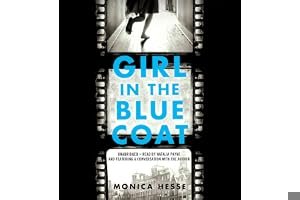
Girl in the Blue Coat
Monica Hesse
4.1
An unforgettable story of bravery, grief, and love in impossible times
"Girl in the Blue Coat is a powerful, compelling coming-of-age story set against the dark and dangerous backdrop of World War II. It's an important and page-turning look at the choices all of us-including young adults-have to make in wartime. A beautiful combination of heartbreak, loss, young love, and hope." -Kristin Hannah, #1 New York Times bestselling author of The Nightingale
"A tapestry of guilt and acceptance, growing responsibility, and reluctant heroism, Hanneke's coming-of-age under heartbreaking circumstances is a jarring reminder of how war consumes and transforms the passions of ordinary life. Every devastating moment of this beautiful novel is both poignant and powerful, and every word feels true." -Elizabeth Wein, New York Times bestselling author of Code Name Verity
Amsterdam, 1943. Hanneke spends her days procuring and delivering sought-after black market goods to paying customers, her nights hiding the true nature of her work from her concerned parents, and every waking moment mourning her boyfriend, who was killed on the Dutch front lines when the Germans invaded. She likes to think of her illegal work as a small act of rebellion. On a routine delivery, a client asks Hanneke for help. Expecting to hear that Mrs. Janssen wants meat or kerosene, Hanneke is shocked by the older woman's frantic plea to find a person-a Jewish teenager Mrs. Janssen had been hiding, who has vanished without a trace from a secret room. Hanneke initially wants nothing to do with such dangerous work, but is ultimately drawn into a web of mysteries and stunning revelations that lead her into the heart of the resistance, open her eyes to the horrors of the Nazi war machine, and compel her to take desperate action. Beautifully written, intricately plotted, and meticulously researched, Girl in the Blue Coat is an extraordinary, gripping novel from a bright new voice.
…
Cover unavailable
62
The Guernsey Literary and Potato Peel Pie Society
Mary Ann Shaffer, Annie Barrows
4.1
#1 NEW YORK TIMES BESTSELLER - NOW A MAJOR MOTION PICTURE ON NETFLIX - A remarkable tale of the island of Guernsey during the German Occupation, and of a society as extraordinary as its name.
"I wonder how the book got to Guernsey? Perhaps there is some sort of secret homing instinct in books that brings them to their perfect readers." January 1946: London is emerging from the shadow of the Second World War, and writer Juliet Ashton is looking for her next book subject. Who could imagine that she would find it in a letter from a man she's never met, a native of the island of Guernsey, who has come across her name written inside a book by Charles Lamb...
As Juliet and her new correspondent exchange letters, Juliet is drawn into the world of this man and his friends—and what a wonderfully eccentric world it is. The Guernsey Literary and Potato Peel Pie Society—born as a spur-of-the-moment alibi when its members were discovered breaking curfew by the Germans occupying their island—boasts a charming, funny, deeply human cast of characters, from pig farmers to phrenologists, literature lovers all.
Juliet begins a remarkable correspondence with the society's members, learning about their island, their taste in books, and the impact the recent German occupation has had on their lives. Captivated by their stories, she sets sail for Guernsey, and what she finds will change her forever.
Written with warmth and humor as a series of letters, this novel is a celebration of the written word in all its guises and of finding connection in the most surprising ways.
…
Cover unavailable
63
The Sunflower: On the Possibilities and Limits of Forgiveness
Simon Wiesenthal
4.1
While imprisoned in a Nazi concentration camp, Wiesenthal was taken one day from his work detail to the bedside of a dying SS man. Haunted by the crimes in which he'd participated, the soldier wanted to confess to--& obtain absolution from--a Jew. Faced with the choice between compassion & justice, silence & truth, Wiesenthal said nothing. But even years after the war had ended, he wondered: Had he done the right thing? What would you have done in his place?
In this important book, 53 distinguished men & women respond to Wiesenthal's questions. They are theologians, political leaders, writers, jurists, psychiatrists, human rights activists, Holocaust survivors & victims of attempted genocides in Bosnia, Cambodia, China & Tibet. Their responses, as varied as their experiences of the world, remind us that Wiesenthal's questions are not limited to events of the past. Often surprising, always thought provoking, The Sunflower will challenge you to define your beliefs about justice, compassion & responsibility.
…
Cover unavailable
64
The True Story of Hansel and Gretel
Louise Murphy
4.1
A poignant and suspenseful retelling of a classic fairy tale set in a war-torn world
In the last months of the Nazi occupation of Poland, two children are left by their father and stepmother to find safety in a dense forest. Because their real names will reveal their Jewishness, they are renamed "Hansel" and "Gretel." They wander in the woods until they are taken in by Magda, an eccentric and stubborn old woman called "witch" by the nearby villagers. Magda is determined to save them, even as a German officer arrives in the village with his own plans for the children. Louise Murphy's haunting novel of journey and survival, of redemption and memory, powerfully depicts how war is experienced by families and especially by children.
"No reader who picks up this inspiring novel will put it down until the final pages, in which redemption is not a fairy tale ending but a heartening message of hope." --Publishers Weekly
…
Cover unavailable
65
KL: A History of the Nazi Concentration Camps
Nikolaus Wachsmann
4.1
In a landmark work of history, Nikolaus Wachsmann offers an unprecedented, integrated account of the Nazi concentration camps from their inception in 1933 through their demise, seventy years ago, in the spring of 1945. The Third Reich has been studied in more depth than virtually any other period in history, and yet until now there has been no history of the camp system that tells the full story of its broad development and the everyday experiences of its inhabitants, both perpetrators and victims, and all those living in what Primo Levi called "the gray zone." In KL, Wachsmann fills this glaring gap in our understanding. He not only synthesizes a new generation of scholarly work, much of it untranslated and unknown outside of Germany, but also presents startling revelations, based on many years of archival research, about the functioning and scope of the camp system. Examining, close up, life and death inside the camps, and adopting a wider lens to show how the camp system was shaped by changing political, legal, social, economic, and military forces, Wachsmann produces a unified picture of the Nazi regime and its camps that we have never seen before. A boldly ambitious work of deep importance, KL is destined to be a classic in the history of the twentieth century.
…
Cover unavailable
66
Everything Is Illuminated
Jonathan Safran Foer
4.1
The simplest thing would be to describe Everything is Illuminated, Jonathan Safran Foer's accomplished debut, as a novel about the Holocaust. It is, but that really fails to do justice to the sheer ambition of this book. The main story is a grimly familiar one. A young Jewish-American--who just happens to be called Jonathan Safran Foer--travels to the Ukraine in the hope of finding the woman who saved his grandfather from the Nazis. He is aided in his search by Alex Perchov, a naïve Ukrainian translator, Alex's grandfather (also called Alex) and a flatulent mongrel bitch, named Sammy Davis JR JR. On their journey through Eastern Europe's obliterated landscape they unearth facts about the Nazi atrocities and the extent of Ukrainian complicity that have implications for Perchov as well as Safran Foer. This narrative is not, however, recounted from (the character) Jonathan Safran Foer's perspective. It is relayed through a series of letters that Alex sends to Foer. These are written in the kind of broken Russo-English normally reserved for Bond villains and Latka from the US television series Taxi. (Sentences such as "It is mammoth honour for me write for a writer, especially when he is American writer, like Ernest Hemingway"; "It is bad and popular habit for people in Ukraine to take things without asking" are the norm.) Interspersed between these letters are fragments of a novel by "Safran Foer"--a wonderfully imagined, almost magical realist, account of life in the Shetl before the Nazis destroyed it. These are in turn commented on by Alex creating an additional metafictional angle to the tale.
If all this sounds a little daunting don't be put off; Safran Foer is an extremely funny as well as intelligent writer. Admittedly he has an annoying habit of capitalising great chunks of text, but minor typographical nuances are easy to ignore in a book that combines some of the best Jewish folk yarns since Isaac Bashevis Singer with a quite heartbreaking meditation on love, friendship and loss. --Travis Elborough
…
Recommended by Leo Babauta.
Cover unavailable
67
Eyewitness Auschwitz: Three Years in the Gas Chambers
Filip Müller
4.1
Filip Muller came to Auschwitz with one of the earliest transports from Slovakia in April 1942 and began working in the gassing installations and crematoria in May. He was still alive when the gassings ceased in November 1944. He saw millions come and disappear; by sheer luck he survived. Muller is neither a historian nor a psychologist; he is a source--one of the few prisoners who saw the Jewish people die and lived to tell about it. Eyewitness Auschwitz is one of the key documents of the Holocaust.
…
Cover unavailable
68
Briar Rose
Jane Yolen, Terri Windling
4.1
A powerful retelling of Sleeping Beauty that is "heartbreaking and heartwarming."
An American Library Association "100 Best Books for Teens" An American Library Association "Best Books for Young Adults"
Ever since she was a child, Rebecca has been enchanted by her grandmother Gemma's stories about Briar Rose. But a promise Rebecca makes to her dying grandmother will lead her on a remarkable journey to uncover the truth of Gemma's astonishing claim: I am Briar Rose. A journey that will lead her to unspeakable brutality and horror. But also to redemption and hope.
…
Cover unavailable
69
The Seamstress
Sara Tuval Bernstein
4.1
"From its opening pages, in which she recounts her own premature birth, triggered by terrifying rumors of an incipient pogrom, Bernstein's tale is clearly not a typical memoir of the Holocaust. She was born into a large family in rural Romania and grew up feisty and willing to fight back physically against anti-Semitism from other schoolchildren. She defied her father's orders to turn down a scholarship that took her to Bucharest, and got herself expelled from that school when she responded to a priest/teacher's vicious diatribe against the Jews by hurling a bottle of ink at him. After a series of incidents that ranged from dramatic escapes to a year in a forced labor detachment, Sara ended up in Ravensbruck, a women's concentration camp, and managed to survive. She tells this story with style and power." --Kirkus Reviews
…
Cover unavailable
70
The Girl in the Green Sweater: A Life in Holocaust's Shadow
Krystyna Chiger, Daniel Paisner
4.1
In 1943, with Lvov's 150,000 Jews having been exiled, killed, or forced into ghettos and facing extermination, a group of Polish Jews daringly sought refuge in the city's sewer system. The last surviving member this group, Krystyna Chiger, shares one of the most intimate, harrowing and ultimately triumphant tales of survival to emerge from the Holocaust. The Girl in the Green Sweater is Chiger's harrowing first-person account of the fourteen months she spent with her family in the fetid, underground sewers of Lvov.
The Girl in the Green Sweater is also the story of Leopold Socha, the group's unlikely savior. A Polish Catholic and former thief, Socha risked his life to help Chiger's underground family survive, bringing them food, medicine, and supplies. A moving memoir of a desperate escape and life under unimaginable circumstances, The Girl in the Green Sweater is ultimately a tale of intimate survival, friendship, and redemption.
…
Cover unavailable
71
The Last Jew of Treblinka
Chil Rajchman
4.1
Before me sits a young woman. I cut off her hair, thick and beautiful, and she grasps my hand and begs me to remember that I too am a Jew. She knows that she is lost. ‘But remember,‘ she says, ‘you see what is being done to us. That‘s why my wish for you is that you will survive and take revenge for our innocent blood, which will never rest.‘ She has not had time to get up when a murderer who is walking between the benches lashes her on the head with his whip. Blood shows on her now shorn head. That evening, the blood of tens of thousands of victims, unable to rest, thrust itself upwards to the surface.—from The Last Jew of Treblinka
Why do some live while so many others perish? Tiny children, old men, beautiful girls. In the gas chambers of Treblinka, all are equal. The Nazis kept the fires of Treblinka burning night and day, a central cog in the wheel of the Final Solution. There was no pretense of work here like in Auschwitz or Birkenau. Only a train platform and a road covered with sand. A road that led only to death. But not for Chil Rajchman, a young man who survived working as a “barber” and “dentist,” heartsick with witnessing atrocity after atrocity. Yet he managed to survive so that somehow he could tell the world what he had seen. How he found the dress of his little sister abandoned in the woods. How he was forced to extract gold teeth from the corpses. How every night he had to cover the body-pits with sand. How ever morning the blood of thousands still rose to the surface.
Many have courageously told their stories, and in the tradition of Elie Wiesel’s Night and Primo Levi’s Survival at Auschwitz and The Drowned and the Saved, Rajchman provides the only survivors’ record of Treblinka. Originally written in Yiddish in 1945 without hope or agenda other than to bear witness, Rajchman’s tale shows that sometimes the bravest and most painful act of all is to remember.
…
Cover unavailable
72
The Boy Who Dared
Susan Campbell Bartoletti
4.1
A youth in Nazi Germany tells the truth about Hitler.
Bartoletti has taken one episode from her Newbery Honor Book, Hitler Youth, and fleshed it out into a full novel.
When 16-year-old Helmut Hubner listens to the BBC news on an illegal short-wave radio, he quickly discovers Germany is lying to the people. But when he tries to expose the truth with leaflets, he's tried for treason. Sentenced to death and waiting in a jail cell, Helmut's story emerges in a series of flashbacks that show his growth from a naive child caught up in the patriotism of the times, to a sensitive and mature young man who thinks for himself.
…
Cover unavailable
73
Clara's War
Clara Kramer
4.0
On September 1, 1939, the Nazis invaded Poland. Three years later, in the small town of Żółkiew, life for Jewish 15-year-old Clara Kramer was never to be the same again. While those around her were either slaughtered or transported, Clara and her family hid perilously in a hand-dug cellar. Living above and protecting them were the Becks.
Mr. Beck was a womaniser, a drunkard and a self-professed anti-Semite, yet he risked his life throughout the war to keep his charges safe. Nevertheless, life with Mr. Beck was far from predictable. From the house catching fire, to Beck's affair with Clara's cousin, to the nightly SS drinking sessions in the room just above, Clara's War transports you into the dark, cramped bunker, and sits you next to the families as they hold their breath time and again.
Sixty years later, Clara Kramer has created a memoir that is lyrical, dramatic and heartbreakingly compelling. Despite the worst of circumstances, this is a story full of hope and survival, courage and love.
…
Cover unavailable
74
I Will Plant You a Lilac Tree: A Memoir of a Schindler's List Survivor
Laura Hillman
4.0
"HANNELORE, YOUR PAPA IS DEAD." In the spring of 1942 Hannelore received a letter from Mama at her school in Berlin, Germany--Papa had been arrested and taken to a concentration camp. Six weeks later he was sent home; ashes in an urn. Soon another letter arrived. "The Gestapo has notified your brothers and me that we are to be deported to the East--whatever that means." Hannelore knew: labor camps, starvation, beatings...How could Mama and her two younger brothers bear that? She made a decision: She would go home and be deported with her family. Despite the horrors she faced in eight labor and concentration camps, Hannelore met and fell in love with a Polish POW named Dick Hillman. Oskar Schindler was their one hope to survive. Schindler had a plan to take eleven hundred Jews to the safety of his new factory in Czechoslovakia. Incredibly both she and Dick were added to his list. But survival was not that simple. Weeks later Hannelore found herself, alone, outside the gates of Auschwitz, pushed toward the smoking crematoria. I Will Plant You a Lilac Tree is the remarkable true story of one young woman's nightmarish coming-of-age. But it is also a story about the surprising possibilities for hope and love in one of history's most brutal times.
…
Cover unavailable
75
Once We Were Brothers (Liam Taggart & Catherine Lockhart, #1)
Ronald H. Balson
4.0
The gripping tale about two boys, once as close as brothers, who find themselves on opposite sides of the Holocaust.
Elliot Rosenzweig, a respected civic leader and wealthy philanthropist, is attending a fundraiser when he is suddenly accosted and accused of being a former Nazi SS officer named Otto Piatek, the Butcher of Zamosc. Although the charges are denounced as preposterous, his accuser is convinced he is right and engages attorney Catherine Lockhart to bring Rosenzweig to justice. Solomon persuades attorney Catherine Lockhart to take his case, revealing that the true Piatek was abandoned as a child and raised by Solomon's own family only to betray them during the Nazi occupation. But has Solomon accused the right man?
Once We Were Brothers is Ronald H. Balson's compelling tale of two boys and a family who struggle to survive in war-torn Poland, and a young love that struggles to endure the unspeakable cruelty of the Holocaust. Two lives, two worlds, and sixty years converge in an explosive race to redemption that makes for a moving and powerful tale of love, survival, and ultimately the triumph of the human spirit.
…
Cover unavailable
76
Beneath a Scarlet Sky
Mark Sullivan
4.0
Based on the true story of a forgotten hero, Beneath a Scarlet Sky is the triumphant, epic tale of one young man’s incredible courage and resilience during one of history’s darkest hours.
Pino Lella wants nothing to do with the war or the Nazis. He’s a normal Italian teenager—obsessed with music, food, and girls—but his days of innocence are numbered. When his family home in Milan is destroyed by Allied bombs, Pino joins an underground railroad helping Jews escape over the Alps, and falls for Anna, a beautiful widow six years his senior.
In an attempt to protect him, Pino’s parents force him to enlist as a German soldier—a move they think will keep him out of combat. But after Pino is injured, he is recruited at the tender age of eighteen to become the personal driver for Adolf Hitler’s left hand in Italy, General Hans Leyers, one of the Third Reich’s most mysterious and powerful commanders.
Now, with the opportunity to spy for the Allies inside the German High Command, Pino endures the horrors of the war and the Nazi occupation by fighting in secret, his courage bolstered by his love for Anna and for the life he dreams they will one day share.
Fans of All the Light We Cannot See, The Nightingale, and Unbroken will enjoy this riveting saga of history, suspense, and love.
…
Cover unavailable
77
Surviving Hitler: A Boy in the Nazi Death Camps
Andrea Warren
4.0
Award-winning author Andrea Warren presents a life-changing story of a young boy's struggle for survival in a Nazi-run concentration camp. In this Robert F. Silbert Honor Book, narrated in the voice of Holocaust survivor Jack Mandelbaum, readers will glimpse the dark reality of life during the Holocaust, and how one boy made it out alive.
When twelve-year-old Jack Mandelbaum is separated from his family and shipped off to the Blechhammer concentration camp, his life becomes a never-ending nightmare. With minimal food to eat and harsh living conditions threatening his health, Jack manages to survive by thinking of his family.
Supports the Common Core State Standards
…
Cover unavailable
78
Inside the Gas Chambers: Eight Months in the Sonderkommando of Auschwitz
Shlomo Venezia
4.0
This is a unique, eye-witness account of everyday life right at the heart of the Nazi extermination machine. Slomo Venezia was born into a poor Jewish-Italian community living in Thessaloniki, Greece. At first, the occupying Italians protected his family; but when the Germans invaded, the Venezias were deported to Auschwitz. His mother and sisters disappeared on arrival, and he learned, at first with disbelief, that they had almost certainly been gassed. Given the chance to earn a little extra bread, he agreed to become a 'Sonderkommando', without realising what this entailed. He soon found himself a member of the 'special unit' responsible for removing the corpses from the gas chambers and burning their bodies.
Dispassionately, he details the grim round of daily tasks, evokes the terror inspired by the man in charge of the crematoria, 'Angel of Death' Otto Moll, and recounts the attempts made by some of the prisoners to escape, including the revolt of October 1944.
It is usual to imagine that none of those who went into the gas chambers at Auschwitz ever emerged to tell their tale - but, as a member of a 'Sonderkommando', Shlomo Venezia was given this horrific privilege. He knew that, having witnessed the unspeakable, he in turn would probably be eliminated by the SS in case he ever told his tale. He survived: this is his story.
Published in association with the United States Holocaust Memorial Museum.
…
Cover unavailable
79
The Auschwitz Escape
Joel C. Rosenberg
4.0
A terrible darkness has fallen upon Jacob Weisz's beloved Germany. The Nazi regime, under the leadership of Adolf Hitler, has surged to power and now hold Germany by the throat. All non-Aryans -- especially Jews like Jacob and his family -- are treated like dogs.
When tragedy strikes during one terrible night of violence, Jacob flees and joins rebel forces working to undermine the regime. But after a raid goes horribly wrong, Jacob finds himself in a living nightmare -- trapped in a crowded, stinking car on the train to the Auschwitz death camp.
As World War II rages and Hitler begins implementing his "final solution" to systematically and ruthlessly exterminate the Jewish people, Jacob must rely on his wits and a God he's not sure he believes in to somehow escape from Auschwitz and alert the world to the Nazi's atrocities before Fascism overtakes all of Europe. The fate of millions hangs in the balance.
…
Cover unavailable
80
Cilka's Journey (The Tattooist of Auschwitz, #2)
Heather Morris
4.0
In this follow-up to The Tattooist of Auschwitz, the author tells the story, based on a true one, of a woman who survives Auschwitz, only to find herself locked away again.
Cilka Klein is 18 years old when Auschwitz-Birkenau is liberated by Soviet soldiers. But Cilka is one of the many women who is sentenced to a labor camp on charges of having helped the Nazis--with no consideration of the circumstances Cilka and women like her found themselves in as they struggled to survive. Once at the Vorkuta gulag in Sibera, where she is to serve her 15-year sentence, Cilka uses her wits, charm, and beauty to survive.
…
Cover unavailable
81
Ravensbrück: Life and Death in Hitler's Concentration Camp for Women
Sarah Helm
4.0
A groundbreaking, masterful, and absorbing account of the last hidden atrocity of World War II—Ravensbrück—the largest female-only concentration camp, where more than 100,000 women consisting of more than twenty nationalities were imprisoned.
Shortly before the outbreak of World War II, Heinrich Himmler, the head of the SS and the architect of the Holocaust, oversaw the construction of a special concentration camp just fifty miles north of Berlin. He called it Ravensbrück, and during the years that followed thousands of people died there after enduring brutal forms of torture. All were women. There are a handful of studies and memoirs that reference Ravensbrück, but until now no one has written a full account of this atrocity, perhaps due to the mostly masculine narrative of war, or perhaps because it lacks the Jewish context of most mainstream Holocaust history. Ninety percent of Ravensbrück's prisoners were not Jewish. Rather, they were political prisoners, Resistance fighters, lesbians, prostitutes, even the sister of New York's Mayor LaGuardia. In a perverse twist, most of the guards were women themselves. Sarah Helm's groundbreaking work sheds much-needed light on an aspect of World War II that has remained in the shadows for decades. Using research into German and newly opened Russian archives, as well as interviews with survivors, Helm has produced a landmark achievement that weaves together various accounts, allowing us to follow characters on both sides of the prisoner/guard divide. Chilling, compelling, and deeply unsettling, Ravensbrück is essential reading for anyone concerned with Nazi history.
…
Cover unavailable
82
First One In, Last One Out: Auschwitz Survivor 31321
Marilyn Shimon
4.0
While growing up in New York, Marilyn Shimon often visited her uncle in California. She saw his scars, gaped at his "31321" tattoo, and listened to his horrific stories of the Holocaust. However, she could not relate to the suffering he endured or understand the significance of his accounts-until now.
In this grisly memoir, Marilyn resurrects Murray Scheinberg's stories of six hellish years in Nazi concentration camps during World War II. The Polish Jew was one of the first eight men to enter Auschwitz, as a political prisoner in 1940, and one of the last to escape Dachau.
Rejected by a publisher in the 1960s because of its incredible details, this true story, finally available to the public, will shock, horrify, and touch readers.
Abraham H. Foxman, national director emeritus at the Anti-Defamation League, says of the book: "First One In, Last One Out: Auschwitz Survivor 31321 is a harrowing tale of endurance, luck, egotism, and morality, one man's story of survival in the face of Nazi brutality and anti-Semitism. Murray Scheinberg's memoir of survival through the Nazi Holocaust symbolizes man's determination to live no matter the odds. But it also represents the degradation of the human spirit imposed on the Jews of Europe by the evil Nazi machine. It is both an uplifting tale and a sorry one about human nature in the face of evil."
"A magnificent telling of a moving and heartfelt story."
"I am moved to tears beyond what I can express. This is an exceptionally incredible story and the author's writing is extremely moving.The story is a testament of life and will teach future generations that good triumphs over evil."
--Ruth Baran Gerold, child of Holocaust survivors
"The author brilliantly wrote about her uncle's life throughout the Nazi regime. She successfully engages the reader in the emotions and drama of this horrific period.This is a must-read-page turner."
--Larry Klass, Retired Veteran-US Army
"It is a powerful and compelling story that should be promoted in schools and read by all."
--Faye Kilstein, child of Auschwitz survivor
…
Cover unavailable
83
Suite Française
Irène Némirovsky, Sandra Smith
4.0
The first two stories of a masterwork once thought lost, written by a pre-WWII bestselling author who was deported to Auschwitz and died before her work could be completed.
By the early l940s, when Ukrainian-born Irène Némirovsky began working on what would become Suite Française—the first two parts of a planned five-part novel—she was already a highly successful writer living in Paris. But she was also a Jew, and in 1942 she was arrested and deported to Auschwitz: a month later she was dead at the age of thirty-nine. Two years earlier, living in a small village in central France—where she, her husband, and their two small daughters had fled in a vain attempt to elude the Nazis—she'd begun her novel, a luminous portrayal of a human drama in which she herself would become a victim. When she was arrested, she had completed two parts of the epic, the handwritten manuscripts of which were hidden in a suitcase that her daughters would take with them into hiding and eventually into freedom. Sixty-four years later, at long last, we can read Némirovsky's literary masterpiece
The first part, "A Storm in June," opens in the chaos of the massive 1940 exodus from Paris on the eve of the Nazi invasion during which several families and individuals are thrown together under circumstances beyond their control. They share nothing but the harsh demands of survival—some trying to maintain lives of privilege, others struggling simply to preserve their lives—but soon, all together, they will be forced to face the awful exigencies of physical and emotional displacement, and the annihilation of the world they know. In the second part, "Dolce," we enter the increasingly complex life of a German-occupied provincial village. Coexisting uneasily with the soldiers billeted among them, the villagers—from aristocrats to shopkeepers to peasants—cope as best they can. Some choose resistance, others collaboration, and as their community is transformed by these acts, the lives of these these men and women reveal nothing less than the very essence of humanity.
Suite Française is a singularly piercing evocation—at once subtle and severe, deeply compassionate, and fiercely ironic—of life and death in occupied France, and a brilliant, profoundly moving work of art.
…
Cover unavailable
84
A Train Near Magdeburg: A Teacher's Journey into the Holocaust, and the Reuniting of the Survivors and Liberators, 70 years on
Matthew Rozell
4.0
The incredible TRUE STORY behind an iconic photograph, taken at the liberation of a death train deep in the heart of Nazi Germany, brought to life by the history teacher who reunited hundreds of Holocaust survivors and their children with the actual American soldiers who saved them. -From the author of 'The Things Our Fathers Saw' World War II narrative history trilogy- ~THE HOLOCAUST was a watershed event in history. In this book, Matthew Rozell reconstructs a lost chapter--the liberation of a 'death train' deep in the heart of Nazi Germany in the closing days of the World War II. Drawing on never-before published eye-witness accounts, survivor testimony and memoirs, and wartime reports and letters, Rozell brings to life the incredible true stories behind the iconic 1945 liberation photographs taken by the soldiers who were there. He weaves together a chronology of the Holocaust as it unfolds across Europe, and goes back to literally retrace the steps of the survivors and the American soldiers who freed them. Rozell's work results in joyful reunions on three continents, seven decades later. He offers his unique perspective on the lessons of the Holocaust for future generations, and the impact that one person, a teacher, can make.
-Featuring testimony from 15 American liberators and over 30 Holocaust survivors -10 custom maps -73 photographs and illustrations, many never before published. 502 pages-extensive notes and bibliographical references
Included: BOOK ONE-THE HOLOCAUST BOOK TWO-THE AMERICANS BOOK THREE-LIBERATION BOOK FOUR-REUNION
From the book: - 'I survived because of many miracles. But for me to actually meet, shake hands, hug, and cry together with my liberators--the 'angels of life' who literally gave me back my life--was just beyond imagination.'-Leslie Meisels, Holocaust Survivor
- 'Battle-hardened veterans learn to contain their emotions, but it was difficult then, and I cry now to think about it. What stamina and regenerative spirit those brave people showed!'-George C. Gross, Liberator
- 'Never in our training were we taught to be humanitarians. We were taught to be soldiers.'-Frank Towers, Liberator
- 'I cannot believe, today, that the world almost ignored those people and what was happening. How could we have all stood by and have let that happen? They do not owe us anything. We owe them, for what we allowed to happen to them.'-Carrol Walsh, Liberator
- '[People say it] cannot happen here in this country; yes, it can happen here. I was 21 years old. I was there to see it happen.'-Luca Furnari, US Army
- '[After I got home] I cried a lot. My parents couldn't understand why I couldn't sleep at times.'-Walter 'Babe' Gantz, US Army medic
- 'I grew up and spent all my years being angry. This means I don't have to be angry anymore.'-Paul Arato, Holocaust Survivor
- 'For the first time after going through sheer hell, I felt that there was such a thing as simple love coming from good people--young men who had left their families far behind, who wrapped us in warmth and love and cared for our well-being.'-Sara Atzmon, Holocaust Survivor
- 'It's not for my sake, it's for the sake of humanity, that they will remember.'-Steve Barry, Holocaust Survivor
…
Cover unavailable
85
Dawn
Elie Wiesel
4.0
Elisha is a young Jewish man, a Holocaust survivor, and an Israeli freedom fighter in British-controlled Palestine; John Dawson is the captured English officer he will murder at dawn in retribution for the British execution of a fellow freedom fighter. The night-long wait for morning and death provides Dawn, Elie Wiesel's ever more timely novel, with its harrowingly taut, hour-by-hour narrative. Caught between the manifold horrors of the past and the troubling dilemmas of the present, Elisha wrestles with guilt, ghosts, and ultimately God as he waits for the appointed hour and his act of assassination. Dawn is an eloquent meditation on the compromises, justifications, and sacrifices that human beings make when they murder other human beings.
…
Cover unavailable
86
I Escaped from Auschwitz: The Story of a Man Whose Actions Led to the Largest Single Rescue of Jews in World War II
Rudolf Vrba, Robin Vrba, et al.
4.0
The Stunning and Emotional Autobiography of an Auschwitz Survivor
April 7, 1944—This date marks the successful escape of two Slovak prisoners from one of the most heavily-guarded and notorious concentration camps of Nazi Germany. The escapees, Rudolf Vrba and Alfred Wetzler, fled over one hundred miles to be the first to give the graphic and detailed descriptions of the atrocities of Auschwitz.
Originally published in the early 1960s, I Escaped from Auschwitz is the striking autobiography of none other than Rudolf Vrba himself. Vrba details his life leading up to, during, and after his escape from his 21-month internment in Auschwitz. Vrba and Wetzler manage to evade Nazi authorities looking for them and make contact with the Jewish council in Zilina, Slovakia, informing them about the truth of the “unknown destination” of Jewish deportees all across Europe. This first-hand report alerted Western authorities, such as Pope Pius XII, Winston Churchill, and Franklin D. Roosevelt, to the reality of Nazi annihilation camps—information that until then had only been recognized as nasty rumors.
I Escaped from Auschwitz is a close-up look at the horror faced by the Jewish people in Auschwitz and across Europe during World War II. This newly edited translation of Vrba’s memoir will leave readers reeling at the terrors faced by those during the Holocaust. Despite the profound emotions brought about by this narrative, readers will also find an astounding story of heroism and courage in the face of seemingly hopeless circumstances.
…
Cover unavailable
87
The Paris Architect
Charles Belfoure
4.0
Like most gentiles in Nazi-occupied Paris, architect Lucien Bernard has little empathy for the Jews. So when a wealthy industrialist offers him a large sum of money to devise secret hiding places for Jews, Lucien struggles with the choice of risking his life for a cause he doesn’t really believe in. Ultimately he can’t resist the challenge and begins designing expertly concealed hiding spaces—behind a painting, within a column, or inside a drainpipe—detecting possibilities invisible to the average eye. But when one of his clever hiding spaces fails horribly and the immense suffering of Jews becomes incredibly personal, he can no longer deny reality.
Written by an expert whose knowledge imbues every page, this story becomes more gripping with every life the architect tries to save.
…
Cover unavailable
88
...I Never Saw Another Butterfly...
Hana Volavkova, Vaclav Havel, Chaim Potok, United States Holocaust Memorial Museum
4.0
Fifteen thousand children under the age of fifteen passed through the Terezin Concentration Camp. Fewer than one-hundred survived. In these poems and pictures drawn by the young inmates, we see the daily misery of these uprooted children, as well as their hopes and fears, their courage and optimism. 60 color illustrations.
Cover unavailable
89
The Lost: A Search for Six of Six Million
Daniel Mendelsohn
4.0
In this rich and riveting narrative, a writer's search for the truth behind his family's tragic past in World War II becomes a remarkably original epic—part memoir, part reportage, part mystery, and part scholarly detective work—that brilliantly explores the nature of time and memory, family and history.
The Lost begins as the story of a boy who grew up in a family haunted by the disappearance of six relatives during the Holocaust—an unmentionable subject that gripped his imagination from earliest childhood. Decades later, spurred by the discovery of a cache of desperate letters written to his grandfather in 1939 and tantalized by fragmentary tales of a terrible betrayal, Daniel Mendelsohn sets out to find the remaining eyewitnesses to his relatives' fates. That quest eventually takes him to a dozen countries on four continents and forces him to confront the wrenching discrepancies between the histories we live and the stories we tell. And it leads him, finally, back to the small Ukrainian town where his family's story began, and where the solution to a decades-old mystery awaits him.
Deftly moving between past and present, interweaving a world-wandering odyssey with childhood memories of a now-lost generation of immigrant Jews and provocative ruminations on biblical texts and Jewish history, The Lost transforms the story of one family into a profound, morally searching meditation on our fragile hold on the past. Deeply personal, grippingly suspenseful, and beautifully written, this literary tour de force illuminates all that is lost, and found, in the passage of time.
*** Depuis qu’il est enfant, Daniel Mendelsohn sait que son grand-oncle Shmiel, sa femme et leurs quatre filles ont été tués, quelque part dans l’est de la Pologne, en 1941. Comment, quand, où exactement ? Nul ne peut lui en dire plus. Et puis il découvre ces lettres désespérées écrites en 1939 par Shmiel à son frère, installé en Amérique, des lettres pressant sa famille de les aider à partir, des lettres demeurées sans réponse... Parce qu’il a voulu savoir ce qui s’est passé, parce qu’il a voulu donner un visage à ces six disparus, Daniel Mendelsohn est parti sur leurs traces, rencontrant, année après année, des témoins épars dans une douzaine de pays. Cette quête, il en a fait un livre, puzzle vertigineux, roman policier haletant, plongée dans l’Histoire et l’oubli – un chef-d’œuvre.
« Daniel Mendelsohn a écrit une œuvre puissamment émouvante sur le passé " ; perdu " ; d’une famille, qui rappelle à la fois l’opulence des œuvres en prose de Proust et les textes elliptiques de W.G. Sebald. Une réussite exceptionnelle. » Joyce Carol Oates « Les Disparus est une bouleversante enquête de détective à part entière, doublée d’un questionnement sur les interventions énigmatiques de Dieu dans les affaires humaines, et approfondie par une réflexion sur la part d’inéluctable et d’incompréhensible que le hasard introduit dans l’Histoire. » John Maxwell Cœtzee « Entre épopée et intimité, méditation et suspense, tragédie et hilarité, Les Disparus est un livre merveilleux. » Jonathan Safran Fœr « Mendelsohn réussit à assembler un tableau immensément humain dans lequel chaque témoin a un visage et chaque visage une histoire et un destin. » Elie Wiesel
…
Cover unavailable
90
When Hitler Stole Pink Rabbit (Out of the Hitler Time, #1)
Judith Kerr
4.0
Partly autobiographical, this is first of the internationally acclaimed trilogy by Judith Kerr telling the unforgettable story of a Jewish family fleeing from Germany at the start of the Second World War
Suppose your country began to change. Suppose that without your noticing, it became dangerous for some people to live in Germany any longer. Suppose you found, to your complete surprise, that your own father was one of those people.
That is what happened to Anna in 1933. She was nine years old when it began, too busy with her schoolwork and toboganning to take much notice of political posters, but out of them glared the face of Adolf Hitler, the man who would soon change the whole of Europe – starting with her own small life.
Anna suddenly found things moving too fast for her to understand. One day, her father was unaccountably missing. Then she herself and her brother Max were being rushed by their mother, in alarming secrecy, away from everything they knew – home and schoolmates and well-loved toys – right out of Germany…
…
Cover unavailable
91
Mila 18
Leon Uris
4.0
It was a time of crisis, a time of tragedy�and a time of transcendent courage and determination. Leon Uris's novel is set in the midst of the ghetto uprising that defied Nazi tyranny, as the Jews of Warsaw boldly met Wehrmacht tanks with homemade weapons and bare fists. Here, painted on a canvas as broad as its subject matter, is the compelling story of one of the most heroic struggles of modern times.
"Not only authentic as history....It is convincing as fiction.... the story of a sacrifice that had real meaning and will forever be remembered....A fine and important novel."�The New York Times
In June 1944, Freda Wineman and her family arrived at Auschwitz-Birkenau, the infamous Nazi concentration and death camp. After a cursory look from an SS doctor, Freda's life was spared and her mother was sent to the gas chambers. Freda only survived because the Allies won the war--the Nazis ultimately wanted every Jew to die. Her mother was one of millions who lost their lives because of a racist regime that believed that some human beings simply did not deserve to live--not because of what they had done, but because of who they were. Laurence Rees has spent twenty-five years meeting the survivors and perpetrators of the Third Reich and the Holocaust. In this sweeping history, he combines this testimony with the latest academic research to investigate how history's greatest crime was possible. Rees argues that while hatred of the Jews was at the epicenter of Nazi thinking, we cannot fully understand the Holocaust without considering Nazi plans to kill millions of non-Jews as well. He also reveals that there was no single overarching blueprint for the Holocaust. Instead, a series of escalations compounded into the horror. Though Hitler was most responsible for what happened, the blame is widespread, Rees reminds us, and the effects are enduring.
The Holocaust: A New History is an accessible yet authoritative account of this terrible crime. A chronological, intensely readable narrative, this is a compelling exposition of humanity's darkest moment.
…
Cover unavailable
93
The Cage
Ruth Minsky Sender
4.0
As long as there is life, there is hope
After Mama is taken away by the Nazis, Riva and her younger brothers cling to their mother's brave words to help them endure life in the Lodz ghetto. Then the family is rounded up, deported to Auschwitz, and separated. Now Riva is alone.
At Auschwitz, and later in the work camps at Mittlesteine and Grafenort, Riva vows to live, and to hope - for Mama, for her brothers, for the millions of other victims of the nightmare of the Holocaust. And through determination and courage, and unexpected small acts of kindness, she does live - to write the unforgettable memoir that is a testament to the strength of the human spirit.
…
Cover unavailable
94
The Holocaust: The Jewish Tragedy
Fellow Martin Gilbert
4.0
Cover unavailable
95
Salt to the Sea
Ruta Sepetys
4.0
While the Titanic and Lusitania are both well-documented disasters, the single greatest tragedy in maritime history is the little-known January 30, 1945 sinking in the Baltic Sea by a Soviet submarine of the Wilhelm Gustloff, a German cruise liner that was supposed to ferry wartime personnel and refugees to safety from the advancing Red Army. The ship was overcrowded with more than 10,500 passengers — the intended capacity was approximately 1,800 — and more than 9,000 people, including 5,000 children, lost their lives.
Sepetys (writer of 'Between Shades of Gray') crafts four fictionalized but historically accurate voices to convey the real-life tragedy. Joana, a Lithuanian with nursing experience; Florian, a Prussian soldier fleeing the Nazis with stolen treasure; and Emilia, a Polish girl close to the end of her pregnancy, converge on their escape journeys as Russian troops advance; each will eventually meet Albert, a Nazi peon with delusions of grandeur, assigned to the Gustloff decks.
…
Cover unavailable
96
Children of the Flames: Dr. Josef Mengele and the Untold Story of the Twins of Auschwitz
Lucette Matalon Lagnado, Sheila Cohn Dekel
4.0
During World War II, Nazi doctor Josef Mengele subjected some 3,000 twins to medical experiments of unspeakable horror; only 160 survived. In this remarkable narrative, the life of Auschwitz's Angel of Death is told in counterpoint to the lives of the survivors, who until now have kept silent about their heinous death-camp ordeals.
Cover unavailable
97
Someone Named Eva
Joan M. Wolf
4.0
In 1942, eleven-year-old Milada is taken from her home in Lidice, Czechoslovakia, along with other blond, blue-eyed children to a Lebensborn center in Poland. There she is trained to be a "proper German" for adoption by a German family, and all the while she struggles to remember her true identity.
Cover unavailable
98
The Upstairs Room
Johanna Reiss
4.0
In the part of the marketplace where flowers had been sold twice a week - tulips in the spring, roses in the summer - stood German tanks and German soldiers. Annie de Leeuw was eight years old in 1940 when the Germans attacked Holland and marched into the town of Winterswijk where she lived. Annie was ten when, because she was Jewish and in great danger of being captured by the invaders, she and her sister Sini had to leave their father, mother, and older sister Rachel to go into hiding in the upstairs room of a remote farmhouse.
Johanna de Leeuw Reiss has written a remarkably fresh and moving account of her own experiences as a young girl during World War II. Like many adults, she was innocent of the German plans for Jews, and she might have gone to a labor camp as scores of families did. "It won't be for long and the Germans have told us we'll be treated well," those families said. "What can happen?" They did not know, and they could not imagine... but millions of Jews found out.
…
Cover unavailable
99
Refugee
Alan Gratz, Michael Goldstrom, et al
4.0
Three different kids.
One mission in common: ESCAPE.
Josef is a Jewish boy in 1930s Nazi Germany. With the threat of concentration camps looming, he and his family board a ship bound for the other side of the world…
Isabel is a Cuban girl in 1994. With riots and unrest plaguing her country, she and her family set out on a raft, hoping to find safety and freedom in America…
Mahmoud is a Syrian boy in 2015. With his homeland torn apart by violence and destruction, he and his family begin a long trek toward Europe…
All three young people will go on harrowing journeys in search of refuge. All will face unimaginable dangers–from drownings to bombings to betrayals. But for each of them, there is always the hope of tomorrow. And although Josef, Isabel, and Mahmoud are separated by continents and decades, surprising connections will tie their stories together in the end.
…
Cover unavailable
100
The Orphan's Tale
Pam Jenoff
4.0
Alternate cover edition for ASIN B01HB9Q7CW
A powerful novel of friendship set in a traveling circus during World War II, The Orphan's Tale introduces two extraordinary women and their harrowing stories of sacrifice and survival.
Sixteen-year-old Noa has been cast out in disgrace after becoming pregnant by a Nazi soldier and being forced to give up her baby. She lives above a small rail station, which she cleans in order to earn her keep. When Noa discovers a boxcar containing dozens of Jewish infants bound for a concentration camp, she is reminded of the child that was taken from her. And in a moment that will change the course of her life, she snatches one of the babies and flees into the snowy night.
Noa finds refuge with a German circus, but she must learn the flying trapeze act so she can blend in undetected, spurning the resentment of the lead aerialist, Astrid. At first rivals, Noa and Astrid soon forge a powerful bond. But as the facade that protects them proves increasingly tenuous, Noa and Astrid must decide whether their friendship is enough to save one another - or if the secrets that burn between them will destroy everything.


 1
1