We've ranked the best graphic design books using expert recommendations, sales data, and millions of reader ratings. At Shortform, we know books. Our book guides are the best in the world. Learn why.
Cover unavailable
1
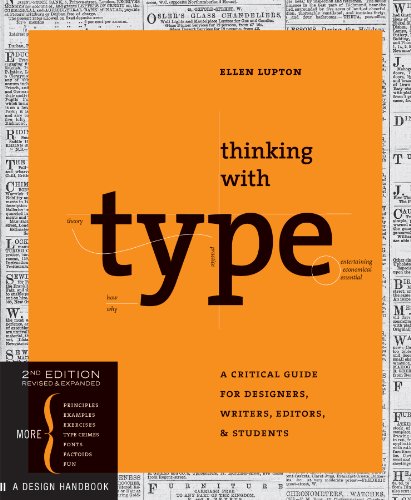
Thinking With Type
Ellen Lupton
5.0
Our all time best selling book is now available in a revised and expanded second edition. Thinking with Type is the definitive guide to using typography in visual communication, from the printed page to the computer screen. This revised edition includes forty-eight pages of new content, including the latest information on style sheets for print and the web, the use of ornaments and captions, lining and non-lining numerals, the use of small caps and enlarged capitals, as well as information on captions, font licensing, mixing typefaces, and hand lettering. Throughout the book, visual examples show how to be inventive within systems of typographic form—what the rules are and how to break them. Thinking with Type is a type book for everyone: designers, writers, editors, students, and anyone else who works with words. The popular online companion to Thinking with Type (www.thinkingwithtype.com) has been revised to reflect the new material in the second edition.

…
Recommended by David Kadavy, Kimberly Gloria Choi, Marius Ciuchete Paun, and 1 others.
Kimberly Gloria Choi
When asked what books she would recommend to youngsters interested in her professional path, Kimberly mentioned Thinking with Type. [source]
Marius Ciuchete Paun
Question: What books would you recommend to young people interested in your career path? Answer: “Just My Type” by Simon Garfield “Thinking with Type” by Ellen Lupton “Don't Make Me Think” by Steve Krug “Geometry of Design” by Kimberly Elam “Grid Systems in Graphic Design” by Josef Müller-Brockmann “ReWork” by Jason Fried These titles should be a good start, I think. [source]
Cover unavailable
2
The Elements of Typographic Style: Version 4.0
Robert Bringhurst
4.8
Renowned typographer and poet Robert Bringhurst brings clarity to the art of typography with this masterful style guide. Combining the practical, theoretical, and historical, this edition is completely updated, with a thorough revision and updating of the longest chapter, "Prowling the Specimen Books," and many other small but important updates based on things that are continually changing in the field.
…
Recommended by David Kadavy.
Cover unavailable
3
LOGO Design Love, Annotated and Expanded Edition
David Airey
4.8
Completely updated and expanded, the second edition of David Airey's "Logo Design Love" contains more of just about everything that made the first edition so great: more case studies, more sketches, more logos, more tips for working with clients, more insider stories, and more practical information for getting the job and getting it done right. In "Logo Design Love," David shows you how to develop an iconic brand identity from start to finish, using client case studies from renowned designers. In the process, he reveals how designers create effective briefs, generate ideas, charge for their work, and collaborate with clients. David not only shares his personal experiences working on identity projects-including sketches and final results of his own successful designs-he also uses the work of many well-known designers such as Paula Scher, who designed the logos for Citi and Microsoft Windows, and Lindon Leader, creator of the current FedEx identity, as well as work from leading design studios, including Moving Brands, Pentagram, MetaDesign, Sagmeister & Walsh, and many more. In "Logo Design Love," you'll learn: Best practices for extending a logo into a complete brand identity systemWhy one logo is more effective than anotherHow to create your own iconic designsWhat sets some designers above the rest31 practical design tips for creating logos that last
…
Cover unavailable
4
The Non-Designer's Design Book (Non Designer's Design Book)
Robin Williams
4.8
A lot has happened in the world of digital design since the first edition of this title was published, but one thing remains true: There is an ever-growing number of people attempting to design everything from newsletters to advertisements with no formal training. This book is the one place they can turn to find quick, non-intimidating, excellent design help from trusted design instructor Robin Williams. This revised and expanded classic includes a new chapter on designing with type, more quizzes and exercises, updated projects, and new visual and typographic examples that give the book a fresh, modern look. In" The Non-Designer's Design Book, " "4th Edition, " Robin turns her attention to the basic principles that govern good design. Perfect for beginners, Robin boils great design into four easy-to-master principles: contrast, repetition, alignment, and proximity (C.R.A.P.!). Readers who follow her clearly explained concepts will produce more sophisticated and professional work immediately. Humor-infused, jargon-free prose interspersed with design exercises, quizzes, and illustrations make learning a snap-which is just what audiences have come to expect from this bestselling author.
…
Recommended by David Kadavy.
Cover unavailable
5
How to be a Graphic Designer Without Losing Your Soul
Adrian Shaughnessy, Stefan Sagmeister
4.8
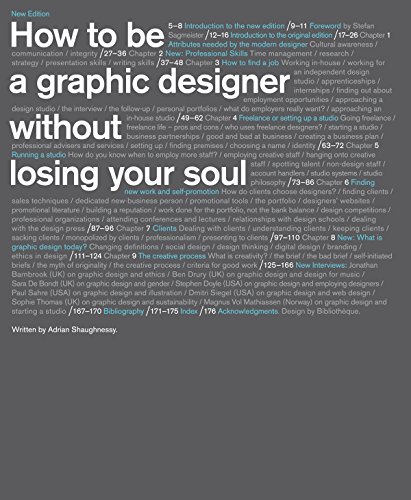
Designers are quick to tell us about their sources of inspiration, but they are much less willing to reveal such critical matters as how to find work, how much they charge, and what to do when a client rejects three weeks of work and refuses to pay the bill. How to be a graphic designer without losing your soul addresses the concerns of young designers who want to earn a living by doing expressive and meaningful work, and who want to avoid becoming hired drones working on soulless projects. Written by a designer for designers, it combines practical advice with philosophical guidance to help young professionals embark on their careers. How should designers manage the creative process? What's the first step in the successful interpretation of a brief? How do you generate ideas when everything just seems blank? How to be a graphic designer offers clear, concise guidance for these questions, along with focused, no-nonsense strategies for setting up, running, and promoting a studio, finding work, and collaborating with clients.
The book also includes inspiring interviews with ten leading designers, including Rudy VanderLans (Emigre), John Warwicker (Tomato), Neville Brody (Research Studios), and Andy Cruz (House Industries). All told, How to be a graphic designer covers just about every aspect of the profession, and stands as an indispensable guide for any young designer.
…
Cover unavailable
6
Graphic Design: The New Basics
Ellen Lupton and Jennifer Cole Phillips
4.7
Our bestselling introduction to graphic design is now available in a revised and updated edition. In Graphic Design: The New Basics, bestselling author Ellen Lupton (Thinking with Type, Type on Screen) and design educator Jennifer Cole Phillips explain the key concepts of visual language that inform any work of design, from logo or letterhead to a complex website. Through visual demonstrations and concise commentary, students and professionals explore the formal elements of twodimensional design, such as point, line, plane, scale, hierarchy, layers, and transparency.
This revised edition replaces sixty-four pages of the original publication with new content, including new chapters on visualizing data, typography, modes of representation, and Gestalt principles, and adds sixteen pages of new student and professional work covering such topics as working with grids and designing with color.
…
Cover unavailable
7
Making and Breaking the Grid: A Graphic Design Layout Workshop
Timothy Samara
4.7
For designers working in every medium, layout is arguably the most basic, and most important, element. Effective layout is essential to communication and enables the end user not only to be drawn in with an innovative design but to digest information easily. Making and Breaking the Grid is a comprehensive layout design workshop that assumes that in order to effectively break the rules of grid-based design, one must first understand those rules and see them applied in real-world projects.
Text reveals top designers' work in process and rationale. Projects with similar characteristics are linked through a simple notational system that encourages exploration and comparison of structure ideas. Also included are historical overviews that summarize the development of layout concepts, both grid-based and non-grid based, in modern design practice.
…
Cover unavailable
8
Grid Systems in Graphic Design/Raster Systeme Fur Die Visuele Gestaltung (German and English Edition)
Josef Müller-Brockmann
4.7
Recommended by Marius Ciuchete Paun.
Marius Ciuchete Paun
Question: What books would you recommend to young people interested in your career path? Answer: “Just My Type” by Simon Garfield “Thinking with Type” by Ellen Lupton “Don't Make Me Think” by Steve Krug “Geometry of Design” by Kimberly Elam “Grid Systems in Graphic Design” by Josef Müller-Brockmann “ReWork” by Jason Fried These titles should be a good start, I think. [source]
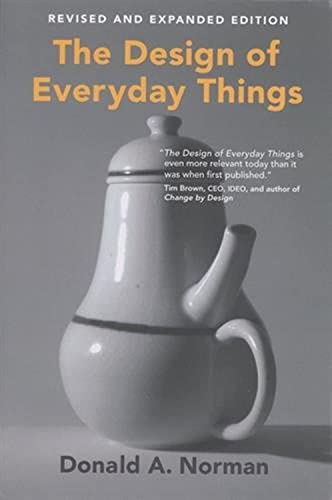
Even the smartest among us can feel inept as we fail to figure out which light switch or oven burner to turn on, or whether to push, pull, or slide a door. The fault, argues this ingenious—even liberating—book, lies not in ourselves, but in product design that ignores the needs of users and the principles of cognitive psychology. The problems range from ambiguous and hidden controls to arbitrary relationships between controls and functions, coupled with a lack of feedback or other assistance and unreasonable demands on memorization. The Design of Everyday Things shows that good, usable design is possible. The rules are simple: make things visible, exploit natural relationships that couple function and control, and make intelligent use of constraints. The goal: guide the user effortlessly to the right action on the right control at the right time.
In this entertaining and insightful analysis, cognitive scientist Don Norman hails excellence of design as the most important key to regaining the competitive edge in influencing consumer behavior. Now fully expanded and updated, with a new introduction by the author, The Design of Everyday Things is a powerful primer on how—and why—some products satisfy customers while others only frustrate them.
…
Recommended by Andrew Chen, Marissa Mayer, Nir Eyal, and 23 others.
Grey Baker
I mainly read to decompress and change my state of mind, so it’s hard to point to an insight I read that helped me. Reading fiction has pulled me out of a bad mood more times than I can count, though, and always reenergises me to attack problems that had stumped me again. That said, I read and loved Norman Norman’s “The Design of Everyday Things”, and it’s helped me think through design problems ever since. [source]
Julia Enthoven
For people interested in designing or building software products: The Design of Everyday Things by Don Norman and The Lean Product Playbook by Dan Olsen. Both books have informed my product sense and helped me make decisions about great UX. [source]
Kaci Lambe
These three books are about how people actually use design in their lives. They helped me understand this very basic idea: There are no dumb users, only bad designers. Take the time to create based on how your design will be interacted with. Test it. Iterate. That's how you become a good designer. [source]
Cover unavailable
10
Don't Make Me Think, Revisited: A Common Sense Approach to Web Usability
Steve Krug
4.7
Since Don’t Make Me Think was first published in 2000, over 400,000 Web designers and developers have relied on Steve Krug’s guide to help them understand the principles of intuitive navigation and information design.
In this 3rd edition, Steve returns with fresh perspective to reexamine the principles that made Don’t Make Me Think a classic-–with updated examples and a new chapter on mobile usability. And it’s still short, profusely illustrated…and best of all–fun to read.
If you’ve read it before, you’ll rediscover what made Don’t Make Me Think so essential to Web designers and developers around the world. If you’ve never read it, you’ll see why so many people have said it should be required reading for anyone working on Web sites.
…
Recommended by Brian Armstrong, Jeff Atwood, Ken Norton, and 13 others.
Anoop Anthony
Krug was teaching usability two decades ago when UX wasn't a buzzword, and the WWW was still in its nascent stages. (The first edition of this book was published in 2000!) I cut my teeth on Don't make me think back when I first started out in the industry. It is now in its third edition and still relevant — it offers compelling insights into building great user experiences into websites and applications. [source]
Auston Bunsen
I’m actually a self-taught programmer, so these books have really helped me with practical skills that I could put to use & yield results. The return on investment for these kinds of books is off the charts for me! [source]
Chris Goward
Here are some of the books that have been very impactful for me, or taught me a new way of thinking: … Don't Make Me Think. [source]
Cover unavailable
11
Steal Like an Artist: 10 Things Nobody Told You About Being Creative
You don’t need to be a genius, you just need to be yourself. That’s the message from Austin Kleon, a young writer and artist who knows that creativity is everywhere, creativity is for everyone. A manifesto for the digital age, Steal Like an Artist is a guide whose positive message, graphic look and illustrations, exercises, and examples will put readers directly in touch with their artistic side.
Part of ambition is modeling yourself after those you’d like to be like. Austin’s philosophy of ruthlessly stealing and remixing the greats might sound appalling at first but it is actually the essence of art. You learn by stealing, you become creative by stealing, you push yourself to be better by working with these materials. Austin is a fantastic artist, but most importantly he communicates the essence of writing and creating art better than anyone else I can think of. It is a manifesto for any young, creative person looking to make his mark. Pair up with Show Your Work which is also excellent. [source]
Breezy and fun and yes, scary. Scary because it calls your bluff. [source]
Andra Zaharia
While I was thinking of the best books to add to this short list, I realized that not even half of them are directly related to digital marketing. This is because I believe that the best marketers are people who understand human nature deeply and aim to bring out the best in it. Call me naive, but that’s how I see it. If I were to want to pursue a career in marketing, I’d read … Steal Like An Artist. [source]
Cover unavailable
12
Just My Type: A Book About Fonts
Simon Garfield
4.6
What’s your type? Suddenly everyone’s obsessed with fonts. Whether you’re enraged by Ikea’s Verdanagate, want to know what the Beach Boys have in common with easy Jet or why it’s okay to like Comic Sans, Just My Type will have the answer. Learn why using upper case got a New Zealand health worker sacked. Refer to Prince in the Tafkap years as a Dingbat (that works on many levels). Spot where movies get their time periods wrong and don’t be duped by fake posters on eBay. Simon Garfield meets the people behind the typefaces and along the way learns why some fonts – like men – are from Mars and some are from Venus. From type on the high street and album covers, to the print in our homes and offices, Garfield is the font of all types of knowledge.
…
Recommended by Marius Ciuchete Paun.
Marius Ciuchete Paun
Question: What books would you recommend to young people interested in your career path? Answer: “Just My Type” by Simon Garfield “Thinking with Type” by Ellen Lupton “Don't Make Me Think” by Steve Krug “Geometry of Design” by Kimberly Elam “Grid Systems in Graphic Design” by Josef Müller-Brockmann “ReWork” by Jason Fried These titles should be a good start, I think. [source]
Cover unavailable
13
Show Your Work! 10 Ways to Show Your Creativity and Get Discovered: 10 Ways to Share Your Creativity and Get Discovered
In his New York Times bestseller Steal Like an Artist, Austin Kleon showed readers how to unlock their creativity by stealing from the community of other movers and shakers. Now, in an even more forward-thinking and necessary book, he shows how to take that critical next step on a creative journey getting known. Show Your Work! is about why generosity trumps genius. It s about getting findable, about using the network instead of wasting time networking. It s not self-promotion, it s self-discovery let others into your process, then let them steal from you. Filled with illustrations, quotes, stories, and examples, Show Your Work! offers ten transformative rules for being open, generous, brave, productive. In chapters such as You Don t Have to Be a Genius; Share Something Small Every Day; and Stick Around, Kleon creates a user s manual for embracing the communal nature of creativity what he calls the ecology of talent. From broader life lessons about work (you can t find your voice if you don t use it) to the etiquette of sharing and the dangers of oversharing to the practicalities of Internet life (build a good domain name; give credit when credit is due), it s an inspiring manifesto for succeeding as any kind of artist or entrepreneur in the digital age."
…
Recommended by Ryan Holiday, Armina Sirbu, Benjamin Spall, and 5 others.
Part of ambition is modeling yourself after those you’d like to be like. Austin’s philosophy of ruthlessly stealing and remixing the greats might sound appalling at first but it is actually the essence of art. You learn by stealing, you become creative by stealing, you push yourself to be better by working with these materials. Austin is a fantastic artist, but most importantly he communicates the essence of writing and creating art better than anyone else I can think of. It is a manifesto for any young, creative person looking to make his mark. Pair up with Show Your Work which is also excellent. [source]
Armina Sirbu
Show your work - by Austin Kleon - is magical and I feel like reading it slowly, like enjoying a cappuccino. I need to let each "mini-chapter" sink in and take my time to also apply what I am reading there because it's "spot on" for my current projects. [source]
Benjamin Spall
Question: What five books would you recommend to youngsters interested in your professional path? Show Your Work! by Austin Kleon, … [source]
Cover unavailable
14
Meggs' History of Graphic Design
Philip B. Meggs and Alston W. Purvis
4.6
The bestselling graphic design reference, updated for the digital ageMeggs' History of Graphic Design is the industry's unparalleled, award-winning reference. With over 1,400 high-quality images throughout, this visually stunning text guides you through a saga of artistic innovators, breakthrough technologies, and groundbreaking developments that define the graphic design field. The initial publication of this book was heralded as a publishing landmark, and author Philip B. Meggs is credited with significantly shaping the academic field of graphic design.
Meggs presents compelling, comprehensive information enclosed in an exquisite visual format. The text includes classic topics such as the invention of writing and alphabets, the origins of printing and typography, and the advent of postmodern design. This new sixth edition has also been updated to provide:
The latest key developments in web, multimedia, and interactive design Expanded coverage of design in Asia and the Middle East Emerging design trends and technologies Timelines framed in a broader historical context to help you better understand the evolution of contemporary graphic design Extensive ancillary materials including an instructor's manual, expanded image identification banks, flashcards, and quizzes You can't master a field without knowing the history. Meggs' History of Graphic Design presents an all-inclusive, visually spectacular arrangement of graphic design knowledge for students and professionals. Learn the milestones, developments, and pioneers of the trade so that you can shape the future.
…
Recommended by Bret Victor.
Cover unavailable
15
100 Ideas That Changed Graphic Design
Steven Heller
4.5
New in the "100 Ideas That Changed..." series, this book demonstrates how ideas influenced and defined graphic design, and how those ideas have manifested themselves in objects of design. The 100 entries, arranged broadly in chronological order, range from technical (overprinting, rub-on designs, split fountain); to stylistic (swashes on caps, loud typography, and white space); to objects (dust jackets, design handbooks); and methods (paper cut-outs, pixelation).
…
Cover unavailable
16
Graphic Design Thinking: Beyond Brainstorming (renowned designer Ellen Lupton provides new techniques for creative thinking about design process with examples and case studies)
Ellen Lupton, Jennifer Cole Phillips
4.5
Creativity is more than an inborn talent; it is a hard-earned skill, and like any other skill, it improves with practice. Graphic Design Thinking: How to Define Problems, Get Ideas, and Create Form explores a variety of informal techniques ranging from quick, seat-of-the-pants approaches to more formal research methods for stimulating fresh thinking, and ultimately arriving at compelling and viable solutions. In the style with which author Ellen has come to been known hands-on, up-close approach to instructional design writing brainstorming techniques are grouped around the three basic phases of the design process: defining the problem, inventing ideas, and creating form. Creative research methods include focus groups, interviewing, brand mapping, and co-design. Each method is explained with a brief narrative text followed by a variety of visual demonstrations and case studies. Also included are discussions with leading professionals, including Art Chantry, Ivan Chermayeff, Jessica Helfand, Steven Heller, Abott Miller, Christoph Niemann, Paula Scher, and Martin Venezky, about how they get ideas and what they do when the well runs dry. The book is directed at working designers, design students, and anyone who wants to apply inventive thought patterns to everyday creative challenges.
…
Recommended by Ellen Lupton.
Cover unavailable
17
Designing Brand Identity: An Essential Guide for the Entire Branding Team
Alina Wheeler
4.5
From researching the competition to translating the vision of the CEO, to designing and implementing an integrated brand identity programme, the meticulous development process of designing a brand identity is presented through a highly visible step-by-step approach in five phases.
Cover unavailable
18
Universal Principles of Design, Revised and Updated: 125 Ways to Enhance Usability, Influence Perception, Increase Appeal, Make Better Design Decisions, and Teach through Design
William Lidwell, Kritina Holden, Jill Butler
4.5
Whether a marketing campaign or a museum exhibit, a video game or a complex control system, the design we see is the culmination of many concepts and practices brought together from a variety of disciplines. Because no one can be an expert on everything, designers have always had to scramble to find the information and know-how required to make a design work—until now. Universal Principles of Design, Revised and Updated is a comprehensive, cross-disciplinary encyclopedia of design. Richly illustrated and easy to navigate, it pairs clear explanations of every design concept with visual examples of the concepts applied in practice. From the "80/20” rule to chunking, from baby-face bias to Occam's razor, and from self-similarity to storytelling, every major design concept is defined and illustrated for readers to expand their knowledge. This landmark reference will become the standard for designers, engineers, architects, and students who seek to broaden and improve their design expertise.
…
Recommended by Benjamin Humphrey and Jane Pyle.
Benjamin Humphrey
Essentially a reference book for product designers, the universal principles is a smartly curated and neatly presented guide to the key terms you'll come across as a designer, with examples and diagrams. A beautiful book. [source]

Cover unavailable
19
Stop Stealing Sheep & Find Out How Type Works
Erik Spiekermann, E.M Ginger
4.4
A guide to typography. It draws in the reader with its design and layout, making use of more than 200 illustrations and photographs. It explains in everyday layman's terms what type is and how you can use it to enhance legibility, meaning, and aesthetic enjoyment. It also includes chapters on Web typography and other forms of online text display.
This book helped me see design differently. Good design costs just as much as bad design, but it breaks through all sorts of clutter. [source]
Debbie Millman
The great typographer Eric Spiekermann’s book. [source]
Cover unavailable
20
Know Your Onions: Graphic Design
Drew de Soto
4.4
This book is practical and immediate, without being condescending or overly technical. It is like having a graphic design mentor who will help you come up with ideas, develop your concepts, and implement them in a way that is engaging and humorous. It gives readers the experience and ability that normally comes from years of on-the-job training. All of the essential techniques of graphic design and its digital implementation are covered.
Read this book and gain 25 years of experience in how to think like a creative, act like a businessman and design like a god.
This book is designed like a notebook, with all the authors' tips and knowledge already inside. However, it also includes blank pages that allow the user to personalize this reference book with specific notes that are relevant to his or her studio, suppliers or clients.
…
Cover unavailable
21
Design Basics Index
Jim Krause
4.4
Master the 3 C's of Head-Turning Design!
Cover your basics with the book that covers everything from typography and color to layout and business issues! Jim Krause, author of the popular Index series, guides you through the understanding and practice of the three elements every successful visual design must have:
Components: Learn how to get the most out of the photos, illustrations, icons, typography, linework, decoration, borders and backgrounds you use within your design.
Composition: Practice combining the components of a design in a visually appealing way by using the principles of placement, grouping, alignment, flow and spacing to create a pleasing, cohesive design.
Concept: Utilize the intangible elements of theme, connotation and style to present and deliver your message in a way that will wow your clients every time.
Whether you're a new, mid-level or experienced designer who is brainstorming ideas or finalizing your presentation, this handy-to-use, take-it-with-you book will instruct and inspire you to new heights of creativity.
…
Cover unavailable
22
How to
Michael Bierut
4.4
The first monograph, design manual, and manifesto by Michael Bierut, one of the world’s most renowned graphic designers—a career retrospective that showcases more than thirty-five of his most noteworthy projects for clients as the Brooklyn Academy of Music, the Yale School of Architecture, the New York Times, Saks Fifth Avenue, and the New York Jets, and reflects eclectic enthusiasm and accessibility that has been the hallmark of his career.
Protégé of design legend Massimo Vignelli and partner in the New York office of the international design firm Pentagram, Michael Bierut has had one of the most varied and successful careers of any living graphic designer, serving a broad spectrum of clients as diverse as Saks Fifth Avenue, Harley-Davidson, the Atlantic Monthly, the William Jefferson Clinton Foundation, Billboard, Princeton University, the New York Jets, the Brooklyn Academy of Music, and the Morgan Library.
How to, Bierut’s first career retrospective, is a landmark work in the field. Featuring more than thirty-five of his projects, it reveals his philosophy of graphic design—how to use it to sell things, explain things, make things look better, make people laugh, make people cry, and (every once in a while) change the world. Specially chosen to illustrate the breadth and reach of graphic design today, each entry demonstrates Bierut’s eclectic approach. In his entertaining voice, the artist walks us through each from start to finish, mixing historic images, preliminary drawings (including full-size reproductions of the notebooks he has maintained for more than thirty-five years), working models and rejected alternatives, as well as the finished work. Throughout, he provides insights into the creative process, his working life, his relationship with clients, and the struggles that any design professional faces in bringing innovative ideas to the world.
Offering insight and inspiration for artists, designers, students, and anyone interested in how words, images, and ideas can be put together, How to provides insight to the design process of one of this century’s most renowned creative minds.
…
Cover unavailable
23
The Art of Looking Sideways
Alan Fletcher
4.4
The Art of Looking Sideways is a primer in visual intelligence, an exploration of the workings of the eye, the hand, the brain and the imagination. It is an inexhaustible mine of anecdotes, quotations, images, curious facts and useless information, oddities, serious science, jokes and memories, all concerned with the interplay between the verbal and the visual, and the limitless resources of the human mind. Loosely arranged in 72 chapters, all this material is presented in a wonderfully inventive series of pages that are themselves masterly demonstrations of the expressive use of type, space, color and imagery.
This book does not set out to teach lessons, but it is full of wisdom and insight collected from all over the world. Describing himself as a visual jackdaw, master designer Alan Fletcher has distilled a lifetime of experience and reflection into a brilliantly witty and inimitable exploration of such subjects as perception, color, pattern, proportion, paradox, illusion, language, alphabets, words, letters, ideas, creativity, culture, style, aesthetics and value.
The Art of Looking Sideways is the ultimate guide to visual awareness, a magical compilation that will entertain and inspire all those who enjoy the interplay between word and image, and who relish the odd and the unexpected.
…
Cover unavailable
24
Envisioning Information
Edward R. Tufte
4.4
The celebrated design professor here tackles the question of how best to communicate real-life experience in a two-degree format, whether on the printed page or the computer screen. The Whole Earth Review called Envisioning Information a "passionate, elegant revelation."
Recommended by Kevin Rose, Jeff Atwood, Bret Victor, and 1 others.
The master when it comes to taking complicated data and turning it into beautiful charts and graphs that are easy to understand. If you’re into graphic design, print design, web design, you name it, you’re going to get some really good information and how tos out of these books. He has a whole series of these books. [source]
Cover unavailable
25
The Visual Display of Quantitative Information
Edward R. Tufte
4.4
The classic book on statistical graphics, charts, tables. Theory and practice in the design of data graphics, 250 illustrations of the best (and a few of the worst) statistical graphics, with detailed analysis of how to display data for precise, effective, quick analysis. Design of the high-resolution displays, small multiples. Editing and improving graphics. The data-ink ratio. Time-series, relational graphics, data maps, multivariate designs. Detection of graphical deception: design variation vs. data variation. Sources of deception. Aesthetics and data graphical displays. This is the second edition of The Visual Display of Quantitative Information. Recently published, this new edition provides excellent color reproductions of the many graphics of William Playfair, adds color to other images, and includes all the changes and corrections accumulated during 17 printings of the first edition.
…
Recommended by Bret Victor and Michael Okuda.
Michael Okuda
Edward Tufte's classic book, The Visual Display of Quantitative Information is a fascinating, surprisingly readable treatise for anyone interested in infographics. When I hired artists for the Star Trek graphics dept, I sometimes asked them to read it.https://t.co/cK4GQqBDxp [source]
Cover unavailable
26
Go: A Kidd's Guide to Graphic Design
Chip Kidd
4.4
Kids love to express themselves, and are designers by nature whether making posters for school, deciding what to hang in their rooms, or creating personalized notebook covers. Go, is an introduction to the ways in which a designer communicates his or her ideas to the world. It's written and designed just for those curious kids, not to mention their savvy parents, who want to learn the secret of how to make things dynamic and interesting.
…
Cover unavailable
27
How to Think Like a Great Graphic Designer
Debbie Millman
4.4
Take a peek inside the heads of some of the world’s greatest living graphic designers. How do they think, how do they connect to others, what special skills do they have? In honest and revealing interviews, nineteen designers, including Stefan Sagmeister, Michael Beirut, David Carson, and Milton Glaser, share their approaches, processes, opinions, and thoughts about their work with noted brand designer Debbie Millman. The internet radio talk host of Design Matters, Millman persuades the greatest graphic designers of our time to speak frankly and openly about their work. How to Think Like a Great GraphicDesigners offers a rare opportunity to observe and understand the giants of the industry. Designers interviewed include: —Milton Glaser —Stefan Sagmeister —David Carson —Paula Scher —Abbott Miler —Lucille Tenazas —Paul Sahre —Emily Oberman and Bonnie Siegler —Chip Kidd —James Victore —Carin Goldberg —Michael Bierut —Seymour Chwast —Jessica Helfand and William Drenttel —Steff Geissbuhler —John Maeda
Allworth Press, an imprint of Skyhorse Publishing, publishes a broad range of books on the visual and performing arts, with emphasis on the business of art. Our titles cover subjects such as graphic design, theater, branding, fine art, photography, interior design, writing, acting, film, how to start careers, business and legal forms, business practices, and more. While we don't aspire to publish a New York Times bestseller or a national bestseller, we are deeply committed to quality books that help creative professionals succeed and thrive. We often publish in areas overlooked by other publishers and welcome the author whose expertise can help our audience of readers.
…
Cover unavailable
28
100 Things Every Designer Needs to Know about People
Susan Weinschenk
4.3
We design to elicit responses from people. We want them to buy something, read more, or take action of some kind. Designing without understanding what makes people act the way they do is like exploring a new city without a map: results will be haphazard, confusing, and inefficient. This book combines real science and research with practical examples to deliver a guide every designer needs. With it you'll be able to design more intuitive and engaging work for print, websites, applications, and products that matches the way people think, work, and play.
Learn to increase the effectiveness, conversion rates, and usability of your own design projects by finding the answers to questions such as:
What grabs and holds attention on a page or screen? What makes memories stick? What is more important, peripheral or central vision? How can you predict the types of errors that people will make? What is the limit to someone's social circle? How do you motivate people to continue on to (the next step? What line length for text is best? Are some fonts better than others? These are just a few of the questions that the book answers in its deep-dive exploration of what makes people tick.
…
Recommended by Jane Pyle.
Cover unavailable
29
Graphic Design School: The Principles and Practice of Graphic Design
David Dabner, Sandra Stewart, et al.
4.3
Graphic Design School allows students to develop core competencies while understanding how these fundamentals translate into new and evolving media. With examples from magazines, websites, books, and mobile devices, the Fifth Edition provides an overview of the visual communications profession, with a new focus on the intersection of design specialties. A brand-new section on web and interactivity covers topics such as web tools, coding requirements, information architecture, web design and layout, mobile device composition, app design, CMS, designing for social media, and SEO.
…
Cover unavailable
30
LOGO Modernism
Jens Müller
4.3
Brand new: An unprecedented catalog of modern trademarks Modernist aesthetics in architecture, art, and product design are familiar to many. In soaring glass structures or minimalist canvases, we recognize a time of vast technological advance which affirmed the power of human beings to reshape their environment and to break, radically, from the conventions or constraints of the past.Less well-known, but no less fascinating, is thedistillation of modernism in graphic design. With the creation of clean visual concepts, designers sought to move away from the mystique they identified with the commercial artist, and to counterbalance an increasingly complicated world with clarity.This unprecedented TASCHEN publication, authored byJens Muller, brings together approximately 6,000 trademarks, focused on the period 1940 1980, to examine howmodernist attitudes and imperatives gave birth to corporate identity. Ranging from media outfits to retail giants, airlines to art galleries, the sweeping survey is organized into three design-orientated chapters: Geometric, Effect, and Typographic. Each chapter is then sub-divided into form and style led sections such as alphabet, overlay, dots and squares.Alongside the comprehensive catalog, the book features an introduction fromJens Mulleron the history of logos, and an essay byR. Roger Remingtonon modernism and graphic design. Eight designer profiles and eight instructive case studies are also included, with a detailed look at the life and work of such luminaries asPaul Rand, Yusaku Kamekura, andAnton Stankowski, and at such significant projects asFiat, The Daiei, Inc., and theMexico Olympic Games of 1968. An unrivaled resource for graphic designers, advertisers, and branding specialists, Logo Modernismis equally fascinating to anyone interested in social, cultural, and corporate history, and in the sheer persuasive power of image and form. Text in English, French, and German "
…
Cover unavailable
31
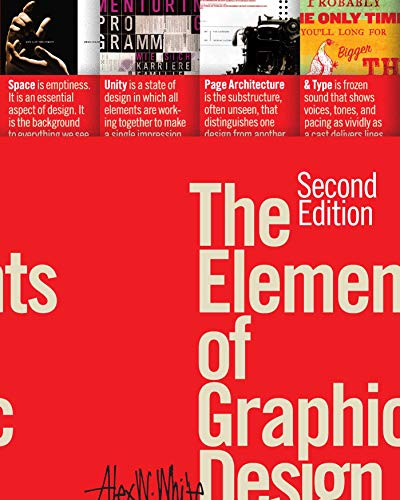
The Elements of Graphic Design
Alex W. White
4.3
Now in full color in a larger size! 40% more content and over 750 images to enhance and better clarify the concepts in this thought-provoking resource for graphic designers, professors, and students.
This very popular design book has been wholly revised and expanded to feature a new dimension of inspiring and counterintuitive ideas to thinking about graphic design relationships.
The second edition includes a new section on web design and new discussions of modularity, framing, motion and time, rules of randomness, and numerous quotes supported by images and biographies. This pioneering work provides designers, art directors, and students—regardless of experience—with a unique approach to successful design.
Veteran designer and educator Alex. W. White has assembled a wealth of information and examples in his exploration of what makes visual design stunning and easy to read. Readers will discover White's four elements of graphic design, including how to: define and reveal dominant images, words, and concepts; use scale, color, and position to guide the viewer through levels of importance; employ white space as a significant component of design and not merely as background; and use display and text type for maximum comprehension and value to the reader. Offering a new way to think about and use the four design elements, this book is certain to inspire better design.
Allworth Press, an imprint of Skyhorse Publishing, publishes a broad range of books on the visual and performing arts, with emphasis on the business of art. Our titles cover subjects such as graphic design, theater, branding, fine art, photography, interior design, writing, acting, film, how to start careers, business and legal forms, business practices, and more. While we don't aspire to publish a New York Times bestseller or a national bestseller, we are deeply committed to quality books that help creative professionals succeed and thrive. We often publish in areas overlooked by other publishers and welcome the author whose expertise can help our audience of readers.
…
Cover unavailable
32
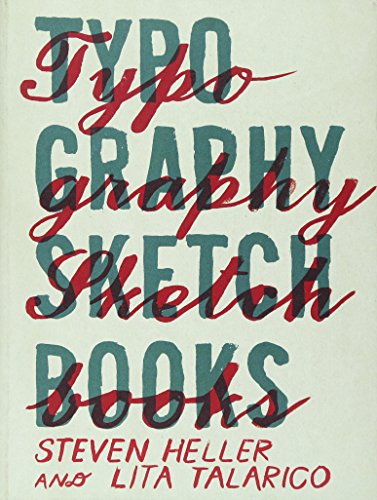
Typography Sketchbooks
Steven Heller, Lita Talarico
4.3
Typography is an obsession for most designers. It's at the heart of all visual communication and is one of the purest forms of design, one that can always be improved and refined. Typography Sketchbooks gets into the minds of designers who create typefaces, word images and logos through their private sketchbooks. The result of these wide-ranging typographic musings provide fascinating insights into the expressive quality of letters and words. Aimed at all those who use type, whether by hand or on-screen, this pleasing compendium stresses the importance of good typography at a time when reading habits are changing and celebrates a craft that has endured for centuries.
…
Cover unavailable
33
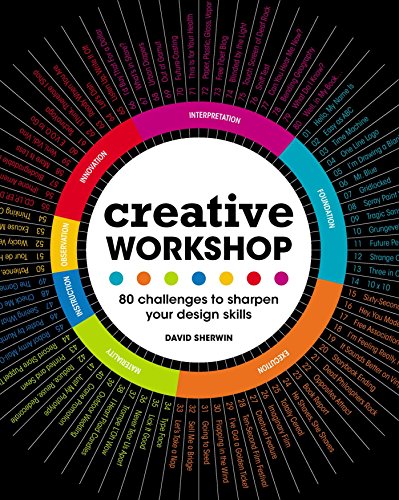
Creative Workshop: 80 Challenges to Sharpen Your Design Skills
David Sherwin
4.3
Have you ever struggled to complete a design project on time? Or felt that having a tight deadline stifled your capacity for maximum creativity? If so, then this book is for you.
Within these pages, you'll find 80 creative challenges that will help you achieve a breadth of stronger design solutions, in various media, within any set time period. Exercises range from creating a typeface in an hour to designing a paper robot in an afternoon to designing web pages and other interactive experiences. Each exercise includes compelling visual solutions from other designers and background stories to help you increase your capacity to innovate.
Creative Workshop also includes useful brainstorming techniques and wisdom from some of today's top designers. By road-testing these techniques as you attempt each challenge, you'll find new and more effective ways to solve tough design problems and bring your solutions to vibrant life.
…
Cover unavailable
34
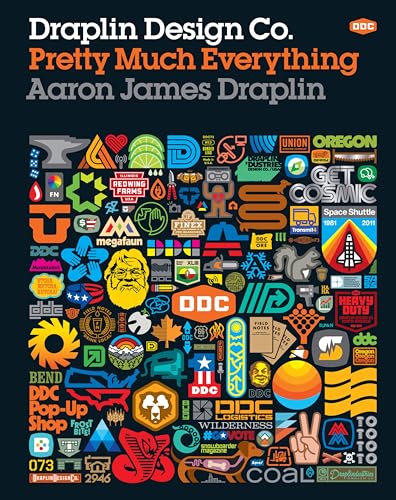
Draplin Design Co.: Pretty Much Everything
Aaron James Draplin
4.3
Esquire. Ford Motors. Burton Snowboards. The Obama Administration. While all of these brands are vastly different, they share at least one thing in common: a teeny, little bit of Aaron James Draplin. Draplin is one of the new school of influential graphic designers who combine the power of design, social media, entrepreneurship, and DIY aesthetic to create a successful business and way of life.
Pretty Much Everything is a mid-career survey of work, case studies, inspiration, road stories, lists, maps, how-tos, and advice. It includes examples of his work—posters, record covers, logos—and presents the process behind his design with projects like Field Notes and the “Things We Love” State Posters. Draplin also offers valuable advice and hilarious commentary that illustrates how much more goes into design than just what appears on the page. With Draplin’s humor and pointed observations on the contemporary design scene, Draplin Design Co. is the complete package for the new generation of designers.
…
Cover unavailable
35
79 Short Essays on Design
Michael Bierut
4.3
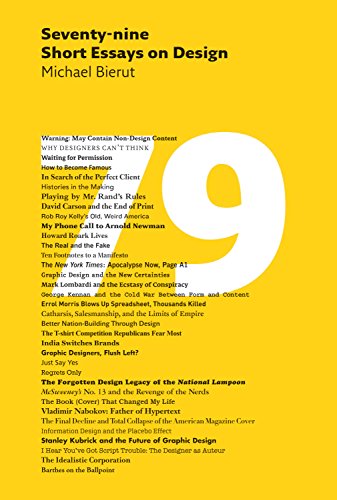
Seventy-nine Short Essays on Design brings together the best of designer Michael Bierut's critical writingserious or humorous, flattering or biting, but always on the mark. Bierut is widely considered the finest observer on design writing today. Covering topics as diverse as Twyla Tharp and ITC Garamond, Bierut's intelligent and accessible texts pull design culture into crisp focus. He touches on classics, like Massimo Vignelli and the cover of The Catcher in the Rye, as well as newcomers, like McSweeney's Quarterly Concern and color-coded terrorism alert levels. Along the way Nabakov's Pale Fire; Eero Saarinen; the paper clip; Celebration, Florida; the planet Saturn; the ClearRx pill bottle; and paper architecture all fall under his pen. His experience as a design practitioner informs his writing and gives it truth. In Seventy-nine Short Essays on Design, designers and nondesigners alike can share and revel in his insights.
…
Cover unavailable
36
Graphic Design, Referenced: A Visual Guide to the Language, Applications, and History of Graphic Design
Bryony Gomez-palacio, Armin Vit
4.3
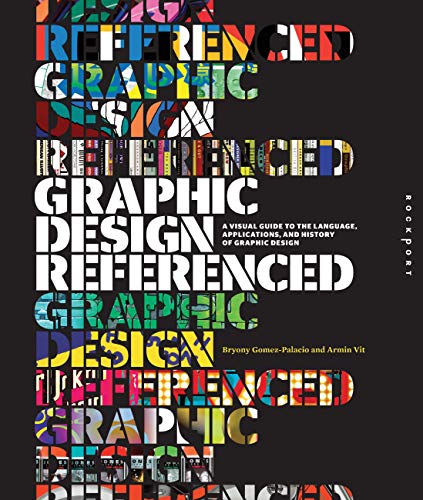
Graphic Design, Referenced is a visual and informational guide to the most commonly referenced terms, historical moments, landmark projects, and influential practitioners in the field of graphic design. With more than 2,000 design projects illustrating more than 400 entries, it provides an intense overview of the varied elements that make up the graphic design profession through a unique set of chapters: “principles" defines the very basic foundation of what constitutes graphic design to establish the language, terms, and concepts that govern what we do and how we do it, covering layout, typography, and printing terms; “knowledge" explores the most influential sources through which we learn about graphic design from the educational institutions we attend to the magazines and books we read; “representatives" gathers the designers who over the years have proven the most prominent or have steered the course of graphic design in one way or another; and “practice" highlights some of the most iconic work produced that not only serve as examples of best practices, but also illustrate its potential lasting legacy. Graphic Design, Referenced serves as a comprehensive source of information and inspiration by documenting and chronicling the scope of contemporary graphic design, stemming from the middle of the twentieth century to today.
…
Cover unavailable
37
Graphic Design: A Concise History (World of Art)
Richard Hollis
4.3
This authoritative documentary history begins with the poster and goes on to chart the development of word and image in brochures and magazines, advertising, corporate identity, television, and electronic media, and the impact of technical innovations such as photography and the computer. For the revised edition, a new final chapter covers all the recent international developments in graphic design, including the role of the computer and the Internet in design innovation and globalization. In the last years of the twentieth century, at a time when "designer products" and the use of logos grew in importance, the role of graphic designers became more complex, subversive, and sometimes more political—witness Oliviero Toscani's notorious advertisements for Benetton. Digital technology cleared the way for an astonishing proliferation of new typefaces, and words began to take second place to typography in a whole range of magazines and books as designers asserted the primacy of their medium. Designers and companies discussed here include Neville Brody, David Carson, Design Writing Research, Edward Fella, Tibor Kalman, Jeffery Keedy, LettError, Pierre di Sciullo, Tomato, Gerard Unger, Cornel Windlin, and a host of others.
…
Cover unavailable
38
Things I Have Learned In My Life So Far
Stefan Sagmeister, Daniel Nettle, Nancy Spector
4.3
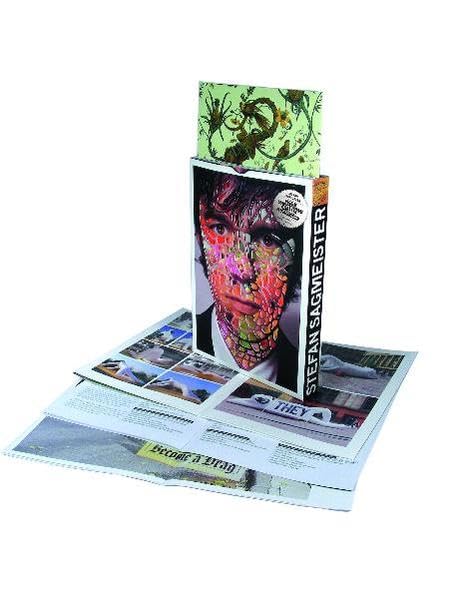
This book began as a list designer Stefan Sagmeister made in his diary under the title Things I have learned in my life so far, which includes statements such as "Worrying solves nothing" and "Trying to look good limits my life." The list reveals something that is profoundly true: Although human beings have been pursuing happiness for countless generations, it is not so easily achieved. And we need constant reminders to keep us on the right path.
With the support of his clients, Sagmeister transformed these sentences into typographic works, from billboards in France to sign-toting inflatable monkeys on the streets of Scotland. Accompanied by essays from design historian Steven Heller, Guggenheim chief curator Nancy Spector, and UK psychologist Daniel Nettle, as well as Sagmeister's own words, the series is revealed as a complex blend of personal revelation, art, and design--an eclectic mix of visual audacity and sound advice.
This book consists of 15 unbound signatures in a laser-cut slipcase. Shuffling the sequence of the signatures will produce 15 different covers.
…
Cover unavailable
39
Paul Rand: A Designer's Art
Paul Rand
4.3
Graphic Design which fulfills aesthetic needs, complies with the laws of form and exigencies of two-dimensional space; which speaks in semiotics, sans-serifs, and geometrics; which abstracts, transforms, translates, rotates, dilates, repeats, mirrors, groups, and regroups is not good design if it is irrelevant.
Graphic design which evokes the symmetria of Vituvius, the dynamic symmetry of Hambidge, the asymmetry of Mondrian; which is a good gestalt, generated by intuition or by computer, by invention or by a system of coordinates is not good design if it does not communicate. - Paul Rand
For the design student, teacher, professional designer, and, indeed, for anyone interested in the creative communication of ideas, Paul Rand: A Designer's Art is certain to be a book that is both provocative and enlightening.
…
Recommended by Kimberly Gloria Choi.
Kimberly Gloria Choi
When asked what books she would recommend to youngsters interested in her professional path, Kimberly mentioned A Designer's Art. [source]
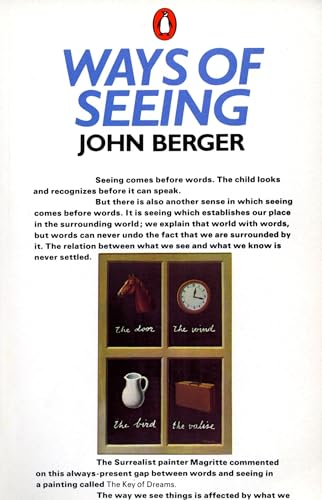
John Berger’s Classic Text on Art John Berger's Ways of Seeing is one of the most stimulating and the most influential books on art in any language. First published in 1972, it was based on the BBC television series about which the (London) Sunday Times critic commented: "This is an eye-opener in more ways than one: by concentrating on how we look at paintings . . . he will almost certainly change the way you look at pictures." By now he has.
"Berger has the ability to cut right through the mystification of the professional art critics . . . He is a liberator of images: and once we have allowed the paintings to work on us directly, we are in a much better position to make a meaningful evaluation" —Peter Fuller, Arts Review
"The influence of the series and the book . . . was enormous . . . It opened up for general attention to areas of cultural study that are now commonplace" —Geoff Dyer in Ways of Telling
Winner of the 1972 Booker Prize for his novel, G., John Peter Berger (born November 5th, 1926) is an art critic, painter and author of many novels including A Painter of Our Time, From A to X and Bento’s Sketchbook.
You have to understand the Marxist interpretation of art; it is absolutely fundamental to the way that art history departments now study the material. Then you have to critique it, because we’ve moved on from the 1970s and the collapse of Marxism in most of the world shows—amongst other things—that the model was flawed. But it’s still a very good book to read, for a teenager especially. [source]

Cover unavailable
41
A Smile in the Mind
Beryl McAlhone
4.2
This text explores witty thinking, looking at clever ideas rather than funny drawing, and gathering together the best examples of graphic wit since the 1960s. Work is included from more than 300 designers in the US, Britain, Europe and Japan.
Cover unavailable
42
Design as Art
Bruno Munari
4.2
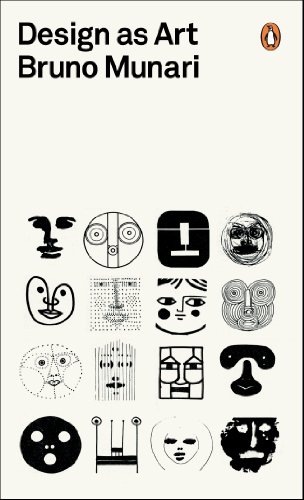
One of the last surviving members of the futurist generation, Bruno Munari's Design as Art is an illustrated journey into the artistic possibilities of modern design translated by Patrick Creagh published as part of the 'Penguin on Design' series in Penguin Modern Classics.
'The designer of today re-establishes the long-lost contact between art and the public, between living people and art as a living thing'
Bruno Munari was among the most inspirational designers of all time, described by Picasso as 'the new Leonardo'. Munari insisted that design be beautiful, functional and accessible, and this enlightening and highly entertaining book sets out his ideas about visual, graphic and industrial design and the role it plays in the objects we use everyday. Lamps, road signs, typography, posters, children's books, advertising, cars and chairs - these are just some of the subjects to which he turns his illuminating gaze.
How do we see the world around us? The Penguin on Design series includes the works of creative thinkers whose writings on art, design and the media have changed our vision forever.
Bruno Munari (1907-1998), born in Milan, was the enfant terrible of Italian art and design for most of the twentieth century, contributing to many fields of both visual (paint, sculpture, film, industrial design, graphics) and non-visual arts (literature, poetry). He was twice awarded the Compasso d'Oro design prize for excellence in his field.
If you enjoyed Design as Art, you might like John Berger's Ways of Seeing, also available in Penguin Modern Classics.
'One of the most influential designers of the twentieth century ... Munari has encouraged people to go beyond formal conventions and stereotypes by showing them how to widen their perceptual awareness' International Herald Tribune
…
Recommended by Coleen Baik.
Cover unavailable
43
Information is Beautiful
David McCandless
4.2
Facts, statistics, issues, theories, relationships, numbers, words - there is just too much information in the world. We need a brand new way to take it all in. 'Information is Beautiful' transforms the ideas surrounding and swamping us into graphs and maps that anyone can follow at a single glance.
Cover unavailable
44
Color Design Workbook: New, Revised Edition: A Real World Guide to Using Color in Graphic Design
Sean Adams
4.2
Since color is such an important part of graphic design, designers need the most up-to-date, as well as the most fundamental, information on the subject to have the tools needed to use color effectively. From the meanings behind colors to working with color in presentations, this book provides readers with the vital information needed to apply color creatively and effectively to their design work. Readers also receive guidance on talking with clients about color and selling color ideas. The science behind color theory is also explained in easily understood language, and case studies are included to show the effects some color choices had on both their clients and consumers.
…
Cover unavailable
45
Design Is a Job
Mike Monteiro
4.2
Co-founder of Mule Design and raconteur Mike Monteiro wants to help you do your job better. From contracts to selling design, from working with clients to working with each other, this brief book is packed with knowledge you can’t afford not to know.
Cover unavailable
46
Understanding Comics: The Invisible Art
Scott McCloud
4.2
The bestselling international classic on storytelling and visual communication
"You must read this book." — Neil Gaiman
Praised throughout the cartoon industry by such luminaries as Art Spiegelman, Matt Groening, and Will Eisner, Scott McCloud's Understanding Comics is a seminal examination of comics art: its rich history, surprising technical components, and major cultural significance. Explore the secret world between the panels, through the lines, and within the hidden symbols of a powerful but misunderstood art form.
…
Recommended by Ev Williams, Austin Kleon, Bret Victor, and 1 others.
Unsolicited, but here’s my advice for visual thinkers (and others) who want to be better writers: … Cartoonists, because their work demands work from two disciplines (writing/art, poetry/design, words/pictures), are highly instructive when it comes to visual people learning to write, writers learning to make art, etc. (Check out Scott McCloud’s Understanding Comics for more.) [source]
Will Brooker
Understanding Comics is a book about how comics work, told in comic form. It’s very accessible, it’s for the general reader and is about comics in general, not just superhero comics. It explores areas like pacing and editing – how motion can be created through static panels on a page, and how arranging those panels in different ways, or drawing in different styles, or combining text and image, has different effects. It’s almost like a book on film study which explores the role of sound, lighting or editing. Scott McCloud is an artist himself, and he draws pastiches to show how different styles produce different effects. [source]
Cover unavailable
47
Grid Systems: Principles of Organizing Type
Kimberly Elam
4.2
Although grid systems are the foundation for almost all typographic design, they are often associated with rigid, formulaic solutions. However, the belief that all great design is nonetheless based on grid systems (even if only subverted ones) suggests that few designers truly understand the complexities and potential riches of grid composition. In her best-selling Geometry of Design, Elam shows how proportion, symmetry, and other geometrical systems underlie many of the visual relationships that make for good design. Now, Elam brings the same keen eye and clear explanations to bear on the most prevalent, and maybe least understood, system of visual organization: the grid. Filled with extensive research and more than 100 informative examples from the Bauhaus to Nike ads, Grid Systems provides a rich, easy-to-understand overview and demonstrates a step-by-step approach to typographic composition. It suggests design strategies that transcend simple function and reductionist recipes to allow grids to become a means of truly dynamic communication. Any designer, educator, or student will benefit greatly from this elegant slim book, chock-a-block full of colorful examples, helpful vellum overlays, and Elam's insightful analysis.
…
Cover unavailable
48
The Brand Gap
Marty Neumeier
4.2
THE BRAND GAP is the first book to present a unified theory of brand-building. Whereas most books on branding are weighted toward either a strategic or creative approach, this book shows how both ways of thinking can unite to produce a "charismatic brand"--a brand that customers feel is essential to their lives. In an entertaining two-hour read you'll learn:
- the new definition of brand - the five essential disciplines of brand-building - how branding is changing the dynamics of competition - the three most powerful questions to ask about any brand - why collaboration is the key to brand-building - how design determines a customer's experience - how to test brand concepts quickly and cheaply - the importance of managing brands from the inside - 220-word brand glossary
From the back cover: Not since McLuhan's THE MEDIUM IS THE MESSAGE has a book compressed so many ideas into so few pages. Using the visual language of the boardroom, Neumeier presents the first unified theory of branding--a set of five disciplines to help companies bridge the gap between brand strategy and customer experience. Those with a grasp of branding will be inspired by the new perspectives they find here, and those who would like to understand it better will suddenly "get it." This deceptively simple book offers everyone in the company access to "the most powerful business tool since the spreadsheet."
…
Recommended by Andy Budd and Robert Jones.
Robert Jones
It’s got a nice, informal definition of what a brand is…It’s very readable. [source]

Cover unavailable
49
Work for Money, Design for Love: Answers to the Most Frequently Asked Questions about Starting and Running a Successful Design Business
David Airey
4.2
Unlike other dry business books, this refreshing, straightforward guide from Logo Design Love author and international designer David Airey answers the questions all designers have when first starting out on their own. In fact, the book was inspired by the many questions David receives every day from the more than 600,000 designers who visit his three blogs (Logo Design Love, Identity Designed, and DavidAirey.com) each month. How do I find new clients? How much should I charge for my design work? When should I say no to a client? How do I handle difficult clients? What should I be sure to include in my contracts? David's readers-a passionate and vocal group-regularly ask him these questions and many more on how to launch and run their own design careers. With this book, David finally answers their pressing questions with anecdotes, case studies, and sound advice garnered from his own experience as well as those of such well-known designers as Ivan Chermayeff, Jerry Kuyper, Maggie Macnab, Eric Karjaluoto, and Von Glitschka. Designers just starting out on their own will find this book invaluable in succeeding in today's hyper-networked, global economy.
…
Cover unavailable
50
Design Elements, 2nd Edition: Understanding the rules and knowing when to break them - Updated and Expanded
Timothy Samara
4.2
This updated version of Rockport's bestselling Design Elements offers expanded and updated content in a new, cleaner format for easier navigation. Author Timothy Samara has added more than 50 new diagrams and more than 100 new images of real-world projects with an increased emphasis on web and environmental design projects. The "20 Rules for Good Design" has been revisited and expanded to 25 Rules. The book covers all the design fundamentals from working with grids, color application, typography, imagery to finally how to put it all together. Expansion and new material includes:
-Composition/layout, visual hierarchy -Form and composition in relation to concepts and meaning
-Color psychology and narrative-Color coding-Reference palettes for time periods, cultures, and businesses
-Special color and printing techniques -Combining type styles, editorial text setting issues, plus-Web-related type style and hierarchy issues
-Strategies for using photography; design drawing; medium and meaning; pictorial and non-pictorial -image-making options; semiotics, symbolic and metaphorical image use; type as image-Making type and imagery work better together
-Finding flexibility in design systems -The design process, from creative concept development and practical work-flow standpoints...
-Plus a complete project case study with major decision-moments keyed to respective sections!
Being a creative designer is often about coming up with unique design solutions. Unfortunately, when the basic rules of design are ignored in an effort to be distinctive, design becomes useless. In language, a departure from the rules is only appreciated as great literature if recognition of the rules underlies the text. Graphic design is a "visual language," and brilliance is recognized in designers whose work seems to break all the rules, yet communicates its messages clearly.This book is a fun and accessible handbook that presents the fundamentals of design in lists, tips, brief text, and examples. Chapters include Graphic Design: What It Is; What Are They and What Do They Do?; 25 Basic Rules of Good Design; Form and Space-The Basics; Color Fundamentals; Choosing and Using Type; The World of Imagery; Putting it All Together? Essential Layout Concepts; The Right Design Choices: 20 Reminders for Working Designers; and Breaking the Rules: When and Why to Challenge all the Rules of this Book.
…
Cover unavailable
51
It's Not How Good You Are, It's How Good You Want To Be
Paul Arden
4.2
It’s Not How Good You Are, It’s How Good You Want to Be is a handbook of how to succeed in the world: a pocket bible for the talented and timid alike to help make the unthinkable thinkable and the impossible possible.
The world’s top advertising guru, Paul Arden, offers up his wisdom on issues as diverse as problem solving, responding to a brief, communicating, playing your cards right, making mistakes, and creativity – all endeavors that can be applied to aspects of modern life.
This uplifting and humorous little book provides a unique insight into the world of advertising and is a quirky compilation of quotes, facts, pictures, wit and wisdom – all packed into easy-to-digest, bite-sized spreads. If you want to succeed in life or business, this book is a must.
The reason why I gift this book is because you can read it in 40 minutes. [source]
Cover unavailable
52
Graphic Design: A User's Manual
Adrian Shaughnessy, Michael Bierut
4.2
This book offers students, novice designers, and battle-toughened professionals alike an insider's guide to the complexities of current graphic design practice and thinking.
It contains all you need to know to survive and prosper in the complex, ever-shifting world of graphic design. Set out in A-Z style and written in a realistic, conversational, and insightful way, the book provides advice on the fundamental topics and issues that face designers in their daily lives. It looks at everything from kerning to presenting, from budgeting to dealing with rejection, from annual reports to interface design.
Adrian Shaughnessy, author of the best-selling How to be a Graphic Designer Without Losing Your Soul, is himself a successful designer, and brings a wealth of experience to this very useful and entertaining book.
…
Cover unavailable
53
Interaction of Color
Josef Albers, Nicholas Fox Weber
4.2
Josef Albers’s Interaction of Color is a masterwork in twentieth-century art education. Conceived as a handbook and teaching aid for artists, instructors, and students, this timeless book presents Albers’s unique ideas of color experimentation in a way that is valuable to specialists as well as to a larger audience.
Originally published by Yale University Press in 1963 as a limited silkscreen edition with 150 color plates, Interaction of Color first appeared in paperback in 1971, featuring ten representative color studies chosen by Albers. The paperback has remained in print ever since and is one of the most influential resources on color for countless readers.
This new paperback edition presents a significantly expanded selection of more than thirty color studies alongside Albers’s original unabridged text, demonstrating such principles as color relativity, intensity, and temperature; vibrating and vanishing boundaries; and the illusions of transparency and reversed grounds. Now available in a larger format and with enhanced production values, this expanded edition celebrates the unique authority of Albers’s contribution to color theory and brings the artist’s iconic study to an eager new generation of readers.
…
Cover unavailable
54
Vector Basic Training: A Systematic Creative Process for Building Precision Vector Artwork (Voices that Matter)
Von Glitschka
4.2
Listen up, designers, and wipe those grins off your faces It's time to get serious about your design work. For too long you've allowed yourself to go soft, relying on your software to do all of your creative work for you. This book will NOT show you how to use every tool and feature in Adobe Illustrator. This book WILL, however, teach you the importance of drawing out your ideas, analyzing the shapes, and then methodically building them precisely in vector form using the techniques explained in this book. In "Vector Basic Training," acclaimed illustrative designer Von Glitschka takes you through his systematic process for creating the kind of precise vector graphics that separate the pros from the mere toolers. Along the way, he'll whip your drawing skills into shape and show you how to create elegant curves and precise anchor points for your designs. Between the book and the video tutorials on the included DVD, you'll be ready for active creative duty in zero hundred hours or less.
In "Vector Basic Training," you'll learn: The tools and shortcuts that make up a design pro's creative armamentHow to use "The Clockwork Method" to create accurate curves every time When and where to set just the right number of anchor points for any design How to build shapes quickly using basic Illustrator tools and plug-insTechniques for art directing yourself so that your work gets the response you desireWhy symmetry is your friend and how to use it effectively in your designs"To get the most out of this book it is recommended that you have Adobe Illustrator CS4 or higher." On the DVD-ROM Von Glitschka reports for duty in over four hours' worth of video tutorials that walk you through all of the techniques explained in the book. Also included: downloadable art files you can use to follow along on your own and deconstruct samples shown in the book.
…
Cover unavailable
55
Typographic Design: Form and Communication
Rob Carter, Ben Day, Philip B. Meggs
4.2
For more than two decades, the type book of choice for design professionals and students
Typographic design has been a field in constant motion since Gutenberg first invented movable type. Staying abreast of recent developments in the field is imperative for both design professionals and students. Thoroughly updated to maintain its relevancy in today's digital world, Typographic Design: Form and Communication, Fourth Edition continues to provide a compre-hensive overview of every aspect of designing with type, now in full color.
This Fourth Edition of the bestselling text in the field offers detailed coverage of such essential topics as the anatomy of letters and type families, visual communications and design aesthetics, and designing for legibility. Supplementing these essential topics are theoret-ical and structural problem-solving approaches by some of the leading design educators across the United States. Unwrapping the underlying concepts about typographic form and message, Typographic Design, Fourth Edition includes four pictorial timelines that illustrate the evolution of typography and writing within the context of world events - from the origins of writing more than 5,000 years ago to contemporary Web site and electronic page design.
New features include:
Full-color treatment throughout
A new ancillary Web site containing resources for self-learners, students and professors (www.typographicdesign4e.com)
Two new chapters: The Typographic Grid and Typographic Design Process
An updated design education section that includes recent examples of projects assigned by leading design educators
New case studies that showcase design for Web sites and animated typography projects
Case studies detailing examples of visual identification systems, environmental graphics, book and magazine design, Web site design, type in motion, and wayfinding graphics
Updated coverage of digital type technology
…
Cover unavailable
56
Picture This: How Pictures Work
Molly Bang
4.2
Molly Bang's brilliant, insightful, and accessible treatise is now revised and expanded for its 25th anniversary. Bang's powerful ideas—about how the visual composition of images works to engage the emotions, and how the elements of an artwork can give it the power to tell a story—remain unparalleled in their simplicity and genius. Why are diagonals dramatic? Why are curves calming? Why does red feel hot and blue feel cold? First published in 1991, Picture This has changed the way artists, illustrators, reviewers, critics, and readers look at and understand art.
…
Cover unavailable
57
Layout Essentials Revised and Updated: 100 Design Principles for Using Grids
Beth Tondreau
4.2
A classic and essential text for designers since 2009, Layout Essentials: 100 Design Principles for Using Grids just got better with a fresh exploration of its design principles, updated text, and new photos and international graphics.
Grids are the basis for all design projects, and learning how to work with them is fundamental for all graphic designers. From working with multi-column formats to using type, color, images, and more, Layout Essentials not only demonstrates, using real world examples, how to use grids effectively, but shows you how to break the rules to use them effectively, too.
This revised and updated version of Layout Essentials is your one-stop reference and resource for all layout design projects.
…
Cover unavailable
58
The New Typography
Jan Tschichold, Ruari McLean, Robin Kinross
4.1
Since its initial publication in Berlin in 1928, Jan Tschichold's The New Typography has been recognized as the definitive treatise on book and graphic design in the machine age. At once a key theoretical document of Central European modernism between the world wars and an invaluable source of working principles for the practicing designer, this classic work enjoys the reputation among book artists that Le Corbusier's Toward a New Architecture has long held among architects.
The book's legendary renown is certain to increase with the long-overdue appearance of this first English translation, published in a form that reflects Tschichold's original typography and design. Ranging from theoretical discussions of typography in the age of photography and mechanical standardization to practical considerations in the design of business forms, The New Typography remains essential reading for designers, art historians, and all those concerned with the evolution of visual communication in the twentieth century.
…
Recommended by David Kadavy.
Cover unavailable
59
HTML and CSS: Design and Build Websites
Jon Duckett
4.1
Every day, more and more people want to learn some HTML and CSS. Joining the professional web designers and programmers are new audiences who need to know a little bit of code at work (update a content management system or e-commerce store) and those who want to make their personal blogs more attractive. Many books teaching HTML and CSS are dry and only written for those who want to become programmers, which is why this book takes an entirely new approach.
• Introduces HTML and CSS in a way that makes them accessible to everyone—hobbyists, students, and professionals—and it’s full-color throughout
• Utilizes information graphics and lifestyle photography to explain the topics in a simple way that is engaging
• Boasts a unique structure that allows you to progress through the chapters from beginning to end or just dip into topics of particular interest at your leisure
This educational book is one that you will enjoy picking up, reading, then referring back to. It will make you wish other technical topics were presented in such a simple, attractive and engaging way!
…
Cover unavailable
60
Typography Workbook: A Real-World Guide to Using Type in Graphic Design
Timothy Samara
4.1
New in paperback, The Typography Workbook provides an at-a-glance reference book for designers on all aspects of type.The book is part of Rockport's popular Workbook series of practical and inspirational workbooks that cover all the fundamental areas of the graphic design business. This book presents an abundance of information on type - the cornerstone of graphic design - succinctly and to the point, so that designers can get the information they need quickly and easily.
Whereas many other books on type are either very technical or showcase oriented, this book offers ideas and inspiration through hundreds of real-life projects showing successful, well-crafted usage of type. The book also offers a variety of other content, including choosing fonts, sizes, and colors; incorporating text and illustrations; avoiding common mistakes in text usage; and teaching rules by which to live (and work) by.
…
Cover unavailable
61
Graphic Artist's Guild Handbook of Pricing and Ethical Guidelines
Graphic Artists Guild
4.1
· Completely revised and updated to reflect the latest trends
· Features the latest information on pricing graphic design work
Graphic Artists Guild Handbook: Pricing & Ethical Guidelines, is the industry bible, containing information all graphic artists and their clients need to buy and sell work in a professional manner. The twelfth edition of this classic reference has been revised and updated to provide all the information creative professionals need to keep up with current trends and compete in an ever-changing industry.
Fingerprint: The Art of Using Hand-Made Elements in Graphic Design
Chen Design Associates, Michael Mabry
4.1
Make Your Mark
Design is at a turning point. Our infatuation with—and the backlash against—technology is over. Today's best designers have learned to embrace its advantages and think beyond its limitations by combining the power of the computer with the tactile qualities of handmade elements.
Inside you'll find examples of work that showcase a variety of design methods, including mixed media, illustration, letterpress, screenprinting and collage. You'll find inspiration in examples from outstanding designers and see how traditional elements can make a more powerful statement than anesthetized computer-only work. Fingerprint also includes insightful essays on the power of the handmade by Debbie Millman, Jean Orlebeke, Jim Sherraden, Martin Venezky and Ross Macdonald.
The projects in this book are beautiful, technical, simple, layered and powerful. Each project communicates its intended message with eloquence.
You can be part of this exciting design revolution. Leave your own fingerprint on the world by exploring the fusion of the digital with the hand-wrought.
…
Cover unavailable
65
Logo
Michael Evamy
4.1
The logo bible, this book provides graphic designers with an indispensable reference source for contemporary logo design. More than 1300 logos are grouped according to their focal form, symbol, and graphic associations into 75 categories such as crosses, stars, crowns, animals, people, handwritten, illustrative type, etc. To emphasize the visual form of the logos, theyare shown predominantly in black and white. By sorting a vast, international array of current logotypesranging from those of small, design-led businesses to global brandsthe book offers design consultancies a ready resource to draw on in the research phase of identity projects. Logos are also indexed alphabetically by name of company/designer and by industrial sector, making it easy to piece together a picture of the state of the identity art in any client's marketplace.
…
Cover unavailable
66
In Progress: See Inside a Lettering Artist's Sketchbook and Process, from Pencil to Vector (Hand Lettering Books, Learn to Draw Books, Calligraphy Workbook for Beginners)
Jessica Hische, Louise Fili
4.1
This show-all romp through design-world darling Jessica Hische's sketchbook reveals the creative and technical process behind making award-winning hand lettering. See everything, from Hische's rough sketches to her polished finals for major clients such as Wes Anderson, NPR, and Starbucks. The result is a well of inspiration and brass tacks information for designers who want to sketch distinctive letterforms and hone their skills. With more than 250 images and metallic silver ink printed throughout to represent her penciled sketches, this highly visual book is an essential—and entirely enjoyable—resource for those who practice or simply appreciate the art of hand lettering.
…
Recommended by Jason Santa Maria, Jessica Hische, and 2 others.
Cover unavailable
67
The End of Print: The Graphic Design of David Carson
Lewis Blackwell, David Carson, David Byrne
4.1
He was the enfant terrible of graphic design in the nineties. His tortured typography prompted a vocal camp of critics to accuse him of being flippant and of destroying the communicative basis of design. But now the techniques of David Carson (and those of his countless imitators) dominate advertising, design, the Web, and even motion pictures. With 35,000 copies of the original sold, this revised edition of The End of Print includes a striking new cover and first chapter that puts Carson's work in context. The rest is vintage Carson—cutting edge and explosive. The End of Print tracks his career from skateboard and surf magazines, to the landmark Beach Culture magazine and his groundbreaking grid-breaking work for Ray Gun, and finally to handling major corporate identity accounts. The End of Print marks a turning point in design that ushered in the look of today.
…
Cover unavailable
68
Type Matters!
Jim Williams, Ben Casey
4.1
Once upon a time, only typesetters needed to know about kerning, leading, ligatures, and hanging punctuation. Today, however, most of us work on computers, with access to hundreds of fonts, and we’d all like our letters, reports and other documents to look as good – and as readable – as possible. But what does all the confusing terminology about ink traps, letter spacing, and visual centring mean, and what are the rules for good typography? Type Matters! is a book of tips for everyday use, for all users of typography, from students and professionals to anyone who does any layout design on a computer. The book is arranged into three chapters: an introduction to the basics of typography; headline and display type; and setting text. Within each chapter there are sections devoted to particular principles or problems, such as selecting the right typeface, leading, and the treatment of numbers. Examples throughout show precisely what makes good typography – and, crucially, what doesn’t. Authoritatively written and designed by a practitioner and teacher of typography, Type Matters! has a beautifully clear layout that reinforces the principles discussed throughout.
…
Cover unavailable
69
Layout Workbook: A Real-World Guide to Building Pages in Graphic Design
Kristen Cullen
4.1
New in Paperback! An inspired resource for creating excellent layouts Layout Workbook is one of five volumes in Rockport's series of practical and inspirational workbooks that cover the fundamental areas of the graphic design business. In this edition, author Kristin Cullen tackles the often perplexing job of nailing down a layout that works.
More than a collection of great examples of layout, this book is an invaluable resource for students, designers, and creative professionals who seek design understanding and inspiration. The book illuminates the broad category of layout, communicating specifically what it takes to design with excellence. It also addresses the heart of design-the how and why of the creative process.
Cullen approaches layout with a series of step-by-step fundamental chapters (a "how-to" of layout) addressing topics such as The Function of Design, Inspiration, The Design Process, Intuition, Structure and Organization, The Interaction of Visual Elements, Typography, and Design Analysis. The book offers inspirational quotations and a unique, progressive design that truly reflects its content.
…
Cover unavailable
70
Typographic Systems of Design: Frameworks for Type Beyond the Grid (Graphic Design Book on Typography Layouts and Fundamentals)
Kimberly Elam
4.1
Typographic organization has always been a complex system in that there are so many elements at play, such as hierarchy, order of reading, legibility, and contrast. In Typographic Systems, Kim Elam, author of our bestselling books, Geometry of Design and Grid Systems, explores eight major structural frameworks beyond the gridincluding random, radial, modular, and bilateralsystems. By taking the reader through exercises, student work, and professional examples, Elam offers a broad range of design solutions. Once essential visual organization systems are understood the designer can fluidly organize words or images within a structure, combination of structures, or a variation of a structure. With clarity and substance, each systemfrom the structured axis to the nonhierarchical radial arrayis explained and explored so that the reader comes away with a better understanding of these intricate complex arrangements. Typographic Systems is the seventh title in our bestselling Design Briefs series, which has sold more than 100,000 copies worldwide.
…
Cover unavailable
71
Designing with Type: The Essential Guide to Typography
James Craig and Irene Korol Scala
4.1
The classic Designing with Type has been completely redesigned, with an updated format and full color throughout. New information and new images make this perennial best-seller an even more valuable tool for anyone interested in learning about typography. The fifth edition has been integrated with a convenient website, www.designingwithtype.com, where students and teachers can examine hundreds of design solutions and explore a world of typographic information. First published more than thirty-five years ago, Designing with Type has sold more than 250,000 copies—and this fully updated edition, with its new online resource, will educate and inspire a new generation of designers.
…
Cover unavailable
72
Symbol
Steven Bateman
4.1
Symbols play an integral role in branding programs. This book explores the visual language of symbols according to their most basic element: form. Over 1,300 symbols from all over the world are here categorized by visual type, divested of all agendas, meanings, and messages that might be associated with them so that the effectiveness of their composition and impact can be assessed without distraction and so that the reader can enjoy them as a pictorial language in their own right.
Every symbol is captioned with information on who it was designed for, who designed it, when, and what the symbol stands for. These sections are interspersed with short but detailed case studies featuring classic examples of symbols still in use, and exceptional examples of recently designed symbols.
This comprehensive volume is an indispensable resource for designers working on identity systems, and an engaging showcase of this exciting field. Now in a compact format.
…
Cover unavailable
73
Graphic Design Solutions
Robin Landa
4.1
Cutting-edge concepts, a beautifully illustrated text, and a dazzling array of award-winning design make the third edition of this standout best-seller one of the most highly acclaimed design texts in the world. Graphic Design Solutions continues to provide a clear and comprehensive introduction to graphic design and advertising design, with step-by-step visual solutions that readers can apply with confidence to their own design and advertising projects. A highly illustrative, straightforward assessment of developing winning graphic design solutions for a variety of media-including print, Web, television, and unconventional formats-helps designers think critically and creatively about their work while understanding the demands of the graphic design profession in today's world.
…
Cover unavailable
74
Thoughts on Design
Paul Rand, Michael Bierut
4.1
One of the seminal texts of graphic design, Paul Rand's Thoughts on Design is now back in print for the first time since the 1970s. Writing at the height of his career, Rand articulated in his slender volume the pioneering vision that all design should seamlessly integrate form and function. This facsimile edition preserves Rand's original 1947 essay with the adjustments he made to its text and imagery for a revised printing in 1970, and adds only an informative and inspiring new foreword by design luminary Michael Bierut. As relevant today as it was when first published, this classic treatise is an indispensable addition to the library of every designer.
…
Recommended by Fabio Sasso and 1 others.
Cover unavailable
75
Hand Job: A Catalog of Type
Michael Perry
4.1
In this digital age of computer-generated graphics and typography, it's refreshing to find typographers who still believe in working by hand. No longer relegated to designer's sketchbooks, hand-drawn type has emerged from the underground as a dynamic vehicle for visual communicationfrom magazine, book, and album covers to movie credits and NFL advertisements. As the practice and appreciation of hand-drawn type grows, its time to celebrate the work of those typographers whose every letterform is a work of art.Hand Job collects groundbreaking work from fifty of today's most talented typographers who draw by hand. Graphic designer and hand typographer Michael Perry selects work representing the full spectrum of design methods and styles. Each hand-drawn work is entirely shaped by the artist's unique processevery one a carefully executed composition enhanced by unplanned "accidents" of line, color, and craft. Hand Job also includes photographs of found type,artists studios, and the tools that help make typography come to life. Whether you are looking to invigorate your design work or are just in need of a little offbeat inspiration, Hand Job will have you reaching for your favorite pen.
…
Cover unavailable
76
Logotype mini
Michael Evamy
4.1
Logotype mini is the definitive modern collection of logotypes, monograms, and other text-based corporate marks. Featuring more than 1,300 international typographic identities, by around 250 design studios, this is an indispensable handbook for every design studio, providing a valuable resource to draw on in branding and corporate identity projects.
Logotype mini is truly international, and features the world's outstanding identity designers. Examples are drawn not just from Western Europe and North America but also Australia, South Africa, the Far East, Israel, Iran, South America and Eastern Europe. Contributing design firms include giants such as Pentagram, Vignelli Associates, Chermayeff & Geismar, Wolff Olins, Landor, Total Identity and Ken Miki & Associates as well as dozens of highly creative, emerging studios.
Logotype mini is an important and essential companion volume to Logo and Symbol minis.
…
Cover unavailable
77
Graphic Design Theory: Readings from the Field
Helen Armstrong
4.1
The titles in our best-selling Design Brief series are highly praised by graphic design students, educators, and professionals worldwide as invaluable resources. Each beautifully designed, affordable volume offers a concise overview of a design fundamentalthe hows of design. But as most seasoned designers will tell you, a comprehensive education also requires an understanding of the whys of design practice. Graphic Design Theory presents groundbreaking, primary texts from the most important historical and contemporary designthinkers. From Aleksandr Rodchenko's "Who We Are: Manifesto of the Constructivist Group" to Kenya Hara's "Computer Technology and Design," this essential volume provides the necessary foundation for contemporary critical vocabulary and thought.
Graphic Design Theory is organized in three sections: "Creating the Field" traces the evolution of graphic design over the course of the early 1900s, including influential avant-garde ideas of futurism, constructivism, and the Bauhaus; "Building on Success" covers the mid- to late twentieth century and considers the International Style, modernism, and postmodernism; and "Mapping the Future" opens at the end of the last century and includes current discussions on legibility, social responsibility, and new media. Striking color images illustrate each of the movements discussed and demonstrate the ongoing relationship between theory and practice. A brief commentary prefaces each text, providing a cultural and historical framework through which the work can be evaluated. Authors include such influential designers as Herbert Bayer, Lszl Moholy-Nagy, Karl Gerstner, Katherine McCoy, Michael Rock, Lev Manovich, Ellen Lupton, and Lorraine Wild. Additional features include a timeline, glossary, and bibliography for further reading. A must-have survey for graduate and undergraduate courses in design history, theory, and contemporary issues, Graphic Design Theory invites designers and interested readers of all levels to plunge into the world of design discourse.
…
Cover unavailable
78
Secret Garden: An Inky Treasure Hunt and Colouring Book
Johanna Basford
4.1
Tumble down the rabbit hole and find yourself in an inky black-and-white wonderland.
This interactive activity book takes you on a ramble through a secret garden created in beautifully detailed pen-and-ink illustrations – all waiting to be brought to life through colouring, but each also sheltering all kinds of tiny creatures just waiting to be found. And there are also bits of the garden that still need to be completed by you. Appealing to all ages, the intricately-realized world of the Secret Garden is both beautiful and inspirational.
…
Cover unavailable
79
The Anatomy of Type
Stephen Coles, Erik Spiekermann
4.1
Students and professionals in any creative field can benefit from a good typographic eye. The Anatomy of Type (The Geometry of Type in the UK) is all about looking more closely at letters. Through visual diagrams and practical descriptions, you’ll learn how to distinguish between related typefaces and see how the attributes of letterforms (such as contrast, detail, and proportion) affect the mood, readability, and use of each typeface. Nutritional value aside, the spreads full of big type are nice eye candy, too.
The 100 typefaces featured in the book are hand-picked by the author for their functionality and stylistic relevance in today’s design landscape. Along with several familiar faces (Garamond, Bodoni, Gill Sans, Helvetica), you’ll also discover contemporary fonts that are less common — and often more useful — than the overused classics.
…
Recommended by Fabio Sasso.
Cover unavailable
80
Paul Rand
Steven Heller
4.1
Paul Rand (1914-1996) was a pioneering figure in American graphic design whose career spanned almost seven decades. Always enquiring and investigating, he explored the formal vocabulary of European avant-garde art movements and synthesised them to produce a distinctive graphic language.
Cover unavailable
81
Design Is Storytelling
Ellen Lupton
4.1
Ellen Lupton, award-winning author of Thinking with Type and How Posters Work, demonstrates how storytelling shapes great design
Good design, like good storytelling, brings ideas to life. The latest book from award-winning writer Ellen Lupton is a playbook for creative thinking, showing designers how to use storytelling techniques to create satisfying graphics, products, services and experiences. Whether crafting a digital app or a data-rich publication, designers invite people to enter a scene and explore what’s there. An intriguing logo, page layout or retail space uses line, shape and form to lead users on dynamic journeys.
Design Is Storytelling explores the psychology of visual perception from a narrative point of view. Presenting dozens of tools and concepts in a lively, visual manner, this book will help any designer amplify the narrative power of their work. Use this book to stir emotions, build empathy, articulate values and convey action; to construct narrative arcs and create paths through space; integrate form and language; evaluate a project’s storytelling power; and to write and deliver strong narratives.
…
Cover unavailable
82
Design Literacy: Understanding Graphic Design
Steven Heller
4.1
Author and design expert Steven Heller has revisited and revised the popular classic Design Literacy by revising many of the thoughtful essays from the original and mixing in thirty-two new works. Each essay offers a taste of the aesthetic, political, historical, and personal issues that have engaged designers from the late nineteenth century to the present—from the ubiquitous (the swastika, antiwar posters) to the whimsical (MAD magazine parodies). The essays are organized into eight thematic categories—persuasion, mass media, language, identity, information, iconography, style, and commerce.
This revised edition also highlights recent trends in graphic design such as aesthetic changes in typography in the digital age and the nexus between graphic design and wired culture. This is an eclectic look at how, why, and if graphic design influences our ever-evolving, diverse world.
…
Cover unavailable
83
Detail In Typography
Jost Hochuli
4.1
How is it that text can be set perfectly and yet look insufferably dull? How do you achieve perfect congruence between the type itself and its meaning? In Detail in Typography Jost Hochuli, master book designer and author of the seminal Designing Books, addresses the finer points of setting text. Hochuli begins with a consideration of how human beings read, moving on incrementally to considerations of letter, word, and line as well as word-space and line-space. Hochuli concludes by examining whole paragraphs and how they carry meaning. Produced in Switzerland to the highest standards, Detail in Typography embodies critical thinking and articulate design in its own physical form.
…
Cover unavailable
84
The Cheese Monkeys
Chip Kidd
4.0
After 15 years of designing more than 1,500 book jackets at Knopf for such authors as Anne Rice and Michael Crichton, Kidd has crafted an affecting an entertaining novel set at a state university in the late 1950s that is both slap-happily funny and heartbreakingly sad. The Cheese Monkeys is a college novel that takes place over a tightly written two semesters. The book is set in the late 1950s at State U, where the young narrator, has decided to major in art, much to his parents’ dismay. It is an autobiographical, coming-of-age novel which tells universally appealing stories of maturity, finding a calling in life, and being inspired by a loving, demanding, and highly eccentric teacher.
…
Cover unavailable
85
Logo, Font & Lettering Bible: A Comprehensive Guide to the Design, Construction and Usage of Alphabets and Symbols
Leslie Cabarga
4.0
Put the power to design logos and type in your own hands!
Why be a designer who must rely upon preexisting typefaces and clip art when you can become the kind of designer who creates logos, fonts and lettering of your own? Leslie Cabarga, author of the bestselling "Designer's Guide to Color Combinations," has created a textbook of type for the experienced graphics professional as well as the beginning student of design.
You'll learn how to: Create innovative logo design traditionally and on the computerDevelop a discerning eye for quality lettering and logo designDesign your own custom-made fontsBuild a profitable business as a logo, font and lettering designer
It's the most comprehensive treatise on logos, fonts and lettering available!
The easy-to-read, fun-to-browse, picture-heavy format makes learning to letter a snap. The "Logo, Font & Lettering Bible" provides the start-to-finish information you need to succeed in today's competitive design market.
…
Cover unavailable
86
Paint by Sticker: Cats: Create 12 Stunning Images One Sticker at a Time!
Workman Publishing
4.0
An addictive all-ages activity for crafters and artists, Paint by Sticker: Cats includes everything you need to create twelve vibrant cat images—the stickers, the templates, the simple directions.
The Paint by Sticker series is now purrfect for cat lovers! Create gorgeous illustrations of felines in low-poly (geometric polygon shapes) style, one sticker at a time. There’s a playful ginger tabby hanging from her paws and an elegant, blue-eyed Siamese angling for a head scratch. Images are divided into dozens of spaces, each with a number that corresponds to a particular sticker. Find the sticker, peel it, and place it in the right space. Add the next, and the next, and relish the joy of watching a “painting” emerge!
The card stock pages are perforated for easy removal, making it easy to frame the completed images.
…
Cover unavailable
87
Pantone's Guide to Communicating with Color
Leatrice Eiseman
4.0
· Over 80,000 copies sold
· Features proven color principles designers need to create effective designs
· Employs Pantone's universal color system to make color selections easy
This authoritative guide presents hundreds of color combinations and color principles needed to create effective designs. Every lesson is demonstrated by example, enabling designers of all specialties and levels of experience to make the best color choices for every type of design.
…
Cover unavailable
88
Before and After: How to Design Cool Stuff
John McWade
4.0
Before and After magazine's focus on clarity, simplicity, and elegance has won it legions of fans--fans who will welcome this second volume of the definitive Before and After Page Design by John McWade. Truly an icon of the graphic design community, his insistence on approaching design not as mere decoration but as an essential form of communication is vividly apparent in this cohesive primer on page design and layout. And you could not hope for a better, more qualified teacher. McWade shows readers how to arrange and present information using today's powerful graphics tools. Readers will learn how to design single-page and multi-page documents, brochures, and ads; why one typeface works better than another; and much more. Best of all, they'll discover how to think visually transforming the images in their heads into something that communicates effectively on the page.
…
Cover unavailable
89
Beautiful Evidence
Edward R. Tufte
4.0
Science and art have in common intense seeing, the wide-eyed observing that generates visual information. Beautiful Evidence is about how seeing turns into showing, how data and evidence turn into explanation. The book identifies excellent and effective methods for showing nearly every kind of information, suggests many new designs (including sparklines), and provides analytical tools for assessing the credibility of evidence presentations (which are seen from both sides: how to produce and how to consume presentations). For alert consumers of presentations, there are chapters on diagnosing evidence corruption and PowerPoint pitches. Beautiful Evidence concludes with two chapters that leave the world of pixel and paper flatland representations - and move onto seeing and thinking in space land, the real-land of three-space and time.
…
Recommended by Bret Victor.
Cover unavailable
90
Penguin by Design: A Cover Story 1935-2005
Phil Baines
4.0
"Ever-since the creation of the first Penguin paperbacks in 1935, their jackets have become a constantly evolving part of Britain's culture and design history." By looking back at seventy years of Penguin paperbacks, Phil Baines charts the development of British publishing, book-cover design and the role of artists and designers in creating and defining the Penguin look. Coupling in-depth analysis of designers - from Jan Tschichold to Romek Marber - with a broad survey of the range of series and titles published - from early Penguins and Pelicans, to wartime and 1960s Specials, Classics, fiction and reference - this is a distinctive picture of how Penguin has consistently established its identity through its covers, influenced by - and influencing - the wider development of graphic design and the changing fashions in typography, photography, illustration and printing techniques.
…
Cover unavailable
91
The Vignelli Canon
Massimo Vignelli
4.0
The famous Italian designer Massimo Vignelli allows us a glimpse of his understanding of good design in this book, its rules and criteria. He uses numerous examples to convey applications in practice - from product design via signaletics and graphic design to Corporate Design. By doing this he is making an important manual available to young designers that in its clarity both in terms of subject matter and visually is entirely committed to Vignelli's modern design.
…
Cover unavailable
92
Creative Strategy and the Business of Design
Douglas Davis
4.0
“Douglas wears a lot of hats–all stylish and functional. There’s a huge disconnect happening right now in the industry and Douglas’s book is a means to bridging that gap.” —The Huffington Post
The Business Skills Every Creative Needs!
Remaining relevant as a creative professional takes more than creativity--you need to understand the language of business. The problem is that design school doesn't teach the strategic language that is now essential to getting your job done. Creative Strategy and the Business of Design fills that void and teaches left-brain business skills to right-brain creative thinkers.
Inside, you'll learn about the business objectives and marketing decisions that drive your creative work. The curtain's been pulled away as marketing-speak and business jargon are translated into tools to help you:
–Understand client requests from a business perspective –Build a strategic framework to inspire visual concepts –Increase your relevance in an evolving industry –Redesign your portfolio to showcase strategic thinking –Win new accounts and grow existing relationships
You already have the creativity; now it's time to gain the business insight. Once you understand what the people across the table are thinking, you'll be able to think how they think to do what we do.
…
Cover unavailable
93
Burn Your Turtleneck: A Guide to Succeeding as a Creative Professional
Michael Janda Janda
4.0
Recommended by Fabio Sasso.
Cover unavailable
94
Type: A Visual History of Typefaces and Graphic Styles (Volume 1, 1628-1900)
Jan Tholenaar, Cees De Jong
4.0
This book offers a novel overview of typeface design, exploring the most beautiful and remarkable examples of font catalogs from the history of publishing, with a special emphasis on the period from the mid-19th century to the mid-20th century, when color catalogs were at their height. Taken from a Dutch collection, this exuberant selection traverses the evolution of the printed letter in all its various incarnations via exquisitely designed catalogs displaying not only type specimens in roman, italic, bold, semi-bold, narrow, and broad, but also characters, borders, ornaments, initial letters and decorations as well as often spectacular examples of the use of the letters. The Victorian fonts, sumptuous and sometimes unbelievably outrageous, are accorded a prominent place in this book. In addition to lead letters, examples from lithography and letters by window-dressers, inscription carvers, and calligraphers are also displayed and described.
Featuring works by type designers including: William Caslon, Fritz Helmuth Ehmcke, Peter Behrens, Rudolf Koch, Eric Gill, Jan van Krimpen, Paul Renner, Jan Tschichold, A. M. Cassandre, Aldo Novarese, Adrian Frutiger
In order to include a vast amount of material, we have divided this text into two volumes. The first volume displays pre 20th Century type specimens, and the second covers the period from 1900 to the middle of the century. In the first volume, editor Cees de Jong and collector Jan Tholenaar write about single specimens and types; in the second, Alston Purvis outlines the history of types.
…
Cover unavailable
95
The Elements of Color
Johannes Itten, Faber Birren, Ernst Van Hagen
4.0
This is the most complete document of one of the landmarks of modern education in art - the famous Basic Course at the Bauhaus in Weimar, Germany. Itten was the teacher who organized it at the invitation of Walter Gropius. First published in 1963 when Itten was still alive, the book has been revised and updated by Itten's widow, Anneliese Itten, and includes new material from the basic course at the Bauhaus, as well as visual examples and descriptions of the refinements made by Itten in later course in Berlin and Zurich.
…
Cover unavailable
96
Chanel: Collections and Creations
Daniele Bott
4.0
Chanel's combination of tradition, originality, and style has always made it the most seductive of fashion labels. Here the House of Chanel opens its private archives, revealing a galaxy of brilliant designs created by Coco Chanel from 1920 onwards. Dazzling clothes, intricate accessories, beautiful models, and timeless design leave no doubt as to the lasting fame of her name and embody everything that has come to symbolize the magic of Chanel.
The book explores five central themes—the suit, the camellia, jewelry, makeup and perfume, the little black dress—and follows the threads from past to present to show how these key items have been rediscovered and reinvented by new designers. It includes many previously unpublished archive photographs and original drawings by Karl Lagerfeld, as well as glorious images from some of the greatest names in fashion photography.
…
Cover unavailable
97
The Graphic Design Idea Book: Inspiration from 50 Masters
Steven Heller and Gail Anderson
4.0
This book serves as an introduction to the key elements of good design.
Broken into sections covering the fundamental elements of design, key works by acclaimed designers serve to illustrate technical points and encourage readers to try out new ideas. Themes covered include form, narrative, color, type and image, ornament, simplicity, and wit and humour.
The result is an instantly accessible and easy to understand guide to graphic design using professional techniques.
…
Cover unavailable
98
Avatar: The Last Airbender: The Promise (Avatar: The Last Airbender, #1)
Gene Luen Yang
4.0
The Avatar's adventures continue right where the TV series left off, in this beautiful, oversized hardcover of The Promise, from Airbender creators Michael Dante DiMartino and Bryan Konietzko! Aang and friends must join together once again as the four nations' tenuous peace is threatened in an impasse between Fire Lord Zuko and Earth King Kuei! As the world heads toward another devastating war, Aang's friendship with Zuko throws him into the middle of the conflict! Featuring annotations by Eisner Award-winning writer Gene Luen Yang (American Born Chinese) and artist Gurihiru (Thor and the Warriors Four), and a brand-new sketchbook, this is a story that Avatar fans need in an edition they will love!
…
Cover unavailable
99
Visual Explanations
Edward R. Tufte
4.0
Few would disagree: Life in the information age can be overwhelming. Through computers, the Internet, the media, and even our daily newspapers, we are awash in a seemingly endless stream of charts, maps, infographics, diagrams, and data. Visual Explanations is a navigational guide through this turbulent sea of information. The book is an essential reference for anyone involved in graphic, web, or multimedia design, as well as for educators and lecturers who use graphics in presentations or classes.
Jacket design: Dmitry Krasny. Other artwork by Bonnie Scranton, Dmitry Krasny, and Weilin Wu.
…
Recommended by Jeff Atwood and Bret Victor.
Cover unavailable
100
The Art of Color: The Subjective Experience and Objective Rationale of Color