1100 Best Forensics Books of All Time
We've ranked the best forensics books using expert recommendations, sales data, and millions of reader ratings. At Shortform, we know books. Our book guides are the best in the world. Learn why.
1
2The Poisoner's Handbook: Murder and the Birth of Forensic Medicine in Jazz Age New York
Drama unfolds case by case as the heroes of The Poisoner's Handbook—chief medical examiner Charles Norris and toxicologist Alexander Gettler—investigate a family mysteriously stricken bald, Barnum and Bailey's Famous Blue Man, factory workers with crumbling bones, a diner serving poisoned pies, and many others. Each case presents a deadly new puzzle and Norris and Gettler work with a creativity that rivals that of the most imaginative murderer, creating revolutionary experiments to tease out even the wiliest compounds from human tissue. Yet in the tricky game of toxins, even science can't always be trusted, as proven when one of Gettler's experiments erroneously sets free a suburban housewife later nicknamed "America's Lucretia Borgia" to continue her nefarious work.
From the vantage of Norris and Gettler's laboratory in the infamous Bellevue Hospital it becomes clear that killers aren't the only toxic threat to New Yorkers. Modern life has created a kind of poison playground, and danger lurks around every corner. Automobiles choke the city streets with carbon monoxide; potent compounds, such as morphine, can be found on store shelves in products ranging from pesticides to cosmetics. Prohibition incites a chemist's war between bootleggers and government chemists while in Gotham's crowded speakeasies each round of cocktails becomes a game of Russian roulette. Norris and Gettler triumph over seemingly unbeatable odds to become the pioneers of forensic chemistry and the gatekeepers of justice during a remarkably deadly time. A beguiling concoction that is equal parts true crime, twentieth-century history, and science thriller, The Poisoner's Handbook is a page-turning account of a forgotten New York.
Deborah Blum’s book reminds me that molecules are powerful witnesses, if only we have the skills to interrogate them, and sometimes they are killers. [source]
3Forensics: What Bugs, Burns, Prints, DNA and More Tell Us About Crime
The dead talk—to the right listener. They can tell us all about themselves: where they came from, how they lived, how they died, and, of course, who killed them. Forensic scientists can unlock the mysteries of the past and help serve justice using the messages left by a corpse, a crime scene, or the faintest of human traces. Forensics draws on interviews with some of these top-level professionals, ground-breaking research, and McDermid’s own original interviews and firsthand experience on scene with top forensic scientists.
Along the way, McDermid discovers how maggots collected from a corpse can help determine one’s time of death; how a DNA trace a millionth the size of a grain of salt can be used to convict a killer; and how a team of young Argentine scientists led by a maverick American anthropologist were able to uncover the victims of a genocide. It’s a journey that will take McDermid to war zones, fire scenes, and autopsy suites, and bring her into contact with both extraordinary bravery and wickedness, as she traces the history of forensics from its earliest beginnings to the cutting-edge science of the modern day.
4Dead Men Do Tell Tales: The Strange and Fascinating Cases of a Forensic Anthropologist
5Stiff: The Curious Lives of Human Cadavers
6Working Stiff: Two Years, 262 Bodies, and the Making of a Medical Examiner
Just two months before the September 11 terrorist attacks, Dr. Judy Melinek began her training as a New York City forensic pathologist. With her husband T.J. and their toddler Daniel holding down the home front, Judy threw herself into the fascinating world of death investigation, performing autopsies, investigating death scenes, counseling grieving relatives. Working Stiff chronicles Judy's two years of training, taking readers behind the police tape of some of the most harrowing deaths in the Big Apple, including a firsthand account of the events of September 11, the subsequent anthrax bio-terrorism attack, and the disastrous crash of American Airlines flight 587.
Lively, action-packed, and loaded with mordant wit, Working Stiff offers a firsthand account of daily life in one of America's most arduous professions, and the unexpected challenges of shuttling between the domains of the living and the dead. The body never lies, and through the murders, accidents, and suicides that land on her table, Dr. Melinek lays bare the truth behind the glamorized depictions of autopsy work on shows like CSI and Law and Order to reveal the secret story of the real morgue.
7Beyond the Body Farm: A Legendary Bone Detective Explores Murders, Mysteries, and the Revolution in Forensic Science
Some of Bill Bass's cases rely on the simplest of tools and techniques, such as reassembling—from battered torsos and a stack of severed limbs—eleven people hurled skyward by an explosion at an illegal fireworks factory. Other cases hinge on sophisticated techniques Bass could not have imagined when he began his career: harnessing scanning electron microscopy to detect trace elements in knife wounds; and extracting DNA from a long-buried corpse, only to find that the female murder victim may have been mistakenly identified a quarter-century before.
In Beyond the Body Farm, readers will follow Bass as he explores the depths of an East Tennessee lake with a twenty-first-century sonar system, in a quest for an airplane that disappeared with two people on board thirty-five years ago; see Bass exhume fifties pop star "the Big Bopper" to determine what injuries he suffered in the plane crash that killed three rock and roll legends on "the day the music died"; and join Bass as he works to decipher an ancient Persian death scene nearly three thousand years old. Witty and engaging, Bass dissects the methods used by homicide investigators every day, leading readers on an extraordinary journey into the high-tech science that it takes to crack a case.
Teasing Secrets from the Dead: My Investigations at America's Most Infamous Crime Scenes
Emily Craig has been a witness to history, helping to seek justice for thousands of murder victims, both famous and unknown. It's a personal story that you won't soon forget.
Emily first became intrigued by forensics work when, as a respected medical illustrator, she was called in by the local police to create a model of a murder victim's face. Her fascination with that case led to a dramatic midlife career change: She would go back to school to become a forensic anthropologist——and one of the most respected and best-known "bone hunters" in the nation.
As a student working with the FBI in Waco, Emily helped uncover definitive proof that many of the Branch Davidians had been shot to death before the fire, including their leader, David Koresh, whose bullet-pierced skull she reconstructed with her own hands. Upon graduation, Emily landed a prestigious full-time job as forensic anthropologist for the Commonwealth of Kentucky, a state with an alarmingly high murder rate and thousands of square miles of rural backcountry, where bodies are dumped and discovered on a regular basis. But even with her work there, Emily has been regularly called to investigations across the country, including the site of terrorist attack on the the Murrah Building in Oklahoma City, where a mysterious body part——a dismembered leg——was found at the scene and did not match any of the known victims. Through careful scientific analysis, Emily was able to help identify the leg's owner, a pivotal piece of evidence that helped convict Timothy McVeigh.
In September 2001, Emily recieved a phone call summoning her to New York City, where she directed the night-shift triage at the World Trade Centre's body identification site, collaborating with forensics experts from all over the country to collect and identify the remains of September 11 victims.
From the biggest new stories of our time to stranger-than-true local mysteries, these are unforgettable stories from the case files of Emily Craig's remarkable career.
Postmortem (Kay Scarpetta, #1)
Déjà Dead (Temperance Brennan, #1)
11The Forensic Casebook: The Science of Crime Scene Investigation
An intrepid investigator crawls through miles of air conditioning ducts to capture the implicating fibers of a suspect’s wool jacket . . . A forensic entomologist discovers insects in the grill of a car and nails down a drug dealer’s precise geographical path . . . A gluttonous criminal’s fingerprints are lifted from a chocolate truffle. . . .
Filled with these and many other intriguing true stories, and packed with black and white illustrations and photographs, The Forensic Casebook draws on interviews with police personnel and forensic scientists—including animal examiners, botanists, zoologists, firearms specialists, and autoposists—to uncover the vast and detailed underworkings of criminal investigation. Encyclopedic in scope, this riveting, authoritative book leaves no aspect of forensic science untouched, covering such fascinating topics as:
• Securing a crime scene
• Identifying blood splatter patterns
• Collecting fingerprints—and feet, lip, and ear prints
• Interpreting the stages of a body’s decay
• Examining hair and fiber evidence
• Trace evidence from firearms and explosives
• “Lifting” DNA prints
• Computer crime and forensic photography
• Career paths in criminal science
Lucidly written and spiked with real crime stories, The Forensic Casebook exposes the nitty gritty that other books only touch upon. Here is a reference book as addictive as a page-turning novel of suspense.
Fatal Voyage (Temperance Brennan, #4)
Death du Jour (Temperance Brennan, #2)
Carved in Bone (Body Farm, #1)
There is a patch of ground in Tennessee dedicated to the science of death, where human remains lie exposed to be studied for their secrets. The real-life scientist who founded the "Body Farm" has broken cold cases and revolutionized forensics . . . and now he spins an astonishing tale inspired by his own experiences.Renowned anthropologist Dr. Bill Brockton has spent his career surrounded by death at the Body Farm. Now he's being called upon to help solve a baffling puzzle in a remote mountain community. The mummified corpse of a young woman dead for thirty years has been discovered in a cave, the body bizarrely preserved and transformed by the environment's unique chemistry. But Brockton's investigation is threatening to open old wounds among an insular people who won't forget or forgive. And a long-buried secret prematurely exposed could inflame Brockton's own guilt—and the dangerous hostility of bitter enemies determined to see him fail . . . by any means necessary.
With Fascinating Insider Information on the Body Farm!
Grave Secrets (Temperance Brennan, #5)
And then four young girls go missing from Guatemala City.
When a skeleton is found at the back of a rundown hotel, only someone with Tempe's expertise can deduce the identity and cause of death.
But as she searches for answers, her path is blocked at every turn. It is clear that some people will stop at nothing to keep Guatemala's secrets buried.
Bare Bones (Temperance Brennan, #6)
A newborn's charred remains turn up in a woodstove. A small plane crashes in a North Carolina cornfield on a sunny afternoon. Both pilot and passenger are burned beyond recognition. And what is the mysterious black substance covering the bodies? Most puzzling of all are the bones discovered at a remote farm outside Charlotte. The remains seem to be of animal origin, but Tempe is shocked when she gets them to her lab.
With help from a special detective friend, Tempe must investigate a poignant and terrifying case that comes at the worst possible moment. Daughter Katy has a new boyfriend who Tempe fears may have something to hide. And important personal decisions face Tempe. Is it time for emotional commitment? Will she have the chance to find out?
Everything must wait on the bones. Why are the X rays and DNA so perplexing? Who is trying to keep Tempe from the answers? Someone is following her and Katy. That someone must be stopped before it's too late.
Break No Bones (Temperance Brennan, #9)
The body count begins to climb. An unidentified man is found hanging from a tree deep in the woods. Another corpse shows up in a barrel. There are mysterious nicks on bones in several bodies, and signs of strangulation. Tempe follows the trail to a free street clinic with a belligerent staff, a suspicious doctor, and a donor who is a charismatic televangelist. Clues abound in the most unlikely places as Tempe uses her unique knowledge and skills to build her case, even as the local sheriff remains dubious and her own life is threatened.
Tempe's love life is also complicated. Ryan, her current flame, has come down to visit her from Montreal, and Pete, her former husband, is investigating the disappearance of a local woman -- and he and Tempe are staying in the same borrowed beach house. Ryan and Pete compete for her attentions, and Tempe finds herself more distracted by her feelings for both men than she expected.
"Break No Bones "is a smart, taut thriller featuring the kind of high-stakes crime that makes the headlines every week. Reichs, the inspiration for the hit FOX TV show Bones, is writing at the top of her form, and Tempe has never been more compelling.
18Unnatural Causes
From serial killer to natural disaster, 'perfect murder' to freak accident, Shepherd takes nothing for granted in pursuit of truth. And while he's been involved in some of the most high-profile cases of recent times, it's often the less well known encounters that prove the most perplexing, intriguing and even bizarre. In or out of the public eye, his evidence has put killers behind bars, freed the innocent and turned open-and-shut cases on their heads.
But a life in death, bearing witness to some of humanity's darkest corners, exacts a price and Shepherd doesn't flinch from counting the cost to him and his family.
He [source]
The Bone Collector (Lincoln Rhyme, #1)
All That Remains (Kay Scarpetta, #3)
Cruel & Unusual (Kay Scarpetta, #4)
Body of Evidence (Kay Scarpetta, #2)
Deadly Decisions (Temperance Brennan, #3)
Bodies We've Buried: Inside the National Forensic Academy, the World's Top CSI Training School
Corpse: Nature, Forensics, and the Struggle to Pinpoint Time of Death
From Potter's Field (Kay Scarpetta, #6)
The body was naked, female, and found propped against a fountain in a bleak area of New York's Central Park. Her apparent manner of death points to a modus operandi that is chillingly familar: the gunshot wound to the head, the sections of skin excised from the body, the displayed corpse - all suggest that Temple Brooks Gault, Scarpetta's nemesis, is back at work.
Calling on all her reserves of courage and skill, and the able assistance of colleagues Marino and Wesley, Scarpetta must track this most dangerous of killers in pursuit of survival as well as justice - heading inexorably to an electrifying climax amid the dark, menacing labyrinths of the New York subway.
Bones to Ashes (Temperance Brennan, #10)
Thirty years later, flooded with memories, Tempe cannot help wondering if this skeleton could be the friend she lost so many years ago. And what is the meaning of the strange skeletal lesions found on the bones of the young girl?
Meanwhile, Tempe's beau, Ryan, investigates a series of cold cases. Three girls dead. Four missing. Could the New Brunswick skeleton be part of the pattern? As Tempe draws on the latest advances in forensic anthropology to penetrate the past, Ryan hunts down a serial predator.
No Stone Unturned: The True Story of the World's Premier Forensic Investigators
Flesh and Bone (Body Farm #2)
Accused of a horrific crime — transformed overnight from a respected professor to a hated and feared pariah — Bill Brockton will need every ounce of his formidable forensic skills to escape the ingeniously woven net that's tightening around him... and to prove the seemingly impossible: his own innocence.
The Body Farm (Kay Scarpetta, #5)
From Author’s Website
31Mindhunter: Inside the FBI's Elite Serial Crime Unit
In chilling detail, the legendary Mindhunter takes us behind the scenes of some of his most gruesome, fascinating, and challenging cases—and into the darkest recesses of our worst nightmares.
During his twenty-five year career with the Investigative Support Unit, Special Agent John Douglas became a legendary figure in law enforcement, pursuing some of the most notorious and sadistic serial killers of our time: the man who hunted prostitutes for sport in the woods of Alaska, the Atlanta child murderer, and Seattle's Green River killer, the case that nearly cost Douglas his life.
As the model for Jack Crawford in The Silence of the Lambs, Douglas has confronted, interviewed, and studied scores of serial killers and assassins, including Charles Manson, Ted Bundy, and Ed Gein, who dressed himself in his victims' peeled skin. Using his uncanny ability to become both predator and prey, Douglas examines each crime scene, reliving both the killer's and the victim's actions in his mind, creating their profiles, describing their habits, and predicting their next moves.
32Behave: The Biology of Humans at Our Best and Worst
"It's no exaggeration to say that Behave is one of the best nonfiction books I've ever read." --David P. Barash, The Wall Street Journal
"It has my vote for science book of the year." --Parul Sehgal, The New York Times
"Hands-down one of the best books I've read in years. I loved it." --Dina Temple-Raston, The Washington Post
Named a Best Book of the Year by The Washington Post and The Wall Street Journal
From the celebrated neurobiologist and primatologist, a landmark, genre-defining examination of human behavior, both good and bad, and an answer to the question: Why do we do the things we do?
Sapolsky's storytelling concept is delightful but it also has a powerful intrinsic logic: he starts by looking at the factors that bear on a person's reaction in the precise moment a behavior occurs, and then hops back in time from there, in stages, ultimately ending up at the deep history of our species and its evolutionary legacy.
And so the first category of explanation is the neurobiological one. A behavior occurs--whether an example of humans at our best, worst, or somewhere in between. What went on in a person's brain a second before the behavior happened? Then Sapolsky pulls out to a slightly larger field of vision, a little earlier in time: What sight, sound, or smell caused the nervous system to produce that behavior? And then, what hormones acted hours to days earlier to change how responsive that individual is to the stimuli that triggered the nervous system? By now he has increased our field of vision so that we are thinking about neurobiology and the sensory world of our environment and endocrinology in trying to explain what happened.
Sapolsky keeps going: How was that behavior influenced by structural changes in the nervous system over the preceding months, by that person's adolescence, childhood, fetal life, and then back to his or her genetic makeup? Finally, he expands the view to encompass factors larger than one individual. How did culture shape that individual's group, what ecological factors millennia old formed that culture? And on and on, back to evolutionary factors millions of years old.
The result is one of the most dazzling tours d'horizon of the science of human behavior ever attempted, a majestic synthesis that harvests cutting-edge research across a range of disciplines to provide a subtle and nuanced perspective on why we ultimately do the things we do...for good and for ill. Sapolsky builds on this understanding to wrestle with some of our deepest and thorniest questions relating to tribalism and xenophobia, hierarchy and competition, morality and free will, and war and peace. Wise, humane, often very funny, Behave is a towering achievement, powerfully humanizing, and downright heroic in its own right.
I highly recommend. It really is the most accessible discussion of brain science you will find. [source]
Co-Founder/Sun Microsystem
Among the best insights into our brain and behavior. A top of the charts for me for this year, along with Scale. [source]
Bryan Johnson recommended this book on Twitter. [source]
Monday Mourning (Temperance Brennan, #7)
The secrets of the dead are in her hands.
The bones of three young women are unearthed in the basement of a Montreal pizza parlor, and forensic anthropologist Tempe Brennan has unsolved murder on her mind as she examines the shallowly buried remains. Coming up against a homicide cop who is convinced the dead have been entombed on the site for centuries, Tempe perseveres, even with her own relationship with Detective Andrew Ryan at a delicate turning point. In the lab, the clean, well-perserved bones offer few clues. But when Carbon 14 confirms her hunch that these were recent deaths despite the antique buttons found near the bodies, Tempe's probing must produce answers quickly to stop a killer whose grisly handiwork has seen the light of day.
Cause of Death (Kay Scarpetta, #7)
Unnatural Death: Confessions of a Medical Examiner
* The deaths of John Belushi and Elvis Presley were far more complex than anyone has let on.
* Decisive medical findings in the von Bulow affair were consistently overlooked.
These are but three of the shocking revelations in Dr. Michael Baden's first-person, no-holds-barred account of his distinguished career in forensic pathology. In determining the causes of tens of thousands of deaths, from those of presidents and rock stars to victims of serial killings, exotic sex rituals, mass disasters, child abuse and drug abuse, Baden has come to the unavoidable conclusion that the search for scientific truth is often sullied by the pressures of expediency. He produces dramatic evidence to demonstrate that political intrigue, influence peddling, and professional incompetence have created a national crisis in forensic medicine.
The Bone Woman: A Forensic Anthropologist's Search for Truth in the Mass Graves of Rwanda, Bosnia, Croatia, and Kosovo
The Bone Woman is Koff’s unflinching, riveting account of her seven UN missions to Bosnia, Croatia, Kosovo, and Rwanda, as she shares what she saw, how it affected her, who was prosecuted based on evidence she found, and what she learned about the world. Yet even as she recounts the hellish nature of her work and the heartbreak of the survivors, she imbues her story with purpose, humanity, and a sense of justice. A tale of science in service of human rights, The Bone Woman is, even more profoundly, a story of hope and enduring moral principles.
206 Bones (Temperance Brennan, #12)
There are 206 bones in the human body. Forensic anthropologists know them intimately, can read in them stories of brief or long lives and use them to reconstruct every kind of violent end. 206 Bones opens with Tempe regaining consciousness and discovering that she is in some kind of very small, very dark, very cold enclosed space. She is bound, hands to feet. Who wants Tempe dead, or at least out of the way, and why? Tempe begins slowly to reconstruct...
Tempe and Lieutenant Ryan had accompanied the recently discovered remains of a missing heiress from Montreal to the Chicago morgue. Suddenly, Tempe was accused of mishandling the autopsy -- and the case. Someone made an incriminating phone call. Within hours, the one man with information about the call was dead. Back in Montreal, the corpse of a second elderly woman was found in the woods, and then a third.
Seamlessly weaving between Tempe's present-tense terror as she's held captive and her memory of the cases of these murdered women, Reichs conveys the incredible devastation that would occur if a forensic colleague sabotaged work in the lab. The chemistry between Tempe and Ryan intensifies as this complex, riveting tale unfolds. Reichs is writing at the top of her game.
Bones Never Lie (Temperance Brennan, #17)
Unexpectedly called in to the Charlotte PD’s Cold Case Unit, Dr. Temperance Brennan wonders why she’s been asked to meet with a homicide cop who’s a long way from his own jurisdiction. The shocking answer: Two child murders, separated by thousands of miles, have one thing in common - the killer. Years ago, Anique Pomerleau kidnapped and murdered a string of girls in Canada, then narrowly eluded capture. It was a devastating defeat for her pursuers, Brennan and police detective Andrew Ryan. Now, as if summoned from their nightmares, Pomerleau has resurfaced in the United States, linked to victims in Vermont and North Carolina. When another child is snatched, the reign of terror promises to continue - unless Brennan can rise to the challenge and make good on her second chance to stop a psychopath.
But Brennan will have to draw her bitter ex-partner out of exile, keep the local police and feds from one another’s throats, and face more than just her own demons as she stalks the deadliest of predators into the darkest depths of madness.
In Bones Never Lie, Kathy Reichs never fails to satisfy readers looking for psychological suspense that’s more than skin-deep.
Devil Bones (Temperance Brennan, #11)
Led by a preacher turned politician, citizen vigilantes blame devil worshippers and Wiccans and begin a witch hunt, intent on seeking revenge. Forensic anthropologist Temperance Brennan — “five-five, feisty, and forty-plus” — is called in to investigate, and a complex and gripping tale unfolds in this deadly mix of voodoo, Santería, and devil worship.
40The Bone Lady: Life as a Forensic Anthropologist
Here are Civil War skeletons, cases of alleged voodoo and witchcraft, crimes of political intrigue, and the before-and-after of facial reconstruction. Written with the compassion and humor of a born storyteller, The Bone Lady is an unforgettable glimpse into the lab where one scientist works to reveal the human stories behind the remains.
The Alienist (Dr. Laszlo Kreizler, #1)
The year is 1896. The city is New York. Newspaper reporter John Schuyler Moore is summoned by his friend Dr. Laszlo Kreizler—a psychologist, or “alienist”—to view the horribly mutilated body of an adolescent boy abandoned on the unfinished Williamsburg Bridge. From there the two embark on a revolutionary effort in criminology: creating a psychological profile of the perpetrator based on the details of his crimes. Their dangerous quest takes them into the tortured past and twisted mind of a murderer who will kill again before their hunt is over.
Fast-paced and riveting, infused with historical detail, The Alienist conjures up Gilded Age New York, with its tenements and mansions, corrupt cops and flamboyant gangsters, shining opera houses and seamy gin mills. It is an age in which questioning society’s belief that all killers are born, not made, could have unexpected and fatal consequences.
‘Alienist’ was the term for a psychiatrist or a psychologist at the time. They were called alienists because mentally deranged people were thought to be alienated from themselves. This is a wonderful historical novel, written in 1994, about one such alienist in New York City, who helps solve a series of grizzly serial killings at the time when Theodore Roosevelt was the commissioner of police. [source]
42The Casebook of Forensic Detection: How Science Solved 100 of the World's Most Baffling Crimes
"Pithy, concise, and remarkably accurate." -Science Books & Films
"Contains ample material to hold the attention and foster interest in science." -Science Teacher
The Devil's Bones (Body Farm, #3)
In the meantime, Brockton is sent a mysterious package—a set of cremated remains that looks entirely unreal. With the help of a local crematorium, he investigates and discovers a truth too horrifying to believe: A facility in another state has not been disposing of bodies properly, instead scattering them all around the grounds.
Little does Brockton know that his research is about to collide with reality—with the force of a lit match meeting spilled gasoline. En route to trial, his nemesis, medical examiner Garland Hamilton, has escaped from custody. What follows is a deadly game of cat and mouse, played for the ultimate stakes: Brockton's own life. With help from his loyal graduate assistant, Miranda, and ace criminalist Art Bohanan, Brockton eventually tracks Hamilton, but when the police arrive, they find only a smoldering ruin. Sifting through the ashes, Brockton finds the incinerated remains of Hamilton . . . or does he? The answer—along with Brockton's ultimate test—comes in a searing moment of truth.
House Rules
Jacob Hunt is a teen with Asperger's syndrome. He's hopeless at reading social cues or expressing himself well to others, though he is brilliant in many ways. But he has a special focus on one subject - forensic analysis. A police scanner in his room clues him in to crime scenes, and he's always showing up and telling the cops what to do. And he's usually right.
But when Jacob's small hometown is rocked by a terrible murder, law enforcement comes to him. Jacob's behaviors are hallmark Asperger's, but they look a lot like guilt to the local police. Suddenly the Hunt family, who only want to fit in, are directly in the spotlight. For Jacob's mother, Emma, it's a brutal reminder of the intolerance and misunderstanding that always threaten her family. For his brother, Theo, it's another indication why nothing is normal because of Jacob.
And over this small family, the soul-searing question looms: Did Jacob commit murder?
45All That Remains: A Life in Death
Do we expect a book about death to be sad? Macabre? Sue’s book is neither. There is tragedy, but there is also humour in stories as gripping as the best crime novel. Our own death will remain a great unknown. But as an expert witness from the final frontier, Sue Black is the wisest, most reassuring, most compelling of guides.
Point of Origin (Kay Scarpetta, #9)
A body amongst the ruins
Dr Kay Scarpetta, Chief Medical Examiner and consulting pathologist for the federal law enforcement agency ATF, is called out to a farmhouse in Virginia which has been destroyed by fire. In the ruins of the house she finds a body which tells a story of a violent and grisly murder.
The fire has come at the same time as another even more incendiary horror: Carrie Grethen, a killer who nearly destroyed the lives of Scarpetta and those closest to her, has escaped from a forensic psychiatric hospital. Her whereabouts is unknown, but her ultimate destination is not, for Carrie has begun to communicate with Scarpetta, conveying her deadly - if cryptic - plans for revenge.
Chillingly mesmeric in tone, labyrinthine in structure, Point of Origin is Patricia Cornwell at her most dazzling.
Spider Bones (Temperance Brennan, #13)
John Lowery was declared dead in 1968—the victim of a Huey crash in Vietnam, his body buried long ago in North Carolina. Four decades later, Temperance Brennan is called to the scene of a drowning in Hemmingford, Quebec. The victim appears to have died while in the midst of a bizarre sexual practice. The corpse is later identified as John Lowery. But how could Lowery have died twice, and how did an American soldier end up in Canada?
Tempe sets off for the answer, exhuming Lowery’s grave in North Carolina and taking the remains to Hawaii for reanalysis—to the headquarters of JPAC, the U.S. military’s Joint POW/ MIA Accounting Command, which strives to recover Americans who have died in past conflicts. In Hawaii, Tempe is joined by her colleague and ex-lover Detective Andrew Ryan (how “ex” is he?) and by her daughter, who is recovering from her own tragic loss. Soon another set of remains is located, with Lowery’s dog tags tangled among them. Three bodies—all identified as Lowery.
And then Tempe is contacted by Hadley Perry, Honolulu’s flamboyant medical examiner, who needs help identifying the remains of an adolescent boy found offshore. Was he the victim of a shark attack? Or something much more sinister?
A complex and riveting tale of deceit and murder unfolds in this, the thirteenth thrilling novel in Reichs’s “cleverly plotted and expertly maintained series” (The New York Times Book Review). With the smash hit Bones now in its fifth season and in full syndication—and her most recent novel, 206 Bones, an instant New York Times bestseller—Kathy Reichs is at the top of her game.
48What Every Body is Saying: An Ex-FBI Agent's Guide to Speed-Reading People
He says that's his best offer. Is it?Read this book and send your nonverbal intelligence soaring. Joe Navarro, a former FBI counterintelligence officer and a recognized expert on nonverbal behavior, explains how to "speed-read" people: decode sentiments and behaviors, avoid hidden pitfalls, and look for deceptive behaviors. You'll also learn how your body language can influence what your boss, family, friends, and strangers think of you. You will discover:
She says she agrees. Does she?
The interview went great—or did it?
He said he'd never do it again. But he did.
The ancient survival instincts that drive body language
Why the face is the least likely place to gauge a person's true feelings
What thumbs, feet, and eyelids reveal about moods and motives
The most powerful behaviors that reveal our confidence and true sentiments
Simple nonverbals that instantly establish trust
Simple nonverbals that instantly communicate authority
Filled with examples from Navarro's professional experience, this definitive book offers a powerful new way to navigate your world.
The Killer of Little Shepherds: A True Crime Story and the Birth of Forensic Science
At the end of the nineteenth century, serial murderer Joseph Vacher, known and feared as “The Killer of Little Shepherds,” terrorized the French countryside. He eluded authorities for years—until he ran up against prosecutor Emile Fourquet and Dr. Alexandre Lacassagne, the era’s most renowned criminologist. The two men—intelligent and bold—typified the Belle Époque, a period of immense scientific achievement and fascination with science’s promise to reveal the secrets of the human condition.
With high drama and stunning detail, Douglas Starr revisits Vacher’s infamous crime wave, interweaving the story of how Lacassagne and his colleagues were developing forensic science as we know it. We see one of the earliest uses of criminal profiling, as Fourquet painstakingly collects eyewitness accounts and constructs a map of Vacher’s crimes. We follow the tense and exciting events leading to the murderer’s arrest. And we witness the twists and turns of the trial, celebrated in its day. In an attempt to disprove Vacher’s defense by reason of insanity, Fourquet recruits Lacassagne, who in the previous decades had revolutionized criminal science by refining the use of blood-spatter evidence, systematizing the autopsy, and doing groundbreaking research in psychology. Lacassagne’s efforts lead to a gripping courtroom denouement.
The Killer of Little Shepherds is an important contribution to the history of criminal justice, impressively researched and thrillingly told.
From the Hardcover edition.
Unnatural Exposure (Kay Scarpetta, #8)
Virginia Medical Examiner Kay Scarpetta has a bloody puzzle on her hands: five headless, limbless cadavers in Ireland, plus four similar victims in a landfill back home. Is a serial butcher loose in Virginia? That's what the panicked public thinks, thanks to a local TV reporter who got the leaked news from her boyfriend, Scarpetta's vile rival, Investigator Percy Ring. But the butchered bodies are so many red herrings intended to throw idiots like Ring off the track. Instead of a run-of-the-mill serial killer, we're dealing with a shadowy figure who has plans involving mutant smallpox, mass murder, and messing with Scarpetta's mind by e-mailing her gory photos of the murder scenes, along with cryptic AOL chat-room messages. The coolest innovation: Scarpetta's gorgeous genius niece, Lucy, equips her with a DataGlove and a VPL Eyephone, and she takes a creepy virtual tour of the e-mailed crime scene.
Unnatural Exposure boasts brisk storytelling, crackling dialogue, evocative prose about forensic-science sleuthing, and crisp character sketches, both of familiar characters like Scarpetta's gruff partner Pete Marino and bit players like the landfill employee falsely accused by Ring. Plus, let's face it: serial killers are old hat. Cornwell's most vivid villains are highly plausible backstabbing colleagues like Ring, who plots to destroy Lucy's FBI career by outing her as a lesbian. Some readers object to the rather abrupt ending, but, hey, it's less jarring than Hannibal's, and it's the logical culmination of Cornwell's philosophy about human nature. To illuminate the novel's finale, read Cornwell's remarks on paranoia in her Amazon.com interview. --Tim Appelo
Mistress of the Art of Death (Mistress of the Art of Death, #1)
Bones of the Lost (Temperance Brennan, #16)
Tempe must also examine a bundle of Peruvian dog mummies confiscated by U.S. Customs. A Desert Storm veteran named Dominick Rockett stands accused of smuggling the objects into the country. Could there be some connection between the trafficking of antiquities and the trafficking of humans?
As the complications pile on, Tempe must also grapple with personal turmoil. Her daughter, Katy, grieving the death of her boyfriend in Afghanistan, impulsively enlists in the army. Meanwhile, Katy’s father, Pete, is growing frustrated by Tempe’s reluctance to finalize their divorce. As pressure mounts from all corners, Tempe soon finds herself at the center of a conspiracy that extends all the way from South America to Afghanistan and right to the center of Charlotte.
Never Suck A Dead Man's Hand: Curious Adventures of a CSI
Cross Bones (Temperance Brennan, #8)
Examining a badly decomposed corpse is de rigueur for forensic anthropologist Temperance Brennan. But puzzling damage on the body of a shooting victim, an Orthodox Jewish man, suggests this is no ordinary Montreal murder. When a stranger slips Tempe a photograph of a skeleton unearthed at an archaeological site, Tempe uncovers chilling ties between the dead man and secrets long buried in the dust of Israel. Traveling there with Detective Andrew Ryan, Tempe plunges into an international mystery as old as Jesus, and centered on the controversial discovery of Christ's tomb. Has a mastermind lured her into an elaborate hoax? If not, Tempe may be on the brink of rewriting two thousand years of history -- if she can survive the foes dead set on burying her.
55Flash and Bones (Temperance Brennan, #14)
Even for forensic anthropologist Dr Tempe Brennan it is a disturbing sight. And now she must find answers before thousands arrive for the year's big race. But before she can carry out a proper examination, the FBI mysteriously confiscate and destroy the body.
It's a dead end. Until a young engineer alerts Tempe to the disappearance of his sister and her boyfriend from Charlotte twelve years earlier, and she determines to uncover what really happened to them.
Soon after, the engineer’s body is found crushed under the wheels of a race car. Tempe realises the situation is truly sinister - and that even her own life could be in terrible danger.
Speaking in Bones (Temperance Brennan, #18)
For every case Temperance Brennan has solved, there remain innumerable unidentified bodies in her lab. Information on some of these is available online, where amateur sleuths sometimes take a stab at solving cases.
One day, Tempe gets a call from Hazel “Lucky” Strike, a web sleuth who believes she’s successfully connected a body in Tempe’s lab to a missing persons report on an eighteen-year-old named Cora Teague. Since the bones in her lab do seem to match Cora’s medical records, Tempe looks into the case, returning to the spot where the bones were originally found. What seems at first to be an isolated tragedy takes on a more sinister cast as Tempe uncovers two more sets of bones nearby.
When she then learns that the area is known as a viewing point for a famous unexplained light phenomenon with significance for a local cult, Tempe’s suspicious turn to murder by ritual sacrifice—a theory thrown into question when Hazel herself turns up dead.
Still reeling from her mother’s diagnosis and the shock of Andrew Ryan’s potentially life-change proposal, Tempe races to solve the murders before the body count climbs further.
Black Notice (Kay Scarpetta, #10)
The Coffin Dancer (Lincoln Rhyme, #2)
So far, they have only one clue: the assassin has a tattoo on his arm of the Grim Reaper waltzing with a woman in front of a coffin.
The Broken Window (Lincoln Rhyme, #8)
When Lincoln's estranged cousin Arthur Rhyme is arrested on murder charges, the case is perfect - too perfect. Forensic evidence from Arthur's home is found all over the scene of the crime, and it looks like the fate of Lincoln's relative is sealed.
At the behest of Arthur's wife, Judy, Lincoln grudgingly agrees to investigate the case. Soon Lincoln and Amelia uncover a string of similar murders and rapes with perpetrators claiming innocence and ignorance - despite ironclad evidence at the scenes of the crimes. Rhyme's team realizes this "perfect" evidence may actually be the result of masterful identity theft and manipulation.
An information service company - the huge data miner Strategic Systems Datacorp - seems to have all the answers but is reluctant to help the police. Still, Rhyme and Sachs, along with their assembled team begin uncovering a chilling pattern of vicious crimes and coverups, leading their investigation to point at one master criminal, whom they dub "522".
When "522" learns the identities of the crime-fighting team, the hunters become the hunted. Full of Deaver's trademark plot twists, 'The Broken Window' will put the partnership of Lincoln Rhyme and Amelia Sachs to the ultimate test.
Running Time:
14:08:10
©2008 Jeffrey Deaver (P)2008 Simon and Schuster, Inc.
Forensic Detective: How I Cracked the World's Toughest Cases
Enter Robert Mann, forensic anthropologist, deputy scientific director of the U.S. government’s Central Identification Laboratory, and, some might say, the Sherlock Holmes of death detectives. When the dead reveal some of their most sensational, macabre, and poignant tales, more often than not it’s Mann who’s been listening. Now, in this remarkable casebook, he offers an in-depth behind-the-scenes portrait of his sometimes gruesome, frequently dangerous, and always compelling profession. In cases around the world, Mann has been called upon to unmask killers with nothing but the bones of their victims to guide him, draw out clues that restore identities to the nameless dead, recover remains thought to be hopelessly lost, and piece together the events that can unlock the truth behind the most baffling deaths.
The infamous 9/11 terror attacks, which killed thousands; the unplanned killing that inaugurated serial murderer Jeffrey Dahmer’s grisly spree; mysterious military fatalities from World War II to the Cold War to Vietnam, including the amazing case of the Vietnam War’s Unknown Soldier–all the fascinating stories are here, along with photos from the author’s personal files. Mystery hangings, mass graves, errant body parts, actual skeletons in closets, and a host of homicides steeped in bizarre clues and buried secrets–they’re all in a day’s work for one dedicated detective whose job begins when a life ends.
From the Hardcover edition.
Coroner's Journal: Stalking Death in Louisiana
Baton Rouge is a little town with big-city problems. Rich with Creole history, colorful locals, and a strong sense of community, it's also the home of Napoleonic codes, stubborn cops, and a sometimes-troubled leadership. Baton Rouge-which literally means "Red Stick"-lives up to its bloody namesake.
And after more than ten years as a deputy coroner and then as its chief coroner, Louis Cataldie has seen his fair share of unusual and disturbing cases. They range from the bizarre to the heartbreaking: an LSU professor killed by a barn door; the bones of a young woman found scattered in a churchyard; and as many as three serial killers loose at one time under Cataldie's watch. He has worked the scene of one of the Malvo/ Muhammad Beltway Sniper shootings and had a hand in bringing to justice serial killer Derrick Todd Lee in a controversial investigation that was featured in an ABC Prime Time special with Diane Sawyer and Patricia Cornwell.
Coroner's Journal is an unflinching look at a world that television dramas such as CSI can only begin to show us.
The Bone Thief (Body Farm, #5)
—Deseret News (Salt Lake City)
The latest Body Farm novel from New York Times bestseller Jefferson Bass, The Bone Thief is a must for fans of Patricia Cornwell and TV’s C.S.I. The hero of four previous thrillers—Carved in Bone, The Devil’s Bones, Flesh and Bone, and Bones of Betrayal—Dr. Bill Brockton must stop a grisly black market dealing in body parts and cadavers in this white-knuckle adventure written by the man widely considered to be the world’s foremost expert in forensic anthropology. Read The Bone Thief and discover why Kathy Reichs calls Bass, “The real deal.”
The Stone Monkey (Lincoln Rhyme, #4)
Bones of Betrayal (Body Farm #4)
Forensic anthropologist Bill Brockton, founder of the Body Farm, is shocked when an autopsy reveals the cause of Dr. Leonard Novak's death: a deadly radioactive pellet inside the elderly scientist's body. Who would commit such a horrific crime? Is it related to Novak's role in creating America's deadliest weapon? The answers may lie with the victim's aging ex-wife, Beatrice, a captivating yet utterly unreliable storyteller. Careening between history and fantasy, dementia and lucidity, Beatrice draws Brockton into a maze of memories, leading him to darker truths than he could have imagined.
Bones Are Forever (Temperance Brennan, #15)
A woman calling herself Amy Roberts checks into a Montreal hospital complaining of uncontrolled bleeding. Doctors see evidence of a recent birth, but before they can act, Roberts disappears. Dispatched to the address she gave at the hospital, police discover bloody towels outside in a Dumpster. Fearing the worst, they call Temperance Brennan to investigate.
In a run-down apartment Tempe makes a ghastly discovery: the decomposing bodies of three infants. According to the landlord, a woman named Alma Rogers lives there. Then a man shows up looking for Alva Rodriguez. Are Amy Roberts, Alma Rogers, and Alva Rodriguez the same person? Did she kill her own babies? And where is she now?
Heading up the investigation is Tempe’s old flame, Homicide Detective Andrew Ryan. His counterpart from the Royal Canadian Mounted Police is Sergeant Ollie Hasty, who happens to have a little history with Tempe himself, which she regrets. This unlikely trio follows the woman’s trail, first to Edmonton, and then to Yellowknife, a remote diamond-mining city deep in the Northwest Territories. What they find in Yellowknife is more sinister than they ever could have imagined.
The Cold Moon (Lincoln Rhyme, #7)
Rhyme, a quadriplegic long confined to his wheelchair, immediately taps his trusted partner and longtime love, Amelia Sachs, to walk the grid and be his eyes and ears on the street. But Sachs has other commitments now -- namely, her first assignment as lead detective on a homicide of her own. As she struggles to balance her pursuit of the infuriatingly elusive Watchmaker with her own case, Sachs unearths shocking revelations about the police force that threaten to undermine her career, her sense of self and her relationship with Rhyme. As the Rhyme-Sachs team shows evidence of fissures, the Watchmaker is methodically stalking his victims and planning a diabolical criminal masterwork.... Indeed, the Watchmaker may be the most cunning and mesmerizing villain Rhyme and Sachs have ever encountered.
The Empty Chair (Lincoln Rhyme, #3)
A quadriplegic since a beam crushed his spinal cord years ago, Rhyme is desperate to improve his condition and goes to the University of North Carolina Medical Center for high-risk experimental surgery. But he and Sachs have hardly settled in when the local authorities come calling. In a twenty-four-hour period, the sleepy Southern outpost of Tanner's Corner has seen a local teen murdered and two young women abducted. And Rhyme and Sachs are the best chance to find the girls alive.
The prime suspect is a strange teenaged truant known as the Insect Boy, so nicknamed for his disturbing obsession with bugs. Rhyme agrees to find the boy while awaiting his operation. Rhyme's unsurpassed analytical skills and stellar forensic experience, combined with Sachs's exceptional detective legwork, soon snare the perp. But even Rhyme can't anticipate that Sachs will disagree with his crime analysis and that her vehemence will put her in the swampland, harboring the very suspect whom Rhyme considers a ruthless killer. So ensues Rhyme's greatest challenge -- facing the criminalist whom he has taught everything he knows in a battle of wits, forensics, and intuition. And in this adversary, Rhyme also faces his best friend and soul mate.
Scarpetta (Kay Scarpetta, #16)
The injuries, he says, were sustained in the course of a murder . . . that he did not commit. Is Bane a criminally insane stalker who has fixed on Scarpetta? Or is his paranoid tale true, and it is he who is being spied on, followed and stalked by the actual killer? The one thing Scarpetta knows for certain is that a woman has been tortured and murdered—and more violent deaths will follow. Gradually, an inexplicable and horrifying truth emerges: Whoever is committing the crimes knows where his prey is at all times. Is it a person, a government? And what is the connection between the victims?
In the days that follow, Scarpetta; her forensic psychologist husband, Benton Wesley; and her niece, Lucy, who has recently formed her own forensic computer investigation firm in New York, will undertake a harrowing chase through cyberspace and the all-too-real streets of the city—an odyssey that will take them at once to places they never knew, and much, much too close to home.
Throughout, Cornwell delivers shocking twists and turns, and the kind of cutting-edge technology that only she can provide. Once again, she proves her exceptional ability to entertain and enthrall.
The Bone Yard (Body Farm, #6)
Local stories about the North Florida Boys' Reformatory are chilling: nightmarish tales of savage beatings, torture, and worse. Guided by the diary of a former "student," Brockton's team soon makes a grisly discovery: a cluster of shallow graves containing the bones of teenage boys, all of whom suffered violent deaths. But the search for answers becomes more perilous the closer Brockton comes to the truth—because unexpected skeletons reside in some surprisingly prominent closets . . . and summoning ghosts from the pastcan have devastating consequences in the present.
Blow Fly (Kay Scarpetta, #12)
She is settling into a new life as a private forensic consultant and is deep into a case that has left colleagues in Louisiana profoundly disturbed. A woman is found dead in a seedy hotel, dressed to go out, keys in her hand. Her history of blackouts, and her violent outbursts while under their spell, offer more questions than clues about the cause of her death. Then Scarpetta receives news that chills her to the core: Jean-Baptiste Chandonne - the vicious and unrepentant Wolfman, who pursued her to her very doorstep - asks to see her. From his cell on death row, he demands an audience with the legendary Dr. Scarpetta. Only to her will he tell the secrets he knows the authorities desire: the evidence that will bring a global investigation to a swift conclusion. Scarpetta, her niece Lucy, and her colleague Detective Pete Marino are left to wonder: After all the death and destruction, what sort of endgame could this violent psychopath have in mind? And could this request be somehow related to the Louisiana case?
Her friends and family by her side, Scarpetta must unravel a twisting conspiracy with an international reach and confront theshock of her life - a blow that will force her to question the loyalty and trust of all she holds dear.
Bones: A Forensic Detective's Casebook
The Last Precinct (Kay Scarpetta, #11)
Physically and psychologically bruised by her encounter with the killer Chandonne, Dr Kay Scarpetta has to leave her home in the hands of the police team investigating the attack. She finds shelter with an old friend, Anna Zenner, but it is not the haven of security she needs when she discovers that Anna has been subpoenaed to appear before a Grand Jury which is investigating Scarpetta for murder. Kay knows she is being framed and she also knows she can trust no-one. Meanwhile it appears that Chandonne killed a woman in New York before his murderous spree in Virginia, but when Scarpetta looks more closely into that case with the prosecutor Jaime Berger, proof of his guilt is far from certain - in fact she begins to believe that he may not be the perpetrator of any of the crimes he is accused of. As she follows the forensic trail to the real killer she gradually realises that someone has been spinning a web for years with the aim of entrapping her. Who is it, and why are they so desperate to be rid of her?
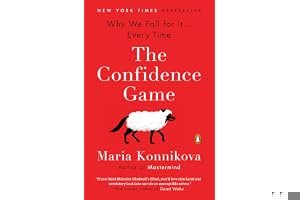
73The Confidence Game: Why We Fall for It . . . Every Time
While cheats and swindlers may be a dime a dozen, true conmen—the Bernie Madoffs, the Jim Bakkers, the Lance Armstrongs—are elegant, outsized personalities, artists of persuasion and exploiters of trust. How do they do it? Why are they successful? And what keeps us falling for it, over and over again? These are the questions that journalist and psychologist Maria Konnikova tackles in her mesmerizing new book.
From multimillion-dollar Ponzi schemes to small-time frauds, Konnikova pulls together a selection of fascinating stories to demonstrate what all cons share in common, drawing on scientific, dramatic, and psychological perspectives. Insightful and gripping, the book brings readers into the world of the con, examining the relationship between artist and victim. The Confidence Game asks not only why we believe con artists, but also examines the very act of believing and how our sense of truth can be manipulated by those around us.
This Brilliant Writer Thought She’d Write a Book About Playing Professional Poker. Then She Won a Tournament https://t.co/jRE17q6mFJ #Leadership #Florida #Business [source]
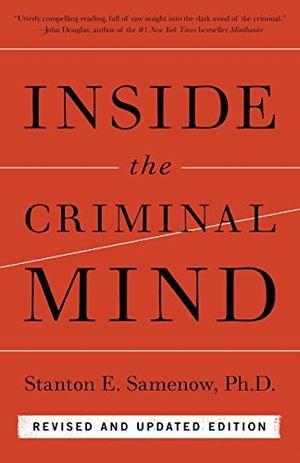
74Inside the Criminal Mind: Revised and Updated Edition
What I like about it is the honesty with which, as psychologists, they described their interactions with criminals. They discuss, initially, various attempts to get people to stop being criminals… It emphasises agency. A lot of the sociological explanations ignore the fact that the people from very similar backgrounds can end up very differently. [source]
The Vanished Man (Lincoln Rhyme, #5)
Lincoln Rhyme and Amelia Sachs are brought in to help with the high-profile investigation and to ferret out a master illusionist they've dubbed "the conjurer." As the fatalities rise and the minutes tick down, Rhyme and Sachs must move beyond the smoke and mirrors to prevent a terrifying act of vengeance that could become the greatest vanishing act of all.
No Bone Unturned: The Adventures of a Top Smithsonian Forensic Scientist and the Legal Battle for America's Oldest Skeletons
In No Bone Unturned, investigative journalist Jeff Benedict not only unveils a compelling portrait of the man behind America's most notorious cases but also gives us a fascinating look inside the world of forensic science as seen through the eyes of a leading specialist.
Doug Owsley's extraordinary talent has put his phone number on speed dial for federal agencies, from the FBI to the CIA and the State Department. When the Branch Davidian compound in Waco caught fire, when a terrorist-flown plane crashed into the Pentagon, and when mass graves were uncovered in Croatia, the authorities called Owsley. Through cutting-edge science, instinctive artistry, and dogged tenacity, Owsley painstakingly rebuilds the skeleton, and helps identify it and determine the cause of death.
A curator for the Smithsonian's Museum of Natural History, Doug Owsley has handled over ten thousand human skeletons, more than anyone else in America. He has worked with America's historic skeletons, from, colonial Jamestown burials to Plains Indians to Civil War soldiers to skeletons tens of thousands of years old.
That includes the Kennewick Man, a 9,600-year-old human skeleton found in shallow water along the banks of Washington State's Columbia River. It was a skeleton that would turn Owsley's life upside down.
Days before Owsley was scheduled to begin studying the skeleton, the U.S. Army Corps of Engineers seized it and announced they would repatriate Kennewick Man, burying his bones on the land of the Native American tribes who claimed him. Along with seven of America's leading scientists, Owsley sued the U.S. government over custody. At stake was a wide body of knowledge about our past and our history that would be lost forever if the bones were reburied. For six years, Owsley fought a legal and political battle that put everything at risk, jeopardizing his career and his reputation.
The Father of Forensics: The Groundbreaking Cases of Sir Bernard Spilsbury, and the Beginnings of Modern CSI
The Twelfth Card: A Lincoln Rhyme Novel
Assisted by Fred Dellray, Mel Cooper and Lon Sellitto (suffering from a severe case of shattered nerves due to a near miss by the killer), Rhyme and partner Amelia Sachs work frantically to learn who the hit man and his partner are and when they will strike next, all the while trying to crack a very “cold” case: Rhyme believes that Geneva may have been targeted because of a paper she’s writing about her ancestor, Charles Singleton, a former slave who was instrumental in the civil rights movement in the 1860s, but who was arrested for theft and disgraced.
In his correspondence Charles wrote about a “secret,” that could have tragic consequences if revealed. This secret, which Rhyme is convinced will provide the key to why Geneva is in danger, revolves around some mysterious doings in the area known as Gallows Heights, a neighborhood on the Upper West Side of Manhattan that in the 1860s was a tense mix of wealthy financiers, civil rights leaders, political crooks like Boss Tweed, and working-class laborers and thugs. What was the truth behind the crime Charles was accused of? And what was his secret? Does it have to do with stolen gold? Or does it have a far broader implications?
Other complications keep the pot boiling: Rhyme is struggling through extensive therapy; will it have any effect on his quadriplegic conditions? And fiercely independent Geneva Settle battles both the killers and her protectors to maintain order in her life so that she can escape from Harlem to college and Europe as soon as possible.
Page Numbers Source ISBN: 0340960620
Maggots, Murder, and Men: Memories and Reflections of a Forensic Entomologist
A great admirerer of Sherlock Holmes, Dr. Erzinclioglu compares his own techniques with those of his fictional hero, and takes the reader behind the often gruesome but deeply fascinating scenes of a murder investigation. This absorbing book ranges over cases from history, prehistory and mythology to the present day and is as gripping and readable as a good thriller.
Forensic Psychology for Dummies
Inside you'll find out why people commit crime, how psychology helps in the investigative process, the ways psychologists work with criminals behind bars - and how you too can become a forensic psychologist. You'll discover what a typical day is like for a forensic psychologist, how they work with the police to build offender profiles, interview suspects or witnesses, and detect lies!Covers the important role psychology plays in assessing offendersExplains how psychology is applied in the courtroomExplains complicated psychology concepts in easy-to-understand terms
If you're a student considering taking forensic psychology or just love to learn about the science behind crime, "Forensic Psychology For Dummies" is everything you need to get up-to-speed on this fascinating subject.
When I was given the task of putting Forensic Psychology for Dummies together, I really had to embrace the whole discipline and find a way of dealing with it that was engaging and scholarly, without being pompous. [source]
Predator (Kay Scarpetta, #14)
She and her team --- Pete Marino, Benton Wesley, and her niece, Lucy --- track the odd connections between several horrific crimes and the people who are the likely suspects. As one psychopath, safely behind bars and the subject of a classified scientific study at a Harvard-affiliated psychiatric hospital, teases Scarpetta with tips that could be fact --- or fantasy --- the number of killers on the loose seems to multiply. Are these events related or merely random? And what can the study of one man's brain tell them about the methods of a psychopath still lurking in the shadows?
Trace (Kay Scarpetta, #13)
Deprived of assistance from colleagues Benton and Lucy, who are embroiled in what appears to be an unrelated attempted rape by a stalker, Scarpetta is faced with investigating the death of a fourteen-year-old girl, working with the smallest pieces of evidence --- traces that only the most thorough hunters can identify. She must follow the twisting leads and track the strange details in order to make the dead speak --- and to reveal the sad truth that may be more than even she can bear ...
Dead Reckoning: The New Science of Catching Killers
Baden and Roach reveal how a key clue to the killer of Nicole Brown Simpson was lost when her body was moved to the morgue, and why the JonBenet Ramsey case can never be solved. They show how no clue is too small to be analyzed and no case too old to be reopened. Full of behind-the-scenes drama and surprising revelations, Dead Reckoning is a fascinating look at how forensic science is changing the way we convict the guilty and free the innocent.
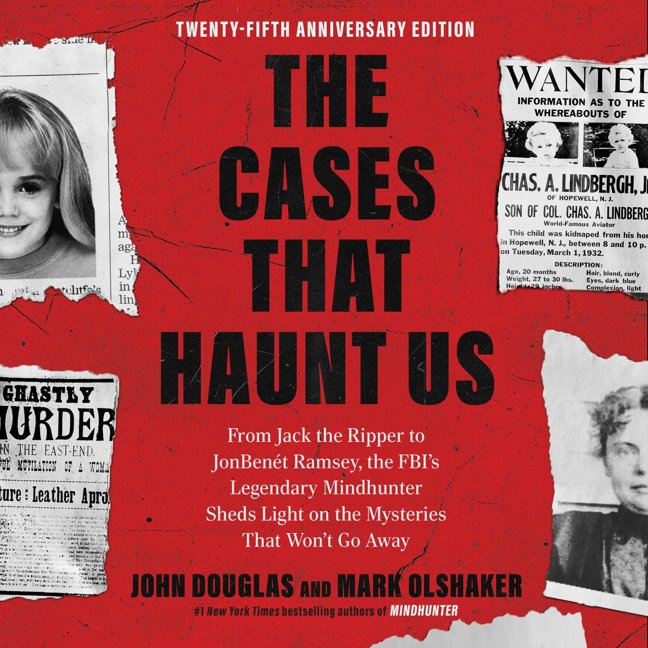
84The Cases That Haunt Us
America's foremost expert on criminal profiling and twenty-five-year FBI veteran John Douglas, along with author and filmmaker Mark Olshaker, explores those tantalizing questions and more in this mesmerizing work of detection. With uniquely gripping analysis, the authors reexamine and reinterpret the accepted facts, evidence, and victimology of the most notorious murder cases in the history of crime, including the Lindbergh baby kidnapping, the Zodiac Killer, and the Whitechapel murders.Utilizing techniques developed by Douglas himself, they give detailed profiles and reveal chief suspects in pursuit of what really happened in each case.
The Cases That Haunt Us not only offers convincing and controversial conclusions, it deconstructs the evidence and widely held beliefs surrounding each case and rebuilds them -- with fascinating, surprising, and haunting results.
The Burning Wire (Lincoln Rhyme, #9)
The weapon is invisible and omnipresent. Without it, modern society grinds to a halt. It is electricity. The killer harnesses and steers huge arc flashes with voltage so high and heat so searing that steel melts and his victims are set afire.
When the first explosion occurs in broad daylight, reducing a city bus to a pile of molten, shrapnel-riddled metal, officials fear terrorism. Rhyme, a world-class forensic criminologist known for his successful apprehension of the most devious criminals, is immediately tapped for the investigation. Long a quadriplegic, he assembles NYPD detective Amelia Sachs and officer Ron Pulaski as his eyes, ears and legs on crime sites, and FBI agent Fred Dellray as his undercover man on the street. As the attacks continue across the city at a sickening pace, and terrifying demand letters begin appearing, the team works desperately against time and with maddeningly little forensic evidence to try to find the killer. Or is it killers...?
Meanwhile, Rhyme is consulting on another high-profile investigation in Mexico with a most coveted quarry in his crosshairs: the hired killer known as the Watchmaker, one of the few criminals to have eluded Rhyme's net.
Juggling two massive investigations against a cruel ticking clock takes a toll on Rhyme's health. Soon Rhyme is fighting on yet another front - and his determination to work despite his physical limitations threatens to drive away his closest allies when he needs them most...
86Criminalistics: An Introduction to Forensic Science
A clear introduction to the technology of the modern crime laboratory for non-scientists
Criminalistics: An Introduction to Forensic Science, Twelfth Edition, uses clear writing, case stories, and modern technology to capture the pulse and fervor of forensic science investigations. Written for readers with no scientific background, only the most relevant scientific and technological concepts are presented. The nature of physical evidence is defined, and the limitations that technology and current knowledge impose on its individualization and characterization are examined. A major portion of the text centers on discussions of the common items of physical evidence encountered at crime scenes. Particular attention is paid to the meaning and role of probability in interpreting the evidential significance of scientifically evaluated evidence. Updated throughout, the Twelfth Edition includes a new chapter on the exciting field of forensic biometrics. With its easy-to-understand writing and straightforward presentation, this best-selling text is clear and comprehensible to a wide variety of students.
87The Stranger Beside Me: The Shocking Inside Story of Serial Killer Ted Bundy
Meeting in 1971 at a Seattle crisis clinic, Ann Rule and Ted Bundy developed a friendship and correspondence that would span the rest of his life. Rule had no idea that when they went their separate ways, their paths would cross again under shocking circumstances.
The Stranger Beside Me is Rule’s compelling firsthand account of not just her relationship with Bundy, but also his life—from his complicated childhood to the media circus of his trials. Astonishing in its intimacy and with Rule’s clear-eyed prose, you can’t help but share in her growing horror at discovering that her friend was one of the most notorious American serial killers.
An unforgettable and haunting work of research, journalism, and personal memories, The Stranger Beside Me is “as dramatic and chilling as a bedroom window shattering at midnight” (TheNew York Times).
88I'll Be Gone in the Dark: One Woman's Obsessive Search for the Golden State Killer
"You’ll be silent forever, and I’ll be gone in the dark."
For more than ten years, a mysterious and violent predator committed fifty sexual assaults in Northern California before moving south, where he perpetrated ten sadistic murders. Then he disappeared, eluding capture by multiple police forces and some of the best detectives in the area.
Three decades later, Michelle McNamara, a true crime journalist who created the popular website TrueCrimeDiary.com, was determined to find the violent psychopath she called "the Golden State Killer." McNamara pored over police reports, interviewed victims, and embedded herself in the online communities that were as obsessed with the case as she was.
At the time of the crimes, the Golden State Killer was between the ages of eighteen and thirty, Caucasian, and athletic—capable of vaulting tall fences. He always wore a mask. After choosing a victim—he favored suburban couples—he often entered their home when no one was there, studying family pictures, mastering the layout. He attacked while they slept, using a flashlight to awaken and blind them. Though they could not recognize him, his victims recalled his voice: a guttural whisper through clenched teeth, abrupt and threatening.
I’ll Be Gone in the Dark—the masterpiece McNamara was writing at the time of her sudden death—offers an atmospheric snapshot of a moment in American history and a chilling account of a criminal mastermind and the wreckage he left behind. It is also a portrait of a woman’s obsession and her unflagging pursuit of the truth. Framed by an introduction by Gillian Flynn and an afterword by her husband, Patton Oswalt, the book was completed by McNamara's lead researcher and a close colleague. Utterly original and compelling, it is destined to become a true crime classic—and may at last unmask the Golden State Killer.
Book of the Dead (Kay Scarpetta, #15)
But when she discovers unsettling connections between Martin's murder, the body of an unidentified South Carolina boy and her old nemesis, the maniacal psychiatrist Dr. Marilyn Self, Scarpetta encounters a killer as deadly as any she's ever faced.
The Christopher Killer (Forensic Mysteries, #1)
91The Anatomy of Motive: The FBI's Legendary Mindhunter Explores the Key to Understanding and Catching Violent Criminals
Every crime is a mystery story with a motive at its heart. With the brilliant insight he brought to his renowned work inside the FBI's elite serial-crime unit, John Douglas pieces together motives behind violent sociopathic behavior. He not only takes us into the darkest recesses of the minds of arsonists, hijackers, bombers, poisoners, assassins, serial killers, and mass murderers, but also the seemingly ordinary people who suddenly kill their families or go on a rampage in the workplace.
Douglas identifies the antisocial personality, showing surprising similarities and differences among various types of deadly offenders. He also tracks the progressive escalation of those criminals' sociopathic behavior. His analysis of such diverse killers as Lee Harvey Oswald, Theodore Kaczynski, and Timothy McVeigh is gripping, but more importantly, helps us learn how to anticipate potential violent behavior before it's too late.
92Smoke Gets in Your Eyes: And Other Lessons from the Crematory
Smoke Gets in Your Eyes tells an unusual coming-of-age story full of bizarre encounters and unforgettable scenes. Caring for dead bodies of every color, shape, and affliction, Caitlin soon becomes an intrepid explorer in the world of the dead. She describes how she swept ashes from the machines (and sometimes onto her clothes) and reveals the strange history of cremation and undertaking, marveling at bizarre and wonderful funeral practices from different cultures.
Her eye-opening, candid, and often hilarious story is like going on a journey with your bravest friend to the cemetery at midnight. She demystifies death, leading us behind the black curtain of her unique profession. And she answers questions you didn’t know you had: Can you catch a disease from a corpse? How many dead bodies can you fit in a Dodge van? What exactly does a flaming skull look like?
Honest and heartfelt, self-deprecating and ironic, Caitlin's engaging style makes this otherwise taboo topic both approachable and engrossing. Now a licensed mortician with an alternative funeral practice, Caitlin argues that our fear of dying warps our culture and society, and she calls for better ways of dealing with death (and our dead).
93Morgue: A Life in Death
Beginning with his street-smart Italian origins in Brooklyn, the book spans 40 years of work and more than 9,000 autopsies, and Di Maio's eventual rise into the pantheon of forensic scientists. One of the country's most methodical and intuitive criminal pathologists will dissect himself, maintaining a nearly continuous flow of suspenseful stories, revealing anecdotes, and enough macabre insider details to rivet the most fervent crime fans.
The Bone Garden
Boston, 1830: In order to pay for his education, Norris Marshall, a talented but penniless student at Boston Medical College, has joined the ranks of local “resurrectionists”–those who plunder graveyards and harvest the dead for sale on the black market. Yet even this ghoulish commerce pales beside the shocking murder of a nurse found mutilated on the university hospital grounds. And when a distinguished doctor meets the same grisly fate, Norris finds that trafficking in the illicit cadaver trade has made him a prime suspect.
To prove his innocence, Norris must track down the only witness to have glimpsed the killer: Rose Connolly, a beautiful seamstress from the Boston slums who fears she may be the next victim. Joined by a sardonic, keenly intelligent young man named Oliver Wendell Holmes, Norris and Rose comb the city–from its grim cemeteries and autopsy suites to its glittering mansions and centers of Brahmin power–on the trail of a maniacal fiend who lurks where least expected . . . and who waits for his next lethal opportunity.
Flesh and Blood (Kay Scarpetta, #22)
Her cell phone rings, and Detective Pete Marino tells her there's been a homicide five minutes away. A high school teacher was shot with uncanny precision as he unloaded groceries from his car. Yet no one heard or saw a thing.
Looking for more clues that only she can discover and analyse, Scarpetta embarks on the unsettling pursuit of a serial sniper who leaves no incriminating evidence except tiny fragments of copper...
Darkly Dreaming Dexter (Dexter, #1)
Blood Secrets: A Forensic Expert Reveals How Blood Spatter Tells the Crime Scene's Story
Blood Secrets reveals how forensic experts read the story of a murder told in the traces of blood left behind, providing crucial evidence that has helped convict criminals who might have otherwise walked free.
When Rod Englert began his career in law enforcement, virtually no police force in the world knew how to correctly examine blood spatter. He spent years studying and testing how blood behaves, pioneering a vital new tool that is now a part of any criminal investigation. In Blood Secrets he demonstrates how detectives and forensic experts use blood-spatter analysis to solve real cases.
How can the police tell what type of murder weapon was used when the body is missing and all that's left is a trace of gore? How can they tell if a victim was moved, or which person in a room fired the fatal shot? Englert lays out what he's learned on a variety of intriguing cases, from puzzling murders in tiny, remote towns to the highest-profile celebrity trials--including O. J. Simpson, Robert Blake, and many others.
Filled with fascinating details of forensic science and real-life CSI stories, Blood Secrets shows the techniques and tools used to decipher blood spatter's code.
A Murderous Procession (Mistress of the Art of Death, #4)
ACE #1
In 1176, King Henry II sends his daughter Joanna to Palermo to marry his cousin, the king of Sicily. Henry chooses Adelia Aguilar, his Mistress of the Art of Death, to travel with the princess and safeguard her health. But when people in the wedding procession are murdered, Adelia and Rowley must discover the killer's identity . . . and whether he is stalking the princess or Adelia herself.
Hidden Evidence: 40 True Crimes and How Forensic Science Helped Solve Them
Hidden Evidence takes you to the scenes of 40 infamous crimes and into the heart of the forensic investigations. These are the true crime shockers that have grabbed headlines and aroused public passions. David Owen explains the scientific procedures that helped crack every one of these cases -- from the gathering of elusive physical clues to the examination of weapons and bodies, to the use of sophisticated scientific analysis.
Threaded throughout the book is the history of forensic science and the technologies that support it, including:
fingerprinting, autopsies, handwriting analysis, ballistics, hair sampling, blood typing, DNA testing, dental records, gas chromatography, mass spectrometry, compound and electron microscopes, and toxicology.
The high-profile cases David Owen used to illustrate forensic developments are from as early as 1775, when Paul Revere used dentures to identify a slain soldier, to the latest developments in the Oklahoma bombing. Most will be familiar to readers, such as: The Lindbergh Kidnapping, Pan Am Flight 103, The Kennedy Investigation, The Hitler Diaries, Wayne Williams, Ted Bundy, Jeffrey MacDonald, Dr. Josef Mengele, Robert Maxwell's suicide, Tsar Nicholas II, and The World Trade Center bombing.
David Owen presents the facts, steering clear of speculation. Comprehensive in scope, thoroughly researched and expertly compiled, Hidden Evidence is, in the words of former Los Angeles County Coroner Thomas T. Noguchi, "a fascinating book ... [and] an excellent mini-encyclopedia of widely discussed, high-profile cases."

Grave Goods (Mistress of the Art of Death, #3)
England, 1176. Beautiful, tranquil Glastonbury Abbey—one of England's holiest sites, and believed by some to be King Arthur's sacred Isle of Avalon—has been burned almost to the ground. The arsonist remains at large, but the fire has uncovered something even more shocking: two hidden skeletons, a man and a woman. The skeletons' height and age send rumors flying- are the remains those of Arthur and Guinevere?
King Henry II hopes so. Struggling to put down a rebellion in Wales, where the legend of Celtic savior Arthur is particularly strong, Henry wants definitive proof that the bones are Arthur's. If the rebels are sure that the Once and Future King will not be coming to their aid, Henry can stamp out the insurgence for good. He calls on Adelia Aguilar, Mistress of the Art of Death, to examine the bones.
Henry's summons comes not a moment too soon, for Adelia has worn out her welcome in Cambridge. As word of her healing powers has spread, so have rumors of witchcraft. So Adelia and her household ride to Glastonbury, where the investigation into the abbey fire will be overseen by the Church authorities—in this case, the Bishop of St. Albans, who happens also to be the father of Adelia's daughter.