We've ranked the best financial accounting books using expert recommendations, sales data, and millions of reader ratings. At Shortform, we know books. Our book guides are the best in the world. Learn why.
This hardcover edition is cleanly formatted for easy reading. 12 point Garamond, 1.25 spacing. The Richest Man in Babylon is a timeless classic, revealing the secrets to making money and keeping it. This inspirational book is hailed as the greatest of books on finances. It unveils the secrets to wealth, providing priceless suggestions, advice, unforgettable parables, financial problem-solving tools, and invaluable information which will get you on your way to riches. The book to read for all who want financial success.
…
Recommended by Daymond John, Aisha Yesufu, DJ Vlad, and 6 others.
Daymond John
Founder/FUBU
Daymond John said this is one of his most-recommended books. [source]
Aisha Yesufu
@seundavidpaul 👏👏👏👏👏 This is a great book [source]
This is a 1920s classic version of How To Get Rich. The ancestor of all the pale imitations, like Rich Dad/Poor Dad, that came since. And while I scoffed at plenty of the allegories from ancient Babylon that presents the lessons, it was still a neat package. And at least ancient Babylon is a more interesting backdrop for teaching lessons about money than some suburban house flipper. I ended up liking it more at the end than I did at the beginning. It’s also a really interesting tie-in with that debt history book. [source]
Cover unavailable
2
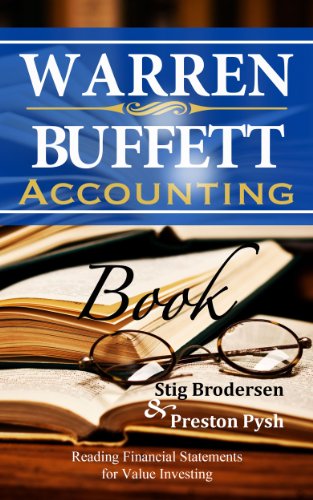
Warren Buffett Accounting Book: Reading Financial Statements for Value Investing
Stig Brodersen and Preston Pysh
4.7
This book is the second volume to the Amazon Bestseller Warren Buffett's Three Favorite Books. In this book, you will learn how to: Pick stocks like Warren Buffett Calculate the intrinsic value of stocks using two methods During the second half of the book, readers will learn in-depth methods for: Read an income statement Read a balance sheet Read a cash flow statement Calculate and interpret key ratios
…
Recommended by Chris Mobbs.
Chris Mobbs
Warren Buffett Accounting Book: Reading Financial Statements for Value Investing (Warren Buffett’s 3 Favorite Books Book 2) https://t.co/uwVh05lLJH https://t.co/sR5CEeOEDf [source]
Cover unavailable
3
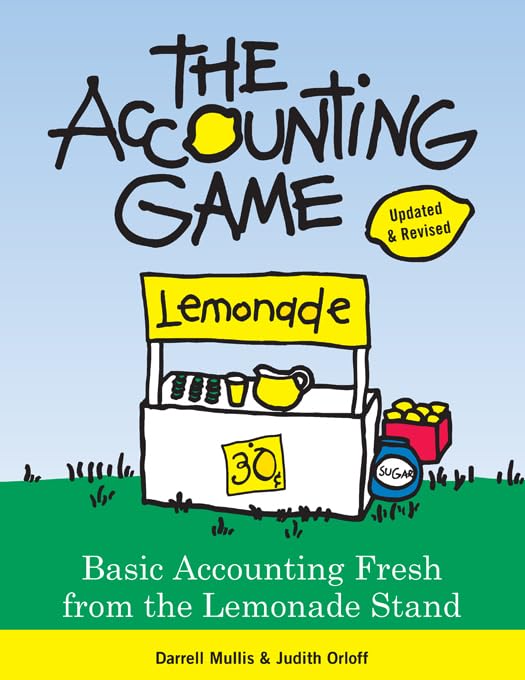
The Accounting Game: Basic Accounting Fresh from the Lemonade Stand
Darrell Mullis and Judith Orloff
4.7
The Clearest Explanation Ever of the Key Accounting Basics
The world of accounting can be intimidating. Whether you're a manager, business owner, aspiring entrepreneur, or taking a college course in accounting, you'll find yourself need to know the basics...but baffled by complicated accounting books. What if learning accounting could be as simple and fun as running a child's lemonade stand? It can.
The Accounting Game presents financial information in a format so simple and so unlike a common accounting textbook, you may forget you're learning key skills that will help you get ahead! Using the world of a child's lemonade stand to teach the basics of managing your finances, this book makes a dry subject fun and understandable. As you run your stand, you'll begin to understand and apply financial terms and concepts like assets, liabilities, earnings, inventory and notes payable, plus:
Interactive format gives you hands-on experience Color-coded charts and worksheets help you remember key terms Step-by-step process takes you from novice to expert with ease Fun story format speeds retention of essential concepts Designed to apply what you learn to the real world The revolutionary approach of The Accounting Game takes the difficult subjects of accounting and business finance and makes them something you can easily learn, understand, remember and use!
"The game approach makes the subject matter most understandable. I highly recommend it to anyone frightened by either numbers or accountants." --John Hernandis, Director of Corporate Communications, American Greetings
If you have no understanding of accounting, read a good accounting book. A good example would be The Accounting Game by Darrell Mullis. [source]
Cover unavailable
4
Love Your Life, Not Theirs: 7 Money Habits for Living the Life You Want
Rachel Cruze
4.7
In Love Your Life, Not Theirs, Rachel Cruze shines a spotlight on the most damaging money habit we have: comparing ourselves to others. Then she unpacks seven essential money habits for living the life we really want—a life in line with our values, where we can afford the things we want to buy without being buried under debt, stress, and worry.
The Joneses are broke.
Life looks good, but hidden beneath that glossy exterior are credit card bills, student loans, car payments, and an out-of-control mortgage. Their money situation is a mess, and they’re trying to live a life they simply can't afford. So why exactly do we try so hard to keep up with the Joneses?
Are we really living the lives we want, or are we chasing someone else’s dream, just trying to keep up appearances on social media, at church, and in our community? Why are we letting other people set the pace for our own family’s finances?
In Love Your Life, Not Theirs, Rachel shows you how to buy and do the things that are important to you—the right way. That starts by choosing to quit the comparisons, reframing the way you think about money, and developing new habits like avoiding debt, living on a plan, watching your spending, saving for the future, having healthy conversations about money, and giving.
These habits work, and Rachel is living proof. Now, she wants to empower you to live the life you’ve always dreamed of without creating the debt, stress, and worry that are all too often part of the deal.
Social media isn’t real life, and trying to keep up with the Joneses will never get you anywhere. It’s time to live—and love—your life, not theirs.
Dave Ramsey recommended this book on his website. [source]
Cover unavailable
5
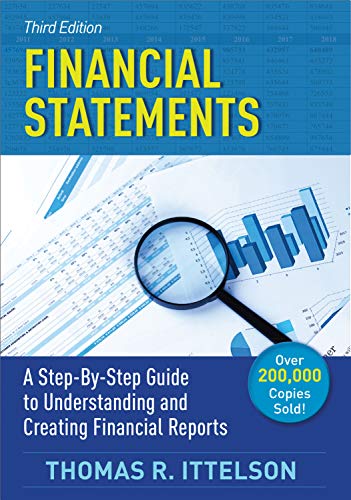
Financial Statements, Third Edition: A Step-by-Step Guide to Understanding and Creating Financial Reports (Over 200,000 copies sold!)
Thomas Ittelson
4.6
Over 200,000 copies sold!
Thomas R. Ittelson’s master work for entrepreneurs, non-financial managers, business students, lawyers, lenders, and investors—the bestselling book of its kind, with over 200,000 copies in print—has gotten even better with this 20th anniversary edition.
Ittelson is an expert at translating complicated financial topics in an accessible way for non-financial audiences. In this book, he empowers readers by clearly and simply demonstrating how the three major accounting statements interact to offer a snapshot of a company's financial health.
This book teaches readers how to use specialized accounting vocabulary and makes accessible the structure and purpose of the three major numeric statements that describe a company’s financial condition. Each statement paints a different and essential picture—the “three-legged stool” of company reporting: The income statement shows the manufacturing (or service offerings) and selling actions of the company that result in profit or loss during a period. It gives a very important perspective on the company’s performance, its profitability.The cash flow statement details cash into and out of the company for a period. You need money to make money. Running out of cash is bad. Duh. The balance sheet records at the end of a period, an instant in time, what the company owns and what it owes, including the owners’ stake, called shareholders’ equity. With two new major topic sections (nonprofit organization accounting and pricing theory for profitability) and spot color reformatting to improve comprehension, this third edition of Financial Statements is simply the clearest and most comprehensive introduction to financial reporting available. No accounting background is required.
…
Cover unavailable
6
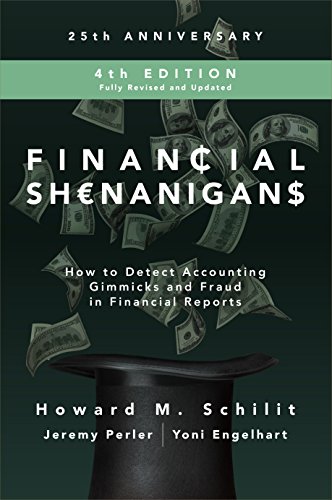
Financial Shenanigans: How to Detect Accounting Gimmicks and Fraud in Financial Reports
Howard Schilit and Jeremy Perler
4.6
The bestselling classic from the "Sherlock Holmes of Accounting"--updated to reflect the key case studies and most important lessons from the past quarter century. This fourth edition of the classic guide shines a light on the most shocking frauds and financial reporting offenders of the last twenty-five years, and gives investors the tools they need to detect: -Corporate cultures that incentivize dishonest practices-The latest tricks companies use to exaggerate revenue and earnings-Techniques devised by management to manipulate cash flow as easily as earnings-Companies that use misleading metrics to fool investors about their financial performance-How companies use acquisitions to hide deterioration in their underlying business This new edition focuses on the key case studies and most important lessons from the past quarter century, and brings you up to date on accounting chicanery in the global markets. Howard Schilit and his team of renowned forensic accounting experts expose financial reporting miscreants and unveil the latest methods companies use to mislead investors. You'll learn everything you need to know to unearth deceptive reporting and avoid costly mistakes.
"Financial Accounting, 6e "helps users LEARN, PRACTICE, and REMBEMBER the accounting cycle. A specially designed Accounting Cycle Tutorial program is integrated in the first three chapters (icons in the margin point readers to an online program, a free website that accompanies the book). The program includes tutorials, interactive animations, and practice questions that provide readers with additional, beyond the book instruction on the accounting cycle. This book also provides a no password required online practice environment where readers can work on problems that help them master the accounting cycle and gauge their comprehension. A unique Accounting Cycle Pocket Guide is included for readers to use as a handy reference-it illustrates the key steps in the accounting cycle. This book covers the full range of topics in financial accounting: financial statements, processing information, accrual accounting, internal control and cash, short-term investments and receivables, inventory, plant assets, current and long-term liabilities, stockholders' equity, long-term investments and international operations, using the income statement and statement of stockholders' equity, the statement of cash flows, and financial statement analysis. For accountants and employees in accounting departments.
…
Cover unavailable
8
Principles of Accounting, Volume 1: Financial Accounting
OpenStax
4.6
Cover unavailable
9
Blockchain Bubble or Revolution: The Present and Future of Blockchain and Cryptocurrencies
Neel Mehta
4.6
Some experts say that cryptocurrencies and blockchains are just a scam; others say they're "the most important invention since the internet." It's hard to tell who's right. Authored by Product Managers from Google, Microsoft, and Facebook, Bubble or Revolution cuts through the hype to offer a balanced, comprehensive, and accessible analysis of blockchains and cryptocurrencies.
You'll learn the core concepts of these technologies and understand their strengths and weaknesses from real-world case studies; dive deep into their technical, economic, political, and legal complexities; and gain insights about their future from exclusive interviews with dozens of tech industry leaders. No coding or math needed!
Are cryptocurrencies and blockchains a bubble or a revolution? We'll help you decide for yourself.
What's inside:
Bitcoin and the blockchain How Bitcoin and blockchains work from a technical perspective with no assumed technical knowledge Satoshi Nakamoto and the history of Bitcoin, the original blockchain A thorough overview of crucial crypto concepts (eg. blocks, keys, mining, nodes, etc.) Frameworks for understanding when it actually makes sense to use blockchain Major application scenarios for blockchain and cryptocurrencies and where it'll fall flat Public blockchains and altcoins Emerging trends in blockchain technology What you should know before buying any cryptocurrency An overview of Etherum and smart contracts An overview of the strengths and weaknesses of the top altcoins and stable coins, including Monero (XMR), Tether (USDT), and Bitcoin Cash (BCH) Alternatives to blockchain and cryptocurrencies New kinds of decentralized ledger technology (dlt) The economics of both traditional payment methods and cryptocurrencies Cryptocurrency security best practices and major breach case studies Private blockchains How blockchain, cryptocurrencies, and traditional banking and finance will interact with one another in the future Public blockchains vs private blockchains Limitations and shortcomings of public blockchains and cryptocurrencies The role of blockchain in the strategy of top tech companies like Facebook and Microsoft Case studies of how non-tech companies are effectively utilizing blockchain (eg. Walmart using it to prevent foodborne illness) Business blockchain case studies ranging from gaming (e.g. Xbox) to cloud services (e.g. Microsoft Azure's blockchain-as-a-service and Amazon's AWS offering) Blockchain's use for big data, internet of things (IoT), and machine learning (ML) Cryptocurrency regulation and policy ICOs vs STOs vs IPOs
ICOs' status as securities The SEC's STO rules and Reg A+/CF/D/S KYC and AML laws
The debate over whether cryptocurrencies are securities The official stance of various countries on crypto An overview of crypto policy and regulatory hurdles The role of crypto in emerging markets and China Digital democracy and voting on the blockchain The future of decentralized technology If, how, and when the tokenization of national currencies will play out Facebook and WhatsApp's upcoming cryptocurrencies Currency tokenization and China's efforts to tokenize the yuan Blockchain, IoT, and the tangle Cryptocurrencies vs. fiat vs. the gold standard Predictions about the future of money, business, and currency Why blockchains would do better on Mars than Earth
How Finance Works: The HBR Guide to Thinking Smart about the Numbers
Mihir Desai
4.6
Cover unavailable
12
The Interpretation of Financial Statements: The Classic 1937 Edition
Benjamin Graham and Charles McGolrick
4.6
"All investors, from beginners to old hands, should gain from the use of this guide, as I have." From the Introduction by Michael F. Price, president, Franklin Mutual Advisors, Inc.
Benjamin Graham has been called the most important investment thinker of the twentieth century. As a master investor, pioneering stock analyst, and mentor to investment superstars, he has no peer.
The volume you hold in your hands is Graham's timeless guide to interpreting and understanding financial statements. It has long been out of print, but now joins Graham's other masterpieces, The Intelligent Investor and Security Analysis, as the three priceless keys to understanding Graham and value investing.
The advice he offers in this book is as useful and prescient today as it was sixty years ago. As he writes in the preface, "if you have precise information as to a company's present financial position and its past earnings record, you are better equipped to gauge its future possibilities. And this is the essential function and value of security analysis."
Written just three years after his landmark Security Analysis, The Interpretation of Financial Statements gets to the heart of the master's ideas on value investing in astonishingly few pages. Readers will learn to analyze a company's balance sheets and income statements and arrive at a true understanding of its financial position and earnings record. Graham provides simple tests any reader can apply to determine the financial health and well-being of any company.
This volume is an exact text replica of the first edition of The Interpretation of Financial Statements, published by Harper & Brothers in 1937. Graham's original language has been restored, and readers can be assured that every idea and technique presented here appears exactly as Graham intended.
Highly practical and accessible, it is an essential guide for all business people--and makes the perfect companion volume to Graham's investment masterpiece The Intelligent Investor.
@Hom3Slice @stig_brodersen That’s a great little book, but it’s simply showing you the math behind each ratio. It doesn’t go any further than that. [source]
Cover unavailable
13
Money Ninja: A Children's Book About Saving, Investing, and Donating (Ninja Life Hacks)
Mary Nhin
4.5
Cover unavailable
14
Accounting QuickStart Guide
Josh Bauerle
4.5
If someone told you that learning accounting could be fun, you might be a little skeptical.
Meet Josh Bauerle, reluctant accounting student turned super CPA and author of the Accounting QuickStart Guide, 3rd edition.
This is the revolutionary book that expertly simplifies accounting fundamentals. It’s an invaluable resource for accounting students, business owners, bookkeepers, and other finance and recordkeeping professionals worldwide! Whether you are a business owner looking to boost your bottom line or an accounting student looking to boost your grade, this book will prove indispensable on your journey to knowledge.
CPA, Josh Bauerle’s down-to-earth approach to accounting and business strategy has been featured on the Hallmark Channel’s Home and Family show, the GenY Success show, Profit First Professionals, and on several other contemporary business media venues.
Why do accounting students, business owners, and finance professionals love this book so much?
• The Accounting QuickStart Guide explains and simplifies the core principles of accounting in a way that eludes most accounting professors. Key concepts are introduced alongside an abundance of entertaining and clarifying examples, providing fast and effective mastery of the material.
• Business decision-makers and accounting students alike appreciate the practical, real-world approach to the subject. This approach is consistently exemplified throughout the Accounting QuickStart Guide. A clear and simple path to reader education—not confusing jargon—is the order of the day.
• Get ready to experience learning breakthroughs. Concepts in the Accounting QuickStart Guide are presented with the assumption that the reader has very little to no knowledge of accounting. The path to learning begins at the beginning and culminates in new knowledge, new skills, and unmatched satisfaction!
Who is this book for?
• Business owners and managers looking to apply the power of accounting in small, medium-sized, and enterprise-class businesses.
• Accounting students at the high school, undergraduate, or graduate level.
• Business students looking to develop a well-rounded grasp of accounting fundamentals.
• Bookkeepers and financial professionals who want to increase their job proficiencies through the application of accounting fundamentals.
• Accounting professionals looking to reboot their understanding of the core principles of accounting, as well as accounting experts looking to sharpen their skills.
You’ll learn,
•The logic and methods of classic double-entry accounting—what it is and how to apply it.
• Business entity types; their pros, their cons, and their essential financial statements!
• The fundamental accounting equation, Assets = Liabilities + Equity; how everything in the financial world can be explained using this simple equation.
• Financial accounting, managerial accounting, tax accounting, and other universes within universes, all brought down to earth.
• All about GAAP standards and why they matter to accountants.
• How to increase your profit margins and fraud-proof your business using simple accounting tactics.
Accounting is known as the true “language of business.” If you're ready to find your fluency and boost your bottom line (or your exam scores), then the Accounting QuickStart Guide is your educational trailhead. Get it. Read it. Enjoy it. Consider it the first of many good decisions you’re soon to make, thanks to your newfound endeavor as a moonlighting CPA.
Featuring sample exercises and quiz questions, plus other bonus materials you can use to fine-tune your accounting knowhow; buckle in, you are on your way to becoming an expert!
…
Cover unavailable
15
Accounting Made Simple: Accounting Explained in 100 Pages or Less
Mike Piper
4.5
Find all of the following explained in Plain-English with no technical jargon: The Accounting Equation and why it's so significant How to read and prepare financial statements How to calculate and interpret several different financial ratios The concepts and assumptions behind Generally Accepted Accounting Principles (GAAP) Preparing journal entries with debits and credits Cash method vs. accrual method Inventory and Cost of Goods Sold How to calculate depreciation and amortization expenses
…
Cover unavailable
16
Profit First for Contractors: Transform your Construction Business from a Cash-Eating Monster to a Money-Making Machine
Shawn Van Dyke
4.5
Cover unavailable
17
Accounting for Non-Accountants: The Fast and Easy Way to Learn the Basics
Wayne Label
4.5
A Quick, Compact, and Easy-to-Understand Resource for Non-Accountants
Accounting for Non-Accountants is the must-have guide for all of us who have never taken an accounting class, are mystified by accounting jargon, and have no clue about balance sheets, income statements, payroll management, corporate taxes, or statements of cash flows.
Whether you own a business, plan on starting one, or just want to control your own assets, you'll find everything you need to know:
?How to prepare and use financial statements ?How to control cash flows ?How to manage budgets ?How to use accounting ratios ?How to deal with audits and auditors interpret financial statements Let this book help you like it helped these readers:
"Dr. Labels explanations are simple and straightforward. " "This will help me a lot as I set up my own business. " "I have worked in accounting for over twenty-five years, and this is the best book I have seen to help people with the basics of accounting."
For entrepreneurs or anyone who needs to brush up on accounting fast, this book will have you up and running in no time.
…
Cover unavailable
18
Schaum's Outline of Financial Accounting, 2nd Edition
Jae Shim and Joel Siegel
4.5
The ideal review for your financial accounting
More than 40 million students have trusted Schaum's Outlines for their expert knowledge and helpful solved problems. Written by renowned experts in their respective fields, Schaum's Outlines cover everything from math to science, nursing to language. The main feature for all these books is the solved problems. Step-by-step, authors walk readers through coming up with solutions to exercises in their topic of choice. 490 fully-solved problems Full coverage of accounting concepts, principles, and tools Complete self-testing exams Supports and supplements the leading textbooks in financial accounting Appropriate for the following courses: Financial Accounting, Accounting for Management, Accounting Principles, Accounting I, Accounting II Easy-to-follow review of financial accounting Supports all the major textbooks for financial accounting courses
…
Cover unavailable
19
Financial Statements: A Step-by-step Guide to Understanding and Creating Financial Reports
Thomas Ittelson
4.5
Now the best-selling book of its kind has gotten even better.
This revised and expanded second edition of Ittelson's master work will give you that firm grasp of "the numbers" necessary for business success. With more than 100,000 copies in print, Financial Statements is a perfect introduction to financial accounting for non-financial managers, stock-market investors, undergraduate business and MBA students, lawyers, lenders, entrepreneurs, and more.
Most introductory finance and accounting books fail either because they are written "by accountants for accountants" or the authors "dumb down" the concepts until they are virtually useless. Financial Statements deftly shows that all this accounting and financial-reporting stuff is not rocket science and that you can understand it! Ittelson empowers non-financial managers by clearly and simply demonstrating how the balance sheet, income statement and cash flow statement work together to offer a "snapshot" of any company's financial health. Every term is defined in simple, understandable language. Every concept is explained with a basic, straightforward transaction example. And with the book's uniquely visual approach, you'll be able to see exactly how each transaction affects the three key financial statement of the enterprise.
Two new major sections with nine new chapters were added to this revised second edition of Financial Statements, simply the clearest and most comprehensive introduction to financial reporting available.
…
Cover unavailable
20
Warren Buffett and the Interpretation of Financial Statements: The Search for the Company with a Durable Competitive Advantage
Mary Buffett
4.5
With an insider's view of the mind of the master, Mary Buffett and David Clark have written a simple guide for reading financial statements from Warren Buffett's succccessful perspective.
Buffett and Clark clearly outline Warren Buffett's strategies in a way that will appeal to newcomers and seasoned Buffettologists alike. Inspired by the seminal work of Buffett's mentor, Benjamin Graham (The Interpretation of Financial Statements, 1937), this book presents Buffett's interpretation of financial statements with anecdotes and quotes from the master investor himself.
Potential investors will discover:
• Buffett's time-tested dos and don'ts for interpreting an income statement and balance sheet • Why high research and development costs can kill a great business • How much debt Buffett thinks a company can carry before it becomes too dangerous to touch • The financial ratios and calculations that Buffett uses to identify the company with a durable competitive advantage -- which he believes makes for the winning long-term investment • How Buffett uses financial statements to value a company • What kinds of companies Warren stays away from no matter how cheap their selling price
Once readers complete and master Buffett's simple financial calculations and methods for interpreting a company's financial statement, they'll be well on their way to identifying which companies are going to be tomorrow's winners -- and which will be the losers they should avoid at all costs.
Destined to become a classic in the world of investment books, Warren Buffett and the Interpretation of Financial Statements is the perfect companion volume to The New Buffettology and The Tao of Warren Buffett.
…
Cover unavailable
21
Controller's Code: The Secret Formula to a Successful Career in Finance
Michael Whitmire
4.5
Cover unavailable
22
Accounting for the Numberphobic: A Survival Guide for Small Business Owners
Dawn Fotopulos
4.5
Why do so many business owners dread looking at the numbers? They make excuses...They don't have time...That's what the accountant is for....But the simple truth is that no one else will ever be as invested in their company as they are--and they need to take control.
As a small-business owner, financial statements are your most important tools--and if you don't know how to read them and understand their implications, you cannot possibly steer your business successfully. Accounting for the Numberphobic demystifies your company's financial dashboard: the Net Income Statement, Cash Flow Statement, and Balance Sheet. The book explains in plain English how each measurement reflects the overall health of your business--and impacts your decisions. You will discover:
• How your Net Income Statement is the key to growing your profits • How to identify the break-even point that means your business is self-sustaining • Real-world advice on measuring and increasing cash flow • What the Balance Sheet reveals about your company's worth • And more
Illustrated with case studies and packed with practical action steps, this indispensable guide will put your business on the path to profitability in no time.
…
Cover unavailable
23
Financial Accounting for Dummies
Maire Loughran
4.5
Your plain-English guide to navigating a financial accounting course Despite the economic landscape and job market, demand for accountants remains strong, and accountants will continue to see high demand for their services as the economy rebounds and businesses grow. Additionally, one of the effects of the economic downturn is a greater emphasis on accountability, transparency, and controls in financial reporting.
With easy-to-understand explanations and real-life examples, Financial Accounting For Dummies provides students who are studying business, finance, and accounting with the basic concepts, terminology, and methods to interpret, analyze, and evaluate actual corporate financial statements.
Covers traditional introductory financial accounting course material Explores concepts accountants and other business professionals use to prepare reports Details mergers and acquisitions purchase and pooling, free cash flow, and financial statement analysis Whether you're a student on your way to earning a bachelor's degree, MBA, or MAcc, Financial Accounting For Dummies gives you a wealth of information to grasp the subject and ace the course.
…
Cover unavailable
24
Health Care USA
Kristina M. Young
4.5
Health Care USA, Ninth Edition Offers Students Of Health Administration, Public Health, Medicine, And Related Fields A Wide-Ranging Overview Of America’S Health Care System. Combining Historical Perspective With Analysis Of Current Trends, This Expanded Edition Charts The Evolution Of Modern American Health Care, Providing A Complete Examination Of Its Organization And Delivery While Offering Critical Insight Into The Issues That The U.S. Health System Faces Today. Balanced In Perspective And Comprehensive In Its Coverage, Health Care USA, Eighth Edition, Provides Students With A Clearly Organized, Straightforward Illustration Of The Complex Structures, Relationships And Processes Of This Rapidly Growing Industry, Including Thoroughly Updated Information Throughout, On The Progress And Impact Of The Affordable Care Act (ACA). In Addition To Updated Financial, Utilization, And Other Data, The Ninth Edition Explores New And Evolving Trends In The Health Care Delivery Marketplace, Including Implications For Quality And Cost Will Be A Focus In Appropriate Chapters, Particularly Regarding: Physician Employment By Health Systems, Hospital Mergers, And Health Insurance Market Consolidations. The Health Information Technology Chapter Offers New Information On The Achievement Of “Meaningful Use” Criteria Among Hospitals And Individual Providers, Status Of System Interoperability And Continuing Challenges Including Proprietary Vendor Issues And Demands For Federal Solutions, Status Of The EHR’S Impact On Health Care Quality And Efficiency, And RHIO Sustainability Following Cessation Of Federal Funding.
…
Cover unavailable
25
DON'T BE AFRAID OF ACCOUNTING: LEARN THE BASICS OF FINANCIAL ACCOUNTING AND BE ON YOUR WAY TO GREATER SUCCESS!
Brad Horton
4.5
DON’T BE AFRAID OF ACCOUNTING I believe that anyone can learn accounting; it’s really not that hard. If you aren’t an accountant by trade, if you don’t consider yourself a math person, or if you think accounting is just too complex to learn, then I encourage you to read this book. I think you will find that accounting can actually be simple and easy once you learn how to approach it and once you learn the building blocks of the subject through financial statement preparation and analysis.
I’ve spent the past seven years teaching both financial and managerial accounting at the collegiate level. If you want or need to learn accounting, then you need to first know the basics of financial accounting and know them well in order to build a solid foundational knowledge that will equip you to learn the more advanced topics in the field.
No matter where you are in life or your career, I can help you learn the basics of financial accounting, which can set you up for greater success in accounting and beyond. For years, I have been helping people do exactly this.
How Accounting Can Benefit You First, accounting is virtually a recession proof field because even in bad times, companies still have to keep track of their finances. Even in economic downturns, accountants are still needed. Furthermore, not only is accounting pretty much recession proof, but accountants are almost always in demand. At the college where I teach, we frequently get requests from employers looking to hire students to fill bookkeeping and accounting positions. Even better, accountants (especially certified public accountants) usually make pretty solid money. What’s not to love about making money and being in demand?
Why This Book Can Help You Learn Accounting Most accounting books, classes, seminars, and trainings start with the accounting equation and then start having you analyze transactions. I take a different approach. I believe it’s crucial to start from the ground up before you start analyzing the accounting equation and transactions. This is so because after teaching this subject for years, I’ve witnessed firsthand what works and what doesn’t. For the non-accountants and non-math people, starting out too complex and too fast (as most accounting material generally does) tends to create confusion and frustration. Worse, such an approach can turn people away from learning accounting altogether.
I teach accounting in plain language for the non-accountant and accountant alike. I also teach it from the perspective of putting together the pieces of a puzzle rather than from a sophisticated academic perspective, which makes this material much easier to learn. In this book, I simply explain the basics of accounting in easy to understand terms in a manner that makes learning it easy.
About The Author
I’ve spent the past fifteen plus years performing some of the most complex and complicated accounting work that there is. On top of this, as noted above, I’ve spent the past seven years teaching accounting part-time at the collegiate level. As a CPA and a CFE, I love teaching accounting and helping people learn new skills and concepts that will benefit them and help advance their careers.
Start learning accounting today and be on your way to bigger and greater successes. Scroll up and get your copy.
…
Cover unavailable
26
The 5 Mistakes Every Investor Makes and How to Avoid Them: Getting Investing Right
Peter Mallouk
4.5
With so much at stake in investing and wealth management, investors cannot afford to keep repeating actions that could have serious negative consequences for their financial goals. The Five Mistakes Every Investor Makes and How to Avoid Them focuses on what investors do wrong so often so they can set themselves on the right path to success. In this comprehensive reference, readers learn to navigate the ever-changing variables and market dilemmas that often make investing a risky and daunting endeavor. Well-known and respected author Peter Mallouk shares useful investment techniques, discusses the importance of disciplined investment management, and pinpoints common, avoidable mistakes made by professional and everyday investors alike.
Designed to provide a workable, sensible framework for investors, The Five Mistakes Every Investor Makes and How to Avoid Them encourages investors to refrain from certain negative actions, such as fighting the market, misunderstanding performance, and letting one's biases and emotions get in the way of investing success.
Details the major mistakes made by professional and everyday investors Highlights the strategies and mindset necessary for navigating ever-changing variables and market dilemmas Includes useful investment techniques and discusses the importance of discipline in investment management A reliable resource for investors who want to make more informed choices, this book steers readers away from past investment errors and guides them in the right direction.
…
Cover unavailable
27
Founder's Pocket Guide: Cap Tables
Stephen R. Poland
4.5
The goal of this guide is to help you understand the key moving parts of a startup cap table, review typical cap table inputs, and demystify terminology and jargon associated with cap table discussions. Along the way, this highly visual guide provides easy-to-follow examples for the most common calculations related to cap table building.
Expanding on these key skills every startup founder should know, this Founder's Pocket Guide helps you learn how to:
Build your basic cap table step by step, including founder's shares, option pools, angel investor rounds, and VC rounds. Decipher cap table specific lingo, such as fully-diluted shares outstanding, preferred shares vs. common shares, Series A, Series B, and so on. Establish a stock option pool in your cap table and understand the option pool effect on founder dilution. Understand the simple math behind cap table formulas and calculations, including calculating fully diluted shares outstanding, investor equity ownership percentages, and share price.
…
Cover unavailable
28
Series 7 Study Guide 2019 & 2020: FINRA Series 7 Exam Prep & Practice Exam Questions
Test Prep Books
4.5
Test Prep Books' Series 7 Study Guide 2019 & 2020: FINRA Series 7 Exam Prep & Practice Exam Questions [Updated for the New Official Outline]
Made by Test Prep Books experts for test takers trying to achieve a great score on the Series 7 exam.
This comprehensive study guide includes:
-Quick Overview Find out what's inside this guide!
-Test-Taking Strategies Learn the best tips to help overcome your exam!
-Introduction Get a thorough breakdown of what the test is and what's on it!
-Seeking Business for Broker-Dealers
-Opening Customer Accounts
-Providing Customers with Investment Information
-Processing Customer Purchases and Transactions
-Practice Questions Practice makes perfect!
-Detailed Answer Explanations Figure out where you went wrong and how to improve!
Disclaimer:
The Financial Industry Regulatory Authority (FINRA) does not endorse this product nor is FINRA affiliated in any way with the owner or any content related to this product.
Studying can be hard. We understand. That's why we created this guide.
Each section of the test has a comprehensive review created by Test Prep Books. These reviews go into detail to cover all of the Series 7 test.
The Test Prep Books Series 7 practice test questions are followed by answer explanations.
If you miss a question, it's important to understand why. That way, you can avoid missing it again in the future. The answer explanations will help you learn from your mistakes.
Knowing the latest test-taking strategies is essential for the exam.
A test taker has to understand the material that is being covered. They also must be familiar with test strategies.
These strategies are necessary to properly use the time provided. They also help test takers complete the test without making any errors. Test Prep Books has provided the top test-taking tips.
Anyone planning to take this exam should take advantage of this Test Prep Books study guide. Purchase it today to receive access to:
-Series 7 review materials
-Practice test questions
-Test-taking strategies
…
Cover unavailable
29
Narrative and Numbers: The Value of Stories in Business
Aswath Damodaran
4.5
How can a company that has never turned a profit have a multibillion dollar valuation? Why do some start-ups attract large investments while others do not? Aswath Damodaran, finance professor and experienced investor, argues that the power of story drives corporate value, adding substance to numbers and persuading even cautious investors to take risks. In business, there are the storytellers who spin compelling narratives and the number-crunchers who construct meaningful models and accounts. Both are essential to success, but only by combining the two, Damodaran argues, can a business deliver and sustain value.
Through a range of case studies, Narrative and Numbers describes how storytellers can better incorporate and narrate numbers and how number-crunchers can calculate more imaginative models that withstand scrutiny. Damodaran considers Uber's debut and how narrative is key to understanding different valuations. He investigates why Twitter and Facebook were valued in the billions of dollars at their public offerings, and why one (Twitter) has stagnated while the other (Facebook) has grown. Damodaran also looks at more established business models such as Apple and Amazon to demonstrate how a company's history can both enrich and constrain its narrative. And through Vale, a global Brazil-based mining company, he shows the influence of external narrative, and how country, commodity, and currency can shape a company's story. Narrative and Numbers reveals the benefits, challenges, and pitfalls of weaving narratives around numbers and how one can best test a story's plausibility.
…
Cover unavailable
30
Founder’s Pocket Guide: Startup Valuation
Stephen R. Poland
4.5
Cover unavailable
31
Financial Accounting
Robert Libby, Patricia Libby, et al.
4.5
Libby/Libby/Hodge wrote this text based on their belief that the subject of financial accounting is inherently interesting, but financial accounting textbooks are often not. They believe most financial accounting textbooks fail to demonstrate that accounting is an exciting field of study and one that is important to future careers in business. When writing this text, they considered career relevance as their guide when selecting material, and the need to engage the student as their guide to style, pedagogy, and design. Libby/Libby/Hodge successfully implements a real-world, single focus company approach in every chapter. Students and instructors have responded very favorably to the use of focus companies and the real-world financial statements. The companies chosen are engaging and the decision-making focus shows the relevance of financial accounting regardless of whether or not the student has chosen to major in accounting. Libby/Libby/Hodge believes in the building-block approach to teaching transaction analysis. Most faculty agree that mastery of the accounting cycle is critical to success in financial accounting. And yet all other financial books introduce and develop transaction analysis in one chapter, bombarding a student early in the course with an overload of new concepts and terms. The authors believe that most faculty take more time with the accounting cycle, but other financial accounting textbooks don't. By slowing down the introduction of transactions and giving students time to practice and gain mastery, this building-block approach leads to greater student success in their study of later topics in financial accounting such as adjusting entries.
…
Cover unavailable
32
The New Controller Guidebook
Steven M. Bragg
4.5
The New Controller Guidebook covers every aspect of being a controller, including the management of accounts payable, cash, collections, inventory, payroll, and more. It also shows you how to close the books, which reports to issue to the management team, how to create a budget, and how to select and install an accounting computer system. There are review questions and answers at the end of every chapter.
…
Cover unavailable
33
Nonprofit Accounting & Financial Statements: Overview for Board, Management, and Staff
Thomas R. Ittelson
4.5
NEW 2nd EDITION with 2017 FASB Accounting Standards Update.
A simple, yet complete (and very readable) guide to nonprofit accounting and financial statement reporting. Teaches how money enters the organization as donations and grants and then exits the organization as expenses or capital purchases. Shows how nonprofit financial transactions are recorded and how summaries are prepared and presented to stakeholders. No prior accounting knowledge is required. Immensely helpful information made accessible in an informal and witty way. An accounting book that is actually as enjoyable as it is useful!
Nonprofit Accounting & Financial Reporting: Overview for Board, Management, and Staff by Thomas R. Ittelson will teach you how the financial accounts of your nonprofit organization function. Written for non-financial types, this book focuses on the four major financial statements of a nonprofit organization: the Statement of Activities, Statement of Financial Position, Statement of Cash Flows, and the Statement of Functional Expenses.
You will learn:
-- How accounting entries and financial statements of your nonprofit organization interact to give a clear picture of the financial health of the organization.
-- All the accounting words you will need to know to communicate effectively and participate in financial decision-making discussions in your organization.
-- Only the accounting and financial reporting proficiency that is both necessary and relevant, leaving all the esoterica to the professionals.
-- Skills required to satisfy your fiduciary duty to the organization, its donors, its clients, the community, funding sources, and the Feds.
-- Nonprofit accounting can be fun!
…
Cover unavailable
34
Founder's Pocket Guide: Term Sheets and Preferred Shares
Stephen R. Poland
4.5
This easy to follow guide helps startup founders understand the key moving parts of an investment term sheet, and review typical preferred share rights, preferences, and protections. Along the way, we also provide easy-to-follow examples for the most common calculations related to preferred share equity deals.
Expanding on these fundraising concepts, this Founder's Pocket Guide helps startup founders learn:
What a term sheet is and how to summarize the most important deal terms for your fundraising and startup building goals. How preferred stock shares differ from common shares, with review of how each key preferred share right and preference is tied to the investor's shares. Key terms and definitions associated with equity fundraising, such as pre-money valuation, founder dilution, and down round. How to decipher legalese associated with a term sheet deal, such as pro rata, fully diluted, and pari passu. The full list of the most common term sheet clauses, their plain English meaning, and their importance to an early-stage investment deal. Simple math for the key term sheet financial aspects, including calculating fully diluted shares outstanding, investor equity ownership percentages, and the impact of option pools on founder dilution. Example exit scenarios, showing how term sheet deal points impact how exit proceeds get divided among investors and founders.
…
Cover unavailable
35
Hidden Credit Repair Secrets
Mark Clayborne
4.5
Step-by-step dispute plan included: Credit repair strategies they don't want you to know. How To Increase Your Credit Score and Repair Your Credit With The Number 1 Book In The Country. 204 Positive Reviews Can't be Wrong. "The most complete credit repair book I ever read. This book will teach you how to increase your credit score. - Sam Park." What if you had the knowledge in the palm of your hand that could help you improve your credit report and as a result, you may qualify for the following: Your dream house, Your dream car, That new apartment, Your dream job, Start a new business, Increase your credit score and get into that new home or car. If you had this knowledge, would you use it to start living the life you want? What if you knew a handful of strategies that will allow you to do the following: Avoid embarrassing moments when applying for credit. Sleep at night because of no more abusive collection calls. Spend what you want at the mall and your favorite restaurants because you saved due to settlements. Avoid frustration and family fights due to money. Open your mail freely because you know it's not a bill collector or a lawsuit. Take control of your credit in the comfort of your home. If you knew these strategies, would you take action to get inaccurate, misleading and questionable items off of your credit report? What if I showed you the same techniques and strategies credit repair companies and consultants use to challenge inaccurate and questionable items for their clients.? Would you take action? What if this book could give you the following: An easy step-by-step 6 letter campaign that will allow you to challenge any inaccurate, unverifiable and questionable information on your credit report? Over 15 sample letters ready to go. Easy to read and easy to follow chapters detailing credit repair information. Easy to understand, actionable steps that could save you money. Up-to-date and relevant information that match the economic conditions. What if you had more tools that would allow you to change your credit situation, would you act? What if you had these tools: Step-by-step game plan for rebuilding your credit. A comprehensive understanding of how to remove inaccurate, unverifiable and questionable judgments, collections and charge-offs. Easy to follow strategies on how to stop debt collectors in their tracks. Step-by-step instructions on how to raise your credit score. Step-by-step process to settling your debts even when the collector does not want to settle. Easy to read material that could read in one day. Clear instructions on what to do if the credit bureaus refuse to remove inaccurate, unverifiable and questionable information. Techniques on how to increase your credit score. If you had all of the tools listed above, would you take action? If the answer is yes, start repairing your credit today by clicking the add to cart button.
…
Cover unavailable
36
Introduction To Financial Statement Analysis
Dean Kaplan
4.5
Cover unavailable
37
Founder’s Pocket Guide: Founder Equity Splits
Stephen R. Poland
4.5
“How do we split the equity ownership of our startup?”
This guide provides a framework and process to help startup founders answer this common question.
Equity ownership affects the culture and sense of wellbeing of a startup. Founders typically sacrifice a great deal of life opportunities to work on a startup effort. In exchange for that sacrifice, a founder wants to feel the ownership equation with any co-founders is fair.
In detail, this Founder’s Pocket Guide walks entrepreneurs though the following elements:
• Take The Founder Test to make sure everybody deserves founder status • Review the case for splitting your founder equity into equal parts • Use the Equity Split Scorecard as a fair method to allocate more equity to highly skilled co-founders • Solve common equity problems using founder vesting structures • Answer common equity split questions like IP and founder-investors
Note that this guide does not go into how to use equity to attract employees or using equity to pay service providers, advisors, development companies, or other contractors. This guide focuses solely on the best practices of deciding the equity ownership split between the founders of a startup venture.
…
Cover unavailable
38
60 Minute CFO: Bridging the Gap Between Business Owner, Banker, and CPA
David Duryee
4.4
Cover unavailable
39
Financial Accounting as a Second Language
David P. Weiner
4.4
Accounting may be challenging, but with training and practice, students can come out of a financial accounting course having achieved success! With David Weiner's Financial Accounting as a Second Language, students will get the practice and training they need to better understand fundamental principles, build confidence, and solve problems. The goal of this title is to: introduce the language of accounting, explain the core concepts of accounting, and learn how to apply these core concepts to solve accounting problems.Developed by David Weiner through his forty year teaching career, this text is filled with study skills, techniques, and strategies used to help students learn the core concepts of accounting and get the grades they deserve.
…
Cover unavailable
40
Reading Financial Reports For Dummies
Lita Epstein
4.4
Reading Financial Reports For Dummies, 3rd Edition (9781119543954) was previously published as Reading Financial Reports For Dummies, 3rd Edition (9781118761939). While this version features a new Dummies cover and design, the content is the same as the prior release and should not be considered a new or updated product.
Discover how to decipher financial reports
Especially relevant in today's world of corporate scandals and new accounting laws, the numbers in a financial report contain vitally important information about where a company has been and where it is going.
Packed with new and updated information, Reading Financial Reports For Dummies, 3rd Edition gives you a quick but clear introduction to financial reports-and how to decipher the information in them.
New information on the separate accounting and financial reporting standards for private/small businesses versus public/large businesses New content to match SEC and other governmental regulatory changes New information about how the analyst-corporate connection has actually changed the playing field The impact of corporate communications and new technologies New examples that reflect current trends Updated websites and resources Reading Financial Reports For Dummies is for investors, traders, brokers, managers, and anyone else who is looking for a reliable, up-to-date guide to reading financial reports effectively.
…
Cover unavailable
41
Hospitality Industry Financial Accounting
Raymond S. Schmidgall Ph.D., CPA, et al.
4.4
Cover unavailable
42
Warren Buffett: The Life, Lessons & Rules For Success
Influential Individuals
4.4
Cover unavailable
43
50 Real Estate Investing Calculations: Cash Flow, IRR, Value, Profit, Equity, Income, ROI, Depreciation, More
Michael Lantrip
4.4
Cover unavailable
44
How to Read a Financial Report: Wringing Vital Signs Out of the Numbers
John A. Tracy
4.4
Hidden somewhere among all the numbers in a financial report is vitally important information about where a company has been and where it is going. This is especially relevant in light of the current corporate scandals. The sixth edition of this bestselling book is designed to help anyone who works with financial reports--but has neither the time nor the need for an in-depth knowledge of accounting--cut through the maze of accounting information to find out what those numbers really mean.
…
Cover unavailable
45
The One-Page Financial Plan: A Simple Way to Be Smart About Your Money
Carl Richards
4.4
Whenever I tell people about my job as a financial advisor, the conversation inevitably turns to how hopeless they feel when it comes to dealing with money. More than once, they’ve begged, “Just tell me what to do.”It’s no surprise that even my most successful friends feel confused or paralyzed. Even if they have a shelfful of personal finance books, they don’t have time to make sense of all the information available. They don’t just want good advice, they want the best advice—so rather than do the “wrong thing,” they do nothing. Their 401(k) and bank statements pile up, unexamined or maybe even unopened.
What they don’t realize is that bad calls about money aren’t failures; they’re just what happens when emotional creatures have to make decisions about the future with limited information. What I tell them is that we need to scrap striving for perfection and instead commit to a process of guessing and making adjustments when things go off track. Of course we’re going to make the best guesses we can—but we’re not going to obsess over getting them exactly right.
The fact is, in a single page you can prioritize what you really want in life and figure out how to get there. That’s because a great financial plan has nothing to do with what the markets are doing, what your real estate agent is pitching, or the hot stock your brother-in-law told you about. It has everything to do with what’s most important to you.
By now you may be wondering, “What about the details? How much do I need to invest each year, and how do I allocate it? How much life insurance do I need?” Don’t worry: I’ll cover those topics and many more, sharing strategies that will take the complexity out of them.
The most important thing is getting clarity about the big picture so you can cope with the unexpected. Maybe you’ll lose the job you thought was secure; you’ll take a financial risk that doesn’t pan out; you’ll have twins when you were only budgeting for one. In other words: Life will happen.
But no matter what happens, this book will help you bridge the gap between where you are now and where you want to go.
…
Cover unavailable
46
Financial and Managerial Accounting
John Wild
4.4
Building on the success of the best-selling Fundamental Accounting Principles text, authors John Wild, Ken W. Shaw, and Barbara Chiappetta created Financial and Managerial Accounting: Information for Decisions to provide a corporate perspective and balanced coverage in this growing course area. With its step-by-step approach, FinMan streamlines complex accounting processes and helps students build confidence by mastering key concepts and procedures. Chapter opening vignettes using dynamic entrepreneurs appeal to all students and show the relevance of accounting. Students are encouraged to think like a businessperson and apply what they learn. A wide variety of assignments provide instructors with materials to teach, assess, and challenge students on several levels. Join your colleagues and the students that have used this best-selling learning system to advance their education and careers.
…
Cover unavailable
47
Comparative Health Systems: A Global Perspective
James A. Johnson
4.4
Global health policy, administration, and practice continue to evolve while countries throughout the world seek to balance their economic and health goals through health system reform, improvement, and modification. The Second Edition of Comparative Health Systems: A Global Perspective addresses emerging events, advances, reforms, and challenges in the delivery of health care around the world. Part I offers introduces foundational concepts of health care delivery systems including health and disease; and policy and economics. In Part II, the health systems of 22 unique countries are each examined in their own chapter including France, United Kingdom, Canada, Brazil, Peru, Nigeria, Australia, China, Japan, Russia, and Israel. These chapters carefully explore the country's geography and culture, the history of its health system, followed by a detailed evaluation of cost, quality, access and innovation. Ideal for courses in health administration, public health, nursing and other allied health professions, this innovative text challenges readers to reflect deeply about how health care is organized and delivered. Key Features: -Includes two new chapters that explore innovation and sustainability; and the role and contributions of non-governmental organizations -Examines challenges and opportunities such as disaster and conflict, the changing U.S. health system, and a new chapter on small country innovations -Offers new perspectives in evidence-based approaches to health system improvement; systems thinking at the policy level; integrated information management; macro and micro innovation, and systems sustainability
…
Cover unavailable
48
The Basics of Understanding Financial Statements: Learn how to read financial statements by understanding the balance sheet, the income statement, and the cash flow statement
Mariusz Skonieczny
4.4
The purpose of this book is to help readers understand the basics of understanding financial statements. Material covered includes a step-by-step instruction on how to read and understand the balance sheet, the income statement, and the cash flow statement. It also covers information about how these three statements are interconnected with one another.
Cover unavailable
49
Financial Accounting
David Spiceland
4.4
Cover unavailable
50
Restaurant Financial Management Basics
Raymond S. Schmidgall, David K. Hayes, et al.
4.4
A complete, practical guide to managing restaurant business finances One of the keys to a successful restaurant business is strong financial management. This book equips readers with the tools needed to manage the finances of foodservice establishments effectively. Written by expert authors with extensive experience in the field, this accessible resource is filled with valuable information that can be applied to day-to-day operations. It offers concise, down-to-earth coverage of basic accounting topics-including pricing, budgeting, cost control, and cash flow-as well as more specialized information, such as how to establish menu prices.
…
Cover unavailable
51
Visual Finance: The One Page Visual Model to Understand Financial Statements and Make Better Business Decisions
Wild's Financial Accounting Fundamentals responds to the market's request for a low-cost, succinct book; a book that balances large and small businesses, and one that is contemporary, engaging, and accessible for today's students. With numerous innovative features, the author focuses on Three C's: -Clear presentation of accounting concepts, -Concise coverage to help students focus on important material, and -Cutting edge technology to engage students and improve their chances for success. The author provides examples from a balance of different size businesses, integration of new computerized learning tools, superior end-of-chapter materials, and highly engaging pedagogical learning structures. Technology tools such as Homework Manager and Carol Yacht's General Ledger and Peachtree software provides students with further advantages as they learn and apply key accounting concepts and methods.
…
Cover unavailable
53
Basics of the U.S. Health Care System
Nancy J. Niles
4.4
Basics Of The U.S. Health Care System, Third Edition Provides A Broad, Fundamental Introduction To The Workings Of The Healthcare Industry. Engaging And Activities-Oriented, The Text Offers An Accessible Overview Of The Major Concepts Of Healthcare Operations, The Role Of Government, Public And Private Financing, As Well As Ethical And Legal Issues. Each Chapter Features Review Exercises And Internet Resources That Make Studying This Complex Industry Both Enjoyable And Stimulating. Students Of Various Disciplines—Including Healthcare Administration, Business, Nursing, Public Health, And Others—Will Discover A Practical Guide That Prepares Them For Professional Opportunities In This Rapidly Growing Sector. The Third Edition Has Been Updated Substantially To Reflect The Many Recent Changes As A Result Of The Affordable Care Act And Its Mandates. This Edition Also Offers: •A New Activity At The End Of Each Chapter That Engages The Reader In Relating The Chapter Content To Current Events Using Internet Research. •Expanded Coverage Of Law, Ethics, And Bioethical Issues Including End-Of-Life Care And Advanced Directives. •New Sections Addressing Issues Related To The Health And Legal Rights Of The LGBT Population
…
Cover unavailable
54
Horngren's Accounting, the Financial Chapters
Tracie Miller-Nobles, Brenda Mattison, et al.
4.4
For courses in Financial and Managerial Accounting.Expanding on proven success with Horngren's accountingHorngren's Accounting, The Financial Chapters present the core content of principles of accounting in a fresh format designed to help today's learners succeed. As teachers first, the author team knows the importance of delivering a reader experience free of obstacles. Their pedagogy and content uses leading methods in teaching critical foundational topics and concentrates on improving reader results--all tested in class by the authors themselves. With this in mind, the 12th Edition continues to focus on readability and comprehension and takes this a step further in the managerial chapters by employing a new theme to help readers see how managerial accounting is used as a tool to help all business people make decisions. By providing more meaningful learning tools, this title helps readers clear hurdles, like never before. Also available with MyLab Accounting MyLab(TM) Accounting is an online homework, tutorial, and assessment program designed to work with this text to engage students and improve results. Within its structured environment, students practice what they learn, test their understanding, and pursue a personalized study plan that helps them better absorb course material and understand difficult concepts. Note: You are purchasing a standalone product; MyLab Accounting does not come packaged with this content. Students, if interested in purchasing this title with MyLab Accounting, ask your instructor for the correct package ISBN and Course ID. Instructors, contact your Pearson representative for more information. If you would like to purchase both the physical text and MyLab Accounting, search for: 0134674723 / 9780134674728 Horngren's Accounting, The Financial Chapters Plus MyAccountingLab with Pearson eText -- Access Card Package, 12/ePackage consists of: 0134486781 / 9780134486789 Horngren's Accounting, The Financial Chapters0134490398 / 9780134490397 MyAccountingLab with Pearson eText -- Access Card -- for Horngren's Accounting, The Financial Chapters
…
Cover unavailable
55
Fundamentals of Cost Accounting
William Lanen
4.4
Fundamentals of Cost Accounting provides a direct, realistic, and efficient way to learn cost accounting, integrated with new technology learning tools. Fundamentals is short (approximately 700 pages) making it easy to cover in one semester. The authors have kept the text concise by focusing on the key concepts students need to master. The Decision opening vignettes and Business Application boxes show realistic applications of these concepts throughout. All chapters conclude with a Debrief that links the topics in the chapter to the decision problem faced by the manager in the opening vignette. Comprehensive end-of-chapter material provides students with all the practice they need to fully learn each concept.McGraw-Hill Connect Accounting a digital teaching and learning platform forhomework completion and review that helps improve student performance over avariety of critical outcomes while aiding instructor grading and assessmentefficiency.Housed within Connect, SmartBook is an adaptivestudy tool that helps identify specific topics and learning objectivesindividual students need to study. As students read, SmartBook assesscomprehension and dynamically highlights where they need to focus more. Theresult is that students are more engaged with course content, can betterprioritize their time, and come to class ready to participate. End-of-Chapter Material helpsyou apply the concepts in accounting and, in more comprehensive material, analyze the information to form business decisions. Assignable materialincludes exercises, problems and test bank material. Based on yourinstructor settings, you can receive instant feedback on your work either whileworking on an assignment or after the assignment is submitted for a grade.
…
Cover unavailable
56
Essentials of the U.S. Health Care System
Leiyu Shi
4.4
Essentials of the U.S. Health Care System, Fifth Edition is a clear and concise distillation of the major topics covered in the best-selling Delivering Health Care in America by the same authors. Written with the undergraduate in mind, Essentials of the U.S. Health Care System is a reader-friendly, well organized resource that covers the major characteristics, foundations, and future of the U.S. health care system. The text clarifies the complexities of health care organization and finance and presents a solid overview of how the various components fit together. The Fifth Edition examines the challenges of coverage, access, and the cost of health care, as well as the future of health care reform--including prospects for a single-payer system--in the context of the Affordable Care Act. Readers will gain the necessary tools to understand the unique dynamics of the U.S. health care system within the larger context of global health care. This thorough revision offers the latest health statistics and coverage of industry trends and changes such as: -The current status of managed care and our integrated delivery system under the Affordable Care Act -Progress on the implementation of Healthy People 2020 and preparation for Healthy People 2030 -Health care workforce challenges driven by the shift from patient-centered care to population health and the need for chronic disease managers -New policies and laws such as The Drug Supply Chain Security Act, the 21st Century Cures Act, and the Health Information Technology for Economic and Clinical Health (HITECH) Act -Recent quality initiatives from government and private sectors and programs to contain health care costs -Racial and socioeconomic disparities in terms of access to care, quality of care, and health outcomes and national, regional, and local programs that address those disparities
…
Cover unavailable
57
Your First CFO: The Accounting Cure for Small Business Owners
Pam Prior
4.4
Cover unavailable
58
Understanding Financial Statements
Lyn M. Fraser and Aileen Ormiston
4.4
A supplementary text for a variety of Business courses, including Financial Statement Analysis, Investments, Personal �Finance, and Financial Planning and Analysis � An Analytical Approach to Understanding and Interpreting Business Financial Statements � Understanding Financial Statements improves the student's ability to translate a financial statement into a meaningful map for business decisions. The material covered in each chapter helps students approach financial statements with enhanced confidence and understanding of a firm's historical, current, and prospective financial condition and performance. The Eleventh Edition includes new case studies based on existing companies and enhanced learning tools to help students quickly grasp and apply the materials. Fraser and Ormiston presents material in an engaging fashion that helps readers make sense of complex financial information, leading to intelligent (and profitable!) decision-making.
…
Cover unavailable
59
Schaum's Outline of Cost Accounting, 3rd, Including 185 Solvschaum's Outline of Cost Accounting, 3rd, Including 185 Solved Problems Ed Problems
Ralph S. Polimeni
4.4
Confusing Textbooks? Missed Lectures? Not Enough Time?
Fortunately for you, there's Schaum's Outlines. More than 40 million students have trusted Schaum's to help them succeed in the classroom and on exams. Schaum's is the key to faster learning and higher grades in every subject. Each Outline presents all the essential course information in an easy-to-follow, topic-by-topic format. You also get hundreds of examples, solved problems, and practice exercises to test your skills.
This Schaum's Outline gives you Practice problems with full explanations that reinforce knowledge Coverage of the most up-to-date developments in your course field In-depth review of practices and applications
Fully compatible with your classroom text, Schaum's highlights all the important facts you need to know. Use Schaum's to shorten your study time-and get your best test scores!
Schaum's Outlines-Problem Solved.
…
Cover unavailable
60
Quickbooks: A Beginner's Guide to Bookkeeping and Accounting for Small Businesses
Michael Kane
4.4
Cover unavailable
61
Horngren's Financial & Managerial Accounting, the Financial Chapters
Tracie Miller-Nobles, Brenda Mattison, et al.
4.4
For courses in Financial and Managerial Accounting. Expanding on proven success with Horngren's financial and managerial accountingHorngren's Financial and Managerial Accounting, The Financial Chapters present the core content and principles of accounting in a fresh format designed to help today's learners succeed. As teachers first, the author team knows the importance of delivering a reader experience free of obstacles. Their pedagogy and content use leading methods in teaching readers critical foundational topics and concentrates on improving individual results. With this in mind, the 6th Edition continues to focus on readability and comprehension and takes this a step further in the managerial chapters by employing a new theme to help readers see how managerial accounting is used as a tool to help all business people make decisions. By providing more meaningful learning tools, this title helps readers clear hurdles, like never before. Also available with MyLab Accounting MyLab(TM) Accounting is an online homework, tutorial, and assessment program designed to work with this text to engage students and improve results. Within its structured environment, students practice what they learn, test their understanding, and pursue a personalized study plan that helps them better absorb course material and understand difficult concepts.
Note: You are purchasing a standalone product; MyLab Accounting does not come packaged with this content. Students, if interested in purchasing this title with MyLab Accounting, ask your instructor for the correct package ISBN and Course ID. Instructors, contact your Pearson representative for more information. If you would like to purchase both the physical text and MyLab Accounting, search for: 0134674588 / 9780134674582Horngren's Financial & Managerial Accounting, The Financial Chapters Plus MyLab Accounting with Pearson eText -- Access Card Package, 6/ePackage consists of: 0134461657 / 9780134461656 MyLab Accounting with Pearson eText -- Access Card -- for Horngren's Financial & Managerial Accounting, The Financial Chapters0134486846 / 9780134486840 Horngren's Financial & Managerial Accounting, The Financial Chapters
…
Cover unavailable
62
Financial Statement Analysis and Security Valuation
Stephen Penman
4.4
This book describes valuation as an exercise in financial statement analysis. Students learn to view a firm through its financial statements and to carry out the appropriate financial statement analysis to value the firm's debt and equity. The book takes an activist approach to investing, showing how the analyst challenges the current market price of a share by analyzing the fundamentals. With a careful assessment of accounting quality, accounting comes to life as it is integrated with the modern theory of finance to develop practical analysis and valuation tools for active investing.
…
Cover unavailable
63
Healthcare Finance: An Introduction to Accounting and Financial Management
Louis C. Gapenski
4.4
Healthcare Finance: An Introduction to Accounting and Financial Management, Fifth Edition is the latest book from the most trusted name in healthcare finance, Dr. Louis C. Gapenski. Like its predecessors, this book introduces readers to the basic concepts of healthcare finance, including accounting and financial management. Fifth Edition Features New or expanded coverage of The impact of taxes and depreciation on for-profit providers Medical coding Monte Carlo simulation Form 990 Fund accounting Recent information on healthcare reform includes coverage of accountable care organizations (ACOs) and medical homes with updated real-world examples Updated financial accounting coverage conforms to the latest AICPA formats New learning aids, including on-page definitions, For Your Consideration scenarios and Key Equations quick-reference tools
…
Cover unavailable
64
Delivering Health Care in America: A Systems Approach
Leiyu Shi
4.4
Delivering Health Care in America, Seventh Edition is the most current and comprehensive overview of the basic structures and operations of the U.S. health system--from its historical origins and resources, to its individual services, cost, and quality. Using a unique "systems" approach, the text brings together an extraordinary breadth of information into a highly accessible, easy-to-read resource that clarifies the complexities of health care organization and finance while presenting a solid overview of how the various components fit together. With updated data and figures throughout, the new seventh edition is a thorough revision that highlights many new trends in health care; examines current challenges in cost, access, and quality; and explores the legacy of Obamacare and the future of health care reform in view of the new presidency. The Seventh Edition covers: -New trends in health care -Chronic conditions in the U.S. along with updated information on global pandemics and infectious diseases -Healthy People 2020 goals -Implications of healthcare professional shortage and the major issues in healthcare workforce after the ACA -New regulations for medical devices and the impact medical technology and technology assessment. -Current information on health insurance -New assessments of patient-centered medical homes in primary care; primary care providers in other countries; and current developments in alternative medicine -Updates on hospital utilization and costs. -Experiences with CO-OPs and ACOs under Obamacare. -Perspectives on community-based LTC. Trends in institutional care. -The uninsured after the ACA; the current status of the homeless; the plight of mental health and healthcare; the quality of care indicators -Current challenges in health care cost, access, and quality; pay-for-performance in healthcare -The critical policy issues; future health policy issues/challenges in both US and abroad
…
Cover unavailable
65
Accounting Handbook
Jae K. Shim Ph.D.
4.4
The newly updated edition of this authoritative reference volume deserves a place in the library of every accountant, bookkeeper, accounting manager, CPA, CFO, controller, business manager, and business student. An opening overview of financial accounting describes financial statements and presents details on financial reporting requirements and compliance, and U.S. GAAP (Generally Accepted Accounting Principles) and IFRS (International Financial Reporting Standards). Chapters that follow cover cost management, as well as taxation forms and their preparation. An extensive A-to-Z dictionary of accounting terms presents short-entry definitions of everything from Abacus to Z Score.
…
Cover unavailable
66
Financial Accounting
Robert Libby, Patricia Libby, Daniel G Short, Daniel Short
4.4
Deals with the subject of financial accounting. This title presents the use of focus companies and the financial statements. The decision-making focus shows the relevance of financial accounting regardless of whether or not the student has chosen to major in accounting.
Cover unavailable
67
Financial & Managerial Accounting
Jan Williams
4.3
Financial and Managerial Accounting: The Basis for Business Decisions continues to offer a solid foundation for students who are learning basic accounting concepts. Known for giving equal weight to financial and managerial topics, the authors emphasize the need for a strong foundation in both aspects of accounting. Hallmarks of the text - including the solid Accounting Cycle Presentation, managerial decision making, relevant pedagogy, and high quality, end-of-chapter material have been updated throughout the book.
…
Cover unavailable
68
Healthcare Applications: A Casebook in Accounting and Financial Management
Thomas E. McKee and Linda J. B. McKee
4.3
Instructor Resources: Suggested case solutions (Word or Excel formats)
Financial issues are of paramount importance in today’s rapidly changing and increasingly competitive healthcare environment. Healthcare managers must understand accounting and financial management concepts and be prepared to operationalize them in their organizations. Healthcare Applications: A Casebook in Accounting and Financial Management provides a series of practice exercises for analyzing, understanding, and applying these concepts across a wide range of healthcare settings. Healthcare Applications contains 56 short cases designed to link theory to practical, real-world application via active learning. Based on fictitious entities and individuals (unless otherwise noted), the cases cover basic concepts—such as how to record transactions, compute financial ratios, and prepare financial statements—as well as more advanced issues, such as the effects of healthcare regulation, the valuation of debt or equity securities, cost–volume–profit analysis, and capital budgeting. Each case features assignments or questions to enhance students’ critical thinking and generate classroom engagement. Instructors can select case topics and difficulty levels that are most appropriate for their courses. The book’s cases can be either assigned as out-of-class homework or used directly in class to introduce a topic or facilitate discussion.
…
Cover unavailable
69
Hotel and Restaurant Accounting with Answer Sheet (Ahlei)
Raymond Cote and American Hotel & Lodging Association
4.3
This introductory accounting textbook accentuates the interrelationship between business principles and accounting. Information presented is based on the most recent uniform systems of accounting for hotels and restaurants. It uses computerized general ledger accounting as the basis for processing financial data. The text also contains several introductory managerial accounting chapters. This edition includes new information on the role of accounting in successful business decision making, fair value accounting, feasibility studies, and buying a franchise. Two new chapters cover depreciation and amortization and business math for hospitality managers.
…
Cover unavailable
70
Accounting: The Ultimate Guide to Accounting Principles, Financial Accounting and Management Accounting
Greg Shields
4.3
Cover unavailable
71
Crash Course in Accounting and Financial Statement Analysis
Matan Feldman and Arkady Libman
4.3
Seamlessly bridging academic accounting with real-life applications, Crash Course in Accounting and Financial Statement Analysis, Second Edition is the perfect guide to a complete understanding of accounting and financial statement analysis for those with no prior accounting background and those who seek a refresher.
Cover unavailable
72
Taxes For Small Businesses QuickStart Guide: Understanding Taxes For Your Sole Proprietorship, Startup, & LLC
ClydeBank Business
4.3
Taxes For Small Businesses, Simplified
Did you know: the typical small business owner works three to four months just to earn enough profit to pay taxes? Whether you've been in business for several decades or are breaking ground as a new entrepreneur, taxes are a significant expenditure. They must be accounted for and incorporated into your business plan from the very beginning. Failing to account for taxes when planning, budgeting, and assessing revenue goals for a business is like failing to account for the expense of your rent or mortgage; it's an absurdly hefty expenditure that must be understood, tracked, and, whenever possible, paid for on time.
With Taxes for Small Businesses QuickStart Guide, you will come to understand taxes from the inside out. This book has been specifically designed with ease of learning in mind to ensure you don't get stuck, lost, or lose hope when trying to understand small business taxes.
Never again will you need to waste your time searching the internet or watching videos. Become a small business tax expert who fully grasps the ins and outs of taxes for all types of small business. This knowledge will help you not only in your current business creation but all other future business endeavors.
You'll Learn...
How Your Business Entity-Type Affects How You're Taxed How To Capitalize on the Shockingly Humane Tendencies of the IRS How To Exercise Your Rights And Survive An IRS Audit How Multiple Levels of Government Authorities Can Tax Your Business How To Convert Your Administrative Tax Burden Into Real Business Value How To Best Manage Your Business's Payroll Taxes How To Spot, Claim and Maximize Your Tax Deductions
…
Cover unavailable
73
CLEP Financial Accounting w/ Online Practice Exams
Donald Balla CPA
4.3
This book provides you with complete preparation for the CLEP Financial Accounting exam. Inside you will find a targeted review of the subject matter, as well as tips and strategies for test taking. We also give you two full-length practice tests, featuring content and formatting based on the official CLEP Financial Accounting exam. Our practice tests contain every type of question that you can expect to encounter on the actual exam. Following each practice test you will find an answer key with detailed explanations designed to help you more completely understand the test material.
All CLEP exams are computer-based. As you can see, the practice tests in our book are presented as paper-and-pencil exams. The content and format of the actual CLEP subject exams are faithfully mirrored. Later in this chapter you’ll find a detailed outline of the format and content of the CLEP Financial Accounting exam.
…
Cover unavailable
74
Financial Management in the Sport Industry
Matthew T Brown, Daniel Rascher, et al.
4.3
Financial Management in the Sport Industry provides readers with an understanding of sport finance and the importance of sound financial management in the sport industry. It begins by covering finance basics and the tools and techniques of financial quantification, using current industry examples to apply the principles of financial management to sport. It then goes beyond the basics to show how financial management works specifically in sport - how decisions are made to ensure wealth maximization. Discussions include debt and equity financing, capital budgeting, facility financing, economic impact, risk and return, time value of money, and more. The final section focuses on sport finance in three sectors of the industry - public sector sports, collegiate athletics, and professional sport-providing in-depth analysis of financial management in each sector. Sidebars, case studies, concept checks, and practice problems throughout provide practical applications of the material and enable thorough study and practice.
The business of sport has changed dynamically since the publication of the first edition, and this second edition reflects the impact of these changes on financial management in the sport industry. New to this edition are changes to reflect the global nature of sport (with, for example, discussions of income tax rates in the Premiere League), expanded material on the use of spreadsheets for financial calculations, a primer on accounting principles to help students interpret financial statements, a valuation case study assignment that takes students step by step through a valuation, a new stadium feasibility analysis using the efforts of the Oakland Raiders to obtain a new stadium, a new economic impact example focusing on the NBA All Star game, and much more.
…
Cover unavailable
75
How to Start a Lucrative Virtual Bookkeeping Business: A Step-By-Step Guide to Working Less and Making More in the Bookkeeping Industry
E.T. Barton
4.3
If you have dreams of starting your own lucrative virtual bookkeeping business, but have been putting it off because you’re just not sure you can do it, or even get any clients, you’re not alone. Every independent bookkeeper feels that way at one time or another. “How to Start a Lucrative Virtual Bookkeeping Business” was created to help get you past your own objections, create the perfect home office, and then go out and find the ideal virtual bookkeeping client – step-by-step.
In this book, you will find:
• 10 Simple Steps to starting and running your virtual bookkeeping business. • More than 30 ways to find new clients, including what-not-to-do. • An additional 30 tips to help supplement your bookkeeping business. • Scripts to turn your existing clients (or boss) into virtual bookkeeping clients. • Advice on how to brand and market your new business on an extremely-tight budget. • Multiple ways to get your clients to pay. • How to recognize the warning signs of a Deadbeat Client. • Advice from other bookkeeping business professionals on creating the virtual bookkeeping business you’ve always dreamed of. • PLUS, there are links inside the book to a Bonus Page where you can download FREE “Printable” Word and PDF documents to help you implement the strategies easily into your own business.
Financial Reporting, Financial Statement Analysis and Valuation
James M. Wahlen
4.3
Learn how to conduct financial statement analysis most effectively as you perform analyses on actual, familiar companies. Wahlen/Baginski/Bradshaw's FINANCIAL REPORTING, FINANCIAL STATEMENT ANALYSIS, AND VALUATION, 9E provides a complete, balanced approach as the authors teach you how to integrate concepts from economics, finance, business strategy, accounting, and other business disciplines through the book's unique six-step process. Quick checks after each section help you ensure you have grasped key insights, while integrative and continuing cases highlight familiar companies, including Starbucks and PepsiCo.
…
Cover unavailable
78
Horngren's Financial & Managerial Accounting, The Financial Chapters Plus MyAccountingLab with Pearson eText -- Access Card Package (6th Edition)


 1
1

 Recommended by Daymond John, Aisha Yesufu, DJ Vlad, and 6 others.